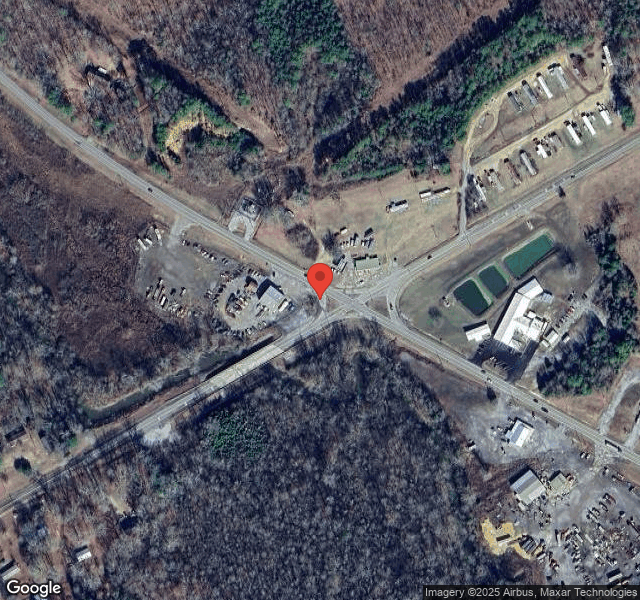

HEALTH CARE INC

38286 US HIGHWAY 231, ASHVILLE, AL 35953 (205) 594-5148
For profit - Individual 53 Beds Independent Data: November 2025
Trust Grade
70/100
#111 of 223 in AL
Last Inspection: August 2022

Over 2 years since last inspection. Current conditions may differ from available data.

Overview

Health Care Inc in Ashville, Alabama, has a Trust Grade of B, indicating it is a good choice among nursing homes. It ranks #111 out of 223 facilities in the state, placing it in the top half, and is the best option among four homes in St. Clair County. The facility's performance has been stable, with six concerns noted in both 2019 and 2022; however, no critical or serious issues have been reported. Staffing is average with a 3/5 star rating and a turnover rate of 54%, which is close to the state average. Notably, there are concerning findings, such as staff not washing hands after handling dirty dishes and failing to cover food properly, which could impact resident safety. On a positive note, the facility has not incurred any fines, suggesting compliance with regulations, but it does have less RN coverage than 92% of Alabama facilities, which raises some concerns about oversight.

Trust Score
B
70/100
In Alabama
#111/223
Top 49%
Safety Record
Low Risk
No red flags
Inspections
Holding Steady
3 → 3 violations
Staff Stability
⚠ Watch
54% turnover. Above average. Higher turnover means staff may not know residents' routines.
Penalties
✓ Good
No fines on record. Clean compliance history, better than most Alabama facilities.
Skilled Nurses
⚠ Watch
Each resident gets only 20 minutes of Registered Nurse (RN) attention daily — below average for Alabama. Fewer RN minutes means fewer trained eyes watching for problems.
Violations
○ Average
6 deficiencies on record. Average for a facility this size. Mostly minor or procedural issues.
★★★☆☆
3.0
Overall Rating
★★★☆☆
3.0
Staff Levels
★★★★☆
4.0
Care Quality
★★★☆☆
3.0
Inspection Score
Stable
2019: 3 issues
2022: 3 issues

The Good

  • 4-Star Quality Measures · Strong clinical quality outcomes
  • Full Sprinkler Coverage · Fire safety systems throughout facility
  • No fines on record

Facility shows strength in quality measures, fire safety.

The Bad

3-Star Overall Rating

Near Alabama average (2.9)

Meets federal standards, typical of most facilities

Staff Turnover: 54%

Near Alabama avg (46%)

Higher turnover may affect care consistency

The Ugly 6 deficiencies on record

Aug 2022 3 deficiencies
CONCERN (D)

Potential for Harm - no one hurt, but risky conditions existed

Comprehensive Care Plan (Tag F0656)

Could have caused harm · This affected 1 resident

**NOTE- TERMS IN BRACKETS HAVE BEEN EDITED TO PROTECT CONFIDENTIALITY** Based on observation, interviews, record review and review of a facility policy titled, Comprehensive Care Plans Health Care Inc...

Read full inspector narrative →
**NOTE- TERMS IN BRACKETS HAVE BEEN EDITED TO PROTECT CONFIDENTIALITY** Based on observation, interviews, record review and review of a facility policy titled, Comprehensive Care Plans Health Care Inc, the facility failed to ensure a care plan was developed/implemented for: 1) Resident Identifier (RI) #131's use of a Foley Catheter; and 2) RI #7's hearing aide usage. These deficient practices affected RI #'s 7 and 131, two of 14 residents whose care plans were reviewed. Findings Include: Review of a facility policy titled,Comprehensive Care Plans Health Care Inc., with a revised/reviewed date of 01/2022, revealed the following: . Policy: It is the policy of this facility to develop and implement a comprehensive person-centered care plan for each resident, consistent with . measurable objectives and timeframes to meet a resident's medical, nursing, and mental and psychosocial needs . 1) RI #131 was admitted to the facility on [DATE], and readmitted on [DATE], with diagnoses to include Foley Catheter and Multiple Decubitus Ulcers. RI #131's August 2022 Physicians's Orders documented: . Foley cath (catheter) Care QS (every shift) to 16 French May change Q (every)Month 15th or prn (as needed) . On 08/22/2022, at 11:12 AM, RI #131 was observed sitting in his/her WC (wheelchair). RI #131's Foley Catheter was in a GU (genitourinary) bag attached to the right lower WC frame. A review of RI #131's medical records revealed there was no care plan for the use of the Foley Catheter. On 08/24/2022, at 4:18 PM, an interview was conducted with Employee Identifier (EI) #4, the LPN (Licensed Practical Nurse)/MDS (Minimum Data Set)/Care Plan Coordinator. The surveyor asked EI #4 how long has RI #131 had a Foley catheter. EI #4 said since August 1, 2022. EI #4 said she did not see a care plan for the use of the Foley Catheter but should have one. The surveyor asked EI #4 why would there be a need to have a care plan implemented for a resident with a Foley Catheter. EI #4 said it would let the staff know the resident has a Foley Catheter, and it would let each shift know they had to provide care for the Foley Catheter. 2) RI #7 was admitted to the facility on [DATE], and readmitted on [DATE], with diagnoses to include Alzheimer's Disease, Mental Health problems, Bipolar Disorder and Major Depression - Unipolar. RI #7's Annual MDS assessment dated [DATE], documented, Hearing with minimal difficulty and coded to have hearing aids. RI #7's Care Area Triggers (CAT) Worksheet documented, Problem Area 4 - Communication - Use of Communication Devices - Hearing Aid. Care Plan Considerations. It was revealed RI #7 had a care plan for the hearing aid in place, and it would be Updated and Reviewed as needed. On 08/24/2022, at 11:01 AM, EI #4 was interviewed. EI #4 was asked was RI #7 coded for hearing aids on the MDS assessment. EI #4 responded, Yes. When asked if RI #7's care plan reflected RI #7 use of a hearing aid, EI #4 responded, No. It does not. EI #4 stated the use of the hearing aide should have been care planned for and she did not know why she did not implement a care plan for the hearing aid.
CONCERN (D)

Potential for Harm - no one hurt, but risky conditions existed

Medical Records (Tag F0842)

Could have caused harm · This affected 1 resident

**NOTE- TERMS IN BRACKETS HAVE BEEN EDITED TO PROTECT CONFIDENTIALITY** Based on interviews, record review and review of a facility policy titled Documentation of Wound Treatments Health Care Inc., th...

Read full inspector narrative →
**NOTE- TERMS IN BRACKETS HAVE BEEN EDITED TO PROTECT CONFIDENTIALITY** Based on interviews, record review and review of a facility policy titled Documentation of Wound Treatments Health Care Inc., the facility failed to ensure licensed staff consistently documented treatment was provided to the surgical incision on Resident Identifier (RI) #181's nose. This deficient practice affected RI #181, one of one residents sampled for documentation of treatment being provided to a resident's surgical incision. Findings Include: Review of an undated facility policy titled, Documentation of Wound Treatments Health Care Inc. revealed the following: Policy: The facility completes accurate documentation of wound assessments and treatments, including response to treatment, change in condition, and changes in treatment. 2. a. Type of wound (pressure injury, surgical, etc.) . 3. Wound treatments are documented at the time of each treatment. RI #181 was admitted to the facility on [DATE], with diagnoses to include Bipolar Affective Disorder and Anxiety Disorder. A review of RI #181's Surgery Site Wound Care undated orders, revealed the following: . After each vinegar water soak, apply ointment to incision and cover with non-stick bandage. Avoid placing adhesive or tape directly to incision . Perform wound care twice a day after surgery until wound is healed . A review of RI #181's August 2022 Treatment Record revealed treatment was to be provided to the surgical incision site on RI #181's nose on the 1st and 2nd shifts. Further review of the Treatment Record revealed there was no documented evidence of RI #181 having treatment provided to the surgical incision on 08/19/2022 on the 2nd shift, on 08/20/2022 on the 1st and 2nd shift, on 08/21/2022 on the first and 2nd shift, and on 08/22/2022 and 08/23/2022 on the 1st shift. On 08/23/2022 at 5:59 PM, an interview was conducted with Employee Identifier (EI) #3, the LPN (Licensed Practical Nurse) assigned to provide care to RI #181 on the 2nd shift on August 20th and 21st. EI #3 said he treated the resident's surgical incision, but when he got back to the nurse's desk he forgot to document it in the treatment book. On 08/24/2022 at 10:41 AM, an interview was conducted with EI #4, the LPN assigned to care for RI #181 on the the first shift on August 22nd and August 23. EI #4 stated she did not know why she did not document where she provided treatment to RI #181's surgical incision site. On 08/24/2022 at 1:55 PM, an unsuccessful attempt was made to contact EI #5, the RN (Registered Nurse) assigned to care or RI #181 on August 19 on the 2nd shift, on August 20th and August 21st on the 1st shift, who also failed to document treatments had been provided to RI #181's surgical incision site.
CONCERN (F)

Potential for Harm - no one hurt, but risky conditions existed

Food Safety (Tag F0812)

Could have caused harm · This affected most or all residents

Based on observations, interview, review of the 2017 Food Code of the United States (U.S.) Public Health Service and the U.S. Food and Drug Administration (FDA), a review of facility policies titled, ...

Read full inspector narrative →
Based on observations, interview, review of the 2017 Food Code of the United States (U.S.) Public Health Service and the U.S. Food and Drug Administration (FDA), a review of facility policies titled, Hand Washing, Bare Hand Contact with Food and Use of Plastic Gloves and Cleaning Dishes/Dish Machine, the facility failed to ensure Employee Identifier (EI) #2 washed their hands and changed their gloves after handling dirty dishes and before handling clean dishes. This had the potential to affect 46 of residents receiving meals from the kitchen. Findings Include: The 2017 Food Code of the U.S. Public Health Service and the FDA included the following: . 2-301.14 When to Wash. FOOD EMPLOYEES shall clean their hands and exposed portions of their arms . immediately before engaging in FOOD preparation including working with . clean EQUIPMENT and UTENSILS, . and: . (E) After handling soiled EQUIPMENT or UTENSILS; . 3-304.15 Gloves, Use Limitation. (A) If used, SINGLE-USE gloves shall be used for only one task . used for no other purpose, and discarded when damaged or soiled, or when interruptions occur in the operation. The facility's policy for Hand Washing, last approved on 08/12/2021, included the following: Policy: Staff will wash hands frequently as needed throughout the day following proper hand washing procedure . Procedure: . 1. When to Wash Hands: . After handling soiled equipment or utensils . Before donning gloves . The facility's policy for Bare Hand Contact with Food and Use of Plastic Gloves, last approved on 08/12/2021, included the following: Policy: Plastic gloves will be worn . to ensure that bacteria are not transferred from the food handlers' hands . Procedure: . 2. Staff appropriately use utensils such as gloves . to prevent food borne illness. 3. Gloved hands are considered a food contact surface that can get contaminated or soiled. If used, single use gloves shall be used for only one task . used for no other purpose, and discarded when damaged or soiled, or when interruptions occur in the operation. 4. Hands are to be washed . before putting on the plastic gloves. 6. Remember gloves are just like hands. They get soiled. Anytime a contaminated surface is touched, the gloves must be changed. After handling soiled trays or dishes After handling anything soiled . Any time you touch any contaminated surface During food preparations, as often as necessary to remove soil and contamination and to prevent cross contamination when changing tasks . 7. Wash hands after removing gloves. The facility's policy for Cleaning Dishes/Dish Machine, last approved on 08/12/2021, included the following: . Procedure: . 6. The person loading dirty dishes should not handle the clean dishes unless they change their apron and wash their hands thoroughly before moving from dirty to clean dishes. On 08/23/2022 at 01:04 PM, the surveyor observed EI #2 washing a rack of trays, which had been loaded in the single tank dishwashing machine. EI #2 was wearing a hair net, apron, and face mask. No gloves were worn at this time. The chemical, low-temperature, single tank dishwashing machine went through the following three cycles: wash, rinse, and chemical sanitizing. The dishwasher reached a temperature of 120 degrees Fahrenheit (F) during the wash cycle. Upon completion of the dishwashing cycle, EI #2 slid the rack of trays out of the dishwasher and allowed them to air dry in the rack. EI #2 then loaded pre-scraped plates into a rack and pre-rinsed them with a hand sprayer. EI #2 lowered the hood of the dishwashing machine using the handle-bar on the right-hand side of the machine, the clean side of the machine, with soiled hands. While the plates were washing, EI #2 put on blue disposable gloves. EI #2 did not wash his/her hands before putting on the gloves. EI #2 was observed with his/her left gloved hand resting on the dirty left side of the dish table. EI #2 did not change his/her gloves or wash his/her hands before raising the machine hood and pulling out the clean rack of dishes. After allowing the dishes to briefly air dry, EI #2 removed the dishes from the rack and placed them on a dish cart, again without having washed his/her hands and applying clean gloves. On 08/23/2022 at 1:16 PM, the Dietary Manager (DM), EI #1, was interviewed. EI #1 was asked what was the importance of separating dirty tasks from clean tasks. EI #1 responded, Because you could transfer infection and bacteria and make people sick. If you don't keep your hands clean, it could possibly get the clean dishes dirty.
Aug 2019 3 deficiencies
CONCERN (D)

Potential for Harm - no one hurt, but risky conditions existed

Assessment Accuracy (Tag F0641)

Could have caused harm · This affected 1 resident

**NOTE- TERMS IN BRACKETS HAVE BEEN EDITED TO PROTECT CONFIDENTIALITY** Based on record review, interview, and a review of a facility document titled Resident Assessment Instrument User Manual, the fa...

Read full inspector narrative →
**NOTE- TERMS IN BRACKETS HAVE BEEN EDITED TO PROTECT CONFIDENTIALITY** Based on record review, interview, and a review of a facility document titled Resident Assessment Instrument User Manual, the facility failed to ensure Resident Identifier (RI) #1's Minimum Data Set (MDS) assessments were accurately coded for the use of an anticoagulant. This affected one of two sampled residents for whom MDS assessments were reviewed for coding of an anticoagulant. Findings Include: RI #1 was admitted to the facility on [DATE] with the diagnosis of History of Deep Vein Thrombosis Left Lower Extremity. A review of a facility document titled Resident Assessment Instrument User Manual, Version 3.0, revised October/November 2012, revealed .Steps for Assessment 1. Review the resident's medical record for documentation that any of these medications were received by the resident during the 7-day look-back period . ND410E Anticoagulant . Record the number of days an anticoagulant medication was received by the resident at any time during the 7-day look-back period . A review of RI #1's Physician orders dated 5/29/2018 revealed: .Eliquis 2.5 mg tablet Give 1 tablet by mouth 2 times a day (DVT) . A review of the following MDS assessments for RI #1 with Assessment Reference Dates (ARDs) of 7/07/2018, 10/05/2018, 1/03/2019, 4/01/2019, and 6/29/2019 revealed . NO410E: Medication received: Days anticoagulant 0 . Review of RI #1's Medication Administration Record confirmed an anticoagulant was given during the 7 day look back dates for the following MDS assessments: 7/07/2018, 10/05/2018, 1/03/2019, 4/01/2019, and 6/29/2019. On 8/07/19 at 4:45 p.m., an interview was conducted with EI #3, MDS Coordinator/Licensed Practical Nurse. EI #3 was asked who was responsible for ensuring RI #1's Quarterly and Yearly Minimum Data Set (MDS) assessments with Assessment Reference Dates of : 7/07/2018, 10/05/2018, 1/03/2019, 4/01/2019, and 6/29/2019 were coded accurately. EI #3 stated that she was. EI #3 was asked if RI #1's Quarterly and Yearly MDS with ARDs of 7/07/2018, 10/05/2018, 1/03/2019, 4/01/2019, and 6/29/2019 were coded accurately for there use of an anticoagulant. EI #3 stated no. EI #3 was asked what should have been coded for the area of anticoagulant. EI #3 stated it should have been coded yes for each of the assessments. EI #3 further stated that EI #1 was on an anticoagulant during these 7 day look back dates. EI #1 was asked why should RI #1's Quarterly and Yearly MDS assessments have been coded accurately for an anticoagulant. EI #1 stated that the MDS Assessments gives you the whole picture of the resident and how to take care of that resident.
CONCERN (D)

Potential for Harm - no one hurt, but risky conditions existed

Infection Control (Tag F0880)

Could have caused harm · This affected 1 resident

**NOTE- TERMS IN BRACKETS HAVE BEEN EDITED TO PROTECT CONFIDENTIALITY** Based on observation, interviews, and review of a facility policy titled, Policy and Procedure For Hand-Washing, the facility fa...

Read full inspector narrative →
**NOTE- TERMS IN BRACKETS HAVE BEEN EDITED TO PROTECT CONFIDENTIALITY** Based on observation, interviews, and review of a facility policy titled, Policy and Procedure For Hand-Washing, the facility failed to ensure Employee Identifier (EI) #1, a Licensed Practical Nurse, washed her hands during a medication pass for Resident Identifier (RI) #26: EI #1 did not wash hands after she cleaned the top of the medication cart with her ungloved hands, and prior to putting on her gloves to pick up RI #26's cup of oral medications. Further, EI #1 touched the top of RI #26's right and left foot with both of her gloved hands, then gave oral medications without first washing her hands. After administering the oral medications, EI #1 changed gloves without washing hands to administer RI #26's eye drops, and again changed gloves without washing hands to administer inhalation medication. After administering all of RI #26's medications, EI #1 removed gloves and returned to the medication cart to document without washing her hands. This affected one of two licensed nurses observed during medication administration pass, and one of three residents observed during medication administration pass. Findings Include: RI #26 was admitted to the facility on [DATE] with the diagnosis of Asthma Exacerbation with Bronchitis, Acute Bronchospasm, and Dry Eyes. A review of a facility policy titled, Policy and Procedure For Hand-Washing, with a revised date of 7/23/2014, revealed .WHEN TO WASH HANDS, BUT NOT LIMITED TOO: (WHEN IN DOUBT WASH THEM HANDS) .4. Before preparing or handling medications; 5. After having prolonged contact with a Resident; 6. After handling .contaminated .etc .9. After removing gloves .12. Whenever in doubt . On 8/07/19 at 07:50 a.m., the surveyor observed EI #1, a Licensed Practical Nurse (LPN), during a medication administration pass for RI #26. The surveyor observed the following during EI #1's medication pass for RI #26: 1. EI #1 cleaned the top of the medication cart with her ungloved hands, did not wash her hands, put on her gloves, and picked up RI #26's cup of oral medication with her gloved hands. 2. EI #1 touched the top of the RI #26's right and left foot with both of her gloved hands, did not remove her gloves to wash her hands, and gave RI #26's cup of oral medications with the right gloved hand. 3. After RI #26 swallowed the oral medication solution, EI #1 removed her pair of gloves, and put on another pair of gloves, without washing her hands, and put RI #26's eye medication in both eyes. 4. EI #1 removed her gloves after giving RI #26's eye medication, did not wash her hands, and put RI #26's inhalation medication in the reservoir of the face mask, 5. EI #1 removed her gloves after giving RI #26's inhalation medication, did not wash her hands, put on a pair of gloves to clean RI #26's reservoir and face mask of the breathing machine; and 6. EI #1 removed her gloves, did not wash her hands, left RI #26's room to go to the medication cart and document in the binder the medications given to RI #26. On 8/07/19 at 12:45 p.m., the surveyor conducted an interview with EI #1, a Licensed Practical Nurse. EI #1 was asked did you wash your hands during the medication pass with RI #26 during the following observations: 1. after you cleaned the top of the medication cart with your ungloved hands, and prior to putting on your gloves to pick up RI #26's cup of oral medication, 2. after you touched the top of the RI #26's right and left foot with both of your gloved hands, and prior to giving RI #26's cup of oral medications with the right right gloved hand, 3. after RI #26 swallowed the oral medication solution, removed a pair of gloves, and prior to putting on another pair of gloves to give RI #26's eye medication to both eyes, 4. after giving RI #26's eye medication, removing your gloves, and prior to putting RI #26's inhalation medication in the reservoir of the face mask, 5. after giving RI #26's inhalation medication, removing your gloves, and prior to putting on gloves to clean RI #26's reservoir and face mask of the breathing machine. and 6. after removing your gloves, prior to leaving RI #26's room and ,left RI #26's room to go to the medication cart, and document in the binder the medications given to RI #26. EI #1 stated no, she did not wash her hands. EI #1 was asked why she had not washed her hands during RI #26's medication pass. EI #1 stated that she was nervous. EI #1 was asked what was the facility policy regarding hand hygiene prior to and after giving a resident medications, after removing your gloves, after patient care, and after touching contaminated objects. EI #1 stated the policy states that you should wash your hands. EI #1 was asked what would be the concern with a licensed nurse not washing her hands prior to and after giving a resident medications, after removing her gloves, after patient care, and after touching contaminated objects. EI # 1 stated it could spread infection and cross contamination. On 8/07/19 at 1:02 p.m., the surveyor conducted an interviews with EI #2, Infection Control Preventionist/Licensed Practical Nurse. EI #2 was asked what was the facility policy regarding hand hygiene prior to and after giving a resident their medications, after removing your gloves, after patient care, and after touching contaminated objects. EI #2 stated you should wash your hands. EI #2 was asked what would be the concern with a licensed nurse not washing her hands prior to and after giving a resident medications, after removing her gloves, after patient care, and after touching contaminated objects. EI #2 stated you should wash your hands to prevent the transmission of infections
CONCERN (F)

Potential for Harm - no one hurt, but risky conditions existed

Food Safety (Tag F0812)

Could have caused harm · This affected most or all residents

Based on observations, interviews, and review of facility policies titled, Food Safety and Sanitation and Employee Sanitary Practices, the facility failed to ensure: 1) open food items were covered an...

Read full inspector narrative →
Based on observations, interviews, and review of facility policies titled, Food Safety and Sanitation and Employee Sanitary Practices, the facility failed to ensure: 1) open food items were covered and labeled with a use by date prior to storage in the reach-in refrigerator, and 2) a dietary manager and dietary aide wore a hair net to completely cover all hair on their head while serving residents' food for the supper meal on the tray line in the kitchen area. This had a potential to affect 44 of 45 residents in the facility receiving meals from the kitchen. Findings Include: 1) A review of a facility policy titled, Food Safety and Sanitation, with no date, revealed . 4. All leftovers are labeled, covered, and dated when stored . On 08/05/19 at 03:04 p.m., during the tour of the kitchen, the surveyor observed the following food items in the reach-in refrigerator with no use by dates and no covering over the food items: 1. one container of stewed tomatoes, 2. one container of mixed salad with diced tomatoes, and 3. 40 small clear cups of watermelon. On 08/05/19 at 03:13 p.m., the surveyor conducted an interview with Employee Identifier (EI) #4, the Dishwasher Aide. The surveyor asked EI #4 if the stewed tomatoes, mixed salad with diced tomatoes and 40 small clear cups of watermelon in the reach-in refrigerator had a use by date or covering over these food item. EI #4 stated no. EI #4 further stated that she had to answer a phone call and had put the food items in the reach-in refrigerator without covering the food items and did not put a use by date on them. The surveyor asked EI #4 what was the potential concern of food items not having a use by date or covering food in a reach-in refrigerator. EI #4 stated the residents could get food poisoning if the food was left in refrigerator too long of a time. 2) A review of a facility policy titled, Employee Sanitary Practices, with no date, revealed . 1. Wear hair restraints .to prevent hair from contacting exposed food . On 08/05/19 at 04:09 p.m., during the tour of the kitchen, the surveyor observed EI #5, Dietary Manager, scooping ice out of an ice cooler and putting ice in a cup while standing by the tray line for the residents supper meal. EI #5 was observed with her hair net on the center of her head; all of her hair was not covered by the hair net, and the back of her hair was lying on her neck. The surveyor observed EI #6, a dietary aide, while serving residents' food on the tray line in the kitchen area for the supper meal. EI #6 had her hair net on the center of her head; all of her hair was not covered by the hair net, and the back of her hair was lying on her neck. EI #6 continued pouring water in the resident cups for the supper meal with her hair not all covered with the hair net. On 08/05/19 at 04:31 p.m., the surveyor conducted an interview with EI #5. EI #5 was asked if EI #6's hair was contained in her hair net while pouring water in the residents' cups for the supper meal. EI #5 stated that all of EI #6's hair was not contained in the hair net. EI #5 further stated that a few strands of EI #6's hair was lying on the back of her neck. EI #5 was asked what would be the potential harm with EI #6's hair not being contained and completely covered in the hair net while pouring water in the residents cups for the supper meal. EI #5 replied that EI #6's hair could get in the residents' food and make somebody sick. The surveyor asked EI #5 why should all of EI #6's hair be restrained in the hair net. EI #5 replied that the hair should be contained in a hair net for food safety concerns. On 08/05/19 at 04:39 p.m., the surveyor conducted an interview with EI #5. EI #5 was asked when she was scooping ice out of the ice cooler and putting ice in the cup was the back of her hair lying on her neck and not completely covered with a hair net. EI #5 stated she did not know. EI #5 was then asked what would be the potential harm with her hair not being contained and completely covered in the hair net while in the kitchen. EI #5 stated that the hair could get in the food and make somebody sick. On 08/07/19 at 03:02 p.m., the surveyor conducted an interview with EI #6. EI #6 was asked, on 08/05/19 at 04:09 p.m. while she was pouring water in the residents' cups on the food tray line, was her hair completely covered by the hairnet. EI #6 replied, no. The surveyor asked EI #6 why her hair was not covered up. EI #6 replied that she thought that her hair was all covered up, but it was not. EI #6 was then asked what would be the potential harm with hair not being contained and completely covered in the hair net while in the kitchen. EI #6 stated you should cover your hair with a hair net to keep hair from getting in the residents' food, which might cause the resident to choke. EI #6 further stated that the hair in a resident's food may deter the resident from eating their food.
Understanding Severity Codes (click to expand)
Life-Threatening (Immediate Jeopardy)
J - Isolated K - Pattern L - Widespread
Actual Harm
G - Isolated H - Pattern I - Widespread
Potential for Harm
D - Isolated E - Pattern F - Widespread
No Harm (Minor)
A - Isolated B - Pattern C - Widespread

Questions to Ask on Your Visit

  • "Can I speak with families of current residents?"
  • "What's your RN coverage like on weekends and overnight?"

Our Honest Assessment

Strengths
  • • No major safety red flags. No abuse findings, life-threatening violations, or SFF status.
  • • No fines on record. Clean compliance history, better than most Alabama facilities.
Concerns
  • • No major red flags. Standard due diligence and a personal visit recommended.
Bottom line: Mixed indicators with Trust Score of 70/100. Visit in person and ask pointed questions.

About This Facility

What is Health Care Inc's CMS Rating?

CMS assigns HEALTH CARE INC an overall rating of 3 out of 5 stars, which is considered average nationally. Within Alabama, this rating places the facility higher than 99% of the state's 100 nursing homes. This mid-range rating indicates the facility meets federal standards but may have areas for improvement.

How is Health Care Inc Staffed?

CMS rates HEALTH CARE INC's staffing level at 3 out of 5 stars, which is average compared to other nursing homes. Staff turnover is 54%, compared to the Alabama average of 46%.

What Have Inspectors Found at Health Care Inc?

State health inspectors documented 6 deficiencies at HEALTH CARE INC during 2019 to 2022. These included: 6 with potential for harm.

Who Owns and Operates Health Care Inc?

HEALTH CARE INC is owned by a for-profit company. For-profit facilities operate as businesses with obligations to shareholders or private owners. The facility operates independently rather than as part of a larger chain. With 53 certified beds and approximately 49 residents (about 92% occupancy), it is a smaller facility located in ASHVILLE, Alabama.

How Does Health Care Inc Compare to Other Alabama Nursing Homes?

Compared to the 100 nursing homes in Alabama, HEALTH CARE INC's overall rating (3 stars) is above the state average of 2.9, staff turnover (54%) is near the state average of 46%, and health inspection rating (3 stars) is at the national benchmark.

What Should Families Ask When Visiting Health Care Inc?

Based on this facility's data, families visiting should ask: "Can I visit during a mealtime to observe dining assistance and food quality?" "How do you handle medical emergencies, and what is your hospital transfer rate?" "Can I speak with family members of current residents about their experience?"

Is Health Care Inc Safe?

Based on CMS inspection data, HEALTH CARE INC has a clean safety record: no substantiated abuse findings (meaning no confirmed cases of resident harm), no Immediate Jeopardy citations (the most serious violation level indicating risk of serious injury or death), and is not on the Special Focus Facility watch list (a federal program monitoring the lowest-performing 1% of nursing homes). The facility has a 3-star overall rating and ranks #1 of 100 nursing homes in Alabama. While no facility is perfect, families should still ask about staff-to-resident ratios and recent inspection results during their visit.

Do Nurses at Health Care Inc Stick Around?

HEALTH CARE INC has a staff turnover rate of 54%, which is 8 percentage points above the Alabama average of 46%. Moderate turnover is common in nursing homes, but families should still ask about staff tenure and how the facility maintains care continuity when employees leave.

Was Health Care Inc Ever Fined?

HEALTH CARE INC has no federal fines on record. CMS issues fines when nursing homes fail to meet care standards or don't correct problems found during inspections. The absence of fines suggests the facility has either maintained compliance or corrected any issues before penalties were assessed. This is a positive indicator, though families should still review recent inspection reports for the full picture.

Is Health Care Inc on Any Federal Watch List?

HEALTH CARE INC is not on any federal watch list. The most significant is the Special Focus Facility (SFF) program, which identifies the bottom 1% of nursing homes nationally based on persistent, serious quality problems. Not being on this list means the facility has avoided the pattern of deficiencies that triggers enhanced federal oversight. This is a positive indicator, though families should still review the facility's inspection history directly.