ATMORE NURSING CENTER

715 EAST LAUREL STREET, ATMORE, AL 36502 (251) 368-9121
For profit - Corporation 100 Beds CROWNE HEALTH CARE Data: November 2025
Trust Grade
90/100
#5 of 223 in AL
Last Inspection: May 2021

Over 2 years since last inspection. Current conditions may differ from available data.

Overview

Atmore Nursing Center has received a Trust Grade of A, indicating it is an excellent facility that is highly recommended for care. It ranks #5 out of 223 nursing homes in Alabama, placing it in the top tier of facilities, and is the best option in Escambia County. The facility is on an improving trend, having reduced its issues from three in 2018 to none in recent years. Staffing is rated at 4 out of 5 stars, which is good, though the turnover rate is 54%, slightly above the state average, suggesting some instability. Notably, the center has not incurred any fines, which is a positive sign of compliance, and it has average RN coverage; however, there were some concerns in past inspections, such as administering expired insulin to a resident and serving meals that did not create a homelike environment. Overall, while there are some weaknesses, the facility demonstrates significant strengths in quality and compliance.

Trust Score
A
90/100
In Alabama
#5/223
Top 2%
Safety Record
Low Risk
No red flags
Inspections
Getting Better
3 → 0 violations
Staff Stability
⚠ Watch
54% turnover. Above average. Higher turnover means staff may not know residents' routines.
Penalties
✓ Good
No fines on record. Clean compliance history, better than most Alabama facilities.
Skilled Nurses
○ Average
Each resident gets 39 minutes of Registered Nurse (RN) attention daily — about average for Alabama. RNs are the most trained staff who monitor for health changes.
Violations
✓ Good
Only 3 deficiencies on record. Cleaner than most facilities. Minor issues only.
★★★★★
5.0
Overall Rating
★★★★☆
4.0
Staff Levels
★★★☆☆
3.0
Care Quality
★★★★★
5.0
Inspection Score
Stable
2018: 3 issues
2021: 0 issues

The Good

  • 4-Star Staffing Rating · Above-average nurse staffing levels
  • Full Sprinkler Coverage · Fire safety systems throughout facility
  • No fines on record

Facility shows strength in staffing levels, fire safety.

The Bad

Staff Turnover: 54%

Near Alabama avg (46%)

Higher turnover may affect care consistency

Chain: CROWNE HEALTH CARE

Part of a multi-facility chain

Ask about local staffing decisions and management

The Ugly 3 deficiencies on record

Mar 2018 3 deficiencies
CONCERN (D)

Potential for Harm - no one hurt, but risky conditions existed

Deficiency F0658 (Tag F0658)

Could have caused harm · This affected 1 resident

**NOTE- TERMS IN BRACKETS HAVE BEEN EDITED TO PROTECT CONFIDENTIALITY** Based on observations, interviews, record reviews, a review of Fundamentals of Nursing, Ninth Edition, and a review of the manuf...

Read full inspector narrative →
**NOTE- TERMS IN BRACKETS HAVE BEEN EDITED TO PROTECT CONFIDENTIALITY** Based on observations, interviews, record reviews, a review of Fundamentals of Nursing, Ninth Edition, and a review of the manufacturer's information for Lantus insulin, the facility failed to ensure Resident Identifier (RI) #39 was not administered expired insulin on 03/19/18 and 03/20/18. This affected one of one sampled resident reviewed for expired medication. Findings Include: A review of Fundamentals of Nursing, Ninth Edition, copyright 2017, page 654, revealed: .SAFETY GUIDELINES FOR NURSES .Verify expiration date of every medication during preparation. Do not administer expired medications . A review of the manufacturer's information for Lantus insulin revealed: Discard all containers in use after 28 days, even if there is insulin left. Also discard all insulin products after the expiration date on the package . RI #39 was readmitted to the facility on [DATE] with diagnoses of Type 2 Diabetes and Long Term Use of Insulin. A review of RI #39's March 2018 Physician Orders revealed an order for Lantus insulin 25 units to be given subcutaneously every night. A review of RI #39's March 2018 Medication Administration Record (MAR) revealed RI #39 was administered the Lantus insulin on 3/19 and 3/20/18, after its expiration. On 3/21/18 at 12:41 p.m., during an observation of a medication cart with Employee Identifier (EI) #4, a Licensed Practical Nurse (LPN), a vial of Lantus insulin for RI #39 was observed with an open date of 2/18. The vial was also labeled with a written expiration date of 3/20, exceeding the 28 day expiration date specified by the manufacturer. The expiration date of the insulin opened on 2/18 would be 3/18. On 3/22/18 at 3:31 p.m., EI #4, LPN, was interviewed and asked what was found on the medication cart during observations on 3/21/18. She replied one vial of insulin was labeled with an open date of 2/18 and expiration date of 3/20, which was more than 28 days. EI #4 was asked how long after insulin was opened did it expire. EI #4 replied 28 days after it was opened. EI #4 reviewed RI #39's March 2018 MAR and stated the resident received two doses of expired Lantus insulin. EI #4 stated two medication errors were made. On 3/22/18 at 3:48 p.m., EI #5, the LPN that initialed administering RI #39's Lantus insulin on 3/20/18, was interviewed . When asked how long a vial of opened insulin was safe to use, EI #5 stated 28 days. EI #5 explained RI #39's insulin should not have been administered because it expired on 3/19/18. When asked what was the potential concern for a resident receiving expired insulin, EI #5 said it may not work properly, inadequate control, and the resident may not get the correct dose. EI #5 said expiration dates of insulin should be checked prior to administering the medication. After reviewing RI #39's March MAR, EI #5 stated RI #39 had received expired insulin on 3/20/18. She further stated she got confused because February had fewer days than other months.
CONCERN (D)

Potential for Harm - no one hurt, but risky conditions existed

Deficiency F0761 (Tag F0761)

Could have caused harm · This affected 1 resident

**NOTE- TERMS IN BRACKETS HAVE BEEN EDITED TO PROTECT CONFIDENTIALITY** Based on observation, interview, and record reviews, including facility policies titled, PREPARATION FOR MEDICATION ADMINISTRATI...

Read full inspector narrative →
**NOTE- TERMS IN BRACKETS HAVE BEEN EDITED TO PROTECT CONFIDENTIALITY** Based on observation, interview, and record reviews, including facility policies titled, PREPARATION FOR MEDICATION ADMINISTRATION and VIALS AND AMPULES (INJECTABLE MEDICATIONS), the facility failed to ensure outdated insulin vials were not on a medication cart. This was observed on one of four medication carts in the facility observed by the surveyors. Findings Include: A review of a facility policy titled, 6.1 Preparation For Medication Administration, dated 01/12, revealed: .6. Multi-dose medications, like injectables .should be dated when opened and discarded according to manufacturer's specifications. A review of a facility policy titled, 7.13 Vials and Ampules (Injectable Medications), dated 01/12, revealed: . 2. The initials of the first person to use the vial and the date opened are recorded on multidose vials 3. A. When opened, most multidose vials of insulin may be used (refrigerated or at room temperature) for four weeks. See specific package labeling. A review of the manufacturer's prescribing information on page 32 of 43 revealed: . Do Not use LANTUS after the expiration date stamped on the label or 28 days after you first use it. A review of the manufacturer's prescribing information on Humalog 100 revealed, Throw away all insulin lispro in use after 28 days, even if there is insulin left. Also throw away all insulin products after the expiration date on the package. A review of the manufacturer's prescribing information on Novolog 100 revealed, Throw away all insulin lispro in use after 28 days, even if there is insulin left. On [DATE] at 12:41 p.m., an inspection of a medication cart was conducted with EI (Employee Identifier) #4, an LPN (Licensed Practical Nurse). A vial of LANTUS insulin with a resident's name on it was observed on the medication cart with an open date of 2/18. The vial was also labeled with an expiration date of 3/20. If opened on 2/18, the expiration date would be 3/18, 28 days per manufacturer's information. On [DATE] at 12:50 p.m., an empty vial of HUMULIN 70/30 insulin labeled for a resident was observed on the medication cart with no date or initial on the vial or the box. On [DATE] at 12:53 p.m., a vial of HUMALOG 100 insulin labeled for a resident was observed on the medication cart with an opened date of [DATE] and an expiration date of [DATE]. On [DATE] at 1:00 p.m., a vial of NOVOLOG insulin labeled for a resident was observed on the medication cart with an opened date of [DATE] and a written expiration date of [DATE]. On [DATE] at 3:31 p.m., EI #4, LPN, was interviewed and asked what was observed with the surveyor on the medication cart during the inspection on [DATE]. EI #4 stated expired insulin vials, two vials of opened insulin were both dated with an expiration date of 57 days. EI #4 stated one vial had no dates but was opened. EI #4 further stated one vial had an open date of 2/18 and an expiration date of 3/20, which was more than 28 days. EI #4 was asked how long after insulin was opened did it expire and EI #4 replied 28 days after it was opened. On [DATE] at 3:48 p.m., EI #5, a LPN, was interviewed. EI #5 was asked how long was an opened vial of insulin safe to use and EI #5 replied 28 days. EI #5 was asked if a vial of LANTUS insulin was opened on 2/20 when would it expire. EI #5 responded, on 3/20. EI #5 was asked again if this was correct and EI #5 stated, Well, you have 8 days in February and 20 days in March. EI #5 was asked if the insulin was dated 2/20 how many days in February was the insulin used. EI #5 responded 9 days and then it expired on 3/19. EI #5 was asked if the vial of LANTUS insulin was dated with an open date of 2/20 was it safe to administer to the resident on 3/20. EI #5 said no, it expired on 3/19. When asked what was the concern if a resident was administered expired insulin, EI #5 stated it may not work properly, inadequate control and the resident may not get the correct dose. EI #5 was asked if she checked opened and expired dates prior to administration of insulin and EI #5 responded yes. EI #5 was asked if there was an expiration date on the vial of insulin did she verify it was correct prior to administering to the resident and she responded yes. When asked why, EI #5 stated to make sure it was the correct date.
MINOR (B)

Minor Issue - procedural, no safety impact

Safe Environment (Tag F0584)

Minor procedural issue · This affected multiple residents

Based on observations and interviews, the facility failed to provide a homelike environment as evidenced by: 1. thirty-eight residents were served lunch meals on trays on tables in the dining rooms a...

Read full inspector narrative →
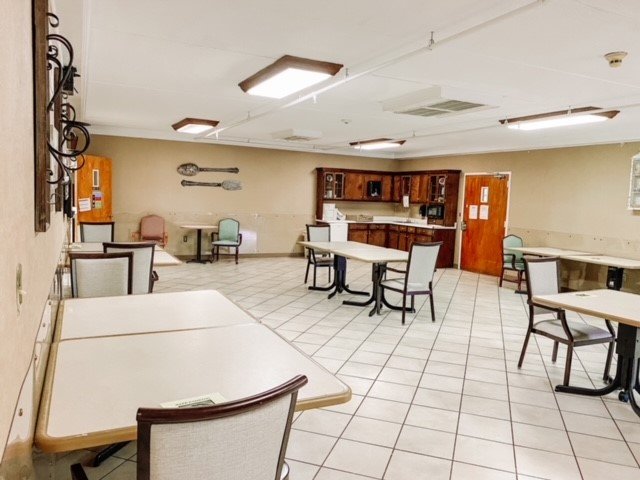
Based on observations and interviews, the facility failed to provide a homelike environment as evidenced by: 1. thirty-eight residents were served lunch meals on trays on tables in the dining rooms and 2. thirty-two residents of thirty-eight residents were served milk, healthy shakes, and nutritional supplements out of cartons and plastic containers with their lunch meals. This was observed on two of three survey days and affected 38 of 79 residents served meals from the kitchen. Findings Include: On 3/20/18 at 12:28 p.m., an observation was made in the Main Dining Room of residents seated in chairs with meals/plates and drinks on trays on the table. Twenty-six meals were being served off of trays on the tables. Twenty-three milks and healthy shakes were served to the residents in cartons. On 3/20/18 at 12:39 p.m., an observation was made in the Activity/Magnolia Dining room. Residents were fed from plates, cups, and cartons on trays placed on the tables. Twelve meals were being served off of trays on the tables. Nine milks and shakes were served to the residents n the cartons. On 3/21/18 at 12:00 p.m., an observation was made of the Main Dining Room. Twenty-seven residents were eating from plates left on trays on the tables. Twenty-seven cartons were opened and served to residents. These cartons contained milk, health shakes, and nutritional supplements. On 3/21/18 at 12:24 p.m., an observation was made of the Activity/Magnolia Dining room. Eleven resident were being fed from dishes on trays on the tables. Ten cartons were opened and served to residents. These cartons contained milk and health shakes. One nutrional supplement was being served from its plastic container/bottle it came in. On 3/22/18 at 4:56 p.m., an interview was conducted with EI (Employee Identifier) #3, the Dietary Manager. EI #3 was asked why residents were served meals from trays in the dining rooms. EI #3 answered that was how they have always done it. EI #3 was asked if dinnerware including glasses, plates, bowls, and silverware were on trays in a home setting and she answered no. EI #3 was asked what the expectations of the facility were for providing a homelike atmosphere. EI #3 responded in the dining area, yes they should. EI #3 was asked what was the concern of residents being served meals on trays rather than on the table. EI #3 answered the residents would probably feel like they were not having a homelike environment. EI #3 was asked if residents had always been served meals on trays in the dining rooms and she answered yes. EI #3 was asked why were residents served milk, healthy shakes, and nutritional supplements in cartons. EI #3 answered it was already being done when she came to the facility in December. EI #3 was asked if drinking from cartons rather than glasses would be homelike and she answered no. EI #3 was asked what was the policy for providing a homelike environment during the dining experience and she answered there was none. On 3/22/18 at 5:10 p.m., an interview was conducted with EI #1, the Administrator. EI #1 was asked why residents were served meals on trays rather than on tables in the dining rooms. EI #1 answered they had a concern with infection control and they felt like serving meals on trays would prevent the possibility of cross contamination. EI #1 was asked had residents always been served their meals on trays in the dining rooms and she answered yes. EI #1 was asked if serving meals on trays was consistently used in home settings and she answered not on her table. EI #1 was asked if that meant the trays were not homelike and she answered yes. EI #1 was asked if serving milk and healthy shakes in cartons rather than glasses would be considered homelike and she answered no.
Understanding Severity Codes (click to expand)
Life-Threatening (Immediate Jeopardy)
J - Isolated K - Pattern L - Widespread
Actual Harm
G - Isolated H - Pattern I - Widespread
Potential for Harm
D - Isolated E - Pattern F - Widespread
No Harm (Minor)
A - Isolated B - Pattern C - Widespread

Questions to Ask on Your Visit

  • "Can I speak with families of current residents?"
  • "What's your RN coverage like on weekends and overnight?"

Our Honest Assessment

Strengths
  • • Grade A (90/100). Above average facility, better than most options in Alabama.
  • • No major safety red flags. No abuse findings, life-threatening violations, or SFF status.
  • • No fines on record. Clean compliance history, better than most Alabama facilities.
  • • Only 3 deficiencies on record. Cleaner than most facilities. Minor issues only.
Concerns
  • • No significant concerns identified. This facility shows no red flags across CMS ratings, staff turnover, or federal penalties.
Bottom line: Generally positive indicators. Standard due diligence and a personal visit recommended.

About This Facility

What is Atmore Nursing Center's CMS Rating?

CMS assigns ATMORE NURSING CENTER an overall rating of 5 out of 5 stars, which is considered much above average nationally. Within Alabama, this rating places the facility higher than 99% of the state's 100 nursing homes. This rating reflects solid performance across the metrics CMS uses to evaluate nursing home quality.
How is Atmore Nursing Center Staffed?

CMS rates ATMORE NURSING CENTER's staffing level at 4 out of 5 stars, which is above average compared to other nursing homes. Staff turnover is 54%, compared to the Alabama average of 46%.

What Have Inspectors Found at Atmore Nursing Center?

State health inspectors documented 3 deficiencies at ATMORE NURSING CENTER during 2018. These included: 2 with potential for harm and 1 minor or isolated issues.

Who Owns and Operates Atmore Nursing Center?

ATMORE NURSING CENTER is owned by a for-profit company. For-profit facilities operate as businesses with obligations to shareholders or private owners. The facility is operated by CROWNE HEALTH CARE, a chain that manages multiple nursing homes. With 100 certified beds and approximately 76 residents (about 76% occupancy), it is a mid-sized facility located in ATMORE, Alabama.

How Does Atmore Nursing Center Compare to Other Alabama Nursing Homes?

Compared to the 100 nursing homes in Alabama, ATMORE NURSING CENTER's overall rating (5 stars) is above the state average of 3.0, staff turnover (54%) is near the state average of 46%, and health inspection rating (5 stars) is much above the national benchmark.

What Should Families Ask When Visiting Atmore Nursing Center?

Based on this facility's data, families visiting should ask: "Can I visit during a mealtime to observe dining assistance and food quality?" "How do you handle medical emergencies, and what is your hospital transfer rate?" "Can I speak with family members of current residents about their experience?"

Is Atmore Nursing Center Safe?

Based on CMS inspection data, ATMORE NURSING CENTER has a clean safety record: no substantiated abuse findings (meaning no confirmed cases of resident harm), no Immediate Jeopardy citations (the most serious violation level indicating risk of serious injury or death), and is not on the Special Focus Facility watch list (a federal program monitoring the lowest-performing 1% of nursing homes). The facility has a 5-star overall rating and ranks #1 of 100 nursing homes in Alabama. While no facility is perfect, families should still ask about staff-to-resident ratios and recent inspection results during their visit.

Do Nurses at Atmore Nursing Center Stick Around?

ATMORE NURSING CENTER has a staff turnover rate of 54%, which is 8 percentage points above the Alabama average of 46%. Moderate turnover is common in nursing homes, but families should still ask about staff tenure and how the facility maintains care continuity when employees leave.

Was Atmore Nursing Center Ever Fined?

ATMORE NURSING CENTER has no federal fines on record. CMS issues fines when nursing homes fail to meet care standards or don't correct problems found during inspections. The absence of fines suggests the facility has either maintained compliance or corrected any issues before penalties were assessed. This is a positive indicator, though families should still review recent inspection reports for the full picture.

Is Atmore Nursing Center on Any Federal Watch List?

ATMORE NURSING CENTER is not on any federal watch list. The most significant is the Special Focus Facility (SFF) program, which identifies the bottom 1% of nursing homes nationally based on persistent, serious quality problems. Not being on this list means the facility has avoided the pattern of deficiencies that triggers enhanced federal oversight. This is a positive indicator, though families should still review the facility's inspection history directly.