CONCERN
(D)
Potential for Harm - no one hurt, but risky conditions existed
Deficiency F0557
(Tag F0557)
Could have caused harm · This affected 1 resident
**NOTE- TERMS IN BRACKETS HAVE BEEN EDITED TO PROTECT CONFIDENTIALITY** Based on observation, interviews, record review, and review of a facility policy titled Dining Room Duties, the facility failed ...
Read full inspector narrative →
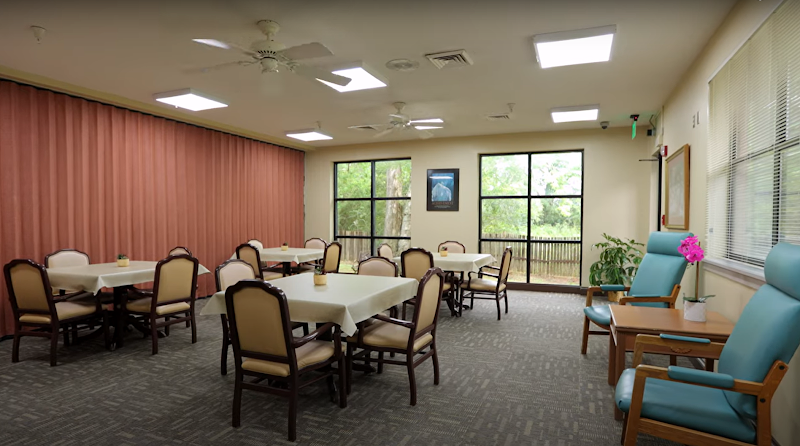
**NOTE- TERMS IN BRACKETS HAVE BEEN EDITED TO PROTECT CONFIDENTIALITY** Based on observation, interviews, record review, and review of a facility policy titled Dining Room Duties, the facility failed to ensure a Certified Nursing Assistant, Employee Identifier (EI) #5 did not stand while feeding Resident Identifier (RI) #51 his/her lunch meal in the dining room on 11/17/2021.
This deficient practice affected RI #51; one of four sampled residents observed being fed their meals.
Findings Include:
A review of a facility policy titled Dining Room Duties, with an effective date of 01/2017, revealed:
. PROCESS: .
h) When feeding a resident, staff must sit beside or across from the resident.
RI #51 was admitted to the facility on [DATE], with diagnoses to include Parkinson's Disease and Abnormal Weight Loss.
RI #51's Quarterly Minimum Data Set assessment, with an Assessment Reference Date of 10/08/2021, coded RI #51 as needing extensive assistance with eating.
On 11/17/2021 at 11:51 AM, the surveyor observed EI #5 standing while feeding RI #51 his/her lunch meal.
On 11/17/2021 at 12:10 PM, RI #5 was observed to have finished his/her lunch meal. EI #5 stood the entire time while feeding RI #51 the lunch meal.
On 11/18/2021 at 2:37 PM, the surveyor conducted an interview with EI #5. When asked what position she was in when feeding RI #51 his/her lunch meal on 11/17/2021, EI #5 said she was standing. The surveyor asked EI #5 when she was hired, what position was she taught to be in when feeding a resident. EI #5 said she was taught to sit. When asked why she stood when feeding RI #51 on 11/17/2021, EI #5 said she was just nervous. The surveyor asked EI #5 what type issue it was considered when she stood while feeding a resident. EI #5 said it was a dignity issue.
On 11/18/2021 at 5:45 PM, the surveyor conducted an interview with EI #2, the Assistant Director of Nursing/Staff Educator. The surveyor asked EI #2, what position were staff taught to position themselves in when feeding a resident. EI #2 said staff were to be at eye level and sitting down. When asked what type issue it was when staff stood while feeding the resident, EI #2 said dignity. EI #2 said staff were taught this in orientation and annually.
A review of EI #5's Continuing Education report, with a completion date of 09/28/2021, revealed EI #5 had received education on the Dining Room Duties policy.
CONCERN
(D)
Potential for Harm - no one hurt, but risky conditions existed
Tube Feeding
(Tag F0693)
Could have caused harm · This affected 1 resident
**NOTE- TERMS IN BRACKETS HAVE BEEN EDITED TO PROTECT CONFIDENTIALITY** Based on observations, interview, record review, and review of Potter and Perry's FUNDAMENTALS OF NURSING, the facility failed t...
Read full inspector narrative →
**NOTE- TERMS IN BRACKETS HAVE BEEN EDITED TO PROTECT CONFIDENTIALITY** Based on observations, interview, record review, and review of Potter and Perry's FUNDAMENTALS OF NURSING, the facility failed to ensure the feeding tube containers of Resident Identifier (RI) #27 and RI #31 were labeled appropriately.
This deficient practice affected RI #27 and 31, two of five residents receiving tube feeding at the facility.
Findings include:
A review of Potter and Perry's FUNDAMENTALS OF NURSING, NINTH EDITION, with a copyright date of 2017, page 1092, UNIT VII Physiological Basis for Nursing Practice, revealed the following:
. STEP . (2) . Label bag with tube-feeding type, strength, and amount (include date, time, and initials). Change bag every 24 hours. RATIONALE . Helps decrease bacterial colonization.
(1) RI #27 was originally admitted to the facility on [DATE], and re-admitted to the facility on [DATE], with a diagnosis of Gastrostomy Status.
RI #27's admission Minimum Data Set (MDS) assessment, with an Assessment Reference Date (ARD) of [DATE], coded RI #27 as receiving tube feedings during this assessment period.
RI #27's [DATE] Physician's Orders revealed RI #27 had a diet order for Glucerna 1.5 cal (calorie) to continuously infuse at 65 ml (milliliters)/hr (hour).
On [DATE] at 11:02 AM, RI #27's Glucerna 1.5 cal tube feeding was observed infusing by way of a feeding pump at 65 ml per hour. RI #27's tube feeding container was labeled with RI #27's name, dated [DATE], but there was no room number, start time or rate the tubing feeding was to infuse on the container.
On [DATE] at 7:43 AM, RI #27's Glucerna 1.5 cal tube feeding was observed infusing at 65 ml per hour. This container was labeled with RI #27's name, dated [DATE], and once again there was no start time or rate the tubing feeding was to infuse on the container.
On [DATE] at 5:24 PM, the surveyor conducted an interview with Employee Identifier (EI) #3, the LPN (Licensed Practical Nurse) assigned to care for RI #27 on the 7 AM to 7 PM shift. The surveyor asked EI #3 what information should be on the tube feeding container of a resident who was receiving a continuous tube feeding. EI #3 said the resident's name, the tube feeding name, the rate of the tube feeding, the date hung, and the time that hung or started. When asked what information was missing from RI #27's continuous tube feeding container, EI #3 replied, RI #27's room number, the time the tube feeding was started, and the rate the tube feeding should infuse. The surveyor asked who would be responsible for ensuring the tube feeding container was filled out appropriately. EI #3 said whoever hung the tube feeding, and identified EI #4, another LPN, as working the shift the tube feeding was hung on. When asked why it would be important to ensure the resident's tube feeding label was filled out appropriately. EI #3 said to show the resident was getting the right tube feeding, at the right rate, and to ensure the resident was not getting expired tube feeding over a 24-hour time period.
(2) RI #31 was originally admitted to the facility on [DATE], and re-admitted to the facility on [DATE], with diagnosis to include Gastrostomy Status.
RI #31's Quarterly MDS assessment, with an ARD of [DATE], coded RI #31 as receiving tube feedings during this assessment period.
RI #31's [DATE] Physician's Orders revealed RI #31 had a diet order for Glucerna to continuously infuse at 45 ml/hr.
[DATE] at 9:41 AM, the surveyor observed RI #31's tube feeding of Glucerna infusing by way of a feeding pump at 45 ml per hour. RI #31's tube feeding container was not labeled with anything except the date of [DATE], and EI #4's initials at the bottom of the container.
On [DATE] at 5:35 PM, in a continued interview with EI #3 the surveyor asked EI #3 what information was missing from RI #31's continuous tube feeding container. EI #3 said everything.
On [DATE] at 6:00 PM, an unsuccessful attempt was made to contact EI #4.
CONCERN
(D)
Potential for Harm - no one hurt, but risky conditions existed
Pharmacy Services
(Tag F0755)
Could have caused harm · This affected 1 resident
**NOTE- TERMS IN BRACKETS HAVE BEEN EDITED TO PROTECT CONFIDENTIALITY** Based on interviews, record review, and review of a pharmacy policy titled Ordering and Receiving Medications, the facility fail...
Read full inspector narrative →
**NOTE- TERMS IN BRACKETS HAVE BEEN EDITED TO PROTECT CONFIDENTIALITY** Based on interviews, record review, and review of a pharmacy policy titled Ordering and Receiving Medications, the facility failed to ensure Resident Identifier (RI) #57's as needed Oxycodone-Acetaminophen 7.5-325 milligram (Percocet) supply was not depleted from 11/11/2021 until 11/17/2021.
This affected RI #57, one of two residents sampled for pain.
Findings Include:
A review of undated facility policy titled Ordering and Receiving Medications revealed:
. Policy:
. The facility will only be responsible for ordering new medications, PRN (as needed) medications, .
Procedure: .
C. Refills/Reorders
Policy:
The facility will reorder medications when there is a 5 (five) day supply remaining in order to keep continuity in the medication supply.
Nurses should not allow any medication to be depleted before ordering from the pharmacy.
D. Controlled Substances
Policy:
Medications classified as controlled substances are subject to special ordering, receipt, and record keeping in accordance with state/federal laws and regulations.
Procedure: .
The facility must provide reordering information timely to allow ample time to obtain a valid prescription.
RI #57 was admitted to the facility on [DATE] and re-admitted on [DATE] and had diagnoses that included Pain, Unspecified; Fibromyalgia; and Osteomyelitis of Vertebra, Lumbar Region.
A review of RI #57's PHYSICIAN'S ORDERS revealed an order dated 10/15/2021 for OXYCODON(E)-ACETAMINOPHEN PERCOCET 7.5-325 MG (milligram) TAKE ONE TABLET BY MOUTH EVERY 6 (six) HOURS AS NEEDED (PAIN).
A review of RI #57's CONTROLLED SUBSTANCE RECORD for
OXYCODON(E)-ACETEMINOPHEN . Sub for: PERCOCET 7.5-325 . revealed RI #57 received at least two doses of the medication daily from 10/22/2021 until 11/10/2021. The final dose of RI #57's supply was administered on 11/10/2021. The seven days prior to the resident's supply of the medication being depleted, 11/4/2021 through 11/10/2021, RI # 57 received 21 doses of the medication.
A review of the EMERGENCY DRUG KIT SLIPS revealed facility staff pulled a Percocet tablet from the emergency supply for RI #57 as follows: on 11/12/2021 at 1315 (1:15 PM), 11/13/2021 at 11:23, 11/14/2021 (no time), 11/14/2021 (no time), 11/15/2021 at 11:30, 11/16/2021 at 12:10, and 11/17/2021 at 0930 (9:30 AM). A total of seven doses was administered over six days and no doses were administered on 11/11/2021.
A review of RI #57's Refills Report revealed the OXYCODON(E)-ACETEMINOPHEN (Percocet) 7.5-325 was electronically requested for refill on 11/12/2021 at 12:55 PM by Employee Identifier (EI) #10, a Licensed Practical Nurse (LPN).
A review of a pharmacy document dated November 12, 2021 revealed a prescription request for RI #57's Percocet 7.5 mg was sent to RI # 57's physician, on 11/12/2021. Further review of the prescription request revealed the physician signed the request on 11/15/2021 (three days later).
On 11/16/2021 at 10:52 AM, an interview was conducted with RI #57. RI #57 reported he/she had pain and normally got pain medicine, oxycodone, every six to eight hours. RI #57 reported in the last week or so he/she had an issue with the facility not having the prescription signed, and then a problem with the pharmacy.
On 11/17/2021 at 9:57 AM, an interview was conducted with EI #13, an LPN. EI #13 was asked how many Percocet did RI #57 have available in his/her personal supply at the time. EI #13 answered, none. EI #13 reported that she had to pull a Percocet from the emergency kit earlier that morning for RI #57. EI #13 reported she did not know how long RI #57's Percocet supply had been depleted.
On 11/17/2021 at 10:07 AM, an interview was conducted with EI #14, the Registered Nurse (RN)/Unit Manager. EI #14 was asked, when was RI #57's last dose of Percocet administered from his/her supply. EI #14 replied, on 11/10/2021. EI #14 was asked, what was facility's policy or process to re-order a supply of narcotic medications. EI #14 replied, the staff re-ordered from the computer's software Electronic Medication Administration Record (EMAR) and then called the pharmacy and asked if a refill prescription was needed. EI #14 replied RI #57 did need a refill prescription. EI #14 reported she spoke with RI #57's physician on 11/16/2021 around 2:00 PM, and he said he would send the prescription. EI #14 added, she followed up that morning and pharmacy did not have the prescription and the physician said he sent it.
On 11/17/21 at 10:22 AM, a follow-up interview was conducted with RI #57. RI #57 reported he/she thought his/her supply of Percocet was depleted about five to six days ago. RI #57 reported that he/she asked for pain medication and he/she was provided Tylenol that helped but did not alleviate his/her pain as well as the Percocet that he/she was prescribed. RI #57 reported that a nurse did tell him/her that he/she was out of Percocet and provided Tylenol due to the prescription not being re-ordered. RI #57 did not know when or who the nurse was.
A review of RI #57's printed Medication Administration Record (MAR) revealed no Percocet was administered to RI #57 on 11/11/2021.
On 11/17/2021 at 3:32 PM the surveyor observed RI #57's supply of Percocet delivered from back-up pharmacy.
On 11/17/2021 at 5:36 PM EI #14 reported RI #57's Percocet was initially requested on 11/12/2021 and should have been requested when the supply had no less than eight doses. When asked why she did not request RI #57's Percocet to be sent when she administered one of the last doses, EI #14 said normally she did but just did not at that time.
On 11/18/2021 at 7:34 AM, another resident's card of 60 Percocet was observed with EI #10, an LPN and it was noted that the last 10 tablets on the card had a blue coloring around them. EI #10 was asked, what did the blue on the card indicated and she replied, that the supply was low, and it needed to be re-ordered. A printed MAR for RI #57 was reviewed with EI #10 and she was asked, was that her administration initials on 11/06/2021, 11/12/2021, 11/13/2021, and 11/14/2021. EI #10 replied, yes. EI #10 was asked, on 11/06/2021, did she select the refill option for Percocet for RI #57. EI #10 answered she did not recall, but if it was low, she normally did. EI #10 was asked, when should RI #57's refill request have been submitted. EI #10 replied, it should have been submitted when RI #57 had about 10 doses remaining in the pack. EI #10 was asked, when she submitted to refill RI #57's Percocet on 11/12/2021, how did she follow up. EI #10 replied, she thought that was the day that she called the pharmacy to be sure it was not discontinued. EI #10 said the pharmacy said it had not been discontinued and they were going to send another request for a refill to the physician.
On 11/18/2021 at 9:28 AM, an interview was conducted with EI #15, an LPN. EI #15 was asked, on 11/7/2021 at 9:00 PM and 11/8/2021 at 3:30 AM, did she recall administering Percocet to RI #57. EI #15 replied, RI #57 requested it every six hours so that sounded right, but she did not recall specifically. EI #15 was asked, when should as needed narcotic pain medication be re-ordered when the supply was low. EI #15 replied, it would depend on how frequently the resident took it. EI #15 said for RI #57, they normally re-ordered when he/she had 10 to 15 left. EI #15 was asked, on 11/07/2021 at 9:00 PM and 11/8/2021 at 3:30 AM, when she signed the narcotic book for RI #57's Percocet with the amount remaining nine and eight, did she re-order the medication. EI #15 replied, she did not remember. EI #15 was asked, did she re-order the medication at all. EI #15 replied, sometime the first week of November, she tried to re-order and it had already been re-ordered. EI #15 said the computer would not let it be re-ordered within three days of someone re-ordering. EI #15 added, when the medication was re-ordered the refill sticker was removed from the blister pack. EI #15 said she did not remember the exact date, but she remembered the sticker not being on there. EI #15 continued to say she did select the re-order button one of the days and it was within three days of it being re-ordered. EI #15 said another medication, Lyrica had also been re-ordered and on the next shift the Lyrica was delivered, but not Percocet. EI #15 was asked, on 11/16/2021 when the EMAR indicated she administered Percocet to RI #57, where was it pulled and what steps were taken to re-order the medication. EI #15 reported that it was pulled from the Emergency Supply Kit (E-Kit) and she was told in report by EI #14 that someone picked up the prescription from the physician and had taken it to the pharmacy and to pull needed doses of the Percocet from the E-Kit.
On 11/18/2021 at 6:00 PM, a follow-up interview was conducted with EI #15. EI #15 was asked, when did she tell RI #57 that his/her Percocet supply was out. EI #15 replied, EI #16, an LPN gave RI #57 one on day shift and reported to her that there was only one left in the E-Kit. EI #16 said, when RI #57 asked her for Tylenol that night and she told him/her that EI #16 told her that there was another Percocet available, and RI #57 did not ask for the Percocet, just the Tylenol. EI #15 said she never told RI #57 that the Percocet was unavailable.
On 11/18/2021 at 10:14 AM, an interview was conducted with EI #16, an LPN. EI #16 was asked, on 11/11/2021 when the MAR indicated she administered two doses of Tylenol to RI #57, and no Tylenol had been administered in November to RI #57 before 11/11/2021, why did she administer Tylenol and not the Percocet that RI #57 had been taking more regularly. EI #16 replied, RI #57 usually asked for Tylenol in between Percocet. EI #16 said she had told RI #57 that his/her supply of Percocet ran out. EI #16 said RI #57 might have asked for the Tylenol thinking that he/she did not have Percocet, but she had told RI #57 the staff could pull Percocet from the E-Kit. EI #16 was asked, how often did RI #57 ask for the Percocet. EI #16 replied, usually RI #57 asked before it had been six hours or at six hours unless he/she was sleeping. EI #16 was asked, what was the process for re-ordering as needed narcotic pain medication. EI #16 replied, usually, nurses selected refill in the computer software, and it indicated the last time the medication was re-ordered, and then a sticker was removed from the medication card to let other staff know that it has been re-ordered. EI #16 continued by saying, RI #57's Percocet card indicated it did not have refills remaining, but staff had ordered the refills and it looked like it went through. EI #16 said she told EI #14 before the supply ran out that the card said RI #57 did not have refills left but did not recall what day. EI #16 was asked, on 11/07/2021 when RI #57's Percocet count sheet indicated she administered a dose of Percocet leaving ten tablets remaining, what steps were taken to re-order the medication. EI #16 replied, usually she would have re-ordered in the software unless someone had taken the sticker off of the card. EI #16 was asked, on 11/10/2021 RI #57's Percocet count sheet indicated that she administered two doses of Percocet leaving one and then zero tablets remaining, what steps were taken to re-order the medication. EI #16 replied, she would have selected refill, but it would have not gone through if someone had re-ordered within three days.
On 11/18/2021 at 2:26 PM, an interview was conducted with EI #17, an LPN who reported she was an agency nurse and had been at this facility since mid-October and worked on night shift. EI #17 was asked, what could she report about RI #57's pain or the resident's Percocet. EI #17 replied, RI #57 always said he/she hurt all over and always asked for a Percocet around 8:00 PM and then usually slept the remainder of her shift, but occasionally would wake around 3:00 to 4:00 AM and ask for a pain pill. EI #17 was asked, what was the process to re-order as needed narcotic pain medication. EI #17 replied, she did not know, other staff usually did that in the morning. EI #17 said she was taught when a resident was down to seven tablets that the medication needed to be re-ordered because it did not need to run out if the resident was having constant pain. EI #17 was asked, on 11/9/2021, when RI #57's Percocet count sheet indicated she administered a dose of Percocet leaving two tablets remaining, what steps were taken to re-order the medication. EI #17 replied, it was already re-ordered, and they were waiting on the doctor. EI #17 said she did not remember who told her that it was re-ordered. EI #17 said when she left on 11/09/2021, RI #57 had two doses of his/her medication left. EI #17 said when she came back on 11/12/2021 RI #57 did not have any Percocet and she was told if RI #57 needed that medication to pull it from the E-Kit. EI #17 said she did not pull any Percocet from the E-Kit. EI #17 reported that she told RI #57 that his/her supply of Percocet was depleted but she could pull the medication from the E-Kit and RI #57 asked for headache medication. EI #17 reported that when she returned to work on 11/13/2021 and 11/14/2021, she was told the medication had been approved by the doctor, but it was not delivered.
On 11/18/2021 at 11:24 AM, a final interview was conducted with EI #14. EI #14 was asked, what could she report about RI #57's Percocet. EI #14 replied, on 11/9/2021, she was working on the medication cart and called RI #57's physician to let him know RI #57 needed a prescription. The physician told her that he had sent it to the pharmacy and would send it again. EI #14 was asked, what was the process for re-ordering as needed narcotic pain medication. EI #14 replied, staff selected the refill button in the Computer Software but also called the physician. EI #14 replied when pharmacy needed a prescription, they sent it to the facility by fax, and the facility sent it by fax to the physician's office or walked it over to his office and had him fill it out and fax it from the facility. EI #14 said when she called pharmacy sometimes, they told her that the phones were down; and several months ago, they were having issues and she was having to walk prescriptions over to the physician's office nearly all the time. EI #14 said the problem was resolved until the past month and they began having to walk and get prescriptions and fax from the facility. EI #14 was asked, what was the problem. EI #14 replied, the problem was the physician's office sending faxes to pharmacy, but the facility could fax pharmacy. EI #14 was asked, what did she recall about EI #16 reporting concerns with RI #57's Percocet being refilled. EI #14 replied, on 11/11/2021 EI #16 told her the supply was low and the refill was not delivered despite being ordered. EI #14 said she again told the physician in person about RI #57's Percocet. EI #14 was asked, what could she report about RI #57's pain. EI #14 replied, sometimes RI #57 asked for pain medication and then when staff went to administer the medication, they found RI #57 asleep. EI #14 said RI #57 also had an alarm on the phone for every six hours to ask for pain medication.
On 11/18/2021 at 12:03 PM, an interview was conducted with RI #57's physician. The physician reported that generally, when prescriptions needed to be refilled, pharmacy sent a request to his office and he completed the request within a couple of days at the most and faxed it back to pharmacy. The physician added, the office would get a report that the fax was successful, but there seemed to be an issue with pharmacy receiving. The physician reported that he thought last week his office sent the prescription to pharmacy and he knew earlier that week his office sent the prescription for Percocet for RI #57's refill to pharmacy. The physician reported that on 11/09/2021, EI #14 called and told him RI #57 needed Percocet refilled and generally, he waited until pharmacy sent the prescription form for the refill to address it. The physician was asked, what would potential harm be for RI #57 not getting Percocet for a day or decreased frequency of dosage over several days. The physician replied, more pain. The physician said RI #57 would not have withdrawals at the dose he/she was taking.
On 11/18/2021 at 5:08 PM, an interview was conducted with EI #1, the RN, Director of Nursing. EI #1 was asked, what could she report about RI #57's pain and pain medication. EI #1 replied, RI #57 had complaints of pain in his/her neck and back and received pain medications of Percocet and Tylenol along with other medications. EI #1 was asked, what was the process for nursing staff to re-order as needed narcotic pain medication. EI #1 replied, nursing staff should have selected the refill option in the computer software for the medication within five days of being out of the medication. EI #1 was asked, when should a resident's supply of as needed pain medication be depleted for six days without re-supply. EI #1 replied, it should not happen. EI #1 said the facility did have an E-Kit and the Percocet was available in the E-Kit. EI #1 was asked, what evidence did the facility have that RI #57's as needed Percocet was re-ordered before 11/12/2021. EI #1 said EI #14 informed her that she asked EI #18 for a prescription around 11/9/2021, but it was not documented. EI #1 was asked, why was the Percocet not requested from pharmacy before the supply was depleted. EI #1 replied, possibly a computer glitch but she thought it was an oversight. EI #1 was asked who was responsible to ensure resident's as needed pain medication supply was not depleted. EI #1 replied, the nurses' assigned to the resident's care. EI #1 was asked what responsibility did the pharmacy have. EI #1 replied, after nursing sent a refill request to pharmacy, their responsibility was to be sure the refill request was sent to the physician timely, and that they received a response from the physician. EI #1 was asked, what was the potential harm to a resident when their supply of as needed pain medication was depleted, and the resident did not receive that medication for a day when he/she usually took it every day. EI #1 replied, he/she could have had increased pain.
On 11/18/2021 at 4:40 PM, an interview was conducted with EI #19, the Pharmacist. EI #19 was asked, when did the facility initially request RI #57's Percocet be re-supplied. EI #19 replied, the pharmacy sent a request to EI #18 on 11/12/2021 after request was received from the facility. EI #19 was asked, how long did it generally take to re-supply a resident's Percocet medication. EI #19 replied, pharmacy sends it the same day if the physician provided the prescription. EI #19 said when the physician had not provided the prescription, the pharmacy continued to fax three times and then fax the nursing home if they had not gotten a response. EI #19 reported the pharmacy faxed the physician, EI #18, on 11/12/2021, 11/15/2021, and 11/16/2021 and then also faxed the facility on 11/16/2021. EI #19 was asked, when should the facility re-order a supply for as needed narcotic pain medications like Percocet. EI #19 replied the request should be submitted when there was at least five days left of the supply. EI #19 was asked, why was the Percocet not in the resident's supply from 11/11/2021 until 11/17/2021. EI #19 replied, because EI #18 did not provide the prescription and she thought they pulled it from the narcotic box. EI #19 was asked, when did the physician provide the prescription. EI #19 replied, on 11/17/2021, and the pharmacy could have sent the medication that night, but the facility sent it to a backup pharmacy, and they delivered it on 11/17/2021.
CONCERN
(D)
Potential for Harm - no one hurt, but risky conditions existed
Medical Records
(Tag F0842)
Could have caused harm · This affected 1 resident
Based on interviews, record review, and review of a facility policy titled Medication Administration the facility failed to ensure licensed staff documented pain medication on the Electronic Medicatio...
Read full inspector narrative →
Based on interviews, record review, and review of a facility policy titled Medication Administration the facility failed to ensure licensed staff documented pain medication on the Electronic Medication Administration Record as administered when administering pain medication to Resident Identifier (RI) #57.
This affected one of two residents sampled for pain.
Findings Include:
A review of a facility policy titled Medication Administration with an implemented date of 3/2018 and revised date of 3/2021 revealed:
Policy:
Medications are administered by licensed nurses, . as ordered by the physician and in accordance with professional standards of practice, .
Policy Explanation and Compliance Guidelines: .
17. Sign MAR after administered.
18. If medication is a controlled substance, sign narcotic book.
A review of RI #57's CONTROLLED SUBSTANCE RECORD (narcotic log/book/record) and Medication Administration Record (MAR or eMAR) revealed on 11/1/2021 29 doses of Percocet remained in RI #57's supply and were recorded as administered on the CONTROLLED SUBSTANCE RECORD between 11/1/2021 and 11/10/2021; and 18 doses were documented on the MAR from 11/01/2021 through 11/10/2021. The following doses were signed out of the CONTROLLED SUBSTANCE RECORD and not documented on the MAR:
11/1/2021 at 19:36 by Employee Identifier (EI) #15; 11/2/2021 at 01:30 by EI #15; 11/2/2021 at 14:35 by EI #16; 11/2/2021 at 21:00 by EI #15; 11/3/2021 at 19:34 by EI #17; 11/5/2021 at 00:00 by EI #20; 11/6/2021 at 00:00 by EI #20; 11/6/2021 at 22:30 by EI #15; 11/7/2021 at 21:00 by EI #15; 11/8/2021 at 03:30 by EI #15; and 11/9/2021 at 03:00 by EI #17.
On 11/18/2021 at 9:28 AM an interview was conducted with EI #15, Licensed Practical Nurse (LPN). EI #15 was asked, on 11/7/2021 at 9:00 PM and 11/8/2021 at 3:30 AM did she recall administering Percocet to RI #57. EI #15 replied, RI #57 requested it every six hours so that sounded right, but she did not recall specifically. EI #15 was asked, on 11/7/2021 at 9:00 PM and 11/8/2021 at 3:30 AM, she signed narcotic book for RI #57's Percocet and there was not administration documented on the MAR, why. EI #15 replied, occasionally RI #57 would request pain medication and not take them or fall asleep, so she waited until the resident took the dose to document on Electronic Medication Administration Record (EMAR) and just forgot to document on the EMAR, but if she signed them out of the book, RI #57 took them. EI #15 was asked, what was potential harm to a resident when a narcotic pain medication was signed on narcotic sheet as administered and not signed on EMAR as administered. EI #15 replied, it could be given early if staff did not check the narcotic sheet and it was poor documentation.
On 11/18/2021 at 2:26 PM an interview was conducted with EI #17, LPN who reported she was an agency nurse and had been at this facility since mid-October and worked on night shift. EI #17 was asked, on 11/3/2021 at about 7:30 PM and 11/9/2021 at 3:00 AM the Percocet's narcotic count sheet for RI #57 had a dose being removed from supply by her but no dose documented on the EMAR, why. EI #17 replied, on the EMAR software, sometimes it would give a message that previous results had not been documented and would not allow documentation, EI #17 added, after the second time it happened, she told one of the nurses and they showed her how to correct it. EI #17 was asked, was her documentation on the EMAR accurate. EI #17 replied yes, since she could not document it; it had been corrected now. EI #17 was asked, when administering medications, when should the EMAR reflect that medications administered were administered. EI #17 replied, it should reflect similar to the record in the narcotic book.
On 11/18/2021 at 5:08 PM an interview was conducted with EI #1, Registered Nurse, Director of Nursing. EI #1 was asked, when should a nurse remove a narcotic and sign it out of the narcotic book and not document the medication as administered in the EMAR. EI #1 replied, the only time it should not be documented is if it was refused and wasted, if wasted it would be documented in the narcotic book as wasted. EI #1 was asked, what was potential harm when staff do not document a narcotic pain medication as administered. EI #1 replied, if staff did not document the medication as administered the next nurse could not know the resident had a dose and administer a dose too soon.
CONCERN
(D)
Potential for Harm - no one hurt, but risky conditions existed
Infection Control
(Tag F0880)
Could have caused harm · This affected 1 resident
Based on observations, interviews, and review of a facility policy titled Hand Hygiene, the facility failed to ensure:
1) a housekeeping/laundry staff member, Employee Identifier (EI) #6 did not carry...
Read full inspector narrative →
Based on observations, interviews, and review of a facility policy titled Hand Hygiene, the facility failed to ensure:
1) a housekeeping/laundry staff member, Employee Identifier (EI) #6 did not carry residents' clothing in a manner that caused the clothing to contact her personal clothing,
2) EI #6 sanitized her hands while delivering clean clothes to Room Locaters (RL) #1, RL #2, and RL #3; and
3) EI #6 sanitized her hands after touching a resident's recliner chair in RL #1.
These deficient practices were observed in three of 43 rooms at the facility; and involved EI #6, one of one laundry staff member observed delivering residents' personal laundry.
Review of a facility polity titled Hand Hygiene , with a revised date of 03/2021, revealed the following:
Policy:
All staff will perform hand hygiene procedures to prevent the spread of infection to other personnel, residents, and visitors. This applies to all staff working in all locations within the facility.
Definitions:
Hand hygiene is a general term for cleaning your hands by handwashing with soap and water or the use of an antiseptic hand rub, also known as alcohol-based hand rub (ABHR).
Policy Explanation and Compliance Guidelines:
1. Staff will perform hand hygiene when indicated, using proper technique consistent with accepted standards of practice.
3. Alcohol-based hand rub is the preferred method for cleaning hands in most clinical situations.
On 11/17/2021 at 4:16 PM, the surveyor observed EI #6 deliver clean laundry to RL #1, RL #2 and RL #3. EI #6 entered RL #1 with hanging clothes in her hands, moved a wheeled reclining chair in the room, opened the closet cabinet door placing the laundry in the closet, then returned to the laundry cart without sanitizing her hands. EI #6 next entered RL #2 with hanging clothes, opened the closet cabinet door, placed the laundry in the closet, and returned to the laundry cart without sanitizing her hands. After returning to the laundry cart EI #6 removed a dress from the laundry cart and walked down hall 300 with the dress touching her clothes. EI #6 returned to the laundry cart, returned the dress to the cart, and pushed the laundry cart to the 100 hall. Once on the 100 hall, EI #6 removed a hanging coat from the laundry cart and walked to RL #3, again holding the hanging clothes where the clothing item was touching her clothes while walking down the hall. EI #6 entered RL #3 with the with the hanging cloths, opened the closet cabinet door, placed the laundry in the closet, then returned to the laundry cart and again failed to perform any type of hand hygiene.
On 11/17/2021 at 4:23 PM, the surveyor conducted an interview with EI #6. The surveyor asked EI #6 did she perform hand hygiene after entering RL #1, and before entering RL #2 and RL #3. EI #6 said she did sometime while she passed the laundry. When asked when she should perform hand hygiene, EI #6 said she should change gloves after leaving a resident's room and sanitize hands her hands, but when not wearing gloves, she was not sure. The surveyor asked EI #6 when should she walk with clothes up against her. EI #6 said never.
On 11/17/2021 at 4:34 PM, the surveyor conducted an interview with EI #7, the lead housekeeper. When asked how long EI #6 had been a housekeeper and laundry aid, EI #7 said EI #6 had been in housekeeping about a week and this was EI #6 's second day in laundry. The surveyor asked EI #7 how was EI #6 educated to handle and pass clean laundry to residents' rooms. EI #7 said EI #6 was taught to sanitize her hands and put on gloves before entering a resident's room, hang the clothes, remove her gloves, sanitize her hands, and then proceed to the next room. The surveyor asked EI #7 when should a staff member delivering clean clothes to residents enter the resident's room with hanging clothes, move a resident's chair, open the closet cabinet door, place the laundry in the closet, then return to the laundry cart without performing hand hygiene. EI #7 said never. When asked what the potential harm was when that was done, EI #7 said cross-contamination and passing germs. EI #7 said when handling a resident's clothes or laundry staff should sanitize their hands, put on gloves, retrieve the clothes, carry them without the clothes touching their personal clothing, enter the residents' room and hang the clothes, remove their gloves in the residents' room, then sanitize their hands. The surveyor asked EI #7 what was the potential harm when a staff member handled resident's clothes and the clothes touched their personal clothing. EI #7 said cross contamination.
On 11/18/2021 at 3:07 PM, the surveyor conducted an interview with EI #2, the Infection Preventionist. When asked how the facility provided education to staff on hand hygiene, EI #2 said through check offs, reading, and signing education, and by staff surveillance. EI #2 said all staff should be educated on hand hygiene the first day of hire and then at least annually. The surveyor asked EI #2 when was EI #6 educated on hand hygiene. EI #2 said on 11/09/2021.
A review of EI #6's PPE (Personal Protective Equipment) Training Competency Check-off, revealed EI #6 was checked off on hand hygiene on 11/09/2021.
On 11/18/2021 at 5:22 PM, the surveyor conducted an interview with EI #1, the Director of Nursing. When asked by the surveyor what was the potential harm when a staff member entered a resident's room to deliver clean laundry, touched a resident's chair, delivered the laundry, returned to the laundry cart, then entered other residents' rooms without performing hand hygiene, EI #1 said there was a risk of spreading infection. The surveyor asked EI #1 what was the potential harm when staff handled clean resident clothing against their personal clothing. EI #1 said there was a risk of spreading infection.
CONCERN
(F)
Potential for Harm - no one hurt, but risky conditions existed
Deficiency F0886
(Tag F0886)
Could have caused harm · This affected most or all residents
**NOTE- TERMS IN BRACKETS HAVE BEEN EDITED TO PROTECT CONFIDENTIALITY** Based on observations, interviews, a review of BinaxNOW COVID-19 Ag CARD, a review of facility policy titled Coronavirus Testing...
Read full inspector narrative →
**NOTE- TERMS IN BRACKETS HAVE BEEN EDITED TO PROTECT CONFIDENTIALITY** Based on observations, interviews, a review of BinaxNOW COVID-19 Ag CARD, a review of facility policy titled Coronavirus Testing, and a review of facility's staff vaccination status, the facility failed to ensure a licensed staff member performed COVID-19 testing per manufacturer's guidelines for two of three staff who were unvaccinated for COVID-19 and observed being tested for COVID-19.
This has the potential to affect all residents and staff.
Findings Include:
A review of BinaxNOW COVID-19 Ag CARD product insert with copyright date of 2020 revealed:
.PRINCIPLES of the PROCEDURE
.To perform the test, a nasal swab is collected from the patient, . The patient sample is inserted into the test card .The swab is rotated 3 (three) times clockwise and the card is closed, .
PRECAUTIONS .
19. False Negative results can occur if the sample swab is not rotated (twirled) prior to closing the card.
A review of facility policy titled Coronavirus Testing with date implemented of 3/2019 and date reviewed 3/2020 and 9/2021 revealed:
Policy:
.Routine Testing of Staff
1. Routine testing of unvaccinated staff should be based on the extent of the virus in the community.
4. The facility will test unvaccinated staff per the routine testing intervals as follows:
. Level of COVID-19 Community Transmission . High (red) . Minimum Testing Frequency of Unvaccinated Staff . Twice a week .
Conducting Testing .
4. Specimens will be collected . in accordance with the manufacturer's instructions for use for the test and Centers for Disease Control (CDC) guidelines.
A facility provided document of all staff with vaccination status revealed that Employee Identifier (EI) #7, Lead Housekeeper, EI #10, Licensed Practical Nurse (LPN), and EI #12, Dietary Aid were unvaccinated for COVID-19.
On 11/18/2021 at 6:42 AM an observation was made of EI #8, LPN performing staff COVID testing.
On 11/18/2021 6:54 AM EI #9, Activity Director was observed being tested. EI #8 added solution to the testing card and labeled the card, both nostrils of EI #9 were swabbed with correct technique, swab placed in [NAME] Binax NOW COVID-19 Ag Card, not twirled or rotated clockwise after being added to the card, card labeled with time, timer started, and swab/card placed with timer. EI #8 changed gloves and cleaned area.
On 11/18/2021 at 7:02 AM EI #10, LPN was observed being tested. EI #8 added solution to the testing card and labeled the card, both nostrils of EI #10 were swabbed with correct technique, swab placed in [NAME] Binax NOW COVID-19 Ag Card, not twirled or rotated clockwise after being added to the card, card labeled with time, timer started, and swab/card placed with timer. EI #8 changed gloves and cleaned area.
On 11/18/2021 at 7:07 AM EI #11, Certified Nursing Assistant (CNA) was observed being tested. EI #8 added solution to the testing card and card labeled, both nostrils of EI #11 were swabbed with correct technique, swab placed in [NAME] Binax NOW COVID-19 Ag Card, not twirled or rotated clockwise after being added to the card, card labeled with time, timer started, and swab/card placed with timer.
On 11/18/2021 at 7:09 AM EI #2, Registered Nurse (RN), Assistant Director of Nursing, Infection Preventionist was asked to observe testing and identify any incorrect technique in the procedure being performed by EI #8.
On 11/18/2021 07:10 AM EI #12, Dietary Aid was observed being tested by EI #8 with EI #2 observing. EI #8 performed test and did not twirl or rotate the swab after inserting it into the testing card.
On 11/18/2021 at 7:11 AM EI #2 was asked, if she recognized what EI #8 was doing incorrectly, and EI #2 said EI #8 was not turning or rotating the swab in the card.
On 11/18/2021 at 7:13 AM EI #8 was asked, was she turning the swabs in the card and she stated yes that she thought she was.
On 11/18/2021 at 7:14 AM EI #7, Lead Housekeeper was observed being tested by EI #8. EI #8 added solution to the testing card and card labeled, both nostrils of EI #7 were swabbed with correct technique, swab placed in [NAME] Binax NOW COVID-19 Ag Card, swab was twirled or rotated clockwise in the card after being added to the card, card labeled with time, timer started, and swab/card placed with timer.
On 11/18/2021 at 8:31 AM an interview was conducted with EI #2. EI #2 was asked, what staff members performed testing. EI #2 replied, EI #8, or an RN, occasionally an LPN, and herself. EI #2 was asked, what training had been provided to staff that performed testing. EI #2 replied, the facility trained on the manufacturer's guidance and demonstrated a test procedure.
On 11/18/2021 at 8:44 AM an interview was conducted with EI #8. EI #8 reported she had training to perform COVID testing in the summer, she thought in June. EI #8 was asked, what were the steps to perform COVID testing. EI #8 replied, clean area and table with Purple top wipes, prepare supplies, sanitize hands, and put on Personal Protective Equipment (PPE) which was gown, gloves, shield, and mask, take the test out of the package and use package as barrier, label the card, drop six drops of solution into card, swab each nostril by turning the swab five times for 15 seconds in each nostril, put the swab in the card and rotate three swab times in the card, close and seal, and put on barrier with timer for 15 minutes. EI #8 added, after 15 minutes the test results.