FAIRHOPE HEALTH & REHAB
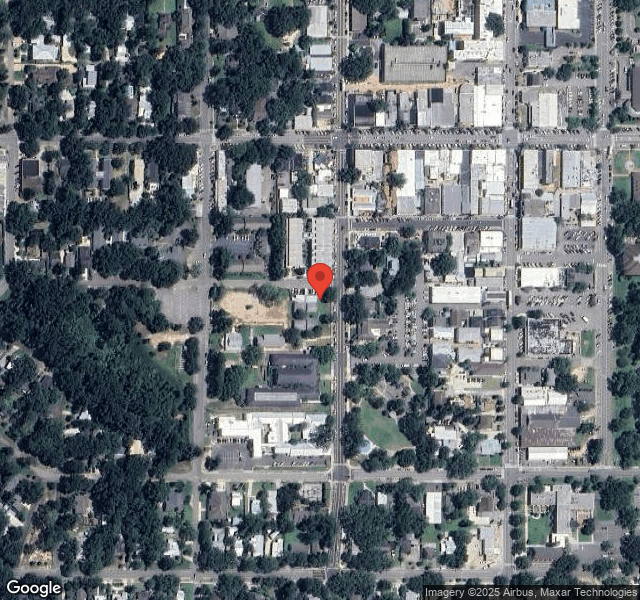
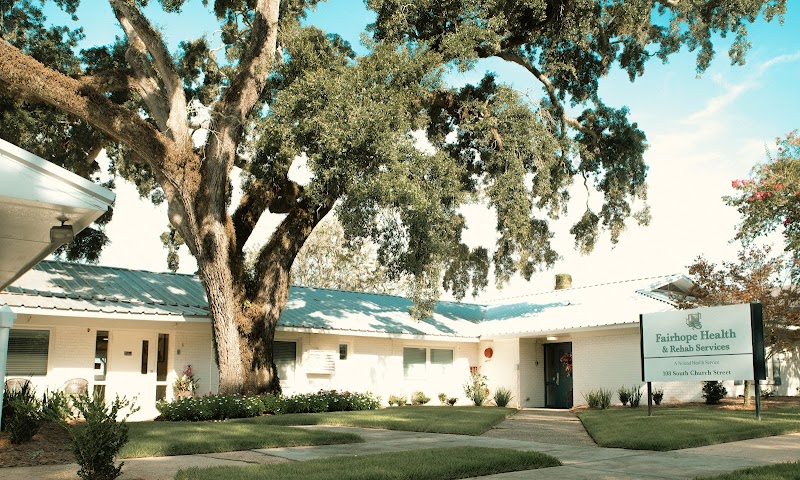
108 SOUTH CHURCH STREET, FAIRHOPE, AL 36532 (251) 928-2153
Non profit - Corporation 131 Beds NOLAND HEALTH Data: November 2025
Trust Grade
60/100
#160 of 223 in AL
Last Inspection: February 2022

Over 2 years since last inspection. Current conditions may differ from available data.

Overview

Fairhope Health & Rehab in Fairhope, Alabama has a Trust Grade of C+, indicating it is slightly above average but not without concerns. Ranking #160 out of 223 facilities in Alabama places it in the bottom half, and #5 out of 7 in Baldwin County suggests only two local options are better. The facility is experiencing a worsening trend, with issues increasing from 1 in 2019 to 6 in 2022. Staffing is a positive aspect, rated 4 out of 5 stars, with a turnover rate of 36%, which is lower than the state average. However, the facility has faced concerns such as improper food storage practices that could impact resident safety and delays in completing required assessments for some residents, highlighting areas needing improvement despite no fines reported.

Trust Score
C+
60/100
In Alabama
#160/223
Bottom 29%
Safety Record
Low Risk
No red flags
Inspections
Getting Worse
1 → 6 violations
Staff Stability
○ Average
36% turnover. Near Alabama's 48% average. Typical for the industry.
Penalties
✓ Good
No fines on record. Clean compliance history, better than most Alabama facilities.
Skilled Nurses
○ Average
Each resident gets 32 minutes of Registered Nurse (RN) attention daily — about average for Alabama. RNs are the most trained staff who monitor for health changes.
Violations
○ Average
9 deficiencies on record. Average for a facility this size. Mostly minor or procedural issues.
★★☆☆☆
2.0
Overall Rating
★★★★☆
4.0
Staff Levels
★★☆☆☆
2.0
Care Quality
★★☆☆☆
2.0
Inspection Score
Stable
2019: 1 issues
2022: 6 issues

The Good

  • 4-Star Staffing Rating · Above-average nurse staffing levels
  • Full Sprinkler Coverage · Fire safety systems throughout facility
  • No fines on record
  • Staff turnover below average (36%)

    12 points below Alabama average of 48%

Facility shows strength in staffing levels, fire safety.

The Bad

2-Star Overall Rating

Below Alabama average (2.9)

Below average - review inspection findings carefully

Staff Turnover: 36%

Near Alabama avg (46%)

Typical for the industry

Chain: NOLAND HEALTH

Part of a multi-facility chain

Ask about local staffing decisions and management

The Ugly 9 deficiencies on record

Feb 2022 6 deficiencies
CONCERN (D)

Potential for Harm - no one hurt, but risky conditions existed

Comprehensive Assessments (Tag F0636)

Could have caused harm · This affected 1 resident

Based on record review, interview, review of the facility's Resident Assessment Instrument (RAI) policy, and review of Centers for Medicare & Medicaid Services (CMS) Long-Term Care Facility Resident A...

Read full inspector narrative →
Based on record review, interview, review of the facility's Resident Assessment Instrument (RAI) policy, and review of Centers for Medicare & Medicaid Services (CMS) Long-Term Care Facility Resident Assessment Instrument 3.0 User ' s Manual, the facility failed to ensure the comprehensive annual Minimum Data Set (MDS) assessments for Resident Identifier (RI) #5 and RI #7 were completed within required timeframes. This affected two of 23 residents reviewed for timely completion and/or transmission of MDS assessments. Findings include: A review of the facility's Resident Assessment Instrument (RAI) policy and procedure, dated 09/2019, revealed, .Purpose: Residents are assessed, based on a comprehensive assessment process, in order to ensure they receive treatment and care in accordance with professional standards of practice, the comprehensive care plan and the resident's choices .Process: . a.) The comprehensive assessment is completed.annually (at least every 365 days), as clinically necessary . Review of the Centers for Medicare & Medicaid Services (CMS) Long-Term Care Facility Resident Assessment Instrument 3.0 User ' s Manual revealed the following: .Chapter 2: Assessments for the Resident Assessment Instrument (RAI) . 2.6 Required OBRA Assessments for the MDS . Comprehensive Assessments . Assessment Management Requirements and Tips for Comprehensive Assessments: .The ARD (Assessment Reference Date) of an assessment drives the due date of the next assessment. The next comprehensive assessment is due within 366 days after the ARD of the most recent comprehensive assessment. On 02/23/2022 at 8:13 AM, Employee Identifier (EI) #3, the MDS coordinator, was asked to provide information from the MDS program in her computer regarding the completion of annual MDS assessments for the RI #5 and RI #7.: 1. A review of RI #5's RAI list revealed an annual Minimum Data Set (MDS) assessment, with an Assessment Reference Date of 12/10/2021, had not been completed. The most recent prior comprehensive MDS assessment, an annual assessment, had an ARD of 12/17/2020. 2. A review of RI #7's RAI list revealed an annual MDS assessment, with an Assessment Reference Date of 12/16/2021, had not been completed. The most recent prior comprehensive MDS, a significant change in condition assessment, had an ARD of 12/22/2020. On 02/24/2022 at 8:40 AM, EI #3 stated the comprehensive annual MDS assessments for RI #5 and RI #7 had not been completed in a timely manner. On 02/24/2022 at 8:45 AM, EI #1, the Administrator, was interviewed. She stated she expected MDS assessments to be completed timely according to the MDS calendar.
CONCERN (D)

Potential for Harm - no one hurt, but risky conditions existed

Infection Control (Tag F0880)

Could have caused harm · This affected 1 resident

**NOTE- TERMS IN BRACKETS HAVE BEEN EDITED TO PROTECT CONFIDENTIALITY** Based on observation, interviews, and review of the facility's procedure, titled, Infection Control during Med Pass, the facilit...

Read full inspector narrative →
**NOTE- TERMS IN BRACKETS HAVE BEEN EDITED TO PROTECT CONFIDENTIALITY** Based on observation, interviews, and review of the facility's procedure, titled, Infection Control during Med Pass, the facility failed to ensure a nurse wore gloves while administering insulin for Resident Identifier (RI) #196, one of one resident that was observed being administered insulin. Findings included: A review of the facility's procedure, titled, Infection Control during Med Pass, undated, presented as the policy for infection control, by Employee Identifier (EI) #3 on 02/22/2022 at 9:15 AM, revealed, .Wear gloves with any treatment/technique . Resident Identifier (RI) #196 was admitted to the facility on [DATE] with diagnoses of Alzheimer's Disease and Diabetes Mellitus. A review of RI #196's physician's order, dated 02/10/2022, indicated an order on 02/10/2022 for Lantus (insulin glargine) 100 unit/milliliter (ml) vial, give 10 units subcutaneous in the AM related to Type II Diabetes Mellitus. On 02/22/2022 at 7:57 AM, during medication pass, EI #4, Licensed Practical Nurse (LPN), was observed not wearing gloves while administering Lantus insulin 10 units subcutaneous injection to RI #196. On 02/22/2022 at 9:20 AM, El #4 was interviewed. El #4 stated she did not wear gloves and it was a mistake. On 02/22/2022 at 9:25 AM, EI #1, Administrator, was interviewed. EI #1 stated her expectation is that staff should wear gloves when administering insulin.
CONCERN (E)

Potential for Harm - no one hurt, but risky conditions existed

Deficiency F0638 (Tag F0638)

Could have caused harm · This affected multiple residents

Based on record review, interview, review of the facility's Resident Assessment Instrument (RAI) policy, and review of the Centers for Medicare & Medicaid Services (CMS) Long-Term Care Facility Reside...

Read full inspector narrative →
Based on record review, interview, review of the facility's Resident Assessment Instrument (RAI) policy, and review of the Centers for Medicare & Medicaid Services (CMS) Long-Term Care Facility Resident Assessment Instrument 3.0 User's Manual, the facility failed to ensure the quarterly Minimum Data Set (MDS) assessments for Resident Identifier (RI) #s 9, 27, 8, 19, 23, 18, 14, 21, and 24 were completed within required timeframes. This affected nine of 23 residents reviewed for timely completion and/or transmission of MDS assessments. Findings include: A review of the facility's Resident Assessment Instrument (RAI) policy and procedure, dated 09/2019, revealed, .Purpose: Residents are assessed, based on a comprehensive assessment process, in order to ensure they receive treatment and care in accordance with professional standards of practice, the comprehensive care plan and the resident's choices .b.) Quarterly assessments are due at least every 92 days . Review of the Centers for Medicare & Medicaid Services (CMS) Long-Term Care Facility Resident Assessment Instrument 3.0 User's Manual revealed the following: .Chapter 2: Assessments for the Resident Assessment Instrument (RAI) . Non-Comprehensive Assessments and Entry and Discharge Reporting . Assessment Management Requirements and Tips for Non-Comprehensive Assessments: .The ARD (Assessment Reference Date) of an assessment drives the due date of the next assessment. The next non-comprehensive assessment is due within 92 days after the ARD of the most recent OBRA assessment (ARD of previous OBRA assessment - Admission, Annual, Quarterly, Significant Change in Status, or Significant Correction assessment - + 92 calendar days) . On 02/23/2022 at 8:13 AM, Employee Identifier (EI) #3, the MDS Coordinator, was asked to provide information from the MDS program in her computer regarding the completion of quarterly MDS assessments for RI#s 9, 27, 8, 19, 23, 18, 14, 21, and 24: 1. A review of RI #9's RAI list revealed a quarterly MDS assessment, with an Assessment Reference Date of 12/17/2021, had not been completed. The most recent prior MDS assessment, a quarterly assessment, had an ARD of 09/17/2021. 2. A review of RI #27's RAI list revealed a quarterly MDS assessment, with an Assessment Reference Date of 01/15/022, had not been completed. The most recent prior MDS assessment, a quarterly assessment, had an ARD of 10/18/2021. 3. A review of RI #8's RAI list revealed a quarterly MDS assessment, with an Assessment Reference Date of 12/15/2021, had not been completed. The most recent prior MDS assessment, a significant change in condition assessment, had an ARD of 09/16/2021. 4. A review of RI #19's RAI list revealed a quarterly MDS assessment, with an Assessment Reference Date of 01/06/2022, had not been completed. The most recent prior MDS assessment, an annual assessment, had an ARD of 10/08/2021. 5. A review of RI #23's RAI list revealed a quarterly MDS assessment, with an Assessment Reference Date of 01/12/2022, had not been completed. The most recent prior MDS assessment, a quarterly assessment, had an ARD of 10/13/2021. 6. A review of RI #18's RAI list revealed a quarterly MDS assessment, with an Assessment Reference Date of 01/07/2022, had not been completed. The most recent prior MDS assessment, a quarterly assessment, had an ARD of 10/06/2021. 7. A review of RI #14's RAI list revealed a quarterly MDS assessment, with an Assessment Reference Date of 01/04/2022, had not been completed. The most recent prior MDS assessment, an admission assessment, had an ARD of 10/05/2021. 8. A review of RI #21's RAI list revealed a quarterly MDS assessment, with an Assessment Reference Date of 01/08/2022, had not been completed. The most recent prior MDS assessment, an annual assessment, had an ARD of 10/09/2021. 9. A review of RI #24's RAI list revealed a quarterly MDS assessment, with an Assessment Reference Date of 01/13/2022, had not been completed. The most recent prior MDS assessment, a quarterly assessment, had an ARD of 10/14/2021. On 02/24/2022 at 8:40 AM, EI #3, the Minimum Data Set Coordinator, stated the quarterly MDS assessments for RI #s 9, 27, 8, 19, 23, 18, 14, 21, and 24 had not been completed in a timely manner. On 02/24/2022 at 8:45 AM, EI #1, the Administrator was interviewed. She stated she expected MDS assessments to be completed timely according to the MDS calendar.
CONCERN (E)

Potential for Harm - no one hurt, but risky conditions existed

MDS Data Transmission (Tag F0640)

Could have caused harm · This affected multiple residents

Based on record review, interview, and review of the Centers for Medicare & Medicaid Services (CMS) Long-Term Care Facility Resident Assessment Instrument (RAI) 3.0 User's Manual, the facility failed ...

Read full inspector narrative →
Based on record review, interview, and review of the Centers for Medicare & Medicaid Services (CMS) Long-Term Care Facility Resident Assessment Instrument (RAI) 3.0 User's Manual, the facility failed to ensure Minimum Data Set (MDS) assessments were submitted to CMS within 14 days of the completion date of the assessments for Resident Identifier (RI) #s 17, 15, 27, 11, 2, 23, 22, 16, 21, and 24, 10 of 23 residents reviewed for timely completion and/or transmission of MDS assessments. Findings include: Review of the Centers for Medicare & Medicaid Services (CMS) Long-Term Care Facility Resident Assessment Instrument 3.0 User's Manual, revealed the following: .CHAPTER 5: SUBMISSION AND CORRECTION OF THE MDS ASSESSMENTS . 5.1 Transmitting MDS Data All Medicare and/or Medicaid-certified nursing homes and swing beds, or agents of those facilities, must transmit required MDS data records to CMS ' Quality Improvement and Evaluation System (QIES) Assessment Submission and Processing (ASAP) system . 5.2 Timeliness Criteria . .Assessment Transmission: Comprehensive assessments must be transmitted electronically within 14 days of the Care Plan Completion Date . All other MDS assessments must be submitted within 14 days of the MDS Completion Date . On 02/23/2022 at 8:13 AM, Employee Identifier (EI) #3, the MDS Coordinator, was asked to provide information from the MDS program in her computer regarding the transmission of MDS for the following residents: 1. A review of RI #17's RAI list revealed a significant change in status Minimum Data Set, with an Assessment Reference Date of 01/05/2022, was signed off as completed by the Registered Nurse (RN) on 01/14/2022. This assessment was not transmitted to CMS until 02/21/2022. 2. A review of RI #15's RAI list revealed a quarterly Minimum Data Set, with an Assessment Reference Date of 01/01/2022, was signed off as completed by the RN on 01/14/2022. This assessment was not transmitted to CMS until 02/21/2022. 3. A review of RI #27's RAI list revealed a quarterly Minimum Data Set, with an Assessment Reference Date of 10/18/2021, was signed off as completed by the RN 11/01/2021. This assessment was not transmitted to CMS until 11/26/2021. 4. A review of RI #11's RAI list revealed a discharge Minimum Data Set, with an Assessment Reference Date of 11/17/2021, was signed off as completed by the RN on 01/28/2022. This assessment was not transmitted to CMS until 02/21/2022. 5. A review of RI #2's RAI list revealed a quarterly Minimum Data Set (MDS), with an Assessment Reference Date (ARD) of 09/10/2021,was signed off as completed by the RN on 09/24/2021. This assessment was not transmitted to CMS until 10/12/2021. 6. A review of RI #23's RAI list revealed a quarterly Minimum Data Set, with an Assessment Reference Date of 10/13/2021, was signed off as completed by the RN on 10/27/2021. This assessment was not transmitted to CMS until 11/26/2021. 7. A review of RI #22's RAI list revealed a quarterly Minimum Data Set, with an Assessment Reference Date of 01/11/2022, was signed off as completed by the RN on 01/25/2022. This assessment was not transmitted to CMS until 02/21/2022. 8. A review of RI #16's RAI list revealed a quarterly Minimum Data Set, with an Assessment Reference Date of 01/03/2022, was signed off as completed by the RN on 01/17/2022. This assessment was not transmitted to CMS until 02/21/2022. 9. A review of RI #21's RAI list revealed an annual Minimum Data Set, with an Assessment Reference Date of 10/09/2021, was signed off as completed by the RN on 10/23/2021. This assessment was not transmitted to CMS until 11/26/2021. 10. A review of RI #24's RAI list revealed a quarterly Minimum Data Set, with an Assessment Reference Date of 10/14/2021, was signed off as completed by the RN on 10/28/2021. This assessment was not transmitted to CMS until 11/26/2021. On 02/24/2022 at 8:40 AM, EI #3 stated the Minimum Data Sets for all ten residents listed above had not been transmitted timely. On 02/24/2022 at 8:45 AM, EI #1, the Administrator, was interviewed. She stated she expected Minimum Data Sets to be transmitted timely.
CONCERN (E)

Potential for Harm - no one hurt, but risky conditions existed

Medication Errors (Tag F0758)

Could have caused harm · This affected multiple residents

**NOTE- TERMS IN BRACKETS HAVE BEEN EDITED TO PROTECT CONFIDENTIALITY** Based on record review, interview, and review of the facility's Psychoactive Drug Monitoring and Behavior Management Program pol...

Read full inspector narrative →
**NOTE- TERMS IN BRACKETS HAVE BEEN EDITED TO PROTECT CONFIDENTIALITY** Based on record review, interview, and review of the facility's Psychoactive Drug Monitoring and Behavior Management Program policies, the facility failed to ensure Resident Identifier (RI) #45 and RI #22, who both received psychotropic medications, were monitored for the specific targeted behaviors for which medications were ordered. Further, the facility failed to ensure RI #45 and RI #22 were monitored for side effects of their ordered psychotropic medications. This deficient practice affected RI #s 45 and 22, two of five sampled residents reviewed for unnecessary medications. Findings include: A review of the facility's Psychoactive Drug Monitoring policy and procedure, dated 3/2011, revealed, .Residents who receive psychoactive/psychopharmacological medications are monitored. These are defined as any medication for managing behavior, stabilizing mood, or treating psychiatric disorders. Every effort is made to ensure that residents receiving these medications obtain maximum benefit with the minimum of unwanted side effects. Psychoactive drug monitoring guidelines include, but may not be limited to, anti-anxiety drugs, antidepressants, antipsychotics, and sedative/hypnotics . A review of the facility's Behavior Management Program, dated 03/2018, revealed, .Behavior monitoring may be done to determine behavior or an isolated event . 1. A review of Resident Identifier (RI) #45's Face Sheet, dated 02/21/2022, revealed RI #45 was admitted the to the facility on [DATE] and had diagnoses which included Schizoaffective Disorder, Bipolar Type; Generalized Anxiety Disorders; Other Recurrent Depressive Disorders; Other Schizoaffective Disorders; and other Drug Induced Movement Disorders. Review of RI #45's quarterly Minimum Data Set (MDS), with an Assessment Reference Date (ARD) of 12/22/2021, revealed the resident had a Brief Interview for Mental Status score of 15, which indicated the resident was cognitively intact. The MDS indicated the resident had exhibited verbal symptoms directed toward others and had rejected care on one-three days during the seven day assessment look-back period. Review of RI #45's comprehensive care plans, most recently reviewed/revised on 02/21/2022, indicated the resident's problems included behaviors. Approaches for the problem included to place the resident on a behavior monitoring plan if needed and to document noted behaviors. Another care plan problem was the potential for adverse effects related to the use of psychotropic medications. Approaches to the problem included to evaluate the effectiveness and side effects of the medication for possible need to increase, decrease, or eliminate drug; observe during routine rounds for signs and symptoms of adverse side effects of the medication and if observed document changes and notify MD (medical doctor); observe resident for excessive sedation, tardive dyskinesia, malignant syndrome, akathisia, changes in facial and oral movements, involuntary rapid, objectively purposeless; irregular spontaneous extremity and trunk movements and notify the physician if observed. Another approach was to document those symptoms in the medical record. Review of RI #45's Physician's Orders, dated 02/2022, revealed the resident was to receive the following psychotropic medications: - 02/03/2022 - Seroquel 25 milligrams (mg) one tablet by mouth every morning. This order specified to hold for sedation and to monitor for gait changes; however, the order did not specify the diagnosis for which it was prescribed or indicate any specific targeted behaviors. - 10/03/2021 - Trazodone 150 mg one tablet by mouth at bedtime for sleep - 01/19/2022 - Seroquel 125 mg one tablet by mouth at bedtime. The order did not specify the diagnosis for which it was prescribed or indicate any specific targeted behaviors. - 02/04/2022 - Fluphenazine 5 mg on tablet by mouth every afternoon for bipolar disorder, current episode depressed, moderate - 08/21/2021 - Cymbalta 30 mg one capsule twice daily A review of RI #45's electronic health record (EHR), including the Medication Administration Records for 12/2021, 01/2022, and 02/2022, revealed that while there was general behavior monitoring for RI #45, there was no monitoring of any specific target behaviors related to his/her psychotropic medication use. Further, there was no monitoring for side effects of the antipsychotic and antidepressant medications. The EHR did not contain an AIMS (Abnormal Involuntary Movement Scale), a tool used to measure involuntary movements known as tardive dyskinesia, for the resident. On 02/24/2022 at 10:05 AM, Employee Identifier (EI) #24, Licensed Practical Nurse (LPN), was interviewed. She stated RI #45 received Seroquel and Fluphenazine for paranoia tendencies, but said a new nurse would not know that. She stated the behavior list in the electronic MAR was generalized and not specific to the resident's target behaviors. The LPN stated the resident was not monitored for side effects of the Seroquel, Fluphenazine and Cymbalta and further stated there was no place to document monitoring of side effects. 2. A review of Resident Identifier (RI) #22's Face Sheet, dated 02/21/2022, revealed RI #22 was admitted to the facility on [DATE] and had diagnoses which included Cognitive Communication Deficit; Unspecified Dementia with Behavioral Disturbance; Other Specified Anxiety Disorders; Dementia in Other Diseases Classified Elsewhere; and Other Recurrent Depressive Disorders. RI #22's care plan, dated 01/27/2020, indicated the resident had the potential for adverse effects related to the use of psychotropic medications. Approaches to the problem included to evaluate effectiveness and side effects of medication for possible need to increase, decrease, or eliminate the drug; observed during routine rounds for signs and symptoms of adverse side effects of the medication and if observed document changes and notify the physician; observe resident for excessive sedation, tardive dyskinesia, malignant syndrome, akathisia, changes in facial and oral movements, involuntary rapid, objectively purposeless; irregular spontaneous extremity and trunk movements and notify the physician if observed. Another approach was to document those symptoms in the medical record. RI #22's care plan, dated 05/01/2020, indicated the resident had been exhibiting behaviors of being demanding of staff, picking at her ear recently, non-compliance with social distancing and being disruptive at times. Approaches to the problem included to place the resident on a behavior monitoring plan if needed and to document noted behaviors. RI #22's care plan, dated 12/13/2021, indicated the resident had been exhibiting impulsive behaviors, hitting her roommate, non-compliance with wearing a mask when out in the hallway. Approaches for the problem included to place the resident on a behavior monitoring plan if needed, notify MD of any significant changes in behaviors, and document noted behaviors. A review RI #22's most recent annual Minimum Data Set (MDS), with an Assessment Reference Date (ARD) of 01/11/2022, revealed the resident had a Brief Interview for Mental Status Score of 13, which indicated the resident was cognitively intact. The MDS indicated the resident had exhibited verbal behavioral symptoms directed toward others and had exhibited other behavioral symptoms not directed toward others during one to three days during the seven day assessment look-back period. A review of the Physician's Orders, dated 02/2022, revealed the resident was to receive the following psychotropic medications: - 01/05/2022 - Seroquel 25 milligrams (mg) (1/2 tab to equal 12.5mg) give one-half tablet by mouth daily at bedtime for dementia with behavioral disturbance. The order did not specify a targeted behavior for which the medication was prescribed. - 01/19/2022 - Duloxetine 30mg one by mouth daily for depression A review of RI #22's electronic health record (EHR), including the electronic Medication Administration Records (eMAR) for 12/2021, 01/2022, and 02/2022, revealed that while there was general behavior monitoring for RI #45, there was no monitoring of any specific target behaviors related to his/her psychotropic medication use. Further, there was no monitoring for side effects of the antipsychotic and antidepressant medications. The EHR did not contain an AIMS (Abnormal Involuntary Movement Scale), a tool used to measure involuntary movements known as tardive dyskinesia, for the resident. On 02/23/2022 at 2:03 PM, Employee Identifier (EI) #24, a Licensed Practical Nurse, was interviewed. She stated there was no monitoring for side effects of the antipsychotic and antidepressant medications. On 02/24/2022 at 9:50 AM, a follow-up interview was conducted with EI #24. She stated the behavior monitoring listed on the eMAR was a generalized list used for every resident, and not specific to any target behaviors. On 02/24/2022 at 5:06 PM, a telephone interview was conducted with the psychiatric Nurse Practitioner. She stated she expected the facility's nurses to monitor for the target behaviors for which an antipsychotic medication is administered. She further stated she expected the facility nurses to monitor residents who received antipsychotic and/or antidepressant medications for side effects of the medications.
CONCERN (F)

Potential for Harm - no one hurt, but risky conditions existed

Food Safety (Tag F0812)

Could have caused harm · This affected most or all residents

Based on observation, interview, and review of the facility's Food, Leftover - Storage and Use policy, the facility failed to ensure food was properly stored in the walk-in refrigerator and walk-in fr...

Read full inspector narrative →
Based on observation, interview, and review of the facility's Food, Leftover - Storage and Use policy, the facility failed to ensure food was properly stored in the walk-in refrigerator and walk-in freezer. This had the potential to affect 54 of 55 residents in the facility who ate food prepared in the kitchen. Findings include: The facility's Food, Leftover - Storage and Use policy and procedure, dated 07/2016, indicated, .Standard: Leftover foods should be stored under sanitary conditions .Process: Leftover foods should be covered, labeled and dated . Opened bulk items that require refrigeration once open may be stored up to thirty (30) days but not beyond 'best by' or expiration date then discarded . On 02/21/2022 at 9:18 AM, during the initial tour of the kitchen and food storage areas, with Employee Identifier (EI) #13, the Dietary Manager, present, the following was observed: - In the walk-in refrigerator, there was no date on the following open food: two packages of sliced ham, a package of salami, a plastic bag of boiled eggs, a package of tortillas, a plastic bag of cinnamon raisin bread, and a plastic bag of grated cheese. - In the walk-in freezer, a box of frozen vegetables was stored on the floor and there was no date on the following open foods: a package of frozen pancakes, a plastic container of lemon meringue pie, a plastic container of red velvet cake, and a plastic bag of hush puppies. A plastic bag of French toast was open to air and not dated. On 02/21/2022 at 9:28 AM, EI #13 stated food was not supposed to be stored on the floor. On 02/21/2022 at 9:32 AM, EI #13 was interviewed. She stated open food packages in the refrigerator and freezer should be closed and dated.
May 2019 1 deficiency
CONCERN (D)

Potential for Harm - no one hurt, but risky conditions existed

Pharmacy Services (Tag F0755)

Could have caused harm · This affected 1 resident

Based on an interview, review of Non-Controlled Medication Destruction records, and review of a facility policy titled, Disposal of Medications, Non-Controlled Medication Destruction, the facility fai...

Read full inspector narrative →
Based on an interview, review of Non-Controlled Medication Destruction records, and review of a facility policy titled, Disposal of Medications, Non-Controlled Medication Destruction, the facility failed to ensure the June 27, 2018 and March 29, 2019 Medication destruction records contained two required signatures. This was noted on two of seven months of Non-controlled Medication Destruction records reviewed. Findings Include: Review of a facility policy titled, Disposal of Medications Non-Controlled Medication Destruction, dated 3/11, revealed: .Policy Discontinued medications, expired medications, and medications left in the facility after a resident has expired or has been permanently discharged are destroyed or disposed of per federal/state regulations. Procedures . 3. The registered nurse and/or pharmacist witnessing the destruction, or their preparation for environmental service pickup, ensures the following is entered on the Record of Medication Destruction form .: . J. Signature of witnesses, two witnesses required for non-controlled substances (for example a pharmacist in Alabama and a registered nurse) in the designated areas on the destruction form. Review of the Record of Medication Destruction for Non-Controlled Drugs, dated 6/27/18, revealed only one signature. Review of the CERTIFICATE OF INVENTORY AND DESTRUCTION (non-controlled medications), dated 3/29/19, also revealed only one signature. On 5/23/19 at 9:03 AM, an interview was conducted with Employee Identifier (EI) #7, the Director of Nursing Services. EI #7 was asked who was responsible for the signing of the Non-Controlled Drug destruction sheets. EI #7 said the Unit Manager and herself. EI #7 was asked when the sheets were signed, should there have been two signatures on the non-controlled sheets. EI #7 said yes, according to facility policy they should be signed by two people. EI #7 reviewed the June 27, 2018 and March 29, 2019 medication destruction records and agreed they only had one signature.
May 2018 2 deficiencies
CONCERN (D)

Potential for Harm - no one hurt, but risky conditions existed

ADL Care (Tag F0677)

Could have caused harm · This affected 1 resident

**NOTE- TERMS IN BRACKETS HAVE BEEN EDITED TO PROTECT CONFIDENTIALITY** Based on observations, interviews, record review and a review of a policy titled, ADL {activities of daily living} Care, Documen...

Read full inspector narrative →
**NOTE- TERMS IN BRACKETS HAVE BEEN EDITED TO PROTECT CONFIDENTIALITY** Based on observations, interviews, record review and a review of a policy titled, ADL {activities of daily living} Care, Documentation of Routine ., the facility failed to check RI (Resident Identifier) #4 for incontinence and change him/her for four hours and 16 minutes. RI #4 is unable to carry out ADLs for himself/herself. RI #4 was continuously observed on 5/16/18 from 8:25 AM till 12:41 PM and staff did not check him/her for incontinence or change him/her during that time. This affected one of two residents whose ADL assistance was observed. Findings Include: Review of a policy titled, ADL Care, Documentation of Routine . with an effective date of 2/18, revealed: . PROCESS .Care provided per policy and residents individualized plan of care . RI#4 was admitted to the facility on [DATE] with diagnoses that include Osteoporosis, Congenital Deformity of the Spine and Type II diabetes. Review of RI#4's care plan dated 12/21/17 revealed: .Problem/Need .Resident needs total assist with all ADL's related to: being totally dependant (dependent) on staff, head injury.Approaches . Incontinence care promptly and apply barrier cream as needed . RI#4's care plan dated 12/21/17, revealed: .Problem Onset . Potential for skin breakdown related to incontinence, total dependence, decreased mobility .Approaches .Assist/encourage to turn and reposition every 2 hours and prn (as needed) . A continuous observation was made by the surveyor of RI #4 on 5/16/18 from 8:25 AM until 12:41 PM. RI #4 was in front of the nurses station in a geri chair. At 9:49 AM, the staff moved RI #4 to the activity area for a coffee social. RI #4 remained in the activity area until lunch was served. RI #4 was fed by the staff at 12:00 PM. RI #4 was not repositioned and the staff had not checked the adult brief RI #4 was wearing for wetness (urine) or if it was soiled. At 12:41 PM, the staff took RI #4 to his/her room and RI #4 was placed in his/her bed to be checked for incontinence and changed. An interview was conducted on 05/16/18 at 1:46 PM, with EI (Employee Identifier) #17, a CNA (Certified Nursing Assistant). EI #17 was asked who was assigned to RI #4 today, 5/16/18. EI #17 stated she was. EI #17 was asked what time was RI #4 placed in his/her geri chair. EI #17 replied, 8:30 AM and they went to the nursing station. EI #17 was asked how often should the resident be checked. EI #17 replied, he/she should be checked for repositioning and drying every two hours. EI #17 was asked why should the resident be checked. EI #17 replied, so the resident would not get any pressure sores. EI #17 was asked when was RI #4 checked this AM. EI #17 replied, she checked RI #4 in the hallway just before lunch at the nursing station. EI #17 was asked who took RI #4 to the dining room after she checked the resident. EI # 17 replied, I don't remember. EI #17 was asked where did she check RI #4. EI #17 replied/ in the hall. EI #17 was asked if she was supposed to provide privacy when checking RI #4. EI #17 replied, yes. EI #17 was asked what was the concern for not providing privacy for the resident. EI #17 replied, it makes the resident feel bad. EI #17 was asked when did the resident attend the coffee social. EI #17 replied, 10:00 AM. EI #17 was asked to explain how she checked RI #4 for wetness and/or being soiled and turned RI #4 while he/she was in the gerichair at the nursing station. EI #17 replied, RI #4 was a heavy wetter. EI #17 also replied, I touched the resident's leg. EI#17 said, she did not check to see if RI #4 was wet. EI #17 was asked how was a resident supposed to be checked for wetness and if they were soiled. EI#17 was asked to describe RI #4's brief to the surveyor. EI #17 replied, it was soiled with urine, really soiled a lot. EI #17 was asked did she agree she said the urine was one inch from the top in the front and four inches from the top in the back of the brief. EI # 17 replied,yes. EI #17 was asked what was the concern of RI #4 being left wet. EI#17 replied she/he was concerned RI #4 would get breakdown, red areas and UTI (urinary tract infections). EI #17 was asked what was the facility policy for checking and changing residents. EI#17 replied, check the resident in their room every two hours.
CONCERN (D)

Potential for Harm - no one hurt, but risky conditions existed

Pressure Ulcer Prevention (Tag F0686)

Could have caused harm · This affected 1 resident

**NOTE- TERMS IN BRACKETS HAVE BEEN EDITED TO PROTECT CONFIDENTIALITY** Based on an observation, interviews, record review and a review of Kozier & Erb's FUNDAMENTALS OF NURSING Concepts, Process, and...

Read full inspector narrative →
**NOTE- TERMS IN BRACKETS HAVE BEEN EDITED TO PROTECT CONFIDENTIALITY** Based on an observation, interviews, record review and a review of Kozier & Erb's FUNDAMENTALS OF NURSING Concepts, Process, and Practices, the facility failed to ensure RI (Resident Identifier) #4, a resident at risk of developing a pressure ulcer, received the necessary care of checking for incontinence and changing. This affected RI #4, one of two sampled residents at risk for pressure ulcer development. Findings Include: A review of Kozier&Erb's FUNDAMENTALS OF NURSING Concepts, Processes, and Practices, page 830 revealed: .Risk Factors Several factors contribute to the formation of pressure ulcers: . immobility, .fecal and urinary incontinence IMMOBILITY Immobility refers to a reduction in the amount and control of movement a person has. Normally people move when they experience discomfort due to pressure on an area of the body.any causes of decreased activity can hinder a person's ability to change positions independently and relieve the pressure, even if the person can perceive the pressure . A review of RI #4's medical record revealed the resident was admitted to the facility on [DATE] with diagnoses including Osteoporosis and Type II Diabetes. A review of RI #4's Quarterly MDS (Minimum Data Set), with an ARD (Assessment Reference Date) of 4/9/18, revealed RI #4 was totally dependent on staff for all ADLs and required a one person assist for transfers. RI#4's care plan dated 12/21/17, revealed: .Problem Onset . Potential for skin breakdown related to incontinence, total dependence, decreased mobility .Approaches .Assist/encourage to turn and reposition every 2 hours and prn (as needed) . A continuous observation was made by the surveyor of RI #4 on 5/16/18 from 8:25 AM until 12:41 PM. RI #4 was in front of the nurses station in a geri chair. At 9:49 AM, the staff moved RI #4 to the activity area for a coffee social. RI #4 remained in the activity area until lunch was served. RI #4 was fed by the staff at 12:00 PM. RI #4 was not repositioned and the staff had not checked the adult brief RI #4 was wearing for wetness (urine) or if it was soiled. At 12:41 PM, the staff took RI #4 to his/her room and RI #4 was placed in his/her bed to be checked for incontinence and changed. An interview was conducted on 05/16/18 at 1:46 PM, with EI (Employee Identifier) #17, a CNA (Certified Nursing Assistant). EI #17 was asked who was assigned to RI #4 today, 5/16/18. EI #17 stated she was. EI #17 was asked what time was RI #4 placed in his/her geri chair. EI #17 replied, 8:30 AM and they went to the nursing station. EI #17 was asked how often should the resident be checked. EI #17 replied, he/she should be checked for repositioning and drying every two hours. EI #17 was asked why should the resident be checked. EI #17 replied, so the resident would not get any pressure sores. EI #17 was asked when was RI #4 checked this AM. EI #17 replied, she checked RI #4 in the hallway just before lunch at the nursing station. EI #17 was asked who took RI #4 to the dining room after she checked the resident. EI # 17 replied, I don't remember. EI #17 was asked where did she check RI #4. EI #17 replied/ in the hall. EI #17 was asked if she was supposed to provide privacy when checking RI #4. EI #17 replied, yes. EI #17 was asked what was the concern for not providing privacy for the resident. EI #17 replied, it makes the resident feel bad. EI #17 was asked when did the resident attend the coffee social. EI #17 replied, 10:00 AM. EI #17 was asked to explain how she checked RI #4 for wetness and/or being soiled and turned RI #4 while he/she was in the gerichair at the nursing station. EI #17 replied, RI #4 was a heavy wetter. EI #17 also replied, I touched the resident's leg. EI#17 said, she did not check to see if RI #4 was wet. EI #17 was asked how was a resident supposed to be checked for wetness and if they were soiled. EI#17 was asked to describe RI #4's brief to the surveyor. EI #17 replied, it was soiled with urine, really soiled a lot. EI #17 was asked did she agree she said the urine was one inch from the top in the front and four inches from the top in the back of the brief. EI # 17 replied,yes. EI #17 was asked what was the concern of RI #4 being left wet. EI#17 replied she/he was concerned RI #4 would get breakdown, red areas and UTI (urinary tract infections). EI #17 was asked what was the facility policy for checking and changing residents. EI#17 replied, check the resident in their room every two hours. On 5/17/18 at 5:52 AM, an interview was conducted with EI #16, a Registered Nurse (RN). EI #16 was asked who was assigned to RI #4 on 5/16/18. EI #16 replied EI #17. EI #16 was asked what time was RI #4 was placed in the geri chair. EI #16 replied, before breakfast, maybe around 7:00 AM. EI #16 was asked how often should RI #4 be checked. EI #16 replied, every two hours EI #16 was asked was if RI #4 was a heavy wetter. EI #16 replied, not all the time. EI #16 was asked why should RI #4 be checked. EI #16 replied, make sure they were dry. EI #16 was asked when did RI #4 go to the coffee social. EI #16 replied, 10:00 AM. EI #16 was asked what was the facility policy on how to check residents to see if they were wet or soiled. EI #16 replied, check every two hours and make sure they were clean and dry.
Understanding Severity Codes (click to expand)
Life-Threatening (Immediate Jeopardy)
J - Isolated K - Pattern L - Widespread
Actual Harm
G - Isolated H - Pattern I - Widespread
Potential for Harm
D - Isolated E - Pattern F - Widespread
No Harm (Minor)
A - Isolated B - Pattern C - Widespread

Questions to Ask on Your Visit

  • "Can I speak with families of current residents?"
  • "What's your RN coverage like on weekends and overnight?"

Our Honest Assessment

Strengths
  • • No major safety red flags. No abuse findings, life-threatening violations, or SFF status.
  • • No fines on record. Clean compliance history, better than most Alabama facilities.
  • • 36% turnover. Below Alabama's 48% average. Good staff retention means consistent care.
Concerns
  • • No major red flags. Standard due diligence and a personal visit recommended.
Bottom line: Mixed indicators with Trust Score of 60/100. Visit in person and ask pointed questions.

About This Facility

What is Fairhope Health & Rehab's CMS Rating?

CMS assigns FAIRHOPE HEALTH & REHAB an overall rating of 2 out of 5 stars, which is considered below average nationally. Within Alabama, this rating places the facility higher than 0% of the state's 100 nursing homes. A rating at this level reflects concerns identified through health inspections, staffing assessments, or quality measures that families should carefully consider.
How is Fairhope Health & Rehab Staffed?

CMS rates FAIRHOPE HEALTH & REHAB's staffing level at 4 out of 5 stars, which is above average compared to other nursing homes. Staff turnover is 36%, compared to the Alabama average of 46%. This relatively stable workforce can support continuity of care.

What Have Inspectors Found at Fairhope Health & Rehab?

State health inspectors documented 9 deficiencies at FAIRHOPE HEALTH & REHAB during 2018 to 2022. These included: 9 with potential for harm.
Who Owns and Operates Fairhope Health & Rehab?

FAIRHOPE HEALTH & REHAB is owned by a non-profit organization. Non-profit facilities reinvest revenue into operations rather than distributing to shareholders. The facility is operated by NOLAND HEALTH, a chain that manages multiple nursing homes. With 131 certified beds and approximately 74 residents (about 56% occupancy), it is a mid-sized facility located in FAIRHOPE, Alabama.
How Does Fairhope Health & Rehab Compare to Other Alabama Nursing Homes?

Compared to the 100 nursing homes in Alabama, FAIRHOPE HEALTH & REHAB's overall rating (2 stars) is below the state average of 2.9, staff turnover (36%) is near the state average of 46%, and health inspection rating (2 stars) is below the national benchmark.

What Should Families Ask When Visiting Fairhope Health & Rehab?

Based on this facility's data, families visiting should ask: "Can I visit during a mealtime to observe dining assistance and food quality?" "How do you handle medical emergencies, and what is your hospital transfer rate?" "Can I speak with family members of current residents about their experience?"

Is Fairhope Health & Rehab Safe?

Based on CMS inspection data, FAIRHOPE HEALTH & REHAB has a clean safety record: no substantiated abuse findings (meaning no confirmed cases of resident harm), no Immediate Jeopardy citations (the most serious violation level indicating risk of serious injury or death), and is not on the Special Focus Facility watch list (a federal program monitoring the lowest-performing 1% of nursing homes). The facility has a 2-star overall rating and ranks #100 of 100 nursing homes in Alabama. While no facility is perfect, families should still ask about staff-to-resident ratios and recent inspection results during their visit.

Do Nurses at Fairhope Health & Rehab Stick Around?

FAIRHOPE HEALTH & REHAB has a staff turnover rate of 36%, which is about average for Alabama nursing homes (state average: 46%). Moderate turnover is common in nursing homes, but families should still ask about staff tenure and how the facility maintains care continuity when employees leave.

Was Fairhope Health & Rehab Ever Fined?

FAIRHOPE HEALTH & REHAB has no federal fines on record. CMS issues fines when nursing homes fail to meet care standards or don't correct problems found during inspections. The absence of fines suggests the facility has either maintained compliance or corrected any issues before penalties were assessed. This is a positive indicator, though families should still review recent inspection reports for the full picture.

Is Fairhope Health & Rehab on Any Federal Watch List?

FAIRHOPE HEALTH & REHAB is not on any federal watch list. The most significant is the Special Focus Facility (SFF) program, which identifies the bottom 1% of nursing homes nationally based on persistent, serious quality problems. Not being on this list means the facility has avoided the pattern of deficiencies that triggers enhanced federal oversight. This is a positive indicator, though families should still review the facility's inspection history directly.