GOODWATER HEALTHCARE CENTER
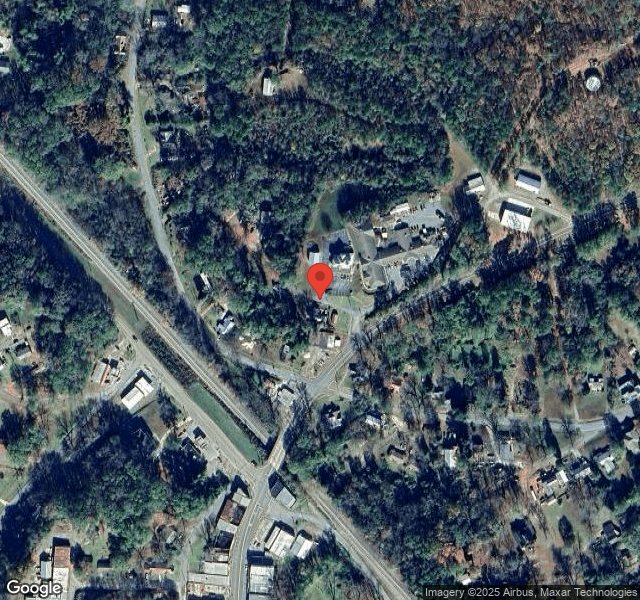

16 JONES HILL ROAD, GOODWATER, AL 35072 (256) 839-6711
For profit - Corporation 72 Beds PRIME HEALTH CARE ENTERPRISES Data: November 2025
Trust Grade
90/100
#17 of 223 in AL
Last Inspection: April 2021

Over 2 years since last inspection. Current conditions may differ from available data.

Overview

Goodwater Healthcare Center in Goodwater, Alabama has received an impressive Trust Grade of A, indicating excellent quality and a strong recommendation for families considering care options. Ranking #17 out of 223 facilities statewide places them in the top half of Alabama, and they are the only nursing home in Coosa County, which emphasizes their local importance. The facility is showing an improving trend, having reduced issues from five in 2018 to none by 2021, indicating a commitment to enhancing care standards. Staffing is a strong point, with a perfect 5/5 rating and a turnover rate of only 33%, significantly lower than the state average, meaning staff are experienced and familiar with the residents. However, there were some concerning past incidents, including a failure to assess the need for side rails for residents, which could pose risks, and the lack of a proper assessment after a resident's admission to hospice care. Overall, while Goodwater Healthcare Center demonstrates many strengths, families should be aware of the need for continued vigilance regarding care procedures.

Trust Score
A
90/100
In Alabama
#17/223
Top 7%
Safety Record
Low Risk
No red flags
Inspections
Getting Better
5 → 0 violations
Staff Stability
○ Average
33% turnover. Near Alabama's 48% average. Typical for the industry.
Penalties
✓ Good
No fines on record. Clean compliance history, better than most Alabama facilities.
Skilled Nurses
✓ Good
Each resident gets 43 minutes of Registered Nurse (RN) attention daily — more than average for Alabama. RNs are trained to catch health problems early.
Violations
✓ Good
Only 5 deficiencies on record. Cleaner than most facilities. Minor issues only.
★★★★★
5.0
Overall Rating
★★★★★
5.0
Staff Levels
★★☆☆☆
2.0
Care Quality
★★★★★
5.0
Inspection Score
Stable
2018: 5 issues
2021: 0 issues

The Good

  • 5-Star Staffing Rating · Excellent nurse staffing levels
  • Full Sprinkler Coverage · Fire safety systems throughout facility
  • No fines on record
  • Staff turnover below average (33%)

    15 points below Alabama average of 48%

Facility shows strength in staffing levels, fire safety.

The Bad

Staff Turnover: 33%

13pts below Alabama avg (46%)

Typical for the industry

Chain: PRIME HEALTH CARE ENTERPRISES

Part of a multi-facility chain

Ask about local staffing decisions and management

The Ugly 5 deficiencies on record

Mar 2018 5 deficiencies
CONCERN (D)

Potential for Harm - no one hurt, but risky conditions existed

Deficiency F0637 (Tag F0637)

Could have caused harm · This affected 1 resident

**NOTE- TERMS IN BRACKETS HAVE BEEN EDITED TO PROTECT CONFIDENTIALITY** Based on record review and interview, the facility failed to ensure a Significant Change Minimum Data Set (MDS) Assessment was c...

Read full inspector narrative →
**NOTE- TERMS IN BRACKETS HAVE BEEN EDITED TO PROTECT CONFIDENTIALITY** Based on record review and interview, the facility failed to ensure a Significant Change Minimum Data Set (MDS) Assessment was completed after Resident Identifier (RI) #13's admission to Hospice on 3/12/2017. This affected one of 19 sampled residents for whom MDS Assessments were reviewed. Findings include: RI #13 was readmitted to the facility on [DATE] with diagnoses of Atrial Fibrillation, Tachycardia, and Hypertension. RI #13's March 2018 Physician Orders included an order dated 3/12/2017 to admit to Hospice related to heart disease. On 3/15/2018 at 3:06 PM RI #13's MDS assessments were reviewed and revealed there was no Significant Change MDS assessment completed after RI #13's admission to hospice services. Employee Identifier (EI) #2, the MDS Coordinator, was interviewed on 3/15/2018 at 1:53 PM. EI #2 stated a significant change assessment should have been completed after RI #13's admission to hospice, but she would need to check to see if one was done. EI #2 returned at 2:20 PM and confirmed RI #13 was admitted to hospice on 3/12/2017, but no Significant Change MDS assessment had been completed.
CONCERN (D)

Potential for Harm - no one hurt, but risky conditions existed

Deficiency F0761 (Tag F0761)

Could have caused harm · This affected 1 resident

**NOTE- TERMS IN BRACKETS HAVE BEEN EDITED TO PROTECT CONFIDENTIALITY** Based on observation, interviews and review of Nursing Inservice information, the facility failed to ensure Employee Identifier ...

Read full inspector narrative →
**NOTE- TERMS IN BRACKETS HAVE BEEN EDITED TO PROTECT CONFIDENTIALITY** Based on observation, interviews and review of Nursing Inservice information, the facility failed to ensure Employee Identifier (EI) #3, Registered Nurse (RN), labeled a multiple dose insulin vial for Resident Identifier (RI) #32 with an expiration date after the vial was opened. This deficient practice was observed during one of 25 medication pass opportunities. Findings include: RI #32 was readmitted to the facility on [DATE] with a diagnoses of Type One Diabetes Mellitus. RI #32's March 2018 Physician Orders included an order for Novolog insulin per sliding scale. On 3/13/2018 at 4:15 PM, EI #3, RN, was observed preparing to administer RI #32's Novolog insulin from a new vial. After withdrawing the insulin from the vial, EI #3 placed the new insulin vial back into the box, without dating the box or vial. EI #3 then placed box into the medication cart drawer and locked it. The surveyor asked EI #3 what should have been done after opening the new vial of insulin. EI #3 stated, Dated the bottle. On 3/15/2018 at 3:15 PM, EI #4, Director of Nursing (DON), provided a copy of an undated inservice titled, Nursing Inservice MedPass (Medication Pass) Procedures. This document revealed the following: . Date all vials when punctured (expire in 28 days) . On 3/15/2018 at 3:36 PM, EI #4, DON, was interviewed and asked, what should be done when an insulin bottle was opened. EI#4 stated it should be initialed and dated. EI#4 was then asked why that was important. She explained it was an infection control issue and the medication needed to be wasted after 28 days.
CONCERN (E)

Potential for Harm - no one hurt, but risky conditions existed

Deficiency F0700 (Tag F0700)

Could have caused harm · This affected multiple residents

**NOTE- TERMS IN BRACKETS HAVE BEEN EDITED TO PROTECT CONFIDENTIALITY** Based on observations, record review, and interviews, the facility failed to ensure a system was in place to assess residents to...

Read full inspector narrative →
**NOTE- TERMS IN BRACKETS HAVE BEEN EDITED TO PROTECT CONFIDENTIALITY** Based on observations, record review, and interviews, the facility failed to ensure a system was in place to assess residents to determine if side rail use was appropriate, as well determine the residents' risk of entrapment. Further, no alternative approaches were attempted prior to using the side rails, and no informed consent was obtained from either the residents or their representatives prior to utilizing side rails. These failures affected Resident Identifier (RI) #s 13 and 28, two of seven sampled residents reviewed for side rail use, and had the potential to affect all 33 residents with orders and/or careplans in place for side rail use. The facility provided a Census List identifying 33 residents that utilized side rails out of total facility census of 62. Findings include: 1) RI #13 was readmitted to the facility on [DATE] with diagnoses of Osteoarthritis, Difficulty Walking, Insomnia, Artificial Hip Joint (left), and Muscle Weakness. RI #13's admission Nursing Assessment, dated 02/10/2017, indicated RI #13 should have 1/2 (half) side rails up times two for turning and positioning. The assessment made no reference to any alternatives attempted prior to side rail use. RI #13's March 2018 Physician Orders included an order dated 2/10/2017 for 1/2 side rails times two when in bed for turning and repositioning. RI #13's most recent Annual Minimum Data Set (MDS) Assessment, with an Assessment Reference Date (ARD) of 02/11/2018, documented RI #13 had both short and long term memory impairment and had severely impaired daily decision making skills. This assessment also indicated RI #13 was totally dependent on two plus people for bed mobility. RI #13's fall care plan, last reviewed 2/12/2018, included an approach to use 1/2 side rails as ordered for positioning. On 3/14/2018 at 4:03 PM, RI #13 was observed in bed with side rails up times two. 2) RI #28 was readmitted to the facility on [DATE] with diagnoses of Alzheimer's Disease, Psychotic Disorder with Delusions, Restlessness and Agitation, and Convulsions. RI #28's March 2018 Physician Orders included an order dated 04/25/2017 for padded 1/2 side rails times two for turning and positioning. RI #28's quarterly MDS Assessment, with an ARD of 02/21/2018, documented RI #28 had both short and long term memory problems and severely impaired daily decision making skills. This assessment also indicated RI #28 was totally dependent on one person for bed mobility. RI #28's fall care plan, last reviewed 2/22/2018, included an approach to use 1/2 side rails up times two for turning and positioning. This approach was dated 10/31/2016. On 03/13/2018 at 4:05 PM, RI #28 was observed in bed with 1/2 side rails up times two; however RI #28 was unable to answer questions or demonstrate if he/she was able to utilize side rails for turning and positioning in the bed. On 3/14/2018 at 10:09 AM, RI #28 was again observed in bed with 1/2 side rails up times two. On 03/15/18 at 6:27 PM, Employee Identifier (EI) #6, Licensed Practical Nurse (LPN)/Restorative Nurse, discussed RI #28's order to use 1/2 side rails for turning and positioning in bed, and explained that at one point RI #28 could use the side rails because his/her cognition was much better. However, EI #6 said RI #28 could no longer use the side rails for turning and positioning in the bed. EI #6 further explained RI #28 does wiggle back and forth and is top heavy and leans to the side, which could possibly put the resident at risk for entrapment. On 3/14/2017 at 11:10 AM, the surveyor asked EI #4, the Director of Nursing (DON), if the facility did side rail assessments and where to locate that information in the residents' charts. EI #4 responded that maintenance checked the side rails. The surveyor then asked about a resident assessment, and EI #4 said she did not think the facility did side rail assessments on the residents. When asked for the facility's policy related to side rail use, EI #4 said she would check, but did not think the facility had one. EI #4 explained the facility used side rails for turning and repositioning. On 3/14/2018 at 2:17 PM, EI #4, the DON, returned and stated the facility did not do side rail assessments. When asked if she was able to locate a facility policy, EI #4 said there was not a policy addressing side rails. On 03/15/18 at 6:27 PM, EI #6, Licensed Practical Nurse (LPN)/Restorative Nurse, was interviewed. When asked if she had any involvement in assessing residents for the use of side rails, EI #6 stated she did. The surveyor asked EI #6 to explain the facility's process for evaluating residents for the need for side rails, as well as entrapment risk. EI #6 explained she did not have any documentation of resident assessments for side rails, only an inservice addressing the need to check side rails and mattresses on admission, monthly and with any room changes. EI #6 said during these checks, they basically just looks at the resident in the bed and looks at the side rails. EI #6 further clarified that when doing this, they do not pull residents' charts to review that information, and to her knowledge that had never been done. The surveyor asked if any of the following factors were considered when assessing residents for the use/need for side rails: diagnoses, resident's size and weight, sleep patterns, medications, interventions, presence of delirium, ability to safely toilet, cognition, communication, mobility, fall risk, and any alternatives attempted prior to side rail use. EI #6 responded none of the preceding items were things she considered when evaluating for side rails. When asked how residents' risk of entrapment was assessed, EI #6 stated she has never assessed residents for entrapment risk. The surveyor then questioned EI #6 regarding the use of any alternatives prior to using side rails. EI #6 explained it was typical that side rails were implemented upon admission, and no alternatives were attempted prior to utilizing the side rails. EI #6 also stated she does not get informed consent for the use of side rails. When asked why it would be important to assess each resident and the factors discussed above when determining the need for side rails, EI #6 stated because there are certain times side rails can cause more harm by being up. EI #6 then stated the same applied to the importance of assessing for entrapment risk. On 3/15/18 at 7:01 PM, EI #4, DON, was asked how residents were assessed to determine if they required the use of side rails. EI #4 said side rails were listed on the admission Nursing Assessment. The surveyor then questioned EI #4 regarding alternatives attempted prior to use of side rails, if the admission Nursing Assessment included them. EI #4 said the admission Nursing Assessment was completed within 24 hours of admission, so they did not really have time to do alternatives before using the side rails. When asked how they determined the appropriate size of side rails required for each resident, EI #4 said they use 1/2 rails on the majority of their residents. The surveyor then asked EI #4 how entrapment risk was addressed for each resident and where that information would be documented. EI #4 said they did not have a specific piece of paper addressing that. When asked if she could provide evidence that RI #s 13 and 28 were assessed to determine if they were at risk for entrapment, EI #4 said she did not have documentation of that. She further stated neither of these residents had informed consent for the use of their side rails. The surveyor then asked EI #4 what system the facility had in place for evaluating/assessing residents to determine if side rails were appropriate and whether the residents were at risk for entrapment, as well as a method for ongoing evaluation. EI #4 said the facility did not have a system in place. When asked which residents could potentially be impacted by the facility's lack of policy, assessment and ongoing monitoring, EI #4 said all of the residents with side rails could be affected.
CONCERN (E)

Potential for Harm - no one hurt, but risky conditions existed

QAPI Program (Tag F0867)

Could have caused harm · This affected multiple residents

Based on observations, record review, and interview, the facility's Quality Assessment and Assurance (QAA) Committee failed to identify and address concerns related to the facility's side rail usage p...

Read full inspector narrative →
Based on observations, record review, and interview, the facility's Quality Assessment and Assurance (QAA) Committee failed to identify and address concerns related to the facility's side rail usage process. This affected Resident Identifier (RI) #s 13 and 28, two of seven sampled residents reviewed for side rail use, and had the potential to affect all 33 residents with orders and/or careplans in place for side rail use. The facility provided a Census List identifying 33 residents that utilized side rails out of a total facility census of 62. Findings Include: Cross Reference F700. During the recertification survey from 03/13-03/15/2018, the survey team identified concerns with side rail and entrapment risk assessments, lack of alternatives attempted prior to side rail use, and no informed consent for RI #s 13 and 28's side rails. On 3/14/2018 at 2:17 PM, Employee Identifier (EI) #4, the Director of Nursing (DON), stated the facility did not do side rail assessments and also did not have a policy addressing side rails. On 3/15/18 at 7:01 PM, EI #4, DON, was asked how the QAA committee addressed regulatory changes and new requirements. EI #4 explained they discussed what each department would need to do. EI #4 also stated they had a book that discussed all of the changes. EI #7, QAA Director, was interviewed on 03/15/18 at 8:09 PM regarding the team's identified concerns with side rail use. When asked if the QAA committee had identified side rail use, assessment, and lack of policy as an area of concern, EI #7 said they had not. When asked what information the committee utilized to determine areas of concern, EI #7 said they reviewed any falls, skin tears, and unusual occurrences, at least three times per week. EI #7 further stated the committee does discuss facility policies to determine if they are consistent with federal regulations, but clarified the facility did not have policies addressing everything.
MINOR (C)

Minor Issue - procedural, no safety impact

Deficiency F0577 (Tag F0577)

Minor procedural issue · This affected most or all residents

Based on observation and interview, the facility failed to ensure a notice of the availability of the previous three years of survey results was posted for residents and/or visitors. This had the pote...

Read full inspector narrative →
Based on observation and interview, the facility failed to ensure a notice of the availability of the previous three years of survey results was posted for residents and/or visitors. This had the potential to affect all 62 of 62 residents residing in the facility and any visitors. Findings include: On 3/15/2018 at 8:40 AM, the survey result notebook was observed attached below the bulletin board inside the main entry door/lobby. A sign on the bulletin board indicated State Survey Results. The notebook contained reports from the 2017 Recertification Survey and the 2017 Life Safety Code Survey. There was no notice posting the availability of the previous three years of results. Employee Identifier (EI) #1, the Administrator, was interviewed on 3/15/2018 at 3:52 PM. EI #1 stated the survey results were posted by the front door entrance at railing height so that anyone could access them. When asked which survey results were contained within the binder, EI #1 said the 2017 Recertification Survey and the 2017 Life Safety Code Survey. When asked if there were any signs notifying residents or visitors of the availability of the previous years' survey reports, EI #1 said she did not think they had a sign that indicated the previous survey reports were available if requested.
Understanding Severity Codes (click to expand)
Life-Threatening (Immediate Jeopardy)
J - Isolated K - Pattern L - Widespread
Actual Harm
G - Isolated H - Pattern I - Widespread
Potential for Harm
D - Isolated E - Pattern F - Widespread
No Harm (Minor)
A - Isolated B - Pattern C - Widespread

Questions to Ask on Your Visit

  • "Can I speak with families of current residents?"
  • "What's your RN coverage like on weekends and overnight?"

Our Honest Assessment

Strengths
  • • Grade A (90/100). Above average facility, better than most options in Alabama.
  • • No major safety red flags. No abuse findings, life-threatening violations, or SFF status.
  • • No fines on record. Clean compliance history, better than most Alabama facilities.
  • • Only 5 deficiencies on record. Cleaner than most facilities. Minor issues only.
Concerns
  • • No significant concerns identified. This facility shows no red flags across CMS ratings, staff turnover, or federal penalties.
Bottom line: Generally positive indicators. Standard due diligence and a personal visit recommended.

About This Facility

What is Goodwater Healthcare Center's CMS Rating?

CMS assigns GOODWATER HEALTHCARE CENTER an overall rating of 5 out of 5 stars, which is considered much above average nationally. Within Alabama, this rating places the facility higher than 99% of the state's 100 nursing homes. This rating reflects solid performance across the metrics CMS uses to evaluate nursing home quality.

How is Goodwater Healthcare Center Staffed?

CMS rates GOODWATER HEALTHCARE CENTER's staffing level at 5 out of 5 stars, which is much above average compared to other nursing homes. Staff turnover is 33%, compared to the Alabama average of 46%. This relatively stable workforce can support continuity of care.

What Have Inspectors Found at Goodwater Healthcare Center?

State health inspectors documented 5 deficiencies at GOODWATER HEALTHCARE CENTER during 2018. These included: 4 with potential for harm and 1 minor or isolated issues.

Who Owns and Operates Goodwater Healthcare Center?

GOODWATER HEALTHCARE CENTER is owned by a for-profit company. For-profit facilities operate as businesses with obligations to shareholders or private owners. The facility is operated by PRIME HEALTH CARE ENTERPRISES, a chain that manages multiple nursing homes. With 72 certified beds and approximately 55 residents (about 76% occupancy), it is a smaller facility located in GOODWATER, Alabama.

How Does Goodwater Healthcare Center Compare to Other Alabama Nursing Homes?

Compared to the 100 nursing homes in Alabama, GOODWATER HEALTHCARE CENTER's overall rating (5 stars) is above the state average of 3.0, staff turnover (33%) is significantly lower than the state average of 46%, and health inspection rating (5 stars) is much above the national benchmark.

What Should Families Ask When Visiting Goodwater Healthcare Center?

Based on this facility's data, families visiting should ask: "Can I visit during a mealtime to observe dining assistance and food quality?" "How do you handle medical emergencies, and what is your hospital transfer rate?" "Can I speak with family members of current residents about their experience?"

Is Goodwater Healthcare Center Safe?

Based on CMS inspection data, GOODWATER HEALTHCARE CENTER has a clean safety record: no substantiated abuse findings (meaning no confirmed cases of resident harm), no Immediate Jeopardy citations (the most serious violation level indicating risk of serious injury or death), and is not on the Special Focus Facility watch list (a federal program monitoring the lowest-performing 1% of nursing homes). The facility has a 5-star overall rating and ranks #1 of 100 nursing homes in Alabama. While no facility is perfect, families should still ask about staff-to-resident ratios and recent inspection results during their visit.

Do Nurses at Goodwater Healthcare Center Stick Around?

GOODWATER HEALTHCARE CENTER has a staff turnover rate of 33%, which is about average for Alabama nursing homes (state average: 46%). Moderate turnover is common in nursing homes, but families should still ask about staff tenure and how the facility maintains care continuity when employees leave.

Was Goodwater Healthcare Center Ever Fined?

GOODWATER HEALTHCARE CENTER has no federal fines on record. CMS issues fines when nursing homes fail to meet care standards or don't correct problems found during inspections. The absence of fines suggests the facility has either maintained compliance or corrected any issues before penalties were assessed. This is a positive indicator, though families should still review recent inspection reports for the full picture.

Is Goodwater Healthcare Center on Any Federal Watch List?

GOODWATER HEALTHCARE CENTER is not on any federal watch list. The most significant is the Special Focus Facility (SFF) program, which identifies the bottom 1% of nursing homes nationally based on persistent, serious quality problems. Not being on this list means the facility has avoided the pattern of deficiencies that triggers enhanced federal oversight. This is a positive indicator, though families should still review the facility's inspection history directly.