BROOKSHIRE HEALTHCARE CENTER
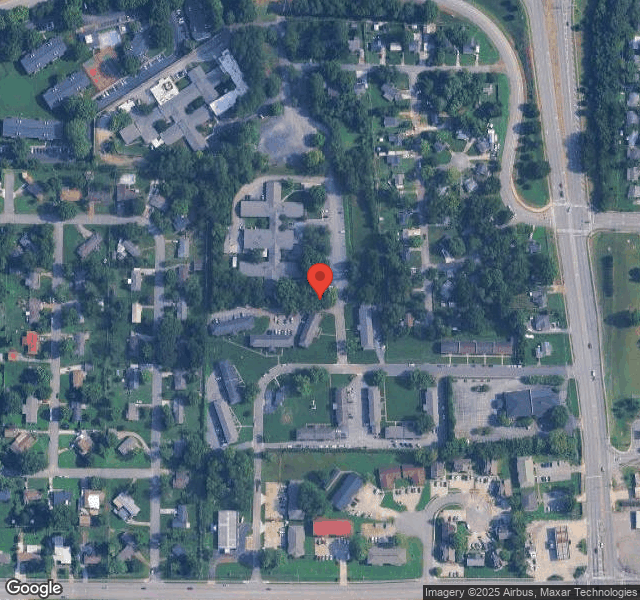

4320 JUDITH LANE, HUNTSVILLE, AL 35805 (256) 837-1730
For profit - Corporation 129 Beds VENZA CARE MANAGEMENT Data: November 2025
Trust Grade
60/100
#146 of 223 in AL
Last Inspection: March 2022

Over 2 years since last inspection. Current conditions may differ from available data.

Overview

Brookshire Healthcare Center has a Trust Grade of C+, indicating it is slightly above average in quality but not particularly outstanding. It ranks #146 out of 223 facilities in Alabama, placing it in the bottom half of options available in the state, and #8 out of 12 in Madison County, meaning there are only a few better local choices. Unfortunately, the facility's trend is worsening, with issues increasing from 2 in 2019 to 5 in 2022, highlighting a decline in care. On a positive note, staffing is a strength, earning a rating of 4 out of 5 stars with a turnover rate of 50%, which is in line with the state average, suggesting that staff stability is not a major concern. However, there have been some specific incidents that raise alarms, such as failure to notify the ombudsman of a resident's hospital transfer and not developing timely care plans for new admissions, indicating potential gaps in communication and care management. While there are commendable aspects to Brookshire, families should weigh these concerns carefully when considering this facility for their loved ones.

Trust Score
C+
60/100
In Alabama
#146/223
Bottom 35%
Safety Record
Low Risk
No red flags
Inspections
Getting Worse
2 → 5 violations
Staff Stability
⚠ Watch
50% turnover. Above average. Higher turnover means staff may not know residents' routines.
Penalties
✓ Good
No fines on record. Clean compliance history, better than most Alabama facilities.
Skilled Nurses
✓ Good
Each resident gets 50 minutes of Registered Nurse (RN) attention daily — more than average for Alabama. RNs are trained to catch health problems early.
Violations
○ Average
8 deficiencies on record. Average for a facility this size. Mostly minor or procedural issues.
★★☆☆☆
2.0
Overall Rating
★★★★☆
4.0
Staff Levels
★☆☆☆☆
1.0
Care Quality
★★★☆☆
3.0
Inspection Score
Stable
2019: 2 issues
2022: 5 issues

The Good

  • 4-Star Staffing Rating · Above-average nurse staffing levels
  • Full Sprinkler Coverage · Fire safety systems throughout facility
  • No fines on record

Facility shows strength in staffing levels, fire safety.

The Bad

2-Star Overall Rating

Below Alabama average (2.9)

Below average - review inspection findings carefully

Staff Turnover: 50%

Near Alabama avg (46%)

Higher turnover may affect care consistency

Chain: VENZA CARE MANAGEMENT

Part of a multi-facility chain

Ask about local staffing decisions and management

The Ugly 8 deficiencies on record

Mar 2022 5 deficiencies
CONCERN (D)

Potential for Harm - no one hurt, but risky conditions existed

Transfer Notice (Tag F0623)

Could have caused harm · This affected 1 resident

**NOTE- TERMS IN BRACKETS HAVE BEEN EDITED TO PROTECT CONFIDENTIALITY** Based on interviews and record reviews, the facility failed to ensure a copy of Resident Identifier (RI) #30's transfer notice w...

Read full inspector narrative →
**NOTE- TERMS IN BRACKETS HAVE BEEN EDITED TO PROTECT CONFIDENTIALITY** Based on interviews and record reviews, the facility failed to ensure a copy of Resident Identifier (RI) #30's transfer notice was provided to the ombudsman as soon as practicable after RI #30 was sent to the emergency room in 11/2021 due to medical concerns. This affected one of one resident reviewed for a transfer to the hospital. Findings include: A policy related to notifying the ombudsman of resident transfers/discharges was requested from the facility. On 03/17/2022 at 3:31 PM, Employee Identifier (EI) #2, the Director of Nursing (DON), indicated there was no facility policy on notifying the ombudsman of resident transfers/discharges. A review of an admission Record revealed RI #30 had a hospital stay from 11/20/2021 to 11/24/2021 and had diagnoses which included Gastrointestinal Hemorrhage, Diaphragmatic Hernia, and Pyuria. A review of a Progress Note, dated 11/20/2021 at 3:52 PM, indicated the responsible party (RP) was notified and the Certified Registered Nurse Practitioner was informed that RI #30 was not eating or drinking much and that the family was okay with RI #30 going to the hospital. The note indicated an order was received to send RI #30 to the emergency room for evaluation. In an interview on 03/17/2022 at 10:05 AM, Employee Identifier (EI) #9, Social Service Director, was asked for the ombudsman notification for the resident's transfer to the hospital in November 2021. EI #9 indicated she was unsure about who completed the ombudsman notification. In a joint interview with EI #1, the Administrator, and EI #9, on 03/17/2022 at 12:01 PM, EI #1 stated there was no ombudsman notification for RI #30's transfer to the hospital on [DATE]. In an interview on 03/17/2022 at 2:07 PM, EI #2, the DON, indicated the ombudsman was to be notified of discharges weekly or monthly and stated the notification should have been done within 30 days of the transfer. In an interview on 03/17/2022 at 2:42 PM, EI #1 stated he expected the ombudsman to be notified monthly and he was aware that the ombudsman was not notified about RI #30.
CONCERN (D)

Potential for Harm - no one hurt, but risky conditions existed

Deficiency F0655 (Tag F0655)

Could have caused harm · This affected 1 resident

**NOTE- TERMS IN BRACKETS HAVE BEEN EDITED TO PROTECT CONFIDENTIALITY** Based on interviews and record review, the facility failed to ensure a baseline care plan was developed within 48 hours of admis...

Read full inspector narrative →
**NOTE- TERMS IN BRACKETS HAVE BEEN EDITED TO PROTECT CONFIDENTIALITY** Based on interviews and record review, the facility failed to ensure a baseline care plan was developed within 48 hours of admission for Resident Identifier (RI) #89, one of nine sampled residents reviewed for a baseline care plan. Findings include: A review of the admission Record for RI #89 indicated the resident was admitted to the facility on [DATE] with diagnoses which included Fracture of Unspecified Part of the Neck of the Right Femur and Dementia. Review of RI #89's Order Summary Report and Clinical Physician Orders revealed RI #89 had the following orders: - Hospice services (order date of 02/17/2022) - Regular diet, dysphagia (difficulty swallowing foods) mechanical soft texture, with thin consistency liquids (start date of 02/17/2022); and - Wound care to the left hip (start date of 02/25/2022). On 3/14/2022 at 1:20 PM, RI #89's electronic medical record was reviewed. There was no baseline care plan available for review in the resident's medical record. On 03/15/2022 at 10:30 AM, an interview was conducted with EI #6, a Licensed Practical Nurse (LPN). EI #6 indicated she was the admitting nurse for RI #89 on 02/17/2022. She stated she did not start a baseline care plan. EI #6 said she did not even know how to do it, because it was not part of the admission process. On 03/15/2022 at 11:21 AM, an interview was conducted with EI #5, the Treatment Nurse. She stated EI #4, the Minimum Data Set (MDS) Coordinator, was responsible for starting the baseline care plan and the MDS Coordinator was the only one that did care plans. The care plan should have been initiated on 02/17/2022 (the date of admission) and should have included RI #89's skin/wound interventions, hospice information, and diet information. On 03/15/2022 at 12:28 PM, an interview was conducted with EI #4. She stated the initiation of the baseline care plan was a team effort and was not one certain person's responsibility. She stated RI #89 should have had a baseline care plan within 72 hours of admission. She said she had reviewed the resident's electronic medical record and was not able to locate a baseline care plan. EI #4 indicated the baseline care plan would have information such as pressure ulcers/skin conditions, hospice, and diet. On 03/17/2022 at 1:52 PM, an interview was conducted with EI #2, the Director of Nursing (DON). He stated the baseline care plan should be initiated when a resident was first admitted to the facility and could be completed by any of the licensed nurses. He stated hospice and pressure ulcers would be included in the baseline care plan. He stated his expectation was that the nurses get it done and the facility followed the rules. On 03/17/2021 at 2:52 PM, an interview was conducted with EI #1, Administrator. He stated his expectation was that the baseline care plan be completed timely, thoroughly, and in a detailed manner.
CONCERN (D)

Potential for Harm - no one hurt, but risky conditions existed

Comprehensive Care Plan (Tag F0656)

Could have caused harm · This affected 1 resident

**NOTE- TERMS IN BRACKETS HAVE BEEN EDITED TO PROTECT CONFIDENTIALITY** Based on record review and interviews, the facility failed to ensure a comprehensive care plan was developed to address Resident...

Read full inspector narrative →
**NOTE- TERMS IN BRACKETS HAVE BEEN EDITED TO PROTECT CONFIDENTIALITY** Based on record review and interviews, the facility failed to ensure a comprehensive care plan was developed to address Resident Identifier (RI) #93's use of an antidepressant medication. This affected one of 24 sampled residents for whom care plans were reviewed. Findings include: RI #93 was admitted to the facility on [DATE] with diagnoses including Mood Disorder Due to Known Physiological Condition with Depressive Features. RI #93's significant change Minimum Data Set (MDS) assessment, with an assessment reference date (ARD) of 12/07/2021, indicated RI #93 received an antidepressant medication on seven out of seven days of the seven day assessment look-back period. The Care Area Assessment (CAA) Summary for this MDS assessment was signed by Employee Identifier (EI) #13, the Licensed Practical Nurse (LPN) MDS Coordinator, on 12/13/2021. The summary indicated psychotropic drug use was a triggered care area for further assessment and was to be addressed in the care plan. A review of the Order Summary Report for active physician orders indicated RI #93 had a physician order dated 02/05/2022 for Zoloft (an antidepressant) tablet 50 milligrams (mg) to be given one time a day related to a diagnosis of Mood Disorder Due to Known Physiological Condition with Depressive Features. A review of the February and March 2022 Medication Administration Records (MARs) indicated RI #93 had received Zoloft daily from 02/05/2022 through the current date of 03/16/2022. A review of RI #93's current care plan, printed 03/16/2022, revealed there was no care planned focus area, goal, or interventions related to antidepressant use. In an interview on 03/17/2022 at 9:08 AM, EI #4, the Registered Nurse (RN) MDS Coordinator, confirmed there was no care plan for Zoloft use for RI #93. EI #4 stated there should have been a care plan for the antidepressant. In an interview on 03/17/2022 at 2:55 PM, EI #1, the Administrator, stated he expected comprehensive care plans to be completed by all team members who were responsible and completed timely and in a thorough manner. EI #1 would expect that RI #93's care plan should address their antidepressant. In an interview on 03/17/2022 at 3:22 PM, EI #2 stated his expectation was that the comprehensive care plan was done on time and that RI #93 would have a care plan for an antidepressant.
CONCERN (D)

Potential for Harm - no one hurt, but risky conditions existed

Deficiency F0657 (Tag F0657)

Could have caused harm · This affected 1 resident

**NOTE- TERMS IN BRACKETS HAVE BEEN EDITED TO PROTECT CONFIDENTIALITY** Based on record review and interviews, the facility failed to ensure comprehensive care plans were developed and implemented for...

Read full inspector narrative →
**NOTE- TERMS IN BRACKETS HAVE BEEN EDITED TO PROTECT CONFIDENTIALITY** Based on record review and interviews, the facility failed to ensure comprehensive care plans were developed and implemented for Resident Identifier (RI) #89 within seven days of the completion of RI #89's admission Minimum Data Set (MDS) assessment. This affected one of 24 sampled residents for whom care plans were reviewed. Findings include: A review of the admission Record for RI #89 indicated the resident was admitted to the facility on [DATE] with diagnoses which included Fracture of Unspecified Part of the Neck of the Right Femur and Dementia. RI #89's admission MDS assessment was signed as completed by the Registered Nurse (RN) on 03/03/2022. On 03/14/2022 at 1:20 PM, RI #89's electronic medical record was reviewed. It was noted RI #89's comprehensive care plans were not initiated until 03/14/2022. On 03/15/2022 at 11:21 AM, an interview was completed with Employee Identifier (EI) #5, the Treatment Nurse. She stated the Minimum Data Set (MDS) Coordinator, EI #4, was responsible for initiating care plans. EI #5 confirmed RI #89's care plans were initiated on 03/14/2022. On 03/15/2022 at 12:28 PM, an interview was completed with EI #4. She stated the resident did not have comprehensive care plans until 03/14/2022. EI #4 stated the resident should have had a comprehensive care plan by 03/09/2022 (seven days after the admission MDS was completed). On 03/17/2022 at 1:52 PM, an interview was conducted with EI #2, the Director of Nursing. He stated his expectation was the facility should be following the MDS guidelines regarding comprehensive care plan completion timing. On 03/17/2021 at 2:52 PM, an interview was conducted with EI #1, the Administrator. He stated his expectation was that the comprehensive care plan be completed timely, thoroughly, and in a detailed manner.
CONCERN (D)

Potential for Harm - no one hurt, but risky conditions existed

Medication Errors (Tag F0758)

Could have caused harm · This affected 1 resident

**NOTE- TERMS IN BRACKETS HAVE BEEN EDITED TO PROTECT CONFIDENTIALITY** Based on record review and interview, the facility failed to ensure behaviors and side-effects of psychotropic medications were ...

Read full inspector narrative →
**NOTE- TERMS IN BRACKETS HAVE BEEN EDITED TO PROTECT CONFIDENTIALITY** Based on record review and interview, the facility failed to ensure behaviors and side-effects of psychotropic medications were monitored and documented for Resident Identifier (RI) #27, one of five residents reviewed for unnecessary medications. Findings included: A policy related to tracking the potential side effects or behaviors of residents receiving psychotropic medications or related to unnecessary medications was requested from the facility. On 03/17/2022 at 1:14 PM, Employee Identifier (EI) #1, the Administrator, indicated he did not believe the facility had a policy and procedure. A review of RI #27's admission Record indicated the resident was admitted on [DATE] with diagnoses which included Alzheimer's Disease, Displaced Fracture of Left Humerus, Lack of Coordination, Cognitive Communication Deficit, Difficulty Walking, Muscle Weakness, Acute Kidney Failure, Diabetes Mellitus Type 2, Mood Disorder, Major Depressive Disorder, and Anxiety. A review of RI #27's significant change Minimum Data Set (MDS), dated [DATE], revealed the resident had short and long-term memory problems and was moderately impaired in cognitive skills for daily decision-making per a staff assessment for mental status. The MDS indicated the resident rejected care on four to six days of the assessment period and had verbal behaviors (cursing/yelling/screaming) directed at others daily during the assessment period. The MDS also indicated RI #27 received antipsychotic and antidepressant medications seven out of seven days of the look-back period for the assessment. A review of RI #27's care plan, dated 05/13/2021, revealed RI #27 used antidepressant and antipsychotic medications. Interventions included to administer medication as ordered and observe for side effects and effectiveness every shift, observe/document/report any adverse reactions including unsteady gait, tardive dyskinesia, extrapyramidal symptoms (EPS), frequent falls, refusal to eat, difficulty swallowing, depression, isolation, blurred vision, diarrhea, fatigue, insomnia, loss of appetite, weight loss, muscle cramps, vomiting, and unusual behavior symptoms. A care plan focus area, dated 05/06/2021, indicated the resident sometimes had behaviors which included screaming for help, get me out of here, and talking with family. Interventions included to give medications as ordered, offer a diversion, and engage in group activity to keep mind occupied. A review of RI #27's Order Summary Report revealed the resident was prescribed the following: - trazodone 50 milligrams (mg) one tablet at bedtime for mood disorder, ordered 03/03/2022, - Lexapro 15 mg one tablet once a day related to mood disorder, ordered 03/03/2022, - Seroquel 50 mg one tablet at bedtime for Alzheimer's disease, ordered 12/26/2021. A review of the resident's Medication Administration Record (MAR) for January 2022, February 2022, and March 2022, revealed no behavioral or side effect monitoring was documented on the MARs related to psychotropic medication administration. An interview with EI #1, the Administrator, and EI #2, the Director of Nursing (DON), on 03/15/2022 at 4:22 PM revealed the kiosk monitors in the hallways that were used by the certified nursing assistants (CNAs) for charting had been down for several months. EI #1 stated the corporate IT (information technology) department had come in and made suggestions to fix the kiosks. He stated the IT department sent the facility desktop computer monitors instead of kiosk monitors, so that further delayed the charting by the CNAs. EI #2 stated the CNAs could chart their activities of daily living (ADL) care on the nursing computers at the nurses' station but had no other way to chart their ADL care. An interview with EI #22, a CNA, on 03/16/2022 at 2:58 PM revealed CNAs told the nurse about behaviors including fighting, arguing, cursing, and physical behaviors. EI #22 stated the nurses told the CNAs about any behaviors and the abilities of the residents. She stated CNAs had no access to resident care plans. She indicated side effect monitoring was reported with behaviors, and the nurses informed the CNAs when and whom to watch for sedation, drowsiness, behavior increases, or refusal of food. She revealed she would let the nurse know about anything that was not normal for a resident. She stated behavior and side-effect monitoring were important to help residents calm down or get sent out for evaluation. She indicated the nurses documented behaviors in their notes in the residents' charts. She stated CNAs did not document behaviors anywhere. She indicated RI #27 was monitored for drowsiness and yelling and if she observed these behaviors, she would tell the nurse. An interview with EI #8, a Licensed Practical Nurse (LPN), on 03/16/2022 at 3:20 PM, revealed in the event of new behaviors, the nurses completed an SBAR (Situation, Background, Assessment, Recommendation) report, informed the physician, and documented what happened. EI #8 stated the nurses made a note of the situation and informed the physician, who could make medication changes. She indicated a physician's order for psychotropic medications would include behavior and side effect monitoring. She stated behaviors and side-effects that were reported to them from the CNAs were documented in the (electronic) chart. She stated there were no other places behaviors would be documented. An interview with EI #21, a Registered Nurse (RN), on 03/16/22 at 3:39 PM, revealed side effect monitoring was completed for 72 hours after a new medication was ordered. She stated the nurses did not document or track side effects or behaviors of residents on psychotropic medications after the initial 72-hour window, but she documented behaviors in her weekly notes. She stated RI #27 would yell and wander. She revealed the resident was taking a psychotropic medication and should be monitored for behaviors and side effects, but the facility did not track behaviors or side effects. She stated she began working at the facility two weeks ago. An interview with EI #20, an LPN, on 03/17/2022 at 10:58 AM, revealed side effect monitoring was supposed to be attached to the physician orders and there should be a place to document side effects of the medication. She stated RI #27 was taking Lexapro for mood, Seroquel for Alzheimer's, and trazodone as a mood stabilizer. She indicated these medications should include behavior and side effect tracking. She stated behavior and side effect tracking was important to monitor for change of condition, notify the physician of changes, and medication review. A telephone interview was conducted with EI #19, a Pharmacist, on 03/17/2022 at 1:22 PM in the presence of EI #1. EI #19 stated psychotropic medications requiring behavior monitoring included Seroquel, trazodone and Lexapro. She stated when she reviewed behavior tracking documentation, she looked at behavior nursing notes to see if there was an increase in behaviors and in the MAR. She stated behavior monitoring and side effect tracking would be specific to the resident. She indicated each facility did side effect monitoring differently and some would just indicate monitor for changes. She indicated psychotropic medications needed to be monitored for effectiveness and to determine if adjustments were needed. She revealed she recalled RI #27 and that the resident was taking Lexapro, Seroquel and trazodone related to Depression or Dementia. She stated the behavior monitoring depended on why a medication was added; if the medication was ordered due to depression, the monitored behavior would be related to that. She stated behavior monitoring should be associated with these medications. Side effect monitoring should include falls and tachycardia. An interview with EI #1, the Administrator, on 03/17/2022 at 1:36 PM revealed psychotropic medications should be monitored, and side effects tracked. He stated if everything was going alright with the medication after a few weeks, daily monitoring would not be needed. He stated if something changed with the resident, it should be noted, and any developments reported to the contracted behavioral team. He stated he was not sure how the orders for side effects and behavior monitoring were received. He indicated behaviors and side-effects were communicated in writing and verbally from staff. He stated behaviors and side-effects should be included in the resident's care plan. He also indicated behaviors should be documented in the CNAs' behavior tracking or behavior notes. An interview with EI #2, the Director of Nursing, on 03/17/2022 at 2:53 PM revealed psychotropic medications should have orders for behavior and side effect monitoring. EI #2 stated the behavior and side effect monitoring should be documented and believed the facility's MAR did not have a place to document that information.
May 2019 2 deficiencies
CONCERN (D)

Potential for Harm - no one hurt, but risky conditions existed

Report Alleged Abuse (Tag F0609)

Could have caused harm · This affected 1 resident

Based on record review, interview and review of a policy tilted Abuse Policy the facility failed to ensure an allegation of verbal abuse was reported to the State Agency within 2 hours. This affected...

Read full inspector narrative →
Based on record review, interview and review of a policy tilted Abuse Policy the facility failed to ensure an allegation of verbal abuse was reported to the State Agency within 2 hours. This affected one of five abuse records reviewed during the survey and Resident Identifier (RI) #165 and RI #25. Findings Include: Review of a policy tilted Abuse Policy, with an effective date of June 2018, documented: .Reporting . 1. Any allegation of abuse within two hours . On 5/20/19 at 12:00 p.m., the surveyor reviewed an online incident report involving an allegation of verbal abuse concerning RI #165 and RI #25. The facility became aware of the incident on 8/14/18 at 6:00 p.m. and did not report the incident until 8/15/18 at 6:18 p.m. On 5/20/19 at 12:42 p.m., an interview was completed with Employee Identifier (EI) #1, Registered Nurse (RN)/Director of Nursing (DON). EI # 1 stated the allegation of abuse concerning RI #165 and RI #25 occurred on 8/14/18 and was reported to the State Agency on 8/15/18. When asked when the allegation should have been reported to the State Agency, EI #1 stated she thought it was 24 hours, but it should have been reported within 2 hours.
CONCERN (D)

Potential for Harm - no one hurt, but risky conditions existed

Infection Control (Tag F0880)

Could have caused harm · This affected 1 resident

**NOTE- TERMS IN BRACKETS HAVE BEEN EDITED TO PROTECT CONFIDENTIALITY** Based on observation, interviews, record review, and review of a facility document titled, SKILL 7-1 Hand Hygiene, the facility ...

Read full inspector narrative →
**NOTE- TERMS IN BRACKETS HAVE BEEN EDITED TO PROTECT CONFIDENTIALITY** Based on observation, interviews, record review, and review of a facility document titled, SKILL 7-1 Hand Hygiene, the facility failed to ensure a licensed nurse washed their hands after removing gloves and prior to administering Resident Identifier (RI) #10's eye drop medication. Further, the licensed nurse left RI #10's room after administering medications and returned to the medication cart without first washing hands. This affected one of two residents observed during medication administration pass receiving an eye drop medication and one of four nurses observed during medication administration pass. Findings Include: Review of a facility document titled SKILL 7-1 Hand Hygiene, undated, revealed the following: . The most important and basic technique in preventing and controlling transmission of infection is hand hygiene. 3 . a. Before and after having direct contact with patients. c. After contact with body fluids or excretions, mucous membranes . e. When moving from a contaminated body site to a clean body site during patient care . g. After removing gloves . RI #10 was admitted to the facility on [DATE] and readmitted on [DATE]. On 5/19/19 at 8:34 a.m., Employee Identifier (EI) #2, Licensed Practical Nurse (LPN), was observed administering medications to RI #10. After giving RI #10's medications by mouth, EI #2 did not wash hands prior to putting on gloves to administer RI #10's eye drops. EI #2 then left RI #10's room and returned to the medication cart to sign the medications off on the Medication Administration Record, without first washing hands. On 5/19/19 at 3:39 p.m., EI #2, LPN, was interviewed. When asked what was done after administering RI #10's medications by mouth, EI #2 said he put on gloves without washing hands. EI #2 further stated after he administered RI #10's eye drops, he removed gloves and returned to the medication cart without washing hands. When asked what should have been done, EI #2 said wash hands before putting on gloves and after removing them for infection control reasons. EI #3, the Infection Control Preventionist, was interviewed on 5/19/19 at 3:45 p.m When asked what the facility's policy was on hand hygiene during medication administration, including by mouth medications and eye drops. EI #3 said wash hands, dry hands, and put on gloves. EI #3 said if a nurse did not wash hands after removing gloves, the concern would be infection control and it could cause an infection to a resident.
May 2018 1 deficiency
CONCERN (D)

Potential for Harm - no one hurt, but risky conditions existed

Comprehensive Care Plan (Tag F0656)

Could have caused harm · This affected 1 resident

**NOTE- TERMS IN BRACKETS HAVE BEEN EDITED TO PROTECT CONFIDENTIALITY** Based on observation, interviews and record review the facility failed to ensure a care plan was developed for Resident Identifi...

Read full inspector narrative →
**NOTE- TERMS IN BRACKETS HAVE BEEN EDITED TO PROTECT CONFIDENTIALITY** Based on observation, interviews and record review the facility failed to ensure a care plan was developed for Resident Identifier (RI) #84's indwelling catheter. This deficient practice affected RI #84, one of four sampled residents with an indwelling catheter. Findings Include: RI #84 was admitted to the facility on [DATE] with diagnoses to include: Altered Mental Status, Unspecified, Obstructive Uropathy, Obstructive Uropathy, and Urinary Tract Infection. A review RI #84's admission Minimal Data Set, (MDS) with an Assessment Reference Date (ARD) of 4/28/2018 revealed RI #84 had an indwelling catheter. RI #84 was observed on 5/24/18 at 7:49 a.m. in wheelchair in hallway with foley catheter below level of bladder in a privacy bag. A review of RI #84's 2/27/2018 Physician's Orders revealed : .Foley Catheter Care every shift . A review of RI #84 's medical record revealed there was no care plan for RI #84 indwelling urinary catheter. The surveyor conducted an interview with Employee Identifier (EI) # 3, the MDS Coordinator on 5/24/18 at 2:40 p.m. The surveyor asked EI # 3's did RI #84 have a care plan for an indwelling catheter. EI # 3 replied no it was resolved by accident because she knew he had one (referring to indwelling catheter). EI # 3 was asked what was the significance of not having a care plan for an Indwelling Catheter. EI # 3 replied the care would not be given and potential infection. On 5/24/18 an interview was conducted with EI # 4 at 4:25 p.m., RN, (Registered Nurse). EI # 4 was asked if RI #84 had a care plan for an Indwelling Catheter. EI # 4 stated that RI #84 had one but it looked like it was resolved. EI # 84 was then asked what would be the significance of not having a care plan for an Indwelling Catheter. EI # 4 replied a care plan would ensure patient safety, prevent complications and infection.
Understanding Severity Codes (click to expand)
Life-Threatening (Immediate Jeopardy)
J - Isolated K - Pattern L - Widespread
Actual Harm
G - Isolated H - Pattern I - Widespread
Potential for Harm
D - Isolated E - Pattern F - Widespread
No Harm (Minor)
A - Isolated B - Pattern C - Widespread

Questions to Ask on Your Visit

  • "Can I speak with families of current residents?"
  • "What's your RN coverage like on weekends and overnight?"

Our Honest Assessment

Strengths
  • • No major safety red flags. No abuse findings, life-threatening violations, or SFF status.
  • • No fines on record. Clean compliance history, better than most Alabama facilities.
Concerns
  • • No major red flags. Standard due diligence and a personal visit recommended.
Bottom line: Mixed indicators with Trust Score of 60/100. Visit in person and ask pointed questions.

About This Facility

What is Brookshire Healthcare Center's CMS Rating?

CMS assigns BROOKSHIRE HEALTHCARE CENTER an overall rating of 2 out of 5 stars, which is considered below average nationally. Within Alabama, this rating places the facility higher than 0% of the state's 100 nursing homes. A rating at this level reflects concerns identified through health inspections, staffing assessments, or quality measures that families should carefully consider.

How is Brookshire Healthcare Center Staffed?

CMS rates BROOKSHIRE HEALTHCARE CENTER's staffing level at 4 out of 5 stars, which is above average compared to other nursing homes. Staff turnover is 50%, compared to the Alabama average of 46%.

What Have Inspectors Found at Brookshire Healthcare Center?

State health inspectors documented 8 deficiencies at BROOKSHIRE HEALTHCARE CENTER during 2018 to 2022. These included: 8 with potential for harm.

Who Owns and Operates Brookshire Healthcare Center?

BROOKSHIRE HEALTHCARE CENTER is owned by a for-profit company. For-profit facilities operate as businesses with obligations to shareholders or private owners. The facility is operated by VENZA CARE MANAGEMENT, a chain that manages multiple nursing homes. With 129 certified beds and approximately 116 residents (about 90% occupancy), it is a mid-sized facility located in HUNTSVILLE, Alabama.

How Does Brookshire Healthcare Center Compare to Other Alabama Nursing Homes?

Compared to the 100 nursing homes in Alabama, BROOKSHIRE HEALTHCARE CENTER's overall rating (2 stars) is below the state average of 2.9, staff turnover (50%) is near the state average of 46%, and health inspection rating (3 stars) is at the national benchmark.

What Should Families Ask When Visiting Brookshire Healthcare Center?

Based on this facility's data, families visiting should ask: "Can I visit during a mealtime to observe dining assistance and food quality?" "How do you handle medical emergencies, and what is your hospital transfer rate?" "Can I speak with family members of current residents about their experience?"

Is Brookshire Healthcare Center Safe?

Based on CMS inspection data, BROOKSHIRE HEALTHCARE CENTER has a clean safety record: no substantiated abuse findings (meaning no confirmed cases of resident harm), no Immediate Jeopardy citations (the most serious violation level indicating risk of serious injury or death), and is not on the Special Focus Facility watch list (a federal program monitoring the lowest-performing 1% of nursing homes). The facility has a 2-star overall rating and ranks #100 of 100 nursing homes in Alabama. While no facility is perfect, families should still ask about staff-to-resident ratios and recent inspection results during their visit.

Do Nurses at Brookshire Healthcare Center Stick Around?

BROOKSHIRE HEALTHCARE CENTER has a staff turnover rate of 50%, which is about average for Alabama nursing homes (state average: 46%). Moderate turnover is common in nursing homes, but families should still ask about staff tenure and how the facility maintains care continuity when employees leave.

Was Brookshire Healthcare Center Ever Fined?

BROOKSHIRE HEALTHCARE CENTER has no federal fines on record. CMS issues fines when nursing homes fail to meet care standards or don't correct problems found during inspections. The absence of fines suggests the facility has either maintained compliance or corrected any issues before penalties were assessed. This is a positive indicator, though families should still review recent inspection reports for the full picture.

Is Brookshire Healthcare Center on Any Federal Watch List?

BROOKSHIRE HEALTHCARE CENTER is not on any federal watch list. The most significant is the Special Focus Facility (SFF) program, which identifies the bottom 1% of nursing homes nationally based on persistent, serious quality problems. Not being on this list means the facility has avoided the pattern of deficiencies that triggers enhanced federal oversight. This is a positive indicator, though families should still review the facility's inspection history directly.