JACKSON HEALTH CARE FACILITY


2616 NORTH COLLEGE AVENUE, JACKSON, AL 36545 (251) 246-2476
For profit - Corporation 91 Beds CROWNE HEALTH CARE Data: November 2025
Trust Grade
70/100
#115 of 223 in AL
Last Inspection: March 2021

Over 2 years since last inspection. Current conditions may differ from available data.

Overview

Jackson Health Care Facility in Jackson, Alabama has a Trust Grade of B, which means it is considered a good choice, although it ranks #115 out of 223 facilities in the state, placing it in the bottom half. However, it holds the #2 position out of 2 in Clarke County, indicating that there is only one other local option available. The facility’s trend is improving, with issues decreasing from 3 in 2019 to 2 in 2021. Staffing is a strong point, receiving a 5-star rating and having a turnover rate of 32%, well below the state average, which suggests that staff are experienced and familiar with the residents. There have been no fines issued, which is a positive sign of compliance. On the downside, the facility has recorded 9 concerns during inspections, all categorized as potential harm. Specific incidents include a dietary staff member improperly measuring food temperatures by placing a thermometer through foil, which compromises food safety for residents, and a failure to reposition a resident as per their care plan, which could lead to health complications. Additionally, another resident did not receive necessary devices to maintain their range of motion, indicating lapses in adhering to care plans. While there are notable strengths in staffing and compliance, families should consider these care deficiencies when researching the facility.

Trust Score
B
70/100
In Alabama
#115/223
Bottom 49%
Safety Record
Low Risk
No red flags
Inspections
Getting Better
3 → 2 violations
Staff Stability
○ Average
32% turnover. Near Alabama's 48% average. Typical for the industry.
Penalties
✓ Good
No fines on record. Clean compliance history, better than most Alabama facilities.
Skilled Nurses
✓ Good
Each resident gets 62 minutes of Registered Nurse (RN) attention daily — more than 97% of Alabama nursing homes. RNs are the most trained staff who catch health problems before they become serious.
Violations
○ Average
9 deficiencies on record. Average for a facility this size. Mostly minor or procedural issues.
★★★☆☆
3.0
Overall Rating
★★★★★
5.0
Staff Levels
★☆☆☆☆
1.0
Care Quality
★★★☆☆
3.0
Inspection Score
Stable
2019: 3 issues
2021: 2 issues

The Good

  • 5-Star Staffing Rating · Excellent nurse staffing levels
  • Full Sprinkler Coverage · Fire safety systems throughout facility
  • No fines on record
  • Staff turnover below average (32%)

    16 points below Alabama average of 48%

Facility shows strength in staffing levels, fire safety.

The Bad

3-Star Overall Rating

Near Alabama average (2.9)

Meets federal standards, typical of most facilities

Staff Turnover: 32%

13pts below Alabama avg (46%)

Typical for the industry

Chain: CROWNE HEALTH CARE

Part of a multi-facility chain

Ask about local staffing decisions and management

The Ugly 9 deficiencies on record

Mar 2021 2 deficiencies
CONCERN (D)

Potential for Harm - no one hurt, but risky conditions existed

Quality of Care (Tag F0684)

Could have caused harm · This affected 1 resident

**NOTE- TERMS IN BRACKETS HAVE BEEN EDITED TO PROTECT CONFIDENTIALITY** Based on observation, interview, record reviews, and review of facility's policy, the facility failed to provide appropriate tre...

Read full inspector narrative →
**NOTE- TERMS IN BRACKETS HAVE BEEN EDITED TO PROTECT CONFIDENTIALITY** Based on observation, interview, record reviews, and review of facility's policy, the facility failed to provide appropriate treatment, care and services to address the resident's positioning needs in accordance with professional standards of practice, comprehensive care plan and physician's orders for one (1) out of 24 sampled residents (Residents #22). Observations on 3/23/21, 3/24/21 and 3/25/21 revealed Resident #22 was not turned and repositioned per the Physician's Order and care plan. Additionally, Resident #22 did not have his/her hand towels in his/her hands per the care plan. Findings include: Review of the facility's policy titled Care Planning Policy and Procedure, dated 02/2018, revealed the care plan is a guide for all staff on a course of action that will attain or maintain a resident's highest practicable level of well-being. The care plan will be written in accordance with professional standards of practices and documentation. Communication about care plan changes should be ongoing among interdisciplinary team members. Review of the facility's policy titled Writing, Transcribing, and Keying in Physicians Orders, dated 3/2002 and revised 3/2015, revealed the purpose was to provide a protocol for writing physician orders and a uniform system for keying physician orders, to assure preservation, integrity, and continuity of the medical record as a legal document. Orders are to be taken, recorded, and carried out by qualified licensed professional staff within their area of expertise. Review of the clinical record revealed Resident #22 was admitted to the facility on [DATE]. The resident was assessed on the Quarterly Minimum Data Set (MDS) assessment, dated 1/5/21, to have diagnoses which included Unspecified Dementia with Behavioral Disturbance, Coronavirus (COVID-19), Catatonic Disorder due to known Physiological Conditions, Epilepsy, Hypertension, Selective Mutism, Mental Disorder, Parkinson's Disease and Hypothyroidism. Resident #22 had a Brief Interview for Mental Status (BIMS) score of 99, which indicated the resident was severely cognitively impaired. The MDS assessment identified the resident's functional status for activities of daily living (ADLs) as indicating Resident #22 required total assistance from staff. The MDS revealed the resident had functional limitations in range of motion and impairment to the resident's upper and lower extremities on both sides. The MDS revealed Resident #22 did not participate in skilled therapies or restorative nursing programs during the assessment review period. Under Section G Functional Status, the resident was coded as requiring the assistance of two (2) persons with bed mobility. Review of the Care Plan dated 5/24/19 with a revision date of 2/21, for Resident #22 revealed ADL functional/rehabilitation potential was identified as a problem deficit. The goal established stated, The resident will maintain with the same ability in self-care with ADLs through the next review. The approaches included Occupational Therapy (OT) consult PRN (as needed) to help establish a maintenance program for self-care with ADLs, turn and reposition with the assistance of one (1) person and sheet, and use positioning pillows/wedges to assist in resident comfort. Continued review of the care plan revealed an approach to place hand towels in both hands due to the resident keeping his/her hands held tightly. Review of Resident #22's Physician's Order dated 12/17/19 revealed turn and reposition every two (2) hours side to side, on back for meals only. Review of the Skilled Occupational Therapy (OT) Services Progress Notes revealed the services were provided as indicated with each physician's order. Review of the Discharge from Skilled OT Services Note on 6/12/19, revealed Resident #22's goal was not met (goal expected date of 6/24/19), and demonstrated AROM (active range of motion) of bilateral upper extremities from 0 to 0 (indicating the resident was unable to straighten out the upper extremities). The note revealed the resident made no improvement in overall strength and endurance. An observation of Resident #22 on 3/24/21 at 9:40 a.m., 11:45 a.m., and 1:30 p.m. revealed the resident had not been turned per physician ordered turn schedule and remained on his/her back and no hand towels were in each hand. An observation of Resident #22 on 3/25/21 at 10:00 a.m., revealed the resident was still positioned on his/her back and had not been turned and no hand towels were in each hand. An interview was conducted on 3/24/21 at 1:34 p.m. with the Therapy Supervisor who stated, For residents who require hand towels in their hands, restorative staff are responsible for that. Resident #22 reached his/her maximum ability to improve on 6/12/19 and received OT from 5/27/19 through 6/12/19 and Physical Therapy (PT) from 5/27/19 through 6/12/19 as well. The Therapy Supervisor further stated, Resident #22 was admitted to the facility with the contractures from home and I did not order the hand towels for the resident's hand. An interview was conducted on 3/24/21 at 1:47 p.m. with Certified Nurse Aide (CNA) #1. CNA #1 stated, I bathed Resident #22 and placed him/her on his/her back. I did not turn Resident #22 until just before I came to speak with you. I have not been putting hand towels in his/her hands and as far as I know he/she has not had them in for a while. Continued interview revealed the CNA had a Caesarean Section six (6) months ago and it was painful when he/she turned the residents. The CNA further stated, Our turning schedule is on the back of our badge, but I left mine in the car. We are required to turn all residents who are bed bound every two (2) hours and I did not do that. An interview was conducted on 3/24/21 at 2:13 p.m. with CNA #2. CNA #2 stated, We are expected to turn the residents every two (2) hours and follow our turning schedules which are on our badges for all residents who are bed bound or if they request to be turned. I have not put towel rolls in Resident #22's hands for about three (3) months. I noticed it was not done by other staff, so I stopped doing it too. We are expected to follow the care plan for all residents, and I should have looked at it, but I did not. An interview was conducted on 3/24/21 at 2:20 p.m. with Restorative Licensed Practical Nurse (LPN) #1 who stated, The wound care nurse placed the recommendation on the care plan to put hand towels in both hands of Resident #22. I only check the care plans quarterly unless something has changed and we discussed it, then I will update it and not wait until quarterly. According to therapy, her range of motion was 0 to 0, so a splint device was not recommended. I would agree that Resident #22 has not had the hand towels in place since the survey entry date, but I feel that her clinical condition is unavoidable. In an interview on 3/24/21 at 3:00 p.m., with the Director of Nursing (DON) revealed it was his/her expectation that staff follow the care plan and turning schedule for all residents. The DON stated, They [staff] are checked off on the skills check list and know to look at the care plan and follow it. Interview on 3/24/21 at 3:35 p.m. with the Wound Care Nurse (WCN) revealed he/she placed the recommendation on the care plan for the bilateral hand towels in each hand for Resident #22 due to his/her hands being closed which caused sweating. The WCN stated, I felt having the hand towels would prevent sweating and any potential for skin breakdown.
CONCERN (D)

Potential for Harm - no one hurt, but risky conditions existed

Deficiency F0688 (Tag F0688)

Could have caused harm · This affected 1 resident

**NOTE- TERMS IN BRACKETS HAVE BEEN EDITED TO PROTECT CONFIDENTIALITY** Based on observation, interview, record review and facility policy review, the facility failed to ensure a resident with limited...

Read full inspector narrative →
**NOTE- TERMS IN BRACKETS HAVE BEEN EDITED TO PROTECT CONFIDENTIALITY** Based on observation, interview, record review and facility policy review, the facility failed to ensure a resident with limited Range of Motion (ROM) received appropriate treatment and services to prevent further decrease in range of motion per the comprehensive care plan and physician's orders for one (1) of 24 sampled residents (Resident #51). Observations on 3/23/21, 3/24/21, and 3/25/21 of Resident #51 revealed the resident was not wearing the ROM devices per the care plan and physician's order to prevent further decline. Findings include: Review of the facility's policy titled Care Planning Policy and Procedure, dated 02/2018, revealed the care plan is a guide for all staff on a course of action that will attain or maintain a resident's highest practicable level of well-being. The care plan will be written in accordance with professional standards of practices and documentation. Communication about care plan changes should be ongoing among interdisciplinary team members. Review of the facility's policy titled Writing, Transcribing, and Keying in Physicians Orders, dated 3/2002 and revised 3/2015, revealed the purpose was to provide a protocol for writing physician orders and a uniform system for keying physician orders, to assure preservation, integrity, and continuity of the medical record as a legal document. Orders are to be taken, recorded, and carried out by qualified licensed professional staff within their area of expertise. Review of the clinical record revealed Resident #51 was admitted to the facility on [DATE]. Review of the Quarterly Minimum Data Set (MDS) assessment, dated 11/27/2020, revealed diagnoses including Hypertensive Chronic Kidney Disease with Stage 1-4 Chronic Kidney, Non-Traumatic Intercranial Hemorrhage in Hemisphere, Subcortical, Hemiplegia following Cerebral Infarct affecting Left Non-dominant Side, Dysphagia, Dysarthria, Dystonia, Adult Failure to Thrive, Encounter for Gastrostomy, Acidosis and Dependence on Supplemental Oxygen. The resident had a Brief Interview for Mental Status (BIMS) score of 10 out of 15, indicating the resident was moderately impaired in cognition. The MDS assessment revealed Resident #51 was assessed to have no ambulation or locomotion activity during the review period. The resident was further assessed to have functional limitations in range of motion (ROM) to the lower extremities and no impairment on both sides of the upper extremities. The resident had received no skilled therapy services or restorative nursing services during the assessment review period. The resident was assessed to require total dependence of staff every time during the entire seven (7) day look back period. Review of the Care Plan for Resident #51, dated 2/14/2020 and revision date of 3/9/21, revealed a problem and . Under the approaches section, the following interventions were listed: Apply soft beaded splint to the left lower extremity after a.m. (morning) care; remove at night (HS); inspect skin for irritation/breakdown for fifteen (15) minutes; remove splint at bedtime, and apply right knee immobilizer after a.m. care. Review of Physician's Order, dated 12/7/2020, revealed Resident #51 was ordered to have a right knee immobilizer after a.m. care and inspect the skin for irritation for 15 minutes. Further review of the Physician's Order, dated 4/7/2020, revealed Resident #51 was to have a soft beaded splint to the left lower extremity daily after a.m. care. Review of the DW [NAME] Home Medical Equipment Invoice dated 3/25/21 at 8:56 a.m. revealed a purchase of one (1) each of an L1830 16-inch knee immobilizer canvas De-Royal/7041-02. Observation on 3/23/21 at 10:00 a.m. revealed Resident #51 was resting in bed without the splint devices in place. Further observations on 3/23/21 at 11:00 a.m., 1:00 p.m., 2:30 p.m. and 4:30 p.m. revealed the resident remained in bed without the splint devices in place. Observation on 3/24/21 at 10:50 a.m. revealed CNA #3 was providing care to Resident #51 with the beaded splint applied to the left knee, but not to the lower extremity. The resident did not have on the knee immobilizer. Observation on 3/24/21 at 12:20 p.m. with the Restorative Nurse revealed Resident #51 did not have the knee immobilizer on his/her right leg. Resident #51 had the soft beaded splint on his/her left knee; however, it was not applied to the lower extremity per the care plan. Observation on 3/25/21 at 8:15 a.m. and 8:30 a.m. revealed Resident #51 was resting in bed with no splint devices in place. Observation on 3/25/21 at 10:00 a.m. revealed Resident #51 was in bed with the soft beaded splint in place but the knee immobilizer was not in place. An interview was conducted on 3/24/21 at 10:30 a.m. with Restorative License Practical Nurse (LPN) #1. LPN #1 stated, Nurses on the floor are responsible for putting splints on the residents based on what is recommended from therapy. Once care plans are updated, the Certified Nursing Aides (CNAs) and restorative are to follow the care plan. My responsibility is to monitor activities of daily living (ADLs), notify the physician, and get orders for splint devices or therapy. Therapy and I communicate on what needs a resident may have. An interview was conducted on 3/24/21 at 11:15 a.m. with Certified Nurse Aide (CNA) #3 revealed he/she placed the soft beaded pad on Resident #51 daily after morning care and it stayed on until the resident was put to bed at night. CNA #3 stated, The splint is used to help prevent contractures. The only thing Resident #51 has on during the day is the soft beaded pad; the resident use to wear a knee immobilizer but about a month ago it went down to the laundry and never came back. I asked about getting a new one but they [therapy] wanted to see if Medicaid would pay for it. I have not heard anything since. An interview was conducted on 3/24/21 at 12:15 p.m. with the Rehab Director revealed if there were any issues with splints or devices, the restorative nurse was good about completing an evaluation. The Rehab Director stated, I can't remember if we were told recently about a missing splint device and I was never notified of the missing knee immobilizer by staff or the restorative nurse for Resident #51. The restorative nurse is responsible for informing me of any residents who may need a splint device. Interview on 3/24/21 at 12:50 p.m. with the Administrator and Director of Nursing (DON) revealed it was their expectation that staff would have notified them when Resident #51 did not have the ordered knee immobilizer. The Administrator and DON further stated, If we had known this, we could have ordered one through our medical supply store or through our vendor and replaced it; we plan on getting the immobilizer tomorrow.
Feb 2019 3 deficiencies
CONCERN (D)

Potential for Harm - no one hurt, but risky conditions existed

Comprehensive Care Plan (Tag F0656)

Could have caused harm · This affected 1 resident

**NOTE- TERMS IN BRACKETS HAVE BEEN EDITED TO PROTECT CONFIDENTIALITY** 2) RI #53 was admitted to the facility on [DATE], and readmitted to the facility on [DATE], with diagnoses to include Multiple S...

Read full inspector narrative →
**NOTE- TERMS IN BRACKETS HAVE BEEN EDITED TO PROTECT CONFIDENTIALITY** 2) RI #53 was admitted to the facility on [DATE], and readmitted to the facility on [DATE], with diagnoses to include Multiple Sclerosis and Contracture, Unspecified. A review of RI #53's Care Plan documented the following: .Problem Onset: 02/24/2009 .(RI #53) is at risk for injury related to contractures . Goal & (and) Target Date . (RI #53) will not have worsening of contractures through May 2019 . Approaches .Apply splints per protocol . On 2/25/19 at 5:02 p.m., a contracture to RI #53's left hand was observed. The therapy carrot hand splint was in a plastic bag at the bedside. On 2/26/19 at 3:17 p.m., RI #53's therapy carrot hand splint was observed in a plastic bag at the bedside. RI #53 had a contracture to the left hand. No hand roll was in the left hand. On 2/27/19 at 10:24 a.m., RI #53 was observed lying in bed. The therapy carrot hand splint was hanging in a plastic bag at the bedside. On 2/28/19 at 10:42 a.m., RI #53 was sleeping. The therapy carrot hand splint was not in the left hand. It was hanging in a plastic bag at the bedside. On 2/28/19 at 11:04 a.m., an interview was conducted with EI #5. EI #5 was asked if RI #53 was supposed to have the therapy carrot applied daily. EI #5 said yes. EI #5 was asked when was the therapy carrot supposed to be applied. EI #5 said it was usually placed after a.m. care and removed after first shift. EI #5 was asked who was responsible for making sure the therapy carrot was applied to RI #53' left hand. EI #5 said the CNA (Certified Nursing Assistant) and the charge nurse on the floor. EI #5 was asked what was the potential concern of RI #53 not having the therapy carrot applied daily. EI #5 said she/he could possibly get skin issues. Based on observations, interviews and a facility policy titled, Care Planning Policy and Procedure, the facility failed to ensure RI (Resident Identifier) #14's and RI #53's care plans addressing contractures (shortening and hardening of muscles, tendons or other tissue) with the use of a hand roll were followed. This deficient practice affected RI #14 and RI #53, two of 23 sampled residents whose care plans were reviewed. Findings Include: A review of a facility policy titled, Care Planning Policy and Procedure with a revised date of 2/18, revealed: Policy: The care plan is a guide for all staff on a course of action that will attain or maintain a resident's highest practicable level of well being . Procedure . 6.The care plan team will develop measurable goals for improvement, prevention, or maintenance of the resident's status 1) RI #14 was admitted to the facility on [DATE], and readmitted to the facility on [DATE], with diagnoses to include Hereditary and Idiopathic Neuropathy and Hemiplegia Affecting Right Nondominant Side. A review of RI #14's Care Plan documented the following: .Problem Onset: 10/14/2014 .I have the potential for injury related to contractures . Goal & (and) Target Date . I will not have worsening of contracture through Mar(March) 2019 . Approaches .Apply hand roll . On 2/27/19 at 4:36 p.m., RI #14 was observed in bed. His/her left hand was contracted and did not have a hand roll in it. On 2/28/19 at 8:37 a.m., RI #14 was observed sitting up in bed eating breakfast, feeding her/himself with the right hand. RI #14's left hand was contracted and did not have a hand roll in it. On 2/28/19 at 10:21 a.m., Employee Identifier (EI) #8, Registered Nurse (RN), accompanied the surveyor to RI #14's room and observed his/her left hand. The left hand was contracted and did not have a hand roll in it On 2/28/19 at 10:23 a.m., an interview was conducted with EI #8. EI #8 was asked to describe the condition of RI #14's left hand. EI #8 said, (He/she) has some contractures in (his/her) left hand. EI #8 was asked, according to the care plan, should EI #14 have a hand roll in his/her hand. EI #8 said,Yes. EI #8 was asked if RI #14's care plan was being followed. EI #8 said, No. EI #8 was asked why was it important to follow the care plan. EI #8 said, It tells you about the care to provide to the resident. On 2/28/19 at 11:16 a.m., an interview was conducted with EI #5, Licensed Practical Nurse,(LPN), Restorative Nurse. EI #5 was asked which hand of RI #14's was contracted. EI #5 said the left hand. EI #5 was asked if RI #14 had been assessed by OT (Occupational Therapy) for contractures. EI #5 said she/he had. EI #5 was asked what was OT's recommendation. EI #5 said keep a hand towel in his/her hand. EI #5 was asked, if it was documented on RI #14's care plan to have a hand roll, should the care plan be followed. EI #5 said, Yes. EI #5 was asked why was it important to follow RI #14's care plan addressing contractures. EI #5 said, If the hand roll is not in (her/his) hand, (he/she) could get skin irritation, for the well being of the patient (and to) make sure they are getting the best care.
CONCERN (D)

Potential for Harm - no one hurt, but risky conditions existed

Infection Control (Tag F0880)

Could have caused harm · This affected 1 resident

**NOTE- TERMS IN BRACKETS HAVE BEEN EDITED TO PROTECT CONFIDENTIALITY** Based on observation, medical record review, interview and [NAME] and Perry's FUNDAMENTALS OF NURSING, the facility failed to en...

Read full inspector narrative →
**NOTE- TERMS IN BRACKETS HAVE BEEN EDITED TO PROTECT CONFIDENTIALITY** Based on observation, medical record review, interview and [NAME] and Perry's FUNDAMENTALS OF NURSING, the facility failed to ensure EI (Employee Identifier) #4, LPN (Licensed Practical Nurse) performed hand hygiene after removing gloves and before reaching into the medication cart during the administration of a bolus tube feeding to RI (Resident Identifier) #50. The facility also failed to ensure EI #4 did not use contaminated gloves to open a door. This affected one of one residents observed who received a bolus tube feeding. Findings Include: A review of [NAME] and Perry's FUNDAMENTALS OF NURSING, Ninth Edition, Copyright 2017, Chapter 29, Infection Prevention and Control, page 458 and 465 revealed: .Hand Hygiene. The most effective basic technique in preventing and controlling the transmission of infection is hand hygiene . the WHO (World Health Organization) (2009) recommend the following hand hygiene guidelines: .After removing gloves . Gloves help to prevent the transmission of pathogens by direct and indirect contact .Remove gloves promptly after use, before touching noncontaminated items and environmental surfaces . RI #50 was re-admitted to the facility on [DATE], with diagnoses to include Gastritis and Encounter for Attention to Gastrostomy. RI #50 had a physician's order for a bolus tube feeding. On 2/27/19 at 3:16 PM, EI #4 entered RI #50's room to administer the bolus tube feeding. EI #4 washed her hands and put on gloves. EI #4 wiped the bedside table down with Saniwipes, then removed her gloves. EI #4 did not wash or sanitize her hands before she reached in the medication cart and removed an alcohol prep and touched other items. EI #4 cleaned her stethoscope with an alcohol prep and placed gloves on a towel. EI #4 grabbed a drinking cup and a medication cup off of the medication cart. EI #4 moved the bedside table and lifted the bed. EI #4 closed the door and pulled the curtain. EI #4 washed her hands and put on a pair of gloves and administered the bolus tube feeding to RI #50. EI #4 then opened the bathroom door and turned on the faucet with those same gloves. On 2/27/19 at 3:44 PM, an interview was conducted with EI #4. EI #4 was asked what should be done after she removed gloves. EI #4 said wash hands. EI #4 was asked did she perform hand hygiene after she removed her gloves and before she got an alcohol pad out of the medication cart. EI #4 said she did not think she did. EI #4 was asked what was the potential harm in not performing hand hygiene after removing gloves. EI #4 said infection. EI #4 was asked what should she do after giving a tube feeding and before she touched a door handle. EI #4 said she should have taken a glove off to open the door. EI #4 was asked if she removed her gloves before she opened the bathroom door. EI #4 said no. EI #4 was asked what was the potential for harm in touching the door handle with contaminated gloves. EI #4 said infection. On 2/28/19 at 11:59 AM, an interview was conducted with EI #3, Infection Control Nurse. EI #3 was asked what should a nurse do when they remove their gloves. EI #3 said wash their hands. EI #3 was asked what was the potential concern of not doing that. EI #3 said spreading germs.
CONCERN (F)

Potential for Harm - no one hurt, but risky conditions existed

Food Safety (Tag F0812)

Could have caused harm · This affected most or all residents

Based on observation and interview, the facility failed to ensure a dietary staff member did not place the thermometer through the foil to take the temperatures of the food during the preparation of t...

Read full inspector narrative →
Based on observation and interview, the facility failed to ensure a dietary staff member did not place the thermometer through the foil to take the temperatures of the food during the preparation of the dinner meal on 02/27/19. This affected 72 of 73 residents receiving the dinner meal from the kitchen on 02/27/19. Findings Include: On 02/27/19 at 4:33 p.m., an observation was made during the tray line. The surveyor observed six containers of food items on the tray line covered with foil. EI (Employee Identifier) #2, Dietary staff member, did not remove the foil, and took all six of the temperatures by placing the thermometer though the foil and into the food. An interview was conducted with EI #1, the Dietary Manager on 02/28/19 at 12:11 p.m. EI #1 was asked, what should be done before taking the temperatures of the food. EI #1 replied, remove any film or foil on top of the food and stir it, then sanitize the thermometer and take the temperatures. EI #1 was asked, why was the film or foil removed before taking temperatures. EI #1 replied, because sticking the thermometer in the film or foil could cause contamination. EI #1 was asked, what was the potential concern of not removing the film or foil from the food before taking the temperatures. EI #1 replied, it could be harmful to the residents.
Dec 2017 4 deficiencies
CONCERN (D)

Potential for Harm - no one hurt, but risky conditions existed

Assessment Accuracy (Tag F0641)

Could have caused harm · This affected 1 resident

**NOTE- TERMS IN BRACKETS HAVE BEEN EDITED TO PROTECT CONFIDENTIALITY** RI #32 had an admission date of 10/4/2013 and had a re-admission date of 8/4/2017. RI #32's diagnoses included Congestive Heart ...

Read full inspector narrative →
**NOTE- TERMS IN BRACKETS HAVE BEEN EDITED TO PROTECT CONFIDENTIALITY** RI #32 had an admission date of 10/4/2013 and had a re-admission date of 8/4/2017. RI #32's diagnoses included Congestive Heart Failure, Chronic Kidney Disease, and Hypertension. A review of a Significant Change in Status MDS, with an ARD of 8/10/2017, revealed RI #32's assessment was not coded accurately for receiving hospice services. On 12/14/2017 at 2:30 p.m., an interview was conducted with EI #3. EI #3 was asked when was RI #32 admitted to hospice. EI #3 answered on 8/5/2017. EI #3 was asked when RI #32 was discharged from hospice. EI #3 replied 11/2017. EI #3 was asked if RI #32's MDS reflected a significant change for hospice services and for being discharged from hospice. EI #3 said, no, for the readmit MDS she did not mark hospice. EI #3 was asked why it was not marked and EI #3 stated it was an oversight. EI #3 was asked if RI #32's MDS should have been coded for hospice and she stated yes. EI #3 was asked what the facility's policy indicated regarding coding for significant changes. EI #3 stated they have 14 days when they notice a change or a readmission to do an assessment. EI #3 stated the assessment was a significant change, but it was not marked for hospice. Based on interviews, record reviews, and review of [NAME] and Perry's FUNDAMENTALS OF NURSING, Ninth Edition, the facility failed to accurately assess RI (Resident Identifier) #23 on the MDS (Minimum Data Set) regarding Anticoagulants (blood thinners) and RI #32 on the MDS regarding Hospice services. This affected RI #s 23 and 32, two of 19 residents whose MDS were reviewed. Findings Include: A review of [NAME] and Perry's FUNDAMENTALS OF NURSING, Ninth Edition, Copyright 2017, Chapter 16, Nursing Assessment, page 210 revealed: .As a nurse you learn to make clinical judgments from assessment data to identify a patient's level of wellness and desire for health promotion or to identify existing health problems. A comprehensive assessment leads to making accurate nursing diagnoses, allowing you to then create an appropriate plan of care for a patient. The next step, implementation, involves performing the planned interventions or collaboration. After implementation you evaluate the patient's responses and whether the interventions were effective. The nursing process is central to your ability to provide timely and appropriate care to your patients. A review of RI #23's medical record revealed the resident was admitted to the facility on [DATE] with diagnoses including Unspecified Dementia without Behavioral Disturbance, Anemia, and Personal History of TIA (Transient Ischemic Attack). A review of a Significant Change in Status MDS, with an ARD (Assessment Reference Date) of 11/17/2017, revealed RI #23 had a BIMS (Brief Interview for Mental Status) score of 3 out of a possible 15. This score indicated RI #23 was severely impaired of cognitive skills for daily decision making. The MDS was also coded for RI #23 having received Anticoagulant medication within the past seven days. A review of the Physician's orders for RI #23, dated September 2017, revealed an order dated 8/7/2017 for XARELTO 10MG TABLET PO QD (every day) X (times) 30 DAYS Dx. PROPHYLACTIC Stop Date 9/06/17. A review of RI #23's MAR (Medication Administration Record), dated September 2017, revealed RI #23 did not receive Xarelto after 9/6/2017. On 12/14/17 at 3:46 p.m., an interview was conducted with EI (Employee Identifier) #3, RN (Registered Nurse)/MDS Coordinator. EI #3 was asked who was responsible for coding Section N (Medications) on the MDS. EI #3 stated, I am. EI #3 was asked how she determined how to answer the questions regarding the different medications on the MDS. EI #3 stated, I go to the current MAR. EI #3 was asked why was anticoagulants marked on the 11/17/2017 Significant Change in Status MDS for RI #23. EI #3 stated, I overlooked it. EI #3 was asked if an anticoagulant was ordered for RI #23 at that time. EI #3 stated, No ma'am, not according to the MAR. EI #3 was asked should anticoagulants have been identified on the MDS for RI #23. EI #3 stated, No ma'am. EI #3 was asked why anticoagulants should not have been identified on the MDS. EI #3 stated, It had been discontinued.
CONCERN (D)

Potential for Harm - no one hurt, but risky conditions existed

Comprehensive Care Plan (Tag F0656)

Could have caused harm · This affected 1 resident

Based on record reviews, interview, and review of a facility policy titled, Care Plan Policy and Procedure, the facility failed to ensure a plan of care was developed for wander guard secure ankle bra...

Read full inspector narrative →
Based on record reviews, interview, and review of a facility policy titled, Care Plan Policy and Procedure, the facility failed to ensure a plan of care was developed for wander guard secure ankle bracelet use. This affected RI (Resident Identifier) #21, one of fifteen residents whose care plans were reviewed. Findings Include: A review of the facility policy titled, Care Plan Policy and Procedure, with a revision date of 07/11, revealed: Policy: The care plan is a guide for all staff on a course of action that will attain or maintain a resident's highest practicable level of well being. Procedure: 1. Nursing staff will initiate a care plan to meet the basic care needs of the resident . 6. The care plan team will develop measurable goals for the improvement, prevention, or maintenance of the resident's status. A review of the job description for the Care Plan Coordinator revealed: . GENERAL PURPOSE: The primary purpose of this job title is to . assure timely, complete and accurate . CARE PLANS resulting in Quality Resident Care. A review of the medical record for RI #21 revealed a re-admission date of 10/22/17 with diagnoses to include Coronary Artery Disease, Heart Failure, and Delusional Disorders. A review of the care plans for RI #21 revealed no care plan for the use of the wander guard device. During an interview on 12/14/17 at 5:17 p.m., EI (Employee Identifier) #3, the Care Plan Coordinator, was asked what was the facility's policy regarding developing a plan of care for a resident. EI #3 stated once there was a need, they assess and put interventions in place. EI #3 was asked if this was done for RI #21's wander guard and she answered no it was not. EI #3 was asked what was the concern of not developing a care plan for identified concerns. EI #3 answered the staff may not have known it was there or skin issues with the bracelet.
CONCERN (D)

Potential for Harm - no one hurt, but risky conditions existed

Deficiency F0657 (Tag F0657)

Could have caused harm · This affected 1 resident

**NOTE- TERMS IN BRACKETS HAVE BEEN EDITED TO PROTECT CONFIDENTIALITY** Based on record reviews, interview, and a review of a facility policy titled, Care Plan Policy and Procedure, the facility faile...

Read full inspector narrative →
**NOTE- TERMS IN BRACKETS HAVE BEEN EDITED TO PROTECT CONFIDENTIALITY** Based on record reviews, interview, and a review of a facility policy titled, Care Plan Policy and Procedure, the facility failed to ensure a plan of care was revised to reflect the ADL (Activities of Daily Living) assistance required for RI (Resident Identifier) #56. This affected one of 15 residents whose care plans were reviewed. Findings Include: On 12/01/17, the State Agency received a complaint regarding RI #56 receiving a bath with the assistance of one staff member on 11/20/17, where the resident's arm was noted to be swollen. According to the complainant, there should have been two staff members assisting with the bath. A review of a facility policy titled, Care Plan Policy and Procedure, with a revision date of 07/11, revealed: Policy: The care plan is a guide for all staff on a course of action that will attain or maintain a resident's highest practicable level of well being. Procedure: 1. Nursing staff will initiate a care plan to meet the basic care needs of the resident . 8. Changes in the care plan should occur as needed in order to reflect the resident's current status. 9. The care plan should be reviewed for the need for revision, at a minimum quarterly, after completion of the resident's MDS (Minimum Data Set) assessment . A review of the job description for the Care Plan Coordinator revealed: . GENERAL PURPOSE: The primary purpose of this job title is to . assure timely, complete and accurate . CARE PLANS resulting in Quality Resident Care. A review of the medical record revealed RI #56 was re-admitted to the facility on [DATE] with diagnoses to include Alzheimer's Disease, Dementia, and Diabetes Mellitus. A review of the Annual MDS, assessment dated [DATE], revealed RI #56 was totally dependent on staff, requiring two-person assistance with dressing, toileting, and bathing. A review of the plan of care for RI #56 revealed a problem of: . requires total care with ADLs such as: bed mobility, transfers, bathing, dressing, grooming eating, toileting related to Cognitive deficits, Osteoarthritis, Alzheimer's disease . Approaches . * 2 person assist as needed (with a line drawn through as needed) D/C 12/01/17 . During an interview on 12/14/17 at 5:14 p.m., EI (Employee Identifier) #3, the MDS/Care Plan Coordinator, was asked what was the purpose of the MDS assessment. EI #3 answered to assess how to care for a resident. EI #3 was asked what was the purpose of the plan of care. EI #3 stated for the staff to be able to know what type of care the resident needed. EI #3 was asked what did the MDS indicate as assistance needed with bathing for RI #56. EI #3 answered total care with two-person assistance. EI #3 was asked when did the plan of care indicate RI #56 should get two person assistance prior to 12/1/17. EI #3 answered the care plan indicated as needed. EI #3 was asked when did RI #56 become a two-person assist with bathing. EI #3 answered at least as of 8/13/16. EI #3 was asked what should the care plan indicate as the assistance needed for bathing. EI #3 answered total care with two-person assistance. EI #3 was asked if the care plan and MDS assessment matched and she answered no. EI #3 was asked if they should match and she answered yes. EI #3 was asked why and she answered to be accurate. EI #3 was asked why the care plan was changed on 12/1/17. EI #3 responded so it would reflect total care of two person assistance. EI #3 was asked what was the concern of the care plan not being consistent with the resident assessment. EI #3 answered the care may not match what the resident needed. EI #3 was asked what was the concern of the plan of care not being reviewed and revised. EI #3 answered the care plan and the MDS may not match. During an interview on 12/14/17 at 5:44 p.m., EI #1, the Director of Nursing, was asked what the care plan indicated for bathing RI #56 on 11/20/17. EI #1 answered two-person assistance as needed. EI #1 was asked if that matched the MDS assessment and she answered no. EI #1 was asked if they should match and she answered yes. EI #1 was asked why and she answered for consistency of care. This deficiency was cited as a result of the investigation of complaint/report #AL00035454.
CONCERN (D)

Potential for Harm - no one hurt, but risky conditions existed

Medical Records (Tag F0842)

Could have caused harm · This affected 1 resident

**NOTE- TERMS IN BRACKETS HAVE BEEN EDITED TO PROTECT CONFIDENTIALITY** Based on record reviews, interview, and a review of a facility policy titled, Legal Documentation, the facility failed to ensure...

Read full inspector narrative →
**NOTE- TERMS IN BRACKETS HAVE BEEN EDITED TO PROTECT CONFIDENTIALITY** Based on record reviews, interview, and a review of a facility policy titled, Legal Documentation, the facility failed to ensure staff documented daily checks of a wander guard device. This affected RI (Resident Identifier) #21, one of nineteen residents whose medical records were reviewed. Findings Include: A review of a facility policy titled, LEGAL DOCUMENTATION, with a revision date of 01/17, revealed: . PURPOSE Provide an account of the resident's care and treatment, handwritten, typed or electronic. POLICY 1. Documentation in the medical record should be complete, accurate, objective, timely, and legible from all disciplines. A review of the medical record for RI #21 revealed a re-admission date of 10/22/17 with diagnoses to include Coronary Artery Disease, Heart Failure, and Delusional Disorders. A review of RI #21's medical record document titled, Daily Secure Care Bracelet Check Log, revealed no documented daily checks of the wander guard device in use for RI #21 since 10/14/17. There was no documentation noted in RI #21's medical record since re-admission on [DATE]. During an interview on 12/14/17 at 5:17 p.m., EI (Employee Identifier) #3, the Care Plan Coordinator, was asked what was the facility's policy regarding monitoring a wander guard in use by a resident. EI #3 answered daily checks. EI #3 was asked if they were done for RI #21 after re-admission to the facility on [DATE]. EI #3 answered no. EI #3 was asked what was the concern of not documenting the daily checks. EI #3 answered not knowing if they were done.
Understanding Severity Codes (click to expand)
Life-Threatening (Immediate Jeopardy)
J - Isolated K - Pattern L - Widespread
Actual Harm
G - Isolated H - Pattern I - Widespread
Potential for Harm
D - Isolated E - Pattern F - Widespread
No Harm (Minor)
A - Isolated B - Pattern C - Widespread

Questions to Ask on Your Visit

  • "Can I speak with families of current residents?"
  • "What's your RN coverage like on weekends and overnight?"

Our Honest Assessment

Strengths
  • • No major safety red flags. No abuse findings, life-threatening violations, or SFF status.
  • • No fines on record. Clean compliance history, better than most Alabama facilities.
  • • 32% turnover. Below Alabama's 48% average. Good staff retention means consistent care.
Concerns
  • • No major red flags. Standard due diligence and a personal visit recommended.
Bottom line: Mixed indicators with Trust Score of 70/100. Visit in person and ask pointed questions.

About This Facility

What is Jackson Health Care Facility's CMS Rating?

CMS assigns JACKSON HEALTH CARE FACILITY an overall rating of 3 out of 5 stars, which is considered average nationally. Within Alabama, this rating places the facility higher than 99% of the state's 100 nursing homes. This mid-range rating indicates the facility meets federal standards but may have areas for improvement.

How is Jackson Health Care Facility Staffed?

CMS rates JACKSON HEALTH CARE FACILITY's staffing level at 5 out of 5 stars, which is much above average compared to other nursing homes. Staff turnover is 32%, compared to the Alabama average of 46%. This relatively stable workforce can support continuity of care.

What Have Inspectors Found at Jackson Health Care Facility?

State health inspectors documented 9 deficiencies at JACKSON HEALTH CARE FACILITY during 2017 to 2021. These included: 9 with potential for harm.
Who Owns and Operates Jackson Health Care Facility?

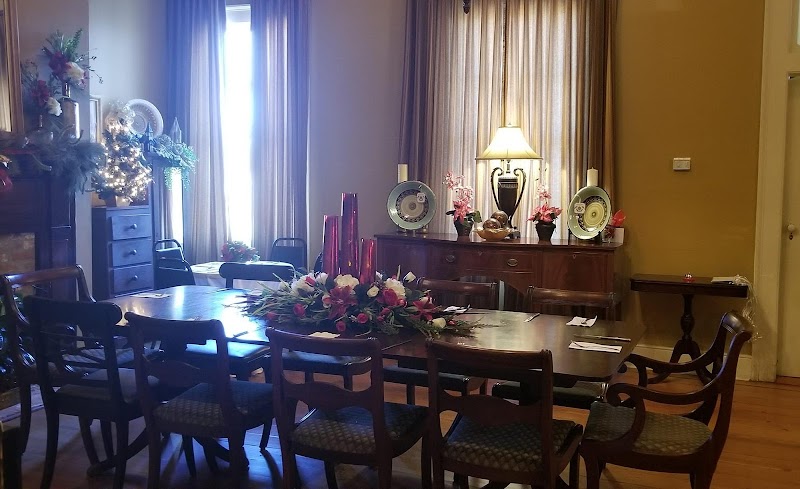
JACKSON HEALTH CARE FACILITY is owned by a for-profit company. For-profit facilities operate as businesses with obligations to shareholders or private owners. The facility is operated by CROWNE HEALTH CARE, a chain that manages multiple nursing homes. With 91 certified beds and approximately 83 residents (about 91% occupancy), it is a smaller facility located in JACKSON, Alabama.
How Does Jackson Health Care Facility Compare to Other Alabama Nursing Homes?

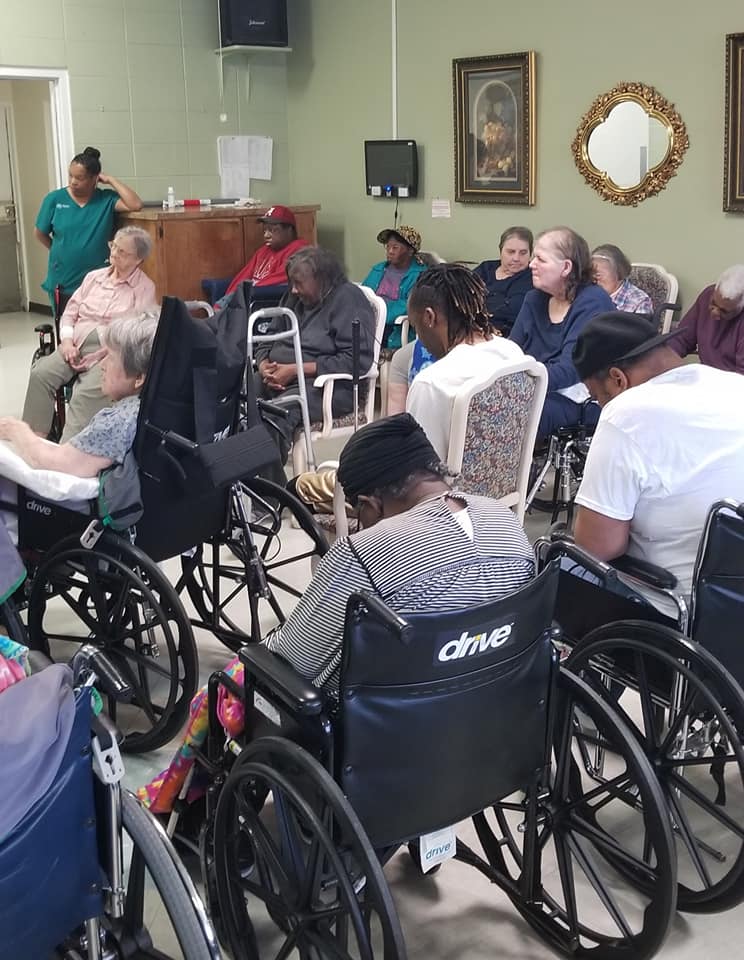
Compared to the 100 nursing homes in Alabama, JACKSON HEALTH CARE FACILITY's overall rating (3 stars) is above the state average of 2.9, staff turnover (32%) is significantly lower than the state average of 46%, and health inspection rating (3 stars) is at the national benchmark.

What Should Families Ask When Visiting Jackson Health Care Facility?

Based on this facility's data, families visiting should ask: "Can I visit during a mealtime to observe dining assistance and food quality?" "How do you handle medical emergencies, and what is your hospital transfer rate?" "Can I speak with family members of current residents about their experience?"

Is Jackson Health Care Facility Safe?

Based on CMS inspection data, JACKSON HEALTH CARE FACILITY has a clean safety record: no substantiated abuse findings (meaning no confirmed cases of resident harm), no Immediate Jeopardy citations (the most serious violation level indicating risk of serious injury or death), and is not on the Special Focus Facility watch list (a federal program monitoring the lowest-performing 1% of nursing homes). The facility has a 3-star overall rating and ranks #1 of 100 nursing homes in Alabama. While no facility is perfect, families should still ask about staff-to-resident ratios and recent inspection results during their visit.

Do Nurses at Jackson Health Care Facility Stick Around?

JACKSON HEALTH CARE FACILITY has a staff turnover rate of 32%, which is about average for Alabama nursing homes (state average: 46%). Moderate turnover is common in nursing homes, but families should still ask about staff tenure and how the facility maintains care continuity when employees leave.

Was Jackson Health Care Facility Ever Fined?

JACKSON HEALTH CARE FACILITY has no federal fines on record. CMS issues fines when nursing homes fail to meet care standards or don't correct problems found during inspections. The absence of fines suggests the facility has either maintained compliance or corrected any issues before penalties were assessed. This is a positive indicator, though families should still review recent inspection reports for the full picture.

Is Jackson Health Care Facility on Any Federal Watch List?

JACKSON HEALTH CARE FACILITY is not on any federal watch list. The most significant is the Special Focus Facility (SFF) program, which identifies the bottom 1% of nursing homes nationally based on persistent, serious quality problems. Not being on this list means the facility has avoided the pattern of deficiencies that triggers enhanced federal oversight. This is a positive indicator, though families should still review the facility's inspection history directly.