MADISON MANOR NURSING HOME
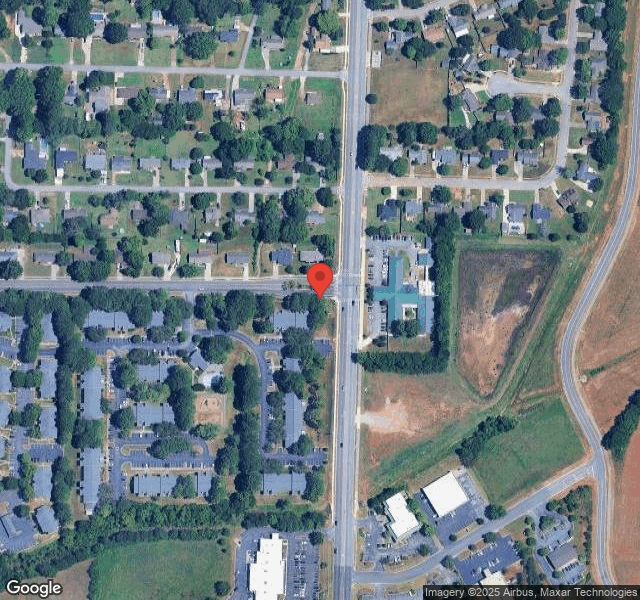
3891 SULLIVAN ST, MADISON, AL 35758 (256) 772-9243
For profit - Corporation 80 Beds CROWNE HEALTH CARE Data: November 2025
Trust Grade
65/100
#119 of 223 in AL
Last Inspection: August 2024

Within standard 12-15 month inspection cycle. Federal law requires annual inspections.

Overview

Madison Manor Nursing Home has a Trust Grade of C+, indicating a decent but slightly above average level of care. It ranks #119 out of 223 facilities in Alabama, placing it in the bottom half, and #5 out of 12 in Madison County, meaning only four local options are better. The facility’s situation is stable, having reported three issues in both 2019 and 2024. Staffing is a concern here with a 59% turnover rate, which is higher than the state average of 48%, but there have been no fines reported, which is a positive sign. However, there have been specific incidents, including a failure to protect a resident from verbal abuse and delays in reporting abuse allegations, suggesting potential issues with resident safety. Overall, while Madison Manor has some strengths, such as no fines, families should be aware of the staffing challenges and past incidents that may impact care quality.

Trust Score
C+
65/100
In Alabama
#119/223
Bottom 47%
Safety Record
Low Risk
No red flags
Inspections
Holding Steady
3 → 3 violations
Staff Stability
⚠ Watch
59% turnover. Above average. Higher turnover means staff may not know residents' routines.
Penalties
✓ Good
No fines on record. Clean compliance history, better than most Alabama facilities.
Skilled Nurses
✓ Good
Each resident gets 43 minutes of Registered Nurse (RN) attention daily — more than average for Alabama. RNs are trained to catch health problems early.
Violations
○ Average
8 deficiencies on record. Average for a facility this size. Mostly minor or procedural issues.
★★★☆☆
3.0
Overall Rating
★★★☆☆
3.0
Staff Levels
★★★☆☆
3.0
Care Quality
★★★☆☆
3.0
Inspection Score
Stable
2019: 3 issues
2024: 3 issues

The Good

  • Full Sprinkler Coverage · Fire safety systems throughout facility
  • No fines on record

Facility shows strength in fire safety.

The Bad

3-Star Overall Rating

Near Alabama average (2.9)

Meets federal standards, typical of most facilities

Staff Turnover: 59%

13pts above Alabama avg (46%)

Frequent staff changes - ask about care continuity

Chain: CROWNE HEALTH CARE

Part of a multi-facility chain

Ask about local staffing decisions and management

Staff turnover is elevated (59%)

11 points above Alabama average of 48%

The Ugly 8 deficiencies on record

Aug 2024 3 deficiencies
CONCERN (D) 📢 Someone Reported This

A family member, employee, or ombudsman was alarmed enough to file a formal complaint

Potential for Harm - no one hurt, but risky conditions existed

Free from Abuse/Neglect (Tag F0600)

Could have caused harm · This affected 1 resident

**NOTE- TERMS IN BRACKETS HAVE BEEN EDITED TO PROTECT CONFIDENTIALITY** Based on record review, interview, review of facility investigation, and facility policy review, the facility failed to ensure o...

Read full inspector narrative →
**NOTE- TERMS IN BRACKETS HAVE BEEN EDITED TO PROTECT CONFIDENTIALITY** Based on record review, interview, review of facility investigation, and facility policy review, the facility failed to ensure one (Residents (R) R63) of nine residents reviewed for abuse were protected from abuse, specifically staff to resident verbal abuse. Refer to F609 Findings include: Review of the facility's policy titled, Abuse Policy, dated October 2022, revealed It is the policy of [Facility]to ensure that each resident is free from verbal, sexual, physical, and mental abuse, neglect, misappropriation of resident's personal property and exploitation. This includes but is not limited to freedom from corporal punishment, involuntary seclusion and any physical or chemical restraint not required to treat the resident's medical symptoms .each new employee will receive education regarding the facility policies concerning resident rights and physical, verbal, mental and sexual abuse, corporal punishment, involuntary seclusion, and misappropriation of resident's personal property to include methods of properly reporting any such alleged violation of resident rights .Training includes appropriate intervention methods that may become necessary to remove a resident from potential harm in the event that a resident or visitor exhibits aggressive or catastrophic behavior .The facility must also initiate an immediate investigation and take all necessary steps to prevent further potential abuse. Examples of steps that the facility may put in place immediately to prevent further potential abuse include suspension of any employee who is alleged to have participated in an abusive incident .An investigation of the incident must be initiated immediately by the administrator or his/her designee. The facility will ensure that all alleged violations involving abuse, neglect, exploitation or mistreatment, including injuries of unknown source and misappropriation of resident property, are reported immediately, but not later than 2 hours after the allegation is made, if the events that cause the allegation involve abuse or result in serious bodily injury, or not later than 24 hours if the events that cause the allegation do not involve abuse and do not result in serious bodily injury, to DHCF and to adult protective services and local law enforcement in accordance with State law. Review of R63's undated admission Record, located under the Profile tab in the EMR, revealed R63 was admitted to the facility on [DATE] with a diagnoses that included Alzheimer's disease with mood disturbance, dementia, and peripheral vascular disease Review of R63's significant change Minimum Data Set (MDS) with an Assessment Reference Date (ARD) of 07/04/24, revealed a Brief Interview for Mental Status (BIMS) with a score of 99, which indicated severe cognitive impairment. The resident was documented as dependent for toileting and personal hygiene and required substantial/maximal assistance with rolling left and right. A 08/03/23 physician progress note documented the resident with moderate cognitive deficits. Review of the facility's Incident Report, provided by the facility, revealed that on 08/03/23 at approximately 2:15 PM, revealed that While providing therapy to a resident in 7A, therapist [Speech Therapist (ST)] heard Certified Nursing Assistant (CNA)2 say to R63 who was behind the privacy curtain, Your [expletive] stinks. Review of the 08/04/23 Self-Report Summary provided by the facility, which documented, in part, that The therapist followed the CNA into the hallway and told her we do not speak to residents in that manner, because it could have been very hurtful. The facility investigation substantiated the verbal abuse of CNA2 to R63 and the staff member was terminated. During an interview on 08/15/24 at 1:33 PM, ST stated that she was in R63's room working with the resident's roommate, with the privacy curtain pulled. ST said that while R63 was being changed, CNA2 said, (R63) your [expletive] stinks. ST said that CNA2 said it in a nonaggressive way and the resident was not in danger, but it was inappropriate. ST said R63's memory is very poor, and he would not have remembered it at that time or now. She said she stepped into the hallway with CNA2 and told her she could not speak to residents in that way. She said that she made a mental note of what happened and to go to the Nursing Home Administrator after she was done working with her resident. She said that CNA2 had left for the day, when she had reported and written up what had happened. She confirmed CNA2 never returned to the facility. ST stated that she had received abuse training and was given additional training afterwards. She said that she should have reported it immediately. During an interview on 08/15/24 at 1:44 PM, interim Director of Nursing said that she was the staff developer at the facility when the situation occurred. She said that she found out on 08/04/23, the day after. She said that ST had reported to the supervisor, who had reported to the Nursing Home Administrator and then she found out. She stated that she went to speak with R63 but he did not recall the incident. She called the resident's family, and CNA2 was terminated. She said that CNA2 stated that she had not meant anything by it, but confirmed she said it. ST should have reported it immediately. Interim Director of Nursing said that the facility had a brief time to report the incidents, ST was written up and was reeducated. She said that she provided additional reporting education to staff. She said that R63 has not had any ongoing concerns. She confirmed that the facility tried to get their abuse incidents in within two hours, which would be reported by the Nursing Home Administrator regardless of the day it occurred and could be reported from home. During an interview on 08/15/24 at 2:14 PM, Nursing Home Administrator stated that ST did not report the situation timely. She said that she initiated the incident report as soon as she had heard about it. She confirmed that the ST had disciplinary actions, and there was staff retraining. Nursing Home Administrator stated that CNA2 was terminated for abuse. She said that when she had been informed of the abuse incident she had been at home and did not have internet service due to weather. She said that she came to the facility to report but also had no service. She said that she reported the incident when internet access returned on 08/04/23.
CONCERN (D) 📢 Someone Reported This

A family member, employee, or ombudsman was alarmed enough to file a formal complaint

Potential for Harm - no one hurt, but risky conditions existed

Report Alleged Abuse (Tag F0609)

Could have caused harm · This affected 1 resident

**NOTE- TERMS IN BRACKETS HAVE BEEN EDITED TO PROTECT CONFIDENTIALITY** Based on staff interviews, record review, and facility policy review, the facility failed to ensure an abuse allegation by of st...

Read full inspector narrative →
**NOTE- TERMS IN BRACKETS HAVE BEEN EDITED TO PROTECT CONFIDENTIALITY** Based on staff interviews, record review, and facility policy review, the facility failed to ensure an abuse allegation by of staff to resident (Resident (R) 63 and resident to resident abuse (R26 and R66) of nine residents reviewed for abuse were reported in a timely manner. Specifically, the facility failed to ensure an initial incident report was submitted to the state survey agency within two hours. Findings include: Review of the facility's policy titled, Abuse Policy, dated October 2022, revealed It is the policy of {Facility}to ensure that each resident is free from verbal, sexual, physical, and mental abuse, neglect, misappropriation of resident's personal property and exploitation. This includes but is not limited to freedom from corporal punishment, involuntary seclusion and any physical or chemical restraint not required to treat the resident's medical symptoms .each new employee will receive education regarding the facility policies concerning resident rights and physical, verbal, mental and sexual abuse, corporal punishment, involuntary seclusion, and misappropriation of resident's personal property to include methods of properly reporting any such alleged violation of resident rights .Training includes appropriate intervention methods that may become necessary to remove a resident from potential harm in the event that a resident or visitor exhibits aggressive or catastrophic behavior .The facility must also initiate an immediate investigation and take all necessary steps to prevent further potential abuse. Examples of steps that the facility may put in place immediately to prevent further potential abuse include suspension of any employee who is alleged to have participated in an abusive incident .An investigation of the incident must be initiated immediately by the administrator or his/her designee. The facility will ensure that all alleged violations involving abuse, neglect, exploitation or mistreatment, including injuries of unknown source and misappropriation of resident property, are reported immediately, but not later than 2 hours after the allegation is made, if the events that cause the allegation involve abuse or result in serious bodily injury, or not later than 24 hours if the events that cause the allegation do not involve abuse and do not result in serious bodily injury, to DHCF and to adult protective services and local law enforcement in accordance with State law. 1. Review of R63's undated admission Record, located under the Profile tab in the EMR, revealed R63 was admitted to the facility on [DATE]. Review of R63's significant change Minimum Data Set (MDS) with an Assessment Reference Date (ARD) of 07/04/24, revealed a Brief Interview for Mental Status (BIMS) with a score of 99, which indicated severe cognitive impairment. The resident was documented as dependent for toileting and personal hygiene and required substantial/maximal assistance with rolling left and right. A 08/03/23 physician progress note documented the resident with moderate cognitive deficits. Review of the facility's Incident Report, provided by the facility, revealed that on 08/03/23 at approximately 2:15 PM, revealed that While providing therapy to a resident in 7A, therapist [Speech Therapist(ST)]heard [Certified Nursing Assistant (CNA)2] say to R63 who was behind the privacy curtain, Your [expletive] stinks. Review of the facility provided Confirmation of Receipt of Online Incident Report revealed that the facility reported incident had occurred on 08/03/23 at 2:15 PM. The report was submitted on 08/04/23 at 9:48 AM. Review of the Facility Reported Incident, provided by the state survey agency revealed the facility reported incident on 08/04/23 at 9:48 PM, which confirmed the facility did not report the incident until approximately 19 hours after the incident. During an interview on 08/15/24 at 1:33 PM, ST stated on 08/03/23 at approximately 2:15 PM while she was in R63's room working with the resident's roommate, with the privacy curtain pulled. ST said that while R63 was being changed, CNA2 said, (R63) your [expletive]stinks. ST said that CNA2 said it in a nonaggressive way and the resident was not in danger, but it was inappropriate. ST said R63's memory is very poor, and he would not have remembered it at that time or now. She said she stepped into the hallway with CNA2 and told her she could not speak to residents in that way. She said that she made a mental note of what happened and to go to the Nursing Home Administrator after she was done working with her resident. She said that CNA2 had left for the day, when she had reported and written up what had happened. She confirmed CNA2 never returned to the facility. ST stated that she had received abuse training and was given additional training afterwards. She said that she should have reported it immediately. During an interview on 08/15/24 at 1:44 PM, Interim Director of Nursing said that she was the staff developer at the facility when the situation occurred. She said that she found out on 08/04/23, the day after. She said that ST had reported to the supervisor, who had reported to the Nursing Home Administrator and then she found out. She stated that she went to speak with R63 but he did not recall the incident. She called the resident's family, and CNA2 was terminated. She said that CNA2 stated that she had not meant anything by it, but confirmed she said it. The Interim Director of Nursing stated ST should have reported it immediately. Interim Director of Nursing said that the facility had a brief time to report the incidents, ST was written up and was reeducated. She said that she provided additional reporting education to staff. She said that R63 has not had any ongoing concerns. She confirmed that the facility tried to get their abuse incidents in within two hours, which would be reported by the Nursing Home Administrator regardless of the day it occurred and could be reported from home. During an interview on 08/15/24 at 2:14 PM, Nursing Home Administrator stated that ST did not report the situation timely. She said that she initiated the incident report as soon as she had heard about it. She confirmed that the ST had disciplinary actions, and there was staff retraining. Nursing Home Administrator stated that CNA2 was terminated for abuse. She said that when she had been informed of the abuse incident she had been at home and did not have internet service due to weather. She said that she came to the facility to report but also had no service. She said that she reported the incident when internet access returned on 08/04/23.
CONCERN (D)

Potential for Harm - no one hurt, but risky conditions existed

Accident Prevention (Tag F0689)

Could have caused harm · This affected 1 resident

**NOTE- TERMS IN BRACKETS HAVE BEEN EDITED TO PROTECT CONFIDENTIALITY** Based on observations, medical record reviews, and interviews, the facility failed to prevent accidents for one resident (R)36) ...

Read full inspector narrative →
**NOTE- TERMS IN BRACKETS HAVE BEEN EDITED TO PROTECT CONFIDENTIALITY** Based on observations, medical record reviews, and interviews, the facility failed to prevent accidents for one resident (R)36) of 31 sampled residents. Specifically, a Certified Nurse Aid (CNA) 1 attempted to transfer R36 without assistance during and after the resident's shower. Findings include: Review of the Facesheet found in the electronic medical record (EMR) indicated that R36 was admitted to the facility on [DATE] with diagnoses including Alzheimer's Disease, history of falls and chronic pain syndrome. Review of R36's quarterly Minimum Data Set (MDS) found under the MDS tab of the EMR with an assessment reference date (ARD) of 05/21/24 revealed R36 required extensive to dependent level of assistance (helper does ALL of the effort for task) with transfers, bathing and dressing. R36 was unable to ambulate independently and required assistance of at least one staff for all mobility needs. R36's undated care plan was for extensive to dependent assist from staff for transfers and bathing/showers. During a observation on 08/14/24 at 12:10 PM, CNA1 was observed transporting R36 from the shower room to the beauty shop. CN 1 used her left hand to push/guide R36's wheelchair; while attempting to move an empty mechanical lift with her right hand. As the wheelchair moved down the hallway R36's right foot bent under the chair with her toes pointed behind her. The resident could not reposition her foot herself, and she mumbled to the CNA that her foot hurt. It took a moment for the CNA to hear and understand what R36 was saying. CNA1 stopped as quickly but the incline caused the wheelchair to continue to move forward several feet, pinning the resident's foot underneath her with toes pointing behind her. When CNA1 brought the wheelchair to a complete stop, she tried to reposition R36's foot and the resident cried out in pain. Registered Nurse (RN) 1 was passing in the hallway and stopped to assist CNA1 and R36. The resident's foot was brought back to a natural position and no obvious injury was noted when she was assessed, other than the resident stating it hurt. In an interview with Licensed Practical Nurse (LPN) 1 at 1:00PM on 08/14/24 revealed LPN 1 was the charge nurse on the back hallway when this incident occurred. LPN1 had spoken to and provided reeducation to CNA1. LPN1 stated the CNA was distraught about the incident and tearfully stated that she was trying to do too much, and she should have waited for another staff member to assist her, .I should have gotten R36 to the beauty shop and come back to move the lift. LPN1 confirmed the facility's policy is, .all transfers requiring a mechanical lift require a minimum of two staff members to prevent these types of accidents . CNA 1 was present & tearfully said, . I was trying to do too much and hurrying to get her to the beauty shop . In an interview with the Administrator at 08/14/24 at 2:30PM, she stated a mobile Xray was ordered, and completed and the results were pending. She stated the CNA was re-educated and the appropriate notifications were made to the physician and R36's daughter/Power of Attorney (POA). The Administrator stated there was no policy that would specifically address these circumstances. The Administrator provided CNA1's initial training and competency check off document, completed on 07/12/24, related to transfers and using mechanical lifts. The Administrator also provided a copy of the re-education provided to the CNA1 immediately following this incident on 08/14/24. On 08/15/24 at 8:30 AM R36 was visited in her room. She was sitting in her wheelchair after breakfast. She was dressed and groomed for the day and wearing clogs. The shoe was easily removed by LPN 1 and R36 had mild bruising/discoloration to her right foot/ankle, but no serious injury. The resident did not appear to remember the incident the day before in her wheelchair when she was asked. During an interview on 08/15/24 at 9:15 AM the Administrator confirmed the Xray results were negative for fracture to R36's right foot/ankle. She stated the incident prompted an opportunity for reeducating staff on the importance of two person/staff transfers for dependent residents.
Jul 2019 3 deficiencies
CONCERN (D)

Potential for Harm - no one hurt, but risky conditions existed

Assessment Accuracy (Tag F0641)

Could have caused harm · This affected 1 resident

**NOTE- TERMS IN BRACKETS HAVE BEEN EDITED TO PROTECT CONFIDENTIALITY** Based on interview and record review, the facility failed to ensure Resident Identifier (RI) #10's Significant Change (SC) Minim...

Read full inspector narrative →
**NOTE- TERMS IN BRACKETS HAVE BEEN EDITED TO PROTECT CONFIDENTIALITY** Based on interview and record review, the facility failed to ensure Resident Identifier (RI) #10's Significant Change (SC) Minimum Data Set (MDS) assessment, dated 04/15/19, reflected RI #10 was receiving Hospice Services. This deficient practice affected RI #10 one of 19 sampled residents whose MDS assessments were reviewed. Findings Include: RI #10 was re-admitted to the facility on [DATE], with diagnoses including but not limited to Alzheimer's, Dementia, Chronic Obstructive Pulmonary Disease and Acute Respiratory Failure. A review of RI #10's physician orders, dated 03/29/19, revealed Amedisys Hospice was to evaluate and treat, as indicated. A review of RI #10's SC MDS assessment, dated 04/15/19, did not identify RI #10 as having received hospice services during this assessment period. On 07/25/19 at 10:50 a.m., the surveyor conducted an interview with Employee Identifier (EI) #5, Registered Nurse/MDS Coordinator. The surveyor asked EI #5 was she familiar with RI #10. EI #5 said no but she did know RI #10's name. The surveyor asked EI #5 when was RI #10's hospice ordered. EI #5 said on 3/29/19. The surveyor asked EI #5 how long had RI #10 been receiving hospice services. EI #5 said about four months. The surveyor asked EI #5 was RI #10 coded for hospice services during the SC assessment dated [DATE]. EI #5 said no. EI #5 was asked should RI #10 have been coded for hospice during the SC assessment period. EI #5 said yes. EI #5 was asked if this was an accurate assessment . EI #5 said probably not, it was not correct for hospice.
CONCERN (D)

Potential for Harm - no one hurt, but risky conditions existed

Infection Control (Tag F0880)

Could have caused harm · This affected 1 resident

**NOTE- TERMS IN BRACKETS HAVE BEEN EDITED TO PROTECT CONFIDENTIALITY** Based on observations, interviews, medical record review and review of facility policies titled, Hand Hygiene Policy and Procedu...

Read full inspector narrative →
**NOTE- TERMS IN BRACKETS HAVE BEEN EDITED TO PROTECT CONFIDENTIALITY** Based on observations, interviews, medical record review and review of facility policies titled, Hand Hygiene Policy and Procedure and Medication Administration Procedures Nasal Inhalers, Sprays, and Pumps, the facility failed to ensure a Licensed Practical Nurse (LPN): 1. changed gloves and washed her hands after assisting Resident Identifier (RI) #31 to blow his/her nose, 2. wiped off the nasal spray bottle prior to recapping the bottle and returning it to the cart, 3. washed her hands before applying gloves to administer RI #31's eye drops after pulling the light cord and privacy curtain with bare hands, and 4. removed gloves used to administer eye drops before adjusting RI #31's bed control and pulling the light cord. This affected RI #31, one of five residents observed during medication pass observations. Findings Include: A review of a facility policy titled, Hand Hygiene Policy and Procedure with a revised date of 6/17, revealed: .Procedure: 1. Hand hygiene is a general term that applies to either washing hands with soap and water or the use of an antiseptic hand rub, also known as alcohol-based rub . 3. Perform hand hygiene after contact with .mucous membranes . prior to donning and after gloves are removed, and when otherwise indicated to avoid transfer of microorganisms to other .environments. 4. It may be necessary to perform hand hygiene between tasks and procedures on the same resident to prevent cross contamination . A review of a facility policy titled, Medication Administration Procedures Nasal Inhalers, Sprays, and Pumps, with a date of 01/12, revealed: .Wipe the administration device with a clean tissue and replace the protective cap . RI #31 was admitted to the facility on [DATE], with diagnosis of Hemiplegia Following Cerebral Infarction Affecting Left Nondominant Side. On 07/23/19 at 8:24 a.m., the surveyor observed Employee Identifier (EI) #2, LPN, administer medications to RI #31. The surveyor observed EI #2 assist RI #31 to blow his/her nose and without changing gloves, administer the nasal spray to the resident. EI #2 was observed placing the cap back on the nasal spray without wiping the tip of the bottle off and placing it back into the container. EI #2 obtained eye drops from the medication cart and re-entered RI #31's room and pulled the light cord and the privacy curtain with her bare hands. EI #2 applied her gloves without washing her hands and administered RI #31's eye drops. While still wearing the same gloves, EI #2 was observed adjusting the bed control, pulling the light cord and the privacy curtain. On 07/25/19 at 12:22 p.m., an interview was conducted with EI #2. EI #2 was asked when should she change gloves and wash her hands during medication pass. EI #2 said at the very beginning and depending on what she was doing. EI #2 said if she touched anything that was considered contaminated or dirty she should change her gloves and wash her hands. EI #2 was asked should she change her gloves after pulling the light cord and privacy curtain. EI #2 replied yes. EI #2 was asked did she change her gloves and wash her hands in RI #31's room after pulling the light cord and privacy curtain, before administering his/her eye drops. EI #2 stated no, she did not. EI #2 was asked did she change her gloves and wash her hands after she held the tissue for RI #31 to blow his/her nose before continuing to administer the nasal spray. EI #2 said no. EI #2 was asked did she clean the tip of the nasal spray before storing it back in the medication cart. EI #2 answered no. EI #2 was asked what was the concern with these issues. EI #2 answered the spread of bacteria, infection control. On 07/25/19 at 12:37 p.m., an interview was conducted with EI #1, Registered Nurse (RN)/Director of Nursing. EI #1 was asked when should nurses wash their hands during med pass. EI #1 said in between each task, in between each room and each patient, and if there were different types of medications such as eye drops, ear drops and those sort of things. EI #1 was asked should nasal spray be wiped off after administration before storing in the cart. EI #1 replied yes. EI #1 was asked should a nurse change her gloves and wash her hands after holding a Kleenex tissue for a resident to blow his/her nose before continuing with nasal spray administration. EI #1 stated yes. EI #1 was asked should a nurse change gloves and wash her hands after pulling a light cord and privacy curtain while wearing gloves and then administering eye drops. EI #1 said yes. EI #1 was asked what was the concern with nurses not changing gloves and washing their hands when contaminated. EI #1 answered passing infection around, bacteria and bugs from one person to another, including staff, visitors and residents; transmission of infection.
CONCERN (F)

Potential for Harm - no one hurt, but risky conditions existed

Room Equipment (Tag F0908)

Could have caused harm · This affected most or all residents

Based on observation, interviews, review of a facility's form titled, DISHWASHING MACHINE TEMPERATURE LOG and the 2017 Food Code, the facility failed to ensure the temperature gauge of the dish machin...

Read full inspector narrative →
Based on observation, interviews, review of a facility's form titled, DISHWASHING MACHINE TEMPERATURE LOG and the 2017 Food Code, the facility failed to ensure the temperature gauge of the dish machine provided accurate readings for wash and rinse temperatures. This had the potential to affect all 72 residents for whom meals were prepared and served at the time of this survey. Findings Include: The 2017 Food and Drug Administration Food Code revealed: .4-501.110 Mechanical Warewashing Equipment, Wash Solution Temperature .(B) The temperature of the wash solution in spray-type warewashers that use chemicals to SANITIZE may not be less than .(120 degrees F) (Fahrenheit) . The data plate affixed to the dish machine specified a minimum water temperature of 125 degrees F. During the initial kitchen tour, on 07/23/19 at 7:50 AM,the surveyor observed the posted DISHWASHING MACHINE TEMPERATURE LOG on which staff documented daily wash temperatures of 130 degrees F, daily rinse temperatures of 140 degrees F and a chlorine concentration of 50 parts per million (PPM). Despite the recording of three sets of data (breakfast, lunch and supper) daily for 24 days of July, there was no variation in any of the documentation. On 07/24/19, at 11:45 AM, the surveyor observed the water temperature gauge of the dish machine (located under the dish counter), to be 124 degrees F for the wash water (after two cycles had run) and 124 degrees F for the rinse. The staff member (and surveyor) had to squat down and put their head under the counter to view the gauge. The staff member verified with the surveyor, an adequate chlorine concentration on the surface of a utensil. All temperatures and all chemical concentrations (PPM) were consistently documented the same on 07/24/19, as for every other day. On 07/24/19 at 1:30 PM, during the processing of the lunch dishes, the surveyor observed a wash temperature of 98 degrees F and a rinse of 115 degrees F. The next cycle yielded temperatures of 110 degrees F for the wash and 118 degrees F for the rinse. The Certified Dietary Manager (CDM) , Employee Identifier (EI) #3, stated, As long as it's in the blue, I'm good. On 07/24/19 at 3:10 PM, the surveyor interviewed the Auto-Chlor Technician, who had been called in to check the dish machine. At this time, the Auto-Chlor Technician affirmed the gauge was reading good and affirmed a temperature reading in the blue area of the gauge indicated a temperature to be be too cool. Due to the difficulty in determining the water temperature, the Auto-Chlor Technician stated he would install a different gauge, making it easier to read. On 07/25/19 at 8:15 AM, a dishwasher, EI #4, had again documented the machine temperatures as 130 degrees for the wash and 140 degrees for the rinse. When asked, EI #4 demonstrated how she checked the temperatures, by squatting down and bending her head under the counter. She stated, It's in the blue section. At the surveyor's request, EI #3, ran another cycle of dishes. The surveyor observed the gauge to be reading in the yellow section at about 125 degrees. EI #3 stated, It's impossible to read. EI #3 stated she would contact the Auto-Chlor Technician again, and request documentation to ensure it was permissible to check the machine's reservoir with a food thermometer to determine the water temperature. On 07/25/19 at 9:30 AM, the surveyor video scanned the temperature gauge with a cell phone camera to reveal the following readings on the gauge: Blue section=90-118 degrees F Yellow section=118 to 134 degrees F Green section=136 to 148 degrees F Red section=150-162 degrees F After viewing the video, the above temperatures were agreed upon by EI #3 and EI #6, Dietary Aide and the surveyor. On 07/25/19 at 9:30 AM, the Auto-Chlor Technician returned to the dish room and stated, The gauge is wrong. The Auto-Chlor Technician brought a larger and easier to read gauge, showing it to both EI #3 and to the surveyor.
Jun 2018 2 deficiencies
CONCERN (D)

Potential for Harm - no one hurt, but risky conditions existed

Resident Rights (Tag F0550)

Could have caused harm · This affected 1 resident

**NOTE- TERMS IN BRACKETS HAVE BEEN EDITED TO PROTECT CONFIDENTIALITY** Based on observations, interviews and medical record review, the facility failed to ensure Resident Identifier (RI) #55 was not ...

Read full inspector narrative →
**NOTE- TERMS IN BRACKETS HAVE BEEN EDITED TO PROTECT CONFIDENTIALITY** Based on observations, interviews and medical record review, the facility failed to ensure Resident Identifier (RI) #55 was not wearing a hand roll with another resident's name on it on 06/19/18 and 06/20/18. This deficient practice affected RI #55, one of two residents sampled for splints. Findings Included: RI #55 was admitted to the facility on [DATE] with diagnoses including, Hemiplegia Following Cerebral Infarction Affecting Left Non-Dominant Side. A review of RI #55's medical record revealed a Functional Maintenance Plan dated 01/07/18 which documented the following: .3. Continue to place hand roll at on left hand and assess at this time in order to complete ADL (Activities of Daily Living) tasks . On 06/19/18 at 8:17 a.m., survyeor observed resident sitting up in wheelchair with a hand roll in his/her left hand with another resident's name written in black across a white strip of fabric on the back of the resident's hand. Resident stated facility had lost his/her hand roll and gave him the other resident's to wear. On 06/20/18 at 8:21 a.m., surveyor again observed resident with the hand roll in his/her left hand with another resident's name on it. On 06/20/18 at 3:21 p.m., an interview was conducted with Employee Identifier (EI) #1, Licensed Practical Nurse(LPN)/Restorative Nurse. EI #1 was asked did she observe a hand roll in RI #55's left hand that day. EI #1 said, yes. EI #1 was asked did the hand roll have a another resident's name on it. EI #1 replied it did. EI #1 was asked should EI #55 have had a hand roll with another resident's name on it. EI #1 answered, no. EI #1 was asked what did she do when she saw the other resident's name on the hand roll. EI #1 answered she marked it out. EI #1 was asked what was the concern with RI #55 wearing a hand roll with another resident's name on it. EI #1 said it was a dignity issue. On 06/21/18 at 10:34 a.m., an interview was conducted with EI #2, Social Services Designee. EI #2 was asked did she participate in training the staff regarding resident's rights. EI #2 said she did if they called on her to, but the Ombudsman did it the last time. EI #2 was asked should a resident have any item on that has another resident's name on it. EI #2 replied, no. EI #2 was asked what was the concern with a resident wearing a hand roll with another resident's name on it. EI #2 said it was a dignity issue.
CONCERN (D)

Potential for Harm - no one hurt, but risky conditions existed

Deficiency F0757 (Tag F0757)

Could have caused harm · This affected 1 resident

**NOTE- TERMS IN BRACKETS HAVE BEEN EDITED TO PROTECT CONFIDENTIALITY** Based on staff interviews, medical record review and review of a facility policy titled, Medication Monitoring Psychoactive Drug...

Read full inspector narrative →
**NOTE- TERMS IN BRACKETS HAVE BEEN EDITED TO PROTECT CONFIDENTIALITY** Based on staff interviews, medical record review and review of a facility policy titled, Medication Monitoring Psychoactive Drug Monitoring, the facility failed to ensure Resident Identifier (RI) #21's Abnormal Involuntary Movement Scale (AIMS)was performed timely to monitor resident's response to ordered antipsychotic medication. This deficient practice affected RI #21, one of three residents sampled for use of an antipsychotic medication. Findings Included: A review of a facility policy titled, Medication Monitoring Psychoactive Drug Monitoring dated 01/12 revealed: .Policy Residents who receive psychoactive/psychopharmacological medications are monitored. These are defined as any medication used for managing behavior, stabilizing mood, or treating psychiatric disorders. Every effort is made to ensure that residents receiving these medications obtain the maximum benefit with the minimum of unwanted side effects.Procedures .2.Effects and side effects of the medications are documented and monitored. RI #21 was admitted to the facility on [DATE] with diagnoses including, Alzheimer's Disease, Unspecified. A review of RI #21's medical record revealed a Physician's Order as follows: .04/17/18 Seroquel 100 MG (milligram) tablet - give 1/2 (one half) tablet to equal 50 MG by mouth three times a day . A review of RI #21's medical record further revealed a AIMS dated 09/12/17. On 06/21/18 at 11:30 a.m., an interview was conducted with Employee Identifier (EI) #4, Registered Nurse(RN)/Minimum Data Set (MDS) Coordinator. EI #4 was asked when were AIMS performed and who was responsible for them. EI #4 said she tried to do them when doing quarterly assessments and filled out the AIMS form every six months. EI #4 was asked when was the last AIMS performed for RI #21 prior to this survey. EI #4 replied 09/12/17. EI #4 was asked how many months ago was that assessment. EI #4 said nine. EI #4 was asked when should the AIMS have been performed . EI #4 replied March 2018. EI #4 was asked what was the concern with potential side effects of an antipsychotic not being monitored timely. EI # stated Tardive Dyskinesia. On 06/21/18 at 12:50 p.m. an interview was conducted with EI #3, RN/Director of Nursing(DON). EI #3 was asked what assessments were routinely done when a resident was on an antipsychotic medication. EI #3 said normally an AIMS test on admission or a new order and then every six months. EI #3 was asked was RI #21's AIMS performed within the six months time period. EI #3 replied, no. EI #3 was asked should it have been according to your routine. EI #3 said, yes.
Understanding Severity Codes (click to expand)
Life-Threatening (Immediate Jeopardy)
J - Isolated K - Pattern L - Widespread
Actual Harm
G - Isolated H - Pattern I - Widespread
Potential for Harm
D - Isolated E - Pattern F - Widespread
No Harm (Minor)
A - Isolated B - Pattern C - Widespread

Questions to Ask on Your Visit

  • "Why is there high staff turnover? How do you retain staff?"
  • "Can I speak with families of current residents?"
  • "What's your RN coverage like on weekends and overnight?"

Our Honest Assessment

Strengths
  • • No major safety red flags. No abuse findings, life-threatening violations, or SFF status.
  • • No fines on record. Clean compliance history, better than most Alabama facilities.
Concerns
  • • 59% turnover. Above average. Higher turnover means staff may not know residents' routines.
Bottom line: Mixed indicators with Trust Score of 65/100. Visit in person and ask pointed questions.

About This Facility

What is Madison Manor's CMS Rating?

CMS assigns MADISON MANOR NURSING HOME an overall rating of 3 out of 5 stars, which is considered average nationally. Within Alabama, this rating places the facility higher than 99% of the state's 100 nursing homes. This mid-range rating indicates the facility meets federal standards but may have areas for improvement.
How is Madison Manor Staffed?

CMS rates MADISON MANOR NURSING HOME's staffing level at 3 out of 5 stars, which is average compared to other nursing homes. Staff turnover is 59%, which is 13 percentage points above the Alabama average of 46%. High turnover can affect care consistency as new staff learn residents' individual needs.

What Have Inspectors Found at Madison Manor?

State health inspectors documented 8 deficiencies at MADISON MANOR NURSING HOME during 2018 to 2024. These included: 8 with potential for harm.
Who Owns and Operates Madison Manor?

MADISON MANOR NURSING HOME is owned by a for-profit company. For-profit facilities operate as businesses with obligations to shareholders or private owners. The facility is operated by CROWNE HEALTH CARE, a chain that manages multiple nursing homes. With 80 certified beds and approximately 71 residents (about 89% occupancy), it is a smaller facility located in MADISON, Alabama.
How Does Madison Manor Compare to Other Alabama Nursing Homes?

Compared to the 100 nursing homes in Alabama, MADISON MANOR NURSING HOME's overall rating (3 stars) is above the state average of 2.9, staff turnover (59%) is significantly higher than the state average of 46%, and health inspection rating (3 stars) is at the national benchmark.

What Should Families Ask When Visiting Madison Manor?

Based on this facility's data, families visiting should ask: "How do you ensure continuity of care given staff turnover, and what is your staff retention strategy?" "Can I visit during a mealtime to observe dining assistance and food quality?" "How do you handle medical emergencies, and what is your hospital transfer rate?" "Can I speak with family members of current residents about their experience?" These questions are particularly relevant given the facility's high staff turnover rate.

Is Madison Manor Safe?

Based on CMS inspection data, MADISON MANOR NURSING HOME has a clean safety record: no substantiated abuse findings (meaning no confirmed cases of resident harm), no Immediate Jeopardy citations (the most serious violation level indicating risk of serious injury or death), and is not on the Special Focus Facility watch list (a federal program monitoring the lowest-performing 1% of nursing homes). The facility has a 3-star overall rating and ranks #1 of 100 nursing homes in Alabama. While no facility is perfect, families should still ask about staff-to-resident ratios and recent inspection results during their visit.

Do Nurses at Madison Manor Stick Around?

Staff turnover at MADISON MANOR NURSING HOME is high. At 59%, the facility is 13 percentage points above the Alabama average of 46%. High turnover means new staff may not know residents' individual needs, medications, or preferences. It can also be disorienting for residents, especially those with dementia who rely on familiar faces. Families should ask: What is causing the turnover? What retention programs are in place? How do you ensure care continuity during staff transitions?

Was Madison Manor Ever Fined?

MADISON MANOR NURSING HOME has no federal fines on record. CMS issues fines when nursing homes fail to meet care standards or don't correct problems found during inspections. The absence of fines suggests the facility has either maintained compliance or corrected any issues before penalties were assessed. This is a positive indicator, though families should still review recent inspection reports for the full picture.

Is Madison Manor on Any Federal Watch List?

MADISON MANOR NURSING HOME is not on any federal watch list. The most significant is the Special Focus Facility (SFF) program, which identifies the bottom 1% of nursing homes nationally based on persistent, serious quality problems. Not being on this list means the facility has avoided the pattern of deficiencies that triggers enhanced federal oversight. This is a positive indicator, though families should still review the facility's inspection history directly.