PALM GARDENS HEALTH AND REHABILITATION, LLC
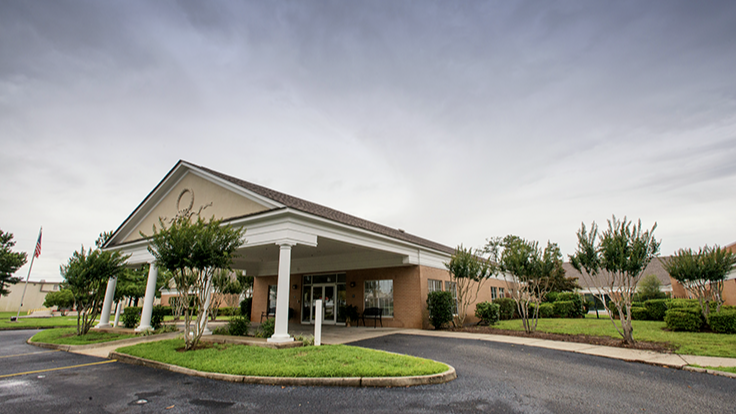

3104 DAUPHIN SQUARE CONNECTOR, MOBILE, AL 36607 (251) 450-2800
For profit - Corporation 100 Beds NHS MANAGEMENT Data: November 2025
Trust Grade
85/100
#25 of 223 in AL
Last Inspection: July 2021

Over 2 years since last inspection. Current conditions may differ from available data.

Overview

Palm Gardens Health and Rehabilitation, LLC has a Trust Grade of B+, indicating it is above average and generally recommended for families considering care options. It ranks #25 out of 223 nursing homes in Alabama, placing it in the top half of the state, and #4 out of 16 in Mobile County, meaning only three local facilities are rated higher. The facility is currently improving, having reduced its issues from four in 2018 to none in 2021. Staffing receives an average rating of 3 out of 5 stars, but with a concerning 66% turnover rate, which is higher than the state average of 48%, indicating potential instability among caregivers. Fortunately, the facility has no fines on record, which is a positive sign, and it boasts better RN coverage than 76% of Alabama facilities, ensuring that critical health issues are more likely to be caught early. However, there are some weaknesses to consider. Recent inspections highlighted four concerns, including the failure to ensure that utensils were properly sanitized and that staff adhered to hand hygiene guidelines, which could pose risks for residents. Additionally, there were lapses in developing necessary care plans for residents with recurrent urinary tract infections and depression. These incidents, while not life-threatening, suggest areas for improvement in the facility's adherence to care standards. Overall, families should weigh these strengths and weaknesses when considering Palm Gardens for their loved ones.

Trust Score
B+
85/100
In Alabama
#25/223
Top 11%
Safety Record
Low Risk
No red flags
Inspections
Getting Better
4 → 0 violations
Staff Stability
⚠ Watch
66% turnover. Above average. Higher turnover means staff may not know residents' routines.
Penalties
✓ Good
No fines on record. Clean compliance history, better than most Alabama facilities.
Skilled Nurses
✓ Good
Each resident gets 49 minutes of Registered Nurse (RN) attention daily — more than average for Alabama. RNs are trained to catch health problems early.
Violations
✓ Good
Only 4 deficiencies on record. Cleaner than most facilities. Minor issues only.
★★★★★
5.0
Overall Rating
★★★☆☆
3.0
Staff Levels
★★★☆☆
3.0
Care Quality
★★★★★
5.0
Inspection Score
Stable
2018: 4 issues
2021: 0 issues

The Good

  • Full Sprinkler Coverage · Fire safety systems throughout facility
  • No fines on record

Facility shows strength in fire safety.

The Bad

Staff Turnover: 66%

20pts above Alabama avg (46%)

Frequent staff changes - ask about care continuity

Chain: NHS MANAGEMENT

Part of a multi-facility chain

Ask about local staffing decisions and management

Staff turnover is elevated (66%)

18 points above Alabama average of 48%

The Ugly 4 deficiencies on record

Sept 2018 4 deficiencies
CONCERN (D)

Potential for Harm - no one hurt, but risky conditions existed

Assessment Accuracy (Tag F0641)

Could have caused harm · This affected 1 resident

**NOTE- TERMS IN BRACKETS HAVE BEEN EDITED TO PROTECT CONFIDENTIALITY** Based on record review, interview and review of the facility procedure Resident Assessment Instrument Manual, the facility faile...

Read full inspector narrative →
**NOTE- TERMS IN BRACKETS HAVE BEEN EDITED TO PROTECT CONFIDENTIALITY** Based on record review, interview and review of the facility procedure Resident Assessment Instrument Manual, the facility failed to ensure Resident Identifier (RI) #30's Significant Change Minimum Data Set (MDS) Assessment, dated 4/12/18, was coded for hospice. This was reviewed on 9/12/18 and affected one of two residents reviewed for hospice. Findings Include: A review of the policy the facility used revealed .RAI Version 3.0 Manual . A Significant Change in Status Assessment (SCSA) is appropriate when: .If a resident is admitted on the hospice benefit .the facility should complete the .assessment, checking the Hospice care item Section O . RI#30 was admitted to the facility on [DATE] with a diagnosis of Parkinson's Disease. A review of RI #30's May 2018 physician orders revealed: .Order Date 4/4/18 .OK TO ADMIT TO .HOSPICE WITH DX OF PARKINSON'S. A review of a Significant Change MDS, dated [DATE], revealed Section O Hospice was not checked. On 9/12/18 at 10:22 AM an interview was conducted with Employee Identifier (EI) #3, Licensed Practical Nurse/MDS. EI #3 was asked to review the MDS dated [DATE] with the surveyor. EI #3 replied, it was done for a significant change to hospice. EI #3 was asked when was RI #30 admitted to hospice. EI #3 replied, 4/4/18. EI #3 was asked when was the Significant Change MDS related to hospice done. EI #3 replied, the change was done on 4/12/18, however hospice was not checked. EI #3 was asked who was responsible for coding hospice on the MDS. EI #3 replied, she was. EI #3 was asked if hospice should be coded on the MDS. EI #3 replied, yes. EI #3 was asked what was the risk in not having hospice coded on the MDS. EI #3 replied, it would not reflect the resident was on hospice,
CONCERN (D)

Potential for Harm - no one hurt, but risky conditions existed

Comprehensive Care Plan (Tag F0656)

Could have caused harm · This affected 1 resident

**NOTE- TERMS IN BRACKETS HAVE BEEN EDITED TO PROTECT CONFIDENTIALITY** Based on record review, interview and a review of a facility policy titled, Nursing Assessments, the facility failed to ensure c...

Read full inspector narrative →
**NOTE- TERMS IN BRACKETS HAVE BEEN EDITED TO PROTECT CONFIDENTIALITY** Based on record review, interview and a review of a facility policy titled, Nursing Assessments, the facility failed to ensure care plans for recurrent UTI's (Urinary Tract Infection) and Depression were developed for RI (Resident Identifier) #22. This had the potential to affect 1 of 24 samples residents whose care plans were reviewed for care areas. Findings Include: A review of a facility policy titled, Nursing Assessment, with an effective date of 8/15/2018, revealed: PURPOSE: The facility conducts, a comprehensive, standardized assessment of each resident .functional capacity necessary to develop a person centered care plan and to modify the care plan and care/service based on the resident .status and resident .goals and preferences, future discharge . RI #22 was readmitted to the facility on [DATE]. Diagnoses included urinary tract infection and adjustment disorder with depressed mood. A review of RI #22's September 2018 Physician Orders included the medication Trazodone for situational depression. The order date was 7/13/18. The order also included the medication Hiprex for UTI recurrences. The order date was 8/01/18. On 09/12/18 08:09 AM, a chart review revealed the resident's urine was collected and grew out e-coli . The order was given for Hiprex on 8/1/18 and to hold for seven days while Microbid was given for 7 days. Hiprex was started on the 8th day. When reviewing RI #22's care plans, there were no care plans developed for the resident's recurrent UTI's, or depression. On 09/13/18 at 10:03 AM, Employee Identifier (EI) #3 Licensed Practical Nurse/Minimum Data Set assessment nurse was interviewed. EI #3 was asked why RI #22 was not care planned for depression or UTI's. She replied it was her oversight. EI #3 was asked who was responsible for care planning residents for care areas, such as depression and UTI's. She replied that would be her. EI #3 was asked why it was important to care plan residents for care areas. EI #3 replied, it was very essential so they (staff) could treat their (residents) diagnoses, their person physical, mental, and emotional issues, so repeat incidents did not reoccur. EI #3 further commented they wanted to monitor their (residents) medication for adverse reaction and the needs for adjustment of medication. She was asked when should residents be care planned for care areas. EI #3 replied, when a problem presented itself. She was asked what was the potential harm to the residents when they were not care planned for care areas. EI #3 replied, adverse reactions to the illness. EI #3 was asked what did the facility policy say regarding care planning residents for care areas. EI #3 replied, care areas should be addressed to meet the needs of the residents.
CONCERN (D)

Potential for Harm - no one hurt, but risky conditions existed

Infection Control (Tag F0880)

Could have caused harm · This affected 1 resident

**NOTE- TERMS IN BRACKETS HAVE BEEN EDITED TO PROTECT CONFIDENTIALITY** Based on observation and interview the facility failed to ensure: 1. Laundry staff wore a protective apron while handling soile...

Read full inspector narrative →
**NOTE- TERMS IN BRACKETS HAVE BEEN EDITED TO PROTECT CONFIDENTIALITY** Based on observation and interview the facility failed to ensure: 1. Laundry staff wore a protective apron while handling soiled linen, and 2. Staff did not allow clean linens to touch their dirty uniform while folding them. This was observed on 9/12/18 and had the potential to affect 84 of 84 residents who received services from the laundry department. Findings Include: 1. On 9/12/18 at 2:35 PM, the surveyor observed Employee Identifier (EI)#5, Director of Environmental Services, loading soiled linen into the washing machine. EI#5 was observed wearing no apron and soiled linen touching her uniform. On 09/12/18 at 2:45 PM, an interview was conducted with EI #5. EI #5 was asked what was the policy for wearing aprons while handling soiled laundry. EI#5 replied, sometimes they do wear aprons, but it gets so hot back here. EI #5 added staff was suppose to put them on when they came into the laundry. 2. On 9/12/18 at 2:50 PM, the surveyor observed EI# 6, housekeeping staff, folding clean sheets. EI #6 was observed allowing the clean sheets to touch her uniform as she folded them. On 9/12/18 at 2:55 PM, an interview was conducted with EI# 6. EI# 6 was asked what time did she come into work. EI# 6 replied, 7:00 AM. EI#6 was asked what were her duties. EI# 6 replied, cleaning residents rooms and then going to laundry to fold clothes and linen. EI# 6 was asked what was the policy on folding clothes and linen. EI# 6 replied, you should not hold them against you. EI# 6 was asked if the sheet touched her uniform. EI# 6 replied, yes. EI# 6 was asked if her uniform was clean or dirty. EI# 6 replied dirty. EI# 6 was asked what was the harm in allowing the clean linen to touch her uniform as she folded them. EI# 6 replied cross contamination. On 9/12/18 at 2:59 PM, an interview was conducted with EI# 5. EI# 5 was asked what was the policy for folding clothes and linens. EI# 5 replied, there was no policy, only to keep them off the floor and keep them away from your clothes. EI# 5 was asked was the staff uniforms considered clean or dirty. EI# 5 replied, dirty. EI# 5 was asked what was the harm of clean clothes or linen touching staff uniforms while folding them. EI# 5 replied, spreading germs. [NAME] [NAME] [NAME]
CONCERN (F)

Potential for Harm - no one hurt, but risky conditions existed

Food Safety (Tag F0812)

Could have caused harm · This affected most or all residents

Based on observations, interviews and review of facility policies titled, Handling Serviceware/Silverware,Nursing Pantry Foods, and Hand-washing Guidelines the facility failed to ensure: 1) spoons, fo...

Read full inspector narrative →
Based on observations, interviews and review of facility policies titled, Handling Serviceware/Silverware,Nursing Pantry Foods, and Hand-washing Guidelines the facility failed to ensure: 1) spoons, forks and knives were not in utensil bags wet; 2) 29 thickened waters were not in the resident/supplement refrigerator expired and; 3) staff washed their hands when entering and while in the kitchen. This had the potential to affect 76 or 76 residents who received meals from the kitchen. Findings Include: 1) A review of a facility policy titled, Handling Serviceware/Silverware with an effective date of 2/1/2002 revealed: .PURPOSE: To prevent the spread of bacteria that may cause food borne illnesses. On 9/11/18 at 11:31 a.m., the surveyor observed spoons, forks and knives in nine ready to go bags to be placed on the resident's trays. Spoons, forks, and knives were in a canister wet when brought from the dish room. On 9/12/18 at 3:56 p.m.,an interview was conducted with (Employee Identifier) EI #1,Dietician Consultant. EI #1 was asked why were spoons forks and knives wet in silverware bags. EI #1 replied, the aide filled the silverware bags before they were air dried. EI #1 was asked who was responsible for making sure utensils were dry. EI #1 replied, the aide was responsible for dish washing. EI #1 was asked how should utensils be allowed to dry. EI #1 replied, they have to air dry. EI #1 was asked was a worker putting wet silverware in a utensil bag. EI # replied, yes. EI #1 was asked why was a worker putting wet silverware in utensil bags. EI #1 replied, she did not know why the worker put wet silverware in the bags. On 9/13/18 at 9:01 a.m., the surveyor conducted an interview with EI #7, dietary aide. EI #7 was asked why were spoons, forks and knives wet in silverware bags. EI #7 replied, because they were not dry. EI #7 was asked who was responsible for making sure utensils were dry. EI #7 replied, the second aide in the dish room. EI #7 was asked how should utensils be allowed to dry. EI #7 replied, they should let them air dry. EI #7 was asked was she putting wet utensils in silverware bags. EI #7 replied, yes. EI #7 was asked what was potential harm to the residents when silverware was placed in silverware bags wet. EI #7 replied, cross contamination. EI #7 was asked why was she placing wet utensils in a silverware bag wet. EI #7 replied, she was moving to fast. EI #7 was asked were silverware in the silverware holder wet. EI #7 replied, some of the silverware was wet. 2) A review of a facility policy titled, Nursing Pantry Foods, with an effective date of 2/1/2002 revealed: .PURPOSE: Food are made available at each nursing station for residents who may feel hungry between meals.PROCESS: .b. Food items should be rotated (First In, First Out Method) to preserve freshness. On 9/12/18 at 9:40 a.m., the surveyor along with EI #2 , Dietary Manager toured the north unit residents/supplement refrigerator. The surveyor observed 29 four fluid ounces of nectar consistency lemon flavored thickened water with an use by date of 9/5/18. On 9/12/18 at 3:56 p.m., the surveyor conducted an interview with EI #2. EI #2 was asked what was in the resident's refrigerator out of date. EI #2 replied, thickened liquid. EI #2 was asked what was the use by date on the thickened liquid/water. EI #2 replied, 9/5/18. EI #2 was asked what did the facility policy say regarding expired food items in the residents refrigerator. EI #2 replied, discard expired food items. EI #2 was asked who was responsible for removing expired items out of the resident's refrigerator. EI #2 replied, whoever was assigned to clean the refrigerator. EI #2 was asked when should expired food items be removed from the resident's refrigerator. EI #2 replied, immediately. EI #2 was asked when serving residents food, should residents be given the best quality food. EI #2 replied, yes. On 9/13/18 at 9:20 a.m.,an interview was conducted with EI #8, (Register Nurse) RN Unit Manager. EI #8 was asked who was responsible for making sure there were no expired food items in the supplement refrigerator on the unit. EI #8 replied, the Unit Manager. EI #8 was asked why there were expired thicken waters in the supplement refrigerator. EI #8 replied, she must have over looked it. EI #8 was asked what did the facility policy say regarding expired food items in the resident's refrigerator. EI # replied, to remove it. EI #8 was asked should residents be given expired food from the resident's/supplement refrigerator. EI #8 replied, no ma'am. 3) A review of a facility policy titled, Hand-Washing Guidelines, with an effective date of 2/1/2002 revealed: .PURPOSE: To prevent the spread of bacteria that may cause food borne illnesses.PROCESS: I Frequency of Hand-washing; Hands should be washed in the following situations: Every time an employee enters the kitchen; . On 9/11/2018 at 11:05 a.m., the surveyor observed EI #7, dietary aide, by the three compartment sink. She was observed to touch the trash can lid and place trash in the can and then pulled up her pants. EI #7 touched a container with lids in it and she did not wash her hands. EI #7 left the kitchen and came back with a mop and bucket and did not wash her hands. The surveyor observed EI #9, Food and Nutrition cook, coming in the side door of the kitchen with her purse. EI #9 put on a torn hair net and did not wash her hands. EI #9 went into the dining room. On 9/12/2018 at 4:00 p.m., the surveyor conducted an interview with EI #2, Dietary Manager. EI #2 was asked when should staff wash their hands in kitchen. EI #2 replied, after clocking in and before starting their shift. EI #2 was asked why should staff wash their hands while in the kitchen. EI #2 replied, to prevent cross contamination. EI #2 was asked should staff wash their hands after touching the trash can lids while in the kitchen. EI #2 replied, yes. EI #2 was asked should staff wash their hands when entering the kitchen from the dining room. EI #2 replied, yes. EI #2 was asked what did the facility policy say regarding staff washing their hands while in the kitchen. EI #2 replied, staff have to wash their hands to prevent cross contamination. EI #2 was asked what was the potential harm to the residents when staff did not wash their hands while in the kitchen or dining room. EI #2 replied, food contamination. On 9/13/2018 at 8:42 a.m., an interview was conducted with EI #7. EI #7 was asked when should staff wash their hands in the kitchen. EI #7 replied, when they enter and exit the kitchen. EI #7 was asked why should staff wash their hands in the kitchen. EI #7 replied, to prevent bacteria spread from utensil and other equipment in the kitchen that could cause harm to the residents. EI #7 was asked should staff wash their hands after touching the trash can lid while in the kitchen. EI #7 replied, yes. EI #7 was asked did she touch the trash can lid and then not wash her hands. EI #7 replied, she could not remember. EI #7 was asked what was the potential harm to the residents when staff did not wash their hands while in the kitchen or dining room. EI #7 replied, cross contamination to the residents. On 9/13/2018 at 10:51 a.m., the surveyor conducted an interview with EI #9. EI #9 was asked did she wash her hands when first entering the kitchen. EI #9 replied, no she put her hair net on. EI #9 was asked what was the potential harm to the residents when staff do not wash their hands in the kitchen. EI #9 replied, they (residents) could get germs or salmonella.
Understanding Severity Codes (click to expand)
Life-Threatening (Immediate Jeopardy)
J - Isolated K - Pattern L - Widespread
Actual Harm
G - Isolated H - Pattern I - Widespread
Potential for Harm
D - Isolated E - Pattern F - Widespread
No Harm (Minor)
A - Isolated B - Pattern C - Widespread

Questions to Ask on Your Visit

  • "Why is there high staff turnover? How do you retain staff?"
  • "Can I speak with families of current residents?"
  • "What's your RN coverage like on weekends and overnight?"

Our Honest Assessment

Strengths
  • • Grade B+ (85/100). Above average facility, better than most options in Alabama.
  • • No major safety red flags. No abuse findings, life-threatening violations, or SFF status.
  • • No fines on record. Clean compliance history, better than most Alabama facilities.
  • • Only 4 deficiencies on record. Cleaner than most facilities. Minor issues only.
Concerns
  • • 66% turnover. Above average. Higher turnover means staff may not know residents' routines.
Bottom line: Generally positive indicators. Standard due diligence and a personal visit recommended.

About This Facility

What is Palm Gardens, Llc's CMS Rating?

CMS assigns PALM GARDENS HEALTH AND REHABILITATION, LLC an overall rating of 5 out of 5 stars, which is considered much above average nationally. Within Alabama, this rating places the facility higher than 99% of the state's 100 nursing homes. This rating reflects solid performance across the metrics CMS uses to evaluate nursing home quality.

How is Palm Gardens, Llc Staffed?

CMS rates PALM GARDENS HEALTH AND REHABILITATION, LLC's staffing level at 3 out of 5 stars, which is average compared to other nursing homes. Staff turnover is 66%, which is 20 percentage points above the Alabama average of 46%. High turnover can affect care consistency as new staff learn residents' individual needs. RN turnover specifically is 73%, which is notably high. RNs provide skilled clinical oversight, so turnover in this role can affect medical care quality.

What Have Inspectors Found at Palm Gardens, Llc?

State health inspectors documented 4 deficiencies at PALM GARDENS HEALTH AND REHABILITATION, LLC during 2018. These included: 4 with potential for harm.

Who Owns and Operates Palm Gardens, Llc?

PALM GARDENS HEALTH AND REHABILITATION, LLC is owned by a for-profit company. For-profit facilities operate as businesses with obligations to shareholders or private owners. The facility is operated by NHS MANAGEMENT, a chain that manages multiple nursing homes. With 100 certified beds and approximately 89 residents (about 89% occupancy), it is a mid-sized facility located in MOBILE, Alabama.

How Does Palm Gardens, Llc Compare to Other Alabama Nursing Homes?

Compared to the 100 nursing homes in Alabama, PALM GARDENS HEALTH AND REHABILITATION, LLC's overall rating (5 stars) is above the state average of 3.0, staff turnover (66%) is significantly higher than the state average of 46%, and health inspection rating (5 stars) is much above the national benchmark.

What Should Families Ask When Visiting Palm Gardens, Llc?

Based on this facility's data, families visiting should ask: "How do you ensure continuity of care given staff turnover, and what is your staff retention strategy?" "Can I visit during a mealtime to observe dining assistance and food quality?" "How do you handle medical emergencies, and what is your hospital transfer rate?" "Can I speak with family members of current residents about their experience?" These questions are particularly relevant given the facility's high staff turnover rate.

Is Palm Gardens, Llc Safe?

Based on CMS inspection data, PALM GARDENS HEALTH AND REHABILITATION, LLC has a clean safety record: no substantiated abuse findings (meaning no confirmed cases of resident harm), no Immediate Jeopardy citations (the most serious violation level indicating risk of serious injury or death), and is not on the Special Focus Facility watch list (a federal program monitoring the lowest-performing 1% of nursing homes). The facility has a 5-star overall rating and ranks #1 of 100 nursing homes in Alabama. While no facility is perfect, families should still ask about staff-to-resident ratios and recent inspection results during their visit.

Do Nurses at Palm Gardens, Llc Stick Around?

Staff turnover at PALM GARDENS HEALTH AND REHABILITATION, LLC is high. At 66%, the facility is 20 percentage points above the Alabama average of 46%. Registered Nurse turnover is particularly concerning at 73%. RNs handle complex medical decisions and coordinate care — frequent RN changes can directly impact care quality. High turnover means new staff may not know residents' individual needs, medications, or preferences. It can also be disorienting for residents, especially those with dementia who rely on familiar faces. Families should ask: What is causing the turnover? What retention programs are in place? How do you ensure care continuity during staff transitions?

Was Palm Gardens, Llc Ever Fined?

PALM GARDENS HEALTH AND REHABILITATION, LLC has no federal fines on record. CMS issues fines when nursing homes fail to meet care standards or don't correct problems found during inspections. The absence of fines suggests the facility has either maintained compliance or corrected any issues before penalties were assessed. This is a positive indicator, though families should still review recent inspection reports for the full picture.

Is Palm Gardens, Llc on Any Federal Watch List?

PALM GARDENS HEALTH AND REHABILITATION, LLC is not on any federal watch list. The most significant is the Special Focus Facility (SFF) program, which identifies the bottom 1% of nursing homes nationally based on persistent, serious quality problems. Not being on this list means the facility has avoided the pattern of deficiencies that triggers enhanced federal oversight. This is a positive indicator, though families should still review the facility's inspection history directly.