SOUTH HAMPTON NURSING & REHABILITATION CENTER
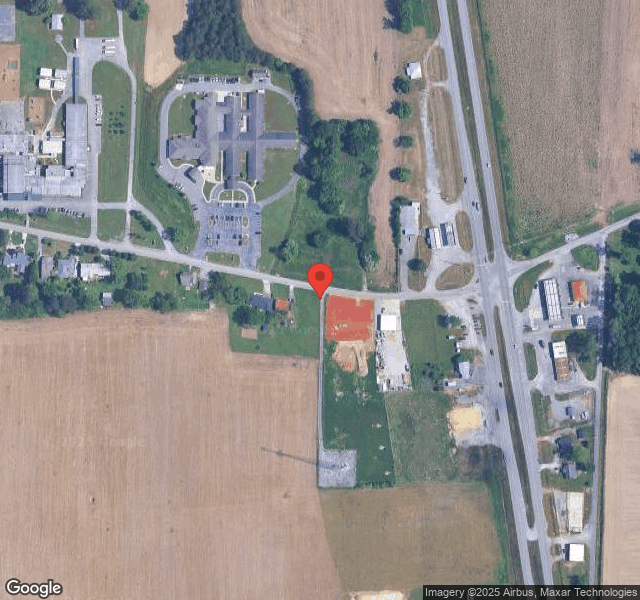

213 WILSON MANN ROAD, OWENS CROSS ROADS, AL 35763 (256) 725-3400
For profit - Limited Liability company 81 Beds PRESTON HEALTH SERVICES Data: November 2025
Trust Grade
65/100
#133 of 223 in AL
Last Inspection: July 2023

Over 2 years since last inspection. Current conditions may differ from available data.

Overview

South Hampton Nursing & Rehabilitation Center has a Trust Grade of C+, which indicates it is slightly above average but not outstanding. It ranks #133 out of 223 facilities in Alabama, placing it in the bottom half, and #6 out of 12 in Madison County, meaning it has only a few local competitors that perform better. The facility is improving, having reduced its issues from three in 2019 to two in 2023, although it still has a concerning staff turnover rate of 64%, significantly higher than the state average of 48%. While there have been no fines, which is a positive sign, the nursing home has faced issues such as failing to ensure that food-contact surfaces were properly cleaned, and a serious incident of misappropriation of funds affecting 13 residents, totaling over $18,000. Overall, while there are some strengths like no fines, families should be aware of the weaknesses in staffing stability and recent compliance issues.

Trust Score
C+
65/100
In Alabama
#133/223
Bottom 41%
Safety Record
Low Risk
No red flags
Inspections
Getting Better
3 → 2 violations
Staff Stability
⚠ Watch
64% turnover. Above average. Higher turnover means staff may not know residents' routines.
Penalties
✓ Good
No fines on record. Clean compliance history, better than most Alabama facilities.
Skilled Nurses
○ Average
Each resident gets 33 minutes of Registered Nurse (RN) attention daily — about average for Alabama. RNs are the most trained staff who monitor for health changes.
Violations
○ Average
7 deficiencies on record. Average for a facility this size. Mostly minor or procedural issues.
★★★☆☆
3.0
Overall Rating
★★★☆☆
3.0
Staff Levels
★★☆☆☆
2.0
Care Quality
★★★☆☆
3.0
Inspection Score
Stable
2019: 3 issues
2023: 2 issues

The Good

  • Full Sprinkler Coverage · Fire safety systems throughout facility
  • No fines on record

Facility shows strength in fire safety.

The Bad

3-Star Overall Rating

Near Alabama average (2.9)

Meets federal standards, typical of most facilities

Staff Turnover: 64%

18pts above Alabama avg (46%)

Frequent staff changes - ask about care continuity

Chain: PRESTON HEALTH SERVICES

Part of a multi-facility chain

Ask about local staffing decisions and management

Staff turnover is elevated (64%)

16 points above Alabama average of 48%

The Ugly 7 deficiencies on record

Jul 2023 2 deficiencies
CONCERN (D)

Potential for Harm - no one hurt, but risky conditions existed

Deficiency F0700 (Tag F0700)

Could have caused harm · This affected 1 resident

2. Review of Resident #64's admission Record indicated the facility admitted the resident on 03/06/2023 and readmitted the resident on 03/31/2023 with diagnoses that included Ileus (an inability of th...

Read full inspector narrative →
2. Review of Resident #64's admission Record indicated the facility admitted the resident on 03/06/2023 and readmitted the resident on 03/31/2023 with diagnoses that included Ileus (an inability of the intestine to contract normally, leading to a buildup of food material), Dementia, and Delusional Disorder. A review of Resident #64's admission Minimum Data Set (MDS), with an Assessment Reference Date (ARD) of 03/12/2023, revealed a Brief Interview for Mental Status (BIMS) score of 15, which indicated intact cognition. The MDS indicated Resident #64 was independent with bed mobility and required limited assistance from staff with transfers. The MDS also indicated bed rails were not being used as restraints. A review of Resident #64's care plan revealed a focus area, initiated on 03/08/2023 and revised on 04/06/2023, that indicated Resident #64 had impaired self-care related to impaired balance and multiple medications. The interventions indicated the resident required the use of one-quarter bed rails as needed for a mobility aid. The interventions also noted Resident #64 was independent with bed mobility with the use of one-quarter bed rails for mobility aide as needed. The care plan included a focus area, initiated on 03/08/2023 and revised on 04/06/2023, that indicated the resident was at risk for falls. Interventions instructed staff to ensure one-quarter bed rails were up to aid with bed mobility as needed and as resident would allow. A review of an admission Bed Side-Rail Safety Assessment V2, dated 03/06/2023, revealed Resident #64 had not expressed a desire to have bed rails raised while in bed for their own safety or comfort. The assessment indicated Resident #64 used the side rails for positioning of [sic] support and that the bed rail helped the resident rise from a supine position to a sitting/standing position. The sections on the assessment that indicated to List side rail alternatives considered but not attempted because they were considered inappropriate for resident and to List any Side Rail alternatives attempted that failed to meet resident's needs were left blank. A review of an admission Bed Side-Rail Safety Assessment V2, dated 03/31/2023, revealed Resident #64 had expressed a desire to have bed rails raised while in bed for their own safety or comfort and indicated the resident used the rails for bed mobility. The assessment indicated Resident #64 used the bed rails for positioning of [sic] support and that the bed rail helped the resident rise from a supine position to a sitting/standing position. The sections on the assessment that indicated to List side rail alternatives considered but not attempted because they were considered inappropriate for resident and to List any Side Rail alternatives attempted that failed to meet resident's needs were left blank. A review of a quarterly Bed Side-Rail Safety Assessment V2, dated 06/05/2023, revealed Resident #64 had not expressed a desire to have bed rails raised while in bed for their own safety or comfort. The assessment indicated Resident #64 used the bed rails for positioning of [sic] support and that the bed rail helped the resident rise from a supine position to a sitting/standing position. The sections on the assessment that indicated to List side rail alternatives considered but not attempted because they were considered inappropriate for resident and to List any Side Rail alternatives attempted that failed to meet resident's needs were left blank. On 06/22/2023 at 3:00 PM, an interview was conducted with Resident #64. Resident #64 stated they used the bed rails to help turn themself over in bed and to help them get up out of the bed. Resident #64 told the facility it was okay for them to have the bed rails and Resident #64 wanted them on their bed. One-quarter rails were observed at the head of the resident's bed. On 06/22/2023 at 4:03 PM, an interview was conducted with the Director of Nursing (DON). The DON stated a bed rail assessment was done upon admission to determine who would benefit from bed rails. The DON stated she was aware alternatives should have been explored prior to the use of bedrails, and if alternatives were considered, they would be documented. On 06/22/2023 at 4:08 PM, a follow-up interview was conducted with the DON. The DON stated the section on the bed rail assessment addressing the alternatives considered or attempted was left blank for Resident #64, and she would have expected that to have been filled out. On 06/22/2023 at 4:13 PM, an interview was conducted with the Administrator (ADM). The ADM stated the section for the alternatives considered or attempted was left blank for Resident #64, and he would have expected that to have been filled out. Based on observations, interviews, record reviews, and facility policy review, the facility failed to assess and use bed rail alternatives before installing and using bed rails for two (Resident #13 and Resident #64) of two residents reviewed for bed rails. Findings included: Review of a facility policy titled, Proper Use of Bed Rails, revised on 09/10/2022, revealed, Appropriate alternative approaches are attempted prior to installing or using bed rails. The policy also indicated, The resident assessment must include an evaluation of the alternatives that were attempted prior to the installation or use of a bed rail and how these alternatives failed to meet the resident's assessed needs. The policy further indicated, The facility will attempt to use appropriate alternatives prior to installing or using bed rails. Alternatives include, but are not limited to: a. Roll guards b. Foam bumpers c. Lowering the bed d. Concave mattresses. 1. Review of Resident #13's admission Record indicated the facility admitted the resident on 01/11/2023 with diagnoses that included Alzheimer's disease and repeated falls. Review of Resident #13's significant change Minimum Data Set (MDS), with an Assessment Reference Date (ARD) of 01/26/2023, revealed a Brief Interview for Mental Status (BIMS) score of 7, which indicated severely impaired cognition. The MDS indicated Resident #13 required extensive assistance from staff with bed mobility, transfers, and toilet use. The MDS indicated bed rails were not used for restraints. Review of Resident #13's care plan revealed focus areas of impaired self-care and risk for falls, initiated on 01/12/2023. Interventions included the use of one-quarter bed rails for mobility aids as needed with verbal cues for rolling side to side. A review of a Bed Side-Rail Assessment V2, dated 01/26/2023, revealed Resident #13 had not expressed a desire to have side rails raised while in bed for their own safety or comfort. The assessment included instructions to list bed rail alternatives considered but not attempted and alternatives attempted but that failed to meet the resident's needs. Both items were left blank. A review of an Order Summary Report for active orders as of 06/22/2023 revealed an order, dated 01/11/2023, for Resident #13 to have one-quarter left and right upper bed rails for mobility and transfers. On 06/19/2023 at 11:33 AM, Resident #13 was observed lying in their bed with one-quarter bed rails attached to the bed. During an interview on 06/22/2023 at 2:07 PM, Licensed Practical Nurse (LPN) #9 said the facility conducted bed rail assessments to determine whether a resident should receive bed rails and the type of bed rails. During an interview on 06/22/2023 at 2:17 PM, the Assistant Director of Nursing (ADON) stated bed rail assessments were conducted quarterly and annually using an electronic questionnaire. The ADON stated the facility standard was to utilize only one-quarter bed rails. The ADON said if the items on the assessment referencing bed rail alternatives considered and attempted were left blank then the alternative assessments probably did not take place. The ADON added that Resident #13's last bed-rail assessment took place in 01/2023. The ADON said the facility did not consider bed rail alternatives for Resident #13 and that when they missed this step, the MDS Coordinator would conduct that part of the assessment. During an interview on 06/22/2023 at 2:36 PM, the MDS Coordinator stated that the MDS staff did not conduct bed rail assessments for residents. During an interview on 06/22/2023 at 2:46 PM, Certified Nursing Assistant (CNA) #7 stated resident bed rails were not used unless they were addressed in the resident's care plan. During an interview on 06/22/2023 at 3:13 PM, CNA #19 said that Resident #13 required assistance from two staff with transfers and bed mobility. CNA #19 stated that CNA #19 cared for Resident #13 according to Resident #13's care plan, MDS, and bed rail policy. CNA #19 added Resident #13 was able to hold themself up and used bed rails for support. CNA #19 stated that cushions were placed on the bed rails to prevent Resident #13 from hurting themself.
CONCERN (E) 📢 Someone Reported This

A family member, employee, or ombudsman was alarmed enough to file a formal complaint

Potential for Harm - no one hurt, but risky conditions existed

Deficiency F0602 (Tag F0602)

Could have caused harm · This affected multiple residents

**NOTE- TERMS IN BRACKETS HAVE BEEN EDITED TO PROTECT CONFIDENTIALITY** Based on interviews, document review, facility policy review, and review of the facility's investigation file, the facility fail...

Read full inspector narrative →
**NOTE- TERMS IN BRACKETS HAVE BEEN EDITED TO PROTECT CONFIDENTIALITY** Based on interviews, document review, facility policy review, and review of the facility's investigation file, the facility failed to ensure residents' funds were not misappropriated for 13 (Residents #15, #18, #34, #376, #377, and #425 - #432) of 13 residents reviewed for misappropriation of funds. The facility determined Business Office Manager (BOM) #3 misappropriated funds from 13 residents and $18,591.57 was refunded to the residents' trust accounts. Findings included: A review the facility policy titled, Abuse Prevention Program - Abuse, Neglect and Exploitation, with a revised date of [DATE], revealed, under .It is the policy of this facility to provide protections for the health, welfare and rights of each resident by developing and implementing written policies and procedures that prohibit and prevent abuse, neglect, exploitation and misappropriation of resident property . The policy indicated, .Misappropriation of Resident Property means the deliberate misplacement, exploitation, or wrongful, temporary or permanent, use of a resident's belongings or money without the resident's consent . A review of the facility's investigation documentation revealed an investigation summary letter, dated [DATE] and signed by the Administrator (ADM), that indicated an initial report for an allegation of misappropriation of property of resident funds had been submitted to the state survey agency on [DATE]. The report was related to an individual who had not been admitted to the facility (Resident #74), but whose family had made a deposit for room and board in anticipation of the resident's admission. The letter indicated an audit review of the resident trust fund account revealed Business Office Manager (BOM) #3 moved a portion of that money from the prospective resident's trust fund to the facility's petty cash account. The facility was unable to account for the funds from there. The letter indicated this was discovered during an unrelated investigation into BOM #3's actions related to the facility's accounts receivable (A/R). Upon discovery of the A/R discrepancies, BOM #3 was suspended, interviewed, and subsequently terminated. BOM #3 confirmed she manipulated the A/R to clean up the books. The investigation summary letter indicated that based on the facility investigation, the facility substantiated the allegation that misappropriation occurred, and appropriate corrective action was taken by the facility. The total dollar amount suspected to have been misappropriated or unaccounted for was redeposited into the aggregate trust account as of [DATE]. Review of a facility document signed by the ADM and dated [DATE], indicated a third-party audit of the resident trust fund account was conducted and identified the following resident accounts were misappropriated - Residents #15, #18, #34, #376, #377, and #425 - #432. On [DATE] at 3:25 PM, an interview was conducted with the ADM. The ADM stated Resident #74 died in the hospital before being admitted to the facility. The family had already paid for the resident to come to the facility, and the money was put in a trust in the resident's name. An interview with the [NAME] President (VP) of Operations on [DATE] at 1:53 PM revealed BOM #3 adjusted the resident accounts, and over a five-year period, BOM #3 embezzled (misappropriated) over $187,000 from the facility. The VP of Operations stated $18,591.57 was refunded to the residents' trust accounts. An interview with the ADM on [DATE] at 2:23 PM revealed the facility was unable to determine exactly how many residents were affected, but the ADM indicated the audit findings from the outsourced company indicated 13 residents were affected by the missing funds. During a telephone interview on [DATE] at 4:16 PM, the Regional Financial Specialist indicated she performed audits every 30 to 60 days and there had been no discrepancies with the resident trust accounts. This deficient practice was cited as a result of the investigation of complaint/report #AL00041754. ************************************************************* A review of the facility's Performance Improvement Plan (PIP) indicated the following measures were implemented to correct the identified deficient practice: -The facility self-identified inconsistencies with credit balances, and self-identified checks that were cashed to resident petty cash but were unaccounted for in the bookkeeping. - BOM #3 was terminated on [DATE]. -An in-house audit was initiated by the Corporate Accountant on [DATE]. -A police report was filed on [DATE]. The Social Services Director (SSD) was suspended pending investigation on [DATE]. -An audit was outsourced to a third-party accounting firm on [DATE]. -The Department of Public Health was notified of an allegation of misappropriation of residents' funds on [DATE]. -A police investigation was initiated by the local police department on [DATE]. -Staff were in-serviced regarding misappropriation of resident funds on [DATE]. -Accounting policies were revised and implemented with in-service training provided to the appropriate personnel on [DATE]. -Monitoring for compliance and effectiveness of the plan for six months and to continue monthly when petty cash was replenished. ******************************************************************************* After review and verification of the facility's corrective actions, including the facility's investigation, initial and five-day reports submitted to the state agency, in-service education records, PIP, monitoring tools, and staff interviews, the survey team determined the facility implemented corrective actions from [DATE] to [DATE] with ongoing monitoring implemented; thus, past noncompliance was cited.
Sept 2019 3 deficiencies
CONCERN (D)

Potential for Harm - no one hurt, but risky conditions existed

Abuse Prevention Policies (Tag F0607)

Could have caused harm · This affected 1 resident

**NOTE- TERMS IN BRACKETS HAVE BEEN EDITED TO PROTECT CONFIDENTIALITY** Based on record review, interview and review of a facility policy titled Abuse Investigations, the facility failed to ensure Emp...

Read full inspector narrative →
**NOTE- TERMS IN BRACKETS HAVE BEEN EDITED TO PROTECT CONFIDENTIALITY** Based on record review, interview and review of a facility policy titled Abuse Investigations, the facility failed to ensure Employee Identifier (EI) #5, Licensed Practical Nurse (LPN) was suspended during an investigation into an allegation of misappropriation of Resident Identifier (RI) #8's property (medication). This deficient practice was identified during the review of 1 of 3 facility abuse investigative files. Findings Include: A review of a facility policy titled Abuse Investigations, with a review/ revised date of 5/10/17, documented the following: . 7. Employees of this facility who have been accused of resident abuse will be suspended from duty until the results of the investigation have been reviewed by the Administrator. RI #8 was admitted to the facility on [DATE]. Review of the resident's medication included Tramadol HCI 50 milligram tablet every six hours for pain. A review of a facility file documented an allegation was made against EI #5 on 7/16/19. The allegation was EI #5 took RI #8's medication Tramadol. A review of a facility document titled Time Card Report for EI #5, indicated EI #5 worked on 7/17/19 and 7/18/19. An interview was conducted with EI #4, Registered Nurse (RN/ Director of Nursing (DON)/ Abuse Coordinator on 9/5/19 at 2:00 p.m. EI #4 was asked when she was made aware of the allegation that EI #5 took RI #8's medication. EI #4 stated three CNA's came to her on 7/16/19. EI #4 was asked did she consider this an allegation of abuse. EI #4 stated at the time she did not because it was the same ones who always complained about things and she could never get anything concrete. EI #4 was asked if taking someone's medication would be misappropriation of resident property. EI #4 stated, absolutely. EI #4 was asked when was the first day of the investigation. EI #4 stated, 7/17/19. EI #4 further stated the last day of the investigation was 7/19/19. EI #4 was asked if EI #5 worked on 7/17/19 and 7/18/19. EI #4 stated EI #5 worked 7/17/19 and 7/18/19. EI #4 was asked if EI #5 was suspended during the investigation. EI #4 stated no, she worked and performed her normal duties to include passing medication on 7/17/19 and 7/18/19. EI #4 was asked what was the potential harm to other residents. EI #4 said she (EI #5) could be doing the same thing to other residents. EI #4 was asked if the abuse policy was followed concerning suspending an employee during an investigation. EI #4 stated, no. An interview was conducted with EI #3, the Administrator, on 9/5/19 at 5:19 p.m. EI #3 was asked if EI #5 worked during the investigation into misappropriation of RI #8's property. EI #3 stated she worked on 7/17/19 and 7/18/19. EI #3 was asked if she should have been working during the investigation. EI #3 stated, no. EI #3 stated EI #5 was not suspended during the investigation. EI #3 was asked what the abuse policy stated about employees involved in an allegation. EI # 3 stated that the employee needed to be suspended. EI #3 stated the abuse policy was not followed. EI #3 was asked why should someone be suspended during an investigation. EI #3 stated to make sure the resident is not further abused. EI #3 further stated EI #5 worked and completed her normal duties to include giving medication.
CONCERN (D)

Potential for Harm - no one hurt, but risky conditions existed

Report Alleged Abuse (Tag F0609)

Could have caused harm · This affected 1 resident

Based on interview, record review and review of facility policies tilted Reporting Abuse to State Agencies and other Entities and Abuse Investigation, the facility failed to report an allegation of mi...

Read full inspector narrative →
Based on interview, record review and review of facility policies tilted Reporting Abuse to State Agencies and other Entities and Abuse Investigation, the facility failed to report an allegation of misappropriation of Resident Identifier (RI) #8's property to the State Agency within 24 hours. This deficient practice was identified during the review of 1 of 3 facility abuse investigative files. Findings Include: A review of a facility policy titled Reporting Abuse to State Agencies and other Entities with a review/ revised date of 11/21/16, documented the following: . All suspected violations, allegations and/or incidents of abuse will be immediately reported to appropriate state agencies . A review of a policy titled Abuse Investigations, with a review/revised date of 5/10/17, documented the following: Type of Allegation . Misappropriation of resident property . 24 hour reporting . A review of a facility file documented an allegation was made against Employee Identifier (EI) #5 on 7/16/19. The allegation alleged EI #5 took resident Identifier (RI) #8's medication Tramadol. An interview was conducted with EI #4, Registered Nurse (RN) / Director of Nursing (DON)/ Abuse Coordinator, on 9/5/19 at 2:00 p.m EI #4 was asked when she was made aware of the allegation that EI #5 took RI #8's medication. EI #4 stated three CNA's came to her on 7/16/19. EI #4 was asked why this was not considered an allegation of abuse. EI #4 stated because she knew there was a rift between the parties involved. EI #4 was asked if taking someone's medication would be considered misappropriation of resident property. EI #4 stated, absolutely. EI #4 was asked if the allegation was reported to the State Agency. EI #4 stated, no. EI #4 was asked if she completed an investigation, why the findings were not reported. EI #4 stated it never crossed her mind that it would be reportable. EI #4 was asked if this allegation should have been reported to the State Agency. EI #4 stated, yes. EI #4 was asked what their abuse policy stated regarding misappropriation of property. EI #4 stated it should have been reported within 24 hours. An interview was conducted with EI #3, the Administrator, on 9/5/19 at 5:19 p.m. EI #3 stated she received a copy of an email containing the allegation that EI #5 took RI #8's medication. EI #3 was asked if taking someone's medication would be misappropriation of resident property. EI #3 stated, yes. EI #3 was asked if this allegation was reported to the State Agency. EI #3 stated, no. EI #3 was asked if the allegation should have been reported to the State Agency. EI #3 stated, yes. EI #3 further stated the facility policy stated all allegations of misappropriation of resident property should be reported to the State Agency within 24 hours.
CONCERN (F)

Potential for Harm - no one hurt, but risky conditions existed

Food Safety (Tag F0812)

Could have caused harm · This affected most or all residents

Based on observation, interview, and the 2017 Food and Drug Administration (FDA) Food Code, the facility failed to ensure the food-contact surfaces of insulated 6-ounce bowls and insulated 8-ounce cof...

Read full inspector narrative →
Based on observation, interview, and the 2017 Food and Drug Administration (FDA) Food Code, the facility failed to ensure the food-contact surfaces of insulated 6-ounce bowls and insulated 8-ounce coffee cups used for resident meal service were clean. This had the potential to affect 64 of 64 residents receiving meal trays, 64 of 65 residents in the facility. Findings include: The 2017 FDA Food Code included the following: . 4-601.11 Equipment, Food-Contact Surfaces, Nonfood-Contact Surfaces, and Utensils. (A) EQUIPMENT FOOD-CONTACT SURFACES and UTENSILS shall be clean to sight and touch. (B) The FOOD-CONTACT SURFACES . shall be kept free of . soil accumulations. 4-603.14 Wet Cleaning. (A) EQUIPMENT FOOD-CONTACT SURFACES and UTENSILS shall be effectively washed to remove or completely loosen soils by using the manual or mechanical means necessary such as the application of . acid, alkaline . cleaners . The 2017 FDA Food Code further included the following in Annex 3 - Public Health Reasons/Administrative Guidelines: Page 491 . Cleanability 4-202.11 Food-Contact Surfaces. The purpose of the requirements for multiuse food-contact surfaces is to ensure that such surfaces are capable of being easily cleaned . Food-contact surfaces that do not meet these requirements provide a potential harbor for foodborne pathogenic organisms. Surfaces which have imperfections such as cracks, chips, or pits allow microorganisms to attach and form biofilms. Once established, these biofilms can release pathogens to food. Biofilms are highly resistant to cleaning and sanitizing efforts. Page 504 . Equipment 4-501.11 Good Repair and Proper Adjustment. . a chemical sanitizer will not sanitize a dirty dish . Page 513 . 4-603.12 Precleaning. . Depending upon the condition of the surface to be cleaned, detergent alone may not be sufficient to loosen soil for cleaning. Heavily soiled surfaces may need to be presoaked . Objective 4-701.10 Food-Contact Surfaces and Utensils. Effective sanitization procedures destroy organisms of public health importance that may be present on . food equipment, or utensils after cleaning, or which have been introduced into the rinse solution. It is important that surfaces be clean before being sanitized to allow the sanitizer to achieve its maximum benefit. During the initial tour of kitchen on 9/3/2019 at 5:45 PM, the interior food-contact surfaces of 6-ounce insulated bowls and 8-ounce insulated coffee cups stored on a rack in the kitchen were checked. One of the five insulated coffee cups checked had a heavy residue inside the cup. Three of the five insulated bowls checked had heavy residue on the interior surface of the bowls. It was also observed that the dishwashing machine used chlorine as the sanitizing method. On 9/4/2019 at 10:24 AM, an observation was made of dishwashing following the resident breakfast service. Insulated bowls and insulated coffee cups were observed being placed upside down on trays located on a storage rack in kitchen. Employee Identifier (EI) #1, the Dietary Manager, was questioned about the items stored on the rack during an interview at 10:30 AM. When asked if the bowls and cups on the rack were ready for resident meal service, EI #1 said yes. Upon inspecting the interior food-contact surface of the 6-ounce insulated bowls with EI #1, 23 of the 36 bowls checked had residue inside. When asked if these bowls were clean; EI #1 said no, they were dirty. Upon inspecting the interior food-contact surface of the 8-ounce insulated coffee cups, three of the fourteen cups checked contained residue. EI #1 was asked what would be the concern with the cups and bowls containing residue. EI #1 said the residue would touch the clean food and it would be cross-contamination. On 9/4/2019 at 3:37 PM, EI #2, the Registered Dietitian, was interviewed. EI #2 confirmed that 64 of the 65 facility residents received meals from the kitchen. When asked about the insulated coffee cups and the insulated soup bowls observed with heavy residue inside on the food contact surfaces, EI #2 said it could be a mineral build-up. Upon being asked if the food-contact surfaces of these bowls and cups were clean, EI #2 said no.
Aug 2018 2 deficiencies
CONCERN (D)

Potential for Harm - no one hurt, but risky conditions existed

Deficiency F0868 (Tag F0868)

Could have caused harm · This affected 1 resident

Based on interview, record review and a review of the facility's policy and procedure titled, Quality Assessment and Assurance (QAA), the facility failed to ensure the Medical Director attended all of...

Read full inspector narrative →
Based on interview, record review and a review of the facility's policy and procedure titled, Quality Assessment and Assurance (QAA), the facility failed to ensure the Medical Director attended all of the QA (Quality Assurance) quarterly meetings from June 2017 to June 2018. This affected two of four QA quarterly meetings. Findings Include: A review of the facility's policy and procedure titled, Quality Assessment and Assurance, with a revised date of 06/23/18, revealed the following: .1. the Committee will be made up of, at a minimum, the Director of Nursing, the Medical director or his or her designee .2 .The committee must: a. Meet at least quarterly .d .The facility will maintain a record of he (the) dates of all meetings and the names/titles of those attending each meeting . A review of the facility's Quality Assurance Meeting sign-in forms revealed the Medical Director attended two of the four quarterly meetings from June 2017 to June 2018. On 08/09/18 at 10:44 AM, during an interview with Employee Identifier (EI) #4, QAA and QAPI (Quality Assurance and Performance Improvement) Nurse, the surveyor asked when did the QA committee meet. EI #4 said they had a monthly QA meeting. A review of the facility's QA committee meeting sign-in sheets revealed the Medical Director attended two out of four quarterly meetings that were held in the last year. The surveyor asked EI #4 how often should the Medical Director attend the quarterly meetings. EI #4 stated, Quarterly. The surveyor asked from June of 2017 until June of 2018, how many meetings had the Medical Director attended. The surveyor provided the QA minutes and sign in sheets for EI #4 to review. After review, EI #4 stated, Two times since June of 2017 until now. The surveyor asked what was the policy and procedure for the QA meeting regarding the Medical Director. EI #4 stated, He should attend once a quarter. The surveyor asked was policy and procedure followed. EI #4 stated, No.
CONCERN (D)

Potential for Harm - no one hurt, but risky conditions existed

Infection Control (Tag F0880)

Could have caused harm · This affected 1 resident

**NOTE- TERMS IN BRACKETS HAVE BEEN EDITED TO PROTECT CONFIDENTIALITY** Based on observations, interviews, medical record review and a review of the facility's policy and procedure titled, Infection P...

Read full inspector narrative →
**NOTE- TERMS IN BRACKETS HAVE BEEN EDITED TO PROTECT CONFIDENTIALITY** Based on observations, interviews, medical record review and a review of the facility's policy and procedure titled, Infection Prevention and Control Program, the facility failed to ensure licensed staff washed their hands after removing gloves, before applying clean gloves and before touching clean items. The facility also failed to ensure licensed staff used a paper towel to turn the water faucet off after washing their hands. This affected RI (Resident Identifier) #10 and RI #25, two of eight residents on two of three halls, and two of four nurses observed during the medication administration observation. Findings Include: A review of the facility's policy and procedure titled, Infection Prevention and Control Program, with a revised date of 5/23/17, revealed the following: .Hand Hygiene Protocol: a. All staff shall wash their hands when coming on duty, between resident contacts, after handling contaminated objects, after PPE (Personal Protection Equipment) removal . 1. RI #25 was admitted on [DATE], with diagnoses to include Chronic Obstructive Pulmonary Disease and Hypertension. On 8/08/18 at 2:25 PM, EI #3, LPN, was observed during the medication administration of RI #25. EI #3 prepared RI #25's medication and entered the resident's room. EI #3 administered the medications, removed her gloves and washed her hands. EI #3 turned the water off with her wet bare hands. EI #3 obtained paper towels, dried her hands and exited the room. On 08/08/18 at 2:35 PM, during an interview with EI #3, the surveyor asked how should the water faucet be turned off. EI #3 stated, With paper towels. The surveyor asked was that what she had done. EI #3 stated, I don't remember. The surveyor informed EI #3 of the above observation related to turning off the faucet with her wet bare hands and EI #3 stated, I'll take your word for it. The surveyor asked what type of an issue would that be. EI #3 stated, Infection risk, and transferring of germs. 2. RI #10 was re-admitted on [DATE], with diagnoses including Type 2 Diabetes Mellitus and Hypertension. On 8/08/18 at 4:10 PM, Employee Identifier (EI)# 1, Licensed Practical Nurse (LPN) was observed preparing medications for administration to RI #10. EI #1 dispensed Metoprolol and obtained a glucometer for a finger stick blood sugar (FSBS) for RI #10. EI #1 cleaned the glucometer with a Sani wipe then applied gloves without washing or sanitizing his hands. EI#1 entered RI #10's room to obtain a FSBS, administer insulin and Metoprolol (via GT {Gastrostomy Tube} ). EI #10 removed and applied gloves several times without washing his hands or using hand sanitizer before applying gloves or after gloves were removed. EI #10 touched keys, the medication cart, supplies and tube feeding with unclean hands. On 8/8/18 at 5:20 PM, during an interview with EI #1, the surveyor asked what should have been done every time after gloves were removed and before gloves were applied. EI #1 stated, hands washed. The surveyor asked was that what he had done every time. EI #1 stated, No ma'am. The surveyor asked what was the potential for harm. EI #1 stated, Contamination of the GT and feeding.
Understanding Severity Codes (click to expand)
Life-Threatening (Immediate Jeopardy)
J - Isolated K - Pattern L - Widespread
Actual Harm
G - Isolated H - Pattern I - Widespread
Potential for Harm
D - Isolated E - Pattern F - Widespread
No Harm (Minor)
A - Isolated B - Pattern C - Widespread

Questions to Ask on Your Visit

  • "Why is there high staff turnover? How do you retain staff?"
  • "Can I speak with families of current residents?"
  • "What's your RN coverage like on weekends and overnight?"

Our Honest Assessment

Strengths
  • • No major safety red flags. No abuse findings, life-threatening violations, or SFF status.
  • • No fines on record. Clean compliance history, better than most Alabama facilities.
Concerns
  • • 64% turnover. Above average. Higher turnover means staff may not know residents' routines.
Bottom line: Mixed indicators with Trust Score of 65/100. Visit in person and ask pointed questions.

About This Facility

What is South Hampton Nursing & Rehabilitation Center's CMS Rating?

CMS assigns SOUTH HAMPTON NURSING & REHABILITATION CENTER an overall rating of 3 out of 5 stars, which is considered average nationally. Within Alabama, this rating places the facility higher than 99% of the state's 100 nursing homes. This mid-range rating indicates the facility meets federal standards but may have areas for improvement.
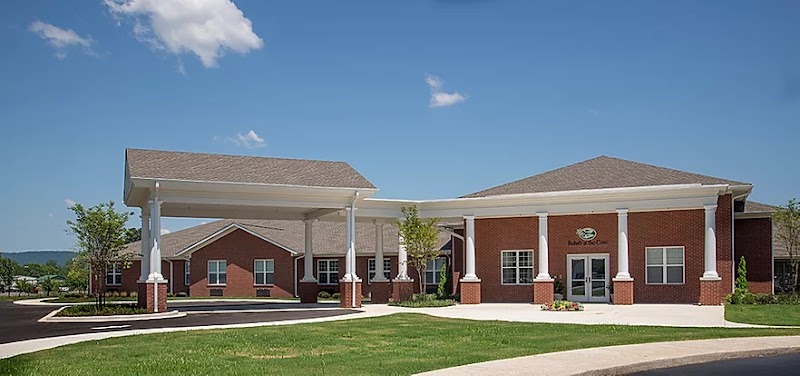
How is South Hampton Nursing & Rehabilitation Center Staffed?

CMS rates SOUTH HAMPTON NURSING & REHABILITATION CENTER's staffing level at 3 out of 5 stars, which is average compared to other nursing homes. Staff turnover is 64%, which is 18 percentage points above the Alabama average of 46%. High turnover can affect care consistency as new staff learn residents' individual needs. RN turnover specifically is 64%, which is notably high. RNs provide skilled clinical oversight, so turnover in this role can affect medical care quality.

What Have Inspectors Found at South Hampton Nursing & Rehabilitation Center?

State health inspectors documented 7 deficiencies at SOUTH HAMPTON NURSING & REHABILITATION CENTER during 2018 to 2023. These included: 7 with potential for harm.

Who Owns and Operates South Hampton Nursing & Rehabilitation Center?

SOUTH HAMPTON NURSING & REHABILITATION CENTER is owned by a for-profit company. For-profit facilities operate as businesses with obligations to shareholders or private owners. The facility is operated by PRESTON HEALTH SERVICES, a chain that manages multiple nursing homes. With 81 certified beds and approximately 76 residents (about 94% occupancy), it is a smaller facility located in OWENS CROSS ROADS, Alabama.
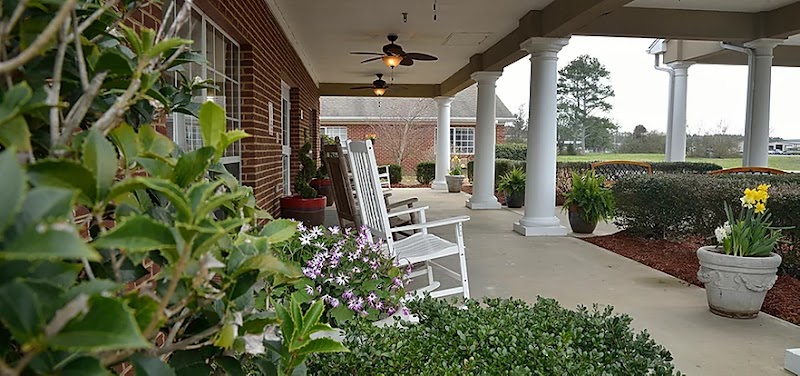
How Does South Hampton Nursing & Rehabilitation Center Compare to Other Alabama Nursing Homes?

Compared to the 100 nursing homes in Alabama, SOUTH HAMPTON NURSING & REHABILITATION CENTER's overall rating (3 stars) is above the state average of 2.9, staff turnover (64%) is significantly higher than the state average of 46%, and health inspection rating (3 stars) is at the national benchmark.

What Should Families Ask When Visiting South Hampton Nursing & Rehabilitation Center?

Based on this facility's data, families visiting should ask: "How do you ensure continuity of care given staff turnover, and what is your staff retention strategy?" "Can I visit during a mealtime to observe dining assistance and food quality?" "How do you handle medical emergencies, and what is your hospital transfer rate?" "Can I speak with family members of current residents about their experience?" These questions are particularly relevant given the facility's high staff turnover rate.

Is South Hampton Nursing & Rehabilitation Center Safe?

Based on CMS inspection data, SOUTH HAMPTON NURSING & REHABILITATION CENTER has a clean safety record: no substantiated abuse findings (meaning no confirmed cases of resident harm), no Immediate Jeopardy citations (the most serious violation level indicating risk of serious injury or death), and is not on the Special Focus Facility watch list (a federal program monitoring the lowest-performing 1% of nursing homes). The facility has a 3-star overall rating and ranks #1 of 100 nursing homes in Alabama. While no facility is perfect, families should still ask about staff-to-resident ratios and recent inspection results during their visit.

Do Nurses at South Hampton Nursing & Rehabilitation Center Stick Around?

Staff turnover at SOUTH HAMPTON NURSING & REHABILITATION CENTER is high. At 64%, the facility is 18 percentage points above the Alabama average of 46%. Registered Nurse turnover is particularly concerning at 64%. RNs handle complex medical decisions and coordinate care — frequent RN changes can directly impact care quality. High turnover means new staff may not know residents' individual needs, medications, or preferences. It can also be disorienting for residents, especially those with dementia who rely on familiar faces. Families should ask: What is causing the turnover? What retention programs are in place? How do you ensure care continuity during staff transitions?

Was South Hampton Nursing & Rehabilitation Center Ever Fined?

SOUTH HAMPTON NURSING & REHABILITATION CENTER has no federal fines on record. CMS issues fines when nursing homes fail to meet care standards or don't correct problems found during inspections. The absence of fines suggests the facility has either maintained compliance or corrected any issues before penalties were assessed. This is a positive indicator, though families should still review recent inspection reports for the full picture.

Is South Hampton Nursing & Rehabilitation Center on Any Federal Watch List?

SOUTH HAMPTON NURSING & REHABILITATION CENTER is not on any federal watch list. The most significant is the Special Focus Facility (SFF) program, which identifies the bottom 1% of nursing homes nationally based on persistent, serious quality problems. Not being on this list means the facility has avoided the pattern of deficiencies that triggers enhanced federal oversight. This is a positive indicator, though families should still review the facility's inspection history directly.