ROANOKE REHABILITATION & HEALTHCARE CENTER
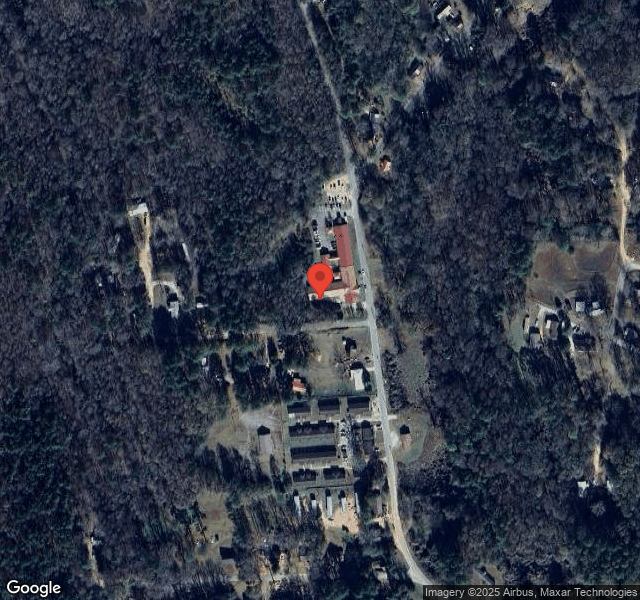
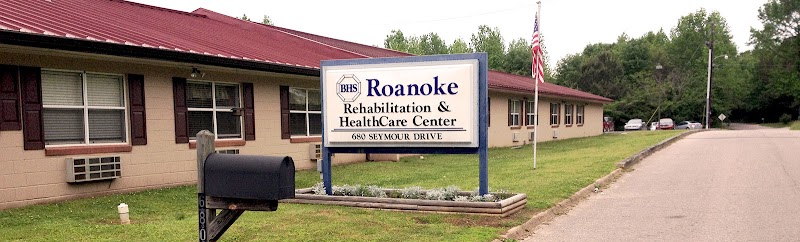
680 SEYMOUR DRIVE, ROANOKE, AL 36274 (334) 863-6151
For profit - Corporation 65 Beds BALL HEALTHCARE SERVICES Data: November 2025
Trust Grade
55/100
#213 of 223 in AL
Last Inspection: September 2023

Over 2 years since last inspection. Current conditions may differ from available data.

Overview

Roanoke Rehabilitation & Healthcare Center has a Trust Grade of C, which means it is average and falls in the middle of the pack among nursing homes. It ranks #213 out of 223 facilities in Alabama, placing it in the bottom half, and is the second-best option out of two in Randolph County. The facility is improving, with the number of reported issues decreasing from four in 2022 to three in 2023. Staffing is reasonably good, with a turnover rate of 19%, significantly lower than the state average of 48%, but the nursing coverage is concerning, as they have less registered nurse support than 83% of Alabama facilities. While there have been no fines, which is a positive sign, there are notable problems, including staff not washing hands before handling food, which risks spreading illness, and failure to deliver mail to residents on Saturdays, affecting their communication rights. Additionally, food items were not properly labeled with expiration dates, posing potential safety concerns for the residents. Overall, while there are strengths in staffing and the absence of fines, the facility has several critical areas that require improvement.

Trust Score
C
55/100
In Alabama
#213/223
Bottom 5%
Safety Record
Low Risk
No red flags
Inspections
Getting Better
4 → 3 violations
Staff Stability
✓ Good
19% annual turnover. Excellent stability, 29 points below Alabama's 48% average. Staff who stay learn residents' needs.
Penalties
✓ Good
No fines on record. Clean compliance history, better than most Alabama facilities.
Skilled Nurses
⚠ Watch
Each resident gets only 20 minutes of Registered Nurse (RN) attention daily — below average for Alabama. Fewer RN minutes means fewer trained eyes watching for problems.
Violations
⚠ Watch
11 deficiencies on record. Higher than average. Multiple issues found across inspections.
★☆☆☆☆
1.0
Overall Rating
★★☆☆☆
2.0
Staff Levels
★☆☆☆☆
1.0
Care Quality
★★☆☆☆
2.0
Inspection Score
Stable
2022: 4 issues
2023: 3 issues

The Good

  • Low Staff Turnover (19%) · Staff stability means consistent care
  • Full Sprinkler Coverage · Fire safety systems throughout facility
  • No fines on record
  • Staff turnover is low (19%)

    29 points below Alabama average of 48%

Facility shows strength in staff retention, fire safety.

The Bad

1-Star Overall Rating

Below Alabama average (2.9)

Significant quality concerns identified by CMS

Chain: BALL HEALTHCARE SERVICES

Part of a multi-facility chain

Ask about local staffing decisions and management

The Ugly 11 deficiencies on record

Sept 2023 3 deficiencies
CONCERN (D)

Potential for Harm - no one hurt, but risky conditions existed

Deficiency F0638 (Tag F0638)

Could have caused harm · This affected 1 resident

Based on record review, document review, and interviews, the facility failed to complete a quarterly Minimum Data Set (MDS) for one of one sampled resident reviewed for resident assessments. Findings...

Read full inspector narrative →
Based on record review, document review, and interviews, the facility failed to complete a quarterly Minimum Data Set (MDS) for one of one sampled resident reviewed for resident assessments. Findings included: A review of the Centers for Medicare & Medicaid Services Long-Term Care Facility Resident Assessment Instrument 3.0 User's Manual, dated October 2019, specified, . The Quarterly assessment is an OBRA [Omnibus Budget Reconciliation Act] non-comprehensive assessment for a resident that must be completed at least every 92 days following the previous OBRA assessment of any type. It is used to track a resident's status between comprehensive assessments to ensure critical indicators of gradual change in a resident's status are monitored . A review of Resident #16's Face Sheet indicated the facility admitted the resident on 01/06/2015. A review of Resident #16's medical record, revealed the last completed Minimum Data Set (MDS) was a quarterly MDS with an Assessment Reference Date (ARD) of 04/10/2023. During an interview on 09/19/2023 at 10:55 AM, the MDS Coordinator indicated the July 2023 quarterly MDS for Resident #16 had not been completed. She confirmed the last MDS completed for Resident #16 had an ARD of 04/10/2023. During an interview on 09/19/2023 at 2:18 PM, the Director of Nursing (DON) stated her expectation was for MDS assessments to be completed timely. According to the DON, other staff had sections of the MDS to complete, but the MDS Coordinator was the person responsible to ensure all the assessments were completed timely. During an interview on 09/20/2023 at 2:37 PM, the Administrator stated all MDS assessments should be done within the timeframe given due to the fact the assessments were important because staff needed a clear picture on the care to be provided to the residents.
CONCERN (D) 📢 Someone Reported This

A family member, employee, or ombudsman was alarmed enough to file a formal complaint

Potential for Harm - no one hurt, but risky conditions existed

Quality of Care (Tag F0684)

Could have caused harm · This affected 1 resident

**NOTE- TERMS IN BRACKETS HAVE BEEN EDITED TO PROTECT CONFIDENTIALITY** Based on interviews, record review, and policy review, the facility failed to ensure staff transcribed wound care orders for one...

Read full inspector narrative →
**NOTE- TERMS IN BRACKETS HAVE BEEN EDITED TO PROTECT CONFIDENTIALITY** Based on interviews, record review, and policy review, the facility failed to ensure staff transcribed wound care orders for one (Resident #154) of 16 sampled residents. The failure to transcribe the wound care orders resulted in staff not performing wound care as ordered. Findings included: The facility policy titled, admission of a Resident, effective on 02/01/2004 indicated, . Purpose: The admission process is intended to obtain all the information possible about the resident for the development of [the] comprehensive plan of care and to assist the resident in becoming comfortable in the facility . The facility policy titled, Wound and Skin Care Protocols, dated October 2010, specified, . Objectives: To maintain skin integrity and promote wound healing. General Policy: These protocols are designed as a guide to the prevention and/or treatment of impaired skin integrity. They are intended to serve as a tool in the appropriate management of preventative skin care and the management of actual impaired skin. Physician orders will always have precedent over the following guidelines . A review of Resident #154's Face Sheet indicated the facility admitted the resident on 07/21/2023 with an admit diagnosis to include malignant neoplasm (cancerous tumor) of the floor of the mouth. Per the Face Sheet, the resident was hospitalized in a local hospital from [DATE] to 07/21/2023. A review of an Order Requisition, for Resident #154 dated 07/21/2023 from the discharging hospital indicated, Wound care to right neck as follows: Pack with dry 4x4 gauze. Wrap with kerlix [bandage roll] 3 times to help dressing remain in place. Secure with tape. Perform dressing change twice daily. A review of Resident #154's medical record revealed no evidence of the transcription of a wound care order for the resident until 07/23/2023. The order dated 07/23/2023 indicated to change the dressing around the surgical site above the tracheostomy collar, clean with Normal Saline, apply a nonadherent dressing, cover with a 4x4 gauze, wrap rolled gauze, and secure with tape. A review of Resident #154's 5-day Minimum Data Set with an Assessment Reference Date of 07/25/2023 indicated the resident had a surgical wound(s), received surgical wound care, and application of dressings. During an interview on 09/18/2023 at 6:48 AM, Licensed Practical Nurse (LPN) #6 stated she cared for Resident #154 once while the resident resided in the facility. According to LPN #6, she did not remember if the resident had a bandage on. In an interview on 09/18/2023 at 3:32 PM, LPN #5 stated she had no orders for wound care to be performed for Resident #154. LPN #5 stated the nurse who performed the resident's admission, should have contacted the doctor to get wound care orders. According to LPN #5, if she was the admission nurse, she would have called the doctor to get an order for wound care. During an interview on 09/19/2023 at 8:37 AM, Registered Nurse (RN) #4 stated if the resident came from the hospital, the orders would carry over from the hospital or the admission nurse would call to the physician to get orders. During an interview on 09/19/2023 at 10:08 AM, the Director of Nursing (DON) stated the order from the hospital physician was in the hospital paperwork, and she assumed the admitting nurse did not see the order. During an interview on 09/19/2023 at 2:08 PM, the physician stated the expected the facility to follow the hospital discharge orders. The physician stated he did not recall the facility asking about wound care orders; however, there were usually wound care orders included in the hospital summary. According to the physician, he read the discharge summary from the hospital, noted the hospital did send wound care orders, and wrote new orders on 07/23/2023 for wound care. In a follow-up interview on 09/20/2023 at 3:26 PM, the DON stated if Resident #154 had a wound, the nurse should have called for wound care orders. The DON stated she expected the nurse to assess the wound area and get orders to do wound care to prevent infection. During an interview on 09/20/2023 at 3:31 PM, the Administrator stated he expected the nurses to assess the resident and contact the physician for orders.
CONCERN (F)

Potential for Harm - no one hurt, but risky conditions existed

Food Safety (Tag F0812)

Could have caused harm · This affected most or all residents

Based on observations, interviews, and policy review the facility failed to ensure food service employees washed their hands before they put on clean gloves. This deficient practice had the potential ...

Read full inspector narrative →
Based on observations, interviews, and policy review the facility failed to ensure food service employees washed their hands before they put on clean gloves. This deficient practice had the potential to affect all residents who received food from the kitchen. Findings included: Review of the facility's policy titled, Hand and Single Use Glove Sanitation Practices, revised in October 2017, indicated . Facility employees shall follow sanitary practices when handling food to prevent the spread of foodborne illness . The policy specified food service employees wash their hands after the following activities, . viii. Touching garbage or trash can . xii. Before putting on gloves and after removing gloves . On 09/19/2023 beginning at 11:21 AM, the surveyor observed [NAME] #1 pick gloves up off the floor and apply new gloves without washing her hands. [NAME] #1 then proceeded to make a turkey sandwich for a resident. After the turkey sandwich was made, [NAME] #1 removed her gloves and applied clean gloves without washing her hands. [NAME] #1 was noted to touch the lid of the trash can when she placed her gloves in the trash can. [NAME] #1 then removed a container of ham from the refrigerator and without washing her hands, she put on clean gloves and started to remove ham from the container. During an interview on 09/19/2023 at 1:33 PM, [NAME] #1 stated staff should wash their hands every time they touched something that could cause cross contamination. She stated staff should wash their hands if they dropped anything on the floor and whenever they changed their gloves. During an interview on 09/20/2023 at 9:40 AM, the Dietary Manager (DM) stated staff should wash their hands anytime they entered the kitchen, touched the trash, went to the bathroom, or picked items up off the floor that were dropped. She stated it depended on the situation if staff should wash their hands with each glove change but indicated if they contaminated their hands, they should wash their hands before applying new gloves but indicated on the serving line, staff could not do that. During an interview on 09/20/2023 at 10:31 AM, the Administrator stated he expected staff to wash their hands every time they changed their gloves, when they touched the trash, and when they picked things up off the floor.
Mar 2022 4 deficiencies
CONCERN (D)

Potential for Harm - no one hurt, but risky conditions existed

Deficiency F0642 (Tag F0642)

Could have caused harm · This affected 1 resident

**NOTE- TERMS IN BRACKETS HAVE BEEN EDITED TO PROTECT CONFIDENTIALITY** Based on interview, medical record review, and review of the Centers for Medicare & Medicaid Services (CMS) Long-Term Care Facil...

Read full inspector narrative →
**NOTE- TERMS IN BRACKETS HAVE BEEN EDITED TO PROTECT CONFIDENTIALITY** Based on interview, medical record review, and review of the Centers for Medicare & Medicaid Services (CMS) Long-Term Care Facility Resident Assessment Instrument 3.0 User's Manual, the facility failed to ensure Resident Identifier (RI) #1's discharge Minimum Data Set (MDS) was signed off as completed by a Registered Nurse (RN). This deficient practice affected one of 16 sampled residents whose MDS assessments were reviewed. Findings include: A review of the CMS, Long-Term Care Resident Assessment Instrument 3.0 User's Manual, dated of October 2019, revealed: .09. Discharge Assessment-Return Not Anticipated . Must be completed .within 14 days after the discharge date . RI #1 was admitted to the facility on [DATE] and discharged on 01/17/22. Review of RI#1's discharge MDS assessment revealed, . STATUS: Open . discharge date [DATE] . On 03/03/22 at 10:50 AM, an interview was conducted with Employee Identifier (EI) #4, MDS Coordinator. EI #4 was asked when RI #1 was discharged from the facility. EI #4 said 01/17/22. EI #4 was asked if she completed a discharge assessment on 01/17/22. EI #4 said, no, Section Z of the MDS assessment (where the nurse signs off on the assessment as completed) had not been signed and closed. EI #4 was asked when should a discharge assessment for RI #1 have been completed. EI #4 said on 01/31/22. EI #4 was asked why was the discharge assessment not completed for RI #1 when he/she discharged on 01/17/22. EI #4 said she was not sure. EI #4 was asked when should a discharge assessment be completed when a resident is discharged . EI #4 said 14 days after discharge.
CONCERN (D)

Potential for Harm - no one hurt, but risky conditions existed

Infection Control (Tag F0880)

Could have caused harm · This affected 1 resident

**NOTE- TERMS IN BRACKETS HAVE BEEN EDITED TO PROTECT CONFIDENTIALITY** Based on observation, interviews, record review and review of the facility policy titled Eye Ointment/Drops Administration, the ...

Read full inspector narrative →
**NOTE- TERMS IN BRACKETS HAVE BEEN EDITED TO PROTECT CONFIDENTIALITY** Based on observation, interviews, record review and review of the facility policy titled Eye Ointment/Drops Administration, the facility failed to ensure a licensed staff member did not place the eye drop bottle in her pocket after giving Resident Identifier (RI) #25 scheduled eye drops. This was observed on 3/2/22 and affected one of two residents observed receiving eye drops during medication administration. Findings include: A review of the facility policy titled Eye Ointment/Drops Administration, with an effective date of February 1, 2004, revealed: . PROCESS . 11. Administer medication .14. Replace medication cap 15. Return to medication cart . RI #25 was admitted to the facility on [DATE] and readmitted on [DATE]. RI #25 had a diagnosis of Dry Eye Syndrome. A review of RI #25's March 2022 Physician orders revealed . COSOPT EYE DROPS -GIVE 1 GTT (DROP) TO RIGHT EYE TID (three times a day) . On 3/02/22 at 4:27 PM, Employee Identifier (EI) #3, Registered Nurse (RN), was observed giving RI #25's scheduled medications. EI #3 administered RI #25's eye drops, replaced the cap and placed the bottle in her uniform pocket. EI #3 then returned to the medication cart, removed the eye drop bottle form her pocket, and placed it back inside the medication cart. On 3/02/22 at 4:35 PM, an interview with EI #3, RN, was conducted. EI #3 was asked, where she put the eye drop bottle when she finished giving the medication. EI #3 replied, in her pocket. EI #3 was asked where she should have put the eye drop bottle when finished. EI #3 replied, on the table on a barrier. EI #3 was asked if her pocket was clean. EI #3 replied, considerably not, and further stated her pocket could have been contaminated. On 3/03/22 at 3:51 PM, an interview was conducted with EI #2, RN/Infection Preventionist. EI #2 was asked what was the policy for the eye drop bottle once they had been administered. EI #2 replied, staff should clean it, replace the cap and place it on a barrier on the table. EI #2 was asked when should a licensed nurse give the eye drop, replace the cap on the bottle, then put the bottle in her pocket. EI #2 replied, never, they should not put medication in their pocket. EI #2 was asked, what would be the potential harm in a nurse placing a resident's eye drop medication in her pocket. EI #2 replied, it would create a risk for germs from the pocket getting on the eye drop bottle, then back to the resident, and could cause infection.
CONCERN (F)

Potential for Harm - no one hurt, but risky conditions existed

Deficiency F0576 (Tag F0576)

Could have caused harm · This affected most or all residents

Based on interviews, discussion during the resident group meeting, review of the facility's admission Agreement, and review of scheduled mail delivery days and times through the United States Postal S...

Read full inspector narrative →
Based on interviews, discussion during the resident group meeting, review of the facility's admission Agreement, and review of scheduled mail delivery days and times through the United States Postal Service (USPS) website, the facility failed to ensure mail was delivered to residents on Saturdays. This deficient practice had the potential to affect all 54 out of 54 residents residing in the facility. Findings Include: A review of the facility's, admission AGREEMENT, with a revised date of 10/08/2014, revealed: . RESIDENT'S RIGHTS .13. Resident rights .(i) Mail. The resident has the right to privacy in written communication, including the right to- (1) send and promptly receive mail that is unopened, . On 03/02/22 at 10:45 AM a group meeting was held with nine residents present. All nine residents confirmed that they do not receive mail on Saturdays. Resident Identifier (RI) #30 stated the facility's Business Office was not open on Saturdays so there was no one to get the mail from the post office. According to RI #30, the mail that should be delivered on Saturdays is held and delivered on Mondays instead. On 03/02/22 at 5:34 PM, an interview was conducted with Employee Identifier (EI) #5, Activity Director. EI #5 was asked if the postal service delivered mail to the facility on Saturdays. EI #5 said yes, they used to deliver it on Saturdays, but because the facility's Business Office is closed on Saturdays, they currently hold the mail until Monday. EI #5 was asked if the residents' mail was delivered on Saturdays. EI #5 said no. EI #5 was asked what days were the residents' mail delivered to them. EI #5 said Mondays-Fridays. EI #5 stated, everything that came for residents was put in her box, and then she delivers it to the residents, Mondays through Fridays. On 03/02/22 at 05:58 PM an interview was conducted with EI #1, the Administrator. EI #1 was asked if the postal service delivered mail to the facility on Saturdays. EI #1 said, no. EI #1 was asked why was the mail not delivered to the facility on Saturdays. EI #1 said it had always been delivered Mondays through Fridays. EI #1 was asked if residents had a right to receive mail on Saturdays. EI #1 said, yes, they do. Review of the USPS website (https://tools.usps.com/find-location.htm) confirmed the post office that services the facility does have mail delivery hours scheduled on Saturdays.
CONCERN (F)

Potential for Harm - no one hurt, but risky conditions existed

Food Safety (Tag F0812)

Could have caused harm · This affected most or all residents

**NOTE- TERMS IN BRACKETS HAVE BEEN EDITED TO PROTECT CONFIDENTIALITY** Based on observations, interviews and review of facility policies, titled STORAGE OF REFRIGERATED FOODS, STORAGE OF FROZEN FOOD ...

Read full inspector narrative →
**NOTE- TERMS IN BRACKETS HAVE BEEN EDITED TO PROTECT CONFIDENTIALITY** Based on observations, interviews and review of facility policies, titled STORAGE OF REFRIGERATED FOODS, STORAGE OF FROZEN FOOD and FOOD SERVICE OPERATIONAL STANDARDS FOR PURCHASING, RECEIVING, COOKING AND STORAGE OF FOOD, the facility failed to ensure that all food items in the kitchen cooler/freezer were labeled with an open and use by date, and that food items were discarded when the use-by-date was exceeded. This had the potential to affect 49 of 49 residents who received meals from the kitchen. Findings include: Review of facility's policy titled STORAGE OF REFRIGERATED FOOD, with a revised date of 10/17, revealed: POLICY: The facility ensures the quality and safety and sanitation of refrigerated foods through accepted storage practices. PROCEDURE: .5. All opened foods are labeled with common name of food, date stored and use- by date . Review of facility's undated policy titled STORAGE OF FROZEN FOOD revealed: POLICY: The facility ensures the quality and safety of frozen food through accepted storage practices. PROCEDURES: .4. Frozen foods are dated when received .7. Frozen foods that are stored in opened containers or packages are labeled with common name of food, the date stored and the use-by or expiration date .10. Frozen foods are used or discarded on or before the use-by or expiration date. Review of facility's policy FOOD SERVICE OPERATIONAL STANDARDS FOR PURCHASING, RECEIVING, COOKING AND STORAGE of FOOD, with a revised date of 10/17, revealed: POLICY: The facility receives, stores, prepares, distributes and serves food under sanitary conditions to prevent the spread of food borne illness and to reduce those practices that result in food contamination and compromised food safety. PROCEDURE: . 3. Storage . g. Foods should be labeled before being stored in the refrigerator or freezer. i. Label all items PHF/TCS (Potentially Hazardous Food/ Time/Temperature Control for Safety Food) items not in their original containers and all leftover foods. ii. Include the common name of food iii. Ready to eat TCS foods must be date marked if held longer than 24 hours. A ready to eat TCS food can be stored for only 7 days if it is held at 41 degrees F or lower. The date mark indicates the date of preparation or the discard date .iv. Commercially processed foods will have a use by date. This use by date should be followed . On 02/28/2022 at 6:35 PM a tour of the kitchen was conducted with Employee Identifier (EI) #7, Cook. The reach-in cooler was observed to have a cup filled halfway with fluid with no label. EI #7 stated the fluid in the cup was milk. The surveyor also observed the following items in the reach-in cooler: an opened bag of [NAME] slaw mix with received date of 2/17/22 (no use-by-date), a container of sliced cheese with a use-by-date of 02/19/22, a container of provolone cheese with a use-by-date of 2/25/22, a container of sliced tomatoes with a use-by-date of 2/27/22, and a container of parmesan cheese with a use by date of 2/11/22. In the reach-in freezer the following items were observed: a bag of hot dogs with a sticker stating received 2/10/22, an open bag of hush puppies with no label, and an open bag of chicken patties with no label. EI #7 was questioned throughout the initial tour of the kitchen on 02/28/2022 at 6:35 PM. EI #7 said the bag of coleslaw, hot dogs, hushpuppies and chicken patties should have been labeled with an open date and a use-by-date. EI #7 stated items should be labeled so facility staff knows when to discard food , so as not to serve bad food. EI #7 also admitted that sliced cheese, provolone cheese, tomatoes and parmesan cheese should have all been discarded by the use-by-date. EI #7 stated, foods should be discarded because food can grow bacteria and it could cause residents to get sick. An interview was conducted with EI #8, Dietary Manager, on 03/03/2022 at 9:41 AM. EI #8 stated, 49 residents received trays from the kitchen. When asked who was responsible for labeling food that goes into the cooler and freezer; EI #8 stated, she was responsible for labeling food as it came in, but the cooks/aides were if they used or opened the food. EI #8 stated, cooks/aides are also responsible for labeling leftovers. EI #8 stated that foods are labeled when received and when they are opened. EI #8 stated labels should have the name of the food, the open date and the use-by-date. EI #8 stated, leftovers should be labeled because they need to be used within 7 days. EI #8 stated, the milk in a cup, bag of coleslaw, hotdogs, hush puppies and chicken patties should have had a label identifying the food, as well as the open dates and use-by-dates. EI #8 admitted that the sliced cheese with a use-by-date of 02/19/22, tomatoes with a use-by-date of 02/27/22, provolone cheese with a use-by-date of 02/25/22 and parmesan cheese with a use-by-date of 02/11/22, should have been discarded. EI #8 admitted that the facility's policies were not followed, and stated the potential harm in not following the facility's policy is potential dangerous food spoilage and potential resident sickness.
May 2019 4 deficiencies
CONCERN (D)

Potential for Harm - no one hurt, but risky conditions existed

Resident Rights (Tag F0550)

Could have caused harm · This affected 1 resident

Based on observation, interview, medical record review, and review of the facility's policy titled, Bath - Shower or Tub, the facility failed to ensure Resident Identifier (RI) #43 was not exposed whi...

Read full inspector narrative →
Based on observation, interview, medical record review, and review of the facility's policy titled, Bath - Shower or Tub, the facility failed to ensure Resident Identifier (RI) #43 was not exposed while being transported back to his/her room after a shower on 5/8/19. This affected one of sixteen residents sampled. Findings Include: A review of the facility's policy titled, Bath - Shower or Tub, with an Effective Date of February 1, 2004 revealed: . PURPOSE: Shower and tub baths promote cleanliness and comfort for the resident. PROCESS: b) Drape the resident and transport to the bath area. c) Assist the resident the bath or shower keeping them draped . e) Assist resident out of the tub or shower and into the chair . h) Dress the resident RI #43 was re-admitted to the facility with diagnoses to include Cerebral Infarction, Schizophrenia, and Generalized Anxiety Disorder. On 5/8/19 at 10:15 AM, two surveyors observed RI #43 in shower chair, being wheeled from the whirlpool room to his/her room, with right side of buttocks and thigh exposed. Nursing staff and male and female residents were present in the hallway when resident was wheeled past them. On 5/9/19 at 2:27 PM, an interview was conducted with Employee Identifier (EI) #5, a Certified Nursing Assistant (CNA). EI #5 was asked, if she had cared for RI #43 yesterday and if she had taken him/her back to his/her room after his/her shower. EI #5 replied, yes. EI #5 was asked, how should a resident be transported to ensure he/she is not exposed. EI #5 replied, everything should be covered. EI #5 was asked, was RI #43 completely covered when he/she was returned to his/her room after him/her shower. EI #5 replied, from my knowing, she/he was. Surveyor explained to EI #5 that RI #43's right buttock and thigh were visible and uncovered during his/her transport back to his/her room. EI #5 was asked how would the resident/family feel if they knew he/she was exposed. EI #5 replied, not happy at all. EI #5 was asked, why had she transported RI #43 down the hall with him/her not completely covered and male and female residents present in the hallway. EI #5 replied, she did not know why they did not catch it.
CONCERN (D)

Potential for Harm - no one hurt, but risky conditions existed

Accident Prevention (Tag F0689)

Could have caused harm · This affected 1 resident

**NOTE- TERMS IN BRACKETS HAVE BEEN EDITED TO PROTECT CONFIDENTIALITY** Based on record review and interview, the facility failed to ensure Resident Identifier (RI) #53 did not fall off the bed in Sep...

Read full inspector narrative →
**NOTE- TERMS IN BRACKETS HAVE BEEN EDITED TO PROTECT CONFIDENTIALITY** Based on record review and interview, the facility failed to ensure Resident Identifier (RI) #53 did not fall off the bed in September 2019 when only one Certified Nursing Assistant (CNA) was assisting with bed mobility. This affected one of one sampled resident reviewed for falls. Findings include: RI # 53 was admitted to the facility on [DATE] and readmitted on [DATE] with diagnoses of Vascular Dementia with Behavioral Disturbances, Obsessive-Compulsive Personality Disorder, and Quadriplegia. RI #53's quarterly Minimum Data Set Assessment, with an Assessment Reference Date of 7/17/18 documented RI #53 was cognitively intact, required extensive assistance of two people for bed mobility, and had impaired range of motion on both sides to both upper and lower extremities. RI #53's comprehensive care plans included a care plan for Requires extensive to total assist with ADL's (Activities of Daily Living) related to quadriplegia, h/o (history of) cva (cerbrovascular accident), spinal cord injury ., onset date 10/06/16. This care plan included the following approach: .4/10/18 Two people in room when care being provided . RI #53's Departmental Notes for 9/2/18 documented RI #53 fell from the bed when one CNA was assisting with changing the bed sheets. Employee Identifier (EI) #7, the CNA caring for RI #53 at the time of the fall, was interviewed on 5/09/19 at 4:25 PM. EI #7 said she recalled the incident in September when RI #53 fell off the bed. EI #7 said RI #53 had an air mattress and it went flat, and the resident slid off the bed. When asked what other staff were present in the room with her, EI #7 said no one. EI #7 said the fall could have been prevented had she used two people for the care.
CONCERN (D)

Potential for Harm - no one hurt, but risky conditions existed

Incontinence Care (Tag F0690)

Could have caused harm · This affected 1 resident

**NOTE- TERMS IN BRACKETS HAVE BEEN EDITED TO PROTECT CONFIDENTIALITY** Based on observation, interview, record review, and review of a facility policy titled Urinary Catheter Care, the facility faile...

Read full inspector narrative →
**NOTE- TERMS IN BRACKETS HAVE BEEN EDITED TO PROTECT CONFIDENTIALITY** Based on observation, interview, record review, and review of a facility policy titled Urinary Catheter Care, the facility failed to ensure a licensed nurse did not wipe Resident Identifier (RI) #49 from back to front multiple times up to his/her catheter. This affected one of three residents sampled for catheters. Findings include: Review of the facility policy titled Urinary Catheter Care, effective 2/01/04, revealed the following: PURPOSE: Urinary catheter care helps to prevent urinary tract infection. STANDARD: Catheter care should be provided each time perineal care is provided . PROCESS: . II. Catheter Care a) Wash perineal area per policy b) Cleanse area of catheter insertion well using soap and water . c) Wash the catheter itself by holding on to the catheter at the insertion site; wash with one stroke downward . d) Rinse perineal area well and rinse the catheter by holding on to the insertion site; rise with one stroke downward . RI # 49 was admitted to facility on 4/4/18 and re-admitted [DATE] with diagnoses of Paraplegia, Urinary Tract Infection, and Neuromuscular Dysfunction of Bladder. RI #49's annual Minimum Data Set assessment, with an Assessment Reference Date of 4/01/19, indicated RI #49 had an indwelling urinary catheter. On 5/08/19 at 10:15 AM, Employee Identifier (EI) #1, Licensed Practical Nurse (LPN)/Treatment Nurse, and EI #4, LPN, were observed preparing to perform wound care on RI #49. When they rolled RI #49 over onto his/her right side, staff noted a yellowish-brown bowel movement on RI #49's rectum. EI # 1 wiped from back to front, wiping multiple times from backside up to and over the catheter, with noted yellowish brown substance on the wipe . EI #1, LPN/Treatment Nurse, was interviewed on 5/08/19 at 10:40 A.M. EI #1 was asked how residents were supposed to be cleaned. EI #1 answered, front to back. When asked how she had cleaned the bowel movement from RI #49, EI #1 said back to front, because she got turned around on her direction. EI #1 said wiping back to front and and wiping over the catheter could cause an infection. EI #2, the Infection Control Nurse, was interviewed on 5/08/19 at 2:52 PM. When asked about the facility policy for cleaning bowel movement from a resident with a catheter, EI #2 said from the catheter, you should wipe away from the body. EI #2 said wiping back to front and over the catheter with a soiled wipe could result in an infection.
CONCERN (D)

Potential for Harm - no one hurt, but risky conditions existed

Tube Feeding (Tag F0693)

Could have caused harm · This affected 1 resident

**NOTE- TERMS IN BRACKETS HAVE BEEN EDITED TO PROTECT CONFIDENTIALITY** Based on observation, record review, interviews, review of a facility policy titled Administering Medications via Nasogastric /...

Read full inspector narrative →
**NOTE- TERMS IN BRACKETS HAVE BEEN EDITED TO PROTECT CONFIDENTIALITY** Based on observation, record review, interviews, review of a facility policy titled Administering Medications via Nasogastric / Gastrostomy Tube and review of the manufacturer's protocol for use Enteral Feeding Tube DeCloggers, the facility failed to ensure: 1) Licensed staff did not allow the tip of the DeClogger to come in contact with Resident Identifier (RI) #34's bed linens, prior to insertion into the gastrostomy tube; 2) Licensed staff rinsed and dried RI #34's syringe and plunger, and placed into a labeled bag after mediction administration via gastrostomy tube; 3) Licensed staff mixed crushed medications with water prior to administering to RI #34 via gastrostomy tube; and 4) Licensed staff used the DeClogger device to unclog RI #34's gastrostomy tube in accordance with the manufacturer's protocol for use. These failures affected RI #34, one of one resident observed during administration of medications per gastrostomy tube. Findings include: A review of the facility's policy titled, Administering Medications via Nasogastric / Gastrostomy tube with an effective date of February 1, 2004, revealed: . PURPOSE: To provide proper administration of medication, via feeding tube, when the resident is unable to take medications by mouth. PROCESS: . 3. Prepare medications as ordered. All medications should be prepared directly before entering room. This includes crushing. Crushed medications should be administered immediately after mixing with at least 5 cc's (cubic centimeters) of H2O (water). 9. Rinse, dry and store a 60 cc syringe in a plastic bag. Note: Give medications separately, flushing between with approximately 5 cc' s' of water, . Review of the manufacturer's protocol for use for the Enteral Feeding Tube DeClogger, revised 2/12/14, revealed the following: .Protocol for use of the DeClogger Purpose To maintain or achieve patency of gastric and/or jejunostomy enteral tubes. Policy . the DeClogger will also be used to achieve patency of a tube that has become clogged with semi-solid formula . Protocol . INSTRUCTIONS .1. Determine the size of the gastric . tube. CAUTION: Verify that the tube has not been modified . 2. Select appropriate size DeClogger . . 4. Insert the DeClogger to reach the blockage and slowly rotate two times in a clockwise direction then reverse and rotate two times in a counter-clockwise direction while removing it. Do not attempt to force the DeClogger through the entire blockage. 5. Repeat step 4 until the stop disk of the DeClogger is reached without difficulty . RI # 34 was admitted to facility on 1/25/16 and readmitted on [DATE] with a diagnosis of Gastrostomy Status. On 5/08/19 at 4:41 PM, Employee Identifier (EI) #6, Licensed Practical Nurse (LPN), was observed administering RI #34's medications via gastrostomy tube. Prior to administering the medications, EI #6 attempted to flush the tube with water; however, the water would not flow by gravity. EI #6 obtained a DeClogger device from the hall storage. As EI #6 opened the DeClogger packaging (while it was layed across RI #34's bed), she allowed the tip of the device to come into contact with RI #34's bed linens, prior to inserting the device into RI #34's gastrostomy tube. EI #6 then inserted the DeClogger device into RI #34's gastrostomy tube, all the way to the handle, and thrust the device in and out of the tube. EI #6 then took RI #34's crushed medication and poured it directly into the tube without first mixing it with water. After administering all medications, EI #6 did not rinse and dry RI #34's syringe was not rinsed, dried, and return to a labeled bag. EI # 6, LPN, was interviewed on 5/09/19 at 11:14 AM. When asked to explain the policy on use of the DeClogger device, EI #6 said as far as she knew, there was no policy on that. EI #6 said another nurse had shown her how to use it several years prior. EI #6 was asked to explain how she was shown to use the device. EI # 6 said she observed the nurse remove the DeClogger from the packaging, insert the DeClogger into tube, and pull the DeClogger up and down to clear the blockage, then discard the device. The surveyor then asked EI #6 how she had used he DeClogger device to remove the clog in RI #34's tube. EI #6 said she moved the DeClogger in and out of the tube, then flushed it. When asked what the manufacturer's instructions for use specified should be done, EI #6 said she would have to look at them. EI #6 was then asked why she would use a device without knowing what the instructions said. EI # 6 said that was what they always do, and said she had used the same type of device about 20 other times. After discussing the manufacturer's instructions for use, EI #6 was asked why she had not followed them. EI #6 said she did not realize she had not. When asked what the risk was of using the DeClogger device in a manner other than instructed on the package, EI #6 said resident harm. EI #6 was then questioned regarding steps that should be taken to maintain infection control when using the DeClogger device. EI #6 said when opening the packaging, the device should not touch anything. EI #6 said if a DeClogger device touches a resident's bed it should immediately be discarded. When asked the potential harm in allowing the tip of the device to touch the bed linens, EI #6 said it could cause infection. EI #6 was then questioned regarding the facility's policy on administering medications via gastrostomy tube. EI #6 said once the medications are crushed, they should be mixed with water prior to administration. EI #6 admitted she had poured RI #34's crushed medications into the tube without mixing with water first. EI #6 explained, if crushed medications are not mixed with water prior to administering, it could cause the tube to clog. EI #6 then stated, after administering medications via tube, the syringe should then be rinsed and dried to prevent infection.
Understanding Severity Codes (click to expand)
Life-Threatening (Immediate Jeopardy)
J - Isolated K - Pattern L - Widespread
Actual Harm
G - Isolated H - Pattern I - Widespread
Potential for Harm
D - Isolated E - Pattern F - Widespread
No Harm (Minor)
A - Isolated B - Pattern C - Widespread

Questions to Ask on Your Visit

  • "Can I speak with families of current residents?"
  • "What's your RN coverage like on weekends and overnight?"

Our Honest Assessment

Strengths
  • • No major safety red flags. No abuse findings, life-threatening violations, or SFF status.
  • • No fines on record. Clean compliance history, better than most Alabama facilities.
  • • 19% annual turnover. Excellent stability, 29 points below Alabama's 48% average. Staff who stay learn residents' needs.
Concerns
  • • 11 deficiencies on record. Higher than average. Multiple issues found across inspections.
  • • Grade C (55/100). Below average facility with significant concerns.
Bottom line: Mixed indicators with Trust Score of 55/100. Visit in person and ask pointed questions.

About This Facility

What is Roanoke Rehabilitation & Healthcare Center's CMS Rating?

CMS assigns ROANOKE REHABILITATION & HEALTHCARE CENTER an overall rating of 1 out of 5 stars, which is considered much below average nationally. Within Alabama, this rating places the facility higher than 0% of the state's 100 nursing homes. A rating at this level reflects concerns identified through health inspections, staffing assessments, or quality measures that families should carefully consider.

How is Roanoke Rehabilitation & Healthcare Center Staffed?

CMS rates ROANOKE REHABILITATION & HEALTHCARE CENTER's staffing level at 2 out of 5 stars, which is below average compared to other nursing homes. Staff turnover is 19%, compared to the Alabama average of 46%. This relatively stable workforce can support continuity of care.

What Have Inspectors Found at Roanoke Rehabilitation & Healthcare Center?

State health inspectors documented 11 deficiencies at ROANOKE REHABILITATION & HEALTHCARE CENTER during 2019 to 2023. These included: 11 with potential for harm.

Who Owns and Operates Roanoke Rehabilitation & Healthcare Center?

ROANOKE REHABILITATION & HEALTHCARE CENTER is owned by a for-profit company. For-profit facilities operate as businesses with obligations to shareholders or private owners. The facility is operated by BALL HEALTHCARE SERVICES, a chain that manages multiple nursing homes. With 65 certified beds and approximately 56 residents (about 86% occupancy), it is a smaller facility located in ROANOKE, Alabama.

How Does Roanoke Rehabilitation & Healthcare Center Compare to Other Alabama Nursing Homes?

Compared to the 100 nursing homes in Alabama, ROANOKE REHABILITATION & HEALTHCARE CENTER's overall rating (1 stars) is below the state average of 2.9, staff turnover (19%) is significantly lower than the state average of 46%, and health inspection rating (2 stars) is below the national benchmark.

What Should Families Ask When Visiting Roanoke Rehabilitation & Healthcare Center?

Based on this facility's data, families visiting should ask: "Can you walk me through typical staffing levels on day, evening, and night shifts?" "Can I visit during a mealtime to observe dining assistance and food quality?" "How do you handle medical emergencies, and what is your hospital transfer rate?" "Can I speak with family members of current residents about their experience?" These questions are particularly relevant given the below-average staffing rating.

Is Roanoke Rehabilitation & Healthcare Center Safe?

Based on CMS inspection data, ROANOKE REHABILITATION & HEALTHCARE CENTER has a clean safety record: no substantiated abuse findings (meaning no confirmed cases of resident harm), no Immediate Jeopardy citations (the most serious violation level indicating risk of serious injury or death), and is not on the Special Focus Facility watch list (a federal program monitoring the lowest-performing 1% of nursing homes). The facility has a 1-star overall rating and ranks #100 of 100 nursing homes in Alabama. While no facility is perfect, families should still ask about staff-to-resident ratios and recent inspection results during their visit.

Do Nurses at Roanoke Rehabilitation & Healthcare Center Stick Around?

Staff at ROANOKE REHABILITATION & HEALTHCARE CENTER tend to stick around. With a turnover rate of 19%, the facility is 27 percentage points below the Alabama average of 46%. Low turnover is a positive sign. It means caregivers have time to learn each resident's needs, medications, and personal preferences. Consistent staff also notice subtle changes in a resident's condition more quickly. Registered Nurse turnover is also low at 29%, meaning experienced RNs are available to handle complex medical needs.

Was Roanoke Rehabilitation & Healthcare Center Ever Fined?

ROANOKE REHABILITATION & HEALTHCARE CENTER has no federal fines on record. CMS issues fines when nursing homes fail to meet care standards or don't correct problems found during inspections. The absence of fines suggests the facility has either maintained compliance or corrected any issues before penalties were assessed. This is a positive indicator, though families should still review recent inspection reports for the full picture.

Is Roanoke Rehabilitation & Healthcare Center on Any Federal Watch List?

ROANOKE REHABILITATION & HEALTHCARE CENTER is not on any federal watch list. The most significant is the Special Focus Facility (SFF) program, which identifies the bottom 1% of nursing homes nationally based on persistent, serious quality problems. Not being on this list means the facility has avoided the pattern of deficiencies that triggers enhanced federal oversight. This is a positive indicator, though families should still review the facility's inspection history directly.