SEARHC SITKA LONG TERM CARE
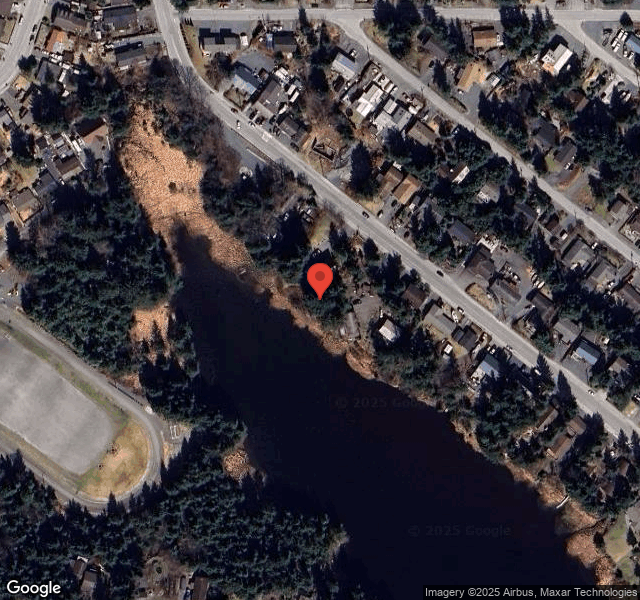

209 MOLLER AVENUE, SITKA, AK 99835 (907) 747-1701
Non profit - Corporation 19 Beds Independent Data: November 2025
Trust Grade
93/100
#4 of 20 in AK
Last Inspection: April 2025

Within standard 12-15 month inspection cycle. Federal law requires annual inspections.

Overview

Searhc Sitka Long Term Care holds an impressive Trust Grade of A, indicating it is highly recommended and performs excellently in various aspects of care. It ranks #4 out of 20 facilities in Alaska, placing it in the top half of the state, and is the only option in Sitka County, showing limited competition. However, the facility's trend is concerning, as issues increased from 2 in 2024 to 3 in 2025, suggesting some deterioration in care quality. Staffing is a strong point, with a 5/5 star rating and a turnover rate of 29%, which is significantly lower than the state average, meaning staff members are familiar with residents’ needs. On the downside, there were several incidents noted by inspectors, including a failure to maintain resident dignity during dining and not properly assessing medication self-administration capabilities for some residents, which could lead to medication errors.

Trust Score
A
93/100
In Alaska
#4/20
Top 20%
Safety Record
Low Risk
No red flags
Inspections
Getting Worse
2 → 3 violations
Staff Stability
✓ Good
29% annual turnover. Excellent stability, 19 points below Alaska's 48% average. Staff who stay learn residents' needs.
Penalties
✓ Good
No fines on record. Clean compliance history, better than most Alaska facilities.
Skilled Nurses
✓ Good
Each resident gets 167 minutes of Registered Nurse (RN) attention daily — more than 97% of Alaska nursing homes. RNs are the most trained staff who catch health problems before they become serious.
Violations
○ Average
7 deficiencies on record. Average for a facility this size. Mostly minor or procedural issues.
★★★★★
5.0
Overall Rating
★★★★★
5.0
Staff Levels
★★★★★
5.0
Care Quality
★★★★★
5.0
Inspection Score
Stable
2024: 2 issues
2025: 3 issues

The Good

  • 5-Star Staffing Rating · Excellent nurse staffing levels
  • 5-Star Quality Measures · Strong clinical quality outcomes
  • Low Staff Turnover (29%) · Staff stability means consistent care
  • Full Sprinkler Coverage · Fire safety systems throughout facility
  • No fines on record
  • Staff turnover is low (29%)

    19 points below Alaska average of 48%

Facility shows strength in staffing levels, quality measures, staff retention, fire safety.

The Bad

No Significant Concerns Identified

This facility shows no red flags. Among Alaska's 100 nursing homes, only 1% achieve this.

The Ugly 7 deficiencies on record

Apr 2025 3 deficiencies
CONCERN (D)

Potential for Harm - no one hurt, but risky conditions existed

Deficiency F0554 (Tag F0554)

Could have caused harm · This affected 1 resident

. Based on record review, observation and interview, the facility failed ensure self-administration of medication was clinically appropriate for one resident (#11), out of five residents reviewed for ...

Read full inspector narrative →
. Based on record review, observation and interview, the facility failed ensure self-administration of medication was clinically appropriate for one resident (#11), out of five residents reviewed for medication self-administration. Specifically, the facility failed to accurately assess the resident's capability for appropriateness of administering an inhaler. This failed practice had the potential to place the resident at risk of receiving incorrect medication dosages and subtherapeutic treatment of inhalants for medical conditions. Findings: Record review on 4/7-10/25 revealed Resident #11 was admitted to the facility with diagnoses that included Vascular Dementia (a condition caused by reduced blood flow to the brain, resulting in cognitive impairment) and Asthma (a respiratory condition marked by spasms in the bronchi of the lungs, causing difficulty in breathing). Record review on 4/7/25 of Resident #11's Minimum Data Set (MDS - a standardized assessment of a resident's health, function, and preferences), dated 1/28/25, revealed a Brief Interview for Mental Status (BIMS - a numerical score used to assess a person's cognitive functioning) score of 12 (8-12: Indicates moderate cognitive impairment). Review of Resident #11's medication orders revealed: Budesonide/Formoterol Fumarate (Symbicort 160-4.5 Mcg Inhaler - medication used to treat Asthma) 2 puff IH BIDNP [inhaled twice daily at noon and nightly] . Problem . Pulmonary emphysema [a chronic lung disease that permanently damages the lung's air sacs] (the resident had no active diagnosis for pulmonary emphysema). Medication Administration: An observation on 4/8/25 at 9:25 AM, revealed Licensed Nurse (LN) #2 gave Resident #11 a Budesonide/Formoterol Fumarate inhaler. Resident #11 self-administered the medication, taking three puffs in quick succession, without holding his/her breath in between puffs. LN #2 then took the inhaler away and stated: You were only supposed to take two puffs. LN #2 then exited the resident's room without having Resident #11 rinse his/her mouth with water. During an interview on 4/8/25 at 9:35 AM, when asked if Resident #11 was assessed for medication self-administration capability, LN #2 stated: Yes, [he/she] self-administers the inhaler, however I'm not sure if there was an assessment completed. Assessments for Self-Administration of Medications: Review of Resident #11's Medication Self-Administration Safety Screen, dated 11/3/22, revealed: . The resident can correctly read label and/or identify each medication: unable . The resident can correctly state what each medication is for: unable . The resident can correctly state the time/frequency of medication are to be taken: unable . The resident can correctly state the correct dosage/quantity for each administration: unable . The resident can correctly administer inhalant medications according to proper procedure: unable . Review of Resident #11's Observation Tool for Self-Administration, dated 3/16/25, revealed a scoring matrix to assess whether a resident was appropriate to learn to self- administer their own medications. Further review revealed Resident #11 scored a 1 on Cognitive Skills, which indicated: Follows simple directions with 1 step prompting and encouragement. Further review revealed the rest of the assessment scored Resident #11 at mostly the highest score for: - Fine Motor Coordination: 3 - Able to pick up and/or manipulate small objects - Feeding: 3 - Fully independent - Behaviors: 3 - Reacts typically to daily life events - Vision: 3 - Normal vision with/without glasses - Communication: 3 - Communicates clearly - Colors: 3 - Constantly identifies and states color - Shapes: 3 - Constantly identifies shapes - Numbers: 3 - Understands number concepts and identifies and writes numbers - Time: 3 - Ability to tell time by clock or watch - Letters/Name: 3 - Writes name - Medication: 3 - Always takes medication well - Medication Recognition Side Effects: 1 - Able to say names of current medications, but not able to identify specific pill bottles or medication card - Side Effects: 0 - Unable to identify/understand possible side effects of current medications. From this 3/16/25 assessment the facility gave Resident #11 an . Average Score 2.3 . If Average Score is . Greater than 1.7 - Individual is appropriate to learn to self-administer to the full extent of his/her ability. Further assessment of this Observation Tool for Self-Administration had no documentation of witnessing Resident #11 manipulating his/her inhaler for appropriate use and administration of correct dosages of medication. The assessment also did not list out any medications Resident #11 was clinically cleared to self-administer. Review of the Symbicort Inhaler Quick Guide accessed at https://www.symbicorttouchpoints.com/content/dam/physician-services/us/526-rwd-symbicort-hcp/pdf/03_using_the_symbicort_inhaler.pdf, accessed on 4/10/25, revealed: . 3. Breathe out fully, then place the mouthpiece into your mouth and close your lips around it. Make sure that the inhaler is upright and that the opening of the mouthpiece is pointing towards the back of your throat. Inhale deeply and slowly while pressing down firmly on the top of the counter on the inhaler. 4. Continue to breathe in and hold your breath for about 10 seconds, or for as long as comfortable. Before you breathe out, release your finger from the top of the counter. Keep the inhaler upright and remove from your mouth. For your second puff, shake the SYMBICORT inhaler again for 5 seconds and repeat steps 3 and 4. After you finish taking SYMBICORT (two puffs), rinse your mouth with water. .
CONCERN (D)

Potential for Harm - no one hurt, but risky conditions existed

Deficiency F0657 (Tag F0657)

Could have caused harm · This affected 1 resident

. Based on record review, observation and interview, the facility failed to revise the comprehensive care plans to include medication self-administration for two residents (#s 3 and 11), out of 5 resi...

Read full inspector narrative →
. Based on record review, observation and interview, the facility failed to revise the comprehensive care plans to include medication self-administration for two residents (#s 3 and 11), out of 5 residents reviewed for medication self-administration. This failed practice placed the residents at risk for not receiving appropriate care and services. Findings: Resident #3 Record review on 4/7-10/25 revealed Resident #3 was admitted to the facility with diagnoses that included Chronic Kidney Disease (a long-term condition where the kidneys do not work effectively), Anemia (a condition marked by a deficiency of red blood cells), and Cerebrovascular Disease (a group of conditions that affect blood flow and the blood vessels in the brain). Record review on 4/8/25 of Resident #3's medication orders found: Clotrimazole External Cream 1% . Apply to affected area topically two times a day. An observation on 4/8/25 at 9:40 AM, LN #4 asked Resident #3 if he/she had applied medical cream to his/her groin. Resident #3 stated that he/she had done it earlier in the morning. LN #4 then administered Resident #3's PO (by mouth) medications and exited his/her room. During an interview on 4/8/25 at 9:40 AM, when asked if Resident #3 was assessed for medication self-administration capability, Licensed Nurse (LN) #4 stated: We let [him/her] apply the medication on [his/her] own, because it is in a private area, and [he/she] would rather do it [himself/herself]. Review of Resident #3's care plan on 4/7/25 revealed no plan for medication self-administration. Resident #11 Record review on 4/7-10/25 revealed Resident #11 was admitted to the facility with diagnoses that included Vascular Dementia (a condition caused by reduced blood flow to the brain, resulting in cognitive impairment) and Asthma (a respiratory condition marked by spasms in the bronchi of the lungs, causing difficulty in breathing). Record review on 4/7/25 of Resident #11's medication orders revealed: Budesonide/Formoterol Fumarate (Symbicort 160-4.5 Mcg Inhaler) 2 puff IH BIDNP [inhaled twice daily at noon and nightly] . Problem . Pulmonary emphysema. An observation on 4/8/25 at 9:25 AM, revealed LN #2 gave Resident #11 a Budesonide/Formoterol Fumarate (medication used to treat Asthma) inhaler. Resident #11 self-administered the medication, taking three puffs in quick succession, without holding his/her breath in between puffs. LN #2 then took the inhaler away and stated: You were only supposed to take two puffs. LN #2 then exited the resident's room without having Resident #11 rinse his/her mouth with water. During an interview on 4/8/25 at 9:35 AM, when asked if Resident #11 was assessed for medication self-administration capability, LN #2 stated: Yes, [he/she] self-administers the inhaler. Review of Resident #11's care plan on 4/7/25 revealed no plan for medication self-administration. During an interview on 4/9/25 at 1:20 PM, when asked if a resident's care plan should include a plan for self-administering medications if they have been approved to self-administer, the Minimum Data Set (MDS) Nurse stated, Yes. .
CONCERN (D)

Potential for Harm - no one hurt, but risky conditions existed

Accident Prevention (Tag F0689)

Could have caused harm · This affected 1 resident

**NOTE- TERMS IN BRACKETS HAVE BEEN EDITED TO PROTECT CONFIDENTIALITY** . Based on record review, observation, and interview, the facility failed to provide adequate supervision to ensure the environm...

Read full inspector narrative →
**NOTE- TERMS IN BRACKETS HAVE BEEN EDITED TO PROTECT CONFIDENTIALITY** . Based on record review, observation, and interview, the facility failed to provide adequate supervision to ensure the environment remains as free of accident hazards as is possible for one resident (#16) out of six residents who attended an activity. Specifically, the facility failed to ensure Resident #16 had limited opportunity to access an unsafe equipment for cutting his/her hospital wrist band off during a baking activity. This failed practice placed the resident at risk of self-harm and a potential of harming other residents. Findings: Record review on 4/7-10/25, revealed Resident #16 was admitted to the facility on [DATE] with diagnoses that included Parkinson's (a degenerative disorder of the central nervous system characterized by tremor and impaired muscular coordination) disease with dyskinesia (involuntary movement disorder) and low back pain. Further review revealed Resident #16 was diagnosed with Post-Traumatic Stress Disorder (PTSD) on 3/5/25. Review of Resident #16's Pre-admission Screening and Resident Review (PASRR) Level 1, dated 11/22/24, revealed: . Functional and Adaptive Needs . Harmful to Self or Others . suicidal ideation/attempt past history . Review of Resident #16's, Brief Interview for Mental Status (BIMS), dated 1/14/25 revealed; . Score: 11, Category: Moderately Impaired [difficulty with cognitive task and may require assistance with activities of daily living] . Mood and Behavior: Review of the Physician Progress Note, dated 2/11/25, revealed: . Depression and PTSD related to military service . I will still place a referral to behavioral health. Review of the Behavior Note, dated 2/20/25, revealed resident stated, they are going to kill me. Review of the Behavior Note, dated 2/21/25, revealed: Resident reporting to staff and other residents during a resident council meeting, 'Somone with a gun was shooting at our building last night and security came to my room and asked if I was alright.' . Attempts to reorientation [Resident #16] was successful with the announcement of BINGO was starting. Review of the Behavior Note, dated 3/4/25, revealed: [Resident #16] requested to lay down in bed. Once resident entered [his/her] room [he/she] began yelling at the female staff members, calling them crude names . Resident transferred to bed and attempted [to] hit a female staff member. The resident's agitation continued to increase even with staff's attempts to calm . Son notified and advised staff to take [him/her] to the ED [emergency room] if agitations continues . Review of the Behavior Note, dated 3/5/25, revealed Resident #16 grabbed staff wrist and would not let go when asked. Resident #16 was yelling at staff and agitated. Review of the Physician Progress Note, dated 3/6/25, revealed: Chief Complaint: Parkinson's dementia and PTSD with increasing agitation and paranoia . Apparently has a history of 'going into blind rages' related to PTSD. According to [his/her] son . I was asked to see [him/her] today because of multiple daily outbursts of agitation or otherwise inappropriate behavior such as climbing out of [his/her] bed . [he/she] complains of the sitter outside of [his/her] room . [Resident #16] states as far as the food and [his/her] medications 'I feel like it is doing something to me' that staff here is trying to poison [him/her] . Record review on 4/7-10/25, Nurse Note, dated 3/23/25, revealed: . [he/she] became very agitated . grabbing at staff with nails digging into their skin . verbally abusive [with staff] . An observation in the resident dining room on 4/7/25 at 12:40 PM, revealed Resident #16 stated Don't let them take me, they will lock me up. Resident #16 looked over at the Director of Nursing (DON) during his/her statement. Certified Nurse Assistant (CNA) #1 approached Resident #16 and Resident #16 followed CNA #1 and left the area. Review of the Resident #16's care plan, LTC [Long Term Care] (PTSD) Post Traumatic Stress Disorder, dated 3/17/25 at 2:22 PM, revealed: Administer medications as ordered. Monitor/document for side effects and effectiveness. Analyze times of day, places, circumstances, triggers, and what de-escalates behavior and document. Assess and anticipate resident's needs: food, thirst, toileting needs, comfort level, body positioning, pain etc. Give the resident as many choices as possible about care and activities. Monitor every shift. Document observed behavior and attempted interventions in behavior log. Monitor/document/report PRN any s/sx [signs and symptoms] of resident posing danger to self and others. [Resident #16] triggers for physical aggression are telling [Resident #16] 'no' without allowing [Resident #16] time to process the reasoning, medications changes. [Resident #16's] behaviors is [are] deescalated by provided phone time with [his/her] family, outings with family, anti-anxiety medication. When the resident becomes agitated: Intervene before agitation escalates; Guide away from source of distress; Engage calmly in conversation; If response is aggressive, staff to walk calmly away, and approach later. Medication: Review on 4/10/25 of the eMAR [electronic medication administration record] Administration Report, revealed on: 4/6/25, .Lorazepam 2mg/Ml Inj 0.25 ML . PRN [as needed] Reason: Agitation Label Comments: DOSE = 0.5MG = 0.25ML. GIVE IF UNABLE TO GIVE PO [by mouth].Lorazepam 0.5 mg tab . dose 0.5mg PO . PRN Reason: Agitation Label Comments: ATTEMPT PO FIRST BEFORE GIVING IM [intramuscular] . no doses were provided. 4/7/25, .Lorazepam 2mg/Ml Inj 0.25 ML . PRN Reason: Agitation Label Comments: DOSE = 0.5MG = 0.25ML. GIVE IF UNABLE TO GIVE PO.Lorazepam 0.5 mg tab . dose 0.5mg PO . PRN Reason: Agitation Label Comments: ATTEMPT PO FIRST BEFORE GIVING IM . no doses were provided. Incident: Review of the facility's documentation of the Group Baking Social, dated 4/7/25, revealed Resident #'s 4, 6, 9, 11, 14 and16 attended the baking activity. During a joint interview on 4/7/25 at 4:35 PM, Activities Aide (AA), DON, Social Worker (SW) and Administrator stated from 1:30-3:00 PM a baking activity was conducted with the residents. The AA stated during the activity Resident #16 requested to have his/her hospital wrist band removed that had been placed on 4/3/25 at his/her emergency room (ER) visit. The AA further stated the DON approached Resident #16 to cut off the wrist band and Resident #16 grabbed the scissors from the DON. The AA stated Resident #16 threatened to harm himself with the scissors. The AA further stated a code grey was activated quietly since Resident #16 does not do well with a lot of people. The AA stated the hospital security department, police department, and emergency medical services (EMS) were notified of the incident as well. The AA stated the staff tried to deescalate the resident but were unsuccessful. When asked what the de-escalation techniques were used, AA stated we asked the resident to return the scissors. The AA further stated the residents in attendance of the activity were removed from the unit kitchen. The SW and Administrator stayed with Resident #16 while the AA assisted in taking other residents out of the room. During the same interview, the DON was asked about the surveyors' observations upon entrance of Resident #16 agitation and paranoia of being locked up and behaviors increased as the DON approached the resident. The DON stated Resident #16 had PTSD with delirium and when [he/she] gets in these states we try to remove [him/her] from others. The DON was asked if the resident was appropriate for the activity related to his/her observed behaviors that day. The DON stated, sometimes activities calm [him or her] down, [he/she] does like outings. When the DON was asked if she had any concern with Resident #16 being around other residents with the observed agitation and paranoia, the DON stated, it was just [AA] and residents but when I came into the room I noticed [Resident #16] backing up. When the DON was asked if Resident #16 was triggered when she approached, the DON stated, yes [he/she] gets aggressive with me. When the DON was asked if Resident #16 had had any prior episodes of being a danger to self or others, the DON stated, [Resident #16] became delusional, aggressive and threatened staff stated 'I am going to kill you. The DON stated the event happened in February 2025. The DON stated after the incident the provider was notified, and a behavioral health referral was requested. The DON further stated the facility was still learning the triggers of Resident #16's PTSD. When the DON was asked why the scissors were provided to Resident #16, the DON stated she had noticed Resident #16 was still wearing the hospital identification band from 4/3/25 ER visit and was pulling on it. The DON then asked Resident #16 if he/she wanted the ID band removed and Resident #16 stated I want it off. The DON further stated she went to her office and retrieved her desk scissors. The DON stated she approached Resident #16 to remove the ID band and had her fingers in the loops of the handle. The DON stated, Resident #16 grabbed the scissors from the pointed end and opened the blades of the scissors. The DON stated she released the scissors because she did not want Resident #16 to get hurt. The DON further stated Resident #16 pressed the open blades against his/her chest. The Administrator stated [Resident #16] will have scratches from them (scissors). The Administrator further stated the more she talked with Resident #16, the more he/she pushed the Administrator away with use of his/her elbows. The Administrator stated during this time Resident #16 continued making threats he/she wanted to kill his/herself. When the Administrator was asked how long the event took place, she stated from 2:30 to 3:45 PM. The Administrator stated the police were finally able to remove the scissors after they took Resident #16 down to the ground and EMS took Resident #16 to the ER for an evaluation. During a joint interview on 4/9/25 at 3:03 PM, with the DON and Minimum Data Set (MDS) Nurse, when asked about 4/7/25 incident with Resident #16, the MDS stated she asked Resident #16 for the scissors, but he/she wouldn't release them and continued to be agitated. The MDS Nurse stated the AA had a good relationship with Resident #16 but too, was unable to get Resident #16 to return the scissors. During the same interview, the DON was asked why the decision was made to remove the ID band during the baking activity. The DON stated Resident #16 wanted it removed and stated, I probably didn't make the best choice. When the DON was further asked why safety scissors were not used instead of desk scissors with a pointed end, the DON stated none were available. emergency room Visit: Record review on 4/10/25, Emergency Department Note, dated 4/7/25, revealed: . Delirium due to medical condition with behavioral disturbance . Presented with concerns for attempted self-harm with scissors . 1:1 sitter, suicide precautions .admitted as Inpatient . Chief Complaint: Psychiatric Symptoms . Review of the facility's policy Difficult behavior management, long-term care, dated 2/23/25, revealed: . Confirm your willingness to work with the resident . Ask the resident what you can do to make the situation better. Be alert for signs of escalating behavior . agitation . .
Jan 2024 2 deficiencies
CONCERN (E)

Potential for Harm - no one hurt, but risky conditions existed

Resident Rights (Tag F0550)

Could have caused harm · This affected multiple residents

**NOTE- TERMS IN BRACKETS HAVE BEEN EDITED TO PROTECT CONFIDENTIALITY** . Based on record review, observation, and interview, the facility failed to ensure resident dignity was maintained. Specificall...

Read full inspector narrative →
**NOTE- TERMS IN BRACKETS HAVE BEEN EDITED TO PROTECT CONFIDENTIALITY** . Based on record review, observation, and interview, the facility failed to ensure resident dignity was maintained. Specifically: 1) 1 resident (#4) was assisted with dining in a non-dignified manner; and 2) 7 residents (#'s 1; 3; 5; 6; 8; 11; and 14) beds had the sheets and blankets pulled down, and incontinent pads were placed on the residents' beds and visible from the hallway. These failed practices placed the residents, based on a census of 14, at risk for a poor quality of life from decreased self-esteem. Findings: Dignity while dining: Record review on 1/22-25/24 revealed Resident #4 was admitted to the facility with diagnoses that included other paralytic syndrome following bilateral cerebrovascular disease (a medical condition that affects the blood vessels and circulation of the brain), muscle weakness, dysphagia (difficulty swallowing), and left sided paralysis. Further review revealed Resident #4 had communication challenges related to expressive aphasia (knowing what he/she wants to say but is unable to produce the words). The resident also required extensive assistance with meals and preferred to be fed by staff. An observation on 1/22/24 at 5:34 PM, revealed Certified Nurse Aide (CNA) #1 stood by the side of the bed while assisting Resident #4 with his/her meal. The CNA fed Resident #4 soup with a spoon and would occasionally scrape the spoon up the resident's chin to remove the excess food. The CNA then used the same spoon to scoop up other various foods which were fed to the resident. When finished, the CNA picked up a napkin, wiped the resident's mouth, then removed the clothing protector, folded it up and finished wiping the resident's face with the clothing protector. During an interview on 1/25/24 at 5:31 PM, the Director of Nursing (DON) stated the facility had allowed standing while staff assisted Resident #4 with his/her meals because the resident did not want to have his/her bed lowered. However, this preference was not noted in Resident #4's care plan. When asked if it was the normal standard of care for staff to use a spoon to wipe food away from a resident's mouth or use a clothing protector to wipe a resident's mouth, the DON replied staff should not have been doing that. Review of the facility's policy Nursing Procedures, reviewed 6/20/23, revealed Lippincott Nursing Procedures .is an online guide providing best practice and evidence-based guidance on nursing procedures .It is the SEARHC [Southeast Alaska Regional Health Consortium] policy that all nursing staff follow [NAME] for all nursing procedures . Review of Lippincott procedures titled Feeding, long-term care, revised 12/10/23, revealed Position a chair next to the resident's bed so you can sit comfortably if you need to provide cues or maximal assistance with feeding . Review of the Statement of Resident Rights and Responsibilities, not dated, revealed Residents have the right to .Considerate, dignified, and respectful care . Resident bedrooms: During a facility walk through on 1/23/24 at 9:13 AM, Resident #5's room was observed from the hallway to have clean bedding, with the bed covers pulled down and incontinent pads visible on the bed. Under the incontinent pad, a bath blanket was visible. At 9:17 AM, Resident #14's room was observed from the hallway to have clean bedding, with the bed covers pulled down and incontinent pads visible on the bed. A maxi lift (mechanical device used by staff to lift a resident) was left over the resident's bed area. At 9:22 AM, Resident #1 was observed seated in his/her reclining chair. The resident's bed had clean bedding, with the bed covers pulled down and 2 incontinent pads visible on the bed. During an observation on 1/24/24 at 3:21 PM, Resident #6's room was observed from the hallway to have clean bedding, with the bed covers pulled down and incontinent pads visible on the bed. Under the incontinent pad, a bath blanket was visible. A recliner facing the doorway also had a clean incontinence pad laid over the seat. The resident was not in his/her room. During an observation on 1/24/24 at 3:22 PM, Resident #8's room was observed from the hallway to have clean bedding, with the bed covers pulled down and incontinent pads visible on the bed. Under the incontinent pad, a bath blanket was visible. The resident was not in his/her room. During an observation on 1/24/24 at 3:23 PM, Resident #11's room was observed from the hallway to have clean bedding, with the bed covers pulled down and incontinent pads visible on the bed. Under the incontinent pad, a bath blanket was visible. The resident was not in his/her room. During an observation on 1/25/24 at 8:19 AM, Resident #3's bed was observed to have clean bedding, with the bed covers pulled down. Two incontinent pads and one bath blanket were placed on the bed. Further observation of Resident #3's room on 1/25/24 at 4:30 PM revealed a clean incontinent brief laying open on the Resident's bed, on top of the incontinent pads and bath blanket. Heel protectors were placed near the foot of the bed. During an interview on 1/25/24 at 5:30 PM, when asked about the bed sheets being pulled down on the resident's beds, CNA #1 stated these were open beds so that it was easier for the residents to go back to bed. When asked about residents who needed assistance back to bed, like Resident #1, the CNA stated Resident #1 had a foot device at the bottom of his/her bed and used the maxi lift, and it was easier to assist the resident back to bed. CNA #1 further stated he/she changed the Resident's bed sheets daily. During an interview on 1/25/24 at 5:45 PM, the DON stated that she would talk to the staff about leaving the beds turned down and laying a clean incontinent brief open on the bed. The DON stated she understood this to be a dignity issue. Review of the Statement of Resident Rights and Responsibilities, not dated, revealed Residents have the right to .Full consideration of privacy concerning his/her medical care program . .
MINOR (C)

Minor Issue - procedural, no safety impact

Safe Environment (Tag F0584)

Minor procedural issue · This affected most or all residents

**NOTE- TERMS IN BRACKETS HAVE BEEN EDITED TO PROTECT CONFIDENTIALITY** . Based on observation, interview, and record review, the facility failed to ensure a homelike environment for all residents, ba...

Read full inspector narrative →
**NOTE- TERMS IN BRACKETS HAVE BEEN EDITED TO PROTECT CONFIDENTIALITY** . Based on observation, interview, and record review, the facility failed to ensure a homelike environment for all residents, based on a census of 14. Specifically, institutional signage was placed on doors throughout the facility. This failed practice increased the institutional character of the home and had the potential to cause diminished self-worth and a reduced sense of well-being for all residents. Findings: Random observations from 1/22-25/24 revealed signage placed on multiple doors, facing common areas, throughout the facility to include: - A door to the bath reading DO NOT OPEN DOOR TOO WIDE IT WILL BREAK, and another sign reading Attention Do not force the door open wider than it is designed to go (it damages the mechanism at the top); - Double door at the end of the hall near resident room [ROOM NUMBER] which read KEEP OUT and Door must remain Locked at all times. If you enter, RE-LOCK door; - Dirty utility room (door with code to enter) with bright orange sign reading KNOCK BEFORE ENTERING.; - A metal meal tray cart, facing the common room with a sign stating, Do NOT place anything on top of the cart.; - The conference room in the main hall leading to the dining area with a sign reading Please keep door closed, below that sign was another which read STAFF ONLY with a figure of a hand and a red cross/circle below the words; - A room next to the dining room with a sign reading Please keep door closed and next to that sign STORAGE ROOM EMPLOYEES ONLY. During an interview on 1/23/24 at 3:42 PM, the Administrator stated that some of the signs hung around the facility did not contribute to a homelike environment, especially the ones with stop signs. She mentioned that a resident requested to have one of the signs removed from outside of his/her room, which was accommodated. Review of the facility's Statement of Resident Rights and Responsibilities, not dated, revealed Residents have the right to .A safe, clean, comfortable and homelike environment that would maximize the resident's independence and does not pose a safety risk. .
Dec 2022 2 deficiencies
CONCERN (D)

Potential for Harm - no one hurt, but risky conditions existed

Comprehensive Care Plan (Tag F0656)

Could have caused harm · This affected 1 resident

**NOTE- TERMS IN BRACKETS HAVE BEEN EDITED TO PROTECT CONFIDENTIALITY** Based on observation, record review, and interview, the facility failed to ensure one resident (#14), out of 9 sampled residents...

Read full inspector narrative →
**NOTE- TERMS IN BRACKETS HAVE BEEN EDITED TO PROTECT CONFIDENTIALITY** Based on observation, record review, and interview, the facility failed to ensure one resident (#14), out of 9 sampled residents, had the care plan revised to include goals and preferences for pain management. The failure to provide a care plan to manage acute and chronic pain, based on the Resident Assessment Instrument (RAI-the tool used for conducting the Minimum Date Set-MDS), placed the resident at risk for ineffective pain management. Findings: Record review on 12/01-02/22 revealed Resident #14 had diagnoses that included cerebral infarction (stroke-damage to the brain from interruption of blood supply), bilateral (both sides) osteoarthritis of the hip, and hemiplegia (partial paralysis to one side of the body) affecting nondominated side. During an interview on 11/28/22 at 2:59 PM Resident #14 was asked about his/her pain. The Resident became visibly distressed and stated, because he/she was an early riser, he/she had been up since 6:00 AM. The Resident stated he/she had a stroke on the left side and now has pain to his/her left shoulder and lower back. When asked what he/she took for pain, the Director of Nursing (DON) who was nearby came over and reminded the Resident he/she had scheduled and PRN (as needed) Tylenol this afternoon. The DON began massaging the Resident's back and stretched out the Resident's left shoulder, adding the Resident's muscles were tight and they needed a massage. Review of Resident #14's medication for pain management revealed medications included Cyclobenzaprine (a muscle relaxer) 0.5 mg (milligrams) tablets for hip pain/spasms, Tylenol 325mg 2 tablets by mouth three times a day, Tylenol 325mg give 2 tabs every 24 hours as needed for pain do not take more than 9 tablets a day, Baclofen tablet (a muscle relaxer) 10mg 1 tablet as needed by mouth every 8 hours, and Menthol-Camphor Ointment apply to affected areas every 6 hours as needed for pain. During an observation on 11/29/22 at 2:20 PM, Physical Therapist #1 told Resident #14 that if his/her hip was not hurting as much tomorrow, he/she could try to do therapy again. Review of an admission Minimum Data Set (MDS - a Federally required assessment), dated 8/03/22, revealed under the section J0100 Pain Management A. Received scheduled pain medication regime? 0 had been answered No. B. received PRN pain medications or was offered and declined? had been answered Yes. c. Received non-medication intervention for pain? had been answered yes. J0200. Should Pain Assessment Interview be Conducted? Was marked Yes. Review of the assessment interview revealed. J0400. Pain Frequency Ask resident: How much of the time have you experienced pain? 3. Occasionally. J0500 A. Pain Effect on Function A. Ask resident: over the last 5 days, has pain made it hard for you to sleep at night? No B. Over the last 5 days, have you limited your day-to-day activities because of pain No. B. Verbal Descriptor Scale Ask resident: 'please rate the intensity of your worst pain over the last 5 day. (show resident verbal scale) 1. Mild Review of the Care Area Assessments revealed the pathway for pain had not been triggered as needing a care plan. Review of a Quarterly MDS assessment, ADR 11/02/22, revealed section J0100 Pain Management A. Received scheduled pain medication regime? 0 had been answered yes B. received PRN pain medications or was offered and declined? had been answered Yes. c. Received non-medication intervention for pain? had been answered yes. J0200. Should Pain Assessment Interview be Conducted? Was marked Yes. Review of the assessment interview revealed. J0400. Pain Frequency Ask resident: How much of the time have you experienced pain? 3. Occasionally. J0500 A. Pain Effect on Function A. Ask resident: over the last 5 days, has pain made it hard for you to sleep at night? No B. Over the last 5 days, have you limited your day-to-day activities because of pain No. B. Verbal Descriptor Scale Ask resident: 'please rate the intensity of your worst pain over the last 5 day. (show resident verbal scale) 1. '3' [rating on a scale of 0-10 with 10 being the worst pain]. Review of Resident #14's Progress Notes revealed: 10/28/22 at 8:48 AM Left arm and left shoulder chronic pain. 10/30/22 at 8:14 AM .Feeling pretty bad today as per resident pointing to left shoulder and arm offered warm compress and muscle rub but refused and opted for medications only. 11/01/22 at 6:38 AM .Stating this morning 'I want to die' that [Resident #14]'s in a lot of pain irritated with [his/her] body not functioning well. 11/04/22 at 8:55 AM .'It really hurts' as stated by the r\Resident pointing to left arm, left shoulder, left leg foot, and lower back. Offered warm compress, Resident refused and opted to go back to bed. 'No thank you I'll go back to bed' as per [Resident #14] reassurance given and ensure safety. 11/04/22 at 2:33 PM .Left shoulder arm and leg. Chronic pain. 11/24/22 at 2:19 AM Pt [Patient] woke up from sleeping with leg pain. 11/24/2022 at 10:13 AM .Menthol Camphor Ointment .Applied to lower back due to c/o [complaints of] pain in that area. Unable to rate [his/her] pain. PRN applied. 11/25/22 at 5:21 AM .Pt co leg pain mostly upper thigh and lower back. Repositioned Pt. in bed w/o [without] relief. Given per Pt. request for pain. 11/26/22 at 7:57 AM .reports pain to [his/her] L hip this morning rates 10/10; [he/she] states pain in [his/her] femur is much better. Further review revealed Resident #14 often refused to wear his/her TED hose (a compression stocking used to reduce swelling) on his/her left lower leg due to pain. Review of a Physician's Progress note, updated 10/10/22, revealed . [Resident #14] concerns are [he/she] is having some pain in [his/her] knees mostly the left side . Assessment/ Plan: Knee pain Medical Reasoning and Treatment: currently on Tylenol [he/she] is not on NSAID [nonsteroidal anti-inflammatory drug] probably due to bleeding risk we will continue with conservative measures including physical therapy. Review Resident #14's Nurse's Notes revealed: 11/29/22 at 1:43 AM .At HS [bedtime] Resident [#14]requested assistance getting into bed, positioning, and getting covered up with blankets due to low back pain complaint. Pain managed adequately with scheduled pain medications. 11/28/22 at 6:51 AM .Resident [#14] has been compliant in using call button when needing to transfer this shift. [Resident] has not had any outbursts since 19:30. [He/she] was heard talking and laughing with staff in her room this morning. No c/o pain since 19:30 arm, shoulder and back pain which was effectively managed with scheduled medication. 11/27/22 at 6:53 PM .Resident [#14] up in wheelchair self-propelling around facility. Did have one episode of complaints of pain to left arm. Applied muscle rub and was effective. No behaviors this shift. No complaints or distress. Call bell and frequently used items in reach. 11/25/22 . [Resident #14] c/o pain to L leg, hip and lower back this morning. Per [name] RN night shift nurse [Resident] had same complaints during night shift. [Physician] ordered X-rays, appointment made for Resident at 2 pm, shuttle took her to and from appointment. Results not back at this time. 11/25/22 at 6:55 AM .0500 CNA [Certified Nursing Assistant] went to attend to call bell from pt. Resident requested bedpan and states, My leg hurts Resident is tearful during cares. This RN went in an assessed pain. L thigh and lower back were the complaint. no edema or bruising noted. skin intact. Tylenol given, deemed effective. needs attended too. message sent to [Physician] in Cerner [electronic medical record] requesting x-ray for Resident due to number of recent falls. 10/31/22 at 12:18 AM . pt. woke up around 0145 in pain, requesting medication. PRN Tylenol given which was effective. pt. woke up in pain again at 0545. refuses muscle rub and hot packs. just leave me alone. CNA is able to assist pt. to bedside commode, but after pt. is withdrawn and inconsolable. pt. refused cares and VS [vital signs] this morning. Review of the electronic medical record (EMR) on 12/01/22 revealed no information in the care plan that identified goals for Resident #14's pain management that included pharmacological and non-pharmacological interventions. During an interview on 12/01/22 at 3:20 PM, the DON was asked if the care plan contained any information about the pain management program for Resident #14, the DON stated she could not find it woven into any other care areas but she would double check. The DON identified the MDS had not triggered a care plan be performed for pain management. On 12/01/22 the DON provided the following care plan. Focus- [Resident #14] has limited physical mobility r/t [related to] stroke Goal- [Resident 14] will remain free of complications related to immobility, including contractures, thrombus [clot] formation, skin breakdown, fall related injury through the next review date. Revision on 10/29/22. Interventions-Monitor and treat for chronic pain. date initiated 10/03/22, revision date on 12/01/22. During an interview on 12/02/22 at 8:40 AM, when asked about Resident #14's pain, CNA #1 stated the Resident usually had pain in the mornings, sometimes in the afternoon. When asked what interventions he/she had to implement, the CNA stated he/she usually would inform the nurse about the pain. During an observation on 12/02/22 at 8:51 AM, Resident #14 spoke to the DON and stated his/her left arm and shoulder hurt. Licensed Nurse #1 gave Resident #14 some medications and stated there was some Tylenol in there and it should help him/her feel better. .
CONCERN (D)

Potential for Harm - no one hurt, but risky conditions existed

Pressure Ulcer Prevention (Tag F0686)

Could have caused harm · This affected 1 resident

**NOTE- TERMS IN BRACKETS HAVE BEEN EDITED TO PROTECT CONFIDENTIALITY** . Based on observation, record review, and interview the facility failed to ensure measures were implemented to promote healing ...

Read full inspector narrative →
**NOTE- TERMS IN BRACKETS HAVE BEEN EDITED TO PROTECT CONFIDENTIALITY** . Based on observation, record review, and interview the facility failed to ensure measures were implemented to promote healing and assess progress of a wound, for 1 resident (#10), out of 1 resident reviewed with a pressure injury. Failure to implement care that prevented shearing and repositioning created a risk for further skin damage and/or pressure injury. The failure to implement a process to assess wound improvement, denied the interdisciplinary team consistent information to make decisions about wound management, potentially creating a risk for delayed healing. Findings: Random observation on 11/28/22-12/01/22 revealed Resident #10 lying in bed. The Resident was nonresponsive when spoken to but made eye contact when approached from the left side. The Resident was unable to move his/her legs and right arm, although the Resident was observed lifting his/her left arm with no purposeful movement. The Resident was receiving nutrition through a gastric tube [G-tube] implanted in his/her stomach and had an indwelling urinary catheter that drained urine into a bag. The Resident was unable to turn his/herself or express any needs. The Resident was positioned on an air mattress. Record review on 11/20/22-12/01/22 revealed Resident #10 had a history of rupture of a blood vessel in the brain complicated by dysphagia (difficulty swallowing) and immobility of his/her extremities. Review of admission Nursing Assessment, completed on Resident #10 on 5/22/22, revealed the Resident had 3. Communication .3e. Aphasia [language disorder that effects ability to communicate]. 4. Motor Control .4e. Paralysis/Hemiplegia [impaired/inability to move on one side] /Quadriplegia [impaired/inability to move all extremities]. L. Skin. Site 23. Coccyx Type Scar Site 36. Left Thigh (rear) Type. Blister. Review of a [NAME] [a brief overview of resident care] care plan, dated 12/01/22, revealed Bed mobility interventions included bed mobility [Resident #10] requires full assistance by two staff to turn and reposition in bed every two hours and as necessary. Bedfast [Resident #10] is bedfast all or most of the time. Resident Care included the interventions Do not wipe areas of new skin development and evaluate skin integrity during weekly skin checks and as needed. During a continuous observation on 12/01/22, from 7:10 AM-8:34 AM, Resident #10 was lying in bed, in the same position, slightly to right side towards the window, At 8:35-8:42 AM-Licensed Nurse (LN) #3 entered the room, administered the Resident's medication via G-tube. The LN removed the nutrition bags and raised the head of Residents' bed and placed the bed in a low position. The Resident's body position was unchanged. At 9:00 AM-no changes in position At 9:15 AM the Director of Nursing (DON) entered Resident's room. There was no change in the Resident's position. At 9:25 AM Activity Staff (AS) #1 entered the Resident's room and left after 2 minutes. The AS stated he/she had tried to wake the Resident up for range of motion. There was no change in the Resident's position. At 9:30 AM the Housekeeper entered room and started cleaning the floor. At 9:45 AM the Resident remained in bed in the same position. From 9:54-10:00 AM, 2 hours and 50 minutes after the observation began, Certified Nursing Assistant (CNA) #2 and #3 entered the Resident's room to reposition him/her. The CNA #3 used both hands to grasp a quilted incontinence pad that, was under the Resident, and using that, pulled the Resident across the bed. The Resident's buttocks and back dragged across the bed. When the CNA's repositioned the Resident so he/she was laying on the right side, a wadded-up cloth was observed between the Resident's legs. When asked about the sheet, CNA #2 stated they were supposed to use that instead of the disposable undergarments. When the staff raised the head of Resident #10's bed, the Resident began to cry. During an interview on 12/01/22 at 3:21 PM, the DON stated Resident #10 should be turned every 2 hours. An observation on 12/02/22 at 9:00 AM, revealed Resident #10 was lying in bed on his/her back. CNA #5 entered Resident #10's room and stated he/she was going to reposition the Resident. The Resident was observed to have the cloth incontinence pad and had a cloth between his/her legs. LN #2 entered the room and assisted with repositioning the Resident. CNA #5 stated the staff were no longer supposed to use the disposable undergarments. Review of a wound care Teleconsult, dated 8/03/22, revealed A Wound Clinic image review was requested .Reason for Consultation: 'moisture lesions' Date of Injury: Chronic Recommended Plan of Care: I[t] appears these ulcers moisture associated skin damage complicated by shearing. The linear appearance suggests [he/she] is sliding in the bed. No E./ infection or acute complications. 1. Elevate head of bed less than 30 [degrees]. However [he/she] is G tube dependent so [NAME] knees when head of bed elevated to prevent shear injury. 2. Do not use closed incontinence briefs .While in bed, a flat incontinence pad is recommended when not up in a chair 3. Continue offload with frequent repositioning. Use positioners to ensure proper turning degrees Keep excess layers of material off the bed. Having several layers of sheets, pads, briefs, chucks, etc. decrease the effectiveness of the mattress Weekly Skin Check and shower every morning on Wednesday and Saturday Directions every day shift every Wednesday, initiated 11/16/22. Low Airloss Mattress, initiated 5/06/22 Apply barrier cream to the bottom after each incontinent care Review of the most recent MDS quarterly assessment, assessment refence date (ADR) 11/22/22, revealed MDS 3.0 Section M-Skin Conditions M0100. Determination of Pressure Ulcer/ Injury Risk A. Resident has a pressure ulcer/injury, a scar over bony prominence, or a non-removable device. Yes B. Formal assessment instrument/ tool (e. g., Braden, [NAME], or other). Yes C. Clinical assessment. Yes M0150. Risk of Pressure Ulcers/ Injuries Is this resident at risk of developing pressure ulcers/injuries? 1. Yes. M0210. Unhealed Pressure Ulcers/ Injuries Does this resident have one or more unhealed pressure ulcers/ injuries? 1. Yes M0300. Current Number of Unhealed Pressure Ulcers/ Injuries at Each Stage B1. Number of Stage 2 pressure ulcers, 1 B2. Number of these stage two pressure ulcers that were present upon admission/ entry or re-entry. 1 M1040 Other Ulcers, Wounds and Skin Problems D. Open lesion(s) other than ulcers, rashes, cuts (e.g., cancer lesion. H Moisture Associated Skin Damage (NASD) (incontinence associated dermatitis [IAD], perspiration, drainage) M1200. Skin and Ulcer/ Injury Treatments A. Pressure reducing device for chair. Yes B. Pressure reducing device for bed. Yes C. Turning repositioning program. No D. Nutrition or hydration intervention to manage skin problems. Yes E. Pressure ulcer/ injury care. Yes F. Surgical wound care. No G. Application of nonsurgical dressings (with or without topical medications) other than to feet. Yes. H. Applications of ointments/ medications other than to feet. Yes Review of Residnet #10's plan of care on 12/01-02/22, revealed: Revised 7/07/22: Focus: [Resident #10] has impaired Skin and is at risk for further impairment as evidenced by immobility and Braden Scale for Prediction Pressure Ulcer Risk High Risk for Pressure Ulcer (Episodic) . Goal: [Resident's #10 MASD [moisture associated skin damage] will show improvement through next review Interventions: o Do not wipe areas of new skin development .Shows on [NAME]. o Evaluate skin integrity during weekly skin checks and as needed .Shows on [NAME]. o Keep residents' perineum clean and dry. Turn and repositioning [Resident #10] every 2 hours . o Monitor nutritional status with RD quarterly and as needed with changes in condition. o Perform objective pressure ulcer risk tool such as Braden / Norton Scale quarterly and as needed .Shows on [NAME]. o Provide skin care per facility guidelines and PRN as needed. Revised 9/01/22 Focus: The Resident has an indwelling catheter: Pressure Ulcer bilateral gluteal area. Review on 12/01-02/22 of the nursing Skin/Wound Notes, from 5/10/22 until 11/30/22, revealed documented descriptions of the wounds and the dressing changes did not contain measurements of size and/or depth. During an interview on 12/01/22 at 3:21 PM, when asked how nurses documented the size of the wound, the DON stated the nurse took photos for upload into the hospital's electronic medical record. Review of the photographs on 12/02/22, revealed a series of photographs of Resident #10's buttocks. The photographs were taken from different angles and distances and did not use a consistent tool that identified the width and length of the wound (s). During an interview on 12/02/22 at 10:00 AM, when asked how the wounds for Resident #10 were measured, LN #2 stated he/she used a paper dressing package containing measurements on one side and photographed the wound with that side of the package. Review on 12/02/22 of the facility policy Wound Management, reviewed 8/25/22, revealed Wound Assessment will include wound measurements more details outlined below . It is SEARHC [southeast Alaska regional health consortium] policy for all nursing staff to follow [NAME] for all nursing procedures include but are not limited to: A. Wound cleaning B. Wound Measuring C. Dressing D. Negative Pressure Wound Therapy. Review on 12/02/22 of the Lippincott procedures-Wound Management protocol, revised 2/17/22 revealed, Introduction: A thorough wound assessment should consist of objective criteria and measurements that promote accurate consistent comparisons to determine the extent of the word and effectiveness of wound healing. Comprehensive wound assessment is necessary during every dressing change comparison of assessment results to previous findings helps to monitor communicate treat and document wound healing progression and or complication or complications Drainage Descriptions Acute versus Chronic Wound Wound Color Measure the wound with a disposable wound measuring device for example a square, transparent card with concentric [circular] circles arranged in a bullseye fashion bordered with a straight edge ruler. Use a uniform, consistent method for measuring the wound to allow for meaningful comparisons for evaluating wound healing classify the wound using a staging system. .
Understanding Severity Codes (click to expand)
Life-Threatening (Immediate Jeopardy)
J - Isolated K - Pattern L - Widespread
Actual Harm
G - Isolated H - Pattern I - Widespread
Potential for Harm
D - Isolated E - Pattern F - Widespread
No Harm (Minor)
A - Isolated B - Pattern C - Widespread

Questions to Ask on Your Visit

  • "Can I speak with families of current residents?"
  • "What's your RN coverage like on weekends and overnight?"

Our Honest Assessment

Strengths
  • • Grade A (93/100). Above average facility, better than most options in Alaska.
  • • No major safety red flags. No abuse findings, life-threatening violations, or SFF status.
  • • No fines on record. Clean compliance history, better than most Alaska facilities.
  • • 29% annual turnover. Excellent stability, 19 points below Alaska's 48% average. Staff who stay learn residents' needs.
Concerns
  • • No significant concerns identified. This facility shows no red flags across CMS ratings, staff turnover, or federal penalties.
Bottom line: Generally positive indicators. Standard due diligence and a personal visit recommended.

About This Facility

What is Searhc Sitka Long Term Care's CMS Rating?

CMS assigns SEARHC SITKA LONG TERM CARE an overall rating of 5 out of 5 stars, which is considered much above average nationally. Within Alaska, this rating places the facility higher than 99% of the state's 100 nursing homes. This rating reflects solid performance across the metrics CMS uses to evaluate nursing home quality.

How is Searhc Sitka Long Term Care Staffed?

CMS rates SEARHC SITKA LONG TERM CARE's staffing level at 5 out of 5 stars, which is much above average compared to other nursing homes. Staff turnover is 29%, compared to the Alaska average of 46%. This relatively stable workforce can support continuity of care.

What Have Inspectors Found at Searhc Sitka Long Term Care?

State health inspectors documented 7 deficiencies at SEARHC SITKA LONG TERM CARE during 2022 to 2025. These included: 6 with potential for harm and 1 minor or isolated issues.

Who Owns and Operates Searhc Sitka Long Term Care?

SEARHC SITKA LONG TERM CARE is owned by a non-profit organization. Non-profit facilities reinvest revenue into operations rather than distributing to shareholders. The facility operates independently rather than as part of a larger chain. With 19 certified beds and approximately 15 residents (about 79% occupancy), it is a smaller facility located in SITKA, Alaska.

How Does Searhc Sitka Long Term Care Compare to Other Alaska Nursing Homes?

Compared to the 100 nursing homes in Alaska, SEARHC SITKA LONG TERM CARE's overall rating (5 stars) is above the state average of 3.5, staff turnover (29%) is significantly lower than the state average of 46%, and health inspection rating (5 stars) is much above the national benchmark.

What Should Families Ask When Visiting Searhc Sitka Long Term Care?

Based on this facility's data, families visiting should ask: "Can I visit during a mealtime to observe dining assistance and food quality?" "How do you handle medical emergencies, and what is your hospital transfer rate?" "Can I speak with family members of current residents about their experience?"

Is Searhc Sitka Long Term Care Safe?

Based on CMS inspection data, SEARHC SITKA LONG TERM CARE has a clean safety record: no substantiated abuse findings (meaning no confirmed cases of resident harm), no Immediate Jeopardy citations (the most serious violation level indicating risk of serious injury or death), and is not on the Special Focus Facility watch list (a federal program monitoring the lowest-performing 1% of nursing homes). The facility has a 5-star overall rating and ranks #1 of 100 nursing homes in Alaska. While no facility is perfect, families should still ask about staff-to-resident ratios and recent inspection results during their visit.

Do Nurses at Searhc Sitka Long Term Care Stick Around?

Staff at SEARHC SITKA LONG TERM CARE tend to stick around. With a turnover rate of 29%, the facility is 17 percentage points below the Alaska average of 46%. Low turnover is a positive sign. It means caregivers have time to learn each resident's needs, medications, and personal preferences. Consistent staff also notice subtle changes in a resident's condition more quickly.

Was Searhc Sitka Long Term Care Ever Fined?

SEARHC SITKA LONG TERM CARE has no federal fines on record. CMS issues fines when nursing homes fail to meet care standards or don't correct problems found during inspections. The absence of fines suggests the facility has either maintained compliance or corrected any issues before penalties were assessed. This is a positive indicator, though families should still review recent inspection reports for the full picture.

Is Searhc Sitka Long Term Care on Any Federal Watch List?

SEARHC SITKA LONG TERM CARE is not on any federal watch list. The most significant is the Special Focus Facility (SFF) program, which identifies the bottom 1% of nursing homes nationally based on persistent, serious quality problems. Not being on this list means the facility has avoided the pattern of deficiencies that triggers enhanced federal oversight. This is a positive indicator, though families should still review the facility's inspection history directly.