RIVER PARK POST ACUTE
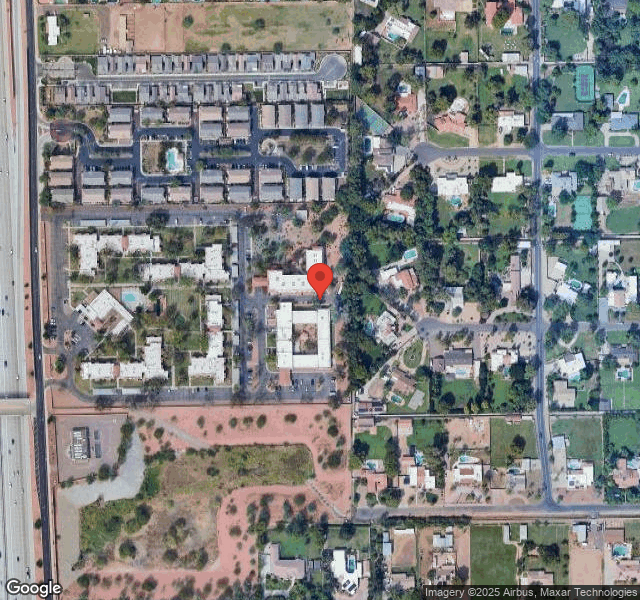
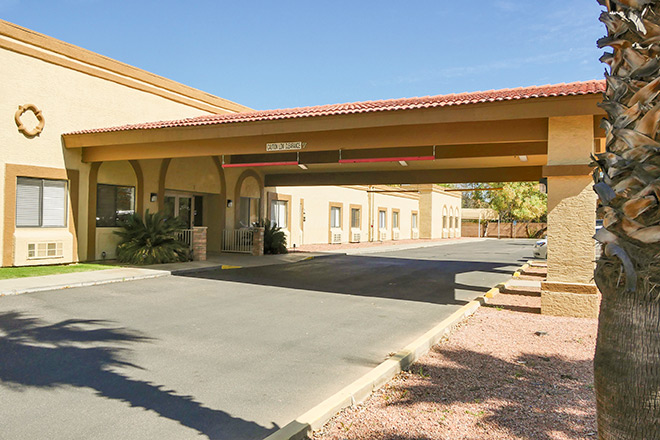
2555 NORTH PRICE ROAD, CHANDLER, AZ 85224 (480) 345-8500
For profit - Limited Liability company 66 Beds THE ENSIGN GROUP Data: November 2025
Trust Grade
80/100
#23 of 139 in AZ
Last Inspection: April 2025

Within standard 12-15 month inspection cycle. Federal law requires annual inspections.

Overview

River Park Post Acute in Chandler, Arizona, has a Trust Grade of B+, indicating it is above average and recommended for families seeking care. It ranks #23 out of 139 nursing homes in Arizona, placing it in the top half, and #19 out of 76 in Maricopa County, meaning only 18 facilities in the area are better. The facility is improving, with issues decreasing from six in 2022 to five in 2025. However, it has a staffing rating of only 2 out of 5 stars and a concerning turnover rate of 67%, which is significantly higher than the state average of 48%. While there have been no fines, which is a positive aspect, the facility has been cited for serious issues, including failing to ensure a safe transfer for a resident, resulting in a major injury, and not testing staff for COVID-19 during an outbreak, which could risk infection spread. Additionally, a resident was not allowed to choose their clothing, potentially impacting their dignity. Overall, while there are strengths in the facility, such as its overall quality measures, the staffing challenges and recent incidents highlight areas needing improvement.

Trust Score
B+
80/100
In Arizona
#23/139
Top 16%
Safety Record
Moderate
Needs review
Inspections
Getting Better
6 → 5 violations
Staff Stability
⚠ Watch
67% turnover. Above average. Higher turnover means staff may not know residents' routines.
Penalties
✓ Good
No fines on record. Clean compliance history, better than most Arizona facilities.
Skilled Nurses
⚠ Watch
Each resident gets only 25 minutes of Registered Nurse (RN) attention daily — below average for Arizona. Fewer RN minutes means fewer trained eyes watching for problems.
Violations
⚠ Watch
11 deficiencies on record. Higher than average. Multiple issues found across inspections.
★★★★★
5.0
Overall Rating
★★☆☆☆
2.0
Staff Levels
★★★★★
5.0
Care Quality
★★★★☆
4.0
Inspection Score
Stable
2022: 6 issues
2025: 5 issues

The Good

  • 5-Star Quality Measures · Strong clinical quality outcomes
  • Full Sprinkler Coverage · Fire safety systems throughout facility
  • No fines on record

Facility shows strength in quality measures, fire safety.

The Bad

Staff Turnover: 67%

21pts above Arizona avg (46%)

Frequent staff changes - ask about care continuity

Chain: THE ENSIGN GROUP

Part of a multi-facility chain

Ask about local staffing decisions and management

Staff turnover is elevated (67%)

19 points above Arizona average of 48%

The Ugly 11 deficiencies on record

1 actual harm
Apr 2025 5 deficiencies
CONCERN (D)

Potential for Harm - no one hurt, but risky conditions existed

Deficiency F0561 (Tag F0561)

Could have caused harm · This affected 1 resident

**NOTE- TERMS IN BRACKETS HAVE BEEN EDITED TO PROTECT CONFIDENTIALITY** Based on clinical record review, staff and resident interviews, and facility policy, the facility failed to promote and facilita...

Read full inspector narrative →
**NOTE- TERMS IN BRACKETS HAVE BEEN EDITED TO PROTECT CONFIDENTIALITY** Based on clinical record review, staff and resident interviews, and facility policy, the facility failed to promote and facilitate residents' self-determination through a resident's choice of clothing for one of one sampled residents (#9). This deficient practice could lead to residents having feelings of unimportance and lack of dignity. Findings Include: Resident #9 was admitted on [DATE] with diagnoses that included history of transient ischemic attack, and cerebral infarction, protein-calorie malnutrition, major depressive disorder, chronic obstructive pulmonary disease, cognitive communication deficit and chronic instability of knee. A quarterly Minimum Data Set (MDS), dated [DATE], revealed Resident #9 had a Brief Interview of Mental Status (BIMS) of 10, indicating moderate cognitive impairment. An initial observation was conducted on April 8, 2025 at 10:00 AM of Resident #9, who was sitting in her wheelchair, in her room, dressed in a hospital gown. During a brief interview conducted with the resident at that time, she stated she would like to be dressed in her clothes. She stated the staff wanted her to wear hospital gowns. A Care Plan Report, dated May 22, 2024, indicated Resident #9 required one-person assistance with dressing. April 2025 Tasks were reviewed in the electronic medical record. There were 18 scheduled tasks for dressing upper body and 18 scheduled tasks for dressing lower body. 15 of the 18 upper body tasks were marked as not applicable or not attempted. 11 of the 18 lower body tasks were marked as not applicable. There was no evidence of resident refusals for dressing in the medical record. Resident #9 was observed dressed in a hospital gown during observations on the morning and afternoon shifts on April 8, 2025 and April 9, 2025. An observation of Resident #9 was conducted on April 9, 2025 at 9:51 AM. She was sitting in her wheelchair, in her room, dressed in a hospital gown, with the gown untied and the neck of the gown hanging down on the resident's chest. The resident stated she wanted to get dressed in her clothes and indicated that she could not remember the last time she was dressed in her own clothing. An interview was conducted on April 9, 2025 at 9:53 AM with a certified nursing assistant, (CNA/staff #43), who stated that Resident #9 is a fighter. The CNA, stated she doesn't remember ever seeing the resident dressed in regular clothes and that the resident usually stayed in her bed anyway. An interview was conducted on April 9, 2025 at 12:08 PM with a physical therapy assistant (PTA/staff #100), who stated Resident #9 had clothes in her closet and that the resident liked wearing her purple dress. The PTA stated she had not seen the resident dressed in clothes for quite a while. The PTA stated the CNAs are allowed to assist the resident with dressing. An interview was conducted on April 9, 2025 at 1:52 PM with the Director of Nursing (DON/staff #48), who stated Resident #9 is encouraged to get up from bed and to be active. She stated Resident #9 does have clothes available, but she was unaware that the resident preferred to be dressed in clothes, rather than a hospital gown. An interview was conducted on April 10, 2025 at 9:08 AM with a CNA (#85) who stated they always ask residents if they want to get dressed into regular clothes or not. She stated normally the residents in this hall [meaning the long-term care residents] wanted to get dressed. She further stated that some residents liked to stay in bed, but staff still offered to get them dressed. She also stated that if residents refused assistance with dressing, it should be documented in the medical record. Following that interview, at 9:12 AM, the CNA (#85) entered Resident #9's room and was heard to ask Resident #9 if she wanted to get dressed. Resident #9 stated she did want to get dressed. However, Resident #9 was observed in the hospital gown at 9:40 AM, went to physical therapy in the hospital gown at 10:17 AM, returned from therapy in the hospital gown at approximately 10:35 AM, and was still in the hospital gown at 11:07 AM. Resident #9 was observed dressed in her clothes at 12:25 PM. An interview was conducted with the CNA (#85) on April 10, 2025 at 11:07 AM, who stated Resident #9 had requested to get dressed around 9:00 AM, but when she went in to dress her, the resident was in a wheelchair, so she chose to leave her in the hospital gown. The CNA stated she needed to get her charting done and that she would assist the resident with dressing before the end of her shift. An interview was conducted with Resident #9 on April 10, 2025 at 12:25 PM, who stated she was happy being dressed. She stated it was a lot of work, but she preferred being dressed to being in the hospital gown. An interview was conducted on April 10, 2025 at 12:48 PM, with the DON (staff #48), who stated a reasonable time frame to get a resident dressed after the resident requested assistance, would be within an hour or so, unless something came up to prevent it. The DON stated a resident being in a wheelchair would typically not constitute a reason to not assist the resident with getting dressed. An interview was conducted on April 11, 2025 at 9:12 AM with the DON (#48) who stated she agreed that resident choices were important and that staff should give Resident #9 an opportunity to get dressed daily. A policy titled, ADL (activities of daily living)-services to carry out, stated that residents would be involved in decision making and given choices related to ADL activities. It stated ADL care included dressing, and the facility would provide assistance according to the resident's assessed needs and level of support.
CONCERN (D)

Potential for Harm - no one hurt, but risky conditions existed

Deficiency F0565 (Tag F0565)

Could have caused harm · This affected 1 resident

**NOTE- TERMS IN BRACKETS HAVE BEEN EDITED TO PROTECT CONFIDENTIALITY** Based on clinical record review, staff and resident interviews, and facility policy, the facility failed to ensure the views and...

Read full inspector narrative →
**NOTE- TERMS IN BRACKETS HAVE BEEN EDITED TO PROTECT CONFIDENTIALITY** Based on clinical record review, staff and resident interviews, and facility policy, the facility failed to ensure the views and grievances of the resident council were acted upon promptly regarding wheelchair cleaning. This deficient practice could lead to the resident council not feeling heard and issues not being resolved in a timely manner. Finding include: Resident #20 was admitted on [DATE] with diagnoses that include conversion disorder with seizures or convulsions, muscle weakness, major depressive disorder, chronic obstructive pulmonary disease and demyelinating disease of central nervous system. Resident #6 was admitted on [DATE] with diagnoses that included myasthenia gravis, spinal muscular atrophy, gastro-esophageal reflux disease and muscle weakness. Resident #16 was admitted on [DATE] with diagnoses that included muscle weakness, aural vertigo, overactive bladder, cognitive communication device and hypertension. Resident Council meeting minutes for the past year revealed that residents had asked for their wheelchairs to be cleaned since January 2024. Minutes for January 8, 2024 stated, Please wash the wheelchairs, they have not been cleaned in months/years in some cases. October 2024 stated, Residents asked for wheelchairs to be washed. January 14, 2025 stated, Wheelchairs need to be washed for LTC residents. March 19, 2025 stated, Want wheelchairs to be cleaned more often, need to be power washed. There was no evidence in the minutes of the wheelchairs being cleaned subsequent to the expressed concern. A Grievance Log, dated March 19, 2025, indicated a concern regarding wheelchair cleaning. The response section of the log indicated that wheelchair cleaning had been scheduled, but did not indicate a date. An interview was conducted on April 9, 2025 at 10:30 AM, with the Resident Council President (resident #20) and two other members of the Resident Council, Resident #6 and Resident #16. The three members stated the wheelchairs were very dirty and needed to be cleaned. They stated they felt frustrated that their requests for cleaning the wheelchairs had not been completed. An interview was conducted on April 10, 2025 at 10:22 AM, with the Resident Council President (resident #20) who stated she would have expected the wheelchairs to have been cleaned within a few months, or less, from the time of the initial request. An interview was conducted on April 10, 2025 at 10:43 AM, with the Executive Director, (ED/staff #93), who stated he prefers to address Resident Council concerns as soon as possible. He indicated that he typically responds either immediately or up to a week's time. Regarding the wheelchair cleaning, the ED stated the chairs had been wiped down during a recent night shift. The ED provided a Word document stating that all of the wheelchairs had been cleaned during the night shift on February 28, 2025 and during the weekend of March 15, 2025. An interview was conducted on April 10, 2025 at 3:20 PM with the ED, who confirmed that the Resident Council made several requests for wheelchair cleaning, that the requests began over a year ago, and that they were first wiped down on February 28, 2025. An interview was conducted on April 11, 2025 at 8:49 AM with Resident #6 who stated the facility lightly cleaned some of the chairs one time, rather than doing a deep cleaning. She stated many chairs remained filthy. A policy titled, Grievances, indicated the Grievance Official would evaluate and investigate concerns and take immediate action to resolve the concern. The policy further states that the Grievance Official or designee will respond to individuals expressing concerns within three working days of the initial concern and describe steps taken toward resolution.
CONCERN (D) 📢 Someone Reported This

A family member, employee, or ombudsman was alarmed enough to file a formal complaint

Potential for Harm - no one hurt, but risky conditions existed

Free from Abuse/Neglect (Tag F0600)

Could have caused harm · This affected 1 resident

**NOTE- TERMS IN BRACKETS HAVE BEEN EDITED TO PROTECT CONFIDENTIALITY** Based on clinical record review, staff and resident interviews, and facility policy, the facility failed to ensure that one of o...

Read full inspector narrative →
**NOTE- TERMS IN BRACKETS HAVE BEEN EDITED TO PROTECT CONFIDENTIALITY** Based on clinical record review, staff and resident interviews, and facility policy, the facility failed to ensure that one of one sampled resident's (#32) was free from abuse. The deficient practice could result in other residents being abused. Findings include: Resident # 32 was admitted [DATE] with diagnoses that included cerebral palsy, dependence on wheelchair, difficulty in walking, and major depressive disorder. Physician orders included: -Percocet 5-325 mg tablet, give 1 tablet by mouth every 4 hours as needed for pain 1-10/10, dated 5/11/2022 -Doxepin HCL Capsule 10 mg (milligram) by mouth every 12 hours for depression, dated 7/24/2023. Review of progress notes dated June 1, 2024 through August 4, 2024, revealed no evidence of the resident exhibiting any behaviors. A quarterly Minimum Data Set (MDS) assessment dated [DATE], included a Brief Interview for Mental Status (BIMS) score of 15, which indicated intact cognition. The assessment also revealed that the resident had exhibited no behaviors within the assessment reference date (ARD). The assessment also included that the resident's hearing was adequate and no hearing aid or hearing appliances were normally used. The assessment indicated that the resident was able to understand others with clear comprehension. A care plan initiated on April 29, 2024, revealed that the resident had a history for an alteration in mood or exhibition of behavioral symptoms related to depression. Interventions included to interact in an empathetic and supportive manner and to monitor and document each behavioral event. Further review of the care plan initiated on April 29, 2024, revealed that the resident had a hearing deficit, with interventions that included allowing the resident adequate time to respond, repeat as necessary and reduce environmental noise. An Incident Note dated July 14, 2024 at 7:11 PM, revealed that Resident #32 reported that her roommate's husband was accusing her of inappropriately touching his wife. Resident #32 further reported that the roommate's husband was verbally aggressive and told her to shut the fuck up, you bitch repeatedly, while she was trying to explain to him that she cannot get out of bed. The Incident Note also included that Resident #32 was too scared to return to her room. A Reportable Event Record/Report dated July 15, 2024, revealed that Resident #32 reported to a Registered Nurse (RN/staff #83) that her roommate, Resident #9's husband confronted Resident #32, accusing her of having put her hands on his wife, and that Resident #32 admitted to engaging in the argument. The report also included that Resident #32 did not feel threatened or fearful, and Resident #9 denied being injured or touched in any way. Resident #9's husband was removed from the situation, and further visits were supervised. The report also indicated that Resident #9's husband had recently been moved from independent living into assisted living by his family, because he had become increasingly confused. A nursing progress note dated July 16, 2024 at 6:54 PM, revealed that Resident #32 had no complaints or negative verbalization regarding previous conversation with resident and husband. An Interdisciplinary Note (IDT) dated July 17, 2024 at 9:30 AM, included that the Executive Director (ED) and interdisciplinary team had discussed the incident with the resident and the resident reported feeling safe with no concerns regarding her safety or well-being. The note further relayed that the resident was satisfied with the facility's interventions and acknowledged her role in alerting and confronting her. A Medication Administration Record (MAR) dated July 2024, revealed no evidence that Resident #32 exhibited behaviors related to depression episodes during the month. Further review of the July 2024 MAR, Behavior Tracking, revealed no evidence that the resident displayed any behaviors from July 1, 2024 through July 31, 2024 A Treatment Administration Record (TAR) dated July 2024, revealed no evidence that Resident #32 displayed any side effects related to psychotropic medication use, July 1, 2024 through July 31, 2024. An interview was conducted on April 9, 2025 at 11:14 AM with a Licensed Practical Nurse (LPN/staff #44), who stated that once a resident reports abuse or abuse is observed the incident should be reported to the Director of Nursing (DON) and ED. She also stated that abuse could include mistreatment, emotional/physical abuse, and verbal abuse. She further stated that verbal abuse could include a staff member or visitor raising their voice to a resident or yelling at the resident. The LPN stated that she was not present when the July 14, 2024 incident occurred, but she heard that Resident #9 had accused Resident #32 of something, and Resident #9's husband yelled at Resident #32. The LPN stated that would constitute verbal abuse. An interview was conducted on April 9, 2025 at 12:33 PM with Resident #9, who stated that she did not recall any interactions between her husband and Resident #32, but that everything gets jumbled. An interview was conducted on April 9, 2025 at 1:00 PM with Resident #32, who stated that on July 14, 2024, her roommate's husband yelled at the night CNA saying that he was going to report her for not doing the resident's care correctly. Resident #32 stated that earlier that morning at around 4:00 AM a CNA was changing Resident #9's brief, and Resident #32 heard Resident #9 hit the CNA, and that she (Resident #32) acted like she was asleep. Resident #32 stated that she heard Resident #9 yell, I'm going to report her, you better back me up to Resident #32, and that she acted like she was asleep and would not respond to Resident #9 and her husband. Resident #32 stated that Resident #9's husband yelled at her saying she was a liar, that she was not asleep, and that she heard everything. Resident #32 stated that she yelled back at Resident #9 and her husband, stating that she was asleep and she did not hear anything. Resident #32 stated that the incident made her feel scared, and angry. An interview was conducted on April 10, 2025 at 11:03 AM with RN (staff #83), who stated that verbal abuse could include the use of cuss words, belittling people and calling them names. The RN stated that the husband of Resident #9 was usually nice, but on July 14, 2024 he was not as nice as usual. She further stated that Resident #9's husband told her that Resident #32 was touching his wife, and while Resident #9's husband reported this, Resident #32 was listening to what he was saying, but that Resident #32 did not respond. The RN relayed that she explained to Resident #9's spouse that Resident #32 could not get out of bed and required assistance, and that explanation seemed to pacify Resident #9's husband. The RN further explained that after Resident #32 got up that morning at approximately 11:00 AM, and reported to the RN that Resident #9's husband was verbally abusive to Resident #32. The RN also stated that she reported this to the DON and an investigation was initiated. The RN stated that Resident #9's husband was placed on supervised visits and that Resident #9 was moved to another room on the day of the incident. The RN further stated that Resident #32 was not behavioral, but that Resident #32 had the reputation for making things up. The RN also stated that for Resident #32, the incident was real, and that the resident was scared. The RN stated that staff supported Resident #32 throughout the day, and that Resident #32 went on and on about the incident for several days after the incident. The RN also stated that from her point of view the incident that occurred on July 14, 2024 was verbal abuse. An interview was conducted on April 10, 2025 at 3:00 Pm with the DON (staff #48), who stated that she would define verbal abuse as yelling for no reason, cursing, and talking down or speaking aggressively to someone, and the use of inappropriate language. The DON stated that on July 14, 2024, the nurse called and reported that the husband of Resident #9 came into the facility and accused Resident #32 of touching his wife. The DON stated that Resident #9's husband and Resident #32 did get into an argument, back and forth about the situation. The DON stated that Resident #32 provoked the husband of Resident #9 by quoting something and used her acting skills. The DON also stated that Resident #32 and Resident #9's husband were separated, and the CNA that performed care the night before was suspended pending the investigation. The DON further stated that Resident #32 relayed that she was in the room the whole time that the CNA was providing care to Resident #9, and that Resident #9 was yelling during the care being provided. The DON stated that when Resident #9's husband came in that morning, his wife told him that Resident #32 laid hands on her. The DON reviewed the incident note dated July 14, 2025 at 19:11, and stated that per the note, Resident #32 may have had psychosocial harm from the incident with Resident #9's husband. The DON further stated that Resident #32 did say that she provoked Resident #9's husband. A facility policy titled, Abuse, revealed that each resident has the right to be free from abuse, neglect and mistreatment. Verbal abuse includes the use of oral, written, or gestured language that willfully includes disparaging and derogatory terms to residents, or within their hearing distance, regardless of their age, ability to comprehend, or disability.
CONCERN (D)

Potential for Harm - no one hurt, but risky conditions existed

Deficiency F0697 (Tag F0697)

Could have caused harm · This affected 1 resident

**NOTE- TERMS IN BRACKETS HAVE BEEN EDITED TO PROTECT CONFIDENTIALITY** Based on clinical record review, staff and resident interviews, and facility policy, the facility failed to ensure pain manageme...

Read full inspector narrative →
**NOTE- TERMS IN BRACKETS HAVE BEEN EDITED TO PROTECT CONFIDENTIALITY** Based on clinical record review, staff and resident interviews, and facility policy, the facility failed to ensure pain management was provided, consistent with resident preferences, for one of one sample residents (#9). This deficient practice could lead to residents experiencing poorly controlled pain. Findings include: Resident #9 was admitted on [DATE] with diagnoses that included history of transient ischemic attack, and cerebral infarction, protein-calorie malnutrition, major depressive disorder, chronic obstructive pulmonary disease, cognitive communication deficit and chronic instability of knee. A quarterly Minimum Data Set (MDS), dated [DATE], revealed Resident #9 had a Brief Interview of Mental Status (BIMS) of 10, indicating moderate cognitive impairment. Further, the MDS revealed Resident #9 had pain almost constantly, that pain interfered with her day-to-day activities frequently and that she had rated her pain a 6/10 at the time of the assessment. A provider order was written on March 13, 2025, to administer scheduled Oxycodone (an opioid narcotic pain medication) 5 milligrams (mg), give 1 tablet by mouth one time daily for pain. A provider order was written on September 22, 2024, to administer Oxycodone 5 mg, give 1 tablet by mouth every 6 hours as needed (PRN). Two provider orders were written on March 26, 2025, to administer: Ibuprofen 400 mg, give 400 mg by mouth every 8 hours as needed for pain; and Tylenol 325 mg, give 2 tablets by mouth every 6 hours for pain 1-10 (rating on the 0-10 pain scale). An initial observation was conducted on April 8, 2025 at 10:00 AM of Resident #9, who was sitting in her wheelchair. She stated she had not received her pain medication that morning, and was experiencing pain in her left leg, rating it at a level 8 out of 10, with 10 being the worst pain. The April 2025 Medication Administration Record (MAR) revealed Oxycodone was scheduled to be administered at 9:00 AM every morning, and that Resident #9 had not received the scheduled dose of Oxycodone on April 7, 2025 or April 8, 2025. Further, the MAR did not indicate Resident #9 received any PRN pain medications during the month of April. The MARs for February 2025, March 2025 and April 2025, revealed the resident typically measured her pain between a 3-6 out of 10 on the 0-10 pain scale. A Care Plan Report, dated May 22, 2024, revealed Resident #9 had a left knee contracture and that she had the following pain management interventions: anticipate need for pain relief and respond immediately to any complaint of pain, observe and report decrease in functional abilities, ROM, withdrawal or resistance to care, report to nurse any change/refusal to attend things related to pain. An interview was conducted on April 8, 2025 at 10:28 AM with Resident #9, who stated her current pain level was an 8/10 and that she would prefer her pain level be less than or equal to a 3/10. She further stated she had not received any pain medications that day. An interview was conducted on April 9, 2025 at 7:25 AM with Resident #9, who stated she was experiencing pain in her left leg, rating it an 8/10. She was observed to have facial grimacing and verbal moaning. An interview was conducted on April 9, 2025 at 11:32 AM with a Licensed Practical Nurse (LPN/staff #44), who stated Resident #9 doesn't usually ask for pain medication and that if she (the LPN) asks Resident #9 if she's experiencing pain, the resident always said yes. The LPN stated she looked for physical signs instead, and that she had not seen any, so she chose not to administer PRN pain medications. The MAR confirmed that the LPN had not administered any PRN pain medications to the resident for the month of April. The LPN then (staff #44) reviewed the April MAR and stated Resident #9 did not receive her scheduled Oxycodone on April 7, 2025 or April 8, 2025. She stated the reasons for the missed medications were that Resident #9 was sleeping on April 7, 2025, and refused to take her medications on April 8, 2025. She stated she had re-attempted to administer the medications both days without success. The LPN reviewed the medical record and did not locate documentation of the re-attempts. She stated by signing off that the medications were not administered, that it was understood that the nurse had attempted two times. An interview was conducted April 9, 2025 at 1:42 PM, with the Director of Nursing (DON/staff #48), who stated staff should monitor residents for pain whenever they are in their rooms. She further stated that certified nurse assistants (CNA) should notify nurses if residents are resistant to cares, possibly indicating pain. The DON stated Resident #9 is capable of telling staff if she is experiencing pain. The DON also stated that if a resident refuses a medication, the provider should be notified and the nurse should offer the medication again. She expected there would be documentation of those tasks being performed in the medical record. The DON reviewed the medical record for Resident #9 and could not locate evidence that the nurse re-attempted to give the resident her Oxycodone on April 7, 2025 or April 8, 2025. Further, there was no evidence that the provider was notified. An interview was conducted on April 10, 2025 at 10:11 AM with a registered nurse (RN/staff #83), who stated she assesses residents for pain by asking them if they have pain, where the pain is located and what level the pain is on a scale of 0-10. She stated when a resident verbalizes they have pain, the nurse should administer a PRN pain medication if it is within provider orders. She further stated that if the resident refuses the medication, it should be documented in the medical record. An interview was conducted on April 11, 2025 at 9:13 AM with the DON who stated that residents should be administered PRN pain medications if they verbalize having pain, and that if Resident #9 stated she was experiencing pain, she should have received pain medication per order. Review of a policy titled, Pain Management, indicated the facility is to provide an environment and programs that assist each resident to attain or maintain the resident's highest practicable physical, mental and psychosocial well-being. It also states the facility provides screening to determine if the resident has been or is experiencing pain, and monitors pain status and treatment effects on a regular basis, e.g. during routine medication pass.
CONCERN (D)

Potential for Harm - no one hurt, but risky conditions existed

Laboratory Services (Tag F0770)

Could have caused harm · This affected 1 resident

Based on clinical record review, facility documentation, staff interviews, and policy review, the facility failed to ensure that glucometer controls were consistently completed. The risk could result ...

Read full inspector narrative →
Based on clinical record review, facility documentation, staff interviews, and policy review, the facility failed to ensure that glucometer controls were consistently completed. The risk could result in inaccurate blood sugar results and possible inaccurate insulin administration. Findings Include: A medication storage observation was conducted on April 10, 2025 at 12:25 p.m with the Assistant Director of Nursing (ADON/Staff #56 ). During the observation of medication cart #1, a March 2025 Quality Control Record sheet revealed that glucometer controls were not performed consistently on the following dates: -March 3-5, 8-11, 19, 22, 26, 2025. During the observation an interview was immediately conducted with the ADON on April 10, 2025 at 12:40 p.m, who stated that she expected glucometer quality controls to be performed daily by a night shift nurse. The ADON reviewed the March 2025 glucometer Quality Control Form and stated that the glucometer controls had not been completed consistently that month. The ADON further stated that the risk of glucometer controls not being completed daily could result in inaccurate blood glucose levels. not. An interview was conducted on April 10, 2025 at 12:52 p.m with the Director of Nursing ( DON/staff # 48), who stated that glucometer calibration should be performed daily by the night shift, and should be documented on the glucometer log. The DON further stated that the ADON did relay that the March 2025 glucometer log controls were not documented consistently. She further stated that this was due to new nursing and temporary staff and turnover. She stated that the risk of not performing blood glucose controls daily could result in inaccurate blood sugar test results and inaccurate insulin administration. A policy titled, Glucometer Calibration, revealed that glucometers should be calibrated at least once a day. The test results will be recorded on the appropriate form that is kept in the glucometer logbook placed at the nurses ' station.
Dec 2022 6 deficiencies 1 Harm
SERIOUS (G) 📢 Someone Reported This

A family member, employee, or ombudsman was alarmed enough to file a formal complaint

Actual Harm - a resident was hurt due to facility failures

Accident Prevention (Tag F0689)

A resident was harmed · This affected 1 resident

**NOTE- TERMS IN BRACKETS HAVE BEEN EDITED TO PROTECT CONFIDENTIALITY** Based on clinical record review, staff interviews, and review of facility policies and procedures, the facility failed to ensure...

Read full inspector narrative →
**NOTE- TERMS IN BRACKETS HAVE BEEN EDITED TO PROTECT CONFIDENTIALITY** Based on clinical record review, staff interviews, and review of facility policies and procedures, the facility failed to ensure a safe transfer using a Hoyer lift for one resident (#91). The deficient practice resulted in a fall with major injury. Findings include: Resident #91 was admitted on [DATE] with diagnoses that included hemiplegia, hemiparesis, hypertension, and CAD (coronary artery disease). The ADL (activities of daily living) care plan initiated on March 22, 2022 included resident required assistance with ADLs due to decreased mobility, weakness, right hemiparesis/hemiplegia, poor gait and unsteady balance. Interventions included two-person assist with full sling lift for transfers. The admission MDS (Minimum Data Set) assessment dated [DATE] revealed a BIMS (Brief Interview for Mental Status) score of 13 indicating resident had intact cognition. The assessment also included that the resident required extensive assistance with two-person for bed mobility, transfers and toilet use. The care plan dated April 7, 2022 revealed the resident was at risk for falls, had history of falls, unsteady balance/gait weakness and fall with pelvic and rib fracture. Interventions included to provide assistive device as needed and review information on past falls and attempt to determine the cause of fall as indicated. The quarterly MDS assessment dated [DATE] included that the resident required extensive assistance with two-person for bed mobility, transfers and toilet use. The eINTERACT note dated August 15, 2022 revealed the resident sustained a fall where she slipped out of a Hoyer sling during transfer; and that, the resident stated that she was experiencing right-sided rib cage pain after the fall. The note further included that the resident reported that the pain started to increase on inspiration. Recommendations were for a STAT x-ray of the right shoulder, right hip and chest. The fall note dated August 15, 2022 included the CNA (certified nurse assistant) was assisting the resident who slipped out of the Hoyer sling during transfer and was found on the floor. According to the documentation, the physician was notified and new orders were received for a STAT X-ray of the right shoulder, chest and right hip. The note included the resident was alert and oriented; and, had reported that she had right-sided rib cage pain below the breast. The documentation also included that the resident reported that she does not know how she slipped out of the Hoyer sling; and that, she was in the sling and the next thing she knew she was falling to the floor. Per the documentation, the resident was being assisted and transferred by the CNA from the toilet to her bed using a Hoyer lift. The fall incident report dated August 15, 2022 revealed the CNA was assisting the resident who slipped out of the Hoyer sling during transfer and was found on the floor; and that, resident reported that she does not know how she slipped out of the Hoyer sling. The report also included the resident was alert and oriented to person, place, time and situation; and reported she was in the sling and the next thing she knew she was falling to the floor. Injuries observed at the time of the incident included a skin tear on the right elbow. Continued review of the report revealed that the resident was not properly seated in the lift; and, was leaning too far to her right side resulting in the resident slipping out of the sling. Review of the orders-administration note dated August 15, 2022 included the resident was sent to the hospital for evaluation. The discharge MDS assessment dated [DATE] revealed the resident was discharged to an acute hospital. The assessment also coded that the resident had one fall with major injury. A review of a nursing note dated August 15, 2022 included that preliminary results showed that the resident had a pelvic fracture and right-sided pleural effusion. Further review of the clinical record revealed the resident was readmitted at the facility on August 22, 2022. In an interview with the administrator (staff #35) conducted on December 29, 2022 at 9:33 a.m., the administrator stated the resident #91 fell from the sling of the Hoyer; and, resident #91 sustained broken bones. Staff #35 said that the CNA (staff #30) transferred the resident without a second person present to help with the sling. The administrator further stated staff #30 was written up and was retrained on use of a Hoyer lift per policy. During an interview with the Director of Nursing (DON/staff #53) conducted on December 29, 2022 at 10:16 a.m., the DON stated that it is her expectation that staff should always use a 2 person assist with transfers when using a mechanical lift such as the Hoyer. The DON said that it is considered unsafe to not do so. An interview was conducted on December 29, 2022 at 10:33 a.m. with the CNA (staff #30) who was the assigned CNA for resident #91 at the time of the incident. Staff #30 stated he was the CNA who was using the Hoyer lift without another staff present when the resident fell from the Hoyer. He stated he was looking back and was pulling the Hoyer lift when the resident slid out of the sling. Further, staff #30 said that he knew resident #91 required two-person assist with transfers using a Hoyer. However, he proceeded in transferring resident #91 without waiting for another person to assist with transfers. The facility policy on Lifting Machine - Using a Mechanical (revised July 2017) included a purpose to establish general principles for using a mechanical lift; and that, at least two (2) nursing assistants are needed to safely move a resident with a mechanical lift.
CONCERN (D) 📢 Someone Reported This

A family member, employee, or ombudsman was alarmed enough to file a formal complaint

Potential for Harm - no one hurt, but risky conditions existed

Report Alleged Abuse (Tag F0609)

Could have caused harm · This affected 1 resident

**NOTE- TERMS IN BRACKETS HAVE BEEN EDITED TO PROTECT CONFIDENTIALITY** Based on review of facility documentation, closed clinical record review, staff interview, and policy review, the facility faile...

Read full inspector narrative →
**NOTE- TERMS IN BRACKETS HAVE BEEN EDITED TO PROTECT CONFIDENTIALITY** Based on review of facility documentation, closed clinical record review, staff interview, and policy review, the facility failed to report an allegation of abuse to the State Agency (SA) within the required time frame for one resident (#20). The deficient practice could result in further allegations of abuse/neglect not being reported timely. Findings include: Resident #20 was admitted on [DATE] with diagnoses that included multiple sclerosis and weakness. Review of the facility investigation report revealed the type of incident as abuse and included a statement dated March 15, 2022 from an agency staff (Certified Nursing Assistant/CNA). The statement included that at approximately 2:00 p.m. on March 14, 2022, the agency CNA reported that resident #20 informed her that the resident did not feel safe to sleep. The resident reported that a CNA (staff #66) did not like helping her and if her leg slid staff #66 told her to stop putting her light on during the night. The investigative report also included that on March 15, 2022 at 11:00 a.m., the resident's family called and informed staff that a CNA on the night shift had been overheard being rude to resident #20; and that, the resident's family had been on the phone with resident #20 multiple times when the night CNA (staff #66) had come in, used profanity and told the resident to stop using the call light. There was no evidence found in the clinical record and facility documentation that this incident was reported to the SA within the required timeframe. A review of the State database revealed the allegation of abuse were received by the SA on March 16, 2022 at 6:42 a.m. which was approximately 1 day after the incident. An interview was conducted on December 28, 2022 at 1:41 p.m. with the facility administrator (staff #35) who stated the allegation of abuse should be reported to the SA and APS (Adult Protective Services) within 2 hours the allegation of abuse was made. Regarding resident #20, he stated the incident that occurred on March 14, 2022 was a potential abuse incident. He stated that at the time of the incident, the interim administrator was the one responsible in sending the report to SA. He also stated that he was working on placing a yellow binder at each nursing station that will let the staff know what to do in cases of abuse allegation and/or incident. In another interview with the administrator conducted on December 29, 2022 at 8:20 a.m., he stated the statements in the facility investigation report was the summary of the investigation; and that, the interim administrator wrote the statements. A review of the facility investigation and the SA data was conducted with the administrator who stated that the facility was made aware of the allegation of abuse on March 15, 2022 at 2:00 p.m. However, he stated that the incident was reported to the SA only on March 16, 2022 which was over the 2-hour reporting requirements. Review of the facility policy titled, Abuse, Neglect, and Exploitation Policy and Procedure revealed the facility prohibits the abuse, mistreatment, neglect, and/or exploitation of residents. The policy included that if there is an incident or suspected incident of resident abuse, mistreatment, neglect or injury of unknown source be reported, the Administrator, or his/her designee, will appoint a member of management to investigate the alleged incident and the State Health Department, local law enforcement, and local law enforcement, and local ombudsman.
CONCERN (D)

Potential for Harm - no one hurt, but risky conditions existed

Deficiency F0655 (Tag F0655)

Could have caused harm · This affected 1 resident

**NOTE- TERMS IN BRACKETS HAVE BEEN EDITED TO PROTECT CONFIDENTIALITY** Based on resident and staff interviews, clinical record, review of facility documentation and policy, the facility failed to ens...

Read full inspector narrative →
**NOTE- TERMS IN BRACKETS HAVE BEEN EDITED TO PROTECT CONFIDENTIALITY** Based on resident and staff interviews, clinical record, review of facility documentation and policy, the facility failed to ensure a baseline care plan was completed for one resident (#241). The deficient practice could result in the resident not receiving the care and services needed to treat their health conditions. Findings include: Resident #241 was admitted on [DATE] with diagnoses of encounter for surgical aftercare following surgery, atherosclerotic heart disease, anxiety disorder unspecified, type 2 diabetes mellitus without complications, hypertension, edema unspecified, benign prostatic hyperplasia, and calculus in bladder. Review of the clinical record revealed the resident was discharged on December 27, 2022 per resident and family request. The 5-day Minimum Data Set (MDS) assessment dated [DATE] was still in progress during time of survey. Skilled nursing admission charting revealed resident is alert and oriented x4 and able to make needs known. Further review of the clinical record revealed the baseline care plan was not developed with interventions until December 27, 2022 (approximately 4 days after admission). The care plan dated December 27, 2022 revealed the resident will be discharged to their home/another facility. However, it did not include interventions for the care necessary to address and manage the resident's health conditions. During an interview with the Director of Nursing (DON/staff # 53) on December 28, 2022 at 09:15 a.m., the DON stated all baseline care plans are completed within 48 hours of admission; and that, baseline care plans are triggered after an admission assessment was conducted. The DON also said that she along with the nursing staff, the assistant Director of Nursing (ADON) can create a baseline care plan for a resident. A review of the clinical record for resident #241 was conducted with the DON during the interview. The DON stated the clinical revealed no evidence that a baseline care plan was developed within 48 hours of admission to address the resident #241's needs. The facility policy on Baseline Care Plan policy revised March 2022 revealed that a baseline care plan that addresses resident's immediate health and safety needs is to be developed and implemented within 48 hours of admission.
CONCERN (D)

Potential for Harm - no one hurt, but risky conditions existed

Food Safety (Tag F0812)

Could have caused harm · This affected 1 resident

Based on observation, staff interviews, and policy and procedures, the facility failed to ensure food items available for resident use were properly sealed, marked and dated and were not expired or ou...

Read full inspector narrative →
Based on observation, staff interviews, and policy and procedures, the facility failed to ensure food items available for resident use were properly sealed, marked and dated and were not expired or outdated. The deficient practice could result in foodborne illness and food not safe for consumption. Findings include: An initial kitchen observation was conducted with the Kitchen Manager (Staff #57) on December 27, 2022 at 8:13 a.m. revealed there was a bag containing bell peppers which was not sealed and was not dated when it was opened. There was also a cup of ice cream in the kitchen freezer which was not covered and not marked when it was opened. In another observation conducted with the dietary manager (staff #52) conducted on December 28, 2022 at 1:10 p.m., there were four milk containers that had a used by date of December 22, 2022 and one yogurt with a used before date of November 20, 2022 found in the snack refrigerator. An interview was conducted on December 29, 2022 at 1:45 p.m. with the kitchen manager (staff #57) who stated that all food in the freezer and refrigerator should be marked, labeled and dated. He stated the expectation was for food in the snack refrigerators be marked, covered, and not past their expiration dates. Further, staff #57 stated the food dates were not checked closely. During an interview conducted with the Director of Nursing DON/Staff#35) on December 28, 2022 at 1:51 p.m., the DON stated that her expectation was that food will be stored and covered to protect it from contamination; and that, all food items in the snack refrigerators were not expired or outdated. Facility policy on Food Storage (revised 2021) included that food items will be labeled. The Label is to include the name of the food, and dated by which it should be consumed or discarded. It also included to discard food that has passed the expiration date.
CONCERN (D)

Potential for Harm - no one hurt, but risky conditions existed

Deficiency F0947 (Tag F0947)

Could have caused harm · This affected 1 resident

Based on personnel file review, staff, interviews, facility documents and policy and procedures, the facility failed to provide in-service training for two direct care staff (#59 and #40). The deficie...

Read full inspector narrative →
Based on personnel file review, staff, interviews, facility documents and policy and procedures, the facility failed to provide in-service training for two direct care staff (#59 and #40). The deficient practice could result in staff not competent in providing the necessary care and services for residents. Findings include: During a review of 10 random personnel records on 12/28/22, multiple staff did not have proof of training in their employee file. Upon requesting additional employee files, they also did not have training recorded in their file. Human Resources Director (HR) Staff #65 was interviewed on 12/28/22 at 09:30 to review employee records. She started in September 2022, and stated in October 2022 she had implemented a new training program to ensure all employees personnel files were complete and all new hire and annual training was completed. She stated upon hire all staff are provided training for dementia, abuse and neglect, resident rights, infection control, (elder justice is done under abuse). The annual courses are completed as computer based trainings through Relias. Employee records are in still in the process of being updated after former HR person was let go. Staff #65 is in process of updating employee files and going through alphabetically. Staffing coordinator Staff #17 and Staff #53 were interviewed on 12/28/22 at 1130am. Staff #17 stated ongoing training is provided for all staff through monthly in-services for nurses and aides, as well as any problem areas for competency that are identified. These trainings are completed by the ADON and DON. CNA training is completed in house and they are compliant with the 120 day/4 month requirement for testing. During an interview with CNA staff #29 on 12/28/22 12:20p, she stated she had been trained to provide care, use equipment, and ensure proper infection control techniques are used. The facility does skill checks typically once a quarter and they are provided in-services regarding dementia, abuse, specific resident needs (such as ventilators, dialysis, hospice, meds, pain, or changes in condition). Spoke with Staff #65 again at 12/28/22 2:15PM on the same day regarding the identified missing in services for Staff #59 and Staff #40 who are both Certified Nursing Assistants (CNAs) and she stated that they did not have any record or their training in the personnel folder or in Relias. Debriefed with the Director of Nursing (DON) Staff #53 and Administrator, Staff #35 who acknowledged that they were transitioning HR department, are aware of gaps in employee records, and would work on training. They stated that it was already being addressed in QAPI and January 2023 was determined to be the month they would dedicate to Relias.
CONCERN (E)

Potential for Harm - no one hurt, but risky conditions existed

Deficiency F0886 (Tag F0886)

Could have caused harm · This affected multiple residents

**NOTE- TERMS IN BRACKETS HAVE BEEN EDITED TO PROTECT CONFIDENTIALITY** Based on facility documentation, staff interviews, and policy review, the facility failed to ensure that three staff members (#1...

Read full inspector narrative →
**NOTE- TERMS IN BRACKETS HAVE BEEN EDITED TO PROTECT CONFIDENTIALITY** Based on facility documentation, staff interviews, and policy review, the facility failed to ensure that three staff members (#18, #42 and #58) were tested for COVID-19 at the required frequency during an outbreak status. The deficient practice could result in spread of COVID-19 infection to residents and staff. Findings include: Review of facility documentation revealed the facility had a recent COVID-19 outbreak on December 5, 2022. Review of the facility testing record for three staffs (#18, #42 and #58) revealed that the staffs #18, #42 and #58 were not tested twice weekly after the outbreak as required. Continued review of the testing record revealed the following information: -Staff #18 was tested on [DATE] and 21, 2022; -Staff #41 tested on [DATE]; and, -Staff #58 tested on [DATE] and 14, 2022; and that, staff #58 tested positive for COVID-19 on December 15, 2022. Review of work punch details revealed that staff #18, #42 and #58 worked as scheduled. An interview was conducted with the Infection Preventionist (IP/staff #17) on December 28, 2022 at 2:13 pm. The IP stated that all staff are tested and should be testing twice a week during the outbreak; and that, she was aware that the staff were not testing twice a week as required. The IP further stated she did not know why staff #41 only tested on ce and did not complete the required COVID testing during the outbreak. In another interview conducted with the IP on December 29, 2022 at 9:44 a.m., she stated that COVID-19 outbreak at the facility started on December 5, 2022 when a staff member tested positive for COVID. The IP stated that after an outbreak staff were tested twice a week; and that, all staff were educated on testing. The IP also said that staffs were made aware that they need to test twice weekly. She also said that staffs test themselves, wrote their name and COVID-19 test result in the testing paper. Further, the IP said she should have checked whether or not everyone tested themselves as required. An interview was conducted with the Director of Nursing (DON/ staff # 53) on December 29, 2022 at 11:02 a.m. The DON stated that her expectation was for staff to get tested twice a week during the COVID-19 outbreak. Further, the DON said the IP notified her that the staffs were not testing twice a week. Review of the facility policy on COVID-19 Infection Control Policy revised November 10, 2022 stated that during an outbreak, all residents and employees (regardless of vaccination status) should be tested biweekly until there has been 2 consecutive weeks without any resident or staff testing positive and no new cases to come off outbreak status.
Understanding Severity Codes (click to expand)
Life-Threatening (Immediate Jeopardy)
J - Isolated K - Pattern L - Widespread
Actual Harm
G - Isolated H - Pattern I - Widespread
Potential for Harm
D - Isolated E - Pattern F - Widespread
No Harm (Minor)
A - Isolated B - Pattern C - Widespread

Questions to Ask on Your Visit

  • "Why is there high staff turnover? How do you retain staff?"
  • "Can I speak with families of current residents?"
  • "What's your RN coverage like on weekends and overnight?"

Our Honest Assessment

Strengths
  • • Grade B+ (80/100). Above average facility, better than most options in Arizona.
  • • No fines on record. Clean compliance history, better than most Arizona facilities.
Concerns
  • • 11 deficiencies on record, including 1 serious (caused harm) violation. Ask about corrective actions taken.
  • • 67% turnover. Above average. Higher turnover means staff may not know residents' routines.
Bottom line: Generally positive indicators. Standard due diligence and a personal visit recommended.

About This Facility

What is River Park Post Acute's CMS Rating?

CMS assigns RIVER PARK POST ACUTE an overall rating of 5 out of 5 stars, which is considered much above average nationally. Within Arizona, this rating places the facility higher than 99% of the state's 100 nursing homes. This rating reflects solid performance across the metrics CMS uses to evaluate nursing home quality.
How is River Park Post Acute Staffed?

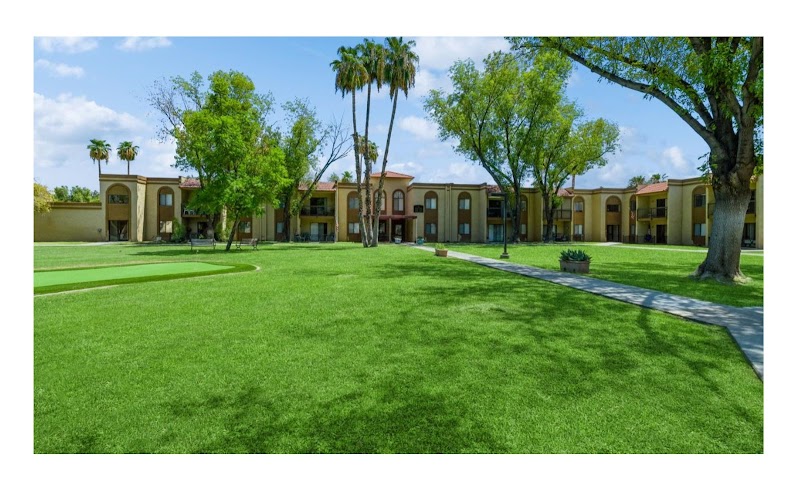
CMS rates RIVER PARK POST ACUTE's staffing level at 2 out of 5 stars, which is below average compared to other nursing homes. Staff turnover is 67%, which is 21 percentage points above the Arizona average of 46%. High turnover can affect care consistency as new staff learn residents' individual needs. RN turnover specifically is 80%, which is notably high. RNs provide skilled clinical oversight, so turnover in this role can affect medical care quality.

What Have Inspectors Found at River Park Post Acute?

State health inspectors documented 11 deficiencies at RIVER PARK POST ACUTE during 2022 to 2025. These included: 1 that caused actual resident harm and 10 with potential for harm. Deficiencies causing actual harm indicate documented cases where residents experienced negative health consequences.
Who Owns and Operates River Park Post Acute?

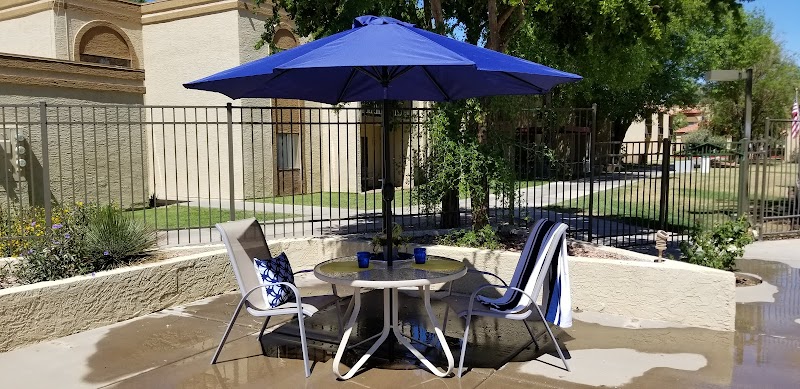
RIVER PARK POST ACUTE is owned by a for-profit company. For-profit facilities operate as businesses with obligations to shareholders or private owners. The facility is operated by THE ENSIGN GROUP, a chain that manages multiple nursing homes. With 66 certified beds and approximately 65 residents (about 98% occupancy), it is a smaller facility located in CHANDLER, Arizona.

How Does River Park Post Acute Compare to Other Arizona Nursing Homes?

Compared to the 100 nursing homes in Arizona, RIVER PARK POST ACUTE's overall rating (5 stars) is above the state average of 3.3, staff turnover (67%) is significantly higher than the state average of 46%, and health inspection rating (4 stars) is above the national benchmark.

What Should Families Ask When Visiting River Park Post Acute?

Based on this facility's data, families visiting should ask: "How do you ensure continuity of care given staff turnover, and what is your staff retention strategy?" "Can you walk me through typical staffing levels on day, evening, and night shifts?" "Can I visit during a mealtime to observe dining assistance and food quality?" "How do you handle medical emergencies, and what is your hospital transfer rate?" These questions are particularly relevant given the facility's high staff turnover rate and the below-average staffing rating.

Is River Park Post Acute Safe?

Based on CMS inspection data, RIVER PARK POST ACUTE has a clean safety record: no substantiated abuse findings (meaning no confirmed cases of resident harm), no Immediate Jeopardy citations (the most serious violation level indicating risk of serious injury or death), and is not on the Special Focus Facility watch list (a federal program monitoring the lowest-performing 1% of nursing homes). The facility has a 5-star overall rating and ranks #1 of 100 nursing homes in Arizona. While no facility is perfect, families should still ask about staff-to-resident ratios and recent inspection results during their visit.

Do Nurses at River Park Post Acute Stick Around?

Staff turnover at RIVER PARK POST ACUTE is high. At 67%, the facility is 21 percentage points above the Arizona average of 46%. Registered Nurse turnover is particularly concerning at 80%. RNs handle complex medical decisions and coordinate care — frequent RN changes can directly impact care quality. High turnover means new staff may not know residents' individual needs, medications, or preferences. It can also be disorienting for residents, especially those with dementia who rely on familiar faces. Families should ask: What is causing the turnover? What retention programs are in place? How do you ensure care continuity during staff transitions?

Was River Park Post Acute Ever Fined?

RIVER PARK POST ACUTE has no federal fines on record. CMS issues fines when nursing homes fail to meet care standards or don't correct problems found during inspections. The absence of fines suggests the facility has either maintained compliance or corrected any issues before penalties were assessed. This is a positive indicator, though families should still review recent inspection reports for the full picture.

Is River Park Post Acute on Any Federal Watch List?

RIVER PARK POST ACUTE is not on any federal watch list. The most significant is the Special Focus Facility (SFF) program, which identifies the bottom 1% of nursing homes nationally based on persistent, serious quality problems. Not being on this list means the facility has avoided the pattern of deficiencies that triggers enhanced federal oversight. This is a positive indicator, though families should still review the facility's inspection history directly.