THE CENTER AT VAL VISTA, LLC
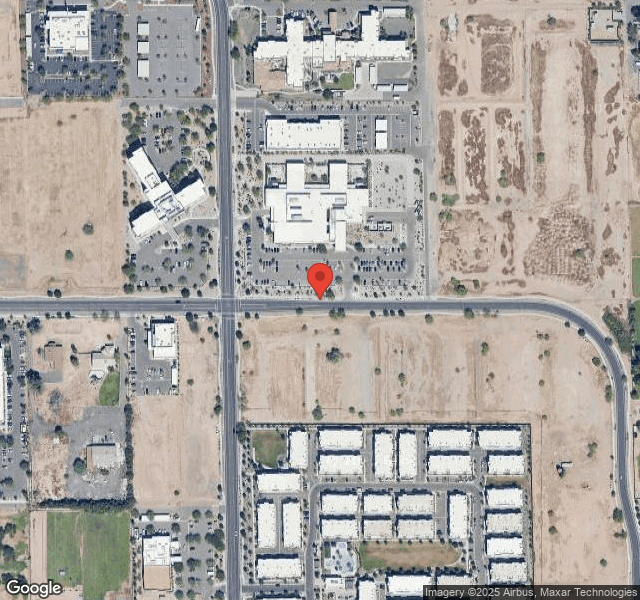

3744 SOUTH ROME STREET, GILBERT, AZ 85297 (480) 224-9500
For profit - Individual 96 Beds VERITAS MANAGEMENT GROUP Data: November 2025
Trust Grade
90/100
#35 of 139 in AZ
Last Inspection: December 2023

Within standard 12-15 month inspection cycle. Federal law requires annual inspections.

Overview

The Center at Val Vista, LLC has received a Trust Grade of A, indicating it is considered excellent and highly recommended among nursing homes. Ranked #35 out of 139 facilities in Arizona, it places in the top half, while holding the #27 position out of 76 in Maricopa County, suggesting limited competition in the area. The facility is on an improving trend, reducing issues from 2 in 2023 to 1 in 2025, which is encouraging. Staffing is average with a rating of 3 out of 5 stars and a turnover rate of 38%, which is better than the state average, indicating staff are relatively stable and familiar with the residents. Notably, there were no fines recorded, which is a positive sign; however, there have been concerns raised, such as medications being improperly stored for some residents, which could lead to unsafe self-administration, and a failure to protect residents' personal property, highlighting areas where improvements are needed.

Trust Score
A
90/100
In Arizona
#35/139
Top 25%
Safety Record
Low Risk
No red flags
Inspections
Getting Better
2 → 1 violations
Staff Stability
○ Average
38% turnover. Near Arizona's 48% average. Typical for the industry.
Penalties
✓ Good
No fines on record. Clean compliance history, better than most Arizona facilities.
Skilled Nurses
✓ Good
Each resident gets 42 minutes of Registered Nurse (RN) attention daily — more than average for Arizona. RNs are trained to catch health problems early.
Violations
○ Average
6 deficiencies on record. Average for a facility this size. Mostly minor or procedural issues.
★★★★★
5.0
Overall Rating
★★★☆☆
3.0
Staff Levels
★★★★★
5.0
Care Quality
★★★★★
5.0
Inspection Score
Stable
2023: 2 issues
2025: 1 issues

The Good

  • 5-Star Quality Measures · Strong clinical quality outcomes
  • Full Sprinkler Coverage · Fire safety systems throughout facility
  • No fines on record
  • Staff turnover below average (38%)

    10 points below Arizona average of 48%

Facility shows strength in quality measures, fire safety.

The Bad

Staff Turnover: 38%

Near Arizona avg (46%)

Typical for the industry

Chain: VERITAS MANAGEMENT GROUP

Part of a multi-facility chain

Ask about local staffing decisions and management

The Ugly 6 deficiencies on record

May 2025 1 deficiency
CONCERN (D) 📢 Someone Reported This

A family member, employee, or ombudsman was alarmed enough to file a formal complaint

Potential for Harm - no one hurt, but risky conditions existed

Deficiency F0554 (Tag F0554)

Could have caused harm · This affected 1 resident

**NOTE- TERMS IN BRACKETS HAVE BEEN EDITED TO PROTECT CONFIDENTIALITY** Based on clinical record review, observations, resident and staff interviews, and review of policy, the facility failed to ensur...

Read full inspector narrative →
**NOTE- TERMS IN BRACKETS HAVE BEEN EDITED TO PROTECT CONFIDENTIALITY** Based on clinical record review, observations, resident and staff interviews, and review of policy, the facility failed to ensure medications were not left in the room and resident was assessed to self-administration of medication for one resident (#148). The deficient practice could result in medications not being taken as ordered and residents unsafely administering medications. Findings include: Resident #148 was admitted to the facility on [DATE] with a diagnosis of encephalopathy, type 2 diabetes mellitus, anxiety disorder, depressive episodes, hypertension, and dementia. Review of care plan initiated on April 10, 2025 revealed resident has a risk for cognitive/neurological complications related to encephalopathy. The interventions included to administer medications as per physician's orders, allow resident time to communicate, allow resident to make as simple decisions regarding their care and activities. Review of another care plan revealed resident is confuse/forgetful at times. The interventions initiated on April 11, 2025 included to assist as needed, provide consistent caregivers, and remind and cue as needed. Review of admission Minimum Data Set (MDS) dated [DATE] revealed a Brief Interview for Mental Status (BIMS) score of 10.0, moderately impaired cognition and resident required partial/moderate assistance with personal hygiene. Review of physician's order revealed that on April 24, 2025 an order for Hydrocortisone External Cream 2.5 % to be applied to the affected area topically every 4 hours as needed for itching eczema. During an observation conducted on April 29, 2025 at 09:19 AM, two medications were observed on the resident's bedside table. One medication was labeled Hydrocortisone 2.5% in a white container for eczema and the other one was labeled Vicks in a bluish small container. An interview was immediately conducted with the resident who stated that the Vicks is for breathing to open her sinuses. An interview was conducted on April 29, 2025 at 09:29 AM with a Licensed Practical Nurse (LPN)/Staff #62 in the resident's room. Staff #62 stated that she did not realized that the medications which she identified as hydrocortisone cream and Vicks were in the resident's room. She stated that she will take it with her, label it with the resident's name, and to get a physician's order. On April 29, 2025 at 17:11 PM, review of record revealed a Self-Medication Evaluation was performed for Resident #148 for the medication Vapor Rub. However, there is no Self-Medication Evaluation performed for the medication Hydrocortisone 2.5% external cream. Review of physician's order dated April 29, 2025 revealed an order for Vaporizing Chest Rub external ointment to be applied outside of nostril topically every 6 hours as needed, allowed to self-administer and keep at bedside, unsupervised self-administration. Review of care plan initiated on April 29, 2025 revealed a medication self-administration for vaporizing chest rub. An interview was conducted on May 1, 2025 at 2:06 PM with the Director of Nursing (DON)/Staff #186 in the dining room. The DON stated that regarding self-administration of medication, if a resident wants to self-administer, the process is that she will check with the resident's doctor, make sure resident is able and safely self-administer the medication, encourage the resident to keep the medication in a bag or in a drawer, she prefers that the medication is not laying out, and she added that their residents in the facility are in private rooms. In addition, the DON stated that if resident is deemed capable of self-administration, she will obtain an order for self-administration. The DON stated that assessment for self-administration is done as soon as possible when aware that the resident has the medication. The DON also stated that they have a process when visitors come in, their sign -in log has an acknowledgement not to bring in medication for the resident, and if they bring in medication to take it to the nurse. The DON stated that if she finds for instance a medication at the resident's bedside, she will start the process for self-administration of medication. Regarding hydrocortisone medication left at bedside, the DON stated that she expects her staff to get a self-administration order, do an evaluation and care plan. The DON stated that the goal is to do it right away. On May 1, 2025 at 14:29 PM, review of nursing progress note title, Daily Nursing Note, revealed that a nurse notified the resident's provider to approved resident's self-administration of hydrocortisone cream for eczema, and an evaluation and care plan was completed. An interview was conducted on May 2, 2025 at 10:34 AM with an LPN/Staff #85 in the third-floor nursing station. She stated that medication administration includes right dose, right route, right time and right resident. If there is a concern with a medication, for instant low blood pressure, she will notify the doctor. Regarding medication brought in from the outside for the resident, she stated that the process is that it has to be confirmed with the doctor, and the container has a label. She will add the medication in the medication list of the resident, and she will keep the medication inside her medication cart. She stated that she will not leave the medication at the bedside unless there is an order to self-administer because it is not safe, they might not take the medication as ordered, and she must have a visual for the resident taking and swallowing the medication because the medication might fall on the floor. She will not leave a medicated cream at bedside, she will return it in the treatment cart. She stated that for a hydrocortisone cream medication, she will not leave the medication at the bedside because the resident might put it in a body part that should not be on, or might put it on excessively, or if the resident is confuse, the resident might eat it. Review of facility's policy titled, Medication Administration, with a revised date of February 8, 2021 revealed that medications are to be administered as prescribed by the attending physician. Review of another facility policy titled, Self-administration of Medications, with a revised date of February 8, 2021 revealed that residents have the right to self-administer medications if the interdisciplinary team has determined that it is clinically appropriate and safe for resident to do so.
Dec 2023 2 deficiencies
CONCERN (D)

Potential for Harm - no one hurt, but risky conditions existed

Safe Environment (Tag F0584)

Could have caused harm · This affected 1 resident

**NOTE- TERMS IN BRACKETS HAVE BEEN EDITED TO PROTECT CONFIDENTIALITY** Based on observations, clinical record review, staff and family interviews and facility policy review, the facility failed to en...

Read full inspector narrative →
**NOTE- TERMS IN BRACKETS HAVE BEEN EDITED TO PROTECT CONFIDENTIALITY** Based on observations, clinical record review, staff and family interviews and facility policy review, the facility failed to ensure reasonable care for the protection of the resident's medical assistive property from loss or theft for one resident (#219). The deficient practice could result in resident not provided with a homelike environment. Findings include: Resident #219 was admitted on [DATE] with diagnoses of laceration without foreign body of other part of head, hypo-osmolality and hyponatremia, syndrome of inappropriate secretion of antidiuretic hormone, muscle weakness, difficulty in walking, essential (primary) hypertension, dysphagia, oropharyngeal phase, cognitive communication deficit, hypokalemia, long term (current) use of anticoagulants, encounter for surgical aftercare following surgery on the circulatory system, personal history of transient ischemic attack, and cerebral infarction without residual deficits. Observation and resident interview conducted on December 26, 2023 at 10:03 AM the resident stated, My hearing aids were lost when I got here, both sides are missing, I just had them adjusted and they can take up to two weeks to get new ones. I could cry! I had them when I came in. I told the nurses and all they say is, oh dear how terrible. Observed the resident's hearing aid case with no hearing aids but a package of batteries was found in the residents hearing aid case. Observed the resident in having difficulty hearing and resulted in nearly shouting to resident in order to hear questions. Observed the resident tearfully distraught in describing her missing hearing aids. The Resident Dashboard (December 24, 2023) reports a BIMS (Brief Interview for Mental Status) score of 8 indicating the resident had moderately impaired cognition. Review of Nursing Comprehensive admission Data Collection V8 document (December 21, 2023) and revealed that a Licensed Practical Nurse (staff #60) annotated the resident to use hearing aids on admission. Review of resident Care Plan and revealed the Focus statement (December 26, 2023), Patient's is hard of hearing Patient has hearing aid in both ears. The Goal states, Patient's needs will be met every shift X 90 days. The Interventions states, Eliminate distractions or background noise. Give clear & simple directions. Staff to adjust tone and volume of voice as needed. The resident Care Plan was initiated 12/26/2023 and created by a Registed Nurse (staff #421), MDS Coordinator and revised on 12/27/2023 by (staff #421), MDS Coordinator. Review of Case Management Progress Note (December 21, 2023 at 4:24 PM) and revealed admission was conducted with the resident expressing verbal understanding and all questions were answered at this time. Note Text: [NAME] arrived safely to the facility via stretcher with AZ Patient Transport. This writer welcomed & greeted patient upon her arrival to the facility and provided the room number she will be going into. This writer spoke with the resident's daughter in law at [PHONE NUMBER] and informed her of patient's safe arrival to the facility & reiterated visiting policy & procedure. This writer explained that any scheduled appointments do need to pertain to admitting diagnosis and it is important that family meet them at the appointment to provide proper insurance cards and identification. Care Plan meeting with IDT members, patient & family was offered at this time, but declined. The daughter in-law was informed to contact case management to arrange per request and she expressed verbal understanding & all questions were answered at this time. Family interview conducted on December 27, 2023 at 12:45 PM via phone with the resident's son and he stated, She got in there on Thursday and it was Saturday that we discovered it was no longer there and they stated they have no idea what idea what happened to them, spoke with staff #521 one of the nurses. She had her hearing aids at the time of admission. I am in the process of getting her hearing aids replaced at Costco and making appointments to have her hearing tests done for her hearing aid replacement. Interview conducted on December 27, 2023 at 1:07 PM with a Registered Nurse (staff #210) and the , Staff Development Coordinator (staff #740). Staff #210 stated, I was told that that we can't find her hearing aids. I started her care on December 24, 2023. I wasn't here during her admission.Staff #740 stated, For facility policy in regards to missing property, case management completes a grievance. When patient arrive, they sign consents for their own property, they are responsible for their own items, we recommend that they send valuables homes, we do have a policy for reimbursing. During an interview conducted on December 27, 2023 1:34 PM with a Licensed Practical Nurse,(staff #50) Director of Case Management. Staff #50 stated, Her son called yesterday to find out why she was at the facility and I was informed about her missing hearing aids yesterday. The resident was admitted on [DATE], Thursday and was interviewed by the case manager, on Friday and she didn't mention anything about the hearing aids. For residents with cash we do an inventory for their cash and put into a safe, we don't inventory personal property, we suggest to the family to take their property home and for those who refuse we say we are not responsible for lost or stolen property. The policy that address this might be in the admission packet. Medical assistive devices are documented in the care plan, we've had residents who have lost dentures and we've replaced them depending on the situation. Reviewed facility policy PATIENT RIGHTS: PLANNING AND IMPLEMENTING CARE and revealed the statement Personal clothing and effects including personal property are patient responsibility per admission agreement. The Patient agrees to take reasonable precautions to safe keep this property by indelibly marking personal belongings at or before time of admission. The Patient shall be responsible for providing any desired insurance protection covering loss of property. Reviewed facility policy admission CRITERIA and revealed the statement 2. Residents (and potential residents) will not be asked or required to: c. waive facility liability for losses of personal property . Interview conducted on December 27, 2023 at 2:26 PM with the Executive Director (staff #235). Staff #235 stated, When they admit, we ask family members to take valuables home we don't do the personal property inventory because patients are in and out in a short time and when family would often bring items and it was hard to keep up inventory and corporate changed the policy on personal inventory. For medical assistive devices we keep in the room and keep an eye on it, like for hearing aids and dentures. When they come up missing we typically replace them and work with the family. For missing items, I didn't think we had to do a facility report if it was rectified but it if was stolen then we would report. I'm understanding if it something is lost then we do a grievance and replace if needed. I expect my staff to report missing items pretty quick because it can be time sensitive. I expect my team to call me at any time and I have a charge nurse to begin to look for it. I do have leadership here seven days a week to report as needed. In regards to the risk of missing medical assistive devices, the Executive Director (staff #235 stated), There are safety concerns, a resident cant' eat if dentures are lost, for hearing aids .we want to replace quickly. The Director of Nursing (DON, staff #357) entered the facility meeting room with the surveyors on December 28, 2023 at 9:05 AM and presented her staff interviews and Nursing Comprehensive admission Data Collection documentation in regards to the resident's missing hearing aids. The DON (staff #357) explained that after nine staff interviews, all staff interviewed stated that the resident did not admit to the facility with her hearing aids. The DON (staff #357) further explained that the Nursing Comprehensive admission Data Collection V8 document (December 21, 2023) completed by a Licensed Practical Nurse (staff #60) was not completely charted and omitted the comment that the resident did not have her hearing aids upon admission and the LPN (staff #60) was educated by the DON (staff #357) to add comments like this to the comment or additional information section. After review of the submitted documentation by the DON and consideration of the collected interviews, record review, and observation it was explained to the DON that this would be a potential citation. The DON's loud and abrasive response was You're going to take the word of a [AGE] year-old woman? as she left the facility meeting room.
CONCERN (D)

Potential for Harm - no one hurt, but risky conditions existed

Accident Prevention (Tag F0689)

Could have caused harm · This affected 1 resident

**NOTE- TERMS IN BRACKETS HAVE BEEN EDITED TO PROTECT CONFIDENTIALITY** Based on observations, resident and staff interviews, and facility documentation, the facility failed to ensure that one residen...

Read full inspector narrative →
**NOTE- TERMS IN BRACKETS HAVE BEEN EDITED TO PROTECT CONFIDENTIALITY** Based on observations, resident and staff interviews, and facility documentation, the facility failed to ensure that one resident (#42) was free from the accident hazard of self-administering medications not ordered by the physician. This deficient practice could result in resident taking medications with contraindications. Findings include: Resident #42 admitted to the facility on [DATE] with a hip fracture, Deep Venous Thrombosis Prophylaxis, and history of breast cancer. She had a physician's order for an injection of the anticoagulant Enoxaparin 40 mg (milligram) one time a day dated [DATE], and supplement which included two 500mg Ascorbic Acid Tablets ordered [DATE] and two tablets of Cholecalciferol Oral Tablet 25 micrograms ordered [DATE]. Review of the Medication Administration Record for [DATE] showed she received all the above medications as ordered. According to the Minimum Data Set assessment conducted on [DATE] she scored a 10 on the Brief Interview for Mental Status, which indicates moderate cognitive impairment. In the care plan initiated on [DATE], Resident #42 has a goal for not having any complications due to not receiving cancer treatment during her stay at the facility. Resident #42 is also care planned for anticoagulant use. Interventions for these goals includes administer medications per physician orders and monitor frequently. On [DATE] at 10:01 AM, surveyor observed a pill box with medication on Resident #42's bedside table. On another counter in her room were medications including Triphala 1000 mg capsules, Vitamin D3, Vitamin K, and 800 mg calcium supplement. On a second observation on [DATE] at 2:22 PM, surveyor observed Registered Nurse (RN) Staff #210 inside Resident #42's room passing medication. On [DATE] at 2:27 PM surveyor entered the room to interview Resident #42 privately. Her husband was present. Resident #42 stated she did not recall doing a self-administration of medications assessment. She confirmed she does take the medications and the doctor is aware and had told her he is okay with it. Husband stated the pill box still had some days with pills in it and expressed upset that his wife had not been taking them as she should have been. In an interview with RN Staff #210 on [DATE] at 2:32 PM when asked how residents are assessed for whether they can self-administer medications or not, she stated the nurse will determine if the patient is eligible and if so, let the provider know so that they can input an order for self-administration of medications. If approved for self-administration of medications, then the resident will keep their medications in their room in the bedside drawer. When asked specifically about the medications in Resident #42's room, Staff #210 stated she would need to check in the EHR (electronic health record) for the orders and if she could self-administer medications. In a follow up interview with staff #210 on the same day at 3:01 PM, she clarified that before they could self-administer medications residents were required to demonstrate they could safely and properly administer medications, receive education about safety, verbalize understanding, and store medication in a cabinet. She stated that earlier she had not seen the pill box, only the pill bottles. She advised that the husband had brought the medications in and had now been educated about not bringing pills into the facility for his wife. During an interview on [DATE] at 3:02 PM with the Director of Nursing (DON) Staff #357, when asked if residents are able to bring in medications, vitamins, etc. and keep in room she stated they can if the facility knows about it. For even OTC (over the counter) medications the facility would need to call the doctor to make sure it is safe and okay. They then encourage residents not to leave medications out. For example, an inhaler would need to be in drawer or for allergy shots administered by a family member, they would need to demonstrate they could administer them without a nurse. The self-administration assessment process starts with the nurse completing the assessment. Then the provider will specify on the order if administration needs to be supervised or not. The DON stated that with regards to Resident #42, they had talked to the husband about bringing pills in. He had left the building at the time of surveyor requesting a list of the bedside medications and facility staff were not able to identify the pills. DON reiterated that RN Staff #210 had said husband brought them in from home today. In a follow up interview with the DON on [DATE] at 3:43 PM when asked about potential risks of Resident #42 being on an anticoagulant and taking Vitamin K, she stated in general it would probably be counterproductive but depended on the blood thinner. If coumadin, it would essentially be an antidote, but with Lovenox she would need to know exact dosage of the Vitamin K and would follow up with the pharmacist. DON confirmed they went through Resident #42's room and did not find any other medications. After following up with the pharmacist about the risks of Lovenox, DON returned on [DATE] at 8:15 AM to confirm there was no current risk for Resident #42 if she had taken or been taking Vitamin K. A review of physician orders and Resident #42's electronic chart on [DATE] revealed no self-administration of medications evaluation as well as no orders from the physician and no orders for any of the vitamins. In a clarifying interview with Resident #42 on [DATE] at 2:39 PM, she stated the doctor at this facility had been in her room to speak with her and seen the pill bottles she keeps on the countertop. According to her, he stated she could take them as they were just regular vitamins. She was adamant that she had been taking the medications since she arrived at this facility. In a final interview with the DON on [DATE] at 8:29 AM, she stated that while residents are encouraged not to bring medications from home, her expectations for her staff are to fill the requested medications from the pharmacy to ensure it is the same dose each time, that it is the actual medication that is listed on the bottle, and that the pills are not expired. She stated that this is important for patient safety. If staff does not know what a patient is taking and the patient were to become unresponsive, they would not be able to know if it was an allergic reaction or an interaction between medications. When emergency medical services arrive, they would need to be able to let them know about risks of contraindications, medication reactions, allergies, etc. Medications can also change from home to the hospital to the skilled nursing facility and patient may not be aware. For Resident #42 specifically, the DON stated she was not on Lovenox at home and would therefore have been unaware of any potential risk if she had taken Vitamin K. In facility policy titled Self-Administration of Medications last revised [DATE], it states the nursing staff will document their findings and the choices of patients who are able to self-administer medications . Self-administered medications must be stored in a safe and secure place which is not accessible by other patients .Staff shall identify and give to the charge nurse any medications found at the bedside table that are not authorized for self-administration.
Jun 2021 3 deficiencies
CONCERN (D)

Potential for Harm - no one hurt, but risky conditions existed

Staffing Information (Tag F0732)

Could have caused harm · This affected 1 resident

Based on observations, staff interviews and policy and procedures, the facility failed to ensure the daily nursing staffing information posted was accurate. The deficient practice could result in resi...

Read full inspector narrative →
Based on observations, staff interviews and policy and procedures, the facility failed to ensure the daily nursing staffing information posted was accurate. The deficient practice could result in residents and/or resident representatives not being informed of accurate and current staffing information. Findings include: An observation of the Daily Staff Posting located at the counter on the second floor was conducted on June 21, 2021 at 8:32 a.m. The posting had a census of 52, was dated June 17, 2021 and did not include the actual hours worked by staff directly responsible for resident care per shift. On June 21, 2021 at 8:45 a.m., an observation of the Daily Staff Posting located at the counter on the third floor was conducted. The posting had a census of 48, was dated June 7, 2021 and did not include the actual hours worked by staff directly responsible for resident care per shift. At 8:47 a.m., the scheduler (staff #56) removed the old Daily Staff Posting that was posted and replaced it with a new posting that had a date of June 21, 2021. The new posting included a census of 59; however, the actual hours worked by staff directly responsible for resident care per shift was not included in the new posting. During an interview conducted on June 22, 2021 at 1:35 p.m. with the scheduler (staff #2), she said the Daily Staffing Posting shows resident family and visitors that the facility had enough staff and had a safe staffing ratio. Staff #2 said she was responsible for ensuring that the Daily Staff Posting has the correct information, is completed and posted. Staff #2 also said the admissions or weekend receptionist is responsible for doing this task when she is not at the facility. Staff #2 said the Director of Nursing (DON/staff #51) is responsible for sending her the posting information through an email each morning and for reviewing the posting. Staff #2 stated she updates the posting when staffing changes occur prior to 9:00 a.m. and she tries to update the posting if changes occur after 9:00 a.m. Staff #2 said the following information are included in the posting: patient care nursing hours, number of nurses and certified nurse assistants (CNAs) scheduled to work on each shift, the census, the date, and the total number of staff scheduled to work that day. However, staff #2 said she had never documented the actual hours worked by staff on the Daily Staff Posting. An interview was conducted with the (DON/staff #51) on June 23, 2021 at 10:37 a.m. The DON stated that staff #2 is responsible for doing the Daily Staff Posting; and that, she and staff #2 are both responsible for ensuring the posting is correct. The DON stated the posting was supposed to have the facility census, date, the number of nurses and CNAs, the number of hours each staff is working and the total number of hours worked by staff. The DON said each morning when she arrives for the shift she reviews the actual hours worked by staff the day before; and, based on the information she knows what staffing changes needs to be done. The DON stated that she documents the changes made on the Daily Staff Posting form the following morning. Regarding the Daily Staff information posted at the second and third floor, the DON said she and staff #2 were at the facility over the weekend on Saturday (June 19) and Sunday (June 20). The DON said that she and staff #2 walked around the facility and posted the Daily Staffing Postings on both days. The DON further stated that staff #2 must have printed the wrong date for the postings. The facility's policy on Daily Staffing Post dated February 1, 2016 stated that the facility will post the daily nursing staffing hours according to number of each discipline and amount of hours scheduled to work along with the daily census. Staffing post will be for all staff, visitors, patients and vendor to view easily in plain sight.
CONCERN (D)

Potential for Harm - no one hurt, but risky conditions existed

Medical Records (Tag F0842)

Could have caused harm · This affected 1 resident

**NOTE- TERMS IN BRACKETS HAVE BEEN EDITED TO PROTECT CONFIDENTIALITY** Based on clinical record review, staff interviews, and policy and procedure, the facility failed to ensure one resident's (#3) m...

Read full inspector narrative →
**NOTE- TERMS IN BRACKETS HAVE BEEN EDITED TO PROTECT CONFIDENTIALITY** Based on clinical record review, staff interviews, and policy and procedure, the facility failed to ensure one resident's (#3) medical record was accurate and complete. The deficient practice could result in the medical record not reflecting the resident's condition and the care and services provided across all disciplines. Findings include: Resident #3 was admitted to the facility on [DATE] with diagnoses of urinary tract infection (UTI), metabolic encephalopathy, and hypertension. A review of the physician's orders dated June 15, 2021 revealed the following orders: -Metoprolol Tartrate (antihypertensive) 100 milligrams (mg) tablet by mouth two times a day for hypertension and to hold medication if systolic blood pressure (SBP) is less than 130 millimeters of mercury (mmHg) or heart rate (HR) is less than 60 beats per minute (BPM); and, -Losartan Potassium (antihypertensive) 25 mg tablet by mouth two times daily for hypertension and to hold for SBP less than 120 mmHg. Review of the Medication Administration Report (MAR) for June 2021 revealed the following: -June 17 at 8:00 p.m.: Metoprolol and Losartan were administered; and, -June 18 at 8:00 p.m.: Metoprolol was administered. However, the Weights and Vitals Summary report revealed the following: -June 17, 2021 at 6:45 p.m. the resident's blood pressure (BP) was 117/75 mmHg; and, -June 18, 2021 at 7:26 p.m. the BP was documented as 125/67 mmHg. There was no evidence found that the resident's blood pressure was rechecked and its rechecked value was documented in the clinical record. Further review of the clinical record revealed no evidence of the reason why the medication was administered outside of the ordered parameter; and that, the physician was notified. During an interview on June 23, 2021 at approximately 9:45 a.m. with a Licensed Practical Nurse (LPN/Staff #133) she stated if a medication was held or not given, this is documented in the MAR where the staff can pick an option from a list to best describe why the medication was held or not given. The checkmark in the boxes in the MAR indicates that the medication was given to the resident. An interview was conducted with the charge nurse (staff #124) at approximately 10:45 a.m. on June 23, 2021. Staff #124 said the nurse should call the doctor if the blood pressure was low or outside parameters, document in a progress note, and enter the correct code in the MAR corresponding to the reason why it was not given or held. An interview with the Director of Nursing (DON/staff #51) was conducted on June 23, 2021 at approximately 11:30 a.m. with the Executive Director (staff #67) present. The DON stated medications should be administered following the ordered parameters by the physician. If the value is outside the ordered parameters, the physician is notified depending on how far the value is from the set parameters. The DON stated that when a nurse documents that an antihypertensive medication was administered, the electronic record software would ask for the blood pressure value and would pull the information from the system. However, she said it may not be the most recent one. During the interview, a review of the clinical record was conducted with the DON who said that a registry nurse administered the medications outside the ordered parameters on June 17 and June 18; and that, these are medication errors. On June 23, 2021 at 1:43 p.m., the DON provided the survey team an untitled document that had resident #3's name, room number, diagnoses, code status, name of the nurse and a date of June 17. On the farthest right of the sheet was handwritten circled note that read BP at 7:00 p.m. 132/65. On June 23, 2021 at 2:05 p.m., the DON provided another untitled document that was dated June 18 and had the name of a different nurse. On the farthest right of the sheet was a a handwritten note that read Recheck BP 134/70 at 7:45 pm. The DON stated the two untitled documents showed that the resident's blood pressure were rechecked on June 17 and 18 and the values were within the ordered parameter for the medications administered. However, the DON stated these documents were found and taken from the bin which were ready and scheduled to be collected for shredding that day. The facility policy titled, Medication Administration, included that medications must be administered as prescribed by and in accordance with the written orders of the attending physician. All current drugs and dosage schedules must be recorded on the patient's medication administration record (MAR and TAR as appropriate). Should a drug be withheld, refused, or given other than at the scheduled time it should be appropriately documented as such on the MAR. The facility assessment dated [DATE] and reviewed by the QAPI (Quality Assessment and Performance Improvement) committee on April 1, 2021 stated that the facility uses a clinical record software for their electronic health record and all paper documents are scanned and uploaded to the patient's medical record.
CONCERN (D)

Potential for Harm - no one hurt, but risky conditions existed

Infection Control (Tag F0880)

Could have caused harm · This affected 1 resident

Based on an observation, staff interviews, policy and procedures and Centers for Disease Prevention and Control (CDC) guidelines, the facility failed to ensure infection control protocol was implement...

Read full inspector narrative →
Based on an observation, staff interviews, policy and procedures and Centers for Disease Prevention and Control (CDC) guidelines, the facility failed to ensure infection control protocol was implemented related to improper donning of the face mask for one staff. The deficient practice could result in the spread of infections to residents. Findings include: On June 22, 2021 at 9:15 a.m., a wound care treatment observation was conducted with the wound care nurse (staff #106) who was wearing gown, gloves and a white face mask with a navy blue/black curvy design on it when she entered the resident room. The top edge of the face mask was resting on the tip of her nose. During the observation, the face mask slipped further down under her nose. Staff #106 did not correct the placement of her face mask and proceeded to complete the wound care for the resident. Staff #106's nose was exposed and was not covered the entire time. An interview was conducted immediately after the observation with staff #106 who exited the room. Staff #106 touched her nose and stated her mask was below her nose and was not being worn correctly. Staff #106 further stated this created a risk of passing COVID infection to residents. An interview was conducted with the (DON/staff #106) on June 23, 2021 at 9:22 a.m. The DON stated that a surgical mask is to be worn at all times in the facility; and that, the person's mouth and nose must be covered. The DON also said she had seen staff #106 wore the mask with the top edge of the mask located right at the tip of her nose. She also stated the mask should be above the tip of the nose; and, the mask has a metal clasp that can be pressed around the bridge of the nose to hold the mask in place so it stays on. The DON further stated staff are mandated to wear a surgical mask as a COVID-19 precaution even if staff had been vaccinated. The CDC guideline on Using Personal Protective Equipment (PPE) updated August 19, 2020 included that facemask should be extended under the chin. Both mouth and nose should be protected. The facility's policy, PPE During the COVID-19 Pandemic with a revision date of May 1, 2021 stated that masks must be worn continuously until visibly soiled or damaged throughout shift. The CDC guidance on How to Wear Mask for Unvaccinated People updated on June 11, 2021 included that masks are a critical step to help prevent people from getting and spreading COVID-19. A cloth mask offers some protection to you as well as protecting those around you. Wear a mask and take every day preventive actions in public settings and mass transportation, at events and gatherings, and anywhere you will be around other people. It also included to put the mask over your nose and mouth and secure it under your chin. Fit the mask snugly against the sides of your face, slipping the loops over your ears or tying the strings behind your head. Wear a mask over your nose and mouth to help prevent getting and spreading COVID-19; and, to wear a mask correctly for maximum protection.
Understanding Severity Codes (click to expand)
Life-Threatening (Immediate Jeopardy)
J - Isolated K - Pattern L - Widespread
Actual Harm
G - Isolated H - Pattern I - Widespread
Potential for Harm
D - Isolated E - Pattern F - Widespread
No Harm (Minor)
A - Isolated B - Pattern C - Widespread

Questions to Ask on Your Visit

  • "Can I speak with families of current residents?"
  • "What's your RN coverage like on weekends and overnight?"

Our Honest Assessment

Strengths
  • • Grade A (90/100). Above average facility, better than most options in Arizona.
  • • No major safety red flags. No abuse findings, life-threatening violations, or SFF status.
  • • No fines on record. Clean compliance history, better than most Arizona facilities.
  • • 38% turnover. Below Arizona's 48% average. Good staff retention means consistent care.
Concerns
  • • No significant concerns identified. This facility shows no red flags across CMS ratings, staff turnover, or federal penalties.
Bottom line: Generally positive indicators. Standard due diligence and a personal visit recommended.

About This Facility

What is The Center At Val Vista, Llc's CMS Rating?

CMS assigns THE CENTER AT VAL VISTA, LLC an overall rating of 5 out of 5 stars, which is considered much above average nationally. Within Arizona, this rating places the facility higher than 99% of the state's 100 nursing homes. This rating reflects solid performance across the metrics CMS uses to evaluate nursing home quality.

How is The Center At Val Vista, Llc Staffed?

CMS rates THE CENTER AT VAL VISTA, LLC's staffing level at 3 out of 5 stars, which is average compared to other nursing homes. Staff turnover is 38%, compared to the Arizona average of 46%. This relatively stable workforce can support continuity of care.

What Have Inspectors Found at The Center At Val Vista, Llc?

State health inspectors documented 6 deficiencies at THE CENTER AT VAL VISTA, LLC during 2021 to 2025. These included: 6 with potential for harm.
Who Owns and Operates The Center At Val Vista, Llc?

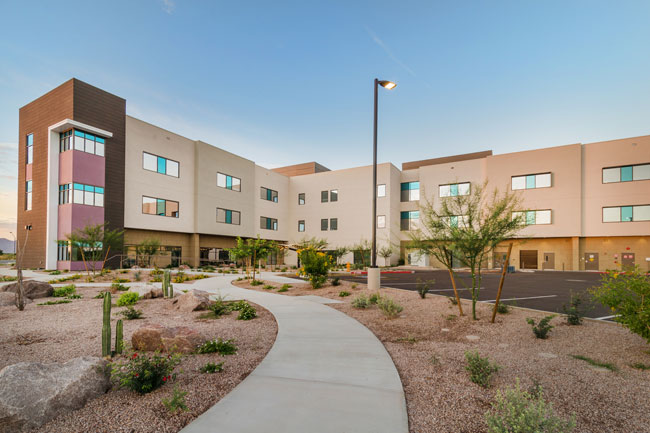
THE CENTER AT VAL VISTA, LLC is owned by a for-profit company. For-profit facilities operate as businesses with obligations to shareholders or private owners. The facility is operated by VERITAS MANAGEMENT GROUP, a chain that manages multiple nursing homes. With 96 certified beds and approximately 58 residents (about 60% occupancy), it is a smaller facility located in GILBERT, Arizona.
How Does The Center At Val Vista, Llc Compare to Other Arizona Nursing Homes?

Compared to the 100 nursing homes in Arizona, THE CENTER AT VAL VISTA, LLC's overall rating (5 stars) is above the state average of 3.3, staff turnover (38%) is near the state average of 46%, and health inspection rating (5 stars) is much above the national benchmark.

What Should Families Ask When Visiting The Center At Val Vista, Llc?

Based on this facility's data, families visiting should ask: "Can I visit during a mealtime to observe dining assistance and food quality?" "How do you handle medical emergencies, and what is your hospital transfer rate?" "Can I speak with family members of current residents about their experience?"

Is The Center At Val Vista, Llc Safe?

Based on CMS inspection data, THE CENTER AT VAL VISTA, LLC has a clean safety record: no substantiated abuse findings (meaning no confirmed cases of resident harm), no Immediate Jeopardy citations (the most serious violation level indicating risk of serious injury or death), and is not on the Special Focus Facility watch list (a federal program monitoring the lowest-performing 1% of nursing homes). The facility has a 5-star overall rating and ranks #1 of 100 nursing homes in Arizona. While no facility is perfect, families should still ask about staff-to-resident ratios and recent inspection results during their visit.

Do Nurses at The Center At Val Vista, Llc Stick Around?

THE CENTER AT VAL VISTA, LLC has a staff turnover rate of 38%, which is about average for Arizona nursing homes (state average: 46%). Moderate turnover is common in nursing homes, but families should still ask about staff tenure and how the facility maintains care continuity when employees leave.

Was The Center At Val Vista, Llc Ever Fined?

THE CENTER AT VAL VISTA, LLC has no federal fines on record. CMS issues fines when nursing homes fail to meet care standards or don't correct problems found during inspections. The absence of fines suggests the facility has either maintained compliance or corrected any issues before penalties were assessed. This is a positive indicator, though families should still review recent inspection reports for the full picture.

Is The Center At Val Vista, Llc on Any Federal Watch List?

THE CENTER AT VAL VISTA, LLC is not on any federal watch list. The most significant is the Special Focus Facility (SFF) program, which identifies the bottom 1% of nursing homes nationally based on persistent, serious quality problems. Not being on this list means the facility has avoided the pattern of deficiencies that triggers enhanced federal oversight. This is a positive indicator, though families should still review the facility's inspection history directly.