CENTER AT ARROWHEAD, LLC
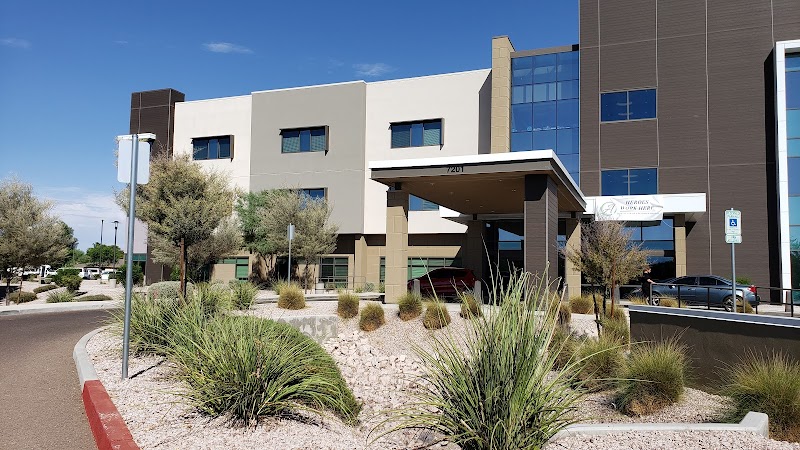
7201 W CAMINO SAN XAVIER AVE, GLENDALE, AZ 85308 (623) 773-6100
For profit - Corporation 96 Beds VERITAS MANAGEMENT GROUP Data: November 2025
Trust Grade
60/100
#69 of 139 in AZ
Last Inspection: May 2025

Inspected within the last 6 months. Data reflects current conditions.

Overview

The Center at Arrowhead, LLC has a Trust Grade of C+, indicating that it is slightly above average, but still has room for improvement. It ranks #69 out of 139 facilities in Arizona, placing it in the top half, but falls to #51 of 76 in Maricopa County, suggesting there are better local options. Unfortunately, the facility is experiencing a worsening trend, with issues increasing from 2 in 2024 to 6 in 2025. Staffing is a concern, rated at 2 out of 5 stars with a high turnover rate of 61%, significantly above the state average of 48%, which may affect resident care. While there have been no fines, which is positive, the facility has less RN coverage than 82% of Arizona facilities, potentially impacting the quality of care. Specific incidents noted include a staff member failing to sanitize their hands when delivering meal trays, which raises infection risk, and a failure to provide appropriately sized briefs for a resident, risking skin injury. Additionally, there were lapses in tracking antibiotic use, which could lead to improper treatments. Overall, while there are some strengths, such as the absence of fines, the combination of staffing issues and recent deficiencies should be carefully considered by families looking at this facility for their loved ones.

Trust Score
C+
60/100
In Arizona
#69/139
Top 49%
Safety Record
Low Risk
No red flags
Inspections
Getting Worse
2 → 6 violations
Staff Stability
⚠ Watch
61% turnover. Above average. Higher turnover means staff may not know residents' routines.
Penalties
✓ Good
No fines on record. Clean compliance history, better than most Arizona facilities.
Skilled Nurses
○ Average
Each resident gets 33 minutes of Registered Nurse (RN) attention daily — about average for Arizona. RNs are the most trained staff who monitor for health changes.
Violations
⚠ Watch
14 deficiencies on record. Higher than average. Multiple issues found across inspections.
★★★☆☆
3.0
Overall Rating
★★☆☆☆
2.0
Staff Levels
★★★★☆
4.0
Care Quality
★★★☆☆
3.0
Inspection Score
Stable
2024: 2 issues
2025: 6 issues

The Good

  • 4-Star Quality Measures · Strong clinical quality outcomes
  • Full Sprinkler Coverage · Fire safety systems throughout facility
  • No fines on record

Facility shows strength in quality measures, fire safety.

The Bad

3-Star Overall Rating

Near Arizona average (3.3)

Meets federal standards, typical of most facilities

Staff Turnover: 61%

15pts above Arizona avg (46%)

Frequent staff changes - ask about care continuity

Chain: VERITAS MANAGEMENT GROUP

Part of a multi-facility chain

Ask about local staffing decisions and management

Staff turnover is elevated (61%)

13 points above Arizona average of 48%

The Ugly 14 deficiencies on record

May 2025 6 deficiencies
CONCERN (D) 📢 Someone Reported This

A family member, employee, or ombudsman was alarmed enough to file a formal complaint

Potential for Harm - no one hurt, but risky conditions existed

Deficiency F0658 (Tag F0658)

Could have caused harm · This affected 1 resident

**NOTE- TERMS IN BRACKETS HAVE BEEN EDITED TO PROTECT CONFIDENTIALITY** Based on observation, staff and resident interviews, and the facility policy and procedures, the facility failed to ensure that ...

Read full inspector narrative →
**NOTE- TERMS IN BRACKETS HAVE BEEN EDITED TO PROTECT CONFIDENTIALITY** Based on observation, staff and resident interviews, and the facility policy and procedures, the facility failed to ensure that one resident (#86 ) was provided with appropriate sized briefs for incontinence care. The deficient practice could result in skin breakdown/injury. Findings include: Resident (#86) was admitted on [DATE] with diagnoses that included bilateral primary osteoarthritis of the knee, morbid (severe) obesity, right and left knee pain, and muscle weakness. The care plan dated March 30, 2025 revealed that the resident had bowel and bladder incontinence. The interventions included to check frequently and assist with toileting as needed. The minimum data set (MDS) dated [DATE] included a brief interview for mental status score of 15 indicating she was cognitively intact. It also included that the resident is frequently incontinent of bladder and always incontinent of bowel. The resident was not on a toileting program. An interview was conducted on May 2, 2025 at 9:07 a.m. with the resident who stated that the adult briefs provided by the facility are too small and cuts into the creases where the brief lies between her legs, so she doesn't tape the brief closed. She stated that she keeps telling the certified nursing assistants (CNAs) that she needs a larger size and the CNAs tell her that they don't have a larger size. During the interview, blue/green colored briefs were observed on the dresser and the resident stated that they were not big enough for her. An interview was conducted on May 2, 2025 at 9:56 a.m. with (CNA/staff #205) who observed the blue/green briefs on the resident's counter and stated that they were a size 2 XL and based on the resident's size, he thought she needed the larger bariatric brief, 3 XL, which was a white brief. He stated that if the brief is too small, it can cause creases in the groin area and indentations across the abdomen. An interview was conducted on May 2, 2025 at 10:41 a.m. with the maintenance/housekeeping assistant (staff #206), he stated that the supply rooms on each floor are stocked daily and if a CNA asks for supplies, such as a specific size of brief, he will stock the supply room with the specific size. During the interview, it was observed that there were no 3 XL adult briefs in the supply room on the third floor where the resident's room is located. It was also observed that there were no 3 XL adult briefs in the supply room on the second floor where residents reside. An interview was conducted on May 2, 2025 at 11:09 a.m. with the interim Director of Nursing (DON/staff #93), who stated that she stocks the supply rooms on the second and third floors and it was her expectation that the CNAs tell her if they need adult briefs, so she can go and get some in the main supply room located on the first floor. She observed the blue/green briefs on the counter in the resident's room and stated that they were 2 XL. Then the DON assessed the resident and stated that the resident was wearing a 2 XL adult brief which was not the appropriate size and apologized to the resident. The DON went to the supply room on the third floor and stated that there were no briefs sized 3 XL stocked and this was the size the resident needed. She stated that when a brief is too small, there is a risk of the resident developing skin integrity issues. During an interview with (CNA/staff #72) conducted on May 2, 12:31 p.m., she stated that there are two tapes on each side of the brief and when she and a nurse changed the resident, she only fastened one tape on each side of the brief at the resident's request. She stated that the brief seemed snug and went to look for a larger size in the supply room, but there were no larger briefs and she thought the resident probably needed the bariatric brief 3 XL. She stated that when the brief is too small, there is a risk of it cutting into the skin and skin rash. The facility's policy, Incontinence Management Policy states that the purpose of incontinence care is to ensure that the residents who are incontinent receive care and services to prevent urinary tract infections, skin breakdown, and loss of dignity, in compliance with the Centers for Medicare and Medicaid Services (CMS) regulations and Arizona Department of Public Health.
CONCERN (D)

Potential for Harm - no one hurt, but risky conditions existed

Quality of Care (Tag F0684)

Could have caused harm · This affected 1 resident

Based on clinical record review, interviews, and facility documentation and policy, the facility failed to ensure that one resident (# 207) was administered medications in accordance with physician's ...

Read full inspector narrative →
Based on clinical record review, interviews, and facility documentation and policy, the facility failed to ensure that one resident (# 207) was administered medications in accordance with physician's orders. This deficient practice can result in diminished quality of life, and suboptimal clinical outcomes. Findings include: Resident #207 was admitted to the facility August 12, 2024 for a 5-day respite for hospice care with diagnoses that included Cerebrovascular disease, sequelae of cerebral infarction, hypertension, anxiety disorder, atrial fibrillation & depression. A hospice order summary dated August 12, 2024 revealed that the resident was prescribed Lactaid, Glucerna and sliding scale insulin instruction. Review of the August 2024 Medication Administration Record and the Treatment Administration Record revealed insulin was not administered and that fasting or random blood sugars were not completed during the 5-day respite period, that the resident was in the facility. A progress note dated August 12, 2024, indicated that medications to include medication administration times were reviewed with the resident and the resident's family. A progress note dated August 12, 2024, revealed a review of the medication reconciliation sheet dated August 12, 2024 that indicated that the resident's medications were reviewed by the pharmacist and physician's orders were clarified with the hospice agency. The sheet documented that the orders were transcribed and sent to the hospice pharmacy. According to the medication reconciliation sheet, there was no physician's order for insulin. A progress note dated August 14, 2024, the Resident reported to the night nurse that she was supposed to be get insulin. The nurse noted that there were no orders for insulin in the resident's record. The hospice agency was contacted, they stated they would investigate and report back. A progress note dated August 14, 2024, a review of the resident's admission Medication Review Report dated August 12, 2024 was completed and uploaded to the dashboard. An interview with a Registered Nurse (RN/Staff #93)/Interim Director of Nursing (DON) was conducted on May 1, 2025 at 12:24 PM. she is accompanied by RN Staff #207, Regional Clinical Director. Interim DON has been in position for 1 week. During the interview, staff #207 and #93 confirmed that upon review of resident #207's record, they were unable to locate an order for insulin or insulin administration documentation. Staff #207 stated that insulin was not administered to the resident. Furthermore, during review of the hospice order summary. Both staff members confirmed that the orders included Lactaid, Glucerna, and sliding scale instruction for insulin. However, the staff members noted that the hospice order summary was not uploaded into the resident's clinical record until October 10, 2024 which was after the resident's discharge. According to staff #207, the resident was not administered insulin during her stay. Additionally, staff #207 stated that this does not meet the facility expectations for quality of care. Furthermore, staff #93 noted that hospice is very particular and expects that their physician's orders are to be followed. Staff #93 indicated that the impact of not administering insulin is that it could lead to hyperglycemic events which could result in diabetic keto-acidosis (DKA) and possible diabetic coma. - An interview with a Registered Nurse (RN/staff #7) was conducted on May 1, 2025 at 1:00 PM. Staff #7 stated that for new admits, Medical Records/Admissions are responsible for inputting the resident's initial demographics into the system. The nurse is responsible for reviewing admission paperwork to verify for completion and accuracy. Reviewed documents are uploaded into the system for Provider and Pharmacy review, if discrepancies are noted, they may be addressed with the interdisciplinary team prior to the uploading the records to the electronic health record. Staff #7 advised that once medication reconciliation is completed, it is reviewed the resident and/or resident's family, they are asked to sign it, if it is accurate. The resident's hospice note dated August 13, 2025 was reviewed with staff #7. She stated that she would expect to see blood sugar levels to be completed three times a day if the resident had a diagnosis of diabetes, The RN did not feel comfortable answering further questions regarding medication errors or order completeness. The RN noted that the risk of not taking insulin could lead to Hyper glycemia, DKA or Diabetic Coma. Staff #7 said that she would report a medication error to the provider once it was found, in the event of any adverse reactions. She also noted that she would notify the DON and the resident's family. The medication discrepancy would also be documented in progress notes. An interview with a Licensed Practical Nurse (LPN/staff #54), interim Assistant Director of Nursing was conducted on May 1, 2025 at 2:09 PM. According to staff #54 hospice residents admitted to the facility usually comes from home. Therefore, the hospice facility provide the orders and the medication for the respite stay. According to staff #54's review of the hospice note dated August 12, 2024, per the orders the resident should have been glucose tested four times per day. Staff #54 mentioned that other than diabetes, insulin can also be used for weight loss or if the resident is on steroid therapy. Staff #54 confirmed that the resident did not receive insulin or blood sugar testing during his 5-day respite stay at the facility. The LPN stated that generally speaking this would be considered a medication error, the nurse who was admitting the resident would be responsible for reviewing/checking the incoming residents orders. The risk for the resident could be diabetic coma or ketoacidosis. -Policies Veritas-The Center for Policies and Procedures The facilities Medication Administration policy, issued July 1, 2017, revealed that medications must be administered in accordance with written orders. In addition, all current drugs and dosage schedules must be recorded on the patient's medication administration record (MAR and TAR as appropriate). The facilities Physicians Orders policy, issued: December 4, 2019, revealed that the center will transcribe the Physician's orders and treatments and will be consistent with principles of safe and effective order writing. Additionally, drug and biological orders will be recorded in the patient's medical record on the order sheet; such orders are reviewed monthly by a consultant pharmacist.
CONCERN (D)

Potential for Harm - no one hurt, but risky conditions existed

Accident Prevention (Tag F0689)

Could have caused harm · This affected 1 resident

**NOTE- TERMS IN BRACKETS HAVE BEEN EDITED TO PROTECT CONFIDENTIALITY** Based on observation, clinical record review, staff interview, and facility policy, the facility failed to ensure medications we...

Read full inspector narrative →
**NOTE- TERMS IN BRACKETS HAVE BEEN EDITED TO PROTECT CONFIDENTIALITY** Based on observation, clinical record review, staff interview, and facility policy, the facility failed to ensure medications were not left at the bedside for one of 16 sampled residents (#404). The deficient practice could result in medications not being administered correctly, or medications not taken as ordered by the provider. Findings include: Resident #404 was admitted on [DATE] with diagnoses that included fracture of fourth lumbar vertebra and subsequent encounter for fracture with routine healing. During an initial observation conducted on April 29, 2025 at 09:30 AM, of Resident #404's room, a tube of barrier cream and anti-fungal powder were observed on the resident's bedside table unattended. A second observation conducted on April 29, 2025 at 10:45 AM., revealed a tube of barrier cream and anti-fungal powder on the bedside table unattended. Review of physician orders revealed: barrier cream to coccyx and buttock area every shift and PRN dated February 22, 2025. Further review of physician orders revealed no evidence of an order for anti-fungal medications. 5-day Medicare Minimum Data Set (MDS) assessment dated [DATE], revealed a Brief Interview for Mental Status (BIMS) score of 13 which indicated intact cognition. A care plan initiated on February 22, 2025 revealed no evidence of a focus or intervention regarding medication self-administration. Review of the clinical record from February 22, 2025 through May 1, 2025 revealed no evidence of a mediation self-administration assessment. Immediately after the 2nd observation an interview with Licensed Practical Nurse (LPN/staff #83) was conducted on April 29, 2025 at 10:47 AM. The LPN entered the resident's room and stated that a tube of barrier cream and anti-fungal powder were on the resident's bedside table. The LPN stated that she did not leave the moisture barrier cream at the bedside and that the tube is empty, and she was not sure why it was even in the resident's room. The LPN stated that the Resident's wife left the antifungal powder at the bedside and that the LPN has seen the Resident's wife use it, but thought that the wife took it home with her. The LPN stated that it was not appropriate for the medications to have been left at the bedside unattended. The LPN stated that when family brings in medications, they should give the medications to a nurse. The LPN further stated that the facility policy requires a provider order along with a completed medication self-administration assessment, prior to leaving medication/treatments at the bedside. The LPN removed both medications from the bedside table and placed them in a treatment cart, and notified the charge Registered Nurse (RN). In an interview conducted on May 2, 2025 at 10:31 AM, with LPN (staff #203) who stated that all medications, including topical treatments, are not to be left unattended at the resident's bedside table. She further stated that if a family member brings any medications into the facility, they would need to give the medications to a nurse to place in the treatment cart. The LPN stated that the risks of leaving medications unattended in a resident's room could result in medications not being administered correctly, or someone beside the resident could take the medication. In an interview, conducted on May 2, 2025 at 10:39 AM., with a Certified Nurse Assistant (CNA/staff #204) who stated he accesses the resident's barrier cream from the nurse and leaves the barrier cream in the resident's bedside drawer when he is done. An interview was conducted with the interim Director of Nursing (DON/staff #93) on May 2, 2025 at 01:16 PM, who stated that medications were not to be left unattended on the resident's bedside table, and if family members bring medications into the facility, nursing staff should be notified. The DON further stated that barrier cream is to be kept in the treatment cart, not on the resident's bedside table, or in a drawer. The DON stated that in order for a resident to self -administer medications, an order from the resident's provider, the resident's signature, and a medical self-administration assessment form are to be in the resident's clinical record. The DON reviewed the medical record and stated that there was no evidence of a self-administration assessment form. The DON stated that risk of a medication being left at the bedside without an assessment could result in the resident being injured. A policy titled, Medication Administration, revised August 8, 2022, revealed that medications are to be administered as prescribed by the attending physician. Only licensed medical and nursing personnel or other lawfully authorized staff members may prepare, administer, and record medications. Medications must be administered in accordance with the written orders of the attending physician. A policy titled, Self-administration of Medications, revised February 8, 2021, revealed that as part of their overall evaluation, the nursing staff will assess each resident's mental and physical abilities to determine whether self-administering medication is clinically appropriate for the resident. Self-administered medications mush be stored in a safe and secure place, which is not accessible by other patients. If safe storage is not possible in the resident's room, the medications of patients permitted to self-administer will be stored on a central medication cart or in the medication room. Nursing will transfer the unopened medication to the resident when the resident requests them. Staff shall identify and give to the Charge Nurse any medications found at the bedside that are not authorized for self-administration, for return to the family or responsible party.
CONCERN (D)

Potential for Harm - no one hurt, but risky conditions existed

Staffing Information (Tag F0732)

Could have caused harm · This affected 1 resident

Based on observations and staff interviews, the facility failed to ensure the daily nurse staffing information was complete and accurate for actual hours worked for licensed and unlicensed direct care...

Read full inspector narrative →
Based on observations and staff interviews, the facility failed to ensure the daily nurse staffing information was complete and accurate for actual hours worked for licensed and unlicensed direct care nursing staff. The deficient practice could result in residents, representatives, and visitors not being informed of accurate and current staffing information in the facility. Findings include: Review of the facility's daily nurse staffing forms for the dates of February 14, 2025 through February 18, 2025 and April 25, 2025 through April 27, 2025 revealed no evidence of actual hours worked by licensed and unlicensed staff. During an observation conducted on April 29, 2025 at 9:07 AM, the daily nurse staff posting form was displayed at the front information desk and form did not include the actual hours worked by licensed and unlicensed nursing staff. An interview was conducted with the Staffing Coordinator (staff # 73) on May 1, 2025 at 1:25 PM who stated that she is responsible for ensuring the daily nurse staffing information is accurate and posted. She stated that she had not been informed to include the actual hours worked on the daily nurse staff posting form. She further stated that she had, never been told that, but that she will update the form and include the actual hours worked going forward. She reviewed the daily nurse staff postings dated February 14, 2025 through February 18, 2025 and April 25 2025 through April 27, 2025 and stated that there was no evidence of the actual working hours worked by licensed and unlicensed nursing staff. An interview was conducted the with Director of Nursing (DON/staff #93) on May 2, 2025 at 12:52PM, who stated that it is staffing's responsibility to complete the staff postings. She further stated that the daily nurse staff posting should be accurate for each day. She reviewed the daily nurse staff postings dated February 14, 2025 through February 18, 2025 and April 25, 2025 through April 27, 2025 and stated that there was no evidence of actual hours worked by licensed and unlicensed nursing staff on the forms. She stated that she did not know the risk associated with including the actual hours worked on the forms. Review of the facility's policy regarding Posted Staffing Numbers revealed the daily posting is to include hours worked by the Registered Nurses, Licensed Practical Nurses, and Nursing Assistants for each shift.
CONCERN (E)

Potential for Harm - no one hurt, but risky conditions existed

Infection Control (Tag F0880)

Could have caused harm · This affected multiple residents

**NOTE- TERMS IN BRACKETS HAVE BEEN EDITED TO PROTECT CONFIDENTIALITY** Based on observation, staff interviews and facility policy, the facility failed to maintain infection prevention and control whe...

Read full inspector narrative →
**NOTE- TERMS IN BRACKETS HAVE BEEN EDITED TO PROTECT CONFIDENTIALITY** Based on observation, staff interviews and facility policy, the facility failed to maintain infection prevention and control when delivering meal trays, providing foley catheter care for one of one sampled resident's (#9), and failing to consistently implement tracking and trending of their infection prevent and control program. The deficient practice could result in transmission of infection within the facility. -Regarding delivering of meal trays: Observations were conducted on April 30, 2025 of a Certified Nursing Assistant (CNA/staff #200) delivering in-room lunch meal trays to four residents on enhanced barrier precautions (EBP). The following was observed: -The CNA entered the first room, moved items on the bedside table and placed a meal tray on a bedside table, and exited the room without sanitizing her hands. -The staff member picked up a meal tray from the dietary cart and entered a second room without sanitizing her hands prior to entering the room. The staff member placed the meal tray on the bedside table, repositioned items on the bedside table then exited the room without sanitizing her hands. -The CNA entered a third room, leaving the meal tray on the bedside table, without sanitizing her hands before entering or after exiting the room. -In a fourth room the staff member entered without sanitizing her hands, placed a meal tray on the bedside table, picked up a coffee cup off the tray, exited the room, filled the coffee cup from a carafe on the dietary meal cart, and re-entered the room with the coffee cup. The CNA exited the room without sanitizing her hands. -The staff member entered the first room, wiped the bedside table with paper towels and exited the room without sanitizing her hands before entering or after exiting. -The staff member re-entered the fourth room with another coffee cup and a styrofoam cup of ice, without sanitizing her hands when entering and exiting the room. -The CNA entered the first room without sanitizing her hands, assisted the resident with eating a bite of the food, then exited the room without sanitizing her hands. An Enhanced Barrier Precautions (EBP) sign that was posted outside of all the resident rooms the CNA entered during tray pass on April 30, 2025, revealed that everyone must: clean their hands, including before entering and when leaving the room. An interview was conducted on April 30, 2025 at 11:32 AM with a registry CNA (staff #200) who stated that she only needed to gown up when entering EBP rooms for catheter or foley care, but the facility policy was to follow the EBP sign instructions posted outside of the rooms. The CNA read an EBP sign posted outside of the doors stating everyone must clean their hands, including before entering and when leaving the room. The CNA stated that she did not sanitize her hands upon entering/exiting the resident rooms with EBP on the door when passing meal trays. An Interview was conducted on April 30, 2025 at 11:40 AM with a registry Licensed Practical Nurse (LPN/staff #201), who stated that residents requiring EBP precautions have a sign posted by their room. The LPN stated that when staff enter a room on EBP all staff should sanitize their hands when entering/exiting the rooms, and this included passing meal trays. An interview was conducted on April 30, 2025 at 11:44 AM with a CNA (staff #202), who stated that when entering or exiting resident rooms placed on EBP, all staff are required to sanitize their hands, including when they are passing meal trays. An interview was conducted on May 2, 2025 at 12:38 PM with the Interim Director of Nursing (DON/staff #63), who stated that staff should would wash or sanitize their hands before entering/exiting each resident's room, including residents placed on EBP. The DON also stated that this included when staff bring meal trays into resident rooms. She further stated that the meal tray observations for hand hygiene. DON stated that hand hygiene was important to maintain infection prevention/control and prevent the spread of germs and infections. -Regarding Enhanced Barrier Precautions (EBP) and hand hygiene during Foley catheter care: Findings include: Resident #9 was admitted to the facility on [DATE] with diagnoses that included: osteomyelitis of vertebra, acute kidney failure, and cognitive communication deficit. A care plan initiated on April 27, 2025, revealed that Resident #9 had a Foley catheter for acute retention and required catheter care as ordered by the physician and as needed. Review of a care plan initiated on March 26, 2025, revealed that Resident #9 required: EBP related to a Foley catheter and a Peripherally Inserted Central Catheter (PICC), a sign to be placed outside the resident's door, EBP per policy and staff to wear personal protective equipment (PPE) during high contact resident care. Review of an order summary revealed an order dated April 27, 2025. The order prescribed a Foley catheter and Foley catheter care to be performed every shift. The resident also had an order, dated April 27, 2025, for EBP with high contact care activities due to a Foley catheter every shift. During initial observations on April 29, 2025 at 8:35 AM, an EBP sign was observed outside Resident #9's room. The sign instructed all who entered the room to: -clean their hands before entering and when leaving the room, and to -wear gloves and a gown for the following high-contact resident care activities: dressing, bathing, changing linens, changing briefs, device care for urinary catheter, . A cart was observed outside of the resident's room that contained gowns and gloves. During that same observation, it was also noted that Resident #9 had a Foley catheter in place. A procedure for Foley catheter care was observed for Resident #9, on April 30, 2025 at 10:55 AM, with Registered Nurse (RN/staff #83). The RN was observed to sanitize her hands with alcohol-based hand rub (ABHR) before entering the resident's room. The RN was not observed to don a gown. The RN donned gloves and closed the door to the resident's room. The RN dipped a washcloth into soapy water and cleaned the resident's groin area. She doffed the gloves and donned a new pair of gloves. The RN was not observed to sanitize her hands between glove changes. The RN (staff #83) then dipped a new washcloth into the soapy water and cleaned the resident's genital area, including the catheter tubing. The RN doffed her gloves and donned new gloves. She was not observed to sanitize her hands between glove changes. The RN (staff #83) proceeded to clean the resident's buttocks, with a new washcloth, as the resident had had a bowel movement. She doffed the gloves and donned new gloves. The RN was not observed to sanitize her hands between glove changes. The RN (staff #83) then put a new brief on the resident and then discarded her supplies. The RN was then observed to wash her hands with soap and water. The RN was not observed to wear a gown throughout the procedure. An interview was conducted with the RN (staff #83) on April 30, 2025 at 11:10 AM. The RN acknowledged that she did not wear a gown and did not sanitize her hands between glove changes. She acknowledged that Resident #9 was on EBP and that she should have been wearing a gown during Foley catheter care and the brief change. She stated she did not wear a gown because she forgot that the resident was on EBP. She also stated she should have sanitized her hands before and after she donned and doffed gloves. She stated she did not sanitize her hands between gloves changes because she did not bring her own ABHR into the room. An interview was conducted with the Assistant Director of Nursing (ADON/staff #54) on May 1, 2025, at 11:35 AM. The ADON stated that for residents on EBP, the expectation was that staff would wear gowns and gloves when performing all cares except bedside meal or fluid delivery. She stated that RN (staff #83) should have worn a gown during Foley catheter care and the brief change for Resident #9. The ADON also stated that Staff #83 should have sanitized her hands between glove changes. Further the ADON stated the risk of not performing hand hygiene and not wearing proper EBP could be the spread of infection. An interview was conducted with the Interim Director of Nursing (DON/staff #93) on May 2, 2025 at 9:21 AM. The DON stated that if a resident was on EBP, staff would be expected to wash their hands and wear a gown and gloves while performing personal cares, according to the sign by their door. The DON acknowledged that RN (staff # 83) did not follow EBP and hand hygiene protocols when she performed Foley catheter care and a brief change on Resident #9. The DON stated the risk of not following EBP and hand hygiene protocols could be infections to both residents and staff. -Regarding the Infection Prevention and Control Program: Finding include: On May 1, 2025 at 11:35 AM, an interview was conducted with the Assistant Director of Nursing (ADON/staff #54) and the Regional Clinical Director (RCD/staff #205). The ADON and the RCD explained that the ADON was in the process of completing her training as the Infection Preventionist (IP). It was further explained that the previous IP (staff #69) was assisting the ADON with IP tasks approximately three to four hours per week. During the interview on May 1, 2025, the Infection Control Logs for January 2025 through April 2025 were reviewed with the RCD and the ADON. Information regarding infections were listed on the log. However, there was no evidence of trending the information found on the logs. Further, The RCD (staff #205) explained that the data found on the logs regarding infections had not been recorded in real time. She stated that the previous IP (staff #69) had been going back and filling in the logs after the fact. She confirmed that infections were not being tracked and trended from January 2025 through April 2025. The RCD then acknowledged that tracking and trending of infections was not occurring per company policy. The RCD further stated that the risk of not tracking and trending infections could be the spread of infection throughout the facility. A policy titled, Hand hygiene for Clinical Staff, effective date January 29, 2025, revealed that hand hygiene is the process of cleaning hands to remove dirt, organic matter or microorganisms. It includes both handwashing with soap and water and hand antisepsis using alcohol-based hand rub (ABHR). Clinical staff must perform hand hygiene in the following situations: - before patient contact (e.g., entering the room) -after touching surfaces or objects in the patient care area A policy titled, Enhanced Barrier Precautions (EBP), refers to an infection control intervention designed to reduce transmission of multidrug-resistant organisms. EBP are used in conjunction with standard precautions and expand the use of personal protective equipment (PPE) to donning of gown and gloves during high-contact resident care activities the provide opportunities for transfer of MDROs (multidrug-resistant organisms) to staff hands and clothing. A policy titled, Infection Prevention and Control Program, reviewed/revised March 14, 2024, revealed that hand hygiene should be performed in accordance with the facility's hand hygiene procedures. It also revealed that a system of surveillance was to be utilized to prevent, identify, report, investigate and control infectious and communicable diseases. A policy titled, Hand Washing, reviewed/revised March 14, 2024, revealed hands should be washed before donning disposable gloves and after gloves are removed.
CONCERN (E)

Potential for Harm - no one hurt, but risky conditions existed

Antibiotic Stewardship (Tag F0881)

Could have caused harm · This affected multiple residents

Based on record review, staff interviews, policy review and Center for Disease Control (CDC) guidelines, the facility failed to consistently implement tracking and trending of their antibiotic steward...

Read full inspector narrative →
Based on record review, staff interviews, policy review and Center for Disease Control (CDC) guidelines, the facility failed to consistently implement tracking and trending of their antibiotic stewardship program. The facility census was 79 residents. This deficient practice could result in improper antibiotic use and adverse outcomes to residents. Findings include: On May 1, 2025 at 11:35 AM, an interview was conducted with the Assistant Director of Nursing (ADON/staff #54) and the Regional Clinical Director (RCD/staff #205). The ADON and the RCD explained that the ADON was in the process of completing her training as the Infection Preventionist (IP). It was further explained that the previous IP (staff #69) was assisting the ADON with IP tasks approximately three to four hours per week. During the interview on May 1, 2025, the Infection Control Logs for January 2025 through April 2025 were reviewed with the RCD and the ADON. Resident names, types of infections and antibiotics used were listed on the log. However, there was no evidence of trending the information found on the logs. Further, The RCD (staff # 205) explained that the data found on the logs regarding antibiotic use had not been recorded in real time. She stated that the previous IP (staff #69) had been going back and filling in the logs after the fact. She confirmed that antibiotics were not being tracked and trended from January 2025 through April 2025. The RCD then acknowledged that tracking and trending of the antibiotic stewardship program was not occurring per company policy. The RCD explained that an integral part of the program was to track and trend the information. The RCD further stated that the risk of not implementing the antibiotic stewardship program could be that antibiotics are not used correctly. Review of the Infection Prevention and Control Program Policy, revised March 14, 2024, revealed that a system to monitor antibiotic use would be implemented and that the Infection Preventionist would oversee the program.
Feb 2024 2 deficiencies
CONCERN (D)

Potential for Harm - no one hurt, but risky conditions existed

Report Alleged Abuse (Tag F0609)

Could have caused harm · This affected 1 resident

**NOTE- TERMS IN BRACKETS HAVE BEEN EDITED TO PROTECT CONFIDENTIALITY** Based on clinical record review, staff and resident interviews, facility documentation and policy review, the facility failed to...

Read full inspector narrative →
**NOTE- TERMS IN BRACKETS HAVE BEEN EDITED TO PROTECT CONFIDENTIALITY** Based on clinical record review, staff and resident interviews, facility documentation and policy review, the facility failed to ensure that an allegation of abuse for one resident (#6) was reported to the State Agency. The deficient practice places the resident at risk for continued abuse. Findings include: Resident #6 was admitted to the facility on [DATE], with diagnoses of acute respiratory failure with hypoxia, enterocolitis due to clostridium difficile, sepsis, depression and low back pain. A review of the Resident #6 admission Minimum Data Set (MDS) dated [DATE] revealed a Brief Interview for Mental Status (BIMS) score of 11, which indicated moderately impaired. In addition, Resident #6 mostly required assistance with everyday activities. A review of the care plan initiated on January 24, 2024 revealed a need assistance with transfers and toileting related to impaired mobility secondary to weakness and debility. The interventions included check frequently and assist with toileting as needed, keep call light within reach, and remind me to call for assistance. An interview was conducted with a Case Manager, (Staff #12), on February 13, 2024 at 11:55 AM. She stated that for an alleged abuse, they get information from the person reporting the abuse, and it gets elevated to the administrator. She further stated she has not received any information regarding Resident's #6 alleged abuse. She then stated that it might have been reported to the Assistant Director of Nursing (ADON/Staff #75) or the Director of Nursing (DON/Staff #65). On February 13, 2024 at 12:38 PM, an interview was conducted with ADON (Staff #75). Staff #75 stated that he was not aware or remembers any report of alleged abuse. He stated that allegations always go to the DON/Staff #65. On February 13, 2024 at 12:42 PM, an interview was conducted with DON (Staff #65) in her office. Staff #75 was also present. The DON stated that she does not have any recollection of a notification regarding an incident of alleged abuse of Resident #6. She further stated there was no mention to the physician, while she was looking at a 7-day look back at the physician progress notes. Staff #65 stated that she will be speaking to Resident #6 so she can interview resident, to obtain a description of the staff, and the timeframe so she can interview the staff. On February 13, 2024 at 12:57 PM, Staff #100, the Clinical Services Resource staff, stated that the DON was on vacation last week. She also stated that the alleged abuse came on a report last week. She stated that met with Resident #6 and that Resident #6 declined an interview at first and then stated the staff are good. She then stated that Resident #6 thinks one person yelled at her, but was unable to describe the staff who yelled at her. The resident stated the staff asked her why her call light was on and what she needed. On February 13, 2024 at 12:59 PM, an interview was conducted with the Administrator (Staff #10). he was informed of the allegation of abuse by Resident #6. He further stated all the managers conduct angel rounds every morning and if there is a concern, then they determine if it is grievance or not. There was rounding for all patients and there were no concerns identified on February 8. He stated he will provide copy of the angel rounds for that week. On February 14, 2024 at 9:59 AM, a document about the alleged abuse of Resident #6 was received from Administrator/Staff #10. The document was returned to Staff #10 because it does not match the Resident #6's name on the provided document about the alleged abuse. On February 14, 2024 at 11:36 AM, a follow up interview was conducted with Staff #100. She stated that she was rounding in the hallway, where the resident is and on February 5, 2025, and she stopped by Resident #6 room to check on her, and Resident #6 stated that she thinks someone came in her room and asked her why her call light was on. Staff #100 asked Resident #6 if she can describe the incident and resident said no, she could not. Staff #100 stopped by the resident room approximately 10:00 AM. Resident #6 stated to that she felt the staff was rude and yelled at her but was unable to recall the time and who or describe the person. Staff #100 apologized to Resident #6. She then asked if resident feels safe and Resident #6 stated she feel safe and everyone is nice to her. Staff #100 conducted an interview with the night shift and day shift staffs and interviewed patients and no one heard yelling. Staff #100 further stated that the resident was visited during angel round. She then stated that Resident #6 stated she does not have concerns or complaints. She further stated that after investigating, there was no evidence to substantiate. She further added, the resident denied any feelings of intimidation or feeling of being unsafe. She then stated that the process is to do immediate investigate and interview. There was nothing to report about this alleged abuse, resident has no complaints or concerns. She stated if no one has heard it, and they can not identify anything or anyone, and resident does not want anything further done about, so no report was required. On February 14, 2024 at 12:08 PM, received a four paged document titled Conclusion to Concern: abuse investigation interviews dated February 5, 2024 from Staff #100. On February 14, 2024 at 12:21 PM, Staff #100 stated that a customer service in-service was conducted on February 5, 2024 and Staff #100 provided a copy of the in-service sign in sheet. However further review of the facility's investigation revealed no evidence that the allegation of abuse was reported to the State Agency. Review of the facility policy titled, Abuse and Neglect Prohibition with a revised date of October 12, 2022 revealed that each resident has the right to be free from abuse. Any observations or allegations of abuse must be immediately reported to the Administrator. Reporting and Response section 1 (a) states, if the eventes that caused the allegation involved abuse or serious bodily harm, a report is made not later than 2 hours after the management becomes aware of the allegation.
CONCERN (D)

Potential for Harm - no one hurt, but risky conditions existed

Deficiency F0658 (Tag F0658)

Could have caused harm · This affected 1 resident

**NOTE- TERMS IN BRACKETS HAVE BEEN EDITED TO PROTECT CONFIDENTIALITY** Based on clinical record review, staff interviews, and facility policy and procedures, the facility failed to ensure one residen...

Read full inspector narrative →
**NOTE- TERMS IN BRACKETS HAVE BEEN EDITED TO PROTECT CONFIDENTIALITY** Based on clinical record review, staff interviews, and facility policy and procedures, the facility failed to ensure one resident (#55) receive trimming of toe nails. The deficient practice could result in resident discomfort with pain and infection. Findings include: Resident # 55 was admitted to facility on January 9, 2024 with diagnosis included unspecified fracture of upper end of left humerus, subsequent encounter for fracture with routine healing, subsequent encounter, sepsis, unspecified organism, contusion of left elbow, subsequent encounter, essential (primary) hypertension, alcohol abuse, uncomplicated, gastro-esophageal reflux disease without esophagitis, muscle weakness (generalized), difficulty in walking, not elsewhere classified. Review of the quarterly Minimum Data Set (MDS) assessment dated [DATE] revealed a Brief Interview for Mental Status (BIMS) score of 15 indicating that the resident is cognitively intact. The MDS also indicated that the resident was dependent on toileting and lower body dressing. Review of the care plan initiated on January 9, 2024 revealed that resident have actual/potential decline in his ability to perform his activities of daily living. Intervention included therapy evaluation and provide assistance as needed with grooming, bathing, and personal hygiene and per patient's preferences. Review of the resident task sheets for bath and nail care from January 16, 2024 to February 13, 2024 showed that resident is schedule for bathing every Tuesday and Friday. The following dates were reviewed for resident nail care: January 16, 2024: no nail care offered; January 19 - February 6, 2024: resident refused once and no follow up made on another shift; January 30 - February 13, 2024: no nail care offered or follow-up made on different shift Review of resident progress note on February 3, 2024 from Licensed Practical Nurse (LPN, staff # 106) revealed that patient had concerns about his toe nails not being cut. During an initial interview on February 12, 2024 at 12:15 a.m., resident stated that he wanted his nail to be clipped and staff ignores his request for podiatrist consult. An observation was made on resident toe nail on February 12, 2024 at 12:15 AM, both toe nails were big, thick and greenish in color. During an interview, resident stated that his toe nail is growing to his foot and his big nails hurt, he did not remember when was that last cut. An interview was conducted with certified nursing assistant (CNA, staff # 56) on February 14, 2024 at 9:57 AM, and she stated that by looking at the resident toe nails, she never asked him to cut his nails. She further stated that she notified the wound nurse couple weeks ago but did not follow-up. She also stated that she did not remember resident asking her to cut his toe nails. An interview was conducted with wound care nurse (staff # 54) on February 14, 2024 at 9:57 AM, and she stated that she is competent to do podiatry. She further stated that for non-diabetic residents' regular nurses provide cares and those with diabetes, she provides their care. She also stated that the resident is not diabetic and she is not sure whether he requested for nail care or not. An interview was conducted with Director of Nursing (staff # 65) on February 14, 2024 at 9:57 AM, she stated that if resident is diabetic then the nurse will provide nail care, if they are not diabetic then a CNA will do that. She further stated that facility does not have a podiatrist, if they need podiatrist then wound care nurses or doctor can do that. She also stated that if the nail is really thick then she does not recommend CNA to do that. About risk, she stated that it may cause infection and skin damage if nails were not cut. Review of facility policy on Activities of Daily Living (ADLs) revised on February 8, 2021, stated that patients shall receive assistance with activities of daily living every shift, as appropriate and ADLs include: bathing, grooming, dressing, eating, oral hygiene, ambulation, toilet activities and trimming of toe nails.
Sept 2023 1 deficiency
CONCERN (D) 📢 Someone Reported This

A family member, employee, or ombudsman was alarmed enough to file a formal complaint

Potential for Harm - no one hurt, but risky conditions existed

Quality of Care (Tag F0684)

Could have caused harm · This affected 1 resident

**NOTE- TERMS IN BRACKETS HAVE BEEN EDITED TO PROTECT CONFIDENTIALITY** Based on closed record review, observation of current practice, staff interviews, and facility documentation and policy review, ...

Read full inspector narrative →
**NOTE- TERMS IN BRACKETS HAVE BEEN EDITED TO PROTECT CONFIDENTIALITY** Based on closed record review, observation of current practice, staff interviews, and facility documentation and policy review, the facility failed to ensure wound assessment was completed for one of 3 sampled residents (#1). The deficient practice could result in resident not receiving appropriate treatment and developing or worsening or wound. Findings include: Resident #1 was admitted on [DATE] with diagnoses of fractured left femur, essential hypertension, chronic obstructive pulmonary disease, diabetes mellitus type II, muscle weakness, and difficulty walking. The admission progress notes of July 7, 2023 revealed the resident arrived at the facility and had an immobilizer. The nursing comprehensive admission data collection tool dated July 7, 2023 revealed the resident had small surgical site pin hole in the left knee, 36 staples, minimal upper extremity bruising, bruising to the left thigh, and four sites of bruising on the left foot. Per the documentation Braden Scale score was 15, indicating the resident was low risk for pressure sore development. The physicians order dated July 7, 2023 included the following orders: -Wear immobilizer to left lower extremity when out of bed; -Monitor every shift for skin breakdown or complications, notify Medical Doctor (MD)/ and wound care if there are concerns; -Braden Scale every week on Friday night shift for routine screening y; -Skin prep to heels every shift for prophylaxis; -Weekly skin and foot evaluation every Friday night shift; -Barrier cream to coccyx/buttock/peri area/reddened area every shift and as needed for prevention; -Monitor incision to left knee/thigh every shift, report concerns to MD/Surgeon; and, -Wound care to the left knee: cleanse with normal saline (NS)/wound cleanser, pat dry, apply dry dressing or leave open to air (OTA) daily every night shift and as needed for wound care. The baseline care plan with effective date of July 7, 2023 included the resident was at risk for skin breakdown and had surgical wounds related to left lower femur fracture. Goals were that the skin will remain intact and surgical wound would heal without complications. Interventions included Braden scale every week and skin evaluation as ordered, skin treatment per physician orders, dressing changes per physician orders, follow up with surgeon as scheduled, and monitor incision daily and as needed. The baseline care plan did not include the presence of the knee immobilizer and interventions related to the use of the immobilizer. The daily skilled note dated July 8, 2023 revealed resident had surgical incision to the left lower extremity (LLE). The daily skilled note dated July 9, 2023 included the resident had LLE surgical site with staples and blister to the LLE. However, the note did not document the assessment of the blister to include the size, appearance, or specific location of the blister. Review of the physician admission history and physical dated July 10, 2023 revealed the resident required maximum assistance for all activities of daily living (ADLs); and that, the immobilizer was to be applied when out of bed. The daily skilled notes dated July 10 and 11, 2023 included the resident had LLE surgical site. The note did not mention the assessment or status of the blister that was previously identified. Review of the daily skilled note dated July 13, 2023 revealed the resident's brace was taken off while in bed and an intact blister to LLE was noted. Per the documentation, wound care order was added per protocol and the wound nurse and physician will be notified in the morning. The orders-administration note dated July 13, 2023 revealed a blister to LLE, wound care order added and the wound nurse and physician will be notified in morning. note did not document the assessment of the blister to include the size, appearance, or specific location of the blister. The physician order dated July 13, 2023 included to apply betadine-soaked gauze to LLE blister, cover with abdominal (ABD) pad, secure with kerlix and tape every day and night shift and as needed (PRN) for soiling or dislodgement. The physician progress note dated July 13, 2023 revealed that the extremities had no edema or varicosities noted and the left lower extremity immobilizer was noted. The daily skilled nursing note dated July 13, 2023 revealed the resident had LLE surgical site with staples and had blister to the LLE. There was no other information noted regarding the assessment or status of the the blister to include size, appearance, or specific location. The admission Minimum Data Set (MDS) assessment dated [DATE] revealed the resident had a Brief Interview for Mental Status (BIMS) score of 15, indicating the resident had intact cognition. Per the assessment, the resident was at risk for pressure ulcers, had no unhealed pressure ulcers and had surgical wounds. It also included that the resident was receiving wound care and a pressure relieving device for the bed was coded. Further, the assessment included that skin condition was triggered for care planning. Review of the orders-administration note dated July 14, 2023 revealed the resident refused dressing to LLE blister. Per the documentation the resident stated that it burned and would not allow dressing to be placed. The skin evaluation dated July 14, 2023 included the resident had bilateral upper extremity scattered bruising, left thigh surgical site with staples, and LLE scattered bruising. The evaluation did not mention the assessment or status of the blister to the LLE that was previously identified. The Braden Scale dated July 14, 2023 revealed a score of 17 indicating the resident was low risk for pressure sore. Review of the appointment progress note dated July 18, 2023 revealed the resident went to an orthopedic appointment where the left leg staples were removed and the knee immobilizer was discontinued. The Braden score dated July 17, 19, and 21, 2023 continued to reveal a score of 17 indicating the resident continued to be low risk for pressure sore. The skin evaluation dated July 21, 2023 included that left thigh surgical site staples were removed and the site was healing well no signs or symptoms of infection. It also included that the resident had bilateral upper extremity scattered bruising and scattered bruising to the LLE. However, the documentation did not include assesment or status of the blister on the LLE. The physician's discharge order dated July 24, 2023 included revealed orders to discharge home on July 27, 2023 and wound care to LLE blister. Review of the TAR (treatment administration record) for July 2023 revealed that treatment was documented as administered to the LLE blister. However, despite documentation of a blister and treatment was provided, the clinical record revealed no evidence that the LLE blister was assessed to include size, appearance, or specific location. In an interview with the wound nurse (staff #84) conducted on September 19, 2023 at 2:00 p.m., the wound nurse stated that staff nurses were responsible for doing regular skin assessments and for notifying the wound nurse and the physician of any findings. She stated that once notified she would do a full head to toe assessment on all new admissions or a focused assessment if the resident had been at the facility for a while. The wound nurse said that upon completion of the assessment she would notify the physician, document her assessment and initiate a care plan. She stated that she would refer to the nursing staff simple wounds; and, she would follow the care of full thickness pressure injuries, and packed or complex wounds regularly at least weekly. Regarding resident #1, the wound nurse stated that she did not follow the resident's pressure injury because it was an intact blister with a simple treatment; and, there were no changes in the wound during the resident's stay. Further, the wound nurse stated that staff nurses should describe the wound and document in the daily skilled notes or weekly skin evaluations; and that, the description should include wound location, size and measurements, and a description of the wound bed and surrounding tissue. An interview with registered nurse (RN/staff #68) was conducted on September 20, 2023 at 11:15 a.m. The RN stated that she recalled admitting resident #1 to the facility; and that, the resident had no wounds to her leg with the exception of the surgical wounds on her knee and thigh. Further, the RN said the resident had a blister on her leg. The facility policy on Skin Evaluation/Braden Scale included that the facility will provide the necessary requirements to ensure that a patient receives the treatment and care in accordance with professional standards of practice. Review of the facility policy on Wound/Skin Management included that on admission, the wound care floor nursing must complete head to toe skin assessment and put findings in nursing comprehensive under skin integrity to include any open areas and location, reddened areas and location. The policy also included that the wound care floor nursing must complete 24-hour skin assessments and weekly skin assessments as ordered.
Nov 2022 5 deficiencies
CONCERN (D) 📢 Someone Reported This

A family member, employee, or ombudsman was alarmed enough to file a formal complaint

Potential for Harm - no one hurt, but risky conditions existed

ADL Care (Tag F0677)

Could have caused harm · This affected 1 resident

**NOTE- TERMS IN BRACKETS HAVE BEEN EDITED TO PROTECT CONFIDENTIALITY** Based on clinical record review, interviews, and policy, the facility failed to ensure provision of Activities of Daily Living (...

Read full inspector narrative →
**NOTE- TERMS IN BRACKETS HAVE BEEN EDITED TO PROTECT CONFIDENTIALITY** Based on clinical record review, interviews, and policy, the facility failed to ensure provision of Activities of Daily Living (ADL) care was provided to one resident (#112). The sample size was four residents. The deficient practice could result resident needs being unmet. Findings include: Resident #112 was admitted to the facility on [DATE] with diagnoses that included pressure ulcer, Alzheimer's disease, muscle weakness, and difficulty walking. Review of a nursing note dated September 8, 2021 included an admitting diagnosis of weakness and that the resident needed substantial/maximal assistance with toileting hygiene. The resident's ADL care plan dated September 7, 2021 revealed an actual/potential decline in ability to perform ADLs. Interventions included to provide assistance as needed with grooming, bathing, and personal hygiene and to assist with ADLs as needed. Review of the 5-day Minimum Data Set (MDS) assessment dated [DATE] revealed the resident scored 9 on the Brief Interview for Mental Status (BIMS) indicating the resident was moderately cognitively impaired. The resident received extensive assist with bed mobility. Review of the ADL documentation revealed no documentation that the resident received assistance with bed mobility on the night shift on September 11 and 12, 2021. The clinical record did not reveal any documentation to show that this care had been provided. Review of the clinical record revealed that the resident discharged from the facility on September 12, 2021. An interview was conducted on November 10, 2022 at 9:21 a.m. with a Certified Nursing Assistant (CNA/staff #6). She stated at the beginning of her shift she checks on all of her residents to see to their needs. She stated that she repositions the residents before breakfast. She stated she would chart the care she gives in the resident record and that all residents should have documentation of provision of ADL care to include repositioning for each shift. She stated if there was no documentation in the resident's record that the care was provided, there was no other way to show that the care was given. She stated if ADL care was not provided, the resident was at risk for bed sores and further decline and it could make the resident feel bad or fearful. An interview was conducted on November 10, 2022 at 9:38 a.m. with a Licensed Practical Nurse (LPN/staff #93). He stated that ADL care could be done by the nurse or the CNA and documented in the ADL documentation. He stated the documentation should show that the ADL care was provided each day/shift and as needed. He stated if the ADL care provision was not documented in the resident record there would be no way to show the care was given and the resident would be as risk for bed sores and could feel like they were not being taken care of. He stated repositioning should be done each shift and at least every two hours and that no area in the task documentation should be left blank. An interview was conducted on November 10, 2022 at 12:55 p.m. with the Director of Nursing (DON/staff #68). She stated she expected staff to provide ADL care to residents who need assistance. She stated the care provision should be documented in the task documentation. She stated bed mobility should be documented each shift. She stated if staff did not document in the resident record, there was no way to show the care was provided. She stated if the care was not provided the resident was at risk for skin breakdown and a decline in patient progression. She stated the task documentation should not be blank and that staff should code for level of assist, that the task did not occur, or the task was refused. Review of a facility policy for ADL and mobility care needs dated August 20, 2022 revealed that when providing care to the residents, promoting functional independence while maintaining patient safety is among the highest priorities for the facility. The residents often have frequent changes to their functional independence and care needs. The policy noted that it is in place in order to ensure direct care staff is aware of and able to immediately provide the care needs of the residents.
CONCERN (D) 📢 Someone Reported This

A family member, employee, or ombudsman was alarmed enough to file a formal complaint

Potential for Harm - no one hurt, but risky conditions existed

Quality of Care (Tag F0684)

Could have caused harm · This affected 1 resident

**NOTE- TERMS IN BRACKETS HAVE BEEN EDITED TO PROTECT CONFIDENTIALITY** Based on clinical record review, interviews, and policy, the facility failed to ensure one resident (#113) was provided wound ca...

Read full inspector narrative →
**NOTE- TERMS IN BRACKETS HAVE BEEN EDITED TO PROTECT CONFIDENTIALITY** Based on clinical record review, interviews, and policy, the facility failed to ensure one resident (#113) was provided wound care and treatment per physician's orders. The sample size was two residents. The deficient practice could result in delayed wound healing. Findings include: Resident #113 was admitted to the facility on [DATE] with diagnoses that included osteomyelitis left ankle and foot, status post-surgical amputation, gangrene, peripheral vascular disease, and type two diabetes mellitus. Review of a nursing note dated July 18, 2021 included that the resident had a left great toe amputation. The resident's skin care plan, dated July 18, 2021, revealed the resident had a surgical wound related to a left toe amputation. The interventions included dressing changes per physician's orders and to monitor the incision daily and as needed. A wound care consultation dated July 20, 2021 included that the resident had a left great toe amputation with a surgical incision. The wound had wet eschar along the incision line. The consultation noted that sutures remained intact and there was moderate serous exudate. Review of an admission Minimum Data Set (MDS) assessment dated [DATE] included the resident scored 15 on the Brief Interview for Mental Status (BIMS) indicating intact cognition. The assessment included the resident had a surgical wound with surgical wound care and application of dressings to feet. The July 2021 physician's orders revealed the following orders: -July 17 - to monitor the left toe every shift and report concerns to doctor/surgeon. -July 20 - cleanse the surgical wound to the left great toe with Normal Saline (NS), pat dry, apply silver alginate, cover with dry gauze and secure with kerlix, and tape three times per week (Tuesdays, Thursdays, and Saturdays) on day shift and as needed. This order changed on July 27 to apply iodosorb instead of silver alginate and to use an ACE wrap instead of tape. The rest of the order remained the same. -July 31 - wound care to be completed prior to the resident going to dialysis every Saturday. Review of the July 2021 Treatment Administration Record (TAR) revealed no documentation that the left toe was monitored on the day shift for July 24 and 26 and no documentation that the surgical wound care to the left great toe was completed on July 24 or 29. The clinical record revealed no documentation that wound care or wound monitoring were provided on these dates. The physician's order for the toe wound changed on August 4, 2021 and included to cleanse the surgical wound to the left great toe with NS, pat dry, apply iodosorb to wound bed, cover with calcium alginate, cover with dry gauze, secure with kerlix and ACE wrap three times per week (day shift on Tuesday and Thursday and night shift on Sunday). The August 2021 TAR revealed no documentation that wound care was provided to the left great toe on August 12. Also noted, the TAR only included that the wound care should be provided on Tuesdays and Thursdays, so wound care was not provided on August 8 or 15. The physician's order for the toe wound changed on August 18, 2022 to cleanse left great toe with NS, pat dry, apply medihoney to wound followed by calcium alginate, cover with dressing, secure with kerlix and ACE wrap two times per week (day shift Tuesdays and Fridays) and as needed. The August 2021 TAR revealed no documentation that wound care was provided on August 24. Also noted, the TAR only included that the wound care should be provided on Tuesdays, so wound care was not provided on August 20. The clinical record revealed no documentation that wound care or wound monitoring were provided on these dates. Review of the clinical record revealed that the resident discharged from the facility on August 25, 2021. An interview was conducted on November 10, 2022 at 9:48 a.m. with a Licensed Practical Nurse (LPN/staff #93). He stated he was expected to follow the physician's orders as written. He stated that if he had a question about the orders he would talk to the provider. He stated he would sign on the TAR when a treatment was given. He stated the TAR should not be blank for scheduled care. He stated if there was no documentation that the care was given, the facility would not be able to show that the care was provided. He stated if wound care was not done as ordered there was a risk for the wound to get worse, larger, and/or infected. He stated the care should be done and documented before or after dialysis if it was scheduled at the time the resident was at dialysis. An interview was conducted on November 10, 2022 at 1:04 p.m. with the Director of Nursing (DON/staff #68). She stated she expected staff to follow the physician's orders as written and to document the provision of care on the TAR. She stated if the TAR was blank for a scheduled treatment if would mean that the care was not provided. She stated there would be a risk for infection and decline in a wound if the treatments were not provided. She stated wound care/assessments that were scheduled on dialysis days should be done before or after dialysis. She stated the facility had identified a concern with documentation in the administration records and had created a plan of correction. Review of a facility policy for skin evaluation, dated August 15, 2022, revealed that the facility will provide the necessary requirements to ensure that a resident receives the treatment and care in accordance with professional standards of practice. The policy included that the nurse will follow treatment orders as prescribed.
CONCERN (D) 📢 Someone Reported This

A family member, employee, or ombudsman was alarmed enough to file a formal complaint

Potential for Harm - no one hurt, but risky conditions existed

Pressure Ulcer Prevention (Tag F0686)

Could have caused harm · This affected 1 resident

**NOTE- TERMS IN BRACKETS HAVE BEEN EDITED TO PROTECT CONFIDENTIALITY** Based on clinical record review, interviews, and policies, the facility failed to ensure one resident (#113) was provided pressu...

Read full inspector narrative →
**NOTE- TERMS IN BRACKETS HAVE BEEN EDITED TO PROTECT CONFIDENTIALITY** Based on clinical record review, interviews, and policies, the facility failed to ensure one resident (#113) was provided pressure ulcer care and assessment per physician's orders. The sample size was two residents. The deficient practice could result in delayed wound healing. Findings include: Resident #113 was admitted to the facility on [DATE] with diagnoses that included osteomyelitis of the left ankle and foot, status post-surgical amputation, gangrene, peripheral vascular disease, and type two diabetes mellitus. The resident's skin care plan, dated July 18, 2021, revealed a potential for skin breakdown due to decreased mobility. The interventions included conducting a Braden scale every week, skin evaluation as ordered, and dressing changes/treatments per physician's orders. Review of a wound care evaluation dated July 20, 2021 included the resident was admitted with an unstageable left heel pressure ulcer which measured 0.8 centimeters (cm) long by 0.9 cm wide. The wound bed was noted to contain eschar. Review of an admission Minimum Data Set (MDS) assessment dated [DATE] included the resident scored 15 on the Brief Interview for Mental Status (BIMS) indicating intact cognition. The assessment included the resident had an unstageable pressure ulcer that was present on admission with pressure ulcer care and application of dressings to feet. Review of the July 2021 physician's orders revealed the following orders: -July 17 - barrier cream coccyx/buttock/peri area for prevention every shift and as needed. -July 17 - Braden scale each week -July 20 - paint the left heel pressure injury with betadine, apply foam dressing to bilateral heels for offloading three times per week and as needed. -July 27 - cleanse the left heel wound with Normal Saline (NS), pat dry, apply iodosorb, cover with dry dressing three times per week and as needed. -July 29 - weekly skin and foot evaluation -July 31 - wound care to be completed prior to the resident going to dialysis. Review of the July 2021 Treatment Administration Record (TAR) revealed the following: -No documentation that the pressure ulcer care to the left heel was completed on July 24 and 29. -No documentation that the barrier cream was applied to the coccyx/buttock/peri area on day shift for July 24 or 26. -No documentation that the skin prep was applied to the heels on day shift on July 24 or 26. -No documentation that the Braden scale was completed on July 26. -No documentation that the weekly skin and foot evaluation was completed on July 26. The clinical record revealed no documentation that these missing treatments/assessments were provided to the resident. A physician's order dated August 4, 2021 noted to cleanse the left heel wound with NS, pat dry, apply iodosorb, cover with dry dressing three times per week an as needed on the night shift on Sunday and the day shift on Tuesday and Thursday. Review of the August 2021 TAR revealed no documentation that the pressure ulcer care to the left heel was completed as scheduled on July 12. Also noted, the TAR only included that the wound care should be provided on Tuesdays and Thursdays, so wound care was not provided on August 8 or 15. The clinical record revealed no documentation that the these treatments were provided to the resident. The resident discharged from the facility on August 25, 2021. An interview was conducted on November 10, 2022 at 9:48 a.m. with a Licensed Practical Nurse (LPN/staff #93). He stated he was expected to follow the physician's orders as written. He stated that if he had a question about the orders he would talk to the provider. He stated he would sign the TAR when wound care was provided. He stated the TAR should not be blank for scheduled care. He stated if there was no documentation that the care was given, the facility would not be able to show that the care was provided. He stated if the care was not done as ordered there was a risk for the wound to get worse, larger, and/or infected. He stated the Braden and weekly skin and foot evaluation should be done and documented as completed on the TAR. He stated if the Braden was not completed, staff would be unable to determine the resident's pressure ulcer development risk. He stated the documentation should be completed on the TAR, even if the care was documented elsewhere in the record. He stated the care should be done and documented before or after dialysis if it was scheduled at the time the resident was at dialysis. An interview was conducted on November 10, 2022 at 1:04 p.m. with the Director of Nursing (DON/staff #68). She stated she expected staff to follow the physician's orders as written and to document the provision of care on the TAR. She stated if the TAR was blank for a scheduled treatment it would mean that the care was not provided. She stated there would be a risk for infection and decline in a wound if the treatments were not provided. She stated if the weekly skin assessment and/or the Braden assessment were not done there was a risk for skin breakdown and missed opportunities to identify skin concerns early on and provide preventative measures. She stated wound care/assessments that were scheduled on dialysis days should be done before or after dialysis. She stated the facility had identified a concern with documentation in the administration records and had created a plan of correction. Review of the facility's pressure ulcer policy, dated September 14, 2018, revealed that the facility will provide the necessary requirements to ensure a resident receives treatment and care in accordance with professional standards of practice. The policy included that the physician will authorize pertinent orders related to wound treatments. Review of a facility policy for skin evaluation, dated August 15, 2022, revealed that the facility will provide the necessary requirements to ensure that a resident receives the treatment and care in accordance with professional standards of practice. The policy included that the nurse will follow treatment orders as prescribed.
CONCERN (D) 📢 Someone Reported This

A family member, employee, or ombudsman was alarmed enough to file a formal complaint

Potential for Harm - no one hurt, but risky conditions existed

Incontinence Care (Tag F0690)

Could have caused harm · This affected 1 resident

**NOTE- TERMS IN BRACKETS HAVE BEEN EDITED TO PROTECT CONFIDENTIALITY** Based on clinical record review, review of hospital records, interviews, and policies, the facility failed to ensure one residen...

Read full inspector narrative →
**NOTE- TERMS IN BRACKETS HAVE BEEN EDITED TO PROTECT CONFIDENTIALITY** Based on clinical record review, review of hospital records, interviews, and policies, the facility failed to ensure one resident (#162) received appropriate catheter care and services. The sample size was one resident. The deficient practice could increase the risk for catheter-related injuries. Findings include: Resident #162 was admitted to the facility on [DATE] with diagnoses including chronic kidney disease, chronic obstructive pulmonary disease, and Benign Prostatic Hyperplasia (BPH). A urinary catheter care plan dated December 12, 2019 related to BPH with obstruction had a goal for no complications related to the catheter. An intervention included catheter care as ordered by the physician and as needed. A Nurse Practitioner (NP) progress note dated December 30, 2019 at 12:56 p.m. included that the resident's urinary catheter was patent and draining clear, light yellow urine. The note indicated that bladder training would be started that day to remove the catheter. A physician's order dated December 30, 2019 at 2:01 p.m. for bladder training for urinary catheter removal for 3 days was noted in the clinical record. Review of the December 30, 2019 through January 1, 2020 Treatment Administration Records (TAR) revealed bladder training had been completed as ordered. The clinical record did not include documentation related to the resident's urinary output during the bladder training. A physician's order to discontinue the urinary catheter was noted on January 3, 2020 at 12:43 a.m. An NP progress note dated January 3, 2020 at 9:56 a.m. included that the urinary catheter had been discontinued that day. The note indicated that the resident had not yet voided, but the catheter was just removed an hour prior to the visit, that the NP would follow up and nursing was monitoring as well. On January 4, 2020 at 5:17 a.m. a change of condition noted included that the urinary catheter had been reinserted on January 3, 2020 because the resident was only able to void a small amount of urine. At 5:00 a.m. on January 4, 2020, the catheter had drained 200 milliliters (ml) of urine with a moderate amount of hematuria, and a small amount of blood coming from the resident's penis was noted. The resident's vitals were within normal range. The resident denied pain. A message was left for the NP. On January 4, 2020, the NP's recommendation included to flush the urinary catheter with 100 ml sterile water or normal saline every shift for three days and as needed thereafter. Instructions included to monitor urine output every shift for three days, and keep the catheter in until the urology appointment. A nursing note, dated January 4, 2020 at 11:00 a.m., included that tea-colored urine was noted in the catheter bag, but no new output that shift. The note included that an attempt was made to flush the catheter per orders, but the nurse was unable to do this. The old catheter was removed, which was noted to have a blood clot in it. A new catheter was inserted which immediately returned another blood clot and nothing else. The resident's vitals were a bit elevated with blood pressure at 143/68 millimeters of mercury (mm/hg), temperature 99.5 degrees Farenheit (F), pulse 115 beats per minute (bpm) and respirations of 18 per minute. The note indicated that the NP was notified of the above and gave orders to attempt flushing again with several hundred mls. A nursing note dated January 4, 2020 at 12:00 p.m. revealed that there was an attempt to flush the new urinary catheter, which already seemed to have clotted as it was difficult to get saline in at first. The note included that the catheter was flushed with 350 ml of sterile saline, and returned about 30-35 ml of red drainage. The NP was notified and new orders were received to send the resident non-emergent to the emergency room (ER) for an abdominal ultrasound. This was set up for a pick up time of 1:30 p.m. The NP also gave an order to monitor the resident's vital signs every 30 minutes until pick up. On January 4, 2020 at 1:00 p.m. the resident's temp was 100.8 degrees F and the resident's pulse was 108 bpm. The note included that the resident had produced a large amount of emesis, light brown in color. The NP was notified and confirmed a 1:30 p.m. transport to the ER. Review of the TAR for January 4, 2022 revealed the resident's urine output for day shift was documented as 0 ml. Review of hospital records dated January 4, 2020 at 2:10 p.m. included the resident had a temperature of 100.8 degrees F and abdominal pain. Upon evaluation, it appeared the resident had a urinary catheter balloon inflated in the resident's urethra. The catheter was removed and replaced and there was release of urine from the bladder. A hospital progress note, dated January 5, 2020 at 9:25 a.m. included impressions of a Computerized Tomography (CT) scan of the resident's abdomen and pelvis. The findings revealed a urinary catheter balloon within the membranous urethra, a significantly extended urinary bladder, a Urinary Tract Infection (UTI), and sepsis. On November 8, 2022 at 1:27 p.m., an interview was conducted with a Registered Nurse (RN/staff #90). She stated that the process of inserting a urinary catheter included obtaining a provider's order, explaining the procedure to the resident, preparing the supplies in a sterile manner, cleaning the resident's peri area, dipping the end of the catheter tube into sterile lubricant, inserting the tube into the penis, and watching for a back flow of urine. She stated once she has urine back flow, she knows the end of the tube is in the bladder. She stated she will insert the tube approximately one inch further into the bladder, inflate the balloon, hang the bag, and monitor urine output. She stated that if she did not get urine back flow, she would remove the catheter and report this to the provider. An interview was conducted with the Director of Nursing (DON/staff #68) on November 9, 2022 at 9:43 a.m She stated that usually when a flash of urine occurs after urinary catheter insertion, the urine is draining correctly, and the resident does not complain of pain, it is ok. She stated that if the resident complains that it hurts, the catheter is probably not in the right spot. She stated that normal urine output is 30 ml per hour. She stated that urinary catheter insertion is reviewed during the annual skills training to ensure that nursing is aware of the process of insertion, and what to monitor for, including hematuria and 30 ml of urine per hour. She stated that her expectation is for nurses to have knowledge of how to insert a catheter, and the signs and symptoms of what to watch for so they know it is in the right place. The facility's urinary catheter policy, revised February 8, 2021, included that when possible, all urinary catheters should be removed prior to admission unless an appropriate diagnosis exists. Bladder training, if ordered by the physician, should begin prior to discontinuation of the catheter. Exceptions include: BPH, urethral obstruction with urinary retention, and as medically necessary for strict input/output monitoring. The policy included that if there is no urinary output in the next eight hours, then initiate either a bladder scan as ordered or begin straight cathing every 8 hours and as needed, documenting all input and output. The policy included to notify the DON with issues.
CONCERN (D)

Potential for Harm - no one hurt, but risky conditions existed

Deficiency F0885 (Tag F0885)

Could have caused harm · This affected 1 resident

Based on facility documentation, interviews, and policy, the facility failed to ensure residents and/or their representatives/family were notified of a confirmed case of COVID-19 within the required t...

Read full inspector narrative →
Based on facility documentation, interviews, and policy, the facility failed to ensure residents and/or their representatives/family were notified of a confirmed case of COVID-19 within the required timeframe. The facility census was 46 residents. The deficient practice could result in residents and/or their representatives being unaware of the COVID-19 status in the facility. Findings include: Review of facility documentation revealed that one resident had tested positive for COVID-19 on November 5, 2022. Her symptoms included fatigue and a cough. The resident was put on quarantine on the same date. An interview was conducted with the representative of resident #29 on November 7, 2022 at 12:13 p.m. She stated that she have not been notified that any residents in the facility have COVID-19. In an interview with a family member of resident #165 on November 7, 2022 at 2:45 p.m., she said that the resident had received a phone call that morning to notify him that there was an active COVID-19 case in the building. During an interview with the representative of resident #21 on November 8, 2022 at 10:51 a.m., she stated that she received notice on November 7, 2022 that there was one resident who had COVID-19 in the building. An interview was conducted on November 10, 2022 at 10:24 a.m. with the Director of Nursing (DON/staff #68). She stated that one resident had tested positive for COVID-19 on November 5, 2022. She stated that a subsequent Polymerase Chain Reaction (PCR) test was conducted, the resident was moved to a hallway where there were no other residents, and increased vitals and monitoring was implemented. She stated that the resident's family was notified. On November 10, 2022 at 10:56 a.m., an interview was conducted with the Executive Director (ED/staff #145). He stated there was a timeframe for reporting COVID-19 to the residents and/or representatives. He stated that his policy stated notification should occur within 24 hours. The facility policy titled Notification of Patients, Families, Staff of Positive COVID-19, dated March 23, 2020, included that it is facility policy to ensure patients, families, and staff are kept safe and informed of positive COVID-19 test results. The policy indicated the facility is committed to keeping everyone safe and informed, and that they are following local and federal guidelines, including notification of the diagnosis of COVID-19 case(s) within 24 hours of receiving the report and notification of a cluster of three or more patients or staff with new onset of respiratory symptoms that occur within 72 hours.
Understanding Severity Codes (click to expand)
Life-Threatening (Immediate Jeopardy)
J - Isolated K - Pattern L - Widespread
Actual Harm
G - Isolated H - Pattern I - Widespread
Potential for Harm
D - Isolated E - Pattern F - Widespread
No Harm (Minor)
A - Isolated B - Pattern C - Widespread

Questions to Ask on Your Visit

  • "Why is there high staff turnover? How do you retain staff?"
  • "Can I speak with families of current residents?"
  • "What's your RN coverage like on weekends and overnight?"

Our Honest Assessment

Strengths
  • • No major safety red flags. No abuse findings, life-threatening violations, or SFF status.
  • • No fines on record. Clean compliance history, better than most Arizona facilities.
Concerns
  • • 14 deficiencies on record. Higher than average. Multiple issues found across inspections.
  • • 61% turnover. Above average. Higher turnover means staff may not know residents' routines.
Bottom line: Mixed indicators with Trust Score of 60/100. Visit in person and ask pointed questions.

About This Facility

What is Center At Arrowhead, Llc's CMS Rating?

CMS assigns CENTER AT ARROWHEAD, LLC an overall rating of 3 out of 5 stars, which is considered average nationally. Within Arizona, this rating places the facility higher than 0% of the state's 100 nursing homes. This mid-range rating indicates the facility meets federal standards but may have areas for improvement.

How is Center At Arrowhead, Llc Staffed?

CMS rates CENTER AT ARROWHEAD, LLC's staffing level at 2 out of 5 stars, which is below average compared to other nursing homes. Staff turnover is 61%, which is 15 percentage points above the Arizona average of 46%. High turnover can affect care consistency as new staff learn residents' individual needs. RN turnover specifically is 57%, which is notably high. RNs provide skilled clinical oversight, so turnover in this role can affect medical care quality.

What Have Inspectors Found at Center At Arrowhead, Llc?

State health inspectors documented 14 deficiencies at CENTER AT ARROWHEAD, LLC during 2022 to 2025. These included: 14 with potential for harm.

Who Owns and Operates Center At Arrowhead, Llc?

CENTER AT ARROWHEAD, LLC is owned by a for-profit company. For-profit facilities operate as businesses with obligations to shareholders or private owners. The facility is operated by VERITAS MANAGEMENT GROUP, a chain that manages multiple nursing homes. With 96 certified beds and approximately 56 residents (about 58% occupancy), it is a smaller facility located in GLENDALE, Arizona.
How Does Center At Arrowhead, Llc Compare to Other Arizona Nursing Homes?

Compared to the 100 nursing homes in Arizona, CENTER AT ARROWHEAD, LLC's overall rating (3 stars) is below the state average of 3.3, staff turnover (61%) is significantly higher than the state average of 46%, and health inspection rating (3 stars) is at the national benchmark.

What Should Families Ask When Visiting Center At Arrowhead, Llc?

Based on this facility's data, families visiting should ask: "How do you ensure continuity of care given staff turnover, and what is your staff retention strategy?" "Can you walk me through typical staffing levels on day, evening, and night shifts?" "Can I visit during a mealtime to observe dining assistance and food quality?" "How do you handle medical emergencies, and what is your hospital transfer rate?" These questions are particularly relevant given the facility's high staff turnover rate and the below-average staffing rating.

Is Center At Arrowhead, Llc Safe?

Based on CMS inspection data, CENTER AT ARROWHEAD, LLC has a clean safety record: no substantiated abuse findings (meaning no confirmed cases of resident harm), no Immediate Jeopardy citations (the most serious violation level indicating risk of serious injury or death), and is not on the Special Focus Facility watch list (a federal program monitoring the lowest-performing 1% of nursing homes). The facility has a 3-star overall rating and ranks #100 of 100 nursing homes in Arizona. While no facility is perfect, families should still ask about staff-to-resident ratios and recent inspection results during their visit.

Do Nurses at Center At Arrowhead, Llc Stick Around?

Staff turnover at CENTER AT ARROWHEAD, LLC is high. At 61%, the facility is 15 percentage points above the Arizona average of 46%. Registered Nurse turnover is particularly concerning at 57%. RNs handle complex medical decisions and coordinate care — frequent RN changes can directly impact care quality. High turnover means new staff may not know residents' individual needs, medications, or preferences. It can also be disorienting for residents, especially those with dementia who rely on familiar faces. Families should ask: What is causing the turnover? What retention programs are in place? How do you ensure care continuity during staff transitions?

Was Center At Arrowhead, Llc Ever Fined?

CENTER AT ARROWHEAD, LLC has no federal fines on record. CMS issues fines when nursing homes fail to meet care standards or don't correct problems found during inspections. The absence of fines suggests the facility has either maintained compliance or corrected any issues before penalties were assessed. This is a positive indicator, though families should still review recent inspection reports for the full picture.

Is Center At Arrowhead, Llc on Any Federal Watch List?

CENTER AT ARROWHEAD, LLC is not on any federal watch list. The most significant is the Special Focus Facility (SFF) program, which identifies the bottom 1% of nursing homes nationally based on persistent, serious quality problems. Not being on this list means the facility has avoided the pattern of deficiencies that triggers enhanced federal oversight. This is a positive indicator, though families should still review the facility's inspection history directly.