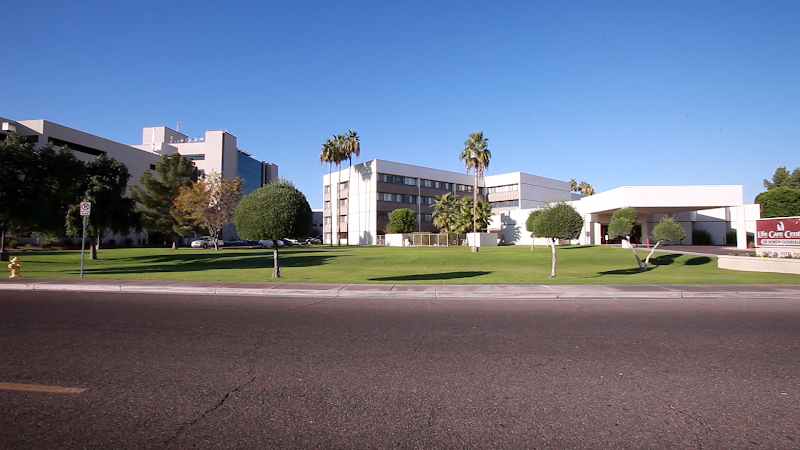
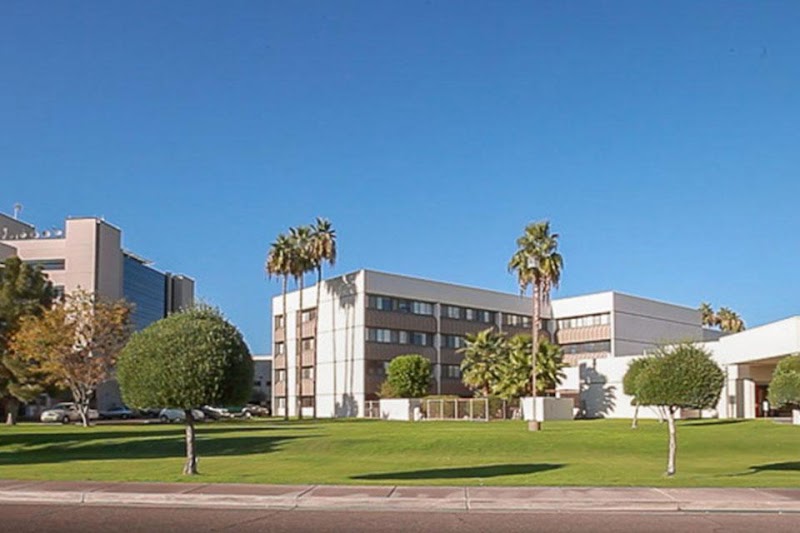
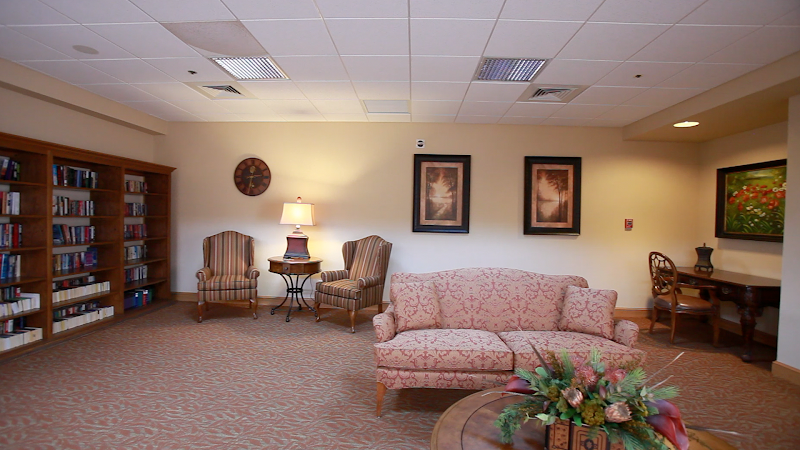
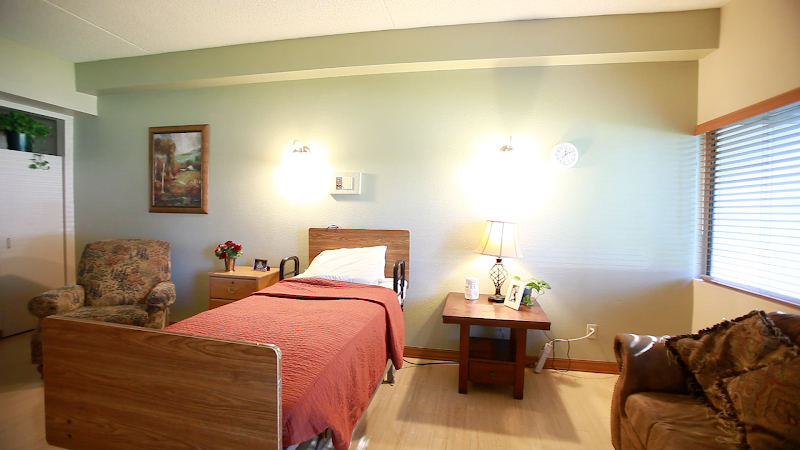
LIFE CARE CENTER OF NORTH GLENDALE

13620 NORTH 55TH AVENUE, GLENDALE, AZ 85304 (602) 843-8433
For profit - Corporation 223 Beds LIFE CARE CENTERS OF AMERICA Data: November 2025
Trust Grade
73/100
#54 of 139 in AZ
Last Inspection: July 2023

Over 2 years since last inspection. Current conditions may differ from available data.

Overview

Life Care Center of North Glendale has a Trust Grade of B, indicating it’s a good choice for families, falling within the 70-79 range. It ranks #54 out of 139 nursing homes in Arizona, placing it in the top half of facilities in the state, and #41 out of 76 in Maricopa County, meaning there are only a few better options locally. The facility is improving, with issues decreasing from 2 in 2024 to 1 in 2025. Staffing is average with a turnover rate of 26%, which is good compared to the state average of 48%, but RN coverage is also average, meaning there may not be as much oversight as in some other facilities. Notably, there have been concerns about insufficient staffing leading to unmet resident care needs and issues with grievance reporting due to fears of retaliation from staff, which points to a need for better communication and management practices.

Trust Score
B
73/100
In Arizona
#54/139
Top 38%
Safety Record
Low Risk
No red flags
Inspections
Getting Better
2 → 1 violations
Staff Stability
✓ Good
26% annual turnover. Excellent stability, 22 points below Arizona's 48% average. Staff who stay learn residents' needs.
Penalties
✓ Good
No fines on record. Clean compliance history, better than most Arizona facilities.
Skilled Nurses
○ Average
Each resident gets 33 minutes of Registered Nurse (RN) attention daily — about average for Arizona. RNs are the most trained staff who monitor for health changes.
Violations
⚠ Watch
28 deficiencies on record. Higher than average. Multiple issues found across inspections.
★★★★☆
4.0
Overall Rating
★★★☆☆
3.0
Staff Levels
★★★★★
5.0
Care Quality
★★★☆☆
3.0
Inspection Score
Stable
2024: 2 issues
2025: 1 issues

The Good

  • 5-Star Quality Measures · Strong clinical quality outcomes
  • Low Staff Turnover (26%) · Staff stability means consistent care
  • Full Sprinkler Coverage · Fire safety systems throughout facility
  • No fines on record
  • Staff turnover is low (26%)

    22 points below Arizona average of 48%

Facility shows strength in quality measures, staff retention, fire safety.

The Bad

Chain: LIFE CARE CENTERS OF AMERICA

Part of a multi-facility chain

Ask about local staffing decisions and management

The Ugly 28 deficiencies on record

Mar 2025 1 deficiency
CONCERN (E) 📢 Someone Reported This

A family member, employee, or ombudsman was alarmed enough to file a formal complaint

Potential for Harm - no one hurt, but risky conditions existed

Deficiency F0725 (Tag F0725)

Could have caused harm · This affected multiple residents

**NOTE- TERMS IN BRACKETS HAVE BEEN EDITED TO PROTECT CONFIDENTIALITY** Based on documentation, staff and resident interviews, the facility policy and procedures, the facility failed to ensure suffici...

Read full inspector narrative →
**NOTE- TERMS IN BRACKETS HAVE BEEN EDITED TO PROTECT CONFIDENTIALITY** Based on documentation, staff and resident interviews, the facility policy and procedures, the facility failed to ensure sufficient staffing to provide for the needs of the residents. The deficient practice could result in residents not receiving the assistance required to complete care tasks. Findings include: Resident #55 was admitted to the facility on [DATE] with diagnoses that included chronic kidney disease, depression, and anxiety. The care plan dated November 29, 2024 revealed that the resident had bowel incontinence. Interventions included to assist with toileting as needed. The minimum data set (MDS) dated [DATE] included a brief interview for mental status score of 15 which indicated that the resident was cognitively intact. -Resident #33 was admitted to the facility on [DATE] with diagnoses that included morbid obesity, vascular dementia, and an overactive bladder. The care plan dated February 10, 2023 revealed that the resident had bowel incontinence. Interventions included assist with toileting as needed. The care plan dated February 10, 2023 revealed that the resident had an activity of daily living (ADL) self-care performance deficit related to impaired mobility, and a recent right tibia/fibia fracture. Interventions included to assist with: bathing/shower, bed mobility, dressing, eating, personal hygiene, toilet use, and transfers. The minimum data set (MDS) dated [DATE] included a brief interview for mental status score of 15 which indicated that the resident was cognitively intact. -Resident #44 was admitted to the facility on [DATE] with diagnoses that included colostomy status, generalized weakness, and an overactive bladder. A care plan dated January 20, 2025 included that the resident is at risk for injury related to falls. Interventions included to assist with all ADLs. The care plan dated January 20, 2025 revealed the resident had an ostomy. Interventions included to provide ostomy care as needed. The minimum data set (MDS) dated [DATE] included a brief interview for mental status score of 12 which indicated that the resident had a moderate cognitive impairment. The care plan dated March 11, 2025 revealed that the resident has a Foley catheter and interventions included to provide catheter care each shift. -Resident #66 was admitted to the facility on [DATE], and readmitted on [DATE] with diagnoses that included irritable bowel syndrome, chronic stage III kidney disease, and paroxysmal atrial fibrillation. The care plan dated July 30, 2017 revealed that the resident had weakness and poor endurance due to heart failure, neuropathy, chronic pain syndrome, mobility and ADL deficits. Interventions included to encourage the resident to use the bell for assistance. The care plan dated July 30, 2017 revealed that the resident was at risk for falls due to weakness, pain meds, psychotropic meds, occasional bladder incontinence, cardiovascular disease, cardiovascular meds, and diuretics. Interventions include to anticipate and meet the resident's needs and to assist with ADLs as needed. The minimum data set (MDS) dated [DATE] included a brief interview for mental status score of 15 indicating the resident was cognitively intact. -Resident #22 was admitted to the facility on [DATE] with diagnoses that included paraplegia unspecified, generalized muscle weakness, and disorder of muscle unspecified. The care plan dated May 27, 2024 revealed that the resident is incontinent of bowel. Interventions include to assist with toileting as needed. The care plan dated June 12, 2024 included a self-care performance deficit related to paraplegia. Interventions include to assist with ADLs as needed. The minimum data set (MDS) dated [DATE] included a brief interview for mental status score of 12 indicating the resident had a moderate cognitive impairment. -Resident #88 was admitted to the facility on [DATE] and readmitted on [DATE] with diagnoses that included morbid obesity chronic obstructive pulmonary disease, and Diverticulosis. The care plan dated November 11, 2021 revealed mobility and ADL deficits due to weakness, decreased balance, left foot drop, decreased range of motion in the left hip and knee, and pain. Interventions included that the resident needs one to two staff for transfers. Use the Hoyer lift as needed. The minimum data set (MDS) dated [DATE] included a brief interview for mental status score of 8 indicating the resident had a moderate cognitive impairment. -Resident #99 was admitted to the facility on [DATE] with diagnoses that included chronic heart failure, unspecified dementia, and generalized weakness. The care plan dated June 7, 2022 revealed that the resident has an ADL self-care performance deficit related to dementia, disease process, and impaired balance. Interventions included a mechanical lift with two staff assistance for transfers. The minimum data set (MDS) dated [DATE] included a brief interview for mental status score of 14 indicating the resident was cognitively intact. Resident #110 was admitted to the facility on [DATE] with diagnoses that included vascular dementia, generalized muscle weakness, and irritable bowel syndrome with diarrhea. The minimum data set (MDS) dated [DATE] included a brief interview for mental status score of 15 indicating the resident was cognitively intact. The care plan dated August 12, 2024 revealed an ADL self-care performance deficit related to activity intolerance. Interventions included to assist with ADLs. Review of the staffing schedules, daily staff posting, and time cards for staff working on Hall 200 for the months of February and March 2025, revealed that the facility was short staffed. Review of the resident council meeting notes: -August 13, 2024 revealed a concern regarding call-light response time and staff turning off the call-light without helping the resident if the resident is asleep. -October 12, 2024, DON came to the resident council meeting and addressed issues. She will be doing an in-service for all issues that were brought up. -November 16, 2024, requesting help on the second floor (Hall 200) with trays as soon as they come out because by the time they are served, the food is cold, which is a food safety concern after twenty-three minutes. -January 14, 2025, no resident council meeting due to COVID outbreak. -February 17, 2025, food trays on the second floor are not being passed in a timely manner, needing more aides on the floor, issues with getting up for activities and the aides are not bringing them to activities. An interview was conducted on March 11, 2025 at 9:34 a.m. with resident #55, who stated that she has had to wait up to two hours for her call-light to be answered and this mostly happens during the night shift. She has waited up to three hours for continence care and has a rash. She has asked certified nursing assistants (CNAs) why it is taking so long to answer the call-lights and was told that that staff have too many patients. She stated that she had to wait a couple of hours yesterday to be changed. She also stated that the food is often cold by the time it is served. An interview was conducted on March 11, 2025 at 9:45 a.m. with resident #33, who stated that she has had to wait up to four hours for staff to answer her call-light and provide continence care. She stated that her roommate (resident #55) had to wait for four hours to be changed and it was reported. She stated that sometimes there is only one CNA. She stated that the food is always cold by the time it is served and the CNAs will heat it if asked, but begrudgingly, because they are so busy. An interview was conducted on March 11, 2025 at 9:55 a.m. with resident #44, who stated that that she has waited forty-five minutes for her call-light to be answered more than once. She stated that this morning she was supposed to get up at 6:00 a.m. and waited for staff until 7:15 a.m. with the call-light on. She asked staff what took so long and staff told her that she was too busy. She stated that one time her colostomy bag was leaking, got all over her clothes, and she waited 30 minutes to be taken to the toilet and change her clothes. An interview was conducted on March 11, 2025 at 10:25 a.m. with resident #66, who stated that she waits twenty to thirty minutes on a good day for her call-light to be answered and sometimes staff don't come. She stated that about 50% of the time, staff don't answer her call-light and she has to get in her wheelchair and go find staff to assist with things like taking her tray away, get ice water and to get clean sheets and linens. She has complained to the Resident Council President. She stated that the food is always cold by the time it is served. An interview was conducted on March 11, 2025 at 10:38 a.m. with resident #22, who stated that he has waited two hours for his call-light to be answered. He stated that one time he had a bowel moment and urinated, and when the CNA answered the call light, she told him that he would have to wait for his CNA to return from lunch. He referred to his binder and stated that on - February 21, 2025, a CNA came and told him that she had to help other residents and left. He waited one and a half hours to be changed and he also had waited from 11:30 a.m. to 1:30 p.m. for a CNA to bring him ice water. He stated that there were only two CNAs working. -On February 23, 2025, the CNA answered his call-light and told him that she needed to help other residents; she returned after an hour and a half to get him some ice water and to dump his pee bottle. -On February 24, 2025, his call-light was on and the CNA told him that he had to wait because the CNA was helping other residents. He stated that he waited from 3:30 p.m. to 5:30 p.m. to be changed and he got a rash around his groin area. -On February 27, 2025, he had a bowel movement at 7:40 p.m. and wasn't changed until about 11:00 p.m. and he had diarhea. He stated that the CNA told him that she had to go down the line because other residents needed to be changed. -On March 1, 2025, his call-light was on at 10:00 a.m. because he needed to be changed and the light was not answered until 10:45 a.m. -On March 5, 2025 his call-light was on at 9:00 a.m. and was answered at 11:00 a.m. and he needed to be changed. Staff told him that she was sorry, but they were short staffed again and there were other residents ahead of him. -On March 10, 2025, he stated that he waited two hours to get changed. An interview was conducted on March 11, 2025 at 11:46 a.m. with resident #88's spouse, who stated that he asked a female staff to get the resident up out of bed. The resident was observed lying in bed. He stated that the staff told him that she would help the resident after serving the lunch trays. He stated that they have waited twenty to thirty minutes for the call-light to be answered and needed assistance with getting and being changed. An interview was conducted on March 11, 2025 at 11:52 a.m. with resident #99, who stated that she had placed the call-light on about 10:30 a.m. because she wanted staff to help her get up and staff did not respond until about 11:30 a.m. She stated that staff got her up right before lunch. She stated that had waited for thirty minutes for her call-light to be answered when she needed to use the toilet and ended up having a incident in her brief. Staff has told her that she is not the only one here. She stated that sometimes there is only one CNA working on the hall. An interview was conducted on March 11, 2025 at 1:15 p.m. with resident #110, who stated that the food is often cold because staff are very busy, so residents may have to wait for food trays to be served for fifteen to twenty minutes after the food cart has been delivered to the hall. She also stated that there are plastic covers for the food carts, but they aren't being used, so food may lose heat faster. She stated that residents are complaining about call-light response time and say that they are waiting more than an hour. She stated that the Director of Nursing (DON/staff #1) came to a resident council meeting that the facility is trying to hire more staff, but right now the facility doesn't use registry staff and the current staff are working doubles, so staff are getting burnout, look physically tired, seem apathetic, and lack enthusiasm. She stated that she doesn't have the stamina to stay up all day and has waited up to an hour for staff to transfer her to bed. An interview was conducted on March 11, 2025 at 2:06 p.m. with the Staffing Coordinator (staff #33), who stated that she is responsible for the staffing schedules and there are three shifts for the CNAs: 6:00 a.m. to 2:30 p.m., 2:00 p.m. to 10:30 p.m., and 10:00 p.m. to 6:30 a.m. She stated that there are two shifts for the nurses, 7:00 a.m. to 7:30 p.m. and 7:00 p.m. to 7:30 a.m. She stated that Hall 200 is long-term care, so the census basically stays the same, which is approximately 56 and in order to provide care the facility needs: -two nurses and a unit manager from 7:00 a.m. to 7:30 p.m, two nurses 7:00 p.m. to 7:30 a.m. -five to six CNAs from 6:00 a.m. to 2:30 p.m. -five to six CNAs from 2:00 p.m. to 10:30 p.m. -three CNAs from 10:00 p.m. to 6:30 a.m. Staff #33 reviewed that the staffing schedules, the daily staff postings, and hours worked by staff for Hall 200 and stated: -February 1, 2025, there were only four CNAs on Hall 200 from 6:00 a.m. to 2:30 p.m. because she was not able to find anyone to work. -February 1, 2025, there were only four CNAs on Hall 200 from 6:00 a.m. to 2:30 p.m. -February 2, 2025, there were only four CNAs on Hall 200 from 6:00 a.m. to 2:30 p.m. -February 4, 2025, there were only four CNAs on Hall 200 from 6:00 a.m. to 2:30 p.m. -February 5, 2025, there were only four CNAs on Hall 200 from 6:00 a.m. to 2:30 p.m. -February 11, 2025, there were only four CNAs on Hall 200 from 6:00 a.m. to 2:30 p.m. -February 15, 2025, there were only four CNAs on Hall 200 from 6:00 a.m. to 2:30 p.m. -February 17, 2025, there were only four CNAs on Hall 200 from 6:00 a.m. to 2:30 p.m. -February 18, 2025, there were only four CNAs on Hall 200 from 6:00 a.m. to 2:30 p.m. -February 21, 2025, there were only four CNAs on Hall 200 from 6:00 a.m. to 2:30 p.m. -February 24, 2025, there were only four CNAs on Hall 200 from 6:00 a.m. to 2:30 p.m. -February 25, 2025, there were only four CNAs on Hall 200 from 6:00 a.m. to 2:30 p.m. -February 1, 2025, there were only two CNAs on Hall 200 from 2:00 p.m. to 10:30 p.m. and then two CNAs came at 6:00 p.m. -February 3, 2025, there were only three CNAs on Hall 200 from 2:00 p.m. to 10:30 p.m. and then one CNAs came at 6:00 p.m. -February 5, 2025, there were only four CNAs on Hall 200 from 2:00 p.m. to 10:30 p.m. -February 6, 2025, there were only four CNAs on Hall 200 from 2:00 p.m. to 10:30 p.m. and then one CNAs came at 6:00 p.m. -February 11, 2025, there were only four CNAs on Hall 200 from 2:00 p.m. to 10:30 p.m. -February 12, 2025, there were only four CNAs on Hall 200 from 2:00 p.m. to 10:30 p.m. and then one CNAs came at 6:00 p.m. -February 13, 2025, there were only four CNAs on Hall 200 from 2:00 p.m. to 10:30 p.m. and then one CNAs came at 6:00 p.m. -February 14, 2025, there were only three CNAs on Hall 200 from 2:00 p.m. to 10:30 p.m. and then one CNAs came at 6:00 p.m. -February 14, 2025, there were only three CNAs on Hall 200 from 2:00 p.m. to 10:30 p.m. and then one CNAs came at 6:00 p.m. -February 15, 2025, there were only four CNAs on Hall 200 from 2:00 p.m. to 10:30 p.m. and then one CNAs came at 6:00 p.m. -February 17, 2025, there were only four CNAs on Hall 200 from 2:00 p.m. to 10:30 p.m. and then one CNAs came at 6:00 p.m. -February 18, 2025, there were only four CNAs on Hall 200 from 2:00 p.m. to 10:30 p.m. -February 19, 2025, there were only four CNAs on Hall 200 from 2:00 p.m. to 10:30 p.m. and then one CNAs came at 6:00 p.m. -February 20, 2025, there were only four CNAs on Hall 200 from 2:00 p.m. to 10:30 p.m. -February 21, 2025, there were only two CNAs on Hall 200 from 2:00 p.m. to 10:30 p.m. One CNA from the day shift stayed about two hours and one CNA came in around 8:00 p.m. -February 22, 2025, there were only one CNAs on Hall 200 from 2:00 p.m. to 10:00 p.m., one CNA from the day shift stayed about two hours, one CNA worked from 2:00 p.m. to 6:00 p.m. and two CNAs worked from 6:00 p.m. to 10:30 p.m. -February 23, 2025, there were three CNAs from 2:00 p.m. to 10:00 p.m. on Hall 200 and one CNA from CNA from 6:00 p.m. to 10:30 p.m. -February 24, 2025, there were four CNAs from 2:00 p.m. to 10:30 p.m. and one CNA from 6:00 p.m. to 10:30 p.m. -February 25, 2025, there were four CNAs from 2:00 p.m. to 10:30 p.m. -February 14, 2025, two CNAs worked the 10:00 p.m. to 6:30 a.m. on Hall 200 and she couldn't find anyone else to work the shift. -February 16, 2025, there were only two CNAs on Hall 200 from 10:00 p.m. to 6:30 a.m. -February 22, 2025, there were only two CNAs on Hall 200 from 10:00 p.m. to 6:30 a.m. -February 23, 2025, there were only two CNAs on Hall 200 from 10:00 p.m. to 6:30 a.m. -February 24, 2025, there were only two CNAs on Hall 200 from 10:00 p.m. to 6:30 a.m. -March 1, 2025, there were four CNAs from 2:00 p.m. to 10:30 p.m. and the fifth CNA was scheduled from 6:00 p.m. to 10:30 p.m. but five CNAs are needed for the shift. -March 5, 2025, there were four CNAs from 6:00 a.m. to 2:30 p.m. on Hall 300 because one CNA was on vacation, so she pulled the fifth CNA from Hall 200, which left Hall 200 short staffed. -March 6, 2025, there were four CNAs scheduled for Hall 200 because one CNA was on vacation and she couldn't get anyone to cover the shift. -March 9, 2025, there were only two CNAs from 10:00 p.m. to 6:30 a.m. because the third CNA was on FMLA and she couldn't get anyone to pick up the shift. After reviewing the above staffing ratios, staff #33 stated that the facility is short staffed. She stated that she is scheduling interviews, but people are not showing up and she cannot use registry staff. She can have restorative staff (RNA) help, but then the restorative program doesn't get done. She stated that the (DON/staff #1) supervises the staffing and they go over the schedules together; they have discussed the above staffning needs. She stated that there is a risk of skin breakdown if residents aren't being changed timely and residents have a the right to get up and get out of bed when they want to get up. An interview was conducted on March 12, 2025 at 9:50 a.m. with a certified nursing assistant (CNA/staff #3), who stated that there are a lot of residents who need assistance with bowel movements on Hall 200; she has one resident in room [ROOM NUMBER] who always needs something, so she takes a lot of her time and she has explained that she needs to care for other residents. She stated that sometimes they are short staffed, but there are usually two to three CNAs on Hall 200 during the evening shift and one to two CNAs during the NOC shift. She stated that it takes her approximately fifteen minutes to answer a call-light and she tells the resident that she will come back after helping another resident, which takes twenty minutes or less for her to return, but it is possible that residents are waiting thirty to forty minutes while she is changing other residents. She stated that the supervisors know that they are short staffed and say that they are trying to hire more CNAs. An interview was conducted on March 11, 2025 at 3:34 p.m. with the Director of Nursing (DON/staff #1), who stated that together with the Executive Director are responsible for monitoring the staffing ratios and sufficient staffing is determined by the number of residents and the the acuity, the needs of each resident. She stated that the second floor (Hall 200) is long-term care and the Staffing Coordinator (staff #33) knows how many staff, CNAs, are needed on each floor and lets her know when they are not able to cover a shift. They are trying to hire more CNAs, it is an ongoing process. She stated that resident complaints regarding staffing is nothing new and when residents make a complaint, she tells them that they are trying to hire more staff. She thinks that a 15-minute response time for care is appropriate. An interview was conducted on March 12, 2025 at 10:29 a.m. with (CNA/staff #79), who stated that she has answered call-lights and told the resident that she is finishing up with another resident and will be right back. She stated that if she is in the middle of giving another resident a shower, the resident is going to have to wait for at least twenty to thirty minutes before she can provide care. She stated that residents have complained about waiting all morning, up to three hours for care, but this was mostly before she has arrived for her shift and she reported it to the nurse. She stated that she thinks there is supposed to be five CNAs scheduled to work, but there have been days when there were only four CNAs for the 6:00 a.m. to 2:30 p.m. shift on Hall 200. The facility policy, Staffing revealed that the facility maintains adequate staff on each shift to meet residents' needs.
Aug 2024 1 deficiency
CONCERN (D) 📢 Someone Reported This

A family member, employee, or ombudsman was alarmed enough to file a formal complaint

Potential for Harm - no one hurt, but risky conditions existed

Free from Abuse/Neglect (Tag F0600)

Could have caused harm · This affected 1 resident

**NOTE- TERMS IN BRACKETS HAVE BEEN EDITED TO PROTECT CONFIDENTIALITY** Based on documentation, staff interviews, and the facility policy and procedures, the facility failed to ensure that residents a...

Read full inspector narrative →
**NOTE- TERMS IN BRACKETS HAVE BEEN EDITED TO PROTECT CONFIDENTIALITY** Based on documentation, staff interviews, and the facility policy and procedures, the facility failed to ensure that residents are free from abuse from other residents. The deficient practice could result in residents being physically and emotionally injured. Findings include: Resident #11 was admitted to the facility on [DATE] with diagnoses that included unspecified dementia, chronic kidney disease, liver disease, atherosclerotic heart disease, and other specified disorders of bone density and structure unspecified site. The minimum data set (MDS) dated [DATE] included a brief interview for mental status score of 14 indicating the resident was cognitively intact. A progress note dated August 13, 2024 revealed that this writer was at the nurse station at 6:40 p.m. when a certified nursing assistant (CNA) yelled out, no don't hit her, while rushing toward the incident. The CNA noticed the resident #37 with left hand balled onto a fist hitting the resident #11 by her left forearm. Nursing staff were immediately present at the incident, and both resident were separated. The Executive Director, Director of Nursing, medical doctor, the power of attorneys, and authorities were notified. This writer didn't notice any injuries upon the initial assessment of both residents. Nursing will continue to follow up with a psych assessment and present medication orders. Safety measures were put in place, both residents are in their rooms resting, and watching TV. Call-lights and bedside tables are within reach. The care plan dated August 14, 2024 revealed that the resident is/has the potential to be verbally/physically aggressive related to dementia, ineffective coping skills. Interventions included to analyze key times, places, circumstances, triggers, and what de-escalates behavior and document. -Resident #37 was admitted to the facility on [DATE] with diagnoses that included Alzheimer's disease, anxiety disorder, and depression unspecified. The minimum data set (MDS) dated [DATE] revealed that the resident is not able to complete a brief interview for mental status. A progress note dated August 13, 2024 revealed that the resident got in verbal argument with another resident and punched her in the arm. Residents were separated, and the medical doctor and family made aware. The progress note dated August 13, 2024 revealed that the resident is to move rooms. The resident's son is aware and in agreement. New orders for labs were received. A progress note dated August 15, 2024 revealed that at approximately 6:43 p.m. a CNA witnessed this resident and another resident raising voices in the hallway. The CNA walked quickly to separate them both and before she could get to them, the CNA witnessed this resident took her left fist and hit the other resident in her left arm. The other resident grabbed this resident's hand and CNA got to them and separated them immediately. Residents were separated immediately, no injuries bruises/redness noted to this resident's arm. The Executive Director, Director of Nursing, medical doctor, and the family were notified. This resident was moved to station 4, and the family was notified of the transfer. The care plan dated August 16, 2024 revealed that the resident is/has the potential to be physically aggressive related to anger, dementia. Interventions included that the resident needs personal space. The resident reacts to touch. When the resident becomes agitated: intervene before agitation escalates; guide away from source of distress; engage calmly in conversation; if response is aggressive, staff to walk calmly away, and approach later. Review of a written statement dated August 13, 2024 by a certified nursing assistant (CNA/staff #7), revealed that resident #11 was in the hall and resident #37 stopped her and they started arguing. Resident #37 took left fist and struck resident #11 on the left forearm. Resident #11 grabbed resident #37's arm and when the CNA got to the residents, resident #11 let go of resident #37's arm. Review of a written statement dated August 13, 2024 revealed that a licensed practical nurse (LPN/staff #41) revealed that she heard the two residents raising their voices in the hallway. A (CNA) went to separate the residents, but before she could get to them, resident #37 raised her hand and grabbed/hit the other resident #11 in the arm. The CNA separated them right away, and no injuries were noted on either resident. Then resident #37 was moved to the fourth floor. Review of a written statement dated August 13, 2024 revealed that (CNA/staff #54) was standing by room [ROOM NUMBER] when she saw resident #37 hit resident #11's chair and says something to resident #11 in her language, while making gestures with her hands. Resident #11 had resident #37's right arm very tightly, because she could see the force that resident #11 was exerting on resident #37's arm and then (CNA/staff #7) screams, they are fighting. Staff #54 stated that they all know that resident #11 doesn't share her space with anyone, and since resident #37 hit her chair, she was angry and became aggressive with resident #37. An interview was conducted on August 27, 2024 at 12:16 p.m. with a licensed practical nurse (LPN/staff #23), who stated that she has received training on abuse and physical abuse includes striking, grabbing, and pulling. She stated that resident #11 needs supervision because she wanders. She stated that she did not witness the altercation, but knows that one of the residents was transferred to the fourth floor. An interview was conducted on August 28, 2024 at 9:05 a.m. with the Director of Nursing (DON/staff #1), who stated that abuse occurs when harm is inflicted on a resident and can be physical, mental, misappropriation, isolation, restrained, and sexual. She stated that a 5-day investigation was completed and the allegation of abuse was substantiated. The two residents didn't like each other, which only became apparent during the incident. The facility policy, Abuse Prevention revised June 17, 2024 states that it is the policy of this facility to prevent and prohibit all types of abuse, neglect, misappropriation of resident property, and exploitation.
Jun 2024 1 deficiency
CONCERN (D) 📢 Someone Reported This

A family member, employee, or ombudsman was alarmed enough to file a formal complaint

Potential for Harm - no one hurt, but risky conditions existed

Notification of Changes (Tag F0580)

Could have caused harm · This affected 1 resident

**NOTE- TERMS IN BRACKETS HAVE BEEN EDITED TO PROTECT CONFIDENTIALITY** Based on observation, interviews, and records review the facility failed to ensure the physician was notified of a change of con...

Read full inspector narrative →
**NOTE- TERMS IN BRACKETS HAVE BEEN EDITED TO PROTECT CONFIDENTIALITY** Based on observation, interviews, and records review the facility failed to ensure the physician was notified of a change of condition for one resident (#5). The deficient practice could result in delayed treatment. Findings include: Resident #5 was initially admitted to the facility on [DATE] with diagnoses of muscle weakness, anemia, chronic kidney disease and paroxysmal atrial fibrillation. The care plan initiated on July 12, 2021 revealed that resident #5 was on anticoagulant therapy. The goal was that the resident will be free from discomfort or adverse reactions related to anticoagulant use. Interventions included to administer anticoagulant medications as ordered by physician, monitor for side effects and effectiveness, observe for and report, as needed, adverse reactions of anticoagulant therapy including mental status and significant or sudden changes in vital signs. A progress note dated August 2, 2021 revealed the resident was sent to the hospital for a CT (Computerized Tomography) scan due to increase pain. The clinical record review revealed the resident was readmitted at the facility on August 9, 2021. A physician order dated August 10, 2021 included an order for warfarin sodium (anticoagulant) give 2.5 milligram (mg) by mouth at bedtime every Monday, Tuesday, Wednesday, Friday, and Sunday. The physician order summary for August 2021 revealed an order to monitor for signs and symptoms of bleeding including black tarry stools, bleeding gums, bruising/nose bleed related to anticoagulant use every shift, to document positive (+) if signs and symptoms were present and negative (-) if not present. A progress note dated August 10, 2021 at 11:44 A.M. revealed the resident was alert and oriented to situation and surrounding, was pleasant, and was not in acute distress. It was also noted that the resident was readmitted to the facility for coagulopathy and elevated INR. Review of the progress note dated August 10, 2021 at 5:18 P.M. revealed resident had a fall and was found sitting on the floor next to her bed. The documentation included that neuro checks were started per policy; and that, the physician and family member were notified. The progress note dated August 10, 2021 at 11:32 P.M. revealed resident was alert and oriented x 3 with confusion and was able to verbalize need. Further, it included neuro checks were continued status post of unwitnessed fall; and that, the resident was very confusing at night and weak while night. The Fall Risk Evaluation dated August 10, 2021 revealed that the resident had 1-2 falls and had no cognitive change in the last 90 days. There was no documented response for questions on resident behaviors such as easily distracted, periods of altered perception or awareness of surroundings, episodes of disorganized speech, periods of restlessness, periods of lethargy, mental function varies over the course of the day, wanders, abusive and resists care. However, in another Fall Risk Evaluation dated August 10, 2021 documented that the resident had no falls and had a cognitive change in the last 90 days. The documentation also included that the resident was easily distracted, had periods of altered perception or awareness of surroundings, had episodes of disorganized speech, had periods of restlessness, had periods of lethargy; had mental function that varied over the course of the day, wanders; was abusive and resisted care. Review of the clinical record revealed that Neurological Checks were completed; and the initial neurological check was August 10, 2021 at 4:45 P.M. Subsequent assessments were conducted on every 15-, 30-, and up to 60-minute intervals; and, the documentation revealed the resident had clear speech. The neurological check dated August 11, 2021 at 2:00 A.M. the speech evaluation section was left blank. At 8:00 A.M. and 2:00 P.M., the documentation included that the resident had slurred speech. Review of the Fall Risk Evaluation dated August 11, 2021 revealed that resident had 1-2 falls and had no cognitive change in the last 90 days. The documentation also included that the resident was not easily distracted, had no periods of altered perception or awareness of surroundings, had no episodes of disorganized speech, periods of restlessness, no periods of lethargy, had a mental function that varied over the course of the day, did not wander, was not abusive and did not resist care. The physician order with a start date August 12, 2021 included for warfarin 1.5 mg by mouth at bedtime every Thursday and Saturday. However, there was another physician order with a start date of August 12, 2021 to continue to hold coumadin (brand name for warfarin) and recheck INR in the morning one time only until August 12, 2021. The neurological check dated August 12, 2021 at 6:00 A.M. revealed the resident had clear speech. At 8:00 A.M, the resident was documented to have slurred speech. Review of a progress note dated August 12, 2021 at 3:14 P.M. revealed resident was laying in a recliner chair with eyes closed holding a cellphone to ear talking to the air and had slurred slow speech, nonsensical, and was not able to be redirected; and that, a family member was in the room with the resident. It also included that the resident was lethargic, confused, and was hitting, kicking, and pulling at oxygen tubing, screaming without cause in a high-pitched manner. The documentation also included that all narcotics had been discontinued due to the resident's mental status. Despite documentations that the resident had slurred speech on August 11 and August 12, 2021, there was no evidence found that the physician was notified. The physician orders for warfarin sodium was transcribed in the Medication Administration Record (MAR) for August 2021. The documentation in the MAR revealed that warfarin 2.5 mg was held on August 10, 2021 and given on the August 11, 2021. Despite the hold order for warfarin, the MAR documentation for August 12, 2021 revealed that warfarin was administered to the resident. Review of a progress note dated August 13, 2021 revealed that a registered nurse (RN) contacted the resident's family member regarding the resident's increasing confusion and the medication changes to include the discontinuation of all narcotics. Further, the documentation included that the family member requested to contact the doctor. A physician order with a start date of August 13, 2021 included to continue to hold coumadin and recheck INR in the morning one time only until August 13, 2021 at 10:59 A.M. Another progress note dated August 13, 2021 revealed that a nurse practitioner (NP) saw the resident and ordered for the resident to be sent the hospital for a CT scan of the head without contrast second to altered mentation. It was further noted that the resident was transported to the Emergency department at approximately 12:00 P.M. An interview was conducted on June 14, 2024 at 12:44 P.M. with a licensed practical nurse (LPN/staff #85) who stated that if a resident had an unwitnessed fall or was found on the floor and it was unknown whether the resident hit their head, the RN would perform a neurological assessment and notify the physician and family. The LPN stated that the doctor will also be notified that the resident was on a blood thinner; and, the doctor would give instructions. The LPN said it was the doctor's decision to send the resident who fell to the hospital for a CT scan. Further, the LPN stated that it was a change in condition and the doctor would be notified if a resident who had clear speech prior to a fall then developed slurred speech after the fall. The LPN said the resident who was on coumadin (anticoagulant) and had a fall would be at risk for a brain bleed; and that, not notifying the physician of any changes can put the resident at risk for internal bleeding. An interview with a RN (staff #61) was conducted on June 14, 2024 at 1:30 P.M., the RN stated that when a resident had an unwitnessed fall, she will assess the resident and the physician was notified; and that, a neurological check would be done to include vital signs, checking the resident's pupils, speech, orientation and upper and lower extremity movement. The RN said the neurological checks were completed at every 15 minutes x 4, then every 30 minutes x 4, then every 2 hours x 4, every 4 hours x 4, every 8 hours x 4, etc. The RN stated that neurological assessments allowed the nurses to see any changes and if there was a decline in the resident's status. The RN said that if there were changes from the resident's baseline during the neurological assessments then the physician was notified right away; and that, if the physician was not notified right away of any changes the resident may have had a stroke and the resident was not attended to right away. The RN further stated that residents on blood thinners like coumadin were at a higher risk for bleeding. The RN said that physicians relied on the neurological assessments to determine the next course of action, whether to hold coumadin or to continue giving it. A telephone interview was conducted on June 14, 2024 at 1:55 P.M. with a physician (staff #300) who said that staff notifies him for every resident that had a fall. The physician stated that the expectation was to indicate and let him know whether the resident hit their head or not; and the staff can volunteer to let him know if the resident was on a blood thinner. The physician stated that he does not hold medications for just any fall because of the risk versus benefits of the medications. The physician said some residents fall all the time but if they had atrial fibrillation he might not hold the medication. Further, the physician stated his expectation was that he was notified of any changes after a resident fell because the resident could have a subdural hematoma (brain bleed) that show up three days later; and, because subdural hematoma is slow it could take days to show signs/symptoms. He said that the resident would require a scan of the head. Further, the physician said that if a resident had clear speech then suddenly developed slurred speech after a fall, he would send the resident to the hospital and in his experience, any other doctor would do the same. During an interview with the Director of Nursing (DON) conducted on June 24, 2024 at 2:13 P.M., the DON stated that if a resident had an unwitnessed fall and was on blood thinner, the staff would notify the RN right away so the resident could be assessed. The DON said that the RN would assess the resident paying close attention to the neurological assessment and any obvious bleeding, then notify the physician and family. The DON stated that the RN would let the physician know if the resident was on blood thinner like coumadin because of the risk of bleeding. The DON said that there could be slow and subtle bleeding which was why neurological assessments were done. The DON added that the neurological assessment included checking for pupil changes, drooping, headache, pain, and slurred speech; and that, if resident who was assessed to have clear speech and suddenly changed to a slurred speech, the physician would be notified. The DON said most doctors would want the resident to have a scan; and, it was important to notify the physician right away if there were changes in the neurological assessment because it was a critical situation to provide appropriate care. The DON stated that if the physician was notified by staff, it would be documented in the resident's clinical records. A review of the clinical record was conducted with the DON who stated that the physician was notified after the resident experienced a fall on August 10, 2021; and that, the neurological assessment on August 10, 2021 that resident had clear speech but on August 21, 2021 the resident had slurred speech. The DON stated that her assumption was that the physician was notified, which was why the narcotics were held. The DON stated that slurred speech would be concerning if it was new; and, based on what was documented in the clinical record, there was a change in the resident's condition. The DON said the expectation was that the physician was notified of the slurred speech; and that, she did not find any documentation in the clinical record that the physician was notified of the slurred speech of resident #5. The DON further stated that sometimes the signs of impairment were so subtle that it was hard to pick up, which was why neurological assessments were stretched out for a period of time. Review of the facility's policy titled, Neurological Assessment reviewed on August 10, 2023 revealed that neurological assessment shall be initiated by a written physician's order for neurological checks or when indicated by resident assessment (e.g. head injury, post fall, neurological decompensation). The noted procedure revealed that the nurse documents and reports any pertinent changes in the resident's neurological status immediately to the physician.
Jul 2023 1 deficiency
CONCERN (E)

Potential for Harm - no one hurt, but risky conditions existed

Deficiency F0645 (Tag F0645)

Could have caused harm · This affected multiple residents

**NOTE- TERMS IN BRACKETS HAVE BEEN EDITED TO PROTECT CONFIDENTIALITY** Based on clinical record review, staff interviews and facility policy and procedures, the facility failed to ensure that a Pread...

Read full inspector narrative →
**NOTE- TERMS IN BRACKETS HAVE BEEN EDITED TO PROTECT CONFIDENTIALITY** Based on clinical record review, staff interviews and facility policy and procedures, the facility failed to ensure that a Preadmission Screening and Resident Review (PASRR) Level I was updated appropriately for one resident (#94) and that two residents (#92 and #3) were referred to the State designated authority for evaluation and determination of a Level II PASRR. The sample size was 4 residents. The deficient practice could result in specialized services not being identified and provided to residents. Findings include: -Resident #94 was admitted to the facility on [DATE] with diagnosis including disorder of the autonomic nervous system, Parkinson's disease, dementia and psychosis. A Level I PASRR screening completed on 02/14/2023 included the attending physician had certified, prior to admission, that the resident would require less than 30 calendar days of nursing facility services and that the nursing facility must update the Level I at such a time it appeared the resident's stay would exceed 30 days. However, review of the clinical record did not indicate an updated PASRR had been completed. Review of the admission Minimum Data Set (MDS) assessment dated [DATE] revealed a Brief Interview for Mental Status (BIMS) score of 15, which indicated the resident was cognitively intact. On 06/30/2023 at 12:20 p.m. an interview was conducted with the Admissions Assistant (staff #124) who stated that prior to admission, a Level I PASRR was always required. Staff #124 stated that a Level I PASRR will be completed by the referring facility or hospital, and that every page of the documentation was reviewed. She stated that if it looked incomplete, then the facility would do one themselves. An interview was conducted with Social Service Director (staff #99) on 06/30/2023 at 12:29 p.m. Staff #99 stated that during the social service assessment process, residents' information was gathered and reviewed by medical records. In addition, staff #99 stated that a Level I PASRR was always completed by the Social Service Department either way because sometimes the hospital will send an incomplete PASRR. Staff #99 stated that the PASRR screening is primarily the Social Service Department duty. Staff #99 reviewed resident #94's PASRR and stated that an updated Level I PASRR should have been completed after the 30-day convalescent care was exceeded. -Resident (#3) was admitted to the facility on [DATE] with the diagnosis that included paraplegia, bipolar disorder and major depressive disorder. Review of the PASRR Level I screening dated 02/04/2020 revealed that the resident had diagnoses of bipolar disorder and depression but that a Level II referral was not required. Further review revealed no behaviors were identified in the document. A behavior problem care plan revised on 02/19/2022 related sexual impropriety had a goal for the resident not to experience behaviors that were harmful to himself or others. Interventions included to intervene as necessary to protect the rights and safety of others. Review of the physicians orders dated 09/07/2022 included: -Sertraline HCL 50 mg. Give one time a day for depression for a target behavior of verbalization of sadness. -Trazodone HCL (antidepressant) 25 mg. Give by mouth at bedtime for depression with a target behavior of inability to sleep. The quarterly MDS assessment dated [DATE] revealed the resident scored 15 on the BIMS assessment, indicating intact cognition. The behavioral assessment indicated the resident had displayed no presence of symptoms. Review of the April 2023 through June 2023 MARs revealed the resident received medications in accordance with the physician's orders. Behavior monitoring included verbalization of sadness and inability to sleep. However, sexual behaviors were not identified as having been monitored on the MAR. An interview was conducted on 05/30/2023 at 12:29 p.m. with the Social Services Director (staff #99). She stated that based on the resident's current diagnosis for bipolar disorder, a Level II PASRR evaluation was required, but that the evaluation request had not been submitted to the appropriate state agency. Staff #99 stated the risk of not referring a resident for a Level II evaluation would mean the resident's needs would not be identified and ensure, if needed, additional services were in place for that resident. A review of the facility policy titled Pre-admission Screening and Resident Review (PASARR) revised October 6, 2022 included that the facility will strive to verify that a Level I PASRR screening has been conducted, in order to identify Serious Mental Illness (MI) and/or an Intellectual Disability (ID) prior to initial admission of individuals to the facility. PASRR Level 1 screenings are used to determine whether the individual has a diagnosis or other presenting evidence that suggests the potential for MI or ID. If the resident is positive for a potential MI or ID, a Level II screening referral must be submitted. A positive Level I screen necessitates an in-depth evaluation of the individual by the State designated authority, known as PASRR Level II. -Resident #92 was admitted to the facility on [DATE] with diagnoses that included sepsis, bipolar disorder and depression. Review of the Level I PASRR dated 3/09/2023 included the diagnoses of bipolar disorder and depression. Per the documentation, the resident had not exhibited any interpersonal symptoms or behaviors (not due to a medical condition) and she received antidepressant medication daily. However, review of the physician's orders dated 03/09/2023 included: -Risperidone (antipsychotic) 2 milligrams (mg). Give 1 tablet via G-tube at bedtime for bipolar disorder with a target behavior of striking out. -Sertraline HCL (antidepressant) 50 mg. Give 1 tablet daily for depression with a target behavior of lack of motivation. A risk for change in mood or behavior care plan dated 03/10/2023 related to her medical condition had a goal to allow staff to assist her with basic needs. Interventions included a psychiatric consult as indicated. On 03/28/2023 a PASRR Level I screening was completed. The screening revealed the resident's diagnoses included bipolar disorder, depression and anxiety disorder. The assessment included that she had exhibited no interpersonal symptoms or behaviors, including difficulty interacting with others and that she had displayed no symptoms related to adapting to change such as physical violence and or excessive irritability. The screening indicated that no Level II referral was necessary. The admission MDS assessment dated [DATE] revealed the resident was rarely/never understood and scored 99 on the BIMS assessment, indicating severely impaired cognition. According to the assessment the resident displayed no behaviors. Review of the April 2023 Medication Administration Record (MAR) revealed medications were administered in accordance with the physician's orders. According to the record, the resident displayed no symptoms of depression and she had 2 episodes of striking out. The May 2023 MAR indicated the resident received medications per physician's orders. Review of the MAR revealed the resident displayed no symptoms of depression. According to the MAR, she displayed behaviors of striking out on 5 occasions. According to the June 2023 MAR, the resident was administered medications as ordered. Per the MAR, the resident displayed symptoms of depression on 1 occasion and she displayed behaviors of striking out on 5 occasions. However, despite the resident's escalated behaviors, the resident was not referred to the State authority for PASRR Level II evaluation and determination. On 06/30/2023 at 12:29 PM, an interview was conducted with Social Service Director (staff #99). After review of resident #92's Level I PASRR, she stated that based on the resident diagnosis of bipolar and the prescribed antipsychotic medication, a Level II evaluation was needed. She stated the risk to the resident would include not identifying the resident's needs and getting services in place.
May 2022 10 deficiencies
CONCERN (D)

Potential for Harm - no one hurt, but risky conditions existed

Resident Rights (Tag F0550)

Could have caused harm · This affected 1 resident

**NOTE- TERMS IN BRACKETS HAVE BEEN EDITED TO PROTECT CONFIDENTIALITY** Based on clinical record review, staff interviews, and the facility's policy and procedure, the facility failed to ensure one re...

Read full inspector narrative →
**NOTE- TERMS IN BRACKETS HAVE BEEN EDITED TO PROTECT CONFIDENTIALITY** Based on clinical record review, staff interviews, and the facility's policy and procedure, the facility failed to ensure one resident (#87) was treated with respect, and in a dignified manner. The sample was 25. The deficient practice could result in residents not being treated with respect. Finding include: Resident #87 was admitted on [DATE] and re-admitted to the facility on [DATE] with diagnoses that included enterocolitis due to clostridium difficile, muscle weakness, acute respiratory failure with hypoxia, and chronic obstructive pulmonary disease. Review of the care plan with a revision date of February 23, 2022 included an ADL (Activity of Daily Living) self-care performance deficit related to impaired mobility, infections, and bilateral foot wounds/cellulitis. The goal included the resident will not have complications related to ADL self-care deficit. The interventions revealed the resident required physical staff assistance with bathing/showering, and for staff to use short, simple instructions such as hold your washcloth in your hand; put soap on your washcloth; wash your face; to promote independence. Review of a quarterly Minimum Data Set assessment dated [DATE] revealed a Brief Summary Mental Interview Status score of 15, which indicated the resident was cognitively intact. The MDS stated the resident needed extensive assistance with bed mobility, transfer, dressing, toilet use, and personal hygiene. The MDS assessment also revealed the resident used a wheelchair for mobility. During an interview conducted with the resident on May 3, 2022 at 8:52 a.m., the resident stated that she was showered by a male CNA (Certified Nursing Assistant) yesterday morning. Resident #87 stated she attempted to shower herself, to maintain her independence, but the water started going under the door. Resident #87 stated the CNA yelled at her, and she felt scared because the CNA was very aggressive. She stated after the shower, the CNA was very distant. An interview was conducted on May 4, 2022 at 11:57 a.m. with the CNA (staff #42) via phone. Staff #42 stated he has worked in the facility for 20 years and is normally assigned in the hall where resident #87 resides. Staff #42 stated he worked a double shift on Monday, May 2, 2022, a morning shift and an evening shift. He stated he was familiar with resident #87. The CNA stated that resident #87 was assigned to his care and he provided the resident a shower on May 2, 2022 at about 1:30 p.m. Staff #42 stated the resident has a shower in her room and that the resident only needed help with transfer on the shower chair with one-person assistance. Staff #42 stated resident #87 was able to shower her upper and lower body independently. Staff #42 stated while the resident was showering, he started fixing the resident's bed, and that the bathroom door was half way opened. He stated that resident #87 called his name, he looked and noticed the shower head was facing the bathroom door. He stated he yelled at the resident but then clarified his statement and said that he yelled at the resident or raised his voice. The CNA stated he entered the bathroom and moved the shower head and turned the water off. During the interview, the staff spoke with an elevated tone, loud enough for other personnel in the conference room to hear his voice without being placed on the speaker phone. An interview was conducted on May 4, 2022 at 12:47 p.m. with an LPN (Licensed Practical Nurse/staff #6). Staff #6 stated if a resident was bathing and the water was getting on the door, she would go into the resident's bathroom and explain to the resident about the hazard of the water getting on the door, and then she would ask the resident if she could shut the door. Staff #6 stated there is never a right time or situation that makes it ok to yell at the resident. She stated the facility is the resident's home, and the staff are the visitors. Another interview was conducted on May 4, 2022 at 12:55 p.m. with another CNA (staff #60). Staff #60 stated if a resident was taking a shower and the water was getting on the door, she would tell the resident to be careful, and speak to the resident with respect, in a soothing voice. Staff #60 stated she would also ask the resident if she needed any help to complete the shower. Staff #60 stated there is never a situation where a staff member should yell at the resident. She stated even if a resident was yelling at her, she would not yell back, she stated she would walk out the room and report the situation to the nurse immediately. Review of the facility policy, Resident Rights, stated a facility must treat each resident with respect and dignity and care for each resident in a manner and in an environment that promotes maintenance or enhancement of quality of life, recognizing each resident's individuality.
CONCERN (D)

Potential for Harm - no one hurt, but risky conditions existed

Transfer Notice (Tag F0623)

Could have caused harm · This affected 1 resident

**NOTE- TERMS IN BRACKETS HAVE BEEN EDITED TO PROTECT CONFIDENTIALITY** Based on clinical record review, staff interviews, and facility policy and procedures, the facility failed to ensure a written n...

Read full inspector narrative →
**NOTE- TERMS IN BRACKETS HAVE BEEN EDITED TO PROTECT CONFIDENTIALITY** Based on clinical record review, staff interviews, and facility policy and procedures, the facility failed to ensure a written notice of transfer/discharge was sent to the Office of the State Long Term Care Ombudsman regarding one resident's (#260) discharge. The sample size was 3. The deficient practice could result in the Ombudsman not receiving a copy of residents' transfers/discharges. Findings include: Resident #260 was admitted to the facility on [DATE] with diagnoses that included intertrochanteric fracture of left femur, Hemiplegia and Hemiparesis following cerebral infarction affecting left non-dominant side, chronic kidney disease, obstructive and reflux uropathy, and history of falls. Review of the discharge care plan initiated on February 17, 2021 stated discharge plan to be developed by the resident and the resident wishes to return home. Review of a progress note dated March 12, 2021 at 11:41 a.m. revealed the resident was discharged home with spouse and that all paperwork and scripts were reviewed and given to the resident. However, no evidence was revealed that a copy of the discharge was sent to the Ombudsman. During an interview conducted on May 5, 2022 at 8:26 a.m. with the regional support staff (staff #142), she stated that the facility is still looking for documentation that the Ombudsman was notified when the resident was discharged . On May 5, 2022 at 9:26 a.m., an interview was conducted with the Director of Social Services (staff #3). She stated the Ombudsman is contacted via email at the end of each month showing who has been discharged and the discharge location. Staff #3 stated that she does not have any records to show if the Ombudsman was contacted when resident #260 was discharged . She said she started working at this facility on March 8, 2022 and that the Administrator may have documentation showing when the Ombudsman was contacted. During an interview conducted on May 5, 2022 at 9:36 a.m. with the case manager lead (staff #19), she stated that she does not have any records regarding Ombudsman notification. The facility policy, Transfers and Discharges, reviewed May 11, 2021 stated before a facility transfers or discharges a resident, the facility must notify the resident and the resident's representative(s) of the transfer or discharge and the reasons for the move in writing and in a language and manner, they understand. The facility must send a copy of the notice to a representative of the Office of the State Long- Term Care Ombudsman.
CONCERN (D)

Potential for Harm - no one hurt, but risky conditions existed

Deficiency F0660 (Tag F0660)

Could have caused harm · This affected 1 resident

**NOTE- TERMS IN BRACKETS HAVE BEEN EDITED TO PROTECT CONFIDENTIALITY** Based on clinical record review, staff interviews, and facility policy and procedures, the facility failed to ensure discharge p...

Read full inspector narrative →
**NOTE- TERMS IN BRACKETS HAVE BEEN EDITED TO PROTECT CONFIDENTIALITY** Based on clinical record review, staff interviews, and facility policy and procedures, the facility failed to ensure discharge planning included developing a discharge care plan that included ensuring that one resident (#260) was discharged to a safe environment. The sample size was 3. The deficient practice could result in residents not receiving the care and services needed post discharge. Findings include: Resident #260 was admitted to the facility on [DATE] with diagnoses that included intertrochanteric fracture of the left femur, Hemiplegia and Hemiparesis following cerebral infarction affecting left non-dominant side, chronic kidney disease, obstructive and reflux uropathy, and history of falls. Review of the resident's profile revealed that resident #260 was responsible for self and the resident's spouse was the emergency contact. Review of the care plan initiated on February 17, 2021 and stated discharge plan to be developed for the resident. The goal stated will develop and follow a full discharge plan with comprehensive. Intervention/Tasks stated the resident wishes to return home. Review of the admission Minimum Data Set (MDS) assessment dated [DATE] revealed a score of 9 on the Brief Interview for Mental Status (BIMS) which indicated the resident had moderately impaired cognition. The assessment revealed the resident required extensive assistance of two+ persons for bed mobility, transfer, walking in room, toilet use, and dressing; and extensive assistance of one person for personal hygiene and eating. The assessment also included the resident expected to be discharged to the community and that the information was obtained from the family or significant other, the resident participated in the assessment, and that no referral was needed to the Local Contact Agency. The Discharge Planning Evaluation completed by a case manager Licensed Practical Nurse (LPN/staff #19) dated [DATE] revealed that the resident was to be discharge to home. The note also revealed the resident did not have a caregiver capable of and willing to provide assistance with post discharge, and that the resident will likely need post discharge physical assistance. Review of a progress note dated [DATE] completed by staff #19 revealed that staff #19 told the resident's spouse the discharge date was [DATE]. The note revealed the spouse told staff #19 that the spouse had spoken to the resident and had explained to the resident that the resident may have to go to a group home and stay until the resident gets better before coming home. The note stated staff #19 gave the spouse the number to a placement agency and educated the spouse about how much care the resident would need. The note further revealed the spouse reached out to the agency. The note stated the agency told staff #19 that the spouse had stated the spouse had no money to take the resident to a group home, so the spouse will be taking the resident home. A plan of care note dated [DATE] stated the care plan was reviewed by the interdisciplinary team (IDT). The resident/family declined to attend the care plan conference. Will continue with the current plan of care and discharging plan as appropriate. A progress note dated [DATE] at 5:29 a.m. completed by the Social Services Director (staff #3) stated the spouse is insisting on taking the resident home. The note included it was explained to the spouse how important it was that the spouse follow through with ALTCS (Arizona Long Term Care System) and that the spouse stated an appointment via phone is scheduled for Thursday, [DATE]. The spouse was told to ask an adult child for assistance and that the spouse indicated the adult child was helping to find someone to help care for the resident. Again, the importance of really working with ALTCS to get some assistance with caring for the resident was reiterated with the spouse. The spouse stated that the spouse will do what the spouse has always done when the resident comes home from the hospital, and that is take care of the resident as the resident's family never helps or asks how they can help. Review of a progress note dated [DATE] at 2:14 p.m. completed by staff #19, revealed staff #19 had spoken with the spouse via phone and the spouse has an appointment with ALTCS on Tuesday at 10:00 a.m. via phone. The note also revealed the spouse stated the spouse did not want the resident to stay at the facility and will be picking up the resident on Friday and taking the resident home. The note included staff #19 told the spouse that staff #19 wanted to make sure that the spouse understands the resident is a maximum assistance with transfers and toileting, and asked the spouse who would help get the resident up and out of bed. The spouse said the spouse has friends and family that will help. The Request for Orders Discharge Notice dated [DATE] completed by the case manager (LPN/staff #19) revealed the resident was being discharged home with the spouse, which included a wheelchair, home health, physical therapy evaluation and treatment, occupational therapy evaluation and treatment, bath aide, social worker, and a home health registered nurse (RN). Review of the NRSG: Section GG (Functional Status) form dated [DATE] revealed: -Toileting, the resident was dependent upon a helper providing all the effort or 2 staff members were required. -From sitting to lying, the resident required substantial/maximum assistance. -From lying to sitting on the side of the bed, the resident required substantial/maximum assistance. -Sit to stand, the resident was dependent upon a helper providing all the effort or 2 staff members were required. -Transfers, the resident required substantial/maximum assistance. -Walking 50 feet was not attempted due to medical conditions or safety concerns. The physical therapy (PT) discharge summary completed by a registered physical therapist (staff #99) dated [DATE] revealed that the resident's discharge destination was home and the resident was discharged from therapy because the highest practical level was achieved. Prognosis: initial discharge plan was for the resident to stay in the facility for long-term care due to the level of assistance that the resident required, but the spouse took the resident home. The resident demonstrated some functional gains in all areas, but still required 1-2 able bodied caregivers for all mobility. The discharge recommendations included 24/7 able bodied caregiver, home health physical therapy, remain at this facility or go to another facility where the resident can receive the physical assistance the resident required. The occupational therapy (OT) Discharge summary dated [DATE] revealed that the resident's destination was home with support from others. Discharge recommendations revealed the resident still required significant cues for safety and assistance. The resident is going home with family, who can assist with activities of daily living (ADL) and perform ADL. The summary included it was recommended for 24/7 care, four-wheeled walker, 3 in 1 commode as well as home health to safely ease transition to home. The discharge MDS assessment dated [DATE] included a BIMS score of 9 which indicated the resident had moderate cognitive impairment. It also included that the resident required extensive assistance with bed mobility, transfers, walking in the room, walking in the corridor, dressing, toilet use, and bathing. The assessment stated the resident was always incontinent of urine and frequently incontinent of bowel. The assessment also stated the resident was discharged to the community and a referral was not made to the local contact agency. Review of a progress note dated [DATE] at 11:41 a.m. revealed the resident was discharged home with spouse. All paperwork and scripts were reviewed and given to the resident. A progress note dated [DATE] by staff #19 stated received a call was received from a sibling and adult child of the resident accusing staff #19 of sending the resident home with no care and that staff #19 had told them that it was unsafe for the resident to go back home where the spouse could not take care of the resident. Staff #19 said that the spouse was told to take the resident to a group home and also to file for ALTCS for the resident. The spouse, who would be the power of attorney (POA), said the spouse could not afford for the resident to go to a group home. The note included they were demanding to know why staff #19 did not file an Adult Protective Services (APS) report. Staff #19 told them the resident was issued a notice and the wife was given all the information about caregivers in the home, group homes, and ALTCS. Staff #19 told them that they knew how much help the resident needed and none of them reached out to help. Review of the clinical record did not reveal evidence identifying the spouse as the resident's power of attorney (POA), that the caregiver (spouse) had received training on safely providing ADLs, or that a report to Adult Protective Services had been made. An interview was conducted on [DATE] at 9:22 a.m. with the Director of Social Services (staff #3) and the Social Services Assistant (staff #127). Staff #3 said therapy and case management are responsible for ensuring the family member receives the education and training needed to provide care for the resident, and documenting that the training occurred. She stated therapy is very aware of who is going to be at home with the resident and would assess if the family member is frail. She said they would not discharge a resident if the POA/family member was not able to provide a sufficient level of care or was refusing to pay money for in-home services because it would not be a safe discharge. Staff #3 reviewed the Discharge Summary and the MDS Discharge assessment section G, and stated that based on the information, the resident would have needed extensive assistance, which required 2 persons. Staff #127 also reviewed the discharge MDS assessment and stated that the resident was an extensive assistance with two persons, so the resident would need two-persons to assist with care. Staff #3 also stated that if the POA says they cannot afford the level of care being recommended, it would be documented and she would verify that the person was the POA and would file an APS report. Staff #3 was not able to find documentation confirming an APS report was filed. On [DATE] at 10:27 a.m., an interview was conducted with the Director of Rehabilitation (staff #17), who said before he meets with the IDT team to discuss discharge, therapy completes a discharge summary which includes the reason for the discharge, location of discharge, and recommendations. Staff #17 stated that if a resident is being discharged home, he would provide the training to the POA/family members to ensure level of care can be provided safely and documents that the training was provided. He stated that his team determines the DME (durable medical equipment) needed and the number of people needed to provide care. He reviewed the resident's notes and stated the resident required 24/7 able body care for bed mobility and transfers, and needed 1 to 2-person assistance. He said that prior to discharge, the facility would determine if other/secondary persons were available to assist. He referred to the resident's progress notes and stated the grandchildren and children were to provide for transportation and he assumed they would help with ADL care, but did not have documentation showing it was discussed with them. He stated that the spouse would have needed training on how to assist with transfers, repositioning, bathing, dressing and toileting, but does not have any documentation that the spouse was provided any type of training. He stated that if the spouse had been provided training, it would be documented in the progress notes. He also said that the weight, size, strength, cognition, and physical ability of the resident along with the spouse's ability to assist the resident with ADL care would be determined when training was provided to the spouse. He said that maximum assistance is extensive assistance and requires 75% of caregiver assistance. Staff #17 stated risk is created if the appropriate training is not provided to the caregiver, and the training for family members/caregivers is a part of ensuring a safe discharge. He said, originally, the resident was offered group home care because of the level of care needed and the spouse declined because the spouse said they could not afford it. On [DATE] at 11:18 a.m., an interview was conducted with the case manager lead (LPN/staff #19), who stated that the IDT team, which consists of PT, OT, case management, and social services decides what level of care is needed when a resident is discharged . She said therapy recommended 24/7 care in a group home, but the spouse said they could not afford a group home. Staff #19 stated that the facility applied for ALTCS on the resident's behalf because ALTCS would pay for a group home, but the spouse said she did not want to apply for ALTCS because the resident made more money and the resident's social security money would go towards the group home placement and the spouse would not have enough money to live on. Staff #19 also said that she also told the spouse that ALTCS would pay for up to 30 hours of in-home health care services, but the spouse did not go to the meeting with ALTCS, so it was never approved. Staff #19 said the resident did not have a POA, but the resident also stated that the resident wanted to go home. Staff #19 stated that the spouse would have needed training on transfers and dressing, if taking the resident home, and therapy should have provided the caregiver training, but she did not know if this occurred. She stated it is her expectation that staff offer training and if the family refuses the training, it is documented. She stated that if they did not provide training on ADL care and if the family was not able to provide the level of care needed and cannot afford to pay for in-home services, this was not a safe discharge. Staff #19 stated that when there is an unsafe discharge, Social Services would file the report with APS. During the interview, she reviewed the resident's clinical record and could not find documentation stating that an APS report had been submitted by the facility. On [DATE] at 12:41 p.m., an interview was conducted with the Director of Nursing (DON/staff #7) with a regional support staff (staff #142) present. Staff #7 stated that discharge planning begins the day the resident is admitted . She stated the IDT team meets at least twice a week and discusses the resident's progress, which includes discharge goals. The DON stated therapy completes a discharge summary with recommendations that includes the level of care needed, if the resident is going to be safe at home or if the resident needs 24/7 care. She said that therapy recommends group home level of care because care may not be available at home or the family cannot afford to pay for caregivers at home. She reviewed the clinical record and stated the resident required extensive assistance and that therapy recommended a group home. She said when it is not a safe discharge, the facility would file an APS report. The DON stated a CNA receives training on ADL care, which includes transfers to ensure ADL care is provided safely and that the spouse/family member would also need training to ensure safety. A second interview was conducted on [DATE] at 9:26 a.m. with the Director of Social Services (staff #3), who said that she believes the spouse was the one that made the decision regarding the resident's discharge to home, but would have to look it up. She reviewed the resident's record and stated that the resident was responsible for making decisions and the wife was the emergency contact. A second interview was conducted on [DATE] at 9:36 a.m. with the case manager lead (LPN/staff #19). After reviewing the Initial Discharge Planning Evaluation form dated [DATE] signed by her, she acknowledged that she had documented that the resident did not have a caregiver capable of and willing to provide assistance post discharge. She stated she did not remember or know why she did this. She stated that when she completed the form, she interviewed the resident and then called the spouse to complete the interview as family is a part of the process. She stated she thinks the resident and spouse lived alone and had family that lived in the same complex, but had no documentation that she asked these questions. Staff #19 stated it was her understanding that the spouse was going to provide care and be the main care provider. She said the resident's sibling and adult child did not agree with the resident going home with the spouse and they said they would help find a group home. On [DATE] at 9:59 a.m., a second interview was conducted with the Director of Rehabilitation (staff #17). Staff #17 stated the resident was voicing to go home pretty much daily and they were trying to explain/educate the resident that it was not safe due to the level of assistance that was needed. During the interview staff #17 contacted the physical therapist (staff #99) via phone and she said it is her expectation that if the resident is a maximum assistance, the caregiver is responsible for cuing and monitoring the resident's mechanics during transitions. The facility's policy, Discharge Plan, reviewed [DATE] stated this requirement intends to ensure that the facility has a discharge planning process in place which addresses each resident's discharge goals and needs, including caregiver support and referrals to local contact agencies, as appropriate, and involves the resident and if applicable, the resident representative and the interdisciplinary team in developing the discharge plan. Involve the resident and resident representative. Consider the resident's support/caregiver's availability, capacity, and capability to perform required care when identifying discharge needs. Document the resident/resident representative involvement in the discharge plan development. The discharge plan will identify the discharge destination, and ensure it meets the residents' health and safety needs as well as preferences. If a resident wishes to be discharged to a setting that does not appear to meet his or her post-discharge needs or appears unsafe, the facility must determine if a referral to Adult Protective Services or other state entity charged with investigating abuse and neglect is necessary. The referral will be made at the time of discharge, if appropriate.
CONCERN (D)

Potential for Harm - no one hurt, but risky conditions existed

Deficiency F0757 (Tag F0757)

Could have caused harm · This affected 1 resident

**NOTE- TERMS IN BRACKETS HAVE BEEN EDITED TO PROTECT CONFIDENTIALITY** -Resident #22 was admitted on [DATE] with diagnoses of hypertensive heart disease with heart failure and chronic diastolic conge...

Read full inspector narrative →
**NOTE- TERMS IN BRACKETS HAVE BEEN EDITED TO PROTECT CONFIDENTIALITY** -Resident #22 was admitted on [DATE] with diagnoses of hypertensive heart disease with heart failure and chronic diastolic congestive heart failure (CHF). A physician order dated December 22, 2021 included for Sacubitril-Valsartan (angiotensin receptor blockers) 24-26 mg (milligram) 1 tablet by mouth two times a day for CHF. The order also stated to hold the medication for SBP (systolic blood pressure) below 110. A provider note dated February 15, 2022 included the resident had a diagnosis of CHF due to hypertensive heart disease and was receiving Sacubitril-Valsartan. According to the documentation, the resident's SBP's were all below 130, and that the resident had controlled hypertension. The current comprehensive care plan revised on February 18, 2022 included the resident was at risk for cardiac complications related to diagnosis of hypertension, had CHF, and was on diuretic therapy. The goal included that the resident will have no complications related to CHF. Interventions included administering medications as ordered. The order for Sacubitril-Valsartan was transcribed onto the Medication Administration Record (MAR) for February 2022. Review of the MAR revealed there were multiple dates that the resident's BP were not documented and the medication was administered on these dates. Further, the MAR revealed that on February 20, 2022, the medication was administered despite the resident's blood pressure of 92/32. There was no evidence found in the clinical record of any changes in the order for Sacubitril-Valsartan. The order for Sacubitril-Valsartan continued to be transcribed onto the MAR for March and April 2022. Review of the MARs revealed there were multiple dates that the resident's BP were not documented and multiple dates when the SBP was documented below 110. Further review of the MAR revealed that on these dates, the medication was administered as ordered. Review of the clinical record revealed no evidence the physician was notified the medication was administered outside the ordered parameter on multiple occasions from February through April 2022. An interview was conducted on May 5, 2022 at 10:45 a.m. with an LPN (staff #26). The LPN stated that the physician's orders should include the medication, the dosage, the route, the time and any parameters. She also said there could be an increased risk to the resident if their blood pressure is too high or too low as a result of administering blood pressure medication outside of the ordered parameters. The LPN further stated that if the medication was held or not given to the resident, the nurse will document it in a progress note and notify the physician. During an interview with the DON (staff #7) conducted on May 5, 2022 at 2: 16 p.m., the DON stated that the nurses are expected to administer the medications and follow the ordered parameters. The DON stated that orders for blood pressure medication should have parameters and the nurse should document the resident's blood pressure prior to administering the medication. The facility policy Administration of Medication revealed the facility will ensure medications are administered safely and appropriately per physician order to address resident's diagnoses, and signs and symptoms. Staff who are responsible for medication administration will adhere to the following 10 rights of Medication Administration: right drug, right resident, right dose, right route, right time and frequency, right documentation, right assessment, right to refuse, right evaluation and right education and information. Based on clinical record reviews, staff interviews, and facility policy and procedures, the facility failed to ensure multiple medications were administered as ordered for two of five sampled residents (#22 and #56). The deficient practice could result in residents receiving unnecessary medications. Findings include: -Resident #56 was readmitted to the facility on [DATE] with diagnoses that included Epilepsy, Chronic Obstructive Pulmonary Disease (COPD), bilateral primary osteoarthritis of the knees, and glaucoma. The care plan initiated on November 23, 2021 revealed resident #56 expressed pain and discomfort related to phantom pain. The goal was that the resident would express pain relief. Interventions included evaluating the effectiveness of pain interventions and pain medications as ordered. A physician order dated November 23, 2021 included Oxycodone 30 MG (Milligrams), 1 tablet by mouth every 6 hours as needed for pain. Another physician order dated December 27, 2021 included Ibuprofen 600 MG, 1 tablet orally every 8 hours as needed for breakthrough pain. Review of the Medication Administration Record (MAR) for February 2022 revealed that on February 25, 2022, the resident received 30 MG of Oxycodone after reporting a pain level of 0 which would indicate the resident did not have pain. An interview was conducted on May 5, 2022 at 10:45 AM with a Licensed Practical Nurse (LPN/staff #6). She stated pain assessment includes asking the resident to describe the type of pain such as stabbing, throbbing, or aching. She stated that she would ask where the location of the pain is and how long it has been occurring and to rate the pain on the pain scale 1-10. Further, she clarified that 10 is the highest level of pain, while 1 is the lowest level of pain. The nurse stated that she would try non-pharmacological interventions prior to medicating the resident, such as repositioning or ice. The nurse explained that if non-pharmacological inventions did not work, then she would review the resident's medication orders. The nurse stated that administering pain medication for a pain reported of 0 is not ok unless the physician was notified and an order was given to do so. Additionally, the nurse stated that giving an opioid pain medication for someone with no pain is not necessary for the resident. An interview was conducted on May 5, 2022 at 11:02 AM with the Director of Nursing (DON/staff #7). The DON stated that she expects the nurses to assess pain by asking the resident for the location of the pain, the numerical number for the reported pain on the pain scale, and then to look at physician orders for medications prescribed for the resident's pain. The DON reviewed the MAR for resident #56 and stated that the nurses had been documenting the pain number reported by the resident.
CONCERN (D)

Potential for Harm - no one hurt, but risky conditions existed

Medication Errors (Tag F0758)

Could have caused harm · This affected 1 resident

**NOTE- TERMS IN BRACKETS HAVE BEEN EDITED TO PROTECT CONFIDENTIALITY** Based on clinical record review, staff interviews, and policy review, the facility failed to ensure that one resident (#38) who ...

Read full inspector narrative →
**NOTE- TERMS IN BRACKETS HAVE BEEN EDITED TO PROTECT CONFIDENTIALITY** Based on clinical record review, staff interviews, and policy review, the facility failed to ensure that one resident (#38) who was receiving a psychotropic medication was monitored for behaviors. The sample size was 5. The deficient practice could result in residents receiving medications that may not be necessary. Findings include: Resident #38 was admitted on [DATE] with diagnoses that included pneumonia, congestive heart failure and depression. A care plan dated 2/24/2022 revealed the resident used an antidepressant medication. The goal was for the resident to remain free of drug related complications such as hallucinations, tremors, muscle cramps, suicidal thoughts and social isolation. A physician's order dated 5/4/22 included for Citalopram Hydrobromide (antidepressant) 10 mg (milligram) one tablet by mouth one time daily for depression. The above physician orders did not include monitoring for behaviors indicated to the use of the antidepressant. Review of the May 2022 Medication Administration Record (MAR) for resident #38 revealed the resident received the medication as ordered. Further review of the MAR for May 2022 and the clinical record revealed no evidence that the resident was being monitored for behaviors related to the use of the antidepressant. An interview was conducted on 05/04/22 at 9:30 AM with the resident's Licensed Practical Nurse (LPN/staff #36). The LPN stated that all antidepressant medications should include behavior monitoring. The LPN added that the lack of behavior monitoring must be an oversight on someone's part. An interview was conducted on 05/04/22 at 10:57 AM with the Director of Nursing (DON/staff #7). The DON stated that she was surprised to find that the resident was not being monitored for a specific behavior. She added that all residents on an antipsychotic/antidepressant medication are required to have the behaviors monitored. The DON stated they are also required to have documentation of monitoring for side effects and have the Pharmacy monitor and make recommendations for the medication. She stated the physician needs to see the behaviors so that he or she can perform a GDR (gradual dose reduction) or increase the medication as necessary. The DON included that it is ultimately her responsibility to verify that behavioral monitoring is in place. Review of the facility policy Psychotropic Medication Use (revised 1/1/22) stated that a psychotropic drug is any medication that affects brain activities with a mental process or behavior. Psychotropic medications that are used to treat behaviors will be used to treat specific underlying behaviors symptoms. All medications used to treat behaviors should be monitored for efficacy, risks, benefits, and harm or adverse consequences.
CONCERN (D)

Potential for Harm - no one hurt, but risky conditions existed

Infection Control (Tag F0880)

Could have caused harm · This affected 1 resident

**NOTE- TERMS IN BRACKETS HAVE BEEN EDITED TO PROTECT CONFIDENTIALITY** -Resident #59 was admitted to the facility on [DATE] with diagnoses that included chronic kidney disease stage 3, idiopathic neu...

Read full inspector narrative →
**NOTE- TERMS IN BRACKETS HAVE BEEN EDITED TO PROTECT CONFIDENTIALITY** -Resident #59 was admitted to the facility on [DATE] with diagnoses that included chronic kidney disease stage 3, idiopathic neuropathy, major depressive disorder, and peripheral vascular disease. Review of the medical record revealed a physician order dated February 8, 2022 for Lyrica 100 milligrams by mouth every 8 hours for pain. A medication observation was conducted on May 3, 2022 at 1:38 PM with a Licensed Practical Nurse (LPN/staff #18). Staff #18 was observed preparing medications for resident #59. During the observation, the LPN was observed to take out the resident's Lyrica 100 mg capsule. The medication was in a blister pack/card. The LPN was observed to pop one tablet into a medication cup. The medication cup fell over and the medication fell on top of the medication cart. The nurse was then observed to pick up the tablet that fell on top of the medication cart without gloves and place it back in the medication cup. She then called another nurse to complete the narcotic waste process. The nurse was observed to remove the medication from the medication cup without gloves, and place the medication in the waste receptacle. The nurse was then observed to pop another Lyrica capsule from the blister card, and place it into the original medication cup where she had previously placed the contaminated pill and then removed it for waste. The nurse was observed to take the medication and administer the Lyrica capsule to the resident. During the medication administration observation, the medication cart was not observed to be sanitized. Following the observation, the nurse was asked about resident #59's Lyrica 100 mg capsule. The nurse stated that when she placed the capsule in the medication cup, it fell over and the capsule fell onto the top of the medication cart. She stated that she placed the capsule back into the medication cup, and called another nurse to assist with the narcotic waste process. She further stated that when the waste documentation was completed, she removed the Lyrica from the medication cup without gloves on her hand, and placed it into the waste container. She then stated that she placed a new Lyrica back into the same medication cup. The LPN also stated that this did not meet the facility policy regarding infection control, and the risk was contamination of the medication. An interview was conducted on May 5, 2022 at 9:55 AM with the Infection Preventionist (IP/staff #31), who stated that the process for medication administration is to wash/sanitize hands before/after administration of medications, sanitize the medication cart before/after shifts, and if it is soiled. The IP also stated that it is not following proper infection protocol to place a medication in a medication cup in which the nurse had previously touched the inside with her bare fingers, and that the risk could be possible exposure to infection. An interview was conducted on May 5, 2022 at 10:09 AM with the Director of Nursing (DON/staff #7), who stated that nurses perform hand hygiene before and after each resident contact, and should not have direct contact with any medication with their hands. The DON further stated that if the nurse touches the inside of the medication cup, then places a new medication in the same cup, it is breaking infection control protocol. She also stated that the risk would be possible infection/contamination. Review of the facility policy titled, Hand Hygiene, revealed that hand hygiene is generally considered the most important single procedure for preventing nosocomial infections. It is important to make sure that hand hygiene is performed at the appropriate times before and after touching a resident, between residents, and frequently during care. Review of the facility policy titled, Administration of Medications, revealed that the facility will ensure medications are administered safely and appropriately per physician order to address residents' diagnoses and signs and symptoms. Review of the facility policy titled, Infection Prevention and Control Program (IPCP) and Plan, revealed that methods to reduce the risks associated with procedures included appropriate disposal of supplies and equipment and no reuse of supplies and equipment designated by the manufacturer as disposable in a manner that is consistent with regulatory and professional standards. Review of the facility policy titled, Cleaning and Disinfection of Non-Critical Patient Care Equipment, revealed that any equipment that cannot be identified as clean or soiled should be presumed dirty. Based on observations, staff interviews, and policy reviews, the facility failed to ensure infection control procedures were followed during mealtime, and for one resident (#59) during medication administration. The deficient practice could result in the spread of infection. Findings include: During the entrance conference conducted with the Executive Director (staff #140) on 05/02/2022 at 10:46 AM, the ED stated that there were 3 residents with COVID-19 in the facility and that two staff had tested positive for COVID-19 in the last week. -An observation was conducted on 05/05/22 at 12:40 PM during lunch service to resident's rooms. A Licensed Practical Nurse (LPN/staff #18) was observed delivering food and was not wearing goggles or a face shield. Staff #18 stated that she knows the policy states that eye protection must be worn at all times in the facility. Staff #18 stated that she was just not thinking and should have been wearing goggles. An interview was conducted on 05/05/22 at 1:53 PM with the Director of Nursing (DON/staff #7). The DON stated that staff are to wear goggles and face shield at all times. She added that it is her expectation that all staff follow these rules as there is COVID in the building. The DON stated We need to protect our residents and staff. The DON also stated that they educate staff constantly and have in-services on PPE (personal protective equipment), but apparently, they still need more.
CONCERN (E)

Potential for Harm - no one hurt, but risky conditions existed

Grievances (Tag F0585)

Could have caused harm · This affected multiple residents

-During interviews conducted between May 3 through May 5, 2022 it was revealed grievance concerns were not shared with the facility by a resident and a staff member because of fear of retaliation from...

Read full inspector narrative →
-During interviews conducted between May 3 through May 5, 2022 it was revealed grievance concerns were not shared with the facility by a resident and a staff member because of fear of retaliation from the staff and management. An interview was conducted on May 3, 2022 with a resident who stated she heard a particular CNA yell at other residents before, and that did not report the incident because she was afraid of retaliation from the staff. The resident stated this particular CNA has been very moody, any little thing that was not the CNA's way can set the CNA off. The resident stated, for example, if the bedside table was not cleared for this particular CNA to place a meal tray, the CNA will show frustration by grunting, huffing and having discontent on the CNA's face. A follow up interview was conducted on May 5, 2022 with the resident. The resident stated the resident did not feel safe filing a grievance. The resident stated that after speaking about concerns about a particular CNA, the resident felt like the staff were retaliating by being overly nice, which was weird. The resident stated she feels safe for now because the head nurse was frequently checking on the resident. An interview was conducted on May 4, 2022 with a staff member. The staff member was hesitant to speak and asked not to put their name on record because the staff member did not want to be in trouble. The staff member stated that during their shifts, the residents were complaining of not getting showered because the previous shift were working short, and that the staff tells the residents they are working short. The staff member also stated the residents complained of waiting for a long time for their call lights to be answered and to receive pain medications. The facility policy on Resident Rights included that at the time of admission and periodically throughout their stay, the facility will inform each resident, orally, and in writing, of their rights. The resident has the right to be free of interference, coercion, discrimination, and reprisal from the facility in exercising his or her rights and to be supported by the facility in the exercise of his or her rights as required. The resident has the right to voice grievance to the facility or other agency or entity that hears grievances without discrimination or reprisal and without fear of discrimination or reprisal. Based on resident and staff interviews, and facility policy and procedure review, the facility failed to ensure multiple residents were able voice grievances without fear of discrimination or reprisal. The deficient practice could result in residents not able to exercise their right to voice grievances. Findings include: -During interviews conducted from May 2 through 5, 2022, multiple residents stated they did not want to report concerns about care they received because of fear of staff retaliating back at them and as a result, they will not receive assistance when they need them. One resident stated that she once made a comment regarding one certified nursing assistant (CNA) to facility management and it was not even a complaint. The resident stated the CNA then told her that the CNA could be caring for the resident as instructed by management; and that, if the CNA did not, the CNA will get fired. The resident also stated that the CNA never provided her with assistance after the incident; and, even if the CNA was the only staff on shift in the unit. The resident said there was one time when she and her roommate pressed the call button at the same time and the CNA was on shift that day. The CNA came into their room and assisted her roommate but not her. The resident further stated that she felt she was retaliated on because she made a comment about the CNA; hence, since then she did not and will not say any concerns about the care received; and the resident put her right thumb and index finger together and ran it across her lips to indicate that she was zipping her lips sealed. Another resident stated that the previous night, a CNA assisted the resident with a brief change and the CNA rushed her and did not allow her time to move. The resident told the CNA to slow down a bit but the CNA just yanked her. The resident said she required assistance with activities of daily living (ADLs) all the time. She stated she was concerned that if she reported the incident, staff would be mad at her and she would not receive the assistance she needed. Another resident stated that she told the facility about her concerns regarding not having enough staff to answer the residents call for assistance. However, the resident said that the facility administration just ignored her. One staff member stated there were times when residents were all wet or did not receive their pain medications because there was only one staff in the unit. However, she stated she does not want to voice this concern to management because she will probably lose her job. Further, she stated that she might lose her job if seen talking to the survey team. Another staff member stated that she had been the only staff for the entire hall that had several residents that required two staff assistance and/or use of Hoyer lift. The staff member stated that this had been going on for a while; and that because of this issue, there were residents who were not provided with showers as scheduled. The staff member stated there was an issue related to resident care but she wanted to remain anonymous for fear that she would lose her job. Further, she stated that she was unsure whether she will lose her job or not if management sees her talking to the survey team.
CONCERN (E)

Potential for Harm - no one hurt, but risky conditions existed

ADL Care (Tag F0677)

Could have caused harm · This affected multiple residents

**NOTE- TERMS IN BRACKETS HAVE BEEN EDITED TO PROTECT CONFIDENTIALITY** -Resident #8 was admitted to the facility on [DATE], with diagnoses of malignant neoplasm of the endometrium, Charcot's joint, p...

Read full inspector narrative →
**NOTE- TERMS IN BRACKETS HAVE BEEN EDITED TO PROTECT CONFIDENTIALITY** -Resident #8 was admitted to the facility on [DATE], with diagnoses of malignant neoplasm of the endometrium, Charcot's joint, peripheral vascular disease and lymphedema. A physician order dated January 21, 2021 included for the resident to be showered every Monday and Thursday afternoon with Hoyer assistance for skin care. The ADL care plan revised on February 18, 2022 revealed the resident needed extensive to total assistance with bathing or showering. The quarterly MDS assessment dated [DATE] revealed a BIMS score of 15 indicating the resident was cognitively intact. The assessment also included the resident required one-person physical assistance with bathing and extensive assistance with personal hygiene. The orders for showers were transcribed onto the MAR (medication administration record) and revealed that showers were documented as provided Mondays and Thursdays from January 1 through May 3, 2022. However, review of the CNA documentation from January 1 through May 3, 2022 revealed that for this period of time, the resident had approximately 13 sponge baths, 2 bed baths and 2 refusals. The documentation also revealed that it was documented approximately 19 times that the activity did not occur. During an observation conducted on May 4, 2022 at 12:05 p.m., a shower schedule was located in one of the binders found at the nurse station. According to the written schedule, resident #8 was scheduled for Monday and Thursday. In an interview conducted with resident #8 on May 2, 2022 at 2:20 p.m., the resident stated she is supposed to receive a shower on Monday and Thursday; however, she is not receiving a shower twice a week as scheduled. During the interview, resident #8 pulled out her personal calendar book and stated that she had recorded the showers/bed bath she received as follows: February 3 and 7, March 3 and 21, and April 10, 2022. In another interview with resident #8 conducted on May 3, 2022 at 1:31 p.m., she reported that she received a sponge/bed bath yesterday and that the staff stayed until late around 10:30 p.m. last night so she could have at least a bed bath. She said that she has received only bed baths/sponge baths when staff are able to provide her that; and, she has not been showered in the bathroom for about 2 years now because her wheelchair does not fit into the bathroom door. An interview was conducted with a CNA who wanted to remain anonymous for fear of losing job. The staff stated that there is a sheet of paper located at the nurse station that contains the schedule for showers which are provided only by the CNA and documented under bathing tasks in the electronic record. The CNA stated that if a resident refuses showers/bed baths/sponge baths, it is documented in the electronic record as well. The CNA also said if a resident was not offered a shower/bed bath/sponge bath, this CNA will document it as N/A (not applicable) in the electronic record. Further, the CNA stated that if the resident's hair is washed, it is considered showers; hence, this CNA only code for sponge bath or bed bath when there is no time to wash the resident's hair. The CNA further stated that because there is only one CNA in the unit most of the time and there are residents that require two-person assistance or use of a Hoyer to provide showers, there are some residents who do not receive their showers as scheduled. During an interview with the RNA (restorative nursing assistant) conducted on May 4, 2022 at 12:45 p.m., the RNA stated that she currently has been working as a CNA because of the facility's staffing issues. She further stated that because of the staffing issues, sometimes staff are not able to provide showers to the residents as scheduled. An interview was conducted with a licensed practical nurse (LPN/staff #18) on May 5, 2022 at 10:59 a.m. The LPN stated residents are provided with twice a week showers as written on the shower schedule. She stated if residents refused showers, the CNA will report it to her. She said the CNA provides showers and documents it in the electronic record. She said that she can look at their system to check whether the resident received showers or not. Further she stated that residents had complained about showers often and would call the administrator and/or the Director of Nursing (DON). The LPN further stated that when the facility is short staffed, it is usually resident showers that get missed. In an interview with another CNA conducted on May 5, 2022 at 11:52 a.m., she stated that CNAs receive a schedule of showers for residents in the unit. She stated each resident has a twice a week schedule which is distributed between the am and the pm shifts. However, the CNA stated that when the facility is short staffed, resident showers get missed. She stated that most of the time there is only one CNA in the unit on shift and that the facility had been having issues with staffing. During an interview with the DON (staff #7) conducted on May 5, 2022 at 12:57 p.m. with the corporate staff present, the DON stated residents have 2 showers scheduled per week and the resident can also have bed baths. She stated if the resident refuses showers and even bed baths, the CNA reports this to the nurse. She stated that resident refusal and staffing issues may affect the provision of showers to the residents. She stated when the facility is short-staffed, the CNAs and the nurse would assess and determine which resident needs the shower more. The DON also said that the facility does not encourage staff to tell residents that there is staffing shortages because it may upset the residents. The DON said that the staff may say that showers cannot be done as scheduled today but the resident can have showers the following day. Further the DON stated that she is aware that residents are reporting not being given showers. The facility policy on Activities of Daily Living (ADL) reviewed on July 17, 2021 stated the purpose is to ensure facilities identify and provide needed care and services that are resident centered, in accordance with the resident's preferences, goals for care and professional standards of practice that will meet each resident's physical, mental and psychosocial needs. The policy revealed the resident will receive assistance as needed to complete ADLs; and that, the facility must provide care and services in accordance with the comprehensive assessment and consistent with the resident's needs and choices for bathing, dressing, grooming and oral care. Based on observations, clinical record review, resident and staff interviews, facility documentation and policy and procedures, the facility failed to ensure that two residents (#257 and #8) received consistent showers, per the facility shower schedule. The sample size was 3. The deficient practice could result in residents' hygiene needs not being met. Findings include: -Resident #257 was admitted to the facility on [DATE] with diagnoses that included surgical aftercare following surgery on the digestive system, heart failure, muscle weakness, and abnormalities of gait and mobility. A care plan for ADL (activities of daily living) assistance and therapy services needed to maintain or attain the highest level of function dated April 28, 2022 revealed the intervention to assist with mobility and ADLs as needed. The admission Minimum Data Set (MDS) assessment dated [DATE] included a Brief Interview for Mental Status (BIMS) score of 15 indicating the resident was cognitively intact. It revealed that the resident required extensive assistance with bed mobility, transfers, and bathing did not occur within the 7-day look-back period. The ADL self-care performance deficit related to the disease process, impaired balance dated May 5, 2022 did not reveal an intervention for bathing. Review of the bathing tasks documentation did not reveal any documentation that the resident had received assistance with bathing, showers, or a bed bath. During an interview conducted on May 2, 2022 at 1:42 p.m. with resident #257, the resident stated that she cannot shower without assistance. It was observed that the resident's hair was uncombed and appeared greasy. The resident stated that no one has offered her shower or a bed bath since she was admitted to the facility. An interview was conducted on May 5, 2022 at 11:47 a.m. with a certified nursing assistant (CNA/staff 125). She stated that each resident is scheduled for a shower twice a week, but she was told that she did not need to follow the schedule. She said that she is to see if the resident looks clean and if not offer a shower. She said that she documents when a resident receives a shower and also if the resident refuses a shower. The CNA reviewed the shower schedule and stated that the resident is scheduled for a shower on Tuesday and Friday from 2:00 p.m. to 10:00 p.m. She said that the resident refused to shower last week and she had assisted the resident with a shower last Friday, April 29, 2022. Then, she reviewed the resident's shower documentation and observed that there was no documentation that a shower had occurred or that the resident had refused to shower and stated that she must have forgotten to document. On May 5, 2022 at 11:55 a.m., an interview was conducted with the Assistant Director of Nursing (ADON/staff #119), who stated that the residents are scheduled for showers, baths, or bed baths twice a week, but do not have to do it twice a week. The ADON stated staff are to make sure the resident looks clean. She said that there is no paper chart and if the resident refuses a shower, the CNA is to report it to the nurse and the nurse is supposed to figure out what is going on. The ADON also stated that showers, baths, and refusals, are documented by the CNA.
CONCERN (E)

Potential for Harm - no one hurt, but risky conditions existed

Deficiency F0688 (Tag F0688)

Could have caused harm · This affected multiple residents

**NOTE- TERMS IN BRACKETS HAVE BEEN EDITED TO PROTECT CONFIDENTIALITY** Based on clinical record review, resident and staff interviews, and policy review, the facility failed to ensure that restorativ...

Read full inspector narrative →
**NOTE- TERMS IN BRACKETS HAVE BEEN EDITED TO PROTECT CONFIDENTIALITY** Based on clinical record review, resident and staff interviews, and policy review, the facility failed to ensure that restorative services were provided for one sampled resident (#8) with limited mobility as ordered. The deficient practice could result in residents not being provided with services they need. Findings include: Resident #8 was admitted on [DATE], with diagnoses of Charcot's Joint of the right ankle and foot, lymphedema and generalized muscle weakness. The functional goal care plan dated July 27, 2020 included the resident had limited physical mobility related to weakness, right Charcot foot and lymphedema. The goal was that the resident would remain free from complications related to immobility. Intervention included nursing rehabilitation or restorative program twice a week for 30 minutes for ambulation and sit to stand activities to maintain current level of functioning. The physical therapy (PT) Evaluation and Plan of treatment dated February 23, 2021 revealed the resident demonstrated proximal instability, core and lower extremity weakness due to prolonged inactivity. Per the documentation the resident reported that she stood with RNA only 3 times since December. The reason for skilled services included the resident required skilled PT to increase transfer skills to decrease burden of care; and that the resident wished to at least transfer without assistance. The PT Discharge summary dated [DATE] included discharge recommendations for the RNA (restorative nursing) program for standing when able. The documentation also included that the restorative and transfer program were established. It also included that the transfer program was for sit to stand in parallel bars when the ankle pain subsides. A physician order dated April 12, 2021 included for RNA therapy 2 times a week for 30 minutes for sit to stand and walking using the parallel bars in the gym. The rehabilitation services multidisciplinary screening tool dated May 3, 2021 included that the resident was ambulatory, was recently on the therapy caseload and was continuing standing parallel with RNA. Further, the documentation included that RNA was for sit to stand and exercising. The nursing monthly summary dated January 20, 2022 included the resident was alert and oriented, required assistance with ambulation and was bed or chair bound. The quarterly Minimum Data Set (MDS) assessment dated [DATE] revealed the resident did not have restorative nursing programs performed for at least 15 minutes per day in the last 7 calendar days of the assessment. The treatment administration record for January 2022 revealed for sit-to stand activities with the use of a gait belt, walker and that the resident has special shoes for standing every shift for bilateral lower extremities weakness. According to the documentation, the order date was February 2, 2021. The TAR also revealed that the treatment was documented as administered as ordered from January 1 through 31, 2022. The nursing monthly summary dated February 22, 2022 included the resident was alert and oriented and was bed or chair bound. The TAR for February 2022 revealed that the sit to stand activities were administered as ordered. The rehabilitation services multidisciplinary screening dated March 8, 2022 revealed there was no change in the resident's ROM (range of motion) and strength. It also revealed that the resident was not appropriate for skilled therapy intervention at this time. The nursing monthly summaries dated March 22 and April 22, 2022 included the resident was alert, easily distracted, required assistance with ambulation and was bed or chair bound. The quarterly MDS assessment dated [DATE] revealed a Brief Interview for Mental Status (BIMS) score of 15 indicating the resident had intact cognition. The assessment also revealed there were no restorative nursing programs performed for at least 15 minutes per day in the last 7 calendar days of the assessment. The TAR for March., April and May 2022 revealed that the sit to stand activities were administered as ordered from March 1 through May 3, 2022. The certified nurse assistant (CNA) documentation from January 1 through May 3, 2022 revealed no evidence that RNA services were one of the CNA tasks/services provided to the resident. In an interview conducted on May 2, 2022 at 2:23 p.m., resident #8 stated that she was on therapy but has orders for RNA. However, she stated that she has not received restorative nursing service for approximately 2 years because the facility had only one RNA; and that the one RNA that provides the services to the residents is now working as a CNA. An interview was conducted with the medical records director (staff #51) on May 4, 2022 at 12:18 p.m. Staff #51 stated that resident #8 have not had RNA services since it was put on hold during the pandemic. She stated that she could not tell when the last time resident #8 had RNA services provided. In another interview with resident #8 conducted on May 4, 2022 at 12:20 p.m., she stated that she has not had any restorative nursing services and has not received any sit-to-stand activities for a long time. During the interview, the resident pulled out her little notebook that contained the list of dates she received RNA services. She stated that based on her notes, the last restorative nursing service she had was on June 24, 2021. Further, the resident said that no one has come to her to provide RNA services since. An interview with a restorative nursing assistant (RNA/staff #34) was conducted on May 4, 2022 at 12:45 p.m. Staff #34 stated that currently, there were no residents receiving RNA services because it was put on hold at the beginning of the pandemic due to staffing issues. She stated there were approximately at least on the average 20 residents on or that required RNA; and there used to be 5 RNAs at the facility. She said she was the only RNA at the facility and is the only one who provides ROM exercises and sit-to-stand activities to residents at the facility. However, she stated she had been working as a CNA lately. She stated that if RNA services were provided, it would be documented in the electronic record. During an interview with a registered nurse (RN/staff #18) conducted on May 5, 2022 at 10:39 a.m., the RN stated that the restorative nursing program is provided by staff #34 and that CNAs do not provide this service. She stated that there are residents in the unit that receive a restorative nursing program. However, the RN stated resident #8 does not have an RNA program. A review of the clinical record was conducted with the RN who stated that resident #8 has not had RNA services since 2020. In an interview with a CNA (staff #101) conducted on May 5, 2021 at 11:28 a.m., she stated that the RNA program is provided by staff #34 who was working as a CNA because of staffing. She stated that a CNA cannot provide a restorative nursing program unless the CNA gets certified. She also stated that resident #8 does not have RNA services at this time. In an interview conducted with the Director of Nursing (DON/staff #7) on May 5, 2022 at 12:57 p.m., the DON stated that the RNA program had been on hold for 1 year due to staffing issues. She stated that the facility had planned to start it this week but it was pushed back because of the survey. She stated that the RNA program was scheduled to start on May 15, 2022. She stated the facility had RNA services that were offered to the residents and the facility had 2 RNAs. However, the DON stated one RNA got sick and the second RNA (staff #34) was being pulled to the floor for CNA coverage. The DON said the RNA program had not been provided to residents and was put on hold for about a year. The DON further stated that with all the things going on with the pandemic, the provision of RNA to residents was pushed back because the facility was concentrating on the residents' immediate needs. A review of the clinical record was conducted with the DON during the interview. However, the DON did not comment regarding the sit-to-stand activities documented as administered to resident #8 as ordered. The facility policy on Restorative Nursing revealed a purpose that the facility is responsible for providing maintenance and restorative programs as indicated by the resident's comprehensive assessment to achieve and maintain the highest practicable outcome. The policy also revealed that to promote the resident's optimum function, a restorative program may be developed by proactively identifying, care planning and monitoring of a resident's assessments and indicators. Nursing assistants must be trained in the techniques that promote resident involvement in restorative activities.
CONCERN (E)

Potential for Harm - no one hurt, but risky conditions existed

Deficiency F0725 (Tag F0725)

Could have caused harm · This affected multiple residents

**NOTE- TERMS IN BRACKETS HAVE BEEN EDITED TO PROTECT CONFIDENTIALITY** -During the initial phase of the survey, residents reported that they have waited up to 2.5 hours for call lights to be answered...

Read full inspector narrative →
**NOTE- TERMS IN BRACKETS HAVE BEEN EDITED TO PROTECT CONFIDENTIALITY** -During the initial phase of the survey, residents reported that they have waited up to 2.5 hours for call lights to be answered to get medicated for pain, for assistance with a brief change, and to be able to reach drinking water. An observation was conducted of a resident on May 3, 2022 at 8:46 a.m. The resident's bathroom was wide open, and the resident appeared to be struggling with putting on a clean gown. The resident's one hand was holding onto the grab bar, the other hand was holding the hospital gown. Soiled linens, towels, clothing, and a soiled brief were observed on the bathroom floor. The resident stated the resident needed help with dressing and changing briefs, but was not able to get help because staffing was always short or staff were too busy to offer help even if the resident pressed the call light. During an observation conducted on May 4, 2022, a call light was observed to be pressed on at 5:49 a.m. and was answered at 6:03 a.m., 19 minutes later. During the observation, one licensed nurse was passing medication, and another staff was observed passing supplies in different halls. An interview was conducted with a resident who stated pain medication was difficult to get in the facility. The resident stated one day recently, the resident pressed the call bell at about 4:30 p.m. and the staff did not respond to the call light until the following morning. The resident stated the pain was 10 on a scale of 0-10, and that the resident was not medicated for pain until the following morning. An interview was conducted with a resident, who stated the call light had been answered timely that morning. The resident stated the resident was embarrassed because the resident had a fall last night. The resident stated that the resident had to go to the bathroom really badly, got up without asking for help, because the resident had to wait for a long time for the call bell to be answered before. The resident stated while in the bathroom, the resident had a urine accident and slid on the urine on the floor and fell. The resident stated the resident pulled the emergency bathroom light immediately, and that the resident laid on the bathroom floor for about 20 minutes or so before someone answered the emergency bathroom light. An interview was conducted with a resident's family member who stated the resident was assisted to bed but unable to reach the water. The family member stated the resident pressed the call bell and waited over 2 hours but no one answered. The family member stated the resident phoned the family member to ask for help in the middle of the night. The family member then called the facility several times but no one answered the phone. The family member stated the family member was afraid that someday, the resident would press the call bell for emergency reasons, and they will find the resident already dead because the call bell was not responded to timely. The family member stated she reported the incident to the facility administrator. During an interview conducted with a staff member, the staff member stated that the staff member passed medications on one station and moved to another station at about 2:00 a.m. to finish the shift. The staff member stated that usually there are two licensed nurses on one of the stations and one CNA for 46 residents, however, there was only one licensed nurse scheduled. The staff member also stated that sometimes the staff member also works as a CNA. The staff member stated most residents' complaints were related to call light not being answered timely because of not enough staff working. The staff member stated that pain medications not being given timely depended on who the licensed nurse was that was working. The staff member also stated the staff member overheard the challenges the other staff brought up already, and those are the same issues the staff member has experienced. An interview was conducted with a CNA, who stated the CNA was assigned 35 residents and that 43 residents was the most the CNA had been assigned to take care of. The CNA conducting rounds every 2-3 hours was impossible. The CNA stated when reporting for the beginning of the shift, the residents were already upset because the residents stated they had been waiting over two hours for their call bell to be answered. The CNA stated the residents were waiting for brief change, water, and pain pills. The CNA stated at the beginning of the shift, the CNA had to clean up the mess from the previous shift because they were working short staffed also. The CNA stated it is overwhelming, there were a bunch of call lights on, and residents were already upset. The CNA stated working alone has been the norm at least twice a week, and on weekends. The CNA stated the past Sunday there was no CNA and one LPN for 27 residents for one floor. The CNA stated the CNAs from the other two floors took turns helping the residents on that floor. The CNA stated a few residents were found to be soaked in urine, to a point they had to do complete bed changes. The staff member stated some of the residents were upset because they were sitting in urine for a long time, and the call light was left on and not answered for a long time. An interview was conducted on May 5, 2022 at 9:23 a.m. with the facility administrator (staff #140). The administrator stated the facility staffing assessment was based on census multiplied by the number of hours in each position (PPD). He stated he thinks the average census last month was 124.5, so the facility assessment was adjusted accordingly. He stated if the facility has low census, he does not cut nursing staff, instead he cuts other departments that do not provide direct care to the residents. He stated he was doing everything he could including offering bonuses and that it is getting a little better but it is still a challenge. An interview was conducted on May 5, 2022 at 9:55 a.m. with the staffing coordinator (staff #35), who stated staffing has been a challenge and the DON (Director of Nurses) and the administrator knew about it. Staff #35 stated she also works on the floor as CNA but it has been two weeks ago since she worked the floor. The staffing coordinator reviewed the staffing schedule for Sunday May 1, 2022 and Monday May 2, 2022. Staff #35 stated station 1, 2, and 3 has licensed nurses and CNAs on those dates. However, station 4 only had one LPN and no CNA for the night shift. Staff #35 stated that on station 4, the licensed nurse who was passing the medications was also responsible for monitoring all the call lights until the CNAs from station 3 and 4 were able to come up to station 4 to do rounds. She stated for the meantime, there is no CNA in station 4, only one LPN. Staff #35 stated she thinks the census in station 4 was about 32 on May 2, 2022. Review of the facility Staffing policy revealed the facility maintains adequate staff on each shift to meet residents' needs. The facility utilizes the Facility Assessment as the foundation to determine staffing levels necessary to ensure that residents' needs are met. -An interview was conducted with a resident, who stated that staffing was a concern, especially at night when the residents need help to get into their beds. The resident stated that one evening not long ago, the resident put their call light on to be assisted to bed, as the resident cannot get into the bed without staff assistance. The resident stated the call light was turned on at approximately 8:00 p.m. and no staff arrived until after midnight. The resident stated that when the staff arrived after midnight, the resident explained that the resident had been waiting since 8:00 p.m. for assistance to get into bed for the night. The resident stated that this was an ongoing problem and that the facility definitely needed more aides on the floor to assist residents. Based on observations, clinical record reviews, resident and staff interviews, the Facility Assessment, and review of policy and procedures, the facility failed to ensure there was sufficient staff to ensure resident safety and to meet the residents' needs. The deficient practice could result in residents not receiving the assistance they need to promote their rights, physical, mental and psychosocial well-being. Findings include: The Facility assessment dated [DATE] and reviewed by the QAPI (Quality Assurance Performance Improvement) on 3/17/2022 revealed the facility was licensed for 208 beds with an average census of 120. The average admissions or discharges were 2-4/day during weekdays and 1-3/day on the weekend. The type of care that residents required and that facility provided included ADLs (activities of daily living), mobility, pain management, skin integrity, therapy, and providing opportunities for social activities. Per the assessment, staffing ratio may vary from average number during COVID pandemic and was listed as follows: -Licensed nurses: 1.25-1.5 PPD (per patient day); -Nurse aides: 1.2-1.6 PPD; -Other nursing personnel: 0.13 -0.18 PPD; -In addition to nursing staff, other staff needed for behavioral healthcare and services (list other staff position/roles): 0.03 PPD; -Dietician: 0.09 PPD; -Food and nutrition services staff: 0.50 PPD; and, -Respiratory care: N/A -During interviews conducted with residents during the survey, a resident stated she pressed the call button last night and did not get the help needed until this morning. The resident stated she was in pain and wanted her pain medications but she did not receive it until this morning. The resident stated the staff did not tell the resident why she was not given the pain meds when requested nor why the call light button was not answered. The resident stated that this happens a lot and that there is not enough staff to care for the residents. The resident stated that this usually happens on the night shift most of the time, because staff on schedule does not show up. The resident stated as a result, there is usually only one CNA (certified nurse assistant) to assist the residents in the hall. The resident said that she used to have a roommate who could not use the call light and she had to press her call light so that staff would come into the room to help her roommate. However, the resident stated that no staff came to help even if she did that. The resident also stated she has orders for RNA (restorative nursing) and was supposed to receive showers twice a week. However, the resident stated since the facility did not have enough staff, she has not received RNA services and stated that she was lucky if she gets one shower per week. Further, the resident stated that she voiced these issues/concerns but the administration ignored her concerns. Immediately following the resident interview, an interview with a staff member was conducted. The staff member stated there was only CNA last night in the unit and they had to get the CNA from another unit. She stated the residents in the unit were all wet and some residents did not get their pain meds. In an interview with another resident, the resident stated there was no regular CNA in the unit and the CNA that works in the unit will answer the call light and tell the resident that she will return but the CNA does not return. The resident stated that she has not received the twice a week showers as scheduled because the facility is short staffed. The resident also said that last night there was only the nurse and no CNA in the unit; and she asked to use a bedpan but she did not receive it until this morning. During an interview with another resident, the resident stated the previous night, the CNA rushed her and did not allow her time to move during the process of getting changed. The resident told the CNA to slow down a bit but the CNA just proceeded on to changing her very quickly and left the room. The roommate who overheard the conversation stated that the resident statement was true because she wanted to ask for assistance as well but the next thing she knew the CNA was out of the room. During an interview with another staff member, the staff member stated that there had been only one CNA during the night shift since the regular night shift CNA took a leave. The staff member stated that last night there was only one nurse and no CNA in the unit. The staff member stated that the unit has residents who require two-person assistance and/or Hoyer lift. The staff member also said that yesterday, showers were not provided to a couple of residents, because there was only one CNA in the unit and that sometimes there is no time to wash the resident's hair. The staff member stated that there were times when they would receive reports from the outgoing staff that residents were all soaking wet in the morning because there was no staff to change the residents. Also, the staff member stated it takes a long time to answer the call light if there is only one staff member in the unit and that this staff member would just apologize for the wait. An observation was conducted on May 4, 2022 at 5:11 a.m. There were no staff present in the unit. The medication cart was parked by the entrance to the dining room located at the side of the unit nurse station. There were approximately 3-5 rooms with the call light turned on. Located at the nurse station was a call light monitor with individual room numbers mounted on the wall, that had red lights on for specific rooms and had continuous short beeping sound. Most residents were asleep and there was one resident who was awake, sitting in the wheelchair getting some ice from the ice machine. The resident then proceeded to her room. At 5:19 a.m., a staff member came into the unit and stood at the area where the call light monitor was and proceeded to put a note in a binder by the counter at the nurse station. Despite seeing the lights turned on in the call light monitor and hearing the continuous short beeping sound, the staff left the unit without answering the call light. At 5:26 a.m., a CNA was located at the end of the hall charting residents' vitals in the electronic record. The CNA stated that she does not usually work in the unit and the staff assigned to the unit called off. The staff further stated that she was the only CNA that worked the shift. At 5:36 a.m., a nurse arrived at the unit and stated she worked the night shift and there was only one CNA last night. The nurse stated that she thinks there should be more than one CNA in the unit and remarked that she was not a scheduler. However, the nurse stated that it was crazy last night because a resident (#22) had a fall incident. The nurse stated there were no injuries and the nurse stayed a few times with the resident last night to make sure the resident was okay. At 5:45 a.m., another CNA came to the unit and one of the rooms that had the call light on was turned off. At 6:01 a.m., another CNA came on shift and at 6:04 a.m. (approximately 50 minutes from the time the call lights were observed to be on), all the rooms that had the call light on were turned off and answered. An interview with a registered nurse (RN) was conducted on May 4, 2022 at 6:10 a.m. The RN stated that she was the wound nurse and she usually covers for the nurses on the morning shift lately because of the facility's staffing shortage. She stated that there seemed not enough nurses applying at the facility. She stated that there is usually only one nurse and about 2-3 CNAs on the morning shift and referred to a CNA to answer about the number of staff members on the night shift. The CNA stated that they were lucky if there were 2 CNAs assigned in the unit. In an interview conducted with a resident (previously interviewed), the resident stated that the resident pressed the call light this morning and waited for about 30 minutes before a staff came in to assist. The resident stated that the resident only needed a tablet; however, could not reach it because it was placed on the table directly across from the resident's bed. An interview was conducted with resident #22 on May 4, 2022 at 8:20 a.m. Resident #22 stated that she sleeps on her right arm, can push herself up to try to move from her bed to her wheelchair and she gets changed at night. She said the regular CNA assigned to the unit would know to put her wheelchair by the end of her bed because she could scoot to her wheelchair when she wants to in the middle of the night. She also said the regular CNA would also know to leave her door open because she hollers or calls for help when needed. However, she stated that the CNA on shift last night was new to her care, placed her wheelchair far from her bed and left the doors closed. Resident #22 said that last night she was trying to move from her bed to her wheelchair and her right arm fell asleep on her resulting in her slipping from her bed. The resident stated she pressed the call light but she did not see the time she did it and thought it was long because she was hanging on to dear life. She stated she was yelling and calling for help but nobody could hear her because her door was closed. She stated that as soon as the CNA heard and saw her, the CNA called the nurse. The resident stated both staff members tried to move her back to the bed using the Hoyer lift but was not successful. Resident #22 stated that 911 was called and the firefighters transferred her from the floor to her bed. Further, resident #22 stated that it was her fault for not telling the CNA what to do with her wheelchair and door. She stated she should have known to do so since she knows there are staffing issues at the facility and there are usually floaters who are not familiar with her care assigned in the unit all the time. An interview was conducted with restorative nurse assistant (RNA/staff #34) on May 4, 2022 at 12:45 p.m. Staff #34 stated that she was the only RNA providing RNA services to the residents at the facility; but, she currently has been working as a CNA. Staff #34 stated there were at least 20 residents on the RNA program. She stated that two of their units had almost all residents in that unit requiring RNA service. However, staff #34 said RNA services were put on hold at the beginning of the pandemic due to staffing shortage. Further, she stated that when she works as a CNA in the unit, the facility was short-staffed for a while and that sometimes, showers were not provided to the residents. During an interview with a licensed practical nurse (LPN/staff #18) conducted on May 5, 2022 at 10:39 a.m., the LPN stated that when they are short-staffed, it is usually the showers that get missed. In an interview conducted with another staff member, the staff member stated that the facility was short-staffed and as a result the residents miss the twice a week showers; and that, residents had complained about it. The staff member stated restorative services are provided by RNA (staff #34) who now works as a CNA resulting in residents not receiving RNA services. This staff member stated that when reporting for shift, a report was given from other staff members that the residents were not changed by the previous shift and were left soaking wet. The staff said that when a resident complained about showers, this staff member would just do what they could because when a resident needs assistance staff should provide it. During an interview with the DON (director of nursing) with a corporate staff present conducted on May 5, 2022 at 12:57 p.m., the DON stated she was aware of the staffing challenge and she does not encourage staff to tell residents that the facility is short-staffed because this may upset the residents. She stated if showers cannot be provided to a resident, the staff may tell the resident that showers cannot be done today but can be done the next day. She said the reason why showers were not provided include resident refusal and staffing issues. She stated the facility has RNA services offered to residents and the facility had 2 RNAs. However, one RNA got sick and the second RNA (staff #34) was being pulled to the floor for CNA coverage. The DON said the RNA program has not been provided to residents and was put on hold for about a year. The DON further stated that with all the things going on with the pandemic, the provision of RNA to residents was pushed back because the facility was concentrating on the residents' immediate needs.
Jan 2020 14 deficiencies
CONCERN (D)

Potential for Harm - no one hurt, but risky conditions existed

Resident Rights (Tag F0550)

Could have caused harm · This affected 1 resident

Based on observation, staff interviews, and policy review, the facility failed to ensure a resident was treated in a dignified manner. The deficient practice could negatively impact the psychosocial w...

Read full inspector narrative →
Based on observation, staff interviews, and policy review, the facility failed to ensure a resident was treated in a dignified manner. The deficient practice could negatively impact the psychosocial well-being of residents. Findings include: A random observation was conducted of a resident's room on January 2, 2020 at 12:11 p.m. A Certified Nursing Assistant (CNA), who was in the resident's room, was overheard calling the resident a feeder. The resident's roommate was also observed in the room when the CNA made the statement. An interview was conducted with a CNA (staff #177) on January 7, 2020 at 10:54 a.m. The CNA stated all residents are to be treated with respect and called by their names. She stated that calling a resident a feeder would be considered offensive and not right. The CNA also stated they are not to use that term. During an interview conducted with a Licensed Practical Nurse (LPN/staff #215) on January 7, 2020 at 11:13 a.m., the LPN stated all staff are to treat residents with respect and dignity. The LPN further stated calling a resident a feeder would not be acceptable. Review of the facility's policy regarding dignity with an effective date of May 6, 2019, revealed all residents will be treated with dignity and respect. Examples of treating residents with dignity and respect include addressing residents by the name or pronoun of the resident's choice, avoiding the use of labels for residents such as feeders.
CONCERN (D)

Potential for Harm - no one hurt, but risky conditions existed

Deficiency F0645 (Tag F0645)

Could have caused harm · This affected 1 resident

**NOTE- TERMS IN BRACKETS HAVE BEEN EDITED TO PROTECT CONFIDENTIALITY** Based on clinical record review, staff interviews and policy review, the facility failed to ensure one resident (#75), who remai...

Read full inspector narrative →
**NOTE- TERMS IN BRACKETS HAVE BEEN EDITED TO PROTECT CONFIDENTIALITY** Based on clinical record review, staff interviews and policy review, the facility failed to ensure one resident (#75), who remained in the facility longer than 30 days, Preadmission Screening and Resident Review (PASARR) level I screening was updated. The deficient practice could result in necessary specialized services not being provided for residents who need it. Findings include: Resident #75 was admitted to the facility on [DATE] and re-admitted to the facility on [DATE] with diagnoses that included other complication of surgically created arteriovenous fistula and bipolar disorder. Review the care plan initiated February 13, 2019 revealed the resident was at risk for change in mood or behavior. Interventions included medications as ordered and psychiatric consult as indicated. Review of the quarterly Minimum Data Set (MDS) assessment dated [DATE] included the diagnosis manic depression (bipolar disease). The assessment also included the resident received antipsychotic medications during the 7 day look-back period. The discharge MDS assessment dated [DATE] revealed the resident was discharged to an acute hospital. Review of the facility's PASARR level I screening document dated September 9, 2019 revealed the resident did not have any serious mental illness (SMI) such as schizophrenia, schizoaffective disorder, major depression, psychotropic/delusional disorder, bipolar disorder (manic depression), or paranoid disorder. The screening included the resident met the criteria for 30 day convalescent care and that the nursing facility must update the level I at such time that it appears the resident's stay will exceed 30 days. The screening also included a level II referral was not necessary. Review of the clinical record revealed the resident was re-admitted to the facility on [DATE]. Further review of the clinical record revealed no evidence the PASARR level I was updated once the resident's stay exceeded 30 days. An interview was conducted with a Hospital Liaison (staff #10) on January 8, 2020 at 8:35 a.m. Staff #10 stated that when a PASARR level I screening document is marked as meeting the criteria for a 30 day convalescent care stay and the resident stays over 30 days, she feels that a new PASARR should have been completed. She further stated that since the PASARR level I screening was not updated for resident #75, the policy and expectation for completing PASARRs was not met. An interview was conducted with the Social Services Director (staff #61) on January 8, 2020 at 10:55 a.m. with the hospital liaison (staff #10) in attendance. Staff #61 stated if they anticipate a resident would be staying for 30 days and then stayed longer; the PASARR should have been updated to reflect the resident would be staying longer than 30 days. She stated that they did not meet expectation for revision of the PASARR for resident #75. Staff #61 also stated that there were no adverse effects identified and the resident would not be appropriate for level two services. Review of the facility policy's for the PASARR with an effective date of May 6, 2019, revealed the PASARR is a federal requirement to help ensure that individuals who have a mental disorder or intellectual disabilities are not inappropriately placed in nursing homes for long term care. The policy did not address anticipated admissions of 30 days or less.
CONCERN (D)

Potential for Harm - no one hurt, but risky conditions existed

Deficiency F0658 (Tag F0658)

Could have caused harm · This affected 1 resident

**NOTE- TERMS IN BRACKETS HAVE BEEN EDITED TO PROTECT CONFIDENTIALITY** Based on observation, clinical record review, staff and pharmacy interviews, and policy review, the facility failed to meet prof...

Read full inspector narrative →
**NOTE- TERMS IN BRACKETS HAVE BEEN EDITED TO PROTECT CONFIDENTIALITY** Based on observation, clinical record review, staff and pharmacy interviews, and policy review, the facility failed to meet professional standards of quality, by failing to ensure an expired medication was not administered to one resident (#36). The deficient practice could result in residents receiving medications with altered effectiveness. Findings include: Resident #36 was admitted to the facility on [DATE], with diagnoses that included cellulitis of left and right lower limbs, heart failure, paroxysmal atrial fibrillation, and essential hypertension. During a medication administration observation conducted with a Licensed Practical Nurse (LPN/staff #154) on January 6, 2020 at 7:47 a.m., the LPN was observed to administer a carvedilol 6.25 milligrams tablet to the resident for hypertension. Review of the medication card for the carvedilol revealed a label that included an expiration date of May 4, 2020 and printed information on the medication card that included an expiration date of August 31, 2019. There were 18 of the original 30 tablets remaining in the medication card. Review of the Medication Administration Record for January 2020, printed on January 6, 2020, revealed the resident received carvedilol daily through January 6, 2020. During an interview conducted with a pharmacy technician (staff #220) on January 6, 2020 at 9:07 a.m., she reviewed the medication card and stated the carvedilol expired on August 31, 2019. An interview was conducted with a pharmacist (staff #221) on January 6, 2020 at 9:24 a.m. The pharmacist stated that it is not recommended to give any medication past the expiration date as it may decrease the effectiveness of the medication. He stated that administering the resident the expired medication would be a sub therapeutic dose at most and that there would probably be no harm. The pharmacist also stated the nurse should be looking for the expiration date, and that if two dates are present, the nurse should use the older date as the expiration date. An interview was conducted with the Licensed Practical Nurse (LPN/staff #154) on January 6, 2020 at 9:34 a.m. She stated that she is expected to check the expiration date prior to administering a medication. After reviewing the medication card, she stated that she should have used August 31, 2019 as the expiration date. The LPN stated the expectation is not to administer a resident an expired medication and acknowledged that the carvedilol she administered to the resident was expired. She stated that the risk of an allergic reaction is increased if a resident is administered a medication past the expiration date. During an interview conducted with the nurse practitioner (staff #222) on January 6, 2020 at 9:45 a.m., she stated that the medication had not been expired very long. She also stated the expired medication may not have been as effective, but that it would not have caused any harm. Staff #222 further stated the resident's blood pressure is being monitored. An interview was conducted with the Director of Nursing (DON/staff #6), the Administrator (staff #224), and the Regional Director of clinical services (staff #223) on January 8, 2020 at 2:29 p.m. The DON stated that they have a monthly auditing process in place to check for expired medications. Regarding the carvedilol medication card, she stated that there was a discrepancy between the printed expiration date and the expiration date on the sticker (label). The DON stated her expectation is that the staff check the expiration date before administering the medication and not administer an expired medication. She stated that there is always a potential risk when an expired medication is administered. She also stated the nurse practitioner was consulted and felt there was no real risk to the patient since the expiration date was not that long ago. Review of the facility's policy for oral drug administration reviewed August 16, 2019, included checking the expiration date on the drug and that if the drug is expired, return it to the pharmacy and obtain a new drug.
CONCERN (D)

Potential for Harm - no one hurt, but risky conditions existed

Deficiency F0661 (Tag F0661)

Could have caused harm · This affected 1 resident

**NOTE- TERMS IN BRACKETS HAVE BEEN EDITED TO PROTECT CONFIDENTIALITY** Based on clinical record review, staff and family interviews, review of community provider documentation and policy review, the ...

Read full inspector narrative →
**NOTE- TERMS IN BRACKETS HAVE BEEN EDITED TO PROTECT CONFIDENTIALITY** Based on clinical record review, staff and family interviews, review of community provider documentation and policy review, the facility failed to ensure the discharge information for one resident (#211) contained a complete recapitulation of the resident's stay, a complete assessment of the resident's status at discharge, and instructions to treat burn wounds. The deficient practice could disrupt continuity of care, resulting in medical complications. Findings include: Resident #211 was admitted to the facility on [DATE], with diagnoses that included acute respiratory failure with hypoxia, heart failure, hypertensive heart disease with heart failure and atherosclerosis of coronary artery bypass graft. A physician's order dated October 30, 2019 included to transfer/discharge the resident home with family on November 2, 2019, as resident no longer needs services provided by the facility. Review of a nurse progress note dated November 1, 2019 revealed this writer was summoned to the resident's room by a family member who stated the resident spilled his coffee. The note included the resident was assessed and had redness with 2 small blisters to the inner thigh area. The resident was cleaned and new orders were received. A physician's order dated November 1, 2019 included for zeroform (xeroform) dressing to blisters on bilateral thighs two times a day. Review of a physician's order dated November 2, 2019 revealed to discontinue the zeroform (xeroform) dressing to blisters bilateral thigh two times a day. This order was discontinued by a RN (staff #84) and was not discontinued by the physician. An interview was conducted on January 6, 2020 at 2:12 p.m. with a Registered Nurse (RN/staff #84), who was the nurse who discharged the resident on November 2, 2019. She stated that she did not know resident #211 and did not receive report on him, as he was not her resident. She said that she did the discharge to help another nurse. She said that she did not know the resident had burns and that she should not have discontinued the treatment order. She said if she had known that the resident had burns/blisters, she would have left the wound treatment on the orders. Review of the discharge summary information signed on November 2, 2019, revealed it did not include the presence of a burn injury or any instructions for ongoing treatment. The summary did not include any information in the section for recapitulation of the resident's stay. In addition, the order summary report dated November 2, 2019 (included with the discharge paperwork and sent home with the family and resident) did not include the order for the xeroform dressing two times a day to the blisters on the bilateral thighs. According to a discharge summary nurse progress note dated November 2, 2019, the resident transitioned home as planned with his belongings and scripts for medications. The note did not include any documentation of the status of the burns to the thighs or the need for ongoing treatment. An interview was conducted with a family member on January 3, 2020 at 1:24 p.m. She stated that the resident and family were not sent home with any care instructions or treatment for the burned areas. She stated that she did not look at the burns, as they were in the private areas. She stated that she did not realize the extent of the injuries, and she was present when the resident was discharged , but the staff said nothing about them. She stated they looked at the areas a day or two after the resident returned home and when they saw the extent of the wounds, they took the resident to the doctor who said that the injuries were second to third degree burns. Continued in the interview with staff #84 on January 6, 2020 at 2:12 p.m., she stated that the resident's skin should be checked before discharge and if the resident had any wounds she would discuss and educate the resident/family on how to do the wound care and would give them any supplies needed. She said that she did not know the resident had burns and that she did not check the resident's skin before discharge. She said that she should have discharged the resident with instructions and materials to treat the burn. Staff #84 stated that she did not speak with the family about the burns or treatment needs and did not send any supplies for the care. She confirmed that the order summary report dated November 2, 2019 were the orders sent with the resident on discharge and that the wound treatment orders were not included. She stated that normally, she only prints the orders that have prescriptions. She stated that she did not follow the expectations for the discharge process, as she was not really thorough and as a result, the resident could have gotten an infection from going home without wound treatment and education. Review of a community provider physician visit note dated November 6, 2019, revealed the patient was burned with hot coffee in his inner thighs and groin area. Physical exam included the resident's left thigh and right inner thigh had erythema, blistering and ulcerations. The assessment included that the resident had partial thickness burn to lower limb/left and was advised to keep clean and dry, for sulfadiazine cream to apply two times a day, and if it worsened would consider dermatology/wound care. The note also included the resident had second degree burns to right lower limb. An interview was conducted with the provider (staff #225) on January 7, 2020 at 10:36 a.m. He stated that the resident should have been sent home with education and a treatment for the wounds, as part of the discharge. He stated it was probably routine for the facility staff to do a skin assessment at discharge. He stated that another issue for this resident was that he had no home health benefits and that would impact follow up after discharge. An interview was conducted with a RN (staff #26) on January 8, 2020 at 9:45 a.m. She stated that the facility protocol is for the night shift to do a skin assessment and document on the skin sheet prior to discharge. She stated that if no skin assessment was done, the facility expectation/policy was not met. She stated that the presence of the burns and the treatment order for the xeroform should have been included in the discharge paperwork and on the orders at the time of discharge for continuation of care. She said as the resident did not go home with a wound treatment order, supplies or education, the wound would not have been treated. She stated that the discharge summary was not completed fully and did not meet facility expectations/policy. An interview was conducted with the Director of Nursing (DON/staff #6), the Administrator (staff #224) and the Regional Director of Clinical Services (staff #223) on January 8, 2020 at 2:25 p.m. The DON stated that she expects all sections of the discharge summary to be completed and that the summary should include any care needed after the resident discharges. She stated that she would have expected the wound care education to be in place and include any treatments. She said that the discharge of resident #211 did not meet her expectations regarding the discharge process. Review of a facility policy regarding the Discharge Summary revealed that social services and nursing staff as members of the interdisciplinary team (IDT), participate in developing a discharge summary, when a resident is discharged to a private residence, another nursing facility or another type of residential facility. The policy included that the discharge summary provides a recapitulation of the resident's stay and the resident's status at the time of discharge to ensure continuity of care. Facilities will complete the discharge summary located in the electronic medical system, unless state policy requires the use of a state-mandated discharge summary form. The policy stated that when the facility anticipates discharge, a resident must have a discharge summary that includes but is not limited to, the following: A recapitulation of the resident's stay that includes, but is not limited to, diagnoses, course of illness/treatment or therapy, and pertinent lab, radiology, and consultation results; a final summary of the resident's status; reconciliation of all pre-discharge medications with the resident's post-discharge medications; a post-discharge plan of care that is developed with the participation of the resident and with the resident's consent and the resident representative(s), which will assist the resident to adjust to his or her new living environment. The post discharge plan of care must indicate any arrangements that have been made for the resident's follow up care, and any post-discharge medical and non-medical services. The policy further included that reconciliation of medications was a process of comparing pre-discharge medications to post-discharge medications by creating an accurate list of both prescription and over the counter medications that includes the drug name, dosage, frequency, route, and indication for use for the purpose of preventing unintended changes or omissions at transition points in care. The policy stated that the discharge summary is documented in the resident's medical record according to facility policy. The procedure includes that a final summary of the resident's status would include skin conditions and special treatments and procedures. The procedure stated that the following information, along with the discharge summary, is sent to the receiving provider of care and will include all special instructions or precautions for ongoing care, as appropriate, and any other documentation, as applicable to ensure a safe and effective transition of care.
CONCERN (D)

Potential for Harm - no one hurt, but risky conditions existed

Quality of Care (Tag F0684)

Could have caused harm · This affected 1 resident

**NOTE- TERMS IN BRACKETS HAVE BEEN EDITED TO PROTECT CONFIDENTIALITY** Based on clinical record reviews, facility documentation, staff and family interviews, review of community provider documentatio...

Read full inspector narrative →
**NOTE- TERMS IN BRACKETS HAVE BEEN EDITED TO PROTECT CONFIDENTIALITY** Based on clinical record reviews, facility documentation, staff and family interviews, review of community provider documentation, professional literature and policies and procedures, the facility failed to ensure that care and treatment were provided in accordance with professional standards for one resident (#211) who sustained a burn, and for one resident (#142) with a left hip wound. The deficient practice could result in complications related to skin issues. Findings include: -Resident #211 was admitted to the facility on [DATE], with diagnoses that included acute respiratory failure with hypoxia, heart failure and coronary artery bypass graft. The resident was discharged on November 2, 2019. A nurse's progress note dated November 1, 2019 revealed this writer was summoned to the room by the patient's family member who stated the resident had spilled his coffee and that the resident's shorts were soiled. The resident was assessed and noted redness with two small blisters to the inner thigh area. The resident was cleaned, his shorts were changed and new orders were received. Review of the facility's incident report regarding the burn which occurred on November 1, 2019 at 6:33 p.m., revealed the resident was drinking coffee and spilled on bilateral thighs. Immediate action taken to address the burn included the following: the nurse assessed the resident's thighs and noted redness and two small blisters, applied xeroform dressing after consulting with wound nurse; wound care orders received; provider/family informed at bedside; and will continue to monitor for any significant changes. However, there was no documentation of any measures to cool the burn area immediately following the incident. A physician's order dated November 1, 2019 included for zeroform (xeroform) dressing to blisters bilateral thigh two times a day. Under order type the documentation noted Orders (no doc req) and the scheduling details indicated the treatment was to be done at 6:00 a.m. and 2:00 p.m. Review of a discharge Minimum Data Set (MDS) assessment dated [DATE] revealed the resident had a Brief Interview for Mental Status (BIMS) score of 15, which indicated the resident's cognition was intact. Review of the November 2019 Treatment Administration Record (TAR) revealed that the order for xeroform dressing to bilateral thigh blisters two times a day was not included on the TAR. As a result, there was no clinical record documentation that the ordered treatment was administered on November 1, except as mentioned on the incident report which stated the xeroform was applied (on the evening shift on November 1). There was also no documentation that the treatment was administered on November 2 at 6 a.m. as ordered or that it was done prior to discharge. Further review of the clinical record revealed there was no documentation of any additional assessments of the burn area(s) on November 1, other than the initial assessment, or any assessment that was done on November 2, prior to discharge. A nurse progress note/Discharge summary dated [DATE] at 10:55 a.m. included the resident was transitioned home as planned, with his belongings and prescriptions for medications. The noted included that the resident and family were reminded to follow up with the primary care provider within a week and was stable upon discharge. The noted stated the resident was transported home by family. Review of a community provider physician visit note dated November 6, 2019, revealed the patient was burned with hot coffee in his inner thighs and groin area. Physical exam included the resident's left thigh and right inner thigh had erythema, blistering and ulcerations. The assessment included that the resident had partial thickness burn to lower limb/left and was advised to keep clean and dry, for sulfadiazine cream to apply two times a day, and if it worsened would consider dermatology/wound care. The note also included the resident had second degree burns to right lower limb. An interview was conducted with a family member on January 3, 2020 at 1:14 p.m. She stated that she was in the room with the resident at the time of the spill and that his private parts were red where he got burned. She stated that the nurse came in to evaluate the wounds and put cream on the resident. An interview was conducted on January 7, 2020 at 10:36 a.m., with the resident's physician (who was responsible for his care while at the facility/staff #225). He stated that the nurse notified him of the coffee burn of resident #211 and he ordered the treatment on November 1, 2019. He stated that ideally, staff should have done some first aid to the burn area, by applying cool cloths at the time of the burn. An interview was conducted with a Registered Nurse (RN/staff #26) on January 8, 2020 at 9:45 a.m. She stated that a family member came out of the room and said the resident had spilled his coffee. She stated when she entered the room she got him clean up. She said that she did not use cool water or apply cool compresses. She said when she got him into bed, she noticed that he was a little red and a small blister or two was forming on his thigh. She stated that she put a little Silvadene on it, but did not have an order yet, and called the wound nurse. She stated the wound nurse gave her an order to initiate xeroform and she notified the provider of the burn and got a treatment order. She stated that it happened at the end of her shift so she did not apply the xeroform, and that she passed it onto the next nurse to apply the treatment. She stated the documentation that the treatment was completed should have been on the MAR, TAR or in the progress notes. She stated that she did not enter the treatment order in a way which it would show up on the MAR/TAR, as she did not select TAR in the order type section, and therefore; the nurse would not have seen to do the treatment as scheduled. She stated that she did not meet facility expectations in putting the order in the computer so that a treatment would show on the TAR to be completed. An interview was conducted with the Director of Nursing (DON/staff #6), the Administrator (staff #224), and the Regional Director of Clinical Services (staff #223) on January 8, 2020 at 2:25 p.m. The DON stated that the nurse told her that she had obtained a xeroform order. The Administrator stated that based off the information they had, they believe the nurse acted appropriately. Review of an article dated July 3, 2019 by the Mayo Clinic revealed that first aid for a burn included to cool the burn. The article stated that the burned area should be held under cool (not cold) running water or to apply a cool, wet compress until the pain eases. Review of a policy regarding the Incident Management Process revealed we react promptly and efficiently when incidents occur, responding to the resident's immediate medical needs and protecting the resident and others from further incident. The policy included that when incidents occur, we report the facts to those who need to know, enhancing our ability to provide comprehensive treatment and respond competently to the circumstance. The policy stated that we investigate and follow-up on incidents that occur in our facility in order to determine causal factors and possible trends and implement reasonable resident specific and facility-wide interventions in an effort to reduce the risk of recurrence. A policy on treatment orders included that after observation/evaluation of the affected skin area, the physician is notified. As appropriate, the physician writes a treatment order that includes at least the following: site of wound, name of cleanser, name of ointment, type of dressing, and number of times to perform the treatment/duration of treatment. The policy stated that physician's orders are followed, as are the manufacturer's instructions for use for each product ordered. According to the DON, they did not have a specific policy regarding first aid for burns. -Resident #142 was admitted to the facility on [DATE], with diagnoses of type II diabetes, infection and inflammatory reaction, due to indwelling urethral catheter and chronic kidney disease. The resident was discharged from the facility on January 3, 2020. Review of the Wound Care Services Consult note dated December 4, 2019 revealed the resident was seen for a wound consultation regarding multiple wounds, which included MASD (moisture associated skin damage) and non blanchable wound (hip?) and sacrum. Per the note, the resident had bilateral buttocks incontinence associated skin injury and a left hip laceration. The left hip laceration was described as a surface laceration with a red base, scant serosanguinous drainage, and the peri wound was pink, dry and intact. The note further included that the resident had multiple clinical risk factors contributing to altered skin integrity and delayed wound healing. The plan was for wound care to the left hip with medihoney dressing for antimicrobial action, exudate management, wound hydration, autolytic debridement and decrease in frequency of dressing change. The admission note dated December 6, 2019 included the resident was alert to name, with confusion to time and place. The note included the resident had a dry scabbed area to the left hip. The note did not incude any measurements, or the specific location on the left hip. The undated admission paperwork included the resident was alert and oriented x 2 and had a red left hip. The documentation did not include any measurement of the red area to the left hip, nor a specific location. Review of the admission orders revealed there were no wound treatment orders for the left hip. The nursing admission collection tool signed by a nurse on December 6 and December 7, 2019, included the resident had an indwelling urinary catheter, required extensive assistance with bed mobility, and required total assistance with toileting, bathing, personal hygiene, ambulation and transfers. Per the assessment, the resident uses a mechanical lift for transfers. The documentation also included that the resident's skin was intact and there was a scabbed area on the left hip, with a pink periwound. There were no measurements or a specific location of where the scab was located on the left hip. The Skin Integrity care plan dated December 7, 2019 included the resident was at risk for break in skin integrity. The goal was to maintain intact skin with no skin breaks. Interventions included treatment as ordered, weekly skin checks, pressure reducing mattress and cleaning and drying skin after each incontinent episode. Review of the clinical record revealed there was no documentation of any wound treatment to the left hip, which was done from admission on [DATE] through December 9, 2019. Also, there were no further assessments that were done of the left hip on December 8 or 9. The wound observation tool dated December 10, 2019 completed by a registered nurse included the resident had an abrasion of unknown injury to the left anterior thigh, with 100% adherent yellow slough, no drainage, and no tunneling or undermining was present. Per the assessment, the wound measured 0.5 cm x 4.5 cm and the depth was unable to be determined. Under overall impression, it was documented that the resident was admitted with this wound, and that this was the first observation and that the physician was notified. Under additional comments it stated, wound care to follow. The current treatment plan included the following: clean with wound cleanser, pat dry, apply Silvadene to wound bed, apply oil emulsion Adaptic on top, cover with small corvsite dressing daily and as needed if soiled. According to a skin/wound note dated December 10, 2019 which was completed by the same registered nurse who completed the above wound observation tool dated December 10, the resident had an abrasion of unknown origin to the left anterior medial upper thigh, which measured 0.5 cm x 4.5 cm with depth unable to be determined. However, this note included that the wound bed had 50% soft black eschar and 50% adherent yellow slough. A physician's order dated December 10, 2019 included to cleanse the left upper thigh with wound cleanser, pat dry, apply Silvadene to wound bed, apply oil emulsion Adaptic on top, cover with small corvsite dressing every day shift for diagnosis of abrasion of unknown origin. The admission MDS assessment dated [DATE] included the resident had a Brief Interview for Mental Status score of 15, indicating the resident had intact cognition. The weekly skin integrity data collection notes dated December 13 and 20, 2019, included the resident had skin a condition to the left upper thigh. No other description of the wound was documented. Further review of the clinical record revealed there was no evidence that the wound to the left anterior thigh was thoroughly assessed from December 11, through December 25, 2019, which included the type of wound, any measurements, a description of the wound bed and wound edges, condition of the surrounding skin or if any drainage was present. The Wound Observation Tool dated December 26, 2019 revealed the resident had an abrasion of unknown origin to the left anterior thigh, which measured 0.5 cm x 3.5 cm with depth unable to be determined and the wound bed had 100% adherent yellow slough with no drainage. Overall impression included that the wound was improving. According to the December 2019 Treatment Administration Record (TAR), the Silvadene treatment to the left hip was provided from December 11 through 31. The Wound Observation Tool dated January 2, 2020 revealed the abrasion of unknown origin to the left anterior thigh was healed. During the survey, no wound treatment observation was conducted, as resident #142 was discharged from the facility on January 3, 2020. An interview was conducted on January 8, 2020 at 9:20 a.m. with a licensed practical nurse (LPN/staff #185), who stated that skin issues are identified from reports from residents/family or certified nursing assistants (CNA's) during cares. She stated on admission, a head to toe assessment is conducted and every skin issue should be identified and documented in the clinical record. She said she will observe the skin and will describe and document what is seen. She stated that she will describe the wound as a rash, a skin tear or abrasion, but she cannot say or document the type of wound, nor can she measure the wound. She stated that she will report her findings to the wound nurse, who will then conduct a wound assessment and document the type and measurements of the wound. Staff #185 said the wound nurse will determine whether the treatment implemented is appropriate or not. She stated the treatments are done by the nurses, but the wound nurse does the treatment for wounds that require a wound vac or complicated wounds that involve packing of wounds. She stated when treatments are done, they should be documented by the nurses on the TAR. In an interview with another LPN (staff #15) conducted on January 8, 2020 at 10:42 a.m., staff #15 stated when she receives a report of a skin issue, she will assess the wound and document what she sees. She stated that she can say what type of wound it is and she can measure the length and width of the wound, but not the depth. She said that she can also apply standing treatment orders. She said she would notify the wound nurse, who will assess the wound within a day and she will notify the physician of the wound. She stated treatments to wounds are provided by the nurses on the floor and should be documented in the TAR. She further stated that all refusal of treatments will also be documented in the TAR. In an interview with a registered nurse (staff #26) conducted on January 8, 2020 at 12:59 p.m., she stated when a skin issue is brought to her attention, she will document what she sees. She said that she will notify the wound nurse who will assess the wound, determine the type of wound, measure the wound and recommends treatment. She stated treatments are provided by the floor nurses and should be documented in the TAR. She stated if the resident refuses treatment it will also be marked in the TAR. She said if the wound is worsening, she will notify the physician and the wound nurse, and will document it in the progress notes. During an interview with the unit manager (staff #68) conducted on January 8, 2020 at 10:19 a.m., she stated that resident #142 was admitted to the facility for respite care which ended up to be longer than usual. She stated the resident came in with wounds to her buttocks and left hip, which healed prior to discharge. An interview with one of the wound nurses (staff #213) was conducted on January 8, 2020 at 1:24 p.m. She stated that she sees all residents admitted to the facility the day following admission, regardless of whether the resident has a wound or not. She stated that she reviews the assessment notes done by the admitting nurse, reviews the treatment orders from the hospital and consults with the physician for treatment orders. She stated that she conducts an assessment of the wound, documents her assessment in the Skin/Wound note and checks for treatment orders. She said the nurses can assess and describe what they see, but they cannot identify or stage the wound. She stated that every resident with a wound must have a treatment order on the day of admission. She said when a resident is admitted at night, the nurse on duty will assess the wound and provide treatment, until she can assess the wound the following day. She said treatment orders are initiated on the same day the wound was identified or when the treatment order changes. She said that she lays eyes on all residents with wounds on a weekly basis and that the wound physician alternates with the wound NP (nurse practitioner) in seeing residents with complicated or complex wounds, such as wounds that are getting bigger or non healing. She stated examples of factors that could contribute to worsening of wounds are poor nutrition, noncompliance, decline in health, refusals and presence of comorbidities. She stated when a resident refuses and is noncompliant with treatment, it will be documented by her and the floor nurses in the clinical record. She said the management of wounds is a team approach. Staff #213 further stated that she only assessed the wound to left thigh once on December 10, 2019 during the entire stay of the resident at the facility, because the wound was followed by another wound nurse after her assessment on December 10. At this time, a review of the clinical record of resident #142 was conducted with staff #213. She stated that based on the wound assessments, the left thigh was resident #142 was admitted to the facility with an abrasion wound to the left thigh. She stated that based on the wound assessments, the left thigh wound was assessed on December 10, 2019 and treatment orders were put in place on December 10. She further stated that she could not say if treatments were provided to the left thigh prior to December 10. She stated that based on the clinical record, the wound resolved prior to discharge. An interview was conducted on January 8, 2020 at 2:53 p.m., with the Director of Nursing (DON/staff #6), the Administrator (staff #224) and corporate resource (staff #223). Regarding resident #142, staff #6 stated the resident was admitted on [DATE] with multiple wounds. At this time, a review of the clinical record was conducted with staff #6. Staff #6 stated that based on the clinical record, the wound treatment for the resident's wound was ordered on December 10, 2019. She stated that she does not know why there was a delay in the assessment and obtaining a treatment order from admission (on December 6) through December 10, when the wounds were assessed and a treatment was ordered. Another interview with staff #6 was conducted on January 8, 2020 at 3:42 p.m. She stated that the facility follows the guidelines from the WOCN (Wound, Ostomy, Continence Nurses) Society to describe wounds. She stated that she is not an expert on wounds. Staff #6 reviewed the clinical record and stated that the resident's wound to the left anterior thigh was present on admission Review of a policy on Skin Integrity included to provide associates and licensed nurses with procedures to manage skin integrity, complete wound assessment/documentation, and provide treatment and care of skin and wounds utilizing professional standards of the Wound, Ostomy, Continent Nurses Society. The policy also included that a skin assessment/inspection occurs on admission and readmission and weekly by a licensed nurse. Skin observations also occur throughout points of care provided by CNA's during ADL care (bathing, dressing, incontinent care, etc.). Any changes or open areas are reported to the Nurse. CNA's will also report to nurse if topical dressing is identified as soiled, saturated or dislodged. Nurse will complete further inspection/assessment and provide treatment if needed.
CONCERN (D)

Potential for Harm - no one hurt, but risky conditions existed

Deficiency F0685 (Tag F0685)

Could have caused harm · This affected 1 resident

**NOTE- TERMS IN BRACKETS HAVE BEEN EDITED TO PROTECT CONFIDENTIALITY** Based on observations, resident and staff interviews, clinical record review, and policy review, the facility failed to ensure o...

Read full inspector narrative →
**NOTE- TERMS IN BRACKETS HAVE BEEN EDITED TO PROTECT CONFIDENTIALITY** Based on observations, resident and staff interviews, clinical record review, and policy review, the facility failed to ensure one resident (#127) was provided consistent assistance with hearing aids. The deficient practice could result in residents not being provided assistance with devices to maintain hearing ability. Findings include: Resident #127 was admitted to the facility on [DATE], with diagnoses that included Hemiplegia and Hemiparesis. Review of the Monthly Summary dated November 24, 2019, revealed that the resident was alert and had adequate hearing with the use of hearing aids. Review of the quarterly Minimum Data Set (MDS) assessment dated [DATE], revealed the resident's cognitive skills for daily decision making was moderately impaired. The assessment also revealed the resident's ability to hear with the use of hearing aids was moderately difficult; the speaker had to increase the volume and speak distinctly. The care plan with a review date of December 27, 2019, revealed the resident had a communication problem related to hearing loss. An intervention was to use and maintain bilateral hearing aids. The care plan did include the resident refused or had resistance to wearing the hearing aids. Review of the [NAME] Report dated January 8, 2020, revealed a care area for communication that did not include the use of hearing aids. Review of the progress notes did not reveal evidence staff were offering to assist the resident in putting in her hearing aids or that the resident was refusing to wear the hearing aids. During an interview conducted with the resident on January 3, 2020 at 8:43 a.m., the resident stated that she could not hear what was being said. The resident stated that she is supposed to wear hearing aids which may be in her drawer and that she would like to have the hearing aids put in. She said that she often forgets to wear them. Another interview was conducted with the resident on January 8, 2020 at 10:47 a.m. The resident was observed not wearing her hearing aids. The resident said that it is a bother to put them in but that she would like to wear them if someone would help her put them in. An interview was conducted on January 8, 2020 at 10:48 a.m. with Certified Nursing Assistant (CNA/staff #180), who stated the resident talks but cannot hear well. She stated you have to talk loud when speaking to the resident. The CNA also stated the resident does not have hearing aids. After locating an empty plastic cup labeled hearing aids, the CNA searched for the resident's hearing aids. She located the resident's hearing aids in a gray container on a shelf above the resident's drawers. The CNA then stated she thinks she saw the resident wearing hearing aids a while back, but was not able to state when. She also stated that she thinks the resident has an order for hearing aids, but the resident refuses to wear them. The CNA said that she asked the resident if she wanted to wear her hearing aids that morning and the resident said no. The CNA further stated that she has never documented the resident's refusal to wear her hearing aids. On January 8, 2020 at 11:26 a.m., an interview was conducted with a Licensed Practical Nurse (LPN/staff #35), who stated that the needs/services of each resident is in the [NAME] Report for the CNAs to review. She said the CNAs use the [NAME] Report to review the needs/services of each resident and to check off the care that was provided. She reviewed the care area for communication on the [NAME] Report and saw wearing hearing aids or that the resident refuses to wear them was not on the [NAME] Report. She then stated that they are not required to list hearing aids as a task, so the CNAs would not be checking off that the hearing aids were offered or that the resident was refusing to wear them. The LPN stated that she expected staff to offer the hearing aids to the resident and the resident could decide if she wanted to wear them or not. After reviewing the resident's care plan, the LPN stated that she could not find the resident refusing to wear her hearing aids in the care plan. She said that she would talk to the Director of Nursing to see if there is a care plan that addressed the resident refusal to wear the hearing aids or if there was documentation the resident was refusing to wear her hearing aids. An interview was conducted on January 8, 2020 at 3:59 p.m. with the Director of Nursing (DON/staff #6), who said that the resident's refusal to wear her hearing aids is in the resident's care plan. The DON was made aware that staff and the surveyor reviewed the care plan during an interview and could not find documentation of the refusal in the care plan. The DON replied the resident does not want to wear her hearing aids. The DON also did not provide documentation that the resident was being offered her hearing aids and was refusing to wear them. Review of the care plan with an review date of December 27, 2019, now included a care plan that the resident was resistive to wearing hearing aids. Interventions included allowing the resident to make her own decisions about treatment regimen; educating the resident, family, and staff about possible outcomes of not complying with treatment of care, and to encourage the resident to participate and interact as much as possible during care. Review of the facility's policy Activities of Daily Living revised April 22, 2019, revealed that the purpose of the policy is to ensure needed care and services that are resident centered are identified and provided, in accordance with the resident's preferences, goals for care and professional standards of practice that will meet the resident's physical, mental, and psychosocial needs. The resident will receive assistance as needed to complete activities of daily living (ADL).
CONCERN (D)

Potential for Harm - no one hurt, but risky conditions existed

Accident Prevention (Tag F0689)

Could have caused harm · This affected 1 resident

**NOTE- TERMS IN BRACKETS HAVE BEEN EDITED TO PROTECT CONFIDENTIALITY** Based on clinical record review, facility documentation, staff and family interviews, review of community provider documentation...

Read full inspector narrative →
**NOTE- TERMS IN BRACKETS HAVE BEEN EDITED TO PROTECT CONFIDENTIALITY** Based on clinical record review, facility documentation, staff and family interviews, review of community provider documentation and policies and procedures, the facility failed to ensure the resident's environment remained as free of accident hazards as is possible, by failing to re-assess one resident (#211) for safety with handling hot liquids after developing tremors. The deficient practice could result in further injuries to residents. Findings include: Resident #211 was admitted to the facility on [DATE], with diagnoses that included acute respiratory failure with hypoxia, heart failure, hypertensive heart disease with heart failure, and atherosclerosis of coronary artery bypass graft. Review of the hospital discharge orders dated October 24, 2019 revealed for gabapentin (anticonvulsant and anti-neuralgic) 100 milligram (mg) capsule by mouth three times daily as needed. Review of the facility's admission orders dated October 24, 2019 included for gabapentin 100 mg by mouth three times a day (instead of as needed per the hosptial discharge orders) for neuropathy. A nurse progress note dated October 24, 2019 revealed the resident was alert and oriented times four. According to a provider history and physical dated October 25, 2019, the resident had good tone, moved all extremities and had no tremors. The note included that the resident had peripheral neuropathy and remained on gabapentin. An occupational therapy (OT) evaluation and plan of treatment dated October 25, 2019 revealed the resident was independent in self feeding and that fine motor and gross motor coordination was intact. A physical therapy (PT) evaluation and plan of treatment dated October 25, 2019 revealed the resident's gross motor coordination was impaired and had decreased mobility, balance and safety requiring skilled PT intervention. Review of a provider's progress note dated October 28, 2019 revealed the resident moved all extremities and no tremors were noted. The note included that the resident had peripheral neuropathy and remained on gabapentin, which was prescribed as needed. However, review of the Medication Administration Record (MAR) for October 2019 revealed that gabapentin was being administered three times a day, and not as needed from October 24 through October 30. A PT note dated October 30, 2019 now stated that the resident was unable to gait train, due to tremors and trembling and that nursing was notified and was aware. According to a nurse progress note dated October 30, 2019, the resident was complaining of bilateral upper and lower extremity tremors, and had spilled his coffee two times due to shaking. The note included the doctor was notified and new orders were received to obtain a complete blood count (CBC), a comprehensive metabolic panel (CMP), and to give Bumex (diuretic) 1 mg extra dose at noon. The note stated Reinforce safety instructions with patient to use call and wheelchair for mobility at this time for fall precautions. The above nurses progress note, nor the clinical record contained any documentation as to whether the resident sustained any burn injuries resulting from the coffee spills on October 30. A physician's progress note dated October 30, 2019 revealed the resident appeared somewhat sleepy and had jerking movements. The note included a review of the records revealed that the gabapentin was supposed to be as needed, but was being given scheduled. The note stated the provider felt that it was medication induced and the gabapentin was discontinued. A physician's order dated October 30, 2019 included to discontinue gabapentin 100 mg by mouth three times a day for neuropathy. A new order dated October 30, 2019 included for gabapentin capsule 100 mg by mouth every eight hours as needed for neuropathy. Review of a PT note dated October 31, 2019 revealed the resident continued with tremors and trembling and the family reports to not ambulate resident today for safety. Despite documentation the resident had spilled coffee two times on October 30 and continued to have tremors on October 31, there was no clinical record documentation that the resident was re-assessed for safety with handling hot liquids. Review of a care plan initiated on October 31, 2019 revealed the resident had a skin injury related to hot coffee spill to the thighs. A goal was that the resident would have no complications from skin injury. The interventions included to avoid scratching, treatment as ordered, keep clean and dry, and monitor for signs and symptoms of infection. However, there was no clinical record documentation that the resident sustained any burns to the thighs on October 30 or 31. In addition, there was no evidence that the resident's care plans were revised to reflect the presence of tremors related to hot coffee spills and they did not identify that the resident was at increased risk for injury and implement additional safety measures. Review of a PT note dated November 1, 2019 revealed the medical doctor spoke to the patient during the session and stated he believed the unsteady and jerky movements were attributed to a medicine, which had since been discontinued. Under complexities/barriers impacting the session it included limited by unsteadiness and jerky motions and medication to be withheld. A provider's progress note dated November 1, 2019 revealed a family member confirmed that the gabapentin really made the resident sleepy and the provider advised to discontinue. The note included the resident appeared somewhat sleepy and had jerking movements, which the provider felt was medication induced. A care management nurse's progress note dated November 1, 2019 discussed the possibility of the resident remaining in the facility until November 4, 2019 per doctor, due to medication changes and increased tremors. A nurse's progress note dated November 1, 2019 revealed this writer was summoned to the room by the resident's family member who stated the resident spilled his coffee and his shorts were soiled. The resident was assessed and was noted to have redness with 2 small blisters to the inner thigh area. The resident was cleaned, a call was placed to provider and will continue to monitor. Review of the facility incident report regarding the burn which occurred on November 1, 2019 at 6:33 p.m., the resident was drinking coffee and spilled the coffee onto bilateral thighs. The nurse assessed the thighs and noted redness and two small blisters. The report further included that there were no predisposing factors other than the resident had lost his grip on the coffee mug. However, the clinical record contained documentation by various sources that the resident had been exhibiting shaking/tremors since October 30 and had also spilled his coffee twice on October 30. A nurse's progress note/Discharge summary dated [DATE] at 10:55 a.m., included the resident was transitioned home as planned, with his belongings and prescriptions for medications. The noted included that the resident and family were reminded to follow up with the primary care provider within a week and was stable upon discharge. Review of a discharge Minimum Data Set (MDS) assessment dated [DATE] revealed the resident had a Brief Interview for Mental Status (BIMS) score of 15, which indicated intact cognition. Review of a PT discharge summary signed on November 5, 2019 for dates of service of October 25 to November 1, 2019 revealed the resident declined in function over the last few days of therapy, due to medication change and the medication still being in his system. The note stated the medical doctor reported on the last day that he felt the resident would return to his prior level of function, once the medication left his system. Review of a community provider physician note dated November 6, 2019 revealed the resident was burned with hot coffee on his inner thighs and groin area. The physical exam included the resident's left thigh and right inner thigh had erythema, blistering and ulcerations. The assessment included the resident had partial thickness burn to lower limb/left and for sulfadiazine cream to be applied two times a day and if it worsened, would consider dermatology/wound care. The note also included a second degree burn to right lower limb. Further review of the resident's care plan revealed it was revised on November 15, 2019. However, the resident was discharge on [DATE]. Despite this, the care plan included the resident had a potential/actual impairment to skin integrity with a goal that the resident would maintain or develop clean and intact skin. The interventions included to assess the location, size and treatment of skin injury; report abnormalities of failure to heal, signs and symptoms of infection and maceration to medical doctor; educate the resident/family/caregivers of causative factors and measures to prevent skin injury; identify/document potential causative factors and eliminate/resolve where possible; and to provide lids for coffee. An interview was conducted with a family member on January 3, 2020 at 1:24 p.m. She stated that they were giving the resident gabapentin and he developed shaky movements over a couple of days. She stated they constantly gave the resident scalding coffee. She stated that she was unaware of the coffee spills which occurred before the day he got burned. She stated that if they knew it was a hazard, why did they give him scalding hot coffee. An interview was conducted with a Certified Nursing Assistant (CNA/staff #201) on January 6, 2020 at 1:43 p.m. She stated if a resident was having shaking or tremors, they would be at risk for burns from hot fluids and she would check with the nurse to see if the resident was safe to have hot liquids. She said if a resident was at risk for a spills/burns staff were not to give a resident coffee in their room. An interview was conducted with a Registered Nurse (RN/staff #46) on January 7, 2020 at 10:20 a.m. He stated if a resident had tremors, the resident would be at an increased risk for spilling hot liquids and getting burned. After reviewing his note from October 30, 2019 where he wrote Reinforce safety instructions with patient to use call and wheelchair for mobility at this time for fall precautions he stated that he reinforced safety and told the resident to call staff for assist with feeding. He stated that he felt the spilling of the coffee was an isolated incident. An interview was conducted with the Medical Doctor (staff #225) on January 7, 2020 at 10:36 a.m. He stated that he talked with the family as the resident was having sedation and tremors and he felt it was related to the scheduled gabapentin, so he stopped the medication. He stated that gabapentin was known to cause tremors. He stated that he did not believe he had changed the medication to be administered scheduled. He stated that when the resident became sleepy he looked at the discharge orders from the hospital and that it was a transcription error. He stated the dose ordered was not a high dose, but it would build in the system and the resident developed a common adverse side effect from the medication being given routinely. He stated the resident received six days of the gabapentin. An interview was conducted with a RN (staff #26) on January 8, 2020 at 9:45 a.m. She stated that she remembered when resident #211 spilled his coffee (on November 1). She stated there was nothing that made her think he was at risk for a burn and that she did not observe any tremors. She stated that she answered the resident's call light and he asked to coffee. She stated a family member was there and he had just finished his dinner. She stated that she got him the coffee and put it on the table in his room and she left. She stated that the family came out and said that the resident had spilled his coffee. An interview was conducted with the Director of Nursing (DON/staff #6), Administrator (staff #224), and the Regional Director of Clinical Services (staff #223) on January 8, 2020 at 2:25 p.m. When asked about the facility's process for assessing resident's for burn risk from hot beverages, the DON stated that all of the residents are assessed/evaluated on admission and if they are identified as at risk, they would determine the precautions needed individually. She stated that they always want to prevent accidents. She said that resident #211 was alert and oriented and independent with decisions. She stated that she would not base all future care on one incident of a spill. The Administrator stated that for this resident, it would be hard to say if staff did what they could to prevent the incident. She stated that maybe the facility staff could have put a lid on the cup. Review of the facility policy on Reducing the Risk of Burns to Residents from Hot Beverages revealed to place hot beverages away from the edge of the table but within reach of the resident's dominant hand; the temperature of hot beverages should be between 145 and 155 degrees at delivery, and to ensure that residents are satisfied with temperatures at delivery. The policy stated to use an individualized approach with each resident to ensure safety including: place safety lids on cups if appropriate; use ice or milk to cool a hot beverage if the resident is agreeable; and explain to the resident that he or she is being served a hot beverage and inform the resident where it has been placed. Review of a policy for the incident management process revealed that the facility strives to provide a safe environment for all residents, promoting optimal lifestyles and sustaining the best possible quality of life. The policy included that the facility educates their associates to follow safe practices as outlined in facility policies and procedures and that they encourage active participation in promoting safety awareness practices, within the facility and the community.
CONCERN (D)

Potential for Harm - no one hurt, but risky conditions existed

Respiratory Care (Tag F0695)

Could have caused harm · This affected 1 resident

**NOTE- TERMS IN BRACKETS HAVE BEEN EDITED TO PROTECT CONFIDENTIALITY** Based on observations, clinical record review, staff interviews, and policy review, the facility failed to ensure one resident (...

Read full inspector narrative →
**NOTE- TERMS IN BRACKETS HAVE BEEN EDITED TO PROTECT CONFIDENTIALITY** Based on observations, clinical record review, staff interviews, and policy review, the facility failed to ensure one resident (#142) had an order for oxygen use. The deficient practice could result in residents receiving oxygen without a physician's order. Findings include: Resident #142 was admitted to the facility on [DATE], with diagnoses that included heart failure and obstructive sleep apnea. The admission Minimum Data Set assessment dated [DATE], revealed a score of 15 on the Brief Interview for Mental Status which indicated the resident was cognitively intact. The assessment also included the resident did not receive oxygen therapy during the look-back period. During an observation conducted on January 2, 2020 at 11:23 a.m., the resident was observed lying in her bed with oxygen on at 2 liters per minute (LPM) via nasal cannula. Another observation was conducted of the resident on January 3, 2020 at 8:51 a.m. The resident was observed lying in bed receiving oxygen at 2 LPM via nasal cannula However, review of the clinical record revealed no order for oxygen at 2 LPM via nasal cannula. In an interview conducted with a licensed practical nurse (LPN/staff #15) on January 8. 2020 at 10:42 a.m., the LPN stated an order is required for residents who use oxygen. She stated the only time oxygen is applied without an order is during an emergency. She stated regarding resident #142, she would call the physician and obtain an order for the use of oxygen. An interview was conducted on January 8, 2020 at 12:59 a.m. with a registered nurse (RN/staff ##26), who stated residents who use oxygen must have an order for its use. The RN stated the order will include how much oxygen to administer and whether to administer it continuously or as needed. She stated if a resident has no order for the use of oxygen and needs the oxygen, she would call the physician and obtain an order. During an interview conducted with the Director of Nursing (DON/staff #6) on January 8, 2020 at 2:53 p.m., the DON stated residents receiving oxygen need to have a physician order for its use. After reviewing the clinical record, the DON did not comment as to why there was no physician order for the use of oxygen for resident #142. Review of the facility's policy titled Oxygen Administration/Safety/Storage/Maintenance revised December 3, 2018 revealed the purpose of the policy is to assure oxygen is administered and stored safely. The facility's policy regarding physician orders revised January 20, 2018, revealed medications and any treatment may not be administered to the resident without a written order from the attending physician.
CONCERN (D)

Potential for Harm - no one hurt, but risky conditions existed

Unnecessary Medications (Tag F0759)

Could have caused harm · This affected 1 resident

**NOTE- TERMS IN BRACKETS HAVE BEEN EDITED TO PROTECT CONFIDENTIALITY** Based on observations, review of the clinical record, staff interviews and policies and procedures, the facility failed to ensur...

Read full inspector narrative →
**NOTE- TERMS IN BRACKETS HAVE BEEN EDITED TO PROTECT CONFIDENTIALITY** Based on observations, review of the clinical record, staff interviews and policies and procedures, the facility failed to ensure the medication error rate was not 5% or greater, by failing to administer medications as ordered for one resident (#36). The medication error rate was 7.69%. The deficient practice could result in possible side effects/complications from receiving medications that are not administered as ordered. Findings include: Resident #36 was admitted to the facility on [DATE], with diagnoses that included cellulitis of the right and left lower limbs, heart failure and constipation. Regarding the Senna medication: Review of the Medication Administration Record (MAR) for January 2019 revealed an entry for Senna plus 8.6-50 mg (sennosides-stimulant laxative/docusate sodium-stool softener) give two tablets by mouth in the morning for constipation. During a medication administration observation conducted on January 6, 2020 at approximately 7:47 a.m. with a Licensed Practical Nurse (LPN/staff #154) , the LPN was observed to administer Senna laxative sennosides two 8.6 milligrams (mg) tablets by mouth to resident #36. An interview was conducted with the LPN (staff #154) on January 6, 2020 at 9:44 a.m. She acknowledged that she gave two tablets of the Senna laxative sennosides 8.6 mg and that she should have given the Senna with the docusate sodium as ordered. She stated that this was a medication error as it was the wrong medication. She stated that as a result of the medication error, the medication would not be as effective with the constipation portion of the treatment. Regarding the Fluticasone propionate nasal spray: Review of the MAR for January 2019 revealed an entry for fluticasone propionate suspension 50 mcg one spray in each nostril one time a day for allergies. During this same medication administration observation conducted at 8:10 a.m., staff #154 was observed to give the bottle of fluticasone propionate nasal spray (50 micrograms per spray) to resident #36, without any verbal direction for dosage. The resident was then observed to administer two sprays to the right nostril and two sprays to the left nostril, without the LPN intervening and instructing the resident that the spray was ordered as one spray in each nostril. Following the observation, an interview was conducted with staff #154. She stated that the fluticasone nasal spray was ordered for one spray in each nostril. She stated that she did not notice that the resident sprayed the medication twice into each nostril. She said that since the resident sprayed the medication twice into each nostril, she received more than the dose ordered and that it was a medication error. She stated that as a result of the error, the resident could have adverse side effects or an allergic reaction to the medication. She stated that she did not follow expectations for following physician's orders. An interview was conducted with the Director of Nursing (DON/staff #6), the Administrator (staff #224), and the Regional Director of Clinical Services (staff #223) on January 8, 2020 at 2:25 p.m. The DON stated that she expects staff to follow the seven rights of medication administration, to always double check and when in doubt, toss it out. She stated that resident #36 had not been assessed for self-administration of medications. She said that she does not think that resident #36 would be able to retain the knowledge for self-medication administration. Review of the policy on Oral Drug Administration revealed to verify the order on the patient's medical record by checking it against the practitioner's order, and to compare the drug label to the order in the patient's record. A Medication Related Errors policy included that a dose error would be dispensing a dose that is greater than or less that the amount ordered by the physician/prescriber, and that a medication error wound be dispensing a medication to a resident, other than what's ordered by the physician/prescriber.
CONCERN (D)

Potential for Harm - no one hurt, but risky conditions existed

Infection Control (Tag F0880)

Could have caused harm · This affected 1 resident

Based on observations, clinical record review, staff interviews and policy review, the facility failed to ensure one staff member followed infection control procedures regarding the handling of medica...

Read full inspector narrative →
Based on observations, clinical record review, staff interviews and policy review, the facility failed to ensure one staff member followed infection control procedures regarding the handling of medications. The deficient practice could place residents at increased risk for infections. Findings include: An observation of medication administration was conducted on January 6, 2020 at 8:15 a.m., with Licensed Practical Nurse (LPN/staff #154). On the medication cart, there was a medication cup which contained medications for a resident. The LPN was observed to tip over the medication cup and one of the tablets spilled out onto a mouse pad, which was on top of the cart. The LPN was then observed to place the medication back into the cup with her bare hand and then administered the medication to the resident. Following the observation, an interview was conducted with staff #154. She stated that she should have thrown away the medication that spilled out of the cup and gotten a new pill for the resident. She stated that getting a new pill was important for infection control. An interview was conducted with an Assistant Director of Nursing (ADON/staff #40) on January 6, 2020 at 8:42 a.m. She stated that when the medication spilled from the cup onto the mouse pad, the nurse should have wasted the medication. She said the nurse should not have picked up the medication with her fingers and returned it to the cup for administration. She stated that when you touch a medication with your bare hands, you have contaminated the medication, and that the medication was dirty as soon as it landed on the mouse pad, so you would not have wanted to give it to the patient. Review of a policy regarding their Infection Control Plan revealed the risks of infections will vary based on the facility's geographic location, the community environment, the types of programs and services provided, the characteristics and behaviors of the population served, and results of surveillance activities. The risk analysis section included the infection control risk assessment tool is formally reviewed at least annually and whenever significant changes occur in any of the following factors: the care, treatment and services provided. Under establishing priorities and setting goals, the policy stated examples of goals might include minimizing the risk of transmitting infections associated with the use of procedures, medical equipment, and medical devices. Under implementing strategies to achieve the goals, the policy stated that interventions implemented may include methods to reduce the risks associated with procedures, medical equipment and medical devices. Review of the policy on Infection Prevention and Control Education revealed that the purpose was to educate associates and licensed independent practitioners regarding the infection prevention and control plan and processes used to decrease the risk of infection. Review of the Oral Drug Administration policy revealed that it did not address what action to take if medication is dropped/spilled, and did not address the handling of medications.
CONCERN (E)

Potential for Harm - no one hurt, but risky conditions existed

Pressure Ulcer Prevention (Tag F0686)

Could have caused harm · This affected multiple residents

**NOTE- TERMS IN BRACKETS HAVE BEEN EDITED TO PROTECT CONFIDENTIALITY** Based on clinical record reviews, staff interviews and policies and procedures, the facility failed to provide care and services...

Read full inspector narrative →
**NOTE- TERMS IN BRACKETS HAVE BEEN EDITED TO PROTECT CONFIDENTIALITY** Based on clinical record reviews, staff interviews and policies and procedures, the facility failed to provide care and services for two (#142 and #308) of 3 sampled residents. The deficient practice resulted in the worsening of pressure ulcers. Findings include: -Resident #142 was admitted to the facility on [DATE], with diagnoses of type II diabetes, infection and inflammatory reaction due to indwelling urethral catheter, and chronic kidney disease. The resident was discharged from the facility on January 3, 2020. The Wound Care Services Consult note dated December 4, 2019, which was two days prior to admission included the resident was seen for a wound consultation related to MASD (Moisture-associated skin damage), non blanchable wound to sacrum. The note included the resident had multiple clinical risk factors contributing to altered skin integrity and delayed wound healing. Under assessment it was documented the resident had incontinence associated skin injury to bilateral buttock which was present on admission. The buttocks area was described as follows: blanchable erythema, moist irregular shaped with 3 open skin areas with small amount of serosanguinous drainage, and periwound pink was dry and intact. The plan was for application of Desitin (topical skin protectant) to sacrococcygeal/buttocks for protective healing barrier from intermittent incontinence and trapped moisture and friction/sheer. Provide pressure injury prevention measures to serve as an adjunct to local skin care and to manage/affect issues related to mobility, weakness and fatigue, altered nutritional status and uncontrolled moisture. This assessment did not include any measurements of the sacrum/buttocks area. An admission note dated December 6, 2019 included the resident was alert to name and had confusion regarding time and place. Per the note, the resident was incontinent of bowel, had a Foley catheter in place and had redness to the buttocks. No further description of the area was documented. The undated admission paperwork included the resident was alert and oriented x 2 and had red excoriated buttocks. The Braden Scale for Predicting Pressure Ulcer Risk dated December 6, 2019 revealed a score of 15, indicating the resident was at mild risk for pressure ulcer development, despite having a redness/excoriation to the buttocks. Review of the Baseline Care Plan dated December 6, 2019 revealed the resident was at risk for skin breakdown, with a goal to maintain intact skin with no skin breaks through the next review. Interventions included cleaning and drying skin after each incontinent episode, pressure reducing mattress, treatment as ordered and weekly skin checks. However, the care plan did not address that the resident had skin breakdown to the sacrum/buttocks area. A physician's order dated December 6, 2019 included for zinc oxide cream 13%, apply to sacral area topically every day and night shift for wound care. Review of a nursing admission collection tool signed by the nurse on December 6 and December 7, 2019, revealed the resident had an indwelling urinary catheter, required extensive assistance with bed mobility, required total assistance with toileting, bathing, personal hygiene, ambulation and uses a mechanical lift for transfers. The documentation included the resident had redness to the buttocks. A comprehensive pressure ulcer care plan dated December 7, 2019 included the resident had a pressure injury to the right buttocks and had the potential for pressure injury development related to a history of immobility. The goal was for the wound to show signs of healing and be free from infection. Interventions included administering medications and treatment as ordered; assess wound perimeter, wound bed and healing progress; weekly treatment documentation to include measurement of each area of skin breakdown's width, length, depth, type of tissue and exudate; report improvements and decline to the physician; and follow facility policies/protocols for the prevention/treatment of skin breakdown. Despite documentation that the resident had redness/pressure injury to the right buttocks, the clinical record revealed no evidence the wound to the right buttocks was thoroughly assessed from admission on [DATE], through December 9, 2019, which included the stage of the pressure ulcer, a description of the wound bed and wound edges, description of the surrounding skin, if any tunneling/undermining were present and any drainage. There was also no evidence in the clinical record that the physician was notified that the resident had a pressure injury to the right buttocks from December 7 or 8, 2019. Review of a History and Physical dated December 9, 2019 by the physician revealed the following: Resident was alert and oriented to month and president and was moderately overweight; zinc oxide to the sacrum twice daily was listed as one of the medications and that the resident's skin was warm and dry with no rashes noted. The physician assessment did not include any details or description of the sacrum area. According to the December 2019 MAR (medication administration record), the zinc oxide was administered from December 6-10. Review of a skin/wound note dated December 10, 2019 revealed the resident was alert and oriented x 2 and was able to make needs known. Per the note, the resident had an unstageable pressure injury to the right buttocks, which measured 3 cm (centimeters) x 7 cm x UTD (unable to determine), and had no odor or signs and symptoms of infection. A Wound Observation Tool was completed on December 10, 2019, which was four days after admission. The documentation included the resident had an unstageable pressure ulcer to the right buttocks due to slough/eschar, which was present on admission. Under overall impression, it was documented that this was the first observation of the wound. The wound bed was described as having granulation tissue, 50% adherent yellow slough, no drainage and measured 3 cm x 7 cm. It also included that the physician was notified of the wound status. The treatment plan included clean the area with wound cleanser, apply Silvadene to the wound bed, cover with oil emulsion gauze, cover with large corvsite dressing daily and as needed. A physician's order dated December 10, 2019 included to discontinue the zinc oxide; and to clean right buttocks with wound cleanser, pat dry, apply Silvadene to wound bed, cover with oil emulsion gauze, cover with large corvsite dressing every day shift for a diagnosis of unstageable pressure injury. The admission MDS (Minimum Data Set) assessment dated [DATE] included the resident had a BIMS (Brief Interview for Mental Status) score of 15, which indicated the resident had intact cognition. Per the MDS, the resident was at risk of developing pressure ulcers and had 1 unhealed unstageable pressure ulcer, due to slough/eschar, which was present on admission. However, there was no clinical record documentation on admission that the resident had an unstageable pressure ulcer. The weekly skin integrity data collection notes dated December 13 and 20, 2019 included the resident had a skin condition to the right buttocks. The documentation did not include the type of wound, stage of the wound, any measurements, nor a description of the wound bed, wound edges or surrounding tissue. Further review of the clinical record revealed there was no evidence that the pressure ulcer to the right buttocks was thoroughly assessed from December 11 through December 25, 2019, which included the type of wound, stage of the wound, any measurements, nor a description of the wound bed, wound edges or surrounding tissue. The Wound Observation Tool dated December 26, 2019 revealed the resident had an unstageable pressure ulcer to the right buttocks due to slough/eschar and was improving. The wound bed was described as having granulation tissue and 40% adherent yellow slough, with a small amount of serous drainage. The pressure ulcer measured 3 cm x 4 cm and depth was unable to be determined. According to the Wound Observation Tool dated January 2, 2020, the resident had a stage 3 pressure ulcer to the right buttocks which was present on admission and was now healed and resolved. During the survey, there was no wound treatment observation conducted, as resident #142 was discharged from the facility on January 3, 2020. During an interview with the unit manager (staff #68) conducted on January 8, 2020 at 10:19 a.m., she stated that resident #142 was admitted to the facility for respite care, which ended up to be longer than usual. She stated the resident came in with wounds to her buttocks and left hip, which healed prior to discharge. An interview with the wound nurse (staff #213) was conducted on January 8, 2020 at 1:24 p.m. Regarding resident #142, staff #213 stated that she only assessed the wound to the right buttock once on December 10, 2019 during the entire stay of the resident at the facility, because the wound was then followed by another wound nurse after her assessment on December 10. At this time, a review of the clinical record of resident #142 was conducted with staff #213. She stated that resident #142 was admitted to the facility with a pressure wound to the right buttocks. She said an assessment of the wound was conducted on December 10, 2019 and treatment orders were put in place on December 10. However, she stated that she could not say whether treatment was provided to the right buttocks prior to December 10. She stated that based on the clinical record, all wounds resolved prior to discharge. An interview with the Director of Nursing (DON/staff #6) was conducted on January 8, 2020 at 2:53 p.m., and the administrator (staff #224) and a corporate resource (staff #223) were present during the interview. Regarding resident #142, staff #6 stated the resident was admitted on [DATE] with multiple wounds. At this time, a review of the clinical record of resident #142 was conducted with staff #6. Staff #6 stated that based on the clinical record, the wound treatment for the resident's wound was ordered on December 10, 2019. She stated she does not know why there was a delay in the assessment and obtaining a treatment order from admission (on December 6) through December 10, when the wounds were assessed and a treatment was ordered. Staff #223 stated the resident came in the facility with redness on the buttocks. She stated there was a physician's order on December 6, 2019 for application of Zinc oxide. Review of the treatment order provided by staff #223 revealed the treatment was for the sacral area and not for the right buttocks for resident #142. -Resident #308 was admitted to the facility on [DATE], with diagnoses of unstageable pressure ulcer of the sacral region, unstageable pressure ulcer of right upper back, scoliosis, dementia and obstructive and reflux uropathy. A hospital physician note dated August 14, 2019 included the resident had a left AKA (above knee amputation) and a left sacral decubitus ulcer. Clinical impression included a pressure injury to the sacral region, with unspecified injury stage. The Braden Scale for Predicting Pressure Ulcer Risk dated August 20, 2019 included a score of 15, which indicated the resident was at mild risk for pressure ulcer development. A baseline care plan dated August 20, 2019 identified that the resident had a break in skin integrity, however, the care plan did not reflect a pressure ulcer to sacral area or buttocks area. The goal was to minimize risk for symptoms of infection. Interventions included educating the resident and/or family regarding skin problem and treatment; pressure reducing mattress; treatment as ordered and weekly skin checks. Review of the clinical record revealed there was no documentation that the resident was admitted on [DATE], with a pressure ulcer to the sacral area or buttocks area. The nursing admission collection tool dated August 21, 2019 included the resident was alert and oriented to person and situation, and required total assistance with bed mobility, transfers, bathing and required extensive assistance with toileting and personal hygiene. Review of the Wound Observation Tool dated August 21, 2019, revealed the resident had an unstageable pressure ulcer to the left buttocks, which had 100% thick yellow/tan adherent slough and measured 2 x 2.3 cm., and had a stage 3 pressure ulcer to the sacrococcygeal that was present on admission, which measured 3 cm x 2 cm x 0.2 cm, with beefy red granulation tissue, small amount of serous drainage, and no tunneling or undermining. The assessment included that this was the first observation of the wounds and that the physician was notified. Per the assessment, the treatment to the sacral area included to cleanse the area with wound cleanser, pat dry, apply fibrocal, cover with silver alginate, secure with bordered gauze, apply skin prep to periwound daily and as needed, if soiled. A NP (nurse practitioner) progress note dated August 21, 2019 included a chief complaint of a stage 3 pressure wound to the left sacral area with full thickness skin loss, and an unstageable wound to the left buttocks. Per the note, the resident was being followed by the wound clinic as outpatient and was admitted to the facility for wound care. The plan was to consult with wound physician, provide wound care and to turn resident every 2 hours for skin integrity. The skin/wound note dated August 21, 2019 included the resident had diagnoses of multiple injuries. It also included the resident was alert and oriented to self, was incontinent of bowel and had a Foley catheter in place. Per the note, the resident had a stage 3 pressure injury to the sacrococcygeal area, which measured 3 cm x 2 cm x 0.2 cm. The resident was repositioned to sideline, LAL/AP (low air loss/alternating pressure) and support surface were ordered, wound consult and treatments were in place. The urinary incontinence tool dated August 21, 2019 included the resident had a functional type of incontinence and had an indwelling urinary catheter. A comprehensive pressure ulcer care plan was developed on August 21, 2019, which included the resident had a pressure ulcer to left buttock and had the potential for pressure injury development related to a history of pressure injuries, cancer and immobility. The goal was for the pressure injury to show signs of healing and remain free from infection. Interventions included administering medications and treatments as ordered; assess wound healing and measure length, width and depth where possible and document weekly status of wound perimeter, wound bed/type of tissue, exudate and healing progress; reporting improvements and declines to the physician; avoid positioning the resident on the pressure injury; follow the facility policies/protocols for the prevention/treatment of skin breakdown; instruct/assist to shift weight in the wheelchair every 15 minutes, observe/report as needed any changes in skin status such as appearance, color, wound healing, signs and symptoms of infection, wound size and stage; pressure reducing device on bed/chair and low air loss and cushion. However, the care plan it did not reflect that the resident had a stage 3 pressure ulcer to the sacral area. A skilled nursing note dated August 21, 2019 included documentation of Dakin's (wound antiseptic) to the sacrum area. However, there was no physician's order for this treatment in August 2019. According to the physician orders dated August 21, 2019, the following orders were included: -Offloading donut to prevent pressure necrosis of the sacrum -Clean sacrococcygeal with wound cleanser, pat dry, apply fibrocal, cover with silver alginate, secure with bordered gauze, apply skin prep to periwound daily and as needed if soiled every night shift for a diagnosis of a stage 3 pressure injury -In-house wound consult by physician or NP wound provider Review of the August 2019 Treatment Administration Records revealed the treatment order for the sacrococcygeal pressure ulcer was not transcribed onto the TAR. As a result, there was no documentation that the treatment was done from August 21-23. A physician progress note dated August 23, 2019 included the resident's chief complaint was a pressure ulcer in the buttocks area. Physical examination included pressure wound to the left sacrum area. The plan was to continue with wound care and supportive treatment and disposition was unclear. The NP progress note dated August 26, 2019 included the resident had a stage 3 pressure ulcer of the sacral region, with full thickness skin loss. Review of the 5-day MDS assessment dated [DATE] revealed the resident had a BIMS score of 9, indicating moderate cognitive impairment. The MDS included the resident required extensive assistance of two persons with bed mobility, transfers, dressing, toilet use and personal hygiene. Per the MDS, the resident was at risk of developing pressure ulcer/injuries and had one unhealed stage 3 pressure ulcer. Further review of the August 2019 TAR revealed that the treatment order (from August 21) to cleanse the sacrococcygeal with wound cleanser, pat dry, apply fibrocal, cover with silver alginate, secure with bordered gauze, apply skin prep to periwound daily and as needed every night shift for a diagnosis of a stage 3 pressure injury, had still not been transcribed onto the TAR. As a result, there was no documentation that the wound treatment had been provided from August 24-27. There was also no corresponding documentation as to why the treatments were not provided as ordered. A wound physician note dated August 27, 2019 included the resident had a history of previous decubitus ulcerations of the sacrum, status post previous left hip disarticulation and sacral flap closure. The resident had been admitted to the hospital, due to worsening decubitus of the sacrum and was transferred to the facility for treatment. Examination included sacral flap incision noted with an area of dehiscence at the mid to lower sacral flap incision line, necrotic soft eschar noted on the wound bed, with minimal granulation. Under assessment, it included a stage IV sacral decubitus ulceration status post-surgical flap repair and flap dehiscence. The plan included alternating pressure/low air loss mattress, turning the resident per facility protocol and begin dressing with Silvadene cream/gauze, secure with tape daily and as needed. Another Braden Scale for Predicting Pressure Ulcer Risk dated August 27, 2019, revealed a score of 15 indicating the resident was at mild risk, despite having a stage 4 pressure ulcer. The Wound Observation Tool dated August 28, 2019 revealed the resident had a stage 3 pressure to sacrum, which measured 0.5 cm x 0.4 cm x 0.2 cm with epithelial and granulation tissue and a small amount of serous drainage. Per the documentation the wound was improving. The skilled nursing note dated August 29, 2019 revealed the resident remained with skilled wound care and had ordered treatment in place. Review of a Care Management note dated August 30, 2019 revealed the family insisted on looking at the resident's wound. Per the note, wound care was done and new dressing was placed, and there were no signs and symptom infection on all 3 areas. The documentation did not include the specific areas of the 3 wounds. Continued review of the August 2019 TAR revealed there was no documentation that the wound treatment (from August 21) to cleanse the sacrococcygeal with wound cleanser, pat dry, apply fibrocal, cover with silver alginate, secure with bordered gauze, and apply skin prep to periwound daily and as needed had still not been transcribed onto the TAR. As a result, there was no documentation that the wound treatment had been provided on August 28 and 29. A physician's order dated August 30, 2019 included to discontinue the order to cleanse the sacrococcygeal with wound cleanser, pat dry, apply fibrocal, cover with silver alginate, secure with bordered gauze, and apply skin prep to periwound daily and as needed. The reason documented was per family request and wound care keeps getting missed. Further review of the clinical record and the TARs revealed no documentation of any wound treatment that was done to the sacrococcygeal on August 31 and on September 1, 2019. A physician's order September 2, 2019 included to clean the sacrococcygeal with wound cleanser, pat dry, apply fibrocal, cover with silver alginate, secure with bordered gauze, and apply skin prep to periwound daily and as needed if soiled, every day shift. Per the September 2019 TAR, the treatment was administered on September 3, but was discontinued on September 4. The Wound Observation Tool dated September 4, 2019 included the resident had an unstageable DTI (deep tissue injury) to the sacrum, which measured 2.5 cm x 2.5 cm and depth was unable to be determine, and had 50% dark purple tissue with a small amount of serous drainage. Per the documentation, the wound had worsened and there was maceration of the periwound. It also included the resident refused to go back to bed during the day and enjoyed sitting in the wheelchair with a ROHO cushion in place. A physician's order dated September 4, 2019 included to clean the sacrococcygeal with wound cleanser, pat dry, apply Silvadene to wound bed, cover with Adaptic and large bordered gauze dressing, change daily every day shift and as needed for a pressure injury. The documentation on the September 2019 TAR showed that this treatment was administered on September 4, but was discontinued on September 5. The NP note dated September 5, 2019 revealed the resident had a unstageable sacral decubitus ulceration with mild granulation, with serosanguinous drainage and had no warmth or inflammation. The plan was to continue Silvadene gauze dressings and cover with gauze and tape daily. Further review of the clinical record revealed documentation that on September 6, 2019, the resident was discharged from the facility. The undated discharge summary included the resident had an unstageable pressure ulcer to the sacral region with treatment ordered. An interview was conducted on January 8, 2020 at 9:20 a.m. with a licensed practical nurse (LPN/staff #185), who stated that skin issues are identified from reports from residents/family or certified nursing assistants (CNA's) during cares. She stated on admission, a head to toe assessment is conducted and every skin issue should be identified and documented in the clinical record. She said she will observe the skin and will describe and document what is seen. She stated that she will describe the wound as a rash, a skin tear or abrasion, but she cannot say or document the type of wound such as a pressure ulcer, nor can she measure the wound. She stated that she will report her findings to the wound nurse, who will then conduct a wound assessment and document the type, stage and measurements of the wound. Staff #185 said the wound nurse will determine whether the treatment implemented is appropriate or not. She stated the treatments are done by the nurses, but the wound nurse does the treatment for wounds that require a wound vac or complicated wounds that involve packing of wounds. She stated when treatments are done, they should be documented by the nurses on the TAR. In an interview with another LPN (staff #15) conducted on January 8, 2020 at 10:42 a.m., staff #15 stated when she receives a report of a skin issue, she will assess the wound and document what she sees. She stated that she can say what type of wound such as if it is a pressure wound or not; and she can measure the length and width of the wound but not the depth. She said that she can also apply standing treatment orders. She said she would notify the wound nurse, who will assess the wound within a day and she will notify the physician of the wound. She stated treatments to wounds are provided by the nurses on the floor and should be documented in the TAR. She further stated that all refusal of treatments will also be documented in the TAR. At this time, another LPN (staff #35) joined the interview. Staff #35 stated that when a resident is assessed to be at risk for developing pressure ulcers, interventions will be put in place such as check and change frequently and turning and repositioning. However, staff #35 stated that turning and repositioning is not documented in the clinical record, but it is a standard of practice. Staff #35 also stated when a resident is at risk, is incontinent, has wounds and refuses to be turned, the resident will be encouraged and interventions such as use of cushion and specialized mattress will be implemented. She stated refusals for turning and repositioning will be documented by the nurses in the progress notes. An interview was conducted on January 8, 2020 at 11:38 a.m. with a registered nurse (one of the wound nurses/staff #54), who was the nurse who changed the dressing of resident #308 on August 30. He stated the resident had wounds to the buttocks which did not look bad. He stated that he was new as a wound nurse and was in training at the time of the incident and that he could not tell whether the wounds actually improved or got worse. In an interview with a registered nurse (staff #26) conducted on January 8, 2020 at 12:59 p.m., she stated when a skin issue is brought to her attention, she will assess the wound and document what she sees. She stated that she cannot tell or document whether the wound is a pressure ulcer/injury or not. She stated that she will notify the wound nurse who will assess the wound, say the type of wound, measures the wound and recommends treatment. She stated treatments are provided by the floor nurses and should be documented in the TAR. She stated if the resident refuses treatment it will also be marked in the TAR. She said if the wound is worsening, she will notify the physician and the wound nurse, and will document it in the progress notes. An interview with another wound nurse (staff #213) was conducted on January 8, 2020 at 1:24 p.m. She stated that she sees all residents admitted to the facility the day following admission, regardless of whether they have a wound or not. She stated that she reviews the assessment notes done by the admitting nurse, reviews the treatment orders from the hospital and consults with the physician for treatment orders. She stated that she sees the newly admitted residents, conducts an assessment of the wound, documents her assessment in the Skin/Wound note and checks for treatment orders. She said the nurses can assess and describe what they see, but they cannot identify or stage the wound. She stated the floor nurses know the basic treatment for wounds and that every resident with a wound must have a treatment order on the day of admission. She said when a resident is admitted at night, the nurse on duty will assess the wound and provide treatment, until she assesses the wound the following day. She said treatment orders are initiated on the same day the wound was identified or when the treatment order changes. She said she lays eyes on all residents with wounds on a weekly basis and that the wound physician alternates with the wound NP (nurse practitioner) in seeing residents with complicated or complex wounds, such as wounds that are getting bigger or nonhealing. She stated examples of factors that could contribute to worsening of wounds are poor nutrition, noncompliance, decline in health, refusals and presence of comorbidities. She stated when a resident refuses and is noncompliant with treatment, it will be documented by her and the floor nurses in the clinical record. She said the management of wounds is a team approach. She stated that if treatment is provided it should be documented in the clinical record. At this time, the clinical record of resident #308 was reviewed with staff #213. She stated the resident's wounds were assessed on August 21, 2019, which was the day after admission. She stated the resident had an unstageable pressure wound to the left buttocks and had a stage 3 pressure wound to the sacrococcygeal area and that treatment was provided daily. However, she stated that she could not say whether the pressure wounds of resident #308 worsened or not, because she only saw resident #308 once during the resident's stay at the facility. She further said that orders should be implemented. An interview with the Director of Nursing (DON/staff #6) was conducted on January 8, 2020 at 2:53 p.m., the Administrator (staff #224) and corporate resource (staff #223). Regarding resident #308, the DON stated the resident was admitted to the facility with multiple wounds, received treatments for the wounds and that the wounds improved, prior to discharge. She stated she does not know why the wound to the sacrococcygeal area which was documented as improving on August 28, worsened on September 4, 2019. She stated that resident #308 had a lot of comorbidities, had an awkward amputation and was noncompliant with treatment. However, there was only one documentation of the resident refusal of treatment. She stated that she does not know why treatment provided was not documented in the clinical record. In another interview with the DON (staff #6) conducted on January 8, 2020 at 3:42 p.m., she stated that the facility follows the guidelines from the WOCN (Wound, Ostomy, Continence Nurses) Society to describe wounds. According to the 2019 WOCN guidelines, a pressure injury is defined as localized damage to the skin and underlying soft tissue usually over a bony prominence or related to a medical or other device. The injury can present as intact skin or an open ulcer and may be painful. The injury occurs as a result of intense and/or prolonged pressure or pressure in combination with shear. The tolerance of soft tissue for pressure and shear may also be affected by microclimate, nutrition, perfusion, co-morbidities and condition of the soft tissue. Further review of the WOCN guidelines revealed the following stages of pressure injury: -Stage 1 Pressure Injury described as non-blanchable erythema of intact skin with a localized area of non-blanchable erythema, which may appear differently in darkly pigmented skin. Presence of blanchable erythema or changes in sensation, temperature, or firmness may precede visual changes. Color changes do not include purple or maroon discoloration; these may indicate deep tissue pressure injury; -Stage 2 Pressure Injury described as a partial-thickness skin loss with exposed dermis. The wound bed is viable, pink or red, moist, and may also present as an intact or ruptured serum-filled blister. Adipose (fat) is not visible and deeper tissues are not visible. Granulation tissue, slough and eschar are not present. These injuries commonly result from adverse microclimate and shear in the skin over the pelvis and shear in the heel. This stage should not be used to describe moisture associated skin damage (MASD) including incontinence associated dermatitis (IAD), intertriginous dermatitis (ITD), medical adhesive related skin injury (MARSI), or traumatic wounds (skin tears, burns, abrasions); -Stage 3 Pressure Injury described as a full-thickness skin loss, in which adipose (fat) is visible in the ulcer and granulation tissue and epibole (rolled wound edges) are often present. Slough and/or eschar may be visible. The depth of tissue damage varies by anatomical location; areas of significant adiposity can develop deep wounds. Undermining and tunneling may occur. Fascia, muscle, tendon, ligament, cartilage and/or bone are not exposed. If slough or eschar obscures the extent of tissue loss this is an Unstageable Pressure Injury; -Stage 4 Pressure Injury described as a full-thickness skin and tissue loss with exposed or directly palpable fascia, muscle, tendon, ligament, cartilage or bone in the ulcer. Slough and/or eschar may be visible. Epibole (rolled edges), undermining and/or tunneling often occur. Depth varies by anatomical [TRUNCATED]
CONCERN (E)

Potential for Harm - no one hurt, but risky conditions existed

Deficiency F0725 (Tag F0725)

Could have caused harm · This affected multiple residents

Based on resident and staff interviews, facility documentation, and policy review, the facility failed to ensure there was sufficient nursing staff to meet the needs of residents. The deficient practi...

Read full inspector narrative →
Based on resident and staff interviews, facility documentation, and policy review, the facility failed to ensure there was sufficient nursing staff to meet the needs of residents. The deficient practice resulted in residents' needs not being met. The census was 160. Findings include: During the survey, 7 out of 35 residents reported concerns of not having enough staff. Residents reported that they have waited up to an hour for call lights to be answered. They stated they have waited 20 minutes to an hour waiting for assistance with toileting resulting in one resident having a bowel movement in the brief, residents urinating in briefs and lying in wet briefs, and residents who needs assistance getting up without assistance. Residents stated they hope the staffing shortage will be addressed. Review of the Facility Assessment Tool dated September 11, 2019, revealed the type of care required by the resident population that the facility provides included responding to requests for assistance to the bathroom/toilet promptly in order to maintain continence and promote resident dignity. The assessment tool included the general approach to staffing to ensure they have sufficient staff to meet the needs of the residents at any given time is 1.45 to 1.6 hours per patient day (PPD) for licensed nurses providing direct care and 1.6 to 1.8 hours PPD for nurse aides. The assessment tool also included the facility team reviews the acuity and residents needs in the mornings and that as areas of need are identified, steps are taken to ensure the necessary staff are obtained to ensure the residents receive the care necessary for healing, safety and comfort. Review of the facility census dated December 25, 2019, revealed there were 52 residents on Station Two. The Daily Nursing Staff Posting dated December 25, 2019, revealed 5 Licensed Practical Nurses (LPNs) were scheduled to work the overnight shift, 10:00 p.m. to 6:00 a.m. A review of the staffing schedule dated December 25, 2019 revealed 2 of the 5 LPNs (staff #7 and staff #120) were scheduled to work the overnight shift on Station Two. Review of the Punch Detail Time Card dated December 25, 2019 revealed staff #120 clocked out at 4:00 a.m. on December 26, 2019 which resulted in the LPN only working 5.98 hours of the 8 hour shift. Review of the Punch Detail Time Cards dated December 26, 2019 revealed the two day shift LPNs (staff #124 and staff # 154) for Station Two clocked in for work at 6:07 a.m. and 6:27 a.m., respectively. An interview was conducted with the Staff Coordinator (staff #66) on January 7, 2020 at 9:08 a.m. She said that she is in charge of schedules, monitoring hours and documenting hours worked for all staff. Staff #66 said that staffing is based on the daily census and the census for each station. Regarding the overnight shift for December 25, 2019, staff #66 reviewed the schedule, Time Cards for the LPNs and the Unit manager, and the Time Clock Correction form for salary staff that provides direct care when needed and stated that after staff #120 left, staff #7 was the only nurse working Station Two. She stated that two nurses were required to work that station. Staff #66 stated that when staff leaves early, she is contacted so she can find staff to cover the rest of the shift. She stated that she would call staff scheduled for the next shift to see if staff can come in early or the assistance director of nursing may cover the shift. She stated they are short staffed and not able to cover shifts for nurses and CNAs on a monthly basis. Staff #66 also stated that she contacts the Director of Nursing (DON) when she is not able to find staff coverage for a shift. An interview was conducted on January 7, 2020 at 2:42 p.m. with staff #33, who stated that for residents who require 2 staff for transfers; there is not always a second staff readily available resulting in residents having to wait. Staff #33 stated sometimes staff will transfer the resident without a second staff if the resident is able to assist with the transfer. Staff #33 stated that when a staff comes out of a room from assisting a resident and there are call lights on, one does not know how long the call lights have been on and will just answer a call light. Staff #33 stated the facility was short staffed at Christmas time because staff wanted time off. An interview was conducted on January 8, 2020 at 3:59 p.m. with the DON (staff #6) and the Corporate Resource Staff (#223) with another surveyor present. Staff #6 stated that staffing is based on acuity and residents' needs. The DON stated that she determines if residents' needs are being met by concerns voiced by the staff, residents, and family members, and review of documentation. She stated that when she receives a complaint, she speaks to the resident, family, and the staff to try and determine if there is a problem. The DON stated that they do not observe and monitor call light wait time on a regular basis. She stated if there is a call light response time concern, she will conduct an observation. She stated they have no expectation regarding call light response time. She further stated call light response time depends on the specific issue and resident. The DON said that she rather staff take their time to ensure a resident is receiving safe care. The DON further said it is the responsibility of the CNA to prioritize how and when to respond to call lights. She stated that it is her expectation that when a CNA is finished providing care for a resident and comes out of the resident's room to find multiple call lights on, the CNA would go to each resident's room to determine what type of assistance is needed and prioritize based on the most important need. Review of the facility's policy regarding staffing effective April 24, 2019, revealed the facility maintains adequate staff on each shift to meet residents' needs. The policy included the facility utilizes the Facility Assessment as the foundation to determine staffing levels necessary to ensure that residents' needs are met.
CONCERN (E)

Potential for Harm - no one hurt, but risky conditions existed

Staffing Information (Tag F0732)

Could have caused harm · This affected multiple residents

Based on review of facility documentation, staff interviews and policy review, the facility failed to ensure that the Nurse Staffing information was posted on a daily basis, which included the actual ...

Read full inspector narrative →
Based on review of facility documentation, staff interviews and policy review, the facility failed to ensure that the Nurse Staffing information was posted on a daily basis, which included the actual hours worked by licensed and unlicensed nursing staff. Findings include: Review of the Daily Posted Nurse Staffing information from September 2019 through December 2019, revealed they did not contain the total actual hours worked by licensed and unlicensed staff. During an interview conducted on January 2, 2020 at 9:05 a.m. with the Staffing Coordinator (staff #66), the Daily Nurse Staffing information was observed to be posted on the first floor within view. The Daily Nurse Staffing posting contained information that included the date, the census number, and the total number of licensed and unlicensed staff working for each shift. However, it did not include the total number of actual hours worked. Staff #66 stated that she is the person responsible for completing the Daily Nurse Staffing Schedule for each day and that the schedules are posted on the first and third floor. A second interview was conducted on January 7, 2020 at 9:08 a.m., with staff #66. During this time, the Daily Posted Nurse Staffing information for September 2019 through December 2019 was reviewed with staff #66. She stated that she has never documented the total number of actual hours worked on the Daily Posted Nurse Staffing Schedule and asked if she was supposed to do that. Review of the facility Staffing Policy effective April 24, 2019, revealed that the Daily Posted Staffing Schedule must include the total number and the actual number of hours worked by the following categories of licensed and unlicensed nursing staff directly responsible for resident care per shift: Registered Nurses, Licensed Practical Nurses and Certified Nurse Aides.
CONCERN (E)

Potential for Harm - no one hurt, but risky conditions existed

Medication Errors (Tag F0758)

Could have caused harm · This affected multiple residents

**NOTE- TERMS IN BRACKETS HAVE BEEN EDITED TO PROTECT CONFIDENTIALITY** Based on clinical record review, staff interviews and policy review, the facility failed to ensure that monitoring for target be...

Read full inspector narrative →
**NOTE- TERMS IN BRACKETS HAVE BEEN EDITED TO PROTECT CONFIDENTIALITY** Based on clinical record review, staff interviews and policy review, the facility failed to ensure that monitoring for target behaviors related to the use of an antipsychotic medication was completed for one resident (#96). The deficient practice could result in a lack of identifying if targeted symptoms were improving or declining. Findings include: Resident #96 admitted to the facility on [DATE], with diagnoses that included Parkinson's disease, anxiety disorder, dementia and major depressive disorder, single episode. A physician's order dated November 18, 2019 revealed for Seroquel (antipsychotic) 25 milligram (mg) tablet by mouth at bedtime for a diagnosis of schizophrenia, with a target behavior of visual hallucinations. Review of a care plan dated November 19, 2019 revealed the resident used a psychotropic medication related to disease process, with a goal that the resident would remain free of psychotropic drug related complications, including movement disorder, discomfort, hypotension, gait disturbance, constipation/impaction or cognitive/behavioral impairment. The interventions included to administer psychotropic medication as ordered by the physician and observe for effectiveness each shift; discuss with medical doctor and family regarding the ongoing need for use of the medication and review behaviors/interventions and alternate therapies attempted and their effectiveness as per facility policy; and observe for occurrence of target behavior symptoms of visual hallucinations, pacing, wandering, disrobing, inappropriate response to verbal communication, violence/aggression towards staff/others and document per facility protocol. A psychiatric note dated November 20, 2019 included the resident was started on Seroquel for visual hallucinations and behavioral issues by internal medicine. The note included a diagnosis of psychotic disorder with hallucinations, and that the Seroquel would continue with monitoring for changes in behavior and mood. Review of the quarterly Minimum Data Set (MDS) assessment dated [DATE] revealed the resident had short and long term memory problems, was disoriented, and was moderately impaired with cognitive skills for daily decision making. The MDS included for daily use of an antipsychotic medication. A psychiatric note dated November 27, 2019 revealed the resident was receiving Seroquel and included monitoring for changes in behavior and mood. Review of the Medication Administration Record (MAR) for November 2019 revealed the resident received Seroquel from November 18 through November 30, 2019. A psychiatric note dated December 4, 2019 included the resident was receiving Seroquel and was being monitored for changes in behavior and mood. A psychiatric note dated December 18, 2019 revealed the resident was to continue receiving Seroquel and for monitoring for changes in behavior and mood. Review of the MAR for December 2019 revealed the resident received Seroquel from December 1 through December 31, 2019. Review of the MAR for January 2020 (printed on January 7, 2020) revealed the resident received Seroquel from January 1 through January 6, 2020. However, review of the clinical record revealed there was no documentation of daily monitoring for the target behavior of visual hallucinations related to Seroquel use, from admission on [DATE] through January 6, 2020. An interview was conducted with a Licensed Practical Nurse (LPN/staff #68) on January 7, 2020 at 2:05 p.m. She stated that the target behavior is part of the order and is determined by assessing what the resident is experiencing. She stated the behaviors should be monitored each shift on the MAR. On review of the January MAR for resident #96, she said that there was no behavior monitoring being documented and that the lack of monitoring did not meet the facility's expectations regarding an antipsychotic medication. She stated that if staff did not monitor, they would not know if the medication was effective in treating the target behavior. An interview was conducted with the Director of Nursing (DON/staff #6), the Administrator (staff #224), and the Regional Director of Clinical Services (#223) on January 8, 2020 at 2:25 p.m. The DON stated the nurses are expected to monitor each shift on the MAR for the target behavior for each different type of psychotropic medication, to see if the medication is effective. She said the lack of behavior monitoring on the MAR for resident #96 did not meet her expectations. Review of a policy regarding Psychotropic Medication Use revealed that a psychotropic medication is any medication that affects the brain activities associated with mental processes and behavior. The policy included that psychotropic medications to treat behaviors will be used appropriately to address specific underlying medical or psychiatric causes of behavioral symptoms. The policy stated that facility staff should monitor the resident's behavior pursuant to facility policy, using a behavioral monitoring chart or behavioral assessment record for residents receiving psychotropic medication for organic mental syndrome with agitated psychotic behavior(s). The policy included that facility staff should monitor behavioral triggers, episodes, and symptoms and should document the number and/or intensity of symptoms and the resident's response to staff interventions.
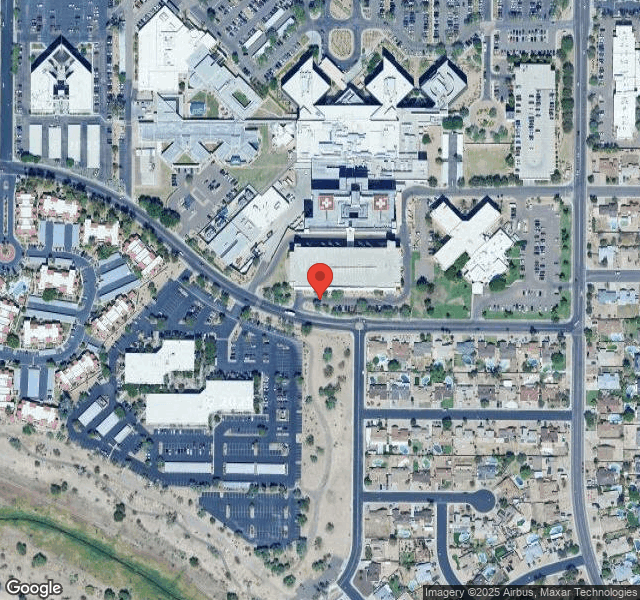
Understanding Severity Codes (click to expand)
Life-Threatening (Immediate Jeopardy)
J - Isolated K - Pattern L - Widespread
Actual Harm
G - Isolated H - Pattern I - Widespread
Potential for Harm
D - Isolated E - Pattern F - Widespread
No Harm (Minor)
A - Isolated B - Pattern C - Widespread

Questions to Ask on Your Visit

  • "Can I speak with families of current residents?"
  • "What's your RN coverage like on weekends and overnight?"

Our Honest Assessment

Strengths
  • • No major safety red flags. No abuse findings, life-threatening violations, or SFF status.
  • • No fines on record. Clean compliance history, better than most Arizona facilities.
  • • 26% annual turnover. Excellent stability, 22 points below Arizona's 48% average. Staff who stay learn residents' needs.
Concerns
  • • 28 deficiencies on record. Higher than average. Multiple issues found across inspections.
Bottom line: Mixed indicators with Trust Score of 73/100. Visit in person and ask pointed questions.

About This Facility

What is Life Of North Glendale's CMS Rating?

CMS assigns LIFE CARE CENTER OF NORTH GLENDALE an overall rating of 4 out of 5 stars, which is considered above average nationally. Within Arizona, this rating places the facility higher than 99% of the state's 100 nursing homes. This rating reflects solid performance across the metrics CMS uses to evaluate nursing home quality.

How is Life Of North Glendale Staffed?

CMS rates LIFE CARE CENTER OF NORTH GLENDALE's staffing level at 3 out of 5 stars, which is average compared to other nursing homes. Staff turnover is 26%, compared to the Arizona average of 46%. This relatively stable workforce can support continuity of care.

What Have Inspectors Found at Life Of North Glendale?

State health inspectors documented 28 deficiencies at LIFE CARE CENTER OF NORTH GLENDALE during 2020 to 2025. These included: 28 with potential for harm.

Who Owns and Operates Life Of North Glendale?

LIFE CARE CENTER OF NORTH GLENDALE is owned by a for-profit company. For-profit facilities operate as businesses with obligations to shareholders or private owners. The facility is operated by LIFE CARE CENTERS OF AMERICA, a chain that manages multiple nursing homes. With 223 certified beds and approximately 120 residents (about 54% occupancy), it is a large facility located in GLENDALE, Arizona.

How Does Life Of North Glendale Compare to Other Arizona Nursing Homes?

Compared to the 100 nursing homes in Arizona, LIFE CARE CENTER OF NORTH GLENDALE's overall rating (4 stars) is above the state average of 3.3, staff turnover (26%) is significantly lower than the state average of 46%, and health inspection rating (3 stars) is at the national benchmark.

What Should Families Ask When Visiting Life Of North Glendale?

Based on this facility's data, families visiting should ask: "Can I visit during a mealtime to observe dining assistance and food quality?" "How do you handle medical emergencies, and what is your hospital transfer rate?" "Can I speak with family members of current residents about their experience?"

Is Life Of North Glendale Safe?

Based on CMS inspection data, LIFE CARE CENTER OF NORTH GLENDALE has a clean safety record: no substantiated abuse findings (meaning no confirmed cases of resident harm), no Immediate Jeopardy citations (the most serious violation level indicating risk of serious injury or death), and is not on the Special Focus Facility watch list (a federal program monitoring the lowest-performing 1% of nursing homes). The facility has a 4-star overall rating and ranks #1 of 100 nursing homes in Arizona. While no facility is perfect, families should still ask about staff-to-resident ratios and recent inspection results during their visit.

Do Nurses at Life Of North Glendale Stick Around?

Staff at LIFE CARE CENTER OF NORTH GLENDALE tend to stick around. With a turnover rate of 26%, the facility is 19 percentage points below the Arizona average of 46%. Low turnover is a positive sign. It means caregivers have time to learn each resident's needs, medications, and personal preferences. Consistent staff also notice subtle changes in a resident's condition more quickly. Registered Nurse turnover is also low at 15%, meaning experienced RNs are available to handle complex medical needs.

Was Life Of North Glendale Ever Fined?

LIFE CARE CENTER OF NORTH GLENDALE has no federal fines on record. CMS issues fines when nursing homes fail to meet care standards or don't correct problems found during inspections. The absence of fines suggests the facility has either maintained compliance or corrected any issues before penalties were assessed. This is a positive indicator, though families should still review recent inspection reports for the full picture.

Is Life Of North Glendale on Any Federal Watch List?

LIFE CARE CENTER OF NORTH GLENDALE is not on any federal watch list. The most significant is the Special Focus Facility (SFF) program, which identifies the bottom 1% of nursing homes nationally based on persistent, serious quality problems. Not being on this list means the facility has avoided the pattern of deficiencies that triggers enhanced federal oversight. This is a positive indicator, though families should still review the facility's inspection history directly.