PROVIDENCE PLACE AT GLENCROFT
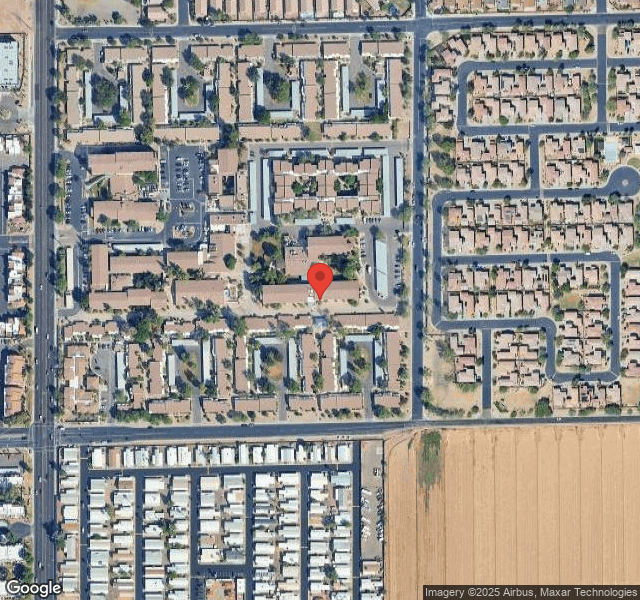
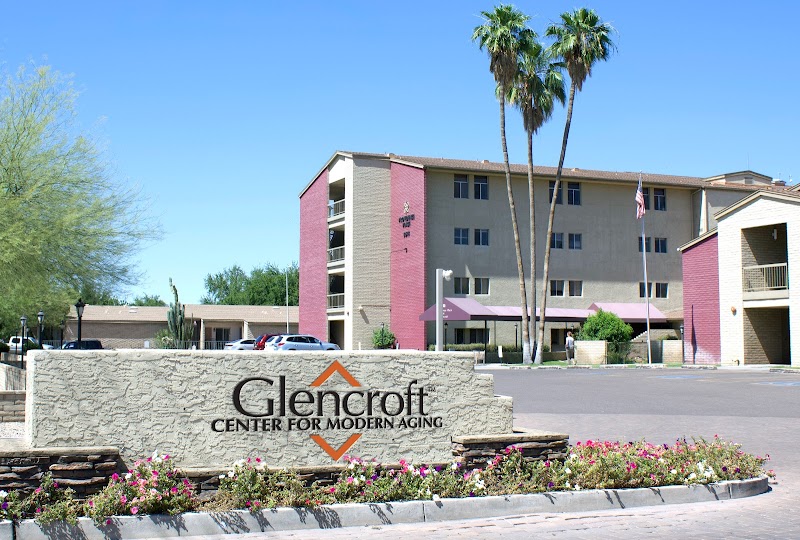
8641 NORTH 67TH AVE, GLENDALE, AZ 85302 (623) 939-9475
Non profit - Corporation 225 Beds Independent Data: November 2025
Trust Grade
30/100
#117 of 139 in AZ
Last Inspection: May 2025

Inspected within the last 6 months. Data reflects current conditions.

Overview

Providence Place at Glencroft has a Trust Grade of F, indicating poor performance and significant concerns about the quality of care. It ranks #117 out of 139 facilities in Arizona, placing it in the bottom half of nursing homes statewide, and #69 out of 76 in Maricopa County, meaning only a few local options are worse. Unfortunately, the facility is worsening, with reported issues increasing from 1 in 2024 to 6 in 2025. Staffing is a relative strength, with a rating of 4 out of 5 stars and a turnover rate of 41%, which is better than the state average of 48%. However, specific incidents raise alarms, including a serious finding where a resident was not protected from potential staff abuse, and concerns about medications not being administered as prescribed, which could lead to worsening health conditions. While the absence of fines is a positive aspect, the overall care quality and specific incidents highlight the need for families to thoroughly assess this facility before making a decision.

Trust Score
F
30/100
In Arizona
#117/139
Bottom 16%
Safety Record
High Risk
Review needed
Inspections
Getting Worse
1 → 6 violations
Staff Stability
○ Average
41% turnover. Near Arizona's 48% average. Typical for the industry.
Penalties
✓ Good
No fines on record. Clean compliance history, better than most Arizona facilities.
Skilled Nurses
✓ Good
Each resident gets 45 minutes of Registered Nurse (RN) attention daily — more than average for Arizona. RNs are trained to catch health problems early.
Violations
⚠ Watch
22 deficiencies on record. Higher than average. Multiple issues found across inspections.
★★☆☆☆
2.0
Overall Rating
★★★★☆
4.0
Staff Levels
★★★★☆
4.0
Care Quality
★★☆☆☆
2.0
Inspection Score
Stable
2024: 1 issues
2025: 6 issues

The Good

  • 4-Star Staffing Rating · Above-average nurse staffing levels
  • 4-Star Quality Measures · Strong clinical quality outcomes
  • Full Sprinkler Coverage · Fire safety systems throughout facility
  • No fines on record
  • Staff turnover below average (41%)

    7 points below Arizona average of 48%

Facility shows strength in staffing levels, quality measures, fire safety.

The Bad

2-Star Overall Rating

Below Arizona average (3.3)

Below average - review inspection findings carefully

Staff Turnover: 41%

Near Arizona avg (46%)

Typical for the industry

The Ugly 22 deficiencies on record

1 actual harm
May 2025 5 deficiencies
CONCERN (D) 📢 Someone Reported This

A family member, employee, or ombudsman was alarmed enough to file a formal complaint

Potential for Harm - no one hurt, but risky conditions existed

Free from Abuse/Neglect (Tag F0600)

Could have caused harm · This affected 1 resident

**NOTE- TERMS IN BRACKETS HAVE BEEN EDITED TO PROTECT CONFIDENTIALITY** Based on clinical record review, interviews, facility documents, and policy review, the facility failed to ensure 2 residents (#...

Read full inspector narrative →
**NOTE- TERMS IN BRACKETS HAVE BEEN EDITED TO PROTECT CONFIDENTIALITY** Based on clinical record review, interviews, facility documents, and policy review, the facility failed to ensure 2 residents (#458 and #16) were free from abuse. The deficient practice resulted in residents being abused. Findings include: Related to resident #458- Resident #458 was admitted to the facility on [DATE] with diagnoses that included epilepsy, dementia, psychosis, and anxiety disorder. A review of the quarterly Minimum Data Set (MDS), dated [DATE] revealed Resident #458 had a Brief Interview for Mental Status (BIMS) score of 11, which indicated she had moderate cognitive impairment. The same MDS also noted resident #458 displayed verbal behaviors directed towards others during the assessment period. A review of a care plan, revised on January 22, 2024 indicated Resident #458 had cognitive/communication deficits due to the progression of her dementia diagnosis. The goal was for Resident #458 to remember who she was and to be able to recognize her name. Interventions included asking her closed ended questions and allow additional time for responses to be formulated, anticipate her needs, assist her with making safe choices, and to watch for signs that she is becoming upset or uncomfortable and redirect as needed. A review of progress notes, dated June 3, 2024, indicated Resident #458 was increasingly accusing others of stealing items from her room. The notes also revealed Resident #458 was calling other residents names and was unable to be redirected. A second progress note, dated June 4, 2024, indicated that activities staff had informed the Registered Nurse (RN/Staff #168) that Resident #458 was accusing other residents of stealing her things and calling them names. The note reveals that Staff #168 had asked Resident #458 questions regarding if she had seen anyone take items from her room. However, it also noted that Resident #458 denied seeing people in her room but continued to yell and scream at other residents in the dining room. A third progress note, dated June 5, 2024, at 8:15 AM, indicated that the nurse (Staff #168) was overheard telling Resident #458, loudly, stop, shut up, you cannot disrespect others like that. The note also indicated that Staff #168 was suspended pending investigation and the police department was notified. An interview was conducted on May 9, 2025 with the MDS coordinator, Staff #25, at 11:11 AM. Staff #25 shared that she had overheard Staff #168 yelling and telling a resident to shut up and that she had no right to talk to people like she was. Staff #25 indicated that she separated Staff #168 from Resident #458 and told Staff #168 that she couldn't talk to residents like that. Staff #25 then reported the situation to her supervisor. Staff #25 also indicated that Certified Nursing Assistant (CNA/Staff #147) and CNA #72 had heard the commotion when it happened. A telephonic interview was attempted with Staff #147 on May 9, 2025 at 11:03 AM but was unsuccessful. An interview was conducted with Staff #72 on May 9, 2025 at 11:20 AM. Staff #72 recalled Staff #168 raising her voice at Resident #458. Staff #72 explained that she was in her office when she heard the yelling and she had left her office to investigate along with Staff #25. Staff #72 indicated that Staff #168 said something like shut up, you don't say that, and she, along with Staff #25, had separated Staff #168 and Resident #458. Staff #72 recalled Resident #458 was accusing other residents of stealing her hair brush and her white sweater which is what started the incident. Staff #72 indicated that Staff #168 attempted to intervene but had gone about it the wrong way. An interview was conducted with the Director of Nursing (DON/Staff #41) on May 9, 2025 at 11:36 AM. Staff #41 indicated that the facility trains staff on abuse annually in addition to frequent reviews during staff meetings. Staff #41 indicated that she recalled Staff #168 and didn't recall who the resident was. However, she did remember that Staff #168 was yelling at a resident and that they had terminated the staff because they felt it was abuse. She also added that Staff #168 should have spoken to the resident in a better way regardless of the resident's dementia diagnosis. There were other ways to address the situation. When asked if the way Staff #168 spoke to the resident was within her expectations, Staff #41 replied that it was not and that her expectation was for staff to treat residents with dignity and respect because that is what they deserved. Staff #41 also shared that the risks to the residents, who are being abused, are being affected emotionally and psychologically. Residents are towards the end of their lives and it could make them question why they were here. Related to Resident #16- Resident #16 was admitted to the facility on [DATE] with diagnoses of anxiety disorder, major depressive disorder, congestive heart failure, and type 2 diabetes. A review of the annual MDS, dated [DATE] revealed the resident had a BIMS score of 15, which indicated the resident was cognitively intact. A care plan, initiated on November 3, 2024, indicated that Resident #16 can be fearful at times due to bad experiences with a former caregiver. The goal was for her to feel safe and secure. Interventions included building a rapport with staff, allowing Resident to share her feelings and fears, and to make referrals to support services as needed. A review of a progress note, dated April 7, 2025 at 12:43 PM, indicated that Staff #41 spoke with Resident #16 about an incident that took place where another resident (Resident #458) had thrown a cup of warm coffee on her. It was noted that there were no injuries. An interview was conducted on May 7, 2025 at 11:19 AM with Resident #16 in her room. When asked if she was harmed by other residents in the facility, Resident #16 identified Resident #458 by her first name. She explained that Resident #458 was calling her names and accusing her of stealing her money and T.V. Resident #16 added that Resident #458 had thrown cool coffee on her. She also shared that she had no injuries from the coffee being thrown on her. Related to Resident #458- Resident #458 was admitted to the facility on [DATE] with diagnoses that included epilepsy, dementia, psychosis, and anxiety disorder. A review of the quarterly Minimum Data Set (MDS), dated [DATE] revealed the resident had a Brief Interview for Mental Status (BIMS) score of 09, which indicated the resident had moderate cognitive impairment. The same MDS assessment also noted resident #458 displayed hallucinations and verbal behaviors directed towards others during the assessment period. Resident #458 also rejected care at times as well. Review of physician's orders for Resident #458 revealed she was taking desvenlafaxine 50 milligrams (mg) extended release once a day, Divalproex (mood stabilizer) 250 mg three times a day, and Seroquel (antipsychotic) 300 mg twice a day. Review of Resident #458's care plan, revised on February 4, 2025 indicated that the resident had a history of making false statements and accuses other residents of going into her room and messing with her things. The goal was for Resident #458 to not make false accusations through the next review period. Interventions included not entering the day room if another resident, that she does not get along with, is in there. Review of progress notes revealed no information about the coffee throwing incident. However, in the progress notes preceding the incident date, it was noted that the provider recommended a change in Resident #485's antipsychotic medication. The recommendation was to cross taper from Seroquel to Lurasidone due to Resident #485's increased hallucinations, paranoia, and delusions. Review of a second progress note, dated April 7, 2025, a note written by Staff #41 at 12:20 PM. The note indicated that Staff #41 spoke with Resident #458 about the incident that occurred and Resident #458 had communicated that people were going into her room to steal her belongings. The note also indicated that Staff #41 and told the resident that her belongings were still in her room and were not stolen. Furthermore, the note indicated that Resident #458 was alert and oriented x2 with dementia and bipolar in addition to experiencing delusions and hallucinations. Review of the facility's 5-day (investigative) report, indicated that the altercation was witnessed by CNA/Staff #3. The report also indicated that Resident #458 asked Staff #3 to wheel her closer to Resident #16 so she could speak with her. When Resident #458 was moved closer to Resident #16, Resident #458 then threw coffee from her coffee cup at Resident #16. Staff #3 then removed Resident #458 from the area. An interview was conducted on May 7, 2025 with Staff #3 at 12:05 PM. Staff #3 confirmed that she was familiar with both Residents. Staff #3 shared that Resident #458 was drinking coffee in the common area and the coffee was not hot as she had been drinking the same cup of coffee for a while. After some time had passed, Resident #458 had seen Resident #16 and asked Staff #3 to take her towards Resident #16 to talk to her. When they had gotten closer to Resident #16, Resident #458 then threw her cup of coffee at Resident #16. Staff #3 recalled that Resident #16 did not scream when the coffee was thrown at her, she indicated that she thought Resident #16 was in shock at what had just happened. Staff #3 then wheeled Resident #458 to the Nurses' station. Staff #3 acknowledged that Resident #458 was agitated in the morning before having coffee but she was not sure why. Staff #3 also added that Resident #16 did not have any injuries from the coffee. An interview was conducted, with Staff #41, on May 9, 2025 at 1:46 PM. When asked what Resident #458's baseline for her behaviors were, Staff #41 indicated that she experiences hallucinations, delusions, has paranoia, will say that she sees bugs and people are stealing things from her. Staff #41 also added that they had recently been working with the Psychiatric Nurse Practitioner to adjust her medications to addressed her symptoms and they had also tried to have Resident #458 admitted to the Psychiatric unit at an acute care facility, however, when the Resident would be at the acute care facility, the behaviors and symptoms would stop. Staff #41 described the incident as follows: both residents were having afternoon coffee and were seated at two different tables. Resident #458 told a staff member that she wanted to talk to Resident #16. When the staff member pushed Resident #458 towards Resident #16, she threw her cup of coffee at Resident #16. Staff #41 added that they do not serve hot coffee, only lukewarm coffee for resident safety. She also added that Resident #16 did not have any injuries as a result of the coffee being thrown at her. Staff #41 indicated that when residents are abused, they are at risk of suffering from injuries, emotional dysregulation, and they might not feel safe at the facility. Review of the facility's policy, titled Freedom from Abuse, Neglect, and Exploitation, indicates that it was last revised on May 13, 2024. The policy defines abuse as the willful infliction of injury, unreasonable confinement, intimidation, or punishment with resulting physical harm, pain or mental anguish, which can include . resident to resident altercations.
CONCERN (D)

Potential for Harm - no one hurt, but risky conditions existed

Deficiency F0645 (Tag F0645)

Could have caused harm · This affected 1 resident

**NOTE- TERMS IN BRACKETS HAVE BEEN EDITED TO PROTECT CONFIDENTIALITY** Based on clinical record review, staff interviews, and policy review, the facility failed to ensure that one of three sampled re...

Read full inspector narrative →
**NOTE- TERMS IN BRACKETS HAVE BEEN EDITED TO PROTECT CONFIDENTIALITY** Based on clinical record review, staff interviews, and policy review, the facility failed to ensure that one of three sampled residents (#20) had a PASARR (preadmission Screening and Resident Review) completed . The deficient practice could result in specialized services not being provided for residents who need it. Regarding Resident #20 Resident #20 was re-admitted to the facility on [DATE] with diagnoses that included bipolar disorder, anxiety, and heart failure. A care plan revised on May 04, 2025 revealed that the resident is being considered for a Level II PASARR, and that the paperwork has been submitted for review/determination. Further review revealed an approach dated February 10, 2023 for social services to review the PASARR as needed and during the annual review and recommendation of the level II will be followed- E.G routine psychological counseling. A Physicians order dated September 10, 2024 revealed an order for Trileptal tablet 150 mg for bipolar disorder. The quarterly Minimum Data Set (MDS) dated [DATE] revealed that a Brief Interview for Mental Status (BIMS) of 11, which indicated moderately impaired cognition. A review of the medical record revealed that the resident had a diagnosis of Bipolar disorder and that there was no evidence that the Level 1 PASRR had been updated/completed, despite the resident continuing to reside in the facility over 30 days. An interview was conducted on May 09, 2025 at 1:07 P.M with the Director of Social Services (SSD/#87) along with Social Worker (#68), and Director of Nursing (DON/ #41) present . Staff # 87 stated that for all residents upon admission they would review the residents PASARR and if there is no PASARR done for the resident one will be created for them. The Social Service Director stated that they would use the list of diagnoses on the PASARR to identify diagnoses relating to mental illness and intellectual disability. (SSD/#87) When a resident is at the facility for more than 30 days a PASARR level two will be completed. The Social Service Director further stated that social services will review with the interdisciplinary team (IDT) if the resident presents with behaviors like wandering out of the unit, aggression, combative, throwing items. She stated that for resident #20 based on the resident diagnosis there is no need for a PASARR to be completed. (SSD/#87) stated the clinical records will have notes about bipolar disorder behavior if the residents showed signs. She further stated that there is no need for a high level of care based on the psychology providers council. An interview was conducted with Director of Nursing (DON/ #41) who stated that the resident was diagnosed with bipolar disorder in 2021. She further stated that a PASARR was done for resident #20 on July 07, 2018, July 26, 2018, September 13, 2024, August 08, 2024, and September 10, 2024. (DON/#41) stated that the risk of not doing a PASARR is that if the resident does not have the correct diagnoses then that resident would not be medicated correctly. She also stated that in order for a resident to have a diagnosis the resident needs to present symptoms. Review of the policy titled Preadmission Screening and Resident Review (PASRR) revealed the facility to complete the level one Preadmission Screening and Resident Review (PASRR) before or at the time admission, and to request a level two PASRR in a timely fashion when indicated.
CONCERN (D) 📢 Someone Reported This

A family member, employee, or ombudsman was alarmed enough to file a formal complaint

Potential for Harm - no one hurt, but risky conditions existed

Quality of Care (Tag F0684)

Could have caused harm · This affected 1 resident

**NOTE- TERMS IN BRACKETS HAVE BEEN EDITED TO PROTECT CONFIDENTIALITY** Based on clinical record review, interviews, facility documentation, and policy review, the facility failed to ensure one reside...

Read full inspector narrative →
**NOTE- TERMS IN BRACKETS HAVE BEEN EDITED TO PROTECT CONFIDENTIALITY** Based on clinical record review, interviews, facility documentation, and policy review, the facility failed to ensure one resident (#465) received lab services as ordered by a physician. The deficient practice could lead to delayed diagnosis or treatment or potential deterioration in the resident's condition placing the resident at risk for harm. Findings include- Resident #465 was admitted to the facility on [DATE] with diagnoses that include dementia, acute kidney failure, Encephalopathy, and cerebrovascular disease. The quarterly Minimum Data Set (MDS), dated [DATE] revealed Resident #465 was not able to complete a Brief Interview for Mental Status (BIMS) assessment. However, it was noted that staff assessed her cognitive skills for daily decision making as severely impaired. Review of the physician's orders revealed a lab order, dated March 6, 2024, for Complete Blood Count (CBC) test that also includes a differential count of white blood cells and a platelet count. This was to be done on the 1st and 3rd Monday of the month. The order was discontinued on July 30, 2024. Review of Resident #465's laboratory results revealed testing was completed on the following dates: -March 6, 2024 (1st Wednesday) -March 26, 2024 (4th Tuesday) -May 15, 2024 (3rd Wednesday) -May 22, 2024 (4th Wednesday) -July 1, 2024 (1st Monday) -July 15, 2024 (3rd Monday) Review of Resident #465's admission/discharge history revealed she was discharged from the facility on June 11, 2024 and returned on June 18, 2024. Review of Resident #465's Medication Administration Record (MAR) for the months of March, April, May, and June 2024 found the following entries: -CBC with Plt/Diff; Comprehensive Metabolic Panel (CMP) marked as being completed on Monday, March 4, 2024. -CBC with Plt/Diff; Comprehensive Metabolic Panel (CMP) marked as being completed on Monday, March 18, 2024 -CBC labs marked as being completed on Monday, April 1, 2024. -CBC labs marked as being completed on Monday, April 15, 2024. -CBC labs marked as being completed on Monday, May 20, 2024. -CBC labs marked as being completed on Monday, June 3, 2024. -CBC labs marked as being completed on Thursday, June 11, 2024. A request was made to the facility on March 9, 2025 at 8:30 AM for a copy of all lab results for Resident #465 conducted between March 1, 2024 through August 15, 2024. On March 9, 2025 at 9:20 AM, surveyor was provided a copy of lab results performed on the following dates: -May 10, 2024 (CMP) -May 15, 2024 (CBC w/diff and CMP) -May 22, 2024 (CBC w/diff and CMP) -June 20, 2024 (CBC w/diff and CMP) -July 11, 2024 Basic Metabolic Panel (BMP) -July 14, 2024 (BMP) An interview was conducted on May 9, 2025 at 10:20 AM with Licensed Practical Nurse (LPN/Staff #151). Staff #151 explained that usually labs are ordered by a provider when there is a change of condition. If for some reason labs are not done as ordered, there would be documentation on a progress notes as to why the lab was not done. Some examples are a resident refuse or if they struggle to find a vein. Staff #151 added that they will talk with the resident about the importance of doing lab work to help them treat residents. Staff #151 shared that all lab results are kept in the residents' clinical records in the Electronic Medical Record (EHR) and that the Medical Records department also kept copies of the results as well. An interview was conducted with LPN/Staff #17 on May 9, 2025 at 10:53 AM. Staff #17 was asked to review Resident #465's clinical record for lab work. She confirmed that she was not able to find evidence that Resident #465 had labs done in April of 2024. An interview was conducted with the Director of Nursing (DON/Staff #41) on May 9, 2025 at 11:45 AM. Staff #41 explained that when lab work is needed, there is an order for it and the order will show up in the MAR. Staff #41 confirmed in the EHR that Resident #465 had an order, with a start date of March 6, 2024 and end date of July 30, 2024, for labs to be done on the 1st and 3rd Monday of the month. Staff #41 added that blood is usually drawn in the early morning hours and will show up on the MAR for the Nocturnal (NOC) shift. Staff #41 was asked to confirm if there was evidence of lab work done during the month of April and the beginning of June. After reviewing facility lab work results on her computer, she confirmed that it was not done during those time frames and was unable to provide a rationale for why it was not done. When asked what were some potential risks to residents when lab services are not provided as ordered, Staff #41 shared that they could have an infection, dehydration, and it would delay treatment to them. Review of the facility's policy, titled, Physician's Orders, indicated that it was last revised on September 11, 2024. The policy explained that the physician's orders must be monitored for completion.
CONCERN (D)

Potential for Harm - no one hurt, but risky conditions existed

Infection Control (Tag F0880)

Could have caused harm · This affected 1 resident

**NOTE- TERMS IN BRACKETS HAVE BEEN EDITED TO PROTECT CONFIDENTIALITY** Based on observations, interviews, and facility documentation and policy, the facility failed to ensure one shower room was kept...

Read full inspector narrative →
**NOTE- TERMS IN BRACKETS HAVE BEEN EDITED TO PROTECT CONFIDENTIALITY** Based on observations, interviews, and facility documentation and policy, the facility failed to ensure one shower room was kept in clean and sanitary conditions. The deificient practice could result in the spread of disease and infection. On March 6, 2024 observed with Certified Nurse Assistants # 7 and 12, feces in the shower stall next to the shower chair and near the drain. During initial pool screeing, on March 6, 2025 at 10:27 a.m. a resdient revealed that receiving showers at the facility are hit and miss. The resident recalled wanting a shower the other night, but was tired of seeing feces on the floor, so she elected to have bed baths instead. An interview was conducted with Certified Nurse Assistants # 7 and # 12 on March 6, 2025 at 11:22 revealed that both parties were in agreement that the feces present on the floor is not a facility expectation. Both parties stated it will be cleaned up immediately and appropriately. CNA # 7 revealed being pulled away earlier and but was immediately planning to return to clean it up, which he realizes was not according to facility expectation. An interview with the Infection Preventionist (IP/Staff # ) on March 7, 2025 at approxomately 11:30 a.m., revealed that feces in the shower is an infection control issue, and is not a facility expectation. The expectation is for the shower stalls to be cleaned as per protocol to ensure a clean and sanitary environment. The facility's Cleaning Rooms and Bathrooms policy, reviewed May 21, 2024 revealed showers are cleaned and sanitized up to 2 times a day. The facility's Infection Prevention and Conrol Program, revised May 30, 2024 revealed all staff shall demonstrate competence in relevant infection control practices. Based on staff interviews and policy reviews, the facility failed to ensure that reporting guidelines were adhered to for reporting a Legionella outbreak following national standards for communicable diseases. This deficient practice could result in an outbreak not being reported to the State Agency. Findings include: A review of Maricopa County email correspondence with the facility revealed that the facility was positive for Legionella Urine Ag on December 31, 2024. Subsequent email correspondence with the Maricopa County Department of Public Health revealed that, post negative test results, the investigation was closed as completed on April 29, 2025. Review of the internal complaint tracking system revealed no evidence that the state agency had been notified of the Legionella outbreak. During an interview conducted on May 6, 2025 at 10:27 A.M. the surveyor was notified by the social worker (Staff #87) that approximately a week ago there was an outbreak of Legionella, which had been resolved. An interview was conducted on May 6 at 10:40 A.M. with the Director of Nursing (DON/Staff #41) who stated the facility recently had an outbreak of Legionella, approximately a month ago. The DON further stated that as of May 5, 2025, tests showed the water supply clear. The DON stated they were in contact with Maricopa County Health Department. She stated that one resident became ill with pneumonia with Legionella and that it had not been reported to the state agency. An additional interview was conducted on May 6, 2025 at 11:08 A.M. with the DON and the Infection Preventionist (IP/Staff #96). Both stated that the facility was not aware of a Legionella outbreak until they were notified by the County, post hospitalization of a resident. The DON stated on December 30, 2025, a resident was sent to the hospital with lowered blood pressure, altered mental status, hypoxic respiratory failure. On January 2, 2025, the IP (Staff #96) was contacted by Maricopa County to let all staff and residents know not to drink the water. The DON stated the expectation is that these types of outbreaks would be reported to the state. She also stated that the risk for not reporting could result in is the potential for all residents being affected, and the state not being aware. An interview was conducted on May 8, 2025 at 12:53 P.M. with the IP (Staff #96), who stated that families, staff, and residents were notified of the outbreak. An interview conducted on May 9, 2025 at 10:00 A.M. with the Executive Director (ED/Staff #172), who stated that a few years back they were told by the state they were reporting too much. The ED stated they were working with the County and thought that was sufficient. The ED expressed that their parent company, as well as the facility, did not know Legionella was reportable to the state. Staff #172 identified no risk by not reporting to the state as they worked closely with the County and did what needed to be done. The ED stated his expectations going forward will be to report whether they are sure or not; and to also ask the SOD (surveyor of the day) for guidance. A facility policy titled, Event Reporting of a Resident, effective date of November 8, 2019 revealed that all resident events be reported, investigated and documented adequately. A facility policy titled, Infection Prevention & Control Program, effective date of September 13, 2019, revealed that the facility failed to follow their guidelines for reporting of communicable disease and infections. -Regarding meal delivery: Findings include: During a lunch observation on May 7, 2025 at 11:15 AM on the 3rd floor of the facility, Certified Nursing Assistant (CNA/staff #99) and CNA (staff #52) were observed to deliver meal trays to all of the residents on the 3rd floor. The CNAs were not observed to sanitize their hands before meal delivery, nor in between delivering each tray. During the same observation, at 11:30 AM, CNA (staff #52) was observed to don gloves. The CNA was not observed to sanitize her hands before she donned the gloves. The CNA was then observed to pick up a piece of pizza from a resident's plate, broke the pizza into pieces with her gloved hands and handed the broken pieces of pizza to the resident. The resident was observed to put the pizza into his mouth and swallowed it. An interview was conducted with Staff #52 following the lunch observation. Staff #52 acknowledged she did not sanitize her hands before donning gloves and acknowledged that she and the other aides did not sanitize their hands in between meal delivery to residents. She stated the risk of this could be passing germs to residents. -Regarding a dressing change for Resident #63: Findings include: Resident #63 was admitted to the facility on [DATE], with diagnoses that included metabolic encephalopathy, epilepsy, dementia, type 2 diabetes and morbid obesity. A Minimum Data Set (MDS), dated [DATE], revealed a Brief Interview for Mental Status (BIMS) score of 1, indicating the resident had severe cognitive impairment. The same MDS also indicated that Resident #63 was at risk of developing pressure ulcers and had one stage 2 pressure ulcer (partial thickness loss of dermis; may also present as an intact or open blister). A care plan initiated on April 30, 2025, revealed that Resident #63 had a blood blister to his left 1st toe and a dried scab from a blister to his right big toe that required treatment as ordered. A progress note, titled Surgical Wound Care Consult, dated May 6, 2025, was reviewed. The note revealed that Resident #63's right 1st toe had been debrided (removal of tissue) to the level of the subcutaneous layer. Review of the order summary revealed an order dated May 6, 2025. The order prescribed to clean the resident's right toe with wound cleanser, pat it dry and apply medihoney and calcium alginate. Then, secure with kerlix (gauze wrap) until healed. The order also indicated to continue to apply iodine to the left toe. The dressing changes were ordered to be performed once daily. A dressing change was observed for Resident #63, on May 7, 2025 at 9:29 AM, with a Registered Nurse (RN/staff #60). The RN was observed to sanitize her hands with alcohol-based hand rub (ABHR) upon entering the resident's room. The RN placed a plastic bag of wound care supplies onto the bedside table. Resident's belongings were observed on the table. There was no barrier observed on the bedside table. The RN (staff #60) donned gloves, sprayed wound cleanser onto a piece of gauze and cleaned the resident's left great toe. The RN then put the used gauze onto the bedside table, without a barrier present. Then, the RN picked up the used gauze and placed a tissue under it. The RN then got another tissue and wiped her gloves. She left the toe open to air. She threw the used gauze and tissues into the garbage can. She was not observed to sanitize her hands or change her gloves. The RN (staff #60) was then observed to spray wound cleanser onto another piece of gauze. She proceeded to clean the right 1st toe with the gauze, placed the used gauze onto a tissue on the bedside table. She was not observed to sanitize or change her gloves. She then applied medihoney to a piece of calcium alginate. She was observed to wrap the right 1st toe with the calcium alginate, secured it with kerlix and tape, and wrote her initials and the date on the tape. She gathered her used supplies and threw them into the garbage can. The RN was observed to doff her gloves and through them into the garbage can. She was then observed to wash her hands with soap and water. A wet, clear liquid was observed on the resident's bedside table, where the RN had initially placed the used gauze. The RN was not observed to clean the bedside table before leaving the resident's room. The RN was not observed to wear a gown during the dressing change. Further, there was not an Enhanced Barrier Precautions (EBP) sign next to the resident's door and an EBP order was not located in the resident's record. An interview was conducted with the RN (staff #60) on May 7, 2025, following the dressing change. The RN acknowledged that she did not change her gloves during the dressing change, and only sanitized her hands upon entrance and exit of the resident's room. She further acknowledged that she did not wear a gown during the dressing change. The RN stated that she only used EBP for Foley catheters and tube feeds. Further, she stated she did not change gloves or sanitize her hands during the dressing change because the wounds were small and were only on the resident's toes. An interview was conducted with a Licensed Practical Nurse (LPN/staff #151) on May 9, 2025 at 8:38 AM. The LPN stated EBP should be used if a resident had a wound, a Foley catheter or was on isolation. The LPN explained that EBP would involve putting on a gown and gloves and washing hands before entering and exiting the resident's room. The LPN stated that Resident #63 was not currently on EBP, but should be since he had an open wound on his toe. She further stated that she had not been following EBP for Resident #63 because there was not a sign next to his door and it had not been reported to her that he was on EBP. An interview was conducted with a Certified Nurse Assistant (CNA/staff #163) on May 9, 2025 at 8:44 AM. The CNA indicated that if a resident was on EBP, there was typically a cart next to the door that contains gloves, gowns and masks. The CNA indicated that she understood that EBP was for residents with open wounds and catheters. The CNA stated she was unaware that Resident 63's toe wound was now open and that she would tell somebody to get the EBP equipment in place. She was observed to report the need for EBP for Resident #63 to the staffing coordinator. An interview was then conducted with the Director of Nursing (DON/staff #41) on May 9, 2025 at 11:29 AM. The DON stated that if a resident has an open wound, they should be on EBP. She stated she did not think Resident 9 needed EBP in place due to his wound being small and barely open. Further the DON acknowledged that RN (staff #60) should have changed her gloves and sanitized her hands during the dressing change on Resident 9's toes. A policy titled, Alcohol-Based Hand Rubs & Hygiene, revised on September 20, 2023, revealed that the use of gloves does not replace hand hygiene and that if a task requires gloves, staff are to perform hand hygiene prior to donning gloves and immediately after removing gloves. The policy further indicated on a Hand Hygiene Table, that hands should be sanitized before and after handling clean or soiled dressings, as well as after handing items potentially contaminated with blood, body fluids, secretions or excretions. Additionally, during resident care, when moving from a contaminated body site to a clean body site. A policy titled, Enhanced Barrier Precautions, effective June 5, 2024, revealed an order for enhanced barrier precautions would be obtained for residents with pressure ulcers, unhealed surgical wounds, etc., even if the resident is not known to be infected or colonized with a MDRO. The policy also indicates that gowns and gloves should be immediately available near or outside the resident's room, and that the PPE was necessary when performing high-contact care activities, to include wound care: any skin opening requiring a dressing. On Table 1 of the policy, it indicates that EBP should be used when a resident has a wound, without secretions or excretions and are not known to be infected.
CONCERN (E)

Potential for Harm - no one hurt, but risky conditions existed

Food Safety (Tag F0812)

Could have caused harm · This affected multiple residents

**NOTE- TERMS IN BRACKETS HAVE BEEN EDITED TO PROTECT CONFIDENTIALITY** Based on observations, staff interviews, policy review, and observation of current practice, the facility failed to ensure that ...

Read full inspector narrative →
**NOTE- TERMS IN BRACKETS HAVE BEEN EDITED TO PROTECT CONFIDENTIALITY** Based on observations, staff interviews, policy review, and observation of current practice, the facility failed to ensure that resident drinks were transported from the kitchen to the residents' rooms in accordance with professional standards. The sample size was 22. The deficient practice could result in contamination of the resident's drinks. Findings include: An observation was conducted on May 7, 2025 at 12:00 P.M., with a Certified Nursing Assistant (CNA/Staff #39) who was carrying a drink tray with 5 uncovered drinks down the hall, approximately 50 steps. Continued observation on May 7, 2025 at 12:05 P.M. revealed another CNA (Staff #30) carrying a tray with an uncovered drink into room [ROOM NUMBER]; approximately 50 steps. An interview was conducted on May 7, 2025 at 12:11 P.M. with a Licensed Practical Nurse (LPN/Staff #169), who stated that food is delivered first and then drinks are delivered after, and the process is the same for residents eating in their room. The LPN stated drinks should be covered when delivered to the residents' room. She further stated that she had not observed whether the drinks were covered or not when they were being delivered. However, the LPN stated that she had to issue some reminders to staff in the past to cover drinks. The LPN further stated that the expectation is all drinks are covered until they reach the patient. The LPN also stated that the risk of transferring uncovered drinks from the kitchen to the residents' rooms could result in contamination of the drinks. An interview was conducted on May 7, 2025 at 12:18 P.M. with a CNA (Staff #39), who stated that drink glasses should have been covered prior to delivery, but they weren't. The CNA also stated that in the morning, the drinks they receive from the kitchen are usually covered, but not during lunch time. Staff #39 also revealed that the risk of transferring uncovered liquids could result in contamination. An interview was conducted on May 7, 2025 at 12:20 P.M. with a CNA (Staff #30), who stated that when drinks are transported to resident rooms, they should be covered. The CNA said that the drinks were not covered when they were delivered, and the risk could result in contamination. An interview was conducted on May 9, 2025 at 09:05 A.M. with the Director of Nursing (DON/Staff #41), who stated that stated that the expectation is for drinks to be covered in the kitchen. The DON also stated covering drinks when transporting them decreases chances of infection and spills. A facility policy entitled, Food Safety and Sanitation, dated 2017, revealed that all local, state and federal standards and regulations will be followed in order to assure a safe and sanitary department of food and nutrition services. During a lunch observation on May 7, 2025 at 11:15 AM on the 3rd floor of the facility, Certified Nursing Assistant (CNA/staff # 99) was observed to remove a plastic wrap covering from a pitcher of juice. The CNA was then observed to pour juice into approximately 8 plastic cups. The CNA was not observed to cover the cups with any type of covering. The CNA (staff #99), along with another CNA (staff #52), were then observed to put the uncovered cups of juice on residents' meal trays and walk down the hall to deliver the trays to the residents in their rooms. The cups of juice remained uncovered as they walked down the hallways.
Feb 2025 1 deficiency
CONCERN (D) 📢 Someone Reported This

A family member, employee, or ombudsman was alarmed enough to file a formal complaint

Potential for Harm - no one hurt, but risky conditions existed

Deficiency F0657 (Tag F0657)

Could have caused harm · This affected 1 resident

**NOTE- TERMS IN BRACKETS HAVE BEEN EDITED TO PROTECT CONFIDENTIALITY** Based on documentation, staff interviews, and the facility policy and reviews, the facility failed to revise the care plan after...

Read full inspector narrative →
**NOTE- TERMS IN BRACKETS HAVE BEEN EDITED TO PROTECT CONFIDENTIALITY** Based on documentation, staff interviews, and the facility policy and reviews, the facility failed to revise the care plan after one resident (#33) fell and had a change of condition. The deficient practice could result in residents not being provided the sufficient level of care needed for safety. Findings include: Review of resident #33's care plan with problem start date of August 31, 2022 revealed that the resident was a low to moderate fall risk due to muscle weakness. The care plan was last edited on February 12, 2025. Interventions included to use a sit-to-stand for transfers going forward. Resident #33's clinical record stated that she was admitted to the facility on [DATE] and readmitted [DATE] with diagnoses that included unspecified fracture of left femur, Hemiplegia and hemiparesis following infarction affecting the left dominant side, and chronic kidney disease. The minimum data set (MDS) dated [DATE] included a brief interview for mental status score of 15 indicating the resident was cognitively intact. Review of the Resident Transfer form dated January 27, 2025 revealed that resident #33 was transferred to the hospital due to a fall while being transferred from the toilet to a shower chair. Review of the meeting notes for falls dated January 29, 2025 revealed that the resident was to use stand/lift for transfers. Review of the incontinence care plan dated February 12, 2025 revealed that the resident is incontinent and needs assistance from staff with toileting. Interventions included to encourage the resident to use the restroom on routine rounds and as needed, and to use a sit-to-stand for transfers going forward. Review of the fall risk care plan date February 12, 2025 revealed that the resident has a left side deficit due to status post cerebrovascular accident (CVA) and fall on January 27. Interventions included to use a sit-to-stand for all transfers going forward. An interview was conducted on February 20, 2025 at 9:26 a.m. with MDS Coordinator (MDS/staff #4) and (MDS/staff #9) who stated that once the MDS id completed, the triggered areas are added to the care plan and if the resident has a change of condition (COC), the care plan is updated. She stated that if a fall occurs, she adds it to the care plan. She reviewed the clinical record and stated that the resident fell on January 27, 2025, so they would have discussed it during the morning meeting on January 28, 2025. She stated that the fall was discussed, but the team didn't know what changes should occur to the resident's care plan because staff didn't have a chance to talk to the resident prior to being transferred to the hospital, so it was decided that they would retrain the staff. She stated that the resident was originally a one-person assist with transfers because she was able to stand by herself for a short period of time. She stated that the fall care plan would be updated after the resident fell because she had a fracture as a result of the fall. Staff #9 referred to the clinical record and stated that the resident was currently a two-person mechanical lift. Staff #4 stated that the purpose of the care plan is so that everyone taking care of the resident knows what to do. During a second interview conducted on February 20, 2025 at approximately 10:55 a.m. with the MDS Coordinator (MDS/staff #4), she reviewed the resident's care plan and stated that there were no new interventions added to the resident's care plan after she fell on January 26, 2025. An interview was conducted on February 20, 2025 at 2:43 p.m. with the Director of Nursing (DON/staff # 2), who stated that when a residents fall, the team discusses every Wednesday and when the resident fell, the team discussed the possibility of using a lift for transfers. When the resident came back from the hospital on February 6, 2025, the care plan should have been updated to include the use of a lift for transfers. She stated that the purpose of the care plan is so staff have a plan of care to follow and there is a risk to not updating the plan to include the use of a lift. The facility policy, Comprehensive Care Plans states that the comprehensive care plan will include measurable objectives and timeframes to meet the resident's needs as identified in the resident's comprehensive assessment. The objectives will be utilized to monitor the resident's progress. Alternative interventions will be documented as needed.
Aug 2024 1 deficiency
CONCERN (D) 📢 Someone Reported This

A family member, employee, or ombudsman was alarmed enough to file a formal complaint

Potential for Harm - no one hurt, but risky conditions existed

Free from Abuse/Neglect (Tag F0600)

Could have caused harm · This affected 1 resident

**NOTE- TERMS IN BRACKETS HAVE BEEN EDITED TO PROTECT CONFIDENTIALITY** Based on documentation, staff interviews, and the facility policy and process, the facility failed to ensure that resident (#1) ...

Read full inspector narrative →
**NOTE- TERMS IN BRACKETS HAVE BEEN EDITED TO PROTECT CONFIDENTIALITY** Based on documentation, staff interviews, and the facility policy and process, the facility failed to ensure that resident (#1) was not abused by a staff (#42). The deficient practice could result in residents being abused by staff. Findings include: Resident #1 was admitted to the facility on [DATE] with diagnoses that included acute and chronic respiratory failure with hypoxia, alcohol cirrhosis of the liver, depression, and acute kidney failure. The minimum data set date July 10, 2024 included a brief interview for mental status score of 15 indicating the resident was cognitively intact. It also included that the resident ambulates in a wheelchair. The care plan dated July 16, 2024 revealed that the resident needs assistance at times with activities of daily living (ADLs) due to cirrhosis of the liver with ascites, asthma, diabetes mellitus, and fracture of the back. Interventions included to assist the resident with ADL care with toileting, and eating. The resident may fluctuate in the amount of care needed, assist or cue the resident to reposition frequently while seated or lying down, and monitor skin integrity during daily care, weekly rounds, and as needed. Review of a psych progress note dated August 14, 2024 revealed that the chief complaint is major recurrent depression severe severity without psychotic features. The resident seen for follow-up. Resident is seen in his room. He is smiling and relaxed. The resident is alert and oriented times four. He has had an improvement in mood and is reporting that he is hopeful for the future and has been making long-term plans. The resident was able to find multiple positives in a situation, this is an improvement from the patient's chronic negative thoughts. Review of a psych progress note dated August 19, 2024 revealed that the resident was seen for follow-up. The resident was seen in his room. Today the resident was resting in bed and was not participating as fully as normally. The resident reports that his mood is meh? today. Resident has had a breakup with his girlfriend and is wanting to rest and nap. The resident is alert and oriented times four. The resident has good eye contact, calm, and staff report baseline mood with some lability. The facilty training dated August 20, 2024 included Resident/Relationships and the curriculum included, Inappropriate Behavior - Employee to Resident which stated that inappropriate behavior from employee to resident includes, but is not limited to, verbal abuse, sexual harrassment/conduct, inappropriate touching, and aggressive behavior. If an employee engages in, or observes another employee engaging in, such behavior towards a resident, immediately report the incident(s) to human resources or a community support team member. The facility does not permit employees to enter into intimate relationships with residents. Inappropriate behavior can be grounds for discipline and/or termination of employment and removal of the person from the facility campus. Review of the 5-day written investigation dated August 22, 2024 revealed that on August 16, 2024 at 1:27 p.m. resident #1 reported that he had been having a relationship with a certified nursing assistant (CNA/staff #42) or three months. He stated that the relationship began in the shower room and they kissed. The resident stated that he gave staff #42 two gift cards, worth $50.00, that he had won at the facility, and they were going to go out to eat. Resident #1 revealed that the he and staff #42 had spent the 4th of July together. He stated that the relationship became serious in July 2024 and they had discussed moving in together, getting married in Mexico, she had talked to his grandbabies. Resident #1 stated that he had been calling staff #42 for a few days without a response, until this morning, when staff #42 told him that they cannot be together, it is not good for the resident's health or hers, and she didn't want to deal with his baby mama. Resident #1 reported that he was devastated and his heart was broken. The resident reported that he doesn't want anything done, the relationship was concentual and he still loves staff #42. The resident had text messages and pictures of staff #42 on his phone and stated that they had been in constant contact for weeks. The resident reported being upset and stated that he would try to use a support network for emotional stablization; he cried during the interview. Staff #42 was suspended pending an investigation. Staff #42 left a message that she would not be returning to work because she quit. Facility staff were educated on the code of conduct: romatic/inappropriate relationships with residents is prohibited and can result in termination. An interview was conducted on August 30, 2024 at 1:53 p.m. with resident #1, who stated that four months ago, (CNA/staff #42) was assisting him with a shower and he pulled her towards him and kissed her. He stated that at first she pulled away and then she kissed him. He told staff #42 that he was starting to fall in love with her and she said that she should not do this because she works here. He stated that they never did anything more than kiss at the facility, but he went to her place and they had relations. He stated that she told him that no other man has ever done this to her, sex, the way that he has done it to her. He stated that staff heard him and another male resident (#13) talking about his relationship with staff #42. He was upset because he thought that she was breaking up with him and resident #13 was telling him to be careful because he could get hurt. He stated that the staff told him that if he didn't report it, she would have to report it to the Administrator, and this is why he reported it in the first place. He was not willing to identify the staff. He stated that staff #42 has returned to Arizona and they are back together, she told him that she loved him. They are still planning on getting married. He stated that they have been out to dinner and gone back to her place since she quit her job. He stated that he gave her two gift certificates that he got from the facility, but she has given him things when he was broke. He was not able to name anything that staff #42 had given to him. The facility did not have a policy for Staff and Resident Relationships. The facility had documentation for employees Inappropriate Behavior - Employee to Resident which stated, Inappropriate behavior from employee to resident includes, but is not limited to, verbal abuse, sexual harassment/conduct, inappropriate touching, and aggressive behavior. If an amployee engages in or observes another employee engaging in, such behavior towards a resident, immediately report the incident(s) to Glencroft Human Resources and or Community Support team member. Glencroft does not permit employees to enter into intimate relationships with residents. Inappropriate behavior can be grounds from discipline and/or termination of employement and removal of the person from the Glencroft campus. The document was dated December 2022.
May 2023 3 deficiencies
CONCERN (D) 📢 Someone Reported This

A family member, employee, or ombudsman was alarmed enough to file a formal complaint

Potential for Harm - no one hurt, but risky conditions existed

Free from Abuse/Neglect (Tag F0600)

Could have caused harm · This affected 1 resident

**NOTE- TERMS IN BRACKETS HAVE BEEN EDITED TO PROTECT CONFIDENTIALITY** Based on clinical record review, staff interviews, facility documentation, policy and procedures, the facility failed to ensure ...

Read full inspector narrative →
**NOTE- TERMS IN BRACKETS HAVE BEEN EDITED TO PROTECT CONFIDENTIALITY** Based on clinical record review, staff interviews, facility documentation, policy and procedures, the facility failed to ensure that one resident (#4) was free from abuse of another (#17). The deficient practice could result in further abuse of residents. Findings include: -Resident #4 admitted on [DATE] with diagnoses of supranuclear ophthalmoplegia, depression and unspecified anxiety disorder. A care plan dated September 13, 2022 included the resident had signs and symptoms of mood distress related to verbalizations of feeling down, depressed or hopeless. Goal was for the resident to not exhibit signs of isolation. Interventions included to administer medications. Review of the MDS admission assessment dated [DATE] revealed a BIMS score of 15 indicating the resident had intact cognition. Per the assessment, the resident required limited to extensive assistance with ADLs and displayed indicators of hallucinations, but did not exhibit any other behaviors. The clinical record revealed the resident was receiving psychotropic medications for anxiety, depression and psychosis. Review of the MAR revealed medications were documented as administered as ordered. A nursing progress note dated November 1, 2022 at 5:33 p.m. included the resident was in a physical altercation with another resident following an argument; and that, the other resident slapped her causing a small fingernail sized scratch that had dry blood around the area. According to the note, the nurse assessed the resident who denied pain; and that, both residents were quickly separated and the resident's family, nurse practitioner, ADON (Assistant Director of Nursing) and clinical manager were informed. Another nursing progress dated November 1, 2023 at 5:51 p.m. revealed that both residents had been separated and had been staying in their room(s). The note also included that resident #4 had a small scratch above her lip and had been monitored with staff on the floor for safety. -Resident #17 readmitted on [DATE] with diagnoses of unspecified dementia, psychotic disturbance and bipolar disorder. A physician order dated September 28, 2021 included behavior monitoring for anxiety as evidenced by yelling out and fixating on other residents. The order included opportunities for nursing documentation for the 6:00 a.m. through 6:00 p.m. shift and the 6:00 p.m. through 6:00 a.m. shift - including the number of behavior episodes, non-pharmacological interventions utilized (i.e., redirection) and the outcomes. A care plan dated July 29, 2022 included the resident had bipolar disorder. The goal was for the resident to interact appropriately with staff, residents and visitors. Interventions included to maintain a calm environment and approach to the resident. A physician order dated September 23, 2022 included for buspirone (anxiolytic) 15 mg (milligrams) twice a day (upon arising and at dinner) for anxiety as evidenced by yelling out and fixating on other residents' behaviors. The quarterly MDS (Minimum Data Set) assessment dated [DATE] revealed the resident had a BIMS (Brief Interview for Mental Status) score of 4 indicating resident had severe cognitive impairment. According to the assessment, the resident displayed no behaviors and was independent with (ADLs) Activities of Daily Living. A psych note dated October 28, 2022 included the resident was seen for follow up and stated that her mood was good but that her anxiety levels were elevated at times due to other residents and continued with elevated anxiety that interfered with activities. According to the documentation, staff encouraged resident to go to her room to nap or decompress and that helped; and that, the resident's symptoms of anxiety were less with medications. Goals included to prevent high levels of anxiety and for positive socialization with others. Review of the MAR (Medication Administration Record) for October 2022 revealed medications were administered and behaviors were monitored as ordered by the physician. The documentation in the MAR on November 1, 2022 revealed resident #17 had 8 behavior episodes, including fixating on other residents. A reportable event record/report narrative dated November 8, 2022 included that on November 1, 2022 at 4:45 p.m. a CNA (certified nursing assistant) reported to the nurse that resident #17 slapped another resident (#4) causing a small scratch on her face. According to the report, at 3:25 p.m. on November 1, 2022 resident #4 had just returned back to the facility from the hospital after sustaining a fall; and, both residents (#4 and #17) were both in the day room. The report included that the CNA witnessed and heard both residents arguing right before dinner was served; and that, the CNA witnessed both residents (#4 and #98) raise their arms and attempt to hit each other. Further, the report included that resident #17 hit the face of resident #4 who sustained a small fingernail-sized scratch on the face. A witness statement by a CNA (staff #183) and dated November 1, 2022 included that residents (#4 and #17) were arguing prior to the incident; and that, the CNA asked both residents to leave each other alone. The CNA included that dinner was served and everyone was quiet; however, at around 4:45 p.m. the two residents had a few words at each other again. The CNA stated he was behind the small kitchen putting away empty trays when all of a sudden both residents (#4 and #17) were exchanging words and were throwing swings at each other. According to the statement, resident #17 landed a hit right by resident #4's upper lip area and left a mark by the resident's left nose. During an interview conducted with a CNA (staff #114) on May 4, 2023 at 1:25 p.m., the CNA stated that when a resident starts to become agitated, she will ask if the resident needs to use the restroom, offer snacks and/or provide additional activities; and that, sometimes residents are sleepy and would like to take a nap. The CNA stated that if two residents begin to argue, she will separate them and put them at different tables. She stated that CNAs receive in-service, classroom and online training on implementing behavioral interventions. She stated that if two residents are arguing, she did not think telling the residents to knock it off would be helpful. Further, she stated that if one resident hit another resident it would be considered as resident-to-resident abuse and it would be reported. An interview was conducted with a Licensed Practical Nurse (LPN/staff #163) on May 4, 2023 at 1:39 p.m. The LPN stated there were residents with behaviors on the unit; and that, resident behaviors should be included in their care plan. She stated that some residents receive medications when they are becoming agitated; otherwise, staff will try to redirect and separate that resident from the others. She stated it would not be appropriate to allow residents to argue in the day room; and that, this would agitate the other residents as well. The LPN said that telling the residents to leave each other alone would just agitate them more; and that, it would be appropriate to separate or redirect residents who are arguing with each other. She stated the risks for not separating residents would include having them hit each other. A phone interview was conducted on May 4, 2023 at 2:02 p.m. with an LPN (staff #146) who stated that when residents become agitated with each other they should immediately be separated. Regarding the incident between residents #4 and #17, the LPN stated that he remembered the incident; and, he was in another resident's room when the incident happened. He stated that resident #4 would talk a lot and yell and that would result in anger of some of the other residents. He stated residents #4 and #17 were yelling at each other; and, he should have separated resident #17 from resident #4 because resident #17 was the one that was being aggressive. The LPN said that resident #17 had multiple episodes of behaviors that day; however, he did document this in the clinical record. Further, the LPN said that more could have been done; and that, not everything that could have been done was done to prevent the altercation. During an interview with the ADON (staff #121) conducted on May 4, 2023 at 2:23 p.m., the ADON stated that some of the residents on the secured dementia had behaviors. She stated that staff have dementia training and should know how to work with residents with behaviors. The ADON said that the expectation was for staff to immediately separate the residents who are arguing; and that, staff would try to do something. She stated that staff could ask the residents to stop arguing; however, she would expect staff to intervene and separate the residents. Regarding the incident between residents #4 and #17, the ADON stated that the CNA (staff #183) who was working on the evening of the incident informed her that the CNA was in the kitchen and that the interaction happened very fast. The Freedom from Abuse, Neglect, and Exploitation policy, effective December 6, 2019, included that it is their policy of the facility to maintain an environment where residents are free from abuse, neglect, exploitation and misappropriation of resident property and all residents, staff, families, visitors, volunteers and resident representatives are encouraged and supported in reporting any suspected acts of abuse . Additionally, the policy stated that each resident has the right to be free from abuse, neglect and corporal punishment of any type by anyone.
CONCERN (D) 📢 Someone Reported This

A family member, employee, or ombudsman was alarmed enough to file a formal complaint

Potential for Harm - no one hurt, but risky conditions existed

Accident Prevention (Tag F0689)

Could have caused harm · This affected 1 resident

**NOTE- TERMS IN BRACKETS HAVE BEEN EDITED TO PROTECT CONFIDENTIALITY** Based on documentation, staff and resident interviews, and policy and procedures, the facility failed to ensure adequate supervi...

Read full inspector narrative →
**NOTE- TERMS IN BRACKETS HAVE BEEN EDITED TO PROTECT CONFIDENTIALITY** Based on documentation, staff and resident interviews, and policy and procedures, the facility failed to ensure adequate supervision and fall preventive measures were provided to one resident (#20) assessed as high risk for fall. The deficient practice could result in falls and resident injuries. Findings include: Resident #20 was admitted on [DATE] for respite care with diagnoses of Alzheimer's disease and anxiety disorder. A nursing note dated August 17, 2022 included the resident was alert and oriented x 2; and that the POA (power of attorney) reported that the resident can walk using a walker with stand-by assist. The nursing note dated August 18, 2022 revealed the resident was alert and oriented to self with confusion and was at baseline related to Alzheimer's disease, required one-person assistance for ADLs (activities of daily living) and transfer, and was a high fall risk due to unsteady gait. According to the documentation, the resident was in her wheelchair during the shift report and kept trying to get up and walk; and that, the resident was repeatedly redirected with no success. It also included that the resident verbalized statements about leaving and going back to her place; and, was wandering the unit with no rational purpose and attempted to go inside other resident rooms. Further, the documentation included that the resident was assigned 1:1 care throughout the shift. A fall risk assessment dated [DATE] revealed a score of 13 which indicated the resident was a moderate fall risk. Interventions included a fall prevention program. The elopement risk assessment dated [DATE] revealed the resident was at risk for elopement and placement in a secured unit with interventions that included behavior management program, and redirection. The fall care plan initiated on August 18, 2022, revealed the resident was high fall risk due to history of fall, reduced self-awareness and muscle weakness. Interventions included to keep bed locked and at the level that allows the resident to keep her feet flat on the floor when sitting on the edge of the bed; to assess ability to use call light; proper fitting shoes or slippers with non-slip soles when ambulating; and, to clear pathway to bathroom and bed room doors. A nursing note dated August 19, 2022 included the resident was not able to be left unattended; and that, whenever the elevator door opened, the resident moved towards it and attempted to get in. Per the documentation, the resident repeatedly gets up from her chair trying to walk independently; was somewhat steady but was not able to ambulate independently without fear of falling. It also included that the POA reported that the resident was unable to be left alone for any amount of time. The nursing note dated August 19, 2022 included the resident would be moving to another unit. Another nursing note dated August 19, 2022 revealed the resident was transferred to another unit. Per the documentation, the resident was alert with confusion, was very anxious, cannot keep still, attempted to get up from her wheelchair without assistance, was a high fall risk and required 1:1 care. Review of a nursing note dated August 19, 2022 included the resident had high energy with confusion and had multiple attempts to stand unassisted. It also included that 1:1 care was provided and needed for resident safety. The nursing progress note dated August 21, 2022 at 1:36 a.m. revealed the resident was alert to self with confusion and attempted to enter peers' rooms in search of exit doors; and that food/fluids and alternate activities were provided for redirection but had ineffective results. The documentation that the resident was with one on one care. In another nursing note dated August 21, 2022 at 9:48 a.m. it included that at around 7:00 a.m. the nurse heard a loud noise and found the resident sitting upright on the floor, close to her bed. Per the documentation, the resident had a skin tear to the residents left elbow and a left knee abrasion; and that, the resident reported that she was trying to get up and fell. The documentation also included that neurologic checks were initiated due to an unwitnessed fall and resident confusion. The fall risk observation assessment dated [DATE] included a score of 12 indicating the resident was a moderate fall risk. Per the documentation, the resident was disoriented x 3, had diminished safety awareness, had balance problem while standing/walking, had impaired mobility and had neuromuscular/functional and psychiatric/cognitive conditions. Review of another nursing note dated August 21, 2022 at 1:41 p.m. revealed that the resident was difficult to redirect even with 1:1 care; and, the resident repeatedly stated that she wanted to go home and needed the bus to pick her up. The documentation included that staff redirected the resident several times. The fall care plan was updated on August 22, 2022 to include an intervention of frequent monitoring and 1:1 care. Review of the discharge Minimum Data Set (MDS) dated [DATE] revealed that the resident was assessed with severely impaired cognitive skills for daily decision making, behaviors of disorganized thinking. The assessment also revealed that wandering behaviors had occurred, and one fall had occurred since admission with a major injury. The facility report dated August 23, 2022 included an unwitnessed fall; and that, at around 7:00 a.m. the nurse heard a noise from the resident's room and found the resident sitting upright on the floor next to her bed. Per the documentation, the resident was assessed and had sustained a skin tear on the left elbow and abrasion on the left knee. It also stated that the resident woke up around 7:00 am and tried to get up, but fell due to weakness and poor safety awareness. The report included that the resident was put on 1:1 care for the duration of her respite stay. The report included a written statement dated August 21, 2022 from a licensed practical nurse (LPN/staff #100) who wrote that she heard a noise in the resident's room and found the resident sitting upright on the floor close to her bed; and that, the resident reported that she was trying to get up and fell. Per the statement, the LPN found a 2x2 centimeter (cm) skin tear to the left elbow and an abrasion to her left knee; and, neuro checks were initiated due to unwitnessed fall and resident confusion. Continued review of the report revealed an email correspondence dated August 22, 2022 from a registry certified nurse assistant (CNA/staff #181) who wrote that on August 21, 2022 she was doing 1:1 care with resident #20 who was asleep when another resident began screaming and yelling for help. Per the statement, the CNA walked off to assist the patient that was yelling; and that, as she was heading back towards the room of resident #20, the nurse informed her that resident #20 had fallen. She further stated that she provided care to resident #20 during the time of the fall. An interview was conducted on May 4, 2023 at 10:12 a.m. with the LPN (staff #100) who stated that staff who are assigned to residents for 1:1 care were expected to stay with the resident at all times, even if they are sleeping. Regarding the fall of resident #20, the LPN stated she was the nurse on the unit at the time of the fall on August 21, 2022. She stated resident #20 had 1:1 care and a registry CNA (staff #181) was assigned to resident #20 for supervision that day. The LPN said that the CNA left the resident's bedside to go out in the hall; and, at that time she heard a noise in the resident's room and found the resident on the floor next to the bed. She stated the CNA left the resident unsupervised in the room, and the resident fell from the bed, sustaining injuries to the left elbow and left knee. She stated this did not meet the facility expectations; and that, the risk of not supervising residents requiring 1:1 care at all times could result in falls and injuries. In an interview with a CNA (staff #74) conducted on May 4, 2023 at 10:33 a.m., staff #74 stated that 1:1 care included resident supervision by a CNA at all times. She also stated that CNAs were expected to be at the resident's side at all times, including when the resident is in bed sleeping. She stated that if the assigned CNA needed a break, the CNA was to inform the nurse and someone else would relieve the CNA. Staff #74 stated that if the assigned CNA hears another resident in the hallway yelling, the CNA was to text the nurse on a call light for assistance; and, the CNA cannot leave the resident he/she was assigned to stay with. Further, the CNA stated the risk of leaving a resident assigned for 1:1 care unsupervised could result in falls and injuries. During an interview with the Director of Nursing (DON/staff #82) conducted on May 4, 2023 at 12:27 p.m., the DON stated that the facility does not have a policy regarding 1:1 care; however, the expectation was that the person providing the 1:1 care was to remain with the resident at all times and provide necessary assistance with ADLs. A review with the clinical record was conducted with the DON during the interview. The DON stated the resident's fall could have been avoided if the staff member did not leave the resident's bedside. An interview was conducted on May 4, 2023 at 12:50 p.m. with the Administrator (staff #53) who stated that the facility does not have a policy regarding 1:1 care and/or respite care. She further stated that their policy on admission of a Resident would be followed for all residents admitted for respite care. The facility policy on Fall Prevention Program revealed that each resident will be assessed for the risks of falling and will receive care and services in accordance with the level of risk to minimize the likelihood of falls. The policy included that for low/moderate risks protocol, the facility will implement universal environmental interventions that decrease the risk of resident falling and implement frequent rounding schedule. High risk protocol included to indicate fall risk in care plan, implement interventions from low/moderate risk protocol, provide interventions that address unique risk factors measured by the risk assessment tool and provide additional interventions as directed by the resident's assessment. Review of a facility policy titled, Elopements and Wandering Residents, revealed that the facility ensures that residents who exhibit wandering behavior and/or the risk for elopement receive adequate supervision to prevent accidents. Adequate supervision will be provided to help prevent accidents or elopements.
CONCERN (D) 📢 Someone Reported This

A family member, employee, or ombudsman was alarmed enough to file a formal complaint

Potential for Harm - no one hurt, but risky conditions existed

Deficiency F0760 (Tag F0760)

Could have caused harm · This affected 1 resident

**NOTE- TERMS IN BRACKETS HAVE BEEN EDITED TO PROTECT CONFIDENTIALITY** Based on clinical record review, staff interviews, facility documentation and policy review, the facility failed to ensure that ...

Read full inspector narrative →
**NOTE- TERMS IN BRACKETS HAVE BEEN EDITED TO PROTECT CONFIDENTIALITY** Based on clinical record review, staff interviews, facility documentation and policy review, the facility failed to ensure that one resident #33 was free from medication error. The deficient practice resulted in resident receiving another resident's medication. Findings include: Resident #33 was admitted on [DATE] with diagnoses of Alzheimer's disease, essential primary hypertension; difficulty in walking, generalized muscle weakness and urinary tract infection (UTI). A care plan dated March 8, 2023 included the resident had hypertension, was on antibiotic therapy for UTI and required assistance with my activities of daily living (ADL) due to weakness. Intervention included administer medications as ordered and to evaluate/record/report effects and adverse reactions. A nursing progress note dated March 8, 2023 at 6:44 p.m. included the resident was admitted to the facility with UTI and to continue antibiotic therapy for 5 days, was alert times 2-3 and was able to make her needs known. Per the documentation, a call was placed to the physician for order clarification and the orders were faxed to the pharmacy. The clinical record revealed physician dated March 8, 2023 for the following medications: -Acetaminophen (analgesic) 325 mg (milligrams) 2 tablets oral by mouth every 6 hours PRN (as needed) and not to exceed 3 grams/24 hours; -Amlodipine (calcium channel blocker) 5 mg; oral, once a day upon arising; -Donepezil (cholinesterase inhibitor) 5 mg, oral, once a day upon arising; and, -Nitrofurantoin macrocrystal (antibiotic), 100 mg, oral, four times a day. The late entry nursing progress note dated March 8, 2023 at 9:06 p.m. revealed the agency nurse (staff #170) gave on March 8, 2023 at approximately 9:06 p.m. accidentally administered to resident #33 the medications meant for another resident. Per the documentation, resident #33 was confused; and, the following night medications were scheduled to be taken by the other resident but was given to resident #33 instead: 650 mg of Tylenol (brand name for acetaminophen, analgesic), Lactobacillus (probiotic), Atorvastatin 10 mg (cholesterol-lowering agent), Calcium Carbonate (antacid) 400 mg, Vitamin D3 (supplement) 5,000 units, Ferrous Sulfate 325 mg (supplement), Metoprolol Tartrate (antihypertensive)12.5 mg, Pramipexole (dopamine promoter) 0.5 mg and Gabapentin (anticonvulsant and nerve pain) 900 mg. It also included that the registered nurse (RN) supervisor was immediately notified at 9:15 p.m., and every 15-minute assessments and checks was started. The documentation included that the physician and family were notified of medication error; and that, the physician ordered for the resident to be sent to the hospital for observation, non-emergent. Further, the documentation included the resident was alert with stable vital signs, drowsy and disoriented, but responded to name and was informed that she was being sent to the hospital for evaluation. Per the documentation, the resident left the facility at 12:30 p.m. via an ambulance; and, follow-up made included that the resident was admitted to the hospital for observation due to the high dosage of Gabapentin. Another nursing progress note dated March 8, 2023 at 10:30 p.m. included the hospital reported that the resident was notably disoriented and drowsy with pinpoint pupils; and that the resident was admitted to the hospital for observation. Review of the facility report dated March 15, 2023 included that an incident of medication error happened on March 8, 2023 at 9:06 p.m., The report included that the registry nurse (staff #170 gave resident #33 her medication for the night; and that, when staff #170 checked the eMAR (electronic medication administration record), staff #170 realized that the medication she administered were for a different resident. It also included that when staff #170 realized she made a mistake, she immediately notified the clinical manager, physician and family; and that, the physician ordered for resident #3 to be sent to the ER (emergency room) for evaluation. The report also included every 15-minute checks were done while waiting for the paramedics to arrive. The facility report included a written statement from the registry nurse (staff #170) dated March 8, 2023. The statement included that staff #170 checked identifiers and had conversed with resident #33 over medications being administered. According to the documentation, when staff #107 returned to the computer she realized that she gave resident #33 the medications meant for another resident. Further, staff #170 wrote that there was no resident identifier on the doorway for resident #33. The LPN wrote that she immediately notified the RN supervisor and every 15-minute checks were initiated until paramedics arrived. A phone interview with the registry licensed practical nurse (LPN/staff #170) was attempted on May 4, 2023 at 1:07 p.m. but was unsuccessful because the call was not answered and the LPN never returned the call. During an interview with an LPN (staff #40) conducted on May 4, 2023 at 1:20 p.m., the LPN stated she was working when the resident #was admitted to the facility around 5:15 p.m. on March 8, 2023. The LPN said that when the resident was admitted there were no medications with resident #33; and that, she contacted the pharmacy to get the medications delivered. She stated her relief nurse who was the registry nurse (staff #170) came on shift and she gave report to staff #170 the resident's medication had not yet arrived from the pharmacy. She then stated that when she returned to work the next day she was told about the medication error. The LPN stated that prior to giving medications, she checks the resident's name band to make sure it is the right resident, check if it is the right medication, the right dosage, the right route and the right time. In an interview with another LPN (staff #87) conducted on May 4, 2023 at 1:40 p.m., the LPN stated that prior to giving a resident medication, he always checks for the resident's name, medication, dose, route and correct time of administration. The LPN also said that he would check the resident thirty minutes to an hour after medication administration to see if the resident was benefiting from the medication. An interview was conducted on May 4, 2023 at 2:45 p.m. with the assistant director of nursing (ADON/staff #66) who stated that the expectation was that staff would check for the resident's name, the medication, the dose, the route and the time prior to giving any medication. Regarding the incident, the RN stated that the resident #33 and the registry nurse (staff #170) who was passing medications were new to the facility. The RN said that staff #170 did not check the name band of resident #33 who was speaking to her. The RN said that once staff #170 realized she had given the wrong medication to resident #33, staff #170 immediately notified the clinical manager who informed the physician; vital signs every 15 minutes was started until EMS (emergency medical services) arrived to transport resident #33 to the hospital for evaluation as ordered by the physician. Further, the RN stated that after the incident the registry nurse (staff #170) was not allowed to return to the facility. During an interview with the director of nursing (DON/staff #82) conducted on May 4, 2023 at 3:02 p.m., staff #82 said that the expectation was that staff would follow basic nursing practice; and that, staff would check to ensure that the right medication with the right dose at the right time is administered to the right resident. She further stated the registry nurse (#170) was no longer allowed back in the facility after the incident. Review of facility policy on Medication Occurrences revealed that the facility shall ensure medications will be administered according to physician's orders, in accordance with accepted standards and principles which apply to professionals providing services; and must ensure that is it free of medication error rates or 5% or greater as well as significant medication error events. To prevent medication errors and ensure safe medication administration, nurses should verify the following information: right medication, dose, route and time of administration; and right resident and right documentation. The facility policy Medication Administration included that the nurse should identify the resident by photo in the Electronic Medical Record and to review the Electronic Medical Record to identify the medication to be administered.
May 2023 8 deficiencies
CONCERN (D)

Potential for Harm - no one hurt, but risky conditions existed

Deficiency F0645 (Tag F0645)

Could have caused harm · This affected 1 resident

**NOTE- TERMS IN BRACKETS HAVE BEEN EDITED TO PROTECT CONFIDENTIALITY** Based on clinical record review, staff interviews, and facility policies and procedures, the facility failed to ensure Pre-admis...

Read full inspector narrative →
**NOTE- TERMS IN BRACKETS HAVE BEEN EDITED TO PROTECT CONFIDENTIALITY** Based on clinical record review, staff interviews, and facility policies and procedures, the facility failed to ensure Pre-admission Screening and Resident Reviews (PASRR) Level I screening was completed for one resident (#7). The deficient practice could result in residents not receiving the appropriate service they need. Findings include: Resident #7 was admitted on [DATE], with diagnoses of rheumatoid arthritis, obesity, depression, bipolar disorder and anxiety disorder. Review of a PASRR Level 1 dated February 1, 2023, revealed that the resident did not have serious mental illness (SMI) such as schizophrenia, major depression, and bipolar disease. According to the documentation, no referral to level II PASRR was necessary. The admission MDS (Minimum data Set) assessment dated [DATE] revealed the resident was not considered to have SMI and/or intellectual disability (ID). However, active diagnoses in the MDS included anxiety disorder, depression and bipolar disorder. It also included that the resident received antipsychotic, antianxiety and antidepressant medications during the last 7 days of the assessment. Continued review of the clinical record revealed no evidence that a referral for Level 2 PASRR found. An interview with the admissions coordinator (staff #118) was conducted on May 11, 2023 at 11:22 a.m. Staff #118 stated the PASRR level 1 is reviewed as soon it is received; and that, the PASRR is then reviewed by leadership who ensures that the diagnosis are current and/or up-to-date. Staff #118 stated that if it was not up-to-date social services would complete a new PASRR. An interview was conducted on May 11, 2023 at 11:28 a.m. with the Director of Social services/Case Management (staff #143) who stated the PASRR level I is received from the facility the resident was coming from. She stated they had not been reviewing new admission PASRRs for accuracy; and that, the expectation was if the resident had a diagnosis of bipolar disease depression and anxiety disorder, the PASRR would marked yes for resident having a SMI/mental disorder. During the interview, a review of the clinical record was conducted with staff #143 who stated that resident #7 was admitted on [DATE] and had a diagnoses of bipolar disorder, anxiety disorder and depression at that time. She stated the PASRR was dated February 1, 2023, and she would have expected that an updated PASRR would have been completed to include the resident's mental illness and mental disorders. Staff #143 stated that she would have expected that a level 2 PASRR would have been sent for review. Further, staff #143 that this inaccurate PASSR and failure to send for level II PASRR review did not meet the facility process/or expectations and did not follow the State regulation on PASRR. She stated that the risk could result in the resident not receiving the proper services in the proper setting. Further, the social service director stated that the resident's PASRR should have been checked for accuracy, and updated. During an interview with the Director of Nursing (DON/staff #135) conducted on May 11, 2023 at 11:45 a.m., the DON stated new admission PASRRs are received upon admission. She stated that the expectation would be that a PASRR is reviewed for accuracy when received, and updated if required. A review of the clinical record was conducted with the DON who stated that resident #7 was admitted on [DATE] with diagnoses that included bipolar, depression and anxiety disorder; and that, the resident's Level 1 PASSR screening dated February 1, 2023 did not document the diagnosis of bipolar disorder as an SMI and diagnoses of depression and anxiety disorder were not documented as mental disorders. The DON stated that expectation was that a new level 1 PASRR screening would have been completed to add the diagnoses of bipolar, depression and anxiety disorder; and that, she would have expected that be a level II PASRR was completed and it was not. She stated this could result in the resident not receiving care necessary and seeing a provider to monitor the proper medication. Review of the facility policy on Preadmission Screening and Resident Review (PASRR)included that it is their policy to complete the level one PASRR before or at the time of admission, and to request a level two PASRR in a timely fashion when indicated.
CONCERN (D)

Potential for Harm - no one hurt, but risky conditions existed

Staffing Information (Tag F0732)

Could have caused harm · This affected 1 resident

Based on observations, staff interviews and policy review, the facility failed to ensure that all the required information was documented on the daily staff posting. The deficient practice could resul...

Read full inspector narrative →
Based on observations, staff interviews and policy review, the facility failed to ensure that all the required information was documented on the daily staff posting. The deficient practice could result in residents and visitors not being made aware of the current staffing information. Findings include: A review of the staff postings for March 26, April 30 and May 7, 2023 revealed the following information: -Date; -Number of each nursing staff: RNs (registered nurses), LPNs (licensed practical nurses), CNAs (certified nursing assistants), DON (Director of Nursing) and ADON (assistant DON); and, -Number of hours scheduled for each type of nursing staff. However, the daily staff posting did not include the actual numbers of hours worked by each type of staff. An interview was conducted with staffing coordinator (staff # 51) on May 10, 2023 at approximately 10:30 a.m. Staff #51 stated that the purpose of the daily staff posting was to inform fire marshals of the census; and that, she prepares the daily staff posting and receptionist on duty was responsible for posting it on the wall. Staff #51 also said that the daily staff posting was pre-prepared for the weekend. Staff #51 stated that the posting included the number of each type of nursing discipline (RN, LPN and CNA) and the total number of hours scheduled for each discipline. Staff #51 further stated that the actual number of hours worked by each discipline is not included in the daily staff posting. Further, she stated that if there was staffing changes for the day, the posting was not revised to reflect the change in staffing. During an interview with the director of nursing (DON/staff #135) on May 11, 2023 at approximately 1:30 p.m., the DON stated the purpose of the daily staff posting was to inform visitors of the number of staffs in the building that are providing care to residents. She stated that the staffing coordinator (staff #51) was responsible for completing the daily staff posting and the receptionist was responsible for ensuring that it was posted. The DON said that the daily staff positing must include daily census, the number of RNs, LPNs and CNAs present and the total hours each discipline was scheduled for. Further, the DON said that if there were changes in hours scheduled, the daily staff posting should be changed to actual hours as soon as possible or before it was filed into the system. Review of facility policy on Nursing Staffing Posting Information with an effective date November 29, 2019 revealed the nurse staffing information will be posted on a daily basis and will include: the facility name, current date, current resident census, the total number and actual hours worked by RN's, LPN/LVN's, and CNAs.
CONCERN (D)

Potential for Harm - no one hurt, but risky conditions existed

Drug Regimen Review (Tag F0756)

Could have caused harm · This affected 1 resident

**NOTE- TERMS IN BRACKETS HAVE BEEN EDITED TO PROTECT CONFIDENTIALITY** Based on clinical record review, staff interview and review of facility policy review, the facility failed to ensure that a phar...

Read full inspector narrative →
**NOTE- TERMS IN BRACKETS HAVE BEEN EDITED TO PROTECT CONFIDENTIALITY** Based on clinical record review, staff interview and review of facility policy review, the facility failed to ensure that a pharmacy recommendation for one resident (#7) was implemented as agreed to by the physician. The facility census was 134 residents, and the sample was 26. The deficient practice would result in medication irregularities that go unnoticed or are not acted upon. Findings include: Resident #7 was admitted on [DATE], with diagnoses rheumatoid arthritis, obesity, depression, bipolar disorder, and anxiety disorder. A physician order dated February 17, 2023 revealed for Metoclopramide (anti-emetic) 10 mg tablet three times a day. The consultant pharmacy recommendation to physician form dated March 29, 2023 revealed the following recommendations: -Discontinue Montelukast or document risk versus benefit of continued use; -Evaluate continued use of metoclopramide and discontinue if possible. Continued review of the form revealed that the provider checked the agree option and signed the form on April 11, 2023. Despite documentation the physician agreed with the pharmacy recommendation, the physician order dated April 11, 2023 included for Montelukast (anti-inflammatory) 10 mg (milligram) tablet once a day. There was also no order to discontinue metoclopromide. Review of a Medication Administration Record (MAR) for April and May 2023 revealed the resident was administered metoclopromide from April 1 through 30, 2023 and montelukast from April 11 through May 9, 2023. Despite the inconsistency in the physician order and documentation, the clinical record revealed no evidence the physician was notified of the inconsistency and the orders for Montelukast and metoclopromide were verified with the physician. An interview was conducted on May 12, 2023 at 9:05 a.m. with the Director of Nursing (DON/staff #135) who stated that when a physician marks and signs the MRR, it is reviewed by the Assistant Director of Nursing (ADON) who then updates that physician orders with the changes recommended on the MRR and by the physician. The DON stated that a stop order would be placed in the electronic medical record (EMR) as soon at it was received from the physician. During the interview, a review of the clinical record was conducted with the DON who stated that the physician had indicated in the MRR dated March 29, 2023 that he agreed with the consultant pharmacist in discontinuing the montelukast and metoclopramide on April 11, 2023. However, the DON stated that the MAR for April and May 2023 revealed that both medications were not discontinued on April 11, 2023 and were still being administered. She stated that the expectations was that both these medications were discontinued on April 11, 2023 as recommended by the phramcaist and agreed to by the physician. The DON further stated that the risk of not following the recommendation agreed to by the physician could result in harm to the resident. Review of the facility policy on Medication Regimen Review (MRR) included that MRR is a thorough evaluation of the medication regimen of a resident, with the goal of promoting positive outcomes and minimizing adverse consequences and potential risks associated with medications. It included review of the medical record in order to prevent, identify, report, and resolve medication-related problems, medication errors, or other irregularities. Facility staff shall act upon all recommendations according to procedures for addressing medication regimen review irregularities. Review of the facility policy titled, Gradual Dose Reduction of Psychotropic Drugs, included that the attending physician will assume leadership in medication management by developing, monitoring, and modifying the mediation regimen with other professionals.
CONCERN (D)

Potential for Harm - no one hurt, but risky conditions existed

Deficiency F0825 (Tag F0825)

Could have caused harm · This affected 1 resident

**NOTE- TERMS IN BRACKETS HAVE BEEN EDITED TO PROTECT CONFIDENTIALITY** Based on clinical record review, staff interviews, and the facility policy and procedure, the facility failed to ensure rehabili...

Read full inspector narrative →
**NOTE- TERMS IN BRACKETS HAVE BEEN EDITED TO PROTECT CONFIDENTIALITY** Based on clinical record review, staff interviews, and the facility policy and procedure, the facility failed to ensure rehabilitation services was provided as ordered by the physician for one resident (#480). The deficient practice could result in residents not receiving rehabilitation needed to maintain or improve their physical health. Findings include: Resident #480 was admitted on [DATE] with diagnoses of rheumatoid arthritis, anxiety disorder and depression. A physician order dated April 27, 2023 revealed an order for PT (physical therapy)/OT (occupational therapy) to evaluate and treat. The nursing progress notes dated April 27, 2023 included the resident was alert and oriented x 3 and was admitted related to weakness and skilled need for PT/OT. According to the documentation, the resident required 2 people assist with transfers and resident reported that due to her arthritis it was difficult for her to stand. It also included that resident was incontinent with bowel and bladder and had complained of pain on the lower extremities which was managed with oxycodone (narcotic analgesic). Review of a care plan dated April 28, 2023 included that the resident needed assistance with activities of daily living (ADL) care due to weakness. Interventions included PT/OT/RNA (restorative nursing assistance) as ordered. The fall care plan dated April 28, 2023 included the resident was high risk for fall due to rheumatoid arthritis and incontinence. Interventions included therapy/RNA referral as needed. The quarterly minimum data set (MDS) assessment dated [DATE] revealed a brief summary interview of mental status (BIMS) score of 15 indicating the resident had intact cognition. Per the assessment, resident required extensive assist of two for completion of activities of daily living (ADL's). A nurse practitioner (NP) progress note dated May 4, 2023 revealed the resident was transferred to the facility for PT/OT secondary to weakness; and, the expectations were that the resident will be working with PT due to the patient's increasing pain and muscle weakness. Despite the physician order for PT/OT, the clinical record revealed no evidence of any PT or OT evaluation or treatments completed. During an interview conducted on May 9, 2023 at 8:52 a.m., resident #480 stated that she was given therapy for the first couple of days after her admission; however, therapy had not seen her since and she did not know why. The resident stated that the certified nurse assistants (CNAs) would not get her up because therapy had to show them how to get her up. Further, resident #480 stated that she would like to go to the dining room for her meals; but, she just stays in bed all day and felt like it was making her worse and weaker. An interview was conducted on May 10, 2023 at 9:53 a.m. with a licensed practical nurse (LPN/staff #27) who stated that resident #480 was a skilled patient and should be receiving therapy services as ordered for evaluation and treatment. However, the LPN stated that she had not seen the resident of bed for a while. The LPN said that she does not know the reason why the resident had not been out of bed. During the interview, a clinical record review was conducted with the LPN who stated that there were no documentations found that the resident received any PT/OT since the resident was admitted at the facility. In an interview with the CNA (staff #59) conducted on May 10, 2023 at 10:22 a.m., the CNA stated that she was informed by PT that resident #480 could not get up until further notice. The CNA stated the resident wanted to get up, was bored in her room and had asked to get up for lunch. However, the CNA stated that she could not assist the resident to get up until PT allowed them to. An interview with the Director of Rehabilitation (staff #201) was conducted on May 10, 2023 at 2:52 p.m. Staff #201 stated that she was responsible for scheduling residents therapy sessions; and that, PT/OT evaluations are done within 72 hours following resident admission. Regarding resident #480, she stated that resident was evaluated on May 2, 2023 and was approved for PT/OT with a frequency of 24 times in 8 weeks. She said that the resident's PT/OT schedule would be based on the frequency that was on the resident's POC (plan of care). Staff #201 stated that the reason the resident #480 had not had any scheduled therapies was due to insurance; and that, the facility was waiting for authorization from the resident's insurance. Further, she said that she had called the insurance for medical authorization and was waiting on the forms for the confirmation from the resident's insurance; and that, the resident's insurance usually takes time to respond. However, staff #201 said that she cannot provide any documentation of the request for authorization as she called the insurance by phone; and that, she did document the events of the call as she did not feel the need to do so. Further, staff #201 said that legally therapy staff cannot show other facility staff how to get a resident up from bed; and, the CNAs have the skill set to do that. Staff #201 further stated that when there was a delay on services, the therapy staff just wait for until they receive the authorization for services they requested from the insurance company. An interview was conducted with RNA (staff #24) on May 11, 2023 at 10:30 a.m. the RNA stated that resident #480 was not listed in their restorative nursing program. The RNA stated that if there was an insurance issue with therapy, the PT will write an order for RNA services; and that the staff development coordinator was responsible for putting the RNA order, care planning the RNA program and providing the RNA staff with the information needed to provide restorative services to the resident. During an interview conducted with ADON (Staff #121) on May 11, 2023 at 10:33 a.m., the ADON stated that if a resident was admitted for long term care (LTC), the therapy department was responsible in receiving the authorization for therapy services; and if the resident was admitted for skilled services, the business office takes care of the orders for therapy. The ADON said that a resident should never have to wait for therapy; and that, before the facility admits the resident, the facility should have orders in place upon resident's admission. The ADON said that if the therapy department was aware that there was going to be a delay in services, the therapy department should have communicated with the nursing department to provide RNA services for the resident. She said that the risks for not providing therapy/RNA needed was that the resident would get weaker with muscle weakness and could become disoriented from lying in bed and possible pneumonia. An interview was conducted with the DON (staff # 135) on May 12, 2023 at 10:16 a.m. The DON stated that the authorization for a resident with orders for therapy would come from the business office at the time of admission; and if the resident was admitted as LTC, nursing staff would notify the therapy department and request an eval for therapy services. The DON said that the expectation was that the therapy department would notify and inform the nursing department of the delay in therapy services and recommend for RNA services while waiting for authorization for those services. She stated that nursing staff would ask that the resident be assessed and have the therapy notify the business office so they could assist in getting the authorization for the resident. The DON said that requests for authorization should be documented in the clinical record; otherwise, there would be no evidence that the request was made. Further, the DON stated that she was not informed by therapy department that there was a delay in the therapy services ordered by the physician for resident #480. The DON said that the risk for the delay in therapy services could result in residents condition getting worse and a deficit to their mobility. Review of the facility policy on Therapy Treatment Procedures for Therapeutic Exercises included that it was their policy to provide therapy treatment procedures for therapeutic exercise as necessary.
CONCERN (D)

Potential for Harm - no one hurt, but risky conditions existed

Infection Control (Tag F0880)

Could have caused harm · This affected 1 resident

**NOTE- TERMS IN BRACKETS HAVE BEEN EDITED TO PROTECT CONFIDENTIALITY** Based on clinical record review, observation, staff interviews and policy and procedure, the facility failed to maintain infecti...

Read full inspector narrative →
**NOTE- TERMS IN BRACKETS HAVE BEEN EDITED TO PROTECT CONFIDENTIALITY** Based on clinical record review, observation, staff interviews and policy and procedure, the facility failed to maintain infection prevention and control during catheter care for one resident (#7). The census was 134 residents, and the sample was 26. The deficient practice could result in transmission of infection. Findings include: Resident #7 was admitted on [DATE], with diagnoses of rheumatoid arthritis, obesity, depression, bipolar disorder, and anxiety disorder, The clinical record revealed documentation that the resident was admitted with a urinary catheter in place. A physician order dated February 17, 2023 included to change foley catheter and drainage bag as needed (PRN) based on clinical indication, such as infection or obstruction. Another physician order dated February 17, 2023 revealed for Foley catheter (16F(French)/10 ml (milliliter). The care plan dated February 22, 2023 revealed the resident had a foley catheter in place related to obstructive uropathy. Intervention included to change foley per CDC (Center for Disease Control) guidelines. The admission Minimum Data Set (MDS) assessment dated [DATE] revealed a Brief Interview for Mental status (BIMS) score of 15 which indicated resident had intact cognition. The assessment also included the resident had an indwelling catheter. An interview was conducted on May 8, 2023 at 1:51 p.m. with resident #7 who stated that she has not received catheter care or assistance with perineal care. Further, the resident stated that she asks for this to be completed after each bowel movement, but the CNAs would not do it; and that, she also told the nurse. An interview was conducted on May 10, 2023 at 11:44 AM with a certified nursing assistant (CNA/staff #173) who stated that catheter care included checking urine output and peri care that was completed every 2 hours. She stated she would provide peri-care every time a brief was changed and after bowel movements. She stated that peri-care and urine output were documented in the electronic clinical record under the bowel movement and toilet use tasks. The CNA also stated that it was implied that peri-care was provided during toilet use or brief changes. In an interview with another CNA (staff #93) conducted on May 10, 2023 at 12:00 p.m., the CNA stated that facility policy for catheter care included peri-care every 2 hours and as needed and after every bowel movement. She also stated that peri-care was documented in the electronic record under the bowel movement task. The CNA also stated that peri-care for a resident with a catheter included cleaning labial folds with a cleaner, wiping from front to back then cleaning the tubing with a peri-wipe from the insertion site downward. A catheter care observation was conducted with a CNA (staff #93) on May 11, 2023 at 8:56 a.m. The CNA introduced herself to the resident and explained the procedure to be performed. She washed her hands and applied gloves and opened a container of peri-wipes. She then sprayed perineal cleanser on perineal area, used a wipe to cleanse the labial folds, wiping from the front to the back and folding the wipe with a new part of the cloth for each side. She then wet clean wipes with water from the sink, wrapped the wipe around the catheter tubing at the insertion site, and wiped downward. The CNA then removed the wipe, placed it again at the insertion site and wiped with the same side, down the catheter tubing a second time. The CNA removed the gloves and sanitized her hands. During an interview with the Director of Nursing (DON/staff #135) conducted on May 11, 2023 at 11:45 a.m., the DON stated that her expectation was that staff complete the catheter care per the policy and after brief change. She stated that her expectation regarding peri-care included wiping the labial folds from front to back, folding the washcloth/wipe with each new area. She said that the catheter tubing should be cleansed with a wipe from the insertion site down once; and that, if the procedure was performed a second time the washcloth/wipe should be folded if it was to be used a second time. The DON stated that the risk of wiping the catheter tubing with the same side of the wipe twice could result in infection, and a higher risk of urinary tract infections (UTI). Review of the facility policy on Catheter Care, revealed that it was their policy to provide catheter care to all residents that have an indwelling catheter in an effort to reduce bladder and kidney infections. Catheter care will be performed every shift and as needed by the nursing assistant. Wipe from front to back of the labia with a clean cloth, using a new part of the cloth or different cloth for each side. With a new moistened cloth, starting at the urinary meatus moving out, wipe the catheter making sure to hold the catheter in place.
CONCERN (D)

Potential for Harm - no one hurt, but risky conditions existed

Deficiency F0942 (Tag F0942)

Could have caused harm · This affected 1 resident

Based on review of employee trainings, staff interviews and policy review, the facility failed to ensure that two staff members (#150, #116) were provided training on resident rights. The deficient pr...

Read full inspector narrative →
Based on review of employee trainings, staff interviews and policy review, the facility failed to ensure that two staff members (#150, #116) were provided training on resident rights. The deficient practice could result in residents not being afforded their rights. Findings include: The personnel file of a certified nurse assistant (CNA/staff #150) revealed a hire date of August 25, 2017. The personnel file of a registered nurse (RN/staff #116) revealed a hire date of December 13, 2021. Further review of the personnel records for staffs #150 and #116 revealed no evidence training on resident rights. In an interview with the chief officer (CO) conducted on May 11, 2023 at approximately 8:00 a.m., the CO stated that human resources do not maintain a record of employee trainings; and that, the staff development coordinator (staff #168) would be able to provide information regarding employee trainings. An interview was conducted with staff development coordinator (staff #168) on May 11, 2023 at approximately 10:00 a.m. She stated that training on resident rights was included as part of the facility's new-hire orientation. Staff #168 provided two blank forms employees were expected to sign and verify completion of certain topics that included resident rights after orientation. Staff #168 stated she could not verify how annual trainings were completed prior to her hire date in April 2023; but, she could verify that completion of annual trainings was based on the employee's hire date. The staff development coordinator stated that she was hired in April 2023 and the facility was still in the process of determining how to provide appropriate orientation and annual trainings to their employees. She stated that the facility's computerized training system would be the most current proof of training completion for their employees. The staff development coordinator stated that if an employee was non-compliant with the annual training that employee would be removed from the schedule until compliance was demonstrated. She said that she would refer to human resources to provide a copy of their computerized system training completed for staffs #150 and #116. However, the facility was unable to provide proof of any orientation or computerized system training modules on resident rights for staff #150. The facility provided a copy of the computerized system training for staff #116 that showed staff #116 was assigned training on resident rights; however, staff #116 has not completed the module as assigned. During an interview with the director of nursing (DON/Staff #135) on May 11, 2023 at approximately 11:00 a.m., the DON stated that prior to employment of the staff development coordinator in April 2023, there were multiple people responsible for staff development and training. However, the DON stated that she was directly in charge of staff development from January 2023 until April 2023when the staff development coordinator was hired. In another interview with the DON conducted on May 11, 2023 at approximately 1:30 p.m., she stated that primary competencies upon hire included abuse, infection control and resident rights and any trainings on the matrix (electronic record software). She stated that newly hired staff then have to come to the facility for training; and that, orientation training must be completed within thirty to sixty days of hire. The DON stated the training on abuse, infection control and resident rights need to be completed annually and that was based on the employee's date of hire. She stated that trainings can be completed through the clinical educator, a monthly meeting, huddles or through their computerized training system. Further, the DON said that if an employee did not complete the training on resident rights, it could lead to a risk of injury or harm to the resident. The facility policy on Staff Education and Training included that all staff, volunteer and vendor were required training on resident right; and that all nursing staff receive the training on resident rights. Review of the facility policy on Nursing Training Requirements revised on March 10, 2020 revealed that it was their policy to develop, implement and maintain an effective training program for all new and existing employees. The facility will provide no less than 12 hours of in-service annually based on employment date, not calendar year. Documentation of in-services will be forwarded to the HR or designee, and maintained in the employee's personnel file. Training content included but is not limited to the rights and responsibility of residents, staff and the facility to ensure proper person-centered care and dementia management and care of the cognitively impaired. Training can be assigned and completed in a variety of formats designed by the staff development coordinator. The staff development coordinator maintains a training schedule and documentation system for completed training by all nursing staff. Documentation of required training will be kept in the staff development coordinator's records and will be scanned to the HR department to be placed in the employee's personnel file.
CONCERN (D)

Potential for Harm - no one hurt, but risky conditions existed

Deficiency F0943 (Tag F0943)

Could have caused harm · This affected 1 resident

Based on review of employee trainings, staff interviews and policy review, the facility failed to ensure that two staff members (#150, #116) were provided training on dementia care. The deficient prac...

Read full inspector narrative →
Based on review of employee trainings, staff interviews and policy review, the facility failed to ensure that two staff members (#150, #116) were provided training on dementia care. The deficient practice could result in residents not being afforded their rights. Findings include: The personnel file of a certified nurse assistant (CNA/staff #150) revealed a hire date of August 25, 2017. The personnel file of a registered nurse (RN/staff #116) revealed a hire date of December 13, 2021. Further review of the personnel records for staffs #150 and #116 revealed no evidence training on resident rights. In an interview with the chief officer (CO) conducted on May 11, 2023 at approximately 8:00 a.m., the CO stated that human resources do not maintain a record of employee trainings; and that, the staff development coordinator (staff #168) would be able to provide information regarding employee trainings. An interview was conducted with staff development coordinator (staff #168) on May 11, 2023 at approximately 10:00 a.m. Staff #168 stated she was were hired in April 2023 and taught at the first employee orientation on May 8, 2023. Staff #168 stated that employees have a year to complete dementia training after hire. A review of the facility's orientation forms was conducted with staff #168 during the interview. Staff #168 stated the new hire orientation and the mandatory meeting form did not include dementia training. Staff #168 stated she could not verify how annual trainings were completed prior to her hire date in April 2023; but, she could verify that completion of annual trainings was based on the employee's hire date. The staff development coordinator stated that she was hired in April 2023 and the facility was still in the process of determining how to provide appropriate orientation and annual trainings to their employees. She stated that the facility's computerized training system would be the most current proof of training completion for their employees. The staff development coordinator stated that if an employee was non-compliant with the annual training that employee would be removed from the schedule until compliance was demonstrated. She said that she would refer to human resources to provide a copy of their computerized system training completed for staffs #150 and #116. However, the facility was unable to provide proof of any orientation or computerized system training modules on dementia training for staff #150. The facility provided a copy of the computerized system training for staff #116 that showed staff #116 was assigned training on dementia; however, staff #116 has not completed the module as assigned. During an interview with the director of nursing (DON/Staff #135) on May 11, 2023 at approximately 11:00 a.m., the DON stated that prior to employment of the staff development coordinator in April 2023, there were multiple people responsible for staff development and training. However, the DON stated that she was directly in charge of staff development from January 2023 until April 2023when the staff development coordinator was hired. In another interview with the DON conducted on May 11, 2023 at approximately 1:30 p.m., she stated that primary competencies upon hire included abuse, infection control and resident rights and any trainings on the matrix (electronic record software). She stated that newly hired staff then have to come to the facility for training; and that, orientation training must be completed within thirty to sixty days of hire. The DON stated the training on abuse, infection control and resident rights need to be completed annually and that was based on the employee's date of hire. She stated that trainings can be completed through the clinical educator, a monthly meeting, huddles or through their computerized training system. Further, the DON said that if an employee did not complete the training on dementia care, it could lead to a risk of injury or harm to the resident. The facility policy on Staff Education and Training included that all staff, volunteer and vendor were required training on resident right; and that all nursing staff receive the training on caring for persons with dementia. Review of the facility policy on Nursing Training Requirements revised on March 10, 2020 revealed that it was their policy to develop, implement and maintain an effective training program for all new and existing employees. The facility will provide no less than 12 hours of in-service annually based on employment date, not calendar year. Documentation of in-services will be forwarded to the HR or designee, and maintained in the employee's personnel file. Training content included but is not limited to the rights and responsibility of residents, staff and the facility to ensure proper person-centered care and dementia management and care of the cognitively impaired. Training can be assigned and completed in a variety of formats designed by the staff development coordinator. The staff development coordinator maintains a training schedule and documentation system for completed training by all nursing staff. Documentation of required training will be kept in the staff development coordinator's records and will be scanned to the HR department to be placed in the employee's personnel file.
CONCERN (E)

Potential for Harm - no one hurt, but risky conditions existed

Deficiency F0658 (Tag F0658)

Could have caused harm · This affected multiple residents

**NOTE- TERMS IN BRACKETS HAVE BEEN EDITED TO PROTECT CONFIDENTIALITY** Based on clinical record reviews and staff interviews, the facility failed to ensure two residents (#33 and #97) were administer...

Read full inspector narrative →
**NOTE- TERMS IN BRACKETS HAVE BEEN EDITED TO PROTECT CONFIDENTIALITY** Based on clinical record reviews and staff interviews, the facility failed to ensure two residents (#33 and #97) were administered medications as ordered. The deficient practice could result in the underlying condition not being treated and the condition could worsen or persist. Findings include: -Resident #33 was admitted on [DATE] with diagnoses of Parkinson's disease, bipolar disorder, generalized anxiety disorder, and major depressive disorder. The Minimum Data Set (MDS) assessment dated [DATE] included a brief interview for mental status (BIMS) score of 8 indicating a mild cognitive impairment. Review of the clinical record revealed the resident have the following medications were prescribed: -Dioxin (anti-arrhythmic); -Atorvastatin (anti-cholesterol agent); -Acetaminophen (analgesic); -Buspirone (anti-anxiety; -Doxepin (antidepressant); -Eliquis (anticoagulant); and, -Gabapentin (anticonvulsant). The Medication Administration Record (MAR) dated April 2023 revealed the Atorvastatin, acetaminophen, buspirone, doxepin and Eliquis were not administered as ordered on April 7, 2023. The clinical record revealed no evidence these medications were administered on April 7, 2023, the reason why they were not administered and that the physician was notified. -Resident #97 was admitted on [DATE] with diagnoses of dementia without behavioral disturbance, psychotic disturbance, and anxiety. The MDS assessment dated [DATE] included a BIMS score of 3 indicating a severe cognitive impairment. Review of the clinical record revealed the resident have the following medications prescribed: -Atorvastatin; -Enoxaparin (anticoagulant); -Melatonin (hormone replacement); -Memantine (anti-Alzheimer's); -Oxycodone (narcotic analgesic); -Valproic acid (anti-seizure); -Trazodone (anti-depressant/sedative) Review of the MAR for April 2023 revealed that these medications were not administered as ordered on April 3 and 7, 2023. Further review of the clinical record no evidence that these medications were administered on April 7, 2023, the reason why they were not administered and that the physician was notified. An interview was conducted on May 12, 2023 at 8:50 a.m. with a licensed practical nurse (LPN/staff #149) who stated that when a medication is administered and documented in the MAR. The LPN stated that if administration of medication/s were not documented in the clinical record, then the medication/s were not administered. In an interview with the Director of Nursing (DON/staff #135) conducted on May 12, 2023 at 9:33 a.m., the DON stated that a physician order was needed to administer a medication to a resident. She also stated that the nurse documents on the MAR when a medication is administered to a resident. The DON further stated that if there was no documentation in the clinical record, it meant that the medication was not given. She stated that the risks for residents not receiving a medication included the underlying condition is not treated and the condition could worsen or persist.
Apr 2023 1 deficiency 1 Harm
SERIOUS (G) 📢 Someone Reported This

A family member, employee, or ombudsman was alarmed enough to file a formal complaint

Actual Harm - a resident was hurt due to facility failures

Free from Abuse/Neglect (Tag F0600)

A resident was harmed · This affected 1 resident

**NOTE- TERMS IN BRACKETS HAVE BEEN EDITED TO PROTECT CONFIDENTIALITY** Based on review of clinical records, staff interviews and review of policies and procedures, the facility failed to ensure one r...

Read full inspector narrative →
**NOTE- TERMS IN BRACKETS HAVE BEEN EDITED TO PROTECT CONFIDENTIALITY** Based on review of clinical records, staff interviews and review of policies and procedures, the facility failed to ensure one resident (#1) was free from staff abuse. The deficient practice could result in further resident abuse. Findings include: Resident #1 was admitted on [DATE] with diagnoses of severe protein-calorie malnutrition, essential hypertension, unspecified dementia without behavioral disturbance, psychotic disturbance, mood disturbance, and anxiety. The care plan with problem start date of January 20, 2023 included the resident had a potential for prolonged bleeding or unusual bleeding due to use of an antiplatelet; and, had a diagnosis of senile purpura to right shin. Approached included anticoagulant as ordered and observe for signs/symptoms of unusual bruising A quarterly Minimum Data Set (MDS) assessment dated [DATE] included a Brief Interview for Mental Status (BIMS) score of 10 indicating the resident had moderate cognitive impairment. The assessment included the resident had no impairment of the upper or lower extremities and was totally dependent with one-person physical assistance for bathing. The hospice care plan edited on April 4, 2023 included the resident was receiving hospice due to progression of protein-calorie malnutrition. Interventions included to approach any caregiving task with comfort in mind Review of the hospice visit schedule revealed that on April 5, 2023, the hospice licensed nursing assistant (LNA/staff #77) visited with resident #1. A nursing note dated April 5, 2023 at 6:05 p.m. included the hospice CNA (certified nurse assistant) gave the resident a bed bath with no problems noted. The nursing note dated April 6, 2023 at 10:24 a.m. included the resident had a big bruise on the left upper arm; and that, the resident reported that she got into an argument with the hospice lady; and that, the bruise was painful but she was ok. Per the documentation, the left upper arm was visibly swollen with big bruise. The note also included the provider was notified and an order for left arm x-rays was obtained. Another nursing note dated April 6, 2023 at 10:33 a.m. included that a police officer arrived and interviewed the resident. According to the documentation, the resident stated that this black hospice lady, we got into it. She wanted to work and the resident refused. The note included that when the officer asked how the resident got the injury, the resident replied she did not know and she (referring to the hospice staff) must have pulled me. Further, the note included the officer stated that this incident will be filed as an assault. The nursing note dated April 6, 2023 at 11:35 a.m. revealed that at 8:41 a.m. a CNA reported that resident #1 had a large bruise to the left upper arm; and that, the resident reported to the CNA that the hospice CNA had hit her in the face. The note included the resident was assessed and had the following injuries: a left upper arm bruise that measured 12 cm (centimeters) x 4 cm; scattered purple brushing measuring 6 cm x 2 cm and 2 cm x 2 cm to the right forearm; edema and bruise to left upper shoulder. Per the documentation, the resident reported it hurts a tiny bit; and, when asked how the bruising happened, the resident replied that she had a fight with the hospice woman who hurt her quite a bit. A wound nurse progress note dated April 6, 2023 at 11:44 a.m. included new bruise to left upper arm and shoulder, skin was intact with deep purple and blue bruising noted that measured 4 cm x 12 cm. The documentation included that the resident reported moderate pain to left arm and shoulder; and that, the resident was not able to give a pain scale number but stated it just really hurts. The nursing note dated April 6, 2023 at 12:25 p.m. revealed the resident had a large bruise to left upper arm and reported that the hospice CNA hit her in the face. Per the documentation the when the resident's left arm was moved to examine the injury closer, the resident yelled out in pain and was holding her left arm against her chest. The note included that the resident stated they had been in a fight with that girl yesterday and it was a girl from hospice. Another nursing note dated April 6, 2023 at 3:39 p.m. included the X-ray results came back and revealed new fracture at the base of the compression plate to the left humerus; and that, new orders to send the resident to the ER (emergency room) for evaluation. Review of the radiology report dated April 6, 2023 revealed that resident #1 had a new fracture at the base of the compression plate of the left humerus and that this was a significant finding. Another nursing note dated April 6, 2023 at 3:39 pm included that the x-ray report came back and resident #1 had a new fracture at the base of the compression plate of the left humerus (upper arm). The note included that there were new orders to send the resident to the hospital for evaluation. The facility investigative report dated April 11, 2023 revealed resident reported that the hospice CNA hit her in the face; and that the resident had large bruise to her left upper arm/shoulder area. In a statement written by the LNA (staff #77) dated April 6, 2023 revealed that resident #1 was given a bed bath; and that, the resident had refused before and had hospice aide stop with no problem. The LNA wrote that today (April 6, 2023), the resident agreed to have a bed bath and as she was cleaning, the resident asked her to stop. The LNA included that she told the resident she would put the brief on the resident and she would be done. The statement included the resident hit her on the arm and she told the resident no hitting, covered the resident up and left the resident clean and resting. Further, the LNA wrote that there were no bruises. A statement from the social service dated April 6, 2023 included that the resident reported she was making a joke and the hospice aide did not take it that way; and that, the resident did not remember if the hospice aide hit her because she was trying to defend herself. Per the documentation, when asked how she got the bruise on her upper left arm and shoulder area, the resident reported that she (referring to the hospice aide) walloped me which meant that the hospice aide had hit her. During an interview with a licensed practical nurse (LPN/staff #22) conducted on April 14, 2023 at 11:35 a.m., the LPN stated a CNA (staff #29) reported the resident's bruising; and that, she assessed the resident and found a large bruise on the arm which was swollen and tender to the touch. Staff #29 stated resident #1 reported that the hospice LNA (staff #77) provided the resident bath the day before and had hurt the resident. Staff #22 stated that the resident was able to describe the hospice LNA and was able to give details of the fight the LNA had with the resident. Staff #22 stated the provider was notified along with the leadership team and x-rays were ordered; and that, the resident had a fracture at the top of the left humerus (upper arm). Attempts were made to conduct a telephone interview with the LNA (staff #77) on April 14, 2023 but was not successful and unable to reach her. An interview was conducted on April 14, 2023 at 12:38 p.m. with Social Services (staff #14) who stated that the day after the incident, she interviewed the resident #1 who gave some story that did not match the other stories; and the resident did not want the hospice aide to provide her care. Further, staff #14 stated that the resident did not want to talk about it. During an interview conducted with a certified nursing assistant (CNA/staff #29) on April 14, 2023 at 1:31 p.m., the CNA stated that resident #1 was pleasant and receptive to care; and, staff had provided bed baths and showers to the resident over many months without any issues at all. Staff #29 stated that the bruise on the resident's upper left arm was big and blue; and that, the resident reported that the day before (April 5, 2023), the hospice lady had beat her up. The CNA said that the resident also told her that the resident and the hospice staff had gotten into a fight that the hospice LNA won. The CNA stated the resident reported that the hospice LNA was rough with her and she was in so much pain moving the left arm. Further, the CNA said that prior to the alleged incident, the resident never had such pain when being repositioned. An interview was conducted on April 14, 2023 at 1:53 p.m. with the Director of Nursing (DON/staff #7) who stated that the alleged LNA (staff #77) informed her that the resident had hit her on the face. During an interview with an Assistant Director of Nursing (ADON/staff #11) conducted on April 14, 2023 at 2:15 p.m. the ADON stated that on April 5, 2023 she was notified of the bruise on the resident's arm; and, resident #1 showed her the bruise and reported that she was hurting. The ADON stated that resident #1 reported she was refusing a bed bath when the hospice LNA got into it with the resident. Further, the ADON said that law enforcement arrived at the facility, took the resident's statement and pictures, and informed the facility that it would be submitted as an assault. The ADON also stated that the hospice LNA was reported to the hospice company; however, the hospice LNA was not reported to the State Board of Nursing. A facility policy titled Freedom from Abuse, Neglect, and Exploitation (effective 12/2019) included that the policy was to maintain an environment where residents are free from abuse. The facility must report alleged violations related to mistreatment or abuse including injuries of unknown source and report the results of all investigation to the proper authorities within prescribed timeframes.
Nov 2022 1 deficiency
CONCERN (D) 📢 Someone Reported This

A family member, employee, or ombudsman was alarmed enough to file a formal complaint

Potential for Harm - no one hurt, but risky conditions existed

Report Alleged Abuse (Tag F0609)

Could have caused harm · This affected 1 resident

**NOTE- TERMS IN BRACKETS HAVE BEEN EDITED TO PROTECT CONFIDENTIALITY** Based on clinical record review, staff interviews, review of facility records, review of the State Survey Agency database, and r...

Read full inspector narrative →
**NOTE- TERMS IN BRACKETS HAVE BEEN EDITED TO PROTECT CONFIDENTIALITY** Based on clinical record review, staff interviews, review of facility records, review of the State Survey Agency database, and review of policies and procedures, the facility failed to report an unwitnessed fall with significant injuries for one resident (#11) to the State Survey Agency within the required timeframe. The deficient practice could result in additional unwitnessed fall with significant injuries not being reported as required by law. Findings include: Resident #11 was admitted on [DATE] with diagnoses that included hypertension, dementia, hemiplegia, depression, and a psychotic disorder. A nursing note dated July 17, 2022 at 6:40 pm included that the nurse & certified nursing assistant (CNA) heard the resident screaming and immediately went to the resident's room. The note included that the resident was observed on the bathroom floor laying on his right side perpendicular to the shower and that the resident had a small gash to the head and nose with a scant amount of blood and a skin tear under the right eye approximately 3 centimeters (cm) in length. The note also included that the resident reported pain and hitting his head, but does not know how or where, and the resident was noted to have a blank look and his eyes were glazed over. The note included that the nurse supervisor, Director of Nursing (DON) and provider were informed of the resident's event and change of condition. 911 was activated and the resident's Power Of Attorney was informed of the event. Another nursing note dated July 18, 2022 at 3:43 am included that the nurse spoke to the hospital that resident #11 was sent to for evaluation. The note included that the resident had been admitted with a low heart rate. A facility investigative record for resident #11's fall on July 17, 2022 included that resident #11 could not report what happened or what he was doing prior to fall; however, the resident did report that he hit his head and had pain. The resident was A&O (alert and orientated) x 1 to self with confusion. The investigation included that the facility concluded the resident fell due to having poor safety awareness and impaired thinking process related to dementia. The record included that the resident was assessed by the nurse with injury noted to his nose and eye area, and included that the resident was transferred to the emergency room for evaluation as ordered by his physician. Review of the facility investigation revealed a confirmation email dated July 18, 2022 at 2:54 pm from the State Agency that it had received the report of the unwitnessed fall with significant injury. Review of facility records and the State Agency data base did not reveal any additional documentation that the unwitnessed fall with significant injury had been reported to the State Survey Agency within two hours. During an interview conducted on November 8, 2022 at 12:34 pm with a Licensed Practical Nurse (LPN/staff #3), staff #3 stated that when there is an accident or injury she follows the facility policy. Staff #3 stated she reports the injury of unknown origin to the State Agency within two hours. An interview was conducted on November 8, 2022 at 2:00 pm with the Assistant Director of Nursing (ADON/staff #19). The ADON stated that staff report to her and she reports injuries of unknown origin to the State Agency within two hours. The ADON stated that when resident #11 had his accident, the facility was training a new charge nurse that failed to report to the State Agency. The ADON stated that she was notified the following day and submitted the report. A facility policy titled Freedom from Abuse, Neglect, and Exploitation included that it is the policy of the facility to maintain an environment where residents are free from abuse, neglect, exploitation and misappropriation of resident property and the facility must report alleged violations related to mistreatment, exploitation, neglect, or abuse, including injuries of unknown source and misappropriation of resident property and report the results of all investigations to the proper authorities within prescribed timeframes.
Apr 2022 2 deficiencies
CONCERN (D)

Potential for Harm - no one hurt, but risky conditions existed

ADL Care (Tag F0677)

Could have caused harm · This affected 1 resident

**NOTE- TERMS IN BRACKETS HAVE BEEN EDITED TO PROTECT CONFIDENTIALITY** Based on clinical record review, resident and staff interviews, facility documentation, and policy and procedures, the facility ...

Read full inspector narrative →
**NOTE- TERMS IN BRACKETS HAVE BEEN EDITED TO PROTECT CONFIDENTIALITY** Based on clinical record review, resident and staff interviews, facility documentation, and policy and procedures, the facility failed to ensure that one of three sampled residents (#225) received good personal hygiene. The deficient practice could result in grooming and hygiene needs of residents not being met. Findings include: Resident #225 was admitted to the facility on [DATE], with diagnoses that included acute pancreatitis, depression, diabetes II, anxiety disorder and insomnia. Review of the Plan of Care dated 3/31/22 revealed the resident's health had deteriorated due to a recent hospital stay and needs therapy to return to the resident's prior level of functioning. The care plan included the goal that the resident would attain or maintain the resident's highest level of wellbeing. Approaches stated to follow Occupational Therapy (OT) recommendations which included skilled OT for activities of daily living retraining. A review of the nurses' notes revealed no evidence the resident had refused showers or that they were not done. A review of the resident's shower/skin check sheets revealed no evidence showers had been provided for resident #225. During an observation conducted of the resident on 4/04/22 at 10:02 AM, the resident's hair was observed uncombed and in disarray. An interview was conducted with resident #225 on 04/04/22 at 10:05 AM. The resident stated that she had not had a shower or bed bath since admission on [DATE]. A second observation was conducted of the resident on 04/06/22 at 8:53 AM. The resident was observed to be in a hospital gown, and the resident's hair was uncombed and appeared greasy. A second interview was conducted with the resident on 04/06/22 at 8:58 AM. The resident stated that she still had not received a shower or a bed bath. The resident stated no one had offered her a bed bath or to be cleaned, and she would like a shower, but would at least like to be given a bed bath. An interview was conducted with the resident's Certified Nursing Assistant (CNA/staff #66) on 4/06/22 at 9:18 AM. Staff #66 stated that resident #225 is scheduled for a shower or bed bath two times weekly on Wednesdays and Saturdays by the night shift. She added that to her knowledge, the resident has been getting showered twice weekly and that it is documented in the shower log. The CNA included that she has not given the resident a bath or shower and has not offered the resident one. An interview was conducted with the resident's Licensed Practical Nurse (LPN/staff #53) on 4/06/22 at 9:34 AM. Staff #53 stated that she believes the resident is being showered twice weekly. The nurse admitted that the shower log indicated that no showers or bed baths had been done or declined, and that there were no skin/shower check sheets for the resident. She added that it is her job to supervise the CNAs and that she believes the resident showers may have been overlooked. She added that it is her expectation that the residents are showered as scheduled. An interview was conducted with the Director of Nursing (DON/staff #44) on 4/07/22 at 9:19 AM. The DON stated that residents should be offered a bed bath or shower twice weekly according to their schedule. She stated that when the residents are showered, the CNAs should fill out a shower/skin check sheet. The DON stated that if a resident refuses a shower or bed bath, the CNA should try again and ask the resident if there is a better day or time period to be cleaned. Staff #44 stated that if the resident refuses a second time, the CNAs should notify the nurse and fill out the shower/skin check sheet that notes the resident refused. She stated that if a resident refuses 3 shower periods in a row, then interventions should be implemented. The DON included that for resident #225, she was unable to find any documentation on the resident's showers and does not know if the resident has refused a shower, or if it was not done. She added that it is her expectation that all residents are showered or bathed as per schedule, and shower refusals are documented. The DON stated that failure to shower or clean a resident can lead to poor hygiene complications. A review of the facility's policy titled Activities of Daily Living (ADL's) effective 8/11/20 stated that the facility ensures that all ADLs are provided based on a comprehensive assessment of the resident. The facility must ensure that residents receive treatment and care in accordance with current professional standard practice and the resident's choices.
CONCERN (E)

Potential for Harm - no one hurt, but risky conditions existed

Deficiency F0567 (Tag F0567)

Could have caused harm · This affected multiple residents

**NOTE- TERMS IN BRACKETS HAVE BEEN EDITED TO PROTECT CONFIDENTIALITY** Based on resident and staff interviews, observation, facility documents, clinical record review, and policy review, the facility...

Read full inspector narrative →
**NOTE- TERMS IN BRACKETS HAVE BEEN EDITED TO PROTECT CONFIDENTIALITY** Based on resident and staff interviews, observation, facility documents, clinical record review, and policy review, the facility failed to ensure two sampled residents (#91 and #121) had the right to access their personal funds on the weekend. The deficient practice could result in residents not being able to access their personal funds on the weekends. Findings Include: -Resident #91 was originally admitted to the facility on [DATE] and most recently readmitted on [DATE], with diagnoses that included functional quadriplegia, alcoholic cirrhosis of the liver without ascites, recurrent depressive disorders, and neuromuscular dysfunction of the bladder, unspecified. An annual Minimum Data Set (MDS) assessment dated [DATE] revealed a Brief Interview for Mental Status (BIMS) score of 15, which indicated the resident had intact cognition. During an interview conducted with the resident on April 5, 2022 at 9:36 AM, the resident stated that he was unable to have access to his personal funds on the weekend because they are closed. -Resident #121 was originally admitted to the facility on [DATE] with diagnoses that included chronic obstructive pulmonary disease (COPD), type 2 diabetes mellitus hyperglycemia, type 2 diabetes mellitus with diabetic polyneuropathy, and diabetes mellitus due to underlying condition with chronic kidney disease. An annual MDS assessment dated [DATE] revealed a BIMS score of 15, which indicated resident #430 was cognitively intact. In an interview conducted with the resident on April 5, 2022 at 8:54 AM, the resident stated that she was unable to withdraw money on the weekends. An interview was conducted on April 8, 2022 at 8:16 AM with resident #121. The resident stated that the business office is closed on the weekends. Additionally, the resident stated she knows the office is closed at 4:30 PM because she has wanted to withdraw money on a Saturday in the past and she has been unable to do so. The resident stated that she usually likes to have at least $10 that way if she wants something from the store she can get it. The resident explained that if she does not plan then she has to wait. She stated that she has asked multiple staff members, but is frequently told that they have to take a message because the business office person does not work on the weekends. Further, the resident stated that she would have to have a plan to pull out money from her account by Friday or do without because she felt like she did not have any other choice. The resident stated because the hours are the hours and there is no other choice. The resident stated that if there was an emergency and she did not plan ahead, then she would not know what else to do. Review of documents that were provided by the facility revealed that 39 residents in the facility including resident #91 and resident #430 had personal money accounts. On April 7, 2022 at 10:15 AM, an observation was conducted of a Residents' Rights poster hanging in a common hall near the Business office. The sign stated, your rights and protections as a nursing home resident: Manage your money, you have the right to manage your own money or choose someone you trust to do this for you. In addition, the sign included: If you deposit your money with the nursing home or ask them to hold or account for your money, you must sign a written statement saying you want them to do this. The nursing home must allow you access to your bank accounts, cash, and other financial records. During an interview conducted on April 6, 2022 at 10:35 AM with the Director of Revenue (staff #180), she stated that the residents can withdraw money from their accounts Monday through Friday between 8:00 AM to 4:30 PM. She stated that however, there is no system for the residents to obtain money from their accounts over the weekend. Staff #180 stated that if getting the resident money was an emergency, then she would expect the house supervisor would know to call her at home and she could come in. An interview was conducted on April 6, 2022 at 1:08 PM with Certified Nursing Assistant CNA/staff#90). The CNA stated that if a resident needed money in the evenings or on the weekends that she would not know what to do or how to help the residents. Further, the CNA stated that she would probably ask the nurses because she did not know how the resident would get money, unless a family member brought it to them. The CNA stated that she thought the resident had the right to bring in their own money to the facility, but she would encourage them to only keep small amounts in case the resident lost it. The CNA further explained that there is a business office in the front of the building, but she was unaware of when it was open and if residents could get money from the office manager. An interview was conducted on April 7, 2022 at 9:16 AM with a Licensed Practical Nurse LPN/staff #135). The LPN stated that she works in the evenings and on the weekends. She stated that residents can get money from their personal accounts, but she did not know when or how they do that. Further, she stated that if a resident asked her how they can get their money, she would probably just write down the resident's name and an explanation of what the resident wanted and then give the note to the business office. The LPN explained that she would let the resident know that the office manager would have to help them when she returns on Monday. Further, the LPN stated that if a resident was reliant on the staff to get their own personal funds and it was not available when a resident wanted, that could be a violation of the resident's rights to their own finances. An interview was conducted on April 8, 2022 at 8:30 AM with a Licensed Practical Nurse (LPN/staff#105). The LPN stated that she works every other weekend. Further, she stated that she is not sure how residents get their personal funds but explained she would reach out to the supervisor if a resident asked for assistance with getting in touch with the correct people to withdraw their (the residents) money. The nurse stated that if the supervisor was not there in the facility, she would not know how to help any resident with getting assistance with their own money. The LPN stated that she would reach out to the social services director because she was unsure of the banking hours or how residents could get funds if they needed them. Further, she explained that if a resident is not able to get personal funds when requested then that would violate their resident rights because residents should have free access to their personal funds. She explained, she does not know the facility's process to assist the resident. She stated she has had a resident in the past that asked for funds on her shift. The LPN stated that she just encouraged the resident that if it was not an emergency to wait until Monday. She further explained that the resident seemed ok with that because it was not an emergency. She stated she did not know if there was petty cash held at the facility or who had access to the funds. During an interview conducted on April 8, 2022 at 8:38 AM with the Assistant Director of Nursing (ADON/staff #78), the ADON stated that the Business office is not available on the weekends or after 4:30 PM for resident banking. The ADON stated that she would direct the staff to take the information from the resident that was requesting money and relay it to the business office on Monday. Additionally, the ADON stated that they could educate the resident to plan according to the business office hours to withdraw their money. She further stated that the facility does not really have a plan if a resident needed funds. Staff #78 stated that the resident does have rights, and not having a plan to address financial withdrawals is a violation of the residents' rights to access their own funds. She stated that the facility would have to put a better system in place for the residents in the facility. Another interview was conducted with the Director of Revenue (staff #180) on April 8, 2022 at 8:47 AM. Staff #180 stated that the residents are made aware of the banking hours Monday - Friday 7:30 AM - 4:30 PM by verbal communication. She further stated that she was not sure if the banking hours or practices were listed in the resident rights that are provided to each resident or their representatives when they are admitted to the facility. The staff member then stated that her process is to meet with residents prior to Friday when she leaves the facility. She explained that the house supervisor knows that he can call her for emergencies if a resident needs money. The Director stated that if the floor staff did not know to ask or whom to notify then the resident could have to wait longer than 24 hours for money requests. Staff #180 stated that usually staff members know to leave a message and what it was in regards to and she would assist the residents on Monday when she returned or in the mornings during the week if residents needed her for anything. The Director of Revenue stated that previously in 2018 she had a petty cash system with each resident's banking balance because that was the facility's policy and would be her expectation. However, she explained that she left her position with the company for a period of time and when her employment started again in Feb of 2020, that system was not in place. She added that when the COVID pandemic hit, there was a different Administrator and DON. She stated their guidance shifted focus and the banking processes were changed. She stated that if she was made aware of complaints regarding the banking hours, she would have worked to put better processes in place for the residents to get to their funds. An interview was conducted with the Administrator (staff #152) on April 8, 2022 at 9:00 AM. The Administrator stated that residents are made aware of their rights to their personal funds in the admission packet. She explained that the residents are notified of the banking hours. The admission packet was reviewed with the Administrator and revealed a statement that the residents may open a trust account in the business office and may access their accounts in the business office Monday through Friday 8:00 AM to 4:00 PM. The Administrator stated that residents should have access to their funds. She stated that she would expect that there is a process in place to help residents obtain their personal finances at their request and there should be business office hours as well as a plan for when and how residents can access their funds. The Administrator stated the facility's current practice did not meet her expectation for resident rights. The facility's policy titled Patient Trusts with an effective date of October 18, 2019, stated the purpose is to maintain and disburse resident trust funds to residents according to State and Federal requirements. Residents can access their trust money during normal business hours, and during off-hours money can be obtained from the resident petty cash. Each employee must verify the resident has funds available and complete a withdrawal form. The resident and 2 witnesses must sign the withdrawal form upon receipt of funds.
Understanding Severity Codes (click to expand)
Life-Threatening (Immediate Jeopardy)
J - Isolated K - Pattern L - Widespread
Actual Harm
G - Isolated H - Pattern I - Widespread
Potential for Harm
D - Isolated E - Pattern F - Widespread
No Harm (Minor)
A - Isolated B - Pattern C - Widespread

Questions to Ask on Your Visit

  • "What safeguards are in place to prevent abuse and neglect?"
  • "Can I speak with families of current residents?"
  • "What's your RN coverage like on weekends and overnight?"

Our Honest Assessment

Strengths
  • • No fines on record. Clean compliance history, better than most Arizona facilities.
  • • 41% turnover. Below Arizona's 48% average. Good staff retention means consistent care.
Concerns
  • • Multiple safety concerns identified: Federal abuse finding, 1 harm violation(s). Review inspection reports carefully.
  • • 22 deficiencies on record, including 1 serious (caused harm) violation. Ask about corrective actions taken.
  • • Grade F (30/100). Below average facility with significant concerns.
Bottom line: This facility has a substantiated abuse finding. Extreme caution advised. Explore alternatives.

About This Facility

What is Providence Place At Glencroft's CMS Rating?

CMS assigns PROVIDENCE PLACE AT GLENCROFT an overall rating of 2 out of 5 stars, which is considered below average nationally. Within Arizona, this rating places the facility higher than 0% of the state's 100 nursing homes. A rating at this level reflects concerns identified through health inspections, staffing assessments, or quality measures that families should carefully consider.
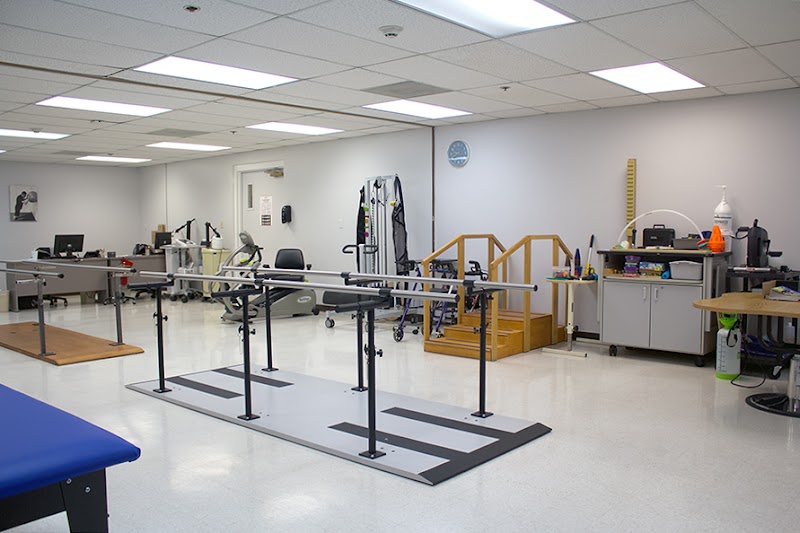
How is Providence Place At Glencroft Staffed?

CMS rates PROVIDENCE PLACE AT GLENCROFT's staffing level at 4 out of 5 stars, which is above average compared to other nursing homes. Staff turnover is 41%, compared to the Arizona average of 46%. This relatively stable workforce can support continuity of care.

What Have Inspectors Found at Providence Place At Glencroft?

State health inspectors documented 22 deficiencies at PROVIDENCE PLACE AT GLENCROFT during 2022 to 2025. These included: 1 that caused actual resident harm and 21 with potential for harm. Deficiencies causing actual harm indicate documented cases where residents experienced negative health consequences.
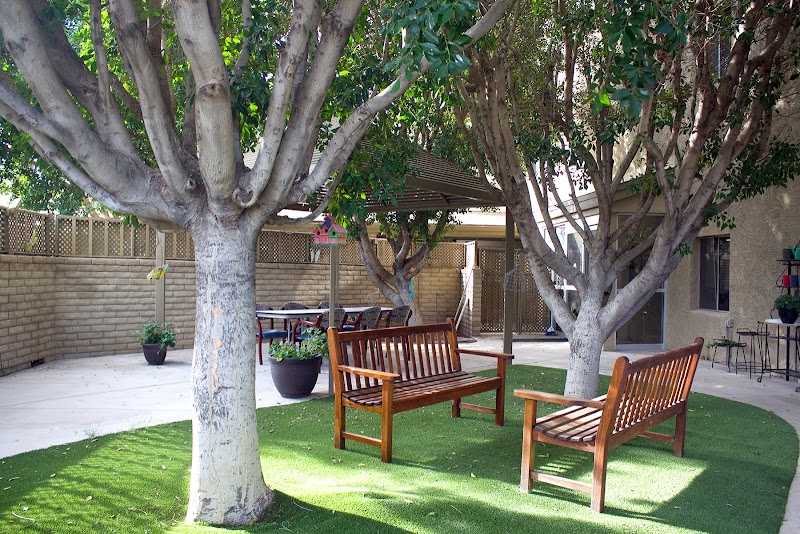
Who Owns and Operates Providence Place At Glencroft?

PROVIDENCE PLACE AT GLENCROFT is owned by a non-profit organization. Non-profit facilities reinvest revenue into operations rather than distributing to shareholders. The facility operates independently rather than as part of a larger chain. With 225 certified beds and approximately 107 residents (about 48% occupancy), it is a large facility located in GLENDALE, Arizona.
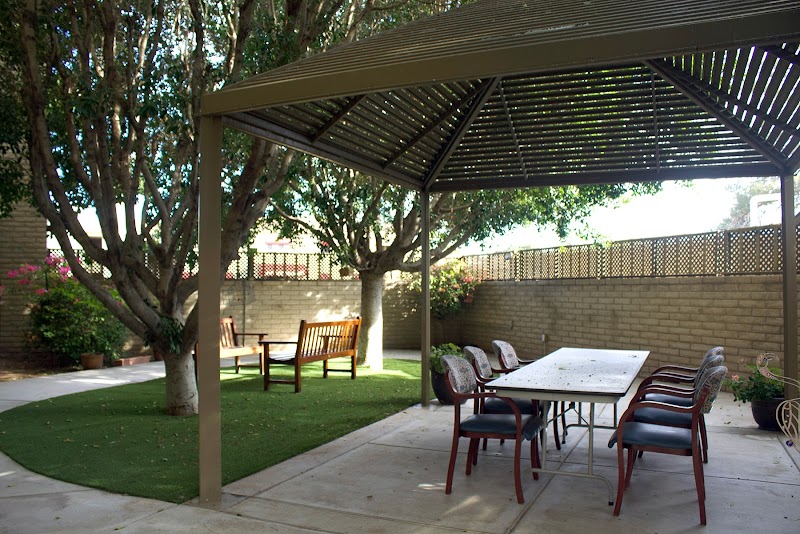
How Does Providence Place At Glencroft Compare to Other Arizona Nursing Homes?

Compared to the 100 nursing homes in Arizona, PROVIDENCE PLACE AT GLENCROFT's overall rating (2 stars) is below the state average of 3.3, staff turnover (41%) is near the state average of 46%, and health inspection rating (2 stars) is below the national benchmark.

What Should Families Ask When Visiting Providence Place At Glencroft?

Based on this facility's data, families visiting should ask: "What safeguards and monitoring systems are in place to protect residents from abuse or neglect?" "Can I visit during a mealtime to observe dining assistance and food quality?" "How do you handle medical emergencies, and what is your hospital transfer rate?" "Can I speak with family members of current residents about their experience?" These questions are particularly relevant given the substantiated abuse finding on record.

Is Providence Place At Glencroft Safe?

Based on CMS inspection data, PROVIDENCE PLACE AT GLENCROFT has documented safety concerns. The facility has 1 substantiated abuse finding (meaning confirmed case of resident harm by staff or other residents). The facility has a 2-star overall rating and ranks #100 of 100 nursing homes in Arizona. Families considering this facility should ask detailed questions about what corrective actions have been taken since these incidents.

Do Nurses at Providence Place At Glencroft Stick Around?

PROVIDENCE PLACE AT GLENCROFT has a staff turnover rate of 41%, which is about average for Arizona nursing homes (state average: 46%). Moderate turnover is common in nursing homes, but families should still ask about staff tenure and how the facility maintains care continuity when employees leave.

Was Providence Place At Glencroft Ever Fined?

PROVIDENCE PLACE AT GLENCROFT has no federal fines on record. CMS issues fines when nursing homes fail to meet care standards or don't correct problems found during inspections. The absence of fines suggests the facility has either maintained compliance or corrected any issues before penalties were assessed. This is a positive indicator, though families should still review recent inspection reports for the full picture.

Is Providence Place At Glencroft on Any Federal Watch List?

PROVIDENCE PLACE AT GLENCROFT is not on any federal watch list. The most significant is the Special Focus Facility (SFF) program, which identifies the bottom 1% of nursing homes nationally based on persistent, serious quality problems. Not being on this list means the facility has avoided the pattern of deficiencies that triggers enhanced federal oversight. This is a positive indicator, though families should still review the facility's inspection history directly.