ALTA MESA HEALTH AND REHABILITATION
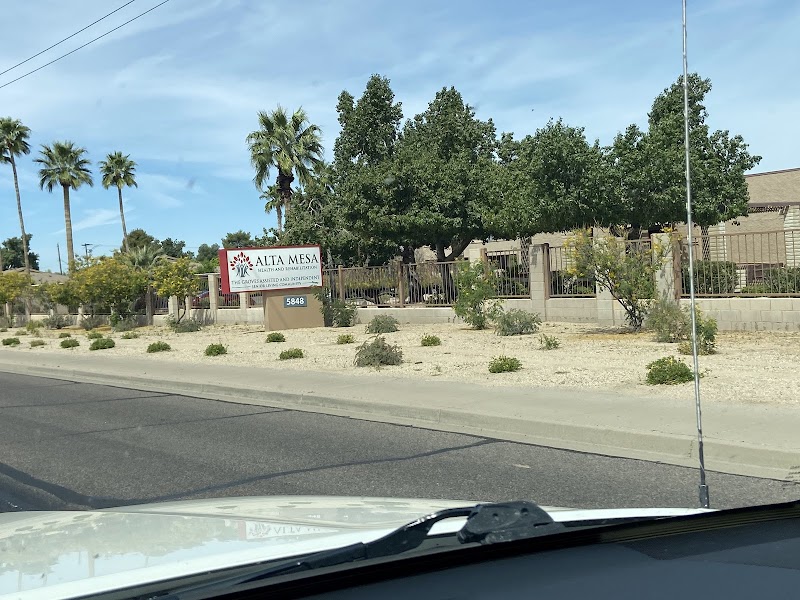
5848 EAST UNIVERSITY DRIVE, MESA, AZ 85205 (480) 981-0098
For profit - Corporation 70 Beds THE ENSIGN GROUP Data: November 2025
Trust Grade
90/100
#5 of 139 in AZ
Last Inspection: November 2024

Within standard 12-15 month inspection cycle. Federal law requires annual inspections.

Overview

Alta Mesa Health and Rehabilitation in Mesa, Arizona, has earned a Trust Grade of A, which indicates it is considered excellent and highly recommended among nursing homes. It ranks #5 out of 139 facilities in Arizona, placing it in the top tier of care options in the state. The facility is improving, with a reduction in reported issues from four in 2023 to two in 2024. Staffing is rated average with a turnover rate of 52%, slightly above the state average of 48%, which means some staff may not stay long-term. While the facility has no fines, indicating good compliance, there have been concerns such as improper chemical storage in the kitchen, which poses a risk to residents, and lapses in required screening processes for some residents that could affect their care needs.

Trust Score
A
90/100
In Arizona
#5/139
Top 3%
Safety Record
Low Risk
No red flags
Inspections
Getting Better
4 → 2 violations
Staff Stability
⚠ Watch
52% turnover. Above average. Higher turnover means staff may not know residents' routines.
Penalties
✓ Good
No fines on record. Clean compliance history, better than most Arizona facilities.
Skilled Nurses
○ Average
Each resident gets 41 minutes of Registered Nurse (RN) attention daily — about average for Arizona. RNs are the most trained staff who monitor for health changes.
Violations
⚠ Watch
11 deficiencies on record. Higher than average. Multiple issues found across inspections.
★★★★★
5.0
Overall Rating
★★★☆☆
3.0
Staff Levels
★★★★★
5.0
Care Quality
★★★★☆
4.0
Inspection Score
Stable
2023: 4 issues
2024: 2 issues

The Good

  • 5-Star Quality Measures · Strong clinical quality outcomes
  • Full Sprinkler Coverage · Fire safety systems throughout facility
  • No fines on record

Facility shows strength in quality measures, fire safety.

The Bad

Staff Turnover: 52%

Near Arizona avg (46%)

Higher turnover may affect care consistency

Chain: THE ENSIGN GROUP

Part of a multi-facility chain

Ask about local staffing decisions and management

The Ugly 11 deficiencies on record

Nov 2024 2 deficiencies
CONCERN (D)

Potential for Harm - no one hurt, but risky conditions existed

Respiratory Care (Tag F0695)

Could have caused harm · This affected 1 resident

**NOTE- TERMS IN BRACKETS HAVE BEEN EDITED TO PROTECT CONFIDENTIALITY** Based on resident and staff interviews, clinical record review, policy review and observations, the facility failed to ensure th...

Read full inspector narrative →
**NOTE- TERMS IN BRACKETS HAVE BEEN EDITED TO PROTECT CONFIDENTIALITY** Based on resident and staff interviews, clinical record review, policy review and observations, the facility failed to ensure that one of one sampled resident (#510) was administered oxygen as ordered. The deficient practice could result in the resident having low oxygen saturations. Findings include: Resident #510 was admitted on [DATE] with diagnoses that included influenza due to novel influenza A virus with other respiratory manifestations. A physician ' s order dated November 16, 2024 revealed an active order for oxygen at 2 liters per minute (LPM) via nasal cannula (NC) continuous, may titrate to 5 LPM to keep oxygen saturation above 90%. Review of the November 2024 Medication Administration Record (MAR) revealed evidence that oxygen had been administered via NC at 2LPM between November 16, 2024 to November 20, 2024. A care plan dated November 18, 2024 revealed a focus for oxygen therapy related to ineffective gas exchange, and the interventions included giving medications as ordered by the physician, and to monitor/document side effects and effectiveness. An admission Minimum Data Set (MDS) assessment dated [DATE], revealed a Brief Mental Interview Assessment (BIMS) score of 15 which indicated no cognitive impairment. The MDS was in progress and there was no evidence of assessments in other areas. During an initial observation conducted on November 18, 2024 at 8:53 a.m. of resident #510 who was sitting up in bed and there was no evidence that the resident was being administered oxygen; nor was there evidence of oxygen related supplies in her room (ex. Nasal cannula, tubing, or oxygen tank and/or concentrator). A second observation of the resident was conducted on November 20, 2024 at 10:50 a.m. and the resident was observed to be sitting up in her bed and there was no evidence that she was being administered oxygen nor had oxygen related supplies in her room. A final observation of the resident was conducted on November 20, 2024 at 1:19 p.m. and there was no evidence that the resident was receiving oxygen. An interview was conducted on November 20, 2024 at 10:50 a.m. with Resident #510, who stated she had not been administered oxygen since admission An interview was conducted on November 20, 2024 at 11:06 a.m. with a Certified Nursing Assistant (CNA/Staff #61). Staff #61 revealed that the facility process for administering oxygen would be to ensure that the resident is being administered the right dosage and ensure that the system is functioning properly. The CNA stated she was familiar with the patient and did not recall ever seeing her on oxygen. The CNA then entered the room and confirmed the resident was not currently being administered oxygen. An interview was conducted on November 20, 2024 at 11:55 a.m. with a Licensed Practical Nurse (LPN/Staff #113), who stated that the process for administering oxygen would be to obtain a physician ' s order and administer as written, as this is the facilities expectation.The LPN stated the risks of not administering oxygen as ordered could result in low oxygen saturation which could lead to harm. Staff #113 reviewed the physician's order and verified an order to administer oxygen at 2LPM via NC continuously and to change the oxygen tubing weekly. She then stated that it was her first time working with Resident #510 and she was unaware if she had been administered oxygen but had not seen the resident on oxygen that morning. An interview was conducted on November 20, 2024 at 1:06 p.m. with the Assistant Director of Nursing (ADON/ Staff #76), who stated that oxygen is administered according to physician ' s orders. The ADON reviewed Resident #510 ' s clinical record and verified that the resident had an order for continuous oxygen, and verified that it was being charted in the November 2024 MAR that the resident had been receiving oxygen. The ADON stated that his expectations would be to administer oxygen as ordered. The ADON identified that the risks of not administering oxygen as ordered could lead to respiratory issues such as hypoxia. Review of facility policy titled, Oxygen Administration, revealed that oxygen therapy is ordered by physician and the resident's clinical record will include: that oxygen is to be administered, and oxygen concentrators will be maintained in room when oxygen ordered. Review of another facility policy titled, Physician Orders, revealed that it is policy of this facility that drugs shall be administered only upon the order of a person duly licensed and authorized to prescribe such drugs. Further review revealed, it is the policy of this facility to accurately implement orders in addition to medication orders (treatment, procedures) only upon the order of a person duly licensed and authorized to do so in accordance with the resident's plan of care.
CONCERN (E) 📢 Someone Reported This

A family member, employee, or ombudsman was alarmed enough to file a formal complaint

Potential for Harm - no one hurt, but risky conditions existed

Staffing Information (Tag F0732)

Could have caused harm · This affected multiple residents

Based on facility documents, staff interviews and facility policy, the facility failed to ensure the Daily Staff Postings for nursing staff was accurate and completed for the number of staff hours sch...

Read full inspector narrative →
Based on facility documents, staff interviews and facility policy, the facility failed to ensure the Daily Staff Postings for nursing staff was accurate and completed for the number of staff hours scheduled and hours worked. This deficient practice could result in an inflation or deflation of facility metrics which can impact actual staffing needs. Findings Include: A review of the 2024 Alta Mesa Health and Rehabilitation Facility Assessment addressed the staffing plan, charts, and assignments for the facility. According to the assessment, the facility utilized information collected in the resident profile to identify the care and services needed for the residents. The assessment included a sample staffing chart which calculated that the services of 1-2 registered nurses were appropriate for Long-Term Care and Short-Term Care (skilled) residents. The assessment further stated that staffing is ultimately is determined by the census, resident acuity and needs. A review of the PBJ Staffing Data Report for Fiscal Year Quarter 3, 2024 (April 1-June 30), identified the facility as having an excessively low weekend staffing finding. Review of the Daily Staff Posting dated July 6, 2024 revealed no evidence of the registered nurse assigned to the unit as a charge nurse. Further review of the posting revealed 3 Licensed Practical Nurses (LPN) worked the 6 am to 6 pm shift, with scheduled hours worked, and actual hours worked of 33.41 hours, after recalculation with the coordinator, it was determined the value was approximately 37.6 hours actually worked. The Daily Staff Postings dated from October 21, 2024 thru November 6, 2024 posting failed to include the actual hours worked by the licensed and unlicensed nursing staff directly responsible for resident care per shift. The hours reflected in the Time Tracking: Daily Punch Details, did not correspond to the postings The Daily Staff Postings dated November 13, 2024 during the 6 am to 6 pm shift revealed 4 RN's were scheduled to work 36 hours, with an actual worked hour of 35.95 hours. Punch details are listed below: -RN #1 total of 7.62 hours -RN #2 total of 12.18 hours -RN #3 total of 11.57 hours Cumulative Hours of 31.37. On this date there was a total of 3 RN's with an actual worked hour of approximately 31.37 ours. There is a 4.58-hour difference between the posting and punch details. According to the Center for Medicare Services (CMS website) as of November 20, 2024, the facility has a below average (two star) rating for staffing. The Registered Nurse hours per resident per day on the week average for the weekend was recorded at 23 minutes. The national average was 28 minutes. The Arizona average was 30 minutes. Observed with the staffing coordinator the miscalculations transcribed on the Daily Staff Posting dated July 6, 2024. Observed with the coordinator the Daily Staff Postings dated from October 21, 2024 - November 6, 2024, where the actual hours worked column were left blank. On November 18, 2024 during the initial pool screening, multiple alert and oriented residents complained of long wait times for care and voiced the following concerns: -One resident stated being at for facility for a total of 4 months, and feels short staffing is definitely a problem. The resident feels the facility should have a better backup plan in place because things are not getting done like they are supposed to on the weekends. Resident stated they were so short staffed this weekend, his vital signs were only taken once, instead of the usual three times a day. -One resident stated it took 3 hours to get to the commode and is frustrated because they are always short staffed. -One resident stated that he prefers to go to the bathroom to have a bowel movement, but because of his decreased mobility, he has to consistently defecate in his adult brief. -One resident feels they are extremely slow in answering call bells. -One resident's spouse stated frustration with the facility staffing and stated You cannot expect one CNA to take care of everyone! One CNA for 28 residents is ridiculous! - One resident admits to having to call the front desk to get assistance because the staff takes to long to answer call lights. An interview was conducted with CNA (Staff #39) on November 19, 2024 at 9:23 a.m. The CNA stated that she is usually takes care of about 15-17 residents depending on needs. She states some responsibilities of her day includes grooming, and dressing, giving showers, assisting residents with whatever is needed. The CNA feels she has enough time to complete her required assignments during her shift. In regards to the weekend shift, she stated she doesn't work on the weekend. She also feels 4 CNA's and a shower aid optimal staffing for the CNA's. A joint interview with the staffing coordinator (Staff #31) and the administrator (Staff # 83) was conducted on November 20, 2024 at approximately 1 pm, to address the actual hours worked discrepancies, and to discuss concerns about staffing. The staffing coordinator stated that staffing is done according to acuity and census. She included that resident's that require 2-person care are also considered in staffing decisions. The staffing coordinator stated the average census for the last 3 months is between 55-63. As far as direct care resident staff, there are typically 4 CNA's, and 3 licensed nurses for the building. The administrator voiced his appreciation for the hospitality aides that assist the residents and provides support to the staff. The administrator and coordinator admit sometimes the staffing coordinator has a tendency towards not catching mathematical errors and any mathematical errors are unintentionally transferred to the Daily Staff Posting. The administrator explained that in case of direct care staff call outs they always have someone to fill in. The administrator admitted to feeling fortunate that registry staff were not utilized at the facility. He states that some of the staff live within a 10-minute vicinity to aid if needed. The administrator stated they do sometimes receive complaints about staffing and long call light wait times. He explained they conduct call light audits and they take an in-depth look into each complaint. After the investigation concludes, often times the actual wait times were not as long as initially perceived. The administrator stated they are definitely not understaffed, and to ensure that, they always have recruitment efforts going on. In regards to the Center for Medicare Services (CMS) 2-star staffing rating, the administrator believes the rating is actually higher, but they unfortunately did not submit some employee data correctly. A follow up interview was conducted with the staffing coordinator on November 20, 2024 at approximately 14:00. The coordinator acknowledged on the day of July 6, 2024 the facility census was 68. During the interview, the surveyor and coordinator used daily punch details, staff sign in-sheet, and the daily staff posting for July 6, 2024 to verify discrepancies in the posting. The coordinator identified missing time punches as a barrier in tabulating the final actual hours worked column correctly She states staff are always encouraged to properly clock in and out. The facility policy titled ADL's calls for the facility to provide residents with the appropriate treatment and services to attain or maintain the highest level of resident well-being. The facility policy titled Sufficient Staffing ensures the facility is to have sufficient nursing staff with the appropriate competencies and skillsets, in accordance with the facility assessment.
Sept 2023 4 deficiencies
CONCERN (D)

Potential for Harm - no one hurt, but risky conditions existed

Comprehensive Care Plan (Tag F0656)

Could have caused harm · This affected 1 resident

**NOTE- TERMS IN BRACKETS HAVE BEEN EDITED TO PROTECT CONFIDENTIALITY** Based on clinical record review, staff interviews, and policy and procedures, the facility failed to ensure that a care plan for...

Read full inspector narrative →
**NOTE- TERMS IN BRACKETS HAVE BEEN EDITED TO PROTECT CONFIDENTIALITY** Based on clinical record review, staff interviews, and policy and procedures, the facility failed to ensure that a care plan for bathing was implemented for one resident (#17). The deficient practice could result in residents developing skin issues and poor hygiene. Findings include: Resident #17 was admitted on [DATE], with diagnosis that included multiple sclerosis and functional quadriplegia. A Minimum Data Set (MDS) assessment dated [DATE], included a Brief Interview for Mental Status (BIMS) score of 15, which indicates the resident was cognitively intact. It also included that the resident needed one to two-person extensive assistance with personal hygiene, one-person physical assistance with bathing, extensive assistance with dressing and total dependence with Hoyer lift transfers. Review of care plan initiated on June 15, 2023, included resident is totally dependent on dressing and transfers, but did not reveal a care plan for bathing. Review of the Case Area Assessment (CAA) dated August 30, 2023, included that the resident was totally dependent in the area of bathing. An interview was conducted with the MDS Coordinator (staff #7) on September 09/12/23 at 9:54 AM. Staff #7 stated that if a resident requires any assistance with bathing or assistive devices, it should be included in the care plan. Staff #7 reviewed the care plan for resident #17 and stated that there was no care plan for bathing. An interview was conducted with the Director of Nursing (DON/staff #12) on September 12, 2023 at 11:01 AM. Staff #12 stated that showers are scheduled twice a week for each resident. She acknowledged that resident #17 needed assistance with showers and it should have been care planned. Staff #12 reviewed the care plan and stated that there was not a care plan for bathing. The facility's policy Nursing Administration dated August 2012 and revised May 2023 stated that the baseline care plan will include minimal healthcare information necessary to properly care for a resident.
CONCERN (D)

Potential for Harm - no one hurt, but risky conditions existed

Quality of Care (Tag F0684)

Could have caused harm · This affected 1 resident

**NOTE- TERMS IN BRACKETS HAVE BEEN EDITED TO PROTECT CONFIDENTIALITY** Based on clinical record review, interviews, policy and procedure, and observation of current practice, the facility failed to e...

Read full inspector narrative →
**NOTE- TERMS IN BRACKETS HAVE BEEN EDITED TO PROTECT CONFIDENTIALITY** Based on clinical record review, interviews, policy and procedure, and observation of current practice, the facility failed to ensure on resident (#215) received treatment and care in accordance with professional standards. Findings included: Resident #215 was initially admitted to the facility on [DATE] and readmitted on [DATE] with diagnoses that included atherosclerotic heart disease of native coronary artery without angina pectoris, acute on chronic combined systolic and diastolic heart failure. A hospital Discharge summary dated [DATE] revealed resident was discharged with a diagnosis of osteomyelitis. Instructions stated if resident is on vancomycin, then Vancomycin trough on day #3, then weekly after is checked, keep the level between 15 and 20, and Skilled Nursing Facility Pharmacist to dose per their protocol. Review of the physician order revealed an order for vancomycin hydrochloride intravenous solution 500 milligram (mg)/100 milliliter (ml) to use 1.25 mg intravenously one time a day for osteomyelitis for 8 weeks initiated on July 16, 2023. Review of a progress note dated July 16, 2023 regarding the above order that the dose failed a general dose range check based on drug inputs and/or information provided and that the drug's dose should be adjusted based on renal function. The physician order also revealed an order for vancomycin trough one time only for 1 day to draw 30 minutes prior to the 4th dose, initiated on July 20, 2023. The medication was transcribed in the MAR (Medication Administration Record) and revealed vancomycin hydrochloride was administered from July 17, 2023 to July 23, 2023. In addition, the vancomycin trough was marked as complete on July 21, 2023 at 8:27 AM. A lab results reported on July 21, 2023 at 3:02 PM revealed a vancomycin serum trough level of 49.6 microgram (?g)/mL, which was flagged as a critical result. The report stated the result was called to the facility on July 21, 2023 at 6:27 PM. Review of records revealed no documentation that the pharmacy or the physician was notified upon receipt of the critical lab result. A progress note dated July 24, 2023 at 6:20 AM stated the patient was found unresponsive and cardiopulmonary resuscitation was initiated. The noted also stated the resident had a time of death at 6:58 AM in the hospital. An interview was conducted on September 12, 2023 at 12:31 PM with an LPN (Licensed Practical Nurse/Staff #60 who stated vancomycin trough was monitored for residents who are on vancomycin because the medication was a harsh chemical for the body. Staff #60 stated that trough is regulated every 4th dose to maintain certain level, drawn before the 4th dose and the dose adjusted if necessary. Staff #60 stated that if trough is elevated then the Assistant Directors of Nursing (ADON) are notified, who then notifies the Director of Nursing, who will reach out to the provider and wait for instructions to either change the dose or hold the medication. The LPN (staff #60) stated that the provider is notified because they are medicine and their purview. Further, he stated that he would reach out to the ADON and inform them of the labs and help navigate and would hold the next dose until he receives clarification. When asked what the risks were for giving the next dose when trough levels were high, staff #60 stated he was unsure but his next action was to notify the physician. An interview was conducted on September 12, 2023 at 12:42 PM with an ADON (staff #102) who stated that trough levels were monitored for residents being treated with vancomycin. He said that depending on the infectious disease provider what is monitored such as kidney functions and other labs. The ADON stated that pharmacy monitored and adjusted the dose for vancomycin for therapeutic levels. Further, before the resident received the next dose, pharmacy would give recommendation on the dosage. The ADON stated that if there were reports of elevated trough level then the next action would be to notify pharmacy to fully integrate and get the next dosage. He stated that the medication was not skipped until guidance from pharmacy was received. Staff #102 said if the trough level was critically high or low, the provider was notified immediately and get orders. Further, he stated that the medication is not held but actions were based on the provider's instructions. He stated, the notification was noted on the resident's record as either lab, change of condition, change to order, and recommendation from pharmacy. Per the ADON, the normal level for trough was on the high end of 15 and if it was elevated it was up to pharmacy's discretion, per provider order. He stated that the risk of not notifying the provider of elevated trough was that the resident can experience side effects of red man's syndrome. In addition, his expectation was to notify the provider for high lab results because it could affect kidneys-vancomycin toxicity. An interview conducted on September 12, 2023 at 1:05 PM with the DON (Director of Nursing/Staff #12) who stated that when a resident was receiving vancomycin, trough, weekly labs, and toxicity levels were monitored and managed by pharmacy. The DON stated that staff drew the labs and pharmacy doses the medication. The DON stated that process for monitoring trough was that the lab will call the facility and fax results to the resident's electronic health record, integrated with pharmacy. Then pharmacy will make their recommendation of what the patient needs. The DON said that the risk of elevated trough included renal issues, toxicity, and ringing in the ears. Her expectations were to notify the provider, which was sometimes charted, get orders from provider, and make sure pharmacy is aware since they dose the medication. The DON stated that if communication with the provider or pharmacy was not charted, the communication probably happened. The DON verified that the vancomycin trough levels for resident #215 was approximately 49, which she stated was extremely high. She stated that resident #215's nurse working that day [July 21, 2023] received the report. The DON said that lab will call the facility and ask for the nurse for the resident and report the lab value of the patient. The DON verified resident's records that there was no documentation that the provider or pharmacy were notified immediately after receiving the critical lab value. The DON stated that there was a note from the Nurse Practitioner on July 24, 2023 and stated, but that is late. The DON verified the MAR that there were no changes on the vancomycin dosage after July 21, 2023 and that medication was never held after July 21, 2023. The DON stated that a staff was written up for not verifying lab values before the administration of vancomycin to resident #215. The DON provided staff record titled, On the Job Training for staff #84 that noted that staff failed to confirm lab value prior to administering medications and that she was educated on lab values particularly vancomycin trough and the contraindications when elevated.
CONCERN (D)

Potential for Harm - no one hurt, but risky conditions existed

Food Safety (Tag F0812)

Could have caused harm · This affected 1 resident

Based on observations, staff interviews, and the facility policy and procedures, the facility failed to ensure that food was properly stored. The deficient practice could result in a loss of freshness...

Read full inspector narrative →
Based on observations, staff interviews, and the facility policy and procedures, the facility failed to ensure that food was properly stored. The deficient practice could result in a loss of freshness, freezer burn, taste, and loss of nutritive value. Findings include: During the initial tour of the kitchen conducted on September 11, 2023 at 9:00 a.m. with the Dietary Supervisor (#11), the following observations were made in the large walk-in refrigerator and freezer: -a full pan of diced cantaloupe, honeydew melon, and watermelon with a discard date of September 13. 2023 in the walk-in refrigerator was covered with Saranwrap and there was a hole approximately two by two inches in size located at one corner of the pan. -a gallon size plastic bag of mixed salad with a discard date of September 13, 2023 was not sealed and some of the salad was brown and wilted. -a frozen bag containing 17 to 18 hash browns not sealed. Staff #11 stated that the purpose of covering/sealing food is to maintain freshness, prevent contamination from other food particles, prevent freezer burn, and maintain the quality of taste. An interview was conducted on September 14, 2023 at 8:28 a.m. with the Administrator (#188), who stated that he oversees the campus and supervises the dietary supervisor. He stated that food should be covered with saran wrap or put in a bag and sealed. He stated that the purpose for sealing food is to preserve freshness. The facility's policy, Alta Mesa Health and Rehab, Policy & Procedure Manual Food Storage states that food will be stored, at appropriate temperatures and by methods designed to prevent contamination or cross contamination. Leftover food should be stored in covered containers or wrapped carefully and securely and clearly labeled and dated before being refrigerated.
CONCERN (E)

Potential for Harm - no one hurt, but risky conditions existed

Accident Prevention (Tag F0689)

Could have caused harm · This affected multiple residents

**NOTE- TERMS IN BRACKETS HAVE BEEN EDITED TO PROTECT CONFIDENTIALITY** Based on observations, staff interviews, and facility policy and procedures, the facility failed to ensure chemicals were safely...

Read full inspector narrative →
**NOTE- TERMS IN BRACKETS HAVE BEEN EDITED TO PROTECT CONFIDENTIALITY** Based on observations, staff interviews, and facility policy and procedures, the facility failed to ensure chemicals were safely stored. The deficient practice could result in residents being physically injured. Findings include: During the initial tour of the kitchen conducted on September 11, 2023 at 9:00 a.m. with the dietary supervisor (#11), chemicals were observed being stored on an open shelf in the kitchen to the right of the dishwasher. Staff #11 stated that they were not using the chemicals and he didn't know why they were on the shelf or who put them there, but he is responsible for ensuring that chemicals are secured. He also stated that as long as the kitchen door, located directly to the left of the dishwasher, leading to the dining room is closed and kitchen staff are present, it is alright to store the chemicals on the lower shelf. During this time, the kitchen door was observed to be open. The chemicals observed on the shelf included: -Sure Clean Aerosol Cleaner -Ajax Oxygen Bleach Cleaner -Ecolab Keystone Glass Cleaner -Ecolab Virasept Disinfectant -Ecolab Monogram Clean Force Delimer -Gen X Flatware Presoak -Shine-Up Lemon Furniture Polish -De-Scale Ultra Cleaner -Comet Cleaner with Bleach -Stainless Steel Aerosol Cleaner -Watermark Fabulous Apple Air Freshener -[NAME]-Brz Odorant -HDIC Ultra Cleaner -Airkem Vivid Glass Cleaner -Orange Force Multi-Surface Cleaner Degreaser -A spray bottle with no label containing approximately 3 ounces of a clear liquid that smelled like a chemical. -A spray bottle with no label containing more than 24 ounces of a red/orange colored chemical. An interview was conducted on September 14, 2023 at 8:28 a.m. with the Administrator (#188), who stated that he oversees the campus and supervisors the dietary supervisor. He stated that it is his expectation that staff follow the facility policy about safely securing and storing chemicals. He stated that the door leading from the dining room to the kitchen is not always locked and sometimes it is open because staff are doing things and coming and going. The facility's policy, Chemical Storage dated January 2023 states that it is the policy of this facility that all products containing a hazardous chemical or substance will be properly labeled for use by employees and stored in a secured manner to ensure a safe, hazard free environment for residents.
Aug 2022 5 deficiencies
CONCERN (D)

Potential for Harm - no one hurt, but risky conditions existed

Employment Screening (Tag F0606)

Could have caused harm · This affected 1 resident

Based on personnel record review, staff interviews, and policy review, the facility failed to ensure a Certified Nursing Assistant (CNA/staff #3) was not hired with a finding of resident abuse or negl...

Read full inspector narrative →
Based on personnel record review, staff interviews, and policy review, the facility failed to ensure a Certified Nursing Assistant (CNA/staff #3) was not hired with a finding of resident abuse or neglect from the State professional licensing board. The deficient practice could result in residents being subjected to abuse. Findings include: Review of the personnel record for a CNA (staff #3) revealed a hire date of June 20, 2022. Continued review of the personnel record for the CNA (staff #3) revealed an Arizona State Board of Nursing Primary Source Board of Nursing Report Summary dated June 30, 2022. The report included documentation of an Undeclared Certified Nursing Assistant (UCNA) certification with an original issue date of December 1, 2006 and expiration date of November 6, 2022, including a revoked license status and no discipline action noted. The report further included a CNA certification issued to staff #3 with an original issue date of August 3, 2017 and an expiration date of July 31, 2023. The certification status was active and disciplinary action stated yes. The report stated the discipline/final orders state is Arizona, and the date action was taken was November 6, 2012. Review of the Arizona State Board of Nursing Findings of Fact, Conclusions of Law and Order dated September 20, 2012 stated staff #3 CNA certificate was revoked. The report included documentation to support staff #3 was found guilty of violations to include neglecting or abusing a patient or resident physically, verbally, emotionally, or financially. An interview was conducted on August 4, 2022 at 9:26 AM with the Director of Nursing (DON/staff #48). She stated Human Resources (HR) completes the licensure/certification verification and background checks for all employees and follows through with the process of determining disciplinary actions. An interview was conducted on August 4, 2022 at 9:31 AM with the Human Resources Director (staff #20). She stated she is responsible for verifying certification/licensure and obtaining background checks for all employees. She stated if the employee has a previous employment history or is a current employee with the corporation, transfer paperwork is completed by the employee, returned to her, and the form is then sent to the corporate service center. She stated the service center transfers the employee file to the current facility. She stated staff #3 was a transfer from a facility in the corporation but was not a current employee at the time of the transfer. Staff #20 stated staff #3 was considered a rehire. She stated she did verify staff #3's CNA certification and was not aware the verification included a past disciplinary action. She stated if the State Board lists a certification or license as valid and active she should be able to hire the individual. She further stated it is a policy for her to be aware if a potential employee has a previous disciplinary action but it is not her responsibility to review any disciplinary actions. Another interview was conducted with the DON (staff #48) on August 4, 2022 at 10:53 AM. She stated the DON and the Executive Director (ED) should be notified by HR if a potential employee has any prior disciplinary actions identified on the certification/licensure verification. She stated she was not aware of any prior disciplinary for staff #3 and is now aware and reviewed the Conclusions of Law and Order dated September 20, 2012. The DON further stated she would not have hired staff #3 if she had been aware of staff #3 disciplinary action history. She stated when she is notified by HR of a potential employee with a past disciplinary action, she reviews it and discusses it with the potential employee prior to determining if the individual can or cannot be hired. The DON stated there is a risk to residents when the process of pre-employment background screening and licensure verification is not followed per policy. An interview conducted on August 4, 2022 at 11:19 AM with the ED (staff #66). He stated HR is responsible for ensuring everything is taken care of during the potential employees hiring process. He stated he would expect HR or the corporation service center to notify him or the DON if a potential employee has a prior disciplinary action attached to their license. The ED stated he would interview the potential employee to determine if it was appropriate to hire the individual. He stated if the potential employee transfers from a different facility in the corporation, they do not always get the information immediately as the facilities are all independent and they are not aware unless the employee discloses they worked at a previous facility. He further stated he was not aware staff #3 had a prior disciplinary action prior to August 4, 2022. The ED stated he would have expected HR to have notified him or the DON to review staff #3's file prior to hiring staff #3. He stated they would have discussed the disciplinary action with the employee before determining hiring eligibility. He further stated HR would not be the person to determine the hiring status with any potential employee with previous disciplinary action. The facility's policy regarding screening for prospective employees stated that prior to hire, the facility will screen potential employees for a history of abuse, neglect, exploitation, or misappropriation of resident property in order to prohibit such abuse, neglect, exploitation, or misappropriation of resident property. The policy stated the facility will not hire or retain any person, directly or indirectly, who has disciplinary action in effect against his or her professional license by a State licensure body as a result of a finding of abuse, neglect, exploitation, mistreatment of residents or misappropriation of resident property.
CONCERN (D)

Potential for Harm - no one hurt, but risky conditions existed

Abuse Prevention Policies (Tag F0607)

Could have caused harm · This affected 1 resident

Based on personnel file review, staff interviews, and policy review, the facility failed to implement their policy regarding the hiring process for a Certified Nursing Assistant (CNA/staff #3). The de...

Read full inspector narrative →
Based on personnel file review, staff interviews, and policy review, the facility failed to implement their policy regarding the hiring process for a Certified Nursing Assistant (CNA/staff #3). The deficient practice could result in staff being hired that have been found guilty of neglect or abuse. Findings include: Review of the personnel file for staff #3 revealed a hire date of June 20, 2022. Further review of the personnel file for the CNA revealed a CNA certification issued to staff #3 with an original issue date of August 3, 2017 and an expiration date of July 31, 2023. The certification status was active and disciplinary action stated yes. The report stated the discipline/final orders state is Arizona, and the date action was taken was November 6, 2012. Review of the Arizona State Board of Nursing Findings of Fact, Conclusions of Law and Order dated September 20, 2012 stated staff #3 CNA certificate was revoked. The report included documentation to support staff #3 was found guilty of violations that included neglect or abuse of a patient or resident physically, verbally, emotionally, or financially. During an interview conducted on August 4, 2022 at 9:26 AM with the Director of Nursing (DON, staff #48), she stated Human Resources (HR) completes the licensure/certification verification and background checks for all employees, and follows through with the process of determining disciplinary actions. An interview was conducted on August 4, 2022 at 9:31 AM with the Human Resources Director (staff #20). She stated she is responsible for verifying certification/licensure and background checks on all employees. Staff #20 stated she did verify staff #3's CNA certification and was not aware the verification included a past disciplinary action. She stated if the State Board lists a certification or license as valid and active she should be able to hire the individual. She further stated it is policy for her to be aware a potential employee has a previous disciplinary action but it is not her responsibility to review any disciplinary actions. In another interview conducted with the DON (staff #48) on August 4, 2022 at 10:53 AM, the DON stated the DON and ED (Executive Director) should be notified by HR if a potential employee has any prior disciplinary actions identified on the certification/licensure verification. She stated she was not aware of any prior disciplinary for staff #3. The DON stated she would not have hired staff #3 if she had been aware of staff #3's history of disciplinary action. She stated there is a risk to the residents when the process of pre-employment background screening and licensure verification is not followed per policy. An interview was conducted with the ED (staff #66) on August 4, 2022 at 11:19 AM. He stated HR is responsible for ensuring everything is taken care of during the hiring process for a potential employee. He stated he would expect to be notified if a potential employee has a prior disciplinary action attached to their license. The ED further stated he was not aware staff #3 had a prior disciplinary action prior to August 4, 2022. He stated he would have expected HR to have notified him or the DON to review staff #3's file prior to hiring staff #3. He further stated HR would not be the person to determine the hiring status with any potential employee with previous disciplinary action. The facility's Abuse: Prevention of and Prohibition Against Policy reviewed January 2022, stated that screening of prospective employees included that prior to hire, the facility will review documentation status of and any disciplinary actions for licensing or registration boards and other registries. The policy also stated the facility will not hire any person who has been found guilty of abuse, neglect, exploitation, misappropriation of property or mistreatment by a court of law, has had a finding entered in the State Nurse Aide Registry or Office of Inspector General database concerning abuse, neglect, mistreatment of residents and misappropriation of property, or has disciplinary action in effect against the individuals professional license by a state licensure body.
CONCERN (D)

Potential for Harm - no one hurt, but risky conditions existed

Deficiency F0658 (Tag F0658)

Could have caused harm · This affected 1 resident

**NOTE- TERMS IN BRACKETS HAVE BEEN EDITED TO PROTECT CONFIDENTIALITY** Based on clinical record review, observations, resident and staff interviews, and review of policy and procedure, the facility f...

Read full inspector narrative →
**NOTE- TERMS IN BRACKETS HAVE BEEN EDITED TO PROTECT CONFIDENTIALITY** Based on clinical record review, observations, resident and staff interviews, and review of policy and procedure, the facility failed to ensure medication administration met professional standards of quality for two residents (#34 and #217). The deficient practice could result in adverse medication effects. Findings include: -Resident #217 was admitted to the facility on [DATE] with diagnoses that included type 2 diabetes mellitus (DM). Review of the physician's orders revealed an order dated July 24, 2022 for Glipizide 5 milligram (mg) tablet by mouth one time a day for DM. Review of the care plan revealed a focus dated July 25, 2022 for Diabetes Mellitus with goals that included the resident would be free from any signs or symptoms of hyper/hypoglycemia and would have no complications related to diabetes. The interventions stated to give diabetes medications as ordered by the physician and to educate regarding medications and importance of compliance. Review of the July 2022 Medication Administration Record (MAR) revealed Glipizide was administered for the 8:00 a.m. dose on August 3, 2022. Review of the medication blister card for Glipizide 5 mg tablet revealed a sticker that stated: Take this medicine 1/2 hour before a meal. An observation of medication administration was conducted on August 3 2022 at 8:13 a.m. with a Licensed Practical Nurse (LPN/staff #106). He administered a Glipizide 5 mg tablet to resident #217. The resident was observed to have eaten part of the breakfast meal at the time of the observation. An interview was conducted on August 3, 2022 at 11:45 a.m. with the LPN (staff #106). He stated it was important to follow the pharmacy directions on the medication card. The LPN acknowledged that the resident was mostly done with the meal at the time of the medication administration. He stated he tried to split up the medication administration for a resident if some medications needed to be given with a meal or before a meal. He stated the risk to the resident was that the medication may not be completely effective. -Resident #34 was admitted to the facility on [DATE] with diagnoses that included hypothyroidism, cellulitis, and chronic obstructive pulmonary disease. Review of the physician's orders included an order dated July 3, 2022 for Levothyroxine Sodium 112 microgram (mcg) tablet in the morning for low thyroid hormone. Review of the Levothyroxine 112 mcg tablet medication bubble card for resident #34 included a direction sticker to: Take this medicine on an empty stomach, preferably 1/2 to 1 hour before breakfast. Review of the July 2022 MAR revealed Levothyroxine was scheduled to be given at 6:30 a.m. and was initialed as administered on August 3, 2022. An observation of medication administration was conducted on August 3, 2022 at 8:38 a.m. with an LPN (staff #110). He was observed to administer Levothyroxine tab 112 mcg to resident #34. An interview was conducted with the resident on August 3, 2022 immediately following the medication administration. The resident stated that she had already eaten her breakfast. An interview was conducted on August 3, 2022 at 12:04 p.m. with the LPN (staff #110). He stated it was important to follow the pharmacy instructions when administering medications. He stated that he remembered resident #34 had already had breakfast and stated the resident was supposed to get the Levothyroxine before breakfast. The LPN stated the medication was less effective if not given on an empty stomach. In an interview conducted on August 3, 2022 at 12:18 p.m. with the Director of Nursing (DON/staff #48), she stated she expected staff to follow the pharmacy directions for administering medications. The DON stated that not following the pharmacy direction could impact the effectiveness of the medication. Review of the facility policy for Medication Administration/Administration of Drugs included: It is the policy of this facility that medications shall be administered as prescribed by the attending physician. Medications may not be set up in advance and scheduled medications must be administered within the facility time frame. Before and/or after meal medication orders must be administered as ordered.
CONCERN (D)

Potential for Harm - no one hurt, but risky conditions existed

Unnecessary Medications (Tag F0759)

Could have caused harm · This affected 1 resident

**NOTE- TERMS IN BRACKETS HAVE BEEN EDITED TO PROTECT CONFIDENTIALITY** Based on observations, clinical record review, staff interviews, and review of policy and procedure, the facility failed to ensu...

Read full inspector narrative →
**NOTE- TERMS IN BRACKETS HAVE BEEN EDITED TO PROTECT CONFIDENTIALITY** Based on observations, clinical record review, staff interviews, and review of policy and procedure, the facility failed to ensure the medication error rate was not 5% or greater, by failing to administer medications as ordered to one resident (#4). The error rate was 8.57%. The deficient practice could result in further medication errors. Findings include: Resident #4 was admitted to the facility on [DATE] with diagnoses that included gastro-esophageal reflux disease, anemia, and intestinal obstruction. An observation of medication administration for resident #4 was conducted on August 3, 2022 at 9:06 a.m. with a Licensed Practical Nurse (LPN/staff #110). The LPN was observed to administer medications which included: One aspirin 81 milligram (mg) chewable tablet; Two folic acid 400 microgram tablets (mcg); and One Multivitamin with minerals. Review of the physician's orders dated February 8, 2022 revealed: -Aspirin EC (enteric coated) tablet/delayed release 81 mg one time a day. However, the medication administered was not EC/delayed release. -Folic Acid 1 mg tablet one time a day. However, the medication administered was two 400 mcg tablets which would equal 800 mcg or 0.8 mg. -Multiple Vitamin Tablet one time a day. However, the medication administered included minerals, which was not ordered for the resident. An interview was conducted on August 3, 2022 at 12:04 p.m. with the LPN (staff #110). He stated he was expected to follow the physician's orders as written. He stated that he gave the chewable form of the aspirin because he did not have the ordered form in his cart. The LPN stated that he should not give the wrong medication when he does not have a supply in his cart, but that he should look for the medication in the medication room. The LPN stated that if he is still unable to find the medication ordered, he should notify the Assistant Director of Nursing (ADON) that he did not have the ordered medication. The LPN also stated that he should notify the physician if he was unable to give the medication. He stated he did not give the folic acid as ordered, that it was a medication error and that he had notified the physician. He stated he gave a multivitamin with minerals, but that the medication ordered was a multivitamin. He stated the wrong medication was administered and that was a medication error. The LPN stated that if he did not give medications as ordered, there is a risk to the residents of side effects or complications. An interview was conducted on August 3, 2022 at 12:18 p.m. with the Director of Nursing (DON/48). She stated she expected staff to follow the physician's orders as written. The DON stated if the resident did not receive the right medication, dose, or form of the medication, there were risk factors of adverse reactions. Review of the facility policy for Medication Administration/Administration of Drugs included: It is the policy of this facility that medications shall be administered as prescribed by the attending physician. Medications must be administered in accordance with the written orders of the attending physician. The seven rights of medication administration are as follows in order to ensure safety and accuracy of administration: right resident, right time, right medication, right dose, right route, right documentation, and right diagnosis.
CONCERN (E)

Potential for Harm - no one hurt, but risky conditions existed

Deficiency F0645 (Tag F0645)

Could have caused harm · This affected multiple residents

**NOTE- TERMS IN BRACKETS HAVE BEEN EDITED TO PROTECT CONFIDENTIALITY** Based on clinical record reviews, staff interviews, and policy review, the facility failed to ensure the Preadmission Screening ...

Read full inspector narrative →
**NOTE- TERMS IN BRACKETS HAVE BEEN EDITED TO PROTECT CONFIDENTIALITY** Based on clinical record reviews, staff interviews, and policy review, the facility failed to ensure the Preadmission Screening and Resident Review (PASARR) was completed for one resident (#10) and failed to ensure two residents (#4 and #21) who remained in the facility longer than 30 days, level 1 screening was updated. The sample size was 3 residents. The deficient practice could result in specialized services needed not being identified and provided for residents. Findings include: -Resident #10 was admitted on [DATE] with diagnoses of major depressive disorder, anxiety disorder, and schizophrenia. Review of the clinical record did not reveal a level I PASARR. -Resident #4 was readmitted on [DATE] with diagnoses that included anxiety disorder and depressive disorder. Review of the clinical record revealed a PASARR dated February 7, 2022 that the resident met the admission criteria for a 30-day Convalescent Care. The PASARR also revealed the facility must update the level 1 at such time that it appears the resident's stay will exceed 30 days. However, review of the clinical record did not reveal any update to the level 1 PASARR once the resident's stay exceeded 30 days. -Resident #21 was admitted on [DATE] with diagnoses that included schizophrenia. Review of the clinical record revealed a PASARR dated March 1, 2022, which stated the resident met the admission criteria for 30-day Convalescent Care. However, continued review of the clinical record did not reveal any update to the level 1 PASARR or another level 1 PASARR once the resident's stay exceeded 30 days. An interview was conducted on August 4, 2022 at 1:20 PM with the Activities/Social Services Supervision (staff #54). She stated she is responsible to monitor and complete the PASARR screening and request level 2 evaluations. Staff #54 stated resident #4 should have had another PASARR completed once resident #4's stay in the facility exceeded 30 days. She stated she did not complete another PASARR for the resident. Staff #54 stated resident #21 was admitted on [DATE] and has a diagnosis of schizophrenia. She stated resident #21 has a PASARR dated March 1, 2022. She stated the PASARR does not include the resident having a diagnosis of schizophrenia as the resident met the criteria for a convalescent stay of 30 days or less. Staff #54 stated the resident has been in the facility over 30 days. She further stated the resident should have been referred for a level 2 evaluation and a referral has not been completed. She stated the PASARR was not accurate for the resident and she should have completed a new PASARR. She stated when a resident is admitted to the facility, she reviews the PASARR to determine if it accurately reflects the resident and if it does, she does not complete another PASARR. She stated if the PASARR does not accurately reflect the resident, she completes another PASARR. She further stated if a PASARR states the resident met the admission criteria for 30-day Convalescent Care and stays long-term, she will also complete another PASARR for the resident that stays over 30 days on day 40 of the resident's stay. Staff #54 stated resident #10 was admitted on [DATE]. She stated she was unable to locate any PASARR in the resident's medical record. She stated the resident has diagnoses of schizophrenia, anxiety, and depression and should have been referred for a level 2 evaluation. She further stated the resident had not been referred for a level II evaluation. An interview was conducted on August 4, 2022 at 1:30 PM with the Executive Director (staff #66). He stated Social Services is responsible for maintaining the PASARR process. He further stated the PASARR should be redone after 30 days if the resident stays in the facility over 30 days. Review of the facility policy titled, Preadmission Screening and Resident Review (PASARR) revealed all residents entering a Medicaid certified nursing facility must be screened for cognitive disability and or serious mental illness. The PASARR is a two-level screening process. The level 2 screening determines whether the resident can be appropriately treated in a nursing facility setting. .
Understanding Severity Codes (click to expand)
Life-Threatening (Immediate Jeopardy)
J - Isolated K - Pattern L - Widespread
Actual Harm
G - Isolated H - Pattern I - Widespread
Potential for Harm
D - Isolated E - Pattern F - Widespread
No Harm (Minor)
A - Isolated B - Pattern C - Widespread

Questions to Ask on Your Visit

  • "Can I speak with families of current residents?"
  • "What's your RN coverage like on weekends and overnight?"

Our Honest Assessment

Strengths
  • • Grade A (90/100). Above average facility, better than most options in Arizona.
  • • No major safety red flags. No abuse findings, life-threatening violations, or SFF status.
  • • No fines on record. Clean compliance history, better than most Arizona facilities.
Concerns
  • • 11 deficiencies on record. Higher than average. Multiple issues found across inspections.
Bottom line: Generally positive indicators. Standard due diligence and a personal visit recommended.

About This Facility

What is Alta Mesa's CMS Rating?

CMS assigns ALTA MESA HEALTH AND REHABILITATION an overall rating of 5 out of 5 stars, which is considered much above average nationally. Within Arizona, this rating places the facility higher than 99% of the state's 100 nursing homes. This rating reflects solid performance across the metrics CMS uses to evaluate nursing home quality.

How is Alta Mesa Staffed?

CMS rates ALTA MESA HEALTH AND REHABILITATION's staffing level at 3 out of 5 stars, which is average compared to other nursing homes. Staff turnover is 52%, compared to the Arizona average of 46%.

What Have Inspectors Found at Alta Mesa?

State health inspectors documented 11 deficiencies at ALTA MESA HEALTH AND REHABILITATION during 2022 to 2024. These included: 11 with potential for harm.

Who Owns and Operates Alta Mesa?

ALTA MESA HEALTH AND REHABILITATION is owned by a for-profit company. For-profit facilities operate as businesses with obligations to shareholders or private owners. The facility is operated by THE ENSIGN GROUP, a chain that manages multiple nursing homes. With 70 certified beds and approximately 61 residents (about 87% occupancy), it is a smaller facility located in MESA, Arizona.

How Does Alta Mesa Compare to Other Arizona Nursing Homes?

Compared to the 100 nursing homes in Arizona, ALTA MESA HEALTH AND REHABILITATION's overall rating (5 stars) is above the state average of 3.3, staff turnover (52%) is near the state average of 46%, and health inspection rating (4 stars) is above the national benchmark.

What Should Families Ask When Visiting Alta Mesa?

Based on this facility's data, families visiting should ask: "Can I visit during a mealtime to observe dining assistance and food quality?" "How do you handle medical emergencies, and what is your hospital transfer rate?" "Can I speak with family members of current residents about their experience?"

Is Alta Mesa Safe?

Based on CMS inspection data, ALTA MESA HEALTH AND REHABILITATION has a clean safety record: no substantiated abuse findings (meaning no confirmed cases of resident harm), no Immediate Jeopardy citations (the most serious violation level indicating risk of serious injury or death), and is not on the Special Focus Facility watch list (a federal program monitoring the lowest-performing 1% of nursing homes). The facility has a 5-star overall rating and ranks #1 of 100 nursing homes in Arizona. While no facility is perfect, families should still ask about staff-to-resident ratios and recent inspection results during their visit.

Do Nurses at Alta Mesa Stick Around?

ALTA MESA HEALTH AND REHABILITATION has a staff turnover rate of 52%, which is 6 percentage points above the Arizona average of 46%. Moderate turnover is common in nursing homes, but families should still ask about staff tenure and how the facility maintains care continuity when employees leave.

Was Alta Mesa Ever Fined?

ALTA MESA HEALTH AND REHABILITATION has no federal fines on record. CMS issues fines when nursing homes fail to meet care standards or don't correct problems found during inspections. The absence of fines suggests the facility has either maintained compliance or corrected any issues before penalties were assessed. This is a positive indicator, though families should still review recent inspection reports for the full picture.

Is Alta Mesa on Any Federal Watch List?

ALTA MESA HEALTH AND REHABILITATION is not on any federal watch list. The most significant is the Special Focus Facility (SFF) program, which identifies the bottom 1% of nursing homes nationally based on persistent, serious quality problems. Not being on this list means the facility has avoided the pattern of deficiencies that triggers enhanced federal oversight. This is a positive indicator, though families should still review the facility's inspection history directly.