MISSION PALMS POST ACUTE
6461 EAST BAYWOOD AVENUE, MESA, AZ 85206 (480) 832-5160
For profit - Corporation 160 Beds THE ENSIGN GROUP Data: November 2025
Trust Grade
75/100
#56 of 139 in AZ
Last Inspection: November 2023

Within standard 12-15 month inspection cycle. Federal law requires annual inspections.

Overview

Mission Palms Post Acute in Mesa, Arizona has a Trust Grade of B, which indicates it is a good option for families researching nursing homes. It ranks #56 out of 139 facilities in Arizona, placing it in the top half, and #43 out of 76 in Maricopa County, meaning only a few local options are better. However, the facility's trend is concerning, as it has worsened from one issue in 2024 to three in 2025. Staffing is a strength, with a turnover rate of 37%, which is lower than the state average of 48%, though its RN coverage is average. While the facility has no fines on record, there are specific incidents of concern, such as failing to involve a resident in their care planning and unsafe hot water temperatures in resident bathrooms, which could lead to burns. Overall, Mission Palms Post Acute shows both strengths and weaknesses that families should consider.

Trust Score
B
75/100
In Arizona
#56/139
Top 40%
Safety Record
Low Risk
No red flags
Inspections
Getting Worse
1 → 3 violations
Staff Stability
○ Average
37% turnover. Near Arizona's 48% average. Typical for the industry.
Penalties
✓ Good
No fines on record. Clean compliance history, better than most Arizona facilities.
Skilled Nurses
○ Average
Each resident gets 31 minutes of Registered Nurse (RN) attention daily — about average for Arizona. RNs are the most trained staff who monitor for health changes.
Violations
⚠ Watch
19 deficiencies on record. Higher than average. Multiple issues found across inspections.
★★★★☆
4.0
Overall Rating
★★★☆☆
3.0
Staff Levels
★★★★★
5.0
Care Quality
★★★☆☆
3.0
Inspection Score
Stable
2024: 1 issues
2025: 3 issues

The Good

  • 5-Star Quality Measures · Strong clinical quality outcomes
  • Full Sprinkler Coverage · Fire safety systems throughout facility
  • No fines on record
  • Staff turnover below average (37%)

    11 points below Arizona average of 48%

Facility shows strength in quality measures, fire safety.

The Bad

Staff Turnover: 37%

Near Arizona avg (46%)

Typical for the industry

Chain: THE ENSIGN GROUP

Part of a multi-facility chain

Ask about local staffing decisions and management

The Ugly 19 deficiencies on record

Aug 2025 1 deficiency
CONCERN (D) 📢 Someone Reported This

A family member, employee, or ombudsman was alarmed enough to file a formal complaint

Potential for Harm - no one hurt, but risky conditions existed

Pressure Ulcer Prevention (Tag F0686)

Could have caused harm · This affected 1 resident

**NOTE- TERMS IN BRACKETS HAVE BEEN EDITED TO PROTECT CONFIDENTIALITY** Based on clinical record review, interviews, and facility policy, the facility failed to ensure appropriate monitoring of negati...

Read full inspector narrative →
**NOTE- TERMS IN BRACKETS HAVE BEEN EDITED TO PROTECT CONFIDENTIALITY** Based on clinical record review, interviews, and facility policy, the facility failed to ensure appropriate monitoring of negative pressure wound therapy (NPWT) (wound vac) for 1 of 4 residents (Resident #4). The deficient practice could result in the potential for the wound vac therapy to be ineffective and cause wounds to get worse. Findings include:Resident # 4 was admitted [DATE], with diagnosis of Parkinson's, type 2 diabetes mellitus, and peripheral vascular disease. Review of Resident #4's care plan dated March 20, 2025 revealed that resident has potential for pressure ulcer development with actual skin impairment, including left lateral foot diabetic foot ulcer. Interventions included administering treatments as ordered and monitoring for effectiveness, as well as monitoring the dressing to ensure it is intact and adhering. The Minimum Data Set (MDS) dated [DATE] revealed that Resident # 4's Brief Interview for Mental Status (BIMS) score was 14 which indicated Resident # 4 is cognitively intact. The MDS also revealed that Resident # 4 was at risk for developing pressure ulcers. Review of surgical debridement note dated July 16, 2025, revealed wounds located on the left lateral foot measuring 2.0 cm x 1.0 cm x 0.6 cm and left lateral ankle measuring 2.7 cm x 2.0 cm. x 0.5 cm. Review of a skin evaluation dated August 11, 2025, revealed a wound vac treatment to the patient's left foot. An order dated August 11, 2025, revealed wound vac monitoring every shift for functioning and placement. The order clarified if the wound vac malfunctions or must be off for more than two hours staff would need to follow as needed (PRN) orders in treatment administration record (TAR) for additional instructions. Review of the additional instructions included to cleanse wound to left foot and left lateral ankle with wound cleanser and to apply wet to moist dressing and secure with tape. This dressing was to be changed every 12 hours until the wound vac is replaced, and to notify the wound nurse that the wound vac is off. Review of the wound team administration record for August 2025 revealed that monitoring wound vac placement was not marked as completed on August 17, 2025, for the overnight shift. Review of MAR administration note dated August 18, 2025 at 12:44 p.m. revealed that Resident # 4 reported discomfort to left foot. Wound vac was removed and skin to peri wound was macerated from drainage due to seal broken. Wound was cleansed with wound cleanser, patted dry and skin prep was applied to peri wound as well as triad paste, Medi honey, and silver alginate. Wound was wrapped and Hospice was notified. It also revealed that wound vac was held for remainder of the night and the wound would be reassessed tomorrow. Review of MAR administration note dated August 19, 2025 at 7:31 a.m. revealed that wound vac was still on hold due to maceration of peri wound and discomfort reported by resident. Review of wound team administration record for August 2025 revealed that cleansing of the wound and changing of the dressing every 12 hours while wound vac was off was not completed on August 18, 19, and 20th, 2025. Review of surgical debridement note dated August 20, 2025, revealed wounds located on left lateral foot measuring 1.5 cm x 1.1 cm x 0.5 cm and left lateral ankle measuring 2.5 cm x 2.3 cm. x 0.6 cm. An interview with Resident # 4 on August 25, 2025 at 11:58 a.m. revealed that he had started the wound vac on his left foot in mid-August and had it on for about five days when he started to feel pain in his left foot. He informed staff and they took it off and wrapped it. Resident # 4 revealed that he felt the wound vac had made the wounds worse. An interview with Licensed Practical Nurse (LPN/Staff # 128) on August 25, 2025 at 3:00 p.m. revealed that Resident # 4 had a wound vac on but it was removed last week due to a leak in the seal. Staff #128 revealed that they help monitor the wound vac each shift to ensure there are no leaks in the seal. After the vac is monitored then they mark the MAR and follow any other orders given by the physician. If there is a leak in the seal, they need to stop wound vac and notify physician immediately and follow any instructions they give.An interview with Director of Nursing (DON/Staff # 193) on August 25, 2025 at 4:02 p.m. revealed that it is his expectation that the floor nurses monitor the wound vac every 12 hours for any seals and notify the physician if there are any problems with the wound vac such as a break in the seal. DON Staff # 193 revealed that the overnight nurse did not sign off on monitoring the wound vac the night of August 17, 2025 and that it is his expectation that the wound vac be monitored every shift. A Policy and Procedure titled Wound Management dated as reviewed on September 2024, revealed that a resident having a pressure ulcer receives necessary treatment and services to promote healing, prevent infection, and prevent new, avoidable sores from developing. Once a wound has been identified, assessed, and documented, nursing shall administer treatment to each affected area as per the Physician's order. The policy also revealed that all wound or skin treatments should be documented in the resident's clinical record at the time they are administered.
Aug 2025 1 deficiency
CONCERN (D) 📢 Someone Reported This

A family member, employee, or ombudsman was alarmed enough to file a formal complaint

Potential for Harm - no one hurt, but risky conditions existed

Deficiency F0726 (Tag F0726)

Could have caused harm · This affected 1 resident

Based on staff interviews and policy review, the facility failed to ensure that nursing staff had the qualifications and competencies to provide direct care to residents. The deficient practice could ...

Read full inspector narrative →
Based on staff interviews and policy review, the facility failed to ensure that nursing staff had the qualifications and competencies to provide direct care to residents. The deficient practice could result in underqualified staff providing inadequate direct care to residents, and potential for medical error.Findings include:Review of personnel files for five Hospitality Aides, Staff #21, Staff #111, Staff #130, Staff #142, and Staff #167, revealed that none of them possessed the qualifications or certifications to provide direct care to residents. Review of training for all hospitality aides at the facility revealed that none of them possessed the training, qualifications, or certifications to provide direct care to residentsReview of the job description for a Hospitality Aide revealed that the primary purpose of their job position is to work alongside the nursing department to provide non-nursing/non-directcare for residents. Some of the duties would include, making beds, passing ice and water, answering call lights, and other non-nursing duties. There was no evidence in the job description that hospitality aides would be expected to take vitals or provide direct care to residents.An interview was conducted on August 20, 2025 at 10:18 a.m. with a Certified Nursing Assistant (CNA/Staff#45) who stated that the role of a hospitality aide at the facility is to help answer call lights, take vitals, hand out water, pass trays, and communicate resident needs to the CNA's. The CNA stated that the difference between CNA's and hospitality aides is that they are not allowed to do transfers or catheter care, but they may assist in brief changes if a CNA is present. An interview was conducted on August 20, 2025 at 10:23 a.m. with a CNA, Staff #76, who stated that the role of a hospitality aide at the facility is to pass linens, hand out water, take vitals, and answer call lights. The CNA stated that she always sees the hospitality aides doing vitals, but she prefers to do her own vitals for her residents. An interview was conducted on August 20, 2025 at 10:26 a.m. with a Licensed Practical Nurse (LPN/Staff#88) who stated that the role of a hospitality aide at the facility is to pass ice and help answer call lights to assist staff in identifying what residents need. The LPN stated that the difference between a CNA and hospitality aide is that CNA's do direct care like showers and grooming, but hospitality aides cannot do that because they aren't trained to do it. The LPN stated that the hospitality aides were allowed to do vitals and the nurses will sometimes educate hospitality aides on the floor to do vitals before they do them. An interview was conducted on August 20, 2025 at 10:29 a.m. with a LPN, Staff #10, who stated that the role of a hospitality aide at the facility is to help out with vitals, answer call lights, and do bed changes. The LPN further stated that the difference between CNA's and hospitality aides is licensing, and that the hospitality aides do vitals and beds, but the CNA's do brief changes. An interview was conducted on August 20, 2025 at 10:40 a.m. with a Hospitality Aide (Aide/Staff#21) who stated that the role of a hospitality aide was to answer call lights, get water and help identify resident needs. The aide stated that she was not supposed to do personal care, but sometimes she takes vitals for residents and that if residents are independent and don't require transfers she will help them to the bathroom. The aide further stated that she was not trained as a CNA, she has gotten training at the facility on taking vitals, and she takes vitals for residents including temperature and pulse. An interview was conducted on August 20, 2025 at 11:08 a.m. with the Director of Nursing (DON/Staff#66) who stated that the role of a hospitality aide at the facility is to do non-skilled work because they are just extra staff. The DON stated that the hospitality aides do bed changes, remake beds, pass ice, pass water, tray delivery, resident transportation, and they listen to the residents and their needs. The DON further stated that the hospitality aides can restock supplies and answer call lights without touching the residents. The DON stated that the difference between CNA's and hospitality aides is that CNA's can do direct care like Activities of Daily Living (ADL) care, whereas hospitality aides can do errands and document things. The DON stated that the CNA's can take vitals and the hospitality aides will input the numbers to document, but they do not do ADLs. The DON stated that one hospitality aide, Staff #21, was trying to get into CNA school, but she only does hospitality work at the facility and was not enrolled in a program. The DON stated that hospitality aides should not be the ones taking vitals, but they can document it. The DON stated that the risk of hospitality aides taking vitals would be that if they are doing something they are untrained for, there would be inherent risk, and they are not supposed to be doing vitals. A follow- up interview was conducted on August 20, 2025 at 12:41 a.m. with the DON, Staff #66, who stated that hospitality aides do not take vitals, so there was no additional floor training for them to learn to take vitals. The DON further stated that even if a hospitality aide were to be enrolled in a CNA program, they would not be permitted to take vitals for residents. The DON further stated that it would not be his expectation for Staff #21 to be taking vitals because she did not pass her test in her CNA program, and it was not within her role as a hospitality aide to take vitals. Review of a policy titled, Nursing Staff Competency, was reviewed in January of 2025 and revealed that it is the policy of the facility to have sufficient nursing staff with the appropriate competencies and skill sets to provide nursing and related services to assure resident safety and attain or maintain the highest practicable physical, mental, and psychosocial well-being of each resident. The policy also revealed that all nursing staff must meet the specific competency requirements as part of their license and certification requirements defined under State law or regulations.
May 2025 1 deficiency
CONCERN (D) 📢 Someone Reported This

A family member, employee, or ombudsman was alarmed enough to file a formal complaint

Potential for Harm - no one hurt, but risky conditions existed

Deficiency F0658 (Tag F0658)

Could have caused harm · This affected 1 resident

**NOTE- TERMS IN BRACKETS HAVE BEEN EDITED TO PROTECT CONFIDENTIALITY** Based on clinical record review, interviews, and facility policy, the facility failed to ensure treatment requiring oxygen was o...

Read full inspector narrative →
**NOTE- TERMS IN BRACKETS HAVE BEEN EDITED TO PROTECT CONFIDENTIALITY** Based on clinical record review, interviews, and facility policy, the facility failed to ensure treatment requiring oxygen was ordered by the physician for 1 out of 3 sampled residents (#480). The deficient practice could result in the potential for the resident not receiving the appropriate treatment. Findings include: Resident #480 was admitted on [DATE] with diagnoses of Cirrhosis of the liver, ascites, type 2 diabetes mellitus, and depression. Review of the Resident's orders revealed an order dated November 17, 2021 to document temperature and oxygen stats and to monitor for the following symptoms: fever, cough, shortness of breath or difficulty breathing for every shift. Further review revealed no orders for oxygen. Review of the Resident's care plan had no indication of oxygen therapy from the time of initial admission until September 12, 2022. Review of Daily Skilled Nursing note dated December 21, 2021 indicated that Resident #480's oxygen therapy was continuous oxygen set at 2 Liters (L). It goes on to state that the resident is on continuous oxygen and de-stats to 70s when oxygen is off and that the resident's stats are stable at 95% while on oxygen. Review of the Daily Skilled Note dated December 23, 2021 revealed that Resident #480's oxygen stats were 88%. The method of administration was oxygen via nasal cannula. Review of a hospital admission note dated December 24, 2021 revealed that Resident #480 was placed on 6 L of oxygen and his normal baseline was 2 to 4 L of oxygen. Upon re-admission a Nurse Practitioner note dated December 29, 2021 at 4:20 p.m., revealed that Resident #480 will return to the facility with no new medical concerns and is on room air with saturation rate of 91%. However, a Nursing note dated December 29, 2021 at 10:52 p.m., revealed that the Resident arrived at 6:00pm with no shortness of breath or labored breathing on 2 L of oxygen. Review of the Minimum Data Set (MDS) dated [DATE] revealed a Brief Interview for Mental Status (BIMS) score of 6. Further review of the MDS revealed no indication of Oxygen Therapy was performed. Further review of the facility orders revealed an oxygen order was not obtained until September 12, 2022. An interview was conducted on May 16, 2025 at 10:10 a.m. with a Licensed Practical Nurse (LPN/staff #31), who stated that if a resident's oxygen stats were to drop, especially below 88%, they would get a hold of the charge nurse to see if she can increase their oxygen to get their stats back up. If the resident is not on oxygen, she would put them on 2 L of oxygen and get ahold of the charge nurse and the doctor to obtain an order for further oxygen. In an interview with the Assistant Director of Nursing (ADON/staff #69) conducted on May 16, 2025 at 11:42 a.m., the ADON stated that they check oxygen stats on long term residents at least once a day every shift and if the stats drop, depending on the resident's order for oxygen, we may titrate the oxygen up and notify the doctor. In reviewing Resident 480's chart the ADON stated there was probably a standing order for oxygen for this resident during that time but was unable to provide the actual order. Review of the facility policy titled, Oxygen Administration, revised on July, 2013 and reviewed July, 2021, revealed that oxygen therapy is administered by licensed nurse as ordered by the physician or as a nursing measure and an emergency measure until the order can be obtained.
Jan 2024 1 deficiency
CONCERN (D) 📢 Someone Reported This

A family member, employee, or ombudsman was alarmed enough to file a formal complaint

Potential for Harm - no one hurt, but risky conditions existed

Report Alleged Abuse (Tag F0609)

Could have caused harm · This affected 1 resident

**NOTE- TERMS IN BRACKETS HAVE BEEN EDITED TO PROTECT CONFIDENTIALITY** Based on closed clinical record review, staff interviews, facility documentation and policy review, the facility failed to ensur...

Read full inspector narrative →
**NOTE- TERMS IN BRACKETS HAVE BEEN EDITED TO PROTECT CONFIDENTIALITY** Based on closed clinical record review, staff interviews, facility documentation and policy review, the facility failed to ensure that an allegation of abuse for one resident (#2) was reported to the State Agency. Findings include: Resident #2 was admitted to the facility on [DATE] with diagnoses that included metabolic encephalopathy, acute kidney failure, and heart failure. Review of the admission Minimum Data Set (MDS) assessment dated [DATE], revealed a Brief Interview for Mental Status score of 2, which suggests moderate cognitive impairment. The MDS also included the resident had verbal behaviors towards others 1-3 days a week. She was also care planned for behaviors problems on her care plan initiated on January 10, 2024, with interventions that included administering medications as ordered and consulting with Pastoral Care, Social Services, and Psych services. A physician's order dated January 13, 2024 indicated she would be transferred to the hospital. Her discharge paperwork for the same day revealed she was transferred to the hospital for altered mental status. In a nursing progress note time stamped January 13, 2024 at 1:46 PM, a Licensed Practical Nurse (LPN/Staff #23) documented the resident had alleged that night staff had tried to finger fuck her. The note further documents behaviors of yelling at, attempting to bite, and throwing things at staff. In a follow up progress note at 2:00 PM the same day, the patient was sent out to the hospital per the provider to get a psychiatric evaluation done due to behaviors. The patient's son and power of attorney were notified of the change in condition. On January 15, 2024 a Social Services note entered at 1:12 PM by the Social Service Supervisor and the Assistant Director of Nursing indicated they had followed up regarding Resident #2's statements of being sexually assaulted. The resident denied making these statements. During an interview conducted on January 18, 2024 at 12:15 PM, with the Charge Nurse, (Staff #23) on the phone, she stated that on the night of the incident, she was made aware by the nurse that the patient was refusing all medications, and stating that the staff was trying to rape her. Staff #23 called the ADON for support, and ultimately the patient was sent out for a psychiatric evaluation. During an interview with the ADON, (Staff #67), on January 18, 2024 at 12:41 PM, she stated she had received a call from the charge nurse the day of the incident about Resident #2 making weird comments and concerning statements. She denies that the charge nurse told her the resident reported sexual assault. She further stated that she and the Social Services Supervisor, (Staff #89) immediately came into the building to investigate. When they interviewed Resident #2, she denied she had alleged sexual assault. The Director of Nursing (DON) was notified of the situation. During an interview conducted on January 18, 2024 at 12:47 PM with the DON, when asked if the facility is required to report before investigating, she stated they investigate immediately on the spot and it is a very fast process. In this instance she would not have reported because she stated she did not know what the patient was alleging. In the facility policy entitled Abuse: Prevention of and Prohibition Against last reviewed on 10/2022, it states Residents also have the right to be free from verbal, sexual, physical, and mental abuse . Under section H. Reporting/Response it states All allegations of abuse, neglect, misappropriation of resident property, or exploitation should be reported immediately to the Administrator. Allegations of abuse, neglect, misappropriation of resident property, or exploitation will be reported outside the facility and to the appropriate State of Federal agencies in the applicable timeframes, as per this policy and applicable regulations.
Nov 2023 6 deficiencies
CONCERN (D) 📢 Someone Reported This

A family member, employee, or ombudsman was alarmed enough to file a formal complaint

Potential for Harm - no one hurt, but risky conditions existed

Deficiency F0583 (Tag F0583)

Could have caused harm · This affected 1 resident

**NOTE- TERMS IN BRACKETS HAVE BEEN EDITED TO PROTECT CONFIDENTIALITY** Based on record review, staff and family interviews, as well as policy and facility documentation, the facility failed to ensure...

Read full inspector narrative →
**NOTE- TERMS IN BRACKETS HAVE BEEN EDITED TO PROTECT CONFIDENTIALITY** Based on record review, staff and family interviews, as well as policy and facility documentation, the facility failed to ensure a resident's privacy during medication administration. Failure to respect privacy has the potential to erode trust, dignity, and a sense of well-being. Findings include: Resident #331 was admitted on [DATE] with diagnosis including metabolic encephalopathy, fracture of the left femur, congestive heart failure, atherosclerotic heart disease, chronic obstructive pulmonary disease, dysphagia and cognitive communication deficit. A review of the MDS (minimum data set) dated March 29, 2023 revealed a BIMS (brief interview of mental status) score of 6, indicating severe cognitive impairment. A review of the consents section in the electronic medical record revealed a communication method request form dated March 22, 2023, noting the following: I do not want information regarding my condition to be given to any of my friends/ family members. The document was noted to be signed by telephonic consent by the resident's spouse, who was observed to have signed all other admission consent forms telephonically. A review of the grievance log for May 2023, noted a grievance for resident #331 logged by the case manager at the Veterans Administration on May 25, 2023, citing lost items. However, further review of the grievance resolution form, noted an additional concern regarding the resident's protected health information. The grievance resolution form addressed a question regarding the resident's PHI (protected health information), stating that it had not been given to an unauthorized person. It further stated that the nurse was telling the resident which medications were being administered while a family member was visiting at bedside. The grievance investigation further revealed that the nurse asked the resident if it was okay to give him his medications with a visitor in the room. The resident was stated to have given his permission; however, the resident is noted to have BIMS score of 6. An interview was conducted on November 14, 2023 at 12:50 P.M. with the spouse (#205) of resident #331. The spouse stated that the resident's nurse (LPN, #36) had admitted that she had relayed information regarding the resident's medication to the sister-in-law, who was not authorized to receive the information. She stated that she had advised the director of nursing but had not heard back from the facility. An interview was conducted on November 15, 2023 at 7:30 A.M. with the director of nursing, staff #70. Staff #70 stated that she was aware of the incident where the nurse had advised resident #331 of the medications she was administering with the resident's sister-in-law in the room. She stated that it was likely that the nurse was unaware of the communication method preference noted in the resident's electronic health record. She stated that the expectation is that staff be aware of the resident's privacy preferences. She stated that the risk would be that information would be shared with unauthorized individuals. An interview was conducted on November 15, 2023 at 8:25 A.M. with staff #63, medical records supervisor and HIPAA compliance officer for the facility. She stated that HIPAA breaches can occur in a number of different ways, to include: incoming faxes if observed by non-authorized personnel, mail delivered to the wrong room, giving out information to unauthorized individuals over the phone or in person. She stated that staff can discern who is authorized to have a resident's information by the facesheet. She stated that if someone is not listed on the facesheet, outside of staff, they are not authorized to obtain information on the resident or their medical record. When staff #63 reviewed the electronic medical record for resident #331, she stated that only the spouse and wife were noted to be authorized to receive the resident's medical information; however, the information had been shared with the resident's sister-in-law, per facility documentation and staff interviews. She stated that if there is a HIPAA violation, the staff would report it her, she would discuss it with the administrator and it would then be sent to the compliance team. She stated that she was not made aware that medication information for resident #331 had been shared with an unauthorized individual. She stated that the risk could be a barrier to trust and information could be taken out of context. An interview was conducted on November 15, 2023 at 8:47 A.M with the administrator, staff #90. Staff #90 stated that communication regarding the resident and their medical record occurs only with the resident and their approved family members and stated that the expectation is that no information is shared forward to those not designated in the medical record. A review of the HIPPA compliance policy dated May 2022 revealed that all staff, volunteers and vendors must not disclose any potential medical information about a resident, either verbally, written or electronically; however, medication information for resident #331 was revealed to the resident's sister-in-law, who was not an authorized person, per the medical record.
CONCERN (D) 📢 Someone Reported This

A family member, employee, or ombudsman was alarmed enough to file a formal complaint

Potential for Harm - no one hurt, but risky conditions existed

Accident Prevention (Tag F0689)

Could have caused harm · This affected 1 resident

**NOTE- TERMS IN BRACKETS HAVE BEEN EDITED TO PROTECT CONFIDENTIALITY** Based on observation, staff interviews, and facility policy and procedures, the facility failed to ensure one resident's (#93) e...

Read full inspector narrative →
**NOTE- TERMS IN BRACKETS HAVE BEEN EDITED TO PROTECT CONFIDENTIALITY** Based on observation, staff interviews, and facility policy and procedures, the facility failed to ensure one resident's (#93) environment was free from hazards. The deficient practice could result in accidents occurring. Findings include: Resident #93 was admitted to the facility on [DATE] with diagnoses that included hemiplegia and hemiparesis following cerebral infarction affecting left non-dominant side, Parkinsonism unspecified, seizure disorder, and hypertension. The minimum data set (MDS) dated [DATE] included a brief interview for mental status score of 15 indicating the resident was cognitively intact. Review of the fall risk evaluation dated August 3, 2023 revealed that the resident had fallen 2 times in the past three months and was a high risk for falling. A nurse progress note dated September 27, 2023 at 7:14 p.m. revealed that a loud noise was heard coming from the resident's room along with the resident's roommate yelling for help. Upon entering the resident's room, she was found lying on her left side between the bed and the nightstand. A very small lesion was found on the left brow with minimal bleeding and no pain. The resident was assessed from head to toe. The resident was experiencing pain in the left shoulder, trapezius, scapula area. Upon palpation, a hard bump was found on the scapula area with no pain. An X-ray was ordered to rule out a fracture. Passive range of motion (ROM) was performed on left side due to history of a stroke causing hemiplegia. Pain was experienced at full point of (ROM) with the upper left extremity. The resident stated that she was having muscle spasm in right mid back that causes all pain to worsen. Vitals were taken and the resident was transferred to bed. The nurse practitioner (NP) was notified and ordered Baclofen 5 mg three times a day for muscle spasms and an X-ray. The resident's daughter and Director of Nursing were notified. An ice pack and pain medications were given as needed, neurological assessment sheet was started as of 5:40 p.m. and resident is stable. A nurse progress note dated September 27, 2023 at 11:44 p.m. revealed that the resident was sent out to the hospital. A nurse progress note dated September 28, 2023 at 11:50 a.m. revealed that the resident returned from the hospital with a fractured shoulder. A fall committee interdisciplinary team meeting note dated September 28, 2023 revealed that the resident is alert and oriented with a brief interview for mental status score of 15 and is able to make needs known. The resident requires extensive to total assistance for safety with bed mobility, toileting, and transfers. On September 27, 2023 a loud noise was heard coming from the resident's room, followed by the resident being heard yelling out for help along with the resident's roommate. The nurse entered the room and found the resident lying on her left side between the bed and the nightstand. The resident had her bed in the high position. The resident stated that she was attempting to reach for an item from the nightstand, but the item was too far to reach and she fell off of the bed. The resident complained of pain in her left shoulder. A full head to toe assessment was performed by the nurse and noted a small lesion by brow, hard lump found on the left shoulder. The provider was notified and ordered an X-ray of the left shoulder. The X-ray showed a fracture to the left clavicle. The provider was informed and ordered for the resident to be sent to the hospital for further evaluation and treatment. The resident returned from the hospital on September 28, 2023 with a sling. New interventions for the fall care plan: bed in low position, resident educated to use call-light and ask for assistance when reaching for items not within reach. Review of a physician progress note dated November 15, 2023 at 8:38 AM revealed that the resident was seen and examined after a fall on September 27, 2023. The resident was sent to the emergency room (ER) where she was evaluated. A X-ray of the left shoulder showed acromioclavicular (ac) distal left clavicle fracture and was placed in sling and sent back to facility September 28, 2023. The resident complained of pain and is on oxycodone. Pain is controlled with medications. An interview was conducted on November 15 2023 at 8:44 AM with resident #93, who stated that - she fell off the bed, while reaching in the drawer of her nightstand for her arthritis cream, Blue Emu, and broke her collarbone. During the interview, a jar of Blue Emu was observed on the resident's mobile tray. During an interview was conducted on November 15, 2023 at 8:52 AM with a hospitality aide (staff #113), staff observed the Blue Emu on the resident's mobile tray; she picked jar up, read the label, and she stated she would have to ask the nurse if the cream needed to be locked up. Staff #113 went to get a licensed practical nurse (LPN/staff #180), who stated that he would need to check with the supervisor to see if the Blue Emu needed to be locked up. After talking to his supervisor, (LPN/staff #180) stated that the Blue Emu needed to be removed and he would be reaching out to the physician to get an order for the Blue Emu. An interview was conducted on November 17, 2023 at 8:09 AM with the Director of Nursing (DON/staff #70), who stated that an evaluation would need to be completed to determine if resident #93 can self-administer the Blue Emu, which was not done. She stated that the Blue Emu was removed and there is now an order in place for the nurse to administer. Also, staff #70 stated that the resident fell on September 27, 2023 and broke her collarbone, while reaching for something. She stated that the team met after the fall on September 28, 2023 to determine the reason for the fall and it was determined that the resident had her bed in the high position and the resident stated that she went to reach for an item. Staff #70 stated that the fall care plan was updated to include ensuring the bed is in the lowest position. The facility's policy Incidents and Accidents stated that it is the policy of this facility to implement and maintain measures to avoid hazards and accidents.
CONCERN (D) 📢 Someone Reported This

A family member, employee, or ombudsman was alarmed enough to file a formal complaint

Potential for Harm - no one hurt, but risky conditions existed

Incontinence Care (Tag F0690)

Could have caused harm · This affected 1 resident

Based on observation, interview, and record review, the facility did not ensure that a resident with an indwelling catheter received appropriate care and services to prevent urinary tract infections. ...

Read full inspector narrative →
Based on observation, interview, and record review, the facility did not ensure that a resident with an indwelling catheter received appropriate care and services to prevent urinary tract infections. Findings include: Resident #37 was admitted to the facility January 10, 2023 with several diagnosis including dysphasia and aphasia following cerebral infarction, neuromuscular dysfunction of the bladder, depression, bipolar disorder, post traumatic stress disorder, schizoaffective disorder, and anxiety disorder. A review of the medical record revealed that the resident had an indwelling catheter. Review of the most recent MDS assessment revealed that Resident #37 had a BIMS (brief interview of mental status) score of 15, indicating no cognitive impairment but was dependent on staff for all activities of daily living. Initial physician's order written on January 11, 2023 read may change suprapubic catheter PRN (as needed) for malfunctioning or dislodged. Suprapubic catheter care every shift and PRN. Further review of the medical record revealed Resident #37 was being treated for a UTI (urinary tract infection) during the dates of November 9, 2023 through November 16, 2023. Review of the physician's order sheet revealed an order dated January 17, 2023 that read irrigate suprapubic catheter with 60 mL sterile water every day shift. Review of the medical record revealed Resident #37 was seen by Southeast Valley Urology on February 3, 2023 to change the catheter. A note from Southeast Valley Urology was returned to facility after Resident #37 appointment stating catheter hole in her stomach was dirty and smelly. Please help keep it clean by cleaning when undergarment is changed daily and put a new bandage on it. Thank you. Next appointment is March 3, 2023 at 1:00 PM. Please schedule transportation. Daughter will meet her there. Thank you. Further review of the medical record revealed Resident #37 was seen by Southeast Valley Urology on March 3, 2023 for catheter change. Review of the physician's orders written on April 3, 2023 read suprapubic catheter # 16 FR/ 10 ML (LATEX) to closed drainage system. Review of medical record revealed on April 14, 2023 for catheter change. A note was returned to facility following Resident #37 appointment stating The catheter was filthy. The bandage has not been cleaned in a very long time. The bandage needs cleaned daily to avoid infection. She needs ointment on the skin to reduce redness and irritation. The bandage needs cleaned AGAIN TONIGHT due to A LOT of blood. NEXT APPOINTMENT May 12, 2023 at 1:00 PM. Review of medical record revealed physician's order written on July 5, 2023 5:00 PM read cleanse suprapubic catheter site with wound cleanser or normal saline, pat dry, cover with split gauze, secure with tape. every night shift. Review of of medical record revealed Resident #37 was seen by Southeast Valley Urology on May 12, 2023 for catheter change, and June 13, 2023 for catheter change. Resident #37 had a scheduled appointment at Southeast Valley Urology on July 21, 2023 that had to be canceled. On November 16, 2023 at 12:12 PM an interview was conducted with the Director of Nursing, (DON staff #70), revealed that best practice is to change a catheter every 30 days unless there is specific order for prn (as needed). Staff #70 revealed that the Assistant Director of Nursing, (ADON staff #47), monitors catheter care and if the catheters are changed monthly. On November 17, 2023 at 09:23 AM an interview was conducted with the Unit Secretary, (staff #171), who stated the patient goes to urology monthly. It can be the facility scheduler who schedules the appointments or residents family. When the patient returns she usually has a packet with her from urology that has her next appointment on it. Sometimes she doesn't have the packet but we call to get the notes and the next appointment. Staff #171 also stated that sometimes the patient's daughter calls and tell us when the next appointment is. The appointment on July 21, 2023 had to be canceled because patients daughter called a day or two before the appointment and we did not have enough time to schedule for transportation. When further questioned to why Resident #37 did not have any scheduled urology appointments in August 2023, September 2023, Staff #171 did not know why. Medical record revealed that Resident #37 did attend her October 27, 2023 Southeast Valley Urology appointment and did have an appointment on November 17, 2023 at 1:00 PM and was scheduled for transportation. On November 17, 2023 at 09:10 AM an interview was conducted with Licensed Practical Nurse, (LPN staff #46), who stated there is an order to flush or clean the catheter every day or every shift. We check for any redness or signs of infection. If there are signs we notify the Dr. If the catheter needs changed and we do not have an order to change it monthly, or if there are concerns, we call the Urology Doctor. I know that the catheter has been changed but I don't know where the documentation is. Review of the record revealed that the catheter had not been changed July 2023, and resident #37 had her Southeast Valley Urology appointment canceled. Further record review revealed that Resident #37 did not have a scheduled urology appointment in August 2023, September 2023 or October 2023. In a progress note dated September 18, 2023 that the catheter had been changed by a nurse at the facility. More documentation revealed that a nurse at the facility also changed the catheter on October 20, 2023 and October 25, 2023. Review of the facilities policy states, It is the policy of this facility that each resident with an indwelling catheter will receive catheter care daily and PRN for soiling to promote hygiene, comfort and decrease the risk of infection for catheterized residents.
CONCERN (D) 📢 Someone Reported This

A family member, employee, or ombudsman was alarmed enough to file a formal complaint

Potential for Harm - no one hurt, but risky conditions existed

Deficiency F0757 (Tag F0757)

Could have caused harm · This affected 1 resident

**NOTE- TERMS IN BRACKETS HAVE BEEN EDITED TO PROTECT CONFIDENTIALITY** Based on clinical review, staff interviews, and the facility policy and procedures, the facility failed to ensure that one resid...

Read full inspector narrative →
**NOTE- TERMS IN BRACKETS HAVE BEEN EDITED TO PROTECT CONFIDENTIALITY** Based on clinical review, staff interviews, and the facility policy and procedures, the facility failed to ensure that one resident's (#66) pain medication was administered within parameters. The deficient practice could result in residents being overly medicated. Findings include: Resident #66 was admitted to the facility on [DATE] with diagnoses that included dementia, wedge compression fracture, and hypertensive heart and chronic kidney disease. The minimum data set (MDS) dated [DATE] included a brief interview for mental status score of 15 indicating the resident was cognitively intact. Review of the order summary report revealed an order dated October 13, 2023 for Morphine Sulfate (Concentrate) Oral Solution 20 MG/ML (Morphine Sulfate) give 0.25 ml by mouth every 2 hours as needed for Pain 4-10/SOB Refer to NPI Review of the medication administration record (MAR) dated October 2023 revealed that Morphine Sulfate (Concentrate) Oral Solution 20 MG/ML (Morphine Sulfate) give 0.25 ml by mouth every 2 hours as needed for Pain 4-10/SOB was administered on October 15,2023 for a pain level of 2 and on October 23, 2023 for a pain level of 3. Review of the care plan dated October 16, 2023 revealed that the resident is currently prescribed an opioid for pain management; potential for adverse outcomes form opioid use. Interventions included to administer opioid as prescribed and to provide education to the resident on the potential risks, adverse outcomes, complications, and medication interactions associated with opioid use including death. An interview was conducted on November 16, 2023 with the licensed practical nurse/MDS Coordinator (LPN/staff #110), who stated that an order for a pain mediation as needed requires a pain scale. She reviewed the MAR dated October 2023 and stated that the Morphine Sulfate (Concentrate) Oral Solution 20 MG/ML (Morphine Sulfate) give 0.25 ml by mouth every 2 hours as needed for Pain 4-10/SOB was administered on October 15, 2023 for a pain level of 2 and on October 23, 2023 for a pain level of 3. She stated that administering pain medication outside of the parameters can result in overmedicating the resident and sedation. An interview was conducted on November 17, 2023 at 8:05 AM with the Director of Nursing (DON/staff #70), who stated that pain medication prescribed as needed requires a pain scale on the order and the risk to not following the pain scale parameters depends on the type of medication. She stated that she wasn't sure if there was a risk to administering an opioid outside of the parameters because some residents have been on opioids for long periods. The facility's policy Physician Orders states that It is the policy of this facility to accurately implement orders in addition to medication orders (treatment, procedures) only upon the written order of a person duly licensed and authorized to do so in accordance with the resident's plan of care.
CONCERN (D) 📢 Someone Reported This

A family member, employee, or ombudsman was alarmed enough to file a formal complaint

Potential for Harm - no one hurt, but risky conditions existed

Dental Services (Tag F0791)

Could have caused harm · This affected 1 resident

**NOTE- TERMS IN BRACKETS HAVE BEEN EDITED TO PROTECT CONFIDENTIALITY** Based on observation, the clinical record, staff and resident interviews, and the policy and procedures, the facility failed to ...

Read full inspector narrative →
**NOTE- TERMS IN BRACKETS HAVE BEEN EDITED TO PROTECT CONFIDENTIALITY** Based on observation, the clinical record, staff and resident interviews, and the policy and procedures, the facility failed to obtain dental services to meet the needs of one resident (#14). The deficient practice could result in tooth decay, pain, and affect nutrition. Findings include: Resident #14 was admitted to the facility on [DATE] and readmitted on [DATE] with diagnoses that included hemiplegia and hemiparesis following cerebral infarction, dysphagia oropharyngeal phase, obstructive and reflux uropathy. The minimum data set (MDS) dated [DATE] included a staff assessment for mental status score of 2 indicating the resident had a moderate cognitive impairment. It also included that the the resident didn't have obvious or a likely cavity or broken natural teeth and the resident needed a one-person supervised assistance for hygiene tasks. Review of the care plan for activities of daily living (ADL) performance deficit related to decreased mobility, weakness, and fatigue included the interventions to explain all procedures/tasks before starting, encourage to participate to the fullest extent possible with each interaction, and to converse with resident while providing care. Review of a progress note dated November 16, 2023 revealed that an oral cavity/dental assessment was performed in the resident's room with the resident's permission. The resident had visible tooth/teeth decay, missing teeth, broken teeth with complaints of occasional pain not occurring on a daily basis. The resident expressed no or discomfort during the assessment. The patient is currently on a regular texture diet. Review of the clinical record did not reveal that the resident was scheduled or attended any dental appointments. During an interview conducted on November 14, 2023 at 9:41 AM with resident #14), multiple teeth were observed to be dark brown in some places and multiple teeth were missing. The resident stated that her bottom teeth are rotted and she has requested to see a dentist because she had a toothache, but the nurse never followed up with her. She stated that the top teeth are still hurting and she experiences sharp pain, but it doesn't hurt all the time. She wasn't sure when she made the request, but thinks that it was sometime between now and last January. She stated that the dentist has been here and cleaned her roommate's teeth and pulled her tooth, but she has not received dental care. An interview was conducted on November 16, 2023 at 12:11 PM with the Social Services Supervisor (staff #144) and the Social Services Supervisor (staff #25). Staff #144 stated that the resident has dental coverage and she would have scheduled dental appointment if knew there was a problem. She stated that the dentist comes to the facility on average of every two to three months and agreed that resident should have seen the dentist at least once. Staff #25 stated that she has no knowledge about the resident complaining of a toothache. During the interview, neither staff was able to provide any documention showing that the resident was scheduled to see the dentist or that the resident was seen by the dentist on any prior dates and stated that they would need to review the clinical record. An interview was conducted on November 16, 2023 at 12:42 PM with a certified nursing assistant (CNA/staff #121), who stated that the resident requires assistance with brushing her teeth on one side because she doesn't have full use of her arm. Staff #121 has assisted the resident with brushing her teeth and did notice a little tooth decay on the bottom teeth, some brown areas, but not too much on the top. The staff stated that the CNAs are supposed to report the tooth decay to the nurse on the shift and he doesn't think he let the nurse know about the tooth decay or documented the concern in the clinical record. Staff #121 has no knowledge of the resident reporting tooth pain. An interview was conducted on November 16, 2023 at 12:49 PM with a licensed practical nurse/MDS Coordinator (LPN/staff #406), who stated that it is her expectation that the CNAs assist the residents with brushing their teeth if needed, which would include observing any concerns related to the teeth/mouth. She stated that the CNAs should report tooth decay and any discomfort the residents are experiencing to the nurse on duty. She stated that it is the nurse's responsibility to document the concern in a progress note and follow up on the problem. She stated that a full mouth assessment would have been completed during the annual MDS, which was completed in January 2023. Then she reviewed the annual MDS and stated the resident had no cavities at that time. On November 16, 2023 at 1:10 PM, (LPN/staff #406) was observed assessing the resident's teeth and stated she observed multiple cavities and multiple missing teeth. During the assessment, the resident stated that she has experienced discomfort and thinks that she saw a dentist approximately one and half years ago. An interview was conducted on November 17, 2023 8:21 AM with the Director of Nursing (DON/staff #70), who stated that resident #14 has insurance coverage for dental care and the resident should see the dentist at least once a year. It is her expectation that if a CNA sees something concerning the resident's teeth, such as tooth decay, it should be reported to the nurse. The facility's policy Referrals (Dental Appointments) reviewed February 2023 stated that if the facility does not employ a qualified professional to furnish a specific service ordered by the physician, the facility will make necessary arrangements for services to be furnished to the resident by a person or agency outside the facility.
CONCERN (D) 📢 Someone Reported This

A family member, employee, or ombudsman was alarmed enough to file a formal complaint

Potential for Harm - no one hurt, but risky conditions existed

Infection Control (Tag F0880)

Could have caused harm · This affected 1 resident

**NOTE- TERMS IN BRACKETS HAVE BEEN EDITED TO PROTECT CONFIDENTIALITY** Based on observation, staff interviews, and facility policy and procedures, the facility failed to ensure that one staff (#113) ...

Read full inspector narrative →
**NOTE- TERMS IN BRACKETS HAVE BEEN EDITED TO PROTECT CONFIDENTIALITY** Based on observation, staff interviews, and facility policy and procedures, the facility failed to ensure that one staff (#113) sanitized her hands prior to handling the one resident's (#93) food/container. The deficient practice could result in food being contaminated. Findings include: Resident #93 was admitted to the facility on [DATE] with diagnoses that included hemiplegia and hemiparesis following cerebral infarction affecting left non-dominant side, Parkinsonism unspecified, seizure disorder, and hypertension. The minimum data set (MDS) dated [DATE] included a brief interview for mental status score of 15 indicating the resident was cognitively intact. During an interview conducted on November 15, 2023 at 8:44 AM with resident #93, she asked the hospitality aide (staff #113), to get her peanut butter. Staff #113 was observed retrieving a large jar of peanut butter from the resident's cupboard. Staff #113 twisted the plastic lid off and removed the seal covering the peanut butter from the jar. As she removed the seal, her fingers were observed touching the lip of the jar. Then, she handed the jar to the resident, who spread the peanut butter on her toast. Staff #113 was not observed sanitizing her hands before or after opening the jar. During an interview was conducted on November 15, 2023 at 8:57 AM with a hospitality aide (staff #113), she stated that she received training on hand hygiene. She stated that she did not wash/sanitize hands before opening the resident's jar of peanut butter and did not clean around the lip of jar before replacing the lid and putting it back in the resident's cupboard. She stated that there was a risk of cross contamination. An interview was conducted on November 17, 2023 at 11:42 AM with the Director of Nursing (DON/staff #70), who stated that staff should sanitize hands during food service and if the staff touched the lip of the container, staff should get a new container because the jar is potentially contaminated. The facility's policy Hand Hygiene states that It is the policy of this facility to cleanse hands to prevent transmission of possible infectious material and to provide clean, healthy environment for residents and staff.
May 2023 1 deficiency
CONCERN (D) 📢 Someone Reported This

A family member, employee, or ombudsman was alarmed enough to file a formal complaint

Potential for Harm - no one hurt, but risky conditions existed

Deficiency F0757 (Tag F0757)

Could have caused harm · This affected 1 resident

**NOTE- TERMS IN BRACKETS HAVE BEEN EDITED TO PROTECT CONFIDENTIALITY** Based on clinical record review, staff interviews, and facility documentation and policy review, the facility failed to ensure t...

Read full inspector narrative →
**NOTE- TERMS IN BRACKETS HAVE BEEN EDITED TO PROTECT CONFIDENTIALITY** Based on clinical record review, staff interviews, and facility documentation and policy review, the facility failed to ensure that one resident (#1) was not administered an unnecessary medication. The sample size was 5. The deficient practice could result in resident receiving unnecessary medication. Findings include: Resident #1 was admitted on [DATE] with diagnoses of metabolic encephalopathy, left femur fracture, ventricular tachycardia, congestive heart failure, and chronic obstructive pulmonary disease. The clinical record revealed no documentation that the resident had diagnosis of type I or type II diabetes. The physician order summary included an order dated May 4, 2023 to monitor blood sugar levels every shift for 3 days, due to change in condition related to a wrong medication administration. The electronic medical record (EMAR) from May 4 thorough 7, 2023 revealed to monitor the resident's blood sugar levels every shift for 3 days due to change of condition regarding a wrong medication administration; and that, the resident's blood sugar levels from May 4 through 7 were recorded as between 134-205. A review of medication error investigation report dated May 4, 2023 revealed that on May 4, resident #1 had been administered 50 units of Glargine (insulin) subcutaneously, without a physician order; and that, a licensed practical nurse (LPN/staff #161) had been identified as the staff making the error. A telephone interview was conducted on May 24, 2023 at 12:05 p.m. with the LPN (staff #161) who stated that on May 4, 2023 at approximately 9:00 a.m., resident #1 was administered 50 units of Glargine subcutaneously. Staff #161 stated that she had drawn the insulin to administer to a resident in another room; however, she said she got distracted by two residents requesting pain medications. Staff #161 stated that she then went into the room of resident #1 and administered the insulin. Staff #161, stated she immediately realized she had administered the insulin to the wrong resident; had explained to resident #1 what happened and then went and notified the charge nurse, director of nursing (DON), physician and resident's family. Staff #161 stated that monitoring of resident's blood sugar levels began every shift and the resident's blood sugar levels did not drop to a critical level, below 100. Further, staff #161 stated she should have been paying attention to her EMAR and verified the resident and medication to be administered prior to giving the medication. Staff #161 also said that she met with the DON (staff #171) and she was counseled on minimizing distractions from other residents during the medication pass by acknowledging requests or concerns, documenting them, redirecting the residents back to their rooms or away from the medication cart, and to focus on completing the medication administration. In an interview conducted with the DON (staff #171) on May 24, 2023 at 12:20 p.m., the DON stated she met with the LPN (staff #161) on May 4, 2023 regarding the medication error. The DON stated that staff #161 administered Glargine 50 units subcutaneously to resident #1 in error; and that, the resident's blood sugar levels were monitored every shift per the physician orders and no adverse drug reactions were observed. The DON said that the LPN was counseled regarding focusing on medication administration pass and to minimize distraction during the medication administration pass; and that, there were no further disciplinary actions taken. The facility policy on Medication Administration revealed that medications were to be administered as prescribed by the attending physician. Further, the policy included that identification of the resident must be made prior to administering the medication to the resident and that medications were to be administered according to appropriate indication/diagnosis.
Sept 2022 2 deficiencies
CONCERN (D)

Potential for Harm - no one hurt, but risky conditions existed

Free from Abuse/Neglect (Tag F0600)

Could have caused harm · This affected 1 resident

**NOTE- TERMS IN BRACKETS HAVE BEEN EDITED TO PROTECT CONFIDENTIALITY** Based on clinical record review, resident and staff interviews, facility documentation and policy review, the facility failed to...

Read full inspector narrative →
**NOTE- TERMS IN BRACKETS HAVE BEEN EDITED TO PROTECT CONFIDENTIALITY** Based on clinical record review, resident and staff interviews, facility documentation and policy review, the facility failed to ensure one resident (#92) was not verbally abused by a temporary nurse aide (TNA/staff #175). The census was 139. The deficient practice can result in additional incidents of staff to resident abuse. Findings include: -Resident #92 was admitted on [DATE] with diagnoses that included cerebral infarction, major depressive disorder, bipolar disorder, and post-traumatic stress disorder (PTSD). The quarterly Minimum Data Set (MDS) dated [DATE] included a brief interview for mental status (BIMS) score of 14 indicating the resident was cognitively intact. Review of the care plan dated September 6, 2022 revealed the resident had the potential to demonstrate verbally abusive behaviors related to mental/emotional illness, poor impulse control as evidenced by a diagnosis for PTSD and bipolar disorder. Interventions included for staff to intervene before agitation escalates; to guide the resident away from source of distress; engage calmly in conversation; if response is aggressive, staff is to ensure resident is safe and walk calmly away and approach at a later date. -Resident #16 was readmitted on [DATE] with diagnoses of alcohol dependence with withdrawal and alcoholic cirrhosis of liver without ascites. Resident #16 was the roommate of resident #92. The quarterly MDS assessment dated [DATE] revealed a BIMS score of 15 indicating resident had intact cognition. The grievance resolution form dated August 27, 2022 and completed by the resident who reported that on August 27, 2022 at 7:00 p.m., the TNA (staff #175) refused to take his vitals. Per the report, at 7:45 p.m., staff #175 returned and told the resident that a CNA would take his vitals; and that, staff #175 became upset and called the resident a prick and a nigger. The report also included the resident told the nurse that he did not feel safe with staff #175 assisting him with going to bed. The undated facility investigation revealed that on August 29, 2022 at 8:30 a.m., the facility received a grievance written by the resident stating that a CNA refused to take his vitals and called him names such as Nigger and Prick. The investigation included that the facility cannot substantiate the allegation of abuse; and, resident #16 who was the roommate of resident #92 witnessed the interaction and denied the TNA made any comments. During an interview conducted on September 13, 2022 at 8:55 a.m., resident #92, he stated that a male staff was fired for using inappropriate language and a racial slur with him. An interview with resident #16 (roommate) was conducted on September 14, 2022 at 11:43 a.m. Resident #16 stated the TNA (staff #175) came to take his vitals and left without taking the vitals of resident #92. The roommate said resident #92 became upset because he needed his vitals taken before he could take his medication. He also stated resident #92 called the TNA to ask about his vitals; and, the TNA told him that another staff was going to do it. The roommate said resident #92 used inappropriate language and told the TNA to get out of his room. The roommate said the TNA got upset and called resident #92 an inappropriate name and walked away. Further, the roommate stated he reported the TNA for calling resident #92 an inappropriate name to the social services director (staff #16). On September 14, 2022 at 12:13 p.m., an interview was conducted with the social services director (staff #16) who stated that resident #92 filed a grievance regarding an allegation that staff #175 was verbally abusive; and that, she conducted the investigation. The social services director stated she interviewed resident #16 who was the roommate of resident #92. She also said that resident #16 had a BIMS score of 15 and was oriented x 4. She stated resident #16 told her the TNA (staff #175) called resident #92 an inappropriate name. The social services director stated that calling residents inappropriate names was emotional and verbal abuse. She further stated she reported the outcome of the investigation to the Director of Nursing (DON/staff #135) and the Administrator (staff #165). An interview was conducted on September 14, 2022 at 12:57 p.m. with the DON (staff #135) who stated that resident #16 was oriented x 4, had a BIMS score of 14 or 15 and she considered resident #16 a credible witness. The DON said the social services director (staff #16) interviewed resident #16 first; and then she conducted her interview and took the statement of resident #16. She stated she does not recall staff #16 telling her that resident #16 reported hearing the TNA (staff #175) call resident #92 an inappropriate name. Further, the DON said that she considered the inappropriate language as verbal abuse. The facility's policy, Abuse: Prevention of and Prohibition Against, reviewed January 2022 states it is the policy of this facility that each resident has the right to be free from abuse, neglect, misappropriation of resident property, and exploitation. The Facility will provide oversight and monitoring to ensure that its staff, who are agents of the facility, deliver care and services in a way that promotes and respects the rights of the residents to be from abuse, neglect, misappropriation of resident property, and exploitation. Verbal abuse includes the use of oral, written, or gestured language that willfully includes disparaging and derogatory terms to residents or their representatives, or within their hearing distance, regardless of their age, ability to comprehend, or disability.
CONCERN (D)

Potential for Harm - no one hurt, but risky conditions existed

Deficiency F0688 (Tag F0688)

Could have caused harm · This affected 1 resident

**NOTE- TERMS IN BRACKETS HAVE BEEN EDITED TO PROTECT CONFIDENTIALITY** Based on clinical record review, staff interviews, and policy and procedures, the facility failed to ensure restorative nursing ...

Read full inspector narrative →
**NOTE- TERMS IN BRACKETS HAVE BEEN EDITED TO PROTECT CONFIDENTIALITY** Based on clinical record review, staff interviews, and policy and procedures, the facility failed to ensure restorative nursing program/services (RNA) was provide as ordered for one resident (#57). The deficient practice could result in resident not receiving the needed services to maintain, improve or prevent avoidable decline in function. Findings include: Resident #57 was readmitted on [DATE] with diagnoses of hyperkalemia, chronic kidney disease stage 3, muscle weakness and type 2 diabetes mellitus. The physical therapy (PT) Discharge summary dated [DATE] included highest practical level achieved as reason for the discharge to long term care setting. Discharge recommendation included to transition to the RNA program A care plan revised on May 15, 2022 included the resident was at risk for fall related to decreased mobility, weakness, and amputation. Interventions included PT and occupational therapy (OT) evaluation and treatment per physician orders. The OT Discharge summary dated [DATE] revealed the resident was discharged to long term care setting because maximum potential was achieved and was referred to restorative nursing program. Per the documentation the resident made good progress with OT services and was not ready to transition to RNA for fine motor coordination and strengthening RNA program. Discharge recommendations included assistance with IADLs (instrumental activities of daily living) and fine motor and hand strengthening RNA program. In another PT Discharge summary dated [DATE] it included the resident was discharged to transition to RNA program A physician order dated June 29, 2022 included for RNA to perform active range of motion (AROM) bilateral upper extremity (BUE)/bilateral lower extremity (BLE) therapeutic exercises with bike, weights or resistance bands to maintain and improve strength 3x/week as tolerated. Review of the quarterly Minimum Data Set (MDS) assessment dated [DATE] revealed a Brief Interview for Mental Status (BIMS) score of 15 indicating that the resident was cognitively intact. The assessment also included that AROM restorative program was performed for 2 days in the last 7 calendar days of the assessment. The restorative nursing note dated July 20, 2022 revealed the resident continued to participate with RNA program; occasionally refused to participate; and will continue to encourage participation on different days and times. An NP (nurse practitioner) note dated July 20, 2022 revealed the resident reported pain to the right shoulder and was encouraged to increase activities and be out of bed to chair. Another NP note dated July 21, 2022 included resident was alert and oriented x3. Assessment included deconditioning and plan was for PT/OT to evaluate and treat. Review of the clinical record revealed that resident #57 was sent to the hospital for a critical laboratory result on July 23, 2022; and, was readmitted back at the facility on July 25, 2022. The daily skilled note dated July 29, 2022 documented observations of ROM and AROM for assistive device use. Per the clinical record, the order for AROM on BUE and BLE with bike, weights and resistance bands was discontinued on August 1, 2022. The PT encounter note dated August 9, 2022 revealed RNA training was performed with demonstration of all activities, donning and doffing prosthetic, transfers and standing in parallel bars. A physician's order dated August 23, 2022 included for RNA to perform AROM on BUE/BLE therapeutic exercises to maintain/improve strength 3x/week as tolerated to manage/prevent contractures and minimize pain. The ADL care plan was revised on August 23, 2022 to include an intervention of RNA to perform AROM BUE/BLE therapeutic exercises to maintain and improve strength 3x/week as tolerated to manage and prevent contractures and minimize pain. However, review of the RNA documentation for resident #57 from August 24, 2022 through September 15, 2022, revealed that RNA services for 15 minutes were provided only on the following dates: August 24, September 6, 13, and 14. It also included the resident refused on the following dates: August 26, 27, September 3 and 5, 2022. Further review of the report included revealed there was no RNA offered/provided on the week August 28 through September 3. The restorative note dated September 10, 2022 included the resident only worked out once that week; and that, the resident refused or did not get up for RNA services. Despite documentation of resident refusal, there was no evidence found in the clinical record that attempts were made to implement the RNA program; and, revise interventions to address the resident's refusal. Further review of the clinical record revealed no evidence the physician was notified of the resident's refusal and RNA not followed as ordered. In an interview conducted on September 12, 2022 at 10:04 a.m., resident #57 stated that he used to receive limited physical therapy and had received only approximately 20 therapy visits. He stated he currently receives RNA services; however, the RNA staff providing the services, does not have the strength to move him around. Resident #57 further stated that the RNA services he receives was not consistently provided. An interview was conducted on September 15, 2022 at 12:48 p.m. with a Restorative Nurse Assistant (RNA/staff# 73) who stated that resident #57 was supposed to have RNA services three times a week; and, supposed to do sit, stand, prosthetic and bike exercises. However, resident refuse everything but the bike. She also said that RNA encounters are documented on the RNA progress report and log; however, there was also a paper log in the RNA book located in the gym. Review of the documentation provided to the survey team and the documentation found in the RNA book was conducted with staff #73 who stated there was another person providing RNA services to the residents. She stated that person could have provided the RNA but did not document the encounters and/or refusals. Staff #73 stated that person was no longer employed at the facility. An interview was conducted on September 15, 2022 at 1:24 p.m. with the Director of Nursing (DON/staff #135) who stated the Assistant Director of Nursing (ADON) was helping significantly with RNA program. The DON stated that RNA services should be provided as ordered; and staff are expected to document appropriately in progress notes, including noncompliance of residents with the RNA. During the interview, a review of the clinical record was conducted with the DON who stated that based on the documentation, RNA services were provided or offered only on August 24, September 6, 13, and 14, 2022. The DON stated if the order directed for RNA services to be provided three times a week, then there should be documentation for each of those encounters on a weekly basis. A policy titled Restorative Care reviewed on July 2021 revealed that it is their policy that restorative care will be provided to each resident according to his/her individual needs and desires as determined by assessment and interdisciplinary care planning. It also included that any therapeutic interventions, including restorative interventions will be provided under physician orders. Further, the policy included that restorative nursing programs may include dining, ADLs, ROM and/or ambulation. The facility policy on Physician Orders included that it is their policy to accurately implement orders in addition to medication orders (treatment) only upon the order of a person duly licensed and authorized to do so in accordance with the resident's care plan.
Apr 2021 6 deficiencies
CONCERN (D)

Potential for Harm - no one hurt, but risky conditions existed

Resident Rights (Tag F0550)

Could have caused harm · This affected 1 resident

**NOTE- TERMS IN BRACKETS HAVE BEEN EDITED TO PROTECT CONFIDENTIALITY** Based on observations, resident and staff interviews, and policy review, the facility failed to ensure residents were treated wi...

Read full inspector narrative →
**NOTE- TERMS IN BRACKETS HAVE BEEN EDITED TO PROTECT CONFIDENTIALITY** Based on observations, resident and staff interviews, and policy review, the facility failed to ensure residents were treated with respect and dignity by failing to knock and request permission prior to entering residents' room. The deficient practice could result in additional residents not being treated in a dignified manner. Findings include: The following observations were observed between March 31, 2021 and April 1 2021 on hall 1: -March 31, 2021 at 09:44 AM: A nurse entered room [ROOM NUMBER] without knocking. -March 31, 2021 at 01:30 PM. A nurse was not observed to knock on the resident's door in room [ROOM NUMBER] before entering. -March 31, 2021 at 01:31 PM: The same nurse entered room [ROOM NUMBER] without knocking. -March 31, 2021 at 01:39 PM: A certified nursing assistant (CNA) was observed entering room [ROOM NUMBER] without knocking. -April 1, 2021 at 9:14 AM: A CNA was observed entering room [ROOM NUMBER] without knocking. During an interview conducted with one of the residents on March 31, 2021 at 08:25 AM, the resident stated that, many staff do not knock on my door before entering, they just barge in. The resident stated that he feels this is a violation of his personal privacy. An interview was conducted with CNA (staff #46) on March 31, 2021 at 01:27 PM. Staff #46 stated that it is everyone's responsibility to knock on a resident's door before entering. The CNA also stated that the requirement of knocking on the residents' doors has been addressed in orientation and in-services. In an interview conducted with a Licensed Practical Nurse (LPN/staff #58) on April 1, 2021 at 8:41 AM., staff #58 stated that it is policy that all staff knock on a resident's door before entry. She added that this is a privacy issue and that if she were to notice anyone not knocking before entering a resident's room, she would discuss this with the staff or management. An interview was conducted with the Director of Nursing (DON/staff #115) on April 1, 2021 at 10:57 AM. Staff #115 stated that the facility policy is that all staff need to knock before entering a resident's room. The DON stated that failure to knock on a resident door before entry is not acceptable. She stated that it is a violation of the resident rights. The DON also stated that she covers residents' rights during orientation and conducts periodic in-services on residents' rights. During an interview with a CNA (staff #80) on April 1, 2021 at 11:29 AM, the CNA stated that is it policy that all staff knock on residents' doors and ask permission to enter. Staff #80 stated that she received training on resident rights and that it is a matter of privacy and respect. She further stated that she believes she always knock on a resident's door before entering the room even if the door is open. The CNA stated that she was in a hurry when she entered a resident's room without knocking and was not aware that she had done so. Review of the facility's policy titled Dignity and Respect updated on October 2020, stated it is the policy of the facility that all residents be treated with kindness, dignity and respect. The policy also stated that staff shall knock before entering a resident's room.
CONCERN (D)

Potential for Harm - no one hurt, but risky conditions existed

Deficiency F0692 (Tag F0692)

Could have caused harm · This affected 1 resident

**NOTE- TERMS IN BRACKETS HAVE BEEN EDITED TO PROTECT CONFIDENTIALITY** Based on observation, clinical record review, staff interviews, and policy and procedure review, the facility failed to ensure o...

Read full inspector narrative →
**NOTE- TERMS IN BRACKETS HAVE BEEN EDITED TO PROTECT CONFIDENTIALITY** Based on observation, clinical record review, staff interviews, and policy and procedure review, the facility failed to ensure one resident (#67) was provided a therapeutic diet as ordered by the physician. The deficient practice could result in residents being provided diets not in accordance with physician orders. Findings include: Resident #67 was admitted to the facility on [DATE] with diagnoses that included traumatic subdural hemorrhage, encephalopathy, gastrostomy, and dysphagia. A physician's order dated 03/02/2021 revealed an order for a Speech Therapy (ST) evaluation and treatment as indicated. Review of the care plan initiated on 03/02/2021 revealed the resident had a potential nutritional problem related to swallowing problems, MNA (mini nutritional assessment) score of 5, and designating malnutrition. Interventions included to provide and serve diet as ordered by the physician, and to monitor intake and record every meal. An admission MDS (Minimum Data Set) assessment dated [DATE] revealed a BIMS (Brief Interview for Mental Status) score of 03 indicating the resident had severe cognitive impairment. The assessment included the resident required supervision of one staff for eating, was holding food in mouth/cheeks or residual food in mouth after meals, and had complaints of difficulty or pain with swallowing. Review of the ST evaluation dated 03/08/2021 revealed pt trialed 8 oz thin with 3x throat clears, was impulsive and not taking cues from the therapist. The note included that a MBSS (modified barium swallow study) was suggested. A ST progress note dated 03/11/2021 stated the MBSS was completed and revealed the resident had silent aspiration with thin and thickened liquids. Recommendation included a mechanically soft diet and free water protocol. Per the documentation, the nursing staff was educated on the diet update. A physician order dated 03/11/21 revealed an order for a regular, mechanical soft diet with thin liquids consistency, free water protocol, and sips of water for comfort upon request. Review of a ST note dated 03/15/21 stated the resident was doing well on a mechanical soft diet, but the MBSS showed aspiration of thin liquids. The note included the resident has to have a mechanically soft diet with free water protocol only and no other liquids. This note also included the MBSS result was reviewed with the resident and that the resident was educated about the mechanically soft diet and the implementation of the free water protocol. The note also stated nursing and the kitchen staff were educated on the protocol. A physician order dated 03/15/2021 included for a regular mechanical soft diet, thin liquid consistency, free water protocol and sips of water for comfort upon request. The diet order also included no juice, milk, coffee, soda on meal tray. A ST note dated 03/16/2021 revealed the nursing staff in new unit educated on free water protocol. Review of the ST progress note dated 03/18/2021 revealed multiple thin liquids were found in the resident's room. Per the note, the nursing staff was educated at that time on the free water protocol. The note also included the resident had a wet vocal quality and had to clear his throat. A ST progress note dated 03/22/2021 revealed a concern related to the resident's inability to reason and being resistant to education about water intake and swallow strategies. Per the note, the nurse on duty was informed of the concern. An interview was conducted with a Certified Nursing Assistant (CNA/staff #59) at 11:20 AM on 03/31/2021. The CNA stated that the resident's food preferences and allergies are on the menu slip which is delivered with the tray and in the clinical record. During an observation conducted on 03/31/2021 at 12:17 PM, the CNA (staff #59) was observed to serve the resident a lunch tray. The tray did not have any liquids on it and had a menu slip which read mechanically soft, free water no beverages milk, juice, soda, etc. A coffee cup was observed on the resident's bedside table with a small amount of liquid in it that appeared to be coffee. Staff #59 was observed to exit the resident's room and prepared a cup of coffee with cream and sugar. The CNA then reentered the resident's room and served the resident the coffee. In an interview with a Licensed Practical Nurse (LPN/staff #48) conducted simultaneously with the observation, staff #48 reviewed the resident's electronic record and acknowledged that the diet order was for a regular diet mechanical soft texture, thin liquids consistency, free water protocol sips of water upon request and no juice, milk, coffee, soda on tray. When informed about the cup of coffee served to the resident, the LPN reviewed the diet order again, and then went inside the resident's room and immediately removed the coffee. An interview was conducted with the speech therapist (staff #102) on 03/31/21 at 1:00 PM. Staff #102 stated that according to the MBSS, the resident was silently aspirating liquids and if the resident aspirates, water is the safest to aspirate because it is a neutral pH and will cause less damage to the lungs. Staff #102 said Frazier Free Water Protocol allows sips of water for comfort between meals. Staff #102 stated the resident wears a wrist band and there should be a sign on the door of the resident's room to inform staff of the free water protocol. The speech therapist stated that she had educated nursing staff, including LPN's and CNAs over a two-week period regarding this order for resident #67. She stated that it was wrong for the resident to receive a cup of coffee. She acknowledged that the resident does not like water. During an interview conducted with the DON (Director of Nursing/staff #115) on 04/02/2021 at 9:24 a.m., staff #115 stated that if a specific diet was recommended, speech therapy orders the diet and enters it into the system so that dietary would be aware of the order. The DON stated the CNAs would be able to read the diet order in the resident's clinical record and on the ticket that is on the resident's meal tray. The DON also stated that she had been made aware of the coffee in the resident's room. She stated that she felt the meal ticket was confusing and that it was difficult to enter the specific diet into the computer system. The DON gave an example that if a regular diet was ordered, the software would not allow the additional thin liquids to be entered on the same order. A facility's policy titled Diets Available on the Menu dated 2018, stated diets will be offered as ordered by the physician or his/her designee. If the RDN (Registered Dietitian Nutritionist) or designee finds through nutritional assessment that the diet order is not appropriate for the resident, she/he will recommend and/or as designated by the physician, order a more appropriate diet. A facility's policy titled Department of Speech Pathology Frazier Water Protocol included that this protocol allows patients with dysphagia (swallowing problems) to drink water that is not thickened, between meals. The policy included an explanation why unthicken water was safe for a patient to drink even if it is aspirated. The protocol also included that water will not cause chemical injury to the lungs and is naturally absorbed into the bloodstream without complication as along as it does not carry bacteria or food particles from the mouth.
CONCERN (D)

Potential for Harm - no one hurt, but risky conditions existed

Deficiency F0694 (Tag F0694)

Could have caused harm · This affected 1 resident

**NOTE- TERMS IN BRACKETS HAVE BEEN EDITED TO PROTECT CONFIDENTIALITY** Based on observation, clinical record review, staff interviews, and policies and procedure, the facility failed to provide midli...

Read full inspector narrative →
**NOTE- TERMS IN BRACKETS HAVE BEEN EDITED TO PROTECT CONFIDENTIALITY** Based on observation, clinical record review, staff interviews, and policies and procedure, the facility failed to provide midline catheter care in accordance with the physician order for one resident (#47). The deficient practice could increase the risk for infection. Findings include: Resident #47 was admitted to the facility on [DATE], with diagnoses that included pneumonia due to coronavirus, diabetes mellitus with hyperglycemia, anorexia and dementia. An admission MDS (Minimum Data Set) assessment dated [DATE] revealed a BIMS (Brief Interview for Mental Status) score of 9, indicating the resident had moderate cognitive impairment. A physician order dated March 2, 2021 included OK to start midline catheter for hydration. A nursing progress note dated March 2, 2021 revealed a single lumen midline catheter was inserted into the resident's right upper arm for hydration needs. Review of the care plan regarding IV (intravenous) fluids was updated on March 5, 2021. Interventions included midline care and management per protocol. Review of the physician order dated March 5, 2021 included an order to change the midline transparent dressing per sterile technique upon admission, every 7 days and PRN (as necessary) if wet, loose, or soiled. If the site is not visible for assessment, change dressing every 48 hours. A nursing progress note dated March 11, 2021 stated the dressing had been changed to the midline catheter site. Review of the IV Medication Administration Record for March 2021 revealed documentation that the midline catheter dressing was changed on March 6, 13, 20, and 27, 2021. During an observation conducted on March 30, 2021 at 9:04 AM, resident #47 was observed sitting in the wheelchair in his room. A midline catheter was observed in the resident's right upper arm with a Biopatch (extended antiseptic device) and a transparent bandage. A thin white gauze pad at the lower right edge of the dressing was observed slightly curled away from the skin. The dressing was observed to have the date 03/11/21 handwritten in blue ink on it. On March 31, 2021 at 12:14 PM, an interview was conducted with a Licensed Practical Nurse (LPN/staff #48). Staff #48 said the protocol for IV care included changing dressings to IV sites using sterile technique on the night shift once a week and included midline and central lines. The LPN stated the IV dressing change would be documented in IV MAR and progress notes. Regarding resident #47, staff #48 said the date March 11, 2021 on the dressing was old and that it should have been dated within the last seven days. The LPN stated that she could not explain the inconsistency with the date on the dressing and the documentation on the MAR. During an interview conducted on 04/02/21 at 9:24 a.m. with the Director of Nursing (DON/staff #115), she stated the nursing staff is expected to change the dressing the day after admission, then weekly. The DON stated the date of the dressing change will be documented on the dressing with a sticker and in the clinical record. Regarding the date of March 11, 2021 on the resident #47 IV dressing, the DON stated the date was probably the date the dressing was last changed. The facility's policy titled, PICC line dressing change CENTRAL VASCULAR ACCESS DEVICE Dressing Change Policy with a review date of 07/2020 stated, The transparent dressing are changed every 7 days and sooner when it becomes loosened to the point of compromising sterility or presents a risk of accidental dislodgement of the catheter.
CONCERN (D)

Potential for Harm - no one hurt, but risky conditions existed

Antibiotic Stewardship (Tag F0881)

Could have caused harm · This affected 1 resident

**NOTE- TERMS IN BRACKETS HAVE BEEN EDITED TO PROTECT CONFIDENTIALITY** Based on observations, resident and staff interviews, review of facility documentation and facility policy and procedure, the fa...

Read full inspector narrative →
**NOTE- TERMS IN BRACKETS HAVE BEEN EDITED TO PROTECT CONFIDENTIALITY** Based on observations, resident and staff interviews, review of facility documentation and facility policy and procedure, the facility failed to implement an Antibiotic Stewardship Program by failing to ensure an antibiotic for one resident (#41) had a stop date. The deficient practice has the potential for improper antibiotic use and adverse outcomes to residents. Findings include: Resident #41 was admitted to the facility on [DATE] with diagnoses that include type 2 diabetes, end stage renal disease and glaucoma. A care plan was initiated on August 15, 2020 and revised on August 26, 2020 that stated resident #41 had a recurrent eye infection that required intermittent use of antibiotic eye ointments. The care plan interventions included giving the resident therapeutic drops and ointments as ordered by the physician. A physician's order for an antibiotic eye ointment dated January 25, 2021 stated resident #41 was to have one application of Erythromycin Ointment 5 milligrams (mg) in the left eye each night at bedtime. The order did not include a stop date. The pharmacy review from January 29, 2021 for resident #41 included a recommendation from the pharmacist to add a stop date for the antibiotic eye ointment and to clarify the diagnosis the eye ointment is prescribed for. There was no response from the physician/provider documented on the recommendation. Review of the annual Minimum Data Set (MDS) assessment dated [DATE] revealed the resident had a score of 15 on the Brief Interview for Mental Status (BIMS), indicating the resident was cognitively intact. The pharmacy review from March 5, 2021 for resident #41 included a note to the attending physician/prescriber stating the resident's antibiotic eye ointment did not have a stop date and requested clarification on the order. The physician/prescriber response on the documentation dated March 8, 2021 stated to change the antibiotic to a lubricating ointment when available. A physician's order for eye lubricant (white petrolatum-mineral oil) dated March 11, 2021 included instilling one application in the resident's left eye at bedtime for chronic eye irritation and dryness. Review of the Medication Administration Record (MAR) for resident #41 for March 2021 revealed the resident received both the antibiotic eye ointment and the eye lubricant from March 11 through March 31, 2021. An interview was conducted with resident #41 on April 1, 2021 at 12:50 pm. The resident's left eye appeared red and swollen. The resident stated there was no pain. The resident stated that nursing staff administers one eye drop and some eye ointment in the left eye every night and did not know the length of time the medications had been administered. An interview was conducted with a Registered Nurse (RN/staff #3) on April 1, 2021 at 1:15 pm. Staff #3 stated she is familiar with resident #41 and works with the resident regularly. Staff #3 stated she is aware of the medications that resident #41 is receiving and that the resident has problems with the left eye. The RN stated she would not normally expect to see a resident on an antibiotic eye ointment for as long as resident #41 had been on one, but that resident #41 had recently seen a retinal specialist so staff #3 thought the resident's physician and the facility were aware. At 1:25 pm on April 1, 2021, an interview was conducted with the Director of Nursing (DON/staff #115). The DON stated all antibiotic orders are reviewed weekly and recommendations are reviewed as soon as they are made. The DON stated she became aware that resident #41's antibiotic eye ointment did not have a stop date when she reviewed the pharmacy review from March 5, 2021. She stated the antibiotic was discontinued when the lubricating eye ointment was ordered. The DON then reviewed resident #41's active orders and stated she forgot to discontinue the antibiotic eye ointment and that it appeared the resident had been receiving both ointments since March 11, 2021. The order for the antibiotic eye ointment was discontinued following the interview. The facility's policy on antibiotic stewardship included the antibiotic stewardship policy should promote appropriate use of antibiotics while optimizing the treatment of infections, at the same time reducing the possible adverse events associated with antibiotic use. The facility's policy on pharmaceutical services stated the pharmacist, in collaboration with the facility and medical director helps develop and evaluate the implementation of pharmaceutical services procedures that address the needs of the resident, are consistent with state and federal requirements, and reflect current standards of practice.
CONCERN (E)

Potential for Harm - no one hurt, but risky conditions existed

Deficiency F0553 (Tag F0553)

Could have caused harm · This affected multiple residents

**NOTE- TERMS IN BRACKETS HAVE BEEN EDITED TO PROTECT CONFIDENTIALITY** Based on clinical record review, resident and staff interviews, and review of policy, the facility failed to ensure one resident...

Read full inspector narrative →
**NOTE- TERMS IN BRACKETS HAVE BEEN EDITED TO PROTECT CONFIDENTIALITY** Based on clinical record review, resident and staff interviews, and review of policy, the facility failed to ensure one resident (#15) was provided opportunities for participation in his care and discharge planning process. The deficient practice could result in residents' not being provided the opportunity to participate in the planning care process. Findings include: Resident #15 was admitted to the facility on [DATE], with diagnoses that included a traumatic brain injury, unspecified psychosis, anxiety, and depression. In a review of the comprehensive care plans from September 2019 through October 1, 2020, there was no evidence of a care plan that included the resident's discharge plan or desire to remain in the facility. Per an annual Minimum Data Set (MDS) assessment dated [DATE], the resident scored a 15 on the Brief Interview for Mental Status (BIMS), which indicated the resident had no cognitive impairment. A continued review of the October 2, 2020 MDS assessment revealed documentation that the resident was asked if he wanted to talk to someone about the possibility of leaving the facility and returning to live and receive services in the community. Documentation was that the resident stated no to this question. In a review of the interdisciplinary team (IDT) progress notes from October 2020 through January 2021, there was no evidence that a care conference had been held or evidence that the resident had been informed of and invited to participate in his care conference, which included any discharge planning. In a review of the comprehensive care plans from October 2020 through December 31, 2020, there was no evidence of a care plan that included the resident's discharge plan or desire to remain in the facility. Per a quarterly MDS assessment dated [DATE], the resident scored a 15 on the Brief Interview for Mental Status (BIMS), which indicated no cognitive impairment. A continued review of the January 1, 2021 MDS assessment revealed documentation that the resident was asked if he wanted to talk to someone about the possibility of leaving the facility and returning to live and receive services in the community. Documentation was that the resident stated no to this question. In a review of the interdisciplinary team (IDT) progress notes from January 2021 through March 31, 2021, there was no evidence that a care conference had been held or evidence that the resident had been informed of and invited to participate in his care conference, which included any discharge planning. An interview was conducted on March 31, 2021 at 11:34 a.m. with resident #15. He stated he does not want to stay at this facility and would like to live in an assisted living facility. He stated he has recovered from some of his injuries and is no longer so depressed or sad. The resident further stated he wants to try and find the staff who would help him figure out his money situation and help him be discharged . He stated he has told many staff, on many occasions, of his desire to leave and that no staff has spoken with him. The resident also stated he has not been to any meeting with a group of staff to discuss his care or a discharge. In addition, the resident stated he has never received a verbal or written invitation to any care plan meeting and has never attended a care plan meeting. An interview was conducted with the director of social services (staff #34) on April 1, 2021 at 11:39 a.m. She stated she knows the resident and described him as quiet, independent, and able to communicate his needs. Staff #34 stated she had just started this position in January, 2021 and only knows the resident in a causal way. She stated she has never formally met with resident #15 and therefore did not know he was interested in being discharged or going to an assisted living facility. Continued in the interview with staff #34, she reviewed the clinical record for resident #15. She stated she specifically looked for the IDT care plan conference notes. She stated it appeared it had been a full year, March 2020, that a care conference had been held and that they are to be held quarterly. The staff stated all residents, or their families and representatives, have the right to attend the conferences so they can let everyone how they are doing and also discuss any discharge plans. She stated she was unsure of how the invitation to participate would be documented in the clinical record. An interview was conducted with the Director of Nursing (DON/staff #115) on April 1, 2021 at 12:19 p.m. She stated the process for coordination of care plan conference is for the MDS nurse to let the IDT know it is time for the quarterly meeting and the resident would be invited. She stated this gives the resident a chance to say if there were problems. The resident would also be asked about any changes in discharge planning. She stated that there was no care plan conference for resident #15 in the past year. The staff further stated there was no documentation in the clinical record of a care conference and no documentation that social services staff had talked to him about a discharge. She stated resident #15 has the right to attend a care conference. Another interview was conducted with the DON on April 1, 2021 at 2:32 p.m. She stated she had spoken with the resident and the resident expressed his desire to be discharged and the IDT will be assisting him. A review of the physician progress notes dated April 1, 2021 revealed documentation the resident was alert and able to make his needs and wants known. His discharge goals are to return to the community and into an assisted living facility. An interview was conducted with the MDS Licensed Practical Nurse (LPN/staff #163) on April 2, 2021 at 11:29 a.m. He stated there is a calendar that is used to let the IDT know that a care plan conference is due and this included nursing and social services staff. He stated there is no longer a copy of the calendar that included resident #15 and the due dates of the quarterly care conferences. According to a facility's policy on the Interdisciplinary Team (IDT) team conference, the following was included: It is the policy of this facility to provide an interdisciplinary approach to each resident's plan of care. The purpose is to set standard guidelines for conducting the team conference and guidelines for completion and responsibilities of each team member. Each member will be responsible for providing information and the nursing representative will collect the information of the conference and this will be reflected in the clinical record. According to a facility's policy on discharge planning, the following was included: It is the policy of this facility that the discharge planning process should focus on the residents' discharge goals and involve the residents as active partners. Include regular re-evaluation to identify changes that require modification to the discharge plan. Involve the IDT to develop the discharge plan. Involve the resident and/or their representative. If participation is not practicable then it shall be documented in the clinical record. Address the resident's goals of care and treatment and document that a resident has been asked about their interest in receiving information about returning to the community. According to the job description of the director of social services, the following was included: The primary purpose is to plan, organize, develop, and direct the overall operation of the social service department in accordance with current federal and state standards and regulations to assure the related emotional and social needs of the residents are met/maintained on an individual basis.
CONCERN (E)

Potential for Harm - no one hurt, but risky conditions existed

Accident Prevention (Tag F0689)

Could have caused harm · This affected multiple residents

**NOTE- TERMS IN BRACKETS HAVE BEEN EDITED TO PROTECT CONFIDENTIALITY** Based on observations, staff interviews, review of facility documentation and facility policy, the facility failed to ensure the...

Read full inspector narrative →
**NOTE- TERMS IN BRACKETS HAVE BEEN EDITED TO PROTECT CONFIDENTIALITY** Based on observations, staff interviews, review of facility documentation and facility policy, the facility failed to ensure the environment was free from accident hazards by failing to ensure safe water temperatures were maintained in multiple resident bathrooms (residents #s 56, 12, 92, 47, 65, 15, 443, 16). The deficient practice could result in hazardous temperatures and put residents at risk for burns. Findings include: On March 30, 2021 between 9:00 am and 11:30 am, the hot water temperatures in multiple resident bathrooms was found to be over 120 degrees Fahrenheit (F). The water temperatures were: Resident #56- 126 degrees F Resident #12- 123 degrees F Resident #92- 122 degrees F Resident #47- 129 degrees F Resident #65- 131 degrees F Resident #15- 127 degrees F Resident #443- 130 degrees F Resident #16- 130 degrees F The water temperatures tested in additional resident rooms were within normal limits. On March 30, 2021 at 2:15 pm, the facility maintenance supervisor (staff #154) and the facility administrator (staff #10) accompanied the surveyor to recheck the water temperatures. Staff #154 stated the water temperatures in the facility were tested weekly and there had been no issues recently. The water in resident #56's bathrooms was tested first. Staff #154 used his thermometer and obtained a temperature of 105 degrees F. This surveyor then used the surveyor thermometer to check the same water and obtained the temperature of 132 degrees F. Staff #154 said he needed to get a digital thermometer. The quarterly Minimum Data Set (MDS) assessment dated [DATE] for resident #56 revealed a brief Interview for Mental Status (BIMS) score of 7, indicating the resident had severe impaired cognition. The assessment included the resident required extensive assistance of one staff for toileting and personal hygiene. The assessment also included that the resident walking in the resident's room did not occur, that the resident used a wheelchair, and required extensive assistance of one person for locomotion on and off the unit. Staff #154 continued to check the water temperatures in the affected rooms, using the same thermometer as before. The surveyor also checked the water temperatures again using the surveyor thermometer. All of the rest of the affected rooms had water temperature over 120 degrees Fahrenheit and under 130 degrees Fahrenheit. When entering resident #65's room and informing the resident that the water needed to be tested, the resident warned staff #154 not to burn himself because the water was hot. The admission MDS assessment dated [DATE] for resident #65 revealed a score of 13 on the BIMS, indicating the resident had intact cognition. The assessment included the resident required supervision with toileting and personal hygiene. The assessment also revealed the resident required supervision for walking in room and locomotion on the unit, and used a walker and a wheelchair for mobility devices. An interview was conducted with staff #154 and staff #10 after the water temperatures were obtained. Staff #154 stated all of the rooms that had hot water were on the same water line and served by the same water heater. He stated all of the water temperatures checked today were too high and that the hot water temperatures in the residents' bathrooms were not safe for the residents. Staff #10 stated the facility would investigate the issue immediately and get the water temperatures down. The facility's water temperature logbook documentation from February 8, 2021 through March 22, 2021 was reviewed. The logbook included weekly water temperature checks and there were no problems with the water temperatures noted in the logbook. All of the water temperatures that were tested were within normal limits. On March 31, 2021 at 7:55 am, an interview was conducted with staff #154 who stated the facility called a plumber out yesterday and discovered the mixing valve on the water heater was not functioning. The valve was repaired and the water temperature lowered. Staff #154 stated the water temperatures in the resident bathrooms were being monitored every four hours and the temperatures were currently in a safe range. On March 31, 2021 at 10:20 am, staff #154 accompanied the surveyor to test the water temperature in the affected rooms. Staff #154 had a digital thermometer, a different thermometer than he had the previous day. He stated he tested this thermometer to ensure it was properly calibrated. The readings on staff #154's thermometer matched those of the surveyor thermometer. All of the water temperatures were within normal limits at that time. The facility's policy on water temperatures stated it is the policy of this facility to ensure the resident environment remains as free of accident hazards as possible. The policy also included water temperature in patient rooms, common areas, and nurses' stations should be between 100 and 120 degrees Fahrenheit.
Understanding Severity Codes (click to expand)
Life-Threatening (Immediate Jeopardy)
J - Isolated K - Pattern L - Widespread
Actual Harm
G - Isolated H - Pattern I - Widespread
Potential for Harm
D - Isolated E - Pattern F - Widespread
No Harm (Minor)
A - Isolated B - Pattern C - Widespread

Questions to Ask on Your Visit

  • "Can I speak with families of current residents?"
  • "What's your RN coverage like on weekends and overnight?"

Our Honest Assessment

Strengths
  • • No major safety red flags. No abuse findings, life-threatening violations, or SFF status.
  • • No fines on record. Clean compliance history, better than most Arizona facilities.
  • • 37% turnover. Below Arizona's 48% average. Good staff retention means consistent care.
Concerns
  • • 19 deficiencies on record. Higher than average. Multiple issues found across inspections.
Bottom line: Generally positive indicators. Standard due diligence and a personal visit recommended.

About This Facility

What is Mission Palms Post Acute's CMS Rating?

CMS assigns MISSION PALMS POST ACUTE an overall rating of 4 out of 5 stars, which is considered above average nationally. Within Arizona, this rating places the facility higher than 99% of the state's 100 nursing homes. This rating reflects solid performance across the metrics CMS uses to evaluate nursing home quality.
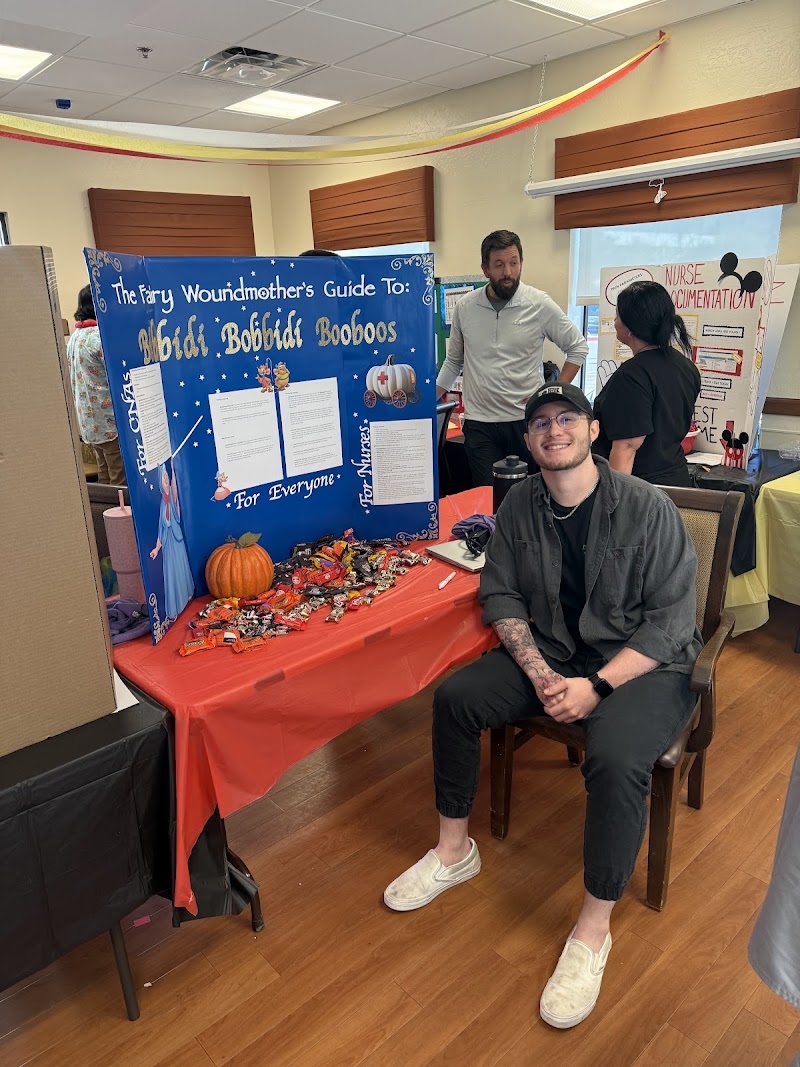
How is Mission Palms Post Acute Staffed?

CMS rates MISSION PALMS POST ACUTE's staffing level at 3 out of 5 stars, which is average compared to other nursing homes. Staff turnover is 37%, compared to the Arizona average of 46%. This relatively stable workforce can support continuity of care.

What Have Inspectors Found at Mission Palms Post Acute?

State health inspectors documented 19 deficiencies at MISSION PALMS POST ACUTE during 2021 to 2025. These included: 19 with potential for harm.
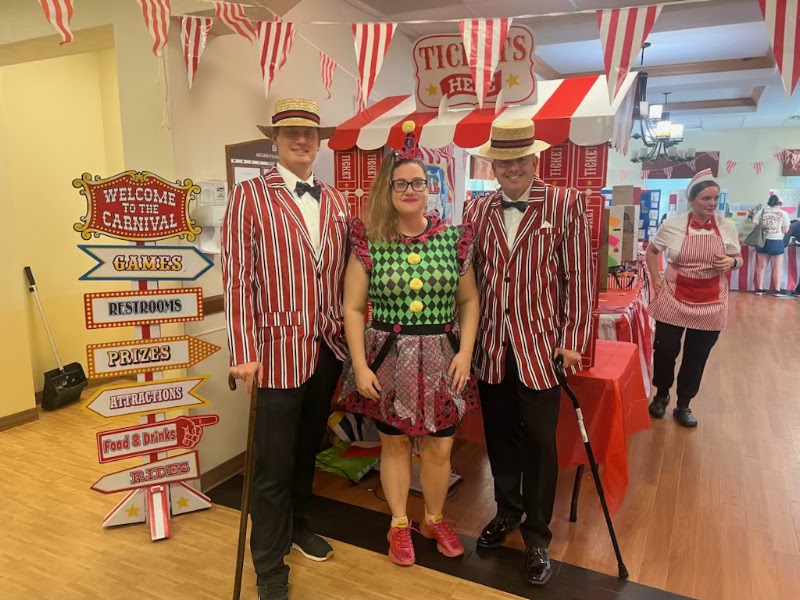
Who Owns and Operates Mission Palms Post Acute?

MISSION PALMS POST ACUTE is owned by a for-profit company. For-profit facilities operate as businesses with obligations to shareholders or private owners. The facility is operated by THE ENSIGN GROUP, a chain that manages multiple nursing homes. With 160 certified beds and approximately 152 residents (about 95% occupancy), it is a mid-sized facility located in MESA, Arizona.
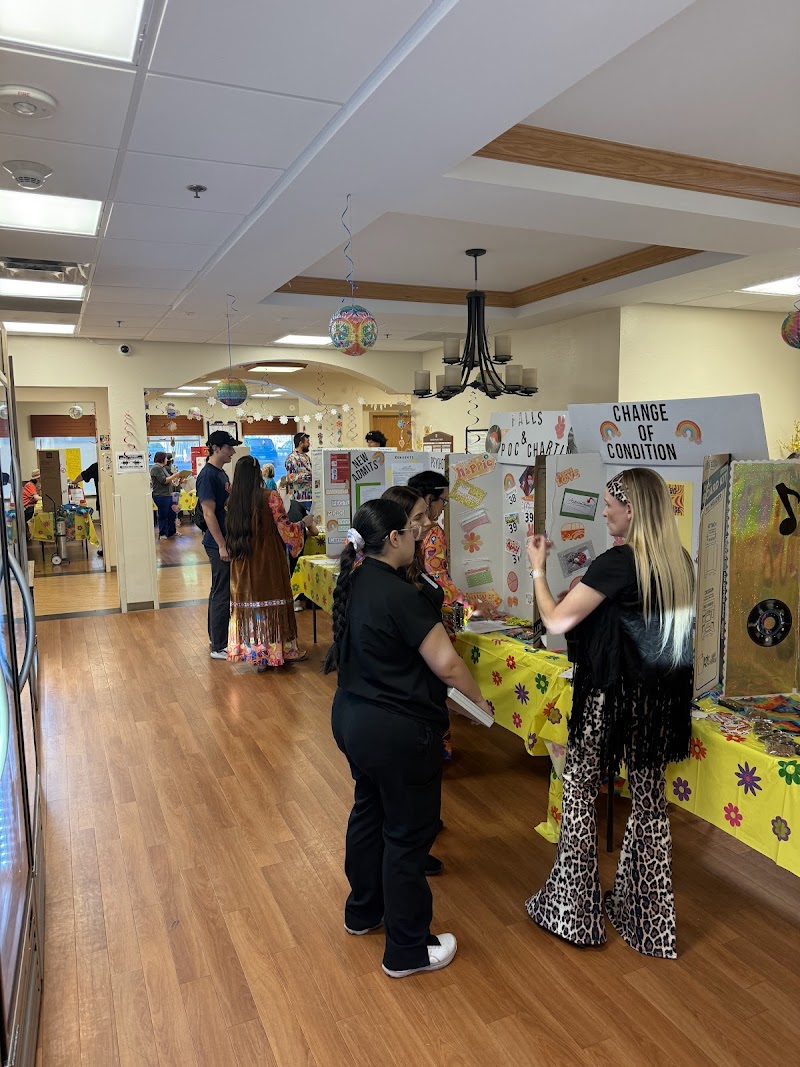
How Does Mission Palms Post Acute Compare to Other Arizona Nursing Homes?

Compared to the 100 nursing homes in Arizona, MISSION PALMS POST ACUTE's overall rating (4 stars) is above the state average of 3.3, staff turnover (37%) is near the state average of 46%, and health inspection rating (3 stars) is at the national benchmark.

What Should Families Ask When Visiting Mission Palms Post Acute?

Based on this facility's data, families visiting should ask: "Can I visit during a mealtime to observe dining assistance and food quality?" "How do you handle medical emergencies, and what is your hospital transfer rate?" "Can I speak with family members of current residents about their experience?"

Is Mission Palms Post Acute Safe?

Based on CMS inspection data, MISSION PALMS POST ACUTE has a clean safety record: no substantiated abuse findings (meaning no confirmed cases of resident harm), no Immediate Jeopardy citations (the most serious violation level indicating risk of serious injury or death), and is not on the Special Focus Facility watch list (a federal program monitoring the lowest-performing 1% of nursing homes). The facility has a 4-star overall rating and ranks #1 of 100 nursing homes in Arizona. While no facility is perfect, families should still ask about staff-to-resident ratios and recent inspection results during their visit.

Do Nurses at Mission Palms Post Acute Stick Around?

MISSION PALMS POST ACUTE has a staff turnover rate of 37%, which is about average for Arizona nursing homes (state average: 46%). Moderate turnover is common in nursing homes, but families should still ask about staff tenure and how the facility maintains care continuity when employees leave.

Was Mission Palms Post Acute Ever Fined?

MISSION PALMS POST ACUTE has no federal fines on record. CMS issues fines when nursing homes fail to meet care standards or don't correct problems found during inspections. The absence of fines suggests the facility has either maintained compliance or corrected any issues before penalties were assessed. This is a positive indicator, though families should still review recent inspection reports for the full picture.

Is Mission Palms Post Acute on Any Federal Watch List?

MISSION PALMS POST ACUTE is not on any federal watch list. The most significant is the Special Focus Facility (SFF) program, which identifies the bottom 1% of nursing homes nationally based on persistent, serious quality problems. Not being on this list means the facility has avoided the pattern of deficiencies that triggers enhanced federal oversight. This is a positive indicator, though families should still review the facility's inspection history directly.