MONTECITO POST ACUTE CARE AND REHABILITATION

51 SOUTH 48TH STREET, MESA, AZ 85206 (949) 487-9500
For profit - Corporation 222 Beds THE ENSIGN GROUP Data: November 2025
Trust Grade
63/100
#57 of 139 in AZ
Last Inspection: February 2025

Within standard 12-15 month inspection cycle. Federal law requires annual inspections.

Overview

Montecito Post Acute Care and Rehabilitation has a Trust Grade of C+, which means it is slightly above average but not outstanding. It ranks #57 out of 139 facilities in Arizona, placing it in the top half, while locally in Maricopa County, it stands at #44 out of 76, indicating only a few better options nearby. The facility has been experiencing a worsening trend, with the number of issues reported increasing from four in 2023 to six in 2025. Staffing is a relative strength here, rated at 3 out of 5 stars with a turnover rate of 37%, which is lower than the state average of 48%. However, there are concerning aspects such as $8,278 in fines, which is higher than 75% of Arizona facilities, suggesting problems with compliance. Specific incidents of concern include one resident who sustained life-threatening injuries due to inadequate supervision while smoking, and reports of understaffing on weekends leading to unmet care needs for residents. Additionally, there were issues with the documentation of showers and baths, raising concerns about the accuracy of care records. Overall, while the facility has some strengths like good RN coverage and decent quality measures, families should be aware of the ongoing issues and recent incidents.

Trust Score
C+
63/100
In Arizona
#57/139
Top 41%
Safety Record
Moderate
Needs review
Inspections
Getting Worse
4 → 6 violations
Staff Stability
○ Average
37% turnover. Near Arizona's 48% average. Typical for the industry.
Penalties
✓ Good
$8,278 in fines. Lower than most Arizona facilities. Relatively clean record.
Skilled Nurses
✓ Good
Each resident gets 72 minutes of Registered Nurse (RN) attention daily — more than 97% of Arizona nursing homes. RNs are the most trained staff who catch health problems before they become serious.
Violations
⚠ Watch
22 deficiencies on record. Higher than average. Multiple issues found across inspections.
★★★★☆
4.0
Overall Rating
★★★☆☆
3.0
Staff Levels
★★★★★
5.0
Care Quality
★★★☆☆
3.0
Inspection Score
Stable
2023: 4 issues
2025: 6 issues

The Good

  • 5-Star Quality Measures · Strong clinical quality outcomes
  • Full Sprinkler Coverage · Fire safety systems throughout facility
  • No fines on record
  • Staff turnover below average (37%)

    11 points below Arizona average of 48%

Facility shows strength in quality measures, fire safety.

The Bad

Staff Turnover: 37%

Near Arizona avg (46%)

Typical for the industry

Federal Fines: $8,278

Below median ($33,413)

Minor penalties assessed

Chain: THE ENSIGN GROUP

Part of a multi-facility chain

Ask about local staffing decisions and management

The Ugly 22 deficiencies on record

1 actual harm
Sept 2025 1 deficiency
CONCERN (D) 📢 Someone Reported This

A family member, employee, or ombudsman was alarmed enough to file a formal complaint

Potential for Harm - no one hurt, but risky conditions existed

Accident Prevention (Tag F0689)

Could have caused harm · This affected 1 resident

**NOTE- TERMS IN BRACKETS HAVE BEEN EDITED TO PROTECT CONFIDENTIALITY** Based on observation, interview, and record review, the facility failed to ensure adequate assessment, monitoring, and supervisi...

Read full inspector narrative →
**NOTE- TERMS IN BRACKETS HAVE BEEN EDITED TO PROTECT CONFIDENTIALITY** Based on observation, interview, and record review, the facility failed to ensure adequate assessment, monitoring, and supervision to prevent elopement for 2 (residents #22 and #19) of 5 sampled residents. The deficient practice could result in injury to residents.-Regarding Resident #22Resident #22 was readmitted to the facility on [DATE] with diagnoses including: Metabolic encephalopathy, cognitive communication deficit, restlessness and agitation, chronic kidney disease, , muscle weakness, difficulty in walking, protein-calorie malnutrition, altered mental status, seizures, type 2 diabetes mellitus with hyperglycemia, unspecified mood affective disorder, anxiety disorder, tobacco use, major depressive disorder, dementia, severe, without behavioral disturbance, psychotic disturbance, and mood disturbance.An admission minimum data set (MDS) assessment dated [DATE] revealed the resident had a brief interview for mental status (BIMS) score of 8, indicating moderate cognitive impairment.A care plan focus initiated on August 1, 2025 revealed that resident #22 was an elopement risk and wanderer and that a wander guard device was initiated on July 31, 2025.Nursing progress note August 17, 2025 at 10:05 a.m. revealed that at 7:20 a.m. that resident #22 was speaking with staff while medications were being delivered to other residents and resident #22 was waiting for breakfast to be served. At 8:10 a.m. staff noted that resident #22 could not be located and the wander guard device was removed and left on resident #22's bed.The progress note further stated that at the same time that resident #22 was discovered missing, the facility received a call from an emergency room nurse that resident #22 was seen wandering, 911 was called and he was taken to the emergency room.A nursing progress note, on August 17, 2025 at 3:07 p.m. revealed that resident #22 had returned from the hospital. At 4:26 p.m., resident's wander guard device hand been placed on resident #22's ankle. -Regarding Resident #19 Resident #19 was admitted to the facility on [DATE] with diagnoses including: toxic encephalopathy, acute and chronic respiratory failure with hypoxia, tracheostomy status, dysphagia, aphasia, dysarthria and anarthria, cognitive communication deficit, difficulty in walking, type 2 diabetes mellitus with diabetic neuropathy, anxiety disorder, insomnia, tobacco use, unspecified asthma, and schizophrenia. An elopement/wandering assessment dated [DATE] revealed a low risk for elopement. No mental illness was selected under predisposing conditions. An admission MDS assessment dated [DATE] revealed the resident had a BIMS score of 13, indicating resident was cognitively intact.A nursing progress note from August 18, 2025 at 2:16 a.m. revealed that resident #19 had refused vitals to be taken during the evening of August 17th and seen moving around the hallways. At 10:45 p.m., licensed practical nurse, (LPN/staff #274) entered the room of resident #19 to obtain vitals and discovered that resident #19 was not there. The progress note also indicated that all personal belonging were also missing. Code 10 was declared and police were notified.On August 19, 2025, at 7:23 a.m. a nursing progress note revealed that resident #19 returned to the facility, returned to his room and assessed by staff.An interview with LPN #86 on September 4, 2025 at 1:15 p.m. revealed that she was alerted that resident #19 was missing at around 11:00 p.m. on August 17, 2025. LPN #86 stated that she was unsure how resident #19 was able to leave the building because doors are supposed to be alarmed and she believed that the door alarms were working.An interview with LPN #274 on September 4, 2025 at 2:13 p.m. revealed that before eloping the facility, resident #19 was observed walking around the facility's floors looking for snacks. LPN #274 stated that she left her shift at 6:30 a.m. on August 18, 2025. She observed resident #19 returning to the facility with the facility administrator. An interview with the director on nursing (DON/staff #338) on September 4, 2025 at 2:25 p.m. revealed that according to video surveillance, residents #22 and resident #19 both left the facility using the same south door in the main lobby. DON #338 stated that this door is open every day, without alarm from 5:00 a.m. to 10:00 p.m. and that the receptionist working the front desk has pictures of each resident that is at risk for elopement. The receptionists are scheduled daily from 8:00 a.m. to 7:00 p.m. and the entrance is not monitored 6 hours per day. Review of the facility's 5 day investigation reports for both resident #22, dated August 22, 2025, and resident #19, dated August 25, 2025, reveal that both elopements were deemed isolated incidents. Review of the facility policy titled Elopement, revised January 26, 2022 reveals that the facility is to provide a safe and secure atmosphere for all residents of the facility. Among the purposes of the policy is to ensure that residents at risk of elopement are properly monitored.
May 2025 1 deficiency 1 Harm
SERIOUS (G) 📢 Someone Reported This

A family member, employee, or ombudsman was alarmed enough to file a formal complaint

Actual Harm - a resident was hurt due to facility failures

Accident Prevention (Tag F0689)

A resident was harmed · This affected 1 resident

**NOTE- TERMS IN BRACKETS HAVE BEEN EDITED TO PROTECT CONFIDENTIALITY** Based on record review, observations of practice, staff and representative interviews the facility failed to ensure adequate sup...

Read full inspector narrative →
**NOTE- TERMS IN BRACKETS HAVE BEEN EDITED TO PROTECT CONFIDENTIALITY** Based on record review, observations of practice, staff and representative interviews the facility failed to ensure adequate supervision for 1 of 2 sampled residents (#39) while smoking. The deficient practice resulted in the resident sustaining life-threatening injuries. Findings include: Resident #39 was admitted originally on March 3, 2014 and readmitted on [DATE] with diagnoses that include hemiplegia and hemiparesis, peripheral vascular disease, dementia, long QT syndrome, cognitive communication disorder, anemia and major depressive disorder. Review of resident #39 's clinical record revealed a smoking policy/consent dated December 6, 2018 with the resident ' s signature. Review of the resident ' s clinical record revealed a care plan focus of ' potential for injury related to smoking ' created on August 25, 2014 and last revised September 12, 2022. The goal was that the resident will have no injuries related to smoking and will be compliant with smoking protocols and individual smoking plan until the next review. The interventions included: complete smoking assessment, explain the smoking policy, maintain smoking materials at nurses ' station or other designated area and monitor to assess compliance with facility smoking policy/individual plan. Review of the resident annual Minimum Data Set (MDS) dated [DATE] indicated the resident had a Brief Interview for Mental Status (BIMS) summary score of 15 indicating the resident was cognitively intact. A progress note created by a Licensed Practical Nurse (LPN/staff #97) dated May 17, 2025 at 18:0 revealed that a call for assistance was paged on the facility ' s radio system for staff to come to the smoking patio for patient assistance. The patient was alert and oriented but complaining of discomfort to his face and left side of his body. The patient stated that he was smoking his cigarette unsupervised. The patient was noted to have redness on his neck and left side of his face. The provider was notified and ordered for the resident to be sent out 911. The resident was taken to the local burn center at roughly 17:30. A progress note created by the Assistant Director of Nursing (ADON/staff #67) dated May 18, 2025 at 8:24 a.m. indicated that the resident ' s emergency contact was informed of the incident. An order was created by the Primary Care Physician (PCP) on May 17, 2025 at 17:40 to send the resident to the burn center for further evaluation via 911. An interview was conducted with an LPN (staff# 83) on May 20, 2025 at 12:12 p.m., the staff member stated that the facility ' s process is to assess residents on admission to ensure that residents who would like to smoke can do so safely. The LPN stated that the staff should hold all smoking paraphernalia (i.e. cigarettes, lighters, matches and/or electronic cigarettes). Staff #83 said that the online assessment that is done quarterly helps identify needs that residents might need while smoking like aprons. The LPN confirmed that she had heard about the smoking accident that occurred that weekend but declined to tell specifics as she was not working at that time and had only heard of what transpired. An interview was conducted with an ADON (staff# 67) on May 20, 2025 at 1:06 p.m., the staff member stated that the facility ' s process is to gain consent and assess the resident on admission to ensure that the resident can safely smoke. The ADON stated that there is a smoking cart on a unit that keeps all the smoking paraphernalia for residents. Staff #67 stated that the day of the incident she was called in by the floor nurses. She further stated that she predominantly made notifications to the provider and the family. The ADON stated that she was told a staff member was walking by the smoking patio and noticed the resident was on fire and called for help. She further stated that the resident was on the patio without staff supervision and it was not a designated smoke break. Staff # 67 stated that the resident ' s blanket had burned and he had redness on his face and neck. The ADON also stated that the resident was deemed safe to smoke with an apron and supervision as his quarterly assessment had just been completed. The ADON identified risks of no supervision while the resident was smoking would be burns and that smoking materials could be shared with residents who should not have access to them. An interview was conducted with a Certified Nursing Assistant (CNA/staff# 73) on May 20, 2025 at 1:14 p.m., the CNA stated that she is only responsible for taking the residents to the smoking patios and another department will supervise the smoke break.Staff #73 stated that the smoking cart is locked and the key is at the nurses station. She further stated that the only information that she had regarding the incident over the weekend was that he went alone and caught on fire. An interview was attempted with the resident ' s emergency contact on May 20, 2025 at 11:26 p.m. An interview was conducted with the Director of Nursing (DON/staff# 59) on May 20, 2025 at 1:30 p.m., the staff member stated that the facility ' s process is on admission to identify residents who want to smoke. The DON stated that a staff member will have the resident sign the consent/policy form and let them know that residents are not allowed to keep smoking materials on their person. Staff #59 also stated that residents are reevaluated quarterly in addition to if there is a change in condition in order to ensure the resident is still safe to smoke. A request was made for resident #39 ' s most recent smoking assessment and it was not provided. The DON stated that smoking materials are to be maintained and kept by the staff on a medication cart on a downstairs unit, and the key is located at the nurses station. She further stated that supervisory staff is on a rotating block with different departments. The DON stated that on Saturday May 17, 2025 she received a call that a resident was being sent to the hospital because of an incident he had with smoking. She was told that a CNA said she was passing by the smoking patio towards the kitchen and noticed that the resident ' s blanket (that was on his lap) was on fire. The CNA called for help and attempted to put the fire out. The DON stated that it was reported to her that resident #39 ' s beard was singed and redness was noted but she could not confirm if the resident himself was on fire. The resident did not initially want to be transferred, he just wanted to go to bed but staff convinced him to go. Staff #59 stated that the smoking patio was then locked at all times unless it was an appointed smoke break with staff present to supervise. The DON identified risks of unsupervised smoking would mainly be surrounding safety and the potential for injury is higher. An interview was conducted with the resident's family member/emergency contact on May 21, 2025 at 4:29 p.m. The residents representative stated that the resident was currently in and out of consciousness at the burn center. The resident ' s representative stated that the burn provider informed her that the resident suffered 3rd degree burns and was awaiting swelling to minimize to see if he needed a skin graft to the affected area. The resident ' s family member further stated that the facility notified her of the incident and she was told that it was his beard that initially caught on fire and it spread down to his lap. She further stated that she would not know how the resident obtained the smoking materials, he has no family other than her husband and herself and they lived in a different state. Review of facility policy titled, Smoking policy/E-cigarettes, stated that it is the policy of this facility to provide those residents who choose to smoke a means in which to do so that does not jeopardize their safety or the safety of others residing in the facility. The policy noted that no lighting materials (e.g. matches, lighters) , tobacco products, smoking devices or e-cigarette devices will be allowed to be kept in the possession of the residents, either on their person or in the room. The policy also stated that the frequency of smoking for all residents will be the following times with staff supervision: 9:15 AM, 1:15PM, 4 PM, 7PM, 8:30PM. These times will be no more than 15 minute increments.
Mar 2025 1 deficiency
CONCERN (D) 📢 Someone Reported This

A family member, employee, or ombudsman was alarmed enough to file a formal complaint

Potential for Harm - no one hurt, but risky conditions existed

Laboratory Services (Tag F0770)

Could have caused harm · This affected 1 resident

**NOTE- TERMS IN BRACKETS HAVE BEEN EDITED TO PROTECT CONFIDENTIALITY** Based on clinical record review and staff interviews, the facility failed to ensure a STAT laboratory test for one resident (#17...

Read full inspector narrative →
**NOTE- TERMS IN BRACKETS HAVE BEEN EDITED TO PROTECT CONFIDENTIALITY** Based on clinical record review and staff interviews, the facility failed to ensure a STAT laboratory test for one resident (#17) was completed as ordered by the physician. The deficient practice could result in abnormal laboratory results not being identified and acted upon in a timely manner. Findings include: Resident #17 was admitted to the facility on [DATE] and expired in the facility [DATE] with diagnoses that included hemiplegia and hemiparesis following cerebral infarction affecting left dominant side, unspecified atrial fibrillation, nonrheumatic aortic (valve) insufficiency, paroxysmal atrial fibrillation. The review of the physician's orders dated February 25, 2025 at 6:56pm revealed routine orders for CBC AND CMP in the morning every Monday for weakness. The order was discontinued [DATE] at 7:36pm. Further review of the physician's order summary dated [DATE] at 12:30 pm revealed a short turnaround time (STAT) order for complete blood count (CBC) and comprehensive metabolic panel (CMP) for weakness and an order dated [DATE] at 12:31 pm of STAT kidney, ureter, bladder scan (KUB). Review of the Medication Administration Record (MAR) for [DATE] revealed documentation that the CBC, CMP and KUB had been completed [DATE] at 3:58pm. Review of the Progress Notes dated [DATE] at 12:46pm revealed a nurse note indicating Patient was complaining of feeling weak this shift, having stomach pains, not being able to eat, and having diarrhea. Provider notified and gave orders for stat CBC, CMP, and KUB, hold her lactulose, and consult ID. Orders initiated. Patient made aware and appreciative of update. Will continue to monitor. Review of the progress notes dated [DATE] at 2:00 pm revealed a Respiratory Tech note that stated RT's responded to code blue, cpr, and bagging was done until medics arrived and took over. Review of the progress notes dated [DATE] at 2:00 pm revealed a nursing note indicating Patient this morning was complaining of abdominal discomfort and diarrhea. Patient was noted to be on lactulose. Provider notified and ordered stat CBC, CMP, KUB, an ID consult, and to hold lactulose. Patient was informed of new orders and appreciative of update. Blood draw and KUB was completed. At 1440, patient was with CNA getting into bed, patient was alert and oriented times 3, with no needs at this time or complaints of pain. At 1443, Provider in facility went to visit the patient, provider noted patient to be unresponsive, rapid response was called, staff went into patient's room, patient noted without rise and fall of chest, no pulse noted, code blue was called. CPR initiated by staff as patient's code status is full code. 911 was called. Staff performed four rounds of CPR and EMS arrived and took over patient's care. Patient's family was called to update on no patient, no answer, and voicemail was left. At 1506, EMS called field terminated and that time of death was called. Family was called again and spoke with daughter [NAME] and informed that patient had passed and informed of event, condolences extended. Review of the Lab Results Report for resident #17. Report information revealed a collection date and time as [DATE] 09:46; Received date and time: [DATE] 17:17; Reported Date and time: [DATE] 18:12. The results of the comprehensive metabolic panel revealed the following results: Result Unit Ref. Range Flag Status BUN 98 mg/dL 7 - 23 HH Final Creatinine 2.6 mg/dL 0.4 - 1.6 H Final Bun/Creat. Ratio 37.7 5.0 - 30.0 H Final Potassium 6.3 mmol/L 3.3 - 5.1 HH Final The results of the complete blood count with differential platelet WBC 16.4 x10E3/uL 3.6 - 11.2 H Final RBC 5.8 x10E6/uL 3.7 - 5.5 H Final Order Notes revealed the following, verified by [NAME] at 15:20 on [DATE]., Called to on [DATE] at 23:03 by SAD. An interview was conducted [DATE] at 3:21pm with Registered Nurse (RN/Staff #48). Staff #48 states a STAT lab order are orders from the doctor that need to be done as soon as possible, within 2-4 hours. Further stating STAT labs are 2-4 hours from collection time to the facility receiving the results. Staff #48 stated the process for STAT lab orders for blood draws is the order is received from the provider, placed in Point Click Care (PCC), and staff call the order in to the lab. Staff #48 stated if the resident is a change of condition (COC) nursing staff will notify the family and document a progress note. Staff #48 stated the phlebotomist will come to the facility and collect the specimen and when it is completed the facility will wait for the results, which are faxed and also placed in the results tab in PCC. Staff #48 the timeframe for the collector is sometimes within the four (4) hour window or longer and that the facility does not have control on how long it takes for the collector to arrive at the facility. Staff #48 stated the facility has a phlebotomist on site during the week and when they are on site it is usually within one hour for collection. Staff #48 stated when a resident is prescribed the medication Furosemide the resident is monitored for signs and symptoms that would include excreting too much or not enough fluid and review the resident's weekly labs. Staff #48 stated the labs would reveal concerns with kidney, sodium, potassium and creatine levels and ensure they are at the appropriate levels., further stating out of range potassium levels in a resident would exhibit abnormal heart rhythm, stomach cramps for low potassium levels and high potassium levels would cause serious heart concerns. Staff #48 stated the facility would obtain an order for Kayexalate (sodium polystyrene) used to treat high levels of potassium in the blood. Kayexalate works by helping your body get rid of extra potassium. Staff #48 stated the medication is in the emergency supply E- Kit. Staff #48 stated when there are concerns for high potassium levels for a resident STAT lab are ordered and the results are as fast as an hour or two. Staff #48 stated all lab results are timestamped in PCC and also timestamped on the requisition form. Staff #48 stated the facility keeps a copy of the requisition forms. Staff #48 states staff will notify the provider if the labs are taking longer than the 2-4 hours so the provider can decide what to do for the resident. An interview was conducted with Assistant Director of Nursing (ADON/Staff #4) and Assistant Director of Nursing (ADON/Staff #7) stated STAT LAB orders mean the provider wants the labs drawn immediately- the results are received back at the facility right away versus a routine order and for no more than four hours for the results. Staff #4 stated when there is a STAT lab order for blood draw the process is the is received from order from the provider or the provider puts in the order- if STAT lab is during the week Monday thru Friday there is a lab tech stationed in the facility if it is after 5 the facility will call the lab and let them know the facility has a stat lab - same for the weekend hours. Bother Staff #4 and Staff #7 stated per the defined facility time frame for STAT labs for CMB or CBC should be four hours and the four (4) hour timeframe is from collection to receiving time at the facility. Staff #4 and #7 stated the come through PCC and the results timestamped. A review of the lab results with ADON/Staff #4 and ADON/Staff #7 stated the timestamped order from the provider was on [DATE] at 1:31pm and the labs were drawn at 8:46 a.m. Both ADON/Staff #4 and ADON/Staff #7 noted the inconsistencies with the recorded timeframes for the STAT lab times. ADON/Staff #4 stated she I might be wrong with the times for a STAT lab and it may be longer, I would like to check with my DON. ADON/Staff #7 stated I'm not sure we're right with the times and will need to check before confirming the timeframe for STAT lab times. On [DATE] during the interviewing process ADON/Staff #4 stated per the DON via text the timeframe for STAT lab orders are four to six hours (4-6) and not the initial stated timeframes of 2-4 hours. Review of the requisition form from Central Clinical Labs provided by Assistant Director of Nursing (ADON/Staff #4) revealed the following concerns; no date or time specimen collected; no draw site; illegible patient last name and first name. Further review of the requisition order form revealed a lipid panel and illegible marking on codes 238, 186, and 187. An email was received [DATE] at 5:47 PM from (administrator/Staff #32) with the following email: Thank you for your time today. Regarding the potential finding of labs not performed in defined timeframe per facility policy. Please consider the following communication from the owner of CCL lab regarding patient (resident #17): CCL does a routine sweep at the facility every morning. In addition, CCL has a full-time phlebotomist onsite at the facility working Monday- Friday 8am-4pm. CCL onsite phlebotomist drew this patient for CBC/ CMP in the morning at 8:46am as part of his routine run. The facility called in a STAT lab for the patient at 12:37pm. Since blood has already been drawn at the facility the same morning, the onsite phlebotomist processed the morning routine blood work and canceled the STAT as a duplicate. Onsite phlebotomist notified the lab that blood is to be ran as a STAT once he drops it off. Onsite phlebotomist dropped the blood off at the lab at 2:21pm. Following instructions from the phlebotomist, lab processed the tubes at 4:17pm, and the lab tech reported the results to the facility at 5:12pm. To conclude, we offer this evidence to support our position that we were within our timeframe. Thank you for your consideration. It should be noted resident # 17 had routine orders for CBC AND CMP in the morning every Monday for weakness. The order was discontinued [DATE] at 7:36pm. The date of the STAT lab order was [DATE] a Thursday not a Monday as ordered by the provider. Review of the Medication Administration Record for [DATE] revealed documentation that on Monday [DATE] the order for a CBC and CMP was completed. STAT tests are ordered when a patient's condition is critical, and immediate results are required to make life-saving decisions. These tests are prioritized above all others. Stat testing is performed immediately due to its urgent nature. Review of the facility policy tilted Diagnostic Tests -Laboratory Services states Stat orders are done as soon as possible within the facility defined timeframes., Make sure the lab is aware it is a stat order. If the order is not a stat order, the lab will set up a schedule as to when the work will be done. Lab will call to report any critical abnormalities immediately. The lab will provide the facility with a schedule of the routine work done.
Feb 2025 3 deficiencies
CONCERN (D)

Potential for Harm - no one hurt, but risky conditions existed

ADL Care (Tag F0677)

Could have caused harm · This affected 1 resident

**NOTE- TERMS IN BRACKETS HAVE BEEN EDITED TO PROTECT CONFIDENTIALITY** Based on record review, resident and staff interviews and observations The facility failed to ensure proper nail care for one of...

Read full inspector narrative →
**NOTE- TERMS IN BRACKETS HAVE BEEN EDITED TO PROTECT CONFIDENTIALITY** Based on record review, resident and staff interviews and observations The facility failed to ensure proper nail care for one of thirty-six sampled residents (#104) was performed. This deficient practice could result in resident grooming and hygiene needs not being met. Findings include: Resident #104 was admitted to the facility on [DATE] with diagnoses including hydrocephalus, muscle weakness, and hyperlipidemia. Review of resident #104's Minimum Data Set (MDS) assessment dated [DATE], revealed a Brief Interview of Mental Status (BIMS) score of 7, which indicates severe cognitive impairment. The MDS assessment also revealed the resident needed substantial/maximal assistance for showering/bathing and personal hygiene. Review of the facility's shower sheets dated January 3, 7, 10, 13, 14, 15, 17, 18, 21, 24, 27, 28, 30, and 31, 2025, and February 4, 7, and 11, 2025, reveal that the resident #104 did not need their fingernails or toenails clipped and no clipping was performed. Resident #104 was observed on February 11, 2025 at 9:15 a.m. with conspicuously long toenails. The nails were yellow in color and the big toe nail on their right foot appeared to be blackened and curled upwards. On February 13, 2025 at 1:22 p.m., a second observation and interview were conducted with resident #104. At that time the resident's toenails were observed and appeared to still be long, and discolored. Resident was asked how staff has been assisting with cleaning and clipping of their fingernails and toenails. Resident #104 stated that they were able to get their fingernails clipped a couple of days ago, but is unaware of when their toenails will be clipped. On February 13, 2025 at 1:41 p.m., an interview was conducted with Certified Nursing Assistant (CNA)/staff (#26) revealed that fingernails and toe nails are to be assessed, cleaned, clipped, and the process is documented by the CNAs at the time of the resident's shower or bath. Registered Nurse (RN)/Staff (#361) was interviewed on February 13, 2025 at 1:57 p.m., this revealed that resident's nails are evaluated at their shower/bath, twice a week or as requested by the resident. The CNA performing the services will document the process and nurses will sign off on the shower sheets. During an interview with DON/staff (#799) on February 13, 2025 at 2:06 p.m. DON stated that according to the documented shower sheets, no issues are noted with the nail care for resident #104. At 2:14 p.m. the DON examined the resident's feet and stated the resident's nails look very long and possibly infected, and that the care for resident #104's nails would be addressed immediately. Upon exiting the resident's room, DON spoke to another nurse, asking if the on-site nurse practitioner could examine resident #104. The facility's policy titled Activities for Daily Living (ADL), Services to carry out, dated July 2015, revealed ADL care including personal hygiene, oral care, transfers, grooming, dressing, mobility, ambulation, etc. provided according to resident's assessed needs and level of support, and will be documented in the medical record accordingly.
CONCERN (D)

Potential for Harm - no one hurt, but risky conditions existed

Deficiency F0757 (Tag F0757)

Could have caused harm · This affected 1 resident

Based on review of clinical records and policy, and staff interviews the facility failed to ensure an order for pain medication was followed as prescribed for one Resident (#288). The deficient practi...

Read full inspector narrative →
Based on review of clinical records and policy, and staff interviews the facility failed to ensure an order for pain medication was followed as prescribed for one Resident (#288). The deficient practice of administering unnecessary medication may result in undesirable medication-induced harm. Finding includes: Resident #288 was admitted into the facility on February 03, 2025 with diagnoses that included chronic atrial fibrillation, dysphagia, type 2 diabetes mellitus and a stage III pressure ulcer. Review of the physician orders revealed the following: - Acetaminophen Oral Tablet 325 milligrams (Acetaminophen) to give 2 tablets by mouth every 6 hours as needed for pain between 1-3 with a start date of February 03, 2025. - Oxycodone HCl oral tablet 10 milligrams (Oxycodone HCl) to give 1 tablet by mouth every 6 hours as needed for pain between 4-10 with a start date of February 03, 2025. Review of progress note signed by Licensed Practical Nurse (staff # 93) on February 09, 2025 at 12:01 p.m. and at 09:35 p.m. showed that resident was given Oxycodone HCl oral tablet 10 milligrams outside the ordered parameter. Further review of the progress note revealed no evidence that physician was notified regarding medications were administered outside of the order parameter. Review of admission minimum data set (MDS) from February 10, 2025, the brief interview for mental status (BIMS) score was 15 which indicated cognition is intact. Review of medication administration records (MAR) dated February, 2025, revealed that Oxycodone HCl oral tablet 10 milligram medication was administered outside of the physician ordered parameters for a pain scale of 4-10 on: -February 9, 2025 pain level of 3 at 12:01 p.m. -February 9, 2025 pain level of 2 at 09:35 p.m. Review of medication administration records (MAR) dated February, 2025, revealed that Acetaminophen Oral Tablet 325 milligram medication was administered outside of the physician ordered parameters for a pain scale of 1-3 on: -February 12, 2025 pain level of 10 at 11:08 a.m. An interview was conducted with the resident #288 on February 11, 2025 at 8:32 a.m. who stated that he acquired a bed sore before coming to the facility but stated it started hurting here. The resident then stated that he is supposed to get pain medication every 4-6 hour but he has to wait 10-hours to get it. Review of progress note signed by Registered Nurse (staff # 800) on February 12, 2025 at 11:08 a.m. showed that resident was given Acetaminophen Oral Tablet 325 milligrams. Further review of the progress note revealed no evidence that physician was notified regarding medications were administered outside of the order parameter. An interview was conducted with Licensed Practical Nurse (LPN/staff # 163) on February 13, 2025 at 11:13 a.m. When the LPN was asked regarding the pain scale, she stated that the process is to ask resident if resident is in pain and the level of pain. The LPN stated that she would look for physician orders for Oxycodone or Tylenol based on pain level. The LPN reviewed the residents MAR for Acetaminophen and Oxycodone and she stated that pain medication was given outside of physician ordered parameter. She further stated that physician orders were not followed, unless it was documented in progress note why it was given. She stated that risk of giving medication outside of the physician ordered parameters would result in a medication error or over dose. An interview was conducted with Director of Nursing (DON, staff # 799) on February 13, 2025 at 11:44 a.m. When the DON was asked to define the pain scale, she stated that if resident has a pain level between 1-3, then we give Tylenol and if between 7-10, then Oxycodone, if the resident prefers Tylenol over the Oxycodone then we follow resident's wish. The DON then reviewed the MAR and progress note for resident #288 and stated that progress note documented resident pain level on February 9, 2025 was 9/10 and MAR says pain level of 2-3 which was not correctly documented in the progress note when compared to the MAR. She stated that she would check with her staff and would educate them. Regarding administration of Acetaminophen, when the pain level was 10 on February 12, 2025, the DON stated that, we do not have any documentation in the progress notes why it was given as opposed to the Oxycodone. She further stated, we need to document properly and educate our staff. At 1:23 p.m. DON came to the conference room with her laptop and stated that if pain level number was not put or left blank on MAR then it will automatically put that number on MAR whatever will be resident next pain level for that time frame. A review of the policy titled, Documentation of Medication Administration-Oral, revealed to verify resident medication cards with medication orders. It also revealed that no medication is to be administered without a physician's written order and if there is any question in regard to dosage, the person in doubt should not give the drug until dosage has been clarified.
CONCERN (E)

Potential for Harm - no one hurt, but risky conditions existed

Deficiency F0725 (Tag F0725)

Could have caused harm · This affected multiple residents

**NOTE- TERMS IN BRACKETS HAVE BEEN EDITED TO PROTECT CONFIDENTIALITY** Based on clinical record review, staff interviews, and policy review, the facility failed to ensure adequate staffing was provid...

Read full inspector narrative →
**NOTE- TERMS IN BRACKETS HAVE BEEN EDITED TO PROTECT CONFIDENTIALITY** Based on clinical record review, staff interviews, and policy review, the facility failed to ensure adequate staffing was provided on weekends to meet the needs of multiple residents (#59, and #162). The deficient practice could result in residents' care needs not being met. Findings Include: -Regarding Resident #59 Resident #59 was admitted to the facility on [DATE] with diagnoses that included chronic respiratory failure and quadriplegia. A Quarterly Minimum Data Set (MDS) assessment dated [DATE] revealed a Brief Interview for Mental Status (BIMS) score of 14, which indicated intact cognition. The assessment also indicated that the resident was dependent on staff assistance when moving from a laying to sitting position, and that the ability to get on and off the toilet was not assessed due to a medical condition or safety concern. An interview was conducted on February 11, 2024, at 10:05 a.m. with Resident #59's Representative, who stated that the facility had been understaffed the last couple weeks, with just one Certified Nursing Assistant (CNA) on the Resident's unit. The Resident's Representative reported that he takes care of the Resident while he's visiting at the facility, and staff take care of the Resident when the Representative is not at the facility. The Representative also stated that the Resident had been left in bed soiled when he arrived at the facility this morning on February 11, 2024, and that the facility staff said they were shorthanded. -Regarding Resident #162 Resident #162 was admitted to the facility on [DATE] with diagnoses that included schizoaffective disorder, tobacco use, and uncomplicated opioid use. A Quarterly MDS assessment dated [DATE], revealed a BIMS score of 3 indicating severe cognitive impairment. The assessment also indicated that the resident was frequently incontinent of urine and always incontinent of bowel. A care plan dated February 9, 2025, revealed that the resident was verbally aggressive towards staff and non-compliant with a cervical collar, and no evidence of a focus or interventions regarding wandering or exit seeking behaviors. During an initial observation of an unsecured/unlocked unit conducted on February 11, 2025 at 8:50 a.m., Resident # 162 was observed wandering the hallway unaccompanied, mumbling obscenities, then attempting to open the door to the unit. After the resident made several attempts to open the door to the unit, staff arrived and redirected the Resident. A care plan initiated, February 12, 2025 revealed that Resident #162 was exhibiting exit seeking behaviors, with interventions that included implementation of Wander Guard placement and a sitter at the bedside. During an observation conducted on February 13, 2025 at 2:37 p.m., the Resident was observed to open the facility entrance door and set off the alarm with his Wander Guard, and the one-on-one sitter unsuccessfully attempted to redirect the resident away from the door. The Resident was observed to exit the facility with the sitter following. Reception called for help and four other staff members came and redirected the Resident away from the road and back into facility. -Regarding Staffing A facility assessment dated 2024, revealed that the facility was licensed to provide care for 222 residents. The facility staffing plan required the following regarding CNAs: -Day shift (6 a.m.-2 p.m.): 18-22 CNAs -Afternoon Shift (2 p.m.-6 a.m.): 18-22 CNAs -Evening/Night Shift (10 p.m.-6 a.m.): 12-16 CNAs A Payroll Based Journal (PBJ) Data Report revealed excessively low weekend staffing during all four quarters of 2024 and the fourth quarter of 2023. Staff postings were reviewed for Saturday January 18, 2025 and Sunday January 19, 2025 which indicated that CNAs work 8 hour shifts and revealed the following: -Saturday January 18,2025: 18 CNAs for day shift, 16 CNAs for afternoon shift, and 9 CNAs for night shift. -Sunday January 19, 2025: 15 CNAs for day shift, 17 CNAs for afternoon shift, and 10 CNAs for night shift. The staff postings revealed evidence that on January 18, 2025 staffing did not meet the Facility Assessment regarding staffing of licensed and non-licensed nursing (CNAs) on the afternoon and evening shifts, and on January 19, 2025 on the day, afternoon and evening shifts. An interview was conducted on February 14, 2025 at 9:46 a.m. with the Staffing Coordinator (Staff #100), who stated that 18 CNAs are scheduled for the morning and afternoon shifts (6 a.m.-2 p.m. and 2 p.m.- 10 p.m.), and 11 CNAs are scheduled on overnight shift (10 p.m.-6 a.m.). The Staffing Coordinator stated that staffing is based on a census of around 200 residents, and that they tried to keep the same numbers on the weekend shift. She further stated that to cover call-offs, they make calls to the clinical teams and if needed the management team will come in to help. She also stated that she was unable to cover shifts, because she is not licensed. An interview was conducted on February 14, 2025, at 10:38 a.m., with the Director of Nursing (DON/Staff #799) and the Executive Director (ED/Staff # 855). The DON stated that the facility is staffed according to census and acuity. She also reported that there are 2 staffing coordinators that help with scheduling the required staff for a given day, and if needed they utilize hospitality aides to answer call lights and let the staff know the residents' needs. She went on to say that at times they would pull the hospitality aides, that were attending a CNA school, to help with vitals and feeding. The DON and ED reviewed the staff postings for January 18 and January 19, 2025, and the ED stated that they utilized Respiratory Therapists (RT) as well as hospitality aides when the facility is short staffed on the weekends. The DON stated that the vitals section in the RT job description accounts for their ability to perform CNA duties, however both the DON and ED stated that only relates to providing respiratory care. A facility policy titled, Sufficient Staffing, revealed that the facility will provide services by sufficient number on a 24-hour basis to provide nursing care to all residents in accordance with resident care plans to meet resident's physical, mental and psychosocial well-being.
Nov 2023 2 deficiencies
CONCERN (D) 📢 Someone Reported This

A family member, employee, or ombudsman was alarmed enough to file a formal complaint

Potential for Harm - no one hurt, but risky conditions existed

Deficiency F0757 (Tag F0757)

Could have caused harm · This affected 1 resident

**NOTE- TERMS IN BRACKETS HAVE BEEN EDITED TO PROTECT CONFIDENTIALITY** Based on clinical record review, staff interviews and policy review, the facility failed to ensure one resident was free from un...

Read full inspector narrative →
**NOTE- TERMS IN BRACKETS HAVE BEEN EDITED TO PROTECT CONFIDENTIALITY** Based on clinical record review, staff interviews and policy review, the facility failed to ensure one resident was free from unnecessary medication by failing to ensure there was a adequate indication for the use of antibiotic medication for one resident (#193). The deficient practice could result in residents receiving unnecessary antibiotics which could result in infectious microorganisms with increased drug resistance and/or superinfection. Findings include: Resident #193 was admitted on [DATE] with diagnoses of that included displaced fracture of the first cervical vertebra, repeated falls, and acute urinary tract infection without hematuria. The IDT (interdisciplinary team) note dated December 27, 2021 included that the resident had a cystitis and was on Cefdinir (antibiotic) for 7 days. The antibiotic therapy care plan dated December 28, 2021 included that the resident was on antibiotic therapy related to UTI (urinary tract infection) prophylaxis for 7 days. Intervention included to administer medication as ordered. It also included that antibiotics were non-selective and may result in the eradication of beneficial microorganisms and emergence of undesired ones, causing secondary infections such as oral thrush, colitis and vaginitis. The nursing note dated January 4, 2022 included that the resident was s/p (status post) oral Cefdinir for UTI prophylaxis. Review of the clinical record from January 5 through 14, 2022 revealed no documentation of any infection the resident had developed after the antibiotic therapy. However, the physician order dated January 15, 2022 included for Ciprofloxacin HCl (antibiotic) 250 mg 1 tablet twice a day for 5 days for infection. The antibiotic therapy care plan was revised on January 16, 2022 to include UTI prophylaxis was resolved in January 16, 2022. The daily skilled note dated January 17, 2022 included that the resident was on oral cipro (antibiotic) for infection. The Medication Administration Record (MAR) for January 2022 revealed ciprofloxacin was transcribed as Ciprofloxacin HCl tablet 250 mg give 1 tablet by mouth two times a day for infection for 5 days. The type of infection was not transcribed onto the MAR. Further review of the MAR included that ciprofloxacin was documented as administered from January 15 through January 20, 2022. Continued review of the clinical record revealed there were no documentation that the resident had signs/symptoms of any infections; or, documentation of the type of infection the resident was being treated for from January 15 through 20, 2022. There was no documentation of an indication for the use of Ciprofloxacin; and that, the physician was notified from January 15 through 20, 2022. An interview was conducted on November 21, 2023 at 11:00 a.m. with licensed practical nurse (LPN/staff #368 who stated that if the electronic record includes an antibiotic order without an indication or type of infection indicated for its use, she would clarify the order with the resident's providers. During an interview with the Director of Nursing (DON/staff #361) conducted on November 21, 2023 at 2:09 p.m., the DON stated that if the facility receives a new order for an antibiotic and the order does not specify the type of infection, the nurse was to call the ordering physician and obtain a diagnosis/indication for the antibiotic use. In an interview with an infection preventionist (IP/staff #83) and the assistant DON (ADON/staff #28) conducted on November 21, 2023 at 2:43 p.m., the IP stated that her responsibilities included reviewing new antibiotic orders, resident signs and symptoms, and laboratory reports against McGeer's criteria and sensitivity reports. The IP said that McGeer's criteria were different for different types of infections; and that, if an antibiotic use did not meet the McGeer's criteria, she would contact one of the facility's two infectious disease specialists regarding a change or discontinuation of the antibiotic. The IP further stated that the consulting pharmacist also reviews antibiotic usage and recommends changes. The facility policy on Unnecessary Drugs revealed that each resident's drug regimen must be free from unnecessary drugs; and that, an unnecessary drug is any drug when used without adequate indications for its use. The procedure stated that the potential contribution of the medication regimen to a newly emerging or worsening symptom is recognized and evaluated, and the regimen is modified when appropriate and to incorporate appropriate medication related goals and parameters for monitoring the resident's condition into the comprehensive care plan.
CONCERN (E) 📢 Someone Reported This

A family member, employee, or ombudsman was alarmed enough to file a formal complaint

Potential for Harm - no one hurt, but risky conditions existed

Medical Records (Tag F0842)

Could have caused harm · This affected multiple residents

**NOTE- TERMS IN BRACKETS HAVE BEEN EDITED TO PROTECT CONFIDENTIALITY** Based on clinical record review, staff interviews, and review of facility policies and practices, the facility failed to ensure ...

Read full inspector narrative →
**NOTE- TERMS IN BRACKETS HAVE BEEN EDITED TO PROTECT CONFIDENTIALITY** Based on clinical record review, staff interviews, and review of facility policies and practices, the facility failed to ensure accurate documentation of showers/baths in the clinical record for two residents (#190 and #193). The deficient practice could result in an inaccurate documentation resulting in the potential of needed cares not being provided. Findings include: -Resident #193 was admitted on [DATE] with diagnoses of that included displaced fracture of the first cervical vertebra, repeated falls, and acute urinary tract infection without hematuria. The shower sheets record revealed the resident received a bath or shower on March 3,7,10, 14, 17, 18, 21, 24, 28 and 31, 2022. These shower sheets were signed by the CNA and the nurse. contained both CNA and nurse signatures for each shower or bath recorded. However, the March 2022 CNA documentation for showers/bathing revealed that resident #193 received a bath or shower on March 3, 7, 17, 21, 24, 28, and 31, 2022. The documentation did not include that resident received a bath or shower on March 10, 14 and 18, 2022. The April 2022 shower sheets record revealed the resident received a bath or shower on April 4, 5, 7, 11, 13, 14, 18, 21, 28, and twice on April 25, 2022. These shower sheets were signed by the CNA and the nurse. contained both CNA and nurse signatures for each shower or bath recorded. However, the April 2022 CNA documentation for showers/bathing revealed that resident #193 received a bath or shower on April 4, 5, 7, 13, 18, and twice on April 25, 2022. -Resident #190 was admitted on [DATE] with diagnoses of toxic encephalopathy, tracheostomy status, gastrostomy status, adjustment disorder with mixed anxiety and depressed mood, and morbid obesity. A physician order dated February 14, 2022 included for Pyrithione Zinc (anti-dandruff) shampoo 1%, applied to the scalp topically every Monday and Thursday with showers for seborrheic dermatitis. Review of the TAR (treatment administration record) for April 2022 revealed documentation that Pyrithione Zinc shampoo had been administered to the resident on April 3, 7, 10, 14, 17, 21, 24, and 28, 2022. The April 2022 CNA (certified nursing assistants) documentation for showers/bath provided to resident #190 did not accurately document that the resident received showers on the Monday/Thursday schedule for the physician ordered medicated shampoo. An interview was conducted on November 20, 2023 at 2:34 p.m. with CNA (staff #266) who stated that the CNAs would get the shampoo from the treatment nurse, apply the shampoo to the resident during showers and document the treatment on the shower sheet which would be signed by the nurse. In an interview with a nurse (staff #147) conducted on November 21, 2023 at 11:25 a.m., staff #147 stated the treatment nurse was responsible for dispensing the physician ordered shampoo; and was also responsible for giving the shampoo to the CNA who would then apply it to the resident as ordered. Staff #147 stated that based on information provided by the CNA, the nurse would document in the clinical record the treatment was applied. During an interview with the Director of Nursing (DON/staff #361) conducted on November 21, 2023 at 12:45 p.m., the DON stated that the treatment nurses would dispense the medicated shampoo to the CNAs who were performing bathing tasks. The DON said that the CNA would document the application of the shampoo on the resident's shower sheet. The DON said that the CNA would take the shower sheet back to the treatment nurse for signature; and, the treatment nurse would then accurately document the completion of the task. Further, the DON stated that the CNAs were not taking the sheets to the treatment nurses; and that, the floor nurses would not know if the showers did or did not involve application of a medicated shampoo.
Aug 2023 2 deficiencies
CONCERN (D)

Potential for Harm - no one hurt, but risky conditions existed

Deficiency F0561 (Tag F0561)

Could have caused harm · This affected 1 resident

**NOTE- TERMS IN BRACKETS HAVE BEEN EDITED TO PROTECT CONFIDENTIALITY** Based on clinical documentation, resident and staff interviews, and facility policy, the facility failed to ensure preferences r...

Read full inspector narrative →
**NOTE- TERMS IN BRACKETS HAVE BEEN EDITED TO PROTECT CONFIDENTIALITY** Based on clinical documentation, resident and staff interviews, and facility policy, the facility failed to ensure preferences regarding meals were honored for one resident (#287). The deficient practice could result in resident's autonomy not exercised. Findings include: Resident #287 was admitted on [DATE] with diagnoses of toxic encephalopathy and protein calorie malnutrition. A care plan initiated on August 8, 2023 included the resident had a potential nutritional problem related to diagnoses of protein calorie malnutrition and had increased protein needs related to wound healing due to a pressure ulcer. Interventions included to honor resident rights to make personal dietary choices and provide dietary education as needed. A nursing note dated August 8, 2023 revealed the resident was alert and oriented x 4. The mini nutritional assessment dated [DATE] revealed the resident had a score of 10 indicating the resident at risk of malnutrition. The nutrition admission evaluation dated August 14, 2023 revealed an order for regular diet, texture and consistency. The evaluation included that the resident had a potential for nutritional problem, increased protein needs and had potential for fluid shifts. Recommendation included adding Ensure (supplement) twice daily to meet wound healing needs. The evaluation did not include indication that resident's dietary preferences were noted. Review of the clinical record revealed no evidence that the determination of resident's dietary preferences was completed from August 8 through 15, 2023. A progress note dated August 16, 2023 included that the dietary manager spoke with the resident regarding food preferences; and that, the resident requested double portions and adding a sandwich with dinner daily. Per the documentation, food preferences were updated and the weekly food menu was filled out. During an interview with resident #287 conducted on August 15, 2023 at 11:36 a.m., the resident stated he would like bigger portions because he had lost a lot of weight; and, he tried to put his preference on the slip of paper on his meal tray, told the CNAs (certified nurse assistants). However, resident #287 stated that the facility staff had poor communication and his preferences were not carried out. An interview conducted on August 16, 2023 at 3:27 p.m. the dietary supervisor (staff #123) who stated that when a resident is admitted at the facility dietary staff would get the resident's diet slip from nursing. She said dietary staff would double check and visits the residents and asks the residents about their dietary preferences. Staff #123 said that resident's preferences would be entered in the dietary cards within 48 hours of admission. During the interview, a review of the clinical record was conducted with the dietary supervisor who stated that she did not have any notes or dietary preferences recorded for resident #287; and that, she does not know why dietary preferences for resident #287 was not taken and recorded. An interview was conducted on August 16, 2023 at 5:31 p.m. with a Registered Nurse (RN/staff #55) who said that the kitchen staff comes to the resident and lists the resident's options and preferences. An interview was conducted on August 16, 2023 at 5:37 p.m. the unit manager (UM/staff #102) who stated that diet preferences of a resident were normally followed the next day from the day it was known; but, this may not happen over the weekend. He said that if the resident was complaining about their preferences, staff would redo the resident's assessment to reflect the accurate dietary preferences. Further, the unit manager stated that requests for double portions meals would be done the same way. In an interview with the Director of Nursing (DON/staff #402) conducted on August 16, 2023 at 5:48 p.m., the DON stated that the expectation was that resident's dietary preferences should be assessed within 48 to 78 hours of admission. She said that was the process they follow; and that, the resident would also be given a menu to fill out for the whole week. During the interview, a review of the clinical record was conducted with the DON who stated that the clinical record revealed no documentation found on the dietary preferences for resident #287.
CONCERN (D)

Potential for Harm - no one hurt, but risky conditions existed

Quality of Care (Tag F0684)

Could have caused harm · This affected 1 resident

**NOTE- TERMS IN BRACKETS HAVE BEEN EDITED TO PROTECT CONFIDENTIALITY** Based on clinical documentation, resident and staff interviews, and facility policy, the facility failed to ensure treatment was...

Read full inspector narrative →
**NOTE- TERMS IN BRACKETS HAVE BEEN EDITED TO PROTECT CONFIDENTIALITY** Based on clinical documentation, resident and staff interviews, and facility policy, the facility failed to ensure treatment was administered as ordered by the physician for one resident (#27). The deficient practice could result in resident not receiving care and services based on his assessed needs. Findings include: Resident #27 was admitted on [DATE] with diagnoses of spinal stenosis cervical region, spondylosis with myopathy cervical region and functional quadriplegia. An admission Minimum Data Set (MDS) assessment dated [DATE] included the resident had moderately cognitive impairment and required extensive assistance one-person physical assistance for most activities of daily living. The assessment also included the resident rejected care 1-3 days during the last 7 days of the look back period. A care plan dated July 25, 2023 included the resident had an alteration in neurological status related to spinal stenosis and spondylosis, status post repeat spinal surgeries. It also included the resident was a functional quadriplegia and had alteration in musculoskeletal status related to cervical spine fusion. Intervention included wearing a Miami J collar (neck brace) at all times. A physician order dated July 25, 2023 included for a C-collar to be worn as ordered by provider. Despite the order, the clinical record revealed no evidence that the C-collar was documented as administered as ordered by the physician. The clinical record also revealed no evidence the resident refused to wear the collar; and that, the physician was notified. An observation was conducted on August 15, 2023 at 2:21 p.m. revealed resident #27 was sitting up on his bed and was not wearing the C-collar. In another observation conducted on August 16, 2023 at 4:49 p.m. the resident was in sitting up on his bed and was not wearing a collar. An interview was conducted immediately following the observation. Resident #27 stated that he only needed to wear the C collar when he was not in bed. An interview was conducted on August 16, 2023 at 5:25 p.m. with a certified nursing assistant (CNA/staff #39) who stated that she thought the RNA (Restorative Nursing Assistant) puts the C-collar on the resident. She said that she sometimes helps but it was usually RNA, the nurse or therapy who puts the C-collar on the resident. In an interview with a Registered Nurse (RN/staff #55) conducted on August 16, 2023 at 5:27 p.m., the RN stated that resident #27 wears his collar when inside his room and when the resident goes to with therapy, the C-collar was also on. She said that the C-collar had to be removed when the resident was laying down on bed because it was not comfortable. The RN further stated that resident #27 likes to dictate his care and refuses all his medication. However, she stated that the resident's clinical record revealed no physician order that the C-collar can off when the resident was on bed; and, no documentation that the resident was refusing to wear the C-collar while in bed. An interview was conducted a unit manager (UM/staff #102) on August 16, 2023 at 5:40 p.m. The unit manager stated that he did not know if it was normal and okay for resident #27 to be in bed without his C-collar on. He stated that if the resident refused to wear it, the refusal should be documented in a progress note. During the interview, a review of the clinical record was conducted the unit manager who stated that he could not find documentation that the resident refused the C-collar and that, the physician was notified. During an interview with the Director of Nursing (DON/staff #402) conducted on August 16, 2023 at 5:48 p.m., the DON stated when a resident refuse to comply with a physician order, the expectation was for staff to inform the provider, document the refusal, get an order and provide education to the resident. A review of the clinical record was conducted with the DON who stated that the clinical record revealed no documentation of resident refusals and that the physician was notified. An interview was conducted on August 16, 2023 at 6:00 p.m. with the Director of Rehabilitation (DOR/ staff #19) who stated that she did not know whether the physician was notified that the resident was not wearing the C-collar all the times including when on his bed. The facility policy on Physician's orders revealed that it is their policy to accurately implement orders in addition to medication orders (treatment, procedures) only upon the order of a person duly licensed and authorized to do so in accordance with the residents' plan of care.
Dec 2022 3 deficiencies
CONCERN (D) 📢 Someone Reported This

A family member, employee, or ombudsman was alarmed enough to file a formal complaint

Potential for Harm - no one hurt, but risky conditions existed

Notification of Changes (Tag F0580)

Could have caused harm · This affected 1 resident

**NOTE- TERMS IN BRACKETS HAVE BEEN EDITED TO PROTECT CONFIDENTIALITY** Based on staff interviews, review of the clinical record, facility documentation, and policy and procedure, the facility failed ...

Read full inspector narrative →
**NOTE- TERMS IN BRACKETS HAVE BEEN EDITED TO PROTECT CONFIDENTIALITY** Based on staff interviews, review of the clinical record, facility documentation, and policy and procedure, the facility failed to ensure that resident representative was notified of a change in condition for one resident (#30). The deficient practice may result in resident representative not able to make any required decisions for the resident. Findings include: Resident #30 was admitted on [DATE] with diagnoses that included type 2 diabetes, dysphagia, aphasia, end stage renal disease with dialysis, protein calorie malnutrition, pneumonia due to pseudomonas, stage 4 pressure to the sacrum, unstageable pressure ulcer to the right ankle and unstageable heel pressure ulcer to the right heel. Review of an Advanced Directive form completed on November 16, 2022 revealed that the family signed as the surrogate decision maker; and that, the resident had a Do Not Resuscitate (DNR) code status and a request of transfer to acute hospital of choice. The Brief Interview for Mental Status (BIMS) assessment dated [DATE] revealed a score of 00, which indicated resident had a severe cognitive impairment. A physician order dated November 16, 2022 included for new admission laboratories and diagnosis of end stage renal disease. A review of nursing progress notes dated November 16, 2022 revealed the family was at bedside; and that, she reviewed the consent forms, confirmed code status and emergency contacts for resident #30. The case manager progress note dated November 17, 2022 the resident was not alert and oriented and a call was made to the resident representative/family to complete the initial interview for resident #30. The November 2022 medication administration record (MAR) revealed that the new admission labs including complete blood cell count (CBC) had been completed on November 17, 2022. The nurse practitioner (NP) progress note dated November 20, 2022 revealed worsening hemoglobin results of 6.2 and to send the resident to the emergency room for blood transfusion. Review of a e-Interact transfer form dated November 20, 2022 revealed no evidence the resident representative/family was notified of the resident's transfer. A nursing progress note dated November 20, 2022 included the provider was notified at 7:22 a.m. of the change in condition regarding hemoglobin of 6.3; and, an order to transfer the resident to an emergency room was received. Per the documentation, at 8:36 a.m., the resident was transferred to the hospital (that was not listed in the resident's advance directive as preferred hospital for acute transfer). There was no evidence found in the clinical record that the resident representative/family was notified of the change in condition and that the resident will be transferred to the hospital. Continued review of a progress note dated November 20, 2022 revealed the family was made aware of the transport at 1:30 p.m. (approximately 4 hours after the resident was transferred to the hospital). An interview was conducted on December 19, 2022 at 2:48 p.m. with a licensed practical nurse (LPN/staff #15) who stated that to transfer a resident to a hospital they would require a physician order, would call resident representative/family and notify the unit manager. The LPN stated this would be documented in the progress notes and on the e-Interact transfer form. During the interview, a review of the clinical record was conducted with the LPN who stated she was the nurse that completed the transfer because of a significant change in hemoglobin lab results for resident #30. She stated she could not find the resident representative contact information in the medical record, and did not contact the family at the time of transfer. The LPN also stated she reported this to the unit manager, who was able to contact the resident representative several hours after the transfer occurred. The LPN also said that she was not aware the resident's Advanced Directive had listed preferred hospitals for acute transfer; and that, if there was a preferred hospital it would be documented in the notes line in the medical record. However, she said that there were none listed in the record at that time. The LPN further stated that it was their policy to transfer to the hospital/facility residents had requested, unless it was an emergency. In an interview conducted with another LPN (staff #11) on December 20, 2022 at 12:22 p.m., the LPN stated that on admission the charge nurse reviews the advanced directive form; and, if a preference for acute facility was requested, the notes section in the medical record is updated so the information is on the resident's care profile. The LPN also stated that when a change of condition occurs the provider and family are notified and this will be documented in the progress notes. A review of the clinical record was conducted with the LPN who stated she was involved in the transfer for the resident#30; and that, the resident was transferred to the hospital for a low hemoglobin on November 20, 2022. She stated that another nurse (staff #15) told her the contact information for the resident representative/family cannot be found in the clinical record. The LPN also said that after the resident was transferred to the hospital, she reviewed the clinical record; and that, there was no clear record a contact information of the resident representative/family. She also stated she was able to contact the representative/family later; and, she updated the resident's profile. The LPN also reviewed the Advanced Directive for resident #30 and stated the directive indicated a request made by the representative/family for acute transfer to two facilities. However, this information was not documented in the resident's profile. The LPN further stated the clinical record showed no evidence the resident representative/family was notified of the hospitalization and the change of condition until several hours after the resident was transferred to the hospital. She also said that it was the facility's policy to notify the resident representative/family at the time of resident transfer to acute care. An interview with a registered nurse (RN/staff #13) was conducted on December 21, 2022 at 10:00 a.m. The RN stated the provider and representative/family are notified of any change of condition; and, notification will be documented in the progress notes. She stated that the resident representative/family should be notified as soon as possible; and, not after the resident had been transferred. During an interview with the Director of Nursing (DON/staff #8) conducted on December 21, 2022 at 10:49 a.m., the DON stated when a change of condition occurs, the provider and family would be notified. She said that if a resident was assessed with a BIMS of 0, the resident representative would be notified instead; and, if the transfer was not emergent, the family should be notified at that time. The DON further stated the expectation was to notify the family prior to transfer from the facility; and, to honor family requests of acute care providers. A review of the clinical record was conducted with the DON who stated that the nurse was not able to call the resident representative at the time of transfer, as the contact information was not available. She further stated she had spoken with the resident representative/family who was upset that she had not been notified of the change in condition or the resident's transfer. The DON said the medical record revealed evidence the provider had been contacted at 7:00 a.m. and had not been made aware the family had specified a certain hospital for transfers. The DON also reviewed the resident's advanced directive dated November 16, 2022 and said that she would have expected the nurse would have sent a copy of the form with the resident to the hospital; and, the provider would have been made aware. Further, the DON said the resident had been transferred prior to family notification and this did not meet the facility's policy on notification or resident representative/family. Review of the facility policy titled, Discharge or Transfer, revealed it is their policy to provide a safe transfer; and that, transfer/discharge to another healthcare facility included keeping the resident/family involved with all discharge planning; and, advance directives. Review of the facility policy titled, Change of Condition Reporting, revealed it is their policy that all changes in resident condition will be communicated to the physician and documented. Licensed nurse will inform family/responsible party of change of condition and document notification. The responsible party will be notified that there has been a change in the resident's condition and what steps are being taken. All nursing actions will be documented in the licensed progress notes as soon as possible after resident needs have been met. All attempts to reach the physician and responsible party will be documented in the nursing progress notes and will include time and response.
CONCERN (D) 📢 Someone Reported This

A family member, employee, or ombudsman was alarmed enough to file a formal complaint

Potential for Harm - no one hurt, but risky conditions existed

Deficiency F0658 (Tag F0658)

Could have caused harm · This affected 1 resident

**NOTE- TERMS IN BRACKETS HAVE BEEN EDITED TO PROTECT CONFIDENTIALITY** Based on clinical record review, interviews, and facility policy the facility failed to ensure that medications were administere...

Read full inspector narrative →
**NOTE- TERMS IN BRACKETS HAVE BEEN EDITED TO PROTECT CONFIDENTIALITY** Based on clinical record review, interviews, and facility policy the facility failed to ensure that medications were administered as ordered for one resident (#20). The deficient practice could result in resident not receiving medication and/or treatment based on their assessed needs. Findings include: Resident #20 was admitted on [DATE] with diagnoses of encephalopathy, acute/chronic respiratory failure with hypoxia and altered mental status. The admission minimum data set (MDS) assessment dated [DATE] revealed a Brief Interview for Mental Status (MDS) score of 11 which indicated resident had moderate cognitive impairment. The assessment also revealed diagnoses of acute and chronic respiratory failure with hypoxia, dyspnea/ shortness of breath (SOB). Review of active physician orders for December 2022 revealed the following: -Ipratropium Albuterol Solution 0.5-2.5 (3) mg (milligram) /3 ml (milliliter) 3 ml inhale orally two times a day for COPD (chronic obstructive pulmonary disease); -Pulmicort Suspension 0.5mg/2 ml Budesonide 2 ml inhale orally every 12 hours; and, -ProAir HFA Aerosol Solution 108 (90 base) MCG/ACT (Albuterol Sulfate HFA) 2 puff inhale orally every 6 hours as needed for shortness of breath/wheezing. The December 2022 Medication Administration Record (MAR) revealed the resident's oxygen saturation (O2 sat) rate was 89% on both the day and night shift and that the prn breathing treatment was administered as ordered on December 10, 2022. However, the MAR also revealed that on December 10, 2022 the following breathing medications were not marked as administered: -Ipratropium Albuterol Solution for two shifts; and, -Pulmicort Suspension for the 8:00 a.m. shift; Further review of the clinical record dated December 10, 2022, revealed no evidence the medications not marked in the MAR was administered the resident. There was also no documentation of a reason why these medications/SVN treatments were not given; and that, the physician was notified. An interview was conducted on December 19, 2022 at 2:48 p.m. with a licensed practical nurse (LPN/staff #5), who stated it was the facility's policy to follow physician's orders as written, including SVN treatments. In an interview with a registered nurse (RN/Staff #13) conducted on December 21, 2022 at 10:00 a.m., the RN stated that the facility's process was to follow physician orders as written. The RN stated that if a medication was not administered as ordered, the provider should be informed and it should be documented in the progress notes. She also said that the facility's policy was to document on the MAR if a medication was administered or not. During the interview, a review of the clinical record was conducted with the RN who stated that the resident's breathing medications, Ipratropium Albuterol Solution and Pulmicort suspension was not administered as ordered on December 10, 2022. Further, the RN stated there was no evidence on the December 2022 MAR that these two medications/treatments had been administered on December 10, 2022. She also said there was no evidence found in the clinical record as to why the medications were not administered; or, whether the physician was notified. The RN stated that the risk of not administering the SVN treatments as ordered could result in resident having pulmonary issues/problems. During an interview with the Director of Nursing (DON/Staff #8) conducted on December 21, 2022 at 10:49 a.m., the DON stated it was the facility's process to follow physician orders as written; and that, if a medication was not administered, the provider should be notified, and it should be documented on the MAR and progress notes. During the interview, a review of the clinical record was conducted with the DON who stated the Ipratropium Albuterol Solution and Pulmicort Suspension were not administered as ordered on December 10, 2022. She also said that the clinical record revealed no evidence the provider was notified; or any reason why the medications were not administered. The DON said that staff did not follow the physician order and their policy. Review of the facility policy titled, Administration, revealed that it is the facility's policy to provide a complete account of: -The resident's care, treatment, response to care, signs, symptoms, etc., as well as the progress of the resident's care; -Guidance to the physician in prescribing appropriate medications and treatments; -The elements of quality medical nursing care; and, -A legal record that protects the resident, physician, nurse and the facility. The facility policy on Medication Administration revealed that it was their policy that medications shall be administered as prescribed by the attending physician. Medications must be administered in accordance with the written orders of the attending physician. If a medication is withheld, refused, or given other than at the scheduled time, the documentation will be reflected in the clinical record. The facility policy on Physician Orders included that drugs shall be administered only upon the written order of a person duly licensed and authorized to prescribe such drugs. It is the policy of this facility to accurately implement orders in addition to medication orders (treatment, procedures) only upon the written order of a person duly licensed and authorized to do so in accordance with the resident's plan of care.
CONCERN (D) 📢 Someone Reported This

A family member, employee, or ombudsman was alarmed enough to file a formal complaint

Potential for Harm - no one hurt, but risky conditions existed

Pressure Ulcer Prevention (Tag F0686)

Could have caused harm · This affected 1 resident

**NOTE- TERMS IN BRACKETS HAVE BEEN EDITED TO PROTECT CONFIDENTIALITY** Based on clinical record review, staff interviews, review of policy and procedures and the NPUAP (National Pressure Ulcer Adviso...

Read full inspector narrative →
**NOTE- TERMS IN BRACKETS HAVE BEEN EDITED TO PROTECT CONFIDENTIALITY** Based on clinical record review, staff interviews, review of policy and procedures and the NPUAP (National Pressure Ulcer Advisory Panel), the facility failed to ensure care and treatment consistent with professional standards of practice to promote healing that include monitoring and treating pressure ulcer was provided for one resident (#40). The deficient practice could result in the lack of timely identification of wound deterioration and timely treatment. Findings include: Resident #40 was admitted on [DATE] with diagnoses of anoxic brain damage, ESRD on dialysis, ventilator dependent, type 2 diabetes, protein calorie malnutrition, pressure ulcer sacral region, and coma. The initial admission record dated November 11, 2022 revealed the resident was alert, confused, had alternating mattress as a supportive device, was incontinent with bowel and bladder, had normal skin and a wound to the sacrum. The note did not include other description related to the wound to the sacrum such as type of wound, size, and description of the wound edges/bed/surrounding skin. The Braden scale dated November 11, 2022 revealed a score of 11 indicating the resident was high risk for pressure ulcer. The care plan initiated on November 11, 2022 revealed resident had wounds to the buttocks/coccyx. The goal was that pressure ulcer will show signs of healing and remain free from infection. Interventions included to administer treatments as ordered and monitor for effectiveness, assess/document status of wound perimeter, wound bed and healing progress, report improvement and declines to the physician, obtain and monitor lab/diagnostic work as order, report results to physician and to follow up as indicated. The IDT (interdisciplinary team) note dated November 12, 2022 included resident had a skilled need for therapy and wound care. The IDT skin review - weekly update dated November 14, 2022 revealed resident had a DTI (deep tissue injury) to the sacral area, non-blanchable deep red, maroon, purple discoloration, had received a status of not healed, measured 4 cm x 4 cm (centimeters), wound bed had 76-100% epithelialization, and had no drainage noted. Interventions included treatment per physician order, pressure redistributing devices such as LAL (Low air loss) mattress, turning and repositioning and to float heels as tolerated. The wound physician note dated November 14, 2022 revealed deep tissue pressure injury to the sacral area with persistent non-blanchable deep red, maroon or purple discoloration with a status of not healed. Per the documentation, measurement was 4 cm x 4 cm, with no drainage and had a wound bed of 76-100% epithelialization. Review of the Minimum Data Set (MDS) assessment dated [DATE] revealed that the Brief Interview of Mental Status (BIMS) assessment was not completed; and that, the resident had one DTI present upon admission. The skin pressure ulcer weekly assessment for November 21, 2022 revealed an unstageable pressure injury to the sacrum with measurements of 5.8 cm x 4.1 cm, with moderate serosanguinous exudate, slough to wound base and defined wound edges. The clinical record revealed laboratory result dated November 23, 2022 revealed elevated WBC (white blood cells). Review of facility grievance form dated November 24, 2022 revealed family met with the charge nurse and voiced concern related to wound care. It also included that the wound provider (NP/staff #7) called the family and discussed wound care and progress for resident #40. A skin pressure ulcer weekly assessment for November 28, 2022 included an unstageable pressure injury to the sacrum, with erythema to surrounding tissue, measured 8.4 x. 7.2 x 0 cm, with slough at the wound base and defined wound edges. The skin pressure ulcer weekly assessment dated [DATE] revealed unstageable pressure injury to the sacrum that measured 8.4 cm x 7.1 cm, slough to the wound base and normal surrounding tissue. An NP progress note dated December 5, 2022 revealed an unstageable pressure injury to the sacrum with a status of not healed, measured 8.4 cm x 7.1 cm, had moderate amount of serosanguineous drainage, had mild odor, had a wound bed of 76-100% slough and 1-25% pink granulation. Recommendations included for treatment orders and to obtain wound culture for noted odor. The nursing note dated December 6, 2022 included that the provider was notified regarding the resident with a temperature of 100.7. Per the documentation, blood culture x 2 was ordered. The laboratory results dated [DATE] revealed elevated WBC (white blood cells). A physician order dated December 6, 2022 included for blood culture x 2 for fever. However, the clinical record revealed no evidence that the wound and blood culture were completed as recommended/ordered. The physician Discharge summary dated [DATE] revealed a discharge diagnoses of sepsis with fever, leukocytosis, hypotension while at the facility; and the infection source was still to be determined i.e. respiratory vs hemodialysis vs wound. Further review of the clinical record revealed the resident was transported to the hospital on December 7, 2022. An interview was conducted on December 19, 2022 at 11:00 a.m. with a wound care nurse (RN/staff #6) who stated that the wound team follow all resident wound treatments. She also stated the wound NP (staff #7) rounds three times a week, and sees all residents with open areas or skin issues once a week. In an interview with the Director of Nursing (DON/staff #8) conducted on December 20, 2022 at 2:44 p.m., the DON stated that erythema observed on the peri wound could indicate the wound was worsening; and that, if erythema was observed the doctor would be notified. An interview was conducted on December 20, 2022 at 2:17 p.m. with the assistant DON (staff #11) who stated that resident #40 was discharged on December 7, 2022 related to sepsis and possible sacral wound infection. In an interview conducted on December 21, 2022 at 10:00 a.m., with a registered nurse (RN/staff #13), she said that wound assessments are completed by the wound team. The RN also said that if erythema was observed around a wound it could indicate an infection; and, the nurse would also assess for presence of drainage and odor. Further, the RN said that if an infection was suspected the NP and the physician would be notified. During an interview with the Director of Nursing (DON/staff #8) conducted on December 21, 2022 at 10:40 a.m., the DON stated the expectation regarding an observation of erythema on the peri wound would include physician notification. In an interview with the wound NP (staff #7) conducted on December 21, 2022 at 12:02 p.m., the wound NP stated the signs and symptoms of infection in a pressure ulcer include purulent drainage, increase/worsening erythema and wound getting worse. He stated that if these were observed he would look deeper and order labs, request for a wound culture and may assess for osteomyelitis. The wound NP said that he would also look at the white blood cell (WBC) count and increased/changes in blood sugars which could be indicators of an infection. The NP stated that a resident who was identified to be at risk for unavoidable pressure injuries would be treated the same as any other wound patient. Regarding the wound culture order on December 5, 2022, the wound NP stated he did not know why the wound culture was not completed; but, he must not have found the need. He further stated that if he had reviewed the lab results for resident #40 he would have documented it in the medical record; however, the wound NP said that he did not recall reviewing any of the lab results. During the interview, a review of the clinical record was conducted with the wound NP who stated that the WBC counts on November 14, 23 and December 6, 2022 were slightly elevated, and if he had looked at the results, he would have been concerned about an infection. Further, the wound NP stated that if he had reported the observations of the resident's sacral pressure ulcers to any of the other providers he would have documented it in his progress notes. In another interview conducted with the wound care nurse on December 21, 2022, the wound care nurse stated there was no order written for a wound culture on December 5, 2022; and that, the NP had deferred completing the culture until the next wound visit on December 7, 2022 (the day the resident was transferred to the hospital). Review of the NPUAP (National Pressure Ulcer Advisory Panel) Prevention and treatment of pressure ulcers revealed that a pressure ulcer assessment should include peri wound condition, wound edges, exudate and odor. Assess pressure ulcer weekly, document the results of all wound assessments to detect complications as early as possible. With each dressing change observe for signs that indicate a change in treatment is required (e.g.: wound deterioration, signs of infection, or other complications). Address signs of deterioration immediately (e.g.: increase in wound dimensions, change in tissue quality, increase in wound exudate or other signs of clinical infection. Have a high index of suspicion of local infection in a pressure ulcer in the presence of: friable granulation tissue, lack of signs of healing for two weeks, malodor, increased heat in the tissue around the ulcer, increased drainage from the wound, new onset of bloody drainage, purulent drainage. Wound healing is delayed and/or may be abnormal when pressure ulcers have significant bacterial burden and infection. Diagnosis of infection should consider erythema, increase in size. Determine bacterial bioburden of the pressure ulcer by tissue biopsy or quantitative swab technique. The facility policy titled, Complex Wound Management revealed that each wound will be measured weekly, that includes odor and a statement of progress. If no improvement, the physician will be called for an evaluation. The facility policy on Wound Management included it is their policy to review and/or re-evaluate existing treatment regimen in connection with the resident's clinical presentation, to include current interventions and care plan considerations, if any wound is non-healing or not showering signs of improvement after a given time or any time a wound is worsening.
Jul 2022 9 deficiencies
CONCERN (D)

Potential for Harm - no one hurt, but risky conditions existed

Deficiency F0561 (Tag F0561)

Could have caused harm · This affected 1 resident

**NOTE- TERMS IN BRACKETS HAVE BEEN EDITED TO PROTECT CONFIDENTIALITY** Based on clinical record review, staff and resident interviews, and review of policy and procedure, the facility failed to ensur...

Read full inspector narrative →
**NOTE- TERMS IN BRACKETS HAVE BEEN EDITED TO PROTECT CONFIDENTIALITY** Based on clinical record review, staff and resident interviews, and review of policy and procedure, the facility failed to ensure one sampled resident's (#133) right to self-determination. The deficient practice could result in infringement of resident rights. Findings include: Resident #133 admitted to the facility on [DATE] with diagnoses that included osteomyelitis of vertebra, right femur, right ankle and foot, cellulitis of right lower limb, and spina bifida. Review of the physician's orders dated June 4, 2022 included the resident had been informed of their medical condition and that the resident was capable of giving informed consent and/or able to participate in the treatment plan. Review of a Communication Method Request form dated June 4, 2022 revealed the resident wanted information shared with the resident's parent. The Initial admission Record form signed June 6, 2022 included the resident was fully oriented with no confusion, made self-understood and had clear comprehension. Review of the Social Services assessment dated [DATE] included the resident information on the admission Record (face sheet) that was verified with the resident and/or the resident representative and identified the resident's parent as a social support system. The assessment included the resident's Brief Interview for Mental Status (BIMS) was completed and the resident scored 14 out of 15, which indicated intact cognition. Review of the admission Minimum Data Set (MDS) assessment dated [DATE] included the resident had minimal difficulty hearing, clear speech, was understood, and understands. The resident's BIMS score was 14, the resident and family participated in the assessment, and the resident had no guardian or legally authorized representative. The resident's care plan included a focus dated June 14, 2022 that the resident was resistant to care related to adjustment to the nursing home with a goal that the resident would cooperate with care. The goals included to allow the resident to make decisions about treatment regime, to provide a sense of control. A Case Manager note dated June 23, 2022 revealed the resident spoke to the case manager in regards to discharge planning and the case manager was told the resident would no longer like the parent involved in care. The resident requested the mother be removed from the resident's care profile. Review of a Nurse Practitioner note dated June 23, 2022 revealed the resident was alert and fully oriented. Review of a nurse progress note dated June 26, 2022 revealed new orders were received and that a call was placed to the resident's parent and a message was left. A nurse progress note dated June 27, 2022 revealed the resident was made aware that the nurse had called the parent. The resident stated that the parent did not have Power of Attorney and did not need to know everything about the resident. The face sheet contacts at the time of the initial review on June 29, 2022, and until staff interviews on June 30, 2022, included the resident's parent as an emergency contact #1. An interview was conducted with the resident on June 27, 2022 at 1:56 p.m. The resident stated the staff was calling their parent, even though the resident had told them not to. The resident stated that the staff needed to talk to the resident about the resident's care, not the resident's parent. An interview was conducted on June 30, 2022 at 1:11 p.m. with a Licensed Practical Nurse (LPN/staff #33). She stated that if a resident was alert and oriented she would talk to the resident about their healthcare first so that they knew what was going on before anyone else was informed, and that contacts are for when a resident becomes unable to make their own health care decisions. She stated that she would have to get permission from the resident to speak to anyone else about them/their care. She stated that the clinical record would list who the staff could talk to about the resident and that if the resident gave consent to talk to a specific person the staff would always be able to talk to, and give updates to, the identified person. She stated the resident could retract permission to contact another person about their care. She stated if the resident retracts permission to speak to a specific person, the facility should not contact that person any more. She stated it was important to respect the resident choice because it was a patient's right and it would be a Health Insurance Portability and Accountability Act (HIPPA) violation if staff were to communicate things to others about the resident that the resident did not want communicated. Regarding resident #133, she stated the resident was oriented and able to make own decisions so the facility should have taken the parent name off of the contact list and made a note under special instructions not to contact the resident's parent as requested. On review of the resident's record she stated that the parent had not been removed at the resident request and no special instructions had been added. She stated the resident wishes should have been honored. She stated that staff did not follow the facility protocol. An interview was conducted on June 30, 2022 at 2:34 p.m. with the Director of Nursing (DON/staff #165). She stated if the resident was cognitively intact, the resident should be the one that staff would talk to about the care and that the facility could call the family if requested/permitted by the resident. She stated that there would be contacts for the resident in the resident record but that the facility would not share information about the resident to other persons if the resident does not want them to. She stated that the resident could retract the permission to speak with a person and the facility would remove that person from the contact list and staff would not call the person again. She stated when resident #133 voiced not having the parent involved in care on June 23, 2022, the Case Manager should have removed the name from the record and informed the facility staff not to share information with the parent. She stated that staff did not meet her expectations for resident rights and that it was important to respect the resident's rights/wishes. She stated that an emergency contact should not be called unless the resident's cognition changes and the resident could not make decisions. Review of a facility policy for Resident's Rights included: It is the policy of this facility that all resident rights be followed per State and Federal guidelines as well as other regulatory agencies. The resident rights, including: To be encouraged and assisted throughout his or her stay in the center to exercise these resident rights as well as those which residents are entitled as a U.S. citizen; to choose a personal attending physician (and be informed how to contact him or her), to be fully informed in advance about care and treatment, and, unless adjudicated incompetent or otherwise found incapacitated under state law, participate in planning medical treatments; to be fully informed in a language he or she understands of his or her medical condition and health status. Review of a facility policy on HIPPA compliance included: All resident Health Information is confidential and protected by HIPPA law. HIPPA is a federal law that is designed to protect the privacy and security of patient health information. The HIPPA Privacy Rule establishes national standards to protect individuals' medical records and other personal health information. The Rule requires appropriate safeguards to protect the privacy of personal health information, and sets limits and conditions on the uses and disclosures that may be made of such information without patient authorization. The Rule also gives patients' rights over their health information. Only legal authorization allows any medical information to be released.
CONCERN (D)

Potential for Harm - no one hurt, but risky conditions existed

Deficiency F0625 (Tag F0625)

Could have caused harm · This affected 1 resident

**NOTE- TERMS IN BRACKETS HAVE BEEN EDITED TO PROTECT CONFIDENTIALITY** Based on clinical record review, staff interviews, and policy review, the facility failed to ensure one resident (#39) was provi...

Read full inspector narrative →
**NOTE- TERMS IN BRACKETS HAVE BEEN EDITED TO PROTECT CONFIDENTIALITY** Based on clinical record review, staff interviews, and policy review, the facility failed to ensure one resident (#39) was provided written notification for a bed hold when transferred to the hospital. The sample size was 2 residents. The deficient practice could result in residents that are transferred or discharged not being informed of the facility's bed hold policy in writing. Findings include: Resident #39 was admitted to the facility on [DATE] with diagnoses that included acute/chronic respiratory failure with hypercapnia, morbid obesity, and dependence on renal dialysis. Review of the admissions Minimum Data Set assessment dated [DATE], revealed a brief interview for mental status score of 14, which indicated the resident had intact cognition. Review of the resident census report revealed that the resident had been discharged with return anticipated on May 5, 2022 and June 3, 2022. Review of the medical record revealed no written notification regarding bed holds for hospitalizations on June 3, 2022, and an incomplete 24-hour bed hold form regarding hospitalization on May 5, 2022. Review of nursing progress notes dated May 5, 2022 revealed the resident was being sent out via 911 due to altered status/vitals. Further review of nursing progress notes dated June 3, 2022 revealed the resident called 911 due to chest pain and trouble breathing. The resident was transferred by ambulance to the hospital, and the resident's family was called and voicemail left for the family member to call back. No further evidence was revealed that the family member had been contacted regarding the transfer to the hospital. Review of the Bed hold notification form obtained from the business office revealed three areas that are completed during the residents stay: - the first portion is completed on admission with the resident's name, date and facility representative signature and date. -the second portion is called the confirmation of transfer and bed hold provision that contains documentation of where the resident was transferred, date and time. Name of the person notified, date, time and facility representative completing the documentation. -the third portion titled, 24-hour notification, includes the resident name, the facility representative who contacted the resident/representative, date and time. Further review of the form provided by the facility revealed the second portion titled confirmation of transfer and bed hold provision with documentation of transfer to a hospital on May 5, 2022 at 5:15 PM, but no documentation of who was notified, the date or time. The third portion of the form, 24-hour notification, had no documentation of the resident being notified of the bed hold policy after admission to the hospital. An interview was conducted on June 30, 2022 at 11:49 AM with a Case Manager (staff #91), who stated that the nurses on the floor complete the paperwork for transfers to the hospital, and that admissions would know if they needed to complete a bed hold. An interview was conducted on June 30, 2022 at 12:26 PM with the admission Coordinators (staff #333 and staff #373), who stated that the facility process for bed hold is to complete the bed hold form after the resident has been admitted to the hospital for 24 hours. Staff #373 stated that nursing would then contact the resident or representative to see if they want the facility to initiate a bed hold, and it is documented on the bed hold form, and then scanned into the EMR (electronic medical record). She also stated that nursing would notify the business office. She stated that the bed hold form is initially signed upon admission, then a 24-hour portion is completed after the resident has been transferred to the hospital, with documentation of who was contacted. Staff #373 stated that the bed hold form would be completed every time a resident is discharged for more than 24 hours. She stated that the bed hold notification form has three areas, one is completed on admission, the second part is the confirmation of transfer and bed hold provision, and the third part is the 24-hour notification, that is completed after admission to the hospital. She reviewed the resident record and stated that the resident was discharged on May 5, 2022 and returned on May 12, 2022. She further reviewed the medical record and stated that the resident was discharged to the hospital again on June 3, 2022 and that there was no bed hold form completed for the discharges. She stated that the responsibility is shared between admissions and the business office. She stated that the risk could be they would not have a bed available when the resident is ready to return. An interview was conducted on June 30, 2022 at 12:36 PM with the Business Office Manager (staff #158), who stated that when they complete a bed hold form it does not get uploaded into the system, that the forms are kept in a file in the business office. She stated that the resident file was not in the file cabinet, but the resident has multiple files, as the resident has had multiple hospitalizations. Further interview with staff #158, revealed that she found a bed hold notification form dated May 5, 2022 and that the confirmation of transfer and bed hold provision and the 24-hour notification portion of the form was incomplete. She further stated that the business office or admissions did not complete the form per facility policy. She further reviewed the file and did not find the bed hold form for June 3, 2022. She looked in other areas of the file room, in other stacks of forms, and stated that she did not see a form for the June discharge. She stated that the bed hold form for the June 3, 2022 hospitalization had not been completed, per facility policy. An interview was conducted on June 30, 2022 at 12:54 PM with the Director of Nursing (DON/staff #165), who stated that the facility process for bed hold is to review the bed hold form on admission. She further stated that when a resident is admitted to the hospital, the 24-hour bed hold portion of the form is completed, and also a notice of transfer. She stated that the form is not scanned into the EMR, that the business office will keep a copy of the complete 24 bed hold. She reviewed the 24-hour bed hold form dated May 5, 2022 and stated that the documentation on the form is incomplete. She further stated that there was no 24-hour bed hold form completed for the June 3, 2022 hospital admission. The DON stated that this does not follow the facility policy, and the risk could be that the resident may not have a bed to return to. Review of the facility policy titled, Bed Hold, revealed that it is the policy of the facility to inform the resident, or the resident's representative, in writing, of the right to exercise the bed hold provision, upon admission and before transfer to a general acute care hospital. A copy of this notification shall become a part of the resident's health record at the time of transfer. Review of the facility policy titled, Content of Medical Record, revealed that all nursing staff and other health care professionals involved in the resident's care will be responsible for making prompt, appropriate entries in the record. Consents/authorizations/acknowledgments are signed by the resident and entered into the medical record. List of contents of the medical record include the transfer record (admission and transfer), notice of transfer/discharge. Review of the facility policy titled, Discharge or Transfer, revealed that it is the policy of the facility to provide the resident with a safe organized structured transfer from the facility that will meet their highest practical level of medical, physical and psychosocial well-being. The entire process of transfer/discharge from the facility should be documented in nursing notes.
CONCERN (D)

Potential for Harm - no one hurt, but risky conditions existed

Assessment Accuracy (Tag F0641)

Could have caused harm · This affected 1 resident

**NOTE- TERMS IN BRACKETS HAVE BEEN EDITED TO PROTECT CONFIDENTIALITY** Based on clinical record review, staff interviews, policy review, and the Resident Assessment Instrument (RAI) manual, the facil...

Read full inspector narrative →
**NOTE- TERMS IN BRACKETS HAVE BEEN EDITED TO PROTECT CONFIDENTIALITY** Based on clinical record review, staff interviews, policy review, and the Resident Assessment Instrument (RAI) manual, the facility failed to ensure the Minimum Data Set (MDS) assessment was accurate for one resident (#133). The sample size was 35 residents. The deficient practice could result in assessments that are not accurate and data that is not accurate for quality monitoring. Findings include: Resident #133 was admitted to the facility on [DATE] with diagnoses that included osteomyelitis of vertebra, right femur, right ankle and foot, cellulitis of right lower limb, and type two diabetes mellitus (DM). Review of the physician's orders revealed an order dated June 4, 2022 for Humalog Solution 100 units/milliliter (ml) inject subcutaneously before meals and at bedtime per sliding scale for DM. The sliding scale did not include insulin coverage for blood sugar levels under 201. Review of an admission MDS assessment dated [DATE] included coding that the resident had received 7 days of insulin injections during the assessment period. However, review of the June 2022 Medication Administration Record (MAR) did not show that any insulin was administered during the assessment period as the resident's blood sugar value did not exceed 200 during the assessment period. A code of 14 was used which meant that no insulin was required. An interview was conducted on June 30, 2022 at 12:42 p.m. with a Registered Nurse (RN)/MDS coordinator (staff #174). She stated that the MDS assessment is expected to be coded accurately. She stated that this was important because the facility wanted to have an accurate profile of the resident needs and problems, so they can help them and get paid appropriately. She stated that she received annual MDS education, had corporate MDS staff resources, and used the RAI manual for direction on coding the MDS assessment. She reviewed the June 2022 MAR for resident #133 and stated that the MDS assessment was inaccurate as the resident did not receive insulin in the look back/assessment period. She stated that the coding would present an inaccurate picture of the resident's care/needs. An interview was conducted on June 30, 2022 at 2:30 p.m. with the Director of Nursing (DON/staff #165). She stated that she expected the MDS assessment to be accurate. She stated accuracy was important for proper care for the resident, for reporting, and to give an accurate picture of the care given to the resident. She stated the facility used the RAI manual for direction to fill out the MDS assessment. She reviewed the MDS assessment and the MAR for resident #133 and stated the MDS assessment was not accurate relating to insulin use for resident #133 and did not meet her expectations. Review of the facility policy for Accuracy of Assessment (MDS) included: It is the policy of this facility to ensure that the assessment accurately reflects the resident's status. Purpose: To assure that each resident receives an accurate assessment by staff that are qualified to assess relevant care areas and knowledgeable about the resident's status, needs, strengths, and areas of decline. Review of the RAI manual dated October 2019 revealed: Review the resident's medication administration records for the 7-day look-back period (or since admission/entry or reentry if less than 7 days). Determine if the resident received insulin injections during the look-back period. Count the number of days insulin injections were received and/or insulin orders changed. Coding Instructions: Enter the number of days during the 7-day look-back period (or since admission/entry or reentry if less than 7 days) that insulin injections were received.
CONCERN (D)

Potential for Harm - no one hurt, but risky conditions existed

Deficiency F0692 (Tag F0692)

Could have caused harm · This affected 1 resident

**NOTE- TERMS IN BRACKETS HAVE BEEN EDITED TO PROTECT CONFIDENTIALITY** Based on staff interviews, clinical record review, and review of policy, the facility failed to ensure one resident's (#178) wei...

Read full inspector narrative →
**NOTE- TERMS IN BRACKETS HAVE BEEN EDITED TO PROTECT CONFIDENTIALITY** Based on staff interviews, clinical record review, and review of policy, the facility failed to ensure one resident's (#178) weight was obtained as ordered. The sample size was 4 residents. Failure to obtain and monitor weights could result in weight loss and malnutrition. Findings include: Resident #178 was admitted [DATE] with diagnoses that included cervical vertebral fracture, traumatic brain injury, dysphagia and anemia. Review of the physician's orders dated 6/13/22 revealed weights were to be taken weekly. A review of the nutrition notes revealed dated 6/15/2022 at 9:36 AM revealed that per the RNA staff, the resident refused an admission weight. The note also revealed the resident weighed 209 pounds in the hospital on 6/11/22, that weight was entered, and that hospital weights ranged from 191 - 209 pounds. The note stated to continue to encourage, retrying on future dates. Review of the weights revealed the weight 209 pounds dated 6/15/22. No other weights were noted. Review of the Mini Nutritional Assessment (MNA) dated 6/16/2022 revealed the score was 8.0 indicating the resident was at risk for malnutrition. The care plan initiated on 6/16/22 revealed the resident was at nutritional risk. The goal was to have no intolerance to tube feeding. The interventions included weekly weights x 4 weeks then monthly if stable. Review of the admission Minimum Data Set (MDS) assessment dated [DATE], revealed a Brief Interview for Mental Status (BIMS) score of 8 which indicated the resident had severe cognitive impairment. The MDS assessment also revealed the resident's weight was 209 pounds and that the resident was dependent for eating and required tube feeding. Additional review of the clinical record did not reveal evidence that the weights were obtained for 4 weeks after admission and or that the resident had refused further weights. An interview was conducted with a Certified Nursing Assistant (CNA/staff #265) on 6/30/22 at 12:44 PM. The CNA stated that the facility does weigh residents every week if the order is to do so. She stated that they have an RNA who does the weights. She included that she does not know if the resident is losing weight. An interview was conducted with a Licensed Practical Nurse (LPN/staff #22) on 6/30/22 at 1:00 PM. The LPN stated that she has not noticed any issues with the resident's feeding and does not know if the resident has had any weight loss. She added that it is the nurse's responsibility to know if the resident has been weighed or not. An interview was conducted with the Director of Nursing (DON/staff #165) on 7/01/22 at 11:21 AM. The DON stated that it is her expectation that a resident's weight be taken on admission and as directed by a physician's order. The DON stated residents' weights are an important indicator of nutrition health. The facility policy Medical Nutrition Therapy Documentation revised 2018, stated that the facility will recognize, evaluate and address the nutrition needs and weights of every resident including, but not limited to individuals noted to be at risk for impaired nutrition. Progress notes should include the residents weight status, food intake and physician's orders. All documentation, including weights will be done in accordance with state and federal guidelines.
CONCERN (D)

Potential for Harm - no one hurt, but risky conditions existed

Tube Feeding (Tag F0693)

Could have caused harm · This affected 1 resident

**NOTE- TERMS IN BRACKETS HAVE BEEN EDITED TO PROTECT CONFIDENTIALITY** Based on clinical record review, observations, resident and staff interviews, and policy review, the facility failed to ensure p...

Read full inspector narrative →
**NOTE- TERMS IN BRACKETS HAVE BEEN EDITED TO PROTECT CONFIDENTIALITY** Based on clinical record review, observations, resident and staff interviews, and policy review, the facility failed to ensure percutaneous endoscopic gastrostomy (PEG) tube care was provided for one sampled resident (#70). The deficient practice could result in the resident's increased risk for infection. Findings include: Resident #70 was admitted to the facility on [DATE] with diagnoses that included chronic respiratory failure with hypoxia, other toxic encephalopathy, tracheostomy, pneumothorax, dysphagia, muscle weakness, gastronomy, type II diabetes mellitus with hyperglycemia, and protein-calorie malnutrition. Physician orders dated September 29, 2021 revealed to check the tube placement and patency prior to each feeding/flush/medication administration via air bolus auscultation or residual aspiration and to flush the tubing with 100 ml (milliliters) water three times a day for tube patency. The quarterly Minimum Data Set (MDS) assessment dated [DATE] revealed a score of 15 on the Brief Interview for Mental Status (BIMS), indicating the resident's cognition was intact. The MDS assessment also revealed the resident needed extensive one-person assistance with dressing and toileting and was totally dependent on for transfer and locomotion. A nursing progress note dated June 15, 2022, indicated that the resident refused the feeding tube patency flush even after being educated on the importance of patency. Review of the MAR (Medication Administration Record) for June 2022 revealed the order to check tube placement/patency and flushing had been transcribed onto the MAR. The MAR also revealed the orders were completed as prescribed with the exception of some shifts on June 11 and 12 when the resident refused. Additional review of the nursing progress notes revealed no documentation regarding the flushing and patency of the peg tube and/or further resident refusal. An interview with resident #70 was conducted on June 29, 2022 at 1:35 p.m. The resident stated she is no longer on tube feeding and that the tube has never been flushed. The resident displayed the tube and peg site. The tubing extended approximately 6 inches from the peg site and the end appeared soiled and dark in color. The portion that was towards the site was also dark in color. The area around the site appeared reddish. The resident stated that the area was cleaned daily. However, she did express concern regarding the appearance of the tube. An observation was conducted on June 30, 2022 at 9:09 a.m. The tube appeared to have sediment in it. The resident stated no flushes were done. The site appeared to be red. The resident stated the wound nurse provides treatment. An interview with a Registered Nurse/Assistant Director of Nursing (RN/ADON/staff #17) was conducted on June 30, 2022 at 1:54 p.m. She said that orders for water flushes are in place for residents that have a feeding tube to ensure the tube's patency. She stated that the nurses do the flushes and that the activity is documented in the MAR. Additionally, the ADON stated the peg tube is observed to determine if it looks old and the site is inspected for redness, drainage, or odor. An observation with the wound nurse/ADON (staff #142) of the resident's peg site care was conducted on July 1, 2022 at 8:57 a.m. Staff #142 stated during the treatment that the peg site appeared light pink with no drainage. She said the tissue appeared healthy as she cleaned the site with saline. She placed a slip band and tape which secured the tube in place. When asked regarding the tube itself, she stated that she does not take care of that portion. However, she stated that if she was concerned about it, she would speak with the floor nurse. She said that the wound team changes the dressing for the site daily every morning. An interview was conducted with a Licensed Practical Nurse (LPN/staff #196) on July 1, 2022 at 9:06 a.m. She said that some peg tubes looked bad but are not. The LPN stated it may be discolored/stained by medication. She stated that it is only through flushing that you can tell if the tube is patent. An observation of the tube with staff #196 was conducted on July 1, 2022 at 9:18 a.m. Staff #196 noted that the tube was stained. She tried to flush the tube but it would not flush. The LPN stated that she could not answer the question why the tube was not flushing if the tube was routinely flushed. She left the room and retrieved the Declogger tool. The tool was a flexible threaded device which she inserted into the tube. Initially, the tool would not go in and she had to slowly insert it into the tube with force. Each time she pulled it out, the tool had gunk which appeared to be the consistency of wet sand and the color gray with a tinge of brown. She used the tool a few times to clear the sediments and it allowed it to go further in with ease. After this, the LPN was able to flush the tube successfully. An interview was conducted with the Director of Nursing (DON/staff #165) on July 1, 2022 at 11:21 a.m. She stated her expectation for nurses caring for a resident with a feeding that is not being used is to discontinue the tube feeding. She said that some residents will continue to have the tube per physician orders. The DON stated care should be given to the cite, the site should be monitored, the tube flushed as ordered, and the care should be documented on the MAR. She stated that if it is checked on the MAR, then it meant that the task was done. The DON stated the appearance of the tube could be clear or not but she would expect the tube would flush easily. She stated that regarding this resident, the nurse practitioner did not want to discontinue the peg tube due to issues. The DON stated she expected the care to be done and if the resident refused, that it is marked as a refusal. Review of the facility's policy titled Gastrostomy - Site Care stated that it is the policy of the facility to prevent skin irritation and/or infection of the gastrostomy site. Inspect surrounding skin for redness, tenderness, swelling, irritation, purulent drainage or gastric leakage. The policy stated to document the care.
CONCERN (E)

Potential for Harm - no one hurt, but risky conditions existed

Pressure Ulcer Prevention (Tag F0686)

Could have caused harm · This affected multiple residents

**NOTE- TERMS IN BRACKETS HAVE BEEN EDITED TO PROTECT CONFIDENTIALITY** Based on clinical record review, observations, staff interviews, and policies and procedures, the facility failed to ensure that...

Read full inspector narrative →
**NOTE- TERMS IN BRACKETS HAVE BEEN EDITED TO PROTECT CONFIDENTIALITY** Based on clinical record review, observations, staff interviews, and policies and procedures, the facility failed to ensure that one resident (#162) received the necessary care to prevent and to promote the healing of pressure ulcers. The sample size was 3 residents. The deficient practice could result in formation or worsening of pressure ulcers. Findings include: Resident #162 was admitted on [DATE] with diagnoses that included Hemiplegia, Hemiparesis r/t cerebral infarction affecting right dominant side, type 2 diabetes mellitus, diabetic chronic kidney disease, and morbid obesity. Review of the care plan initiated on August 23, 2021 revealed an ADL (activities of daily living) self-care performance deficit care plan with interventions that included restorative nursing assistant (RNA) to don/doff bilateral PRAFO (pressure relief ankle foot orthosis) x 6 hours as tolerated and out of bed in Geri-chair as tolerated by the resident to promote functional body position. Review of physician's orders revealed an order dated August 24, 2021 for RNA to don/doff PRAFO. Review of the potential for pressure ulcer care plan initiated on February 5, 2022 revealed a left heel pressure ulcer and interventions that stated to float heels, assistance to turn/reposition, and pressure reducing mattress for skin integrity. Review of physician's orders revealed an order dated May 12, 2022 for the resident to be in Geri chair as tolerated to promote functional body position 2 hours as tolerated one time a day. Review of the medical record revealed no evidence the resident had been up in the Geri chair x 2 hours per order. Review of the task form for turning/repositioning revealed no evidence that repositioning had been done for 37 shifts in April 2022 and 79 shifts for May 2022. Further review of physician's orders included an order: -Dated June 3, 2022 for low air loss mattress every shift. -Dated June 15, 2022 for left heel skin prep and leave OTA (open to air) every day shift for skin integrity. -Dated June 23, 2022 for RNA to don/doff PRAFO x 6 hours as tolerated for contracture management. Review of a weekly pressure ulcer review dated June 20, 2022 revealed a deep tissue injury on the left heel with date of onset documented as June 15, 2022, with orders to be up in Geri chair x 2 hours, and RNA to don/doff PRAFO and Low air loss mattress (LALM). Review of the medical record regarding the floating heels task dated June 2022, revealed no evidence on 11 shifts that the resident's heels were floated off of the mattress. Review of RNA documentation for application of PRAFO x 6 hours revealed no evidence that the PRAFO had been applied on June 29 and 30, 2022. Further review of the task form for turning/repositioning for June 2022 revealed 11 shifts with no evidence that the resident had been turned or repositioned. During an observation conducted on June 28, 2022 at 9:00 AM, the resident was observed lying on back sleeping. On June 29, 2022 at 10:00 AM, upon entering the room with the wound care nurse (WCC/staff #142), the resident was observed to be lying on back with a flat pillow under both calves, the left heel had direct contact with the mattress, and no PRAFO boots were applied to either foot. The wound nurse stated that usually they roll the pillow and place it under the resident's ankles to ensure the heel is not touching the bed. She stated that at this time the left heel was touching the mattress, and that this was not appropriate. She also stated that the resident's left heel has a deep tissue injury that was identified on June 15, 2022 and interventions included a LALM, the RNA placing PRAFO boots daily and floating the heels off the mattress. After the wound care observation at 10:24 AM, the spouse who is the resident's roommate stated that the spouse has never seen staff change the resident position. Another observation was conducted on June 30, 2022 at 10:03 AM. The resident was observed lying on back, with a flat pillow under the calves, and both heels directly touching the mattress. No PRAFO boots were in place to either foot. At 10:15 AM on June 30, 2022, three staff were observed to enter the resident's room. Upon observation of the resident, it was observed that the resident's heels were directly touching the mattress. A Licensed Practical Nurse (LPN/staff #22) stated that this was not appropriate pressure relief, and the risk could be skin/pressure injury. An interview was conducted on June 30, 2022 at 10:27 AM with an RNA (staff #330), who stated that the application of the PRAFO boot should be done daily by an RNA and documented in the EMR (electronic medical record). He reviewed the medical record and stated that there was no documentation that the PRAFO application had been completed/documented and that this did not meet the facility policy. An interview was conducted on June 30, 2022 at 10:35 AM, with an LPN (staff #22), who stated there is an intervention in the care plan to float the heels, and for repositioning, and it should be documented in the medical record. An interview was conducted on June 30, 2022 at 10:42 AM with the Director of Rehabilitation (staff #129), who reviewed the medical record and stated that there was no documentation that the PRAFO boots had been applied on June 29, 2022. An interview was conducted on June 30, 2022 at 10:46 AM with the Director of Nursing (DON/staff #165), who reviewed the medical record and stated that the PRAFO application had not been documented on June 29, 2022. She also stated that she saw a routine order dated June 26, 2022 to be up in the Geri chair to promote functional body position x 2 hours as tolerated every day shift. She further stated that there was no documentation in the medical record that this had been completed. Later that day at 11:09 AM, the DON (staff #165) stated that floating heels is a nursing measure, and they have offloading boots or pillows that relieve the pressure to the heels, and that the heels should not touch the mattress. The DON reviewed the medical record and stated that there were days during June that turning and repositioning was not documented as being completed each shift. She further stated that this did not follow the facility policy. Review of the facility policy titled, ADL, Services to Carry Out, revealed it is the policy of the facility that residents are given the appropriate treatment and services to attain or maintain the highest practicable physical, mental, and psychosocial well-being of each resident in accordance with a written plan of care. Maintenance and restorative programs will be provided to residents in accordance with the resident's comprehensive assessment. ADL care provided will be documented in the medical record accordingly. Review of the facility policy titled, Restorative Care, revealed that restorative care will be provided to each resident according to his/her individual needs as determined by assessment and interdisciplinary care planning. The resident's restorative care requires close intervention and follow-through by a licensed nursing staff or designee. Review of the facility policy titled, Wound Management, revealed a resident having pressure ulcers receives necessary treatment and services to promote healing, prevent infection, and prevent new, avoidable sores from developing. The facility provides care and services to prevent the development of additional, avoidable pressure ulcers. In order to prevent existing pressure ulcers from worsening, nursing staff shall implement the following approaches consistent with the resident's care plan including use of pressure relieving/reducing devices, and repositioning the resident.
CONCERN (E)

Potential for Harm - no one hurt, but risky conditions existed

Food Safety (Tag F0812)

Could have caused harm · This affected multiple residents

Based on observations, staff interviews, and policy reviews, the facility failed to ensure staff members wore hair restraints and food items were stored in accordance with professional standards for f...

Read full inspector narrative →
Based on observations, staff interviews, and policy reviews, the facility failed to ensure staff members wore hair restraints and food items were stored in accordance with professional standards for food service safety. The deficient practice could increase the risk of foodborne illness. Findings include: Regarding hair restraints During the initial kitchen observation conducted on June 27, 2022 at 8:30 a.m., a staff member who had a long, bushy beard, approximately 4 inches in length was observed with his beard unrestrained while putting away supplies around the kitchen. Another observation of the kitchen was conducted on June 29, 2022 at 10:05 a.m. During this observation, a staff member without a hair restraint was walking around the kitchen to include the walk-in fridge putting away supplies. In an interview conducted with the dietary manager (staff #318) on June 29, 2022 at 1:46 p.m., she stated that part of the staff's attire/grooming standards is that hair including facial hair is restrained while working in the kitchen. The facility policy titled Personal Hygiene dated 2018 stated that hair restraints must be worn in the kitchen or food service areas, and dining areas. Additionally, it also stated that beards and mustaches should be closely cropped, neatly trimmed, and restrained using beard covers. Regarding food items During the initial kitchen observation conducted with the kitchen manager (staff #318) on June 27, 2022 at 8:30 a.m., a container of meat sauce labeled use by 6/6 was observed in the walk-in freezer. Additionally, a container of pizza sauce in the walk-in freezer was observed not labeled with a use by or expiration date. Furthermore, a look inside the reach-in freezer revealed a container of cheese bread marked use by 6/13, a container of cinnamon rolls labeled use by 4/28, a container of garlic biscuit marked use by 6/9, and a bin marked banana with a use by date of 6/20. The kitchen manager (staff #318) stated that she did not realize that a use by date is considered an expiration date. An interview was conducted with the kitchen manager (staff #318) on June 29, 2022 at 4:46 p.m. Staff #318 stated that she conducts an inventory of items but does not have a running log of what is stored in the refrigerator or freezer. She said that they have a policy that they follow for food storage and marking. The facility policy titled Food Storage and Date Marking dated 2018 stated food stored in the refrigerator or freezer will be checked to assure that items will be consumed by use by dates or discarded.
CONCERN (E)

Potential for Harm - no one hurt, but risky conditions existed

Medical Records (Tag F0842)

Could have caused harm · This affected multiple residents

**NOTE- TERMS IN BRACKETS HAVE BEEN EDITED TO PROTECT CONFIDENTIALITY** -Resident #70 was admitted to the facility on [DATE] with diagnoses that included chronic respiratory failure with hypoxia, othe...

Read full inspector narrative →
**NOTE- TERMS IN BRACKETS HAVE BEEN EDITED TO PROTECT CONFIDENTIALITY** -Resident #70 was admitted to the facility on [DATE] with diagnoses that included chronic respiratory failure with hypoxia, other toxic encephalopathy, tracheostomy, pneumothorax, dysphagia, muscle weakness, gastronomy, type II diabetes mellitus with hyperglycemia, and protein-calorie malnutrition. Physician orders dated [DATE] stated to check the tube placement and patency prior to each feeding/flush/medication administration via air bolus auscultation or residual aspiration, and to flush the tubing with 100 ml water three times a day for tube patency. Review of the MAR (Medication Administration Record) for [DATE] revealed the order to check tube placement/patency and flushing had been transcribed onto the MAR. The MAR revealed the orders were completed as prescribed with the exception of some shifts on [DATE] and 12 when the resident refused. However, review of the nursing progress note dated [DATE], revealed the resident refused feeding tube patency flush even after being educated on the importance of patency. This did not match the documentation on the [DATE] MAR which indicated that the task was completed. Additional review of the nursing progress notes revealed no evidence matching the dates in the MAR that the resident refused the feeding tube patency flush. In an interview with resident #70 conducted on [DATE] at 1:35 p.m., the resident stated the tube feedings had been stopped and the feeding tube had never been flushed. The resident stated that the area was cleaned daily. During an observation conducted of the feeding tube on [DATE] at 9:09 a.m., the resident stated no flushes were done. The resident stated the wound nurse provides treatment. In an interview conducted with the Registered Nurse/Assistant Director of Nursing (RN/ADON/staff #17) on [DATE] at 1:54 p.m., she stated orders for water flushes are in place for residents that have a feeding tube to ensure the tube's patency. She stated the nurses do the flushes and that the activity is documented in the MAR. An interview was conducted with a Licensed Practical Nurse (LPN/staff #196) on [DATE] at 9:06 a.m., who stated that it is only through flushing that you can tell if a feeding tube is patent. An observation of the feeding tube was conducted with the LPN (staff #196) on [DATE] at 9:18 a.m. The LPN tried to flush the tube but it would not flush. She left the room and retrieved the Declogger tool. The tool was a flexible threaded device which she inserted into the tube. Initially, the tool would not go in and she had to slowly insert it into the tube with force. Each time she pulled it out, the tool had gunk which appeared to be the consistency of wet sand and the color gray with a tinge of brown. She had to use the tool a few times to clear the sediments and this allowed it to go further in with ease. After this, she was able to flush the tube successfully. An interview was conducted with the DON (staff #165) on [DATE] at 11:21 a.m. She stated feeding tubes should be flushed as ordered by the physician and the care documented on the MAR. The DON stated that if it is checked on the MAR, then it meant the task was done. She stated that she would expect liquid to pass easily through the tube. She said she expected the care to be done and if the resident refused, that it is marked as a refusal. Review of the facility's policy titled Documentation and Charting stated that it was the policy of the facility to provide a complete account of the resident's care, treatment, response to the care, signs, symptoms, etc., as well as the progress of the resident's care. Additionally, it stated that it is a guidance to the physician in prescribing appropriate medications and treatments. Lastly, it indicated that it is a legal record that protects the resident, physician, nurse and the facility. -Resident #487 was readmitted to the facility on [DATE] with diagnoses that included chronic obstructive pyelonephritis, type 2 diabetes mellitus with ketoacidosis without coma, acute kidney failure with tubular necrosis, and dependence on renal dialysis. Review of the Preferred Intensity of Care/Advance Directive/Medical Treatment Decisions form revealed the resident chose Do Not Resuscitate and no feeding tubes. The form was signed by the resident's spouse dated [DATE], Review of the Prehospital Medical Care Directive (Do Not Resuscitate) document revealed verbal consent was obtained from the resident's spouse on [DATE] and revealed that in the event of cardiac or respiratory arrest resident #487 refuses any resuscitation measures. However, a physician order dated [DATE] stated the resident was a CPR (cardiopulmonary resuscitation)/Full Code. An interview was conducted on [DATE] at 10:54 AM with a Registered Nurse (staff #3). The RN stated that when a resident is admitted , advance directive is part of the admission process. The RN stated once advance directive paperwork has been obtained, the nurse verifies the resident's advance directive and the order is the same. The RN also stated the charge nurse does the admission orders and packet and then another charge nurse audits that the process has been done correctly. An interview was conducted with the Director of Nursing (DON/#165) on [DATE] at 12:05 PM. The DON stated that the charge nurse is responsible for the code status order as well as other forms and consents. The DON reviewed the discrepancy with the resident wishes and the order for Full Code. Review of the facility Care and Treatment of Advance Directives Policy revised [DATE] revealed the resident's choice about advance directives will be recognized and respected. Prior to or upon admission, clinical staff will ask resident/family members of the existence of an advance directive. An advance directive is added to the medical record. The policy also revealed the physician will write appropriate orders for resident treatment options based on their wishes. Changes or revocations must be submitted in writing and followed up by clinical staff to reflect in the clinical chart. Based on clinical record reviews, staff interviews, and policy review, the facility failed to maintain accurate, complete, and readily accessible medical records in accordance with professional standards and practices for four residents (#101, #39, #70, & #487). The sample size was 35 residents. The deficient practice could result in additional medical records being inaccessible and unavailable to reflect the care and services provided to residents. Findings include: -Resident #101 was admitted on [DATE] with diagnoses that included end stage renal disease, tracheostomy, morbid obesity, diabetes mellitus, and anemia. Review of the admission Minimum Data Set (MDS) assessment dated [DATE], revealed a Brief Interview for Mental Status (BIMS) score of 15, which indicated the resident had intact cognition. Further review revealed no behaviors occurred during the admission assessment review dates. Review of the medical record on [DATE] at 9:35 AM revealed no Advance Directive form. An interview was conducted on [DATE] at 2:45 PM with a Licensed Practical Nurse (LPN/staff #160), who stated that the charge nurse puts the advance directive orders in the electronic medical record (EMR). She further stated that if the advance directive form is not completed, the risk could be they might act wrongfully in an emergency situation. The LPN then stated that the signed advance directive form could be in a notebook at the nursing station. She reviewed the notebook at the nursing station and said that she did not think the advance directive had been signed as the form in the notebook was blank. She further stated that admissions are responsible for ensuring that all forms are signed. At this time during the interview the Assistant Director of Nursing (ADON/staff #17) was in attendance. She stated that the admission nurse completes the admission packet that includes the advance directive form. She also stated that once the admission forms are completed they are scanned into the EMR, and the original paper forms are placed in the notebook at the nursing station. An interview was conducted on [DATE] at 3:02 PM with a Registered Nurse (RN/staff #285), who stated that the completed/signed advance directive forms are scanned into the EMR. He reviewed the medical record and stated that he did not see any of the admission forms scanned into the EMR, which included the advance directive. He also stated that if the resident is alert and oriented, there is no reason that it should not be uploaded into the EMR. He also stated that the paperwork in the notebooks at the nursing stations would include an orange DNR (do not resuscitate) form. The RN further stated that typically the admission consents are signed the day of admission, and then scanned into the EMR within a few hours. He stated that the admission forms for this resident were not scanned into the EMR, but that medical records should have the original paperwork. He also stated that if it had not been brought to their attention they would not have known that the resident had not completed the advance directive form. An interview was conducted on [DATE] at 3:12 PM with the medical record assistant (staff #201), who stated that there was no paperwork for the resident that was waiting to be scanned into the EMR. An interview was conducted on [DATE] at 3:16 PM with the Medical Record Director (staff #40), who stated that at this point in time, she had reviewed the medical record and the advance directive form had not been completed for this resident. She further stated that the charge nurse is completing the form with the resident at this time. She also stated that the advance directive is normally completed within 24 hours after admission. She further stated that if it had not brought to their attention, the advance directive would not have been completed/signed by the resident. She stated that it is the facility policy to complete the advance directive forms within 24 hours, and that the resident was admitted on [DATE], so the form should have been completed earlier. She further stated that the risk of not receiving a completed advance directive could result in the facility nor having consent to treat. An interview was conducted on [DATE] at 3:23 PM with the Directive of Nursing (DON/staff #165), who stated that it is the facility policy to complete the advance directive form on admission. She reviewed the medical record, and stated that the resident is very alert and oriented, and would be able to sign the admission forms. She further stated that the advanced directive and the admission packet were not in the EMR. She then checked the notebook at the nursing station and stated that the advance directive form was not in the notebook, nor in the file to be scanned. At this time an LPN (staff #202) came down the hall and stated that she had found the admission packet including the advance directive. The DON then took the paperwork and stated that she was not sure if this was the original packet or the new paperwork that was signed today, but the date was stamped as [DATE]. At this time an interview was immediately conducted with the resident. At 3:42 PM, the DON asked the resident if this was the paperwork she had just signed today. The resident stated that she was asked to re-sign everything today, because they said they lost it. The resident further stated that she had signed the paperwork upon admission, but was told that it was lost. An interview was conducted on [DATE] at 3:46 PM with an LPN (staff #202), and the DON (staff #165). The LPN stated that she had completed the admission paperwork and the advance directive, but it was lost. She stated that she asked the resident to sign the admission paperwork today, that included the advance directive and then stamped the admission date on the forms, not today's date, when the paperwork was signed. At this point the DON instructed the LPN to ask the resident to re-sign the admission packet, including the advance directive using today's date. The DON further stated that the forms should not have been dated with any date, other than the date they were signed. She also stated that this did not meet with the facility policy. Review of the facility policy titled, Advance Directives, revealed that prior to, upon, or immediately after admission, the social services, clinical or admissions will ask residents about the existence of any advance directives. It is the policy of the facility to inform and provide written information to all adult residents concerning the right to accept or refuse medical treatment and to formulate an advance directive. The facility will require that a copy of such directives be included in the medical record. Review of the facility policy titled, Content of Medical Record, revealed that consents/authorizations/acknowledgments are signed by the resident and entered into the medical record, that included acknowledgement of receipt of advance directive information. All entries shall be dated and authenticated by written signature, identifiable initials. A list of contents of the medical record include the advance directive acknowledgment. -Resident #39 was admitted to the facility on [DATE] with diagnoses that included acute/chronic respiratory failure with hypercapnia, morbid obesity, and dependence on renal dialysis. Review of the admissions MDS assessment dated [DATE], revealed a score of 14 on the BIMS, which indicated the resident had intact cognition. Review of the resident census report revealed the resident had been discharged to the hospital on [DATE] and [DATE]. Review of the medical record revealed no written notification regarding bed holds for hospitalizations on [DATE], and an incomplete 24-hour bed hold form regarding hospitalization on [DATE]. Further review of the form provided by the facility revealed the second portion titled confirmation of transfer and bed hold provision with documentation of transfer to a hospital on [DATE] at 5:15 PM, but no documentation of who was notified, the date or time. The third portion of the form, the 24-hour notification, had no documentation of the resident being notified of the bed hold policy after admission to the hospital. An interview was conducted on [DATE] at 12:26 PM with the admission Coordinators (staff #333 and staff #373), who stated that the facility process for bed hold is to complete the bed hold form after the resident has been admitted to the hospital for 24 hours. Staff #373 stated that nursing would then contact the resident or representative to see if they want the facility to initiate a bed hold, and it is documented on the bed hold form, and then scanned into the EMR. She reviewed the resident record and stated that the resident was discharged on [DATE] and again on [DATE] and that there was no bed hold form completed for either of the discharges. An interview was conducted on [DATE] at 12:36 PM with the Business Office Manager (staff #158), who stated that the completed bed hold form does not get uploaded into the system, it is kept in the business office. She stated that the resident file was not in the file cabinet, but the resident has multiple files, as the resident has had multiple hospitalizations. Further interview with staff #158, revealed that she found a bed hold notification form dated [DATE] and that the form contained incomplete documentation. She further stated that the business office or admissions did not complete the form per facility policy. She further reviewed the file and did not find the bed hold form for [DATE]. She looked in other areas of the file room, in other stacks of forms, and stated that she did not see a form for the June discharge. She stated that the bed hold form for the [DATE] hospitalization had not been completed, per facility policy. An interview was conducted on [DATE] at 12:54 PM with the DON (staff #165), who stated that the facility process for bed hold is to review the bed hold form on admission. She reviewed the 24-hour bed hold form dated [DATE] and stated that the documentation on the form is incomplete. She further stated that the transfer notice/24-hour bed hold form had not been completed for the [DATE] hospital admission. The DON stated that this does not follow the facility policy, and the risk could be that the resident may not have a bed to return to. Review of the facility policy titled, Bed Hold, revealed that it is the policy of the facility to inform the resident, or the resident's representative, in writing, of the right to exercise the bed hold provision, upon admission and before transfer to a general acute care hospital. A copy of this notification shall become a part of the resident health record at the time of transfer. Review of the facility policy titled, Discharge or Transfer, revealed that it is the policy of the facility to provide the resident with a safe organized structured transfer from the facility that will meet their highest practical level of medical, physical and psychosocial well-being. The entire process of transfer/discharge from the facility should be documented in nursing notes.
CONCERN (E)

Potential for Harm - no one hurt, but risky conditions existed

Infection Control (Tag F0880)

Could have caused harm · This affected multiple residents

Based on observation, staff interviews, policy review, and the Center for Disease Control and Prevention (CDC) guidelines, the facility failed to implement their infection control and prevention progr...

Read full inspector narrative →
Based on observation, staff interviews, policy review, and the Center for Disease Control and Prevention (CDC) guidelines, the facility failed to implement their infection control and prevention program related to perineal/catheter care. The deficient practice could result in transmission of infection to staff and residents. Findings include: An observation of perineal/catheter care for a resident was conducted on June 29, 2022 at 12:15 p.m. with Certified Nursing Assistants (CNA/staff #52 and staff #123) and the Director of Staff Development/Registered Nurse (RN/staff #86). There was white signage outside the resident's room that indicated the resident was on strict enhanced barrier precautions. The CNA staff in the room were wearing a gown, mask, gloves, and a face shield. The RN was wearing a mask, gown, and gloves. The CNA (staff #52) performed perineal/catheter care from the front of the body. While staff #52 and staff #123 were repositioning the resident onto the left side, the tracheostomy/airway connection became disconnected. Staff #123 held the tubing in her hands and staff #52 took the tubing from staff #123 and reconnected the airway tubing to the resident's tracheostomy site. The staff member was wearing the gloves used to do the perineal/catheter care and no hand hygiene had been completed. Staff #52 then did perineal care from behind, the wash cloth used was noted to have brown/tan colored substance after wiping between the gluteal fold. During the procedure the resident's tracheostomy/airway connection became disconnected. Staff #123 held the tubing in her hands and staff #52 took the tubing from staff #123 and reconnected the airway tubing to the resident's tracheostomy site. The staff member was wearing the gloves used to do the perineal/catheter/rectal care and no hand hygiene had been completed. When repositioning the resident onto the back and adjusting the bed, staff #52 handled the bed control and positioned the resident's pillow. The staff member was wearing the gloves used to do the perineal/catheter/rectal care and no hand hygiene had been completed. Staff #52 and staff #123 then removed their gloves and washed their hands with soap and water at the sink in the resident's bathroom. An interview was conducted on June 29, 2022 at 12:51 p.m. with a CNA (staff #52). She stated after she did catheter/perineal care on a resident, the gloves she was wearing were contaminated/dirty. She stated if the resident's tracheostomy/airway connection became disconnected, she had been trained to reconnect and call respiratory to check the resident. She stated that her gloves were contaminated from the catheter/perineal care when she reconnected the resident's tracheostomy/airway connection. She stated that it was important to hurry up and reconnect the resident's airway because the longer the resident is disconnected the more chance it could cause trouble to the resident and that handling the airway tubing with contaminated hands/gloves was an impulse thing. She acknowledged that she touched the bed control and resident's pillow without changing her gloves. She stated that she contaminated the surfaces that she touched and there was a risk of infection to the resident. An interview was conducted on June 29, 2022 at 12:57 p.m. with the Director of Staff Development (RN/staff #86). She stated that the gloves used to do perineal care would be considered contaminated/dirty. She stated there was the potential to come into contact with fecal matter when completing perineal care. She stated there was a concern that staff #52 did not change her gloves between doing perineal care and reconnecting the resident's tracheostomy/airway connection, and that the gloves should have been changed and hand hygiene completed. She stated that she felt the CNA acted on instinct. She stated that the brown color on the washcloth after washing the rectal area indicated that fecal matter was present and there was potential contamination with fecal matter or organisms from the perineal area to other areas touched. She acknowledged the CNA touched the bed control and the resident's pillow with the gloves used to complete the resident's perineal/catheter/perirectal care which risked contamination/infection transmission. An interview was conducted on June 29, 2022 at 1:10 p.m. with a Respiratory Therapist (RT/staff #209). She stated that the RT staff trains the staff to reconnect the resident's tracheostomy/airway connection if it comes loose during care and then the CNA is to call the RT staff to check on the resident. She stated that part of the education included infection control and staff was to wear gloves to reconnect the resident's tubing. She stated that gloves needed to be changed after handling the tracheostomy/cannula related to bacteria/virus that could be in that area. She stated if the CNA was doing incontinence care with the resident and the resident airway tubing came disconnected, the CNA should call RT to reconnect or change gloves before reconnecting to prevent cross contamination. An interview was conducted on June 30, 2022 at 12:26 p.m. with the Director of Nursing (DON/staff #165). She stated that staff were required to wear a mask, gown, and gloves in the isolation rooms marked with the white sign and marked strict. She stated once the staff member begins perineal/catheter care, the gloves would be considered contaminated and would need to be changed before moving to another task to prevent transmission of infection. She stated that gloves could be changed as often as needed. She stated that the staff member observed doing perineal/catheter care did not meet her expectations because she did not change her gloves to reconnect the resident's airway tubing, to touch the bed control, and to touch the resident's pillow; and as a result, there was a risk for transmission of infection. Review of the facility policy for Perineal Care dated May 2021 included: It is the policy of this facility to prevent infection and to wash hands properly. Review of the facility policy for Hand Hygiene dated July 2014 included: It is the policy of this facility to cleanse hands to prevent transmission of possible infectious material and to provide a clean, healthy environment for residents and staff. Handwashing/hand hygiene is generally considered the most important single procedure for preventing the transmission of infection. For specific handwashing and waterless hand hygiene procedures, this facility refers to Center for Disease Control and Prevention's (CDC) most current guidelines. The CDC guidance on Hand Hygiene in Healthcare Settings dated January 8, 2021 included: Multiple opportunities for hand hygiene may occur during a single care episode. The following are clinical indications for hand hygiene: Before moving from work on a soiled body site to a clean body site on the same patient; and After contact with blood, body fluids or contaminated surfaces. The guidance stated to wear gloves, according to Standard Precautions, when it can be reasonably anticipated that contact with blood or other potentially infectious materials, mucous membranes, non-intact skin, potentially contaminated skin or contaminated equipment could occur. Gloves are not a substitute for hand hygiene. If your task requires gloves, perform hand hygiene prior to donning gloves, before touching the patient or the patient environment. Perform hand hygiene immediately after removing gloves. Change gloves and perform hand hygiene during patient care, if: gloves become visibly soiled with blood or body fluids following a task; moving from work on a soiled body site to a clean body site on the same patient or if another clinical indication for hand hygiene occurs.
Understanding Severity Codes (click to expand)
Life-Threatening (Immediate Jeopardy)
J - Isolated K - Pattern L - Widespread
Actual Harm
G - Isolated H - Pattern I - Widespread
Potential for Harm
D - Isolated E - Pattern F - Widespread
No Harm (Minor)
A - Isolated B - Pattern C - Widespread

Questions to Ask on Your Visit

  • "Can I speak with families of current residents?"
  • "What's your RN coverage like on weekends and overnight?"

Our Honest Assessment

Strengths
  • • 37% turnover. Below Arizona's 48% average. Good staff retention means consistent care.
Concerns
  • • 22 deficiencies on record, including 1 serious (caused harm) violation. Ask about corrective actions taken.
Bottom line: Mixed indicators with Trust Score of 63/100. Visit in person and ask pointed questions.

About This Facility

What is Montecito Post Acute Care And Rehabilitation's CMS Rating?

CMS assigns MONTECITO POST ACUTE CARE AND REHABILITATION an overall rating of 4 out of 5 stars, which is considered above average nationally. Within Arizona, this rating places the facility higher than 99% of the state's 100 nursing homes. This rating reflects solid performance across the metrics CMS uses to evaluate nursing home quality.
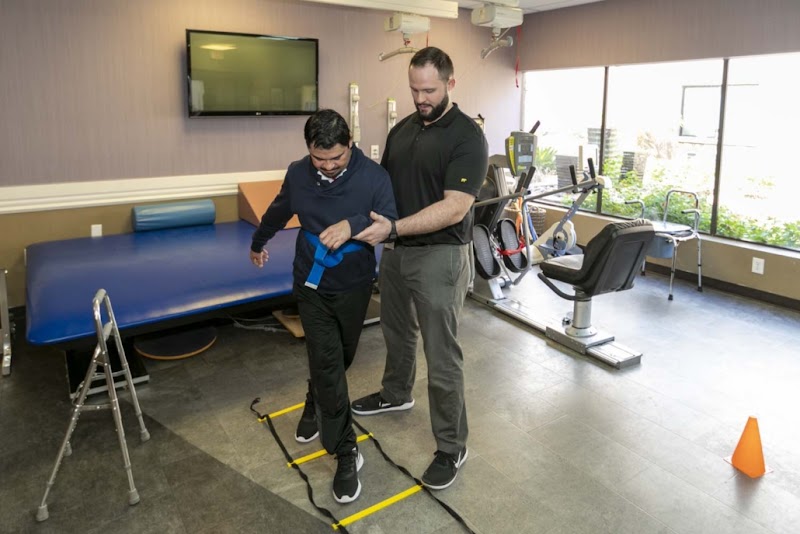
How is Montecito Post Acute Care And Rehabilitation Staffed?

CMS rates MONTECITO POST ACUTE CARE AND REHABILITATION's staffing level at 3 out of 5 stars, which is average compared to other nursing homes. Staff turnover is 37%, compared to the Arizona average of 46%. This relatively stable workforce can support continuity of care.

What Have Inspectors Found at Montecito Post Acute Care And Rehabilitation?

State health inspectors documented 22 deficiencies at MONTECITO POST ACUTE CARE AND REHABILITATION during 2022 to 2025. These included: 1 that caused actual resident harm and 21 with potential for harm. Deficiencies causing actual harm indicate documented cases where residents experienced negative health consequences.
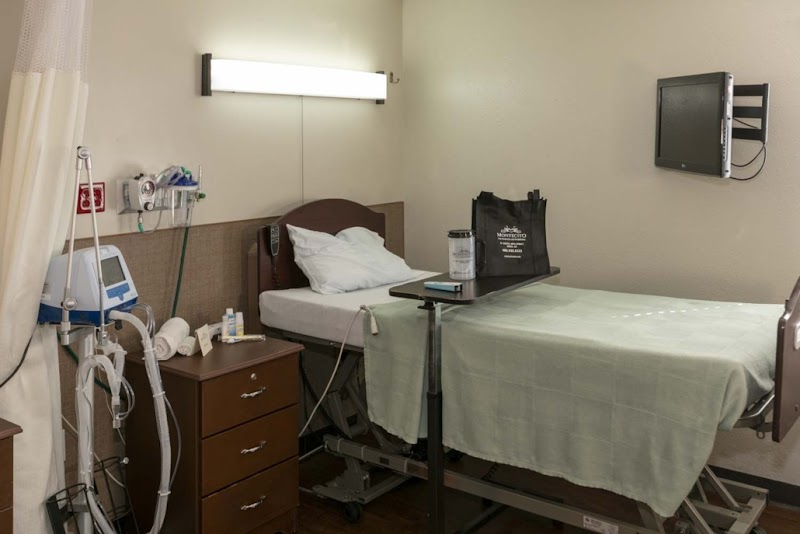
Who Owns and Operates Montecito Post Acute Care And Rehabilitation?

MONTECITO POST ACUTE CARE AND REHABILITATION is owned by a for-profit company. For-profit facilities operate as businesses with obligations to shareholders or private owners. The facility is operated by THE ENSIGN GROUP, a chain that manages multiple nursing homes. With 222 certified beds and approximately 181 residents (about 82% occupancy), it is a large facility located in MESA, Arizona.
How Does Montecito Post Acute Care And Rehabilitation Compare to Other Arizona Nursing Homes?

Compared to the 100 nursing homes in Arizona, MONTECITO POST ACUTE CARE AND REHABILITATION's overall rating (4 stars) is above the state average of 3.3, staff turnover (37%) is near the state average of 46%, and health inspection rating (3 stars) is at the national benchmark.

What Should Families Ask When Visiting Montecito Post Acute Care And Rehabilitation?

Based on this facility's data, families visiting should ask: "Can I visit during a mealtime to observe dining assistance and food quality?" "How do you handle medical emergencies, and what is your hospital transfer rate?" "Can I speak with family members of current residents about their experience?"

Is Montecito Post Acute Care And Rehabilitation Safe?

Based on CMS inspection data, MONTECITO POST ACUTE CARE AND REHABILITATION has a clean safety record: no substantiated abuse findings (meaning no confirmed cases of resident harm), no Immediate Jeopardy citations (the most serious violation level indicating risk of serious injury or death), and is not on the Special Focus Facility watch list (a federal program monitoring the lowest-performing 1% of nursing homes). The facility has a 4-star overall rating and ranks #1 of 100 nursing homes in Arizona. While no facility is perfect, families should still ask about staff-to-resident ratios and recent inspection results during their visit.

Do Nurses at Montecito Post Acute Care And Rehabilitation Stick Around?

MONTECITO POST ACUTE CARE AND REHABILITATION has a staff turnover rate of 37%, which is about average for Arizona nursing homes (state average: 46%). Moderate turnover is common in nursing homes, but families should still ask about staff tenure and how the facility maintains care continuity when employees leave.

Was Montecito Post Acute Care And Rehabilitation Ever Fined?

MONTECITO POST ACUTE CARE AND REHABILITATION has been fined $8,278 across 1 penalty action. This is below the Arizona average of $33,162. While any fine indicates a compliance issue, fines under $50,000 are relatively common and typically reflect isolated problems that were subsequently corrected. Families should ask what specific issues led to these fines and confirm they've been resolved.

Is Montecito Post Acute Care And Rehabilitation on Any Federal Watch List?

MONTECITO POST ACUTE CARE AND REHABILITATION is not on any federal watch list. The most significant is the Special Focus Facility (SFF) program, which identifies the bottom 1% of nursing homes nationally based on persistent, serious quality problems. Not being on this list means the facility has avoided the pattern of deficiencies that triggers enhanced federal oversight. This is a positive indicator, though families should still review the facility's inspection history directly.