PEORIA POST ACUTE AND REHABILITATION
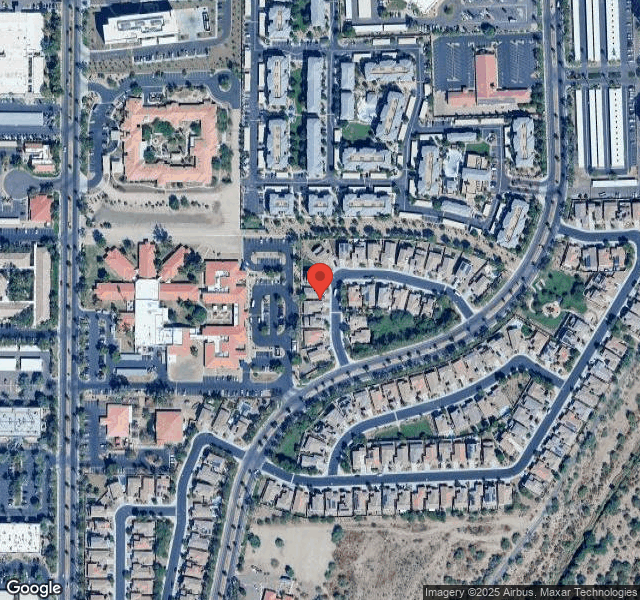

13215 NORTH 94TH DRIVE, PEORIA, AZ 85381 (623) 933-7722
For profit - Corporation 179 Beds THE ENSIGN GROUP Data: November 2025
Trust Grade
90/100
#21 of 139 in AZ
Last Inspection: April 2024

Within standard 12-15 month inspection cycle. Federal law requires annual inspections.

Overview

Peoria Post Acute and Rehabilitation has received a Trust Grade of A, which indicates it is considered excellent and highly recommended among nursing homes. Ranked #21 out of 139 facilities in Arizona, it is in the top half, and #17 out of 76 in Maricopa County, meaning only a few local options are better. However, the facility's trend is worsening, with issues increasing from 1 in 2024 to 2 in 2025. Staffing is a concern, rated at 2 out of 5 stars, and while turnover is average at 49%, this suggests some instability in staff. On a positive note, there have been no fines, which is a good sign, and the facility has better RN coverage than many others, ensuring that important health issues are caught. Specific incidents include a failure to implement necessary precautions for two residents, risking infection, and leaving medications unsecured, which could lead to unauthorized access. Overall, while Peoria Post Acute has strengths, particularly in its overall rating and RN coverage, families should be aware of the staffing challenges and recent compliance issues.

Trust Score
A
90/100
In Arizona
#21/139
Top 15%
Safety Record
Low Risk
No red flags
Inspections
Getting Worse
1 → 2 violations
Staff Stability
⚠ Watch
49% turnover. Above average. Higher turnover means staff may not know residents' routines.
Penalties
✓ Good
No fines on record. Clean compliance history, better than most Arizona facilities.
Skilled Nurses
✓ Good
Each resident gets 46 minutes of Registered Nurse (RN) attention daily — more than average for Arizona. RNs are trained to catch health problems early.
Violations
✓ Good
Only 5 deficiencies on record. Cleaner than most facilities. Minor issues only.
★★★★★
5.0
Overall Rating
★★☆☆☆
2.0
Staff Levels
★★★★★
5.0
Care Quality
★★★★☆
4.0
Inspection Score
Stable
2024: 1 issues
2025: 2 issues

The Good

  • 5-Star Quality Measures · Strong clinical quality outcomes
  • Full Sprinkler Coverage · Fire safety systems throughout facility
  • No fines on record

Facility shows strength in quality measures, fire safety.

The Bad

Staff Turnover: 49%

Near Arizona avg (46%)

Higher turnover may affect care consistency

Chain: THE ENSIGN GROUP

Part of a multi-facility chain

Ask about local staffing decisions and management

The Ugly 5 deficiencies on record

Sept 2025 1 deficiency
CONCERN (D) 📢 Someone Reported This

A family member, employee, or ombudsman was alarmed enough to file a formal complaint

Potential for Harm - no one hurt, but risky conditions existed

Deficiency F0761 (Tag F0761)

Could have caused harm · This affected 1 resident

The facility failed to ensure that one medication cart was secured when left unattended. The deficient practice could result in residents, visitors, and/or staff members having unrestricted access to ...

Read full inspector narrative →
The facility failed to ensure that one medication cart was secured when left unattended. The deficient practice could result in residents, visitors, and/or staff members having unrestricted access to medications. Findings include: An observation of a medication cart was conducted on September 11, 2025, at 12:07 p.m., with 2 surveyors present, who observed that a cart was left unattended and unlocked. An interview was conducted on September 11, 2025, at 12:09 p.m. with Registered Nurse, Staff #41, who confirmed that the cart was unlocked in the hallway. The RN Staff #41 stated that if the cart is left unlocked and unattended, people could get into the cart and get into the medications. An interview was conducted on September 11, 2025 09:00 a.m. with the Director of Nursing (DON), Staff #67, who stated that her expectations were that if a staff member was not present, medication carts should be locked and secured. The risks that present themselves are that residents have access to medications. The facility policy reviewed in November 2024, titled, Pharmacy Services Drug Storage, revealed that drugs and/or biologicals should not be left unsecured/unattended. The policy further stated that medication and treatment carts will be kept locked when unattended.
Jun 2025 1 deficiency
CONCERN (D) 📢 Someone Reported This

A family member, employee, or ombudsman was alarmed enough to file a formal complaint

Potential for Harm - no one hurt, but risky conditions existed

Accident Prevention (Tag F0689)

Could have caused harm · This affected 1 resident

**NOTE- TERMS IN BRACKETS HAVE BEEN EDITED TO PROTECT CONFIDENTIALITY** Based on clinical record review, observations, interviews, facility documentation, and policies, the facility failed to ensure m...

Read full inspector narrative →
**NOTE- TERMS IN BRACKETS HAVE BEEN EDITED TO PROTECT CONFIDENTIALITY** Based on clinical record review, observations, interviews, facility documentation, and policies, the facility failed to ensure medications were not left unsupervised at the bedside for one resident (# 3). This deficient practice could result accidental ingestion, incorrect administration, or unauthorized access of medications. The sample size was 3.Resident # 3 was admitted to the facility on [DATE] with diagnoses of dependence on renal dialysis, Type 2 Diabetes Mellitus, chronic pain, and legal blindness. The quarterly Minimum Data Set (MDS) dated [DATE], included a Brief Interview for Mental Status (BIMS) score of 12, indicating the resident was cognitively intact.The clinical record failed to reflect a physician's order or an interdisciplinary care team review, allowing medications to be left at the resident's bedside. The Counseling/Disciplinary Notice dated June 24, 2025, provided a written warning to the administering Registered Nurse (RN/Staff # 17). The corrective action of the disciplinary notice provided education with the nurse on the five rights of medication administration, however the facility policy identified seven rights of medication administration. The list of medications left behind by the RN was attached to the notice, and included:-Aspirin 81 mg- Cinacalcet 30 mg x 2 tablets-Famotidine 20 mg 1/2 tab-Fexofenadine 180 mg 1 tablet-Glycolax Powder 17 gram-Minoxidil 2.5mg 1 tablet-Renal Vitamin 0.8 mg 1 tablet- Sertraline 100 mg 1.5 tablets-Vitamin C 500 mg 1 tablet-Zinc 50 mg 1 tablet-Clonidine 0.1 mg 2 tablets-Docusate sodium 100 mg 1 tablet- Lantus insulin- Oyster shell 500 mg 1 tablet- Sevelamer Carbonate 800 mg 3 tabletsThe facility provided documentation that the clinical educator (Staff # 10) provided education entitled Learning Medication at Bedside in-service for licensed nursing staff for day and night shift on June 24, 2025. An observation of a Lantus Solar star insulin pen, and a medicine cup of medications were observed on top of the side dresser during an interview with the resident on June 24, 2025 at 10:45 a.m. At 10:51 a.m. on June 24, 2025, Staff # 17 was observed retrieving the cup of medications and insulin pen from the top of side dresser, and then administering the cup of pills with a cup of water after the resident's identification was confirmed. After the resident swallowed the pills, the RN was observed administering the Lantus Solostar into resident's abdomen according to professional standards. The observation failed to reflect the oral medications were identified to the resident prior to administration.During an interview with the resident at 10:45 a.m. on June 24,2025 the resident revealed that he does not self-administer medications, but the nurse will come back in to give it to him. After the RN left the room, the interview with the resident resumed. The resident revealed that he was visually impaired, and did not know exactly what he was receiving but stated he was pretty sure his phosphorus binders were in there. An interview with Staff # 17 was conducted on June 24, 2025 at approximately 10:56 a.m. The nurse revealed that it was unusual for her to have left the medications by bedside. She recalled that the resident refused the pills without the filtered water, so she left the pills in the room to fulfill the resident's request. The nurse confirmed the resident did not have an order to self-administer medications. The nurse reflected that the correct process was to, take the medications with me, and if he refused the medications, it should have been discarded. An interview conducted with a Certified Nursing Assistant (CNA/Staff # 34) was conducted on June 24, 2025 at 12:20 p.m. Staff #34 revealed that if a CNA found medications by the bedside, they are to alert the nurse, so the medications can be disposed of properly.An interview was conducted on June 24, 2025 with a Licensed Practical Nurse (LPN/Staff #27) at 12:27 p.m., revealed that meds left at the bedside are dangerous because someone can take it and not know what it is. During an interview with LPN/Staff # 45, on June 24, 2025 at 12:45 revealed that when medications are given, the nurse is expected to wait until the resident swallows the pills to ensure that the medications are taken. The LPN advised against leaving medications unattended in the room because someone else could take the medications accidentally. If medications were found by the bedside, the LPN revealed that the medications are supposed to be discarded in the trash.The facility's policy Flex Administration of Drug Policy, reviewed January 2025, revealed the seven rights of medication administration are followed to ensure safety and accuracy of administration.
Apr 2024 1 deficiency
CONCERN (E)

Potential for Harm - no one hurt, but risky conditions existed

Infection Control (Tag F0880)

Could have caused harm · This affected multiple residents

**NOTE- TERMS IN BRACKETS HAVE BEEN EDITED TO PROTECT CONFIDENTIALITY** Based on clinical record reviews, staff interviews, review of policy and procedures, the CMS (Centers for Medicare and Medicaid ...

Read full inspector narrative →
**NOTE- TERMS IN BRACKETS HAVE BEEN EDITED TO PROTECT CONFIDENTIALITY** Based on clinical record reviews, staff interviews, review of policy and procedures, the CMS (Centers for Medicare and Medicaid Services) guidance, the facility failed to ensure two sampled residents (#365 and # 18) were placed on enhanced barrier precautions (EBP). The deficient practice could result in the transmission of multi-drug resistant organisms. Findings include: -Resident (#365) was admitted on [DATE] with diagnoses of chronic obstructive pulmonary disease (COPD) with acute exacerbation, acute kidney failure with tubular necrosis, dependence on renal dialysis. The care plan dated March 13, 2024 included that the resident had an indwelling catheter for neurogenic bladder. Goal was that the resident will show no signs/symptoms of urinary infection. The admission Minimum Data Set (MDS) assessment dated [DATE] revealed a Brief Interview for Mental Status (BIMS) score of 12 indicating resident had mild cognitive impairment. The assessment also included that the resident had diagnoses of renal insufficiency, renal failure, end stage renal disease (ESRD), neurogenic bladder, pneumonia and septicemia; and that, the resident had an Indwelling catheter (including suprapubic catheter and nephrostomy tube). The ADL (activities of daily living) care plan dated March 13, 2024 included that resident had ADL self-performance deficit related to ESRD (end stage renal failure), sepsis and urinary retention. The progress note dated March 31, 2024 revealed the resident was alert and oriented x4; and that the resident had an indwelling catheter and was receiving hemodialysis The physician order dated April 3, 2024 revealed an order for EBP. The ADL care plan was revised on April 3, 2024 to include an intervention of EBP. Review of the Treatment Administration Record (TAR) for March 2024 and April 2024 revealed catheter care was provided as ordered. However, there was no evidence found in the clinical record that the resident was placed on EBP from April 1 through April 2, 2024. -Resident (#18) was admitted on [DATE] with diagnoses of dependence on renal dialysis, ESRD and presence of urogenital implants. Review of the quarterly MDS assessment dated [DATE] revealed a BIMS score of 15 indicating the resident had intact cognition. The MDS also included that the resident had an indwelling catheter. Review of the current care plan included that the resident had infection in the urine, MDRO (multidrug resistant organism and) CRE (carbapenem-resistant Enterobacteriaceae). Intervention included enhanced precautions when providing resident care. The physician order dated April 3, 2024 included an order for EBP. Review of the TAR for March and April 2024 revealed resident was provided with catheter care. During the initial screening process conducted on April 1, 2024, there were no signs posted related to EBP for residents #18 and #365; and, there was infection control cart that contained personal protective equipment (PPE) available to use. Despite the physician order for EBP, an observation conducted on April 3, 2024 at 1:55 p.m., there were no EBP signs posted and no PPE cart found outside of the rooms for residents #18 and #365. An interview was conducted with a certified nurse assistant (CNA/staff #145) April 5, 2024 at 10:29 a.m. The CNA stated that the facility protocol for EBP was the use of gloves and gowns when in contact with the resident or when providing personal care. The CNA said that when a resident's status was changed to EBP, staff receive notification from the charge nurse or report from other staff. The CNA also said that there would be signs are posted outside the resident's door and signs on which bed was on EBP. The CNA further stated that there was a new policy for contact precautions for catheters that started on April 4, 2024. An interview with a housekeeping staff (#194) was conducted on April 5, 2024 at 10:09 a.m., Staff #194 said that resident rooms that were on transmission-based precautions (TBP) or EBP were cleaned with a special cleanser and using proper PPE. She further stated that she becomes aware of the resident rooms that were designated as EBP or TBP by seeing the signs posted and the PPE carts located outside the resident rooms. An interview was conducted on 04/05/24 10:48 AM with the Director of Nursing (DON) who stated that the facility had been working on EBP and TBP and had the precautions on the trach and vent units. She stated that the facility had rolled out the new CMS guidance on EBP the week prior; and that, the new guidance from CMS was very confusing. The DON stated that she had a late conversation on April 4, 2024 with the county health department who told her who needed to be placed on EBP; and that, this would include all residents with indwelling catheters. The DON said that education was provided to staff who will use EBP when doing wound care, tracheotomy care, incontinence care, changing of linens and dressing changes. Review of the facility policy titled Infection Prevention and Control Program with revision date of October 2023 included that the infection prevention and control program is a facility-wide effort involving all disciplines and individuals and is an integral part of the quality assurance and performances improvement program. Goal was to ensure compliance with state and federal regulations related to infection control. The CMS QSO memo dated March 20, 204 included that recommendation of the use of EBP for residents with chronic wounds, infection or colonization with CDC-targeted MDRO when contact precautions do not otherwise apply or indwelling medical devices during high contact resident care activities regardless of their MDRO status, in addition to residents who have an infection or colonization with a CDC (Centers for Disease Control and Prevention)-targeted or other epidemiologically important MDRO when contact precautions do not apply. For residents for whom EBP are indicated, EBP is employed when performing the following high-contact resident care activities: dressing, bathing/showering, transferring, providing hygiene, changing linens, changing briefs or assisting with toileting, device care or use and wound care. The memo included that the effective date for this guidance is April 1, 2024.
Dec 2022 1 deficiency
CONCERN (D) 📢 Someone Reported This

A family member, employee, or ombudsman was alarmed enough to file a formal complaint

Potential for Harm - no one hurt, but risky conditions existed

Deficiency F0658 (Tag F0658)

Could have caused harm · This affected 1 resident

**NOTE- TERMS IN BRACKETS HAVE BEEN EDITED TO PROTECT CONFIDENTIALITY** Based on clinical record review, interviews, and policies, the facility failed to ensure medications were administered as ordere...

Read full inspector narrative →
**NOTE- TERMS IN BRACKETS HAVE BEEN EDITED TO PROTECT CONFIDENTIALITY** Based on clinical record review, interviews, and policies, the facility failed to ensure medications were administered as ordered for one resident (#14). The deficient practice could result in residents not receiving their medications as ordered. Findings include: Resident #14 was admitted to the facility on [DATE] with diagnoses that included paraplegia, Diabetes Mellitus (DM) type 2, and Multiple Sclerosis (MS). Review of the admission Minimum Data Set (MDS) assessment dated [DATE] revealed the resident scored a 15 on the Brief Interview for Mental Status (BIMS) indicating she was cognitively intact. Review of the resident's behavior care plan, initiated November 8, 2022, revealed that the resident had a potential for a behavior problem related to calling on the call light frequently when care has been provided. Interventions included to administer medications as ordered and to monitor and document for side effects of medications. Review of the December 2022 recapitulation of physician's orders revealed the following orders: -Citalopram 10 milligrams (mg), give 3 tablets by mouth every day for depression. -Debrox solution instill 2 drops in left ear every night shift for wax buildup. -Glimepiride give one tablet by mouth one time a day for DM type 2. -Potassium Chloride packet, give one packet by mouth every day for supplement. Reviw of the December 2022 Medication Administration Record (MAR) revealed that there were several medications that were not administered as ordered. These included the potassium chloride on December 1, Debrox solution on December 2, Citalopram on December 11, and glimepiride on December 15. The nursing notes for December 2022 indicated that multiple medications were not administered due to them being on order. No further documentation was noted regarding the administration of these medications. There was no evidence that the physician was made aware of the situation. During an interview with the resident at 9:18 a.m. on December 14, 2022, the resident stated that the facility does run out her medications sometimes. She said it can take 3-4 days to get the medications in. An interview was conducted with a Licensed Practical Nurse (LPN/staff #138) at 9:33 a.m. on December 14, 2022. She stated that they do not run out of medications very often. She said she orders medications several days ahead and that they usually come the same day they are ordered if they are ordered early enough. She said otherwise, they come in the next day. She said that there is a machine in the medication room that can be used to pull medications that are not available otherwise. During an interview with a LPN (staff #192) at 11:17 a.m. on December 15, 2022, she said that she was aware that the resident was missing/had no supply of one medication, glimepiride, and so she told the resident that it had to be ordered. She said that she ordered it from pharmacy and documented this in a nursing note. She said she has not yet notified the physician, but that notification to the physician is the protocol in the facility. She further said that the medication was not available in the emergency medication supply. She said the risk of the resident not getting that medication is that it can have adverse effects on the resident's blood sugar. An interview was conducted with the Assistant Director of Nursing (ADON/staff #193) at 1:10 p.m. on December 15, 2022. She said that her expectation is that nursing staff will maintain the medication supplies for each resident. She said that when the supply gets low, staff should order more. She said that in general, she wants the staff to maintain a 7 day supply and to order when there are 7 days remaining. She said this gives pharmacy time to process and deliver the medication. She said that medications should not be omitted/not administered related to the supply. She said that if this does happen, the nurse should notify the physician and document this. She said that running out of medications could cause adverse effects to the resident. She said the resident not getting her medications does not meet her expectations. Review of the facility's professional standards policy, revised November 2007, revealed the policy of the facility is to provide services that meet professional standards of quality and are provided by qualified persons in accordance with each resident's care plan. The facility's medication administration policy, revised January 2022, revealed a policy that medications are to be administered as prescribed by the attending physician. The policy included that medications must be administered in accordance with the written orders of the physician. All drugs and dosage schedules must be recorded on the MAR. If a medication is withheld, refused, or given other than at the scheduled time, the documentation will be reflected in the clinical record. The facility's physician's orders policy, dated August 2022, revealed a policy that the facility that drugs shall be administered only upon the written order of a person duly licensed and authorized to prescribe such drugs. The policy included that the facility must accurately implement orders. Further, drugs and biological that are required to be refilled must be reordered from the issuing pharmacy prior to the last dosage being administered to ensure refills are on hand.
Oct 2021 1 deficiency
CONCERN (D)

Potential for Harm - no one hurt, but risky conditions existed

Food Safety (Tag F0812)

Could have caused harm · This affected 1 resident

Based on observation, staff interviews, and policy review, the facility failed to ensure food was properly sealed and labeled, and had an expiration date in accordance to food safety standards. Failur...

Read full inspector narrative →
Based on observation, staff interviews, and policy review, the facility failed to ensure food was properly sealed and labeled, and had an expiration date in accordance to food safety standards. Failure to store food properly could result in poor food quality and/or foodborne illness. Findings include: During an initial kitchen observation conducted on 10/25/21 at 11:34 AM, a plastic container of food was observed on a shelf in the freezer with the top partially open to air. In addition, the food item was not labeled or dated. The kitchen manager stated that the container was filled with beef stew. An interview was conducted with the kitchen manager (staff #218) on 10/27/21 at 12:19 AM. The kitchen manager stated that she believes the stew was made during the weekend, even though it was not on the menu. Staff #218 stated the cook forgot to label and date the container of stew. She stated that the container lid was not sealed properly and must have popped open. The kitchen manager stated that the container of stew should have been sealed, labeled and dated. Staff #218 stated that she checks the freezer every Monday to ensure food is stored in compliance with food storage standards. She included that she had not yet checked the freezer that morning. In an interview conducted with the Director of Nursing (DON/staff #39) on 10/28/21 at 11:01 AM, the DON stated that she did speak with the kitchen manager who admitted the lid on the stew container was not sealed and the stew was not labeled. The DON stated that it is her expectation that food stored in the refrigerator and freezer be labeled, dated and sealed to ensure safety of the residents from potential foodborne illnesses. Review of the facility policy titled Food Storage - Policy and Procedure (2014) stated frozen perishable food and products are to be covered, labeled and dated to assure nutritive value and food quality if not for immediate use. All foods in the freezer are to be checked periodically and undated foods are to be discarded.
Understanding Severity Codes (click to expand)
Life-Threatening (Immediate Jeopardy)
J - Isolated K - Pattern L - Widespread
Actual Harm
G - Isolated H - Pattern I - Widespread
Potential for Harm
D - Isolated E - Pattern F - Widespread
No Harm (Minor)
A - Isolated B - Pattern C - Widespread

Questions to Ask on Your Visit

  • "Can I speak with families of current residents?"
  • "What's your RN coverage like on weekends and overnight?"

Our Honest Assessment

Strengths
  • • Grade A (90/100). Above average facility, better than most options in Arizona.
  • • No major safety red flags. No abuse findings, life-threatening violations, or SFF status.
  • • No fines on record. Clean compliance history, better than most Arizona facilities.
  • • Only 5 deficiencies on record. Cleaner than most facilities. Minor issues only.
Concerns
  • • No significant concerns identified. This facility shows no red flags across CMS ratings, staff turnover, or federal penalties.
Bottom line: Generally positive indicators. Standard due diligence and a personal visit recommended.

About This Facility

What is Peoria Post Acute And Rehabilitation's CMS Rating?

CMS assigns PEORIA POST ACUTE AND REHABILITATION an overall rating of 5 out of 5 stars, which is considered much above average nationally. Within Arizona, this rating places the facility higher than 99% of the state's 100 nursing homes. This rating reflects solid performance across the metrics CMS uses to evaluate nursing home quality.

How is Peoria Post Acute And Rehabilitation Staffed?

CMS rates PEORIA POST ACUTE AND REHABILITATION's staffing level at 2 out of 5 stars, which is below average compared to other nursing homes. Staff turnover is 49%, compared to the Arizona average of 46%.

What Have Inspectors Found at Peoria Post Acute And Rehabilitation?

State health inspectors documented 5 deficiencies at PEORIA POST ACUTE AND REHABILITATION during 2021 to 2025. These included: 5 with potential for harm.
Who Owns and Operates Peoria Post Acute And Rehabilitation?

PEORIA POST ACUTE AND REHABILITATION is owned by a for-profit company. For-profit facilities operate as businesses with obligations to shareholders or private owners. The facility is operated by THE ENSIGN GROUP, a chain that manages multiple nursing homes. With 179 certified beds and approximately 171 residents (about 96% occupancy), it is a mid-sized facility located in PEORIA, Arizona.

How Does Peoria Post Acute And Rehabilitation Compare to Other Arizona Nursing Homes?

Compared to the 100 nursing homes in Arizona, PEORIA POST ACUTE AND REHABILITATION's overall rating (5 stars) is above the state average of 3.3, staff turnover (49%) is near the state average of 46%, and health inspection rating (4 stars) is above the national benchmark.

What Should Families Ask When Visiting Peoria Post Acute And Rehabilitation?

Based on this facility's data, families visiting should ask: "Can you walk me through typical staffing levels on day, evening, and night shifts?" "Can I visit during a mealtime to observe dining assistance and food quality?" "How do you handle medical emergencies, and what is your hospital transfer rate?" "Can I speak with family members of current residents about their experience?" These questions are particularly relevant given the below-average staffing rating.

Is Peoria Post Acute And Rehabilitation Safe?

Based on CMS inspection data, PEORIA POST ACUTE AND REHABILITATION has a clean safety record: no substantiated abuse findings (meaning no confirmed cases of resident harm), no Immediate Jeopardy citations (the most serious violation level indicating risk of serious injury or death), and is not on the Special Focus Facility watch list (a federal program monitoring the lowest-performing 1% of nursing homes). The facility has a 5-star overall rating and ranks #1 of 100 nursing homes in Arizona. While no facility is perfect, families should still ask about staff-to-resident ratios and recent inspection results during their visit.

Do Nurses at Peoria Post Acute And Rehabilitation Stick Around?

PEORIA POST ACUTE AND REHABILITATION has a staff turnover rate of 49%, which is about average for Arizona nursing homes (state average: 46%). Moderate turnover is common in nursing homes, but families should still ask about staff tenure and how the facility maintains care continuity when employees leave.

Was Peoria Post Acute And Rehabilitation Ever Fined?

PEORIA POST ACUTE AND REHABILITATION has no federal fines on record. CMS issues fines when nursing homes fail to meet care standards or don't correct problems found during inspections. The absence of fines suggests the facility has either maintained compliance or corrected any issues before penalties were assessed. This is a positive indicator, though families should still review recent inspection reports for the full picture.

Is Peoria Post Acute And Rehabilitation on Any Federal Watch List?

PEORIA POST ACUTE AND REHABILITATION is not on any federal watch list. The most significant is the Special Focus Facility (SFF) program, which identifies the bottom 1% of nursing homes nationally based on persistent, serious quality problems. Not being on this list means the facility has avoided the pattern of deficiencies that triggers enhanced federal oversight. This is a positive indicator, though families should still review the facility's inspection history directly.