Ahwatukee Post Acute
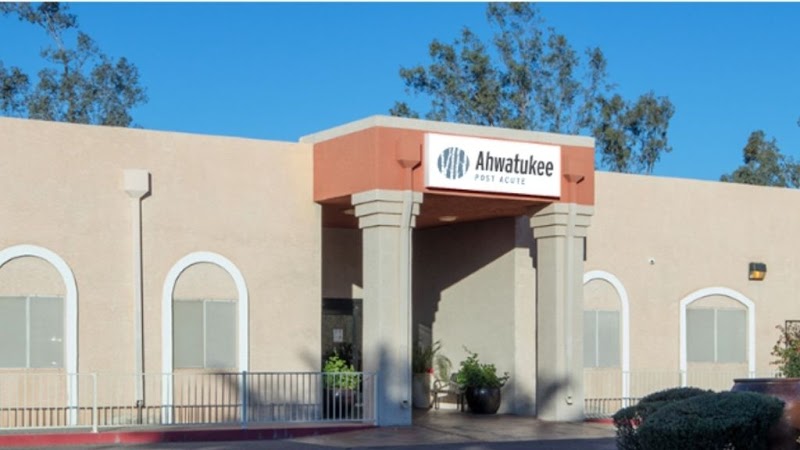
15810 SOUTH 42ND STREET, PHOENIX, AZ 85048 (480) 759-0358
For profit - Corporation 192 Beds PACS GROUP Data: November 2025
Trust Grade
45/100
#99 of 139 in AZ
Last Inspection: August 2023

Over 2 years since last inspection. Current conditions may differ from available data.

Overview

Ahwatukee Post Acute has a Trust Grade of D, indicating below-average performance with some concerns regarding care and management. It ranks #99 out of 139 facilities in Arizona, placing it in the bottom half of state options, and #63 out of 76 in Maricopa County, suggesting limited local competition. The facility is improving, having decreased from 6 issues in 2024 to 4 in 2025, but it has a concerning staffing rating of 1 out of 5 stars, with a high turnover rate of 59%, above the state average. While there have been no fines, the facility has less RN coverage than 97% of Arizona facilities, which is a significant concern for resident safety. Specific incidents noted include a failure to ensure resident rights were upheld, leading to potential risks of abuse and neglect, as well as issues with medication administration that could result in residents not receiving their prescribed treatments. Overall, while there are some strengths, such as the lack of fines, the weaknesses in staffing and incidents reported are important factors for families to consider.
Trust Score
D
45/100
In Arizona
#99/139
Bottom 29%
Safety Record
Low Risk
No red flags
Inspections
Getting Better
6 → 4 violations
Staff Stability
⚠ Watch
59% turnover. Above average. Higher turnover means staff may not know residents' routines.
Penalties
✓ Good
No fines on record. Clean compliance history, better than most Arizona facilities.
Skilled Nurses
⚠ Watch
Each resident gets only 11 minutes of Registered Nurse (RN) attention daily — below average for Arizona. Fewer RN minutes means fewer trained eyes watching for problems.
Violations
⚠ Watch
43 deficiencies on record. Higher than average. Multiple issues found across inspections.
★★☆☆☆
2.0
Overall Rating
★☆☆☆☆
1.0
Staff Levels
★★★★★
5.0
Care Quality
★☆☆☆☆
1.0
Inspection Score
Stable
2024: 6 issues
2025: 4 issues

The Good

  • 5-Star Quality Measures · Strong clinical quality outcomes
  • Full Sprinkler Coverage · Fire safety systems throughout facility
  • No fines on record

Facility shows strength in quality measures, fire safety.

The Bad

2-Star Overall Rating

Below Arizona average (3.3)

Below average - review inspection findings carefully

Staff Turnover: 59%

13pts above Arizona avg (46%)

Frequent staff changes - ask about care continuity

Chain: PACS GROUP

Part of a multi-facility chain

Ask about local staffing decisions and management

Staff turnover is elevated (59%)

11 points above Arizona average of 48%

The Ugly 43 deficiencies on record

Aug 2025 1 deficiency
CONCERN (E) 📢 Someone Reported This

A family member, employee, or ombudsman was alarmed enough to file a formal complaint

Potential for Harm - no one hurt, but risky conditions existed

Deficiency F0628 (Tag F0628)

Could have caused harm · This affected multiple residents

**NOTE- TERMS IN BRACKETS HAVE BEEN EDITED TO PROTECT CONFIDENTIALITY** Number of residents sampled:3Number of residents cited:3The facility failed to send a copy of the notice of transfer or discharg...

Read full inspector narrative →
**NOTE- TERMS IN BRACKETS HAVE BEEN EDITED TO PROTECT CONFIDENTIALITY** Number of residents sampled:3Number of residents cited:3The facility failed to send a copy of the notice of transfer or discharge to the representative of the Office of the State Long-Term Care (LTC) Ombudsman for 3 of 3 sampled residents (#142, #147, and #150). The deficient practice could result to residents not being able to access an advocate who can inform them of their options and rights related to discharges. Based on closed record review, staff interviews, review of facility documentation and policy, and the State Agency (SA) complaint tracking system, the facility failed to send a copy of the notice of transfer or discharge to the representative of the Office of the State Long-Term Care (LTC) Ombudsman for three discharged residents (#142, #147, and #150). The deficient practice could result to residents not being able to access an advocate who can inform them of their options and rights related to discharges.Findings include:-Regarding Resident #150:Resident #150 was admitted to the facility on [DATE] with a diagnosis that included hypertension and status post recovery from incarcerated/strangulated inguinal hernia repair.Review of admission/readmission progress note dated February 28, 2025 revealed resident was able to communicate needs and wants effectively. Resident verbalized understanding. admission consent forms were signed by the resident's representative/family at bedside.Review of nursing progress notes dated March 2, 2025 revealed a change of condition relating to resident was unhappy with the food and resident was requesting to be discharged back home.Review of provider progress notes dated March 3, 2025 revealed resident's family member was requesting for resident to go home by Friday and case management was aware of the request.Review of the 5-day Minimum Data Set (MDS) assessment dated [DATE] revealed the resident had a Brief Interview for Mental Status (BIMS) score of 3.0, severe impairment.Review of nurse progress note dated March 7, 2025 revealed resident was discharged against medical advice (AMA), and resident's representative/family wanted resident to return back home. Staff educated the resident and resident's representative on leaving AMA and the risk involved. The staff notified resident's provider of resident discharging AMA.Resident #150 was discharged from the facility on March 7, 2025.-Regarding Resident #142:Resident #142 was readmitted to the facility on [DATE] with a diagnosis that include anxiety, depression, and chronic back pain.Review of BIMS clinical assessment dated [DATE] revealed a score of 15.0, cognitively intact.Review of Interdisciplinary Team (IDT) progress notes dates March 14, 2025 revealed Resident #142 was bedbound, required minimum assistance for transfers and required contact guard assistance for activities of daily living.Review of progress notes revealed Resident #142 has an order for Gabapentin 100 mg (milligram), methocarbamol 500 mg, and Morphine Sulfate Oral Tablet 15 mg for pain management. Review of progress note dated March 18, 2025 revealed Resident #142 left the facility AMA, left without medication, and was picked up by the resident's family member. The progress notes revealed that the resident was educated on risks of leaving AMA including worsening of illness. The Director of Nursing (DON) and the resident's provider were notified of resident leaving AMA.Resident #142 was discharged from the facility on March 18, 2025.-Regarding Resident #147:Resident #147 was admitted to the facility on [DATE] with a diagnosis that includes Coronary Artery Disease (CAD), Heart Failure, Hypertension, Diabetes Mellitus (DM), Malnutrition, and Anxiety DisorderReview of records revealed Resident #147 was under the care of hospice from April 24, 2025.Review of care plan initiated on April 28, 2025 revealed Resident #147 requires hospice care, and at risk for rapid decline in activities of daily living function, sudden onset or worsening of skin integrity, weight loss, nausea/vomiting, pain, abnormal breathing, and impaired psychosocial wellbeing. The interventions include to administer medication as ordered, assist with activities of daily living, establish a daily routine, and coordinate resident's needs with hospice staff.Review of admission MDS assessment dated [DATE] revealed resident had a BIMS score of 7.0, severe impairment.Review of care plan dated May 1, 2025 revealed resident has nutritional risk related to type 2 diabetes, chronic gout, decreased by mouth intake related to progression of disease and resident was under the service of hospice care.Review of records revealed resident's blood sugar were checked at least three times a day from May 9, 2025 through June 26, 2025.Review of case management progress note dated June 26, 2025 revealed that Resident's Power of Attorney (POA) was upset and was demanding to speak with someone who could help get the resident out of the facility. The resident's POA stated the facility was not providing therapy services. The POA was informed that the resident was admitted to the facility for long term care, and during the care conference it was explained to the POA that the resident was on hospice services which meant therapy services were not available. In addition, the progress note revealed that the resident's POA was educated by the director of nursing and case management that the facility's dietician monitors all risk related to decline in nutrition risks, all diabetic concerns were monitored based on physician's order, symptoms and medication management; monthly activity calendars were given to residents, activity calendars were placed around the facility at the start of the month; and the activity director along with the activity assistant visits residents who were not able to attend. The POA was informed that the provider gave order to discharge resident home per POA request with hospice care. The progress note revealed resident would be liable for private pay at daily charge if resident would like to stay. In addition, the progress note revealed that the resident's provider was notified regarding resident leaving without hospice and the discharge of the resident was not a safe discharge. The resident's POA signed the AMA form and removed Resident #147 out of the facility.Resident #147 was discharged from the facility on June 26, 2025.An interview was conducted on August 7, 2025 at 12:44 PM with Case Manager/Staff #59. Staff #59 stated that every month there should be notification of discharge sent to the Ombudsman. The notification of discharge usually is sent on the last day of each month or the beginning of the next month. Staff #59 stated that she sent the June and July 2025 notification of discharges to the Ombudsman this week. In addition, Staff #59 stated that the facility went through different case managers for the last three months. Staff #59 stated that she just started last week and Staff #600 was the case manager last month. Furthermore, Staff #59 stated that the type of discharges she encounters include residents that were discharged to home, assisted living, resident leaving the facility AMA, and these types of discharges are send to the Ombudsman. Staff #59 stated that there was no notice of discharges sent to the Ombudsman for seven months. In addition, Staff #59 stated that for residents discharging AMA, she will meet with the resident and talk to the resident because the resident is leaving without medication, equipment, and or home health care services. Staff #59 stated that if a resident leaves without signing the AMA form, it should be documented in the progress note because some resident refused to sign the AMA form. And, if resident is not alert or oriented and wants to leave AMA, she will notify the resident's doctor, family, and the director of nursing (DON). Staff #59 stated that she recently spoke with the Ombudsman and the Ombudsman informed her that she has not received any notice of discharges since December.An interview was conducted on 08/08/2025 8:35 AM to Ombudsman (Staff #700). The Ombudsman stated that she received the December and November 2024 Notice of Discharge from the facility but did not receive the other notices for this year except the one Staff #59 send her couple days ago.An interview was conducted on August 8, 2025 at 10:58 AM with the Social Service Director (Staff #152) in his office. Staff #152 stated that he has been in the social service director position for three weeks and his responsibilities include managing all long-term care (LTC) residents, he conducts admission assessment such as BIMS, he is the main contact for LTC insurance companies, he completes Preadmission Screening and Resident Review (PASRR) for review, he manages grievances, and conducts all care plan meetings. Regarding resident discharges such as transferring to another facility, he stated that he will send an email or contact the Ombudsman. Staff #152 stated that he will contact the Ombudsman when there is a change in the level of care such as resident transferring or discharging to an assisted living home, group home, or to a detox facility because it is part of the discharge process. He will send every month notice of discharges to the Ombudsman. He stated that the case management is responsible in sending the notice of discharges to the Ombudsman. Furthermore, Staff #152 stated that the risk if the notice of discharge list was not sent to the Ombudsman, such as for instance the discharge was not a safe discharge or resident was not in agreement with the discharge, it could lead to rehospitalization, unsafe environment and potential abuse of the resident. Staff #152 stated that is why he starts discharge planning on day one to try to find alternatives and to make sure the discharge is safe.Additional interview was conducted on August 8, 2025 with Case Manager (Staff #59) and Unit Manager/Infection Preventionist (Staff #109) in the social service director's office. Staff #59 stated that her responsibility includes helping with discharges, making sure residents have everything they need. Staff #59 stated that after residents are discharged , she follows up with them within thirty days, the discharged resident list is sent to the Ombudsman at the end of the month, and Staff #59 stated that she sent one notice of discharge to the ombudsman for the month of June and July 2025 discharge list on August 6, 2025 because she has to do it and this week she did not know who was the Ombudsman representative covering for their facility. Staff #59 stated that the importance of sending the discharge list to the Ombudsman is to make sure residents have a safe discharge and the Ombudsman can follow up with the discharged residents. During the interview, Staff #109 stated that she was assigned to cover case management for the months of April, May and June. Staff #109 stated that she honestly did not sent the notice of discharge to the ombudsman. The case management was not her full-time position. Staff #109 stated that since she was made aware of the importance of sending the notice of discharge to the Ombudsman, she stated that her facility sent a notice of discharge to the Ombudsman this week. Staff #109 stated that the previous months from January through May 2025, the facility did not sent notice of discharge to the Ombudsman. Staff #109 stated that the facility had multiple case management staff turnover and she had no access to what was sent to the Ombudsman. Staff #109 stated that the risk if a notice of discharge was not sent to the Ombudsman is that the resident won't have an advocate to follow up with their needs.Review of facility's document titled, Admission/Discharge To/From Report, revealed that from January 2025 through June 2025, the facility had a total of 245 discharges.An interview was conducted on August 8, 2025 at 11:33 AM with the DON (Staff #66). The DON stated that regarding discharges, their case manager assists in setting up discharges, the resident's provider is notified of discharges, and the Ombudsman is notified of discharges at the end of the month. The DON stated that her case manager was not sending notice of discharges to the Ombudsman, and her facility went through different case managers previously. The DON sated that there is no risk if the Ombudsman was not notified of a resident's discharge.Review of facility's policy titled, Resident Rights, with a revision date of February 2021 revealed (1.) Federal and state laws guarantee certain basic rights to all residents of this facility. These rights include the resident's right to (x.) communicate with outside agencies (e.g., local, state, or federal officials, state and federal surveyors, state long-term care ombudsman, protection or advocacy organizations, etc.) regarding any matter.
Mar 2025 3 deficiencies
CONCERN (D) 📢 Someone Reported This

A family member, employee, or ombudsman was alarmed enough to file a formal complaint

Potential for Harm - no one hurt, but risky conditions existed

Abuse Prevention Policies (Tag F0607)

Could have caused harm · This affected 1 resident

**NOTE- TERMS IN BRACKETS HAVE BEEN EDITED TO PROTECT CONFIDENTIALITY** Based on closed clinical record review, staff interviews, facility documentation and policy review, the facility failed to ensur...

Read full inspector narrative →
**NOTE- TERMS IN BRACKETS HAVE BEEN EDITED TO PROTECT CONFIDENTIALITY** Based on closed clinical record review, staff interviews, facility documentation and policy review, the facility failed to ensure that their abuse policy was implemented regarding major injury that one resident (#5) sustained. The deficient practice could result in other facility policies not being followed. Findings include: Resident #5 was initially admitted to the facility of December 26, 2018 with a diagnosis of dementia, major depressive disorder, hyperlipidemia and gout. Review of the progress note dated December 18, 2024 states resident laying on right side of bed, stating pain in the right upper leg. Assessment completed and 911 call, resident transferred by gurney to ER. Review of an IDT Note dated December 20, 2024 states Resident had fall with injury. Resident has dementia and became increasingly agitated. Upon speaking with the nurse she stated that the resident has not walked for years but kept telling the LN that she was leaving and wanted to leave this place. LN sent out resident immediately. Family and provider notified. Review of the hospital History and Physical dated December 23, 2024 stated the resident had sustained a left periprosthetic femur fracture and a right hip fracture. Review of SA (State Agency) Database revealed that there was no evidence found that the facility reported Resident's (#5) major injury to the SA. An interview was conducted on March 5, 2025 at 1:03 PM with the DON (Director of Nursing, Staff #20) and the ADON (Assistant Director of Nursing, Staff #50). Staff #20 stated that resident #5 fell from her bed, the nurse went into the resident's room and the resident was on the floor beside the bed and she called 911. Staff #50 stated that she was informed from the insurance representative that resident #5 was discharged to another facility. Staff #50 contacted the resident's daughter, primary contact for the resident, who stated she choose the facility because it was closer to her home. Staff #50 stated that resident was denied therapy and her daughter had her transferred to another facility. Staff #50 stated the second facility therapy was also denied and the daughter had resident #5 readmitted to the facility on [DATE]. Staff #50 stated that Resident #5 was denied therapy here also but was under her long-term care insurance. Staff #50 also stated that the resident was on palliative care and had been for years. An interview was conducted on March 5, 2025 at 2:07 PM with Staff #20 who stated the injuries resident #5 sustained were not witnessed. Her conclusion is that this resident fell out of bed due to the statement the resident made to the nurse that found her I want to go home. I don't want to stay here. The only investigation that was completed by staff #20 was speaking to the nurse that found the resident. She stated that she did not feel this incident should have been reported to the state. She does submit any allegations of abuse and those are investigated. Staff #20 also stated that she can understand how the situation could be looked at in a different way. She stated However I do see what you are saying and the way you are looking at this from an outside person. The staff know this resident because she's been here for so long and just concluded there is no other explanation for her on the floor. I get what you are saying. Review of the facility's policy on Abuse, Neglect, Exploitation or Misappropriation-Reporting and Investigating dated 2001 with a revision on April 2021, states upon receiving any allegations of abuse, neglect, exploitation, misappropriation of resident property or injury of unknown source, the administrator is responsible for determining what actions (if any) are needed for the protection of residents. Immediately is defined as: within 24 hours of an allegation that does not involve abuse or result in serious bodily injury.
CONCERN (D) 📢 Someone Reported This

A family member, employee, or ombudsman was alarmed enough to file a formal complaint

Potential for Harm - no one hurt, but risky conditions existed

Report Alleged Abuse (Tag F0609)

Could have caused harm · This affected 1 resident

**NOTE- TERMS IN BRACKETS HAVE BEEN EDITED TO PROTECT CONFIDENTIALITY** Based on closed clinical record review, staff interviews, facility documentation and policy review, the facility failed to repor...

Read full inspector narrative →
**NOTE- TERMS IN BRACKETS HAVE BEEN EDITED TO PROTECT CONFIDENTIALITY** Based on closed clinical record review, staff interviews, facility documentation and policy review, the facility failed to report a major injury that one resident (#5) sustained. The deficient practice could result in other injuries of unknown origin to residents. Findings include: Resident #5 was initially admitted to the facility of December 26, 2018 with a diagnosis of dementia, major depressive disorder, hyperlipidemia and gout. Review of the progress note dated December 18, 2024 states resident laying on right side of bed, stating pain in the right upper leg. Assessment completed and 911 call, resident transferred by gurney to ER. Review of an IDT Note dated December 20, 2024 states Resident had fall with injury. Resident has dementia and became increasingly agitated. Upon speaking with the nurse she stated that the resident has not walked for years but kept telling the LN that she was leaving and wanted to leave this place. LN sent out resident immediately. Family and provider notified. Review of the hospital History and Physical dated December 23, 2024 stated the resident had sustained a left periprosthetic femur fracture and a right hip fracture. Review of SA (State Agency) Database revealed that there was no evidence found that the facility reported Resident's (#5) major injury to the SA. An interview was conducted on March 5, 2025 at 1:03 PM with the DON (Director of Nursing, Staff #20) and the ADON (Assistant Director of Nursing, Staff #50). Staff #20 stated that resident #5 fell from her bed, the nurse went into the resident's room and the resident was on the floor beside the bed and she called 911. Staff #50 stated that she was informed from the insurance representative that resident #5 was discharged to another facility. Staff #50 contacted the resident's daughter, primary contact for the resident, who stated she choose the facility because it was closer to her home. Staff #50 stated that resident was denied therapy and her daughter had her transferred to another facility. Staff #50 stated the second facility therapy was also denied and the daughter had resident #5 readmitted to the facility on [DATE]. Staff #50 stated that Resident #5 was denied therapy here also but was under her long-term care insurance. Staff #50 also stated that the resident was on palliative care and had been for years. An interview was conducted on March 5, 2025 at 2:07 PM with Staff #20 who stated the injuries resident #5 sustained were not witnessed. Her conclusion is that this resident fell out of bed due to the statement the resident made to the nurse that found her I want to go home. I don't want to stay here. The only investigation that was completed by staff #20 was speaking to the nurse that found the resident. She stated that she did not feel this incident should have been reported to the state. She does submit any allegations of abuse and those are investigated. Staff #20 also stated that she can understand how the situation could be looked at in a different way. She stated However I do see what you are saying and the way you are looking at this from an outside person. The staff know this resident because she's been here for so long and just concluded there is no other explanation for her on the floor. I get what you are saying. Review of the facility's policy on Abuse, Neglect, Exploitation or Misappropriation-Reporting and Investigating dated 2001 with a revision on April 2021, states upon receiving any allegations of abuse, neglect, exploitation, misappropriation of resident property or injury of unknown source, the administrator is responsible for determining what actions (if any) are needed for the protection of residents. Immediately is defined as: within 24 hours of an allegation that does not involve abuse or result in serious bodily injury.
CONCERN (D) 📢 Someone Reported This

A family member, employee, or ombudsman was alarmed enough to file a formal complaint

Potential for Harm - no one hurt, but risky conditions existed

Investigate Abuse (Tag F0610)

Could have caused harm · This affected 1 resident

**NOTE- TERMS IN BRACKETS HAVE BEEN EDITED TO PROTECT CONFIDENTIALITY** Based on closed clinical record review, staff interviews, facility documentation and policy review, the facility failed to inves...

Read full inspector narrative →
**NOTE- TERMS IN BRACKETS HAVE BEEN EDITED TO PROTECT CONFIDENTIALITY** Based on closed clinical record review, staff interviews, facility documentation and policy review, the facility failed to investigate a major injury that one resident (#5) sustained. The deficient practice could result in other injuries of unknown origin to residents not being investigated thoroughly. Findings include: Resident #5 was initially admitted to the facility of December 26, 2018 with a diagnosis of dementia, major depressive disorder, hyperlipidemia and gout. Review of the progress note dated December 18, 2024 states resident laying on right side of bed, stating pain in the right upper leg. Assessment completed and 911 call, resident transferred by gurney to ER. Review of an IDT Note dated December 20, 2024 states Resident had fall with injury. Resident has dementia and became increasingly agitated. Upon speaking with the nurse she stated that the resident has not walked for years but kept telling the LN that she was leaving and wanted to leave this place. LN sent out resident immediately. Family and provider notified. Review of the hospital History and Physical dated December 23, 2024 stated the resident had sustained a left periprosthetic femur fracture and a right hip fracture. An interview was conducted on March 5, 2025 at 1:03 PM with the DON (Director of Nursing, Staff #20) and the ADON (Assistant Director of Nursing, Staff #50). Staff #20 stated that resident #5 fell from her bed, the nurse went into the resident's room and the resident was on the floor beside the bed and she called 911. Staff #50 stated that she was informed from the insurance representative that resident #5 was discharged to another facility. Staff #50 contacted the resident's daughter, primary contact for the resident, who stated she choose the facility because it was closer to her home. Staff #50 stated that resident was denied therapy and her daughter had her transferred to another facility. Staff #50 stated the second facility therapy was also denied and the daughter had resident #5 readmitted to the facility on [DATE]. Staff #50 stated that Resident #5 was denied therapy here also but was under her long-term care insurance. Staff #50 also stated that the resident was on palliative care and had been for years. An interview was conducted on March 5, 2025 at 2:07 PM with Staff #20 who stated the injuries resident #5 sustained were not witnessed. Her conclusion is that this resident fell out of bed due to the statement the resident made to the nurse that found her I want to go home. I don't want to stay here. The only investigation that was completed by staff #20 was speaking to the nurse that found the resident. She stated that she did not feel this incident should have been reported to the state. She does submit any allegations of abuse and those are investigated. Staff #20 also stated that she can understand how the situation could be looked at in a different way. She stated However I do see what you are saying and the way you are looking at this from an outside person. The staff know this resident because she's been here for so long and just concluded there is no other explanation for her on the floor. I get what you are saying. Review of the facility's policy on Abuse, Neglect, Exploitation or Misappropriation-Reporting and Investigating dated 2001 with a revision on April 2021, states upon receiving any allegations of abuse, neglect, exploitation, misappropriation of resident property or injury of unknown source, the administrator is responsible for determining what actions (if any) are needed for the protection of residents. All allegations are thorougly investigated. The individual conducting the investigation as a minimum: a. reviews the documentaion and evidence:; b. reviews the resident's medical record to determine the resident's physical and cognitive status at the time of the incident and since the incident; c. observes the alleged victim, including his or her interactions with staff and othr residents; d. interviews the person(s) reporting the incident; e. interviews any witnesses to the incident; f. interviews the resident (as medically appropriate) or the resident's representative; g. interviews the resident's attending physician as needed to determine the resident's condition; h. interviews staff members (on all shifts) who have had contact with the resident during the period of the alleged incident; i. interviews the resident's roommate, family members, and visitors.
Feb 2024 6 deficiencies
CONCERN (D) 📢 Someone Reported This

A family member, employee, or ombudsman was alarmed enough to file a formal complaint

Potential for Harm - no one hurt, but risky conditions existed

Investigate Abuse (Tag F0610)

Could have caused harm · This affected 1 resident

**NOTE- TERMS IN BRACKETS HAVE BEEN EDITED TO PROTECT CONFIDENTIALITY** Based on clinical record reviews, staff interviews, State Agency (SA) intake database and review of facility documentation, poli...

Read full inspector narrative →
**NOTE- TERMS IN BRACKETS HAVE BEEN EDITED TO PROTECT CONFIDENTIALITY** Based on clinical record reviews, staff interviews, State Agency (SA) intake database and review of facility documentation, policies and procedures, the facility failed to have evidence that an allegation of abuse for two residents (#174, #125) and misappropriation of narcotics for three residents (#134, #135, #136) were thoroughly investigated. The deficient practice could result in further abuse and misappropriation of narcotics not prevented and appropriate actions not taken. Findings include: Regarding resident #174 and #11 -Resident #174 was admitted on [DATE] with diagnoses of COVID-19, hemiplegia and hemiparesis following cerebral infarction affecting left non-dominant side, schizophrenia and bipolar disorder. The care plan dated February 1, 2021 revealed the resident had a tendency to exhibit sexually inappropriate behavior related to cognitive loss/dementia, psychiatric disorder-schizophrenia and bipolar. The BIMS (brief interview for mental status) score dated March 9, 2021 was 15 indicating the resident was cognitively intact. -Resident #11 (alleged perpetrator) was admitted on [DATE] with diagnoses of major depressive disorder, adjustment disorder with disturbance of conduct, unspecified mental disorder, unspecified signs and symptoms involving cognitive functions and awareness, and alcohol use with unspecified alcohol induced disorder. The care plan dated February 4, 2021 revealed the resident had potential to demonstrate verbal behaviors related to history of verbal outbursts directed toward others, ineffective coping skills, and psychiatric disorders. Interventions included to monitor medications for side effects and response contributing to verbal behaviors; evaluate nature and circumstances of verbal behaviors; evaluate need for psychiatric/behavioral health consultation, and explain all care before initiating care. Review of the SA intake database revealed that on May 7, 2022, a self-report was received. Per the documentation, resident #11 was verbally abusive to resident #174 on March 16, 2021 at 12:15 p.m.; and that, resident #11 was yelling at resident #174 and calling him foul names. Further, the self-report included that resident #174 reported the incident to staff who reported it to the facility administrator and director of nursing. The BIMS score dated July 19, 2023 was 14 indicating the resident had intact cognition. However, there was no evidence found that a 5-day investigative report was submitted to the SA. There was no evidence found that the incident between resident #174 and #11 was thoroughly investigated. Regarding resident #125 and staff -Resident #125 was admitted on [DATE] with diagnoses of metabolic encephalopathy, sepsis, cellulitis of right lower limb, embolism and thrombosis of arteries of lower extremities, urinary tract infection, acquired absence of right leg above knee, legal blindness, acute kidney failure, diabetes type 2, and heart failure. The care plan dated April 21, 2022 revealed the resident exhibited or had the potential to exhibit psychosocial distress secondary to infection prevention practices related to restricted visitation, changes in room or roommate, isolation, and absence of communal activities. Interventions included that staff were to evaluate the need for a behavioral health consult, assist the resident with communicating with family and friends, provide emotional support as needed, and provide the resident with individualized diversional activities. The BIMS score on April 23, 2022 was 9 indicating the resident had moderate cognitive impairment. A progress note dated May 5, 2022 at 6:33 p.m. revealed that the resident had verbal behaviors toward others, experienced agitation, restlessness and delusions. Review of the SA database revealed a facility a self-report was received on May 7, 2022 at 9:48 a.m. Per the documentation, resident #125 reported that a staff member kissed her; and that, resident #125 asked for staff to kiss her but the staff refused. Further, the documentation included that the facility will begin their 5-day investigation. However, the SA database revealed no evidence that a 5-day investigative report was submitted by the facility. There was also no evidence that this incident was thoroughly investigated. Regarding misappropriation of narcotics for 3 residents (#134, #135, #136) -Resident #134 was admitted on [DATE] with diagnoses of metabolic encephalopathy, sepsis, major depressive disorder and anxiety disorder. The clinical record revealed the resident was prescribed with oxycodone (narcotic) -Resident #135 was admitted on [DATE] with diagnoses of paraplegia, chronic pain, anxiety disorder, major depressive disorder and insomnia. The clinical record revealed the resident was prescribed with oxycodone. -Resident #136 was admitted on [DATE] with diagnoses that included ileostomy status, ventral hernia, Guillain barre syndrome, anxiety disorder, and severe protein-calorie malnutrition. The clinical record revealed that resident was prescribed with oxycodone and Percocet (narcotic). Review of the SA database revealed that a self-report from the facility was received on April 26, 2022 at 9:23 a.m. Per the documentation, there narcotics were missing from at least three residents (#134, #135, and #136), the investigation was still in progress, and one staff member had been suspended pending the investigation. However, the SA database revealed no evidence that 5-day investigative report was submitted by the facility. There was no evidence found that misappropriation of narcotics for residents #134, #135 and #136 was thoroughly investigated. Further, the facility was not able to provide narcotic count sheets and documentation of their investigation regarding the allegation of misappropriation of narcotics. An interview with the administrator (staff #106) was conducted on February 21, 2024 at 1:00 p.m. The administrator stated they were having difficulty locating the documents for these incidents as there was a facility change in ownership on September 1, 2023. In another interview with the administrator conducted on February 29, 2024 at 2:00 p.m., the administrator stated that they did not have the 5-day investigation reports requested if they had not already provided them; and that, they were not able to find any other 5-day investigative reports or documentation from the previous owner. An interview with the Director of Nursing (DON/staff #69) was conducted on February 29, 2024 at 4:00 p.m. The DON stated they did not have the investigative reports that remained missing or the narcotic count sheets. Review of the facility's policy titled Abuse, Neglect, Exploitation or Misappropriation - Reporting and Investigating revised September 2022, included that upon receiving any allegations of abuse, neglect, exploitation, misappropriation of resident property or injury of unknown source, the administrator was responsible for determining what actions if any were needed for the protection of residents. All allegations were to be thoroughly investigated and that the administrator was responsible for initiating the investigation. The investigation was to include: reviews of documentation and evidence; reviews of the resident's medical record to determine the resident's physical and cognitive status at the time of the incident and since the incident; observations of the alleged victim; interview of the person reporting the incident; interviews of any witnesses to incident; interviews of the resident or resident representative, the resident's attending physician, staff members on all shifts who have had contact with the resident during the period of the alleged incident, the resident's roommate, family members, and visitors; review of all events that lead up to the incident; and document the investigation completely and thoroughly. Within 5 business days of the incident, the administrator was to provide a follow-up investigation report. The follow-up investigation report was to provide sufficient information that described the results of the investigation, and indicate any corrective actions taken if the allegation was verified. Review of the facility's policy titled Protection of Residents During Abuse Investigations revised April 2017, included that within 5 working days of the alleged incident, the facility was to give the state survey and certification agencies a written report of the findings of the investigation and a summary of corrective action taken to prevent such incident from recurring.
CONCERN (D) 📢 Someone Reported This

A family member, employee, or ombudsman was alarmed enough to file a formal complaint

Potential for Harm - no one hurt, but risky conditions existed

ADL Care (Tag F0677)

Could have caused harm · This affected 1 resident

**NOTE- TERMS IN BRACKETS HAVE BEEN EDITED TO PROTECT CONFIDENTIALITY** Based on closed clinical record review, staff interviews, review of facility documentation, policy and procedures, and through o...

Read full inspector narrative →
**NOTE- TERMS IN BRACKETS HAVE BEEN EDITED TO PROTECT CONFIDENTIALITY** Based on closed clinical record review, staff interviews, review of facility documentation, policy and procedures, and through observation of current practice. the facility failed to adequately provide activity of daily living (ADL) care for two residents (#127 and #137). The deficiency could result in residents not maintaining good personal hygiene. Findings include: -Resident #127 was admitted on [DATE] with diagnoses of neurocognitive disorder with Lewy bodies, dementia and abnormal weight loss. discharge date was October 25, 2021. Review of the clinical record revealed the resident was admitted for a hospice respite stay; and that, the resident required assistance from staff for toileting and personal hygiene (washing face, combing hair, and brushing teeth). The Brief Interview for Mental Status (BIMS) score dated October 15, 2021 revealed a score of 4 indicating the resident had severe cognitive impairment. The care plan dated October 20, 2021 included the resident was at risk for oral health or dental problems. Interventions included to brush or clean dentures, brush teeth and gums twice daily and as needed, and for staff to provide verbal cues. The October 2021 hospice documentation of ADL (activities of daily living) care on October 21, 2021 revealed that bathing and dressing was documented as activity did not occur or left blank from October 22 through 25, 2021. There was no documentation found in the clinical record that the resident was bathed or dressed for four days nor received oral care for three days. Further, the clinical record revealed no documentation that the resident refused care. During an interview with the Director of Nursing (DON/staff #69) conducted on February 22, 2021 at 10:23 a.m., the DON stated that the facility was responsible for providing care and assistance to the resident when hospice was not in the facility. Further, the DON was not able to provide additional documentation to show that ADL care or shower was provided for resident #127. - Resident #137 was admitted on [DATE] with diagnoses that included cerebral palsy, bullous pemphigoid, local infection of skin and subcutaneous tissues and immunodeficiency. The care plan dated April 30, 2021 revealed that it was important to the resident that she chose between a shower and bed bath. A review of the progress note dated October 7, 2021 revealed the resident refused bathing. The certified nursing assistant (CNA) documentation for October and November 2021 revealed that bathing was scheduled on October 31 and November 3, 2021. However, bathing was not marked as administered on October 31 and November 3, 2021. The clinical record revealed no documentation that the resident refused bathing or showers from October 27 through November 3, 2021. The BIMS score dated November 1, 2021 was 15 which indicated that the resident was cognitively intact. During an interview with the Director of Nursing (DON/staff #69) on February 29, 2024 at 4:00 p.m., the DON stated the facility did not have shower sheets for the requested time frame of October and November 2021. A review of the facility's policy on Hospice Program dated July 2017 revealed that hospice was responsible for managing the resident's medical and spiritual care related to terminal illness and related conditions and was to provide necessary medical supplies, medications, and equipment necessary for the palliation of pain and symptoms. The policy also stated that the facility was responsible for meeting the resident's personal care and nursing needs in coordination with the hospice representative. The facility policy on Supporting Activities of daily living (ADLs) dated March 2018 revealed that residents who were unable to carry out their ADLs independently were to receive the appropriate care and services necessary to maintain good nutrition, grooming, and personal and oral hygiene. Appropriate care and services were to include appropriate support and assistance with hygiene (bathing, dressing, grooming, and oral care) and toileting.
CONCERN (D) 📢 Someone Reported This

A family member, employee, or ombudsman was alarmed enough to file a formal complaint

Potential for Harm - no one hurt, but risky conditions existed

Pressure Ulcer Prevention (Tag F0686)

Could have caused harm · This affected 1 resident

**NOTE- TERMS IN BRACKETS HAVE BEEN EDITED TO PROTECT CONFIDENTIALITY** Based on record review, staff interviews, resident interview, review of facility documentation and policy, and through observati...

Read full inspector narrative →
**NOTE- TERMS IN BRACKETS HAVE BEEN EDITED TO PROTECT CONFIDENTIALITY** Based on record review, staff interviews, resident interview, review of facility documentation and policy, and through observation of current practice the facility failed to ensure care and services related to pressure ulcer was provided for one resident (#171). The deficient practice could result in new or worsened pressure injuries. Findings include: Resident #171 was admitted on [DATE] with diagnoses of encephalopathy, traumatic hemorrhage of cerebrum, convulsions, traumatic subdural hemorrhage, and traumatic subarachnoid hemorrhage. The care plan dated April 30, 2022 revealed the resident was at risk for skin breakdown. Interventions included that staff were to provide preventive skin care; apply barrier cream with each cleansing; observe skin for sign and symptoms of skin breakdown such as redness, cracking, blistering, decreased sensation, and skin that does not blanch easily; off load/float heels while in bed; utilize a device to assist the resident with turning or positioning to reduce friction/sheer; and complete weekly wound assessments to include measurements and description of wound status. A physician order dated May 1, 2022 requested that a moisture barrier was applied every shift and as needed to peri-area and buttocks. The physician order dated May 15, 2022 included an order to float heels while in bed; and, to apply skin prep to bilateral heels every day shift. The Braden scale assessment dated [DATE] included a score of 12 indicating the resident was at high risk for skin breakdown. Weekly skin checks dated June 4, 11 and 18, 2022 revealed the resident had an abrasion to his left buttock. The weekly skin checks dated June 25 and July 2, 2022 included that the resident did not have any wounds The progress notes dated July 5, 2022 revealed the resident had a change of condition, was very lethargic with a low-grade fever, was not eating or drinking but would open his eyes. Per the documentation, resident was administered with medication, the physician was notified and orders for laboratory test and urine analysis were received. The weekly skin check dated July 6, 2022 revealed that the resident had a blister and non-blanchable redness. However, the documentation did not include the location or size of the skin issue. The progress note dated July 6, 2022 revealed that the resident was seen by the physician; and that, at 12:00 p.m., there was a change of condition regarding skin wound or ulcer. Per the documentation, the resident had redness and blisters to bilateral lower extremities. A physician order dated July 7, 2022 revealed the following orders for the following wounds: -Wound #1 Right inner ankle - Monitor blister and cover with Opti foam for protection every day shift; -Wound #2 Outer ankle - Clean with wound cleanser and cover with dry dressing every day shift. The documentation did not specify which outer ankle was the order for.; and, -Wound #3 Right outer ankle- Monitor redness and cover with Opti-foam The orders for wound #2 was transcribed onto the TAR (treatment administration record) for July 2022. However, review of the TAR revealed that the treatment for wound #1 (right inner ankle) and #3 (right outer ankle) were not transcribed and not documented as administered. The clinical record revealed no evidence treatment was provided to the wounds to the right inner and right outer ankle. There was also no evidence found why treatment was not administered as ordered; and that, the physician was notified. The clinical record revealed that resident was discharged to the hospital on July 10, 2022. An interview with the DON (staff #69) was conducted on February 29, 2024 at 2:45 p.m. The DON stated that the wound care orders for should have been entered in the TAR or MAR (medication administration record). During the interview, a review of the clinical record was conducted with the DON who stated that stated the physician treatment orders for the resident's (#171) wounds #1 and #3 should been entered as other orders in the MAR/TAR; however, the record revealed that treatment had not been completed due to them not appearing on the TAR or MAR. In an interview with the wound care nurse (staff #46) conducted on February 21, 2024 at 10:45 a.m., the wound nurse stated there was one wound care nurse that does all complex dressing changes; and that, the floor nurses were trained to do simple dressing changes. Further, the wound nurse stated that all wounds were examined by the physician on a weekly basis. The facility policy on Wound Care revised in October 2010 revealed that the nurse was to verify that there was a physician's order for the procedure prior to completing the procedure.
CONCERN (D) 📢 Someone Reported This

A family member, employee, or ombudsman was alarmed enough to file a formal complaint

Potential for Harm - no one hurt, but risky conditions existed

Infection Control (Tag F0880)

Could have caused harm · This affected 1 resident

**NOTE- TERMS IN BRACKETS HAVE BEEN EDITED TO PROTECT CONFIDENTIALITY** Based on closed record review, staff interviews, resident interview, review of facility documentation and policy and the 2010 Cl...

Read full inspector narrative →
**NOTE- TERMS IN BRACKETS HAVE BEEN EDITED TO PROTECT CONFIDENTIALITY** Based on closed record review, staff interviews, resident interview, review of facility documentation and policy and the 2010 Clinical Practice Guidelines for Clostridium difficile (C-diff) Infection in Adults, the facility failed to ensure infection prevention and control practices related to C-diff precautions were implemented for one resident (#123). The deficient practice could result in transmission of infection to residents and staff. Findings include: The resident #123 was admitted on [DATE] with diagnoses of sepsis due to Serratia and enterocolitis due to C-diff. The progress notes dated June 18, 2022 at 5:09 p.m., revealed the resident was receiving oral antibiotics for a C-diff infection. The progress note dated June 23, 2022 at 9:16 p.m. included the resident was on contact isolation due to a C-diff infection and was taking an antibiotic. A physician order dated June 17, 2022 revealed an order for the following medications: -Meropenem (antibiotic) solution 500 mg (milligram) IV (intravenous) every 6 hours for blood infection for 5 days; and, -Vancomycin (antibiotic) suspension 125 mg by mouth every 6 hours for C-diff, completed on July 2, 2022. There was no evidence found in the clinical record of any physician order for isolation/contact precautions for the C-diff infection. There was also no evidence found in clinical record that the resident was on isolation/precautions for C-diff infection. Further review of the clinical record revealed that the resident was discharged on July 4, 2022. An interview was conducted on February 22, 2024 at 1:10 p.m. with the Director of Nursing (DON/staff #69) who stated that there was no physician order to place resident #123 on isolations precautions for the C-diff infection. The DON stated that the admissions nurse was responsible for setting up the room, placing signs and PPE, and for obtaining orders from the doctor. In another interview with the DON on February 22, 2024 at 3:00 p.m., the DON stated that for infection control related to urinary tract infection, the expectation was that staff do not need to don a gown or glove unless providing personal care to the resident. Review of the facility's policy on Infection Control revised on October 2018 revealed that the objectives of infection control policies and practices included prevent, detect, investigate, and control infections in the facility and maintain a safe, sanitary, and comfortable environment for personnel, residents, visitors, and the general public. The Clinical Practice Guidelines for Clostridium difficile Infection in Adults: 2010 Update by the Society for Healthcare Epidemiology of America and the Infectious Diseases Society of America dated March 10, 2010 stated healthcare workers and visitors must use gloves and gowns on entering a room of a patient with a C-diff infection.
CONCERN (E) 📢 Someone Reported This

A family member, employee, or ombudsman was alarmed enough to file a formal complaint

Potential for Harm - no one hurt, but risky conditions existed

Free from Abuse/Neglect (Tag F0600)

Could have caused harm · This affected multiple residents

**NOTE- TERMS IN BRACKETS HAVE BEEN EDITED TO PROTECT CONFIDENTIALITY** Based on clinical record review, observations, staff interviews, and review of policy and procedure, the facility failed to prot...

Read full inspector narrative →
**NOTE- TERMS IN BRACKETS HAVE BEEN EDITED TO PROTECT CONFIDENTIALITY** Based on clinical record review, observations, staff interviews, and review of policy and procedure, the facility failed to protect the residents' (#128, #161 #15 and #14) rights to be free from abuse by another resident (#15, #11, #17). The deficient practice could result in residents not protected from further abuse. Findings include: Regarding incident between resident #128 and resident #15 -Resident #128 (alleged victim) was admitted on [DATE] with diagnoses of cerebrovascular disease involving cognitive function following cerebral infarction, dementia with behavior disturbance and other personality and behavioral disorders. The care plan dated September 22, 2021, revealed the resident had an enteral feeding tube to meet nutritional needs related to cerebrovascular accident with dysphagia with interventions including aspiration precautions, dietary evaluation and monitoring, feedings at room temperature, feeding tube changes per order, feeding tube site care as ordered, and tube feeding formula administered per orders. Another care plan for resident #128 dated September 22, 2021 revealed the resident had impaired communication as evidenced by difficulty making self-understood and difficulty understanding others with interventions that included to use short phases that required yes/no answers; speaking in a normal tone voice clearly and slowly; gain the resident's attention and eye contact before speaking to the resident, and allowing sufficient time for the resident to process and respond. A physician order dated September 5, 2023 for feeding tube formula Jevity 1.5 at 60 ml (milliliters) per hour with water flushes at 20 ml per hour for 20 hours per day through the feeding tube; administer continuously through pump, begin at 12:00 p.m. and stop at 8:00 a.m. The progress notes dated October 16, 2023 at 8:41 a.m. revealed the facility attempted to contact the resident's family regarding the need for a new feeding tube. Per the documentation, at 9:00 a.m., the resident was moved to a new room for safety and the wound care doctor was notified to replace the feeding tube. The SBAR (Situation-Background-Assessment-Recommendation) dated October 16, 2023 included the resident had a verbal altercation with roommate; and that, when the roommate was re-directed away from resident, the resident's feeding tube was missing and later located near him. Per the documentation, the resident's tube site was assessed and was found with redness but no bleeding or other injury. At 5:30 p.m., the feeding tube was replaced and waiting for x-ray confirmation. Night shift was to wait for confirmation of x-ray results prior to resuming medication administration and feeding. A physician order dated October 16, 2023 included for a STAT x-ray to confirm feeding tube placement. A progress note dated October 17, 2023 revealed that the x-ray was completed; and, at 8:40 a.m., confirmation was received for the feeding tube placement was correct. -Resident #15 (alleged perpetrator) was admitted on [DATE] with diagnoses of traumatic subdural hemorrhage without loss of consciousness, unspecified injury of head, unsteadiness on feet, difficulty walking and need for assistance with personal care. The care plan dated August 22, 2023 revealed the resident exhibited or had the potential to exhibit physical behaviors related to history of harm to others, assaultive actions towards other residents, and resident-to-resident altercation. Interventions included to evaluate the nature and circumstances of the physical behavior with the resident or his representative; discuss the findings with the resident and family members and adjust care accordingly; evaluate the need for a psychiatric/behavioral health consult; encourage resident to seek staff support for distressed mood; remove the resident from the environment while speaking in a calm, reassuring voice; provide a calm, quiet well-lit environment; and, divert the resident by giving alternative objects or activities. A progress note dated October 16, 2023 at 8:45 a.m. revealed the facility attempted to contact the resident's family regarding the resident's behavior toward another resident (#128). Per the documentation, at 8:58 a.m. the facility notified state agencies regarding the altercation, the provider and psychiatry were notified with orders received; and resident #15 was placed on 15-minute checks. The SBAR dated October 16, 2023 included that resident #15 had a change in condition for behavior symptoms of agitation and psychosis of physical/verbal aggression. Per the documentation, the resident physical altercation resulted in the roommate's (resident #128) feeding tube being pulled out. Further, the documentation included that resident #15 shoved the CNA. A physician order dated October 16, 2023 included for laboratory test including blood and urine and psychiatric evaluation and treatment for increased behaviors. The care plan was revised on October 16, 2023 to include that the resident was at risk for decreased psychosocial well-being and adjustment issues, emotional distress, and ineffective coping skills, poor impulse control, adverse effects on function, mental physical, social, or spiritual well-being related to increased behaviors, verbal or physical altercation with other residents. Interventions included to assess clinical issues that may cause or contribute to mood pattern, encourage expression of feelings/concerns, maintain calm slow understandable approach, observe for signs and symptoms of depression/emotional distress, notify physician as needed, and refer to psychology/psychiatry as ordered. The facility investigation included that during their interview conducted with resident #15 on October 16, 2023 at 5:57 p.m., the resident stated that his roommate (resident #128) was talking and talking and he got mad, transferred himself into his wheelchair from the bed and went to the side of his roommate's bed. Per the documentation, resident #15 denied pulling out his roommate's feeding tube. The report also included that the facility was not able to interview resident #128 on October 16, 2023 at 6:13 p.m. Continued review of the report included a written witness statement by licensed practical nurse (LPN/staff #12) dated October 16, 2023. The statement included that the LPN was passing morning medications when resident #15 was heard yelling. per the documentation, the LPN went to the resident's room and saw resident #15 leaning over and was pulling at resident #128; and that, the LPN told resident #15 to stop and yelled for help. The documentation included that two other CNAs and another nurse came into the room; and resident #15 continued to yell and shove one of the CNAs as the CNAs redirected him. It also included that resident #15 threw something and sat down; and, the LPN noticed resident #128 was missing his feeding tube and then located the feeding tube next to Resident #128. The report also included a written witness statement dated October 16, 2023 by Certified Nursing Assistant (CNA/staff #29) who stated that the CNA heard the nurse scream for help; and the CNA ran in and saw that the feeding tube of resident #128 was removed. The documentation also included that resident #15 continued to be uncooperative and tried to push the CNA when he was asked to sit down. An interview with an LPN (staff #12) was conducted on February 29, 2024 at 1:40 p.m. The LPN stated that the LPN was at the medication cart when resident #15 was heard yelling. Per the documentation, the LPN went to see and found resident #15 sitting in his chair and yelling at resident #128 who was lying in bed with the feeding tube laying in the bed next to him. The LPN said that resident #128 was non-verbal and could pull at tubes but was not ambulatory. Further, the LPN said that there was verbal yelling in the room; but the LPN was not in the room to know exactly what happened between resident #128 and resident #15. During an interview with CNA (staff #29) conducted on February 29, 2024 at 1:45 p.m., the CNA stated the CNA was in the hallway and heard resident #15 yelling at resident #128; and that, the CNA and the nurse (staff #12) ran into the room at the same time. The CNA said when they when they walked into the resident's room, the CNA saw resident #15 pull resident #128's feeding tube; and that, resident #15 threw the feeding tube in the air when staff entered the room. The CNA also stated that resident #15 continued to be angry and aggressive; was saying that resident #128 was cussing; and that, resident #15 was telling resident #128 to shut up. However, the CNA stated that resident #128 just mumbled and was not able to speak. Further, the CNA stated that resident #15 was moved to another room after the incident. Regarding incident between resident #15 and #11 -Resident #15 (alleged victim) was admitted on [DATE] with diagnoses of traumatic subdural hemorrhage without loss of consciousness, unspecified injury of head, unsteadiness on feet, difficulty walking and need for assistance with personal care. The care plan dated August 22, 2023 revealed the resident exhibited or had the potential to exhibit physical behaviors related to history of harm to others, assaultive actions towards other residents, and resident-to-resident altercation. Interventions included to evaluate the nature and circumstances of the physical behavior with the resident or his representative; discuss the findings with the resident and family members and adjust care accordingly; evaluate the need for a psychiatric/behavioral health consult; encourage resident to seek staff support for distressed mood; remove the resident from the environment while speaking in a calm, reassuring voice; provide a calm, quiet well-lit environment; and, divert the resident by giving alternative objects or activities. A progress note dated August 8, 2023 at 8:48 a.m. revealed that the resident continued to display agitative behavior when he does not have cigarettes or nicotine available to him and this anger could be displayed toward other residents and he wants to act out and needs to be intercepted before temper escalates. The progress note dated August 16, 2023 at 11:09 a.m. included that the resident displayed physical aggression. A late entry progress note dated August 17, 2023 at 8:55 a.m. revealed that there was a commotion heard in the dining room; and when the DON entered the dining room, the activities staff was standing between residents #11 and #15. Per the documentation, both residents were immediately separated and escorted to their rooms; and that, resident #11 had struck resident #15 in the face; and, resident #15 had a laceration to his bottom lip. Resident #11 had struck resident #15 in the face. The care plan was revised on August 22, 2023 to include the resident exhibited or had the potential to exhibit physical behaviors related to history of harm to others, assaultive actions towards other residents, and resident-to-resident altercation. Interventions included staff were to evaluate the nature and circumstances of the physical behavior with the resident or his representative; discuss the findings with the resident and family members and adjust care accordingly; evaluate the need for a psychiatric/behavioral health consult; encourage resident to seek staff support for distressed mood; remove the resident from the environment while speaking in a calm, reassuring voice; provide a calm, quiet well-lit environment; and divert the resident by giving alternative objects or activities. -Resident #11 (alleged perpetrator) was admitted on [DATE] with diagnoses of major depressive disorder, adjustment disorder with disturbance of conduct, unspecified mental disorder, unspecified signs and symptoms involving cognitive functions and awareness, and alcohol use with unspecified alcohol induced disorder. The BIMS score dated July 19, 2023 was 14 indicating the resident had intact cognition. The care plan dated February 4, 2021 revealed the resident had potential to demonstrate verbal behaviors related to history of verbal outbursts directed toward others, ineffective coping skills, and psychiatric disorders. Interventions included to monitor medications for side effects and response contributing to verbal behaviors; evaluate nature and circumstances of verbal behaviors; evaluate need for psychiatric/behavioral health consultation, and explain all care before initiating care. The SBAR dated on August 16, 2023 revealed that activities staff got supervisors to break up fist fight between two residents. Per the documentation, resident #11 punched another resident in the face. A late entry note dated August 17, 2023 included that a commotion was heard in the dining room; and when the DON entered the dining room, the activities staff was standing between residents #11 and #15. Per the documentation, both residents were immediately separated and escorted to their rooms; and that, resident #11 was seen striking resident #15 in the mouth with his fist. A progress note dated August 17, 2023 at 12:49 p.m., resident #11 was sent out to the emergency room for psychiatric evaluation; and that, the resident returned to the facility at 10:00 p.m. with no new orders. The care plan was revised on August 17, 2023 to include that the resident exhibited or had the potential to exhibit physical behaviors related to poor impulse control. Interventions included to evaluate the need for psychiatric/behavioral health consult. The facility report included that the facility was not able to interview resident #11 due to cognitive deficit. It also included a written witness statement by staff #33 who reported that resident #15 was on his way to use the restroom when he bumped resident #11's table. Per the statement, resident #11 got mad, yelled at and punched resident #15 in the mouth. The report also included a written statement dated August 16, 2023 from staff #4 who wrote that resident #15 accidentally bumped resident #11 due to limited space as he was trying to get through; and that, resident #11 hit/punched resident #15 in the face. Regarding resident #161 and #17 -Resident #161 (alleged victim) was admitted on [DATE] with diagnoses of end stage renal disease (ESRD), hemorrhage of anus and rectum, large intestine cancer and depression. -Resident #17 (alleged perpetrator) was admitted on [DATE], with diagnoses of chronic obstructive pulmonary disease (COPD), major depressive disorder, myocardial infarction and history of falls. A progress note dated May 1, 2023 included that staff #12 could hear resident #17 yelling out explicit language and threatened another resident. Per the documentation, she looked outside in the smoking area and could see resident #17 sitting across from resident #161; and that, resident #17 was telling resident #161 that he was going to f--k resident #161 up while kicking resident #161 who told resident #17 to stop. However, the documentation included that resident #17 continued to kick resident #161. A progress note dated May 2, 2023 included that a licensed nurse (staff #8) reported to an officer around 6:00 p.m. that resident #17 kicked another resident (#161). Review of the facility 5-day report revealed that resident #17 kicked resident #161 while they were sitting next to each other; and that, they were immediately separated and assessed for injury. Per the documentation, there were no injury found. Regarding resident #14 and #3 -Resident #14 was admitted to the facility on [DATE] with diagnoses of cerebral infarction, hemiplegia and hemiparesis affecting left non-dominant side and major depressive disorder. A progress note dated August 12, 2023 included that the resident was punched in face by roommate. Per the documentation, the resident was sitting in wheelchair facing the door and the roommate (resident #3) was facing the resident; and that, both residents were yelling and cussing at each other. It also included that the staff went in between both residents; and, blood was noted running down from both sides of nose and a cut over right eye was noted. Further, the note included that the both residents was kept resident apart with the certified nurse assistant (CNA) assistance. -Resident #3 was admitted to the facility on [DATE], with past medical history of cerebrovascular disease, hypertension, hepatic failure, unspecified sequelae of cerebral infarction and adjustment disorder with disturbance of conduct. The progress note dated on August 12, 2023 that the resident #3 punched roommate (resident #14) in face; and that, the resident was standing over the roommate's face and both residents were yelling and cussing at each other. Per the documentation, the staff saw the right hand of resident #3 dropping down away from roommate's (#14) face. In an interview with resident #14 conducted on February 14, 2024 at 10:11 a.m., the resident stated that he left his room to smoke a cigarette and came back, was upset that his call light was on. Resident #14 said that resident #14 hit him. Resident #14 said there was no witness to the incident. Resident #14 further stated that he had injuries on his forehead; however, he did not go to the hospital. He also stated that he called the cops; and, had reported to an LPN (staff #104) that resident #3 had threatened him. In an interview with resident #3 on February 29, 2024 at 2:15 p.m., resident #3 stated that he punched resident #14. In an interview conducted on February 21, 2024 at 11:10 a.m., the LPN (staff #97) stated he had been the facility two weeks, was taught the abuse policy via on-line module required before working with residents. He defined abuse to include - physical, mental, financial, seclusion, sexual, exploitation and neglect. The LPN stated that he must report allegations immediately but no longer than two hours after the incident; and that, he would report to supervisor and executive director. Further, he stated that he would also follow up to ensure that something was done. An interview was conducted on February 21, 2024 at 11:30 a.m. with a CNA (staff #57) who stated that abuse was mental/emotional, physical, ignoring person, not answering call light timely; and that, she would report abuse to DON, supervisor and administrator within two hours. During an interview with the DON conducted on February 22, 2024 at 3:00 p.m., the DON stated that for abuse and neglect, the expectation was allegations of abuse are reported to her or the administrator (staff #106) within two hours. In an interview with the administrator (staff #106) conducted on February 29, 2024 at 2:28 p.m., the administrator stated that he was the abuse coordinator and was responsible for investigating allegations of abuse; and, he monitors for potential or actual reported allegations of abuse in several ways such as in-service, daily discussion and grievances. He said that he and the DON track all the self-reports. The administrator also said that abuse was not tolerated; and, if the facility suspect abuse, they will address it directly, terminate or write up staff, conduct in-service training for all staff and always address if there are difficult residents. The administrator stated that if an incident involved resident-to-resident, staff separate the two involved residents from each other; and if abuse allegation involved staff, the staff will be suspended pending investigation. A review of the facility's policy titled Resident Rights dated December 2016, revealed that the policy stated that the resident had the right to be free from abuse, neglect, misappropriation of property, and exploitation.
MINOR (B) 📢 Someone Reported This

A family member, employee, or ombudsman was alarmed enough to file a formal complaint

Minor Issue - procedural, no safety impact

Notification of Changes (Tag F0580)

Minor procedural issue · This affected multiple residents

**NOTE- TERMS IN BRACKETS HAVE BEEN EDITED TO PROTECT CONFIDENTIALITY** Based on closed record review, staff interviews, review of facility documentation, policy and procedures, the facility failed to...

Read full inspector narrative →
**NOTE- TERMS IN BRACKETS HAVE BEEN EDITED TO PROTECT CONFIDENTIALITY** Based on closed record review, staff interviews, review of facility documentation, policy and procedures, the facility failed to ensure that residents representatives were notified of significant changes in condition for one resident (#120). The deficient practice could result in resident representatives not being informed of the change and decisions regarding treatment. Findings include: Resident #120 was admitted on [DATE] with diagnoses of heart failure and atherosclerosis of coronary artery bypass graft. Review of the clinical record revealed the resident was admitted for a hospice respite stay for five days. The face sheet for the clinical record revealed a family member was listed at the emergency contact #1 as well as medical power of attorney (MPOA). A progress noted dated [DATE] at 6:25 p.m., revealed that hospice was notified in the morning that resident was not at baseline; and that, hospice was to come in the facility to evaluate the resident. Per the documentation, the resident was not responsive later during the shift; and that, staff called 911, started CPR (cardiopulmonary resuscitation) and the resident was taken to the hospital. The progress notes dated [DATE] revealed that gabapentin (anticonvulsant), baclofen (skeletal muscle relaxant) and Ativan (antianxiety) were held due to lethargy. A progress note dated [DATE] at 6:44 p.m., included that the supervisor notified hospice of a change in condition. However, the documentation did not indicate that the resident's MPOA was notified of the change in condition. Review of the clinical record revealed that the resident was discharged from the facility on [DATE]. An eINTERACT summary for physicians dated [DATE] revealed the resident had a change in condition for cardiac arrest. It also included that the resident had a full code status and the resident was sent to the hospital. Further review of the clinical record and facility documentation revealed no evidence that the resident's representative/MPOA was notified of the change in condition. During an interview with a licensed practical nurse (LPN/staff #5) conducted on February 9, 2024 at 11:00 a.m., the LPN stated when there is a change in condition in resident's status, a progress note and a change in condition form will be completed and the physician and family will be notified. The LPN said that hospice will also be notified if the resident was on hospice. The LPN stated that it was his responsibility as a nurse to notify hospice, family, and physician and enter any orders into the computer when there is a change in resident's condition. Further, he stated that he would notify hospice and the physician and the director of nursing (DON) if needed, of the resident's vital signs and what he saw. During an interview with the DON (staff #69) conducted on February 9, 2024 at 11:43 a.m., the DON stated that when there is a change of condition, it was expected that staff would document in the progress notes the last time the patient was seen, what time the resident was found and by whom, physician contact, family contact, details of what occurred, when, and by whom. Review of the facility policy titled Acute Condition Changes - Clinical Protocol revised on [DATE], included that the nurse was to notify the resident's physician regarding a change in condition. However, the policy did not include notification of the resident's representative.
Aug 2023 13 deficiencies
CONCERN (D) 📢 Someone Reported This

A family member, employee, or ombudsman was alarmed enough to file a formal complaint

Potential for Harm - no one hurt, but risky conditions existed

Deficiency F0558 (Tag F0558)

Could have caused harm · This affected 1 resident

**NOTE- TERMS IN BRACKETS HAVE BEEN EDITED TO PROTECT CONFIDENTIALITY** Based on clinical record review, facility documentation, staff interviews, and review of policy, the facility failed to ensure t...

Read full inspector narrative →
**NOTE- TERMS IN BRACKETS HAVE BEEN EDITED TO PROTECT CONFIDENTIALITY** Based on clinical record review, facility documentation, staff interviews, and review of policy, the facility failed to ensure that 1 out of 18 sampled residents' (#72) needs and preferences were addressed, regarding his wheelchair. The deficient practice could result in residents' needs and/or preferences not being addressed. Findings include: Resident #72 was admitted to the facility on [DATE] with diagnoses that included morbid obesity, chronic obstructive pulmonary disease, acute respiratory failure with hypoxia, muscle weakness, and pain. Review of resident #72's inventory log dated June 13, 2023 revealed that he did not have a wheelchair when he arrived at the facility. However, the inventory log indicated that he had a battery charger for a power wheelchair. Review of the admission Minimum Data Set (MDS) assessment dated [DATE] revealed a Brief Interview for Mental Status (BIMS) score of 15 indicating that the resident was cognitively intact. The MDS also indicated that the resident used a wheelchair as a mobility device. A limited mobility care plan initiated on June 13, 2023 revealed that the resident required assistance for ADLs (activities of daily living). Interventions included to arrange resident/patient environment as much as possible to facilitate ADL performance. A meaningful daily routine care plan initiated on June 15, 2023 included that the resident would benefit from accommodation for physical limitations by using his wheelchair. Review of a social service note dated June 14, 2023 revealed that resident #72 informed the Social Worker (staff #204) that he did not have his properties and asked for assistance to obtain his belongings from his previous facility. A subsequent social service note also dated June 14, 2023 indicated that staff #204 called the resident's previous facility. Per the note, the previous facility stated that they would have to determine the whereabouts of the resident's belongings and would call staff #204 back. Review of a social service note dated June 28, 2023 revealed that the Social Services Specialist (staff #38) spoke to resident #72 regarding his motorized wheelchair. Staff #38 called resident #72's previous facility and left a message for them to contact her regarding the resident's wheelchair. Review of the resident's clinical record revealed that the next mention of the resident's wheelchair was not until July 21, 2023. The nursing note documented that the resident informed staff that he was not going to eat until his electric wheelchair was delivered to the facility. The note further indicated that the nursing supervisor was made aware of the resident's comment and that the resident's meal consumption/refusals were going to be monitored. However, there was no mention of what actions if any were made to obtain the resident's wheelchair. A nursing note dated July 22, 2023 at 8:45 a.m. indicated that a message was sent to the resident's physician to inform him of the resident's refusal to eat until his electric wheelchair was delivered to the facility. The note did not indicate what actions, if any, were made to obtain the resident's wheelchair. A subsequent note dated July 22, 2023 at 9:59 a.m. revealed that the last time the resident had eaten was over 24 hours prior. The note documented that the resident stated that he would not eat until his electric wheelchair was picked up, fixed and brought to him for his use. The note indicated that case management was notified and that the electric wheelchair was scheduled to be picked up Monday and would be delivered for repairs. The note stated that resident was aware and refused to eat until it arrived at the facility with all repairs completed. Further review of the resident's clinical record dated after July 22, 2023 did not show any follow-up documentation regarding the status of the resident's wheelchair. On July 31, 2023, an electric wheelchair was observed in resident #72's room. An interview was conducted with the interim Social Services Director (staff #202) on August 3, 2023. He stated that since he is only filling in and only started the day before that he was not entirely familiar with resident #72. During the interview, staff #202 reviewed resident #72's files for social services notes. Staff #202 indicated that a note from June revealed that the resident requested assistance to obtain his property from his previous facility. Staff #202 noted that his job was to make sure to follow-up with requests, but that delays attributed to the previous facility were out of their control. However, staff #202 stated that if the item in question was something the resident needed for his ADLs, such as the wheelchair, they would facilitate to get the issue resolved. He stated that when residents get transferred, delays sometimes occur with regards to obtaining their belongings. However, in the case of a wheelchair, the facility offers a standard wheelchair for the resident so that they can maneuver around. Staff #202 stated that he was not sure if the resident was offered a standard wheelchair in lieu of his electric wheelchair. However, he assumed they did due to a note dated July 13, 2023 which stated that resident was only in a chair for a few hours. Furthermore, staff #202 noted that there was not a form that was filled out for loaner wheelchairs. Staff#202 stated that every resident is equipped/offered a standard wheelchair. He further stated that when it came to an average timeframe to obtain a resident's belongings, every situation is different. However, he stated that they try to get items the same week/weekend, depending on the other facility. Staff # 202 stated that it did take a while for resident # 72 to receive his electric wheelchair. Staff # 202 failed to find any documentation regarding receipt of the electric wheelchair. In addition, staff #202 was unable to state whether there should have been documentation regarding the receipt of the item and was unable to state when the electric wheelchair arrived. An interview was conducted with a Licensed Practical Nurse (LPN/staff #21) on August 3, 2023 at 2:17 p.m. Staff #21 stated that neither the floor nurse or admissions does an inventory of the resident's belongings and stated this is normally done by the charge nurse. Staff #21 stated if there was a concern about a resident's belongings, it would be directed to Social Services and Social Services would take care of getting the issue resolved. Staff #21 also noted that if a resident did not have their wheelchair then one would be provided from therapy. Staff #21 noted that with regards to resident #72 it took a couple of weeks before he got his wheelchair. However, staff #21 noted that she was unsure of when the resident's electric wheelchair finally arrived. She did note that she thought he had a regular wheelchair but was not sure if he used it while waiting for his electric wheelchair to arrive. During an interview with a Certified Nursing Assistant (CNA/staff #79) conducted on August 3, 2023 at 2:33 p.m., staff #79 stated that resident #72 did not have his electric wheelchair when he arrived to the facility. Staff #79 stated that resident #72 got his electric wheelchair last week. She noted that he had a regular wheelchair prior. Staff #79 also stated that she was not aware that resident # 72 not eating because of his electric wheelchair. An interview with the Director of Nursing (DON/staff #34) was conducted on August 3, 2023 at 2:53 p.m. Staff #34 stated that if resident arrives at the facility without their belongings, the staff will reach out and arrange to get their belongings as soon as possible. She noted that in the case of resident #72, he arrived without his electric wheelchair. Staff #34 stated that the resident's electric wheelchair was broken and they had to pick it up last week Monday. She stated that her expectation was that the issue was documented. Staff #34 stated that the resident was initially understanding about the delay but after a few weeks the resident became frustrated and refused to eat. She noted that she was aware of the situation but was told that the resident's wheelchair was being fixed. Staff #34 stated that the resident had a regular wheelchair and that the facility was told that the resident's wheelchair was being fixed somewhere. Staff #34 stated they had to physically go to the resident's previous facility, look for the chair, and send it for same day repair. She stated it was brought it back to the facility same day. She noted that it was not this facility's fault, but rather the previous facility's. However, she did state that as their resident, they are responsible for assisting him with his needs. Review of the facility policy titled Activities of Daily Living revised May 1, 2023 indicated that the facility must provide the necessary care and services to ensure that a resident's ADL abilities are maintained or improved and do not diminish.
CONCERN (D)

Potential for Harm - no one hurt, but risky conditions existed

ADL Care (Tag F0677)

Could have caused harm · This affected 1 resident

**NOTE- TERMS IN BRACKETS HAVE BEEN EDITED TO PROTECT CONFIDENTIALITY** Based on observations, resident and staff interviews, clinical record review, and policy, the facility failed to ensure that one...

Read full inspector narrative →
**NOTE- TERMS IN BRACKETS HAVE BEEN EDITED TO PROTECT CONFIDENTIALITY** Based on observations, resident and staff interviews, clinical record review, and policy, the facility failed to ensure that one resident (#40) received ADL (activity of daily living) care related to getting resident out of bed consistently. The sample size was 18. The deficient practice could result in residents not receiving care-planned ADLs and not maintaining mobility. Findings include: Resident #40 was admitted on [DATE] with diagnoses that include osteoarthritis, polyneuropathy, chronic kidney disease, venous insufficiency and lymphedema. Review of a care plan revealed the following areas of focus: -Resident states that it is important that she has the opportunity to engage in daily routines that are meaningful relative to her preferences with interventions that included getting up in the morning between 7 AM - 9 AM, initiated December 20, 2021. -admitted for ongoing LTC( long term care) with a history of lymphedema, bilateral venous stasis ulcers, chronic kidney disease with interventions that included requires a hoyer lift x 2 staff for transfers, is non-ambulatory and uses a wheelchair for mobility, initiated December 19, 2023. Review of a quarterly Minimum Data Set (MDS) assessment dated [DATE], revealed a Brief Interview for Mental Status (BIMS) score of 14, which indicated intact cognition. Further review revealed that the activity of locomotion on the unit occurred only once or twice during the Assessment Reference Date. The assessment also revealed that the she required extensive assistance with 2 staff for bed mobility and personal hygiene. Review of progress notes included a Care Plan meeting note dated June 22, 2023 at 3:35 PM, which revealed that the care plan meeting was held in the resident's room with the resident and her daughter present. The note also revealed that resident #40 had stated that she would like to get out of bed and ride her scooter/ wheelchair. Review of Certified Nursing Assistant (CNA) Point of Care (POC) Task Transfers Question 2, revealed no evidence that the resident had been transferred from her bed July 19, 2023 through July 30, 2023. The task further revealed evidence that the resident had refused to transfer once during that time. An observation was conducted on July 31, 2023 at 9:15 AM, the resident was observed to be laying in bed sleeping. Notes were observed posted on the resident's door and wall stating to come in and wake her up and that, she is sleeping because she is bored. An interview was conducted on July 31, 2023 at 9:15 AM with resident #40, who stated that she would like to get out of bed, but the facility does not have enough CNAs (Certified Nursing Assistants) to transfer her because she has to be transferred using a Hoyer lift. She stated that she had stopped asking to be helped up several months ago. A follow-up interview was conducted on August 1, 2023 at 08:37 AM with resident #40, who stated that she has stopped asking to get up out of bed because they do not have enough staff. She also stated that she sleeps a lot because she is bored, and that was why she had signs in her room to wake her up if someone enters. Observations conducted on August 1, 2023, several times throughout the day, identified that the resident was lying in bed. Further observation was conducted on August 2, 2023 at 12:23 PM, the resident was lying in bed, sleeping with head phones on. An interview was conducted on August 2, 2023 at 2:06 PM with an interim Case Manager (staff #202, who stated that residents should be offered to get up out of bed on a daily basis, and it would be included in the care plan. An interview was conducted on August 2, 2023 at 12:43 PM with a CNA (staff #17), who stated the facility process is to get residents out of bed every day. She further stated that it was documented in the POC Task Transfers, and if the resident refused it would be documented in that task. She also stated that when she has offered to get the resident up she refuses. An interview was conducted on August 2, 2023 at 2:06 PM with the Director of Nursing (DON/staff #34), who stated that any resident refusal to get up from bed should be documented in the progress notes, and CNAs would document in the POC task Transfer. She also stated that if it is in the care plan that a resident would prefer to get up out of bed, she would expect that it would be offered and if refused should be documented in progress notes or in the POC Task Transfers. Further interview was conducted with the DON (staff #34) on August 2 2023 at 2:11 PM, who stated that CNAs should offer to get the resident up daily unless she would refuse, and follow care plan. She also stated that when a resident would refuse she expected that it would be documented in CNA tasks. Review of the facility policy titled, Person Centered Care Plan, which revealed that the care plan must be customized to each individual patient's preferences and needs. Review of the facility policy titled, Activities of Daily Living (ADLs)z, which included that based on the comprehensive assessment of a patient and consistent with the patient's needs and choices, the Center must provide the necessary care and services to ensure that a patients activities of daily living abilities are maintained and do not diminish unless unavoidable. ADLs include mobility, transfer and ambulation. ADLs are provided in accordance with accepted standards of practice, the care plan, and the patient's choices and preferences. Documentation of the ADL care is recorded in the medial record and is reflective of the care provided by nursing staff. ADL care s documented every shift by the nursing assistant.
CONCERN (D)

Potential for Harm - no one hurt, but risky conditions existed

Deficiency F0679 (Tag F0679)

Could have caused harm · This affected 1 resident

**NOTE- TERMS IN BRACKETS HAVE BEEN EDITED TO PROTECT CONFIDENTIALITY** Based on observations, clinical record review, staff interviews, and policy review, the facility failed to ensure that individua...

Read full inspector narrative →
**NOTE- TERMS IN BRACKETS HAVE BEEN EDITED TO PROTECT CONFIDENTIALITY** Based on observations, clinical record review, staff interviews, and policy review, the facility failed to ensure that individualized activities were consistently offered to one resident (#40). The facility census was 89, and the sample was 18 residents. The deficient practice could result in resident's not consistently being provided activities to meet their interest and to support their physical, mental and psychosocial well-being. Findings include: Resident #40 was admitted on [DATE] with diagnoses that include osteoarthritis, polyneuropathy, chronic kidney disease, VI, and lymphedema. An observation of resident #40's room revealed a type written note affixed to the resident's wall and door stating to come in and wake her up, she's sleeping because she is bored. An interview was conducted with resident #40 on August 1, 2023 at 8:37 AM. The resident stated that she used to go to bingo, but has not been to activities since January 2023. She also stated that she stopped asking because they do not have enough staff to assist her getting out of bed with a hoyer lift. She also stated that she sleeps a lot because she is bored. Review of a Care Plan revealed the following areas of focus: -admitted for ongoing LTC with a PM Hx of lymphedema, bilateral lower extremity venous stasis ulcers, and chronic kidney disease, stage 3. Requires a hoyer lift x 2 staff for transfers, is non-ambulatory and uses a w/c for mobility, initiated December 19, 2019. -[NAME] states that it is important that she has the opportunity to engage in daily routines that are meaningful relative to her preferences; Bingo, Pokeno and Tablet Use, initiated on March 21, 2022. -[NAME] will have opportunities to make choices related to self-directed involvement in meaningful activities like bingo, pokeno, pet visits and one to one visits, initiated December 23, 2019. -Encourage and facilitate [NAME]'s activity preferences like using her tablet to read and play games, [NAME] talks on her phone, watches TV, and shops online. She likes to get up in the morning between 7am-9am, initiated December 20, 2021. -I like to participate in bingo and Pokeno with the group, initiated December 23, 2010. With interventions that included: It is important for me to engage in my favorite activities like using my tablet, going to Bingo and Pokeno, attending therapy and visiting with my friends here in the facility and keeping up with my family. A quarterly Minimum Data Set (MDS) assessment dated [DATE] revealed a Brief Interview of Mental Status (BIMS) score of 14, which indicated intact cognition. Review of the Activity Log binder revealed no evidence that the resident attended or refused to attend bingo or [NAME] during June 2023 or July 2023. Review of a Care Plan Meeting Note dated June 22, 2023 at 3:35 revealed that the meeting was attended by Social Services Director, the Resident and her daughter. The note revealed that the resident and her daughter presented a list of requests/goals that included: -To get out of bed and ride her scooter/wheelchair. -Would like to go to activities room to play bingo and socialize. The note also revealed that the activities staff stated that she will assist with ensuring the resident comes to the day room for activities. An interview was conducted on August 2, 2023 at 10:48 AM with the Activity Director (staff #50), who stated that she completes an activity assessment for all residents within the first three days of admission, and document in the care plan. She also stated that each resident's activity participation is documented in the activity log binder. She stated that the expectation is to document activity participation daily. She further stated that they ask CNAs to assist with getting resident's out of bed to attend activities. The Activity Director stated that resident #40 liked to play bingo and [NAME]. She also stated that resident had good intentions of wanting to go to bingo, but when asked she will refuse. She further stated that CNAs (Certified Nursing Assistants) do not get the resident up and out of bed 75% of the time, but the resident has activities that she can do in bed. Staff #50 reviewed the activity log and stated that there is no evidence that the resident was offered to attend bingo/[NAME] or refused during June 2023 and July 2023. She also stated that the expectation is for activity staff to document if the resident attended or reused to attend activities on the log. Staff #40 further stated that the last few months the resident would tell activity staff that she would like to attend, but there are not enough CNAs to get the resident up. An interview was conducted on August 2, 2023 at 2:06 PM with an Interim Director of Social Services (staff #202), who stated that residents should be offered to get up and out of bed every day by CNAs. He also stated that the interventions inthe care plan should be offered every day and if refused, it should be documented in the clinical record, including care planned activities. An interview was conducted on August 2, 2023 at 2:11 PM with the Director of Nursing (DON/staff #34) who stated that it was her expectation that staff would document in the clinical record any refusals by the resident to get up out of bed, or to go to activities. She also stated that it was her expectation to offer all care planned activities, and to document if attended or refused. The facility policy for activities was requested however no policy was provided.
CONCERN (D)

Potential for Harm - no one hurt, but risky conditions existed

Deficiency F0692 (Tag F0692)

Could have caused harm · This affected 1 resident

**NOTE- TERMS IN BRACKETS HAVE BEEN EDITED TO PROTECT CONFIDENTIALITY** Based on observations, staff interviews, clinical record review, and policy and procedure, the facility failed to ensure hydrati...

Read full inspector narrative →
**NOTE- TERMS IN BRACKETS HAVE BEEN EDITED TO PROTECT CONFIDENTIALITY** Based on observations, staff interviews, clinical record review, and policy and procedure, the facility failed to ensure hydration care and services were provided and documented for one resident (#62). The sample size was 18. The deficient practice places residents at risk for potential dehydration. Findings include: Resident #62 was admitted to the facility on [DATE] with diagnosis that included hemiplegia and hemiparesis following unspecified cerebrovascular disease affecting left non-dominant side, dysphagia following other cerebrovascular disease, paranoid schizophrenia and bipolar disorder. A nutritional risk care plan, initiated on December 14, 2020, related to significant weight loss, dysphagia, a mechanically altered diet and hospice status. Interventions included to offer/encourage fluids of choice. The quarterly Minimum Data Set (MDS) assessment dated [DATE], revealed a Brief Interview for Mental Status (BIMS) score of 00, which indicated the resident had severe cognitive impairment. Further review revealed the resident required extensive 2-person physical assistance for most ADLs and one-person assist for eating. According to the assessment, the resident had no swallowing issues. An ADL care plan, revised on May 29, 2023, revealed the resident required assistance for ADLs including eating, bed mobility and locomotion related to a cerebrovascular accident. Interventions included to provide the resident with extensive assistance for transfers, showers and most ADLs. Review of the Medication Administration Record (MAR) for July 2023 revealed monitoring for encouraging fluids every day shift and encouraging fluids every night shift. Review of the resident's drink and snack intake documentation for June 1, 2023 through August 2, 2023, revealed limited documentation of drink or snack intake for day, evening and night shifts. June 2023 -37 out of 90 potential entries revealed no documented intakes for drinks or snacks for day, evening and night shifts. July 2023- 47 out of 93 potential entries revealed no documented intakes for drinks or snacks for day, evening and night shifts. August 2023- 3 out of 6 potential entries revealed no documented intakes for drinks or snacks for day, evening and night shifts. Observations conducted on July 31, 2023 during the initial screening process revealed multiple residents without water or fluid at their bedside. Many of the 16 oz Styrofoam cups at the resident's bedside were empty or did not have a cup or container for fluids. An interview was conducted on August 2, 2023 at approximately 9:30am with CNA (Staff #19). She stated her job duties when starting her shift are check her assigned residents, pass meal trays, assist those who require assist with eating, provide care, showers, pass lunch trays. She stated majority of her residents do not drink water so she does not offer them any. She stated she is aware of those who want water and that they will also ask if they want any, but that passing ice or water is not part of her job duties. She said she is unable to monitor a resident's intake because anyone can give a resident fluids. She stated if a resident refuses their meal or fluids she will let the nurse know. An interview was conducted on August 2, 2023 with LPN (staff #29). She stated she is unable to ensure all residents are provided adequate hydration. She stated when she has med pass that she tries to encourage fluids, but cannot guarantee this is done with all nursing staff. She stated hydration is an issue in the facility and needs to be addressed. An observation was made on August 2, 2023 at 3:16 pm of multiple residents rooms located on the 300 unit for hydration. Multiple resident rooms located on the 300 unit were identified with BIMS scores ranging as cognitively intact, cognitively impaired and having severe cognitive impairment. The use of the residents BIMS scores were used to assess the residents ability to request fluids if needed. An interview was conducted with resident (# 2) on August 2, 2023 at 11:03 am. The resident stated she has to ask for water, that it is not part of the CNA's routine to pass water or ice, that they have to ask for it if they want any. I have to turn on my light if I want any. The male CNA at night is the only one who is good about passing ice water, the other ones don't until you ask and then you have to wait sometimes to get it. An interview was conducted with Director of Nursing (DON/Staff #34) on August 2, 2023 at 3:37 pm. She stated that it is her expectation that the residents are provided with fluids on a [NAME] basis and those who are at risk are being monitored and assisted with their fluid needs. She stated the risks are possible dehydration, poor urine output and/or infections. Review of the facility policy titled Nutrition/ Hydration Care and Services ( revised 2/1/23)revealed staff will provide hydration care and services to each patient consistent with the patient's comprehensive assessment. It further states residents will have access to adequate fluids for hydration. Residents identified as being at risk for dehydration will be evaluated to identify appropriate service plan interventions for promoting adequate hydration.
CONCERN (D)

Potential for Harm - no one hurt, but risky conditions existed

Pharmacy Services (Tag F0755)

Could have caused harm · This affected 1 resident

Based on observations, staff interviews, and review of policy, the facility failed to ensure their system of medication records enabled accurate reconciliation and accounting for all controlled substa...

Read full inspector narrative →
Based on observations, staff interviews, and review of policy, the facility failed to ensure their system of medication records enabled accurate reconciliation and accounting for all controlled substances. The deficient practice could result in misappropriation of residents' medications. The facility census was 89, and the sample was 18 residents. Findings include: An observation conducted on August 1, 2023 at 11:05 AM with a Licensed Practical Nurse (LPN/staff #21) of the Orthopedic, 200 Hallway. Review of the Shift Verification of Controlled Substances sheets dated July 20, 2023 through July 26,2023, revealed no evidence of a two-nurse reconciliation being conducted on July 22, 2023 and July 23, 2023. An interview was immediately conducted with staff #21 who stated that nurses reconcile all narcotic medications at the beginning and end of each shift. She also stated that the facility policy is that both nurses (on-coming and off-going shifts) sign the Shift Verification of Controlled Substances Sheet at each shift change. She reviewed the Shift Verification of Controlled Substances Sheets dated July 20, 2023 through July 26,2023, and stated that there was no evidence of the two-nurse sign off on July 22, 2023 and July 23, 2023. She stated that this did not meet the facility policy and the risk could result in an inaccurate narcotic count. Further observation was conducted on August 1, 2023 with a Registered Nurse (RN/staff #81) on the 100/200 hallway. A random review of two random narcotic count cards was conducted and one did not match the medication blister pack. A review of the Shift Verification of Controlled Substances Sheets revealed that the form dated July 29, 2023 did not have evidence of two nurse's signatures from the off-going and oncoming shifts. An interview was immediately conducted with the RN (staff #81), who reviewed the narcotic Count Sheet and stated that she had administered the narcotic and had not yet signed off on the narcotic card. She also reviewed the Shift Verification of Controlled Substances Sheet and stated that there was a missing signature from the off-going nurse on July 29, 2023. She stated that this did not meet the facility expectation for narcotic verification. An interview was conducted on August 2, 2023 at 2:11 PM with the Director of Nursing (DON/staff #34), who stated that the facility policy for narcotic reconciliation included that the Shift Verification of Controlled Substances shift was to be completed/signed by both on-going/off-going staff on each shift. She stated that the risk of not completing the Controlled Substances Sheet could result in diversion of a narcotic. Review of the facility policy titled, Routine Reconciliation of Controlled Substances, revealed that facility should routinely reconcile controlled substances stored in medication carts. The reconciliation should be performed by two licensed nurses. Both nurses should sign the reconciliation worksheet.
CONCERN (D)

Potential for Harm - no one hurt, but risky conditions existed

Deficiency F0761 (Tag F0761)

Could have caused harm · This affected 1 resident

Based on observation, staff interview, and policy review, the facility failed to ensure that medications were labeled according to professional standards, and that expired medications were not availab...

Read full inspector narrative →
Based on observation, staff interview, and policy review, the facility failed to ensure that medications were labeled according to professional standards, and that expired medications were not available for resident use. The census was 98, and the sample was 18 residents. The deficient practice could result in expired medications being administered to residents, or resident's receiving the wrong medication. Findings include: -Regarding multi-use insulin: During a medication storage observation conducted on August 1, 2023 at 12:22 PM with a Licensed practical nurse (LPN/staff #28) of medication cart #3 on the 100/200 hall. A multi-use vial of Novolin R 100 units/milliliters which had a date of June 3, 2023 written on the outside of the vial was observed in the medication cart drawer. An interview was conducted with the LPN (staff #28), who stated that the date written on the outside of the Novolin R vial was the date it was opened. She also stated that the facility policy was to discard medications that are in multi-use vials 28 to 31 days after it was opened. She further stated that this vial had been opened for 59 days. An interview was conducted on August 2, 2023 at 2:11 PM with the Director of Nursing (DON/staff #34), who stated that her expectation is that multi-use vials of insulin would be discarded after being open for 28 days. She further stated that the risk of using the medication after 28 days of being open could result in a lessened half-life and potency. Review of the Omnicare multiple-dose vials for injection medication storage guidance insert revealed to date the vial when opened and discard unused portion after 28 days or in accordance with manufacturers recommendations. Review of the facility policy titled, Insulin Pens, revealed to follow manufacturer recommendations for product expiration. Review of the facility policy titled, Disposal/Destruction of Expired or Discontinued Medication, which revealed that facility staff should destroy and dispose of medications in accordance with facility policy and applicable law, and applicable environmental regulations. The facility should place all discontinued or outdated medications in a designated, secure location which is solely for discontinued medications or marked to identify the medications are discontinued and subject to destruction. -Regarding Medication Labeling: During a medication storage observation conducted on August 1, 2023 at 12:22 PM with a Licensed practical Nurse (LPN/staff #28) of medication cart on the 300 hall. A multi-use insulin pen was observed in the medication cart drawer with no identifying name, dosage or orders on the pen. An interview was conducted immediately with LPN Charge Nurse (LPN/staff #61), who stated that all medications should be labeled with the route, resident name, dosage. He stated that the insulin pen found in the medication cart did not meet the facility expectation regarding labeling of medications. An interview was conducted on August 2, 2023 at 2:11 PM with the Director of Nursing (DON/staff #34), who stated that the facility policy is to ensure that all medications in the medication cart are labeled with the dose, route and the resident's name. She stated that the insulin pen found in the medication cart did not meet her expectations. She also stated that the risk of medication not being labeled with the resident's name, route and dosage could result in the nurse administering a medication to a resident that is the wrong dose, route or patient. Review of the facility policy titled, General Dose Preparation and Medication Administration, which revealed that the facility staff should not administer a medication if the medication or prescription label is missing or illegible. Facility staff should verify that the mediation name and dose are correct when compared to the medication order on the medication administration record. The facility should destroy and reorder medications and biologicals with soiled, illegible, worn, incomplete or missing labels.
CONCERN (D)

Potential for Harm - no one hurt, but risky conditions existed

Laboratory Services (Tag F0770)

Could have caused harm · This affected 1 resident

**NOTE- TERMS IN BRACKETS HAVE BEEN EDITED TO PROTECT CONFIDENTIALITY** Based on observation, staff interview, and policy review, the facility failed to ensure expired glucometer controls were not ava...

Read full inspector narrative →
**NOTE- TERMS IN BRACKETS HAVE BEEN EDITED TO PROTECT CONFIDENTIALITY** Based on observation, staff interview, and policy review, the facility failed to ensure expired glucometer controls were not available for use. The census was 98, and the sample was 18 residents. The deficient practice could result in inaccurate blood glucose test results. Findings include: An observation of a medication cart was conducted on [DATE] at 11:05 AM with a Licensed Practical Nurse (LPN/staff #21) on the Orthopedic 200 Hallway. Three glucometer control boxes were observed in the medication cart drawer, none of the boxes or control solutions revealed evidence of the date the controls were opened. An interview was immediately conducted with the LPN (staff #21), who stated that the facility policy was to write the date the control solution was opened on the side of both control solutions (high and low). She stated that it looked like two of the boxes looked like they had been used previously, but that there was no evidence of the date they were opened on the boxes or on the control solutions. She also stated that she did not know ho long they had been used. She further stated that the instructions on the side of the control solution bottles stated to label with date opened, and use within 90 days. An observation of a medication cart #3 on the 100/200 hallway was conducted with a Registered Nurse (RN/staff #81). Observation medication cart drawer revealed one box of glucometer controls (high and low) which revealed an opening date written on the box of [DATE]. Further review of the glucometer controls revealed an expiration date of [DATE] on both control vials. Both high and low control vials contained written instruction to use within 3 months after first opening. A subsequent interview was conducted with the RN (staff #81), who stated that the open date written on the glucometer control box was [DATE] and that the expiration date written on the vials was [DATE]. She also stated that the glucometer controls were expired and should have been discarded. She further stated that the risk of using expired glucometer controls could result in inaccurate glucometer readings, which could be a danger to a diabetic. An interview was conducted on [DATE] at 12:03 Pm with an LPN Charge Nurse (LPN/staff #61), who stated that the control vials should have been discarded after opening. He further stated that the controls expired [DATE] and should have been discarded. He further stated that the risk of using expired glucometer controls could result in an inaccurate blood sugar reading and hypo/hyper glycemia if not treated properly. An interview was conducted on [DATE] at 2:11 PM with the Director of Nursing (DON/staff #34), who stated that her expectation is that glucometer controls would not be expired and would be replaced every 90 days after opening. She also stated that the risk of using expired glucometer controls could result in inaccurate results, inaccurate dosage administration. Review of the Glucose Control Solution user guide revealed that a newly opened bottles of control solutions must be marked on the space provided on the control solutions label with the date that it was opened. Check the expiration date of the control solutions to make sure they have not expired. Discard any unused control solutions 90 days after opening or after expiration date. Review of the facility policy titled, Fingerstick Glucose Measurement, revealed to calibrate and run blood glucose meter quality control test following manufacturer's instructions. Follow manufacturer's instructions for calibration daily and when opening a new box of test strips.
CONCERN (D)

Potential for Harm - no one hurt, but risky conditions existed

Infection Control (Tag F0880)

Could have caused harm · This affected 1 resident

**NOTE- TERMS IN BRACKETS HAVE BEEN EDITED TO PROTECT CONFIDENTIALITY** Based on observation, staff interviews, facility documentation and policy and procedures, the facility failed to maintain infect...

Read full inspector narrative →
**NOTE- TERMS IN BRACKETS HAVE BEEN EDITED TO PROTECT CONFIDENTIALITY** Based on observation, staff interviews, facility documentation and policy and procedures, the facility failed to maintain infection prevention and control during wound treatment for one resident (#82). The census was 89 residents, and the sample was 18. The deficient practice could result in transmission of infection, or exposing the wound to other organisms. Findings include: Resident #82 was admitted on [DATE] with diagnoses that included atrial fibrillation, leukemia, type 2 diabetes mellitus, pressure ulcer of buttock, adult failure to thrive, depression, need of assistance with personal care. Review of the clinical record revealed the resident currently had six wounds: -#6 genital region new #6 pressure unstageable -#5 Right gluteus medial - Pressure - Unstageable - #4 Coccyx medial - pressure unstageable - present on admission -#3 Right Ischial Tuberosity lateral and middle - present on admission -#2 Right lateral Calf - pressure, unstageable -#1 right shin, medial - pressure, unstageable Review of a care plan revealed the following areas of focus: -Actual skin breakdown, with interventions that included to provide treatment to skin tear per MD (medical doctor) order and observe for signs of infection. The assessment also revealed that the resident had 1 stage 2 ulcer, and 2 unstageable ulcers present at admission. Review of a Minimum Data Set (MDS) assessment dated [DATE] revealed a Staff Assessment for Mental Status assessment that indicated her cognitive skills were moderately impaired. Review of physician's orders revealed the following orders: -Wound #5 RLE posterior: Cleanse with WC, pat dry. Apply honey and calcium alginate, Cover with abd (abdominal pad) and wrap with kerlix every day shift dated 7/27/2023 -Hospice evaluation and treatment, dated 7/18/2023 -Wound #1 Coccyx: Cleanse wound with WC, pat dry. Soak gauze in dakins and pack to wound. Cover with abd. and dry dressing. Apply barrier cream on the surrounding skin. every day shift and PRN, dated 7/5/2023 -Wound #2 Right Ischial tuberosity/right buttock: Clean with WC, pat dry. Apply zinc/barrier cream. every day shift dated 7/6/2023 -Wound #3 Right Heel: Paint with betadine and Cover with foam dressing for protection/comfort every day shift every day shift, dated 7/6/2023 -Wound #4 right inner thigh: Cleanse with WC, pat dry. Apply zinc/barrier cream and every day shift AND PRN (as needed), dated 7/5/2023 -Wound # 6 Right 4th toe: Cleanse wound with WC and pat dry. Paint with Betadine. Leave open to air, every day shift, dated 6/27/2023 -Wound #7 right foot lateral: Cleanse wound with WC, pat dry. Paint with betadine. Cover with foam dressing for protection every day shift, dated 6/27/2023 -Low air loss mattress to bed every day and night shift, dated 6/23/2023 -Wound(s): Monitor site(s) Daily for status of surrounding tissue and wound pain. Monitor for status of dressing(s), if applicable Additional Documentation in NN (nursing notes) if needed every day and night shift, dated 6/22/23 A wound care observation on August 2, 2023 at 9:00 AM with a Licensed Practical nurse (LPN/staff #3), who stated that she was covering as wound nurse at this time. She introduced herself to the resident and explained the treatment, then prepped wound treatments supplies. -Right Heel treatment: The LPN washed her hands in the sink and donned gloves. After completing the wound treatment for the right heel, she was observed to place on the resident's bootie with the same gloves that she had performed the wound treatment. -Left inner thigh treatment: She then cleansed the right inner thigh wound and placed the honey and calcium alginate onto the open wound, without changing the gloves she had previously used to place the heel dressing and sock on the right heel. With the same gloves she then applied barrier cream to the peri wound, then removed the gloves and sanitized her hands. -Right lower extremity: Further observation of the right lower extremity wound revealed the LPN sanitizing her hands and placing on gloves, removed the secondary dressing and cleansed the wound. She was observed to remove the gloves, sanitize her hands, and re apply gloves. The nurse had been observed to place the tube of medihoney and bandage scissors on the bed previously, removed the bandage scissors and medihoney from the bed and place on the bedside table. The LPN then then placed medihoney on a maxorb pad, and placed the maxorb and honey on the wound, covered with an abdominal pad, wrapped the resident's leg with kerlix gauze, then picked up a pair of bandage scissors that had been placed on the bed, and cut the gauze. She then removed the gloves and sanitized her hands. -Right 4th Toe treatment: Further observation revealed the nurse remove previous gloves, sanitize her hands, and donn a clean pair of gloves. She cleansed the open area, using the same pair of gloves, applied betadine. She removed the gloves, sanitized her hands, donned new gloves and applied a border gauze over the wound. -Right Lateral Foot treatment: Further observation revealed the nurse cleanse the right lateral wound with the same gloves that were used for the application of the foam dressing on the right 4th toe wound. Continuing the Right lateral foot dressing with the same gloves she applied betadine, then removed the gloves, sanitized her hands an placed on another pair of gloves, then applied a foam dressing. -Bandage Scissors: The resident was repositioned, and the bed was elevated. The nurse was observed to remove gloves and wash her hands in the sink. She then picked up the bandage scissors, and trash, opened the door with the same hand holding the bandage scissors, crossed the hall, using the same hand that carried the bandage scissors, she opened the dirty room door, disposed of the trash bag, then crossed the hall and carried the bandage scissors into the bathroom placing then on the back of the toilet on the toilet tank. She then picked up the bandage scissors from the top of the toilet tank and placed on the side of the sink, washed her hands. She was then observed to use a paper towel to pick up the bandage scissors from the side of the sink, and carry the bandage scissors to the treatment cart. She was then observed to cleanse the bandage scissors with a bleach wipe. An interview was conducted immediately following the wound treatment observation on August 2, 2023 at 10:31 AM with LPN (staff #3), who stated that gloves should be changed after cleansing a wound and prior to placing new dressings for infection control, and prior to placing a secondary dressing. She also stated that she should have changed gloves prior to starting a treatment on a new wound. The LPN stated that bandage scissors need to be sanitized before and after use. She stated that the bandage scissors should have been cleaned after completing the dressing, and not carried to the bathroom and placed on the toilet tank and sink, due to contamination of other areas. An interview was conducted on August 2, 2023 at 2:11 PM with the Director of Nursing (DON/staff #34), who stated that hand hygiene should occur between wounds, after removing a dirty dressing, and prior to applying a new dressing. She stated that she expected bandage scissors to be sanitized before and after use, in the room or at the treatment cart outside of the room. She stated that the risk of not performing hand hygiene during dressing treatments and cleansing bandage scissors after use could result in infection control issues. Review of a facility policy titled, Care of Patient Care Equipment, revealed to wipe bandage scissors before each patient use with approved disinfectant wipes. Review of a facility policy titled, Hand Hygiene, revealed adherence to hand hygiene practices is maintained by all center personnel, that included the use of alcohol-based hand rubs for routine decontamination in clinical situations. Perform hand hygiene before patient/resident care, after contact with blood or body fluids, even if gloves are worn, after patient care, and after contact with the patient's environment. Perform hand hygiene before donning and after doffing gloves.
CONCERN (D)

Potential for Harm - no one hurt, but risky conditions existed

Deficiency F0882 (Tag F0882)

Could have caused harm · This affected 1 resident

Based on staff interview, facility policy, and review of the Center for Disease Control (CDC) recommendations, the facility failed to ensure that their Infection Preventionist have completed the speci...

Read full inspector narrative →
Based on staff interview, facility policy, and review of the Center for Disease Control (CDC) recommendations, the facility failed to ensure that their Infection Preventionist have completed the specialized training in Infection Prevention and Control. The deficient practice could result in improper infection prevention practices within the facility. Findings include: A review of the Infection Preventionist's (IP/staff #35) personnel/training record conducted on August 2, 2023 at 9:04 a.m. revealed that staff #35 had not completed all the Center for Medicare and Medicaid (CMS) recommended specialized training topic. She had not been awarded a certificate for the CMS and CDC developed training titled The Nursing Home Infection Preventionist Training Course. During an interview with the IP (staff #35) conducted on August 2, 2023 at 2:05 p.m., staff #35 stated that she has been the IP since November 2022. When asked if she had completed the Nursing Home Infection Preventionist Training Course, she presented a certificate with a completion date of August 2, 2023. Staff #35 stated that she finished the course today. She said she had not received proper guidance on what exactly she was supposed to do. Staff #35 stated she did the modules but did not realize that there was a portion to complete the actual training course. Review of the facility policy titled Infection Prevention and Control Program Description revised March 1, 2018, indicated that among the IP's role and responsibility is to maintain and enhance own knowledge and expertise in infection prevention and control. The CMS QSO policy memo dated March 11, 2019, noted that effective November 28, 2019 the final requirement for infection control prevention and control training for nursing home included specialized training in infection prevention and control for individuals responsible for the facility's Infection Prevention and Control Program. The memo further noted that CMS and CDC collaborated on the development of a free on-line training course in infection prevention and control for nursing home staff. It noted that the course is approximately 19 hours and is comprised of 23 modules. In order to receive the certificate of completion, learners must complete all modules and pass a post-course exam.
CONCERN (E)

Potential for Harm - no one hurt, but risky conditions existed

Deficiency F0658 (Tag F0658)

Could have caused harm · This affected multiple residents

**NOTE- TERMS IN BRACKETS HAVE BEEN EDITED TO PROTECT CONFIDENTIALITY** Based on observation, interviews and policy review, the facility failed to ensure that one resident's medications were administe...

Read full inspector narrative →
**NOTE- TERMS IN BRACKETS HAVE BEEN EDITED TO PROTECT CONFIDENTIALITY** Based on observation, interviews and policy review, the facility failed to ensure that one resident's medications were administered as ordered by the provider based on standards of practice for two resident's (#68, #35), medications are not left unattended at the bedside for one resident (#40), and medications are not left unattended on the floor. The deficient practice could result in residents not receiving prescribed does of medications, and residents taking medications that are not ordered. The facility census was 89, and the sample was 18 residents. -Regarding Fluticasone Nasal Spray A medication administration task observation was conducted on August 1, 2023 at 7:20 AM with a Licensed Practical Nurse (LPN/staff #29). At the medication cart the LPN prepared mediation for Resident #35, that included Fluticasone Propronate Nasal Spray. The LPN took the nasal spray and entered the resident's room. She administered 1 puff of the Fluticasone Propronate nasal spray in each nostril. Review of the physician's order revealed Fluticasone Propronate Nasal Spray 50 mcg (micrograms)/ACT, 2 sprays in both nostrils. An interview was conducted on August 1, 2023 at 9:53 AM with LPN (staff #29), who stated that she administered 1 puff in each nostril, and the physician order was for 2 sprays in each nostril. She stated that she had not followed physician orders. An interview was conducted on August 2, 2023 at 2:11 PM with the Director of Nursing (DON/staff #34), who stated that the facility policy is to follow physician orders as written, including treatments/nasal sprays. She further stated that she expected that the nurse would have administered 2 puffs of the nasal spray, or if the resident refused that it would be documented in the Medication Administration Record (MAR). Review of a facility policy titled, Medication Administration, revealed that staff will follow the prescriber's directions. -Regarding administration via g-tube (gastrostomy tube) A medication administration task observation was conducted on August 1, 2023 at 8:04 AM with a Licensed Practical Nurse (LPN/staff #29). At the medication cart the LPN prepared mediation for Resident #68, that included acidophilus with pectin. The medication was observed to be administered orally. Review of a physician's order revealed an order for acidophilus with pectin oral capsule, give 1 capsule via g-tub one time a day for GI (gastrointestinal) prophylactic dated July 10, 2023. Further review of the clinical record revealed that Resident #68 did not have a g-tube in place, or orders for a g-tube. An interview was conducted with the LPN (staff #29), who stated that she had administered the acidophilus orally to the resident. She reviewed the clinical record and stated that the order was written to be administered via a g-tube, but that the resident had never had a g-tube in place. She also stated that she had not administered the medication following physician orders, and that she should have called the provider to clarify. She further stated that normally nurses put the order in when they receive the order. It should have been clarified when received if resident. did not have a g-tube. She stated that the resident has not had a g-tube to her knowledge. An interview was conducted on August 2, 2023 at 2:11 PM with the Director of Nursing (DON/staff #34), who stated that the facility policy is to follow physician orders as written. She also stated that if the provider orders medications to be ordered via g-tube and the resident does not have a g-tube that the nurse would call the provider for clarification. Review of the facility policy titled, General Dose Preparation and Medication Administration, revealed that facility staff should verify each time a medication is administered that it is the correct medication, at the correct rout, rate and time. -Regarding medications left on the unit floor During an observation conducted on August 1, 2023 of the 100/200 unit a medication was observed to be lying on the floor. A resident was sitting in a wheel chair in the hall next to the medication. An interview was immediately conducted with a Registered Nurse (RN/staff #81), who stated that she did not know the process when a medication is found unattended on the floor. She picked up the medication which was marked with D03. She also stated that per the facility policy the nurse should stay and ensure that the resident takes the medication at the time it is administered. She stated the risk of leaving a medication on the floor could result in the medications not being administered as ordered, or another resident taking the medication. An interview was conducted on August 2, 2023 at 2:11 PM with the DON (staff #34), who stated that her expectation is that nurses would ensure that residents take all medications, and that none are dropped/missed. She also stated that the nurse should ensure that all medications were taken by the resident and not leave any at the bedside unattended. She stated the risk of a medication being missed and left on the floor could result in an allergic reaction, may sedate and lower the heart rate, and a resident may not get a prescribed medication. Review of the facility policy titled, General Dose Preparation and Medication Administration, revealed that facility staff should not leave medications unattended. It also stated to observe the resident's consumption of the medication. -Regarding medications left unattended at the bedside During an interview conducted with Resident #40 on July 31, 2023 at 9:15 AM, a medication cup was observed to be sitting on the resident's bed side table. The resident stated that the medications were for thyroid treatment. The resident stated that the nurse did not wake her up to take the medication, but left it on the bedside table. The resident further stated that nurses leave her medication at the bedside all the time. Further observation in the resident's room also revealed a plastic container on the bedside table that contained AZO-D Mannos, urinary pain relief maximum strength, organic cranberry, digestive advantage probiotic, and systane eye drops. The resident also opened her bedside drawer which contained gas-x, Colace, Sudafed and Systane eye drops. The resident stated that she orders these vitamins herself. Resident #40 was admitted on [DATE] with diagnoses that included polyneuropathy, chronic kidney disease, gastro-esophageal reflux disease and venous insufficiency. Review of the clinical record revealed no evidence of an assessment for medication self- administration. Review of the clinical record revealed no evidence of any progress notes or IDT (interdisciplinary team) notes regarding medication self-administration. Review of physician's orders revealed no evidence of an order for medication self-administration. Review of the resident's care plans revealed no evidence of a focus on medication self-administration. Review of a quarterly Minimum Data Set (MDS) assessment dated [DATE], revealed a Brief Interview for Mental Status (BIMS) score of 14, which indicated intact cognition. An interview was conducted on August 2, 2023 at 12:43 Pm with a Certified Nursing Assistant (CNA/staff #79), who stated that she was not aware of the resident having any medications/vitamins in her room. An interview was conducted on August 2, 2023 at 2:11 PM with the DON (staff #34), who stated that the facility policy is to complete a medication self-administration assessment prior to a resident keeping medications/vitamins in the room, and they would need to have a physician's orders for the medications, and to have at the bedside. The DON reviewed the clinical record and stated that eye drops should not be kept at bedside. She also stated that there is no evidence of a physician's order for medication self-administration or to leave any medications at bedside. She also stated that the risk of leaving medications at the bedside could result in other people getting overdose, not accounting for the medications, and allergies unaccounted for. She further stated that it did not meet her expectations to have any medications/vitamins left in the resident's room/bedside table. She further stated that they would need a physician's order that would specify each medication that can be left in the resident's room. The DON stated that there was no evidence in the clinical record of a physician order or self -administration assessment that medications can be left in the resident's room. Review of a policy titled, Self-Administration Medications, revealed that patients who request to self-administer medications will be evaluated for safe and clinically appropriate capability based on the patient's functionality and health condition. If it is determined that the patient is able to self-administer a physician/advanced practice provider is required, and self-administration and medication self-storage must be care planned. Review of the facility policy titled, General Dose Preparation and Medication Administration, revealed that facility staff should not leave medications unattended. It also stated to observe the resident's consumption of the medication.
CONCERN (E)

Potential for Harm - no one hurt, but risky conditions existed

Pressure Ulcer Prevention (Tag F0686)

Could have caused harm · This affected multiple residents

**NOTE- TERMS IN BRACKETS HAVE BEEN EDITED TO PROTECT CONFIDENTIALITY** Based on clinical record review, staff interviews and policy and procedure, the facility failed to ensure consistent treatments ...

Read full inspector narrative →
**NOTE- TERMS IN BRACKETS HAVE BEEN EDITED TO PROTECT CONFIDENTIALITY** Based on clinical record review, staff interviews and policy and procedure, the facility failed to ensure consistent treatments were provided to one resident (#82) with pressure ulcers. The deficient practice could result in worsening of pressure ulcers. The facility census was 89, and the sample was 18 residents. Resident #82 was admitted on [DATE] with diagnoses that included atrial fibrillation, leukemia, type 2 diabetes mellitus, pressure ulcer of buttock, adult failure to thrive, depression, need of assistance with personal care. Review of the clinical record revealed the resident currently had six wounds: -#6 genital region new #6 pressure unstageable -#5 Right gluteus medial - Pressure - Unstageable - #4 Coccyx medial - pressure unstageable - present on admission -#3 Right Ischial Tuberosity lateral and middle - present on admission -#2 Right lateral Calf - pressure, unstageable -#1 right shin, medial - pressure, unstageable Review of a care plan revealed the following areas of focus: -Actual skin breakdown, with interventions that included to provide treatment to skin tear per MD (medical doctor) order and observe for signs of infection. The assessment also revealed that the resident had 1 stage 2 ulcer, and 2 unstageable ulcers present at admission. Review of a Minimum Data Set (MDS) assessment dated [DATE] revealed a Staff Assessment for Mental Status assessment that indicated her cognitive skills were moderately impaired. Review of physician's orders revealed the following orders: -Wound #5 RLE posterior: Cleanse with WC, pat dry. Apply honey and calcium alginate, Cover with abd (abdominal pad) and wrap with kerlix every day shift dated 7/27/2023 -Hospice evaluation and treatment, dated 7/18/2023 -Wound #1 Coccyx: Cleanse wound with WC, pat dry. Soak gauze in dakins and pack to wound. Cover with abd. and dry dressing. Apply barrier cream on the surrounding skin. every day shift and PRN, dated 7/5/2023 -Wound #2 Right Ischial tuberosity/right buttock: Clean with WC, pat dry. Apply zinc/barrier cream. every day shift dated 7/6/2023 -Wound #3 Right Heel: Paint with betadine and Cover with foam dressing for protection/comfort every day shift every day shift, dated 7/6/2023 -Wound #4 right inner thigh: Cleanse with WC, pat dry. Apply zinc/barrier cream and every day shift AND PRN (as needed), dated 7/5/2023 -Wound # 6 Right 4th toe: Cleanse wound with WC and pat dry. Paint with Betadine. Leave open to air, every day shift, dated 6/27/2023 -Wound #7 right foot lateral: Cleanse wound with WC, pat dry. Paint with betadine. Cover with foam dressing for protection every day shift, dated 6/27/2023 -Low air loss mattress to bed every day and night shift, dated 6/23/2023 -Wound(s): Monitor site(s) Daily for status of surrounding tissue and wound pain. Monitor for status of dressing(s), if applicable Additional Documentation in NN (nursing notes) if needed every day and night shift, dated 6/22/23 Review of the July 2023 Medication Administration Record revealed the following: -Wound #6 right 4th toe - no evidence of completion on 5 shifts -Wound #1 coccyx - no evidences of completion on 5 shifts. -Wound #2 right ischial wound - revealed no evidence of completion on 5 shifts. -Wound #3 right heel - revealed no evidence of completion of 5 shifts. Wound #4 right inner thigh, - revealed no evidence of completion on 5 shifts. -Wound #5 RLE posterior - revealed no evidence of completion on 2 occasions -Wound #7 right foot lateral - revealed no evidence of completion on 5 occasions. -Wounds: Monitor site daily for status of surrounding tissue and wound pain. Monitor for status of dressings, if applicable additional documentation in NN (nursing note) if needed every day and night shift - revealed no evidence of completion on 7 shifts. Review of the clinical record revealed no evidence of physician notification regarding the reason that the wound treatments were not completed as ordered. An interview was conducted on August 2, 2023 at 10:31 AM with a Licensed Practical nurse (LPN/staff #3), who stated that she was covering as wound nurse at this time. She also stated that the expectation is that wound treatments would be documented on the TAR every time they are completed, and if the resident would refused the treatment. She further stated that the expectation is to follow physician orders as written. She reviewed the July 2023 TAR and stated that there is no evidence that the wound treatments had been completed as ordered for all wounds. She further that the risk of not providing wound treatments as ordered could result in the risk of a possible wound infection. An interview was conducted on August 2, 2023 at 2:11 PM with the Director of Nursing (DON/staff #34), who stated that the facility policy is to follow physician orders as written, including treatments. She reviewed the clinical record and stated that the dressings were not applied as ordered in July 2023, and that the wound monitoring was not completed as ordered. Review of a facility policy titled, Medication Administration, revealed that staff will follow the prescriber's directions. Review of a facility policy titled, Skin Integrity and Wound Management,( revised 2/1/23) revealed to perform daily monitoring of wounds or dressings for presence of complications or declines. Document daily monitoring of ulcer/wound site with or without dressing. Implement pressure injury prevention for identified, modifiable risk factor. Implement special wound care treatments as ordered.
CONCERN (E)

Potential for Harm - no one hurt, but risky conditions existed

Medication Errors (Tag F0758)

Could have caused harm · This affected multiple residents

**NOTE- TERMS IN BRACKETS HAVE BEEN EDITED TO PROTECT CONFIDENTIALITY** Based on review of the clinical record, interviews and facility policy, the facility failed to ensure an as needed psychotropic ...

Read full inspector narrative →
**NOTE- TERMS IN BRACKETS HAVE BEEN EDITED TO PROTECT CONFIDENTIALITY** Based on review of the clinical record, interviews and facility policy, the facility failed to ensure an as needed psychotropic medication was monitored appropriately. The deficient practice could cause prolonged usage of medications intended for an as needed basis without appropriate monitoring. Findings include: Resident #20 was re-admitted on [DATE] with diagnoses that included major depressive disorder, lung transplant, immunodeficiency, bipolar disorder, mild cognitive impairment, PTSD, and anxiety disorder. Review of the clinical records revealed that a PRN (as needed) Psychotropic had been administered to the resident since October 21, 2022. Review of a pharmacy consultation report dated October 26, 2021 revealed a recommendation to re-evaluate continued use of PRN Clonazepam. The report was signed by the provider but it contained no evidence of acceptance of the recommendations. A handwritten note revealed a lung transplant patient with rejection depression/anxiety to current treatment. Review of a pharmacy consultation report dated January 24, 2022 revealed a recommendation to discontinue PRN Clonazepam, tapering as necessary. The box to accept recommendation was marked with a note a the bottom revealing that the resident refused decrease. Review of a pharmacy consultation report dated June 24, 2022 revealed a recommendation to discontinue PRN Clonazepam, tapering as necessary. The Prn order has been in place greater than 14 days without a stop date. A box was marked to accept the recommendations Further review of the clinical record revealed that the Clonazepam was continued PRN with no stop date. No evidence of other pharmacy reports in the clinical record. Review of Care Plan areas of focus included: - Resident is resistive to care related to: Mood/Psychiatric Disorder(s):Bipolar disorder and cognitive deficit Date Initiated: 09/01/2022. - Resident is at risk for fluctuating mood symptoms related to: Dx of depression AEB ( as evidenced by) verbalizations of sadness caused by current health status, sleeplessness, recent changes affecting relationships/personal loss/ functional changes, etc.) - Resident is at risk for complications related to the use of psychotropic medications 1. Remeron 2. Seroquel 3. Zoloft 4. Clonazepam Date Initiated: 09/30/2021 Review of active physician orders revealed the following PRN (as needed) for psychotropic orders that included: -Clonazepam Oral Tablet 0.5 MG (Clonazepam) *Controlled Drug* Give 1 tablet by mouth every 8 hours as needed for Anxiety Give with 1mg to make 1.5mg dose, dated October 21, 2022. -Clonazepam Oral Tablet 1 MG (Clonazepam) *Controlled Drug* Give 1 tablet by mouth every 8 hours as needed for Anxiety Give with 0.5 mg to make 1.5mg dose, dated October 21, 2022. A review of a lung specialist office visit note dated April 27, 2023 revealed no evidence that the provider reviewed no evidence that the provider reviewed the PRN clonazepam being used. Review of a quarterly Minimum Data Set (MDS) assessment dated [DATE] revealed a Brief Interview for Mental Status (BIMS) score of 14, which indicated moderately impaired cognition. The assessment also revealed the resident had not behaviors during the assessment, and a gradual dose reduction was documented as clinically contraindicated on March 17, 2023. Review of the July 2023 and August 2023 Medication Administration Reports (MAR), revealed that both the above medication orders had been administered to the resident. A review of a psychiatric re-evaluation note dated July 7, 2023 revealed that Clonazepam is managed by the patient's lung specialist. An interview was conducted on August 3, 2023 at 03:15 PM with the Director of Nursing (DON/staff #34), who stated that PRN psychotropic's are used on a 14 day trial, then they are re-evaluated. She also stated that the psychiatric provider should be following the dosing/orders for Clonazepam. She further stated that the risk of neither the psychiatric provider or lung provider following the Clonazepam dosing could result in unnecessary medications. She reviewed the clinical record and stated that psychiatric note stated that the Clonazepam is followed by lung specialist, but there is no evidence that lung specialist okayed the medication. She stated that this did not follow the facility psychotropic usage policy. Review of a facility policy titled, Psychotropic Medication Use, revealed that PRN psychotropic medications should be ordered for no more than 14 days. Each resident who is taking a PRN psychotropic drug will have his/her prescription reviewed by the physician or prescribing practitioner every 14 days and also by a pharmacist every month.
CONCERN (E)

Potential for Harm - no one hurt, but risky conditions existed

Food Safety (Tag F0812)

Could have caused harm · This affected multiple residents

Based on observations, interviews, and record review, the facility failed to provide a safe and sanitary kitchen; six ventilation exhausts above clean dishware and food prep areas were unclean, food s...

Read full inspector narrative →
Based on observations, interviews, and record review, the facility failed to provide a safe and sanitary kitchen; six ventilation exhausts above clean dishware and food prep areas were unclean, food storage for the kitchen area and three nourishment refrigerators were not monitored, maintained and documented for safe food handling. The census was 89. The deficient practice could result in residents becoming ill. Findings include: Regarding dusty ventilation exhausts: The facility's policy, Food and Nutrition Services Policies and Procedures, dated May 01, 2023 states Food and Nutrition Services staff monitors the cleanliness of the pantry/nourishment rooms including refrigerators/freezers, cabinets, equipment, and surfaces. The policy further states Food storage and service equipment and surfaces are routinely cleaned by designated staff. Review of the kitchen's maintenance work order revealed most recent vent cleaning was June 03, 2023 at 10:43 am. On July 31, 2023 at 8:40 a.m., a kitchen inspection was conducted with the Food Service Director (staff #205) and an observation of six air conditioner ventilation grills were covered with grey dust buildup hanging off the blades. Each ventilation grill was above a food prep area or above the clean dish storage area. An immediate interview with staff #205 about the observed dust on the air conditioner ventilation vents above the food prep and clean dish area, she stated the maintenance staff must've over looked the vents and stated that the risk of having dust build up on ventilation vents could lead to contamination on prepared food and clean dishes. Regarding food storage: The facility's policy and procedure manual, Food and Nutrition Services Policies and Procedures, dated May 01, 2023 states that food and beverages are stored and served in safe and sanitary conditions. The facility's policy for Food: Safe Handling for Foods from Visitors, revised July 2019, states the responsible facility staff member will ensure that the food is stored separate or easily distinguishable from the facility food, ensure that foods are in a sealed container to prevent cross contamination, label foods with the resident name and current date, daily monitoring for refrigerated storage duration and discard of any food items that been stored greater or equal to seven days, cleaned weekly. During the kitchen inspection conducted on July 31, 2023 at 8:40 a.m. with the Food Service Director Dietary (staff #205) an observation of two cardboard boxes of sliced bread and a tray of baked rolls were stored on the lower level of food prep table near the kitchen stove approximately 6 above a waste water grate with standing green colored water below in what appeared to be a sewer drain pipe. The waste water grate is approximately 6' in length by 1' wide with rusted metal grate above the what appeared to be a sewer drain line. An interview was immediately conducted and staff #205 stated that contamination could occur from the floor and maybe from up top, I don't know who handles waste water, maybe maintenance. I can see the standing water and it looks yellowish, and the risk of standing water over time can spread disease, bacteria Regarding the Nourishment Refrigerator During the nourishment refrigerator inspection conducted on July 31, 2023 at approximately 9:30 a.m. with the Food Service Director (staff #205) revealed the following: Nourishment refrigerator located in the 100 area near nurse's station: - No name and no date for one Bang Energy Drink with a med pass plastic cup covering opened aluminum can container. - No name and no date for one 1-Liter bag of whole cherries in a local grocery bag tied off by the plastic handle. - No name and no date for one 1-Liter bag of quarter sliced watermelons in local grocery bag tied off by the plastic handle. - No name and no date for one Sonic Milkshake in freezer half empty with red straw in the milkshake container. Nourishment refrigerator located in the 200 area near nurse's station: - No name and no date for one Gatorade 12oz drink in freezer unopened. - No name and no date for one Ore-Ida box of fries in freezer. - No name and no date for one facility kitchen shredded cheese in covered Styrofoam container. - No name and no date for one 6oz clear container with blueberries with visual white fuzzy mold on the blueberries on the bottom of the container. - No name and no date for one uncovered 12oz Styrofoam container with prepared oatmeal that has decayed and dried Nourishment refrigerator located in the 300 area near Nurse Station: - No name and no date for four Tina's frozen burritos in freezer. - No name and no date for one Boba Bubble Tea in clear plastic beverage container in freezer half empty with straw inside. - No name and no date for one box of Kool Pops popsicles in freezer. - No name and no date for one container of half-gallon Dryers Vanilla Ice Cream. - No name and no date for three ice-cream sandwiches un-boxed and individually wrapped stored in open white plastic bowl. - No name and no date for one Taco Bell 30oz drink container half empty with straw in green liquid. - No name and no date for one glass bottled Starbucks Frappuccino half empty in freezer. - No name and no date for one Gold Peak Sweetened Tea in 16oz bottle half empty in refrigerator. - No name and no date for one semi-transparent white plastic container approximately 50oz with blue cap with unknown clear liquid with floating lemon slice. - No name and no date for one cup of whole cherries in stored in uncovered 16oz cup - No name and no date for one Thermos Cooler Lunch Tote Bag black in color with flowers and zipper in refrigerator approximately 14 long X 6 tall X 4 wide with 2 containers of yogurt, 1 package of half empty granola, 1 vent container of blueberries. Interviewed LPN Unit Manager (staff #31), at approximately 10:30 a.m. and asked about who the Thermos Cooler Lunch Tote Bag may belong too, she stated that she did not know who the lunch bag belonged to and did not know the bag was in the resident nourishment refrigerator, she stated that the staff does not put their food in the nourishment refrigerator, when asked about not having food not properly dated of labeled, she responded by stating the risk of cross-contamination count occur, she stated that the kitchen staff goes through the nourishment refrigerator every 7 days.
Jul 2023 1 deficiency
CONCERN (D) 📢 Someone Reported This

A family member, employee, or ombudsman was alarmed enough to file a formal complaint

Potential for Harm - no one hurt, but risky conditions existed

Accident Prevention (Tag F0689)

Could have caused harm · This affected 1 resident

**NOTE- TERMS IN BRACKETS HAVE BEEN EDITED TO PROTECT CONFIDENTIALITY** Based on clinical record review, staff interviews, and facility documentation, the facility failed to provide adequate for one r...

Read full inspector narrative →
**NOTE- TERMS IN BRACKETS HAVE BEEN EDITED TO PROTECT CONFIDENTIALITY** Based on clinical record review, staff interviews, and facility documentation, the facility failed to provide adequate for one resident (#2) assessed to be an elopement risk. The deficient practice could increase the risk of harm and injury for the resident. Findings include: Resident #2 admitted on [DATE] with diagnoses of metabolic encephalopathy and kidney cancer. The care plan initiated on March 15, 2023 revealed the resident was an elopement risk related to one or more attempts to leave the facility and attempts to remove his wanderguard. Intervention included monitoring resident's location, visual checks at least every hour, monitoring security bracelet, redirecting resident with alternative activities and resident picture posted at all nursing stations and reception desk. A progress note dated March 12, 2023 included that resident displayed frequent exit seeking behavior; and that, the resident was found outside the building and his wander guard did not alarm. A general nursing note dated March 15, 2023 included resident was exit seeking and continued to remove wander guard. Per the documentation, elopement risk plan was in place, resident photo was at all nurse stations and receptions desk and one-hour monitoring were in place x 72 hours. The elopement evaluation dated May 13, 2023 included the resident was able to ambulate or self-propel wheelchair independently. Per the evaluation, the resident did not exhibit emotional state or behavior that may result in exit-seeking behavior. A provider note dated June 21, 2023 revealed the resident eloped multiple times. Despite documentation the resident had eloped multiple times, there was no evidence found in the clinical record that increased supervision was provided to the resident. The progress note revealed on June 21, 2023 at 6:00 p.m., revealed that the resident eloped from the facility. Per the documentation, the resident was wearing a wander guard that did not set off when the resident went out of the facility. The documentation included that the resident was found with no injuries at 6:19 p.m. when a neighbor called the paramedics; and that two nurses and 2 CNAs (certified nurse assistants) brought the resident back in the facility. A physician order dated June 21, 2023 included an order for urinalysis, culture and sensitivity, and blood works were ordered for wandering out of the facility. A review of the logs for the resident wandering system testing revealed that testing was completed on May 22, 30, June 5, 12, 19, 26 and July 3, 2023. The logs also revealed that testing was done at only door 1 which was the front entrance and door 6 which was an exit by laundry. An interview with a licensed practical nurse (staff #8) was conducted on July 5, 2023 at 12:50 p.m., she stated the unit manager (staff #4) has the device that checks if wander guards are operational; and that, wander guards' checks were completed every shift. The LPN said that there was an elopement book at the nurse's stations for each unit; and she would periodically do elopement drills to train staff. Regarding resident #2, the LPN stated that the resident was very quick and ambulatory; and, if she sees him grabbing shoes and looking out at exit doors, she knows that the resident would attempt to elope. The LPN said that the resident does not elope often and maybe has gone one time and did not get hurt. During an interview with a CNA (staff #67) conducted on July 5, 2023 at 1:00 p.m., the CNA stated that the nurses were responsible for testing the wander guard and inform the CNAs which residents were an elopement risk during shift report and the care plan. The CNA stated that there was also an elopement book; and staff were recently trained on elopement risk protocols. Regarding resident #2, the CNA stated when the resident returned after he eloped, resident #2 was slightly dehydrated but was not harmed. In an interview with the unit manager (staff #4) conducted on July 5, 2023 at 1:25 p.m., the unit manager stated that wander guard checking was done in the electronic record and will show up on the Medication Administration Record (MAR) and Treatment Administration Record (TAR). She stated that the wander guard checking device was normally kept in her office, but maintenance staff had it at the time of interview. During the interview, a review of the clinical record was conducted with the unit manager who stated that resident #2 did not have an order for a wander guard; and that, it was not being tracked on the MAR/TAR. An interview with the Director of Nursing (DON/staff #7) was conducted on July 5, 2023 at 1: 1:38 p.m. The DON stated that the maintenance log tested the two doors that were the only exit accessible to residents. In another interview conducted with the DON on July 5, 2023 at 2;30 p.m., the DON stated that it was important that staff assess and monitor resident elopement risk for resident safety. The DON stated that her expectation was that wander guard testing and documentation were completed by staff and for staff to ensure processes were in place and working in order to be able to keep high risk residents safe. She stated a physician order was required for any restraints including the use of wander guard; and that, wander guards should be tested every shift and it should be documented on the MAR/TAR. During the interview, a review of the clinical record was conducted with the DON who stated that there was no order for the use of a a wander guard for resident #2 and therefore, there was no documentation found that it was being monitored. The DON also stated that after the March elopement incident when the resident's security bracelet did not alarm when he eloped, the facility started testing the wander guard every week.
Jun 2023 1 deficiency
CONCERN (E) 📢 Someone Reported This

A family member, employee, or ombudsman was alarmed enough to file a formal complaint

Potential for Harm - no one hurt, but risky conditions existed

Deficiency F0725 (Tag F0725)

Could have caused harm · This affected multiple residents

Based on staff interviews, staffing documentation and facility assessment, policy and procedure, the facility failed to ensure adequate staffing was maintained to meet the needs of the residents. The ...

Read full inspector narrative →
Based on staff interviews, staffing documentation and facility assessment, policy and procedure, the facility failed to ensure adequate staffing was maintained to meet the needs of the residents. The deficient practice could result in necessary services not provided to residents. Findings include: The Facility Assessment reviewed on August 31, 2021 revealed the average daily census was 100 (78 for long-term care and 22 for skilled nursing). The assessment included that the residents who were dependent upon staff for activities of daily living (ADLs), including dressing, bathing, transfer, eating and toileting ranged from 18-27; residents who required assistance of one to two staff for ADLs ranged 61-77; and, residents who were independent ranged from 2-21. According to the assessment, the daily staffing necessary to meet the needs of the residents at any given time included: the registered nurse (RN) was typically at 0.24 hours allotted per day/per resident (PPD), licensed practical nurse (LPN) was typically at 0.95 PPD and certified nursing assistant (CNA) was typically around a 1.80 PPD - 1.95 PPD. The average daily census in December 2022 was 101. However, review of the December 2022 staffing documentation included the following information: -RN was less than 0.24 PPD on more than 10 dates; -LPN was less than 0.95 PPD on 5 or more dates; and, -CNA was less than 1.80 PPD on more than 12 dates. In February 2023, the average daily census was 102. However, the February 2023 staffing documentation revealed that the RN was less than 0.24 PPD on 8 or more dates; and, the CNA was less than 1.80 PPD on 8 or more dates. During a phone interview conducted a CNA (staff #78) on June 15, 2023 at 8:34 a.m., the CNA stated that on a good night, there will be 5 nurses and 5 CNAs. She stated that she works overtime (4 - 12-hour shifts) to help pick up the slack. However, she stated that at least one or two nights per week there will be 3 aides. A phone interview with the staffing coordinator/unit manager (staff #88) was conducted on June 15, 2023 at 11:51 a.m. Staff #88 stated that she had been doing staffing since March 2023. She stated the facility was staffed by 2 - 12-hour shifts; and that, depending on the census, she would staff 6-8 CNAs on day shift and 5-6 CNAs on evenings/nights. Staff #88 said that if the census was 110 or higher she would add another CNA. She stated she needed 5 nurses for day shift, and 4 or 5 nurses for nights. She also said that she always staffs an RN for 8 consecutive hours per day, 7 days per week. Regarding the staff on December 2022 and February 2023, staff #88 stated that she could not specifically address this; and that, she did work in the facility during that time, but did not really remember whether inadequate staffing had occurred. An interview was conducted on June 15, 2023 at 12:13 p.m. with the Director of Nursing (DON/staff #82) who stated that her understanding was that the staffing levels met the requirements as laid out in the Facility Assessment; and that, the facility had always met the staffing criteria. The DON said that the consequences of inadequate staffing would include less time spent on care and resident quality of life might be postponed i.e., the resident may not be able to smoke when they would like, or they may not be able to have a 3rd shower per week. The facility policy on Staffing/Center Plan included that the facility will provide qualified and appropriate staffing levels to meet the needs of the resident population. The staffing plan will include all shifts, seven days per week to assure that appropriate staffing levels are scheduled and maintained. The facility maintains appropriate staffing levels, with qualified personnel, 24 hours/day, seven days/week on each shift to assure that residents are safe and their needs are met.
Mar 2023 1 deficiency
CONCERN (D) 📢 Someone Reported This

A family member, employee, or ombudsman was alarmed enough to file a formal complaint

Potential for Harm - no one hurt, but risky conditions existed

Report Alleged Abuse (Tag F0609)

Could have caused harm · This affected 1 resident

**NOTE- TERMS IN BRACKETS HAVE BEEN EDITED TO PROTECT CONFIDENTIALITY** Based on closed record review, staff interview, facility documentation, policy and procedure, the facility failed to ensure an a...

Read full inspector narrative →
**NOTE- TERMS IN BRACKETS HAVE BEEN EDITED TO PROTECT CONFIDENTIALITY** Based on closed record review, staff interview, facility documentation, policy and procedure, the facility failed to ensure an allegation of sexual abuse was reported to the State Agency (SA) within the required timeframe. The deficient practice could result in abuse not reported and residents not protected from further abuse. Findings include: Resident #30 was admitted on November, 2, 2021 with diagnoses of cerebral infarction and vascular dementia. Review of the quarterly Minimum Data Set (MDS) assessment dated [DATE] revealed a Brief Interview for Mental Status (BIMS) score of 8 indicating the resident had moderate cognitive impairment. A progress note dated February 22, 2023 at 12:59 p.m. by social services (SS/staff #20) included that resident #30 made some rape allegations. Per the documentation, the SS and the nurse practitioner (NP/ staff#25) would gather more information or details of the allegation before bringing it up to Director of Nursing (DON/ staff #15) and Executive Director (ED/Staff #10). Review of facility documentation revealed that the facility was aware of the allegation on February 22, 2023 at 12:59 p.m. However, there was no evidence found that the incident was reported to the SA until March 3, 2023 at 2:18 p.m. which was approximately 8 days after the allegation was made. An interview with the ED (staff #10) and SS (staff #20) was conducted on March 21, 2023 at 10:04 a.m. The SS stated he received education on reporting time frames per the Elder Justice Act; and that, the timeframe for reporting allegations of abuse were between 24 and 48 hours of the incident. The SS also stated that if a resident alleges rape, harm or injury, the facility has 24 hours to report the incident. Regarding the allegation of rape for resident #30, the SS stated that the incident was reported to the SA late i.e., 9 days later. Review of the facility policy titled, Abuse Prohibition revised July 1, 2019 stated that allegations involving abuse, physical, verbal, sexual, mental not later than two hours after the allegation is made.
Jun 2022 13 deficiencies
CONCERN (D)

Potential for Harm - no one hurt, but risky conditions existed

Deficiency F0552 (Tag F0552)

Could have caused harm · This affected 1 resident

**NOTE- TERMS IN BRACKETS HAVE BEEN EDITED TO PROTECT CONFIDENTIALITY** -Resident #54 was admitted to the facility on [DATE] with diagnoses that included metabolic encephalopathy, cellulitis of the ri...

Read full inspector narrative →
**NOTE- TERMS IN BRACKETS HAVE BEEN EDITED TO PROTECT CONFIDENTIALITY** -Resident #54 was admitted to the facility on [DATE] with diagnoses that included metabolic encephalopathy, cellulitis of the right lower limb, diabetes, right above the knee amputation, and depression. Review of the physician's orders revealed an order dated April 25, 2022 for Citalopram Hydrobromide (antidepressant medication) 20 milligram (MG) tablet, 1 tablet by mouth one time a day for depression. This order was discontinued on May 30, 2022. Review of the Medication Administration Records (MAR) for April 2022 and May 2022 revealed Citalopram Hydrobromide was administered April 25, 2022 through May 30, 2022. However, further review of the clinical record revealed no evidence the resident or the resident's representative were informed of the risks and benefits of receiving Citalopram Hydrobromide prior to the medication being administered. An interview was conducted on June 8, 2022 at 11:00 AM with the administrator (staff #81). The administrator stated they were unable to find a risks and benefits consent form for Citalopram Hydrobromide. An interview was conducted on June 9, 2022 at 1:41 PM with the Director of Nursing (DON/staff #18). She stated that when a psychotropic medication has been ordered for a resident, they would inform the resident if they were able to comprehend, otherwise they would inform the resident's Power of Attorney (POA). The DON stated if it is a new psychotropic medication or new resident, they would get the informed consent signed prior to administering the medication. She stated for a resident admitted on a psychotropic medication, the admission nurse or the supervisor would typically be the person providing this information to the resident or POA. She stated that at that time, they would go over the resident psychotropic medications and discuss the medication and side effects, have the resident or POA sign the informed consent form, and then the staff would be able to administer the mediation. The DON stated the nursing staff also are also able to obtain informed consent. The DON stated medical records will scan the consents into the resident's medical record and let the DON know weekly with a report if any consents are missing. The facility's policy title Informed Consent Policy revised July 1, 2019 stated evidence that informed consent has been obtained will be documented in the medical record. The policy stated the purpose is to ensure the resident and/or resident representative has been apprised of the risks, benefits, and the alternatives related to an invasive medical, dental or podiatric procedure, or any high risk treatment. The informed consent form is evidence that the resident and/or resident representative understood the information, had an opportunity to ask questions, and received satisfactory answers regarding the procedure or treatment. Based on clinical record reviews, staff interviews, and facility policy, the facility failed to ensure two residents (#78 and #54) and/or their representatives were informed of the risks and benefits of psychotropic medications prior to receiving the medications. The sample size was 6 residents. The deficient practice could result in residents and/or their representatives not being fully informed of the risks and benefits of psychoactive medications. Findings include: -Resident #78 was admitted to the facility on [DATE] with diagnoses that included streptococcal sepsis, local infection of the skin and subcutaneous tissue, and bipolar disorder. Review of the physician's orders revealed several orders dated 02/7/22 for antidepressant medications. These included the following: -Citalopram 20 milligrams (mg) per day for depression. -Mirtazapine 15 mg per day for depression. -Trazodone 100 mg per day for depression. Review of the February 2022 Medication Administration Record (MAR) revealed the resident received the antidepressant medications as ordered. The clinical record indicated that the resident was discharged to the hospital on [DATE] and that she returned on 02/25/22. Review of the clinical record revealed no evidence that the resident and/or her representative were informed of the risks and benefits of the antidepressant medications until she returned from the hospital on [DATE]. An interview was conducted on 06/09/22 at 11:05 a.m. with the Director of Nursing (DON/staff #86). She stated that risks and benefits of psychotropic medications are expected to be explained to the resident and/or their representative prior to the administration of the medication. She stated that the purpose of this is to ensure the resident and/or the resident's representative fully understand the purpose of the medication and the possible risks associated with taking the medication. She stated that it would not meet her expectations for psychotropic medications to be given without fully informing the resident prior to administration.
CONCERN (D)

Potential for Harm - no one hurt, but risky conditions existed

Safe Environment (Tag F0584)

Could have caused harm · This affected 1 resident

**NOTE- TERMS IN BRACKETS HAVE BEEN EDITED TO PROTECT CONFIDENTIALITY** Based on observations, clinical record reviews, resident and staff interviews, and policy review, the facility failed to ensure ...

Read full inspector narrative →
**NOTE- TERMS IN BRACKETS HAVE BEEN EDITED TO PROTECT CONFIDENTIALITY** Based on observations, clinical record reviews, resident and staff interviews, and policy review, the facility failed to ensure that housekeeping services necessary to maintain a safe and clean environment were provided for two residents (#69 and #77). The deficient practice could result in residents not having a safe and clean environment. Findings include: -Resident #69 was admitted on [DATE], with diagnoses of pneumonia, pleural effusion, chronic kidney disease, chronic heart failure, and alcoholic cirrhosis of liver without ascites. Review of the admission Minimum Data Set (MDS) assessment dated [DATE] revealed no evidence the Brief Interview for Mental Status (BIMS) was conducted. An observation of the resident's room conducted on June 6, 2020 at 11:19 a.m., revealed the floor had spill stains on the side of the bed closest to the window. The biggest stain was approximately the length of a legal-size printer paper, while the rest formed a few splatter patterns around it. The floor also had spot stains throughout the room and visible dust and debris. The resident's bed sheet also had stains on it. There was also an alcohol-based hand sanitizer dispenser inside the room by the entrance that was not operational. The bag of sanitizer had a handwritten date marked May 21, 2020. During an interview with the resident conducted on June 6, 2020 at 11:20 a.m., the resident stated the stain was from a spilled drink two weeks ago. The resident said that the bed sheet had not been changed in almost a month. The resident stated that she interpreted the handwritten date marked on the hand sanitizer as the expiration date and said she was concerned and wondered if staff were performing proper hand hygiene prior to attending to her care. Another observation of the resident's room was conducted on June 9, 2022 at 3:41 p.m., the edges of the floor still had visible dust and debris. A disposable cup lid was on the floor behind the resident's bed and that area was visible dusty. The floor had been mopped and the stains were gone. The bed sheets had also been changed. The window blinds were dusty. The sanitizer dispenser was still inoperable and the bag was still the same from the previous observation. The bathroom floor was observed with debris. -Resident #77 was admitted on [DATE], with diagnoses of hypertension, diabetes mellitus, and quadriplegia. Review of the admission MDS assessment dated [DATE] revealed a BIMS score of 7, indicating the resident had severe cognitive impairment. During an interview conducted with the resident on June 6, 2022 at 1:33 p.m., he stated that staff had to be told 2-3 times to clean the floor in his room. Additionally, the resident stated that his family are the ones that changed his bedding. An observation of the resident's room and an interview with the resident was conducted on June 9, 2022 at 3:36 p.m. The floor in the room was observed to have visible debris and a sticky, black, gum-like substance in the crevices of the floor. Additionally, the trash can next to the resident's bed was overflowing. The resident said that staff were not consistently cleaning his room. He stated that he had told staff that he wants his room cleaned consistently. During an interview conducted with the Assistant Director of Nursing (ADON/staff #19) on June 9, 2022 at 3:59 p.m., she stated housekeeping should clean resident rooms daily. She stated that residents also can have their rooms cleaned as requested. She also said that housekeeping was responsible for checking the alcohol based hand sanitizer dispenser and replacing it as needed. On June 9, 2022 at 4:09 p.m., the Account Manager/Housekeeping and Laundry Manager (staff #86) was interviewed. He said that he has 5 housekeeping staff per day and each housekeeper is assigned to a section of the facility. He said that resident rooms are cleaned daily. Staff #86 stated that there is no reason why a room should not be cleaned. He also said that he instructs the staff to use the hand sanitizer dispenser as they leave the room so that they can ensure it is operational. Resident #77's room was observed with staff #86. The floor continued to have debris and the sticky, black, gum-like substance in the crevices of the floor. The trash continued to be full. During the observation staff #86 said that the black, sticky substance appeared that way from too much mopping. He said that the substance was glue seeping up from the floor from mopping the floor and that he would report it to get it fixed. Staff #86 also pointed at the hand sanitizer dispenser and explained that the written date on it was not the expiration date but rather the last time it was checked. The sanitizer was also dated from 2020, similar to the one in resident #69's room. Staff #86 attempted to use the sanitizer dispenser which turned out to be also inoperable. He said that the dispenser was not working because the bag of sanitizer was empty. He took the empty bag of sanitizer out of the dispenser. A review of facility policy regarding daily patient room cleaning and bathroom cleaning revised June 2016, revealed the goal of cleaning is infection control. The policy included emptying trash, dust mopping floors, damp mopping floors, and filling dispensers.
CONCERN (D)

Potential for Harm - no one hurt, but risky conditions existed

Report Alleged Abuse (Tag F0609)

Could have caused harm · This affected 1 resident

**NOTE- TERMS IN BRACKETS HAVE BEEN EDITED TO PROTECT CONFIDENTIALITY** -Resident #238 was readmitted to the facility on [DATE] with diagnoses that included pneumonia, urinary tract infection, and an ...

Read full inspector narrative →
**NOTE- TERMS IN BRACKETS HAVE BEEN EDITED TO PROTECT CONFIDENTIALITY** -Resident #238 was readmitted to the facility on [DATE] with diagnoses that included pneumonia, urinary tract infection, and an unspecified mental disorder due to a known physiological condition. A risk for skin breakdown/actual breakdown care plan, initiated 07/27/21, noted that the resident had poor mobility, morbid obesity, and bowel and bladder incontinence. The goal was to have wound/skin impairment healing as evidenced by decrease in size, absence of erythema and drainage, and/or presence of granulation. Interventions included to turn and/or reposition and check skin every 2 hours as determined by tissue tolerance. The quarterly Minimum Data Set (MDS) assessment dated [DATE] revealed the resident scored 7 on the Brief Interview for Mental Status, indicating severe cognitive impairment. Review of a facility neglect investigation, dated 04/04/22, revealed that the resident resided in the facility as a long-term care resident, was alert with confusion, bed bound, and was unable to turn herself or tolerate lying on her side due to obesity and body habitus. The report included that on 01/29/22, the resident was noted to have developed a reoccurring Moisture Associated Skin Dermatitis (MASD) with ulceration. The resident was provided wound care by nursing staff, and a wound clinic Nurse Practitioner (NP) who came to see the resident weekly to ensure the correct treatment was being provided. The report included that the resident was provided a low air loss mattress and wound treatment based upon her wound orders and as indicated by the wound clinic NP. The resident was turned on her side frequently but was unable to handle laying on her side for an extended period of time. The report concluded that the facility was unable to substantiate any evidence of neglect during her stay. The incident was reported to APS and the SA. Review of the SA database indicated that this incident was reported on 3/22/22, however, there was no evidence that the 5-day investigative report had been submitted. An interview was conducted on 06/09/22 at 11:16 a.m. with the Director of Nursing (DON/staff #86). She stated that she self-reported the allegation on 03/22/22, and that she completed the investigation. She stated that on 04/04/22 she faxed the results of the investigation to the SA. She stated that she did not have a confirmation page to show this was completed. Based on clinical record reviews, interviews, the State Agency (SA) database, and facility documentation and policy, the facility failed to ensure an allegation of abuse was reported timely to the SA for one resident (#439) and failed to report the results of an investigation to the SA within the required timeframe for one resident (#238). The sample size was two residents. The deficient practice could result in further allegations and investigations of abuse and neglect not being reported. Findings include: -Resident #439 was admitted to the facility on [DATE] with diagnoses that included cellulitis of the right lower limb, type 2 diabetes mellitus, neuropathy, and peripheral vascular disease. Review of an admission Minimum Data Set (MDS) assessment dated [DATE] revealed the resident scored a 15 on the Brief Interview for Mental Status (BIMS) indicating the resident was cognitively intact. The resident's behavior care plan dated June 5, 2022, revealed the resident exhibits or has the potential to demonstrate verbal behaviors related to accusative behavior. Interventions stated to evaluate the nature and circumstances of the behavior with the resident and to evaluate the need for a behavioral health consultation. Review of a facility investigation dated June 7, 2022, revealed that on June 4, 2022, a Licensed Practical Nurse (LPN/staff #9) was obtaining the resident's blood pressure when the resident alleged that the staff member hurt her and broke her wrist. The report included that the staff member was having difficulty taking the resident's blood pressure and had to get a different sized cuff. The resident complained that the LPN had broken her left wrist during the care. The report included that the staff member had taken the blood pressure on the right wrist, not the left wrist, and denied abusing the resident. An X-ray was conducted and there was no sign of a fracture. The alleged perpetrator provided a statement and multiple staff members and residents were interviewed. The report included that the incident could not be substantiated. The incident was reported to Adult Protective Services (APS) on June 5, 2022 at 2:20 p.m. There was no evidence that the incident was reported to the SA. An interview was conducted with the administrator (staff #81) at 1:10 p.m. on June 7, 2022. He stated that one of his nurse supervisors called him on Saturday (June 4, 2022) regarding this incident. He said that they were able to tell who the alleged perpetrator was and that it was an LPN (staff #9) who was having a hard time getting the resident's blood pressure and had to get a bigger cuff. He said the resident alleged that her left wrist was broken when the LPN was using her right wrist to get her blood pressure. He said that he was notified of this incident and it was considered an allegation of abuse at about 5:00 p.m. on June 4, 2022. He said that the supervisor was the one who reported it to APS and he thought he reported it to the SA but realized that he did not. He said that he will report it on this date. He said that his understanding is that abuse allegations should be reported to the SA within 2 hours. Review of the SA database revealed the incident was not reported to the SA until June 7, 2022. Review of the facility's abuse policy revised on May 1, 2022, revealed a statement that the facility prohibits abuse, mistreatment, neglect, misappropriation of resident property, and exploitation for all residents. The policy stated to report allegations involving abuse, including physical abuse, not later than 2 hours after the allegation is made. The policy also revealed that the facility reports allegations to the appropriate state and local authorities involving neglect, exploitation, and misappropriation of resident property not later than 2 hours after the allegation is made if the event results in serious bodily injury.
CONCERN (D)

Potential for Harm - no one hurt, but risky conditions existed

PASARR Coordination (Tag F0644)

Could have caused harm · This affected 1 resident

**NOTE- TERMS IN BRACKETS HAVE BEEN EDITED TO PROTECT CONFIDENTIALITY** Based on clinical record review, staff interviews, and policy and procedure, the facility failed to ensure that one resident (#3...

Read full inspector narrative →
**NOTE- TERMS IN BRACKETS HAVE BEEN EDITED TO PROTECT CONFIDENTIALITY** Based on clinical record review, staff interviews, and policy and procedure, the facility failed to ensure that one resident (#39) with a diagnosis of a serious mental illness was referred to the appropriate State-designated mental health or intellectual disability authority for review once the resident's stay exceeded 30 days. The sample size was 3, residents. The deficient practice could result in necessary specialized services not being provided for residents that need it. Findings include: Resident #39 was admitted to the facility on [DATE], with diagnosis of vascular dementia with behavioral disturbance. Review of the PASRR (preadmission screening and resident review) Level 1 screening dated July 8, 2014 revealed the resident met the criteria for convalescent care indicating the physician had certified that the resident required 30 days or less of nursing facility services. The Level 1 screening also revealed the resident did not have a primary diagnosis of a serious mental illness and that a referral for any Level II was not necessary. On January 23, 2016, resident #39 diagnoses included Major Depressive Disorder, Single Episode, unspecified. On July 22, 2017, resident #39 diagnoses included Other Specified Anxiety Disorders as well as Mood Disorder due to known physiological conditions with major depressive-like episodes. Review of the care plan initiated on July 12, 2019 revealed the resident was at risk for distressed/fluctuating mood symptoms related to diagnoses that included mood disorder, psychosis, dementia with impaired communication and a history of refusing care, altercations with other residents and wandering. Interventions included monitoring for worsening signs/symptoms of psychiatric disorder (e.g. mania, hypomania, frequent mood changes, etc.) and notifying the physician as needed. A physician order dated October 8, 2019 included for Depakote (anticonvulsant) delayed release 250 milligrams by mouth two times a day for psychosis. A physician order dated June 5, 2021 included Abilify (atypical antipsychotic medication) 5 milligrams by mouth in the morning for depression as evidenced by sadness, tearfulness, and social isolation; and duloxetine (antidepressant) delayed release 20 milligrams, give two tablets by mouth once a day for depression as evidenced by sadness, tearfulness, and social isolation. On June 9, 2021, resident #39 diagnoses included Adjustment Disorder with mixed anxiety and depressed mood. However, continued review of the clinical record revealed no evidence that another Level 1 PASRR was completed once the resident's stay extended past 30 days or that a referral for a Level II evaluation was completed once the resident's diagnoses included serious mental illness. An interview was conducted with the Assistant Director of Nursing (ADON/staff #19) on June 9, 2022 at 8:07 AM. The ADON stated that she has worked for the facility since February 2022. She stated that she is not aware of the PASRR process or submitting a Level II PASRR to the State. The ADON stated that she does know the hospital should provide a PASRR prior to a resident being admitted . The ADON stated that Social Services should complete a PASRR if one was not completed and sent from the hospital. Review of the facility policy, Pre-admission Screening for Mental Disorder and/or Intellectual Disability Patients revised January 15, 2021, revealed the facility will assure all residents with Mental Disorders and/or Intellectual Disability receive appropriate pre-admission screenings according to federal and/or state regulations. The policy purposes included ensuring residents identified with mental disorders are evaluated and receive care and services in the most integrated setting appropriate to their needs. The policy stated social services will coordinate and/or inform the appropriate agency to conduct the evaluation and obtain results if there is significant change in status that results in new evidence of possible mental disorder, intellectual disability or a related condition.
CONCERN (D)

Potential for Harm - no one hurt, but risky conditions existed

Deficiency F0645 (Tag F0645)

Could have caused harm · This affected 1 resident

**NOTE- TERMS IN BRACKETS HAVE BEEN EDITED TO PROTECT CONFIDENTIALITY** -Resident #78 was admitted to the facility on [DATE] with diagnoses that included streptococcal sepsis, local infection of the s...

Read full inspector narrative →
**NOTE- TERMS IN BRACKETS HAVE BEEN EDITED TO PROTECT CONFIDENTIALITY** -Resident #78 was admitted to the facility on [DATE] with diagnoses that included streptococcal sepsis, local infection of the skin and subcutaneous tissue, epilepsy, and bipolar disorder. Review of a level 1 PASRR, dated 02/03/22 and completed at the hospital prior to admission, revealed that the resident was coded as having a serious mental illness, a mental disorder, and had a recent psychiatric/behavioral evaluation on 01/27/22. The resident was also noted to be on several antidepressant medications. The document included that the resident would require less than 30 days of nursing facility services. Physician's orders dated 02/07/22 included orders for several antidepressant medications. These included the following: -Citalopram 20 milligrams (mg) per day for depression. -Mirtazapine 15 mg a day for depression. -Trazadone 100 mg a day for depression. Review of the February 2022 MAR from 02/07/22 through 02/18/22 revealed the resident received psychotropic medications in accordance with physician's orders. The clinical record indicated that the resident was discharged to the hospital on [DATE] and that she returned on 02/25/22. Review of a level 1 PASRR, dated 02/25/22, revealed that the documented diagnoses for the resident did not include that the resident had a serious mental disorder despite her diagnosis of bipolar disorder. In addition, the review did not include that the resident had a recent psychiatric/behavioral evaluation, despite documentation that this occurred on 01/27/22. Also, the psychotropic medications that were prescribed to the resident, including her antidepressant medications were not included on the document. The form did not include that the resident had a seizure/epilepsy disorder. On 06/09/22 at 11:05 AM, an interview was conducted with the Director of Nursing (DON/staff #86). She stated that a PASRR is to indicate the level of care required in the facility. She stated that the facility has a psychiatrist who comes in weekly to monitor medications. She stated that the admissions team is supposed to obtain the PASRR prior to accepting the resident. She stated that she expects that admissions will ensure that the PASRR accurately reflects the resident's diagnoses and status. Review of the facility policy Pre-admission Screening for Mental Disorder and/or Intellectual Disability Patients revealed that the purpose is to ensure that individuals identified with Mental Disorders or Intellectual Disability are evaluated and receive care and services in the most integrated setting appropriate to their needs. Additionally, it stated that Social Services will coordinate and/or inform the appropriate agency to conduct the evaluation and obtain results if there is a significant change in status that results in new evidence of possible mental disorder, intellectual disability or a related condition; and will notify the state mental health authority or state intellectual disability authority, as applicable, promptly after a significant change in the mental or physical condition of a patient who has a Mental Disorder or Intellectual Disability for patient review. Based on clinical record review, staff interviews and review of facility documentation, the facility failed to ensure that Preadmission Screening and Resident Reviews (PASRR) were completed accurately and timely for two residents (#2 and #78). The sample size was 3 residents. The deficient practice could result in specialized services not being identified and provided to residents. Findings include: Resident #2 was admitted to the facility on [DATE] and readmitted on [DATE] with the following diagnoses: Metabolic Encephalopathy; Anxiety Disorder, unspecified: Major Depressive Disorder, Recurrent, Unspecified and Unspecified Psychosis not due to a Substance or Known Physiological Condition. Review of the PASRR Level I screening from the hospital dated January 27, 2022 revealed the resident met the criteria for a 30-day convalescent care. The screening also revealed the nursing facility must update the Level I at such time that it appears the individual's stay will exceed 30 days. Continued review of the clinical record revealed no evidence that the PASRR Level 1 screening was updated or another one was completed once the resident's stay exceeded 30 days or that the resident was referred for a Level II evaluation. During an interview conducted on June 9, 2022 at 12:51 PM with a Social Worker (staff #45), she stated that she was responsible for the PASRR screening tool for the facility. She added that she was behind with a couple of the PASRRs in the facility. She reviewed the resident record and stated that she was unaware that the resident was going to need a Level II PASRR because of the resident's diagnoses. She further stated that she would be completing one shortly. During an interview conducted on June 9, 2022 at 2:35 PM with the Executive Director (staff #81), he stated that there were some discrepancies with completing some of the PASRR for some of the residents. He further stated that there is a need to develop a better process to prevent residents from being missed upon admission and after 30 days if they are not being discharged . Review of the facility policy Pre-admission Screening for Mental Disorder and/or Intellectual Disability Patients revealed that the purpose is to ensure that individuals identified with Mental Disorders or Intellectual Disability are evaluated and receive care and services in the most integrated setting appropriate to their needs. Additionally, it stated that Social Services will coordinate and/or inform the appropriate agency to conduct the evaluation and obtain results if there is a significant change in status that results in new evidence of possible mental disorder, intellectual disability or a related condition; and will notify the state mental health authority or state intellectual disability authority, as applicable, promptly after a significant change in the mental or physical condition of a patient who has a Mental Disorder or Intellectual Disability for patient review.
CONCERN (D)

Potential for Harm - no one hurt, but risky conditions existed

Pressure Ulcer Prevention (Tag F0686)

Could have caused harm · This affected 1 resident

**NOTE- TERMS IN BRACKETS HAVE BEEN EDITED TO PROTECT CONFIDENTIALITY** Based on clinical record review, staff interviews, and policy, the facility failed to ensure one resident (#397) received adequa...

Read full inspector narrative →
**NOTE- TERMS IN BRACKETS HAVE BEEN EDITED TO PROTECT CONFIDENTIALITY** Based on clinical record review, staff interviews, and policy, the facility failed to ensure one resident (#397) received adequate pressure ulcer care. The sample size was two residents. The deficient practice could result in residents developing pressure ulcers or worsening of pressure ulcers. Findings include: Resident #397 was admitted to the facility on [DATE], with diagnoses that included Cutaneous Abscess of the Umbilicus and Acquired Absence of the Left Leg Above the Knee. Review of the Skin Integrity Report dated May 17, 2022 revealed the resident had a pressure ulcer to the coccyx that was present on admission. The report included the appearance of the wound was epithelial and that the wound measured 0.1 centimeter (cm) x 1 cm. A physician order dated May 17, 2022 stated to apply moisture barrier every shift and as needed to the peri-area and the buttocks every night shift. Review of the care plan initiated on May 17, 2022 revealed the resident has actual skin breakdown to the coccyx. Interventions included providing the treatment as ordered. A physician order dated May 27, 2022 stated to cleanse the coccyx with wound cleanser, pat dry, and cover with Optifoam every night shift and as needed. Review of the Treatment Administration Record (TAR) for June 2022 revealed no evidence the resident was provided the treatment to the coccyx on June 6, 2022. An interview was conducted with the Assistant Director of Nursing (ADON/staff #19) on June 9, 2022 at 8:07 am. The ADON stated that treatments are provided to wounds by the floor nurses. The ADON stated that to ensure that treatments are being done, they conduct audits by reviewing the TAR, checking the label on the wound dressing, and conducting weekly rounds. Review of the facility policy titled, Skin Integrity Management revised June 1, 2021, revealed the purpose is to provide safe and effective care to prevent the occurrence of pressure ulcers, manage treatment, and promote healing of all wounds. Identify the resident's skin integrity status and need for prevention intervention or treatment modalities through review of all appropriate assessment information. The policy stated to perform daily monitoring of wounds or dressings for presence of complications or declines and document.
CONCERN (D)

Potential for Harm - no one hurt, but risky conditions existed

Deficiency F0688 (Tag F0688)

Could have caused harm · This affected 1 resident

**NOTE- TERMS IN BRACKETS HAVE BEEN EDITED TO PROTECT CONFIDENTIALITY** -Resident #19 was admitted to the facility on [DATE] with diagnoses of Parkinson's disease, age-related osteoporosis without cur...

Read full inspector narrative →
**NOTE- TERMS IN BRACKETS HAVE BEEN EDITED TO PROTECT CONFIDENTIALITY** -Resident #19 was admitted to the facility on [DATE] with diagnoses of Parkinson's disease, age-related osteoporosis without current pathological fracture, and osteoarthritis. An activities of daily living (ADL) care plan revised on June 26, 2021, revealed an intervention to implement and deliver a restorative program as ordered. The quarterly Minimum Data Set (MDS) assessment dated [DATE], revealed a BIMS score of 4, indicating the resident had severe cognitive impairment. The assessment also revealed the resident had no functional limitation in range of motion or impairment of the upper extremities (shoulder, elbow, wrist, and hand). Review of the physician order summary revealed an order late entry for March 26, 2022 for occupation therapy to evaluate and treat, and for skilled occupational therapy 3 times a week for 4 weeks for therapy exercise and orthotic fitting. Review of the occupational therapy initial evaluation revealed one of the goals was that the resident will increase range of motion in both hands to preserve joint integrity, decrease skin breakdown, and prepare for (carrot) orthotics if safe/appropriate. The evaluation also included bilateral hand contractures/flexed position and that the resident may benefit from a carrot orthotic if able to tolerate. Review of occupational therapy treatment encounter note dated March 29, 2022, indicated that precautions included bilateral hand contractures/flexed position. A review of the Rehab Restorative Transition Program form dated May 5, 2022 revealed instructions to the restorative program to complete passive stretching to the resident's hands with increased time spent on the left hand. The instructions also included that after stretching, place the orange carrot orthosis on the resident's left hand. Review of the clinical record did not reveal any physician's orders pertaining to the Rehab Restorative Transition Program instructions and orange carrot orthosis, or that the instructions were followed. During an observation conducted on June 7, 2022 at 10:09 a.m., the resident was observed asleep in the bed with the nasal cannula for oxygen being held in her hands. Both of the resident's hands appeared to be contracted and were closed. An observation was conducted on June 8, 2022 at 10:15 a.m. The resident was observed asleep in bed. She did not have an orthosis in place to the left hand. During an observation conducted on June 8, 2022 at 11:27 a.m., the resident was observed asleep in bed with the carrot orthosis in the left hand. The resident was observed awake on June 9, 2022 at 1:26 p.m., the carrot device was observed on the table. During an interview conducted with an Occupational Therapist (OT/staff #83) on June 8, 2022 at 10:05 a.m., she said that the resident was in occupational therapy for management of contracted hands, splint fitting, and bed positioning for increased safety. She said that the resident received orthotic splints which are to be worn daily. She stated that it is the resident's caregiver's responsibility to ensure the splint is worn. An interview was conducted on June 8, 2022 at 10:19 a.m., with a Certified Nursing Assistant (CNA/staff #66). She said that the resident does not have a splint and she has not seen one. She said that the resident does have a carrot device which goes into her hand. She stated that if the resident had a splint, staff will be informed and it will be noted on the board in the resident's room. Staff #66 said that the resident will pull the nasal cannula off unless the carrot device is placed in the resident's hand. An interview was conducted on June 9, 2022 at 11:34 a.m., with the Director of Nursing (DON/staff #18) and Assistant Director of Nursing (ADON/staff #19). Staff #19 stated that a physician order must be placed in order for a resident to be referred for splinting and range of motion services. Staff #18 said that devices for residents should be delivered to therapy so that staff can be trained for residents' use. Staff #18 stated that an order should be placed for restorative program instructions and devices once the resident has completed OT. During the interview, staff #18 reviewed the resident's record and stated that there was no order found for restorative program instructions and devices. A facility policy regarding the external positioning devices revised November 1, 2019, revealed that an order has to be verified and the documentation must include the reason for use of the device, date and time applied and removed, skin condition, resident's response/tolerance. Based on observations, clinical record reviews, resident and staff interviews, and policy review, the facility failed to ensure two residents (#30 and #19) with limited range of motion were consistently provided treatment and services to prevent further decrease in range of motion. The sample size was 2 residents. The deficient practice could result in residents experiencing a decrease in range of motion. Findings include: -Resident #30 was admitted on [DATE], with diagnoses of cerebral infarction, unspecified as well as hemiplegia and hemiparesis following cerebral infarction affecting the right dominant side. During an observation conducted on June 7, 2022 at 8:53 AM, the resident's right arm was observed to be contracted. A picture of a splint application was observed posted on the closet door. The resident was not observed to be wearing a splint. Physician orders dated March 21, 2022 included an occupation therapy (OT) evaluation and treatment as recommended, and ¼ bed rails as an enabler for turning and repositioning in bed. Review of the care plan initiated on March 26, 2022 revealed the resident required assistance/is dependent for activities of living care. Interventions included providing cueing for safety and sequencing to maximize current level of function, arranging the resident's environment as much as possible to facilitate activities of daily living, and using bed rail(s) as enabler. The care plan did not include the use of a splint. The admission Minimum Data Set (MDS) assessment dated [DATE] revealed the resident's cognitive skills for daily decision making were moderately impaired. The assessment also revealed the resident had limitations in range of motion of the upper and lower extremities on one side. Review of a physician order dated April 28, 2022 revealed for OT services 3 times a week for 4 weeks. A physician order dated June 3, 2022 stated discontinue OT services effective May 25, 2022. An interview was conducted with an Occupation Therapist (staff #83) on June 8, 2022 at 11:18 AM. Staff #83 stated that she was a traveling therapist. She stated that after a couple weeks of OT, it was noted that the resident would benefit from a right arm splint. She stated she ordered a right arm splint while the resident was receiving therapy. Staff #83 stated that therapy provided training to the staff on how to use the right arm splint as well as for how long. She also stated that there is a handout in resident #30's room above the bed with instructions as well. Staff #83 stated the splint is used for passive range of motion. Staff #83 stated there is not a specific order for the splint and that the Restorative Nurse Aide is the point person. An interview was conducted with the Assistant Director of Nursing (ADON/staff #19) on June 9, 2022 at 8:07 AM. The ADON stated the process for residents using splints includes obtaining an order, educating staff on the use of the splint, and monitoring the resident daily. The ADON also stated that if the device is not being used anymore, the order is discontinued.
CONCERN (D)

Potential for Harm - no one hurt, but risky conditions existed

Incontinence Care (Tag F0690)

Could have caused harm · This affected 1 resident

**NOTE- TERMS IN BRACKETS HAVE BEEN EDITED TO PROTECT CONFIDENTIALITY** Based on clinical record review, observation, resident and staff interviews, and policy review, the facility failed to follow a ...

Read full inspector narrative →
**NOTE- TERMS IN BRACKETS HAVE BEEN EDITED TO PROTECT CONFIDENTIALITY** Based on clinical record review, observation, resident and staff interviews, and policy review, the facility failed to follow a physician order for bladder training for one resident (#47) who had an indwelling catheter. The deficient practice could result in residents having indwelling catheters unnecessarily. Findings include: Resident #47 was readmitted to the facility on [DATE] with diagnoses that included urinary tract infection, acute kidney failure unspecified, and congestive heart failure. Review of the clinical record revealed a physician order dated March 10, 2022 to change the 16 French with 30 cubic centimeter balloon Foley catheter for BPH (benign prostatic hyperplasia) every month starting on the 17th. A Nursing Documentation Note dated March 11, 2022 revealed the Foley catheter was patent and draining clear yellow urine. Review of a physician progress note dated April 7, 2022 revealed the resident was still wondering if the Foley catheter could be removed. The note stated will try bladder training for 24 hours, then discontinue Foley. Review of a physician order dated April 8, 2022 stated bladder training x 24 hours then discontinue the Foley. However, continued review of the clinical record revealed no evidence that a bladder training was conducted, and that an attempt was made to discontinue the Foley catheter. A quarterly Minimum Data Set assessment dated [DATE] revealed a score of 15 on the Brief Interview of Mental Status which indicated the resident was cognitively intact. The MDS assessment included the resident had an indwelling urinary catheter. Review of the care plan initiated on May 25, 2022 revealed the resident required an indwelling Foley catheter due to obstructive uropathy with an intervention to assess continued need of the catheter. An interview was conducted on June 6, 2020 at 10:58 AM with resident #47, who stated he was unhappy about having a Foley catheter. The resident stated it was plugged and he was experiencing pelvic pain. An interview was conducted on June 9, 2022 at 11:00 AM with the DON (Director of Nurses/staff #86) and ED (Executive Director/staff #81), who stated there was no documentation for bladder training for resident #47, and that the facility did not have a policy for bladder training. In an interview conducted with the ADON (Assistant Director of Nursing/staff #19) on June 10, 2022 at 8:08 AM, the ADON stated the resident was admitted with a Foley catheter. Staff #19 stated the process for an indwelling Foley catheter included a physician order that has the Foley catheter size, balloon size, care, and diagnosis. Staff #19 stated she would call the physician and get another order for bladder training and to discontinue the Foley. The ADON stated the bladder training is usually documented in PCC (point click care), the TAR (treatment administration record), and entered in the care plan. However, review of the TAR, care plan, and PCC did not include evidence that a bladder training was conducted. A facility policy, Catheter: Urinary-Justification for Use, stated residents who have urinary catheters upon admission or subsequently receive one will be assessed for removal of the catheter as soon as possible unless the resident's clinical condition demonstrates that catheterization is necessary. The policy also stated the purpose is to ensure there is a valid medical justification for use of an indwelling catheter and that the catheter is discontinued as soon as clinically warranted.
CONCERN (D)

Potential for Harm - no one hurt, but risky conditions existed

Medical Records (Tag F0842)

Could have caused harm · This affected 1 resident

**NOTE- TERMS IN BRACKETS HAVE BEEN EDITED TO PROTECT CONFIDENTIALITY** Based on clinical record review, staff interviews, and policy review, the facility failed to ensure that one resident's (#7) med...

Read full inspector narrative →
**NOTE- TERMS IN BRACKETS HAVE BEEN EDITED TO PROTECT CONFIDENTIALITY** Based on clinical record review, staff interviews, and policy review, the facility failed to ensure that one resident's (#7) medical record was accurate regarding advance directives. The sample size was 20. The deficient practice could result in residents' medical records not being accurate. Findings include: Resident #7 was admitted to the facility on [DATE] with diagnoses that included chronic obstructive pulmonary disease, type 2 diabetes, and memory deficit following unspecified cerebrovascular disease. Review of the Advance Directives/Medical Treatment Decision form obtained and signed November 25, 2020 revealed the resident chose Do Not Resuscitate (DNR). The box for Do Not Hospitalize was not checked. Review of the orange Prehospital Medical Care Directive (DNR) obtained and signed November 25, 2020 revealed that in the event of cardiac or respiratory arrest, the resident refuses any resuscitation measures. Review of the physician's orders dated November 25, 2020 stated Do Not Resuscitate (DNR) Do Not Hospitalize (DNI). However, review of the clinical record revealed the resident's advanced directives paperwork dated November 25, 2022 included documentation that the resident wished to be hospitalized . An interview was conducted on June 8, 2022 at 8:37 am with an RN (Registered Nurse/staff #19). Staff #19 stated the process in obtaining an advance directive from a resident included a form, advance directives, which is offered upon admission. She stated if the resident wished for a DNR or a full code, a physician order will be included on the PCC (Point Click Care). Staff #19 stated the physician order for code status is a batch order only for DNR or full code. The RN stated that if the resident wished to include other special directives such as do not hospitalize, it will be checked and added under miscellaneous orders. She stated if a resident coded, the staff would check the physician order first in order to verify the resident's wishes/needs. An interview was conducted on June 10, 2022 at 8:08 am with the DON (Director of Nurses/staff #86). Staff #86 stated the process for obtaining an advance directive begins when the resident is admitted . She stated the resident/representative is offered to sign a consent for code status. Staff #86 stated if there are any changes at a later time, the resident/representative can come and change their wishes anytime, but a new directive is needed. She stated once it is signed, the nurse who obtained the advance directive will enter the physician order. The DON stated her expectation is that the signed advance directive for the resident/representative should match with the physician order. The facility's policy Health Care Decision Making revised March 2022 revealed it is the right of all residents to participate in their own health care decision-making including the right to formulate or not formulate an advance directive. The policy stated the purpose is to assure that residents' wishes concerning health care decisions are communicated to all staff so that the residents' rights will be honored and their wishes will be executed at the appropriate time.
CONCERN (E)

Potential for Harm - no one hurt, but risky conditions existed

Assessment Accuracy (Tag F0641)

Could have caused harm · This affected multiple residents

**NOTE- TERMS IN BRACKETS HAVE BEEN EDITED TO PROTECT CONFIDENTIALITY** -Resident #44 was admitted to the facility on [DATE] with diagnoses that included Methicillin Resistant Staphylococcus Aureus in...

Read full inspector narrative →
**NOTE- TERMS IN BRACKETS HAVE BEEN EDITED TO PROTECT CONFIDENTIALITY** -Resident #44 was admitted to the facility on [DATE] with diagnoses that included Methicillin Resistant Staphylococcus Aureus infection, intraspinal abscess and granuloma, and diabetes. Review of the clinical record revealed a Smoking Evaluation dated April 12, 2022 that the resident required supervised smoking. A Resident Smoking Responsibility Agreement and a Resident Smoking policy dated April 14, 2022, signed by the resident, included documentation of the resident's understanding and agreeing to comply with the facility smoking policy. However, review of the admission MDS assessment dated [DATE] revealed the section J1300 (Current Tobacco Use) was coded no for current tobacco use. An interview was conducted on June 6, 2022 at 12:06 PM with resident #54, who stated he is a smoker and that he is allowed to smoke outside in the smoking area. The resident stated he does not have to have a staff member present when he smokes and there is no smoking log. The resident stated that he is required to give the staff his cigarettes and lighter when he returns from smoking. An interview was conducted on June 9, 2022 at 11:00 AM with the Administrator (staff #81). He stated the facility does not have a specific MDS accuracy policy and that they follow the Resident Assessment Instrument (RAI) guidelines and follow-up as needed. An interview was conducted on June 9, 2022 at 12:15 PM with the MDS nurse (staff #10). She stated when a resident is a new admission, she reviews the hospital paperwork and looks for a smoking assessment. Staff #10 stated that if the resident is identified as a smoker, she codes the MDS assessment that the resident is a smoker. The RAI manual instructions stated to ask the resident if he or she used tobacco during the 7-day look-back period. If the resident states yes, code yes. If the resident is unable to answer or indicates that he or she did not use tobacco during the look-back period, review the medical record and interview staff for any indication of tobacco use by the resident during the look-back period. Based on clinical record reviews, resident and staff interviews, and the Resident Assessment Instrument (RAI) manual, the facility failed to ensure the Minimum Data Set (MDS) assessments for two residents (#90 and #44) were accurate. The sample size was 20. The deficient practice could result in assessments that are not accurate and in data that is not accurate for quality monitoring. Findings include: -Resident #90 was admitted to the facility on [DATE] with diagnoses that included atrioventricular block second degree, acute kidney failure, and encephalopathy. A discharge MDS (Minimum Data Set) assessment dated [DATE] stated the discharge was planned and the discharge status was code 03 which indicated the resident was discharged to an acute hospital. However, review of the Discharge Plan Documentation-V2 form dated April 30, 2022 at 4:39 p.m. revealed the discharge destination was home with family. Review of a nursing note dated April 30, 2022 at 7:16 p.m., revealed the resident was discharged from the facility, and the resident and family took home all belongings and remaining medications. An interview was conducted with an RN (Registered Nurse/staff #19) and the DON (Director of Nurses/staff #86) on June 10, 2022 at 8:08 a.m. Staff #19 stated resident #90 went home with family. Staff #86 stated the MDS nurse works remotely but her expectation is for the MDS nurse to read the resident's records correctly for accuracy of MDS coding. The RAI manual instructs to review the medical record including the discharge plan and discharge orders for documentation of discharge location and select the 2-digit code that corresponds to the resident's discharge status. Code 01 if the discharge location is a private home.
CONCERN (E)

Potential for Harm - no one hurt, but risky conditions existed

ADL Care (Tag F0677)

Could have caused harm · This affected multiple residents

**NOTE- TERMS IN BRACKETS HAVE BEEN EDITED TO PROTECT CONFIDENTIALITY** -Resident #7 was admitted on [DATE] with diagnoses that included chronic obstructive pulmonary disease, type 2 diabetes, and mem...

Read full inspector narrative →
**NOTE- TERMS IN BRACKETS HAVE BEEN EDITED TO PROTECT CONFIDENTIALITY** -Resident #7 was admitted on [DATE] with diagnoses that included chronic obstructive pulmonary disease, type 2 diabetes, and memory deficit following unspecified CVA. Review of the quarterly MDS (Minimum Data Set) assessment dated [DATE], revealed a BIMS (Brief Interview of Mental Status) score of 3, which indicated the resident had severe cognitive impairment. The MDS assessment also revealed the resident needed extensive assistance from one person for bed mobility, dressing, eating, toilet use, and personal hygiene. A practitioner note dated March 17, 2022 stated the resident answered questions relatively well appropriately, and that the resident does exhibit signs of dementia. The note also stated the resident was cooperative, had appropriate mood and affect, and was able to follow commands. Review of a care plan revised May 25, 2021 revealed the resident requires assistance/is dependent for ADL (Activity of Daily Living) in bathing, grooming, personal hygiene, dressing, eating, bed mobility, transfer, locomotion, toileting related to weakness and cognitive impairment. The interventions included providing the resident assistance with ADLs. During an observation conducted on June 6, 2022 at 10:50 AM, the resident was observed lying in bed with eyes closed wearing a blue hospital gown. During an observation conducted on June 7, 2022 at 3:45 PM, the resident was observed lying in bed awake wearing a blue hospital gown. Another observation was conducted on June 8, 2022 at 10:26 AM. The resident was observed lying in bed awake wearing a blue hospital gown. An interview was conducted on June 8, 2022 at 8:37 AM with the Assistant Director of Nurses (ADON/staff #19). Staff #19 stated long term care residents are to be dressed in their own clothing because they reside in the facility. She stated the short-term residents can dress if they choose or when the family brings their clothing, because there is no donated clothing in the facility. An interview was conducted on June 8, 2022 at 10:27 AM with a CNA (Certified Nursing Assistant/staff #71), who stated she was familiar with resident #71. The CNA stated the resident is alert to name, with confusion. She stated that resident #71 is dependent on hygiene needs, dressing, bathing, and toilet use. Staff #71 stated the resident is cooperative and does not refuse care. The CNA also stated that although the resident was not included on her assignment today, she would put regular clothes on the resident because of dignity. Immediately following the interview, staff #71 opened resident #7's closet which revealed several pairs of pants, blouses, dresses, and other personal items. Based on observations, clinical record reviews, interviews, and facility documentation and policy, the facility failed to ensure that 3 residents (#238, #2 and #7) received adequate assistance with Activities of Daily Living (ADL). The sample size was 8. The deficient practice could result in resident needs being unmet. Findings include: -Resident #238 was readmitted to the facility on [DATE] with diagnoses that included pneumonia, urinary tract infection, and mental disorder due to a known physiological condition. Review of facility documentation revealed that the facility provided residents with two showers or bed baths per week. An ADL care plan, revised on 10/13/20, had a goal for ADL care needs to be anticipated and met. Interventions included to provide the resident with extensive assistance of 2 for transfers using a mechanical device. Review of the facility's bathing documentation for December 2021 revealed the resident received showers or bed baths on 12/04, 12/07, 12/09, 12/16, 12/18, 12/29. There was documentation indicating that the resident refused bathing on 12/27. This data indicated that several showers were missed in December and at times 7-9 days had elapsed between showers. The quarterly Minimum Data Set (MDS) assessment dated [DATE] revealed the resident scored 7 on the Brief Interview for Mental Status (BIMS) assessment, indicating cognitive impairment. The assessment also indicated that the resident displayed no behaviors, including refusal of care, and that she required extensive 2-person physical assistance for most ADLs. Review of the facility's bathing documentation for January 2022 revealed the resident received showers or bed baths on 1/6, 1/8, 1/10, 1/15, 1/26, 1/27, and 1/29. This data indicated that several showers were missed in January and 10 days had elapsed between showers on one occasion. Review of the facility's bathing documentation for February 2022 revealed the resident had received showers or bed baths on 2/5, 2/12, 2/17, 2/21, 2/23 and 2/24. This data indicated that several showers were missed in February and 7 days had elapsed between showers on one occasion. -Resident #2 was admitted to the facility on [DATE] with diagnoses that included end stage renal disease, metabolic encephalopathy, and major depressive disorder. Review of facility documentation revealed that the facility provided residents with two showers or bed baths per week. The admission MDS assessment dated [DATE] revealed the resident scored 12 on the BIMS assessment, indicating moderately impaired cognition. The resident did not exhibit any behaviors, including rejection of care, and she required extensive to total 2-person physical assistance for most ADLs. An ADL care plan dated 02/17/22 related to recent illness, fall and hospitalization had a goal for ADL care needs to be anticipated and met. Interventions included to engage/instruct the resident in ADL activity and planning. Review of the facility's bathing documentation for April 2022 revealed the resident received bed baths or showers on 4/1, 4/7, 4/13, 4/14, 4/19, and 4/29. The documentation included that the resident refused showers on 4/5 and 4/12. This data indicated that several showers were missed in April and 10 days had elapsed between showers on one occasion. Review of the facility's bathing documentation for May 2022 revealed the resident received bed baths or showers on 5/4, 5/7, 5/12 and 5/18. The resident refused a shower on 5/11. This data indicated that several showers were missed in May and 7 days had elapsed between showers on one occasion and 13 days elapsed from the shower on 5/18 and the end of the month. Review of the facility's bathing documentation for June 2022 revealed the resident received a shower or bed bath on 6/1. On 06/06/22 at 11:32 a.m. an interview was conducted with the resident. She stated that she could not remember how long it had been since she had received a shower/bed bath. She stated that she only gets bathed on Wednesdays, but that she had not had one in 2 weeks or more. She stated that she was raw under her right pannus because of it. In addition, the resident's toenails were observed to be approximately ½ inch long. Review of the facility's bathing documentation for June 2022 revealed the resident received a shower or bed bath on 6/8. This shows that one shower was missing in June and there was 7 days between the two showers. On 06/08/22 at 10:30 a.m., an interview was conducted with a Certified Nursing Assistant (CNA/staff #58). She stated that sometimes the facility is short-staffed. She stated that residents are supposed to receive showers 2 times per week and/or as needed. She stated that when they are short staffed, she gets as many bathing opportunities done as she can. She said that when she does not have time to give a shower, she will at least try to give a bed bath to make the resident feel better. She stated that if the shower or bed bath did not occur, she codes this as a 97 in the clinical record because this indicates that the activity did not occur. She said that this does not mean that the resident refused the shower as that is code 98 on the documentation. She stated that if the shower is not documented it will not show up in the system, and it probably did not occur. She stated that she tries her best to make sure the residents receive good care, but that sometimes it is hard. At 10:55 a.m. on 06/08/22 an interview was conducted with a Licensed Practical Nurse (LPN/staff #9). She stated that residents are supposed to receive showers 2 times a week, and also as requested. She stated that she will usually look at the shower book to ensure that the showers are being given. She said that if a resident refuses, she will go and ask them why. She said that she will also take the shower sheet into the room and ask the resident to sign it to indicate that they have refused. She stated that she will always tell the resident that they are at risk for skin breakdown if they do not bathe. She stated that residents should also receive skin checks during their showers, and if that does not happen, the skin could change and she would not know. An interview was conducted on 06/08/22 at 11:02 a.m. with the Assistant Director of Nursing (ADON/staff #19). She stated that her expectation is that residents receive showers as scheduled, as needed, and as requested. She stated that during a typical morning huddle meeting, she will go over the showers/shower sheets with staff. She stated that the shower sheets need to be signed by the CNA and nurse, and if the resident refuses, the shower should also be documented in the tasks. She stated that residents missing multiple showers in a month would not meet her expectations. She stated that if she discovered that a resident was not receiving their showers she would touch base with the resident and interview the staff to see why the showers did not occur. She stated that the code for refusal is 98, and that the code 97 meant the action did not occur. She stated that if a resident did not receive their showers or bed baths they would be at risk for skin breakdown and problems. She stated that she has been asking for more staff and that she was aware that there has not been sufficient staff to meet the needs of the residents at times. She stated that she knows the staff are overworked and that they are struggling. An interview was conducted on 06/09/22 with the Director of Nursing (DON/staff #86). She stated that the CNAs are expected to complete their assigned tasks and to document them after they are completed. She stated that if they are not completed, they should report to the nurse, and the nurse should be following up to ensure that everything is getting completed during their shift. She stated that it would not meet her expectations for a resident to be missing several showers in a month. Review of the facility's ADL policy regarding showers, dated 12/01/06, revealed that a shower is provided for residents who wish to participate. The policy included that showers are given according to a pre-determined schedule and as needed or requested.
CONCERN (E)

Potential for Harm - no one hurt, but risky conditions existed

Quality of Care (Tag F0684)

Could have caused harm · This affected multiple residents

**NOTE- TERMS IN BRACKETS HAVE BEEN EDITED TO PROTECT CONFIDENTIALITY** Based on clinical record reviews, resident and staff interviews, and policy review, the facility failed to ensure thorough skin ...

Read full inspector narrative →
**NOTE- TERMS IN BRACKETS HAVE BEEN EDITED TO PROTECT CONFIDENTIALITY** Based on clinical record reviews, resident and staff interviews, and policy review, the facility failed to ensure thorough skin assessments were conducted for one resident (#44) and that two residents (#238 and #397) were consistently provided adequate wound care. The sample size was 2. The deficient practice could result in delayed treatment and healing of skin wounds. Findings include: -Resident #44 was admitted on [DATE] with diagnoses of methicillin resistant staphylococcus aureus, intraspinal abscess, gangrene, diabetes, moderate protein-calorie malnutrition, and right lower limb cellulitis. During the initial part of the survey, an interview was conducted on June 6, 2022 at 1:49 PM with resident #44. The resident was observed lying in bed watching television. Resident #44 was wearing shorts and visible scabbing to the left knee was observed. The resident stated that he had some falls recently. The resident stated he skinned his knee when he fell out of his wheelchair. The resident stated that he was getting cigarettes out of his pocket when his wheelchair started rolling away and he attempted to grab it. Review of the care plan created on April 17, 2022 revealed the resident has actual skin breakdown to the upper back, mid back, and left foot 1st digit. Interventions included treatments as ordered. The care plan did not include any left knee skin impairment. A review of the physician orders from April 2022 to June 2022 did not include any treatment orders to the resident's left knee. A review of the Treatment Administration Records (TARs) from April 2022 through June 2022 did not include any treatment orders for the resident's left knee. A review of Skin Check Assessments dated April 22, 2022, April 26, 2022, May 3, 2022, May 13, 2022, May 21, 2022, May 29, 2022, and June 4, 2022 did not reveal any evidence of any skin impairment to the resident's left knee. A review of the progress notes did not reveal evidence of left knee skin impairment. A review of a Situation, Background, Assessment, Recommendation (SBAR) Communication Form dated April 27, 2022 revealed the change in condition was falls. The skin evaluation of the form stated no changes observed. Another interview was conducted with the resident on June 8, 2022 at 12:16 PM. The resident stated he fell a few days ago and did not report it to the staff but that a nurse saw the abrasion/scabs on his left knee and cleaned it up and treated it. The resident was unable to identify or recall the nurse that cleaned/treated the left knee abrasions/scabs. An interview was conducted on June 8, 2022 at 12:19 PM with a Certified Nursing Assistant (CNA/staff #52). He stated that when he identifies a skin concern that he is not aware of, he reports it to the nurse so the nurse can assess and treat it. He stated when a shower is given, the CNAs do a skin check and documents anything that is found on the shower sheet and gives it to the nurse. The CNA stated the CNA and the nurse sign the sheet and the sheet is placed in the shower book. Staff #52 stated the sheet is labeled Weekly Bath and Skin Report and there is an area on the sheet to check off noted areas and a body diagram to notate the location. Staff #52 stated he does not see any left knee skin condition documented on the Weekly Bath and Skin Report dated June 6, 2022 and is not aware of any left knee abrasions or scabs on resident #44. An interview was conducted on June 8, 2022 at 12:26 PM with the Licensed Practical Nurse (LPN/staff #32). He stated nurses do skin checks weekly and with Activities of Daily Living (ADLs) daily. The LPN stated if the CNA notices changes, they notify the nurse and the nurse notifies the physician, obtains treatment orders, and completes a change of condition form. He stated weekly skin checks are documented in a skin check assessment in Point Click Care (PCC) and the assessment allows you to type if it is a new wound and allows more details on the bottom of the assessment. He stated the resident currently has 2 wounds on his back and one on his upper back. An interview was conducted on June 9, 2022 at 8:40 AM with the administrator (staff #81). The administrator stated there is no incident report for the resident for any falls outside and the resident did not report to any staff as far as he is able to determine. An interview was conducted on June 9, 2022 at 1:53 PM with the Director of Nursing (DON/staff #18). The DON stated if a nurse identifies a skin condition, a change of condition is done, an incident report is done, the nurse notifies the physician and family, the care plan is updated and orders are placed for wound care. She further stated depending on the severity, they may get the external wound provider to look at it. The DON stated weekly skin assessments are completed by the nursing staff. The DON also stated when the residents have a shower twice a week, the CNA notifies the nurse if they see anything and the nurse will look at it as well. -Resident #397 was admitted to the facility on [DATE], with diagnoses that included Cutaneous Abscess of the Umbilicus and Acquired Absence of the Left Leg Above the Knee. Review of the Skin Integrity Reports dated May 17, 2022 revealed the resident had the following wounds that were present on admission -two left stump surgical wound, #1 measured 1 cm (centimeter) x 2 cm, had granulation appearance, no drainage, and the surrounding tissue and wound edges were healthy; -a right posterior thigh open lesion that measured 3 cm x 7.5 cm x 0.3 cm, had granulation appearance, bloody drainage, and the surrounding tissue and wound edges were macerated -an abdomen open lesion that measured 0.5 cm x 0.5 cm x 0.9 cm, had intact appearance, no drainage, and the surrounding tissue and wound edges were healthy. Review of the care plan initiated on May 17, 2022 revealed the resident had actual skin breakdown to the left leg stump, thigh, and umbilicus. Intervention included providing wound treatment as ordered. However, review of the clinical record did not reveal treatment for these wounds until May 27, 2022. A review of the physician orders revealed the following orders dated May 27, 2022 -cleanse the left leg stump with wound cleanser, pat dry, and cover with Optifoam dressing every night shift on Monday, Wednesday, Friday, Sunday, and as needed; -cleanse the right posterior thigh with wound cleanser, pat dry, apply Medihoney, calcium alginate, and cover with an Optifoam dressing every day shift, every night shift, and as needed; -cleanse the abdomen/umbilical region with wound cleanser, pat dry, apply iodoform strip, and cover with Optifoam dressing every night shift every Monday, Wednesday, Friday, and Sunday. Review of the Treatment Administration Record (TAR) dated May 2022 revealed no evidence the resident was provided the treatment to the right posterior thigh on May 29, 2022 on the day shift. Review of the TAR for June 2022 revealed no evidence the treatment was provided on June 6, 2022 to the left leg stump (#1), the right posterior thigh on the night shift, and the ABD/umbilical region. An interview was conducted with the Assistant Director of Nursing (ADON/staff #19) on June 9, 2022 at 8:07 am. The ADON stated that treatments are provided to wounds by the floor nurses. The ADON stated that to ensure that treatments are being done, they conduct audits by reviewing the TAR, checking the label on the wound dressing, and conducting weekly rounds. Review of the facility policy titled, Skin Integrity Management revised June 1, 2021, revealed the purpose is to provide safe and effective care to prevent the occurrence of pressure ulcers, manage treatment, and promote healing of all wounds. Identify the resident's skin integrity status and need for prevention intervention or treatment modalities through review of all appropriate assessment information. Perform skin inspection on admission/readmission and weekly. Document on the TAR or in PCC. Perform wound observations and measurements and complete the Skin Integrity Report upon initial identification of altered skin integrity, weekly, and with anticipated decline of wound. The policy also revealed that for surgical wounds, follow specific orders from the surgeon. -Resident #238 was readmitted to the facility on [DATE] with diagnoses that included pneumonia, urinary tract infection, and mental disorder due to a known physiological condition. The resident's care plan for risk/actual skin breakdown, initiated 07/27/21, noted the resident had poor mobility, obesity, and bowel and bladder incontinence. The goal was for wound/skin impairment healing as evidenced by decrease in size, absence of erythema and drainage, and/or presence of granulation. Interventions included to turn and/or reposition and check skin every 2 hours as determined by tissue tolerance. A Situation Background Assessment Recommendation (SBAR) summary dated 12/13/21 included that the resident had a skin wound/ulcer. Per the note, during a brief change several small open areas were identified in multiple areas which included the resident's sacral area. According to the note, the provider responded with recommendations for wound care and a wound consult. A Change in Condition Evaluation dated 12/13/21 revealed for a change in skin status described as an apparently minor recent wound which was now developing redness, swelling, or pain. The documentation noted 3 small open areas to the right gluteal fold. The clinical record did not include a thorough assessment of the wounds including the size of the wounds or any descriptions of the wounds including drainage, wound bed, wound edges, surrounding tissue, and odor. A physician's order dated 12/13/21 revealed to monitor wound sites during the day shift and during the night shift for status of surrounding tissue and wound pain. The order included to also monitor the status of wound dressings and said that if applicable add additional documentation in the nursing notes. A skin check dated 12/14/21 did not include documentation regarding the small open areas to the right gluteal fold. Review of a wound clinic assessment, dated 12/15/21, revealed an assessment of wound(s) to bilateral buttocks. According to the documentation, the wound(s) were identified as Moisture Associated Skin Damage (MASD), measuring 0 centimeters (cm) x 0 cm x 0.2 cm. The goal of care was rash resolution. The wounds were described with 80% epithelialization, 20% granulation, wound edges attached, scant, pink, serosanguineous exudate, with hemosiderin staining to the periwound. The orders included cleansing with wound cleanser, barrier cream/antifungal cream mix every shift, and to change cover layers twice daily, as needed. A nursing note dated 12/17/21 indicated the resident had been evaluated and that treatment had been provided by a nurse practitioner at the wound clinic. The note stated that the resident's orders had been updated and that continued monitoring and wound treatment would be provided. Review of a physician's order dated 12/17/21 revealed an order to cleanse the resident's bilateral buttocks with normal saline or wound cleanser, pat dry, apply barrier cream and antifungal cream every night shift. This order was not done until 4 days after the discovery of the wound(s). A second physician's order dated 12/18/21 included to conduct the same wound treatment on the day shift as well. A skin check dated 12/21/21 did not include information pertaining to bilateral buttocks wounds. A wound clinic assessment dated [DATE] revealed the resident continued to have the MASD to bilateral buttocks which measured 0.1 cm x 0.1 cm x 0.1 cm. The assessment revealed that the wound base was 100% epithelialization, with wound edges attached, no exudate, and hemosiderin staining to the periwound. Wound care orders remained the same. The instructions included follow-up with the wound clinic the next week. A skin check dated 12/28/21 did not include information pertaining to bilateral buttocks wounds. Review of the clinical record did not reveal for a follow-up wound assessment at the wound clinic. The December 2021 Treatment Administration Record (TAR) revealed that treatments to the bilateral buttocks were completed, with the exception of 12/29 day shifts. Also noted, the wound monitoring was done daily with the exception of 12/15, 12/17, 12/18, and 12/20. Review of the clinical record revealed no documentation to indicate whether or not the wound treatments were provided to the resident on 12/29 or if the wound monitoring was done on 12/15, 12/17, 12/18, or 12/20. A skin check dated 01/4/22 did not include information pertaining to bilateral buttocks wounds. A skin check dated 01/11/22 did not include information pertaining to bilateral buttocks wounds. The quarterly Minimum Data Set (MDS) assessment dated [DATE] revealed the resident scored 7 on the Brief Interview for Mental Status (BIMS), indicating severe cognitive impairment. According to the assessment, the resident displayed no behaviors including rejection of care, she required extensive 2-person physical assistance for most activities of daily living, and that she did not have any pressure ulcers/pressure injuries. Further review of the clinical record did not include documentation of skin checks having been performed during the dates of 01/16/22 - 01/28/22. Per the January 2022 TAR, treatments to the bilateral buttocks were provided twice daily with the exception of 01/03 night shift, 01/05 day shift, and 01/21 night shift. Also, wounds were monitored as ordered with the exception of 1/04 night shift, 1/05 day shift, and 1/21 night shift. The clinical record did not include any information pertaining to whether or not the wound treatments were provided on 1/03/22 night shift, 01/05 day shift, and 01/21 night shift or if the wounds had been monitored on 1/04 nights shift, 1/05 day shift, and 1/21 day shift. Review of the January 2022 Weekly Bath and Skin Report included Certified Nursing Assistant (CNA) notes for 01/29/22. The note stated there were open areas and peeling blisters to the resident's buttock and indicated the information had been reported to a nurse. The resident's skin breakdown care plan was revised on 1/29/22 to show actual skin breakdown related to the right sacrum. The goal was for the resident's wound/skin impairment to heal as evidenced by a decrease in size, absence of erythema and drainage, and/or presence of granulation tissue. New interventions included weekly wound assessment to include measurements and description of wound status. Review of the clinical record did not include that a thorough wound assessment had been completed upon identification of the wound at the right sacrum. Physician's orders dated 01/29/22 included for the following: -Low Air Loss (LAL) mattress. -Wound care to the right sacrum, which included cleansing with wound cleanser, gentle pat dry with sterile gauze, barrier wipes around wound edges where intact skin would be in contact with adhesive, application of silver alginate wound dressing to wound bed, and to cover with a foam dressing every night shift. Review of the TAR for January 29 through February 2, 2022 revealed the treatments were provided as ordered. A wound clinic assessment, dated 02/02/22, revealed the resident had a non-pressure right buttock wound related to MASD. The note included that the wound was exacerbated by the resident's incontinence and inability to reposition herself independently. Wound measurements were 7 cm x 4 cm x 0.3 cm. The wound bed was described as 90% granulation, 10% slough, with attached wound edges, and had scant, pink, serosanguineous exudate with no odor. The assessment indicated that the wound was a non-pressure ulcer of the right buttock with unspecified severity. The treatment order included cleansing with wound cleanser, application of honey gel, bordered foam dressing, change twice a day and as needed, 3 times per week. Additional orders included offloading, repositioning every 2 hours, and LAL mattress. A physician's order dated 02/07/22 was for the right sacrum and said to cleanse with normal saline or wound cleanser, pat dry, apply honeygel, and barrier cream every night shift. The order for the treatment was 5 days after the resident went to the wound clinic. The original wound treatment order for the sacrum was discontinued. A skin check dated 02/08/22 was not completed and left blank. A wound clinic assessment, dated 02/09/22, included the continuing MASD to bilateral buttocks, with the right buttock having open areas. The note revealed that the resident was found that day having mixed incontinence, with loose stools which were frequent according to staff. The note stated that the resident was unable to reposition or complete Activities of Daily Living (ADLs) or self care and that no pain had been reported. The wound continued to be classified as MASD to the right buttock. The assessment included wound measurements of 10 cm x 5 cm x 0.3 cm with 90% granulation and 10% slough, attached wound edges, no exudate, and hemosiderin staining to the periwound. The assessment indicated that the wound was a non-pressure chronic ulcer of the buttock with unspecified severity. The wound care orders remained the same. Additional orders included offloading, LAL mattress, and reposition and turn every 2 hours, and turn as needed. On 02/16/22, a wound clinic assessment included that the resident presented with an open area/ulceration to the right buttock. The note stated that the resident was frequently incontinent of both stool and urine and that she had difficulty maintaining a side lying position to offload the area due to her obesity and body habitus. The note stated that the resident was on a LAL mattress and that peri care was completed after periods of incontinence, but that the ulcerated area had increased in size and had increased adherent slough. The note indicated that the resident had reported no pain. The wound, classified as MASD to the resident's right buttock, included measurements of 10 cm x 11 cm x 0.0 cm. The wound bed was described as 20% granulation and 80% slough, with attached wound edges, scant, pink, serosanguineous exudate, and hemosiderin staining/normal temperature/rash to the periwound. Treatment orders remained the same. The recommendation included placement of a urinary catheter and to reposition and turn every 2 hours as needed. A nutrition progress note dated 02/18/22 included a recommendation to add Proheal (liquid protein) 30 milliliters (mL) to aid in wound healing. A wound clinic assessment dated [DATE] included that the resident was seen for a right buttock wound which had significant adherent slough present. The note stated that the resident was unable to reposition herself and that she continued to have mixed incontinence, and that due to her obesity, body habitus, frequent mixed incontinence, and other comorbidities, the right buttock wound was unavoidable and will potentially progress to a larger wound/ulceration. The note stated that the resident was unable to tolerate sharp debridement at that time, and that orders including frequent repositioning would be continued. Classified as MASD, the wound measurements were documented as 0.00 cm x 0.00 cm x 0.00 cm with 20% granulation and 80% slough, wound edges attached, scant, pink serosanguineous exudate, no odor, and the peri wound was described as hemosiderin staining/normal temperature/rash. An addendum to the assessment included wound measurements at 10.0 cm x 11.0 cm x 0.0 cm, unstageable due to the presence of adherent slough, (added on 03/25/22.) Review of the February 2022 TAR revealed treatments were provided every night shift from 02/07/22 through 02/25/22 with the exclusion of 02/08/22. Also, wound monitoring was done as ordered except for on 2/09 day shift,. The clinical record did not contain any information to indicate whether or not the treatment was completed on 02/08/22 or if wound monitoring was done on 2/09 day shift. Review of a SBAR Summary dated 2/25/2022 at 1:13 a.m. included for a change in condition reported on the evaluation were related to the deterioration of the wound to the resident's sacrum. The note indicated that the wound was larger in size, necrotic, with copious tan purulent drainage, now painful and starting to tunnel. The documentation revealed the area was cleaned and redressed and resident turned and repositioned to be kept off of the area. A nursing progress note dated 02/25/22 at 9:13 a.m. included for a change in condition due to worsening of wound to the sacral area. The note stated that wound care had been completed and assessed by the wound nurse, the resident was frequently repositioned on a LAL mattress, and that the resident had an indwelling foley catheter placed with no adverse reactions noted. Review of the physician's order revealed multiple orders dated 02/25/22 indicating that the resident had a indwelling catheter. Also, there was an order for liquid protein 30 ml twice per day. On 02/25/22 at 12:26 p.m. a nutrition progress note indicated that per nursing, the resident was not eating much at all, she was sleeping a lot, and not opening her mouth when nursing/CNA attempted to feed her. A nursing progress note dated 02/26/22 at 6:42 a.m. included that the resident's family member/power of attorney had requested that the resident be sent to the hospital for evaluation due to the resident's lethargy. At 8:30 a.m. on 02/26/22 a nursing progress note revealed that the resident was alert with bouts of confusion, and her sacral wound was noted with increased drainage. The note revealed that the resident was transported to the hospital at 8:45 a.m. for evaluation and treatment. The discharge MDS assessment dated [DATE] included 1 unstageable pressure ulcer/pressure injury that was due to a non-removable dressing/device which was not present upon admission. On 06/08/22 at 10:30 a.m. an interview was conducted with a CNA (staff #58). She stated that sometimes the facility is short-staffed. She stated that she tries her best to make sure the residents receive good care, but sometimes it is hard to provide incontinence care to all the residents sometimes and that because some of the residents have very fragile skin, it does not take long for them to develop pressure ulcers or skin injuries. She stated that she tries her best to make sure the residents receive good care, but that sometimes it is hard. On 06/08/22 at 1:45 p.m. an interview was conducted with the Assistant Director of Nursing (ADON/staff #19). She stated that MASD is moisture associated skin damage that was related to incontinence or sweating. She stated that once MASD has been identified, the nursing process will be to fill out a report and give it to the unit manager (staff #47). She said that the unit manager would then give the report to her or to whomever will be providing wound care. She stated that typically when a wound is identified, a wound assessment will be completed, the provider will be notified, and orders will be put into the system. She stated that her expectation is that when she audits the TARs, she will find that the treatments are being provided. She stated that she expects weekly assessment of the area, even if it is MASD. She said that assessments are documented in a different portal of the clinical record. She stated that if the wound opened up, she would change the orders herself. She stated that if the wound was getting worse she would let the infectious disease provider know. She stated that her expectation was that nursing follow the physician's orders. She said that if the wound was deteriorating, she would expect the nurse to notify her and the primary care provider and to update the care plan. She stated that she would anticipate that the Registered Dietitian (RD) would be notified to implement protein into the diet and that the resident's mattress would be changed to LAL. She stated that the lapse in documentation from 12/23/22 through 01/28/22 was because the resident was probably not assessed or treated during that time. She stated that when the resident's wound began to deteriorate around 02/09/22 she would have expected that revisions to the care plan and diet would have taken place. She stated that by 02/09/22 the resident's wound was not MASD, and that by the time the resident was discharged the wound was probably infected, and maybe the resident was septic. She stated that the wound care did not meet her expectations. An interview was conducted on 06/09/22 at 8:26 a.m. with the unit manager (staff #47). She stated that when a wound is identified staff will notify her and a skin report will be completed. A change of condition will be initiated. She stated that the doctor will be notified, treatment orders will be obtained, and that the skin report will be given to the wound coordinator. She stated that the resident will be followed by the wound clinic and the wound provider on a weekly basis. She stated that once wounds are identified, they should be followed until they are healed and should include weekly wound assessments and treatments. In regards to resident #238, she stated that she could not think of a reason why weekly assessments would not have been completed. On 06/09/22 at 8:36 a.m. an interview was conducted with the Director of Nursing (DON/staff #86). She stated that once a wound is identified, nursing will complete an incident report and skin report, notify leadership/supervisor and the physician, and they will obtain new orders. She stated that from that point, depending upon what the injury is, a Registered Nurse (RN) will look at it and typically either herself, the ADON, or the wound coordinator will measure the wound and complete a thorough assessment. She stated that from there, depending upon the severity of the wound, a consult with the wound provider may be ordered. She stated that in the case of resident #238, the consultation with the wound provider was ordered right away after the wound was identified. She stated that the resident had a set of wounds in December of 2021, which included MASD on the bilateral buttocks. She stated that the documentation should have stated the wounds on the resident's buttocks had healed on 12/29/21. She stated that at the end of January, the resident developed MASD again and was seen by the wound clinic on 02/02/22. She stated that in her opinion the wound was no longer MASD in February. She said that the explanation that she received was that the wound was an ulceration of the MASD. She stated that she disagreed, and that she viewed the wound as a pressure ulcer. She stated that as she looked at the wound documentation for January 2022, it did not meet her expectations. She said that nursing should have reached out to her to notify her of the deterioration to the wound. She stated that in her estimation, the wound was active and should have been identified before 01/29/22. The facility's skin integrity management policy, revised 06/01/21, included that the implementation of a resident's skin integrity management occurs within the care delivery process. Staff continually observe and monitor residents for changes and implement revisions to the plan of care as needed. The purpose was to provide safe and effective care to prevent the occurrence of pressure ulcers, manage treatment, and promote healing of all wounds. The policy included that all residents who have newly identified skin impairments are to be included in the facility's 24-hour summary report. Skin inspections are to be completed on admission and readmission and weekly. Documentation should be in the TAR or the clinical record. The policy included to perform wound observations and measurements and complete the skin report upon initial identification of altered skin integrity weekly and with anticipated decline of wound. In addition, daily monitoring of wounds or dressings should be performed to identify the presence of complications or declines, and documented. If an unanticipated decline in the wound, surrounding tissue, or new or increased wound pain, staff should complete a skin report and notify the physician/advanced practice provider.
CONCERN (E)

Potential for Harm - no one hurt, but risky conditions existed

Deficiency F0725 (Tag F0725)

Could have caused harm · This affected multiple residents

Based on resident, family, and staff interviews, facility documentation, facility assessment, and policy review, the facility failed to ensure that there was sufficient nursing staff to meet the needs...

Read full inspector narrative →
Based on resident, family, and staff interviews, facility documentation, facility assessment, and policy review, the facility failed to ensure that there was sufficient nursing staff to meet the needs of the residents. The deficient practice could result in residents' needs not being met. Findings include: During the initial part of the survey, interviews were conducted with residents and family regarding staffing. They stated staff takes 2-3 hours to answer their call light for assistance, that they have had to hold bowel/urine for 2 hours, waited an hour for requested medications, waited 2 hours for assistance from the wheelchair to the bed, requested a medication and the staff never came back, and that skin breakdown is the result of not getting the resident out of bed. Review of the facility assessment updated August 31, 2021 revealed the facility is licensed to provide care to 192 residents, and the average daily census is eighty. To ensure they have sufficient staff to meet the needs of the residents at any given time based upon the facility resident population and their needs for care and support revealed the PPD (hours per day per patient/resident) is typically at 0.24 for Registered Nurses (RN), the PPD is typically at 0.95 for Licensed Practical Nurses (LPN), and the PPD is typically around 1.80 to 1.95 for Certified Nursing Assistants (CNA). Review of time sheets and staffing schedules for May 2022 revealed the following which indicated the PPD was not met for RNs on May 11 and CNAs on May 21 and 27, 2022: -May 9, 2022: CNA PPD 2.17, Nursing PPD 1.43 (total PPD for LPN/RN 1.19) -May 11, 2022: CNA PPD 2.42, Nursing PPD Total 1.51 (LPN 1.3/RN 0.21) (total LPN/RN 1.19) -May 21, 2022: CNA PPD 1.60, Nursing PPD 1.75 (total PPD for LPN/RN 1.19) -May 27, 2022: CNA PPD 1.77, Nursing PPD 1.58 (total PPD for LPN/RN 1.19) An interview was conducted with an CNA (staff #58) on June 8, 2022 at 10:30 AM, who stated that sometimes the facility is short-staffed. Staff #58 stated residents are supposed to receive showers two times a week and/or as needed but that when they are short staffed, she bathes as many residents as she can. She stated that when she does not have time to give a resident a shower, she will at least try to give the resident a bed bath to make them feel better. The CNA stated that she tries her best to make sure the residents receive good care, but that sometimes it is hard. She stated sometimes it takes a long time to pass out trays and some residents receive cold food. She also stated that if the residents complain, she will try to warm the food up in the microwave. Staff #58 stated that on Wednesdays there are extra staff, and things go a lot more smoothly when there is extra help. An interview was conducted with the Staffing Coordinator (staff #3) on June 8, 2022 at 3:27 PM, who stated she has been with the facility since March 2022. Staff #3 stated the staffing schedule is based off of PPD hours according to the facility assessment. She stated that she tries to schedule more staff to cover for staff that call off which occurs quite often. She stated there are more nurses and CNAs on the day shift compared to the night shift, and that nurses and CNAs have twelve-hour shifts. She also stated that sometimes staff will work half a shift. Staff #3 stated the day shift is a twelve-hour shift due to helping complete showers for residents. Staff #3 stated their staff have been stretched thin so they have reached out to a staffing agency, however it takes one to two weeks for the contract to be approved before staff can be scheduled. She stated the facility has had a high staff turnover. She also stated that last month was a big hiccup due to the contract ending with the staffing agency. Staff #3 stated staff that were hired, resigned and went back to the staffing agency and that it tends to be very tedious. During an interview conducted with the Assistant Director of Nursing (ADON/staff #19) on June 9, 2022 at 8:07 AM, the ADON stated she has been with the facility since February 2022. She stated the Staffing Coordinator, ADON, Director of Nursing, and Unit Manager has meetings and reviews the shared drive for scheduling. The ADON stated the policy is that staff members call off two-four hours before their shift and the staffing coordinator will attempt to find coverage by using staff hired through the facility or will reach out to the agency to help cover shifts. Review of the facility policy Nurse Scheduling and Timekeeping Process revised on April 1, 2016 revealed the facility will staff according to budget staffing levels and adjust schedules based on census. Budgeting and adjusted staffing levels are based on a combination of census, acuity levels, and regulatory requirements. Every effort should be made to schedule, at a minimum, one Registered Nurse per location on each shift. Locations should follow their state requirements in regards to RN staffing per shift. When staffing, service locations will minimize avoidable premium pay through effective scheduling strategies. The policy also revealed the purpose is to ensure consistent quality care provided by all service locations and optimal utilization of employees.
Feb 2020 4 deficiencies
CONCERN (D)

Potential for Harm - no one hurt, but risky conditions existed

Assessment Accuracy (Tag F0641)

Could have caused harm · This affected 1 resident

**NOTE- TERMS IN BRACKETS HAVE BEEN EDITED TO PROTECT CONFIDENTIALITY** Based on clinical record review, staff interviews, and review of policy and the Resident Assessment Instrument (RAI) manual, the...

Read full inspector narrative →
**NOTE- TERMS IN BRACKETS HAVE BEEN EDITED TO PROTECT CONFIDENTIALITY** Based on clinical record review, staff interviews, and review of policy and the Resident Assessment Instrument (RAI) manual, the facility failed to ensure that a Minimum Data Set (MDS) assessment accurately reflected the discharge status for one resident (#107). The census was 108 residents. The deficient practice could affect continuity of care. Findings include: Resident #107 was readmitted to the facility on [DATE] with a diagnosis of left foot osteomyelitis (bone infection) status post toe amputation. The resident's care plan included a discharge plan to return home. A discharge evaluation dated January 27, 2020, included the resident discharged home. Review of the discharge MDS assessment dated [DATE], revealed that the discharge was coded as a planned discharge to an acute hospital. The resident was not anticipated to return to the facility. An interview was conducted with the MDS Coordinator (staff #170) on February 26, 2020 at 8:08 a.m. She said when a resident is discharged , she would look at discharge notes and the discharge evaluation to determine the location of resident's discharge. She said based on the clinical record, the resident was discharged home. She said the section of the MDS assessment that included the resident was discharged to an acute hospital was a data entry error. In an interview with the Director of Nursing (DON/staff #33) on February 26, 2020 at 8:30 a.m., she stated her expectation is that the MDS assessment would be accurate and reflect the resident's condition. She said for this resident's assessment, the information regarding discharge to the hospital had most likely carried over from a previous assessment. Review of the facility's policy for MDS competency and training revealed that all staff completing portions of the MDS assessment would be trained to ensure accurate coding of the MDS assessment. The RAI manual revealed that it is required that the MDS assessment accurately reflect the resident's status and the importance of accurately completing the MDS assessment cannot be over emphasized. The RAI manual also instructs to review the clinical record including the discharge plan and the orders for documentation of a resident's discharge location and to code that location on the assessment.
CONCERN (D)

Potential for Harm - no one hurt, but risky conditions existed

Quality of Care (Tag F0684)

Could have caused harm · This affected 1 resident

**NOTE- TERMS IN BRACKETS HAVE BEEN EDITED TO PROTECT CONFIDENTIALITY** Based on clinical record review, staff interviews, and policy review, the facility failed to ensure that wound treatments were c...

Read full inspector narrative →
**NOTE- TERMS IN BRACKETS HAVE BEEN EDITED TO PROTECT CONFIDENTIALITY** Based on clinical record review, staff interviews, and policy review, the facility failed to ensure that wound treatments were completed per the physician's order for one resident (#406). The sample size was 23 residents. The deficient practice could result in delayed wound healing. Findings include: Resident #406 was admitted to the facility on [DATE], with diagnoses that included cancer, heart failure, kidney failure, diabetes mellitus, dependence on dialysis, and morbid obesity. Review of a physician order dated November 23, 2019 included to cleanse the resident's foot wounds with dermal wound cleanser, apply medihoney, cover with Vaseline gauze, secure with Kerlix, and change daily. The wounds included the right dorsal, right medial, right lateral, right dorsal great toe, and lateral 5th toe. The wound care plan dated November 23, 2019 included that the resident had been admitted with multiple arterial and diabetic foot wounds and was at risk for ongoing breakdown related to multiple diagnoses including diabetes mellitus, peripheral artery disease, and poor mobility. The goal was to not have any further signs of skin breakdown. An intervention included providing the wound treatment as ordered. Review of the Treatment Administration Record (TAR) for November 2019 revealed no evidence that the resident's wounds were treated on November 23, 24, and 25. There was no evidence in the clinical record to show that wound treatment had been provided on November 23, 24, and 25. The admission Minimum Data Set (MDS) dated [DATE] revealed the resident scored a 15 on the Brief Interview for Mental Status (BIMS) indicating that the resident was cognitively intact. The MDS was coded to reflect that the resident had diabetic foot ulcers. An interview was conducted on February 27, 2020 at 10:32 a.m. with an admission nurse (staff #175) who stated that when a resident is admitted , she inputs the physician orders into the resident's clinical record after reviewing them with the physician. She said she completes an entire checklist that goes to the Director of Nursing (DON). She stated that the next morning, the admission is audited for accuracy. She stated that this resident was admitted on a Friday (November 22, 2019) and the audit was not performed until Monday (November 25, 2019). She reviewed the resident's clinical record and said that she could not find evidence that the resident's foot wounds had been treated prior to November 26, 2019. During an interview with the DON (staff #33) and the corporate nurse (staff #174) on February 27, 2020 at 11:47 a.m., the DON reviewed the resident's clinical record and said that the resident's foot wounds were not treated until November 26, 2019. The DON stated that the dressing should have been changed, but she said that the wounds were being monitored. Staff #174 said that the order to treat the resident's foot wounds was entered into the system, but was not entered correctly and did not include a schedule for treatment. The facility's skin integrity management policy revealed that staff are to review preadmission information to plan for resident needs prior to admission, identify skin integrity status and need for prevention intervention or treatment modalities through review of all appropriate assessment information, and implement special wound care treatments/techniques as indicated and ordered. This policy also revealed that wounds requiring daily dressing changes should be monitored for signs of decline in wound status.
CONCERN (D)

Potential for Harm - no one hurt, but risky conditions existed

Accident Prevention (Tag F0689)

Could have caused harm · This affected 1 resident

**NOTE- TERMS IN BRACKETS HAVE BEEN EDITED TO PROTECT CONFIDENTIALITY** Based on clinical record reviews, observations, interviews, and review of facility policy, the facility failed to ensure that on...

Read full inspector narrative →
**NOTE- TERMS IN BRACKETS HAVE BEEN EDITED TO PROTECT CONFIDENTIALITY** Based on clinical record reviews, observations, interviews, and review of facility policy, the facility failed to ensure that one resident (#99) was assessed timely and accurately for safe smoking and failed to ensure one resident (#101) was provided adequate and safe positioning while being propelled in a wheelchair. The sample size was 5 residents. The deficient practice could place residents at increased risk for injuries. Findings include: -Resident #99 was admitted to the facility on [DATE] with diagnoses that include quadriplegia, intermittent explosive disorder, and nicotine dependence. A smoking care plan dated June 13, 2019 included that the resident was at risk for injury related to smoking. The plan included that the resident may smoke with supervision per the smoking assessment. Interventions included to reassess the resident's ability to smoke with any change in condition and to supervise the resident's smoking in accordance with his assessed needs. Review of a smoking evaluation dated February 11, 2020 included that the resident was safely able to hold a cigarette, properly dispose of ashes and cigarette butts, and smoke safely without the use of a smoking apron. The evaluation also included that the resident did not have the ability to light a cigarette. The quarterly Minimum Data Set (MDS) assessment completed on February 12, 2020 revealed the resident had a score of 15 on the Brief Interview for Mental Status (BIMS), indicating he was cognitively intact. The MDS assessment included the resident required extensive assistance with Activities of Daily Living (ADLs) and included that the resident had functional impairment in his range of motion on both sides of his upper and lower extremities. An observation of the resident smoking was conducted on February 24, 2020 at 1:54 p.m. The resident was with a group of residents in the designated outdoor smoking section of the facility. The resident was sitting in his electric wheelchair. He appeared to have limited range of motion in his upper extremities in the form of what appeared to be contractures in his hands. The resident was not wearing a smoking apron. At 1:56 p.m., the resident was observed to drop his cigarette onto his lap. A staff member (staff #25) was standing nearby and was able to retrieve the cigarette immediately and gave it back to the resident. At 1:57 p.m., the resident again dropped the cigarette. Again, staff #25 retrieved the cigarette immediately. At that point, the resident stated he was done with the cigarette. He also laughed and said that he can never seem to hold onto the cigarettes. On February 26, 2020 at 1:55 p.m., the resident was observed smoking in the designated outdoor smoking section of the facility. The resident was wearing a smoking apron. An interview was conducted on February 26, 2020 at 1:55 p.m. with an activities staff member (staff #138). She stated that during the week, she and staff #25 supervise the residents who smoke. She stated that she completes the activity assessments for residents upon admission and if a resident smokes, she will inform nursing so that a smoking evaluation can be completed. She stated that she communicates with the nursing staff if a resident's smoking evaluation needs to be updated. She stated she had never noticed the resident drop his cigarette prior to the incident on February 24, 2020. She said that since this incident, her and staff #25 have put a smoking apron on him. A second interview was conducted with the activity staff member (staff #138) on February 27, 2020 at 8:36 a.m. She stated that she maintains a master list of all residents who smoke in the facility. The list includes any restrictions the resident has related to smoking. She stated the list is available in the activity office and is provided to the staff who supervise the residents who smoke. She said she updates the list as soon as any changes are noticed. She said she also notifies nursing staff so that they can update the resident's smoking assessment. She provided the master list and noted that it was dated February 25, 2020 and did not include that the resident requires a smoking apron. She said that the list should be updated to reflect the use of the smoking apron. Review of the clinical record revealed no evidence that an updated smoking assessment had been completed after the incident on February 24, 2020. An interview was conducted with the Director of Nursing (DON/Staff #33) on February 27, 2020 at 8:56 a.m. The DON stated all residents who smoke should be assessed at admission and reassessed according to facility policy and as the resident's needs and abilities change. The DON stated that all changes in resident's condition or ability to smoke safely should be communicated to her as soon as possible. She stated she had not been informed of the incident where the resident had dropped his cigarette, or the need for him to wear a smoking apron. The facility's smoking policy noted that the admitting nurse will perform a smoking evaluation on each resident who chooses to smoke. The policy included that residents will be reevaluated quarterly and with a change in condition. The policy also noted that the facility leadership will consider special circumstances on an individual basis such as the need for a smoking apron or flame retardant clothing. -Resident #101 was admitted to the facility on [DATE] with diagnoses that include metabolic encephalopathy, heart failure, history of traumatic brain injury, and vascular dementia. Review of the admission MDS assessment dated [DATE] revealed that the resident had a score of 12 on the BIMS indicating mild cognitive impairment. The MDS also included that the resident required extensive assistance with ADLs and used a wheelchair. The resident's ADL care plan revealed the resident required extensive assistance with her ADLs. The care plan did not include information regarding foot pedal use or the resident's positioning needs while in a wheelchair. An observation of the resident on February 26, 2020 at 1:47 p.m. revealed the resident in her manual wheelchair in the hallway near the exit to the designated smoking area. The resident's wheelchair did not have foot pedals attached and the resident was using her feet to self-propel down the hall to the exit. The resident was wearing clean, yellow non-slip socks and no shoes. At 1:53 p.m., staff #138 approached the resident and asked if she would like assistance to get to the smoking area. The resident said she would and the staff member began pushing the resident's wheelchair. The resident's right knee was bent and her right foot was resting on the floor under the seat of her wheelchair so the bottom of her foot was facing up and the tops of her toes were on the ground. The resident was not repositioned while she was being pushed and the top of her foot was dragged on the ground over a distance of about 30 yards. The resident's foot could be observed while she smoked. No injury was noted, but the resident's sock was blackened across her toes by the asphalt and the sock was worn through on the the right great toe. Her toenail was visible through the sock. An interview was conducted with the resident on February 26, 2020 at 2:14 p.m. She stated she was not in any pain and her foot was not injured. She stated she did not notice that her foot was dragged on the ground when her wheelchair was being pushed. The resident said she did notice her sock was blackened and worn through when she was brought back to her room after smoking. In an interview with an activity staff member (staff #138) on February 26, 2020 at 3:20 p.m., she stated she and the other activity staff assist the residents in wheelchairs to the smoking area if the resident requests assistance or appears to be struggling. She stated she had not received training on assisting residents in wheelchairs but stated that she does check the resident's position to make sure they are not leaning over or falling out before pushing the wheelchair. She stated that if the resident's wheelchair has foot pedals, she ensures the resident's feet are on the foot pedals. She stated she was not aware of the resident's foot positioning as she pushed the wheelchair and was not aware of the resident's foot being dragged across the parking lot. An interview was conducted with the DON (staff #33) on February 26, 2020 at 3:26 p.m. The DON stated all new hires are trained on safe patient handling during orientation and all direct care staff are trained annually. She said that all staff are trained as needed if there is an issue that needs to be addressed. She stated she expects any staff who is pushing a wheelchair to make sure the resident is positioned properly and the resident's feet are not dragging. She acknowledged the staff member did not meet that expectation during the incident with the resident. During an interview with the corporate nurse (staff #174) on February 27, 2020 at 9:30 a.m., he stated that while the facility has a policy regarding wheelchair use, it does not address positioning or foot pedal use while propelling a resident in a wheelchair. He stated that there is no other policy regarding these topics.
CONCERN (E)

Potential for Harm - no one hurt, but risky conditions existed

Food Safety (Tag F0812)

Could have caused harm · This affected multiple residents

Based on observations, facility documentation, staff interviews, and facility policy, the facility failed to ensure bare hand contact was not used when handling ready-to-eat food and failed to ensure ...

Read full inspector narrative →
Based on observations, facility documentation, staff interviews, and facility policy, the facility failed to ensure bare hand contact was not used when handling ready-to-eat food and failed to ensure that the ceiling air vents and tiles above the food trayline were clean. The facility census was 108 residents. The deficient practice increases the potential for foodborne illness. Findings include: Regarding handling of ready-to-eat food: An observation of the kitchen was conducted on February 26, 2020 at 11:20 a.m. While observing the trayline, the cook was observed plating meal trays and topping the food with a garnish of dried parsley using his bare hands. The cook did this with five different meal trays and was going to continue to do so without surveyor intervention. An interview with the cook (staff #62) was conducted on February 26, 2020 at 11:25 a.m. He said that he did use his bare hands to put the parsley on the meal trays and wondered if that was appropriate. He said that when using a glove to put parsley on trays, the parsley sticks to the glove and that is why he was not using a glove. The dietary manager (staff#136) was interviewed on February 26, 2020 at 11:27 a.m. She said that the cook should not be handling the parsley with his bare hands and should use a glove or a spoon to put the parsley on the food. She provided him with a spoon. In an interview with the dietary manager on February 27, 2020 at 9:27 a.m., she stated that the food preparation policy is not specific but said that proper glove and utensil use would include that staff use either a glove or utensils instead of bare hands when handling ready-to-eat food. The facility's food preparation policy revealed a policy statement that all foods will be prepared in accordance with the Food and Drug Administration (FDA) Food Code. The policy included a procedure that all staff will practice proper hand washing techniques and glove use. The policy also included a procedure that all staff will use serving utensils appropriately to prevent cross contamination. Regarding the ceiling vents and tiles: Review of the kitchen cleaning schedule revealed that it did not include an area to document the cleaning of air vents or the ceiling tiles. An observation of the kitchen was conducted on February 26, 2020 at 11:10 a.m. Above the steam table, there were two air vents with visible brown debris on them. The ceiling tiles around the vents also had visible brown staining and debris on them. Some of the debris on the air vents was hanging off the vents and appeared as though it could have broken loose and fallen off the ceiling into the trayline area. During an interview with the dietary manager (staff #136) on February 26, 2020 at 11:25 a.m., she said the ceiling tiles are stained with the brown debris and likely are not able to be cleaned. She said that the air vents were not clean and should be cleaned. She said she would have them cleaned as soon as possible. In an interview with the dietary manager on February 27, 2020 at 9:27 a.m., she stated the air vents had been cleaned and she put in a work order with maintenance to get the stained ceiling tiles replaced. She stated that there is a cleaning list that is followed in the kitchen; however, the ceiling tiles and air vents are not on the list. She stated she will add them to the cleaning schedule. Review of the kitchen environment policy revealed a policy statement that all food preparation areas and food service areas will be maintained in a clean and sanitary condition. A procedure for this policy included that the dietary manager will ensure that the kitchen is maintained in a clean and sanitary manner, including walls, ceilings, and ventilation. Also included was that the dietary manager will ensure that staff are knowledgeable in the proper procedures for cleaning surfaces. The policy included that the dietary manager will ensure there is a routine cleaning schedule in place for cleaning surfaces.
Understanding Severity Codes (click to expand)
Life-Threatening (Immediate Jeopardy)
J - Isolated K - Pattern L - Widespread
Actual Harm
G - Isolated H - Pattern I - Widespread
Potential for Harm
D - Isolated E - Pattern F - Widespread
No Harm (Minor)
A - Isolated B - Pattern C - Widespread

Questions to Ask on Your Visit

  • "Why is there high staff turnover? How do you retain staff?"
  • "Can I speak with families of current residents?"
  • "What's your RN coverage like on weekends and overnight?"

Our Honest Assessment

Strengths
  • • No major safety red flags. No abuse findings, life-threatening violations, or SFF status.
  • • No fines on record. Clean compliance history, better than most Arizona facilities.
Concerns
  • • 43 deficiencies on record. Higher than average. Multiple issues found across inspections.
  • • Grade D (45/100). Below average facility with significant concerns.
  • • 59% turnover. Above average. Higher turnover means staff may not know residents' routines.
Bottom line: Trust Score of 45/100 indicates significant concerns. Thoroughly evaluate alternatives.

About This Facility

What is Ahwatukee Post Acute's CMS Rating?

CMS assigns Ahwatukee Post Acute an overall rating of 2 out of 5 stars, which is considered below average nationally. Within Arizona, this rating places the facility higher than 0% of the state's 100 nursing homes. A rating at this level reflects concerns identified through health inspections, staffing assessments, or quality measures that families should carefully consider.
How is Ahwatukee Post Acute Staffed?
CMS rates Ahwatukee Post Acute's staffing level at 1 out of 5 stars, which is much below average compared to other nursing homes. Staff turnover is 59%, which is 13 percentage points above the Arizona average of 46%. High turnover can affect care consistency as new staff learn residents' individual needs. RN turnover specifically is 67%, which is notably high. RNs provide skilled clinical oversight, so turnover in this role can affect medical care quality.

What Have Inspectors Found at Ahwatukee Post Acute?

State health inspectors documented 43 deficiencies at Ahwatukee Post Acute during 2020 to 2025. These included: 42 with potential for harm and 1 minor or isolated issues.

Who Owns and Operates Ahwatukee Post Acute?

Ahwatukee Post Acute is owned by a for-profit company. For-profit facilities operate as businesses with obligations to shareholders or private owners. The facility is operated by PACS GROUP, a chain that manages multiple nursing homes. With 192 certified beds and approximately 115 residents (about 60% occupancy), it is a mid-sized facility located in PHOENIX, Arizona.

How Does Ahwatukee Post Acute Compare to Other Arizona Nursing Homes?

Compared to the 100 nursing homes in Arizona, Ahwatukee Post Acute's overall rating (2 stars) is below the state average of 3.3, staff turnover (59%) is significantly higher than the state average of 46%, and health inspection rating (1 stars) is much below the national benchmark.

What Should Families Ask When Visiting Ahwatukee Post Acute?

Based on this facility's data, families visiting should ask: "How do you ensure continuity of care given staff turnover, and what is your staff retention strategy?" "Can you walk me through typical staffing levels on day, evening, and night shifts?" "Can I visit during a mealtime to observe dining assistance and food quality?" "How do you handle medical emergencies, and what is your hospital transfer rate?" These questions are particularly relevant given the facility's high staff turnover rate and the below-average staffing rating.

Is Ahwatukee Post Acute Safe?

Based on CMS inspection data, Ahwatukee Post Acute has a clean safety record: no substantiated abuse findings (meaning no confirmed cases of resident harm), no Immediate Jeopardy citations (the most serious violation level indicating risk of serious injury or death), and is not on the Special Focus Facility watch list (a federal program monitoring the lowest-performing 1% of nursing homes). The facility has a 2-star overall rating and ranks #100 of 100 nursing homes in Arizona. While no facility is perfect, families should still ask about staff-to-resident ratios and recent inspection results during their visit.

Do Nurses at Ahwatukee Post Acute Stick Around?

Staff turnover at Ahwatukee Post Acute is high. At 59%, the facility is 13 percentage points above the Arizona average of 46%. Registered Nurse turnover is particularly concerning at 67%. RNs handle complex medical decisions and coordinate care — frequent RN changes can directly impact care quality. High turnover means new staff may not know residents' individual needs, medications, or preferences. It can also be disorienting for residents, especially those with dementia who rely on familiar faces. Families should ask: What is causing the turnover? What retention programs are in place? How do you ensure care continuity during staff transitions?

Was Ahwatukee Post Acute Ever Fined?

Ahwatukee Post Acute has no federal fines on record. CMS issues fines when nursing homes fail to meet care standards or don't correct problems found during inspections. The absence of fines suggests the facility has either maintained compliance or corrected any issues before penalties were assessed. This is a positive indicator, though families should still review recent inspection reports for the full picture.

Is Ahwatukee Post Acute on Any Federal Watch List?

Ahwatukee Post Acute is not on any federal watch list. The most significant is the Special Focus Facility (SFF) program, which identifies the bottom 1% of nursing homes nationally based on persistent, serious quality problems. Not being on this list means the facility has avoided the pattern of deficiencies that triggers enhanced federal oversight. This is a positive indicator, though families should still review the facility's inspection history directly.