ARIZONA STATE VETERAN HOME-PHX
4141 NORTH S HERRERA WAY, PHOENIX, AZ 85012 (602) 248-1550
Government - State 200 Beds Independent Data: November 2025
Trust Grade
8/100
#126 of 139 in AZ
Last Inspection: May 2025

Inspected within the last 6 months. Data reflects current conditions.

Overview

Arizona State Veteran Home-PHX has received a Trust Grade of F, indicating significant concerns about the facility, as it falls into the poor category. It ranks #126 out of 139 nursing homes in Arizona and #72 out of 76 in Maricopa County, placing it in the bottom half of both state and county rankings. The facility's trend is worsening, with the number of reported issues increasing from 10 in 2024 to 11 in 2025. Staffing is a relative strength, rated 4 out of 5 stars with a turnover rate of 0%, which is well below the state average. However, the facility has concerning fines totaling $23,296, indicating compliance issues more frequently than 89% of other facilities in Arizona. There have been serious incidents, including a medication error that led to a resident experiencing a Fentanyl overdose, requiring ICU treatment. Additionally, there was a failure to provide adequate supervision for a resident with suicidal ideations, resulting in hospitalization. Another serious issue involved inadequate care for residents with indwelling catheters, which could lead to infections or complications. Overall, while staffing appears stable, the facility faces critical challenges in ensuring resident safety and compliance with care standards.

Trust Score
F
8/100
In Arizona
#126/139
Bottom 10%
Safety Record
High Risk
Review needed
Inspections
Getting Worse
10 → 11 violations
Staff Stability
○ Average
Turnover data not reported for this facility.
Penalties
○ Average
$23,296 in fines. Higher than 66% of Arizona facilities. Some compliance issues.
Skilled Nurses
✓ Good
Each resident gets 77 minutes of Registered Nurse (RN) attention daily — more than 97% of Arizona nursing homes. RNs are the most trained staff who catch health problems before they become serious.
Violations
⚠ Watch
39 deficiencies on record. Higher than average. Multiple issues found across inspections.
★☆☆☆☆
1.0
Overall Rating
★★★★☆
4.0
Staff Levels
★★★★☆
4.0
Care Quality
★☆☆☆☆
1.0
Inspection Score
Stable
2024: 10 issues
2025: 11 issues

The Good

  • 4-Star Staffing Rating · Above-average nurse staffing levels
  • 4-Star Quality Measures · Strong clinical quality outcomes
  • Full Sprinkler Coverage · Fire safety systems throughout facility
  • No fines on record

Facility shows strength in staffing levels, quality measures, fire safety.

The Bad

1-Star Overall Rating

Below Arizona average (3.3)

Significant quality concerns identified by CMS

Federal Fines: $23,296

Below median ($33,413)

Minor penalties assessed

The Ugly 39 deficiencies on record

3 actual harm
May 2025 4 deficiencies
CONCERN (D)

Potential for Harm - no one hurt, but risky conditions existed

Deficiency F0645 (Tag F0645)

Could have caused harm · This affected 1 resident

**NOTE- TERMS IN BRACKETS HAVE BEEN EDITED TO PROTECT CONFIDENTIALITY** Based on facility documentation, staff interviews, and policy review, the facility failed to ensure one resident's (#32) Preadmi...

Read full inspector narrative →
**NOTE- TERMS IN BRACKETS HAVE BEEN EDITED TO PROTECT CONFIDENTIALITY** Based on facility documentation, staff interviews, and policy review, the facility failed to ensure one resident's (#32) Preadmission Screening and Resident Review (PASARR) was completed accurately and was referred to state designated authorities for evaluation and determination. The deficient practice could result in residents not receiving specialized services needed. Findings include: Resident #32 was admitted to the facility on [DATE] with diagnoses that included diffuse traumatic brain injury, bipolar disorder, and major depressive disorder. Review of the Minimum Data Set (MDS) dated [DATE] revealed a Brief Interview for Mental Status (BIMS) score of 15, indicating intact cognition. The MDS also revealed that Resident #32 had diagnoses of anxiety disorder, depression, and bipolar disorder. Review of physician orders revealed the following orders: Depakote Sprinkles (divalproex) capsule, delayed [NAME] sprinkle; 125 milligram; oral Twice A Day 07:30, 19:00 04/23/2025 hydroxyzine pamoate capsule; 25 milligram; oral 1 Time Per Day - PRN 04/23/2025 trazodone tablet; 50 milligram; oral At Bedtime 21:00 04/23/2025 Review of the Pre-admission Screening and Resident Review (PASARR) Level One Screening, dated May 5, 2025, revealed that the resident's mental health diagnoses were not all reflected. The PASARR level I confirmed that the resident was not exempt from the evaluation as per documented 'No' for the resident not qualifying for 30 day convalescent care as well as not having dementia as primary diagnosis. The PASARR reflected that the resident had a serious mental illness diagnosis of psychotic/delusional disorder. The PASARR also reflected that the resident had the mental disorders of anxiety disorder and bipolar disorder. However, the PASARR did not document the resident's diagnosis of Major Depressive Disorder. The PASARR further indicated that a referral for level two evaluation was not necessary. Review of the care plan revealed a problem focus, initiated on May 27, 2025 that indicated that Resident #32 was receiving antidepressant medication related to his diagnosis of major depressive disorder. Additionally, another problem focus, initiated on May 27, 2025 indicated that Resident #32 was receiving mood stabilizer medication related to his diagnosis of anxiety disorder. Interview was conducted on May 30, 2025 at 9:44AM with a Medical Social Worker (Staff #84), who stated that any mental health related diagnoses should be reflected on a PASARR assessment. The Social Worker stated that the purpose of a PASARR assessment would be to help with accountability and to ensure that placement at the facility would be appropriate and able to meet the needs of the residents. When reviewing the PASARR completed for Resident #32, the Social Worker agreed that the form did not reflect Resident #32's mental health diagnoses accurately. He acknowledged that the resident's major depressive disorder diagnosis was not included; and that, the level one screening should be redone. Interview was conducted on May 30, 2025 at 2:06PM with the Director of Nursing (DON/Staff #24) and the Assistant Director of Nursing (ADON/Staff #22). In this interview, the DON stated that she would expect a completed PASARR to reflect mental health diagnoses such as major depressive disorder. When discussing Resident #32's PASARR, the DON agreed that major depressive disorder was not reflected on the PASARR, and stated that she would expect corrective action to make the PASARR accurate. Review of the facility policy titled, Behavioral Assessment, Intervention and Monitoring (dated October 2021), indicated that nursing staff and the attending physician, as part of the initial assessment, identify individuals with a history of impaired cognition, altered behavior, substance use disorder, or mental disorder. The policy indicated that all residents would receive a level one PASARR prior to admission, and if the level one screen indicated that the individual may meet the criteria for a mental disorder, intellectual disability, or related condition, he or she would be referred to the state PASARR representative for the Level two (evaluation and determination) screening process.
CONCERN (D)

Potential for Harm - no one hurt, but risky conditions existed

Drug Regimen Review (Tag F0756)

Could have caused harm · This affected 1 resident

**NOTE- TERMS IN BRACKETS HAVE BEEN EDITED TO PROTECT CONFIDENTIALITY** Based on clinical record reviews, interviews, and facility policy, the facility failed to ensure that pharmacy recommendations f...

Read full inspector narrative →
**NOTE- TERMS IN BRACKETS HAVE BEEN EDITED TO PROTECT CONFIDENTIALITY** Based on clinical record reviews, interviews, and facility policy, the facility failed to ensure that pharmacy recommendations for one resident (#14) were reviewed and addressed by the attending physician. The deficient practice could result in medication irregularities that go unnoticed or are not acted upon. Findings include: Resident #14 was admitted to the facility on [DATE] with diagnoses that included dementia with agitation, adjustment disorder, anxiety disorder, depression, and schizophrenia. Review of the care plan revealed a problem focus, initiated November 25, 2022, which indicated that the resident received antidepressant medication related to his diagnosis of depression. The goal for this problem was that the resident's medication would be effective during his stay and until the next review. Interventions included carrying out the medication management regimen as prescribed. Review of the physician orders revealed the following active medication order: Mirtazapine tablet; 15 mg; amt: 15 mg; oral Special Instructions: Dx: Depression aeb poor appetite At Bedtime 21:00 11/28/2023 Open Ended Review of the Medication Regimen Review (MRR) dated March 31, 2025 revealed recommendations made by the consultant pharmacist conducting the review (Staff #199), which included a recommendation to discontinue the resident's mirtazapine as the patient's weight on March 4, 2025 was 191.6 and his BMI was 25.28. The pharmacist also recommended consideration of an alternative agent for depression that would not stimulate appetite, and the pharmacist recommended Sertraline 25mg by mouth daily. The MRR indicated that a note was written to the physician. Review of the MRR revealed no evidence that the physician had signed the MRR, or if the physician had agreed or disagreed with this recommendation. Review of the Quarterly Minimum Data Set (MDS) dated [DATE] indicated that the resident was receiving antidepressants, opioids, and antipsychotic medication on a routine basis. Review of the progress notes revealed no evidence found that the attending physician had reviewed or acknowledged the pharmacist's medication recommendations from March 31, 2025. A progress note dated April 23, 2025, which was created on May 7, 2025, from the Psychiatric Nurse Practitioner (Staff #197) detailed that she had conducted a psychiatric reevaluation on Resident #14. The note indicated that the resident was last seen March 19, 2025, and no medications changes were made at that time or in the interim. The note included a plan, which detailed no medication changes, as the benefits outweighed the risks for prescribed psychotropic medications. The NP's note revealed no evidence that the pharmacist's March recommendations were seen and considered by either the attending physician or herself. Interview was conducted on May 29, 2025 at 8:15AM with the Consultant Pharmacist (Staff #199), who stated that non-emergent recommendations from the MRR are given to the Director of Nursing, who then takes it to the attending physician. He stated that if he makes recommendations, the physician should sign the MRR after reviewing. Interview was conducted on May 30, 2025 at 9:18AM with Resident #14's Attending Physician (Staff #198), who stated that he normally receives the pharmacist's recommendations in writing, and the forms are placed in his binder at the facility. He stated that he typically reviews any pharmacy recommendations every one or two weeks. The physician stated that he responds to the recommendations by marking whether he agreed or disagreed with the recommendation on the paper form, which is then sent to medical records to be uploaded. When asked if the physician had seen the pharmacy recommendation regarding mirtazapine on March 31, 2025, the physician stated that he was unsure if this had been addressed and that he would have to review the resident's chart to find out. The physician stated that it was also possible that the recommendation may have been sent to the Psychiatric Mental Health Nurse Practitioner (NP/Staff #197) instead. Interview was attempted via telephone on May 30, 2025 at 10:25AM with the Psychiatric Mental Health Nurse Practitioner (NP/Staff #197), but she could not be reached for interview. Interview was conducted on May 30, 2025 at 2:06PM with the Director of Nursing (DON/Staff #24) and the Assistant Director of Nursing (ADON/Staff #22). In this interview, the DON stated that pharmacy recommendations from the MRR are printed out and placed into the provider's folder for review. She explained that from this point, the provider either agrees or disagrees with the recommendation. If the provider agreed with the recommendations, the nurses would enter the orders. If the order required consents, the staff would obtain the consents, and then send them to medical records. The DON explained that the provider would respond to pharmacy recommendations directly on the paper form, marking agree or disagree, and then this form would be uploaded into the resident's Electronic Health Record. Upon reviewing Resident #14's uploaded documents and clinical records, the DON and ADON agreed that the pharmacist had given a recommendation, and they could not locate that the MRR recommendation had been responded to. Review of the facility policy titled, Medication Regimen Reviews (May 2019), revealed that within twenty-four hours of the MRR, the consultant pharmacist should provide a written report to the attending physicians for each resident identified as having a non-life-threatening medication irregularity, which would include the identified irregularity and the pharmacist's recommendation. The policy indicated that the attending physician should document in the medical record that the irregularity had been reviewed and what (if any) action was taken to address it. The policy also revealed that copies of medication regimen review reports, including physician responses, should be maintained as part of the permanent medical record.
CONCERN (E)

Potential for Harm - no one hurt, but risky conditions existed

Medical Records (Tag F0842)

Could have caused harm · This affected multiple residents

**NOTE- TERMS IN BRACKETS HAVE BEEN EDITED TO PROTECT CONFIDENTIALITY** Based on documentation, resident and staff interviews, and facility policy and procedures, the facility failed to ensure that th...

Read full inspector narrative →
**NOTE- TERMS IN BRACKETS HAVE BEEN EDITED TO PROTECT CONFIDENTIALITY** Based on documentation, resident and staff interviews, and facility policy and procedures, the facility failed to ensure that the medical record, including recorded weights, was complete and accurate for two residents (#59). The deficient practice could lead to interdisciplinary team members not being aware of the resident's status and could lead to a gap in care. Findings include: Resident #59 was admitted to the facility on [DATE] with diagnoses that included cirrhosis of the liver, major depressive disorder, and enterocolitis due to clostridium difficile. Review of the Minimum Data Set (MDS) dated [DATE] revealed a Brief Interview for Mental Status (BIMS) score of 14, indicating intact cognition. The MDS also indicated that the resident had not experienced any weight gain or loss. Review of the documented weights for Resident #59 revealed the following: 05/27/2025 17:31 - 236.8 lbs 05/22/2025 14:13 - 156.4 lbs 04/04/2025 01:20 - 258.2 lbs 03/23/2025 18:22 - 241 lbs Review of the care plan revealed a problem focus, initiated March 22, 2025, which indicated that Resident #59 was at risk for dehydration related to receiving daily diuretic medication. Interventions in place included to monitor weights as ordered, to give a diet as ordered, and to notify the physician of any abnormal findings. Review of physician orders revealed an order, dated April 3, 2025, which instructed staff to obtain weights monthly, which should be obtained by the third day of the month. Review of the progress notes revealed no evidence of staff acknowledging the low weight recorded on May 22, 2025 or any potential weight loss. Interview was conducted on May 27, 2025 at 09:35AM with Resident #59, who stated that he felt that he had lost weight. The resident stated that he had been having almost daily vomiting and had noticed that he had lost weight. Interview was conducted on May 28, 2025 at 10:25AM with a Diet Technician (Staff #196) who stated that Certified Nursing Assistants often obtain the resident's weights, and the obtained weights are reviewed by nurses, herself, and the dietician. The Diet Technician stated that if the obtained weights seemed inaccurate, staff would obtain a re-weight. When asked to review Resident #59's documented weights, the Diet Technician stated that she did not yet see the weight recorded on May 22, 2025 but stated that this was inaccurate documentation. The Diet Technician stated that she was familiar with Resident #59, and stated that he did not appear to have had a significant weight loss. She also stated that in an instance where a weight is noted to be much different than the others is obtained, a re-weight should be obtained, and the Diet Technician stated that this was done in this case. Interview was conducted on May 29, 2025 at 11:21AM with a Certified Nursing Assistant (CNA/Staff #195), who stated that both the CNAs and the RNAs (Restorative Nursing Assistants) obtain resident weights. The CNA stated that if staff obtain a weight that seemed very different from other weights, the staff should reweigh them. She also stated that when obtaining weights, the nurses would compare the weights obtained to previous weights. The CNA stated that she felt that a lot of the staff did not know the proper way to obtain weights, including the RNAs. The CNA explained that the facility did not offer much training on obtaining weights, and she stated that this is a training that the staff need, as the weights could affect a resident's medications. The CNA stated that a lot of the staff do not know that residents need to be weighed the same way each time to get an accurate weight. The CNA also stated that staff conducting hoyer weights often weigh the resident in the hoyer sling and then subtract a certain amount of weight for the sling, stating that, they take the weight and subtract five pounds for the sling. The CNA voiced concerns at this, stating that residents should be weighed with the sling, and this weight should be recorded without subtracting anything. The CNA voiced great concern about the inconsistencies in methods used by staff to obtain weights on residents. Interview was conducted on May 29, 2025 at 12:17PM with a Nurse Supervisor (Staff #29), who stated that weights are often obtained by CNAs. She explained that the person who obtained a weight should chart the weight or refer it to the nurse or supervisor. She stated that the nurse or supervisor then reviews the weights. She stated that if she noticed a change, she would assess the resident and notify the provider and dietician if a weight change was noticed. The Nurse Supervisor also stated that if a weight seemed inaccurate, she would expect a re-weigh to be done, though she could not state the timeframe in which this should be completed. The Nurse Supervisor stated that if a weight was found to be inaccurate, the weight should not be removed from the Electronic Health Record, but a note should be made explaining that the weight was deemed inaccurate documentation. Interview was conducted on May 29, 2025 at 2:33PM with Resident #59's Attending Physician (Staff #198) who was unable to recall if he had seen or been notified of Resident #59's low recorded weight on May 22, 2025. The Physician stated that upon reviewing the weights, the low weight was likely a typo, as he did not believe that the resident experienced such a drastic weight change. The Physician acknowledged that an incorrect weight reading could potentially affect a resident's care, especially depending on their disease process. The physician stated that certain residents, such as those with heart failure, need to have their weights monitored very closely. Interview was conducted on May 30, 2025 at 1:00PM with the Restorative Nursing Assistant (RNA/Staff #194) who had documented Resident #59's weight on May 22, 2025. She stated that whoever obtained the weight should document it in the Electronic Health Record (EHR) and report it to the nurse. If the nurse noticed that the weight appeared very different from other weights, they would ask the RNA or CNA to repeat the weight. When asked about the weight of 156.4 pounds recorded by the RNA on May 22, 2025, the RNA stated that she did not see this lower number. She explained that the CNA had obtained the weight that day and given it to her to document. The RNA could not recall which CNA had obtained this weight, and the RNA was unsure if this was reported to the nurse. Observation was conducted on May 30, 2025 at 1:15PM of a weight being obtained via Hoyer lift by the RNA (Staff #194) and a CNA who assisted. During the observation, the staff first zeroed the Hoyer scale and attached a Hoyer sling. The staff obtained the weight of the sling. The RNA stated the weight of the sling was 1.8 pounds. The staff then zeroed the scale again, placed a sling under the resident, and attached the sling to the Hoyer. The staff then raised the resident in the sling via the Hoyer lift, and announced the displayed weight as 129.8 pounds. When asked what would be the weight recorded in the record, the RNA replied that she would record the weight as 129.8 pounds, and that she would not subtract the weight of the sling before documenting the weight. Interview was conducted on May 30, 2025 at 2:06PM with the Director of Nursing (DON/Staff #24) and the Assistant Director of Nursing (ADON/Staff #22). In this interview, the DON stated that weights should be obtained per the facility policy. The DON and ADON agreed that when weighing a resident with a Hoyer lift, the resident should either be transferred for a chair weight, or if the Hoyer lift had a scale, the weight of the sling should be known and should be removed from the total weight. When asked what staff should do if they obtain a weight that is abnormal for a resident, the DON stated that a reweight should be obtained and documented per policy and the provider and family would be notified. Upon reviewing Resident #59's weight reading from May 22, 2025, the DON and ADON stated that they thought the reading was an error, as the other readings were consistent within a few pounds. The DON and ADON could not identify any charting where this weight was addressed or confirmed to be inaccurate. Review of the facility policy titled, Weighing and Measuring the Resident (dated October 2021) revealed that significant weight loss/weight gain should be reported to the nurse supervisor. This policy also contained procedures for obtaining residents weights via a standing scale, a platform scale, and by using a mechanical lift to move a resident into a chair scale. Review of this policy revealed no evidence of a policy or procedure in place for staff to obtain or record resident weights using a Hoyer lift with a scale.
CONCERN (F)

Potential for Harm - no one hurt, but risky conditions existed

Staffing Data (Tag F0851)

Could have caused harm · This affected most or all residents

Based on facility documentation, staff interviews, and policy review, the facility failed to ensure that the required staffing information and Certification and Survey Provider Enhanced Reporting (CAS...

Read full inspector narrative →
Based on facility documentation, staff interviews, and policy review, the facility failed to ensure that the required staffing information and Certification and Survey Provider Enhanced Reporting (CASPER) Payroll-Based Journal (PBJ) data was submitted to CMS (Centers for Medicare & Medicaid Services) for one quarter. The deficient practice could result in residents receiving inadequate care due to a potential lack of staffing. Findings include: A review of the [NAME] PBJ Staffing Data Report that was run on May 21, 2025 revealed that the facility was triggered for failure to submit data for the quarter for the following: Fiscal year, quarter four (July 1 - September 30) 2024 Interview was attempted with the staffing coordinator on May 30, 2025 at 10:37AM, but she could not be reached for interview. Interview was conducted with the Assistant Director of Nursing (ADON/Staff #22) on May 30, 2025 at 12:02PM, who stated that the previous staffing coordinator used to be very involved with submitting PBJ data. The ADON explained that this staff member was no longer employed, but that the new staffing coordinator would likely be the person responsible for submitting PBJ data. The ADON stated that she did not know much about PBJ staffing data, but the Regional Compliance Director of Nursing would know more. Interview was conducted on May 30, 2025 at 12:22PM with the Regional Compliance Director of Nursing (Staff #200), who stated that the staffing coordinator was responsible for submitting PBJ data for the facility. She stated that she did not believe that the facility had a staffing coordinator at this time. Staff #200 stated that the facility's prior Administrator and Director of Nursing were aware that staffing data was not submitted for quarter four of 2024, though she was not aware of why. Staff #200 identified the risks of not submitting staffing data to CMS to be that the facility could face a penalty, and that the facility's star rating would be affected.
May 2025 2 deficiencies
CONCERN (D) 📢 Someone Reported This

A family member, employee, or ombudsman was alarmed enough to file a formal complaint

Potential for Harm - no one hurt, but risky conditions existed

Abuse Prevention Policies (Tag F0607)

Could have caused harm · This affected 1 resident

**NOTE- TERMS IN BRACKETS HAVE BEEN EDITED TO PROTECT CONFIDENTIALITY** Based on clinical record review, resident and staff interviews, and policy review, the facility failed to ensure that the abuse ...

Read full inspector narrative →
**NOTE- TERMS IN BRACKETS HAVE BEEN EDITED TO PROTECT CONFIDENTIALITY** Based on clinical record review, resident and staff interviews, and policy review, the facility failed to ensure that the abuse policy was adhered to following an incident involving an injury of unknown origin for one of three sampled residents (#3). The deficient practice could result in abuse policies not being followed, which could result in residents being harmed. Findings include: Resident #3 was admitted on [DATE] with diagnoses that included type 2 diabetes, fecal impaction, hypotension, streptococcus group B, post-traumatic stress disorder, depression, adjustment disorder, pneumonia, hyperlipidemia, and hypoglycemia. An Annual Minimum Data Set (MDS) assessment initiated on May 8, 2025, revealed a Brief Interview for Mental Status (BIMS) score of 15, which indicated intact cognition. Review of the facility investigation for an injury of unknown origin dated May 6, 2025 revealed that staff made a report to AZDHS at 6:25 a.m. on May 7, 2025 following Resident #3 complaining of left hand pinky finger pain. The investigation revealed that the pinky finger was red, swollen, and painful, and an x-ray was completed to reveal a nondisplaced fracture. The investigation further revealed that an interview was conducted with the resident who was unaware of how the injury occurred, and the resident did not believe he had a recent fall. The facility investigation was unsubstantiated due to the x-ray report showing mild osteopenia, mild osteoarthritis, and bony mineralization being mildly decreased. However, the facility investigation revealed no evidence of further interviews conducted with staff, family, visitors, other departments, or other residents. A progress note dated May 7, 2025 at 6:56 a.m. revealed that staff identified and reported an allegation of neglect, abuse, misappropriation of property, and exploitation to the Arizona Department of Health Services (AZDHS), Adult Protective Services (APS), Ombudsman, police department, Assistant Director of Nursing (ADON/Staff#63), and the Administrator (Admin/Staff#101). An interview was conducted on May 15, 2025 at 12:07 p.m. with a Registered Nurse, (RN/Staff#42) who stated that she did not know how the resident sustained the injury to his finger, but if she had discovered it, her process would be to document and report the event before beginning to interview and take statements from the people involved as per the facility policy. The RN stated that she would always document who she talked to and she would call the doctor, responsible party, charge nurse, administrator, ombudsman, and police, if applicable. An interview was conducted on May 15, 2025 at 12:15 p.m. with a Certified Nursing Assistant, (CNA/Staff#70) who stated that if she identified an injury of unknown origin, she would report it right away to the nurse and get a documented interview with the resident to see what happened as per the facility policy. An interview was conducted on May 15, 2025 at 12:45 p.m. with the Interim Director of Nursing, (DON/Staff#30) who stated that if an injury of unknown origin were reported to the facility, they would need to interview residents, visitors, and all staff working on the floor according to the facility policy for abuse investigations. The DON stated that the incident report would contain all of the interviews in the form of handwritten statements that were signed by the person interviewed. The DON stated that the risk of not thoroughly investigating injuries of unknown origin would be a negative outcome to the resident. An interview was conducted on May 15, 2025 at 12:55 p.m. with the ADON, Staff #63, who stated that if an injury of unknown origin were reported to the facility, they would complete an investigation which would involve interviews with staff, residents, other departments, hospital staff (if applicable), or visitors. The ADON stated that the interviews for the investigation would need to be handwritten statements with the date, time, and signature of the person who was interviewed. The ADON further stated that they needed to interview as many people as it would take to get to the bottom of an allegation starting with the resident and all staff on the unit for all of the different shifts as per the facility policy. The ADON stated that the risk of not thoroughly investigating injuries of unknown origin would be potential continued abuse or residents doing something to jeopardize their safety. An interview was conducted on May 15, 2025 at 1:03 p.m. with the Administrator, Staff #101, who stated that if an injury of unknown origin were reported to the facility, they would need to complete an investigation which would involve interviews with the resident and staff members on the floor, and interviews would be documented on the interview or witness forms to become a part of the investigation documentation. The Administrator further stated that the investigation of the injury for Resident #3 was different because she, was not led down the path to interview. The administrator stated they were required to interview during an investigation, and that the risk of not thoroughly investigating could be that they would not fully know what happened to a resident, and residents could be exposed to a risk from a staff member or outside person. Review of the facility policy titled, Abuse, Neglect, Exploitation or Misappropriation - Reporting and Investigating, dated September 2022, revealed that all allegations of resident abuse, including injury of unknown origin, were reported to local, state, and federal agencies and thoroughly investigated by facility management. This policy also indicated that the individual conducting the investigation as a minimum should interview: the person reporting the incident; any witnesses to the incident; the resident or representative; staff members who had contact with the resident during the period of the alleged incident; the resident's roommate, family members, and visitors. The policy indicated that the investigation should be documented completely and thoroughly, and any witness statements should be obtained in writing, signed, and dated.
CONCERN (D) 📢 Someone Reported This

A family member, employee, or ombudsman was alarmed enough to file a formal complaint

Potential for Harm - no one hurt, but risky conditions existed

Investigate Abuse (Tag F0610)

Could have caused harm · This affected 1 resident

**NOTE- TERMS IN BRACKETS HAVE BEEN EDITED TO PROTECT CONFIDENTIALITY** Based on clinical record review, resident and staff interviews, and policy review, the facility failed to ensure that an inciden...

Read full inspector narrative →
**NOTE- TERMS IN BRACKETS HAVE BEEN EDITED TO PROTECT CONFIDENTIALITY** Based on clinical record review, resident and staff interviews, and policy review, the facility failed to ensure that an incident involving a reported injury of unknown origin was thoroughly investigated for one of three sampled residents (#3). The deficient practice could result in injuries of unknown origin occurring without being appropriately investigated or identified in order to implement measures to protect residents. Findings include: Resident #3 was admitted on [DATE] with diagnoses that included type 2 diabetes, fecal impaction, hypotension, streptococcus group B, post-traumatic stress disorder, depression, adjustment disorder, pneumonia, hyperlipidemia, and hypoglycemia. An Annual Minimum Data Set (MDS) assessment initiated on May 8, 2025, revealed a Brief Interview for Mental Status (BIMS) score of 15, which indicated intact cognition. Review of the facility investigation for an injury of unknown origin dated May 6, 2025 revealed that staff made a report to AZDHS at 6:25 a.m. on May 7, 2025 following Resident #3 complaining of left hand pinky finger pain. The investigation revealed that the pinky finger was red, swollen, and painful, and an x-ray was completed to reveal a nondisplaced fracture. The investigation further revealed that an interview was conducted with the resident who was unaware of how the injury occurred, and the resident did not believe he had a recent fall. The facility investigation was unsubstantiated due to the x-ray report showing mild osteopenia, mild osteoarthritis, and bony mineralization being mildly decreased. The facility investigation revealed no evidence of further interviews conducted with staff, family, visitors, other departments, or other residents. A progress note dated May 7, 2025 at 6:56 a.m. revealed that staff identified and reported an allegation of neglect, abuse, misappropriation of property, and exploitation to the Arizona Department of Health Services (AZDHS), Adult Protective Services (APS), Ombudsman, police department, Assistant Director of Nursing (ADON/Staff#63), and the Administrator (Admin/Staff#101). An interview was conducted on May 15, 2025 at 11:55 a.m. with Resident #3 who stated that he did not know where or how the injury to his pinky occurred. The resident further stated that he noticed it was hurting when he woke up and an x-ray revealed it was broken. An interview was conducted on May 15, 2025 at 12:07 p.m. with a Registered Nurse, (RN/Staff#42) who stated that she did not know how the resident sustained the injury to his finger, but if she had discovered it, her process would be to document and report the event before beginning to interview and take statements from the people involved. The RN stated that she would always document who she talked to and she would call the doctor, responsible party, charge nurse, administrator, ombudsman, and police, if applicable. An interview was conducted on May 15, 2025 at 12:15 p.m. with a Certified Nursing Assistant, (CNA/Staff#70) who stated that if she identified an injury of unknown origin, she would report it right away to the nurse and get a documented interview with the resident to see what happened. An interview was conducted on May 15, 2025 at 12:45 p.m. with the Interim Director of Nursing, (DON/Staff#30) who stated that if an injury of unknown origin were reported to the facility, they would need to interview residents, visitors, and all staff working on the floor. The DON stated that the incident report would contain all of the interviews in the form of handwritten statements that were signed by the person interviewed. The DON stated that the risk of not thoroughly investigating injuries of unknown origin would be a negative outcome to the resident. An interview was conducted on May 15, 2025 at 12:55 p.m. with the ADON, Staff #63, who stated that if an injury of unknown origin were reported to the facility, they would complete an investigation which would involve interviews with staff, residents, other departments, hospital staff (if applicable), or visitors. The ADON stated that the interviews for the investigation would need to be handwritten statements with the date, time, and signature of the person who was interviewed. The ADON further stated that they needed to interview as many people as it would take to get to the bottom of an allegation starting with the resident and all staff on the unit for all of the different shifts. The ADON stated that the risk of not thoroughly investigating injuries of unknown origin would be potential continued abuse or residents doing something to jeopardize their safety. An interview was conducted on May 15, 2025 at 1:03 p.m. with the Administrator, Staff #101, who stated that if an injury of unknown origin were reported to the facility, they would need to complete an investigation which would involve interviews with the resident and staff members on the floor, and interviews would be documented on the interview or witness forms to become a part of the investigation documentation. The Administrator further stated that the investigation of the injury for Resident #3 was different because she, was not led down the path to interview, and the resident denied having a problem with staff, which meant there was no reason to interview. The administrator stated they were required to interview during an investigation, and that the risk of not thoroughly investigating could be that they would not fully know what happened to a resident, and residents could be exposed to a risk from a staff member or outside person. Review of the facility policy titled, Abuse, Neglect, Exploitation or Misappropriation - Reporting and Investigating, dated September 2022, revealed that all allegations of resident abuse, including injury of unknown origin, were reported to local, state, and federal agencies and thoroughly investigated by facility management. This policy also indicated that the individual conducting the investigation as a minimum should interview: the person reporting the incident; any witnesses to the incident; the resident or representative; staff members who had contact with the resident during the period of the alleged incident; the resident's roommate, family members, and visitors. The policy indicated that the investigation should be documented completely and thoroughly, and any witness statements should be obtained in writing, signed, and dated.
Apr 2025 2 deficiencies
CONCERN (D) 📢 Someone Reported This

A family member, employee, or ombudsman was alarmed enough to file a formal complaint

Potential for Harm - no one hurt, but risky conditions existed

Accident Prevention (Tag F0689)

Could have caused harm · This affected 1 resident

**NOTE- TERMS IN BRACKETS HAVE BEEN EDITED TO PROTECT CONFIDENTIALITY** Based on clinical record review, staff interviews, facility documentation and policy review, the facility failed to ensure resid...

Read full inspector narrative →
**NOTE- TERMS IN BRACKETS HAVE BEEN EDITED TO PROTECT CONFIDENTIALITY** Based on clinical record review, staff interviews, facility documentation and policy review, the facility failed to ensure resident #49 was free from elopement. The deficient practice could result in further incidents of elopement or physical injury. Findings include: Resident #49 was admitted on [DATE] with diagnosis included Hemiplegia, Vascular dementia, psychotic disturbance, mood disturbance, anxiety, and major depressive order. A wandering assessment done October 01, 2022 revealed that resident is physically able to leave the building on their own and no behaviors exhibited for wandering. A care plan dated October 19, 2022 had focus area for Cognitive loss/Dementia. Goal: Veteran will attend activities are focused on memory. Veteran will work on communicating verbally or non-Verbally regarding his memory. Approach: notify Medical Doctor of any changes in cognition/condition, staff will provide emotional support as needed, Social worker conduct assessments as needed to observe for any changes in cognition. A wandering Risk assessment conducted on October 01, 2022 revealed that the resident was not at elopement risk and did not exhibit any wandering behaviors. It also revealed preventative measure were to have identification band on resident. A progress note dated December 16, 2022, revealed that resident was not found during medication pass; and that, security was called at 10:15AM-10:30AM and alert code pink was called. Vet had left the facility premises and was found by his wife at 70ave and [NAME]. Upon return, wheelchair was placed on manual and he refused to be removed from his wheelchair. A review of event report of elopement dated December 16, 2022, revealed that resident exhibited behaviors of elopement and attempted to leave in past but was unsuccessful. Evaluation notes: event reviewed, wander guard placed, and resident has been evaluated for need for secured unit along with pictures posted in appropriate places in the unit. A progress note dated December 17, 2022, still refused to give up his wheelchair, he denied any pain, was educated of safety reasons and still refused, wander guards placed to prevent episode wandering during the shift and was on continuous monitoring. A facility investigation report dated December 21, 2022, revealed that resident had eloped from the facility and was found by his wife on 70 th ave and [NAME]. The reason why resident elope because he wanted to take care of his sick wife who was just released from hospital. Resident was not elopement risk prior to the incident. After the incident the resident ' s electric wheelchair was placed on Manual mode and wander guard was placed on his chair. Wandering Assessment report dated January 05, 2023 revealed that resident is able to leave the building by their own, wandering alarm is used to daily, resident is not disorientated to place, elopement success in the past. Interventions measures are placed such has activities and door alarm band applied. Preventative measures include clothing labeled with identification and door alarm band applied e.g wander guard. A care plan dated January 24, 2023, had focus area of behavioral symptoms of wandering, pacing or roaming related to the diagnosis of unspecified symptoms and signs cognitive functions and awareness. Goal: The resident will remain safely engaged in activity-focused care, a meaningful intervention, or social interaction without trying to elope from the facility (by the next 90-day review). Approach: assess for potential elopement/unauthorized departure risk. Make rounds/rooms check per facility protocol to minize change of unauthorized leave, use positive language, and provide simple, clear direction to help resident know what is expected. A quarterly admission Minimum Data Set (MDS) assessment dated [DATE], revealed no Brief Interview for Mental Status (BIMS) Assessment score. A quarterly wandering assessment dated [DATE] revealed that resident is able to physically leave the building their own, wandering behaviors not exhibited and not risk of getting to dangerous place. Alarm and wander elopement guards are placed daily, is not disoriented to place, able to make its own decisions, resident has elopement success in the past. Has changes in medication Prozac dosage decreased from 60 milligram (mg) to 40 mg. Resident had CVA and depression, resident not present elopement risk. Preventative measure clothing labels with identification and identification band on resident. Review of the progress note dated September 15, 2023, revealed that resident was not found while doing med pass, he left the facility without a pass and was found by director of rehab on 7 th street and Palm lane in his electric wheelchair. Veteran stated that he was going to Chase Bank. When waiting on Van Veteran kept attempting to leave and was educated and instructed on travel policy and that it could be considered as elopement. When Veteran and Director of Rehab decided to start head back to the facility resident demonstrated impaired safety awareness in his electric wheelchair running into fire hydrants, getting stuck on a curb, crossing the cross walk at unsafe times and was following instructions for safety. Veteran was returned to facility with Director of Rehab via Van. A wandering assessment dated [DATE] revealed that resident left the building without pass, the resident is physically able to leave the building on their own, has electric wheelchair/scooter, wandering behavior is exhibited, preventative measures are door alarm band applied-e-g. wander guard and identification band on resident. Interventions measures taken were physician/nurse practitioner/ Physician assistant. Resident had Depression and Post-Traumatic Stress Disorder. A care plan dated September 15, 2023 had focus area movement behavior of wandering. Interventions included apply wander guard to vet ' s electric wheelchair to notify staff if veteran leaves and take note of the most likely times of day for wandering. Plan the activities of the patient during that time. A facility investigation report dated September 18, 2023, which revealed that code pink was called at 11:30PM when resident was not found in the building and the writer went in the car to find the resident and he was found at 12:08pm. Resident was asses after returned to the facility. Interventions were put in place such as guard place on resident, wife was contacted for permission, and asked if this was appropriate setting for the resident stay at the facility. An interview was conducted on April 18, 2025 at 2:40PM with Certified Nurse Assistant (CNA/staff #84), who stated she considers elopement when resident tries to leave the facility without notifying anyone. She stated that the facility process for elopement is to check the resident all over the facility and call security, check the facility as well. She stated some preventative measures for resident who are risk of elopement would be to have bracelet on the resident which triggers the alarm if they try to leave the facility. She stated some of the risk of resident eloping would be the resident getting hurt, car might hit them, and they will not know where they are going. An interview was conducted on April 18, 2025 at 2:46PM with Certified Nurse Assistant (CNA/staff #101), who stated that elopement is when resident leaves facility, runs away, or resident does not know where they at. He stated that facility process for elopement is to call the police and notify the family. CNA stated some interventions for resident who are at elopement risk that have wander guards on them and have one-on-one staff. He stated that if resident tries to leave that the alarms go off and they have pagers to know if someone has eloped. An interview was conducted on April 18, 2025 at 2:52PM with Licensed Practical Nurse (LPN/staff #80), who stated elopement is anybody goes of the ground or parking lot area of the facility. She stated that independent traveler is able to go out of the facility by themselves, but only if they are evaluated by the doctor and has doctors note. The independent travel is care planned. She stated that anyone who is not independent traveler would be signed off by someone. She stated that if someone leaves the premseses and can ' t find them, they would call code pink which sets off everyone to look for the resident, nursing supervisor notified, outside agency are notified, the police is called, and continue to search. LPN mentioned that resident #49 is not independent traveler and has wander guard placed. She stated that he has elopement history because he ran and left the premises of the building without anyone signing him off. She stated some risk pose to him leaving the facility without someone signing him off would be emotional change, risk of fall, confusion, misdirection because he is unable to communicate with public and he is evasive. She stated that his electric chair would go low on battery and he could injure himself. An interview was conducted on April 21, 2025 at 8:45AM with Licensed Practical Nurse (LPN/staff #100), who stated that resident #49 has eloped from the facility in his electric wheelchair because he wanted to go home. She stated that security guard alerted them when he left the premises. He was found on the 7 th street which would be considered as elopement. She stated that the wife comes quite often to see him. An interview was conducted on April 21, 2025 at 8:58AM with the Social Service Director (staff #103), who stated that elopement is when someone leaves the facility without signing out with the responsible party and when residents do not have approval of independent traveler. She stated that who ever is independent travel they are approved by the doctor. The security guard had list of independent traveler list and they need to sign out when they leave the building. Anyone who is independent traveler they are care planned for it. Social Service Director stated that if resident is elopement risk they are placed on wander guards, if they are try to leave the building it will beep and staff member will be aware to search the resident. Staff stated that she is familiar with resident #49 and confirmed that he eloped multiple times. She stated that he eloped in December 2022, and September 2023 where rehab director found him. She stated he has not been approved for independent traveling. She stated some risks for him eloping would be his electric wheelchair can breakdown, could have fall, not figuring out where he is, not able to communicate due to dysphagia. An interview was conducted on April 21, 2024 at 2:56 PM with interim Director of nursing (DON/ Staff #102), who stated that elopement is defined as when someone left the facility without notifying anybody. She stated that they do assessment for resident to see if resident is elopement risk. If they are elopement risk they put wander guard. She stated that if someone elopes they would start the elopement process. She stated that she does not know exactly what the elopement process is. Then later she looked up the policy stated that the elopement process is to identify where the resident is at, look at the camera, to search the facility, and look in the front of the park. If not found call the police and notify administrator. She stated some risk of resident eloping would be getting injured, something can happen to them, and they can get lost in the park and fall. An interview was conducted on May 1, 2025 at 2:52PM with Licensed Practical Nurse (LPN/staff #60), who stated that elopement is escape, resident leaving against medical advice, want to go out, and want to go somewhere; and that, an independent traveler are able to go out and sign out themselves and who are not independent travelers can still go out, but someone has go out with them such as family member or staff member. She stated that it should be care planned if they can or not go out by themselves and all the resident are assessed upon admission by nursing supervisor if they are at risk of elopement by asking series of question like -- do they want to go home?, if they are ok here?, or they want to go somewhere else?. They also ask family members if they have any history of elopement or wandering if the resident are not cognitively intact. She stated that if resident is at risk for eloping then they place them on wander guard. If resident tries to leave the unit the alarm will go off or if they try to leave. She stated that the staff members make sure they check up on these patients and know where they at. She stated that resident #49 is on wander guards and wife comes often and take him off home for one day pass. LPN also stated that the resident has eloped and has history of wandering. They make sure he is safe by checking often. She stated resident has eloped from the facility, but does not remember when he was last eloped. Review of the policy titled Emergency Procedure-Missing Resident (revised August 2018) revealed that residents at risk for wandering and/or elopement will be monitored and staff will take necessary precautions to ensure their safety.
CONCERN (E) 📢 Someone Reported This

A family member, employee, or ombudsman was alarmed enough to file a formal complaint

Potential for Harm - no one hurt, but risky conditions existed

Investigate Abuse (Tag F0610)

Could have caused harm · This affected multiple residents

**NOTE- TERMS IN BRACKETS HAVE BEEN EDITED TO PROTECT CONFIDENTIALITY** Based on clinical record reviews, staff, resident and family interviews, and policies and procedures, the facility failed to ens...

Read full inspector narrative →
**NOTE- TERMS IN BRACKETS HAVE BEEN EDITED TO PROTECT CONFIDENTIALITY** Based on clinical record reviews, staff, resident and family interviews, and policies and procedures, the facility failed to ensure that allegations of abuse, neglect, and/or misappropriation of resident property were thoroughly investigated for residents (#3, #10, #11, #20, #30, #54 #63, #129, #146, #98, #14). The deficient practice could result in violations towards residents without being identified or without appropriate steps being taken to protect residents. Findings include: -Resident #63 was admitted to the facility on [DATE] with diagnoses that included neurocognitive disorder with Lewy bodies, cognitive communication deficit, and dementia. Review of the care plan revealed a problem focus, initiated November 15, 2019, that indicated that the resident was alert and oriented x2-3 and was able to make needs known. This problem also indicated that the resident had a diagnosis of dementia with behavioral disturbance, and the resident's BIMS score may fluctuate. Review of the Minimum Data Set (MDS) dated [DATE] revealed a Brief Interview for Mental Status (BIMS) score of 4, which indicated severe cognitive impairment. Review of the progress notes revealed that on December 20, 2022, the resident was noted with increased behaviors and aggression toward staff. There was no evidence found in the progress notes that the Resident #20 made any abuse allegations toward staff on December 20, 2022. Review of the facility investigative report revealed that on December 20, 2022, Resident #63 was overhead on the phone alleging that a male Certified Nursing Assistant (CNA) threw him down the hall. The facility investigation indicated that following the event, Resident #63 was interviewed and his story changed multiple times. There was no evidence of interviews with Resident #63 in the facility investigation . Attached to the facility investigation were two interviews, one of which was from a Licensed Practical Nurse (LPN/Staff #98), which revealed that Resident #63's family had called to talk to him on the phone. The statement revealed that during the conversation, Resident #63 alleged that a man dragged him out and beat him up. The statement revealed that the LPN asked if this occurred on this date, and Resident #63 confirmed that it did. The LPN at this time notified the ADON and the resident's family. The LPN revealed that the family stated that she would take the allegation with a grain of salt, as the resident had a history of making such allegations at home. The investigation did not indicate who was the male CNA working the shift, or any evidence that this staff member was interviewed for a statement. An additional attached statement was from an LPN (Staff #100), who indicated that she did not see anything, but overheard Resident #63 calling a male staff member profanities multiple times. The statement gave the first name of a male staff member. Based off of this information and review of the staff assignments from December 20, 2022, it was revealed that this male staff member was likely Staff #103. Further review of the facility investigative report revealed that video footage was reviewed with no incidents being observed for Resident #63. The investigation also indicated that ten residents and ten staff were interviewed with no findings. There was no evidence found that any residents were interviewed, and the only two staff statements found were from the LPNs. There was no statement found from the alleged perpetrator. The facility investigative report also indicated that the resident's care plan would be edited to include that the resident should be a two-person approach. Review of Resident #63's care plan for December 2022 revealed no evidence that the resident was supposed to be a two-person approach. Further review of the care plan revealed that a two-person approach was initiated later as an intervention on January 4, 2025. Review of the charted observations revealed no evidence that a skin assessment was completed on December 20, 2022, following the abuse allegation. Interview was conducted on April 23, 2025 at 3:10PM with a CNA (Staff #103), who confirmed he was familiar with Resident #63, and stated that the resident was really confused and verbally aggressive. The CNA confirmed that he was aware that Resident #63 had made an allegation against him a couple of years ago. The CNA stated that Resident #63 had alleged that he had beat him up and thrown him down the hall. The CNA stated that he did not do these things, and that he had never witnessed any staff be abusive towards residents. The CNA stated that the resident had been upset with him that night, as the CNA had placed him at the nurses' station because the resident was attempting to ambulate and almost falling. The CNA recalled that Resident #63 was upset about this and stated that he would report the CNA. -Resident #20 was admitted to the facility on [DATE] with diagnoses that included fibromyalgia and major depressive disorder. Review of the MDS dated [DATE] revealed a BIMS score of 12, which indicated resident was moderately cognitively impaired. Review of Resident #20's care plan initiated on February 16, 2022, revealed that the resident had socially inappropriate behavioral symptoms, evidenced by false accusations toward staff. Interventions included using a 2 person assist for all personal care, and reporting and investigating allegations per facility protocol. A review of the facility reportable investigation revealed that on September 21, 2022, Resident #20 alleged abuse against a male staff member who had worked with her on either September 18, 2022 or September 19, 2022. The resident described that the staff member was an African American male Certified Nursing Assistant (CNA) with a thick accent and was approximately five foot and eleven inches tall. Staff identified three potential staff who had fit the description. Upon being shown images of the males CNAs working these nights, Resident #20 failed to identify any of the staff as the perpetrator. Further review of the facility investigation revealed a statement from the Interim Director of Nursing (DON), dated September 23, 2022, which revealed that the administrator on DON had spoken to Resident #20 about her allegation. In this interaction, the resident stated that she had received ADL care from a male CNA who was very physical and caused her pain. She gave the same description of the alleged perpetrator. The statement then detailed that two of the three staff that fit the description were placed on administrative leave, while the third staff member was brought to the resident, who stated that he was not the alleged perpetrator. Further review of the facility investigation revealed a statement from a Registered Nurse (RN/Staff #109), dated September 22, 2022, which revealed that this RN had completed a skin assessment on Resident #20 was completed with no new skin concerns noted. There were no other statements or interviews with other staff, including any of the potential perpetrators, included in the facility investigation. The facility investigation included an identification badge for one of the staff members that had matched Resident #20's description. No statement from this staff member was included in the investigation. Additionally, the investigation did not reveal the identities of the two other staff members who had fit the description or statements from these staff. -Resident #11 was admitted to the facility on [DATE] with diagnoses that included Parkinson's disease without dyskinesia, anxiety disorder, and atrial fibrillation. Review of the MDS dated [DATE] revealed a BIMS score of 14, which indicated that the resident was cognitively intact. Review of the resident's inventory sheet, dated December 3, 2024, revealed that the resident had brought multiple items into the facility, including: seven blouses, five pants, three shorts, three socks and two compression socks, two t-shirts, and four rings. The inventory sheet did not provide details of the appearance of these items. Review of the nursing progress notes revealed a nursing note dated December 7, 2024, which revealed that Resident #11 had reported that he was missing clothes, including 2 shirts and compression stockings. The resident was noted to be upset with the laundry attendant, refusing to allow the laundry staff to take any more of his clothing. Further review of the progress notes revealed a note dated December 10, 2024, which revealed that social services spoke with Resident #11 regarding his missing items. The resident again reported the same details of the missing clothing and also reported missing two rings. The note revealed that staff planned to speak with the director of housekeeping about the missing clothing, and staff planned to check the resident's lockbox for the missing rings. Review of the facility investigative report revealed that following Resident #11 reporting the rings and clothing missing, the facility notified Resident #11's family, who suggested that the rings may be in the resident's locked lockbox. The report revealed that the lockbox was checked but no rings were located. This report also revealed that the resident stated he was missing his clothing after housekeeping took the clothing for labeling. Review of the investigative report revealed no evidence that housekeeping staff were interviewed about this allegation, or that the laundry facilities were searched for the missing items. The facility investigative report also revealed no evidence that any staff or other residents were interviewed for this investigation. Interview was conducted on April 17, 2025 at 12:13PM with a Registered Nurse (RN/Staff #12), who explained that items are inventoried on admission. She stated that staff would document what items and how many of each item the resident comes in with. She also stated that she would describe the items on the inventory sheet, such as describing what types of stones are on rings. The RN also stated that this inventory sheet was supposed to be updated if new items are brought in, but family does not always tell staff what new items are brought. The RN reported that the process for missing items would be to first get a history in an attempt to find where the items were last seen. She reported that staff then searches for the items with permission. The RN stated that the missing items are always reported to the administrator and the POA, and an event occurrence is filed. She further explained that the POA, family, or visitors are asked if they took the item when visiting. The RN stated that if the item is still not located, social services takes over from this point. She was unsure if the facility replaces missing items. Interview was conducted on April 17, 2025 at 2:48PM with the Social Services Director (Staff #9), who stated that items brought into the facility should be written on the resident's inventory sheet, as long as the family notifies the staff that they have brought in the items. She also stated that clothing is taken by housekeeping for labeling and is brought back to the resident. The Social Services Director stated that if an item is reported missing by a resident, staff will begin searching for the item, and staff attempt to ask the resident where it was last seen. She stated that staff will ask the resident if they are missing the item or if they suspect it was stolen. If the resident suspects theft, then staff are expected to report this to appropriate agencies. From this point, a five-day investigation is completed. She also stated that a complete investigation is conducted, even if the occurrence is not deemed to be a reportable event. Interview was conducted on April 23, 2025 at 10:42AM with Resident #11, who recalled that he had some clothing go missing around the time he admitted to the facility in December 2024. The resident recalled that laundry had taken some of his clothing off of his shelf to put his name in them, but laundry never returned them. The resident reported that he filed a grievance against the housekeeping department in response to the taken items, and police came to the facility. The resident denied that the items were ever returned or replaced by the facility, and he is unsure what ever came of the situation. The resident reported that his wife brought replacement clothes for him. Interview was conducted on April 23, 2025 at 10:49AM with a Medical Social Worker (Staff #47), who stated that if a resident reported stolen or missing items, he would attempt to look in the rooms, and if it is not found, he is mandated to report it within forty-eight hours. From there, he gives the filled-out grievance form to the administrator or administrative assistant. When asked what types of items required a reportable to be submitted, the social worker replied that items with monetary value or cash are required to be reported, and it was rare to report other missing items to outside agencies. When asked about Resident #11's missing items in December 2024, the social worker recalled that the resident had reported a few missing rings and some missing clothing, including two special shirts. When asked if staff were able to determine when the items were last seen, the social worker referenced his progress note from December 10, 2024. Upon reviewing this note, he could not determine details on when the items were last seen, but stated that the process for when a resident admits to the facility is for items to be taken for inventory and then to housekeeping for name tags to be placed onto the items. The social worker stated that he believed that one or two of the missing rings had been found, and he could not state what the outcome of the clothing was. The social worker stated that Resident #11 had told him to not worry about the clothing. The social worker explained that the clothing items did not have much monetary value, and the resident said to not worry about it, so he did not pursue these items much. The social worker acknowledged that while these items may not have had much monetary value, he could not say if the resident's clothing had sentimental value or if the resident would have been upset about the lost clothing. He stated that he would have to ask the resident to determine the outcome of the investigation. A follow-up interview was conducted on April 24, 2025 at 08:30AM with the Social Services Director (Staff #9). When asked how the facility determines that staff are not responsible for missing items, the Social Services Director stated that the resident is interviewed with open-ended questions. She stated that if the resident reports that they believed someone stole the items, it is brought to the administrator. She reported that video cameras should be reviewed and staff should be interviewed. She stated that sometimes other residents on the hall will be interviewed to see if they have had similar concerns. -Resident #30 was admitted originally on March 22, 2012 and readmitted on [DATE] with diagnoses that included malignant neoplasm of rectum, quadriplegia c5-c7 and ptsd. Review of the MDS dated [DATE], revealed a BIMS score of 15, which indicated that the resident was cognitively intact. Review of a progress note dated February 13, 2023 at 14:29 indicated that the resident alleged that two Certified Nursing assistants approached him the prior weekend and asked for his money since he could not have it in his possession. The note further revealed that the resident stated it was $100 that was taken and that a grievance statement was filed and taken to the Director of Nursing (DON). A review of the facility reportable investigation dated February 16, 2023 revealed no resident or staff interviews. There was no interview conducted with the alleged victim or perpetrator either. There were no conclusive remarks regarding the residents' allegations either. -Resident #3 was admitted to the facility on [DATE] with diagnoses that included osteoarthritis and heart failure. Review of the MDS dated [DATE] revealed a BIMS score of 14, which indicated that the resident was cognitively intact. Review of the progress notes revealed that on November 28, 2023, Resident #3's family member reported to staff that Resident #3's jewelry was missing. At this time, Resident #3 was in the hospital. Further review of the progress notes revealed that on December 4, 2023, social services received a grievance form from Resident #3's family member, which mentioned a bunch of money. The social services note revealed that the Social Worker (Staff #91) spoke to Resident #3's family member. The family denied knowing how much money was missing, and staff informed the family that Resident #3 had recently put money into the bank service at the facility. The family also discussed and provided details on the missing jewelry, which included two gold necklaces (one with a crucifix), three gold rings, and a gold chain. The note indicated that the writer had submitted a report about this situation. Further review of the progress notes revealed that on December 5, 2023, the social worker (Staff #91) attempted to call Resident #3's family member but was unable to reach him. A progress note dated December 6, 2023 revealed that a social worker (Staff #91) spoke with Resident #3's family member again. This note indicated that staff had investigated the report of missing jewelry, and staff had discovered that Resident #3 wore his jewelry to the hospital. The note did not specify how staff were able to discover this information. All grievances and investigations for Resident #3 in 2023 were requested to the facility on April 16, 2025 at 9:30AM. Among the documents provided, there was no evidence of any grievances or investigations for November or December 2023. Grievances and investigations for Resident #3 for November and December 2023 were again requested to the facility on April 16, 2025 at 2:24PM. The facility's administrator responded with a statement that said that the facility was unable to find any records that matched this request. An additional request was made on April 21, 2025 at 10:09AM for investigations relating to Resident #3 for November-December 2023, and the facility was again unable to provide these records. Interview was conducted on April 23, 2025 at 10:49AM with a Medical Social Worker (Staff #47), who stated that he could not recall how long grievances are logged or maintained for. He stated that he would make sure to keep grievances that are still relevant. Interview was conducted on April 24, 2025 at 9:19AM with a Medical Social Worker (Staff #91), who confirmed that she was familiar with Resident #3. The social worker reviewed her progress notes in Resident #3's chart. She confirmed that she had been in communication with Resident #3's family about missing jewelry and money. Upon review of her notes, the social worker recalled that she was able to determine that Resident #3 wore his jewelry to the hospital. The social worker stated that the resident normally did not take off his rings. When asked how the social worker was able to make the determination that the resident wore his jewelry to the hospital, the social worker attempted to locate the grievance mentioned in her progress notes. After a brief search in her cabinets, the social worker stated that she sometimes keeps a copy of grievances and she would search for the grievance. The social worker could not recall how long grievances were kept for. Interview was conducted on April 24, 2025 at 11:15AM with the Administrator (Staff #97), who confirmed that he was the abuse officer. The Administrator also explained that once an allegation of abuse or misappropriation is received, staff report it to him. From this point, the administrator determines who conducts the investigation based on what the allegation was. The administrator described that during the investigation, the investigator should speak to the people involved. He also stated that if the allegation involved staff-to-resident abuse, the staff suspected would be placed on administrative leave during the investigation. He elaborated that any witnesses would be interviewed, and any staff who were sent home on administrative leave would also be interviewed. The administrator also stated that the investigator would also ask other residents on the hall about the staff in question, and would ask if the residents felt safe or if they had been harmed. When asked if the facility maintains record of any investigations conducted, the administrator stated that the facility kept the past one or two years of investigations in file cabinets in the office, and would keep records from 2022 to 2023 in a storage room near the office. He explained that medical records staff would evaluate how long the records needed to be kept and if any could be disposed of, though the administrator was unaware of the length of time the records had to be kept. The administrator stated that to his knowledge, the investigations provided to the surveyor team were the completed investigations. He also stated that the risks of not conducting a complete investigation into allegations would be that the allegation may be true and it would not be able to be verified if not fully investigated, which could result in residents being injured or stolen from. -Resident #54 was admitted to the facility on [DATE], with a diagnosis of major depressive disorder, Hemiplegia, and hemiparesis following cerebral infarction affecting the left non-dominant side. Review of the BIMS assessment dated [DATE], reveals a BIMS score of 15, which indicated that the resident was cognitively intact. Review of the resident's progress notes dated May 08, 2024. revealed that at approximately 11:53 AM, the assigned nurse informed TW that she was told by CNA that the veteran was bleeding from the bottom. Noted a moderate amount of blood on the floor. Noted shearing approximately 3cm x 3cm shearing with small bleeding noted. Blanchable redness on the back. The veteran stated he had redness to his buttocks, but it was not open. Vet stated injury happened when she was pulling the sling from under me and pulling the shorts off. CNA said the veteran told him he had something on his bottom, she saw blood where the veteran was sitting, and notified the nurse. Further review of the resident's progress notes dated May 08, 2024, at 3:33 PM, A telephone order was received from the resident's primary physician to clean left buttock skin shearing with Normal Saline, pat dry, apply bacitracin, and a dry dressing three times a day. Review of the facility investigation dated April 25, 2024, revealed that there were no resident interviews conducted, nor were skin assessments attached. Further review revealed that there was no thorough investigation conducted. Grievances and investigations for Resident #54 for May 2024 were requested by the facility on April 16, 2025, at 2:24PM. The facility's administrator responded with a statement that said the facility was unable to find any records that matched this request. An interview was conducted on April 22, 2025, at 10:00 AM, with the resident #54, who reported that the CNA was a bit rough when pulling the Hoyer sling cloth out from his bottom, and it caused an open wound that was bleeding significantly. The resident clarified that the staff did not cause the injury intentionally. He mentioned that incidents can happen, and he was unaware that informing the nurse would result in someone getting in trouble. He also stated that he has a good relationship with the staff. An interview was conducted on April 22, 2025, at 2:51 PM, with the Certified Nursing Assistant (staff#104), who stated that when she provided a shower to the resident that day, she remembered that there was another Certified Nursing Assistant who was helping her. She stated that it wasn't a Hoyer sling that the resident was seated on; the resident was wearing shorts, and she noticed that his shorts were a little loose on him when she pulled his shorts. An interview was conducted on April 22, 2025, at 1:45 PM, with the interim DON (staff#102), who stated that whoever is in charge of the resident, whether the LPN or RN, should report the incident to the abuse coordinator. An investigation will be conducted, and the staff will be separated from the resident. The incident will be reported to a third-party agency, including the police, POA, and the ombudsman. Staff are typically suspended if there is staff-to-resident abuse, and HR will be involved. Abuse training is provided to the staff annually and as needed. She stated that she wasn't the DON when the staff-to-resident incident occurred.-Resident #129 was admitted [DATE] with diagnoses that included end stage renal disease, major depressive disorder, PTSD, polyosteoarthritis, hyperlipidemia, hypertension and atherosclerotic heart disease of native coronary arteries. Review of the Minimum Data Set (MDS) dated [DATE], revealed the resident was assessed for mental status due to the inability to complete the Brief Interview for Mental Status assessment. Review of the resident ' s progress notes dated April 24, 2024 at12:28 p.m., revealed the transportation company ' s representative called the facility and reported that during transportation to a medical appointment the resident was involved in a vehicular accident. The note further states that the resident was dropped off at dialysis and that the nurse notified the resident ' s Power of Attorney (POA) of the accident. Another progress note dated April 24, 2024 at 23:04 p.m., revealed that the resident was brought back to the facility by POA with no concerns and that neurological checks were started. Review of the facility investigation dated April 26, 2024, revealed that there were no staff or resident interviews conducted. Further review revealed that there was no evidence of skin assessments being done. Further review revealed that there was no evidence of a conclusive ending to the investigation. -Resident #146 was admitted on [DATE] with diagnoses that included glaucoma, PVD, pneumothorax, obstructive and reflux uropathy, pressure ulcer, insomnia, constipation and chronic pain. Review of the MDS dated [DATE], revealed a BIMS summary score of 15 which indicated that the resident was cognitively intact. Review of the resident ' s progress notes dated August 16, 2022 11:03 a.m., revealed the transportation company ' s staff member reported that the resident had hit his head while getting into the van. The progress note further revealed that an assessment was performed and the resident denied any type of pain. Review of the facility investigation dated August 22, 2022, revealed that there were no resident interviews conducted. Further review revealed that there was no evidence of a conclusive ending to the investigation. -Resident #14 was admitted on [DATE] with diagnoses that included macular degeneration, diabetes, speech disturbances, muscle spasm, xerosis cutis, neoplasm of right choroid, presence of intraocular lens, periostitis of right orbit, astigmatism and presbyopia. Review of the MDS dated [DATE], revealed a BIMS summary score of 15 which indicated that the resident was cognitively intact. Review of the resident ' s progress notes dated July 7, 2022 at 11:24 a.m., revealed the transportation company ' s staff member reported that the resident lost control while wheeling himself down a sidewalk and ended up tipping his wheelchair over and causing injury. The progress note further revealed that the resident was transported to the hospital via ambulance. Further review of the resident ' s progress notes dated July 8, 2022 at 14:18 p.m., revealed the resident was transported back to the facility and measurements regarding the resident ' s injury were notated. Review of the facility investigation dated July 14, 2022, revealed that there were no resident interviews conducted nor were skin assessments attached. Further review revealed that there was no evidence of a conclusive ending to the investigation. -Resident #98 was admitted on [DATE] and readmitted on [DATE] with diagnoses that included permanent atrial fibrillation, pressure ulcer, hematuria, cellulitis, sepsis. Review of the MDS dated [DATE], revealed a BIMS summary score of 14 indicating minimal cognitive impairment. Review of the resident ' s progress notes dated July 7, 2022, revealed that the transportation company ' s representative called to report an incident that occurred on July 6, 2022 about the resident hitting his head and a skin tear to his right arm. Further review of the resident ' s progress notes dated July 7, 2022 at 14:38 p.m., revealed the resident relayed information regarding the incident that occurred the day prior to nurses at the nursing station. The note revealed a bump to the resident's head and the skin tear to the right arm. Review of the facility investigation dated July 14, 2022, revealed that there were no resident interviews conducted nor were skin assessments attached. Further review revealed that there was no evidence of a conclusive ending to the investigation. An interview was conducted on April 24, 2025 at 10:11 a.m., with a Medical Social Worker (Staff #91), who stated that the process of a reportable incident is for the administrator to overview it and deem it appropriate to report. Staff #91 then stated that the investigation will be given to the appropriate department (i.e. nursing, social services or adminstration). The medical social worker then stated that the investigation includes victim and perpetrator interviews in additon to other resident and staff interviews on a sampled scale. Interview was conducted on April 24, 2025 at 11:15AM with the Administrator (Staff #97), who confirmed that he was the abuse officer. The Administrator also explained that once an allegation of abuse or misappropriation is received, staff report it to him. From this point, the administrator determines who conducts the investigation based on what the allegation was. The administrator described that during the investigation, the investigator should speak to the people involved. He also stated that if the allegation involved staff-to-resident abuse, the staff suspected would be placed on administrative leave during the investigation. He elaborated that any witnesses would be interviewed.The administrator also stated that the investigator would also ask other residents on the hall about the staff in question, and would ask if the residents felt safe or if they had been harmed. When asked if the facility maintains record of any investigations conducted, the administrator stated that the facility kept the past one or two years of investigations in file cabinets in the office, and would keep records from 2022 to 2023 in a storage room near the office. He explained that medical records staff would evaluate how long the records needed to be kept and if any could be disposed of, though the administrator was unaware of the length of time the records had to be kept. The administrator stated that to his knowledge, the investigations provided to the surveyor team were the completed investigations. He also stated that the risks of not conducting a complete investigation into allegations would be that the allegation may be true and it would not be able to be verified if not fully investigated, which could result in residents being affected or injured. Review of the facility policy titled, Grievances/Complaints, Filing, dated April 2017, revealed that upon receipt of a grievance and/or complaint, the grievance officer will review and investigate the allegations and submit a written report of such findings to the administrator within five working days of receiving the grievance and/or complaint. This policy also revealed that the results of all grievances files, investigated and reported will be maintained on[TRUNCATED]
Feb 2025 1 deficiency
CONCERN (D) 📢 Someone Reported This

A family member, employee, or ombudsman was alarmed enough to file a formal complaint

Potential for Harm - no one hurt, but risky conditions existed

Accident Prevention (Tag F0689)

Could have caused harm · This affected 1 resident

**NOTE- TERMS IN BRACKETS HAVE BEEN EDITED TO PROTECT CONFIDENTIALITY** Based on documentation, staff interviews, and the facility policy and procedures, the facility failed to provide adequate superv...

Read full inspector narrative →
**NOTE- TERMS IN BRACKETS HAVE BEEN EDITED TO PROTECT CONFIDENTIALITY** Based on documentation, staff interviews, and the facility policy and procedures, the facility failed to provide adequate supervision which resulted in the elopement of one resident (#22). The deficient practice could result in residents being physically and/or psychosocially harmed. Findings include: Resident #22 was admitted to the facility on [DATE] with diagnoses that included Parkinson's disease without dyskinesia, unspecified dementia, and a cognitive communication deficit. Review of the brief interview for mental status (BIMS) dated January 10, 2025 revealed, that the resident is rarely understood; and that, the interview could not be completed. The care plan dated February 16, 2025 revealed that the resident demonstrated unsafe travel outside the facility without a responsible party or proper authorization. An elopement dated February 16, 2025. Interventions included to apply Wander-guard to reduce risk of elopement and hourly checks. Review of the order summary revealed an order: -March 22, 2024, the resident may go out on pass with a responsible party with medications. -February 16, 2025, nursing to check Wanderguard is in place every shift: 6:00 a.m to 18:00 p.m. and 10:00 p.m. to 6:00 a.m. -February 16, 2025, alert charting - elopement episode every shift: 6:00 a.m to 18:00 p.m. and 10:00 p.m. to 6:00 a.m. The Independent Travel-admission form dated January 3, 2025 revealed that resident #22 is able to make self understood, understands others with clear comprehension, and is not interested in independent travel because the resident goes out with family only. A progress note dated February 16, 2025 revealed that the Social Services Manager (staff #6) has seen the resident at the cross roads propelling himself to the gas station to buy a mocha coffee. Staff #6 noted the resident and assisted the resident back into the facility. A head to toe assessment was completed by a supervisor. The resident stated that he wanted to buy a mocha coffee at the gas station. The resident eloped from the facility. The resident was last observed by staff at 1:30 p.m. Per the security guard, he signed out of the facility at 1:30 p.m. and then the resident was assisted back into the facility by staff #6 at 1:40 p.m. An interview was conducted on February 18, 2025 at 3:08 p.m. with the Social Services Manager (staff #6), who stated that resident #22 can't go out except with family per the physician order. Staff #6 stated that she was in her car and saw the resident was in his wheelchair approximately fifty feet away from a traffic intersection. She went after the resident and asked him what he was doing and resident stated that his wife was supposed to be here and she usually gets his mocha drink, so he was going to get it himself. Staff #6 stated that the resident's wife was not supposed to visit the resident on this day, and that, she assisted the resident with returning to the facility and got him the drink. She stated that it is the guard's responsibility to monitor the residents on the front patio and had access to the video cameras to monitor the residents, but stated that he didn't know how to work them; but that, he also stated that he didn't know that the resident was not allowed to leave the facility by himself. Staff #6 stated that the resident was at risk of not making it across the busy intersection on the green light. An interview was conducted on February 19, 2025 at 12:57 p.m. with the Director of Nursing (DON/staff #1), who stated the doctor determines if a resident is able to go out independently, which is done on a quarterly basis. The facility does the assessment and the doctor signs it. DON stated that it is his expectation that the receptionist and the guard refer to the independent travel book to verify is a resident can go out independently. He stated that the security guard is supposed to watch the video cameras to monitor the residents on the front patio area. He stated that resident #22 was at risk because he was in a manual wheelchair; and that, he is not sure that the resident would have been able to find his way back to the facility. The facility policy, Emergency Procedure - Missing Resident states that resident elopement resulting in a missing resident is considered a facility emergency. Residents at risk for wandering and/or elopement will be monitored, and staff will take necessary precautions to ensure their safety.
Jan 2025 1 deficiency 1 Harm
SERIOUS (G) 📢 Someone Reported This

A family member, employee, or ombudsman was alarmed enough to file a formal complaint

Actual Harm - a resident was hurt due to facility failures

Deficiency F0760 (Tag F0760)

A resident was harmed · This affected 1 resident

**NOTE- TERMS IN BRACKETS HAVE BEEN EDITED TO PROTECT CONFIDENTIALITY** Based on clinical record review, facility documentation, staff interviews, and policy review, the facility failed to ensure that...

Read full inspector narrative →
**NOTE- TERMS IN BRACKETS HAVE BEEN EDITED TO PROTECT CONFIDENTIALITY** Based on clinical record review, facility documentation, staff interviews, and policy review, the facility failed to ensure that one resident (#79) was free from a significant medication error. The deficient practice resulted in the resident experiencing a Fentanyl overdose, requiring treatment at the hospital's Intensive Care Unit (ICU). Findings include: Resident #79 was admitted to the facility on [DATE] with diagnoses including acute on chronic right heart failure, urinary tract infection, and Parkinson's disease. Review of the Quarterly Minimum Data Set (MDS) dated [DATE] revealed a Brief Interview for Mental Status (BIMS) score of 13, indicating intact cognition. Review of physician orders revealed the following prescribed medication: Fentanyl - Schedule II patch 72 hour; 50 micrograms per hour; amount: 50 micrograms; transdermal Special Instructions: One patch to upper arm Every 72 Hours 12:00 Start Date: January 11, 2025 Review of the care plan revealed a problem focus initiated on January 18, 2025 that the resident was at risk for adverse reaction related to medication error, with approaches in place including making sure the old medication patch is removed before placing a new patch and to have another nurse assess if the patch is not found, and to notify the provider and nurse manager of any medication errors. Review of the careplan as of January 17, 2025 revealed no evidence that a problem focus was in place to monitor the resident's Fentanyl usage or that the resident was at risk for adverse reactions related to his Fentanyl usage, prior to January 18, 2025. Review of the Medication Administration Record for January 2025 revealed an order to administer one Fentanyl 50 microgram patch to the upper arm every 72 hours. Review of the MAR for this order revealed that a patch was applied to the resident's right chest on January 11, 2025, and that the previous patch that was on the left chest was removed. On January 14, 2025, the patch on the right chest was removed, and a new patch was placed onto the left chest. Lastly, on January 17, 2025, the nurse charted that they could not locate the previous patch, and a new patch was applied to the right upper shoulder. Review of the nursing progress notes revealed that on January 18, 2025 at 04:49AM, the resident was resting in bed with his eyes closed. Further review revealed that on January 18, 2025 at 09:59 AM the resident did not receive his morning medications because the resident was still asleep, and the nurse supervisor was made aware. The nursing note dated January 18, 2025 at 03:03PM revealed that the nurse supervisor had checked on the resident after the Certified Nursing Assistant (CNA) had notified her that the resident had slept through breakfast. The floor nurse also reported that the resident had not taken his morning medications yet. Later, at 1:45PM, the CNA again notified the nurse supervisor that the resident had not woken up, and had now slept through lunch. The nurse supervisor then assessed the resident, finding that the resident was in bed, lethargic, difficult to arouse, and with altered mental status. The resident was mouth breathing and had dry lips. The resident's vital signs were as follows: Blood pressure 78/48, pulse 76, respirations 16, O2 Saturation 84% on 2L nasal cannula, blood glucose 123. The nurse supervisor then contacted the physician, who ordered to send the resident out to the hospital. Review of the nursing progress note on January 18, 2025 at 4:01PM revealed that the nurse supervisor spoke with a nurse from the hospital emergency department, who stated that the resident was found with two Fentanyl patches on him. The nursing progress note on January 18, 2025 at 5:13PM revealed that the hospital had decided to admit the resident, with diagnoses of Fentanyl overdose, hypoxia, and acute kidney injury. The nursing progress note on January 20, 2025 at 5:26AM revealed patient is currently hospitalized , on Narcan drip but will taper off this morning, and transfer out of ICU. Interview was attempted with Resident #79, but the resident was unable to be reached since he was still admitted to the hospital. Interview was conducted on January 22, 2025 at 2:04PM with Resident #79's representative, who confirmed that Resident #79 was recently sent to the emergency room for a Fentanyl overdose. She stated that the facility nurse had explained that she had found the resident unresponsive and sent him out to the hospital, where they found two Fentanyl patches on him. The representative stated this was the only time she knew about any issues with his medications, and that the facility explained to her that the correct facility procedure is to remove the old patch before applying another patch. Interview was conducted on January 22, 2025 at 1:02PM with a Registered Nurse (RN/Staff#17), who explained that the facility process allows one nurse to administer a Fentanyl patch. He explained that the nurse should notate the location of where the previous patch was removed from and where the new patch was applied. He also stated that two nurses are required to be present when disposing of Fentanyl patches. Interview was conducted on January 22, 2025 at 1:18PM with another RN (Staff #8), who explained the process to apply Fentanyl patches was to place the Fentanyl patch onto the resident, place Tegaderm on top, and to date and initial the dressing. She also stated that two nurses were required to apply and to waste Fentanyl patches. Interview was conducted on January 22, 2025 at 2:24PM with the Assistant Director of Nursing (ADON/Staff #12), who stated that it is the expectation of nurses to notify their supervisor if they do not find the old Fentanyl patch on a resident when changing Fentanyl patches. She elaborated that at that time, the nurse and the supervisor should both complete a full-body check of the resident to confirm the patch is really missing, and if it is, they should notify the physician. ADON explained that on January 17, 2025, the agency nurse assigned to care for resident #79 did not find the old Fentanyl patch on the resident and applied a new patch to the resident's right shoulder. She stated that the nurse did not notify the supervisor or the physician that she could not find the old patch. The ADON stated that the nightshift nurse on January 17, 2025 had found an extra Fentanyl patch on the resident's back, in addition to the patch on the resident's front side. ADON explained that the nurse removed the patch from the resident's back, as she could not read the date on the patch, but the nurse did not report this to anyone. The ADON further explained that the resident was difficult to arouse the morning of January 18, 2025, but the nurse thought this was his normal sleep pattern. When the resident did not wake for lunch, the supervisor then assessed resident #79 and sent him out to the emergency department, where he was diagnosed with a fentanyl overdose. When asked why the resident's fentanyl patches had been placed in locations other than the area specified in the orders, the ADON confirmed that the facility nurses had not been following the provider's orders for placement of the Fentanyl patch. Review of facility policy titled, Administering Medications, revealed that medications are to be administered in a safe and timely manner, and as prescribed.
Jan 2025 1 deficiency
CONCERN (D) 📢 Someone Reported This

A family member, employee, or ombudsman was alarmed enough to file a formal complaint

Potential for Harm - no one hurt, but risky conditions existed

Free from Abuse/Neglect (Tag F0600)

Could have caused harm · This affected 1 resident

**NOTE- TERMS IN BRACKETS HAVE BEEN EDITED TO PROTECT CONFIDENTIALITY** Based on clinical record reviews, staff and resident interviews, facility documentation, and policy and procedures, the facility...

Read full inspector narrative →
**NOTE- TERMS IN BRACKETS HAVE BEEN EDITED TO PROTECT CONFIDENTIALITY** Based on clinical record reviews, staff and resident interviews, facility documentation, and policy and procedures, the facility failed to ensure residents (#3 and #4) were free from abuse. The deficient practice could lead to further resident to resident abuse. Findings include: -Regarding Resident #3 Resident #3 was admitted to the facility on [DATE] with diagnoses including Neurocognitive disorder with Lewy bodies, encephalopathy, and post-traumatic stress disorder. Review of the Quarterly Minimum Data Set (MDS) dated [DATE] revealed a Brief Interview for Mental Status (BIMS) score of 15, which indicated intact cognition. Review of the careplan revealed, initiated on July 19, 2023, a problem that indicated that the resident had socially inappropriate and disruptive behavioral symptoms. This entry addressed that the resident is occasionally aggressive towards staff. The entry was revised on January 4, 2025 to include that the resident had shown sexually inappropriate behaviors; and that, the resident had a peer to peer physical altercation. An approach was added on January 4, 2025 to provide a two staff approach with care. Another approach was initiated on January 5, 2025 that indicated that the resident's room was moved. -Regarding Resident #4 Resident #4 was admitted to the facility on [DATE] with diagnoses including major depressive disorder, mild cognitive impairment of uncertain or unknown etiology, and dementia. Review of the Quarterly Minimum Data Set (MDS) dated [DATE] revealed a BIMS score of 08, which indicated moderate cognitive impairment. Review of the careplan revealed that the resident had socially inappropriate and disruptive behavioral symptoms, as evidenced by a physical altercation with a peer on January 4, 2025. Review of the nursing progress notes for Resident #3 and Resident #4 revealed that on January 4, 2025, at approximately 5:30PM, the two residents were observed sitting next to each other, when they both raised their fists to each other. The CNA (Certified Nursing Assistant) on the unit then intervened, separating the residents. When questioned, both residents confirmed they had hit each other, but both residents claimed that the other had struck first. The initial contact was unwitnessed by staff. An interview was conducted on January 14, 2025 at 11:14AM with a CNA (Staff #15) who stated that Resident #3 normally has sundowning behaviors, but prior to the altercation, with Resident #4, he was showing behaviors at different times of day than normal. She stated that the resident was speaking loudly to some of the residents, so she had to move him away from the other residents. The CNA stated that she did not witness the altercation with Resident #4, but Resident #3 had claimed that Resident #4 hit him. She claimed that no one witnessed the altercation, but confirmed that cameras may have caught the incident. The CNA stated that Resident #3 was upset all day following the altercation, but both residents did not recall the incident the next day. An interview was conducted on January 14, 2025 at 11:24AM with another CNA (Staff #24) who had witnessed the altercation between Resident #3 and Resident #4. She claimed that she did not see the residents hit each other, but had seen both residents sat by each other in their wheelchairs with their fists raised up towards each other. She had immediately separated the residents, and Resident #3 kept saying that Resident #4 had hit him. The CNA explained that Resident #3 can be aggressive, and tends to sundown toward the night time. He can sometimes initiate fights with other veterans and has increased behaviors at night time. She claimed that Resident #4 had never shown any aggressive behaviors prior to this altercation. She claimed that the two residents have never had prior issues together, and often sat together for meals. An interview was conducted on January 14, 2025 at 11:50PM with a Registered Nurse (RN/Staff #22) who stated that she did not see the altercation, but the CNA had seen the residents with fists up and had separated them. The RN stated that no one saw any contact being made and that there was no yelling prior to seeing the residents with raised fists. She stated that after separating the residents, Resident #3 claimed Resident #4 had hit him. Resident #4 confirmed that he had hit Resident #3, but only because he claims he was hit first. The RN explained that skin assessments were done and no marks or bruising was found. She also stated that Resident #3 stated he wanted to file a complaint. The RN stated that she believed that Resident #3 had a history of inciting others. She also explained that following the altercation, both residents' careplans were updated, their rooms were separated, and that they are being monitored closely. An interview was conducted on January 14, 2025 at 12:23PM with the Assistant Director of Nursing (ADON/Staff #7), who idenfitied verbal threats, physical touching, and stealing to be examples of abuse. She explained that the altercation between Resident #3 and Resident #4 occurred on January 4, 2025 around 5:30PM by the fish tank near the nursing station. She explained that the CNA had noticed the two residents with their arms up and had separated them. The ADON stated that Resident #3 claimed Resident #4 hit him, and Resident #4 confirmed he had hit him because Resident #3 had hit him first. She explained that both residents have severe dementia. She also stated that Resident #3 sometimes had behaviors, describing him as hard to re-direct, fixated, and sometimes will kick and hit, normally towards staff. She also stated that Resident #4 had not previously shown any behaviors. The ADON explained that following the incident, the two residents rooms were moved further apart, their dining room tables were moved, urine cultures were obtained, which showed that both residents had urinary tract infections (UTIs), and Resident #3's antipsychotic medication was increased. The camera footage from the altercation between Resident #3 and Resident #4 was reviewed on January 14, 2025 at 12:45PM with the Executive Director (ED/Staff #44). The ED stated that the footage was from January 4, 2025 at approximately 5:30PM. The camera captured the floor space by the nursing station, and the camera was positioned over the large fish tank near the wall. The ED was able to identify the two visible residents as Resident #3 and Resident #4. In the footage, it was observed that Resident #3 was in his wheelchair, near the center of the room. Resident #4 sat in his wheelchair in front of the fish tank. In the footage, Resident #3 appears to slowly roll his wheelchair backward to near where Resident #4 was seated, almost into him. Resident #3 continued to roll his wheelchair, moving it to where his chair was positioned almost beside Resident #4's wheelchair, on the left side. At that point, it can be seen that both residents raise their arms suddenly, forearm to forearm. The two residents' arms can be seen pushing against eachother, swaying under the struggle. It could not be determined what caused the two residents to suddenly raise their arms to eachother. The CNA could be seen shortly after rushing over and removing the residents away from each other. Interview was conducted on January 14, 2025 at approximately 12:48PM with the ED (Staff #44), who explained the camera footage in his perspective. The ED explained that upon watching the footage, it can be seen that Resident #3 was backing up his wheelchair, and was backing into Resident #4. He stated that it appeared that the residents were talking to eachother. As Resident #3 was backing up the wheelchair, the ED explained that Resident #3 was backing up further to talk to Resident #4. The ED stated that Resident #4 becomes out of sight at this point. He then explained that he saw what he described as hand-fighting, indicating no solid punches were thrown. He stated that it appeared that Resident #3 raised his arms, attempted to hit Resident #4, who then grabbed Resident #3's hand. He stated that the residents were hand-fighting when the CNA separated the residents. Review of the facility policy titled, Abuse, Neglect, Exploitation and Misappropiration Prevention Program, indicated that residents have the right to be free from abuse, including freedom from verbal, mental, sexual or physical abuse.
Dec 2024 1 deficiency
CONCERN (D) 📢 Someone Reported This

A family member, employee, or ombudsman was alarmed enough to file a formal complaint

Potential for Harm - no one hurt, but risky conditions existed

Comprehensive Care Plan (Tag F0656)

Could have caused harm · This affected 1 resident

**NOTE- TERMS IN BRACKETS HAVE BEEN EDITED TO PROTECT CONFIDENTIALITY** Based on review of the clinical record, staff interviews, facility documentation, policy and procedure, the facility failed to e...

Read full inspector narrative →
**NOTE- TERMS IN BRACKETS HAVE BEEN EDITED TO PROTECT CONFIDENTIALITY** Based on review of the clinical record, staff interviews, facility documentation, policy and procedure, the facility failed to ensure the care plan was implemented related for fall prevention for one resident's (#2). The deficient practice could result in residents sustaining falls with injuries that may be preventable. Findings include: Resident #2 was admitted on [DATE] with diagnoses of multiple sclerosis, mood disorder due to known physiological condition with depressive features, adjustment disorder, unspecified, weakness. A review of the quarterly MDS (minimum data set) assessment dated [DATE] revealed a BIMS (Brief Interview Of Mental Status) score of 13 indicating resident's cognition was intact. The assessment also included that the resident required extensive assistance of 2 for bed mobility and transfers. Further review of the MDS revealed resident had lower extremity impairment on both sides. Review of the progress notes dated September 9, 2023 revealed resident was found on the floor close to his bed and his head facing the door. Resident stated I was trying to turn to my right side and slide to the floor. Per the progress note the resident complained of pain to his right hip. Resident was sent to the hospital a CT revealed a non-displaced fracture of the right posterior acetabulum and no surgical interventions required. Review of the facility reportable event record dated September 28, 2023 revealed the fall risk care plan had been updated to include new interventions that included; maintain bed in low position while in bed, place floor mat on right side of bed while in bed-remove when out of bed, provide ¼ side rail on right side of bed to facilitate bed mobility, turning and positioning, position call light above resident's right shoulder, anticipate needs. The comprehensive care plan last reviewed/revised on October 25, 2024 included that the resident was at risk for falls related to altered mobility, diagnosis of multiple sclerosis. The care plan that the resident had following incidents of fall: - 02/18/23 resident had a witnessed fall due to slide out of w/c (Wheelchair) - 05/08/23 resident had a witnessed fall. - 09/23/2023 resident had a unwitnessed fall with injury, resident slide out of bed while repositioning self- - non-displaced fracture of the right posterior acetabulum-no surgical intervention-readmission s/p hospitalization on 9/27/2023: no fracture identified. - 09/29/23 resident had an unwitnessed fall while traveling independently. - 03/17/24 resident had an unwitnessed fall from bed with no injuries. - 10/28/2024 resident had an unwitnessed fall while out on Independent Travel pass-abrasions to right elbow and right knee and small laceration to right inner thigh. An observation was conducted on December 9, 2024 at 1:38 P.M of resident #2 while in bed. Resident was observed in bed with bed in the high position. Floor mat was observed leaning against the wall near the resident's bed. An interview was conducted with resident #2 on December 9, 2024 at 1:38 p.m. Resident #2 stated he had been placed in bed with the Hoyer lift and staff had left the bed in the high position. The resident stated he did not change the position of the bed. An interview was conducted on December 9, 2024 at 1:40 p.m. with a CNA (Certified Nursing Assistant/ staff #28) and CNA (staff # 14) who stated they had placed resident #2 in bed, but were unaware that the bed position should be lowered, then stated the resident must have changed his bed position. An interview was conducted on December 9, 2024 at 1:42 p.m. with another CNA (staff #9) who stated she is the assigned CNA for resident #2. She stated CNA's #28 and #14 had placed resident #2 in bed for her and should have placed the resident's bed in the low position and floor mat on the floor due to the resident being a fall risk. CNA# 9 then placed the resident #2's bed in the low position and placed the floor mat on the right side of the resident's bed and ensured the residents call light was within reach. CNA#9 stated the risks of not following the care plan is that the resident could get hurt and sent to the hospital if he were to hit his head. An interview was conducted on December 9, 2024 at 1:46 p.m. with a registered nurse supervisor (RN/staff #3) who stated resident #2 is identified as a fall risk and preventive measures are in place which include an electric wheel chair for indoor use only with a seat belt, floor mat when in bed, call light in place on right side due to left sided weakness, ¼ side rail, proper footwear , properly positioned while in wheelchair, low position for bed and a don't fall, Call sign in his room. Staff #3 stated the CNA's have access to the resident's plan of care on the matrix, census sheet received during report, huddles, and the expectation is that they are to always ask staff, their peers, supervisor if they are unsure of the resident's POC (plan of care). Staff #3 stated the risks are any injury to the resident or a re-current fall. An interview was conducted on December 9, 2024 at 2:15 p.m. with the DON (Director of Nursing/Staff #5) who stated that there was a POC task for low bed and floor mats for resident #2 due to high risk for falls. The DON said that the risk of not placing the bed in low position and the floor mat is a potential injury if the resident should fall. The facility policy titled Care Plans-Baseline with a revision date of May 2024 revealed that the baseline plan of care to meet the resident's immediate health and safety needs is developed for each resident within forty-eight (48) hours of admission. The facility policy titled Falls and Fall Risk, managing states based on previous evaluations and current data, the staff will identify interventions related to the resident's specific risks and causes to try to prevent the resident from falling and try to minimize the complications from falling.
Oct 2024 1 deficiency
CONCERN (D) 📢 Someone Reported This

A family member, employee, or ombudsman was alarmed enough to file a formal complaint

Potential for Harm - no one hurt, but risky conditions existed

Deficiency F0658 (Tag F0658)

Could have caused harm · This affected 1 resident

**NOTE- TERMS IN BRACKETS HAVE BEEN EDITED TO PROTECT CONFIDENTIALITY** Based on documentation, staff interviews, and the facility policy and procedures, the facility failed to ensure an order for blo...

Read full inspector narrative →
**NOTE- TERMS IN BRACKETS HAVE BEEN EDITED TO PROTECT CONFIDENTIALITY** Based on documentation, staff interviews, and the facility policy and procedures, the facility failed to ensure an order for blood pressure medication was administered within the prescribed parameters for Resident # 7. The deficient practice could result in undesirable medication-induced harm. Findings include: Resident #7 was admitted to the facility on [DATE] with diagnoses that included generalized body pain, osteoarthritis, and essential (primary hypertension). The care plan dated November 15, 2023 revealed that the resident requires pain monitoring and management related to a diagnoses of chronic pain; and that, is at risk for complications related to diagnosis of hypertension. The minimum data set (MDS) dated [DATE] included a brief interview for mental status score of 12 indicating the resident was cognitively intact. Review of the order summary revealed: -March 27, 2024 Amlodipine 2.5 mg tablet oral every 12 hours for hypertension. Hold if systolic blood pressure (SBP) less than 110 or diastolic blood pressure (DBP) less than 70. Review of the medication administration record dated September 2024 revealed: -March 27, 2024, Amlodipine 2.5 mg tablet every 12 hours for hypertension, hold if systolic blood pressure (SBP) less than 110 or diastolic blood pressure (DBP) less than 70 was administered on: -September 2, 2024 with a BP of 132/68 -September 11, 2024 with a BP of 136/67 -September 12, 2024 with a BP of 126/55 -September 17, 2024 with a BP of 136/67 Review of the medication administration record dated October 2024 revealed: -March 27, 2024, Amlodipine 2.5 mg tablet every 12 hours for hypertension, hold if systolic blood pressure (SBP) less than 110 or diastolic blood pressure (DBP) less than 70 was administered on: -October 1, 2024 with a blood pressure (BP) reading of 127/68 -October 6, 2024 with a BP of 164/68 -October 7, 2024 with a BP of 121/67 -October 10, 2024 with a BP of 115/69 -October 12, 2024 with a BP of 132/68 An interview was conducted on October 30, 2024 at 11:07 a.m. with a licensed practical nurse (LPN/staff #48), who reviewed the resident's order for Amlodipine 2.5 mg tablet every 12 hours for hypertension, hold if systolic blood pressure (SBP) less than 110 or diastolic blood pressure (DBP) less than 70. She stated that there is a risk of the resident's BP dropping, dizziness, or the resident could pass out if the medication is given outside of parameters. She reviewed the MAR dated October 2024 and stated that the Amlodipine was administered outside of parameters. An interview was conducted on October 31, 2024 with the Assistant Director of Nursing (ADON/staff #2), who stated stated that if BP medications is given outside of parameters, staff may call the physician and there is risk of not effectively monitoring the resident's BP and could cause it to go too low. The facility policy, Medication Orders state that the purpose of this procedure is to establish uniform guidelines in the receiving and recording of medication orders. When recording PRN medication orders, specify the type, route, dosage, frequency, strength, and the reason for administration. The facility policy, Administering Medications states that medications are administered in accordance with prescriber orders, including any required time frame.
Sept 2024 1 deficiency
CONCERN (E) 📢 Someone Reported This

A family member, employee, or ombudsman was alarmed enough to file a formal complaint

Potential for Harm - no one hurt, but risky conditions existed

Accident Prevention (Tag F0689)

Could have caused harm · This affected multiple residents

**NOTE- TERMS IN BRACKETS HAVE BEEN EDITED TO PROTECT CONFIDENTIALITY** Based on documentation, staff interviews, and the facility policy and procedures, the facility failed to ensure that adequate su...

Read full inspector narrative →
**NOTE- TERMS IN BRACKETS HAVE BEEN EDITED TO PROTECT CONFIDENTIALITY** Based on documentation, staff interviews, and the facility policy and procedures, the facility failed to ensure that adequate supervision was provided to prevent resident (#55) to resident (#12) abuse. The deficient practice could result in residents harming each other physically and emotionally. Findings include: Resident #12 was admitted on [DATE] to the facility on with diagnoses that included major depressive disorder, mood disorder due to known physiological condition with depressive features, and an adjustment disorder. The minimum data set (MDS) dated [DATE] included a brief interview for mental status score of 8 indicating a moderate cognitive impairment. A care plan dated November 21, 2022 revealed that the resident is receiving a mood stabilizer medication for a diagnosis of adjustment disorder with mixed anxiety and depressed mood disorder, depression, major depressive disorder, delirium, anxiety disorder, and other signs and symptoms involving cognitive functions following cerebral infarction. Interventions included to monitor for mood or behavior changes that improve or worsen and notify the medical practitioner. A progress note dated September 5, 2024 by a recreational therapist revealed that she walked into the dining room to see two residents next to each other shouting. The therapist separated the residents and asked them what had happened and both residents said, he hit me. A progress note dated September 5, 2024 that the nurse was called into the dining room by the recreational therapist due to an altercation between two veterans. The therapist stated that she stepped out of the dining room and when she returned she saw two residents arguing and shouting, shut up, he hit me. The therapist stated that resident #55 was behind resident #12 and she separated them. Resident #55 stated that resident #12 wouldn't shut up. Resident #12 stated that resident #55 had hit him. Resident #12 was assessed and had no redness on either arm. The care plan dated September 5, 2024 that the resident has socially inappropriate/disruptive behavioral symptoms as evidenced by an altercation with another resident. Interventions included to allow distance in seating other residents around the resident and place the resident in a specially designed therapeutic unit. -Resident #55 was admitted to the facility on [DATE] and readmitted on [DATE] with diagnoses that included a psychotic disorder with delusions, adjustment disorder with mixed disturbance of emotions and conduct, and unspecified dementia without behavioral disturbance, mood disturbance, and anxiety. A care plan dated October 27, 2020 revealed that the resident has a history of socially inappropriate/disruptive behavioral symptoms toward other residents, wandering, and need for continuous supervision. The resident has a diagnoses of Alzheimer's disease, adjustment disorder, dementia, psychotic disorder as evidenced by: -March 5, 2019, the resident grabbed another resident by the back of the hooded jacket and pulled. -June 24, 2019, the resident had a verbal altercation with another resident. -September 1, 2021, during the review period, the resident had a verbal altercation with another resident. The resident has a history of disruptive behaviors. -December 18, 2023, the resident pulled another resident in his wheelchair away from the table because the other resident was banging on the table and making noise. -September 5, 2024, the resident had an altercation with another resident. Interventions included to assess whether the behavior endangers the resident and/or others. When behaviors occur, provide redirection to divert the resident from the object/peer/staff that may be causing the frustration/behavior. The care plan dated June 11, 2024 revealed that the resident is receiving psychotropic medication related to diagnosis of psychotic disorder with delusions caused by a known physiological condition. Interventions included to monitor/record occurrence of target behavior symptoms: pacing, wandering, disrobing, inappropriate response to verbal communication, violence/aggression towards staff/others, and document as per facility protocol. The minimum data set (MDS) dated [DATE] included a brief interview for mental status score of 5 indicating the resident had a severe cognitive impairment. The physician's note dated August 6, 2024 revealed that resident #55 was seen for his 60-day regulatory visit. The resident was noted to have increased aggression over the last 6 weeks. An interview was conducted on September 23, 2024 at 3:51 p.m. with the Administrator (staff #1), who stated that resident #55 grabbed resident #12 by the forearm and was telling him to stop yelling. He stated that resident #12 pulled away and did not have any injuries. He stated that he did not substantiate abuse because this was a one-time thing. An interview was conducted on September 23, 2024 at 4:46 p.m. with the Therapeutic Program Director/Recreational Therapist II (staff #64), who stated that she was walking a resident into the dining room for dinner around 4:30 p.m. and heard yelling as soon as she entered the room. She stated that both residents (#12 and #55) were yelling, He hit me. Let me at him and she separated them. She stated that resident #12 was in his wheelchair and was facing the table and resident #55 was in his wheelchair behind resident #12 and was facing towards resident #12. She stated that there is supposed to be staff monitoring the dining room during meal time and had to find staff to help. When she returned to the dining room, there was a CNA present and there was a nurse following behind her. An interview was conducted on September 23, 2024 at 5:10 p.m. with the Director of Nursing (DON/staff #3), who stated that there is supposed to be a staff in the dining room supervising the residents, especially, on the unit where resident #12 and #55 reside because the residents have dementia and behaviors. He stated that the unit used to be a closed unit, but was opened to create more space. He stated that he reviewed the tape and could see resident #55 grab resident #12's left arm, but there was no sound, so he doesn't know if the residents said anything. He stated that he did not see staff in the dining room when he reviewed the tape, but there was not a full view of the room. The facility policy, Safety and Supervision of Residents states that the care team shall target interventions to reduce individual risks related to hazards in the environment, including adequate supervision and assistive devices.
May 2024 2 deficiencies
CONCERN (D) 📢 Someone Reported This

A family member, employee, or ombudsman was alarmed enough to file a formal complaint

Potential for Harm - no one hurt, but risky conditions existed

Deficiency F0660 (Tag F0660)

Could have caused harm · This affected 1 resident

**NOTE- TERMS IN BRACKETS HAVE BEEN EDITED TO PROTECT CONFIDENTIALITY** Based on record review, interviews, and review of facility policies and procedure, the facility failed to develop a discharge pl...

Read full inspector narrative →
**NOTE- TERMS IN BRACKETS HAVE BEEN EDITED TO PROTECT CONFIDENTIALITY** Based on record review, interviews, and review of facility policies and procedure, the facility failed to develop a discharge plan that meet the needs and goals of one of 3 sampled residents (Resident #8). The deficient practice could result in complicate the resident's recovery as well as the likelihood of regression in physical capability of the resident. Findings include: Resident # 8 was admitted on [DATE] with diagnoses of hemiplegia and hemiparesis following cerebral infarction affecting right dominant side, hypertension, fall on same level, weakness, dependence on wheelchair, and spinal stenosis. Review of the Automated Application for State Home Care Form 10-10SH electronically signed by the primary medical physician (staff #14) of the resident dated November 15, 2023 revealed the resident had participated in physical therapy to aid right-sided hemiplegia, had shown improvement and was now recommended by his primary care physician for a lower level of care such as discharge to home or assisted living as of October 2, 2023. It also included that the resident was able to ambulate indoors without assistance, was able to use a walker, was independent with ADLs (activities of daily living) and was currently working out at the hospital gym 3-4 times a week in order to continue his progress. Per the documentation, the resident was alert and oriented x4 and was able to understand communication and communicate with others. it had been reviewed and signed by the interdisciplinary team; and that, physical therapy was marked as not applicable. However, the physical therapy (PT) progress report with a start of care (SOC) plan date of November 27, 2023 revealed diagnoses of abnormalities of gait and mobility; and that, the resident had balance deficits, decreased dynamic balance, decreased functional capacity and strength impairments. Clinical impression included that the resident required CGA (contact guard assist) for transfers and gait due to sway on feet; and that, the resident displayed impaired balance and tolerance to gait. Precautions included fall risk and right sided weakness. Per the documentation, due to the documented physical impairments and associated functional deficits, without skilled therapeutic intervention, the resident was at risk for falls, further decline in function and decrease in level of mobility. The certification period of this report was from November 27, 2023 through January 26, 2024. The care plan dated November 27, 2023 included that the resident required physical therapy due to impaired balance, decreased strength, impaired gait mechanics and was high fall risk. The goal was that the resident will ambulate >300 feet. However, the PT recert/progress report and updated therapy plan electronically signed on April 5, 2024 included that a recertification was filled out for admin purposes so plan of care can continue once the resident was no longer ill. Per the documentation, the resident had been away from PT for several weeks due to an illness related to PT; and that, there were no changes since the last PT. It also included that the resident will be ready to continue with therapy now that the illness has resolved. The certification period for this was from March 23 through May 21, 2024. The PT treatment encounter note dated April 18, 2024 revealed the resident had gait training. The annual minimum data set (MDS) with Assessment Reference Date of April 24, 2024 revealed a brief interview for mental status (BIMS) score of 15 out of 15 indicating the resident had intact cognition. The MDS revealed there was no active discharge plan for the resident to return to the community. The PT treatment encounter notes dated April 25 and May 3, 2024 revealed the resident had gait training. Review of the Service Log Matrices dated May 1, 5 and 7 revealed an SOC date of November 27, 2023 and service dates of April 1 through April 30, 2024. Continued review of the matrices revealed resident received neuromuscular re-education, gait training therapy. The PT progress report electronically signed on May 3, 2024 included that the resident had balance deficits, decreased dynamic balance, decreased functional capacity and strength impairments. Per the documentation, continued PT services were necessary in order to analyze gait pattern, assess functional abilities, increase functional activity tolerance, increase independence with gait, minimize falls and promote safety awareness. The PT treatment encounter note dated May 9, 2024 revealed the resident had neuro reeducation and gait training. A review of the progress note dated May 15, 2024 revealed that a staff witnessed an incontinent of urine episode. The social services note dated May 15, 2024 included that the resident was provided with a notice of discharge. The notice of discharge date d May 15, 2024 included that the resident was receiving a 30-day discharge notice with effective date of discharge on [DATE]. Per the documentation, the transfer was appropriate due to the resident's health improving sufficiently so the resident no longer needs the services provided by this facility. Further, the discharge notice included that the resident will be discharged to a homeless shelter. The provider note dated May 15, 2024 revealed resident wanted to discuss his recent discharge notification and was concerned secondary to a bill he received from the business office. The documentation also stated that the physician discussed his progress with PT and there were no significant changes over the last several months. It also included the resident was walking short distances without ambulatory aid; but, the resident uses the wall or railing for support. Review of systems included numbness and weakness. The risk of complications and/or morbidity or mortality was documented as moderate. Assessments included weakness, increased lower extremity weakness since COVID-19 and other chronic pain. It also included that the resident was progressing well with PT and exercises on his own; and, was participating in physical activity at least 5 days a week. Plans included to continue exercising with assistance if needed. Despite the documentation that a notice of discharge was provided to the resident and resident's concern with the discharge notification, the clinical record revealed no evidence of evaluation of the resident's discharge needs and discharge plans. There was also no evidence that the resident or resident representative was involved with the discharge planning. Further, there was no evidence that the IDT (interdisciplinary team) worked with the resident and/or representative on discharge planning with interventions to meet the resident goals and needs. The progress not dated May 17, 2024 revealed that the resident reported that he attempted to get up from his bed to empty his water container and fell on the floor. Per the documentation, there were no injuries. A progress note dated May 18, 2024 included an alert charting for an unwitnessed fall; and that, the resident reported tingling feeling on his right hip and having to drag his right leg more than usual when walking around his room. The nursing progress note dated May 19, 2024 revealed the resident was on alert charting related to unwitnessed self-reported fall. Per the documentation, the resident reported that there was less tingling on his right hip and less stiffness on his right leg. The PT treatment encounter note dated May 19, 2024 revealed the resident had gait training. A progress note dated May 21, 2024 included that the resident had an unwitnessed fall; and that the resident denied hitting his head and had pain level of 2/10 to his buttocks. Per the documentation, the resident was told by therapy that day that the leaf which meant resident was a fall risk was taken off his door due to falls. The PT recert/progress report and updated therapy plan dated May 21, 2024 and electronically signed by a physical therapist (PT/staff #2) revealed an SOC date of November 27, 2023 and certification period of May 21 through June 20, 2024. Per the documentation frequency of therapy was 1 time per week for 31 days and the intensity was daily. Further, the documentation included that the resident had not been seen by PT since several weeks ago due to an illness unrelated to PT. The PT treatment encounter note dated May 21, 2024 revealed the resident had neuro reeducation and gait training. Further review of the clinical record revealed no evidence that discharge planning was in place to ensure it meets the health and safety needs as well as prefereneces of resident #8; and, appropriate supports were in place. An interview was conducted on May 22, 2024 at 9:31 a.m. with resident #8 who stated that he was admitted at the facility after suffering a stroke which affected his right-sided mobility. He stated that the goals were to continue improving; and that, he was receiving physical therapy services. Resident #8 stated he was distraught after receiving a letter of 30-day discharge notice on May 15, 2024; and that, the location of scheduled discharge was a shelter in a dangerous downtown area. He stated that he would be forced to leave the vicinity during the daytime because that place only allows him to sleep there; and that, this action by the facility was a retaliation after his outspoken efforts to speak about the facility's independent travel policy that occurred previously. Further, the resident stated that on May 15, 2024, both he and his doctor agreed to expressed interest in continuing care and treatment; and, they were confused by the facility's decision to discharge him. An interview was conducted on May 22, 2024 at 10:14 a.m. with the resident's primary medical physician (PMP/staff #14) who stated that Resident #8 had been compliant with care and treatment. Staff #14 stated recently they had their 60-day regulatory evaluation on May 15, 2024; and that, these evaluations were mandated by State and were required to be done on intervals of care. Staff #14 also stated that he will see patients in-between this time if resident gets sick or have any questions. Staff # 14 stated he has a minimal knowledge of the criteria or qualifiers for resident discharge; and that, the facility has someone else making these determinations. Further, staff #14 stated that his role in resident discharge was to make sure that the discharging resident have enough medicine and understand how to take it until the discharging resident can establish care with a doctor outside of the facility. Regarding resident #8, the PMP stated that the resident was cognitively smart enough to care for himself; but, physically the resident cannot walk more that 50-100 feet without having to stop and rest. The PMP stated he had a conversation with resident #8 on May 15, 2024; and, he told the resident that he did not know who determines who stays or who leaves the facility. The PMP said that during his last encounter with the resident, the encounter was an update on the resident's progression and not a discharge encounter. The PMP stated he was being aware of a previous discharge attempt; but, there was a technical error that occurred so the resident was not discharged at that time. The PMP said that he received a call from someone who asked him if he thought that it would be okay for resident #8 to be discharged to a homeless shelter where you check in at night. The PMP said that that would not be acceptable; and that, this issue had become a pissing contest between the administrator and resident #8. An interview was conducted on May 22, 2024 at 1:15 p.m. with the business office manager (BOM/staff # 31) who stated that she shared her business manager role with another BOM (staff #32) during the time Resident # 8 transitioned into private pay status. The BOM said that it was rare that a resident will lose their long-term care (LTC) insurance coverage then have to self-pay. Regarding Resident #8, the BOM stated that she received an email from the health care system who managed the benefits of Resident #8 regarding an inquiry as to the reason why resident #8 lost the per diem coverage privileges; and, if there was a formal notice provided to Resident #8. The BOM stated that she was confused about the email; and, resident #8 had paid $2,856.00 and still had an outstanding balance of $12,074.33 after his LTC coverage had stopped on March 18, 2024. In an interview with the benefits counselor (BC/staff # 19) conducted on May 22, 2024 at 2:02 p.m., the BC stated that his role was to advocate for residents when they had questions. Regarding resident #8, the BC stated that his last interaction or encounter with resident #8 was on May 2, 2024 when the resident told him that the resident no longer had to pay because he had won his appeal. The BC stated that in order for a resident to stop receiving LTC benefit coverage, it would be via the Automated Application for State Home Care Form 10-10SH form and filed through the administrator or business office. The BC also said that he recalled that after reviewing the resident's medical records, the administrator came around to his office on November 20, 2023 requesting to file the 10-10SH Form which would be signed by the interdisciplinary team (IDT) and reviewed by the health care system. The BC said that the administrator also told him to resubmit the application and this resulted in resident's LTC benefit coverage being stopped. Further, the BC stated that in his 6 years of working at the facility he only had another single resident lose coverage through this process. During an interview with the administrator conducted on May 22, 2024 at 4:40 p.m., the administrator recalled discussing his concerns resident #8 not wanting to be discharged from the facility. The administrator said that the insurance resource surveyor (staff #1) instructed him on how to go about the situation via the 10-10SH form. The administrator stated that at the end of 2023, he and the resident's primary medical physician (PMP/staff #14) filled out the 10-10SH Form. The administrator further stated that he would not have known about the 10-10SH form if staff #1 did not tell him about it. An interview was conducted on May 23, 2024 at 2:40 p.m. with Director of Rehabilitation (DOR/staff #100) who stated that she had been working at the facility for almost 12 years and had obtained her title as director after when the previous DOR left. Staff #100 stated that as the director, she was part of the interdisciplinary team (IDT). Regarding Resident #8, the DOR stated that she was familiar with resident #8 who was a fall risk; and that, she was the one who had placed a leaf outside of the resident's room recently due to a fall that had been reported on May 17, 2024. The DOR said that the leaf would be removed after 3 months if no fall occurs by the resident. Further, the DOR said that resident #8 was receiving physical therapy services; and that, she worked very well with him mostly during the evaluations. She also said that resident #8 was being seen by physical therapy services for balance and gait training once a week; and, the other days the resident would go to the gym. During the interview, a clinical record review was conducted with the DOR who stated that the resident's last physical therapy session was performed with PT (staff # 2). Further, the DOR stated that she agreed with the documentation of the PT (staff #2) including the justification for continued skilled services. The DOR said that she was notified that resident # 8 would be discharging; however, neither she nor staff #2 was included in the decision to discharge resident #8. The DOR further stated that there were no other staff in the therapy department who had worked with resident #8 that okayed or approved the resident's discharge. She stated that she was informed of the resident's discharge, was given a letter, and was told that this was what would be happening. Further, the DOR stated that if resident #8 do not continue with physical therapy, there was a risk of the resident #8 not walking and therefore would diminish the resident's ability to walk. An interview was conducted on May 24, 2024 at 8:36 a.m. with the social services director (SSD/staff # 68) who stated that the location where resident #8 was going to be discharged to was a rescue mission center and had services; however, she does not know what type of services the place was providing. Regarding resident #8, the SSD stated rhetorically if resident #8 was such a high fall risk, how can resident #8 go to the gym and work-out. In an interview conducted on May 24, 2024 at 8:42 a.m. conducted with the interim director of nursing (interim DON/staff #10) who stated that the facility standard for discharging a resident would involve the IDT during a resident's discharge planning. Further, the interim DON stated that he was a new addition to the facility, did not know the circumstances and did not want to say anything. An interview with a physical therapist (PT/staff #2) was conducted on May 24, 2024 at 8:55 a.m. Regarding resident #8, the PT stated he recalled his last session with resident # who was a high fall risk because of the resident's impairments to one side. The PT also said that his physical therapy session documentation had a section justifying need for continued skilled services; and that, because of the resident's mobility was a high fall risk and would benefit from physical therapy. Further, the PT stated that he hoped that resident #8 would be discharged with physical therapy set-up. In an interview with the SSD (staff #68) stated at May 24, 2024 at 10:55 a.m., the SSD stated that the rescue mission center that the resident will be discharged to have services. The SSD also said that there was still a month left before resident #8 would be leaving the facility; and that, discharge planning was not in place yet. The SSD said that discharge planning could be done 1 week prior to the resident's discharge date . An interview was conducted on May 24, 2024 at 12:13 p.m. with Administrator who stated that discharging a resident was a team approach and involved physical therapy staff, the DON, assistant DON (ADON) and business office. Regarding Resident #8, the administrator stated that the discharge plan for resident #8 was based on the therapy evaluation in September 2023 completed and done by the previous director of rehab (staff # 50) who no longer worked at the facility; and that, the discharge for resident #8 was a continued discharge process from last year. Review of the facility's policy on Transfer or Discharge, Facility-Initiated with revision date of October 2022 revealed that once admitted to the facility, residents have the right to remain in the facility. Facility-initiated transfers and discharges, when necessary, must meet specific criteria and require resident notification and orientation. Each resident will be permitted to remain in the facility, and not be transferred or discharged unless: the transfer or discharge is necessary for the resident's welfare and the resident's needs cannot be met in this facility. The transfer or discharge is appropriate because the resident's health has improved sufficiently so the resident no longer needs the services provided by this facility. In some cases, residents are admitted for short-term, skilled rehabilitation under Medicare, but, following completion of the rehabilitation program, they communicate that they are not ready to leave the facility. In these situations, if the facility proceeds with discharge, it is considered a facility-initiated discharge. A resident's declination of treatment is not grounds for discharge, unless the facility is unable to meet the needs of the resident or protect the health and safety of others. If a resident exercises his or her right to appeal a transfer or discharge notice he or she will not be transferred or discharged while the appeal is pending, unless the failure to discharge or transfer would endanger the health or safety of the resident or other individuals in the facility. Sufficient preparation and orientation for the resident prior to an immediate facility-orientated transfer or discharge includes explaining to the resident where he/she is going and why, and taking steps to minimize his/her anxiety. Orientation and preparation are provided in a form and manner that the resident can understand, taking into account the resident's educational level, language, communication barriers, and physical or mental impairments. Should a resident be transferred or discharged for any reason, the following information is communicated to the receiving facility or provider: all special instruction or precautions for ongoing care, as appropriate such as: special risks such as risk for falls. Should the resident be transferred or discharged for any of the following reasons, the basis for the transfer or discharge is documented in the resident's clinical record by the resident's attending physician: the transfer or discharge is necessary for the resident's welfare, and the resident's needs cannot be met in the facility; or the transfer is appropriate because the resident's health has improved sufficiently so the resident no longer needs the services provided by the facility. The facility policy on Resident Rights revealed the resident has the right to services necessary to attain or maintain your highest practicable level of functioning. Review of the facility's Resident Handbook section titled, Social Services, with revision date June 08, 2021 revealed that social workers will provide assistance through advocacy, one-to-one counseling, coordination of care plans, individual life planning, referrals, specialized services and discharge planning.
CONCERN (E) 📢 Someone Reported This

A family member, employee, or ombudsman was alarmed enough to file a formal complaint

Potential for Harm - no one hurt, but risky conditions existed

Medical Records (Tag F0842)

Could have caused harm · This affected multiple residents

**NOTE- TERMS IN BRACKETS HAVE BEEN EDITED TO PROTECT CONFIDENTIALITY** Based on clinical record review, staff interviews, and review of facility policies and procedure, the facility failed to ensure ...

Read full inspector narrative →
**NOTE- TERMS IN BRACKETS HAVE BEEN EDITED TO PROTECT CONFIDENTIALITY** Based on clinical record review, staff interviews, and review of facility policies and procedure, the facility failed to ensure skin pathologies and/or injuries for three residents (#9, #14, #25) were documented accurately. The deficient practice may result in suboptimal care to the residents due to pertinent clinical information being unavailable. Findings include: -Resident #9 was admitted into the facility on November 22, 2023 with diagnoses of unspecified dementia, type 2 diabetes mellitus with hyperglycemia, and adjustment disorder with mixed anxiety and depressed mood. The annual minimum data set (MDS) assessment dated [DATE] revealed a brief interview for mental status (BIMS) score of 2, which indicated the resident was severe cognitive impairment. The showers sheets for May 13, 16 and 20, 2024 revealed no skin issues identified. An interview was conducted on May 22, 2024 at 12:35 p.m. with a registered nurse (RN/staff #18) who stated that the skin lesion on the right arm of resident #9 appeared to be a spontaneous ecchymoses measuring approximately 5 x 7 centimeters and may be related to the use of blood thinner medication. The RN stated that the lesion had been evaluated by the medical provider when it was first noted. An interview was conducted on May 22, 2024 at 12:35 p.m. with primary medical doctor (MD/staff #14) who stated that the skin lesion on the right arm of resident #9 would be at least 7-10 days old; and that, it had already been a few days old when he learned about it. The MD stated that he hoped he would be notified immediately when it was first noticed by staff; and that, if he were notified early, he would have marked it to see if it was growing. The MD further stated that the skin lesion was not raised or raising which was good; and, he was speculating it was not from medication as it would have been smaller. The MD said that knowing resident #9, it would likely be from accidental hit. -Resident # 14 was admitted into the facility on July 30, 2021 with diagnoses of neurocognitive disorder with Lewy bodies, long term use of antibiotics, and unspecified dementia. The quarterly MDS assessment dated [DATE] revealed a BIMS score of 6, which indicated the resident had severe cognitive impairment. The clinical record revealed no documentation that the resident had any skin issues or lesions. An observation conducted on May 22, 2024 at 4:32 p.m. who was standing nearby had a skin lesion on her left arm. -Resident # 25 was admitted on [DATE] with diagnoses of Parkinson's disease without dyskinesia, history of falling, and hypotension. The MDS assessment dated [DATE] revealed a BIMS score of 14, which indicated the resident was cognitively intact. The clinical record revealed no documentation that the resident had any skin issues or lesions. An interview was conducted on May 24, 2024 at 10:55 AM with Interim Director of Nursing (Staff # 10) who stated, after reviewing shower sheets and visually observing Resident # 25: - May 21, 2024 revealed no new issues on the shower sheet, however I don't know if staff were educated because I can definitely see it is a problem, she clearly has a black eye and it is not documented. - May 10, 2024 nothing documented on shower sheets. - May 7, 2024 nothing documented on shower sheets. In an interview with Interim Director of Nursing (interim DON/staff #10) conducted on May 24, 2024 at 10:55 a.m., the interim DON stated that after reviewing shower sheets and visually observing resident #9, that the resident clearly had a bruise and it should have been documented. However, there was no documentation in the clinical record including the shower sheets of the bruise. The interim DON also stated that the clinical record for resident #14 also revealed that the staff were not documenting anything that was old. The interim DON also said that together with the assistant DON was in the process of educating staff; and that, it was important to know about the old things. Further, the interim DON stated that not documenting skin issues was something that the facility needed to fix. The interim DON further stated that the facility expectations were not met that these skin findings were not documented and definitely should be documented after reviewing shower sheet documentation and visually assessing each of the Residents (# 9, 14, 25). He stated that his expectation was that staff document any new bruising and skin tears because facility staff do plan to fix those shower sheets. Further, the interim DON stated that sometimes residents have skin lesions that were accidental; however, if the resident was not alert and oriented and was non-verbal, there was no way staff would know how the resident had the skin issue or lesion. Review of the facility's policy on Charting and Documentation with revision date of August 2021 revealed that all services provided to the resident, progress toward the care plan goals, or any changes in the resident's medical, physical, functional or psychosocial condition, shall be documented in the resident's medical record. The medical record should facilitate communication between the interdisciplinary team regarding the resident's condition and response to care: -Documentation in the medical record may be electronic, manual, or a combination. -Documentation in the medical record will be objective (not opinionated or speculative), complete, and accurate.
May 2024 1 deficiency 1 Harm
SERIOUS (G) 📢 Someone Reported This

A family member, employee, or ombudsman was alarmed enough to file a formal complaint

Actual Harm - a resident was hurt due to facility failures

Accident Prevention (Tag F0689)

A resident was harmed · This affected 1 resident

**NOTE- TERMS IN BRACKETS HAVE BEEN EDITED TO PROTECT CONFIDENTIALITY** Based on observations, clinical record review, staff and resident interviews and review of facility policy, the facility failed ...

Read full inspector narrative →
**NOTE- TERMS IN BRACKETS HAVE BEEN EDITED TO PROTECT CONFIDENTIALITY** Based on observations, clinical record review, staff and resident interviews and review of facility policy, the facility failed to ensure adequate supervision was provided to prevent one resident (#84) from committing suicide. The deficient practice resulted in injury and hospitalization of the resident; and, increased risk of death by suicide. Findings include: Resident #84 was admitted on [DATE] with diagnoses of suicidal ideations, recent history of major depressive disorder, generalized anxiety disorder with racing thoughts, and pain. Review of a progress note from a prior facility dated [DATE] included that the resident had a history of chronic pain, suicidal intention and weakness; and, was transferred to that facility for continued care. It also included that resident had a follow-up with his neurologist due to the persistent pain and cerebrovascular accident history. Per the documentation, the resident was sent to a mental health facility after being seen in the emergency room (ER) due to suicidal ideation statement because of his frustration with his medical condition. The baseline care plan dated [DATE] revealed the resident had admitting diagnoses of major depressive disorder, single episode, severe without psychotic features and had generalized anxiety disorder with racing thoughts. The Level 1 PASRR (Pre-admission Screening and Resident Review) dated [DATE] included that the resident had serious mental illness (major depression) and mental illness (anxiety). It also included that the resident had suicidal ideations. Per the documentation, there was no necessary referral for any Level II for resident #84. The BIMS (Brief Interview for Mental Status) dated [DATE] revealed a score of 15 indicating the resident had intact cognition. A care plan dated [DATE] included that the resident had signs and symptoms of depression; and had diagnoses of major depressive disorder, suicidal ideation, and generalized anxiety disorder. Approaches included to observe the resident for any signs and symptoms of emotional distress related to or not related to mental illness and to consult with psychiatrist as needed. A psychiatric provider note dated [DATE] revealed that the resident had a documented history of suicidal ideations which were related to poor coping with medical challenges. The documentation included that the resident displayed seemingly stable adjustment despite situational stressors and medical challenges with treatment. The documentation also included that the resident displayed signs and symptoms of mood disorder which appeared to have preceded baseline medical challenges; and, will rule out possibility of neurocognitive challenges precipitating mood related symptoms and challenges. Plan was to start Lithium (antipsychotic) ER (extended release) 300 mg (milligram) orally at hour of sleep for mood disorder and mild neurocognitive disorder as evidenced by restlessness, mood fluctuations, and history of suicidal thoughts. A consent form dated [DATE] included that the resident had refused to take Lithium. A progress note dated [DATE] revealed that the facility will defer further evaluation and management of neurological disorder to attending and Interdisciplinary Team (IDT) for further evaluation and treatment recommendations. Despite documentation that the resident had history of suicidal ideation and refusal to take medication to address his mood disorder, there was no evidence found in the clinical record that the IDT evaluated the resident, made recommendations or new interventions were implemented for suicide prevention. A progress note dated [DATE] included the resident reported that his whole left side was numb, was waiting for an MRI (magnetic resonance imaging) and podiatry; and that, he has yet to see anyone. Per the documentation, the resident had been hyper focused on this C2/3 fracture and his blood pressure, gets very agitated, paces his room when he was trying to describe his situation, and tried to tell his whole life story when being asked the current tissue at hand. An event report dated [DATE] revealed the resident requested for an Ibuprofen (analgesic) because his neck hurts and had a bit of numbness; and that he had this problem for years. Per the documentation, the resident appeared to be anxious, restless and was walking to the bathroom and back to bed. The documentation included that a sitter was sitting outside the resident's room; and that, the resident was being monitor every 15 minutes. Per the documentation, that at 2:08 a.m., the call light was placed and the resident appeared to be anxious and was holding his neck, complaining of pain, requested for and was given tramadol (opioid). According to the documentation, the resident appeared to be in an episode of flight of ideas and racing thoughts; and at 3:15 a.m. the resident got up from bed and told staff that he wanted to go to hospital because the pain was getting worse and medication was not effective. Per the documentation, the resident felt numbness and burning on the whole left side of body, had pain scale of 8/10; and that, the resident reported his whole neck and arm were swelling and if continued his heart will stop. Further, the documentation included that the nurse supervisor and the physician were notified; and, resident #84 was transferred to ER for complaints of neck pain. An event report dated [DATE] revealed that the resident reported that his left side was getting progressively numb than before and was extremely worse. Per the documentation, the resident initially denied pain; and, the vital signs included BP (blood pressure) of 160/90, and pulse rate at 106-irregular. It also included that the resident appeared anxious and walking to the bathroom and sitting down to eat makes the numbness worse. According to the documentation, the resident was getting irritable because of the numbness, was redirected to be calm, and was given Ativan (antianxiety) which helped him stay calm for 2 days. Further, the report included that the resident reported pain to left shoulder and left side of the back and felt tight; and, the resident said that he was at the ED (emergency department) and the ED did not address his numbness. The documentation included that the resident asked the nurse if he should go to the ED; and the resident was redirected that the physician was notified. Further, the report included that an order to offer as needed tramadol and tizanidine (muscle relaxant) and to encourage resident to drink water. The progress note dated [DATE] included that the resident was on alert charting due to increasing numbness to the left side. Per the documentation, the resident stated that he had a pinched nerve between C2 and C3 and this explained his numbness. A progress note dated [DATE] revealed the resident was on alert charting due to increased complaints of left sided weakness and tightness. Per the documentation, the resident continued to verbalize complaints at some assessments and denied complaints at others. Further, the documentation included that the resident had fast speech, flight of ideas, and trembling hands; and that, the resident stated that he was unable to move his neck while pacing at bedside. Despite documentation that the resident's suicidal ideations were related to poor coping with medical challenges; and that, the resident complained of increased numbness, There was no evidence found in the clinical record that supervision was increased for resident #84. A progress note dated [DATE] included that security alerted an LPN (licensed practical nurse) and a RN (registered nurse) who were entering the building that a resident was laying on the floor face down in prone position. Per the documentation the nurses were unable to find a pulse or respirations, code blue and 911 was called 911 was called and cardiopulmonary respiration (CPR) was initiated. Another progress note dated [DATE] revealed the resident was transported to a hospital. In another progress note dated [DATE] included that the primary care physician advised the resident to not return to the facility because the resident required a higher acuity level of care, was noncompliant and refused medications and care. The progress note dated [DATE] included that the resident had a lot of fracture on the left hip, arms, ribs and legs. Per the documentation, the resident blood transfusion and was scheduled for surgery. The facility incident/accident packet signed by the Director of Nursing (DON) and the Administrator on [DATE] included that the date/time of the unwitnessed fall was [DATE] at 6:00 p.m. Per the documentation, the resident was found unresponsive to touch or name; and that, security heard a loud sound as if something was hitting the ground. It also included that the resident was found on the floor, unconscious with no pulse or respiration and code blue was called. The documentation also included that it was unknown what the activity was at the time of the occurrence or what the resident was attempting to do. According to the documentation, the resident had a red bruise on the left side of the face and had bleeding on the left leg which appeared to be shortened. Further, the documentation included that the resident was last medicated with tramadol on [DATE]; and, the resident was screaming for pain when transferred to the stretcher by the local fire department. Immediate intervention included the resident was transferred to ED. Continued review of the facility incident/accident packet included a written statement dated [DATE] from a CNA (certified nurse assistant). The documentation included that the CNA last saw the resident on [DATE] at 4:30 p.m. The CNA wrote that the resident complained of pain and this was reported to the nurse who instructed to take the resident's vital signs. Per the documentation, after taking the resident's vital signs, the CNA reported the result to the nurse and the CNA proceeded to the dining room, passed meal tray and assisted another resident with meals. It also included that later the CNA heard the nurse calling for the supervisor and the CNA heard the announcement of code blue. Further review of the facility incident/accident packet revealed a written statement dated [DATE] from the security officer (SO) who wrote that the SO was at the front desk on [DATE] at approximately 4:00 p.m. when the SO heard a loud sound as if something hitting the ground floor and saw a maroon hat laying on the ground. Per the documentation, the SO then got up from the seat and looked down the hall towards the elevator and saw the resident lying face down on the ground floor. The SO also wrote that the resident was still breathing but was moaning and did not respond when the SO asked if resident was ok. The documentation also included that the SO informed the two female staff who were coming in the door that the resident was down laying on the floor. The facility was not able to provide documentation of staff training on identifying suicide risks or identifying or recognizing signs and symptoms of impending suicide. An interview conducted on [DATE] at 11:10 a.m. with an alert and oriented resident (#2) who knew resident #84. The resident (#2) stated that when he heard someone took the leap the first name that came to his mind was resident #84. The resident (#2) said that resident #84 was always in a lot of pain; and, that was all he would talk about. An interview conducted on [DATE] at 11:15 a.m. with another alert and oriented resident (#70) who stated that knew resident #84 as a friend; and that, resident #84 had emotional problems. The resident (#70) said that he could not understand how resident #84 was allowed to be at the facility; and that, resident #84 had come from a more mentally focused facility and needed intensive psychiatric care. Further, the resident (#70) said that since day 1 of admission, resident #84 was talking about going to heaven. A review of the two video footages of the incident was conducted with the Administrator on [DATE] at 1:10 p.m. The administrator played the first video which showed that resident was falling onto the lobby floor, a security guard coming over to check and nurses coming in the front door and beginning cardiopulmonary resuscitation. The administrator then played the second video and revealed that the same resident was on the second level looking over at something off screen, got up, climbed on a chair next to the rail, stepped over the rail, and then jumped downstairs. The Administrator stated that these videos were of resident #84 and it was pretty clear in the videos that resident #84 jumped on purpose. Further, the administrator stated that the facility did not have any other videos of this incident. In an interview was conducted with a CNA (staff #58) on [DATE] at 1:48 p.m., the CNA stated that she provided care to resident #84 the Friday ([DATE]) before the resident jumped. The CNA said that resident #84 seemed fine on Friday, was laughing and was telling her that he did not need his walker. She said that she never heard resident #84 say anything about suicide. The CNA said that a week before the incident the resident was at the hospital and the nurse was asking the hospital to get a psychiatric evaluation done before the resident comes back at the facility. The CNA also stated that the resident was normally in his room, complained of pain a lot and a bunch of things that were wrong with him. Further, the CNA said that the facility does not have residents with suicidal issues; and that, the facility does not have a suicide ward. She said that if a resident tells her that resident wanted to commit suicide, she will inform the nurse; and, both the nurses and CNAs will document on behaviors in the clinical record. An interview was conducted on [DATE] at 3:19 p.m. with another CNA (staff #94) who said that the facility does not admit suicidal residents and there were no residents with suicidal risk at the facility. Further, the CNA said that if a resident reports suicidal ideation the facility will send the resident to the hospital next door. Regarding resident #84, the CNA stated that the resident stayed in his room most of the time. In an interview with another CNA (staff #51) conducted on [DATE] at 3:26 p.m., the CNA stated that resident #84 stayed by himself a lot, was always asking for pain meds, liked to talk mostly about himself/what he had been through, his pain and how he got a stroke. She said that resident #84 did not talk about suicide, that when he talked to her it was all about pain medication and his progress with his pain. The CNA stated that she had not taken care of anyone who was suicidal and she did not know the history of the residents. Further, the CNA stated that she did not have any training on suicidal signs; however, that if anyone had suicidal ideations that she would report this to the nurse. An interview was conducted on [DATE] at 11:28 a.m. with a registered nurse (RN/staff #108) who stated that on the day of the incident, resident #84 was doing good; and that, the resident usually would be in his room with the door closed. The RN said that on the day of the incident, the resident was hanging out in the doorway, had his door open and was in a good mood; and that, she last saw the resident at 5:14 p.m. (approximately 45 minutes before the incident) when he asked if he could get blood pressure medications and Tylenol (analgesic). The RN said that she went to the bathroom and saw one of the nurses get the supervisor (staff #144) by name; and, the RN followed them out, got down the stairs and saw resident #84 on the floor. The RN said that she jumped in and started doing CPR. Further, the RN said that she never heard the resident verbalize hurting himself; and that, the resident would just talk about the pain or numbness. Further, the resident would deny any mental health issues, and did not want any chemical help. An interview was conducted with Social Services Director (SSD/staff #54) on [DATE] at 12:12 p.m. The SSD stated that resident #84 refused counseling and she kept trying to talk the resident into counseling. The SSD said that the resident had been seen by the psychiatric nurse practitioner (NP). The SSD said that resident #84 went once to the hospital for anxiety and the facility wanted a psychiatric evaluation to be completed while at the hospital; however, the social worker at the hospital released him. She said that resident #84 was refusing psychiatric medication at the facility and had not been at the facility long enough to start seeing a psychiatrist. The SSD further stated that the facility was not for bipolar or schizophrenia residents, does not make it a habit to admit suicidal residents. and cannot monitor these residents. In an interview with a nursing supervisor (staff #144) conducted on [DATE] at 1:59 p.m., the nurse supervisor said that the assigned nurses do the behavior charting. Regarding resident #84, the nurse supervisor said that she had met the resident; and, the resident talked really fast and will talk about his medical condition and all the problems that had happened to him in the past. She said that it was noted in the clinical record that the resident had suicidal issues; but, the resident had always denied it and had refused to take the prescribed Lithium because he said that he was fine. An interview was conducted with the Administrator and the DON on [DATE] at 4:34 p.m. The Administrator said that the criteria for not admitting a person at the facility would include the following: the facility staff could not handle the resident needs, such as tracheostomies, mechanical ventilation, or significant behaviors. He said that if the resident had a history of suicidal issues the facility would assess how long it has been and if the resident was actively having suicidal ideation, the facility will not admit the resident because the resident would need a higher level of care. The Administrator said that the signs of suicidal ideation included the resident being more depressed, or could be hearing voices, or the resident could be happy and relieved. Regarding resident #84, the administrator said that resident #84 was socializing with everyone and went to a salsa event the day before attempting suicide. The DON said that typical signs of suicidal ideation would be writing a note, saying goodbye. A policy titled Safety and Supervision of Residents, revised 8/2021, revealed that the facility strives to make the environment as free from accident hazards as possible. This document included Safety risks and environmental hazards are identified on an ongoing basis through a combination of employee training, employee monitoring, and reporting processes; QAPI reviews of safety and incident/accident data; and a facility-wide commitment to safety at all levels of the organization.
Apr 2024 2 deficiencies
CONCERN (D) 📢 Someone Reported This

A family member, employee, or ombudsman was alarmed enough to file a formal complaint

Potential for Harm - no one hurt, but risky conditions existed

Deficiency F0557 (Tag F0557)

Could have caused harm · This affected 1 resident

**NOTE- TERMS IN BRACKETS HAVE BEEN EDITED TO PROTECT CONFIDENTIALITY** Based on clinical record review, staff interviews and review of facility documentation, policy and procedure, the facility faile...

Read full inspector narrative →
**NOTE- TERMS IN BRACKETS HAVE BEEN EDITED TO PROTECT CONFIDENTIALITY** Based on clinical record review, staff interviews and review of facility documentation, policy and procedure, the facility failed to ensure one resident (#7) was treated with dignity and respect by another resident (#25). The deficient practice could impact residents' emotional and psychological wellbeing. Findings include: -Resident #7 was admitted on [DATE] with diagnoses of quadriplegia, chronic kidney disease, and Type II Diabetes. The minimum data set (MDS) assessment dated [DATE] included brief interview for mental status (BIMS) score of 15 indicating the resident was cognitively intact. Review of behavior analysis report revealed that resident #7 did not exhibit any behaviors during the month of April 2024. -Resident #25 was admitted on [DATE] with diagnoses of Alzheimer's disease, unspecified dementia, unspecified severity, with other behavioral disturbance. The care plan dated April 6, 2024 revealed that the resident had socially inappropriate/disruptive behavioral symptoms as evidenced by verbal altercations with staff; and that, the resident will be with a two-person approach. The care plan also included that a verbal altercation occurred with peer on April 6, 2024. Interventions included to redirect the resident when resident was agitated; and, if this was unsuccessful, separate the resident from anyone whom the resident was agitated with; if the resident continued to be agitated and exhibiting threatening behaviors notify the supervisor and the Assistant Director of Nursing (ADON). Review of the behavior analysis report revealed that on April 6, 2024, resident #25 yelled at another resident (#7) and called him nigger and little boy. A progress note dated April 8, 2024 revealed that resident #25 had a verbal altercation with another resident (#7). Per the documentation, resident #25 was redirected right away, there were no further altercation or behavior noted and staff will continue to monitor. An interview was conducted on April 22, 2024 at 2:37 p.m. with resident #7 who stated that resident #25 had told him to shut up in front of everyone during a meeting on April 5, 2024. Resident #7 also stated that on April 6, 2024, he tried to talk it out with resident #25 who kept calling him boy. He stated that resident #25 had called him boy before and he had asked him not to do it. Further, resident #7 said that resident #25 knows that this was a derogatory remark because he (referring to resident #7) was black and it made him mad and upset. An interview was conducted on April 22, 2024 at 2:55 p.m. with a registered nurse (RN/staff #5) who stated resident #25 was yelling, get this boy out of here and flailing his arms around; and that, resident #7 was calm and kept asking resident #25 to stop calling him boy. The RN said that resident #25 had called resident #7 boy on prior occasions. The RN stated that back in the day, the term, boy was derogatory and disrespectful. An interview was conducted with resident #25 on April 22, 2024 at 3:10 p.m. with resident #25, who stated that he did tell resident #7 to shut up during a meeting because resident #7 kept interrupting him, but he did not call resident #7 boy. He stated that resident #7 threatened to beat him up if he told him to shut up again. Resident #25 said that he does not take that from anyone. On April 22, 2024 at 3:24 p.m. an interview was conducted with the Social Services Supervisor (staff #1) who stated that resident #25 called resident #7 boy multiple times and was asked to stop. The facility's policy, Residents Rights states that the resident has the right to be treated with consideration, respect, and full recognition of his or her dignity and individuality.
CONCERN (D) 📢 Someone Reported This

A family member, employee, or ombudsman was alarmed enough to file a formal complaint

Potential for Harm - no one hurt, but risky conditions existed

Investigate Abuse (Tag F0610)

Could have caused harm · This affected 1 resident

**NOTE- TERMS IN BRACKETS HAVE BEEN EDITED TO PROTECT CONFIDENTIALITY** Based on clinical record review, staff interviews, and the facility policy and procedures, the facility failed to ensure a thoro...

Read full inspector narrative →
**NOTE- TERMS IN BRACKETS HAVE BEEN EDITED TO PROTECT CONFIDENTIALITY** Based on clinical record review, staff interviews, and the facility policy and procedures, the facility failed to ensure a thorough investigation for an allegation of sexual abuse for one resident (#12) was completed. The deficient practice could result in residents not protected from further abuse and appropriate corrective action not taken. Findings include: Resident #12 was admitted on [DATE] with diagnoses of cerebral infarction, hemiplegia and hemiparesis following cerebral infarction affecting the left dominant side. The cognitive loss/dementia care plan dated February 20, 2024 revealed the resident was alert and oriented to person and place and semi-oriented to time; and that, the brief interview for mental status (BIMS) assessment indicated that the resident had a slight cognitive deficit in short-term memory, which may be tied-in with having a diagnosis of cerebral infarction. A progress note dated April 10, 2024 at 7:13 p.m. revealed that during a conversation, the veteran reported allegations of abuse to a staff who reported this allegation to the day shift nurse and the evening shift nurse. The documentation also included that the local police, family and responsible party were notified. The report the facility submitted to Adult Protective Services (APS) dated April 10, 2024 revealed that the social worker reported the date and time of the incident was on April 6, 2024 at 12:00 a.m.; and, the incident happened during the evening shift between 6:00 p.m. and 6:30 a.m. Per the documentation, the resident reported that he was accosted by one male staff and one female staff member at the same time; and that, both staff were verbally aggressive towards him. Further, the documentation included that the resident also reported physical abuse and his physical space was invaded but did not elaborate. It also included that the resident did not know the names of the two staff involved but had identified them as staff members of the evening shift at the facility last Saturday. Review of the 5-day written investigation dated April 15, 2024 revealed that during a conversation with a staff, resident #12 reported that two staff members approached the resident, manhandled him and tried to take his watch. The report included that there was no alleged perpetrator identified; and that, the incident was reported to the administrator, Director of Nursing (DON), State Agency (SA), APS, Ombudsman, local police and the physician. The investigation did not include staff interviews conducted, interviews of other residents to whom the accused employee provides care or services, witness statements (if any), results of the investigation as well as corrective actions taken. The investigation included an interview with resident #12. There was no evidence found in the facility documentation that the allegation of sexual abuse for resident #12 was thoroughly investigated. An interview was conducted on April 22, 2024 at approximately 12:50 p.m. with the Social Services Supervisor (staff #1), who stated that the 5-day investigation should have included resident interviews other that resident #12; however, she stated that she does not know whether these interviews were conducted. Further, staff #1 stated that the report should also include staff interviews. During the survey, the Administrator and Director of Nursing were not available for interview. The facility policy, Abuse, Neglect, Exploitation or Misappropriation - Reporting and Investigation dated September 2022 states that all allegations are thoroughly investigated. The individual conducting the investigation as a minimum: -Interviews staff members (on all shifts) who have had contact with the resident during the period of the alleged incident; -Interviews any witnesses to the incident; -Interviews other residents to whom the accused employee provides care or services; and, -Documents the investigation completely and thoroughly.
Jan 2024 2 deficiencies
CONCERN (E) 📢 Someone Reported This

A family member, employee, or ombudsman was alarmed enough to file a formal complaint

Potential for Harm - no one hurt, but risky conditions existed

Resident Rights (Tag F0550)

Could have caused harm · This affected multiple residents

**NOTE- TERMS IN BRACKETS HAVE BEEN EDITED TO PROTECT CONFIDENTIALITY** Based on clinical documentation, staff and resident interviews, and the facility policy and procedures, the facility failed to e...

Read full inspector narrative →
**NOTE- TERMS IN BRACKETS HAVE BEEN EDITED TO PROTECT CONFIDENTIALITY** Based on clinical documentation, staff and resident interviews, and the facility policy and procedures, the facility failed to ensure that one resident (#35) was free to exercise his rights regarding independent travel. The deficient practice could result in the resident not being able to exercise his rights without interference. The findings include: Resident #35 was admitted to the facility on [DATE] with diagnosis of functional quadriplegia. The annual minimum data set (MDS) dated [DATE], included a brief interview for mental status (BIMS) score of 13 indicating the resident was cognitively intact. The MDS also indicated that the resident has mild depression and trouble falling or staying asleep or sleeping too much. The MDS also included that the resident did not exhibit any behaviors. Review of resident #35 care plan initiated on 04/10/2023 and revised on 01/05/2024 stated the Veteran is able to make leisure choices known and structure time independently. Based on the MDS assessment, he states that the following activities are very important: having books, newspapers, and magazines to read (off of his iPad), listening to music he likes, doing his favorite activities, and going outside to get fresh air when the weather is nice. During an interview on 1/09/2024 at 9:58 AM, Resident #35 stated that the incident goes back to 2019 when COVID-19 happened. Per Resident #35, the facility came up with a policy during COVID-19 that whenever they need to leave the facility on a pass, they need to have an escort with them in order to leave freely from the facility. The resident stated he was told their policy now is to notify one day in advance whenever they leave the facility on a pass in order to get an order from the physician. The Resident ' s request must be submitted to the facility Monday through Friday between the hours of 8AM-4PM. Additionally, the physician needs to deem the resident is cognitively appropriate and able to leave the facility on their own. The resident stated he feels restricted, belittled, and degraded from the facility staff. The resident also stated that the Administrator stated if the resident does not comply and follow the facility rules that they are going to kick him out of the facility. During the interview, resident #35 stated that he had filed grievances before. This includes multiple emails sent to the facility Administrator, Director of Nursing, and other higher authorities but never got a response from the emails. The resident stated the facility and the Ombudsman had a meeting about 2 years ago. Resident #35 feels like the facility did not hear his concerns. The facility stated to the Ombudsman and the resident that this is the facility policy. Resident #35 also stated that he does attend resident council meetings and will bring this issue up every time and the facility response is, We ' ve already addressed this issue before. Resident states he feels the facility will not let him speak about it again. The resident stated, I feel undermined, and it has restricted my rights as this is my home. I should be able to go down the street to a Starbucks or the gas station without being chased down by a staff member saying I shouldn't or don't have permission to be outside. It's embarrassing and shaming me. Review of the Resident Council Minutes dated 6/9/23, 7/14/23 and 8/11/23 revealed that independent travel was a topic of ongoing discussions with the facility. The June minutes revealed a new policy was implemented and time would be set aside in July to discuss more. The July minutes indicated the formal policy was printed and distributed and that more time would be set aside for discussion in August. The August minutes indicated the key personnel at the corporate level were not available to meet with the residents, and was postponed until November. The September minutes indicated the residents wanted to know how many new hires were hired and representatives from the corporate level were not available to meet with the residents. An interview conducted with Licensed Practical Nurse (LPN)/staff #299 on 1/10/24 at 12:10 PM in which she states the residents have a form to fill out whenever they want to leave. The form gets turned into the nurse to be signed and get an order from the physician. When asked about the new policy, she stated, this process is a bit much for someone who just wants to go to the park or to the gas station. She stated, They used to just tell me where they want to go and if they have a green flag on their wheelchair, it means they can go out on their own and that they were deemed appropriate to be out by themselves. Now they need to request it in advance and not every resident seems to like it. During an interview conducted with Registered Nurse (RN)/staff #233 on 1/10/24 at 1:00 PM staff #233 stated the Veterans will come and ask us if they can go out and will inform us of the dates. Staff #233 stated they will check in their chart if they are responsible to themselves and will have the resident fill out the request form to get a provider approval for the leave. The Veterans need to request for each single day they want to go out, where they are going, the time they're leaving and their estimated return time. When asked why it is necessary for the residents to ask permission to go out when it's their right, staff #233 stated that this is the policy and regulations that staff and residents have to follow. Staff #233 stated there was not an assessment that nursing completes; the physician makes the assessment. Staff #233 added, I just use my nursing judgment to ensure they are safe. When asked if it is appropriate to restrict the resident if they wanted to go out freely on a random day, without having the request form filled out staff #233 stated it's not ok to restrict them, and agreed that it's the residents rights to do so. An interview conducted with the Director of Nursing (DON)/Staff #205 on 1/10/24 at 2:56 P.M. stated their expectation is for the resident to request 24 hours in advance to leave the facility. Staff #205 stated she thinks the process works just fine and most Veterans are happy but a few are not. When asked why it is necessary for the residents to ask permission to go out when it's their right, she stated, Yes it's their right, but the physician needs time to assess if the resident can leave or not. Staff #205 was asked if the resident had already been deemed appropriate by a physician to go out freely before, why does the resident need to request permission 24 hours in advance for every occasion? Staff #205 stated, I didn't make the policy like that and followed what the corporate people are enforcing. An interview conducted with Administrator/Staff #296 on 1/10/24 at 3:18 PM. The Administrator confirmed the process for a resident to request independent travel or leave from the facility required a written request 24 hours in advance and a physician's order. When asked if the process is restrictive, staff #296 stated, I'm not restricting anyone, the residents can come and go as they please, but our process is to have the Veterans request 24 hours in advance. Staff #296 added, Yes this may seem like we're restricting them, but this is all for their protection and ours as we are responsible for them. During an interview conducted with Resident #35's physician/Staff #212 on 1/11/24 at 11:40 AM, Physician #212 stated, The process for the Veterans who want to go on a pass is completed by the Veteran and the nurse will usually call me to get an order and tell me where they go, what time they will go and come back. When asked what the assessment process was like he stated the people I approve of I usually already talked to the psych provider and will approve them to go out freely on their own. The Veterans will have to request it 24 hours in advance whenever they want to go out. Physician #212 stated he doesn't adhere to the policy and does not understand the need for it as it is the Veteran's right to go out on their own. These are our Veterans, it's a free country, I don't stick to the policy or agree with it. They have every right to go out whenever they want if deemed appropriate already. To me this is a restraint, it's not freedom. Review of the facility policy stated Resident Rights revised 08/2021 revealed the residents are to be treated with respect, kindness, and dignity. Exercise his or her rights without interference, coercion, discrimination or reprisal from the facility. The policy also stated the resident can voice grievances to the facility, or other agency that hears grievances, without discrimination or reprisal and without fear of discrimination or reprisal, communicate with and access to people and services, both inside and outside the facility, and exercise his or her rights as a resident of the facility and as a resident or citizen of the United States. and as a resident or citizen of the United States.
CONCERN (E) 📢 Someone Reported This

A family member, employee, or ombudsman was alarmed enough to file a formal complaint

Potential for Harm - no one hurt, but risky conditions existed

Deficiency F0561 (Tag F0561)

Could have caused harm · This affected multiple residents

**NOTE- TERMS IN BRACKETS HAVE BEEN EDITED TO PROTECT CONFIDENTIALITY** Based on clinical documentation, staff and resident interviews, and the facility policy and procedures, the facility failed to e...

Read full inspector narrative →
**NOTE- TERMS IN BRACKETS HAVE BEEN EDITED TO PROTECT CONFIDENTIALITY** Based on clinical documentation, staff and resident interviews, and the facility policy and procedures, the facility failed to ensure that three residents (#35, #42 and #55) was free to exercise their rights regarding independent travel. The deficient practice could result in the resident not being able to exercise his rights without interference and psychosocial harm. Findings Include: 1) Regarding Resident #35: Resident #35 was admitted to the facility on [DATE] with diagnosis of functional quadriplegia. The annual minimum data set (MDS) dated [DATE], included a brief interview for mental status (BIMS) score of 13 indicating the resident was cognitively intact. The MDS also indicated that the resident has mild depression and trouble falling or staying asleep or sleeping too much. The MDS also included that the resident did not exhibit any behaviors. Review of resident #35 care plan initiated on 4/10/2023 and revised on 1/5/2024 stated the Veteran is able to make leisure choices known and structure time independently. Based on the MDS assessment, he states that the following activities are very important: having books, newspapers, and magazines to read (off of his iPad), listening to music he likes, doing his favorite activities, and going outside to get fresh air when the weather is nice. During an interview on 1/09/2024 at 9:58 AM, Resident #35 stated that the incident goes back to 2019 when COVID-19 happened. Per Resident #35, the facility came up with a policy during COVID-19 that whenever they need to leave the facility on a pass, they need to have an escort with them in order to leave freely from the facility. The resident stated he was told their policy now is to notify one day in advance whenever they leave the facility on a pass in order to get an order from the physician. The Resident ' s request must be submitted to the facility Monday through Friday between the hours of 8AM-4PM. Additionally, the physician needs to deem the resident is cognitively appropriate and able to leave the facility on their own. The resident stated he feels restricted, belittled, and degraded from the facility staff. The resident also stated that the Administrator stated if the resident does not comply and follow the facility rules that they are going to kick him out of the facility. During the interview, resident #35 stated, I feel undermined, and it has restricted my rights as this is my home. I should be able to go down the street to a Starbucks or the gas station without being chased down by a staff member saying I shouldn't or don't have permission to be outside. It's embarrassing and shaming me. 2) Regarding Resident #55: Resident #55 was admitted to the facility on [DATE] with diagnoses including quadriplegia and generalized anxiety disorder. The annual minimum data set (MDS) dated [DATE], included a brief interview for mental status (BIMS) score of 14 indicating the resident was cognitively intact. An interview conducted with resident #55 on 1/10/24 at 9:33 AM, resident #55 stated he feels restricted that he cannot come and go freely. Resident #55 stated it's not the way it used to be. Before this policy is out, we just need to sign out in the book and let someone know where we are going and that's it. Now we cannot do that anymore. Resident #55 stated sometime last summer that he had this code pink or black called on him as the facility stated he did not have a pass to go out and the code was called on him due to elopement. This is what the facility told the resident. The resident stated he feels embarrassed, restricted his rights, and felt like it was wrong for them to do that. Resident #55 added, I was not an elopement and now I have to request 24 hours in advance and if I wanted to go out today, I can't because I didn't request 24 hours in advance. This policy is just stupid and restricts me from doing the things I love. 3) Regarding Resident #42: Resident #42 was admitted to the facility on [DATE] with diagnoses of major depressive disorder and anxiety disorder. The annual minimum data set (MDS) dated [DATE], included a brief interview for mental status (BIMS) score of 14 indicating the resident was cognitively intact. An interview conducted with resident #42 on 1/10/24 at 10:00 AM, they used to do an escort before but if I go out on my own now I will need to request it from the doctor to get approval. I don't think this is necessary. Resident #42 stated, I'm an adult and they treat me like a kid and I don't like it. I should be able to go out whenever I want because if I wanted to go out today, I couldn't because I didn't request it in advance. An interview conducted with Licensed Practical Nurse (LPN)/staff #299 on 1/10/24 at 12:10 PM in which she states the residents have a form to fill out whenever they want to leave. The form gets turned into the nurse to be signed and get an order from the physician. When asked about the new policy, she stated, this process is a bit much for someone who just wants to go to the park or to the gas station. She stated, They used to just tell me where they want to go and if they have a green flag on their wheelchair, it means they can go out on their own and that they were deemed appropriate to be out by themselves. Now they need to request it in advance and not every resident seems to like it. During an interview conducted with Registered Nurse (RN)/staff #233 on 1/10/24 at 1:00 PM, staff #233 stated the Veterans will come and ask us if they can go out and will inform us of the dates. Staff #233 stated they will check in their chart if they are responsible to themselves and will have the resident fill out the request form to get a provider approval for the leave. The Veterans need to request for each single day they want to go out, where they are going, the time they're leaving and their estimated return time. When asked why it is necessary for the residents to ask permission to go out when it ' s their rights, staff #233 stated that this is the policy and regulations that staff and residents have to follow. Staff #233 stated there was not an assessment that nursing completes; the physician makes the assessment. Staff #233 added, I just use my nursing judgment to ensure they are safe. When asked if it is appropriate to restrict the resident if they wanted to go out freely on a random day, without having the request form filled out staff #233 stated it's not ok to restrict them, and agreed that it's the residents rights to do so. An interview conducted with the Director of Nursing (DON)/Staff #205 on 1/10/24 at 2:56 pm, she stated their expectation is for the resident to request 24 hours in advance to leave the facility. Staff #205 stated she thinks the process works just fine and most Veterans are happy but a few are not. When asked why it is necessary for the residents to ask permission to go out when it's their right, she stated, Yes it's their right, but the physician needs time to assess if the resident can leave or not. Staff #205 was asked if the resident had already been deemed appropriate by a physician to go out freely before, why does the resident need to request permission 24 hours in advance for every occasion? Staff #205 stated, I didn't make the policy like that and I followed what the corporate people are enforcing. An interview conducted with Administrator/Staff #296 on 1/10/24 at 3:18 PM. The Administrator confirmed the process for a resident to request independent travel or leave from the facility required a written request 24 hours in advance and a physician's order. When asked if the process is restrictive, staff #296 stated, I'm not restricting anyone, the residents can come and go as they please, but our process is to have the Veterans request 24 hours in advance. Staff #296 added, Yes this may seem like we're restricting them, but this is all for their protection and ours as we are responsible for them. During an interview conducted with physician/Staff #212 on 1/11/24 at 11:40 AM. Physician #212 stated, The process for the Veterans who want to go on a pass is completed by the Veteran and the nurse will usually call me to get an order and tell me where they go, what time they will go and come back. When asked what the assessment process was like he stated the people I approve of I usually already talked to the psych provider and will approve them to go out freely on their own. The Veterans will have to request it 24 hours in advance whenever they want to go out. Physician #212 stated he doesn't adhere to the policy and does not understand the need for it as it is the Veteran's right to go out on their own. These are our Veterans, it's a free country, I don't stick to the policy or agree with it. They have every right to go out whenever they want if deemed appropriate already. To me this is a restraint, it's not freedom. Review of the facility policy stated Resident Rights revised 08/2021 revealed the residents are to be treated with respect, kindness, and dignity. Exercise his or her rights without interference, coercion, discrimination or reprisal from the facility. The policy also stated the resident can voice grievances to the facility, or other agency that hears grievances, without discrimination or reprisal and without fear of discrimination or reprisal, communicate with and access to people and services, both inside and outside the facility, and exercise his or her rights as a resident of the facility and as a resident or citizen of the United States.
Nov 2023 1 deficiency
CONCERN (D) 📢 Someone Reported This

A family member, employee, or ombudsman was alarmed enough to file a formal complaint

Potential for Harm - no one hurt, but risky conditions existed

Deficiency F0658 (Tag F0658)

Could have caused harm · This affected 1 resident

**NOTE- TERMS IN BRACKETS HAVE BEEN EDITED TO PROTECT CONFIDENTIALITY** Based on clinical record review, interviews, and review of facility policies, the facility failed to ensure one resident (#4) wa...

Read full inspector narrative →
**NOTE- TERMS IN BRACKETS HAVE BEEN EDITED TO PROTECT CONFIDENTIALITY** Based on clinical record review, interviews, and review of facility policies, the facility failed to ensure one resident (#4) was transferred safely using a Hoyer or similar lift in a manner consistent with professional standards. This deficient practice could result in accidental injuries related to Hoyer transfers. Findings include: Resident #4 was admitted [DATE] with pertinent diagnoses including quadriplegia, hypertension, depression, peripheral vascular disease, weakness, and pressure ulcers. A review of the quarterly MDS (minimum data set) dated August 24, 2023 revealed the resident has a BIMS (brief interview for mental status) of 12, indicating mild cognitive impairment. A review of the care plan created June 15, 2021, revealed that the resident requires assistance with activities of daily living (ADL's) related to a spinal cord injury. The last care plan revision was noted to be November 27, 2023. A review of progress notes on October 6, 2023 revealed a nursing note detailing an incident where two Certified Nursing Assistants (CNA) were transferring the resident from his bed to his electronic wheel-chair and the resident stated that he was slammed to the chair and the back of his right upper leg hit the electronic wheel-chair handle. The resident verbalized pain and was medicated as a result. However, an interview was conducted with a Certified Nursing Assistant (CNA/staff #20) on November 30, 2023 at 2:30 PM. The CNA stated that she has worked here for 4-5 years, and that her duties include activities of daily living, bathing, feeding, and transfers. She reported that they are supposed to use two people when transferring with a Hoyer or Sara lift. When asked about the incident related to transferring resident #4, the CNA stated that she was alone in the room when the incident occurred. She stated that she attempted to transfer resident #4 without assistance using a Sara lift and that during the transfer the resident stated he had hit his leg on the wheelchair. She then stated she went to get the nurse for assistance. An interview was conducted with the Director of Nursing (DON/staff #11) on November 30, at 3:00 PM. The DON stated that two people are required for all transfers requiring equipment, including [NAME] lifts, Hoyer lifts, and Princess lifts. The DON also stated that it's facility policy to use two people for transfers for safety and that it's her expectation that the staff follow the policies of the facility. A review of facility policy titled activities of daily living (ADLs) under the section Policy interpretation and implementation revealed that appropriate care and services will be provided for residents who are unable to carry out ADLs independently, with the consent of the resident and in accordance with the plan of care, including appropriate support and assistance with mobility (transfer and ambulation).
Nov 2023 3 deficiencies 1 Harm
SERIOUS (G) 📢 Someone Reported This

A family member, employee, or ombudsman was alarmed enough to file a formal complaint

Actual Harm - a resident was hurt due to facility failures

Incontinence Care (Tag F0690)

A resident was harmed · This affected 1 resident

**NOTE- TERMS IN BRACKETS HAVE BEEN EDITED TO PROTECT CONFIDENTIALITY** Based on clinical record review, staff and resident interviews, review of facility policy, and the rules of the State Board of N...

Read full inspector narrative →
**NOTE- TERMS IN BRACKETS HAVE BEEN EDITED TO PROTECT CONFIDENTIALITY** Based on clinical record review, staff and resident interviews, review of facility policy, and the rules of the State Board of Nursing, the facility failed to ensure appropriate care and services related to indwelling catheter care was provided to two residents (#20 and #1). The deficient practice could result in residents not receiving necessary treatment and infection or the catheter having to be replaced sooner. Findings include: -Resident #1 was admitted on [DATE] with diagnoses of history of urinary tract infections, urogenital implant, neuromuscular dysfunction of bladder and benign prostatic hyperplasia with lower urinary tract symptoms. A physician order dated May 20, 2020 included to replace the foley catheter as needed for dislodgement or obstruction; and, to irrigate foley catheter with 50 ml of normal saline as needed for leaking or plugging. The physician order dated October 7, 2020 included for foley catheter to be replaced monthly on the 7th of each month. The clinical record revealed a Brief Interview for Mental Status (BIMS) score dated July 6, 2021 was 13 indicating resident had intact cognition. A physician order dated July 9, 2021 included for the resident to return to urologist on August 5, 2021 at 1:45 p.m. The treatment administration records (TAR) for July 2021 included that the foley was documented as changed at urology clinic on July 8, 2021 and replaced by nursing on July 18, 2021. A nursing note on July 18, 2021 included that the foley was changed and flushed without difficulty. A progress note dated August 7, 2021 revealed that the foley catheter was unable to be changed due to the resident stated it had just been changed. The progress note dated August 20, 2021 included that the urologist progress note from the August 5, 2021 appointment was received; and that when a new foley catheter was placed, the balloon was filled with 10 ml of sterile water. It also included that there was no urine returned after insertion, so the resident's bladder was irrigated with 300 ml and then the drainage bag was attached. Further, the documentation included that the resident was instructed to return to the clinic in 4 weeks to have the foley catheter replaced. A late entry progress note dated August 20, 2023 revealed that the note was for August 18, 2021. The documentation included that a RN (registered nurse/staff #155) was requested by staff to see that resident for an issue with an indwelling catheter. Per the documentation, The RN found the licensed practical nurse (LPN/staff #154) at bedside holding a washcloth over the resident's penis and there was blood in the foley catheter bag and tubing. It also included that the LPN explained that he was attempting to replace the resident's foley catheter because it was blocked; then the resident began bleeding. Further, the documentation included that the resident began to have respiratory changes and his oxygen saturation decreased below 90%; and that, 911 was called. Per the documentation, the resident was transported to the hospital emergency room on August 18, 2021 at 2:30 p.m. The physician order dated August 25, 2021 for foley catheter to be replaced at the urology clinic. Another late entry progress note dated August 21, 2021 revealed that the entry was for August 18, 2021. Per the documentation, the certified nurse assistant (CNA) notified the nurse (LPN/staff #154) that the resident's foley catheter was not draining; and that, the LPN attempted to flush the catheter with 75 ml of normal saline without success. It included that at 1:45 p.m., the LPN removed the old foley and noted it to be full of sedimentation; and, the LPN then prepped the resident for insertion of a new foley catheter. According to the documentation, the new foley catheter was inserted into the urethra and up into the bladder and urine began flowing out of the catheter so the LPN pinched the foley to stop the flow of urine, attached the drainage bag and then inflated the balloon of the catheter with 10 ml of sterile water. It included that at this time urine stopped flowing and blood began to come out of the foley and into the bag; and, the LPN then pushed the emergency button, removed the 10 ml of sterile water from the balloon of the foley and removed the foley catheter. After removal of the foley catheter, the resident's penis continued to bleed so he applied a washcloth and pressure to the area to try to control the bleeding; and, then the RN (staff #155) arrived and attempted to get the resident's vital signs. Per the documentation, a blood pressure was unable to be obtained, the oxygen saturation was in the 60% and the resident's breathing was very shallow. It also included that oxygen was applied via a non-rebreather mask at 15 liters per minute; and the resident continued bleeding from his penis so the LPN continued to apply pressure. Further, the documentation included that the assistant director of nursing called 911 and when emergency personnel arrived the LPN secured a diaper and 4x4 gauze pads to the resident's penis. Review of hospital records revealed the emergency room revealed that the resident presented to the emergency department for traumatic foley insertion by nursing staff resulting in frank blood coming from the urethral meatus; and that, the resident arrived without a foley. Per the documentation, imaging results showed a hematoma forming near the meatus; and, admitting diagnoses included traumatic penile hematoma and urinary tract infection. It also included that the resident was also hypotensive which did not improve after receiving four (4) liters of intravenous fluids and one (1) unit of blood transfused. Further, it included that a new foley catheter was placed in the emergency room; and that, the resident was admitted to the intensive care unit (ICU) for severe sepsis with septic shock after lab results showed a while blood cell count of 1.7 and acute kidney injury. During an interview with the administrator (Staff #1) conducted on November 2, 2023 at 3:00 p.m., the administrator stated that the RN (staff #155) and LPN (staff #154) no longer work at the facility and the facility did not have their contact information. An interview was conducted on November 2, 2023 at 2:24 p.m., with the Director of Nursing (DON/staff #76) who stated that she had only worked there a couple of months and did not have any knowledge of the event from 2021. Review of the facility policy Indwelling (Foley) Catheter Insertion, Male Resident revealed the steps of inserting a foley catheter to include once the catheter is inserted until urine flows to inflate the catheter balloon by using the prefilled syringe and then to connect the drainage bag to the catheter. -Resident #20 was admitted on [DATE] with diagnoses of other retention of urine, cystostomy status, urethritis, calculus in bladder and calculus of kidney. A physician order dated May 6, 2022, included to flush suprapubic catheter with 50 ml (milliliters) of normal saline daily to help prevent catheter clogging. A physician order dated May 7, 2022 included for suprapubic catheter care every day and to cleanse the site with normal saline, pat dry, and apply split gauze. The orders for flushing and suprapubic catheter care was transcribed onto the treatment administration record (TAR) for August 2023. Despite the order for suprapubic catheter care, review of the clinical record revealed that catheter care and flushes were not completed on August 4, 2022 and August 8, 2022. During an interview conducted with nurse #71 on November 2, 2023 at 1:09 p.m., the nurse stated that normally one nurse was staffed for each hall and another nurse was scheduled to work at the desk. Nurse #71 stated there were always two nurses on each hall except last year; and that, there was a time when she was the only nurse. She also stated that acceptable reasons for not completing catheter care and flush would be if the patient refused or if the nurse had difficulty completing the task. The nurse also stated that the risk of not completing catheter care and flush would be infection, urinary tract infection, or sepsis. In an interview conducted with licensed practical nurse (LPN/staff #2) on November 2, 2023 at 12:44 p.m., the LPN stated that usually there are five (5) nurses scheduled on each unit. The LPN stated the only reason for not completing physicians' orders would be if the patient refused; and that, not completing catheter care and flushes could result in a clogged catheter, urinary tract infection, or catheter needing to be changed sooner. Further, the LPN stated that if she was unable to complete scheduled orders, she would notify her supervisor for assistance to complete the tasks or orders or would pass it on to the night shift. An interview was conducted on November 2, 2023 at 2:24 p.m. with the Director of Nursing (DON/staff #76) who stated that the facility was able to fill all of their nursing positions with the use of agency and per diem staff. The DON stated there are usually two nurses scheduled on each hall with an additional nurse scheduled at the desk on each unit; and that, if a nurse called in, the DON would call the agency or per diem staff or pull a nurse from another unit. The DON stated the expectation was that if an order was not completed, the nurse was to report this to the oncoming shift to pick up where the previous shift had left off, to prioritize patient care tasks and to utilize the Assistant Director of Nursing or nursing supervisor on the floor for assistance. The DON stated that the only acceptable reason for not completing an order would if the patient was in the hospital. The Rules of the State Board of Nursing stated that in participating in the nursing process and implementing client care across the lifespan, a nurse shall implement aspects of a client's care consistent with the scope of practice in a timely and accurate manner including following nurse and physician orders and seeking clarification of orders when needed. A review of the facility policy on Catheter Care, Urinary dated August 2022, revealed that maintaining unobstructed urine flow could include catheter irrigation being ordered in residents at risk for obstruction.
CONCERN (D) 📢 Someone Reported This

A family member, employee, or ombudsman was alarmed enough to file a formal complaint

Potential for Harm - no one hurt, but risky conditions existed

Deficiency F0761 (Tag F0761)

Could have caused harm · This affected 1 resident

Based on observation, staff interviews, and policy and procedures, the facility failed to ensure one medication cart was locked, when left unattended. The deficient practice could result in residents,...

Read full inspector narrative →
Based on observation, staff interviews, and policy and procedures, the facility failed to ensure one medication cart was locked, when left unattended. The deficient practice could result in residents, staff, and visitors having access to medications. Findings include: An observation of a medication cart on Hall D on the first floor was conducted on December 18, 2023 at 12:10 p.m. The medication cart was unlocked and was parked outside and right next to the resident room door where the LPN was administering medications to the resident inside the room. When the LPN exited the resident room, she stated that she left the medication cart unlocked while she was in the resident's room administering medications. The LPN also said that leaving the medication cart unlocked creates a risk because the residents will have access to the medications inside or contained in the cart. An interview was conducted on December 18, 2023 at 1:59 p.m. with a registered nurse (RN/staff #46) who stated that the medication cart should be locked when the nurse is not present; and that, if the cart was not locked, there was an easy access for residents to get medications from the cart. During an interview with the Director of Nursing (DON/staff #36) conducted on December 18, 2023 at 2:26 p.m., the DON stated that the medication cart should be locked when left unattended. Further, the DON stated that if the cart is not locked, there is a risk of someone going into the cart and having access to medications. The facility's policy on Storage of Medications dated October 2021 included that the facility stores all drugs and biologicals in a safe, secure, and orderly manner. Unlocked medication carts are not left unattended.
CONCERN (D) 📢 Someone Reported This

A family member, employee, or ombudsman was alarmed enough to file a formal complaint

Potential for Harm - no one hurt, but risky conditions existed

Infection Control (Tag F0880)

Could have caused harm · This affected 1 resident

Based on observation, staff interviews, and facility documentation and policy review, the facility failed to ensure proper hand hygiene was implemented during suprapubic catheter care and flushes. The...

Read full inspector narrative →
Based on observation, staff interviews, and facility documentation and policy review, the facility failed to ensure proper hand hygiene was implemented during suprapubic catheter care and flushes. The sample size was one. The deficient practice could result in infection. Findings include: A suprapubic catheter care and catheter flushing observation was conducted with a licensed practical nurse (LPN/staff#2) on November 1, 2023 at 3:20 p.m. During the observation, the LPN sprayed the cleansing gauze with a solution from the treatment cart and had prefilled the syringe for irrigation prior to entering the resident's room, donned a clean pair of disposable gloves, and then touched the resident. However, the LPN did not perform hand hygiene prior to donning the gloves. The LPN then removed the old soiled split gauze from the suprapubic catheter site, cleansed the site with the pre-moistened gauze, and then proceeded to apply the new sterile split gauze. The LPN proceeded to perform the catheter flush, separating the catheter from the draining bag tubing using the same pair of gloves used for catheter site care and handling of the soiled gauze pad. The LPN then reconnected the catheter and drainage bag tubing. However, the LPN did not set up a sterile field for the catheter flushing nor did the LPN use an antiseptic wipe to cleanse the connection of the catheter with the drainage bag tubing prior to disconnecting the tubing. The LPN continued to wear the same pair of gloves when adjusting the resident's clothing and positioning the resident in bed. The LPN then removed her gloves and disposed them in the trash, and washed and dried her hands prior to exiting the resident's room. During an interview conducted with LPN/staff #2 on November 2, 2023 at 12:44 p.m., the LPN stated the procedure for indwelling catheter flushing included that hand hygiene before and after donning gloves. Further, the LPN stated that staff have skills fairs and infection control meetings regarding catheter care at the facility. The facility policy on Handwashing/Hand Hygiene dated August 2019 revealed that all persons shall follow the handwashing/hand hygiene procedures to help prevent the spread of infections to other personnel, residents, and visitors. The policy stated that an alcohol-based hand rub or soap and water was to be used before and after handling an invasive device including urinary catheters, before handling clean or soiled dressings, gauze pads, before moving from a contaminated body site to a clean body site during resident care, after contact with resident's intact skin, after handling used dressings or contaminated supplies after removing gloves. The policy also states that the use of gloves does not replace the need for hand hygiene.
Jul 2023 4 deficiencies
CONCERN (D) 📢 Someone Reported This

A family member, employee, or ombudsman was alarmed enough to file a formal complaint

Potential for Harm - no one hurt, but risky conditions existed

Free from Abuse/Neglect (Tag F0600)

Could have caused harm · This affected 1 resident

**NOTE- TERMS IN BRACKETS HAVE BEEN EDITED TO PROTECT CONFIDENTIALITY** Based on clinical records, staff interviews, resident interview, review of facility documents, policy and procedure, and observa...

Read full inspector narrative →
**NOTE- TERMS IN BRACKETS HAVE BEEN EDITED TO PROTECT CONFIDENTIALITY** Based on clinical records, staff interviews, resident interview, review of facility documents, policy and procedure, and observation of current practice, the facility failed to ensure one resident (#15 )was free from abuse. The deficient paractice could allow residents to be abused. The findings include: -Resident #15 was initially admitted to the facility on [DATE] and re-admitted on [DATE] for diagnoses that included incomplete quadriplegia, adjustment disorder with anxiety, and infection and hydronephrosis. The MDS (Minimum Data Set) assessment dated [DATE] included a BIMS (Brief Interview of Mental Status) score of 15, indicating the resident was cognitively intact. A progress note dated July 10, 2023 revealed that resident reported that a certified nursing assistant (CNA) pinched his left cheek very hard for no reason and it was sore. The note revealed that the CNA had previously pinched the residents cheek after the resident's call light clip pinched the CNA's finger. Review of an email from staffing coordinator (staff #190) to a staffing agency revealed the director of nursing (DON #185) stated that CNA #250 will not return to facility because he was under investigation for abuse. An interview was conducted on July 19, 2023 at 11:32 a.m. with licensed practical nurse (LPN staff #154), the LPN stated pinching a resident's cheek is degrading and that action should not be condoned. An interview was conducted on July 20, 2023 at 09:59 a.m. with a registered nurse supervisor (RN staff #148) who stated she was made aware of the pinching incident with CNA #250 and pinching was considered abuse. An interview was conducted on July 20, 2023 at 11:11 a.m. with resident #15 who stated CNA #250 had pinched his cheek and after it was reported to staff, the CNA was DNR'd (Do Not Return). Resident #15 stated that two months before the most recent incident occurred, staff #250 was assisting him into bed when the CNA (staff #250) pinched his own finger when he clipped his call light onto the resident's blanket. The resident stated the CNA said, son of a bitch, I'm getting you back, then pitched him. The resident said he told the CNA, what the fuck is wrong with you, that shit hurt man, don't be doing that. The resident stated the pinch hurt for two days, he was upset about it, and it was abuse. An interview was conducted on July 20, 2023 at 12:03 p.m. with director of social services (staff #16) who stated staff should never pinch residents because it was abuse. Review of the facility's investigation report revealed an email from CNA #250 dated July 11, 2023 that stated he and resident #15 were joking as usual and he reached out and pinched him on the left cheek. The report also revealed staff #250 was not allowed to return to the facility. Review of the facility's policy titled, Resident Rights revised August 2021 revealed, Federal and state laws guarantee certain basic rights to all residents of this facility which include to be treated with respect, kindness, and dignity and be free from abuse.
CONCERN (D)

Potential for Harm - no one hurt, but risky conditions existed

Deficiency F0625 (Tag F0625)

Could have caused harm · This affected 1 resident

**NOTE- TERMS IN BRACKETS HAVE BEEN EDITED TO PROTECT CONFIDENTIALITY** Based on documentation, staff interviews, and facility policy and procedures, the facility failed to give resident (#5) a bed-ho...

Read full inspector narrative →
**NOTE- TERMS IN BRACKETS HAVE BEEN EDITED TO PROTECT CONFIDENTIALITY** Based on documentation, staff interviews, and facility policy and procedures, the facility failed to give resident (#5) a bed-hold policy when transferred to the hospital on two different dates. Findings include: Resident #5 was admitted to the facility on [DATE] with diagnoses that included quadriplegia, epilepsy, and an anxiety disorder. A progress note dated March 19, 2023 at 12:02 p.m. revealed that the nurse manager(RN / Staff # 143) checked on the resident who was taking a nap. Upon speaking with the physician about the resident's vital signs, the physician made a determination to start an IV with normal saline on the resident. Upon trying to rouse the resident to get verbal consent for the IV, she was unarousable. The nurse sternal rubbed the resident for about about 15 seconds before she was aroused. After she opened her eyes, she mumbled unintelligible words and closed her eyes again. She did not respond to her name being called. She was sent to the hospital via 911. The minimum data set (MDS) dated [DATE] included a brief interview for mental status( BIMS) score of 15 indicating the resident was cognitively intact. A progress note dated April 10, 2023 at 1:43 p.m. revealed that during the resident assessment, the resident would have a conversation for 30 seconds, and would then fall asleep. The physician came in to assist with blood pressure, which was 83/51. The resident refused an IV and the physician decided it was best to send her out to the hospital due to a possible infection. Resident was sent to the hospital and the power of attorney is aware. Review of clinical record did not reveal documentation that the resident/representative was given a bed-hold policy when transferred to the hospital on March 19, 2023 and April 10, 2023. An interview was conducted on July 20, 2023 at 3:35 p.m. with the Administrator (staff #166), who stated that he was not aware of a regulation that requires the resident to be notified in writing or the ombudsman to be notified when a resident is transferred to the hospital. An interview was conducted on July 21, 2023 at 8:26 a.m. with the Director of Social Services (SS/staff #253). She reviewed the resident's clinical record and stated that she did not see the bed hold documentation when the resident was transferred to the hospital hospital on March 19, 2023 and April 10, 2023. She stated that nursing has been working on the bed hold policy process. An interview was conducted on July 21, 2023 at 8:44 a.m. with a registered nurse (RN/staff #140), who stated that when a resident is transferred to the hospital, she gives the resident a bed hold policy and has the resident or family sign and date it and then it is kept in the clinical record. An interview was conducted on July 21, 2023 at 10:05 a.m. with the resource staff (staff #252), who stated that they do not have documentation of bed hold policies for the transfers to the hospital on March 19, 2023 and April 10, 2023. The facility's policy, Transfer or Discharge Notice, dated August 2021 states that the resident and/or representative (sponsor) will be notified in writing: -the reason for the transfer or discharge; -the effective date of the transfer or discharge; -the location to which the resident is being transferred or discharged ; -the facility bed-hold policy.
CONCERN (E)

Potential for Harm - no one hurt, but risky conditions existed

Transfer Notice (Tag F0623)

Could have caused harm · This affected multiple residents

**NOTE- TERMS IN BRACKETS HAVE BEEN EDITED TO PROTECT CONFIDENTIALITY** Based on documentation, staff interviews, and facility policy and procedures, the facility failed to notify resident (#5) in wri...

Read full inspector narrative →
**NOTE- TERMS IN BRACKETS HAVE BEEN EDITED TO PROTECT CONFIDENTIALITY** Based on documentation, staff interviews, and facility policy and procedures, the facility failed to notify resident (#5) in writing regarding the reason for transfer to the hospital on two different dates and did not notify the office of the ombudsman. Findings include: Resident #5 was admitted to the facility on [DATE] with diagnoses that included quadriplegia, epilepsy, and an anxiety disorder. A progress note dated March 19, 2023 at 12:02 p.m. revealed that the nurse manager( RN/staff # 143) checked on the resident who was taking a nap. Upon speaking with the physician about the resident's vital signs, the physician made a determination to start an IV with normal saline on the resident. Upon trying to rouse the resident to get verbal consent for the IV, she was unarousable. The nurse sternal rubbed the resident for about about 15 seconds before she was aroused. After she opened her eyes, she mumbled unintelligible words and closed her eyes again. She did not respond to her name being called. She was sent to the hospital via 911. The minimum data set (MDS) dated [DATE] included a brief interview for mental status (BIMS) score of 15 indicating the resident was cognitively intact. A progress note dated April 10, 2023 at 1:43 p.m. revealed that during the resident assessment, the resident would have a conversation for 30 seconds, and would then fall asleep. The physician came in to assist with blood pressure, which was 83/51. The resident refused an IV and the physician decided it was best to send her out to the hospital due to a possible infection. Resident was sent to the hospital and the power of attorney was aware. Review of clinical record did not reveal documentation that the resident/representative was notified in writing regarding the reason for transfers on March 19, 2023 and April 10, 2023. An interview was conducted on July 20, 2023 at 3:35 p.m. with the Administrator (staff #166), who stated that he was not aware of a regulation that requires the resident to be notified in writing or the ombudsman to be notified when a resident is transferred to the hospital. He was not aware of any documentation to show the resident or ombudsman was notified in writing regarding the hospital transfers. An interview was conducted on July 21, 2023 at 8:01 a.m. with the Director of Nursing (DON/staff #185), who stated that she doesn't know of a process for notifying the resident in writing for the reason of transfer to the hospital. An interview was conducted on July 21, 2023 at 8:26 a.m. with the Director of Social Services (SS/staff #253), who stated that she doesn't notify the ombudsman in writing regarding the reason the resident is transferred to the hospital. An interview was conducted on July 21, 2023 at 8:44 a.m. with a registered nurse (RN/staff #140), who stated that when a resident is transferred to the hospital, she stated that they do not notify the resident or family in writing for reason of transfer. She stated that the notification is done verbally. An interview was conducted on July 21, 2023 at 10:05 a.m. with the resource staff (staff #252), who stated that they have not been notifying the resident in writing regarding the reason for transfer to the hospital. The facility's policy, Transfer or Discharge Notice, dated August 2021 stated that the resident and/or representative (sponsor) will be notified in writing of the following information: -the reason for the transfer or discharge; -the effective date of the transfer or discharge; -the location to which the resident is being transferred or discharged ; -a copy of the notice will be sent to the Office of the State Long-Term Care Ombudsman.
CONCERN (E)

Potential for Harm - no one hurt, but risky conditions existed

Accident Prevention (Tag F0689)

Could have caused harm · This affected multiple residents

Based on observation, staff interviews, and review of the facilities policy the facility failed to secure hazardous chemicals. The deficient practice could result in an increased risk of harm to resid...

Read full inspector narrative →
Based on observation, staff interviews, and review of the facilities policy the facility failed to secure hazardous chemicals. The deficient practice could result in an increased risk of harm to residents. The census was 82. Observations were made on 07/19/2023 at 12:00 PM and 07/20/2023 at 11:36 AM of the kitchen area. The door to the kitchen supply room was propped open and a silver metal cabinet was observed. The door to the cabinet was open. The cabinet contained approximately 15 bottles that appeared to be cleaning products. The supply room was adjacent to areas containing cooking utensils, cups and trays. A list of the chemicals in the unlocked, open cabinet was provided. The list included; Ecotemp ultra Klene- Listed as Danger, causes severe skin burns and eye damage. Greasestrip Plus- Listed as Danger, causes severe skin burns and eye damage. Laundry Destainer- Listed as Danger, causes severe skin burns and eye damage. Lime-A-Way- Listed as Danger, causes severe skin burns and eye damage. Oasis 115 XP- Listed as Danger, causes severe skin burns and eye damage. Oasis 137 Orange Force- Listed as Warning, causes eye irritation. Oasis 146 Multi-Quat Sanitizer- Listed as Danger, harmful if swallowed, causes severe skin burns and eye damage. Silver Power- Listed as Warning, causes eye irritation. Solid Brilliance- Listed as Warning, causes eye irritation. Solid Power XL- Listed as Danger, causes severe skin burns and eye damage. Solitaire- Listed as Warning, causes eye irritation. SSDC Coffee Pot Cleaner & Destainer- Listed as Warning, Harmful if swallowed, causes skin and eye irritation. Stainless Steel Cleaner & Polish- Listed as Warning, flammable liquid. Ultra San- Physical and Chemical Hazards, causes eye damage, severe burns, digestive tract burns, nose, throat irritation. Wash N Walk- Listed as Warning, causes eye irritation. An interview was conducted with the facilities Contracted Dietician (Staff #300), who was present upon the discovery of the unsecured chemical cabinet. She stated that the observed unsecured cabinet was neither standard practice or in line with industry standard. An interview was conducted on July 20, 2023 at 01:28 PM with the facilities Administrator (Staff #166), who stated that it is the facilities expectation to follow facility policy that chemicals are stored away from food and in a separate and secure location. The administrator stated that the storage of chemicals that are not secured and are stored near food have the potential to cause overall harm to the residents. The facility policy Storage: Chemicals (Revised 9/2017) revealed that all chemicals are to be stored in a seperate and secure location and all chemicals are to be properly stored. The facility policy Safety ( Revised 9/2027) revealed that the Dining Service Director will ensure that all chemicals are stored away from food.
Jul 2023 1 deficiency
CONCERN (D) 📢 Someone Reported This

A family member, employee, or ombudsman was alarmed enough to file a formal complaint

Potential for Harm - no one hurt, but risky conditions existed

Deficiency F0658 (Tag F0658)

Could have caused harm · This affected 1 resident

**NOTE- TERMS IN BRACKETS HAVE BEEN EDITED TO PROTECT CONFIDENTIALITY** Based on clinical record review, interviews and policy review, the facility failed to ensure medication orders were followed for...

Read full inspector narrative →
**NOTE- TERMS IN BRACKETS HAVE BEEN EDITED TO PROTECT CONFIDENTIALITY** Based on clinical record review, interviews and policy review, the facility failed to ensure medication orders were followed for one resident (#82). The deficient practice could result in resident not receiving the necessary treatment to meet their needs. Findings include: Resident #82 was admitted on [DATE] with diagnoses of peripheral vascular disease, atherosclerosis of native arteries of extremities with gangrene, right leg, type 2 diabetes mellitus with hyperglycemia, skin ulcer and peripheral angiopathy. The care plan dated April 20, 2023 included the resident was at risk for complications related to diagnosis of hypertension. The admission MDS (Minimum Data Set) assessment dated [DATE] included the resident had a BIMS (Brief Interview for Mental Status) score of 11 indicating the resident had moderate cognitive impairment. A physician order dated May 2, 2023 included for Metoprolol Tartrate (antihypertensive) 25 mg (milligrams) oral twice a day. The order also included a special instruction to hold medication for pulse less than 50 and systolic blood pressure (BP) less than 90. A progress note dated June 17, 2023 revealed the resident was on alert charting for antibiotic use related to UTI (urinary tract infection). The vital sign record included that BP of 93/60 mmHg (millimeters Mercury) at 6:57 a.m. and pulse of 95 per minute at 6:55 a.m. on June 18, 2023 The order for Metoprolol Tartrate was transcribed onto the Medication Administration Record (MAR) for June 2023. The vital sign record on June 18, 2023 at 7:55 p.m. revealed a BP of 80/57 mmHg and pulse of 81/minute. Despite documentation of systolic BP of less than 90, the MAR for June 2023 revealed that on June 18, 2023 at 8:00 p.m., metoprolol tartrate was documented as administered. The succeeding vital sign record on June 18, 2023 were as follows: -At 10:25 p.m., BP of 60/38 and pulse of 111/minute; -At 10:25 p.m., pulse was 118/minute; -At 10:54 p.m., BP was 72/48; -At 11:52 p.m., BP was 75/52 The event report dated June 19, 2023 included that the resident had episode of low blood pressure. According to the documentation, the BP was 75/51 and pulse of 116/minute on June 19, 2023 at 4:29 a.m.; and, the BP was 80/52 and pulse was 111/minute on June 19, 2023 at 6:07 a.m. The progress note dated June 19, 2023 at 5:30 a.m., the physician was notified of episode of low BP 72/54 and pulse of 109/minute after several fluids were offered; and that, an order to give Midodrine (vasopressor) 5 mg one time and to monitor BP priori to administration of BP medications. Another progress note dated June 19, 2023 at 6:21 a.m. revealed that at 6:07 a.m. the BP was 80/52 and the pulse was 111/minute. The progress note dated June 19, 2023 at 10:15 a.m. included that the resident's BP was taken three times using a machine and had the following readings: 63/39 mmHg, 63/38 mmHg and 63/41 mmHg. Per the documentation, the BP was then manually taken and the result was 63/39 mmHg; and, the physician was notified and 10 mg of Midodrine was ordered and given without incident. The documentation included that the nursing supervisor too the resident's BP 45 minutes later and it was 60/40 mmHg; two hours later, the BP came up to 75/52 mmHg. Per the documentation, the resident had clear liquid bowel movement and his BP came back down to 65/43 and heart rate was 112; and that, the physician was notified at approximately 1:30 p.m. The documentation also included that the physician arrived and gave orders to send the resident to the ER (emergency room). The hospital ER note dated June 19, 2023 at 3:20 p.m., included the resident arrived via an ambulance from the facility, was responsive only to pain, and was reported that the resident had been hypotensive since last night 80/50's, continued to drop throughout the day . Per the documentation, the resident moaned upon transfer to gurney, was nonverbal and was not following any commands. It also included that the first BP obtained was 58/40 and a HR (heart rate) was 140; and that, the resident was tachycardic. Further, the documentation included that the ER nursing staff were able to determine that an EXTRA DOSE of metoprolol was inadvertently given last evening. The facility investigative report dated June 26, 2023 included that the medication error incident occurred on June 18, 2023 at 7:47 p.m. The report included that on June 18, 2023, the resident received Metoprolol 25 mg; and that, the parameters for the medication was to hold for pulse of less than 50 and SBP (systolic BP) of less than 90. The report included that the medication was administered at 7:47 p.m. and the documented BP at 7:55 p.m. was 80/57 and pulse was 81. It also included that the physician was notified and orders were received for Midodrine 5 mg x 1 dose; and that, the BP continued to be low and pulse was noted to be rapid. According to the report, the physician was notified and the physician ordered an additional Midodrine 10 mg x 1 dose; and that, the BP remained low and the resident developed liquid stool. The report also revealed that the physician evaluated the resident and ordered to transfer the resident to the emergency room. Further, the report included that the resident was admitted to the hospital with sepsis; and the hospital identified the resident with C-diff infection. The report included a written statement from the registered nurse (RN/staff #57) who administered metoprolol to the resident on June 18, 2023. Per the statement, the RN took the resident's pulse manually and the pulse oximeter was 111, BG 186mmHg. Gave vet HS (at bedtime) medication with Glucerna (nutritional supplement) cold. The written statement also included that after a few minutes, the assigned CNA (certified nurse assistant) was entering the resident's vital signs in the electronic record and told her that the resident's BP was 80/52. The RN then said Oh my god, I (referring to the RN) gave the medication already/metoprolol, the pulse was high. The statement included that the RN then notified the shift supervisor who advised the RN to push oral fluids. A phone interview with the RN (staff #57) was attempted on July 10, 2023 at 1:20 p.m. but was unsuccessful because the person who answered the call immediately hang up the phone. A follow-up call was made and a message to return the call was left. However, the RN never returned the call. During an interview with another RN (staff #22) conducted on July 10, 2023 at 2:00 p.m., she stated that the expectation was for nursing staff to administer medications as directed by the physician orders including following the parameters outlined. Review of the facility policy on Administering Medications revealed that medications are administered in a safe and timely manner and as prescribed. Medications are administered in accordance with prescriber orders, including any required time frames. The following information is checked/verified for each resident prior to administering medications: allergies to medications; and, vital signs, if necessary.
Mar 2023 1 deficiency
CONCERN (E) 📢 Someone Reported This

A family member, employee, or ombudsman was alarmed enough to file a formal complaint

Potential for Harm - no one hurt, but risky conditions existed

Resident Rights (Tag F0550)

Could have caused harm · This affected multiple residents

**NOTE- TERMS IN BRACKETS HAVE BEEN EDITED TO PROTECT CONFIDENTIALITY** Based on clinical record review, review of facility records, staff interviews, review of the State Agency data base, the facilit...

Read full inspector narrative →
**NOTE- TERMS IN BRACKETS HAVE BEEN EDITED TO PROTECT CONFIDENTIALITY** Based on clinical record review, review of facility records, staff interviews, review of the State Agency data base, the facility failed to ensure resident were treated as individuals when residents were restricted from leaving the facility on their own. Resident #1 was no longer able to leave the facility on his own due to a policy change enacted by the facility. This failure placed Resident #1 and all other resident who wanted to leave the facility on their own risk for feelings of being institutionalized, disruption of their lives, diminished quality of life and psychological distress. The census was 82. Findings include: Review of resident council meeting minutes dated June 14, 2022 attended by the administrator and social services supervisor revealed that residents continued to ask about independent travel. Resolution included NO independent travel due to medical condition, guidelines and criteria state dependent on medical/clinical care 24/7. Residents can be signed out by families, volunteers and staff. Resident #1 was admitted on [DATE] with diagnoses functional quadriplegia, neuralgia and neuritis, chronic pain syndrome, post-traumatic stress disorder, adjustment disorder, left side hemiparesis and lumbar spinal stenosis A care plan dated May 14, 2019 included the resident utilized a motorized wheelchair (power chair) for mobility related to his diagnoses of functional quadriplegia, left side hemiparesis and lumbar spinal stenosis. The goal was that the resident will remain safe and have no injury while utilizing the motorized wheelchair transportation. Interventions included to assess resident for use of motorized wheelchair and to ensure the resident can self-release the seat belt for safety while out on independent travel. The independent travel agreements dated May 23 and November 8, 2019 and signed by resident #1 and a witness included that the resident made a personal decision to participate in unescorted travel outside of the facility with the interdisciplinary team's recommendation to do so at this time. In an email correspondence related to an inquiry raised to the State Agency dated September 1, 2022 the facility was informed of the following regulations: -The resident has the right to choose activities consistent with the resident's interests, assessments and plan of care. The resident has the right to interact with members of the community and participate in community activities both inside and outside the facility; -If the resident had been assessed that the resident is safe to leave the facility, the resident has the right to leave and return according to physician order, care plan and facility policy; and, -The facility must not establish policies or practices that hamper, compel, treat differently, or retaliate against a resident for exercising their rights. The quarterly MDS (Minimum Data Set) assessment dated [DATE] revealed the resident's short-term and long-term memory was ok; the resident was able to recall current season, location of own room, staff names and faces; and was coded as independent with decisions consistent and reasonable for cognitive skills for daily decision making. Per the assessment, the resident required supervision with one person-physical assist with locomotion on/off the unit. Further, the MDS included that the resident did not evidence of an acute change in mental status from baseline. A care plan initiated on December 22, 2022 for behavioral symptoms included a goal that social services would build a rapport with the resident to encourage pro-social behaviors. The interventions for this goal included to maintain a calm, slow, understandable approach with the resident. A recreation therapy note dated January 11, 2023 included that the resident enjoyed spending time sitting outside on the patio. The quarterly MDS (Minimum Data Set) assessment dated [DATE] revealed the resident's short-term and long-term memory were ok; the resident was able to recall current season, location of own room, staff names and faces; and was coded as independent with decisions consistent and reasonable for cognitive skills for daily decision making. Per the assessment, the resident required supervision with one person-physical assist with locomotion on/off the unit. Further, the MDS included that the resident did not evidence of an acute change in mental status from baseline. A physical therapy notes dated January 12, 2023 at 2:24 pm included that the resident scored independently on the following categories: Wheel 50 ft with two turns and wheel 150 ft with his motorized wheelchair. The note included that the resident had the capability to pick an object off the ground with a reacher modified independently. The activities care plan with revision date of January 12, 2023 included that resident was able to make leisure choices known and structure time independently. It also included that based on the MDS assessment, the following activities were very important to the resident: listening to music he likes, being around animals such as pets, participating in religious services and going outside when the weather is nice. The goal was that the resident will exhibit satisfaction with current leisure pursuit. Interventions included to support the resident's right to choose and encourage to structure time in a meaningful way; and, to respect the resident's leisure choices. Another care plan on return to community referral with revision date of January 13, 2023 revealed the resident planned on staying at the facility for some time. The goal was that the resident will be very satisfied with the level of care he receives at the facility. Interventions included that staff will address concerns raised by the resident; and that, staff will follow-up with the resident to make sure that wants and needs the resident addressed with staff were met as best they could. A psychiatric provider notes dated January 26, 2023 at 3:01 pm included that the resident remains future oriented as he continues to advocate for independent traveler privileges for himself and others who are deemed fit for said privileges. The note included that the resident expressed that independent traveler privilege that he once had was quite essential to his overall well-being and his quality of life. Per the documentation, the resident had no cognitive impairment observed; and, continued with the ability to voice needs and self-advocate. The note included that there were no identified functional impairments beyond baseline; and no identified barriers to progress. A provider notes dated January 28, 2023 at 7:14 pm included that the resident had no new changes and was a functional quadriplegic. A psychiatric provider note dated February 10, 2023 included that the resident remained future oriented as he continues to advocate for independent traveler privileges that he once had and that was quite essential to his overall well-being and his quality of life. Assessment included that the resident displayed relative stability on current treatment plan with no identified functional impairment beyond baseline; and that, the resident remained determined to regain independent traveler privileges he once had. Another Psychiatric provider note dated March 8, 2023 at 9:59 am included that the resident remained future oriented as he continued to advocate for independent traveler privileges for himself and others who are deemed fit for said privileges. Per the documentation, the resident expressed that independent traveler privilege that he once had was quite essential to his overall well-being and his quality of life. The note included the resident remained hopeful that his independent traveler status will be re-instituted, hopefully by the time the weather becomes more appropriate for outings. Further, the documentation included that the resident remained determined to regain independent traveler privileges he once had; and, hopeful that the decision makers will have a change of heart in the matter of allowing for IT (independent travel) privileges to be reinstituted. The note included that the resident did not have any functional impairment beyond baseline. The care plan for the utilization of a motorized wheelchair was revised on March 11, 2023 to include the following interventions: to plug wheelchair charger to electrical outlet nightly to recharge; and, to provide motorized wheelchair to residents per facility assessment. During an interview conducted with resident #1 on March 29, 2023 at approximately 10:30 a.m., the resident stated that before COVID-19 restrictions were in place, he was able to sign himself out and return unaccompanied; and that, he would go to the park or a store or just along the path next to the facility to interact with people and their pets. The resident stated that this was a very important part of his day and he misses it. The resident stated after the isolation restrictions were lifted, he was told that he cannot leave the building on his own and he needed to have a chaperone to sign him out. The resident stated that this included even going outside on the front patio of the facility. Further, the resident stated he now has to either stay in his room or attend facility sanctioned outings. Resident #1 also said that he had addressed this with management; and that, an attorney general even spoke with him and stated that the policy does not allow him to leave the building on his own for any reason. An interview was conducted on March 29, 2023 at 2:16 pm with the Social Services Supervisor (staff #20) who stated that resident #1 used to be able to leave the facility and had a signed agreement allowing him to check himself out of the facility. Staff #20 stated that if a resident was not safe for independent travel she would not sign off on the form or assessment. Staff #20 stated the facility policy had changed and now all residents must have a family member, friend, or staff member with them when they leave the building. Staff #20 stated that resident #1 would be at risk for assault because he cannot defend himself. However, staff #20 said that resident #1 had the cognitive and physical ability to leave the facility. During an interview conducted with a registered nurse (RN/staff #11) on March 29, 2023 at 3:06 p.m., staff #11 stated that the residents at the facility used to be able to leave the facility with an independent traveler agreement; and that, residents with the agreement just have to sign themselves out and they could leave the building. However, staff #11 stated that the facility changed the policy and now all residents have to have a chaperone to leave the facility and cannot leave on their own. An interview was conducted on March 29, 2023 at 3:28 pm with the Director of Nursing (DON/staff #32) who stated that it is their policy that all residents must have a friend, family member, or staff member with them when they leave the facility. The DON stated that there are group outings and social events and assigned staff to take them off campus. The DON stated that alert residents will have two to three staff members assigned to the group depending on the number of residents. A facility policy titled Off-Premise Activities (revised August 2021) included that the activities are scheduled to facilitate resident participation in the community. The policy included that unless the resident has been declared medically or legally incompetent, the resident may sign himself/herself out to off-premise activities. 5. Residents are considered appropriate for off-premise activities based on interdisciplinary team and physician approval and resident's request to participate in the outing. The Activity Director/Coordinator verifies that there are physician orders allowing activity outings for residents who will be participating. Diet and health restrictions of individual residents are considered when planning outings and determining which staff to include in the outing. The Activity Director/Coordinator reviews with the nursing department any medications which would normally be administered during the outing time and possible adjustments are determined by nursing. If an outing of longer duration is planned, then the Administrator and Director of Nursing may approve a licensed nurse to attend and pass medications. The Dietary Department is notified of those residents who will miss a meal, as well as the need to have a meal, snack or fluids supplied for the outing, if necessary. A facility policy titled Independent Travel (created September 2021) included that the facility will no longer offer independent travel to our residents. The policy included that if a resident would like to leave the facility, they will need to be accompanied by a staff member, a family member, friend or a paid caregiver. The resident's escort will need to sign the resident out of the facility. The policy included that should a resident need to purchase a few items from the store, they would need to see recreational therapy to schedule an outing or have them (staff) pick up the items for them. A facility policy titled Resident Rights (revised October 2021) included that the employees shall treat all residents with kindness, respect, and dignity. Federal and state laws guarantee certain basic rights to all residents of this facility. These rights include the resident's right to a dignified existence, be treated with respect, kindness, and dignity, be free from abuse, neglect, misappropriation of property, and exploitation, be free from corporal punishment or involuntary seclusion, and physical or chemical restraints not required to treat the resident's symptoms, self-determination, exercise his or her rights as a resident of the facility and as a resident or citizen of the United States and be supported by the facility in exercising his or her rights.
May 2022 8 deficiencies
CONCERN (D)

Potential for Harm - no one hurt, but risky conditions existed

Deficiency F0552 (Tag F0552)

Could have caused harm · This affected 1 resident

**NOTE- TERMS IN BRACKETS HAVE BEEN EDITED TO PROTECT CONFIDENTIALITY** Based on clinical record review, staff interviews, and policy review, the facility failed to ensure one resident (#42) and/or th...

Read full inspector narrative →
**NOTE- TERMS IN BRACKETS HAVE BEEN EDITED TO PROTECT CONFIDENTIALITY** Based on clinical record review, staff interviews, and policy review, the facility failed to ensure one resident (#42) and/or their representative were informed of the risks and benefits of a psychotropic medication prior to receiving the medication. The sample size was 6. The deficient practice could result in residents and/or their representatives not being aware of the risks and benefits of psychoactive medications. Findings include: Resident #42 was admitted to the facility on [DATE] with diagnoses that included colon cancer, liver cancer, prostate cancer, splenic flexure cancer, anxiety, depression, mood disorder, schizoaffective disorder, Parkinson's disease, dementia, and diabetes. Review of the physician's orders revealed an order dated February 4, 2022 for Lorazepam concentrate 2 milligrams per milliliter (mg/ml); administer 0.25 ml orally every 6 hours as needed for anxiety/restlessness. Review of the Medication Administration Records (MARs) for February 2022 through April 2022, revealed Lorazepam was administered as ordered 12 times. However, further review of the clinical record revealed no evidence the resident or the resident's representative were informed of the risks and benefits of receiving Lorazepam prior to the medication being administered. An interview was conducted on May 26, 2021 at 12:50 PM with the Deputy Director (staff #292). The Deputy Director stated she was unable to find documentation in the medical record of the resident or the resident's representative being provided with informed consent that included risks and benefits for Lorazepam. An interview was conducted on May 26, 2012 at 1:00 PM with the Director of Nursing (DON/staff #293). The DON stated psychotropic medications require an informed consent with risks and benefits being provided to the resident or the resident's representative prior to a psychotropic medication being administered. The facility's policy titled, Standard of Work for Consent Forms for Psychotropic Medications, revealed the process established for consent forms. Residents prescribed psychotropic medications will be educated on the risk and benefits of the medication. If the resident and/or family member agrees to the medication, nursing will complete a psychotropic medication consent form, review the form with the resident and/or family member, and once the resident and/or family member agrees to and signs the consent form, the signed consent form will be uploaded to the resident's medical record under consents in the resident documents.
CONCERN (D)

Potential for Harm - no one hurt, but risky conditions existed

Deficiency F0645 (Tag F0645)

Could have caused harm · This affected 1 resident

**NOTE- TERMS IN BRACKETS HAVE BEEN EDITED TO PROTECT CONFIDENTIALITY** Based on clinical record review, staff interviews, and facility policy, the facility failed to ensure one resident's (#42) Pread...

Read full inspector narrative →
**NOTE- TERMS IN BRACKETS HAVE BEEN EDITED TO PROTECT CONFIDENTIALITY** Based on clinical record review, staff interviews, and facility policy, the facility failed to ensure one resident's (#42) Preadmission Screening and Resident Review (PASARR) was updated after 30 days. The sample size was one resident. The deficient practice increases the risk that individuals identified with mental disorders may not be evaluated to receive care and services in the most integrated setting appropriate to their needs. Findings include: Resident #42 was admitted to the facility on [DATE] with diagnoses that included anxiety disorder, schizoaffective disorder, Parkinson's disease, dementia without behavioral disturbance, and adjustment disorder with mixed anxiety and depressed mood. Review of a physician's order dated January 4, 2022 revealed the resident was to be admitted to hospice services. Review of the resident's care plan, initiated on January 10, 2022, revealed the resident was admitted to hospice services with a diagnosis of malignant neoplasm of the colon as well as diagnoses of dementia and Parkinson's assistance. An intervention included to meet with the resident to provide supportive counseling as needed. Review of a significant change Minimum Data Set (MDS) assessment dated [DATE] revealed the resident scored a 10 on the Brief Interview for Mental Status (BIMS) indicating moderate cognitive impairment. The assessment indicated that a level II PASARR had not been completed. Review of a level I PASARR, dated January 12, 2022 revealed the form had been completed, however, under the exemption and categorical decisions, a question asked if the resident's admission met the criteria for a 30-day convalescent care. This question was answered yes. A second question was noted which asked if the individual met the criteria for a respite admission for up to 30 calendar days. This question was answered yes. The form indicated that an answer for either of these questions required the facility to update the level 1 form if the resident remained in the facility past 30 days. The level I PASARR indicated that referral for a level II PASARR was not necessary. Review of the clinical record revealed no evidence that the level I PASARR form had been updated when the resident remained in the facility for longer than 30 days. During an interview conducted with the social service supervisor (staff #294) at 1:10 p.m. on May 24, 2022, she stated that she is the one who completes the PASARRs but that she also has assistants who do this as well. She said that the purpose of the PASARR is to evaluate if the resident has mental health needs that need to be addressed. She said that if a referral is needed for a level II PASARR, she ensures that this is completed. She said that she completes PASARRs upon admission, but also completes a new one when there is an annual or a significant change MDS assessment for a resident. She said that she completed the one in January 2022 for this resident and that this was done because the resident had a significant change in status MDS assessment due to being admitted to hospice services. She reviewed the level I PASARR assessment completed in January 2022 for the resident and said that the two questions regarding the resident meeting criteria for a 30-day convalescent care and a 30-day respite admission were marked incorrectly. She said that since they were marked though, the level 1 PASARR should have been updated when the resident stayed in the building longer than 30 days and it was not. She said that the person who would have completed this update was one of her assistants and that person no longer works in the building. She said that she would update the resident's PASARR. An interview was conducted with the interim Director of Nursing (DON/staff #293) at 12:07 p.m. on May 26, 2022. She stated that she does not have a role in the PASARR assessments in the building. She reviewed the resident's PASARR assessment and said she did not know why the two questions were marked as yes when the resident was going to be staying in the building long term. She said she did not know why the assessment was not updated after 30 days. She also said that while there is a policy that includes information about PASARR assessments, she said she was not aware of any policies that addressed the specifics regarding when to update a level I PASARR assessment. Review of the facility's intervention and monitoring of behavioral assessments policy, revised October 2021, revealed the policy statement that behavioral symptoms will be identified using facility-approved behavioral screening tools and the comprehensive assessment. The policy included that as part of the initial assessment, staff will identify residents with a history of impaired cognition, altered behavior, or mental disorder by utilizing a level I PASARR screening.
CONCERN (D)

Potential for Harm - no one hurt, but risky conditions existed

ADL Care (Tag F0677)

Could have caused harm · This affected 1 resident

**NOTE- TERMS IN BRACKETS HAVE BEEN EDITED TO PROTECT CONFIDENTIALITY** Based on clinical record review, resident and staff interviews, facility documentation, and policy and procedures, the facility ...

Read full inspector narrative →
**NOTE- TERMS IN BRACKETS HAVE BEEN EDITED TO PROTECT CONFIDENTIALITY** Based on clinical record review, resident and staff interviews, facility documentation, and policy and procedures, the facility failed to provide evidence that mouth care was consistently provided to one resident (#54). The sample size was 2. The deficient practice could result in residents needing assistance not being provided oral care. Findings include: Resident #54 was admitted to the facility on [DATE], with diagnoses that included functional quadriplegia with left side hemiparesis, lumbar spinal stenosis, and neuromuscular dysfunction of the bladder. Review of an Activity of Daily Living (ADL) care plan initiated on August 6, 2020 revealed the resident had self-care deficits related to hemiplegia of the left side and required assistance with ADLs. The goal was to have ADL needs met with staff assistance as needed. The approach stated the resident requires one-person assistance with mouth care. Review of the annual Minimum Data Set (MDS) assessment dated [DATE], revealed a Brief Interview for Mental Status (BIMS) score of 99, which indicated the resident was unable to complete the interview. The assessment also revealed the resident required extensive assistance from one person for personal hygiene. Review of the flowsheet revealed oral care is to be performed twice daily, from 6:30 AM - 6:30 PM and 6:30 PM - 6:30 AM. However, review of the point of care history documentation revealed that for the past 90 days from May 24, 2022, mouth care was not marked as completed by staff. The documentation also revealed that for mouth care total dependence and assistance of one staff member was not applicable. During an interview conducted with the resident on May 23, 2022 at 10:01 AM, the resident stated he does not get his teeth brushed as much as he would like. The resident stated he has gone 2 days without getting his teeth brushed. An interview was conducted on May 26, 2022 at 10:32 AM with the Director of Nursing (staff #230). After reviewing the ADL mouth care documentation, she stated she believes the mouth care documentation indicates the resident has a task that should be reviewed, but could not say for certain if the task was completed. The DON stated she would speak with the director of medical records to get further clarification on if there was another section within the care report that would reflect that the mouth care task was completed. An interview was conducted on May 26, 2022 at 11:43 AM with two Certified Nursing Assistants (CNAs/staff #124 and staff #80). They stated that when documenting mouth care, they select the resident, go to the MDS tab, and from there use the ADLs personal hygiene tab to document the care. Staff #124 stated resident #54 is limited assistance with ADLs. Staff #124 stated she puts the toothpaste on the toothbrush for the resident and that resident #54 physically brushes the teeth. Both CNAs stated they do not have a place to document mouth care other than the personal hygiene tab. Both CNAs stated there is no way to distinguish between washing the face, brushing teeth, or combing hair for personal hygiene documentation. Regarding the point of care history documentation which was not completed by multiple staff including staff #80 and staff #124, both staff members stated again that the personal hygiene task is where they would document that information. Review of a facility policy Activities of Daily Living revised in October of 2021, revealed residents who are unable to carry out activities of daily living independently will receive the service necessary to maintain good nutrition, grooming and personal and oral hygiene. Appropriate care and services will be provided for residents who are unable to carry out ADLs independently, with the consent of the resident and in accordance with the plan of care, including appropriate support and assistance with hygiene (bathing, dressing, grooming, and oral care).
CONCERN (D)

Potential for Harm - no one hurt, but risky conditions existed

Accident Prevention (Tag F0689)

Could have caused harm · This affected 1 resident

**NOTE- TERMS IN BRACKETS HAVE BEEN EDITED TO PROTECT CONFIDENTIALITY** Based on observation, resident and staff interviews, and policy review, the facility failed to ensure a broken piece of kitchen ...

Read full inspector narrative →
**NOTE- TERMS IN BRACKETS HAVE BEEN EDITED TO PROTECT CONFIDENTIALITY** Based on observation, resident and staff interviews, and policy review, the facility failed to ensure a broken piece of kitchen equipment did not contaminate the food of one resident (#31). The deficient practice could put residents at risk of injury from non-food items in their food. Findings include: Resident #31 was admitted to the facility on [DATE] with diagnoses that included chronic congestive heart failure, type 2 diabetes with hyperglycemia, bipolar disorder, chronic obstructive pulmonary disease, and shortness of breath. Review of the annual Minimum Data Set (MDS) assessment dated [DATE] revealed the resident scored a 15 on the Brief Interview for Mental Status (BIMS) indicating he was cognitively intact. A social service progress noted dated May 2, 2022 revealed the resident recently found a piece of metal in his cream of wheat. The note identified the metal as a brillo pad. The note also revealed the resident brought up the issue with the dining hall manager but the manager informed the resident that there are no tools that the metal could have come from in the kitchen, and that the social services director asked the dining hall manager about the issue. The dining hall manager informed the social services director that the piece of metal was likely from a wire whisk. An interview was conducted with resident #31 on May 23, 2022 at 9:00 am. The resident stated he found a metal fragment in his cream of wheat and that the kitchen manager told the resident that there was no equipment in the kitchen that the metal could have come from. The resident stated after social services asked the kitchen manager about it, the resident was informed that the metal piece was identified as a piece of a wire whisk that was in the facility's kitchen. An interview was conducted with the Dietary Manager (staff #257) on May 25, 2022 at 12:25 pm. Staff #257 stated he was aware of the issue with resident #31 and the metal piece found in the resident's cream of wheat. Staff #257 stated the metal was identified as a piece of a wire whisk that was no longer in the facility. Staff #257 stated the kitchen no longer has any equipment like the whisk that could break off into a resident's food. Another interview was conducted with resident #31 on May 25, 2022 at 1:19 pm. The resident stated he was still in possession of the metal piece. The object was observed to be approximately 1/2 inch in length, shiny metallic with sharp ends, and was curled as if it was a shaving off of a larger piece of metal. The resident stated he saw a lump in his cream of wheat one morning and pulled the object out of the bowl where it had been covered by the cream of wheat. Resident #31 stated he was concerned that if he had swallowed the object, it would need to be surgically removed and would damage his throat and stomach. An interview was conducted with a Certified Nursing Assistant (CNA/staff #14) on May 26, 2022 at 8:48 am. She stated her process for passing out room trays is setting the resident up with everything they need and making sure the food and utensils are ready and in reach. She stated she will look at the tray and make sure it matches the ticket. Staff #14 stated she had never seen any objects in the residents' food, but she was aware of the incident with resident #31 because the other staff had talked about it. An interview was conducted with the Director of Nursing (DON/staff #293) on May 26, 2022 at 9:45 am. The DON stated she expects staff who are passing out room trays at meal times to use hand sanitizer and set up the resident's meal for them. She stated the staff should provide assistance to anyone who needs it. She stated she expects the staff to visualize the food on the tray and make sure it matches the ticket for diet orders and preferences. Staff #293 stated she would not expect parts of kitchen equipment to be in a resident's food. She stated she was aware of the situation with resident #31 as the resident had shown her the metal object. She stated that the item was identified as a piece of broken kitchen equipment. The facility policy Food: Preparation included dining service staff will be responsible for food preparation procedures that avoid contamination by potentially harmful physical, biological, and chemical contamination.
CONCERN (D)

Potential for Harm - no one hurt, but risky conditions existed

Drug Regimen Review (Tag F0756)

Could have caused harm · This affected 1 resident

**NOTE- TERMS IN BRACKETS HAVE BEEN EDITED TO PROTECT CONFIDENTIALITY** Based on clinical record review, staff interviews, and facility policy, the facility failed to ensure a pharmacist recommendatio...

Read full inspector narrative →
**NOTE- TERMS IN BRACKETS HAVE BEEN EDITED TO PROTECT CONFIDENTIALITY** Based on clinical record review, staff interviews, and facility policy, the facility failed to ensure a pharmacist recommendation was reviewed and acted upon for one resident (#30). The sample size was 5 residents. The deficient practice could result in medication irregularities that go unnoticed or are not acted upon. Findings include: Resident #30 was admitted to the facility on [DATE] with diagnoses that included major depressive disorder, Post Traumatic Stress Disorder (PTSD), and peripheral vascular disease. Review of the physician's orders revealed an order dated June 18, 2021 for sertraline (an antidepressant medication) 50 milligrams (mg) per day for major depressive disorder. The resident's mood care plan, initiated on June 25, 2021, indicated that the resident had a diagnosis of major depressive disorder. The interventions included a psychiatric consult as needed, and to monitor for any changes. Review of the Medication Administration Record (MAR) for June 18, 2021 through December 2021 revealed the resident received the sertraline as ordered. A pharmacy recommendation dated December 26, 2021 indicated that the resident had been on sertraline 50 mg since June 18, 2021. The recommendation stated to review and determine if a taper was indicated at that time. The form included an area for the physician's response. This area of the recommendation was left blank. A psychiatric note dated January 10, 2022 revealed the resident had been seen by the provider. The resident's depression and medications were mentioned, but there was no specific mention if a taper could be attempted or if it was contraindicated. Review of the clinical record revealed no evidence that the resident's medication had been changed or that the physician had responded to the pharmacist request. Review of a quarterly Minimum Data Set (MDS) assessment dated [DATE] revealed that the resident scored a 10 on the Brief Interview for Mental Status (BIMS) indicating moderate cognitive impairment. The assessment indicated that the resident received an antidepressant daily during the 7-day lookback period of the assessment. Review of the MARs for January 2022 through April 23, 2022 revealed the resident received the sertraline as ordered. The resident was discharged from the facility on April 23, 2022, and returned on April 26, 2022. A physician's order dated April 26, 2022 was initiated for sertraline 50 mg daily for major depressive disorder. Review of the MAR from April 26, 2022 through May 25, 2022 revealed the resident received the medication as ordered. An interview was conducted with the interim Director of Nursing (DON/staff #293) at 12:07 p.m. on May 26, 2022. She stated that typically the pharmacist reviews each resident's medications monthly to determine if there are any irregularities. She said that if the pharmacist has a recommendation, this is documented on the recommendation form. She said that when there is a recommendation, the nurses will reach out to the resident's provider(s) and determine what the response is for the recommendation. She said that if something needs to be changed, the nurses will make the change. She reviewed the recommendation for this resident and said that she was not sure what happened with this recommendation and did not know why there was no documented response. An interview was conducted with the regional deputy director at 2:17 p.m. on May 26, 2022. She said that the psychiatrist wrote a note in January 2022 regarding the resident and the medication, but that was all that could be found in the clinical record. She further stated that while the facility does have a policy regarding pharmacy services, there was not a specific policy that addressed the physician's response to pharmacy recommendations. Review of the facility's pharmacy services policy, revised August 2021, revealed a policy statement that the facility shall have the services of a consultant pharmacist. The policy included that the consultant pharmacist shall provide consultation on all aspects of pharmacy services in the facility, and collaborate with the facility medical director to develop, implement, evaluate, and revise the procedures for the provision of all aspects of pharmacy services, including procedures to support resident quality of life such as safe, individualized medication administration programs. The policy included that the pharmacist will develop a mechanism for communicating, addressing, and resolving issues related to pharmaceutical services. The policy also included that the pharmacists will do a monthly medication regimen review and will communicate to the prescriber about potential or actual problems related to medications.
CONCERN (D)

Potential for Harm - no one hurt, but risky conditions existed

Medication Errors (Tag F0758)

Could have caused harm · This affected 1 resident

**NOTE- TERMS IN BRACKETS HAVE BEEN EDITED TO PROTECT CONFIDENTIALITY** Based on clinical record review, staff interviews, and policy review, the facility failed to ensure a PRN (as needed) psychotrop...

Read full inspector narrative →
**NOTE- TERMS IN BRACKETS HAVE BEEN EDITED TO PROTECT CONFIDENTIALITY** Based on clinical record review, staff interviews, and policy review, the facility failed to ensure a PRN (as needed) psychotropic medication had a stop date within the required timeframe for one resident (#13). The sample was five residents. The deficient practice could result in residents receiving medication that is not necessary. Findings include: Resident #13 was admitted on [DATE] with diagnoses that included Parkinson's disease, delirium due to known physiological condition, other Alzheimer's disease, unspecified psychosis not due to a substance or known physiological condition, restlessness, and agitation. Review of the physician's orders revealed the following: -An order with a start date of December 5, 2021 for Lorazepam (a benzodiazepine for anxiety) 0.5 milligrams (mg) tablet through the G-tube (gastrostomy tube) crushed every 6 hours as needed (PRN). This order was discontinued on December 30, 2021. -An order with a start date of December 30, 2021 for Lorazepam 0.5 mg tablet through the G-tube crushed twice a day as needed. This order was discontinued on April 12, 2022. The quarterly Minimum Data Set (MDS) assessment dated [DATE] included the resident could not be assessed for the Brief Interview for Mental Status (BIMS) and the resident did not exhibit behaviors that would interfere with the care. Review of the Medication Administration Records (MARs) for March 2022 and April 2022 revealed resident #13 was administered the Lorazepam on 37 occasions during those months. Review of the resident's clinical record did not reveal any notes or communication from the physician as to why the PRN Lorazepam did not have a stop date within 14 days. An interview was conducted on May 26, 2022 at 8:57 am with a registered nurse (RN/staff #163). Staff #163 stated she was familiar with resident #13 and the medications for resident #13. She stated resident #13 has some aggressive behaviors at times and becomes agitated with the staff. She stated resident #13 has PRN Lorazepam for when displaying those behaviors. Staff #163 stated she would try a non-pharmacological intervention first, but resident #13 usually needs the medication. She stated she did not know when a PRN psychotropic medication should have a stop date, but that the nurse practitioner reviews all of the medication orders every three months. An interview was conducted with the interim Director of Nursing (DON/staff #293) on May 26, 2022 at 9:46 am. She stated that when a resident is given a PRN psychotropic medication, she expects the nurse to follow the order and document the effects of the medication. She stated a PRN psychotropic medication would need a stop date, but stated she would have to check and see when that stop date is supposed to be. The facility policy titled Antipsychotic Medication Use, revised in October 2021, revealed the need to continue PRN orders for psychotropic medications beyond 14 days requires that the practitioner document the rationale for the extended order and the duration of the PRN order will be indicated in the order.
CONCERN (E)

Potential for Harm - no one hurt, but risky conditions existed

Food Safety (Tag F0812)

Could have caused harm · This affected multiple residents

Based on observations, staff interviews, facility documentation, and policy reviews, the facility failed to ensure staff members wore hair restraints, food items were labeled and dated, the dishwasher...

Read full inspector narrative →
Based on observations, staff interviews, facility documentation, and policy reviews, the facility failed to ensure staff members wore hair restraints, food items were labeled and dated, the dishwasher sanitation was monitored, kitchenware was clean and dry, and that a fan was clean. The deficient practice could increase the risk of foodborne illness. Findings include: Regarding hair restraints During the initial kitchen observation conducted on May 23, 2022 at 9:01 a.m., two staff members were observed not wearing a hair restraint. Another staff member did not have all of her hair restrained. She had part of her hair in a bun on top of her head covered by a hairnet, but the rest of her hair was exposed and hanging around her neck. A second observation of the kitchen was conducted on May 25, 2022 at 10:05 a.m. During this observation, a staff member who was in the kitchen and washing dishes was observed without a hairnet. In an interview conducted with the dietary manager (staff #257) on May 25, 2022 at 12:25 p.m., he stated that staff have to wear hairnets while in the kitchen. The facility policy Dining Services Staff Attire revised September 2017, stated that all staff members will have their hair off the shoulders, confined in a hair net or cap, and facial hair properly restrained. Regarding food labelling and dating During the initial kitchen observation conducted on May 23, 2022 at 9:01 a.m., an opened pasta bag was observed not labeled with a use by or expiration date. Additionally, bulk boxes of fudge rounds and cereal bags removed from the manufacturer box were not labeled with a use by or expiration date. A chicken base container stored in the walk-in refrigerator was also not marked with a use by or expiration date. Half of a Boston Cream Pie stored in the freezer, with a sticker that indicated it was opened from February 18, 2022, was not marked with a use by or expiration date. During observations conducted of the nourishment refrigerators on the nursing units on May 25, 2022 at approximately 10:30 a.m., all four refrigerators had two to three pitchers of various juices that were not labeled or dated. The nourishment refrigerators on the D2 and C2 units also had a tray of individual juices that were not labeled or dated. During the observation of the nourishment refrigerator on the D1 unit, the dietary manager said he did not know where one of the juices came from and he was not sure if it belonged to the kitchen. An interview with the dietary manager (staff #257) was conducted on May 25, 2022 at 12:25 p.m. He stated that unused items that are frozen, are labeled and are kept no more than 30 days and then disposed of. He said that opened items that are refrigerated are labeled, used, and disposed of by the third day. He also said that foods taken out of their original packaging should be labeled and dated. The facility Food Storage: Dry Goods policy revised September 2017, stated that storage areas will be neat, arranged for easy identification, and date marked as appropriate. A facility policy titled Snacks revised September 2017, noted that snacks will be assembled, labeled, and dated. The facility policy Dining Services Receiving revised September 2017, stated that all food items will be appropriately labeled and dated either through manufacturer packaging or staff notation. Regarding the dishwasher sanitation Review of the dishwasher log for May 2022 revealed a column for the measurement of Parts Per Million (PPM). This column was left blank. The rinse temperature was documented for breakfast, lunch, and dinner each day. For breakfast, the temperature was never documented to reach 180 degrees Fahrenheit (F). For lunch and dinner, there were more than 5 times that the temperatures documented were below 180 degrees F. The form included instructions for both high temp dishwashing and low temp chemical sanitization. The form did not indicate which type of machine was being used. During an interview conducted with the dietary manager (staff #257) on May 25, 2022 at 10:05 a.m., he said that the machine does not always reach 180 degrees F on the rinse cycle and because of that they use a chemical to ensure the dishes are sanitized. He said that he did not realize that the PPM should be documented if the machine does not reach 180 degrees F. He said that a company has come out to service the machine and they are the ones who said he should use the chemical due to the machine being old and not being able to consistently reach 180 degrees F. The facility policy Dining Services Ware Washing revised September 2017, noted that the temperature and/or sanitizer concentration logs will be completed, as appropriate. The facility's policy titled Dishwashing Machine Use revised August 2021, indicated that the food service staff will be trained in all steps of the dishwashing machine. Additionally, it stated that if the hot water temperature or chemical sanitation concentrations do not meet requirements, cease use of the dishwashing machine immediately until temperature or PPM are adjusted. Regarding clean and dry kitchenware During an observation of ready-to-use dishes conducted on May 25, 2022 at 10:05 a.m., a dirty bowl was observed stored with the clean stack. Additionally, there were 5 trays containing about 12-15 bowls each. The bowls were facing upwards stacked on top of each other and were wet. A silverware container had several bread knives and forks that had white debris on them. They were also stored wet. During the observation, the dietary manager said that the bowls should have been stored upside down so they could dry. He said it was a new staff member who likely did not know this. He said the bowl had likely been washed in the morning after breakfast. He said he would run the silverware through the dishwasher again to ensure they are clean. An interview with the dietary manager (staff #257) was conducted on May 25, 2022 at 12:25 p.m. He stated that the person loading and unloading the dishes must visually inspect that items are clean and clear of debris and dry. The facility policy Dining Services Ware Washing revised September 2017, stated that all dishware will be air dried and properly stored. A facility policy Dining Services Food Preparation revised September 2017, stated that all utensils, equipment, and surfaces are cleaned after every use. Regarding the ceiling fan An observation was conducted of the kitchen on May 25, 2022 at 10:05 a.m. A fan mounted on the wall facing the dishwasher was observed to be dirty. The fan had dust debris hanging off the fan. The fan was blowing onto the dishes as they came out of the dishwasher. The dietary manager (staff #257) stated that there is a cleaning log and the fans should be cleaned every Saturday. He reviewed the cleaning log and said that fans were not part of the kitchen cleaning checklist. He said he would add them to the checklist. The facility policy Dining Services Environment revised September 2017, stated for the kitchen to be maintained in a clean and sanitary manner. A facility policy Dining Services Equipment revised September 2017, indicated that all equipment will be routinely cleaned. Additionally, it noted that equipment will be free of debris.
CONCERN (E)

Potential for Harm - no one hurt, but risky conditions existed

Deficiency F0888 (Tag F0888)

Could have caused harm · This affected multiple residents

Based on staff interviews and facility documents, the facility failed to develop and implement their policy to ensure that contracted staff were vaccinated for COVID-19. The deficient practice may res...

Read full inspector narrative →
Based on staff interviews and facility documents, the facility failed to develop and implement their policy to ensure that contracted staff were vaccinated for COVID-19. The deficient practice may result in other staff not being vaccinated for COVID-19. Findings include: A request was made on May 25, 2022 for the COVID-19 vaccination status records for the pest control company and food vendor company that the facility contracted with. Review of the pest control logs revealed the facility was serviced by the company from May 2021 through March 2022. Review of food vendor delivery logs revealed 13 deliveries were made to the facility from March 2022 through May 2022. During an interview conducted with the Infection Preventionist (IP/staff #230) on May 25, 2022 at 3:00 PM, she stated a call was made to the pest control company and she was told that they were not going to give the facility their employee medical information. Regarding the food vendor company, the IP stated they come to the back dock and do not come into the building. In an interview conducted with the Administrator (staff #291) on May 25, 2022 at 3:16 PM, she stated the pest control company and food vendor company are unwilling to comply with the request and provide this information to them. She stated that they are unable to provide COVID immunization status for the contracted staff.
Understanding Severity Codes (click to expand)
Life-Threatening (Immediate Jeopardy)
J - Isolated K - Pattern L - Widespread
Actual Harm
G - Isolated H - Pattern I - Widespread
Potential for Harm
D - Isolated E - Pattern F - Widespread
No Harm (Minor)
A - Isolated B - Pattern C - Widespread

Questions to Ask on Your Visit

  • "What safeguards are in place to prevent abuse and neglect?"
  • "Can I speak with families of current residents?"
  • "What's your RN coverage like on weekends and overnight?"

Our Honest Assessment

Strengths
  • • Licensed and certified facility. Meets minimum state requirements.
Concerns
  • • Multiple safety concerns identified: Federal abuse finding, 3 harm violation(s), Payment denial on record. Review inspection reports carefully.
  • • 39 deficiencies on record, including 3 serious (caused harm) violations. Ask about corrective actions taken.
  • • $23,296 in fines. Higher than 94% of Arizona facilities, suggesting repeated compliance issues.
  • • Grade F (8/100). Below average facility with significant concerns.
Bottom line: This facility has a substantiated abuse finding. Extreme caution advised. Explore alternatives.

About This Facility

What is Arizona State Veteran Home-Phx's CMS Rating?

CMS assigns ARIZONA STATE VETERAN HOME-PHX an overall rating of 1 out of 5 stars, which is considered much below average nationally. Within Arizona, this rating places the facility higher than 0% of the state's 100 nursing homes. A rating at this level reflects concerns identified through health inspections, staffing assessments, or quality measures that families should carefully consider.
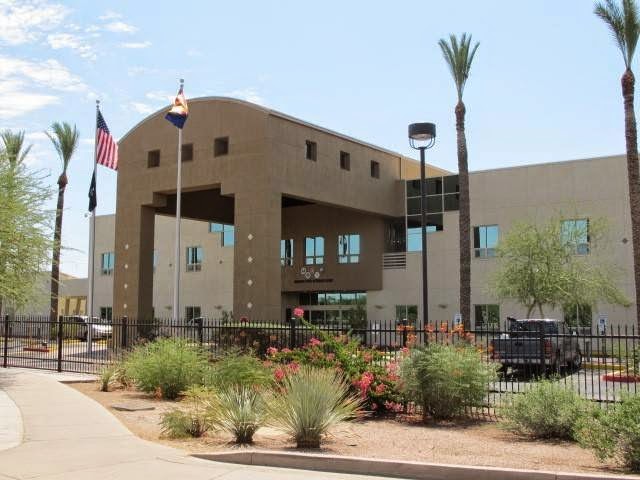
How is Arizona State Veteran Home-Phx Staffed?

CMS rates ARIZONA STATE VETERAN HOME-PHX's staffing level at 4 out of 5 stars, which is above average compared to other nursing homes.

What Have Inspectors Found at Arizona State Veteran Home-Phx?

State health inspectors documented 39 deficiencies at ARIZONA STATE VETERAN HOME-PHX during 2022 to 2025. These included: 3 that caused actual resident harm and 36 with potential for harm. Deficiencies causing actual harm indicate documented cases where residents experienced negative health consequences.
Who Owns and Operates Arizona State Veteran Home-Phx?

ARIZONA STATE VETERAN HOME-PHX is owned by a government entity. Government-operated facilities are typically run by state, county, or municipal agencies. The facility operates independently rather than as part of a larger chain. With 200 certified beds and approximately 83 residents (about 42% occupancy), it is a large facility located in PHOENIX, Arizona.

How Does Arizona State Veteran Home-Phx Compare to Other Arizona Nursing Homes?

Compared to the 100 nursing homes in Arizona, ARIZONA STATE VETERAN HOME-PHX's overall rating (1 stars) is below the state average of 3.3 and health inspection rating (1 stars) is much below the national benchmark.

What Should Families Ask When Visiting Arizona State Veteran Home-Phx?

Based on this facility's data, families visiting should ask: "What safeguards and monitoring systems are in place to protect residents from abuse or neglect?" "Can I visit during a mealtime to observe dining assistance and food quality?" "How do you handle medical emergencies, and what is your hospital transfer rate?" "Can I speak with family members of current residents about their experience?" These questions are particularly relevant given the substantiated abuse finding on record.

Is Arizona State Veteran Home-Phx Safe?

Based on CMS inspection data, ARIZONA STATE VETERAN HOME-PHX has documented safety concerns. The facility has 1 substantiated abuse finding (meaning confirmed case of resident harm by staff or other residents). The facility has a 1-star overall rating and ranks #100 of 100 nursing homes in Arizona. Families considering this facility should ask detailed questions about what corrective actions have been taken since these incidents.

Do Nurses at Arizona State Veteran Home-Phx Stick Around?

ARIZONA STATE VETERAN HOME-PHX has not reported staff turnover data to CMS. Staff turnover matters because consistent caregivers learn residents' individual needs, medications, and preferences. When staff frequently change, this institutional knowledge is lost. Families should ask the facility directly about their staff retention rates and average employee tenure.

Was Arizona State Veteran Home-Phx Ever Fined?

ARIZONA STATE VETERAN HOME-PHX has been fined $23,296 across 3 penalty actions. This is below the Arizona average of $33,312. While any fine indicates a compliance issue, fines under $50,000 are relatively common and typically reflect isolated problems that were subsequently corrected. Families should ask what specific issues led to these fines and confirm they've been resolved.

Is Arizona State Veteran Home-Phx on Any Federal Watch List?

ARIZONA STATE VETERAN HOME-PHX is not on any federal watch list. The most significant is the Special Focus Facility (SFF) program, which identifies the bottom 1% of nursing homes nationally based on persistent, serious quality problems. Not being on this list means the facility has avoided the pattern of deficiencies that triggers enhanced federal oversight. This is a positive indicator, though families should still review the facility's inspection history directly.