CAMELBACK POST ACUTE CARE AND REHABILITATION
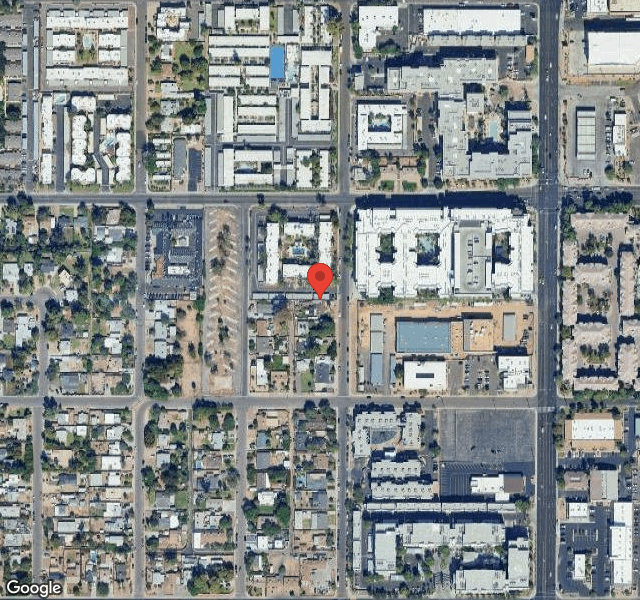
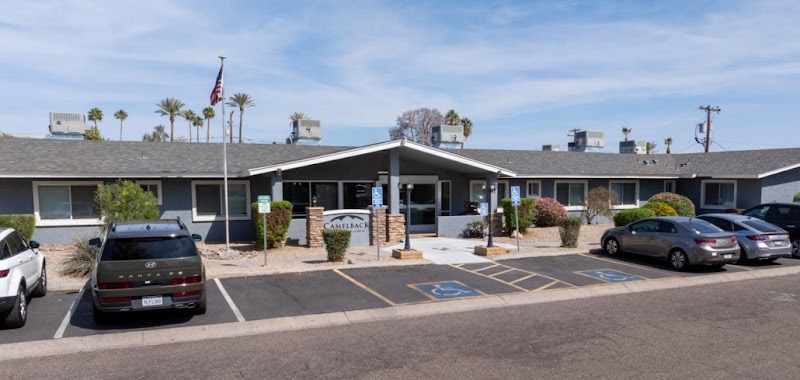
4635 NORTH 14TH STREET, PHOENIX, AZ 85014 (602) 264-9039
For profit - Corporation 107 Beds THE ENSIGN GROUP Data: November 2025
Trust Grade
60/100
#66 of 139 in AZ
Last Inspection: April 2024

Within standard 12-15 month inspection cycle. Federal law requires annual inspections.

Overview

Camelback Post Acute Care and Rehabilitation has a Trust Grade of C+, indicating it is slightly above average but still has room for improvement. It ranks #66 out of 139 facilities in Arizona, placing it in the top half, but at #50 out of 76 in Maricopa County, it shows that there are many better local options. Unfortunately, the facility is worsening, with issues increasing from 1 in 2023 to 12 in 2024. Staffing is a strength, rated 4 out of 5, with a turnover rate of 39%, which is lower than the state average, and they have more RN coverage than 84% of Arizona facilities. However, there have been serious concerns, such as a failure to coordinate medication for a resident with cognitive impairment, which resulted in significant harm, and issues with soiled linens being improperly stored in public areas, which could lead to infection risks. While there are some strengths, families should weigh these serious concerns when considering this facility for their loved ones.

Trust Score
C+
60/100
In Arizona
#66/139
Top 47%
Safety Record
Moderate
Needs review
Inspections
Getting Worse
1 → 12 violations
Staff Stability
○ Average
39% turnover. Near Arizona's 48% average. Typical for the industry.
Penalties
✓ Good
No fines on record. Clean compliance history, better than most Arizona facilities.
Skilled Nurses
✓ Good
Each resident gets 48 minutes of Registered Nurse (RN) attention daily — more than average for Arizona. RNs are trained to catch health problems early.
Violations
⚠ Watch
20 deficiencies on record. Higher than average. Multiple issues found across inspections.
★★★☆☆
3.0
Overall Rating
★★★★☆
4.0
Staff Levels
★★★★★
5.0
Care Quality
★★☆☆☆
2.0
Inspection Score
Stable
2023: 1 issues
2024: 12 issues

The Good

  • 4-Star Staffing Rating · Above-average nurse staffing levels
  • 5-Star Quality Measures · Strong clinical quality outcomes
  • Full Sprinkler Coverage · Fire safety systems throughout facility
  • No fines on record
  • Staff turnover below average (39%)

    9 points below Arizona average of 48%

Facility shows strength in staffing levels, quality measures, fire safety.

The Bad

3-Star Overall Rating

Near Arizona average (3.3)

Meets federal standards, typical of most facilities

Staff Turnover: 39%

Near Arizona avg (46%)

Typical for the industry

Chain: THE ENSIGN GROUP

Part of a multi-facility chain

Ask about local staffing decisions and management

The Ugly 20 deficiencies on record

1 actual harm
May 2024 3 deficiencies
CONCERN (D) 📢 Someone Reported This

A family member, employee, or ombudsman was alarmed enough to file a formal complaint

Potential for Harm - no one hurt, but risky conditions existed

Deficiency F0697 (Tag F0697)

Could have caused harm · This affected 1 resident

**NOTE- TERMS IN BRACKETS HAVE BEEN EDITED TO PROTECT CONFIDENTIALITY** Based on documentation, staff interviews, and the facility policy and procedures, the facility failed to assess one resident (#3...

Read full inspector narrative →
**NOTE- TERMS IN BRACKETS HAVE BEEN EDITED TO PROTECT CONFIDENTIALITY** Based on documentation, staff interviews, and the facility policy and procedures, the facility failed to assess one resident (#35) for pain and take vitals when admitted to the facility in a timely manner, and failed to administer pain medication with pain parameters for one resident (#27). The deficient practice could result in residents' pain not being identified and addressed, residents' being overmedicated or under-medicated. Findings include: Resident #35 was admitted to the facility on [DATE] with diagnoses that included displaced fracture of left tibial tuberosity, subsequent encounter for closed fracture with routine healing, Epilepsy, and type II diabetes. Review of the order summary revealed: -April 27, 2024, monitor level of pain for every shift/using the following scale: 0=no pain, 1-3=mild pain, 4-6=moderate pain, 7-10=severe pain. -April 27, 2024, Tylenol tablet 325 mg give two tablets by mouth every six hours as needed for pain 1-3. -April 27, 2024, Celecoxib capsule 200 mg give one capsule by mouth every 24 hours as needed for pain 4-7. -April 27, 2024, Norco oral tablet 5-325 mg give one tablet by mouth every six hours as needed for pain 8-10 for three days. Review of the Medication Administration Record (MAR) dated April 2024 did not reveal that the resident was assessed for pain during the day shift. A progress note dated April 27, 2024 at 9:32 p.m. revealed that the resident was alert and oriented times three, and able to make his own decisions. The resident admitted with a diagnosis of a left Tibial fracture after a ground fall. Internal fixation was placed on April 24, 2024. The resident denies pain, nausea, or shortness of breath. A daily skilled progress note dated April 27, 2024 at 10:02 p.m. included vital signs: blood pressure 125/72, temperature 97.4, and pulse 62 at at 7:59 p.m. Heart rate 18, and oxygen 95.0 % at 9:01 p.m. Resident has no pain. At 10:33 p.m. resident had a pain scale of 5. Review of the (MAR) dated April 2024 revealed that the resident was assessed at a pain level of five at 10:33 p.m. and was administered Tylenol tablet 325 mg give two tablets by mouth every six hours as needed for pain 1-3. A progress note dated April 28, 2024 at 12:46 p.m. revealed that the resident was alert and oriented times four. The resident was able to make his needs known and expressed the need for a room change due to the pleasantly confused roommate, but before the room change could be complete, the resident chose to leave against medical advise due to sharing a bathroom and a room. An interview was conducted on May 28, 2024 at approximately 1:04 p.m. with the Director of Nursing (DON/staff #1), who stated that resident #35 was admitted to the facility on [DATE] at approximately 1:25 p.m. She reviewed the resident's clinical record and stated that there was no documention about the resident's pain level being assessed when admitted . She stated that the progress notes indicate that the resident was assessed for pain on April 27, 2024 at 9:32 p.m. An interview was conducted on May 28, 2024 at 1:59 p.m. with a licensed practical nurse (LPN/staff #72), who stated that if the admission nurse is not here, she tries to get orders in place, take vitals, and complete a pain assessment. She stated that it is important to complete the initial assessment during the initial admission, so there is a baseline and changes can be identified. She stated that a pain assessment should be included, so it can be determined if the resident is comfortable. During a second interview conducted on May 28, 2024 at 2:18 p.m. with the (DON/staff #1), she stated that the resident left the facility against medical advise, so the initial assessment and baseline care plan were not completed. The assessment and the baseline care plan was deleted, so there is no record of them being done. She stated that (LPN/staff #72) was supposed to complete the initial assessment when the resident was admitted , which would include a pain assessment. She acknowledged that the resident was not evaluated for pain until 9:30 p.m. on May 27, 2024 and stated that vitals and a pain assessment are recorded when the resident is admitted to determine a baseline, so staff know when there is a change of condition. The facility policy, Pain Management dated September 2023 states that the facility assists each resident with pain to maintain or achieve the highest practicable level of well-being and functioning by screening to determine if the resident has been or is experiencing pain. The resident will be assessed for pain on admission with a pain-related diagnosis, or if pain is indicated through the nursing admission evaluation. -Resident #27 was admitted to the facility on [DATE] with diagnoses that included fracture of unspecified parts of the lumbosacral spine and pelvis, subsequent encounter with routine healing, specified fracture of unspecified pubis, subsequent encounter for routine healing, stable burst fracture of unspecified lumbar vertebra, subsequent encounter for fracture with routine healing, and unspecified open wound of abdominal wall. The care plan dated May 3, 2024 revealed that the resident has acute pain related to fractures and wounds. Interventions included to administer analgesia medication as per orders; give half an hour before treatments or care, follow pain scale to medicate as ordered. Review of the order summary revealed: -May 3, 2024, monitor level of pain for every shift/using the following scale: 0=no pain, 1-3=mild pain, 4-6=moderate pain, 7-10=severe pain. -May 3, 2024, Tylenol tablet 325 mg give two tablets by mouth every six hours as needed for pain 1-3. -May 7, 2024, Oxycodone HCI oral capsule 5 mg give 5 mg by mouth every six hours as needed for pain 4-10. Review of the MAR dated May 2024 revealed: -Oxycodone HCI oral capsule 5 mg give 5 mg by mouth every six hours as needed for pain 4-10 was administered on May 4, 2024 for a pain level of 0, and on May 7, 2024 for a pain level of 1. -Tylenol tablet 325 mg give two tablets by mouth every six hours as needed for pain 1-3 was administered on May 8, 2024 for a pain level of 8. The minimum data set (MDS) dated [DATE] included a brief interview for mental status score of 15 indicating the resident was cognitively intact. An interview was conducted on May 29, 2024 at 12:58 p.m. with (LPN/staff #106), who stated that orders for pain medications administered as needed (PRN), require a pain scale. She documents on the MAR the resident's level of pain prior to administering the pain medication and after administering the medication to determine if it was effective. She stated that there is risk of underdosing or overdosing a resident if the pain medication is given outside of the parameters on the order. Staff #106 reviewed the MAR dated May 2024 and stated that the Oxycodone HCI oral capsule 5 mg give 5 mg by mouth every six hours as needed for pain 4-10 was administered outside of parameters. She also stated that the resident can state that he doesn't want the stronger pain medication and request the Tylenol, but the nurse should document the resident's request in the progress notes and follow up to ensure the Tylenol was effective. She thinks the DON is responsible for monitoring the MAR to ensure that medications are administered as per the orders. An interview was conducted on May 29, 2024 at 1:24 p.m. with (DON/staff #1), who stated that there needs to be a pain scale on the order for PRN pain medications. She stated that there is a risk of the resident being undermedicated or overmedicated if the pain medication is given outside of parameters. She also stated that the resident the Tylenol instead of the Oxycodone even if the pain scale is higher than 1-3, but must document the resident's request and notify the physician. The facility policy, Medication Administration dated February 2024 states that medications must be administered in accordance with the written orders of the attending physician.
CONCERN (E) 📢 Someone Reported This

A family member, employee, or ombudsman was alarmed enough to file a formal complaint

Potential for Harm - no one hurt, but risky conditions existed

Infection Control (Tag F0880)

Could have caused harm · This affected multiple residents

Based on observations, staff interviews, and the facility policy and procedures, the facility failed to ensure that soiled linens and laundry were not stored in public areas and were covered to preven...

Read full inspector narrative →
Based on observations, staff interviews, and the facility policy and procedures, the facility failed to ensure that soiled linens and laundry were not stored in public areas and were covered to prevent the spread of infection. The deficient practice could result in the spread of infection to residents. Findings include: On May 28, 2024 at approximately 8:01 a.m., a yellow round bin and one gray square bin full of soiled sheets and other laundry items were observed to be overflowing in the hallway on Hall 200 by the laundry room. There was also a smaller silver container full of dirty towels and the lid was not completely covering the bin. The hallway smelled of urine. On May 28, 2024 at approximately 8:05 a.m. a female staff was observed pushing the yellow round bin and gray square bin full of soiled laundry through the exit door near the laundry room and left them outside. The smaller silver container with dirty towels was left in the hallway. On May 28, 2024 at the Housekeeping Supervisor (staff #76) was observed entering the Hall 200 through the exit door when the soiled sheets and laundry were left outside and went into the laundry room. She did not remove the smaller silver container with dirty towels was left in the hallway. On May 28, 2024 at 9:42 a.m. an interview was conducted with a certified nursing assistant (CNA/staff #53), who stated that soiled sheets, towels, and laundry are suppose to go into a bag, the bag is tied, and taken directly to the soiled utility room. She stated that the purpose of tying the bags is to reduce the smell and prevent contamination. There is a risk of odor and possible contamination to the residents if the binds are left in common areas. She stated that she thinks the night shift is supposed to take the bins of soiled sheets, towels, and laundry outside until the laundry staff arrives between 7:30 a.m. and 8:00 a.m. and then the laundry staff bring in the bins in one at a time. An interview was conducted on May 28, 2024 at 10:03 a.m. with the Housekeeping Supervisor (staff #76), who stated that starts work at 7:00 a.m. She stated that when she arrives to work, she gets the bins of soiled laundry and linens from the soiled utility room to wash them. She stated that the bins of soiled laundry and linens are not supposed to be left in the hallway because they are dirty, smell, and the residents could touch the soiled laundry, which could spread infection. She stated that she saw the bins of soiled laundry and linens in the hallway this morning and doesn't know who left the bins in hallway. She stated that the soiled laundry is left in the hall sometimes. An interview was conducted on May 28, 2024 at approximately 10:40 a.m. with the Director of Nursing (DON/staff #1), who stated that staff are trained on the removal of soiled linens, towels, laundry. It is her expectation that they are bagged up and tied, to prevent odors and the spread of infection. She stated that when the staff are doing rounds, the staff keep the bins in the hallway, so they don't have to walk back and forth and the bins are supposed to have a lid on them to prevent the spread of odors and items from falling out. She stated that there is a risk to residents having access to the soiled items. An interview was conducted on May 28, 2024 at 1:59 p.m. with a licensed practical nurse (LPN/staff #72), she stated that about a month ago, they started putting the soiled linens, towels, laundry, and soiled adult briefs in the bins in the hallway. The bins are supposed to be covered with lids and soiled items are supposed to be in bags that are tied. She stated that the change occurred because there were complaints about the soiled adult briefs. The facility policy, Laundry, Linen, Soiled dated October 2023 states that when collecting soiled linens, keep soiled linen containers properly covered at all times, return soiled linen to the laundry in the designated in the non-permeable containers, and the containers are to be covered at all times, lined with plastic bags and cleaned daily. When the containers are three-fourths full, linen containers should be transported to the laundry sorting room by laundry personnel or nurse assistant.
CONCERN (E) 📢 Someone Reported This

A family member, employee, or ombudsman was alarmed enough to file a formal complaint

Potential for Harm - no one hurt, but risky conditions existed

Safe Environment (Tag F0921)

Could have caused harm · This affected multiple residents

Based on observations, staff interviews, and the facility policy and procedures, the facility failed to ensure that soiled linens and laundry were not stored in public areas and were covered to preven...

Read full inspector narrative →
Based on observations, staff interviews, and the facility policy and procedures, the facility failed to ensure that soiled linens and laundry were not stored in public areas and were covered to prevent odor and ensure a comfortable environment. The deficient practice could impact the residents' safe, sanitary, and homelike environment. Findings include: On May 28, 2024 at approximately 8:01 a.m., a yellow round bin and one gray square bin full of soiled sheets and other laundry items were observed to be overflowing in the hallway on Hall 200 by the laundry room. There was also a smaller silver container full of dirty towels and the lid was not completely covering the bin. The hallway smelled of urine. On May 28, 2024 at approximately 8:05 a.m. a female staff was observed pushing the yellow round bin and gray square bin full of soiled laundry through the exit door near the laundry room and left them outside. The smaller silver container with dirty towels was left in the hallway. On May 28, 2024 at the Housekeeping Supervisor (staff #76) was observed entering the Hall 200 through the exit door when the soiled sheets and laundry were left outside and went into the laundry room. She did not remove the smaller silver container with dirty towels, so it was left in the hallway. On May 28, 2024 at 9:42 a.m. an interview was conducted with a certified nursing assistant (CNA/staff #53), who stated that soiled sheets, towels, and laundry are suppose to go into a bag, the bag is tied, and taken directly to the soiled utility room. She stated that the purpose of tying the bags is to reduce the smell and prevent contaminiation. There is a risk of odor and possible contamination to the residents if the binds are left in common areas. She stated that she thinks the night shift is supposed to take the bins of soiled sheets, towels, and laundry outside until the laundry staff arrives between 7:30 a.m. and 8:00 a.m. and then the laundry staff bring in the bins one at a time. An interview was conducted on May 28, 2024 at 10:03 a.m. with the Housekeeping Supervisor (staff #76), who stated that starts work at 7:00 a.m. She stated that when she arrives to work, she gets the bins of soiled laundry and linens from the soiled utility room to wash them. She stated that the bins of soiled laundry and linens are not supposed to be left in the hallway because they are dirty, smell, and the residents could touch the soiled laundry, which could spread infection. She stated that she saw the bins of soiled laundry and linens in the hallway this morning and doesn't know who left the bins in hallway. She stated that the soiled laundry is left in the hall sometimes. An interview was conducted on May 28, 2024 at 1:59 p.m. with a licensed practical nurse (LPN/staff #72), she stated that about a month ago, they started putting the soiled linens, towels, laundry, and soiled adult briefs in the bins in the hallway. The bins are supposed to be covered with lids and soiled items are supposed to be in bags that are tied. She stated that the change occurred because there were complaints about the smell of the soiled adult briefs. The facility policy, Laundry, Linen, Soiled dated October 2023 states that when collecting soiled linens, keep soiled linen containers properly covered at all times, return soiled linen to the laundry in the designated in the non-permable containers, and the containers are to be covered at all times, lined with plastic bags and cleaned daily. When the containers are three-fourths full, linen containers should be transported to the laundry sorting room by laundry personnel or nurse assistant.
Apr 2024 9 deficiencies
CONCERN (D) 📢 Someone Reported This

A family member, employee, or ombudsman was alarmed enough to file a formal complaint

Potential for Harm - no one hurt, but risky conditions existed

Transfer Requirements (Tag F0622)

Could have caused harm · This affected 1 resident

**NOTE- TERMS IN BRACKETS HAVE BEEN EDITED TO PROTECT CONFIDENTIALITY** Based on clinical record review, staff interviews, and review of facility policies and procedures, the facility failed to ensure...

Read full inspector narrative →
**NOTE- TERMS IN BRACKETS HAVE BEEN EDITED TO PROTECT CONFIDENTIALITY** Based on clinical record review, staff interviews, and review of facility policies and procedures, the facility failed to ensure one resident's (#81) clinical record included the required information for transfer/discharge. The deficient practice could result in residents not having a safe and effective transition of care. Findings include: Resident #81 was admitted on [DATE] with diagnosis including an unspecified fracture of the right femur, end stage renal disease, osteomyelitis, encounter for orthopedic aftercare following surgical amputation, complete amputation of left foot, dependence on renal dialysis, type II diabetes mellites with diabetic polyneuropathy, chronic systolic heart failure and aneurysm of iliac artery. It was further noted in the electronic health record that the resident left the facility against medical advice on August 20, 2023. A review of the MDS (minimum data set) revealed no noted score for the BIMS (brief interview of mental status). A review of the electronic medical record, revealed no evidence of documentation that EMS (emergency medical services) arrived at the facility on August 20, 2024. A review of the electronic health record revealed that an AMA (against medical advice) form was completed by staff #121, RN (registered nurse) on August 20, 2023 at 4:17 P.M. A review of the medical record revealed that staff #121, RN (registered nurse) conducted the discharge. Staff #121 is no longer with the facility. An attempt was made to contact staff #121 telephonically on April 24, 2024 at 9:58 A.M.; however, the associated voicemail was full and the surveyor was unable to leave a message. An interview was conducted on April 24, 2024 at 8:40 A.M. with staff #1, CNA (certified nursing assistant). Staff #1 stated that she would notify the nurse if a resident wanted to leave against medical advice. She stated that she would then help collect the resident's belongings in preparation for departure. She stated that discharge documentation is then provided by the nurse. An interview was conducted on April 24, 2024 at 8:43 A.M. with staff #11, RN (registered nurse). Staff #11 stated that when a resident wants to leave against medical advice, the nurse would discuss the consequences with the resident. Staff #11 stated that if the resident wanted to proceed with leaving, he would notify the resident's emergency contact and inform the doctor. Staff #11 stated that he would have the resident sign the AMA form and if EMS was present, provide documentation to the EMS staff to include the face sheet, medical diagnosis, medication orders and recent laboratory progress notes. An interview conducted on April 24, 2024 at 9:05 A.M with staff #21, case manager. The case manager stated that when a resident wants to depart the facility AMA (against medical advice), she would speak with the resident to try to get them to reconsider. If the resident does not wish to reconsider, she stated that she would discuss the issue with the team to see if there is a possibility to change the AMA departure to a possible discharge. She stated that she would notify the resident's nurse if the resident opted to continue with leaving against medical advice. Once the nurse is notified, she stated that the nurse would provide the documentation for discharge. The case manager stated that she would inquire about the need for any DME (durable medical equipment) and inquire if the resident had any concerns. Staff #21 stated that staff would inquire about transport and provide notifications; however, she stated if the resident opted to leave against medical advice and the fire department is called then no one is notified, but documentation would be provided to the fire department. An interview was conducted on April 24, 2024 at 10:17 A.M. with EMS staff #120. Staff #120 stated that he reviewed the documentation of the call on August 20, 2023. He stated that it was noted that EMS staff arrived at the facility at 4:04 P.M. and were not provided any verbal or written report regarding the resident's condition. The electronic health record noted that the AMA form was signed by resident #81 and staff #121 at 4:17 P.M. after EMS arrival at 4:04 P.M. An interview was conducted on April 24, 2024 at 10:32 A.M. with staff#29, DON (director of nursing). Staff # 29 stated that if a resident had chosen to leave the facility against medical advice, she would first ensure that the resident was not confused and if they were she would make sure that a responsible family member was with them, if possible. She stated that the facility would offer home health, medications and transfer to another facility, as applicable. She stated that her expectation would be for staff to document everything regarding the AMA discharge; however, the medical record for resident #81 revealed no documentation of EMS arrival and or report to EMS on August 20, 2024 for AMA discharge. Staff #29 reviewed the medical record and stated that there was no documentation that EMS had arrived at the facility on August 20, 2024. She stated that her expectation is that information would be shared with either EMS and or the resident, but the medical record revealed no evidence that discharge or transfer documentation had been shared. She stated that the risk to resident would include a lack of continuation of care. A review of facility policy in the Continuum of Care section, entitled Discharge against Medical Advice with a revised date on May 6, 2021revealed that appropriate instructions are to be given to the resident and the instructions given are to be documented in the record; however, the record revealed no evidence of documentation of instructions given to either the EMS or the resident. The policy further revealed that the facility is to facilitate the coordination of a safe discharge; however, per EMS interview, no written or verbal report had been provided by the facility on August 20, 2024. Finally, the policy stated that all occurrences and steps throughout the situation are to be documented in nursing notes; however, there is no evidence in the nursing notes that EMS arrived at the facility to remove the resident on August 20, 2023.
CONCERN (D)

Potential for Harm - no one hurt, but risky conditions existed

Deficiency F0657 (Tag F0657)

Could have caused harm · This affected 1 resident

**NOTE- TERMS IN BRACKETS HAVE BEEN EDITED TO PROTECT CONFIDENTIALITY** Based on clinical record review, staff and resident interviews and policy review, the facility failed to ensure one resident's (...

Read full inspector narrative →
**NOTE- TERMS IN BRACKETS HAVE BEEN EDITED TO PROTECT CONFIDENTIALITY** Based on clinical record review, staff and resident interviews and policy review, the facility failed to ensure one resident's (#44) representative was able to participate in the care planning process. The deficient practice could result in residents and representatives not participating in and understanding their plan of care. Findings include: Resident #44 was initially admitted to the facility on [DATE] and re-admitted on [DATE] with diagnoses that included urinary tract infection, atrial fibrillation, aphasia, and cognitive communication deficit. Review of the cognition care plan initiated on November 20, 2023 indicated that the resident is at risk for impaired cognitive function/dementia or impaired thought process. Interventions include to communicate with family/caregivers regarding resident's capabilities and needs, and social services to provide psychosocial support as needed. The resident's admission record indicated that the resident has two emergency contacts. The first emergency contact (primary) is his son and the secondary emergency contact is his wife. Review of the resident's clinical record revealed that the most recent documented contact regarding a care conference was back in December 12, 2023. According to the progress note, the contact was regarding setting up a care conference was not directed to the identified emergency contacts but rather to the resident's other son. There was no documentation on whether or not a care conference was actually completed. Further review of the resident's record did not reveal any recent documentation pertaining to care plan conferences. The quarterly Minimum Data Set (MDS) dated [DATE] revealed a Brief Interview for Mental Status (BIMS) score of 2 indicating that the resident has severe cognitive impairment. During an interview with resident #44's son conducted telephonically on April 21, 2024 at 12:26 p.m., he stated that he has not been informed/invited to care plan meeting recently even if he is the primary emergency contact. He stated he has had some concerns regarding his father's care and would like to be part of care conferences so he is aware of what is going on. An initial interview was conducted with the Director of Nursing (DON/staff #29) on April 24, 2024 at 9:38 a.m. The DON stated that care conferences for long term care residents are conducted quarterly by social services and in 1-2 days by the case manager for skilled residents. An interview with the Social Services Director (staff #7) was conducted on April 24, 2024 at 9:42 a.m., she stated that care conferences for long term care residents are usually accomplished quarterly. When asked when resident #44 last had his care conference, she stated that it was December 2023. Staff #7 indicated that the next one will be scheduled April 2024. She noted that they normally give the family a week's notice. When asked if the care conference for resident #44 was schedule, she noted that it has not yet been scheduled but will be scheduled. She stated that they normally notify the wife but not the son. Staff #7 said that normally they invite the family member that is indicated as emergency contact #1 or 2, the wife, and adult child. She said that she does not maintain a tracker to monitor who is due for their care plan conference. Staff #7 stated that she goes by when the MDS is due. However, when asked why resident #44's care conference was not done when his MDS was done in February 20, 2024, she stated that she would like to go by the MDS due date but that is not what they are currently doing. Staff #7 stated that her current process is reviewing the list of her residents weekly and see who is due. She said that the impact of not conducting the care conference and inviting family to the care conferences is that there might be something that is not discussed regarding a resident's care and services that needs to be addressed. A follow-up interview was conducted with the DON (staff #29) on April 24, 2024 at 1:08 p.m., staff #29 stated that her expectation regarding care conferences is that it will be done quarterly and that both the resident and the family are invited. The DON indicated that is a resident has a low BIMS score, she expects for the family or responsible party to be invited to the conference. Staff #29 stated that care conferences should be scheduled based on the family's availability. If are resident was due this month, then they should have already been notified and the conference already scheduled based on family's availability. Review of the facility policy titled Comprehensive Person-Centered Planning reviewed February 2024 indicated that the facility will provide the resident and the resident representative advance notice of care planning conferences to encourage resident and/or resident representative participation.
CONCERN (D)

Potential for Harm - no one hurt, but risky conditions existed

Accident Prevention (Tag F0689)

Could have caused harm · This affected 1 resident

**NOTE- TERMS IN BRACKETS HAVE BEEN EDITED TO PROTECT CONFIDENTIALITY** Based on observation, staff interviews, and the facility policy and procedures, the facility failed to ensure that a potentially...

Read full inspector narrative →
**NOTE- TERMS IN BRACKETS HAVE BEEN EDITED TO PROTECT CONFIDENTIALITY** Based on observation, staff interviews, and the facility policy and procedures, the facility failed to ensure that a potentially dangerous item was not left in a public area on one resident's (#1) mobile tray where other residents could access it. The deficient practice could result in residents injuring themselves. Findings include: On April 21, 2024 at 8:27 a.m., a mobile tray was observed in the hallway by room [ROOM NUMBER]. There was a blue razor with a clear plastic cover over the blade on the tray and the tray was left unattended. An interview was conducted on April 21, 2024 at 8:37 a.m. with a certified nursing assistant (CNA/staff #88), who stated that they put the mobile tray outside of the resident's room because there is no room for his wheelchair. She stated that the razor is supposed to be thrown away once it has been used and there is a risk of residents cutting themselves on the razor. After the interview, staff #88 began walking away and the surveyor had to intervene and ask her to remove the razor from the tray. During an interview conducted on April 21, 2024 at 10:36 a.m. with resident #1, he stated that the staff put his mobile tray in the hallway, so there is room for the Hoyer lift when he is being assisted with transfers. An interview was conducted on April 23, 2024 at 2:16 p.m. with a registered nurse (RN/staff #11), who stated that a razor should be removed if not being used and put in a sharp container right away, if it are disposable. He stated that if a razor is left out in common area, there is a risk of residents being injured. An interview was conducted on April 4, 2024 at 3:12 p.m. with the Director of Nursing (DON/staff #29), who stated that staff should put razors in the sharps container when done because there is a risk of another resident getting the razor and cutting himself/herself if left in a common area. The facility policy, Elopement/Unsafe Wandering dated December 2023 states that It is the policy of this facility to provide a safe environment, as free of accidents as possible, for all residents through appropriate assessment and interventions.
CONCERN (D)

Potential for Harm - no one hurt, but risky conditions existed

Deficiency F0700 (Tag F0700)

Could have caused harm · This affected 1 resident

**NOTE- TERMS IN BRACKETS HAVE BEEN EDITED TO PROTECT CONFIDENTIALITY** Based on observations, staff interviews, and the facility policy and procedures, the facility failed to ensure that one resident...

Read full inspector narrative →
**NOTE- TERMS IN BRACKETS HAVE BEEN EDITED TO PROTECT CONFIDENTIALITY** Based on observations, staff interviews, and the facility policy and procedures, the facility failed to ensure that one resident (#1) was assessed for the risk of entrapment when using full size bedrails on both sides of the bed and to assess and document the ongoing need for bed rails. The deficient practice could result in residents being physically injured. Findings include: Resident #1 was admitted to the facility on [DATE] with diagnoses that included quadriplegia, muscle spasm of the back, disorder of the autonomic nervous system and depression. Review of the Assistive Device Consent form dated September 18, 2019 did not reveal a consent for the use of two full size bed rails. The care plan dated September 24, 2019 included that the resident has quadriplegia related to a spinal injury status post a motor vehicle accident in 1991. Interventions included two full side rails up when in bed for unsafe jerky movements related to muscle spasms. The resident's care plan dated September 24, 2019 states the resident is at risk for falls related to quadriplegia, psychoactive drug use, spasms, impaired range of motion. Interventions included full size bed rails for muscle spasms related to quadriplegia. Review of the Fall Risk Evaluation dated May 10, 2021 revealed that the resident had not fallen in the last three months, did not have a decrease in muscular coordination, or jerking movements. The order summary revealed an order dated January 12, 2022 for two full side rails up when in bed for unsafe jerky movements related to muscle spasms every shift. Review of the Assistive Device Consent form dated February 14, 2022 revealed a consent for the use of two full size bed rails for bed mobility/repositioning. Review of the Restraint/Enabling Device/Safety Device Evaluation dated April 21, 2022 The assessment states that the bed rails potentially protect the resident, increases sense of safety/security per the resident's request. The risks include death by strangulation, suffocation, contractures, and accidental injuries. Review of the Assistive Device Consent form dated February 24, 2023 did not reveal a consent for the use of two full size bed rails. Review of the Restraint/Enabling Device/Safety Device Evaluation dated February 24, 2023 did not include an assessment for full size bed rails. Review of the Restraint/Enabling Device/Safety Device Evaluation dated June 2, 2023 did not include an assessment for full size bed rails. Review of the Fall Risk Evaluation dated February 6, 2024 revealed that the resident had not fallen in the last three months, did not have a decrease in muscular coordination, or jerking movements. Review of the Medication Administration Record (MAR) and Treatment Administration Record (TAR) dated February 2024, March 2024, April 2024 revealed two full side rails up when in bed for unsafe jerky movements related to muscle spasms every shift, but did not reveal that muscle spasms were being tracked. Review of the Restraint/Enabling Device/Safety Device Evaluation dated March 5, 2024 revealed an assessment for grab bars. The minimum data set (MDS) dated [DATE] included a brief interview for mental status score of 15 indicating the resident was cognitively intact. It also included that the resident is dependent on staff assistance with rolling from left and right and a bed rail is not used. Review of the Restraint/Enabling Device/Safety Device Evaluation dated April 23, 2024. The assessment states that the bed rails potentially protect the resident, increases sense of safety/security per the resident's request. The risks include death by strangulation, suffocation, contractures, and accidental injuries. Review of the EMAR progress notes from February 2024 through April 2024 did not reveal that the resident had any muscle spasm. On April 23, 2024 at 1:22 p.m. the resident was observed lying in bed and long bed rails on both sides of the bed were in the up position. On April 24, 2024 at 10:14 a.m. the resident's bed was observed up against the left wall and he was lying in bed with full size bed rails up on both sides of the bed, and there were no pads on the rails. An interview was conducted on April 23, 2024 at 1:24 p.m. with a certified nursing assistant (CNA/staff #51), who stated that a resident needs an assessment for bed rails and they are used because a resident may roll from one side of the bed to the other and can fall on the floor. An interview was conducted on April 23, 2024 at 2:16 p.m. with a registered nurse (RN/staff #11), who stated that the resident wanted the bed rails to balance his communication board, to use the remote and call-light. He stated that the resident balances these things up against the bed rail and uses the pointer in his mouth to draw on the board, access the remote, and call-light. He stated that the resident needs an assessment for the bed rails to determine if the resident still needs them. An interview was conducted on April 23, 2024 at 3:12 p.m. with the Director of Nursing (DON/staff #29), who stated that an assessment must be completed for a resident to use bedrails. She reviewed the Restraint/Enabling Device/Safety Device Evaluation dated March 5, 2024 and stated that resident was assessed for grab bars and he is not able to use his hands to use the grab bars. She stated that the resident needs the full size bed rails because he has muscle spasms. She reviewed the resident's MAR and TAR, but was not able to find where the resident's spasms were being tracked and stated that she would need to search for the tracking. The facility policy, Restraints, Physical dated October 2023 states that the use of side rails as restraints is prohibited unless they are necessary to treat a resident's medical symptoms. Medical symptoms that warrant the use of restraints must be documented in the resident's medical record, ongoing assessments, and care plans.
CONCERN (D)

Potential for Harm - no one hurt, but risky conditions existed

Deficiency F0727 (Tag F0727)

Could have caused harm · This affected 1 resident

Based on documentation, staff interviews, and the facility policy and procedures, the facility failed to ensure that a registered nurse (RN) provided eight hours of coverage in a 24 hour period. Find...

Read full inspector narrative →
Based on documentation, staff interviews, and the facility policy and procedures, the facility failed to ensure that a registered nurse (RN) provided eight hours of coverage in a 24 hour period. Findings include: Review of the daily staff posting dated December 24, 2023 revealed that the census was 82. There were four licensed practical nurses (LPNs) from 6:00 a.m. to 6:00 p.m. and seven certified nursing assistants (CNAs) from 6:00 am. to 2:00 p.m. for the day shift. There were six CNAs from 2:00 p.m. to 10:00 p.m. There were four LPNs from 6:00 p.m. to 6:00 a.m. and four CNAs from 10:00 p.m. to 6:00 a.m. During an interview conducted on April 23, 2024 at 9:16 a.m. with the Staffing Coordinator (staff #75), the daily staff posting dated December 24, 2023 was reviewed and Staff #75. She stated that the census was 82 and that there were four (LPNs) from 6:00 a.m to 6:00 p.m. and four LPNs from 6:00 p.m. to 6:00 a.m. She stated that the facility is required to for 8 hours daily and she could not find one for December 24, 2023. She stated that she called the Director of Nursing (DON) to tell her that registry did not have a RN available. She stated that the DON can't stand for a RN when the census 82. During an interview conducted on April 23, 2024 at 3:01 p.m. with the (DON/staff #29), she stated that a registered nurse must be scheduled to work 8 consecutive hours daily, and it her responsibility to ensure that a RN is scheduled. The facility policy, Staffing dated January 2024 states that there will be 8 hours of RN coverage on a daily basis.
CONCERN (D)

Potential for Harm - no one hurt, but risky conditions existed

Staffing Information (Tag F0732)

Could have caused harm · This affected 1 resident

Based on observation, staff interviews, and the facility policy and procedures, the facility failed to ensure that the daily staff posting reflected the correct information. Findings include: An obse...

Read full inspector narrative →
Based on observation, staff interviews, and the facility policy and procedures, the facility failed to ensure that the daily staff posting reflected the correct information. Findings include: An observation of the daily staff posting was conducted on April 21, 2024 at 7:15 a.m. The daily staff posting was posted on the wall behind the receptionist's desk. The date on the posting was April 19, 2024 with a census of 76. The census for April 21, 2024 was 75. An interview was conducted on April 21, 2024 at 7:15 a.m. with a licensed practical nurse (LPN/staff #6, who stated that she thought the charge nurse updates the daily staff posting when she comes in to work at 10:00 a.m. An interview was conducted on April 21, 2023 at 8:57 a.m. with the receptionist (staff #109), who stated that the Staffing Coordinator (staff #75) usually posts the daily staff posting and is usually here by 8:00 a.m. During the interview, it was observed that there was not a daily staff posting on the wall and staff #109 stated that she usually looks at the posting to ensure that the date is correct and didn't know why there wasn't a posting when she arrived to work this morning. An interview was conducted on April 23, 2024 at 9:16 a.m. with the Staffing Coordinator (staff #75), who stated that she is responsible for updating the daily staff posting. She stated that she works Monday through Friday and has not designated another staff to update the posting on the weekend, and when she arrived this morning, there was not a daily staff posting on the wall. An interview was conducted on April 23, 2024 at 2:56 p.m. with the (DON/staff #29), who stated that the daily staff posting is completed by the Staffing Coordinator (staff #75), and it is her expectation that staff #75 will complete the postings for the weekend and put them behind the Friday posting, so the weekend staff can rotate them. She stated that the purpose of daily staff posting is to show residents and visitors what the staffing is for the day and should include the census, date, floor staff, and the number of hours worked for each position. The facility policy, Staffing Numbers, Posting dated May 2022 states that it is the policy of this facility to post staffing numbers. Procedures include to comply with the Benefits Improvement and Protection Act of 2000, the facility must include hours worked by registered nurses, licensed practical/vocational nurses, and nursing assistants for each shift. Post prominently in a public area in readable font on a surface of at least 8.5 x 11 inches. The policy doesn't include the correct date and census.
CONCERN (E)

Potential for Harm - no one hurt, but risky conditions existed

Food Safety (Tag F0812)

Could have caused harm · This affected multiple residents

**NOTE- TERMS IN BRACKETS HAVE BEEN EDITED TO PROTECT CONFIDENTIALITY** Based on observations, staff interview, and policy review, the facility failed to ensure food items were labeled and dated, food...

Read full inspector narrative →
**NOTE- TERMS IN BRACKETS HAVE BEEN EDITED TO PROTECT CONFIDENTIALITY** Based on observations, staff interview, and policy review, the facility failed to ensure food items were labeled and dated, food items were not expired, temperature logs were maintained, equipment was sanitized, and food was served under sanitary conditions. The deficient practice could increase the risk of foodborne illness. Findings include: Regarding food labeling and dating: During the initial kitchen observation conducted on April 21, 2024 at 7:17 a.m., two items wrapped in foil was found in the walk-in freezer which was unmarked/not labeled and not dated. Additionally, cereal dispenser for what appears to be [NAME] Krispies, Raisin Bran, Corn Flakes, and Cheerios did not have an expiration date. A bin containing oatmeal was marked 2/16 but it is unknown if that is the filled date or the expiration date. A bin containing lentil was marked 2/1 and did not specify if it was the fill date or expiration date. A container marked bread crumbs was labeled 2/1 but the same container was also marked Panko with a date of 1/29. It is unknown if the item is regular bread crumb or Panko and if the date is the filled date or expiration date. A look at the nutrition fridge located by room [ROOM NUMBER] conducted on April 21, 2024 at 8:00 a.m., revealed what appears to be two peanut butter and jelly sandwiches that was undated/unmarked. During a follow-up kitchen observation conducted on April 23, 2024 at 2:58 p.m., it was observed that 2 shelves of jello cups were undated in the walk-in fridge. Additionally, 5 racks of bread loaves was observed undated. Information regarding the product is normally on the shipping box but was not transcribed/marked on each individual package. The facility's undated kitchen policy titled Food Storage and Date Marking indicated that all containers must be legible and accurately labeled if product is not easily identifiable. An open date is recommended. Leftover food is stored in covered containers or wrapped carefully and securely. Each item is clearly labeled and dated if stored for over 24 hours. TCS (Time and Temperature Control For Safety) foods should be covered, labeled and dated if stored and not for immediate use. All foods will be checked to assure that foods will be consumed by their use by dates, or frozen or discarded at the end of the day. Use by dates for TCS foods are 7 days or less of prep date. Regarding expired items: During the initial kitchen observation conducted on April 21, 2024 at 7:17 a.m., a container of low-fat cottage cheese marked 3/12 with a best if use by date of March 29, 2024 was found in the walk-in fridge. Review of the facility's undated kitchen policy titled Dry Storage Areas indicated that foods with expiration dates are used prior to the date on the package. Regarding temperature logs: An initial kitchen observation conducted on April 21, 2024 at 7:17 a.m. Review of the temperature log for the both the walk-in fridge and walk-in freezer revealed that the last time the temperature was checked/documented was April 18, 2024 which was three days prior. The facility's undated kitchen policy titled Food Storage and Date Marking indicated that temperature for the refrigerated food should be checked routinely to check for proper functioning of the unit. The policy also noted that freezer temperatures should be checked daily for proper functioning. Regarding sanitary kitchen and conditions: During the initial kitchen observation conducted on April 21, 2024 at 7:17 a.m., it was observed that the ceiling fan facing the dishwasher station was dusty. The fan had dust covering a majority of the cover. The fan was located above 2 wire racks where dishware, cups, drinkware, and baking sheets were stored. Four small plates located on the wire rack under the ceiling fan was observed to be dirty/dusty. Additionally, the hood above the oven was observed to be dusty and grimy. The dust and grime had a brownish/black appearance. Review of the kitchen's cleaning checklist for the aides revealed that it was last completed on Thursday, April 18, 2024 for the a.m. shift and Tuesday, April 16, 2024 for the p.m. shift. The cleaning checklist for cooks for the week of April 14 was last completed on Thursday, April 18, 2024 for the a.m. shift and on Monday, April 15, 2024 for the p.m. shift. Additionally, the dishwasher cleaning checklist was last completed on Thursday, April 18, 2024. In a follow-up kitchen observation conducted on April 22, 2024 at 10:29 a.m., the ceiling fan facing the dishwasher station was still observed dusty. Additionally, the pipe by the counter where pureed meals are prepared was observed to to have a clump of dusty strings hanging down from the pipe/ceiling. During the tray line observation conducted on April 22, 2024 at 11:37 a.m., it was observed that the vent over the tray line counter was dusty. Additionally, during the tray line observation conducted on April 22, 2024 at 11:37 a.m., the heating element containing the spinach/greens was observed to have what appears to be a piece of an alcohol prep packet. The staff did not seem to notice that the food contained a foreign object. On April 22, 2024 at 11:44 a.m., the Dietary Supervisor (staff #44) was asked what the foreign object/item was on the spinach/greens. Staff #44 removed the item and scooped around the area where the item was. He indicated that it was probably from when they temperature checked the dish earlier. The batch was still used and served to the residents. During the tray line observation, it was noticed that the vent above the tray line counter was blowing cold air directly down on the food in the tray line. During another follow-up kitchen observation conducted on April 23, 2024 at 2:58 p.m., it was observed that the ceiling fan facing the dishwasher station was still dusty. The vent above the tray line was also noticeably dusty. Furthermore, the pipe located above where pureed meals are prepared still had the dusty clump of string hanging from it. An interview with the Dietary Supervisor (staff #44) conducted on April 23, 2024 at 2:58 p.m., he stated that when the ceiling fan is dusty then dust probably flies to where the dishes are. Potentially, dust can also go over to the tray line. The kitchen is supposed to be clean and sanitary. Staff #44 stated that when a foreign item is found in a dish/food, then the entire batch of that meal item should be thrown away. However, he indicated that he got nervous and that is why it was not done. The purpose of throwing out the entire batch of that meal item is to ensure the safety of residents and ensure they are taken care of. Review of the facility's undated kitchen policy titled General Sanitation of Kitchen, indicated that food and nutrition services staff will maintain the sanitation of the kitchen through compliance with a written, comprehensive cleaning schedule. The facility's undated kitchen policy titled Food Storage and Date Marking indicated that Sufficient storage facilities are provided to keep foods safe, wholesome, and appetizing. Food is stored in an area that is clean, dry and free from contaminants. Food is stored, prepared, and transported at appropriate temperatures and by methods designed to prevent contamination or cross contamination.
CONCERN (E)

Potential for Harm - no one hurt, but risky conditions existed

Infection Control (Tag F0880)

Could have caused harm · This affected multiple residents

**NOTE- TERMS IN BRACKETS HAVE BEEN EDITED TO PROTECT CONFIDENTIALITY** Based on observation, staff interviews, and the facility policy and procedures, the facility failed to ensure that dirty dishes ...

Read full inspector narrative →
**NOTE- TERMS IN BRACKETS HAVE BEEN EDITED TO PROTECT CONFIDENTIALITY** Based on observation, staff interviews, and the facility policy and procedures, the facility failed to ensure that dirty dishes were not left in a common areas where residents have access, and that common areas were cleaned and disinfected. The deficient practice could result in residents becoming ill or infected. Findings include: On April 21, 2024 at 8:27 a.m. brown liquid in a gray cup with a straw was observed on a mobile tray in the 200 hall just outside a resident's room and it was unattended. Also, a tray was observed in the Northeast dining room with toast, leftover cereal in a bowl that resembled heart shaped Cheerios, one bowl of leftover oatmeal and milk, leftover scrambled eggs on the plate, and orange liquid in a Styrofoam cup with a straw. The tray was unattended and there were three residents sitting in the dining area watching TV. On April 21, 2024 at 8:49 a.m. feces, approximately 1.5 inches, was observed in the middle of the hallway in front of room [ROOM NUMBER]. Staff were observed walking by it. One nurse stopped the surveyor from stepping in it and said that someone will come to clean it up and then walked away. One certified nursing assistant (CNA/staff #4) was observed wearing a glove, and picking the feces up. Then, staff #4 walked away and did not disinfect the floor. Shortly after, a male staff was observed walking and wheeling a cart over the area. On April 23, 2024 at 2:06 p.m., a three tiered black tray was observed in the hallway by the kitchen doors at approximately 1:15 p.m. until approximately 2:00 p.m. There were dirty dishes with leftover rice, carrots, bread, and chicken, a clear glass with 1/4 of a red drink, and opened coffee creamer wrappers. The food was not covered. During an interview conducted on April 21, 2024 at 8:37 a.m. with a certified nursing assistant (CNA/staff #88), she observed the brown liquid in the gray cup sitting on a mobile tray in the hallway just outside the resident's room. She stated that it was leftover coffee. She stated that leftover food and drinks are not supposed to be left in common areas because there is a risk of cross contamination and safety. An interview was conducted on April 23, 2024 at 2:16 p.m. with a registered nurse (RN/staff #11), who stated that dirty dishes should be removed immediately from hallway and dining room to prevent other residents from having access because there is a risk of infection. He stated that if there is feces on the floor, staff should use bleach, something to disinfect the floor, and if the area is not disinfected, there is a risk of spreading infection as people walk through the area and then to other areas. If a resident finds feces on the floor, the CNA blood or anything like a secretion. Should use bleach, something to disinfect the floor, and if not disinfected could spread infection if people walking through and then to other areas. An interview was conducted on April 23, 2024 at 3:12 p.m. with the Director of Nursing (DON/staff #29), who stated that it is her expectation that staff remove dirty dishes from the rooms and place them in a closed cart because the dishes are dirty/contaminated, and residents could become ill. She stated that if there is feces in the hallway, staff should use gloves and pick it up, and the floor should be bleached/sanitized. She stated that if staff are walking through the area or pushing equipment through it, it would track the feces elsewhere and creates the risk of contamination/infection. The facility policy, Infection Prevention and Control Program dated December 2023 states that process surveillance is the review of practices by staff directly related to resident care. Some considerations for this process may include cleaning and disinfection production and procedures for environmental surfaces and equipment. The facility will use effective methods for the safe storage, transport and disposal of garbage, refuse and infectious waste, consistent with all applicable local, state, and federal requirements for such disposal.
CONCERN (E)

Potential for Harm - no one hurt, but risky conditions existed

Deficiency F0925 (Tag F0925)

Could have caused harm · This affected multiple residents

Deficiency Text Not Available

Read full inspector narrative →
Deficiency Text Not Available
Nov 2023 1 deficiency 1 Harm
SERIOUS (G) 📢 Someone Reported This

A family member, employee, or ombudsman was alarmed enough to file a formal complaint

Actual Harm - a resident was hurt due to facility failures

Deficiency F0760 (Tag F0760)

A resident was harmed · This affected 1 resident

**NOTE- TERMS IN BRACKETS HAVE BEEN EDITED TO PROTECT CONFIDENTIALITY** Based on clinical record review, staff interviews and review of policy and procedure, the facility failed to coordinate one resi...

Read full inspector narrative →
**NOTE- TERMS IN BRACKETS HAVE BEEN EDITED TO PROTECT CONFIDENTIALITY** Based on clinical record review, staff interviews and review of policy and procedure, the facility failed to coordinate one resident's (#4) care/medications with hospital physician to ensure medications were given according to physician instructions. The deficient practice resulted in significant harm to the resident. Findings included: Resident #4 was admitted to the facility on [DATE] and discharged on 10/22/2023 with diagnoses that included epilepsy and traumatic brain injury (TBI). The admission Minimum Data Set (MDS) assessment dated [DATE] revealed a Brief Interview for Mental Status (BIMS) score of 7 which suggested severe cognitive impairment. Review of a discharge paperwork from a hospital with a printed date of 10/19/2023 revealed a physician order for Phenytoin (anti-convulsant) 50 mg (milligram) oral tablet, chewable 3 tab(s) oral twice a day; Clobazam (sedative) 10 mg oral tablet 2 tablets oral twice a day. The hospital discharge order also included an order to continue taking Cenobamate (anti-convulsant) Titration Pack 12.5 mg-25 mg oral tablet. The nursing note dated 10/19/2023 revealed the resident was alert and oriented x 4, with history of multiple TBI and seizures. The care plan initiated on 10/20/2023 revealed the resident had a seizure disorder. The goal was the resident will remain free of seizure activity. Interventions that included giving seizure medication as ordered by doctor and monitoring and documenting side effects and effectiveness. -Regarding Dilantin Review of a physician order dated 10/19/2023 revealed Dilantin (Phenytoin) infatabs tablet chewable 50 mg to give 1 tablet by mouth every 8 hours for seizure disorder with a start date of 10/19/2023. This order was created by an Licensed Practical Nurse Supervisor on 10/19/2023 and was signed by a physician on 10/24/2023. The physician order for Dilantin was transcribed in the Medication Administration Record (MAR) as Dilantin (Phenytoin) infatabs tablet chewable 50 mg to give 1 tablet by mouth every 8 hours for seizure disorder. The documentation in the MAR also included that the resident received Dilantin as ordered from 10:00 p.m. on 10/19/2023 to 6:00 a.m. on 10/22/2023. However, the written physician order and the Dilantin dose administered to the resident by the facility was half the daily dose prescribed at hospital discharge order. Despite discrepancy between the hospital order and the physician order, there was no evidence that the order was clarified with the physician. Further, the physician order with half the daily dose prescribed at the hospital was signed by the facility physician on 10/24/2023 which two days after the resident was discharged from the facility. -Regarding Clobazam The physician order dated 10/19/2023 included for Clobazam tablets at 10mg/tab to give two tablets twice a day for seizure disorder with a start date of 10/19/2023 The physician order for Clobazam was transcribed in the Medication Administration Record which revealed from 10/19/2023 to 10/22/2023; however, Clobazam was not documented as administered; and, documentation in the MAR was coded 7 indicating to see nursing notes. The electronic Medication Administration Record (eMAR) administration note dated 10/19/2023 at 11:16 p.m. revealed the clobazam was on order and pharmacy was notified by phone. Another eMAR note dated 10/20/2023 at 7:22 a.m. revealed the physician order for Clobazam with no notes associated with the order. Another eMAR note dated 10/20/2023 at 7:48 p.m. revealed a note that stated per pharmacy need an updated RX [prescription]. reprinting RX for provider to sign. The eMAR note dated 10/21/2023 at 9:35 a.m. revealed the physician order with no notes associated with the order. Another eMAR note dated 10/21/2023 at 9:51 p.m. revealed a note, called and left a message with the pharmacy answering service to f/u (follow up) on medication delivery. Review of the MAR revealed documentation that resident #4 did not receive Clobazam during his stay in the facility. Despite documentation that Clobazam was not available and was not documented as administered to the resident, the clinical record revealed no evidence that the physician was notified until 10/22/2023 or the order was put on hold priori to 10/22/2023. -Regarding Cenobamate The physician order dated 10/19/2023 revealed for Cenobamate oral tablet therapy pack 14 x 12.5 mg and 25 mg to give 12.5 mg by mouth on time a day for seizure disorder for 2 weeks. The physician order for Cenobamate was transcribed in the MAR; and, documentation in the MAR from 10/20/2023 to 10/22/2023 was coded 7 indicating to see nursing notes. Review of the MAR revealed the Cenobamate was not documented as administered during his stay in the facility. Despite documentation that Cenobamate was not administered, there is no evidence found in the clinical record that the physician was notified. The eMAR administration note dated 10/20/2023 revealed the physician order for Cenobamate but no notes associated with the order. The eMAR note dated 10/21/2023 10:11 a.m. revealed the physician order for Cenobamate but no notes associated with the order. An eMAR note dated 10/22/2023 at 7:41 a.m. included that med not given pending pharmacy delivery. Review of the NP (nurse practitioner) admitting note dated 10/20/2023 revealed that resident #4 had an initial visit by the nurse practitioner on 10/20/2023. The note included that medications were reviewed and to see electronic record for updated list of medications. Assessments included Epilepsy and breakthrough seizure. Plan was to continue Clobazam, Dilantin and Cenobamate. Measures revealed that the NP had utilized all available immediate resources to obtain, update or review the resident's current medications including prescriptions, over-the-counter products, herbals and vitamin/mineral/dietary (nutritional) supplements. Further review of this note revealed that this was not signed until 10/22/2023 at 7:41 p.m. (the date of the resident's discharge). A nursing progress note dated 10/22/2023 at 7:01 a.m. revealed the nurse called the pharmacy and left a message for a call back to follow up on Clobazam order. Per the documentation, after not receiving a call back from pharmacy another call was made requesting emergency call back due to resident's seizure becoming more frequent. Further, the note included that pharmacy were out of medication and have been looking for it from other pharmacies to fill. Further, the documentation included that the on-call provider was notified that resident was having frequent mini seizures and showing signs of confusion; and that, the physician agreed to send the resident to the hospital due to frequent seizures, confusion, and missing anti-seizure medications. However, this is the first progress note found in the clinical record that mentioned the resident having frequent mini seizures and showing signs of confusion. A nursing note dated 10/22/2023 at 8:21 a.m. revealed resident appeared to be oriented x 2 and was transferred to the hospital for management of his epilepsy. Review of the clinical record revealed that the physician order for Dilantin was changed on 10/22/23 at 7:00 p.m. (after the resident was discharged to the hospital) to reflect Dilantin Infatabs tablet chewable 50 mg (Phenytoin) to give 3 tablets by mouth every 12 hours for seizure disorder. This order matched the hospital order dated 10/19/2023. A letter from the neurologist at the hospital where resident #4 was admitted to on 10/22/2023 revealed the resident was admitted for status epilepticus (nonstop or near-stop seizures, a potentially fatal condition) on 10/22/2023. The documentation included that the resident had been receiving the antiseizure medication phenytoin (Dilantin) at a dose of 50 mg three times daily which was less than what the resident was supposed to receive while at the facility. The letter also stated that, giving the wrong dose of an antiseizure medication is dangerous at best and fatal at worst. Further, it stated, to a reasonable degree of medical probablity, he (referring to resident #4) would not have had to be readmitted to [hospital] in status epilepticus had he received the correct dose of Phenytoin. An interview was conducted on 11/8/23 at 3:24 p.m. with admission nurse (staff #22) who stated that when a resident is admitted to the facility from the hospital she receives a packet from the hospital case manager with discharge paperwork where it states the medication orders for the patient. She stated staff then input those orders in the system and the provider will approve them. Further, she stated the medications that the hospital ordered at discharge are the medications the resident will take until the provider sees the resident and changes the orders. In an interview conducted with the Director of Nursing (DON/staff #31) on 11/8/23 at 3:35 p.m., the DON stated that her expectation was for staff to enter the medication orders that the hospital discharge paperwork had listed. Regarding the discrepancy in the resident's (#4) seizure medication, the DON stated there can be a possibility that the provider was on site and changed the order immediately. The DON said that the pharmacy can also give a recommendation whether a medication was appropriate; and that, the order will then be changed. In a later interview on 11/8/2023 at 4:43 p.m. the DON stated that the provider had changed the order for Dilantin because the hospital paperwork was chaotic and needed clarification. In an interview with the pharmacist (staff #5) that filled prescriptions for the facility conducted on 11/8/23 at 4:05 p.m., the pharmacist stated that the only order for Dilantin they received and filled was for chewable tablet of Dilantin 50 mg every 8 hours. He stated the order came from the facility and did not match the order from the hospital. He stated the hospital order was for three 50mg tabs, twice a day. Further, he stated he was unsure when the order was changed. Review of the facility's policy titled, Nursing Services- Physician Orders last reviewed 8/2022, revealed, admission orders are reviewed with the physician upon admission based on the discharge instructions from the discharging facility and are transcribed accordingly.
Aug 2021 7 deficiencies
CONCERN (D)

Potential for Harm - no one hurt, but risky conditions existed

PASARR Coordination (Tag F0644)

Could have caused harm · This affected 1 resident

**NOTE- TERMS IN BRACKETS HAVE BEEN EDITED TO PROTECT CONFIDENTIALITY** Based on staff interviews, review of the clinical record, and policy and procedure, the facility failed to ensure one of two sam...

Read full inspector narrative →
**NOTE- TERMS IN BRACKETS HAVE BEEN EDITED TO PROTECT CONFIDENTIALITY** Based on staff interviews, review of the clinical record, and policy and procedure, the facility failed to ensure one of two sampled residents (#22) with a diagnosis of a serious mental illness was referred to the appropriate state-designated mental health or intellectual disability authority for review. The deficient practice could result in necessary specialized services not being provided for residents who need it. Findings include: Resident #22 was admitted to the facility on [DATE] with diagnoses that included status post fall and left patella displaced fracture. A care plan initiated on January 30, 2020 revealed the resident used psychotropic medications related to mood disorder as evidenced by verbal aggression. The goals included the resident would have fewer episodes of verbal aggression. Interventions included to administer medications as ordered and to monitor/document for side effects. A Pre-admission Screening and Resident Review (PASRR) Level I screening completed on February 21, 2020 included that the resident had no serious mental illnesses or mental disorders. No answers were provided as to whether or not the resident had substance-related disorders, symptoms, or issues related to adaptation to change. There was no documentation/indication indicating whether or not a Level II referral was necessary. There was no signature of the resident/representative. The document was signed by a Registered Nurse Case Manager (RNCM). After a brief admission to the hospital, the resident was readmitted to the facility on [DATE] with diagnoses that included personal history of traumatic brain injury, major depressive disorder, and anxiety disorder, unspecified. Review of the clinical record did not reveal for a psychiatric consultation to address the resident's behaviors. A risk for impaired cognitive function/dementia or impaired thought processes dated February 26, 2020 related to dementia, history of traumatic brain injury, and included a history of polysubstance abuse and the use of psychotropic medication had a goal to remain oriented to person, place, situation, and time. Interventions included social services to provide psychosocial support as needed. A nursing progress note dated March 25, 2020 at 8:04 a.m. included that the resident was exhibiting increased agitation and yelling out towards the roommate, stating, I think the devil in you .don't worry about me. Attempts to redirect were unsuccessful. The PASRR Level I screening dated March 25, 2020 revealed the resident had a non-primary diagnosis of dementia, that she had a serious mental illness - listed as major depression, and no mental disorders including anxiety. The document indicated the resident had no symptoms related to interpersonal behaviors, concentration, or adaptation to change. Psychotropic medications received by the resident included olanzapine (antipsychotic) 5 milligrams (mg) daily; buspirone (anxiolytic) 10 mg, 2 tablets twice daily; and mirtazapine (antidepressant) 15 mg nightly. The document stated that the resident did not have a diagnosis which affected her intellectual or adaptive functioning including closed head injury, or substantial functional limitations including mobility. The referral determination stated that no Level II referral was necessary. A nursing progress note dated April 11, 2020 at 4:30 a.m. included that the resident had refused activities of daily living (ADL) care at that time despite education and encouragement. A physician's order dated May 12, 2020 revealed for buspirone HCl (anxiolytic) 10 milligrams (mg) 2 tablets every 12 hours for anxiety as evidenced by restlessness. The physician's order dated May 28, 2020 revealed for olanzapine (antipsychotic) 5 mg one tablet at bedtime for schizophrenia as evidenced by auditory hallucinations. A Social Service Summary dated June 9, 2020 at 9:18 a.m. revealed the resident was admitted for therapy and that she was PASRR Level 1. The note included that the resident was taking buspirone for anxiety, divalproex sodium (anticonvulsant/decreased manic episodes) for mood disorder, mirtazapine (antidepressant) for depression, and sertraline (antidepressant) for depression. Staff will monitor for changes in mood and behavior and for signs or symptoms of medication side effects. The note stated that the resident would stay for long-term care in the facility. The resident was using a wheelchair prior to admission and stated the resident did not have a history of trauma that was currently affecting the resident life. Mood and behavior were appropriate at that time. The note was signed by social services (staff #20). Review of the resident's Face Sheet and Diagnoses list revealed the resident had a diagnosis of schizophrenia with the date July 16, 2020. The quarterly Minimum Data Set assessment dated [DATE] revealed the resident scored 13 on the Brief Interview for Mental Status assessment, indicating intact cognition. The resident required extensive 1-2 persons physical assistance with most activities of daily living. Diagnoses included non-Alzheimer's dementia, traumatic brain injury, and schizophrenia. The assessment included the resident received antipsychotic, antianxiety, and antidepressant medications for 7 out of the 7-day in the lookback period. Additionally, the assessment stated the resident had not received psychological therapy by any licensed health professional. However, further review of the clinical record did not reveal documentation to reflect that the resident, who had been diagnosed with a newly evident serious mental disorder, was referred to the state-designated authority for Level II evaluation and determination or a reason why the resident was not referred. An interview was conducted on August 19, 2021 at 12:05 p.m. with social services (staff #20). She stated that if a resident developed a serious mental illness during their residence in the facility she would submit for a Level II PASRR screening. She stated that this is the expectation. She stated that since the resident had dementia she did not refer the resident to the state authority for evaluation. She said that according to her understanding, because the resident had dementia she would not qualify for Level II services. On August 19, 2021 at 1:38 p.m., an interview was conducted with the Director of Nursing (DON/staff #53). He stated he was aware that a Level II PASRR should be submitted for a resident with newly identified serious mental illness as long as the resident did not have a diagnosis of dementia. He stated that a diagnosis of dementia would preclude the resident from referral to the state agency for further evaluation. The AHCCCS Pre-admission and Resident Review policy included that if an individual's mental health condition changes, or new medical records become available that indicate the need for a Level II PASRR, a new Level I screening must be completed as soon as possible and a referral made.
CONCERN (D)

Potential for Harm - no one hurt, but risky conditions existed

Deficiency F0645 (Tag F0645)

Could have caused harm · This affected 1 resident

**NOTE- TERMS IN BRACKETS HAVE BEEN EDITED TO PROTECT CONFIDENTIALITY** Based on clinical record review, staff interviews, and review of policy and procedure, the facility failed to ensure a Level I P...

Read full inspector narrative →
**NOTE- TERMS IN BRACKETS HAVE BEEN EDITED TO PROTECT CONFIDENTIALITY** Based on clinical record review, staff interviews, and review of policy and procedure, the facility failed to ensure a Level I Pre-admission Screening and Resident Review (PASRR) was completed prior to or upon admission and a PASRR Level I screening was updated when required for one of two sampled residents (#22). The deficient practice increases the risk that individuals who have a mental disorder or intellectual disability may be inappropriately placed in nursing homes and/or they may not receive appropriate treatment or services. Findings include: -Regarding the initial PASRR Level I screening: Resident #22 was admitted to the facility on [DATE]. However, admitting diagnoses were not included on the resident's face sheet or medical diagnosis list. Review of the clinical record revealed a PASRR Level I screening completed on October 16, 2018. However, further review of the clinical record did not reveal that a PASRR Level I screening had been completed prior to or upon the resident's admission to the facility on January 30, 2020. On August 18, 2021 at 1:40 p.m., an interview was conducted with a member of social services (staff #20). She stated that the Level I PASRR should be completed in the hospital before the resident is admitted to the facility. Staff #20 stated that if the PASRR had been done a couple of years prior to their admission, then another one would need to be completed. Staff #20 stated that the resident's initial PASRR should have been updated upon admission in January 2020. She stated that it did not meet her expectation. An interview was conducted on August 19, 2021 at 1:38 p.m. with the Director of Nursing (DON/staff #53). The DON stated that a Level I PASRR screening should be completed in the hospital. Staff #53 stated that he did not really know the timeframe requirement for sure. The DON stated that he would consider a PASRR Level I screening that had been completed 2 years before admission to be outdated. The facility policy titled Resident Assessment PASRR included that it is the policy of the facility to ensure that each resident is properly screened using the PASRR specified by the State. The purpose statement included that mental disorder as defined in the State Operations Manual (SOM) unless the State mental health authority has determined, based on independent physical and mental evaluation performed by a person or entity other that the State mental health authority prior to admission. In addition, the policy stated the facility will refer to the State's AHCCCS PASRR policy. The AHCCCS PASRR policy included that all AHCCCS registered nursing facilities (NF) must complete a Level I PASRR screening, or verify that a screening has been conducted, in order to identify mental illness and/or an intellectual disability prior to initial admission of individuals to a NF bed that is Medicaid certified or dually certified for Medicaid/Medicare. -Regarding the Level I PASRR completed on March 24, 2021: Resident #22 was admitted to the facility on [DATE], discharged to the hospital on February 17, 2020, and readmitted to the facility on [DATE] with diagnoses that included personal history of traumatic brain injury, major depressive disorder, and anxiety disorder, unspecified. Review of the Level I PASRR screening dated March 24, 2021 revealed the resident was admitted from the hospital and met the criteria for 30-day convalescent care. The PASRR included a statement that the nursing facility must update the Level I PASRR at such time that it appears the individual's stay will exceed 30 days. Further review of the clinical record revealed the resident continued to reside in the facility until a discharge date of July 21, 2021. On August 18, 2021 at 1:40 p.m., an interview was conducted with a member of social services (staff #20). She stated residents who are there for a short-stay should have a PASRR screening completed. Staff #20 stated that she always does a PASRR no matter what; that she does a preadmission and a 30-day PASRR screening. She stated it is basically the same thing. Staff #20 further stated that residents that have any kind of dementia diagnosis do not qualify for Level II screening. An interview was conducted on August 19, 2021 at 1:38 p.m. with the DON (staff #53). He stated that he did not really know the timeframe requirement for sure. He stated that a PASRR for short-stay convalescent care needs to be completed even if the resident will only be in the facility for 30 days or less. The DON did not provide a response as to whether or not the PASRR screening conducted on March 24, 2021 met his expectations. The AHCCCS Pre-admission and Resident Review policy included that if the individual is to be admitted to the NF for a convalescent period, or respite care, not to exceed 30 consecutive days, a PASRR Level I screening is not required. If it is later determined that the admission will last longer than 30 consecutive days, a Level I PASRR screening must be completed as soon as possible or within 40 calendar days of the admission date.
CONCERN (D)

Potential for Harm - no one hurt, but risky conditions existed

ADL Care (Tag F0677)

Could have caused harm · This affected 1 resident

**NOTE- TERMS IN BRACKETS HAVE BEEN EDITED TO PROTECT CONFIDENTIALITY** Based on clinical record review, staff interviews, and policy review, the facility failed to ensure one of three sampled residen...

Read full inspector narrative →
**NOTE- TERMS IN BRACKETS HAVE BEEN EDITED TO PROTECT CONFIDENTIALITY** Based on clinical record review, staff interviews, and policy review, the facility failed to ensure one of three sampled residents (#267) received the necessary services to maintain good grooming and hygiene. The deficient practice could result in grooming and hygiene needs of residents not being met. Findings include: Resident #267 was admitted to the facility on [DATE] with diagnoses that included displaced intertrochanteric fracture of right femur, subsequent encounter for closed fracture with routine healing, muscle weakness, difficulty walking, and unspecified dementia without behavioral disturbance. Resident #267's care plan was reviewed and included a care plan focus that was initiated on December 16, 2020 which stated the resident had an Activity of Daily Living (ADL) self-care performance deficit and required staff participation with personal hygiene and oral care. The admission Minimum Data Set (MDS) assessment dated [DATE] included the resident scored 11 on the Brief Interview for Mental Status (BIMS) indicating the resident had moderate impaired cognition. The MDS assessment included the resident needed extensive assistance with personal hygiene and required the physical assistance of one person. The assessment also included bathing had not occurred the entire lookback period. The Point of Care (POC) Certified Nursing Assistant (CNA) bathing documentation included three parts to be documented: 1. what type of bathing activity was completed? 2. bathing self-performance 3. bathing support provided Review of the POC bathing documentation for resident #267 from December 16, 2020 through January 8, 2021 revealed multiple dates when the first question was answered indicating the resident had a shower or sponge bath. However, the answers to the second and third question for all dates was that the activity did not occur. The POC documentation for resident #267 also included the resident had a sponge bath on January 9, 2021 and was totally dependent on the physical assistance of one staff member to bathe. An interview was conducted on August 19, 2021 at 10:30 am with a Restorative Nursing Assistant (RNA/staff #78), who stated she does assist residents with showers and personal hygiene. Staff #78 stated residents are supposed to get a shower twice a week. She stated there is a schedule and any staff member can look in the shower book to see which residents are scheduled for a shower. Staff #78 stated she will fill out a shower sheet and put it in the shower book, as well as entering shower documentation into the POC system. Staff #78 stated if bathing was provided to a resident, the POC documentation would include answers to all three questions. The RNA stated that if the answer to one of the questions is that the activity did not occur, it would mean the resident was not assisted with bathing on that date. An interview was conducted on August 19, 2021 at 11:10 am with the Director of Nursing (DON/staff #53), who stated all residents shoulder be offered showers twice a week. He stated the showers are documented on shower sheets and in the POC documentation. The DON stated the shower sheets are not kept for long and that resident #267's shower sheets are not likely available. The DON reviewed the POC documentation for bathing for resident #267 and stated it appeared the resident did not receive a shower or bed bath from the time of admission on [DATE] until the resident received a sponge bath on the day of discharge, January 9, 2021. The facility's policy titled ADLs, Services to Carry out was most recently revised in July of 2015 and included bathing will be offered at least twice weekly, and PRN (as needed) per resident request. The policy also included that if a resident is not able to carry out activities of daily living, the necessary services to maintain good grooming and personal oral hygiene will be provided by qualified staff.
CONCERN (D)

Potential for Harm - no one hurt, but risky conditions existed

Quality of Care (Tag F0684)

Could have caused harm · This affected 1 resident

**NOTE- TERMS IN BRACKETS HAVE BEEN EDITED TO PROTECT CONFIDENTIALITY** -Resident #59 was admitted to the facility on [DATE] with diagnoses that included fractures of the left and right patella, multi...

Read full inspector narrative →
**NOTE- TERMS IN BRACKETS HAVE BEEN EDITED TO PROTECT CONFIDENTIALITY** -Resident #59 was admitted to the facility on [DATE] with diagnoses that included fractures of the left and right patella, multiple left side rib fractures, protein calorie malnutrition, muscle weakness, and difficulty in walking. A fall risk assessment evaluation dated July 30, 2021 revealed that resident #59 had a balance problem while standing and walking, and a change in gait pattern when walking. A physician's order dated July 31, 2021 included for a knee immobilizer to the right leg at all times, ok to remove for showers and daily skin checks. The order was discontinued on August 19, 2021. Another physician's order dated July 31, 2021 stated to apply a dry dressing to the surgical incision to the right knee, mesh to remain clean, dry, and intact every day shift. This order was discontinued on August 19, 2021 A physician's order dated July 31, 2021 stated check skin integrity under knee immobilizer to the right leg every shift. The order was discontinued on August 19, 2021. Review of the care plan initiated on July 31, 2021 revealed the resident had activities of daily living (ADL) self-care performance deficits related to weakness, multiple rib fractures, right patella fracture, antipsychotic use, and opioid use for pain. The goal was for the resident to safely perform bed mobility, transfers, eating, dressing, grooming, toilet use, and personal hygiene. Interventions included to explain all procedures/tasks before starting, and for Physical therapy (PT) and Occupational Therapy (OT) evaluation and treatment per physician orders. Review of the admission MDS assessment dated [DATE] revealed a BIMS score of 14 which indicated the resident was cognitively intact. The assessment included the resident required supervision with one-person assistance for bed mobility, one-person limited assistance for transfers, and one-person limited assistance for walking in the room. A PT note dated August 10, 2021 stated resident #59 refused to ambulate for increased distances due to right knee immobilizer discomfort. Review of the care plan initiated on August 12, 2021 revealed the resident had alteration in musculoskeletal status related to left knee, right knee, and left rib fractures. The goal was for the resident to remain free from pain or at a level of discomfort acceptable to the resident. Interventions included to encourage the use of supportive devices (knee immobilizer) as recommended, to follow physician's orders for weight bearing status, give analgesics as ordered by the physician, plan activities during optimal times when pain and stiffness is abated, monitor for fatigue, and to educate the resident, family and caregivers on safety measures that need to be taken in order to reduce risk of falls. A PT note dated August 13, 2021 stated that the resident continued to demonstrate non-compliance with applying a knee immobilizer prior to walking, the resident was educated on the importance of putting on the immobilizer but reported an increased right knee discomfort. A PT note dated August 16, 2021 stated resident #59 was non-compliant with wearing the right knee immobilizer. The Treatment Administration Record (TAR) for August 2021 revealed documentation that the dressing change to the right knee surgical incision was done August 15-19, 2021. At a later point in the review of the TAR for August 19, 2021, documentation from the nurse was changed to indicate that the order was resolved. Further review of the TAR revealed the knee immobilizer to the right leg at all times, ok to remove for showers and daily skin checks was marked as completed August 15-19, 2021. On August 16, 2021 at 12:33 PM, the resident was observed in the bed and a knee immobilizer was observed on the bedside table. While interviewing the resident, the resident exited the room half way through the interview to ask a nurse for a sandwich. The resident was not observed to wear any splinting device and no dressing was observed to the knee. An observation was conducted of the resident on August 16, 2021 at 3:03 PM. The resident was observed with a healed scar to the right knee, no dressing in place to the right knee, and no knee immobilizer device in place. During an observation conducted of the resident on August 17, 2021 at 8:50 AM, the resident was observed in bed sleeping with no knee immobilizer in place and no dressing applied to the right knee. Another observation was conducted of the resident on August 18, 2021 at 8:47 AM. The resident was observed in bed with no immobilizer or dressing to the right knee. An interview was conducted with a Licensed Practical Nurse (LPN/staff#61) on August 18, 2021 at 9:12 AM. He stated that if a resident is non-compliant with cares or is refusing care, he would notify the charge nurse. Staff #61 stated non-compliance should be added to the resident care plan. The LPN stated it is expected for the nurses to follow physician orders and document a task was completed. Additionally, the nurse stated that he was not aware of any residents in his care that have orders for splinting devices or immobilizers. The LPN also stated that he was responsible for resident #59 care on the day shift for August 16 to 19, 2021. During an interview on August 18,2021 at 10:03 AM with Certified nursing assistant (CNA/staff#36), the CNA stated that she was responsible for the care of resident #59. The CNA stated that if a resident refused any cares or treatments, she would notify the nurse immediately. Staff #36 stated that if a resident is ordered to wear an immobilizer and does not wear it, there is a risk the resident would be unsteady when walking or sitting and could hurt themselves. The CNA stated resident #59 does not have any dressings on the legs or hips that she is aware of. The CNA further stated the resident has a brace but he never uses it. Staff #36 stated resident #59 has never really worn the immobilizer and is always refusing to wear the immobilizer. Another interview was conducted with the LPN (staff #61) on August 19, 2021 at 10:56 AM, who stated that if there is a check mark on the TAR, one could assume the care was given. Further, he explained that if a resident refused the care then the TAR would indicate that the resident refused instead of a check mark. The LPN viewed resident #59 TAR and stated that he signed the dressing to the right knee and immobilizer as complete on August 17, 18, and 19, 2021 because he provided the care on all three days. The LPN also stated that the resident had not refused care because it would have been documented. In an interview conducted with resident #59 on August 19, 2021 at 11:02 AM, the resident stated no one had done any dressing treatments that day. The resident further stated staff had not done a dressing treatment to the knee in week. The resident stated that he only wears the knee immobilizer when therapy reminds him that he should. The resident stated that he does not wear it all the time because it is not comfortable. The resident further stated that he might wear the immobilizer 20-30 minutes a day if that. Later that day at 11:10 AM, staff #61 stated he had forgotten to discontinue the order and that maybe he had documented inaccurately. An interview was conducted on August 19, 2021 at 11:55 AM with the Director of Nursing (DON/staff#53). The DON stated that if there is a check mark on the TAR that would indicate the treatment was provided. The DON stated that if a resident refused treatment, it should be documented and the physician notified. The DON stated that the risk factor for not putting on an ordered immobilizer would be the resident's joint could become unstable and affect the joint. After reviewing the TAR, the DON stated the documentation did not indicate the resident refused the treatments. Review of the facility policy regarding professional standards revised November 2007 stated it is the policy of this facility that services provided by the facility meet professional standards of quality and be provided by qualified person in accordance with each resident's care plan. The policy also stated direct care givers will have information regarding the services and care provided to the resident and that care will be given by qualified persons in accordance with the resident's care plan. The facility policy regarding physician orders revised May 2021 stated it is the policy of this facility to accurately implement orders in addition to medication orders (treatment, procedures) only upon the order of a person duly licensed and authorized to do so in accordance with the resident plan of care. The policy included medication, treatment or related procedure orders are transcribed in the TAR accordingly. Based on observations, clinical record reviews, resident and staff interviews, and review of policy and procedure, the facility failed to ensure two residents received treatment and care in accordance with professional standards of practice related to a peripheral intravenous (IV) catheter for one resident (#267) and related to treatment orders for a knee immobilizer for one resident (#59). The sample size was 19. The deficient practice could lead to residents not receiving appropriate care and treatment. Findings include: -Resident #267 was admitted to the facility on [DATE] with diagnoses that included displaced intertrochanteric fracture of right femur, subsequent encounter for closed fracture with routine healing, muscle weakness, difficulty walking, and unspecified dementia without behavioral disturbance. The admission Minimum Data Set (MDS) assessment dated [DATE] included the resident scored 11 on the Brief Interview for Mental Status (BIMS) indicating the resident had moderate impaired cognition. Physician orders dated January 4, 2021 included the resident was to receive 50 cc (cubic centimeters) of Dextrose-NaCl Solution 5-0.45% (Dextrose-sodium chloride) intravenously for one day for hydration and that the resident was to be monitored for a change in condition for IV fluids every shift for three days. The IV Medication Administration Record (MAR) for January 2021 included the Dextrose-NaCl solution was administered in resident #267's right wrist as ordered on January 4, 2021. A nurse's note dated January 4, 2021 included the resident continued to have a poor appetite and that fluids and foods were encouraged. The note included the resident was on IV fluids. The MAR for January 2021 included resident #267 was monitored for a change in condition as ordered on January 4, 5, and 6, 2021. Review of resident #267's clinical record did not reveal any additional orders or notes regarding the peripheral IV. The clinical record did not include an order to remove the IV, or a note to indicate the IV had been removed. The discharge summary and post discharge plan of care for resident #267 was completed on January 8, 2021 and did not include the peripheral IV. An interview was conducted on August 19, 2021 at 10:40 am with a Registered Nurse (RN/staff #60). Staff #60 stated the care for a resident with peripheral IV access is to monitor the site for any changes or signs of infection, change the dressing when it becomes soiled, and to follow the physician's orders regarding the IV. Staff #60 stated orders for placing and removing an IV are confirmed by the physician. Staff #60 stated he would call the physician if he had concerns about a resident IV. Staff #60 stated a resident should not have a peripheral IV that is not in use, and he would call the physician if he was aware of a resident who did have an IV placed that was not being used. Staff #60 stated a resident should never be discharged with IV access and that if he was aware of that occurring, he would have to contact the resident and file an incident report. Staff #60 stated a resident who is discharged with a peripheral IV would be at risk for infection and that there would be concerns of substance abuse as well. An interview was conducted with the Director of Nursing (DON/staff #53) on August 19, 2021 at 11:10 am. The DON stated he was familiar with resident #267 and the care the resident had received at the facility. The DON stated he was aware of resident #267's peripheral IV, and that the resident had been discharged with the IV in place. The DON stated it would not be unusual for a resident to be discharged with peripheral IV access. He also stated the physician would document in the resident's clinical record the reason the IV should not be removed prior to discharge. Resident #267's record was reviewed and the DON stated there was no documentation regarding the resident's discharge with the IV still in place. A policy request was made for any policies regarding IV management on August 18, 2021 at 1:05 pm. The DON stated on August 18, 2021 at 3:15 pm that the facility did not have any policies specific to IV management except for IV medication administration.
CONCERN (D)

Potential for Harm - no one hurt, but risky conditions existed

Respiratory Care (Tag F0695)

Could have caused harm · This affected 1 resident

**NOTE- TERMS IN BRACKETS HAVE BEEN EDITED TO PROTECT CONFIDENTIALITY** Based on observations, clinical record review, resident and staff interviews, and policy review, the facility failed to ensure o...

Read full inspector narrative →
**NOTE- TERMS IN BRACKETS HAVE BEEN EDITED TO PROTECT CONFIDENTIALITY** Based on observations, clinical record review, resident and staff interviews, and policy review, the facility failed to ensure one sampled resident (#317) had an order for oxygen use. The deficient practice could result in residents receiving oxygen without a physician order. Findings include: Resident #317 was admitted to the facility on [DATE] with diagnoses that included type 2 diabetes mellitus, obesity, acute embolism and thrombosis of unspecified deep veins of unspecified lower extremity. Review of the Initial admission Record dated August 14, 2021 revealed the resident was receiving oxygen via nasal cannula at 4 liters per minute. Review of the vital sign documentation revealed the resident's oxygen saturation was obtained on August 14, 16, 17, and 18, 2021 while receiving oxygen via nasal cannula. During an observation conducted of the resident on August 16, 2021 at 1:10 PM, the resident was observed receiving oxygen via nasal cannula at 2.5 liters per minute. Multiple observations were conducted of the resident receiving oxygen via nasal cannula at 2.5 liters per minute on August 18, 2021. However, review of the clinical record did not reveal an order for the use of oxygen via nasal cannula. An interview was conducted with the resident on August 18, 2021 at 8:42 AM. The resident stated that she had been receiving oxygen since admission. The resident also stated that she does not have trouble breathing without oxygen and will sometime take the oxygen off. An interview was conducted with a Licensed Practical Nurse (LPN/staff #61) on August 18, 2021 at 8:55 AM. The LPN stated residents need to have a physician order for oxygen use. He stated resident #317 is on oxygen for shortness of breath and congestion at night. The LPN reviewed the resident's clinical record and stated he was unable to find a physician order for the oxygen use. The LPN further stated that he could not say how much oxygen the resident should be receiving because there is no order. In an interview conducted with the Assistant Director of Nursing (ADON/staff 72) on August 18, 2021 at 12:49 PM, the LPN stated the physician had stated on August 17, 2021 that he would enter the order for oxygen use. An interview was conducted with the Director of Nursing (DON/staff #53) on August 19, 2021 at 12:59 PM. The DON stated the nurses should have obtained an order for oxygen. He stated it is important to have a physician order for oxygen use. The facility's policy titled Oxygen Administration reviewed July 2019 revealed oxygen therapy is administered by the licensed nurse as ordered by the physician or as a nursing measure and an emergency measure until the order can be obtained. The policy included the resident's clinical record will include that oxygen is to be administered, when and how often oxygen is to be administered, the type of oxygen device to use, and charting and documentation related to oxygen use.
CONCERN (D)

Potential for Harm - no one hurt, but risky conditions existed

Medical Records (Tag F0842)

Could have caused harm · This affected 1 resident

**NOTE- TERMS IN BRACKETS HAVE BEEN EDITED TO PROTECT CONFIDENTIALITY** Based on observation, staff interviews, clinical record review, and review of policy, the facility failed to ensure one resident...

Read full inspector narrative →
**NOTE- TERMS IN BRACKETS HAVE BEEN EDITED TO PROTECT CONFIDENTIALITY** Based on observation, staff interviews, clinical record review, and review of policy, the facility failed to ensure one resident's (#39) clinical record accurately reflected a medication administration. The sample size was 7. The deficient practice increases the risk for medication error. Findings include: Resident #39 was admitted to the facility on [DATE] with diagnoses that included hypothyroidism, unspecified, hyperlipidemia, unspecified, and primary hypertension. An altered cardiovascular status related to angina and hypertension care plan dated July 29, 2021 had a goal the resident would be free from signs and symptoms of complications of cardiac problems. Interventions included vital signs as ordered, and to notify the physician of any abnormal readings. The physician's orders dated August 6, 2021 included: - amlodipine besylate (antihypertensive) 5 milligrams (mg) give 2 tablets one time a day for hypertension. - lisinopril (antihypertensive) 20 mg give 1 tablet one time a day for hypertension. - metoprolol tartrate (antihypertensive) 25 mg give 1 tablet every 12 hours for hypertension. - spironolactone (diuretic) 25 mg give one time a day for hypertension. Further review of the clinical record revealed there were no order parameters associated with the antihypertensive medications. On August 18, 2021 at 7:41 a.m., an observation of a medication administration was conducted with a Licensed Practical Nurse (LPN/staff #50). Staff #50 was observed to obtain 11 medications for resident #39, including amlodipine 10 mg, lisinopril 20 mg, metoprolol tartrate 25 mg, and spironolactone 25 mg prior to reviewing the resident's vital signs. Staff #50 stated that the resident's blood pressure had been documented that morning as 100/70 and the pulse was 85. Staff #50 called over to the physician who was standing nearby and asked if he would like for him to hold the resident's antihypertensives due to the resident's low blood pressure. The physician instructed the LPN to hold the lisinopril, amlodipine, and metoprolol. Staff #50 was observed to get a plastic spoon from the cart, remove the 3 medications from the medication cup, and waste them into the sharp's container. Staff #50 was then observed to administer the remaining medications to the resident, including the spironolactone. However, review of the Medication Administration Record (MAR) for August 2021 revealed that staff #50 had documented that spironolactone 25 mg had been held on August 18, 2021. The associated code 12 that was documented on the resident's MAR indicated the rationale was due to blood pressure below the set parameter. An interview was conducted on August 18, 2021 at 12:04 p.m. with staff #50. The LPN stated that the code 12 meant that the resident's blood pressure was below the set parameter. He stated that he did not realize that he had documented that he had held the medication. On August 19, 2021 at 11:31 a.m., an interview was conducted with the Director of Nursing (DON/staff #53). The DON stated that his expectation would be that if the nurse gave the medication, the MAR should reflect that it was given. The facility policy titled Medication Administration stated it is the policy of the facility that medications shall be administered as prescribed by the attending physician. The policy also stated that the seven rights of medication administration which included the right documentation after administration, are to ensure safety and accuracy of administration.
CONCERN (E)

Potential for Harm - no one hurt, but risky conditions existed

Infection Control (Tag F0880)

Could have caused harm · This affected multiple residents

Regarding staff not wearing appropriate Personal Protective Equipment (PPE): -Observations were conducted of the DON (staff #53) on August 17, 2021 at 1:45 pm and 3:05 pm, and on August 18, 2021 at 7:...

Read full inspector narrative →
Regarding staff not wearing appropriate Personal Protective Equipment (PPE): -Observations were conducted of the DON (staff #53) on August 17, 2021 at 1:45 pm and 3:05 pm, and on August 18, 2021 at 7:45 am. The DON was observed on these occasions to be wearing a cloth face mask with no other face mask or covering. The cloth face mask was not well fitting and slid down when the DON was talking, exposing his nose. -An observation of a housekeeping staff was conducted on August 18, 2021 at 7:47 am. The housekeeping staff member was cleaning a room in the COVID-19 unknown unit. The staff member was wearing an N95 face mask, with only one strap secured behind her head. The other strap was hanging down below her chin. The staff member was not wearing any other face mask or covering. -An observation was conducted of an LPN (staff #50) on August 18, 2021 at 2:45 pm. The LPN was standing near the nurses' station talking with a resident. The LPN had a surgical mask on, but he was holding the front of the mask under his chin, exposing the LPN's nose and mouth while he was talking to the resident. An interview was conducted with the DON and the facility's Infection Preventionist (IP/staff #72) on August 19, 2021 at 11:25 am. The IP stated it was the expectation that all staff wear a surgical mask while providing patient care. The IP stated the PPE requirements in the COVID-19 unknown unit included an N95 face mask with a surgical mask over the N95 when in a resident room. Staff #72 stated that a cloth face mask would not satisfy the expectations for PPE in the facility. When asked about his cloth face mask, the DON stated that he wears a surgical mask underneath the cloth mask when providing patient care. The IP and DON both stated all staff members are expected to wear a mask at all times while in the facility, unless eating or drinking, and that the face mask should not be removed to speak to residents. The IP also stated she would expect all staff to wear their masks correctly, with all of the straps appropriately placed and not slipping down to expose the nose or mouth. A facility policy regarding PPE requirements for staff was requested on August 17, 2021 at 2:15 pm. The DON stated on August 18, 2021 at 3:15 pm that the facility did not have a specific policy regarding PPE requirements for staff, but that the facility followed the Centers for Disease Control (CDC) guidelines. The CDC Interim Infection Prevention and Control Recommendations to Prevent SARS-CoV-2 Spread in Nursing Homes updated on March 29, 2021 stated the fit of the medical device used to cover the wearer's mouth and nose is a critical factor in the level of source control (preventing exposure of others) and level of the wearer's exposure to infectious particles. It also included facemasks that conform to the wearer's face so that more air moves through the material of the facemask rather than through gaps at the edges are more effective for source control than facemasks with gaps and can also reduce the wearer's exposure to particles in the air. Based on observations, staff interviews, facility policy and procedures, and the Centers for Disease Control and Prevention (CDC) guidelines, the facility failed to ensure that hand hygiene was performed during medication administration and that staff were wearing appropriate Personal Protective Equipment (PPE). The deficient practice could result in the spread of infections. Findings include: Regarding hand hygiene: -On August 18, 2021 at 11:10 a.m., a medication administration observation was conducted with a Licensed Practical Nurse (LPN/staff #61). Staff #61 was observed to performed hand hygiene prior to entering a resident's room. He went into the room and asked the resident to rate their level of pain. The resident responded, and the nurse stated that he would be back with a dose of acetaminophen (non-opioid analgesic). Staff #61 left the room and went to the medication cart. He did not perform hand hygiene. Staff #61 prepared the medication, took it into the resident's room, and administered it. Staff #61 left the room without performing hand hygiene. Staff #61 stated he would then ask a resident in another room what their pain level was. Staff #61 entered the resident's room. He did not perform hand hygiene. He asked the resident to rate their level of pain. After the resident responded, staff #61 stated that he would return with the resident's acetaminophen. Staff #61 left the resident's room and was not observed to perform hand hygiene. The LPN prepared the resident's medication without performing hand hygiene, then returned to the resident's room, and administered the medication. Staff #61 left that resident's room and did not perform hand hygiene. An interview was conducted on August 18, 2021 at 11:16 a.m. with the LPN (staff #61). He stated that he usually performs hand hygiene, but that he did not have hand sanitizer on his medication cart. The LPN stated that there were hand sanitizer dispensers in the hallway, but that the alcohol-based hand rub gave him an allergic reaction on his hands. He stated that the risks of not performing hand hygiene between residents/medication passes included cross-contamination. -On August 19, 2021 at 8:26 a.m., a medication administration observation was conducted with a Registered Nurse (RN/staff #60). Staff #60 did not perform hand hygiene prior to preparing the medication. Staff #60 stated that he would need to go to Central Supply to retrieve a medication that was not found in the medication cart. Staff #60 locked the medication cart and walked to the other side of the facility. He opened the door to Central Supply, took a bottle of medication off the shelf, and read the label. After stating that the medication he needed was unavailable, staff #60 returned to his medication cart. He did not perform hand hygiene. Staff #60 retrieved the previously prepared medication and enter the resident's room. Staff #60 set the medication cup down onto the resident's bedside table. He then obtained a pair of gloves from a box on the wall and donned them. Staff #60 administered the medication. He doffed his gloves prior to exiting the resident's room. He did not perform hand hygiene. An interview was conducted on August 19, 2021 at 8:46 a.m. with the RN (staff #60). He stated that he did not perform hand hygiene before pulling the medication or before donning his gloves. The RN stated that donning gloves did not take the place of hand hygiene. He stated that he was probably nervous. The RN stated that not performing hand hygiene increased the risk for spreading infection. -A medication administration observation was conducted on August 19, 2021 at 9:37 a.m. with an LPN (staff #26). She stated that 2 of the medications she was going to administer were not in the medication cart. She locked the medication cart and went into the medication room to obtain one of the medications. She then walked to Central Supply to obtain the other medication. The LPN returned to the medication cart. She did not perform hand hygiene. Staff #26 removed one medication from the cart and placed it into a medication cup. She stated that 2 additional medications were not available in the cart. The LPN locked the medication cart and stated she was going back to the medication room to obtain those medications from the emergency kit. When staff #26 returned, she performed hand hygiene. On August 19, 2021 at 12:01 p.m., an interview was conducted with the LPN (staff #26). She stated that she thought she had not touched the resident's medications until after she had gone to the medication room for the second time. The LPN stated that it is what it is, and that there was nothing she could do about it now. An interview was conducted on August 19, 2021 at 11:31 a.m. with the Director of Nursing (DON/staff #53). He stated that he expects nursing to perform hand hygiene prior to preparing medications. The DON stated that he would expect nurses to perform hand hygiene after leaving the cart to collect supplies, upon their return. The DON stated that he expects nurses to perform hand hygiene between residents. The facility policy titled Hand Hygiene stated it is the policy of the facility to cleanse hands to prevent transmission of possible infectious material and to provide a clean, healthy environment for residents and staff. Hand washing/hand hygiene is generally considered the most important single procedure for preventing the transmission of infection. Except for situations where hand washing is specifically required, antimicrobial agents such as alcohol-based hand rubs are also appropriate for cleaning hands and can be used for direct care.
Understanding Severity Codes (click to expand)
Life-Threatening (Immediate Jeopardy)
J - Isolated K - Pattern L - Widespread
Actual Harm
G - Isolated H - Pattern I - Widespread
Potential for Harm
D - Isolated E - Pattern F - Widespread
No Harm (Minor)
A - Isolated B - Pattern C - Widespread

Questions to Ask on Your Visit

  • "Can I speak with families of current residents?"
  • "What's your RN coverage like on weekends and overnight?"

Our Honest Assessment

Strengths
  • • No fines on record. Clean compliance history, better than most Arizona facilities.
  • • 39% turnover. Below Arizona's 48% average. Good staff retention means consistent care.
Concerns
  • • 20 deficiencies on record, including 1 serious (caused harm) violation. Ask about corrective actions taken.
Bottom line: Mixed indicators with Trust Score of 60/100. Visit in person and ask pointed questions.

About This Facility

What is Camelback Post Acute Care And Rehabilitation's CMS Rating?

CMS assigns CAMELBACK POST ACUTE CARE AND REHABILITATION an overall rating of 3 out of 5 stars, which is considered average nationally. Within Arizona, this rating places the facility higher than 0% of the state's 100 nursing homes. This mid-range rating indicates the facility meets federal standards but may have areas for improvement.

How is Camelback Post Acute Care And Rehabilitation Staffed?

CMS rates CAMELBACK POST ACUTE CARE AND REHABILITATION's staffing level at 4 out of 5 stars, which is above average compared to other nursing homes. Staff turnover is 39%, compared to the Arizona average of 46%. This relatively stable workforce can support continuity of care.

What Have Inspectors Found at Camelback Post Acute Care And Rehabilitation?

State health inspectors documented 20 deficiencies at CAMELBACK POST ACUTE CARE AND REHABILITATION during 2021 to 2024. These included: 1 that caused actual resident harm and 19 with potential for harm. Deficiencies causing actual harm indicate documented cases where residents experienced negative health consequences.
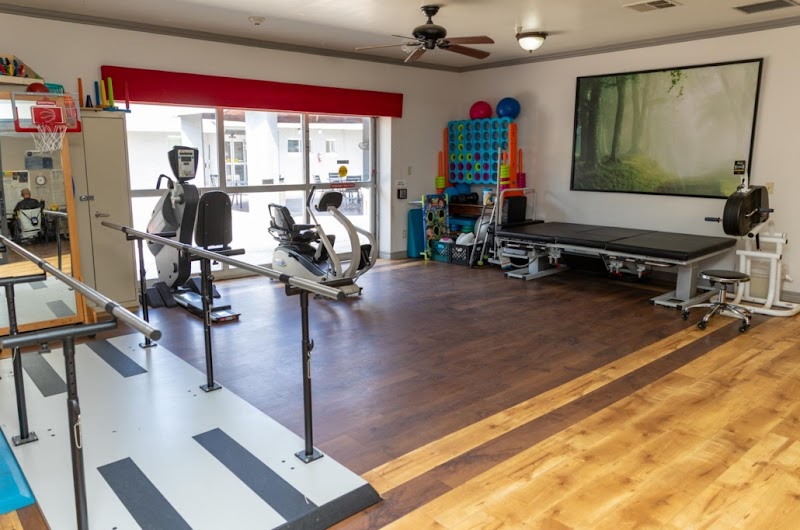
Who Owns and Operates Camelback Post Acute Care And Rehabilitation?

CAMELBACK POST ACUTE CARE AND REHABILITATION is owned by a for-profit company. For-profit facilities operate as businesses with obligations to shareholders or private owners. The facility is operated by THE ENSIGN GROUP, a chain that manages multiple nursing homes. With 107 certified beds and approximately 71 residents (about 66% occupancy), it is a mid-sized facility located in PHOENIX, Arizona.
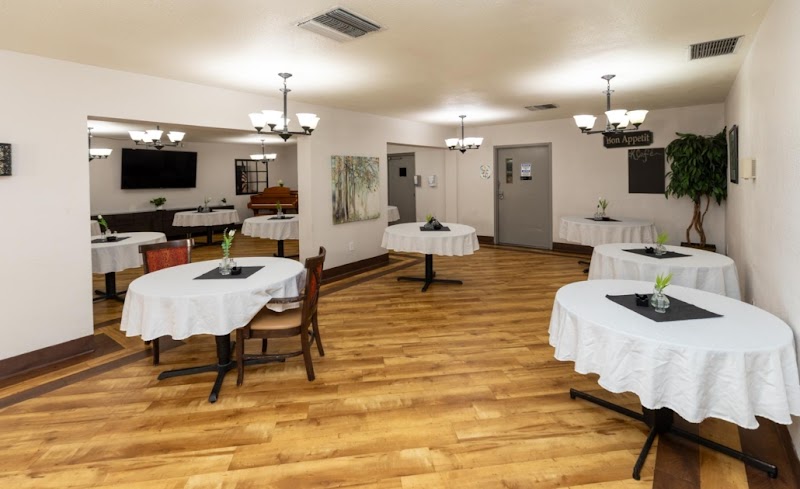
How Does Camelback Post Acute Care And Rehabilitation Compare to Other Arizona Nursing Homes?

Compared to the 100 nursing homes in Arizona, CAMELBACK POST ACUTE CARE AND REHABILITATION's overall rating (3 stars) is below the state average of 3.3, staff turnover (39%) is near the state average of 46%, and health inspection rating (2 stars) is below the national benchmark.

What Should Families Ask When Visiting Camelback Post Acute Care And Rehabilitation?

Based on this facility's data, families visiting should ask: "Can I visit during a mealtime to observe dining assistance and food quality?" "How do you handle medical emergencies, and what is your hospital transfer rate?" "Can I speak with family members of current residents about their experience?"

Is Camelback Post Acute Care And Rehabilitation Safe?

Based on CMS inspection data, CAMELBACK POST ACUTE CARE AND REHABILITATION has a clean safety record: no substantiated abuse findings (meaning no confirmed cases of resident harm), no Immediate Jeopardy citations (the most serious violation level indicating risk of serious injury or death), and is not on the Special Focus Facility watch list (a federal program monitoring the lowest-performing 1% of nursing homes). The facility has a 3-star overall rating and ranks #100 of 100 nursing homes in Arizona. While no facility is perfect, families should still ask about staff-to-resident ratios and recent inspection results during their visit.

Do Nurses at Camelback Post Acute Care And Rehabilitation Stick Around?

CAMELBACK POST ACUTE CARE AND REHABILITATION has a staff turnover rate of 39%, which is about average for Arizona nursing homes (state average: 46%). Moderate turnover is common in nursing homes, but families should still ask about staff tenure and how the facility maintains care continuity when employees leave.

Was Camelback Post Acute Care And Rehabilitation Ever Fined?

CAMELBACK POST ACUTE CARE AND REHABILITATION has no federal fines on record. CMS issues fines when nursing homes fail to meet care standards or don't correct problems found during inspections. The absence of fines suggests the facility has either maintained compliance or corrected any issues before penalties were assessed. This is a positive indicator, though families should still review recent inspection reports for the full picture.

Is Camelback Post Acute Care And Rehabilitation on Any Federal Watch List?

CAMELBACK POST ACUTE CARE AND REHABILITATION is not on any federal watch list. The most significant is the Special Focus Facility (SFF) program, which identifies the bottom 1% of nursing homes nationally based on persistent, serious quality problems. Not being on this list means the facility has avoided the pattern of deficiencies that triggers enhanced federal oversight. This is a positive indicator, though families should still review the facility's inspection history directly.