HAVEN HEALTH SKY HARBOR, LLC
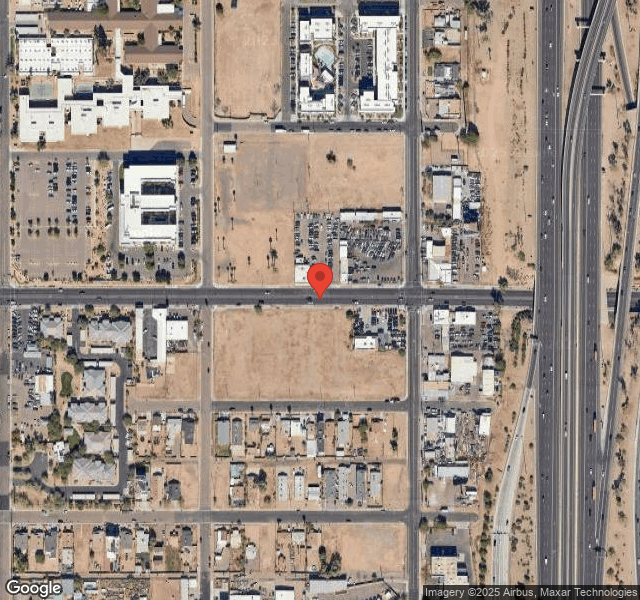
1880 EAST VAN BUREN STREET, PHOENIX, AZ 85006 (602) 253-4570
For profit - Limited Liability company 120 Beds HAVEN HEALTH Data: November 2025
Trust Grade
40/100
#107 of 139 in AZ
Last Inspection: May 2024

Within standard 12-15 month inspection cycle. Federal law requires annual inspections.

Overview

Haven Health Sky Harbor, LLC has received a Trust Grade of D, which indicates below-average performance with some significant concerns. They rank #107 out of 139 facilities in Arizona, placing them in the bottom half, and #66 out of 76 in Maricopa County, meaning there are only a few local options that perform better. The facility is showing improvement, as the number of issues decreased from 17 in 2024 to 4 in 2025. Staffing has a low turnover rate of 40%, which is better than the state average of 48%, but they have only a 1/5 star rating for staffing overall. However, the facility has incurred $43,628 in fines, which is troubling and higher than 95% of Arizona facilities, suggesting ongoing compliance issues. RN coverage is average, which means they are meeting the standard for nursing oversight. Recent inspections revealed serious issues, including a failure to protect a resident from sexual abuse and delays in reporting allegations of abuse, which raises serious concerns about resident safety. Despite some strengths, such as quality measures rated at 5/5, families should carefully consider these weaknesses when evaluating this nursing home.

Trust Score
D
40/100
In Arizona
#107/139
Bottom 24%
Safety Record
Moderate
Needs review
Inspections
Getting Better
17 → 4 violations
Staff Stability
○ Average
40% turnover. Near Arizona's 48% average. Typical for the industry.
Penalties
⚠ Watch
$43,628 in fines. Higher than 92% of Arizona facilities. Major compliance failures.
Skilled Nurses
○ Average
Each resident gets 36 minutes of Registered Nurse (RN) attention daily — about average for Arizona. RNs are the most trained staff who monitor for health changes.
Violations
⚠ Watch
44 deficiencies on record. Higher than average. Multiple issues found across inspections.
★★☆☆☆
2.0
Overall Rating
★☆☆☆☆
1.0
Staff Levels
★★★★★
5.0
Care Quality
★☆☆☆☆
1.0
Inspection Score
Stable
2024: 17 issues
2025: 4 issues

The Good

  • 5-Star Quality Measures · Strong clinical quality outcomes
  • Full Sprinkler Coverage · Fire safety systems throughout facility
  • No fines on record
  • Staff turnover below average (40%)

    8 points below Arizona average of 48%

Facility shows strength in quality measures, fire safety.

The Bad

2-Star Overall Rating

Below Arizona average (3.3)

Below average - review inspection findings carefully

Staff Turnover: 40%

Near Arizona avg (46%)

Typical for the industry

Federal Fines: $43,628

Above median ($33,413)

Moderate penalties - review what triggered them

Chain: HAVEN HEALTH

Part of a multi-facility chain

Ask about local staffing decisions and management

The Ugly 44 deficiencies on record

1 actual harm
Aug 2025 3 deficiencies
CONCERN (E) 📢 Someone Reported This

A family member, employee, or ombudsman was alarmed enough to file a formal complaint

Potential for Harm - no one hurt, but risky conditions existed

Abuse Prevention Policies (Tag F0607)

Could have caused harm · This affected multiple residents

**NOTE- TERMS IN BRACKETS HAVE BEEN EDITED TO PROTECT CONFIDENTIALITY** Based on clinical record reviews, staff and resident interviews, facility documentation and policy reviews, the facility failed ...

Read full inspector narrative →
**NOTE- TERMS IN BRACKETS HAVE BEEN EDITED TO PROTECT CONFIDENTIALITY** Based on clinical record reviews, staff and resident interviews, facility documentation and policy reviews, the facility failed to implement their written abuse policies and procedure for two residents (#1, #2). The deficient practice could place resident at risk for further abuse.Findings include:-Regarding Resident #1:Resident #1 was admitted to the facility on [DATE] with a diagnosis that included bilateral primary osteoarthritis of knee, anxiety disorder, syncope and collapse, and Type 2 Diabetes Mellitus (DM).A review of orders revealed Resident had orders for occupational therapy, physical therapy and speech therapy to eval and treat as needed if indicated on orders.A review of Resident's care plan dated June 17, 2025 revealed Resident was at risk for functional self-care deficits and/or functional mobility limitations related to osteoarthritis of the Knee, history of falls, DM, and weakness.A review of admission Minimum Data Set (MDS) assessment dated [DATE] revealed a Brief Interview for Mental Status (BIMS) score of 14.0, cognitively intact, behavioral symptoms not exhibited, and rejection of care and wandering behaviors were not exhibited.Another review of Resident's care plan dated June 22, 2025 revealed Resident had a communication problem related to Resident only speaks Spanish.A review of progress note dated July 22, 2025 at 6:34 AM revealed Resident was due for her morning medication and Staff #249 asked a CNA (certified nursing assistant) to accompany Staff #249 and assist with Spanish translation. The progress notes also revealed that Resident complaint about being forced to take medication and Resident wants the nurse to leave her medication on the table. The nurse stated that Resident had syncope attack when Resident gets upset/mad. Staff #249 progress note revealed that the Resident accused him of grabbing and touching her with the CNA. Staff #249 was just helping Resident put back her gown and just trying to make her safe to prevent her from falling because Resident was sitting at beside. Furthermore, the progress note revealed that after 15 minutes, Staff #249 and another staff tried to give Resident's medication while Resident was talking on the phone, and Resident acted like she fell asleep as soon as she saw the staff knocked and walked inside her room.Another review of care plan dated July 22, 2025 revealed Resident had a behavior problem related to resistive to care, false accusation towards staff and preference for female staff only. Interventions included to anticipate Resident's needs and cares in pairs.A review of rehab therapy progress note dated July 25, 2025 revealed a Spanish interpreter was utilized, at 10:00 AM, Resident #1 reported to physical therapy (PT) that resident was abused by a nurse in the facility. The progress notes revealed that resident was naked while finishing up with a shower, resident was about to fasten gown and resident couldn't because a male nurse came in without knocking and resident was attacked immediately. The progress notes revealed that he shook the resident a lot and the resident could not wake up or move. He grabbed the resident by the arms to put resident in bed. A female nurse came in and put the robe on the resident and left. Resident could not move because of epilepsy. Furthermore, the progress note revealed that the female nurse stated that she did not see anything and he stated that it was only one pill. But when the resident woke up, there were a lot of pills stuffed in the resident's mouth, resident could not swallow, resident spit them out and had a sour taste. The male nurse stated it was only one pill but resident took six tiny pills and three big ones placed in resident's mouth when resident was passed out, resident reported it to a nurse and the Spanish speaking nurse said she needs to apologize. In the morning the male nurse stayed by the door and did not want to enter the resident's room. A female nurse entered the room and Resident #1 stated to report him for bad behavior. The progress notes also revealed that PT was not able to notify the administrator due to the administrator was out on vacation and the other administrative staff were out until 3:00 PM. The progress note revealed that PT had a conversation with a unit manager/Staff #55 on July 25, 2025 at 12:00 PM and PT reported to the DON (director of nursing) and the building administrator.A review of progress notes and a Weekly Skin check and Wound assessment dated [DATE] revealed a registered nurse (RN) and a CNA that speaks Spanish conducted a head to toe assessment and observed Resident's skin to be clean, dry and intact, no open area, no redness, and no area of concerns noted.A review of facility's investigation report with an allegation date of August 4, 2025 revealed that the facility was notified by APS (Adult Protective Services) of an anonymous report of sexual abuse towards Resident #1. The facility report revealed that there was no staff member to suspend as the facility was unable to identify the alleged accuser and there was no staff identified by the accuser. Furthermore, the report revealed two staff statement. First statement was from a unit coordinator/Staff #65. The statement from Staff #65 revealed that the incident happened either Tuesday/Wednesday early morning. The nurse did not knock and resident was sitting up in the wheelchair. Resident had an episode where resident knew what was going on but was unable to move or talk and not sure if it was a syncopal episode. The Resident described the nurse as Hispanic male, dark hair, not too old, not too young, and does not speak Spanish. A female staff assisted the male nurse to get the resident back in bed. The resident was in pain and was given Tylenol but Resident was unable to swallow so the medicine was in the Resident's side of the mouth which the Resident stated that it tasted bitter. Resident #1 did not report any abuse to her knowledge. The second staff statement in the 5-day report was given by Staff #55/unit manager. Staff #55 statement revealed that On Friday 08/25/25 Staff #55 was informed of the Resident's experience that happened couple days ago. The PT revealed that resident was in a wheelchair when resident was in pain that froze her up and while resident was in the wheelchair, the CNA and nurse was attempting to wake resident up because resident appeared passed out. The resident was aware of what was going on but was not communicating verbally just grunting. Staff #55 statement also revealed that she noticed the pills in Resident's mouth were half dissolved. Furthermore, the August 4, 2025 investigation report finding and conclusion revealed that there was no staff member identified as an alleged perpetrator, Resident #1 and family stated that there was no sexual abuse, facility reported the complaint to APS, police, and DHS, and the allegation of abuse was unable to be substantiated.Resident #1 was discharged on August 7, 2025.-Regarding Resident #2:Resident #2 was admitted to the facility on [DATE] with a diagnosis that included speech and language deficit following nontraumatic intracerebral hemorrhage, metabolic encephalopathy, and end stage renal disease.A review of admission MDS assessment dated [DATE] revealed a BIMS score of no score recorded/space left blank, resident vision severely impaired and resident had no corrective lenses, behavioral symptoms were not exhibited, and rejection of care and wandering behaviors were not exhibited. A review of Resident's care plan dated April 22, 2025 revealed that resident was at risk for functional self care deficits and/or functional mobility limitations related to her diagnoses.Another review of Resident's care plan dated April 29, 2025 revealed that resident have delirium or an acute confusional episode, have impaired visual function, have impaired cognitive function/dementia or impaired thought processes, and at risk for bladder incontinence related to impaired mobility.A review of progress notes dated August 5, 2025 by CNA/Staff #106 revealed that resident refused a shower because it was too cold, even after staff offered to change the room temperature and shower the resident with warm water.A review of record titled, CNA Shower Sheet, dated August 5, 2025 revealed Resident #2 without a bruise, skin tear, red area, open area, fingernails and toenails were not cleaned or clipped, and facial hair not shaved. In addition, the sheet revealed a note that resident refused a shower or bath, resident was cold, and resident was informed that staff will turn off AC (air conditioning) but still resident refused to have a shower and would wait to have a bed bath the next day.A review of record titled, CNA Shower Sheet, dated August 8, 2025 revealed Resident's shower was completed.An interview was conducted on August 11, 2025 at 11:24 AM with a CNA/Staff #69. Staff #69 stated that abuse can be physical, mental, verbal, or financial. Staff #69 stated that if he was made aware of an allegation of abuse, he will report it to his charge nurse or supervisor so it will be documented and investigated for residents' safety. Staff #69 stated that he is not aware of any abuse incident since he has been in the facility.An interview was conducted on August 11, 2025 at 1:37 PM in the rehab director's office with occupational therapy (OT)/Staff #1. She stated that her role includes getting referral paperwork, doing chart reviews, observing precaution prior to walking in the resident's room, then she will ask the resident in depth question such as their prior level to preemptively plan for their discharge, and then she will set their discharge goals. And, based on the schedule, she discusses the plan with the resident such as upper or lower body strength, safety, fall prevention education, also educate family if family is at bedside. She stated that she uses a language line solution, it is a phone number to call and then select the language resident speak, if resident does not speak English. Regarding her abuse training, she stated that she will report an allegation of abuse immediately to the abuse coordinator which is the administrator. She is not aware of any abuse incident.An interview was conducted on August 11, 2025 at 1:50 PM in hallway 2100 with CNA/Staff #229. She stated that she works day shift from 6 AM through 6 PM. After clocking in, she first does a walk-in report with the night CNA going from one room to another. Then, she will start taking vital signs (VS). After taking all of her residents' VS, she will give the VS sheet to her nurse, and also will document the VS in the computer. She will assist her residents, get residents up, and sent residents to activities. When she has a resident, who does not speak English, her facility has a number she can call to assist in translation. She stated that she takes care of Spanish speaking residents and since she speaks Spanish herself, the other staff comes to her and ask her to assist them with translation. Regarding care in [NAME], she stated that the resident who have cares in [NAME] could be resident that made accusation against staff, and or are heavier. Regarding abuse, she stated that abuse can be sexual, psychological, financial, and verbal. And, when she witnesses or is made aware of any allegation of abuse, she will report it to the administrator, DON, or to her nurse. She stated that she heard a few residents who have mentioned that supposedly a staff placed a finger. She stated that most of the CNAs working in the units are female, except there is one male on the day shift. She stated that if a resident asks for a female to provide her care, usually their male CNA will look for a female CNA. She stated that a week ago, there was a rumor that Resident #2 who is still in the facility was one of the residents included in the rumor, but she does not know if the rumor was true or not.On August 11, 2025 at 2:03 PM, an interview was conducted with Resident #2. Resident #2 stated that she wants to go home. Resident #2 stated that there was an incident with a nurse who took her in a shower located in her room during the day and stuck her finger. The incident happened 2 or 3 weeks ago, on a Tuesday. Resident stated that she is blind, she can't see, and the staff stuck her finger in her private part, and the nurse stated to her you do not want to stink do you, and another incident were another nurse poured the medicine in her mouth. Resident stated that she informed a lady about the incident but could not remember the lady's name. On August 11, 2025, a follow up question with CNA/Staff #229 at the nursing station 2200 hall was conducted. Staff #229 stated that showers are provided by CNAs, nurses do not give showers, the CNAs use a shower sheet, Resident #2 shower days are on Tuesdays and Fridays, and showers are done in the resident's room.On August 11, 2025 at 2:45 PM, the administrator/Staff #28, DON/Staff #133, and AIT (administrator in training)/Staff #221 were made aware of an allegation of abuse involving Resident #2.On August 11, 2025 at 2:45 PM, the administrator stated that there were no allegations of abuse reported in the month of July and there was only one allegation of abuse for August.On August 11, 2025 at 5:14 PM, surveyor received a call back from physical therapy assistant (PTA)/Staff #3. Staff #3 stated that he works for this facility and provided services to Resident #1, sometimes three to four times per week. Staff #3 stated that Resident #1 complained about a nurse, this incident was already reported because the event happened in July, and it was recorded in the PT notes. Additionally, Staff #3 stated that Resident #1 mentioned to him that when Resident #1 was changing their gown, the nurse entered without knocking, Resident #1 was upset and on the same day when Resident #1 was lying down half asleep, the nurse came in their room and poured the medication and water in Resident #1's mouth. Resident #1 was choking when awaken. Resident #1 did not remember the nurse's name. Staff #3 stated that there were not a lot of male nurse in that facility.An interview was conducted on August 12, 2025 at 9:13 AM via phone with physical therapist (PT)/Staff #4. Staff #4 stated that she worked at the facility last month but does not remember the dates. She was driving during the interview and was unable to check dates at the moment, but she stated that everything was in the progress notes. She stated that she used an interpreter, there was no name of the nurse involved during the incident, Resident #1 was not aware of the male nurse's name, and the incident happened during the night shift.An interview was conducted on August 12, 2025 at 10:12 AM with a Unit Manager/Staff #55 in the conference room. Staff #55 stated that she works Tuesdays through Fridays from 10 AM through 8: 30 PM. Her responsibilities include making residents' rounds, doing narcotic audits, she is involved with admissions and discharges, and she follow up with families for any concerns. She stated that their dialysis residents go to dialysis. Regarding her abuse training, she stated that as soon as an abuse is identified, abuse is reported right away to the administrator, and if the administrator is not available, she reports the allegation of abuse to the DON. If DON is not available, she stated that the administrator or the DON are usually available. She stated that the type of abuse to report include physical, sexual, financial, verbal, and neglect. If she is made aware of an allegation of abuse, her responsibility is to report it to the administrator, she interviews the resident to get details, but her main responsibility is to inform the administrator and the DON. She stated that she was made aware of Resident #1's incident in July around by the end of July. She believes it was July 25, and Resident #1 already has been discharged . She stated that Resident #1 only speaks Spanish, the therapist stated that in the morning Resident #1 was sitting in the chair, Resident #1 remembered the staff were trying to wake her up. She stated that Resident #1 might have had a seizure because Resident #1 was out of it but knows what was going on but Resident #1 was unable to communicate, Resident #1's incident happened early in the morning during the night shift. The staff at that time was a nurse and a med tech. The nurse was Staff #249 and the Med tech was Staff #83. Staff #249 was not assigned to Resident #1 after the incident. Resident #1 was not sure when the incident happened, if it was on a Tuesday or Wednesday, Resident #1 described the male staff looking Hispanic and that is how Staff #55 figured it was Staff #249 and he was with a CMA (certified medical tech)/Staff #83. Both Staff #249 and Staff #83 were working that night shift. Staff #55 stated that after the incident, cares in pairs was implemented for Resident #1. Staff #55 stated that she informed the administrator via phone call of the incident on July 25 which was a Friday and she also spoke with the DON and she thinks that their Director of Rehab also informed the DON. Staff #4 was the therapist whom Resident #1 informed of the incident on July 25. Staff #55 stated that after reporting the incident to the administrator and DON, she went and interviewed Resident #1 with the wound care nurse, but resident was eating lunch and had a visitor and wanted them to come back later. The second visit to Resident #1 was with the unit coordinator to assist with translation. Staff #55 stated that the resident did not say the way the therapist had reported it to her. Staff #55 stated that the nurse came in the room while Resident #1 was half dress, and the nurse was trying to wake Resident #1 up by rubbing on Resident #1's chest because the nurse was concern that Resident #1 was altered and the staff placed Resident #1 back in bed. Staff #55 did not remember any other abuse incident, just this one for this year.An interview was conducted on August 12, 2025 at 11:17 AM in the 2200 nursing station with Staff #65. Staff #65 stated that as the unit coordinator, her responsibility includes setting up appointments and transportations, she speaks Spanish, she helps translates. She stated that she translated for one of the unit managers regarding an incident in July. She stated that her abuse training includes if she hears any allegation of abuse, she will report it to the administrator. She stated that if abuse is not reported, the abuse allegation will not get investigated, the resident is vulnerable, and the resident would feel unsafe in the facility.On August 12, 2025 at 11:30 AM, an exit interview was conducted with the administrator/Staff #28 and the DON/Staff #133 in the conference room. At 11:52 AM, the DON stated that when the physical therapist note had come up, she and the administrator spoke with the Director of Rehab. The DON does not remember when they spoke with the Director of Rehab. The DON stated that she also spoke with Resident #1 and Resident #1 denied the accusation. The DON stated that she had concerns with medication administration during the incident, and that is when the administrator reported the incident to the police, DHS (department of health services), which is in their 5-day report. The DON stated that the allegation of abuse was not reported to her and to the administrator and that they both learned of the allegation of abuse on a later date from APS, and that is when they filed it to the department and to the law enforcement. During the interview, the administrator stated that they verified the incident with Resident #1 and the family member and confirmed that nothing happened. The administrator stated that the physical therapy note was not reflecting the reality of what Resident #1 stated once Resident #1 and the family member were interviewed.A review of facility's policy titled, 003 - Resident Rights/Dignity: Abuse, Neglect, Exploitation and Misappropriation Prevention Program, in effect date of January 1, 2024 revealed Residents have the right to be free from abuse. (8) Identify and investigate all possible incidents of abuse, neglect, mistreatment, or misappropriation of resident property. (9) Investigate and report any allegations within timeframes required by federal requirements. (10) Protect residents from any further harm during investigations.
CONCERN (E) 📢 Someone Reported This

A family member, employee, or ombudsman was alarmed enough to file a formal complaint

Potential for Harm - no one hurt, but risky conditions existed

Report Alleged Abuse (Tag F0609)

Could have caused harm · This affected multiple residents

**NOTE- TERMS IN BRACKETS HAVE BEEN EDITED TO PROTECT CONFIDENTIALITY** Based on clinical record review, staff and resident interviews, facility documentation and policy review, the facility failed to...

Read full inspector narrative →
**NOTE- TERMS IN BRACKETS HAVE BEEN EDITED TO PROTECT CONFIDENTIALITY** Based on clinical record review, staff and resident interviews, facility documentation and policy review, the facility failed to ensure that an allegation of abuse for two resident (#1, #2) was reported to the State Agencies in a timely manner. The deficient practice could place residents at risk for further abuse.Findings include:-Regarding Resident #1:Resident #1 was admitted to the facility on [DATE] with a diagnosis that included bilateral primary osteoarthritis of knee, anxiety disorder, syncope and collapse, and Type 2 Diabetes Mellitus (DM).A review of orders revealed Resident had orders for occupational therapy, physical therapy and speech therapy to eval and treat as needed if indicated on orders.A review of Resident's care plan dated June 17, 2025 revealed Resident was at risk for functional self-care deficits and/or functional mobility limitations related to osteoarthritis of the Knee, history of falls, DM, and weakness.A review of admission Minimum Data Set (MDS) assessment dated [DATE] revealed a Brief Interview for Mental Status (BIMS) score of 14.0, cognitively intact, behavioral symptoms not exhibited, and rejection of care and wandering behaviors were not exhibited.Another review of Resident's care plan dated June 22, 2025 revealed Resident had a communication problem related to Resident only speaks Spanish.A review of progress note dated July 22, 2025 at 6:34 AM revealed Resident was due for her morning medication and Staff #249 asked a CNA (certified nursing assistant) to accompany Staff #249 and assist with Spanish translation. The progress notes also revealed that Resident complaint about being forced to take medication and Resident wants the nurse to leave her medication on the table. The nurse stated that Resident had syncope attack when Resident gets upset/mad. Staff #249 progress note revealed that the Resident accused him of grabbing and touching her with the CNA. Staff #249 was just helping Resident put back her gown and just trying to make her safe to prevent her from falling because Resident was sitting at beside. Furthermore, the progress note revealed that after 15 minutes, Staff #249 and another staff tried to give Resident's medication while Resident was talking on the phone, and Resident acted like she fell asleep as soon as she saw the staff knocked and walked inside her room.Another review of care plan dated July 22, 2025 revealed Resident had a behavior problem related to resistive to care, false accusation towards staff and preference for female staff only. Interventions included to anticipate Resident's needs and cares in pairs.A review of rehab therapy progress note dated July 25, 2025 revealed a Spanish interpreter was utilized, at 10:00 AM, Resident #1 reported to physical therapy (PT) that resident was abused by a nurse in the facility. The progress notes revealed that resident was naked while finishing up with a shower, resident was about to fasten gown and resident couldn't because a male nurse came in without knocking and resident was attacked immediately. The progress notes revealed that he shook the resident a lot and the resident could not wake up or move. He grabbed the resident by the arms to put resident in bed. A female nurse came in and put the robe on the resident and left. Resident could not move because of epilepsy. Furthermore, the progress note revealed that the female nurse stated that she did not see anything and he stated that it was only one pill. But when the resident woke up, there were a lot of pills stuffed in the resident's mouth, resident could not swallow, resident spit them out and had a sour taste. The male nurse stated it was only one pill but resident took six tiny pills and three big ones placed in resident's mouth when resident was passed out, resident reported it to a nurse and the Spanish speaking nurse said she needs to apologize. In the morning the male nurse stayed by the door and did not want to enter the resident's room. A female nurse entered the room and Resident #1 stated to report him for bad behavior. The progress notes also revealed that PT was not able to notify the administrator due to the administrator was out on vacation and the other administrative staff were out until 3:00 PM. The progress note revealed that PT had a conversation with a unit manager/Staff #55 on July 25, 2025 at 12:00 PM and PT reported to the DON (director of nursing) and the building administrator.A review of progress notes and a Weekly Skin check and Wound assessment dated [DATE] revealed a registered nurse (RN) and a CNA that speaks Spanish conducted a head to toe assessment and observed Resident's skin to be clean, dry and intact, no open area, no redness, and no area of concerns noted.A review of facility's investigation report with an allegation date of August 4, 2025 revealed that the facility was notified by APS (Adult Protective Services) of an anonymous report of sexual abuse towards Resident #1. The facility report revealed that there was no staff member to suspend as the facility was unable to identify the alleged accuser and there was no staff identified by the accuser. Furthermore, the report revealed two staff statement. First statement was from a unit coordinator/Staff #65. The statement from Staff #65 revealed that the incident happened either Tuesday/Wednesday early morning. The nurse did not knock and resident was sitting up in the wheelchair. Resident had an episode where resident knew what was going on but was unable to move or talk and not sure if it was a syncopal episode. The Resident described the nurse as Hispanic male, dark hair, not too old, not too young, and does not speak Spanish. A female staff assisted the male nurse to get the resident back in bed. The resident was in pain and was given Tylenol but Resident was unable to swallow so the medicine was in the Resident's side of the mouth which the Resident stated that it tasted bitter. Resident #1 did not report any abuse to her knowledge. The second staff statement in the 5-day report was given by Staff #55/unit manager. Staff #55 statement revealed that On Friday 08/25/25 Staff #55 was informed of the Resident's experience that happened couple days ago. The PT revealed that resident was in a wheelchair when resident was in pain that froze her up and while resident was in the wheelchair, the CNA and nurse was attempting to wake resident up because resident appeared passed out. The resident was aware of what was going on but was not communicating verbally just grunting. Staff #55 statement also revealed that she noticed the pills in Resident's mouth were half dissolved. Furthermore, the August 4, 2025 investigation report finding and conclusion revealed that there was no staff member identified as an alleged perpetrator, Resident #1 and family stated that there was no sexual abuse, facility reported the complaint to APS, police, and DHS, and the allegation of abuse was unable to be substantiated.Resident #1 was discharged on August 7, 2025.-Regarding Resident #2:Resident #2 was admitted to the facility on [DATE] with a diagnosis that included speech and language deficit following nontraumatic intracerebral hemorrhage, metabolic encephalopathy, and end stage renal disease.A review of admission MDS assessment dated [DATE] revealed a BIMS score of no score recorded/space left blank, resident vision severely impaired and resident had no corrective lenses, behavioral symptoms were not exhibited, and rejection of care and wandering behaviors were not exhibited. A review of Resident's care plan dated April 22, 2025 revealed that resident was at risk for functional self care deficits and/or functional mobility limitations related to her diagnoses.Another review of Resident's care plan dated April 29, 2025 revealed that resident have delirium or an acute confusional episode, have impaired visual function, have impaired cognitive function/dementia or impaired thought processes, and at risk for bladder incontinence related to impaired mobility.A review of progress notes dated August 5, 2025 by CNA/Staff #106 revealed that resident refused a shower because it was too cold, even after staff offered to change the room temperature and shower the resident with warm water.A review of record titled, CNA Shower Sheet, dated August 5, 2025 revealed Resident #2 without a bruise, skin tear, red area, open area, fingernails and toenails were not cleaned or clipped, and facial hair not shaved. In addition, the sheet revealed a note that resident refused a shower or bath, resident was cold, and resident was informed that staff will turn off AC (air conditioning) but still resident refused to have a shower and would wait to have a bed bath the next day.A review of record titled, CNA Shower Sheet, dated August 8, 2025 revealed Resident's shower was completed.An interview was conducted on August 11, 2025 at 11:24 AM with a CNA/Staff #69. Staff #69 stated that abuse can be physical, mental, verbal, or financial. Staff #69 stated that if he was made aware of an allegation of abuse, he will report it to his charge nurse or supervisor so it will be documented and investigated for residents' safety. Staff #69 stated that he is not aware of any abuse incident since he has been in the facility.An interview was conducted on August 11, 2025 at 1:37 PM in the rehab director's office with occupational therapy (OT)/Staff #1. She stated that her role includes getting referral paperwork, doing chart reviews, observing precaution prior to walking in the resident's room, then she will ask the resident in depth question such as their prior level to preemptively plan for their discharge, and then she will set their discharge goals. And, based on the schedule, she discusses the plan with the resident such as upper or lower body strength, safety, fall prevention education, also educate family if family is at bedside. She stated that she uses a language line solution, it is a phone number to call and then select the language resident speak, if resident does not speak English. Regarding her abuse training, she stated that she will report an allegation of abuse immediately to the abuse coordinator which is the administrator. She is not aware of any abuse incident.An interview was conducted on August 11, 2025 at 1:50 PM in hallway 2100 with CNA/Staff #229. She stated that she works day shift from 6 AM through 6 PM. After clocking in, she first does a walk-in report with the night CNA going from one room to another. Then, she will start taking vital signs (VS). After taking all of her residents' VS, she will give the VS sheet to her nurse, and also will document the VS in the computer. She will assist her residents, get residents up, and sent residents to activities. When she has a resident, who does not speak English, her facility has a number she can call to assist in translation. She stated that she takes care of Spanish speaking residents and since she speaks Spanish herself, the other staff comes to her and ask her to assist them with translation. Regarding care in [NAME], she stated that the resident who have cares in [NAME] could be resident that made accusation against staff, and or are heavier. Regarding abuse, she stated that abuse can be sexual, psychological, financial, and verbal. And, when she witnesses or is made aware of any allegation of abuse, she will report it to the administrator, DON, or to her nurse. She stated that she heard a few residents who have mentioned that supposedly a staff placed a finger. She stated that most of the CNAs working in the units are female, except there is one male on the day shift. She stated that if a resident asks for a female to provide her care, usually their male CNA will look for a female CNA. She stated that a week ago, there was a rumor that Resident #2 who is still in the facility was one of the residents included in the rumor, but she does not know if the rumor was true or not.On August 11, 2025 at 2:03 PM, an interview was conducted with Resident #2. Resident #2 stated that she wants to go home. Resident #2 stated that there was an incident with a nurse who took her in a shower located in her room during the day and stuck her finger. The incident happened 2 or 3 weeks ago, on a Tuesday. Resident stated that she is blind, she can't see, and the staff stuck her finger in her private part, and the nurse stated to her you do not want to stink do you, and another incident were another nurse poured the medicine in her mouth. Resident stated that she informed a lady about the incident but could not remember the lady's name. On August 11, 2025, a follow up question with CNA/Staff #229 at the nursing station 2200 hall was conducted. Staff #229 stated that showers are provided by CNAs, nurses do not give showers, the CNAs use a shower sheet, Resident #2 shower days are on Tuesdays and Fridays, and showers are done in the resident's room.On August 11, 2025 at 2:45 PM, the administrator/Staff #28, DON/Staff #133, and AIT (administrator in training)/Staff #221 were made aware of an allegation of abuse involving Resident #2.On August 11, 2025 at 2:45 PM, the administrator stated that there were no allegations of abuse reported in the month of July and there was only one allegation of abuse for August.On August 11, 2025 at 5:14 PM, surveyor received a call back from physical therapy assistant (PTA)/Staff #3. Staff #3 stated that he works for this facility and provided services to Resident #1, sometimes three to four times per week. Staff #3 stated that Resident #1 complained about a nurse, this incident was already reported because the event happened in July, and it was recorded in the PT notes. Additionally, Staff #3 stated that Resident #1 mentioned to him that when Resident #1 was changing their gown, the nurse entered without knocking, Resident #1 was upset and on the same day when Resident #1 was lying down half asleep, the nurse came in their room and poured the medication and water in Resident #1's mouth. Resident #1 was choking when awaken. Resident #1 did not remember the nurse's name. Staff #3 stated that there were not a lot of male nurse in that facility.An interview was conducted on August 12, 2025 at 9:13 AM via phone with physical therapist (PT)/Staff #4. Staff #4 stated that she worked at the facility last month but does not remember the dates. She was driving during the interview and was unable to check dates at the moment, but she stated that everything was in the progress notes. She stated that she used an interpreter, there was no name of the nurse involved during the incident, Resident #1 was not aware of the male nurse's name, and the incident happened during the night shift.An interview was conducted on August 12, 2025 at 10:12 AM with a Unit Manager/Staff #55 in the conference room. Staff #55 stated that she works Tuesdays through Fridays from 10 AM through 8: 30 PM. Her responsibilities include making residents' rounds, doing narcotic audits, she is involved with admissions and discharges, and she follow up with families for any concerns. She stated that their dialysis residents go to dialysis. Regarding her abuse training, she stated that as soon as an abuse is identified, abuse is reported right away to the administrator, and if the administrator is not available, she reports the allegation of abuse to the DON. If DON is not available, she stated that the administrator or the DON are usually available. She stated that the type of abuse to report include physical, sexual, financial, verbal, and neglect. If she is made aware of an allegation of abuse, her responsibility is to report it to the administrator, she interviews the resident to get details, but her main responsibility is to inform the administrator and the DON. She stated that she was made aware of Resident #1's incident in July around by the end of July. She believes it was July 25, and Resident #1 already has been discharged . She stated that Resident #1 only speaks Spanish, the therapist stated that in the morning Resident #1 was sitting in the chair, Resident #1 remembered the staff were trying to wake her up. She stated that Resident #1 might have had a seizure because Resident #1 was out of it but knows what was going on but Resident #1 was unable to communicate, Resident #1's incident happened early in the morning during the night shift. The staff at that time was a nurse and a med tech. The nurse was Staff #249 and the Med tech was Staff #83. Staff #249 was not assigned to Resident #1 after the incident. Resident #1 was not sure when the incident happened, if it was on a Tuesday or Wednesday, Resident #1 described the male staff looking Hispanic and that is how Staff #55 figured it was Staff #249 and he was with a CMA (certified medical tech)/Staff #83. Both Staff #249 and Staff #83 were working that night shift. Staff #55 stated that after the incident, cares in pairs was implemented for Resident #1. Staff #55 stated that she informed the administrator via phone call of the incident on July 25 which was a Friday and she also spoke with the DON and she thinks that their Director of Rehab also informed the DON. Staff #4 was the therapist whom Resident #1 informed of the incident on July 25. Staff #55 stated that after reporting the incident to the administrator and DON, she went and interviewed Resident #1 with the wound care nurse, but resident was eating lunch and had a visitor and wanted them to come back later. The second visit to Resident #1 was with the unit coordinator to assist with translation. Staff #55 stated that the resident did not say the way the therapist had reported it to her. Staff #55 stated that the nurse came in the room while Resident #1 was half dress, and the nurse was trying to wake Resident #1 up by rubbing on Resident #1's chest because the nurse was concern that Resident #1 was altered and the staff placed Resident #1 back in bed. Staff #55 did not remember any other abuse incident, just this one for this year.An interview was conducted on August 12, 2025 at 11:17 AM in the 2200 nursing station with Staff #65. Staff #65 stated that as the unit coordinator, her responsibility includes setting up appointments and transportations, she speaks Spanish, she helps translates. She stated that she translated for one of the unit managers regarding an incident in July. She stated that her abuse training includes if she hears any allegation of abuse, she will report it to the administrator. She stated that if abuse is not reported, the abuse allegation will not get investigated, the resident is vulnerable, and the resident would feel unsafe in the facility.On August 12, 2025 at 11:30 AM, an exit interview was conducted with the administrator/Staff #28 and the DON/Staff #133 in the conference room. At 11:52 AM, the DON stated that when the physical therapist note had come up, she and the administrator spoke with the Director of Rehab. The DON does not remember when they spoke with the Director of Rehab. The DON stated that she also spoke with Resident #1 and Resident #1 denied the accusation. The DON stated that she had concerns with medication administration during the incident, and that is when the administrator reported the incident to the police, DHS (department of health services), which is in their 5-day report. The DON stated that the allegation of abuse was not reported to her and to the administrator and that they both learned of the allegation of abuse on a later date from APS, and that is when they filed it to the department and to the law enforcement. During the interview, the administrator stated that they verified the incident with Resident #1 and the family member and confirmed that nothing happened. The administrator stated that the physical therapy note was not reflecting the reality of what Resident #1 stated once Resident #1 and the family member were interviewed.A review of facility's policy titled, 003 - Resident Rights/Dignity: Abuse, Neglect, Exploitation and Misappropriation Prevention Program, in effect date of January 1, 2024 revealed Residents have the right to be free from abuse. (8) Identify and investigate all possible incidents of abuse, neglect, mistreatment, or misappropriation of resident property. (9) Investigate and report any allegations within timeframes required by federal requirements. (10) Protect residents from any further harm during investigations.
CONCERN (E) 📢 Someone Reported This

A family member, employee, or ombudsman was alarmed enough to file a formal complaint

Potential for Harm - no one hurt, but risky conditions existed

Investigate Abuse (Tag F0610)

Could have caused harm · This affected multiple residents

**NOTE- TERMS IN BRACKETS HAVE BEEN EDITED TO PROTECT CONFIDENTIALITY** Based on clinical record review, staff and resident interviews, facility documentation and policy review, the facility failed to...

Read full inspector narrative →
**NOTE- TERMS IN BRACKETS HAVE BEEN EDITED TO PROTECT CONFIDENTIALITY** Based on clinical record review, staff and resident interviews, facility documentation and policy review, the facility failed to investigate an allegation of abuse in a timely manner for two residents (#1, #2). The deficient practice could place residents at risk for further abuse.Findings include:-Regarding Resident #1:Resident #1 was admitted to the facility on [DATE] with a diagnosis that included bilateral primary osteoarthritis of knee, anxiety disorder, syncope and collapse, and Type 2 Diabetes Mellitus (DM).A review of orders revealed Resident had orders for occupational therapy, physical therapy and speech therapy to eval and treat as needed if indicated on orders.A review of Resident's care plan dated June 17, 2025 revealed Resident was at risk for functional self-care deficits and/or functional mobility limitations related to osteoarthritis of the Knee, history of falls, DM, and weakness.A review of admission Minimum Data Set (MDS) assessment dated [DATE] revealed a Brief Interview for Mental Status (BIMS) score of 14.0, cognitively intact, behavioral symptoms not exhibited, and rejection of care and wandering behaviors were not exhibited.Another review of Resident's care plan dated June 22, 2025 revealed Resident had a communication problem related to Resident only speaks Spanish.A review of progress note dated July 22, 2025 at 6:34 AM revealed Resident was due for her morning medication and Staff #249 asked a CNA (certified nursing assistant) to accompany Staff #249 and assist with Spanish translation. The progress notes also revealed that Resident complaint about being forced to take medication and Resident wants the nurse to leave her medication on the table. The nurse stated that Resident had syncope attack when Resident gets upset/mad. Staff #249 progress note revealed that the Resident accused him of grabbing and touching her with the CNA. Staff #249 was just helping Resident put back her gown and just trying to make her safe to prevent her from falling because Resident was sitting at beside. Furthermore, the progress note revealed that after 15 minutes, Staff #249 and another staff tried to give Resident's medication while Resident was talking on the phone, and Resident acted like she fell asleep as soon as she saw the staff knocked and walked inside her room.Another review of care plan dated July 22, 2025 revealed Resident had a behavior problem related to resistive to care, false accusation towards staff and preference for female staff only. Interventions included to anticipate Resident's needs and cares in pairs.A review of rehab therapy progress note dated July 25, 2025 revealed a Spanish interpreter was utilized, at 10:00 AM, Resident #1 reported to physical therapy (PT) that resident was abused by a nurse in the facility. The progress notes revealed that resident was naked while finishing up with a shower, resident was about to fasten gown and resident couldn't because a male nurse came in without knocking and resident was attacked immediately. The progress notes revealed that he shook the resident a lot and the resident could not wake up or move. He grabbed the resident by the arms to put resident in bed. A female nurse came in and put the robe on the resident and left. Resident could not move because of epilepsy. Furthermore, the progress note revealed that the female nurse stated that she did not see anything and he stated that it was only one pill. But when the resident woke up, there were a lot of pills stuffed in the resident's mouth, resident could not swallow, resident spit them out and had a sour taste. The male nurse stated it was only one pill but resident took six tiny pills and three big ones placed in resident's mouth when resident was passed out, resident reported it to a nurse and the Spanish speaking nurse said she needs to apologize. In the morning the male nurse stayed by the door and did not want to enter the resident's room. A female nurse entered the room and Resident #1 stated to report him for bad behavior. The progress notes also revealed that PT was not able to notify the administrator due to the administrator was out on vacation and the other administrative staff were out until 3:00 PM. The progress note revealed that PT had a conversation with a unit manager/Staff #55 on July 25, 2025 at 12:00 PM and PT reported to the DON (director of nursing) and the building administrator.A review of progress notes and a Weekly Skin check and Wound assessment dated [DATE] revealed a registered nurse (RN) and a CNA that speaks Spanish conducted a head to toe assessment and observed Resident's skin to be clean, dry and intact, no open area, no redness, and no area of concerns noted.A review of facility's investigation report with an allegation date of August 4, 2025 revealed that the facility was notified by APS (Adult Protective Services) of an anonymous report of sexual abuse towards Resident #1. The facility report revealed that there was no staff member to suspend as the facility was unable to identify the alleged accuser and there was no staff identified by the accuser. Furthermore, the report revealed two staff statement. First statement was from a unit coordinator/Staff #65. The statement from Staff #65 revealed that the incident happened either Tuesday/Wednesday early morning. The nurse did not knock and resident was sitting up in the wheelchair. Resident had an episode where resident knew what was going on but was unable to move or talk and not sure if it was a syncopal episode. The Resident described the nurse as Hispanic male, dark hair, not too old, not too young, and does not speak Spanish. A female staff assisted the male nurse to get the resident back in bed. The resident was in pain and was given Tylenol but Resident was unable to swallow so the medicine was in the Resident's side of the mouth which the Resident stated that it tasted bitter. Resident #1 did not report any abuse to her knowledge. The second staff statement in the 5-day report was given by Staff #55/unit manager. Staff #55 statement revealed that On Friday 08/25/25 Staff #55 was informed of the Resident's experience that happened couple days ago. The PT revealed that resident was in a wheelchair when resident was in pain that froze her up and while resident was in the wheelchair, the CNA and nurse was attempting to wake resident up because resident appeared passed out. The resident was aware of what was going on but was not communicating verbally just grunting. Staff #55 statement also revealed that she noticed the pills in Resident's mouth were half dissolved. Furthermore, the August 4, 2025 investigation report finding and conclusion revealed that there was no staff member identified as an alleged perpetrator, Resident #1 and family stated that there was no sexual abuse, facility reported the complaint to APS, police, and DHS, and the allegation of abuse was unable to be substantiated.Resident #1 was discharged on August 7, 2025.-Regarding Resident #2:Resident #2 was admitted to the facility on [DATE] with a diagnosis that included speech and language deficit following nontraumatic intracerebral hemorrhage, metabolic encephalopathy, and end stage renal disease.A review of admission MDS assessment dated [DATE] revealed a BIMS score of no score recorded/space left blank, resident vision severely impaired and resident had no corrective lenses, behavioral symptoms were not exhibited, and rejection of care and wandering behaviors were not exhibited. A review of Resident's care plan dated April 22, 2025 revealed that resident was at risk for functional self care deficits and/or functional mobility limitations related to her diagnoses.Another review of Resident's care plan dated April 29, 2025 revealed that resident have delirium or an acute confusional episode, have impaired visual function, have impaired cognitive function/dementia or impaired thought processes, and at risk for bladder incontinence related to impaired mobility.A review of progress notes dated August 5, 2025 by CNA/Staff #106 revealed that resident refused a shower because it was too cold, even after staff offered to change the room temperature and shower the resident with warm water.A review of record titled, CNA Shower Sheet, dated August 5, 2025 revealed Resident #2 without a bruise, skin tear, red area, open area, fingernails and toenails were not cleaned or clipped, and facial hair not shaved. In addition, the sheet revealed a note that resident refused a shower or bath, resident was cold, and resident was informed that staff will turn off AC (air conditioning) but still resident refused to have a shower and would wait to have a bed bath the next day.A review of record titled, CNA Shower Sheet, dated August 8, 2025 revealed Resident's shower was completed.An interview was conducted on August 11, 2025 at 11:24 AM with a CNA/Staff #69. Staff #69 stated that abuse can be physical, mental, verbal, or financial. Staff #69 stated that if he was made aware of an allegation of abuse, he will report it to his charge nurse or supervisor so it will be documented and investigated for residents' safety. Staff #69 stated that he is not aware of any abuse incident since he has been in the facility.An interview was conducted on August 11, 2025 at 1:37 PM in the rehab director's office with occupational therapy (OT)/Staff #1. She stated that her role includes getting referral paperwork, doing chart reviews, observing precaution prior to walking in the resident's room, then she will ask the resident in depth question such as their prior level to preemptively plan for their discharge, and then she will set their discharge goals. And, based on the schedule, she discusses the plan with the resident such as upper or lower body strength, safety, fall prevention education, also educate family if family is at bedside. She stated that she uses a language line solution, it is a phone number to call and then select the language resident speak, if resident does not speak English. Regarding her abuse training, she stated that she will report an allegation of abuse immediately to the abuse coordinator which is the administrator. She is not aware of any abuse incident.An interview was conducted on August 11, 2025 at 1:50 PM in hallway 2100 with CNA/Staff #229. She stated that she works day shift from 6 AM through 6 PM. After clocking in, she first does a walk-in report with the night CNA going from one room to another. Then, she will start taking vital signs (VS). After taking all of her residents' VS, she will give the VS sheet to her nurse, and also will document the VS in the computer. She will assist her residents, get residents up, and sent residents to activities. When she has a resident, who does not speak English, her facility has a number she can call to assist in translation. She stated that she takes care of Spanish speaking residents and since she speaks Spanish herself, the other staff comes to her and ask her to assist them with translation. Regarding care in [NAME], she stated that the resident who have cares in [NAME] could be resident that made accusation against staff, and or are heavier. Regarding abuse, she stated that abuse can be sexual, psychological, financial, and verbal. And, when she witnesses or is made aware of any allegation of abuse, she will report it to the administrator, DON, or to her nurse. She stated that she heard a few residents who have mentioned that supposedly a staff placed a finger. She stated that most of the CNAs working in the units are female, except there is one male on the day shift. She stated that if a resident asks for a female to provide her care, usually their male CNA will look for a female CNA. She stated that a week ago, there was a rumor that Resident #2 who is still in the facility was one of the residents included in the rumor, but she does not know if the rumor was true or not.On August 11, 2025 at 2:03 PM, an interview was conducted with Resident #2. Resident #2 stated that she wants to go home. Resident #2 stated that there was an incident with a nurse who took her in a shower located in her room during the day and stuck her finger. The incident happened 2 or 3 weeks ago, on a Tuesday. Resident stated that she is blind, she can't see, and the staff stuck her finger in her private part, and the nurse stated to her you do not want to stink do you, and another incident were another nurse poured the medicine in her mouth. Resident stated that she informed a lady about the incident but could not remember the lady's name. On August 11, 2025, a follow up question with CNA/Staff #229 at the nursing station 2200 hall was conducted. Staff #229 stated that showers are provided by CNAs, nurses do not give showers, the CNAs use a shower sheet, Resident #2 shower days are on Tuesdays and Fridays, and showers are done in the resident's room.On August 11, 2025 at 2:45 PM, the administrator/Staff #28, DON/Staff #133, and AIT (administrator in training)/Staff #221 were made aware of an allegation of abuse involving Resident #2.On August 11, 2025 at 2:45 PM, the administrator stated that there were no allegations of abuse reported in the month of July and there was only one allegation of abuse for August.On August 11, 2025 at 5:14 PM, surveyor received a call back from physical therapy assistant (PTA)/Staff #3. Staff #3 stated that he works for this facility and provided services to Resident #1, sometimes three to four times per week. Staff #3 stated that Resident #1 complained about a nurse, this incident was already reported because the event happened in July, and it was recorded in the PT notes. Additionally, Staff #3 stated that Resident #1 mentioned to him that when Resident #1 was changing their gown, the nurse entered without knocking, Resident #1 was upset and on the same day when Resident #1 was lying down half asleep, the nurse came in their room and poured the medication and water in Resident #1's mouth. Resident #1 was choking when awaken. Resident #1 did not remember the nurse's name. Staff #3 stated that there were not a lot of male nurse in that facility.An interview was conducted on August 12, 2025 at 9:13 AM via phone with physical therapist (PT)/Staff #4. Staff #4 stated that she worked at the facility last month but does not remember the dates. She was driving during the interview and was unable to check dates at the moment, but she stated that everything was in the progress notes. She stated that she used an interpreter, there was no name of the nurse involved during the incident, Resident #1 was not aware of the male nurse's name, and the incident happened during the night shift.An interview was conducted on August 12, 2025 at 10:12 AM with a Unit Manager/Staff #55 in the conference room. Staff #55 stated that she works Tuesdays through Fridays from 10 AM through 8: 30 PM. Her responsibilities include making residents' rounds, doing narcotic audits, she is involved with admissions and discharges, and she follow up with families for any concerns. She stated that their dialysis residents go to dialysis. Regarding her abuse training, she stated that as soon as an abuse is identified, abuse is reported right away to the administrator, and if the administrator is not available, she reports the allegation of abuse to the DON. If DON is not available, she stated that the administrator or the DON are usually available. She stated that the type of abuse to report include physical, sexual, financial, verbal, and neglect. If she is made aware of an allegation of abuse, her responsibility is to report it to the administrator, she interviews the resident to get details, but her main responsibility is to inform the administrator and the DON. She stated that she was made aware of Resident #1's incident in July around by the end of July. She believes it was July 25, and Resident #1 already has been discharged . She stated that Resident #1 only speaks Spanish, the therapist stated that in the morning Resident #1 was sitting in the chair, Resident #1 remembered the staff were trying to wake her up. She stated that Resident #1 might have had a seizure because Resident #1 was out of it but knows what was going on but Resident #1 was unable to communicate, Resident #1's incident happened early in the morning during the night shift. The staff at that time was a nurse and a med tech. The nurse was Staff #249 and the Med tech was Staff #83. Staff #249 was not assigned to Resident #1 after the incident. Resident #1 was not sure when the incident happened, if it was on a Tuesday or Wednesday, Resident #1 described the male staff looking Hispanic and that is how Staff #55 figured it was Staff #249 and he was with a CMA (certified medical tech)/Staff #83. Both Staff #249 and Staff #83 were working that night shift. Staff #55 stated that after the incident, cares in pairs was implemented for Resident #1. Staff #55 stated that she informed the administrator via phone call of the incident on July 25 which was a Friday and she also spoke with the DON and she thinks that their Director of Rehab also informed the DON. Staff #4 was the therapist whom Resident #1 informed of the incident on July 25. Staff #55 stated that after reporting the incident to the administrator and DON, she went and interviewed Resident #1 with the wound care nurse, but resident was eating lunch and had a visitor and wanted them to come back later. The second visit to Resident #1 was with the unit coordinator to assist with translation. Staff #55 stated that the resident did not say the way the therapist had reported it to her. Staff #55 stated that the nurse came in the room while Resident #1 was half dress, and the nurse was trying to wake Resident #1 up by rubbing on Resident #1's chest because the nurse was concern that Resident #1 was altered and the staff placed Resident #1 back in bed. Staff #55 did not remember any other abuse incident, just this one for this year.An interview was conducted on August 12, 2025 at 11:17 AM in the 2200 nursing station with Staff #65. Staff #65 stated that as the unit coordinator, her responsibility includes setting up appointments and transportations, she speaks Spanish, she helps translates. She stated that she translated for one of the unit managers regarding an incident in July. She stated that her abuse training includes if she hears any allegation of abuse, she will report it to the administrator. She stated that if abuse is not reported, the abuse allegation will not get investigated, the resident is vulnerable, and the resident would feel unsafe in the facility.On August 12, 2025 at 11:30 AM, an exit interview was conducted with the administrator/Staff #28 and the DON/Staff #133 in the conference room. At 11:52 AM, the DON stated that when the physical therapist note had come up, she and the administrator spoke with the Director of Rehab. The DON does not remember when they spoke with the Director of Rehab. The DON stated that she also spoke with Resident #1 and Resident #1 denied the accusation. The DON stated that she had concerns with medication administration during the incident, and that is when the administrator reported the incident to the police, DHS (department of health services), which is in their 5-day report. The DON stated that the allegation of abuse was not reported to her and to the administrator and that they both learned of the allegation of abuse on a later date from APS, and that is when they filed it to the department and to the law enforcement. During the interview, the administrator stated that they verified the incident with Resident #1 and the family member and confirmed that nothing happened. The administrator stated that the physical therapy note was not reflecting the reality of what Resident #1 stated once Resident #1 and the family member were interviewed.A review of facility's policy titled, 003 - Resident Rights/Dignity: Abuse, Neglect, Exploitation and Misappropriation Prevention Program, in effect date of January 1, 2024 revealed Residents have the right to be free from abuse. (8) Identify and investigate all possible incidents of abuse, neglect, mistreatment, or misappropriation of resident property. (9) Investigate and report any allegations within timeframes required by federal requirements. (10) Protect residents from any further harm during investigations.
Mar 2025 1 deficiency
CONCERN (D) 📢 Someone Reported This

A family member, employee, or ombudsman was alarmed enough to file a formal complaint

Potential for Harm - no one hurt, but risky conditions existed

Medical Records (Tag F0842)

Could have caused harm · This affected 1 resident

**NOTE- TERMS IN BRACKETS HAVE BEEN EDITED TO PROTECT CONFIDENTIALITY** Based on record reviews, staff interviews, and facility policy and procedure review, the facility failed to maintain accurate do...

Read full inspector narrative →
**NOTE- TERMS IN BRACKETS HAVE BEEN EDITED TO PROTECT CONFIDENTIALITY** Based on record reviews, staff interviews, and facility policy and procedure review, the facility failed to maintain accurate documentation surrounding the death of two residents (#2 and #6). The sample size was 3. The deficient practice can result in inadequate records being kept regarding the extent of a resident's death in the facility. Findings include: -Resident #2 was admitted to the facility on [DATE] with diagnoses that included malignant neoplasm of rectum, secondary and unspecified malignant neoplasm of inguinal and lower limb lymph nodes; other diseases of mediastinum, not elsewhere classified. An admission MDS (minimum data set) dated [DATE] revealed a BIMS (Brief Interview for Mental Status) score of 12, indicating that Resident #2 may need extra assistance with daily activities or tasks and may be experiencing cognitive decline. A review of a progress note dated [DATE] revealed that the resident expired around 12:10pm, and that the expiration was confirmed by two Licensed Practical Nurses (LPN) and one Registered Nurse, who notified internal and external parties. A discharge evaluation dated [DATE] revealed that a circumstance surrounding the death of Resident #2 was that this resident had been on hospice services. A review of the resident's blood pressure summary revealed that no vitals were recorded on [DATE]. A review of the resident's pulse summary revealed that no vitals were recorded on [DATE]. An interview with the Director of Nursing (DON/Staff #127) was conducted on [DATE] at 11:36AM, where Staff # advised that any documentation surrounding an event where a resident is a code blue or coding, which signifies a life-threatening medical emergency requiring immediate resuscitation efforts, can be found on their electronic health record systems within the progress notes of the specific resident. An interview with an LPN (Staff #52) was conducted on [DATE] at 2:56PM, where Staff # stated that in the event that a resident is a code blue or coding, the facility expects staff to record and document a complete vital check with current blood sugar levels within a change of condition progress note, which is then given to paramedics at time of arrival, to ensure continuity of care. On [DATE] at 5:39PM, an email was received from the DON (Staff #127) to provide a human remains release form and a discharge evaluation for Resident #2. An interview with the DON (Staff #127) was conducted on [DATE] at 10:47AM, where Staff # stated that the facility expects staff to complete documentation within their electronic health record platform, and any other additional documentation surrounding the change of condition and release of human remains is expected to be uploaded to the electronic health record as well. Staff # also stated that they were not able to locate documentation surrounding the death of Resident #6, indicating that the facility has no record of the death of Resident #6 in their electronic health record, or, within their physical paper documentation management system. -Resident #6 was admitted to the facility on [DATE] with diagnoses that included unspecified atrial fibrillation, cerebral infarction, unspecified; chronic obstructive pulmonary disease, unspecified. An admission MDS (minimum data set) dated [DATE] revealed a BIMS (Brief Interview for Mental Status) score of 09, indicating that Resident #6 may have had difficulty with some cognitive tasks and may have needed assistance with daily activities. A review of the resident's blood pressure summary revealed that no vitals were recorded on [DATE]. However, vitals were recorded at 10:59AM on [DATE]. A review of the resident's pulse summary revealed that no vitals were recorded on [DATE]. However, vitals were recorded at 10:59AM on [DATE]. A review of a progress note dated [DATE] revealed that the resident had been found at 1808 military time (6:08PM), on his back by a Certified Nursing Aide (CNA) who immediately initiated a 'rapid response code' to begin chest compressions due to the resident being observed with no breath and no heartbeat. The note also revealed that 911 emergency services were called, an AED (Automated External Defibrillator) had been used at 1818 (6:18PM), which had stated, no shock advised, indicating that the device had analyzed the heart rhythm and determined that a shock is not necessary or beneficial, and the resident may have a non-shockable rhythm like asystole or pulseless electrical activity (PEA), to which, the facility resumed cardiopulmonary resuscitation until emergency services arrived at 1820 (6:20PM), and pronounced the resident deceased . An interview with the DON (Staff #127) was conducted on [DATE] at 11:36AM, where Staff # advised that any documentation surrounding an event where a resident is a code blue or coding, which signifies a life-threatening medical emergency requiring immediate resuscitation efforts, can be found on their electronic health record systems within the progress notes of the specific resident. An interview with an LPN (Staff #52) was conducted on [DATE] at 2:56PM, where Staff # stated that in the event that a resident is a code blue or coding, the facility expects staff to record and document a complete vital check with current blood sugar levels within a change of condition progress note, which is then given to paramedics at time of arrival, to ensure continuity of care. On [DATE] at 5:39PM, an email was received from the DON (Staff #127) to provide clarity regarding Resident #6, stating that the facility was unable to locate any documentation surrounding the death of resident #6. An interview with the DON (Staff #127) was conducted on [DATE] at 10:47AM, where Staff # stated that the facility expects staff to complete documentation within their electronic health record platform, and any other additional documentation surrounding the change of condition and release of human remains is expected to be uploaded to the electronic health record as well. Staff # also stated that they were not able to locate documentation surrounding the death of Resident #6, indicating that the facility has no record of the death of Resident #6 in their electronic health record, or, within their physical paper documentation management system. A facility policy titled, End of life care: death of resident, documenting revealed that all information pertaining to a resident's death must be recorded in the nurses' notes. A facility policy titled, Emergency/first aid: emergency procedure - cardiopulmonary resuscitation revealed the basic life support sequence that staff is expected to utilize. A facility policy titled, Documentation: charting and documentation revealed that any changes in the residents medical, physical, functional or psychosocial condition should be documented in the medical records of the resident to facilitate communication between the interdisciplinary team.
Oct 2024 1 deficiency
CONCERN (D) 📢 Someone Reported This

A family member, employee, or ombudsman was alarmed enough to file a formal complaint

Potential for Harm - no one hurt, but risky conditions existed

Deficiency F0657 (Tag F0657)

Could have caused harm · This affected 1 resident

**NOTE- TERMS IN BRACKETS HAVE BEEN EDITED TO PROTECT CONFIDENTIALITY** Based on clinical record review, interviews, and review of the facility policies, the facility failed to ensure that the care pl...

Read full inspector narrative →
**NOTE- TERMS IN BRACKETS HAVE BEEN EDITED TO PROTECT CONFIDENTIALITY** Based on clinical record review, interviews, and review of the facility policies, the facility failed to ensure that the care plan for one resident (#22) was updated according to the resident's preferences following a five-day investigation of a complaint. The deficient practice could result in suboptimal care planning to meet the resident's preferences. Findings include: Resident #22 was admitted to the facility on [DATE] with a diagnosis of unilateral primary osteoarthritis to the right hip, epilepsy, mood affective disorder, psychosis and adjustment disorder. Review of the Minimum Data Set (MDS) dated [DATE] revealed the resident had a Brief Interview for Mental Status (BIMS) score of 12. Indicating that the resident has moderate cognitive impairment. Resident #22 reported on October 7, 2024 at 6:00 PM that when a Certified Nursing Assistant (CNA) came to her room to provide incontinence care, she was popped in the butt. Resident was not able to provide a date or time when the alleged incident occurred, but she did give a brief description of the CNA. The facility launched an investigation on October 7, 2024 through October 11, 2024 and it was determined that the allegation was unsubstantiated. In the investigation notes, it stated, care plan has been updated to include 2 care givers for incontinent cares and per res request-female caregivers. Review of the care plan dated September 19, 2024 with a revision on October 8, 2024, revealed the care plan was not revised to include the requested change in care regarding the resident was to have 2 female caregivers for incontinence care. An interview was conducted on October 22, 2024 at 1:30 PM with Director on Nursing, (DON, staff #13). When asked if the care plan had been updated to 2 female care givers for incontinence care as was stated in the facility investigation report, staff #13 stated, no; and that, it was not in the care plan, it was an alert that was across her chart in the electronic medical records. That's going to be a problem isn't it. Review of State Operations Manual (SOM), Appendix PP (Rev. 173, Issued: 11-22-17, Effective: 11-28-17, Implementation: 11-28-17), revealed each resident has the right to participate in choosing treatment options and must be given the opportunity to participate in the development, review and revision of his/her care plan. Residents also have the right to refuse treatment. The residents's care plan must be reviewed after each assessment, as required, except discharge assessments, and revised based on changing goals, preferences and needs of the resident and in response to current interventions.
Aug 2024 1 deficiency
CONCERN (D) 📢 Someone Reported This

A family member, employee, or ombudsman was alarmed enough to file a formal complaint

Potential for Harm - no one hurt, but risky conditions existed

Transfer Requirements (Tag F0622)

Could have caused harm · This affected 1 resident

**NOTE- TERMS IN BRACKETS HAVE BEEN EDITED TO PROTECT CONFIDENTIALITY** Based on closed record review, staff interviews, review of facility documentation and policy, and the State Agency (SA) complain...

Read full inspector narrative →
**NOTE- TERMS IN BRACKETS HAVE BEEN EDITED TO PROTECT CONFIDENTIALITY** Based on closed record review, staff interviews, review of facility documentation and policy, and the State Agency (SA) complaint tracking system, the facility failed to ensure a safe and appropriate transfer of one resident (#1). The deficient practice could result in residents not receiving appropriate care and services during the transition of care. Findings include: Resident #1 was admitted on [DATE] with diagnoses of cerebral palsy, chronic respiratory failure with hypoxia, polyneuropathy, dysphasia, and scabies. The care plan dated April 2, 2024 included that the resident was ventilator dependent related to respiratory failure. Interventions included to assess for signs/symptoms of hypoxia such as altered level of consciousness, irritability, listlessness and cyanosis; chest physio-therapy as ordered; keep head of bed elevated above 30 degrees; maintain spare trach at bedside; maintain ventilator settings as ordered; to monitor oxygen saturation while resident was on mechanical ventilatory support and/or during weaning process; and trach care twice in a 24-hour period. A care plan dated April 3, 2024 revealed the resident required tube feeding and was dependent with tube feeding and water flushes. Interventions included to check for and record tube placement and gastric contents/residual volume per facility protocol; and to see physician orders for current feeding orders The Minimum Data Set (MDS) admission assessment dated [DATE] revealed a Brief Interview for Mental Status (BIMS) score of 99 indicating the resident was unable to complete the interview. The MDS revealed the resident was on special treatments such as high concentration continuous oxygen therapy, scheduled and as needed suctioning, tracheotomy care, and invasive mechanical ventilator. The care plan dated April 15, 2024 included that the resident had impaired cognitive function, dementia or impaired thought processes. Interventions included to administer medications as ordered; communicate regarding resident's capabilities and needs; and to engage the resident in simple, structured activities that avoid overly demanding tasks. Another care plan dated April 15, 2024 revealed that the resident had a communication problem related to confusion. Interventions included to anticipate and meet needs; and, to use effective strategies and communication techniques which enhance interaction. The social service progress note dated May 6, 2004 revealed that the state insurance prescreens, benefits, covered services and application process for continued placement was discussed resident #1 who did not want the insurance and would like to return back to the out-of-state facility where he came from. The social service progress note dated May 8, 2024 included resident #1 came from an out-of-state facility that was closed due to flooding. Per the documentation, the out of state facility where resident #1 transferred out from was still not in operation and had no plans to open until December 2024. The social service progress note dated May 8, 2024 revealed the resident would like to go back to the state where he came from due to having his whole family residing there; and, he wanted to go to a sister facility of the old out-of-state facility where he came from. The social service progress note dated June 28, 2024 included a discussion with the resident family about having resident #1 closer to home so family can visit. The social service progress note dated June 28, 2024 revealed that social service reached out to the out-of-state facility for bed availability. Another progress note dated June 28, 2024 revealed that social service reached out to another out-of-state facility for bed availability. The social service progress note dated July 8, 2024 revealed that the social service reached out to the out-of-state facility (where the resident came from) via phone and through email asking for assistance to relocate the resident back. Another social service progress note dated July 8, 2024 included that social service reached out to another out-of-state facility requesting any update on accepting resident #1; and that, social services was told that the out-of-state facility did not have an available bed for the resident. Another social service progress note dated July 8, 2024 revealed that social service reached out to additional eight out-of-state facilities provided by resident's family. Per the documentation, three facilities were not accepting residents on vents or trachs (tracheostomy); one facility not taking admissions due to full capacity; one facility had no male beds available; and three facilities did not answer the call and a message to call back was left. The interdisciplinary team (IDT) care plan conference note dated July 8, 2024 included that the family of resident #1 would like the resident to stay at the facility until the resident was able to be placed in the out-of-state facility where he came from. The social service progress note dated July 18, 2024 included that social service reached out to another out-of-state facility. The documentation included that the out-of-state facility did not have a subacute rehab and were unable to take the resident. The nurse practitioner (NP) note dated July 18, 2024 included that the resident looked chronically ill, was alert, nodded in response to questions, had nonlabored breathing and was on a ventilator via trach (tracheostomy). Assessments included cerebral palsy, quadriplegia and chronic respiratory failure s/p (status post) trach. Another social service progress note dated July 18, 2024 revealed that case management discussed the transfer update with the resident. The documentation included that during the discussion, the resident moved his head up and down indicating yes confirmation to go back to the state where he came from; and when asked about state insurance application option, the resident moved his head from side to side indicating no. Further, the documentation included that the resident was asked whether he would go back to a hospital out-of-state (where he came from) if no facilities would accept his transfer; and that, the resident moved his head up and down indicating a yes confirmation in response. The physician progress note dated July 19, 2024 revealed that the resident had a known history of ventilator dependent respiratory failure, was tetraplegic with spasticity and cerebral palsy. Plan included adjust ventilator settings as needed, tracheostomy care twice daily, aspiration precautions and suction as needed A daily skilled evaluation note dated July 20, 2024 revealed that skilled care services provided were wound care, respiratory therapy/services, respiratory aspiration, gastrostomy feeding, physical and occupational therapy services; and tracheostomy care. Per the documentation, the resident had shortness of breath while lying flat, oxygen and ventilator were in use and the resident had a Foley catheter in place. The social service progress note dated July 22, 2024 revealed that all placement options were exhausted in the resident's home state. Per the documentation, to honor the resident wishes to go back to his home state, resident was willing to go to the hospital in his home state. It also included that the resident was asked one more time if he was willing to stay and apply for state insurance and the resident signal 'NO' with the movement of his side to side. Further, the note included that to honor resident wishes the facility paid for the resident's transport to his home state; and that, the resident was aware and understood that he will be transported per his wishes to the hospital in his home state. The skilled needs review note dated July 23, 2024 included that resident expected to be discharged to community; and that the resident needed long term care (LTC) placement. Per the documentation, application to state insurance for LTC placement was submitted but the resident did not want the state insurance and wanted to be discharged to his home state. Further, the documentation included that the anticipated discharge date was July 25, 2024 and the resident will be discharged to another facility. The social service note dated July 24, 2024 included that the resident was informed per his wishes will be sent to a hospital in his home state today and the facility would pay for transportation; and that, the resident acknowledged understanding signal 'yes' by moving his head up and down. Per the documentation, multiple options were attempted including applying for state insurance, sending referrals to facilities in the resident's home state per the resident and family request, and communication with the social worker from the resident's previous facility; but, were all unsuccessful. Another social service note dated July 24, 2024 revealed that the resident was informed that the transfer will happen on July 25, 2024 with a pick-up time of 7:30 a.m. with a non-emergent ambulance. Per the documentation, the resident acknowledged and understood by moving his head up and down indicating a yes response. A late entry social service note dated July 24, 2024 included that the resident was notified that his last covered day for skilled services was July 25, 2024 due to exhausting his skilled nursing facility benefits days. Per the documentation, resident confirmed wanting to discharge to his home state. Despite documentation that the resident had an anticipated discharge scheduled on July 25, 2024, the clinical record revealed no physician order for the resident's discharge or transfer. The Discharge summary dated [DATE] revealed that resident was transferred to a hospital via non-emergent transport. Per the documentation, the physician, director of nursing (DON) and executive director (ED were notified. According to the documentation, resident self-initiated the hospital transfer to his home state; and, measures were taken to stabilize resident prior to the determination to transfer. It also included that the current reconciled medication list was provided to the resident/representative and the subsequent provider via paper based method (e.g. fax, copies, printouts). The documentation did not include which paper based method was used. The discharge and transfer assessment completed by the administrator dated July 24, 2024 included that the resident was transferred to an out of state short term general hospital; and the responsible party, physician, DON and ED were notified. The documentation also included that transportation was arranged through a non-emergent transportation. It also included that the resident was on contact precautions for C. aureus (fungus) and CRE (Carbapenem-resistant Enterobacterales-bacteria). the section on the name of the nurse report was given at the hospital was blank. There was also no documentation found in the clinical record of the name of the receiving provider; and, any communication made by the facility to the receiving provider regarding resident's assessed needs and condition at the time of transfer. There was also no evidence of any confirmation that a discharge summary and/or instruction were received by the receiving provider. The social service progress note dated July 29, 2024 revealed that a staff from the out-of-state hospital where resident transferred to was asking how the decision to discharge the resident to the out-of-state hospital was made. Per the documentation, the facility the hospital staff that resident had requested multiple times to go back to his home state and declined applying for the state insurance. Further, the documentation included that to honor his wishes, the facility sent the resident to his home state so he could continue with his LTC benefits. The SA complaint tracking system included that a report was submitted on July 30, 2024 that resident#1 was brought to the hospital emergency department on July 26, 2024; and that, the ambulance called the emergency department 10 minutes to arrival. The documentation included that the hospital was not notified by the facility that they were sending the resident to the hospital; and that, the facility provided a letter, admission record and medication list that was given to the emergency department staff by the ambulance crew. It also included that the ambulance crew told the hospital nurse that the facility's discharge planner called and told the ambulance crew to send the resident to the hospital as the final destination. Further, the documentation included that there was no accepting physician at the hospital, there was no report called to the hospital and it was unknown to the hospital that the resident was coming until the ambulance notified the hospital in route. It also included that at the date and time of the report, the resident was taking up a bed in the intensive care unit (ICU) for ventilation management; and, the hospital notified the resident's family who was not aware of the resident's transfer to the hospital. An interview with the social worker (SW/staff #14) and the case management (CM/staff #16) was conducted on August 1, 2024 at 10:14 a.m. The SW stated that discharge planning was discussed with team members such as providers to ensure residents are discharged appropriately with services and medical equipment they need. The CM stated that a discharge was dependent on the IDT meeting and the equipment needed upon discharge was consulted with therapy; and that, the facility work with a placement agency to find a place that specializes with trachs or vent residents for appropriate placement. The CM said that once resident placement was approved, the facility would coordinate with a group home or the facility the resident was going and make sure the paperwork such as medication, disposition, face sheet, all clinical record was in line. Both the SW and CM stated that residents were transferred out to a hospital for critical needs with physician approval; but, if residents transferring out to another facility are due to family or resident request. An interview was conducted on August 1, 2024 at 3:00 pm with a licensed practical nurse (LPN/staff #10) who stated that resident discharge happens when residents were stable enough; or, when facility was not equipped to handle care; or, the resident required more advanced care so they go to the hospital. The LPN said that when the residents were discharged , the resident had to be safe to leave the building; and that, she would give a report to the receiving nurse and ensure that the receiving facility are able to provide the necessary care for the resident needed. The LPN said that when giving the report to the receiving nurse, she would give the following information: code status, allergy, history, current treatments, any precautions, mobility/transfer, information regarding care of the resident, and MAR (medication administration record) when the last time the patient was medicated and with what medication received. The LPN said that the CM informs staff where the resident was discharging or when a patient was being admitted or arriving. She stated that for a hospital discharge/transfer, the facility uses the eInteract/Transfer form; and that, residents were only transferred to the hospital for true emergencies and higher level of care needed. The LPN said that in these cases, she would call and give a verbal report to the receiving facility so the receiving facility have an idea on how to take care of the resident and for continuity of care. She stated that the eInteract has a spot to fill out and document who she gave the report to, to what hospital the resident went; and, the receiving facility gets a paper upload/fax of the discharge documents. An interview was conducted on August 1, 2024 at 3:09 pm with another LPN (staff #12) who stated that the case manager would let her know when patient was getting discharged . She stated that if patient was going to another facility and this was prearranged, she would contact the receiving facility to provide report on the resident's status. The LPN said that if she was unable to get a hold of the receiving nurse, she will leave her direct number for the receiving nurse to call back. She stated that once the resident leaves the facility, she would document everything such as who she spoke to, what the resident left with as far as belongings and document everything in the progress notes. The LPN stated that the facility uses a transportation company specialized on trachs and vents; and, when transferring residents with vent or trach, the nurse and the respiratory therapist are in the room to ensure the correct settings of the airway equipment. She stated that she would then call the family or responsible party and document in the progress note what time the resident left or was picked up, who she contacted at the receiving facility. Regarding resident #1, the LPN stated that the resident was sent to the hospital twice for having a hard time breathing. She stated that the resident was alert, unable to sign a consent, was nonverbal, was able to read his lips when he is talking, speaks in low whisper, nods his head, and can give a verbal consent. In another interview conducted with CM (staff #16) and discharge coordinator (staff #28) on August 1, 2024 at 4:23 p.m., the CM stated that her role included assessment and screening of all the needs of the resident, speaking to the resident and family and honor their wishes regarding the discharge. Regarding resident #1, the CM stated that the resident's discharge was difficult; and that, she had care conference with resident's family and was informed that out-of-state facility where the resident came from was flooded. The CM said that the resident was then sent to the facility via a paid transport from the out-of-state hospital. The CM said that the resident's family wanted resident #1 to be back in his home state; and, she told the family that the facility can attempt to apply for the state insurance for resident #1. The CMA also said that had no NOMNC (Notice of Medicare Non-Coverage) because his benefits were exhausted; and that, the resident was adamant to going back to his home state. The CM also said that the discharge assessment dated [DATE] was done by the administrator (staff #26); and that, the documentation in the discharge assessment only have the name of the out-of-state hospital the resident was transferred to and did not include the name of nurse that was given a report to. The discharge coordinator (staff #28) stated that she ensures that all discharges were executed for all residents; and, all resident has a safe discharge. The discharge coordinator said that she was the one who set up the transportation which specialized with trachs and vents for resident #1. The discharge coordinator also said that the discharge for resident #1 was resident-driven; and, it was the resident's choice to return to the out-of-state hospital where he came from prior to admission at the facility. Further, the discharge coordinator said that there was no report given to the receiving facility; and, the only document with resident's history was in a packet and was sent with the transportation crew when the resident left the facility. The discharge coordinator also said that the discharging nurse did not give a report regarding the resident's discharge to the receiving out-of-state hospital. During an interview conducted with the director of nursing (DON/staff #18), the assistant DON (ADON/staff #20) and the clinical compliance specialist (staff #22) conducted on August 1, 2024 at 5:10 p.m., the DON stated that residents were assessed for adequate and safe discharge before a discharge/transfer; and, the case management manages the resident's discharge from beginning to end and in between and ensures that transportation provides the services required for the patient. The DON stated that the expectation was that the discharging nurse would give a report to the receiving facility or give their number to receive a call back from the receiving facility. A review of the clinical record was conducted with the DON and ADON during the interview. The DON and the ADON both stated that there was no documentation found in the clinical record that a report regarding the transfer of resident #1 was given to the receiving out-of-state hospital. A phone interview was conducted with resident's family member on August 2, 2024 at 8:41 a.m. The family member stated that he received a call on July 25, 2024 from the emergency room of the out-of-state hospital; and that, he was not aware of the transfer and this was the first time he heard about this. The family member also said that the resident was transported via the ambulance for 5 hours to the out-of-state hospital. He stated that the facility did not contact him regarding transferring the resident out; and, the last time he spoke with the facility was in the first week of July but never heard back since. Review of facility policy on Admissions/Transfers/Discharges: Transfer or Discharge Notice effective date January 1, 2024 revealed the residents and/or representatives are notified in writing, and in a language and format they understand, at least thirty (30) days prior to a transfer or discharge. The policy also included that the resident and representative are notified in writing of the following information: -The specific reason for the transfer or discharge; -The effective date of the transfer or discharge; -The location to which the resident is being transferred or discharge -An explanation of the resident's rights to appeal the transfer or discharge to the state, including the name, address, email and telephone number of the entity which receives appeal hearing request; -Information about how to obtain, complete and submit an appeal request; and -How to get assistance completing the appeal process; -The facility bed-hold policy; -The name, address, and telephone number of the Office of the State Long -term Care Ombudsman; -The name, address, email and telephone number of the agency responsible for the protection and advocacy of residents with intellectual and developmental (or related) disabilities (as applies); -The name, address, email and telephone number of the agency responsible for the protection and advocacy of residents with a mental disorder or related disabilities (as applies); and -The name, address, and telephone number of the state health department agency that has been designated to handle appeals of transfers and discharge notices. Review of facility policy titled, Admissions/Transfers/Discharges: Transfer or Discharge Documentation effective date January 1, 2024 revealed that when a resident is transferred or discharged , details of the transfer or discharge will be documented in the medical record and appropriate information will be communicated to the receiving health care facility or provider.
May 2024 13 deficiencies
CONCERN (D)

Potential for Harm - no one hurt, but risky conditions existed

Comprehensive Care Plan (Tag F0656)

Could have caused harm · This affected 1 resident

**NOTE- TERMS IN BRACKETS HAVE BEEN EDITED TO PROTECT CONFIDENTIALITY** Based on review of the clinical record, staff interviews, facility documentation, policy and procedure, the facility failed to e...

Read full inspector narrative →
**NOTE- TERMS IN BRACKETS HAVE BEEN EDITED TO PROTECT CONFIDENTIALITY** Based on review of the clinical record, staff interviews, facility documentation, policy and procedure, the facility failed to ensure that one resident's (#48) communication deficit was appropriately care planned and implemented. The deficient practice could result in a plan of care that did not meet the resident's needs. Findings include: Resident # 48 was admitted on [DATE] with diagnoses which included blindness, deafness, dysphasia, anxiety disorder, aphasia, schizophrenia, and major depressive disorder. Review of the annual Minimum Data Set (MDS) assessment dated [DATE] revealed that the resident had highly impaired hearing and unclear speech. The MDS noted that the resident was rarely/never understood and rarely/never understands. Furthermore, the MDS indicated that the resident had severely impaired vision. The MDS assessment also noted that the resident was dependent for cares. Further review of the annual MDS dated [DATE] indicated that the resident's diagnoses included aphasia, Cerebrovascular Accident (CVA)/Transient Ischemic Attack (TIA)/stroke, anxiety disorder, schizophrenia, blindness, and deafness. The communication care plan revised September 7, 2023 indicated that the resident has a communication problem regarding hearing deficit and impaired cognition. The care plan indicated a goal which noted that resident will be able to make basic needs known. Interventions included to anticipate and meet needs, be conscious of positioning when in groups, activities to promote communication with others. A care plan pertaining to the resident's impaired visual function dated September 7, 2023 indicated a goal in which resident will have no indications of acute eye problems. Interventions included to have resident's room and things arranged to promote independence. However, further review of the care plan did not indicate the resident's method of communication. Additionally, the care plan did not state how staff can communicate with resident in order to meet her needs. Additionally, review of the resident's clinical record revealed that the last time an interpreter was used was for the October 10, 2023 Nurse Practitioner (NP) visit. The progress note for the visit indicated that the interpreter was available but that the resident does not respond. However, further review of the care plan did not indicate any update to address communication deficits or identify that resident needs American Sign Language (ASL) - tactile services. A telephonic initial interview was conducted with resident #48's mother on April 29, 2024 at 11:47 a.m. Resident #48's mother indicated that she had asked the facility numerous times to provide an interpreter for the resident so that the resident can communicate her needs. However, this has not been routinely accommodated. Resident #48's mother indicated that the resident communicates via tactile sign language. She noted that her daughter gets scared/startled when staff provides care without warning or communicating what is going on. A telephonic interview was conducted on May 2, 2024 at 3:11 p.m. with a representative (Receptionist/Scheduler/staff #666) of a language access company (interpretation service). Staff #666 noted that in the last three months, there was a request for an interpreter in February that they were not able to fill. Prior to that the last two sessions was from December 12, 2023 and November 7, 2023. The representative noted that the only resident they service at the facility is resident #48. Staff #666 indicated that the resident requires American Sign Language (ASL) - tactile since she is deaf and blind. She noted that their company has a contract with the facility and that the facility pays when services are provided. Staff #666 indicated that they are should be contacted during the monthly Nurse Practitioner (NP) visits to provide interpretation services. During a follow-up telephonic interview with resident #48's mother conducted on May 5, 2024 at 12:59 a.m., she noted that Medicare pays for interpreter so she does not understand why the facility refuses to get an interpreter for her daughter. She noted that without an interpreter her daughter is not able to communicate her needs and the facility is not able to accurately understand her needs. A telephonic interview was attempted on May 5, 2024 at 1:34 pm with the Program Coordinator of a Non-Profit Interpretation Service (staff # 8989). Voice mail left. An interview with a Licensed Practical Nurse (LPN/staff #8888) was conducted on May 6, 2024 at 9:18 a.m. The LPN indicated that for residents with communication deficits, especially for those that have specific communication deficit it is helpful for staff to know how to communicate with the resident. Sometimes, certain residents require staff to have specific training even by a professional in order for them to be able to communicated and meet needs. Staff #8888 indicated that if a resident needs an interpreter to facilitate communication then it should be part of the care planned. The LPN also noted that in the case of resident #48, since she communicates via American Sign Language (ASL) - tactile, then there should be a tactile interpreter and have staff learn basics in order to communicate with the resident. Staff #8888 noted that the impact of a care plan not addressing specific issues such as communication deficits can affect care if the care plan is not updated which means it is not appropriate and can cause problems for both the resident and the staff. A telephonic interview was attempted on May 7, 2024 at 2:10 p.m. with the Program Coordinator of a Non-Profit Interpretation Service (staff # 8989). No response, voice mail left. A telephonic interview with the Program Coordinator of a Non-Profit Interpretation Service (staff # 8989) was conducted on June 10, 2024 at 11:12 a.m. Staff #8989 indicated that she had known resident #48 for 8 years. She noted that resident #48 uses American Sign Language (ASL) - tactile to communicate since she is deaf and blind. She indicated that she had told the facility numerous times that resident needs ASL-tactile to communicate. Furthermore, she had indicated that she informed the facility that due to the resident not getting ASL-tactile communication services, the resident is losing her ability to communicate due to lack of her language use. The resident is not being communicated to in the language that she recognizes which causes the resident to forget and get stuck when she is communicating in ASL-tactile. Due to the lack of use of her language and isolation this is causing her not to understand and not be as responsive. She also indicated that it makes it hard for the resident when she is not familiar with the interpreter and it is important to have object that she can relate to the person in order for her to recognize and be familiar with an individual. Staff #8989 also indicated staff should communicate to resident via ASL-tactile to explain to her what is going on around her so she can understand and not be weary when she is being touched. An interview was conducted with both the Director of Nursing (DON/staff #4558) and the Assistant Director of Nursing (ADON/staff # 6833) on May 6, 2024 at 10:08 a.m. The DON indicated that her expectation is that residents would have a way to communicate their needs and for staff to understand residents' needs. Staff #4558 indicated that the impact of residents not being able to communicate their needs is that staff would not understand what the resident is requesting. The DON also noted that the expectation regarding care plans is that it is targeted towards residents' needs and individualized towards them. Staff #4558 also noted that the care plan is there to assist staff in providing care. The impact of a care plan not addressing issues specific to the resident is that the staff might not know what they are doing and not have information to care for the resident. Review of the facility policy titled Personal Care: Sensory Impairments - Clinical Protocol in effect as of January 1, 2024 indicated that the staff and physician will identify risk factors for sensory deficits or complications of sensory deficits. Furthermore, the policy noted that the staff and physician will identify approaches to help the resident improve or compensate for sensory deficits. The policy also indicated that the physician and staff will adjust interventions based on the results of these interventions and on subsequent changes in the resident's condition, prognosis, and function. The facility policy titled Assessments/Care Planning: Care Plans, Comprehensive Person-Centered in effect as of January 1, 2024 indicated that it is the facility's policy to include measurable objectives and timetable to meet the resident's physical, psychosocial, and functional needs is developed and implemented for each resident. Furthermore, assessment of residents are ongoing and care plans are revised as information about the residents and the residents' conditions change.
CONCERN (D)

Potential for Harm - no one hurt, but risky conditions existed

Deficiency F0676 (Tag F0676)

Could have caused harm · This affected 1 resident

**NOTE- TERMS IN BRACKETS HAVE BEEN EDITED TO PROTECT CONFIDENTIALITY** Based on observations, clinical record review, family and staff interviews, and facility policy and procedure, the facility fail...

Read full inspector narrative →
**NOTE- TERMS IN BRACKETS HAVE BEEN EDITED TO PROTECT CONFIDENTIALITY** Based on observations, clinical record review, family and staff interviews, and facility policy and procedure, the facility failed to provide care and services related to communication for one resident (#48) assessed with communication/language deficit. The deficient practice could result in residents not maintaining their communication abilities. Findings include: Resident # 48 was admitted on [DATE] with diagnoses which included blindness, deafness, dysphasia, anxiety disorder, aphasia, schizophrenia, and major depressive disorder. A neurology note dated May 19, 2023 indicated that resident #48 is bed ridden and needs tactile sign language to communicate. The note revealed that the resident has a complex medical history. She was born deaf, and had been high functioning for many years. However, she developed [NAME] syndrome and retinal detachment and lost her vision in her 30's. Review of the annual Minimum Data Set (MDS) assessment dated [DATE] revealed that the resident had highly impaired hearing and unclear speech. The MDS noted that the resident was rarely/never understood and rarely/never understands. Furthermore, the MDS indicated that the resident had severely impaired vision. The MDS assessment also noted that the resident was dependent for cares. The MDS indicated unable to determine if resident need or want an interpreter to communicate with a doctor or health care staff. Further review of the annual MDS dated [DATE] indicated that the resident's diagnoses included aphasia, Cerebrovascular Accident (CVA)/Transient Ischemic Attack (TIA)/stroke, anxiety disorder, schizophrenia, blindness, and deafness. The communication care plan revised September 7, 2023 indicated that the resident has a communication problem regarding hearing deficit and impaired cognition. The care plan indicated a goal which noted that resident will be able to make basic needs known. Interventions included to anticipate and meet needs, be conscious of positioning when in groups, activities to promote communication with others. A care plan pertaining to the resident's impaired visual function dated September 7, 2023 indicated a goal in which resident will have no indications of acute eye problems. Interventions included to have resident's room and things arranged to promote independence. However, further review of the care plan did not indicate the resident's method of communication. Additionally, the care plan did not state how staff can communicate with resident in order to meet her needs. There was no mention that the resident's form of communication/language is American Sign Language - tactile (ASL-tactile) due to her being blind and deaf. Review of the resident's clinical record revealed that the last time an interpreter was used was back in October 10, 2023 for a Nurse Practitioner (NP) visit. The progress note for the visit indicated that the interpreter was available but that the resident did not respond. However, further review of the resident's clinical record did not indicate any updates or interventions to address the resident's communication deficits or evaluate potential decline in communication skills. Additionally, the clinical record does not identify that the resident utilizes ASL-tactile to communicate. Review of the facility assessment completed January3, 2024 indicated that the facility accepts residents with vision and hearing impairments. Additionally, the staff training/education and competencies section noted that education and training will include communication for effective communication for direct care staff. A telephonic initial interview was conducted with resident #48's mother on April 29, 2024 at 11:47 a.m. Resident #48's mother indicated that she had asked the facility numerous times to provide an interpreter for the resident so that the resident can communicate her needs. However, this has not been routinely accommodated. Resident #48's mother indicated that the resident communicates via tactile sign language. She noted that her daughter gets scared/startled when staff provides care without warning or communicating what is going on. During an interview with the Occupational Therapist (OT/staff #664) conducted on May 2, 2024 at 10:28 a.m., they noted that a sign language interpreter for resident #48 only comes out for serious things such as splinting and the interpreter noted that resident can communicate to an extent. Staff #664 noted that resident #48 is both deaf and blind. Due to this it is difficult to communicate with this resident. A telephonic interview was conducted on May 2, 2024 at 3:11 p.m. with a representative (Receptionist/Scheduler/staff #666) of a language access company (interpretation service). Staff #666 noted that in the last three months, there was a request for an interpreter in February that they were not able to fill. Prior to that the last two sessions was from December 12, 2023 and November 7, 2023. The representative noted that the only resident they service at the facility is resident #48. Staff #666 indicated that the resident requires American Sign Language (ASL) - tactile since she is deaf and blind. She noted that their company has a contract with the facility and that the facility pays when services are provided. Staff #666 indicated that they are should be contacted during the monthly Nurse Practitioner (NP) visits to provide interpretation services. An interview was conducted with a Restorative Nursing Assistant (RNA/staff #2753) on May 3, 2024 at 12:04 p.m. Staff #2753 stated that when resident #48 first arrived at the facility, her mother showed them basic signs to communicate with the resident. The RNA indicated that the resident's mother shared how to signal pain or hungry. Staff #2753 indicated that they always have ring on so that resident #48 knows how to identify them. This is basically an object specific to them to help the resident know who it is. They then touch the resident's leg first then signs name. Staff #2753 noted that each day is different for resident #48. Lately resident #48 have not been responding and refuses cares. They believe that it is potentially due to approach or interaction that the resident has had that day. Additionally, staff #2753 indicated that they noticed that resident #48 had been sleeping a lot more lately in the last 2-months. The RNA noted that this might be because the mother was not in the facility as much and she was the one that the resident communicated in ASL-tactile regularly. During an interview with a Certified Nursing Assistant (CNA/staff #7901) conducted on May 5, 2024 at 8:50 a.m., staff #7901 stated that they rub resident #48's hands to her know that they are there. They noted that they stroke her arm to let her know that they are changing her. Rubs spoon on lips to let the resident know that they are feeding her, and if the resident pushes away then that means she is refusing. Staff #7901 stated that in all honesty, they do not know how to communicate with resident #48 since they do not know sign language. The CNA noted that the resident's mom informed them that the resident understands sign language but they never received training from the facility on sign language. Staff #7901 said that the resident's mother said to rub the resident's arm/hands to let the resident know that they are there. An interview was conducted with a CNA (staff #4901) on May 5, 2024 at 9:02 a.m. Staff #4901 noted that they communicate with resident #48 by talking to her and touching her blouse to let her know they are changing her blouse. The CNA noted that she touches her slowly so she does not scare her. Staff #4901 stated that resident #48 knows sign language. However, the facility did not offer training in sign language. The CNA noted that sometimes resident #48 is yelling but they do not know what she needs. Staff #4901 noted that they try to get the resident up but she sometimes sleep all day. The CNA noted that if they were taught some sign language, then they would be able to communicate with the resident. Furthermore, staff #4901 stated that sometimes resident #48 is having behaviors but they do not know the reason for the behavior. They noted that an interpreter have been brought in to communicate with her. However, they said that they are not aware of anyone in the facility knowing tactile sign language. Staff #4901 said that they do not know how staff communicates with the resident during activities or how they tell resident #48 about activities. When resident #48 is yelling, it is sometimes yelling out for her mom, and they report it to the nurse. The CNA noted that it is unknown if anyone sits with the resident during bingo and movies and does not know how resident interacts during activities since the resident is blind and deaf. Staff #4901 noted that the nurse assigned to the resident today is registry and so it is unknown how he is communicating with resident #48. In an interview with the Resource, Clinical Compliance Director (staff #4909) conducted on May 5, 2024 at 9:36 a.m., she stated that to the best of her knowledge, the facility did not train any staff on tactile sign language. During a follow-up interview with the Resource, Clinical Compliance Director (staff #4909) conducted on May 5, 2024 at 10:07 a.m., she agreed that there are inconsistencies of how staff communicated with resident #48. She noted that staff were trained on some sort. Staff #4909 stated that yes, the facility should meet the needs of the resident since they accepted her and the facility assessment noted that her condition is something that they are capable of handling. She also noted that the mom is not responsible for training the staff. During a follow-up telephonic interview with resident #48's mother conducted on May 5, 2024 at 12:59 a.m., she noted that Medicare pays for interpreter so she does not understand why the facility refuses to get an interpreter for her daughter. She noted that without an interpreter her daughter is not able to communicate her needs and the facility is not able to accurately understand her needs. Resident #48's mother indicated that when resident #48 pushes away during cares it is because she does not know what is going on. She noted that resident #48 was high-functioning but that she has had a decline in her abilities since she is not being afforded the opportunity and assistance to communicate and do things for herself. Resident #48's mother indicated that resident #48 is being isolated by not being given a chance to communicate in her known language which is ASL-tactile. She also noted that when resident #48 is yelling it is because the resident is trying to indicate that she needs something and there is no one there that can communicate to her in ASL-tactile. Resident #48's mother stated that she has informed staff that instead of closing the door when the resident is yelling, they need to see what is going on and what she needs. However, her concerns have not been listened to or addressed. She also noted that on the most recent care conference, an ASL-tactile interpreter was not utilized. Resident #48's mother indicated that the Program Coordinator of a Non-Profit Interpretation Service (staff #8989) who has known the resident for a long time has informed the facility of concerns regarding the resident's decline in capabilities but similarly the concerns were not addressed. She indicated to contact staff #8989 so that they can provide additional information. Resident #48's mother also noted that she never trained anyone in the facility to communicate in ASL-tactile. She did show basic signs to a staff such as bathroom, eat, water, hurting, and where is the pain. She noted that ASL-tactile is intricate to train so she never trained anyone. She did tell the staff that they have to sign in the resident's hands. An interview was conducted with the Staffing Coordinator/Certified Nursing Assistant (SC/CNA/staff #7750) on May 5, 2024 at 4:27 p.m. Staff #7750 stated that resident #48's mother showed them a few tricks on how to communicate with the resident. She indicated that typically, the one assigned to the resident are the ones familiar with her. Staff #7750 noted that all CNAs are trained to work with resident #48. She also stated that if you pick a CNA they would be able to show how they communicate with the resident. Staff #7750 stated that when resident #48 yells out, they go in there and rubs her hand to console her. When asked if this is the same process for other residents, she noted that they ask other residents what is wrong to determine what needs to be done. She noted that she does not know how to ask resident #48 in the same way so she instead would touch her mouth to see if she is hungry, touch the top of her briefs to see if she is wet. She noted that it is basically a process of elimination. Staff #7750 stated that she does not know how to ask if resident #48 is in pain. When asked if it is important for her to know how to ask if resident is in pain, she noted that it is important. She indicated that sometimes resident #48 yells for her mom and they go in there, hold her hand to console her. When asked if this is what she would do for other residents she noted that she would ask the resident if they wanted her to contact their mom. When they do call the mom, she comes in and consoles the resident. An interview with a Licensed Practical Nurse (LPN/staff #8888) was conducted on May 6, 2024 at 9:18 a.m. The LPN noted that in the case of resident #48, since she communicated in ASL-tactile, then there should be an ASL-tactile interpreter and have staff learn basics in order to communicate with resident. Staff #8888 stated that since this resident is blind, deaf, and have contractures, you have to approach her carefully. The LPN noted that when cares is being provided such as medication administration, they reach her mouth and give her what she needs to take. Staff #8888 noted that it is not easy communicating with the resident since they do not know ASL-tactile. The LPN noted that it would be nice and helpful if they are able to communicate with her. A telephonic interview was attempted on May 7, 2024 at 2:10 p.m. with the Program Coordinator of a Non-Profit Interpretation Service (staff # 8989). No response, voice mail left. An interview was conducted with both the Director of Nursing (DON/staff #4558) and the Assistant Director of Nursing (ADON/staff # 6833) on May 6, 2024 at 10:08 a.m. The DON indicated that her expectation is that residents would have a way to communicate their needs and for staff to understand residents' needs. Staff #4558 indicated that the impact of residents not being able to communicate their needs is that staff would not understand what the resident is requesting or needs. A telephonic interview with the Program Coordinator of a Non-Profit Interpretation Service/interpreter (staff # 8989) was conducted on June 10, 2024 at 11:12 a.m. Staff #8989 indicated that she had known resident #48 for 8 years. She noted that resident #48 uses American Sign Language (ASL) - tactile to communicate since she is deaf and blind. She indicated that she had told the facility numerous times that resident needs ASL-tactile to communicate. Furthermore, she had indicated that she informed the facility that due to the resident not getting ASL-tactile communication services, the resident is losing her ability to communicate due to lack of her language use. The resident is not being communicated to in the language that she recognizes which causes the resident to forget and get stuck when she is communicating in ASL-tactile. Due to the lack of use of her language and isolation this is causing her not to understand and not be as responsive. She also indicated that it makes it hard for the resident when she is not familiar with the interpreter and it is important to have object that she can relate to the person in order for her to recognize and be familiar with an individual. Staff #8989 also indicated staff should communicate to resident via ASL-tactile to explain to her what is going on around her so she can understand and not be weary when she is being touched. In an e-mail communication with the Program Coordinator of a Non-Profit Interpretation Service/interpreter (staff#8989) dated June 12, 2024, she indicated taht resident #48's communication had declined over the year due to lack of communication access. She stated that the only time resident #48 has communication access is when she, resident's Mom, or another SSP (Statewide Support Service Provider) is sent to the facility. Review of the facility policy titled Personal Care: Sensory Impairments - Clinical Protocol in effect as of January 1, 2024 indicated that the staff and physician will identify risk factors for sensory deficits or complications of sensory deficits. Furthermore, the policy noted that the staff and physician will identify approaches to help the resident improve or compensate for sensory deficits. The policy also indicated that the physician and staff will adjust interventions based on the results of these interventions and on subsequent changes in the resident's condition, prognosis, and function. The facility policy titled Personal Care: Activities of Daily Living (ADL, Supporting in effect January 1, 2024, indicated that residents will be provided with care, treatment and services as appropriate to maintain or improve their ability to carry out activities of daily living (ADLs).
CONCERN (D)

Potential for Harm - no one hurt, but risky conditions existed

ADL Care (Tag F0677)

Could have caused harm · This affected 1 resident

**NOTE- TERMS IN BRACKETS HAVE BEEN EDITED TO PROTECT CONFIDENTIALITY** Based on observations, clinical record review, staff interviews, and review of policy and procedure, the facility failed to ensu...

Read full inspector narrative →
**NOTE- TERMS IN BRACKETS HAVE BEEN EDITED TO PROTECT CONFIDENTIALITY** Based on observations, clinical record review, staff interviews, and review of policy and procedure, the facility failed to ensure assistance with meals was provided to one resident (#48). The sample size was 20. The deficient practice could result in resident not receiving adequate nutrition. Findings include: Resident #48 was admitted on [DATE] with diagnoses of aphasia, dysphagia, major depressive disorder-recurrent, schizophrenia, generalized anxiety disorder, deaf, and blindness-right eye. The minimum data set (MDS) dated [DATE] included a staff assessment for mental status score of 3 indicating the resident had a severe cognitive impairment. The care plan dated September 7, 2023 included that the resident had communication problem related to hearing deficit and impaired cognition. Interventions included anticipating and meet resident needs; and to communicate regarding resident's capabilities and needs. The care plan further revealed that the resident was at risk for functional self-care deficits, required assistance with meals, had a nutritional or potential nutritional problem requiring one on one assistance with dining. The resident's plan of care (POC) response history/ CNA (certified nursing assistant) tasks for April 2024 revealed the following information: -April 7 - No meal intake entry documented for lunch; -April 20 - No meal intake entry documented for breakfast; and, -April 28 - No meal intake entry documented for breakfast. Further review of the POC also revealed no documentation that the resident refused meals on April 7, 20 and 28, 2024. A review of facility's video recordings for the 2100 nurses' station was conducted on May 2, 2024 at 3:09 P.M. with assistant director of nursing (ADON/staff #6833). The video recording revealed the following: -An unknown staff member entered the resident's room with a lunch tray on April 7, 2024 at 12:44 p.m. and exited the room right away. The video recording further showed that no one entered the resident room again until 1:14 p.m. -On April 20, 2024, the facility video recording revealed that an unknown staff member delivered the breakfast tray to resident #48 at 7:29 a.m. and immediately exited the room. At 7:57 a.m., a certified nursing assistant (CNA/staff #7901) entered the room and exited the room approximately 30 minutes after. -On April 28, 2024 at 7:39 a.m., the CNA (staff #4901) dropped off the breakfast tray for resident #48 and then immediately exited the room. The video revealed that there was no one who entered the resident's room until 8:00 a.m. On the same date at 12:33 p.m., a lunch tray was delivered to resident #48 by staff the same CNA (#4901) who entered the room with the tray and immediately came back out of the room without the tray. The video recording did not show anyone else entering the resident's room again until 1:11 p.m. An interview was conducted on May 2, 2024 at 10:31 A.M. with CNA (staff #29010) who stated that resident #48 was blind and deaf; and, required assistance with eating. A telephone interview with licensed practical nurse (LPN/staff #7840) was conducted on May 2, 2024 at 9:41 A.M. The LPN stated that resident #48 required assistance with meals, tends to not eat much and needed encouragement. The LPN said that on April 30, 2024 she assisted the resident with eating for lunch; and that, the LPN documented that the resident only ate about 25% of her meal on April 30, 2024. An interview was conducted on May 5, 2024 at 8:41 A.M. with the Operations Manager (staff #2910) and the Acting Administrator (staff # 3911). The acting administrator stated that the expectations were for staff to deliver meal trays and provide assistance to residents at the time meal trays were delivered. The acting administrator also stated that meals should be provided to residents that were independently able to eat first and then to those residents requiring assistance next, to ensure that staff can take their time with those that needed help. Further, the acting administrator stated that the delay for meal assistance after meal delivery for resident #48 did not meet his expectations; and that, the risk could include that the food would be cold and not palatable and the resident's nutritional needs would not be met. The facility policy titled The Dining Experience, dated 2020, revealed that residents will have an exceptional dining experience that enhances their quality of life and provides attention to the individual resident's plan of care. Review of the policy on Food Services: Assistance with Meals with effective date of January 1, 2024 revealed that staff are to serve resident trays and help residents who require assistance with eating; however, meal assistance was not consistently rendered at the time of meal tray delivery, in spite of the resident requiring meal assistance as documented in the plan of care.
CONCERN (D)

Potential for Harm - no one hurt, but risky conditions existed

Deficiency F0725 (Tag F0725)

Could have caused harm · This affected 1 resident

Based on record review, staff interviews, and the facility policy and procedures, the facility failed to provide documentation of nursing and non-nursing staff working hours. The deficient practice co...

Read full inspector narrative →
Based on record review, staff interviews, and the facility policy and procedures, the facility failed to provide documentation of nursing and non-nursing staff working hours. The deficient practice could result in a lack of sufficient staffing and impact the residents' treatment and care. Findings included: Review of the daily staff posting dated July 30, 2023 revealed that one registered nurse (RN), four licensed practical nurses (LPNs), and eight certified nursing assistants (CNAs) were scheduled to work a 12-hour shift on the day shift. Review of the nursing and non-nursing schedule dated July 30, 2023 revealed that one RN, four LPNs, eight CNAs were scheduled to work 12 hours on the day shift, However, none of the staff signed in to indicate that they were present for the shift. Review of the daily staff posting dated July 30, 2023 revealed that three LPNs, and five CNAs were scheduled to work 12 hours on the night shift, and one CNA was scheduled to work eight hours during the night shift. Review of the nursing and non-nursing schedule dated July 30, 2023 revealed that three LPNs were scheduled to work a twelve-hour shift during the night shift, but only two LPNs signed in. Five CNAs were scheduled to work 12 hours and one CNA was scheduled to work 8 hours. Only five CNAs signed in and one of the CNAs didn't start her shift until 10:00 p.m. The PBJ Staffing Data Report for the fourth quarter, July 1, 2023 through September 30, 2023, revealed that the facility triggered for excessively low weekend staffing. A written statement by the Acting Administrator (staff #3911) revealed that the facility has no employee records, including punch cards prior to August, 1, 2023. An interview was conducted on May 2, 2024 at 3:48 p.m. with the Staffing Coordinator (staff #7750), who stated that she schedules the number of nursing and non-nursing staff for a shift based on the census. She stated that she did not have any punch cards for July 30, 2023, so she had no way to verify that there was an RN for eight consecutive hours or to confirm the number of nurses or CNAs that worked. An interview was conducted on May 2, 2024 at 4:26 p.m. with the Operations Manager (staff #2910), who stated that they don't have any personnel records prior to the acquisition, which occurred August 1, 2023, which includes time cards.
CONCERN (D)

Potential for Harm - no one hurt, but risky conditions existed

Deficiency F0727 (Tag F0727)

Could have caused harm · This affected 1 resident

Based on documentation, staff interviews, and the facility policy and procedures, the facility failed to ensure that a registered nurse (RN) worked at least 8 consecutive hours per day. Findings incl...

Read full inspector narrative →
Based on documentation, staff interviews, and the facility policy and procedures, the facility failed to ensure that a registered nurse (RN) worked at least 8 consecutive hours per day. Findings included: Review of the daily staff posting dated December 31, 2023 did not reveal that a RN was scheduled to work on the day or night shift. Review of the nursing schedule dated December 31, 2023 did not reveal that a RN was scheduled to work the day or night shift. Review of the punch cards dated December 31, 2023 did not reveal that a RN worked during the day or night shift. The PBJ Staffing Data Report for the fourth quarter, October 1 through December 31, 2023 revealed that the facility had four or more days within the quarter with no RN hours. An interview was conducted on May 2, 2024 at 3:48 p.m. with the Staffing Coordinator (staff #7750), who stated that one RN is needed to work in the facility at least one 12-hour shift daily. An interview was conducted on May 2, 2024 at approximately 4:45 p.m. with Human Resources (staff # 9814), who stated that she starting inputting the staffing data for the PBJ in December 2023, and the facility did not have RN coverage on December 31, 2024. An interview was conducted on May 5, 2024 at 11:21 a.m. with the Director of Nursing (DON/staff #4558), who stated that the facility is required to have a RN work 8 consecutive hours per day. An interview conducted on May 5, 2024 at 10:55 a.m. with Human Resources (staff #9814), who stated that the facility doesn't have a policy regarding staffing to include RN coverage. The Facility Assessment Tool, Staffing Plan dated January 3, 2024 includes 0 to 4 RNs during the day shift and 0 to 5 RNs during the evening shift.
CONCERN (D)

Potential for Harm - no one hurt, but risky conditions existed

Deficiency F0790 (Tag F0790)

Could have caused harm · This affected 1 resident

**NOTE- TERMS IN BRACKETS HAVE BEEN EDITED TO PROTECT CONFIDENTIALITY** Based on clinical record review, staff interviews, and review of facility policy and procedure, the facility failed to ensure de...

Read full inspector narrative →
**NOTE- TERMS IN BRACKETS HAVE BEEN EDITED TO PROTECT CONFIDENTIALITY** Based on clinical record review, staff interviews, and review of facility policy and procedure, the facility failed to ensure dental needs were met for one sampled resident (#14). The deficient practice could result in residents not receiving care and services for oral/dental conditions. Findings include: Resident # 14 was initially admitted to the facility on [DATE] with diagnoses that included multiple sclerosis, chronic obstructive pulmonary disease, aphagia, dysphagia, and general anxiety disorder. A physician order dated July 31, 2023 directed that resident may be seen by podiatrist, dentist, eye doctor, wound care consultant, psychiatrist, and audiologist of choice as needed. Review of the annual Minimum Data Set (MDS) assessment dated [DATE] indicated that the resident has obvious or like cavity or broken natural teeth. A care plan regarding oral/dental health revised on December 5, 2023 indicated that the resident had potential for oral/dental health problems. Interventions included to coordinate for dental care, transportation as needed/ordered, and observe/monitor/document/report to provider as needed sign and symptoms of oral/dental problems needing attention. The quarterly Minimum Data Set (MDS) dated [DATE] revealed a Brief Interview for Mental Status (BIMS) score of 15 indicating that the resident is cognitively intact. During the initial screening interview conducted on April 29, 2024 at 10:37 a.m., resident #14 indicated that he has rotten molars. These molars have not started giving him pain which started last night. In a follow-up interview with resident #14 conducted on May 1, 2024 at 12:22 p.m., he noted that he had informed the Resident Relations Manager (staff #9773) regarding the issue and was told it will be taken care of. Resident #14 noted transportation is not provided by the state so it has to be coordinated. He also stated that he has never been provided a dental exam and had never refused a dental exam. Resident #14 stated that there had never been any conversation regarding dental examinations and he was never offered any dental care. If they had, then he would have gotten it. Review of the resident's clinical record did not reveal documentation which stated that resident was offered dental care or that dental care had been scheduled. An interview was conducted with a Care Coordinator (staff #4689) on May 1, 2024 at 12:53 p.m. Staff #4689 noted that once a month there is a dental provider that comes in to provide residents dental care. The scheduling is normally done by the Unit Coordinator/Unit Secretary (staff #9600). The Unit Coordinator schedules the appointment and the transportation. Tracking of appointments is also done by the Unit Coordinator. During an interview with the Unit Coordinator/Unit Secretary (staff #9600) conducted on May 1, 2024 at 1:01 p.m., staff #9600 stated that she normally looks at orders every morning to see if anything is new. If there is a new order, she schedules it if it is with a dentist that they normally use. If not, then a referral is sent out. Staff #9600 stated that for long term care residents, they are normally seen twice a year or every six months. She looks over the orders and then once the provider comes in, then compiles a list of everyone that has been seen. Staff #9600 noted that since she has only been on the job for a month, she does not have access to information prior or the previous list. She noted that with regards to resident #14, she is not sure if he is scheduled or getting scheduled. She noted that she will not be able to schedule him unless there is an order or she has been told to schedule him. Staff #9600 stated that basically if someone lets her know that is when he can get scheduled. She also noted that the he will get scheduled based on the urgency of the need. Staff #9600 said that the last time dental services were in the facility was April 22, 2024. She noted that it can be mentally impactful on a resident if they are not receiving needed dental care since it affects their health and they would feel like they are not cared for. In a follow-up correspondence with the Unit Coordinator/Unit Secretary (staff #9600) on May 1, 2024 at 5:03 p.m., staff #9600 stated that resident #14 had a standing order and had been placed on the list for the next dental visit. An interview was conducted with a Certified Nursing Assistant (CNA/staff #7750) on May 5, 2024 at 4:27 p.m. Staff #7750 stated that if a resident complaints of tooth pain, then they let the nurse know and provide oral care for the resident. They encourage the resident to brush and rinse to see if there is something going on and see if there is something is there that is causing the pain. Oral/dental pain is addressed right away especially if it impacts chewing/eating. In an interview with a Licensed Practical Nurse (LPN/staff #8888) conducted on May 6, 2024, staff #8888 said that typically there is a dentist that comes into the facility every couple of months. Long term care residents are seen routinely and some as needed if they are complaining of pain. Those that have oral/dental pain/concerns are seen depending on whether the issue is acute or routine care. If acute, then the facility is more proactive in getting the resident scheduled right away. During an interview with the Director of Nursing (DON/staff #4558) and Assistant Director of Nursing (ADON/staff #6833) conducted on May 6, 2024 at 10:08 a.m., they noted that the expectation is that residents have the option to be seen by a dentist to address dental issues. The DON noted that some residents are able to go without and some need preventative care. Her expectation is that dental services is available to the residents. Additionally, she noted that going forward long-term care residents should be provided preventative dental services. Review of the facility policy titled Personal Care: Dental Services effective January 1, 2024, indicated that routine and emergency dental services are available to meet the resident's oral health in accordance with the resident's assessment and plan of care. Additionally, it noted that social services representatives will assist residents with appointments and transportation arrangements.
CONCERN (D)

Potential for Harm - no one hurt, but risky conditions existed

Deficiency F0804 (Tag F0804)

Could have caused harm · This affected 1 resident

**NOTE- TERMS IN BRACKETS HAVE BEEN EDITED TO PROTECT CONFIDENTIALITY** Based on observations, interviews and policy review the facility failed to ensure a resident's (#48) food was served warm and pa...

Read full inspector narrative →
**NOTE- TERMS IN BRACKETS HAVE BEEN EDITED TO PROTECT CONFIDENTIALITY** Based on observations, interviews and policy review the facility failed to ensure a resident's (#48) food was served warm and palatable. The sample size was 20. The deficient practice has the potential for residents to refuse meals and or potentially impact the resident's nutritional intake as well as weight. Findings include: Resident #48 was admitted on [DATE] with diagnoses of aphasia, dysphagia, major depressive disorder-recurrent, schizophrenia, generalized anxiety disorder, deaf, and blindness-right eye. The minimum data set (MDS) dated [DATE] included a staff assessment for mental status score of 3 indicating the resident had a severe cognitive impairment. The care plan dated September 7, 2023 revealed that the resident was at risk for functional self-care deficits, required assistance with meals, had a nutritional or potential nutritional problem requiring one on one assistance with dining. A review of facility's video recordings for the 2100 nurses' station was conducted on May 2, 2024 at 3:09 P.M. with assistant director of nursing (ADON/staff #6833). The video recording revealed the following: -An unknown staff member entered the resident's room with a lunch tray on April 7, 2024 at 12:44 p.m. and exited the room right away. The video recording further showed that no one entered the resident room again until 1:14 p.m. -On April 20, 2024, the facility video recording revealed that an unknown staff member delivered the breakfast tray to resident #48 at 7:29 a.m. and immediately exited the room. At 7:57 a.m., a certified nursing assistant (CNA/staff #7901) entered the room again and exited the room approximately 30 minutes after. -On April 28, 2024 at 7:39 a.m., the CNA (staff #4901) dropped off the breakfast tray for resident #48 and then immediately exited the room. The video revealed that there was no one who entered the resident's room until 8:00 a.m. On the same date at 12:33 p.m., a lunch tray was delivered to resident #48 by staff the same CNA (#4901) who entered the room with the tray and immediately came back out of the room without the tray. The video recording did not show anyone else entering the resident's room again to assist until 1:11 p.m. An interview was conducted on May 2, 2024 at 10:31 A.M. with CNA (staff #29010) who stated that resident #48 was blind and deaf; and, required assistance with eating. A telephone interview with licensed practical nurse (LPN/staff #7840) was conducted on May 2, 2024 at 9:41 A.M. The LPN stated that resident #48 required assistance with meals, tends to not eat much and needed encouragement. An interview was conducted on May 5, 2024 at 8:41 A.M. with the Operations Manager (staff #2910) and the Acting Administrator (staff # 3911). The acting administrator stated that the expectations were for staff to deliver meal trays and provide assistance to residents at the time meal trays were delivered. The acting administrator also stated that meals should be provided to residents that were independently able to eat first and then to those residents requiring assistance next, to ensure that staff can take their time with those that needed help. Further, the acting administrator stated that the delay for meal assistance after meal delivery for resident #48 did not meet his expectations; and that, the risk could include that the food would be cold and not palatable and the resident's nutritional needs would not be met. The facility policy titled The Dining Experience, dated 2020, revealed that residents will have an exceptional dining experience that enhances their quality of life and provides attention to the individual resident's plan of care.
CONCERN (D)

Potential for Harm - no one hurt, but risky conditions existed

Deficiency F0940 (Tag F0940)

Could have caused harm · This affected 1 resident

**NOTE- TERMS IN BRACKETS HAVE BEEN EDITED TO PROTECT CONFIDENTIALITY** Based on documentation, staff interviews, and facility policies the facility failed to ensure that staff were trained in communi...

Read full inspector narrative →
**NOTE- TERMS IN BRACKETS HAVE BEEN EDITED TO PROTECT CONFIDENTIALITY** Based on documentation, staff interviews, and facility policies the facility failed to ensure that staff were trained in communication skills needed to communicate with one resident (#48). The deficient practice could result in staff not understanding the medical and care needs of the residents. Findings include: Resident # 48 was admitted on [DATE] with diagnoses which included blindness, deafness, dysphasia, anxiety disorder, aphasia, schizophrenia, and major depressive disorder. A neurology note dated May 19, 2023 indicated that resident #48 is bed ridden and needs tactile sign language to communicate. The note revealed that the resident has a complex medical history. She was born deaf, and had been high functioning for many years. However, she developed [NAME] syndrome and retinal detachment and lost her vision in her 30's. Review of the annual Minimum Data Set (MDS) assessment dated [DATE] revealed that the resident had highly impaired hearing and unclear speech. The MDS noted that the resident was rarely/never understood and rarely/never understands. Furthermore, the MDS indicated that the resident had severely impaired vision. The MDS assessment also noted that the resident was dependent for cares. The MDS indicated unable to determine if resident need or want an interpreter to communicate with a doctor or health care staff. Further review of the annual MDS dated [DATE] indicated that the resident's diagnoses included aphasia, Cerebrovascular Accident (CVA)/Transient Ischemic Attack (TIA)/stroke, anxiety disorder, schizophrenia, blindness, and deafness. The communication care plan revised September 7, 2023 indicated that the resident has a communication problem regarding hearing deficit and impaired cognition. The care plan indicated a goal which noted that resident will be able to make basic needs known. Interventions included to anticipate and meet needs, be conscious of positioning when in groups, activities to promote communication with others. A care plan pertaining to the resident's impaired visual function dated September 7, 2023 indicated a goal in which resident will have no indications of acute eye problems. Interventions included to have resident's room and things arranged to promote independence. However, further review of the care plan did not indicate the resident's method of communication. Additionally, the care plan did not state how staff can communicate with resident in order to meet her needs. There was no mention that the resident's form of communication/language is American Sign Language - tactile (ASL-tactile) due to her being blind and deaf. Review of the resident's clinical record revealed that the last time an interpreter was used was back in October 10, 2023 for a Nurse Practitioner (NP) visit. The progress note for the visit indicated that the interpreter was available but that the resident did not respond. However, further review of the resident's clinical record did not indicate any updates or interventions to address the resident's communication deficits or evaluate potential decline in communication skills. Additionally, the clinical record does not identify that the resident utilizes ASL-tactile to communicate. A telephonic initial interview was conducted with resident #48's mother on April 29, 2024 at 11:47 a.m. Resident #48's mother indicated that she had asked the facility numerous times to provide an interpreter for the resident so that the resident can communicate her needs. However, this has not been routinely accommodated. Resident #48's mother indicated that the resident communicates via tactile sign language. She noted that her daughter gets scared/startled when staff provides care without warning or communicating what is going on. During an interview with the Activities Manager (staff #8607) conducted on May 2, 2024 at 8:49 a.m., staff #8607 noted that when it comes to resident #48, she does not know if she knows sign language but was told but the resident's mother that this is how she communicates. Staff #8607 said she believes there was a care plan that included what she thought was ladies that came out to teach the resident sign language. However, she did not receive a report and was not taught any sign language. Staff #8607 said that she would like to learn sign language so she could communicate with the resident. An interview was conducted with a Restorative Nursing Assistant (RNA/staff #2753) on May 3, 2024 at 12:04 p.m. Staff #2753 stated that when resident #48 first arrived at the facility, her mother showed them basic signs to communicate with the resident. The RNA indicated that the resident's mother shared how to signal pain or hungry. Staff #2753 indicated that they always have ring on so that resident #48 knows how to identify them. This is basically an object specific to them to help the resident know who it is. They then touch the resident's leg first then signs name. Staff #2753 noted that each day is different for resident #48. Lately resident #48 have not been responding and refuses cares. They believe that it is potentially due to approach or interaction that the resident has had that day. Additionally, staff #2753 indicated that they noticed that resident #48 had been sleeping a lot more lately in the last 2-months. The RNA noted that this might be because the mother was not in the facility as much and she was the one that the resident communicated in ASL-tactile regularly. In a follow-up interview with the Activities Manager (staff #8607) conducted on May 5, 2024 at 8:32 a.m., she stated that she did not receive training on tactile sign language but was aware that this is how the resident could communicate. Staff #607 stated that the interpreters only came a few times and she never asked anyone if she could receive training on tactile sign language. During an interview with a Certified Nursing Assistant (CNA/staff #7901) conducted on May 5, 2024 at 8:50 a.m., staff #7901 stated that they rub resident #48's hands to her know that they are there. They noted that they stroke her arm to let her know that they are changing her. Rubs spoon on lips to let the resident know that they are feeding her, and if the resident pushes away then that means she is refusing. Staff #7901 stated that in all honesty, they do not know how to communicate with resident #48 since they do not know sign language. The CNA noted that the resident's mom informed them that the resident understands sign language but they never received training from the facility on sign language. Staff #7901 said that the resident's mother said to rub the resident's arm/hands to let the resident know that they are there. An interview was conducted with a CNA (staff #4901) on May 5, 2024 at 9:02 a.m. Staff #4901 noted that they communicate with resident #48 by talking to her and touching her blouse to let her know they are changing her blouse. The CNA noted that she touches her slowly so she does not scare her. Staff #4901 stated that resident #48 knows sign language. However, the facility did not offer training in sign language. The CNA noted that sometimes resident #48 is yelling but they do not know what she needs. Staff #4901 noted that they try to get the resident up but she sometimes sleep all day. The CNA noted that if they were taught some sign language, then they would be able to communicate with the resident. Furthermore, staff #4901 stated that sometimes resident #48 is having behaviors but they do not know the reason for the behavior. They noted that an interpreter have been brought in to communicate with her. However, they said that they are not aware of anyone in the facility knowing tactile sign language. Staff #4901 said that they do not know how staff communicates with the resident during activities or how they tell resident #48 about activities. When resident #48 is yelling, it is sometimes yelling out for her mom, and they report it to the nurse. The CNA noted that it is unknown if anyone sits with the resident during bingo and movies and does not know how resident interacts during activities since the resident is blind and deaf. Staff #4901 noted that the nurse assigned to the resident today is registry and so it is unknown how he is communicating with resident #48. In an interview with the Resource, Clinical Compliance Director (staff #4909) conducted on May 5, 2024 at 9:36 a.m., she stated that to the best of her knowledge, the facility did not train any staff on tactile sign language. During a follow-up interview with the Resource, Clinical Compliance Director (staff #4909) conducted on May 5, 2024 at 10:07 a.m., she agreed that there are inconsistencies of how staff communicated with resident #48. She noted that staff were trained on some sort. Staff #4909 stated that yes, the facility should meet the needs of the resident since they accepted her and the facility assessment noted that her condition is something that they are capable of handling. She also noted that the mom is not responsible for training the staff. During a follow-up telephonic interview with resident #48's mother conducted on May 5, 2024 at 12:59 a.m., she noted that Medicare pays for interpreter so she does not understand why the facility refuses to get an interpreter for her daughter. She noted that without an interpreter her daughter is not able to communicate her needs and the facility is not able to accurately understand her needs. Resident #48's mother indicated that when resident #48 pushes away during cares it is because she does not know what is going on. She noted that resident #48 was high-functioning but that she has had a decline in her abilities since she is not being afforded the opportunity and assistance to communicate and do things for herself. Resident #48's mother indicated that resident #48 is being isolated by not being given a chance to communicate in her known language which is ASL-tactile. She also noted that when resident #48 is yelling it is because the resident is trying to indicate that she needs something and there is no one there that can communicate to her in ASL-tactile. Resident #48's mother stated that she has informed staff that instead of closing the door when the resident is yelling, they need to see what is going on and what she needs. However, her concerns have not been listened to or addressed. She also noted that on the most recent care conference, an ASL-tactile interpreter was not utilized. Resident #48's mother indicated that the Program Coordinator of a Non-Profit Interpretation Service (staff #8989) who has known the resident for a long time has informed the facility of concerns regarding the resident's decline in capabilities but similarly the concerns were not addressed. She indicated to contact staff #8989 so that they can provide additional information. Resident #48's mother also noted that she never trained anyone in the facility to communicate in ASL-tactile. She did show basic signs to a staff such as bathroom, eat, water, hurting, and where is the pain. She noted that ASL-tactile is intricate to train so she never trained anyone. She did tell the staff that they have to sign in the resident's hands. An interview was conducted with the Staffing Coordinator/Certified Nursing Assistant (SC/CNA/staff #7750) on May 5, 2024 at 4:27 p.m. Staff #7750 stated that resident #48's mother showed them a few tricks on how to communicate with the resident. She indicated that typically, the one assigned to the resident are the ones familiar with her. Staff #7750 noted that all CNAs are trained to work with resident #48. She also stated that if you pick a CNA they would be able to show how they communicate with the resident. Staff #7750 stated that when resident #48 yells out, they go in there and rubs her hand to console her. When asked if this is the same process for other residents, she noted that they ask other residents what is wrong to determine what needs to be done. She noted that she does not know how to ask resident #48 in the same way so she instead would touch her mouth to see if she is hungry, touch the top of her briefs to see if she is wet. She noted that it is basically a process of elimination. Staff #7750 stated that she does not know how to ask if resident #48 is in pain. When asked if it is important for her to know how to ask if resident is in pain, she noted that it is important. She indicated that sometimes resident #48 yells for her mom and they go in there, hold her hand to console her. When asked if this is what she would do for other residents she noted that she would ask the resident if they wanted her to contact their mom. When they do call the mom, she comes in and consoles the resident. An interview with a Licensed Practical Nurse (LPN/staff #8888) was conducted on May 6, 2024 at 9:18 a.m. The LPN noted that in the case of resident #48, since she communicated in ASL-tactile, then there should be an ASL-tactile interpreter and have staff learn basics in order to communicate with resident. Staff #8888 stated that since this resident is blind, deaf, and have contractures, you have to approach her carefully. The LPN noted that when cares is being provided such as medication administration, they reach her mouth and give her what she needs to take. Staff #8888 noted that it is not easy communicating with the resident since they do not know ASL-tactile. The LPN noted that it would be nice and helpful if they are able to communicate with her. A telephonic interview was attempted on May 7, 2024 at 2:10 p.m. with the Program Coordinator of a Non-Profit Interpretation Service (staff # 8989). No response, voice mail left. A telephonic interview with the Program Coordinator of a Non-Profit Interpretation Service/interpreter (staff # 8989) was conducted on June 10, 2024 at 11:12 a.m. Staff #8989 indicated that she had known resident #48 for 8 years. She noted that resident #48 uses American Sign Language (ASL) - tactile to communicate since she is deaf and blind. She indicated that she had told the facility numerous times that resident needs ASL-tactile to communicate. Furthermore, she had indicated that she informed the facility that due to the resident not getting ASL-tactile communication services, the resident is losing her ability to communicate due to lack of her language use. The resident is not being communicated to in the language that she recognizes which causes the resident to forget and get stuck when she is communicating in ASL-tactile. Due to the lack of use of her language and isolation this is causing her not to understand and not be as responsive. She also indicated that it makes it hard for the resident when she is not familiar with the interpreter and it is important to have object that she can relate to the person in order for her to recognize and be familiar with an individual. Staff #8989 also indicated staff should communicate to resident via ASL-tactile to explain to her what is going on around her so she can understand and not be weary when she is being touched. An interview was conducted with both the Director of Nursing (DON/staff #4558) and the Assistant Director of Nursing (ADON/staff # 6833) on May 6, 2024 at 10:08 a.m. The DON indicated that her expectation is that residents would have a way to communicate their needs and for staff to understand residents' needs. Staff #4558 indicated that the impact of residents not being able to communicate their needs is that staff would not understand what the resident is requesting or needs. In a follow-up interview with the DON (staff #4558) conducted on May 6, 2024 at 11:50 a.m., she noted that her expectation is that staff is trained and educated to make sure that assessments and care planning is completed appropriately. Additionally, she noted that it is her expectation that thee is staff that can provide care and have the basic knowledge to provide care and services to the residents. Staff #4558 stated that it is hard to say what the outcome is. However, it is probably not the best possible outcome. Review of the facility assessment completed January 3, 2024 indicated that the facility accepts residents with vision and hearing impairments. Additionally, the staff training/education and competencies section noted that education and training will include communication for effective communication for direct care staff. The facility policy titled Personnel: Staff Development Program effective3 January 1, 2024 indicated that the primary objective of the facility's staff development program is to ensure that staff have the knowledge, skills and critical thinking necessary to provide excellent resident care. Required training topics include effective communication with residents and family. Review of the facility policy titled Personal Care: Sensory Impairments - Clinical Protocol in effect as of January 1, 2024 indicated that the staff and physician will identify risk factors for sensory deficits or complications of sensory deficits. Furthermore, the policy noted that the staff and physician will identify approaches to help the resident improve or compensate for sensory deficits. The policy also indicated that the physician and staff will adjust interventions based on the results of these interventions and on subsequent changes in the resident's condition, prognosis, and function. The facility policy titled Personal Care: Activities of Daily Living (ADL), Supporting in effect January 1, 2024, indicated that residents will be provided with care, treatment and services as appropriate to maintain or improve their ability to carry out activities of daily living (ADLs).
CONCERN (E)

Potential for Harm - no one hurt, but risky conditions existed

Deficiency F0679 (Tag F0679)

Could have caused harm · This affected multiple residents

**NOTE- TERMS IN BRACKETS HAVE BEEN EDITED TO PROTECT CONFIDENTIALITY** Based on documentation, staff interviews, and the facility policy and procedures, the facility failed to provide and ongoing pro...

Read full inspector narrative →
**NOTE- TERMS IN BRACKETS HAVE BEEN EDITED TO PROTECT CONFIDENTIALITY** Based on documentation, staff interviews, and the facility policy and procedures, the facility failed to provide and ongoing program of activities designed to meet the interest and the physical, mental, and psychological well-being of two residents (#48 and #37). The deficient practice could result in a decline in physical and social skills. Findings include: Resident #48 was admitted to the facility on [DATE] with diagnoses that included blindness in right and left eye, deaf non-speaking, aphasia following cerebral infarction. The care plan dated September 7, 2023 revealed a communication problem related to a hearing deficit and impaired cognition include the goal that the resident will be able to make her basic needs known. Interventions included that the staff will anticipate and meet the needs of the resident, and staff will be conscious of the resident's position when in groups, activities, and the dining room to promote proper communication with others. and discuss with the resident/family concerns or feelings regarding communication difficulty. Review of the Activities Data Collection and Review (assessment) dated September 8, 2023 revealed that the resident was assessed for one-to-one sensory activities and does not participate in group activities at this time. The minimum data set (MDS) dated [DATE] included a staff assessment for mental status score of 3 indicating the resident had a severe cognitive impairment. Review of the transfer task sheet dated February 2024 revealed that the resident was not transferred out of bed for 11 days out of 29. The task sheet for one-to-one activities dated February 2024 did not reveal documentation of activity participation from February 1, 2024 to February 14, 2024. When the resident did participate in a one-to-one activity, the specific activity was not documented and the activity is documented as passive. There was no documentation of group activities occurring. Review of the transfer task sheet dated March 2024 revealed that the resident was not transferred out of bed for 22 days out of 31. The task sheet for one-to-one activities dated March 2024 did not reveal documentation of activity participation from March 20, 2024 to March 31, 2024. When the resident did participate in a one-to-one activity, the specific activity was not documented and the activity is documented as passive. There was no documentation of group activities occurring. Review of the transfer task sheet dated April 2024 revealed that the resident was not transferred out of bed for 18 days out of 30. Review of the activity task sheet dated April 2024 did not reveal activity participation. ` Review of all the activity task sheets, such as one-to-one activities, exercise/sports, family/friend visits, arts and crafts, Bingo, group events, ice cream social, lunch to go, manicure, music, nourishment snack, outdoor activities, room visits, sensory stimulation, special events/parties, reminisce, and walking/wheeling club did not reveal documentation for the last 30 days. On May 5, 2024 at 8:31 a.m., the resident observed in her wheelchair in her room. She was wearing a helmet and facing the television. During an interview conducted on April 29, 2024 at 12:06 p.m. with the resident's mother stated that the facility doesn't provide the resident with anything and just lets the resident stay in bed. She stated that the resident is not provided a sign language interpreter. An interview was conducted on May 2, 2024 at 8:49 a.m. with the Activities Manager (staff #8607), who stated that she completes an activities assessment for each resident annually. She reviewed the resident's assessment and stated that the resident participates in sensory activities and comes out of her room to play bingo. She recommended that the resident come out of her room to participate in group activities at least twice week. She stated that the most current assessment doesn't include group activities, but it was a mistake and the resident is appropriate for group activities. It is hard for her to understand what the resident needs because the resident communicates through hand sign language, but no one has taught her to sign with the resident and she would have liked to have been able to communicate with her. Staff #8607 stated that the purpose of the activities is to help the resident emotionally, mentally, physically and it helps with depression. She reviewed the April attendance for activities and stated that resident does a lot of one-to-ones in her room and didn't have any activities documented for March 2023. An interview was conducted on May 2, 2024 at 10:28 a.m. with the Occupational Therapist (OT/staff #664), who stated that she is monitoring the activities program and it is her expectation that the Activities Manager documents activity participation of each resident. She stated that the resident make noises, but it doesn't really bother anyone, and there is no reason why the resident can't participate in group activities. Staff #664 stated that the resident could go outside, and might like to be present for Bingo, music, ice cream socials, snacks, and could possibly work with larger beads. She doesn't know why the resident is not attending group activities and stated that the purpose of group activities is socialization and it can be very isolating if the resident is staying in her room. She stated that the facility schedules a sign language interpreter to communicate with the resident for more serious things, such as splinting and the interpreter has stated that the resident does understand to a certain extent. An interview was conducted on May 2, 2024 at 11:30 a.m. with the RN, Clinical Compliance Director (#4909) and the acting Administrator (staff #3911). During the interview, the Activity Manager's job description was reviewed and staff #4909 agreed that it was the Activity Manager's job to assess the residents' participation and appropriateness of the activities, which was not being done. Staff #3911 reviewed the activity task sheets and stated that there is no documentation for activities at this time and this issue can go to QAPI. An interview was conducted on May 5, 2024 at 1:51 p.m. with a Staffing Coordinator/certified nursing assistant (CNA/staff #7750), who stated that the resident is able to open her hands and fingers and can sometimes hold a piece of bread, cup, and milk carton. The resident can put the milk carton to her mouth and will attempt to drink with assistance. She stated that the resident is able to hold a hair brush, but not brush her hair. Staff #7750 stated that the resident attended Bingo this morning and just sat there, staff did not provide hand-over-hand assistance to help the resident participate. She would have to see if the resident could handle large beads to participate in beading. The facility policy, Activities and Social Services dated January 2011 states that the interdisciplinary Care Team will evaluate the individual's personal history and preferences, and will consider his/her medical condition and prognosis in identifying relevant recreational and cultural activities.
CONCERN (E)

Potential for Harm - no one hurt, but risky conditions existed

Deficiency F0757 (Tag F0757)

Could have caused harm · This affected multiple residents

**NOTE- TERMS IN BRACKETS HAVE BEEN EDITED TO PROTECT CONFIDENTIALITY** Based on clinical record review, staff interviews, and the facility policy and procedures, the facility failed to ensure pain me...

Read full inspector narrative →
**NOTE- TERMS IN BRACKETS HAVE BEEN EDITED TO PROTECT CONFIDENTIALITY** Based on clinical record review, staff interviews, and the facility policy and procedures, the facility failed to ensure pain medications were administered as ordered for one resident (#68). The deficient practice could result in resident receiving unnecessary medication and overmedicated. Findings include: Resident #68 was admitted on [DATE] with diagnoses of acute respiratory failure, critical illness myopathy, and Type II Diabetes. The care plan dated August 14, 2023 revealed that the resident was at risk for pain. Interventions included to anticipate the resident's need for pain relief and respond as soon as possible to any complaint. A physician order dated November 2, 2023 included for Tramadol HCI (narcotic analgesic) oral tablet 50 mg give 25 mg enterally every 12 hours as needed for pain 6-10. The minimum data set (MDS) assessment dated [DATE] included a brief interview for mental status (BIMS) score of 14 indicating the resident had intact cognition. Review of the medication administration record (MAR) for February through April 2024 revealed that Tramadol was administered on the following dates: -February 1 and February 22 for a pain level of 5; -March 3, 2024 for a pain level of 4; -March 29, 2024 for a pain level of 5; -April 7, 2024 for a pain level of 4; and, -April 10, 2024 for a pain level of 5. The clinical record revealed no documentation of the reason why Tramadol was administered outside of the physician ordered pain parameters; and that, the physician was notified. An interview was conducted on April 30, 2024 at 3:26 p.m. with a licensed practical nurse (LPN/staff #6757) who stated that PRN (as needed) pain medications include a pain scale. The LPN stated that the residents were assessed for pain and she would review the PRN pain medication order to ensure the resident's pain level was within the ordered pain parameter. The LPN said that pain scales were used to ensure that the resident will not be not over or under medicated. During the interview a review of the clinical record was conducted with the LPN who stated that records showed that Tramadol was administered outside of the physician ordered pain parameter to resident #68. During an interview conducted on May 2, 2024 at 3:34 p.m., with the Director of Nursing (DON/staff #4558) and [NAME] President of Clinical Operations (VPCO/staff #2908), the DON stated that pain medications prescribed on a PRN basis needed a pain scale; and that, it was her expectation that nurses assess the pain level prior to administration and document the pain level. The DON also said that there was a risk of over or under medicating a resident if the pain medication was administered outside of the physician ordered pain parameters. The VPCO stated that they have identified the administration of pain medication as a problem in the last couple of months; and, it was being addressed through quality assurance and performance improvement (QAPI). The facility policy, Pain Management: Administering Pain Medications dated January 2024 included a purpose to provide guidelines for assessing the resident's level of pain prior to administering analgesic pain medication. The pain management program is based on a facility-wide commitment to appropriate assessment and treatment of pain, based on professional standards of practice. Further, the policy included a procedure to administer pain medications as ordered.
CONCERN (E)

Potential for Harm - no one hurt, but risky conditions existed

Food Safety (Tag F0812)

Could have caused harm · This affected multiple residents

-An observation was conducted on April 30, 2024 at 9:50 a.m. There were approximately 4 off-white particles measuring approximately 2 to 3 centimeters in length, stuck in between the round holes of th...

Read full inspector narrative →
-An observation was conducted on April 30, 2024 at 9:50 a.m. There were approximately 4 off-white particles measuring approximately 2 to 3 centimeters in length, stuck in between the round holes of the floor mat, directly in front of the food service area. There was also a personal cell phone found on the food preparation counter. An interview was conducted on April 30, 2024 at 10:01 a.m. with the dietary manager (staff #2809 who stated that the cell phone should not be on the food preparation counter. The dietary manager then immediately removed the phone and placed it in the office area. The dietary manager stated that his expectation was that cell phones be put away and not stored on surfaces where food might be prepared; and that, the risk would be an infection control issue for the facility. Further, the dietary manager stated that the cell phone found on food preparation area belonged to a dietary aide (staff #7841). An interview was conducted on April 30, 2024 at 10:11 a.m. with the dietary aide (staff #7841) who stated that the cell phone found on the food preparation counter belonged to her and that, it should not have been in the food service area. She stated that she had received training on not placing or storing personal items in the meal preparation areas in the kitchen, and that the risk was infection control. In later observations conducted on April 30, 2024 at 11:53 a.m. and May 1, 2024 at 7:23 a.m., revealed that the off-white particles continued to be found in floor mat. During the test tray observation conducted on April 30, 2024 at 12:54 p.m. there was a blue substance which was approximately 1 centimeter in length that was found on a meal tray. In an interview with the dietary manager conducted on April 30, 2024 at 1:01 p.m., the dietary manager stated that the blue substance found the test tray appeared to be a piece from a plastic glove, and that it was the same color as the gloves currently utilized in the kitchen. The dietary manager also stated that this probably happened when the pork for lunch was being cut because staff wear gloves while touching the meat to slice it. The dietary manager also said that finding a foreign particle, such as this, in food did not meet his expectations and that the presence of non-food items on meal trays could cause potential health issues. An interview conducted on May 1, 2024 at 8:06 a.m. with the operations manager (staff #2910) and the dietary manager (staff #2809). The dietary manager said that it was an expectation that no foreign objects are found in the food and that the risk to the residents could include getting the residents sick or a resident chocking. The operations manager stated that kitchen staff normally utilize clear gloves but they had run out and were utilizing the blue gloves at this time. In an interview with the dietary manager (staff #2910) and acting administrator (staff #3911), conducted on May 1, 2024 at 8:15 a.m. the dietary manager stated that the expectation was that there would be no personal items kept in the kitchen area; and that, having a cell phone on the kitchen counter was an infection control issue. The acting administrator said that his expectation was that the kitchen floor-mat was raised every evening and the staff mop underneath the mat to ensure the floor was clean and that the risk for not doing this would be an infection control issue as well. A review of the facility guideline and procedure manual on Cleaning Rotation revealed that items to be cleaned daily include the kitchen and dining room floors. Review of the facility policy on Infection Control dated 2013, revealed that it is the facility's policy to maintain an active infection control program with the focus on a safe, and sanitary environment to help prevent the development and transmission of disease and infection. Based on observations, staff interviews, and the facility policy and procedures, the facility failed to ensure that food items that were unsafe for resident consumption were discarded; and, the facility failed to ensure a clean and sanitary environment was maintained in the kitchen. The facility census was 98. The deficient practice could result in a potential for food borne illness and resident safety. Findings include: An initial tour of the kitchen was conducted with the dietary manager (staff #2809) on April 29, 2024 at 7:20 a.m. There was a 10-pound box of Romaine lettuce in an unsealed plastic bag in the walk-in refrigerator. There was also 10-pound box of snap peas that had white fuzzy growth on the snap peas. The dietary manager stated the bag was approximately one-third full; and, there was approximately two pounds of snap peas remaining in the box. The dietary manager stated that the lettuce leaves were wilted and some of the leaves were brown around the edges; and, the pea pods were no longer good because there was something growing on the pea pods. Further, the dietary manager stated that the lettuce should have been removed and should not be served to the residents; and that, the cook was supposed to check the produce to ensure that food items were still fresh daily. An interview was conducted with the Operations Manager (staff #2910) on May 2, 2024 at 4:08 p.m. She stated that it was her expectation that produce was checked daily and food with mold should be discarded. She also stated that mold spores create a risk of illness to the residents. The facility policy titled, The Dining Experience: Objectives included that resident meals will be served in a sanitary environment with proper food handling procedures. The facility policy, Food Storage dated 2018 included that sufficient storage facilities are provided to keep foods safe, wholesome, and appetizing. Food is stored in an area that is clean, dry, and free from contaminants.
CONCERN (E)

Potential for Harm - no one hurt, but risky conditions existed

Medical Records (Tag F0842)

Could have caused harm · This affected multiple residents

**NOTE- TERMS IN BRACKETS HAVE BEEN EDITED TO PROTECT CONFIDENTIALITY** Based on clinical record review, staff interviews, review of facility documentation, and policy, the facility failed to ensure t...

Read full inspector narrative →
**NOTE- TERMS IN BRACKETS HAVE BEEN EDITED TO PROTECT CONFIDENTIALITY** Based on clinical record review, staff interviews, review of facility documentation, and policy, the facility failed to ensure that the electronic health record for resident #48 was complete and accurately documented. The sample size was 20. The deficient practice could result in incomplete and/or inaccurate clinical records. Findings include: Resident #48 was admitted on [DATE] with diagnoses including aphasia, dysphagia, major depressive disorder-recurrent, schizophrenia, generalized anxiety disorder, deaf, and blindness-right eye. A review of the quarterly MDS (minimum data set) dated November 23, 2024 revealed a BIMS (brief interview of mental status) score of 99, suggesting severe cognitive impairment. A review of the plan of care (POC) response history, denoting the caregiver task of eating, for resident #48 on May 1, 2024 revealed that the resident had refused breakfast; however, the facility video revealed that staff #5901, had provided the meal tray and assisted with breakfast. The breakfast entry on the POC for May 1, 2024 was noted to have been made by staff #4901, CNA. Further documentation on May 1, 2024 for the lunchtime meal revealed documentation in the POC that the resident had eaten at 2:15 P.M.; however, per surveyor observation on the unit, resident #48 had not received her lunch tray at or before 2:15 P.M. on May 1, 2024. Review of the POC response history for resident #48 on April 30, 2024 revealed that the resident had consumed between 26% to 50% for dinner, which was documented by staff #2691, LPN (licensed practical nurse); however, facility video documentation revealed that the dinner tray had been delivered by staff #2901, CNA and not staff #2691. Review of the POC response history on April 20, 2024 for resident #48 revealed no evidence of any documentation for lunch intake and or refusal. Review of the POC response history for April 16, 2024 for resident #48 revealed meal intake documentation for 2 entries at 4:57 P.M. and one for 5:00 P.M. The POC response history revealed no documentation for breakfast. Review of the POC response history for April 14, 2024 revealed only 2 entries, one at 8:48 A.M and one at 2:09 P.M. The POC response history revealed no documentation for dinner. An interview was conducted on May 1, 2024 with staff #2691, LPN at 2:30 P.M. Staff #2691 stated that all CNA related tasks are documented in the POC. She stated that she also documents on the POC, as she is the unit manager. A follow-up interview was conducted with staff #2691, LPN on May 2, 2024 at 7:40 A.M. Staff #2691 stated that the documentation on May1, 2024 and on April 30, 2024 may have been made in error. She stated that she may have had another resident's information in front of her when she made the entries. She stated that the risk for not documenting accurately under the correct resident could include, not knowing what they had actually consumed. An interview was conducted on May 2, 2024 at 10:31 A.M. with staff #2901, CNA in the presence of staff #6833 ADON (assistant director of nursing). Staff #2901 stated that resident #48 requires assistance with eating and that she has to be fed. He was unsure when the dinner tray arrived on April 30, 2024 but stated that he recalled that the resident had refused dinner that night when he delivered her tray. He stated that he does his own charting and is unsure why there was entry by someone else indicating that the resident had eaten, when she had not. He stated that he was not aware of anyone charting on behalf of other staff. An interview was conducted on May 5, 2024 at 8:41 A.M. with staff #2910, Operations Director and staff #3911 Acting Administrator. Staff #3911 stated that the expectation is that documentation is accurate regarding residents and that the entries documenting resident care are made by those staff members providing the care or that entries, at minimum, are verified to ensure accuracy. Staff #3911 stated that the risk for entries being made by others and not verified could include inaccurate documentation in the resident's health record and that the facility can't follow-up clinically as needed when documentation is inaccurate. A review of the facility policy entitled documentation, revised January 1, 2024 revealed that documentation in the medical record will be objective and not opinionated or speculative, complete and accurate; however, the POC response history was noted to be incomplete, inaccurate and speculative. Furthermore, it was noted that documentation will include the date and time of the service as well as the name and title of the individual providing the care; however, the POC revealed instances where the time of service was observed to be inaccurate or missing and instances where other staff had entered information incorrectly for staff who had actually provided resident care.
CONCERN (E)

Potential for Harm - no one hurt, but risky conditions existed

QAPI Program (Tag F0867)

Could have caused harm · This affected multiple residents

Based on staff interviews, and review of facility documentation and policies, the facility failed to ensure that the QAA (quality assessment and assurance) committee developed and implemented action p...

Read full inspector narrative →
Based on staff interviews, and review of facility documentation and policies, the facility failed to ensure that the QAA (quality assessment and assurance) committee developed and implemented action plans on identified problem related to PRN (as needed) pain medication administration. Findings include: In an interview conducted on May 2, 2024 at 3:34 p.m., with the Director of Nursing (DON/staff #4558) and the [NAME] President of Clinical Operations (Staff #2908). Staff #4558 stated that pain medications prescribed on an as needed basis (PRN) need a pain scale and it is her expectation that nurses assess the pain level prior to administration and document the pain level. She also stated that there is a risk of over or under medicating a resident if the pain medication is administered outside to the pain scale. Staff #2908 stated that they have identified the administration of pain medication as a problem in the last couple of months, and it is being addressed through quality assurance and performance improvement (QAPI). An interview was conducted on May 6, 2024 at 11:24 a.m., with the Acting Administrator (staff #3911), Operations Manager (staff #2910) and the Director of Nursing (DON/staff #4558). Staff #3911 stated that during QAA committee meetings they discuss reviews, activities reports, clinical staff reports. Recently mock surveys and issues were also brought up. Medical parameters, specifically following parameters i.e. for insulin was a problem. He noted that it is a challenge to determine what should be prioritized. Criteria for prioritization can either be based on which can be resolved quicker or priority of importance that impacts care. In December 13, 2023, there was a mock survey and they started in-servicing for specifically for administration of pain medication and general parameters. Staff #3911 stated that monitoring varies from 4-6 weeks to see if it is addressed. The Resource Registered Nurse (RN), [NAME] President of Clinical Operations (staff #2908) joined the interview on May 6, 2024 at 11:34 a.m. Staff #2908 stated that in early December they identified PRN pain meds, and administering pain medications outside of parameters. The findings were disclosed to the administrator and the DON. The education and audits were written up and tools were provided. The DON was responsible for educating the staff and was assigned on late December - early January. Education was completed by the previous DON, who left around mid-March. The info was then handed to the new DON. The ADON (staff #6833) was the interim DON. Audits were supposed to be done. The Medication Administration Report (MAR) was supposed to be audited to check if the parameters were met. The frequency of the audits were supposed to be followed-up. Once the audit was completed, the outcome was to be presented at the next QAPI (Quality Assurance and Performance Improvement) meeting. The reason for the review is to determine if the facility has improved and if there a need to improve or adjust. Staff #2908 stated that she would need to see if a PIP (Performance Improvement Plan) was instituted or if it was just an audit and education which is not an official plan. The decision to make it an official PIP or an internal audit (audit and education) is determined by the frequency of the errors. In a follow-up interview with staff #2908 (Resource RN, [NAME] President of Clinical Operations) conducted on May 6, 2024 at 12:25 p.m., she noted that pain review had no other findings other than multiple residents were given PRN medications outside of parameters. She noted that commendation was to do staff education and audits. Staff #2908 stated that they cannot provide the mock survey. She indicated that she is unable to tell who determined the recommendation and how often since it all occurred during the previous administrator and DON. She also noted that they cannot provide documentation since the folks in-charge at the time did not submit the documents. Staff #2908 said she did not see a PIP and that the assumption is that it was an education and audit. She also indicated that she understands that this is a finding. Review of the Quality Assurance and Performance Improvement (QAPI) policy version 0917, indicated that the primary purpose of the QAPI program is to establish data-driven, facility-wide processes that improve the quality of care, quality of life and clinical outcomes of residents. It indicated that systems are in place to monitor care and services. The policy also indicated that care processes and outcomes are monitored using performance indicators. These are measured against quality benchmarks and targets that the facility has established. The policy titled Quality Assurance and Performance Improvement Action Steps version 0917, indicated that one of the steps is taking systemic action targeted at the root causes of identified problems. This encompass the utilization of corrective actions that provide significant and meaningful steps to improve processes and do not depend on staff to simply do the right thing.
Apr 2024 1 deficiency
CONCERN (D) 📢 Someone Reported This

A family member, employee, or ombudsman was alarmed enough to file a formal complaint

Potential for Harm - no one hurt, but risky conditions existed

Deficiency F0658 (Tag F0658)

Could have caused harm · This affected 1 resident

**NOTE- TERMS IN BRACKETS HAVE BEEN EDITED TO PROTECT CONFIDENTIALITY** Based on observation, interviews and policy review, the facility failed to ensure that medications were administered as ordered ...

Read full inspector narrative →
**NOTE- TERMS IN BRACKETS HAVE BEEN EDITED TO PROTECT CONFIDENTIALITY** Based on observation, interviews and policy review, the facility failed to ensure that medications were administered as ordered by the physician for one resident (#400). The deficient practice could result in residents not receiving prescribed doses of medications. Findings include: Resident #400 was admitted on [DATE] with diagnoses of cerebral infarction, myalgia, hyperlipidemia, polyneuropathy, and gastro-esophageal reflux disease. A care plan initiated on April 1, 2024 revealed the resident had a history of stroke. Interventions included to give medications as ordered by the physician. Review of the discharge Minimum Data Set (MDS) assessment dated [DATE] revealed a Brief Interview for Mental Status (BIMS) score of 14 indicating that the resident had intact cognition. The physician order dated March 28, 2024 revealed the following orders: - Atorvastatin (anticholesterol) calcium oral tablet, give 40 mg (milligram) by mouth one time a day for hyperlipidemia; and, - Gabapentin (anticonvulsant) oral capsule, give 400 mg by mouth three times a day for neuropathy The physician order dated March 29, 2024 included for Methocarbamol (muscle relaxant) oral tablet, give 1000 mg by mouth three times a day for muscle spasms for 5 days 2 tabs. Review of the eMAR (electronic MAR) progress notes for March 29, 2024 revealed the following: - Atorvastatin was awaiting pharmacy. This note was time stamped 9:04 p.m.; - Gabapentin was on order. This note was time stamped 11:00 p.m.; and, - Methocarbamol was on order awaiting pharmacy to deliver. This note was time stamped 11:00 p.m. Review of the March 2024 Medication Administration Record (MAR) revealed the following medications were coded 9 on March 29, 2024.: -Atorvastatin for the 8:00 p.m. administration; -Gabapentin for 10:00 p.m. administration; and, -Methocarbamol for the 10:00 p.m. Per the documentation, code 9 indicated Other/See Nurse Notes. However, further review of the March 2024 MAR revealed that Gabapentin and Methocarbamol were administered on scheduled administration times of 8:00 a.m. and 2:00 p.m. on March 29; and, The email correspondence from the pharmacy consultant (staff #10) and pharmacy director (staff #20) dated April 11, 2024 revealed that the order for medications for Gabapentin, Methocarbamol, and Atorvastatin was received by the pharmacy on March 28, 2024 at 9:53 p.m. It also included that the received time was after the cutoff for the 11:00 p.m. run, the medications were sent the next morning, March 29, 2024 on the 9:00 a.m. run. Further, the documentation included that to their records the medications were received and signed for by a facility staff member at 12:11 p.m. on March 29, 2024. Review of the text message from the pharmacy consultant (staff #10) dated April 11, 2024 revealed that all the medications for resident #400 were delivered at the same time. It also included that she had seen gabapentin and methocarbamol in e-kits for the pharmacy in the past so she thought it could have been available; but that availability of these medications in the e-kits (emergency kit) were dependent on the facility's needs. Review of the Pyxis machine's medication inventory list revealed that atorvastatin was listed as a medication in stock. An interview was conducted with a licensed practical nurse (LPN/staff #30) on April 11, 2024 at 12:34 p.m. The LPN stated that the process to ensure that newly admitted residents get or have their medication at the facility, the staff check the e-kits for the medications and ensure that the orders for the medications have been sent to the pharmacy. She stated that between the e-kits and the pyxis machine the medication should be available; and that, if the resident's medications have not arrived, they will call the pharmacy and see about getting it STAT (immediately). The LPN said that the provider should be informed to see what needs to be done; or, staff should ask the DON (Director of Nursing) or ADON (Assistant Director of Nursing) for further instructions. She said that staff had to give scheduled medication as ordered unless it was refused by the resident. The LPN also said that it was weird that medication for a new admit to be available earlier in the day but later on be not available. Further, the LPN said that in instances that a medication was not available, there should be a detailed progress note and that provider should be informed. An interview was conducted with another LPN (staff #40) on April 11, 2024 at 2:24 p.m. The LPN said that staff receives the paperwork approximately 2 hours prior to the arrival of the new admits. The staff will then fax the orders to the pharmacy to ensure that the medications will be on the next delivery run; and, if the medications have not arrived and there was a scheduled medication administration, staff were supposed to contact the pharmacy to find out the status of the medications and when it was expected to arrive. The LPN said that the staff was supposed to notify the provider that the resident's medication was not available or have not arrived so they can provide further instructions/orders. The LPN also said that when the medication is not available, staff was supposed to check the e-kits and the pyxis machine which contains common medications; and that, the pyxis machine can be accessed with pharmacy approval to obtain a medication. The LPN said that if the medication was not part of the inventory kept in the e-kits/pyxis machine, the medication will be ordered STAT which means that the medication should arrive within 2 hours. Further, the LPN said that it was rare that residents will miss medication since most medications were available in the e-kits/pyxis machine. The LPN stated that it was probably a registry who completed the resident's admission and was unfamiliar with the facility procedures. The LPN further stated that the facility normally had most medications handy; and that, there should be progress note regarding why the medication was still pending/awaiting pharmacy delivery. The LPN said that it can be a problem for a resident to not receive medications as ordered; and that, some medications were life sustaining and if it was not, then the medication can be placed on hold by the provider. However, the LPN said that the provider had to be informed so the provider can decide on what should be done. Regarding resident #400, the LPN said that it was weird to have the medication available for resident #400 earlier in the day and not available later on the same day. The LPN also said that it was hard to speculate what the impact of resident #400 missing the medications; but, there should have been more detailed notes documented to know what, why, and when the medication will be available and can be administered. In an interview conducted with a Nurse Practitioner (NP/staff # 60) on April 11, 2024 at 2:54 p.m., the NP stated that his expectation was that medications are administered according to the order and facility protocols and documented in the MAR. The NP also said that his expectation was that he is notified if a resident's medications becomes unavailable to ensure that he knows if medications are on time or if unable to get it then to be able to get a different one that was similar to the unavailable drug. Further, the NP stated that medications not provided as scheduled can be problematic since these medications were there for a reason and were needed by the resident. An interview was conducted on April 11, 2024 at 3:51 p.m. with the pharmacy consultant (staff #10) who stated that the facility had three delivery runs a day during the week and two on the weekends. Staff #10 said that during the week, the delivery leaves for the route at 9:00 a.m., 2:00 p.m., and 11:00 p.m.; and, on the weekends, the delivery run leaves for the route at 2:00 p.m., and 8:00 p.m. Staff #10 said that the time the facility can expect to receive the medications depends on the time it was placed or if the item was in stock or if there were clarifications needed to be made. However, staff #10 said that delivery of the ordered medications should be in a timely manner closest to the next scheduled run time; and that, if an order was placed as STAT, the medication is delivered within 4 hours. Further, staff #10 said that they encourage the facility to use the e-kit if there were new orders received for a resident. In an interview conducted with the registry LPN (staff #50) on April 11, 2024 at 4:46 p.m. The registry LPN stated that she was not familiar with the process of ensuring newly admitted resident had their medications available when they arrive. The registry LPN stated that medications were typically already prepped; and, during shift change, a report was given to the oncoming staff that lets them know if a new resident was coming in and if the medications were coming. The registry LPN said that if the medications have not arrived at the facility, that medication was marked as not here on the MAR; and, a call to the previous nurse was made to ask the status of the medication ordered. The registry LPN said that the assigned to the resident will call and check with pharmacy to ensure that the medication will arrive during the next run. Further, the registry LPN said that the facility has the pyxis machine where you can get the medications from if the resident's medication has not arrived or delivered yet from pharmacy. However, the registry LPN said that as a registry nurse, she does not go that route unless it was really needed; and that, the facility were the only ones with access to the e-kits and pyxis machine and not registry staff. The registry LPN said that when it comes to providing medications as scheduled, attempts had to be made to administer the medication; however, if the resident refused then it was okay and the nurse had to document the refusal. Regarding resident #400, the registry LPN said she was vaguely familiar with resident #400; and, it was resident #400 they pulled medications from pyxis the day before. She stated that the medication for resident #400 came before her shift; and, she administered the medication to the resident on time. During an interview with the Assistant Director of Nursing (ADON/staff #70) conducted on April 11, 2024 at 5:08 p.m., the ADON stated that her expectation was that resident medications were administered per physician orders. The ADON said that this was important to continuously give the medication as ordered, with the right dose to the right resident because there was a reason for the order and medication was ordered whatever health diagnoses the resident may have. Regarding medication availability, the ADON stated that if there was a newly admitted resident, staff will try to send the order in as soon as possible to pharmacy; and that, she expected the staff to call pharmacy to make a follow-up on the status of the order and if the medication has not been received. The ADON also said that the expectation was also for staff to check the pyxis machine and the tackle boxes (e-kits) to see if the medication was part of the inventory; and that, if the medication was not part of the inventory, her expectation was that staff would notify the provider immediately and let them know if there was an approved alternative for the medication or if it was okay to put the medication on hold. She stated that it was important in order to ensure medications were given and a dose was not skipped. The ADON said that the impact of missing a medication on the resident can depend on what the medication was for; and that, there were many different things that can happen by not getting the needed medication. She also said that the expectation was for staff to document in the clinical record cares/treatment provided as detailed as possible such as missing dose, how it was handled, and notifications made. The ADON said that if the documentation was not detailed then they cannot see what was happening, what was done, how urgently it was addressed, who was notified and what happened. Further, the ADON said that the impact of missing or lacking information was a delay in care in either mediation, or, the issue can get worse. The ADON said that if multiple doses of medication were missed, it can greatly impact the resident and staff will not know what had been done and staff will not know what to do. A review of the clinical record was conducted with ADON who stated that the NP should have been notified regarding the unavailability of metacarbamol and this should have ordered STAT. The ADON also stated that if atovastatin calcium was available from the pyxis then it should have been used and given. Further, The ADON stated that if unavailable medication could be obtained from the pyxis machine it should have been used. Review of the facility policy on Medications: Administering Oral Medications, dated May 11, 2023 included that for preparation for medication administration, staff is to verify that there is a physician's medication order for the procedure. Staff is to use the Medication Administration Record (MAR) to check the medication and confirm the medication name and dosage. Documentation regarding medication administration follows the Documentation of Medication Administration guidelines. The facility policy on Documentation: Charting and Documentation, dated May 11, 2023 revealed that all services provided to the resident, progress toward the care plan goals, or any changes in the resident's medical, physical, functional or psychosocial condition, shall be documented in the resident's medical record. The medical record should facilitate communication between the interdisciplinary team regarding the resident's condition and response to care. Documentation of procedures and treatments will include the name/title of the individual who provided the care and whether the resident refused the procedure/treatment.
Jan 2024 1 deficiency
CONCERN (E) 📢 Someone Reported This

A family member, employee, or ombudsman was alarmed enough to file a formal complaint

Potential for Harm - no one hurt, but risky conditions existed

Respiratory Care (Tag F0695)

Could have caused harm · This affected multiple residents

**NOTE- TERMS IN BRACKETS HAVE BEEN EDITED TO PROTECT CONFIDENTIALITY** Based on observations, staff interviews, facility documents, and resident records, the facility failed to ensure there was adequ...

Read full inspector narrative →
**NOTE- TERMS IN BRACKETS HAVE BEEN EDITED TO PROTECT CONFIDENTIALITY** Based on observations, staff interviews, facility documents, and resident records, the facility failed to ensure there was adequate oxygen for 6 residents. The sample size was 6. This deficiency could result in significant harm to the residents. Findings include: On 01/0120/24 at 900 PM respiratory therapy told security that the main oxygen supply was low. Security then told the Maintenance Director, (Staff #13), who directed them to switch oxygen supply to reserve tanks of oxygen. On 01/02/2024 at 4:00 AM, the respiratory staff noticed the reserve was low and switched oxygen supply from in wall to e-tanks (small 3-foot aluminum tanks with up to 3,000 psi-pounds per square inch- of compressed oxygen). At 5:40 AM, the Respiratory Therapy Director, (Staff #72) was notified of an emergent oxygen situation. At 6:10 AM, the Director of Nursing (DON/Staff #8), arrived on site and was then informed of the concerns with facility oxygen supply. The decision was made to start sending residents to hospitals due to emergent oxygen situation. At 6:49 AM American Medical Response (AMR), an emergency medical services company, was called for the first time to request medical transport for residents, and the facility was informed the wait would be 50 mins which they determined would be too long. At 6:53 AM, a Licensed Practical Nurse (LPN), (Staff #9) called for Resident #23 to be transported. At 6:57 AM a LPN, (Staff #3), called 911 for Resident #12 to be transported. At 7:23 AM, AMR arrived for Resident #45 transportation. At 7:45 AM, AMR arrived for Resident #11's transportation. The exact time was not recorded, but between 7:45 AM and 8 AM, ambulances arrived for Resident #24 and Resident #7. By 8:00 AM, the facilities contracted oxygen supply company, Premier, delivered oxygen to the facility. By 4:00 PM on 1/2/2024, all residents had returned to the facility from their hospital stay. 1) Resident #23 was admitted on [DATE] with diagnoses that included Pneumonia, acute respiratory failure with hypercapnia, chronic obstructive pulmonary disease, dependence on respirator [ventilator], sleep apnea, and anxiety disorder. He had a physicians order dated 1/8/2024 for Oxygen at 0-15 Liters per minute (LPM) as needed via cool aerosol trach collar, nasal cannula or ventilator. May titrate oxygen to keep saturation above 92%. Review of the Medication and Treatment Administration Records (MAR/TAR) for January 2024 showed for the morning of 1/2/2024, due to being hospitalized , Resident #23 did not receive his morning medications which included Furosemide 40 mg tablet for edema, blood pressure check, Lisinopril 10 mg tablet for hypertension, Amiodarone 200 mg tablet for arrhythmia, Sertraline 50 mg tablet for depression, and Gabapentin 900 mgs for neuropathy. According to the Minimum Data Set assessment completed on 12/14/2023, the Brief Interview for Mental Status revealed a score of 13 with suggested he was cognitively intact. According to his care plan initiated on 8/3/2023, Resident #23 had a tracheostomy and utilized a nasal cannula. He has difficulty breathing related to his sleep apnea. Interventions included giving humidified oxygen as prescribed, and monitoring and documenting lethargy, respiratory rate, depth and quality. Resident #23 also utilizes a bilevel positive airway pressure (BIPAP) at night and with naps. Respiratory documentation shows prior to emergent incident that occurred on 1/2/2024, Resident #23 had oxygen saturation (O2) of 92% or higher at all checks. At 3:20 AM on 1/2/2024 his oxygen saturation was 96%. When he returned to the facility his O2 was 94% at 2:45 PM. The discharge summary timestamped 1/2/2024 8:01 AM, stated the resident was transferred to the hospital via ambulance at 7:00 AM. Details of occurrence leading to hospital transfer include: Facility protocol implemented related to facility running low on oxygen. Oxygen tanks and concentrators were utilized for patient pending transfer to hospital until reserve for O2 stabilized. A respiratory therapy progress note dated 1/2/2024 10:13 AM confirmed the resident was sent out at 7:00 AM to the hospital due to low oxygen supply in the building. They were stable on 6 LPM via TCBI/PMV (Passy-Muir Speaking Valve). At 1/2/2024 12:45 PM, the resident returned from the hospital by AMR transport. Resident was trached and on oxygen. There were no signs of respiratory distress noted. Vitals were within normal limits with his blood pressure being 114/72, heart rate 72, and O2 saturation being 97%. 2) Resident #45 admitted to the facility on [DATE] with diagnoses that included Acute Respiratory Failure With Hypercapnia, Chronic Respiratory Failure with Hypoxia, Chronic Obstructive Pulmonary Disease, Dependence On Ventilator, and Anxiety disorder. She had an order dated 1/8/2024 for 0-15 Liters per minute of oxygen as needed via AVAPS (Average volume-assured pressure support) or nasal cannula. Anxiety medication orders included one Lorazepam 1 milligram (mg) tablet every 8 hours dated 11/1/2023, two 25mg Hydroxyzine Tablet 25 mg as needed until 01/14/2024, and one buspirone 15 mg tablet three times a day, dated 11/1/2023. Review of the MAR and TAR for January 2024 showed for the morning of 1/2/2024, due to being hospitalized , Resident #45 did not receive her morning medications and treatments which included Acetazolamide 500 mg tablet for elevated CO2 (carbon dioxide), Amlopdipine Besylate 5 mg tablet for hypertension, Sertraline 75 mg for depression, Celecoxib 100 mg for chronic pain, Furosemide (a diuretic) 80 mg tablet related to respiratory failure, Insulin Glargine 75 units and Insulin Aspart sliding scale of 70-150 units for diabetes mellitus, Buspirone 15 mg tablet for anxiety, nor have her blood sugar or blood pressure checked as ordered. When her blood sugar was checked at 5:02 PM after her return at 5:02 PM, it was 345. According to the MDS assessment completed on 11/9/2023 the resident had a BIMS score of 15 which indicated no cognitive impairment. In her care plan initiated on 8/3/2023 it showed she was receiving oxygen therapy for altered respiratory status or difficulty breathing related to her anxiety and sleep apnea. Interventions included providing oxygen and medications as ordered. Respiratory evaluations show her oxygen saturation on 1/1/2024 at 11:40 PM was 95%, and on 1/2/2024 at 3:30 AM was 95%, and after her return to the facility it was 96%. Her Discharge summary dated [DATE] 08:00 AM revealed that at 7:30 AM the resident was transferred to the hospital via ambulance. The reason for transfer to hospital was due to facility running low on oxygen. According to a progress note dated 1/2/2024 10:17 AM, the patient was stable on 6 lpm via nasal cannula when sent out to the hospital at approximately 7:20 am. Later progress notes show Resident #45 returned from the hospital at 1:45 PM by AMR transport. Resident on AVAPS and O2, with no signs of respiratory distress noted and vitals were within normal limits. 3) Resident #12 admitted to the facility at 12/21/2023 with diagnoses that included ventilator associated pneumonia, acute and chronic respiratory failure with hypoxia, asthma, chronic obstructive pulmonary disease, dependence on ventilator, acute kidney failure, anxiety disorder, pulmonary hypertension, congestive heart failure. Review of the MAR and TAR for January 2024 showed for the morning of 1/2/2024, due to being hospitalized , Resident #12 did not receive her morning medications and treatments which included Furosemide 40 mg tablet for edema, Eliquis (a blood thinner) 5 mg tablet for deep vein thrombosis, and Quetiapine 25 mg for bipolar disorder. Accord to the MDS assessment completed on 12/27/2023, Resident #12 had a BIMS score of 14 which indicated he was cognitively intact. According to his care plan initiated on 12/21/2023, he was dependent on a ventilator with interventions that included monitoring oxygen saturation and respiration vitals. He was also care planned for anxiety. Respiratory evaluations show his oxygen saturation on 1/1/24 was 95% and on 1/2/2024 at 4:30 AM it was 97%. Then after his return to the facility it was 96%. His Discharge summary dated [DATE] 7:56 AM revealed that at 7:30 AM the resident was transferred to the hospital via ambulance. The reason for transfer to hospital was due to facility running low on oxygen. 4) Resident #24 admitted to the facility on [DATE] with diagnoses that included dementia, anxiety, acute and chronic respiratory failure with hypoxia, chronic obstructive pulmonary disease, type 2 diabetes, pneumonia, schizoaffective disorder, dependence on ventilator, depression, epilepsy, and bronchitis. Resident #24 had an order for 2-10 liters per minute as needed to keep oxygen saturations above 92% dated 8/4/23. Accord to the MDS assessment completed on 12/27/23, the resident had a BIMS score of 14 which indicated she was cognitively intact. Respiratory evaluations show her oxygen saturation on 1/1/2024 was 96%, and on 1/2/2024 after her return to the facility it was 100%. Progress note dated 1/2/2024 at 7:09 AM confirmed that Resident #24 was sent out to hospital due to low oxygen supply in the building per the DON. A progress note time stamped 1/2/2024 11:30 AM shows the resident arrived back to the facility, stable on 4 lm of oxygen. 5) Resident #7 was admitted on [DATE] with diagnoses that included Acute And Chronic Respiratory Failure With Hypoxia, Ventilator Associated Pneumonia, Quadriplegia, Dependence On Ventilator, Anxiety Disorder, and Major Depressive Disorder. He had an order for oxygen titration to keep saturations above 90% dated 12/15/2023. According to the MDS assessment completed on 12/17/2023, the resident had a BIMS score of 07 which suggested severe cognitive impairment. Respiratory evaluations show his O2 saturation on 1/1/2024 was 98%. His saturation was not recorded prior to transfer on 1/2/2024. On his return to the facility it was 98%. In a progress note time stamped 1/2/2024 6:49 AM, respiratory therapy documented the patient was sent out to the hospital due to no oxygen in the building. Emergency medical services used BMV (Bag mask ventilation) during transport, which is a hand held manual resuscitator. 6) Resident #11 was admitted on [DATE] with diagnoses that included Acute and Chronic Respiratory Failure with Hypoxia, Obstructive Sleep Apnea, Anxiety Disorder, and Depression. He had an order dated 11/10/23 for Oxygen to keep Sats above 92 %. Accord to the MDS assessment completed on 11/17/2023, the resident had a BIMS score of 12 which suggested moderate cognitive impairment. Respiratory evaluations show his O2 saturation on 1/1/2024 was 94%. His saturation prior to transfer on 1/2/2024 at 4:40 AM was 95%. On his return to the facility it was 98%. Resident #11's Discharge summary dated [DATE] at 08:27 AM revealed that at 8:25 AM the resident was transferred to the hospital via non-emergent transport. The reason for transfer to hospital was due to facility running low on Oxygen. Oxygen tanks and concentrators utilized for patient pending transfer to hospital until reserve for O2 stabilized in facility. In and interview on 1/10/2024 at 10:35 AM with the Director of Nursing (DON) Staff #8, she stated that training on emergency preparedness and respiratory therapy had been done after this incident on 1/2/2024, but she would need to check their system for training prior to the incident. She returned at 11:30 AM and confirmed that they did not keep oxygen tank monitoring logs prior to the incident 1/2/202. In an interview on 1/10/2024 at 1:02 PM with a Respiratory Therapist (Staff #6), he stated a respiratory therapist is on duty in the building for all shifts. He stated oxygen supply is monitored by respiratory therapy (RT) department and will count full tanks to know if more need to be ordered. He stated whenever tanks are empty they will be replaced, but most residents oxygen is coming through the wall. There is an alarm at the nurses station if wall oxygen runs out. Respiratory therapy will check the oxygen saturation level of patient every 2-4 hours. If they are running low, they will tell the RT director. He was not aware of when oxygen deliveries are scheduled, nor how to determine if they have enough oxygen according to their census to last until the next delivery date. In an interview with the Respiratory Therapy Director, (Staff #72) at 11:34 AM, he stated the Facilities Director does the monitoring of how much oxygen they have. They have an alarm system at the nurses station that indicates when it needs to be changed. Staff will notify the Respiratory Therapy Director who notifies the Facility Director. There was not a log to monitor oxygen supply prior to the incident on 1/2/2024, but there has since been one put in place. He stated they do not have the ability to track how much oxygen will be needed depending on the census. With the tank system, they tanks can be full but they can need to purge (release pressure) due to temperature. In the summer for example they purge a lot and even if the tank is not in use, it could end up being half gone. For patient care, oxygen needs go up and down depending on need and census, and there is no equational way to track those needs consistently. Oxygen deliveries are on every Monday, Wednesday and Friday, except when there is a holiday. They cannot determine if they have enough to last to the next delivery date, but have a reserve a system that will kick in. If wall oxygen is depleted and reserves are being used, notifications are necessary to the Facilities and Respiratory Directors. In an emergency situation, the DON and Administrator will also be notified. He stated on 1/2/2024, the facility did not officially run out of oxygen. It was a pressure issue because of low oxygen. Staff said they were out of e tanks, but he claimed he found multiple tanks that were still full when he arrived at 8:00 AM. On 1/2/2024 incident, the Respitory Technicians and the DON did triage to determine who needed to go to the hospital, and determined those patients who had the highest oxygen usage were the first ones to go. In an interview with the Maintenance Director, (staff #5) on 1/10/2024 at 11:47 AM, he stated there is now a log keeping track of how many tanks are in use, how many in reserve, and how many are being changed each day. The fullness of reserve tanks is not being tracked on the log. Prior to 1/2/2024, they had 2 tanks in reserve. They had 6 more than their usual delivered and will end up with 8 tanks in reserve. The facility will also be increasing e-tanks. They know they are running low based on the monitor on the wall in the 2300 and 3300 halls. He stated the facility can determine if they have enough oxygen to last to the next delivery date by monitoring current usage. If, for example, they have been changing out one tank a day, then they will be able to determine/predict how many they will need to get through the days remaining until delivery. If wall oxygen is depleted and reserves are being used, then the respiratory therapy staff would need to notify Respiratory Therapy Director, Security, and DON. On 1/2/2024, they did use their reserve oxygen. Backups for patients were concentrators and e-tanks. He stated on 1/2/2024, to his knowledge no patients went without oxygen. In an interview with a LPN (Staff #3) on 1/10/2024 at 12:40 PM, she stated on 1/2/2024 the facility had switched to reserve tanks from outside and those ran out. The concentrators and e-tanks were then used instead. They prioritized those who needed higher than 10 liters got a tank. Some had multiple tanks. In a follow up interview with the DON on the same day at 1:40 PM, she stated she was not notified about the oxygen situation until she arrived at the facilty at 5:30 AM and hit the floor. Her expectation is to be notified immediately if the facility switched from main to reserves. She stated knowing exact oxygen supply needs in advance is difficult to determine which is why emergency plan does not have a math equation. Their population titrates too much and they have so much variability. They have a plan in place and treat it as an emergency when going to back up tanks. She stated a phone call should have been made earlier because Premier provided the tanks very quickly once they were notified. On 1/2/2024, there was a risk of running out of oxygen which is why residents were sent out of the facility. On 1/10/2024, along with Staff #6, an observation of the oxygen tank log on 3rd floor was made. There were 24 full tanks while the log shows 19. He was unsure of why it is not accurate. Observed the log on 2nd floor with nurse and staff #72. The log is not matching up, it shows 19 tanks while there are 25 tanks. Staff #72 stated the reason is because tank count is done at the beginning of morning shift. They will know if other shifts used a lot once they do the count once a day in the morning and then determine if they need to order more. In an interview with resident #23, at 12:55 PM, he stated he was in distress and felt lightheaded before he was sent out to the hospital due to the oxygen situation. He acknowledged it was just a misunderstanding and he feels safe in the facility. He stated he drops quick and was one of the first sent out because he is on 7 liters. He did return the same day In an interview with Resident #45 at 12:59 PM on 1/10/2024, she stated she was sent to hospital after they put her on a tank. She recalled shortness of breath. She stated she felt quite a bit of anxiety. She did not have morning medications or her blood sugar checked. She stated she did not get breakfast at the Emergency Room, and sat in the hallway on a gurney for 6.5 hours. In an interview at 12:28 PM on 1/10/2024, Resident #11 he recognized the situation at 5:00 AM before the staff. He stated he woke up and could not breathe and saw ball had dropped in his oxygen. He let staff know and staff got tanks immediately. He stated he was somewhat upset because he sat in the emergency room for 5 hours. He said he just felt someone dropped the ball on oxygen. In the facility's Premier Oxygen agreement dated 8/1/2023 to 7/31/2024 it states they will deliver promptly to facility rental equipment, tanks, oxygen supplies except for circumstances and conditions beyond it's control which shall expressly include but not be limited to out of stock situation, natural disasters, or adverse weather conditions. In their policy entitled Scope of Clinical Respiratory Services Procedure last reviewed on 10/1/2019, it states Facilities will be equipped with technology that enable it to meet the respiratory therapy, mobility, and comfort needs of it's patients.
Apr 2023 1 deficiency 1 Harm
SERIOUS (G) 📢 Someone Reported This

A family member, employee, or ombudsman was alarmed enough to file a formal complaint

Actual Harm - a resident was hurt due to facility failures

Free from Abuse/Neglect (Tag F0600)

A resident was harmed · This affected 1 resident

**NOTE- TERMS IN BRACKETS HAVE BEEN EDITED TO PROTECT CONFIDENTIALITY** Based on clinical record review, resident and staff interviews, facility documentation and policy, the facility failed to ensure...

Read full inspector narrative →
**NOTE- TERMS IN BRACKETS HAVE BEEN EDITED TO PROTECT CONFIDENTIALITY** Based on clinical record review, resident and staff interviews, facility documentation and policy, the facility failed to ensure one resident (#1) was free from sexual abuse. The deficient practice could increase risk of harm to other residents. Findings include: Resident #1 had an initial admission on [DATE] and re-admitted to the facility in a private room on September 9, 2022 with diagnoses of tracheostomy status, epilepsy (intractable with status epilepticus), major depressive disorder, and anoxic brain damage. The MDS (minimum data set) assessment dated [DATE] revealed a BIMS (Brief Interview of Mental Status) Score of 15 indicating the resident was cognitively intact. The MDS assessment revealed resident was coded as feeling down, depressed, or hopeless with symptom frequency of 7 to 11 days (half or more of the days); and that, the resident required two plus persons physical assist for bed mobility, transfers, and toilet use and one-person physical assist for locomotion on and of unit, dressing, eating and personal hygiene. The MDS revealed resident was not steady, was only able to stabilize with staff assistance with moving from seated to standing position and surface-to-surface transfer (transfer between bed and chair or wheelchair). The care plan for ADL self-care performance deficit related to traumatic brain injury revealed a goal that resident will accept assistance during ADLs without complications of immobility. Interventions included extensive to total assistance of two staff participation to reposition and turn in bed. A psychiatry visitation note dated March 20, 2023 revealed resident was seen for depression; and reported anxiety level of 9 out of a 10 scale, and depression of 9 out of 10. Per the documentation, the resident became tearful when talking and reported she cannot verbalize or explain why resident felt sad. Further, the note included that the resident liked to talk with females about her feelings. The psychiatry visitation note dated March 25, 2023 revealed resident was seen for depression; and, reported poor sleep and having a hard time staying asleep. Review of physician visitation note dated April 1, 2023 revealed resident had weakness of her extremities on physical examination. The psychiatry visitation note dated April 2, 2023 revealed resident reported to the psychiatry nurse practitioner that she always had anxiety and depression. The physician visitation note dated April 16, 2023 revealed resident was alert and oriented x 3 and had a history of seizure disorder anoxic encephalopathy secondary to multiple drug overdose. Review of a psychiatry visitation note dated April 17, 2023 revealed resident was alert and oriented x 3. The physician visitation note dated April 18, 2023 revealed resident had weakness on the extremities and had chronic muscle spasticity. Review of the facility's investigation report revealed that on April 22, 2023 at approximately 04:50 p.m. the licensed practical nurse (LPN/staff #25) walked into her private room and observed a man in bed with the resident. According to the report, the alleged aggressor was the husband of another resident in a nearby room. The facility investigation report included an interview conducted by the administrator on April 23, 2023 at 5:45 p.m. with staff #25 who reported that she was going to give resident #1's medication, in that process knocked and opened the door to the room and saw alleged perpetrator who was on top of resident #1. Staff #25 reported the alleged perpetrator's pants were down to his ankles with his butt bare; and that, the alleged perpetrator quickly got off of resident #1 and pulled his pants up while stating nothing happened repeatedly. Staff #25 went over to resident #1 and saw that her brief was undone and her vagina exposed. Staff #25 asked resident #1 if she was okay; and the resident responded that the alleged aggressor raped her. Staff #25 stated the resident denied letting the alleged aggressor in. Continued review of the facility investigation revealed an interview conducted by the administrator at 6:00 p.m. (no date noted) with a certified nurse assistant (CNA/staff #52) who reported that she was at the nurses' station when he heard the LPN (staff #25) yell for help. He stated that he rushed in to find alleged perpetrator doing up his pants and stated he did not do nothing. The State of Arizona Sexual Assault Medical Examination Report revealed that a history and physical examination was initiated on April 22, 2023 beginning at 08:20 p.m. The report stated that resident #1's description of the assault was that a man came in her room and was on top of her. The examiner's diagnoses included minor genital injury by exam described as erythema to labia minora (red) from 1-11 o'clock and an abrasion described as red 4.0 centimeter by 5.0-centimeter, oval with dried blood present to the right lower leg 2 centimeter below the patella. The facility documentation and records revealed that on April 22, 2023 (the day of the alleged incident) the spouse of the alleged perpetrator (AP) was a resident (#10) at the facility whose private room was adjacent to the room of resident #1. The visitation log from April 1, 2023 through April 22, 2023 revealed the AP checked into the facility 17 times with no records of ever checking out. The AP checked in twice on April 22, 2023, once at 5:37 a.m. and again at 3:02 p.m. Of the 16 times the AP checked in, he used his first and last name; on April 22, 2023 at 3:02 p.m. he checked in using only his first name. During an observation conducted on April 25, 2023 it revealed that the room of resident #1 room was the first room on the unit, followed by resident #10, on the same side of the hallway. The nurses' station was located across the hall from the rooms next to resident #10's room. An individual must pass resident #1's room when entering and or leaving the unit from the elevator. Multiple random observations conducted from April 25 through 27, 2023, there were no staff at the nurse station or in the hallway on multiple occasions. Multiple visitors were observed entering and exiting resident #1's room. An interview was conducted on April 25, 2023 at 3:24 p.m. with resident #1 who stated that she told staff to keep someone away from her room; however, the resident was unable to state when she told staff and the name of the staff. Resident #1 stated she was sleeping, had a feeling of waking up and was scared; and that, she had a feeling that someone was looking at her and that he was by the door. She stated that he touched her below her body and she told him to get away from her. The resident began to explain similar incidents from her childhood. She described a feeling that she could not be herself anymore and that it made her feel the same as that of her childhood. She stated that she was falling asleep and did not know exactly what the AP did. She reported that she knew AP had a wife and two children; and that the AP should not have been doing that. She explained that the AP spoke in Spanish; and, the AP tried to do something inappropriate and that he was on her bed once. Resident #1 said she told him to go away and did not want to get into trouble and then he left her room. She said she did not know if he took his pants off but stated he touched her and she did not like that. The resident said she did not think there was any witnesses. She further explained that she thought she saw him the next day and asked if he was here or if he was in jail. The resident said that the AP he touched her sexually the first time. She described that she told him to stop when he pulled down her pants and stated he finally stopped after she told him that he was going to get him and her in trouble. She said that he was creeping around the corner and that she knew that he came in her room two times. When asked if he raped her, resident #1 shook her head and became tearful and said she was tired. An interview was conducted on April 26, 2023 at 9:39 a.m. with the director of nursing (DON, staff #161) who stated the video cameras in the facility were not functioning; and that, there would be no recordings available for review. During a follow-up interview with resident #1 conducted on April 26, 2023 at 1:53 p.m., resident #1 stated the facility never put her on physical restraints and her arms were never tied or wrapped up. An interview was conducted a unit coordinator (staff #10) on April 26, 2023 at 02:03 p.m. The unit coordinator stated that she sat at that nurses' station (across the elevators) Monday through Friday from 8:00 a.m. to 4:30 p.m.; and, no one replaces her after she leaves at 4:30 p.m. and on the weekends because the other hallways on that floor were closed. She said visitors do not have to check in with her when they get to the floor; however, if they appeared lost then she would direct them to the unit. An interview was conducted on April 26, 2023 at approximately 12:10 p.m. with the LPN (staff #25) who stated that on April 22, 2023 at approximately 4:50 p.m. resident #1 was the last person she was assigned to administer medications to because the unit on the other side of the elevator is closed down for reconstruction. The LPN said that she saw that the resident's room door was closed. Staff #25 stated that the resident #1's door was always kept open; and that, when a door was closed it usually meant that a CNA was in the room with the resident performing care. The LPN said that there was no response to her knock so she opened the door and saw the AP on top of resident #1 with his pants down. Staff #25 said the AP immediately jumped off the bed and said it was okay and attempted to leave. The LPN said that the AP spoke broken English and that he was Spanish speaking. The LPN said she yelled for the CNA (staff #52) who immediately came; and that, resident #1 reported the AP touched and raped her while her legs were open, diaper down to her knees, and vagina exposed. An interview was conducted on April 26, 2023 at 3:48 p.m. with another CNA (staff #64) who stated that at the time of the incident she was at the nurses' station; and, she saw the nurse (staff #25) pulling up close to resident #1. She said that the nurse yelled and called for CNA (staff #52). The CNA said that she then ran towards the room because her first thought was that resident #1 could be falling off the bed. When she arrived to the room, she said the AP who was a family member for another resident was trying to pull up his pants. She stated the AP was right by and standing by the resident #1's bed. An interview was conducted on April 27, 2023 at 11:24 a.m. with restorative nursing assistant (RNA, staff #44) who stated that he was working on the day of the incident on the same unit it occurred and did not see the AP. He stated that the AP started visiting daily and more often when the AP's daughter had surgery, within the last couple of weeks. Staff #44 stated that he saw the AP in his wife's room or saw him wandering the halls, walking back and forth the hall, or looking out the window in the dining room. He said that sometimes he is in the dining room with another family member or sometimes alone. He added, visitors are allowed to be unattended, especially if they are close to the family member's room but never saw him in the back halls. He stated that the AP glances in rooms when he is walking down the halls but never walked in. He stated that it is natural to look in rooms and never gave it any thought when others looked in room as they walked by. He stated that the nurse or the staff monitored the visitors. He said that the staffs are familiar with the visitors that visit regularly. If the visitor is not familiar to them then staff would ask who they are here to see. On April 22, 2023, he stated that there were two CNAs, a nurse, an RT (Respiratory Therapist) and himself who were on the unit at the time of the incident. An interview was conducted on April 27 at 12:00 p.m. with CNA (staff #96) who reported that she had interactions with AP because she had provided care for resident #10. She had directed him to the restroom or had gotten the nurse for him. She said she had seen him walking back and forth, pacing down the hall. She reported while AP is in spouse's room he would peek out and look in the direction of the nurses' station. She said the AP would not say anything, would just look, walk out of resident #10's room and walk down the hall. She stated she did not know what he did after that. An interview was conducted on April 28, 2023 at 7:57 a.m. with the administrator (staff #151) who stated that he did not know what regulations they did not follow and stated that bad things happen. He added that the AP was not someone that was not permitted to come to the facility and was not a random person off the street. He stated that the only thing they have changed since the incident is the visitor sticker with the room number written on it so that if they are on a different floor staff would know. He stated that this change would not have made a difference on the day of the incident because the AP was on the right floor and his spouse was next door. He added that resident #1's room is a highly traffic room; she was not in a corner. He stated the sticker program would not have prevented the incident but stated it will help identify the visitor are in the right floor. However, he stated the AP was in the right area. Staff #151 stated that they have provided resident #1 with psychiatry to see her. He reported that she had never been restrained. When asked how are visitors monitored, staff #151 questioned how are other visitors in other places monitored? He stated that they do not follow them and that they have nurses and aids on the floor who keep an eye on who is going in and out of rooms. He said the nurses and aids ask questions and keep an eye on residents. He reported that they do not have the cameras turned on and the police and detectives have already asked about it. An interview was conducted on April 28, 2023 at 10:23 a.m. with a CNA (staff #86) who stated that the AP came to visit his wife and that he was familiar. She stated that she had seen him walking down the hallway and that maybe go out to get food. She stated that when she changed his spouse, the AP went to the dining room. She stated that visitors can be in the dining room without staff there. When asked if that is safe, she said that usually visitor go straight to their family's room but sometimes they can go get coffee. She stated the visitors can go anywhere and are free to go anywhere. When asked if she knew who are the visitors currently on the unit she said she cannot say who was there. She stated she knew who the residents are that go to therapy but she did not have information on who had visitors at that moment (resident #3 had a visitor as of 10:16 a.m.). She stated there was no way of knowing which resident had a visitor at that moment. She also stated that visitors had no restrictions on how long they can stay with the residents and stated they can come visit at 04:00 a.m. She stated that visitors go up the elevator and go straight to the rooms. She stated that she thought the facility should have more control with the visitors and informed the nurses. She said she had suggested that visitors come with a badge with the resident's room number and come to the nurses' station once on the unit so staff can follow them to the room for privacy and security of the patients. She added currently it was not what they were doing. When asked if the incident could have been prevented she commented that the AP was intelligent because he saw when CNAs do rounds because they were done at 4:00 p.m. - 4:30 p.m. and that is when they changed, repositioned, and get residents clean and ready for dinner; it is when staff prepare them for the next shift. She stated that the AP may have calculated the time. The next shift started at 6:00 p.m. and dinner came between 5:00 p.m. and 5:30 p.m. Staff #86 stated that to know when visitors have left the building is when they are no longer in the room; would ask the resident where thee visitor has gone to; or ask the visitors how long they planned to stay. She said the only to know visitors are still in the facility is when they are in the room with the resident. However, she stated that the AP's spouse did not talk. Staff #86 stated that once the AP arrived the facility, the other visitors for resident #10 would leave. Staff #86 also stated that she had seen the AP in resident #10's room or walking towards the elevator but did not know where he would go. She added resident #1 can use the rails to help herself get up but stated she is weak and is unable to walk. She also stated that resident #1 had no control of her legs. She said she had helped put her pants on in the past and resident #1 had no control of her legs. She said that during the day resident #1 can be sleepy because she is awake all night but when staff knocks on the door she would open her eyes. She stated that resident #1 would not be able to defend herself because she cannot move and that she is not strong. She said that it is very unsafe that visitors have no identification and have told the nurse that. Staff #86 stated that the day after the incident, resident #1 told her that she did not want to talk much and that she was very quiet, which was not normal for her. Staff #86 added that resident used to cry but have not seen her cry in the last days. Staff #86 stated that on the day after the incident resident #1 told her that had happened very soon and she could see him. Staff #86 said she asked resident #1 what she was talking about and said resident #1 fell back to sleep. Staff #86 said she asked resident #1 if she was having a bad dream and resident #1 shook her head and said no and fell back to sleep. Staff #86 said that she felt that resident #1 was talking about the AP. An interview was conducted on April 28, 2023 at 12:19 p.m. with the DON (staff #161) who stated that the only way to know who is currently in the building is to check the kiosk. She said the facility has a list of current residents and staff but to check who the visitors are currently in the building she would check the kiosk. However, only in the event of an emergency the kiosk is checked of current visitors and stated she never had to do that in the past. Further, she (staff #161) said the kiosk is not accurate because they do not require everyone to sign-out and that it is not part of the facility policy. When asked if that was a problem, she said in the event of an evacuation she would want an accurate headcount. She said even prior to the COVID pandemic it was never required for visitors to sign-out. Staff #161 said she had received feedback from staff that the process be changed to require checking in and out and print out who is exactly in the building; however, she said it is more accurate to check every room for headcount instead of the kiosk. Currently, she had no record of visitors currently in the building. The process, she said, is that visitors check in through the kiosk, staff ask who they are visiting or what their business is and ask whether they know where they are going and staff direct them. She said they are directed by giving step by step direction. She reported there were no rules given to visitors and they were not required to check in with staff once they get to the unit/floor. She reported that visitors (family members), with the exception of vendors, and contracted agencies, are not required to provide identification when visiting. She confirmed, visitors are not escorted to their designated rooms. When asked if it is a problem that visitors do not check out, she said no scenario came to mind that it would be a problem. She said checking out would not have prevented the incident that occurred on April 22, 2023. Staff #161 stated that her expectation is that during resident care, to provide dignity, visitors are to step out of the room and hangout in either the dining room or in the hallway. Staff #161 reported that the facility had a security guard to replace the receptionist at night, and monitored the video cameras when they were functioning. The security guard only went to the units if called but not necessarily tasked to round on the units. She said that the plan is to have a key pad on the front door and visitors would need to buzz in but currently, it is the security guard that monitor the front desk. The security guard and the receptionist report to each other residents who are going out for appointments or who are out on appointments. She does not think they report on the number of visitors currently in the building. Upon exit on April 28, 2023 at 03:09 p.m. with facility staff (staff #151, #161 and #175), and the Administrator (staff #151) was asked what would he do differently to prevent this incident from happening again in the future, he stated nothing. Review of the facility policy titled, Resident Rights and Abuse with no revision date, revealed, our facility is a place of employment for many, but more importantly, it is a home for many others. As any home should be, our facility is a safe haven and it is our job to make sure each resident is safe, and treated with respect and dignity. Residents rights include: 1) quality of life: provide a safe environment 2) freedom from abuse, mistreatment, and neglect. Review of the facility's policy titled, Visitation revised on February 2014 revealed, Our facility permits residents to receive visitors subject to the resident's wishes and the protection of the rights of other residents in the facility.
Dec 2022 10 deficiencies
CONCERN (D)

Potential for Harm - no one hurt, but risky conditions existed

Resident Rights (Tag F0550)

Could have caused harm · This affected 1 resident

**NOTE- TERMS IN BRACKETS HAVE BEEN EDITED TO PROTECT CONFIDENTIALITY** Based on observations, clinical record review, interviews, and policy, the facility failed to ensure one resident's (#255) digni...

Read full inspector narrative →
**NOTE- TERMS IN BRACKETS HAVE BEEN EDITED TO PROTECT CONFIDENTIALITY** Based on observations, clinical record review, interviews, and policy, the facility failed to ensure one resident's (#255) dignity was maintained by failing to ensure the resident's catheter bag was covered. The deficient practice could result in residents not being treated with respect and dignity. Findings include: Resident #255 was admitted to the facility on [DATE] with diagnoses that included acute respiratory failure with hypoxia, aphasia, and hemiplegia and hemiparesis following cerebral infarction affecting right dominant side. Review of a nursing note dated December 1, 2022 revealed the resident was admitted to the facility with an indwelling catheter. An observation was conducted on December 12, 2022 at 1:45 p.m. The resident was observed with the indwelling urinary catheter full of urine. The drainage bag was on a mattress on the floor and it did not have a privacy bag. The tubing and the drainage bag was visible from the door to the resident's room. Review of the resident's care plan, initiated on December 13, 2022, revealed the resident had an indwelling urinary catheter with an intervention to keep the drainage bag below the level of bladder and maintain the drainage bag in a privacy bag. An observation of the resident was conducted on December 14, 2022 at 8:00 a.m. The resident's urinary catheter had no privacy bag and could be seen from the door to the resident's room. Another observation was made on December 15, 2022 at 8:44 a.m. and the resident's urinary catheter drainage bag had about 700 milliliters of dark urine in it, with no privacy bag covering it. An interview was conducted on December 15, 2022 at 9:41 a.m. with a Licensed Practical Nurse (LPN/staff #77). She said that catheter care is performed daily and there should have a cover on the drainage bag at all times even when the residents are in their room. She stated that the privacy bag is for dignity because the drainage bag contains someone's excretion and would not want someone seeing their urine. An interview was conducted on December 15, 2022 at 10:06 a.m. with a LPN (staff #107). She stated that part of providing catheter care is ensuring there is a dignity bag to keep other people from seeing the catheter bag and contents. When asked if the privacy bag requires a physician's order, the LPN stated it is a facility policy. Regarding this resident, the staff stated that the resident should have a privacy bag and that all the residents with an indwelling catheter should have a privacy bag. She said she does not know if the bag needs to be covered if the residents are in their room and if the door is open then the drainage bag is moved so it cannot be seen from the doorway. She went to the resident's room and stood in the doorway and confirmed that the drainage bag could be seen with no privacy bag on it. An interview was conducted on December 15, 2022 at 12:17 p.m. with the Director of Nursing (DON/staff #16). She said that her expectation is that a privacy bag is used on the drainage bag at all times. She added that it is important to have a privacy bag to provide the resident privacy and dignity. She also stated that it is a policy and a physician order is unnecessary. Review of the facility's policy titled, Resident Rights with a revision date of December 2016 revealed, Federal and state laws guarantee certain basic rights to all residents of this facility. These rights include the resident's right to privacy and be treated with dignity.
CONCERN (D)

Potential for Harm - no one hurt, but risky conditions existed

Deficiency F0658 (Tag F0658)

Could have caused harm · This affected 1 resident

**NOTE- TERMS IN BRACKETS HAVE BEEN EDITED TO PROTECT CONFIDENTIALITY** Based on observations, clinical record review, interviews, policy and manufacturer guidelines, the facility failed to ensure med...

Read full inspector narrative →
**NOTE- TERMS IN BRACKETS HAVE BEEN EDITED TO PROTECT CONFIDENTIALITY** Based on observations, clinical record review, interviews, policy and manufacturer guidelines, the facility failed to ensure medication orders met one resident's needs (#255) according to professional standards of care and the facility failed to ensure glucometers were disinfected properly. The deficient practice could result in unmet resident needs and improperly disinfected glucometers. Findings include: Regarding medication orders: -Resident #255 was admitted to the facility on [DATE] with diagnoses that included acute respiratory failure with hypoxia, aphasia, and hemiplegia and hemiparesis following cerebral infarction affecting right dominant side. Review of the physician order summary dated December 14, 2022 included the following orders: -Nothing by mouth -Augmentin tablet 875-125 mg - give 1 tablet by mouth two times a day for pneumonia/leukocytosis for 7 days -Doxycycline tablet 100 mg - give 1 tablet by mouth two times a day for pneumonia/leukocytosis for 10 days Review of the Medication Administration Record (MAR) for December 2022 revealed these medications were being given as ordered. During an observation of medication administration on December 14, 2022 at approximately 8:00 a.m., a licensed practical nurse (LPN/staff #57) was observed crushing the Augmentin and doxycycline tablets and administered them enterally. An interview was conducted on December 14, 2022 at 1:42 p.m. with the LPN (staff #57). She stated that the process to administer medications is to verify the order. She said that if a resident has an order to have nothing by mouth but then has orders for medications to be given by mouth, she stated she should call the physician to clarify these orders. She reviewed the resident's clinical record and confirmed that the order was to give the medications orally. She said these orders should be clarified and that she would do that. She said the resident has been receiving these medications since December 7, 2022. She said that this was in error since the resident should not be taking anything by mouth. An interview was conducted on December 15, 2022 at 12:17 p.m. with the Director of Nursing (DON/staff#16). She said that her expectation is that when a physician has an order for a resident to have nothing by mouth the staff would get clarification from the physician when a medication is ordered to be given by mouth. She added that the nurse should be able to change the route but would need a telephone order to have it changed. The DON verified the order for the resident and stated that the original order to give it by mouth was changed on December 14, 2022 after nursing was made aware of this issue. Review of the facility's policy titled, Administering Medication with a revision date of 2012, revealed that medications shall be administered in a safe manner. The medication must be administered in accordance with the orders. The individual administering the medication must check the label three times to verify the right method (route) of administration before giving the medication. The policy included that if a medication has been identified as having potential adverse consequences for the resident, the person administering the medication shall contact the resident's attending physician or the facility's medical director to discuss the concern. Regarding the glucometers: -During an observation conducted on December 14, 2022 at 9:00 a.m., a Licensed Practical Nurse (LPN/staff #154) performed a glucose test on a resident (resident #51) using a glucometer. After completing the test, the LPN wiped the glucometer with an alcohol wipe pad. She stated that this was okay to use to clean the glucometer. She then opened the bottom drawer of the medication cart and grabbed a tub of disinfectant wipes and stated that she could also use those wipes, but that the alcohol wipe pad was sufficient. An interview was conducted on December 14, 2022 at 1:42 p.m. with a LPN (staff #57). The LPN said that glucometers are cleaned with disinfectant wipes and not alcohol wipes because alcohol wipes are not disinfectants. She added that it is a Centers for Disease and Prevention (CDC) guideline. When asked if the alcohol prep pads can be used, she said no. Another observation was made on December 14, 2022 at 2:00 p.m. of a LPN (staff #154) using a glucometer. The LPN tested a resident's (#49) blood glucose. After completing the test, the LPN wiped the glucometer with an alcohol wipe pad. Upon interview, she stated that she only wipes the glucometers with the alcohol pad and that it had a dry time of one minute. An interview was conducted on December 15, 2022 at 12:17 p.m. with the Director of Nursing (DON/#16). She said that her expectation is that the nurses clean the glucometer between residents with bleach wipes and not with an alcohol prep pad because of blood borne pathogens. She stated that not only were nurses trained on it at the facility, but also in nursing school. Review of the facility's policy titled, Glucometer Decontamination with a revision date of April 9, 2021 revealed, the glucometer shall be decontaminated with the facility approved wipes following use on each resident. Gloves will be worn and the manufacturer's recommendation will be followed. The procedure for cleaning and disinfecting the glucometer included that staff must use the disinfectant wipe to clean all external parts of the glucometer. The policy included that the specific amount of time for wet contact will be according to the wipes manufacturers recommendation. Review of the manufacturer's guidelines for the glucometer revealed that the glucometers should be cleaned and disinfected between each resident use. The glucometer is validated to withstand a cleaning and disinfection cycle many times per day for an average period of three years. The guidelines provided the products that had been approved for cleaning and disinfecting of the glucometer. Alcohol was not among them.
CONCERN (D) 📢 Someone Reported This

A family member, employee, or ombudsman was alarmed enough to file a formal complaint

Potential for Harm - no one hurt, but risky conditions existed

ADL Care (Tag F0677)

Could have caused harm · This affected 1 resident

**NOTE- TERMS IN BRACKETS HAVE BEEN EDITED TO PROTECT CONFIDENTIALITY** Based on clinical record review, interviews, and facility policy, the facility failed to provide timely continence care for one ...

Read full inspector narrative →
**NOTE- TERMS IN BRACKETS HAVE BEEN EDITED TO PROTECT CONFIDENTIALITY** Based on clinical record review, interviews, and facility policy, the facility failed to provide timely continence care for one resident (#2). The deficient practice could affect residents' self-esteem and cause skin breakdown. Findings include: Resident #2 was admitted to the facility on [DATE] and readmitted on [DATE] with diagnoses that included respiratory failure, Chronic Obstruction Pulmonary Disease (COPD), and unspecified dementia. Review of the resident's care plan revealed the following focus areas: -November 4, 2021 - Resident has potential for skin impairment related to impaired mobility and incontinence. Interventions for this plan included to apply barrier cream to buttocks after each incontinence episodes and/or with a.m. and p.m. care as ordered, and to identify and document potential causative factors and eliminate/resolve them when possible. -December 16, 2021 - Resident had an Activities of Daily Living (ADL) performance deficit related to activity intolerance, fatigue, impaired balance, limited mobility, and shortness of breath. Interventions included that resident requires extensive assistance of two staff for toileting tasks. The quarterly Minimum Data Set (MDS) dated [DATE] included a Brief Interview for Mental Status (BIMS) score of 13 indicating the resident was cognitively intact. It also included that the resident required a one-person extensive assist with toileting and is always incontinent of bowel and bladder. Review of the staffing schedule revealed that a Certified Nursing Assistant (CNA/staff #169) worked the night shift on August 7, 2022 from 6:00 p.m. to 6:30 a.m. Review of the urine task sheets dated August 7, 2022 and August 8, 2022 at 5:59 a.m. revealed that the resident urinated and received continence care three times during the day shift, but did not reveal that continence care was provided during the night shift from 6:00 p.m. to 6:30 a.m. Review of the bowel movement task sheets dated August 7, 2022 and August 8, 2022 at 5:59 a.m. revealed that the resident had a bowel movement on August 7, 2022, during the day shift, but did not reveal that continence care was provided during the night shift from 6:00 p.m. to 6:30 a.m. A facility investigation dated August 8, 2022 revealed the following information: -The resident provided a statement that she put on her call-light during the night shift on August 7, 2022 because she had a soiled brief and a CNA (staff #169) told her that she was doing vitals, but she would come back in a few minutes. The resident pushed the call-light a second time and the CNA told her that she was passing meal trays but would be back. She said that she pushed the call-light a third time and that staff changed her but that it had been several hours. -The CNA (staff #169) provided a statement that she answered the resident's call-light at the beginning of the shift and provided continence care. She answered the resident's call-light for the second time around 7:00 p.m. and the resident told that she was not ready to be changed and to come back. She stated that she came back a few minutes later to pick up the resident's meal tray and changed the resident's brief for the second time. She stated that she provided continence care for the third time at approximately 5:00 a.m. -A statement by a Registered Nurse (RN/staff #201) revealed that she remembered seeing the CNA (staff #169) coming out of the resident's room after picking up meal trays at approximately 7:00 p.m. and again at 5:00 a.m. An interview was conducted on December 13, 2022 at 2:26 p.m. with the Director of Nursing (DON/staff #16) and the Clinical Operations Director (staff #200). The DON stated that she had reviewed the complaint that the resident did not receive continence care timely on August 7, 2022 during the night shift and confirmed that the CNA (staff #169) worked that shift. During the interview, the bowel and bladder task sheets were reviewed and staff agreed that there was no documentation indicating that the resident received continence care during the night shift on August 7, 2022. The Clinical Operations Director stated that if the staff had assisted the resident with continence care, it would be documented in the task sheets. An interview was conducted on December 14, 2022 at 7:56 a.m. with (CNA/staff #169), who stated that during shift change, she was told that the resident had been having bowel movements that day. Then, she took the resident's vitals and did not provide continence care at that time because the resident did not need changing at that time. She stated that she took the resident a meal tray at dinner time, which was before 8:00 p.m. and did not provide continence care at that time. She stated that she assisted the residents with getting ready for bed between 8:00 p.m. and 9:00 p.m. which includes continence care and and would have documented if the resident urinated or had a bowel movement and the documentation would show that she provided continence care. She stated that she changes all the residents before they go to bed and then starts changing them again at 4:30 a.m. before the end of her shift. She stated that the resident did not ask to be changed that night. Review of the facility's bathing policy, dated December 2022, revealed that the purpose of the policy was to promote cleanliness, provide comfort to the resident, and to observe the condition of the resident's skin.
CONCERN (D)

Potential for Harm - no one hurt, but risky conditions existed

Respiratory Care (Tag F0695)

Could have caused harm · This affected 1 resident

**NOTE- TERMS IN BRACKETS HAVE BEEN EDITED TO PROTECT CONFIDENTIALITY** Based on observations, clinical record review, interviews, and policy, the facility failed to provide respiratory care and treat...

Read full inspector narrative →
**NOTE- TERMS IN BRACKETS HAVE BEEN EDITED TO PROTECT CONFIDENTIALITY** Based on observations, clinical record review, interviews, and policy, the facility failed to provide respiratory care and treatment as ordered by the physician for one resident (#255). The deficient practice could result in unmet respiratory needs. Findings include: Resident #255 was admitted to the facility on [DATE] with diagnoses that included acute respiratory failure with hypoxia, pneumonitis due to inhalation of food and vomit, and cerebral infarction. Review of modification of admission MDS (Minimum Data Set) dated December 7, 2022 revealed BIMS was not conducted due to resident was rarely/never understood. The assessment included special treatment of oxygen therapy. Review of physician orders dated December 2, 2022 revealed an order for oxygen via nasal cannula with humidification. The order included the ability to titrate oxygen to keep oxygen saturation greater than 90 percent every shift. Review of Treatment Administration Record (TAR) for December 12, 13 and 14, 2022 revealed the order for oxygen was administered as ordered. An observation of the resident was conducted on December 12, 2022 at 1:31 p.m. The resident was lying in bed with the head of the bed flat. She was awake, and occasionally glanced at the television. An oxygen concentrator was observed on the left side of the bed, near the night stand, in the off position, and the nasal cannula was draped on top of the night stand. A care plan that was initiated on December 14, 2022 included a problem for a potential difficulty breathing related to acute respiratory failure with hypoxia and pneumonia. The care plan goal stated the resident will maintain her respiratory baseline with a patent airway and unlabored respirations. The care plan interventions included to administer oxygen, elevate the head of the bed to 45 degrees, and monitor effectiveness of drugs affecting respiratory status. Review of the resident's clinical record revealed no refusal of care documented related to oxygen administration. A second observation was conducted on December 15, 2022 at 08:44 a.m. The resident was lying in bed, her eyes were opened, the head of the bed was slightly elevated. An oxygen concentrator located at the bedside was on off position, the oxygen tubing was hanging on the concentrator, the nasal cannula was resting on the floor. At 8:47 a.m. a staff member entered the room and stated she is coming to do oral care because the resident's mouth was very dry. The staff exited just a few minutes later. Immediately following the oral care, additional observation revealed the oxygen was not administered to the resident per the physician order. The oxygen concentrator located at the bedside remained on off position, the oxygen tubing was hanging on the concentrator, and the nasal cannula was resting on the floor. An interview was conducted on December 15, 2022 at 12:49 p.m. with staff #67. He stated if an oxygen order stated how many liters per hour and every shift, he would expect to see a nasal cannula on the resident with oxygen being administered as ordered. He stated, If the oxygen is not administered, he would follow up to see if the resident refused, unless the BIMS is 0, then the family can refuse, and it will be documented in the clinical record. The staff accessed the resident's records and stated every shift means it should have been administered. He stated the nursing staff should have called the physician to clarify the oxygen order. An interview was conducted on December 15, 2022 at 1:03 p.m. with the Director of Nursing (staff #16). She accessed the resident's clinical record and reviewed the oxygen order. She stated that she would expect the oxygen to be administered to the resident every shift and the resident should be wearing the oxygen as ordered. She stated it is her expectation that the physician order is followed and if the oxygen saturation is above 90 percent, she expects the staff to request a change to PRN (as needed). The facility's medication administration policy, revised December 2012, included that medications shall be administered in a safe and timely manner, and as prescribed. The facility's oxygen administration policy, revised October 2010, revealed the purpose of the policy is to provide guidelines for safe oxygen administration. The procedure included to verify that there is a physician's order and to review the administration protocol.
CONCERN (D)

Potential for Harm - no one hurt, but risky conditions existed

Unnecessary Medications (Tag F0759)

Could have caused harm · This affected 1 resident

**NOTE- TERMS IN BRACKETS HAVE BEEN EDITED TO PROTECT CONFIDENTIALITY** Based on observations, staff interviews, clinical record reviews, review of medlineplus.gov, and policy, the facility failed to ...

Read full inspector narrative →
**NOTE- TERMS IN BRACKETS HAVE BEEN EDITED TO PROTECT CONFIDENTIALITY** Based on observations, staff interviews, clinical record reviews, review of medlineplus.gov, and policy, the facility failed to ensure the medication error rate was not 5% or greater by failing to administer a medication as ordered for one of five sampled residents (#51) and by crushing a medication tablet that was not supposed to be crushed for one resident (#47). The medication error rate was 8%. The deficient practice could result in additional medication errors. Findings include: -Resident #51 was admitted to the facility on [DATE] with diagnoses that included cerebral infarction, hemiplegia and hemiparesis following cerebral infarction affecting right dominant side and hypertension. Review of the physician order summary dated December 15, 2022 included an order to give an aspirin, enteric-coated tablet, delayed release, 81 milligrams (mg) by mouth one time a day. During an observation of medication administration on December 14, 2022 at 09:00 a.m. by Licensed Practical Nurse (LPN, #154), the nurse dispensed from a house stock pill bottle and administered an 81 mg chewable tablet despite the order being for an enteric-coated delayed release aspirin. An interview was conducted on December 14, 2022 at 1:42 p.m. with the LPN (staff #57). The LPN stated that the process of medication administration is to verify the order and verify with physician first if it is okay to give chewable aspirin instead of the enteric-coated tablet. The LPN stated that the risk is that the resident may have stomach issues which is why enteric-coated is ordered and given, and a chewable form might upset their stomach. In an interview conducted on December 15, 2022 at 12:17 p.m. with the Director of Nursing (DON, #16), she stated that the chewable aspirin and the enteric-coated aspirin are different types and the risk of giving one versus the other is that the resident will not receive the expected outcome the physician intended when they ordered it. Review of the facility's policy titled, Administering Medication with a revision date of 2012 revealed medications shall be administered in a safe manner. The medication must be administered in accordance with the orders. The individual administering the medication must check the label three times to verify the right medication. If a medication has been identified as having potential adverse consequences for the resident, the person administering the medication shall contact the resident's attending physician, or the facility's medical director to discuss the concern. -Resident #47 was admitted to the facility on [DATE] with diagnoses that included acute respiratory failure with hypoxia, type 2 diabetes mellitus, and intracranial injury with loss of consciousness of unspecified duration. Review of the physician order summary dated December 14, 2022 included an order for nothing by mouth and levetiracetam tablet to give 1,000 mg enterally every 12 hours. During observation of medication administration on December 14, 2022 at approximately 09:10 a.m. by a LPN (staff #154), the nurse crushed the levetiracetam tablet and administered it enterally. Review of medlineplus.gov revealed that the medication should not be crushed. An interview was conducted on December 14, 2022 at 1:42 p.m. with the LPN (staff #57). She stated that most of the time, pharmacy will say which medications cannot be crushed and that an order from the physician will be needed if the medication is to be given enterally. She said that otherwise, they would request for a liquid form, if it is feasible. An interview was conducted on December 15, 2022 at 12:17 p.m. with the DON (staff #16). She said that her expectation for the nursing staff is that when medication tablets cannot be crushed they are to find another formulary or substitution. The DON confirmed that levetiracetam tablets cannot be crushed, and added that there is a liquid form. She also stated she does not believe there can be an order to administer the medication that required crushing it but at the same time cannot be crushed. Her expectation is that staff get clarification from the physician before administering the medication. According to the DON, there is no facility approved do not crush medication list as referred to in their enteral medication administration policy. Review of the facility's policy titled, Administering Medications through an Enteral Tube with a revision date of November 2018, revealed instructions to not crush medications for administration through an enteral tube unless first checking with the pharmacy or facility approved Do not crush medication list and confirm that the medication dosage form is compatible with enteral administration (check do not crush medication list and other pharmacy references).
CONCERN (D)

Potential for Harm - no one hurt, but risky conditions existed

Deficiency F0942 (Tag F0942)

Could have caused harm · This affected 1 resident

Based on personnel file reviews, staff interviews, and policy, the facility failed to provide evidence that 3 of 10 sampled staff (#182, #176, and #45) were provided resident rights training. The defi...

Read full inspector narrative →
Based on personnel file reviews, staff interviews, and policy, the facility failed to provide evidence that 3 of 10 sampled staff (#182, #176, and #45) were provided resident rights training. The deficient practice could result in residents not being afforded their rights. Findings include: -Review of the personnel file for staff #182, a Certified Occupational Therapy Assistant (COTA), revealed a hire date of October 1, 2019. Further review of the personnel file revealed no evidence that staff #182 had received training on resident rights. -Review of the personnel file for staff #176, a Physical Therapist (PT), revealed a hire date of April 7, 2021. Further review of the personnel file revealed no evidence that staff #176 had received training on resident rights. -Review of the personnel file for staff #45, a Respiratory Therapist (RT), revealed a hire date of April 30, 2020. Further review of the personnel file revealed no evidence that staff #45 had received training on resident rights. During an interview conducted on December 14, 2022 at 12:08 p.m. with human resources (staff #132), he stated that all staff are required to complete resident rights training annually and he did not have documentation to show the above three staff had completed the training. An interview was conducted on December 14, 2022 at 11:36 a.m. with the Director of Nursing (DON/staff #16), she stated that all staff are required to complete resident rights training within 30 days of being hired. The facility's new hire and annual in-service training policy, dated October 2022, states that upon hire and annually employees receive required education and competencies based upon the facility assessment and federal and state regulations. In-service education maintains the continuing competence of the employee in their job performance. Ongoing education is provided at regular intervals on topics to maintain knowledge and standards of practice including resident rights.
CONCERN (D)

Potential for Harm - no one hurt, but risky conditions existed

Deficiency F0943 (Tag F0943)

Could have caused harm · This affected 1 resident

Based on personnel file reviews, interviews, and policy, the facility failed to provide evidence that 3 of 10 sampled staff (#182, #176, and #45) were provided training on abuse, neglect, exploitation...

Read full inspector narrative →
Based on personnel file reviews, interviews, and policy, the facility failed to provide evidence that 3 of 10 sampled staff (#182, #176, and #45) were provided training on abuse, neglect, exploitation, misappropriation of resident property, and dementia management. The deficient practice could result in staff not being educated to protect residents from abuse and to provide the appropriate services to residents with dementia. Findings include: -Review of the personnel file for staff #182, a Certified Occupational Therapy Assistant (COTA), revealed a hire date of October 1, 2019. Further review of the personnel file revealed no evidence that staff #182 had received training on abuse, neglect, exploitation, misappropriation of resident property, and dementia management. -Review of the personnel file for staff #176, a Physical Therapist (PT), revealed a hire date of April 7, 2021. Further review of the personnel file revealed no evidence that staff #176 had received training on abuse, neglect, exploitation, misappropriation of resident property, and dementia management. -Review of the personnel file for staff #45, a Respiratory Therapist (RT), revealed a hire date of April 30, 2020. Further review of the personnel file revealed no evidence that staff #45 had received training on abuse, neglect, exploitation, misappropriation of resident property, and dementia management. During an interview conducted on December 14, 2022 at 12:08 p.m. with human resources (staff #132), he stated that all staff are required to complete abuse, neglect, exploitation, misappropriation of resident property, and dementia management training annually and he did not have documentation to show the above three staff had completed the training. An interview was conducted on December 14, 2022 at 11:36 a.m. with the Director of Nursing (DON/staff #16), she stated that all staff are required to complete abuse, neglect, exploitation, misappropriation of resident property, and dementia management training within 30 days of being hired. The facility's new hire and annual in-service training policy, dated October 2022, states that upon hire and annually employees receive required education and competencies based upon the facility assessment and federal and state regulations. In-service education maintains the continuing competence of the employee in their job performance. Ongoing education is provided at regular intervals on topics to maintain knowledge and standards of practice including what constitutes abuse, neglect and misappropriation of patient property and dementia care.
CONCERN (D)

Potential for Harm - no one hurt, but risky conditions existed

Deficiency F0945 (Tag F0945)

Could have caused harm · This affected 1 resident

Based on personnel file reviews, staff interviews, and policy, the facility failed to provide evidence that 3 of 10 sampled staff (#182, #176, and #45) were provided training on infection control. The...

Read full inspector narrative →
Based on personnel file reviews, staff interviews, and policy, the facility failed to provide evidence that 3 of 10 sampled staff (#182, #176, and #45) were provided training on infection control. The deficient practice could result in the spread of infection. Findings include: -Review of the personnel file for staff #182, a Certified Occupational Therapy Assistant (COTA), revealed a hire date of October 1, 2019. Further review of the personnel file revealed no evidence that staff #182 had received training on infection control. -Review of the personnel file for staff #176, a Physical Therapist (PT), revealed a hire date of April 7, 2021. Further review of the personnel file revealed no evidence that staff #176 had received training on infection control. -Review of the personnel file for staff #45, a Respiratory Therapist (PT), revealed a hire date of April 30, 2020. Further review of the personnel file revealed no evidence that staff #45 had received training on infection control. During an interview conducted on December 14, 2022 at 12:08 p.m. with human resources (staff #132), he stated that all staff are required to complete infection control training and he did not have documentation to show the above three staff had completed the training. An interview was conducted on December 14, 2022 at 11:36 a.m. with the Director of Nursing (DON/staff #16), she stated that all staff are required to complete infection control training within 30 days of being hired. The facility's new hire and annual in-service training policy, dated October 2022, states that upon hire and annually employees receive required education and competencies based upon the facility assessment and federal and state regulations. In-service education maintains the continuing competence of the employee in their job performance. Ongoing education is provided at regular intervals on topics to maintain knowledge and standards of practice including infection control: Tuberculosis, bloodborne pathogens, and Personal Protective Equipment (PPE).
CONCERN (E)

Potential for Harm - no one hurt, but risky conditions existed

Medication Errors (Tag F0758)

Could have caused harm · This affected multiple residents

**NOTE- TERMS IN BRACKETS HAVE BEEN EDITED TO PROTECT CONFIDENTIALITY** -Resident #44 was admitted to the facility on [DATE] with diagnoses that included intracranial injury with loss of consciousness...

Read full inspector narrative →
**NOTE- TERMS IN BRACKETS HAVE BEEN EDITED TO PROTECT CONFIDENTIALITY** -Resident #44 was admitted to the facility on [DATE] with diagnoses that included intracranial injury with loss of consciousness, personal history of traumatic brain injury, restlessness and agitation, and anxiety disorder. The admission Minimum Data Set (MDS) assessment dated [DATE] revealed the Brief Interview for Mental Status (BIMS) was not assessed, but the assessment indicated the resident was severely impaired for daily decision making. The order summary included an order dated October 10, 2022 for lorazepam (an antianxiety medication) 1 milligram (mg) tablet via Gastrostomy tube (G-tube) every 6 hours as needed for anxiety. This order did not include a stop date. Review of the Medication Administration Record (MAR) for October, November, and December 2022 revealed that the lorazapam was administered on two occasions on October 18 and one occasion on October 30 as well as on November 2, 6, and 30. Review of the clinical record revealed no evidence that the physician had reevaluated the need for the medication after 14 days of the order. On December 15, 2022 at 12:38 PM, an interview was conducted with a Licensed Practical Nurse (LPN/staff #17). The LPN stated that an as needed (PRN) psychotropic medication should be ordered for only fourteen days and reevaluated by psychiatrist or the physician at that time to determine if that medication should be continued or discontinued. The LPN reviewed the resident's clinical record and stated that the order for lorazapam PRN did not have a stop date. The LPN stated they were going to call the provider to evaluate the order. An interview was conducted with the Director of Nursing (DON/staff #16) on December 15, 2022 at 12:53 PM. The DON stated that a resident need to be assessed within fourteen days by a psychiatric provider if a psychotropic PRN medication is ordered. The facility's policy, Psychoactive Drug Use, dated June 7, 2021, does not reference the use of a PRN psychotropic medication. Upon requesting the policy from the DON, she stated that there was no policy available pertaining to PRN psychotropic medication use. Based on clinical record reviews, interviews, and policies, the facility failed to monitor the side effects of one psychotropic medication for one resident (#12) and failed to ensure orders for an as needed (PRN) psychotropic medication was limited to 14 days for one resident (#44). The deficient practice could result in psychotropic medications being administered unnecessarily. Findings include: Resident #12 was admitted to the facility on [DATE] with diagnoses that included type 2 Diabetes Mellitus (DM), Post Traumatic Stress Disorder (PTSD), major depressive disorder, and anxiety disorder. The resident's depression care plan, dated June 22, 2022, included that the resident used an antidepressant medication, trazadone, for a diagnosis of depression with difficulty falling asleep and a diagnosis of PTSD. Interventions included to document the number of hours of sleep and to monitor/document the side effects and effectiveness. The Minimum Data Set (MDS) date October 15, 2022 included a brief interview for mental status (BIMS) score of 3 indicating the resident had severe cognitive impairment. A physician's orders dated October 16, 2022 included an order for trazadone tablet 50 milligrams (mg), give 150 mg by mouth at bedtime for management of depression as evidenced by inability to sleep related to major depressive disorder. Review of the Medication Administration Record (MAR) and Treatment Administration Record (TAR) for November and December 2022 revealed that the trazadone was administered as ordered and the hours of sleep were monitored, but there was no evidence that side effects were being monitored. There was no further evidence in the clinical record that side effects were being monitored for the trazadone administration. On December 15, 2022 at 8:26 a.m., an interview was conducted with the MDS Coordinator (staff #7). She stated that psychotropic medications are care planned and interventions include monitoring the effectiveness of the medication and adverse effects. She stated that behaviors are monitored on the MAR/TAR and she believes that side effects are also monitored on the MAR/TAR. She referred to the resident's clinical record and stated that trazadone was care planned and then referred to the MAR/TAR dated November, 2022 and stated that trazadone was administered, along with the hours of sleep, but the side effects of the trazodone were not being monitored. Then, she reviewed the progress notes and stated that there was no documentation that side effects were being monitored and the risk of not monitoring the side effects of an antidepressant is urinary retention, dry eyes and dry mouth. She looked the side effects up and stated that there are a lot. An interview was conducted on December 15, 2022 at 10:26 a.m. with the Director of Nursing (DON/staff #16), who stated that the side effects of psychotropic medications, such as trazadone, must be monitored for side-effects and there is a risk to the resident when side effects are not monitored. The facility's policy, Psychoactive Drug Use, dated June 7, 2021, noted that the physician shall respond appropriately by changing or stopping problematic doses or medications, or clearly documenting (based on assessing the situation) why the benefits of the medication outweigh the risks or suspected or confirmed adverse consequences.
CONCERN (E)

Potential for Harm - no one hurt, but risky conditions existed

Deficiency F0882 (Tag F0882)

Could have caused harm · This affected multiple residents

Based on facility documentation, interviews, policy, and Centers for Disease Control (CDC) guidance, the facility failed to ensure the Infection Preventionist (IP) had completed infection control trai...

Read full inspector narrative →
Based on facility documentation, interviews, policy, and Centers for Disease Control (CDC) guidance, the facility failed to ensure the Infection Preventionist (IP) had completed infection control training. The deficient practice could lead to unqualified staff acting as the IP and improper infection prevention practices within the facility. Findings include: During an interview with the administrator (staff #41) on December 12, 2022 at 1:04 p.m., he stated that the facility was currently experiencing a COVID-19 outbreak due to staff testing positive. He said that the facility does have a staff member assigned to be the IP and that this person is Licensed Practical Nurse (LPN/staff #67). An interview was conducted with the IP (LPN/staff #67) on December 14, 2022 at 1:08 p.m. He stated the facility was utilizing him as the IP and had done so since October 10, 2022. He stated that he does not have infection control training, but he was totally responsible for infection control and prevention in the facility. During an interview with the administrator (staff #41) on December 15, 2022 at about 9:30 a.m., he stated that the current IP (staff #67) took over as the IP in October 2022 to replace another staff member who was no longer employed in the facility. Review of facility documentation revealed the names of the previous IP nurses from February through October 2022. The list included five staff members. An interview was conducted with the administrator (staff #41) and the Director of Nursing (DON/staff #16) on December 15, 2022 at 10:00 a.m. The administrator stated that the facility could not find any record that the prior and current IP staff had completed infection control training. The DON said she thought that one of the previous IPs had this training, but she was not sure. The facility did not provide documentation to show that any of the previous or the current IP had completed infection control training. Review of the facility's infection control policy regarding vaccination of staff, revised on April 2022, revealed the facility follows current CDC guidelines and recommendations. Review of CDC guidance regarding preparing for COVID-19 in nursing homes, updated November 20, 2020, revealed that a strong infection prevention and control program is critical to protect both residents and healthcare personnel (HCP). The guidance included that facilities should assign at least one individual with training in infection control to provide on-site management of the COVID-19 prevention and response activities because of the breadth of activities for which an infection prevention program is responsible.
Sept 2021 12 deficiencies
CONCERN (D)

Potential for Harm - no one hurt, but risky conditions existed

Comprehensive Assessments (Tag F0636)

Could have caused harm · This affected 1 resident

**NOTE- TERMS IN BRACKETS HAVE BEEN EDITED TO PROTECT CONFIDENTIALITY** -Resident #1 was admitted to the facility on [DATE] with diagnoses of Chronic Respiratory Failure, Dysphagia, and Pneumonia. Res...

Read full inspector narrative →
**NOTE- TERMS IN BRACKETS HAVE BEEN EDITED TO PROTECT CONFIDENTIALITY** -Resident #1 was admitted to the facility on [DATE] with diagnoses of Chronic Respiratory Failure, Dysphagia, and Pneumonia. Resident #1 discharged from the facility on May 12, 2021. Review of the clinical record revealed an MDS assessment alert note. The target date to be completed was May 12, 2021 and the note indicated that the discharge assessment was 120 days overdue. An Interview was conducted on September 23, 2021 at 8:37 AM with the MDS Coordinator (staff #89). She stated that the nursing team meets regularly to discuss a resident plan for discharge. She stated that she usually has some notice or is made aware of when a resident's discharge date is up coming. Staff #89 stated once she is notified of a resident's discharge date , she will then open up the discharge MDS assessment and complete the assessment accordingly. The Coordinator stated that the discharge assessment should be completed within 14 days from the ARD. Staff #89 stated that all residents are required to have a completed discharge MDS assessment once they have been discharged from the facility. The Coordinator reviewed the MDS record for resident #1 and stated that resident #1 was missing an MDS discharge assessment. The MDS nurse stated that a previous MDS Coordinator employed by the facility must have missed the assessment. She further stated, that she would complete it today, however it would still be out of compliance. During an interview conducted on September 23, 2021 at 8:56 AM with the Director of Nursing (DON/staff #76), she stated that the MDS Coordinator is responsible for completing all MDS assessment. The DON stated she is uncertain of specific dates to complete MDS assessments but believed it is 7 days. Additionally, she stated that she understands there is a schedule to complete and submit MDS assessments. The DON stated that if there is an MDS assessment that was missed, that she would expect the MDS Coordinator to notify her and complete the assessment. The DON stated that she believes that an MDS discharge assessment should be completed for all residents shortly after discharge. Further, she stated that if a resident was discharged and a discharge assessment was 120-day overdue, that would not meet her expectation for completion. The RAI manual states a discharge assessment is required when a resident is discharged from the facility. The manual included the discharge MDS assessment completion date should be no later than the discharge date plus 14 calendar days, and the transmission date no later than the MDS completion date plus 14 calendar days. Based on clinical record review, staff interviews, policy review, and the Resident Assessment Instrument (RAI) manual, the facility failed to ensure a Minimum Data Set (MDS) assessment was complete for one resident (#18) and a discharge MDS assessment was completed for one resident (#1). The sample size was 19. The deficient practice could delay the ongoing process of identifying residents' preferences and goals of care and strengths and needs, and a lack of gathering important quality data and quality monitoring. Findings include: -Resident #18 was admitted to the facility on [DATE] with diagnoses of Acute Respiratory Failure, and Encephalopathy. Review of the quarterly MDS assessment dated [DATE] revealed the Brief Interview for Mental Status (BIMS) section had all items marked with a dash, indicating that item was not assessed. The question regarding whether the BIMS should be conducted with the resident or should the staff assessment for BIMS be conducted was marked with a dash. An interview was conducted on September 22, 2021 at 1:46 PM with the MDS Coordinator (staff #89), who stated that the MDS is a comprehensive assessment of residents needs and risks, and a data gathering document for each department. She stated department heads enter information into the MDS assessment and will identify further triggers to make the decision whether to care plan that section or not. Staff #89 stated the BIMS section is assigned to Social Services. She reviewed this resident's MDS assessment and stated that she was the person who entered the dashes because the BIMS was not completed prior to the Assessment Reference Date (ARD). Staff #89 stated that Social Services just did not complete it. This MDS Coordinator stated that an assessment cannot be done after the ARD so she had to mark it as not assessed. A telephone interview was conducted on September 23, 2021 at 9:01 AM with the Social Services Director (staff #266), who stated that the BIMS section of the MDS assessment is one of the sections that he completes. He stated that he usually prints out a list and goes by the ARD so that he can use the ARD to complete those sections. Staff #266 stated that he had never missed the ARD before. After reviewing the MDS assessment, he stated normally he would have completed the BIMS section and that this section of the MDS assessment should have been completed. Staff #266 stated that he could not recall if the resident refused or not. In an interview conducted on September 23, 2021 at 12:43 P.M. with the Director of Nursing (DON/staff #76), the DON stated that her expectation is that the MDS assessments be complete and done in a timely manner. Staff #76 reviewed the BIMS section of the MDS assessment for this resident and stated that it does not meet her expectation. A facility policy titled MDS Completion and Submission Timeframes revealed that the facility will conduct and submit resident assessments in accordance with current federal and state submission timeframes. This policy also included that timeframes for completion and submission of assessments is based on the current requirements published in the RAI Manual. The RAI Manual for the BIMS section revealed the items in this section are intended to determine the resident's attention, orientation and ability to register and recall new information. These items are crucial factors in many care-planning decisions. Attempt to interview the resident, if the resident chooses not to participate in the BIMS, code the question should the staff assessment for mental status be conducted yes. A dash value indicates that an item was not assessed. The manual also included CMS (Centers for Medicare & Medicaid Services) expects dash use to be a rare occurrence.
CONCERN (D)

Potential for Harm - no one hurt, but risky conditions existed

Deficiency F0655 (Tag F0655)

Could have caused harm · This affected 1 resident

**NOTE- TERMS IN BRACKETS HAVE BEEN EDITED TO PROTECT CONFIDENTIALITY** Based on clinical record review, staff interviews, and policy and procedures, the facility failed to ensure a baseline care plan...

Read full inspector narrative →
**NOTE- TERMS IN BRACKETS HAVE BEEN EDITED TO PROTECT CONFIDENTIALITY** Based on clinical record review, staff interviews, and policy and procedures, the facility failed to ensure a baseline care plan was developed to include psychotropic medications for one resident (#75). The sample size was 19. The deficient practice could result in residents' needs not being identified and interventions in place to address those needs. Findings include: Resident #75 was admitted to the facility on [DATE] with diagnoses that included Post Traumatic Stress Disorder (PTSD), anxiety disorder, and chronic pain syndrome. Review of the physician Order Summary Report revealed: -Seroquel Tablet 25 mg dated August 17, 2021 give one tablet by mouth at bedtime for insomnia for 3 days. -Cymbalta capsule delayed release particles 30 mg dated August 17, 2021 give one capsule by mouth two times a day for PTSD for 30 days. -Klonopin tablet 0.5 mg (Clonazepam) dated August 17, 2021 give 2 tablets by mouth three times a day for anxiety as evidenced by restlessness for 3 days NPI Codes: 1. One on One, 2. Activity, 3. Adjust room temperature, 4. Back Rub, 5. Reposition, 6. Give Fluids, 7. Give Food, 8. Redirect, 9. Refer to Nurse Notes, 10. Change Environment, 11. Return to Room, 12. Toilet, and 13. Other. - Behavior monitoring dated August 18, 2021 for - Antidepressant: document number of episodes per shift of target behavior 1. Inability to sleep, 2. sadness every shift. -Behavior monitoring dated August 18, 2021 for - Anxiolytic: document number of episodes per shift of target behavior 1. Restlessness, 2. Verbalization of anxiousness every shift. -Side effects dated August 18, 2021 for - Antidepressant: indicate letter if observed: A=sedation, B=Drowsiness, C=Dry Mount, D=Blurred Vision, E=Urinary Retention, F=Tachycardia G=Muscle Tremor, H=Agitation, I=Headache, J=Skin Rash, K=Photosensitivity, L=Weight Gain, and NA=None every shift. -Side effects dated August 18, 2021 for -Anxiolytics: indicate letter if observed: A=sedation, B=Drowsiness, C=Ataxia, D=Dizziness, E=Nausea, F=Vomiting G=Confusion, H=Headache, I=Blurred Vision, J=Skin Rash, and NA=None every shift. However, review of the baseline care plan on initiated August 17, 2021 did not include information regarding psychotropic medications. An interview was conducted on September 21, 2021 at 1:02 p.m. with a Licensed Practical Nurse (LPN/staff #3), who stated that the admission nurse reconciles the medications with the physician and does the baseline care plan. He said that the baseline care plan should include all care being provided to the resident, which includes anything related to behaviors. An interview was conducted on September 21, 2021 at approximately 1:25 p.m. with an LPN (staff #8), who stated that she was a Charge Nurse. She stated the admission nurse or the floor nurse would complete the baseline care plan and the care plan should include psychotropic medications. During the interview, another LPN (staff #84) joined the interview and stated that she was an admission nurse. She said the admission nurse, charge nurse, and the floor nurse complete information regarding psychotropic medications in the baseline care plan. Staff #84 reviewed the resident's baseline care plan and stated that the psychotropic medications were not noted on the care plan. During an interview conducted on September 22, 2021 at 11:48 a.m. with the Director of Nursing (DON/staff #76), she stated that the facility completes a User Defined Assessment (UDA), which is used as the baseline care plan. The DON stated that it was her expectation that if a resident was currently on psychotropic medications, it should be checked in the UDA. The facility's policy, Care Plans - Baseline, revised July 2021 revealed that to assure the resident's immediate care needs are met and maintained, a baseline care plan will be developed within 48 hours of the resident's admission. The interdisciplinary team will review the healthcare practitioner's orders (e.g., dietary needs, medication, routine treatments, etc.) and implement a baseline care plan to meet the resident's immediate care needs including initial goals based on admission orders and the physician's orders.
CONCERN (D)

Potential for Harm - no one hurt, but risky conditions existed

Comprehensive Care Plan (Tag F0656)

Could have caused harm · This affected 1 resident

**NOTE- TERMS IN BRACKETS HAVE BEEN EDITED TO PROTECT CONFIDENTIALITY** -Resident #83 was readmitted to the facility on [DATE] with diagnoses that included Unspecified Sepsis, Urinary Tract Infection ...

Read full inspector narrative →
**NOTE- TERMS IN BRACKETS HAVE BEEN EDITED TO PROTECT CONFIDENTIALITY** -Resident #83 was readmitted to the facility on [DATE] with diagnoses that included Unspecified Sepsis, Urinary Tract Infection (UTI), Acute Kidney Failure, and Type 2 Diabetes. A physician order dated 08/30/2021 included for Ceftriaxone (antibiotic) 2 grams IV daily for bacteremia for two days. Review of the Medication Administration Records (MAR) revealed the resident was administered the IV antibiotic on August 31, 2021 and September 1, 2021. Review of the admission MDS assessment dated [DATE] did not include the resident received an antibiotic. A physician order dated 09/14/21 included for Ceftriaxone 1 gram IV daily for fatigue for 10 days. Review of the MAR for September 2021 revealed the resident was administered the antibiotic. However, review of the care plan did not reveal documentation that a care plan had been develop to include the IV antibiotic. An interview was conducted with an LPN (staff #222) on 09/22/21 at 10:11 AM, who stated a care plan would be initiated for a new infection. The LPN stated the care plan should include an IV antibiotic. An interview was conducted with the MDS Coordinator (staff #89) on 09/22/21 at 11:05 AM. She stated that she adds antibiotic to the MDS assessment. She stated that she did not see anything for antibiotics. Staff #89 stated that the Infection Preventionist (LPN/staff #158) develops the infection care plan. An interview was conducted with staff #158 on 09/22/21 at 11:13 AM, who stated that she develops the infection care plan. The Infection Preventionist stated that she could have missed developing the care plan for this resident but that staff #89 is good about catching it. An interview was conducted with the DON (staff #76) and the Regional for Risk and Education Management (staff #105) on 09/22/21 at 12:28 PM. Staff #76 stated the expectation is for IV antibiotics to be added to the care plan. The facility's policy, Care Plans - Comprehensive Person-Centered revised December 2016 stated a comprehensive, person-centered care plan that includes measurable objectives, and timetables to meet the resident's physical, psychosocial, and functional needs is developed and implemented for each resident. The care plan interventions are derived from a thorough analysis of the information gathered as part of the comprehensive assessment. The comprehensive care plan will describe the services that are to be furnished, incorporate identified problem areas, incorporate risk factors associated with identified problems, reflect treatment goals, aid in preventing or reducing decline in the resident's functional status and/or functional levels, and reflect currently recognized standards of practice for problem areas and conditions. The care planning process will describe the services that will be furnished to attain or maintain the resident's highest practicable physical, mental, and psychosocial well-being; will identify problem areas and their causes, and interventions will be develop that are targeted and meaningful to the resident. Based on clinical record reviews, staff interviews, and policy and procedures, the facility failed to ensure a care plan was developed for splinting devices for one resident (#19) and for the use of an intravenous (IV) antibiotic for one resident (#83). The sample size was 19. The deficient practice could result in care needs not being met. Finding include: -Resident #19 was admitted to the facility on [DATE] with diagnoses that included contracture unspecified joint, dependence on a respirator, and sepsis. The admission Minimum Data Set (MDS) assessment dated [DATE] included the resident had moderately impaired cognitive skills for daily decision making. The assessment also included the resident required extensive assistance of two+ persons for bed mobility, personal hygiene, and dressing. Review of the physician order summary report revealed an order dated July 20, 2021 to ensure appropriate placement of bilateral resting hand splints, as tolerated, to maintain optimal positioning every day shift for monitoring; and an order dated July 29, 2021 to monitor skin integrity under and around appliances and splint three times a day, and notify the primary care physician and wound team if indicated. However, review of the comprehensive care plan did not reveal a care plan regarding the bilateral hand splints. An interview was conducted on September 22, 2021 at 10:51 a.m. with a Licensed Practical Nurse (LPN/staff #8), who stated that she was a Charge Nurse. The LPN stated that the splints should be care planned. Then, she reviewed the care plan and stated there was no care plan for the splints. The LPN stated the purpose of the care plan is so all staff are on the same page and know what the plan of care includes. During an interview conducted on September 22, 2021 at 11:48 a.m. with the Director of Nursing (DON/staff #76), she stated that the comprehensive care plan identifies all the resident care needs. The DON stated that it is her expectation that the splints be on the care plan because the facility is going to be treating the resident based on the care plan.
CONCERN (D)

Potential for Harm - no one hurt, but risky conditions existed

Deficiency F0658 (Tag F0658)

Could have caused harm · This affected 1 resident

**NOTE- TERMS IN BRACKETS HAVE BEEN EDITED TO PROTECT CONFIDENTIALITY** Based on clinical record review, resident and staff interviews, and facility policies, the facility failed to ensure professiona...

Read full inspector narrative →
**NOTE- TERMS IN BRACKETS HAVE BEEN EDITED TO PROTECT CONFIDENTIALITY** Based on clinical record review, resident and staff interviews, and facility policies, the facility failed to ensure professional standards of quality were maintained for one sampled resident (#83) regarding an antibiotic and an Intravenous (IV) dressing. The deficient practice could result in potential negative health outcomes for residents. Findings include: Resident #83 was re-admitted to the facility on [DATE]. The diagnoses included Unspecified Sepsis, Urinary Tract Infection (UTI), Acute Kidney Failure, and Type 2 Diabetes. Physician orders dated 09/14/21 included to change the IV dressing every three days and for Ceftriaxone (antibiotic) 1 gram (gm) IV daily for fatigue for 10 days. A review of the Medication Administration Record (MAR) for September 2021 revealed the IV dressing was changed on 09/17/21. However, during an observation conducted of the resident on 09/20/21 at 8:33 a.m., the IV dressing was observed to be dated 09/14/21. Continued review of the MAR for September 2021 revealed no documentation that Ceftriaxone was administered on 09/19/21. A nursing Medication Administration Note dated 09/19/21 at 3:33 p.m. stated the resident's IV for fatigue was discontinued, the resident has no complaints of fatigue. A nursing Change in Condition note dated 09/20/21 stated the resident remains on Ceftriaxone for treatment of UTI. Further review of the clinical record did not reveal documentation that the physician had been notified regarding the Ceftriaxone not being administered. During an interview conducted with the resident on 09/20/21 at 8:33 a.m., the IV the resident stated that she did not receive the IV antibiotic yesterday (09/19/2021). An interview was conducted with a Licensed Practical Nurse (LPN/staff #222) on 09/22/21 at 10:11 a.m., who stated the resident is receiving antibiotics. The LPN stated a Percutaneous Intravenous Central Catheter (PICC) line was placed yesterday (09/21/2021) and the PICC line dressing will be changed every 7 days or as needed. The LPN stated that prior to the PICC line, the resident had a peripheral IV and the IV dressing was to be changed every 3 days or as needed. An interview was conducted with the Director of Nursing (DON/staff #76) and the Regional for Risk and Education Management (staff #105) on 09/22/21 at 12:28 p.m. The DON stated the expectation is for peripheral IV heplock dressings to be changed every 3 days. The DON stated the provider should be notified for missed medication doses. A review of the facility policy regarding IV Administration revealed IV solutions and medications are to be administered according to the prescriber orders. The facility policy titled Documentation of Medication Administration revealed a licensed nurse shall document all medications administered to each resident on the resident's MAR. Documentation must include reason(s) why a medication was withheld, not administered, or refused. Review of a facility policy titled Intravenous Access Device indicated that the purpose of the policy was to appropriately maintain IV access devices. The procedure included that upon receipt of physician's order for IV therapy and/or the maintenance of access device, review flushing protocol for specific access site and type of catheter. If the physician's order does not address maintenance components, clarify the order to include maintenance protocol per facility policy or if physician's order does address maintenance components, then the physicians specified protocol would be followed and added to the Medication Administration Record (MAR).
CONCERN (D)

Potential for Harm - no one hurt, but risky conditions existed

Deficiency F0676 (Tag F0676)

Could have caused harm · This affected 1 resident

**NOTE- TERMS IN BRACKETS HAVE BEEN EDITED TO PROTECT CONFIDENTIALITY** Based on clinical record review, facility documentation, resident and staff interviews, and policy reviews, the facility failed ...

Read full inspector narrative →
**NOTE- TERMS IN BRACKETS HAVE BEEN EDITED TO PROTECT CONFIDENTIALITY** Based on clinical record review, facility documentation, resident and staff interviews, and policy reviews, the facility failed to ensure one resident (#83) received an adequate number of showers. The sample size was 3. The deficient practice could result in hygiene needs not being met. Findings include: Resident #83 was readmitted to the facility on [DATE] with diagnoses that included Unspecified Sepsis, Urinary Tract Infection (UTI), Acute Kidney Failure, and Type 2 Diabetes. Review of the baseline care plan initiated on 08/30/21 included the resident required the assistance of one person for personal hygiene, toileting, dressing, and bathing. A review of the admission Minimum Data Set (MDS) assessment dated [DATE] revealed a score of 9 on the Brief Interview of Mental Status (BIMS) which indicated the resident had mildly impaired cognition. The MDS assessment included the resident required limited assistance with one staff for personal hygiene, dressing, and was totally dependent for bathing. Review of the shower log binder revealed the resident was scheduled for showers on Tuesdays and Saturday nights. Continued review of the shower log revealed shower records that the resident received a shower on Tuesday 8/31/21, Saturday 9/4/21, and Monday 09/06/21. The shower sheet for Tuesday 09/07/21 revealed the resident refused a shower and contained documentation that resident #83 stated a shower was given the night prior. However, the next shower documented was for 9/19/21, 13 days later. An interview conducted on 9/20/21 at 8:23 a.m. with resident #83 who stated, I am not receiving showers. The resident stated a Certified Nurse Assistant (CNA) had offered a shower when a physical therapy session was scheduled. The resident stated the CNA said she would come back but never did. The resident stated she had never refused a shower. In an interview conducted with a CNA (staff #196) on 9/21/2021 at 2:04 PM, the CNA stated that residents are scheduled for showers twice a week. Staff #196 stated that if a resident refuses a shower, they will note it in Point Click of Care (POC) and complete the shower sheet in the shower binder. On 09/22/21 at 10:11 AM, an interview was conducted with a Licensed Practical Nurse (LPN/staff #222) who stated resident are scheduled for showers twice a week. The LPN stated staff document showers on the shower sheets and in the computer. She stated that if a resident refuses a shower, there is a form that is filled out and staff have the resident to sign the form. An interview was conducted with the Director of Nursing (DON/staff #76) and the Regional for Risk and Education Management (staff #105) on 09/22/21 at 12:28 PM. Staff #76 stated the expectation is that every resident has a shift and days that they are scheduled for a shower. The DON stated the days and shift that a resident is scheduled for a shower is on a list that is in the shower book as well as the assignments. She stated that if a resident refuses a shower, there is a form that should be filled out. The DON also stated that showers are documented in POC. Review of the facility policy on Activities of Daily Living (ADLs) revised on March 2018, stated residents will be provided with care, treatment and services as appropriate to maintain or improve their ability to carry out activities of daily living (ADLs). Residents who are unable to carry out activities of daily living independently will receive the services necessary to maintain good nutrition, grooming and personal and oral hygiene. The policy also included that appropriate care and services will be provided for residents who are unable to carry out ADLs independently, with the consent of the resident and in accordance with the plan of care, including appropriate support and assistance with but not limited to hygiene (bathing, dressing, grooming, and oral care). A resident's ability to perform ADLs will be measured using clinical tools, including MDS. Review of the facility's policy regarding Bath and Shower/Tub revised on 05/2021 revealed the purpose of showers is to promote cleanliness, provide comfort to the residents and to observe the condition of the skin. The policy included the date and time the shower/tub bath was performed is to be documented. The policy also included that if a resident refused a shower/tub bath the refusal and the reason(s) are to be documented and to notify the supervisor of the refusal.
CONCERN (D)

Potential for Harm - no one hurt, but risky conditions existed

Quality of Care (Tag F0684)

Could have caused harm · This affected 1 resident

**NOTE- TERMS IN BRACKETS HAVE BEEN EDITED TO PROTECT CONFIDENTIALITY** Based on clinical record review, staff interviews, facility policies and procedures, the facility failed to ensure that one resi...

Read full inspector narrative →
**NOTE- TERMS IN BRACKETS HAVE BEEN EDITED TO PROTECT CONFIDENTIALITY** Based on clinical record review, staff interviews, facility policies and procedures, the facility failed to ensure that one resident (#51) received appropriate care and treatment related to bowel care. The sample size was 19. The deficient practice could result in residents having discomfort and not having bowel movement for days. Findings include: Resident #51 was admitted on [DATE] with diagnoses that included Parkinson's Disease and Hypothyroidism Unspecified. A review of the clinical record revealed a physician's order dated June 20, 2021 for Lactulose Solution (a laxative medication) 20 GM (grams)/30ML (milliliter) two times a day. Another physician's order dated June 20, 2021 stated Lactulose Solution 20 GM/30ML every 6 hours as needed for Bowel Care and Bowel Protocol/Constipation. Review of the clinical record revealed no additional orders related to bowel care. The quarterly Minimum Data Set (MDS) assessment dated [DATE] indicated the resident was always incontinent and was not participating in a bowel toileting program. A review of the care plan initiated on August 27, 2021 identified a focus that the resident had potential for complications associated with occasional urinary incontinence, that the resident stated he does not always know when he needs to void. Interventions/tasks included for staff to check the resident every 2 to 3 hours and PRN (as needed) for toileting and incontinent episodes. Further review of the care plan revealed the resident used antidepressant medications and listed constipation as one of the side effects. A review of CNA (certified nursing assistant) task documentation for the month of August and September 2021 revealed that the resident did not have a BM (bowel movement) on the following dates: August 30, 2021 August 31, 2021 September 1, 2021 September 2, 2021 September 3, 2021 September 5, 2021 September 6, 2021 September 7, 2021 September 8, 2021 September 17, 2021 September 18, 2021 September 19, 2021 September 20, 2021 September 21, 2021 A review of the August 2021 MAR (medication administration record) revealed the scheduled Lactulose Solution 20 GM/30ML was given only once August 30, 2021. A review of the September 2021 MAR revealed the scheduled Lactulose Solution 20 GM/30ML was administered as ordered. Review of the September 2021 MAR also revealed the PRN Lactulose Solution 20 GM/30ML was given on September 8, 2021. Review of the nursing notes from August 2021 and September 2021 revealed no additional interventions for bowel care, and no communication with the physician regarding bowel care. An interview was conducted on September 23, 2021 at 10:20 a.m. with a CNA (staff #256), who stated she keeps track of bowel movements on the computer which is monitored every shift. Staff #256 stated she would give report to staff during shift and would let the nurse know if a resident's bowel movements were not regular. Staff #256 stated she offers residents water if they are constipated. The CNA stated that she was not aware of any residents having bowel movement issues. Staff #256 also stated that the nurse will give something to residents who are constipated. An interview was conducted on September 23, 2021 at 10:24 a.m. with an LPN (Licensed Practical Nurse/staff #265). Staff #265 stated PCC (point click care, the facility's electronic health record) will prompt the CNA to record a resident's bowel movements. She stated PCC will generate a list of those residents who have not had a bowel movement for three days for the nurse to follow up with. The LPN stated bowel monitoring is done every shift and the nurse will follow the PRN list for bowel care. Staff #265 stated that most residents have their own PRN orders. Staff #265 stated that the nursing staff would call the physician if the current PRN medication was not working. An interview was conducted on September 23, 2021 at 10:39 a.m. with the DON (director of nursing/staff #76) and with the VP of Clinical services (staff #264). The DON stated that the expectations of staff is that the CNA checks with the residents regarding constipation. She stated that if a resident has had no bowel movement in 3 days, there is a protocol to follow from the physician. The DON stated an alert would show up on the dash board and the nurse would follow the protocol for giving a PRN medication. The DON stated the nurse would call the physician if the protocol was not working and the physician would write an order. The DON also stated that they were aware of the BM/constipation issue of resident #51. Staff #76 said that she believes that staff is following the protocol and the charge nurse is following up. Staff #76 stated that she believes staff are diligent and that the charge nurse has been documenting the needs. Resident #51's clinical record was reviewed at this time with staff #264 and staff #76. The DON acknowledged there was no record of additional bowel care, and no documentation that the physician was notified about the resident's constipation. The facility's policy, Constipation and Bowl Protocol revised 7/2021 included the purpose is to provide a guideline for the care of a patient who is constipated, and to provide care nurses with the information they need to assist patients to maintain or restore their level of bowel functioning. The policy included it was indicated for residents who have not had a bowel movement in 3 days or more. The care outcomes would be elimination constipation with the judicious, short-term use of laxatives and prevention of its recurrence, when possible, through the use of increased dietary fiber and fluid, regular toileting and exercise. When constipation is not resolved or prevented with these interventions, judicious use of laxatives may be continued over time.
CONCERN (D)

Potential for Harm - no one hurt, but risky conditions existed

Deficiency F0685 (Tag F0685)

Could have caused harm · This affected 1 resident

**NOTE- TERMS IN BRACKETS HAVE BEEN EDITED TO PROTECT CONFIDENTIALITY** Based on clinical record review, resident and staff interviews, and policy review, the facility failed to ensure one sampled res...

Read full inspector narrative →
**NOTE- TERMS IN BRACKETS HAVE BEEN EDITED TO PROTECT CONFIDENTIALITY** Based on clinical record review, resident and staff interviews, and policy review, the facility failed to ensure one sampled resident (#83) was provided assistance with obtaining eye glasses and making a vision appointment. The deficient practice could result in decrease in vision abilities. Findings include: Resident #83 was admitted to the facility on [DATE] and re-admitted on [DATE]. The diagnoses included Unspecified Sepsis, Urinary Tract Infection (UTI), Acute Kidney Failure, and Type 2 Diabetes. Review of a nursing admission/readmission note dated 8/20/2021 included the resident wears glasses. The activities note dated 8/24/2021 revealed the resident was offered coloring material but declined stating that she did not have her glasses and it was difficult for her to see. A review of the admission/readmission note dated 8/30/2021 stated the resident did not have eye glasses. A review of the baseline care plan dated 8/30/2021 noted the resident's vision was adequate. The activities note dated 9/1/2021 stated the resident was provided the daily chronicle and the September activity calendar was reviewed with the resident. The resident held both papers close to her eyes and stated that she was unable to see well. The note included the resident was offered readers but declined due to needing her prescription glasses. Review of the care plan initiated on 9/03/2021 revealed the resident had little or no activity involvement related to the resident wishes not to participate and having visual impairment due to not having her glasses with her. Interventions included to monitor/document for impact of medical problems on activity level. A review of the admission Minimum Data Set (MDS) assessment dated [DATE], revealed the resident's vision was adequate and that corrective lenses were not used for the assessment. An interview was conducted with the resident on 9/20/21 at 8:33 a.m., who stated, A nurse came in and I told her I cannot see and the nurse told me she would be back Monday [the week prior] and I haven't seen her since then. The resident also mentioned that she lost her place of residence and everything in it, including her glasses. During an interview conducted with a Certified Nursing Assistant (CNA/staff #87) on 09/21/21 at 10:15 AM, the CNA stated that if a resident state that they have vision difficulties, she would report this to the nurse. Staff #87 stated the nurse would follow up with the concern. An interview was conducted with a Licensed Practical Nurse (LPN/staff #222) on 09/22/21 at 10:11 AM, who stated that the staff would notify the provider to set up an appointment or visiting physician to address the vision issue. The LPN stated the resident did tell her that she has visual problems and she cannot see very well. Staff #222 then stated that she was not sure if anything was being done, and that she does not see an appointment scheduled. She stated that the social service department may be involved. An interview was conducted with the Social Services Director (staff #17), Case Manager (CM/staff #65), and the Discharge Coordinator (staff #73) on 9/22/21 at 10:24 AM. Staff #17 stated that normally they would reach out to family members to bring in a resident's glasses. He added, if not, then they would talk to the resident to see if the family member can send in the glasses. Staff #17 stated that they also have a mobile physician. Staff #65 stated that regarding payment, they would speak to the resident and if the resident could not pay, they would figure it out. Staff #65 also stated that they were not aware of any eye glasses issues with the resident but would follow-up with the resident. An interview was conducted with the Director of Nursing (DON/staff #76) and the Regional for Risk and Education Management (staff #105) on 09/22/21 at 12:28 PM. Staff #76 stated the process for prescription glasses is they first contact the significant other and if they are not able to participate, the physician will write an order for an eye exam. The facility policy regarding the care of a visionally impaired resident stated that while it is not required that their facility provide devices to assist with vision, it is their responsibility to assist the resident and representatives in locating available resources, scheduling appointments and arranging transportation to obtain needed services. The facility will set up appointments and arrange transportation for visual exams. Residents who have lost or damaged their devices will be assisted in obtaining services to replace the devices.
CONCERN (D)

Potential for Harm - no one hurt, but risky conditions existed

Deficiency F0697 (Tag F0697)

Could have caused harm · This affected 1 resident

**NOTE- TERMS IN BRACKETS HAVE BEEN EDITED TO PROTECT CONFIDENTIALITY** Based on clinical record review, staff interviews, and policy and procedures, the facility failed to ensure one resident (#40) w...

Read full inspector narrative →
**NOTE- TERMS IN BRACKETS HAVE BEEN EDITED TO PROTECT CONFIDENTIALITY** Based on clinical record review, staff interviews, and policy and procedures, the facility failed to ensure one resident (#40) was provided pain management consistent with professional standards of practice by failing to ensure the resident received pain medications according to the physician orders. The sample size was 2. The deficient practice could result in the resident's pain not being managed. Findings include: Resident #40 was admitted to the facility on [DATE] with diagnoses that included Chronic Respiratory Failure, Parkinson Disease, and Depressive Disorder. Review of the care plan initiated on 5/3/2021 revealed the resident was at risk for having pain related to impaired mobility, surgical wounds and chronic compromised health status. The goal was that the resident would express verbal relief of pain to an acceptable level. Interventions included pain assessment, recording of complaints of pain and administering pain medications as ordered. Physicians orders dated 5/6/2021 included to give Acetaminophen (pain medication) 325 milligrams (mg) two tablets every 4 hours as needed for pain reported between 1-5 on a scale of 1-10, and Oxycodone HLC (analgesic) 5 mg one capsule every 8 hours as needed for pain reported between 6-10 on a scale of 1-10. The admission Minimum Data Set (MDS) assessment dated [DATE], revealed a Brief Interview for Mental Status (BIMS) score of 15, which indicated the resident had no cognitive impairment. The MDS assessment included the resident received as needed pain medications. Review of the Medication Administration Record (MAR) for July 2021 revealed Acetaminophen was administered for a pain level of 7 on 7/5/2021. Continued review of the MAR for July 2021 revealed Oxycodone was administered for a pain level of 5 on 7/17/2021. Review of the MAR for September 2021 revealed Oxycodone was administered on 9/5/2021 two times for a pain level of 4, for a pain level of 5 on 9/13/2021, and for a pain level of 2 on 9/21/2021. An interview was conducted with a Licensed Practical Nurse (LPN/staff #81) on 9/22/2021 at 11:12 AM. The LPN stated that giving Acetaminophen for pain reported at a level over 5 and Oxycodone for pain reported under a level 6 is a nursing mistake. She added that it is an oversight. An interview was conducted with the Director of Nursing (DON/staff #76) on 9/22/21 at 2:57 PM. The DON stated that staff should always be careful to follow the physician's orders exactly. She added that it is her expectation that orders are followed correctly every time. She finished by saying that if orders are not followed as written, it would be difficult to monitor the effectiveness of the resident's pain. Review of the facility policy titled Documentation of Medication Administration stated the facility shall maintain a MAR to document all medications administered according to physician orders. Documentation must included reason(s) why a medication was withheld, not administered, or refused (as applicable). A review of the facility policy titled Pain Assessment and Management (Revised 2020) stated that pain management is a facility wide commitment in the assessment and treatment of pain based on professional standards of practice. It also stated that proper documentation of the residents reported pain level must be done to gauge the resident pain and the effectiveness of the pain interventions.
CONCERN (D)

Potential for Harm - no one hurt, but risky conditions existed

Unnecessary Medications (Tag F0759)

Could have caused harm · This affected 1 resident

**NOTE- TERMS IN BRACKETS HAVE BEEN EDITED TO PROTECT CONFIDENTIALITY** Based on observations, clinical record review, staff interviews, and review of policy and procedure, the facility failed to ensu...

Read full inspector narrative →
**NOTE- TERMS IN BRACKETS HAVE BEEN EDITED TO PROTECT CONFIDENTIALITY** Based on observations, clinical record review, staff interviews, and review of policy and procedure, the facility failed to ensure the medication error rate was not 5% or greater, by failing to administer medications as ordered to two residents (#15 & #26). The error rate was 10.71%. The deficient practice could result in further medication errors. Findings include: -Resident #15 was admitted to the facility on [DATE] with diagnoses that included acute respiratory failure, anemia in chronic kidney disease, hyperlipidemia, and cardiomegaly. On September 22, 2021 at 8:02 a.m., a Licensed Practical Nurse (LPN/staff # 238) was observed to administer resident #15 medications during a medication administration observation. Review of the container of Pepcid revealed that each tablet contained 10 mg, the LPN was observed to administer one tablet to the resident. Review of the container of folic acid revealed that each tablet contained 400 mcg, the LPN was observed to administer one tablet to the resident However, review of the physician's orders revealed an order dated December 7, 2018 for famotidine (Pepcid) tablet, give 20 milligrams (mg) by mouth one time a day for heartburn. The review did not reveal an order to administer folic acid 400 micrograms (mcg). -Resident #26 was admitted to the facility on [DATE] with diagnoses that included seizures, atherosclerotic heart disease, essential hypertension, and acute kidney failure. On September 22, 2021 at 9:09 a.m., the LPN (staff #238) was observed to administer resident #26 medications during a medication administration observation. Review of the medication blister pack for Carvedilol 6.25 mg tab revealed an orange label change see MAR sticker on the card. The LPN was observed to administer one 6.25 mg tablet to the resident. However, review of the physician's orders revealed an order dated July 27, 2021 for Coreg (carvedilol) 12.5 mg by mouth two times a day for hypertension. An interview was conducted on September 22, 2021 at 10:41 a.m. with the LPN (staff #238). She stated that it was important to follow the physician's orders as written when administering medications to residents. The LPN stated that if the medication was not given correctly it could cause harm, including overdose, or may not achieve the therapeutic effect of the medication that the physician intended. She stated that she administered 10 mg of Pepcid to resident #15, she reviewed the physician's order and stated that the order was for 20 mg and that she did not give the right dose of the medication. She stated that she administered folic acid 400 mcg to resident #15 and on review of the physician's orders, she stated that there was no order to separately administer folic acid 400 mcg. She stated that she thought she needed to give the separate dose of folic acid 400 mcg because the renal vitamin order showed folic acid in parentheses. The LPN then reviewed the Coreg order for resident #26 and stated the order was to give 12.5 mg of the medication. She stated that she gave 6.25 mg, which was the wrong dose. The LPN stated that the above were medication errors and would need to be reported to the charge nurse and the nurse practitioner. An interview was conducted on September 22, 2021 at 11:35 a.m. with the Director of Nursing (DON/staff #76). She stated that she expected staff to follow the physician's orders as written, including for medication administration. She stated that administering the incorrect dose of medications to residents did not meet her expectations. The DON stated that the administration of too low a dose of medication risked the resident not obtaining the therapeutic effect required, and if the resident received too high a dose it could affect other medications received and cause unplanned complications/adverse side effects to the resident. Review of a facility policy for Administering Medications revealed medications shall be administered in a safe and timely manner, and as prescribed. Medications must be administered in accordance with the orders, including any required time frame. The individual administering the medication must check the label three times to verify the right resident, right medication, right dosage, right time, and right method of administration before giving the medication.
CONCERN (D)

Potential for Harm - no one hurt, but risky conditions existed

Deficiency F0790 (Tag F0790)

Could have caused harm · This affected 1 resident

**NOTE- TERMS IN BRACKETS HAVE BEEN EDITED TO PROTECT CONFIDENTIALITY** Based on clinical record review, resident and staff interviews, and policy reviews, the facility failed to ensure one resident (...

Read full inspector narrative →
**NOTE- TERMS IN BRACKETS HAVE BEEN EDITED TO PROTECT CONFIDENTIALITY** Based on clinical record review, resident and staff interviews, and policy reviews, the facility failed to ensure one resident (#58) was assisted in obtaining routine dental care. The deficient practice could result in residents dental care needs not being met. Findings include: Resident #58 was readmitted to the facility on [DATE] with medical diagnoses that included acute respiratory failure with hypoxia, epilepsy, anoxic brain damage, and dysphagia. A Physicians order dated June 7, 2021 stated dental consult for toothache. Review of a mobile dental services company consultation dated June 21, 2021 revealed the resident was seen due to limited opening of the mouth and difficulty staying open. Further, the note stated that they were unable to obtain an x-ray. The note stated that resident #58 had rampant tooth decay. Additionally, the note stated that the resident would need to be seen by the hospital dentist for care due to the limitations of opening and medical conditions. The note stated that the mobile dental company would send a referral for the hospital dentist. After further investigation, the facility was able to provide evidence that the mobile dental company sent a referral to the facility on July 23, 2021. Review of the referral revealed the resident would be best served in a hospital setting where comprehensive care could be completed including extractions and restorative care treatment. Further, the note stated that resident #58 complained of some pain with upper premolar area and wisdom teeth. Additionally, the resident had a difficult time opening the mouth wide and the resident was unable to open for any extended period of time. The referral listed multiple providers for hospital dentists that could provide care to meet the needs of the resident based on the previous mobile dentist consultation. However, further review of the clinical record did not reveal evidence the referral from the mobile dental company had been acted upon. An interview was conducted with a Licensed Practical Nurse (LPN/ staff # 238) on September 23, 2021 at 10:43 AM, who stated dental appointments are scheduled by the unit secretary. In an interview conducted with the Unit Coordinator (staff #179) on September 23, 2021 at 10:50 AM, the unit coordinator stated that all requests to see a dentist require a physician's order. He explained that once an order is received, he will schedule an appointment with the mobile dentist that comes to the facility or he will help schedule the resident with another physician depending on their insurance. An interview was conducted on September 23, 2021 at 11:15 AM with the Assistant Director of Nursing (ADON/staff #180). The ADON stated that resident #58 was seen by the mobile dentist at the facility in June 2021. The ADON reviewed the mobile dentist's consultation note and stated that after that appointment, a referral was sent to the facility. Later that day at 1:33 PM, the ADON stated that resident #58 was never scheduled an appointment after the referral from the mobile dental company was sent to the facility on July 23, 2021. The ADON stated they was unable to provide any other documentation regarding dental services for this resident. The facility policy titled Dental Services revised May 2021 stated routine and emergency dental services are available to meet the resident's oral health services in accordance with the resident's assessment and plan of care. Routine and 24-hour emergency dental services are provided to our residents through a contract agreement with a licensed dentist that comes to the facility every 6 months, referral to the resident personal dentist, referral to community dentists, or referral to other health care organizations that provide dental services. Selected dentists must be available to provide follow-up care. Failure of a dentist to provide follow-up services will result in the facility's right to use its Consultant Dentist to provide the resident's dental needs. All dental services provided through the facility are recorded in the resident's medical record. A copy of the resident's dental record is provided to any facility to which the resident is transferred.
CONCERN (E)

Potential for Harm - no one hurt, but risky conditions existed

Pressure Ulcer Prevention (Tag F0686)

Could have caused harm · This affected multiple residents

**NOTE- TERMS IN BRACKETS HAVE BEEN EDITED TO PROTECT CONFIDENTIALITY** Based on clinical record review, staff interviews, and review of facility policy and procedure, the facility failed to ensure on...

Read full inspector narrative →
**NOTE- TERMS IN BRACKETS HAVE BEEN EDITED TO PROTECT CONFIDENTIALITY** Based on clinical record review, staff interviews, and review of facility policy and procedure, the facility failed to ensure one (#53) of two sampled residents with pressure ulcers received consistent treatment and services. The deficient practice could result in further pressure ulcer development and/or complications with healing of pressure ulcers. Findings include: Resident #53 was admitted to the facility on [DATE] with diagnoses that included acute respiratory failure with hypoxia, paraplegia, anemia, and mild protein-calorie malnutrition. Review of a Braden Scale for predicting pressure sore risk dated February 2, 2021 revealed that the resident was at moderate risk. Review of an admission clinical evaluation dated February 2, 2021 included a Braden Scale that the resident was a high risk for pressure sores. The evaluation also included the resident had a large open area to the coccyx, two pressure areas to the right heel, pressure area noted to the left heel, bilateral hips with foam dressing, and an open area on the buttocks. The evaluation included the resident was total dependence for bed mobility of two plus persons physical assist, was incontinent of bowel, and was at pressure ulcer risk. A Pressure Ulcer Unavoidability assessment dated [DATE] revealed interventions in place were the Braden Scale, weekly skin assessments, frequent repositioning, and heels/elbows protected. Review of the care plan initiated on February 3, 2021 revealed the resident had an actual impairment to skin integrity related to pressure ulcers. Interventions included treatments as ordered. The admission Minimum Data Set (MDS) assessment dated [DATE] revealed a Brief Interview for Mental Status (BIMS) score of 15, which indicated the resident's cognition was intact. The assessment included the resident was at risk for pressure ulcers, had actual pressure ulcers that were present on admission, and had skin and ulcer/injury treatments of a pressure reducing device for the bed, pressure ulcer/injury care, and application of ointments/medication. Additional review of the clinical record revealed treatments were ordered for the pressure ulcers. Regarding the Left Ischial Tuberosity pressure ulcer: Review of the 2021 Wounds Administration Records revealed no documentation that the scheduled treatments were completed to the Left Ischial Tuberosity wound on February 6, 7, 13, or 20 at 2:30 p.m. The spaces were blank. Regarding the Right Ischial Tuberosity pressure ulcer: Review of the 2021 Wounds Administration Records revealed no documentation, the areas were blank, that the scheduled treatment was completed to the right ischial tuberosity wound on: -February 6, 7, and 13 at 2:30 p.m.; -March 21, 2021; - April 24 and 25 at 2:30 p.m.; -May 1, 3, 15, 16, 22, and 23 at 2:30 p.m., and May 29 and 30 at 4:00 p.m. -June 3 at 8:00 a.m., June 5 at 4:00 p.m.; and June 13 on day shift.; -July 3 on day shift; -August 19 at 8:00 a.m.; or -September 19 at 8:00 a.m. and 4:00 p.m. Review of the July 2021 TAR (Treatment Administration Record) revealed no documentation that the treatment was completed as scheduled on July 5 or 6 on evening/nite shift. The areas were blank. Regarding the Sacral pressure ulcer: Review of the 2021 Wounds Administration Records revealed no documentation, the spaces were blank, that the scheduled treatment was completed to the Sacral wound on: -February 6, 7, and 13 at 2:30 p.m.; -March 21; -April 24 and 25 at 2:30 p.m.; -May 1, 3, 15, 16, 22, 23, 29 and 30 at 2:30 p.m.; -June 3 at 6:30 a.m., June 5 at 2:30 p.m., and day shift June 13; -July 3 on day shift; or -August 19 on day shift; Review of the July 2021 TAR revealed no documentation that the treatment was completed as scheduled on evening/nite shift on July 5 or 6. The spaces were blanks. Regarding weekly head to toe skin checks Review of the care plan initiated on February 3, 2021 revealed the resident had an actual impairment to skin integrity related to pressure ulcers. Interventions included weekly skin assessments. A physician order dated February 4, 2021 included for weekly skin check and to complete the weekly skin check form in the resident's electronic record on the night shift every Tuesday. Review of the TAR for February 2021 through September 2021 revealed the weekly skin check was initialed as completed, or refused by the resident, except for the week of May 2-8, and the week of September 5-11. Continued review of the clinical record did not reveal weekly skin check forms for February 14-20, 2021; March 2021; April 2021; May 2-8, 16-22, 23-29, 2021; June 1-26, 2021; July 1-17, 2021; August 15-31, 2021; and September 1-18, 2021. Regarding additional skin related cares Review of the physician's orders dated February 3, 2021 included the following: -Apply barrier cream to bilateral buttock every shift; -Skin Prep to bilateral heels every shift; and -Float Bilateral Heels as tolerated every shift. A care plan initiated on February 3, 2021 revealed the resident had a potential for pressure ulcer development. Interventions included to follow the facility policies/protocols for the prevention/treatment of skin breakdown, cream barrier to bilateral buttocks, skin prep to bilateral heels, and soft booties bilaterally. Review of the April 2021 TAR revealed no documentation that the treatments was completed to the buttocks, or that skin prep was applied to the resident's bilateral heels as scheduled at nite on April 10 or 28. The spaces were blank. Review of the May 2021 TAR revealed no documentation that the treatment was completed to the buttocks, or that skin prep was applied to the resident's bilateral heels as scheduled at nite on May 28, it was blank. Review of the July 2021 TAR revealed no documentation the treatment was completed to the buttocks, the resident's heels were floated, or skin prep was applied to the resident's bilateral heels as scheduled at nite on July 5, 2021, it was blank. Review of the Certified Nursing Assistant task documentation for August 2021 revealed the intervention to apply bilateral soft boots, as tolerated, while in bed. There was no documentation that this intervention was done on August 19, 20, 23, 24, 26, or 28. An interview was conducted on September 23, 2021 at 8:09 a.m. with a Certified Nursing Assistant (CNA/staff # 263). She stated that resident #53 often declined cares and that she would re-offer the cares in the hope that the resident would change his mind. The CNA stated that the resident had a special mattress and soft boots in place related to wounds and for prevention. An interview was conducted on September 23, 2021 at 8:34 a.m. with a Licensed Practical Nurse (LPN/staff #19). She stated that each resident's skin is assessed from head to toe on admission and once weekly. The LPN stated that when the skin assessment is due, it shows on the administration record so the nurse can open the skin assessment and document the result of the assessment on the form. The LPN stated that the facility requirement would not be met if the skin check was initialed on the TAR and there was no corresponding weekly skin check form completed. She stated that if staff did not do a skin assessment/did not document the assessment on the weekly skin check form there would be a risk for skin breakdown not being identified timely which would delay treatment and required notifications. Staff #19 stated that if the resident refused a medication or treatment, she would document the refusal on the administration record and make a progress note. She stated the administration record should not be left blank. She stated that if there was no documentation on the administration record or in the progress note, the facility would not be able to prove that the medication or treatment was administered/completed. The LPN stated that if the treatments were not completed as ordered the resident's wounds would get worse. An interview was conducted on September 23, 2021 at 10:00 a.m. with a (LPN)/Director of Wound Care (staff #11). He stated that the ordered care on the administration record should not be left blank and that staff are expected to complete and document the care. Staff #11 stated that staff should mark the care as completed or document the code for the reason why the care could not be provided (i.e. resident refusal). He stated that if the staff did not document pressure ulcer related care or interventions, the facility would not be able to prove that the care was given. Staff #11 stated that if the care was not given, there was a risk for possible worsening of current wounds (increase in size/severity) or developing of new wounds. Staff #11 reviewed the Wound Administration Records for resident #53 and stated that all treatments had not been signed off. An interview was conducted on September 23, 2021 at 10:22 a.m. with the Director of Nursing (DON/staff #76). She stated that a weekly skin check should be completed on every resident and documented on the weekly skin assessment form. She stated that the form would include any new skin concerns by location and description or would indicate that the resident had no new concerns. The DON stated the staff should initial the skin assessment as completed on the administration record but that the required documentation was not completed if the skin form was not done as well. The DON stated that if the skin assessment was not done as required there was a risk that the caregivers would not know about the development of new wounds and may not set up a plan to intervene/treat the wounds. Staff #76 stated that she expects documentation to be completed on administration and task records to show that the care was given or to show why the care could not be provided. The DON stated that if the administration/task record was left blank then if would mean that the care/treatment was not done. Staff #76 stated that treatments/interventions were set up to make a resident's wounds better and/or to prevent the formation of new wounds and that if the care was not given there was a risk for wound decline/lack of improvement and/or new wounds. The DON reviewed the administration records for resident #53 and stated that the missing entries did not meet her expectations. The facility policy for pressure ulcers/skin breakdown revised April 2018 included the physician will order pertinent wound treatments. The nurse shall describe and document/report full assessment of the pressure sore and current treatments, including support surfaces. Review of the facility protocol for skin/wound conditions revealed skin assessments will be completed on admission on every resident. Complete skin checks weekly and as needed. Review of the charting and documentation policy included: All services provided to the resident shall be documented in the resident's medical record. Documentation in the medical record may be electronic, manual, or a combination. The information to be documented in the resident medical record included treatments or services performed. Documentation of procedures and treatments will include care specific details, including: The date and time the procedure was provided; the name and title of the individual(s) who provided the care; the assessment data and/or any unusual findings obtained during the procedure/treatment; how the resident tolerated the procedure/treatment; whether the resident refused the procedure/treatment; and the signature of the individual documenting.
CONCERN (E)

Potential for Harm - no one hurt, but risky conditions existed

Deficiency F0885 (Tag F0885)

Could have caused harm · This affected multiple residents

**NOTE- TERMS IN BRACKETS HAVE BEEN EDITED TO PROTECT CONFIDENTIALITY** Based clinical record reviews, resident and staff interviews, and facility policy and procedures, the facility failed to notify ...

Read full inspector narrative →
**NOTE- TERMS IN BRACKETS HAVE BEEN EDITED TO PROTECT CONFIDENTIALITY** Based clinical record reviews, resident and staff interviews, and facility policy and procedures, the facility failed to notify five residents (#19, #29, #69, #75, and #300), their representatives and families about a staff testing positive for COVID-19. The census was 80. The deficient practice can result in residents and their representatives/families not being aware of new COVID-19 cases in the facility. Findings include: -Resident #19 was admitted to the facility on [DATE] with diagnoses that included contracture unspecified joint, dependence on a respirator, and sepsis. The admission Minimum Data Set (MDS) assessment dated [DATE] revealed the resident had moderately impaired cognitive skills for daily decision making. Review of the clinical record did not reveal the resident and the resident representative were notified about a staff testing positive for COVID-19 on September 2, 2021. -Resident #29 admitted to the facility on [DATE] with diagnoses that included displaced comminuted fracture, diabetes, and chronic pain. The admission MDS assessment dated [DATE] included a Brief Interview for Mental Status (BIMS) with a score of 15, indicating the resident was cognitively intact. Review of the clinical record did not reveal the resident and the resident representative were notified about a staff testing positive for COVID-19 on September 2, 2021. An interview was conducted on September 23, 2021 at 11:24 a.m. with resident #29, who stated that no information had been given to the resident regarding COVID-19 notification or the hotline number when admitted or any other time. -Resident #69 was readmitted to the facility on [DATE] with diagnoses that included acute respiratory failure, end stage renal disease, and sepsis. The quarterly MDS assessment dated [DATE] included a BIMS with a score of 15, indicating the resident was cognitively intact. Review of the clinical record did not reveal the resident and the resident representative were notified about a staff testing positive for COVID-19 on September 2, 2021. -Resident #75 was admitted to the facility on [DATE] with diagnoses that included Post Traumatic Stress Disorder (PTSD), anxiety disorder, and chronic pain syndrome. The admission MDS assessment dated [DATE] included a BIMS with a score of 15, indicating the resident was cognitively intact. Review of the clinical record did not reveal the resident and the resident representative were notified about a staff testing positive for COVID-19 on September 2, 2021. -Resident #300 was admitted to the facility on [DATE] with diagnoses that included central cord syndrome and neurogenic bowel. The admission MDS assessment dated [DATE] included a BIMS with a score of 15, indicating the resident was cognitively intact. Review of the clinical record did not reveal the resident and the resident representative were notified about a staff testing positive for COVID-19 on September 2, 2021. On September 23 at 2021 at 11:10 a.m., an interview was conducted with resident #300. The resident stated that he has never been told about a COVID positive case in the facility. The resident stated that he was not given the COVID hotline phone number and does not know how he would know if someone had COVID-19. On September 23, 2021 at 10:10 a.m., an interview was conducted with the Infection Control Preventionist (ICP/staff #158), who stated that the residents were notified on August 25, 2021 about a staff testing positive for COVID-19 on August 24, 2021. During the interview, she reviewed the COVID-19 testing data and stated that another staff tested positive on September 2, 2021 and that the residents, their representatives, and families were not notified of this positive case because the facility was still in outbreak mode. She also stated that the facility has a COVID hotline phone number if residents, their representatives and families want to call for an update. While walking through the facility on September 23, 2021 at 10:38 a.m. with the ICP (staff #158), it was observed that there was no signage regarding COVID-19 notifications or the COVID-19 hotline number posted on the first and second floor. A small index card, approximately 3x 5, with the hotline phone number on it was observed posted in the top left corner of a bulletin board on the third floor. Staff #158 agreed that the signage was not posted anywhere else in the building and not all the residents have access to the bulletin board on the third floor. During an interview conducted with the Admissions Director (staff #136) on September 23, 2021 at 10:49 a.m., she stated that she includes the COVID-19 memo regarding notification and the COVID-19 hotline number in the admission packet. Review of the Resident admission Packet did not reveal the memo regarding the facility's mechanism used to notify residents, their representative and families about COVID-19 positive cases or the COVID-19 hotline An interview was conducted on September 23, 2021 at 11:33 a.m. with the Administrator (staff #156) and the Director of Nursing (DON/staff #56). Staff #156 stated that the facility has implemented an emergency response system that calls and texts the residents, their representatives, and families to let them know when staff or residents have tested positive for COVID-19. She said the facility did not notify them about the staff who tested positive on September 2, 2021 because the facility was already in outbreak mode. Staff #156 stated they can call the COVID-19 hotline if they want an update. She said the hotline number and the notification process was included in the admission packet when they were admitted . Staff #56 stated that she documents a progress note in the residents' clinical record when she has notified a family member regarding a COVID positive case in the facility. A second interview was conducted on September 23, 2021 at 1:35 p.m. with staff #156 and staff #56, who stated that there were no progress notes in the above residents' progress notes stating the residents, their representatives, and families were notified of a staff testing positive for COVID-19 on September 2, 2021. Review of the facility's memo regarding COVID-19 notification stated the facility mechanism used to notify residents, their representatives and families of COVID-19 activity in the facility is done via the emergency response (EMR) system. Only the Administrator and Director of Nursing can send these messages. Residents/Representatives may also get the latest COVID data related to our facility by calling the facility hotline at any time. The hotline was called on September 23, 2021 and only stated that there were 0 COVID cases in the facility as of today. The facility's policy, COVID Notification, revised August 2021 stated CMS (Centers for Medicare & Medicaid Services) has issued mandates for the notification of residents, their representatives, and families regarding COVID status in the nursing facility. The facility will make every reasonable effort to provide updates to residents, their representatives, and families at least weekly or by 5 p.m. the next calendar day following a positive COVID-19 test for residents or staff member as appropriate. If the facility is in a current outbreak status, update is not needed of new positive case. If there are multiple positive results or admissions, the notification may be made for multiple positive cases. As appropriate, each subsequent positive occurrence notification will be made.
Understanding Severity Codes (click to expand)
Life-Threatening (Immediate Jeopardy)
J - Isolated K - Pattern L - Widespread
Actual Harm
G - Isolated H - Pattern I - Widespread
Potential for Harm
D - Isolated E - Pattern F - Widespread
No Harm (Minor)
A - Isolated B - Pattern C - Widespread

Questions to Ask on Your Visit

  • "Can I speak with families of current residents?"
  • "What's your RN coverage like on weekends and overnight?"

Our Honest Assessment

Strengths
  • • 40% turnover. Below Arizona's 48% average. Good staff retention means consistent care.
Concerns
  • • 44 deficiencies on record, including 1 serious (caused harm) violation. Ask about corrective actions taken.
  • • $43,628 in fines. Higher than 94% of Arizona facilities, suggesting repeated compliance issues.
  • • Grade D (40/100). Below average facility with significant concerns.
Bottom line: Trust Score of 40/100 indicates significant concerns. Thoroughly evaluate alternatives.

About This Facility

What is Haven Health Sky Harbor, Llc's CMS Rating?

CMS assigns HAVEN HEALTH SKY HARBOR, LLC an overall rating of 2 out of 5 stars, which is considered below average nationally. Within Arizona, this rating places the facility higher than 0% of the state's 100 nursing homes. A rating at this level reflects concerns identified through health inspections, staffing assessments, or quality measures that families should carefully consider.
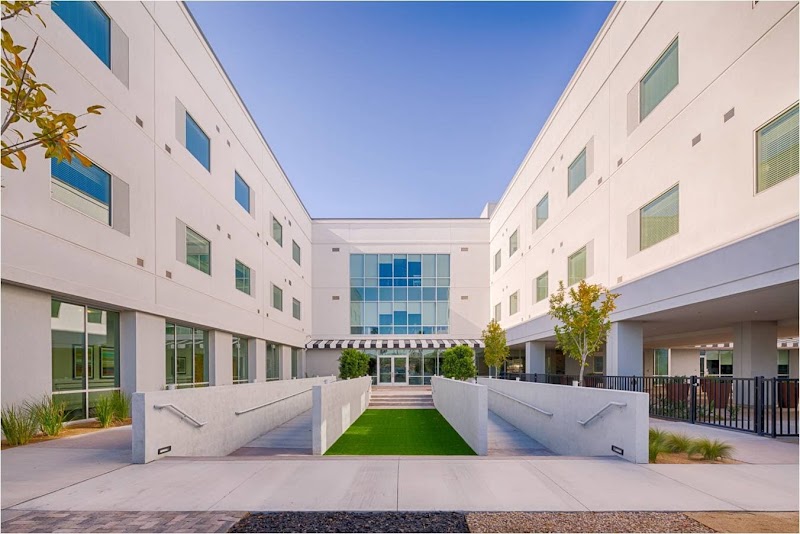
How is Haven Health Sky Harbor, Llc Staffed?

CMS rates HAVEN HEALTH SKY HARBOR, LLC's staffing level at 1 out of 5 stars, which is much below average compared to other nursing homes. Staff turnover is 40%, compared to the Arizona average of 46%. This relatively stable workforce can support continuity of care. RN turnover specifically is 65%, which is notably high. RNs provide skilled clinical oversight, so turnover in this role can affect medical care quality.

What Have Inspectors Found at Haven Health Sky Harbor, Llc?

State health inspectors documented 44 deficiencies at HAVEN HEALTH SKY HARBOR, LLC during 2021 to 2025. These included: 1 that caused actual resident harm and 43 with potential for harm. Deficiencies causing actual harm indicate documented cases where residents experienced negative health consequences.

Who Owns and Operates Haven Health Sky Harbor, Llc?

HAVEN HEALTH SKY HARBOR, LLC is owned by a for-profit company. For-profit facilities operate as businesses with obligations to shareholders or private owners. The facility is operated by HAVEN HEALTH, a chain that manages multiple nursing homes. With 120 certified beds and approximately 113 residents (about 94% occupancy), it is a mid-sized facility located in PHOENIX, Arizona.
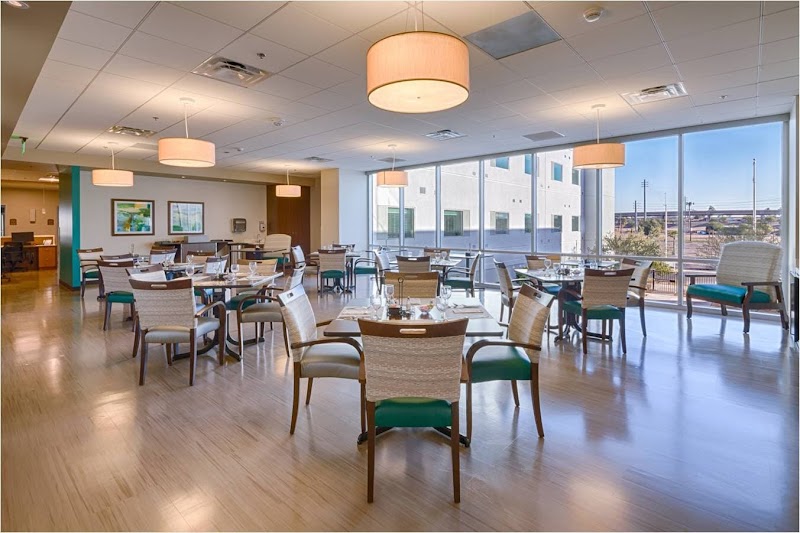
How Does Haven Health Sky Harbor, Llc Compare to Other Arizona Nursing Homes?

Compared to the 100 nursing homes in Arizona, HAVEN HEALTH SKY HARBOR, LLC's overall rating (2 stars) is below the state average of 3.3, staff turnover (40%) is near the state average of 46%, and health inspection rating (1 stars) is much below the national benchmark.

What Should Families Ask When Visiting Haven Health Sky Harbor, Llc?

Based on this facility's data, families visiting should ask: "Can you walk me through typical staffing levels on day, evening, and night shifts?" "Can I visit during a mealtime to observe dining assistance and food quality?" "How do you handle medical emergencies, and what is your hospital transfer rate?" "Can I speak with family members of current residents about their experience?" These questions are particularly relevant given the below-average staffing rating.

Is Haven Health Sky Harbor, Llc Safe?

Based on CMS inspection data, HAVEN HEALTH SKY HARBOR, LLC has a clean safety record: no substantiated abuse findings (meaning no confirmed cases of resident harm), no Immediate Jeopardy citations (the most serious violation level indicating risk of serious injury or death), and is not on the Special Focus Facility watch list (a federal program monitoring the lowest-performing 1% of nursing homes). The facility has a 2-star overall rating and ranks #100 of 100 nursing homes in Arizona. While no facility is perfect, families should still ask about staff-to-resident ratios and recent inspection results during their visit.

Do Nurses at Haven Health Sky Harbor, Llc Stick Around?

HAVEN HEALTH SKY HARBOR, LLC has a staff turnover rate of 40%, which is about average for Arizona nursing homes (state average: 46%). Moderate turnover is common in nursing homes, but families should still ask about staff tenure and how the facility maintains care continuity when employees leave.

Was Haven Health Sky Harbor, Llc Ever Fined?

HAVEN HEALTH SKY HARBOR, LLC has been fined $43,628 across 1 penalty action. The Arizona average is $33,515. While any fine indicates a compliance issue, fines under $50,000 are relatively common and typically reflect isolated problems that were subsequently corrected. Families should ask what specific issues led to these fines and confirm they've been resolved.

Is Haven Health Sky Harbor, Llc on Any Federal Watch List?

HAVEN HEALTH SKY HARBOR, LLC is not on any federal watch list. The most significant is the Special Focus Facility (SFF) program, which identifies the bottom 1% of nursing homes nationally based on persistent, serious quality problems. Not being on this list means the facility has avoided the pattern of deficiencies that triggers enhanced federal oversight. This is a positive indicator, though families should still review the facility's inspection history directly.