LIFE CARE CENTER OF PARADISE VALLEY

4065 EAST BELL ROAD, PHOENIX, AZ 85032 (602) 867-0212
For profit - Corporation 210 Beds LIFE CARE CENTERS OF AMERICA Data: November 2025
Trust Grade
40/100
#84 of 139 in AZ
Last Inspection: July 2024

Within standard 12-15 month inspection cycle. Federal law requires annual inspections.

Overview

Life Care Center of Paradise Valley has a Trust Grade of D, indicating below-average performance with some concerning issues. It ranks #84 out of 139 nursing homes in Arizona, placing it in the bottom half of facilities statewide, and #55 out of 76 in Maricopa County, meaning only a few local options are better. The facility is improving, with a significant drop in identified issues from 17 in 2024 to just 1 in 2025. Staffing is a relative strength, rated 4 out of 5 stars with a turnover rate of 36%, which is lower than the state average of 48%. However, the facility has incurred $72,147 in fines, which is concerning as it is higher than 93% of Arizona facilities and suggests ongoing compliance problems. There have been serious incidents noted, including failure to provide proper care for residents at risk of pressure ulcers, which could lead to worsened conditions, and a lack of necessary services that resulted in major injury for another resident. Additionally, there were concerns about cleaning and disinfecting mechanical lifts after use, posing a risk for infection spread. Overall, while there are strengths in staffing and some improvement trends, the facility has serious care and compliance issues that families should consider carefully.

Trust Score
D
40/100
In Arizona
#84/139
Bottom 40%
Safety Record
High Risk
Review needed
Inspections
Getting Better
17 → 1 violations
Staff Stability
○ Average
36% turnover. Near Arizona's 48% average. Typical for the industry.
Penalties
✓ Good
$72,147 in fines. Lower than most Arizona facilities. Relatively clean record.
Skilled Nurses
○ Average
Each resident gets 36 minutes of Registered Nurse (RN) attention daily — about average for Arizona. RNs are the most trained staff who monitor for health changes.
Violations
⚠ Watch
44 deficiencies on record. Higher than average. Multiple issues found across inspections.
★★★☆☆
3.0
Overall Rating
★★★★☆
4.0
Staff Levels
★★★★★
5.0
Care Quality
★★☆☆☆
2.0
Inspection Score
Stable
2024: 17 issues
2025: 1 issues

The Good

  • 4-Star Staffing Rating · Above-average nurse staffing levels
  • 5-Star Quality Measures · Strong clinical quality outcomes
  • Full Sprinkler Coverage · Fire safety systems throughout facility
  • No fines on record
  • Staff turnover below average (36%)

    12 points below Arizona average of 48%

Facility shows strength in staffing levels, quality measures, fire safety.

The Bad

3-Star Overall Rating

Near Arizona average (3.3)

Meets federal standards, typical of most facilities

Staff Turnover: 36%

Near Arizona avg (46%)

Typical for the industry

Federal Fines: $72,147

Well above median ($33,413)

Moderate penalties - review what triggered them

Chain: LIFE CARE CENTERS OF AMERICA

Part of a multi-facility chain

Ask about local staffing decisions and management

The Ugly 44 deficiencies on record

2 actual harm
Jun 2025 1 deficiency
CONCERN (E) 📢 Someone Reported This

A family member, employee, or ombudsman was alarmed enough to file a formal complaint

Potential for Harm - no one hurt, but risky conditions existed

Infection Control (Tag F0880)

Could have caused harm · This affected multiple residents

Based on observations, interviews, facility documentation and policy, the facility failed to ensure that a mechanical lift for resident transfer, was cleaned and disinfected according to professional ...

Read full inspector narrative →
Based on observations, interviews, facility documentation and policy, the facility failed to ensure that a mechanical lift for resident transfer, was cleaned and disinfected according to professional standards. The deficient practice could result in the spread of infection and resident illness. Findings include: At the conclusion of a mechanical lift observation conducted on June 19, 2025 at 12:45 p.m., the Certified Nursing Assistant (CNA/Staff #20) rolled the mechanical lift to the end of the hallway. Cleaning and disinfection of the lift was not performed after resident use. A second mechanical lift transfer observation was conducted. The mechanical lift was not cleaned or disinfected prior to resident use at approximately 12:50 p.m. At the conclusion of the second mechanical lift observation, CNA/Staff#7 was observed rolling the mechanical lift with the sling to the end of the hall without cleaning or disinfecting the equipment. At approximately June 19, 2025 at 1:10 p.m., CNA # 20 was observed picking up the unwiped sling from the parked mechanical lift with bare hands and proceeded to walk down the hall with it open to air. An interview was conducted on June 19, 2025 at 1:13 p.m. with CNA # 7, who confirmed that the mechanical lift was not wiped down after its use. The CNA stated that it was important making sure resident equipment is cleaned properly after every use to decrease the chance of spreading infection. During an interview on June 19, 2025 at 1:20 p.m., with the Unit Manager (Staff # 54), she stated that after a resident lift is completed the lift should be cleaned and disinfected before storage and before use on another resident in order to decrease spread of illness, and to keep the machine clean and in working condition. An interview was conducted with the Director of Nursing (DON/Staff # 1) on June 19, 2025 at approximately 1:25 p.m., who stated that the facility expectation are to make sure resident equipment is cleaned and disinfected according to facility policy after resident use. The Mechanical Lift User Instruction Manual, instructs the user to clean the equipment before use. The manual further specifies that the lift is to be cleaned with ordinary soap and water and/or any hard surface disinfectant. The facility's Cleaning and Disinfection of Non-Critical Patient Care Equipment, revised August 22, 2022 revealed equipment will be cleaned and disinfected prior to storage. The facility's Transfer with a mechanical lift, long-term care policy, revised August 9, 2023, instructs the staff to clean and disinfect the mechanical lift accessory equipment after use according to the manufacturer's instructions to prevent the spread of infection.
Aug 2024 1 deficiency
CONCERN (D) 📢 Someone Reported This

A family member, employee, or ombudsman was alarmed enough to file a formal complaint

Potential for Harm - no one hurt, but risky conditions existed

Free from Abuse/Neglect (Tag F0600)

Could have caused harm · This affected 1 resident

**NOTE- TERMS IN BRACKETS HAVE BEEN EDITED TO PROTECT CONFIDENTIALITY** Based on clinical record review, staff interviews, observation of current practice, and review of the facility's policies, the f...

Read full inspector narrative →
**NOTE- TERMS IN BRACKETS HAVE BEEN EDITED TO PROTECT CONFIDENTIALITY** Based on clinical record review, staff interviews, observation of current practice, and review of the facility's policies, the facility failed to ensure one resident #77, was free from verbal and/or physical abuse from a family member. The deficient practice could result in residents experiencing emotional and mental trauma from the abuse. Findings include: Resident #77 was admitted to the facility on [DATE] with diagnoses that included unspecified fracture of lower end of left femur, subsequent encounter for closed fracture with routine healing, chronic kidney disease, stage 2 (mild) and rheumatoid arthritis, unspecified. A review of a quarterly Minimum Data Set (MDS) assessment dated [DATE] revealed resident #77 BIMS (Brief Interview of Mental Status) score was 14 which indicated intact cognition. The care plan revised on January 13, 2024 included resident #77 had limited mobility and pain from severe rheumatoid arthritis, contractures and deformity of the back, neck, bilateral hands, feet and ankles. The Care Plan revealed that resident required extensive assist by 1-2 staff for toileting and personal hygiene. A review of resident's progress notes revealed an entry dated August 17, 2024 at 6:34 PM. The note revealed assigned Certified Nursing Assistant (CNA/Staff #202) reported that patients' family was yelling at her and left the building immediately after. Furthermore, progress notes revealed resident reporting to staff that the family member had slapped her. An interview was conducted on August 26, 2024 at 3:11p.m. with the CNA (Staff #202). Staff #202 stated she was working in the unit where resident #77 resides and heard yelling and screaming. She stated it was coming from resident #77's room. She stated as she approached the room she observed that the door was opened and heard, you're an OCD Bitch. I also heard resident #77 yelling Help, Help!. Staff stated as she was entering the room, resident's #77 family member (Resident #77's sister) was exiting the room. She stated when she entered the resident's room, the resident had head down and was crying- and stated she hit me, she hit me very hard on my mouth. Staff #202 stated she immediately told the assigned licensed practical nurse, (LPN/Staff#180). Staff #202 stated she went back to the resident's room and she was visibly shaking and asked to call her mother. She further stated she did not observe any redness or bruising. Staff #202 stated she has observed that the family member does not have patience with the resident and will often make faces and raise her voice when talking to the resident, but, stated she had not heard them like this before. She stated the family member help with the residents laundry and brings her snacks and always appeared happy to see her family member and is excited for her visit. An interview as conducted August 26, 2024 at 3:02p.m. with the LPN (Staff #180). He stated the family member visited 1-2 times per week and brought supplies. He stated Staff#202 had reported to him that she had heard arguing in resident #77's room and then had observed the family member leaving. He stated he went to check on the resident and was told by the resident, regarding her family member, she beat me up and called me an OCD bitch and slapped me on the face. Staff #180 stated he completed an assessment and did not observe any bruising or redness. Staff #180 stated that he was aware of prior arguments between the resident and the family member that included elevated voices and yelling. He stated he did not report this to anyone or document the prior incidents, nor could he recall when the incidents happened. Staff #180 stated he has received abuse training and that there is now a picture of the family member at the front lobby desk and that family member is not allowed to enter or visit at this time. An interview was conducted on August 26, 2024 at 3:37p.m. with resident #77 at 3:37p.m. the resident reported that family member gets all riled up and had become upset when the resident had stated she wanted to keep an empty tissue box that her family member wanted to toss away. The resident stated a disagreement ensued, and that family member went ballistic. Resident #77 stated the family member hit her in the face with the tissue box, hitting her in the mouth. The resident stated the family member always gets mad at her and raises her voice at her. She stated that the family member complained about having to come to the facility to see her. She stated the family member cursed at her all the time calling her a selfish bitch OCD bitch- and other names. The resident stated she has told her nurse, staff#180 about the name calling and how her sister made her feel. The resident stated she became depressed following the incident and did not get up or go out. An interview was conducted on August 26, 2024 at 4:17p.m. with Social Services Director (SSD/Staff#205). Staff # 205 stated the incident happened during the weekend and was informed to follow-up with the resident to address and discuss how to move forward with the situation. Staff #205 stated the family member is not allowed to interact with the resident at this time. Staff #205 stated the resident is stressed out due to the situation between her and her family member and concern was now going to provide the additional support. She stated that the follow-up visit was for socio-emotional assessment and did not discuss the relationship between the resident and the family member. An interview was conducted on August 26, 2024 at 4:28 p.m. with Administrator (Staff#15) who stated her expectations are that staff report what they see or hear, stop it and report it to their supervisor on duty or if unavailable to any supervisor. Staff #15 stated verbal abuse are any derogatory remarks or mocking, mean statements directed toward a resident and the expectations are that staff would report any abuse and staff are not to decide what is reportable, that they are to report any incidents. Review of the facility policy titled Abuse-Prevention states it is the policy of this facility to prevent and prohibit all types of abuse, neglect, misappropriation of resident property, and exploitation.
Jul 2024 8 deficiencies
CONCERN (D) 📢 Someone Reported This

A family member, employee, or ombudsman was alarmed enough to file a formal complaint

Potential for Harm - no one hurt, but risky conditions existed

Resident Rights (Tag F0550)

Could have caused harm · This affected 1 resident

**NOTE- TERMS IN BRACKETS HAVE BEEN EDITED TO PROTECT CONFIDENTIALITY** Based on clinical record review, resident and staff interviews, and facility policy review, the facility failed to ensure one re...

Read full inspector narrative →
**NOTE- TERMS IN BRACKETS HAVE BEEN EDITED TO PROTECT CONFIDENTIALITY** Based on clinical record review, resident and staff interviews, and facility policy review, the facility failed to ensure one resident (#25) was treated with dignity and respect by a visitor. The deficient practice has the potential for additional residents to be treated with a lack of dignity and respect. The facility census was 89, and the resident sample was 18. Findings include: Resident #25 was admitted on [DATE] with diagnoses that included, dementia, type 2 diabetes mellitus with hyperglycemia, hemiplegia/hemiparesis related to cerebral infarction. The care plan, initiated on November 18, 2019 revealed the following areas of focus: -Cognitive deficits related to diagnosis of dementia, and history of CVA -Communication: may have barriers to communication related to expressive aphasia Review the June 2024 Medication Administration Record (MAR) revealed change of condition monitoring for mental well-being from June 12, 2024 through June 15, 2024. The progress note dated June 12, 2024 through June 15, 2024, revealed no documentation of behavioral changes or signs of distress. The facility 5-day investigation report dated June 18, 2024 revealed on June 12, 2024, resident #25 was in the 400-station day room reading near the window and another resident (#392) was seated in a wheelchair in front of the television. A staff member heard a visitor of resident #392 state you mother f**ker, I'm going to throw you out the window; and that, the visitor requested that staff come into the day room. The investigation included interviews with the staff who reported that the visitor yelled and cursed at resident #25; and that, the visitor was concerned the other resident's (#392) breasts were exposed and her pants were pulled down. The report indicated that Resident #25 was placed on change of condition monitoring for three days after the incident. Further, the report also included a type written interview with resident #25 conducted during the facility investigation on June 13, 2024. Resident #25 denied putting his hands on the other resident (#392); and stated that he was holding onto his reading material, and that he left the room when the yelling began. Review of a quarterly Minimum Data Set (MDS) dated [DATE], included a Brief Interview for Mental Status (BIMS) score of 13, which indicated intact cognition. The assessment also included that the resident had no behaviors identified. An interview was conducted on July 16, 2024 at 10:42 AM, with the Director of Nursing (DON/Staff #12), who stated that staff reported that on June 12, 2024, a visitor was seen walking past the 400-unit nursing station, entered the day room, and immediately returned to the nursing station asking for a nurse. The DON stated that the visitor returned to the day room with the nurse and then yelled and cursed at resident #25. The DON stated that the resident (#392) the visitor was visiting had pants that did not fit well and would often fall down; and that, staff would cover the resident with a blanket, but the resident would remove it. The DON stated that the visitor was immediately removed from the day room and his behavior was discussed with management. The DON stated that the visitor later told the facility that he really did not think that resident #25 did anything to the resident (#392) he was visiting; but, but he was concerned that the resident was not covered appropriately. The DON further stated that there had been no other complaints/concerns regarding resident #25 being inappropriate with other residents. An interview was conducted on July 17, 2024 at 11:12 AM with a Registered Nurse (RN/staff #13) who stated that on June 12, 2024 on the 400-unit, a visitor who seemed angry stated I need someone in this room (referring to the day room at the station) now. The RN stated when she entered the day room, resident #25 was sitting a few feet away from the door reading, and resident (#392) was visiting was sitting in front of the TV with her blanket on the floor. The RN stated that the visitor pointed that the other resident (#392) nipples were exposed. The RN stated that she immediately pulled the other resident's (#392) shirt down and apologized to the visitor. The RN further stated that the visitor reported that resident #25 was touching the other resident (#392); and that, he would throw resident #25 out of the window. The RN stated she asked the visitor not to talk to the residents like that and the visitor told her to get out of his face. The RN stated that a CNA took resident #25 out of the room, and called the supervisor. The RN said that she assessed resident #25 after the incident; and that, she asked resident #25 if he had touched the other resident (#392). The RN said that resident #25 reported that he did not know what happened. The RN further stated that later in the day a CNA reported that resident #25 was very upset about the situation. An interview was conducted on July 17, 2024 at 11:30 AM with a Licensed Practical Nurse (LPN/staff #75) who stated that a visitor of another resident (#392) entered the 400-unit day room, and less than a minute later went back to the nursing station and asked the nurse to get in the room immediately. The LPN stated that the visitor thought that resident #25 had moved the other resident's (#392) clothing. The LPN stated that when she and the RN (staff #12) entered the day room, resident #25 was on the other side of the room day room reading. The LPN stated that when the visitor saw the other resident (#392) exposed, the visitor thought that resident #25 had done it. The LPN stated that the other resident (#392) would play with her clothes and would pull her shirt up and her pants down; and, this was a normal behavior for the other resident (#392) that staff would keep her covered and faced toward the TV. The LPN also stated that resident #25 did not comprehend what was going on, and he was removed from the day room immediately. The LPN stated that the nurses were standing between resident #25 and the visitor. Further, the LPN stated that the next day resident #25 was kind of sad, but did not know why he was sad. The LPN stated that resident #25 did not have the capacity to comprehend but was aware of time/place. However, the LPN said that resident #25 had to be guided. The LPN stated that she had not observed this type of behavior from the visitor previously, and he had always been a really nice guy. In an interview with another LPN (staff #68) conducted on 07/17/2024 at 12:19 PM, the LPN stated that she was the acting nurse supervisor on June 12, 2024, and she spoke with an RN (staff #13) and the visitor regarding the incident that occurred that day. The LPN stated that the RN (staff #13) came to her office with the visitor and reported that the visitor had yelled at, threatened to punch and throw resident #25 out the window. The LPN stated that the visitor told her he was angry because the other resident's (#392) clothes were askew and resident #25 was next to her reading; and that, as soon as resident #25 saw him, resident #25 backed up. The LPN stated that she discussed the incident with the visitor and she thought that he became upset that the other resident (#392) was exposed, but educated the visitor that he cannot threaten patients or staff. The LPN stated that after the incident, the visitor was only allowed to visit with the other resident (#392) in the lobby and not in the unit. The LPN also stated that her previous interactions with the visitor had always been civil, and she would never have thought that he would do that sort of thing. An interview with Social Services (Staff #50) was conducted on July 17, 2024 at 12:26 PM. Staff #50 stated that she met/interviewed resident #25 on June 12, 2024, after the incident; and, the resident told her that he did not feel safe, and that being yelled at felt like s**t. Staff #50 stated that she could not find her documentation in the medical record, but it was included in the 5-day incident report. During an interview with a Certified Nursing Assistant (CNA/staff #71) conducted on July 17, 2024 at 11:04 AM, the CNA stated that he remembered the incident that occurred on June 12 2024 and that the incident was pretty scary. The CNA stated that he was passing meal trays, and saw the visitor of resident #392 flailing his arms around and yelling at resident #25; and that, the visitor was telling resident #25 that he would throw resident #25 out the window. The CNA stated that the other resident (#392) that the visitor was visiting had her breasts and brief exposed. However, the CNA stated that resident #25 was not anywhere near the other resident (#392). The CNA stated that he covered the other resident (#392) to make sure she was not exposed, and removed her from the area. The CNA stated that resident #25 looked confused and scared, his eyes were all big, and he was sitting a good distance from the other resident (#392); and, was not close enough to touch her. The CNA stated that the visitor was removed from the area as soon as possible, and resident #25 was taken to the dining room. The CNA also stated that he never saw resident #25 acted inappropriately with other residents. Further, the CNA stated that there had been previous times when the visitor would speak loudly, and was not nice to staff and the visitor's approach was mean. A facility policy titled, Dignity, revealed that each resident has the right to be treated with dignity and respect. The facility must protect and promote the rights of the resident. A facility policy titled, Resident Rights, revealed that the facility must protect and promote the rights of the resident. The resident has the right to be treated with respect and dignity. A facility policy titled, Abuse Prevention, revealed that it is the policy of the facility to prevent and prohibit all types of abuse and neglect. Ensure the health and safety of each resident with regard to visitor's subject to the resident's rights.
CONCERN (D)

Potential for Harm - no one hurt, but risky conditions existed

Deficiency F0578 (Tag F0578)

Could have caused harm · This affected 1 resident

**NOTE- TERMS IN BRACKETS HAVE BEEN EDITED TO PROTECT CONFIDENTIALITY** Based on clinical record review, staff interviews, facility documentation and policy review, the facility failed to ensure one r...

Read full inspector narrative →
**NOTE- TERMS IN BRACKETS HAVE BEEN EDITED TO PROTECT CONFIDENTIALITY** Based on clinical record review, staff interviews, facility documentation and policy review, the facility failed to ensure one resident's (#3) choice regarding advance directives and orders were accurately reflected in the medical record. The deficient practice could result in resident's choices noted being followed. The resident census was 89 and the sample was 18. Findings include: Resident #3 was initially admitted to the facility on [DATE] and was re-admitted on [DATE] with diagnoses including acute kidney failure, pneumonitis, anxiety, and depression. The advance directive statement form dated [DATE] revealed the resident wanted CPR (cardiopulmonary resuscitation) in the event that he experiences cardiac arrest. The care plan dated [DATE] revealed the resident had an Advance Directives of CPR and was a full code. Goal was that the resident's advance directives will be honored. Interventions included that code status will be reviewed quarterly and as needed. Review of the Minimum Data Set (MDS) assessment dated [DATE] revealed a Brief Interview for Mental Status (BIMS) score of 15, indicating intact cognition. The advance directive statement form signed by the resident and dated [DATE] included that the resident wanted CPR (cardiopulmonary resuscitation) in the event that he experiences cardiac arrest. In another advanced directive statement form signed by the resident and dated on [DATE], it included that the resident did not want CPR in the event that he experiences cardiac arrest. However, review of provider order recap revealed that the resident had a full code status. Further, the care plan was not revised to reflect the resident's change in advance directives. On [DATE], the resident signed another advance directive statement form indicating that he wanted CPR in the event that he experiences cardiac arrest. An interview was conducted on [DATE] at 11:20 AM with a Licensed Practical Nurse (LPN / Staff #63) who reviewed the medical record and stated that Resident #3 was a Full Code. The LPN said that the resident signed a revised advanced directive choosing DNR on [DATE]. She stated that staff should base code status on the resident's most recent advance directive which was a DNR (Do Not Resuscitate). However, the LPN was no able to find any orders for a DNR or any paper versions of the resident advance directive. The LPN further stated that this situation could result in staff not following a residents' advance directive choice. During an interview with the Director of Nursing (DON/ Staff #12) conducted on [DATE] at 1:42 PM, the DON stated that resident #3 should have been a full code; and, the inconsistencies in the advance directives of the resident had corrected after the issue brought to their attention. Review of a facility policy on Advance Directives and Advance Care Planning, included that residents may revise an advance directive either orally or in writing. With an oral reversal, charting is due immediately, the physician is notified immediately, and immediate notation is made on the care plan, and an immediate entry is made in the medical record. With written reversals, the physician is notified, and the plan is permanently adjusted. The physician must give an order for any changes in the advance directives.
CONCERN (D)

Potential for Harm - no one hurt, but risky conditions existed

Comprehensive Care Plan (Tag F0656)

Could have caused harm · This affected 1 resident

**NOTE- TERMS IN BRACKETS HAVE BEEN EDITED TO PROTECT CONFIDENTIALITY** Based on clinical record review, observations, staff interviews, and policy, the facility failed to ensure that a care plan inte...

Read full inspector narrative →
**NOTE- TERMS IN BRACKETS HAVE BEEN EDITED TO PROTECT CONFIDENTIALITY** Based on clinical record review, observations, staff interviews, and policy, the facility failed to ensure that a care plan intervention for monitoring medication side effects related to use of an antianxiety medication was implemented for one resident (#60). The deficient practice could result in the resident not receiving the care and services to meet their needs. Findings include: Resident #60 was admitted on [DATE] with diagnoses of dementia, Alzheimer's disease, cerebral infarction, mild neurocognitive disorder, and altered mental status. The active physician order summary included an order to monitor for side effects related to anti-anxiety medications. The care plan revealed dated December 28, 2023 included that the resident used anti-anxiety medication related to anxiety disorder as evidenced by restlessness. The physician order dated December 28, 2023 included to monitor behaviors of restlessness every shift for 14 days; and, to code whether behavior improved, worsened or unchanged. The care plan was revised on January 18, 2024 to include interventions to observe for the occurrence of target behavior, to report as needed any adverse reactions to the medication and to administer the medications as ordered. Review of a quarterly Minimum Data Set (MDS) assessment dated [DATE], included a Brief Interview for Mental Status with a score of 00 indicating the resident had severe cognitive impairment. A physician order dated June 12, 2024 included for Ativan (antianxiety) 1 mg tablet administered via G-Tube every 8 hours as needed (PRN) for Anxiety as evidenced be (AEB) restlessness for 14 days, starting on June 12, 2024. The orders for Ativan, monitoring for side effects related to its use were transcribed onto the MAR (medication administration review) for June 2024. Review of the MAR for June 2024 revealed that Ativan was administered to the resident on 10 occasions between June 13 and June 24, 2024. However, the MAR revealed that the monitoring for side effects were not documented as completed from June 13 to 24, 2024. The clinical record revealed no evidence that the monitoring for side effects related to the use of Ativan was discontinued or put on hold. An interview was conducted on July 17, 2024 at 1:17 p.m. with the Director of Nursing (DON/staff# 12) who stated that residents should be monitored for behaviors and side effects while taking psychoactive medication such as Ativan. During the interview, the DON reviewed the clinical record and stated that there was an active order for Ativan for resident #60 and the medication was administered to the resident on 10 occasions between Jun 13 and 24, 2024. The DON also stated that the side effect monitoring was not implemented by staff as care planned between June 13, 2024 and June 24, 2024. The DON stated the risk for not following the care planned interventions could result in lack of identifying side effects and effectiveness of the medication and could affect the overall care of the resident. Review of the facility policy titled, Comprehensive Care Plans and Revisions, revealed that the facility will ensure the timeliness of each resident's person-centered, comprehensive care plan and to ensure that the comprehensive care plans reviewed and revised by an interdisciplinary team composed of individuals who have knowledge of the resident and his/her needs, and that each resident and resident representative, if applicable, is involved in developing the care plan and making decisions about his or her care. The facility should monitor the resident over time to help identify changes in the resident condition that may warrant an update and quarterly review assessments.
CONCERN (D)

Potential for Harm - no one hurt, but risky conditions existed

Deficiency F0657 (Tag F0657)

Could have caused harm · This affected 1 resident

**NOTE- TERMS IN BRACKETS HAVE BEEN EDITED TO PROTECT CONFIDENTIALITY** Based on clinical record review, observations, staff interviews, and policy, the facility failed to ensure that a care plan was ...

Read full inspector narrative →
**NOTE- TERMS IN BRACKETS HAVE BEEN EDITED TO PROTECT CONFIDENTIALITY** Based on clinical record review, observations, staff interviews, and policy, the facility failed to ensure that a care plan was revised to include resident-specific nutritional goals for one resident (#76). The deficient practice could result the resident not being involved and not able to make decisions about their care and needs. Findings include: Resident #76 was admitted on [DATE] with diagnoses of acute metabolic acidosis, type 2 diabetes mellitus, unspecified protein-calorie malnutrition, anemia, dysphagia, and chronic kidney disease. The weight on May 03, 2024 was 130 lbs. (pounds) Review of the nutrition care plan initiated on May 03, 2024 revealed the resident had nutritional problems due her medical diagnoses of dysphagia, esophageal stenosis, and cerebrovascular accident; and, had nutritional risks due to suboptimal meal intakes related to decreased appetite, and potential for weight fluctuations/fluid deficit due to fluid shifts due to diuretic medication. Interventions included to report results to physician and follow up as indicated on any signs and symptoms of dysphagia, to provide and serve diet as ordered, monitor intake and record every meal, registered dietician to evaluate and make diet change recommendations as needed, and to weigh and monitor per orders. The goal was that the resident will have no signs and symptoms of aspiration. The admission Minimum Data Set (MDS) assessment dated [DATE], revealed a Brief Interview for Mental Status (BIMS) score of 6 indicating the resident had severe cognitive impairment. The skilled note dated May 6, 2024 included the resident was alert and oriented x 2-3 and was non-compliant with physician orders. A Nutrition admission Assessment progress note dated on May 6, 2024 revealed the resident was alert and oriented, had swallowing difficulties related to dysphagia, had a weight of 130 pounds; and, was consuming an average of 50% of meals. Per the documentation, interventions included medication pass supplement 4 ounces three times per day and to monitor weight and oral intakes. The weight record on May 9, 2024 was 121.4 lbs. The Nutrition/Dietary Note dated May 9, 2024 revealed that the weight was 121.4 lbs. and the resident had a weight loss of 8.6 lbs. in 1 week. The documentation included that the resident was refusing the medication pass supplement 6 times due to terrible taste; and that, the resident agreed to have supplemental cereal at breakfast and supplemental pudding at lunch and dinner. The care plan was revised on May 9, 2024 to include an intervention to provide and serve supplements as ordered. The care plan did not include any resident-specific goals and desired outcomes related to her nutrition and weight loss. The physician note dated May 10, 2024 included that the resident did not have the capacity to make her own decision. The skilled nursing note dated May 13, 2024 included that the resident complaint of nausea and vomiting post breakfast and was administered with an antiemetic medication. The skilled note dated May 20, 2024 included that the resident refused her breakfast, ate her lunch and was compliant with most of her medications. The weight record on May 20, 2024 was 115.8 pounds, which was a 14.2 pound weight loss in 17 days. The order administration note dated May 20, 2024 included that the resident was alert and oriented x 4 and refused SNP pudding (supplement). A Nutrition/Dietary Note dated May 22, 2024 revealed the resident had a weight of 115.8 lbs.; and that, the resident had a 14.2% weight loss in 3 weeks. The documentation included that the resident consumed an average of 35% of meals; 55% average of the SNP pudding and 35% of the SNP cereals. Recommendations included to add the house shakes three times a day for additional 600 kcal (kilo calories/18 g (grams) protein; and to continue to monitor weights and oral intakes. The care plan was revised on May 22, 2024 to include that the weekly weight loss continued and the supplements were increased. However, the care plan did not include resident's goals and desired outcomes related to her nutrition and weight loss. The weight record on June 1, 2024 was 115 lbs. The Nutrition/Dietary note dated June 12, 2024 revealed the resident was on palliative care, had a weight of 115 lbs. and had a significant unplanned weight loss of 15 lbs. in a month. Per the documentation, the resident had an inadequate intake consuming on the average 40% of her meals, had a decreased appetite and refused supplements. Plan included fortified food house shakes three times daily. Further the documentation included that there were no new recommendations at this time. Despite documentation of resident refusal of supplements in the clinical record, the care plan was not revised to include interventions to address this issue; and, the care plan was not revised to include any new or revised resident-specific goals. An interview was conducted on July 18, 2024 at 9:45 a.m. with the Registered Dietician (RD/staff #77), who stated that she was not following resident #76 for any weight loss; and that, a referral for an evaluation would have been appropriate for the resident due to her significant unplanned weight loss. In an interview with the Director of Nursing (DON/staff #12) conducted on July 18, 2024 at 10:51 a.m., the DON stated that the facility monitors the effectiveness of interventions through IDT (interdisciplinary team) reviews; and, the care plan was discussed weekly in the IDT meeting or daily, and revised if needed. During the interview, a review of the clinical record was conducted with the DON who stated that there was no evidence found in the clinical record that the care plan did not have any resident-specific goals related to the resident's continued weight loss since the resident's admission on [DATE]. The DON further stated that the care plan should have been revised to address the weight loss with resident-specific goals. Review of the facility's policy titled, Comprehensive Care Plans and Revisions, dated [DATE], revealed that the facility will ensure the timeliness of each resident's person-centered, comprehensive care plan, and to ensure that the comprehensive care plan is reviewed and revised by an interdisciplinary team composed of individuals who have knowledge of the resident and his/her needs, and that each resident and resident representative, if applicable, is involved in developing the care plan and making decisions about his or her care. According to the procedure section of this policy, the facility should monitor the resident over time to help identify changes in the resident condition that may warrant an update to the person-centered plan of care. When these changes occur, the facility should review and update the plan of care to reflect the changes to care delivery, this can include; additional interventions on existing problems, updating goal or problem statements, and adding a short-term problem, goal, and interventions to address a time limited condition.
CONCERN (D) 📢 Someone Reported This

A family member, employee, or ombudsman was alarmed enough to file a formal complaint

Potential for Harm - no one hurt, but risky conditions existed

Respiratory Care (Tag F0695)

Could have caused harm · This affected 1 resident

**NOTE- TERMS IN BRACKETS HAVE BEEN EDITED TO PROTECT CONFIDENTIALITY** Based on review of clinical records and policy, observations, and staff interviews the facility failed to ensure one oxygen-depe...

Read full inspector narrative →
**NOTE- TERMS IN BRACKETS HAVE BEEN EDITED TO PROTECT CONFIDENTIALITY** Based on review of clinical records and policy, observations, and staff interviews the facility failed to ensure one oxygen-dependent resident (#49) did not have an empty oxygen tank while in use. The deficient practice could result in scaling down of services, provided by the facility, that do not align with the highest practicability of care. Findings include: Resident #49 was admitted on [DATE] with diagnoses of chronic obstructive pulmonary disease (COPD) with acute exacerbation, acute and chronic respiratory failure (CRF) with hypoxia, dependence of supplemental oxygen, and heart failure. The care-plan initiated on January 11, 2024 revealed that the resident had oxygen therapy related to COPD. Interventions included O2 (oxygen) via nasal cannula continuous per medical doctor orders. A physician order dated July 18, 2024 revealed an order for oxygen at 2 liters per minute continuously via nasal cannula; may titrate to 4 liters to maintain 88% saturation. An observation conducted on July 18, 2024 at 2:03 p.m. revealed Resident #49 was in the activity room playing bingo with nasal cannula on. The oxygen tank gauge displayed an empty oxygen tank. An interview was conducted on July 18, 2024 with Certified Nursing Assistant (CNA/Staff # 42) who stated that in order to prevent the oxygen tank for Resident #49 from being empty was to monitor the gauge when it was nearing empty. However, the CNA stated that there were instances in the past where the oxygen tank had been empty and it happens. In another observation conducted on July 18, 2024 at 2:03 p.m., the CNA (staff #42) told the resident that she needed a replacement for her oxygen tank. An interview was conducted on July 18, 2024 with Director of Nursing (DON/Staff # 12) who stated that a resident with continuous oxygen orders and utilizing an empty oxygen would not meet the facility's expectations. The DON further stated that if there was an oxygen order for a resident, staff were expected to be checking the resident's oxygen throughout the shift. Review of the facility's policy titled, Administration of Medications (reviewed August 2023) revealed, the facility will ensure medications are administered safely and appropriately per physician order to address residents' diagnoses and signs and symptoms. It also included that staff must adhere to right of medication administration including: Right Time and Frequency, check the order for when it would be given and when was the last time it was given; Right Assessment, note the resident's history and any parameters around drug administration; Right Evaluation, ensure the medication is working the way it should, ensure medications are reviewed regularly, ongoing observations if required.
CONCERN (D)

Potential for Harm - no one hurt, but risky conditions existed

Deficiency F0726 (Tag F0726)

Could have caused harm · This affected 1 resident

**NOTE- TERMS IN BRACKETS HAVE BEEN EDITED TO PROTECT CONFIDENTIALITY** Based on personnel file review, staff interviews, facility policy review and Center for Medicare and Medicaid Services (CMS) gui...

Read full inspector narrative →
**NOTE- TERMS IN BRACKETS HAVE BEEN EDITED TO PROTECT CONFIDENTIALITY** Based on personnel file review, staff interviews, facility policy review and Center for Medicare and Medicaid Services (CMS) guideline, the facility failed to ensure that the occupational therapist (OT/staff #88) had a valid Cardiopulmonary Resuscitation (CPR) and first aid certifications. The deficient practice could result in staff not being knowledgeable of how to prvide emergency care to residents. Findings include: Review of the personnel file for an occupational therapist (OT/staff #88) revealed a hire date of [DATE]. Continued review of the personnel file included that the CPR or First Aid certification had an expiration date of February 28, 2012. During an interview conducted on [DATE] at 11:00 a.m, a review of the personnel file of the OT was conducted with the Payroll Coordinator (staff #55) who stated that there was no evidence found of any valid CPR or First Aid certifications for the OT (staff #88). The payroll coordinator stated that she thought that CPR or First Aid certifications were only required for only nurses and nurse aids, and, not required for Physical Therapy (PT)/OT staff. An interview was conducted on [DATE] at 1:42 p.m. with the Director of Nursing (DON, Staff #12) who stated she was told by the Director of Rehabilitaion that CPR and First Aid were longer required of PT or OT staff. Review of Centers for Medicare & Medicaid Services (CMS) guideline on Cardiopulmonary Resuscitation (CPR) in Nursing Homes dated [DATE] included that staff must maintain current CPR certification for healthcare providers through CPR training that includes hands-on practice and in-person skills assessment. The facility policy titled, Specialized Rehabilitative Services, included that care provided by facility associates should be coordinated and consistent with the specialized rehabilitative services provided by qualified personnel. The facility policy titled, Competent Staff, included that the facility will have staff with the appropriate competencies and skills needed to provide nursing and related services to assure resident safety and maintain the highest level of care.
CONCERN (D)

Potential for Harm - no one hurt, but risky conditions existed

Medication Errors (Tag F0758)

Could have caused harm · This affected 1 resident

**NOTE- TERMS IN BRACKETS HAVE BEEN EDITED TO PROTECT CONFIDENTIALITY** Based on clinical record review, staff interviews, and policy reviews, the facility failed to ensure there was adequate monitori...

Read full inspector narrative →
**NOTE- TERMS IN BRACKETS HAVE BEEN EDITED TO PROTECT CONFIDENTIALITY** Based on clinical record review, staff interviews, and policy reviews, the facility failed to ensure there was adequate monitoring for side effects related to the use of a psychotropic medication for one resident (#60). The census was 89. The deficient practice could result in residents being at risk for unidentified adverse reactions related to the use of the medication. Findings include: Resident #60 was admitted on [DATE] with diagnoses of dementia, Alzheimer's disease, cerebral infarction, mild neurocognitive disorder, and altered mental status. The active physician order summary included an order to monitor for side effects related to anti-anxiety medications. The care plan revealed dated December 28, 2023 included that the resident used anti-anxiety medication related to anxiety disorder as evidenced by restlessness. The care plan was revised on January 18, 2024 to include interventions to observe for the occurrence of target behavior, to report as needed any adverse reactions to the medication every shift and to administer the medications as ordered. Review of a quarterly Minimum Data Set (MDS) assessment dated [DATE], included a Brief Interview for Mental Status with a score of 00 indicating the resident had severe cognitive impairment. A physician order dated June 12, 2024 included for Ativan (antianxiety) 1 mg tablet administered via G-Tube every 8 hours as needed (PRN) for Anxiety as evidenced be (AEB) restlessness for 14 days, starting on June 12, 2024. The follow-up psych evaluation note dated June 17, 2024 included the resident continued to have intermittent episodes of yelling out along with severe restlessness and agitation. Per the documentation, Ativan helped with the symptoms; and that, the resident continued to receive Ativan at least once daily. Plan was to continue Ativan as needed for anxiety as evidenced by restlessness. A follow-up psych evaluation note dated June 24, 2024 revealed that the resident continued to have intermittent episodes of restlessness and agitation along with episodes of yelling out. The documentation included that staff reported the resident responded well to Ativan when he exhibited these behaviors; and that, the record showed that the resident received Ativan at least twice daily for his symptoms of restlessness. The plan was to change Ativan to a scheduled medication twice daily. The orders for Ativan, monitoring for side effects related to its use were transcribed onto the MAR (medication administration review) for June 2024. Review of the MAR for June 2024 revealed that Ativan was administered to the resident on 10 occasions between June 13 and June 24, 2024. However, the MAR revealed that the monitoring for side effects were not documented as completed from June 13 to 24, 2024. The clinical record revealed no evidence that the monitoring for side effects related to the use of Ativan was discontinued or put on hold. An interview was conducted on July 17, 2024 at 10:04 a.m. with a Licensed Practical Nurse (LPN/staff #112), who stated that the resident should be monitored for behaviors and side effects while taking Ativan, regardless of the medication being scheduled or given as needed. The LPN stated that behaviors and side effects monitoring should be documented in the MAR; and, whenever a psychoactive medication such as Ativan was ordered there should be an additional order to monitor for behaviors and side effects related to its use. During the interview, the LPN reviewed the clinical record and stated that there was an active order for Ativan which was administered to the resident. However, the LPN stated that there was no documentation of that the side effects related to the use of Ativan was monitored on June 13 through June 24, 2024. The LPN further stated that the risk could result in staff not being able to monitor the actual effects of the medication on the resident. An interview was conducted on July 17, 2024 at 1:17 p.m. with the Director of Nursing (DON/staff# 12) who stated that residents should be monitored for behaviors and side effects while taking psychoactive medication such as Ativan. During the interview, the DON reviewed the clinical record and stated that there was an active order for Ativan for resident #60 and the medication was administered to the resident on 10 occasions between Jun 13 and 24, 2024. The DON also stated that there was no documentation of side effects monitoring completed during that time period; and that, this could result in staff not identifying the side effects should it happen and could affect the overall care of the resident. Review of the facility policy titled, Psychotropic Medication Use, revealed that psychotropic drugs include but are not limited to antipsychotics, anti-anxiety, and sedative-hypnotics that affect brain activities associated with mental processes and behavior. Psychotropic medications to treat behaviors will be used appropriately to address specific underlying medial or psychiatric causes of behavioral symptoms. All medications used to treat behaviors should be monitored for: efficacy, risks, benefits, and harm or adverse consequences.
CONCERN (E) 📢 Someone Reported This

A family member, employee, or ombudsman was alarmed enough to file a formal complaint

Potential for Harm - no one hurt, but risky conditions existed

Deficiency F0660 (Tag F0660)

Could have caused harm · This affected multiple residents

**NOTE- TERMS IN BRACKETS HAVE BEEN EDITED TO PROTECT CONFIDENTIALITY** Based on review of clinical record review, resident/staff interviews the facility documentation and policy review, failed to ens...

Read full inspector narrative →
**NOTE- TERMS IN BRACKETS HAVE BEEN EDITED TO PROTECT CONFIDENTIALITY** Based on review of clinical record review, resident/staff interviews the facility documentation and policy review, failed to ensure a discharge planning based on the assessed needs and goals was in place for one resident (#49). The deficient practice could result in the delay of the resident transfer/discharge to the facility of choice. Findings include: Resident #49 was admitted on [DATE] with diagnoses of chronic obstructive pulmonary disease (COPD) with acute exacerbation, acute and chronic respiratory failure (CRF) with hypoxia, dependence of supplemental oxygen, and heart failure. The care plan dated December 21, 2023 included a discharge plan that the resident wished to return home. The communication note dated May 23, 2024 included that the social services director (SSD/staff #50) had a conversation with the resident's family related to a request to transfer to an assisted living (AL). Per the documentation, the family wanted the transfer. An email correspondence dated May 23, 2024 between the SSD (staff #50) and the Director of Marketing (DoM of the assisted living facility (ALF) the resident was going to) revealed that the planned discharged to the ALF was the choice of the resident and her family. A late entry nurse practitioner (NP) progress note dated May 28, 2024 included that the resident had an advanced COPD, CRF with hypoxia, was O2 (oxygen) dependent at 2 LPM (liters per minute), and used a CPAP (continuous positive airway pressure) at night. The follow-up email from the DoM on June 4 and 5, 2024 addressed to the SSD revealed another request for the physician to sign the documents necessary to discharge the resident to the ALF. The follow-up psych evaluation note dated June 10, 2024 included that the resident was alert and oriented to person, place and time. An email correspondence from the insurance case manager addressed to the SSD (staff #50) and dated June 20, 2024 revealed a request to have TB test completed timely as the resident was very anxious to be discharged . The social service note dated June 21, 2024 included that the SSD followed up with the ALF regarding the resident's transfer to ALF on June 26, 2024. An email correspondence from the DoM to the SSD dated June 21, 2024 revealed that the resident was scheduled for discharge on [DATE]. The email from the DoM addressed to the SSD dated June 24, 2024 revealed a request from the resident's family for confirmation that transportation had been set up for June 25, 2024. The SSD replied to this email on June 25, 2025 (the day of the planned discharge) that it was the role of the accepting facility to set up transportation and not the discharging facility. An email from the DoM addressed to the SSD and dated June 25, 2024 included that per the resident's LTC (long term care) insurance that it should be the discharging facility that sets up transportation. The SSD replied to this email on June 25, 2024 that the resident had a manual wheelchair, had several boxes of personal belongings, and needed home oxygen equipment. However, there was no evidence found in the clinical record that the SSD sent the DME referral for the home oxygen equipment and supplies to the approved DME vendor. Another email from the DoM addressed to the SSD and the LTC case manager and dated June 25, 2025 revealed that the DoM was inquiring whether the home oxygen and DME had been set up for discharge for resident #49. A communication note dated June 25, 2024 included that the concerns with transfer of the resident to the ALF was discussed with the ALF. The order administration note dated June 25, 2024 included that the portable oxygen tank was switched to an oxygen concentrator at bedtime. An email correspondence from the ED (Executive Director of the ALF the resident was going to be transferred) addressed to the facility and dated June 25, 2024 revealed the ED informed the SSD and the DON that it was the role of the discharging facility to set up the DME orders through an approved DME provider for the discharging resident. It also included a request that the facility send the orders including any DME orders, and a discharge summary to assist in the setting-up of the DME referral for Resident #49 for discharge. The ED of the facility (staff #140) replied to this email on June 25, 2025 that the facility does not set up DME orders and will not be arranging transport. Review of the Quarterly Minimum Data Set (MDS) assessment dated [DATE], revealed a Brief Interview for Mental Status (BIMS) score of 11 which indicated the resident had moderate cognitive impairment. A late entry mood note dated June 26, 2024 revealed that the resident was in the process of transferring to another facility per the resident and family request. Despite the documentation that the resident will be transferred to the ALF on June 26, 2024, there was no evidence found in the clinical record that discharge plan was developed to assess and address the resident's discharge needs to include oxygen and DME (durable medical equipment) needs. A fax cover sheet with transmission date of June 27, 2024 addressed to the DME provider from the social services revealed a hand written note that the resident was transferring to the ALF; and, to drop off equipment at the ALF and to confirm the delivery date and time. It also included a Respiratory and Durable Medical Equipment Referral form with a blank RX date and included that an oxygen test was done on June 26, 2024. However, this form was signed by the physician on February 6, 2024. The care management note dated June 28, 2024 included that the SSD informed that the DME and transportation for resident #49 were not confirmed. The communication note dated June 30, 2024 included that the resident family was requesting for an update on the resident's DME; and that, the SSD informed the family that a referral was sent and follow-up emails had been provided. Despite the documentation that the DME were not confirmed, there was no evidence found in the clinical record that the DME referral was re-sent to the DME provider; or, that facility asked the DME provider for any clarification as to why the DME referral was not processed or confirmed until July 8, 2024. A fax cover sheet with transmission date of July 8, 2024 addressed to the DME provider from the facility social services included a hand written note that the request was resident #49; and to follow up with the ALF staff. It also included a Respiratory and Durable Medical Equipment Referral form with a blank RX date and included that an oxygen test was done on July 8, 2024. However, this form was signed by the physician but did not have a date as to when it was signed. In an email from the LTC case manager addressed to the SSD, DON, the ED of the ALF and the DoM dated July 08, 2024 included that an oxygen test had be completed and results had to be faxed to the approved DME provider; and, if DME provider receives the DME order and the requested oxygen test, it can be delivered on the same date. It also included that the LTC case manager requested that once the receiving facility confirmed the delivery of the DME, the SSD would schedule transportation for the following date of July 09, 2024. An email correspondence from the DoM addressed to the SSD and dated July 11, 2024 included that the DoM was asking the facility to check the status of the DME equipment referral. Per the documentation, once the DME equipment was delivered, Resident #49 can move in to the ALF. However, the documentation included that the DME equipment had not been delivered to the ALF. In an email from the ED of the ALF addressed to the facility and dated July 12, 2024, the ED of the ALF informed that after reserving the apartment reserved for resident #49 for over a month, the ALF had to released it from being held for Resident #49. Additionally, The ED of the ALF expressed concerns and was feeling uncomfortable with Resident #49 not having a coordinated, safe discharge plan as protected in her resident rights to transition to their community. A communication note dated July 15, 2024 revealed that the SSD informed the resident that the ALF was not holding apartment that was reserved for her when she transfers; and that, things were not completed on time regarding the oxygen. Per the documentation, the SSD that she can continue to find placement that the resident wanted. In an interview conducted with resident #49 on July, 16, 2024 at 2:47 p.m., the resident stated that she was still awaiting discharge from the facility. During the interview, the resident became tearful when she described her strong desire to discharge from the facility; and, verbalized her frustration with how the discharge process was taking an extend time to complete. An interview with the SSD (Staff #50) was conducted on July 17, 2024 at 11:01 a.m. The SSD stated that delayed discharge for resident #49 was due to multiple factors and failing to realize the current barrier to discharge was that the DME provider would not accept the oxygen test on the form that she had faxed twice. During the interview, a review of the clinical record was conducted with the SSD who stated that there was no evidence of any emails or documented phone calls made by the SSD or any staff of the facility to the DME provider for clarification on how to correctly submit an oxygen test for DME orders. During an interview with the DON conducted on July 17, 2024 at 3:09 p.m., the DON stated that the IDT team was involved with discharges and the facility had discharge meeting every week to discuss nursing, case management and the goals for discharge. Regarding the discharge of resident #49, the DON stated that she was not involved with the discharge process for resident #49 until issues came up related to the DME. She stated that she was aware that the family wanted to go to an ALF. Review of the facility's policy titled, Transfers and Discharges (revised June 2024) revealed, for resident-initiated discharges, the medical record should contain documentation or evidence of documented discussions with the resident or, if appropriate, his/her representative.
Jun 2024 1 deficiency
CONCERN (D) 📢 Someone Reported This

A family member, employee, or ombudsman was alarmed enough to file a formal complaint

Potential for Harm - no one hurt, but risky conditions existed

Free from Abuse/Neglect (Tag F0600)

Could have caused harm · This affected 1 resident

**NOTE- TERMS IN BRACKETS HAVE BEEN EDITED TO PROTECT CONFIDENTIALITY** Based on clinical record reviews, facility and hospital documentation, staff interviews and policy review, the facility failed t...

Read full inspector narrative →
**NOTE- TERMS IN BRACKETS HAVE BEEN EDITED TO PROTECT CONFIDENTIALITY** Based on clinical record reviews, facility and hospital documentation, staff interviews and policy review, the facility failed to ensure that two residents (#17, 10) was free from verbal abuse. Findings include: -Resident #10 was admitted on [DATE] with diagnoses of Major Depressive Disorder, Adjustment Disorder with disturbance of conduct. Review of a care plan initiated 12/19/2023 included that this resident displays comments towards other residents and visitors at times as noted aggressive like behaviors. This care plan included 2 incidents: Family visiting and resident verbalized you need to control your kids and stated fat people are ugly, continued comments related to residents' appearances and body size. 12/19/2023 interaction with another resident and 3/27/24 confrontational language. This care plan included an intervention of observe interaction around others and intervene if noted concerns. However, an abusive incident was noted on 3/27/2024. A progress note dated 3/27/2024 included that at approximately 1530, nurse observed resident #17 shouting at resident #10 in T-Hall walk way area near the nurse's station. Nurse stood between the 2 residents to prevent any incidents from occurring. The note stated resident #17 was redirected to the nurse station, and calmed down and resident #10 was assisted by wheelchair to the other end of the hall. Another progress note dated 03/27/2024 included that Social Services (SS) and the Assistant Director of Nursing spoke with resident#10 regarding a verbal exchange that took place between her and resident #17. The note stated that resident#10 stated she did not like the way another resident was dressed and stated that Her fat was hanging out. It was disgusting. Resident #10 stated this upset resident #17. Resident #10 then called resident #17 fatso and resident #17 began yelling. The note further stated SS asked what resident #17 yelled at her and she said she was unable to hear exactly what was said. SS asked resident if she felt safe, she stated yes. SS reminded resident#10 that language can be hurtful and encouraged her to refrain from saying things to others that may be perceived as such. The note stated resident#10 verbalized understanding. -Resident #17 was admitted on [DATE] with diagnoses of schizoaffective disorder, bipolar disorder current episode manic severe with psychotic features and attention-deficit hyperactivity disorder. Review of a care plan initiated 5/19/2023, resident #17 has a behavior problem yelling, verbal aggression, throws items, plays in feces & accusatory related to delusions/psychosis and included that the resident has expressed thoughts of self-harm and thoughts of harming others. This care plan included an 3/27/2024 verbal aggression, and thoughts of harming self. This care plan included interventions of intervene as necessary to protect the rights and safety of others, approach/speak in a calm manner, divert attention, and to remove from situation and take to alternate location as needed. Review of a quarterly Minimum Data Set (MDS) assessment dated [DATE] included that this resident experienced delusion, and had verbal behavioral symptoms directed at others and had other behavioral symptoms not directed at others. A progress note dated 3/27/2024 included that at approximately 1530, the nurse observed resident #10 shouting at resident #17 in T-Hall walk way area near the nurse's station. This note includes the nurse stood between the 2 residents to prevent any incidents from occurring. This note included that the resident was redirected to the nurse station, and calmed down and that the other resident #17 was assisted by wheelchair to the other end of the hall. Another progress note dated 3/27/2024 included that at approximately 1533, a nurse transported resident to the office and the writer asked the resident what they could help her with and she stated I'm going to kick her ass. This note included that when the writer asked resident who she was referring to and she named a resident #10. This note included that the writer asked her what transpired and she stated she called my friend fat and I don't appreciate that. (another resident) is not fat and I'm not going to let her talk about my friend like that, then the writer asked her did she mean what she had just said and this resident repeated again I'm going to kick her ass. This note included that the writer asked this resident if she have a plan on how she was going to accomplish that and she stated yes I'm going to strangle her in her sleep and then the writer asked the resident did she want to harm herself as well? and she stated yes and that she did not have a plan. This note included that a medical doctor was consulted and that the doctor said to send the resident out to the hospital for a psychiatric evaluation and that the residents were kept separated until that happened. An interview was conducted on 06/14/2024 at 1:31 P.M. with resident #10 who said that resident #17 is a very disturbed person and that she would go around half naked. This resident said she should cover herself. This resident said that resident #17 came after her multiple times, that she swung at her and called her bitch but they were in wheelchairs passing and she could not hit me. She said that the staff knew and that they restrained her from going after me. An interview was conducted on 6/14/2024 at 1:07 P.M. with a Certified Nursing Assistant (CNA/staff #32) who said that resident #17 was kind of aggressive but denied witnessing incidents between residents. She said that abuse could be verbal and that it should be reported to the nurse right away. An interview was conducted on 6/14/24 at 12:46 P.M. with a Licensed Practical Nurse (LPN/staff #55) who said that abuse can be sexual, financial, neglect, seclusion, physical, verbal or mental. She said that if a resident is cussing or threatening another resident it's verbal abuse. She said that if she encountered that situation, that she would make sure that the two residents are never together. This nurse said that she would change floors or change destinations, have social services involved, and care plan that. She said that she would have to make the change occur so it would no longer happen. An interview was conducted on 6/14/24 at 1:45 P.M. with the Director of Nursing (DON/staff #27) who said that if a resident to resident occurs that immediately staff separate them and report right away to management. This DON included that resident #17 was here when she came back in august, and that she had quite a few behaviors, diagnoses, manipulative when they had to set boundaries. This DON said that they had to speak to her about activities, and that she would make statements to other residents, she was very involved in psych services and that they had to monitor her behavior because some days she was manic, some days not. This DON said that resident #17 would get the idea that someone did not like her and she would take things upon herself to resolve it. She said that her understanding of what happened in that instance, that resident #17 said that resident #10 had made a comment about her appearance. This DON stated that resident #10 was also verbally abusive and that incidents were going to happen but that they would take steps to prevent them. A policy reviewed 7/18/2023 revealed that it is the policy of this facility to prevent and prohibit all types of abuse, neglect, misappropriation of resident property, and exploitation.
May 2024 1 deficiency
CONCERN (D) 📢 Someone Reported This

A family member, employee, or ombudsman was alarmed enough to file a formal complaint

Potential for Harm - no one hurt, but risky conditions existed

Free from Abuse/Neglect (Tag F0600)

Could have caused harm · This affected 1 resident

**NOTE- TERMS IN BRACKETS HAVE BEEN EDITED TO PROTECT CONFIDENTIALITY** Based on clinical record review, staff interviews, and facility policy and procedures, the facility failed to ensure one residen...

Read full inspector narrative →
**NOTE- TERMS IN BRACKETS HAVE BEEN EDITED TO PROTECT CONFIDENTIALITY** Based on clinical record review, staff interviews, and facility policy and procedures, the facility failed to ensure one resident (# 8) was free from verbal abuse. The deficient practice may result in psychosocial harm as a result of un-averting or intervening communication that may lead to verbal abuse. Findings include: Resident #8 was admitted to the facility on [DATE] with diagnoses of acute respiratory failure with hypoxia, type 2 diabetes mellitus with diabetic neuropathy, and recurrent severe major depressive disorder with psychotic symptoms. The Annual MDS (minimum data set) assessment dated [DATE] revealed a BIMS (brief interview of mental status) score of 15, which indicated the resident was cognitively intact. A review of medical record documentation revealed that on August 17, 2023 at 10:30 a.m. Resident #8 reported to the facility's administrator that she had felt threatened a day prior by a night shift staff. Resident # 8 disclosed the interaction which made her feel threated involved Certified Nursing Assistant (CNA/Staff # 30). Resident # 8 admitted she should not have played a part of, nonetheless antagonized Staff # 30 by saying her name in a 'sing-[NAME] voice'. Staff # 30 responded by telling Resident # 8 please don't talk to me. Resident # 8 then replied to Staff # 30 that they were both adults and had to move on adding that Staff # 30 should be careful because she was a resident. Staff # 30 then replied, no you need to watch yourself. During the facility's investigation of the incident on August 21, 2023 at 03:30 PM, review of documentation revealed that during an interview conducted by Administrator (ED/Staff # 1) and Director of Nursing (DON/Staff # 6), Staff # 30 stated she had felt antagonized by Resident # 8 for a few months, however had intensified in the recent weeks. Staff # 30 stated that in response to Resident # 8 telling her to watch herself, she responded with, you need to watch yourself because you make me feel uncomfortable. Investigation revealed that Staff # 30 was terminated and reminded that even if she feels threatened, she is a healthcare professional and cannot engage in threatening behavior. Moreover, investigation revealed she should have removed herself from the situation immediately and called either Staff # 1 or Staff # 6. Staff # 30 was reported to the board of nursing as a result of the facility's investigation. The care plan was updated on August 23, 2023 and revealed the resident had a behavior problem and that, the resident tend to antagonize staff at times. The interventions and tasks that were implemented included: -If reasonable, discuss the resident's behavior; explain/reinforce why behavior is inappropriate and/or unacceptable to the resident. -Observe for behaviors antagonizing; document behavior and attempted interventions. -Observe for behavior episodes and attempt to determine underlying cause; consider location, time of day, persons involved, and situations. An interview was conducted with Director of Nursing (Staff # 6) on May 16, 2024 who confirmed that staff are terminated if found guilty of verbal abuse if the allegation were found accurate. Staff # 6 confirmed that Staff # 30 was terminated in lieu of verbally abusing Resident # 8. Staff # 6 stated that any type of abuse including verbal abuse does not meet the facility's expectations. Furthermore, Staff # 6 stated that the response by Staff # 30 which made Resident # 8 feel threatened did not meet facility's expectations. Review of the facility's Policy titled, Abuse, Neglect, and Exploitation (reviewed July 18, 2023) revealed, it is the policy of this facility to identify abuse; this includes but is not limited to identifying and understanding the different types of abuse and possible indicators; the resident has the right to be free from abuse; the facility must not use verbal; mental abuse is the use of verbal or nonverbal conduct which causes or has the potential to cause the resident to experience humiliation, intimidation, fear, shame, agitation, or degradation.
Feb 2024 5 deficiencies
CONCERN (D) 📢 Someone Reported This

A family member, employee, or ombudsman was alarmed enough to file a formal complaint

Potential for Harm - no one hurt, but risky conditions existed

Notification of Changes (Tag F0580)

Could have caused harm · This affected 1 resident

**NOTE- TERMS IN BRACKETS HAVE BEEN EDITED TO PROTECT CONFIDENTIALITY** Based on clinical record review, staff interviews and contract review, the facility failed to ensure one resident (#369) receive...

Read full inspector narrative →
**NOTE- TERMS IN BRACKETS HAVE BEEN EDITED TO PROTECT CONFIDENTIALITY** Based on clinical record review, staff interviews and contract review, the facility failed to ensure one resident (#369) received treatment and care in accordance with professional standards of practice. The facility failed to ensure communication was provided to the family when the resident had a change of condition. This failure has the potential for confusion between resident's family and the facility. Findings: Resident (#369) was admitted to the facility on [DATE] with diagnosis that included, cardiac arrhythmia, unspecified; Parkinson's disease; bradycardia, unspecified; unspecified dementia with behavioral disturbance; anorexia; major depressive disorder, single episode unspecified. Review of the quarterly Minimum Data Set (MDS) dated [DATE] revealed a Brief Interview for Mental Status (BIMS) record revealed resident score was 03, indicating severe cognitive impairment. Further review of the MDS revealed resident was dependent or required extensive assist with activities of daily living. Review of the physician's orders revealed orders for COVID-19 Nasopharyngeal Swab Test one time only for potential COVID exposure for 3 Days. Resident was diagnosed with COVID on July 2, 2020. A review of the Care Plan dated September 2, 2020 revealed the following, resident (#369) has a behavior problem psychosis related to diagnoses of dementia, anxiety, bipolar disorder, has impaired cognitive ability/impaired thought processes related to) Dementia. There was no evidence in the facility documentation and clinical record that the family or responsible party was notified of a change in the resident's condition. On February 14, 2024 at 12:05 PM, an interview was conducted with Social Services Director Staff (#87) and Social Services Assistant Staff (#110). Staff #87 stated during COVID nursing was responsible for notifying families if a resident contracted COVID and it would be as soon as possible. She stated the physician makes the decision to have a conversation with the family if a resident's decision-making capabilities are compromised due to their cognitive status and will also utilize the Ombudsman. She further stated It was oversight on the facility's end that the spouse was not notified of the residents change of condition. An interview was conducted with the Director of Nursing (DON/Staff #94) on February 15, 2024 at 2:08PM. She stated nursing is responsible for notifying families for change of condition and the expected timeframe for notification is dependent on the change of condition, but that it is completed within their shift if the nurse is initiating the change of condition. She stated evaluations for decision making abilities are based on the residents BIM score and will, if needed get the physician involved and the Psych provider. She further added if it is documented that the resident is confused, alert to self only they would not be considered as able to make informed decisions for self. The facility would also look at the history of the patient and type of family dynamics with responsible party. Review of the facility policy titled Changes in Residents Condition or Status states this facility will notify the resident, his, her primary care provider, and resident's/resident representative of changes in the resident's condition or status. In the case of death of a resident, the resident's physician will be notified immediately by facility staff in accordance with State law.
CONCERN (D) 📢 Someone Reported This

A family member, employee, or ombudsman was alarmed enough to file a formal complaint

Potential for Harm - no one hurt, but risky conditions existed

Free from Abuse/Neglect (Tag F0600)

Could have caused harm · This affected 1 resident

**NOTE- TERMS IN BRACKETS HAVE BEEN EDITED TO PROTECT CONFIDENTIALITY** Based on clinical record review, staff interviews, facility documentation, policies and procedures, the facility failed to ensur...

Read full inspector narrative →
**NOTE- TERMS IN BRACKETS HAVE BEEN EDITED TO PROTECT CONFIDENTIALITY** Based on clinical record review, staff interviews, facility documentation, policies and procedures, the facility failed to ensure that one resident (#520) was free from abuse of another. The deficient practice could result in other residents being abused. Findings include: 1.) Resident #520 (alleged victim) was admitted on [DATE] with diagnoses that included Alzheimer's disease, and dementia. Review of the quarterly Minimum Data Set (MDS) assessment dated [DATE] revealed that a Brief Interview for Mental Status (BIMS) was not conducted, however the resident was assessed as being severely cognitively impaired. The MDS also indicated that the resident had not exhibited psychosis, behavioral symptoms, or wandering during the assessment period. A cognition care plan initiated on October 4, 2022 revealed that the resident has impaired cognitive ability and impaired thought process related to Alzheimer's disease and dementia. Interventions included to allow extra time for resident to respond to question and instructions. A communication care plan initiated on October 18, 2022 indicated that the resident has difficulty communicating his needs since he only spoke Spanish. Interventions included to observe for physical/non-verbal indicators of discomfort or distress, and follow-up as needed. A progress note dated February 10, 2023 documented that a Certified Nursing Assistant (CNA) found resident #525 (roommate/alleged perpetrator) hitting resident #520 multiple times. Resident #520 was found in his bed curled up. The note indicated that resident #520 stated that I go him by him, I got him by him. The note also documented that resident #520 verbalized pain to his back, head, and right shoulder. Resident #520 was given pain medication. A skin assessment was completed and no visual injuries were noted at the time. The note indicated that the roommate/alleged perpetrator (resident #525) was removed from the room to ensure the residents' safety. 2.) Resident #525 (alleged perpetrator) was admitted to the facility on [DATE] with diagnoses that included unspecified dementia without behavioral disturbance, psychotic disturbance, and anxiety, and major depressive disorder. Review of the cognition care plan initiated on November 18, 2019 revealed that the resident has cognitive deficits related to dementia and cerebral vascular accident (CVA). Interventions included to administer medications as ordered, allow time for resident to respond to questions and instructions. A communication care plan initiated on November 18, 2019 indicated that the resident may have barriers to communication related to expressive aphasia secondary to CVA. Interventions included to anticipate and meet needs, allow adequate time to respond, repeat as necessary, do not rush, and request clarification to ensure understanding. Review of the quarterly MDS assessment dated [DATE] revealed that a BIMS score was not assessed. The MDS also indicated that the resident was negative for psychosis, behavior symptoms, rejection of care, and wandering. A nursing note dated February 10, 2023 documented that a Certified Nursing Assistant (CNA) called a nurse to the resident's room after the CNA saw the resident punching his roommate multiple times on the body. The note stated that resident #525 said I fucking him up because he pissed on the floor again. The note indicated that skin assessments were completed on both residents. Resident was removed from the room. Review of the clinical record reveals no documentation of the resident having physical altercations with staff or other residents. There were two entries for verbal altercations, one on June 6, 2021 with his roomate, a room change was made and the other was on November 15, 2022 with a staff member. A nurse practitioner (NP) note dated February 10, 2023 documented that resident #525 stated that he became frustrated/agitated when his roommate urinated on the floor. The NP note indicated that resident struck his roommate and the NP was notified by nursing staff. The NP note documented that resident stated that he had aggressive behaviors in the past. NP indicated that psych will follow-up. Review of the Event Report completed on February 10, 2023 indicated that nurse was notified by a CNA that resident #525 punched his roommate, resident #520 multiple times on the body. The report indicated that no injuries were observed at the time of the incident. The immediate action taken was the resident was removed from the room and placed in the dayroom and skin assessments were completed. Review of the facility investigation report submitted February 15, 2023 indicated that a resident to resident altercation between residents #520 and #525 occurred on February 10, 2023 at approximately 5:10 AM. The report noted that a CNA saw resident #525 punching his roommate on the body multiple times. According to the report, resident #520 had urinated on the floor on February 9, 2023 which upset his roommate, resident #525 and resulted in the incident. An interview was conducted with a Certified Nursing Assistant (CNA/staff #25) on February 25, 2024 at 12:58 PM. Staff #25 stated that incidents/allegations of abuse are reported immediately. The CNA said that they make sure the resident(s) are safe, then it is reported to the charge nurse and ED (Executive Director). Staff #25 stated that in instances of resident to resident altercation, the staff separates the residents from each other and then talk to them. She noted that incidents are investigated. The investigation entails interview of staff working that day or was working with the residents, and any witnesses. In an interview with a Licensed Practical Nurse (LPN/staff #22) conducted on February 25, 2024 at 1:17 PM, Staff #22 stated that in incidents or allegations of abuse, staff makes sure that the resident(s) are safe. Then the administrator is notified immediately. In cases of resident to resident altercation, residents are separated then the administrator is notified. Staff #22 indicated that she was familiar with both residents #520 and #525. She said that she heard there was an incident between them but was not sure of the details since it did not occur during her shift. Staff #22 said that given that one of them is confused and the other was a wanderer, they were not a good fit to be roommates. During an interview with the Director of Nursing (DON/staff #94) conducted on February 15, 2024 at 2:08 PM, the DON stated that the expectation is that allegations of abuse is reported timely within guidelines and that staff know who to report it to, and what to report. Staff #94 said that the reporting process is initiated when staff reports it to their supervisor. In instances of resident to resident altercation the expectation is that they are separated and the incident reported immediately. Abuse investigations should have information from the individual who reported, interview of everyone directly involved or had the potential to be involved, interview of staff and residents, and review of documentation, care plan, and notification of parties involved. Review of the facility policy titled Abuse-Protection of Residents issued October 4, 2022 stated that the facility will ensure that all residents are protected from physical and psychosocial harm during and after the investigation. The policy noted that if the accused abuser is another resident, the residents must be separated while investigating the incident. Interventions must be implemented to assure the safety of all residents. The facility policy titled Abuse-Prevention issued October 4, 2022 stated that it is the policy of the facility to prevent and prohibit all types of abuse. It noted that they identify, assess, care plan for appropriate interventions, and monitor resident with needs and behaviors which might lead to conflict.
CONCERN (D) 📢 Someone Reported This

A family member, employee, or ombudsman was alarmed enough to file a formal complaint

Potential for Harm - no one hurt, but risky conditions existed

Deficiency F0657 (Tag F0657)

Could have caused harm · This affected 1 resident

**NOTE- TERMS IN BRACKETS HAVE BEEN EDITED TO PROTECT CONFIDENTIALITY** Based on clinical record review, staff interviews and policy review, the facility failed to ensure that two resident's (#525, #5...

Read full inspector narrative →
**NOTE- TERMS IN BRACKETS HAVE BEEN EDITED TO PROTECT CONFIDENTIALITY** Based on clinical record review, staff interviews and policy review, the facility failed to ensure that two resident's (#525, #535) care plans were updated and revised as needed. Findings include: 1.) Regarding resident #525 Resident #525 was admitted to the facility on [DATE] with diagnoses that included unspecified dementia without behavioral disturbance, psychotic disturbance, and anxiety, and major depressive disorder. Review of the quarterly MDS assessment dated [DATE] revealed that a BIMS score was not assessed. The MDS also indicated that the resident was negative for psychosis, behavior symptoms, rejection of care, and wandering. A nursing note dated February 10, 2023 documented that a Certified Nursing Assistant (CNA) called a nurse to the resident's room after the CNA saw the resident punching his roommate multiple times on the body. The note stated that resident #525 said I fucking him up because he pissed on the floor again. The note indicated that skin assessments were completed on both residents. Resident was removed from the room. Review of the clinical record did not reveal any documentation of physical aggression against staff or residents. There was documentation of a verbal altercation between the resident and his then roomater on June 6, 2020 resulting in a change of rooms and a second verbal altercation with a staff member on November 18, 2022 about moving his wheel chair from a doorway which was blocking access. A nurse practitioner (NP) note dated February 10, 2023 documented that resident #525 stated that he became frustrated/agitated when his roommate urinated on the floor. The NP note indicated that resident struck his roommate and the NP was notified by nursing staff. The NP note documented that resident stated that he had aggressive behaviors in the past. NP indicated that psych will follow-up. However, review of the care plan post incident revealed that the careplan was not updated to address the resident's behavior and risk for resident to resident altercation. No interventions were put in place to mitigate further resident to resident incidents. 2.) Regarding resident #535 Resident # 535 was admitted to the facility on [DATE] with diagnoses that included schizoaffective disorder, and bipolar disorder, with current episode manic severe with psychotic features. Review of the quarterly Minimum Data Set (MDS) assessment dated [DATE] revealed a Brief Interview for Mental Status (BIMS) score of 14 indicating that the resident is cognitively intact. The MDS also indicated that the resident had exhibited verbal behavior symptoms directed towards others which occurred 1-3 days during the assessment period. A nursing note dated May 16, 2023 for resident #530, documented that resident #530 stated that her roommate, (resident #535) had threatened to kill her. Resident ##530 denied making any threats to harm her roomate. A nursing note for resident #535 documented that resident #530 stated that resident #535 told her I want to smother you with a pillow, and save a knife from the dinner tray and stab you. The note indicated that resident #535 was interviewed and denied threatening her roommate. A nurse practitioner (NP) note dated May 24, 2023 indicated that resident #535's chief complaint was that she wanted her own room. Note indicated that resident was moved due to behaviors that resulted in conflict. The note stated that per staff, resident manipulates and make false accusations when she does not get her way. Review of the care plan for residnet #535 revealed that it was not updated to address the resident's behavior and risk for resident to resident altercation. No interventions were in place to mitigate potential resident to resident incidents. During an interview with the Director of Nursing (DON/staff #94) conducted on February 15, 2024 at 2:08 PM, she stated that her expectation is that following a resident to resident altercation, resident should be put on change on condition to monitor for psychosocial needs, discuss interventions such as move rooms and ensure that staff are aware of how to intervene and provide psych services. Staff #94 said that there should be an update of interventions on the care plan following a resident to resident altercation. The facility policy titled Comprehensive Care Plans and Revisions issued March 2, 2022 stated that the facility should monitor the resident over time to help identify changes in the resident condition that may warrant an update to the person-centered plan of care. When these changes occurs, the facility should review and update the plan of care to reflect the changes to care delivery to include additional interventions on existing problems. Review of facility policy titled Abuse-Prevention issued October 4, 2022 stated that it is the policy of the facility to prevent and prohibit all types of abuse. It noted that they identify, assess, care plan for appropriate interventions, and monitor resident with needs and behaviors which might lead to conflict.
CONCERN (D) 📢 Someone Reported This

A family member, employee, or ombudsman was alarmed enough to file a formal complaint

Potential for Harm - no one hurt, but risky conditions existed

Accident Prevention (Tag F0689)

Could have caused harm · This affected 1 resident

**NOTE- TERMS IN BRACKETS HAVE BEEN EDITED TO PROTECT CONFIDENTIALITY** Based on clinical record review, staff interviews and review of facility policy and procedure, the facility failed to ensure tha...

Read full inspector narrative →
**NOTE- TERMS IN BRACKETS HAVE BEEN EDITED TO PROTECT CONFIDENTIALITY** Based on clinical record review, staff interviews and review of facility policy and procedure, the facility failed to ensure that one resident (#333) was provided with floor mat for fall prevention and implementation of the care plan. The deficient practice could result in preventable accidents such as falls. Findings include: Resident #333 was admitted with diagnoses of unspecified dementia, unspecified severity, without behavioral disturbance, psychotic disturbance, mood disturbance, and anxiety, Alzheimer's disease with late onset hypothyroidism, unspecified, muscle weakness (generalized), difficulty in walking, not elsewhere classified, unspecified lack of delirium due to known physiological condition coordination, cognitive communication deficit, repeated falls, pain in left knee A quarterly Minimum Data Set (MDS) assessment dated [DATE], included a Brief interview for Mental Status (BIMS) score of 03 indicating the resident was cognitively impaired the assessment also included that the resident required substantial/max 1 person assist for transfers. A care plan included the resident had an Activities of Daily Living (ADL) self-care performance deficit; and that, the resident had a risk for falls due to Alzheimer's Disease and had sustained multiple falls. The Care Plan with a date of 01/03/2024 states a floor mat x1 to extend bed perimeter when in bed. An incident note dated January 8, 2024 included that IDT met and discussed event 1/3/24, resident was found on floor in dayroom, nurse performed assessment, small skin tear noted to Right Lower Extremity, able to move extremities on her own, neurological checks started, within normal limit's, resident has advanced dementia/Alzheimer's disease and delirium, unable to articulate desired activity, resident had shortly before event been in bed, appears resident crawled from bed to dayroom, floor mat x 1 placed next to bed to extend bed perimeter when in bed. Review of the Fall Risk assessment dated [DATE] revealed resident had falls on 11/27/23, 12/4/23, 12/6/23, 12/19/23, 12/24/23, 01/03/24, 01/06/24 An observation was made on February 15, 2024 of resident #333 room, no visible floor mat was present. An interview was conducted on February 15, 2024, at 12:04 PM with a Certified Nursing Assistant (CNA/staff #79) who stated that she is informed by her nursing supervisor before every shift of residents who are considered a high risk for falls. She stated some of the preventative measures used for fall prevention are non-slip wear, additional supervision, lower beds and floor mats. She further stated most residents who are fall risks have a band on their arms indicating so. CNA Staff # 79 stated she receives report every morning and gives report every afternoon, but has not received any information that resident #333 is supposed to use a floor mat and has never used one on her. An interview was conducted on February 15, 2024, at 12:11 PM with a Licensed Practical Nurse (staff #88) who was assigned to the resident for that day. He stated nursing in general is responsible for implementing preventative measures for residents with fall risks and those measures usually involve low beds and floor mats. He further stated the CNA's are informed of the residents with fall risks and what measures are in place and that there is also a meeting at the beginning of day shift of any changes or a resident risk for falls. He stated this information is also found on the [NAME]. LPN/Staff #88 stated resident #333 is considered a fall risk and has preventative measures in place by having a low bed and a mat on the floor when resident is in bed. An observation was made by the LPN who noted there was no mat in the resident's room, stating she should have one and he would get one for her. An observation was made of LPN/Staff #88 on February 15, 2024, at 12:38 PM carrying a mat in the hallway. He stated it was for resident #333 and was taking it to her room Review of the facility policy titled Fall Management, revised 04/07/2022 and reviewed 09/22/2023 states the facility will assess the resident upon admission / readmission, quarterly, with change in condition, and with any fall event for any falls and will identify appropriate interventions to minimize the risk of injury related to falls.
CONCERN (E) 📢 Someone Reported This

A family member, employee, or ombudsman was alarmed enough to file a formal complaint

Potential for Harm - no one hurt, but risky conditions existed

Infection Control (Tag F0880)

Could have caused harm · This affected multiple residents

**NOTE- TERMS IN BRACKETS HAVE BEEN EDITED TO PROTECT CONFIDENTIALITY** Based on review of clinical records and policy, observations, and staff interviews the facility failed to ensure transmission-ba...

Read full inspector narrative →
**NOTE- TERMS IN BRACKETS HAVE BEEN EDITED TO PROTECT CONFIDENTIALITY** Based on review of clinical records and policy, observations, and staff interviews the facility failed to ensure transmission-based precautions, particularly enhanced barrier precautions, signage and personal protective equipment were in-place to help prevent development or transmission of infections. The deficient practice could result in development or transmission of infections within the facility. Findings include: Resident #408 was admitted on [DATE] with diagnoses of surgical aftercare following surgery on the skin, sepsis (unspecified organism), and encounter for attention to gastrostomy. The most recent admission Minimum Data Set (MDS) assessment revealed a Brief Interview for Mental Status (BIMS) score of 14 which indicated the resident was cognitively intact. Review of medical records for Resident #408 revealed the presence of a feeding tube, wound, and a catheter. However, during an observation of care for Resident #408 February 13, 2024 at 10:05 AM, in room [ROOM NUMBER] revealed no transmission-based precaution Centers for Disease Control (CDC) Prevention signage or personal protective equipment (PPE) outside or near the room entrance. An interview was conducted on February 13, 2024 at 11:10 AM with Assistant Director of Nursing/Infection Preventionist (ADON/IP/Staff # 43), who stated that the facility does not use enhanced barrier precautions in the facility, and therefore no enhanced barrier precautions signage is outside any room. Staff # 43 stated it was a decision made by everyone because sometimes it is confusing for the staff. Staff # 43 stated the isolation precaution signage that the facility utilizes are only droplet and airborne. Staff # 43 stated the risks of not using appropriate PPE, or displaying transmission-based precaution signage recommended by the CDC, including for enhanced barrier precautions when it is initiated, may result in widespread infection for resident and staff. An interview was conducted on February 13, 2024 at 11:22 AM with the Director of Nursing (DON/Staff # 94), who confirmed that enhanced barrier signage was not used in the facility. Staff # 94 stated that the facility follows CDC recommendations in regards to infection control as well as their facility policy, however due to verbiage regarding enhanced barrier by CDC it is up to the discretion of the facility whether to be implemented as well as recommendations made by advisors. Staff # 94 stated the risks of transmission-based precaution signage not being followed is possibly carrying infections to other residents. On February 14, 2024 at 8:30 AM a list of resident names with G-tube, J-Tube, wounds, colostomy, nephrostomy, catheters, multi-drug-resistant organisms (MDRO) was requested which revealed the following number of residents in the facility within each category: G Tubes/J Tubes: 5 residents; Wounds: 8 residents; Colostomy, Nephrostomy, Catheter: 11 residents; MDRO: 2 residents. On February 14, 2024 at 9:00-9:30 AM an observation of entire facility consisting of the 1st and 2nd floor hallway rooms revealed no PPE or enhanced barrier signage present at any resident room with G Tubes/J Tubes, Wounds, Colostomy, Nephrostomy, Catheter, or MDRO. An interview was conducted on February 15, 2024 at 11:45 AM with the Executive Administrator (EA/Staff # 450), who confirmed that the entire management team have access to facility policies. Staff # 450 stated she expects policies to be followed and it would not meet facility expectations if staff did not follow enhanced barrier precaution facility policy. The facility's policy and procedure document titled, Transmission-based Precautions and Isolation Procedures (revised September 15, 2023), revealed: • Standard and transmission-based precautions to be followed to prevent spread of infections. • Enhanced Barrier Precautions expand the use of PPE beyond situations in which exposure to blood and body fluids is anticipated and refer to the use of gown and gloves during high-contact resident care activities that provide opportunities for transfer of MDROs to staff hands and clothing. Enhanced Barrier Precautions can be applied (when Contact Precautions do not otherwise apply) to residents with any of the following: • Wounds or indwelling medical devices, regardless of MDRO colonization status • Infection or colonization with an MDRO • Examples of high-contact resident care activities requiring gown and glove use for Enhanced Barrier Precautions include: • Device care or use: central line, urinary catheter, feeding tube, tracheostomy/ventilator • Wound care: any skin opening requiring a dressing When a resident is placed on transmission-based precautions, the staff should implement the following: • Place type precaution signage to be initiated on the outside of the resident room in a conspicuous place such as door or on the wall next to the doorway identifying the CDC category or categories of transmission-based precautions (e.g. contact, droplet, airborne, or enhanced), instructions for use of PPE, and/or instructions to see the nurse before entering. • Make PPE readily available near the entrance to the resident's room.
Jan 2024 1 deficiency
CONCERN (D) 📢 Someone Reported This

A family member, employee, or ombudsman was alarmed enough to file a formal complaint

Potential for Harm - no one hurt, but risky conditions existed

Medical Records (Tag F0842)

Could have caused harm · This affected 1 resident

Based on staff interviews and review of facility documentation, policy, and procedures, the state regulation on record retention, and the State Agency (SA) complaint tracking system, the facility fail...

Read full inspector narrative →
Based on staff interviews and review of facility documentation, policy, and procedures, the state regulation on record retention, and the State Agency (SA) complaint tracking system, the facility failed to ensure that medical record for one resident (#1) was retained as required by State law. The deficient pratice could result in pertinent clinical information not accessible. Findings include: Review of the SA complaint tracking system revealed that a complaint was submitted by resident #1 on September 30, 2018 at 5:50 p.m. The federal regulation stated that medical records must be retained for the period of time required by State law. The State law in section 36-401 on record retention stated that patient records must be retained for six years after the date of the patient's discharge. The facility letter dated January 18, 2024 and signed by the administrator revealed that the facility was using an offsite storage for medical records. It also included that according to State law, any records older than 6 years are then destroyed; and that, the oldest facility documentation retained off-site would be from 2019. Based on the facility letter, the records for resident #1 had been destroyed before the 6 year time frame. On January 18, 2024, at 12:00 p.m., an interview was conducted with the administrator (staff #120) who stated the facility transitioned to Electronic Medical Records in 2019; and that, the facility did not store any of the records onsite before the transition. The facility policy on Document Management revised on March 31, 2023 included that each facility will provide its own records management in accordance with the company record retention schedule. The policy also included that the facility is responsible for monitoring retention of documents maintained by the facility. An inventory review of all retained records should be conducted to identify records due for destruction.
Nov 2023 3 deficiencies
CONCERN (D) 📢 Someone Reported This

A family member, employee, or ombudsman was alarmed enough to file a formal complaint

Potential for Harm - no one hurt, but risky conditions existed

Free from Abuse/Neglect (Tag F0600)

Could have caused harm · This affected 1 resident

**NOTE- TERMS IN BRACKETS HAVE BEEN EDITED TO PROTECT CONFIDENTIALITY** Based on clinical record review, review of facility investigative documentation, and a review of the facility's policies and pro...

Read full inspector narrative →
**NOTE- TERMS IN BRACKETS HAVE BEEN EDITED TO PROTECT CONFIDENTIALITY** Based on clinical record review, review of facility investigative documentation, and a review of the facility's policies and procedures, the facility failed to protect one resident (#91) from staff verbal abuse. The deficient practice could result in an unsafe resident environment. Findings include: Resident #91 was admitted on [DATE] with diagnoses that included bipolar disorder, schizophrenia, major depressive disorder, diabetes mellitus, and chronic kidney disease. A care plan dated November 12, 2019 revealed the resident required extensive of 1-2 staff with bed mobility, dressing, and personal hygiene; and that, the resident was incontinent of both bowel and bladder. Facility documentation included that on March 12, 2020, a staff witnessed and reported to the facility an incident involving a certified nursing assistant (CNA/staff #91) and resident #91. Per the documentation, the CNA who was with a male staff was providing incontinent care to resident #91; and that, a case manager and a social services staff overheard the CNA call the resident a derogatory name. Review of the facility's investigative documentation revealed an interview dated March 12, 202020 with the alleged CNA (staff #91) who admitted that while providing care to resident #91, she admitted to calling the resident a derogatory name. Per the documentation, the alleged CNA was removed from the building and subsequently terminated regarding this incident. On November 7, 2023 at 9:30 a.m., a telephone interview was attempted with the alleged CNA (staff #91) but was unsuccessful as the alleged CNA did not return the call. During an interview with the Executive Director (ED/staff #40) conducted on November 6, 2023 at 4:00 p.m., the ED stated that employee records and contact information was in an off-site storage and could not be retrieved in a timely manner; and that, it would take 7-10 days to obtain that information. Based on the information from the ED, additional interviews with the CNA (staff #91) could not be obtained. The facility policy on Abuse revealed that all residents will be protected from all types of abuse, neglect, misappropriation of property, and exploitation.
CONCERN (D) 📢 Someone Reported This

A family member, employee, or ombudsman was alarmed enough to file a formal complaint

Potential for Harm - no one hurt, but risky conditions existed

Abuse Prevention Policies (Tag F0607)

Could have caused harm · This affected 1 resident

Based on a review of facility policy's, the facility failed to implement their policies on abuse for one resident (#91) and on misappropriation of property for 10 residents (#7, #43, #44, #49, #65, #7...

Read full inspector narrative →
Based on a review of facility policy's, the facility failed to implement their policies on abuse for one resident (#91) and on misappropriation of property for 10 residents (#7, #43, #44, #49, #65, #74, #75, #87, #93 and #94). Failure of development and implementation of these policies could cause continued verbal abuse towards all residents of the facility and cause residents to not have adequate supplies of medications to meet their medical needs. Findings include: -Regarding abuse: Facility documentation included that on March 12, 2020, a staff witnessed and reported to the facility an incident involving a certified nursing assistant (CNA/staff #91) and resident #91. Per the documentation, the CNA who was with a male staff was providing incontinent care to resident #91; and that, a case manager and a social services staff overheard the CNA call the resident a derogatory name. Review of the facility's investigative documentation revealed an interview dated March 12, 202020 with the alleged CNA (staff #91) who admitted that while providing care to resident #91, she admitted to calling the resident a derogatory name. Per the documentation, the alleged CNA was removed from the building and subsequently terminated regarding this incident. On November 7, 2023 at 9:30 a.m., a telephone interview was attempted with the alleged CNA (staff #91) but was unsuccessful as the alleged CNA did not return the call. During an interview with the Executive Director (ED/staff #40) conducted on November 6, 2023 at 4:00 p.m., the ED stated that employee records and contact information was in an off-site storage and could not be retrieved in a timely manner; and that, it would take 7-10 days to obtain that information. Based on the information from the ED, additional interviews with the CNA (staff #91) could not be obtained. -Regarding misappropriation of property Review of the clinical records for residents #7, #43, #44, #49, #65, #74, #75, #87, #93 and #94 revealed that these residents had physician ordered medications that were marked as dispensed in each of these resident's Controlled-Substance Record. However, further review of the clinical records for residents #7, #43, #44, #49, #65, #74, #75, #87, #93 and #94 revealed no evidence that the medications documented as dispensed were actually administered to the residents. An interview was conducted with the Director of Nursing (DON/staff #80) on November 8, 2023. The DON stated that the facility had no policy or procedure to audit the resident's controlled-substance records against the resident's medication administration record to identify potential misappropriation of resident's medications. During a telephone interview conducted with licensed practical nurse (LPN/staff #100) on November 8, 2023 at 1:28 p.m., the LPN stated that if a resident had a physician ordered pain medication, the nurse would verify the order, assess the resident for pain and administer the appropriate medication and dosage. The LPN stated that the nurse would document on the resident's controlled-substance record that the medication was dispensed, then upon administration of the medication to the resident, the nurse would document the administration on the resident's MAR. A telephone interview was conducted on November 8, 2023 at 1:41 p.m. with another LPN (staff #75) who stated that the nurse would document on the resident's controlled substance record that a medication was dispensed and the upon administration to the resident, the nurse would document on the resident's MAR. Staff #75 stated the if the nurse forgot to document the administration on the resident's MAR, the nurse would document at the end of the shift but would could not go back and document on a different day. In an interview with another LPN (staff #38) conducted on November 8, 2023 at 2:00 p.m., staff #38 stated that the nurse would document on the resident's controlled-substance record that a medication was to be dispensed and upon administration to the resident, the nurse would document the administration on the resident's MAR. A review of the facility's policy on Abuse revealed that stated all residents will be protected from all types of abuse, neglect, misappropriation of property, and exploitation.
CONCERN (E) 📢 Someone Reported This

A family member, employee, or ombudsman was alarmed enough to file a formal complaint

Potential for Harm - no one hurt, but risky conditions existed

Deficiency F0602 (Tag F0602)

Could have caused harm · This affected multiple residents

**NOTE- TERMS IN BRACKETS HAVE BEEN EDITED TO PROTECT CONFIDENTIALITY** Based on clinical record reviews, staff interviews, and review of facility policies and practices, the facility failed to ensure...

Read full inspector narrative →
**NOTE- TERMS IN BRACKETS HAVE BEEN EDITED TO PROTECT CONFIDENTIALITY** Based on clinical record reviews, staff interviews, and review of facility policies and practices, the facility failed to ensure that physician ordered medications were not misappropriated for 10 residents (#7, #43, #44, #49, #65, #74, #75, #87, #93 and #94). The deficient practice could result in residents not having adequate supplies of medications to meet their medical needs. The sample size was 14. Findings include: -Resident #7 was admitted on [DATE] with diagnoses of sepsis and rheumatoid arthritis. A physician order dated September 21, 2021 included for oxycodone hydrochloride (narcotic opioid) 5 mg (milligram) by mouth every 4 hours for pain levels of 5-10. A review of the Individual Resident's Control Substance Record dated October 6 through 25, 2021 revealed documentation that 1 pill was dispensed on each of the following days: -October 11, 13, 15, 16, 20, 21, and 24, 2021. However, review of the Medication Administration Record (MAR) for October 2021 revealed oxycodone was not documented as administered on October 11, 13, 15, 16, 20, 21, and 24, 2021. -Resident #43 was admitted on [DATE] with diagnoses of fracture of the left pubis and multiple rib fractures. A physician order dated October 5, 2023 revealed an order oxycodone hydrochloride 5 mg, by mouth every 6 hours for pain levels of 4-10. The Individual Resident's Control Substance Record dated October 9 through November 8, 2023 revealed documentation that oxycodone was dispensed on October 9, twice on November 7, and twice on November 8. However, the MAR for October and November 2023 revealed that the medication was not documented as administered on October 9, November 7 and November 8. -Resident #44 was admitted on [DATE] with diagnoses of cellulitis and chronic kidney disease. A physician order dated November 3, 2023 included for oxycodone hydrochloride 5 mg by mouth every 4 hours for pain levels of 4-10. A review of the Individual Resident's Control Substance Record dated November 4 through 8, 2023 revealed that medication was dispensed once on November 4 and 8; and, twice on November 6 and 7. However, the MAR documentation for these corresponding dates revealed that the medication was not documented as administered on November 4, 6, 7 and 8. -Resident #49 was admitted on [DATE] with diagnosis of malignant neoplasm of the large intestine and rectum. The physician order dated October 25, 2023 included for morphine sulfate (narcotic opiate) concentrate oral solution 20 mg/ml (milliliters) give 0.25 ml by mouth every hour prn (as needed) for breakthrough pain level of 6-10. The Individual Resident's Control Substance Record dated November 2 through 6, 2023 revealed that morphine was documented as dispensed on twice on November 2, three times on November 3 and five times on November 5 and 6. A review of the MAR for November 2023 revealed that morphine was not documented as administered on November 2, 3, 5 and 6. -Resident #65 was admitted on [DATE] with diagnoses of sepsis, acute kidney failure, and urinary tract infection. The physician order dated October 12, 2023 revealed an order for oxycodone hydrochloride 5 mg 2 tablets by mouth every 6 hours prn for pain levels of 8-10. A review of the Individual Resident's Control Substance Record from November 3 through 8, 2023 revealed documentation that oxycodone was dispensed on November 4 and 6. Review of the MAR for November 2023 revealed that oxycodone was not documented as administered on November 4 and 6. -Resident #74 was admitted on [DATE] with diagnoses of fracture of the left femur and pain in the left hip. The physician order dated October 30, 2023 included for oxycodone hydrochloride 5 mg by mouth every 4 hours prn for pain levels of 4-10. A review of the Individual Resident's Control Substance Record from October 31 through November 7, 2023 revealed documentation that oxycodone was dispensed twice on October 31, November 5 and 6; and once on November 7. However, the MAR from October 31 through November 7, 2023 revealed that oxycodone was not documented as administered on October 31, November 5, 6 and 7. -Resident #75 was admitted on [DATE] with diagnoses of enterocolitis due to clostridium difficile, chronic obstructive pulmonary disease, acute kidney failure, and pneumonia. A review a physician order dated October 31, 2023 included for tramadol hydrochloride (opiate analgesic) 50 mg by mouth every 6 hours prn for pain levels of 6-10. The Individual Resident's Control Substance Record from November 3 through 8, 2023 revealed that tramadol was dispensed on November 3, 4 and 5. However, the MAR from November 3 through 8, 2023 revealed that tramadol was not documented as administered on November 3, 4 and 5. -Resident #87 was admitted on [DATE] with diagnoses of pneumonia, chronic obstructive pulmonary disease, cirrhosis of the liver, and lower back pain. A physician order dated October 23, 2023 included for oxycodone hydrochloride 15 mg by mouth every 4 hours prn for pain levels of 7-10. A review of the Individual Resident's Control Substance Record from November 2 through 8, 2023 revealed that oxycodone was dispensed once on November 4; dispensed twice on November 2, 3, 6 and 7; dispensed three times on November 5. However, the documentation in the MAR from November 2 through 8, 2023 revealed that oxycodone was not documented as administered on November 2, 3, 4, 5, 6 and 7. -Resident #93 was admitted on [DATE] with diagnoses of chronic obstructive pulmonary disease, congestive heart failure, and idiopathic neuropathy. The physician order dated September 19, 2023 included for tramadol hydrochloride 50 mg by mouth every 8 hours prn for pain levels of 5-10. A review of the Individual Resident's Control Substance Record from September 20 through October 1, 2023 revealed that tramadol was dispensed once on September 21, 23, 25, 26, 27, 30 and October 1, 2023. A review of the MAR from September 20 through October 1, 2023 revealed that tramadol was not marked as administered on September 21, 23, 25, 26, 27, 30 and October 1, 2023. -Resident #94 was admitted on [DATE] with diagnoses of a displaced fracture of the left tibia and aftercare following a joint replacement. A review of the physician order dated August 3, 2023 revealed an order for oxycodone hydrochloride 5 mg by mouth every 4 hours prn for pain levels of 4-6. The Individual Resident's Control Substance Record dated August 5 through 28, 2023 revealed that oxycodone was dispensed on August 5, 8, 13, 14, 21 and 27, 2023. The MAR from August 5 through 28, 2023 revealed that oxycodone was not marked as administered on August 5, 8, 13, 14, 21 and 27, 2023. An interview was conducted with the Director of Nursing (DON/staff #80) on November 8, 2023. The DON stated that the facility had no policy or procedure to audit the resident's controlled substance records against the resident's medication administration record to identify potential misappropriation of resident's medications. During a telephone interview conducted with licensed practical nurse (LPN/staff #100) on November 8, 2023 at 1:28 p.m., the LPN stated that if a resident had a physician ordered pain medication, the nurse would verify the order, assess the resident for pain and administer the appropriate medication and dosage. The LPN stated that the nurse would document on the resident's controlled substance record that the medication was dispensed, then upon administration of the medication to the resident, the nurse would document the administration on the resident's MAR. A telephone interview was conducted on November 8, 2023 at 1:41 p.m. with another LPN (staff #75) who stated that the nurse would document on the resident's controlled substance record that a medication was dispensed and the upon administration to the resident, the nurse would document on the resident's MAR. Staff #75 stated the if the nurse forgot to document the administration on the resident's MAR, the nurse would document at the end of the shift but would could not go back and document on a different day. In an interview with another LPN (staff #38) conducted on November 8, 2023 at 2:00 p.m., staff #38 stated that the nurse would document on the resident's controlled substance record that a medication was to be dispensed and upon administration to the resident, the nurse would document the administration on the resident's MAR. The facility's policy on Misappropriation of Resident Property revealed that all residents would be protected from all types of abuse, neglect, misappropriation of resident property, and exploitation.
Jul 2023 21 deficiencies 1 Harm
SERIOUS (G)

Actual Harm - a resident was hurt due to facility failures

Pressure Ulcer Prevention (Tag F0686)

A resident was harmed · This affected 1 resident

**NOTE- TERMS IN BRACKETS HAVE BEEN EDITED TO PROTECT CONFIDENTIALITY** Based on clinical review, staff interviews, facility policy and procedures and owner's manual for Hoyer lifts, the facility fail...

Read full inspector narrative →
**NOTE- TERMS IN BRACKETS HAVE BEEN EDITED TO PROTECT CONFIDENTIALITY** Based on clinical review, staff interviews, facility policy and procedures and owner's manual for Hoyer lifts, the facility failed to ensure care and services related to pressure ulcer was provided for one resident (#39 and #24). The deficient practice could result in worsening and development of new pressure ulcers Findings include: -Resident #39 was admitted on [DATE] with diagnoses that included paraplegia, stage 4 pressure ulcer of left buttock, stage 4 pressure ulcer other site, gangrene not elsewhere classified and neuromuscular dysfunction of the bladder. The care plan dated March 29, 2023 revealed resident had self care deficit due to paraplegia, chronic pain syndrome, and anemia. Intervention included extensive assistance with 1 to 2 persons with transfers, bed mobility, dressing, and toileting. The skin integrity care plan dated March 29, 2023 revealed the resident was at risk for break in skin integrity to buttock and left foot heel. Interventions included following current treatment as ordered, pressure reducing mattress, and weekly skin checks. The Braden scale dated March 29, 2023 included a score of 17 indicating the resident was a mild risk for pressure ulcer. A wound care note dated March 29, 2023 included stage III pressure ulcer to the sacrum measuring 1 cm (centimeter) x 1 cm x 0.1 cm. The provider note dated March 31, 2023 included the resident had a chronic history of pressure ulcer to sacral and right buttock. The minimum data set (MDS) assessment dated [DATE] revealed the resident had a brief mental status (BIMS) score of 13 indicating the resident was cognitively intact. The assessment also included that the resident was always incontinent of bowel and bladder and required a two-person extensive assistance with bed mobility, transfers, and toileting. Review of the clinical record revealed that on April 6, 2023, the resident had a stage III pressure ulcer to the sacrum which resolved on April 14, 2023. A wound note dated May 16, 2023 revealed the resident had an unstageable wound to the sacrum with 75% slough and serosanguineous drainage. Per the documentation, wound care and measurements were performed by the wound care nurse; and that, the true depth of the wound was unable to determined due to slough tissue to wound bed. The documentation also included that the wound care nurse practitioner was notified on May 16, 2023 of new areas to sacrum and bilateral buttocks; and that, new orders for SSD (silver sulfadiazine) daily and as needed (PRN). The documentation included that treatment to the sacrum and bilateral buttocks included to cleanse with NS (normal saline), pat dry and apply SSD impregnated gauze to wound bed secure with dry dressing daily and PRN. The wound care assessment dated [DATE] revealed the following pressure ulcer as facility acquired: -Sacral pressure ulcer (stage not included) that measured 1 cm (centimeter) x 2 cm x 0.1 cm; -Stage II pressure ulcer to right buttock that measured 2 cm x 1 cm x 0.1 cm, and unable to determine depth due to slough; -Stage II pressure ulcer to the left buttock with measurement of 2 cm x 2 cm x 0.1 cm. Per the documentation, the resident was educated on frequent repositioning, two hours or less in the wheelchair. The wound assessment dated [DATE] included: -Unstageable pressure ulcer to the sacrum, with 75% slough, serous drainage, measuring 1 cm x 2 cm x 0.1 cm, depth unable to be determined becaus of slough tissue with granutaiol tissue present; -Stage II pressure ulcer to the right buttocks, with epithelial tissue, serous drainage and measured 2 cm x 3 cm x 0.1 cm. -Stage II pressure ulcer to the left buttocks with epithelial tissue present, serous drainage and measures 3 cm x 2 cm x 0.1 cm. The wound assessment dated [DATE] included worsening unstageable pressure ulcer to the sacrum with measurement of 3 cm x 3 cm x 0.1 cm; and, worsening unstageable pressure ulcer to the right buttocks with 75% necrotic tissue. A screening dated July 13, 2023 was completed by the Director of Rehabilitation to determine the bed and wheelchair repositioning. The screening revealed that with use of the bed rails the resident was able to independently roll to both right an left sides; but when bed rails are let go, the resident was unable to sustain a side laying position. Per the documentation, the resident would require bed wedges or pillows to support her to maintain side laying position without holding onto the side rails. The resident was educated to use the tilt lift function every two hours for repositioning purposes. The resident was able to independently use both elbows to shift weight of both hips from front of chair to back. However, the documentation included that the resident performed these task as more of a shimmy motion as her buttocks does not rise off of the wheelchair seat. During an interview with a certified nursing assistant (CNA/staff #8) conducted on July 12, 2023 at 3:50 p.m., the resident was sleeping in a supine position. The CNA stated that the resident can reposition herself. An interview with resident #39 was conducted on July 13, 2023 at approximately 8:10 a.m. Resident #39 stated that staff say she can reposition herself in bed, turn to the side, hold herself by grasping onto the side bar while staff is changing her chuck. However, the resident stated that she cannot hold the position and she needed help with repositioning. She stated the wound nurse told her that she can be in her wheelchair only for 2 hours per day; however, there was not a CNA available to help her transition out of her wheelchair within two hours. Resident #39 stated that she needed two staff to transfer her from the wheelchair with the Hoyer lift; and that, she was put in a wrong position in the wheelchair when only one CNA transfers her. She stated that a certified nursing assistant (CNA/staff #57) tells her that she was picky. She stated that her sling went missing and staff were using the shower sling when transfering her into the wheelchair and staff were leaving the shower chair under her. The resident stated she was not supposed to use the shower sling for transfer because she has pressure ulcers on her bottom. Resident #39 stated that the shower sling had a hole in the middle and she was sitting on the edge of the hole where the material was thicker and this created additional pressure on her bottom. She stated that she was a paraplegic and cannot feel if she was sitting on the thicker yellow trim around the hole area. During the interview, an observation was conducted and revealed there was a sling made of blue netting with a thicker yellow trim around the hole in the middle of the sling placed on the resident's wheelchair. At 8:21 a.m. a CNA (staff #57) entered the room and the resident told the CNA that she wanted to get up. Staff #57 and staff #8 assisted the resident with transfers into the wheelchair. At 8:37 a.m., the resident's door opened and the resident told staff that she was probably going to be back for lunch. At approximately 8:39 a.m., the resident exited her room; and, the resident was sitting on the shower sling which was on her wheelchair. An observation with the CNA (staff #57) was conducted on July 13, 2023 at 8:44 a.m. Resident #39 was sitting in her wheelchair and staff #57 stated that the resident was sitting on the shower sling; and that, the sling was made of netting to dry fast and it has a hole in it. When asked if it was the correct sling to use with a wheelchair, staff #57 stated that it was the only sling available; and that, she did not know if the shower sling was supposed to be used with the wheelchair.The CNA stated that she knew resident #39 had pressure ulcers. After the resident left the room, the CNA looked at another shower sling and stated that the thicker yellow trim around the hole could create additional pressure and create a risk of additional skin damage to skin, pressure ulcers.She stated there were no other slings available for resident #39; and that, there were no slings in the building that could be used. She stated that the resident can reposition herself in the wheelchair and in bed. The CNA said that she does not check on the resident when the resident was outside, by the gazebo, by the fountain, or nearby and all the residents are allowed in these areas. She stated that she was supposed to check on the resident every two hours for continence care; and that, the resident had never stayed outside for more than two hours. In an interview with the Director of Rehabilitation (DOH/staff #51) conducted on July 13, 2023 at 10:34 a.m., the DOH stated resident #39 was evaluated by therapy on March 30, 2023 and was discharge from therapy on April 26, 2023. A review of the clinical record was conducted with the DOH who stated that resident #39 would need assistance to help fully reposition; and that, per the treatment notes dated April 21, 2023 the resident cannot reposition independently in wheelchair. The DOH said that she stated that therapy would not make a recommendation regarding the type of sling to be used; however, in theory and at other facilities, they have two different types of slings: a shower sling and a mobility sling. On July 13, 2023 at 11:08 a.m. an interview was conducted with (CNA/staff #8) who stated that the mobility slings do not have holes in it and the are shower slings. She went to a resident's room to get a green sling without the hole and stated that the green mobility slings are located throughout the facility; however, she does not know how many there were or where they were all located. The CNA stated that she tries to remove the mobility sling once the resident was in the wheelchair because she needed to wash it before another resident can use it. Regarding resident #39, the CNA stated that the resident had sores on her bottom; but, the resident does not want the shower sling removed from the wheelchair. She said that she tries to pull the shower sling up, so the hole on the sling was by the resident's back to try to prevent marks in the skin. An interview with a registered nurse (RN/staff #42) was conducted on July 13, 2023 at 11:27 a.m The RN stated stated the facility has two slings: the shower sling and the mobility sling. She stated the shower sling has a hole in it; and that, she had concerns if the staff were leaving the shower sling under the resident's bottom in the wheelchair because the stitching around the hole area would bother the resident. She stated that there was a risk of friction when using the shower sling with the wheelchair and she was not aware of CNAs leaving the shower sling in any of the resident's wheelchairs. She also stated that therapy would assess for type and size of sling and the resident's preference. During an interview with the Assistant Director of Nursing (ADON/staff #12) conducted on July 13, 2023 at 1:43 p.m., the ADON stated that as far as she knows, resident #39 would not be able to use the grab bar to turn herself and maintain the turn without assistance. The ADON stated that based on the clinical record, resident #39 was able to assist with repositioning and can grab the bar and assist which means that she needs assistance. The ADON said that there were two different types of slings: shower slings and the mobility slings which has no holes in it. She stated that when transfering the resident to a wheelchair, staff should be using the mobility sling and not the shower sling. The ADON also said that the mobility sling is left under the resident in the wheelchair, so staff can get the resident out of the wheelchair. She stated that if the shower sling was left under the resident, it creates the risk of skin breakdown because of the netting and the thickness of the stitching around the hole in the shower sling. The ADON further stated that if the resident was sitting in her wheelchair on the shower sling, this could be a contributing factor to pressure ulcers not healing for resident #39. On July 14, 2023 at 2:36 p.m., an interview was conducted with the Director of Nursing (DON/staff #73) who stated the CNAs check on residents approximately every two hours to reposition and provide continence care as needed. The DON said that it was her expectation that the CNAs offer to transfer the resident at least twice a day and if the resident refuses, it should be documented in the progress notes or under tasks. She stated that there was a risk of wounds developing when a resident was not repositioned. The facility's owner's manual and instructions for Hoyer lifts revealed that to use a sling that is recommended by the individual's doctor, nurse, or medical attendant for the comfort and safety of the individual being lifted. The facility's policy on Limited Lift Program (Safe Patient Handling) revised August 11, 2022 included the facility will establish protocols that will provide the safest possible methods to lift, transfer or reposition patients. The facility will assess residents for the need for assistance with transfer activities, mobility or repositioning utilizing a validated mobility assessment by either nursing or therapy. Associates will be responsible for utilizing mechanical lifting devices, transferring devices, proper body mechanics to lift, transfer, and/or pivot non-ambulatory patients as indicated. -Resident #24 was admitted on [DATE] with diagnoses of stage IV pressure ulcer to the right hip, stage III pressure ulcer right ankle and Alzheimer's Disease. The care plan dated June 27, 2022 included the resident had an activities of daily living (ADL)self-care deficit related to Alzheimer's Disease. Interventions included for staff to give total assistance with bed mobility, dressing, transfers with the Hoyer lift, and set up assist with meals. The skin care plan dated June 27, 2022 included the resident was at risk for break in skin integrity. Interventions included pressure reducing mattress and treatment as ordered. Review of the bed mobility task documentation revealed assistance with bed mobility was only provided during one shift on May 3, 7, 8, 12, 13, 15, and 20, 2023. Review of the order summary report revealed an order dated May 20, 2023 for treatment to right buttock, cleanse with NS or wound, cleanser, pat dry then apply manuka honey ointment and leave open to air daily and prn (as needed) for right buttock. The skin/wound note dated June 6, 2023 revealed that the resident was tolerating treatment and the right hip wound was stable. The documentation included right hip surgical wound, with a narrow tunneling, moderate amount of serous exudate, surrounding tissue within normal limits; and that, the resident had moisture associated skin damage (MASD). The documentation did not include pressure ulcer to the right buttocks. The Minimum Data Set (MDS) dated [DATE] included a brief interview for mental status score of 2 indicating a severe cognitive impairment. It also included that the resident required extensive two-person assistance with bed mobility, two-person assist with transfers, total dependence with toileting and bathing. The MDS also included that the resident was at risk of developing pressure ulcers/injuries; and that, the resident did not have unhealed pressure ulcers. The order for treatment to the right buttocks were transcribed onto the treatment administration records (TARs) for June and July 2023. Review of the TARs for June and July 2023 revealed treatment to the right buttocks were documented as not administered on June 7, 14, 25, July 7 and 10, 2023. There was no documentation in the clinical record that the treatment was administered as ordered on dates not marked as administered in the TAR. The clinical record revealed no documentation of reason why treatment was not administered and that, the physician was notified. An interview was conducted on July 14, 2023 at 1:54 p.m. with a certified nurse assistant (CNA/staff #111) who stated that she checks on each resident a minimum of every 2 hours and as needed, repositions residents and documents that it was done on the task sheet in the clinical record. Regarding resident #24, the CNA stated the resident was not able to reposition independently in bed. In an interview with a registered (RN/staff #42) conducted on July 14, 2023 at 2:04 p.m., the RN stated that the CNAs were supposed to document on the task sheet when they reposition the resident; and that, if it was not documented, reposition was not done. The RN also stated that if the TAR was not initialed by the nurse, this means the treatment was not done. On July 14, 2023 at 2:36 p.m., an interview was conducted with (DON/staff #73) who stated that the CNAs need to be reposition the resident every two hours and document that it was done on the task sheet. She stated that if there was no documentation on the task sheet, the resident was not repositioned. A review of the clinical record was conducted during the interview. The DON stated that she did not see anything in the progress notes that the resident was refusing to reposition. She stated that there is risk of developing wounds if the resident is not being repositioned. The DON also stated that if the nurse did not document that the treatment was done on the TAR, she would assume that the treatment did not occur and was not administered. The facility's policy on Skin Integrity & Pressure Ulcer/Injury Prevention and Management reviewed March 31, 2023 states that based on the comprehensive assessment of a resident, the facility must ensure that a resident receives care, consistent with professional standards of practice, to prevent pressure ulcers and does not develop pressure ulcers unless the individual's clinical condition demonstrates that they were unavoidable; and a resident with pressure ulcers receives necessary treatment and services, consistent with professional standards of practice, to promote healing, prevent infection and prevent new ulcers from developing.
CONCERN (D)

Potential for Harm - no one hurt, but risky conditions existed

Resident Rights (Tag F0550)

Could have caused harm · This affected 1 resident

**NOTE- TERMS IN BRACKETS HAVE BEEN EDITED TO PROTECT CONFIDENTIALITY** Based on observations, resident and staff interviews, facility policy and procedure, the facility failed to ensure the right to ...

Read full inspector narrative →
**NOTE- TERMS IN BRACKETS HAVE BEEN EDITED TO PROTECT CONFIDENTIALITY** Based on observations, resident and staff interviews, facility policy and procedure, the facility failed to ensure the right to personal privacy was respected for one resident (#51). Findings include: Resident #51 was admitted on [DATE] with diagnoses of diabetes, depression and heart failure. The annual MDS (minimum data set) assessment dated [DATE] included a BIMS (brief interview for mental status) score of 15 indicating the resident had intact cognition. An interview with resident #51 was conducted on July 11, 2023 at 11:00 a.m. Resident #51 stated that staff were not knocking when they enter the room; and that this had been reported to the resident council meeting. The resident stated that the residents were told that a mass text was sent to all staff regarding knocking before entering. However, the resident stated that the issue had not been resolved. An interview was conducted with a certified nurse assistant (CNA/staff #90) on July 12, 2023 at 2:32 p.m. The CNA stated that when entering a resident's room, staff needed to knock and wait until the resident say it okay to come in the room as she does not want to embarrass the resident. An observation was conducted on July 13, 2023 at 1:19 p.m. The licensed practical nurse (LPN/staff #52) knocked at the door of another resident's room and entered the room without waiting to be told to come in. An interview with the LPN was conducted immediately following the observation. The LPN stated that when entering resident rooms, she knocks and goes in the room as the resident knew that she was coming to bring the resident's medication. The LPN stated that when a resident's room door was closed, she would knock and just go inside the resident's room without waiting for a response from the resident. In another observation conducted on July 13, 2023 at 1:38 p.m., a CNA (staff #111) knocked at resident #51's door and immediately entered the room. The CNA stated that she heard the resident say come in. However, resident #51 who was present inside the room stated that she did not say for the CNA to come in her room. The CNA then told resident #51 that she was passing by the hall and thought she would answer the resident's call light. The CNA apologized and stated that she should have waited for the resident to tell her to come in the room. A resident council meeting with residents #57, #3, and #28 was conducted on July 13, 2023 at 3:28 p.m. Residents #57 and #28 stated they did not know that there were resident rights until someone brought it up last month. Residents #3 and #57 stated that staff do not knock before entering the residents' rooms, or knock and come in without waiting to be told to come in. Resident #28 stated he could be undressed when staff enter the room, and that they have discussed the lack of knocking and told the Administrator (#116), Director of Nursing (DON/staff #73), and the Assistant Director of Nursing (ADON/staff #12) that staff need to knock and wait to be told to come in before entering the room. However, resident #28 stated that the administrator, DON and the ADON did not do anything about it. Resident #57 stated that there were very few certified nursing assistants (CNAs) knock on the door before coming in. Further, residents #57, #3 and #28 stated that they were not aware of their right to privacy or that they could file a grievance regarding this matter. In another observation conducted on July 14, 2023 at 9:50 a.m., another CNA (staff #50) entered the room of resident #51 room without warning or knocking at the door. When the CNA realized that she just came in the room, she immediately walked out and slammed the door of the resident's room. An interview with the Director of Nursing (DON/staff #73) conducted on July 14, 2023 at 12:24 p.m. with the Regional Clinical Director present during the interview. The DON stated that if the resident's door is closed, the expectation was for staff to knock and wait for a response prior to entering the resident room. The DON also stated that if the door was open, the staff were to introduce and announce themselves and tell the resident the purpose of the visit. Review of the facility policy on Residents Rights included that at the time of admission and periodically throughout their stay, the facility will inform each resident, orally and in writing, of their rights. The resident has the right to be treated with respect and dignity and has the right to personal privacy and confidentiality of his or her personal and medical records, personal privacy includes accommodations, medical treatment, written and telephone communications, personal care, visits, and meetings of family and resident groups, but this does not require the facility to provide a private room for each resident.
CONCERN (D)

Potential for Harm - no one hurt, but risky conditions existed

Deficiency F0552 (Tag F0552)

Could have caused harm · This affected 1 resident

**NOTE- TERMS IN BRACKETS HAVE BEEN EDITED TO PROTECT CONFIDENTIALITY** Based on clinical record review, staff interviews and facility policy review, the facility failed to ensure one resident (#47) w...

Read full inspector narrative →
**NOTE- TERMS IN BRACKETS HAVE BEEN EDITED TO PROTECT CONFIDENTIALITY** Based on clinical record review, staff interviews and facility policy review, the facility failed to ensure one resident (#47) was informed of treatment risks and benefits regarding the use of a psychotropic medication prior to its administration. The deficient practice could result in resident not able to express concerns and choose the option preferred. Findings include: Resident #47 was admitted on [DATE] with diagnoses of schizoaffective disorder, bipolar type, alcohol dependence, and other psychoactive substance abuse. The admission Minimum Data Set (MDS) assessment dated [DATE] revealed the resident had a brief interview for mental status (BIMS) score of 99 indicating the resident was unable to complete the interview. Review of the physician order dated June 06, 2023 included for clonazepam (anti-anxiety) 0.5 mg (milligram) give 1 tablet by mouth every 8 hours as needed for anxiety AEB (as evidenced by) restlessness and yelling out. The care plan initiated on June 15, 2023 did not include that the resident was on antidepressants, antipsychotic, or antianxiety medications; and that, the resident was on any behavioral monitoring. A psychotherapy assessment dated [DATE] included that the resident had adjustment disorder with mixed anxiety and depressed mood and anxiety disorder. The MAR (medication administration record) for June 2023 included that Clonazepam was administered on June 28, 2023. Review of the clinical records stated the resident was not informed of the treatments risks and proper consent form was not disclosed to the resident. An interview was conducted July 13, 2023 at 9:31 a.m. with a registered nurse (staff #92) who stated that consents explaining the risks and benefits were completed at admission if the residents present with any psychotropic medications. The RN stated that if a resident has a new medication during their stay at the facility, the nurse on duty was responsible in ensuring that the necessary consents are completed and placed into the resident chart located at the nursing station prior to its administration. During the interview, a review of the clinical record was conducted with the RN who stated that resident #47 was prescribed with clonazepam 0.5 mg on June 22, 2023 and was administered to the resident. However, the RN stated that there was no documentation found that the risk and benefits associated with the use of Clonazepam were explained to the resident prior to its use. On July 13, 2023 at 9:50 a.m., an interview was conducted with the director of nursing (DON/staff #73) who stated that if a resident was prescribed with psychotropic medications, the nurses assigned to the resident were responsible in completing proper documentation and consent based on the medications the resident was taking. Review of the facility policy on Medication Management revised in October 2022 revealed that the facility will obtain consents or refusals to the use of the psychotropic medications. The documentation will reflect the intended or actual benefit is understood by the resident.
CONCERN (D) 📢 Someone Reported This

A family member, employee, or ombudsman was alarmed enough to file a formal complaint

Potential for Harm - no one hurt, but risky conditions existed

Abuse Prevention Policies (Tag F0607)

Could have caused harm · This affected 1 resident

**NOTE- TERMS IN BRACKETS HAVE BEEN EDITED TO PROTECT CONFIDENTIALITY** Based on staff interviews, review of facility documentation, policy and procedures and the State Agency (SA) database, the facil...

Read full inspector narrative →
**NOTE- TERMS IN BRACKETS HAVE BEEN EDITED TO PROTECT CONFIDENTIALITY** Based on staff interviews, review of facility documentation, policy and procedures and the State Agency (SA) database, the facility failed to implement their policy on abuse reporting and investigation for one resident (#43). The deficient practice could result in abuse continuing and not being prevented. Findings include: Resident #43 was readmitted on [DATE] with diagnoses of mental hemiplegia and hemiparesis following cerebral infarction, muscle weakness, morbid obesity, major depressive disorder, anxiety disorder and adjustment disorder. A care plan dated on November 12, 2021 indicated the resident had an ADL (activities of daily living) self-care performance deficit regarding the CVA (cardiovascular accident) with left-sided weakness, depression, obesity and umbilical hernia wound. The quarterly Minimum Data Set (MDS) assessment dated [DATE] revealed a Brief Interview for Mental Status (BIMS) score of 15, which indicated the resident has intact cognition. The MDS also revealed the resident did not exhibit psychotic behavior, behavioral symptoms, rejection of care, or wandering. Review of a facility investigative report conducted between May 4, 2023 and May 10,2023 revealed that the report did not specify the verbal abuse component of the allegation other than the interview of the alleged perpetrator (AP/staff #33). The report included that the AP mentioned she never raised her voice at the resident. Furthermore, the investigation did not include interview of possible witnesses, residents or other staff working at the time of the incident. Review of the SA database from January through June 2023 revealed no evidence of any self-report pertaining to the resident #43 and her allegations. An interview with resident #43 was conducted on July 13, 2023 at 9:11 a.m. Resident #43 stated that she reported to the administrator (staff #116) an allegation of abuse 2 months ago. The resident said that the incident involved a Certified Nursing Assistant (CNA/staff #33) who verbally abused her. However, resident #43 stated that the administrator did not do anything about the allegation she made. During an interview with the administrator (staff #116) conducted on July 13, 2023 at 9:58 a.m., the administrator stated resident #43 reported an incident regarding the CNA (staff #33). However, the administrator said that the facility did not report the allegation to the State Agency because the facility determined that it was not abuse. The administrator said that she thought reporting the allegation was at their discretion. She further stated that the allegation was investigated on but was not reported since the facility did not deem it to be abuse; therefore, there was no initial report or 5-day report sent to the State Agency. The facility policy on Abuse - Conducting an Investigation included that in response to allegations of abuse, neglect, exploitation or mistreatment, the facility must: report the results of all investigation to the administrator and to other officials in accordance with State law including the State Agency. Furthermore, the policy indicated that if the accused individual is an employee, the alleged perpetrator will be removed from the resident care areas immediately and placed on suspension pending the results of the investigation. The facility policy on Abuse - Identification of Types noted that verbal abuse includes oral or gestured communication or sounds. The policy provided an example of verbal/mental abuse as yelling or hovering over a resident, with the intent to intimidate, mocking, insulting, and ridiculing.
CONCERN (D) 📢 Someone Reported This

A family member, employee, or ombudsman was alarmed enough to file a formal complaint

Potential for Harm - no one hurt, but risky conditions existed

Investigate Abuse (Tag F0610)

Could have caused harm · This affected 1 resident

**NOTE- TERMS IN BRACKETS HAVE BEEN EDITED TO PROTECT CONFIDENTIALITY** Based on closed record review, staff interviews, review of facility documentation, policy and procedures, the facility failed to...

Read full inspector narrative →
**NOTE- TERMS IN BRACKETS HAVE BEEN EDITED TO PROTECT CONFIDENTIALITY** Based on closed record review, staff interviews, review of facility documentation, policy and procedures, the facility failed to investigate an allegation of verbal abuse regarding one resident (#43). The deficient practice could result in abuse allegations not being investigated and abuse occurring in the facility Findings include: Resident #43 was readmitted on [DATE] with diagnoses of mental hemiplegia and hemiparesis following cerebral infarction, muscle weakness, morbid obesity, major depressive disorder, anxiety disorder and adjustment disorder. A care plan dated on November 12, 2021 indicated the resident had an ADL (activities of daily living) self-care performance deficit regarding the CVA (cardiovascular accident) with left-sided weakness, depression, obesity and umbilical hernia wound. The quarterly Minimum Data Set (MDS) assessment dated [DATE] revealed a Brief Interview for Mental Status (BIMS) score of 15, which indicated the resident has intact cognition. The MDS also revealed the resident did not exhibit psychotic behavior, behavioral symptoms, rejection of care, or wandering. Review of a facility investigative report conducted between May 4, 2023 and May 10,2023 revealed that the report did not specify the verbal abuse component of the allegation other than the interview of the alleged perpetrator (AP/staff #33). The report included that the AP mentioned she never raised her voice at the resident. Furthermore, the investigation did not include interview of possible witnesses, residents or other staff working at the time of the incident. There was no evidence found that the facility conducted a thorough investigation to include interviews of the alleged victim, including identification of any injuries, interviews with the alleged perpetrator, witnesses and any pertinent information related to the allegations. An interview with resident #43 was conducted on July 13, 2023 at 9:11 a.m. Resident #43 stated that she reported to the administrator (staff #116) an allegation of abuse 2 months ago. The resident said that the incident involved a Certified Nursing Assistant (CNA/staff #33) who verbally abused her. However, resident #43 stated that the administrator did not do anything about the allegation she made. During an interview with the administrator (staff #116) conducted on July 13, 2023 at 9:58 a.m., the administrator stated resident #43 reported an incident regarding the CNA (staff #33). However, the administrator said that the facility did not report the allegation to the State Agency because the facility determined that it was not abuse. The administrator said that she thought reporting the allegation was at their discretion. She further stated that the allegation was investigated on but was not reported since the facility did not deem it to be abuse; therefore, there was no initial report or 5-day report sent to the State Agency. The facility policy on Abuse - Investigation included that in response to allegations of abuse, neglect, exploitation or mistreatment, the facility must: report the results of all investigation to the administrator and to other officials in accordance with State law including the State Agency. Furthermore, the policy indicated that if the accused individual is an employee, the alleged perpetrator will be removed from the resident care areas immediately and placed on suspension pending the results of the investigation. The facility policy on Abuse - Identification of Types noted that verbal abuse includes oral or gestured communication or sounds. The policy provided an example of verbal/mental abuse as yelling or hovering over a resident, with the intent to intimidate, mocking, insulting, and ridiculing.
CONCERN (D)

Potential for Harm - no one hurt, but risky conditions existed

Deficiency F0625 (Tag F0625)

Could have caused harm · This affected 1 resident

**NOTE- TERMS IN BRACKETS HAVE BEEN EDITED TO PROTECT CONFIDENTIALITY** Based on facility documentation, staff interviews, and facility policy and procedures, the facility failed to ensure that one re...

Read full inspector narrative →
**NOTE- TERMS IN BRACKETS HAVE BEEN EDITED TO PROTECT CONFIDENTIALITY** Based on facility documentation, staff interviews, and facility policy and procedures, the facility failed to ensure that one resident (#39) received a bed-hold policy when transferred to the hospital. The deficient practice could result in resident not aware of the facility's bed-hold and reserve bed payment policy. Findings include: Resident #39 was admitted on [DATE] with diagnoses that included pressure ulcer of left buttock stage IV and pressure ulcer of other site stage IV, and paraplegia. The Minimum Data Set (MDS) dated [DATE] included a brief interview for mental status score of 13 indicating the resident is cognitively intact. A progress note dated June 27, 2023 revealed that a new wound was present to left foot and worsening wounds noted to the ischial and new areas to the labia. The documentation included that during wound treatment, the wound nurse practitioner requested that the resident be sent to the hospital for evaluation by vascular surgery. Per the documentation, the resident stated that she was okay with plan of care and was aware of the worsening of wounds. A progress note dated June 27, 2023 at 9:00 p.m. revealed the resident was sent to the hospital for worsening wounds and worsening wounds to left leg via stretcher at approximately 7:35 p.m. Further review of the clinical record revealed no evidence that the bed-hold policy was discussed or provided to resident #39. An interview was conducted on July 14, 2023 at 8:25 a.m. with a registered nurse (RN/staff #42) who stated that she goes over the bed hold policy when a resident is being transferred to the hospital and documents it in a progress note. During an interview conducted on July 14, 2023 at 9:55 a.m. with the Administrator (staff #116), she stated the facility did not have documentation showing that resident #39 was provided with the facility's bed hold policy when the resident was transferred to the hospital on June 27, 2023. The facility's Bed-Hold Policy revised November 17, 2022 revealed that the facility is obligated to provide a notice to the resident, and if applicable the resident's representative, at the time of transfer, or in cases of emergency transfer, within 24 hours. It is expected that facilities will document multiple attempts to reach the resident's representative in cases where the facility was unable to notify the representative.
CONCERN (D)

Potential for Harm - no one hurt, but risky conditions existed

PASARR Coordination (Tag F0644)

Could have caused harm · This affected 1 resident

**NOTE- TERMS IN BRACKETS HAVE BEEN EDITED TO PROTECT CONFIDENTIALITY** Based on clinical record review, staff interviews, facility policy and procedure, the facility failed to ensure one resident (#3...

Read full inspector narrative →
**NOTE- TERMS IN BRACKETS HAVE BEEN EDITED TO PROTECT CONFIDENTIALITY** Based on clinical record review, staff interviews, facility policy and procedure, the facility failed to ensure one resident (#31) with a diagnosis of a serious mental illness was referred to the appropriate state-designated mental health or intellectual disability authority for review. The deficient practice could result in necessary specialized services not being provided for residents who need it. Findings Include: Resident #31 was admitted on [DATE] with diagnoses of personal history of traumatic brain injury, major depressive disorder, bipolar disorder, dysphagia and unspecified dementia. Review of the Preadmission Screening and Resident Review (PASARR) Level I dated January 23, 2020 revealed that the resident had no diagnosis of mental retardation (MR) and history of MR/developmental disability. The sections on exemptions, identification of potential mental illness and referral action were not marked. Despite the incompleteness of the PASARR screening, the clinical record revealed no evidence that the Level I PASARR screening was repeated and completed. The care plan dated January 24, 2020 included the resident was admitted with a level I PASRR (pre-admission screening and resident review). The quarterly minimum data set (MDS) dated [DATE] included an active diagnosis of depression; and that, the resident received antidepressant medications during the last 7 days of the assessment. A psych notes dated March 21 and 25, 2023 revealed the resident had major depression, single episode (onset date on January 23, 2020, recurrent major depression (onset date of December 31, 2022), moderate recurrent major depression (onset date of January 12, 2023) and bipolar disorder (onset date of December 31, 2022). The physician progress note July 2, 2023 included the resident had assessments of major recurrent depression and bipolar disorder. plan was to restart psychotropic treatment. The order summary report of active physician orders as of July 12, 2023 revealed the prescribed orders for antidepressant medications Zoloft and mirtazapine. Continued review of the clinical record revealed no evidence that a PASARR Level I screening and Level II referral was completed after January 23, 2020. Despite documentation of diagnoses of depression and bipolar disorder, no evidence was found that the facility referred the resident to the appropriate state-designated mental health or intellectual disability (ID) authority for review or why the resident was not referred. During an interview with social services staffs (#41 and #115) conducted on July 12, 2023 at 10:10 a.m., both staffs stated that a Level I PASARR for a resident was completed based on the information in the face sheet and review of diagnosis for mental illness or intellectual disability for referral to Level II PASARR. Staff #115 stated that if the information was incorrect or if a newly diagnosed MI (mental illness) or ID (intellectual disability) will prompt them to redo the resident's Level I PASARR and they will also review if the resident will need a Level II PASARR. Regarding resident #31, both staffs stated that when they were conducting audits for all the PASARR, they found that Level II PASARR was not completed for resident #31. An interview conducted on July 12, 2023 with the director of nursing (DON/staff #73) who stated that the social services was responsible for the completion of the PASARR screenings; and that, any residents who need a screening for mental illness or disability will be processed accordingly by the social worker. Review of the facility policy on Pre-admission Screening and Resident Review (PASARR) revised on October 2022 included that the facility will ensure that potential admissions are screened for possible serious mental disorders or intellectual disabilities and related conditions. This initial pre-screening is referred to as PASARR Level I, and is completed prior to admission to a nursing facility. A negative Level I screen permits admission to proceed and ends the PASARR process unless a possible serious mental disorder or intellectual disability arises later. Additionally, a positive Level 1 screen necessitates an in-depth evaluation of the individual by the state designated authority, known as PASARR Level II, which must be conducted prior to admission to a nursing facility. Any resident with newly evident or possible serious mental disorder, ID or a related condition must be referred, by the facility to the appropriate state-designated mental health or intellectual disability authority for review.
CONCERN (D)

Potential for Harm - no one hurt, but risky conditions existed

Medication Errors (Tag F0758)

Could have caused harm · This affected 1 resident

**NOTE- TERMS IN BRACKETS HAVE BEEN EDITED TO PROTECT CONFIDENTIALITY** Based on clinical record review, staff interview, and facility policy review, the facility failed to ensure behavior monitoring ...

Read full inspector narrative →
**NOTE- TERMS IN BRACKETS HAVE BEEN EDITED TO PROTECT CONFIDENTIALITY** Based on clinical record review, staff interview, and facility policy review, the facility failed to ensure behavior monitoring was conducted for one resident (#47) who was prescribed anxiety medication. The deficient practice could result new of escalating behaviors not identified and addressed. Findings include: Resident #47 was admitted on [DATE] with diagnoses of schizoaffective disorder, bipolar type, alcohol dependence, and other psychoactive substance abuse. The admission Minimum Data Set (MDS) assessment dated [DATE] revealed the resident had a brief interview for mental status (BIMS) score of 99 indicating the resident was unable to complete the interview. Review of the physician order dated June 06, 2023 included for clonazepam (anti-anxiety) 0.5 mg (milligram) give 1 tablet by mouth every 8 hours as needed for anxiety AEB (as evidenced by) restlessness and yelling out. The care plan initiated on June 15, 2023 did not include that the resident was on antidepressants, antipsychotic, or antianxiety medications; and that, the resident was on any behavioral monitoring. A psychotherapy assessment dated [DATE] included that the resident had adjustment disorder with mixed anxiety and depressed mood and anxiety disorder. The psych follow-up note dated July 6, 2023 revealed the resident was alert and oriented to person, place time and situation, was being seen for a new psychiatric evaluation; and that, the provider was asked to see the resident due to screaming and behaviors. Risk assessment included a score of 8/10 for anxiety; and that, the resident had constant anxiety. Per the documentation, staff reported that the resident was irritable and was verbally aggressive with staff. Diagnoses/Assessment included adjustment disorder with mixed anxiety and depressed mood, anxiety disorder, and severe alcohol dependence. The PASRR (Preadmission Screening and resident Review) level I Screening dated July 12, 2023 included the resident had schizoaffective disorder. Despite documentation of resident prescribed and administered with a psychotropic medication, there was no evidence found in the clinical record of monitoring of behaviors and side effects for the use of Clonazepam. Review of the Order Summary Report revealed no physician order to monitor behavior and side effects related to the use of Clonazepam until July 13, 2023. An interview was conducted July 13, 2023 at 9:31 a.m. with a registered nurse (staff #92) who stated that residents who are on any psychotropic medication such as antidepressants, antipsychotic, anti-anxiety would need behavior monitoring. The RN stated the expectation was that behavior monitoring and/or the resident will be monitored for signs and symptoms of the medication the resident was on. The RN also said that all behaviors will be documented as a progress note; and, the resident would be referred to psychiatry for evaluation. During the interview, a review of the clinical record was conducted with the RN who stated that resident was on Clonazepam 0.5 mg for anxiety as evidenced by restlessness and yelling out since June 22, 2023. The RN stated that behavior monitoring should have been implemented since then. However, the RN stated that behavior monitoring had not been completed since June 22, 2023 for resident #47. During the interview, the RN wrote an order for monitoring of behaviors and side effects for the use of Clonazepam. On July 13, 2023 at 9:50 a.m., an interview was conducted with the director of nursing (DON/staff #73) who stated that if a resident exhibited behaviors or was on psychotropic medications such as antidepressants, antipsychotics, anti-anxiety medications, the resident should have behavior monitoring. She stated a resident that was monitored for behaviors should have a physician order in the clinical record; and that, behavior monitoring should be charted on every shift in the TAR (treatment administration record). The DON stated that resident #47 was on Clonazepam; and that, behavior monitoring should have been completed for resident #47. However, the DON stated that behavior monitoring was not completed for resident #47. Review of the facility policy on Quality of Care revised August 2022 revealed that behavioral symptoms will be identified using facility approved behavioral screening tools and the comprehensive assessment. The policy further revealed that nursing staff will identify, document, and inform the physician about specific details regarding changes in the resident including onset, duration, intensity and frequency of behavioral symptoms for residents who use psychotropic medications.
CONCERN (D)

Potential for Harm - no one hurt, but risky conditions existed

Deficiency F0760 (Tag F0760)

Could have caused harm · This affected 1 resident

**NOTE- TERMS IN BRACKETS HAVE BEEN EDITED TO PROTECT CONFIDENTIALITY** Based on observation, record review, staff interviews and record review, the facility failed to ensure that one resident (#175) ...

Read full inspector narrative →
**NOTE- TERMS IN BRACKETS HAVE BEEN EDITED TO PROTECT CONFIDENTIALITY** Based on observation, record review, staff interviews and record review, the facility failed to ensure that one resident (#175) was free from significant medication errors. The census was 75, and the sample was 21. The deficient practice could result in residents receiving unnecessary medications. Findings include: Resident #175 was readmitted on [DATE] with diagnoses of quadriplegia, chronic pain, and epilepsy. The quarterly Minimum Data Set assessment dated [DATE] revealed the resident had cognitive skills for daily decision making as 0 indicating independence in decisions regarding tasks of daily life. The physician orders dated July 3, 2023 revealed an order for levetiracetam (anti-convulsant) 500 milligram (mg) tablet, give 2 tablets by mouth two times a day for seizures. A care plan initiated on July 5, 2023 revealed the resident had seizure disorder. Interventions included to give seizure medication as ordered by the physician. Review of the July 2023 Medication Administration Record (MAR)revealed the levetiracetam 500mg tablets had been administered July 3, 2023 through July 13, 2023. During a medication administration observation conducted with a Licensed Practical Nurse (LPN/staff #52) on July 13, 2023 at 7:39 a.m. The LPN removed a medication dose pack from the medication cart labeled with the resident #175's name. The medication dose pack was also labeled for levetiracetam 1000 mg tablet. The LPN removed two 1000 mg tablets from the dose pack and placed them in a medication cup. The LPN continued with the medication prep, took the two 1000 mg tablets in the cup to the resident's room and administered all the medications to the resident. An interview was conducted on July 13, 2023 at 10:24 a.m. with the LPN (staff #52) who reviewed the physician's orders for resident #175 and stated that the order was for levetiracetam 500 mg tablet, give 2 tablets by mouth. She also reviewed the medication dose pack in the cart and stated that it was marked from pharmacy as levetiracetam 1000 mg tablets, give 1 tablet by mouth. She stated the pharmacy had sent the 1000 mg dose pack; and, the order was for 500 mg 2 tablets twice a day. The LPN further stated that this was a medication error; and that, the facility policy was to follow physician orders as written. She stated that the risk of administering a dose more than what was prescribed by the physician could result in agitation and sleeplessness. The LPN stated she did not remember if she administered 2 tablets to resident #175; however, she would call the physician and let management know. In an interview with the Director of Nursing (DON/staff #73) conducted on July 14, 2023 at 8:17 a.m., the DON stated that her expectation was to follow physician orders as written: and that, staff would call the provider if an order required a modification. She said that if a medication error occurs, the physician should be notified. The DON stated that it would be a medication error to administer more than the prescribed amount. Regarding resident #175, the DON said that pharmacy had sent 1000 mg levetiracetam rather than the prescribed dose of 500 mg tablets. She stated that the LPN (staff #52) had informed her that levetiracetam 2000 mg had been administered to resident #175 rather than the prescribed dose of 1000 mg; and that, this was a medication error. During the interview, a review of the clinical record was conducted with the DON who stated that there was no documentation found that the physician was notified regarding the medication error. However, the DON said that the nurse had told her the physician had been notified. The DON also stated that a nurse should review the physician's order prior to administering medications; and that, the risk of administering more than the prescribed dose of levetiracetam could result in an overdose. Review of the facility policy on Administrations of Medications revealed that the facility will ensure medications are administered safely and appropriately per physician order to address residents' diagnoses and signs and symptoms, and the facility must ensure that its residents are free of any significant medication errors. Medication error means the observed or identified preparation or administration of medications is not in accordance with the prescriber's order, or accepted professional standards and principles which apply to professionals providing services. Significant medication error means one which jeopardizes his or her health and safety. Medication administration is the responsibility of those individuals who through certification and licensure are authorized in their state to administer medications in a skilled nursing facility. Check the MAR and the doctor's order before medicating.
CONCERN (D)

Potential for Harm - no one hurt, but risky conditions existed

Deficiency F0761 (Tag F0761)

Could have caused harm · This affected 1 resident

Based on observation, staff interviews and policy review, the facility failed to ensure that medications were secured and not left unattended on top of the medication cart; and failed to ensure medica...

Read full inspector narrative →
Based on observation, staff interviews and policy review, the facility failed to ensure that medications were secured and not left unattended on top of the medication cart; and failed to ensure medications were not left unattended at the bedside in the resident room. The deficient practice could result in residents not receiving medication as prescribed. The facility census was 75 and the sample was 21. Findings: During a medication administration observation conductedwith a Licensed Practical Nurse (LPN/staff #52) on July 13, 2023 at 7:40 a.m., the LPN prepared the medications that included Vitamin D and Aspirin 81 mg (milligrams) tablets for a resident. The LPN picked up the 2 medications and placed them further back on the cart. The LPN locked the medication cart then went down the hall to the resident's room leaving the vitamin D and Aspirin bottles on top of the medication cart. At 7:46 a.m., the LPN (staff #52) returned to the medication cart, unlocked the cart and took the bottles of vitamin D and aspirin previously left on the top of the medication cart and then placed them in the top drawer of the medication cart. An interview with the LPN (staff #52) was conducted immediately following the observation. The LPN stated she left the bottles of medication (Vitamin D and Aspirin) on top of the medication cart when she left to administer the medications to a resident down the hall. The LPN stated the facility's policy was to ensure that all medications are secured prior to leaving the cart; and that, she had not followed their facility policy. Another medication administration observation was conducted on July 13, 2023 at 8:18 AM with a the LPN (staff #52) who entered the resident's room and handed the resident a clear medication cup containing medication. The resident told the LPN that she liked to take her medication after she has eaten her cereal; and that, she takes them one at a time. The LPN left the resident's room without observing that the resident took the medication. At 8:27 a.m., the resident was lying in the bed holding the medication cup with medications still in the cup. An interview with the LPN (staff #52) was conducted on July 13, 2023 at 8:28 a.m The LPN stated that the resident was alert and oriented; but, would not take the medications if they were watching. The LPN also stated that she would go in the reisdent's room periodically to ensure that the resident take the medications. The LPN further said that the resident would tell her if the resident was missing one. In an interview was conducted with the Director of Nursing (DON/staff #73) on July 14 2023 at 8:17 a.m., the DON stated that her expectation was that no medications would be left unattended on top of the medication cart. The DON also stated that their policy was to keep all medications locked in the medication cart when it is unattended; and that, the risk could result in other staff or resident taking the medication left unattended. Regarding medication left unattended in the resident room with the resident, the DON stated that there should be no medications left unattended in resident's rooms. She stated that if a resident does not want to take the medications, the nurse was expected to bring the medications back out of the room and dispose of them. The DON stated she had no knowledge that any residents had been assessed to administer their own medications. The DON also stated that the nurse should have looked for alternatives regarding the resident's preference to take medications after her breakfast. Further, the DON stated that she was aware that some nurses had left medications unattended at the bedside; and that, the staff had been educated on this. The facility policy titled, Administration of Medications, revealed that the facility will ensure medications are administered safely and appropriately per physician order to address residents' diagnoses and signs and symptoms.
CONCERN (D)

Potential for Harm - no one hurt, but risky conditions existed

Infection Control (Tag F0880)

Could have caused harm · This affected 1 resident

**NOTE- TERMS IN BRACKETS HAVE BEEN EDITED TO PROTECT CONFIDENTIALITY** Based on observation, staff interviews, facility documentation and policy and procedure review, the facility failed to maintain ...

Read full inspector narrative →
**NOTE- TERMS IN BRACKETS HAVE BEEN EDITED TO PROTECT CONFIDENTIALITY** Based on observation, staff interviews, facility documentation and policy and procedure review, the facility failed to maintain infection prevention and control during continence care for one resident (#33). The deficient practice could result in transmission of infection by exposing the resident to other organisms. Findings include: Resident #33 was admitted on [DATE] with diagnoses to cerebral hemorrhage, [NAME]-Danlos Syndrome, Guillain-Barre Syndrome, malignant neoplasm of kidney, major depressive disorder, post-traumatic stress disorder, disorder of urea cycle metabolism, morbid obesity, and altered mental status. The activity of daily living (ADL) care plan dated December 28, 2021 revealed the resident required extensive assist with most of her ADL care related to weakness, debility and was non-ambulatory and spent most of her time in her bed. and toilet use, had bowel incontinence with assistance with toileting and pericare and was on a diuretic related to edema and hypertension. Review of a quarterly Minimum Data Set (MDS) assessment dated [DATE] revealed modified independence in cognitive skills for daily decision making and was always incontinent with no toileting program. An observation of continence care with certified nursing assistants (CNAs/staffs #50 and #8) was conducted on July 13, 2023 at 2:09 p.m. Both CNAs introduced themselves to the resident, explained the care to be provided and washed their hands in the sink. Staff #50 removed the bedside table, lowered the head of the bed, removed positioning pillows and donned gloves. Staff #50 placed a package of cleansing wipes and a clean brief on the bed next to the resident; and, proceeded to open the brief. Using 2 wipes from the container, staff #50 proceeded to wipe the resident's abdomen, and both sides of the peri-area, changing/folding the wipes with each new area. The resident was turned on to her right side, the brief was removed, and staff #50 used 2 new wipes to cleanse from the anal area toward the back of the resident. Staff #50 then placed a clean brief, applied moisture barrier to the buttock areas and stated that the area looked a little red and sore, but that, it was normal for the resident. The resident was then turned on to her left side and the brief was applied. The resident was then returned to her back, and the gown was placed over the resident, then the covers and positioning pillows. Staff #50 then moved the resident's wheelchair next to the bed, tied the trash bag and removed from the trash can, and opened the resident's door without changing gloves. Staff #50 was wearing the same gloves left the room, carried the trash bag, walked down the hall and opened the dirty linen door without changing her gloves. Staff #50 then removed the gloves, and disposed of them in the trash receptacle. Staff #50 exited the dirty utility room and washed her hands in the bathroom by the nursing station. An interview was conducted with CNA (staff #50) immediately following the observation. Staff #50 stated that incontinence care was provided every 2 hours and was documented in the clinical record. Regarding resident #33, she stated that the resident complains of leg pain, and cannot move her legs which makes it more difficult to complete incontinent care. Staff #50 stated that she did not think there was an infection control issue when she did not remove her gloves after completing incontinent care, and then touched other areas of the resident's room or dirty utility room with the same gloves. She stated that there was a slight risk of transferring bacteria from fecal matter by not changing her gloves and touching the wheelchair handles or door handles. She further stated that she did not complete a skill check list when orienting at the facility. In an interview with the Director of Nursing (DON/staff #73) conducted on July 14, 2023 at 8:17 a.m., the DON stated that during pericare she expected CNA's would not donn gloves until the bedside table and wheel chair have been moved. She further stated that she expected that gloves would be removed directly after pericare and prior to touching any of the resident's personal items including wheelchair handles or door knobs. She stated that it would not meet infection control guidelines/hand hygiene if gloves were not removed directly after pericare, or to continue wearing the gloves after pericare and moving resident's personal items, opening doors. She stated staff orientation changed the beginning of May 2023 and there was not a formal process in place prior for training staff on pericare. She stated the infection control and hand hygiene were mandatory and were still taught at the time prior to May 2023. She stated the risk of not following hand hygiene/infection control guidelines could result in potentially contaminating high use areas, and putting staff and residents at risk for infection. A review of the facility policy on Hand Hygiene revealed the facility must maintain an infection prevention and control program designed to provide a safe, sanitary, and comfortable environment and to help prevent the development and transmission of communicable diseases and infections. Associates perform hand hygiene (even if gloves are used) in the following situation: -Before and after contact with the resident; -After contact with blood, body fluids, or visibly contaminated surfaces; -After contact with objects and surfaces in the resident's environment; -Before performing a procedure such as an aseptic task; A review of another facility policy titled, Hand Hygiene, revealed that using an alcohol-based hand rub is appropriate for decontaminating the hands before direct patient contact; before putting o gloves; after contact with a patient; when moving from a contaminated body site to a clean body site during patient care; after removing gloves; and after contact with inanimate objects in the patient's environment. Review of a facility policy on Perineal Care of the Female Patient revealed to perform hand hygiene, put on gloves and, as needed, other personal protective equipment to comply with standard precautions. After cleaning the perineum, perform hand hygiene, apply new gloves, apply moisture barrier as needed. Discard soiled items in the appropriate receptacle. Remove and discard gloves and, if worn, other personal protective equipment, perform hand hygiene.
CONCERN (D) 📢 Someone Reported This

A family member, employee, or ombudsman was alarmed enough to file a formal complaint

Potential for Harm - no one hurt, but risky conditions existed

Room Equipment (Tag F0908)

Could have caused harm · This affected 1 resident

**NOTE- TERMS IN BRACKETS HAVE BEEN EDITED TO PROTECT CONFIDENTIALITY** Based on observations, clinical record reviews, staff interviews, facility documentation, policy and procedure, and the State Ag...

Read full inspector narrative →
**NOTE- TERMS IN BRACKETS HAVE BEEN EDITED TO PROTECT CONFIDENTIALITY** Based on observations, clinical record reviews, staff interviews, facility documentation, policy and procedure, and the State Agency (SA) database, the facility failed to ensure mechanical lifts for resident use were maintained and in safe operating condition. The deficient practice could result in potential for resident harm or injury. Findings include: Resident #43 was readmitted on [DATE] with diagnoses of hemiplegia and hemiparesis following cerebral infarction, difficulty in walking and morbid obesity due to excess calories. The care plan dated January 20, 2022 included the resident was at risk for injury from fall related to weakness, debility, obesity and history of CVA (cerebrovascular accident) with left hemiplegia. Intervention included to [NAME] with ADLs (activities of daily living) as needed. The MDS (Minimum Data Set) assessment dated [DATE] included a BIMS (Brief Interview for Mental Status) score of 15 indicating the resident had intact cognition. The ADL care plan dated May 1, 2023 included the resident had self-care performance deficit related to CVA with left sided weakness and obesity. Intervention included extensive assist of 1-2 person with bed mobility, transfers, dressing, toileting, bathing and set up with meals. Review of the SA database revealed that on July 13, 2023an allegation was submitted to the SA that a resident needed a hoyer but staff either do not know how to use it properly or the hoyer was not properly maintained. According to the data submitted, at one time the hoyer broke while resident #43 was on the hoyer; and that, the resident landed on the bed. The Hoyer and Sara lifts Cleaning and Maintenance Log From January through June 2023 revealed the following information: -January 10, 2023 - The hoyer and Sara lift were inspected and revealed the batteries were not working correctly; and that new batteries were bought; -February 17, 2023 - The hoyer and Sara lift were inspected.Cleaned out all casters; -March 14, 2023 - The hoyer and Sara lift were inspected. All working properly; -April 6, 2023 - The hoyer and Sara lift were inspected and two wheels were malfunctioning. Per the documentation, two new wheels were ordered; -May 22, 2023 - The hoyer and Sara lift were inspected and two wheels were malfunctioning. Per the documentation, two wheels were still on back order; and, -June 18, 2023 - The hoyer and Sara lift were inspected and the only issue found was the batteries were not charging. During an observation conducted on July 17, 2023 from 3:07 p.m. through 3;22 p.m., there were multiple mechanical lifts in the hallways available for resident use that had stickers that service due dates of February 2023. There were no evidence found that these mechanical lifts identified for due for service were actually put into service. During an interview with the housekeeping/maintenance staff (#99) conducted on July 14, 2023 at 9:38 a.m., he stated that they do weekly room checks and ensure that air conditioner works and clean, fix the lights in the room, keep the room looking up to par, and replace phone, TV remote and/or headsets. He stated that if there was repair needed, the CNAs (certified nursing assistants) will complete a work order to include information on the location of the room, date of the incident and the description of the issue; and, once received, maintenance will fix the issue. Staff #99 also said that work order forms were picked. He stated that maintenance conduct at least daily checks, and walk around the floor once every half hour and pick up the completed and submitted work order forms at the nurse station. Staff #99 also said that the facility also have TELS which is a software of maintenance solutions; and that, they have tasks every week such as checking of water temperature and observing rooms to see if the room needed painting. He stated that if a resident approached and reported something that needed repairs, they try to fix it right away and do an actual work order request documentation for it. Staff #99 stated that maintenance was not allowed to work on mechanical lifts such as hoyer and Sara lifts; however, there was a company that works on them. Staff #99 stated that work order still flows through maintenance who will then contact the company to fix the issue. Staff #99 stated that the company conducted routine checks for the equipment/mechanical lifts. An interview with a certified nurse assistant (CNA/staff #66) conducted on July 17, 2023 at 1:56 p.m. The CNA pointed to where the maintenance work order forms are located. He stated maintenance staff alwats walk around; and that, the CNA also send a text message to themaintenance staff if he had issues that needed to be answered immediately. The CNA stated that the maintenance staff address the issue on the same day it was reported. An interview was conducted on July 17, 2023 at 3:17 p.m. with a licensed practical nurse (LPN/staff #78) who stated that the CNAs gets the residents out of bed and use the hoyer lift. The LPN stated that CNAs were supposed to check the hoyer/Sara lift before use including whether or not it goes up and down and/or the legs work; however, the LPN stated that he does not believe that the CNAs check the last maintenance was completed for the equipment. The LPN said he does not know when maintenance checks the equiptments a; and that, it was not visible on the machine when the maintenance last reviewed the equipment. The LPN said that there should be 2 CNAs in the room to use the hoyer/lift. The LPN stated that if the hoyer/Sara lift was not working or malfunctioning, staff would put a tag on it and would get a requisition from maintenance to fix it. The facility policy on Daily Room Cleaning included the resident has a right to a safe, clean, comfortable and homelike environment, including but not limited to receiving treatment and supports for daily living safely. The facility must provide housekeeping and maintenance services necessary to maintain a sanitary, orderly and comfortable interior.
CONCERN (E)

Potential for Harm - no one hurt, but risky conditions existed

Deficiency F0572 (Tag F0572)

Could have caused harm · This affected multiple residents

**NOTE- TERMS IN BRACKETS HAVE BEEN EDITED TO PROTECT CONFIDENTIALITY** Based on clinical record review, staff interviews and facility policy and procedure, the facility failed to ensure that three re...

Read full inspector narrative →
**NOTE- TERMS IN BRACKETS HAVE BEEN EDITED TO PROTECT CONFIDENTIALITY** Based on clinical record review, staff interviews and facility policy and procedure, the facility failed to ensure that three residents (#57, #3, and #28) were informed of their rights during their stay at the facility. The deficient practice could result in residents not understanding their rights and being able to advocate for themselves. Findings include: -Resident #57 was admitted on [DATE] with diagnoses of anemia, heart failure, diabetes, and respiratory failure. The Minimum Data Set (MDS) assessment dated [DATE] included a brief mental status (BIMS) score of 15 indicating the resident was cognitively intact. -Resident #3 was admitted on [DATE] and readmitted on [DATE] with diagnoses that included peripheral vascular disease, paraplegia, and Multiple Sclerosis. The MDS assessment dated [DATE] included a staff assessment for mental status that the resident was able to independently make consistent reasonable decisions. -Resident #28 was readmitted on [DATE] and reentered on March 6, 2021 with diagnoses of anemia, hypertension, and Parkinson's Disease. The MDS assessment dated [DATE] included a BIMS score of 15 indicating the resident was cognitively intact. Review of the resident counsel minutes revealed that residents' rights were not reviewed with the residents during the meeting on April 5, May 3 and June 7. The resident council meeting dated July 5, 2023 included that social services reviewed residents' rights, grievance process and introduced the new Ombudsman. A resident council meeting with residents #57, #3, and #28 was conducted on July 13, 2023 at 3:28 p.m. Residents #57 and #28 stated they did not know that there were resident rights until someone brought it up last month. Residents #3 and #57 stated that staff do not knock before entering the residents' rooms, or knock and come in without waiting to be told to come in. Resident #28 stated he could be undressed when staff enter the room; and that, they have discussed the lack of knocking and told the Administrator (#116), Director of Nursing (DON/staff #73), and the Assistant Director of Nursing (ADON/staff #12) that staff need to knock and wait to be told to come in before entering the room. However, resident #28 stated that the administrator, DON and the ADON did not do anything about it. Resident #57 stated that there were very few certified nursing assistants (CNAs) knock on the door before coming in. Further, residents #57, #3 and #28 stated that they were not aware of their right to privacy or that they could file a grievance regarding this matter. An interview was conducted on July 14, 2023 at 10:30 a.m. with the assistant to social services (staff #36) who stated that the resident council meetings minutes will not show documentation that resident rights were reviewed because she did not know that resident rights were supposed to be reviewed at each meeting. Staff #36 stated that she just started reviewing resident rights in July 2023 meeting. During an interview with the Administrator (#116) conducted on July 14, 2023 at 11:08 a.m., the administrator stated that resident rights were supposed to be reviewed at each resident council meeting. She stated that rights were being reviewed during the resident council meetings and should be documented in the resident council meetings minutes. The facility policy, Resident Rights, reviewed October 6, 2022 revealed that at the time of admission and periodically throughout their stay, the facility will inform each resident, orally and in writing, of their rights.
CONCERN (E)

Potential for Harm - no one hurt, but risky conditions existed

Deficiency F0578 (Tag F0578)

Could have caused harm · This affected multiple residents

**NOTE- TERMS IN BRACKETS HAVE BEEN EDITED TO PROTECT CONFIDENTIALITY** Based on clinical record review, staff interviews and review of policy and procedures, the facility failed to ensure that physic...

Read full inspector narrative →
**NOTE- TERMS IN BRACKETS HAVE BEEN EDITED TO PROTECT CONFIDENTIALITY** Based on clinical record review, staff interviews and review of policy and procedures, the facility failed to ensure that physician orders regarding advance directives were accurate for one resident (#128). the deficient practice could result in resident's wishes not being honored. Findings include: Resident #128 was admitted on [DATE] with diagnoses of type 2 diabetes mellitus with hyperglycemia, major depressive disorder, acute osteomyelitis, displaced fracture of fourth metatarsal bone, and dislocation of tarsometatarsal. The advanced directive statement form dated [DATE] revealed the resident did not want cardiopulmonary resuscitation (CPR); and, desired to execute the advance directives as indicated. The form was signed and dated by the resident. A prehospital medical care directive (DNR) form dated [DATE] included that in the event of cardiac arrest, the resident refused any resuscitation measures including cardiac compression, endotracheal intubation and other advanced airway management, artificial ventilation, defibrillation, administration of advanced cardiac life support drugs and related emergency medical procedures. The form was signed and dated by resident #128. However, the form was not signed by the physician and a witness. The minimum data set (MDS) assessment dated [DATE] revealed a brief interview for mental status (BIMS) score of 15 indicating the resident was cognitively intact. Review of the clinical record revealed no evidence of any physician order regarding the resident's DNR status. The advanced directive statement dated [DATE] and signed by the resident revealed that the resident wanted CPR in the event he experiences cardiac arrest. The advance directive care plan dated [DATE] included the resident was a full code per advance directives in chart. Intervention included resident had decided to remain a full code. However, the electronic record dashboard for resident #128 included the resident had a code status of do not resuscitate (DNR). An interview was conducted with a licensed practical nurse (LPN/staff #86) on [DATE] at 2:57 p.m. The LPN stated that advanced directives were done during the admission process. She stated that the admitting nurse who will go over with the resident the advance directives process; and, will discuss code status either full code or DNR. Staff #86 stated that the residents who wish to be a DNR, she will have a discussion with the resident and have the proper forms be filled out. The LPN said that the advanced directive forms are filled out along with the Prehospital Medical Care Directive (Do Not Resuscitate) orange form. She stated that once the forms are completed, these forms would be placed in the resident's hard chart, an order would be placed in the clinical record and the physician would be notified. During the interview, a review of the clinical record was conducted with the LPN who stated that there should have been an order and code status update for resident #128; however, there was none found in the clinical record. The LPN also reviewed the resident's advanced directives in the hard chart. The LPN said that the resident had a code status of DNR; but, the Pre-hospital Medical Care Directive (DNR) form was not filled out completely and did not have a health care provider and witness signature. An interview with the social services directors (staff #41 and #115) conducted on [DATE] at 3:10 p.m. Both staffs stated that upon admission the packet containing the advance directives forms will be ready and the nurses will go over the Advance Directives forms with the resident during the time of their admission. Both staffs stated that if the resident needed to change their code status, it was the primary responsibility of the nurse to get the proper physician order for the resident's code status. Both staff the clinical record for resident #128 did not say the resident's code status. An interview conducted with the director of nursing (DON/staff #73) on [DATE] at 3:50 p.m., the DON stated that when the patient gets to the unit an admission nurse will have all the consents and Advance Directives forms signed by the resident. The DON stated that if the resident was not alert the nurse would call the resident's next of kin and/or the patient medical power of attorney (MPOA). Staff #73 also stated that all code status orders should reflect the orders for the resident; and that, the physician should be informed of any code status change. Regarding resident #128, the DON stated that she was not familiar with the resident's code status. The facility policy on Advance Directives and Advance care Planning included residents have the right to self-determination regarding their medical care. This includes the right of an individual to direct his or her own medical treatment, including the right to execute or refuse to execute an advance directive. Documentation in the minimum data set should reflect the appropriate advanced directives. This information is reviewed, or updated, as appropriate, at least quarterly or more frequently if there is a significant change in resident's medical condition. DNR order is flagged appropriately on the resident's chart to alert staff as to status. The resident or resident's representative must sign an informed consent as required by the state specific requirement indicating that the resident consents to a DNR or no CPR or no resuscitation in the event of cardiac arrest or respiratory failure. Additionally, the DNR order is incorporated into the resident's care plan and is periodically reviewed, at least quarterly, including supportive care and comfort measures.
CONCERN (E)

Potential for Harm - no one hurt, but risky conditions existed

Safe Environment (Tag F0584)

Could have caused harm · This affected multiple residents

**NOTE- TERMS IN BRACKETS HAVE BEEN EDITED TO PROTECT CONFIDENTIALITY** Based on observations, clinical record review, staff interviews and facility policy review, the facility failed to ensure walls ...

Read full inspector narrative →
**NOTE- TERMS IN BRACKETS HAVE BEEN EDITED TO PROTECT CONFIDENTIALITY** Based on observations, clinical record review, staff interviews and facility policy review, the facility failed to ensure walls in the resident room were maintained and in good condition for one resident (#54). The deficient practice could result in resident not provided with a homelike environment. Findings include: Resident #54 was readmitted on [DATE] with diagnoses of atrial fibrillation, schizophrenia and manic depression (bipolar disease). The annual MDS (Minimum Data Set) assessment dated [DATE] included a BIMS (Brief Interview for Mental Status) score of 15 indicating the resident had intact cognition. During an observation conducted on July 11, 2023 at 11:57 a.m., the paint on the wall above headboard of the bed of resident #54 was peeling and chipped off. The paint chips were found on the floor under and behind the resident's bed. In an interview conducted with resident #54 on July 13, 2023 at 12:36 p.m., resident #54 stated that the chipped and/or peeling paint on the wall had always been there she was admitted in the room. During an interview with the housekeeping/maintenance staff (#99) conducted on July 14, 2023 at 9:38 a.m., he stated that they do weekly room checks and ensure that air conditioner works and clean, fix the lights in the room, keep the room looking up to par, and replace phone, TV remote and/or headsets. He stated that if there was repair needed, the CNAs (certified nursing assistants) will complete a work order to include information on the location of the room, date of the incident and the description of the issue; and, once received, maintenance will fix the issue. Staff #99 also said that work order forms were picked. He stated that maintenance conduct at least daily checks, and walk around the floor once every half hour and pick up the completed and submitted work order forms at the nurse station. Staff #99 also said that the facility also have TELS which is a software of maintenance solutions; and that, they have tasks every week such as checking of water temperature and observing rooms to see if the room needed painting. He stated that if a resident approached and reported something that needed repairs, they try to fix it right away and do an actual work order request documentation for it. During the interview, a review of the work orders submitted for resident #54 was conducted with staff #99 who stated that the resident's room was noted as needing a dry wall touch up. The facility policy on Daily Room Cleaning included the resident has a right to a safe, clean, comfortable and homelike environment, including but not limited to receiving treatment and supports for daily living safely. The facility must provide housekeeping and maintenance services necessary to maintain a sanitary, orderly and comfortable interior.
CONCERN (E) 📢 Someone Reported This

A family member, employee, or ombudsman was alarmed enough to file a formal complaint

Potential for Harm - no one hurt, but risky conditions existed

Free from Abuse/Neglect (Tag F0600)

Could have caused harm · This affected multiple residents

**NOTE- TERMS IN BRACKETS HAVE BEEN EDITED TO PROTECT CONFIDENTIALITY** Based on clinical review, facility documentation, staff interviews and policy review, the facility failed to ensure one resident...

Read full inspector narrative →
**NOTE- TERMS IN BRACKETS HAVE BEEN EDITED TO PROTECT CONFIDENTIALITY** Based on clinical review, facility documentation, staff interviews and policy review, the facility failed to ensure one resident (#54) was free from staff verbal abuse. The deficient practice could result in an unsafe resident environment. Findings include: -Resident #54 was re-admitted on [DATE] with a diagnoses of Schizoaffective disorder, Bipolar Disorder, current episode manic severe with psychotic features and Attention Deficit Hyperactivity Disorder. The quarterly MDS (minimum Data Set) assessment dated [DATE] included a BIMS (Brief Interview for Mental Status) score of 15 indicating the resident had intact cognition. The assessment included resident had no mood issues and had presence of verbal behavioral symptoms directed towards others that occurred 1-3 days during the look back period. it also included the resident required extensive two-person assistance with bed mobility, transfers, dressing and toileting; and that, the resident was frequently incontinent with both bowel and bladder. Further, the assessment included that the resident received antipsychotics and antidepressants. -Resident #51 was admitted on [DATE] with diagnoses of anemia, heart failure and diabetes. The annual MDS assessment dated [DATE] included the resident had a BIMS score of 15 indicating the resident had intact cognition. -Resident #3 was admitted on [DATE] with diagnoses of peripheral vascular disease, paraplegia and multiple sclerosis. The quarterly MDS assessment dated [DATE] included a BIMS score of 11 indicating the resident had moderate cognitive impairment. During an interview conducted on July 11, 2023 at 11:57 a.m., resident #54 stated that a couple of days prior either Saturday (July 8) or Sunday night (July 9), a certified nursing assistant (CNA) cussed me out and called me a bitch. Resident #54 stated that this was because she threw up while being changed. Resident #54 said that the CNA got mad and raised her hand toward the her like she was going to slap me; and that, this made her feel sad, afraid and abused. Resident #54 also stated that another female resident (#51) in an adjacent room heard the CNA yelling and cursing at her. Further, resident #54 stated that this CNA was always rough with her when changing her and wipes her very hard. An interview with another resident (#51, who was in the adjacent room of resident #54) was conducted on July 13, 2023 at 1:16 p.m. Resident #51 stated that resident #54 told her that a CNA (staff #14) became angry at resident #54 when resident #54 had thrown up on the floor. Resident #51 also said that the CNA cursed and told resident #54 to shut up 3 or 4 times. Resident #51 stated that when the CNA changes resident #54, the CNA was very rough with the resident (#54) and wipes very hard. Resident # 51 further stated that another resident (#3) had heard the entire incident. Resident #51 identified the staff member and staff #14 and resident #51 stated that this CNA (staff #14) had been called in to work the night shift. A phone interview with the alleged CNA (staff #14) was attempted on July 13 and 14, 2023 but were unsuccessful as the alleged CNA (Staff #14) did not answer and return the call. On 07/14/23 at 09:23 AM The administrator (Staff#116) was informed of new allegations made for Staff (#14). Administrator stated that she had already informed (staff #14) that she was able to return following an abuse allegation made by another resident. An interview with resident #3 was conducted July 14, 2023 at 9:31 a.m. Resident #3 stated that she had been at the facility since 2020, had known resident #54 for a few months and considered resident #54 as a friend and neighbor. She stated that she had seen and heard what happened on Sunday, July 9, 2023 at approximately 9:00 p.m. or 10:00 p.m. at night because she was still up in her chair waiting to go to bed. Resident #3 stated that her door was open and that she had been sitting at her doorway. She stated that the CNA (staff #14) was assigned for their hall that night and was working alone. She stated that she could see that the call light of resident #54 was on from the hallway and she could hear resident #54 asking to be changed. She stated that staff tend to ignore resident#54 call light, because resident #54 was a difficult patient and she felt that staff really did not want to deal with resident #54. She stated that resident #54 always had to beg for anyone to come and change her. She also stated that when resident #54 gets upset she throws up her food, especially if she eats too much, because resident #54 does not know that she was full and throws up. She stated the call light of resident #54 was on for a long time because resident #54 was yelling to get changed. Resident #3 stated that she knows the voice of the CNA (staff #14) and saw the CNA enter resident #54's room alone with an armful of supplies and laundry. resident #3 stated that staff usually go in resident #54's room alone and she had hardly ever seen staff go in the room with another staff. Resident #3 further stated that the CNA (staff #14) told resident #54 to shut up twice and called resident #54 a bitch. Resident #3 stated that she reported the incident to another CNA (staff #380 who seemed shocked and disturbed by what she told her; and, to social services (staff #41) who told her that the CNA's (Staff #14) behavior was inappropriate. In an interview with social services (SS/staff #41) conducted on July 14, 2023 at 9:31 a.m., the SS stated that when someone makes an allegation of abuse, the first thing they had to do was ensure resident safety. She stated that if the allegation was regarding a staff, the alleged staff are sent home immediately and are suspended until the investigation was concluded. The SS also said that she would notify the abuse coordinator (staff #116) who would be responsible in contacting the appropriate local and State agencies. The SS stated that she spoke with resident #3 on July 10 (Monday) and 13 (Thursday); however, the SS stated that resident #3 did not say anything that the resident may have seen or heard regarding resident #54. In another interview with resident #51 conducted on July 14, 2023 at 11:12 a.m., resident #51 stated that she and residents #3 and #54 spoke with the SS (staff #41) regarding the allegations; and that, resident #54 re-told the SS what happened that night with the alleged CNA (staff #14). Resident #51 said that resident #3 had told her that resident #3 reported to the SS what resident #3 had seen and heard regarding the incident and what the CNA (staff #14) had done to resident #54. During an interview with the Director of Nursing (DON/staff # 73) conducted on July 13, 2023 at approximately 2:00 p.m., the DON stated that her expectation was for staff to identify and report abuse immediately and timely within 2 hours to begin the process. The DON said that if there was suspected abuse during the weekend, staff were to immediately notify her or the abuse coordinator (staff #116); and that, if the allegations were involving a staff, they are immediately suspended and only allowed to come back after the investigation, if the allegation was unsubstantiated. The DON stated that if the allegation was substantiated, the alleged staff are terminated and reported to the licensing board. Regarding resident #54, the DON stated that resident #54 had not told anyone of what had happened and this information was new to the facility. The DON stated that a mental health tech was in the facility on Tuesday, July 11, 2023 and saw resident #54; however, the DON said that nothing was said to him by resident #54. The DON said that there were previous concerns regarding interaction between resident #54 and staff; and that, resident #54 had threatened staff and had said she was going to kill her roommate; or, if resident #54 was not given a cola she would stick her fingers down her throat. The DON stated that when interviewed resident #54, the resident told her that the resident had to wait for long periods of time, would turn her quickly at night; and that, the CNA (staff #14) did not come to help her. The DON said that there were no disciplinary actions taken against the CNA (staff #14); but, the DON stated that two other residents had complained that the CNA (staff #14) had similar complaints of being turned quickly by the CNA (staff #14). The facility policy on Abuse included that it is their policy to identify abuse, neglect and exploitation of residents and misappropriation of resident property. This includes but is not limited to identifying and understanding the different types of abuse and possible indicators. The policy also included that the resident has the right to be free from abuse, neglect, misappropriation of resident property, and exploitation. The facility must not use verbal, mental, sexual, or physical abuse, corporal punishment, or involuntary seclusion. Review of the facility policy titled Abuse-Protection of Residents states the facility will ensure that all residents are protected from physical and psychosocial harm during and after the investigation.
CONCERN (E) 📢 Someone Reported This

A family member, employee, or ombudsman was alarmed enough to file a formal complaint

Potential for Harm - no one hurt, but risky conditions existed

Report Alleged Abuse (Tag F0609)

Could have caused harm · This affected multiple residents

**NOTE- TERMS IN BRACKETS HAVE BEEN EDITED TO PROTECT CONFIDENTIALITY** Based on closed record review, staff interviews, review of facility documentation, policy and procedures, the facility failed to...

Read full inspector narrative →
**NOTE- TERMS IN BRACKETS HAVE BEEN EDITED TO PROTECT CONFIDENTIALITY** Based on closed record review, staff interviews, review of facility documentation, policy and procedures, the facility failed to report allegations of abuse for one resident (#43). The deficient practice could result in abuse allegations not being reported. Findings include: Resident #43 was readmitted on [DATE] with diagnoses of mental hemiplegia and hemiparesis following cerebral infarction, muscle weakness, morbid obesity, major depressive disorder, anxiety disorder and adjustment disorder. A care plan dated on November 12, 2021 indicated the resident had an ADL (activities of daily living) self-care performance deficit regarding the CVA (cardiovascular accident) with left-sided weakness, depression, obesity and umbilical hernia wound. The quarterly Minimum Data Set (MDS) assessment dated [DATE] revealed a Brief Interview for Mental Status (BIMS) score of 15, which indicated the resident has intact cognition. The MDS also revealed the resident did not exhibit psychotic behavior, behavioral symptoms, rejection of care, or wandering. Review of a facility investigative report conducted between May 4, 2023 and May 10,2023 revealed that the report did not specify the verbal abuse component of the allegation other than the interview of the alleged perpetrator (AP/staff #33). The report included that the AP mentioned she never raised her voice at the resident. Furthermore, the investigation did not include interview of possible witnesses, residents or other staff working at the time of the incident. Review of the SA database from January through June 2023 revealed no evidence of any self-report pertaining to the resident #43 and her allegations. An interview with resident #43 was conducted on July 13, 2023 at 9:11 a.m. Resident #43 stated that she reported to the administrator (staff #116) an allegation of abuse 2 months ago. The resident said that the incident involved a Certified Nursing Assistant (CNA/staff #33) who verbally abused her. However, resident #43 stated that the administrator did not do anything about the allegation she made. During an interview with the administrator (staff #116) conducted on July 13, 2023 at 9:58 a.m., the administrator stated resident #43 reported an incident regarding the CNA (staff #33). However, the administrator said that the facility did not report the allegation to the State Agency because the facility determined that it was not abuse. The administrator said that she thought reporting the allegation was at their discretion. She further stated that the allegation was investigated on but was not reported since the facility did not deem it to be abuse; therefore, there was no initial report or 5-day report sent to the State Agency. The facility policy on Abuse - Conducting an Investigation included that in response to allegations of abuse, neglect, exploitation or mistreatment, the facility must: report the results of all investigation to the administrator and to other officials in accordance with State law including the State Agency. Furthermore, the policy indicated that if the accused individual is an employee, the alleged perpetrator will be removed from the resident care areas immediately and placed on suspension pending the results of the investigation. The facility policy on Abuse - Identification of Types noted that verbal abuse includes oral or gestured communication or sounds. The policy provided an example of verbal/mental abuse as yelling or hovering over a resident, with the intent to intimidate, mocking, insulting, and ridiculing.
CONCERN (E)

Potential for Harm - no one hurt, but risky conditions existed

Transfer Notice (Tag F0623)

Could have caused harm · This affected multiple residents

**NOTE- TERMS IN BRACKETS HAVE BEEN EDITED TO PROTECT CONFIDENTIALITY** Based on clinical record review, staff interviews, and facility policy and procedures, the facility failed to notify in writing ...

Read full inspector narrative →
**NOTE- TERMS IN BRACKETS HAVE BEEN EDITED TO PROTECT CONFIDENTIALITY** Based on clinical record review, staff interviews, and facility policy and procedures, the facility failed to notify in writing the reason for transfer and failed to provide the Ombudsman a copy of the notice of transfer for one resident (#39). Findings include: Resident #39 was admitted on [DATE] with diagnoses of stage IV pressure ulcer of left buttock, stage IV pressure ulcer of other site and paraplegia. The Minimum Data Set (MDS) assessment dated [DATE] included a brief interview for mental status score of 13 indicating the resident is cognitively intact. A progress note dated June 27, 2023 revealed that a new wound was present to left foot and worsening wounds noted to the ischial and new areas to the labia. The documentation included that during wound treatment, the wound nurse practitioner requested that the resident be sent to the hospital for evaluation by vascular surgery. Per the documentation, the resident stated that she was okay with plan of care and was aware of the worsening of wounds. A progress note dated June 27, 2023 at 9:00 p.m. revealed the resident was sent to the hospital for worsening wounds and worsening wounds to left leg via stretcher at approximately 7:35 p.m. There was no evidence found in the clinical record that the Ombudsman was notified of the resident's transfer to the hospital. An interview was conducted on July 14, 2023 at 8:25 a.m. with a registered nurse (RN/staff #42) who stated that she does not provide the resident with a written explanation of the reason why the resident was being transferred to the hospital. She stated that all documentation regarding a transfer goes in an envelope and is given to the EMT (emergency medical technician). On July 14, 2023 at 8:52 a.m. an interview was conducted with the Social Services Director (SSD/staff #41) who stated that she thinks the case manager would let the resident know in writing the reason for transfer. During the interview, the SSD reviewed the clinical record and stated that there was no documentation found in the clinical record that the Ombudsman was notified of the resident's transfer to the hospital. An interview with the Director of Marketing (staff #100) was conducted on July 14, 2023 at 9:26 a.m. Staff #100 stated that as far as she knows, the case manager does not notify the resident in writing for the reason of transfer to the hospital. She stated the reason is verbally discussed with the resident and should be documented in a progress note. During an interview with the Director of Nursing (DON/staff #73) conducted on July 14, 2023 at 9:40 a.m., the DON stated the nurse verbally tells the resident why he or she was being transferred to the hospital. The DON stated that it was her expectation that this is documented in a progress note; and that, the Ombudsman was notified regarding all types of transfers including the hospital. She stated that she was not aware of residents being notified in writing. The facility policy on Transfers and Discharges included that the facility will follow the limited conditions under which CMS has outlined how the facility may initiate transfer or discharge of a resident, the documentation that must be included in the medical record, and who is responsible for making the documentation.
CONCERN (E)

Potential for Harm - no one hurt, but risky conditions existed

Deficiency F0680 (Tag F0680)

Could have caused harm · This affected multiple residents

Based on review of personnel file, staff interviews and facility policy and procedure, the facility failed to ensure activities program was directed by a qualified professional. The deficient practice...

Read full inspector narrative →
Based on review of personnel file, staff interviews and facility policy and procedure, the facility failed to ensure activities program was directed by a qualified professional. The deficient practice could result in activities provided does not meet the assessed needs of the resident. Findings include: The facility is licensed for 210 bed. The census on July 11, 2023 was 75. The facility staff roster provided to the survey team included that activities director (staff #36) had a hire date of September 3, 2013 and had a job title of activities director. Review of the personnel file for the staff #36 revealed that staff #36 did not meet the criteria of activities professional. During an interview with the activity director (staff #36) conducted on July 12, 2023 at 3:18 p.m., she stated that she finished secondary school and had no additional certificates. She stated that she had been at the facility since 2013 doing activity roles.; and that, she was current on her training on health care activities. In an interview conducted with the ED on July 13, 2023 at 2:35 p.m., the ED stated that she had to look at the regulation for the qualifications of an activity director. An interview with the assistant director of nursing (ADON) was conducted on July 13, 2023 at 2:37 p.m. The ADON stated that she did not know the qualifications of an activities director but thought it included a certificate of some sort and a bachelor's degree. The ADON stated that she assumed the executive director (ED), human resources and may be staffing coordinator are responsible in determining the qualifications for specific roles including activity program. During an interview with the DON conducted on July 13, 2023 at 2:46 p.m., the DON stated that she was an acute care nurse and did not know the qualifications for the activity director. However, she stated that the corporate would advise the facility if needed; and that, the ED would know and would do the hiring.
CONCERN (E)

Potential for Harm - no one hurt, but risky conditions existed

Incontinence Care (Tag F0690)

Could have caused harm · This affected multiple residents

**NOTE- TERMS IN BRACKETS HAVE BEEN EDITED TO PROTECT CONFIDENTIALITY** Based on review of records, staff interviews and review of policies and procedures, the facility failed to ensure catheter care ...

Read full inspector narrative →
**NOTE- TERMS IN BRACKETS HAVE BEEN EDITED TO PROTECT CONFIDENTIALITY** Based on review of records, staff interviews and review of policies and procedures, the facility failed to ensure catheter care and treatment was provided as ordered by the physician for one resident (#35). The deficient practice could result in residents not receiving the appropriate treatment/care as ordered by the facility. Findings include: Resident #35 was readmitted on [DATE] with diagnoses of malignant neoplasm of vulva, chronic pain syndrome, obstructive and reflux uropathy. The care plan dated April 12, 2023 included the resident had a suprapubic catheter and obstructive uropathy. Intervention included catheter care every shift. The physician order date April 28, 2023 revealed for the following: - Suprapubic catheter 16 Fr 10 ML every shift for obstructive uropathy; - Urinary output every shift; and, - Cleanse suprapubic catheter site with NS/WC, pat dry, and apply split sponge dressing. every shift for catheter care floor nurse to complete treatment. Review of the admission Minimum Data Set (MDS) assessment dated [DATE] revealed the resident had an indwelling catheter. A physician order dated June 10, 2023 revealed an order to flush suprapubic catheter with 60cc sterile water every shift to maintain patency. The provider notes dated June 23 and July 7, 2023 included that the suprapubic catheter was present. Assessment included obstructive and reflux uropathy. Plan was for suprapubic catheter care. Despite the order for catheter care, the Treatment Administration Records (TAR) for June and July 2023 revealed that the cleansing of suprapubic catheter site, flushing of suprapubic catheter and urine output measurement were documented as not administered on multiple shifts on multiple dates. There was no evidence found in the clinical record that catheter care was completed as ordered on the days marked as not administered on the TARs for June and July 2023. There was also no documentation of reason why catheter care was not administered as ordered; and that, the physician was notified. An interview was conducted with a Licensed Practical Nurse (LPN/staff #27) who stated that it was the facility's policy to follow physician orders as written and this included catheter care, output and flushing of catheter. He stated that the catheter insertion site should be cleansed every shift and as needed for infection control; and, flushing should be completed every shift for catheter patency. The LPN said that blockage of the indwelling catheter tubing could happen if the catheter was not flushed every shift; and, infection could happen if the insertion site was not cleansed every shift. He stated that catheter care, flushes and urinary output were documented with a checkmark and the initials of the nurse in the TAR every shift indicating that it was completed; and that, if it was not completed it would be coded as refused or not available. During the interview, a review of the clinical record for resident #35 was conducted with the LPN who said that there was order for catheter flush and cleanse, and urinary output; however, the documentation in that June and July 2023 TARs revealed that the cleansing and flushing of the catheter and output was not documented as completed every shift as ordered by the physician on multiple shifts. Further, the LPN stated that this did not meet the physician orders or the facility expectation. During an interview with the Director of Nursing (DON/staff #73) conducted on July 14, 2023 at 10:21 a.m., the DON stated that all residents with suprapubic catheters should have the insertion site cleansed every shift, and flushes were completed depending on the resident's diagnosis. She stated that her expectation was for staff to follow physician orders as written. The DON also said that catheter care, flushes and urine output would be documented on the TAR if completed, refused or the resident was not available; and that, urinary outputs are identified by the CNAs (certified nursing assistant), and then the nurse would document on the TAR. She further stated the nurse was responsible to ensure that they receive the urinary output from the CNAs. A review of the clinical record was conducted with the DON during the interview. The DON stated there were orders for cleansing of suprapubic catheter insertion site, flushing every 12 hours, and urinary output every shift; and the expectation was these were completed as ordered or there was documentation of refusal or resident was not available. However, the DON stated that the clinical record revealed no evidence that the insertion was cleaned, flushes were completed or urinary output monitored every shift as ordered for multiple shifts on multiple dates. The DON further stated that the risk of catheter care not being completed could result in the risk of infection and compromise of the suprapubic catheter site and the catheter becoming occluded. Further, she stated the risk of not monitoring urinary output every shift could result in urinary complications. The facility policy on Daily Suprapubic Catheter care revealed daily catheter care is provided to minimize the risk of infection and skin breakdown. The services provided or arranged by the facility, as outlined by the comprehensive care plan must meet professional standards of quality. Review of the facility policy on Administration of Medications, revealed that the facility will ensure medications are administered safely and appropriately per physician order to address residents' diagnoses and signs and symptoms.
CONCERN (E)

Potential for Harm - no one hurt, but risky conditions existed

Social Worker (Tag F0850)

Could have caused harm · This affected multiple residents

**NOTE- TERMS IN BRACKETS HAVE BEEN EDITED TO PROTECT CONFIDENTIALITY** Based on review of personnel file, staff interviews and facility policy and procedure, the facility failed to ensure there was a...

Read full inspector narrative →
**NOTE- TERMS IN BRACKETS HAVE BEEN EDITED TO PROTECT CONFIDENTIALITY** Based on review of personnel file, staff interviews and facility policy and procedure, the facility failed to ensure there was a qualified social worker on a full-time basis. The deficient practice could result in services not provided to meet the individual needs of the residents. Findings include: The facility is licensed for 210 bed. The census on [DATE] was 75. The facility staff roster provided to the survey team included that social worker (staff #41) had a hire date of [DATE] and had a job title of Social Services Director. Review of the personnel file for the social worker (staff #41) revealed a hire date of [DATE]: and that, staff #41 had an associate degree in arts and bachelor's degree in English. The personnel file also included the job posting for social services director for the facility included education, experience and licensure requirements of currently registered/licensed in applicable State, maintain an active license, Bachelor's degree if working in a facility with 120 or more beds and two years' experience in health care social work preferred. Per the documentation, the job posting was taken down on [DATE]. During an interview with the social worker (staff #41) conducted on [DATE] at 3:44 p.m., staff #41 stated that the previous social services director left in June; and, she was new to the role and had been in the role for 7 days. She stated that was being provided an oversight by the corporate licensed social worker that is based on another State; and, could the licensed social worker anytime for any questions. Staff #41 that she was at the facility one or two times a week; and that her goal was to potentially go back to activities since the beginning of [DATE]. In an interview conducted with the ED o [DATE] at 2:35 p.m., the ED stated that social service director needed to have a license for a facility with over 120 beds; and, needed to have bachelor's degree. An interview with the assistant director of nursing (ADON) was conducted on [DATE] at 2:37 p.m. The ADON stated that the qualifications for social services director included a certificate of some sort and a bachelor's degree. The ADON stated that she assumed the executive director (ED), human resources and may be staffing coordinator are responsible in determining the qualifications for specific roles including social services. During an interview with the DON conducted on [DATE] at 2:46 p.m., the DON stated that she was an acute care nurse and did not know the qualifications for the Social Services Director. However, she stated that the corporate would advise the facility if needed; and that, the ED would know and would do the hiring. The facility policy on Professional Credentials Policy included a purpose to establish and describe the facility requirement that its associates and other applicable individuals maintain the required professional credentials pursuant to the delivery and management of health care services as well as to provide information to comply with all applicable statutes, laws and regulatory licensing boards/agencies. The policy also included that it is their policy that all of its associates and other individuals possess and maintain the required professional credentials (e.g. licenses and certifications) necessary to comply with the applicable laws and regulations to manage and provide healthcare services. It is the responsibility of the Department Director or designee, with the assistance of the Compliance or Human Resources Department as necessary, to validate that each associate or other individuals has the necessary credentials for any positions that required certification/licensure to practice priori to hire by obtaining and inspecting the license/credential/certificate per the applicable credentialing organization (e.g., State licensing board's website). If it is determined that the associate/individual does not possess the necessary credentials or the credentials have lapsed, expired, or otherwise prevent the associate/individual from practicing, the associate/individual should not be allowed to deliver care or otherwise function in the capacity requiring the credential.
Jun 2023 1 deficiency 1 Harm
SERIOUS (G) 📢 Someone Reported This

A family member, employee, or ombudsman was alarmed enough to file a formal complaint

Actual Harm - a resident was hurt due to facility failures

Free from Abuse/Neglect (Tag F0600)

A resident was harmed · This affected 1 resident

**NOTE- TERMS IN BRACKETS HAVE BEEN EDITED TO PROTECT CONFIDENTIALITY** Based on clinical record review, staff interviews, observations, and review of policy and procedure, the facility failed to prov...

Read full inspector narrative →
**NOTE- TERMS IN BRACKETS HAVE BEEN EDITED TO PROTECT CONFIDENTIALITY** Based on clinical record review, staff interviews, observations, and review of policy and procedure, the facility failed to provide services to one resident (#9) that were necessary to avoid physical harm or pain. The deficient practice resulted in major injury to the resident. Findings Include: Resident #9 was admitted to the facility on [DATE] and readmitted on [DATE] after a hospitalization, with diagnoses that included a fracture of the left femur, rheumatoid arthritis, neuropathy, and chronic kidney disease. Active Physicians orders included acetaminophen for pain dated 6/8/23 and gabapentin for neuropathy. She also had an order for bed rails to help with bed mobility and positioning. An occupational therapy evaluation and plan of treatment dated 2/22/22 identified that resident #9 level of function was wheelchair bound and transferred with a mechanical lift. According the Minimum Data Set (MDS) assessment from 05/16/23, Resident #9 was an extensive assist for transfers from two+ persons. Review of her comprehensive care plan initiated on 11/07/2019 revealed that Resident #9 required extensive assist with most of her Activity of Daily Living (ADL) tasks related to her limited mobility and pain from severe rheumatoid arthritis, contracture/deformity of back, neck, bilateral hands, feet, and ankles. She requires the use of a mechanical lift (Sara-sit to stand) for transfers. A review of progress notes from 06/03/23 at 03:15am reveals that Resident #9 was being transferred to bed, and was complaining of pain to her left hip, left knee and left ankle. Nursing staff follow up with the Nurse Practitioner (NP) who ordered x-rays of her hip, knee, and ankle. Resident # 9 also spoke with the activity director who notified the Executive Director by phone. An interact change in condition evaluation dated 6/3/23 identified marked localized bruising and swelling and an increase in pain. A radiology report dated 6/03/23 revealed a femoral fracture. On 6/3/23 at 5:46pm, the on call nurse practitioner reviewed results of the x-ray and ordered Resident #9 be sent to the emergency room. When the resident returned on 6/8/23, she had a soft brace in place and a diagnosis of fracture to distal end of left femur. During an interview on 6/30/23 at 12:25p with Resident #9 regarding the incident on 6/2/23, she stated that she was in her wheelchair, which she had used the Sara lift to get into earlier in the day. She stated Staff #7 picked her up, then pivoted and put her to bed. According to Resident #9, she stated Staff #7 pulled her up to stand and said Hold on to me. Resident #9 stated she is unable to put her arms around her to hold on due to her arthritis and surgery on knees, hips, and hands, and during the pivot was when her leg broke. Resident #9 said she pushes herself in the wheelchair, and typically in the mornings and evening, staff will bring in a Sara lift and one staff will help her go from her wheelchair to bed and vice versa. She said Staff #9 is not allowed in her section or in room since incident. During interviews with 3 other residents on the same hall that also use mechanical lifts, they all stated they had no concerns with their lifts, and felt safe in the facility. During an interview conducted on 6/30/23 at 12:40, CNA Staff #33, stated she is made aware that a resident uses a mechanical lift, [NAME] or Hoyer, by other nurses and CNAs verbally communicating the information at shift change or checking the care plan. If a resident was ordered to use a Sara lift, it would have to be used all the time. She has never seen a worker not use an ordered lift when transferring a patient and would never do so herself. It is important to use the lift because the patient cannot stand by themselves and otherwise it might cause them damage/injury. If during a transfer a resident says they cannot stand, she stated she would get another coworker, and see if a Hoyer lift is more appropriate or reassess. She stated she did receive training on abuse and neglect, but cannot recall a recent training on using lifts. In an interview on 6/30/23 at 1:45p with another CNA, Staff #44, she also stated a resident who is ordered to be a Hoyer or Sara lift cannot be manually transferred. If a lift is not available due to no battery or being broken, they would not be able to transfer the patient. When asked if the battery ever dies, she said she could go get a charged battery from the storage room and there is a charger for the lifts. During an interview with LPN Staff #55, at 1:49p, she stated a resident who is ordered for mechanical lift cannot ever be manually transferred unless therapy has evaluated, and upgraded the order. If a lift is not available, they will need to locate another lift and update the patient. The next step would be to call the fire department. It is very seldom that there is not one available. They could go to the other station and/or bring it to them. Maintenance department is responsible for maintaining the lifts and they will reach out to manufacturer if there is services that need to be done. She stated she has not seen anyone ignoring the mechanical lifts, and if she ever did she would intervene. An interview was conducted over the phone with Staff #7 on 6/30/23 at 1pm. Staff #7 stated that on June 2nd between midnight to 2am, Resident #9 was in her wheelchair and her light was on the whole time. After she finished rounding early, she went to help out the other CNAs and offered to help Resident #9 go to bed. Staff #7 went to find the Sara lift, but stated the batteries were all dead. While Resident #9 was not her patient, she had helped before and had transferred manually before. She explained the situation to Resident #9 and asked if she would be okay being transferred manually. She explained her technique and that she made sure both of Resident #9s legs were between hers. She stated she talked to Resident #9 the whole time so that she did not become afraid or uncomfortable. She could recall they discussed Resident #9's husband and she did not make any sounds of distress or pain. She said the next day a nurse had called and said Resident #9 was complaining of pain all over her body, and asked how she had transferred her the night before. Stated she had to come in and demonstrate how she did the transfer for management. She was reiterated she was dismayed because at the time, Resident #9 thanked her afterwards. She had told her about the batteries being dead and Resident #9 said she had been waiting so long, and just wanted to manually transfer then to go to bed. She recalled she was suspended for a week, and when she returned she was placed on a different hall. A review of the staff schedule for 6/3/23 shows that Certified Nursing Assistant (CNA) #7 was scheduled to work on 6/2/23 and 6/3/23, but her punch details show she did not clock in on 6/3/23. 11:50a A review of abuse training and inservices showed Staff #7 took abuse prevention, mental health, and psychosocial needs and person-centered care in long term care on 6/14/23. She also took lift technique/ Lippincott procedures on 6/22/23. During an interview on 6/30/23 at 1:15p with the Director of Nursing (DON) Staff #5, she stated when determining if a self report for abuse is necessary, that would only be done if it was very obvious based on the information originally received that the incident can immediately be identified as not suspicious. Regarding the incident with Resident #9 on 6/2/23, she stated Resident #9 was being transferred and when put to bed, a CNA not her own put her to bed. She told her CNA that she was hurting. They followed up with the patient in the morning who stated she still had pain and ended up being sent to the ER. She had a fracture. The CNA was suspended. Resident #9 stayed at the hospital. An internal investigation was completed to determine what happened. It was determined not to be neglect/abuse, but if there was something deliberate done they would have reported it. The patient was at high risk for such injuries due to her osteoarthritis, rheumatoid arthritis, and therefore the injury was not suspicious. When interviewed other residents around them were able to say they were fine and had no problems and the staff was not a concern. When a staff member is implicated in any incidents, policy is to suspend the staff and send them home immediately. When asked whether a resident who requires a mechanical lift can ever be manually lift, DON stated it depends on if they can safely pivot, or do a 2 person lift. Hoyer lifts don't get up at all, if it isn't available. Eligible individuals would be those who can sit on edge of bed or move themselves in bed. They have a inservice/ training coming up in July for this exact thing. This is policy in order to keep residents safe. The following observations were made on 6/30/23 at the facility: At 1:48p viewed storage room [ROOM NUMBER] on station 2 which housed the lifts. The hoyer lift had a note on it that noted it was out of order and could not steer straight. The CNA, Staff #44 said it was not in use, and said she was very particular about lift protocol and for example would never use a hoyer without 2 people. At 2:50 pm- 3:00 pm on 6/30/23 a walk through was conducted with Restorative Nursing Assistant (RNA) Staff #66, of Station 4 and the on unit gym to look at 5 lifts (3 hoyers and 2 [NAME]). Of the 3 hoyers lifts, 1 had a dead battery. 1 Sara lift had a dead battery, and the other Sara lift had no battery in it. Review of Facility Abuse policy- Protection of Residents: Reducing the Threat of Abuse & Neglect last revised 8/10/32- stated that it was the facility's policy that to minimize the threat of abuse and/or neglect, nursing homes must incorporate clear cut policies and practices that demonstrate a hardline, zero-tolerance approach to resident abuse. Residents must not be subjected to abuse by anyone including staff. For resident protect from abuse there is employee screening, training, and policies for prevention, identification, investigation, protection, reporting and response. There will be training on what is considered abuse and neglect so that staff can identify it. If the events that cause the allegation involve abuse or result in serious bodily injury, the report must be made in two hours.
Nov 2022 1 deficiency
CONCERN (D) 📢 Someone Reported This

A family member, employee, or ombudsman was alarmed enough to file a formal complaint

Potential for Harm - no one hurt, but risky conditions existed

Report Alleged Abuse (Tag F0609)

Could have caused harm · This affected 1 resident

**NOTE- TERMS IN BRACKETS HAVE BEEN EDITED TO PROTECT CONFIDENTIALITY** Based on clinical record reviews, facility documentation, review of the State Agency (SA) database, interviews, and policy, the ...

Read full inspector narrative →
**NOTE- TERMS IN BRACKETS HAVE BEEN EDITED TO PROTECT CONFIDENTIALITY** Based on clinical record reviews, facility documentation, review of the State Agency (SA) database, interviews, and policy, the facility failed to ensure two allegations of abuse were reported to the SA within the required timeframe for two residents (#4 and #7) and failed to provide the results of an abuse investigation to the SA within the required timeframe for one resident (#4). The deficient practice could result in abuse allegations and investigations not being reported to the SA. Findings include: -Resident #4 was readmitted to the facility on [DATE] with diagnoses that included major depressive disorder, stage 4 pressure ulcer of sacral region, and multiple sclerosis. The resident's cognition care plan, dated September 20, 2022, revealed the resident may have cognitive deficits related to a a Brief Interview for Mental Status (BIMS) score of 12 out of 15. The nursing monthly summary dated October 1, 2022 revealed the resident was alert and oriented and was able to make her needs known. Review of the SA database revealed that on October 24, 2022 at 11:51 am, Adult Protective Services (APS) sent a report regarding a sexual abuse allegation from September 5, 2022. This report included that the resident was in the hospital at the time of the allegation, but normally resides in the facility. The resident reported that the alleged perpetrator was trying to have kids and so was having intercourse with the resident for the last four months at the facility. The resident reported that the first time it was not consensual, but she let it happen and it happened many more times because the resident felt bad for the alleged perpetrator. APS mentioned that the resident would be discharging back to the facility where the alleged perpetrator would have continued access to the resident. The SA called the facility and the facility was aware of this allegation. However, despite having knowledge of the allegation, there was no evidence that the facility reported the allegation to the SA when they became aware. Review of the SA database revealed that on on October 25, 2022 at 3:27 pm, the facility sent in a facsimile (fax) that included that APS contacted the facility regarding the resident's allegation and stated that she reported that while she was at the hospital, a family member had sexual intercourse with her. She was not able identify when this occurred and had not shared it with anyone at the facility. Continued review of the SA database revealed no evidence that the facility provided a completed investigation into this matter. An interview with the Director of Nursing (DON) was conducted on November 2, 2022 at approximately 11:15 a.m. The DON stated that the facility was informed of the allegation of abuse by APS but was unsure of the date. She stated that the notification was prior to the resident returning to the facility on September 20, 2022. She stated that the resident was not in the facility at the time and so she did not feel it needed to be reported. -Resident #7 was admitted to the facility on [DATE] with diagnoses that included dysphagia, bipolar disorder, anxiety disorder, and major depressive disorder. Review of the SA database revealed that on September 23, 2022 at 12:32 pm, the facility reported that the resident called the police in the morning and said that a Certified Nursing Assistant (CNA) who had been taking care of her assaulted her. Review of the facility's investigation, dated September 28, 2022, revealed that between 5:00 and 6:45 am, the resident contacted a family member and told them she was physically assaulted by a CNA and her wrist was injured. Police arrived at 6:45 a.m. to take a statement from the resident. A approximately 8:00 a.m., the police spoke with the administrator and shared the identity of the alleged perpetrator. Despite police presence at 6:45 am and notification of the identity of the perpetrator at 8:00 am, the facility did not report the event to the SA until 12:32 pm. An interview with the DON was conducted on November 2, 2022 at approximately 11:15 a.m. The DON stated that the facility was aware of the allegation of abuse by the resident by no later than when the police arrived at 6:45 am. She said that the report to the SA should have been done within 2 hours and so should have been made by 8:45 am. The facility's abuse policy, revised August 10, 2021, included that all allegations of abuse, neglect, misappropriation of resident property, or exploitation must be reported immediately to the administrator. The policy included that these allegations must also be reported to other officials including the SA and APS no later than 2 hours after the allegation is made. The facility policy further stated that failure to do so will mean that the facility is not in compliance with the federal regulations. The policy also included that the facility must report the results of the investigations within 5 working days from the date of the incident. Any report after that time will be considered out of compliance with regulation.
Understanding Severity Codes (click to expand)
Life-Threatening (Immediate Jeopardy)
J - Isolated K - Pattern L - Widespread
Actual Harm
G - Isolated H - Pattern I - Widespread
Potential for Harm
D - Isolated E - Pattern F - Widespread
No Harm (Minor)
A - Isolated B - Pattern C - Widespread

Questions to Ask on Your Visit

  • "Can I speak with families of current residents?"
  • "What's your RN coverage like on weekends and overnight?"

Our Honest Assessment

Strengths
  • • 36% turnover. Below Arizona's 48% average. Good staff retention means consistent care.
Concerns
  • • Multiple safety concerns identified: 2 harm violation(s), $72,147 in fines. Review inspection reports carefully.
  • • 44 deficiencies on record, including 2 serious (caused harm) violations. Ask about corrective actions taken.
  • • $72,147 in fines. Extremely high, among the most fined facilities in Arizona. Major compliance failures.
  • • Grade D (40/100). Below average facility with significant concerns.
Bottom line: Trust Score of 40/100 indicates significant concerns. Thoroughly evaluate alternatives.

About This Facility

What is Life Of Paradise Valley's CMS Rating?

CMS assigns LIFE CARE CENTER OF PARADISE VALLEY an overall rating of 3 out of 5 stars, which is considered average nationally. Within Arizona, this rating places the facility higher than 0% of the state's 100 nursing homes. This mid-range rating indicates the facility meets federal standards but may have areas for improvement.
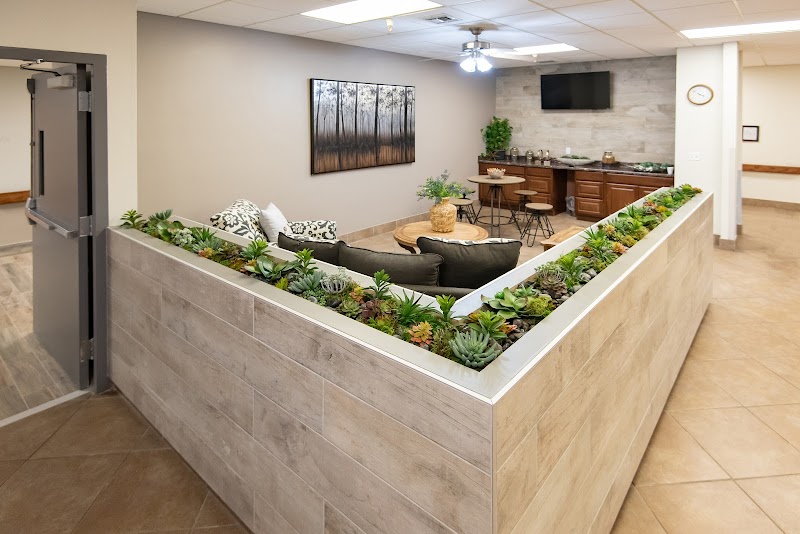
How is Life Of Paradise Valley Staffed?

CMS rates LIFE CARE CENTER OF PARADISE VALLEY's staffing level at 4 out of 5 stars, which is above average compared to other nursing homes. Staff turnover is 36%, compared to the Arizona average of 46%. This relatively stable workforce can support continuity of care.

What Have Inspectors Found at Life Of Paradise Valley?

State health inspectors documented 44 deficiencies at LIFE CARE CENTER OF PARADISE VALLEY during 2022 to 2025. These included: 2 that caused actual resident harm and 42 with potential for harm. Deficiencies causing actual harm indicate documented cases where residents experienced negative health consequences.
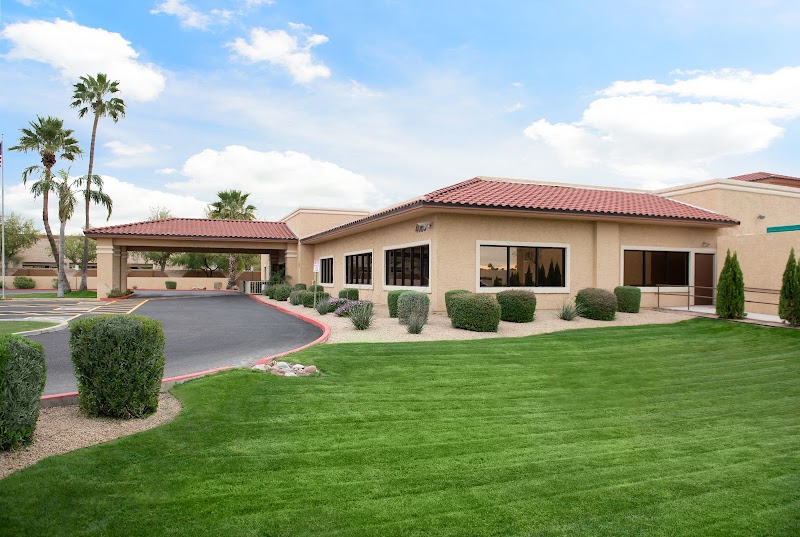
Who Owns and Operates Life Of Paradise Valley?

LIFE CARE CENTER OF PARADISE VALLEY is owned by a for-profit company. For-profit facilities operate as businesses with obligations to shareholders or private owners. The facility is operated by LIFE CARE CENTERS OF AMERICA, a chain that manages multiple nursing homes. With 210 certified beds and approximately 83 residents (about 40% occupancy), it is a large facility located in PHOENIX, Arizona.
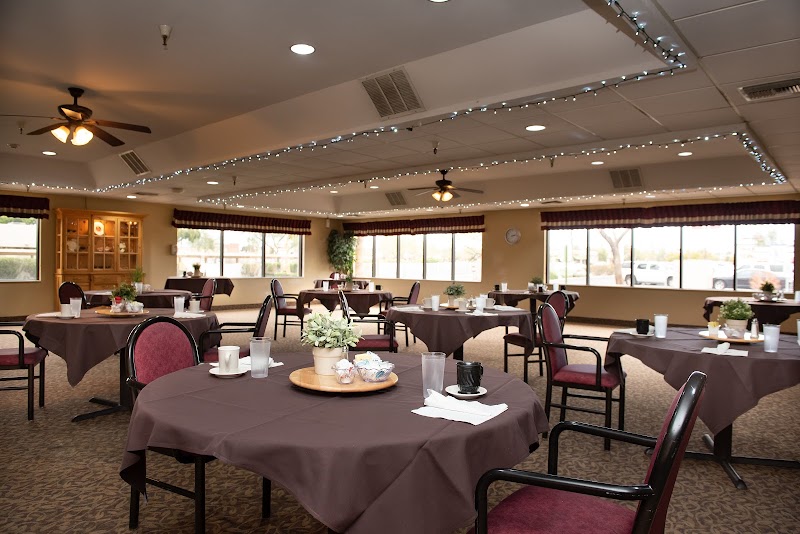
How Does Life Of Paradise Valley Compare to Other Arizona Nursing Homes?

Compared to the 100 nursing homes in Arizona, LIFE CARE CENTER OF PARADISE VALLEY's overall rating (3 stars) is below the state average of 3.3, staff turnover (36%) is near the state average of 46%, and health inspection rating (2 stars) is below the national benchmark.

What Should Families Ask When Visiting Life Of Paradise Valley?

Based on this facility's data, families visiting should ask: "Can I visit during a mealtime to observe dining assistance and food quality?" "How do you handle medical emergencies, and what is your hospital transfer rate?" "Can I speak with family members of current residents about their experience?"

Is Life Of Paradise Valley Safe?

Based on CMS inspection data, LIFE CARE CENTER OF PARADISE VALLEY has a clean safety record: no substantiated abuse findings (meaning no confirmed cases of resident harm), no Immediate Jeopardy citations (the most serious violation level indicating risk of serious injury or death), and is not on the Special Focus Facility watch list (a federal program monitoring the lowest-performing 1% of nursing homes). The facility has a 3-star overall rating and ranks #100 of 100 nursing homes in Arizona. While no facility is perfect, families should still ask about staff-to-resident ratios and recent inspection results during their visit.

Do Nurses at Life Of Paradise Valley Stick Around?

LIFE CARE CENTER OF PARADISE VALLEY has a staff turnover rate of 36%, which is about average for Arizona nursing homes (state average: 46%). Moderate turnover is common in nursing homes, but families should still ask about staff tenure and how the facility maintains care continuity when employees leave.

Was Life Of Paradise Valley Ever Fined?

LIFE CARE CENTER OF PARADISE VALLEY has been fined $72,147 across 1 penalty action. This is above the Arizona average of $33,800. Fines in this range indicate compliance issues significant enough for CMS to impose meaningful financial consequences. Common causes include delayed correction of deficiencies, repeat violations, or care failures affecting resident safety. Families should ask facility leadership what changes have been made since these penalties.

Is Life Of Paradise Valley on Any Federal Watch List?

LIFE CARE CENTER OF PARADISE VALLEY is not on any federal watch list. The most significant is the Special Focus Facility (SFF) program, which identifies the bottom 1% of nursing homes nationally based on persistent, serious quality problems. Not being on this list means the facility has avoided the pattern of deficiencies that triggers enhanced federal oversight. This is a positive indicator, though families should still review the facility's inspection history directly.