NORTHPARK HEALTH AND REHABILITATION OF CASCADIA

2020 NORTH 95TH AVENUE, PHOENIX, AZ 85037 (208) 401-9600
For profit - Corporation 54 Beds CASCADIA HEALTHCARE Data: November 2025
Trust Grade
78/100
#19 of 139 in AZ
Last Inspection: October 2024

Within standard 12-15 month inspection cycle. Federal law requires annual inspections.

Overview

Northpark Health and Rehabilitation of Cascadia has a Trust Grade of B, indicating it is a good choice for care, falling within the 70-79 range on the grading scale. It ranks #19 out of 139 facilities in Arizona, placing it in the top half, and #15 out of 76 in Maricopa County, meaning only a few local options surpass it. The facility is on an improving trend, with reported issues decreasing from six in 2023 to just one in 2024. While staffing received a below-average rating of 2 out of 5 stars and has a turnover rate of 58%, which is higher than the state average, it does have excellent RN coverage, ensuring better oversight of resident care. However, recent inspections revealed concerning incidents, such as a failure to ensure that a resident received necessary medications and lapses in cleanliness in the kitchen that could increase the risk of foodborne illness. Overall, while there are strengths in quality measures and RN oversight, the facility has notable weaknesses in staffing and specific care practices that families should consider.

Trust Score
B
78/100
In Arizona
#19/139
Top 13%
Safety Record
Low Risk
No red flags
Inspections
Getting Better
6 → 1 violations
Staff Stability
⚠ Watch
58% turnover. Above average. Higher turnover means staff may not know residents' routines.
Penalties
⚠ Watch
$3,174 in fines. Higher than 97% of Arizona facilities. Major compliance failures.
Skilled Nurses
✓ Good
Each resident gets 45 minutes of Registered Nurse (RN) attention daily — more than average for Arizona. RNs are trained to catch health problems early.
Violations
⚠ Watch
14 deficiencies on record. Higher than average. Multiple issues found across inspections.
★★★★★
5.0
Overall Rating
★★☆☆☆
2.0
Staff Levels
★★★★★
5.0
Care Quality
★★★★★
5.0
Inspection Score
Stable
2023: 6 issues
2024: 1 issues

The Good

  • 5-Star Quality Measures · Strong clinical quality outcomes
  • Full Sprinkler Coverage · Fire safety systems throughout facility
  • No fines on record

Facility shows strength in quality measures, fire safety.

The Bad

Staff Turnover: 58%

11pts above Arizona avg (46%)

Frequent staff changes - ask about care continuity

Federal Fines: $3,174

Below median ($33,413)

Minor penalties assessed

Chain: CASCADIA HEALTHCARE

Part of a multi-facility chain

Ask about local staffing decisions and management

Staff turnover is elevated (58%)

10 points above Arizona average of 48%

The Ugly 14 deficiencies on record

Oct 2024 1 deficiency
CONCERN (D)

Potential for Harm - no one hurt, but risky conditions existed

Quality of Care (Tag F0684)

Could have caused harm · This affected 1 resident

**NOTE- TERMS IN BRACKETS HAVE BEEN EDITED TO PROTECT CONFIDENTIALITY** Based on observation, clinical record review, facility documentation, interviews, and review of facility policies and procedures...

Read full inspector narrative →
**NOTE- TERMS IN BRACKETS HAVE BEEN EDITED TO PROTECT CONFIDENTIALITY** Based on observation, clinical record review, facility documentation, interviews, and review of facility policies and procedures, the facility failed to ensure one resident (#34) received services according to professional standards regarding notification to a provider, required communication, and clarifying and following a physician's order. The deficient practice could result in residents not receiving adequate care and/or suffering from preventable injuries. -Findings Include: Resident #34 was admitted into the facility on August 29, 2024, with diagnoses that included hypertension, diabetes mellitus, non-Alzheimer's dementia, syncope and collapse, and chronic right humeral fracture. Review of Resident #34's History and Physical notes from the discharging hospital dated August 25, 2024, revealed that the resident was being evaluated after a ground-level fall that date. A computerized tomography (CT) imaging study dated August 25, 2024, of Resident #34's head revealed no intracranial hemorrhage and no acute intracranial abnormality. Review of additional x-ray imaging studies dated August 25, 2025 revealed that the resident had a displaced angulated right humeral neck fracture, likely fractures of the right second and third ribs, and a possible fracture of the right femoral neck with recommendations to consider a CT image for further evaluation. Review of the resident's admission Minimum Data Set (MDS) assessment dated [DATE], revealed that the resident's Brief Interview for Mental Status (BIMS) assessment score was 03, indicating the resident had severely impaired cognition. Review of Section GG, revealed that the resident required moderate assistance for bed mobility and transfers from bed to chair. Section J revealed that the resident had a fracture related to a previous fall. The assessment also revealed that the resident was on an anticoagulant medication. Review of Resident #34's care plan revealed a focus initiated August 29, 2024 to address Impaired mobility with risk for falls due to History of falls, impaired functional mobility, pain, chronic humeral fx (fracture), and syncope. Interventions included to have the door of her room open as she allows unless during care, provide low bed, and to provide direct supervision when resident is toileting. Upon review of the physician orders, it was revealed that Resident #34 had an order dated September 11, 2024, indicating for the resident to Follow up with ortho for right humerus fracture, right femur fracture. An additional order dated September 13, 2024, indicated an Orthopedic Appointment on September 19, 2024, with the pick-up time noted as 2:20 PM and the appointment time noted as 3:00 PM. Review of a handwritten note that was provided to the facility's transportation driver (Driver/ Staff #2) from the orthopedic appointment on September 19, 2024 revealed that the resident was seen in our clinic for a proximal humerus fracture. The note indicated that the resident was alert and oriented to self only, with nobody from the facility accompanying the patient, the resident had right-sided ptosis (eyelid droop), and complaining of severe headache for past 24 hours. Review of an orthopedic appointment note signed September 19, 2024 at 4:18 PM by the orthopedic provider revealed that the facility received the note via fax on September 20, 2024 at 11:14 AM. The note indicated Resident #34 is unable to participate in examination. She has no caregivers accompanying her. Evidently patient fell about a week ago and sustained right proximal humerus fracture as evident on x-rays today. It does not appear she was ever taken to the emergency room. She is repeatedly complaining of severe 10 out of 10 headache pain. She has dilated pupils, right-sided ptosis. The note further indicated that She does have a driver from her facility with her. We instructed the driver to take her to the nearest emergency room for evaluation of intracranial bleed (brain bleed). Review of Resident #34's clinical record revealed there was no evidence that the instructions from the orthopedic appointment were followed or communicated to the resident's family, to the resident's physician, or to the facility's chief nursing officer. Additionally, there was no evidence of any follow-up communication to the orthopedic provider to clarify the instructions. Review of facility-provided copies of telephonic text messages dated September 23, 2024 at 4:48 PM, between a nursing staff and the nurse practitioner (NP/ Staff #134) revealed that the nurse notified the provider that Resident #34 had a fall into her mat in the room and that she had a hematoma to her right forehead. The messages revealed the resident was on plavix and aspirin, neuro checks intact to her baseline, brisk pupils, and the resident will be put on a change of condition status. Additionally, it was revealed that the NP responded with a message, Draw a circle around the hematoma and will monitor it. Review of the progress notes revealed that a nursing progress note dated September 23, 2024, at 5:42 PM, indicated that at 4:15 PM, Resident #34 was yelling out for help. The note indicated that Upon CNA entering room, patient was found seated on floor mat next to bed. Patient has hematoma to right forehead from bed rail. Neuro checks initiated and WNL (within normal limits). Daughter, CNO (chief nursing officer), and NP (nurse practitioner) on call notified. An order dated September 23, 2024 at 6:00 PM was placed indicating Change of Condition for a hematoma to right forehead from hitting head on bed rail. Further review of the progress notes revealed that a nursing progress note dated September 24, 2024, at 5:49 AM revealed that the resident was on a Change of Condition for hematoma to right forehead from hitting head on bed rail. The note revealed that the Resident #34 was restless during shift, frequently yelling out for daughters. Patient placed in geri chair and sitting with nursing staff at nurse's station. Review of a nursing progress note dated September 24, 2024 at 7:41 AM, revealed that Resident #34's daughter was requesting patient to be sent out to the emergency room for further evaluation due to R (right) forehead hematoma. Provider contacted, order to be send out non-emergent for further evaluation was given. Daughter and CNO notified, will continue to follow plan of care. An order was dated September 24, 2024, indicating to send the resident with non-emergent transport to the emergency room to eval and treat. Review of the Trauma Surgery History and Physical from the hospital dated September 24, 2024, revealed that the resident was being evaluated after a ground level fall while at a rehab facility. The note indicated that the resident had a subdural hematoma (SDH/ brain bleed), a right radius fracture, a right ulna fracture, a right humerus fracture, and a right intertrochanteric femur fracture. Review of the Internal Investigation for Resident #34 dated September 25, 2024 revealed the investigation was initiated by the CNO on September 25, 2025 for the occurrence of not following MD orders from (the orthopedic provider). Upon review of personnel files, an employee termination letter, dated September 25, 2024, revealed that the Assistant Director of Nursing (ADON/ Staff #165) was terminated effective immediately for multiple reasons including failing to report information through proper channels, such as the Chief Nursing Officer. An additional employee termination letter, dated September 26, 2024, indicated that the Medical Records staff (MR staff/ Staff #200) was terminated effective immediately for multiple reasons including failure to communicate regarding Resident #34's faxed orthopedic visit notes on September 20, 2024. Additionally, an Employee Warning Notice dated September 26, 2024, for the Charge Nurse (Charge Nurse/ Staff #64), indicated a final warning for violation of safety rules and substandard performance regarding Resident #34 and the incident of her orthopedic visit on September 19, 2024. Review of the resident's Physician Progress Notes from the hospital dated September 28, 2024, indicated that the resident had underwent surgical repair of the right intertrochanteric femur fracture on September 25, 2025, and that hand surgery was consulted for the right radius and right ulna fractures and recommended a splint to the right upper extremity. The notes also revealed that orthopedic surgery recommended the resident to be non-weightbearing to the right upper extremity and weightbearing as tolerated to the right lower extremity, and to follow up in 2 weeks. Additionally, neurosurgery recommended conservative management for the SDH and to follow up in one month for a repeat scan. An order dated September 30, 2024, indicated for the resident to Admit to Skilled Nursing Facility. Review of the resident's facesheet revealed a list of diagnoses initiated on September 30, 2024, with multiple new diagnoses added to include: traumatic subdural hemorrhage without loss of consciousness, displaced intertrochanteric fracture of right femur, fracture of lower end of right radius, fracture of lower end of right ulna, and encounter for orthopedic aftercare. An observation was completed October 15, 2024 at 8:28 AM of the resident lying in bed in her room, with her daughter sitting at bedside. An interview was conducted at that time with the resident's daughter, due to the resident being unable to effectively communicate due to her cognitive status. The daughter stated that she was the resident's power of attorney. She stated that she was upset that her mother had a fall in the facility, and that the facility failed to call her right away. She stated that she received a phone call from the night nurse at approximately 11:30 PM on the day of the fall (September 23, 2024), however it was not mentioned that her mother had fallen. The daughter stated that she came into the facility at approximately 6:00 AM the following morning and noticed that her mother had a goose-egg on her head. She stated that she then insisted on the facility sending her mother to the hospital. She stated that while her mother was in the hospital, that her mother was diagnosed with a wrist fracture, a brain bleed, and a femur fracture that required surgery. The resident's daughter became tearful when stating the information. A telephonic interview was conducted on October 16, 2024 at 12:21 PM, with the former Medical Records staff (MR staff/ Staff #200), who was terminated September 26, 2024 and was no longer an employee of the facility. The MR staff was asked to recall the events surrounding Resident #34's orthopedic visit on September 19, 2024. The MR staff stated that the doctor's office wanted to send the resident to the emergency room. She further stated that it was her understanding of the facility's policy that she was trained in at the time of her hiring that if an outside doctor wants to send a resident to the hospital that they would be the ones who have to call 911. The MR staff stated that the orthopedic doctor had a handwritten note to send the resident to the ER and that the facility's driver (Staff #2) had messaged her saying that the doctor's office was stating that the resident needed to go to the hospital. She stated that the driver said that the resident seemed fine, she was just crying. The driver sent a picture of the handwritten note to the MR staff and the Charge Nurse (Staff #64). The MR staff further stated that the Charge Nurse instructed the driver to bring the resident back to the facility and the staff will assess the resident when she gets back to the facility. The MR staff stated that a call was placed to the ADON (Staff #165), and the ADON did not answer. The interview continued and the MR staff stated that she felt her actions had been adequate as she had relayed the information to the Charge Nurse, however, she stated that she was supposed to relay it to the Chief Nursing Officer (CNO/ Staff #150) and had failed to do so. The MR staff also stated that when she received the fax from the orthopedic visit the following day on September 20, 2024, that she failed to notify any nurse that it had been received and uploaded into the electronic medical record. The MR staff stated that she did not have a clinical background or clinical training, and that it was not her duty to read and interpret medical records. She stated that she failed to notify any nurse that the orthopedic notes were uploaded for review. The MR staff stated that she was subsequently fired for her failure to communicate in this incident. A telephonic interview was conducted on October 16, 2024 at 12:36 PM, with the driver (Staff #2). The driver stated that he arrived at the orthopedic office for Resident #34's visit, and the resident appeared fine before the visit, as she wasn't screaming. The driver stated he waited in the lobby of the doctor's office for her. The provider then told him verbally that the resident needed to go to the emergency room, and that the resident's head was hurting. The provider gave him a small handwritten note, that the driver could not recall what was written, but that he believed vital signs were written on it. The driver stated that he was trained by the facility that he was not allowed to take residents to the emergency room, and so he called the ADON (Staff #165) who told him to bring the resident back to the facility. The telephonic interview was ended abruptly and unable to be reconnected at that time. An interview was conducted on October 16, 2024 at 1:25 PM, with the Charge Nurse/Licensed Practical Nurse (Charge Nurse/ Staff #64), who stated that on the day of Resident #34's orthopedic appointment, that it was the ADON (Staff #165) who told the driver to bring the resident back to the facility to assess her. The Charge Nurse stated that she was aware that the resident had an episode of higher blood pressure earlier that date before the appointment, and that she believed this could be the cause of the resident's headache. The Charge Nurse stated that she instructed the floor licensed practical nurse (LPN/ Staff #42) that when the resident comes back from the appointment, to check her blood pressure, and if it is still high, then staff could reach out to the provider and ask for a blood pressure medication. The Charge Nurse stated that after the resident returned to the facility, that nobody informed her if the resident's blood pressure was high or not. The Charge Nurse stated that she then clocked out for the day. She also stated that she did not call the facility provider, nor did she have knowledge of any staff calling the provider about the resident's condition in this incident. The interview with the driver (Staff #2) was continued in-person on October 16, 2024 at 1:32 PM. The driver stated that at the end of the resident's orthopedic appointment, that Resident #34 was yelling and crying. The driver repeated that he called the ADON (Staff #165) who instructed him to bring the resident back to the facility and that the nurses will assess the resident. The driver stated that he gave the handwritten note from the orthopedic provider to the MR staff (Staff #200). A follow-up interview was conducted on October 16, 2024 at 2:51 PM, with Resident #34's daughter. When asked if she had received any update from the facility regarding the incident or results surrounding her mother's orthopedic appointment on September 19, 2024, she stated I can say absolutely not, I was not called and updated on anything. She additionally stated that over the course of her stay at the facility, she has noted changes in her mother, that she's more scared now, that she has high anxiety now, and that she's in a panic anytime I leave. On October 16, 2024 at 3:04 PM, a telephonic interview was conducted with the resident's nurse practitioner (NP/ Staff #134). When asked if he recalled receiving a call from the nurse on September 23, 2024 regarding Resident #34 having a fall, the NP stated I can't recall any of this and no, I don't recall telling the nurse to circle the hematoma. He further stated that he was never informed by any staff from the facility regarding the orthopedic incident and the results of it. When the resident's orthopedic visit note from the September 19, 2024 appointment was reviewed together with the NP, the NP stated that it would be inappropriate that the facility's staff failed to notify the provider in this incident. On October 17, 2024 at 9:16 AM, an interview was conducted with the LPN (Staff #42). The LPN confirmed that she was the resident's day nurse at the time the resident was at the appointment and when she was brought back to the facility. The LPN stated that while the resident was still at her appointment, that the Charge Nurse (Staff #64) called and said she was not sure if the resident was going to be returning to the facility or going to the hospital. The LPN stated that the resident arrived back to the facility at the end of her shift around 6:30 or 7:00 PM, and was brought onto the unit by the driver. The LPN stated that the resident returned with an envelope from the doctor's office and there was a handwritten note inside with little scribbles. The LPN stated that the Charge Nurse had sent her a text message earlier with a picture of the handwritten note. The LPN stated that the ADON (Staff #165) had instructed for the resident to come back to the facility. The LPN further stated that when the resident returned from the orthopedic appointment, it was unclear to me whether it was a doctor's order or not to send the resident out to the hospital, and that she did not call the doctor's office at that time to clarify because the Charge Nurse said she was going to call the doctor's office to clarify. The LPN additionally stated that she felt the issue was going to be resolved because the Charge Nurse directly stated that she was going to call the doctor's office for clarification. The LPN also stated that she was not sure if the Charge Nurse actually called or not because the Charge Nurse left the unit. The LPN stated that no neuro checks or formal assessments were done on the resident other than vital signs. Finally, the LPN stated that it was her insight that if the provider was not informed of the incident involving the orthopedic appointment, that this would be a gap in care. A telephonic interview was conducted on October 17, 2024 at 8:06 AM, with the facility's Medical Director/attending physician (MD/ Staff #149). The MD stated that she was familiar with Resident #34 as she has seen her to provide care. When asked if anyone from the facility called on September 23, 2024 regarding the resident's fall, the MD stated no, because she was not on call that day. She further stated that she was not aware of any provider on her team that was called that evening of September 23rd, 2024 when the resident fell. She did state that on September 24th, she was on call, and she received a message while driving into the facility. She stated that she talked to the nurse. The MD further stated that when she arrived at the facility, she saw the resident, and sent her out to the hospital for evaluation. When reviewing the orthopedic visit note from October 19, 2024 together, the MD stated firmly that the providers on her team were definitely not notified of the orthopedic visit and the instruction from the orthopedic provider to send the resident to the emergency room on September 19, 2024. She stated, Nobody on my team was notified and I believe the staff member who was responsible for making the decision to not send the resident to the hospital is no longer working at the facility. An interview was conducted with the facility's Administrator (Staff #181) on October 17, 2024 at 11:48 AM. The Administrator stated that his expectation for staff is that they follow physician orders, and that if staff was not clear on a physician order, that they reach out to their supervisor or the doctor for clarification. In an interview conducted on October 17, 2024 at 12:10 PM, the CNO (Staff #150) stated that it is her expectation that her staff follows physician orders, whether they are verbal, written, or telephone orders. She further stated that if staff was unclear about physician orders that her expectation for staff would be that they come to the ADON, the Charge Nurse, or myself for clarification, and that the nursing management would then call the physician to clarify. The interview continued with the CNO, and when asked about her understanding of the step-by-step events regarding Resident #34 on the day of her orthopedic visit on September 19, 2024, the CNO stated that the MR staff (Staff #200) told the driver (Staff #2) to bring the resident back to the facility and the ADON (Staff #165) would assess the resident. She stated that the ADON then saw the resident when she returned to the facility and told the floor nurse (Staff #42) not to call the facility doctor. She stated that no staff member called the orthopedic provider to clarify the order to send the resident to the emergency room. She also stated no staff called the facility's provider team for clarification. The CNO also stated that the following day, September 20, 2024, the MR staff received the fax with the orthopedic visit notes and failed to notify any nurses that the visit notes were uploaded for review, despite her training to bring any information that comes in to the unit nurse. The interview with the CNO continued, and the CNO stated that the outcome for Resident #34 is that she's doing well. She stated that the resident had an old intracranial bleed that did not get worse. Further, when asked if the resident suffered any new fractures, the CNO initially stated, No, then stated that she needed to re-read the notes. A telephonic interview was conducted on October 17, 2024 at 2:29 PM, with the ADON (Staff #165). The ADON stated that she resigned when the Administrator called her to tell her he was putting in her resignation. When asked about the incident involving Resident #34 and her orthopedic appointment on September 19, 2024, the ADON stated I was not involved in that case, and that the Charge Nurse (Staff #64) did not notify me, nobody notified me about that resident or her ortho appointment. She additionally stated that I didn't have anything to do with that patient and the Charge Nurse made the call to bring the patient back to the facility, the LPN (Staff #42) read the note and she didn't notify the provider. I was not notified. The ADON additionally stated that the CNO was also not notified of the incident at that time. She finally stated that, It wasn't until about 1 week later that the nurse on the floor was reviewing the resident's notes in the chart and said that this resident should have went out to the emergency room for evaluation. Review of the facility's policy titled Physician Orders, revised August 01, 2023, revealed that if there is a question regarding physician orders, seek clarification from the physician and document response/directives. Review of the facility policy titled Advance Directives/ Health Care Decisions, revised October 01, 2017 revealed that the facility defines and clarifies medical issues and presents the information regarding relevant healthcare issues to the resident and/or his/her legal representative, as appropriate. Review of the facility policy Resident Change of Condition revised November 28, 2017, revealed that upon recognition of a potentially life-threatening condition or significant change in status, the nurse should communicate with other health care providers to meet the needs of the resident. Under the subcategory Immediate Notification the policy indicated that the physician should be informed at the time the event occurs as soon as possible. Further, the facility is to immediately inform the resident, consult with the resident's physician, and notify the resident representative (consistent with his or her authority) when there is an accident involving the resident which results in injury and has the potential for requiring physician intervention and also when there is a significant change in the resident's physical, mental, or psychosocial status. Additionally, the facility is to notify family members/responsible party of the resident's condition.
Oct 2023 6 deficiencies
CONCERN (D) 📢 Someone Reported This

A family member, employee, or ombudsman was alarmed enough to file a formal complaint

Potential for Harm - no one hurt, but risky conditions existed

Free from Abuse/Neglect (Tag F0600)

Could have caused harm · This affected 1 resident

**NOTE- TERMS IN BRACKETS HAVE BEEN EDITED TO PROTECT CONFIDENTIALITY** Based on clinical record review, facility documentation, staff interviews, and facility policy, the facility failed to ensure on...

Read full inspector narrative →
**NOTE- TERMS IN BRACKETS HAVE BEEN EDITED TO PROTECT CONFIDENTIALITY** Based on clinical record review, facility documentation, staff interviews, and facility policy, the facility failed to ensure one resident (#152) was free from neglect, by failing to provide necessary provider prescribed medications. This deficient practice could result in a negative resident outcome from not receiving medications that were physician prescribed and necessary. Findings include: Resident #152 was admitted to the facility on [DATE] with diagnoses that include a MRSA (Methicillin Resistant Staphylococcus Aureus) abscess infection of the spine, Bacteremia, Chronic obstructive pulmonary disorder, Diabetes type 2, Anxiety and Hypertension. A review of the discharge MDS (Minimum Data Set) dated October 10, 2022 noted the resident had a BIMS of 12, indicating mild cognitive impairment. The care plan dated October 23, 2022 revealed the resident had a PICC (Peripherally inserted central catheter) related to an infection, with interventions including Administer IV (intravenous) medications per MD order, monitor for side effects and effectiveness, and to notify the MD as indicated. Review of the physician's orders dated October 7, 2022 showed an order for Teflaro (Ceftaroline Fosamil) 600mg (milligrams), with instructions to give 600mg intravenously two times daily for a spinal abscess. However, a review of the MAR (Medication administration record) revealed that for the resident's entire stay, from October 7, 2022 at 3:24 p.m., to discharge on [DATE] at 5:41 p.m. the resident received no administrations of Teflaro. A physician's note dated October 10, 2022 at 10:26 a.m. revealed the facility provider spoke to the consulting infectious disease doctor following this resident and that the order was for Teflaro 600mg until November 13, 2022 for a total of 40 days. The note further revealed the resident was transferred to North Park for ongoing IV antibiotics, and that the patient had failed on Vancomycin and that it is not an option for treatment, and to continue the Teflaro. A nursing progress note dated October 9, 2022 at 10:03 p.m. revealed that the resident was on change of condition charting for antibiotic therapy to treat a spinal abscess and bacteremia. However, this resident was only receiving Vancomycin which the provider indicated was not an option for treatment from infectious disease. In an interview conducted with a Licensed Practical Nurse (LPN/staff #98) on November 19, 2023 at 9:15 a.m., the LPN stated that new orders for IV antibiotics are called into the pharmacy by nursing. The LPN Further stated that in the event a medication wasn't delivered or was unavailable, they would notify the provider and the pharmacy to get a stat order or adjust medication as needed. However, no notification to the provider was noted on clinical review. An interview was conducted on October 20, 2023 at 11:29 a.m. with the Director of nursing (staff RN/DON #301). The DON stated that orders transpose automatically when they are put into PCC, except for IV antibiotics and expensive medications. The DON further stated that any medications over $200 would need approval. During this interview the DON accessed the resident's record and stated that the resident received 3 doses of Vancomycin, but not any doses of Teflaro. The DON further stated it was her expectation that the staff notify her and the provider in the event of a drug not arriving on time. A review of facility policy titled 'Pharmacy Services' Dated November 28, 2017 revealed that The facility provides pharmaceutical services (including procedures that assure the accurate acquiring, receiving, dispensing, and administering of drugs and biologicals) to meet the needs of each resident.
CONCERN (D) 📢 Someone Reported This

A family member, employee, or ombudsman was alarmed enough to file a formal complaint

Potential for Harm - no one hurt, but risky conditions existed

Quality of Care (Tag F0684)

Could have caused harm · This affected 1 resident

**NOTE- TERMS IN BRACKETS HAVE BEEN EDITED TO PROTECT CONFIDENTIALITY** Based on clinical record review, facility documentation, staff interviews, and facility policy, the facility failed to ensure on...

Read full inspector narrative →
**NOTE- TERMS IN BRACKETS HAVE BEEN EDITED TO PROTECT CONFIDENTIALITY** Based on clinical record review, facility documentation, staff interviews, and facility policy, the facility failed to ensure one resident (#152) was treated according to professional standards. This deficient practice could result in a negative resident outcome. Findings include: Resident #152 was admitted to the facility on [DATE] with diagnoses that include a MRSA (Methicillin Resistant Staphylococcus Aureus) abscess infection of the spine, Bacteremia, Chronic obstructive pulmonary disorder, Diabetes type 2, Anxiety and Hypertension. A review of the discharge MDS (Minimum Data Set) dated October 10, 2022 noted the resident had a BIMS of 12, indicating mild cognitive impairment. The care plan dated October 23, 2022 revealed the resident had a PICC (Peripherally inserted central catheter) related to an infection, with interventions including Administer IV (intravenous) medications per MD order, monitor for side effects and effectiveness, and to notify the MD as indicated. Review of the physician's orders dated October 7, 2022 showed an order for Teflaro (Ceftaroline Fosamil) 600mg (milligrams), with instructions to give 600mg intravenously two times daily for a spinal abscess. However, a review of the MAR (Medication administration record) revealed that for the resident's entire stay, from October 7, 2022 at 3:24 p.m., to discharge on [DATE] at 5:41 p.m. the resident received no administrations of Teflaro. An interview conducted with a Licensed Practical Nurse (LPN/staff #98) stated that the pharmacy is linked to the facility PCC, except controls and IV antibiotics. She states she usually calls in the antibiotics. The LPN further states if a medication does not arrive as expected she would notify the provider of a missed dose and get a 1-time order, and that they would notify the pharmacy to address the missing medication. An interview was conducted on October 20, 2023 at 11:29 a.m. with the Director of nursing (staff RN/DON #301). The DON stated that IV antibiotics aren't transposed automatically, and that they can be missed if there isn't someone to approve them when they are over $200. During this interview the DON accessed the resident's record and stated that the resident received 3 doses of Vancomycin, but not any doses of Teflaro. The DON further stated it was her expectation that the staff notify her and the provider in the event of a drug not arriving on time. A review of facility policy titled 'Physician's Orders' revised August 1, 2023 revealed that staff are to notify the attending physician when issues arrive with medication administration or treatments.
CONCERN (D)

Potential for Harm - no one hurt, but risky conditions existed

Pressure Ulcer Prevention (Tag F0686)

Could have caused harm · This affected 1 resident

**NOTE- TERMS IN BRACKETS HAVE BEEN EDITED TO PROTECT CONFIDENTIALITY** 2. Resident #39 was admitted to the facility on [DATE], with diagnoses that included Peripheral Vascular Disease and Acute Osteo...

Read full inspector narrative →
**NOTE- TERMS IN BRACKETS HAVE BEEN EDITED TO PROTECT CONFIDENTIALITY** 2. Resident #39 was admitted to the facility on [DATE], with diagnoses that included Peripheral Vascular Disease and Acute Osteomyelitis of the Left Ankle and Foot. Review of the Minimum Data Set (MDS) completed on September 25, 2023 showed a Brief Interview for Mental Status (BIMS) had a score of 15 which indicated no cognitive impairment. An admission Nursing Evaluation dated September 21, 2023, revealed the resident was alert and oriented to person. The Braden Scale showed a score of 17, indicating the resident was a mild risk for pressure ulcers. A Skin Risk Evaluation dated September 21, 2023, revealed a Braden Scale score of 17, indicating the resident was a mild risk for pressure ulcers. A Visual Skin Assessment form revealed the resident's skin was not intact and that he had an unstageable pressure injury to the coccyx measuring 0.2 cm (centimeters) x 0.2 cm x 0.1 cm, no warmth, no odor, and no drainage. The skin care plan dated September 20, 2023, revealed the resident was at risk for pressure ulcers. The goal was for the resident's wounds to show signs of healing and remain free from infection. Interventions included applying moisturizing lotion to extremities with evening care and Pro Re Nata (PRN), applying protection barrier cream with each incontinence and with AM and PM care, avoiding friction and sheering, using a turn sheet for repositioning, and a low air loss mattress. A review of the current pressure ulcer care plan revealed the resident was admitted with an unstageable pressure ulcer to the coccyx area that had resolved. A review of the Physician Order Sheet form dated September 21, 2023, revealed the following orders dated September 21, 2023. -Weekly skin check: evaluate skin impairments, skin health, and nail and foot care. Document results on the evaluation, as scheduled daily, shift every Saturday for skin integrity. -Low Air-loss mattress: check for functioning every q shift for pressure-reducing device for bed. The order for the skin care was transcribed onto the TAR (treatment administration record) and administered as ordered. The order for the los air loss mattress was transcribed into the TAR. During an interview was conducted with the resident on October 17, 2023, at 11:25 a.m., he stated that his mattress was supposed to be changed out, but this had never happened. During an interview with a Licensed Practicing Nurse/Wound Nurse (LPN/staff#300) conducted on October 19, 2023, at 8:45 am, he stated that per the clinical record, the resident was at risk for pressure ulcers and that the physician had ordered an order for a low air loss mattress. He further stated that per the clinical record, the resident had received the low-air loss mattress and was checked for functionality each shift. An observation with staff #59 was conducted during the interview. A regular mattress was observed covered with a clean linen sheet. When asked if the mattress that the resident had on his bed was indeed a low air loss mattress, he stated that it was not as per the order and that the resident currently had a regular mattress. An interview was conducted with the Director of Nursing (DON/staff #301) on October 19, 2023 at 9:30 a.m. She stated that per the clinical record, the resident had an order from the physician for a low-air loss mattress and that, per the (TAR) it was being checked every shift. Staff #301 also stated that the physician would administer treatments as ordered per facility policy and her expectations. The DON was informed that the resident did not have a low air loss mattress per the physician's order. The policy regarding the Prevention and Treatment of Pressure Ulcers and Other Skin Alterations, revised on July 13, 2018, included that residents will receive services to prevent new pressure injuries and the necessary treatment to promote the healing of pressure injuries. The policy further defined the following terms: Based upon assessment and the resident's clinical condition, interventions include providing appropriate, pressure-redistributing, support services. Based on observations, staff interviews, clinical record review, and policy review, the facility failed to ensure that care and services were provided to prevent the development of pressure ulcers for two residents (#39 and #26). Findings include: 1. Resident (#26) was admitted on [DATE] with diagnosis that included encounter for orthopedic aftercare following surgical amputation, acquired absence of left leg below knee, type 2 diabetes mellitus with foot ulcer, uncomplicated, local infection of the skin and subcutaneous tissue, unspecified, other idiopathic peripheral autonomic neuropathy, peripheral vascular disease, unspecified, arteriosclerotic heart disease of native coronary artery without angina pectoris, heart failure, unspecified, other acute osteomyelitis, left ankle and foot Review of the MDS dated [DATE] revealed resident had a Brief Interview for Mental Status (BIMS) assessment with a score of 15 indicating intact cognition. Review of the MDS revealed no mood or behaviors exhibited, further review of the MDS revealed resident requires extensive assistance of one-person physical assist for bed mobility, two plus person physical assist with transfers, extensive one-person physical assist with locomotion on and off the unit, extensive-one person physical assist with dressing, extensive-one person physical assist with toilet use, limited assistance-one person physical assist with personal hygiene. Review of the Section J of the MDS further revealed resident has shortness of breath or trouble breathing with exertion (e.g., walking, bathing, transferring), shortness of breath or trouble breathing when sitting at rest, shortness of breath or trouble breathing when lying flat. Review of the physician's orders revealed the following PREVENTATIVE CARE: (Bilateral upper/lower extremities) Apply house moisturizer Q Mon/Wed/Fri every day shift every Mon, Wed, Fri for Application of ointment, Skilled Wound Care Dr. to Evaluate and Treat as needed, Bilateral buttocks - barrier cream each shift for ppx every shift, Bilateral heels - paint with skin prep daily for ppx every day shift, Sacro coccyx - cleanse w nswc, apply triad paste, apply bordered foam dressing every day shift for wound care AND as needed for soilage/dislodgement, Low Air Loss Mattress: check for functioning q shift every shift for Review of the Physicians orders revealed the facility discontinued the pressure reducing device for bed Other Discontinued 10/19/2023 Start Date 9/22/2023 6:00 PM. Review of the Care Plan date initiated 09/22/2023, revision on 10/13/2023 revealed the following: Skin: Potential for alteration in skin/tissue integrity related to diabetes mellitus, peripheral vascular disease, limited mobility, decreased sensation to extremities. [NAME] will have skin intact; Apply moisturizing lotion to extremities with evening cares and PRN.; Apply protective barrier cream after each incontinence and/or with AM & PM cares. Encourage good nutrition and hydration in order to promote healthier skin. Low Air Loss Mattress. Off load heels or use prevalon boots when in bed. Turn and reposition as needed/ Back to bed schedule. Weekly licensed nurse skin assessment. Report alterations as indicated. An interview was conducted with resident (#26) on October 19, 2023 at 09:37 AM. Resident (#26) stated he has had the same mattress that was currently on his bed since he was admitted to the facility. An interview was conducted with (LPN, staff #10) on October 19, 2023 at 09:42 AM who stated that the resident is not on a low air loss mattress. Staff #10 then reviewed the orders for resident (#26) and confirmed that resident (#26) has a current order for an air loss mattress that was ordered on 09/22/2023. Staff f #10 then stated the risks of not having the low air loss mattress as ordered could cause the residents wound to become worse if he is unable to move about. An interview was conducted with Chief Nursing Officer (CNO, staff #301) on October 19, 2023 at 9:57 AM. Staff # 301 reviewed the orders for resident (#26) confirming the resident did have an order for a low air loss mattress. Further review of the MAR/TAR by Staff #301 confirmed that nursing staff are documenting that the low air loss mattress is functional. She then stated it is her expectation that staff are following physicians' orders and properly documenting. She further stated the risks associated with not having the air loss mattress as ordered could cause worsening of a wound.
CONCERN (D) 📢 Someone Reported This

A family member, employee, or ombudsman was alarmed enough to file a formal complaint

Potential for Harm - no one hurt, but risky conditions existed

Pharmacy Services (Tag F0755)

Could have caused harm · This affected 1 resident

**NOTE- TERMS IN BRACKETS HAVE BEEN EDITED TO PROTECT CONFIDENTIALITY** Based on clinical record review, interviews, and review of facility policies, the facility failed to ensure that medications wer...

Read full inspector narrative →
**NOTE- TERMS IN BRACKETS HAVE BEEN EDITED TO PROTECT CONFIDENTIALITY** Based on clinical record review, interviews, and review of facility policies, the facility failed to ensure that medications were available as ordered for one resident (#152). The deficient practice could result in not receiving medications that are physician ordered and necessary. Findings include: Resident #152 was admitted to the facility on [DATE] with diagnoses that include a MRSA (Methicillin Resistant Staphylococcus Aureus) abscess infection of the spine, Bacteremia, Chronic obstructive pulmonary disorder, Diabetes type 2, Anxiety and Hypertension. A review of the discharge MDS (Minimum Data Set) dated October 10, 2022 noted the resident had a BIMS of 12, indicating mild cognitive impairment. The care plan dated October 23, 2022 revealed the resident had a PICC (Peripherally inserted central catheter) related to an infection, with interventions including Administer IV (intravenous) medications per MD order, monitor for side effects and effectiveness, and to notify the MD as indicated. Review of the physician's orders dated October 7, 2022 showed an order for [NAME] (Centerline Foamily) 600mg (milligrams), with instructions to give 600mg intravenously two times daily for a spinal abscess. However, a review of the MAR (Medication administration record) revealed that for the resident's entire stay, from October 7, 2022 at 3:24 p.m., to discharge on [DATE] at 5:41 p.m. the resident received no administrations of [NAME]. Further record review revealed no evidence that the physician or pharmacy were notified that the medication was not available. An interview conducted with a Licensed Practical Nurse (LPN/staff #98) on November 19, 2023 at 9:15 a.m., the LPN stated that new orders for IV antibiotics are called into the pharmacy by nursing. The LPN Further stated that if a medication wasn't available, they would notify a provider and the pharmacy to get a stat order or adjust medication as needed. An interview was conducted on October 20, 2023 at 11:29 a.m. with the Director of nursing (staff RN/DON #301). During this interview the DON accessed the resident's record and stated that the resident received no doses of [NAME] for this resident stay. The DON further stated it was her expectation that the staff notify her and the provider in the event of a drug not arriving on time. A review of facility policy titled 'Pharmacy Services' Dated November 28, 2017 revealed that the facility provides pharmaceutical services (including procedures that assure the accurate acquiring, receiving, dispensing, and administering of drugs and biological) to meet the needs of each resident.
CONCERN (D)

Potential for Harm - no one hurt, but risky conditions existed

Medical Records (Tag F0842)

Could have caused harm · This affected 1 resident

**NOTE- TERMS IN BRACKETS HAVE BEEN EDITED TO PROTECT CONFIDENTIALITY** 2. Resident #39 was admitted to the facility on [DATE], with diagnoses that included Peripheral Vascular Disease and Acute Osteo...

Read full inspector narrative →
**NOTE- TERMS IN BRACKETS HAVE BEEN EDITED TO PROTECT CONFIDENTIALITY** 2. Resident #39 was admitted to the facility on [DATE], with diagnoses that included Peripheral Vascular Disease and Acute Osteomyelitis of the Left Ankle and Foot. A physician's order was written on September 21, 2023, for a Low Air Loss Mattress to be checked for functionality every shift. A review of the TAR (Treatment Administration Record) for September through October 2023, revealed the order was transcribed and that it was being checked every shift for functionality. During an interview with a Licensed Practicing Nurse/Wound Nurse (LPN/staff #300) conducted on October 19, 2023, at 8:45 AM, he stated that per the clinical record, the resident was at risk for pressure ulcers and that the physician had ordered an order for a low air loss mattress. He further stated that per the clinical record, the resident had received the low-air loss mattress and was checked for functionality each shift. When asked if the mattress that the resident had on his bed was indeed a low air loss mattress, he stated that it was not as per the order and that the resident currently had a regular mattress. An observation with a Certified Nursing Assistant (staff #59) was conducted during the interview on October 19, 2023 at 8:45 AM. A regular mattress was observed covered with a clean linen sheet at that time. An interview was conducted with the Chief Nursing Officer (CNO/staff #301) on October 19, 2023 at 9:30 a.m. She stated that per the clinical record, the resident had an order from the physician for a low-air loss mattress and that, per the TAR it was being checked every shift. The CNO was informed that the resident did not have a low-air loss mattress per the physician's order. An interview was conducted on October 19, 2023 with a Physical Therapist (staff #38) who also stated that the staff would administer treatments as ordered per facility policy and her expectations. She also noted that she expected that staff be documenting treatment in the resident record wholly and accurately. The policy regarding the Prevention and Treatment of Pressure Ulcers and Other Skin Alterations, revised on July 13, 2018, included that residents will receive services to prevent new pressure injuries and the necessary treatment to promote the healing of pressure injuries. The policy further defined the following terms: Based upon assessment and the resident's clinical condition, interventions include providing appropriate, pressure-redistributing, support services. Based on clinical record review, staff interviews, and policy review, the facility failed to ensure that physician orders were transcribed correctly into the electronic record for two resident (#26 and #39). Findings include: 1. Resident (#26) was admitted on [DATE] with diagnosis that included encounter for orthopedic aftercare following surgical amputation, acquired absence of left leg below knee, type 2 diabetes mellitus with foot ulcer, uncomplicated, local infection of the skin and subcutaneous tissue, unspecified, other idiopathic peripheral autonomic neuropathy, peripheral vascular disease, unspecified, atherosclerotic heart disease of native coronary artery without angina pectoris, heart failure, unspecified, other acute osteomyelitis, left ankle and foot A physician's order was written on September 22, 2023, for a Low Air Loss Mattress to be checked for functionality every shift. A review of the TAR Treatment Administration Record for September through October 2023, revealed the order was transcribed and that it was being checked every shift for functionality. An interview was conducted with (LPN, staff #10) on October 19, 2023 at 09:42 AM (LPN, staff #10) completed an observation of resident (#26) mattress stating the mattress he is on is not a low air loss mattress. (LPN, staff #10) reviewed the orders for resident (#26) and confirmed that resident (#26) has a current order for an air loss mattress that was ordered on 09/22/2023 and was being checked for its functionality every shift. (LPN, staff #10) stated the risks of not having the low air loss mattress as ordered could cause the residents wound to become worse if he is unable to move about. An interview was conducted with Chief Nursing Officer (CNO, staff #301) on October 19, 2023 at 09:57 AM. who reviewed the orders for resident (#26) confirming the resident did have an order for a low air loss mattress. Further review of the MAR/TAR by Staff #301 confirmed that nursing staff are documenting every shift per physicians' orders that the low air loss mattress is functional. She further stated it is her expectation that staff are following physicians' orders and properly accurately documenting what they have completed. The CNO was informed that the resident did not have a low-air loss mattress per the physician's order.
CONCERN (D)

Potential for Harm - no one hurt, but risky conditions existed

Deficiency F0882 (Tag F0882)

Could have caused harm · This affected 1 resident

Based on staff interview, facility policy, and review of the Center for Disease Control (CDC) recommendations, the facility failed to ensure that their Infection Preventionist had completed the specia...

Read full inspector narrative →
Based on staff interview, facility policy, and review of the Center for Disease Control (CDC) recommendations, the facility failed to ensure that their Infection Preventionist had completed the specialized training in Infection Prevention and Control prior to assuming the role as Infection Preventionist. The deficient practice could result in improper infection prevention practices within the facility. Findings include: A review of the Licensed Practical Nurse/Infection Preventionist's (LPN, staff #300) personnel/training record conducted on October 20, 2023 at 10:40 AM, revealed that staff #300 had not completed all the Center for Medicare and Medicaid (CMS) recommended specialized training topic. He had not been awarded a certificate for the CMS and CDC developed training titled The Nursing Home Infection Preventionist Training Course. During an interview with the Staff #300 conducted on October 20, 2023 at 10:40 AM, he stated that he has been the IP since April 2023. When asked if he had completed the Nursing Home Infection Preventionist Training Course, he presented a certificate with a completion date of July 16, 2023. Staff #300 stated that he finished the course and had also attended an Infection Preventionist Summit on July 8, 2023. He stated there was not a dedicated person with specialized training performing the duties as Infection Preventionist and that he was being trained by the Regional Clinical (RC) staff, but was unable to provide documentation that the RC was working at least part-time in the interim. Review of the facility policy titled Infection Prevention and Control Program revised October 15, 2022, indicated the facility designates an Infection Preventionist (IP) to coordinate the Infection Prevention and Control Program. The IP has clinical professional training and has specialized training in infection prevention and control. The CMS QSO policy memo dated March 11, 2019, noted that effective November 28, 2019 the final requirement for infection control prevention and control training for nursing home included specialized training in infection prevention and control for individuals responsible for the facility's Infection Prevention and Control Program. The memo further noted that CMS and CDC collaborated on the development of a free on-line training course in infection prevention and control for nursing home staff. It noted that the course is approximately 19 hours and is comprised of 23 modules. In order to receive the certificate of completion, learners must complete all modules and pass a post-course exam.
Sept 2022 7 deficiencies
CONCERN (D)

Potential for Harm - no one hurt, but risky conditions existed

Deficiency F0554 (Tag F0554)

Could have caused harm · This affected 1 resident

**NOTE- TERMS IN BRACKETS HAVE BEEN EDITED TO PROTECT CONFIDENTIALITY** Based on clinical record review, observations, resident and staff interviews, and review of policy, the facility failed to ensur...

Read full inspector narrative →
**NOTE- TERMS IN BRACKETS HAVE BEEN EDITED TO PROTECT CONFIDENTIALITY** Based on clinical record review, observations, resident and staff interviews, and review of policy, the facility failed to ensure medications were not left in the room for two residents (#32 and #33). The deficient practice could result in medications not being taken as ordered and residents unsafely administering medications. Findings include: -Resident #32 was admitted to the facility on [DATE] with diagnoses that included chronic kidney disease, type 2 diabetes mellitus with ketoacidosis, anxiety disorder, depression, diabetic neuropathy and obesity. Review of the admission Minimum Data Set assessment dated [DATE] revealed a Brief Interview for Mental Status score of 15, which indicated the resident had intact cognition. During an observation conducted August 29, 2022 at 8:39 AM, a medication cup was observed on the resident's bedside table. An interview was immediately conducted with the resident who stated the mediation was left at the bedside by the nurse because she wanted to go to the bathroom. The resident stated that the medication was Gabapentin. Resident #32 further stated that the nurse came in early with the medication, and she asked the nurse if she could wait to take the Gabapentin until she had eaten because Gabapentin needs to be taken with food. The resident stated that the nurse left the mediation on her bedside table. The resident proceeded to take the medication at that time. Review of physician orders revealed an order for Gabapentin tablet 600 milligrams one tablet by mouth three times a day for neuropathy. Review of the Medication Administration Record for August 2022 revealed Gabapentin was scheduled at 6:00 AM, 2:00 PM, and 10:00 PM. Further review of the MAR revealed Gabapentin had been administered at 6:00 AM on August 29, 2022. Review of the clinical record revealed no evidence that the resident had been evaluated to administer her own medication. Review of the clinical record revealed no physician orders that the resident may self-administer medications. Review of progress notes revealed no evidence that the physician had been notified regarding the medication being left at the bedside, or notification that the medication had been administered outside of the times ordered. -Resident #33 was admitted to the facility on [DATE], with diagnoses that included encephalopathy, epilepsy, spondylosis, chronic pain syndrome, venous insufficiency, and morbid obesity. Review of the admission Minimum Data Set assessment dated [DATE] revealed a Brief Interview for Mental Status score of 15, which indicated the resident had intact cognition. Observations conducted on August 29 and 30, 2022, revealed the resident had eye drops sitting on his bedside table (refresh lubricant and saline drops). During an interview conducted on August 29, 2022 at 9:00 AM with the resident, he stated that he has used the eye drops two or three times since his admission. He further stated that his wife brought them in and he thought the front desk knew about them. Review of physician's orders revealed no orders for eye drops for dry eyes or for the resident to administer his own eye drops for dry eyes. An interview was conducted on August 29, 2022 at 11:21 AM with a Licensed Practical Nurse (LPN/staff #113), who stated that it does not meet the facility policy to leave medications unattended at the resident's bedsides. She also stated that she had observed that the night nurse had left some medications at the resident's bedside last night. The LPN further stated that she had observed the medication in a cup on the bedside table of Resident #32, this morning when she started passing morning medications. She also stated that over the counter eye drops should not be at the bedside for Resident #33. She stated that they should be kept in the medication cart. An interview was conducted on September 1, 2022 AM at 8:42 AM with an LPN (staff #53), who stated that the facility process is to not leave any medications at the bedside. He also stated that they would need to have physician's orders for a resident to administer their own medications, and the resident would need to be evaluated. He reviewed the medical record for Resident #33 and stated that there were no orders for the resident to administer his own eye drops. The LPN further stated that it is not following the facility policy to leave eye drops at the bedside without an order, and the resident would need to be educated. An interview was conducted on September 1, 2022 at 9:13 AM with the Director of Nursing (DON/staff #138), who stated that the medication administration policy included that medications should be administered at scheduled times. He further stated that prior to leaving medication at the bedside, they would need to evaluate the resident and receive a physician order. He also stated that if a nurse observes that a medication has been left at the bedside, they should remove the medication and destroy it. The DON reviewed the orders for residents #32 and 33 and stated that he did not see any orders to leave medications at the bedside. He further stated that the risk of leaving the medication unattended, could result in the medication not being taken, and not being administered at the scheduled time. He also stated that the Gabapentin for resident #32 was ordered to be administered at 6:00 am, 2:00 pm and 10:00 pm, and he did not see any documentation that the provider had been called for time adjustments. He stated that this did not meet his expectations. The DON further stated that if a resident needed eye drops for dry eyes, they would need to obtain a physician's order for eye drops and an order to be kept at the bedside. He reviewed the medical record for Resident #33 and stated that he did not see any order for eye drops for dry eyes, or to keep eye drops at the bedside. He stated that the risk of leaving medications unattended at the bedside could result in the medication not being taken, or not administered at the scheduled time. Review of the facility policy titled, Oral Medication Administration, revealed oral medication is administered per physician orders. Administer the oral medication and observe that resident ingest the medication. Review of the facility policy titled, Medication Management, revealed that bedside medication storage is permitted for residents who are able to self-administer medications, upon the written order of the prescriber and when it is deemed appropriate in the judgment of the Center's interdisciplinary resident assessment team.
CONCERN (D)

Potential for Harm - no one hurt, but risky conditions existed

Notification of Changes (Tag F0580)

Could have caused harm · This affected 1 resident

**NOTE- TERMS IN BRACKETS HAVE BEEN EDITED TO PROTECT CONFIDENTIALITY** Based on clinical record review, staff interviews, and policy review, the facility failed to ensure the physician was notified o...

Read full inspector narrative →
**NOTE- TERMS IN BRACKETS HAVE BEEN EDITED TO PROTECT CONFIDENTIALITY** Based on clinical record review, staff interviews, and policy review, the facility failed to ensure the physician was notified of low blood pressures for one resident (#3). The deficient practice could result in delayed medical treatment. Findings include: Resident #3 was admitted to the facility on [DATE] with diagnoses that included essential hypertension and major depressive disorder. Review of the care plan revealed no care plan for hypertension. However, a care plan for pain medication initiated on August 25, 2022 revealed an intervention to monitor/document/report as needed to the physician side effects of pain medication such as hypotension. Review of physician orders dated date August 25, 2022 revealed the following orders for hypertension: -Metoprolol Tartrate 25 milligram (mg) 1 tablet by mouth every 12 hours, hold for systolic blood pressure <100 or pulse <60. -Lisinopril 10 mg 1 tablet by mouth one time a day, hold for systolic blood pressure <100. The Vitals Summary revealed the following blood pressure (BP) readings: -August 25, 2022 at 4:15 PM, BP 103/71 -August 25, 2022 at 8:20 PM, BP 114/72 -August 25, 2022 at 8:30 PM, BP 118/74 -August 26, 2022 at 7:12 AM, BP 137/79 -August 26, 2022 at 8:07 PM, BP 112/70 -August 26, 2022 at 9:01 PM, BP 112/70 -August 27, 2022 at 7:47 AM, BP 98/64 -August 27, 2022 at 7:27 PM, BP 93/59 Review of the Medication Administration Record revealed Lisinopril and Metoprolol were held due to blood pressure (BP) being outside the parameters on August 28, 2022. The Vital Summary revealed the following BP readings on August 28, 2022: -At 6:47 AM, BP 81/57 with a comment diastolic low of 60 exceeded and systolic low of 90 exceeded under the Warnings column -At 7:21 PM, BP 102/52 with a comment diastolic low of 60 exceeded -At 9:15 PM, BP 102/52 with a comment, diastolic low of 60 exceeded. Review of the clinical did not reveal any BP rechecks were done after a blood pressure of 81/57. Additional review of the clinical record did not reveal the physician was notified of the abnormal low blood pressures. In an interview conducted with a Certified Nursing Assistant (CNA/staff #29) on September 1, 2022 at 8:35 AM, she stated vitals are taken, written down, and charted on the resident's chart 30 minutes prior to the start of the Licensed Practical Nurse (LPN) shift and medication administration. She stated that a systolic blood pressure >130 or <90, or a heart rate >100 or <60 bpm is considered an abnormal reading. Furthermore, she stated in the event of an abnormal reading, it is communicated to the LPN and the LPN would monitor the blood pressure or heart rate and perform a recheck within an hour. The CNA stated that rechecked vitals are recorded on the resident's chart. An interview was conducted with an LPN (staff #21) on September 1, 2022 at 8:46 AM. She stated that vitals are taken, written on paper, and recorded on the resident's chart by the CNA prior to the start of medication administration. She also stated that she receives the paper copy and she can also view the recorded vital signs on the resident's chart; thus, by the time medications are ready to be administered, the vitals are already available. According to this LPN, an abnormal reading is a systolic blood pressure >140 or <100, or a heart rate >100 or <60 bpm. In the event of an abnormal reading she stated that she would assess the resident and check for any standing or PRN (as needed) medications. The LPN stated that if there are none, the physician would be contacted to receive further instructions. She stated that if a CNA informed her of a blood pressure reading of 81/57, she would assess the resident, encourage fluid intake, check standing orders, and tell the CNA to monitor and recheck the blood pressure in an hour. The LPN stated that if there are no standing orders to address the low blood pressure, the physician is then notified. She stated the physician is contacted for any held medications. The LPN stated any communication with the physician, rechecks of blood pressure, and assessments are charted on the resident's chart. She also stated abnormal vitals are not reported to the Director of Nursing (DON). An interview was conducted with the DON (staff #138) on September 1, 2022 at 11:16 AM. He stated in the event of an abnormal vital sign he expects the CNA to inform the LPN. He stated he expects the LPN to address the situation by assessing the resident, determine if it is emergent, and to look for any standing physician orders. Per the DON, emergent is on a case by case situation and on the nurse's discretion. In the event of a low blood pressure like 81/57, the DON stated intervention is dependent on the situation, the history of the resident, and how relaxed the resident is if it is early in the morning. The DON stated if the resident's baseline systolic blood pressure is in the 90s, then 81 systolic is not bad. He stated that he would recheck the BP manually a couple of times within 5-10 minutes and chart the rechecks in the resident's chart if the second reading is closer to the resident's baseline. He stated the physician is notified on a case by case basis, depending on the resident's baseline or it is out of the norm, the symptoms of the resident, and the discretion of the nurse. The vitals record for resident #3 was reviewed with the DON revealing a recorded blood pressure of 81/57 with no rechecks or physician notification. He stated That's a tough one. The DON stated it is the discretion of the nurses how a blood pressure of 81/57 is addressed. Review of the facility's Vital Signs Policy revealed, Contact physician with deviations from baseline for resident or as follows: blood pressure fluctuation of >20 points diastolic or systolic.
CONCERN (D)

Potential for Harm - no one hurt, but risky conditions existed

MDS Data Transmission (Tag F0640)

Could have caused harm · This affected 1 resident

**NOTE- TERMS IN BRACKETS HAVE BEEN EDITED TO PROTECT CONFIDENTIALITY** Based on clinical record review, facility documentation, staff interviews and review of facility policy and procedure, the facil...

Read full inspector narrative →
**NOTE- TERMS IN BRACKETS HAVE BEEN EDITED TO PROTECT CONFIDENTIALITY** Based on clinical record review, facility documentation, staff interviews and review of facility policy and procedure, the facility failed to ensure a discharge assessment was completed and transmitted to the Centers for Medicare and Medicaid Services (CMS) System within the required time frame for one sampled resident (#2). The deficient practice could result in delays in receiving resident specific information related to quality measure purposes. Findings include: Resident #2 was initially admitted to the facility on [DATE], was discharged to the hospital on February 25, 2022, readmitted on [DATE] and discharged from the facility on March 5, 2022. Resident #2's diagnoses included acute respiratory failure with hypoxia, type 2 diabetes mellitus and cirrhosis of the liver. Review of the discharge Minimum Data Set (MDS) assessment dated [DATE] and March 5, 2022 revealed the assessment's status as in progress. The discharge MDS assessment dated [DATE] revealed the resident was discharged to the acute hospital. The discharge MDS assessment dated [DATE] revealed that the resident was discharged to the hospice. However, review of the clinical record and the CMS System did not reveal a discharge MDS assessment had been submitted to the CMS System. An interview was conducted on August 31, 2022 at 12:27 pm with the MDS coordinator (staff #87). He stated that a discharge MDS assessment is done the very next day after the resident is discharged . He stated if the discharge is planned then he will enter the information as soon as he can. He stated once the MDS assessment is completed, it goes through the PCC (Point Click Care), is signed, locked and submitted. Staff #87 stated if there is any error, he will look back at the report, correct any errors and resubmit the assessment. He stated if the MDS assessment status states 'in progress' that means the assessment has been open in PCC and is still being worked on and an ARD (Assessment Reference Date) has been set up for it. After reviewing resident #2 record, he stated that the discharge MDS assessment for the resident was not completed and submitted. Staff #87 stated the facility's previous MDS coordinator was not completing the MDS assessment and any MDS assessment before March 2022 had issues with MDS assessments not being completed. He stated the facility already identified the issue and the facility has a PIP (Performance Improvement Plan) in place to address the issue. He stated the previous MDS coordinator does not work there anymore and he started working March 2022. He stated the MDS assessment should be completed and submitted within 14 days. An interview was conducted on September 1, 2022 at 10:16 am with the Director of Nursing (DON/staff #138). He stated that the facility tries to get the MDS assessment completed as soon as the resident is discharged . He stated the facility had a change of MDS coordinator. The DON stated the facility was aware that the MDS assessments were not done by the previous MDS coordinator. Review of the facility policy titled MDS Transmission released on November 28, 2017 stated that assessment data is entered into a computer, and the encoded data is electronically transmitted to the state database. The policy further stated that within 7 days after completion, the MDS assessment including the discharge assessment is entered into the computer, edited according to CMS's specifications, reflective of the resident's status as of the assessment reference date, and ready for transmission. The policy stated all other MDS assessments must be submitted within 14 days of the MDS completion date and the facility standard practice is 7 days.
CONCERN (D)

Potential for Harm - no one hurt, but risky conditions existed

Deficiency F0661 (Tag F0661)

Could have caused harm · This affected 1 resident

**NOTE- TERMS IN BRACKETS HAVE BEEN EDITED TO PROTECT CONFIDENTIALITY** Based on closed clinical record review, staff interviews, and review of policy, the facility failed to ensure one resident (#93)...

Read full inspector narrative →
**NOTE- TERMS IN BRACKETS HAVE BEEN EDITED TO PROTECT CONFIDENTIALITY** Based on closed clinical record review, staff interviews, and review of policy, the facility failed to ensure one resident (#93) was discharged with a discharge summary that included the post-discharge plan of care. The deficient practice could result in unsafe discharges for residents. Findings include: Resident #93 was admitted on [DATE] with diagnoses that included encephalopathy, acute respiratory failure, and end stage renal disease. An admission Minimum Data Set assessment dated [DATE], revealed a Brief Interview of Mental Status score of 12, which indicated the resident had moderate cognitive impairment. The assessment also revealed the resident required extensive assistance with bed mobility, transfer, dressing, and toilet use. Review of a Social Service progress note dated January 25, 2022, revealed the current plan was to discharge the resident with home health. A physician order dated January 27, 2022 stated discharging home on February 3, 2022 with home health for skilled nursing for medication management, and for physical therapy (PT)/occupational therapy (OT) to evaluate and treat. Review of a PT discharge note dated February 2, 2022 recommended discharge with home health. Review of an OT discharge note dated February 2, 2022 recommended discharge with home health and an aide for IADLs (instrumental activities of daily living). Further review of the progress note revealed no evidence that home health or PT/OT had been arranged as ordered. Review of the medical record revealed no evidence that a discharge summary had been completed and signed by the resident or resident's representative. Review of nursing progress notes dated February 3, 2022 revealed the discharge packet was explained and the resident was discharged via personal vehicle. No evidence was revealed the resident or representative had been educated regarding home health nursing and therapy care. An interview conducted on August 31, 2022 at 10:33 AM with a Case Manager (CM/staff #67), who stated that discharge planning starts on admission. She stated that they review the resident's status with therapy to determine what equipment or home health or therapy that are needed. She started she would then send a referral to home health, arrange transport, and would follow-up with a call to the resident a week after they discharge. The Case Manager stated that this is documented in the progress notes under social services and also in the utilization review that is documented in the weekly skilled notes. She stated she remembered resident #93, but could not remember if the resident was discharged with home health or required therapy or medical equipment on discharge. She stated that she got behind on the documentation for this resident and did not document all the discharge information. She reviewed the medical record and stated that there is no discharge documentation regarding home health, therapy or medical equipment, and no documentation of a follow-up call the next week to check on the resident's status. She stated that she did not have any other documentation regarding the resident's discharge in any other files. Staff #67 further stated the facility process is to complete a paper discharge summary, that nursing reviews with the resident, and the resident would sign. Staff #68 stated the nurse then gives a copy to the resident, and gives medical records another copy to scan into the medical record. She reviewed the medical record and stated that there was no discharge summary signed by the resident or uploaded into the medical record. She further stated that this does not meet the facility policy. An interview was conducted on August 31, 2022 at 10:56 AM with the Medical Records and Transportation Manager (staff #91). She stated that she goes to the unit and makes sure the nurses are reviewing the discharge summary with the resident. She stated that she makes a copy for the resident and then scans another copy into the medical record. She stated that nurses document a discharge note that includes all discharge information that is discussed with the resident prior to discharge. Staff #91 stated that it is the facility policy to complete the discharge summary and upload into the medical record. She reviewed the medical record and stated that the discharge nursing note was documented on February 3, 2022. She further stated that there was no discharge summary in the medical record. She stated that they keep the proof of a home health referral on a confirmation sheet. She reviewed a copy of the referral that was faxed to home health, but it did not contain documentation that the home health agency had accepted the resident. An interview was conducted on August 31, 2022 at 12:55 PM with a Licensed Practical Nurse (LPN/staff#21), who stated that the case manager does the discharge planning. He stated that nursing will review the discharge summary, and go over the medications with the resident or representative. He also stated that the resident or representative will sign the discharge summary, and receive prescriptions, and this would be documented in a progress note. He further stated that a copy of the discharge summary is given to the resident, and a copy is scanned into the medical records. An interview was conducted on September 1, 2022 at 9:13 AM with the Director of Nursing (DON/staff #138), who stated that at discharge nursing will make sure all scripts are ready for discharge, review the inventory list and complete all discharge paperwork. He further stated that the expectation is that the discharge summary would be reviewed, signed by the resident and a copy kept in medical records. He also stated that he would expect there to be documentation that home health was arranged as recommended by PT/OT, or ordered by the physician and that there would be documentation that they worked on the process. The DON stated that there is a discharge note in the medical record, but there is no discharge summary paperwork in the medical record. He reviewed the medical record and stated that he did not see any notes that the resident was sent home with home health, therapy, or any medical equipment. The DON reviewed the facility referral that was sent to home health and stated that he did not see any documentation that they were going to see the resident, or that the resident/representative knew that home health was ordered, or when to expect them. Review of the facility policy titled, Transfer & Discharge, revealed the facility develops and implements an effective discharge planning process focusing on the resident's discharge goals and effectively transitioning them to post discharge care. The facility provides sufficient preparation and orientation to residents to ensure safe and orderly discharge from the facility. A discharge summary is prepared.
CONCERN (D)

Potential for Harm - no one hurt, but risky conditions existed

Deficiency F0757 (Tag F0757)

Could have caused harm · This affected 1 resident

**NOTE- TERMS IN BRACKETS HAVE BEEN EDITED TO PROTECT CONFIDENTIALITY** Based on closed clinical record review, staff interviews, and review of policy, the facility failed to ensure one resident's (#9...

Read full inspector narrative →
**NOTE- TERMS IN BRACKETS HAVE BEEN EDITED TO PROTECT CONFIDENTIALITY** Based on closed clinical record review, staff interviews, and review of policy, the facility failed to ensure one resident's (#93) medications were administered per physician ordered parameters. The deficient practice could result in residents receiving medications that may not be necessary. Findings include: Resident #93 was admitted on [DATE] with diagnoses that included encephalopathy, acute respiratory failure, end stage renal disease, An admission Minimum Data Set assessment dated [DATE], revealed a Brief Interview for Mental Status score of 12, which indicated intact cognition. Review of physician orders revealed: -Losartan Potassium 50 mg (milligram) by mouth one time a day for hypertension (HTN), hold if SBP (systolic blood pressure) <100, start date December 30, 2021. - Carvedilol Tablet 3.125 mg 1-2 times a day for HTN, hold if SBP<100 or HR<60, start date December 29, 2021. Review of the January 2022 Medication Administration Record revealed: -Losartan Potassium administered on January 9, 2022 with the SBP documented as 90/50. -Carvedilol administered on January 8, 2022 for SBP of 99/60, and January 9, 2022 with SBP 90/50. Review of a physician's progress note dated January 9, 2022, revealed to hold blood pressure medications (BP) for three days due to low BP. An interview was conducted on September 1, 2022 at 8:42 AM with a Licensed Practical Nurse (LPN/staff #53), who stated that the facility process is to follow physician orders as written, including parameters. He stated that when a resident has a low blood pressure, the nurse would re-check the blood pressure and if it is still outside of parameters, the nurse would inform the provider. He further stated that the expectation is that the call to the provider would be documented in the medical record. The LPN stated that when administering medications, the nurse should document in the Medication Administration Record, if it was held, and type a note of why it was administered outside of parameters. He reviewed the medical record and stated that the risk of administering blood pressure medication outside of parameters could result in the blood pressure dropping to an unsafe level. He also stated that he would expect that the physician would be notified regarding the blood pressure results, and that the call would be documented in the medical record. He reviewed the progress notes and stated that he could find no documentation that the provider was notified on January 8, or January 9, 2022. An interview was conducted on September 1, 2022 at 9:13 AM with the Director of Nursing (DON/staff #138), who stated that the facility policy is to follow physician's orders as written, including parameters. He also stated that the nursing documentation should indicate if the medication was held or administered. He reviewed the January 2022 MAR and stated that there was documentation that Losartan was administered outside of parameters on January 9, 2022 and Carvedilol had been administered outside of ordered parameters on January 8, and 9, 2022. The DON further stated that both medications were administered outside of parameters, and that it did not follow the facility policy. The DON stated the risk of administering a blood pressure medication outside of parameters could result in dizziness for the resident, and that this would affect dialysis treatments. Review of the facility policy titled, Medication Management, revealed that the administration of drugs that is not in accordance with Physicians Orders is a medication error. Review of the facility policy titled, Vital Signs, revealed that vital signs are completed based upon physician order and standards of practice. Deviations from normal may indicate a need for physician involvement. Contact the physician with deviations from baseline for blood pressure fluctuation of more than 20 points diastolic or systolic.
CONCERN (D)

Potential for Harm - no one hurt, but risky conditions existed

Medication Errors (Tag F0758)

Could have caused harm · This affected 1 resident

**NOTE- TERMS IN BRACKETS HAVE BEEN EDITED TO PROTECT CONFIDENTIALITY** Based on clinical record review, staff interviews, and policy review, the facility failed to ensure one resident (#3) receiving ...

Read full inspector narrative →
**NOTE- TERMS IN BRACKETS HAVE BEEN EDITED TO PROTECT CONFIDENTIALITY** Based on clinical record review, staff interviews, and policy review, the facility failed to ensure one resident (#3) receiving a psychotropic medication was accurately monitored for side effects. The sample size was 5. The deficient practice could result in residents experiencing possible adverse consequences that are not identified. Findings include: Resident #3 was admitted to the facility on [DATE] with diagnoses that included essential hypertension and major depressive disorder. A physician order dated August 25, 2022 included Doxepin HCL (antidepressant) 10 milligrams by mouth at bedtime for depression as evidence by inability to sleep at night, monitoring side effects of antidepressant use, and indicating if the following is observed on every shift: A=Sedation; B=Drowsiness; C=Dry Mouth; D=Blurred Vision; E=Urinary Retention; F=Tachycardia; G=Muscle Tremor; H=Agitation; I=Headache; J=Skin rash; K=Photosensitivity; L=Weight Gain; NA=None Review of the care plan initiated on August 25, 2022 revealed the resident was receiving an antidepressant medication related to depression. Intervention included giving the antidepressant medication as ordered by the physician, monitoring/documenting side effects such as tachycardia, and notifying the physician as indicated. Review of the Medication Administration Record (MAR) for 2022 revealed Doxepin HCL was administered as ordered. Review of the Treatment Administration Record (TAR) for August 2022 revealed that on August 27 & 28, 2022 the side effects observed were NA for the day and night shifts, which according to the TAR meant none. The progress note dated August 27, 2022 at 10:45 PM revealed no behaviors were observed during that shift. However, review of the Vital Summary revealed that on August 27, 2022 the resident's pulse was 116 at 7:47 AM, 105 at 7:27 PM, and 105 at 7:33 PM with a comment, High of 100.0 exceeded under the Warnings column. The summary also revealed that on August 28, 2022 the resident's pulse was 102 at 7:21 PM and 102 at 9:15 PM with a comment, High of 100.0 exceeded under the Warnings column. Review of the clinical record review revealed no evidence that side effects related to the use of psychotropic medications were monitored as ordered and care planned. In an interview conducted with a Licensed Practical Nurse (LPN/staff #21) on September 1, 2022 at 8:46 AM, she stated that with the use of psychotropic medications like antidepressants, side effects are monitored on an ongoing basis and charted on the TAR. She also stated that the side effects for said medications can be viewed on the MAR and on the signed psychotropic consent form. Furthermore, she stated that if one of the side effects of a psychotropic medication included tachycardia, the recorded pulse would be used. An interview was conducted with the Director of Nursing (DON/staff #138) on September 1, 2022 at 11:16 AM. The DON stated his expectation from the Certified Nurse Assistants (CNA) is to document the side effects since they see the resident all the time and that they can monitor episodes of behavior. He stated staff can refer to the order and the psychotropic consent signed by the resident to view psychotropic medication side effects. After reviewing the TAR for resident #3, the DON stated that's a tough one. He stated it is the discretion of the nurses on how the side effects were monitored. An interview was conducted on September 1, 2022 at 11:43 AM with a CNA (staff #29). The CNA denied knowing if residents are on psychotropic medications and what the side effects are for said medications. She stated that with new admissions, she receives a report if a resident is confused. She stated she documents activities of daily living and vital signs. The CNA stated the TAR and MAR cannot be viewed under CNA tasks. Review of the facility's Psychotropic Drug Use Policy revised April 4, 2019 under documentation guidelines instructed to document an evaluation of the resident's response to the psychoactive drug, effectiveness of the psychoactive drug, and factors and/or complications related to psychoactive drug use.
CONCERN (E)

Potential for Harm - no one hurt, but risky conditions existed

Food Safety (Tag F0812)

Could have caused harm · This affected multiple residents

Based on observations, staff interviews, and policy reviews, the facility failed to ensure that the fan in the dishwashing room/drying area was clean/dust free, and dishware stored in the ready to use...

Read full inspector narrative →
Based on observations, staff interviews, and policy reviews, the facility failed to ensure that the fan in the dishwashing room/drying area was clean/dust free, and dishware stored in the ready to use area were clean/free of debris. The deficient practice could increase the risk of foodborne illness. Findings include: Regarding fan in the dishwashing room/drying area During the initial kitchen observation conducted on August 29, 2022 at 8:32 a.m., a wall-mounted fan blowing air directly on the shelf where dishware was washed and dried was observed to be dusty. The Culinary Manager (staff #48) was asked to see the kitchen's cleaning logs. Staff #48 stated that they did not have a cleaning log. He said that he checks the kitchen daily for cleanliness. A follow-up observation of the kitchen was conducted on August 30, 2022 at 8:45 a.m. During this observation, the fan was still observed to be visibly dusty. During an interview conducted with the Culinary Manager (staff #48) on August 31, 2022 at 2:18 p.m., he stated that although they do not have a cleaning log, he is heavily involved in maintaining the cleanliness of the kitchen. Staff # 48 said that dusting and cleaning is done every day. On August 31, 2022 at 2:36 p.m., the kitchen fan located in the dishwashing room was turned off. The fan's grill was observed to still be dusty and the blades were covered with black dust particles. The facility policy titled Kitchen Sanitation dated November 28, 2017, stated cleaning and sanitation tasks for the kitchen will be established. The frequency of cleaning for each task will be defined. Regarding dishware During an observation of the kitchen conducted with staff #48, on August 31, 2022 at 9:08 a.m., six dishes stored in the ready to use dish holder were observed to have debris/dust particles and an additional three had to be thrown away because they were deemed unserviceable by staff #48. The staff informed staff #48 that the dishes were probably the bottom ones and not normally used and the dishes normally used are placed on top of those dishes. During an interview conducted with the Culinary Manager (staff #48) on August 31, 2022 at 2:18 p.m., he stated that for dishware/kitchenware, the dietary aides set up trays and get silverware ready. Staff #48 stated they make sure items are clean and good to go prior to placing them in storage ready for use. The facility's policy titled Kitchen Sanitation dated November 28, 2017 stated employees will be trained on how to perform cleaning tasks.
Understanding Severity Codes (click to expand)
Life-Threatening (Immediate Jeopardy)
J - Isolated K - Pattern L - Widespread
Actual Harm
G - Isolated H - Pattern I - Widespread
Potential for Harm
D - Isolated E - Pattern F - Widespread
No Harm (Minor)
A - Isolated B - Pattern C - Widespread

Questions to Ask on Your Visit

  • "Why is there high staff turnover? How do you retain staff?"
  • "Can I speak with families of current residents?"
  • "What's your RN coverage like on weekends and overnight?"

Our Honest Assessment

Strengths
  • • No major safety red flags. No abuse findings, life-threatening violations, or SFF status.
  • • $3,174 in fines. Lower than most Arizona facilities. Relatively clean record.
Concerns
  • • 14 deficiencies on record. Higher than average. Multiple issues found across inspections.
  • • 58% turnover. Above average. Higher turnover means staff may not know residents' routines.
Bottom line: Generally positive indicators. Standard due diligence and a personal visit recommended.

About This Facility

What is Northpark Of Cascadia's CMS Rating?

CMS assigns NORTHPARK HEALTH AND REHABILITATION OF CASCADIA an overall rating of 5 out of 5 stars, which is considered much above average nationally. Within Arizona, this rating places the facility higher than 99% of the state's 100 nursing homes. This rating reflects solid performance across the metrics CMS uses to evaluate nursing home quality.
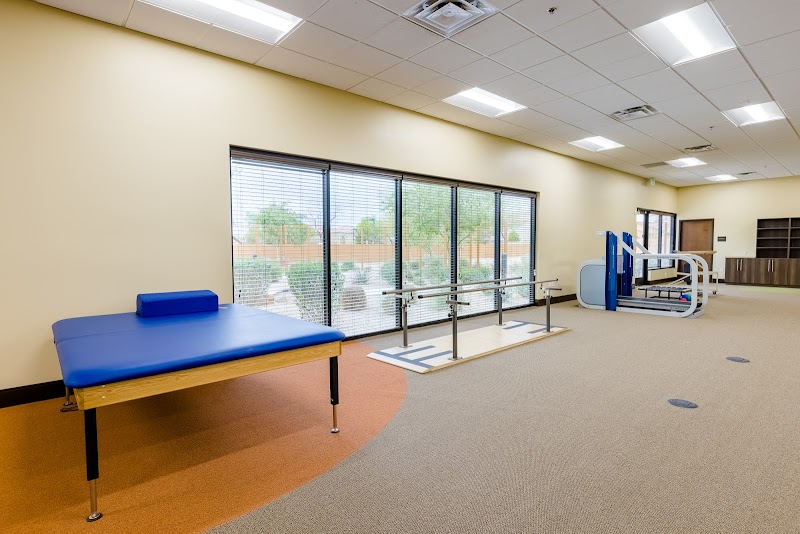
How is Northpark Of Cascadia Staffed?

CMS rates NORTHPARK HEALTH AND REHABILITATION OF CASCADIA's staffing level at 2 out of 5 stars, which is below average compared to other nursing homes. Staff turnover is 58%, which is 11 percentage points above the Arizona average of 46%. High turnover can affect care consistency as new staff learn residents' individual needs. RN turnover specifically is 82%, which is notably high. RNs provide skilled clinical oversight, so turnover in this role can affect medical care quality.

What Have Inspectors Found at Northpark Of Cascadia?

State health inspectors documented 14 deficiencies at NORTHPARK HEALTH AND REHABILITATION OF CASCADIA during 2022 to 2024. These included: 14 with potential for harm.
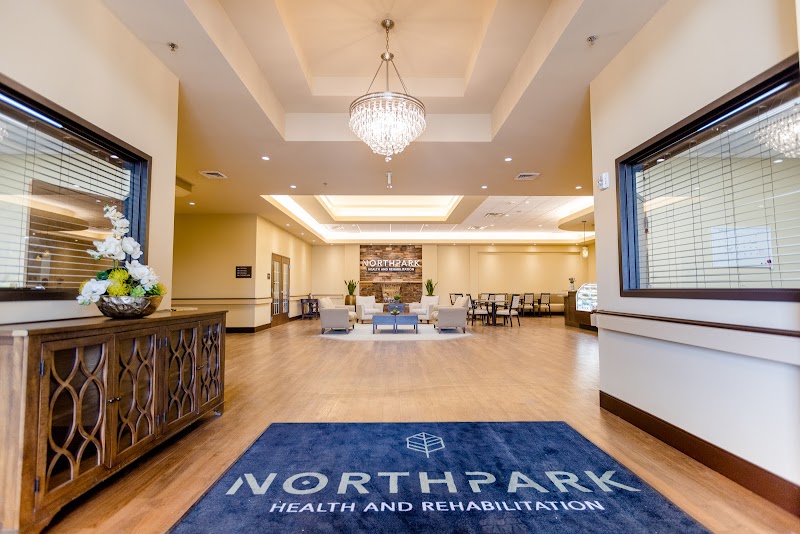
Who Owns and Operates Northpark Of Cascadia?

NORTHPARK HEALTH AND REHABILITATION OF CASCADIA is owned by a for-profit company. For-profit facilities operate as businesses with obligations to shareholders or private owners. The facility is operated by CASCADIA HEALTHCARE, a chain that manages multiple nursing homes. With 54 certified beds and approximately 52 residents (about 96% occupancy), it is a smaller facility located in PHOENIX, Arizona.

How Does Northpark Of Cascadia Compare to Other Arizona Nursing Homes?

Compared to the 100 nursing homes in Arizona, NORTHPARK HEALTH AND REHABILITATION OF CASCADIA's overall rating (5 stars) is above the state average of 3.3, staff turnover (58%) is significantly higher than the state average of 46%, and health inspection rating (5 stars) is much above the national benchmark.

What Should Families Ask When Visiting Northpark Of Cascadia?

Based on this facility's data, families visiting should ask: "How do you ensure continuity of care given staff turnover, and what is your staff retention strategy?" "Can you walk me through typical staffing levels on day, evening, and night shifts?" "Can I visit during a mealtime to observe dining assistance and food quality?" "How do you handle medical emergencies, and what is your hospital transfer rate?" These questions are particularly relevant given the facility's high staff turnover rate and the below-average staffing rating.

Is Northpark Of Cascadia Safe?

Based on CMS inspection data, NORTHPARK HEALTH AND REHABILITATION OF CASCADIA has a clean safety record: no substantiated abuse findings (meaning no confirmed cases of resident harm), no Immediate Jeopardy citations (the most serious violation level indicating risk of serious injury or death), and is not on the Special Focus Facility watch list (a federal program monitoring the lowest-performing 1% of nursing homes). The facility has a 5-star overall rating and ranks #1 of 100 nursing homes in Arizona. While no facility is perfect, families should still ask about staff-to-resident ratios and recent inspection results during their visit.

Do Nurses at Northpark Of Cascadia Stick Around?

Staff turnover at NORTHPARK HEALTH AND REHABILITATION OF CASCADIA is high. At 58%, the facility is 11 percentage points above the Arizona average of 46%. Registered Nurse turnover is particularly concerning at 82%. RNs handle complex medical decisions and coordinate care — frequent RN changes can directly impact care quality. High turnover means new staff may not know residents' individual needs, medications, or preferences. It can also be disorienting for residents, especially those with dementia who rely on familiar faces. Families should ask: What is causing the turnover? What retention programs are in place? How do you ensure care continuity during staff transitions?

Was Northpark Of Cascadia Ever Fined?

NORTHPARK HEALTH AND REHABILITATION OF CASCADIA has been fined $3,174 across 1 penalty action. This is below the Arizona average of $33,111. While any fine indicates a compliance issue, fines under $50,000 are relatively common and typically reflect isolated problems that were subsequently corrected. Families should ask what specific issues led to these fines and confirm they've been resolved.

Is Northpark Of Cascadia on Any Federal Watch List?

NORTHPARK HEALTH AND REHABILITATION OF CASCADIA is not on any federal watch list. The most significant is the Special Focus Facility (SFF) program, which identifies the bottom 1% of nursing homes nationally based on persistent, serious quality problems. Not being on this list means the facility has avoided the pattern of deficiencies that triggers enhanced federal oversight. This is a positive indicator, though families should still review the facility's inspection history directly.