RIDGECREST POST ACUTE
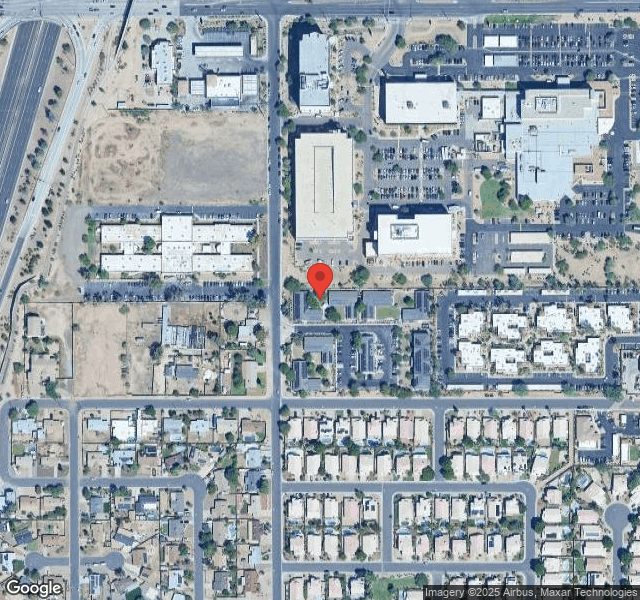

16640 NORTH 38TH STREET, PHOENIX, AZ 85032 (602) 482-6671
For profit - Limited Liability company 200 Beds PACS GROUP Data: November 2025
Trust Grade
70/100
#58 of 139 in AZ
Last Inspection: December 2024

Within standard 12-15 month inspection cycle. Federal law requires annual inspections.

Overview

Ridgecrest Post Acute in Phoenix, Arizona, has a Trust Grade of B, indicating it's a good choice among nursing homes, but not the very best. It ranks #58 out of 139 facilities in the state, placing it in the top half, yet #45 out of 76 in Maricopa County suggests there are better local options. The facility is currently worsening, with the number of issues increasing from 5 in 2023 to 9 in 2024. Staffing is average with a 3 out of 5 rating, but a concerning 62% turnover rate is higher than the state average, which may affect continuity of care. There have been no fines reported, which is a positive sign, but the nursing coverage is below average, being less than 93% of other facilities in Arizona. Specific incidents raised during inspections include failures to ensure corrective actions for Legionella bacteria found in residents' rooms, which could lead to respiratory issues. Additionally, there were concerns about medication availability for one resident, which could result in missed doses and adverse effects. While the facility has strengths, such as no fines and a good overall star rating, these weaknesses highlight areas that need significant improvement for resident safety and care quality.

Trust Score
B
70/100
In Arizona
#58/139
Top 41%
Safety Record
Low Risk
No red flags
Inspections
Getting Worse
5 → 9 violations
Staff Stability
⚠ Watch
62% turnover. Above average. Higher turnover means staff may not know residents' routines.
Penalties
✓ Good
No fines on record. Clean compliance history, better than most Arizona facilities.
Skilled Nurses
⚠ Watch
Each resident gets only 21 minutes of Registered Nurse (RN) attention daily — below average for Arizona. Fewer RN minutes means fewer trained eyes watching for problems.
Violations
⚠ Watch
18 deficiencies on record. Higher than average. Multiple issues found across inspections.
★★★★☆
4.0
Overall Rating
★★★☆☆
3.0
Staff Levels
★★★★★
5.0
Care Quality
★★★☆☆
3.0
Inspection Score
Stable
2023: 5 issues
2024: 9 issues

The Good

  • 5-Star Quality Measures · Strong clinical quality outcomes
  • Full Sprinkler Coverage · Fire safety systems throughout facility
  • No fines on record

Facility shows strength in quality measures, fire safety.

The Bad

Staff Turnover: 62%

16pts above Arizona avg (46%)

Frequent staff changes - ask about care continuity

Chain: PACS GROUP

Part of a multi-facility chain

Ask about local staffing decisions and management

Staff turnover is elevated (62%)

14 points above Arizona average of 48%

The Ugly 18 deficiencies on record

Dec 2024 4 deficiencies
CONCERN (D)

Potential for Harm - no one hurt, but risky conditions existed

Assessment Accuracy (Tag F0641)

Could have caused harm · This affected 1 resident

**NOTE- TERMS IN BRACKETS HAVE BEEN EDITED TO PROTECT CONFIDENTIALITY** Based on clinical record review, staff interviews, and policy and procedures, the facility failed to ensure a discharge Minimum ...

Read full inspector narrative →
**NOTE- TERMS IN BRACKETS HAVE BEEN EDITED TO PROTECT CONFIDENTIALITY** Based on clinical record review, staff interviews, and policy and procedures, the facility failed to ensure a discharge Minimum Data Set (MDS) assessment was accurate for one of three sampled residents (#139). The deficient practice could result in inaccurate discharge tracking information and data for quality monitoring. Findings include: Resident #139 was admitted on [DATE] with diagnoses that included altered mental status, catatonic disorder condition, anxiety disorder, and auditory hallucinations. A baseline care plan dated October 7, 2024 revealed that the resident's goal was to discharge to home. An order summary dated October 11, 2024, revealed that the resident's tentative discharge plan was to return home with family. A social services progress note dated October 16, 2024, revealed that the resident was discharged to home with her daughter and husband. The note further revealed that the home health was also arranged. A nursing progress note dated October 16, 2024, revealed that the resident was discharged home with home health. Despite this, a review of a discharge MDS assessment dated [DATE], revealed that the resident had been discharged to a short-term general hospital on October 16,2024. An interview was conducted on December 4, 2024 at 10:26 AM with a Registered Nurse (RN-Staff #218), who stated that a transfer form/e-interact transform form is completed when a resident is transferred to the hospital, along with Physician discharge notes. The RN reviewed the clinical record and stated that the resident had been discharged home. She further stated that a social worker's note revealed that the resident left by car with home health arrangements. An interview was conducted on December 4, 2024 at 10:41 AM with the MDS Coordinator (Staff #55), who stated that MDS data should be accurate as per the standard of care. He reviewed the resident's clinical record and stated that there was a discrepancy between progress notes, which indicated a discharge home, and the MDS discharge assessment, which indicated the resident was discharged to the hospital. He stated that the potential risk could result in inaccurate MDS data. An interview was conducted on December 4, 2024 at 10:57 AM with the Director of Nursing (DON/Staff #141), who stated that she expected MDS assessments to accurately reflect a resident's status. The DON reviewed Resident #139's progress notes, and stated that the resident was discharged home. She then reviewed the discharge MDS assessment dated [DATE] and stated that the assessment indicated that the resident had been discharged to a hospital. She further stated that the MDS was inaccurate and would need to be corrected. The DON stated uncertainty regarding the resident's final destination (Home or Hospital) and stated that she would have to look into it. The DON also stated that an inaccurate MDS assessment could result in incorrect MDS data. Further interview was conducted on December 4, 2024 at 12:20 PM with the DON (Staff #141) who stated that the clinical record contained a physician order to discharge the resident home, and a social service note to send the resident home. A facility policy titled, Comprehensive Assessments, revealed that a discharge MDS assessment is completed whenever a resident is physically discharged from the facility and is completed per RAI manual guidelines. Review of Centers for Medicare and Medicaid Services Long Term Care Facility Resident Assessment Instrument (RAI) 3.0 User's Manual, version 1.19.1, dated October 2024, revealed that the RAI process has multiple regulatory requirements including that the assessment accurately reflects the resident's status.
CONCERN (D)

Potential for Harm - no one hurt, but risky conditions existed

Accident Prevention (Tag F0689)

Could have caused harm · This affected 1 resident

**NOTE- TERMS IN BRACKETS HAVE BEEN EDITED TO PROTECT CONFIDENTIALITY** Based on clinical record review, staff interviews, and review of facility policies and procedures, the facility failed to ensure...

Read full inspector narrative →
**NOTE- TERMS IN BRACKETS HAVE BEEN EDITED TO PROTECT CONFIDENTIALITY** Based on clinical record review, staff interviews, and review of facility policies and procedures, the facility failed to ensure one resident (#113) is assessed for self-administration of medication. The deficient practice could result in residents having access to medications not authorized or contraindicated for their use. Findings include: Resident #113 was admitted on [DATE] with diagnoses that included chronic obstructive pulmonary disease, anxiety disorder, obstructive sleep apnea, and arthritis. Review of the admission MDS (Minimum Data Set) assessment dated [DATE], revealed the resident has a Brief Interview for Mental Status (BIMS) score of 15.0 indicating cognitively intact. The MDS also indicated that the resident uses a walker and wheelchair. The MDS assessment also revealed that the resident needs setup or clean up assistance with eating, partial/moderate assistance with oral hygiene, toileting hygiene, shower/bathe, upper and lower body dressing, and personal hygiene. During a medication administration observation with licensed practical nurse (LPN/Staff #176) on December 4, 2024 at 08:02 am, the following medications were observed prepared by Staff #176: - aspirin 81 mg (milligram), one tablet - duloxetine 30 mg, one capsule, - Eliquis 5 mg, one tablet - Lidocaine patch 4%, one patch - Protonix 40 mg, one tablet, - potassium 10 meq (milliequivalent), one tablet - oxycodone 10 mg, one tablet Upon entering the resident's room, an orange colored tube of medication labeled Neosporin and two packets labeled Calmoseptine was on top of resident #113's bed side table. Staff #176 identified the medication found on the table as Neosporin and Calmoseptine. Staff #176 stated that the resident is using the medication for itching around her groin area. Upon exiting the resident's room, a staff standing by resident#113 room door identified herself as the director of nursing (DON)/Staff #141, and stated that they are working on the self-administration. Review of the resident's clinical record did not contain any documentation stating that the resident has been assessed and cleared to self-administer medications. Furthermore, review of the resident's care plan did not reveal anything about self-administration of medication. Review of the resident's order summary report revealed that there were no orders for self-administration of medications. Additionally, the order summary did not contain a physician's order for Neosporin and Calmoseptine. Furthermore, the resident's medication administration record for December 2024 revealed no orders for resident to self-administer medication and no orders found for Neosporin and Calmoseptine. However, a Self-Administration of Medication Observation form with an effective date of December 4, 2024 timestamped 8:30 am was added to the resident ' s clinical record. The Self-Administration of Medication Observation form indicated that the medications the resident would like to self-administer were Neosporin and house stock zinc oxide. The storage of medication section documented that the resident was in the process of self-administration training for 2 ointments and that the education was in process. Additionally, during a follow-up review of the resident ' s clinical record it was observed that the order for Neosporin and Calmoseptine were added with a start date of December 4, 2024. An interview with Resident #113 was conducted on December 4, 2024 at 8:51 am. Resident #113 stated that the medication has been there for months. The staff pulled the medication out and had it set on top of her table. Furthermore, the resident said that the medication has been on her table since yesterday afternoon. During an interview with the Director of Nursing (DON/staff #141) conducted on December 4, 2024 at 3:15 pm, the DON stated that their residents have the right to self-administer medication. Staff #141 said her IDT (interdisciplinary team) which includes a nurse provides training to make sure their residents are able to self-administer competently. The IDT conducts assessments and care plan. The DON stated that they do training simultaneously, obtain orders, and create the care plan. In addition, staff #141 stated that her unit manager was in the process of doing self-administration training with the resident, and the training started today. A follow up interview was conducted with the DON on December 5, 2024 at 8:16 am. The DON stated that medications are stored in the nurse's cart. If self-administering, it is stored in the resident's room. The medication is stored in resident's room on their side where they have easy access, and where ever they have easy access. The DON declared that this is her final answer. Review of the undated facility policy titled, Self-Administration of Medications, stated that residents have the right to self-administer medications if the IDT has determined that it is clinically appropriate and safe for the resident to do so. The policy indicated that part of the evaluation is that the IDT assesses each resident's cognitive and physical abilities to determine whether self-administering medications is safe and clinically appropriate for the resident. The policy also indicated that if deemed safe and appropriate for resident to self-administer medications, it is documented in the medical record and the care plan. The policy also noted that any medications found at the bedside that are not authorized for self-administration are turned over to the nurse in charge for return to the family or responsible party.
CONCERN (D)

Potential for Harm - no one hurt, but risky conditions existed

Medical Records (Tag F0842)

Could have caused harm · This affected 1 resident

**NOTE- TERMS IN BRACKETS HAVE BEEN EDITED TO PROTECT CONFIDENTIALITY** Based on record review, staff interviews and observations, the facility failed to ensure that electronic records for one of twen...

Read full inspector narrative →
**NOTE- TERMS IN BRACKETS HAVE BEEN EDITED TO PROTECT CONFIDENTIALITY** Based on record review, staff interviews and observations, the facility failed to ensure that electronic records for one of twenty-eight sampled residents (#64) were accurately documented. The deficient practice could result in the medical record not reflecting the resident ' s condition and the care and services provided across all disciplines. Findings include: Resident #64 was admitted on [DATE] with diagnoses of dementia, type 2 diabetes mellitus, major depressive disorder and anxiety disorder. Review of Resident #64's medical record revealed a New admission Medication Review dated June 12, 2023 that was for another resident, regarding Prednisone 20 mg. Further review of the form revealed another resident ' s name, date of birth , and medications, and was no longer a resident at the facility. An additional New admission Medication Review dated June 12, 2023 was also in Resident #64 ' s medical record with the same resident ' s name that included: Evaluate: Bupropion 150 mg Modify: Prednisone 20 mg Evaluate: Rosuvastatin 20 mg Evaluate: Leader Nicotine gum 2 mg An interview was conducted with the Health Information Director (HID/Staff #33) on December 4, 2024 at 1:44 p.m., who stated documents are checked before and after they are uploaded into the medical records system. She stated that if incorrect records are found, the issue would be immediately corrected. She reviewed Resident #64 ' s clinical records and stated that New admission Medication Reviews dated June 12, 2023 were that of another resident. She also indicated that the records were inaccurately placed in Resident #64 ' s records. An interview was conducted with the Director of Nursing (DON/Staff #141) on December 4, 2024 at 2:00 p.m., who stated that all resident records should be held privately in the online system. She reviewed Resident #64 ' s clinical record and stated that another resident ' s New admission Medication Reviews were incorrectly placed in Resident #64 ' s clinical record. She also stated that this did not meet her expectations and should be corrected immediately, as this was private resident information. Review of a policy titled, Confidentiality of Information and Personal Privacy, document revealed that the facility will safeguard the personal privacy and confidentiality of all resident personal and medical records. Review of a policy titled, Resident Rights, revealed that Federal and State laws guarantee basic rights to all residents that include privacy and confidentiality. The policy further revealed that the unauthorized release and access to resident information is prohibited.
CONCERN (E)

Potential for Harm - no one hurt, but risky conditions existed

Infection Control (Tag F0880)

Could have caused harm · This affected multiple residents

**NOTE- TERMS IN BRACKETS HAVE BEEN EDITED TO PROTECT CONFIDENTIALITY** Based on observation, documentation, staff interview, review of policy and procedures the facility failed to ensure that correct...

Read full inspector narrative →
**NOTE- TERMS IN BRACKETS HAVE BEEN EDITED TO PROTECT CONFIDENTIALITY** Based on observation, documentation, staff interview, review of policy and procedures the facility failed to ensure that corrective actions plans were set in place for legionella. The deficient practice could result in residents to have respiratory complications. Findings include: A review of the final report from the water sampling company testing collected on June 6, 2024 revealed that 3 residents' rooms and one nursing station tested positive for Legionella. According to the report, room [ROOM NUMBER] had a Legionella pneumophila serotype 2-15 at a concentration of 6.3 CFU (colony forming units)/ml (Milliliter). Room # 102 was found to have Legionella pneumophila serotype 2-15 at a concentration of 0.6 CFU/ml. Additionally, room [ROOM NUMBER] detected the presence of Legionella pneumophila serotype 2-15 at a concentration of 7.7 CFU/ml. The 400 Nurse ' s Station was also positive for the presence of Legionella pneumophila serotype 2-15 at a concentration of 25 CFU/ml. Review of the Legionella program and Infection Prevention and Control program did not reveal any documentation pertaining to the detection of Legionella in the facility ' s water system. An interview was conducted on December 04, 2024 at 10:24 AM with the Maintenance Director (Staff # 45). Staff #45 stated that for the process for legionella testing the water safety company would send a testing kit for legionella and from there the maintenance director would send back those water samples to the water safety company for results. The Maintenance Director (Staff #45) stated that the testing results of legionella would determine how often the testing needs to be completed. Staff #45 stated that when water testing results are positive for legionella then more testing will occur to determine if the levels of legionella have decreased. The Maintenance Director (staff #45) stated that he would monitor for legionella by flushing out the water system. A review of an email sent from the water safety company regarding the legionella testing done on June 6, 2024 was conducted with Staff #45 on December 4, 2024 at approximately 10:24 a.m. The email revealed that 4 out of the 5 locations sampled in the facility tested positive for legionella. In an interview with the Maintenance Director (staff #45) conducted on December 4, 2024 at 10:24 a.m., he stated that with positive legionella results the water testing company would come to the facility to test the water 3 additional times to ensure that the levels have decreased. Staff #45 stated that there were no previous records from the previous maintenance director in regards to results for legionella. A telephonic interview was conducted December 04, 2024 at 12:52PM with a water company representative (staff #477 ) stating that 3 out of 4 locations that were tested for legionella was greater than 1.0 CFU/ml. Staff # 477 stated that the water sample testing were completed on June 6, 2024. The results indicated that the facility water was controlled poorly. The water company representative stated that there should have been a corrective action plan set in place to put things back into control. Staff # 477 stated that there is no record of a corrective action plan being made to address legionella. A request for follow up documentation regarding the water sampling test was submitted on on December 04, 2024 at 1:07 PM. The request was returned with a signed statement from the administrator (staff #13) which stated no follow-up/not required. An interview was conducted on December 4, 2024 at 1:29PM with the Infection Control Preventionist (Staff # 27). Staff #27 stated that protocols for positive legionella testing consists of contacting the Center for Disease Control (CDC), State, and County. The Infection Control Preventionist stated that the Maintenance Director is the best person to explain the process since he would be the one to take the appropriate actions. During an interview with the Maintenance Director (Staff #45) conducted on December 4, 2024 at 1:51PM, he stated that he was not aware of the test results for legionella testing done on June 6, 2024 since he was not the Maintenance Director at that time. Staff # 45 stated that from his understanding there was no form of communication in regards to test results completed on June 6, 2024. The Maintenance Director (staff # 45) stated that with positive legionella test results, the Infection Control Preventionist , the Maintenance Director, and Administrator would be notified. An interview was conducted on December 4, 2024 at 2:34PM with Administrator ( Staff #13). Staff #13 stated that regarding the testing done June 6, 2024 for legionella, there was no communication and no need for follow up in regards to those results. The Administrator stated the facility does not have routine testing for legionella and there is no policy set in place.Staff # 13 stated that the risk to residents when there is legionella in the facility is increased respiratory risk.The Administrator acknowledged that if a resident tested positive then it would be a big thing. During a follow up interview with the Infection Control Preventionist conducted on December 5, 2024 at 7:56AM, staff #27 stated that legionella is a communicable disease, and when legionella occurs that the County, State, and Center of Diseases Control (CDC) would be contacted.
Aug 2024 1 deficiency
CONCERN (D) 📢 Someone Reported This

A family member, employee, or ombudsman was alarmed enough to file a formal complaint

Potential for Harm - no one hurt, but risky conditions existed

Free from Abuse/Neglect (Tag F0600)

Could have caused harm · This affected 1 resident

**NOTE- TERMS IN BRACKETS HAVE BEEN EDITED TO PROTECT CONFIDENTIALITY** Based on documentation, staff interviews, and the facility policy and procedures, the facility failed to ensure that residents a...

Read full inspector narrative →
**NOTE- TERMS IN BRACKETS HAVE BEEN EDITED TO PROTECT CONFIDENTIALITY** Based on documentation, staff interviews, and the facility policy and procedures, the facility failed to ensure that residents are free from abuse from other residents. The deficient practice could result in residents being physically and emotionally injured. Findings include: Resident #8 was admitted to the facility on [DATE] with diagnoses that included unspecified dementia, unspecified severity, without behavioral disturbance, psychotic disturbance, mood disturbance, and anxiety, mild cognitive impairment of uncertain or unknown etiology. The minimum data set (MDS) dated [DATE] included a brief interview for mental status score of 13 indicating the resident was cognitively intact. A provider progress note dated August 13, 2024 revealed resident #8 and resident #26 who reside on Sunset Secured Behavioral Unit had a verbal altercation in the dayroom. The note stated that staff were present and able to immediately separate the two residents. The note stated Resident #8 currently was on one-on-one staff supervision and ongoing investigation was in progress to collect more details. The note stated DHS (Department of Health Services), APS (Adult Protective Services), Ombudsman, Police, Provider, Case manager and responsible parties were notified. The care plan dated June 24, 2024 revealed that the resident has potential for impaired thought processes r/t diagnosis of dementia. -Resident #26 was admitted to the facility on [DATE] with diagnoses that included major depressive disorder, recurrent, unspecified, post-traumatic stress disorder, unspecified, dementia in other diseases classified elsewhere, unspecified severity, with agitation, generalized anxiety disorder The care plan dated May 8, 2024 revealed that the resident is/has the is/has potential to demonstrate verbally abusive behaviors related to major depressive disorder, pos traumatic stress disorder, dementia with agitation, anxiety disorder as exhibited by thinking people are outside his window and trying to kill him, paranoid delusions, visual hallucinations. Review of the behavioral health care plan dated June 10, 2024 revealed a risk assessment for identified behavioral triggers. The identified triggers were being around people, noise, and when unable to express himself properly and/or loses his thought when speaking. The quarterly minimum data set (MDS) dated [DATE] included a brief interview for mental status score of 10 indicating the resident had moderate cognitive impairment. Further review of the MDS revealed resident presented with delusional behaviors. A progress note dated August 13, 2024 revealed a Change in Condition/s (CIC) reported on this CIC Evaluation are/were: Behavioral symptoms (e.g. agitation, psychosis) and a verbal altercation between resident # 8 and #26. Staff present and able to immediately separate the two residents. [NAME] currently on one-on-one staff supervision. ON going investigation in progress to collect more details. DHS, APS, Ombudsman, Police, Provider, Case manager, responsible parties notified. Review of the Clinical Census revealed resident #26 was moved to a different secured unit August 16, 2024. Review of an interview statement dated August 13, 2024 by a certified nursing assistant (CNA/staff #241), revealed that she observed resident #26 swinging his fists in the air with (CNA/staff #209) and (LPN/registry staff #17) in between resident #26 and #8. She stated she never observed any physical contact between the two residents. Review of an interview statement dated August 13, 2024 revealed that a licensed practical nurse (LPN/registry staff #17) revealed that upon leaving another residents room she saw residents #26 and #8 about to get physical with (CNA/staff #209) trying to separate them by physically holding their chests apart as resident #8 was trying to defend himself and put his hand towards resident #26's face, to keep him away. The statement revealed the two were able to be immediately separated with no injuries. An interview was conducted on August 26, 2024 at 12:20 p.m. with resident #8 who stated he was sitting in the front area about approximately 15 ft from resident #26. He stated resident #26 stared at him for a full hour. Resident #8 stated he approached resident #26 and asked if he had an issue with him with no response. Resident #8 stated he changed places in the room, but he continued to stare at him. Resident #8 stated he approached resident #26 again and told him it really bothers him. He stated resident #26 used profanity and shoved him in the chest and hit him on the right side of his chin with a closed fist. Resident #8 stated he landed a closed fist twice on the chest and once in the face of resident #26. then it was broken up by staff. Resident #8 stated he walked away. He stated he saw him once following the incident, but nothing was said and that they moved him somewhere else. He said he had no bruises. An interview was conducted on August 26, 2024 at 12:28 p.m. with (CNA/staff #174) who stated resident #26 was moved to an all-male high acuity unit with a lower census. She stated she was informed resident #26 was moved due to an altercation with resident #8 and that resident#8 was placed on 1:1 supervision 24/7 for a period of 3-4 days until resident #26 was discharged from the unit. Staff #174 stated they are trained to de-escalate and make sure the residents are kept apart if there was an issue and to inform the supervisor. An attempt was made to interview resident #26 August 26, 2024 at 12:38 p.m., but was observed to be confused and unable to express his thoughts. An interview was conducted on August 26, 2024 at 12:40 p.m. with (LPN/staff #130) who stated resident #26 was moved to the unit one week prior due to an altercation with another resident. She stated resident #26, is extremely confused, can be physical and verbally aggressive and is easily agitated. She stated there have been no further incidents with resident #26 since his move to the unit. Staff #130 stated that she has received training on abuse and physical abuse includes striking, grabbing, and pulling. Review of the facility investigative report revealed it was unsubstantiated by the facility due to no willful intent and no actual physical contact between the two residents. It was noted resident #26 was being monitored for change of condition due to delusional behaviors. An interview was conducted on August 26, 2024 at 12:57 p.m. with the Director of Nursing (DON/staff #229), who stated that resident #26 and #8 were on the unit sitting on opposite sides of the room and resident #8 went up to resident #26 thinking he had spoken to him when the altercation happened. She stated the CNA was able to come between them and separated them and no one was hit. She stated abuse occurs when harm is inflicted on a resident and can be physical, mental, misappropriation, isolation, restrained, and sexual and it is the facility's responsibility to report within two hours, including providers. She stated that a 5-day investigation was completed and the allegation of abuse was unsubstantiated. The facility policy titled, Abuse, Neglect, Exploitation, and Misappropriation Prevention residents have the right to be free from abuse, neglect, misappropriation of resident property and exploitation. This includes but is not limited to freedom from corporal punishment, involuntary seclusion, verbal mental, sexual or physical abuse, and physical or chemical restraint not required to treat the resident's symptoms.
Jun 2024 2 deficiencies
CONCERN (D) 📢 Someone Reported This

A family member, employee, or ombudsman was alarmed enough to file a formal complaint

Potential for Harm - no one hurt, but risky conditions existed

Free from Abuse/Neglect (Tag F0600)

Could have caused harm · This affected 1 resident

**NOTE- TERMS IN BRACKETS HAVE BEEN EDITED TO PROTECT CONFIDENTIALITY** Based on clinical record review, staff interviews and facility documentation and policy review, the facility failed to ensure th...

Read full inspector narrative →
**NOTE- TERMS IN BRACKETS HAVE BEEN EDITED TO PROTECT CONFIDENTIALITY** Based on clinical record review, staff interviews and facility documentation and policy review, the facility failed to ensure that 3 residents (#20,#15, #127) are free from abuse. The deficient practice could result in residents not protected from further abuse. Findings include: Regarding resident #20 and resident #152 -Resident #20 was admitted on [DATE] with diagnoses of Huntington's disease, schizoaffective disorder, anxiety disorder, major depressive disorder, and alcohol dependence. A review of the clinical record revealed a BIMS (Brief Interview for Mental Status) score of 0 indicating the resident had severe cognitive impairment. It also included that the resident had a history of yelling, throwing things, pacing, wandering, refusing cares, cursing and hitting staff. -Resident #152 was admitted on [DATE], with diagnoses that included Huntington's disease, bipolar disorder, PTSD (post-traumatic stress disorder), significant history of abuse and methamphetamine use. Review of the clinical record revealed the resident had a BIMS score of zero indicating the resident had severe cognitive impairment. The facility self-report submitted to the SA (State Agency) on December 6, 2022 revealed that resident #152 got up from her seat during dinner time and walked over to resident #20 and started punching resident #20 in the face with closed fists four to five times. Per the documentation, resident #152 then walked back to her chair in the day room and sat down. The facility report included a signed witness statement dated December 6, 2022 by the certified nurse assistant (CNA/staff #207) who wrote that during dinner time in the dayroom at 5:40 p.m., resident #152 got out of her seat, walked over to resident #20 who was sitting and watching television. According to the written statement, resident #152 started punching resident #20 in her face four to five times with a closed fist. Further review of the report included a signed witness statement dated December 6, 2022 by a registered nurse (RN/staff #212) who wrote that the RN left dayroom when dinner was winding down and went to chart at the nurses' station; and that, the CNA (staff #207) reported the attack to the RN; and that, both residents were separated immediately. The statement also included that resident #152 was removed from the dayroom and the RN administered an ice pack the PRN (as needed) pain medication to resident #20. Regarding resident #153 and resident #15 -Resident #153 was admitted to the facility on [DATE] with diagnoses that included neurocognitive disorder due to alcohol related dementia, post-traumatic stress disorder, anxiety, depression, violent behavior, and alcohol abuse. The care plan dated September 6, 2022 revealed that the resident had impaired thought processes related to alcohol induced dementia and had a history of wandering and physical aggression. Review of the clinical record revealed the resident had a BIMS score of 13/15 indicating the resident was cognitively intact. -Resident #15 was admitted to the facility on [DATE], with diagnoses of schizoaffective disorder, personality disorders, anxiety disorder, severe dementia with agitation, alcohol dependence and insomnia. The care plan dated November 23, 2015 revealed that resident #15 exhibited intrusive wandering, had history of sexually inappropriate behavior, hallucinations, disruptive yelling, and exit-seeking. The clinical record revealed that resident #15 had a BIMS score of 1/15 indicating the resident had severe cognitive impairment. A review of the facility self-report that was submitted to the SA on June 2, 2023 revealed that resident #153 pushed resident #15. Per the documentation, on June 2, 2023, at 11:00 a.m. resident #153 reported that resident #15 came into his room; and that, resident # 15 started touching his stuff so he told resident #15 to get out of his room. It also included that resident #15 did not get out so he pushed resident #15 on her upper chest with his palms and resident #15 stumbled backwards and then left his room. The report included an interview the facility conducted on June 2, 2023 with a licensed practical nurse (LPN/staff #11) who reported that resident #153 reported to her that resident #15 was trying to go into his room; and that, he told resident #15 to stop but resident #15 continued to try to go into his room anyway so he pushed resident #15 who bumped the door. The report further included an interview with a registered nurse (RN/staff #165) conducted on June 2, 2023. Per the documentation, the RN stated that the RN was in the dayroom when LPN/staff # 11 came and saida resident # 15 had received physical aggression from resident # 153 and that resident # 15 went into resident # 153's room and was told by resident # 153 to get out but did not, so resident # 153 grabbed her and shoved resident # 15 towards the door. Regarding resident #127 Resident # 127 was admitted to the facility on [DATE], with diagnoses that included history of falls and alcohol use, altered mental status including hallucinations, asthma, COPD (Chronic Obstructive Pulmonary Disease), type 2 diabetes and anxiety. A review of resident # 127's clinical records revealed that resident # 127 had been assessed with a BIMS score of 10/15, indicating moderately impaired cognition. A review of the facility self-report to the SA on January 19, 2023, revealed that, CNA/staff # 210 observed LPN/staff# 211 attempted to administer medication to resident #127, then she observed LPN/staff# 211 open handedly hitting the side of resident # 127's head to arouse resident # 127. CNA/staff # 210 observed LPN/staff# 211 moved resident # 127's upper extremities in a circular motion in attempt to assist resident # 127 in getting resident # 127's medicine down and CNA/staff# 210 also observed resident # 127 was coughing after medication was administered by LPN/staff# 211. A review of LPN/staff # 211's witness statement dated January 19, 2023, stated that the LPN (staff#211) could not arouse resident # 127 by holding resident's #127 shoulder so the LPN shook resident #127 and called resident # 127's name. Then the statement stated the LPN tapped resident # 127 on the head with open hand with palms while calling resident #127's name to get resident # 127's attention. After the resident # 127 responded by verbal grunt, the LPN asked resident # 127 if he was okay, to which the resident # 127 responded with a yes. So, The LPN continued to pour lesser amounts of fluid, waiting for swallow reflux. The statement further stated the CNA/staff # 210 who was in the resident's room the whole time asked the LPN, aren't you being kind of rough? and the LPN answered stating that was the only way the LPN knew to make sure resident # 127 did not choke. The LPN stated of being rough. A review of CNA/staff# 210's witness statement dated, January 19, 2023, stated that the CNA questioned the LPN/staff # 211 if the resident was going to be medicated because the resident was not even waking up. The LPN/staff # 211 had replied saying yes because the doctor had told the LPN to medicate the resident. The CNA stated staying in resident #127's room, The CNA then stated with an open hand, using the whole inside of LPN/staff # 211 hand, LPN/staff # 211 started hitting resident # 127's right side of the head to try to wake up resident # 127 and then LPN/staff #211 palmed the top of resident # 127's head and started shaking resident #127's head in a circular motion so resident # 127's medicine could go down. The statement revelaed that the CNA told LPN/staff # 211, Hey what are you doing? You are hurting him and hitting him very hard. LPN/staff # 211 stated, Yes, I know. I know that is abuse. If you want to report me, go ahead. So then, LPN/staff # 211 gave resident # 127 juice to have the medicine go down and resident # 127 started coughing a little. I stayed in resident # 127's room until LPN/staff # 211 exited resident # 127's room together. Resident # 20 Resident # 20 was admitted to the facility on [DATE], with diagnoses that included Huntington's disease, schizoaffective disorder, anxiety disorder, major depressive disorder, and alcohol dependence. A review of resident # 20's clinical records revealed that resident # 20 had been assessed with a BIMS score of zero, indicating severe memory impairment. Resident # 20 had a history of yelling, throwing things, pacing, wandering, refusing cares, cursing and hitting staff. A review of the facility self-report submitted to the SA on December 28, 2022, revealed that night shift CNA/staff # 22 stated that she was scheduled to work on December 27, 2022 from 10:00pm to 6:00am. CNA/staff# 22 stated that when she walked in the doors, CNA/staff #22 saw registry CNA/staff# 212 and RN/staff# 213 in front of resident # 20's room. CNA/staff#22 saw staff # 212 holding resident #20's door shut with a resident gown tied from resident # 20's room doorknob to the hallway side rail. A review of a signed witness statement by registry CNA/staff # 216 on December 29, 2022, stated that, while coming on shift, I saw the evening shift had a night gown tied to resident # 20's room door. CNA/staff # 22 was by resident #20's room door, untying the gown from it. A review of a signed witness statement by night shift LPN/staff# 29 on December 27, 2022, stated that, I received report from CNA/staff # 22 and CNA/staff # 216 that they witnessed possible abuse towards resident #20. LPN/staff # 29 confirmed the statement by CNA/staff # 22 regarding CNA/staff 212 holding resident # 20's room door shut with a gown tied from the room doorknob to the hallway side rail. LPN/staff # 29 reported this allegation to the DON/staff # 149 (Director of Nursing). An interview regarding current practice on abuse with LPN/staff # 59 on June 12, 2024, at 12:45pm was conducted. LPN/staff # 59 stated that all staff receive training on abuse and neglect during new employee orientation and those are ongoing during meetings and individualized training. An interview regarding current practice on abuse with ADON/staff # 7, on June 12, 2024, at 10:40am, was conducted. ADON/staff # 7 stated that abuse and neglect procedures are taught during new employee orientation, then discussed at every staff meeting. Additional training is provided to staff, individually, based on need. A review of the facility's policy on abuse, dated April 2021, and it states, residents have the right to be free from abuse, neglect, misappropriation of resident property and exploitation. This includes but is not limited to freedom from corporal punishment, involuntary seclusion, verbal, mental, sexual or physical abuse, and physical or chemical restraint not required to treat the resident's symptoms.
CONCERN (D) 📢 Someone Reported This

A family member, employee, or ombudsman was alarmed enough to file a formal complaint

Potential for Harm - no one hurt, but risky conditions existed

Accident Prevention (Tag F0689)

Could have caused harm · This affected 1 resident

**NOTE- TERMS IN BRACKETS HAVE BEEN EDITED TO PROTECT CONFIDENTIALITY** Based on clinical record review, staff interviews and facility documentation and policy review, the facility failed to identify ...

Read full inspector narrative →
**NOTE- TERMS IN BRACKETS HAVE BEEN EDITED TO PROTECT CONFIDENTIALITY** Based on clinical record review, staff interviews and facility documentation and policy review, the facility failed to identify residents who are at risk of unsafe wandering. The deficient practice could result in physical injury. Findings include: Resident #154 was admitted on [DATE] with diagnoses of aphasia, stroke, muscle weakness, abnormalities of gait and mobility, altered mental status and repeated falls. A review of the hospital history and physical note dated March 11, 2023 revealed that resident was alert and oriented to person and place only. The baseline care plan dated March 16, 2023 revealed that the resident was confused. The wandering risk assessment dated [DATE] revealed the resident was found to be disoriented and can be disturbed by environmental noise levels. The wandering risk assessment dated [DATE] included the resident was found to be forgetful/short attention span and known wanderer or had a history of wandering. A progress note dated March 21, 2023 revealed the resident was outside with the police due to wandering through a residential neighborhood south of the facility. Per the documentation, the resident was previously seen in his room at 5:55pm by a certified nurse assistant (CNA/staff # 208). The documentation also included that the resident was agitated, had a small skin tear to the posterior left hand, was resistive to returning to the facility; and, was placed on a one-on-one monitoring. A review of the facility self-report submitted to the SA (state Agency) on March 21, 2023, revealed that at approximately 6:40 p.m. on March 21, 2023, resident #154 was seen by a neighbor walking down the street just south of the facility; and, was returned to the facility by the police. Per the documentation, the resident exited the facility through his room window which had been opened and the screen was pushed out. An interview with the assistant Director of Nursing (ADON/staff #7) was conducted on June 12, 2024. The ADON stated that stations one and two were not locked or secured; and that, the level of independence of each resident in the unit was determined by risks and cognition levels of each resident. A review of the facility's policy on Wandering and Elopement dated March 2019 included that the facility will identify residents who are at risk of unsafe wandering and strive to prevent harm while maintaining the least restrictive environment for residents; and, if identified as at risk for wandering, elopement, or other safety issues, the resident's care plan will include strategies and interventions to maintain the resident's safety.
Apr 2024 2 deficiencies
CONCERN (D) 📢 Someone Reported This

A family member, employee, or ombudsman was alarmed enough to file a formal complaint

Potential for Harm - no one hurt, but risky conditions existed

Deficiency F0583 (Tag F0583)

Could have caused harm · This affected 1 resident

Deficiency Text Not Available

Read full inspector narrative →
Deficiency Text Not Available
CONCERN (D) 📢 Someone Reported This

A family member, employee, or ombudsman was alarmed enough to file a formal complaint

Potential for Harm - no one hurt, but risky conditions existed

Accident Prevention (Tag F0689)

Could have caused harm · This affected 1 resident

**NOTE- TERMS IN BRACKETS HAVE BEEN EDITED TO PROTECT CONFIDENTIALITY** Based on documentation, staff interviews, and the facility policy and procedures, the facility failed to provide supervision for...

Read full inspector narrative →
**NOTE- TERMS IN BRACKETS HAVE BEEN EDITED TO PROTECT CONFIDENTIALITY** Based on documentation, staff interviews, and the facility policy and procedures, the facility failed to provide supervision for two residents (#1 and #2) that resulted in an altercation. The deficient practice could result in residents being injured. Findings include: Regarding Resident #1 Resident #1 was admitted to the facility on [DATE] with diagnoses that included borderline personality disorder, anoxic brain damage, and unspecified psychosis. The care plan dated August 29, 2023 revealed that resident #1 had the potential to demonstrate verbally abusive behaviors related to anoxic brain injury, major depressive disorder, unspecified mood disorder, anxiety disorder, violent behavior, restlessness and agitation. Interventions included to intervene before agitation escalates; guide away from source of distress; and engage calmly in conversation. If the resident's response is aggressive, staff to walk calmly away, and approach later. The resident behavior plan dated January 1, 2024 revealed that the resident is at risk for the behavioral symptoms: striking out, grabbing others, combativeness, and being physically or verbally abusive. The resident will spit at staff when her requests aren't met; make allegations about staff and threaten to have them suspended. She's verbally abusive towards staff and refuse care. Behaviors are related to a personality disorder, anoxic brain injury, major depressive disorder, anxiety disorder, violent behavior, restlessness and agitation. Interventions included to observe whether the behavior endangers the resident and/or others, staff are to intervene if necessary, removing others from the surrounding area, and reduce stimulation: noise, crowding, and other physically aggressive residents to the extent possible. The minimum data set (MDS) dated [DATE] included a brief interview for mental status score 15 indicating the resident was cognitively intact. A progress note dated March 12, 2024 at 4:26 p.m. by a licensed practical nurse (LPN/staff #602) revealed that it was reported to her that resident (#1) was seen kicking a peer. The peer was immediately removed from the situation, one-to-one staff to resident ratio was initiated immediately. Resident #1 continued to be combative with staff, striking staff in the chest and arms. A progress note dated March 12, 2024 at 9: 56 p.m. revealed a change of condition (COC), which included physical aggression, verbal aggression, and danger to self and others. Physician recommended that resident #1 be transferred to the emergency room for a psychiatric evaluation. A progress note dated March 13, 2024 at 4:26 p.m. stated that resident #1 arrived approximately at 3:55 p.m. via stretcher from the hospital. Resident is a one-to-one certified nursing staff (CNA) at all times and two staff to provide care for all needs. A physician's progress note dated March 14, 2024 at 9:10 a.m. revealed that resident #1 was transferred to a psychiatric unit due to alleged physical abuse to another resident and to a staff member. Resident #1 stated that she did not hit resident #2, who had wandered into her room. Resident #1 stated that she was trying to wake resident #2 up by tapping resident #2 with her hands, so resident #2 would go to her room. The accusation was that resident #1 was seen kicking resident #2; however, resident #1 had limited use of the lower left extremity and lacks the strength related to quadriplegia to kick the other resident. Review of facility documentation dated March 15, 2024 revealed that on March 12, 2024 at approximately 5:45 p.m., the Director of Nursing (DON) received a call from a LPN (staff #602). Staff #602 reported that resident #1 was yelling and threw a box of crayons across the dining room and it almost hit another resident. The DON instructed staff #602 to remove all the other residents from the dining room for safety and staff #33 would work on finding another staff, to provide one-to-one supervision with resident #1. Within several minutes, staff #602 contacted the DON a second time to report that a CNA stated that resident #1 had hit another resident. Regarding Resident #2 Resident #2 was admitted to the facility on [DATE] with diagnoses that included schizoaffective disorder, dementia with psychotic disturbance, and major depressive disorder. A care plan dated November 23, 2015 revealed that resident #2 had diagnoses of dementia with behavioral disturbances, anxiety, psychosis, hallucinations, insomnia, and a history of traumatic brain injury. She exhibits intrusive wandering, self-injurious behaviors by sticking her fingers in her throat to induce vomiting. She has a history of sexually inappropriate behavior, inappropriate urination/defecation, hallucinations, resistive/combative with care, disruptive yelling, and exit seeking by hovering and pushing exit doors. Review of a wandering risk assessment dated [DATE] revealed a score of 11 indicating the resident is a high risk for wandering. The MDS assessment dated [DATE] did not include a brief interview for mental status because the resident was not able to answer the questions. Review of the weekly behavior notes dated February 29, 2024 and March 7, 2024, revealed that resident #2 continues to be intrusive and wandering into peer's spaces on the unit. The resident continues to pace back and forth in the hallway. The resident is resistive at times when redirected from staff and will continue to exit seek. Staff redirects the resident multiple times per shift with coloring, word searches, and conversation with minimal effectiveness. A progress note dated March 12, 2024 revealed that resident #1 was seen kicking resident #2. Resident #2 was unable to verbalize appropriately, but did not appear affected during the evaluation. Resident #2 was removed from resident #1's bedroom and her safety was ensured. Review of the weekly behavior notes dated March 21, 2024 and May 4, 2024, revealed that resident #2 continues to be intrusive and wandering into peer's spaces on the unit. The resident continues to pace back and forth in the hallway. The resident is resistive at times when redirected from staff and will continue to exit seek. Staff redirects the resident multiple times per shift with coloring, word searches, and conversation with minimal effectiveness. An interview was conducted on April 5, 2024 at approximately 2:00 p.m. with (LPN/staff #602), who stated that resident #1 was in the dining room with the other residents for dinner and started yelling and threw colored pencils. She had staff remove the other residents because resident #1 was escalating. When resident #1 received her dinner, she began banging her silverware. She stated that she instructed (CNA/staff #404) to supervise resident #1 to make sure that the resident did not leave the dining room and disrupt the other residents who were eating dinner in the hallway, while she called the DON. She stated that the DON told her that she was going to work on getting a one-to-one staff to supervise resident #1. Resident #2 was eating dinner in the hallway by her room, which is just across from resident #1's room. Then the staff started cleaning up the dinner trays when she heard (CNA/staff #58) yelling help and she ran down to resident #1's room where resident #2 was lying on the floor and resident #1 was punching staff #58. She stated that (CNA/staff #404) was supposed to supervise resident #1 and she didn't know where staff #404 had gone. She stated that resident #1 was upset because resident #2 was in her room. An interview was conducted on April 5, 2024 at 2:22 p.m. with a CNA (staff #25), who stated that she was in a resident's room assisting the resident with eating, when she heard resident #1 yelling, get out. She went to resident 1's room, and saw CNA (staff #58) standing between resident #1 and resident #2, and resident #1 was still yelling, get out. She stated that she and a LPN (staff #602) got resident #2 off of the floor and took her out of the room. She stated that resident #2 is supposed to be supervised to keep her from wandering into other residents' rooms and there is supposed to be a CNA monitoring the hallway. She stated that resident #1 has a right to privacy and was upset because resident #2 was in her room. An interview was conducted on April 5, 2024 at 2:44 p.m. with a CNA (staff #58), who stated that she was assigned to monitor the hallway and could hear resident #1 yelling in the dining room. Then, staff were told to move the residents from the dining room into the hallway and their rooms for dinner. Resident #2 requires assistance with eating, but she didn't remember which staff was helping her, while she was assisting another resident. She stated that when the residents were done eating, she went into the dining room to pick up resident #1's tray and the resident was not there and then she heard yelling coming from resident 1's room. She ran to the room and resident #1 was in her wheelchair very close to resident #2, who was lying on the floor. Resident #1 was yelling at resident #2 to get up and tapping her very slowly and lightly with her foot. She stated that she tried to get resident #1 up and resident #2 starting hitting her in the chest. The nurse and another CNA came into the room and took resident #2 out of the room. She was aware that resident #1 was transferred to the hospital, but didn't know the reason for the transfer. An interview was conducted on April 5, 2024 at 3:26 p.m. with the DON, who stated that there are residents who wander on the unit and staff are trained to redirect the residents. She stated that one of the CNAs is supposed to monitor the hallway because some of the residents have behaviors and to prevent accidents. She stated that when she was notified about resident #1's behaviors, she began looking for a staff to provide one-to-one care. It was her expectation that staff monitor resident #1 and keep the other residents safe, which is what they did by removing the other residents from the dining room away from resident #1. The facility policy, Wandering and Elopement stated that the facility will identify residents who are at risk of unsafe wandering and strive to prevent harm while maintaining the least restrictive environment for residents.
Dec 2023 1 deficiency
CONCERN (D) 📢 Someone Reported This

A family member, employee, or ombudsman was alarmed enough to file a formal complaint

Potential for Harm - no one hurt, but risky conditions existed

ADL Care (Tag F0677)

Could have caused harm · This affected 1 resident

**NOTE- TERMS IN BRACKETS HAVE BEEN EDITED TO PROTECT CONFIDENTIALITY** Based on observation, staff and resident interviews, and the facility policy and procedures, the facility failed to ensure one r...

Read full inspector narrative →
**NOTE- TERMS IN BRACKETS HAVE BEEN EDITED TO PROTECT CONFIDENTIALITY** Based on observation, staff and resident interviews, and the facility policy and procedures, the facility failed to ensure one resident (#24) received the assistance needed, which was based on the comprehensive assessment, with teeth brushing. The deficient practice could result in tooth decay and gum disease. Findings include: Resident #24 was admitted to the facility on [DATE]. 2023 with diagnoses that included unspecified dementia, immunodeficiency, and anxiety disorder. A care plan dated December 14, 2023 for ADL mobility decline and requires assistance related to cognitive impairment, fracture, pain, recent hospitalization, weakness included the intervention to assist with setup for hygiene. The care plan for impaired vision function related to blindness dated November 25, 2023 included the intervention to monitor, document, and report to the physician changes in ability to perform ADLs. The minimum data set (MDS) dated [DATE] included an assessment for ADLs and the resident required substantial/maximal assistance with a goal of supervision or touching assistance. Review of the oral hygiene task sheet revealed: -November 28, 2023, brushed teeth one time with set-up assistance -December 3, 2023, brushed teeth one time independently and one time with set-up assistance -December 4, 2023, brushed teeth one time with substantial/maximal assistance -December 6, 2023, brushed teeth zero times -December 7, 2023, brushed teeth one time and was dependent -December 8, 2023, brushed teeth zero times -December 9, 2023, brushed teeth one time with supervision/touching assistance -December 10, 2023, brushed teeth with one time with partial/moderate assistance -December 11, 2023, brushed teeth one time with substantial/maximal assistance -December 17, 2023, brushed teeth one time with substantial/maximal assistance During an interview conducted on December 20, 2023 at 8:51 AM with resident #24, the resident's teeth were observed to be yellowish in color and there was white substance between the teeth and along the gum line. The resident stated that staff do not help him brush his teeth. An interview was conducted on December 20, 2023 at 10:22 AM with a Certified Nursing Assistant (CNA/staff #50), who stated that she was trained to assist the resident's with activities of daily living (ADL), which includes teeth brushing, and based on her training, the residents' teeth are supposed to be brushed in morning, after meals, and at night before bed. She stated that she has assisted resident #24 with brushing his teeth because he is blind and the resident will also ask to have his teeth brushed. She stated that after she assists the resident with brushing his teeth, she documents that the task was done on the task sheet and if the task sheet is marked as, not applicable, it means the task did not occur on that day. An Interview was conducted on December 20, 2023 at 10:46 AM with a Licensed Practical Nurse (LPN/staff #8), who stated that she has been trained to assist residents with ADL care, which includes brushing teeth, and should be done twice a day. She stated that the CNAs assist with teeth brushing and resident #24 needs assistance with setup. It is her expectation that the resident's teeth are brushed twice a day, once in the morning and once in evening, and if the resident requests it. If teeth brushing is not done, there is a risk of tooth decay. An interview was conducted on December 20, 2023 at 11:30 AM with the Director of Nursing(DON/staff #1), who stated that staff are trained to assist with oral care at least twice a day, as needed, and if the resident requests it. She also stated that if the staff are documenting, not applicable, on teeth brushing task sheet, it means that she needs to educate the staff on how to get credit for there work. She stated that there is a risk of dental decay and dentition if teeth are not being brushed at least twice a day. The facility's policy Activities of Daily Living (ADLs) Supporting dated March 2018 states that residents who are unable to carry out activities of daily living independently will receive the services necessary to maintain good nutrition, grooming and personal and oral hygiene.
Mar 2023 4 deficiencies
CONCERN (D)

Potential for Harm - no one hurt, but risky conditions existed

Deficiency F0554 (Tag F0554)

Could have caused harm · This affected 1 resident

**NOTE- TERMS IN BRACKETS HAVE BEEN EDITED TO PROTECT CONFIDENTIALITY** Based on clinical record review, staff interview, facility policy and procedure, the facility failed to ensure one resident (#33...

Read full inspector narrative →
**NOTE- TERMS IN BRACKETS HAVE BEEN EDITED TO PROTECT CONFIDENTIALITY** Based on clinical record review, staff interview, facility policy and procedure, the facility failed to ensure one resident (#33) was assessed for medication self-administration. The deficient practice could result in the inappropriate use of medications by residents. Findings include: Resident #33 was admitted on [DATE] with diagnoses of chronic respiratory failure with hypoxia, chronic obstructive pulmonary disease unspecified (COPD), wheezing and cognitive communication deficit. The baseline care plan dated on March 4, 2023 revealed that the self-administration of medications box/section was unmarked. The comprehensive care plan dated March 6, 2023 stated resident had a diagnosis of COPD. The goal was that the resident will display optimal breathing pattern daily and will be free of signs and symptoms of respiratory infections. Interventions included to give aerosol or bronchodilators as ordered. Review of the admission/Medicare 5-day minimum data set (MDS) assessment dated [DATE] revealed a Brief Interview for Mental Status (BIMS) score of 15 which indicated that the resident had an intact cognition. Per the assessment, the resident had adequate hearing, understands verbal content and was able to see adequately with corrective lenses in adequate light. The current physician order recap revealed that the resident was prescribed with the following medications: -Wixela (respiratory inhalant) 500-50, 1 puff inhale orally two times a day for chronic obstructive pulmonary disease (COPD) and to rinse mouth with water after each use; and, -Spiriva Respimat (respiratory inhalant) 2.5 mcg (microgram) 2 puffs by mouth daily for COPD. The clinical record revealed no evidence that the resident was assessed for self-administration of medication. During an observation conducted a licensed practical nurse (LPN/staff #8) on March 13, 2023 at 11:36 a.m. the resident was inside the room and her Spiriva and Wixela inhalers were placed on the bedside table. The LPN immediately removed the inhalers from bedside and placed them back in the cart. An interview with the LPN (staff #8) was conducted On March 13, 2023 at 11:37 a.m. The LPN stated the Spiriva and Wixela inhalers were for the resident's COPD; and that they were accidentally left at bedside with resident #33. The LPN said that medications are brought into the resident room during administration of medication and removed unless resident had been evaluated for self-administration. The LPN said that residents are assessed for medication self-administration; and, whether or not residents can safely administer by following the proper steps. Regarding resident #33, the LPN said that she was not aware if resident #33 was evaluated for self-administration of medication. During the interview, a review of the clinical record was conducted with the LPN who stated that there was no self-administration evaluation found in the clinical record for resident #33. A physician order dated March 13, 2023 revealed that the order for Wixela and Spiriva were revised to include that resident #33 was okay to self-administer her respiratory inhalers without supervision. A self-administration assessment dated [DATE] included that the resident wanted to self-administer medications and was a candidate for a safe self-administration. Further, the assessment included that the resident was able to identify the inhalers, what they are used for and was able to demonstrate proper usage of inhalers and aftercare of medication administration. The comprehensive care plan was revised on March 13, 2023 to included that resident will be respected regarding his right to self-administer medications, Spiriva and Wixela. The goal was that the resident will be able to self-administer own medications safely daily. Interventions included to explain risks and benefits of medications and self-administration, to evaluate resident's ability to self-administrate own medications, medications will be kept at bedside, to monitor medication administration daily, and to re-evaluate resident's ability to self-administrate medications at least quarterly and PRN. An interview was conducted with MDS Coordinator (staff #125) on March 15, 2023 at 12:24 p.m. Staff #125 stated that when a resident is admitted , and MDS assessment is completed and the baseline care plan is developed which always includes the patients urinary, pain, skin and sensory impairment status of the resident. Staff #125 further stated that medication self-administration was also care planned; however, the physician must provide an order stating the resident was able to self-administer medications before having it care planned. Staff #125 stated that she does not do medication self-administration assessment because she does not work as a floor nurse. She stated that the nurses or unit managers are responsible for completing this assessment. During the interview, a review of the clinical record was conducted with staff #125 who stated that the MAR (medication administration record) revealed that Wixela inhaler was administered since March 4 and Spiriva was administered since March 6. However, staff #125 stated that the medication self-administration assessment for resident #33 was only completed on March 13, 2023; and that, a physician order for self-administration of the two inhalers for resident #33 was also only written on March 13, 2023. During an interview with a registered nurse (RN/staff #40) conducted on March 15, 2023 at 02:28 p.m., the RN stated that residents who self-administer medications need to have an assessment and physician order; and that, medications are kept in a locked box and the resident will have the key. The RN stated that she does not have any resident who self-administers medication at this time. The RN said that there was no option to check off in the MAR if the resident had taken the medication; and that, it automatically defaults to administered and it was assumed the resident took the medication. The RN said that if a resident was not taking their medications it would not be too risky as she has only seen rescue inhalers or artificial tears self-administered by the residents. Further, the RN said that if the medications were not left in a locked box, the medications should be removed from the room until a locked box was available in case there was a wandering resident that could get hold of the medications. In another interview conducted with the MDS coordinator (staff #125), she stated that if a resident was permitted to self-administer medication prior to completion of the comprehensive care plan, it would be written in the resident's baseline care plan. During an interview with the director of nursing (DON/staff #1) conducted on March 15, 2023 at 12:09 p.m., the DON stated that it was a resident's right to be able to self-administer medication; and that, the ability to self-administer medication is determined by the interdisciplinary team (IDT). The DON said that the IDT ensures that the resident is cognitively intact, able to carry out the responsibility, and, understands the timing and dose of medication and which side effects to report to staff as well. The DON further stated that the nurse has to perform education and teach-back as part of the education which would be in tandem with getting orders from the physician; and that, there should be a physician order for self-administration and it should be care planned. The facility policy on Medication Administration included that medications are administered as prescribed in accordance with the manufacturers' specifications, good nursing principles and practices and only by persons legally authorized to do so. The facility policy on Self-Administration by Resident revealed that residents who desire to self-administer medications are permitted to do so with a prescriber's order and if the nursing care center's interdisciplinary team has determined that the practice would be safe and the medications are appropriate and safe for self-administration.
CONCERN (D)

Potential for Harm - no one hurt, but risky conditions existed

Food Safety (Tag F0812)

Could have caused harm · This affected 1 resident

Based on facility documentation, observations, staff interviews, and policy review, the facility failed to ensure that refrigerator and freezer temperatures were consistently monitored. The deficient ...

Read full inspector narrative →
Based on facility documentation, observations, staff interviews, and policy review, the facility failed to ensure that refrigerator and freezer temperatures were consistently monitored. The deficient practice could result in unsafe food temperatures and placing residents at risk for foodborne illnesses. Findings include: Review of the temperature log for the walk-in refrigerator and freezer from February through March 13, 2023 revealed that temperatures for the refrigerator were not recorded on March 11, 12, and 13; and, there were no freezer temperature logs found. Further, temperature log included an instruction that the temperature was to be recorded once a day for the refrigerator. An interview with the dietary director (staff #91) was conducted on March 13, 2023 at 8:43 a.m. She stated the process included checking the temperatures of all refrigerators and freezers once a day in the morning. Staff #91 stated the logs were not completed on March 11 through 13 was over the weekend; and that, she did not know why the staff did not document the temperatures over the weekend. During an interview with the registered dietician (RD/staff #161) conducted March 16, 2023 at 2:22 p.m., the RD stated the facility has no policy for maintaining temperature logs for the freezer. She stated that it was the facility's best practice to record refrigerator and freezer temperatures; however, she said that it was not a regulation. She stated as long as the food is solid as a rock there was no problem; and that, the food code has not changed. Further, the RD stated that she felt that the cooks and majority of people know what solid means and if the food did not appear solid then they would inform the dietary director. The facility policy on Food safety and Sanitation included that all local, state and federal standards and regulations will be followed in order to assure a safe and sanitary department of food and nutrition services. Stored food is handled to prevent contamination and growth of pathogenic organisms. Refrigerated food is stored at or below 41 degrees F. Frozen food is stored at a temperature that keeps them frozen solid.
CONCERN (D)

Potential for Harm - no one hurt, but risky conditions existed

Garbage Disposal (Tag F0814)

Could have caused harm · This affected 1 resident

Based on observation, staff interviews, and facility policy review, the facility failed to ensure used oil barrel was disposed of correctly. The deficient practice could result in unsanitary condition...

Read full inspector narrative →
Based on observation, staff interviews, and facility policy review, the facility failed to ensure used oil barrel was disposed of correctly. The deficient practice could result in unsanitary condition promoting the pest infestation. Findings include: During the kitchen observation with the dietary director (staff #91) conducted on March 14, 2023 at 9:28 a.m., there was a large overfilled oil barrel and approximately 2-3 feet of oil on the cement surrounding the oil barrel in the dumpster area. An interview with the dietary director (staff #91) was conducted immediately following the observation. Staff #91 stated she was aware of the spillage and the overflow and had tried to clean the area with no success. She stated the risks of having oil spillage with exposed oil and sediment can draw rodents and insects. She stated she would notify the administrator and have him contact the company that is supposed to take care of the oil barrel. An interview was conducted on March 15, 2023 at 2:40 p.m. with the administrator (staff #2) who stated that with the new purchase of the facility they are trying to correct a lot of issues. He stated he reached out to the previous company responsible for waste disposal, but they were no longer contracted with the facility. He stated he was able to have a company come out and dispose of the oil barrel and place a new one and clean the area. The administrator further stated that the area was unsanitary and could draw pests to the facility. The facility's policy, Food Safety and Sanitation states all local and federal standards and regulations will be followed in order to ensure a safe and sanitary department of food and nutrition services.
CONCERN (E) 📢 Someone Reported This

A family member, employee, or ombudsman was alarmed enough to file a formal complaint

Potential for Harm - no one hurt, but risky conditions existed

Deficiency F0774 (Tag F0774)

Could have caused harm · This affected multiple residents

**NOTE- TERMS IN BRACKETS HAVE BEEN EDITED TO PROTECT CONFIDENTIALITY** -Resident #98 admitted on [DATE] with diagnoses of end stage renal disease (ESRD), type 2 diabetes mellitus with diabetic chroni...

Read full inspector narrative →
**NOTE- TERMS IN BRACKETS HAVE BEEN EDITED TO PROTECT CONFIDENTIALITY** -Resident #98 admitted on [DATE] with diagnoses of end stage renal disease (ESRD), type 2 diabetes mellitus with diabetic chronic kidney disease, nephrotic syndrome with unspecified morphologic changes and dependence on renal dialysis. The care plan revised on September 20, 2022 revealed the resident required hemodialysis related to End Stage Renal Disease (ESRD) three day weekly. The goal was that the resident would have immediate intervention should any signs or symptoms of complications from dialysis occur. Interventions included checking and changing the dressing daily at the access site and documenting. The minimum data set (MDS) assessment dated [DATE] revealed resident had a Brief Interview for Mental Status (BIMS) assessment score of 14, indicating intact cognition. The assessment also included the resident required supervision with activities of daily living, and was receiving dialysis services. A physician order dated January 31, 2023 revealed an order for dialysis Monday-Wednesday and Friday at 1:45 p.m. through 5:15 p.m. with pick up times of 12:45 p.m. and return time of 5:45 p.m. Review of the hemodialysis flow sheets revealed that resident missed the following appointment dates: December 23 and 25, 2022; January 6 and 30, 2023; February 15 and 28, 2023; and, March 13, 2023. The nursing progress note dated March 13, 2023 revealed that the resident missed dialysis because transportation did not show up; and that, attempts were made to reschedule dialysis for the following day was not successful. A review of nursing progress notes dated March 13, 2023 included that there was a change in resident's condition; and that, at the time of the evaluation, the resident's vital signs, weight and blood sugar were as follows: Blood Pressure (BP) 90/53; Pulse 60; Respiratory rate (RR) 18.0; temperature 98.1 degrees Fahrenheit; weight 169.8 lbs. (pounds); pulse oximetry 94%; and blood glucose (BS) 187. A nursing progress note dated March 14, 2023 revealed that resident continued to be on change of condition for missing dialysis on March 13, 2023. An interview was conducted with a licensed practical nurse (LPN/staff #160) on March 16, 2023 at 9:29 a.m. The LPN stated she was given a morning report that resident #98 had a change of condition (COC) due to missing his dialysis appointment related to a transportation issue. She stated the resident received his dialysis on March 15, 2023 (two days after the scheduled dialysis). Staff #160 the risks associated with not receiving dialysis included electrolyte imbalance, fluid overload, tachycardia, shortness of breath, extreme swelling and potential long-term damage to the heart and kidney. An interview was conducted on March 16, 2023 at 11:42 a.m. with health information director (HID/staff #60) who stated that the health information assistant (HIA) who was on vacation at the time of the interview was responsible for arranging residents. She stated she supervises the HIA and arranges for transportation while HIA is away. She stated that when the scheduled transportation does not show up for a resident with a scheduled appointment, the facility will call transportation to see if transportation is on the way and let the resident know. She stated if transport is not coming she would try to find an alternative transportation for the resident. She stated if there was an issue with transportation while the resident is at dialysis, the dialysis center would call and notify the facility. Staff #60 further stated that if the resident was alert and oriented, the resident would also notify the facility; and that, the facility also have sister companies that have vans to use to transport residents. Staff #60 stated that she had not utilized the vans because she was only recently informed by the administrator that she could do so. Staff #60 also said that it was the facility's practice to confirm appointments the day prior the actual appointment; however, the facility was not responsible for this and it is done out of courtesy for the residents. Further, staff #60 stated that she was aware of issues and concerns with transportation companies not picking up residents for their medical appointments and stated there was concern of one company in particular. She stated she has informed the insurance company regarding these concerns. She stated that the previous administrator was also aware of these ongoing issues; and, the new administrator was just recently informed there was an issue with transportation for the residents. Staff #60 stated that her department tracks missed appointments by the sign in and out sheet at the receptionist desk; however, she stated that sometimes she was not aware of the missed appointments until the following day. Regarding resident #98, she stated that she contacted the insurance company on Friday, March 10, 2023 to confirm transportation for resident #98 for the dialysis appointment on March 13, 2023; and that, she was informed that resident #98 was on the transportation list. She stated she informed resident #98 that his appointment was confirmed; however, she said that she did not document in the record that the resident's appointment for Monday, March 13, 2023 was confirmed. She stated resident #98 was supposed to be picked up Mondays, Wednesdays and Fridays at 12:45 p.m. She stated she was aware of two missed appointments for resident # 98; and that, she was not able to find alternative transportation on Monday March 13, 2023 and dialysis did not have room for resident #98 on Tuesday March 14, 2023. She stated she was unable to reschedule the resident until Wednesday, March 15, 2023; and, the physician was notified. She stated that the facility was instructed that if the resident becomes symptomatic to send the resident to the emergency room. Further, staff #60 said that dialysis is very important and is a matter of life and death for a resident. An interview was conducted on March 16, 2023 at 1:38 p.m. with resident #98 who stated that his insurance arranges his transportation for his dialysis appointments. He stated he has never made arrangements for any of his appointments even when his phone worked. He stated that he had a scheduled dialysis appointment on Monday, March 13, 2023; however, transportation never showed up. He stated staff #60 told him that he was not on the insurance's list for transportation; and that, no one told him that the facility had confirmed his appointment for Monday, March 13, 2023 with his insurance. Further, resident #98 stated that he had missed dialysis appointments at least once a month. During an interview conducted with the DON (staff #1) and Administrator (staff #2) on March 16, 2023 at 4:00 p.m., the administrator stated he was aware of the transportation issues, but did not feel the facility should be held responsible when transportation does not show up. He stated the facility makes every effort to retrieve the resident or arrange alternative transportation. The administrator also said that missed dialysis appointments were a concern; and that, the facility was are working on an alternative process. Further, the administrator stated that the facility was not responsible for the transportation company's failure to pick up residents either to or from their scheduled dialysis appointments. The facility's policy titled Transportation, Medical Records revised December 2008 stated our facility shall help arrange transportation for residents as needed. Inquiries concerning transportation should be referred to social services and medical records. Based on clinical record review, resident and staff interviews, and facility policy and procedures, the facility failed to ensure transportation arrangements to and from an outside appointment was provided to two residents (#60 and #98). to The deficient practice could result in residents being physically and emotionally harmed. Findings include: Resident #60 was admitted on [DATE] with diagnoses of hemiplegia affecting the left dominant side, morbid obesity, type II diabetes, and depressive disorder. The quarterly Minimum Data Set (MDS) assessment dated [DATE] included a brief interview for mental status (BIMS) score of 15 indicating the resident was cognitively intact. It also included the resident required a two-person assist with transfers and toileting, was totally dependent and was always incontinent of bowel and bladder. Mobility devices included a wheelchair. The care plan dated June 10, 2022 revealed the resident was incontinent of bowel and bladder and was at risk for skin breakdown. Interventions included to assist with toileting transfer and hygiene and incontinent pericare as needed. A pressure ulcer care plan initiated on June 10, 2022 included that the resident was a high risk or at risk for pressure ulcer development or skin impairment related to bladder and bowel impairment, diabetes, muscle weakness and impaired/decreased mobility and functional ability. Interventions included to apply cream to extremities as needed; to assist, remind, and encourage the resident to reposition frequently and as tolerated when in bed/chair; to identify potential causative factors and eliminate/resolve where possible; and, to provide incontinent care as needed. The care plan initiated on November 15, 2022 revealed that the resident had shortness of breath. Interventions included use of inhalers every 4 hours, encourage sustained deep breaths, and, to pace scheduled activities providing adequate rest periods. An outpatient progress note dated January 30, 2023 revealed that resident had an appointment with the therapy office for evaluation and treatment of left-hand contractures. It also included that the resident had spasticity to most of the upper extremity of unknown cause; and, had limited range of motion/strength that was limiting independence in daily occupations, such as grooming with left hand opening items, and writing. Per the documentation, the physician order was for 4 to 6 weeks of therapy, 3 times a week. The clinical record revealed that the resident was picked up from the facility on February 8, 2023 at 2:15 p.m. An outpatient progress note revealed the resident had a therapy appointment on February 8, 2023 at 3:30 p.m. Review of the facility's resident log in and log out sheet revealed that the resident signed out of the facility on February 8, 2023 at 2:15 p.m.; and, signed back into the facility at 8:00 p.m. (approximately 6 hours after) The therapy office documentation dated February 9, 2023 revealed the therapy office staff contacted the transportation company on February 8, 2023 at 3:48 p.m. and was told that the driver would arrive in 30 minutes. Per the documentation, the therapy office staff called the transportation company at 4:41 p.m. and was informed that a driver would pick the resident up in 30 minutes to an hour. It also included that the resident called the facility multiple times after 6:00 p.m. and was informed by the nurse that the transportation driver would arrive in about half an hour. The documentation included that the resident told the therapy staff that she would leave for the facility on her own if her ride did not show up. Further, the documentation included the resident called the therapy office on February 9, 2023 to inform the clinic that she left the clinic to go back to the facility in her wheelchair at 7:00 p.m. when the clinic closed. Further, the note included that a therapy staff stopped the resident her by the gas station and told the resident that the driver had arrived, that the driver was not able to pick the resident up at the gas station so the resident had to go back to the therapy clinic. It included that the resident was then transported back to the facility and arrived around 8:00 p.m. A resident grievance/complaint investigation report was filed by resident #60 on February 9, 2023 and it included that the resident expressed her concern with transportation not being timely. Per the documentation, the facility spoke to the resident, notified the insurance company, and notified the transportation company. The plan was for the insurance company to monitor the resident's transports for timeliness. Review of facility documentation revealed that the medical records assistant (staff #68) filed a complaint on behalf of the resident regarding the incident on February 8, 2023. The documentation included that the resident informed staff #68 that resident did not make it back to the facility until 8:00 p.m. at night and was cold, hungry, and very upset. It also included that resident #60 reported that she called the transportation company many times and was told that the driver would be there in 30 minutes from 3:48 p.m.; and that, the staff at the therapy office called the transportation company at 4: 41 p.m. and was informed that the driver would be there in 30 minutes to an hour. Per the documentation, resident reported that transportation showed up at 7:00 p.m. and the therapist stopped at the gas station where the resident was to let the resident know that the driver had arrived. It also included that the resident went back to the therapy office to be transported back to the facility. During an interview conducted with resident #60 on March 13, 2023 at 10:03 a.m. she stated that she was transported to a therapy appointment on February 8, 2023 at 3:30 p.m. and when the appointment was finished, the driver did not come to get her. She stated that she called the facility and told the nurse that no one came to get her. She stated she thought that she could make it back to the facility in her wheelchair and left the therapy office, but only made it to the gas station. She stated that the driver picked her up at 8:55 p.m. and she had to go back to the therapy office because the driver to pick her up at the gas station. Resident #60 further stated that she was cold and afraid at that time. An interview was conducted on March 14, 2023 at 9:46 a.m. with the medical records director (MRD/staff #60) who stated that once a medical appointment is scheduled, the medical records assistant (MRA/staff #68) is responsible for scheduling transportation to and from the appointment. The MRD stated that staff #68 uses the transportation company that was covered by the resident's insurance. She stated that a transportation form is completed and the information is provided to the resident, but it is usually the medical office that will call transportation when the appointment is completed. However, the MRD said that the resident may call if he/she have their own cell phone. The MRD said that staff #68 needs to call the office and confirm the appointment, and when she confirms the appointment, she asks how long the appointment is going to take (this is an estimate) and it is an expectation that transportation pick the resident up within 30 minutes of the appointment being completed. She stated that if the transportation company did not pick the resident up from his/her appointment, the facility staff would contact the transportation company to see how much longer the resident was going to wait; and, the facility could also use another transportation company who could usually get the resident picked up within 30 minutes. She stated that there was a risk of something happening to the resident if left after dark and/or the medical office is closed; and that is why the facility try to schedule early appointments. The MRD stated that the resident could fall, someone could get them, or a resident could go into traffic and get hurt. During the interview the MRD reviewed the calendar and confirmed that resident #60 had an appointment with an outside therapy office on February 8, 2023. The MRD stated that there was no documentation found in the record showing that staff #68 confirmed the therapy appointment, asked how long the appointment was going to last, or contacted the transportation company to arrange for transportation back to the facility after the therapy appointment was completed. The MRD stated that the lack of documentation meant that transportation from the appointment back to the facility was not arranged. She also stated that she was not able to find the binder with a copy of all the transportation forms, so she could not confirm if transportation to and from the therapy appointment had been arranged. The MRD stated that it was her understanding that resident #60 left the therapy office and attempted to get back to the facility, but only made it to the gas station; and that, the resident returned back to the therapy office because the transportation driver would not pick her up at the gas station. She stated that resident #60 told her it was already dark. An interview was conducted on March 14, 2023 at 12:58 p.m. with the Social Services Director (staff #4), who stated that resident #60 made a complaint that transportation not showing up to pick her up on February 8, 2023 at 3:48 p.m. Staff #4 stated that she received a statement from the therapy office staff stating that the therapy staff called the transportation company at 4:41 p.m. and was informed that transportation would arrive in 30 minutes to an hour. Staff #4 said that the therapy office staff also reported that the resident called the facility and was told by the nurse that transportation would be there in 30 minutes and the resident left in her wheelchair to the gas station. Staff #4 stated that the resident called the facility at 6:00 p.m. and was told that transportation would arrive at the therapy office in 30 minutes. Staff #4 said that when transportation arrived, therapy staff went to the gas station to tell the resident that transportation could not pick her up from the gas station; and that, the resident returned to the therapy office where she was picked up and returned to the facility around 8:00 pm. Staff #4 stated that the appropriate time to have a resident wait for transportation back to the facility was based on their person-centered needs along with safety. An interview was conducted on March 15, 2023 at 11:02 a.m. with the Director of Nursing (DON/staff #1) who stated that staff #68 was responsible for scheduling appointments and transportation; and that, her expectation was that the transportation form that includes the name of the transportation company, phone number, pick-up time is completed. The DON said that the transportation form should include the time the resident is going to be picked up once the appointment is completed. The DON also said that she was aware that resident #60 waited for more than 2 hours to be picked up from the therapy office. She stated that if transportation does not show up, the resident and/or the outside medical office can call the transportation company; and, the wait time for transportation depends on the individual needs of the resident. The DON said that a resident with no safety awareness, or a resident who is agitated, or wanders may need to be picked up sooner than others and wait time could be up to 30 minutes. She stated that if the resident is in a wheelchair and the family cannot transport resident, it would still be the facility's responsibility to provide the transportation; and that, the estimated arrival time back to the facility is monitored by the team. Further, the DON said that the nurse or medical records would be responsible for following up and determining where the resident is at.
Mar 2022 4 deficiencies
CONCERN (D)

Potential for Harm - no one hurt, but risky conditions existed

Deficiency F0645 (Tag F0645)

Could have caused harm · This affected 1 resident

**NOTE- TERMS IN BRACKETS HAVE BEEN EDITED TO PROTECT CONFIDENTIALITY** Based on clinical record reviews, staff interviews, and policy and procedure, the facility failed to ensure that the PASRR (Prea...

Read full inspector narrative →
**NOTE- TERMS IN BRACKETS HAVE BEEN EDITED TO PROTECT CONFIDENTIALITY** Based on clinical record reviews, staff interviews, and policy and procedure, the facility failed to ensure that the PASRR (Preadmission Screening and Resident Review) Level 1 was updated for two residents (#33 and #44) when their stay exceeded 30-days. The sample size was 3. The deficient practice could result in specialized services needed not being identified and provided to residents. Findings include: -Resident #33 was originally admitted to the facility on [DATE] and recently readmitted to the facility on [DATE] with diagnoses that included major depressive disorder, suicidal ideations, bipolar disorder, schizophrenia, anxiety disorder, psychosis and insomnia. Review of the clinical record revealed a PASRR level one dated August 2, 2021, completed prior to readmission to the facility, which did not document that the resident had a serious mental illness to include schizophrenia, major depressive disorder, psychosis and bipolar disorder. The PASRR level one also did not document that the resident had mental disorder that included anxiety disorder. Additionally, the document indicated that the resident met the criteria for 30-day convalescent care, no recommendation for a PASRR level two. Continued review of the clinical record did not reveal the PASRR level one had been revised/updated once the resident's stay exceeded 30 days. Review of annual Minimum Data Set (MDS) assessment dated [DATE] revealed PASRR was marked 'NO' which indicated that resident was not currently considered by the stated level II PASRR process to have serious mental illness and/or intellectual disability or a related condition. The MDS assessment also revealed that the resident had delusions and presence of behavioral symptoms. A comprehensive care plan dated January 5, 2022 included that the resident has a behavior problem of making false accusations against staff, threatening staff, history of calling the police, yelling at staff and calling them derogatory names, hitting, cursing, screaming related to Bipolar, Psychosis, Schizophrenia. An interview was conducted on March 9, 2022 at 11:37 am with the social service director (staff #50). She stated that the PASRR level one is done prior to resident admission and is completed as a part of admission. She stated if the PASRR level one is not done, then the admissions will let the social service department know and it will be completed by social services. She stated if the resident needs a PASRR level two referral then she will send the referral to the PASRR coordinator within 48 hours. She stated for residents that are discharged to the hospital and then return, the resident should have a new PASRR level one completed. Staff #50 stated the PASRR Level one is important to determine if that is the best level of care and to see if the residents are placed appropriately. She reviewed resident #33 PASRR level one from August 2, 2021 and stated the resident needed a new PASRR level one after 30 days of her stay at the facility. She then stated she will be completing a new PASRR level one for resident #33. Staff #50 then provided a new completed PASRR level one for resident #33 dated March 9, 2022 which indicated referral for level two. An email copy was also provided from the PASRR coordinator stating that the resident was not appropriate for a level two evaluation. An interview was conducted with the Director of Nursing (DON/staff #112) on March 10, 2022 at 9:10 am. She stated the PASRR level one needs to be completed pre-admission and that the admission staff should review the documentation when the residents are admitted . -Resident #44 was admitted to the facility initially on June 11, 2020 and readmitted on [DATE] with the following diagnoses: Traumatic Subarachnoid Hemorrhage, Traumatic Brain Injury, Monoplegia of Upper Limb and Lower Limb affecting the Left Non-Dominant Side, Schizoaffective Disorder. Review of the clinical record revealed a completed PASRR Level One dated October 6, 2020, completed prior to readmission to the facility. The screening did not include the diagnosis Schizoaffective Disorder. Additionally, the document indicated that the resident met the criteria for 30-day convalescent care, no recommendation for a PASRR Level Two. The PASRR also revealed that the facility must update the Level 1 at such time that it appears the resident's stay will exceed 30 days. However, review of the clinical record did not reveal the PASRR had been updated once the resident's stay exceeded 30 days. During an interview conducted on March 8, 2022 at 12:47 PM with a Licensed Practical Nurse, Unit Manager (staff #7), she stated that the resident is seen by a psychiatric provider who would determine the resident's need for services. She added that the facility social worker is the one who reviews the PASRR and that she was unaware that the resident would need to have a PASRR Level Two based on diagnosis. During an interview conducted on March 8, 2022 at 1:22 PM with a Social Worker (staff #50), she stated that she was not familiar with the resident as she had only been in the facility for two months. She stated that she was unaware of the resident's PASRR, but will complete a new PASRR Level One and submit the resident for a Level Two. She further stated that the current practice since her arrival is for her to review all new admissions for completed PASRR Level One. She added that the Admissions staff check to see if there is a PASRR, but that they do not review it. Staff #50 stated that they had identified issues with PASRRs and she was in the process of auditing all of the current residents. During an interview conducted on March 8, 2022 at 1:34 PM with the DON (staff #112), she stated that the nursing staff receives no training on PASRRs and that the admissions staff should be reviewing the documentation when the residents are admitted . She further stated that her expectation is that the facility policy is followed when the residents are admitted . She added that they had previously identified problems with PASRRs being completed correctly and currently have a Process Improvement Plan in place and that the Social Worker is auditing all of the resident records. Review of the facility's Preadmission Screening and Resident Review (PASRR) policy effective July 2016, stated it is the policy of the facility to complete and submit a PASRR screening online for new admissions to prevent individuals with Mental Illness, Developmental Disability, Intellectual Disability or other related conditions from being inappropriately placed in nursing homes for long term care. Additionally, it stated that the facility will update the existing PASRR when the resident's stay exceeds the 30-day exempted hospital discharge or there is a change in a resident's physical or mental condition. The policy also stated that a PASRR will be completed and submitted online for new admissions within 24 hours.
CONCERN (D)

Potential for Harm - no one hurt, but risky conditions existed

Deficiency F0658 (Tag F0658)

Could have caused harm · This affected 1 resident

**NOTE- TERMS IN BRACKETS HAVE BEEN EDITED TO PROTECT CONFIDENTIALITY** Based on clinical record review and staff interviews, the facility failed to ensure a blood pressure medication was administered...

Read full inspector narrative →
**NOTE- TERMS IN BRACKETS HAVE BEEN EDITED TO PROTECT CONFIDENTIALITY** Based on clinical record review and staff interviews, the facility failed to ensure a blood pressure medication was administered as ordered to one resident (#92). The sample size was 5. The deficient practice could result in ineffective management of residents' blood pressure. Finding include: Resident #92 was admitted on [DATE] with diagnoses of Pneumonia, Major Depressive Order, and Dementia without Behavioral Disturbance. A physician's order dated 1/19/2022 stated for Amlodipine Besylate Tablet 10 milligrams, give 1 tablet by mouth one time a day for hypertension. Hold for systolic blood pressure (SBP) <110 or heart rate (HR)<60. Notify MD for 3 missed doses. Review of the Medication Administration Record (MAR) for January 2022 revealed Amlodipine was administered on January 30 for an SPB of 107. The resident's blood pressure (BP) was 107/57. The MAR for February 2022 revealed the resident was administered Amlodipine on February 9, 2022 for an SBP of 108, BP 108/55 and on February 16, 2020 for an SBP of 106, BP 106/55. A review of the MAR for March 2022 revealed that on March 7 the resident was administered Amlodipine when the SPB was 109, BP 109/59 and on March 9 when the SBP was 106, BP 106/54. An interview was conducted with a Licensed Practical Nurse (LPN/staff #12) on 3/9/2022 at 11:21 AM. The LPN stated that she obtains the resident's blood pressure and pulse before administering a blood pressure medication ordered with parameters, to ensure the medication is administered within the parameters. She stated that if the BP and HR are not within the parameters, she would hold the medication and notify the physician. The LPN stated the risk of administering a blood pressure outside of parameters is that the blood pressure could drop too low. After reviewing the MARs for resident #92, she stated that she gave the medication outside of the parameters on four days. The LPN stated that she should have called the physician before she gave the medication. She said for today, 3/9/2022, she did call the physician when the resident's BP was out of parameters and the physician said to give the medication. An interview was conducted with the Director of Nursing (DON/staff #112) on March 10, 2022, who stated her expectation is that residents be administered blood pressure medication according to the ordered parameters. The DON stated the nurses can administer medications outside the parameters if they verify it with the physician.
CONCERN (D)

Potential for Harm - no one hurt, but risky conditions existed

Respiratory Care (Tag F0695)

Could have caused harm · This affected 1 resident

**NOTE- TERMS IN BRACKETS HAVE BEEN EDITED TO PROTECT CONFIDENTIALITY** -Resident #28 was admitted on [DATE] with diagnoses of atherosclerotic heart disease of native coronary artery without angina pe...

Read full inspector narrative →
**NOTE- TERMS IN BRACKETS HAVE BEEN EDITED TO PROTECT CONFIDENTIALITY** -Resident #28 was admitted on [DATE] with diagnoses of atherosclerotic heart disease of native coronary artery without angina pectoris, type 2 Diabetes Mellitus with Diabetic Polyneuropathy, and Chronic Obstructive Pulmonary Disease. A physician order dated December 13, 2021 included oxygen PRN at 2 liters a minute via nasal cannula or titrate to keep saturation above 92% every shift; and to change, date, label the oxygen concentrator humidifier solution every night shift every 5 days for infection. A quarterly Minimum Data Set assessment (MDS) dated [DATE] revealed a BIMS score of 11, which indicated the resident's cognition was moderately impaired. The MDS assessment for section O, also revealed the resident did not receive oxygen therapy. Review of the Care Plan initiated on December 13, 2021 revealed the resident has oxygen therapy. The goal was that the resident would not have signs or symptoms of poor oxygen absorption. Interventions included oxygen settings as ordered. Review of the Treatment Administration Record dated March 2022 revealed the oxygen concentrator humidifier solution was changed on March 3 and March 8. Review of the MAR for March 2022 revealed that the resident received oxygen from March 1 through 9, 2022. An observation was conducted of the resident on March 3, 2022 at 8:23 AM. The resident was observed receiving oxygen at 5 liters, and no humidifier was observed on the oxygen concentrator. During an observation conducted on March 9, 2022 at 10:11 AM, the resident was observed receiving oxygen at 5 liters, no humidifier was observed, and the oxygen tubing was labeled March 7, 2022. During an interview conducted with a CNA (staff #77) on March 10, 2022 at 8:27 AM, the CNA stated resident #28 is on 2 liters of oxygen. An interview was conducted with a Licensed Practical Nurse (LPN/staff #174) on March 10, 2022 at 8:40 AM, who stated resident #28 is on oxygen continuous at 2 liters. The LPN stated she obtained this information from the resident's clinical record and from report. Staff #174 stated she was not sure the reason for a humidifier or what the risk would be if there was no humidifier. The LPN stated that when she checks the oxygen saturation, if the saturation is above 92% then you can titrate down depending on the order. Then an observation of the resident's oxygen was conducted with the LPN which revealed the oxygen concentrator was without a humidifier and was at 5 liters. An interview was conducted with the DON (staff #112) on March 10, 2022 at 9:10 AM. The DON stated she would have to check their policy regarding her expectation of nurses placing a humidifier on an oxygen concentrator and the importance of the humidifier. The DON also stated the reason for the humidifier is to protect the nares and prevent a dry nose. An interview was conducted with resident #28 on March 10, 2022 at 11:34 AM regarding the humidifier. The resident stated that it was the way it came and the way it was set up. Review of the clinical record revealed the care plan was revised on March 10, 2022 to state the resident prefers not to use the humidifier. The facility policy titled Oxygen revised November 2012 stated that the facility policy is to provide oxygen support via appropriate delivery device, in a safe manner to prevent accidents, to maintain adequate oxygenation to the respiratory compromised resident and to assure proper oxygen administration during any emergency situation of respiratory distress. The policy revealed that written orders for oxygen therapy are to include: mode of delivery, liter flow rate and duration of therapy, i.e. continuous, PRN shortness of breath, or per specific oxygen saturation range, as specified by the physician. The policy further stated to document acute episodes of respiratory distress, including respiratory assessment, resident response to treatment and notifications made to physician, resident or responsible party. The policy also revealed that a bubble humidifier device will be used for flow rates greater than 3 p.m. or per resident's request for comfort, or per physician's order. Based on observations, clinical record review, staff interviews, and policy review, the facility failed to ensure that professional standard of practice was followed regarding oxygen for two out of three sampled residents (#33 and #28). The census was 119. The deficient practice could result in respiratory care needs not being met. Findings include: -Resident #33 was originally admitted to the facility on [DATE] and recently readmitted to the facility on [DATE] with diagnoses that included chronic respiratory failure with hypoxia, chronic obstructive pulmonary disease (COPD), pneumonia, pleural effusion and personal history of Covid-19. A physician order dated August 27, 2021 included oxygen PRN (as needed) via nasal canal to keep oxygen saturation above 92% every shift. However, the order did not include the amount of oxygen needed to be administered. An annual Minimum Data Set (MDS) assessment dated [DATE] revealed a score of 11 on the Brief Interview of Mental Status (BIMS), which indicated the resident had moderate cognitive impairment. The MDS assessment also revealed the resident was on oxygen therapy while a resident of the facility. A comprehensive care plan dated January 5, 2022 revealed the resident had altered respiratory status as evidenced by low oxygen saturations at nighttime. Interventions included to administer oxygen as ordered, administer medication/puffers as ordered, and monitor for effectiveness and side effects. The Medication Administration Records (MAR) for August 2021 to March 2022 revealed oxygen PRN was documented every shift and the resident oxygen saturations were above 92%. However, the MAR did not include the amount of oxygen that was being administered to the resident. Review of a physician's progress note dated February 15, 2022 at 4:16 PM stated resident #33 remained on 3.5 liters of oxygen via nasal cannula continuously for chronic respiratory failure/COPD. An observation was conducted of the resident on March 7, 2022 at 9:36 AM. The resident was observed on 5 liters of oxygen via nasal cannula (NC). Another observation of the resident was conducted on March 9, 2022 at 12:12 pm. The resident was observed on oxygen via NC at 5 liters. Further review of the resident's clinical record did not reveal the amount of oxygen the resident was receiving or the reason oxygen was titrated to 5 liters. An interview was conducted with a Certified Nursing Assistant (CNA/staff #109) on March 9, 2022 at 12:15 pm. She stated that resident #33 has always been on oxygen via NC and is on 4 to 5 liters of oxygen. An interview was conducted with another CNA (staff #118) on March 9, 2022 at 12:26 pm, who stated that the resident has always been on oxygen. An interview was conducted with a Registered Nurse (RN/staff #111) on March 9, 2022 at 12:51 am. She stated that the facility uses a standing order for oxygen. She stated if a resident oxygen saturation is below 92%, the nurses can titrate the resident oxygen to maintain oxygen saturation above 92%. She stated the residents are kept on the lowest oxygen concentration setting as possible. The RN stated the physician is notified if the resident is needing higher amounts of oxygen. She stated the physician order for oxygen continuous or PRN reflects the amount of oxygen the resident can be on. The RN stated resident #33 is on 3.5 liters of oxygen. Staff #111 reviewed the oxygen order and stated the resident has an order for PRN oxygen to maintain saturation above 92% but the order did not state the amount of oxygen the resident should be on. The RN stated the resident's oxygen saturation is normally good on 3.5 liters of oxygen. An interview was conducted with the unit coordinator (staff #7) on March 9, 2022 at 1:26 pm. She stated the resident is on PRN oxygen as the resident is known to remove the oxygen and the order allows the staff to put it back on the resident as needed. She stated the resident is typically on 3 to 4 liters of oxygen but sometimes the resident removes the NC and the resident's oxygen saturation drops. Staff #7 stated that in that case the staff can titrate the oxygen amount up just until the resident's oxygen saturation rises. She stated after the resident's oxygen saturation rises then the nurse should decrease the oxygen back down to the resident's baseline amount of oxygen that the resident needs. She stated when the nurse has to titrate resident's oxygen up then they should be documenting that in the progress notes. She stated the nurses should know the maintenance oxygen level a resident should be at and it should be reflected in the order. She stated if it is not reflected, it should be clarified with the physician. She stated resident's #33 PRN oxygen order is confusing and she will clarify it with the physician. She stated it is important for the PRN oxygen order to include how many liters of oxygen to administer the resident as it tells the nurses the amount of oxygen needed by the resident to maintain their oxygen level so that if there is an abrupt change, the nurses will know about the change and are able to notify the physician on time. An interview was conducted with the Director of Nursing (DON/ Staff #112) on March 10, 2022 at 9:10 am. She stated her expectation from nurses is to monitor the resident's oxygen saturation and follow the physician's order for the oxygen. She stated if the resident is on PRN oxygen then depending on the resident's oxygen saturation, the nurses can titrate the oxygen to a certain level to maintain oxygen saturation above 92%. She stated the nurses can titrate the oxygen concentration up and down to keep the resident's oxygen saturation above 92%. She stated the amount of oxygen necessary for the resident varies resident by resident. The DON stated her expectation from nurses is to monitor resident's oxygen every shift. She stated it is important for the nurses to know the amount of oxygen the resident is on.
CONCERN (E)

Potential for Harm - no one hurt, but risky conditions existed

Pharmacy Services (Tag F0755)

Could have caused harm · This affected multiple residents

**NOTE- TERMS IN BRACKETS HAVE BEEN EDITED TO PROTECT CONFIDENTIALITY** Based on clinical record review, staff interviews, and review of facility policy and procedure, the facility failed to ensure th...

Read full inspector narrative →
**NOTE- TERMS IN BRACKETS HAVE BEEN EDITED TO PROTECT CONFIDENTIALITY** Based on clinical record review, staff interviews, and review of facility policy and procedure, the facility failed to ensure that medications were available for one resident (#12). The sample size was 24. The deficient practice could result in residents not receiving their medications in a timely manner which may cause adverse effects. Findings include: Resident #12 was admitted [DATE] with diagnoses that included hemiplegia and hemiparesis following a cerebral infarction, polyneuropathy and hypertension. The care plan initiated on [DATE] included interventions that medications are to be given as ordered. The admission Minimum Data Set (MDS) assessment dated [DATE] revealed that the resident scored 15 on the Brief Interview for Mental Status (BIMS) which indicated the resident was cognitively intact. Review of the MAR (Medication Administration Record) and the e (electronic)-MAR revealed that multiple medications, both pharmacy provided and facility provided medications, were unavailable for the resident use on multiple days, over a period of several months. The e-MAR contained notes that the medications were not available and, in some instances, that the facility was awaiting delivery from the pharmacy. Review of the orders and e-MAR revealed the following: -[DATE] Prednisone Tablet 5 mg (milligrams) by mouth 1 time a day for RA (Rheumatoid Arthritis) waiting on pharmacy [DATE] at 11:14 AM medication not available [DATE] at 12:19 PM medication unavailable [DATE] at 11:29 AM -[DATE] Refresh Tears Solution 1 drop in left eye every 4 hours for dry eye expired, reordered [DATE] at 11:10 AM awaiting delivery [DATE] at 7:07 PM reordered from [NAME] [DATE] at 6:18 PM awaiting delivery 12/2022 at 7:28 PM medication unavailable [DATE] at 8:42 AM unavailable [DATE] at 12:34 AM, 12:35 AM not available, ordered [DATE] at 4:38 PM -[DATE] Pantoprazole Sodium Tablet Delayed release 40 mg 1 tablet 2 times a day for GERD (Gastroesophageal reflux disease) not available [DATE] at 10:49 AM drug unavailable, waiting for pharmacy to deliver [DATE] at 9:28 AM medicine unavailable, waiting on pharmacy to deliver [DATE] at 9:23 AM drug unavailable, faxed order to pharmacy [DATE] at 9:31 PM -[DATE] Flomax capsule 0.4 mg 1 capsule by mouth in the evening for urinary incontinence medication unavailable, pending pharmacy delivery [DATE] at 7:46 PM -[DATE] Gabapentin Tablet 600 mg 1 tablet by mouth 2 times per day for neuropathy Drug unavailable, waiting for pharmacy to deliver [DATE] at 9:23 AM Medication unavailable waiting for pharmacy to deliver [DATE] at 9:22 AM -[DATE] Hydroxychloroquine Sulfate Tablet 200 mg 1 tablet by mouth 2 times a day for RA not available, pharmacy called [DATE] at 8:39 PM not available, pharmacy called [DATE] at 8:39 PM pending pharmacy delivery [DATE] at 9:27 PM medication not received from pharmacy, ordered again this day [DATE] at 10:35 AM drug not available, pharmacy delivery pending [DATE] at 12:23 PM -[DATE] Immunocare Capsule 1 capsule by mouth one time a day for supplement Unavailable, ordered [DATE] at 9:01 AM awaiting delivery- [DATE] at 11:18 AM not available [DATE] at 9:04 AM not available [DATE] at 9:14 AM -[DATE] Ketorolac Tromethamine Solution 0.5% instill 1 drop in left eye 4 times a day for allergies expired, reordered [DATE] at 11:09 AM awaiting delivery 12/30/ 2021 at 12:00 PM awaiting delivery 12 30/2021 at 4:53 PM awaiting delivery [DATE] at 8:13 PM reordered from pharmacy [DATE] at 6:18 PM awaiting delivery [DATE] at 1:07 PM -[DATE] Lasix 20 mg (d/c [DATE]) 1 tablet by mouth one time a day for edema drug unavailable, waiting on pharmacy to deliver [DATE] at 9:23 AM drug unavailable, waiting for pharmacy to deliver- [DATE] at 9:24 AM unavailable, ordered [DATE] at 9:04 AM -[DATE] Leucovorin Calcium tablet 5 mg 1 tablet by mouth 1 time a day every Monday for RA not available [DATE] at 11:03 AM not available [DATE] at 9:07 AM -[DATE] Atorvastatin Calcium Tablet 10 mg at bedtime to prevent cardiovascular disease awaiting Delivery - [DATE] at 9:15 PM not Available- [DATE] at 9:19 PM medication not available [DATE] at 8:33 PM medication not available [DATE] at 8:15 PM -[DATE] Zoloft 25 mg by mouth 1 time a day for depression medication not available, ordered from pharmacy at this time used last dose from e kit yesterday am [DATE] at 9:59 AM medication unavailable [DATE] at 8:50 AM -[DATE] Lidocaine Prilocaine Cream 2.5-2.5% apply to left shoulder and neck topically 3 times a day for pain not available, on order [DATE] at 6:04 PM not available [DATE] at 8:24 PM -[DATE] Prednisone 5 mg 1 tablet by mouth at bedtime for RA waiting on pharmacy [DATE] at 11:14 AM drug/item unavailable -[DATE] at 8:51 PM medication not available-[DATE] at 8:57 PM medication not available [DATE] at 11:20 PM awaiting delivery [DATE] at 8:25 PM mot available [DATE] at 9:21 PM medication not available [DATE] at 10:31 PM -[DATE] Calmoseptine Ointment 0.44 -20.6 % apply to vaginal labia topically two times a day for labia ulcer not available [DATE] at 9:45 PM not available [DATE] at 11:52 AM -[DATE] Hemorrhoidal Ointment 0.25-14-74.9% 1 application rectally 3 times a day for hemorrhoids not available [DATE] at 8:37 PM not available [DATE] at 11:08 PM -[DATE](d/c [DATE]) Anusol HC Suppository - insert 1 suppository rectally 2 times a day for hemorrhoids for 14 days Medication unavailable [DATE] at 4:32 PM -[DATE] Hemmorex suppository 25 mg insert 1 suppository rectally 2 times a day for hemorrhoids not available [DATE] at 8:38 PM pending pharmacy delivery [DATE] at 9:27 PM medication not received from pharmacy, ordered again this day [DATE] at 10:35 AM drug not available. pharmacy delivery pending [DATE] at 12:23 PM -[DATE] (d/c [DATE]) Rinvoq (immunosuppressant) tablet extended release 24-hour 15 mg 1 tablet by mouth 1 time a day new order, awaiting pharmacy delivery [DATE] at 9:17 AM On [DATE] at 1:58 PM, an interview was conducted with a Registered Nurse (RN/staff #128) regarding medication pass and medication availability. The RN stated that if during medication pass it was determined that a resident's medication was not available for administration, the nurse should check the e-(emergency) kit and use the medication contained in the e-kit if needed. She said that if the medication was a narcotic, she would obtain permission to use the medication. In any case, she stated that she would notify the physician and would also contact the pharmacy to check the status of the delivery. She said that there were occasions over time that staff were not giving the residents their medications per orders, because there were no medications in house to be given. The RN stated this could be that the registry staff could not find the medications or the supply did not come in. The RN stated that in this case, if a medication was not given a 9 is put in the MAR and the nurse should enter a note in the e-mar. She said that missing medications were a concern because the resident could have adverse reactions without ordered medications being administered. She stated that she was scheduled Monday through Friday so she tried to make sure everything was in place to help the registry staff. The RN stated that she also does her best to order medications in a timely manner and to ensure that the medications are received. She said she also communicates with other nurses to make sure medications are received. An interview was conducted with the Director of Nursing (DON/staff #112) on [DATE] at 2:41 PM. She stated that about a month ago, pharmacy services for the facility went electronic. She stated orders are now sent to the pharmacy electronically and the orders arrive by courier. The DON stated that medication refills are not automatic and that the nurses are responsible for reordering all medications. The DON stated nurses are expected to know what medications are low in count and ensure that they are reordered. She stated that her expectation is that the nursing staff use the e-kit if a resident's medication runs out. She stated that she had started an action plan on this issue. Additionally, she said that she conducted a lot of in-services for staff, and the facility is working closely with the pharmacy to determine the root cause for medications that were not available. The DON stated that an action plan was started on this issue and that she will provide a copy of the plan. The DON stated that it is dangerous for a resident to go without medications, and that it can be a potential problem depending on what the medication was. She said that a pharmacy representative had been in the building all week to help with the concern with medication availability. On [DATE] at 9:40 AM, an interview was conducted with the pharmacy representative (staff #171), administrator (staff #34), clinical compliance staff (staff #173) and DON (staff #112). The DON stated that in [DATE], integration preparations began which integrated the medication reordering system with the electronic records. She said that she and the administrator had been working with the pharmacy to resolve the issues of missing medications. The DON stated the electronic ordering system went live late [DATE] and that staff #171 had been in the facility since then to provide support and Pharm 101 (education and training). She said that in the last 3 to 4 weeks there has been improvement and the leadership team has been working hard to help get a hold of the situation. She stated that there was a call with their corporate office and the pharmacy on [DATE] to start a plan of correction. The DON further stated that the facility has access to reports to confirm when the medications were reordered and delivered and these reports are viewed by the DON and nurse managers. She said nursing looks at the medication card to know when to reorder medications and staff #171 does onsite visits to help ensure that staff and registry staff understand the process. Staff #171 stated that the communication between pharmacy and the facility was the problem as to why some medications were not available for use. She stated that the electronic integration required new orders and that there was no auto refill available. She said that she educated staff to follow up proactively to ensure the medications were available. Staff #171 stated that the staff were told to check the reports in view master in the portal regularly. The DON stated that over the counter medications are supplied through central supply and the nurse does notify central supply to obtain over the counter medications as needed. On [DATE] at 12:01 PM, an interview was conducted with a Licensed Practical Nurse (LPN/staff #2). She stated that if a resident's medication supply was low she knew to reorder the medication. She said that she had to reorder using the labels previously however, as of the last couple of months reordering was all electronic. She stated she has been educated as to the new process. The LPN stated she can view when a medication was ordered and when it arrived. She said over the last few months there has been a problem with medications being available for the residents at times. She stated that it seemed to mainly be a delivery issue from the pharmacy but it seems to have gotten better recently. On [DATE], approximately 20 minutes before the conclusion of the survey, the facility provided documentation regarding the facility action plan dated [DATE] and the internal plan of correction started [DATE]. The facility also provided medication audits for 2 medications at the exit. Review of the facility policy Consultant Pharmacist Services Provider Requirements (2007) revealed that the consultant pharmacist or designee was to assist in the identification and evaluation of medication related issues including prevention and reporting of medication errors as well as suspected adverse medical consequences. It further revealed that the pharmacy consultant was to assist the care center on development, implementation, evaluation and revision of pharmaceutical service procedures that address resident needs and follow the current standards of practice. The pharmacy consultant was to aid in resolving problems with pharmacy providers and suppliers at the request of the nursing care centers administrator or director of nursing. Review of the facility policy Medication Ordering and Receiving from Pharmacy Provider (2010) revealed that medications and related products are received from the provider pharmacy on a timely basis. The nursing care center maintains accurate records of medication order and receipt. It further revealed that if the first dose of the medication is scheduled before the next regularly scheduled pharmacy delivery, the pharmacy is to be notified of the order immediately and the pharmacy is to be informed of the need for prompt delivery. The policy further revealed that timely delivery of orders was required to not delay medication administration.
Understanding Severity Codes (click to expand)
Life-Threatening (Immediate Jeopardy)
J - Isolated K - Pattern L - Widespread
Actual Harm
G - Isolated H - Pattern I - Widespread
Potential for Harm
D - Isolated E - Pattern F - Widespread
No Harm (Minor)
A - Isolated B - Pattern C - Widespread

Questions to Ask on Your Visit

  • "Why is there high staff turnover? How do you retain staff?"
  • "Can I speak with families of current residents?"
  • "What's your RN coverage like on weekends and overnight?"

Our Honest Assessment

Strengths
  • • No major safety red flags. No abuse findings, life-threatening violations, or SFF status.
  • • No fines on record. Clean compliance history, better than most Arizona facilities.
Concerns
  • • 18 deficiencies on record. Higher than average. Multiple issues found across inspections.
  • • 62% turnover. Above average. Higher turnover means staff may not know residents' routines.
Bottom line: Mixed indicators with Trust Score of 70/100. Visit in person and ask pointed questions.

About This Facility

What is Ridgecrest Post Acute's CMS Rating?

CMS assigns RIDGECREST POST ACUTE an overall rating of 4 out of 5 stars, which is considered above average nationally. Within Arizona, this rating places the facility higher than 99% of the state's 100 nursing homes. This rating reflects solid performance across the metrics CMS uses to evaluate nursing home quality.
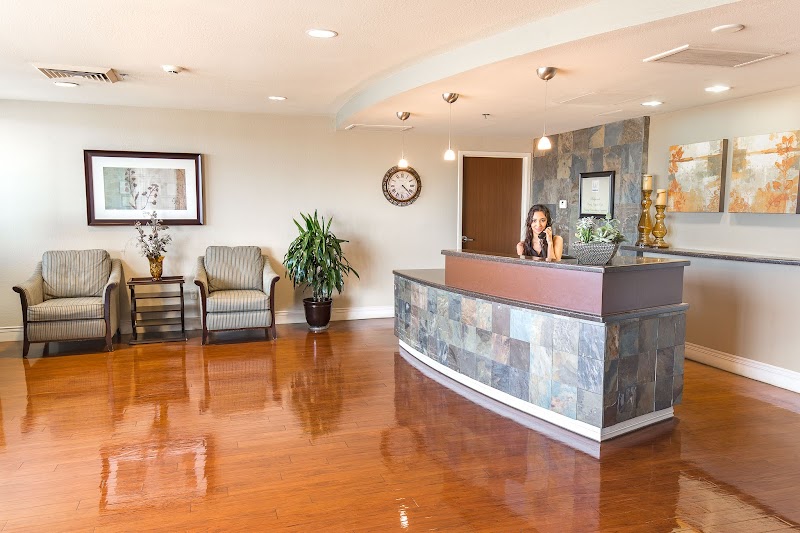
How is Ridgecrest Post Acute Staffed?

CMS rates RIDGECREST POST ACUTE's staffing level at 3 out of 5 stars, which is average compared to other nursing homes. Staff turnover is 62%, which is 16 percentage points above the Arizona average of 46%. High turnover can affect care consistency as new staff learn residents' individual needs.

What Have Inspectors Found at Ridgecrest Post Acute?

State health inspectors documented 18 deficiencies at RIDGECREST POST ACUTE during 2022 to 2024. These included: 18 with potential for harm.
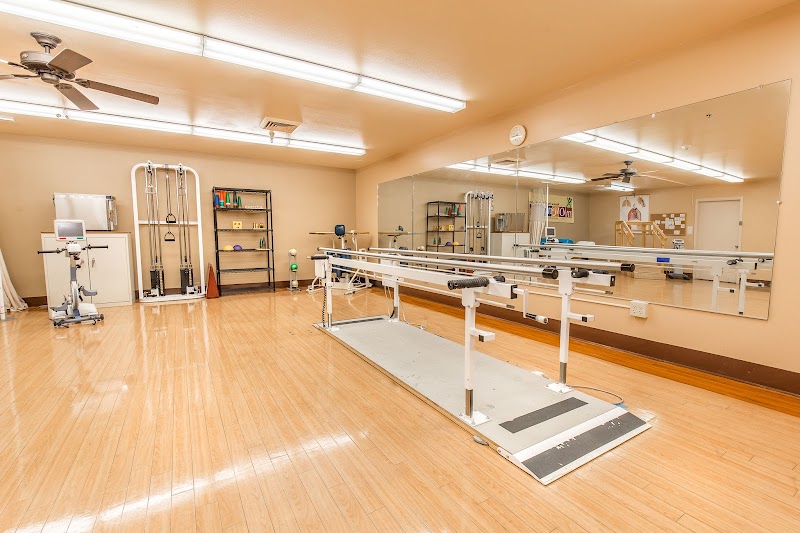
Who Owns and Operates Ridgecrest Post Acute?

RIDGECREST POST ACUTE is owned by a for-profit company. For-profit facilities operate as businesses with obligations to shareholders or private owners. The facility is operated by PACS GROUP, a chain that manages multiple nursing homes. With 200 certified beds and approximately 157 residents (about 78% occupancy), it is a large facility located in PHOENIX, Arizona.

How Does Ridgecrest Post Acute Compare to Other Arizona Nursing Homes?

Compared to the 100 nursing homes in Arizona, RIDGECREST POST ACUTE's overall rating (4 stars) is above the state average of 3.3, staff turnover (62%) is significantly higher than the state average of 46%, and health inspection rating (3 stars) is at the national benchmark.

What Should Families Ask When Visiting Ridgecrest Post Acute?

Based on this facility's data, families visiting should ask: "How do you ensure continuity of care given staff turnover, and what is your staff retention strategy?" "Can I visit during a mealtime to observe dining assistance and food quality?" "How do you handle medical emergencies, and what is your hospital transfer rate?" "Can I speak with family members of current residents about their experience?" These questions are particularly relevant given the facility's high staff turnover rate.

Is Ridgecrest Post Acute Safe?

Based on CMS inspection data, RIDGECREST POST ACUTE has a clean safety record: no substantiated abuse findings (meaning no confirmed cases of resident harm), no Immediate Jeopardy citations (the most serious violation level indicating risk of serious injury or death), and is not on the Special Focus Facility watch list (a federal program monitoring the lowest-performing 1% of nursing homes). The facility has a 4-star overall rating and ranks #1 of 100 nursing homes in Arizona. While no facility is perfect, families should still ask about staff-to-resident ratios and recent inspection results during their visit.

Do Nurses at Ridgecrest Post Acute Stick Around?

Staff turnover at RIDGECREST POST ACUTE is high. At 62%, the facility is 16 percentage points above the Arizona average of 46%. High turnover means new staff may not know residents' individual needs, medications, or preferences. It can also be disorienting for residents, especially those with dementia who rely on familiar faces. Families should ask: What is causing the turnover? What retention programs are in place? How do you ensure care continuity during staff transitions?

Was Ridgecrest Post Acute Ever Fined?

RIDGECREST POST ACUTE has no federal fines on record. CMS issues fines when nursing homes fail to meet care standards or don't correct problems found during inspections. The absence of fines suggests the facility has either maintained compliance or corrected any issues before penalties were assessed. This is a positive indicator, though families should still review recent inspection reports for the full picture.

Is Ridgecrest Post Acute on Any Federal Watch List?

RIDGECREST POST ACUTE is not on any federal watch list. The most significant is the Special Focus Facility (SFF) program, which identifies the bottom 1% of nursing homes nationally based on persistent, serious quality problems. Not being on this list means the facility has avoided the pattern of deficiencies that triggers enhanced federal oversight. This is a positive indicator, though families should still review the facility's inspection history directly.