SOUTH MOUNTAIN POST ACUTE
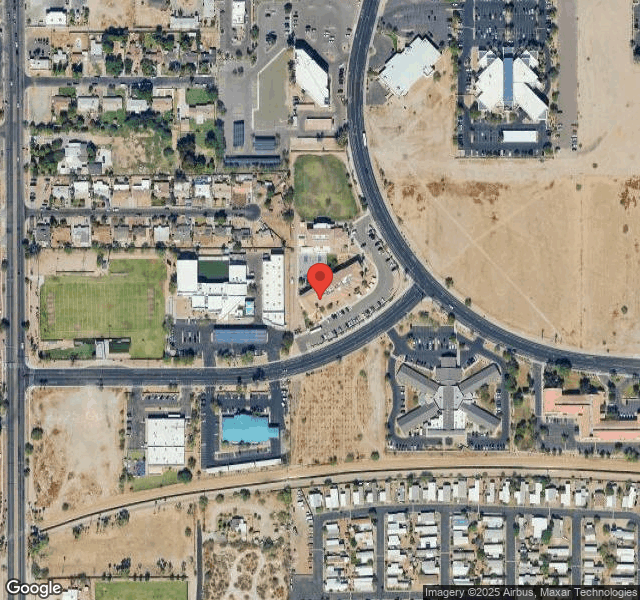
8008 S. JESSE OWENS PARKWAY, PHOENIX, AZ 85042 (602) 243-2780
For profit - Corporation 124 Beds THE ENSIGN GROUP Data: November 2025
Trust Grade
65/100
#93 of 139 in AZ
Last Inspection: August 2024

Within standard 12-15 month inspection cycle. Federal law requires annual inspections.

Overview

South Mountain Post Acute has a Trust Grade of C+, which indicates that it is slightly above average but still below the ideal standard for care. It ranks #93 out of 139 facilities in Arizona, placing it in the bottom half, and #60 out of 76 in Maricopa County, meaning there are better local options available. The facility appears to be improving, with issues decreasing from 6 in 2024 to just 1 in 2025. However, staffing is a concern, rated at only 1 out of 5 stars, indicating significant turnover and potential challenges in care consistency. On the positive side, the facility has not incurred any fines, which is a good sign, and it has strong quality measures with a 5 out of 5 rating. Nonetheless, there have been specific incidents noted: for example, a dialysis resident was not properly monitored, which could lead to serious health risks, and another resident did not receive long-acting insulin as prescribed upon admission, potentially causing uncontrolled blood sugar levels. Overall, while there are strengths, particularly in quality measures, families should weigh these against the staffing concerns and specific incidents that could impact resident care.

Trust Score
C+
65/100
In Arizona
#93/139
Bottom 34%
Safety Record
Low Risk
No red flags
Inspections
Getting Better
6 → 1 violations
Staff Stability
⚠ Watch
48% turnover. Above average. Higher turnover means staff may not know residents' routines.
Penalties
✓ Good
No fines on record. Clean compliance history, better than most Arizona facilities.
Skilled Nurses
○ Average
Each resident gets 32 minutes of Registered Nurse (RN) attention daily — about average for Arizona. RNs are the most trained staff who monitor for health changes.
Violations
⚠ Watch
15 deficiencies on record. Higher than average. Multiple issues found across inspections.
★★★☆☆
3.0
Overall Rating
★☆☆☆☆
1.0
Staff Levels
★★★★★
5.0
Care Quality
★★★☆☆
3.0
Inspection Score
Stable
2024: 6 issues
2025: 1 issues

The Good

  • 5-Star Quality Measures · Strong clinical quality outcomes
  • Full Sprinkler Coverage · Fire safety systems throughout facility
  • No fines on record

Facility shows strength in quality measures, fire safety.

The Bad

3-Star Overall Rating

Near Arizona average (3.3)

Meets federal standards, typical of most facilities

Staff Turnover: 48%

Near Arizona avg (46%)

Higher turnover may affect care consistency

Chain: THE ENSIGN GROUP

Part of a multi-facility chain

Ask about local staffing decisions and management

The Ugly 15 deficiencies on record

Jul 2025 1 deficiency
CONCERN (D) 📢 Someone Reported This

A family member, employee, or ombudsman was alarmed enough to file a formal complaint

Potential for Harm - no one hurt, but risky conditions existed

Deficiency F0658 (Tag F0658)

Could have caused harm · This affected 1 resident

**NOTE- TERMS IN BRACKETS HAVE BEEN EDITED TO PROTECT CONFIDENTIALITY** The facility failed to ensure proper monitoring for 1 out of 3 dialysis residents (#1).Based on clinical record review, intervie...

Read full inspector narrative →
**NOTE- TERMS IN BRACKETS HAVE BEEN EDITED TO PROTECT CONFIDENTIALITY** The facility failed to ensure proper monitoring for 1 out of 3 dialysis residents (#1).Based on clinical record review, interviews, and facility policy, the facility failed to ensure proper monitoring for 1 out of 3 dialysis residents (#1). The deficient practice could result in the inability to detect changes of condition. Findings include: Resident # 1 was admitted on [DATE] with diagnoses of end stage renal disease, dependence on renal dialysis, hemiplegia following cerebral infarct, and need for assistance of personal care. Review of the Resident's care plan dated May 7, 2025 revealed that Resident #1 was on hemodialysis due to end stage renal disease. Resident #1 was to receive dialysis on Tuesdays, Thursdays, and Fridays, with facility intervention of obtaining vital signs and weight, reporting significant changes in pulse, respirations and blood pressure immediately Review of Resident # 1's Minimum Data Set (MDS) dated [DATE], revealed a Brief Interview for Mental Status (BIMS) score of 9 which indicated resident had moderate cognitive impairment. The MDS also revealed that resident does receive dialysis. Review of the Resident's orders revealed an order dated May 7, 2025, for dialysis on Tuesdays, Thursdays, and Saturdays. The order did not have an end date. Further review of Resident's # 1 orders revealed an order dated June 17, 2025 for vital signs before and after hemodialysis every day shift and every night shift to start on June 19, 2025 with no end date. Review of Dialysis reports revealed that Resident # 1 received dialysis on July 1, 3, 5, 8, 12, 16, and 17, 2025. Review of Resident # 1 Medical Administration Record (MAR) for the month of July 2025, revealed that pre and post vitals were not documented on July 16, 2025 and post vitals were not documented on July 17, 2025. Furthermore, pre and post vitals were taken on July 15, 2025 and July 19, 2025 when dialysis was not performed. An interview conducted on July 21, 2025 at 2:10 p.m., with Licensed Practical Nurse (LPN/ Staff # 10) revealed that before residents go out for dialysis vitals are done, the residents are clean, and they have arrangements with food. When the residents return from dialysis we always do vitals and go over any new orders they may have. It is important we get vitals because if medications were held, especially if they have heart medications we want to make sure heart rate does not drop after dialysis.An Interview with Social Services Director (Staff # 36) on July 21, 2025 at 2:35 p.m., revealed that there had been problems with Resident # 1's transportation company arriving late or not at all. When that happens they have to either reschedule or the facility pays for transportation. Staff # 36 revealed that formal complaints have been sent into Resident #1's insurance company. Staff # 36 stated that his current transport is the only transport company that would accept Resident # 1's insurance.An interview conducted with Director of Nursing (DON/ Staff # 21) on July 21, 2025, at 2:57 p.m. revealed that they have had some transportation issues regarding Resident # 1. There were days the transport company did not show up and the facility had to cover the cost of transportation to return him back to the facility. The DON revealed that on July 16, 2025, they changed dialysis days from Tuesday, Thursday, Saturday to Monday, Wednesday, Friday. In reviewing the MAR, DON # 21 said that the correct pre and post dialysis orders were not in the system so staff were still performing them and documenting them on Thursday, and Saturday. DON # 21 stated that her expectation would bet that vitals are preformed prior to transporting to dialysis and upon return from dialysis. A policy and procedure titled, Nursing Services, Physician Orders dated July 2024, revealed that it is the policy of this facility to accurately implement orders in addition to medication orders (treatment, procedures) only upon the order of a person duly licensed and authorized to do so in accordance wit the resident's plan of care.
Dec 2024 1 deficiency
CONCERN (D) 📢 Someone Reported This

A family member, employee, or ombudsman was alarmed enough to file a formal complaint

Potential for Harm - no one hurt, but risky conditions existed

Deficiency F0658 (Tag F0658)

Could have caused harm · This affected 1 resident

**NOTE- TERMS IN BRACKETS HAVE BEEN EDITED TO PROTECT CONFIDENTIALITY** Based on clinical record review, staff interviews and policy reviews, the facility failed to ensure that 1 of 3 sampled resident...

Read full inspector narrative →
**NOTE- TERMS IN BRACKETS HAVE BEEN EDITED TO PROTECT CONFIDENTIALITY** Based on clinical record review, staff interviews and policy reviews, the facility failed to ensure that 1 of 3 sampled residents (#2) received long-acting insulin per hospital discharge orders upon admission. The deficient practice could result in uncontrolled blood sugar levels. Findings include: Resident #2 was admitted on [DATE] with diagnoses that included type 2 diabetes mellitus, Parkinson's disease, and dementia. Review of final orders/discharge instructions from the referring hospital, dated February 13, 2024 (prior to admission), included that the patient was to continue insulin Glargine (insulin glargine/Lantus) 15 units twice daily without any changes. Review of physician's orders dated February 13th- 19th,2024 revealed no evidence of physician orders regarding Insulin Glargine despite being listed on the hospital final orders/discharge instructions. An order summery dated February 13, 2024 revealed all medication orders were reviewed by the attending physician and he concurred with the present plan of care and discharge plan. Further review of physician orders dated February 14, 2024 included Glucose monitoring with instructions to notify the provider if glucose is less than 70 or more than 400 mg/dL. A Care Plan dated February 14, 2024, revealed a focus of Diabetes Mellitus with interventions that included diabetes medication as ordered by doctor, monitor/document for side effects and effectiveness, monitor/document/report to MD PRN (as needed) signs and symptoms of hyperglycemia. An admission MDS (Minimum Data Set) assessment dated [DATE] included that the resident had a BIMS (Brief Interview for Mental Status) score of 2, which indicated severe cognitive impairment. The assessment indicated the resident had clear speech, was not oriented to time or place and at times appeared anxious, fearful and wandered. On February 18, 2024 the resident's blood glucose test results were 572.0 mg/dL. A progress note dated February 18, 2024 revealed that the resident's blood sugar was 572.0 mg/dL at 1:06pm and the provider was notified. However, there was no evidence regarding the provider's response including any medication changes, related to the increase in blood glucose levels. On February 18, 2024 at 4:41pm, the resident's blood glucose level was 219.0 mg/dL. A nursing progress note dated February 18, 2024 revealed blood glucose level at baseline and well controlled, despite evidence of blood glucose fluctuations during the day. A review of the resident's blood glucose results on February 19 through February 20, 2024 revealed: February 19, 2024 - 8:32 am- 229.0 mg/dL - 11:37 am- 271.0 mg/dL - 5:01 pm- 333.0 mg/dL - 10:03 pm- 321.0 mg/dL February 20, 2024 - 8:03 am- 337.0 mg/dL - 8:33 am- 337.0 mg/dL - 12:03 pm-337.0 mg/dL - 4:45 pm -357.0 mg/dL - 7:08 pm- 335.0 mg/dL A FNP (Family Nurse Practitioner) progress note dated February 20, 2024 indicated that, the resident's blood glucose remains elevated and to start a low dose of Glargine/Lantus 5 units at bed time. A Physician Order dated, February 20, 2024 was written for Insulin Glargine 5 units at bed time, despite the hospital's final order/discharge instructions for Glargine 15 units twice a day on February 13, 2024. A review of resident's blood glucose results dated February 21, 2024 revealed the following: - 8:80 am- 350.0 mg/dL - 8:31 am- 350.0 mg/dL - 12:28 pm- 397.0 mg/dL - 2:00 pm- 314.0 mg/dL - 8:55 pm- 301.0 mg/dL A Physician's Order dated February 21, 2024 revealed an increase in Glargine/Lantus to 15 units at bed time. Review of resident's blood sugar results dated February 22, 2024 revealed: - 7:46 am- 328.0 mg/dL - 12:08 pm- 505.0 mg/dL - 3:30 pm-180.0 mg/dL A nursing progress note dated February 22, 2024, revealed that the provider was notified at 12:08 pm and received verbal orders to administer 22 units of Lispro. Despite the blood glucose reading of 505.0 mg/dL at 12:08 pm, on February 22, 2024 a daily skilled note, dated February 22, 2024 at 1:51 pm , revealed the resident's blood glucose is being monitored, blood glucose level at baseline, well controlled. Review of resident's blood sugar results dated February 26, 2024 revealed the following: - 7:35 am- 219.0 mg/dL - 7:37 am- 219.0 mg/dL - 12:18 pm- 319.0 mg/dL - 4:43 pm- 398.0 mg/dL - 8:21 pm- 266.0 mg/dL Per a physician order, dated February 26, 2024 at 6:05 pm, Glargine order was changed to 20 units at bedtime. A daily skilled note dated February 26, 2024 revealed the resident's blood glucose is being monitored, blood glucose level is not baseline or well controlled, and that Teachings/Education were not provided regarding Blood Glucose levels. Review of resident's blood sugar results dated February 27, 2024 revealed the following: - 7:05 am- 337.0 mg/dL - 8:29 am- 337.0 mg/dL - 11:06 am- 144.0 mg/dL - 5:07 pm- 326.0 mg/dL - 7:47 pm- 444.0 mg/dL - 7:49 pm- 444.0 mg/dL - 10:52 pm- 342.0 mg/dL A Nursing Progress note dated February 27, 2024 relayed that the FNP was notified at 7:49 pm regarding increase in blood sugar to 444.0 mg/dL, and received an order to administer Lispro 15 units and to recheck blood sugars in 2 hours. On February 28, 2024 Resident #2 was placed on hospice and all orders for blood sugar monitoring and insulin treatment were discontinued at 1:50 pm. An interview was conducted on December 17, 2024 at 2:45 pm with a Licensed Practical Nurse (LPN, staff #10) who stated when admitting a new resident, she would review discharge paperwork and compare discharge orders with what is in EMDR (Electronic Medical Record). If an order is missing, she would notify the provider and determine if orders need to be entered or changed, and ask for clarification. She, also stated that she would be concerned if a Glargine order was not in the EMDR, but was included in the final hospital orders. Furthermore, she stated that the provider would catch this discrepancy. An interview conducted on December 18, 2024 at 10:10 am with FNP (staff #13), stated that during a resident admission, providers review final orders from the hospital, and they continue the same orders until they become familiar with the resident and determine if a medication needs to be changed. The FNP reviewed the clinical record and stated that he did not know why Glargine had not been ordered on admission, but blood sugars were monitored four times a day, and would be adjusted as indicated. An interview was conducted with the Director of Nursing (DON, staff #33) on December 18, 2024 at 11:46 am, she stated that the primary provider will review the orders for any changes when a resident is admitted , orders are placed in the EMDR, and assessments are completed. She further stated that the primary provider reviews the final orders/discharge instructions and there is a standing order in place that the provider has verified the orders, and if they want to make changes, they can write it on a paper for admissions to change. She reviewed the records for Resident #2 and stated that the attending provider reviewed the resident's medication on February 14, 2024 at 12:00 AM. She also stated that once everything is final the nurse would put in the medication orders. She stated that she does not know what happens to the form that has the changes, but she will check with Medical Records. Now those changes are documented in EMDR. During interview conducted on December 18, 2024 at 12:59 pm with Medical Records Director (staff #21), who stated that when a resident is admitted the hospital's final orders/discharge instructions are reviewed by the provider, and after the nurse adds the orders to the EMDR, the paperwork goes into a box and is uploaded by medical records into EMDR. She reviewed the clinical record and stated there is nothing as far as changes to final orders for Resident #2. A policy and procedure titled, Nursing Services, Physician Orders, include admission orders are reviewed with physician upon admission based on the discharge instructions from the discharging facility and are transcribed accordingly. The policy further indicated that the facility accurately implements orders in addition to medication orders (treatment, procedures) only upon the order of a person duly licensed and authorized to do so in accordance with the resident's plan of care.
Nov 2024 1 deficiency
CONCERN (D) 📢 Someone Reported This

A family member, employee, or ombudsman was alarmed enough to file a formal complaint

Potential for Harm - no one hurt, but risky conditions existed

Deficiency F0808 (Tag F0808)

Could have caused harm · This affected 1 resident

**NOTE- TERMS IN BRACKETS HAVE BEEN EDITED TO PROTECT CONFIDENTIALITY** Based on clinical record review, staff and resident interview, and policy review, the facility failed to ensure diet orders were...

Read full inspector narrative →
**NOTE- TERMS IN BRACKETS HAVE BEEN EDITED TO PROTECT CONFIDENTIALITY** Based on clinical record review, staff and resident interview, and policy review, the facility failed to ensure diet orders were followed for one resident (#70). The deficient practice could result in residents not receiving physician ordered diets. Findings include: Resident #70 was admitted to the facility on [DATE] with diagnoses that included hemiplegia and hemiparesis following unspecified cerebrovascular disease affecting left non-dominant side, end stage renal disease, and dysphagia, oropharyngeal phase. Review of the order summary revealed a physician order for a regular diet mechanical soft texture, nectar thick consistency, Renal Preferences with a start date of October 2, 2024. Review of the resident's Minimum Data Set Section K - Swallowing/Nutritional Status dated October5, 2024 revealed a mechanically altered diet which required change in the texture of food or liquids (pureed food, thickened liquids) used as a nutritional approach. During a dining observation conducted in the resident's room on November 7, 2024 at 12:12 p.m., a small container of strawberry ice cream was observed on the lunch tray along with the meal. A meal ticket on the resident's tray stated, regular diet, mechanical soft texture, nectar thick liquids. Present during the meal observation was the resident's spouse, DON (Staff #31) and Certified Nursing Assistant (CNA/Staff #69) assisting the resident with his meal. The resident refused his meal and the CNA offered the resident the ice cream. The CNA placed ice cream on a spoon and attempted to feed the resident the ice cream. CNA #69 was asked by this surveyor if the resident could have ice cream for his meal. CNA/Staff #69 stated yes and proceeded to serve the resident. The resident began to cough. This surveyor informed ice cream should not be served and was not considered a thickened liquid. Spouse stated, add thickener to the ice cream, that's what I do to all his meals. This surveyor informed thickener should not be added to ice cream. The DON asked that the ice cream no longer be served. An interview was conducted on November 8, 2022 at 9:11 a.m. with (LPN/Staff #58) Staff #58 stated resident # 70 had orders for a mechanically altered diet with nectar thickened liquids. She stated the resident required assistance with all his meals; and that, the wife will come in and help the resident eat during some meals. Staff #58 stated the resident's meal orders are on their meal tickets and should refer back to the kitchen if there's something incorrect. Staff #58 stated the resident is a risk for aspirations and his bed should be at 90 degrees when eating, but has had no aspirations. Staff #58 stated she was unsure if ice cream was a nectar thick liquid and would refer to dietary if unsure. An interview was conducted on November 8, 2022 at 9:23 a.m. with dietary manager (Staff #27). According to Staff #27, if a resident is on a mechanical soft diet the resident dietary staff are made aware from the resident's meal tickets that are generated by the speech therapist, doctors' orders and the dietician. Staff #27 stated resident #70 s on a mechanical soft, nectar thick diet and the dietary aides oversee the trays to ensure the trays are correct and match the diet. Staff#27 stated ice cream is not considered nectar thick and should not be served to residents with nectar thick diets because once placed in the mouth it is no longer thick. Staff #27 stated the risks serving a resident ice cream who is on a nectar thick diet is possible chocking. A phone interview was conducted on November 8, 2024 at 9:32 a.m. with Registered Dietician Consultant (RDA/Staff #74). Staff #74 stated the dietician and diet tech are involved in evaluating and addressing any underlying causes for nutritional risks and/or impairments for the facilities residents. Staff # 74 stated resident #70 has a mechanical soft, nectar thickened liquid diet, is an assist of one with eating and should have his head elevated while eating. Stated she had been contacted by the DON/Staff #31 who had questioned if the resident could be served ice cream. Staff # 74 stated she had informed the DON that the resident should not be served ice cream because it becomes warm in the mouth and more liquid and that thickener should never be added to ice cream. Staff #74 stated staff will be educated. Staff #74 stated the risks associated with serving a resident ice cream who had orders for mechanical soft, nectar thickened liquids places the resident at risk for aspiration and difficulty in swallowing. An interview was conducted on November 8, 2024 at 12:46 p.m. with Director of Nursing (DON/Staff #31). Staff #31 stated that resident #70 is prescribed a diet for mechanical soft, nectar thick liquids; and that, the speech therapist has been working with the resident to progress his diet. The DON stated that staff should look at the meal ticket before serving the resident and any changes are communicated from dietary to the nursing staff. The DON stated the risks with not adhering to the diets as ordered places the resident at risk for potential aspiration. Review of the facility's policy titled, Physician Orders states It is the policy of this facility to accurately implement orders in addition to medication orders (treatment, procedures) only upon the order of a person duly licensed and authorized to do so in accordance with the resident's plan of care. Review of the facility's policy titled, Nutrition revealed Diets will be provided according to physician orders, including regular and therapeutic diets. Dietician technicians and registered dieticians will make recommendations for therapeutic diets.
Aug 2024 3 deficiencies
CONCERN (D)

Potential for Harm - no one hurt, but risky conditions existed

Resident Rights (Tag F0550)

Could have caused harm · This affected 1 resident

**NOTE- TERMS IN BRACKETS HAVE BEEN EDITED TO PROTECT CONFIDENTIALITY** Based on observations, resident and staff interviews, clinical record review, and policy review, the facility failed to ensure t...

Read full inspector narrative →
**NOTE- TERMS IN BRACKETS HAVE BEEN EDITED TO PROTECT CONFIDENTIALITY** Based on observations, resident and staff interviews, clinical record review, and policy review, the facility failed to ensure that dignity was maintained for one sampled resident (#23). The deficient practice could result in residents not being treated in a dignified manner. Findings include: Resident #23 was admitted to the facility on [DATE] with diagnoses that included metabolic encephalopathy, hepatic encephalopathy, postprocedural hypertension, hypertensive chronic kidney disease with stage 5 chronic kidney disease or end stage renal disease. Review of the MDS (Minimum Data Set) assessment dated [DATE], revealed a BIMS (Brief Interview of Mental Status) was not conducted, but the assessment revealed there is evidence of an acute change in the residents mental status from the resident's baseline. The assessment also revealed the resident needed supervision or touching assistance with upper body dressing, partial/moderate assistance with lower body dressing. Review of the care plan dated July 7, 2024 revealed the resident had an ADL (activity of daily living) self-performance deficit related to impaired mobility and muscle weakness. The care plan interventions included patient often removes gown, prefers to wear off shoulders, encourage to discuss feelings about self-care deficit. An initial observation of the resident was conducted on August 5, 2024 at 9:56 a.m. Resident #23 was observed in the resident's room lying in bed that is closest to the door to the hallway. The door was completely open. Resident #23 was lying in bed at an angle with both breasts exposed and in an incontinence brief. Multiple residents and staff in the hallway. (Staff/CNA#7) then entered the resident's room and placed clothing on the resident. A second observation of the resident was conducted on August 6, 2024 at 12:42 p.m. The resident was observed sleeping in bed and fully dressed. A third observation was conducted August 9, 2024 at 8:30 a.m. The resident was observed in bed dressed in a hospital gown. Nasal cannula was not properly placed and was observed hanging off her face and not in her nostrils. A fourth Observation was conducted on August 9, 2024 at 11:25 a.m. resident observed in bed, upper body exposed with door open, curtain partially drawn but resident could be observed from the hallway- housekeeping in hallway, two CNA's (Certified Nursing Assistant)-observed seated at the end of the hallway, with other resident in room no privacy curtain closed between the two residents. Additionally, following observations were conducted: 08/09/24 11:28 AM CNA/staff #64 walked by resident's room twice 08/09/24 11:29 AM LPN/Staff #141walked by resident's room 08/09/24 11:30 AM ADON/Staff #167 walked by resident's room 08/09/24 11:30 AM Shower Aide/Staff #96- observed the resident's condition from the hallway and entered the resident's room. An interview was conducted on August 9, 2024 at 11:37 a.m. with (Shower Aide/Staff #96). Staff #96 stated he observed the resident had her gown off from the hallway. He stated she may have got confused with the sheet and gown. He stated anyone could have observed the resident from the hallway. He further stated it's a dignity thing for the resident. An interview was conducted on August 9, 2024 at 12:30 p.m. with the Director of Nursing (DON/ Staff #145) who stated the resident likes to have her clothing pulled down and that this is care planned. Review of the care plan clearly states prefers to wear off shoulders. The DON stated the risks associated with this, is that it could affect dignity issues for the other resident's. The DON however stated they haven't had anyone complain. She further stated it is the responsibility of the facility to educate the resident, as it is their right and to make sure that it is noted in their chart. Review of the facility policy titled Dignity and Respect states it is the policy of this facility that all residents be treated with kindness, dignity and respect.
CONCERN (D) 📢 Someone Reported This

A family member, employee, or ombudsman was alarmed enough to file a formal complaint

Potential for Harm - no one hurt, but risky conditions existed

Incontinence Care (Tag F0690)

Could have caused harm · This affected 1 resident

**NOTE- TERMS IN BRACKETS HAVE BEEN EDITED TO PROTECT CONFIDENTIALITY** Regarding Resident #300: Resident #300 was admitted to the facility on [DATE] with diagnoses including fluid overload, muscle we...

Read full inspector narrative →
**NOTE- TERMS IN BRACKETS HAVE BEEN EDITED TO PROTECT CONFIDENTIALITY** Regarding Resident #300: Resident #300 was admitted to the facility on [DATE] with diagnoses including fluid overload, muscle weakness, and neuromuscular dysfunction of the bladder. Review of a nursing progress note dated April 8, 2022 at 7:25PM revealed that the resident was identified to have been incontinent of bowel and bladder on the date of admission. Review of physician orders for April 2022 revealed no evidence of physician orders for having or changing an indwelling Foley catheter or catheter care. Review of the Medication Administration Record (MAR) and Treatment Administration Record (TAR) dated April 2022 revealed no evidence of catheter care being provided, including no evidence of the catheter being cleaned or changed, in the month of April 2022. Review of the resident's care plan initiated on April 9, 2022 revealed no focus area regarding the resident having an indwelling catheter or interventions for providing catheter care. Review of the Toilet Use task dated April 2022 revealed that all entries for this task on April 11, 2022 were charted as NA (Not Applicable). Additionally, this task area did not address emptying of the catheter or specifically cleaning of the catheter. Review of the discharge Minimum Data Set (MDS) assessment dated [DATE] revealed the resident had an indwelling catheter in place for a diagnosis of a neurogenic bladder. An interview was conducted on August 9, 2024 at 8:38AM with a Licensed Practical Nurse (LPN/ Staff #160) who stated that there should be physician orders for catheter care. She also stated that if there are no orders for catheter care for a resident with a catheter, she would let the physician know. She also elaborated that there may be batch orders that can be initiated for catheters, and the size of the catheter and balloon should be noted. An interview was conducted on August 9, 2024 at 9:12AM with a Certified Nursing Assistant (CNA / Staff #95) who stated that catheter care should be provided by CNAs every time the resident is changed. She reports that it should be charted in the Electronic Health Record (EHR), Point Click Care (PCC). She was unable to identify specifically which area or task to record catheter care in. An interview was conducted on August 9,2024 at 10:10AM with the Director of Nursing (DON/ Staff #145) who stated she expected her nursing staff to follow provider's orders for catheter care and to document the care in the TAR. She also stated that there are batch orders for catheters, so there should be an order in the medical record, and catheters should be reflected in the care plan. When asked if Resident #300's medical record should have reflected an order for an indwelling catheter and care, she stated that she was not in the DON position at that time and therefore did not know what the expectation and policy was at that time. Review of the facility policy titled, Catheter Care, Indwelling, revealed that each resident with an indwelling catheter should receive catheter care daily and as needed for soiling. The policy included to cover drainage bag with privacy bag. This policy also revealed that documentation of catheter care is done under the toileting task. This policy was revised May 2007, July 2012, and July 2013 and was reviewed July 2023 and July 2024, indicating this policy applied for Resident #300 during her stay at the facility. Review of the facility policy titled, ADL's - hygiene, grooming, toileting, bathing, oral care, dressing, grooming, mobility, transfers, ambulation, etc., revealed that residents should be given the appropriate treatment and services to attain or maintain the highest practicable well-being of each resident in accordance with a written plan of care. This policy also revealed that ADL care, including personal hygiene, will be provided according to the resident's needs, and it will be documented in the medical record. This policy was revised on November 2007 and July 2015, and was reviewed multiple occasions since these dates, indicating this policy applied for Resident #300 during her stay at the facility. Based on observation, resident and staff interviews, clinical record review and facility policy and procedures, the facility failed to ensure care and services related to an indwelling urinary catheter was provided to two residents (#164 and #300) out of 20 sampled residents. The deficient practice could result in residents being at risk for urinary catheter complications and urinary tract infections. Findings include: Resident #164 was admitted on [DATE] with diagnosis (dx) that includes encephalopathy, unspecified, unspecified hydronephrosis, malignant neoplasm of endometrium, obstructive and reflux uropathy, unspecified. The care plan revealed the resident had an indwelling catheter related to obstructive uropathy. The goals were that the resident will remain free from catheter related trauma through review and will show no signs or symptoms of a urinary infection through the review date. The interventions for the catheter were to position the catheter bag and tubing below the level of the bladder and away from entrance room door, secure catheter to facilitate flow of urine, prevent kinking of tubing, and accidental removal, and resident requires moderate to maximum assist with bed mobility, transfers, locomotion, dressing, toileting, hygiene, and bathing. The admission Minimum Data Set (MDS) assessment dated [DATE] revealed a Brief Interview for Mental Status (BIMS) score of 15, indicating the resident was cognitively intact. The MDS assessment also revealed the resident had an indwelling urinary catheter, required substantial to maximum assistance with toileting hygiene and required substantial to maximum assistance for transfers. The physician order dated July 15, 2024 included for indwelling Catheter Care Q (every) shift and prn (as needed). In an observation conducted on August 5, 2024 at 9:58 a.m., resident #164 was observed being wheeled by a staff through the facility hallway with her catheter bag hanging filled with urine and uncovered attached to the bottom cross bars of the resident's wheelchair. The uncovered catheter bag was dragging on the floor as the resident was being pushed in her wheelchair. An interview was conducted on August 5, 2024 at approximately 10:05 a.m. with CNA (Certified Nursing Assistant/ Staff#7) who had stated the resident should have had a cover on her catheter and placed one on the catheter bag and repositioned the bag so that it did not drag on the floor. She stated the risks associated with the catheter can cause an infection from dragging on the floor. An interview was conducted on August 9, 2024 at approximately 11:32 a.m. with a CNA (Staff# 134) who stated there are signs or orange dots on the resident's door to indicate PPE is required with care. She stated when providing catheter care it is important to make sure the tubing is not kinked and to empty as needed or every shift, clean the catheter tubing to prevent infections and to place the catheter bag with a cover on the wheelchair. An interview was conducted on August 9, 2024 at approximately 11:05 a.m. with a Licensed Practical Nurse (LPN/Staff #141) who stated all catheters should have a cover and be hung below the resident's waist. She further stated the resident should not attend activities or go to therapy without a catheter cover. She stated the CNA's are responsible for making sure the resident's catheters have a cover and are placed correctly. Staff # 141 stated resident #164 recently had a urinary infection and could be at risk again with her catheter dragging on the floor. An interview was conducted with Director of Nursing (DON/staff #145) on August 9, 2024 at 12:32 p.m., the DON stated her current expectation is that there is an order and a care plan for the catheter and that placement of the catheter should be below the bladder, make sure that it is not dragging on the floor and should have privacy bag.
CONCERN (D)

Potential for Harm - no one hurt, but risky conditions existed

Deficiency F0757 (Tag F0757)

Could have caused harm · This affected 1 resident

Based on review of clinical records, policy, and staff interviews the facility failed to ensure an order for pain medication was followed as prescribed for one of six sampled residents (Resident #88) ...

Read full inspector narrative →
Based on review of clinical records, policy, and staff interviews the facility failed to ensure an order for pain medication was followed as prescribed for one of six sampled residents (Resident #88) by failing to administer pain medication within the physician ordered parameters. The deficient practice of administering unnecessary medication may result in undesirable medication-induced harm. Findings Include: Resident #88 was admitted into the facility on June 29, 2024 and discharged on August 6, 2024 with diagnoses that included cutaneous abscess of left lower limb, pedestrian on foot injured in collision with car, sequela weakness and muscle weakness. Review of care plan, initiated on June 30, 2024 revealed that the resident was prescribed an opioid for pain, and interventions included to administer opioid as prescribed. Review of the physician orders revealed the following order dated July 1, 2024: Oxycodone-Acetaminophen tablet (an Opioid) 5-325 milligram to give 2 tablets by mouth every 4 hours, as needed for pain 6-10. Review of an admission minimum data set (MDS) asessment from July 3, 2024, the Brief Interview for Mental Status (BIMS) score was 15 which indicated intact cognition. Review of the July 2024 Medication Administration Records (MAR) revealed that Oxycodone-Acetaminophen medication was administered outside of physician ordered parameters (pain 6-10) on: Saturday July 13, 2024 for pain level of 4. Sunday July 14, 2024 for pain level of 3. Monday July 22, 2024 for pain level of 3. Sunday July 28, 2024 for pain level of 3. An interview was conducted with Licensed Practical Nurse (LPN, staff # 155) on August 08, 2024 at 12:24 p.m., who stated that according to the pain scale: 10 means most pain and 0 means no pain. She further stated when assessing for pain, nurse should observe residents for facial expression, anxiety and breathing. She also stated that the risk for medication administer outside of order parameters could result in an over dose or interaction with other medications. An interview was conducted with Director of Nursing (DON, staff # 145) on August 08, 2024 at 12:47 p.m., who stated when administering medication to resident staff follow the 7 rights (right medication, right patient, right dose, right time, right route, right reason and right documentation). She also stated that the pain scale corelates the level of pain with the medication administered per physician orders. The DON stated the risk of not following physician order parameters would depend on the patient and the medication. A review of the policy titled, Documentation of Medication Administration-Oral, revealed to verify resident medication cards with medication orders. It also revealed that no medication is to be administered without a physician's written order and if there is any question in regard to dosage, the person in doubt should not give the drug until dosage has been clarified. A review of the policy titled, Pain Management, revealed to document on the Care Plan any preventive or care interventions (pharmacological and non-pharmacological) for any resident admitted with pain. It also revealed that medication(s) received, refused, and response to medication will be documented on the Medication Administration Record (MAR).
Jun 2024 1 deficiency
CONCERN (D) 📢 Someone Reported This

A family member, employee, or ombudsman was alarmed enough to file a formal complaint

Potential for Harm - no one hurt, but risky conditions existed

Medical Records (Tag F0842)

Could have caused harm · This affected 1 resident

**NOTE- TERMS IN BRACKETS HAVE BEEN EDITED TO PROTECT CONFIDENTIALITY** Based on clinical record review, staff interviews, facility documentation, and facility policy, the facility failed to ensure cl...

Read full inspector narrative →
**NOTE- TERMS IN BRACKETS HAVE BEEN EDITED TO PROTECT CONFIDENTIALITY** Based on clinical record review, staff interviews, facility documentation, and facility policy, the facility failed to ensure clinical record documentation was accurate for one resident (#2) regarding catheter care. The sample size was five (5) residents. The deficient practice has the potential for clinical records to inaccurately and incompletely reflect the status of residents. Findings include: Resident #2 was admitted to the facility on [DATE], with diagnoses that included obstructive reflux uropathy, type 2 diabetes mellitus and history of UTI's. Review of the physician's orders revealed an order dated June 1, 2024 to complete indwelling catheter care every shift. Review of a Care Plan initiated on June 1, 2024, revealed that Resident #2 had indwelling catheter related to obstructive uropathy, provide catheter care every shift and as needed. Review of Resident #2's Minimum Data Set (MDS) June 4, 2024 assessment, revealed a Brief Interview of Mental Status (BIMS) score of 15, which indicated intact cognition, and included an IV and catheter present. A review of the Plan of Care (POC) Response History for catheter care for the past 30 days, revealed that Resident #2's catheter care was documented by Certified Nursing Assistant (CNA/staff # 31), as having been provided at 09:41 AM, on June 27, 2024. Further review of Resident #2's POC revealed catheter care had not been conducted every shift on 8 out of 27 days. An interview conducted with Resident #2 on June 27, 2024 at 11:00 a.m., who stated that he had not received catheter care today, and have not cleansed around the insertion site. An interview was conducted at 11:11 a.m. on June 27, 2024, with CNA (staff #31), who stated that she had not yet completed Resident #2's catheter care, but had documented it as completed in POC. Staff #31 further stated that catheter care was expected to be performed every shift, and to be documented after the care had been provided. Staff #31admitted that she made a mistake, and accidently documented completion of catheter care after rounds. An interview was conducted on June 27, 2024, at approximately 1:00 p.m, with a Licensed Practical Nurse (LPN/staff #1), who stated that CNA's perform catheter care every shift, and as required. Staff #1 also stated that the facility documentation policy requires documentation to be completed once the task is completed. Staff #1 further stated that the risk could included staff may forget to complete the task, and other staff would have inaccurate information. An interview was conducted with the Director of Nursing (DON/staff #41), and [NAME] (staff #111), Clinical Resource on June 27, 2024, at 03.26 p.m. Staff #41, DON, stated that her expectation is that catheter care be documented within that shift. Staff #111, stated that the standard of care is to document every shift. A facility policy titled, Indwelling Catheter Care, included that each resident with an indwelling catheter will receive catheter care daily and PRN for soiling. To promote hygiene, comfort and decrease risk of infection for catheterized residents. Documentation of catheter care is done in POC. A facility policy titled, Documentation and Charting, included that a complete account of the resident's care, treatment, response to the care, signs, symptoms, etc., as well as the progress of the resident's care.
Jan 2023 5 deficiencies
CONCERN (D)

Potential for Harm - no one hurt, but risky conditions existed

Incontinence Care (Tag F0690)

Could have caused harm · This affected 1 resident

**NOTE- TERMS IN BRACKETS HAVE BEEN EDITED TO PROTECT CONFIDENTIALITY** Based on clinical record review, staff interviews, and policy review, the facility failed to ensure one resident (#46) had an or...

Read full inspector narrative →
**NOTE- TERMS IN BRACKETS HAVE BEEN EDITED TO PROTECT CONFIDENTIALITY** Based on clinical record review, staff interviews, and policy review, the facility failed to ensure one resident (#46) had an order for the use and care of a urostomy. The deficient practice could result in resident's not receiving appropriate care and services for a urostomy. Findings include: Resident #46 was admitted to the facility on [DATE] with diagnoses that included atherosclerotic heart disease without angina pectoris, acute kidney failure and malignant neoplasm of the prostate. Review of the initial admission record dated December 7, 2022 revealed that the resident had a urinary ostomy present. Review of the 5-dayminimum data set (MDS) dated [DATE] revealed that the resident scored 13 on the brief interview for mental status (BIMS) which indicated that the resident was cognitively intact. The MDS further revealed that the resident had a urinary ostomy. Review of the progress notes dated December 11, 2022 revealed that the resident had a urostomy in the right lower quadrant. Review of the resident's care plan revealed no focus area for a urinary ostomy. Review of the resident's orders revealed that there was no order for care of the urostomy or to monitor the urostomy site for signs and symptoms of infection. Review of the December 2022 treatment administration record (TAR) revealed no documented care for the urostomy. An interview was conducted with a licensed practical nurse (staff/LPN# 130) on January 5,2023 at 1:31 PM. The LPN stated that most resident care should have an order in the clinical record. He stated that the resident had an order entered on January 4, 2023 for his urostomy care and monitoring. Staff # 130 stated that he found no other order than the order dated January 4, 2023. However, the resident had the urostomy prior to the order. He further stated that the urostomy care should be completed and charted in the TAR every shift. Staff#130 stated that it was a concern that there was no order for the urostomy because the proper care might not be provided in a timely manner for the resident's urostomy. An interview was conducted on January 6, 2023 at 10:05 AM with the director of nursing (DON/staff #129). The DON stated that a new resident should have orders in place for all treatments including the care and monitoring of a urostomy. A note should be placed at the top of the EHR (electronic health record) in special instructions if there is a urostomy in place because it should be monitored every shift. There should be an order to monitor the site and care for and empty the urostomy bag. The urostomy should also be on the care plan for this resident however, it is not on the care planning the case of this resident. Review of the facility policy Physician Orders (reviewed 8/22) revealed that admission orders are reviewed with the physician upon admission based on instructions from the discharging facility and are transcribed accordingly. The policy further stated that the treatment order was to be transcribed in the eTAR accordingly.
CONCERN (D)

Potential for Harm - no one hurt, but risky conditions existed

Respiratory Care (Tag F0695)

Could have caused harm · This affected 1 resident

**NOTE- TERMS IN BRACKETS HAVE BEEN EDITED TO PROTECT CONFIDENTIALITY** Based on clinical record review, observations, resident and staff interviews, and review of policy and procedure, the facility f...

Read full inspector narrative →
**NOTE- TERMS IN BRACKETS HAVE BEEN EDITED TO PROTECT CONFIDENTIALITY** Based on clinical record review, observations, resident and staff interviews, and review of policy and procedure, the facility failed to ensure there was a physician's order to administer oxygen to one resident (#46). The deficient practice could result in adverse clinical outcomes. Findings include: Resident #46 was admitted to the facility on [DATE] with diagnoses that included; unspecified atrial fibrillation, atherosclerotic heart disease of native coronary artery without angina pectoris, adult failure to thrive, history of covid-19, pleurodynia and anemia. Review of the Minimum Data Set (MDS), quarterly assessment dated [DATE] revealed that resident #46 had a Brief Interview for Mental Status (BIMS) score of 13 indicating that the resident was cognitively intact. The MDS assessment included that the resident required extensive 1-2-person assistance with Activities of Daily Living (ADL's.) The MDS assessment included that in the past seven days resident #46 did not have oxygen while being a resident and that the resident did not have oxygen while not being at the facility. During an observation conducted on January 5, 2022 from approximately 8:20 a.m. to 8:30 a.m. of resident #46, resident was observed wearing a nasal cannula oxygen delivery system. During continued observation it was revealed that the resident was receiving 2 LPM (liters per minute) from an oxygen concentrator on the floor located on the left side of the bed. An interview was conducted on January 5, 2023 at 1:10 p.m. with resident #46, who stated that he has been on oxygen for about two weeks. Resident #46 reported he was not admitted to the facility with oxygen and it was recommended by the therapy department, due to his oxygen levels being too low. Resident #46 oxygen were observed being administered using an oxygen concentrator at his bedside via nasal cannula at 2 LPM. Review of the Medication Administration Record (MAR) dated December 2022 and January 2023 revealed no physician order for oxygen therapy. Review of the Treatment Administration Record (TAR) for December 2022 and January 2023 revealed no treatment order for oxygen therapy. Occupational Therapy notes dated December 8, 2022 revealed patient's oxygen needs to be monitored as patient desaturates on room air. Review of the Nursing Progress Notes dated December 2022 and January 2023 for Nursing revealed no documentation for resident oxygen use. Review of the Order Summary Report dated January 5, 2023 revealed no provider order for oxygen via nasal cannula. The Order Summary Report also revealed no documentation of a provider order for an oxygen concentrator delivery system. An interview was conducted on January 5, 2023 at 01:18 p.m. with a Certified Nursing Assistant (CNA/staff # 19). Staff #19 reported the resident has been on oxygen for approximately one week. Staff #19 stated she was off for three days and when she returned the resident was on oxygen. Staff #19 stated she is not responsible for the resident's oxygen care and it is the responsibility of the nurse or respiratory therapist. An interview was conducted on January 5, 2023 01:29 p.m. with a Licensed Practical Nurse (LPN/staff #130). Staff #130 reported an oxygen order had been revised on January 5, 2023 and the revision was to provide resident #46 with oxygen via nasal cannula at one liter per minute (LPM). During the interview the LPN (staff #130) went into resident #46's room. Staff #130 was observed checking the oxygen concentrator delivery system. Staff #130 stated resident #46 current oxygen was being administered at 2 LPM. Staff #130 stated he would change the oxygen rate to reflect the current physician order for the resident's oxygen use. Staff #130 was observed turning down the oxygen level from 2 LPM to one LPM. During the interview with staff #130, he stated that while documentation had not been completed on the care or maintenance of nasal cannula for resident #46, it was being changed and reported each shift. An interview was conducted on January 6, 2023 at 10:04 a.m. with the Director of Nursing (DON/RN/Staff #129). She stated she has been the DON for five years at the facility. Staff #129 stated she entered the physician orders for oxygen therapy through a concentrator delivery system via nasal cannula for resident #46 on January 5, 2023 following a conversation with the therapy department. Staff #129 stated the Physical Therapist informed her resident #46 did not profuse accurately and had a need for oxygen therapy. Staff #129 stated there were no prior orders for oxygen use prior to January 5, 2023 when she had entered them. Staff #129 also acknowledged oxygen therapy was not in the care plan or nursing documentation. Staff #129 stated the new oxygen order was for one LPM for resident #46. Staff #129 was informed resident #46 was observed receiving two LPM of oxygen the prior day, and not as prescribed in recent order for one LPM of oxygen. Staff #129 stated it is a concern for residents to be on oxygen without a doctor's order or administered as prescribed and could result in adverse clinical outcomes. Review of the Policy for Oxygen Administration, revised on December 2022, revealed that oxygen therapy is administered, as ordered by the physician or as an emergency measure until the order can be obtained.
CONCERN (D)

Potential for Harm - no one hurt, but risky conditions existed

Garbage Disposal (Tag F0814)

Could have caused harm · This affected 1 resident

Based on observations, staff interviews, and policy, the facility failed to ensure garbage was disposed of correctly. Findings include: -During a walkthrough of the kitchen conducted on January 3, 20...

Read full inspector narrative →
Based on observations, staff interviews, and policy, the facility failed to ensure garbage was disposed of correctly. Findings include: -During a walkthrough of the kitchen conducted on January 3, 2023, two large dumpster areas (#1 and #2), outside the building was observed at 9:54 a.m. with the Dietary Supervisor (staff #11). There were multiple items observed lying on the ground by the dumpsters: -Dumpster 1: one clear plastic bad lying on the ground to the left of the dumpster and appeared to have a dirty blue chuck, soiled adult brief along with other trash. -Dumpster 1: three used lancets on the ground in front of the dumpster. -Dumpster 1: used gauze with clear tape wrapped around it on the ground in front of the dumpster. -Dumpster 2: three used plastic pill cups with the room numbers written on them were lying on the ground in front of the dumpster. -Dumpster 2: a Tony's pizza carton on the ground to the left of the dumpster. -Dumpster 2: a Three Musketeer's Bar wrapper on the ground to the right of the dumpster. -12 used gloves lying on the ground around the dumpster area. An interview was conducted on January 3, 2023 at 9:45 a.m. with the Dietary Supervisor (staff #11), while observing the dumpster areas outside of the building. He observed the clear plastic bag lying to the left, next to dumpster (#1) and identified the items in the bag as items a certified nursing assistant would use. He stated that it is the responsibility of maintenance to ensure the area is clean. A licensed practical nurse (LPN/staff #133) joined the interview and confirmed that the three items in front of dumpster (#1) were lancets used to check blood sugar levels and stated that there is a risk of contamination if the lancets are used. She also, identified the three plastic cups in front of dumpster (#2) as used pill cups. An interview was conducted on January 6, 2023 at 8:40 a.m. with the Administrator (staff #25), who stated that the Maintenance Director is off this week, but usually does a walk around the facility each morning to ensure the dumpster area is clean. He agrees that the gloves and lancets have the potential for contamination. The facility's policy, Garbage and Rubbish Disposal, dated December 2022 states outside dumpsters provided by garbage pickup services must be kept closed and free of litter around the dumpster area.
CONCERN (D)

Potential for Harm - no one hurt, but risky conditions existed

Deficiency F0919 (Tag F0919)

Could have caused harm · This affected 1 resident

**NOTE- TERMS IN BRACKETS HAVE BEEN EDITED TO PROTECT CONFIDENTIALITY** Based on clinical record review, resident and staff interviews, and review of facility documentation, policies, and procedures, ...

Read full inspector narrative →
**NOTE- TERMS IN BRACKETS HAVE BEEN EDITED TO PROTECT CONFIDENTIALITY** Based on clinical record review, resident and staff interviews, and review of facility documentation, policies, and procedures, the facility failed to ensure one resident (#18) was provided a means to communicate with the staff by a method to call for assistance accessible to him. The deficient practice could result in residents not having the means to communicate with staff. Findings include: Resident #18 was admitted to the facility on [DATE] with diagnoses that included anoxic brain damage, acquired absence of right leg above the knee, epilepsy, and unspecified intellectual disabilities. The quarterly Minimum Data Set (MDS) dated [DATE] did not include a brief interview for mental status score. It did include that the resident needs a one-person extensive assist with activities of daily living: bed mobility, transfers, locomotion on and off the unit, dressing, eating, toilet use, and personal hygiene. Review of the care plan revealed the resident has self-care deficits as evidenced by impaired cognition and mobility and muscle weakness, anoxic brain injury, left above knee amputation, major depressive disorder, epilepsy, anxiety/agitation, and increased serum ammonia. Interventions included to encourage use of bell to call for assistance. During an interview conducted on January 3, 2023 at 10:48 a.m. with resident #18, he stated in a very low voice that he wanted to turn the TV channel on. He was observed sitting in his wheelchair facing the TV, but there was no call-light present to call for assistance. The resident's roommate stated that the resident doesn't have a call-light and he didn't know why. It was observed that there was only one call-light plugged into the wall and that was for the roommate. On January 6, 2023 at 1:10 p.m. resident #18 was observed sitting in his wheelchair, while a certified nursing assistant (CNA/staff #49) was assisting him with drinking his milk. When asked how the resident called for assistance, she observed that the call-light was not present, and stated that she would have to go ask her supervisor how the resident calls for assistance and left the room. When she came back, she stated the call-light was removed for safety reasons and is care planned. She stated that the resident is supposed to have a bell to call for assistance. She searched for the bell in the resident's drawers, under his bed, the resident's closet, and on the dresser table located between two closets. The bell was on the dresser table under the roommate's blanket, robe, radio, 2 pairs of sweatpants, a fan, jacket, a bag of cereal, and a Christmas bag, so the bell was not within sight and the resident did not have access to the bell. An interview was conducted on January 6, 2023 at 1:22 p.m. with a licensed practical nurse (LPN/staff #130), who stated that he was assigned to the resident's hall, he knew the resident, and he had worked with the resident before. He stated that the resident can call for assistance with the call-light. Then, staff #130 went to the resident's room and observed that the call-light was not present in the room. He stated that the last time he worked with the resident, there was a call-light in the room. An interview was conducted on January 6, 2023 at 1:28 p.m. with the Director of Nursing (DON/staff #129), who stated that the resident is supposed to have a bell to call for assistance and it should be in reach when the resident is in bed and when he is in his wheelchair and there are no staff present. She stated that the bell was put in place, so the resident is able to call for help. The facility policy, Care and Treatment, Subject Rounds, Licensed Staff, dated November 2016 states that It is the policy of this facility to ensure the safety and comfort of the resident and to assist in continuity of care and to identify potential change in condition. Note positioning, incontinence, proper placement of Pole, IV's, feeding tube, safety and special devices in place & call lights are within resident's reach.
CONCERN (E)

Potential for Harm - no one hurt, but risky conditions existed

Food Safety (Tag F0812)

Could have caused harm · This affected multiple residents

Based on observations, staff interviews, and policy, the facility failed to ensure multiple food items were stored in accordance with professional standards. Findings include: During a walk through i...

Read full inspector narrative →
Based on observations, staff interviews, and policy, the facility failed to ensure multiple food items were stored in accordance with professional standards. Findings include: During a walk through in the kitchen conducted on January 3, 2023 at 8:24 a.m. with the Dietary Supervisor (staff #11), multiple observations were made in the large refrigerator, freezer, and dry storage: -a one-gallon container of sweet relish was observed with approximately a fifth of the relish remaining and there was no open date or use by date on the container. -1/3 size containers with diced onions, diced carrots, and diced tomatoes were observed with no preparation dates. -2 small plastic containers of ketchup dated December 25 to December 26, 2022. -a 400 size pan of chopped cauliflower was observed with no preparation date. -one full pan sheet of uncovered mashed potatoes with a preparation date of January 2, 2023 and a use-by date of January 4, 2023. -9 pieces of BBQ chicken on a full tray uncovered with a preparation date of December 31, 2022 and use-by date of January 7, 2023. -2 large cooked pork loins, approximately 10 lbs. a piece, uncovered with a preparation date of January 1, 2023 and a use-by date of January 3, 2023. -one bag of opened frozen sausage that was not secured with a tie, so it was open to the air and didn't have an open date. -one open bag of Vanilla wafers was observed in a large cardboard box and 4.5 wafers were out of the bag lying in the box. During a walk through in the kitchen conducted on January 3, 2023 at 8:24 a.m. with the Dietary Supervisor (staff #11), he stated that there should be an open date and use by date when a product is opened. He stated that relish is typically good for three months. He stated that all staff are responsible for checking the dates on food products and he checks all the dates on the food products once a week. He stated that the purpose of using preparation dates and use-by dates is so expired foods are not being used. He stated that the small containers of ketchup were expired. He stated that the pan sheet of uncovered mashed potatoes and the pork loins were left to cool the night before and all leftovers are supposed to be covered. He stated that he had not had a chance to cover the BBQ chicken and when food is not stored properly, there is a potential for residents to get sick, a loss of nutritive value, and can become dried out. He stated that frozen food left open to the air is at risk of freezer burn. He stated that the bag of vanilla wafers should have been closed to keep fresh and so as not to attract buds, and should have had an open date. An interview was conducted on January 6, 2023 at 8:40 a.m. with the Administrator (staff #25), who stated that he supervises the Dietary Supervisor (staff #37), who is responsible for the entire kitchen. He stated that dry goods should be closed and secured after opened to prevent contamination, and freezer items, once opened, should be secured and would agree that food could lose nutritive value and/or freezer burn could occur. The facility policy, Food Storage and Date Marking, dated 2018 states that sufficient storage facilities are provided to keep foods safe, wholesome, and appetizing. Food is stored in an area that is clean, dry and free from contaminants. Food is stored, prepared, and transported at appropriate temperatures and by methods designed to prevent contamination or cross contamination. (Follow regulatory authority procedure for date marking). -Left-overs TCS food is stored carefully and securely. Each item is clearly labeled (if not easily identifiable) and dated if stored for over 24 hours. Leftover food is used within seven (7) days or discarded. NOTE: Preparation date is day one. (Also see policy on Use of Leftovers in this section.) Follow state regulations for more detail. -Refrigerated TCS foods should be stored, labeled and dated if stored and not for immediate use, all foods will be checked to assure that foods (including leftovers) will be consumed by their use by dates, or frozen (where applicable}, or discarded, at the end of the day, use by dates for TCS foods are 7 days or less of prep date. -Frozen foods should be properly stored to ensure wholesomeness and stored to allow adequate air circulation. All foods will be checked to assure that foods will be consumed by their use by dates or discarded.
Dec 2021 3 deficiencies
CONCERN (D)

Potential for Harm - no one hurt, but risky conditions existed

Deficiency F0658 (Tag F0658)

Could have caused harm · This affected 1 resident

**NOTE- TERMS IN BRACKETS HAVE BEEN EDITED TO PROTECT CONFIDENTIALITY** Based on clinical record review, facility documents, staff interviews, and policy review, the facility failed to ensure services...

Read full inspector narrative →
**NOTE- TERMS IN BRACKETS HAVE BEEN EDITED TO PROTECT CONFIDENTIALITY** Based on clinical record review, facility documents, staff interviews, and policy review, the facility failed to ensure services met professional standards, by failing to schedule appointments as ordered for one resident (#336). The sample size was 22. The deficient practice could result in residents not having appointments scheduled. Findings include: Resident #336 was admitted to the facility on [DATE] with diagnoses of diffuse traumatic brain injury, pneumonia, and surgical wounds. Review of the clinical record revealed a physician order dated February 26, 2021 for an orthopedic appointment within 1-2 weeks, a Neurology/Neurosurgery appointment within 1-2 weeks, find a primary care regarding hospital care and injury, and an appointment with the surgical/traumatic clinic within 1-2 weeks regarding a rib fracture and pneumo. An Initial Care Plan initiated on February 26, 2021 revealed the resident had acute/chronic pain. Interventions included to administer analgesic medication as per orders and to identify, record, and treat the resident's existing conditions which may increase pain or discomfort. An admission Minimum Data Set (MDS) assessment dated [DATE] revealed the resident was severely impaired of cognitive skills for daily decision making. The assessment included the resident had surgical wounds. A review of a Telephone Call Log dated March 3, 2021 revealed the resident's family member had called and stated they could not attend the neurosurgery and neurology appointment. However, a review of the Appointment Logs from February 26, 2021 through March 16, 2021 revealed appointments had not been scheduled with neurology/neurosurgery or the surgical/traumatic clinic, or that a primary care had been found regarding hospital care and injury. The resident was discharged [DATE]. An interview was conducted with the Scheduler/Transportation Coordinator (staff #156) on December 14, 2021 at 10:27 AM. Staff #156 stated that usually she receives the orders and discharge documents from the hospital and will review them to see if the resident has appointments that need to be scheduled. She stated that she will schedule the appointment, arrange transportation, and notify the resident's family. Staff #156 stated that she did not see an appointment for this resident. She further stated that the appointment may be documented in the notes. Staff #156 stated the appointment with orthopedics on March 15, 2021 was cancelled. She stated that she did not know if the other appointments were made because the resident went to the hospital. Staff #156 stated that she cannot always schedule the appointments within the time frame. She stated that she when she attempts to schedule appointments, she will document the attempts. Staff #156 further stated that she did not think she had any record of attempting to schedule appointments for this resident. She stated that she would check and follow up. A follow up interview was conducted with staff #156 on December 14, 2021 at 11:16, who stated the other appointments were not scheduled. During an interview conducted with the Director of Nursing (DON/staff #91) on December 16, 2021 at 11:49 AM, the DON stated staff #156 schedules the appointments. The DON stated that she was only able to find documentation for the neurology and neurosurgery appointment, that the resident's family needed to accompany the resident and was unable to go. A facility policy titled Appointments revealed it is the policy of this facility to coordinate and arrange for appointments as ordered by the physician. This policy also revealed the facility will maintain a system to monitor for ordered appointments. The appointments will be scheduled as ordered unless medically contraindicated. If unable to arrange for the ordered appointment, the Nurse Manager or designee will be notified for further directions/interventions.
CONCERN (D)

Potential for Harm - no one hurt, but risky conditions existed

Quality of Care (Tag F0684)

Could have caused harm · This affected 1 resident

**NOTE- TERMS IN BRACKETS HAVE BEEN EDITED TO PROTECT CONFIDENTIALITY** -Resident #52 was admitted to the facility on [DATE] with diagnoses that included cerebral infarction, aphasia, retention of uri...

Read full inspector narrative →
**NOTE- TERMS IN BRACKETS HAVE BEEN EDITED TO PROTECT CONFIDENTIALITY** -Resident #52 was admitted to the facility on [DATE] with diagnoses that included cerebral infarction, aphasia, retention of urine, enterocolitis due to clostridium difficile, chronic kidney disease and muscle weakness. The admission MDS assessment dated [DATE] revealed a Brief Interview for Mental Status score of 1 which indicated the resident had severe impaired cognition. The assessment also included the resident received antibiotic medications. A physician order dated November 28, 2021 included to place midline for antibiotic one time only for antibiotic use ESBL (extended spectrum beta-lactamase) for one day. Another physician order dated November 30, 2021 included to change all central line, PICC (Peripherally Inserted Central Catheter) and midline transparent dressings per sterile technique upon admission, every 7 days and as needed (PRN) wet, loose, or soiled. Review of the Treatment Administration Record (TAR) for November 2021 and December 2021 revealed that midline placement was checked off on November 29 at 1:02 a.m. Continued review of the TARs for November 2021 and December 2021 revealed the midline dressing change was checked off on November 30 and December 7, 2021; and that the dressing was due to be changed on December 14, 2021. On December 13, 2021 at 9:32 a.m., resident #52 was observed with a hospital gown on sitting in a power wheelchair between the two beds in the resident's room. The resident was observed to have an IV (intravenous) line to left upper arm. A small portion of the IV-line dressing was visible and the clear transparent part of the IV dressing was observed to be crumbled. The full vision IV-line dressing observation was conducted after obtaining the resident's permission. The IV-line dressing was observed to have a white dressing tape at the edge of the dressing dated November 28, 2021. The dressing was observed to be crumbled with slightly peeling on the edges. No drainage was observed. At 10:59 a.m. on December 14, 2021, a second observation of the midline dressing was conducted. The midline dressing was observed to be dated December 13, 2021. When asked, resident #52 stated that the dressing was changed the day before. An interview was conducted with a Licensed Practical Nurse (LPN/staff #68) on December 14, 2021 at 12:57 p.m. She stated a dressing to an IV PICC or midline is changed every 7 days or as needed if the dressing is coming off or dirty. She stated resident #52 has an IV line to the left upper arm and was receiving antibiotics through it. She stated the nurses assess the IV dressing and site every shift and flush the line every shift with normal saline (NS) to make sure the line is patent. The LPN stated that she does not remember when the resident's dressing was changed. She stated the staff try not to change the PICC line or midline dressing too often as it is a process to change the dressing. Staff #68 stated the staff will not change the dressing unless the dressing is peeling off or dirty. The LPN stated it is important to change the dressing to prevent infection. After reviewing the TAR, the LPN stated the dressing was due to be changed on her shift. The LPN then went to the resident's room, observed the dressing and stated the dressing was changed the day before. She stated she thought the dressing might have been changed by the evening shift nurse and that she did not know whose initial was on the dressing. An interview was conducted with a Registered Nurse (RN/staff #79) on December 14, 2021 at 1:19 p.m., who stated that she knew someone changed all the IV line dressing the day before. She stated if the dressing was changed then it should be documented in the progress note. The RN stated when a dressing is changed, it should be documented in the progress note and in the TAR. An interview was conducted with the Medical Record supervisor (staff #54) on December 14, 2021 at 1:35 p.m. She stated that the case manager (staff #46) who is a nurse changed the resident's IV line dressing the day before. An interview was conducted with staff #46 on December 15, 2021 at 10:00 a.m. She stated that she checked on all residents with IV dressing on Monday and that she was the one that changed resident #52's dressing on Monday December 13, 2021. She stated the IV dressing was peeling off from all the sides so she changed the dressing and applied a fresh one. When asked if she knew when the dressing was last changed, she looked at the TAR and stated December 7, 2021 and a dressing changed is documented on December 14, 2021. The LPN stated that after she changed the dressing on December 13, 2021, she clicked off the PRN order but did not know why it was checked off on December 14, 2021. She stated that she will fix the date as the dressing was changed on December 13, 2021. She stated she might have made a mistake and clicked the scheduled order instead of the PRN order. The LPN stated that when she changed resident's #52 midline dressing, she observed how the dressing looked and did not look at the date on the dressing. Therefore, she stated she was not able to recall the date written on the dressing. An interview was conducted with the DON (staff #91) on December 15, 2021 at 2:25 p.m., who stated her expectation is for the nurses to monitoring the IV site for any signs and symptoms of infection, change the dressing as ordered, and document it in the TAR or progress notes. She stated the check mark on the TAR meant the task was completed or done. She stated if the IV dressing was changed as needed then there should be a progress note or a daily skilled note, and it should be captured on the TAR prn. The DON stated IV dressing change every 7 days is important for infection control reasons, to prevent infection and infiltration. The DON stated the nurse manager makes rounds every Monday and assess residents' IV sites and dressings. She stated for 2 weeks, the case manager was assigned to make the IV rounds. The facility's policy titled PICC line dressing change reviewed May 2021 stated the transparent dressings are changed every 7 days or sooner when it becomes loosened to the point of compromising sterility or presents a risk of accidental dislodgement of the catheter. Based on clinical record reviews, observation, resident and staff interviews, and policy reviews, the facility failed to ensure necessary treatments and services were provided by failing to ensure surgical wounds with staples were consistently monitored and staples were removed for one resident (#336), and a dressing was changed as ordered for one resident (#52). The sample size was 22. The deficient practice increases the risk of infection. Findings include: Resident #336 was admitted to this facility on February 26, 2021 for diagnoses of diffuse traumatic brain injury, pneumonia, and surgical wounds. An Initial admission Record dated February 26, 2021 included the resident had 26 staples to the lower left extremity. An admission Minimum Data Set (MDS) assessment dated [DATE] included this resident had surgical wounds. A Non-Pressure Weekly assessment dated [DATE] included the scalp surgical wound had 2 staples and the left lateral lower leg surgical staples were intact. However, continued review of the weekly assessments revealed no other assessments of the scalp staples or of the leg staples. An Initial Care Plan initiated March 3, 2021 revealed the resident had actual impairment to skin integrity. The goals included the resident would not have complications related to the surgical site to the left lower leg and to the surgical site to the scalp. Interventions included treatments as per orders. A Wound Physician Note dated March 9, 2021 included to discontinue the staples to the left lower leg. However, a Daily Skilled Note dated March 14, 2021 included the resident had sutured lacerations/incisions to the scalp, and the lateral lower left extremity wound staples were intact. An interview was conducted on December 14, 2021 at 11:41 AM with a Licensed Practical Nurse (LPN/staff #20), who stated that when a resident has staples, the staff initially will assess the area, count the number of staples, note if there is drainage, how well approximated the wound is, if the wound needs to be covered, and then notify the wound team. An interview was conducted on December 15, 2021 at 2:41 with a Wound Care Nurse (LPN/staff #161). She stated the floor nurses will do the initial evaluation and the wound nurses will do a second head to toe assessment of the resident's skin within 24 hours. The LPN stated the wound team would track some non-pressure wounds such as surgical wounds. She stated wounds are reviewed weekly in an Interdisciplinary Team Meeting and are tracked with weekly assessments. Staff #20 stated the weekly assessments turn red every seven days to prompt the nurse to do it. She stated staples should be monitored daily. This nurse reviewed the clinical record and stated that she did not see the initial assessment by the wound nurse, or monitoring for the staples in the scalp. The LPN stated interventions ordered by the wound physician are entered and performed by the nurse that rounds with that physician and if they are not able to do it, they pass it on to the Assistant Director of Nursing (ADON) or sometimes the DON (Director of Nursing). She reviewed the clinical record and stated that the person rounding should have put the orders in and discontinued the staples the next day. She stated now they just do it right then and there. The LPN stated someone should have caught it. The wound nurse also stated someone should have been monitoring the scalp staples. In an interview conducted with the DON (staff #91) on December 16, 2021 at 11:49 AM, the DON stated her expectation is for the nurse to complete and document an assessment upon admission and that the wound nurse would conduct and document another skin assessment. The DON stated the expectation is for wounds to be assessed weekly. After reviewing the clinical record, the DON stated the wound physician usually removes staples and that the staples should have removed by March 16 or 17, 2021. A facility policy titled Wound Management revealed the nurse is responsible for assessing and evaluating the resident's condition on admission and readmission and is expected to identify any alterations in skin integrity noted at time. Once a wound has been identified, assessed, and documented, nursing shall administer treatment to each affected area as per the physician's order. All wound or skin treatments should be documented in the resident's clinical record at the time they are administered.
CONCERN (D)

Potential for Harm - no one hurt, but risky conditions existed

Medication Errors (Tag F0758)

Could have caused harm · This affected 1 resident

**NOTE- TERMS IN BRACKETS HAVE BEEN EDITED TO PROTECT CONFIDENTIALITY** Based on clinical record review, staff interviews, the DSM-5 (Diagnostic and Statistical Manual of Mental Disorder), the Nationa...

Read full inspector narrative →
**NOTE- TERMS IN BRACKETS HAVE BEEN EDITED TO PROTECT CONFIDENTIALITY** Based on clinical record review, staff interviews, the DSM-5 (Diagnostic and Statistical Manual of Mental Disorder), the National Institute of Mental Health, and facility policies, the facility failed to ensure that one resident (#37) had adequate indications for the use of an antipsychotic medication. The sample size was 5. The deficient practice could result in the resident receiving an unnecessary psychotropic medication. Findings include: Resident #37 was admitted on [DATE] with diagnoses that included metabolic encephalopathy, cognitive social or emotional deficit following cerebral infarction, and unspecified psychosis not due to a substance or known physiological condition. A physician order dated 10/19/21 included for Seroquel, also known as quetiapine, (an antipsychotic) 25 milligrams (mg) every 8 hours for psychosis as evidenced by pulling at life sustaining devices. A modified admission Minimum Data Set (MDS) assessment dated [DATE], revealed the resident had short and long-term memory problems. The assessment also revealed that the resident had no evidence of acute change in mental status, but the resident did have continuous inattention and a fluctuating level of altered consciousness. The assessment included the resident had no potential indicators of psychosis such as hallucinations or delusions. The assessment included the resident had a diagnosis of psychosis disorder other than schizophrenia. Review of the care plan dated 10/19/21, revealed the resident was receiving psychotropic medications related to psychosis as evidenced by yelling out and crying out. A physician's order dated 10/20/21 included for monitoring antipsychotic medication side effects every shift and to notify the provider if side effects were present (drowsiness, dry mouth, blurred vision, constipation, temporary impotence, nasal stuffiness, weight gain, loss of appetite, and sweating). Review of the medication administration record (MAR) for October 2021 revealed the resident was administered Seroquel as ordered. Review of the treatment administration record (TAR) for October 2021 revealed the resident was being monitored for antipsychotic medication side effects and for the number of behavioral instances. A physician's order dated 11/01/21 included to monitor for psychotic behavior every shift as evidenced by hallucinations. A psychiatric progress note dated 11/02/21 revealed the resident had been attempting to crawl out of bed, was being extremely restless, and having episodes of yelling and crying out at all times. The resident was also noted to have successfully self-decannulated several days prior and removed the nasogastric (NG) tube the previous day. The note included that during the interview the resident did not answer questions and only cried out loud. The note also included Seroquel would be increased to 100 mg every 8 hours. A physician order dated 11/02/21 included for Seroquel 100 mg every 8 hours for psychosis as evidenced by pulling at life sustaining devices. A physician's order dated 11/03/21 included to monitor for psychotic behavior every shift as evidenced by pulling at life sustaining devices. An interdisciplinary team note dated 11/04/21 revealed the resident was continuing to pull out their life sustaining devices including successfully pulling out the NG tube. The note indicated that the psychiatric provider had been notified of this behavior and the resident's continued yelling out. The resident's current treatment was to be continued as is. Review of a pharmacist medication regimen review dated 11/04/2021 revealed Diagnoses for the following orders could not be supported by chart documentation: Quetiapine for psychosis as evidenced by pulling at life sustaining tubes. The pharmacist recommended the use of delirium related to tracheostomy as evidenced by pulling at life sustaining tubes. A provider progress note dated 11/06/21 revealed that the resident had been moaning and crying, but denied pain and was redirectable. A physician order dated 11/08/21 included for Seroquel 100 mg every 8 hours for psychosis as evidenced by pulling at life sustaining devices. A psychiatric note dated 11/09/21 revealed the resident was tolerating the increased dose of Seroquel. The resident continued to still have some intermittent pulling of devices, but was doing better than the previous week. The resident did, however, continue to have daily episodes of crying out and yelling out. The resident's treatments were to continue as is. A daily skilled nursing note dated 11/09/21 indicated that the resident was oriented to self and would continually cry to self in between naps. Review of the provider progress note dated 11/12/21 revealed the resident appeared to have persistent symptoms of depression but decreased episodes of agitation and psychosis. A physician progress note dated 11/14/21 indicated the resident was still having depressive symptoms but decreased episodes of agitation and psychosis. The resident's treatment was the to be continued as is. A psychiatric note dated 11/16/21 revealed that that resident was alert during the interview and answered some questions, reporting mood is fine and reported no feelings of anxiety or depression. Resident denied any recent auditory or visual hallucinations. Resident denied any suicidal ideations, thoughts of self-harm, or death wishes. Staff reported resident has not had any worsening episodes of restlessness or agitation. Staff reported resident continued to pull at life-sustaining devices at times, but reportedly improving. The note included the resident visually appeared tearful, anxiety symptoms were restlessness, psychotic symptoms were pulling at life-sustaining devices, indicated by successfully self-decannulating the week of 10/28/2021 and removing the NG tube on 11/01/2021. The note included the resident agitation was evidenced by severe restlessness, and cognition was impaired. A provider progress note dated 11/17/21 indicated the resident was still having episodes of crying out and facial grimacing and continued to pull at life sustaining devices, requiring the continuation of current therapy. A provider progress note dated 11/20/21 indicated the resident was still having depressive symptoms but decreased episodes of agitation and psychosis. The resident's treatment was the to be continued as is. Review of a physician progress note dated 11/22/21 revealed the resident was still having episodes of crying out and facial grimacing in addition to pulling at life sustaining equipment which required bilateral mittens. The resident's current treatments were to be continued. An interdisciplinary team note dated 11/25/21 indicated the resident attempted to pull out the NG tube multiple times and was also yelling out. The resident was to be referred for a percutaneous endoscopic gastrostomy (PEG) tube. A provider progress note dated 11/28/21 revealed the resident was not following commands well, was pulling at the tracheostomy and was oriented only to self. A general nursing note dated 11/29/21 at 07:10 AM included the resident had pulled out the NG tube. A daily skilled nursing note dated 11/29/21 included the resident was alert and oriented only to self and was continuing to have episodes of crying. Review of a psychiatric progress note dated 11/30/21 revealed the resident was expressing some worsening episodes of agitation and was pulling at life sustaining devices, including removing the NG tube the day before. The psychiatric interventions included continuing bilateral hand mitts and Seroquel 100 mg every 8 hours. Review of the MAR for November 2021 revealed the resident was administered Seroquel as ordered. Review of the TAR for November 2021 revealed the resident was being monitored for antipsychotic side effects and for the number of behavioral instances. A pharmacist medication regimen review dated 12/1/21 included Diagnoses for the following orders could not be supported by chart documentation: Quetiapine for psychosis as evidenced by pulling at life sustaining tubes. The pharmacist recommended the use of delirium related to tracheostomy as evidenced by pulling at life sustaining tubes. A physician order dated 12/04/21 included for Seroquel 150 mg every 8 hours for delirium related to tracheostomy as evidenced by pulling at life sustaining devices. A physician order dated 12/04/21 included for psychotic behavior monitoring every shift as evidenced by delirium related to tracheostomy as evidence by pulling at life sustaining devices. An interdisciplinary team note dated 12/06/21 revealed the resident had continued to make multiple attempts at pulling out life sustaining devices. The family was informed about the resident health status. A psychiatric note dated 12/07/21 revealed the resident continued to tolerate the increased dose of Seroquel. The resident continued to have intermittent episodes of pulling at life sustaining devices, yelling out and crying out, but the resident condition had not worsened. During the interview the resident was sleepy and made eye contact, but did not answer most questions. The resident was oriented to self and had no evidence of hallucinations or delusions. However, in the recommendations it stated that the resident was continuing to have intermittent episodes of anxiety, agitation, and psychosis. The resident's current treatment was to be continued as is. Review of a provider note dated 12/08/21 revealed the resident's spouse stated the resident behavior was due to being upset about the current situation. This was in regard to discussion about the resident being provided with a PEG tube, which the family declined. A physician's order dated 12/08/21 was for Seroquel 150 mg every 8 hours for psychosis as evidenced by continuous yelling out and crying out. A physician's order dated 12/08/21 was for behavior monitoring every shift for psychotic episodes as evidenced by yelling out and crying out. An interdisciplinary team note dated 12/09/21 revealed the resident was again attempting to pull out life sustaining devices, and was crying and yelling out. The family was provided with an update, and an update on the process for a PEG placement. A psychiatric note dated 12/14/21 revealed psychiatry was consulted due to the resident's history of depression, recent episodes of agitation and for management of psychotropic medications. The resident was continuing to have intermittent episodes of restlessness, pulling out of life-sustaining devices, and crying out. The resident had continued to attempt to self-decannulate and has dislodge the NG tube. The resident was a poor historian during the interview and was unable to answer the interview questions. The Seroquel was going to be continued as is. The resident displayed the mood symptoms of agitation, anxiety, and tearfulness. The resident appeared severely restless. The resident was oriented to self only, and the resident had no evidence of hallucinations or delusions. A nursing note dated 12/15/21 revealed the resident had again pulled out the NG tube and was awaiting replacement of a new one. Review of the MAR for December 2021 revealed the resident was administered Seroquel as ordered. Review of the TAR for December 2021 revealed the resident was being monitored for antipsychotic side effects and for the number of behavioral instances. An interview was conducted on 12/16/21 at 9:53 AM with a Certified Nursing Assistant (CNA/staff #131), who stated the resident's behavior of pulling at the tracheostomy tube and yelling appeared to be due to confusion and discomfort. Staff #131 remarked that having a tracheostomy and nasogastric tube is uncomfortable and painful, and those sensations were most likely why the resident was removing life sustaining devices. An interview was conducted with a Registered Nurse (RN/staff #32) on 12/16/21 at 10:07 AM. She stated the resident was receiving Seroquel for a diagnosis of psychosis as indicated by yelling out and crying out. She stated resident #37 yells out multiple times a day and cannot communicate words, but seems to be able to answer yes/no type questions. The RN stated the resident is not yelling for anything in specific; sometimes the resident will yell out no, or just keep yelling. The RN stated that she defines psychosis as suffering from an altered sense of reality. Staff #32 stated it appears as if resident #37 was in a state of mass confusion. Staff #32 also stated resident #37 would wake up and pull out the NG tube due to confusion and lack of understanding of the consequences of the actions. An interview was conducted on 12/16/21 at 12:35 PM with the Director of Nursing (DON/staff #91). The DON stated that she defines psychosis as the symptoms of auditory and visual hallucinations, yelling, and pulling at life sustaining devices. When the DON was presented with the DSM-5 hallmark characteristic symptoms of psychoses being, defined by abnormalities in one or more of the following five domains: delusions, hallucinations, disorganized thinking (speech), grossly disorganized or abnormal motor behavior (including catatonia), and negative symptoms, the DON stated the resident exhibited these behaviors. The DON stated the resident is not alert and oriented x 4 (person, place, time and event) and that yelling out and crying out throughout the day is an indication of disorganized thinking or speech and that pulling out life saving devices such as a tracheostomy tube or nasogastric tube is abnormal motor behavior. The DON stated resident #37's behavior indicates the resident has symptoms of psychosis. The DSM-5 defines the diagnosis of, Other Specified Schizophrenia Spectrum and Other Psychotic Disorder as applying to presentations in which symptoms characteristic of a schizophrenia spectrum and other psychotic disorder that cause clinically significant distress or impairment in social, occupational, or other important areas of functioning predominate but do not meet the full criteria for any of the disorders in the schizophrenia spectrum and other psychotic disorders class. The other specified schizophrenia spectrum and other psychotic disorder category is used in situations in which the clinician chooses to communicate the specific reason that the presentation does not meet the criteria for any specific schizophrenia spectrum and other psychotic disorder. This is done by recording other specified schizophrenia spectrum and other psychotic disorder followed by the specific reason (e.g., persistent auditory hallucinations). A facility policy titled, Psychoactive Medications, revealed no psychoactive medications will be utilized without a specific physician's order, or without a diagnosed specific condition, and will include the target behavior. A facility policy titled, Medication Administration, revealed medications are to be administered according to appropriate indication/diagnosis. The National Institute of Mental Health defines psychosis as a condition that affects the mind, where there has been some loss of contact with reality. During a period of psychosis, a person's thoughts and perceptions are disturbed and the individual may have difficulty understanding what is real and what is not. Symptoms of psychosis include delusions (false beliefs) and hallucinations (seeing or hearing things that others do not see or hear). Other symptoms include incoherent or nonsense speech, and behavior that is inappropriate for the situation.
Understanding Severity Codes (click to expand)
Life-Threatening (Immediate Jeopardy)
J - Isolated K - Pattern L - Widespread
Actual Harm
G - Isolated H - Pattern I - Widespread
Potential for Harm
D - Isolated E - Pattern F - Widespread
No Harm (Minor)
A - Isolated B - Pattern C - Widespread

Questions to Ask on Your Visit

  • "Can I speak with families of current residents?"
  • "What's your RN coverage like on weekends and overnight?"

Our Honest Assessment

Strengths
  • • No major safety red flags. No abuse findings, life-threatening violations, or SFF status.
  • • No fines on record. Clean compliance history, better than most Arizona facilities.
Concerns
  • • 15 deficiencies on record. Higher than average. Multiple issues found across inspections.
Bottom line: Mixed indicators with Trust Score of 65/100. Visit in person and ask pointed questions.

About This Facility

What is South Mountain Post Acute's CMS Rating?

CMS assigns SOUTH MOUNTAIN POST ACUTE an overall rating of 3 out of 5 stars, which is considered average nationally. Within Arizona, this rating places the facility higher than 0% of the state's 100 nursing homes. This mid-range rating indicates the facility meets federal standards but may have areas for improvement.
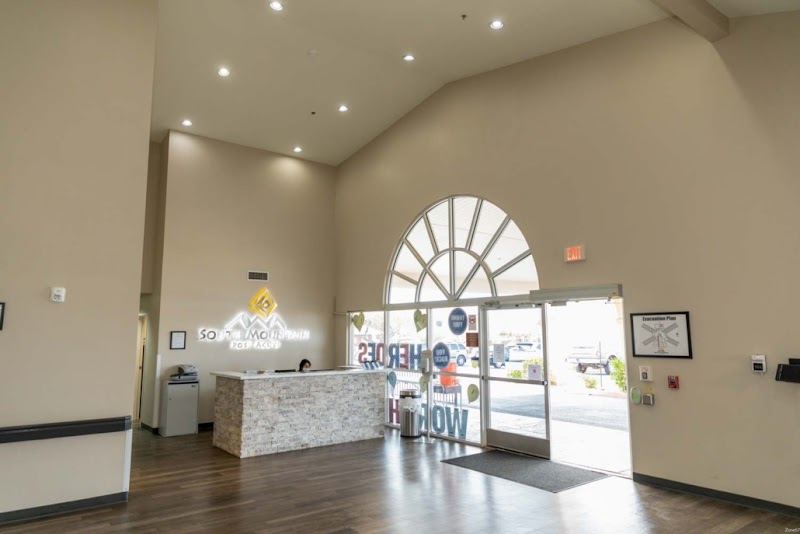
How is South Mountain Post Acute Staffed?

CMS rates SOUTH MOUNTAIN POST ACUTE's staffing level at 1 out of 5 stars, which is much below average compared to other nursing homes. Staff turnover is 48%, compared to the Arizona average of 46%. RN turnover specifically is 64%, which is notably high. RNs provide skilled clinical oversight, so turnover in this role can affect medical care quality.

What Have Inspectors Found at South Mountain Post Acute?

State health inspectors documented 15 deficiencies at SOUTH MOUNTAIN POST ACUTE during 2021 to 2025. These included: 15 with potential for harm.

Who Owns and Operates South Mountain Post Acute?

SOUTH MOUNTAIN POST ACUTE is owned by a for-profit company. For-profit facilities operate as businesses with obligations to shareholders or private owners. The facility is operated by THE ENSIGN GROUP, a chain that manages multiple nursing homes. With 124 certified beds and approximately 102 residents (about 82% occupancy), it is a mid-sized facility located in PHOENIX, Arizona.
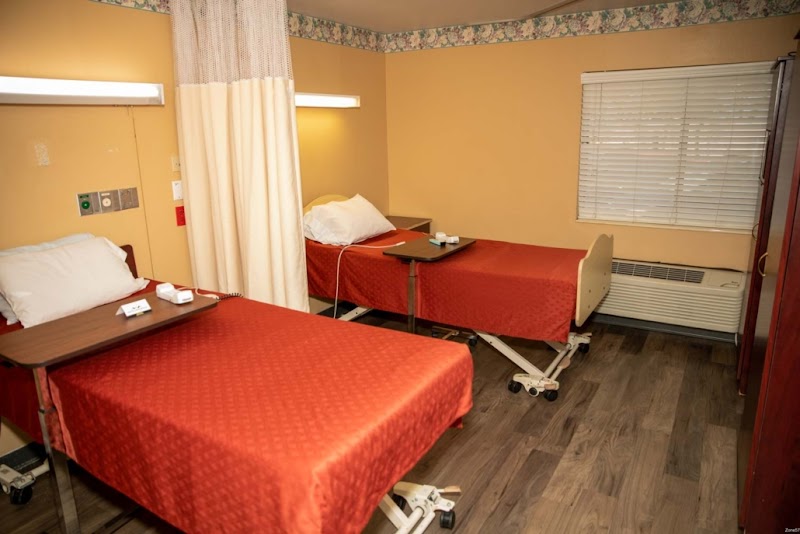
How Does South Mountain Post Acute Compare to Other Arizona Nursing Homes?

Compared to the 100 nursing homes in Arizona, SOUTH MOUNTAIN POST ACUTE's overall rating (3 stars) is below the state average of 3.3, staff turnover (48%) is near the state average of 46%, and health inspection rating (3 stars) is at the national benchmark.

What Should Families Ask When Visiting South Mountain Post Acute?

Based on this facility's data, families visiting should ask: "Can you walk me through typical staffing levels on day, evening, and night shifts?" "Can I visit during a mealtime to observe dining assistance and food quality?" "How do you handle medical emergencies, and what is your hospital transfer rate?" "Can I speak with family members of current residents about their experience?" These questions are particularly relevant given the below-average staffing rating.

Is South Mountain Post Acute Safe?

Based on CMS inspection data, SOUTH MOUNTAIN POST ACUTE has a clean safety record: no substantiated abuse findings (meaning no confirmed cases of resident harm), no Immediate Jeopardy citations (the most serious violation level indicating risk of serious injury or death), and is not on the Special Focus Facility watch list (a federal program monitoring the lowest-performing 1% of nursing homes). The facility has a 3-star overall rating and ranks #100 of 100 nursing homes in Arizona. While no facility is perfect, families should still ask about staff-to-resident ratios and recent inspection results during their visit.

Do Nurses at South Mountain Post Acute Stick Around?

SOUTH MOUNTAIN POST ACUTE has a staff turnover rate of 48%, which is about average for Arizona nursing homes (state average: 46%). Moderate turnover is common in nursing homes, but families should still ask about staff tenure and how the facility maintains care continuity when employees leave.

Was South Mountain Post Acute Ever Fined?

SOUTH MOUNTAIN POST ACUTE has no federal fines on record. CMS issues fines when nursing homes fail to meet care standards or don't correct problems found during inspections. The absence of fines suggests the facility has either maintained compliance or corrected any issues before penalties were assessed. This is a positive indicator, though families should still review recent inspection reports for the full picture.

Is South Mountain Post Acute on Any Federal Watch List?

SOUTH MOUNTAIN POST ACUTE is not on any federal watch list. The most significant is the Special Focus Facility (SFF) program, which identifies the bottom 1% of nursing homes nationally based on persistent, serious quality problems. Not being on this list means the facility has avoided the pattern of deficiencies that triggers enhanced federal oversight. This is a positive indicator, though families should still review the facility's inspection history directly.