THE TERRACES OF PHOENIX
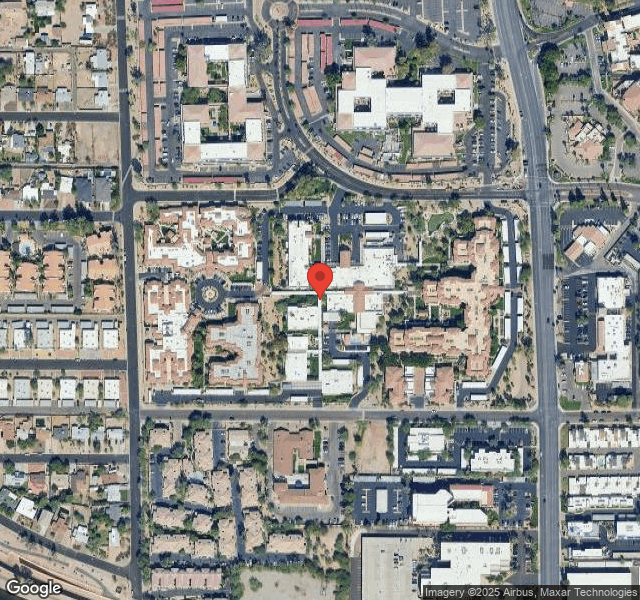

7550 NORTH 16TH STREET, PHOENIX, AZ 85020 (602) 944-4455
Non profit - Corporation 64 Beds HUMANGOOD Data: November 2025
Trust Grade
86/100
#37 of 139 in AZ
Last Inspection: May 2024

Within standard 12-15 month inspection cycle. Federal law requires annual inspections.

Overview

The Terraces of Phoenix has a Trust Grade of B+, which means it is above average and recommended for families considering care for their loved ones. Ranked #37 out of 139 nursing homes in Arizona, it is in the top half of facilities in the state, and at #28 out of 76 in Maricopa County, only a few local options are better. The facility is showing improvement, with a decrease in issues from 7 in 2024 to just 1 in 2025. Staffing is a strong point, with a perfect 5/5 rating and a low turnover rate of 27%, significantly better than the state average. However, the $3,168 in fines is concerning, indicating that it has more compliance issues than 78% of Arizona facilities. While there is more RN coverage than 91% of other nursing homes in the state, ensuring better oversight, recent inspections revealed some troubling incidents. For example, the facility lacked proper signage and personal protective equipment in resident rooms, which is essential for infection control. Additionally, the designated Infection Preventionist did not hold the necessary certification, raising concerns about infection prevention practices. Lastly, personnel records for some staff members were missing required training documentation, potentially affecting the quality of care provided. Overall, while there are notable strengths in staffing and RN coverage, families should be aware of these weaknesses as they make their decision.

Trust Score
B+
86/100
In Arizona
#37/139
Top 26%
Safety Record
Low Risk
No red flags
Inspections
Getting Better
7 → 1 violations
Staff Stability
✓ Good
27% annual turnover. Excellent stability, 21 points below Arizona's 48% average. Staff who stay learn residents' needs.
Penalties
✓ Good
$3,168 in fines. Lower than most Arizona facilities. Relatively clean record.
Skilled Nurses
✓ Good
Each resident gets 86 minutes of Registered Nurse (RN) attention daily — more than 97% of Arizona nursing homes. RNs are the most trained staff who catch health problems before they become serious.
Violations
⚠ Watch
13 deficiencies on record. Higher than average. Multiple issues found across inspections.
★★★★★
5.0
Overall Rating
★★★★★
5.0
Staff Levels
★★★★★
5.0
Care Quality
★★★☆☆
3.0
Inspection Score
Stable
2024: 7 issues
2025: 1 issues

The Good

  • 5-Star Staffing Rating · Excellent nurse staffing levels
  • 5-Star Quality Measures · Strong clinical quality outcomes
  • Low Staff Turnover (27%) · Staff stability means consistent care
  • Full Sprinkler Coverage · Fire safety systems throughout facility
  • No fines on record
  • Staff turnover is low (27%)

    21 points below Arizona average of 48%

Facility shows strength in staffing levels, quality measures, staff retention, fire safety.

The Bad

Federal Fines: $3,168

Below median ($33,413)

Minor penalties assessed

Chain: HUMANGOOD

Part of a multi-facility chain

Ask about local staffing decisions and management

The Ugly 13 deficiencies on record

Jun 2025 1 deficiency
CONCERN (D) 📢 Someone Reported This

A family member, employee, or ombudsman was alarmed enough to file a formal complaint

Potential for Harm - no one hurt, but risky conditions existed

ADL Care (Tag F0677)

Could have caused harm · This affected 1 resident

**NOTE- TERMS IN BRACKETS HAVE BEEN EDITED TO PROTECT CONFIDENTIALITY** Based on observations, clinical record reviews, resident and staff interviews, facility documentation and policy and procedures,...

Read full inspector narrative →
**NOTE- TERMS IN BRACKETS HAVE BEEN EDITED TO PROTECT CONFIDENTIALITY** Based on observations, clinical record reviews, resident and staff interviews, facility documentation and policy and procedures, the facility failed to ensure showers were provided for one resident (#89). The deficient practice can result in residents not receiving care of activities of daily living to maintain highest practicable welbeing. Findings include: Resident was admitted on [DATE] and discharged [DATE] with diagnoses of occlusion and stenosis of right posterior cerebral artery, local infection of the skin and subcutaneous tissue, unspecified, unspecified dementia, unspecified severity, with other behavioral disturbance Review of the resident's care plan revealed a focus for activities of daily living (ADL) self-care performance deficit, incontinence of bowel and bladder related to dementia, impaired balance and limited mobility. Interventions included documentation of refusal of care and cleaning of peri-area with each incontinence episode. An admission Minimum Data Set (MDS) assessment dated [DATE] revealed that the resident a Brief Interview for Mental Status (BIMS) evaluation with a BIMS score of 13, indicating cognition intact. The MDS assessment revealed that the resident did not exhibit rejection of care behavior during the assessment period. The assessment also revealed that the resident required partial/moderate assistance with shower or bathing. Review of the progress notes revealed no documentation for refusal of showers or baths. Review of the facility ADL Verification Worksheet for July 23, 2024 thru July 28, 2024 revealed one shower provided on July 28, 2024. No documentation of shower or bath evident from July 29, 2024 thru July 31, 2024. Review of ADL documentation for bathing revealed no documentation July 25, 2024 thru July 31, 2024. Review of the facility Follow-Up Question Report dated July 26, 2024 thru August 9, 2024 for ADL-Bathing revealed one shower provided on August 6, 2024 and one refusal on August 9, 2024. Further review of the Bathing task log revealed that the scheduled showers/bathing did not occur on the following dates: - August 1, 2024, August 2, 2024 and August 7, 2024 - coded as NA indicating that resident not assigned bathing during shift. The review also revealed no documentation on August 4, August 5, and August 8 2024. An interview was conducted on June 12, 2025 at 9:52 a.m. with Certified Nursing Assistant/ Restorative Nursing Assistant (CNA/RNA/Staff #21). Staff #21 stated residents are provided showers twice per week and are scheduled, further stating if they need an additional one or request one then staff are able to provide them one as needed. Staff #21 stated all showers are documented on shower sheets for skin assessments and are given to the nurse who signs off on them. Staff #21 stated if residents refuse their shower, staff will ask the RNA to offer the resident their shower, if the resident continues to refuse the RNA will notify the nurse and the nurse will speak with the resident to determine the reason for the refusal which could be due to prefer to have/not have a male, pain, or preference for a later time. An interview was conducted on June 12, 2025 at 10:19 a.m. a.m. with Licensed Practical Nurse (LPN/Staff #57). Staff #57 stated residents are offered two- three showers weekly and are scheduled according to their room number. She stated baths/showers are assigned to the CNA assigned to that room for the day. Staff #57 stated if a resident refuses their shower/bath, it is reported to the nurse who will have a conversation with the resident to determine the cause and offer a solution with a different time or day. If the resident continues to refuse, the refusal is documented on the shower sheets and in the nursing progress notes. An interview was conducted with Director of Nursing (DON/ Staff #109). The DON stated she started her position nine months prior and that it is her expectation that all residents are scheduled for a shower twice per week and will try to accommodate for an additional shower if a resident should request one. The DON reviewed the shower documents and stated; based on the documentation there is a nine-day lapse where the resident was not documented as having a shower between July 28, 2024 and August 6, 2024 and no documentation that resident #89 refused. The DON stated the lapse would prompt her to look further as to why the resident did not have a shower. Review of the facility policy titled Activities of Daily Living (ADLs), Supporting states resident will be provided with care, treatment and services as appropriate to maintain or improve their ability to carry out activities of daily living (ADLs). 2. Appropriate care and services will be provided for residents who are unable to carry out ADLs independently, with the consent of the resident and in accordance with the plan of care, including appropriate support and assistance with: a. hygiene (bathing, dressing, grooming, and oral care)
Aug 2024 2 deficiencies
CONCERN (D) 📢 Someone Reported This

A family member, employee, or ombudsman was alarmed enough to file a formal complaint

Potential for Harm - no one hurt, but risky conditions existed

Free from Abuse/Neglect (Tag F0600)

Could have caused harm · This affected 1 resident

**NOTE- TERMS IN BRACKETS HAVE BEEN EDITED TO PROTECT CONFIDENTIALITY** Based on clinical record review, resident/staff interviews, facility documentation and policy review and the State Agency (SA) c...

Read full inspector narrative →
**NOTE- TERMS IN BRACKETS HAVE BEEN EDITED TO PROTECT CONFIDENTIALITY** Based on clinical record review, resident/staff interviews, facility documentation and policy review and the State Agency (SA) complaint tracking system, the facility failed to protect the rights of two residents (#12 and #23) to be free from sexual abuse by another resident (#45). The deficient practice could result in the potential for harm and had placed residents at increased risk for further abuse, serious injury, harm and psychosocial harm. The census was 43. Findings include: -Resident #23 admitted on [DATE] with diagnoses of dementia and depression. The care plan dated May 16, 2023 revealed the resident had impaired cognitive function. The goal was that the quality of life will be nurtured and the resident will be exposed to pleasurable events each day. Intervention included to engage the resident's senses with pleasant smells. The quarterly Minimum Data Set (MDS) assessment dated [DATE] revealed that staff assessment that the resident had severe cognitive impairment. A health status note dated August 7, 2024 included that the resident's Power of Attorney (POA) was informed of an inappropriate behavior displayed by a male resident to the resident #23; and that, the male resident was witnessed to touch the resident's arm/back. An interview was conducted with the social service director (SSD) on August 9, 2024 at 1:30 p.m. The SSD that he was aware of the incident regarding resident #45 touching resident #23; and that, he was not part of the investigation. The SSD said that resident #23 was non-verbal and her eyes would track you when you are talking to her but cannot indicate a yes or no response. -Resident #12 admitted on [DATE] with diagnoses of hemiplegia and hemiparesis, major depressive disorder and anxiety. The quarterly MDS assessment dated [DATE] revealed a Brief Interview for Mental Status (BIMS) score 15 which indicated the resident had intact cognition. The undated active care plan revealed that the resident was at risk for problematic behavior i.e. history of fabricating false accusations against staff that attempt to give directions on ADLs (activities of daily living), medications, diabetes control and management. The goal was that the resident will accept re-direction when making false accusations. Interventions included to identify stressful times of the day, schedule activities and tasks for other times, help the resident to cope using past successful coping mechanisms and praise/reward resident for demonstrating appropriate interactions with staff and others. The undated active care plan also included that the resident had actual or suspected history of personal trauma, was abused by a babysitter at the age of 3 and had associated behaviors of mis-trust for other caregivers. The goal was that the resident will maintain psychosocial well-being. Interventions included to offer reassurance of safety and trust and restore a sense of control by honoring the resident's choices. The nursing progress note dated July 26, 2024 included that the resident reported to the certified nursing assistant (CNA) that she had a bad day because something happened to her today that brought back past memories. Per the documentation, the resident had no unusual events reported other than officers here to visit for statement due to accusation regarding a staff member on another date and time. A late entry alert note dated August 1, 2024 included that the resident was seen by investigators before lunch; and that, the investigators went to speak to the Administrator. In an interview with resident #12 conducted on August 9, 2024 at 4:45 p.m., the resident stated that resident #45 would come up to her often up to twice daily and rub her knee and thigh; and that, the touch was very unwanted. The resident also stated that she had reported this to several nurses and certified nursing assistants (CNAs) who were often were present in the area when resident #45 touches her. The resident said that when this happens, the nurses and CNA who were present would laugh and think that it was funny, and would tell Resident #45 not to touch her. The resident stated that she can escape into her room which is her safe place because resident #45 does not enter her room. However, the resident stated that resident #45 would sit right outside her door and stare at her specifically when she changes clothing. An interview was conducted with the social service director (SSD) on August 9, 2024 at 1:30 p.m. The SSD that the administrator was the one investigating the incident on resident #45 patting another female resident on the shoulder. In an interview with a CNA (staff #6) conducted on August 9, 2024 at approximately 5:00 p.m., the CNA state that on Monday, August 5, 2024, she witnessed resident #45 rubbing the arm and back of resident #12 who had not in any way invited the touch. The CNA stated that she told resident #45 that he could not do that and then she went to report the incident to the RN (staff #5) -Resident #45 was admitted on [DATE] with diagnosis of dementia. The MDS assessment dated [DATE] included a BIMS score of 7 indicating the resident had severe cognitive impairment. The undated care plan revealed the resident had a behavior problem of inappropriate touching of a female resident related to dementia. The goal included that the resident will have no evidence of behavior problem of inappropriately touching. Interventions included 1:1 monitoring x 2 weeks, document his behavior every shift, report any sexual behavior to nurse and redirect as needed. A progress note dated July 24, 2024 and written by a registered nurse (RN/staff #5) revealed that the resident touched a female resident on the leg; and that, it was unwanted. Per the documentation, the resident was redirected. There was also no evidence found in the clinical record that interventions were put in place to prevent the reoccurrence of resident #45 inappropriately touching or sexual advances to other female residents . A health status note dated August 1, 2024 included that the resident was sexually explicit, was masturbating in his bed and was asking where's that girl? referring to the CNA. A health status note written by a registered nurse (RN/staff #5) dated August 7, 2024 revealed that the resident was observed multiple times groping the breasts of a female resident. Per the documentation, staff explained to the resident the wrongful behavior, was redirected and the resident showed no signs of understanding. Another health status note dated August 7, 2024 included that the resident was on alert charting related to inappropriate activities of wanting to touch other residents; and that, the resident was monitored hourly regarding his whereabouts. A behavior note dated August 7, 2024 included that the physician was notified regarding the resident's inappropriate behavior. Despite the documentation that a resident was observed multiple times groping the breasts of a female resident, the facility self-report received on August 7, 2024 revealed that the resident was seen touching another resident; and that, the facility was investigating specifically the location of resident touching. A written statement from the RN (staff #5) dated August 7, 2024 included that the RN was at his medication cart on August 6, 2024 at approximately 5:30 p.m., he saw resident #45 was trying to touch resident #23; and that, the RN was able to intervene and redirect resident #45 before resident #45 could touch resident #23. Per the documentation, the RN assumed that resident #45 was going to grope the breasts of resident #23 because the RN had seen resident #45 was reaching towards the breasts of resident #23. Further, the documentation included that resident #45 attempted 3 times and was seen approaching resident #23 with arms stretched towards the mid-section of the body of resident #23. The behavior note dated August 8, 2024 included that the resident was alert and oriented with some confusion; and, was self-propelling around the unit. Another behavior note dated August 8, 2024 revealed that the resident continued to be monitored for inappropriate behavior of wanting to touch/feel other residents. Per the documentation, the resident was able to respond ye or no and was routinely self-propelling his wheelchair in the unit between hallways. A physician order dated August 8, 2024 included an order to monitor behavior of inappropriate touching to others every shift for a diagnosis of dementia. In a phone interview with the RN (staff #5) conducted on August 9, 2024 at 2:01 p.m., the RN stated that he had worked at the facility for 8 months; and, he does not think that staff could evaluate a resident with dementia regarding consensual sexual relationship with another resident. The RN stated that resident #45 had inappropriately touched residents #23 and #12; and that, he documented these incidents in the progress notes but did not report the incidents to anyone. In a later interview with the RN (staff #5) conducted on August 9, 2024 at 3:40 p.m., the RN stated that he did not witness the incident between resident #45 and resident #12. He stated that resident reported the allegation of abuse; and that, resident #45 touched resident #12 who reported that it was an unwanted touch. The RN said that he does not know if unwanted touching between residents was considered abuse; and, he did not report it to a supervisor because he was not sure what to do in the situation. An interview was conducted on August 9, 2024 at 4:45 p.m. with the Administrator who stated that her expectations was for staff to report abuse allegations immediately. She stated that an allegation of abuse was received, staff will ensure safety of the resident, separate the residents for the alleged perpetrator (staff or resident), monitor the affected residents for psychosocial effects or concerns, and document the incident. She stated that staff received in-service and computer training on how to identify abuse; and in these trainings, staff were provided specific examples of what abuse could look like, and when in doubt to report it to her. Regarding resident #45, the administrator stated that resident #45 had not been moved from the unit when the incident between resident #45 and resident #12 because resident #12 usually spend time close to the nurse's station; and, resident #45 was not trying to seek resident #12. A policy on Elder Abuse Prevention, Identification, Response, Reporting with revision date of October 10, 2023 included that team members are expected to prevent, identify, respond to, and report allegations of elder abuse according to the steps of this procedure. Identification of abuse from witnessed events, verbal resident report of abuse, and audit of resident records, among others methods of identification. In response to allegations or witness events, general steps include, take steps to protect the resident and prevent further potential abuse immediately, report the allege violation within required time frames, take appropriate corrective action, and revise the residents care or service plan. All allegations received by a team member are to be reported as soon as practicably to the appropriate leadership team member or designee. If an altercation occurs between resident, they should be separated by staff and placed in two different areas.
CONCERN (D) 📢 Someone Reported This

A family member, employee, or ombudsman was alarmed enough to file a formal complaint

Potential for Harm - no one hurt, but risky conditions existed

Report Alleged Abuse (Tag F0609)

Could have caused harm · This affected 1 resident

**NOTE- TERMS IN BRACKETS HAVE BEEN EDITED TO PROTECT CONFIDENTIALITY** Based on clinical record review, resident/staff interviews, facility documentation and policy review and the State Agency (SA) c...

Read full inspector narrative →
**NOTE- TERMS IN BRACKETS HAVE BEEN EDITED TO PROTECT CONFIDENTIALITY** Based on clinical record review, resident/staff interviews, facility documentation and policy review and the State Agency (SA) complaint tracking system, the facility failed to ensure allegations of sexual abuse for two residents (#23 and #12) by another resident (#45) was reported immediately to the administrator, State Agency (SA), Adult Protective Services (APS) and law enforcement. The deficient practice could result in the potential harm and had placed residents at increased risk for further abuse, serious injury, harm and psychosocial harm. As a result, the condition of Immediate Jeopardy (IJ) and Substandard Quality of Care (SQC) were identified. The census was 43. Findings include: On August 9, 2024 at 5:34 p.m., a condition of IJ was identified. The administrator was informed of the facility's failure to ensure residents were free from sexual abuse by a resident was found. The administrator presented the removal plan on August 9, 2024 at 8:23 p.m. The administrator was informed that the removal plan was not acceptable and failed to include any assessment completed for resident #12 and #23; until when will resident #45 be placed on 1:1 supervision; other interventions put in place to prevent inappropriate behaviors for resident #45; when the in-service training was started and expected to be completed for all staff; identify the staff that would complete the in-service training; and, actions the facility will take if a staff did not complete the required in-service/training. A revised removal plan was received on August 9, 2024 at 9:25 p.m. and was not accepted because it failed to include when the in-service training was started for all staff including staff that were on leave; how the facility will monitor resident #45 for inappropriate behaviors; until when will resident #45 be placed on 1:1 supervision; other interventions put in place to prevent inappropriate behaviors for resident #45; what actions will be taken for staff who documented the incident but did not report the allegation of abuse; and, how often and what kind of audits or monitoring will be done to identify any potential abuse. Another revised removal plan was presented by the administrator on August 9, 2024 at 10:31 p.m. the administrator was informed that the removal plan was not accepted and failed to include: what actions will be taken for staff who documented the incident but did not report the allegation of abuse; how the facility will monitor resident #45 for inappropriate behaviors; and, how often and what kind of audits or monitoring will be done to identify any potential abuse. On August 10, 2024 at 8:33 a.m., the administrator presented a revised removal plan that was accepted at 8:47 a.m. The accepted removal plan included: -Medical and Psychiatric Assessment completed for resident #12 and #23; -In-service training on abuse was started and expected to be completed for all staff including staff that were on leave; -Actions the facility will take if a staff did not complete the required in-service/training; -Actions taken for staff who documented the incident but did not report the allegation of abuse; -How the facility will monitor resident #45 for inappropriate behaviors, until when will resident #45 be placed on 1:1 supervision and other interventions put in place to prevent inappropriate behaviors for resident #45; and, -How often and what kind of audits or monitoring will be done to identify any potential abuse. On August 10, 2024 at 12:28 p.m., the condition of IJ was removed after multiple observations were conducted of the facility implementing their removal plan which included resident and staff interviews, personnel record review, in-service training of staff and review of documentation provided by the facility. -Resident #12 admitted on [DATE] with diagnoses of hemiplegia and hemiparesis, major depressive disorder and anxiety. The quarterly MDS assessment dated [DATE] revealed a Brief Interview for Mental Status (BIMS) score 15 which indicated the resident had intact cognition. The undated active care plan revealed that the resident was at risk for problematic behavior i.e. history of fabricating false accusations against staff that attempt to give directions on ADLs (activities of daily living), medications, diabetes control and management. The goal was that the resident will accept re-direction when making false accusations. Interventions included to identify stressful times of the day, schedule activities and tasks for other times, help the resident to cope using past successful coping mechanisms and praise/reward resident for demonstrating appropriate interactions with staff and others. The undated active care plan also included that the resident had actual or suspected history of personal trauma, was abused by a babysitter at the age of 3 and had associated behaviors of mis-trust for other caregivers. The goal was that the resident will maintain psychosocial well-being. Interventions included to offer reassurance of safety and trust and restore a sense of control by honoring the resident's choices. The nursing progress note dated July 26, 2024 included that the resident reported to the certified nursing assistant (CNA) that she had a bad day because something happened to her today that brought back past memories. Per the documentation, the resident had no unusual events reported other than officers here to visit for statement due to accusation regarding a staff member on another date and time. The documentation did not include whether the allegation was reported to the administrator, State Agency (SA), Adult Protective Services (APS) and law enforcement. A late entry alert note dated August 1, 2024 included that the resident was seen by investigators before lunch; and that, the investigators went to speak to the Administrator. There was no evidence found in the clinical record that this incident was reported to the administrator, State Agency (SA), Adult Protective Services (APS) and law enforcement until August 9, 2024. Review of the SA complaint tracking system included a facility self-report dated August 9, 2024. The self-report revealed that during their investigation of another incident, the facility found in the clinical record that on July 24, 2024 resident #45 touched the leg of resident #12. In an interview with resident #12 conducted on August 9, 2024 at 4:45 p.m., the resident stated that resident #45 would come up to her often up to twice daily and rub her knee and thigh; and that, the touch was very unwanted. The resident also stated that she had reported this to several nurses and certified nursing assistants (CNAs) who were often were present in the area when resident #45 touches her. The resident said that when this happens, the nurses and CNA who were present would laugh and think that it was funny, and would tell Resident #45 not to touch her. The resident stated that she can escape into her room which is her safe place because resident #45 does not enter her room. However, the resident stated that resident #45 would sit right outside her door and stare at her specifically when she changes clothing. In an interview with a CNA (staff #6) conducted on August 9, 2024 at approximately 5:00 p.m., the CNA state that on Monday, August 5, 2024, she witnessed resident #45 rubbing the arm and back of resident #12 who had not in any way invited the touch. The CNA stated that she told resident #45 that he could not do that and then she went to report the incident to the RN (staff #5) -Resident #23 admitted on [DATE] with diagnoses of dementia and depression. The care plan dated May 16, 2023 revealed the resident had impaired cognitive function. The goal was that the quality of life will be nurtured and the resident will be exposed to pleasurable events each day. Intervention included to engage the resident's senses with pleasant smells. The quarterly Minimum Data Set (MDS) assessment dated [DATE] revealed that staff assessment that the resident had severe cognitive impairment. A health status note dated August 7, 2024 included that the resident's Power of Attorney (POA) was informed of an inappropriate behavior displayed by a male resident to the resident #23; and that, the male resident was witnessed to touch the resident's arm/back. An interview was conducted with the social service director (SSD) on August 9, 2024 at 1:30 p.m. The SSD that he was aware of the incident regarding resident #45 touching resident #23; and that, he was not part of the investigation. The SSD said that resident #23 was non-verbal and her eyes would track you when you are talking to her but cannot indicate a yes or no response. -Resident #45 was admitted on [DATE] with diagnosis of dementia. The MDS assessment dated [DATE] included a BIMS score of 7 indicating the resident had severe cognitive impairment. The undated care plan revealed the resident had a behavior problem of inappropriate touching of a female resident related to dementia. The goal included that the resident will have no evidence of behavior problem of inappropriately touching. Interventions included 1:1 monitoring x 2 weeks, document his behavior every shift, report any sexual behavior to nurse and redirect as needed. A progress note dated July 24, 2024 and written by a registered nurse (RN/staff #5) revealed that the resident touched a female resident on the leg; and that, it was unwanted. Per the documentation, the resident was redirected. The documentation did no include whether the incident was reported to the the administrator, State Agency (SA), Adult Protective Services (APS) and law enforcement. There was no evidence found in the clinical record that this incident was reported to the administrator, State Agency (SA), Adult Protective Services (APS) and law enforcement. There was also no evidence found in the clinical record that interventions were put in place to prevent the reoccurrence of resident #45 inappropriately touching or sexual advances to other female residents. A health status note written by a registered nurse (RN/staff #5) dated August 7, 2024 revealed that the resident was observed multiple times groping the breasts of a female resident. Per the documentation, staff explained to the resident the wrongful behavior, was redirected and the resident showed no signs of understanding. Another health status note dated August 7, 2024 included that the resident was on alert charting related to inappropriate activities of wanting to touch other residents; and that, the resident was monitored hourly regarding his whereabouts. A behavior note dated August 7, 2024 included that the physician was notified regarding the resident's inappropriate behavior. Despite the documentation that a resident was observed multiple times groping the breasts of a female resident, the facility self-report received on August 7, 2024 revealed that the resident was seen touching another resident; and that, the facility was investigating specifically the location of resident touching. A written statement from the RN (staff #5) dated August 7, 2024 included that the RN was at his medication cart on August 6, 2024 at approximately 5:30 p.m., he saw resident #45 was trying to touch resident #23; and that, the RN was able to intervene and redirect resident #45 before resident #45 could touch resident #23. Per the documentation, the RN assumed that resident #45 was going to grope the breasts of resident #23 because the RN had seen resident #45 was reaching towards the breasts of resident #23. Further, the documentation included that resident #45 attempted 3 times and was seen approaching resident #23 with arms stretched towards the mid-section of the body of resident #23. The undated facility report revealed that interviews with staff working on the PM shift on August 6, 2024 revealed no findings related to resident #45 touching other residents on the breast or private area. The report also included an interview with resident #12 who reported that she saw resident #45 touched resident #23 on the leg, arm and then rubbed her boob; and that a CNA was around when it happened. The report included an interview with a CNA named by resident #12. Per the documentation, the CNA reported that she saw resident #45 rubbing the arm and back of resident #23 liked resident #45 was comforting resident #23; and that, she told resident #45 that he can't do that. Further, the CNA denied seeing resident #45 touched the breast of resident #23. Continued review of the facility report revealed that the RN (staff #5) who documented the inappropriate behavior of resident #45 was interviewed; and that, the RN was not able to provide specific details about location, times and/or specific events related to the incident with resident #23. In a later interview with the RN (staff #5) conducted by the facility, the RN was at his medication cart on August 6, 2024 at approximately 5:30 p.m. and saw resident #45 was trying to touch resident #23. The documentation included that the RN was able to intervene and redirect resident #45 before resident #45 could touch resident #23. Per the documentation, the RN assumed that resident #45 was going to grope the breasts of resident #23 because the RN in other instances had seen resident #45 inch close, leaned over with arms stretched out in the direction of resident #23 but never made physical contact. Further, the documentation included that resident #45 attempted 3 times and was seen approaching resident #23 with arms stretched towards the mid-section of the body of resident #23. Further review of the facility report revealed that the facility was unable to substantiate that abuse occurred and the RN (staff #5) made an addendum to his progress notes clarifying what he witnessed, the nurse's statement from the following shift corroborated that resident #45 did not touch resident #23 and the CNAs statement did not validate that she witnessed the allegation like resident #12 had reported. It also included that the police did not take the case as sexual abuse and were not pressing charges on resident #45. A physician order dated August 8, 2024 included an order to monitor behavior of inappropriate touching to others every shift for a diagnosis of dementia. In a phone interview with the RN (staff #5) conducted on August 9, 2024 at 2:01 p.m., the RN stated that he had worked at the facility for 8 months; and, he does not think that staff could evaluate a resident with dementia regarding consensual sexual relationship with another resident. The RN stated that resident #45 had inappropriately touched residents #23 and #12; and that, he documented these incidents in the progress notes but did not report the incidents to anyone. In a later interview with the RN (staff #5) conducted on August 9, 2024 at 3:40 p.m., the RN stated that he did not witness the incident between resident #45 and resident #12. He stated that resident #12 reported the allegation of abuse; and that, resident #45 touched resident #12 who reported that it was an unwanted touch. The RN said that he does not know if unwanted touching between residents was considered abuse; and, he did not report it to a supervisor because he was not sure what to do in the situation. An interview was conducted on August 9, 2024 at 4:45 p.m. with the Administrator who stated that her expectations was for staff to report abuse allegations immediately. She stated that an allegation of abuse was received, staff will ensure safety of the resident, separate the residents for the alleged perpetrator (staff or resident), monitor the affected residents for psychosocial effects or concerns, and document the incident. She stated that staff received in-service and computer training on how to identify abuse; and in these trainings, staff were provided specific examples of what abuse could look like, and when in doubt to report it to her. Regarding resident #45, the administrator stated that resident #45 had not been moved from the unit when the incident between resident #45 and resident #12 because resident #12 usually spend time close to the nurse's station; and, resident #45 was not trying to seek resident #12. A policy on Elder Abuse Prevention, Identification, Response, Reporting with revision date of October 10, 2023 included that team members are expected to prevent, identify, respond to, and report allegations of elder abuse according to the steps of this procedure. Identification of abuse from witnessed events, verbal resident report of abuse, and audit of resident records, among others methods of identification. In response to allegations or witness events, general steps include, take steps to protect the resident and prevent further potential abuse immediately, report the allege violation within required time frames, take appropriate corrective action, and revise the residents care or service plan. All allegations received by a team member are to be reported as soon as practicably to the appropriate leadership team member or designee. If an altercation occurs between resident, they should be separated by staff and placed in two different areas.
May 2024 5 deficiencies
CONCERN (D)

Potential for Harm - no one hurt, but risky conditions existed

Deficiency F0578 (Tag F0578)

Could have caused harm · This affected 1 resident

**NOTE- TERMS IN BRACKETS HAVE BEEN EDITED TO PROTECT CONFIDENTIALITY** Based on clinical record reviews, staff and resident interviews, and policies and procedures, the facility failed to ensure that...

Read full inspector narrative →
**NOTE- TERMS IN BRACKETS HAVE BEEN EDITED TO PROTECT CONFIDENTIALITY** Based on clinical record reviews, staff and resident interviews, and policies and procedures, the facility failed to ensure that advance directives were accurate for one resident (#9). The deficient practice could result in residents' wishes not being honored. Findings include: -Resident #9 was admitted to the facility on [DATE], with a diagnosis of displaced intertrochanteric fracture of right femur, subsequent encounter for closed fracture with routine healing, age-related osteoporosis with current pathological fracture, right femur, subsequent encounter for fracture with routine healing. Review of the clinical record revealed a prehospital medical care directive which included the resident was a Do Not Resuscitate (DNR) status. The medical care directive was signed by the resident on May 2, 2024. However, review of the physician orders signed and dated May 8, 2024 revealed an order for a Full Code status. An interview was conducted with resident #9 on May 30, 2024 at 01:00 PM who stated she had signed paperwork indicating her preferences for DNR. She stated I have had a good life, I don't want any heroic measures done on me. An interview was conducted with a Registered Nurse (staff #38) on May 30, 2024 at 1:16 p.m. She reviewed the resident's chart stating the residents current code status is a full code. She also reviewed the state forms noting the resident's actual status is a DNR. Registered Nurse (staff # 38) stated the orders needed to be corrected because they were not correct. Registered Nurse (staff #38) stated the risks associated with a resident's advance directives being incorrect and not reflecting the resident's decision could cause the resident to receive life saving measures when the directives were not to. An interview was conducted with the Interim Director of Nursing (DON/staff #5) on May 30, 2024 at 1:31 p.m. She stated she has focused on the advance directives due to recent audits. When she reviewed the resident's clinical chart the code status had been changed to DNR. Registered Nurse (staff #38) informed the DON that the residents code status was Full Code and she had changed it to reflect the correct status of DNR. (DON/staff #5) stated that it is her expectations that advance directives be completed and be accurate. Review of the facility policy titled Advance Directives (Revised September 2022) the resident has the right to formulate an advance directive, including the right to accept or refuse medical or surgical treatment. Advance directives are honored in accordance with state law and facility policy.
CONCERN (D) 📢 Someone Reported This

A family member, employee, or ombudsman was alarmed enough to file a formal complaint

Potential for Harm - no one hurt, but risky conditions existed

Deficiency F0657 (Tag F0657)

Could have caused harm · This affected 1 resident

**NOTE- TERMS IN BRACKETS HAVE BEEN EDITED TO PROTECT CONFIDENTIALITY** Based on observations, clinical record review, staff interviews and policy review, the facility failed to ensure care plan was r...

Read full inspector narrative →
**NOTE- TERMS IN BRACKETS HAVE BEEN EDITED TO PROTECT CONFIDENTIALITY** Based on observations, clinical record review, staff interviews and policy review, the facility failed to ensure care plan was revised for one resident (#53). Findings include: Resident # 53 was admitted to the facility on [DATE] and discharged [DATE], with diagnoses that included Nondisplaced fracture of medial malleolus of left tibia, subsequent encounter for closed fracture with routine healing, Pain in left ankle and joints of left foot, Unspecified open wound, right foot, subsequent encounter, Unspecified open wound, left foot, subsequent encounter, Unspecified open wound, right lower leg, subsequent encounter, Unspecified open wound, left lower leg, subsequent encounter, Unspecified osteoarthritis, unspecified site, Nondisplaced fracture of medial malleolus of right tibia, initial encounter for closed fracture. An annual Minimum Data Set assessment dated [DATE] revealed a Brief Interview for Mental Status (BIMS) was conducted revealing a BIMS score of 15 indicating resident cognition is intact. Review of Section G revealed resident required extensive assist with toileting, transfers, dressing, personal hygiene and required two plus persons for physical assist with transfer, balance during transitions and walking. Functional limitation in range of motion revealed impairment on one side with lower extremity, used wheelchair and walker for mobility. Review of the comprehensive care plan effective dated 7/12/2023 and created on 7/12/2023 revealed the resident was at risk for falls related to weakness, impaired mobility, foot wounds, medications. Review of Progress note dated 7/18/2023 at 12:56 pm stated that the resident reported she had fall in restroom on 7/16/2023. The note further stated that on 7/16/2024, she was assisted by a Certified Nursing Assistant (CNA) in the restroom and her legs became weak and she was lowered to the floor with assistance from the CNA. The note stated the resident did not hit her feet or leg but stated her ankle might have turned when she was sitting down. Further review of the care plan revealed that it had not been revised to reflect the level of assistance required for resident #53 with toileting, transfers, dressing, personal hygiene. A phone interview was conducted with a Certified Nursing Assistant (CNA/staff #105) on May 30. 2024 at 12:19 p.m. She stated she had previously worked for the facility 2022-2023 and could recall the incident involving resident #53. She stated she had assisted the resident with toileting when the resident wanted to sit down due to anxiety and feeling weak. CNA/staff #105 stated using the gait belt, she sat the resident on the floor, because she couldn't place her back on the toilet due to feces on the toilet seat. CNA/staff #105 stated she had requested assistance from Registered Nurse (RN/Staff #39) prior to assisting the resident to the bathroom. She stated she waited 10-15 minutes for assistance, but (RN/Staff #39) never came to assist her. She stated the reason she asked for help was due to the resident complaining of feeling weak the day prior. She stated she was asked by the former DON to change her statement regarding asking for assistance from the nurse prior and that the she was aware the resident was a two-person assist with toileting. (CNA/staff #105) stated she refused to change her statement because she had looked at the resident's care plan and there nothing care planned indicating a non-weight bearing status or the need for a two-person transfer. An interview was conducted with a Registered Nurse (RN/staff #39) on May 30, 2024 at approximately 2:00 p.m. She stated she could not recall any of the incident, but believed the resident was a two- person transfer and that (CNA/staff #105) did not request her assistance with transfer of the resident. She stated the resident had an x-ray completed at the facility and was transferred to the hospital. An interview was conducted with the Interim Director of Nursing (DON/staff #5) on May 31, 2024 at 8:36 a.m. She stated that when a CNA needs information regarding a resident's level of assistance they would find this information in the resident's care plan and that they do not have access to the MDS. She further stated her expectations are that a resident's level for assistance would be in the care plan, shared in report and in the nurses charting. (DON/staff #5) reviewed the MDS for resident #53 confirming the resident is a three indicating the resident is an extensive assist with two plus people. (DON/staff #5) also reviewed the current plan stating the care plan did not reflect the level of assistance required for resident transfers and that the care plan should reflect the MDS. A facility policy regarding Care Plans Baseline included the following: A baseline plan of care to meet the resident's immediate health and safety needs is developed for each resident within forty-eight (48) hours of admission
CONCERN (E)

Potential for Harm - no one hurt, but risky conditions existed

Infection Control (Tag F0880)

Could have caused harm · This affected multiple residents

**NOTE- TERMS IN BRACKETS HAVE BEEN EDITED TO PROTECT CONFIDENTIALITY** Findings include: On May 29, 2024 at 11:08 AM a list of resident names with indwelling devices, wounds, and multi-drug-resistant...

Read full inspector narrative →
**NOTE- TERMS IN BRACKETS HAVE BEEN EDITED TO PROTECT CONFIDENTIALITY** Findings include: On May 29, 2024 at 11:08 AM a list of resident names with indwelling devices, wounds, and multi-drug-resistant organisms (MDRO) was requested. The list was reviewed and revealed the following number of residents in the facility within each category: indwelling devices: 4 residents; MDRO: 2 residents. Moreover, the list of residents with wounds that was provided included 21 residents. On May 29, 2024 at 8:50-8:55 AM, an observation of the facility rooms, consisting of hallway rooms 8100-8124 revealed no PPE or enhanced barrier signage present at any resident room. An interview was conducted on May 29, 2024 at 09:56 AM with Certified Nursing Assistant (CNA/Staff # 80) who stated that communication regarding the personal protective equipment (PPE) that needs to be worn is through the signage posted outside a resident' room. Staff # 80 stated she was not completely familiar with transmission-based precautions, however if there is any instructional signage on the wall staff are expected to follow instructions on the signage. An interview was conducted on May 29, 2024 at 10:01 AM with Registered Nurse (RN/Staff # 50) who stated that the risks of not having a signage are risks of spreading infection and chances that staff may also be infected. Staff # 50 stated if there were sign of enhanced barrier precaution (EBP) staff should wear gloves and gown. Staff # 50 confirmed that there were no EBP signage present. An interview was conducted May 29, 2024 at 10:34 AM with designated Infection Preventionist (LPN/IP/Staff # 100) and Interim Director of Nursing (IDON/Staff # 5). Staff # 100 stated if residents have Foley catheters or wounds enhanced barrier precaution (EBP) should be in place. Staff # 100 confirmed that the EBP signage had not been present and was placed today for all residents. Staff # 100 stated she had provided EBP training this morning regarding when it would be appropriate to wear PPE; and that, she gave examples. Staff # 100 stated that she was handed-off the position by fire around March 15, 2024, after previous qualified Infection Preventionist/Director of Nursing left the facility. Interim Director of Nursing confirmed no EBP signage was present in the facility since the last infection preventionist up to this point. Review of the facility's policy titled, Enhanced Barrier Precautions dated August 2022 revealed, enhanced barrier precautions (EBPs) are utilized to prevent the spread of multi-drug resistant organisms (MDRO's) to residents; and that, EBPs are indicated (when contact precautions do not otherwise apply) for residents with wounds and/or indwelling medical devices regardless of MDRO colonization; and that, EBPs remain in place for the duration of the resident's stay or until resolution of the wound or discontinuation of the indwelling medical device that places them at increased risk; and that, signs are posted in the door or wall outside the resident room indicating the type of precautions and PPE required; and that, PPE is available outside of the resident rooms. The CDC website on healthcare acquired infections revealed that the enhanced barrier precautions are an infection control intervention designed to reduce the transmission of resistant organisms that employ targeted gown and glove use during high contact resident care activities. The CDC further stated that nursing home residents with wounds and indwelling medical devices are at especially high risk of both acquisition of and colonization with MDRO's (multi-drug resistant organisms). The CDC website further stated that the use of gown and glove for high-contact resident care activities is indicated when contact precautions do not otherwise apply. Updated July 12, 2022. https://cdc.gov/hai/containment/PPE-Nursing-Homes.html. Based on review of clinical records and policy, observations, and staff interviews the facility failed to ensure transmission-based precautions, particularly enhanced barrier precautions (EBP), signage and personal protective equipment were in-place to help prevent development or transmission of infections. The deficient practice could result in development or transmission of infections within the facility. Findings Include: Resident #352 was admitted on [DATE] with diagnosis including sepsis, unspecified organism, onset date May 22 2024, Unspecified Escherichia coli [E. coli] as the cause of diseases classified elsewhere onset May 22, 2024, Urinary tract infection, site not specified New UTI 3.19.24, Pressure ulcer of left heel, unstageable May 22, 2024, Benign prostatic hyperplasia with lower urinary tract symptom. A review of the physician orders revealed an order dated February 7, 2024 for an indwelling catheter size 16 French with a 15cc bulb. A review of the quarterly MDS (minimum data set) dated May 17, 2024 revealed that the resident BIMS (brief interview of mental status) was unable to be completed. The MDS further revealed that resident #352 had an in-dwelling catheter in place and a diagnosis of obstructive uropathy. A review of the care plan revealed that an indwelling catheter was in place for an obstructive uropathy. The care plan further notes interventions of monitoring for pain or discomfort, monitoring for UTI's (urinary tract infections), catheter care per shift and reporting any unusual observations to the nurse. An observation was conducted on May 28, 2024 at 10:46 AM. It was observed that there was no signage outside of the room of resident #352 alerting to enhanced barrier precautions, nor was PPE (personal protective equipment) visible outside of the resident's room. A box of gloves were observed in the resident's room, but no other PPE was present either within or directly outside of the resident's room. A secondary observation was conducted on May 28, 2024 at 2:37 PM. No signage for enhanced barrier precautions or PPE outside of the resident # 352's room were observed. An interview was conducted on May 29, 2024 at 11:25 PM with staff #100 Infection Preventionist /Licensed Practical Nurse (LPN/IP). Staff #100 Stated that she was recently placed as the IP person after assisting the facility during a Covid outbreak and was thrown in by fire as the Infection Preventionist. Staff #100 EBP was placed for all residents with catheters and wounds the morning of May 20, 2024. Staff #100 stated she was aware of the recent changes with CMS guidelines regarding EBP, but does not know why the EBP precautions were not previously placed. An interview was conducted on May 30, 2024 at 1:49 PM with staff #80 CNA (Certified Nursing Assistant). Staff #8 stated that resident # 352 has an indwelling catheter and has had one for a while. She stated that she had been informed on May 30, 2024 that she was to use precautions when caring for resident #352 catheter, using gown and gloves. She stated there were no Enhanced Barrier Precaution prior to May 30, 2024 for resident #352. Staff #8 stated she could not recall receiving training on transmission based or enhanced barrier precautions, she may have had training through Relias, but did not know the difference between the two precautions. An interview was conducted on May 29, 2024 at 01:07 PM with staff #5 Interim DON (Director of Nursing). Staff #5 stated that not having anyone available in the role as IP and her short-term role as the DON has been part of the conversation and in hindsight it was not something they have been practicing.
CONCERN (E)

Potential for Harm - no one hurt, but risky conditions existed

Deficiency F0882 (Tag F0882)

Could have caused harm · This affected multiple residents

Based on staff interviews and facility policy, the facility failed to designate a qualified individual as the Infection Preventionist (IP). The deficient practice could result in improper infection pr...

Read full inspector narrative →
Based on staff interviews and facility policy, the facility failed to designate a qualified individual as the Infection Preventionist (IP). The deficient practice could result in improper infection prevention practices in the facility. Findings include: An interview was conducted May 29, 2024 at 10:34 AM with Licensed Practical Nurse and designated Infection Preventionist (LPN/IP/Staff # 100) who stated although had coursework in Infection Prevention, did not have an infection prevention program certificate of completion at this time. Staff # 100 stated she had not taken the final cumulative assessment in order to receive her certificate of completion. Staff # 100 stated initially it was a collaborative task for whoever was present, but was handed-off the IP position by fire around March 15, 2024, after previous qualified Infection Preventionist/Director of Nursing left the facility. An interview was conducted on May 29, 2024 at 01:07 PM with Interim Director of Nursing (IDON/Staff # 5) who confirmed that Staff # 100 was the designated Infection Preventionist at this time. Staff # 100 stated the facility is going to remove staff #100 out of her floor service duties, and whatever the requirement is, the facility will make sure staff #100 meet the requirement. Review of State Operations Manual, Appendix PP-2022 update (revised June 2022), regulations revealed the facility must: designate one or more individuals as the Infection Preventionist (IP) who is responsible for the facility's Infection Prevention Control Program. The IP must §483.80(b)(4) Have completed specialized training in infection prevention and control. The IP must be qualified by education, training, experience or certification. Training can occur through more than one course, but the IP must provide evidence of training through a certificate of completion or equivalent documentation.
CONCERN (E)

Potential for Harm - no one hurt, but risky conditions existed

Deficiency F0947 (Tag F0947)

Could have caused harm · This affected multiple residents

Based on review of employee personnel file, staff interviews and policy review, the facility failed to ensure personnel records for 2 staff (#150 and #56) included documentation of orientation and in-...

Read full inspector narrative →
Based on review of employee personnel file, staff interviews and policy review, the facility failed to ensure personnel records for 2 staff (#150 and #56) included documentation of orientation and in-service education as required by policies and procedure. The deficient practice could result in inadequate care of residents. Findings include: Review of the personnel file of a registered nurse (RN/staff 150) revealed a hire date of April 26, 2021. The file revealed no evidence of infection control and Abuse/neglect/exploitation training since January and July, 2022. Review of the personnel file of a activity coordinator (staff 56) revealed a hire date of January 21, 2014. The file revealed no evidence of Abuse/neglect/exploitation training since May, 2016, no evidence of Resident rights training since June, 2017 and no evidence of Infection control and prevention training since December, 2018. An Interview was conducted on May 29, 2024 at 2:12 p.m. with the Human Resource Director (staff # 125), she stated that she is not sure about orientation and in-service education policy. She further stated that Relias send a reminder when staff training class is due, it's also self-monitoring thing and she also sent reminder to staff and supervisor if they are way behind. An Interview was conducted on May 30, 2024 at 9:15 a.m. with the Interim Director of Nursing (staff # 5), she stated that there are certain in-service training done through relias. She further stated that she has been here for 2 months so she was not sure about in-service training but she will do competency and also access staff before the year. She also stated risk for staff not getting training that they won't be updated to process and procedure and it would cause problem to residents. Review of facility policy regarding Elder Abuse Prevention Identification, response, and reporting, revised on 10/20/2023 stated that onboarding and annual education is necessary for all team members to understand their role in abuse prevention, management, and reporting.
Jun 2023 2 deficiencies
CONCERN (D) 📢 Someone Reported This

A family member, employee, or ombudsman was alarmed enough to file a formal complaint

Potential for Harm - no one hurt, but risky conditions existed

Notification of Changes (Tag F0580)

Could have caused harm · This affected 1 resident

**NOTE- TERMS IN BRACKETS HAVE BEEN EDITED TO PROTECT CONFIDENTIALITY** Based on staff interviews, review of the clinical record, facility documentation, and policy and procedure, the facility failed ...

Read full inspector narrative →
**NOTE- TERMS IN BRACKETS HAVE BEEN EDITED TO PROTECT CONFIDENTIALITY** Based on staff interviews, review of the clinical record, facility documentation, and policy and procedure, the facility failed to notify one resident's (#1) representative timely when there was a significant change in the resident's condition related to pressure ulcers. The deficient practice could result in resident representatives not being notified when residents experience a change in condition. Findings include: Resident # 1 was admitted on [DATE] with diagnoses of anxiety, femur fracture, need for assistance with personal care, fall, femur fracture, dementia, hemiplegia affecting left non-dominant side, and unspecified hearing loss bilateral. The admission Minimum Data Set (MDS) assessment revealed a Brief Interview for Mental Status (BIMS) score of 14 which indicated resident had intact cognition. The assessment also revealed no evidence of pressure ulcers at admission. The admission progress note dated February 25, 2023 revealed no evidence of break in skin integrity to bilateral heel ulcers. The assessment included bruising to the right arm and discoloration to bilateral lower extremities, and surgical incision to right hip. Review of wound assessments dated March 8, 2023 revealed deep tissue ulcers to the right and left heel ulcers. The nursing progress notes dated March 12, 2023 revealed purplish red discoloration to bilateral heels; and that, an order for betadine was received. A physician orders dated February through March 2023 revealed no orders for care/treatment of the right and left heel ulcers from March 12 through 21, 2023. The physician order dated May 22, 2023 revealed a treatment order to apply Santyl to the right and left heel pressure injury; and, to monitor for signs/symptoms of infection. Despite identification of pressure ulcers to the right and left heels, the clinical record revealed no evidence that the resident's representative was notified of the pressure ulcers from March 12 through 25, 2023. The nursing progress notes dated March 26, 2023 revealed the resident's representative was notified of the presence of the bilateral heel ulcers at the time of discharge. The Discharge summary dated [DATE] revealed evidence of right and left heel pressure ulcers present upon discharge. An interview was conducted on June 6, 2023 at 2:55 p.m. with a registered nurse (RN/staff #20), who stated that when a pressure ulcer is identified the expectation was to notify the provider and family. She further stated that notification should be documented in the progress notes; and that, notification to the family should be done on the shift that it occurred or the wound was identified and prior to the end of the shift. She stated that the sooner the family was notified, the better. Regarding resident #1, the RN stated that the expectation was that the resident had been notified of the heel ulcers; and that, the notification should have been documented in the clinical record. An interview with the Director of Nursing (DON/staff #21) was conducted on June 6, 2023 at 1:24 p.m. The DON stated that a facility acquired pressure ulcer would be considered a change of condition; and when this occurs, the provider and family should be notified. She also stated that the notification should occur during the shift that it was identified, and be documented in the progress notes. A review of the clinical record was conducted with the DON who stated that there was no evidence that the resident's representative had been notified regarding the change of condition of pressure ulcers for resident #1; and that, this did not meet her expectations. Review of the facility policy on Change in a Resident's Condition or Status, revealed that the facility promptly notifies the resident, his or her attending physician, and the resident representative of changes in the resident's medical condition or status. A significant change of condition is a major decline or improvement in the resident's status that will not normally resolve itself without intervention by staff. A nurse will notify the resident's representative when the resident is involved in any accident/incident that results in injury and when there is a significant change in the resident's physical status.
CONCERN (D) 📢 Someone Reported This

A family member, employee, or ombudsman was alarmed enough to file a formal complaint

Potential for Harm - no one hurt, but risky conditions existed

Comprehensive Care Plan (Tag F0656)

Could have caused harm · This affected 1 resident

**NOTE- TERMS IN BRACKETS HAVE BEEN EDITED TO PROTECT CONFIDENTIALITY** Based on review of the clinical record, staff interviews, facility documentation, policy and procedure, the facility failed to e...

Read full inspector narrative →
**NOTE- TERMS IN BRACKETS HAVE BEEN EDITED TO PROTECT CONFIDENTIALITY** Based on review of the clinical record, staff interviews, facility documentation, policy and procedure, the facility failed to ensure that a care plan was implemented for one resident (#1) regarding pressure ulcer/skin impairment interventions. The deficient practice could result in a plan of care that did not meet the resident's needs. Findings include: Resident # 1 was admitted on [DATE] with diagnoses of anxiety, femur fracture, need for assistance with personal care, fall, femur fracture, dementia, hemiplegia affecting left non-dominant side, and unspecified hearing loss bilateral. A nursing admission evaluation dated February 25, 2023 revealed no evidence that the resident had deep tissue injury of bilateral heels. The care plan dated February 25, 2023 revealed the resident had pressure ulcers and skin integrity as focus of care. Intervention included to use pillows, pads, or wedges to reduce pressure on heels and pressure points, turn/reposition, and, if skin impairment occurs monitor/document location, size and treatment of skin injury and report any signs of skin breakdown, abnormalities, failure to heal, signs/symptoms of infection, maceration to provider. Review of the February 2023 Treatment Administration Report (TAR) revealed no evidence of use pressure relief to the bilateral heels. There was no evidence found in the clinical record that pressure relief to bilateral heels was implemented as care planned. The care plan dated March 3, 2023 revealed the resident had an unstageable pressure injury, deep tissue injury (DTI). Interventions included to float heels while in bed or chair, wear heel protectors, secure assistance for turning, positioning and transfer, reposition every one to two hours or more often and use low air loss mattress to bed and pads when sitting. The care plan included that the resident would not keep heel protectors on. The wound assessments for right and left heel ulcers dated March 8, 2023 revealed deep tissue ulcers to the right and left heel ulcers; and that, foam heel protector was applied. The physician order dated March 8, 2023 revealed an order for sureprep to bilateral heel pressure injury every shift, apply foam heel protectors at all times, offload both heels when in bed. There was no evidence found in the clinical record that turning/repositioning, or heel elevation was implemented as care planned after March 8, 2023. The nursing progress notes dated March 12, 2023 revealed purplish red discoloration to bilateral heels; and that, an order for betadine was received. The TAR for March 2023 revealed no evidence of that pressure relief was provided or implemented as care planned from March 1 through March 12, 2023 Succeeding wound assessments dated March 17 and 22, 2023 revealed no evidence that the foam heel protector was applied to bilateral heels. Continued review of the clinical record revealed that wound measurements increased between March 8, 2023 through March 22, 2023. The physician order dated May 22, 2023 revealed a treatment order to apply Santyl to the right and left heel pressure injury; and, to monitor for signs/symptoms of infection. An interview was conducted on June 6, 2023 at 2:58 p.m. with a certified nursing assistant (CNA/staff #22) who stated that residents were repositioned every 30 minutes; and that, pillows are used to offload the heels. However, the CNA stated that this was not documented in the clinical record. An interview with a registered nurse (RN/staff #20) was conducted on June 6, 2023 at 2:25 p.m. The RN stated that the facility uses pillows or foam boots for pressure relief to resident's heels; and that, there should be an order for the pressure relieving devices and for turning and repositioning. She stated that pressure relief to the heels should be documented in the progress notes, and in the TAR. Regarding resident #1, the RN stated that the resident developed deep tissue injuries on bilateral heels; and that they were offloading her heels and the resident was on a low air loss mattress. In an interview with the Director of Nursing (DON/staff #21) conducted on June 6, 2023 at 1:24 p.m., the DON stated that if there was not a physician order for heel protectors, nursing should document off-loading/pressure relief in the daily nursing notes. She also said that any orders for pressure relief would be documented on the TAR. During the interview, a review of the clinical record was conducted with the DON who stated that there was no evidence of orders for pressure relief to the bilateral heels of resident #1; and, there was no evidence found that the resident was turned/repositioned, and had heels offloaded. She stated that these interventions should be documented in the progress notes, or in the TAR. Further, the DON stated that there was no evidence that the bilateral heel ulcers were offloaded per the care plan from March 17, 2023 through March 26, 2023. The DON stated that the expectation was to follow the interventions as care planned. She stated that she could not say if pressure relief occurred because there was no documentation found in the clinical record. The DON stated that the risk of not following the interventions as care planned for pressure relief could result in the wound getting larger, or the pressure not being relieved. Review of the facility policy on Pressure Ulcers/Skin Breakdown - Clinical Protocol revealed the nurse shall describe and document/report current treatments including support surfaces. The physician will order pertinent wound treatments, including pressure reduction surfaces, dressings and application of topical agents. The physician will guide the care plan as appropriate, especially when wounds are not healing, or new wounds develop despite existing interventions. Current approaches should be reviewed for whether they remain pertinent to the resident's medical conditions. The facility policy on Care Planning, revealed resident care plans are based on resident assessments and developed by an interdisciplinary team (IDT). The IDT team is responsible for the development of resident care plans.
Feb 2023 3 deficiencies
CONCERN (D)

Potential for Harm - no one hurt, but risky conditions existed

Deficiency F0658 (Tag F0658)

Could have caused harm · This affected 1 resident

**NOTE- TERMS IN BRACKETS HAVE BEEN EDITED TO PROTECT CONFIDENTIALITY** Based on review of records, staff interviews and review of policies and procedures, the facility failed to ensure that two resid...

Read full inspector narrative →
**NOTE- TERMS IN BRACKETS HAVE BEEN EDITED TO PROTECT CONFIDENTIALITY** Based on review of records, staff interviews and review of policies and procedures, the facility failed to ensure that two residents (#24, #14) were provided care and services that met professional standards of quality resulting in the residents receiving medications/supplements that were not ordered by the physician. The facility census was 52 residents, and the sample was 18. The deficient practice has the potential for the resident not receiving the appropriate treatment. Findings include: -Regarding Resident #24 Resident #24 was admitted on [DATE], with diagnoses that included chronic embolism and thrombosis of left femoral vein, peripheral vascular disease, and type 2 diabetes mellitus with diabetic chronic kidney disease. Review of the quarterly Minimum Data Set (MDS) assessment dated [DATE] revealed a Brief Interview of Mental Status of 14, which indicated intact cognition. Review of physician order's revealed an order dated July 14, 2022 for Herbal supplement Ocuprime supplement. Review of physician orders revealed no evidence of orders for administration of Visifree supplement. A medication observation was conducted on February 1, 2023 at 8:32 AM with a Licensed Practical Nurse (LPN/staff #112), who administered two Visifree capsules to resident #24. -Regarding Resident #14: Resident #14 was admitted on [DATE] with diagnoses that included multiple sclerosis, major depressive disorder, and chronic kidney disease, stage 3. Review of the quarterly MDS assessment dated [DATE], revealed a Brief Interview of Mental Status of 15, which indicated intact cognition. Review of physician orders revealed no evidence of orders for administration of Centrum Minis supplements or Florastar a probiotic supplement. Further review of the physician orders revealed an order for Centrum Complete 18mg (milligram) - 400 mcg (microgram) dated October 1, 2021. A medication observation was conducted on February 1, 2023 a registry LPN (staff #170), who administered one Centrum Mini and one Florastar capsule to resident #14. An interview was conducted on February 1, 2023 at 1:19 PM with the Director of Nursing (DON/staff #113), who stated that the facility policy is to obtain a physician order for all medications prior to being administered. She stated that the provider will review medications that resident's order from the internet prior to administration. She reviewed resident #24's clinical record and stated that the resident orders supplements from the internet. She also stated that they do not have an order for the Visifree supplement. The DON also stated that regarding resident #14, that she was not sure that nursing had informed the provider that the resident provided his own medications, Centrum Minis and Floraster. Further interview was conducted with the DON on February 1, 2020 at 2:19PM, who stated that after further clincial review, the Centrum Mini and Floraster did not have a physician order prior to administration for resident #14. She further stated that she reviewed the clinical record and that Centrum Complete and Centrum Minis are not the same formulary. There should have been a physician order for the administration of the Centrum Minis. She also stated that the Centrum Minis bottle had been opened in December of 2022, so had been administered since that time without a physician order. The DON stated that there was no order to administer Floraster. She stated that after review of resident #24's clinical record, that there was an order for a herbal supplement Ocuprime, but the formulary was not the same as Visifree. She further stated that there was no evidence of a physician order for Visifree and the medication should not have been administered. She also stated that this did not follow the facility policy, that all medications need a physician order prior to administration. She stated that risk would be that the physician would not be aware of the multivitamins the resident was taking. An interview was conducted on February 2, 2023 at 9:06 AM with a Registered Nurse (RN/staff #119), who stated that it is the facility policy to follow physician orders as written, and to obtain physician orders, for all medications administered including nutritional and dietary supplements, vitamins, and minerals. She further stated that all medications need to be verified with physician review, including supplements, vitamins. Review of the facility policy titled, Mediation and Treatment Orders, revealed that Medications shall be administered only upon the written order of a person duly licensed and authorized to prescribe such medications in this state.
CONCERN (D)

Potential for Harm - no one hurt, but risky conditions existed

Pressure Ulcer Prevention (Tag F0686)

Could have caused harm · This affected 1 resident

**NOTE- TERMS IN BRACKETS HAVE BEEN EDITED TO PROTECT CONFIDENTIALITY** Based on observation, staff interviews, facility documentation and policy and procedures, the facility failed to maintain infect...

Read full inspector narrative →
**NOTE- TERMS IN BRACKETS HAVE BEEN EDITED TO PROTECT CONFIDENTIALITY** Based on observation, staff interviews, facility documentation and policy and procedures, the facility failed to maintain infection prevention and control during wound treatment for one resident (#32) per professional standards of practice. Resident #32 admitted on [DATE] with diagnoses that included dementia, psychotic disturbance, alzheimer's disease, and pressure ulcer of sacral region, stage 4. Review of a care plan dated September 24, 2021 revealed the resident had a stage 4 pressure injury to sacrum. Review of a quarterly Minimum Data Set (MDS) dated [DATE], revealed a Staff Assessment for Mental Status score of 3, which indicated severe impairment. Further review revealed the resident had one unhealed stage 4 pressure ulcer. Review of a physician orders revealed: -Dated January 26, 2023 treatment to sacral wound apply collagen sheet and cover with sacral foam dressing. Change daily and PRN (as needed) for soilage. An observation of wound care and treatment was conducted on February 1, 2023 at 10:27 AM, with an Licensed practical nurse (LPN/staff #118). The LPN washed her hands in the sink and entered the room, placing gloves on both hands. The LPN positioned the resident on her left side and removed the resident's brief. She proceed to remove the previous/old wound dressing, cleansed the ulcer with wound cleanser saturated 4x 4 gauze, opened the collagen dressing packet, and secondary foam dressing. The LPN then placed her gloved hand into her scrub and removed a felt tip pen from her scrub pocket. She wrote the date on the outside of the foam dressing, and replaced the pen into her pocket. The LPN applied the collagen dressing to the base of the wound, and covered with the secondary foam dressing. She removed the gloves, sanitized her hands, repositioned the resident and then entered the resident's bathroom and washed her hands. The LPN was not observed to remove her gloves and sanitize her hands after removal of the old dressing, and donn a clean pair of gloves prior to application of the new (clean) ulcer dressing. An interview was conducted with the wound care nurse (LPN/staff #118) on February 1, 2023 at 1:58 PM. She stated that she uses one pair of gloves to remove and clean the wound, and then another clean pair of gloves to apply the new dressing. She stated that she did not do that during the wound care observation, and that this did not follow the facility process. The LPN stated that the risk could result in spread of infection. An interview was conducted on February 2, 2023 at 2:26 PM with the Director of Nursing (DON/staff #133), who stated that she expected nurses to remove gloves and sanitize their hands after removing the old dressing, and to donn new/clean gloves prior to applying the new/clean dressing. An interview was conducted on February 1, 2023 at 2:37 pm via the telephone with a Registered Nurse (RN, Wound Nurse/staff #115), who stated that the facility expectation for wound care treatments, includes donning a clean pair of gloves and removing the old/dirty dressing, removing the gloves, sanitizing hands and donning a clean pair of gloves prior to applying the new/clean dressing. She stated that nurses need to remove the gloves after removing to prior/old dressing because the dressing that is being removed is considered dirty. She further stated that that the nurse should not reach into her pocket for a pen without removing the gloves first, especially if she had used the same pair of gloves to remove an old dressing. She stated that the risk would be infection or exposing the wound to other organisms. Review of the facility policy titled, Wound Care, revealed to put on exam glove and loosen tape and remove dressing, pull glove over dressing and discard into appropriate receptacle. Wash and dry hands thoroughly. Put on gloves, wash the wound, apply treatments as indicated.
CONCERN (D)

Potential for Harm - no one hurt, but risky conditions existed

Food Safety (Tag F0812)

Could have caused harm · This affected 1 resident

Based on observations, staff interviews, and policy, the facility failed to ensure food items were food product were discarded on or before the expiration date in accordance with professional standard...

Read full inspector narrative →
Based on observations, staff interviews, and policy, the facility failed to ensure food items were food product were discarded on or before the expiration date in accordance with professional standards. Findings include: During a walkthrough of the kitchen conducted on January 30, 2023 at 9:35 am, with Director of Dining (staff #11) and Registerd Dietician (staff #117), multiple observations were made in the large refrigerator, freezer, and dry storage: -a one-gallon container of onion and bell peppers mixture were observed in the walk-in refrigerator with approximately one half of the onion-peppers mixture remaining with a use by date of January 23, 2023. During a walk-through in the kitchen conducted with the Director of Dining (staff #11) and Registerd Dietician (staff #117), were unable to state the last time the onions and pepper mixture used. Staff #11 stated the porter puts away orders, and takes out anything that is outdated. Director of Dining (staff #11) stated the porter did not follow the facility process for discarding outdated food and there is a possible risk of food borne illness if served to residents. The An interview was conducted on February 2, 2023 at 09:24 AM with dietary porter # 52, who stated his role as porter for the warehouse is to make sure all produce is put away, rotated, label dry goods and produce, and for checking foods in fridge for their use by dates. He reported one of the first tasks he completes is checking dates and labels on refrigerated and storage items for expiration dates. He reported storage dates are three to five days. He also reported that he does not believe the onion pepper mixture had been used based on the menu, but stated if someone had eaten the expired food it could have resulted in illness. Staff #52 stated the Chefs are also responsible in checking dates on food items when he is not working in the facility. An interview was conducted with Sous Chef (staff #101) on February 2, 2023 at 09:32 AM, who stated that he is in charge of the kitchen in the mornings. He stated everyone is responsible for ensuring foods are rotated and discarded when expired, and also making sure labels are dated. He stated julienned peppers would have been used during the weekend of January 28 or 29th for fajitas and could have been used for additional recipes. He reported the outcome of using the outdated peppers and onions could have definitely made someone sick if they were used after that date. Further inverview was conducted on February 2, 2023 at 09:44 AM with the Chef (staff #19), who provided a menu for the week of January 22- January 28, 2023 and reported the pepper-onion mixture was not used in any of the recipes after the use by date. He also stated that if they were used after the use by date it could have resulted in foodborne illness through spoilage of product for anyone who would have eaten the peppers and onions. Review of the facility policy titled, Food and Supply Storage, revealed that unused portions or open packages should be covered, labeled and dated. Discard food past the use-by or expiration date.
Understanding Severity Codes (click to expand)
Life-Threatening (Immediate Jeopardy)
J - Isolated K - Pattern L - Widespread
Actual Harm
G - Isolated H - Pattern I - Widespread
Potential for Harm
D - Isolated E - Pattern F - Widespread
No Harm (Minor)
A - Isolated B - Pattern C - Widespread

Questions to Ask on Your Visit

  • "Can I speak with families of current residents?"
  • "What's your RN coverage like on weekends and overnight?"

Our Honest Assessment

Strengths
  • • Grade B+ (86/100). Above average facility, better than most options in Arizona.
  • • No major safety red flags. No abuse findings, life-threatening violations, or SFF status.
  • • $3,168 in fines. Lower than most Arizona facilities. Relatively clean record.
  • • 27% annual turnover. Excellent stability, 21 points below Arizona's 48% average. Staff who stay learn residents' needs.
Concerns
  • • 13 deficiencies on record. Higher than average. Multiple issues found across inspections.
Bottom line: Generally positive indicators. Standard due diligence and a personal visit recommended.

About This Facility

What is The Terraces Of Phoenix's CMS Rating?

CMS assigns THE TERRACES OF PHOENIX an overall rating of 5 out of 5 stars, which is considered much above average nationally. Within Arizona, this rating places the facility higher than 99% of the state's 100 nursing homes. This rating reflects solid performance across the metrics CMS uses to evaluate nursing home quality.

How is The Terraces Of Phoenix Staffed?

CMS rates THE TERRACES OF PHOENIX's staffing level at 5 out of 5 stars, which is much above average compared to other nursing homes. Staff turnover is 27%, compared to the Arizona average of 46%. This relatively stable workforce can support continuity of care.

What Have Inspectors Found at The Terraces Of Phoenix?

State health inspectors documented 13 deficiencies at THE TERRACES OF PHOENIX during 2023 to 2025. These included: 13 with potential for harm.
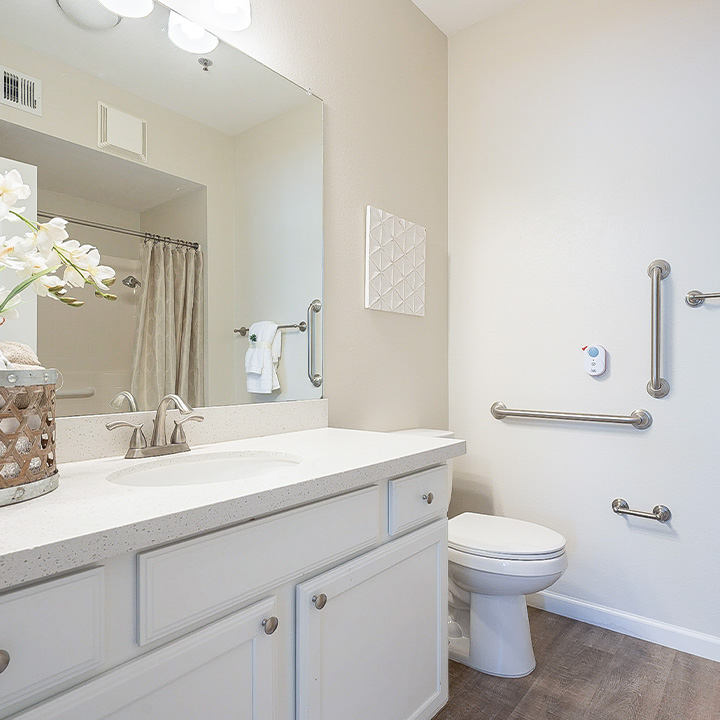
Who Owns and Operates The Terraces Of Phoenix?

THE TERRACES OF PHOENIX is owned by a non-profit organization. Non-profit facilities reinvest revenue into operations rather than distributing to shareholders. The facility is operated by HUMANGOOD, a chain that manages multiple nursing homes. With 64 certified beds and approximately 39 residents (about 61% occupancy), it is a smaller facility located in PHOENIX, Arizona.

How Does The Terraces Of Phoenix Compare to Other Arizona Nursing Homes?

Compared to the 100 nursing homes in Arizona, THE TERRACES OF PHOENIX's overall rating (5 stars) is above the state average of 3.3, staff turnover (27%) is significantly lower than the state average of 46%, and health inspection rating (3 stars) is at the national benchmark.

What Should Families Ask When Visiting The Terraces Of Phoenix?

Based on this facility's data, families visiting should ask: "Can I visit during a mealtime to observe dining assistance and food quality?" "How do you handle medical emergencies, and what is your hospital transfer rate?" "Can I speak with family members of current residents about their experience?"

Is The Terraces Of Phoenix Safe?

Based on CMS inspection data, THE TERRACES OF PHOENIX has a clean safety record: no substantiated abuse findings (meaning no confirmed cases of resident harm), no Immediate Jeopardy citations (the most serious violation level indicating risk of serious injury or death), and is not on the Special Focus Facility watch list (a federal program monitoring the lowest-performing 1% of nursing homes). The facility has a 5-star overall rating and ranks #1 of 100 nursing homes in Arizona. While no facility is perfect, families should still ask about staff-to-resident ratios and recent inspection results during their visit.

Do Nurses at The Terraces Of Phoenix Stick Around?

Staff at THE TERRACES OF PHOENIX tend to stick around. With a turnover rate of 27%, the facility is 19 percentage points below the Arizona average of 46%. Low turnover is a positive sign. It means caregivers have time to learn each resident's needs, medications, and personal preferences. Consistent staff also notice subtle changes in a resident's condition more quickly.

Was The Terraces Of Phoenix Ever Fined?

THE TERRACES OF PHOENIX has been fined $3,168 across 1 penalty action. This is below the Arizona average of $33,111. While any fine indicates a compliance issue, fines under $50,000 are relatively common and typically reflect isolated problems that were subsequently corrected. Families should ask what specific issues led to these fines and confirm they've been resolved.

Is The Terraces Of Phoenix on Any Federal Watch List?

THE TERRACES OF PHOENIX is not on any federal watch list. The most significant is the Special Focus Facility (SFF) program, which identifies the bottom 1% of nursing homes nationally based on persistent, serious quality problems. Not being on this list means the facility has avoided the pattern of deficiencies that triggers enhanced federal oversight. This is a positive indicator, though families should still review the facility's inspection history directly.