Prescott Valley Nursing & Rehabilitation
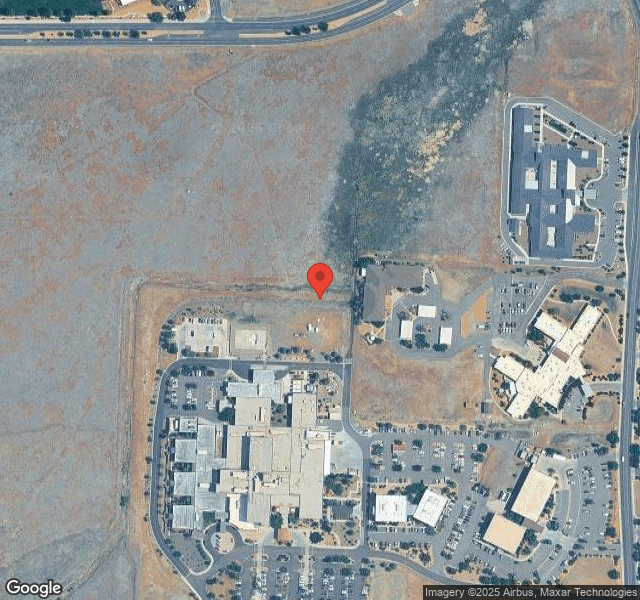
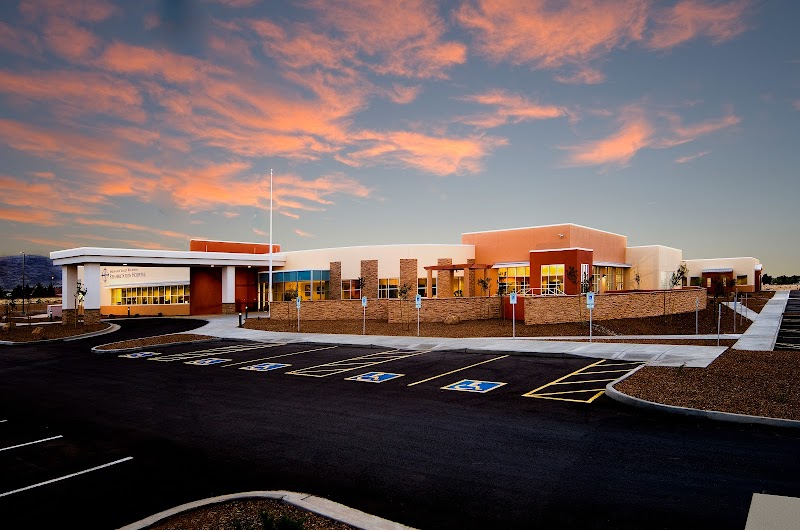
3380 NORTH WINDSONG DRIVE, PRESCOTT VALLEY, AZ 86314 (928) 775-0045
Non profit - Corporation 58 Beds GOOD SAMARITAN SOCIETY Data: November 2025
Trust Grade
28/100
#90 of 139 in AZ
Last Inspection: November 2023

Within standard 12-15 month inspection cycle. Federal law requires annual inspections.

Overview

Prescott Valley Nursing & Rehabilitation has a Trust Grade of F, indicating significant concerns about the quality of care provided. With a state rank of #90 out of 139 facilities in Arizona, they fall in the bottom half, and they rank #3 out of 7 in Yavapai County, meaning only two local options are better. The facility’s trend is worsening, with reported issues increasing from 3 in 2023 to 6 in 2025, suggesting ongoing problems. Staffing is below average with a rating of 2 out of 5 stars and a concerning turnover rate of 71%, which is much higher than the state average of 48%. Additionally, they have incurred $12,735 in fines, which is higher than 92% of Arizona facilities, indicating potential compliance issues. On a positive note, the facility received a 5 out of 5-star rating for quality measures, showing that some aspects of care may be strong. However, there are serious areas of concern, such as a resident suffering a burn due to inadequate supervision and failure to update care plans for multiple residents, which could lead to unmet medical needs. Furthermore, there have been issues with food safety, as food was not stored properly, which raises concerns about nutrition and health risks. Families should weigh these strengths and weaknesses carefully when considering this facility for their loved ones.
Trust Score
F
28/100
In Arizona
#90/139
Bottom 36%
Safety Record
High Risk
Review needed
Inspections
Getting Worse
3 → 6 violations
Staff Stability
⚠ Watch
71% turnover. Very high, 23 points above average. Constant new faces learning your loved one's needs.
Penalties
○ Average
$12,735 in fines. Higher than 69% of Arizona facilities. Some compliance issues.
Skilled Nurses
✓ Good
Each resident gets 44 minutes of Registered Nurse (RN) attention daily — more than average for Arizona. RNs are trained to catch health problems early.
Violations
⚠ Watch
31 deficiencies on record. Higher than average. Multiple issues found across inspections.
★★★☆☆
3.0
Overall Rating
★★☆☆☆
2.0
Staff Levels
★★★★★
5.0
Care Quality
★★☆☆☆
2.0
Inspection Score
Stable
2023: 3 issues
2025: 6 issues

The Good

  • 5-Star Quality Measures · Strong clinical quality outcomes
  • Full Sprinkler Coverage · Fire safety systems throughout facility
  • No fines on record

Facility shows strength in quality measures, fire safety.

The Bad

3-Star Overall Rating

Near Arizona average (3.3)

Meets federal standards, typical of most facilities

Staff Turnover: 71%

25pts above Arizona avg (46%)

Frequent staff changes - ask about care continuity

Federal Fines: $12,735

Below median ($33,413)

Minor penalties assessed

Chain: GOOD SAMARITAN SOCIETY

Part of a multi-facility chain

Ask about local staffing decisions and management

Staff turnover is very high (71%)

23 points above Arizona average of 48%

The Ugly 31 deficiencies on record

1 actual harm
Aug 2025 3 deficiencies
CONCERN (D) 📢 Someone Reported This

A family member, employee, or ombudsman was alarmed enough to file a formal complaint

Potential for Harm - no one hurt, but risky conditions existed

Free from Abuse/Neglect (Tag F0600)

Could have caused harm · This affected 1 resident

**NOTE- TERMS IN BRACKETS HAVE BEEN EDITED TO PROTECT CONFIDENTIALITY** Number of residents sampled: 21Number of residents cited: 1The facility failed to ensure that one resident (#63) was free from a...

Read full inspector narrative →
**NOTE- TERMS IN BRACKETS HAVE BEEN EDITED TO PROTECT CONFIDENTIALITY** Number of residents sampled: 21Number of residents cited: 1The facility failed to ensure that one resident (#63) was free from abuseBased on clinical record review, staff interviews, facility documentation, policies and procedures, the facility failed to protect the rights of one resident (#63) to be free from abuse by another resident (#22). The deficient practice could result in further abuse of residents and appropriate action not taken. Findings include: -Resident #63 (alleged victim) was admitted to the facility on [DATE] with diagnoses of anxiety disorder, cognitive communication deficit, hypertension, and acute respiratory failure. A care plan pertaining to anti-anxiety medication related to anxiety disorder revised July 22, 2025 indicated that the resident was prescribed medication to treat anxiety symptoms as needed. Further review of the care plan did not indicate or document any issues or interventions related to resident-to-resident altercation/incidents. Review of the 5-day Minimum Data Set (MDS) assessment dated [DATE] revealed a Brief Interview for Mental Status (BIMS) score of 15 indicating that the resident was cognitively intact. Further review of the August 1, 2025 MDS assessment indicated that the resident was negative for psychosis indicators, behavioral symptoms, and wandering during the assessment period. A nursing note dated August 6, 2025 documented that resident reported that there was a strange man with a long beard, about 6 feet tall who stood at her door and stared at her. Additionally, the resident also reported that the resident across the hall tried to come into her room and that she told the other resident no. According to the note the other resident then shut the resident #63's door and began to make moaning noises outside of her room. Further review of the resident's record did not reveal any documentation regarding the resident #63's reported interaction with the other resident. There was no indication of any follow-up regarding the incident or that the issue was addressed. An interview was conducted with resident #63 on August 17, 2025 at 12:50 p.m. Resident #63 stated that a resident (#22) who had dementia used to be across the all from her. She said that resident #22 would sit outside her door and enter her room without asking. Resident #63 revealed that resident #22 entered her room shouting and slammed her door. According to resident #63, she reported the incident to a nurse but nothing was done. Additionally, resident #22's daughter came into her room uninvited, threatened, and yelled at her. Resident #22 stated that both incidents made her feel scared and felt assaulted. She said that she was afraid of resident #22's daughter due to her aggressiveness. Resident #22 noted that resident #22's son also frightened her since he stood by her door staring at her. She indicated that she feared he would come into her room. She conveyed that she was frantically thinking of what she would do if he did. Resident #63 said that she reported the incident to the staff but no action was taken. When her friends came to visit, resident #22 would not move from her doorway. She said that the incident with the resident #22's son took place approximately on August 6, 2025. Resident #63 indicated that the incident with resident #22's daughter took place on August 8 at around 6:30 p.m. Additionally, the incident in which resident #22 slammed resident #63's door occurred on August 8, 2025. Resident #63 stated that she reported the incident to Social Services (staff #56), the charge nurse assigned that night, and the RN (Registered Nurse/staff #82) on August 8, 2025. Resident #63 became visibly upset during the interview as she relayed the incidents. She said that resident #22 threw stuff, moaned, and groaned which frightened her. A progress note dated August 17, 2025 stated that she wanted staff to intervene when there are residents outside her room by her door. The note indicated that resident #63 was informed that staff are busy and if they are unable to intervene, the resident should activate her call light for assistance. An interview with a Certified Nursing Assistant (CNA/staff #50) was conducted on August 19, 2025 at 4:08 a.m. Staff #50 stated that resident #63 is an accurate historian who would voice out concerns. The CNA said that resident #63 is vocal about her needs. However, staff #50 denied any knowledge of any incidents involving resident #63. The CNA noted that resident #63 did mention approximately last week to inform the other residents to move away from her door since it was bothering her. Staff #50 said that it is important that residents are not subjected to abuse because the facility is their home. The residents have the right to be safe and protected. According to the CNA the impact of abuse on residents is that it becomes harder for them to adjust to their living situation and it can cause unnecessary stress. During an interview with a Registered Nurse (RN/staff #29) conducted on August 19 2025 at 8:10 a.m., staff #29 stated that when they are notified of an allegation or witness abuse, the staff have to stop the abuse and remove the resident from the situation. The RN said that protecting and mitigating abuse is important for the safety of the staff and residents. Staff #29 noted that the impact of abuse is that it affects safety and residents feel like the cannot trust the staff. Additionally, abuse can affect the residents psychologically. The RN described resident #63 as alert and oriented. Staff #29 stated that resident #63 told her that she had issues with someone coming into her room. The RN said that she informed staff #56 (Social Worker). According to staff #29, the Social Worker (staff #56) spoke with resident #63 immediately. Following the discussion between staff #56 and resident #63, staff #29 was told that resident #22 had to be watched. The RN said that someone had seen resident #22 coming out of resident #63's room. Staff #29 stated that if resident #63 had expressed to a staff that an incident scared and intimidated her then yes, it would be qualified as abuse. An interview with a Social Worker (staff #56) was conducted on August 19, 2025 at 9:44 a.m. Staff #56 stated that it is important that the facility prevents residents from being abuse. The Social Worker said that the impact of residents being subjected to abuse is that the residents might get hurt and injured. Staff #56 admitted that resident #63 told her in passing on August 8, 2025 about residents coming up and sitting by her door. The Social Worker said that resident #63 told her that she was frightened and that she responded by asking resident #63 if she activated her call light. She relayed that the resident seemed frustrated. -Resident #22 (alleged perpetrator) was admitted on [DATE] with diagnoses of dementia, delirium, depression, and anxiety disorder. Review of the resident's care plan revealed that her diagnoses of dementia, delirium, depression, and anxiety disorder were not mentioned or had interventions. Further review of the care plan did not indicate or document any issues or interventions related to resident-to-resident altercation/incidents. Review of the resident's admission Minimum Data Set (MDS) assessment dated [DATE] revealed a Brief Interview for Mental Status (BIMS) score of 11 indicating that resident has moderate cognitive impairment. The MDS also documented that the resident was negative for indicators of psychosis, behavioral symptoms, and wandering during the assessment period. A progress note dated August 8, 2025 documented that resident #22 was observed in neighbor's doorway just sitting there, and not saying anything. The note indicated that the resident was told that she should not be sitting there and when the staff member looked up, the resident was shutting the neighbor's door. According to the note, the neighbor came out very upset and stated that this had happened at least three previous times. The note stated that a social worker attempted to talk to the resident but she got very upset and refused to listen. The note indicated that the nurse convinced the resident to stay away from the neighbor's door and was pleasant for the rest of the shift. Review of the facility investigator's (Social Worker/staff #56) memo dated August 17, 2025 documented that according to resident #63, a resident from across the hall had wandered into her room and slammed the door. Additionally, the memo indicated that resident #63 shared that the other resident would sit outside her room to stare at her which frightened her. The memo noted that staff #56 informed resident #63 to notify staff when incidents occur so they can address it. The memo noted that resident was educated that she needed to press the call light and staff would intervene as they see it happen. An interview with a Certified Nursing Assistant (CNA/staff #50) was conducted on August 19, 2025 at 4:08 a.m. Staff #50 stated that resident #22 suffered from dementia, had a habit of wandering, and sitting in the hallway, and talking in the hallway. During an interview with a Registered Nurse (RN/staff #29) conducted on August 19 2025 at 8:10 a.m., staff #29 stated resident #22 had good and bad days with some cognitive impairment. The RN described the resident as loud, boisterous who wanders the hall. According to staff #29, she heard that resident #22 had gone into another resident's room and that resident was unhappy. Staff #29 said that the incident happened approximately 2-weeks ago. An interview with the Director of Nursing (DON/staff #14) was conducted on August 19, 2024 at 1:28 p.m. Staff #14 stated that her expectation is that allegations of abuse are reported immediately. This is important in order to take the risk factor away. The DON said that the staff should have reported it immediately and removed the resident from that situation. Additionally, staff #14 stated that residents should not go into another resident's room without permission. The DON noted that resident #22 liked to walk in the hallway. Furthermore, she commented that they encouraged resident #63 to use the call light to deter similar situations. Staff #14 stated that given that there was a progress note related to the event, the likelihood that it happened should have been relayed to her. The facility policy on Abuse Prevention and Prohibition Program revised October 24, 2022 revealed that facility staff are mandatory reporters. The policy noted that facility staff members will report known or suspected instances of abuse to the Administrator, or his/her designee. Per the policy, each resident has the right to be free from abuse. Additionally, the policy indicated that staff must not permit anyone to engage in verbal, mental, sexual, or physical abuse, neglect, or mistreatment. Review of the facility policy on Resident Rights revised August 2020 indicated that all residents have a right to a dignified existence. Additionally, the policy noted that residents have the right to voice grievances and have the facility respond to those grievances in a prompt manner.
CONCERN (D) 📢 Someone Reported This

A family member, employee, or ombudsman was alarmed enough to file a formal complaint

Potential for Harm - no one hurt, but risky conditions existed

Abuse Prevention Policies (Tag F0607)

Could have caused harm · This affected 1 resident

**NOTE- TERMS IN BRACKETS HAVE BEEN EDITED TO PROTECT CONFIDENTIALITY** Number of residents sampled: 21Number of residents cited: 1The facility failed to ensure that abuse policy was implementedBased ...

Read full inspector narrative →
**NOTE- TERMS IN BRACKETS HAVE BEEN EDITED TO PROTECT CONFIDENTIALITY** Number of residents sampled: 21Number of residents cited: 1The facility failed to ensure that abuse policy was implementedBased on clinical record, staff interviews, review of facility documentation, policy and procedures and the State Agency (SA) database the facility failed to implement their policy regarding conducting thorough investigation of abuse allegation and protecting residents from further abuse for one resident (#63). The deficient practice could result in abuse continuing and not being prevented. Findings include: Resident #63 (alleged victim) was admitted to the facility on [DATE] with diagnoses of anxiety disorder, cognitive communication deficit, hypertension, and acute respiratory failure. A nursing note dated August 6, 2025 documented that resident reported that there was a strange man with a long beard, about 6 feet tall who stood at her door and stared at her. Additionally, the resident also reported that the resident across the hall tried to come into her room and that she told the other resident no. According to the note the other resident then shut the resident #63's door and began to make moaning noises outside of her room. Further review of the resident's record did not reveal any documentation regarding the resident #63's reported interaction with the other resident. There was no indication of any follow-up regarding the incident or that the issue was addressed. An interview was conducted with resident #63 on August 17, 2025 at 12:50 p.m. Resident #63 stated that a resident (#22) who had dementia used to be across the hall from her. She said that resident #22 would sit outside her door and enter her room without asking. Resident #63 revealed that resident #22 entered her room shouting and slammed her door. According to resident #63, she reported the incident to a nurse but nothing was done. Additionally, resident #22's daughter came into her room uninvited, threatened, and yelled at her. Resident #22 stated that both incidents made her feel scared and felt assaulted. She said that she was afraid of resident #22's daughter due to her aggressiveness. Resident #22 noted that resident #22's son also frightened her since he stood by her door staring at her. She indicated that she feared he would come into her room. She conveyed that she was frantically thinking of what she would do if he did. Resident #63 said that she reported the incident to the staff but no action was taken. When her friends came to visit, resident #22 would not move from her doorway. She said that the incident with the resident #22's son took place approximately on August 6, 2025. Resident #63 indicated that the incident with resident #22's daughter took place on August 8 at around 6:30 p.m. Additionally, the incident in which resident #22 slammed resident #63's door occurred on August 8, 2025. Resident #63 stated that she reported the incident to Social Services (staff #56), the charge nurse assigned that night, and the RN (Registered Nurse/staff #82) on August 8, 2025. Resident #63 became visibly upset during the interview as she relayed the incidents. She said that resident #22 threw stuff, moaned, and groaned which frightened her. Review of the SA database revealed that a self-report was submitted by the facility on August 17, 2025. The report indicated an allegation in which another resident would come into the alleged victim's room. However, it did not fully detail information on what occurred nor did it indicate who the alleged perpetrator was. Regarding resident #22 (alleged perpetrator) Resident #22 (alleged perpetrator) was admitted on [DATE] with diagnoses of dementia, delirium, depression, and anxiety disorder. A progress note dated August 8, 2025 documented that resident #22 was observed in neighbor's doorway just sitting there, and not saying anything. The note indicated that the resident was told that she should not be sitting there and when the staff member looked up, the resident was shutting the neighbor's door. According to the note, the neighbor came out very upset and stated that this had happened at least three previous times. The note stated that a social worker attempted to talk to the resident but she got very upset and refused to listen. The note indicated that the nurse convinced the resident to stay away from the neighbor's door and was pleasant for the rest of the shift. Review of the facility investigator's (Social Worker/staff #56) memo dated August 17, 2025 documented that according to resident #63, a resident from across the hall had wandered into her room and slammed the door. Additionally, the memo indicated that resident #63 shared that the other resident would sit outside her room to stare at her which frightened her. The memo noted that staff #56 informed resident #63 to notify staff when incidents occur so they can address it. The memo noted that resident was educated that she needed to press the call light and staff would intervene as they see it happen. Further review of the facility's investigator's memo dated August 17, 2025 revealed that no other residents or staff members were interviewed regarding the allegation. Additionally, the memo did not indicate any other fact-finding activity other than an interview with resident #63. An interview with a Certified Nursing Assistant (CNA/staff #50) was conducted on August 19, 2025 at 4:08 a.m. The CNA noted that resident #63 did mention approximately last week to inform the other residents to move away from her door since it was bothering her. During an interview with a Registered Nurse (RN/staff #29) conducted on August 19 2025 at 8:10 a.m., staff #29 stated that when they are notified of an allegation or witness abuse, the staff have to stop the abuse and remove the resident from the situation. The RN said that protecting and mitigating abuse is important for the safety of the staff and residents. Staff #29 noted that the impact of abuse is that it affects safety and residents feel like the cannot trust the staff. Additionally, abuse can affect the residents psychologically. The RN stated that resident #63 told her that she had issues with someone coming into her room. The RN said that she informed staff #56 (Social Worker). According to staff #29, the Social Worker (staff #56) spoke with resident #63 immediately. Following the discussion between staff #56 and resident #63, staff #29 was told that resident #22 had to be watched. The RN said that someone had seen resident #22 coming out of resident #63's room. Staff #29 stated that if resident #63 had expressed to a staff that an incident scared and intimidated her then yes, it would be qualified as abuse. According to staff #29, she heard that resident #22 had gone into another resident's room and that resident was unhappy. Staff #29 said that the incident happened approximately 2-weeks ago. The RN noted that reporting and investigating allegations of abuse is important so that residents trust and know that their rights are not being abused and that they have the right to not feel threatened. An interview with a Social Worker (staff #56) was conducted on August 19, 2025 at 9:44 a.m. Staff #56 stated that it is important that the facility prevents residents from being abuse. The Social Worker said that the impact of residents being subjected to abuse is that the residents might get hurt and injured. Staff #56 admitted that resident #63 told her in passing on August 8, 2025 about residents coming up and sitting by her door. The Social Worker said that resident #63 told her that she was frightened and that she responded by asking resident #63 if she activated her call light. She relayed that the resident seemed frustrated. Staff #56 said that reporting and investigating abuse is important to make sure that residents are not in imminent danger. Investigations help determine what happened and see if there are any witnesses. An interview with the Director of Nursing (DON/staff #14) was conducted on August 19, 2024 at 1:28 p.m. Staff #14 stated that her expectation is that allegations of abuse are reported immediately. This is important in order to take the risk factor away. The DON said that the staff should have reported it immediately and removed the resident from that situation. During an interview with the Administrator (staff #333) conducted on August 19, 2025 at 2:09 p.m., staff #333 stated that his expectation is that staff follow policy. The Administrator said that allegations reported should be investigated thoroughly to ensure resident is safe. The impact of not following policy and investigating is that there is a potential for abuse to occur. The facility policy on Abuse Prevention and Prohibition Program revised October 24, 2022 stated that each resident has the right to be free from abuse. The policy indicated that policy served to ensure that the facility establishes, operationalizes, and maintains an abuse prevention and prohibition program designed to protect residents, and to ensure a standardized methodology for the prevention, identification, investigation, and reporting of abuse. Additionally, the policy indicated that staff must not permit anyone to engage in verbal, mental, sexual, or physical abuse, neglect, or mistreatment. The policy noted that the facility promptly and thoroughly investigates reports of abuse. The policy also highlighted the steps that may be taken to investigate an allegation of abuse.
CONCERN (D) 📢 Someone Reported This

A family member, employee, or ombudsman was alarmed enough to file a formal complaint

Potential for Harm - no one hurt, but risky conditions existed

Report Alleged Abuse (Tag F0609)

Could have caused harm · This affected 1 resident

**NOTE- TERMS IN BRACKETS HAVE BEEN EDITED TO PROTECT CONFIDENTIALITY** Number of residents sampled: 21Number of residents cited: 1The facility failed to ensure that an allegation of abuse was reporte...

Read full inspector narrative →
**NOTE- TERMS IN BRACKETS HAVE BEEN EDITED TO PROTECT CONFIDENTIALITY** Number of residents sampled: 21Number of residents cited: 1The facility failed to ensure that an allegation of abuse was reportedBased on closed record review, staff interviews, review of facility documentation, policy and procedures, the facility failed to conduct and submit an investigation report for an allegation of abuse for one resident (#3). The deficient practice could result in abuse allegations not being investigated and reported. Findings include: Resident #63 (alleged victim) was admitted to the facility on [DATE] with diagnoses of anxiety disorder, cognitive communication deficit, hypertension, and acute respiratory failure. A nursing note dated August 6, 2025 documented that resident reported that there was a strange man with a long beard, about 6 feet tall who stood at her door and stared at her. Additionally, the resident also reported that the resident across the hall tried to come into her room and that she told the other resident no. According to the note the other resident then shut the resident #63's door and began to make moaning noises outside of her room. Further review of the resident's record did not reveal any documentation regarding the resident #63's reported interaction with the other resident. There was no indication of any follow-up regarding the incident or that the issue was addressed. Review of the 5-day Minimum Data Set (MDS) assessment dated [DATE] revealed a Brief Interview for Mental Status (BIMS) score of 15 indicating that the resident was cognitively intact. An interview was conducted with resident #63 on August 17, 2025 at 12:50 p.m. Resident #63 stated that a resident (#22) who had dementia used to be across the hall from her. She said that resident #22 would sit outside her door and enter her room without asking. Resident #63 revealed that resident #22 entered her room shouting and slammed her door. According to resident #63, she reported the incident to a nurse but nothing was done. Additionally, resident #22's daughter came into her room uninvited, threatened, and yelled at her. Resident #22 stated that both incidents made her feel scared and felt assaulted. She said that she was afraid of resident #22's daughter due to her aggressiveness. Resident #22 noted that resident #22's son also frightened her since he stood by her door staring at her. She indicated that she feared he would come into her room. She conveyed that she was frantically thinking of what she would do if he did. Resident #63 said that she reported the incident to the staff but no action was taken. When her friends came to visit, resident #22 would not move from her doorway. She said that the incident with the resident #22's son took place approximately on August 6, 2025. Resident #63 indicated that the incident with resident #22's daughter took place on August 8 at around 6:30 p.m. Additionally, the incident in which resident #22 slammed resident #63's door occurred on August 8, 2025. Resident #63 stated that she reported the incident to Social Services (staff #56), the charge nurse assigned that night, and the RN (Registered Nurse/staff #82) on August 8, 2025. Resident #63 became visibly upset during the interview as she relayed the incidents. She said that resident #22 threw stuff, moaned, and groaned which frightened her. An interview with a Certified Nursing Assistant (CNA/staff #50) was conducted on August 19, 2025 at 4:08 a.m. The CNA noted that resident #63 did mention approximately last week to inform the other residents to move away from her door since it was bothering her. During an interview with a Registered Nurse (RN/staff #29) conducted on August 19 2025 at 8:10 a.m., staff #29 stated that when they are notified of an allegation or witness abuse, the staff have to stop the abuse and remove the resident from the situation. The RN said that reporting abuse is important for the safety of the staff and residents. Staff #29 noted that the impact of abuse is that it affects safety and residents feel like the cannot trust the staff. Additionally, abuse can affect the residents psychologically. The RN stated that resident #63 told her that she had issues with someone coming into her room. The RN said that she informed staff #56 (Social Worker). According to staff #29, the Social Worker (staff #56) spoke with resident #63 immediately. Following the discussion between staff #56 and resident #63, staff #29 was told that resident #22 had to be watched. The RN said that someone had seen resident #22 coming out of resident #63's room. Staff #29 stated that if resident #63 had expressed to a staff that an incident scared and intimidated her then yes, it would be qualified as abuse. According to staff #29, she heard that resident #22 had gone into another resident's room and that resident was unhappy. Staff #29 said that the incident happened approximately 2-weeks ago. The RN noted that reporting and investigating allegations of abuse is important so that residents trust and know that their rights are not being abused and that they have the right to not feel threatened. An interview with a Social Worker (staff #56) was conducted on August 19, 2025 at 9:44 a.m. Staff #56 stated that it is important that the facility prevents residents from being abuse. The Social Worker said that the impact of residents being subjected to abuse is that the residents might get hurt and injured. Staff #56 admitted that resident #63 told her in passing on August 8, 2025 about residents coming up and sitting by her door. The Social Worker said that resident #63 told her that she was frightened and that she responded by asking resident #63 if she activated her call light. She relayed that the resident seemed frustrated. Staff #56 said that reporting and investigating abuse is important to make sure that residents are not in imminent danger. Investigations help determine what happened and see if there are any witnesses. An interview with the Director of Nursing (DON/staff #14) was conducted on August 19, 2024 at 1:28 p.m. Staff #14 stated that her expectation is that allegations of abuse are reported immediately. This is important in order to take the risk factor away. The DON said that the staff should have reported it immediately and removed the resident from that situation. According to staff #14, she first heard about the abuse allegation when the member of the survey team informed them about the allegation. She noted that it was not appropriate that the alleged incident was not reported to her and the administrator. During an interview with the Administrator (staff #333) conducted on August 19, 2025 at 2:09 p.m., staff #333 stated that allegations of abuse should be reported to him as soon as it happens. This is important in order to ensure resident is safe and to start the investigation. The impact of not reporting is that there is a potential for abuse to occur. The Administrator said that if the incident was witnessed then it should have been brought to their attention. The facility policy on Abuse Prevention and Prohibition Program revised October 24, 2022 revealed that facility staff are mandatory reporters. The policy noted that facility staff members will report known or suspected instances of abuse to the Administrator, or his/her designee. Per the policy, each resident has the right to be free from abuse. Additionally, the policy indicated that staff must not permit anyone to engage in verbal, mental, sexual, or physical abuse, neglect, or mistreatment. The policy indicated that the facility will report allegations of abuse immediately but no later than 2-hours after discovery. Review of the facility policy on Resident Rights revised August 2020 indicated that all residents have a right to a dignified existence. Additionally, the policy noted that residents have the right to voice grievances and have the facility respond to those grievances in a prompt manner.
Jul 2025 2 deficiencies 1 Harm
SERIOUS (G) 📢 Someone Reported This

A family member, employee, or ombudsman was alarmed enough to file a formal complaint

Actual Harm - a resident was hurt due to facility failures

Accident Prevention (Tag F0689)

A resident was harmed · This affected 1 resident

**NOTE- TERMS IN BRACKETS HAVE BEEN EDITED TO PROTECT CONFIDENTIALITY** Based on observation, interviews, review of clinical record, and facility policy, the facility failed to ensure adequate supervi...

Read full inspector narrative →
**NOTE- TERMS IN BRACKETS HAVE BEEN EDITED TO PROTECT CONFIDENTIALITY** Based on observation, interviews, review of clinical record, and facility policy, the facility failed to ensure adequate supervision consistent with the resident's needs was provided to one resident (#3) to prevent an accident of spilling a hot liquid beverage. The deficient practice resulted in the resident sustaining a burn.-Findings include:Resident #3 was admitted to the facility May 31, 2025, with diagnoses of encephalopathy, attention and concentration deficit, cognitive communication deficit, frontal lobe and executive function deficit, weakness, and Alzheimer's disease.A brief interview for mental status (BIMS) assessment dated [DATE] revealed the resident had a score of 2, indicating severe cognitive impairment.The General Progress note dated May 31, 2025, revealed Resident #3 arrived via transport in a wheelchair, was a 2-person transfer into bed, and required 2-person assistance to change. Per the documentation, the resident was unable to verbalize needs or acknowledge the use of the call light, was combative with brief changes and medication distribution, and needed continuous rounds.The Hot Liquids Safety Evaluation dated May 31, 2025, revealed that Resident #3 did not have moderately to severely impaired cognition, despite documentation of cognitive impairment and combativeness. The evaluation also revealed that that the resident was not easily agitated, had no frequent impulsive acts/short tempered, had no weakness or paresis in the resident's upper extremities, and, had a mood that did not vary over the course of the day. Interventions selected from the Hot Liquids Safety Evaluation were for resident to use the dominant hand for drinking, for the temperature of drinks not to exceed 140 degrees, and for the resident to drink hot liquids while sitting at table only. However, there was no evidence found that the care plan was updated to include the interventions for the resident to use the dominant hand for drinking, for the temperature of drinks not to exceed 140 degrees, and for the resident to drink hot liquids while sitting at table only.A Mood/Behavior Note dated June 1, 2025, revealed the Certified Nursing Assistant (CNA) reported that when Resident #3 was checked in the morning, the resident was anxious and panicky. Per the documentation, Resident #3 had a diagnosis of Alzheimer's mixed with vascular dementia; and that, the encounter was of a serious nature. It also included that the resident told the CNA, I (referring to Resident #3) want to watch you (referring to the CNA) bleed. Further, the documentation included that the Director of Nursing (DON) and nurse practitioner (NP) were made aware of the behavior and statement made by Resident #3.The Skilled Evaluation note dated June 1, 2025 included that Resident #3 was oriented to person, was confused, had short term memory impairment, and had impaired decision-making ability.A General Progress Note dated June 1, 2025, revealed the resident was experiencing mood/behaviors in the evening when medications were given, and had pushed her medications away. Per the documentation, Resident #3 got agitated, raised her voice, had garbled speech, was impulsive, had tried to get up on her own, did not comprehend how to use the call light and had a disregard for her own safety. The documentation also included that the resident had done these the last two nights since admission; and that, the resident eventually took her medications after she was slowly instructed and explained to. Further, the documentation included that consistent rounding on Resident #3 was crucial to avoid a potential fall.An Occupational Therapy (OT) Evaluation dated June 2, 2025, revealed Resident #3 was right-hand dominant, had cognitive impairments, and required supervision or touching assistance when eating.The OT treatment encounter notes dated June 2 and June 3, 2025, included the resident required partial/moderate assistance with eating.The OT treatment encounter note dated June 4, 2025, revealed resident required set-up or clean-up assistance with eating.The OT treatment encounter note dated June 5, 2025, included resident #3 required supervision or touching assistance with eating.A provider encounter note dated June 6, 2025, revealed Resident #3 had significant dementia, so reminders were difficult, and that, she had poor impulse control and no safety awareness, so future falls were likely.The OT treatment encounter note dated June 9, 2025, included the resident required supervision or touching assistance with eating.A Change of Condition note dated June 10, 2025, revealed the resident was having difficulty taking her evening medications and was holding them in her mouth. The documentation included that the resident had difficulty understanding how to drink through a straw; and that, the straw was removed and the resident required total assistance to drink from the cup. Further, the documentation included that this seemed to only happen in the evenings during med pass.A Skilled Evaluation note dated June 12, 2025, revealed Resident #3 had an increase in confusion and behaviors today more than baseline due to cognition. The documentation included the resident was anxious and aggressive, had physical and verbal aggression with exit-seeking behaviors, and was continually getting out of her wheelchair and attempting to walk unassisted.An e-Mar (electronic Medication Administration Record) note dated June 14, 2025, revealed the resident was moved to a different table as she continued to turn and kept grabbing and putting hands on another resident sitting next to her.A Skilled Evaluation note dated June 14, 2025 included Resident #3 had some anxiety and minimal behaviors this morning, continued with inability to follow simple commands, and had no safety awareness leading to non-compliance with plan of care.The OT treatment encounter note dated June 17, 2025, included the resident required supervision or touching assistance with eating.The care plan dated June 17, 2025 revealed the resident had an Activities of Daily Living (ADL) deficit due to impaired balance and limited mobility. An intervention dated June 17, 2025 revealed that the resident required one staff participation to eat.The OT treatment encounter note dated June 23, 2025 included the resident required supervision or touching assistance with eating.An e-Mar note dated June 24, 2025 revealed the resident was displaying aggression and agitation toward a CNA.A Health Status Note dated June 25, 2025 included that at approximately 8:30 p.m., the resident was sitting on the floor in front of her bathroom. Per the documentation, the resident was not able to explain or tell nurse what she was trying to do.An e-Mar - Medication Administration Note dated June 25, 2025, revealed Resident #3 refused all medications in the evening and was verbally aggressive.A Discharge Planning note dated June 26, 2025 revealed the resident had no safety awareness and needed cues for all care including transfers, toileting, eating, dressing, and pressing her call light. Per the documentation, the resident was impulsive, and gets up without asking staff for help and that, this was also due to the resident's cognition.The OT treatment encounter note dated June 27, 2025 included the resident required supervision or touching assistance with eating.The general Progress note dated June 28, 2025 revealed that Resident #3 was up and down for the first three hours of the shift, had attempted to transfer herself three different times. The documentation included that the medication cart was parked outside of the resident's room where the nurse could watch her every move. Further, the documentation included that the resident was impulsive and persistent, but was not verbally aggressive.A General Progress Note dated June 29, 2025 included that the resident tried to go into other residents' rooms in another hall. Per the documentation, the resident was brought back to the hall where her room was; and that, she was verbally aggressive to the CNA and nurse for trying to keep her upright in her wheelchair. It also included that the resident attempted to scoot out of her wheelchair, was offered help to her bed but was verbally abusive again; and, had refused and spit all medications onto the floor.A Change of Condition note dated June 30, 2025 revealed the resident had a ground-level fall this morning onto her right side, and favoring her right arm. An x-ray for the right humerus/shoulder was ordered.The General Progress Note dated June 30, 2025 revealed the resident arrived back to the facility from the hospital; and, the resident had a proximal right humerus fracture, and a sling was applied. Per the documentation, the nurse reported that the resident had to have the sling on during the day and off in bed.There was no evidence that Resident #3 was re-assessed for safety with hot liquids after returning from the hospital with a right (dominant hand) humerus fracture until July 2, 2025, after an incident involving Resident #3 spilling hot coffee on herself.The clinical record was reviewed, and there was no evidence or documentation found in the clinical record regarding any incident on July 1, 2025, during breakfast time, that Resident #3 spilled coffee on herself.A Skilled Evaluation dated July 1, 2025, at 9:08 AM, revealed Resident #3 was very anxious, unable to sit still, which is her baseline. Her legs were swinging in the wheelchair, and she could not sit still.A General Progress Note dated July 1, 2025, revealed that the resident refused to go to the dining hall or even get out of bed for lunch today, even with two different staff encouraging her. Therapy worked with her, and was able to get her out of bed and assist her with lunch. Resident is right-handed and therapy worked with her to use her left hand. Therapy stated she will need assistance with meals. After therapy worked with the resident, the resident has been sleeping in bed.A General Progress Note dated July 1, 2025, revealed Resident #3 was up this evening in her chair so the CNA and nurse could keep an eye on her. She was extremely restless.The OT treatment encounter note dated July 1, 2025, revealed the resident required partial/moderate assistance with eating. Additionally, the documentation included that the resident had an injury to right upper extremity sustained and was now in sling. Skilled interventions included compensatory training to increase independence in self-feeding, self-feeding techniques; and, training in one-handed techniques during self-feeding.The OT treatment encounter note dated July 2, 2025 included the resident required partial/moderate assistance with eating.A Skin/Wound Note dated July 2, 2025 revealed the hall staff reported that Resident #3 sustained a burn of her right side of her abdomen yesterday with hot fluids; and that, the burn area was red and had a blister noted. It also included that the NP (nurse practitioner) was informed and silver sulfadiazine (SSD) cream was ordered to start twice a day until resolved.A Health Status Note dated July 2, 2025, included that the CNA reported that she reported to the charge nurse yesterday that the resident had an incident with hot liquid yesterday morning; and that, the resident was wet on her shirt and hands. Per the documentation, the charge nurse gave the direction to apply an ice pack; and that, the charge nurse would assess the patient. An ice pack was applied to the area at time of incident. The documentation also included that the CNA reported this morning that the resident has a red area on her abdomen and the wound nurse was called to look at the area. According to the documentation, the area was assessed by the nurse and the NP and it showed evidence of a burn, and has a blister at the lower portion of the burn; and that, silver sulfadiazine cream was applied to the area. Further, the note included an action plan to make sure coffee was lukewarm rather than hot, and to add ice if needed.A Summary for Providers note dated July 2, 2025 revealed the change in skin color or condition. The Functional Status Evaluation revealed the resident needed more assistance with ADLs, and had pain. The documentation included that a burn was noted to abdomen post incident of spilling coffee with recommendations to apply SSD (silver sulfadiazine) cream twice a day and leave open to air.A Weekly Skin Check dated July 2, 2025, revealed a red area on the abdomen, on the front of the right iliac crest, with a blister on the bottom section.A Pain Evaluation dated July 2, 2025, revealed Resident #3 did not have the ability to verbalize or communicate, had occasional labored breathing, had occasional moan or groan, sadness, was frightened, or was frowning, was tense, and had distressed pacing, or fidgeting.A Hot Liquids Safety Evaluation dated July 2, 2025, revealed the resident had moderately to severely impaired cognition, mood that varies over the course of the day, was easily agitated, hadweakness/paresis in the upper extremities, and had impaired functional mobility. Interventions included for the resident to use a cup with a lid, for temperatures of drinks not to exceed 140 degrees Fahrenheit, for the resident to drink hot liquids while sitting at table only, and for the resident to wear clothing protector/lap protector.A provider encounter note dated July 2, 2025, revealed the resident was very uncomfortable and Tylenol (analgesic) was not treating her pain adequately; and that, the plan was to order for oxycodone (narcotic opioid). Per the documentation, the resident's new fracture was resetting her progress with therapy and she will need to start all over; and, the resident's cognition was requiring increased time with therapies. New diagnosis included burn involving 2% total body surface area. The plan was to get an order for Silvadene in place, and have the wound care nurse practitioner look at the resident. Further, the documentation included that a care plan will be started to give the resident warm coffee versus hot coffee to avoid further injuries.Despite documentation of provider recommendations and interventions, there was no evidence that the care plan was updated to include the following interventions: serve the resident warm coffee instead of hot coffee, temperature of drinks not to exceed 140 degrees Fahrenheit, for resident to drink hot liquids while sitting at a table only, and for resident to wear clothing protector/lap protector.A care plan initiated and dated July 3, 2025, revealed the resident had dehydration or potential fluid deficit due to cognition. Intervention added on July 3, 2025 included only for Lids for hot fluids. The other recommendation/interventions such serving the resident warm coffee instead of hot coffee, temperature of drinks not to exceed 140 degrees Fahrenheit, drinking hot liquids while sitting at a table only and for resident to wear clothing protector/lap protector.A late entry General Progress Note dated July 3, 2025 revealed that on July 1, 2025, at approximately 7:45 a.m., a CNA (Staff #71) reported to the nurse (Staff #33) who was walking to the medication cart that Resident #3 had spilled some coffee on her; and that, the resident's clothes were changed by the CNA and an icepack was applied to the resident's abdomen. Per the documentation, the nurse checked the area after the resident's clothes were changed and an ice pack applied; and that, there was slight redness noted to the abdomen after the resident was done with breakfast.Another late entry General Progress Note dated July 3, 2025 included that on July 1, 2025 at approximately 10:00 a.m., the resident was checked very frequently for safety checks; and, the CNA had asked the nurse if it was okay to remove the icepack and this nurse stated that it was. The documentation included that the nurse checked the area and saw the same amount of redness to the resident's abdomen as earlier and after the icepack was removed.A Weekly Skin Check dated June 7, 2025, revealed a red area on the resident's right abdomen with scabbed area from a blister that has popped.A Nutritional Note dated July 7, 2025, revealed the resident was sitting in the dining room table during lunch on July 2, 2025, and spilled hot coffee on her lap. Per the documentation, the resident had an order for a lid and to drink hot liquids at the table; and, needed supervision and assistance with meals.Despite documentation, the clinical record revealed no evidence of any orders or reason why the other interventions were not included in the resident's care plan.There was no evidence that supervision and assistance with meals was provided to the resident to include the use of a lids for hot liquids or to drink hot liquids at the table.There was no documentation found in the clinical record of reason why these interventions were not implemented.A physician order dated July 9, 2025, revealed an order for an adaptive equipment - adult training cup. However, the order did not include specific directions related to its use and when will this cup be used.An observation was conducted July 11, 2025, at 8:23 a.m. Resident #3 was sitting at a table in the dining area of the unit and had a cup of juice in front of her. The Director of Nursing (DON) was sitting next to her and was assisting her with eating. The resident was not served with any hot beverage.An observation was conducted with the Lead Dietary Aide (Staff #87) on July 11, 2025, at 10:14 a.m. Staff #87 calibrated the thermometer in a cup of ice to confirm an accurate thermometer read, and then poured a cup of coffee from the coffee machine on the 400-hall unit, and took the temperature of the coffee. Staff #87 stated that the temperature of the coffee just poured was 156 degrees Fahrenheit (F).A skin observation of Resident #3 was conducted with a Licensed Practical Nurse (LPN / Staff #89) on July 11, 2025, at 11:40 a.m. The resident gave consent for observation, and in the privacy of the resident's room, the nurse lifted the resident's shirt to reveal the resident's abdomen. On the front of Resident #3's abdomen, toward her right side, was a red area of skin surrounding a scab. An interview with Staff #89 was conducted at this time, and Staff #89 stated that's a scab from the blister and it looks like it's shrinking. Staff #89 stated that the size of the blister was 2 centimeters (cm) by 3 cm.An additional observation was conducted of Resident #3 on July 11, 2025, at 12:39 p.m. A CNA (Staff #21) delivered a lunch tray to Resident #3 who was sitting up in her bed in her room, and the CNA remained in the room to assist the resident. The resident had an open cup with juice, with no lid, and no adaptive cup.An interview was conducted with a CNA (Staff #10) on July 10, 2025, at 3:11 p.m. The CNA stated that she was familiar with the residents on the 400 Hall, and that Resident #3 had dementia and is confused, and needs assistance and cues in order to eat. The CNA stated that Resident #3 is pretty impaired in her safety awareness and cognition.An interview was conducted with another CNA (Staff #21) on July 10, 2025, at 3:17 p.m. who stated that Resident #3 can sometimes feed herself if staff assist by cutting up her food and picking up the fork for her to get started, but sometimes staff have to provide total assistance with eating. The CNA stated that Resident #3 is pretty confused and while eating about a week and a half ago, the resident spilled coffee and had a blister. After the incident, the CNA stated that now we put lids on all hot drinks.An interview was conducted on July 10, 2025, at 3:26 p.m. with a Dietary Aide (Staff #60), who stated that both coffee makers (the one in the kitchen and the one on the 400 hall unit) have temperature controls that are set to 160 degrees F, and that back in November 2024, the facility had requested that dietary staff maintain the coffee machine temperature at 160 degrees, and check the temperature using thermometers when the coffee is poured to ensure it is 160 degrees. Staff #60 stated that there was not concern of coffee being too hot because dietary staff had not gotten any complaints of it being too hot, and that to his knowledge, nobody had spilled hot coffee on themselves.A phone interview was conducted on June 11, 2025, at 8:59 a.m. with a Registered Nurse (RN/staff #33), who stated she had never done any assessments for hot liquid risk, but that maybe the dietary staff completes this assessment. She stated she was the floor nurse at the time of the incident when resident #3 spilled her coffee. The RN said that she was walking past the CNA to her med cart at a little before 8:00 a.m. when she heard the CNA say that the resident spilled coffee on herself; and Staff #33 instructed for the CNA to stick an ice pack on it, and I'll (Staff #33) come look at it. The RN stated that she went and assessed the resident a little later at approximately between 9:00 a.m. and 9:30 a.m. and saw that the resident had no ice pack on, had a light redness on the abdomen; and, she assumed the redness was from the ice pack. The RN said that she looked at the resident's legs, arms, and abdomen, but that she did not look at the groin area; and that, she did not let anyone know of the incident and did not write a progress note about the incident on July 1.An interview was conducted with a CNA (Staff #71) on July 11, 2025, at 10:01 a.m. The CNA stated that she served residents in the unit coffee by getting a cup from the cupboards in the unit dining area, and pouring a cup of coffee from the coffee machine that was also located in that same dining area, and then serving those cups to the residents in the dining room. The CNA stated that on July 1, 2025, she assisted in getting Resident #3 to the dining area, then she poured the cup of coffee from the machine and set the cup of coffee with no lid on in front of Resident #3, and left the dining area to get up the next resident for breakfast. She stated that she got the next resident up for breakfast and brought that other resident into the dining area. The CNA stated that this was when she noticed that Resident #3 had spilled coffee on herself, and that the clothing of Resident #3 was wet on the front of her shirt and pants from the coffee. The CNA said that she changed the resident's clothing right away and informed the nurse (Staff #33) that there was redness on the resident's skin extending from her abdomen near the rib cage to her mid-thighs on both her legs. The CNA said that she checked on the resident's skin later in the day, and that the redness had gone down a little, but the area was still red. The CNA said that during the incident, there was one of the nurses at the nurse station who was coming in and out of the dining room; but, there were no staff at the dining table with Resident #3. The CNA said that the following day, on July 2, she was getting Resident #3 ready in the morning and checked her skin again, and that was when she noticed that she had a blistered area on the right side of her abdomen. The CNA said she told the nurse right away; and, after that incident, the facility management did an in-service training with everybody. She further stated that staff are now supposed to put lids on coffee cups and cool the coffee down before serving to the residents.A telephonic interview was attempted with a wound nurse / Registered Nurse (Staff #13) on July 11, 2025, at 12:27 p.m. A voicemail was left for a return call, and the staff did not return the call.An interview was conducted with an Occupational Therapist (OT / Staff #46) on July 11, 2025, at 12:42 p.m. The OT stated that she evaluated Resident #3 when she first admitted to the facility, and assessed the resident to have severe cognitive impairment, and that therapists were working on basic skills, including self-feeding. The OT stated that Resident #3 had been getting worse, and has been requiring more assistance. Staff #46 stated that Resident #3 would not be able to use any adaptive equipment for self-feeding because of her cognition.An additional interview was conducted with the Dietary Aid (Staff #60) on July 11, 2025, at 12:50 p.m. who stated that the kitchen has two-handled cups with lids and a drinking spout, and stated that it is called an adult training cup.An interview was conducted with the Director of Nursing (DON / Staff #90) on July 11, 2025, at 1:30 PM. The DON approached the surveyor and made a statement that Resident #3's order for the adaptive adult training cup is for hot beverages only.An interview was conducted with the Assistant Director of Nursing (ADON / Staff #106) on July 11, at 2:58 p.m., who stated that the nurses assess residents' risk with hot beverages by completing a hot liquids assessment for all residents upon admission, and that the admitting nurse is mostly the staff who completes the assessment. The ADON stated that staff would know to implement those interventions on the hot liquids assessment by word of mouth through report, and by notifying dietary, and those items are discussed by management in morning meetings. The ADON stated that temperatures of hot beverages are taken by dietary, and that nurses and CNAs do not temp the liquids before giving beverages to residents. The ADON confirmed she was at the facility on the date of Resident #3's coffee-spill incident on July 1, and to her knowledge, no management was notified of the incident. The ADON stated that Resident #3 was at the dining room table in the 400 unit and she had coffee spilled on herself, and the CNA took her to change her clothes, and notified the nurse. The ADON stated there was an ice pack applied to the resident. The ADON stated that she did not know how many times the nurse looked at the resident's skin on July 1. The ADON stated that the morning of July 2, 2025, she was informed of the incident by the floor nurse, and the resident had a blister on her abdomen and that the wound nurse was involved in assessing it and getting an order for treatment. The ADON stated that the wound nurse determined that the resident's skin condition was a blister, and it was assumed it came from the coffee spill because the CNA was relaying the details of the incident at that time on July 2. The ADON stated that in the beginning of the resident's stay, she did not require assistance with eating, however when the resident returned to the facility from the hospital with a new humerus fracture in her arm, then she needed assistance with eating, and that is when she would have needed assistance with hot liquids. The ADON also stated that Resident #3 has always been impulsive and has had anxiety and behaviors. The ADON stated that the hot liquids assessment was completed on initial admission, but was not completed for the resident when she returned from the hospital with her humerus fracture. The Hot Liquids Safety Evaluation dated May 31, 2025, was reviewed together regarding the intervention that hot beverage temperatures not to exceed 140 degrees. The ADON stated that it would take a matter of seconds for a CNA to fill a cup of coffee on the 400 hall and hand it to resident at the dining table in the same room. The ADON also stated that I don't think you could determine how fast (the coffee) would take to cool down and the CNAs don't temp the coffee when they pour and serve it in the 400-hall dining area.An additional interview was conducted with the DON on July 11, 2025, at 3:19 p.m. The DON stated that the nursing staff assess residents' cognition upon assessment through the initial admission assessment and through the BIMS assessment that is completed. The DON stated that that the nursing staff assess each resident's risk for hot liquids on admission, and also quarterly, and also if there has been a change in that resident and it needs to be re-assessed. The DON stated that the importance of that assessment is to prevent burns and injury acquired from hot liquids. The DON stated that the assessment asks questions such as determining the resident's dominant hand, if the resident needs a particular degree liquid, if the resident has weaknesses in their hand or extremities, tremors, and that it also addresses the resident's cognition. The DON stated that all of those factors determine the resident's risk with hot liquids. The DON stated that the interventions on that assessment such as beverage lids and temperature would be care-planned and communicated to the CNAs. The DON stated that the facility implements the temperature intervention when the hot beverage is poured and brought to resident, that she would imagine the temperature of the beverage would drop by the time the resident is served. The DON stated she believed it is the kitchen staff's responsibility to ensure the hot beverages are within the parameters, and that the staff on the 400-hall do not temp the coffee there, that the temperature is set from the machine. Regarding Resident #3's coffee-spill incident, the DON stated it happened around 7:45 in the morning, and that she did not know if the CNA was there. The DON stated she did not know who served the resident coffee. The DON stated that she was not aware of any staff who were at the table with the resident at the time of the incident. The DON stated that the resident spilled the coffee, and then the CNA noticed it, and stopped to notify the nurse about the coffee spilled on the resident, the nurse said she would come in and evaluate her, and then the CNA changed the resident's clothes. The DON stated the CNA took off the resident's clothing that was soaked, and the nurse and evaluated the resident's skin and asked the CNA to put ice on it. After the CNA changed the resident's clothes, the resident was taken back out to breakfast. After breakfast, the DON said that the nurse looked at the resident again and thought the redness was from the ice pack, and the nurse removed the ice and left it open to air and dry. The DON stated that the nurse told her, in follow-up conversations, that she put eyes on the resident's skin twice, and it was red both times. The following day, the CNA (Staff #71) let the nurses know, because she had worked the day before, and she wanted the nurse to know about the situation. The DON stated that the wound nurse (Staff #13) assessed the resident and determined it to be a burn, and got orders from the provider to treat it. The DON stated that after this incident, that the facility has done in-services to staff regarding the hot liquid safety assessment, and making sure liquids are not too hot, and that they are not supposed to be higher than 140 degrees. The DON stated that the resident she should have been re-assessed for hot liquids risk after her return from the hospital with the humerus fracture. The DON stated that moving forward, if Resident #3 asks for coffee, then staff will take the temperature of it and be sure it is less than 135 degrees.Review of the State Operation Manual, Appendix PP, issued August 8, 2024, revealed that for water temperature of 155 degrees F, the contact time required for a third degree burn to occur is 1 second.Review of the facility policy titled Food Temperatures, revised December, 2020, revealed the purpose is to provide the nutrition services department with guidelines for food preparation and service temperatures. Acceptable serving temperature of coffee indicated at equal to or greater than 135 degrees F.Review of the facility policy titled Behavior Management, revised June 2020, revealed the purpose is to implement the most desirable and effective interventions to change, modify, decrease, or eliminate behaviors that are distressing to the resident, and/or are decreasing or negatively impacting the residents' quality of life. Additionally, to ensure that Facility Staff performs a timely and appropriate assessment of the resident's behavioral symptoms and implement appropriate interventions. The concept of behavior management is an interdisciplinary process. The key components of this process are identifying residents whose behaviors may pose a risk to self or others and developing individual and practical care strategies based on assessed needs. The facility must provide necessary behavioral health care and services which include ensuring that the necessary care and services are person-centered and reflect the resident's goals for care, while maximizing the resident's dignity, autonomy, privacy, socialization, independence, choice, and safety.Review of the facility policy titled Care Planning, revised October 24, 2022, revealed the purpose is to ensur
CONCERN (D) 📢 Someone Reported This

A family member, employee, or ombudsman was alarmed enough to file a formal complaint

Potential for Harm - no one hurt, but risky conditions existed

Quality of Care (Tag F0684)

Could have caused harm · This affected 1 resident

**NOTE- TERMS IN BRACKETS HAVE BEEN EDITED TO PROTECT CONFIDENTIALITY** Based on interviews, review of clinical record, and facility policy, the facility failed to ensure a resident was assessed timel...

Read full inspector narrative →
**NOTE- TERMS IN BRACKETS HAVE BEEN EDITED TO PROTECT CONFIDENTIALITY** Based on interviews, review of clinical record, and facility policy, the facility failed to ensure a resident was assessed timely and that a provider was notified timely of a change of condition for one resident (#3). The deficient practice resulted in the resident having a delay of care for treatment of a burn.-Findings include:Resident #3 was admitted to the facility May 31, 2025, with diagnoses of encephalopathy, attention and concentration deficit, cognitive communication deficit, frontal lobe and executive function deficit, weakness, and Alzheimer's disease.A brief interview for mental status (BIMS) assessment dated [DATE] revealed the resident had a score of 2, indicating severe cognitive impairment.A physician order, dated July 2, 2025, indicated for SSD (silver sulfadiazine) external cream 1% the right side abdomen twice a day.The clinical record was reviewed, and there was no evidence or documentation created/dated July 1, 2025, found in the clinical record regarding any incident on July 1, 2025, during breakfast time, that Resident #3 spilled coffee on herself or that the resident's skin was assessed by the nurse that date, or that the provider was notified that date. A Skin/Wound Note dated July 2, 2025 revealed the hall staff reported that Resident #3 sustained a burn of her right side of her abdomen yesterday with hot fluids; and that, the burn area was red and had a blister noted. It also included that the NP (nurse practitioner) was informed and silver sulfadiazine (SSD) cream was ordered to start twice a day until resolved.A Health Status Note dated July 2, 2025, included that the CNA (Staff #71) reported to the charge nurse yesterday that the resident had an incident with hot liquid yesterday morning; and that, the resident was wet on her shirt and hands. Per the documentation, the charge nurse directed to apply an ice pack; and that, the charge nurse would assess the patient. An ice pack was applied to the area at time of incident. The documentation also revealed that the morning of July 2, 2025, the same CNA (Staff #71) reported that the resident had a red area on her abdomen and the wound nurse was called to look at the area. According to the documentation, the area was assessed by the nurse and the NP and it showed evidence of a burn, and has a blister at the lower portion of the burn; and that, silver sulfadiazine cream was applied to the area.A Summary for Providers note dated July 2, 2025 revealed the change in skin color or condition. The documentation included that a burn was noted to abdomen post incident of spilling coffee with recommendations to apply SSD (silver sulfadiazine) cream twice a day and leave open to air.A Weekly Skin Check dated July 2, 2025, revealed a red area on the abdomen, on the front of the right iliac crest, with a blister on the bottom section.A provider encounter note dated July 2, 2025, revealed the resident was very uncomfortable and Tylenol (analgesic) was not treating her pain adequately; and that, the plan was to order for oxycodone (narcotic opioid). Per the documentation, the resident's new fracture was resetting her progress with therapy and she will need to start all over; and, the resident's cognition was requiring increased time with therapies. New diagnosis included burn involving 2% total body surface area. The plan was to get an order for Silvadene in place, and have the wound care nurse practitioner look at the resident.A late entry General Progress Note dated July 3, 2025 revealed that on July 1, 2025, at approximately 7:45 a.m., a CNA reported to the nurse who was walking to the medication cart that Resident #3 had spilled some coffee on her; and that, the resident's clothes were changed by the CNA and an icepack was applied to the resident's abdomen. Per the documentation, the nurse checked the area after the resident's clothes were changed and an ice pack applied; and that, there was slight redness noted to the abdomen after the resident was done with breakfast. There was no evidence that the provider was notified on July 1, 2025.Another late entry General Progress Note dated July 3, 2025, three days after the incident, included that on July 1, 2025 at approximately 10:00 a.m., the resident was checked very frequently for safety checks; and, the CNA had asked the nurse if it was okay to remove the icepack and this nurse stated that it was. The documentation included that the nurse checked the area and saw the same amount of redness to the resident's abdomen as earlier and after the icepack was removed; and that, there were no blister or open area noted and the resident did not complain of any pain and did not have any grimacing.A Weekly Skin Check dated July 7, 2025, revealed a red area on the resident's right abdomen with scabbed area from a blister that has popped.A phone interview was conducted on July 11, 2025, at 8:59 a.m. with a Registered Nurse (RN/staff #33), who stated was the floor nurse at the time of the incident when resident #3 spilled her coffee. The RN said that she was walking past the CNA (Staff #71) to her med cart at a little before 8:00 a.m. when she heard the CNA say that the resident spilled coffee on herself; and Staff #33 instructed for the CNA to stick an ice pack on it, and I'll (Staff #33) come look at it. The RN stated that she went and assessed the resident a little later at approximately between 9:00 a.m. and 9:30 a.m. and saw that the resident had no ice pack on, had a light redness on the abdomen; and, she assumed the redness was from the ice pack. The RN said that she looked at the resident's legs, arms, and abdomen, but that she did not look at the groin area; and that, she did not let anyone know of the incident and did not write a progress note about the incident on July 1. Further, the RN stated that the facility talked to her about the incident afterwards, and that I was very disappointed, that was all me in regard to not notifying management and not documenting the incident, on July 1.An interview was conducted with the Assistant Director of Nursing (ADON / Staff #106) on July 11, at 2:58 p.m., who stated that regarding Resident #3's coffee-spill incident on July 1, that the ADON was at the facility that date, and to her knowledge, no management was notified of the incident. The ADON stated that the physician was not notified until July 2, 2025, and treatment did not start for the resident's burn until July 2. The ADON stated that ice packs are not the best thing for burns, and that there was no documentation regarding the incident or the resident's burn completed on July 1, 2025, and that would not meet her expectation as far as timeliness of physician notification or for timeliness of initiating treatment for the resident's burn.An interview was conducted with the DON on July 11, 2025, at 3:19 p.m. The DON stated that the resident spilled the coffee, and then the CNA noticed it, and stopped and let the nurse know what happened, the nurse said she would come in and evaluate her. The DON stated the CNA took off the resident's clothing that was soaked, and the nurse came in within a few minutes and evaluated the resident's skin and asked the CNA to put ice on it. The following day, on July 2, 2025, the CNA (Staff #71) let the nurses know, because she had worked the day before, and she wanted the nurse to know about the situation. The DON stated that the wound nurse (Staff #13) assessed the resident and determined it to be a burn, and got orders from the provider to treat it. The DON stated that it would not meet her expectation of timeliness of notification to the provider and to the resident's family on July 2, 2025, and that it would not meet her expectation of documenting the incident since there was no documentation of the incident or the resident's skin that occurred on July 1, 2025.Review of the facility policy titled Change of Condition Notification, revised June 2020, revealed the purpose is to ensure residents, family, legal representatives, and physicians are informed of changes in the resident's condition in a timely manner. An acute change of condition (ACOC) is a sudden, clinically important deviation from a patient's baseline in physical, cognitive, behavioral, or functional domains. Clinically important means a deviation that, without intervention, may result in complications or death. Members of the Interdisciplinary Team (IDT) are expected to report and document signs and symptoms that might represent an ACOC. The Facility will promptly inform the resident, consult with the resident's Attending Physician, and notify the resident's legal representative when the resident endures a significant change in their condition caused by, but not limited to: an injury/accident, a significant change in the resident's physical, cognitive, behavioral or functional status, and a significant change in treatment. The Licensed Nurse will notify the resident's Attending Physician when there is an: incident/accident involving the resident; an accident involving the resident which results injury and has the potential for requiring physician intervention; a significant change in the resident's physical, mental or psychosocial status, e.g., deterioration in health, mental or psychosocial status, life-threatening conditions or clinical complications. The Attending Physician will be notified timely with a resident's change in condition. Notification to the Attending Physician will include a summary of the condition change and an assessment of the resident's vital signs and system review focusing on the condition and/or signs and symptoms for which the notification is required. A Licensed Nurse will document the following: date, time, and pertinent details of the incident and the subsequent assessment in the Nursing Notes the time the Attending Physician was contacted, the method by which he was contacted, the response time, and whether or not orders were received, the time the family/responsible person was contacted, update the Care Plan to reflect the resident's current status, the incident and brief details in the 24-Hour Report, and complete an incident report per Facility policy.Review of the facility policy titled Documentation - Nursing, dated June 2020, revealed nursing documentation will be concise, clear, pertinent, accurate and evidence based. Narrative charting, as outlined in specific policies and procedures, will be used for initial treatments or procedures. Documentation for subsequent and/or routine care and procedures may be completed by exception. admission nursing assessments completed by individual assessment on the day of admission. The Licensed Nurse will review the Plan of Care on a weekly basis and document the resident's response and progress towards the goal. Any communications with family, durable power of attorney (DPOA), or physician is to be noted in nurse's notes. Documentation will be completed by the end of the assigned shift. Alert charting is documentation done to track a medical event for a period of 72 hours or longer. Events may include but are not necessarily limited to: new physician orders, suspected or actual change in condition, and initiation of new medical treatment. Alert charted describes what is going on. Describe the resident's condition, include what you see, hear, smell, feel, etc. Use the resident's own words if needed. Describe what you have done in response to what is going on with the resident. Describe how the resident responded to the actions.Review of the facility policy titled Wound Management, revised June 2020, revealed new wounds will be documented on the 24 Hour Log. The Attending Physician and Interdisciplinary Team {IDT} will be notified of new wounds. The Attending Physician will be notified to advise on appropriate treatment promptly. A Licensed Nurse will perform a skin assessment upon admission, readmission, weekly, and as needed for each resident. Upon identification of a new wound the Licensed Nurse will: measure the wound (length, width, depth), and initiate a Wound Monitoring Record sheet, and implement a wound treatment per physician's order.
Mar 2025 1 deficiency
CONCERN (D) 📢 Someone Reported This

A family member, employee, or ombudsman was alarmed enough to file a formal complaint

Potential for Harm - no one hurt, but risky conditions existed

Deficiency F0655 (Tag F0655)

Could have caused harm · This affected 1 resident

**NOTE- TERMS IN BRACKETS HAVE BEEN EDITED TO PROTECT CONFIDENTIALITY** Based on clinical record review, staff interviews, and facility documentation and policy review, the facility failed to ensure a...

Read full inspector narrative →
**NOTE- TERMS IN BRACKETS HAVE BEEN EDITED TO PROTECT CONFIDENTIALITY** Based on clinical record review, staff interviews, and facility documentation and policy review, the facility failed to ensure a baseline care plan was developed and implemented timely for one resident (#20). The deficient practice could lead to decreased communication and coordination between interdisciplinary team members, leading to a decreased quality of care for a resident. -Findings include: Resident #20 was admitted [DATE], with diagnoses that included neurocognitive disorder, major depressive disorder, anxiety disorder, Parkinson's disease, other Alzheimer's disease, difficulty in walking, muscle weakness, and nondisplaced fracture of surgical neck of left humerus. An MDS (minimum data set) assessment had not been completed due to the resident's newly admitted status. A Fall Risk Evaluation dated March 15, 2025, revealed the resident was at high risk for falls. A progress note dated March 15, 2025 revealed the resident tended to yell and call out often during the shift. Water and call light are within reach, however the resident appears not to be able to use the call light adequately. There was no evidence of a baseline care plan completed within 48 hours of admission. A progress note dated March 16, 2025, revealed Resident #20 had legs over the side of the bed in an attempt to get up. The resident was re-adjusted onto the bed. Fall mats are on both sides of the bed, and the bed is in the lowest position with the call light within reach. A progress note dated March 17, 2025, revealed the resident was observed sitting on the floor next to his bed. The bed was in the lowest position and the fall mat was in place. Resident reports trying to get up to go to the bathroom and forgot to use the call light for assistance. Proper notifications were made. A progress note dated March 18, 2025, revealed a nursing assistant found the resident in the room, laying on the floor on the fall mat. The resident did not press the call button. The bed was in the lowest positions and the call light was in reach. Non-slip socks were on both of the resident's feet. The patient stated he was trying to put his shoes on. Fall protocol was initiated. A Baseline Care Plan dated March 18, 2025, and signed March 20, 2025, revealed the resident had a history of falls. A care plan dated March 19, 2025, revealed the resident had falls on March 17 and March 18, 2025, with interventions including to have call light within reach, room close to nurse's station, check range of motion at time of fall. An interview was conducted with the Assistant Director of Nursing (ADON / Staff #18) on March 25, 2025, at 1:41 PM. The ADON stated that the facility identifies residents who are at risk for falls from information received upon admission. The facility then places interventions to reduce fall risk as appropriate. The ADON stated that the facility has the baseline care plan and the comprehensive care plan to ensure all members of the interdisciplinary team are on the same page as far as implementing the recommended interventions for a resident. The ADON stated the baseline care plan is located in the electronic medical record under the assessments tab. The ADON stated that if there was poor communication between the interdisciplinary team members, then a resident could be injured if high risk for falls. Additionally, the ADON stated it was her understanding that baseline care plans needed to be completed within 48 to 72 hours of a resident's admission. The medical record was reviewed, and the ADON confirmed that Resident #20 admitted [DATE], and stated that the baseline care plan was not initiated for Resident #20 until March 18, 2025. An interview was conducted with the Social Services Director (SSD / Staff #26) on March 25, 2025, at 1:53 PM. The SSD stated that any staff can initiate the baseline care plan for a resident, and that it needs to be completed within the first 48 hours after a resident's admission. The SSD stated that facility has the baseline care plan under the list of assessments in the electronic medical record, additionally, the SSD stated there was no baseline care plan prior to March 18, 2025, for Resident #20. On March 25, 2025, at 2:09 PM, an interview was conducted with the Director of Nursing (DON / Staff #61). The DON stated that the baseline care plan is located in the assessments list, and is supposed to be opened and completed within 48 hours of a resident's admission. The DON stated that the baseline care plan provides an overview of the patient, and the importance of it is to give the care team members an idea of how to provide care for the resident. The DON stated that if a resident was at high risk for falls, then it should be on the baseline care plan. The clinical record was reviewed for Resident #20 and the DON stated that there was no baseline care plan prior to March 18, 2025, and that it would be her expectation for staff to complete it within the required 48 hours. Review of the facility policy titled Care Planning, revised January 2024, revealed the facility will develop a baseline and/or comprehensive care plan for each resident in accordance with OBRA and MDS guidelines. The facility will develop a person-centered baseline care plan for each resident within 48 hours of admission.
Nov 2023 3 deficiencies
CONCERN (D)

Potential for Harm - no one hurt, but risky conditions existed

Resident Rights (Tag F0550)

Could have caused harm · This affected 1 resident

**NOTE- TERMS IN BRACKETS HAVE BEEN EDITED TO PROTECT CONFIDENTIALITY** Based on clinical documentation, staff and resident interviews, and the facility policy and procedures, the facility failed to e...

Read full inspector narrative →
**NOTE- TERMS IN BRACKETS HAVE BEEN EDITED TO PROTECT CONFIDENTIALITY** Based on clinical documentation, staff and resident interviews, and the facility policy and procedures, the facility failed to ensure that two residents (#30 and #28) were allowed to choose their bedtime. The deficient practice could result in the rights and personal choices of the residents being denied. Findings include: Regarding Resident #30: Resident #30 admitted to the facility on [DATE] with diagnoses including aphasia following cerebral infarction, borderline personality disorder, unspecified atrial fibrillation, major depressive disorder, and psoriasis. The minimum data set (MDS) dated [DATE] included a brief interview for mental status (BIMS) score of 13 indicating the resident was cognitively intact. The MDS also indicated that the resident has mild depression and trouble falling or staying asleep or sleeping too much. During an interview conducted on November 6, 2023 at 1:40 p.m. with resident #30, she stated that the staff at this facility does not let her choose her own bedtime. When asked if it was a specific staff member, resident stated CNA/staff #47 is always making me go to sleep and one night she was rough with my legs putting me to bed. Allegations of Abuse was immediately notified to the facility administrator/staff #16 in which he initiated an investigation and reported to the State Agency (SA), ombudsman, law enforcement, and family representative of the resident. Review of the facility investigation report provided on November 7, 2023 revealed that staff #16 and social service director/staff #81 went to talk with resident #30 regarding the abuse allegation in which she stated that the incident took place at least two (2) weeks ago around 6:30 p.m. to 7:00 p.m. at night. Resident #30 stated in the report that she wanted to get ready to go to bed and pressed the call light for assistance. Staff #47 came in to assist the resident for bedtime and stated staff #47 was changing her briefs and had to move her legs around. Additionally, resident #30 stated that she decided she was not ready for bed and staff #47 had grab her wrist and pulled it towards the bar to assist the resident getting into bed after already telling staff #47 that she did not want to go to bed. An interview was conducted on November 7, 2023 at 2:21 p.m. with staff #16 in which he stated he completed a full investigation and reported that abuse could not be substantiated. Staff #16 stated he did a couch and counseling action with staff #47 regarding bedside manners and resident rights. Furthermore, during an interview with social service director/staff #81, she stated we abide by the resident rights for skilled nursing and follow our policy and educate our staff that the residents ultimately have the right to make their own decisions regarding what they want to eat or whenever they want to sleep. Staff #81 stated she agree this is violation of resident rights and informed that a couch and counseling regarding bedside manners and resident rights was conducted with staff #47 to assure understanding of the policy and procedures. Regarding Resident #28: Resident #28 admitted to the facility on [DATE] with diagnoses including hypertensive heart disease with heart failure, chronic obstructive pulmonary disease, heart failure, type 2 diabetes mellitus with other specified complications, unspecified dementia and Parkinson's disease without dyskinesia. The minimum data set (MDS) dated [DATE] included a brief interview for mental status (BIMS) score of 13 indicating the resident was mildly impaired. The MDS also indicated that the resident has mild depression and trouble falling or staying asleep or sleeping too much. During an interview conducted on November 6, 2023 at 1:55 p.m. with resident #28, in which she stated CNA/staff #47 was making me go to sleep one night and swinging my legs left and right. Allegations of Abuse was immediately notified to the facility administrator/staff #16 in which he initiated an investigation and reported to the State Agency (SA), ombudsman, law enforcement, and family representative of the resident. Review of the facility investigation report provided on November 7, 2023 revealed that staff #16 and social service director/staff #81 went to talk with resident #28 regarding the abuse allegation. Staff #28 stated in the report that one the night that it occurred, which was a while ago, she wanted to be put to bed and pressed the call light where CNA/staff #47 came in to assist the resident for bed. Resident #28 stated she wanted to go to bed but pressed the call light for staff to get her a cup of warm milk. Resident #28 stated staff #47 told her that if she could get her a cup of milk she would be a good resident and go to bed. Resident #28 stated she realized she was not ready for bed as she was not tired and that staff #47 answered the resident's call light again and helped the resident roll over onto her back by moving her legs and pushing them towards the bed. Resident voiced to staff #47 that she was not ready for bed and the staff stated she disagree and asked staff #47 to leave her room. An interview was conducted on November 7, 2023 at 2:21 p.m. with staff #16 in which he stated he completed a full investigation and reported that abuse could not be substantiated. Staff #16 stated he did a couch and counseling action with staff #47 regarding bedside manners and resident rights. Furthermore, during an interview with social service director/staff #81, she stated we abide by the resident rights for skilled nursing and follow our policy and educate our staff that the residents ultimately have the right to make their own decisions regarding what they want to eat or whenever they want to sleep. Staff #81 stated she agree this is violation of resident rights and informed that a couch and counseling regarding bedside manners and resident rights was conducted with staff #47 to assure understanding of the policy and procedures. Review of the employee file for staff #47 and she had never had any corrective actions up until this couch and counseling that took place on November 6, 2023. Further review of the file showed that the staff did complete the required training regarding abuse, resident rights, elder justice act and multiple other training as well. Review of the facility policy titled Abuse and Neglect-Rehab/Skilled, Therapy & Rehab revised on 07/06/2023 revealed that residents must not be subjected to abuse by anyone, including, but not limited to, location employees, other residents, consultants or volunteers, employees of other agencies serving the resident, family members or legal guardians, friends or other individuals. Additionally, the policy stated upon hire and annually, education and training will be provided to employees on abuse and neglect. Residents and families are informed upon admission that they may file a complaint with the state survey and certification agency concerning resident abuse, neglect, exploitation and misappropriation of property. Residents, employees and others are encouraged to share any concerns regarding allegations of abuse/neglect without fear of retribution.
CONCERN (D)

Potential for Harm - no one hurt, but risky conditions existed

Deficiency F0645 (Tag F0645)

Could have caused harm · This affected 1 resident

**NOTE- TERMS IN BRACKETS HAVE BEEN EDITED TO PROTECT CONFIDENTIALITY** Based on observations, clinical record review, staff interviews, and policy review, the facility failed to ensure two resident's...

Read full inspector narrative →
**NOTE- TERMS IN BRACKETS HAVE BEEN EDITED TO PROTECT CONFIDENTIALITY** Based on observations, clinical record review, staff interviews, and policy review, the facility failed to ensure two resident's (#37 and #26) had a Level I PASRR (pre-admission screening and resident review form) screening. The sample size was 2. The deficient practice could result in resident's not receiving needed care in the facility. Findings include: Resident #37 was admitted to the facility on [DATE] with a BIMS (Brief Interview for Mental Status) of 10 and with a diagnosis of Depression, unspecified dated 6/15/22 and documentation revealed that that diagnosis was resolved on 9/12/22. A new diagnosis of Major Depressive Disorder, recurrent, unspecified and Bipolar Disorder, current episode depressed, severe, with psychotic features were dated 9/12/22 A review of the medication orders revealed an order for Zoloft, a SSRI (Selective Serotonin Reuptake Inhibitor) utilized to treat depression, ordered on 1/20/23. A review of the resident's medical record did not reveal that an initial level I PASRR screening was completed and there was no level I PASRR completed with the new diagnosis of Major Depressive Disorder, recurrent, unspecified and Bipolar Disorder, current episode depressed, severe, with psychotic features were given on 9/12/22. Resident #26 was admitted to the facility on [DATE] with a BIMS of 15 and a diagnosis of Major Depressive Disorder, Recurrent, Unspecified. Bipolar Disorder, Unspecified. Anxiety Disorder, Unspecified and Post-Traumatic Stress Disorder, Unspecified. A review of the medication orders revealed an order for Bupropion (Anti-Depressant) ordered 9/15/23 and Sertraline (An SSRI) utilized to treat depression, ordered 10/24/23. A review of the of the resident's medical record did not reveal a completed initial level I PASSR screening and further review revealed that a level I PASSR screening was not done when the new anti-depressant medications were ordered. An interview was conducted with the Social Services Director (SSD). Staff #81 on 11/07/23 at 1:28 PM. Staff #81 stated that the PASRR's are completed by the admitting facility prior to an admission and then revealed by the social services department. Staff #81 stated that the facility has a monthly Chemical and Restraint meeting and that is where the management team will discuss resident's needs and to possibly identify residents that may have a possible mental disorder further stating that the facility has contracted with a clinic to have residents with mental disorders seen every Friday as needed. Staff #81 stated that she is responsible for level II PASSR referrals as well. During the interview with staff #81, regarding resident #37, staff #81 agreed after review of the resident record that the initial PASRR was incomplete and that the 30 day update PASSR was not completed. Staff #81 stated that if there is a new medication or diagnosis related to a mental disorder for a resident that she would complete a new level I PASRR evaluation. Staff #81 agreed that the new diagnosis of major depressive disorder dated 9/12/22, bipolar disorder dated 9/12/23 should have triggered a new PASRR level I screening for resident #37 and verified that a PASRR level I screening was not completed at that time. Staff #81 verified that the admit PASRR level I screening was incomplete fore resident #26 and that the 30-day PASRR update was not completed. Staff #81 verified that there was no PASSR related to the medication changes. A review of the facilities Pre-admission Screening and Resident Review (PASARR)-Rehab/Skilled Policy revised on 12/21/22 revealed that the PASARR process requires that all applicants to Medicaid-certified nursing facilities be screened for possible serious mental disorders (MD), intellectual disabilities (ID) and related conditions. This initial screening is referred to as a Level I and is completed prior to admission to a nursing facility. The policy stated that before admission A PASARR Level I screening will be completed to identify all new admissions that may have a mental illness and/or mental retardation. State regulations determine who completes this form. And The Level I screening will be reviewed to determine whether a Level II screening is required. The policy also stated that during the stay; If the resident is diagnosed with a mental disorder while in the location, the social worker will contact the designated state agency for a Level II screening.
CONCERN (E)

Potential for Harm - no one hurt, but risky conditions existed

Comprehensive Care Plan (Tag F0656)

Could have caused harm · This affected multiple residents

**NOTE- TERMS IN BRACKETS HAVE BEEN EDITED TO PROTECT CONFIDENTIALITY** Based on clinical record review, staff interviews, and review of facility policy, the facility failed to ensure a care plan was ...

Read full inspector narrative →
**NOTE- TERMS IN BRACKETS HAVE BEEN EDITED TO PROTECT CONFIDENTIALITY** Based on clinical record review, staff interviews, and review of facility policy, the facility failed to ensure a care plan was updated for three residents (#18), (#25), and (#149). This deficient practice could result in resident's care plans not being updated as necessary. Findings include: Resident #18 was admitted on [DATE] with pertinent diagnoses including Acute respiratory failure, Urinary tract infection, depression, heart failure, chronic obstructive pulmonary disease, pneumonia, hypertension, chronic kidney disease, and anxiety. An admission MDS (Minimum Data Set) dated October 17, 2023 revealed the resident had a BIMS (Brief Interview for Mental Status) of 11, indicating mind cognitive impairment. A review of the resident's clinical record revealed an order for Paroxetine 30 mg (milligrams) for major depression disorder. However, no care plan for behaviors or the use of psychotropic medications was noted. Resident #25 was admitted on [DATE] with pertinent diagnoses including Dystonia, Fibromyalgia, Asthma, Post traumatic stress disorder, anxiety and hypertension. A change of condition MDS dated [DATE] revealed the resident had a BIMS of 15, indicating no cognitive impairment. A review of the resident's clinical record revealed an order for Bactrim DS 800 mg-60 mg for a UTI (Urinary tract infection). However, no care plan for UTI or Antibiotic use was noted. Resident #149 was admitted on [DATE] with pertinent diagnoses including congestive heart failure, atrial fibrillation, Diabetes Mellitus type 2, chronic obstruction pulmonary disease, gout, and depression. A 5-day MDS (Minimum Data Set) dated October 22, 2023 revealed the resident had a BIMS (Brief Interview for Mental Status) of 15, indicating no cognitive impairment. A review of the resident's clinical record revealed an order Oxygen at 2 LPM (liters per minute) per nasal cannula for hypoxia related to chronic obstructive pulmonary disease. However, no care plan for oxygen use was noted. An interview was conducted on November 8, 2023 at 11:25 a.m. with a Licensed Practical Nurse (LPN/staff #83). The LPN stated they are responsible for MDS duties, as well as care plans. The LPN stated that everyone gets a baseline care plan, and that the care plan is updated as necessary. During this interview the LPN accessed the resident records for resident's #18, #25, and #149. They further stated that she is behind and the care plans aren't complete and that they missed it plain and simple. An interview was conducted with the DON (staff #82) on November 8, 2023 at 3:00 p.m. The DON stated that it is her expectation that care plans are done timely and complete. She pointed out that staff #83 is new in her position and the oversight wasn't intentional, but confirmed that the care plans were not completed. Review of the facility's policy titled Comprehensive care plan and care conferences-rehab / skilled revised October 21, 2023, revealed the facility is to provide an ongoing method of assessing, implementing, evaluating, and updating the resident's care plan to help maintain the resident's highest practicable level of function.
Sept 2022 12 deficiencies
CONCERN (D)

Potential for Harm - no one hurt, but risky conditions existed

Deficiency F0602 (Tag F0602)

Could have caused harm · This affected 1 resident

**NOTE- TERMS IN BRACKETS HAVE BEEN EDITED TO PROTECT CONFIDENTIALITY** Based on clinical record review, review of facility documentation, staff interviews and review of facility policy, the facility ...

Read full inspector narrative →
**NOTE- TERMS IN BRACKETS HAVE BEEN EDITED TO PROTECT CONFIDENTIALITY** Based on clinical record review, review of facility documentation, staff interviews and review of facility policy, the facility failed to ensure one sampled resident's (#48) right to be free from misappropriation of medication by a staff member. The deficient practice could result in resident's not receiving ordered medications. Findings include: Resident #48 was admitted to the facility on [DATE] with diagnoses that included type two diabetes mellitus, chronic skin ulcer, and pain. Review of the Medication Administration Record (MAR) for October 2021 included Methocarbamol (muscle relaxant) tablet 750 milligrams (mg) every 6 hours as needed for muscle spasm. Review of the progress notes dated October 22, 2021 included: -Entry from the Administrator that the resident was notified that one of his medications was taken by a nurse for personal use. The resident indicated that he was never denied or missed any medications. -Entry from Social Services that the Nurse Practitioner was notified of the incident that occurred on October 18, 2021. Review of the facility investigation revealed that in the late afternoon of October 18, 2021, according to the floor nurse (Registered Nurse (RN) staff #25), the interim Director of Nursing (DON/staff #97) asked her to unlock her medication cart. The floor nurse indicated that she then stepped back and witnessed the DON pop a pill out of a medication card and put it in her pocket. Staff #25 stated that she was conflicted on what to do because it was the DON. She stated that she told the infection control nurse (Licensed Practical Nurse (LPN)/staff #7) what happened. Staff #7 stated that she wanted to find out if it was true as she could not believe the DON would do that. Staff #7 said that the DON initially denied it but then admitted it to her. Staff #25 and Staff #7 notified the Administrator (staff #79) on the evening of October 20, 2021 about the incident. Staff #25 was able to identify the medication and the resident because the card the pill was taken from was not put back in the cart in the right place. The resident was identified as resident #48 and the medication was an as needed (PRN) non-narcotic medication. The Administrator and Social Services Director (staff #14) met with the DON, the DON admitted that she had taken/ingested the pill. Review of the personnel record for the interim DON (staff #97) revealed: -Training information for contracted staff orientation which included Abuse, Neglect and Exploitation, Elder Justice Act (EJA) reporting of suspected crime; -personal references; -nurse license check with current, unencumbered license; -negative drug tests on October 1, 2020 and August 18, 2021; -sex offender check; -national criminal and offense report; and -social security number trace and validation. Following the incident: -The facility did an investigation which included: -Staff (including the alleged perpetrator and witness) and residents (including the alleged victim) were interviewed; -Residents were assessed for pain; -There was a facility process change: The nurses were now to write on the medication card when the first dose was administered from that card, to enable the facility to audit non-narcotic use in a more precise manner; -Staff were educated on abuse, neglect, and medication diversion reporting requirements. -The facility performed a medication review of related medications, no discrepancies were identified; -The interim DON was suspended and her contract terminated. Review of the provided Quality Assurance Performance Improvement (QAPI) notes for November 29, 2021 included: Committee discussed medication diversion/abuse follow up. Committee reviewed what happened, and the education that was done to follow-up including education and timely reporting. An interview was conducted on September 8, 2022 at 9:32 a.m. with a RN (staff #25). She stated that on October 18, 2021 a previous staff member/the interim Director of Nursing (DON/staff #97) at the time came up to her at her medication cart and asked her to unlock her cart. She stated the DON flipped through the medications and took out the Methocarbamol (muscle relaxant) medication card for resident #48. She stated that the DON took a tablet from the card and put it in her pocket. She stated the DON then went into a staff member's office (RN Case Manager/staff #77). She stated she did not see the DON ingest the medication. She stated that she told another nurse (LPN/staff #7) what happened, approximately 10-15 minutes after the incident, and that the other nurse stated that she would talk with the Administrator. She stated that she spoke with the Administrator by phone and in person about the incident, she thought it was the next day, and provided a witness statement. She stated that she did not know what to do at the time of the incident. The RN stated the DON did not return to work at the facility. The RN stated that she knew that it was misappropriation, but that she did not know that it was abuse at the time. She stated now she knew that misappropriation of medication was abuse and would need to be immediately reported. An interview was conducted on September 8, 2022 at 9:51 a.m. with the Case Manager (RN/staff #77). She stated that she was aware of the medication incident involving the DON. She stated that on that day the DON was in the Case Management office and mentioned that she was hurting. She stated that the DON went to the medication cart, but that she could not see what the DON did at the cart because the DON's back was to her. She stated when the cart nurse walked up the DON walked away. An interview was conducted on September 8, 2022 at 9:58 a.m. with the Administrator (staff #79). He stated he was notified by phone of the medication incident with the previous interim DON (staff #97), a day or two after the occurrence. He stated that he made sure staff #97 was not in the building and consulted with Human Resources (HR). He stated they determined that no was injured and that no one had missed receiving their medications. He stated he was directed to bring staff #97 in for a statement and that staff #97 admitted to taking the medication from the resident's medication supply. He stated that staff #97 declined to provide a written statement. He stated that he reported the incident to the State, Ombudsman and Law Enforcement. He stated staff and resident interviews/statements were done, including with the resident involved. He stated that a pain assessment was done on all residents and a medication review was done on all residents receiving medication from the same drug class to make sure there were no other instances or medication theft/misappropriation. The Administrator stated medication theft/misappropriate was abuse. An interview was conducted on September 8, 2022 at 10:05 a.m. with an LPN (staff #7). She stated that the nurse (staff #25) spoke with her about her medication concern regarding the previous interim DON (staff #97) on October 19, 2021 around 3:00 p.m., the day after the incident occurred. She stated that staff #25 was not completely clear on what happened and said she was reporting the incident. Staff #7 stated that misappropriation/drug theft is abuse. She stated she went directly to the interim DON (staff #97) and reported it to her, and the DON (staff #97) stated that the allegation was not true and that she would handle it. She stated that she contacted the Administrator about the reported incident on the morning of October 21, 2021. She stated she should have reported the allegation to the administrator and had since received education to clarify abuse/reporting that also included chain of command and what to do if the supervisor was the alleged perpetrator. Review of facility policy for Medication-Missing/Diversion of Medication dated September 17, 2021 included: Purpose: To provide guidance to nursing employees when medications are missing/diverted. Notify the administrator, the state survey and certification agency, law enforcement and other designated agencies in accordance with state law of a medication diversion. This is viewed as misappropriate of resident property-a type of abuse and neglect. Review of a facility policy for Abuse Definitions dated December 10, 2020 included: Willful means the individual must have acted deliberately. Misappropriation of Resident Property: Deliberate misplacement, exploitation, or wrongful temporary or permanent use of a resident's belongings or money without the resident's consent. Review of a facility policy for Abuse and Neglect dated December 23, 2020 included: The resident has the right to be free from abuse, neglect, misappropriation of resident property and exploitation. Residents must not be subjected to abuse by anyone, including, but not limited to, location employees, other residents, consultants and volunteers, employees of other agencies serving the resident, family members or legal guardians, friends or other individuals.
CONCERN (D)

Potential for Harm - no one hurt, but risky conditions existed

Deficiency F0608 (Tag F0608)

Could have caused harm · This affected 1 resident

**NOTE- TERMS IN BRACKETS HAVE BEEN EDITED TO PROTECT CONFIDENTIALITY** Based on staff interviews, clinical record review, facility record review, review of the State Agency database and review of fac...

Read full inspector narrative →
**NOTE- TERMS IN BRACKETS HAVE BEEN EDITED TO PROTECT CONFIDENTIALITY** Based on staff interviews, clinical record review, facility record review, review of the State Agency database and review of facility policy and procedure, the facility failed to ensure that an allegation of misappropriation/drug diversion involving one resident (#48) was reported to Law Enforcement within the required time frame. The deficient practice could result in delayed law enforcement intervention. Findings include: Resident #48 was admitted to the facility on [DATE] with diagnoses that included type two diabetes mellitus, chronic skin ulcer, and pain. Review of the facility investigation included that in the late afternoon of October 18, 2021, according to the floor nurse (Registered Nurse (RN) staff #25), the interim Director of Nursing (DON/staff #97) asked her to unlock her medication cart. The floor nurse indicated that she then stepped back and witnessed the DON pop a pill out of a medication card and put it in her pocket. She stated that she told the infection control nurse (Licensed Practical Nurse (LPN)/staff #7) what happened. Staff #7 said that the DON initially denied it but then admitted it to her. Staff #25 and Staff #7 notified the Administrator (staff #79) on the evening of October 20, 2021 about the incident. The resident was identified as resident #48 and the medication was an as needed (PRN) non-narcotic medication. The Administrator and Social Services Director (staff #14) met with the DON, the DON admitted that she had taken/ingested the pill because her back was really hurting. Review of the progress notes dated October 22, 2021 included: -Entry from Social Services that the Nurse Practitioner was notified of the incident that occurred on October 18, 2021. -Entry from the Administrator that the resident was notified that one of his medications was taken by a nurse for personal use. Review of the facility investigation sent to the State Agency on October 26, 2021, did not include that law enforcement was notified of an instance of drug diversion/theft. Review of facility documentation included an email that the police were notified on November 2, 2021 at 11:58 a.m. of the incident of medication theft from a resident that occurred on October 18, 2021. An interview was conducted on September 8, 2022 at 9:58 a.m. with the Administrator (staff #79). He stated that the Interim DON admitted to taking medication from resident #48. He stated that theft of a resident's medication was abuse and would need to be reported to law enforcement as it would fit the definition of a suspected crime. The Administrator acknowledged that law enforcement was informed 11 days after the incident. He stated he was expected to follow federal and state regulations for reporting. He stated the case was required to be reported to law enforcement within 24 hours, and was not. Review of the facility policy for Medication-missing/diversion of medication, dated September 17, 2021, included: Notify the administrator, the state survey and certification agency, law enforcement and other designated agencies in accordance with state law of a medication diversion. This is viewed as misappropriation of resident property-a type of abuse and neglect. Reporting should happen within two hours if there is serious bodily injury or not later than 24 hours if there is not serious bodily injury.
CONCERN (D)

Potential for Harm - no one hurt, but risky conditions existed

Report Alleged Abuse (Tag F0609)

Could have caused harm · This affected 1 resident

**NOTE- TERMS IN BRACKETS HAVE BEEN EDITED TO PROTECT CONFIDENTIALITY** Based on staff interviews, clinical record review, facility record review, review of the State Agency database and review of fac...

Read full inspector narrative →
**NOTE- TERMS IN BRACKETS HAVE BEEN EDITED TO PROTECT CONFIDENTIALITY** Based on staff interviews, clinical record review, facility record review, review of the State Agency database and review of facility policies and procedures, the facility failed to ensure that an allegation of misappropriation/drug diversion involving one resident's (#48) property was reported to the state agency within the required time frame. The deficient practice could result in further abuse allegations not being reported timely to the State Agency. Findings include: Resident #48 was admitted to the facility on [DATE] with diagnoses that included type two diabetes mellitus, chronic skin ulcer, and pain. Review of the facility investigation included that in the late afternoon of October 18, 2021, according to the floor nurse (Registered Nurse (RN)/staff #25), the interim Director of Nursing (DON/staff #97) asked her to unlock her medication cart. The floor nurse indicated that she then stepped back and witnessed the DON pop a pill out of a medication card and put it in her pocket. She stated that she told the infection control nurse (Licensed Practical Nurse (LPN)/staff #7) what happened. Staff #7 said that the DON initially denied it but then admitted it to her. Staff #25 and Staff #7 notified the Administrator (staff #79) on the evening of October 20, 2021 about the incident. The resident was identified as resident #48 and the medication was an as needed (PRN) non-narcotic medication. The Administrator and Social Services Director (staff #14) met with the DON, the DON admitted that she had taken/ingested the pill. Review of the progress notes dated October 22, 2021 included: -Entry from Social Services that the Nurse Practitioner was notified of the incident that occurred on October 18, 2021. -Entry from the Administrator that the resident was notified that one of his medications was taken by a nurse for personal use. Review of the complaint data sent to the State Agency revealed the incident of theft of a resident's medication/misappropriation on October 18, 2021 at 4:00 p.m., was not reported until October 21, 2021. An interview was conducted on September 8, 2022 at 9:32 a.m. with a RN (staff #25). She stated that on October 18, 2021 a previous staff member/the interim Director of Nursing (DON/staff #97) at the time came up to her at her medication cart and asked her to unlock her cart. She stated the DON flipped through the medications and took out the Methocarbamol (muscle relaxant) medication card for resident #48. She stated that the DON took a tablet from the card and put it in her pocket. She stated that she told another nurse (LPN/staff #7) what happened, approximately 10-15 minutes after the incident, and that the other nurse stated that she would talk with the administrator. She stated that she spoke with the administrator by phone about the incident, she thought it was the next day. The RN stated that she knew that it was misappropriation, but that she did not know that it was abuse at the time. She stated now she knew that misappropriation of medication was abuse and would need to be immediately reported. An interview was conducted on September 8, 2022 at 9:58 a.m. with the Administrator (staff #79). He stated that he found out about the October 18, 2021 theft of medication by the interim DON (staff #97) from resident #48 a day or two after the occurrence. He stated that the Interim DON admitted to taking medication from resident #48. He stated that theft of a resident's medication was abuse and needed to be reported to the state agency within 2 hours if there was injury, and 24 hours if there was no injury. He stated it was the witnessing nurse's (RN/staff #25) responsibility to report the incident immediately, but she did not. He stated the other nurse (LPN/staff #7) the witness reported it to should have reported the incident immediately, but she did not. He stated the incident was not reported in the required timeframe based on the time/date of the incident. He stated he was expected to follow federal and state regulations for reporting. An interview was conducted on September 8, 2022 at 10:05 a.m. with an LPN (staff #7). She stated that the nurse (staff #25) spoke with her about her medication concern regarding the previous interim DON (staff #97) on October 19, 2021 around 3:00 p.m., the day after the incident occurred. She stated that staff #25 was not completely clear on what happened but said she was reporting the incident to staff #97. Staff #7 stated that misappropriation/drug theft is abuse and she was required to report any potential abuse reported to staff #97. She stated she went directly to the interim DON (staff #97) and reported it to her, and the interim DON (staff #97) stated that the allegation was not true and that she would handle it. She stated that she contacted the Administrator about the reported incident on the morning of October 21, 2021. She stated she should have reported the allegation to the administrator at the time it was reported to her and had since received education to clarify abuse/reporting that also included chain of command and what to do if the supervisor was the alleged perpetrator. Review of the facility policy for Medication-missing/diversion of medication, dated September 17, 2021, included: Notify the administrator, the state survey and certification agency, law enforcement and other designated agencies in accordance with state law of a medication diversion. This is viewed as misappropriation of resident property-a type of abuse and neglect. Reporting should happen within two hours if there is serious bodily injury or not later than 24 hours if there is not serious bodily injury. Review of the facility policy for Abuse and Neglect dated December 23, 2020 included: Purpose; To ensure that employees are knowledgeable regarding the reporting and investigative process of abuse and neglect allegations. Policy: If there is an allegation of abuse, neglect, exploitation or mistreatment, including injuries or unknown source and misappropriation of resident property, and or there is serious bodily injury, it will be reported not later than two hours after the allegation is made to the administrator, and other officials (including the state survey agency and adult protective services where state law provides for jurisdiction in long-term care centers) in accordance with state law. In case of absence of the administrator, follow the chain of command for notification. If the alleged perpetrator is one's supervisor or department manager, notify his or her supervisor.
CONCERN (D)

Potential for Harm - no one hurt, but risky conditions existed

Transfer Notice (Tag F0623)

Could have caused harm · This affected 1 resident

**NOTE- TERMS IN BRACKETS HAVE BEEN EDITED TO PROTECT CONFIDENTIALITY** -Resident #47 was admitted to the facility on [DATE] with diagnoses that included myocardial infarction, atherosclerotic heart d...

Read full inspector narrative →
**NOTE- TERMS IN BRACKETS HAVE BEEN EDITED TO PROTECT CONFIDENTIALITY** -Resident #47 was admitted to the facility on [DATE] with diagnoses that included myocardial infarction, atherosclerotic heart disease of the native coronary artery with unspecified angina pectoris, chronic obstructive pulmonary disease, chronic kidney disease, depression, anxiety disorder, and muscle weakness. Review of the admission Minimum Data Set (MDS) assessment dated [DATE] revealed a Brief Interview for Mental Status (BIMS) score of 15 indicating that the resident was cognitively intact. Review of the nursing notes revealed the resident was sent to the hospital on June 9, 2022 following complaints of 10/10 pain for abdominal distention. The discharge MDS assessment dated [DATE] revealed the resident's discharge was unplanned and that return was anticipated. A subsequent health status note dated June 10, 2022 indicated the resident was admitted to the hospital for pancreatitis. Further review of the clinical record revealed no evidence that the resident was notified in writing of the reason for transfer/discharge to the hospital or that the ombudsman was sent a copy of the notification of the resident's transfer. An interview was conducted on September 9, 2022 at 9:16 a.m. with the Case Manager (staff #77) and the Director of Social Services (staff #14). Staff #77 stated that she was not aware that the transfer information had to be provided to the resident and resident's representative. Staff #14 stated that they do not notify the ombudsman of transfers or discharge. She said that they do not provide written notification to the resident or the resident's representative for discharge to the hospital. Review of the facility policy titled Discharge and Transfer - Rehab/Skilled, Therapy & Rehab revealed that for facility initiated transfers or discharges, notify the resident and the resident's representative of the transfer or discharge and the reason for the transfer or discharge in writing and send a copy to the ombudsman. The policy stated that when a resident is temporarily transferred on an emergency basis to an acute care center, a notice of transfer must be provided to the resident and resident representative as soon as practicable. Copies of the notices for emergency transfers must also still be sent to the ombudsman, but they may be sent when practicable. Based on clinical record reviews, staff interviews, and review of policy, the facility failed to notify two residents (#100 and #47) and the residents' representative in writing of the reason for transfer/discharge to the hospital and failed to send a copy of the notice to the Ombudsman. The sample size was 2. The deficient practice could result in residents/representatives not being provided written notice of transfers/discharges and the ombudsman not receiving a copy of the notices. Findings include: -Resident #100 admitted to the facility on [DATE] with diagnoses that included acute kidney failure, cirrhosis of the liver, and ulcerative pancolitis. The resident was discharged on July 27, 2022 to an Acute Care Hospital. Review of an admission Minimum Data Set (MDS) assessment dated [DATE] revealed the resident had a Brief Interview for Mental Status (BIMS) score of 15, which indicated intact cognition. Review of a nurse progress note dated July 26, 2022 at 11:45 p.m. revealed the resident was transferred to the hospital after a fall, the note contained vital signs from July 27, 2022 at midnight. The note included that the resident's emergency contact was notified of the transfer and clinical situation by telephone. Review of the physician's orders revealed an order dated July 27, 2022 to send the resident to the emergency department for evaluation of the left knee, left hip, left temporal region of head, and right elbow pain due to fall. Review of the facility to hospital transfer form signed July 27, 2022 and transfer documentation did not reveal that the resident/responsible party were notified in writing of the reason for transfer/discharge to the hospital and did not include that the notice was sent to the Ombudsman.
CONCERN (D)

Potential for Harm - no one hurt, but risky conditions existed

Deficiency F0625 (Tag F0625)

Could have caused harm · This affected 1 resident

**NOTE- TERMS IN BRACKETS HAVE BEEN EDITED TO PROTECT CONFIDENTIALITY** Based on clinical record review, facility documentation, staff interview, and review of policy, the facility failed to notify on...

Read full inspector narrative →
**NOTE- TERMS IN BRACKETS HAVE BEEN EDITED TO PROTECT CONFIDENTIALITY** Based on clinical record review, facility documentation, staff interview, and review of policy, the facility failed to notify one sampled resident (#100)/representative of the facility bed hold policy including reserve bed payment, at the time of transfer/discharge. The deficient practice could result in residents not being informed of their bed hold rights. Findings include: Resident #100 was admitted to the facility on [DATE] with diagnoses that included acute kidney failure, cirrhosis of the liver, and ulcerative pancolitis. The resident was discharged on July 27, 2022 to an Acute Care Hospital. Review of an admission Minimum Data Set (MDS) assessment dated [DATE] revealed the resident had a Brief Interview for Mental Status (BIMS) score of 15, which indicated intact cognition. Review of a nurse progress note dated July 26, 2022 at 11:45 p.m. revealed the resident was transferred to the hospital after a fall, the note contained vital signs from July 27, 2022 at midnight. The note included that the resident's emergency contact was notified of the transfer and clinical situation by telephone. Review of the physician's orders revealed an order dated July 27, 2022 to send the patient to the emergency department for evaluation of left knee, left hip, left temporal region of head, and right elbow pain due to fall. Review of the facility to hospital transfer form signed July 27, 2022 and transfer documentation did not reveal that the resident/responsible party was notified of the facility bed hold policy at the time of transfer to the hospital. An interview was conducted on September 9, 2022 at 9:16 p.m. with the Social Worker (staff # 14). She stated the facility did not provide bed hold policy and reserve bed payment information at the time of transfer/discharge to residents/resident representatives. Review of the facility's Notice of Bed-Hold Policy revised July 2004 included: The notice of bed-hold policy is provided to the resident/financially responsible party upon admission and at the time of transfer. Review of the Bed-Hold Policy dated December 10, 2021 included: Purpose; To ensure the resident/resident's representative was made aware of the facility's bed hold and reserve bed payment policy before and upon transfer to a hospital. To determine if the resident/resident's representative wants to hold the bed. Policy: At the time of admission, transfer, or therapeutic leave the location will provide written information to the resident or resident representative that specifies; The duration of the state bed-hold policy, if any, during which a resident is permitted to return and resume residence; The reserve bed payment policy in the state plan; and the locations policies regarding bed-hold periods permitting a resident to return. The policy included: In case of emergency transfer; The resident's copy of the notice of bed-hold policy is sent with the other papers accompanying the resident to the hospital. The family member or resident representative, if any, is provided with the notice of bed-hold policy within 24 hours of the transfer. The notice of bed-hold policy should be mailed if family or the resident's representative does not come to the facility to receive a copy.
CONCERN (D)

Potential for Harm - no one hurt, but risky conditions existed

Comprehensive Care Plan (Tag F0656)

Could have caused harm · This affected 1 resident

**NOTE- TERMS IN BRACKETS HAVE BEEN EDITED TO PROTECT CONFIDENTIALITY** Based on clinical record review, staff interview, and facility policy and procedure, the facility failed to ensure that a care p...

Read full inspector narrative →
**NOTE- TERMS IN BRACKETS HAVE BEEN EDITED TO PROTECT CONFIDENTIALITY** Based on clinical record review, staff interview, and facility policy and procedure, the facility failed to ensure that a care plan was developed for one sampled resident (#23) regarding wound care/skin integrity. The deficient practice could result in care issues not being addressed in residents' plan of care. Findings include: Resident #23 was admitted to the facility on [DATE] with diagnoses that included type 2 diabetes mellitus, open wound located on the left foot, open wound located on the right lower leg, non-pressure chronic ulcer of the left foot. Review of the admission Minimum Data Set (MDS) assessment dated [DATE] revealed a Brief Interview for Mental Status (BIMS) score of 13 which indicated the resident had intact cognition. The assessment also revealed the resident was at risk of developing pressure ulcers, and had diabetic foot ulcer(s). A review of the Wound RN (Registered Nurse) assessment dated [DATE] revealed the resident had a non-pressure left plantar foot wound and that wound care was completed yesterday by the RN. The assessment included the wound site was visibly smaller and the output drainage was seropurulent and moderate but no longer severe and leaking all the way through dressings within the 3-day period between treatments. The assessment also included wound care every 3 days and antibiotic use for MRSA (Methicillin-resistant Staphylococcus Aureus) infection within the wound; the resident is going to the medical center tomorrow for wound re-evaluation. Review of the 5-day MDS assessment dated [DATE] revealed a BIMS score of 13 indicating the resident was cognitively intact. The MDS assessment revealed the resident was at risk of developing pressure ulcers/injuries and had an infection of the foot and diabetic foot ulcer. Review of a wound care note dated August 23, 2022 revealed the resident was seen at the medical center and received wound care. The note indicated that at the time of the encounter all wounds were closed. The right lateral foot had padding with kerlix to protect the area from breaking down again. The area was assessed and Allevyn was placed over the area. It also indicated the wound on the right foot had dry eschar and was unstageable and the area was padded. The left bone palpated in the base and that wound care will order wound vac. A facility wound assessment dated [DATE] revealed the wound could not be visualized due to a dressing but that it was clean, dry, and intact. However, review of the care plan revealed no evidence that the resident's condition regarding wound care/skin integrity was addressed. An interview was conducted on September 9, 2022 at 10:54 a.m., with the Director of Nursing (DON/staff #41), who stated that care plans should be updated when there is a change of condition. Staff #41 also stated the care plan should include and address a resident's issue with wounds. The DON stated that for this resident wound/skin integrity should be part of the care plan even though the resident receives wound treatment from the medical center. Review of the facility policy titled Comprehensive Care plan and Care Conferences-Rehab/Skilled reviewed/revised July 1, 2022, stated the care plan is driven by identified resident issues/conditions and their unique characteristics, strengths and needs. In formulating the care plan, the focus should include the identified problem and what it is related to.
CONCERN (D)

Potential for Harm - no one hurt, but risky conditions existed

Accident Prevention (Tag F0689)

Could have caused harm · This affected 1 resident

**NOTE- TERMS IN BRACKETS HAVE BEEN EDITED TO PROTECT CONFIDENTIALITY** Based on clinical record review, staff interviews, and policy and procedures, the facility failed to ensure one resident (#44) w...

Read full inspector narrative →
**NOTE- TERMS IN BRACKETS HAVE BEEN EDITED TO PROTECT CONFIDENTIALITY** Based on clinical record review, staff interviews, and policy and procedures, the facility failed to ensure one resident (#44) was free from accident hazards and received adequate supervision to prevent accidents. The sample size was 4. The deficient practice could result in residents being injured. Findings include: Resident #44 was admitted to the facility on [DATE] with diagnoses that included heart failure, unspecified dementia without behaviors, and unsteadiness on feet. Review of the care plan dated July 30, 2019 for activities of daily living (ADLs) self-care performance deficit related to decreased mobility and range of motion as evidenced by assistance with ADLs included interventions for one-person limited to extensive assistance with transfers and one-person assistance with bathing. The annual Minimum Data Set (MDS) assessment dated [DATE] included a brief interview for mental status (BIMS) score of 8 indicating the resident had a moderate cognitive impairment. The assessment stated the resident required extensive two-physical assistance with transfers, and total dependence with bathing with one-person physical assistance. A progress note dated August 20, 2022 at 11:13 a.m. stated the resident had an unwitnessed fall in the room. The resident was not able to articulate what had happened. However, the resident was covered in diarrhea and it was clear to the nurse that the resident was responding to needing to use the restroom. A progress note dated August 20, 2022 at 12:03 p.m. stated that a registered nurse (RN) was alerted by a certified nursing assistant (CNA) calling out, help, she's on the floor. The CNA informed the nurse that the resident just started pitching forward. The CNA had turned around for a second. The nurse told the CNA not to move the resident. The RN arrived promptly to assess and take the vitals of the resident, who was lying conscious and supine on the shower floor with two large lacerations to the forehead above the right eye actively bleeding. The resident was able to move all extremities, at baseline. Blood pressure: 146/92, respiratory rate: 20, pulse 65, oxygen 97%, and temperature was 97.2 F. The resident was alert and oriented to self, but was not able to report how she got on the floor. Emergency services were called and the resident was transported to the hospital. A progress note dated August 22, 2022 at 2:06 p.m. stated the RN spoke with the hospital. The resident has two lacerations to the right side of forehead with stitches, and stitches are to be removed on August 26, 2022. The resident has a urinary tract infection and was given Rocephin 1 gram today and will continue with Cefdinir tomorrow. Subarachnoid hemorrhage to the right side slightly improving, and bruising to the right eye, cheek, neck, bilateral knees, and left hand. New blisters appeared on the right hip and covered with Allevyn. Review of the facility's self-report dated August 20, 2022 revealed the resident was fully dressed, sitting on the shower bench in the bathroom, and fell in the bathroom on August 20, 2022. The report stated that normal interventions that are placed for all residents that have a shower is the use of a shower bench or bed as well as placing a mat on the floor. The mat was not placed on the floor. The statement from the CNA says that the resident tipped over to the left side and landed on the floor. An interview was conducted on September 7, 2022 at 12:11 p.m. with the MDS Coordinator (staff #4), who stated that she reviews the assessment, other documentation, interviews staff, and observes the residents prior to completing the MDS assessment. During the interview, she reviewed the Sit-Stand Walk assessment dated [DATE], and said the resident required two-person assistance with showering. Then she reviewed the annual MDS assessment dated [DATE] and stated the resident required an extensive two-person assistance with transfers and total dependence one-person assistance for showers. Staff #4 stated it was her understanding that there is supposed to be a mat on the floor when residents are showering to prevent them from slipping. During an interview conducted on September 7, 2022 at 12:38 p.m. with a RN (staff #28), she stated that a mat is required when showering all residents to reduce the risk of slipping. An interview was conducted on September 27, 2022 at 1:07 p.m. with the CNA (staff #97), who stated that the resident did not want to get out of bed and had two unwitnessed falls the night before. The CNA stated she did not know why the nurse insisted that she get the resident up. She stated she knew the resident was a two-person transfer. She stated staff assisted her with transferring the resident from the wheelchair to the shower bench. She stated that no one told her that a mat had to be placed on the shower floor and she did not put a mat down. Staff #97 stated that she turned around to get a towel and when she turned back, the resident was going down and hit the concrete floor. She stated that she had already assisted the resident with putting on a shirt. The CNA stated she had assisted the resident with partially putting on a brief and a pair of pants, that the brief and pants were pulled to the resident's knees. She stated she turned around to get the resident's slippers and when she turned back, she witnessed the resident falling to the left and could not stop it. On September 7, 2022 at 1:30 p.m., an interview was conducted with the Director of Nursing (DON/staff #41), the Administrator (staff #79), the Director of Social Services (staff #14). Staff #41 stated that the MDS assessment states the resident requires a two-person assistance with transfers. She also stated that it is general practice to place a mat on the shower floor to reduce the risk of falling and staff #97 did not use the mat. The DON stated it is her expectation that the mat is used when showers are given and that the call-light cord is used to call staff when assistance is needed. Staff #79 stated that they encourage the use of the mat. Staff #14 stated that she went into the shower room after the resident fell, and noted that the floor mat was still rolled up in the corner. She said that she unrolled the mat and it was completely dry; it was not used. The facility's policy, Bathing, revised August 24, 2022 stated the use of safety measures and equipment are designed to reduce the risk of injury to residents during a bathing experience. Manufacturer's directions for operating and maintaining equipment should be followed including the use of waist and chest safety belts/straps. Do not leave the resident unattended. Residents may be unattended during bath per his/her request and if assessed and care planned by the interdisciplinary team (IDT) to be safe/independent. Assist the resident out of the shower or tub onto a bath mat to prevent slipping.
CONCERN (D)

Potential for Harm - no one hurt, but risky conditions existed

Drug Regimen Review (Tag F0756)

Could have caused harm · This affected 1 resident

**NOTE- TERMS IN BRACKETS HAVE BEEN EDITED TO PROTECT CONFIDENTIALITY** Based on clinical record review, staff interviews, and facility policy and procedures, the facility failed to ensure Medication ...

Read full inspector narrative →
**NOTE- TERMS IN BRACKETS HAVE BEEN EDITED TO PROTECT CONFIDENTIALITY** Based on clinical record review, staff interviews, and facility policy and procedures, the facility failed to ensure Medication Regimen Reviews (MRRs) were completed on a monthly basis by the pharmacist for one resident (#9). The sample size was 5. The deficient practice could result in gradual dose reductions not being done or unnecessary medications being administered. Findings include: Resident #9 was admitted to the facility on [DATE] with diagnoses that included Parkinson's disease, unspecified dementia without behaviors, and hypertension. The quarterly Minimum Data Set (MDS) assessment dated [DATE] included a brief interview for mental status (BIMS) score of 4 indicating the resident had severe cognitive impairment. Review of the MRRs from March 2022 through August 2022 revealed one MRR dated May 2022 which stated that the resident receives Seroquel 50 milligrams but does not have behavior monitoring to support the resident's displaying behaviors associated with Parkinson's induced psychosis. There were no other MRRs from March to August 2022 identified in the facility's documentation. An interview was conducted on September 8, 2022 at 1:53 p.m. with the Director of Nursing (DON/staff #41) with the Social Services Director (SS/staff #14) present. Staff #41 stated that the MRR is completed by the pharmacist when residents are admitted to the facility, but she did not know how often the reviews are supposed to occur. She also stated that she does not have the monthly MRRs for the last 6 months except for May 2022. The facility's policy, Medication Drug Regimen Review, Rehab/Skilled, revised January 25, 2022 stated all rehabilitation/skilled care locations will perform a drug regimen review on admission and readmission. All medications pre-discharge must be reconciled with the resident's post-discharge medications, both prescribed and over the counter. If medications are automatically displayed within PointClickCare, all medications still need to be reviewed/reconciled as stated above. Additionally, a drug regimen review is performed for each resident at least once a month by a licensed pharmacist.
CONCERN (D)

Potential for Harm - no one hurt, but risky conditions existed

Medication Errors (Tag F0758)

Could have caused harm · This affected 1 resident

**NOTE- TERMS IN BRACKETS HAVE BEEN EDITED TO PROTECT CONFIDENTIALITY** Based on clinical record reviews, staff interviews, and review of facility policy, the facility failed to ensure there was monit...

Read full inspector narrative →
**NOTE- TERMS IN BRACKETS HAVE BEEN EDITED TO PROTECT CONFIDENTIALITY** Based on clinical record reviews, staff interviews, and review of facility policy, the facility failed to ensure there was monitoring for target behaviors and adverse side effects, and failed to provide non-pharmacological interventions prior to medication use for one resident (#14) on psychotropic medications. The sample size was 5. The deficient practice could result in residents receiving medications that may not be necessary. Findings include: Resident #14 was admitted to the facility on [DATE] with diagnoses that included acute systolic congestive heart failure, asthma, and anxiety disorder. Review of the current care plan revealed a focus initiated on July 1, 2022 that the resident was on anti-anxiety medication therapy related to anxiety, with a goal that the resident would be free of any discomfort or adverse side effects from anti-anxiety medication use. The interventions included monitoring the resident's condition based on clinical practice guidelines or clinical standards of practice. Review of the risk benefit documentation for Xanax (Alprazolam) signed July 4, 2022 included inaccurate classification of the medication as an antipsychotic and the form did not include any identified symptom being treated. Review of the admission Minimum Data Set (MDS) assessment dated [DATE] included a Brief Interview for Mental Status (BIMS) score of 13, which indicated the resident had intact cognition. The Patient Health Questionnaire-9 (PHQ-9) score was 6 which indicated the resident had mild depression. The psychotropic drug use Care Area Assessment (CAA) revealed the resident had psychotropic medication use for anxiety. The CAA included that staff would monitor for any changes in mood/behavior, monitor for any adverse effects, and ensure safety precautions were always in place. Review of the physician's orders included Buspirone (anxiolytic) hydrochloride 5 milligrams by mouth three times a day related to anxiety disorder dated August 29, 2022. However, there was no target behavior included in the order. Review of the risk benefit documentation signed August 29, 2022 for Buspirone included inaccurate classification of the medication as an antipsychotic and the identified symptom was anxiety. Review of the physician's orders included Alprazolam 0.25 milligrams by mouth every 12 hours as needed for anxiety related to anxiety disorder for 14 days, which was dated September 6, 2022. However, there was no target behavior included in the order. Review of the Medication Administration Record (MAR) for September 2022 revealed the resident received Buspirone and Alprazolam. The MAR did not reveal specific target behavior identification or monitoring for adverse side effects, or use of non-pharmacologic interventions. An interview was conducted on September 6, 2022 at 11:27 a.m. with the resident. She was observed to be tearful during the interview and stated that the doctor saw her a couple of days ago and prescribed an antidepressant for her. An interview was conducted on September 9, 2022 at 10:28 a.m. with a Registered Nurse (RN/staff #15). He stated when a psychotropic medication is ordered, a consent needs to be obtained that includes a review with the resident/representative of potential side effects and the reason the resident was prescribed the medication. He stated the psychotropic medication order should have an appropriate diagnosis and should identify a target behavior that is unique to the resident. He stated that staff had to monitor for the target behavior and for adverse side effects with psychotropic medication use and were expected to document the information on the administration record each shift (12 hours shifts). The RN stated without behavior and side effect monitoring, the resident was at risk for falls, altered safety, staff not identifying adverse effects, and that staff would not be able to determine if the medication was effective. He stated that non-pharmacologic interventions should be tried first and the outcome for the resident should be documented. He stated if staff were not attempting non-pharmacologic interventions they would not really see the benefits of non-pharmacologic intervention along with medication use. The RN stated the resident may not need the medication intervention, or may need a lower dose/frequency of the medication, if the non-pharmacologic interventions were effective. On review of the clinical record for resident #14, he stated there was no documentation of non-pharmacologic intervention use, behavior monitoring, or side effect monitoring on the administration record and therefore he would not be able to show that it was being done. An interview was conducted on September 9, 2022 at 11:06 a.m. with the Director of Nursing (DON/staff #41). She stated that she expected staff to monitor the resident for mood/behaviors and side effects if they were on a psychotropic medication and to document monitoring each shift on the administration record. She stated she expected staff to provide and document the use of non-pharmacologic interventions prior to PRN (as needed) psychotropic drug use. She stated the psychotropic medication order should include a diagnosis that fits the classification of the medication used and should identify the resident's specific target behavior based on the medication being given. The DON reviewed the record for resident #14 and stated she was unable to locate the expected documentation of monitoring for mood/behavior or adverse side effects on the administration record. Review of the facility's Psychotropic Medications policy reviewed/revised December 2021 revealed the purpose is to evaluate behavior interventions and alternatives before using psychotropic medications and to eliminate unnecessary psychotropic medications. The policy stated each resident's drug regimen must be free from unnecessary drugs and that an unnecessary drug is any drug used without adequate monitoring and without adequate indications for its use. Before administration of non-emergency psychotropic medications, the behavior committee and/or care plan team will ensure the care plan is updated that will reflect non-pharmacological interventions to be used. The policy included an example of an order that should be obtained from the physician: Xanax 0.25 milligrams everyday by mouth for hand wringing and restlessness related to anxiety. The policy also included that throughout the administration of the psychotropic medications, mood and behavior documentation must continue in order to monitor the effect the medication has on behavior. Monitor for side effects of the medication; monitor for the effectiveness and potential adverse consequences.
CONCERN (D)

Potential for Harm - no one hurt, but risky conditions existed

Medical Records (Tag F0842)

Could have caused harm · This affected 1 resident

**NOTE- TERMS IN BRACKETS HAVE BEEN EDITED TO PROTECT CONFIDENTIALITY** Based on clinical record review, staff interviews, and policy review, the facility failed to ensure an advanced directive was ac...

Read full inspector narrative →
**NOTE- TERMS IN BRACKETS HAVE BEEN EDITED TO PROTECT CONFIDENTIALITY** Based on clinical record review, staff interviews, and policy review, the facility failed to ensure an advanced directive was accurately documented for one resident (#197). The sample size was 2. The deficient practice could result in residents receiving services which are not in accordance with their wishes. Findings include: Resident #197 was admitted to the facility on [DATE] with diagnoses that included nonrheumatic aortic valve, atherosclerotic heart disease, and benign prostatic hyperplasia. Review of the resident's electronic clinical record revealed that the dashboard reflected Resuscitate CPR (Cardiopulmonary Resuscitation). A physician's order dated [DATE] included the resident's Advance Directive as Resuscitate (CPR). Further review of the resident's clinical record revealed a Social Services admission note dated [DATE], that the resident signed the admission paperwork and the code status was DNR (Do Not Resuscitate). The progress note stated that the physician's order was inconsistent with the resident's code status. The note also indicated that the admission ' s nurse was informed of the resident's wishes. A review of the Advance Directive binder located at the nurses ' station revealed a Prehospital Medical Care Directive Do Not Resuscitate (DNR) signed by the resident on [DATE]. The admissions Minimum Data Set (MDS) assessment dated [DATE] revealed a BIMS (Brief Interview of Mental Status) score of 15, which indicated the resident's cognition was intact. An interview was conducted with a Registered Nurse (RN/staff #15) on [DATE] at 8:55 a.m. He stated that staff use the electronic clinical record and the Advance Directive binder located at the nurses ' station to check a resident's code status. The RN said that it is important for the information to be accurate in order to respect the resident choice. An interview was conducted with the Director of Nursing (DON/staff #41) on [DATE] at 10:54 a.m. Staff #41 stated that the DON's expectation is that all information regarding advance directive should match the residents' wishes. An interview was conducted with the case manager (staff #77) on [DATE] at 11:31 a.m. Staff #77 stated that the code status is generated from the information they receive from the hospital. She said that once the resident is in the facility, she and the Admissions Coordinator verifies the advance directive information and if the resident chooses DNR, the information is updated. She stated that the way the facility cross checks the code status is to print the med review for the night nurse to check them. Staff #77 stated that if there are discrepancies, once the physician is notified, the information can be changed that night or by the next morning. The facility policy titled Advance Care Planning and Advance Directives revised [DATE] stated the purpose of the policy is to allow the resident an opportunity to make decisions regarding future medical care. As necessary, physicians will be contacted for orders that reflect the resident ' s wishes. The policy also stated the physician's order in response to the resident's request must be specific.
CONCERN (D)

Potential for Harm - no one hurt, but risky conditions existed

Deficiency F0886 (Tag F0886)

Could have caused harm · This affected 1 resident

**NOTE- TERMS IN BRACKETS HAVE BEEN EDITED TO PROTECT CONFIDENTIALITY** Based on facility documents, the Center for Disease Control and Prevention (CDC) information, staff interview, and the Centers f...

Read full inspector narrative →
**NOTE- TERMS IN BRACKETS HAVE BEEN EDITED TO PROTECT CONFIDENTIALITY** Based on facility documents, the Center for Disease Control and Prevention (CDC) information, staff interview, and the Centers for Medicare & Medicaid Services (CMS), the facility failed to ensure one staff (#91) was tested for COVID-19 at the required frequency. The deficient practice could result in possible spread of the COVID-19 virus. Findings include: Review of the CDC COVID Data tracker revealed the county's level of community transmission for the facility was substantial and high from April 27, 2022 through September 10, 2022 and required COVID-19 testing 2 times per week. Review of the facility's COVID-19 Staff Vaccination Matrix for September 8, 2022 indicated that a registered nurse (staff #91) had a non-medical exemption granted from the COVID-19 vaccine. Staff #91's CDC POC (Point of Care) COVID-19 test report revealed that she was tested on [DATE], 18, 25, 2022 and September 1, 2022, and the results were negative. However, on September 2, 2022, the test came back positive. The printout of staff #91's August 2022 work schedule revealed that staff #91 worked at the facility on August 4, 5, 6, 7, 11, 12, 18, 19, 20, 21, 25, and 26. Comparison of the test dates and August work schedule revealed that for each week that staff #91 worked in August, she was only tested for COVID-19 once a week. An interview was conducted on September 7, 2022 at 10:03 a.m. with the Infection Preventionist (staff #7). Staff #7 stated all staff are tested during a COVID outbreak. Staff #7 also stated that during an outbreak, staff are tested every Tuesday and Thursday for 2 weeks until there are no new COVID positive cases. She said that staff who are not up to date for COVID-19 vaccine are tested twice a week. She stated that since the county has been on high level of transmission for a while, staff are used to testing twice a week. The Centers for Medicare & Medicaid Services (CMS) Long Term Care Facility Testing Requirements for Staff and Residents revised 3/10/2022 stated that routine testing of staff who are not up to date should be based on the extent of the virus in the community. Routine testing intervals during substantial and high transmission is twice a week.
CONCERN (E)

Potential for Harm - no one hurt, but risky conditions existed

Food Safety (Tag F0812)

Could have caused harm · This affected multiple residents

**NOTE- TERMS IN BRACKETS HAVE BEEN EDITED TO PROTECT CONFIDENTIALITY** Based on observations, staff interviews, manufacturer directions and policy review, the facility failed to ensure that food was ...

Read full inspector narrative →
**NOTE- TERMS IN BRACKETS HAVE BEEN EDITED TO PROTECT CONFIDENTIALITY** Based on observations, staff interviews, manufacturer directions and policy review, the facility failed to ensure that food was stored in accordance with professional standards for food safety, and counters and equipment were properly sanitized to prevent cross contamination. The deficient practice could result in loss of freshness and nutritive value and the risk of foodborne illness. Findings include: During an initial tour of the kitchen conducted on September 6, 2022 at 9:40 a.m. with a cook (staff #35), a large brown box containing 5 heads of lettuce were observed to have brown and yellow areas with some yellow liquid on them. Staff #35 stated that one head of lettuce looked rotten, all five heads had very brown and wilted leaves. Then, she removed the box of lettuce heads from the large refrigerator. A second cook (staff #71) had joined the tour when a one-quart sized plastic bag of loose lettuce was observed in the large refrigerator. Staff #71 agreed the loose lettuce was brown and wilted. One open plastic bag of frozen boneless precooked chicken, frozen cod in an open plastic blue bag, and an open bag of frozen breaded [NAME] fish were observed in the freezer. Staff #71 stated that it was possible for the frozen chicken and fish to get freezer burn if not stored in covered containers. During the initial tour, staff #35 tested on e bucket of diluted Sink and Surface Cleaner Sanitizer with Hydrion Papers (test strips) QT-40 for sanitation range testing. She stated that the test strips were not the correct strips for the Sink and Surface Cleaner Sanitizer and was not able to tell if the sanitizer was at the right concentration to sanitize the counters and kitchen equipment effectively. She stated that staff #71 was in charge of ordering kitchen supplies and should have ordered the correct testing strips. She stated that if the level of concentration cannot be tested accurately, there is a risk of spreading germs, salmonella, because they put raw chicken on the counter. Staff #71 stated that they do not have the correct testing strips for the Sink and Surface Cleaner Sanitizer, which they have been using for about a week, and have been using the test strips for the Quat. An interview was conducted on September 9, 2022 at 8:31 a.m. with the Administrator (staff #79), who stated staff #71 is currently supervising the kitchen, and is responsible for checking and rotating the produce to ensure that produce that is not fresh is not served to the residents. He stated that food is supposed to be covered to prevent spillage, and transmission of germs and viruses. Staff #79 stated he would assume food could lose nutritive value if it is not properly covered and freezer burn could occur. He stated that staff were using the incorrect testing strips to ensure the cleaner in the sanitizer buckets was effective, which could cause a risk of some bacteria/viruses not being killed and transmitted. The facility's policy, Food - Supply Storage - Food and Nutrition Services, revised June 21, 2022 stated foods that have been opened or prepared are placed in an enclosed container, dated, labeled and stored properly. Review of the instructions for the Sink and Surface Cleaner Sanitizer stated to sanitize non-porous food contact surfaces: 1. Dilute this product to 017- 0.55 fluid ounces /gallon in up to 500 ppm (parts per million) hard water. 2 Surfaces must be pre-cleaned with this product prior to sanitizing. When used at this concentration, no rinse is required prior to sanitizing. 3. To sanitize, apply this product to the surface by pouring, squirting, or with a cloth, disposable wipe, mop, or sprayer, wetting the surface. For spray application, spray 6-8 inches from the surface. 4. Allow the surface to remain wet for not less than 1 minute. 5. Allow to air dry. No water rinse required. If desired, wipe with a lint free cloth or paper towel after one-minute contact time. 6. Fresh solution must be prepared daily, when the solution becomes visibly dirty or when the solution tests below sanitizing concentration range. This product will kill viruses, including Norovirus, on hard non-porous food contact surfaces when used according to these directions. Review of the Oasis 146 Multi-Quat Sanitizer directions revealed EPA·registered sanitizer for pre-cleaned use on hard, non-porous food prep surfaces and ware is effective against food borne organisms as listed on product label. Oasis 146 Multi-Quat Sanitizer is a no-rinse Quat sanitizer that is effective across a dilution range of 0.26 - 0.68 ounces per gallon of water. Expose all surfaces of equipment, ware or utensils to the sanitizing solution for a period of not less than one minute. Air dry. Use Hydrion Papers QT-40 for sanitation range testing. Testing solution should be between 150 - 400 ppm.
Apr 2021 10 deficiencies
CONCERN (D)

Potential for Harm - no one hurt, but risky conditions existed

Resident Rights (Tag F0550)

Could have caused harm · This affected 1 resident

**NOTE- TERMS IN BRACKETS HAVE BEEN EDITED TO PROTECT CONFIDENTIALITY** Based on observations, staff interviews, and review of policy and procedures, the facility failed to ensure one of 13 sampled re...

Read full inspector narrative →
**NOTE- TERMS IN BRACKETS HAVE BEEN EDITED TO PROTECT CONFIDENTIALITY** Based on observations, staff interviews, and review of policy and procedures, the facility failed to ensure one of 13 sampled residents (#3) was treated with dignity and respect by failing to ensure the resident's urinary catheter bag was covered. The deficient practice could result residents not being treated in a dignified manner. Findings include: Resident #3 was admitted to the facility on [DATE], with diagnoses that included hypertensive chronic kidney disease; obstructive and reflux uropathy, retention of urine and benign prostatic hyperplasia. A review of the admission Minimum Data Set (MDS) assessment dated [DATE], revealed the resident had indwelling urinary catheter. During a random observation conducted at 2:38 p.m. on 3/30/2021, the resident was observed propelling his wheelchair in the main dining room. The resident's urinary catheter bag was not observed covered. Urine was observed in the catheter bag. During an interview conducted at 9:50 a.m. on 4/1/20201 with a certified nursing assistant (CNA/staff #96), staff #96 stated that when a resident is in the wheelchair, the urine collection bag should be in a separate bag. The CNA stated it is the CNAs responsibility to make sure the urine collection bag is in a separate bag. An interview was conducted at 10:21 a.m. on 4/1/2021 with a licensed practical nurse (LPN/staff #97), who stated usually there is another bag in which the collection bag would be placed. An interview was conducted at 11:00 a.m. on 4/1/2021 with the director of nursing (DON/staff #2). She stated that her expectation is that the urine collection bag should be covered. Another interview was conducted with the LPN (staff #97) at 2:19 p.m. on 4/1/2021, the LPN stated that it would be a dignity issue if a urine collection bag was not covered in another bag. The facility's policy titled, Catheters: Types, Insertion, Irrigation, Specimen Collection, Drainage Bag Emptying and Care-Assisted Living, Rehab/Skilled, revealed that every effort is made to keep a resident's catheter covered or out of sight. Catheter bags should be covered when up in a chair and out in public or visible from door/hall.
CONCERN (D)

Potential for Harm - no one hurt, but risky conditions existed

Deficiency F0552 (Tag F0552)

Could have caused harm · This affected 1 resident

**NOTE- TERMS IN BRACKETS HAVE BEEN EDITED TO PROTECT CONFIDENTIALITY** Based on clinical record review, staff interviews, and policy review, the facility failed to ensure one resident (#35) was infor...

Read full inspector narrative →
**NOTE- TERMS IN BRACKETS HAVE BEEN EDITED TO PROTECT CONFIDENTIALITY** Based on clinical record review, staff interviews, and policy review, the facility failed to ensure one resident (#35) was informed of the risks and benefits of an antidepressant medication prior to administration. The deficient practice could result in resident/representatives not being fully informed of the risks and benefits of psychoactive medications. Findings include: Resident #35 was admitted on [DATE] with diagnosis that included chronic obstructive pulmonary disease (COPD) with (acute) exacerbation, mood (affective) disorder, insomnia, unspecified, major depressive disorder single episode (mild), and anxiety disorder, unspecified. A quarterly Minimum Data Set (MDS) assessment dated [DATE] included a score of 13 on the Brief Interview for Mental Status (BIMS) indicating the resident was cognitively intact. Review of the physician orders revealed the following: -An order dated December 24, 2020 for Trazodone (antidepressant) 50 milligrams (mg) one tablet by mouth at bedtime for sleeplessness related to insomnia that ended January 15, 2021 -An order dated January 15, 2021 for Trazodone 50 mg one tablet by mouth at bedtime for sleeplessness related to insomnia that ended January 27, 2021 -An order dated January 27, 2021 for Trazadone 100 mg one tablet by mouth at bedtime related to insomnia. Review of the Medication Administration Records for December 2020, January 2021, February 2021, and March 2021 revealed the resident was administered Trazodone as ordered. However, further review of the clinical record revealed no evidence that the resident had been informed of the risks and benefits of Trazodone. A request was made for documentation that the resident was informed of the risks and benefits of Trazadone. A consent form signed by the resident on April 1, 2021 was provided by the acting Director of Nursing (DON/staff #2). An interview was conducted on March 31, 2021 at 2:42 p.m. with a Registered Nurse (RN/staff #7). The RN stated that once an order has been written for a psychotropic medication, the process is to have the resident sign the consent form for the psychotropic medication. The RN stated the residents sign the consent themselves if they are capable of signing and that if the residents are unable to sign, the consent form is signed by the residents' representative. The RN also stated residents are educated on the use and side effects of the psychotropic medication before they sign the consent form. In an interview conducted with the DON (staff #2) on April 1, 2021 at 12:58 p.m., staff #2 stated she thinks the consents are with hospice and that she was trying to obtain the consents from Hospice. Another interview was conducted with staff #2 on April 1, 2021 at 1:31 p.m. Staff #2 stated that her expectation is for the staff to educate the resident on the reason for the medication and the side effects of the medication and then obtain consent from the resident before the medication is administered to the resident. The facility's policy regarding psychotropic medications included the purpose is to eliminate unnecessary psychotropic medications. The policy stated that if the reduction committee determines that initiating a psychotropic medication is warranted, the physician would be notified and an order would be obtained. The policy also stated that the reduction committee will ensure the family/legal representative and resident are notified of this change in treatment. The policy included that some state regulations require that a consent form be signed for the use of psychotropic medications. These states are Texas, [NAME] and Wisconsin. The policy further stated that in these states, use the Permission for Use of Psychotropic Medications.
CONCERN (D)

Potential for Harm - no one hurt, but risky conditions existed

Deficiency F0637 (Tag F0637)

Could have caused harm · This affected 1 resident

**NOTE- TERMS IN BRACKETS HAVE BEEN EDITED TO PROTECT CONFIDENTIALITY** Based on clinical record review, staff interviews, review of facility policy and the Resident Assessment Instrument (RAI) manual...

Read full inspector narrative →
**NOTE- TERMS IN BRACKETS HAVE BEEN EDITED TO PROTECT CONFIDENTIALITY** Based on clinical record review, staff interviews, review of facility policy and the Resident Assessment Instrument (RAI) manual, the facility failed to ensure that a significant change in status Minimum Data Set (MDS) assessment was completed for one resident (#18) who experienced a significant change in activities of daily living (ADL) status. The deficient practice could affect residents' continuity of care. The facility census was 44. Findings include: Resident #18 was admitted to the facility on [DATE] with diagnoses that included hemiplegia, contracture left hand and left shoulder, abnormal posture, history of Transient ischemic attack, and cerebral infarction. Review of a quarterly Minimum Data Set (MDS) assessment dated [DATE] revealed the resident received supervisory assist with bed mobility, transfers and toileting, and limited assist with dressing. Review of the following quarterly MDS assessment dated [DATE] revealed the resident received extensive assist with bed mobility, transfers, dressing and toileting. Therefore, per the MDS assessments, between the dates of August 14, 2020 and November 13, 2020 the resident had a significant decline in ADL status. Review of the clinical record did not reveal that a Significant Change in Status MDS assessment was initiated or completed for the resident's significant decline in ADL status. Review of the care conference progress note dated November 18, 2020 did not reveal any notes regarding the significant decline in ADL status. An interview was conducted on April 1, 2021 at 1:45 p.m. with the Director of Nursing/MDS coordinator (DON/staff #2). She stated that when she does an MDS assessment on a resident she compares the MDS values to the values from the previous MDS assessment to determine if the resident had experienced a significant change in status. She stated that if a resident had two or more significant changes in the MDS assessments or came on or off of hospice services, the resident would require a significant change MDS assessment to be completed. The DON reviewed the MDS assessment values on the August 14, 2020 and November 13, 2020 assessments for resident #18 and stated that the resident had experience a significant change/decline in ADL status. She stated that a full assessment should have been completed, and was not. Review of the facility's policy for the MDS/RAI dated December 16, 2020 included: When a significant change is identified, the professional employee identifying the change will notify the social worker, Registered Nurse (RN) coordinator or designated employee so that a timeline may be established and communicated to team members. The team member who identified the change will document in the progress notes-MDS that a significant change has occurred and will identify whether the change is an improvement or a decline and in what areas. The MDS/care plan notification will be routed to Interdisciplinary team members to inform them of the significant change. Note: for information on how to identify a significant change and timelines for completion, see the RAI manual. Review of the RAI manual dated October 2019 revealed: The Significant Change in Status Assessment (SCSA) is a comprehensive assessment for a resident that must be completed when the Interdisciplinary Team (IDT) has determined that a resident meets the significant change guidelines for either major improvement or decline. An SCSA is appropriate when: - There is a determination that a significant change (either improvement or decline) in a resident's condition from his/her baseline has occurred as indicated by comparison of the resident's current status to the most recent comprehensive assessment and any subsequent quarterly assessments. An SCSA is appropriate if there are either two or more areas of decline or two or more areas of improvement. An SCSA is also appropriate if there is a consistent pattern of changes, with either two or more areas of decline or two or more areas of improvement. This may include two changes within a particular domain (e.g., two areas of ADL decline or improvement). Decline in two or more of the following: Any decline in an ADL physical functioning area (at least 1) where a resident is newly coded as Extensive assistance, Total dependence, or Activity did not occur since last assessment and does not reflect normal fluctuations in that individual's functioning.
CONCERN (D)

Potential for Harm - no one hurt, but risky conditions existed

Comprehensive Care Plan (Tag F0656)

Could have caused harm · This affected 1 resident

**NOTE- TERMS IN BRACKETS HAVE BEEN EDITED TO PROTECT CONFIDENTIALITY** Based on review of clinical records, staff interviews, and facility policy review, the facility failed to ensure a comprehensive...

Read full inspector narrative →
**NOTE- TERMS IN BRACKETS HAVE BEEN EDITED TO PROTECT CONFIDENTIALITY** Based on review of clinical records, staff interviews, and facility policy review, the facility failed to ensure a comprehensive person-centered care plan was developed for one resident (#39) regarding hospice services. The deficient practice could result in residents' needs not being met and a lack of services being provided. The resident census was 44. Findings include: Resident #39 was admitted to the facility on [DATE] with diagnoses that included atrial fibrillation, severe protein calorie malnutrition, and adult failure to thrive. A physician's order dated February 10, 2021 stated to refer to hospice services related to protein calorie malnutrition. Review of a progress note dated February 12, 2021 revealed the resident was started on hospice yesterday for protein calorie malnutrition. Review of the admission Minimum Data Set (MDS) assessment dated [DATE] revealed the resident had adult failure to thrive, malnutrition, a condition or chronic disease that may result in a life expectancy of less than 6 months, and hospice care while a resident. Review of the care conference progress note dated February 17, 2021 revealed that the resident was started on hospice on February 11, 2021. Review of a Significant Change MDS assessment dated [DATE] revealed the resident had adult failure to thrive, malnutrition, a condition or chronic disease that may result in a life expectancy of less than 6 months, and hospice care while a resident. Review of physician's orders dated March 5, 2021 revealed an order that the resident had been admitted to hospice on February 11, 2021 and a second order that stated End of life comfort care. However, review of the comprehensive care plan did not reveal a care plan had been developed for hospice services. An interview was conducted on March 31, 2021 at 1:01 p.m. with a Certified Nursing Assistant (CNA/staff #91). Staff #91 stated that she sometimes has residents that are on hospice and that she would find out that the resident was on hospice from the nurse in daily report. The CNA stated that she has the [NAME] to tell her the resident's needs but that she did not think the hospice status was listed on the [NAME]. An interview was conducted on March 31, 2021 at 1:09 p.m. with a Registered Nurse (RN/staff #7). Staff #7 stated that she could view the care plan through the electronic record system and see if anything had changed for the resident. She stated that she can make changes in the care plan and would discuss changes with the staff to see that the resident's needs were met. The RN stated that a resident receiving hospice services would have an order in the system and that the resident would have a hospice book at the nurses' station. The RN stated that the care given by hospice was a supplement to the care already being provided by the facility. The RN said that hospice would be care planned for that resident by the facility. Staff #7 stated that she reports care needs to the CNAs and that the CNAs report to each other. She stated the care plan should include that the facility was providing the resident care, with supplementation from hospice. After reviewing the care plan for resident #39, the RN stated that it looked like the facility did not address hospice in the care planning process for the resident. An interview was conducted on March 31, 2021 at approximately 2:00 p.m. with the Director of Nursing/MDS coordinator (DON/staff #2). The DON stated that a resident's care plan is started on admission to the facility and as assessments are done and changes occur with the resident, the care plan would be updated. The DON stated that she expects staff to follow the care plan. She stated that the areas marked on the care plan for [NAME] would show on the [NAME] for the CNAs to view. Staff #2 stated that hospice should be addressed in the facility care plan if a resident was receiving hospice services. The DON reviewed the care plan for resident #39 and stated that hospice services were not addressed in the resident's care plan. Review of the facility's Care Plan policy dated October 16, 2020, revealed: The comprehensive care plan includes measurable objectives and time frames to meet a resident's medical, nursing, and mental and psychosocial needs that are identified in the comprehensive assessment. Person-centered care, a focus on the resident as the locus of control and supporting the resident in making his or her own choices and having control over their daily life. Policy: residents will receive and be provided the necessary care and services to attain or maintain the highest practicable well-being in accordance with the comprehensive assessment. Each resident will have an individualized, person-centered, comprehensive plan of care that will include measurable goals and timetables directed toward achieving and maintaining the resident's optimal medical, nursing, physical, functional, spiritual, emotional, psychosocial and educational needs. Any problems, needs and concerns identified will be addressed through use of departmental assessments, the RAI, and review of the physician's orders. The comprehensive plan of care will be finalized during an interdisciplinary care team conference no later than seven days after completion of the comprehensive resident assessment. This plan of care will be modified to reflect the care currently required/provided for the resident. The care plan will emphasize the care and development of the whole person ensuring that the resident will receive appropriate care and services. It will address the relationship of items or services required and facility responsibility for providing the services. The interdisciplinary team will review care plans at least quarterly. Care plans also will be reviewed, evaluated and updated when there is a significant change in the resident's condition.
CONCERN (D)

Potential for Harm - no one hurt, but risky conditions existed

Deficiency F0676 (Tag F0676)

Could have caused harm · This affected 1 resident

**NOTE- TERMS IN BRACKETS HAVE BEEN EDITED TO PROTECT CONFIDENTIALITY** Based on clinical record review, staff interviews, and review of facility policies, the facility failed to ensure that one resid...

Read full inspector narrative →
**NOTE- TERMS IN BRACKETS HAVE BEEN EDITED TO PROTECT CONFIDENTIALITY** Based on clinical record review, staff interviews, and review of facility policies, the facility failed to ensure that one resident (#18) was given the appropriate treatment and services to maintain or improve their ability to carry out the activities of daily living related to a significant decline in Activity of Daily Living (ADL) status. The facility census was 44. Findings include: Resident #18 was admitted to the facility on [DATE] with diagnoses that included hemiplegia, contracture left hand and left shoulder, abnormal posture, history of Transient ischemic attack, and cerebral infarction. Review of a quarterly Minimum Data Set (MDS) assessment dated [DATE] revealed the resident received supervisory assist with bed mobility, transfers and toileting, and limited assist with dressing. Review of the following quarterly MDS assessment dated [DATE] revealed the resident received extensive assist with bed mobility, transfers, dressing and toileting. Therefore, per the MDS assessments, between the dates of August 14, 2020 and November 13, 2020, the resident had a significant decline in ADL status. Review of the clinical record did not reveal that the significant change in the resident's ADL status was comprehensively assessed as no significant change MDS assessment was completed. Review of a physician's note dated November 11, 2020 revealed that staff was to monitor for decline in physical functioning. The note did not include a decline in resident functional status. Review of the care conference progress note dated November 18, 2020 did not reveal any notes regarding the significant decline in ADL status. Review of a physician's note dated December 11, 2020 did not include a decline in resident functional status. Continued review of the MDS assessments revealed a quarterly MDS assessment dated [DATE] that the resident received extensive assist with bed mobility, transfers, dressings and toileting. Review of the current care plan revealed a care plan that was initiated February 26, 2013 and revised on July 1, 2019 that stated the resident had an ADL self-care performance deficit related to a cerebral vascular accident (CVA) with left sided hemiplegia and forgetfulness. The goal was most recently revised on February 15, 2021 and included that the resident would maintain their current level of function. However, the care plan did not address the decline in ADL status experienced by the resident. Review of physician's orders for the date range August 2020 to April 1, 2021 did not reveal any orders or referrals related to the resident's decline in ADL status. A record request was made to the facility on April 1, 2021 for any therapy screens, evaluations, or treatments for resident #18 between the dates of August 2020 and April 1, 2020. The Admissions Coordinator (staff #30) provided an attached note stating there were no therapy notes, screens, or evaluations done for the resident. An interview was conducted on April 1, 2021 at 9:13 a.m. with the Director of Rehabilitation/Program Manager (staff #83). She stated that resident #18 had not received screening or services from therapy between August and November of 2020. She stated that residents are not routinely assessed on a quarterly or annual basis in the facility and that residents would usually be assessed only if the rehabilitation department received a referral. Staff #83 stated that if a resident had a decline in ADL status, staff would ask the physician for an order for therapy and therapy would screen the resident. Staff #83 stated that if the screening revealed the resident needed therapy, the facility would obtain an order to treat the resident. She stated that the facility did not have a Restorative Nursing program. Staff #83 stated that she was not aware that resident #18 had experienced a decline in ADL status and had not received an order or referral for that resident. Staff #83 stated that she would expect to receive a referral for a resident that declined from supervision/limited levels to extensive in bed mobility, transfers, and dressing. An interview was conducted on April 1, 2021 at 1:45 p.m. with the Director of Nursing/MDS coordinator (DON/staff #2). She stated that if a resident experienced a significant decline in ADLs, the change would be communicated to the staff and the resident, the care plan would be updated, and a full assessment of the resident would be completed to identify the reason for the change (if able) and to assess whether the change was reversible or if new interventions were needed. The DON reviewed the MDS values on the August 14, 2020 and November 13, 2020 assessments and stated that the resident had experience a significant change/decline in her ADL status. She stated that a full assessment should have been completed, and was not, and the resident should have been referred to the therapy department, but was not. Review of the facility's policy for Identifying decline in ADLs, dated December 11, 2020 revealed the purpose was to identify declines in ADL function and to consider interventions for avoid ADL decline. Regulations found in the Omnibus Budget Reconciliation Act identify the responsibility of nursing homes in preventing avoidable decline by providing services to attain or maintain the highest practicable physical, mental, and psychosocial well-being of each resident. Guidelines included: Residents with the potential for ADL decline can be identified through early detection. Resident changes on the MDS assessment, including section G, can help you recognize areas that may contribute to ADL decline. When a resident decline is noted, it is important to document the findings, complete the appropriate user defined assessments and update the care plan. Care plan should address the assessment findings and include risk factors.
CONCERN (D)

Potential for Harm - no one hurt, but risky conditions existed

Medication Errors (Tag F0758)

Could have caused harm · This affected 1 resident

**NOTE- TERMS IN BRACKETS HAVE BEEN EDITED TO PROTECT CONFIDENTIALITY** Based on clinical record review, staff interviews, and policy review, the facility failed to ensure the provider order included ...

Read full inspector narrative →
**NOTE- TERMS IN BRACKETS HAVE BEEN EDITED TO PROTECT CONFIDENTIALITY** Based on clinical record review, staff interviews, and policy review, the facility failed to ensure the provider order included a stop date for an as-needed (PRN) psychotropic medication order for one resident (#35). The deficient practice could result in residents receiving medications that may not be necessary. Findings include: Resident #35 was admitted to the facility on [DATE] with diagnosis that included chronic obstructive pulmonary disease (COPD) with (acute) exacerbation, unspecified diastolic (congestive) heart failure, trigeminal neuralgia, mood (affective) disorder, insomnia, unspecified, and anxiety disorder, unspecified. The significant change in status Minimum Data Set (MDS) assessment dated [DATE] included a score of 13 on the Brief Interview for Mental Status (BIMS) indicating the resident was cognitively intact. The MDS assessment also included the resident was receiving antianxiety medication. Review of the physician's orders for resident #35 revealed an order dated March 12, 2021 for Lorazepam (Ativan/ anxiolytic) tablet 0.5 milligrams (mg) by mouth every 24 hours PRN for anxiety related to anxiety disorder. However, the order did not include a stop date or duration for the PRN Lorazepam use. Review of the Medication Administration Record (MAR) for March 2021 revealed resident #35 received PRN lorazepam 0.5 mg daily except on March 16, 23, and 30, 2021. Further review of the clinical record did not reveal any documentation from the provider regarding the rationale for the ongoing use and the duration of the PRN Lorazepam. An interview was conducted with a Registered Nurse (RN/staff#7) on March 31, 2021 at 2:42 p.m. The RN stated that the PRN psychotropic medication are ordered for 2 weeks and is renewed every 2 weeks if continue use of the PRN medication is recommended. An interview was conducted with the MDS Coordinator/Acting Director of Nursing (DON/staff#2) on April 1, 2021 at 1:31 p.m. The acting DON stated the PRN orders for psychotropic medications should have a stop date. She further stated that she knows the nurses are forgetting sometimes to enter a stop date for PRN psychotropic medications. Staff #2 stated the pharmacist is good at catching the missing stop date and will send the facility a report to either discontinue the medication or get a new order if the PRN psychotropic medication is missing a stop date. Staff #2 stated that before the DON went on leave February 17, 2021, the DON was addressing the pharmacy recommendations. Staff #2 further stated that since the DON has been on leave, the Case Manager have been monitoring the pharmacy recommendations. The acting DON stated that if the PRN psychotropic medication is needed after 14 days, the nurses are responsible for informing the physician and receiving a new order with a new stop date. She further stated if extended use of a PRN psychotropic medication is ordered by the physician, the documentation will be in the resident's record. An interview was conducted with the case manager (staff#13) on April 2, 2021 at 9:46 a.m. She stated PRN psychotropic medications should have 14 days stop date. Staff #13 further stated that if the resident continues to need the medication, a new order should be received from the resident's physician. Staff #13 stated PRN psychotropic medication can have an indefinite date if needed. However, she stated there should be a note from the physician regarding continue use of the medication. The facility's policy titled Psychotropic Medications- Rehab/Skilled revised on November 19, 2020 stated that while the use of prn psychotropic medications is not encouraged, if a prn physician's order is received, the order should have clear parameters, i.e., severe agitation that does not respond to other care plan interventions. It is important to initiate other care plan interventions prior to use of prn psychotropic medications. PRN orders for psychotropic drugs are limited to 14 days. If the attending physician or prescribing practitioner believes that it is appropriate for the PRN order to be extended beyond 14 days, he or she should document their rationale in the resident's medical record and indicate the duration for the PRN order. PRN orders for anti-psychotropic drugs are limited to 14 days and cannot be renewed unless the attending physician or prescribing practitioner evaluates the resident for the appropriateness of the medication.
CONCERN (D)

Potential for Harm - no one hurt, but risky conditions existed

Food Safety (Tag F0812)

Could have caused harm · This affected 1 resident

**NOTE- TERMS IN BRACKETS HAVE BEEN EDITED TO PROTECT CONFIDENTIALITY** Based on observation, staff interviews, and review of policy and procedure, the facility failed to ensure there were no expired ...

Read full inspector narrative →
**NOTE- TERMS IN BRACKETS HAVE BEEN EDITED TO PROTECT CONFIDENTIALITY** Based on observation, staff interviews, and review of policy and procedure, the facility failed to ensure there were no expired food items readily available for resident use. The deficient practice could result in residents receiving expired food items, resulting in possible foodborne illnesses. Findings include: On 4/1/2021 at 7:34 a.m., an observation was conducted of the nutrition refrigerator on the 300-400 units. The refrigerator contained an iced tea pitcher 1/4 full with a use by date of 3/31/2021. A refrigerator/freezer temperature log was posted on the door dated 4/1/2021 by staff #78. An interview was conducted on 4/1/2021 at 7:34 a.m. with a certified nursing assistant (CNA/staff #5). The CNA stated that the kitchen staff is responsible for checking the refrigerators and freezers. An observation was conducted on 4/1/2021 at 7:48 a.m. of the nutrition refrigerator located on the 100-200 units. The refrigerator contained an orange juice pitcher with a use by date of 3/31/2021. In the freezer of the refrigerator, a [NAME] ice cream container was observed with a best by date of 3/12/2021. A refrigerator/freezer temperature log was posted on the door dated 4/1/2021 by staff #35. Following the observation an interview was conducted with a licensed practical nurse (LPN/staff #97). She stated that review of the unit refrigerators is monitored by dietary, and they are responsible for outdated food. The LPN stated that dietary staff review the refrigerator temperature and look for outdated food. Staff #97 also stated that dietary would remove any outdated food or drink at that time. An interview was conducted with the Dietary Supervisor (staff #63) on 4/1/2021 at 10:02 a.m. She stated that two dietary staff check for expiration dates and temperatures of unit refrigerators and freezers. She stated they check for the expiration dates of the items in both the refrigerators and freezers. The dietary supervisor stated that it is her expectation that staff will remove expired food or drink on the day of expiration (use by date) including resident food. After observing the orange juice in the 100-200 units' refrigerator with the use by date of 3/31/2021, staff #63 stated it should have been removed, and this did not meet her expectations. She also observed the [NAME] ice cream in the freezer and stated that it should have been removed. She immediately removed both items from the refrigerator and disposed of them. Staff #63 stated that the items in the unit 100-200 refrigerator and freezer, ideally should have been removed the previous day. An interview was conducted on 04/01/21 at 1:18 p.m. with staff #35, a food service assistant. She stated that a morning nutrition aide is scheduled to check the unit refrigerators and freezers for expired items at 6 a.m. Staff #35 stated that if an item is expired or if the use by date is past, the item is removed. She stated that they wait until the end of the day to remove the expired and use by date items. Staff #35 stated that it is the expectation that items that are expired or have met the use by date, the items would be removed at the end of the day. Staff #35 stated staff check the unit refrigerators in the morning and then again at 4:00 p.m. She further stated that when checking the refrigerator in the morning, if expired or use by items were not removed the previous evening, they should be removed the next morning. Staff #35 stated that she takes responsibility for not removing the juice that morning. In an interview conducted on 04/01/2021 at 01:35 p.m. with a food service assistant (staff #78), she stated the process for checking refrigerators and freezers on unit 300-400 halls included checking the expiration and use by dates of items. She stated if an item is dated the 31st, it's use by date expires at midnight of that day. Staff #78 further stated that the item would be removed on the morning of the 4/1/2021 at 6 a.m. She also stated that if tea was found with an expired/use by date of the 31st, it should have been removed the morning of 4/1/2021. Staff #78 stated she must have missed it. A review of the facility's policy titled, Safe Handling of Personal Food-Outside Food-Food and Nutrition, revealed that employees monitor common food storage areas, clean the equipment and remove unsafe foods without replacing the items. Review of the facility's policy titled, Food-Supply Storage-Food and Nutrition Services, revealed that foods that have been prepared are placed in an enclosed container, dated, labeled and stored properly. The policy defined use by/use or freeze by (expiration date) and stated safety phrasing will inform customers that these products should be consumed on or before the date listed on the package. The product should not be consumed after the date on the package due to the product's perishable nature and the products should be disposed of. This date label is for perishable products with potential safety implications or material degradation of critical performance, such as nutrition. The policy included use by and freeze by (expiration) dates are checked on a regular basis; foods/fluids that have expired or are otherwise unsafe for use are discarded.
CONCERN (D)

Potential for Harm - no one hurt, but risky conditions existed

Infection Control (Tag F0880)

Could have caused harm · This affected 1 resident

**NOTE- TERMS IN BRACKETS HAVE BEEN EDITED TO PROTECT CONFIDENTIALITY** Based on observations, staff interviews, and review of policy and procedures, the facility failed to ensure infection control st...

Read full inspector narrative →
**NOTE- TERMS IN BRACKETS HAVE BEEN EDITED TO PROTECT CONFIDENTIALITY** Based on observations, staff interviews, and review of policy and procedures, the facility failed to ensure infection control standards were maintained by failing to ensure one resident's (#3) urine collection bag and tubing was not touching the floor. The deficient practice could result in the spread of infection. Findings include: Resident #3 was admitted to the facility on [DATE], with diagnoses that included hypertensive chronic kidney disease; obstructive and reflux uropathy, retention of urine and benign prostatic hyperplasia. A review of the admission Minimum Data Set (MDS) assessment dated [DATE], revealed the resident had indwelling urinary catheter. During a random observation conducted at 2:38 p.m. on 3/30/2021, the resident was observed propelling his wheelchair in the main dining room. The resident's urine collection bag and tubing were observed dragging on the floor. The Activity Supervisor (staff #95) was observed to pick up the urine collection bag and attach it to the wheel chair. During an interview conducted at 9:50 a.m. on 4/1/20201 with a certified nursing assistant (CNA/staff #96), staff #96 stated that it is not ok for the urine collection bag to be on the floor. The CNA stated that when a resident is in the wheelchair, the urine collection bag should be in a separate bag so that it does not drag on the floor. She stated it is the CNAs responsibility to make sure the urine collection bag is not touching the floor. An interview was conducted at 10:21 a.m. on 4/1/2021 with a licensed practical nurse (LPN/staff #97), who stated that it is not acceptable to have a urine collection bag touching the floor. The LPN stated that it is their responsibility to ensure that the resident's urine collection bag is attached appropriately. An interview was conducted at 11:00 a.m. on 4/1/2021 with the director of nursing (DON/staff #2). The DON stated that her expectation is that urine collection bags should not be touching the floor. Another interview was conducted with the LPN (staff #97) at 2:19 p.m. on 4/1/2021, the LPN stated that it would be an infection control issue if a urine collection bag is dragging on the floor, and not attached on the wheelchair. According to the facility's policy titled, Catheters: Types, Insertion, Irrigation, Specimen Collection, Drainage Bag Emptying and Care-Assisted Living, Rehab/Skilled, catheter tubing should never be allowed to touch the floor. Make sure the drainage bag and tubing are appropriately placed.
CONCERN (E)

Potential for Harm - no one hurt, but risky conditions existed

Accident Prevention (Tag F0689)

Could have caused harm · This affected multiple residents

**NOTE- TERMS IN BRACKETS HAVE BEEN EDITED TO PROTECT CONFIDENTIALITY** Based on clinical record review, resident and staff interviews, and policy review, the facility failed to ensure a wheelchair me...

Read full inspector narrative →
**NOTE- TERMS IN BRACKETS HAVE BEEN EDITED TO PROTECT CONFIDENTIALITY** Based on clinical record review, resident and staff interviews, and policy review, the facility failed to ensure a wheelchair met one resident's needs (#18). The deficient practice could place residents at increased risk for injuries. Findings include: Resident #18 was admitted to the facility on [DATE] with diagnoses that included contracture of left hand, contracture of left shoulder, abnormal posture, and hemiplegia, left side. Review of the current Order Summary revealed an active physician order dated 11/2/2018 to assess and obtain a power/motorized wheelchair. Review of the Physician Note dated 1/22/21 revealed the patient was in a manual wheelchair. The note included the physician had requested a power wheelchair but the therapist reports that the resident does not qualify for a power chair and it is desirable that the resident continue use of the manual wheelchair to ensure daily exercise of the right side. Review of quarterly minimum data set (MDS) assessment dated [DATE] revealed a Brief Interview for Mental Status (BIMS) score of 15, indicating the resident had intact cognition. Review of the Physician Note dated 2/25/2021 revealed that the resident has a manual wheelchair and would still like a power chair if possible, will pursue possible power motor transport vehicle in the facility. An observation was conducted on 3/30/2021 at 12:46 p.m. Resident #18 was observed sitting in a wheelchair. The back of the resident's right arm and shoulder joint appeared to rest against the metal part of the wheelchair. The resident #18 stated that it causes pain and that there is a sore there. An observation was conducted on 4/1/2021 at 7:45 a.m. The resident was sitting in a wheelchair at the nursing station on the 100/200 unit. The resident was leaning toward the right side of the wheelchair, and the back of the resident's arm/shoulder appeared to be resting against the metal part of the wheelchair handle. During this observation, the resident stated that there is a friction rash on the right arm, and thinks that the wheelchair is rubbing the area. The resident stated that she has told the nurses. An Interview was conducted on 4/1/2021 at 8:00 a.m. with a Physical Therapist (PT/staff #107). She stated that therapy staff would look at the resident size when evaluating for wheelchair fit. An Interview was conducted on 4/1/2021 at 8:05 a.m. with an Occupational Therapist (OT/staff #58). She stated that if a resident would complain of rubbing from the wheelchair, the therapy department would expect a referral from nursing and the physician, or they might receive a request to screen. On 4/1/2021 at 8:10 a.m., an interview was conducted with the resident and with the OT (staff #58). The resident stated that she has had this wheelchair for 10 years. The resident also stated that she has told the nurses about the rubbing and that they all think it is from rubbing on the wheelchair. The resident stated that her physician said that she needed an electric wheelchair at her last check-up. The OT spoke with the resident and received consent to evaluate the wheelchair and right shoulder. The OT removed the resident's shirt to evaluate the shoulder on the right side. A dime size redness on the resident's lower shoulder was observed. Staff #58 stated the problem could be the sling back on the wheelchair, that it does not give enough support and that it may need to be replaced. Staff #58 stated that she could see where the wheelchair was digging in to the resident's back and shoulder. The OT stated that it can be a long process to get a new wheelchair, but she will obtain orders from the physician. An interview was conducted on 4/1/2021 at 9:13 a.m. with the Director of Therapy (staff #83). Staff #83 stated that the resident was evaluated in 2011 for an electric wheelchair, but was found not to be safe with that type of wheelchair. She stated that the Nurse Practitioner or a nurse would need to let therapy know they had a concern in order to evaluate the resident's wheelchair. She further stated that they have not received any recent referrals to evaluate for a wheelchair. Staff #83 stated that rubbing from a wheelchair would be a sign that the wheelchair fit should be evaluated. Staff #83 also said that nurses would have the background and expertise to determine if a wheelchair fits appropriately. The Director stated that she has seen the resident in the hall passing by, but did not determine the resident needed another wheelchair. An interview was conducted on 4/1/21 at 10:01 a.m. with a Certified Nursing Assistant (CNA/staff #96). She stated that daily skin assessments are completed by nursing. The CNA stated that CNAs complete shower assessments and if they notice something unusual they would tell the nurse right away. She stated the shower assessments are documented on the computer. She further stated that if she was assisting a resident with dressing and saw a red spot she would tell the nurse. The CNA also said that resident #18 has not told her anything about a sore spot on her arm. On 4/1/2021 at 10:21 a.m., an interview was conducted with a Licensed Practical Nurse (LPN/staff #97) The LPN stated that she was not aware that resident #18 had mentioned that her shoulder is rubbing or sore related to her wheelchair. The LPN stated that if the resident would complain of pain in a certain area, the staff would look at the area and see if there was a red mark. She stated that if a resident would complain of pain from wheelchair the nurse could look at it, but it would be a therapy referral. An interview was conducted on 4/1/2021 at 11:12 a.m. with the MDS Coordinator/Acting Director of Nursing (staff #2). She stated that regarding the responsibility for ensuring that residents have proper fitting wheelchairs, it was her expectation that staff working directly with the resident, should report to the nurse and then start a referral process. She also stated that if the insurance does not cover a new wheelchair, they would get one out of storage. Staff #2 said that insurance will cover a new wheelchair every 5 years. She stated that she expects both nurses and CNAs to note any problems. Staff #2 stated that if a resident complains of a sore/bruising on the shoulder, a nurse should check the area. Review of the facility's policy titled, of OSHA Nursing Department Safety Rules -Assisted Living, Rehab/Skilled, revealed that personnel working directly with residents have a dual responsibility in safety. Make certain wheelchairs are in safe mechanical condition before use. Observe the resident is properly positioned. A review of the facility's policy, Care Plan-Rehab/Skilled, revealed residents will receive and be provided the necessary care and services to attain or maintain the highest practicable well-being in accordance with the comprehensive assessment. Each resident will have an individualized, comprehensive plan of care. The care plan will emphasize the care and development of the whole person ensuring that the resident will receive appropriate care and services. It will address the relationship of items or services required and facility responsibility for providing these services.
MINOR (B)

Minor Issue - procedural, no safety impact

Staffing Information (Tag F0732)

Minor procedural issue · This affected multiple residents

Based on facility documentation, staff interviews, and policy review, the facility failed to ensure that nurse staffing information was posted on a daily basis that included actual hours worked by lic...

Read full inspector narrative →
Based on facility documentation, staff interviews, and policy review, the facility failed to ensure that nurse staffing information was posted on a daily basis that included actual hours worked by licensed and unlicensed nursing staff. Findings include: During an observation conducted on March 30, 2021, a Daily Staff Posting form dated March 30, 2021 was observed posted on the right wall across from the nursing station by Hall 100. The form contained information that included the daily number of licensed and unlicensed nursing staff, the total hours scheduled for licensed and unlicensed staff, but did not include the total actual hours worked. Further observation revealed Daily Staff Postings dated March 20, 2021 through March 29, 2021 behind the Daily Staff Posting dated March 30, 2021. None of the postings contained the actual hours worked for licensed and unlicensed staff. An interview was conducted on April 2, 2021 at 9:21 a.m. with the Acting Director of Nursing (DON/staff #2) and the Registered Nurse/Case Manager (RN/staff #13). Staff #13 stated that she was told to print the Daily Staff Posting from the software and post it. She stated that she is not responsible for reviewing or updating the information on the posting. The postings dated March 20, 2021 through March 30, 2021 were reviewed and she stated that the actual hours worked was not included on the posting. She said she did not know who was responsible for updating the Daily Staff Posting and the DON may have that information. Staff #13 escorted this surveyor to the DON's office where the interview continued. The DON (staff #2) also stated that she was told by the corporate office to print the Daily Staff Posting from their software. She reviewed the posting dated March 30, 2021 and agreed that the actual hours worked was not included on the posting. She said that specific staff had not been assigned to update the form when changes occurred. Staff #2 stated that she would have to assign a nurse during each shift to include the actual hours worked on the posting. Review of the facility's policy, Nursing Staff Daily Posting Requirements, revised January 5, 2021, stated rehabilitation/skilled care locations will post daily the staffing and resident census at the beginning of each shift and update as appropriate (for each shift). The location will post the following information on a daily basis the total number and the actual number of hours worked by the following categories of licensed and unlicensed nursing staff members responsible for resident care per shift. Individual names do not need to be listed. Registry or pool staff members must be included. Licensed and unlicensed nursing staff include the following: -Registered Nurses -Licensed Practical Nurses -Certified Nursing Assistants -Certified Medication Assistants
Understanding Severity Codes (click to expand)
Life-Threatening (Immediate Jeopardy)
J - Isolated K - Pattern L - Widespread
Actual Harm
G - Isolated H - Pattern I - Widespread
Potential for Harm
D - Isolated E - Pattern F - Widespread
No Harm (Minor)
A - Isolated B - Pattern C - Widespread

Questions to Ask on Your Visit

  • "What safeguards are in place to prevent abuse and neglect?"
  • "Why is there high staff turnover? How do you retain staff?"
  • "Can I speak with families of current residents?"
  • "What's your RN coverage like on weekends and overnight?"

Our Honest Assessment

Strengths
  • • Licensed and certified facility. Meets minimum state requirements.
Concerns
  • • Multiple safety concerns identified: Federal abuse finding, 1 harm violation(s). Review inspection reports carefully.
  • • 31 deficiencies on record, including 1 serious (caused harm) violation. Ask about corrective actions taken.
  • • $12,735 in fines. Above average for Arizona. Some compliance problems on record.
  • • Grade F (28/100). Below average facility with significant concerns.
Bottom line: This facility has a substantiated abuse finding. Extreme caution advised. Explore alternatives.

About This Facility

What is Prescott Valley Nursing & Rehabilitation's CMS Rating?

CMS assigns Prescott Valley Nursing & Rehabilitation an overall rating of 3 out of 5 stars, which is considered average nationally. Within Arizona, this rating places the facility higher than 0% of the state's 100 nursing homes. This mid-range rating indicates the facility meets federal standards but may have areas for improvement.
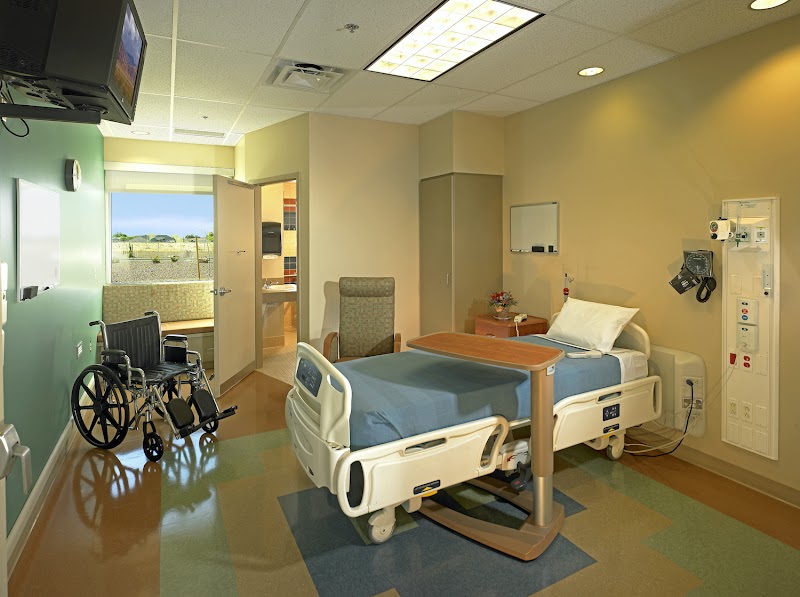
How is Prescott Valley Nursing & Rehabilitation Staffed?
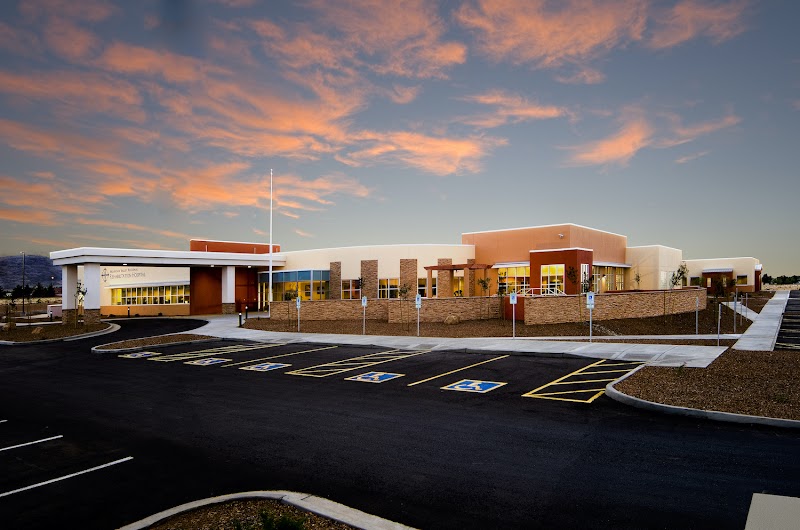
CMS rates Prescott Valley Nursing & Rehabilitation's staffing level at 2 out of 5 stars, which is below average compared to other nursing homes. Staff turnover is 71%, which is 25 percentage points above the Arizona average of 46%. High turnover can affect care consistency as new staff learn residents' individual needs. RN turnover specifically is 83%, which is notably high. RNs provide skilled clinical oversight, so turnover in this role can affect medical care quality.

What Have Inspectors Found at Prescott Valley Nursing & Rehabilitation?

State health inspectors documented 31 deficiencies at Prescott Valley Nursing & Rehabilitation during 2021 to 2025. These included: 1 that caused actual resident harm, 29 with potential for harm, and 1 minor or isolated issues. Deficiencies causing actual harm indicate documented cases where residents experienced negative health consequences.

Who Owns and Operates Prescott Valley Nursing & Rehabilitation?

Prescott Valley Nursing & Rehabilitation is owned by a non-profit organization. Non-profit facilities reinvest revenue into operations rather than distributing to shareholders. The facility is operated by GOOD SAMARITAN SOCIETY, a chain that manages multiple nursing homes. With 58 certified beds and approximately 53 residents (about 91% occupancy), it is a smaller facility located in PRESCOTT VALLEY, Arizona.

How Does Prescott Valley Nursing & Rehabilitation Compare to Other Arizona Nursing Homes?

Compared to the 100 nursing homes in Arizona, Prescott Valley Nursing & Rehabilitation's overall rating (3 stars) is below the state average of 3.3, staff turnover (71%) is significantly higher than the state average of 46%, and health inspection rating (2 stars) is below the national benchmark.

What Should Families Ask When Visiting Prescott Valley Nursing & Rehabilitation?

Based on this facility's data, families visiting should ask: "What safeguards and monitoring systems are in place to protect residents from abuse or neglect?" "How do you ensure continuity of care given staff turnover, and what is your staff retention strategy?" "Can you walk me through typical staffing levels on day, evening, and night shifts?" "Can I visit during a mealtime to observe dining assistance and food quality?" These questions are particularly relevant given the substantiated abuse finding on record, the facility's high staff turnover rate, and the below-average staffing rating.

Is Prescott Valley Nursing & Rehabilitation Safe?

Based on CMS inspection data, Prescott Valley Nursing & Rehabilitation has documented safety concerns. The facility has 1 substantiated abuse finding (meaning confirmed case of resident harm by staff or other residents). The facility has a 3-star overall rating and ranks #100 of 100 nursing homes in Arizona. Families considering this facility should ask detailed questions about what corrective actions have been taken since these incidents.

Do Nurses at Prescott Valley Nursing & Rehabilitation Stick Around?

Staff turnover at Prescott Valley Nursing & Rehabilitation is high. At 71%, the facility is 25 percentage points above the Arizona average of 46%. Registered Nurse turnover is particularly concerning at 83%. RNs handle complex medical decisions and coordinate care — frequent RN changes can directly impact care quality. High turnover means new staff may not know residents' individual needs, medications, or preferences. It can also be disorienting for residents, especially those with dementia who rely on familiar faces. Families should ask: What is causing the turnover? What retention programs are in place? How do you ensure care continuity during staff transitions?

Was Prescott Valley Nursing & Rehabilitation Ever Fined?

Prescott Valley Nursing & Rehabilitation has been fined $12,735 across 1 penalty action. This is below the Arizona average of $33,206. While any fine indicates a compliance issue, fines under $50,000 are relatively common and typically reflect isolated problems that were subsequently corrected. Families should ask what specific issues led to these fines and confirm they've been resolved.

Is Prescott Valley Nursing & Rehabilitation on Any Federal Watch List?

Prescott Valley Nursing & Rehabilitation is not on any federal watch list. The most significant is the Special Focus Facility (SFF) program, which identifies the bottom 1% of nursing homes nationally based on persistent, serious quality problems. Not being on this list means the facility has avoided the pattern of deficiencies that triggers enhanced federal oversight. This is a positive indicator, though families should still review the facility's inspection history directly.