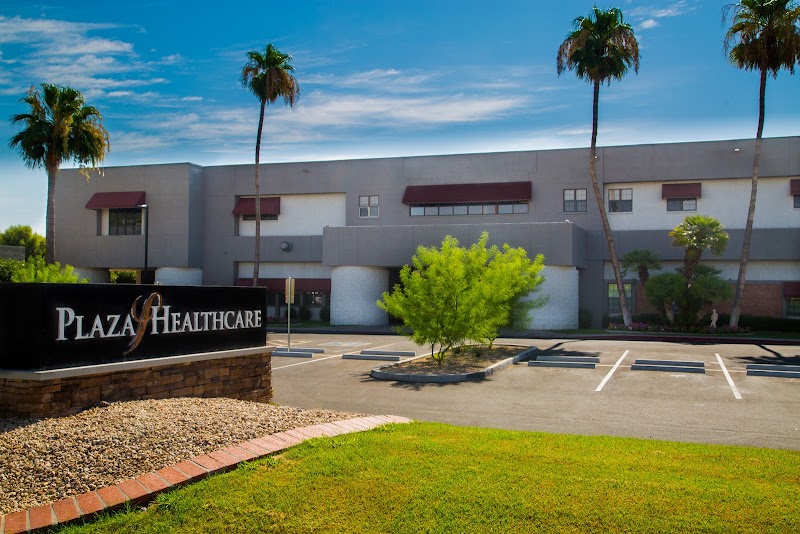

PLAZA HEALTHCARE

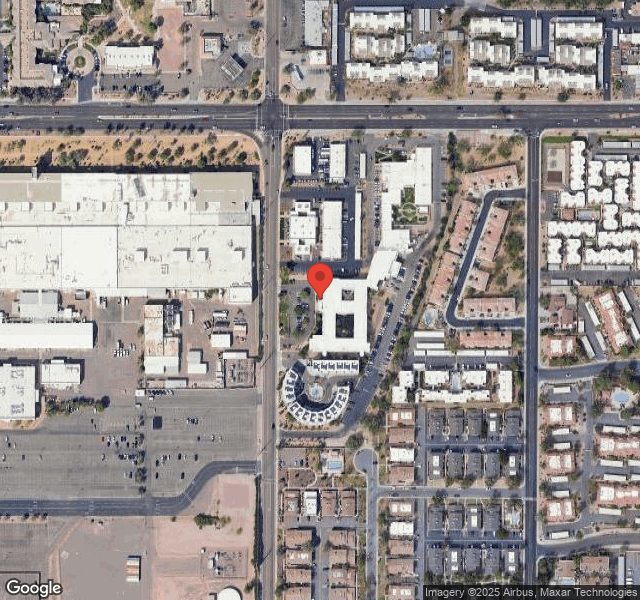
1475 NORTH GRANITE REEF ROAD, SCOTTSDALE, AZ 85257 (480) 990-1904
For profit - Limited Liability company 179 Beds Independent Data: November 2025
Trust Grade
90/100
#22 of 139 in AZ
Last Inspection: January 2025

Within standard 12-15 month inspection cycle. Federal law requires annual inspections.

Overview

Plaza Healthcare in Scottsdale, Arizona, has received a Trust Grade of A, which indicates it is an excellent facility and highly recommended for care. It ranks #22 out of 139 nursing homes in Arizona, placing it in the top half of state facilities, and #18 out of 76 in Maricopa County, meaning there are only a few local options that are better. However, the facility is experiencing a worsening trend, with the number of issues reported increasing from 2 in 2024 to 3 in 2025. Staffing is a strength here, with a rating of 4 out of 5 stars and a turnover rate of 39%, which is below the state average of 48%, indicating that staff members are likely to stay and know the residents well. Notably, there have been no fines, which is a positive sign, and there is more RN coverage than 96% of Arizona facilities, ensuring better oversight for residents. On the downside, there have been several concerning issues noted in recent inspections. For instance, staff failed to ensure that one resident was safe to self-administer medication, which could lead to a potential overdose. Additionally, food was not properly labeled in the kitchen, raising safety concerns about residents consuming unsafe items. Lastly, staff members were observed not wearing hair restraints correctly while preparing food, which could increase the risk of foodborne illness. These findings highlight areas that need improvement, despite the overall strengths of the facility.

Trust Score
A
90/100
In Arizona
#22/139
Top 15%
Safety Record
Low Risk
No red flags
Inspections
Getting Worse
2 → 3 violations
Staff Stability
○ Average
39% turnover. Near Arizona's 48% average. Typical for the industry.
Penalties
✓ Good
No fines on record. Clean compliance history, better than most Arizona facilities.
Skilled Nurses
✓ Good
Each resident gets 115 minutes of Registered Nurse (RN) attention daily — more than 97% of Arizona nursing homes. RNs are the most trained staff who catch health problems before they become serious.
Violations
○ Average
10 deficiencies on record. Average for a facility this size. Mostly minor or procedural issues.
★★★★★
5.0
Overall Rating
★★★★☆
4.0
Staff Levels
★★★★★
5.0
Care Quality
★★★★☆
4.0
Inspection Score
Stable
2024: 2 issues
2025: 3 issues

The Good

  • 4-Star Staffing Rating · Above-average nurse staffing levels
  • 5-Star Quality Measures · Strong clinical quality outcomes
  • Full Sprinkler Coverage · Fire safety systems throughout facility
  • No fines on record
  • Staff turnover below average (39%)

    9 points below Arizona average of 48%

Facility shows strength in staffing levels, quality measures, fire safety.

The Bad

Staff Turnover: 39%

Near Arizona avg (46%)

Typical for the industry

The Ugly 10 deficiencies on record

Jan 2025 3 deficiencies
CONCERN (D)

Potential for Harm - no one hurt, but risky conditions existed

Accident Prevention (Tag F0689)

Could have caused harm · This affected 1 resident

**NOTE- TERMS IN BRACKETS HAVE BEEN EDITED TO PROTECT CONFIDENTIALITY** Based on clinical record review, staff interviews, and review of facility policy and procedure, the facility failed to ensure th...

Read full inspector narrative →
**NOTE- TERMS IN BRACKETS HAVE BEEN EDITED TO PROTECT CONFIDENTIALITY** Based on clinical record review, staff interviews, and review of facility policy and procedure, the facility failed to ensure that one sampled residents (#36) was safe to self-adminster medication. The deficient practice could result in a medication overdose. Findings Include: Resident #36 was initially admitted on [DATE] and re-admitted on [DATE] with a diagnosis of acute kidney failure,hyperlipidemia, and cerebral infarction. The Nursing Assessment PPS (NP) Minimum Data Set (MDS) assessment dated [DATE], revealed a Brief Interview for Mental Status (BIMS) score of 14, which indicated intact cognition. A Care Plan dated October 23, 2024 revealed no indication of a focus for medication self-administration. An observation was conducted on January 22, 2025 at 8:20 am of the residents (#36) room, and three medications were observed on the residents bed side table. The medications included Osha Root Rocky Mountain Throat Syrup, Salonpas Lidocaine Plus Pain Relieving Cream , and Fluid Extract Mullein Leaf 2,000mg. Review of the clinical record revealed no evidence of a medication self-administration order. Further review of physician orders revealed no evidence of orders for the following medications: - Osha Root Rocky Mountain Throat Syrup, -Salonpas Lidocaine Plus Pain Relieving Cream -Fluid Extract Mullein Leaf 2,000mg Review of the clinical record revealed no evidence of a medication self-administration assessment. An interview was conducted on January 22, 2025 at approximately 8:20 AM with Resident #36, who stated that her son brought in the medication , and that she could not remember when this occurred. An interview was conducted on January 22, 2025 at 08:34 AM with a Licensed Practical Nurse (LPN/staff #83 ) who entered the resident ' s room and stated that there were three containers sitting on the bedside table that included Osha Root Rocky Mountain Throat Syrup, Salonpas Lidocaine Plus Pain Relieving Cream , and Fluid Extract Mullein Leaf 2,000 mg. The LPN stated that she has to speak with the Assistant Director of nursing (ADON) to find out what was going on with the medications found on the resident 's bedside table. The LPN also stated that she was not aware of the medication at bedside. An interview was conducted on January 24, 2025 at 1:00 PM with LPN who stated that residents cannot bring cigarettes, alcohol,or medications . The LPN (Staff # 257) stated that if medications were to be brought to the facility by the family and found by staff the staff will put it into a zip lock bag for the family to come by and pick it up. The LPN (Staff # 257) stated the physicians will be made aware along with the social worker when medication is found at the bedside table of the resident . The LPN (Staff #257) stated that they will let the resident know they can ' t have medication that are not ordered by the physician. The LPN (Staff #257 ) stated that there needs to be order for self administration and there are no residents that are on self administration. An interview was conducted on January 24, 2025 at 1:28 PM with the Chief Clinical Officer (CCO/staff #218), who stated that she oversees all of the clinical staff. The CCO (Staff #218) stated that during admission staff will do a head to toe, and skin assessment. The CCO (Staff #218) reviewed their facility policies and stated that if residents request to do self administered they will conduct an assessment to determine resident cognitive status, ability to name the medication. The CCO (Staff #218) stated that they will also need to know if residents are able to tell time and day, and the side effects of the medication. The CCO (Staff #218) stated that they would monitor the side effects, and no controlled substance would be allowed to self administer. The CCO (Staff #218) stated that when staff give medication to residents they should stay at their bedside to ensure that the resident takes their medication. The CCO (Staff #218) stated there were times when families would bring in medication or supplements and in that case education will be provided to the resident and family regarding medication administration and the family will be asked to take the medication back. The CCO (Staff #218) stated that staff will inform the unit manager when a family or representative has brought in medication, and tell the family to take it back. The CCO (Staff #218) stated that there is nothing in the resident # 36 records for self admission and she will be the one to know. The CCO (staff #218) stated that there are no residents in the facility that are self administrators. A review of the policy titled Self-Administration of Medication, revealed that the interdisciplinary team will assess the resident to determine if self-administration of medication is clinically appropriate, safe, and feasible to honor the resident request and to maintain the resident ' s independence consistent with individualized plan of care.
CONCERN (D)

Potential for Harm - no one hurt, but risky conditions existed

Food Safety (Tag F0812)

Could have caused harm · This affected 1 resident

Based on observations, staff interviews, and policy review, the facility failed to ensure food was properly labeled. The deficient practice may allow residents to consume foods that are unsafe for con...

Read full inspector narrative →
Based on observations, staff interviews, and policy review, the facility failed to ensure food was properly labeled. The deficient practice may allow residents to consume foods that are unsafe for consumption. Findings include: During an initial tour of the kitchen conducted on January 21,2025 at approximately 11:17 AM, with the Dietary Director (staff #277) and the Dietitian (staff #112), a ziplock bag labeled pork breast was observed in the walk-in refrigerator with the dates December 30, 2024 and January 06, 2025 written on the ziplock bag. However, there was no identification of the open or expiration dates. The pork breast was 22 days past from December 30, 2024 and 15 days past January 06, 2025 from the initial tour of the kitchen on January 21, 2025. Dietary Director ( Staff # 227) was unable to identify the open and expiration date for the pork breast. An interview was conducted on January 21, 2025 at approximately 11:17 AM with Dietary Director ( Staff # 277) who stated that the pork breast was this month's special , and that frozen meals would base it off of the expiration date. An interview was conducted on January 24, 2025 at 10:45 AM with a Kitchen [NAME] (Staff #65 ), who stated that leftover food items would need labeling. Kitchen [NAME] ( Staff #65) stated food labeling would include the date the item was opened and the expiration date. Kitchen [NAME] (Staff #65) stated that the pork breast was from the December 2024 kitchen menu, and that he forgot to discard. Kitchen [NAME] ( Staff #65), who stated that food items that are not labeled with the open and expiration dates would be discarded. The Kitchen [NAME] (Staff #65) stated that items are inspected for expiration dates in the pantry, walk-in refrigerator and freezer. The Kitchen [NAME] (Staff #65) stated that they discard items that are expired immediately. An interview was conducted on January 24, 2025 at 10:38 AM with the Kitchen manager ( Staff # 277) who stated that they would not use anything in the kitchen that is past the expiration date. The Kitchen manager (Staff#277) stated that she would not serve residents food items with no proper labeling. The Kitchen (staff # 277) stated that they would follow their facilities guidelines in regards to labeling. A policy titled Food Storage revealed that frozen meat/ poultry and foods need to be labeled and dated.
CONCERN (D)

Potential for Harm - no one hurt, but risky conditions existed

Infection Control (Tag F0880)

Could have caused harm · This affected 1 resident

**NOTE- TERMS IN BRACKETS HAVE BEEN EDITED TO PROTECT CONFIDENTIALITY** Based on observation, staff interviews, and facility policies, the facility failed to ensure that infection prevention and contr...

Read full inspector narrative →
**NOTE- TERMS IN BRACKETS HAVE BEEN EDITED TO PROTECT CONFIDENTIALITY** Based on observation, staff interviews, and facility policies, the facility failed to ensure that infection prevention and control standards were maintained regarding catheter bags for two of four sampled residents (#637, 636). The deficient practice could result in the spread of infection to residents. Findings include: -Regarding Resident #636: Resident #636 was admitted to the facility on [DATE] with diagnoses that included hemiplegia and traumatic brain injury. A care plan initiated on January 16, 2025, revealed the following focus: -Risk for infection related in invasive devices. -History of BPH (benign prostatic hyperplasia) and potential for urinary retention. During an observation conducted on January 23,2024 at 1:12 PM, Resident #636's urinary catheter bag was observed to be lying on the floor. An interview was conducted on January 23, 2025 at 1:35 PM with a Certified Nursing Assistant (CNA/staff #25), who stated that catheter bag should never touch the floor due. Further interview was conducted on January 23, 2025 with CNA (staff #25) who stated that catheter bags should not touch the floor due to infection control issues. She further stated that the risk could result in the spread of infection. An interview was conducted on January 23, 2025 at 2:59 PM with the Chief Clinical Officer (CCO/Staff #218), who stated that urinary catheter bags should be placed in a privacy bag for the dignity of the resident, and should never be lying on the floor. She further stated that the risk of a urinary catheter bag lying on the floor could result in the spread of infection and possible urinary tract infection, even with the privacy bag cover. An additional observation was conducted on January 24, 2025, and the resident's catheter was observed to have been placed in a plastic basin, and the plastic basin was on the floor. This was after the Chief Clinical Officer interview on January 23, 2025. -Regarding resident #637: Resident #637 was admitted on [DATE] with diagnoses that included Acute Kidney Failure, Dependence on renal dialysis, Sepsis, and Urinary Tract Infection (UTI). Review of Resident #637's order summery dated January 16, 2025 indicated an order for a suprapubic catheter to gravity drainage, 16 French, 10 cubic centimeter balloon. Further review of Resident #637's order summery revealed an order dated January 16, 2025, which indicated catheter care per facility protocol as needed and every shift. Further review of the comprehensive care plan dated January 17, 2025, included Resident #637 has use of a suprapubic catheter and is at risk for infection related to neurogenic bladder. Tasks included catheter care every shift and as needed, change drainage bag as needed for leaking, and check catheter securing device every shift and replace as needed. An observation was conducted January 21,2025 at 1:58pm of resident #637. The resident's catheter bag was observed to be lying on the floor next to the bed while the resident was asleep. During observations conducted on January 22, 2025 at 8:05am and 2:06pm, and January 23, 2025 at 8:30am, the catheter bag was observed touching the floor. Another observation conducted on January 24, 2025 at 8:58am, of the catheter bag had been placed in a privacy cover and a plastic bucket was under the bag to avoid touching the floor. An interview was conducted on January 23, 2025 at 8:53am with a Licensed Practical Nurse (LPN/Staff #269), who stated that catheter care is performed by Certified Nursing Assistants (CNA), and that catheters are replaced at least once a month or as needed, and CNAs should be cleaning the insertion site daily. An interview was conducted on January 23, 2025 at 10:18am with a CNA (Staff #138) who stated that catheter care is routinely performed twice a day or as needed. He also stated that catheter bags are emptied once a day and as needed. An interview was conducted on January 23, 2025 at 2:59pm with an LPN (Staff #300), who stated that catheter bags should not be on the floor or touching the floor. She also stated that the bag should be placed so it can hook on bedside rail, and not touching the floor. The LPN stated the risk of the catheter bag laying on the floor could result in an infection. A policy and procedure titled catheter care, includes a Nursing Reference Policy dated January 2021 stating, Plaza Healthcare recognizes authors [NAME] and/or [NAME] as examples of professional references for education for clinical staff. Review of [NAME] on Indwelling Urinary Catheter Care and Removal (pg. 433) states, don't place the drainage bag on the floor, to reduce the risk of contamination and subsequent catheter-associated urinary tract infection.
Oct 2024 2 deficiencies
CONCERN (D) 📢 Someone Reported This

A family member, employee, or ombudsman was alarmed enough to file a formal complaint

Potential for Harm - no one hurt, but risky conditions existed

Free from Abuse/Neglect (Tag F0600)

Could have caused harm · This affected 1 resident

**NOTE- TERMS IN BRACKETS HAVE BEEN EDITED TO PROTECT CONFIDENTIALITY** Based on documentation, staff interviews, and the facility policy and procedures, the facility failed to ensure that resident (#...

Read full inspector narrative →
**NOTE- TERMS IN BRACKETS HAVE BEEN EDITED TO PROTECT CONFIDENTIALITY** Based on documentation, staff interviews, and the facility policy and procedures, the facility failed to ensure that resident (#30) was not abused by another resident (#54). The deficient practice could result in residents being harmed emotionally and physically. Findings include: -Regarding Resident #30: Resident #30 was admitted to the facility on [DATE] with diagnoses that included end stage renal disease, dependence on renal dialysis, hypertensive heart and chronic kidney disease with heart failure and with stage 5 chronic kidney disease, or end stage renal disease. The minimum data set (MDS) dated [DATE] included a brief interview for mental status score of 10 indicating the resident had a moderate cognitive impairment. A progress note dated October 19, 2024 revealed remains at baseline and no new issue to report. Pt was social and engaged well with nurse. Pt played bingo with her peers. Pt was resting in room at end of shift with call light within reach. A care plan revised on October 29, 2024 revealed that resident #30 has times of verbal aggression and jovial facetious banter that may be misconstrued by others. -Regarding Resident #54: Resident #54 was admitted to the facility on [DATE] with diagnoses that included chronic kidney disease, stage 5, dependence on renal dialysis, acute kidney failure with tubular necrosis. The annual minimum data set (MDS) dated [DATE] included a brief interview for mental status score of 15 indicating the resident cognition is intact. The care plan date revised on October 24, 2024 revealed resident at times is not aware of boundaries with others and need redirection due to poor impulse control and will attempt to multitask during activities that can be distracting to others. Interventions included to offer/remind to use headphones to listen to his phone. An attempt to conduct an interview with resident on October 30, 2024 at 10:00 a.m. was made. Resident was at a dialysis appointment. An interview was conducted October 30, 2024 at 10:46 a.m. with resident #9. Resident #9 stated she was at bingo for the first time and was seated right next to resident #30. She stated resident #54 was upset because resident #30 won the round of bingo. She stated resident #54 called resident #30 a whore, fucking bitch and a mother fucking whore. She stated I felt weird because it was my first time going to bingo. An interview was conducted on October 30, 2024 at 10:58 a.m. with resident #54. Resident #54 initially stated he did not want to discuss the issue that is over with, but then decided to share his side of the story. Resident #54 stated he was at bingo and was seated at a table by himself, listening to music. He stated resident #30 was seated at a table next to his playing bingo. He stated resident #30 kept disturbing and harassing him. Resident #54 stated I did not call her a black bitch. An interview was conducted on October 30, 2024 at 11:09 a.m. with the Receptionist (staff # 48). Staff #48 stated that she was seated next to resident # 30 on Saturday, October 19, 2024, during a bingo game. She stated she was at the table assisting residents with their numbers and assisting the activities assistant and seated at the table was resident #30. She stated resident #54 was seated at a table next to theirs. Staff #48 stated resident # 30 was excited, vocal and a little loud. She stated resident #54 kept asking resident #30 to be quiet, she stated resident #54 became irritated and turned and called resident #30 a black bitch. Resident #30 became upset like she could not believe he said that to her.' She stated before resident #54 called her a bitch and he had asked resident #30 to be quite and she told him to shut up and that was when he turned around and called her that name. Staff #48 stated she did not intervene because she thought they were joking and she was unsure. Staff #48 stated she tried calming resident #30 down because she was very upset. She stated the game continued for another 10 minutes with both residents seated next to one another. Staff #48 stated when the game was over she took resident #30 to the lobby and went back to work. Staff #30 stated she did not report the incident to anyone. Staff #48 stated that she has had abuse training in the last year, in person. An interview was conducted October 30, 2024 at 11:34 a.m. with the Activities Assistant (staff/ # 77). Staff # 77 stated I don't know too much just that the two residents were sitting in front of me and they were bantering back and forth with their typical behavior. She stated that it did not seem that it was escalating. Staff # 77 stated after Bingo was over, resident #30 was sitting in the lobby and stated did you hear what that N word called me - he called me a black bitch she appeared upset and angry. Staff #77 stated she immediately reported it to her boss through text. Staff #77 stated she was told by her supervisor if it were to happen again to stop the bingo game and have the residents removed. Staff #77 stated she was never informed by staff #48 about what had happened and that the expectation would be for her to have informed her and stop the altercation between the residents. She stated the unit nurse was informed and asked that resident's #30 and #54 not attend bingo the following day. An interview was conducted October 30, 2024 at 12:10 p.m. with Social Services Director (staff # 62). Staff #62 stated that she supervises the receptionists and that Staff #48 is under her directive. Upon hire staff complete in person training with verbal abuse is part of the curriculum. Staff #62 stated as a social worker they are expected to report immediately. Staff #62 stated she completed education with staff #48 when she became aware that she had not reported to anyone of the altercation between the two residents. She stated staff #48 should have stopped it immediately and if she did not feel comfortable should have informed staff #77 who was in the room with her or told a supervisor. Staff #62 stated she was disappointed in the way that she reacted or failed to react to the situation as it was clearly verbal abuse and failed to intervene and report the incident immediately. Staff #62 stated the facility has to protect the residents not just sit back and observe and that it does not matter what department you are in, that you are responsible for intervening and reporting. Review of the facility policy titled Abuse, Neglect, Mistreatment and Misappropriation of Resident Property states it is the policy of the facility that each resident will be free from abuse. Abuse can be verbal, mental, sexual, or physical abuse, corporal punishment, misappropriation of resident property, or involuntary seclusion. -Verbal abuse is defined as the use of oral, written, or gestural language that willfully includes disparaging or derogatory terms to resident's or their families, or within hearing distance, regardless of their age, ability to comprehend, or disability
CONCERN (D) 📢 Someone Reported This

A family member, employee, or ombudsman was alarmed enough to file a formal complaint

Potential for Harm - no one hurt, but risky conditions existed

Investigate Abuse (Tag F0610)

Could have caused harm · This affected 1 resident

**NOTE- TERMS IN BRACKETS HAVE BEEN EDITED TO PROTECT CONFIDENTIALITY** Based on clinical record review, staff interviews, and the facility policy and procedures, the facility failed to ensure staff i...

Read full inspector narrative →
**NOTE- TERMS IN BRACKETS HAVE BEEN EDITED TO PROTECT CONFIDENTIALITY** Based on clinical record review, staff interviews, and the facility policy and procedures, the facility failed to ensure staff intervened and reported resident to resident verbal abuse. The deficient practice could result in residents not being protected from further abuse and appropriate corrective action taken. Findings Include: - Regarding Resident #30: Resident #30 was admitted to the facility on [DATE] with diagnoses that included end stage renal disease, dependence on renal dialysis, hypertensive heart and chronic kidney disease with heart failure and with stage 5 chronic kidney disease, or end stage renal disease. The minimum data set (MDS) dated [DATE] included a brief interview for mental status score of 10 indicating the resident had a moderate cognitive impairment. A progress note dated October 19, 2024 revealed remains at baseline and no new issue to report. Pt was social and engaged well with nurse. Pt played bingo with her peers. Pt was resting in room at end of shift with call light within reach. A care plan revised on October 29, 2024 revealed that resident #30 has times of verbal aggression and jovial facetious banter that may be misconstrued by others. -Regarding Resident #54: Resident #54 was admitted to the facility on [DATE] with diagnoses that included chronic kidney disease, stage 5, dependence on renal dialysis, acute kidney failure with tubular necrosis. The annual minimum data set (MDS) dated [DATE] included a brief interview for mental status score of 15 indicating the resident cognition is intact. The care plan date revised on October 24, 2024 revealed resident at times is not aware of boundaries with others and need redirection due to poor impulse control and will attempt to multitask during activities that can be distracting to others. Interventions included to offer/remind to use headphones to listen to his phone. An interview was conducted October 30, 2024 at 10:46 a.m. with resident #9. Resident #9 stated she was at bingo for the first time and was seated right next to resident #30. She stated resident #54 was upset because resident #30 won the round of bingo. She stated resident #54 called resident #30 a whore, fucking bitch and a mother fucking whore. She stated I felt weird because it was my first time going to bingo. An interview was conducted on October 30, 2024 at 10:58 a.m. with resident #54. Resident #54 initially stated he did not want to discuss the issue that is over with, but then decided to share his side of the story. Resident #54 stated he was at bingo and was seated at a table by himself, listening to music. He stated resident #30 was seated at a table next to his playing bingo. He stated resident #30 kept disturbing and harassing him. Resident #54 stated I did not call her a black bitch. An interview was conducted on October 30, 2024 at 11:09 a.m. with the Receptionist (staff # 48). Staff #48 stated that she was seated next to resident # 30 on Saturday, October 19, 2024, during a bingo game. She stated she was at the table assisting residents with their numbers and assisting the activities assistant and seated at the table was resident #30. She stated resident #54 was seated at a table next to theirs. Staff #48 stated resident # 30 was excited, vocal and a little loud. She stated resident #54 kept asking resident #30 to be quiet, she stated resident #54 became irritated and turned and called resident #30 a black bitch. Resident #30 became upset like she could not believe he said that to her.' She stated before resident #54 called her a bitch and he had asked resident #30 to be quite and she told him to shut up and that was when he turned around and called her that name. Staff #48 stated she did not intervene because she thought they were joking and she was unsure. Staff #48 stated she tried calming resident #30 down because she was very upset. She stated the game continued for another 10 minutes with both residents seated next to one another. Staff #48 stated when the game was over she took resident #30 to the lobby and went back to work. Staff #30 stated she did not report the incident to anyone. Staff #48 stated that she has had abuse training in the last year, in person. An interview was conducted October 30, 2024 at 11:34 a.m. with the Activities Assistant (staff/ # 77). Staff # 77 stated I don't know too much just that the two residents were sitting in front of me and they were bantering back and forth with their typical behavior. She stated that it did not seem that it was escalating. Staff # 77 stated after Bingo was over, resident #30 was sitting in the lobby and stated did you hear what that N word called me - he called me a black bitch she appeared upset and angry. Staff #77 stated she immediately reported it to her boss through text. Staff #77 stated she was told by her supervisor if it were to happen again to stop the bingo game and have the residents removed. Staff #77 stated she was never informed by staff #48 about what had happened and that the expectation would be for her to have informed her and stop the altercation between the residents. She stated the unit nurse was informed and asked that resident's #30 and #54 not attend bingo the following day. An interview was conducted October 30, 2024 at 12:10 p.m. with Social Services Director (staff # 62). Staff #62 stated that she supervises the receptionists and that Staff #48 is under her directive. Upon hire staff complete in person training with verbal abuse is part of the curriculum. Staff #62 stated as a social worker they are expected to report immediately. Staff #62 stated she completed education with staff #48 when she became aware that she had not reported to anyone of the altercation between the two residents. She stated staff #48 should have stopped it immediately and if she did not feel comfortable should have informed staff #77 who was in the room with her or told a supervisor. Staff #62 stated she was disappointed in the way that she reacted or failed to react to the situation as it was clearly verbal abuse and failed to intervene and report the incident immediately. Staff #62 stated the facility has to protect the residents not just sit back and observe and that it does not matter what department you are in, that you are responsible for intervening and reporting. Review of the facility policy titled Abuse, Neglect, Mistreatment and Misappropriation of Resident Property states it is the policy of the facility that each resident will be free from abuse. Abuse can be verbal, mental, sexual, or physical abuse, corporal punishment, misappropriation of resident property, or involuntary seclusion. -Verbal abuse is defined as the use of oral, written, or gestural language that willfully includes disparaging or derogatory terms to resident's or their families, or within hearing distance, regardless of their age, ability to comprehend, or disability. Internal Reporting: a. Employees must always report any abuse or suspicion of abuse immediately to the Administrator. Review of the facility policy titled Event Reporting-Resident states it is the policy of this facility to identify information/events related to residents. An adverse event is an incident resulting in harm to the resident. Examples: S fall, choking, elopement or attempted elopement, medication error, trauma causing self-decannulation or trauma causing a g-tub dislodgement, injuries of unknown origin, resident t-to-resident altercation, resident-to-employee altercation, or an employee-to-resident altercation.
Jun 2022 5 deficiencies
CONCERN (D)

Potential for Harm - no one hurt, but risky conditions existed

Deficiency F0552 (Tag F0552)

Could have caused harm · This affected 1 resident

**NOTE- TERMS IN BRACKETS HAVE BEEN EDITED TO PROTECT CONFIDENTIALITY** Based on clinical record review, staff interviews, and policy review, the facility failed to ensure one resident (#79) and/or th...

Read full inspector narrative →
**NOTE- TERMS IN BRACKETS HAVE BEEN EDITED TO PROTECT CONFIDENTIALITY** Based on clinical record review, staff interviews, and policy review, the facility failed to ensure one resident (#79) and/or their representative were informed of the risks and benefits of a psychotropic medication prior to receiving the medication. The sample size was 5. The deficient practice could result in residents and/or their representatives not being aware of the risks and benefits of psychoactive medications. Findings include: Resident #79 was admitted to the facility on [DATE] with diagnoses that included tracheostomy dependent, dialysis dependent, anxiety, malignant hyperthermia, aphasia, and cerebral edema. Review of the physician orders revealed an order dated February 17, 2022 for Diazepam (anxiolytic) 5 milligrams by mouth every 8 hours for anxiety as evidenced by (AEB) restlessness, shortness of breath, and an order dated February 24, 2022 for Escitalopram Oxalate (antidepressant) 10 milligram enterally one time a day for anxiety AEB increased respirations. Review of the Medication Administration Records (MARs) from February 2022 through May 2022, revealed Diazepam was first administered February 17, 2022 and Escitalopram Oxalate was first administered February 25, 2022. However, further review of the clinical record revealed no evidence the resident or the resident's representative were informed of the risks and benefits of receiving Escitalopram Oxalate and Diazepam prior to the medication being administered. Continued review of the clinical record revealed Psychoactive Medication Consent forms that included risks and benefits for Diazepam dated March 7, 2022 (18 days after initial administration) and Escitalopram Oxalate dated March 31, 2022 (34 days after initial administration). An interview was conducted on June 16, 2022 at 8:13 AM with Social Services (staff #4). She stated that when a resident has been ordered psychotropic medications, nursing typically informs the resident or family representative the resident has been ordered the medication, what it is for, and obtains consent. She further stated there is a form that gets scanned into the resident's clinical record which medical records oversees. An interview was conducted on June 16, 2022 at 8:29 AM with the Health Information Director (staff #229). She stated their department conducts audits to ensure there is a consent in place when there is a psychotropic medication order. Staff #229 stated they review all orders daily to ensure there is a consent form in the medical record. She further stated the unit secretary is the person who uploads the consent into the medical record. An interview was conducted on June 16, 2022 at 8:31 AM with the Director of Nursing (DON/staff #192). He stated that for psychotropic medications, the physician will put in an order and nursing will initiate a Psychoactive Medication Consent Form which requires an indication for use and target behavior. The DON stated nursing will put in an order for side effects and target behaviors, get consent and then start administering the medication. The DON stated consents are usually uploaded the next day by the unit secretary. Staff #192 stated medical records audit the orders daily to ensure the consents are in place. The facility's policy titled Informed Consent reviewed March 2022, revealed it is the policy of the facility to facilitate, when necessary, the obtaining of informed consent for medical services that require informed consent. The resident has the right to have the information presented in the language or means of communication she/he understands. The resident will be provided with adequate information for the resident or representative to make an informed decision on the proposed treatment including medications. Informed consent will be verified by the facility with an order for psychoactive medications. If the physician has not obtained informed consent and/or the facility cannot verify such informed consent, the facility will not administer the psychoactive medications unless there is an emergency where there is danger to self or others documented in the clinical record.
CONCERN (D)

Potential for Harm - no one hurt, but risky conditions existed

Deficiency F0559 (Tag F0559)

Could have caused harm · This affected 1 resident

**NOTE- TERMS IN BRACKETS HAVE BEEN EDITED TO PROTECT CONFIDENTIALITY** Based on clinical record review, facility document, staff interviews, and review of policies and procedures, the facility failed...

Read full inspector narrative →
**NOTE- TERMS IN BRACKETS HAVE BEEN EDITED TO PROTECT CONFIDENTIALITY** Based on clinical record review, facility document, staff interviews, and review of policies and procedures, the facility failed to ensure one resident's (#17) responsible party was provided written notice prior to a room change, or after the room change occurred. The sample size was 2. The deficient practice could result in residents not receiving written notices prior to a room change. Findings include: Resident #17 was admitted on [DATE] with diagnoses that included persistent vegetative status, anoxic brain damage, dysphagia, acute respiratory failure with hypoxia, dependence on respirator, and tracheostomy. Review of the Acknowledgement of Change form in the medical record, revealed room change forms had been completed for the following dates: 7/6/2021, 10/5/2021, 12/30/2021, 1/11/2022, and 1/18/2022. Review of the quarterly Minimum Data Set assessment dated [DATE], revealed the resident was in a persistent vegetative state/non-discernible consciousness. Review of the medical record census list revealed the resident received a room change on June 4, 2022. Further review of the medical record Acknowledgement of Change for Internal Room Transfer form, revealed no documentation for the room change conducted on June 4, 2022. Review of the progress notes revealed an attempt to notify the representative on June 4, 2022 at 13:40 PM of the room change, but voicemail was full. Further review of the progress notes revealed no documentation that the resident representative had been notified, or additional attempts were made after the initial call. Review of the medical record revealed no evidence that the representative had been notified of the room change in writing, prior to or after the room change occurred. An interview was conducted on June 15, 2022 at 12:50 PM with a Registered Nurse (RN/staff #214), who stated that the facility policy for room transfers is to complete a room change form in the medical record. She also stated that the resident and/or representative would be notified. She further stated that representative notification would be documented in the medical record nursing progress notes. The RN stated the reason for informing the resident or family, would be so they would be aware that the resident was in a different room when they came to visit. She stated that the resident should be notified of a room change, but was not sure if they have the right to choose, whether or not they want to change rooms. An interview was conducted on June 15, 2022 at 1:35 PM with an RN (staff #213), who stated that they would notify the resident/representative regarding room transfers, to make sure they know why the room change occurred. She also stated that the notification would then be documented in the medical record. The RN stated that there is no written notification that the resident/representative would need to sign. An interview was conducted on June 15, 2022 at 2:47 PM with the Director of Social Services (staff #2), who stated that the process for room changes includes notifying the resident, if alert and oriented, then notifying the new roommate. She also stated that they have a room transfer form that is completed in the medical record that includes the date of the room change and who was notified. She stated that if the resident is not alert/oriented they would contact the representative. She further stated that the room transfer form is completed every time the resident is moved to another room. The Social Services Director stated that the risk of not completing the room change form would be that there would be no way of showing resident/representative consent and notification of the room change, if medically necessary. She also stated that it does not follow the facility process to document a call made to the representative, but not complete the room change form. She reviewed the medical record and stated that according to the census, resident #17 had a room change on June 4, 2022. She further stated that she did not see documentation of a room change form completed by nursing. She then stated that if the move was on a Saturday, the room transfer form does not need to be completed, that the form is just for Social Services. She stated that they should have continued to try to contact the representative to let them know about the room transfer. She also stated that there was no documentation in the medical record of subsequent calls to notify the representative of the room transfer, or documentation of written notification. The Director of Social Services stated that this did not follow the facility process, that there is no documentation that the family was aware of the transfer. An interview was conducted on June 15, 2022 at 3:15 PM with the Director of Medical Records (staff #229), who stated that social services completes the room transfer forms. She also stated that the room transfer form should be completed anytime there is a room change, and that on the weekends the nurses would be expected to complete the room transfer form. An interview was conducted on June 16, 2022 at 8:16 AM with the Unit Director of Nursing (DON/staff #192), who stated that facility policy for room transfers is to notify the resident/family or representative, then complete the room change form. He also stated that if the room change occurred on a weekend that nursing would call the family and complete the room change form. He further stated that nursing would document the call to the resident's representative in the progress notes. He reviewed the medical record and stated that the resident was moved to another room because the facility needed an isolation room. He further stated that this room change was not for a medical emergency for the resident. He stated that the unplanned room change took place to create another room for a COVID positive resident. He further stated that the room change was not conducted for resident safety/medical emergency, but for the facility needs. He reviewed the medical record and stated that there was documentation in the progress notes, that a call was attempted to the resident's representative, but no message was left, and there was no record of further calls. The Unit DON stated that resident #17 is not alert/oriented, and has limited family involvement. He stated that he assumed that the resident representative saw the facility number, and would know to call back. He further stated that there was no documentation in the medical record that the responsible party had received written notice, or received any other notification of the room transfer. During an interview conducted on June 16, 2022 at 12:06 PM with the Administrator (staff #102), he stated that he was aware of the room transfer issue and that they will be reviewing the process in the next quality assurance meeting. He also stated he felt that there could be changes made to the current transfer process. Review of the facility policy titled, Resident Room Transfer and Notification Protocol, revealed that Social services will document the room move and upload the room transfer sheet in the document section. If there is a need for a room transfer due to medical or safety necessity and the process cannot wait for normal business hours, the room transfers will be initiated by the Nurse Supervisor. The nurse supervisor or designee will document in the progress note and complete the Room Transfer Notice indicating that the transferring resident and the receiving resident have been properly notified. The nurse supervisor will assure that the patient room change is documented in the progress notes along with detailed information and that the medical record is updated to reflect the proper room. Social services will audit the following business day to assure all items related to the room transfer were completed per protocol. Review of the facility policy titled, Room Assignment Notification, revealed that as medical needs change, the facility may request to transfer the resident to the appropriate unit. The Social Services designee or nurse will provide an advance notice when a room transfer is needed, unless in the event of a medical emergency.
CONCERN (D)

Potential for Harm - no one hurt, but risky conditions existed

Comprehensive Care Plan (Tag F0656)

Could have caused harm · This affected 1 resident

**NOTE- TERMS IN BRACKETS HAVE BEEN EDITED TO PROTECT CONFIDENTIALITY** Based on clinical record review, staff interviews, and facility policy and procedures, the facility failed to ensure that a care...

Read full inspector narrative →
**NOTE- TERMS IN BRACKETS HAVE BEEN EDITED TO PROTECT CONFIDENTIALITY** Based on clinical record review, staff interviews, and facility policy and procedures, the facility failed to ensure that a care plan was implemented for one resident (#64) regarding safety plan interventions. The sample size was 24. The deficient practice could cause residents not to receive care as ordered and negatively impact residents' mental status. Findings include: Resident #64 was admitted to the facility on [DATE] and readmitted on [DATE], with diagnoses that included cerebral palsy, dysphagia, cognitive communication deficit, osteoarthritis, major depressive disorder, adjustment disorder, and basal cell carcinoma of skin right lower eyelid including canthus. Review of the care plan initiated on December 17, 2021 revealed the resident has an alteration in mood status due to depression, anxiety, paranoia and schizoaffective disorder. Safety plan interventions included female staff only for changing and bathing. Review of a quarterly Minimum Data Set (MDS) assessment dated [DATE] included a Brief Interview for Mental Status (BIMS) with a score of 15, which indicated the resident had intact cognition. The MDS assessment also indicated that the resident was totally dependent on staff for toileting and bathing activities. Review of the bowel and bladder elimination log for the month of May 2022, revealed that a male staff member provided the care activity for the resident on May 28. Review of the toilet use log for the month of May 2022, revealed that a male staff member provided the care activity on May 9, 13, and 28. Review of the bowel and bladder elimination log for the month of June 2022, revealed that a male staff member provided the care activity for the resident on June 8 and June 12. Review of the toilet use log for the month of June 2022, revealed that a male staff member provided the care activity for the resident on June 12. During an interview conducted on June 13, 2022 at 1:50 p.m., the resident stated that she had told staff numerous times that she does not want a male staff assisting her for certain activities. She said that the facility continued to disregard her request. She stated that she is totally dependent on the staff for assistance and care. An interview was conducted on June 15, 2022 at 8:37 a.m. with a Certified Nursing Assistant (CNA/staff #145), who stated that requests for same gender attendants are honored. She said there would never be a reason for the request not to be followed. On June 15, 2022 at 9:02 a.m., a Licensed Practical Nurse (LPN/staff #42) was interviewed, who stated that a resident's request for same gender caregiver will be honored. An interview with a CNA (staff #154) was conducted on June 15, 2022 at 01:23 p.m. Staff #154 stated that he has provided care such as toileting for opposite gender residents. He said that those residents have never expressed concern or discomfort. He stated that he normally asks the resident if it is okay prior to providing the care activity. He stated if a resident does have concerns or prefers a same gender caregiver, he informs the nurse. He stated that it has not happened to him since he started at the facility two weeks ago. He said that the CNA that performs the task is the one that documents on the log that it was completed. An interview was conducted on June 16, 2022 at 10:45 a.m., with the Director of Nursing Level I (DON/staff #204), who stated that the expectation is that staff would try to accommodate resident's choices and preferences with regards to same gender caregiver for specific tasks. She said they are normally able to do so about 90% of the time. However, the DON stated that once in a while they have to let the resident know that they might not be able to accommodate due to staffing restraints. She also stated that they have more female staff than male. She said that with regards to the care plan, the expectation is that it is followed. She stated this means that if it is in regards to same gender specific tasks, if they do not have the staffing on the floor then they have to float somebody from another area to provide the activity in order to follow the care plan. She said that she did not know off the top of her head of a resident whose care plan calls for a specific gender to perform an activity. The care plan for resident #64 was reviewed with staff #204, and she verified that it states female only for changing and bathing. Staff #204 reviewed the May 2022 thru June 2022 bowel and bladder elimination log for the resident revealing a male CNA provided the activity. She stated that it is a problem since it did not follow the care plan. She also said that the care plan's specifics are also an issue since it does not allow for impact from staffing constraints. Review of the facility policy titled, Interdisciplinary Team Guidelines, Care Planning, last reviewed March 2022, revealed the Interdisciplinary Team (IDT) will allow the resident and/or representative to participate in a person-centered care planning process. The IDT will allow the resident and/or representative to participate in establishing the desired goals and outcomes of care.
CONCERN (D)

Potential for Harm - no one hurt, but risky conditions existed

Infection Control (Tag F0880)

Could have caused harm · This affected 1 resident

Based on observations, staff interviews, and policy review, the facility failed to ensure staff followed infection control standards related to wearing PPE (personal protective equipment). The deficie...

Read full inspector narrative →
Based on observations, staff interviews, and policy review, the facility failed to ensure staff followed infection control standards related to wearing PPE (personal protective equipment). The deficient practice could result in transmission of infection including COVID-19. Findings include: An observation was conducted on June 13, 2022 at 11:07 am in the facility kitchen. Staff #178 (dishwasher) and staff #203 (cook) were observed with N95 face masks that were improperly worn. Both staff members had their masks lowered and their noses were exposed. Another observation was conducted on June 15, 2022 at 10:50 am. Staff #203 was again observed wearing his N95 mask with his nose exposed. An interview was conducted with the facility's Infection Preventionist (IP/staff #21) on June 14, 2022 at 2:48 pm. She stated the facility was in COVID-19 outbreak status and that all staff and visitors in the building should wear an N95 face mask and eye protection. An interview was conducted with the director of nutritional services (staff #179) on June 15, 2022 at 1:39 pm. Staff #179 stated all of the staff in the kitchen are required to wear an N95 mask and eye protection at all times in the facility. Signs observed posted in the facility included unvaccinated and not boosted staff, and vaccinated and boosted staff were to wear a K/N95 face mask and eye protection. The facility's policy Core Principles of COVID-19 Infection Prevention included at all times wearing a face mask that covers the mouth and nose.
CONCERN (E)

Potential for Harm - no one hurt, but risky conditions existed

Food Safety (Tag F0812)

Could have caused harm · This affected multiple residents

Based on observations, staff interviews, and policy review, the facility failed to ensure staff members wore hair restraints appropriately, kitchenware was clean, and that fans were clean. The deficie...

Read full inspector narrative →
Based on observations, staff interviews, and policy review, the facility failed to ensure staff members wore hair restraints appropriately, kitchenware was clean, and that fans were clean. The deficient practice could increase the risk of foodborne illness. Findings include: Regarding hair restraints During the initial kitchen observation conducted on June 13, 2022 at 11:07 a.m., a staff member working in the food line was observed wearing hair restraints that did not have all of her hair restrained. She had her hair up in a French twist-bun fashion with only half of the back of her head covered by the hairnet, while the rest of her hair was exposed, and loose hair was hanging down. A second observation was conducted on June 15, 2022 at approximately 10:50 a.m. During this observation, the same staff member was observed with half of the back of her head and hair exposed, with loose hair hanging down. In an interview with the director of nutritional services (staff #179) conducted on June 15, 2022 at 1:39 p.m., he stated that if the staff has hair, they have to wear hairnets or a hat in the kitchen. A facility policy titled Personal Hygiene/Safety/Food Handling revised May 6, 2021, stated that hair must be appropriately restrained or completely covered. Regarding clean kitchenware During an observation of ready-to-use dishes conducted on June 16, 2022 at 10:30 a.m., four dirty dessert bowls were observed stored with the clean stack. The dishes had visible debris that were remnants of food items it had contained. An interview with the director of nutritional services (staff #179) was conducted on June 16, 2022 at 10:32 a.m., he said that staff must visually inspect utensils and plates to ensure they are clean and clear of debris. He said this is usually done prior to storing the items and again prior to use. Regarding ceiling fans During the initial kitchen observation conducted with the director of nutritional services (staff #179) on June 13, 2022 at 11:07 a.m., fans mounted on the wall were observed dirty, and covered with dust debris that was hanging off the fans. One fan was blowing directly at the food line and the other was by a sink. Staff #179 stated that the fans should have been cleaned. He also said they would be cleaned immediately. A facility policy titled Cleaning Schedules revised on August 31, 2018, stated that the food and nutrition services staff shall maintain the sanitation of the food and nutrition services department.
Understanding Severity Codes (click to expand)
Life-Threatening (Immediate Jeopardy)
J - Isolated K - Pattern L - Widespread
Actual Harm
G - Isolated H - Pattern I - Widespread
Potential for Harm
D - Isolated E - Pattern F - Widespread
No Harm (Minor)
A - Isolated B - Pattern C - Widespread

Questions to Ask on Your Visit

  • "Can I speak with families of current residents?"
  • "What's your RN coverage like on weekends and overnight?"

Our Honest Assessment

Strengths
  • • Grade A (90/100). Above average facility, better than most options in Arizona.
  • • No major safety red flags. No abuse findings, life-threatening violations, or SFF status.
  • • No fines on record. Clean compliance history, better than most Arizona facilities.
  • • 39% turnover. Below Arizona's 48% average. Good staff retention means consistent care.
Concerns
  • • No significant concerns identified. This facility shows no red flags across CMS ratings, staff turnover, or federal penalties.
Bottom line: Generally positive indicators. Standard due diligence and a personal visit recommended.

About This Facility

What is Plaza Healthcare's CMS Rating?

CMS assigns PLAZA HEALTHCARE an overall rating of 5 out of 5 stars, which is considered much above average nationally. Within Arizona, this rating places the facility higher than 99% of the state's 100 nursing homes. This rating reflects solid performance across the metrics CMS uses to evaluate nursing home quality.

How is Plaza Healthcare Staffed?

CMS rates PLAZA HEALTHCARE's staffing level at 4 out of 5 stars, which is above average compared to other nursing homes. Staff turnover is 39%, compared to the Arizona average of 46%. This relatively stable workforce can support continuity of care.

What Have Inspectors Found at Plaza Healthcare?

State health inspectors documented 10 deficiencies at PLAZA HEALTHCARE during 2022 to 2025. These included: 10 with potential for harm.

Who Owns and Operates Plaza Healthcare?

PLAZA HEALTHCARE is owned by a for-profit company. For-profit facilities operate as businesses with obligations to shareholders or private owners. The facility operates independently rather than as part of a larger chain. With 179 certified beds and approximately 130 residents (about 73% occupancy), it is a mid-sized facility located in SCOTTSDALE, Arizona.

How Does Plaza Healthcare Compare to Other Arizona Nursing Homes?

Compared to the 100 nursing homes in Arizona, PLAZA HEALTHCARE's overall rating (5 stars) is above the state average of 3.3, staff turnover (39%) is near the state average of 46%, and health inspection rating (4 stars) is above the national benchmark.

What Should Families Ask When Visiting Plaza Healthcare?

Based on this facility's data, families visiting should ask: "Can I visit during a mealtime to observe dining assistance and food quality?" "How do you handle medical emergencies, and what is your hospital transfer rate?" "Can I speak with family members of current residents about their experience?"

Is Plaza Healthcare Safe?

Based on CMS inspection data, PLAZA HEALTHCARE has a clean safety record: no substantiated abuse findings (meaning no confirmed cases of resident harm), no Immediate Jeopardy citations (the most serious violation level indicating risk of serious injury or death), and is not on the Special Focus Facility watch list (a federal program monitoring the lowest-performing 1% of nursing homes). The facility has a 5-star overall rating and ranks #1 of 100 nursing homes in Arizona. While no facility is perfect, families should still ask about staff-to-resident ratios and recent inspection results during their visit.

Do Nurses at Plaza Healthcare Stick Around?

PLAZA HEALTHCARE has a staff turnover rate of 39%, which is about average for Arizona nursing homes (state average: 46%). Moderate turnover is common in nursing homes, but families should still ask about staff tenure and how the facility maintains care continuity when employees leave.

Was Plaza Healthcare Ever Fined?

PLAZA HEALTHCARE has no federal fines on record. CMS issues fines when nursing homes fail to meet care standards or don't correct problems found during inspections. The absence of fines suggests the facility has either maintained compliance or corrected any issues before penalties were assessed. This is a positive indicator, though families should still review recent inspection reports for the full picture.

Is Plaza Healthcare on Any Federal Watch List?

PLAZA HEALTHCARE is not on any federal watch list. The most significant is the Special Focus Facility (SFF) program, which identifies the bottom 1% of nursing homes nationally based on persistent, serious quality problems. Not being on this list means the facility has avoided the pattern of deficiencies that triggers enhanced federal oversight. This is a positive indicator, though families should still review the facility's inspection history directly.