VI AT GRAYHAWK, A VI AND PLAZA COMPANIES COMMUNITY
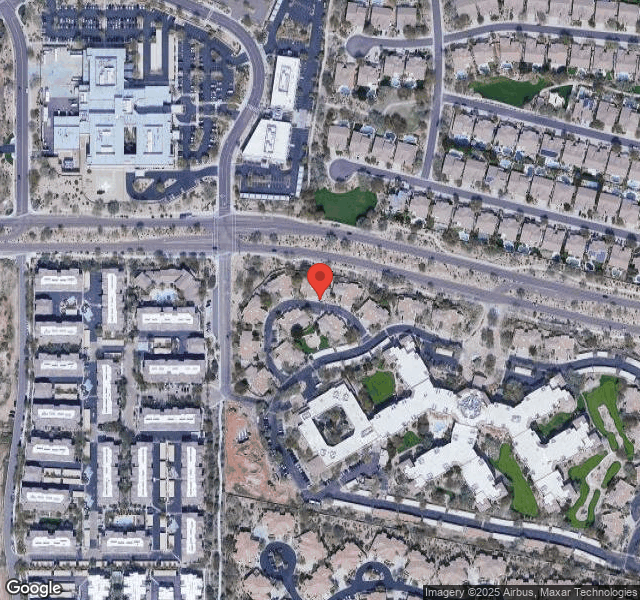

7501 EAST THOMPSON PEAK PARKWAY, SCOTTSDALE, AZ 85255 (480) 361-3200
For profit - Partnership 36 Beds VI LIVING Data: November 2025
Trust Grade
90/100
#38 of 139 in AZ
Last Inspection: February 2024

Within standard 12-15 month inspection cycle. Federal law requires annual inspections.

Overview

The VI at Grayhawk has received an excellent Trust Grade of A, indicating it is highly recommended and performs better than most facilities. It ranks #38 out of 139 in Arizona and #29 out of 76 in Maricopa County, placing it in the top half of both categories. The facility's performance has been stable, with the same number of issues reported in both 2021 and 2024. Staffing is a strong point, boasting a perfect 5/5 rating and a turnover rate of just 34%, well below the state average, which suggests that staff are experienced and familiar with the residents. However, there have been some concerns; for instance, staff failed to securely use a gait belt during transfers for one resident, which could pose safety risks, and another resident's oxygen tubing was not properly secured, potentially leading to accidents. Overall, while the facility has notable strengths, families should be aware of these concerns in care practices.

Trust Score
A
90/100
In Arizona
#38/139
Top 27%
Safety Record
Low Risk
No red flags
Inspections
Holding Steady
2 → 2 violations
Staff Stability
○ Average
34% turnover. Near Arizona's 48% average. Typical for the industry.
Penalties
✓ Good
No fines on record. Clean compliance history, better than most Arizona facilities.
Skilled Nurses
✓ Good
Each resident gets 82 minutes of Registered Nurse (RN) attention daily — more than 97% of Arizona nursing homes. RNs are the most trained staff who catch health problems before they become serious.
Violations
✓ Good
Only 4 deficiencies on record. Cleaner than most facilities. Minor issues only.
★★★★★
5.0
Overall Rating
★★★★★
5.0
Staff Levels
★★★★☆
4.0
Care Quality
★★★★★
5.0
Inspection Score
Stable
2021: 2 issues
2024: 2 issues

The Good

  • 5-Star Staffing Rating · Excellent nurse staffing levels
  • 4-Star Quality Measures · Strong clinical quality outcomes
  • Full Sprinkler Coverage · Fire safety systems throughout facility
  • No fines on record
  • Staff turnover below average (34%)

    14 points below Arizona average of 48%

Facility shows strength in staffing levels, quality measures, fire safety.

The Bad

Staff Turnover: 34%

12pts below Arizona avg (46%)

Typical for the industry

Chain: VI LIVING

Part of a multi-facility chain

Ask about local staffing decisions and management

The Ugly 4 deficiencies on record

Aug 2024 1 deficiency
CONCERN (D) 📢 Someone Reported This

A family member, employee, or ombudsman was alarmed enough to file a formal complaint

Potential for Harm - no one hurt, but risky conditions existed

Quality of Care (Tag F0684)

Could have caused harm · This affected 1 resident

**NOTE- TERMS IN BRACKETS HAVE BEEN EDITED TO PROTECT CONFIDENTIALITY** Based on clinical record review, staff interviews, facility documentation and policy review, the facility failed to ensure resid...

Read full inspector narrative →
**NOTE- TERMS IN BRACKETS HAVE BEEN EDITED TO PROTECT CONFIDENTIALITY** Based on clinical record review, staff interviews, facility documentation and policy review, the facility failed to ensure resident safety was provided in accordance with professional standards of practice regarding the use of a gait belt during transfer of one resident #23. The deficient practice could result in further injury of residents based on their physical needs. Findings Include: Resident #23 was admitted on [DATE] with diagnosis including displaced intertrochanteric fracture of right femur, subsequent encounter for closed fracture with routine healing, adult failure to thrive, anxiety disorder, unspecified, muscle weakness (generalized), difficulty in walking, not elsewhere classified. The MDS (minimum data set) assessment dated [DATE] revealed a BIMS (brief interview for mental status) score of 15, suggesting intact cognitive abilities, no indicators for mood or behaviors were identified. Further review of the MDS identified substantial to maximal assistance for toileting, partial to moderate assistance rolling left to right, sit to lying, bed to chair to bed transfers and lying to sitting on side of the bed. A review of the physician's orders dated April 2, 2024 included an order for use of siderails as enablers for assistance with transfers, bed mobility and aid in positioning related to diagnosis of weakness related to femur fracture. Review of the care plan-initiated on August 5, 2024 included that resident #23 had a right femur fracture this year that still caused her some discomfort and she has chronic pain and was at risk for fall due to debility from recent illness, new surroundings, advancing age with comorbidities, polypharmacy, poor balance, impaired gait, and weakness. Interventions included to handle gently and try to eliminate any environmental stimuli, position for comfort with physical support as necessary and staff to cares in pairs whenever possible. A review of the physician progress notes dated August 12, 2024 revealed that the resident #23 felt tired that day and was visited by her son. The note further stated that per the staff and son, there had been issues with the resident's care by CNA (Certified Nursing Assistant). The note stated that was being further evaluated by the team, supportive measures were being provided, escalation of opiate dosing was offered and the resident stated she will discuss further with her son. The social services progress note revealed resident #23's son informed social services of a claim presented to him by his mother's caregiver that the facility's nurse's aide was rough when helping his mother back to bed on 8/11/24 and his mother referred to the aide as aggressive. An interview was conducted on July 21, 2023 at 1:33 p.m. with resident # 23 who stated CNA (Staff #198) had assisted her to the bathroom and to bed. Resident stated while transferring her to bed Staff#198 caused her pain in both her upper legs and to her right hip. The resident stated staff #198 had placed her wheelchair by the side of her bed and had the resident place her arms around her waist lifting her and sitting her on the side of the bed. The resident stated when the staff then raised both her legs and swung her into the bed real fast and abrupt. The resident stated the move caused her pain in both her legs and hip and caused her to fall backwards on the bed. Resident #23 stated she did not know staff#198 was going to swing her legs on to the bed without warning. The resident denied being grabbed by the wrist at any time, but did state no gait belt was used with either transfer to the bathroom or while placing in bed. An interview was conducted with the CNA (Staff #198) on August 20, 2024 at 12:45 p.m. Staff #198 stated she has been employed with the facility for three years and stated she had received abuse training approximately one year ago. Staff #198 stated she worked the night shift on August 11, 2024 and was assigned to resident #23. She stated the resident had her call light on and went to her room to assist her to the bathroom. She stated the resident's personal caregiver was in the room with the resident and went into the bathroom while assisting the resident to the toilet. She stated the resident pulled herself up to the side rails and she assisted with pulling down her brief. Staff #198 stated when the resident was done, she changed her brief and assisted her with incontinence care. She said she then had the resident sit back in the wheelchair and parked it beside her bed. She stated she had the resident place her arms around her waist, because she did not have a gait belt with her. She said she stood the resident and had her sit on the side of the bed. She stated the resident was taller and heavier than her and found it difficult. She stated she lifted both of the resident's legs into the bed. She again stated she struggled because she found the residents legs to be heavy. She stated she was unable to support the resident's back when placing the resident's legs in the bed, because she is shorter than the resident. Staff # 198 stated she did not ask for help with transferring the resident because we were short staffed. She stated she then placed pillows under the resident's legs and the resident was able to position her upper body herself with no complaints of pain from the resident following the transfer. An interview was conducted on August 20, 2024 at 1:44 p.m. with the Director of Nursing (DON/staff #87). Staff #87 stated it is her expectation that for proper transferring, staff always use a gait belt for safety, and follow therapy recommendations. Staff #87 stated she is aware that resident #23 is care planned for safety and impulsivity due to what appears to be sundowning and has a personal caregiver from 7pm to 7am daily. Review of the facility policy revised October 2017 titled Gait Belts states This policy defines when gait belts are used in the care of residents in the licensed care venue. A gait belt is used to facilitate safety in transferrin or ambulating residents who have difficulty with mobility, unless its use is contraindicated.
Feb 2024 1 deficiency
CONCERN (D)

Potential for Harm - no one hurt, but risky conditions existed

Accident Prevention (Tag F0689)

Could have caused harm · This affected 1 resident

**NOTE- TERMS IN BRACKETS HAVE BEEN EDITED TO PROTECT CONFIDENTIALITY** Based on observation, staff interviews, and review of facility documentation, the facility failed to ensure one resident's (#27)...

Read full inspector narrative →
**NOTE- TERMS IN BRACKETS HAVE BEEN EDITED TO PROTECT CONFIDENTIALITY** Based on observation, staff interviews, and review of facility documentation, the facility failed to ensure one resident's (#27) oxygen tubing was safely secured. The deficient practice could result in a preventable accident. Findings included: Resident #27 was admitted to the facility on [DATE] with diagnoses of acute and chronic respiratory failure with hypoxia, gastro-esophageal reflux disease without esophagitis, and chronic obstructive pulmonary disease. Review of the MDS (minimum data set) assessment dated [DATE] revealed a BIMS (brief interview of mental status) score of 11 indicating moderate cognitive impairment. A care plan dated 09/28/2023 revealed resident was at risk for incontinence due to advanced aging process, new surroundings, debility related to activity intolerance and weakness complicated by acute on chronic respiratory failure. Interventions included to assist and offer to toilet frequently and as needed and encourage independence. The care plan also revealed resident was in need of assistance with self-mobility and functional tasks due to debility from recent illness, advancing age with comorbidities and interventions included 1/4 side rails to bedside as appropriate to encourage/foster mobility independence. The physician order report revealed an order dated 11/15/2023 for oxygen at 2 liters (L) to 4 L via nasal cannula for diagnosis of chronic obstructive pulmonary disease. An observation was conducted on 02/21/2024 at 10:13 A.M. The oxygen concentrator inside the resident's room was located between the door to the hallway and the door to the bathroom. The bathroom was located between the concentrator and the resident's bed. The resident was observed wearing the nasal cannula and the oxygen tubing connected to the oxygen concentrator was placed above the bathroom door frame with the bathroom door open. A follow up observation on 02/22/2024 at 11:37 A.M. revealed the oxygen tubing connected to an oxygen concentrator remained above the door frame of the bathroom door. Review of the progress note dated 01/20/2024 revealed resident was on continuous oxygen via nasal cannula at 3 L and displayed shortness of breath with minimal exertion. The note on 2/14/2024 revealed resident reported feeling like he can't get air. On 2/20/2024 in was noted that resident reported increased dyspnea. An interview was conducted with Licensed Practical Nurse (LPN\staff #280) on 02/23/2024 at 9:47 A.M. at which time she observed the oxygen tubing over the resident's bathroom door, staff #280 stated that maintenance/engineering fixed it that way to prevent resident from tripping and keeping it out of the way. Staff #280 stated it needed a top right corner bracket to keep the door from closing and clamping the tubing. During the interview, staff #280 opened and closed the door several times and the tubing fell in between the door and the door frame. The LPN started to close the door but stopped just before the door clamped the tubing which she acknowledged would prevent the resident from receiving oxygen. In an interview with the Director of Nursing (DON) on 02/23/2024 at 10:05 A.M. she stated that the facility used oxygen tubing clips above the doorway, that it was standard procedure so residents do not trip over their door. When the DON was informed of resident #27's oxygen tubing she stated she did not see it because maintenance had already added another bracket to secure the tubing.
Nov 2021 2 deficiencies
CONCERN (D)

Potential for Harm - no one hurt, but risky conditions existed

Quality of Care (Tag F0684)

Could have caused harm · This affected 1 resident

**NOTE- TERMS IN BRACKETS HAVE BEEN EDITED TO PROTECT CONFIDENTIALITY** Based on observations, clinical record review, staff interviews, and review of policies and procedures, the facility failed to e...

Read full inspector narrative →
**NOTE- TERMS IN BRACKETS HAVE BEEN EDITED TO PROTECT CONFIDENTIALITY** Based on observations, clinical record review, staff interviews, and review of policies and procedures, the facility failed to ensure one sampled resident (#25) received treatment and care in accordance with professional standards of practice, by failing to ensure interventions were implemented as ordered by the physician. The deficient practice could result in skin breakdown. Findings include: Resident #25 was admitted to the facility on [DATE] and readmitted on [DATE] with diagnoses that included dementia with behavioral disturbance, fracture of right medial malleolus of tibia, polyneuropathy, lack of coordination, muscle weakness, polyneuropathy, and abnormalities of gait and mobility. Review of the care plan initiated on March 30, 2021 revealed the resident was at risk for skin breakdown related to impaired mobility from a history of a right ankle fracture. The goal was that the resident's skin would remain intact. Interventions included an APP (Alternating Pressure Pad) mattress to the bed to maintain skin integrity. Review of the physician order dated April 8, 2021 revealed for an APP mattress for skin integrity, check proper functioning every shift related to skin integrity. A physician order dated May 25, 2021 included for a heel protector to the right heel when in bed related to the wound to the right heel. A skin integrity care plan initiated on September 2, 2021 revealed the resident had infection to a right ankle wound. Interventions included antibiotic as ordered and daily dressing change to the wound on the right ankle. Review of a quarterly Minimum Data Set assessment dated [DATE], included a Brief Interview for Mental Status score of 00, indicating the resident had severe cognitive impairment. The assessment included the resident was at risk of developing pressure ulcers, had a surgical wound, surgical wound care, and a pressure relieving device for the bed. Review of the Treatment Assessment Record (TAR) for November 2021 revealed nursing documentation that the APP had been checked for proper functioning every shift on November 8 and 9, 2021 between 7:00 AM and 11:00 AM. Further review of the November 2021 TAR revealed documentation that the heel protector had been applied to the right heel when the resident was in bed on November 8, 2021 from 7:00 AM to 11:00 AM. An observation was conducted on November 8, 2021 at 9:12 AM. The resident was observed sitting in a wheelchair, and an APP mattress was on the bed that was not plugged into the wall outlet and one black wire was hanging off the APP console. Further observations were conducted on November 8, 2021 at 11:41 AM and 2:33 PM, in which the resident was observed lying in bed with no heel protector applied to the right foot, and the APP mattress was not plugged into the wall outlet, with one black wire hanging from the APP console. Several observations were conducted on November 9, 2021 at 9:20 AM, 1:14 PM and 1:25 PM, which the resident was observed to be lying in bed with the APP not plugged into the wall outlet, with a black wire hanging loose from the APP console, and the heel protector not applied to the right heel. An interview was conducted on November 9, 2021 at 10:10 AM with a Certified Nursing Assistant (CNA/staff #51), who stated that when the resident is lying in bed, she needs to make sure the bed is low and fall mats are in place. She also stated that nothing needs to be placed on the resident's feet when the resident is in bed. She stated that the resident used to wear a bootie, but that was discontinued. The CNA further stated that right now the resident has a regular mattress on the bed and does not have a mechanical mattress. An interview was conducted on November 9, 2021 at 11:00 AM with a Registered Nurse (RN/staff #59), who stated that the air mattress is on the care plan and should be operational when the resident is in bed. She also stated that the resident should wear a boot during the day, but she has not seen it lately. An interview was conducted on November 9, 2021 at 1:37 PM with an RN (staff #53), who stated that the facility policy is to follow the physician orders as written, including pressure relieving devices. She reviewed the physician's orders and stated that there is a current order for APP mattress check, to make sure that it is working properly on each shift. She further reviewed the physician's orders and stated there is also a current order for a heel protector to the right heel while in bed. The RN stated that per facility policy, she would expect that the resident would have a heel protector applied and an APP mattress while in bed. The RN then reviewed the progress notes dated November 1, 2021 and November 8, 2021 and did not see any documentation that the resident had refused application of the heel protector or APP mattress. Immediately after the interview, an observation was conducted with the RN (staff #53) of the resident in her room. The RN stated that the resident was lying in the bed and was not wearing the heel protector, that the APP mattress was not plugged into the wall outlet, and that this did not meet physician's orders. The RN then plugged the APP plug into the wall outlet, and the device did not start, she then stated that there was a black wire loose from the connector. She further stated that the APP mattress is non-operational at this time. The RN reported status of the non-operational APP mattress to maintenance. An interview was conducted on November 9, 2021 at 1:59 PM with the Lead CNA (staff #47), who stated that the CNAs should report to him or the nurse if an APP mattress is not operating. He also stated that no one had reported that the resident's APP mattress was not working. He then checked the APP mattress and stated that it was non-operational and that he will make a call to replace the mattress. An interview was conducted on November 10, 2021 at 9:04 AM with the Director of Nursing (DON/staff #18), who stated that if there is an order for a pressure relieving mattress and foam booties in the medical record and it has been determined by the team that the resident would be at risk for pressure ulcer or skin issues, she would expect that they would be in place and in working condition. She further stated that this would also include heel protectors. The DON stated that she had reviewed the medical record and that there were physician's orders for a heel protector and APP mattress. She further stated that the order for a heel protector has now been discontinued. The DON also stated that the risk of not utilizing pressure relief as ordered could result in the development of an injury. A review of the facility policy titled, Medication/Treatment Management Protocol, revealed that residents will have medications administered per orders from their healthcare provider with prescriptive authority. The Treatment Administration Record (TAR) is also a component of the electronic documentation system. When a medication/treatment is not given as ordered, the following items are documented in the medical record: Reason medication/treatment was not given as ordered; Notification of prescribing healthcare provider with prescriptive authority (if needed) and his or her response; and any outcome related to the medication/treatment not being given as prescribed. Treatments are documented in the electronic Treatment Administration Record (TAR) in eMAR by the person administering the treatment. A review of the facility policy titled, Pressure Injury Prevention & Treatment Protocol, revealed risk factors that increase the resident's susceptibility to develop pressure injuries that included impaired/decreased mobility, co-morbid conditions, and cognitive impairment. Document treatment type and frequency in the Treatment Administration Record (TAR). Utilize heel protectors, special positioning devices and specialty beds, as appropriate. Monitor that medical devices being used do not cause impairment of circulation to surrounding tissues. Create and implement a care plan for the resident, reevaluate the plan of care at least quarterly and as needed.
CONCERN (D)

Potential for Harm - no one hurt, but risky conditions existed

Infection Control (Tag F0880)

Could have caused harm · This affected 1 resident

Based on observation, staff interviews, and policy and procedures, the facility failed to ensure infection control standards were maintained regarding glucometers. The facility census was 33. The defi...

Read full inspector narrative →
Based on observation, staff interviews, and policy and procedures, the facility failed to ensure infection control standards were maintained regarding glucometers. The facility census was 33. The deficient practice could result in transmission of infection. Findings include: A medication administration observation was conducted on November 9, 2021 at 7:00 AM with a Licensed Practical Nurse (LPN/staff #57). Two glucometers were observed sitting on a paper towel, on the top of the medication cart. The LPN was observed to check a resident's blood glucose level and place the glucometer back into the medication cart without disinfecting the glucometer. The nurse was then observed to take the second glucometer into another resident room and check the resident's blood glucose level. After this procedure she placed the glucometer in the medication cart, without disinfecting it. An interview was immediately conducted with staff #57 who stated that she had used both glucometers and that she did not disinfect them after use. She further stated that she thought the facility policy was to clean glucometers prior to use for blood glucose checks, not after use. An interview was conducted with the Assistant Director of Nursing (ADON/staff #17) on November 9, 2021 at 11:35 AM, who stated that the process for glucometer cleaning is to disinfect after each use, not before. She stated that she had just used the glucometer and did not clean it prior to use, and that she had disinfected it after use with an alcohol wipe. An interview was conducted on November 10, 2021 at 9:04 AM with the Director of Nursing (DON/staff #18), who stated that the facility policy for glucometer care is to clean the glucometer after each use. She stated that if a glucometer is not disinfected after use, it would not be following facility expectations. The DON further stated that the facility policy is to clean all glucometers with disinfectant wipes, not alcohol wipes. She stated that if the glucometers were not cleaned after each use, or with approved disinfectants, it could result in the risk for infection. A review of the facility policy titled, Glucometer Quality Control Testing and Cleaning, revealed that cleansing the glucometer routinely is completed for infection control purposes. The glucometer and fingerstick device are disinfected after each use using the PDI Super Sani Cloth or Sani Cloth Plus or other approved cleaner noted in the manufacturer's guidelines.
Understanding Severity Codes (click to expand)
Life-Threatening (Immediate Jeopardy)
J - Isolated K - Pattern L - Widespread
Actual Harm
G - Isolated H - Pattern I - Widespread
Potential for Harm
D - Isolated E - Pattern F - Widespread
No Harm (Minor)
A - Isolated B - Pattern C - Widespread

Questions to Ask on Your Visit

  • "Can I speak with families of current residents?"
  • "What's your RN coverage like on weekends and overnight?"

Our Honest Assessment

Strengths
  • • Grade A (90/100). Above average facility, better than most options in Arizona.
  • • No major safety red flags. No abuse findings, life-threatening violations, or SFF status.
  • • No fines on record. Clean compliance history, better than most Arizona facilities.
  • • Only 4 deficiencies on record. Cleaner than most facilities. Minor issues only.
Concerns
  • • No significant concerns identified. This facility shows no red flags across CMS ratings, staff turnover, or federal penalties.
Bottom line: Generally positive indicators. Standard due diligence and a personal visit recommended.

About This Facility

What is Vi At Grayhawk, A Vi And Plaza Companies Community's CMS Rating?

CMS assigns VI AT GRAYHAWK, A VI AND PLAZA COMPANIES COMMUNITY an overall rating of 5 out of 5 stars, which is considered much above average nationally. Within Arizona, this rating places the facility higher than 99% of the state's 100 nursing homes. This rating reflects solid performance across the metrics CMS uses to evaluate nursing home quality.

How is Vi At Grayhawk, A Vi And Plaza Companies Community Staffed?

CMS rates VI AT GRAYHAWK, A VI AND PLAZA COMPANIES COMMUNITY's staffing level at 5 out of 5 stars, which is much above average compared to other nursing homes. Staff turnover is 34%, compared to the Arizona average of 46%. This relatively stable workforce can support continuity of care.

What Have Inspectors Found at Vi At Grayhawk, A Vi And Plaza Companies Community?

State health inspectors documented 4 deficiencies at VI AT GRAYHAWK, A VI AND PLAZA COMPANIES COMMUNITY during 2021 to 2024. These included: 4 with potential for harm.

Who Owns and Operates Vi At Grayhawk, A Vi And Plaza Companies Community?

VI AT GRAYHAWK, A VI AND PLAZA COMPANIES COMMUNITY is owned by a for-profit company. For-profit facilities operate as businesses with obligations to shareholders or private owners. The facility is operated by VI LIVING, a chain that manages multiple nursing homes. With 36 certified beds and approximately 31 residents (about 86% occupancy), it is a smaller facility located in SCOTTSDALE, Arizona.

How Does Vi At Grayhawk, A Vi And Plaza Companies Community Compare to Other Arizona Nursing Homes?

Compared to the 100 nursing homes in Arizona, VI AT GRAYHAWK, A VI AND PLAZA COMPANIES COMMUNITY's overall rating (5 stars) is above the state average of 3.3, staff turnover (34%) is significantly lower than the state average of 46%, and health inspection rating (5 stars) is much above the national benchmark.

What Should Families Ask When Visiting Vi At Grayhawk, A Vi And Plaza Companies Community?

Based on this facility's data, families visiting should ask: "Can I visit during a mealtime to observe dining assistance and food quality?" "How do you handle medical emergencies, and what is your hospital transfer rate?" "Can I speak with family members of current residents about their experience?"

Is Vi At Grayhawk, A Vi And Plaza Companies Community Safe?

Based on CMS inspection data, VI AT GRAYHAWK, A VI AND PLAZA COMPANIES COMMUNITY has a clean safety record: no substantiated abuse findings (meaning no confirmed cases of resident harm), no Immediate Jeopardy citations (the most serious violation level indicating risk of serious injury or death), and is not on the Special Focus Facility watch list (a federal program monitoring the lowest-performing 1% of nursing homes). The facility has a 5-star overall rating and ranks #1 of 100 nursing homes in Arizona. While no facility is perfect, families should still ask about staff-to-resident ratios and recent inspection results during their visit.

Do Nurses at Vi At Grayhawk, A Vi And Plaza Companies Community Stick Around?

VI AT GRAYHAWK, A VI AND PLAZA COMPANIES COMMUNITY has a staff turnover rate of 34%, which is about average for Arizona nursing homes (state average: 46%). Moderate turnover is common in nursing homes, but families should still ask about staff tenure and how the facility maintains care continuity when employees leave.

Was Vi At Grayhawk, A Vi And Plaza Companies Community Ever Fined?

VI AT GRAYHAWK, A VI AND PLAZA COMPANIES COMMUNITY has no federal fines on record. CMS issues fines when nursing homes fail to meet care standards or don't correct problems found during inspections. The absence of fines suggests the facility has either maintained compliance or corrected any issues before penalties were assessed. This is a positive indicator, though families should still review recent inspection reports for the full picture.

Is Vi At Grayhawk, A Vi And Plaza Companies Community on Any Federal Watch List?

VI AT GRAYHAWK, A VI AND PLAZA COMPANIES COMMUNITY is not on any federal watch list. The most significant is the Special Focus Facility (SFF) program, which identifies the bottom 1% of nursing homes nationally based on persistent, serious quality problems. Not being on this list means the facility has avoided the pattern of deficiencies that triggers enhanced federal oversight. This is a positive indicator, though families should still review the facility's inspection history directly.