VI AT SILVERSTONE, A VI AND PLAZA COMPANIES COMMUN
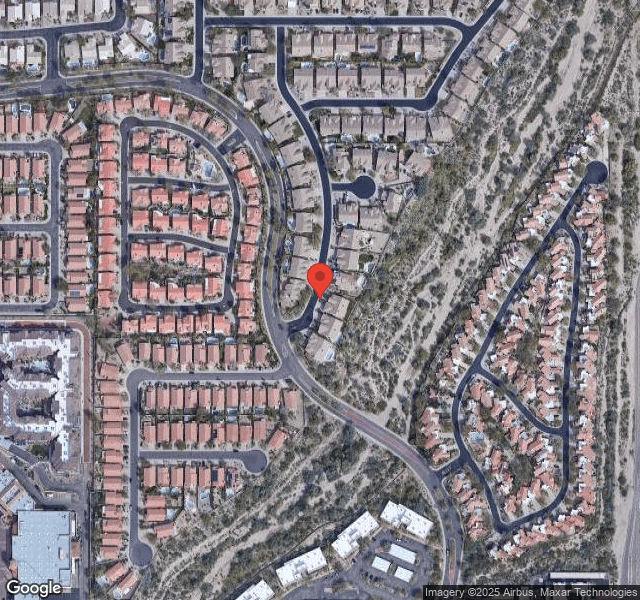
22605 NORTH 74TH STREET, SCOTTSDALE, AZ 85255 (480) 478-6200
For profit - Corporation 24 Beds VI LIVING Data: November 2025
Trust Grade
90/100
#39 of 139 in AZ
Last Inspection: March 2025

Within standard 12-15 month inspection cycle. Federal law requires annual inspections.

Overview

Families considering VI at Silverstone in Scottsdale, Arizona, will find an excellent nursing home with a Trust Grade of A, indicating it is highly recommended and well above average. It ranks #39 out of 139 facilities in Arizona, placing it in the top half, and #30 out of 76 in Maricopa County, suggesting it is one of the better local options. However, the facility is experiencing a worsening trend, with the number of reported issues increasing from 2 in 2023 to 3 in 2025. Staffing is a strong point, with a 5-star rating and a turnover rate of 34%, significantly lower than the state average, ensuring that staff are familiar with residents’ needs. Notably, the facility has no fines on record, indicating compliance with regulations, but it has faced concerns such as failing to sanitize blood pressure equipment properly and not cleaning toilet seat risers, which could pose infection risks. Overall, while there are notable strengths in staffing and compliance, families should be aware of the recent issues that have arisen.

Trust Score
A
90/100
In Arizona
#39/139
Top 28%
Safety Record
Low Risk
No red flags
Inspections
Getting Worse
2 → 3 violations
Staff Stability
○ Average
34% turnover. Near Arizona's 48% average. Typical for the industry.
Penalties
✓ Good
No fines on record. Clean compliance history, better than most Arizona facilities.
Skilled Nurses
✓ Good
Each resident gets 113 minutes of Registered Nurse (RN) attention daily — more than 97% of Arizona nursing homes. RNs are the most trained staff who catch health problems before they become serious.
Violations
✓ Good
Only 5 deficiencies on record. Cleaner than most facilities. Minor issues only.
★★★★★
5.0
Overall Rating
★★★★★
5.0
Staff Levels
★★★★☆
4.0
Care Quality
★★★★☆
4.0
Inspection Score
Stable
2023: 2 issues
2025: 3 issues

The Good

  • 5-Star Staffing Rating · Excellent nurse staffing levels
  • 4-Star Quality Measures · Strong clinical quality outcomes
  • Full Sprinkler Coverage · Fire safety systems throughout facility
  • No fines on record
  • Staff turnover below average (34%)

    14 points below Arizona average of 48%

Facility shows strength in staffing levels, quality measures, fire safety.

The Bad

Staff Turnover: 34%

12pts below Arizona avg (46%)

Typical for the industry

Chain: VI LIVING

Part of a multi-facility chain

Ask about local staffing decisions and management

The Ugly 5 deficiencies on record

Mar 2025 3 deficiencies
CONCERN (D)

Potential for Harm - no one hurt, but risky conditions existed

MDS Data Transmission (Tag F0640)

Could have caused harm · This affected 1 resident

**NOTE- TERMS IN BRACKETS HAVE BEEN EDITED TO PROTECT CONFIDENTIALITY** Based on closed clinical record review, staff interviews, facility documentation and policy review and the RAI (Resident Assessm...

Read full inspector narrative →
**NOTE- TERMS IN BRACKETS HAVE BEEN EDITED TO PROTECT CONFIDENTIALITY** Based on closed clinical record review, staff interviews, facility documentation and policy review and the RAI (Resident Assessment Instrument) manual, the facility failed to ensure discharge MDS assessment was completed for one sampled resident #12. The deficient practice could result in not having resident specific information for payment and quality measures purposes. Findings include: Resident #12 was admitted on [DATE] with diagnoses of aphasia, paroxysmal atrial fibrillation, muscle weakness, lack of coordination and unsteadiness on feet. The nursing note dated November 2, 2024 revealed resident had a primary diagnosis of aphasia with right sided weakness. Per the documentation the resident was able to walk with walker and stand by assist. The social services note dated November 4, 2024 included that the resident's goal was to be discharge to skilled nursing facility in another state. Per the documentation, the resident was alert and oriented X 4 with a BIMS (brief interview for mental status) score of 15/15. The admission/5-day MDS (Minimum Data Set) assessment dated [DATE] included an entry date of November 2, 2024. The assessment was signed as complete on November 15, 2024 by the Director of Nursing (DON/staff #30). Review of the resident assessments screen in the electronic record revealed that the admission/5-day MDS assessment dated [DATE] was accepted. The social service note dated November 20, 2024 revealed that resident requested to discharge to home and back to another state with outpatient therapy on November 21, 2024 and the resident had last covered date of November 20, 2024. The nursing note dated November 20, 2024 revealed that a new order to discharge resident to home on November 21, 2024 with outpatient rehab for therapy. A physician order dated November 21, 2024 included for resident to discharge home on November 21, 2024 to outpatient rehab for therapy; and, may discharge with all medications including narcotics. The nursing note dated November 21, 2024 revealed that the resident was discharged back to another state; and, the signed the consent for medications and discharge summary. An email correspondence addressed to the Ombudsman by the social service manager and dated November 25, 2024 revealed that the Ombudsman was notified of the resident's discharge to home on November 21, 2024. Despite documentation that the resident was discharged on November 21, 2024, the clinical record revealed no evidence that a discharge MDS assessment was completed for resident #12. A review of the facility's resident assessment electronic record screen revealed that the last assessment completed and accepted was the admission/5-day MDS assessment on November 6, 2024; and that, there were no assessments due within the next 100 days. An interview with the DON (staff #30) was conducted on March 13, 2025 at 10:02 a.m. She stated that facility's MDS coordinator/nurse was on leave and not available; and that, while the MDS nurse is out she and/or the corporate clinical reimbursement manager ensure that MDS assessment were completed. In another interview with the DON conducted on March 13, 2024 at 10:39 a.m., the DON stated that she checks the portal for any discharges/transfer on a daily basis. She said that the medical records staff also downloads a report for their discharges and gives it to her; and, the concierge will report to her if there were transfers. She stated that out of the 23 residents at the facility, there were only 5 residents admitted as short-stay. She said that if the resident was short-stay, this meant that residents were in the facility for therapy only; and, weekly IDT (interdisciplinary team) meeting were conducted to discuss the resident's individual status, goals/disease process. The DON stated that the therapy department was the driver for the discharge of residents on short-stay; and, once therapy have a projected discharge for the resident, this is communicated to the nurses on the floor and the social worker who will then ensure that resident was set for discharge. The DON said that there was ample days before the projected discharge date to issue the resident the NOMNOC. She stated that discharge MDS assessment must be completed for residents discharged from the facility. A review of the clinical record was conducted by the DON during the interview. She stated that she could not find in the clinical record that a discharge assessment was completed for resident #12. At approximately 10:45 a.m., the Corporate Director of Clinical Reimbursement (staff #27) joined the interview via the telephone. The Corporate Director of Clinical Reimbursement stated that the resident was discharged on November 21, 2024 and she could not tell the reason why the MDS discharge assessment for resident #12 was not completed. The Corporate Director of Clinical Reimbursement further stated that it should have been completed. In another interview with the Corporate Director of Clinical Reimbursement (staff #27) and the DON (staff #30) conducted on March 13, 2025 at 11:22 a.m., the Corporate Director of Clinical Reimbursement stated that the facility has processes in place to include pulling out a report monthly from iQIES regarding missing assessments; and, reports from their electronic record software. She stated that both the reports from iQIES and their electronic record software did not show that there was missing assessment. The facility policy on MDS revised on March 2021 revealed that the MDS process is completed on residents in the SN (skilled nursing) venue. SN residents have a completed MDS according to regulatory requirements. OBRA required assessments include discharge assessment. The RAI manual included that a RAI (MDS, CAA process, and Utilization Guidelines) must be completed for any resident residing in the facility, including short-term residents. A RAI must be completed for any individual residing more than 14 days on a unit of a facility that is certified as a long-term care facility for participation in the Medicare or Medicaid programs. There are three types of discharges: two are OBRA required-return anticipated and return not anticipated; the third is Medicare required-Part A PPS Discharge. A Discharge assessment is required with all three types of discharges. Section 2.6 provides detailed instructions regarding return anticipated and return not anticipated types, and Section 2.8 provides detailed instructions regarding the Part A PPS Discharge type. Any of the following situations warrant a Discharge assessment, regardless of facility policies regarding opening and closing clinical records and bed holds such as resident is discharged from the facility to a private residence (as opposed to going on an LOA). The RAI also included that discharge assessment-return not anticipated Must be completed when the resident is discharged from the facility and the resident is not expected to return to the facility within 30 days, must be completed within 14 days after the discharge date and must be submitted within 14 days after the MDS completion date.
CONCERN (D)

Potential for Harm - no one hurt, but risky conditions existed

Deficiency F0761 (Tag F0761)

Could have caused harm · This affected 1 resident

Based on observation, staff interview and policy review the facility failed to ensure that medications were discarded according to the standard of practice. The deficient practice could result in medi...

Read full inspector narrative →
Based on observation, staff interview and policy review the facility failed to ensure that medications were discarded according to the standard of practice. The deficient practice could result in medication misappropriation, medications being used by other residents or staff. Findings include: During a medication observation conducted on March 12, 2025 at 8:32 AM with a Registered Nurse (RN/staff #61), the RN was observed to prepare the medications for a resident, which included amlodipine 5mg, acetaminophen 500mg, and Eliquis 2.5 mg tablets. The RN crushed the medications and mixed them with pudding in a medication cup and when the RN attempted to administer the medications, the resident refused. The RN was observed to carry the mediation cup with medications out of the resident's room and dispose of them in a trash can on the medication cart. An interview was conducted with the Director of Nursing (DON/staff #30) on March 12, 2025 at 11:33 AM, who stated that all medications, except for narcotics, should be disposed of in a sharps container. On March 12, 2025 at 01:59 PM an interview was conducted an RN (staff #53), who stated that it is the facility policy to discard any unused/refused medications in a sharps container. She further stated that the risk of discarding medications in a trash can could result in another person/resident taking the medication or giving the medication to another person. Further interview was conducted on March 12, 2025 at 02:40 PM with the DON (staff #30), who stated that her expectation and the facility policy is to discard any unused/refused medications in a sharps container. She also stated that risk could result in another resident taking the medication, would be a biohazard risk. She further stated that it did not meet her expectation that the nurse placed the unused medication in the trash can during the medication observation. A facility policy titled, Medication Treatment/Management Protocol, revealed that Medications are stored/kept in a locked cabinet, medicine cart or storage area at all times, and are accessible only to the staff responsive for administration of medications. Non-controlled substances are destroyed according to state law. Non-Controlled medications that are refused are disposed of in the medication disposal container or bio-hazardous waste sharps container for destruction with other medications being destroyed.
CONCERN (E)

Potential for Harm - no one hurt, but risky conditions existed

Infection Control (Tag F0880)

Could have caused harm · This affected multiple residents

Based on observations, record reviews, staff interviews, and review of facility policy and procedures, the facility failed to ensure a blood pressure cuff and monitor were properly sanitized after eac...

Read full inspector narrative →
Based on observations, record reviews, staff interviews, and review of facility policy and procedures, the facility failed to ensure a blood pressure cuff and monitor were properly sanitized after each resident use. The deficient practice could result in transmission of infection in the facility. Findings include: During a medication administration observation conducted on March 12, 2025 at 7:27 AM a Registered Nurse (RN/staff #57), was observed to perform blood pressure (BP) testing on a resident. After the procedure, the RN was observed to place the blood pressure cuff and monitor on top of the medication cart without cleaning/sanitizing the blood pressure cuff and monitor. As the medication observation continued, at 7:52 AM the RN (staff #57) removed the same BP cuff and monitor from the top of the medication cart and carried it into another resident's room, placing the monitor on the resident's bed and wrapping the cuff on the resident's arm. After the procedure the RN returned the BP cuff and monitor to the top of the medication cart without cleaning/sanitizing them after performing the procedure on the resident. At 8:02 AM the RN (staff #57) was observed to take the same BP cuff/monitor from the top of the medication cart and carry them into a third resident's room and perform another BP procedure on the resident. After the procedure, the RN was observed to carry the BP cuff/monitor out of the resident's room and place them on top of the medication cart without cleaning/sanitizing the BP cuff or monitor. An interview was conducted with the RN (staff #57) on March 12, 2025 at 8:11 AM, who stated that resident care equipment should be sanitized between each resident use with a sanitizing wipe, and left to dry for 2 minutes. The RN also stated that she does not normally sanitize the blood pressure cuff after she uses it, unless the resident is on isolation precautions. She further stated that she was not sure what the facility policy included regarding equipment cleaning. The RN also stated that she did not sanitize the BP cuff between patient use during the medication observation. An interview was conducted with a Registered Nurse (RN/staff #61) at 8:45 AM on March 12, 2025, who stated that she keeps a blood pressure cuff/monitor in her medication cart. She also stated that the blood pressure cuff/monitor would need to be sanitized between each resident use, per the facility policy. She further stated that the cuff/monitor would be sanitized with a sanitizing wipe and left to dry for 2 minutes. An interview was conducted with the Director of Nursing (DON/staff #30) on March 12, 2025 at 11:33 AM, who stated that she expected all multi-use resident equipment to be sanitized between each resident use. Further interview was conducted with the DON (staff #30) on March 12, 2025 at 02:40 PM. The DON stated that she expected all BP cuffs to be cleaned between each resident use. She also stated that all resident equipment, including BP cuffs, should be sanitized using a disinfectant wipe, and then left to dry. She further stated that all of the nurses are educated on equipment use annually at a skills fair. She also relayed that it did not meet her expectations that the nurse did not sanitize the BP cuff between each resident use during the medication observation. The DON stated that risk of not sanitizing patient use equipment, including BP cuffs, could result in nosocomial infection/transmission. Review of a facility policy titled, Equipment Cleaning, revealed that medical equipment used in the care of the resident is cleaned with community approved disinfectant before it is stored or used for another resident. All equipment is cleaned according to manufacturers' guidelines and/or specifications.
Nov 2023 1 deficiency
CONCERN (D) 📢 Someone Reported This

A family member, employee, or ombudsman was alarmed enough to file a formal complaint

Potential for Harm - no one hurt, but risky conditions existed

Free from Abuse/Neglect (Tag F0600)

Could have caused harm · This affected 1 resident

**NOTE- TERMS IN BRACKETS HAVE BEEN EDITED TO PROTECT CONFIDENTIALITY** Based on clinical record review, staff and resident interviews, and observation of current practice the facility failed to ensur...

Read full inspector narrative →
**NOTE- TERMS IN BRACKETS HAVE BEEN EDITED TO PROTECT CONFIDENTIALITY** Based on clinical record review, staff and resident interviews, and observation of current practice the facility failed to ensure resident #1 was free from abuse from an employee. The deficient practice could result in residents experiencing emotional and mental trauma from the abuse. Findings include: Resident #1 was admitted to the facility on [DATE] with diagnoses that included generalized muscle weakness, acute pulmonary edema, and acute respiratory failure with hypoxia. The quarterly MDS (Minimum Data Set) assessment dated [DATE] included a BIMS (Brief Interview for Mental Status) score of 11, indicating the resident was cognitively moderate impaired. The MDS also indicated the resident had no indicators of psychosis, behaviors, rejection of care, or wandering. On November 3, 2023 at 2:44 PM the DON (Director of Nursing/Staff #30) reported an alleged abuse incident to the Arizona Department of Health Services. A review of resident #1's progress notes revealed there was no documentation regarding the alleged incident of a staff member's abuse towards the resident on November 3, 2023. Further review of resident #1's electronic health record also revealed no documentation regarding the alleged incident. An interview was conducted with resident #1 on November 28, 2023 at 8:36 AM. When asked about the alleged incident, the resident stated that a staff person used inappropriate language with him but the staff person has been fired. When asked about the name of the staff person, the resident stated it was staff #52 who was a Registered Nurse at the facility. Resident #1 indicated they currently felt safe and happy at the facility. Interviews were conducted with the following residents on November 28, 2023: Resident #17, Resident #11, and Resident #12. They all stated they currently felt safe in the facility and that staff treated them with respect. An interview was conducted on November 28, 2023 at 10:44 AM with a Registered Nurse (staff #54) who stated they remembered staff #52. Staff #54 indicated that she was not aware of any situations that occurred between staff #52 and any other residents but she was aware of the incident between staff #52 and resident #1. Staff #54 stated that staff #52 had a difficult personality and the situation was a matter of time. She also stated that staff #52 was the type of person to come into work and not give you the time of the day. When asked if resident #1 had exhibited any mood changes as a result of the alleged abuse, staff #54 denied any changes. Staff #54 also confirmed that she participates in Abuse training as a part of her annual training. An interview was conducted on November 28, 2023 at 11:44 AM with a Housekeeper (staff #55) who witnessed the alleged incident. Staff #55 stated they were a few feet outside of resident #1's room and she saw the call light go on. The resident's door was open at the time. Staff indicated they could see staff #52 at the Nurses station down the hallway ignoring the resident's call light. Staff #55 then heard staff #54 on the phone stating why are you hitting the button, why do you keep hitting the button? She then called him (resident #1) an asshole and hung up. Staff #55 observed a Certified Nurse Assistant (CNA/Staff #56) enter resident #1's room shortly after. Staff #55 then observed staff #56 come out of resident #1's room and inform an RNA what had happened. Staff #55 stated she then went to Human Resources to report the incident. When asked if staff #55 receives training on abuse, they stated they recently received the training when they were hired. A review of staff #52's personnel file was conducted on November 28, 2023. It was revealed that staff #52 had taken a course module titled Preventing, Recognizing, and Reporting Abuse on the following dates: June 29, 2020; November 11, 2021; June 4, 2022; and March 28, 2023. Additional Abuse training titled Abuse and Neglect and Abuse, Neglect, and Exploitation were completed on July 21, 2020 and March 28, 2023. An interview was conducted on November 28, 2023 at 12:42 PM with Human Resources (Staff #53). Staff #53 stated there was one disciplinary record in staff #52's file which reveals a written warning along with coaching was provided to staff #53 for unprofessional conduct with their co-workers. Staff #53 indicated they were the person who received the initial report from staff #55 regarding the alleged abuse towards resident #1. Upon hearing the initial report, they directed staff #55 to speak with the Human Resources Director (staff #53). An interview was conducted on November 29, 2023 at 9:01 AM with staff #53 in his office. When asked about his knowledge of the incident, staff #53 indicated the witness to the incident was a housekeeper who was assigned to the care center that day. The witness (staff #55) reported the alleged abuse to him and he immediately went to inform the Assistant Director of Nursing (ADON/Staff #7) which triggered the investigation process. Staff #53 stated all employees receive training on abuse upon hire and then annually thereafter. He indicated he was familiar with staff #52 and they had one disciplinary action on file. He stated that staff #52 did have a history with other employees and did not have a lot of patience with them which was addressed in a counseling plan. An interview was conducted on November 29, 2023 at 9:49 AM with the Director of Nursing (DON/Staff #30). Staff #30 indicated that after completing an internal investigation, staff #52 was terminated on November 6, 2023 due to unprofessional behavior towards a resident. Staff #30 indicated that staff #52 had a corrective action in their personnel file due to conflicts with peers but they had no complaints from other residents in the facility. A review of the facility's policy titled, Abuse/Neglect Prevention Protocol, which was last reviewed/revised December 2022, defined verbal abuse as oral language used in a disparaging or derogatory manner towards residents or families.
Aug 2023 1 deficiency
CONCERN (E)

Potential for Harm - no one hurt, but risky conditions existed

Infection Control (Tag F0880)

Could have caused harm · This affected multiple residents

**NOTE- TERMS IN BRACKETS HAVE BEEN EDITED TO PROTECT CONFIDENTIALITY** Based on observations, staff interviews, and policies and procedures, the facility failed to ensure that infection control stand...

Read full inspector narrative →
**NOTE- TERMS IN BRACKETS HAVE BEEN EDITED TO PROTECT CONFIDENTIALITY** Based on observations, staff interviews, and policies and procedures, the facility failed to ensure that infection control standards were followed by failing to ensure the toilet seat riser available for resident use was cleaned for two residents (#1 and #2); and, failed to ensure the oxygen tubing were properly stored when not in use for two residents (#2 and #3). The deficient practice could result in the spread of infection. Findings include: Regarding resident #1 -Resident #1 was admitted on [DATE] with diagnoses that included cancer, diabetes, and multiple-resistant organisms. Review of the quarterly MDS (minimum data set) assessment dated [DATE] revealed a BIMS (brief interview of mental status) score of 14 indicating the resident had no cognitive impairment. Per the MDS, the resident was frequently incontinent of bowel and bladder and required extensive assistance with toileting and hygiene needs. During an observation conducted on August 2, 2023 at 10:00 a.m., resident #1 had a gray toilet seat riser that was placed over the regular toilet located in her bathroom. The toilet seat riser had multiple dried feces underneath the right arm rest, and underneath the toilet seat. An interview with resident #1 was conducted immediately following the observation. Resident #1 stated that the toilet seat was not cleaned regularly; and, her private caregiver assisted her as needed to use the toilet but cleaning it was not a part of her job. Regarding resident #2 -Resident was admitted on [DATE] with diagnoses of pneumonia, malnutrition, and respiratory failure. The significant change MDS assessment dated [DATE] revealed a BIMS score of 14 indicating resident had no cognitive impairment. Per the MDS, the resident had an indwelling Foley catheter, required extensive assistance with toilet use and personal hygiene and was always incontinent of bowel function. The MDS also included that the resident was receiving oxygen therapy while a resident at the facility. An observation was conducted on August 2, 2023 at 10:13 a.m. Resident #2 was in bed with an oxygen concentrator at the bedside, the oxygen tubing attached on the concentrator, and the nasal cannula was coiled and tucked in on the handle of the oxygen concentrator. There was an emergency oxygen tank attached to a wheelchair located in the resident's bathroom. An oxygen tubing was attached to the emergency oxygen tank and the nasal cannula was hanging on the right arm of the wheelchair. In the resident's bathroom, a gray toilet seat riser was placed on top of a regular toilet. The toilet seat riser had multiple dried feces on the toilet seat, the handle, and the front silver metal bar where the toilet seat was attached. In an interview with resident #2 conducted immediately following the observation, resident #2 stated that he uses the oxygen daily and as needed when in bed or in a wheelchair; and goes to the bathroom with the assistance of the staff. Resident #2 stated he thinks the staff cleans the toilet seat riser after each use but he was not sure. Regarding resident #3 -Resident #3 was admitted on [DATE] with diagnoses of malnutrition and hypertension. The 14-day MDS assessment dated [DATE] revealed a BIMS score of 13 indicating the resident had intact cognition. The assessment included that the resident required extensive assistance with ADLs (activity of daily living); and that, the resident was on oxygen therapy while a resident in the facility. During an observation conducted on August 2, 2023 at 10:06 a.m. the resident was found sitting in a chair near the window. The resident had an oxygen concentrator at the bedside with an oxygen tubing attached. However, the oxygen cannula was lying directly on the bed, away from the resident. Resident #3 stated that she uses oxygen daily and the staff helps her in placing the oxygen in her nose. An interview was conducted on August 2, 2023 at about 2:00 p.m. with a certified nursing assistant (CNA/ staff #21) who stated the CNAs and the housekeeping were responsible for cleaning the toilet seat riser if they see it dirty. She stated the toilet riser should not have dried feces if it was cleaned every day. In an interview with a housekeeper (staff #11) conducted on August 2, 2023 at 2:20 p.m. the housekeeper said that if the resident's toilet riser was not clean and was with feces, the nurses were responsible for cleaning it and were supposed to call the housekeeping to disinfect the toilet riser. During an interview with the director of nursing (DON/ staff #22) conducted on August 2, 2023 at 2:40 p.m., the DON stated it was her expectation that nursing staff should be cleaning the DMEs (durable medical equipment) such as the toilet seat riser when there were visible feces on it. She stated the risk if the DMEs were not cleaned or disinfected included cross contamination and potential infection outbreak. Regarding the oxygen, the DON stated that it was her expectation that the oxygen tubing/nasal cannula is placed in a bag if not in use and changed every week. She stated the risk if oxygen tubing were not placed in the bag, included respiratory infections and MRSA (multiple resistant staphylococcus aureus). Review of the facility policy on Respiratory Therapy-Infection Control, with a revision date of December 2017 included a process to keep oxygen cannula and tubing used as needed in a plastic bag when not in use. The facility policy on Communicable Disease Outbreak Management Protocol, revealed the dedicated or disposable noncritical resident-care equipment is used or if not available, then equipment is cleaned and disinfected according to manufacturer's instructions using an EPA-registered disinfectant for healthcare setting prior to use on another resident.
Understanding Severity Codes (click to expand)
Life-Threatening (Immediate Jeopardy)
J - Isolated K - Pattern L - Widespread
Actual Harm
G - Isolated H - Pattern I - Widespread
Potential for Harm
D - Isolated E - Pattern F - Widespread
No Harm (Minor)
A - Isolated B - Pattern C - Widespread

Questions to Ask on Your Visit

  • "Can I speak with families of current residents?"
  • "What's your RN coverage like on weekends and overnight?"

Our Honest Assessment

Strengths
  • • Grade A (90/100). Above average facility, better than most options in Arizona.
  • • No major safety red flags. No abuse findings, life-threatening violations, or SFF status.
  • • No fines on record. Clean compliance history, better than most Arizona facilities.
  • • Only 5 deficiencies on record. Cleaner than most facilities. Minor issues only.
Concerns
  • • No significant concerns identified. This facility shows no red flags across CMS ratings, staff turnover, or federal penalties.
Bottom line: Generally positive indicators. Standard due diligence and a personal visit recommended.

About This Facility

What is Vi At Silverstone, A Vi And Plaza Companies Commun's CMS Rating?

CMS assigns VI AT SILVERSTONE, A VI AND PLAZA COMPANIES COMMUN an overall rating of 5 out of 5 stars, which is considered much above average nationally. Within Arizona, this rating places the facility higher than 99% of the state's 100 nursing homes. This rating reflects solid performance across the metrics CMS uses to evaluate nursing home quality.

How is Vi At Silverstone, A Vi And Plaza Companies Commun Staffed?

CMS rates VI AT SILVERSTONE, A VI AND PLAZA COMPANIES COMMUN's staffing level at 5 out of 5 stars, which is much above average compared to other nursing homes. Staff turnover is 34%, compared to the Arizona average of 46%. This relatively stable workforce can support continuity of care.

What Have Inspectors Found at Vi At Silverstone, A Vi And Plaza Companies Commun?

State health inspectors documented 5 deficiencies at VI AT SILVERSTONE, A VI AND PLAZA COMPANIES COMMUN during 2023 to 2025. These included: 5 with potential for harm.

Who Owns and Operates Vi At Silverstone, A Vi And Plaza Companies Commun?

VI AT SILVERSTONE, A VI AND PLAZA COMPANIES COMMUN is owned by a for-profit company. For-profit facilities operate as businesses with obligations to shareholders or private owners. The facility is operated by VI LIVING, a chain that manages multiple nursing homes. With 24 certified beds and approximately 21 residents (about 88% occupancy), it is a smaller facility located in SCOTTSDALE, Arizona.

How Does Vi At Silverstone, A Vi And Plaza Companies Commun Compare to Other Arizona Nursing Homes?

Compared to the 100 nursing homes in Arizona, VI AT SILVERSTONE, A VI AND PLAZA COMPANIES COMMUN's overall rating (5 stars) is above the state average of 3.3, staff turnover (34%) is significantly lower than the state average of 46%, and health inspection rating (4 stars) is above the national benchmark.

What Should Families Ask When Visiting Vi At Silverstone, A Vi And Plaza Companies Commun?

Based on this facility's data, families visiting should ask: "Can I visit during a mealtime to observe dining assistance and food quality?" "How do you handle medical emergencies, and what is your hospital transfer rate?" "Can I speak with family members of current residents about their experience?"

Is Vi At Silverstone, A Vi And Plaza Companies Commun Safe?

Based on CMS inspection data, VI AT SILVERSTONE, A VI AND PLAZA COMPANIES COMMUN has a clean safety record: no substantiated abuse findings (meaning no confirmed cases of resident harm), no Immediate Jeopardy citations (the most serious violation level indicating risk of serious injury or death), and is not on the Special Focus Facility watch list (a federal program monitoring the lowest-performing 1% of nursing homes). The facility has a 5-star overall rating and ranks #1 of 100 nursing homes in Arizona. While no facility is perfect, families should still ask about staff-to-resident ratios and recent inspection results during their visit.

Do Nurses at Vi At Silverstone, A Vi And Plaza Companies Commun Stick Around?

VI AT SILVERSTONE, A VI AND PLAZA COMPANIES COMMUN has a staff turnover rate of 34%, which is about average for Arizona nursing homes (state average: 46%). Moderate turnover is common in nursing homes, but families should still ask about staff tenure and how the facility maintains care continuity when employees leave.

Was Vi At Silverstone, A Vi And Plaza Companies Commun Ever Fined?

VI AT SILVERSTONE, A VI AND PLAZA COMPANIES COMMUN has no federal fines on record. CMS issues fines when nursing homes fail to meet care standards or don't correct problems found during inspections. The absence of fines suggests the facility has either maintained compliance or corrected any issues before penalties were assessed. This is a positive indicator, though families should still review recent inspection reports for the full picture.

Is Vi At Silverstone, A Vi And Plaza Companies Commun on Any Federal Watch List?

VI AT SILVERSTONE, A VI AND PLAZA COMPANIES COMMUN is not on any federal watch list. The most significant is the Special Focus Facility (SFF) program, which identifies the bottom 1% of nursing homes nationally based on persistent, serious quality problems. Not being on this list means the facility has avoided the pattern of deficiencies that triggers enhanced federal oversight. This is a positive indicator, though families should still review the facility's inspection history directly.