
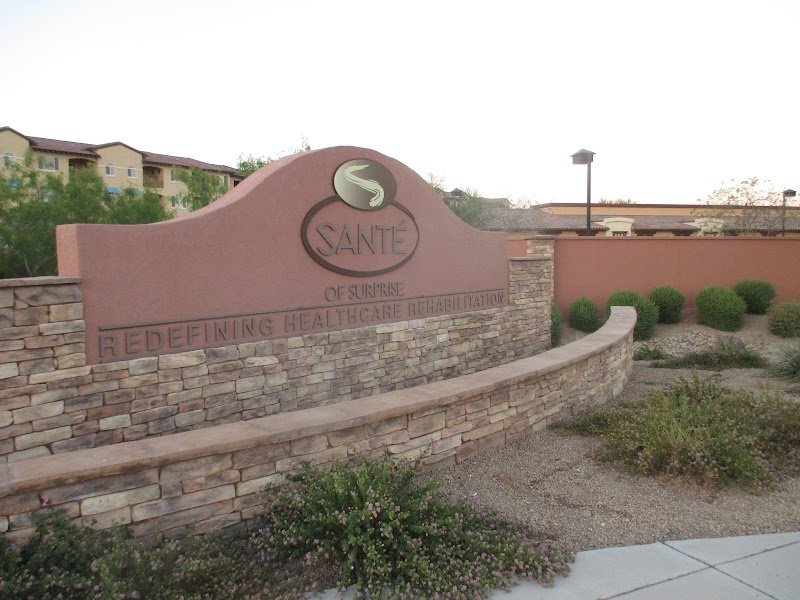
SANTE OF SURPRISE

14775 WEST YORKSHIRE DRIVE, SURPRISE, AZ 85374 (623) 594-5050
For profit - Corporation 70 Beds SANTE Data: November 2025
Trust Grade
80/100
#26 of 139 in AZ
Last Inspection: July 2024

Within standard 12-15 month inspection cycle. Federal law requires annual inspections.

Overview

Sante of Surprise has a Trust Grade of B+, which means it is above average and recommended for families considering their options. It ranks #26 out of 139 facilities in Arizona, placing it in the top half, and #21 out of 76 in Maricopa County, indicating that there are only a few local options that perform better. However, the facility is experiencing a worsening trend, with the number of issues increasing from 1 in 2023 to 7 in 2024. Staffing is somewhat concerning, with a turnover rate of 65%, which is higher than the state average of 48%, but they do have good RN coverage, exceeding that of 86% of state facilities. While Sante of Surprise has no fines recorded, there have been specific issues identified, such as failing to notify residents and families about COVID-19 cases, delays in necessary assessments for resident care, and a lack of adequate personal hygiene services for at least one resident. This highlights a need for improvement, even amid some strengths.

Trust Score
B+
80/100
In Arizona
#26/139
Top 18%
Safety Record
Low Risk
No red flags
Inspections
Getting Worse
1 → 7 violations
Staff Stability
⚠ Watch
65% turnover. Above average. Higher turnover means staff may not know residents' routines.
Penalties
✓ Good
No fines on record. Clean compliance history, better than most Arizona facilities.
Skilled Nurses
✓ Good
Each resident gets 71 minutes of Registered Nurse (RN) attention daily — more than 97% of Arizona nursing homes. RNs are the most trained staff who catch health problems before they become serious.
Violations
⚠ Watch
13 deficiencies on record. Higher than average. Multiple issues found across inspections.
★★★★★
5.0
Overall Rating
★★★★☆
4.0
Staff Levels
★★★★★
5.0
Care Quality
★★★★☆
4.0
Inspection Score
Stable
2023: 1 issues
2024: 7 issues

The Good

  • 4-Star Staffing Rating · Above-average nurse staffing levels
  • 5-Star Quality Measures · Strong clinical quality outcomes
  • Full Sprinkler Coverage · Fire safety systems throughout facility
  • No fines on record

Facility shows strength in staffing levels, quality measures, fire safety.

The Bad

Staff Turnover: 65%

18pts above Arizona avg (46%)

Frequent staff changes - ask about care continuity

Chain: SANTE

Part of a multi-facility chain

Ask about local staffing decisions and management

Staff turnover is elevated (65%)

17 points above Arizona average of 48%

The Ugly 13 deficiencies on record

Jul 2024 7 deficiencies
CONCERN (D)

Potential for Harm - no one hurt, but risky conditions existed

Deficiency F0638 (Tag F0638)

Could have caused harm · This affected 1 resident

**NOTE- TERMS IN BRACKETS HAVE BEEN EDITED TO PROTECT CONFIDENTIALITY** Based on clinical record review, the CMS (Centers for Medicare and Medicaid Services) system for MDS (Minimum Data Set) data, st...

Read full inspector narrative →
**NOTE- TERMS IN BRACKETS HAVE BEEN EDITED TO PROTECT CONFIDENTIALITY** Based on clinical record review, the CMS (Centers for Medicare and Medicaid Services) system for MDS (Minimum Data Set) data, staff interviews, the Resident Assessment Instrument (RAI) 3.0 User's manual, and facility policy, the facility failed to ensure completion of a quarterly MDS assessments for one resident (#43) within the regulatory time frames. The deficient practice could lead to insufficient resident assessment and impact resident care. Findings Include: Resident #43 was admitted to the facility on [DATE] with the diagnosis that included unspecified fracture of shaft of right tibia, subsequent encounter for closed fracture with routine healing. The admission MDS (Minimum Data Set) for resident #43 revealed that it was completed on February 23, 2024. Review of the clinical record revealed that the quarterly assessment was completed on June 24, 2024, transmitted June 28, 2024 and accepted July 1, 2024. The quarterly assessment was due May 18, 2024. In an interview with MDS Coordinator (Staff # 80) conducted on July 3, 2024 at 1:20 p.m., staff #80 stated that all residents should have a quarterly MDS Assessment completed and the resident's condition should be consistent with information in the progress notes. During the interview, a review of the electronic clinical record was conducted with staff #80 who stated that a quarterly MDS assessment for resident #43 was not completed within the regulatory timeframes. The MDS coordinator stated that the quarterly assessment was completed on June 24, 2024, transmitted June 28, 2024 and accepted July 1, 2024. The quarterly assessment was due May 18, 2024. The MDS coordinator stated when an assessment is not completed in a timely manner it may not reflect the current needs of the resident and may be inconsistent with the care needed. An interview was conducted on July 3, 2024 at 1:56 p.m. with the Director of Nursing (DON/Staff #76) who stated the expectation is for the MDS assessments to be completed in a timely manner and be reflective of the resident's care and needs. Staff # 76 stated the risks associated with not completing the MDS assessments in a timely manner could result in the resident not billed correctly. Review of the facility's Policy titled, MDS Completion and Submission Timeframes states our facility will conduct and submit resident assessments in accordance with federal and state submission timeframes.
CONCERN (D)

Potential for Harm - no one hurt, but risky conditions existed

ADL Care (Tag F0677)

Could have caused harm · This affected 1 resident

**NOTE- TERMS IN BRACKETS HAVE BEEN EDITED TO PROTECT CONFIDENTIALITY** Based on resident and staff interviews, clinical record review, and facility policy, the facility failed to ensure one resident ...

Read full inspector narrative →
**NOTE- TERMS IN BRACKETS HAVE BEEN EDITED TO PROTECT CONFIDENTIALITY** Based on resident and staff interviews, clinical record review, and facility policy, the facility failed to ensure one resident (#15) received necessary services to maintain personal hygiene. The deficient practice may cause a decline or decrease in a resident's quality of life. Finding Includes: Resident #15 was admitted to the facility on [DATE] with diagnoses that included cellulitis of right lower limb, osteoporosis, chronic pain, dementia, and anxiety. Review of resident minimum data set (MDS) from June 16, 2024, the Brief Interview for Mental Status (BIMS) score was 15 which indicated resident cognition is intact. For performance of activities of daily living (ADL), the MDS documented that she needed substantial/maximum assistance with personal hygiene. Care plan initiated on June 12, 2024 stated that resident needed help with daily activities and 1-2 staff assistance with bathing, bed mobility, dressing and eating. The ADL shower sheet under task for June 2024 revealed that resident either refused shower or activity did not occur for shower. In an interview with resident #15 on June 30, 2024 at 9:38 a.m., she stated that this is her third week at facility and she did not received any shower. She was scheduled one for July 1, 2024. In an interview with certified nurse assistant (CNA, staff #89) on July 3, 2024 at 08:36 a.m., she stated that CNA and OT (occupational therapist) provides shower to residents. She also stated that she was in resident unit two weeks ago when she offered showered to resident and resident did not had shower because she does not like to get up. She stated she also documented it under 'TASK' in point click care as not applicable. CNA further stated that when resident refuse shower then she does not ask them again. She also stated that showers are not scheduled and residents need to ask. In an interview on July 3, 2024 at 08:45 a.m., CNA #89 went to resident #15 room and asked resident #15 regarding if shower was offered two weeks ago, resident #15 stated that she did not remember a shower was offerfed by CNA #89 or any other staff. In an interview with Director of Nursing (DON, staff #76) on July 3, 2024 at 08:52 a.m., she stated that shower are offer daily by CNA or OT and they do not have fix schedule for shower and if resident refuse shower then they explore alternative options like offering shower on different days, with different staff members and also re-approaching resident or calling family to speak with resident. She also stated that risk associated with not getting showers are poor hygiene, skin breakdown and self-dignity issues. She further stated that resident #15 is cognitively intact with BIMS score of 15 and need assistance with transfer, walking, lower body dressing and toileting. When asked regarding resident #15 not being offered shower in last 3 weeks and charted as refusal under shower sheet, the DON stated it to be concerning. After the interview, the DON went to resident's #15 room and asked regarding shower. The resident told the DON that she had her first shower on July 01, 2024 and she did not remember CNA asking for shower before that and also stated that she never refused shower before. A review of the policy titled Activities of Daily Living (ADLs), Supporting with a revised date of March 2018 states that appropriate care and services will be provided for residents who are unable to carry out ADLs independently, with the consent of the resident and in accordance with the plan of care, including appropriate support and assistance with: hygiene (bathing, dressing, grooming and oral care).
CONCERN (D)

Potential for Harm - no one hurt, but risky conditions existed

Quality of Care (Tag F0684)

Could have caused harm · This affected 1 resident

**NOTE- TERMS IN BRACKETS HAVE BEEN EDITED TO PROTECT CONFIDENTIALITY** Based on clinical record review, staff interviews, and review of policy, the facility failed to ensure one resident (#123) recei...

Read full inspector narrative →
**NOTE- TERMS IN BRACKETS HAVE BEEN EDITED TO PROTECT CONFIDENTIALITY** Based on clinical record review, staff interviews, and review of policy, the facility failed to ensure one resident (#123) received treatment and services in accordance with professional standards of practice regarding positioning. The deficient practice could result in residents not receiving the treatment and care based on their assessed needs. Findings include: Resident #123 was admitted on [DATE] with diagnoses that included unspecified fracture of left acetabulum, subsequent encounter for fracture with routine healing, unspecified injury of head, subsequent encounter, muscle weakness (generalized), other lack of coordination. Review of the MDS (Minimum Data Set) 5 day dated June 21, 2024 revealed a Brief Interview for Mental Status (BIMS) was conducted revealing a BIMS of 8 indicating moderate cognitive impairment. Further review of the MDS revealed resident requires substantial/maximal assistance with oral hygiene and upper dressing, dependent with toileting hygiene, lower body dressing. Resident requires substantial/maximal assistance with roll right and left, sit to stand and dependent to sit to lying. Resident is incontinent of bowel and bladder. Further review of the MDS revealed resident is at risk for developing pressure ulcers/injuries and has one unstageable pressure ulcers due to coverage of wound bed by slough and/or eschar. Review of the Care Plan initiated on June 17, 2024 revealed resident has potential and/or actual alteration in comfort and/or pain related to recent hospitalization, deconditioning. Interventions include observing for factors that impact pain tolerance and offer interventions to eliminate or remove to promote comfort, offer frequent periods of rest. Skin integrity careplan at time of admission included sacrum Pressure Injury, deep Tissue Injury evolved into unstageable. Interventions included to encourage off-loading or frequent shifting of position while in bed or chair. Resident was assessed to have a self-care deficit as evidence by need for assist with activities of daily living (ADL's) and requires 1 - 2 staff participation to re-position and turn in bed and requires 1 - 2 staff participation to complete dressing and bathing. An initial observation was made of resident #123 on June 30, 2024 at 11:05 AM. Resident was observed in bed with both feet dangling off the end of the bed. The head of the bead was elevated to its highest position with two full size pillows behind the resident's head, forcing the head to extend forward. The resident's legs were elevated, bending the knees forcing the resident into a sitting V position with both heels lying on the mattress. The resident was observed with food debris on his beard, food was spilled on his hospital gown and there was a brown substance underneath the resident's fingernails. The resident stated he was uncomfortable and his back hurt. A second observation was made of resident #123 on July 1, 2024 at 08:51 AM. Resident was observed sitting in wheelchair, face unwashed per resident comment. Fingernails continue to have dark brown substance beneath them. Resident was dressed in khaki pants and a multi-colored yellow shirt. Another observation was made of resident #123 on July 1, 2024 at 1:02 PM. Resident was observed sitting in the wheelchair, resident had slide down in the wheelchair and was now sitting on his coccyx. The lunch tray on bedside table. A third observation was made on July 1, 2024 at 3:32 PM. resident observed in same position in wheelchair in his room, not sitting up on buttocks, resident had now slide down and was sitting on his coccyx in the wheelchair. An Observation was made of resident #123 on July 2, 2024 at 8:20 AM. Resident was observed in his room in bed eating breakfast. Head of bed was elevated to its highest position, legs were elevated to the highest position. Resident's lower back, buttocks had slide into the crease of the bed, nail bed has brown debris beneath them. Resident was observed in the same multi-colored yellow shirt from the day prior and it had gathered around the resident's upper chest, leaving his abdomen exposed. Both of the resident's feet observed dangling off end of the bed, back part of the heels lying on the mattress unsupported. Review of the physician orders revealed an order for wound care of the sacrum every twelve (12) hours as needed and every day shift, float bilateral heels while in bed every shift for skin prophylaxis and float bilateral heels while in bed every shift for skin prophylaxis. An interview was conducted with certified nursing assistant (CNA/Staff #36) on July 2, 2024 at 10:13 AM. Staff #36 stated her responsibilities for positioning residents are based on the resident's care plan. Staff #36 stated she was assigned to resident #123 and was responsible for positioning him every two hours and set up his food. Staff #36 stated the resident is incontinent of bowel and bladder, has a fractured pelvis and a wound on his sacrum. She stated on July 1, 2024 the resident sat in his wheelchair from 10am-4pm and would try to reposition him in his wheelchair. She stated the resident did not want to go back to bed and was aware when he was uncomfortable when he would slide down in the chair. She stated she did not inform the nurse of his refusal to rest. An interview was conducted on July 7, 2024 at 10:21 a.m., with a licensed practical nurse (LPN/staff #36). Staff #36 stated resident is incontinent of bowel and bladder and has a low air loss mattress to help with skin break down. Staff #36 stated resident is very compliant with staff requests but resident does complain of pain and discomfort and prefers to be in bed. Staff #36 stated resident is a maximum assist with positioning and mobility. Staff #36 stated resident has not progressed with therapy and will often refuse his showers. Staff #36 stated resident had been referred to hospice, but family declined services. An interview was conducted with Director of Nursing (DON/Staff #76). Staff #76 stated when a resident is positioned with both knees and back in the highest position places a resident with sacral wounds at risk for further skin breakdown and places additional pressure an the sacrum. Staff #76 stated the resident had an order for a low air loss mattress, but being placed in the position with head and knees up does not allow the mattress to work to its full potential. Staff #76 stated the risks of not floating a resident's heels as ordered places the resident at risk for pressure ulcers and further skin breakdown. Staff #76 stated additional interventions should have been used to allow a resident with a sacral wound and incontinent of bowel and bladder to remain in a wheelchair from 10am to 4pm. A review of the facility policy titled Repositioning states the purpose of this procedure is to provide guidelines for the evaluation of resident repositioning needs, to aid in the development on and individualized care plan for repositioning, to promote comfort for all bed-or chair-bound residents and to prevent skin breakdown, promote circulation and provide pressure relief for residents.
CONCERN (D)

Potential for Harm - no one hurt, but risky conditions existed

Accident Prevention (Tag F0689)

Could have caused harm · This affected 1 resident

Based on observation, staff interviews, and policy review, the facility failed to ensure that medications were stored in a secure manner that prevents accident hazards. The deficient practice could re...

Read full inspector narrative →
Based on observation, staff interviews, and policy review, the facility failed to ensure that medications were stored in a secure manner that prevents accident hazards. The deficient practice could result in medication being taken by someone other than the intended recipient. Findings include: On July 2, 2024 around 7:52 AM, surveyors observed two medicine cards left unattended on top of a medicine cart. The surveyors picked up the cards and confirmed there was still medication left in the cards. A Licensed Practical Nurse (LPN / Staff #13) shortly after emerged from a resident room and agreed to assist the surveyors once she finished in the room. The LPN then re-entered the resident room, closing the door behind her. Surveyors waited approximately 2 minutes for the LPN to return. After the LPN returned, she continued with the med pass and did not touch or move the medication cards. An interview was conducted with Staff #13 on July 3, 2024 at 10:20 AM, who stated that medications should always be put away in the cart and the cart should be locked. She denied recalling any medications being left out unattended. She stated that the risks of leaving medication unsecured and unattended is that someone could take them. An interview was conducted with the Director of Nursing (Staff #76) on July 3, 2024 at 09:23AM, who stated that leaving medications unattended on med carts is not the standard of care, and medication should not be left unsupervised on top of the med cart. She elaborated that the behavior is not in accordance with facility policy or her expectations for her staff. The DON stated that potential risks with this behavior is that anyone could grab the medications, including confused patients. The medications could be ingested and staff may not know it. Review of facility policy titled Storage of Medications indicated that compartments (including carts) containing drugs and biologicals shall be locked when not in use, and trays and carts used to transport such items shall not be left unattended if open or otherwise available to others.
CONCERN (D) 📢 Someone Reported This

A family member, employee, or ombudsman was alarmed enough to file a formal complaint

Potential for Harm - no one hurt, but risky conditions existed

Respiratory Care (Tag F0695)

Could have caused harm · This affected 1 resident

**NOTE- TERMS IN BRACKETS HAVE BEEN EDITED TO PROTECT CONFIDENTIALITY** Based on observations, clinical record review, staff interviews, and policy review, the facility failed to ensure one resident (...

Read full inspector narrative →
**NOTE- TERMS IN BRACKETS HAVE BEEN EDITED TO PROTECT CONFIDENTIALITY** Based on observations, clinical record review, staff interviews, and policy review, the facility failed to ensure one resident (#123) had an order for oxygen use. The deficient practice could result in residents receiving oxygen without a physician's order. Findings include: Resident #123 was admitted to the facility on [DATE], with diagnoses that included unspecified fracture of left acetabulum, subsequent encounter for fracture with routine healing, diffuse large b-cell lymphoma, unspecified site, unspecified asthma, uncomplicated, personal history of nicotine dependence. The admission Minimum Data Set (MDS) assessment dated [DATE], revealed a score of 08 on the Brief Interview for Mental Status (BIMS) which suggests the resident had moderate cognitive impairment. The assessment included the resident experienced shortness of breath with exertion, when sitting at rest and when lying flat. The assessment also included the resident did not receive oxygen therapy during the look-back period. During an observation conducted on June 30, 2024 at 11:8 a.m., the resident was observed lying in bed with oxygen on at 3 liters per minute (LPM) via nasal cannula. The nasal cannula was improperly placed and was observed to be placed on the left side of the resident's nostril. An observation was conducted of the resident on July 1, 2024 at 8:51 a.m. The resident was observed in his wheelchair receiving oxygen at 2 LPM via nasal cannula. Another observation was conducted on July 1, 2024 at 1:02 p.m. Resident was seated in wheelchair, lunch meal on bedside table. Nasal Cannula properly placed at 2LPM via oxygen concentrator. An observation was conducted of the resident on July 2, 2024 at 8:20 a.m. The resident was observed in bed. Nasal cannula properly placed at 3LPM via oxygen concentrator. Review of the clinical record revealed no order for oxygen at 2-3 LPM via nasal cannula for resident #123. Review of the Medication and Treatment Administration Record (MAR/TAR) for June and July 2024 revealed no documentation of administration for oxygen therapy nor the care and replacement of the oxygen tubing for resident # 123. Review of Baseline Care Plan dated June 17, 2024 revealed no plan of care for oxygen therapy for resident # 123. In an interview conducted with a licensed practical nurse (LPN/staff # 106) on July 2, 2024 at 2:05 p.m., the LPN stated the resident was receiving 2 LPM of oxygen via nasal cannula. Staff #106 reviewed the physician orders in Point Click Care (PCC) revealing no orders, past or present for resident #123. Staff #106 further reviewed the MAR/TAR for the months of June and July and found no documentation for oxygen therapy or nasal cannula care. Staff #106 refused to discuss further or make any additional comments. During an interview conducted with the Director of Nursing (DON/staff #76) on July 2, 2024 at 2:05 p.m., the DON reviewed PCC for resident #123 and stated there was no order for oxygen use and oxygen is a medication. The DON stated residents receiving oxygen need to have a physician order and staff need to document the resident's vitals and oxygen saturation. She also stated the use of oxygen should have been care planned in the resident record. After reviewing the clinical record, the DON did not comment as to why there was no physician order or documentation for the use of oxygen for resident #123. The DON stated administering oxygen without a physician's order, can cause respiratory complications when it is unknown if the resident is tolerant; which to her would be a safety concern. The DON stated not monitoring the care of the oxygen tubing can cause pneumonia or a bacterial infection. Review of the facility policy titled Oxygen Administration revised October 2010 stated the purpose of the procedure is to provide guidelines for safe oxygen administration. Preparation included to verify that there is a physician's order for this procedure. Review the physician's orders or facility protocol for oxygen administration. Review of the facility policy titled Medication and Treatment Orders revised July 2016, stated orders for medications and treatment will be consistent with principles of safe and effective order writing. The policy stated medications shall be administered only upon the written order of a person duly licensed and authorized to prescribe such medications in this state. Review of the facility policy titled Documentation of Medication Administration stated a medication administration record is used to document all medication administered. It further stated a nurse or certified medication aide (where applicable) documents all medications administered to each resident on the resident's administration record (MAR).
CONCERN (D)

Potential for Harm - no one hurt, but risky conditions existed

Deficiency F0757 (Tag F0757)

Could have caused harm · This affected 1 resident

Based on review of clinical records, facility policy and staff interviews, the facility failed to ensure an order for pain medication was followed as prescribed for one resident (#15).The deficient pr...

Read full inspector narrative →
Based on review of clinical records, facility policy and staff interviews, the facility failed to ensure an order for pain medication was followed as prescribed for one resident (#15).The deficient practice may result in undesirable medication-induced harm. Findings Include: Resident #15 was admitted into the facility on June 12, 2024 with diagnoses that included cellulitis of right lower limb, osteoporosis, chronic pain, dementia, and anxiety. Review of the physician orders revealed the following: - Percocet Oral Tablet 10 -325 milligram (Oxycodone with Acetaminophen/ Narcotic), give 1 tablet by mouth every 6 hours as needed for pain 4-6 and give 2 tablets by mouth every 6 hours as needed for pain 7-10 with start date of June 10, 2024. Resident #15's minimum data set (MDS) assessment from June 16, 2024 included the Brief Interview for Mental Status (BIMS) score of 15 which indicated intact cognition. Review of June 2024 Medication Administration Records (MAR) revealed that Percocet 10-325 milligram 1 tablet was administered 6 times when resident pain level was below 4 and when resident pain level was over 6 which was outside of physician ordered parameters of pain level (4-10). Review of June 2024 MAR revealed that Percocet 10-325 milligram 2 tablets was administered 15 times when resident pain level was below 7 which was outside of physician ordered parameters. An interview was conducted with Licensed Practical Nurse (LPN/ staff # 33) on July 02, 2024 at 11:48 a.m., she stated that medication orders will show the pain scale and if pain is outside of the parameter then will hold medication and notify provider. An interview was conducted with Director of Nursing (DON/ staff # 76) on July 02, 2024 at 1:20 p.m., she stated the risk of administering medication outside of parameter to residents were drowsiness, slowing of reflexes and reaction time and risk of fall. She further stated that she educated nurses regarding pain medication administration. A review of the policy titled Opioid Medication Use with a review date of August 2017 states that patients will only receive opioid medications when necessary to treat specific conditions for which they are indicated and effective. A review of the policy titled Medication and Treatment Orders with a review date of July 2016 states that medications shall be administered only upon the written order of a person duly licensed and authorized to prescribe such medications in this state. A review of the policy titled Documentation of Medication Administration with a review date of November 2022 states that documentation of medication administration includes, as a minimum: reason(s) why a medication was withheld, not administered, or refused (as applicable).
CONCERN (D)

Potential for Harm - no one hurt, but risky conditions existed

Infection Control (Tag F0880)

Could have caused harm · This affected 1 resident

**NOTE- TERMS IN BRACKETS HAVE BEEN EDITED TO PROTECT CONFIDENTIALITY** Based on observation, staff interviews, and policy review, the facility failed to ensure that EBP (Enhanced Barrier Protection) ...

Read full inspector narrative →
**NOTE- TERMS IN BRACKETS HAVE BEEN EDITED TO PROTECT CONFIDENTIALITY** Based on observation, staff interviews, and policy review, the facility failed to ensure that EBP (Enhanced Barrier Protection) was implemented when providing care for one resident (#324). Findings include: Resident #324 was admitted to the facility on [DATE] with diagnoses including metabolic encephalopathy, dysphagia, and unspecified severe protein-calorie malnutrition. Review of the physician orders dated June 28, 2024 revealed that resident #324 received enteral feed of Glucerna 1.5 via G-tube (Gastrostomy tube/ tube that's surgically inserted into the stomach to provide direct access for feeding, hydration, or medicine) every 6 hours. He received water flushes every 6 hours and between medications. According to physician orders dated June 27, 2024, the resident was to be receiving nothing by mouth (NPO) and medications should be crushed and given through his G-tube. On June 30, 2024, surveyors observed that resident #324 had a gastrostomy tube (G-tube) in which he received enteral feeding and medications pushed through the G-tube. Upon initial screening of the resident on June 30, 2024 at 11:29AM, surveyors noted EBP signage on the door of the resident's room. PPE (Personal Protective Equipment) was found inside the room, within the cabinets. Surveyors also visualized that the resident had a G-tube. Surveyors observed the Registered Nurse (RN/Staff #26) assigned to Resident #324 give the resident his medications through his G-tube on July 2, 2024 at 09:52AM. The surveyors observed the nurse applied hand sanitizer and don gloves, but the nurse failed to don a gown prior to administering the ordered medications through the G-tube. Surveyors again observed Staff #26 on July 2, 2024 at 10:10AM. Staff #26 again conducted hand hygiene and donned gloves. The nurse again did not don a gown. The nurse then administered enteral feed to Resident #24 as ordered by the physician. An interview was conducted with the RN (Staff #26) on July 2, 2024 at 01:22PM which revealed that this nurse was not aware of when EBP should be donned. The nurse correctly identified that EBP requires gown and gloves, but she could not verbalize instances in which PPE was required. When asking Staff #26 when she should wear a gown and gloves when caring for Resident #324, she stated that this resident is on EBP because he received breathing treatments, and therefore gown and gloves are required only when he was receiving these treatments. When asked the nurse of other instances EBP was required, she identified residents with Foley catheters, contaminated urine, and c-diff. She failed to identify interacting with a G-tube as a situation requiring EBP. An interview with the Director of Nursing (DON/ Staff #76) was conducted on July 3, 2024 at 09:23AM, who stated EBP should be in place for anyone with an indwelling device. She elaborated that her expectations for EBP with a resident on tube feeds is that the staff uses PPE when handling the G-tube, administering medications, and when doing dressing changes on the G-tube. The DON also confirmed that all staff have been educated on EBP in their in-service training. CMS guidelines on Enhanced Barrier Precautions in Nursing Homes dated March 20, 2024 states that EBP are indicated for residents with wounds and/or indwelling medical devices even if the resident is not known to be infected or colonized with a MDRO. It is also stated that EBP is employed when performing high-contact resident care activities, which includes device care or use. This includes feeding tubes. Review of facility policy titled Enhanced Barrier Precautions lists examples of high-contact resident care activities requiring the use of gown and gloves for EBPs. This list includes device care or use (central line, urinary catheter, feeding tube, tracheostomy/ventilator, etc.). This policy also states that EBPs are indicated for residents with wounds and/or indwelling medical devices regardless of MDRO colonization.
Feb 2023 1 deficiency
CONCERN (D)

Potential for Harm - no one hurt, but risky conditions existed

Deficiency F0761 (Tag F0761)

Could have caused harm · This affected 1 resident

Based on observation, staff interviews, and facility policy, the facility failed to ensure that one medication in the medication storage refrigerator was not expired and one medication in a cart was n...

Read full inspector narrative →
Based on observation, staff interviews, and facility policy, the facility failed to ensure that one medication in the medication storage refrigerator was not expired and one medication in a cart was not expired. Findings include: During a medication storage observation of the medication cart for the 100 hall, on February 22, 2023 at 9:05 AM, an over-the-counter bottle of Iron 325mg (milligrams) was observed with an expiration date on January 31, 2023. During a medication storage room observation conducted on February 22, 2023 at 9:35 AM, one of two storage rooms contained a bottle of Omeprazole Oral Suspension for a discharged resident, in the refrigerator with an expired date of February 16, 2023. An interview was conducted on February 22, 2023 at 9:52 AM with a Licensed Practical Nurse (LPN/Staff #69). The LPN stated that medications in the cart are expired and should be disposed of and not administered to a resident. Medication dates are checked by the nurses and by supervisors periodically for expired medications. An interview was conducted with the Director of Nursing (DON/Staff# 17) on February 24, 2023 at 10:11 AM. The DON stated that medications are checked for expirations and labeling weekly. It is her expectation that expired medications in a cart or in the refrigerator be checked for expiration and proper labeling. Expired medications should be properly disposed of.Based on observation, staff interviews, and facility policy, the facility failed to ensure that one medication in the medication storage refrigerator was not expired and one medication in a cart was not expired. Policy titled Storage of Medications (Revised April 2007) stated that the facility shall not store or use discontinued, outdated, or expired drugs or biologicals.
Jan 2022 5 deficiencies
CONCERN (D)

Potential for Harm - no one hurt, but risky conditions existed

Respiratory Care (Tag F0695)

Could have caused harm · This affected 1 resident

**NOTE- TERMS IN BRACKETS HAVE BEEN EDITED TO PROTECT CONFIDENTIALITY** Based on observations, clinical record review, resident and staff interviews, and review of policy and procedure, the facility f...

Read full inspector narrative →
**NOTE- TERMS IN BRACKETS HAVE BEEN EDITED TO PROTECT CONFIDENTIALITY** Based on observations, clinical record review, resident and staff interviews, and review of policy and procedure, the facility failed to ensure that oxygen orders were clarified for one sampled resident (#446). The deficient practice could result in respiratory needs not being met. Findings include: Resident #446 was admitted to the facility on [DATE] with diagnoses of aftercare following joint replacement surgery, and syncope and collapse. Review of the clinical record revealed physician orders dated 1/19/2022 to administer oxygen at 2 liters per minute via nasal cannula continuous every day and night shift for ineffective gas exchange related to SOB (shortness of breath) home oxygen; and to administer oxygen at 2 liters per minute via nasal cannula as needed (PRN) for ineffective gas exchange related to SOB home oxygen. Review of an admission Evaluation Summary dated 1/19/2022 at 6:30 PM revealed the resident uses oxygen continuously via nasal cannula, experiences SOB or trouble breathing with exertion, and experiences SOB when lying flat. The note included the resident's oxygen level was 98% on room air. The note also included the resident was alerted to person but did not know the current date or current location. A Daily Skilled Nursing Note Summary dated 1/23/2022 at 11:32 AM revealed the resident was alerted to person, place, time, and situation. The note included oxygen was used at 2 liters per minute via nasal cannula and that the resident's oxygen saturation was 97%. A care plan initiated on 1/24/2022 revealed the resident has oxygen therapy related to ineffective gas exchange. The goal was that the resident would have no signs or symptoms of poor oxygen absorption. Interventions included oxygen as ordered. Review of the Treatment Administration Record (TAR) for January 2022 revealed the resident was receiving oxygen continuously on the 12-hour day and 12-hour night shifts from 1/19/2022 to 1/26/2022 with the exception of the night shift on 1/22/2022. Review of the Weights and Vitals Summary revealed the resident was on room air and on oxygen when oxygen saturations were obtained from 1/19/2022 to 1/26/2022, and that no oxygen saturation was below 94%. An observation of the resident was conducted on 1/24/2022 at 9:15 AM. The resident did not have on oxygen. During an observation conducted on 01/25/22 at 09:15 AM, the oxygen cannula was observed lying in the bed next to the resident. The resident stated that she had been on oxygen for a couple of years. During an observation conducted on 01/25/22 at 12:56 PM, the oxygen tubing was observed on the floor out of the resident's reach. Observations were conducted of the resident on 01/26/22 at 08:44 AM and 01/27/22 at 09:53 AM. The resident was observed receiving oxygen via nasal cannula. In an interview conducted with a Licensed Practical Nurse (LPN/staff #196) on 01/25/22 at 02:01 PM, the LPN stated the difference between continuous oxygen and PRN (as needed) oxygen is that continuous means the oxygen is on 24/7 and PRN oxygen is for keeping oxygen saturation above 90%. She stated it is very rare to have a PRN order for oxygen. The LPN stated the continuous oxygen order would supersede the PRN oxygen order. During an interview conducted with a Registered Nurse (RN/staff #164) on 01/25/22 at 3:14 PM, the RN stated continuous means the oxygen is on all the time and PRN means as needed to keep oxygen saturation greater than 91 percent. Staff #164 stated resident #446 is alert and orientated. The RN stated that she checks on the resident regularly and when she does, the resident has the oxygen on. She said sometimes the residents have had oxygen at home and they base it off of that. On 01/27/22 at 11:57 AM, an interview was conducted with the RN Director of Nursing (DON) in training (staff #122). She stated that continuous oxygen would not come off and PRN means the oxygen is used as needed. When asked about the oxygen orders, the DON stated her expectation would be that the oxygen would be in place continuously. Review of the facility's Policy on Oxygen Administration revised October 2010 revealed the purpose is to provide guidelines for safe oxygen administration. Verify that there is a physician's order, review the physician orders or facility protocol for oxygen administration, and review the resident's care plan to assess for any special needs of the resident. The policy included to notify the supervisor if the resident refuses oxygen and to report other information in accordance with facility policy and professional standards of practice. The facility's General Order Writing Principles policy revised September 2017 stated physicians shall provide timely, accurate, and complete orders. Physicians shall write orders using practices that have been identified as reducing the risk of medication errors. The policy also stated physician orders shall be consistent with applicable medical principles.
CONCERN (D)

Potential for Harm - no one hurt, but risky conditions existed

Medication Errors (Tag F0758)

Could have caused harm · This affected 1 resident

**NOTE- TERMS IN BRACKETS HAVE BEEN EDITED TO PROTECT CONFIDENTIALITY** Based on clinical record review, staff interviews, policy and procedures review, and the National Institute of Mental Health and...

Read full inspector narrative →
**NOTE- TERMS IN BRACKETS HAVE BEEN EDITED TO PROTECT CONFIDENTIALITY** Based on clinical record review, staff interviews, policy and procedures review, and the National Institute of Mental Health and the DSM-5 (Diagnostic and Statistical Manual of Mental Disorders - 5th Edition), the facility failed to ensure that there were adequate indications for the use of an antipsychotic medication for one resident (#20). The sample size was 5. The deficient practice could result in residents receiving an unnecessary psychotropic medication. Findings include: Resident #20 was admitted to the facility on [DATE], with diagnoses of Unspecified dementia without behavior disturbance, Altered Mental Status unspecified, and Displaced Intertrochanteric Fracture of the Left Femur subsequent encounter for closed fracture with routine healing. Review of the care plan initiated on January 1, 2022 revealed the resident used an antipsychotic medication related to behavior management, verbal outbursts, and yelling out. The goal was that the resident would remain free of drug related complications. Interventions included to administer medications as orders, monitor/document for side effects and effectiveness, and monitor/record occurrence of target behavior symptoms (specify: pacing, wandering, disrobing, inappropriate response to verbal communications, violence/aggression towards staff/other, etc.) and document per facility protocol. Review of the clinical record revealed physician orders dated January 2, 2022 for Seroquel 25 milligrams (mg) one tablet by mouth two times a day for psychosis as evidenced by verbalized outbursts for 14 days, the physician to reassess in 14 days; and to monitor for the presence or absence of behavioral expressions as evidenced by verbal outbursts at the time of evaluation (Seroquel) every day and night shift for behavior monitoring. A review of the Psychotropic Medication Informed Consent for Seroquel signed January 2, 2022 revealed nothing was marked for the condition(s)/diagnosis for which the Seroquel was prescribed or for the expected benefit(s) from Seroquel. Continued review of the physician orders revealed the order for Seroquel was changed to 25 mg one tablet by mouth two times a day for psychosis as evidenced by verbal outbursts on January 4, 2022. Review of the admission Minimum Data Set assessment dated [DATE] revealed a score of 6 on the Brief Interview for Mental Status which indicated the resident had severely impaired cognition. The assessment included in Section E that the resident did not exhibit any behavioral symptoms or psychosis. The assessment also included the resident received antipsychotic medications. The assessment further revealed the resident did not have a psychiatric/mood disorder diagnosis, i.e. psychotic disorder. Review of the pharmacy consultation report for the period of January 1, 2022 through January 4, 2022, revealed documentation of a review of the resident's Quetiapine Fumarate (Seroquel), which stated the resident should be monitored for involuntary movements including tardive dyskinesia (TD) now and then at least every 6 months or per facility protocol. The rationale for the recommendation was: Early detection of involuntary movements can prevent potentially irreversible TD. There was no recommendation for discontinuing Seroquel due to a lack of an appropriate diagnosis. There was no documentation referencing the order not having an adequate indication for use. Review of the Medication Administration Record dated January 2022 revealed Seroquel was administered to the resident and that the resident had two episodes of verbal outbursts during the day on the January 5, 7, and 8, 2022. Review of the Daily Skilled Nursing Note Summary regarding cognitive/behavioral evaluation dated January 5, 2022 at 9:57 a.m., January 7, 2022 at 2:14 p.m. and January 8, 2022 at 12:33 p.m. revealed no behavioral symptoms were observed that shift. Continued review of the progress notes revealed no documentation that the resident had any psychotic behaviors such as delusions or hallucination. During an interview conducted on January 25, 2022 at 3:08 PM with a Licensed Practical Nurse (LPN/staff #3), she stated that when she is administering medications, she is observing the residents for signs of adverse reactions such as involuntary muscle movements, sedation, increased behaviors, nausea and vomiting, cool clammy skin, pale, sweating to name a few. The LPN further stated that they sometimes give psychotropic medications for residents who are exhibiting behaviors, based on the physician's orders and that she would administer them as directed. During an interview conducted on January 25, 2022 at 3:25 PM with an LPN (staff #197), she stated that when she administers medications, especially psychotropic medications, she observes for over sedation, failure to follow clues and abnormal vital signs. The LPN further stated that she checks to make sure that there is a consent signed and that there is an appropriate reason to give the medication. She additionally stated that medications and diagnoses are usually caught by either the physician or the pharmacist. The LPN stated that prior to administering medications she attempts to provide diversional activities before medicating the resident. During an interview conducted on January 26, 2022 at 9:09 AM with the Director of Nursing (DON/staff #127), she stated that the pharmacy reviews the residents' medications upon admission to the facility, monthly and as needed. She further stated that the expectation is that the pharmacy would pick up on resident medications regarding diagnoses. The DON further stated that the physician should ensure there is a proper diagnosis before ordering medications. Review of the facility's Psychotropic Medication Use policy revised November 28, 2016 revealed The facility should not use psychotropic medications to address behaviors without first determining if there is a medical, physical, functional, psychological, social or environmental cause of the resident's behavior. Psychotropic medications to treat behaviors will be used appropriately to address specific underlying medical or psychiatric causes of behavioral symptoms. All medications used to treat behaviors must have a clinical indication. The policy included that Where Physician/Prescriber orders a psychotropic medication for a resident, Facility should ensure that Physician/Prescriber has conducted a comprehensive assessment of the resident and has documented in the clinical record that the psychopharmacologic medication is necessary. The policy also included that if the Physician/Prescriber orders a psychotropic medication in the absence of a diagnosis or specific behavior listed in the State Operations Manual, the facility should ensure the ordering Physician/Prescriber reviews the medication plan. The National Institute of Mental Health defined psychosis as conditions that affect the mind, where there has been some loss of contact with reality. During a period of psychosis, a person's thoughts and perceptions are disturbed and the individual may have difficulty understanding what is real and what is not. Symptoms of psychosis include delusions (false beliefs) and hallucinations (seeing or hearing things that others do not see or hear). Other symptoms include incoherent or nonsense speech, and behavior that is inappropriate for the situation. The DSM-5 included that psychotic disorder not otherwise specified (PNOS) has been recategorized as unspecified/other schizophrenia spectrum and unspecified/other psychotic disorder. These categories refer to symptoms that are typical of a schizophrenia spectrum or other psychotic disorder diagnosis. Symptoms that may be present include delusions, hallucinations, disorganized speech, grossly disorganized or catatonic behavior and flat affect. .
CONCERN (D)

Potential for Harm - no one hurt, but risky conditions existed

Deficiency F0761 (Tag F0761)

Could have caused harm · This affected 1 resident

**NOTE- TERMS IN BRACKETS HAVE BEEN EDITED TO PROTECT CONFIDENTIALITY** Based on observation, staff interviews, and policy review, the facility failed to ensure that expired medical supplies were not ...

Read full inspector narrative →
**NOTE- TERMS IN BRACKETS HAVE BEEN EDITED TO PROTECT CONFIDENTIALITY** Based on observation, staff interviews, and policy review, the facility failed to ensure that expired medical supplies were not available for resident use. The deficient practice could result in medical products that are less effective due to a decrease in strength being used. Findings include: An observation of the medication storage room was conducted on [DATE] at 10:13 AM with a Licensed Practical Nurse (staff #206). Three [NAME] povidone-iodine swab sticks were observed with an expiration date of [DATE]. An interview was conducted with the Supplies Coordinator (staff #80) on [DATE] at 11:05 AM. Staff #80 stated that she checks for expired items weekly. She stated her method for checking for expired medical supply items is to move the newer items to the front and the older medical items to the back of the storage bins, while simultaneously discarding expired medical supplies. Staff #80 stated she believes the reason for expired swabs being in use with unexpired medical supply items is because staff members may have moved the items around from front to back and may have taken supplies out of order. In an interview conducted with the Director of Nursing (DON/staff #122) on [DATE] at 2:00 PM, the DON stated the expired medical supplies items had been removed and discarded from the medication storage room. Review of the facility's policy Storage of Medication revealed the facility shall not use discontinued, outdated or deteriorated drugs or biologicals. All such drugs shall be returned to the dispensing pharmacy or destroyed.
CONCERN (D)

Potential for Harm - no one hurt, but risky conditions existed

Room Equipment (Tag F0908)

Could have caused harm · This affected 1 resident

**NOTE- TERMS IN BRACKETS HAVE BEEN EDITED TO PROTECT CONFIDENTIALITY** Based on clinical record review, facility documentation, staff interviews, and policy review, the facility failed to ensure pads...

Read full inspector narrative →
**NOTE- TERMS IN BRACKETS HAVE BEEN EDITED TO PROTECT CONFIDENTIALITY** Based on clinical record review, facility documentation, staff interviews, and policy review, the facility failed to ensure pads for the Automatic External Defibrillator (AED) were stocked on the crash cart and available for one resident (#47). The deficient practice could negatively impact a resident's outcome. Findings include: Regarding resident #47 Resident #47 admitted to the facility on [DATE] with diagnoses that included pneumonia due to Coronavirus disease, acute embolism and thrombosis of vein, myocardial infarction, and paroxysmal atrial fibrillation. A physician order dated [DATE] included for full code. Review of the care plan initiated on [DATE] revealed the resident's preference for an advance directive was to be a Full Code. The goal was that staff would perform life saving measures should any life-threatening event occur while in the facility. Interventions included to administer CPR (cardiopulmonary resuscitation) or other life-prolonging measures as ordered by the physician, and may call 911 or paramedics when deemed appropriate and/or as ordered by the physician. Review of a nurse progress note dated [DATE] at 7:50 a.m. revealed resident #47 was found unconscious, CPR was initiated at 7:51 a.m. The note included the charge nurse advised the floor nurse to call 911 and grab the crash cart. The note also included the crash cart was brought to the room and AED was attempted to be applied. The note stated no AED pads were available. The note revealed CPR continued until Emergency Medical Services (EMS) arrived at 8:00 a.m. The note stated EMS took over scene and the resident expired at 8:15 a.m. Regarding AED pads Review of the Presidio and Montecito Crash Cart Inventory checklist from [DATE] -15, 2021 revealed nurses' initials that the checklist was completed and did not include any notes of missing supplies. The Crash Cart Checklist included AED. Review of a purchase order for AED pads submitted on [DATE] stated complete and a delivery date of [DATE]. Review of facility provided information texted to staff included: Sunday, [DATE] (no year designation on text) Alert: AED pads are on shipment delay. If a code blue occurs please perform CPR respirations and call 911. Review of the facility's Performance Improvement Plan (PIP) action plan completed on [DATE]: Responding to a Code Blue/Crash Cart Inventory included the following: -Observation: Recent Code Blue conducted and noted no available AED pads. -Action: Order replacement AED pads; Ensure accurate inventory of crash cart list and prompt notification of DON (Director of Nursing) of discrepancies; Alert nursing staff of Code Blue Response on interim (until pads are received). Review of the facility documentation revealed another purchase order for AED pads submitted on [DATE] that included complete and a delivery date of [DATE]. The PIP evaluation date/results revealed the AED pads were delivered on [DATE], that ensuring accurate inventory of crash cart list was ongoing, and that a message was sent on [DATE] alerting the nursing staff of Code Blue Response on interim until delivery of the AED pads; and that the follow-up evaluation was completed on [DATE]. Review of the Presidio Crash Cart Inventory checklist included that there were no AED pads from [DATE] - 23, 2021. Review of the Crash Cart Inventory Audits revealed audits were conducted on [DATE] (which caught the discrepancy of the checklist for Presidio for [DATE] - 23, 2021), and [DATE], and 17, 2022. An interview was conducted on [DATE] at 1:19 p.m. with a Licensed Practical Nurse/Traveler (LPN/staff #196). She stated that if a resident coded and needed to be resuscitated the facility had a code cart and an AED machine. The LPN stated she would expect the code cart and AED to be ready to go and fully stocked for use at all times. She stated that the AED must be applied in a code situation, if one is available. The LPN stated that if she went to use the AED during a code and no AED pads were present, it would be a huge risk as the AED machine would show if the resident is in a shockable heart rhythm. She stated the charge nurse should know that the AED pads were present and/or where to get pads if needed. An interview was conducted on [DATE] at 3:06 p.m. with a charge nurse (LPN/ staff #160). He stated that there were no pads present for the AED device when he needed to use the machine during a code performed on resident #47. Staff #160 stated that a Code Cart check list was on the crash cart and signed each day. The charge nurse stated that the signature meant that all supplies needed for a code were present, and that the nurse should not have signed if there were no pads present for the AED device. During an observation of the crash cart on the Presidio unit with an LPN (staff #152) on [DATE] at 10:19 a.m., the LPN stated that checks of the cart/AED device were done by the Charge Nurse or the DON. The LPN stated that anytime the lock number on the red security tab changes on the crash cart inventory form, it indicated that the cart/AED device was checked. She stated that missing items from the crash cart are reported to the DON and that staff would be alerted through the electronic record system and on shift electronic communication. An interview was conducted on [DATE] at 10:21 a.m. with a Registered Nurse (RN/staff #203). She stated that on [DATE] resident #47 coded. She stated that when the crash cart arrived the AED could not be used because there were no AED pads available. The RN stated that an AED device may help if staff were able to use it as it could play a major role in CPR if it can restart the resident's heart. The RN stated that the supplies for the AED device should have been on the code cart. An interview was conducted on [DATE] at 11:32 a.m. with the DON (staff #122). She stated that if a resident was found non-responsive and is a full code, the facility had a crash cart. She stated that the crash cart included an AED device, and that there is a list of the items that are on the crash cart. The DON stated that staff would know that all required items were on the cart because the cart is checked every day by the day shift charge nurse. She stated the nurse initials on the checklist means the cart supplies are complete and the cart is locked. The DON stated that after a code, the charge nurse, Assistant Director of Nursing (ADON), or the DON would check the cart and re-stock items as needed. At 12:47 p.m. on [DATE], the interview continued with the DON. She stated that she was aware that there were no AED pads on the cart at the time a resident coded on [DATE]. She stated that it sounded like the staff who checked the cart prior to the code did not follow the protocol when they signed the cart as complete. The DON stated a text had been sent to staff on [DATE] that the AED pads were on order, so AED pads would not have been available from [DATE] - 15, 2021. She stated that the nurse checking the cart should have made a note that there were no AED pads available and reported it to the DON, ADON, or Administrator who would follow up and act. The DON stated the follow up should be immediate for emergency use equipment/supplies. The DON also stated that if the facility was unable to obtain the supplies, the information would be documented in on shift messaging or on the dashboard home page in the electronic record. An interview was conducted on [DATE] at 11:52 a.m. with a facility physician (staff #200). He stated that the AED would be very helpful in a resident code situation if the resident had a cardiac issue/reason for the cardiac arrest. Review of a facility policy for Emergency Procedure-Cardiopulmonary Resuscitation revealed personnel have completed training on the initiation of CPR/Basic Life Support (BLS) in victims of sudden cardiac arrest (SCA). Cardiac arrest is defined as inadequate cardiac contractions resulting in insufficient blood flow throughout the body. Sudden cardiac arrest is a leading cause of death in adults. In potentially reversible situations, early delivery of a shock with a defibrillator (if available) plus CPR within 3-5 minutes of collapse can further increase chances of survival. Review of a facility policy for Automatic External Defibrillator, Use and Care of revealed personnel have completed training on the initiation of CPR and BLS, including defibrillation, for victims of sudden cardiac arrest. The AED will be used (if available) to try to restore normal cardiac rhythm when arrhythmia is strongly suspected. Recognizing the signs and symptoms of arrhythmia (and when to use the AED) is part of the CPR/BLS training. In general, SCA should be suspected if the victim's symptoms appeared very suddenly; he or she is unresponsive; and his or her breathing has stopped. If an individual is found unconscious and SCA is suspected, begin the AED protocol. Under Storing the AED the policy included to replace used accessories, including pads. Under Maintaining the AED the policy included as supply chain permits, keep a spare battery and adhesive pads in the case; check the device and perform maintenance tasks, as directed; document checks, maintenance steps and date performed on maintenance log and store log with the device. Documentation included to complete a Defibrillation Event Report within 24 hours of the event.
CONCERN (E)

Potential for Harm - no one hurt, but risky conditions existed

Deficiency F0885 (Tag F0885)

Could have caused harm · This affected multiple residents

**NOTE- TERMS IN BRACKETS HAVE BEEN EDITED TO PROTECT CONFIDENTIALITY** Based on clinical record review, facility documentation, resident and resident family and staff interviews, and policy review, t...

Read full inspector narrative →
**NOTE- TERMS IN BRACKETS HAVE BEEN EDITED TO PROTECT CONFIDENTIALITY** Based on clinical record review, facility documentation, resident and resident family and staff interviews, and policy review, the facility failed to ensure that residents, including residents #251 and #37, and family/representatives (including resident #348 family) were notified that two residents had tested positive for COVID-19, within the required timeframe. The deficient practice could result in residents and their families/representatives not being aware of new COVID-19 cases in the facility and the actions implemented to reduce the risk of transmission. Findings include: Review of laboratory results dated [DATE] revealed a COVID-19 test result was positive for two residents. Review of facility documentation revealed no evidence that other residents in the facility or their families/representatives had been notified of the new positive COVID-19 case by 5 p.m. the next calendar day following this occurrence. In addition, the facility was unable to provide any documentation that other residents in the facility or their families/representatives were notified of the new positive case of COVID-19. An interview was conducted on January 27, 2022 at 11:46 a.m. with resident #251. Resident #251 stated no one in the facility has ever informed the resident that there is COVID in the building and did not know the facility has COVID. Another resident (#37) interview was conducted on January 27, 2022 at 11:57 a.m. Resident #37 stated no facility staff has told the resident that they have COVID in the facility. The resident stated the resident was informed of COVID in the facility by a family member who received the information from a friend. During an interview conducted with resident #348's family member (contact person for resident #348) via phone on January 27, 2022 at 12:19 p.m., the family member stated that the resident reported that it was announced over a loudspeaker last night or today that there were 7 positive COVID cases in the facility. The family member stated no communication from the facility had been told to the family member regarding COVID in the facility. An interview was conducted on January 26, 2022 at 01:52 p.m. with the Director of Nurses (DON)/Infection Control Preventionist (ICP/staff #122). She stated the facility currently have seven residents who are COVID-19 positive. The ICP stated that when they have a resident who is confirmed positive for COVID-19, an electronic communication called Cliniconex is sent to residents/families/representatives within 24 hours. She said Cliniconex is sent via email, voicemail, and text. The ICP stated the clinical leadership sends the Cliniconex message on the weekend, if there is a COVID-19 positive result. Review of a facility policy titled, Coronavirus Disease (COVID-19) - Reporting Facility Data to Residents and Families, stated residents and families are kept informed of the current COVID-19 situation in the facility. Residents and their representatives and families are notified when there is a single confirmed case of a nursing-home onset COVID-19, or three or more residents or staff with new onset of respiratory symptoms that occur within 72 hours of each other. Notices of the above information are provided to residents, representatives, and families not later than 5 p.m. of the calendar day following the occurrence(s). The policy included notices are distributed through Cliniconex - Automated Notification System through Point Click Care (PCC), email, website postings, via telephone or telephone recordings, and/or in-person communication.
Understanding Severity Codes (click to expand)
Life-Threatening (Immediate Jeopardy)
J - Isolated K - Pattern L - Widespread
Actual Harm
G - Isolated H - Pattern I - Widespread
Potential for Harm
D - Isolated E - Pattern F - Widespread
No Harm (Minor)
A - Isolated B - Pattern C - Widespread

Questions to Ask on Your Visit

  • "Why is there high staff turnover? How do you retain staff?"
  • "Can I speak with families of current residents?"
  • "What's your RN coverage like on weekends and overnight?"

Our Honest Assessment

Strengths
  • • Grade B+ (80/100). Above average facility, better than most options in Arizona.
  • • No major safety red flags. No abuse findings, life-threatening violations, or SFF status.
  • • No fines on record. Clean compliance history, better than most Arizona facilities.
Concerns
  • • 13 deficiencies on record. Higher than average. Multiple issues found across inspections.
  • • 65% turnover. Above average. Higher turnover means staff may not know residents' routines.
Bottom line: Generally positive indicators. Standard due diligence and a personal visit recommended.

About This Facility

What is Sante Of Surprise's CMS Rating?

CMS assigns SANTE OF SURPRISE an overall rating of 5 out of 5 stars, which is considered much above average nationally. Within Arizona, this rating places the facility higher than 99% of the state's 100 nursing homes. This rating reflects solid performance across the metrics CMS uses to evaluate nursing home quality.

How is Sante Of Surprise Staffed?

CMS rates SANTE OF SURPRISE's staffing level at 4 out of 5 stars, which is above average compared to other nursing homes. Staff turnover is 65%, which is 18 percentage points above the Arizona average of 46%. High turnover can affect care consistency as new staff learn residents' individual needs.

What Have Inspectors Found at Sante Of Surprise?

State health inspectors documented 13 deficiencies at SANTE OF SURPRISE during 2022 to 2024. These included: 13 with potential for harm.

Who Owns and Operates Sante Of Surprise?

SANTE OF SURPRISE is owned by a for-profit company. For-profit facilities operate as businesses with obligations to shareholders or private owners. The facility is operated by SANTE, a chain that manages multiple nursing homes. With 70 certified beds and approximately 67 residents (about 96% occupancy), it is a smaller facility located in SURPRISE, Arizona.

How Does Sante Of Surprise Compare to Other Arizona Nursing Homes?

Compared to the 100 nursing homes in Arizona, SANTE OF SURPRISE's overall rating (5 stars) is above the state average of 3.3, staff turnover (65%) is significantly higher than the state average of 46%, and health inspection rating (4 stars) is above the national benchmark.

What Should Families Ask When Visiting Sante Of Surprise?

Based on this facility's data, families visiting should ask: "How do you ensure continuity of care given staff turnover, and what is your staff retention strategy?" "Can I visit during a mealtime to observe dining assistance and food quality?" "How do you handle medical emergencies, and what is your hospital transfer rate?" "Can I speak with family members of current residents about their experience?" These questions are particularly relevant given the facility's high staff turnover rate.

Is Sante Of Surprise Safe?

Based on CMS inspection data, SANTE OF SURPRISE has a clean safety record: no substantiated abuse findings (meaning no confirmed cases of resident harm), no Immediate Jeopardy citations (the most serious violation level indicating risk of serious injury or death), and is not on the Special Focus Facility watch list (a federal program monitoring the lowest-performing 1% of nursing homes). The facility has a 5-star overall rating and ranks #1 of 100 nursing homes in Arizona. While no facility is perfect, families should still ask about staff-to-resident ratios and recent inspection results during their visit.

Do Nurses at Sante Of Surprise Stick Around?

Staff turnover at SANTE OF SURPRISE is high. At 65%, the facility is 18 percentage points above the Arizona average of 46%. High turnover means new staff may not know residents' individual needs, medications, or preferences. It can also be disorienting for residents, especially those with dementia who rely on familiar faces. Families should ask: What is causing the turnover? What retention programs are in place? How do you ensure care continuity during staff transitions?

Was Sante Of Surprise Ever Fined?

SANTE OF SURPRISE has no federal fines on record. CMS issues fines when nursing homes fail to meet care standards or don't correct problems found during inspections. The absence of fines suggests the facility has either maintained compliance or corrected any issues before penalties were assessed. This is a positive indicator, though families should still review recent inspection reports for the full picture.

Is Sante Of Surprise on Any Federal Watch List?

SANTE OF SURPRISE is not on any federal watch list. The most significant is the Special Focus Facility (SFF) program, which identifies the bottom 1% of nursing homes nationally based on persistent, serious quality problems. Not being on this list means the facility has avoided the pattern of deficiencies that triggers enhanced federal oversight. This is a positive indicator, though families should still review the facility's inspection history directly.