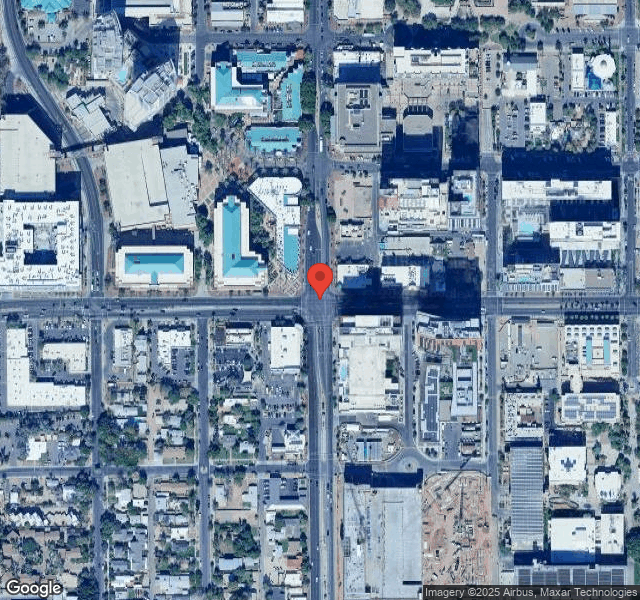

MIRABELLA AT ASU

65 EAST UNIVERSITY AVENUE, TEMPE, AZ 85281 (602) 777-7701
Non profit - Corporation 21 Beds PACIFIC RETIREMENT SERVICES Data: November 2025
Trust Grade
90/100
#17 of 139 in AZ
Last Inspection: November 2023

Within standard 12-15 month inspection cycle. Federal law requires annual inspections.

Overview

Mirabella at ASU in Tempe, Arizona, has received a Trust Grade of A, which indicates it is excellent and highly recommended for families seeking care. It ranks #17 out of 139 nursing facilities in Arizona, placing it in the top half of the state. The facility is improving, with the number of issues decreasing from three in 2022 to just one in 2023. Staffing is a strength, with a rating of 4 out of 5 stars and a remarkable 0% turnover, meaning staff is stable and familiar with the residents. However, there were concerns noted in the inspection findings, including failure to report an allegation of abuse for three residents and inadequate grooming and hygiene services for others, which families should consider when evaluating care options.

Trust Score
A
90/100
In Arizona
#17/139
Top 12%
Safety Record
Low Risk
No red flags
Inspections
Getting Better
3 → 1 violations
Staff Stability
○ Average
Turnover data not reported for this facility.
Penalties
✓ Good
No fines on record. Clean compliance history, better than most Arizona facilities.
Skilled Nurses
✓ Good
Each resident gets 125 minutes of Registered Nurse (RN) attention daily — more than 97% of Arizona nursing homes. RNs are the most trained staff who catch health problems before they become serious.
Violations
✓ Good
Only 5 deficiencies on record. Cleaner than most facilities. Minor issues only.
★★★★★
5.0
Overall Rating
★★★★☆
4.0
Staff Levels
★★★★★
5.0
Care Quality
★★★★★
5.0
Inspection Score
Stable
2022: 3 issues
2023: 1 issues

The Good

  • 4-Star Staffing Rating · Above-average nurse staffing levels
  • 5-Star Quality Measures · Strong clinical quality outcomes
  • Full Sprinkler Coverage · Fire safety systems throughout facility
  • No fines on record

Facility shows strength in staffing levels, quality measures, fire safety.

The Bad

Chain: PACIFIC RETIREMENT SERVICES

Part of a multi-facility chain

Ask about local staffing decisions and management

The Ugly 5 deficiencies on record

Nov 2023 1 deficiency
CONCERN (E) 📢 Someone Reported This

A family member, employee, or ombudsman was alarmed enough to file a formal complaint

Potential for Harm - no one hurt, but risky conditions existed

Report Alleged Abuse (Tag F0609)

Could have caused harm · This affected multiple residents

**NOTE- TERMS IN BRACKETS HAVE BEEN EDITED TO PROTECT CONFIDENTIALITY** Based on clinical record, facility documents, staff interviews and facility policy, the facility failed to ensure that an allega...

Read full inspector narrative →
**NOTE- TERMS IN BRACKETS HAVE BEEN EDITED TO PROTECT CONFIDENTIALITY** Based on clinical record, facility documents, staff interviews and facility policy, the facility failed to ensure that an allegation of abuse was reported to the appropriate state agencies for 3 residents (#65, #164, and #167). Findings include: -Resident #65 was admitted on [DATE] with diagnoses of Aphasia following Cerebral Infarction, and need for assistance with personal care. A Minimum Data Set (MDS) dated [DATE] included that the staff had assessed the resident as severely impaired to make decisions regarding daily life and that the resident had a memory problem An interview was conducted on 11/29/23 at 10:58 a.m. with a social services worker (staff #1) who said that he had walked into the room to ask the resident's daughter some questions and that he saw the resident's private caregiver standing next to her. This staff said that the therapist walking into the room, and that he saw the caregiver lean in and yells in the resident's face that therapy was here and when she did not respond the caregivers' response was to shake her awake. This staff said that the gut reaction was it was forceful and after that another employee asked this staff about the caregiver because she wasn't following some rules. This staff said that it clicked then that this incident was probably abusive and that he asked management to tell him what he needed to do. This staff said that management said that he should report it to Adult Protective Services (APS) and that he did. However, no evidence was provided that this allegation was reported to all the required state agencies and that a thorough investigation was completed. -Resident #164 was admitted on [DATE] with diagnoses of dementia and altered mental status. A care plan included that this resident is a wanderer and that the resident is confused and disoriented An alert note dated 7/3/2023 included that Patient was witnessed entering into another patient room. When this nurse attempted to redirect the patient, he became aggressive and refused to leave the other patient's room. He approached the other patient in bed, and wanted to hold her hand, telling her he wanted to take her to a dance. A second staff member was called into the room to assist with redirecting this patient. After several attempted, he left the room. The patient laying in bed reports being frightened and feels unsafe. However, no evidence was provided that this allegation was reported to all the required state agencies and that a thorough investigation was completed. -Resident #167 was admitted on [DATE] with diagnoses of muscle weakness and cognitive communication deficit. An admission MDS dated [DATE] included that this resident was severely cognitively impaired and required partial to moderate assistance with toileting hygiene and bathing. A progress note dated 10/19/23 included The following report was received by Adult Protective Services Central Intake Unit: [NAME] at ASU- At approx. 12:20 PM, CNA ., ran into my office to get me to come quickly to the room of (resident #167). She stated that the (family member)was in the bathroom yelling at (resident #167). I hurriedly left my office and on my way asked . medical records, to assist me in room. Yelling could be heard down the hallway as I got closer to the room. Upon entering, I opened the door to the bathroom and found the resident on the toilet and (family member) screaming aggressively at her and pointing fingers at her face saying that she needs to get up and walk and that is what you are here for. Advised . to leave the bathroom, however, I had to physically go in between her and (resident #167) and guide (this family member) out of the bathroom. She then came out of the bathroom into the hallway of the room, but continued yelling and flailing arms. Advised (family member) that it was not appropriate to yell at (resident #167) like that, that (she) is doing the best that she can and that she is weak and in pain. (Family member) continued yelling and refused to settle down. She was then told that she would need to leave the facility and go cool off. I escorted her to the South elevators and sent her to leave building. Advised concierge to not allow her back into the building until further notice. However, no evidence was provided that this allegation was reported to all the required state agencies and that a thorough investigation was completed. An interview was conducted on 11/29/23 at 12:08 PM with the Administrator (staff #2) who said that she was unable to find documentation that the resident #65's allegation was reported to the Health Department or other required agencies other than APS or that a 5 day investigation was completed. An interview was conducted on 11/29/23 at 1:30 PM with the Director of Nursing (DON/staff#4) who said that there is no 5-day or initial report for the incident with resident #165 for 7/3 consistent with the other two reports. He states they will add it to QAPI and that his expectation is that things are reported timely per facility policy. A policy titled Abuse and Incident Reporting revised 4/20 revealed that the facility will ensure that all alleged violations involving abuse, neglect, exploitation or mistreatment, are reported appropriately and timely in accordance with Federal and State requirements.
Oct 2022 3 deficiencies
CONCERN (D)

Potential for Harm - no one hurt, but risky conditions existed

Deficiency F0578 (Tag F0578)

Could have caused harm · This affected 1 resident

**NOTE- TERMS IN BRACKETS HAVE BEEN EDITED TO PROTECT CONFIDENTIALITY** Based on clinical record review, staff interviews, and policy review, the facility failed to ensure the advance directive proces...

Read full inspector narrative →
**NOTE- TERMS IN BRACKETS HAVE BEEN EDITED TO PROTECT CONFIDENTIALITY** Based on clinical record review, staff interviews, and policy review, the facility failed to ensure the advance directive process was complete for one resident (#158), by failing to obtain a physician order for DNR (Do Not Resuscitate). The sample size was 3. The deficient practice could lead to medical treatment inconsistent with the resident's wishes. The findings include: Resident #158 was admitted to the facility on [DATE] with diagnoses that included dislocation and pain to the left hip. Upon initial review of the resident's clinical record, including the physician order summary, on October 11, 2022 at 10:09 a.m., the resident did not have a code status/advance directive, nor was there a physician order that reflected the resident's wishes in the event of cardiac or respiratory arrest. On October 12, 2022 at 9:15 a.m. a written request was made for a copy of the resident's (#158) advance directive. On October 12, 2022 at 11:04 a.m. in response to the request for the resident's advance directive, the director of nursing (DON/staff #39) provided a copy of an admission packet and a resident-signed prehospital medical care directive, as part of the life care planning packet. The admission packet revealed the following advance directive communication: the facility, Will honor any advance health care directive that complies with Arizona law. Resident acknowledges that, in his/her admission packet, he/she has received a copy of the Skilled Nursing Center's policy regarding advance health care directives, the policy has been explained to him/her, and he/she understands the policy. Resident also acknowledges he/she has been provided a copy of Arizona's Life Care Planning Packet at admission. According to the DON, the missing physician order for a DNR was identified this morning, October 12, 2022, and a call was made to the physician to receive said order. Based on the prehospital medical care directive, the resident had executed a medical care directive--DNR, upon admission; however, the facility did not communicate the resident's wishes to the resident's physician at the time of admission as evidenced by a lack of physician order for the withdrawal of a life-sustaining treatment in the event of a medical emergency. An interview was conducted on October 12, 2022 at 11:48 a.m. with the DON (staff #39), who stated a physician order should have been in place for an advance directive corresponding to the resident's wishes identified on admission. Furthermore, the DON stated that the prehospital DNR sheet was completed with the resident on admission but the expectation was to have a physician order in place less than 24 hours of admission. Review of the facility's policy, Advance Directive revealed the following procedure, Upon admission to this facility, the Social Services Director or facility designee will meet with the resident. During this meeting, documents will be reviewed in accordance with the resident's rights policy and procedure. The Social Services Director or designee will then ask the resident whether the resident has completed an Advance Directive or Physician Orders for Life Sustaining Treatment (POLST), and if not, whether the resident wishes to formulate an Advance Directive. In addition, the facility will provide, at the time of a resident's admission, written information concerning the resident's rights to make decisions concerning medical care, including the right to refuse medical or surgical treatment, and the right to formulate an advance directive. If the resident or legal representative has executed on or more advance directive (s), these documents are obtained, incorporated and consistently maintained in the same section of the resident health information record readily retrievable by any facility staff, and the facility will communicate the resident's wishes to the resident's direct care staff and physician. Furthermore, the policy included, In the absence of an Advance Directive or POLST or in the absence of a physician order consistent with the resident's wishes, the facility will proceed with full code measures.
CONCERN (D)

Potential for Harm - no one hurt, but risky conditions existed

Transfer Requirements (Tag F0622)

Could have caused harm · This affected 1 resident

**NOTE- TERMS IN BRACKETS HAVE BEEN EDITED TO PROTECT CONFIDENTIALITY** Based on clinical record review, staff interviews, and review of facility policies and procedures, the facility failed to ensure...

Read full inspector narrative →
**NOTE- TERMS IN BRACKETS HAVE BEEN EDITED TO PROTECT CONFIDENTIALITY** Based on clinical record review, staff interviews, and review of facility policies and procedures, the facility failed to ensure one sampled resident's (#8) clinical record included the required information for transfer/discharge. The deficient practice could result in residents not having a safe and effective transition of care. Findings include: Resident #8 was admitted on [DATE] with diagnoses that included ST elevation myocardial infarction, morbid obesity and diabetes mellitus. Review of a nursing Transfer to Hospital note dated August 15, 2022 at 2:41 PM revealed a radiology technician performed an arterial and venous ultrasound on the resident's right upper extremity as ordered. The radiology technician reported to the nurse that the resident's entire right arm was occluded. The note included the physician assistant and medical director were notified and an order was given to transfer the resident to the hospital. The note also revealed the resident agreed to the transfer and the bed hold form was provided. The resident left at 1:10 PM. A review of the front sheet revealed the resident's emergency contact was the resident's spouse. Review of the discharge minimum data set (MDS) assessment dated [DATE] revealed that the resident was sent to the acute care hospital with return not anticipated. A review of the SNF/NF to Hospital Transfer Form dated August 15, 2022 revealed no evidence that medications and the last time the medications were taken were reported to the receiving facility. The form did not include who called in the information or who the information was called to; the places for that documentation did not contain a name. The Report Called in by on the form had Pending hospital admission. The form did include the resident's emergency contact information. Continued review of the clinical record revealed no documentation that all the appropriate information was communicated to the receiving health care institution or that an order was written to send the resident to the hospital. An interview with the director of nursing (DON/staff #39) was conducted on October 12, 2022 at 7:58 AM. The DON stated that if a resident was to be sent to an acute care hospital, the nursing staff would call the resident's physician and obtain an order. The DON stated the order is to be entered into the clinical record. She stated the receiving facility would be contacted and discharge assessments would be completed and printed out and sent with the resident. The DON also stated the information is to be documented in the resident's progress notes to update the record. The DON further stated this does not meet her expectation of an appropriate discharge. She stated she was unsure of her expectation for appropriate documentation for discharge, that she would have to check the facility policy. An interview with the facility administrator (staff #90) was conducted on October 12, 2022 at 8:20 AM. She stated that her expectation is that nursing staff would document any discussion with the resident or representative regarding discharge and transport as well as discharge information. Review of the facility policy Discharge/Transfer (10/22) revealed that when a resident is discharged , the facility must ensure that the transfer or discharge is documented in the resident's medical record and the appropriate information is communicated to the receiving health care provider. Review of the facility policy Transfer (7/22) revealed that an emergency transfer of a resident to a hospital would be under the orders of the resident's physician. The family or responsible party would be notified as soon as possible with the notification documented in the resident's medical record. Review of the facility policy Clinical Record Documentation Guidelines (7/2022) revealed physician orders are entered and implemented in a timely manner.
CONCERN (E)

Potential for Harm - no one hurt, but risky conditions existed

ADL Care (Tag F0677)

Could have caused harm · This affected multiple residents

**NOTE- TERMS IN BRACKETS HAVE BEEN EDITED TO PROTECT CONFIDENTIALITY** Based on observations, clinical record reviews, facility documentation, resident and staff interviews, and policies and procedur...

Read full inspector narrative →
**NOTE- TERMS IN BRACKETS HAVE BEEN EDITED TO PROTECT CONFIDENTIALITY** Based on observations, clinical record reviews, facility documentation, resident and staff interviews, and policies and procedures, the facility failed to ensure that three residents (#108, #159 and #6) received the necessary services to maintain good grooming and personal hygiene. The sample size was 3. The deficient practice could result in poor hygiene for residents. Findings include: -Resident #108 was admitted to the facility on [DATE] with diagnoses that included aphasia, convulsions, fall, and weakness. Review of a Nursing Assistant admission Checklist dated October 3, 2022, revealed the resident preferred showers to be provided at 9:00 AM. The signature lines were blank with no evidence of a nurse signature or date. Upon obtaining a copy of the form, the RN signature had been completed and dated October 3, 2022 by staff #200. Review of a care plan dated October 5, 2022 for functional status with goal personal hygiene revealed the resident required bathing assistance of one-person assistance and preferred a shower during the day. Review of the admission Minimum Data Set (MDS) assessment dated [DATE] revealed a Brief Interview for Mental Status (BIMS) score of 08, which indicated the resident had moderate cognitive impairment. The assessment also revealed the resident required physical help with one-person physical assistance with bathing. Review of the October 1, 2022 through October 12, 2022 bathing task form revealed no evidence that showers had been provided. During an interview with the resident conducted on October 10, 2022 at 10:03 AM, the resident stated he had not had a shower since being admitted . An interview was conducted on October 12, 2022 at 9:23 AM with a Registered Nurse (RN/staff #200), who stated that on admission the CNAs will complete a nursing assistant admission checklist, that reviews the resident's preferences regarding type of shower/bath, time and how often they would like to receive showers/baths. She stated she reviews the form and places that information in the clinical record, in the task section. She further stated that the facility policy is to offer showers three times a week, per the resident preference. The RN also stated that she would expect that all residents on the unit would receive a shower at least one time a week. The RN also stated that it be documented in the medical record, if the resident received the shower or refused. She reviewed the nursing assistant admission checklist and stated that the resident preferred showers at 9:00AM. She reviewed the clinical record and stated that the Task for showers had not been documented/started. The RN stated that she would expect that the resident would have received showers and it would be documented in the shower tasks if it was provided or refused. She reviewed the bath task form in the clinical record and stated that there was no evidence that the resident had received showers/baths or refused. The RN further stated that the resident had been nine days without a shower and that it did not meet the facility policy. Staff #200 stated that the second page of the nursing assistant admission checklist had no signatures but that she signed in the RN signature line and dated it October 3, 2022, after the form had been requested. She stated that this did not follow the facility policy and she would report it to the Director of Nursing (DON). An interview was conducted on October 12, 2022 at 9:50 AM with the DON (staff #39), who stated that residents get to choose how often they would like to receive showers, and that CNAs complete an admission checklist for resident preferences that includes showers. She also stated that the shower preference would then be placed in the clinical record in shower/bath tasks. She further stated that the CNAs would document in the tasks section if the shower/bath was received or refused. The DON stated that she would expect that if a resident had been in the facility for nine days there would be documentation in the shower/bath task form that the resident had received or refused showers/bathing. She stated that occupational therapy often gives showers, and that the CNAs would also document showers in tasks if provided by occupational therapy. She reviewed the medical record and stated that there is no documentation that the resident received or refused showers since admission. An interview was conducted on October 12, 2022 at 9:59 AM with the Director of Therapy (staff #201), who stated that occupational therapy will provide showers for residents. He stated that they would document in the therapy notes that are uploaded into the clinical record. He reviewed the occupational therapy notes in the clinical record and stated that one shower was provided by occupational therapy on October 7, 2022. He also stated that was the only day that occupational therapy provided showers for the resident. He also reviewed physical therapy notes and stated that there was no evidence that the resident received a shower from physical therapy. He said that typically facility staff do not wait for therapy to provide showers because it may not be on the therapy plan for the day. An interview was conducted on October 12, 2022 at 1:05 PM with the Administrator (staff #60), who stated that CNAs review the resident tasks for the shower preferences. She also stated that she expected showers/baths to be provided with a minimum of two days between showers. She also stated that CNAs should document if a shower is provided or refused in the clinical records in the shower/bath task. The Administrator stated that her expectation is for CNAs to document in the clinical record if a shower was provided or refused. Staff #60 reviewed the medical record and stated that there is no documentation of a shower being provided or refused for this resident. Staff #60 stated that the preferences were not placed in the tasks form so the CNAs would not know that a shower was due. She further stated that the resident received one shower in eleven days, and that this is not appropriate. -Resident #159 was admitted on [DATE] with diagnoses that included atherosclerotic heart disease, and aortocoronary bypass graft (CABG). Review of the care plan initiated on October 4, 2022 for functional status with goal personal hygiene revealed tasks that bathing assistance required setup and showers were the preferred bathing method. Review of the shower task form for a look back of 30 days, revealed the resident refused one shower on October 8, 2022, but there was no evidence of other showers performed or refused. The admission MDS assessment dated [DATE] revealed a BIMS score of 15 which indicated intact cognition. Further review of the assessment revealed no evidence of rejection of care, and that personal hygiene required limited assistance with one-person assistance. Review of October 2022 physician orders revealed no evidence that the resident could not be provided showers. An interview was conducted on October 11, 2022 at 3:29 PM with a Certified Nursing Assistant (CNA/staff #14), who stated that residents can have showers daily if they want. She also stated that showers are documented every shift in tasks in the clinical record. The CNA reviewed the shower tasks for the resident and stated that the resident had just received a coronary artery bypass graft (CABG) and that they were waiting for orders to shower the resident. An interview was conducted on October 13, 2022 at 9:59 AM with the DON (staff #39), who reviewed the clinical record for resident #159 and stated the bath/shower form had been marked as not applicable on multiple days, which could indicate that the resident may not have been able to be showered related to the CABG. She further stated that the resident could have been provided a bed bath and that she did not see any evidence in the medical record that the resident received or refused a bed bath. She reviewed the care plan and stated there is evidence the resident requested to be given showers and required setup. The DON also stated there is no evidence in the care plan the resident could not have received a shower. She stated that if the resident could not take a shower it should be care planned as such, and that a bed bath should be documented and be added to the plan of care. The DON stated she saw no evidence of any orders that the resident could not have a shower. She stated that this did not meet the facility expectation and the resident had not received a shower/bed bath or bath since admission, for nine days. -Resident #6 was admitted to the facility on [DATE] with diagnoses that included encephalopathy, urinary tract infection, cognitive communication deficit, and depressive episodes. Review of an admission MDS assessment dated [DATE] which revealed a BIMS score of 12 which indicated intact cognition. Further review of the assessment revealed no rejection of care, and the resident was dependent for showers. Review of the care plan initiated on September 18, 2022 revealed that the resident preferred showers and required one-person assistance on days Tuesday, Thursday, and Saturday. Review of occupational therapy (OT) notes revealed the resident received a shower with OT on the following dates: -September 20, 2022 -September 28, 2022. Review of shower task forms for a 30-day time from September 18, 2022 through October 12, 2022 revealed evidence that showers were provided: -September 22, 2022 -Nine days later there is evidence a shower was provided on October 1, 2022. -No further evidence of a shower/bath being provided or refused from October 2, 2022 through October 13, 2022. An interview was conducted on October 13, 2022 at 9:59 AM with the DON (staff #39), who reviewed the shower task forms in the clinical record and stated that there were eight days between September 22 and October 11, 2022 that there is no evidence that the resident received or refused showers. She further stated that there is no evidence in the clinical record that showers were performed or refused from October 2 through October 13, 2022, six days. The DON stated that this did not meet the facility expectations. The DON reviewed the care plan and stated that there is evidence the resident's preferred bath days were Tuesday, Thursday and Saturday during the day. Review of the facility policy titled, Basic Resident Services, revealed the following basic services will be provided to the resident, including personal assistance and care as needed including bathing. Review of the facility policy titled, Documentation Guidelines, revealed it is the policy of the company to ensure that all documentation is accurate, truthful, timely and in keeping with state and federal guidelines and standards of practice. Documentation provides evidence of results that care was provided.
Aug 2021 1 deficiency
CONCERN (E)

Potential for Harm - no one hurt, but risky conditions existed

Pharmacy Services (Tag F0755)

Could have caused harm · This affected multiple residents

Based on an observation, staff interviews, and review of policy and procedure, the facility failed to ensure a controlled medication was stored and reconciled in accordance with professional standards...

Read full inspector narrative →
Based on an observation, staff interviews, and review of policy and procedure, the facility failed to ensure a controlled medication was stored and reconciled in accordance with professional standards of practice. The deficient practice increases the risk for loss or potential diversion of controlled medications. Findings include: On August 23, 2021 at 10:14 a.m. an observation of a facility medication cart was conducted with a Registered Nurse (RN/staff #19). During the observation, two zip lock plastic bags were identified in the lower drawers of the cart. The two bags contained nine medications in the original prescription containers and five dosette boxes containing approximately 100 or more unidentified pills. Upon further review of the medications, one prescription bottle was noted to contain multiple hydrocodone-acetaminophen (opioid analgesic/non-opioid analgesic combination) 5-325 milligrams (mg) tablets. An interview was conducted on August 23, 2021 at 10:26 a.m. with a RN (staff #19). She stated that the medications in the bags were one of the resident's home medications. She stated that the resident's family had refused to take them back home. She said she was instructed to keep the medications locked in the medication cart until the resident was discharged . She stated that she had not looked at the medications and that she did not know what exactly was in the bags. She stated that the risk of keeping home medications in the medication cart may include that someone might accidentally administer them. She stated that narcotics should be kept in a second locked box, and that they should be counted and accounted for each shift. She stated that she had no idea how many tablets were in the bottle when they were brought in and that she did not know how many tablets remained. On August 24, 2021 at 10:06 a.m., an interview was conducted with the Director of Nursing (DON/staff #61). She stated that controlled medications are locked into a secured narcotic drawer in the medication cart. She stated that they have a bound narcotic book that they get from the pharmacy, and in the front of the book there is a shift-to-shift count. She stated that narcotics will be counted at each shift and if a count is off, an investigation will take place. She stated that there is no specific policy regarding residents bringing medications from home. She stated that if a resident did bring in medications, she would instruct the nurses to secure them in the medication cart until someone could come to take them home. But, she stated she would prefer not to have them in the facility at all if the resident did not need them. She stated that if a resident did need the medication, the physician's order would specifically state that was the case. She stated that concerns related to having a resident's home supply of hydrocodone-acetaminophen kept in a zip lock bag in the medication cart included the lack of counting/or having a verified number of tablets in the container and also that the medication was not locked in the secured narcotic drawer. She stated that she did not know how many tablets were in the container when the resident was admitted because no one really noticed that the hydrocodone was in the bag. She stated that she understood that this was an issue, and that they had since sent the medications home with the resident's family. The facility's controlled drugs policy noted a policy statement that the company will provide control of narcotics, depressants, and stimulant drugs, which meet the requirements of State and Federal narcotic enforcement agencies, to ensure maximum safety for residents and nursing personnel. The procedure included that all controlled substances are kept locked at all times. The policy noted that the controlled substances are kept in a separate drawer or separate cabinet, which is locked at all times, with only the charge nurse or Certified Medication Aide (CMA), having the key. The nurse/CMA is to keep the key in her possession at all times when on duty. Controlled drugs are to be counted each shift by the nurse/CMA going off duty and the nurse/CMA coming on duty. The checklist is to be signed by each nurse/CMA counting the controlled substances.
Understanding Severity Codes (click to expand)
Life-Threatening (Immediate Jeopardy)
J - Isolated K - Pattern L - Widespread
Actual Harm
G - Isolated H - Pattern I - Widespread
Potential for Harm
D - Isolated E - Pattern F - Widespread
No Harm (Minor)
A - Isolated B - Pattern C - Widespread

Questions to Ask on Your Visit

  • "Can I speak with families of current residents?"
  • "What's your RN coverage like on weekends and overnight?"

Our Honest Assessment

Strengths
  • • Grade A (90/100). Above average facility, better than most options in Arizona.
  • • No major safety red flags. No abuse findings, life-threatening violations, or SFF status.
  • • No fines on record. Clean compliance history, better than most Arizona facilities.
  • • Only 5 deficiencies on record. Cleaner than most facilities. Minor issues only.
Concerns
  • • No significant concerns identified. This facility shows no red flags across CMS ratings, staff turnover, or federal penalties.
Bottom line: Generally positive indicators. Standard due diligence and a personal visit recommended.

About This Facility

What is Mirabella At Asu's CMS Rating?

CMS assigns MIRABELLA AT ASU an overall rating of 5 out of 5 stars, which is considered much above average nationally. Within Arizona, this rating places the facility higher than 99% of the state's 100 nursing homes. This rating reflects solid performance across the metrics CMS uses to evaluate nursing home quality.

How is Mirabella At Asu Staffed?

CMS rates MIRABELLA AT ASU's staffing level at 4 out of 5 stars, which is above average compared to other nursing homes.

What Have Inspectors Found at Mirabella At Asu?

State health inspectors documented 5 deficiencies at MIRABELLA AT ASU during 2021 to 2023. These included: 5 with potential for harm.

Who Owns and Operates Mirabella At Asu?

MIRABELLA AT ASU is owned by a non-profit organization. Non-profit facilities reinvest revenue into operations rather than distributing to shareholders. The facility is operated by PACIFIC RETIREMENT SERVICES, a chain that manages multiple nursing homes. With 21 certified beds and approximately 15 residents (about 71% occupancy), it is a smaller facility located in TEMPE, Arizona.

How Does Mirabella At Asu Compare to Other Arizona Nursing Homes?

Compared to the 100 nursing homes in Arizona, MIRABELLA AT ASU's overall rating (5 stars) is above the state average of 3.3 and health inspection rating (5 stars) is much above the national benchmark.

What Should Families Ask When Visiting Mirabella At Asu?

Based on this facility's data, families visiting should ask: "Can I visit during a mealtime to observe dining assistance and food quality?" "How do you handle medical emergencies, and what is your hospital transfer rate?" "Can I speak with family members of current residents about their experience?"

Is Mirabella At Asu Safe?

Based on CMS inspection data, MIRABELLA AT ASU has a clean safety record: no substantiated abuse findings (meaning no confirmed cases of resident harm), no Immediate Jeopardy citations (the most serious violation level indicating risk of serious injury or death), and is not on the Special Focus Facility watch list (a federal program monitoring the lowest-performing 1% of nursing homes). The facility has a 5-star overall rating and ranks #1 of 100 nursing homes in Arizona. While no facility is perfect, families should still ask about staff-to-resident ratios and recent inspection results during their visit.

Do Nurses at Mirabella At Asu Stick Around?

MIRABELLA AT ASU has not reported staff turnover data to CMS. Staff turnover matters because consistent caregivers learn residents' individual needs, medications, and preferences. When staff frequently change, this institutional knowledge is lost. Families should ask the facility directly about their staff retention rates and average employee tenure.

Was Mirabella At Asu Ever Fined?

MIRABELLA AT ASU has no federal fines on record. CMS issues fines when nursing homes fail to meet care standards or don't correct problems found during inspections. The absence of fines suggests the facility has either maintained compliance or corrected any issues before penalties were assessed. This is a positive indicator, though families should still review recent inspection reports for the full picture.

Is Mirabella At Asu on Any Federal Watch List?

MIRABELLA AT ASU is not on any federal watch list. The most significant is the Special Focus Facility (SFF) program, which identifies the bottom 1% of nursing homes nationally based on persistent, serious quality problems. Not being on this list means the facility has avoided the pattern of deficiencies that triggers enhanced federal oversight. This is a positive indicator, though families should still review the facility's inspection history directly.