ASH FLAT HEALTHCARE AND REHABILITATION CENTER
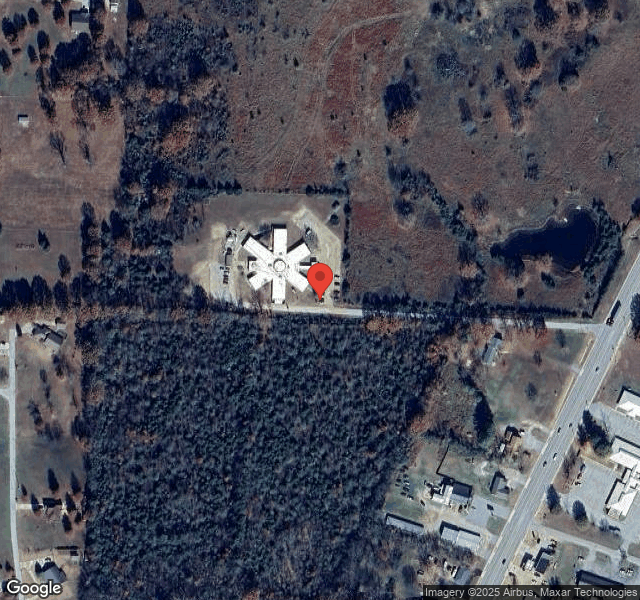
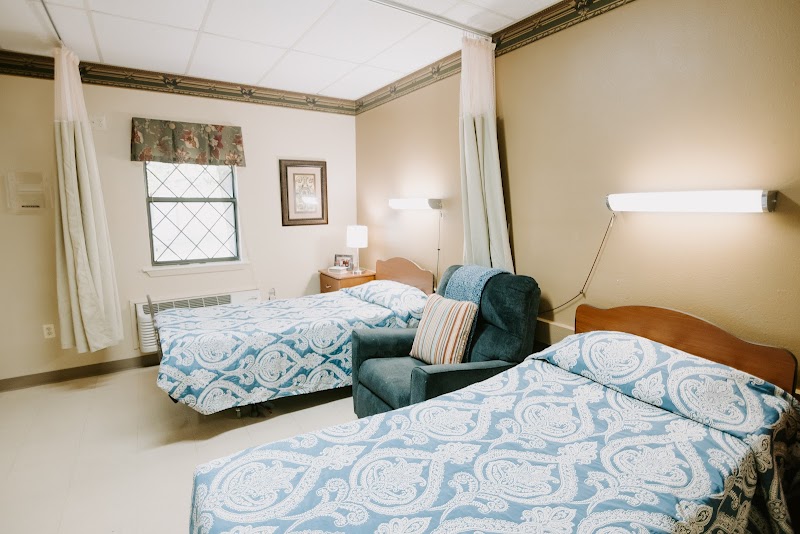
66 OZBIRN LANE, ASH FLAT, AR 72513 (870) 994-2341
For profit - Limited Liability company 105 Beds SOUTHERN ADMINISTRATIVE SERVICES Data: November 2025
Trust Grade
75/100
#51 of 218 in AR
Last Inspection: June 2025

Inspected within the last 6 months. Data reflects current conditions.

Overview

Ash Flat Healthcare and Rehabilitation Center has a Trust Grade of B, indicating it is a good choice among nursing homes. It ranks #51 out of 218 facilities in Arkansas, placing it in the top half of the state, but it is #3 out of 3 in Sharp County, meaning there are two other local options that perform better. The facility is improving its performance, with a significant drop in issues from 11 in 2024 to none in 2025. Staffing is a strong point, earning a rating of 4 out of 5 stars with a turnover rate of 38%, which is lower than the state average of 50%, suggesting a stable workforce that knows the residents well. While there have been no fines, which is encouraging, recent inspections revealed several areas of concern. For instance, expired food items were not removed properly, and staff failed to consistently wear hair coverings in the kitchen, posing potential contamination risks. Additionally, garbage was not properly covered, raising concerns about hygiene and pest control. Overall, while the facility shows strengths in staffing and improvement trends, families should be aware of these ongoing issues.

Trust Score
B
75/100
In Arkansas
#51/218
Top 23%
Safety Record
Low Risk
No red flags
Inspections
Getting Better
11 → 0 violations
Staff Stability
○ Average
38% turnover. Near Arkansas's 48% average. Typical for the industry.
Penalties
✓ Good
No fines on record. Clean compliance history, better than most Arkansas facilities.
Skilled Nurses
○ Average
Each resident gets 31 minutes of Registered Nurse (RN) attention daily — about average for Arkansas. RNs are the most trained staff who monitor for health changes.
Violations
⚠ Watch
18 deficiencies on record. Higher than average. Multiple issues found across inspections.
★★★★☆
4.0
Overall Rating
★★★★☆
4.0
Staff Levels
★★★★☆
4.0
Care Quality
★★★★☆
4.0
Inspection Score
Stable
2024: 11 issues
2025: 0 issues

The Good

  • 4-Star Staffing Rating · Above-average nurse staffing levels
  • 4-Star Quality Measures · Strong clinical quality outcomes
  • Full Sprinkler Coverage · Fire safety systems throughout facility
  • No fines on record
  • Staff turnover below average (38%)

    10 points below Arkansas average of 48%

Facility shows strength in staffing levels, quality measures, fire safety.

The Bad

Staff Turnover: 38%

Near Arkansas avg (46%)

Typical for the industry

Chain: SOUTHERN ADMINISTRATIVE SERVICES

Part of a multi-facility chain

Ask about local staffing decisions and management

The Ugly 18 deficiencies on record

Mar 2024 11 deficiencies
CONCERN (D)

Potential for Harm - no one hurt, but risky conditions existed

Deficiency F0657 (Tag F0657)

Could have caused harm · This affected 1 resident

Based on observations, interviews and policy review, the facility failed to ensure a comprehensive care plan was updated for 1 (Resident #53) of 65 residents who receive a care plan. The findings are:...

Read full inspector narrative →
Based on observations, interviews and policy review, the facility failed to ensure a comprehensive care plan was updated for 1 (Resident #53) of 65 residents who receive a care plan. The findings are: Resident #53 diagnoses showed chronic obstructive pulmonary disease with (acute) exacerbation; acute and chronic respiratory failure, whether with hypoxia or hypercapnia; and pneumonia. The Minimum Data Set (MDS) with an Assessment Reference Date (ARD) of 2/1/24 showed a Brief Interview for Mental Status (BIMS) of 15 (score of 13-15 points indicates cognitive intactness). The resident is on oxygen therapy. The Physician's Order Summary showed the resident may have oxygen at 2 liters per minute (LPM) via nasal cannula (NC) as needed every shift for oxygen therapy with a start date of 1/26/24. On 03/20/24 at 02:48 PM, the Surveyor reviewed Resident #53 ' s care plan which did not show oxygen listed as an intervention. On 03/21/24 at 09:33 AM, the Surveyor asked the MDS Nurse should a care plan include oxygen? The MDS nurse said yes. The Surveyor asked, What is the timeframe to update a care plan? The MDS nurse stated It is 24 hours to update a care plan. The Surveyor asked does the care plan have oxygen listed? The MDS nurse confirmed oxygen was not added to the care plan. On 03/21/24 at 09:37 AM, the Surveyor asked the Director of Nursing (DON) Should oxygen be added to the care plan? The DON stated Yes, it should be. A document provided by Nurse Consultant #1 on 3/20/24 at 2:59 p.m. titled, Accident Hazards Prevention 42 C.F.R. § 483.25 showed, .the resident will be assessed .through the MDS process to individualize care plan interventions . A document provided by Nurse Consultant #1 on 3/21/24 at 10:32 a.m. titled, Comprehensive Care Plans showed, .it is the guidance of this facility to develop and implement a comprehensive person-centered care plan for each resident .the comprehensive care plan will describe, at a minimum, the following .services that are to be furnished to attain or maintain the resident's highest practicable .well-being . A document provided by the Administrator on 3/21/24 at 11:10 a.m. titled, MDS Coordinator Job Description Universal Precautions Apply showed, ' .perform administrative duties such as completing medical forms, reports, evaluations, studies, charting, etc., as necessary .'
CONCERN (E)

Potential for Harm - no one hurt, but risky conditions existed

Resident Rights (Tag F0550)

Could have caused harm · This affected multiple residents

**NOTE- TERMS IN BRACKETS HAVE BEEN EDITED TO PROTECT CONFIDENTIALITY** Based on observations, interviews and policy review, the facility failed to provide meal service to an entire table before servi...

Read full inspector narrative →
**NOTE- TERMS IN BRACKETS HAVE BEEN EDITED TO PROTECT CONFIDENTIALITY** Based on observations, interviews and policy review, the facility failed to provide meal service to an entire table before serving the next table. This failed practice had the potential to affect all 10 residents who dine in the dining room on the 500 Hall. The findings are: On 03/18/24 at 12:36 PM, the Surveyor observed lunch service on the 500 Hall. There were 3 tables and 10 residents in the dining room. The residents did not receive fluids prior to the meal trays being served. The 1st table had 3 residents and the 1st tray was served at 12:36 p.m. On 03/18/24 at 12:39 PM, the Surveyor observed the 1st tray served to the 2nd table (there were 4 Residents at the table). On 03/18/24 at 12:40 PM, the Surveyor observed Certified Nursing Assistant (CNA) #3 take a meal tray from the cart and deliver it to room [ROOM NUMBER]-B. On 03/18/24 at 12:43 PM, the Surveyor observed the 1st tray served to the 3rd table (there were 3 Residents at the 3rd table). On 03/18/24 at 12:44 PM, the Surveyor observed the 2nd tray served to the 3rd table. On 03/18/24 at 12:46 PM, the Surveyor observed the 2nd tray served to the 2nd table. On 03/18/24 at 12:47 PM, the Surveyor observed the 2nd tray was served to the 1st table. On 03/18/24 at 12:48 PM, the Surveyor observed the 3rd tray served to the 2nd table. On 03/18/24 at 12:50 PM, the Surveyor observed the last tray served for the 2nd table. On 03/18/24 at 12:53 PM, the Surveyor observed the last tray served for the 3rd table. On 03/18/24 at 12:55 PM, the Surveyor observed the last tray served to the 1st table. On 03/20/24 at 09:36 AM, the Surveyor asked CNA #3 how should meals be served? CNA #3 said you take them off the tray and set them up. The Surveyor asked when setting up the table, should you set up the entire table first? CNA #3 said that would be ideal since you wouldn't have someone asking where is my tray? The way they set up the carts, the trays are all over the place and I don't have time to look through them to find everyone at the same table. On 03/21/24 at 09:14 AM, the Surveyor asked the Administrator Should trays be provided to all residents at a table at one time? The Administrator yes. On 03/21/24 at 09:44 AM, the Surveyor asked the Director of Nursing (DON) when serving a meal, should the CNAs deliver trays to a table before delivering the next tables meals? The DON confirmed meals should be delivered to one table before delivering to a 2nd table. On 03/21/24 at 12:01 PM, the Administrator confirmed there was not a policy on delivering meal trays. A document provided by Nurse Consultant #1 on 3/20/24 at 2:59 p.m. titled, Resident Rights and Responsibilities 42 C.F.R. § 483.10 showed, .The nursing facility protects and promotes the rights of each Resident/Elder admitted in order to provide a dignified existence .
CONCERN (E)

Potential for Harm - no one hurt, but risky conditions existed

Deficiency F0575 (Tag F0575)

Could have caused harm · This affected multiple residents

Based on observation, interview and policy review the facility failed to post, in a form and manner accessible and understandable to all residents, contact information for pertinent State agencies and...

Read full inspector narrative →
Based on observation, interview and policy review the facility failed to post, in a form and manner accessible and understandable to all residents, contact information for pertinent State agencies and advocacy groups for 13 residents residing in the men's secure unit (500 Hall). The findings are: On 03/18/24 at 11:51 AM, the Surveyor observed no Ombudsman or state contact information was located on the men's secure unit (500 Hall). On 03/18/24 at 12:01 PM, the Surveyor observed a resident, in the dining room on the 500 Hall, answering and making personal phone calls. On 03/19/24 at 12:36 PM, the Surveyor observed no ombudsman or state contact information was located on the 500 Hall. On 03/20/24 at 02:05 PM, the Surveyor observed no ombudsman or state contact information was located on the 500 Hall. On 03/21/24 at 08:53 AM, the Surveyor asked the Administrator, Can you show me where the Ombudsman and State contact information is located on the men's secure unit? The Administrator confirmed there was no posting for the State agencies, and that it was required to be posted. On 03/21/24 at 11:21 AM, the Administrator confirmed there is no posting policy on required postings in the facility. A document provided by the Nurse Consultant on 3/20/24 at 2:59 p.m. titled, Resident Rights and Responsibilities 42 C.F.R. § 483.10 page 51:3 showed, ' .posting of names, addresses and telephone numbers. The names, addresses and telephone numbers of the State Survey and Certification Agency, the State licensure office, the State Ombudsman program .are posted prominently in the nursing facility .'
CONCERN (E)

Potential for Harm - no one hurt, but risky conditions existed

Assessment Accuracy (Tag F0641)

Could have caused harm · This affected multiple residents

Based on observation, interview and record review the facility failed to ensure the Minimum Data Set (MDS) was coded accurately to reflect the resident's dental status for 1 sampled resident (R#36). T...

Read full inspector narrative →
Based on observation, interview and record review the facility failed to ensure the Minimum Data Set (MDS) was coded accurately to reflect the resident's dental status for 1 sampled resident (R#36). This failed practice had the potential to affect 65 residents who required MDS assessments. The findings are: 1. A MDS for Resident #36 dated 12/27/2024 did not document in section L00200 F that there was mouth or facial pain while chewing. 2. On 03/18/24 at 12:23 PM Resident #36 sitting in the dining room and was not eating. Certified Nurse Assistant (CNA) #1 was attempting to assist resident to eat. 3. On 3/19/24 at 08:36 AM Resident #36 in a geriatric chair in the dining room. The Surveyor asked CNA #1 why Resident #36 wasn't eating. CNA#1 stated, He has bad teeth. 4. On 3/20/24 at 12:50 PM, the Surveyor asked the Social Director (SD) if Resident #36 had attended any dental appointments. The SD stated, the Dentist saw Resident in February. The SD looked on the Dental form and stated, the 2nd. 5. On 12/26/2023 at 12:23 PM, a Progress Note documented . {named} continues to have [his/her] own teeth in poor condition. Author: [named] Social Services. 6. On 01/30/2024 at 08:30 AM, a progress note documented, Resident is pocketing food. This nurse messaged [named APRN (Advanced Practice Nurse] to see if we can switch [him/her] back to the pureed diet. Author: Nursing [named agency nurse]. 7. On 01/30/2024 at 02:20 PM, a progress note documented, This SD called and spoke with [family member] concerning {named} Resident #36 needing to be seen by a dentist. [ Family member] stated that [Resident #36] has an account, and [he/she] can use [his/her] money in there to pay for anything [he/she] needs. [He/she] has less than $40.00 in [his/her] account. [Family member] did not want to discuss it any further. Author: {named} Social Services - CNA [e-SIGNED] 8. On 03/20/24 at 02:11 PM the SD stated, I couldn't find any proof, so I called the dentist, and he was never seen. 9. Resident #36's care plan documented . {named} has his/her own natural teeth-good dentition and I am at risk for dental/oral complications related to diabetes, heart disease, and impaired mobility. Date Initiated: 12/03/2019 . Coordinate arrangements for dental care, transportation as needed/as ordered. Date Initiated: 12/03/2019 Dependent on staff with oral/dental care. Date Initiated: 12/03/2019. 10. On 03/20/24 02:46 PM Social services provided a form she had sent to named dental provider for Emergency Request for Dental Care. On this form SD documented, was supposed to be seen on 2/22/24 when you were here due to not eating as well in Feb. Diet changed. 11. On 3/21/24 at 11:02 AM a Minimum Data Set Coordinator (MDSC) was asked to access resident #37's Minimum Data Set (MDS) electronic record. The MDSC stated Resident #36 should have been coded for Mouth or facial pain, discomfort or difficulty with chewing. The Surveyor asked MDSC why it is important for the MDS to be coded correctly. The MDSC stated, it generates the care plan and that lets the staff know what the Resident needs. The MDSC was asked if she assessed the residents prior to capturing the answers on the MDS. The MDSC stated, No I don't watch them eat, I go by what they chart. 12. On 3/21/24 at 11:10 AM the Administrator provided a MDS Coordinator job description The Primary Purpose of your job position is to promote the physical and emotional wellbeing of nursing home facility residents through the use of the resident Assessment Instrument (RAI) .as the key tool in the process of assessing the functional capabilities of residents .
CONCERN (E)

Potential for Harm - no one hurt, but risky conditions existed

ADL Care (Tag F0677)

Could have caused harm · This affected multiple residents

Based on observations, interviews and record review the facility failed to ensure 1 (Resident #53) resident of 14 sample mixed residents received a shave. The findings are: Resident # 53 diagnoses sho...

Read full inspector narrative →
Based on observations, interviews and record review the facility failed to ensure 1 (Resident #53) resident of 14 sample mixed residents received a shave. The findings are: Resident # 53 diagnoses showed a lack of coordination, heart failure, and chronic obstructive pulmonary disease (COPD). The Minimum Data Set (MDS) with an Assessment Reference Date (ARD) of 2/1/24 showed a Brief Interview for Mental Status (BIMS) of 15 (13-15 indicates cognitive intactness). The resident requires substantial/maximum assistance with personal hygiene. The care plan showed the resident has an Activities of Daily Living (ADL) self-care performance deficit related to weakness, COPD, and heart failure. The resident requires extensive assistance with personal hygiene. On 03/18/24 at 11:13 AM, the Surveyor observed Resident #53 facial hair was 1 to 1 1/2 inches long. On 03/19/24 at 09:33 AM, the Surveyor observed the Resident's facial whiskers were 1 to 1 1/2 inch long. On 03/20/24 at 09:51 AM, the Surveyor observed the Resident's facial whiskers were 1 inch long. On 03/18/24 at 11:13 AM, the Surveyor asked the resident how long has it been since your facial hair has been shaved? The Resident stated it's been 2-3 weeks since I've been shaved. The surveyor asked How often are you shaved? The resident stated They usually shave us during our showers. On 03/21/24 at 08:45 AM, the Surveyor asked Certified Nursing Assistant (CNA) #1 when is the resident shaved? CNA #1 said I try to get the resident shaved after a shower. The Surveyor asked, Does the resident ever refuse to be shaved? No, they refuse a lot of things but not to be shaved. The Surveyor asked who is responsible for shaving? CNA #1 said the resident can shave themselves if the products are set up for them, but if they are in the shower then I do it for them. We have another CNA who will go around and shave the men when they need it, but I don't know the last time they shaved them. The Surveyor asked, can you tell me how long the resident's whiskers are? CNA #3 said they are about 1 1/2 inches long. On 03/21/24 at 09:27 AM, the Surveyor asked Licensed Practical Nurse (LPN) #1 Can you describe the resident's whiskers? LPN #1 stated they are long and should be cut, the resident always keeps a moustache. The Surveyor asked who is responsible for shaving the residents? LPN #1 said the CNAs. The Surveyor asked when should they be shaved? CNA #1 said on shower days. On 03/21/24 at 09:48 AM, The Director of Nursing (DON) confirmed the resident is not clean shaven and has long whiskers. On 03/21/24 at 11:19 AM, Nurse Consultant #1 confirmed there was no policy for ADL's or shaving. A document provided by the Nurse Consultant #1 on 3/21/24 at 10:11 a.m. titled, Job Description Nursing Assistant showed, .personal nursing care functions .shave male residents .
CONCERN (E)

Potential for Harm - no one hurt, but risky conditions existed

Deficiency F0688 (Tag F0688)

Could have caused harm · This affected multiple residents

Based on observation and interview, the facility failed to ensure services were provided to minimize the potential for further decline in range of motion (ROM) for 1 (Resident #51) sampled residents w...

Read full inspector narrative →
Based on observation and interview, the facility failed to ensure services were provided to minimize the potential for further decline in range of motion (ROM) for 1 (Resident #51) sampled residents who had limited range of motion. The findings are: 1. Resident #51 had diagnoses of Hemiplegia and Hemiparesis following Cerebral Infarction affecting right dominant side. 2. On 03/18/24 at 11:43 AM, Resident was in the recliner. His right hand was drawn in a a fist like contracture. Resident #51 did not have a hand roll in place. 3. On 03/19/24 at 08:12 AM, there was not a hand roll in place to a contracted right hand. 4. On 03/20/24 at 2:01 PM, Resident #51 did not have a hand roll in right hand. Unable to completely open the hand. 5. On 03/20/24 at 2:59 PM, Resident #51 was in bed and the right hand was closed and could not open it when asked by this surveyor. CNA # 4 was in room and witnessed the inability for the resident to open the right hand. There was no hand roll in the hand. CNA # 4 was asked, what Resident #51 should have in his hand. CNA #4 stated, A hand roll or a brace so he/she won ' t lose the ability to open his hand as much as he/she can. 6. On 3/21/24 at 10:07 AM, the Director of Nurses was asked what should be put in place to prevent further contracting to an extremity. The DON stated, I would have to consult the Care Plan. The DON looked in the electronic record and stated, I'm guessing you are looking for a handroll. The DON was asked to explain why it was important to use a hand roll to prevent further contracting. The DON stated, There are a lot of reasons to need a hand roll other than contractions. It is to maintain function and prevent any skin issues also. The DON was asked to look in the electronic record to see if Resident #51 had received any therapy concerning the right-hand contracture. The DON stated, Yes but can ' t see any recommendations but I just might need further education on my end. 7. On 3/21/24 at 10:29 AM, the Nurse Consultant stated, We do not have a policy on contractures.
CONCERN (E)

Potential for Harm - no one hurt, but risky conditions existed

Accident Prevention (Tag F0689)

Could have caused harm · This affected multiple residents

Based on observations, interviews and policy review, the facility failed to ensure a safe and hazard-free environment was provided. This failed practice had the potential to affect 3 (Residents #10, #...

Read full inspector narrative →
Based on observations, interviews and policy review, the facility failed to ensure a safe and hazard-free environment was provided. This failed practice had the potential to affect 3 (Residents #10, #15, #52) sample mix residents that reside on the 500 Hall. The findings are: On 03/18/24 at 12:24 PM, the Surveyor observed a cabinet with a hinge lock and an unlocked master lock on the 500 Hall dining room. The cabinet contained 2 packs of open cigarettes and a bottle of cleaner. On 03/18/24 at 12:32 PM, while the Surveyor was looking at the contents of the unlocked cabinet, Certified Nursing Assistant (CNA) #3 said those doors are supposed to be locked all the time, but I don't keep them locked because I have to get their cigarettes out every 2 hours. None of my residents bother them anyway. On 03/18/24 at 12:51 PM, the Surveyor observed the Director of Nursing (DON) lock the open cabinet on the 500 Hall. On 03/20/24 at 09:33 AM, the Surveyor asked CNA #3 Should the cabinet with the cigarettes always be locked? CNA #3 said yes, it should be. I have to be in it all the time and I'm so busy, I just leave it unlocked. On 03/21/24 at 08:55 AM, the Surveyor asked the Administrator should the cabinet with the cigarettes be left unlocked? The administrator said no, it should not. On 03/21/24 09:37 at AM, the DON confirmed the cabinet had cigarettes inside and it was unlocked. A document provided by Nurse Consultant #1 on 3/20/24 at 2:59 p.m. titled, Accident Hazards Prevention 42 C.F.R. § 483.25 showed, .the environment will be free from accident hazards as is possible .
CONCERN (E)

Potential for Harm - no one hurt, but risky conditions existed

Respiratory Care (Tag F0695)

Could have caused harm · This affected multiple residents

Based on observations, interviews and record reviews, the facility failed to ensure a physician's order was followed for 1 (Resident #53) of 6 sample mixed residents who have an oxygen order. The find...

Read full inspector narrative →
Based on observations, interviews and record reviews, the facility failed to ensure a physician's order was followed for 1 (Resident #53) of 6 sample mixed residents who have an oxygen order. The findings are: Resident #53 diagnoses showed chronic obstructive pulmonary disease with (acute) exacerbation; acute and chronic respiratory failure, whether with hypoxia or hypercapnia; and pneumonia. The Minimum Data Set (MDS) with an Assessment Reference Date (ARD) of 2/1/24 showed a Brief Interview for Mental Status (BIMS) of 15 (13-15 indicates cognitive intactness). The resident is on oxygen therapy. The Physician's Order Summary showed the resident may have oxygen at 2 liters per minute (LPM) via nasal cannula (NC) as needed every shift for oxygen therapy with a start date of 1/26/24. On 03/18/24 at 11:13 AM, the Surveyor observed the resident receiving oxygen at 3.5L via NC. On 03/19/24 at 09:34 AM, the Surveyor observed the resident receiving oxygen at 3.5L via NC. On 03/20/24 at 09:50 AM, the Surveyor observed the resident receiving oxygen at 3.5L via NC. On 03/19/24 at 09:34 AM, the Surveyor asked Resident # 53 Do you wear your oxygen all the time? The resident stated I wear it all the time when I'm in my room. The Surveyor asked Do you adjust your oxygen concentrator? The resident stated I don't adjust my oxygen; they do all of that for me. On 03/21/24 at 09:27 AM, the Surveyor asked Licensed Practical Nurse (LPN) #1 Can you tell me what the resident's oxygen is set on? LPN #1 said 4L, it is supposed to be on 3L. The Surveyor asked, Can you show me the resident oxygen order? LPN #1 confirmed the residents order is for 2L as needed. On 03/21/24 at 09:38 AM, the Director of Nursing (DON) Confirmed the resident's oxygen concentrator was set at 3.5L and the order was for 2L via NC as needed. A document provided by the Nurse Consultant #1 on 3/21/24 at 10:11 a.m. titled, LPN Job Description showed, .the staff nurse is responsible for .maintaining the highest quality of patient care in compliance with the physician's orders . A document provided by the Nurse Consultant #1 on 3/21/24 at 10:32 a.m. titled, Respiratory Care 42 C.F.R. § 483.25(i) showed, .the facility will ensure residents that need respiratory care .will be provided consistent with professional standards of care .
CONCERN (E)

Potential for Harm - no one hurt, but risky conditions existed

Dental Services (Tag F0791)

Could have caused harm · This affected multiple residents

Based on observation, interview and record review, the facility failed to ensure regular dental services were provided to 1 (Resident #36) of 1 sampled resident with painful teeth. The findings are: O...

Read full inspector narrative →
Based on observation, interview and record review, the facility failed to ensure regular dental services were provided to 1 (Resident #36) of 1 sampled resident with painful teeth. The findings are: On 03/18/24 at 12:23 PM, Resident #36 sitting in the dining room not eating. Certified Nurse Assistant (CNA) #1 was attempting to assist resident to eat. On 3/19/24 at 08:36 AM, Resident #36 was seated in a geriatric chair in the dining room. The Surveyor asked CNA #1 why Resident #36 wasn't eating. CNA#1 stated, He/she has bad teeth and no money. On 3/20/24 at 12:50 PM, the Surveyor asked the Social Director if Resident #36 had attended any dental appointments. The Social Director (SD) stated, the Dentist saw Resident #36 on February 2nd. On 12/26/23 at 12:23 PM, a Progress Note documented . {named} continues to have his own teeth in poor condition. Author: Social Services. On 1/30/24 at 08:30 AM, a progress note documented, Resident is pocketing food. This nurse messaged, APRN (Advanced Practice Registered Nurse) to see if we can switch him back to the pureed diet. Author: Named Nurse. On 1/30/24 at 2:20 PM, a progress note documented, This SD called and spoke with {named} Resident #36 concerning {named family} Resident #36 needing to be seen by a dentist. Named family stated that Resident #36 has an account, and he/she can use his money in there to pay for anything he needs. He/she has less than $40.00 in his account. Named family did not want to discuss it any further. Author: {named} Social Services - CNA [e-SIGNED] On 03/20/24 at 02:11 PM the SD stated, I couldn't find any proof, so I called the dentist, and he/she was never seen. Resident #36 ' s care plan documented . {named} has his/her own natural teeth-good dentition and I am at risk for dental/oral complications related to diabetes, heart disease, and impaired mobility. Date Initiated: 12/03/2019 . Coordinate arrangements for dental care, transportation as needed/as ordered. Date Initiated: 12/03/2019 Dependent on staff with oral/dental care. Date Initiated: 12/03/2019. 03/20/24 02:19 PM, the Director of Nursing (DON) was asked if she was aware Resident #36 wasn't eating much due to tooth pain. The DON stated, I didn't know he/she wasn't seen. The DON was asked if she knew his teeth were hurting to the point of not eating, should she have checked back to make sure there was no more pain. The DON stated, yes. On 03/20/24 02:46 PM, SD provided a form she had sent to dental care provider for Emergency Request for Dental Care. On this form SD documented, Was supposed to be seen on 2/22/24 when you were here due to not eating as well in February Diet changed. On 3/21/24 at 8:43 AM, CNA #2 was in room caring for Resident #51 and was asked to attempt to open Resident #51 ' s mouth. Resident #51 refused to let his mouth be opened. CNA #2 stated, They (his/her teeth) hurt him, he used to eat 100% but here lately can ' t. On 3/21/24 at 10:11 AM, the DON was asked if a Resident does not get regular dental care and has poor conditioned teeth, what could occur. The DON stated, They can have issues with teeth that can cause discomfort and weight loss which in turn could cause further decline. On 3/20/24 at 2:59 PM, the Nurse Consultant provided a policy titled, Resident Rights and Responsibilities documented, the nursing facility . promotes the rights .to provide .services inside and outside the nursing facility . The facility policy titled Dental Services provided by the Nurse Consultant on 3/21/24 at 10:29 AM, documented, .The cooperative agreements shall also provide for routine dental services (to the extent covered under the State plan) and emergency dental services. The facility shall, if necessary, assist residents in making appointments and in arranging for transportation to and from the dental services location.
CONCERN (E)

Potential for Harm - no one hurt, but risky conditions existed

Deficiency F0805 (Tag F0805)

Could have caused harm · This affected multiple residents

Based on observation and interview, the facility failed to ensure that pureed food items were blended to a smooth, lump free consistency to minimize the risk of choking or other complications for thos...

Read full inspector narrative →
Based on observation and interview, the facility failed to ensure that pureed food items were blended to a smooth, lump free consistency to minimize the risk of choking or other complications for those residents who required pureed diets for 1 of 1 meal observed. The failed practice had the potential to affect 5 residents who received pureed diets. The findings are: 1. On 03/20/24 at 08:08 AM, the following pureed food items served to the residents on pureed diets for breakfast were: a. Pureed biscuit and the consistency was lumpy and not smooth. b. Pureed sausage was a gritty and not smooth. There were pieces of sausage still visible in the mixture. c. A high calorie sauce consisted of cinnamon, brown sugar, butter and half and half was a little congealed, and was not properly mixed. 2. On 03/20/24 at 08:21 AM, the surveyor asked Dietary Employee DE #2 to describe the consistency of the pureed food items served to the residents on pureed diets for breakfast. She stated, Pureed biscuit was lumpy. Pureed sausage was gritty and not smooth, and high calorie sauce was gooey. 3. On 03/20/24 at 08:25 AM, the surveyor asked the Dietary Supervisor to describe the consistency of the pureed food items served to the residents for breakfast. She stated, Pureed biscuit was lumpy, pureed should be like pudding. It should have been smooth and needed to be pureed a little longer. Pureed sausage was gritty, it should have been smooth and should have been pureed longer. The high calorie sauce was a little congealed due to not mixing it properly.
CONCERN (F)

Potential for Harm - no one hurt, but risky conditions existed

Food Safety (Tag F0812)

Could have caused harm · This affected most or all residents

Based on observation and interview, the facility failed to ensure food items were dated; expired food items were promptly removed /discarded on or before the expiration or use by dates; failed to foll...

Read full inspector narrative →
Based on observation and interview, the facility failed to ensure food items were dated; expired food items were promptly removed /discarded on or before the expiration or use by dates; failed to follow their policy on food storage dietary staff washed their hands before handling clean equipment or food items to prevent the potential for cross contamination; and failed to ensure leftover food items were used properly to maintain food quality; meat items stored in the refrigerator were covered or sealed to minimize the potential for food borne illness for residents who received meals from 1 of 1 kitchen. These failed practices had the potential to affect 68 residents who received meals from 1 of 1 kitchen. The findings are: 1. On 03/18/24 10:50 AM, during the initial tour of the kitchen with the Dietary Supervisor. The following observations were made in the refrigerator. a. Two boxes of Angel food cake were stored on a shelf. The boxes had a best by date of 8-13- 21. b. A box of spice cake was stored on a shelf. The box had a best by date of 8-5-23. c. A container of regular chicken salad which had an opening date of 3-9-24. d. A plate of salad which was not labeled or dated when stored. e. A container with approximately 3-4 pounds of cooked chicken wings with an open date of 3-7-24. The 2. On 03/19/24 09:47 AM, four of 4 containers of 16-ounce cottage cheese were stored on a shelf in the refrigerator. The containers had an expiration date of 03/17/2024. 3. On 03/19/24 at 09:59, a container of scrambled eggs dated 03/18/24 and a container of sausage patties dated 02/19/24 were on a shelf in the refrigerator. The surveyor asked the Dietary Supervisor what were the leftover scrambled eggs and sausage patties for? She stated, We turn leftover sausage patties into mechanical soft meat and leftover scrambled eggs into pureed eggs for tomorrow breakfast. 4. On 03/19/24 at 10:04 AM, Dietary Employee (DE) #1 picked up a container with clean dishes and placed it on the counter, then without washing her hands, she removed plates and bowls from the container and placed them on the counter to be used in serving dessert to the residents at lunch meal with her fingers inside the plates and bowls. 5. On 03/19/24 at 10:06 AM, (DE) #2 picked up a box of straw and placed it on the cart by the microwave. Without washing her hands, she removed gloves from the box and placed them on her hands contaminating the gloves. She picked up utensils from the tips that went into their mouth, placed them on individual napkins and wrapped them for the residents to be used in eating their lunch meal. Dietary Employee #2 was asked, What should you have done after touching dirty objects and before handling clean equipment? She stated, I should have changed gloves and washed my hands. 6. On 03/19/24 at 10:20 AM, DE #1 picked up trays that contained plates of cake to be served to the residents at lunch meal and placed them on the counter. She picked up a box of gloves from a rack, removed the gloves from the box and placed them on her hands contaminating the gloves. Without washing her hands, she picked up clean plates from the container to be used in portioning dessert to the residents at lunch meal and placed them on the trays with gloved fingers inside the plates. 7. On 03/19/24 at 10:58 AM, DE #1 was wearing gloves on her hands when she took out a carton of whole milk from the milk refrigerator and placed it on the counter. DE #1 did not change gloves and wash her hands after removing a carton of milk from the refrigerator. She picked up slices of cake and placed them into a blender to be pureed and served to the residents who required pureed diets. DE #1 was asked What should you have done after touching dirty objects and before handling clean equipment? She stated, I should have changed gloves and washed my hands. 7. The facility's police titled, Hand Washing and Glove Usage in Food service, provided by the Dietary Supervisor on 03/19/2024 at 01:20 PM under section when Food Handler's must wash their hands documented, .Before starting work any after touching anything else such as dirty equipment . 8. The facility's police titled, Refrigerator and Freezer storage provided by the Administrator on 03/20/2024 at 03:34 PM under cooked meat and meat dishes documented, .Refrigerator 3 to 4 days.
May 2023 1 deficiency
CONCERN (D) 📢 Someone Reported This

A family member, employee, or ombudsman was alarmed enough to file a formal complaint

Potential for Harm - no one hurt, but risky conditions existed

Accident Prevention (Tag F0689)

Could have caused harm · This affected 1 resident

Based on record review, and interview, the facility failed to ensure Resident #1 was observed consuming medications that were mixed in food and failed to ensure Resident #2 did not consume Resident #1...

Read full inspector narrative →
Based on record review, and interview, the facility failed to ensure Resident #1 was observed consuming medications that were mixed in food and failed to ensure Resident #2 did not consume Resident #1's food that contained medication. The failure to supervise the residents had the potential to affect 2 (Residents #1 and #2) residents whose medications were ordered to be crushed and given in their food. The findings are: 1. Resident #1 had diagnoses of Alzheimer's disease with late onset, Unspecified Psychosis not due to Substance or known Physiological Condition, Schizoaffective Disorder Bipolar Type and Psychotic Disorders with Delusions due to known Physiological Condition. The Quarterly Minimum Data Set (MDS) with an Assessment Reference Date (ARD) of 03/09/23 showed the resident scored 9 (8-12 indicates moderately cognitively impaired) on a Brief Interview for Mental Status (BIMS) and was independent with set up help only for eating. a. The Care Plan initiated on 12/02/22 showed, refuses medications at times. Refuses care from staff, showering, to change clothes and is forgetful related to dementia. b. The Physicians Orders dated 12/02/22 showed, may crush and administer all meds [medications] concurrently unless clinically contraindicated. This applies to crushed meds given orally or per tube . c. A Physicians Order dated 3/16/23 showed, Depakote Sprinkles Oral Capsule Delayed Release 125 MG [milligrams] (Divalproex Sodium) give 250 MG by mouth two times a day for mood stability related to Schizoaffective Disorder, Bipolar Type, Sprinkle on food . d. A Physicians Order dated 3/24/23 showed, Crestor Tablet 10 MG (Rosuvastatin Calcium) Give 1 tablet by mouth one time a day for Elevated Cholesterol . 2. Resident #2 had diagnoses of Other Encephalopathy, Alcoholic Cirrhosis of the Liver with Ascites, and Thrombocytopenia. The Quarterly MDS with an ARD of 02/17/23 showed the resident scored 11 (8-12 indicates moderately cognitively impaired) on a BIMS and required supervision and set up help only for eating. a. The Care Plan with an initiated date of 08/15/22 showed, requires staff oversight/supervision and verbal reminders on tasks due to confusion. b. A Physicians Order dated 05/15/22 showed, may crush and administer all meds concurrently unless clinically contraindicated. This applies to crushed meds given orally or per tube . c. A Physicians Order dated 08/18/23 showed, Hepatic Function Panel q [every] 3 months related to Alcoholic Cirrhosis of the Liver with Ascites . 3. According to a Witness Statement from Certified Nursing Assistant (CNA) #1 dated 04/11/23 at 5:00 PM, Around 4:30 PM, [Resident #1's] tray was delivered along with a dessert that contained [Resident #1's] medication. I brought [Resident #1's] and [Resident #2's] trays to their room. Around 5:00 PM, I went to collect [Resident #1's] tray and noticed that the dessert with the medication was gone. Resident #1 stated that she gave it to [Resident #2]. [Resident #2] had eaten several bites of the pudding that contained medication. I swiftly notified the nurse, Director of Nursing (DON), and Admin. [Administrator], along with monitoring the residents' vitals . Signed by CNA #1 on 04/12/23. a. An interview with CNA #1 on 05/01/23 at 2:39 PM showed, the resident's trays were delivered around 4:30 PM and [LPN #1] put the medication in [Resident #1's] dessert [pudding]. CNA #1 delivered the trays to [Resident #1 and #2]. When CNA #1 returned to pick up the trays, he noticed that there was no dessert bowl on [Resident #1's] tray and there were two dessert bowls on [Resident #2's] tray, one was empty and there were several bites taken from the second bowl. [Resident #1] stated that she had given her pudding to [Resident #2] since she did not like it. CNA #1 notified the nurse, DON, and Administrator and was instructed to take hourly vitals and monitor [Resident #2] and notify the nurse of any changes. He stated he filled out a witness statement. 4. According to a Witness Statement from LPN #1 on 04/11/23 at 5:30 PM, this nurse called to unit by CNA, entering residents' room, resident sitting at bedside with meal tray in front of her. Two dessert bowls in front of the resident, one dessert bowl empty and other with half of dessert left. Other residents' medications were mixed into pudding/dessert bowl. Other resident gave resident her dessert and the resident ate half of it . Signed by LPN #1. a. An interview with Licensed Practical Nurse (LPN) #1 on 05/02/23 at 9:15 AM showed, [LPN #1] put [Resident #1's] medications [Crestor and Depakote] into her pudding and left the unit to do some finger stick blood sugars. She does not remember if she delivered the tray to the resident or if the CNA did. She said that she usually always delivered and picked up the tray herself. She was later called back to the unit and [CNA #1] told her what happened regarding [Resident #2] eating some of [Resident #1's] pudding that contained medication. LPN #1 removed the tray from the room, assessed [Resident #2], initiated every hour vital signs, notified the DON and Advanced Practice Registered Nurse (APRN) #1 and the family. LPN #1 stated she instructed [CNA #1] to notify her of any changes in [Resident #2] such as pale color, sleepiness, changes in vital signs and notified the oncoming nurse of the situation. She completed the appropriate paperwork regarding the incident and was in serviced by the DON an Assistant Director of Nursing (ADON) about leaving the resident unattended while eating and stated that today's morning medication had been put in [Resident #1's] oatmeal and she remained with the resident while she ate and then removed her tray. The Surveyor asked what could happen if a resident takes the wrong medications and if a resident should always be observed taking the medication and she said taking the wrong medication could be serious possibly life or death and yes, the resident should always be observed taking the medication. 5. Review of a Depakote/Divalproex Sodium Medication Guide provided by the DON on 05/02/23 at 8:47 AM showed, Depakote can cause serious side effects, including: 1. Serious liver damage that can cause death .do not take Depakote if you have liver problems . and review of a Crestor/Rosuvastatin Leaflet showed, .What do I need to tell my doctor before I take this drug .If you have liver disease or raised liver enzymes . 6. Review of a policy titled, Accident Hazards Prevention provided by the DON on 05/02/23 showed, The environment will be free from accident hazards as possible .A facility with a commitment to safety: 1. Acknowledges the high risk nature of it population and setting; 2. Develops effective communication, including a reporting system that does not place blame on the staff member for reporting resident risks and environmental hazards; 3. Engages all staff, residents and families in training on safety, and promotes ongoing discussions about safety with input from staff at all levels of the organization as well as residents and families. Residents/Elders will receive adequate supervision/devices to prevent accidents. The resident will be assessed upon and admission and through the MDS process to individualize care plan interventions . 7. In an interview with the DON on 05/01/23 at 1:36 PM, she stated that [LPN #1] called and described the event with [Resident #2] eating [Resident #1's] pudding that contained medication and the events that followed. The DON stated that she had a one on one in service with [LPN #1] in which she was instructed to remain with the resident until they have taken their medication, had the Pharmacy Consultant come and observe a medication pass with [LPN #1], filled out a medication error report, obtained witness statements and filled out an Incident and Accident [I&A] report for [Resident #2]. She verified that medication should not be left for a resident to consume unsupervised. 8. A One on One Inservice provided by the DON on 5/01/23 at 2:38 PM and dated 04/12/23 (the day after the incident) showed, All residents have to be watched when passing medications, even when mixed in food, you can never set medications down and assume the medications will be taken by the residents themselves because either another resident could come along and take the medications or the resident may not know better and may hand them to another resident. As a nurse, it is your responsibility and duty to make sure the residents take their own medications, especially when mixing it in food. Residents like to share their foods with their friends and roommates, and it could cause great harm to the other resident. Signed by the DON and LPN #1. 9. In an interview with the DON on 05/02/23 at 8:48 AM the DON stated, We do not have a medication administration policy we follow the Physicians Orders.
Dec 2022 6 deficiencies
CONCERN (D)

Potential for Harm - no one hurt, but risky conditions existed

ADL Care (Tag F0677)

Could have caused harm · This affected 1 resident

Based on observation, record review, and interview, the facility failed to ensure residents' fingernails were cleaned and trimmed to promote good personal hygiene and grooming for 1 (Residents #39) of...

Read full inspector narrative →
Based on observation, record review, and interview, the facility failed to ensure residents' fingernails were cleaned and trimmed to promote good personal hygiene and grooming for 1 (Residents #39) of 9 (Resident #3, R #5, R #15, R #17, R #20, R #26, R #34, R #39, and R #205) sampled residents who had diabetes, and were dependent on staff for nail care. The findings are: 1. Resident #39 had a diagnosis of Diabetes Mellitus and Cerebral Infarction. The admission Minimum Data Set (MDS) with an Assessment Reference Date (ARD) of 10/25/22 documented the resident scored 3 (0-7 indicates severe impairment) on a Brief Interview for Mental Status (BIMS), required total assistance with two-person assist with bathing and extensive assistance with one-person assist for personal hygiene. a. The revised Care Plan dated 6/11/22 documented, I have type 2 Diabetes . Licensed nurse to provide nail care weekly because of my diabetes. b. On 12/27/22 at 9:15 AM, Resident #39 was in his room, reclined in Geri chair, covered with a blanket, his right-hand thumb nail was visible and approximately 1/8 inch long. c. On 12/28/22 at 11:13 AM, the Surveyor interviewed and asked Certified Nursing Assistant (CNA) #1, , who performs the resident's nail care? CNA #1 stated, diabetics the nurses, non-diabetics the CNA's. The Surveyor asked, when is resident's nail care completed? CNA #1 stated, On shower days and as needed. d. On 12/28/22 at 11:30 AM, the Surveyor asked Registered Nurse (RN) #1, who performs the resident's nail care? RN #1 stated, the CNAs, if diabetic the nurses. The Surveyor asked, when is nail care completed? RN #1 stated, At least weekly, shower days and as needed. The Surveyor asked, who is responsible to ensure nail care is being completed as needed? RN #1 stated, the floor nurses. e. On 12/28/22 at 11:32 AM, RN #1 accompanied the Surveyor to the dining room. Resident #39 was reclined in the Geri-chair, fingernails on both hands were approximately 1/8 inch from the nail tip, left hand fingernails had brown substance under the nail tips. The Surveyor asked RN #1 to describe Resident #39's fingernails. RN #1 stated, they are about an 1/8 long. The Surveyor asked, what is the brown substance under his nail tips on the left hand? RN #1 stated, Some kind of brown substance, I do not know. The Surveyor asked, when was the last time nail care was provided? RN #1 stated, I do not know, but his nails need to be cleaned and trimmed. f. On 12/30/22 at 9:29 AM, the Surveyor asked the Director of Nursing (DON) who performs the resident's nail care? The DON stated, the CNAs if non-diabetics, they can clean all nail, nurses have to file and trim the Diabetics. The Surveyor asked, when is resident's nail care completed. The DON stated, weekly and as needed. The Surveyor asked, who is responsible to ensure nail care is being completed as needed? The DON stated, The nurses and me.
CONCERN (D)

Potential for Harm - no one hurt, but risky conditions existed

Deficiency F0687 (Tag F0687)

Could have caused harm · This affected 1 resident

Based on observation, record review and interview, the facility failed to ensure necessary foot/toenail treatment and care was provided to keep toenails trimmed and shaped to decrease the potential fo...

Read full inspector narrative →
Based on observation, record review and interview, the facility failed to ensure necessary foot/toenail treatment and care was provided to keep toenails trimmed and shaped to decrease the potential for diabetic related foot complications for 1 (Resident #26) of 9 (Residents #3, R #5, R #15, R #17, R #20, R #26, R #34, R #39, and R #205) sampled residents who were diabetic and dependent for nail care. This failed practice had the potential to affect 26 residents who were diabetic and dependent on staff for nail care, as identified on a list provided by the Director of Nursing (DON) on 12/29/22 at 12:17 p.m. The findings are: 1.Resident #26 had diagnoses of Diabetes Mellites and Peripheral Venous Insufficiency. The admission MDS [Minimum Data Set] with an ARD [Assessment Reference Date] of 12/09/22 documented the resident scored 8 (8-12 indicates moderately impaired) on the Brief Interview for Mental Status (BIMS) and required assistance of two-persons for bathing and personal hygiene. a. The Physician Order dated 12/02/22 documented, . May see Podiatrist as needed . b. The weekly Body Audit dated 12/23/22 documented, Resident #26's heels and feet were clear. c. On 12/27/22 at 9:23 AM, Resident #26 was sitting up in a recliner with her feet elevated, she had a lap blanket over her lap with her lower legs and feet exposed. Both of her feet were extremely dry with peeling skin, there were thick callouses with sharp edges along the bottom, side, and heels of both feet. Her toenails were thick and had yellow and white build up under her nails and along the cuticles, her toenails were approximately ¼ th inch past the tips of her toes with sharp jagged edges. Resident #26 asked, When does the nail cutter come in? d. The revised Care Plan dated 12/28/22 documented, . [Resident's Name] is no longer able to care for herself at home due to functional mobility deficits and requires staff assistance with daily tasks . Refer to podiatrist for foot care as needed . Weekly nail care to be provided by Licensed Staff due to diabetes. Certified Nursing Assistants (CNA)s may clean and file nails when needed . [Residents Name] at risk for further impairment of skin related to diabetes and venous insufficiency disease .Nurse to report any new areas of skin concerns to physician or practitioner . Observe and report any skin concerns to her nurse . e. On 12/28/22 at 8:35 AM, Resident #26 was in her recliner with non-skid socks on. Resident #26 stated my feet are so dry; they need lotion, and my nails are so long my toes hurt. The Surveyor asked, has anyone put lotion on your feet and legs since you have been here? She stated, no, I've been asking them to. See how dry they are? f. On 12/28/22 at 1:40 PM, The Surveyor accompanied Licensed Practical Nurse (LPN) #1 to Resident #26's room and asked her to describe Resident #26's feet. LPN #1 stated dry and scaly, her nails are long and sharp, her feet are so dry and the peeling skin, on the bottom of her feet, is sharp. With her feet being in this shape, I would not feel comfortable doing nail care on her with her being diabetic. The Surveyor then asked LPN #1, If you don't feel comfortable doing toenail care, what would you do? She stated, I would go to the Director of Nursing (DON) or Registered Nurse (RN) on duty and let her know so she could do something. g. On 12/28/22 at 2:08 PM, the Surveyor asked the DON to accompany her to Resident #26's room. The Surveyor then asked the DON, can you describe Resident #26's feet and nails for me? The DON responded by saying, Resident #26 has [Name of Insurance Company] and most Podiatrist won't take it. We have been working on it, she is Medicaid pending right now. She went on to say, I am not comfortable trimming her nails with them as thick and long as they are, I am afraid they would split and, with her being a diabetic, that could get bad. The Surveyor asked the DON, could the nails be filed, since she says they hurt? She replied, yes I could probably file the edges off. h. On 12/28/22 at 2:10 PM, the Surveyor asked CNA #3, how often do you lotion R #26's feet He stated, every day. The Surveyor then asked CNA #3, have you told anyone about the condition of Resident #26's feet? He replied yes, I told the treatment nurse. i. On 12/28/22 at 2:35 PM, the Surveyor asked the DON, has the physician or the Advanced Practical Nurse (APN) been made aware of the condition of Resident #26's feet? She stated, yes, I'm sure they have been. The DON then showed the surveyor an APN's Progress note on the DON's computer dated 12/13/22 which documented, .Onychomycosis of toenails . j. On 12/28/22 at 3:10 PM, a review of the APN's note from 12/13/22 documented, .Bilateral dryness and peeling to feet/LE [lower extremities], toenails need trimming, no breakdown noted to feet . k. On 12/29/22 at 1:15 PM, a copy of Foot Care Guidelines provided by the DON documented, .Inspect the feet carefully and daily for calluses, corns, blisters, abrasions, redness and nail abnormalities .bathe the feet daily in warm (not hot) water .Massage the feet with an absorbable agent .prevent moisture between the toes to prevent maceration of the skin .go to a podiatrist on a regular basis if corns, callouses and ingrown toenails are present .trim toenails straight across to prevent ingrown toenails .file any rough corners with an emery board . l. On 12/30/22 at 8:45 AM, the Surveyor asked Treatment Nurse (LPN #2), prior to this week, had anyone told you about the condition of Resident #26's feet and toenails? She responded, yes, are you talking about her nails? I had seen them, but I did not feel comfortable cutting them. I did put a note in for a podiatry appointment. The Surveyor asked the Treatment Nurse, what about the dry scaly skin and callouses? She replied, I had used a skin lotion on her once, but she said it made her feet too sensitive and would not let me do it again.
CONCERN (D)

Potential for Harm - no one hurt, but risky conditions existed

Accident Prevention (Tag F0689)

Could have caused harm · This affected 1 resident

Based on observation and record review the facility failed to ensure fingernail clippers were not in reach, to prevent a potential accident/hazard for 1 (Resident #43) of 16 (Resident #3, R #5, R #14,...

Read full inspector narrative →
Based on observation and record review the facility failed to ensure fingernail clippers were not in reach, to prevent a potential accident/hazard for 1 (Resident #43) of 16 (Resident #3, R #5, R #14, R #15, R #16, R #17, R #18, R #20, R #26, R #34, R #39, R #44, R #49, R #51, R #52, and R #205) sample selected residents who was dependent on staff for nail care. The findings are: 1. Resident #43 had diagnoses of Cerebrovascular accident and Aphasia. The Quarterly Minimum Data Set (MDS) with an Assessment Reference Date (ARD) of 9/30/22 documented the resident scored 00 (0-7 indicates severe impairment) on a Brief Interview for Mental Status (BIMS), required extensive assistance with one-person supervision for personal hygiene and bathing, no limitation in range of motion to the upper extremities. 2. The revised Care Plan dated 4/29/22 documented, [Resident's Name] prefers to be independent with daily tasks, requiring staff assistance with showering, shaving and assistance with nails. Nail Care: Check nails every shift and provide nail care as needed. a. On 12/27/22 at 9:38 AM and on 12/28/22 at 11:00 AM, Resident #43 was out of his room, his fingernail clippers were lying in the seat of the recliner, next to the resident's bed. b. On 12/27/22 at 9:50 AM, Resident #43 was lying in bed, fingernail clippers were lying in the seat of the recliner next to the resident's bed. c. On 12/28/22 at 11:13 AM, the Surveyor asked Certified Nursing Assistant (CNA) #1, who performs the resident's nail care? CNA #1 stated, Diabetics, the nurses, non- diabetics the CNA's. The Surveyor asked, When is the resident's nail care completed? CNA #1 stated, on shower days and as needed. The Surveyor asked, Are residents allowed to have nail clippers? The CNA #1 stated, No. The Surveyor asked, how do residents get nail clippers if they are not allowed to have them? The CNA stated, left in the room by staff accidently. d. On 12/28/22 at 11:30 AM, the Surveyor asked Registered Nurse (RN) #1 who performs the resident's nail care? RN #1 stated, the CNAs, if diabetic the nurses. The Surveyor asked, when is nail care completed? RN #1 stated, at least weekly, shower days and as needed. The Surveyor asked, are the resident's allowed to have fingernail clippers? RN #1 stated, No. e. On 12/28/22 at 11:37 AM, RN #1 accompanied the Surveyor to Resident #43's room. The fingernail clippers were laying in the recliner next to the resident's bed. The Surveyor asked, what is that in his recliner? RN #1 stated, nail clippers. The Surveyor asked, Is the resident allowed to have a nail clipper? The RN #1 stated, No. The Surveyor asked, whose nail clippers, are they? RN #1 stated, I do not know, but he should not have them. f. On 12/30/22 at 9:29 AM, the Surveyors asked the Director of Nursing (DON) are residents allowed to have nail clippers? The DON stated, certain resident can and are Care Planned to have them.
CONCERN (E)

Potential for Harm - no one hurt, but risky conditions existed

Deficiency F0885 (Tag F0885)

Could have caused harm · This affected multiple residents

Based on record review and interview the facility failed to ensure that the Residents, Resident Representatives and Families were notified by 5 PM the next calendar day following the occurrences of a ...

Read full inspector narrative →
Based on record review and interview the facility failed to ensure that the Residents, Resident Representatives and Families were notified by 5 PM the next calendar day following the occurrences of a confirmed positive COVID- 19. These failed practices had the potential to affect 53 residents according to the Resident Census and Conditions of Residents Report provided by the Administrator on 12/27/22. The findings are: 1. On 12/27/22 at 1:53 PM, a copy of the Staff and Resident COVID-19 Positive Log for the last four weeks provided by the Director of Nursing (DON) documented; One staff member tested positive for COVID-19 on 12/5/22, three residents on 12/6/22. Resident #155 tested positive on 12/22/22, and Certified Nursing Assistant (CNA) #2 tested positive on 12/26/22. 2. The COVID-19 Guidance provided by the DON on 12/27/22 at 1:53 PM documented, .Reporting Test Results . Residents, their representatives, and families are notified related to COVID-19: By 5:00 PM the next calendar following the occurrence of either: A single confirmed infection of COVID-19 . 3. A review of Resident #5, #16, and #49's [named called system] messages was completed on 12/28/22, there was no messages sent out of a confirmed occurrence of COVID-19 from 12/22/22 to 12/28/22. 4. On 12/29/22 at 10:18 AM, the Surveyor asked the Administrator, What is the facility's mechanism that is used to inform the residents, their representative, and families of confirmed or suspected COVID-19? The Administrator stated, [named call system]. The Surveyor asked, Who is responsible for informing the residents, resident representatives, and family of a confirmed COVID-19? The Administrator stated, Me, the nurses notify the COVID-19 positive resident's family or representative by phone. The Surveyor asked, when do you notify the residents, resident representatives, and families, of a confirmed or suspected COVID-19? The Administrator stated, within 24 hours. The Surveyor asked the Administrator to review her [named call system] call log for the month of December and asked, when were the residents, resident representatives and families notified of a confirmed COVID-19? The Administrator stated, On 12/6/22. The Surveyor asked, On 12/22/22 a resident tested positive and on 12/26/22 a staff member tested positive for COVID-19, were the residents, resident representative and families notified of those two COVID-19 Positives, according to [named call system] message log? The Administrator stated, No. c. On 12/29/22 at 10:36 AM, a copy of Resident #155's COVID-19 Antigen Test provided by the DON, documented the resident tested positive on 12/22/22. d. On 12/29/22 at 10:36 AM, a copy of CNA's COVID-19 Antigen Test provided by the DON, documented the CNA tested positive on 12/26/22.
CONCERN (F)

Potential for Harm - no one hurt, but risky conditions existed

Food Safety (Tag F0812)

Could have caused harm · This affected most or all residents

Based on observation, interview and record review the facility failed to ensure hair coverings were worn consistently by staff entering the meal prep area to prevent the potential contamination of foo...

Read full inspector narrative →
Based on observation, interview and record review the facility failed to ensure hair coverings were worn consistently by staff entering the meal prep area to prevent the potential contamination of food prepared for the resident's consumption with staff hair. This failed practice had the potential to effect 53 residents, (total censes 53) who received their meals from 1 of 1 kitchen. a. On 12/27/22 at 9:35 AM, the Maintenance Employee entered through the back door, around the meal prep area without appropriate hair covering. He was wearing a ball style cap that left approximately 3 inches of his hair exposed and this exposed hair was over 1 inch long. He was wearing an N-95 mask that did not cover completely his full beard from ear to ear that was approximately 3/4 inch long and was not wearing a beard cover. b. The Maintenance Employee entered the kitchen on 12/27/22 at 9:35 AM, 10:53 AM, 11:00 AM, 11:12 AM, 11:34 AM, 11:59 AM, and 12:08 PM, without appropriate hair/beard coverings, walked around 2 meal prep tables that were in use for meal prep. c. On 12/28/22 at 10:28 AM, the Surveyor asked the Dietary Manager about hair covering. She stated, .that even with a cap on, there should have been a hair covering to cover all his hair. He should have had a beard cover also . The Surveyor asked, should hair covering be worn anytime staff is in the kitchen? She stated, yes, it should be worn. d. On 12/29/22 at 12:14 PM, the Surveyor asked the Administrator for a policy on hair coverings. She stated, .we don't have a policy for hair covering. We go by [named safety] guidelines . are staff to wear hair covering in the kitchen area? She stated, yes, they are.
CONCERN (F)

Potential for Harm - no one hurt, but risky conditions existed

Garbage Disposal (Tag F0814)

Could have caused harm · This affected most or all residents

Based on observation, interview, and record review, the facility failed to ensure garbage and refuse waste was properly covered with a lid to prevent the potential effect of insect and/or rodent infes...

Read full inspector narrative →
Based on observation, interview, and record review, the facility failed to ensure garbage and refuse waste was properly covered with a lid to prevent the potential effect of insect and/or rodent infestation to decrease the potential for the spreading of infection. The findings are: a. On 12/27/22, 9:35 AM, a 15-gallon refuse container sat in the kitchen, 4 ft [feet] from a meal prep table, with the lid flipped over toward the wall exposing the trash and garbage inside. b. On 12/28/22 at 10:28 AM, the Surveyor asked the Dietary Manager, Should waste cans be covered? She stated yes, they should be covered at all times. c. On 12/28/22 at 12:07 PM, a Diet, Sanitation, and Menu policy provided by the Administrator. It documented .The nursing facility will dispose of garbage and refuse as required by community standards . Should garbage cans be covered? She stated, yes .
Understanding Severity Codes (click to expand)
Life-Threatening (Immediate Jeopardy)
J - Isolated K - Pattern L - Widespread
Actual Harm
G - Isolated H - Pattern I - Widespread
Potential for Harm
D - Isolated E - Pattern F - Widespread
No Harm (Minor)
A - Isolated B - Pattern C - Widespread

Questions to Ask on Your Visit

  • "Can I speak with families of current residents?"
  • "What's your RN coverage like on weekends and overnight?"

Our Honest Assessment

Strengths
  • • No major safety red flags. No abuse findings, life-threatening violations, or SFF status.
  • • No fines on record. Clean compliance history, better than most Arkansas facilities.
  • • 38% turnover. Below Arkansas's 48% average. Good staff retention means consistent care.
Concerns
  • • 18 deficiencies on record. Higher than average. Multiple issues found across inspections.
Bottom line: Generally positive indicators. Standard due diligence and a personal visit recommended.

About This Facility

What is Ash Flat Healthcare And Rehabilitation Center's CMS Rating?

CMS assigns ASH FLAT HEALTHCARE AND REHABILITATION CENTER an overall rating of 4 out of 5 stars, which is considered above average nationally. Within Arkansas, this rating places the facility higher than 99% of the state's 100 nursing homes. This rating reflects solid performance across the metrics CMS uses to evaluate nursing home quality.
How is Ash Flat Healthcare And Rehabilitation Center Staffed?

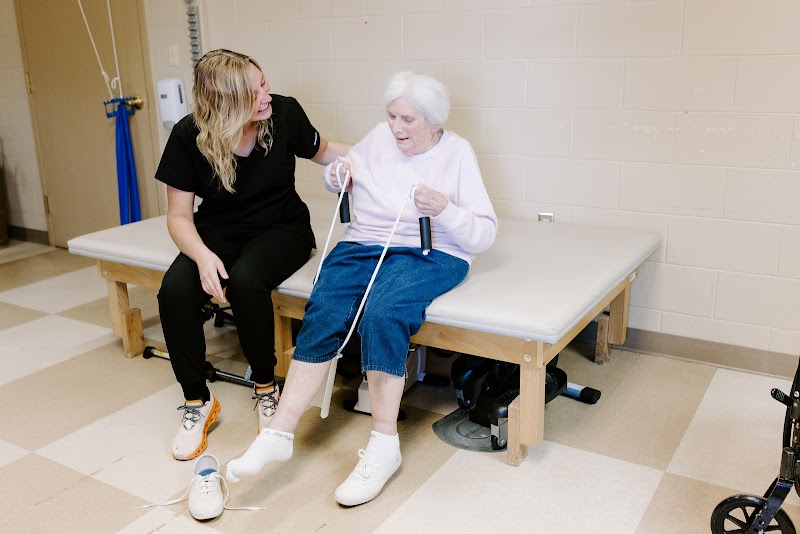
CMS rates ASH FLAT HEALTHCARE AND REHABILITATION CENTER's staffing level at 4 out of 5 stars, which is above average compared to other nursing homes. Staff turnover is 38%, compared to the Arkansas average of 46%. This relatively stable workforce can support continuity of care.

What Have Inspectors Found at Ash Flat Healthcare And Rehabilitation Center?

State health inspectors documented 18 deficiencies at ASH FLAT HEALTHCARE AND REHABILITATION CENTER during 2022 to 2024. These included: 18 with potential for harm.
Who Owns and Operates Ash Flat Healthcare And Rehabilitation Center?

ASH FLAT HEALTHCARE AND REHABILITATION CENTER is owned by a for-profit company. For-profit facilities operate as businesses with obligations to shareholders or private owners. The facility is operated by SOUTHERN ADMINISTRATIVE SERVICES, a chain that manages multiple nursing homes. With 105 certified beds and approximately 52 residents (about 50% occupancy), it is a mid-sized facility located in ASH FLAT, Arkansas.
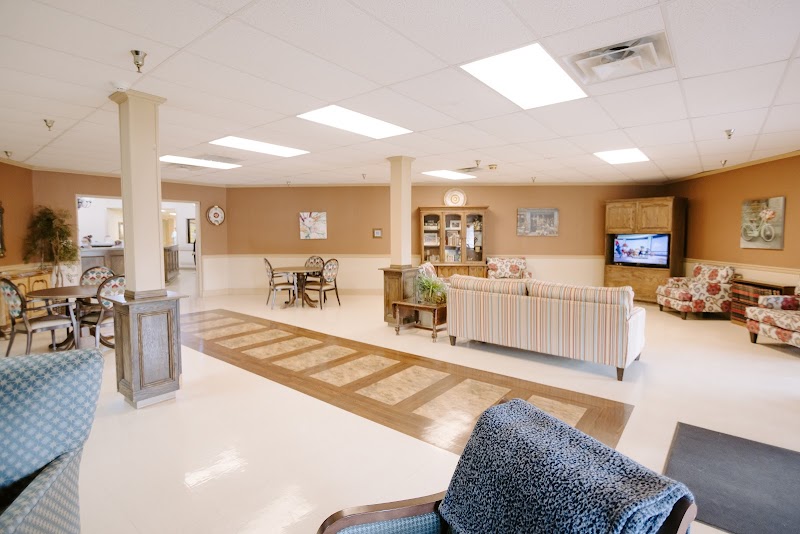
How Does Ash Flat Healthcare And Rehabilitation Center Compare to Other Arkansas Nursing Homes?

Compared to the 100 nursing homes in Arkansas, ASH FLAT HEALTHCARE AND REHABILITATION CENTER's overall rating (4 stars) is above the state average of 3.1, staff turnover (38%) is near the state average of 46%, and health inspection rating (4 stars) is above the national benchmark.

What Should Families Ask When Visiting Ash Flat Healthcare And Rehabilitation Center?

Based on this facility's data, families visiting should ask: "Can I visit during a mealtime to observe dining assistance and food quality?" "How do you handle medical emergencies, and what is your hospital transfer rate?" "Can I speak with family members of current residents about their experience?"

Is Ash Flat Healthcare And Rehabilitation Center Safe?

Based on CMS inspection data, ASH FLAT HEALTHCARE AND REHABILITATION CENTER has a clean safety record: no substantiated abuse findings (meaning no confirmed cases of resident harm), no Immediate Jeopardy citations (the most serious violation level indicating risk of serious injury or death), and is not on the Special Focus Facility watch list (a federal program monitoring the lowest-performing 1% of nursing homes). The facility has a 4-star overall rating and ranks #1 of 100 nursing homes in Arkansas. While no facility is perfect, families should still ask about staff-to-resident ratios and recent inspection results during their visit.

Do Nurses at Ash Flat Healthcare And Rehabilitation Center Stick Around?

ASH FLAT HEALTHCARE AND REHABILITATION CENTER has a staff turnover rate of 38%, which is about average for Arkansas nursing homes (state average: 46%). Moderate turnover is common in nursing homes, but families should still ask about staff tenure and how the facility maintains care continuity when employees leave.

Was Ash Flat Healthcare And Rehabilitation Center Ever Fined?

ASH FLAT HEALTHCARE AND REHABILITATION CENTER has no federal fines on record. CMS issues fines when nursing homes fail to meet care standards or don't correct problems found during inspections. The absence of fines suggests the facility has either maintained compliance or corrected any issues before penalties were assessed. This is a positive indicator, though families should still review recent inspection reports for the full picture.

Is Ash Flat Healthcare And Rehabilitation Center on Any Federal Watch List?

ASH FLAT HEALTHCARE AND REHABILITATION CENTER is not on any federal watch list. The most significant is the Special Focus Facility (SFF) program, which identifies the bottom 1% of nursing homes nationally based on persistent, serious quality problems. Not being on this list means the facility has avoided the pattern of deficiencies that triggers enhanced federal oversight. This is a positive indicator, though families should still review the facility's inspection history directly.