CABOT HEALTH AND REHAB, LLC
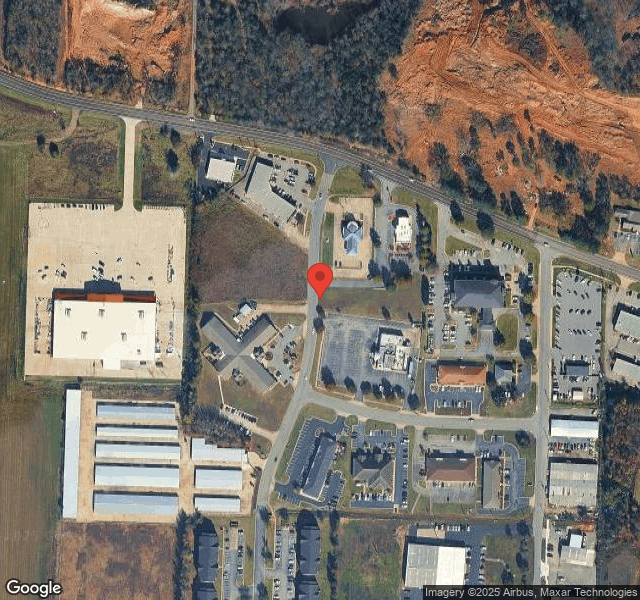
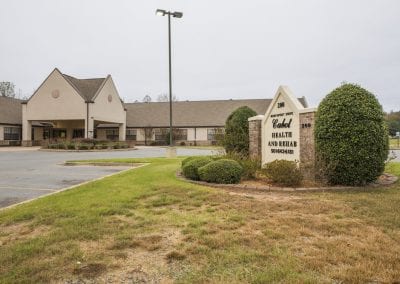
200 NORTHPORT DRIVE, CABOT, AR 72023 (501) 843-6181
For profit - Limited Liability company 89 Beds CENTRAL ARKANSAS NURSING CENTERS Data: November 2025
Trust Grade
30/100
#187 of 218 in AR
Last Inspection: December 2024

Within standard 12-15 month inspection cycle. Federal law requires annual inspections.

Overview

Cabot Health and Rehab, LLC has received a Trust Grade of F, indicating significant concerns about the facility's care quality. Ranked #187 of 218 in Arkansas, it falls in the bottom half of nursing homes in the state, and #6 out of 7 in Lonoke County, meaning there are only a couple of local options that are better. While the facility is showing improvement with a decrease in issues from 17 in 2023 to 11 in 2024, it still faces challenges, including serious incidents where dietary staff failed to maintain proper hand hygiene, risking food safety. Staffing is average with a 3/5 rating, but the turnover rate is at 50%, which is consistent with state averages, and it has less RN coverage than 75% of Arkansas facilities, which could impact the quality of care. On a positive note, the facility has not incurred any fines, suggesting compliance with some regulations.

Trust Score
F
30/100
In Arkansas
#187/218
Bottom 15%
Safety Record
Moderate
Needs review
Inspections
Getting Better
17 → 11 violations
Staff Stability
⚠ Watch
50% turnover. Above average. Higher turnover means staff may not know residents' routines.
Penalties
✓ Good
No fines on record. Clean compliance history, better than most Arkansas facilities.
Skilled Nurses
⚠ Watch
Each resident gets only 19 minutes of Registered Nurse (RN) attention daily — below average for Arkansas. Fewer RN minutes means fewer trained eyes watching for problems.
Violations
⚠ Watch
40 deficiencies on record. Higher than average. Multiple issues found across inspections.
★☆☆☆☆
1.0
Overall Rating
★★★☆☆
3.0
Staff Levels
★★★★☆
4.0
Care Quality
★☆☆☆☆
1.0
Inspection Score
Stable
2023: 17 issues
2024: 11 issues

The Good

  • 4-Star Quality Measures · Strong clinical quality outcomes
  • Full Sprinkler Coverage · Fire safety systems throughout facility
  • No fines on record

Facility shows strength in quality measures, fire safety.

The Bad

1-Star Overall Rating

Below Arkansas average (3.1)

Significant quality concerns identified by CMS

Staff Turnover: 50%

Near Arkansas avg (46%)

Higher turnover may affect care consistency

Chain: CENTRAL ARKANSAS NURSING CENTERS

Part of a multi-facility chain

Ask about local staffing decisions and management

The Ugly 40 deficiencies on record

2 actual harm
Dec 2024 11 deficiencies
CONCERN (D)

Potential for Harm - no one hurt, but risky conditions existed

Deficiency F0577 (Tag F0577)

Could have caused harm · This affected 1 resident

Based on observation and interview it was determined that the facility did not ensure the survey inspection book was kept in a place where residents and family members could reach the book without ask...

Read full inspector narrative →
Based on observation and interview it was determined that the facility did not ensure the survey inspection book was kept in a place where residents and family members could reach the book without asking. The findings are: On 12/11/2024 at 10:07 AM, during the resident council meeting Resident #7, Resident #49, Resident #61, and Resident #65 indicated that they did not know where the survey inspection book was located. On 12/11/24 at 10:12 AM, the survey inspection book was observed behind the nurse's station in a rack. The survey inspection book was not where the residents could reach it. During an interview on 12/11/2024 at 10:14 AM, the Director of Nursing (DON) indicated that the survey inspection book was kept behind the nurse's station. The DON indicated that a resident would not be able to reach the survey inspection book if they were in a wheelchair. On 12/11/24 at 3:00 PM, the survey inspection book was observed behind the nurse's station in a rack. The survey inspection book was not where the residents could reach it. On 12/12/24 at 10:14 AM, the survey inspection book was observed behind the nurse's station in a rack. The survey inspection book was not where the residents could reach it. During an interview on 12/12/24 at 10:18 AM, the Administrator indicated that the survey inspection book was located around the nurse's station. The Administrator indicated the inspection book used to be located where the residents could reach it. The Administrator indicated the inspection book was moved behind the nurse's station where the residents could not reach it because the residents would take it or move it. The Administrator indicated that she would have to make another survey book if the residents take it.
CONCERN (D)

Potential for Harm - no one hurt, but risky conditions existed

Comprehensive Assessments (Tag F0636)

Could have caused harm · This affected 1 resident

Based on observation, interviews, record review, and facility document review, it was determined that the facility failed to ensure a comprehensive assessment of a resident's needs, strengths, goals, ...

Read full inspector narrative →
Based on observation, interviews, record review, and facility document review, it was determined that the facility failed to ensure a comprehensive assessment of a resident's needs, strengths, goals, life history and preferences, using the resident assessment instrument (RAI) within 14 calendar days after admission to identify issues needed for comprehensive care plan development for 1 (Resident #52) of 8 sample mix residents. The findings are: On 12/9/24 at 9:29 AM, this surveyor observed Resident #52 lying in bed on their back at a thirty-degree (30') angle with eyes closed. Oxygen (O2) concentrator was present in the room and running at two (2) liters per minute (LPM) through a nasal cannula with humidification. Tubing, humidification, and storage bag were date 12/03/2024. Review of Resident #52's Medication Administration Record (MAR) for November 2024, did not provide an area to document oxygen use. Review of Resident #52's Baseline Care Plan dated 11/04/2024 noted in section 4; Health Conditions A. Health Conditions/ Special Treatments, 1a. Oxygen therapy- while a resident. Review of Resident #52's Order Summary Report dated 12/09/2024, noted change O2 tubing, clean filter and O2 cabinet, date all tubing every Monday night on 11-7 shift and for maintenance, O2 at two to four (2-4) LPM through nasal cannula. No directions specified for order. Review of Resident #52's Nursing Skilled Charting dated 11/05/2024 at 11:00 AM, noted in section H. Respiratory 7a. Oxygen therapy- while a resident; 8. O2 at 2; 9. O2 via NC. Review of Resident #52's Nursing Skilled Charting dated 11/06/2024 at 11:37 PM, noted in section H. Respiratory 7a. Oxygen therapy- while a resident; 8. O2 at 2; 9. O2 through NC. Review of Resident #52's Nursing Skilled Charting dated 11/07/2024 at 12:27 AM, noted in section H. Respiratory 1. Pulmonary assessment 3) Shortness of breath (SOB) on exertion 7a. Oxygen therapy- while a resident; 8. O2 at 2 lpm; 9. O2 through NC. Review of Resident #52's Nursing Skilled Charting dated 11/07/2024 at 4:10 PM, noted in section H. Respiratory 1. Pulmonary assessment 3) Shortness of breath (SOB) on exertion; 7a. Oxygen therapy- while a resident; 8. O2 at 2-4; 9. O2 through NC PRN. Review of Resident #52's Nursing Skilled Charting dated 11/07/2024 at 7:17 PM, noted in section H. Respiratory 7a. Oxygen therapy- while a resident; 8. O2 at 2; 9. O2 through NC. Review of Resident #52's Nursing Skilled Charting dated 11/07/2024 at 11:04 PM, noted in section H. Respiratory 7a. Oxygen therapy- while a resident; 8. O2 at 2L; 9. O2 through NC PRN. Review of Resident #52's Nursing Skilled Charting dated 11/08/2024 at 2:30 PM, noted in section H. Respiratory 7a. Oxygen therapy- while a resident; 8. O2 at 2-4; 9. O2 through NC PRN. Review of Resident #52's Nursing Skilled Charting dated 11/08/2024 at 11:17 PM, noted in section H. Respiratory 7a. Oxygen therapy- while a resident; 8. O2 at 2L; 9. O2 through NC. Review of Resident #52's Care Plan dated 11/08/2024, noted the resident has shortness of breath (SOB) with O2 use. O2 as needed (PRN), as per Medical Doctors (MD) orders. Review of Resident #52's Nursing Skilled Charting dated 11/09/2024 at 12:42 PM, noted in section H. Respiratory 7a. Oxygen therapy- while a resident; 8. O2 at 2L; 9. O2 through NC. Review of Resident #52's Nursing Skilled Charting dated 11/09/2024 at 6:56 PM, noted in section H. Respiratory 7a. Oxygen therapy- while a resident; 8. O2 at 2L; 9. O2 through NC. Review of Resident #52's Nursing Skilled Charting dated 11/09/2024 at 11:39 PM, noted in section H. Respiratory 7a. Oxygen therapy- while a resident; 8. O2 at 2L; 9. O2 through NC. Review of Resident #52's Nursing Skilled Charting dated 11/10/2024 at 9:58 AM, noted in section H. Respiratory 7a. Oxygen therapy- while a resident; 8. O2 at 2L; 9. O2 through NC. Review of Resident #52's Nursing Skilled Charting dated 11/10/2024 at 6:22 PM, noted in section H. Respiratory 7a. Oxygen therapy- while a resident; 8. O2 at 2L; 9. O2 through NC. Review of Resident #52's Admission/ Medicare 5 Day Minimum Data Set (MDS) with an Assessment Reference Date of 11/10/2024, noted in Section O0110, Special Treatments, Procedures, and Programs C1. Oxygen while a resident no. Review of Resident #52's Nursing Skilled Charting dated 11/11/2024 at 8:27 PM, noted in section H. Respiratory 7a. Oxygen therapy- while a resident; 8. O2 at 2L; 9. O2 through nasal cannula. Review of Resident #52's Nursing Skilled Charting dated 11/11/2024 at 11:17 PM, noted in section H. Respiratory 7a. Oxygen therapy- while a resident; 8. O2 at 2L; 9. O2 through NC. Review of Resident #52's Medication Administration Record (MAR) for December 2024, did not provide an area to document oxygen use. During an interview with Resident #52 on 12/09/24 at 10:03 AM, the resident stated, I don't know why I'm getting oxygen. I was getting it in the hospital and came here with it. On 12/10/24 at 8:20 AM, Surveyor observed Resident #52 lying in bed on back at 30-45' angle with eyes closed. Oxygen concentrator present in room running at 2 LPM through nasal cannula with humidification. Oxygen tubing, humidification bottle and storage bag are all dated 12/10/2024. During an interview with Licensed Practical Nurse (LPN) #4 on 12/12/2024 at 11:42 AM, she confirmed that Resident #52 had received continuous oxygen since admission. LPN #4 revealed Resident #52 would become short of breath with any movement, but that the Physician ' s Order did not note why Resident #52 was receiving oxygen. LPN #4 confirmed the order summary report did not note whether the resident was to receive oxygen as needed or continuous. LPN #4 confirmed there was no place on the Medication Administration Record (MAR) to document daily oxygen use. LPN #4 confirmed the daily nursing skilled charting notes documented Resident #52 received oxygen from 11/05/2024 through 11/11/2024. During an interview with the Minimum Data Set (MDS) Coordinator on 12/12/2024 at 11:46 AM, she confirmed Resident #52 had an order for oxygen since 11/05/2024 and that the order did not say if the oxygen was to be continuous or as needed. She confirmed the Physician ' s Order did not note why the resident was receiving oxygen and that there needed to be an indication as to why the resident was receiving oxygen. MDS Coordinator confirmed Resident #52 had oxygen use noted on the daily nursing skilled charts from 11/05/2024 through 11/11/2024 and should be noted on the residents Minimum Data Set (MDS) with an Assessment Reference Date (ARD) 11/10/2024. She confirmed section J of the MDS was not documented accurately as it should note the resident has shortness of breath with exertion as noted on the nursing skilled charting on 11/07/2024 in section H's part of the pulmonary assessment. The MDS Coordinator confirmed Resident #52's Care Plan was not documented accurately.
CONCERN (D)

Potential for Harm - no one hurt, but risky conditions existed

Deficiency F0657 (Tag F0657)

Could have caused harm · This affected 1 resident

Based on interview and record review, it was determined that the facility failed to ensure resident Care Plan meetings were attempted every quarter for one (Resident #38) of one resident reviewed for ...

Read full inspector narrative →
Based on interview and record review, it was determined that the facility failed to ensure resident Care Plan meetings were attempted every quarter for one (Resident #38) of one resident reviewed for Care Plan meetings. The findings include: On 12/12/2024 at 2:20 PM, the Minimum Data Set (MDS) Coordinator stated they spoke with the facility consultant, the facility does not have a policy for Care Plan meetings. Review of an admission Record indicated that the facility admitted Resident #38 with a diagnosis of cerebral infarction due to occlusion or stenosis of the right middle cerebral artery (stroke). The annual Minimum Data Set (MDS), with an Assessment Reference Date (ARD) of 11/05/2024, revealed Resident #38 had a Brief Interview for Mental Status (BIMS) score of 11, which indicated the Resident had moderate cognitive impairment. During an interview on 12/09/2024 at 2:54 PM, Resident #38 stated I ' ve been to one [Care Plan] meeting in the last 5 years. During an interview on 12/11/2024 at 8:34 AM, the MDS Coordinator stated Resident #38 has not had a care plan meeting this year and that notification was sent in October or November of this year with no response from family. Resident #38 had a BIMS score of 11 and communication impairment and would get frustrated when not understood. The MDS coordinator stated they could have a care plan meeting with Resident #38 if the resident wanted one. Review of Resident #38 ' s Miscellaneous Files revealed the last known Care Plan Meeting Summary performed on 05/10/2023. During an interview on 12/12/2024 on 3:26 PM, the MDS Coordinator verified notification was only sent out to the family and not to the Resident.
CONCERN (D)

Potential for Harm - no one hurt, but risky conditions existed

ADL Care (Tag F0677)

Could have caused harm · This affected 1 resident

Based on observation and interview, it was determined that the facility failed to remove facial hair for 1 (Resident #69) of 4 sampled residents reviewed for activities of daily living. The findings ...

Read full inspector narrative →
Based on observation and interview, it was determined that the facility failed to remove facial hair for 1 (Resident #69) of 4 sampled residents reviewed for activities of daily living. The findings are: A review of an Order Summery Report indicated that Resident #69 had a diagnosis of dementia. The significant change Minimum Date Set (MDS) with an Assessment Reference date (ARD) of 9/09/2024, revealed Resident #69 had a Brief Interview for Mental Status (BIMS) score of 11, which indicated the resident had moderate cognitive impairment and required supervision for personal hygiene. Review of Resident #69's Care Plan initiated 09/08/2024, revealed that Resident #69 required supervision to partial assistance by one staff for personal hygiene. On 12/09/24 at 10:18 AM, Resident #69 was observed sitting in a wheelchair outside the resident ' s room. Resident #69 had facial hair on the resident ' s chin and above the upper lip. On 12/09/24 at 10:25 AM, Resident #69 was observed in the resident ' s room. Resident #69 had facial hair on the resident ' s chin and above the upper lip. On 12/09/24 at 2:00 PM, Resident #69 was observed in bed. Resident #69 had facial hair on the resident ' s chin and above the upper lip. On 12/11/24 at 8:45 AM, Resident #69 was observed sitting in a wheelchair outside the resident ' s room. Resident #69 had facial hair on the resident ' s chin and above the upper lip. On 12/11/24 at 10:46 AM, Resident #69 was observed sitting in a wheelchair outside resident ' s room. Resident #69 had facial hair on the resident ' s chin and above the upper lip. On 12/11/24 at 10:55 AM, Certified Nursing Aide (CNA) #3 indicated that Resident #69 gets facial hair shaved on shower days. CNA #3 indicated that Resident #69 had facial hair on the resident ' s chin and upper lip. CNA #3 indicated that she did not know why Resident #69 had not been shaved. On 12/12/2024 at 2:30 PM, the Administrator stated the facility did not have a policy on activities of daily living.
CONCERN (D)

Potential for Harm - no one hurt, but risky conditions existed

Accident Prevention (Tag F0689)

Could have caused harm · This affected 1 resident

Based on interview and record review it was determined that the facility failed to carry out interventions after a fall for 1 (Resident #2) of 4 sampled residents reviewed for falls. The findings are...

Read full inspector narrative →
Based on interview and record review it was determined that the facility failed to carry out interventions after a fall for 1 (Resident #2) of 4 sampled residents reviewed for falls. The findings are: A review of an Order Summery Report indicated that Resident #2 had a diagnosis of osteoarthritis of both knees. The significant change Minimum Date Set (MDS) with an Assessment Reference date (ARD) of 09/25/2024 revealed Resident #2 had a Brief Interview for Mental Status (BIMS) score of 12, which indicated the resident had moderate cognitive impairment. The MDS indicated that Resident #2 has had a fall with a major injury. Review of Resident #2's Care Plan revised 12/11/2024 revealed that Resident #2 had a fall on 10/24/2024. Interventions included to submit a therapy request for possible services. The Care Plan revised on 12/11/2024, indicated that Resident #2 had an unwitnessed fall. The intervention was to refer to therapy for an evaluation. A review of Resident #2's hospital records dated 09/19/2024 indicated Resident #2 had a fall with a nasal fracture. A review of a facility incident report dated 10/24/2024 indicated Resident #2 had an unwitnessed fall. Interventions included submitting a therapy request for possible services. A review of a Facility Incident Report dated 11/11/2024 indicated that Resident #2 had an unwitnessed fall. Interventions included referring to therapy. During an interview on 12/12/24 at 9:20 AM, the Physical Therapy Assistant indicated that a communication form was received from the DON when there was a need to evaluate a resident for possible services. She indicated after she completes her evaluation the form is sent to billing for payment. She indicated that she did not have a request for a therapy evaluation for 10/24/2024, and 11/01/2024 for Resident #2. On 12/12/24 at 10:00 AM, the Therapy Notes received from Physical Therapy Assistant were reviewed. The notes were dated for the period of 9/21/2024-10/20/2024. There were no notes dated 10/24/2024, and 11/01/2024 for Resident #2. On 12/12/2024 at 10:30 AM, the Physical Therapy Assistant (PTA) indicated she did not have any referrals for Resident #2 for 10/24/2024 and 11/01/2024. During an interview on 12/12/24 at 11:03 AM, the Director of Nursing (DON) indicated that a therapy form should have been completed for Resident #2 when the fall occurred on 10/24/2024 and 11/01/2024. The DON indicated that Resident #2 did not have a therapy evaluation form for 10/24/2024 or 11/01/2024. During an interview on 12/12/24 at 11:09 AM, the MDS coordinator provided a form titled Rehab Communication Form dated 11/01/2024. The form indicated that Resident #2 refused a therapy evaluation and restorative. The MDS Coordinator indicated that she wrote on the form that the resident refused therapy. The MDS coordinator indicated that the form was given to the Business Office Manager. The MDS coordinator indicated that she did not give the form to the therapy department. During an interview on 12/12/2024 at 11:15 AM, Resident #2, stated I have a lot of falls because I have polio. Resident #2 indicated the staff had not asked about a therapy evaluation. Resident #2 indicated not having refused to have a therapy evaluation or any therapy to help prevent falls. On 12/12/2024 at 2:30 PM, the Administrator stated the facility did not have a policy on falls.
CONCERN (D)

Potential for Harm - no one hurt, but risky conditions existed

Respiratory Care (Tag F0695)

Could have caused harm · This affected 1 resident

Based on observation, interviews, record review, and facility document review, it was determined that the facility failed to ensure that an accurate Physician ' s Order was in place for oxygen for 1 (...

Read full inspector narrative →
Based on observation, interviews, record review, and facility document review, it was determined that the facility failed to ensure that an accurate Physician ' s Order was in place for oxygen for 1 (Resident #52) of 1 sample mix residents who received oxygen. The findings are: On 12/09/24 at 9:29 AM, this surveyor observed Resident #52 lying in bed on back at a thirty-degree angle with eyes closed. Oxygen (O2) concentrator present in the room and running at two (2) liters per minute (LPM) through a nasal cannula with humidification. Tubing, humidification, and storage bag date 12/03/2024. Review of Resident #52's Medication Administration Record (MAR) for November 2024, did not provide an area to document oxygen use. Review of Resident #52's Baseline Care Plan dated 11/04/2024 noted in section 4. Health Conditions A. Health Conditions/ Special Treatments 1a. Oxygen therapy- while a resident. Review of Resident #52's Order Summary Report dated 12/09/2024 noted change O2 tubing, clean filter and O2 cabinet, date all tubing every Monday night on 11-7 shift and for maintenance, O2 at two to four (2-4) LPM though nasal cannula. No directions were specified for the order. Review of Resident #52's admission/ Medicare 5 Day Minimum Data Set (MDS) with an Assessment Reference Date (ADR) of 11/10/2024, noted Section O0110. Special Treatments, Procedures, and Programs C1. Oxygen while a resident, no. Review of Resident #52's Medication Administration Record (MAR) for December 2024, did not provide an area to document oxygen use. On 12/10/24 at 1:59 PM, review of Resident #52's Care Plan dated 11/8/2024 noted the resident had shortness of breath with oxygen (O2) use. Oxygen (O2) as needed (PRN), as per Medical Doctors (MD) orders. During an interview with Resident #52, on 12/09/24 at 10:03 AM, the resident stated, I don't know why I'm getting oxygen. I was getting it in the hospital and came here with it. On 12/10/24 at 8:20 AM, this surveyor observed Resident #52 lying in bed on back at 30-45' angle with eyes closed. Oxygen concentrator present in the room running at 2 LPM through nasal cannula with humidification. Oxygen tubing, humidification bottle and storage bag were all dated 12/10/2024. During an interview with Licensed Practical Nurse (LPN) #4 on 12/12/2024 at 11:42 AM, she confirmed that Resident #52 had received continuous oxygen since admission. LPN #4 revealed Resident #52 became short of breath with any movement, but that the Physician ' s Order did not note why Resident #52 was receiving oxygen. LPN #4 confirmed the order summary report did not note whether the resident was to receive oxygen as needed or continuous. LPN #4 confirmed there was no place on the Medication Administration Record (MAR) to document daily oxygen use. During an interview with the Minimum Data Set (MDS) Coordinator, on 12/12/2024 at 11:46 AM, she confirmed Resident #52 had an order for oxygen since 11/05/2024 and that the order did not say if the oxygen was to be continuous or as needed. She confirmed the Physician ' s Order did not note why the resident was receiving oxygen and that there needed to be an indication as to why the resident was receiving oxygen.
CONCERN (E)

Potential for Harm - no one hurt, but risky conditions existed

Assessment Accuracy (Tag F0641)

Could have caused harm · This affected multiple residents

Based on record review, interviews, and facility document review, it was determined that the facility failed to complete an accurate Minimum Data Set (MDS) for 1 (Resident #52) of 8 sample mix residen...

Read full inspector narrative →
Based on record review, interviews, and facility document review, it was determined that the facility failed to complete an accurate Minimum Data Set (MDS) for 1 (Resident #52) of 8 sample mix residents. The findings are: On 12/9/24 at 9:29 AM, the surveyor observed Resident #52 lying in bed on their back at a thirty-degree (30') angle with eyes closed. Oxygen (O2) concentrator present in the room and running at two (2) liters per minute (LPM) through a nasal cannula with humidification. Tubing, humidification, and storage bag date 12/03/2024. Review of Resident #52's Medication Administration Record (MAR) for November 2024, did not provide an area to document oxygen use. Review of Resident #52's Baseline Care Plan dated 11/04/2024 noted in section 4. Health Conditions: A. Health Conditions/ Special Treatments: 1a. Oxygen therapy- while a resident. Review of Resident #52's Order Summary Report dated 11/05/2024, noted change O2 tubing, clean filter and O2 cabinet, date all tubing every Monday night on 11-7 shift and for maintenance, O2 at two to four (2-4) LPM though nasal cannula. No directions specified for order. Review of Resident #52's Nursing Skilled Charting dated 11/05/2024 at 11:00 AM, noted in section H. Respiratory 7a. Oxygen therapy- while a resident; 8. O2 at 2; 9. O2 via NC. Review of Resident #52's Nursing Skilled Charting dated 11/06/2024 at 11:37 PM, noted in section H. Respiratory 7a. Oxygen therapy- while a resident; 8. O2 at 2; 9. O2 through NC. Review of Resident #52's Nursing Skilled Charting dated 11/07/2024 at 12:27 AM, noted in section H. Respiratory 1. Pulmonary assessment 3) Shortness of breath (SOB) on exertion 7a. Oxygen therapy- while a resident; 8. O2 at 2 lpm; 9. O2 through NC. Review of Resident #52's Nursing Skilled Charting dated 11/07/2024 at 4:10 PM, noted in section H. Respiratory 1. Pulmonary assessment 3) Shortness of breath (SOB) on exertion; 7a. Oxygen therapy- while a resident; 8. O2 at 2-4; 9. O2 through NC PRN. Review of Resident #52's Nursing Skilled Charting dated 11/07/2024 at 7:17 PM, noted in section H. Respiratory 7a. Oxygen therapy- while a resident; 8. O2 at 2; 9. O2 through NC. Review of Resident #52's Nursing Skilled Charting dated 11/07/2024 at 11:04 PM, noted in section H. Respiratory 7a. Oxygen therapy- while a resident; 8. O2 at 2L; 9. O2 through NC PRN. Review of Resident #52's Nursing Skilled Charting dated 11/08/2024 at 2:30 PM, noted in section H. Respiratory 7a. Oxygen therapy- while a resident; 8. O2 at 2-4; 9. O2 through NC PRN. Review of Resident #52's Nursing Skilled Charting dated 11/08/2024 at 11:17 PM, noted in section H. Respiratory 7a. Oxygen therapy- while a resident; 8. O2 at 2L; 9. O2 through NC. Review of Resident #52's Care Plan dated 11/08/2024, noted the resident has shortness of breath (SOB) with O2 use. O2 as needed (PRN), as per Medical Doctors (MD) orders. Review of Resident #52's Nursing Skilled Charting dated 11/09/2024 at 12:42 PM, noted in section H. Respiratory 7a. Oxygen therapy- while a resident; 8. O2 at 2L; 9. O2 through NC. Review of Resident #52's Nursing Skilled Charting dated 11/09/2024 at 6:56 PM, noted in section H. Respiratory 7a. Oxygen therapy- while a resident; 8. O2 at 2L; 9. O2 through NC. Review of Resident #52's Nursing Skilled Charting dated 110/9/2024 at 11:39 PM, noted in section H. Respiratory 7a. Oxygen therapy- while a resident; 8. O2 at 2L; 9. O2 through NC. Review of Resident #52's Nursing Skilled Charting dated 11/10/2024 at 9:58 AM, noted in section H. Respiratory 7a. Oxygen therapy- while a resident; 8. O2 at 2L; 9. O2 through NC. Review of Resident #52's Nursing Skilled Charting dated 11/10/2024 at 6:22 PM, noted in section H. Respiratory 7a. Oxygen therapy- while a resident; 8. O2 at 2L; 9. O2 through NC. Review of Resident #52's Admission/ Medicare 5 Day Minimum Data Set (MDS) with an Assessment Reference Date of 11/10/2024, noted Section J1100. Heath Conditions Shortness of Breath (dyspnea) z. None of the above; Section O0110. Special Treatments, Procedures, and Programs C1. Oxygen while a resident no. Review of Resident #52's Nursing Skilled Charting dated 11/11/2024 at 8:27 PM, noted in section H. Respiratory 7a. Oxygen therapy- while a resident; 8. O2 at 2L; 9. O2 through nasal cannula. Review of Resident #52's Nursing Skilled Charting dated 11/11/2024 at 11:17 PM, noted in section H. Respiratory 7a. Oxygen therapy- while a resident; 8. O2 at 2L; 9. O2 through NC. Review of Resident #52's Medication Administration Record (MAR) for December 2024, did not provide an area to document oxygen use. During an interview with Resident #52 on 12/09/24 at 10:03 AM, the resident stated, I don't know why I'm getting oxygen. I was getting it in the hospital and came here with it. On 12/10/24 at 8:20 AM, the surveyor observed Resident #52 lying in bed on their back at 30-45' angle with eyes closed. Oxygen concentrator present in the room running at 2 LPM through nasal cannula with humidification. Oxygen tubing, humidification bottle, and storage bag are all dated 12/10/2024. During an interview with Licensed Practical Nurse (LPN) #4 on 12/12/2024 at 11:42 AM, she confirmed that Resident #52 had received continuous oxygen since admission. LPN #4 revealed the resident became short of breath with any movement. LPN #4 confirmed there was no place on the Medication Administration Record (MAR) to document daily oxygen use. The LPN confirmed the daily nursing skilled charting notes documented the resident receiving oxygen from 11/5/2024 through 11/11/2024. During an interview with the Minimum Data Set (MDS) Coordinator on 12/12/2024 at 11:46 AM, she confirmed Resident #52 had an order for oxygen since 11/5/2024. The MDS Coordinator confirmed Resident #52 had oxygen use noted on the daily nursing skilled charts noted from 11/5/2024 through 11/11/2024 and should be noted on the resident ' s Minimum Data Set (MDS) with an Assessment Reference Date (ARD) 11/10/2024. She confirmed section J of the MDS was not documented accurately as it should note the resident had shortness of breath with exertion as noted on the nursing skilled charting on 11/07/2024 in section H's part of the pulmonary assessment.
CONCERN (E)

Potential for Harm - no one hurt, but risky conditions existed

Comprehensive Care Plan (Tag F0656)

Could have caused harm · This affected multiple residents

Based on observation, interviews, record review, facility document review, and facility policy review, it was determined that the facility failed to ensure the comprehensive care plan addressed and in...

Read full inspector narrative →
Based on observation, interviews, record review, facility document review, and facility policy review, it was determined that the facility failed to ensure the comprehensive care plan addressed and individualized appropriate care and services for 6 (Residents #52, #38, #60, #3, #44, and #377) of 15 sample mix residents reviewed for care plan. The Findings are: 1. On 12/09/24 at 9:29 AM, the surveyor observed Resident #52 lying in bed on their back at a thirty-degree (30') angle with eyes closed. Oxygen (O2) concentrator present in the room and running at two (2) liters per minute (LPM) through nasal cannula with humidification. Tubing, humidification and storage bag were dated 12/03/2024. Review of Resident #52's Medication Administration Record (MAR) for November 2024, did not provide an area to document oxygen use. Review of Resident #52's Baseline Care Plan dated 11/04/2024, noted in section 4. Health Conditions A. Health Conditions/ Special Treatments 1a. Oxygen therapy- while a resident. Review of Resident #52's Order Summary Report dated 11/05/2024, noted change O2 tubing, clean filter and O2 cabinet, date all tubing every Monday night on 11-7 shift and for maintenance, O2 at two to four (2-4) LPM though nasal cannula. No directions specified for order. Review of Resident #52's Nursing Skilled Charting dated 11/05/2024 at 11:00 AM, noted in section H. Respiratory 7a. Oxygen therapy- while a resident; 8. O2 at 2; 9. O2 via NC. Review of Resident #52's Nursing Skilled Charting dated 11/06/2024 at 11:37 PM, noted in section H. Respiratory 7a. Oxygen therapy- while a resident; 8. O2 at 2; 9. O2 through NC. Review of Resident #52's Nursing Skilled Charting dated 11/07/2024 at 12:27 AM, noted in section H. Respiratory 1. Pulmonary assessment 3) Shortness of breath (SOB) on exertion 7a. Oxygen therapy- while a resident; 8. O2 at 2 lpm; 9. O2 through NC. Review of Resident #52's Nursing Skilled Charting dated 11/07/2024 at 4:10 PM, noted in section H. Respiratory 1. Pulmonary assessment 3) Shortness of breath (SOB) on exertion; 7a. Oxygen therapy- while a resident; 8. O2 at 2-4; 9. O2 through NC PRN. Review of Resident #52's Nursing Skilled Charting dated 11/07/2024 at 7:17 PM, noted in section H. Respiratory 7a. Oxygen therapy- while a resident; 8. O2 at 2; 9. O2 through NC. Review of Resident #52's Nursing Skilled Charting dated 11/07/2024 at 11:04 PM, noted in section H. Respiratory 7a. Oxygen therapy- while a resident; 8. O2 at 2L; 9. O2 through NC PRN. Review of Resident #52's Nursing Skilled Charting dated 11/08/2024 at 2:30 PM, noted in section H. Respiratory 7a. Oxygen therapy- while a resident; 8. O2 at 2-4; 9. O2 through NC PRN. Review of Resident #52's Nursing Skilled Charting dated 11/08/2024 at 11:17 PM, noted in section H. Respiratory 7a. Oxygen therapy- while a resident; 8. O2 at 2L; 9. O2 through NC. Review of Resident #52's Care Plan dated 11/08/2024 noted the resident has shortness of breath (SOB) with O2 use. O2 as needed (PRN), as per Medical Doctors (MD) orders. Review of Resident #52's Nursing Skilled Charting dated 11/09/2024 at 12:42 PM, noted in section H. Respiratory 7a. Oxygen therapy- while a resident; 8. O2 at 2L; 9. O2 through NC. Review of Resident #52's Nursing Skilled Charting dated 11/09/2024 at 6:56 PM, noted in section H. Respiratory 7a. Oxygen therapy- while a resident; 8. O2 at 2L; 9. O2 through NC. Review of Resident #52's Nursing Skilled Charting dated 11/09/2024 at 11:39 PM, noted in section H. Respiratory 7a. Oxygen therapy- while a resident; 8. O2 at 2L; 9. O2 through NC. Review of Resident #52's Nursing Skilled Charting dated 11/10/2024 at 9:58 AM, noted in section H. Respiratory 7a. Oxygen therapy- while a resident; 8. O2 at 2L; 9. O2 through NC. Review of Resident #52's Nursing Skilled Charting dated 11/10/2024 at 6:22 PM, noted in section H. Respiratory 7a. Oxygen therapy- while a resident; 8. O2 at 2L; 9. O2 through NC. Review of Resident #52's Nursing Skilled Charting dated 11/11/2024 at 8:27 PM, noted in section H. Respiratory 7a. Oxygen therapy- while a resident; 8. O2 at 2L; 9. O2 through nasal cannula. Review of Resident #52's Nursing Skilled Charting dated 11/11/2024 at 11:17 PM, noted in section H. Respiratory 7a. Oxygen therapy- while a resident; 8. O2 at 2L; 9. O2 through NC. Review of Resident #52's Medication Administration Record (MAR) for December 2024, did not provide an area to document oxygen use. During an interview with Resident #52 on 12/09/24 at 10:03 AM, the resident stated, I don't know why I'm getting oxygen. I was getting it in the hospital and came here with it. On 12/10/24 at 8:20 AM, the surveyor observed Resident #52 lying in bed on their back at a 30-45' angle with eyes closed. Oxygen concentrator present in the room running at 2 LPM through nasal cannula with humidification. Oxygen tubing, humidification bottle and storage bag are all dated 12/10/2024. During an interview with Licensed Practical Nurse (LPN) #4 on 12/12/2024 at 11:42 AM, she confirmed that Resident #52 has received continuous oxygen since admission. LPN #4 revealed the resident became short of breath with any movement. LPN #4 confirmed the order summary report did not note whether the resident was to receive oxygen as needed (PRN) or continuous. The LPN confirmed the daily nursing skilled charting notes documented the resident receiving oxygen from 11/05/2024 through 11/11/2024. LPN #4 confirmed Resident #52 ' s Care Plan noted the resident as receiving oxygen PRN, but the order summary report did not note PRN. During an interview with the Minimum Data Set (MDS) Coordinator on 12/12/2024 at 11:46 AM, she confirmed Resident #52 had an order for oxygen since 11/05/2024 and that the order did not say if the oxygen was to be continuous or as needed. The MDS Coordinator confirmed Resident #52 had oxygen use noted on the daily nursing skilled charts noted from 11/05/2024 through 11/11/2024. The MDS Coordinator confirmed Resident #52's care plan was not documented accurately. 2. A Review of an admission Record indicated the facility admitted Resident #3 with admitting diagnosis of Alzheimer's Disease (disease that destroys memory and mental functions). The quarterly MDS, with an Assessment Reference Date (ARD) of 12/02/2024 revealed Resident #3 had a BIMS score of 15, with indicated the resident was cognitively intact. Review of Resident #3 ' s Care Plan, revealed multiple areas, in Intervention where black box warnings did not reveal details to monitor. Black box warning and medication were referenced in the Care Plan but no warnings for symptoms to monitor. 3. A Review of an admission Record indicated the facility admitted Resident #38 with diagnoses of cerebral infarction due to occlusion or stenosis of the right middle cerebral artery (stroke), embolism and thrombosis of artery (blood clot), pain, major depressive disorder (depressed mood or loss of interest affecting daily life), peripheral vascular disease (narrow blood vessels are reducing blood flow to limbs), atrial fibrillation (irregular heart beat upper chamber of heart beats out coordination from lower chambers, and hypothyroidism (the thyroid does not produce enough thyroid hormone). The annual Minimum Data Set (MDS), with an Assessment Reference Date (ARD) of 11/05/2024, revealed Resident #38 had a Brief Interview for Mental Status (BIMS) score of 11, which indicated the resident had moderate cognitive impairment. Review of Resident #38 ' s Care Plan, revealed multiple areas in intervention, where black box warnings did not reveal details to monitor. Black box warning and medication such as a blood thinner initiated on 2/14/2024, an ACE inhibitor initiated on 2/14/2024, a beta blocker initiated on 2/14/2024, s synthetic version of the principal thyroid hormone initiated on 6/24/2020, and antidepressant initiated on 12/05/2023, and an opioid agonist initiated on 8/07/2024 were referenced in Care Plan. No warnings for symptoms to monitor. 4. A Review of an admission Record indicated the facility admitted Resident #60 with diagnoses of rheumatoid arthritis (inflammatory response that usually affects joints), insomnia (trouble falling or staying asleep), depression (depressed mood), anxiety disorder (feeling of worry or fear that is strong enough to affect one's daily activity) , chronic pain, intervertebral disc degeneration to the lumbosacral region with discogenic back pain and lower extremity pain (changes in the disc due to ageing or trauma and the disc has break down and separate from the bone), wedge compression fracture of fifth lumbar vertebra (broken bone collapses and causes a wedge appearance). The quarterly MDS, with an ARD of 11/19/2024, revealed Resident #60 had a Brief Interview for Mental Status (BIMS) score of 99, which indicated that the Resident was not able to finish the assessment. Further investigation in Section C of the MDS revealed memory was okay with moderate impairment with daily decision-making ability. Review of Resident #60 ' s Care Plan revealed that multiple areas in intervention, where black box warnings did not reveal details to monitor. Black box warning and medication such as a nonsteroidal anti-inflammatory medication initiated on 10/18/2023, a nonsteroidal anti-inflammatory medication initiated on 04/04/2024, an antidepressant initiated on 10/18/2023, an atypical antipsychotic medication initiated on 10/18/2023, and an antidepressant initiated on 10/18/2023, were referenced in the Care Plan. No warnings for symptoms to monitor. 5. Review of Resident #44's admission Minimum Data Set (MDS) with an Assessment Reference Date (ARD) of 09/19/2024, noted the resident had active diagnoses of depression, heart failure, anxiety, pain, imaginary (phantom) limb syndrome with pain, acquired absence of right leg above the knee, acquired absence of left leg below the knee, heart failure. It also noted the resident receives, antianxiety, antidepressant, and an opioid. Review of Resident #44's Order Summary Report dated 12/11/2024 revealed the resident had orders for a prescription medicine used to treat depression, anxiety, nerve pain, fibromyalgia and chronic pain, oral capsule delayed response particles 60 milligrams (mg) give 1 capsule by mouth in the morning related to anxiety; a loop diuretic oral tablet 20 mg, give 3 tablet by mouth in the morning related to heart failure; a benzodiazepine medication oral table 1 mg give tablet by mouth four times a day related to anxiety; an opioid agonist (concentrate) oral solution 20 mg/ milliliter (mL) give 0.5 mL by mouth every 3 hours as needed for pain; an opioid agonist indicated for the relief of moderate to severe acute and chronic pain extended release (ER) oral tablet 30 mg give 1 tablet by mouth three times a day related to phantom limb syndrome with pain; an antidepressant oral tablet 50 mg give 0.5 tablet by mouth at bedtime for symptoms of insomnia. Review of Resident #44's admission MDS with an ARD of 09/19/2024, noted the resident received, antianxiety, antidepressant, and an opioid. Review of Resident #44's Care plan dated 09/25/2024, does not note black box warning details for antidepressants, antianxiety, diuretic, hypnotic, and opioid. 6. Review of Resident #377's Medicare 5-Day MDS with an ARD of 12/08/2024, noted the resident had active diagnoses of high blood pressure (hypertension), diabetes mellitus (DM); fracture of right bone in pelvis (Pubis), pain, and depression. It also noted the resident received insulin, antidepressant, opioid, hypoglycemic (including insulin). Review of Resident #377's Order Summary Report dated 12/02/2024, noted an opioid agonist oral Tablet 50 mg give 1 tablet by mouth every 6 hours as needed for Pain - Moderate; a GLP-1 agonist that lowers blood sugar (0.25 or 0.5mg/dose (DOS)) under the skin (subcutaneous) solution Pen-injector 2 mg/3mL inject 0.5 mg subcutaneously one time a day every Saturday related to Type II diabetes mellitus; a blood pressure medication oral tablet 80 mg give 1 tablet by mouth one time a day for hypertension; an antidepressant oral tablet 100 mg give 1 tablet by mouth at bedtime for insomnia; an antidepressant oral tablet 25 mg give 1 tablet by mouth one time a day for depression; a nonsteroidal anti-inflammatory medication oral tablet 15 mg give 1 tablet by mouth one time a day for Pain. Review of Resident #377's Care Plan with a date of 11/22/2024, does not document black box warnings details. During an interview with the Minimum Data Set (MDS) Coordinator on 12/12/2024 at 11:46 AM, she confirmed that Resident #44 and Resident #377 do not have black box warning details in their care plans. The MDS Coordinator confirmed the purpose of black box warning details are to alert the staff of a medication interaction.
CONCERN (E)

Potential for Harm - no one hurt, but risky conditions existed

Menu Adequacy (Tag F0803)

Could have caused harm · This affected multiple residents

Based on observation, record review, and interview, the facility failed to ensure meals were prepared and served according to the planned written menu to ensure that nutritionally balanced meals were ...

Read full inspector narrative →
Based on observation, record review, and interview, the facility failed to ensure meals were prepared and served according to the planned written menu to ensure that nutritionally balanced meals were provided for the residents for 1 of 1 meal observed. The findings are: During an observation on 12/09/24 at 1:02 PM, the [NAME] asked the Dietary Manager (DM) to open more green beans to be cooked because there were not enough green beans to finish serving the residents. The DM confirmed there were no more green beans to cook and opened a can of spinach. The DM placed a partial can of spinach on the stove and placed a portion of the spinach in the microwave to cook. The DM obtained spinach temperature on the stove at 140.4 degrees. The DM removed spinach from stove and placed it on the steam table. The [NAME] began to serve spinach for the rest of the trays needed. During an observation on 12/09/24 at 1:19 PM, the [NAME] requested the dietary aide to make more puree chicken and dumplings, spinach, and bread. During an interview on 12/10/24 at 3:07 PM, the DM confirmed the kitchen ran out of pureed food and out of green beans. The DM confirmed the menu was not followed by using spinach. The DM confirmed the kitchen ran out of food because they did not confirm the number of meals needed for the day. During an interview on 12/11/24 09:59 AM, the [NAME] confirmed the kitchen ran out of food for lunch on 12/09/24, due to not cooking enough food and the kitchen did not order enough green beans for the meal. The [NAME] confirmed not preparing enough pureed food for all the residents needing a pureed meal due to having incorrect numbers. The [NAME] confirmed she did not follow the menu. During an interview on 12/11/24 11:42 AM, the Dietary Consultant (DC) confirmed the facility did not follow the menu and ran out of food due to not verifying the number of residents requiring meals for the day. The Dietary Consultant confirmed the facility did not order enough green beans which required the facility to cook spinach.
CONCERN (E)

Potential for Harm - no one hurt, but risky conditions existed

Deficiency F0805 (Tag F0805)

Could have caused harm · This affected multiple residents

Based on observations, interviews, and record review, the facility failed to ensure pureed food was blended to a smooth consistency to meet the needs of residents who required a pureed diet during one...

Read full inspector narrative →
Based on observations, interviews, and record review, the facility failed to ensure pureed food was blended to a smooth consistency to meet the needs of residents who required a pureed diet during one (1) of one (1) meal service observed. The findings are: A review of a facility policy titled Therapeutic and Modified diets dated 08/24/2020, indicated, Purpose: To ensure residents receive foods with the appropriate textures and nutrient contents as prescribed by the physician to promote treatment and plan of care. Modified Consistency: Residents who require a modified consistency diet may be at risk for developing a foodborne illness due to the increased number of food handling steps required when preparing pureed and other modified consistency foods During an observation on 12/09/2024 at 11:49AM, pureed bread was prepared using milk, cornbread, white bread and milk. The consistency was thick and was not pudding like. During a concurrent observation and interview on 12/09/2024 at 12:18PM, pureed green beans were a thin runny consistency, and the [NAME] verbalized the pureed green beans were still a little thin. During an interview on 12/09/2024 at 1:20PM, the [NAME] confirmed the pureed bread that was served was too thick and not a pudding consistency. The [NAME] verbalized the bread had been in the oven prior to being placed on the steam table. The [NAME] verbalized the longer bread sits on the stem table it will thicken up and should not have been served.
CONCERN (F)

Potential for Harm - no one hurt, but risky conditions existed

Food Safety (Tag F0812)

Could have caused harm · This affected most or all residents

Based on observations, interviews, and facility policy review, it was determined that the facility failed to prepare, distribute, and serve food under sanitary conditions. Specifically, the facility f...

Read full inspector narrative →
Based on observations, interviews, and facility policy review, it was determined that the facility failed to prepare, distribute, and serve food under sanitary conditions. Specifically, the facility failed to ensure that dietary staff performed hand hygiene in between tasks for three (3) of three (3) staff (Dietary Aide #1, Dietary Aide #2 and Cook) observed in the kitchen. The findings are: A review of a facility policy titled Handwashing dated 05/15/2020, indicated, Purpose: To remove contamination after entering the kitchen, touching bare human body parts, using the toilet, coughing, sneezing, using a handkerchief or disposable tissue, using tobacco, eating or drinking, handlining soiled utensils or equipment, during food preparation, when switching between raw food and working with ready to eat food, before donning gloves for working with food, and after engaging in other activities that contaminate the hands A review of a facility policy titled Safe Food Handling Practices dated 10/23/2019, indicated, Policy: All food is purchase, stored, prepared, and distributed in a clean, safe, and sanitary manner while promoting safe food handling in compliance with state and federal guidelines. Procedure: Employees wash their hands when entering the kitchen and before handling food. Employees do not touch dishware or flatware where food is placed. During an observation on 12/09/24 at 11:36AM, Dietary Aide [DA] #2 entered the kitchen and walked to the restroom. Upon exiting the restroom DA #2 did not wash hands and placed gloves on both hands. Dietary Aide #2 began putting up clean dishes coming out of the dishwasher. During an observation on 12/09/24 at 12:06PM, Dietary Aide #1 placed both hands into shirt pockets. Dietary Aide #1 picked up lids then began placing the lids on the glasses prepared with tea. During an observation on 12/09/24 at 12:09PM, observed Dietary Aide #1 with left hand in the left shirt pocket. DA #1 picked up a coffee cup, obtained coffee then put a lid on the coffee cup. DA #1 handed the cup of coffee through the kitchen window to a resident. During an observation on 12/09/24 at 12:12PM, observed [NAME] take a pen out of shirt pocket. The pen did not work, and the [NAME] went to the office and obtained a pencil. The [NAME] removed the aluminum foil from the cornbread and obtained the temperature of the cornbread at 119.7 degrees. The [NAME] wrote the temperature down then walked over to the sink to wash hands. The [NAME] continued to obtain food temperatures. During an observation on 12/09/24 at 12:30PM, while serving chicken and dumplings, the [NAME] picked up all bowls with thumb on the top of the bowl and the hand on the bottom of the bowl. The [NAME] placed thumb on top of every bowl served. During an observation on 12/10/24 at 9:54 AM, Dietary Aide [DA] #1 was preparing dessert. DA #1 grabbed the phone out of the right pocket of shirt and looked at the phone. DA#1 placed phone back in shirt pocket and wiped both hands on front of shirt. DA #1 continued to prepare dessert. During an interview on 12/10/24 at 3:07 PM, the Dietary Manager confirmed handwashing should be completed when entering the kitchen, between dirty and clean tasks, handling ready-to-eat foods, and anytime an employee touches their face, their person or phone. During an interview on 12/11/24 9:59 AM, the [NAME] confirmed handwashing should be performed when you leave the line during meal service, when you go from one station to another, and if using gloves after gloves are removed prior to starting another task. The [NAME] confirmed that hands should have been washed after obtaining the pencil from the office. During an interview on 12/11/24 10:05 AM, DA #1 confirmed putting hands in shirt pockets and removed phone from shirt pocket. DA #1 confirmed hands should have been washed prior to doing any food services. DA #1 confirmed that not washing hands can cause cross contamination.
Dec 2023 17 deficiencies
CONCERN (D)

Potential for Harm - no one hurt, but risky conditions existed

Resident Rights (Tag F0550)

Could have caused harm · This affected 1 resident

Based on observation, interview and record review facility failed to sit next to residents while assisting them to eat, rather than standing over them to promote care in a manner and environment that ...

Read full inspector narrative →
Based on observation, interview and record review facility failed to sit next to residents while assisting them to eat, rather than standing over them to promote care in a manner and environment that enhances each resident ' s dignity and respect. This failed practice affected 1 (Resident #25) and had the potential to affect 2 sampled (Residents #25, and #26) residing on 200 Hall requiring assistance with meals and snacks. The findings are: a. On 12/05/23 at 2:27 PM, the Surveyor observed Certified Nursing Assistant [CNA] #4 standing over resident #25 feeding resident vanilla pudding with a spoon. b. On 12/05/23 at 2:37 PM, the Surveyor asked CNA #4 what the procedure was for providing feeding assistance to residents. CNA #4 said there is not a chair in the room for her to sit and feed Resident #25 a snack. CNA #4 said the CNA's can sit beside residents to feed them in the dining area, but the CNA's must stand over residents in patient rooms because there are no chairs in the Resident rooms. c. On 12/07/2023 at 4:00 PM, the Administrator provided the policy titled Resident Rights (Revised, 11/22/2016) . 34. To be treated with consideration, respect and full recognition of dignity and individuality . d. On 12/08/23 at 8:45 AM, the Surveyor asked the Director of Nursing [DON] what procedure staff are expected to follow when feeding residents in their rooms. The DON said staff should sit at the resident ' s side when providing feeding assistance. The Surveyor asked if staff have the equipment or chairs needed to sit at the bedside. The DON said staff know where to go get a chair to sit at the bedside.
CONCERN (D)

Potential for Harm - no one hurt, but risky conditions existed

Deficiency F0583 (Tag F0583)

Could have caused harm · This affected 1 resident

Based on observation, interview, and record review, the facility failed to ensure the confidentiality of resident records were kept private by not closing the electronic medication administration reco...

Read full inspector narrative →
Based on observation, interview, and record review, the facility failed to ensure the confidentiality of resident records were kept private by not closing the electronic medication administration record when not in use. This failed practice had the potential to affect 28 residents who receive medication from medication carts in the facility on hall 100 as documented on a list provided by the Administrator on 12/06/23 at 9:55 AM. The findings are: 1. On 12/06/2023 at 11:16 PM during a medication pass being observed by the Surveyor, Licensed Practical Nurse (LPN) #2 walked away from the medication cart with the medication administration record left open visible to anyone walking by the medication cart . LPN #2 walked back to the medication cart at 11:19 PM then returned again to the cart at 11:21 PM. 2. On 12/06/2023 at 11:22 PM, the Surveyor asked LPN #3 what should you do prior to leaving the medication cart? LPN #2 stated, Close the medication administration record. LPN #2 was asked, why should the medication administration record be closed before leaving the medication cart? LPN #2 stated, The medication administration record should be closed for Health Insurance Portability and Accountability Act. 3. On 12/06/2023 at 1:47 PM DON was asked, What should the nurse do prior to leaving the medication cart? DON stated, Close the medication administration record. DON was asked, Why should the medication administration record be closed before leaving the medication cart? DON replied, The medication administration record should be closed for privacy.
CONCERN (D)

Potential for Harm - no one hurt, but risky conditions existed

Comprehensive Care Plan (Tag F0656)

Could have caused harm · This affected 1 resident

Based on observations, record review and interviews the facility failed to complete comprehensive care plan for 1 (Resident 10) of 1 sampled resident for the use of oxygen therapy. The Findings are: ...

Read full inspector narrative →
Based on observations, record review and interviews the facility failed to complete comprehensive care plan for 1 (Resident 10) of 1 sampled resident for the use of oxygen therapy. The Findings are: 1. Resident #10 had the following diagnosis dyspnea, chronic obstructive pulmonary disease, shortness of breath, acute respiratory failure with hypoxia. According to admission Minimum Data Set (MDS) with Assessment Reference Date (ARD) 5/02/23 Resident was receiving oxygen therapy 2 liters via nasal cannula for shortness of breath as needed. According to Quarterly (MDS) with (ARD) 10/30/23 Resident was receiving oxygen therapy while a resident. A. On 12/05/23 at 3:19 PM, Resident #10 was receiving oxygen at 2 liters via nasal cannula and there is no oxygen sign on or around door. B. On 12/05/23 at 6:05 PM, Resident #10 was receiving oxygen at2 liters via nasal cannula and there is no oxygen sign on or around door. C. On 12/05/23 at 6:07 PM, Resident #10 was receiving oxygen at 2 liters via nasal cannula and there is no oxygen sign on or around door. d. On 12/05/23 at 6:22 PM, a review of Resident's care plan showed no mention of oxygen therapy. e. On 12/07/23 at 8:30 PM, a review of Resident's care plan Surveyor noted that oxygen therapy was mentioned under potential/actual impairment to skin integrity. f. On 12/08/23 at 8:25 AM, Surveyor asked Minimum Data Set (MDS) Coordinator does Resident #10 ' s care plan includes oxygen therapy? The Minimum Data Set (MDS) Coordinator said yes. The Surveyor asked was the Resident on oxygen therapy on 12/5/23? The Minimum Data Set (MDS) Coordinator said yes. The Surveyor asked was oxygen on the care plan on 12/05/23? The Minimum Data Set (MDS) Coordinator said no. g. On 12/08/23 at 8:35 AM, Surveyor asked can you pull up is oxygen therapy is on Resident #10 ' s care plan? The DON said, yes. The Surveyor asked the DON is oxygen therapy is on the the care plan saved on 12/05/23. and tell me if oxygen therapy is on it? The DON stated, It doesn't look like it by yours. h. On 12/08/23 at 11:05 AM, Surveyor requested a Care Plan and Minimum Data Set (MDS) policy from Administrator. The Administrator said we do not have a Care Plan or MDS policy we follow the Resident Assessment Instrument (RAI) manual. The Surveyor requested the section of RAI manual that is followed for care plan and MDS. On 12/08/23 at 11:42 AM, the Administrator provided the care plan section of the RAI manual for care planning that showed the following. The comprehensive care plan is an interdisciplinary communication tool. It must include measurable objectives and time frames and must describe the services that are to be furnished to attain or maintain the resident's highest practicable, physical, mental, and psychosocial well-being.
CONCERN (D)

Potential for Harm - no one hurt, but risky conditions existed

Incontinence Care (Tag F0690)

Could have caused harm · This affected 1 resident

Based on observation, interview, and record review the facility failed to ensure that 1 of 24 residents receiving incontinence care in 100 hall (Resident #35) received proper incontinence care. This f...

Read full inspector narrative →
Based on observation, interview, and record review the facility failed to ensure that 1 of 24 residents receiving incontinence care in 100 hall (Resident #35) received proper incontinence care. This failed practice had the potential to cause skin breakdown, poor hygiene, and/or infection. The findings are: According to Annual Minimum Data Set (MDS) with an Assessment reference Date (ARD) of 4/5/2023 and Quarterly MDS with ARD 10/4/2023 Resident #35 was always incontinent of bowel and bladder. A. On 12/05/23 at 2:19 PM, Surveyor observed 2 Certified Nursing Assistants (CNA)s provide incontinence care to Resident #35. CNA #1 and CNA #2 rolled the resident to remove the lift pad and put clean incontinence brief under him at the same time. CNA #1 sanitized hands then change gloves following glove change CNA #1 removed soiled incontinence brief. Resident #35 was incontinent of bowel and bladder. CNA #1 with her right hand, cleaned stool from the resident placing the dirty wipe in the dirty brief then tucking the dirty brief under the Resident. CNA #1 with dirty glove on her right hand reached several times to pull out clean wipe from the pack. When CNA #1 finished cleaning stool, CNA #1 wiped penis and scrotum area with dirty glove on right hand. CNA #1 did not wipe the buttock cheeks/coccyx area nor the groin area. CNA #1 then connected clean incontinence brief that was lying under dirty incontinence brief with the dirty glove on right hand. The wipes used during incontinence care remained in the room. B. On 12/06/23 at 8:40 AM, the Surveyor asked CNA #1 what is your process for incontinence care? CAN #1 said, we usually start from the back because he is so contracted and work our way to the front. CAN #1 stated, I know I was supposed to change my gloves I messed up. The Surveyor asked if it is standard practice to grab clean wipes from the package with dirty gloves on? CAN #1 stated, No, I messed up I did a lot of no, no's. I told my lead I messed up. C. On 12/07/23 2:20 PM, the Survey asked Director of Nursing (DON) when performing peri-care with 2 staff members what are their roles? The DON said one is clean and one is dirty. The Surveyor asked, who removes the clean wipes? The DON stated The clean person. When a resident has been incontinent of bowel and bladder, do you only clean the stool off the resident? The DON stated, No, you clean any area that was covered by the brief. The Surveyor asked should the staff member who is performing the dirty role use the dirty gloves to connect the clean brief? The DON said, no. D. On 12/7/23 at 4:00 PM, the Administrator provided with a policy titled Perineal/Incontinence Care under procedure that showed the following: Step 7 states documenting .with a new washcloth/wipe, clean groin area (one side then the other/always cleaning down front to back step 10 states Assist resident over to one side and cleanse the anus and coccyx area. Cleansing from front to back (only use washcloth/wipe one time, once used discard wipe and/or place wash cloth in soiled trash bag step 11 states repeat #10 once you have assisted resident turning to the other side step 12 states change gloves step 13 states place clean brief incontinent pad under resident (using barrier cream or product as indicated by the plan of care.
CONCERN (D)

Potential for Harm - no one hurt, but risky conditions existed

Infection Control (Tag F0880)

Could have caused harm · This affected 1 resident

Based on observations, interviews and record review the facility failed to ensure peripherally inserted central catheter (PICC) care was provided and the dressing was changed in a timely manner affect...

Read full inspector narrative →
Based on observations, interviews and record review the facility failed to ensure peripherally inserted central catheter (PICC) care was provided and the dressing was changed in a timely manner affecting 1 (Resident #39) receiving PICC line care. This failed practice had the potential to cause skin breakdown and/or infection. The Findings are: 1. Resident #39 ' s orders showed on 12/5/23 to monitor Resident's PICC line for leakage, redness, pain, tenderness, and swelling. An order dated 12/7/23 showed change dressing to right brachial using sterile technique once weekly on Sunday and as needed if soiled/damaged. The Residnet ' s care0 plan showed to treat the PICC line per Medical Doctor orders. A. On 12/05/23 at 1:59 PM, Surveyor observed Resident #39 with a yellow, discolored dressing to the right upper arm over a peripherally inserted central catheter (PICC) line. B. On 12/05/23 at 5:47 PM, Surveyor Surveyor noted Resident #39 ' s PICC line dressing with no date on the dressing and the cap was missing from one of the lumens on the catheter. C. On 12/05/23 at 6:01 PM, the Surveyor asked LPN #1 to describe Resident #39's PICC line dressing. LPN #1 stated it's yellow. The Surveyor asked did you changed the dressing this morning? LPN #1 stated No, but I'm almost certain it was changed this morning. I did put a cap on there this morning I know. The Surveyor asked do you date dressings when you change them? LPN #1 stated Yes, as far as I know I would change a dressing that looked saturated. D. On 12/07/23 at 4:40 PM, the Director of Nursing provided surveyor with a policy titled Catheter Insertion and Care the Policy section stated' . Midline catheter dressings will be changed at specific intervals , or when needed, to prevent catheter-related infections associated with contaminated, loosened or soiled catheter-site dressings.
CONCERN (E)

Potential for Harm - no one hurt, but risky conditions existed

Deficiency F0557 (Tag F0557)

Could have caused harm · This affected multiple residents

Based on observations, interviews and record review the facility failed to ensure that 2 Residents (Resident #26 and #320) were properly clothed and covered in common areas. This failed practice was a...

Read full inspector narrative →
Based on observations, interviews and record review the facility failed to ensure that 2 Residents (Resident #26 and #320) were properly clothed and covered in common areas. This failed practice was a violation of res resident's right to have dignity. The Findings are: 1. Resident #26 had a diagnosis of dementia without behavior disturbance, psychotic disturbance, mood disturbance and anxiety. According to Significant Change Minimum Data Set (MDS) with Assessment Reference Date (ARD) 4/17/23 resident required extensive assist with dressing. It was documented Quarterly MDS with ARD 10/9/23 Resident 26 had a Brief Interview of Mental Status (BIMS) of 3. Resident #26 required staff to assist with choosing simple comfortable clothing. A. On 12/05/23 at 2:30 PM, Surveyor observed Resident #26 sitting by nurses' station wearing a shirt that could be seen thru and did not have on a brassiere undergarment. B. 12/05/23 2:37 PM, Surveyor observed Activity Director Assistant (ADA) observed walking with Resident#26 away from the nurse's station. C. 12/05/23 02:37 PM, the Surveyor asked (ADA) does resident pick out her own clothing? The ASA stated, No. The Surveyor asked do you see anything wrong with her shirt? The ADA stated, Yes, it is see through I just saw that. I was about to take her room and change it. 2. Resident #320 had a diagnosis of unspecified dementia, unspecified severity, without behavior disturbance, mood disturbance, and anxiety. According to admission MDS with ARD 11/22/23 Resident #320 had a Brief Interview for Mental Status (BIMS) of 3. Resident #320 was care plan for ADL self-care performance deficit related to weakness history of stroke, in continence, and history of falls. A. On 12/06/23 at 9:10 AM, Surveyor observed 2 Certified Nursing Assistant (CNA)s transporting Resident #320 to the shower room. There was a flat sheet wrapped around the Resident that did not fully cover him leaving his buttock exposed. B. On 12/06/23 at 9:10 AM, once resident was in shower room Surveyor asked CNA #3? to walk to the back of resident and tell me what you see? CNA #3 stated It's not down far enough. C. On 12/06/23 at 9:15 AM, Surveyor asked CNA #3 what is the process for transporting a resident to the shower room? CNA #3 said we put the resident on the chair in the room, make sure they are covered, and push them to the shower room. The Surveyor asked, why do you make sure that the residents are covered? CAN #3 stated, It's a dignity issue. E. On 12/7/23 at 4:00 PM, Administrator provided a policy titled Resident Right documented . procedures stated that each resident in the facility has the right to: (34) To be treated with consideration, respect and full recognition of dignity and individuality.
CONCERN (E)

Potential for Harm - no one hurt, but risky conditions existed

Report Alleged Abuse (Tag F0609)

Could have caused harm · This affected multiple residents

Deficiency Text Not Available

Read full inspector narrative →
Deficiency Text Not Available
CONCERN (E)

Potential for Harm - no one hurt, but risky conditions existed

Investigate Abuse (Tag F0610)

Could have caused harm · This affected multiple residents

Deficiency Text Not Available

Read full inspector narrative →
Deficiency Text Not Available
CONCERN (E)

Potential for Harm - no one hurt, but risky conditions existed

Assessment Accuracy (Tag F0641)

Could have caused harm · This affected multiple residents

Based on record review and interview, the facility failed to accurately record on the resident assessment to ensure the Minimum Data Set [MDS] accurately reflected section for special treatments, proc...

Read full inspector narrative →
Based on record review and interview, the facility failed to accurately record on the resident assessment to ensure the Minimum Data Set [MDS] accurately reflected section for special treatments, procedures, and programs including oxygen to facilitate the ability to plan, coordinate, and provide necessary care for 1 (Resident #23) of 6 Sample Residents (R#2, R#23, R#39, R#53, R#55, R#64) receiving oxygen therapy. The facility failed to have a procedure in place to monitor activities of daily living [ADL] decline in Residents. The facility failed to ensure the Minimum Data Set [MDS] assessment accurately reflected a level II Preadmission Screening and Resident Review [PASARR] evaluation with recommendations to facilitate the ability to plan, coordinate and provide necessary care for 1 (Resident #31) of 1 sampled resident requiring a level II PASARR. The findings are: Resident #23 with diagnoses of Chronic Respiratory Failure with Hypoxia (below normal level of oxygen in your blood. Minimum data set [MDS] with an assessment reference date [ARD] on 09/24/2023 and a brief interview for mental status [BIMS] of 12. A Care Plan with a revision date of 03/27/2023 documented, .Resident #23 has potential for shortness of breath, Dyspnea, and other complications due to Respiratory Failure .oxygen at 2 liters nasal cannula as needed to maintain oxygen level above 90% % (change tubing per order as Needed) . Physician Orders: Date 07/26/2023 Oxygen: 2 liters/minute per nasal cannula as needed for chronic obstructive pulmonary disease [COPD] to keep O2 (oxygen) sats (saturation) at 90% or above. A Physician Order with a date of 07/06/2023 . Oxygen at 2 Liters via nasal cannula as needed to maintain oxygen level above 90% as needed for Shortness of breath/decreased oxygen saturation related to {COPD}. Per record review of Resident #23's Quarterly MDS with an assessment reference date [ARD] of 09/24/2023 section O0100 Special Treatments, Procedures and Programs did not reflect oxygen therapy. On 12/05/2023 at 2:00 PM, Resident #23 said she wears 2 liters of oxygen at night. Resident #23's concentrator is set on 3.5-4 liters, and nasal cannula is in the floor. On 12/05/2023 at 2:03 PM, the Surveyor observed Resident #23's closet care plan documenting Resident #23 is on 2 liters oxygen as needed prn. On 12/05/2023 at 4:30 PM, Licensed Practical Nurse [LPN] #1 confirmed oxygen setting was on 3.5-4 liters. LPN #1 said Resident #23 changes her oxygen settings. The Surveyor asked if LPN #1 where it is documented on the care plan that Resident #23 changes the oxygen settings. On 12/05/2023 at 4:37 PM, The Surveyor asked the Director of Nursing [DON] where it states that Resident #23 changes oxygen settings on the care plan. The DON said she was going to ask the minimum data set [MDS] nurse for assistance. On 12/05/2023 at 5:00 PM, the MDS nurse provided a Clinical Care Plan Detail documenting .Resident takes her oxygen off at times without alerting staff. She will throw it onto the floor or the bed. Resident noted to change oxygen settings at times. On 12/07/2023 at 5:05 PM, the Surveyor asked the MDS nurse to help locate where the MDS nurse found that Resident #23 changed oxygen settings at times on the care plan, and when it was added. The MDS nurse said told the surveyor she added it to the care plan about 30 minutes ago. On 12/07/23 at 10:05 AM, the Surveyor asked the MDS Nurse to check the Quarterly MDS for 09/24/2023 for oxygen therapy. The MDS nurse said, There is no documentation of oxygen. The MDS nurse looked at progress notes and said told there is no documentation that resident used any oxygen within 7 days of 09/24/2023. On 12/07/23 at 10:25 AM, the Surveyor reviewed vital signs for oxygen therapy documented the following: 1. On 09/17/2023 at 1:51 PM, 95% oxygen via nasal cannula 2. On 09/18/2023 at 3:18 PM, 96% oxygen via nasal cannula 3. On 09/19/2023 at 6:43 PM, 94% oxygen via nasal cannula 4. On 09/21/2023 at 1:56 AM, 97% oxygen via nasal cannula 5. On 09/21/2023 at 1:13 AM, 92% oxygen via nasal cannula 6. On 09/22/2023 at 1:47 AM, 94% oxygen via nasal cannula 7. On 09/24/2023 at 2:02 PM, 97% oxygen via nasal cannula On 12/07/23 at 2:13 PM, the MDS nurse was asked to review vital signs records and noted documentation of oxygen use from 09/17/2023-09/24/2023. The MDS confirmed Resident #23 was on oxygen within 7 days of the recent quarterly MDS with an ARD of 09/24/2023. On 12/07/23 at 10:10 AM, the Surveyor asked the MDS nurse what procedures were being used to monitor for Resident ADL declines since the MDS changes in October 2023. The MDS nurse said, we look at changes of condition, certified nursing assistants [CNA]s are verbal and tell me. On 12/07/23 at 2:15 PM, the Surveyor asked the MDS nurse what procedure is being used to monitor for ADL declines. The MDS nurse told the Surveyor she spoke with her consultant, and nothing has changed. The facility looks at tasks and compares them to the previous MDS and tasks. On 12/07/23 at 3:45 PM, the Surveyor asked the Administrator for the MDS policy. On 12/07/23 at 4:00 PM, the Administrator said they do not have a MDS policy, and the facility follows the resident assessment instrument [RAI] manual. On 12/08/2023 at 08:45 AM, the Director of Nursing [DON] was asked what staff members are responsible for coding to the MDS. The DON said the MDS nurse, and dietary and social work code to a portion of this assessment. Resident #31 had a diagnosis of paranoid schizophrenia, other specified anxiety disorders, delusional disorders, major depressive disorder, and anxiety disorder according to the Annual Minimum Data Set (MDS) with an Assessment Reference Date (ARD) of 01/17/23. On 12/5/23 at 7:15 PM, a review of Resident #31 ' s records Annual Minimum Data Set (MDS) with Assessment Reference Date (ARD) 01/17/23 documented that resident was not considered by the state as level II PASSRR. On 12/06/23 at 3:30 PM, asked if Resident #31 is a level II PASARR patient. The MDS nurse looked at the list from her office and stated Yes, he is. The Surveyor asked how Resident #31's PASARR II was documented on question A 1500 of the Annual MDS? The MDS nurse stated, It was answered incorrectly. DON is Resident #31 considered by the state to be level II PASSR? The DON said yes.
CONCERN (E)

Potential for Harm - no one hurt, but risky conditions existed

Accident Prevention (Tag F0689)

Could have caused harm · This affected multiple residents

**NOTE- TERMS IN BRACKETS HAVE BEEN EDITED TO PROTECT CONFIDENTIALITY** Based on observation, record review and interview, the facility to ensure the environment was free of potential accident hazards...

Read full inspector narrative →
**NOTE- TERMS IN BRACKETS HAVE BEEN EDITED TO PROTECT CONFIDENTIALITY** Based on observation, record review and interview, the facility to ensure the environment was free of potential accident hazards by failure to ensure manufacture guidelines were followed when using a lift for transfer assistance affecting 1 (Resident #25) of 6 sampled (Residents #10 #25, #31, #32, #35, #46) requiring a lift for transfer assistance. The facility failed to ensure interventions were implemented to attempt to prevent falls as evidenced by Resident #64 falling. The findings are: Resident #25 with a diagnosis of Alzheimer ' s disease, dementia, and neurocognitive disorder. A significant minimum data set [MDS] with an assessment reference date [ARD] 0f 11/27/2023, and a staff assessment for mental status [SAMS] shows moderately impaired memory problems. The Resident requires total assistance with bed bed mobility, eating, transfers, dressing and personal hygiene. Review of care plan (05/24/2023, Revision) .Resident has an activity of daily living [ADL] self-care performance deficit r/t Alzheimer's, Confusion, Dementia, Immobility . Transfers: Resident is a mechanical lift, x 2 staff assistance. Transfers: Total dependence, mechanical lift for all transfers, two staff must assist . On 12/05/23 at 2:30 PM, Certified Nursing Assistant [CNA] #4 and CNA #5 observed with Resident #25 positioned into a sitting position, straps in place. CNA #4 was observed locking the casters on the lift and resident was raised out of the Geri chair at the bedside. CNA #4 unlocked the casters and rolled resident over to the bed and lowered Resident #25 to the bed. On 12/05/23 at 2:39 PM, CNA #4 was asked what the process is for moving a resident with a lift. CNA #4 said to position the resident on a lift pad with the straps between the resident's legs, make sure resident is in a sitting position, lift and place in bed. The Surveyor asked CNA #4 to explain the process when using the casters in a locked position. CNA #4 told the Surveyor the wheels are locked when the resident is lifted for resident stability. On 12/08/23 at 8:45 AM, the Surveyor asked the Director of Nursing [DON] what procedure staff are expected to use when transferring residents with a lift. The DON said educate the Resident, safety pins of lift, place lift pad properly, attach sling to the lift, two staff members lift with one to lift and one to guide, and place resident in the bed. The Surveyor asked when should wheels on the lift be locked. The DON said wheels should be locked when Resident gets to the location they are being placed. The Surveyor asked if the wheels should be locked when lifting the resident. The DON told the Surveyor she would have to get back to the Surveyor on that. e. On 12/08/2023 at 8:54 AM, the Surveyor asked for a lift policy, and manufacture guidelines. f. On 12/08/2023 at 09:55 AM, the DON said staff should not lock the wheels when raising residents on the lift. g. On 12/08/2023 at 9:55 AM, the DON provided the policy titled Two Person Lift documenting the steps to lift a resident. The policy does not apply. h. On 12/08/2023 at 09:55 AM, the DON provided the lift equipment guidelines (05/11, Revision) . 8 Transferring the patient 8.1 . Warning . lift equipment does not recommend locking the rear casters of the patient lift when lifting an individual. Doing so could cause the lift to tip and endanger the patient and assistants. lift equipment does recommend that the rear casters be left unlocked during lifting procedures to allow the patient lift to stabilize itself when the patient is initially lifted from a chair, bed or any stationary object . On 12/08/2023 at 12:48 PM, The Administrator provided an in-service titled Safe Transfers using the Lift documenting . Date: 10/14/2022 . Ensure to never lock the rear wheels when lifting the individual. Doing so could cause the lift to tip and endanger the resident and CNA. Ensure that the rear wheels are unlocked during lifting & transferring to allow the [NAME] to stabilize itself . On 12/05/23 at 2:00 PM, the Surveyor observed Resident #64 with a splint to left wrist. The Surveyor asked Resident #64 was asked what happened to her wrist. Resident #64 stated, I fell. On 12/O7/23 the Surveyor read the Incident Description with an Effective Date of 11/6/23 070 Heard resident yelling help, went to residents' room where I found her on the floor, lying on her left side, between her bed and her roommate's bed. Resident had a laceration on her left eyebrow and her right wrist. Bruising to left side of face. Left wrist appears dislocated. Immediate Intervention: Sent to ER [Emergency Room], Bed alarm to be placed to notify staff when resident is attempting to get up Vitals: 126/72,62, 18, 97.6. b. Review of Care Plan: The resident has had an actual fall with injury 10/12/23 - UW [unwitnessed] Fall Injury 11/6/23 - UW Fall - Injury Date Initiated: 12/06/2023 Created by: [Named](Licensed Practical Nurse Revision on: 12/06/2023. Revision by: [Named] (Licensed Practical Nurse) c. A Minimum Data Set with an Assessment Reference Date 11/9/23 documented falls. d. A nurses note dated 11/6/23 at 17:31 [05:31 PM] documented, Resident back from the emergency room post fall. Skin Assessment completed. Laceration above left eye, skin adhesive present. Treatment to monitor for signs and symptoms of infection. Bruising around the left eye. Bruising noted to L [left] elbow, L hand, L wrist and L forearm. L wrist splint put in place. Bruising noted to R [right] wrist and skin tear to R wrist under thumb. Edges approximated and strips put in place. Bruising noted to L hip. Bruising also noted to R knee. 3+ pitting edema noted to BLE [bilateral lower extremities]. No other issued noted at this time. On 12/7/23 at 1:35 PM, the Surveyor asked Certified Nurse Assistant (CNA) to look on the Resident #64 ' s bed for a bed alarm. The CNA stated, she's never had a bed alarm. The Surveyor asked the CNA how they would know what intervention should be put in place for a fall. The CNA stated, On the closet care plan (CCP). She opened the closet door and there had not been any interventions put in place on the CCP. On 12/7/23 at 1:47 PM, the Director of Nursing (DON) was asked to look in the Electronic Record (ER) for the interventions from Resident # 64's falls. The DON stated, We put a low bed and winged mattress in place. The Surveyor asked to see in the paperwork where the interventions were put in place. There was not a follow up from the Director of Nurses/Designee in the ER. The DON stated, I wrote it on the Incident and Accident (I&A). In the I &A under Immediate Action it was documented, assessed patient, V/S (Vital Signs) taken and sent to the ER .Resident was previously placed in lowest position in a very low bed, however resident raised her bed and stood up by herself and began to take steps. Resident had low bed and winged mattress. The Surveyor asked the DON for interventions that were put in place. The DON stated, A fall mat from the first fall. The Surveyor asked the DON to explain how a fall mat could prevent a fall. The DON stated, It can't, but might prevent an injury. On 12/08/23 at 10:20 AM, the Surveyor asked the Administrator if the fall was unwitnessed with no witnesses how did they know that Resident #64 fell? The Administrator said the roommate saw it. During interview Resident #64 ' s roommate stated, she was asleep and she heard a noise and woke up to Resident #64 in the floor with her bed raised high. The roommate stated, No I did not see her fall. On 12/08/23 the administrator provided a form titled, Incident and Accident (I&A) Policy that showed, All I & A's occurring in this facility will be investigated and reported to the Administrator and Director of Nursing.
CONCERN (E)

Potential for Harm - no one hurt, but risky conditions existed

Respiratory Care (Tag F0695)

Could have caused harm · This affected multiple residents

Based on observations, interviews and record review, the facility failed to follow the oxygen safety policy by not posting cautionary and safety signs indicating the oxygen in use 1 Resident (Resident...

Read full inspector narrative →
Based on observations, interviews and record review, the facility failed to follow the oxygen safety policy by not posting cautionary and safety signs indicating the oxygen in use 1 Resident (Resident #10) for the use of oxygen therapy of 1 sampled resident. The facility failed to complete a comprehensive care plan for 1 Resident (Resident #23) and failed to follow physician orders for 1 Resident (Resident #53). Findings are: Resident #10 had the following diagnosis dyspnea, chronic obstructive pulmonary disease, shortness of breath, acute respiratory failure with hypoxia. According to admission Minimum Data Set (MDS) with Assessment Reference Date (ARD) of 5/2/23 Resident was receiving oxygen therapy 2 liters via nasal cannula for shortness of breath as needed. According to Quarterly (MDS) with (ARD) 10/30/23 Resident was receiving oxygen therapy while a resident. On 12/05/23 at 3:19 PM, Resident #10 was receiving oxygen at 2 liters via nasal cannula and there is no oxygen sign on or around door. On 12/05/23 at 6:05 PM, Resident #10 was receiving oxygen at 2 liters via nasal cannula and there is no oxygen sign on or around door. On 12/05/23 at 6:07 PM, Resident #10 was receiving oxygen at 2 liters via nasal cannula and there is no oxygen sign on or around door. On 12/05/23 at 6:07 PM, the Surveyor asked Licensed Practical Nurse (LPN) #1 is there a resident in this room receiving oxygen? LPN #1 stated, yes. Is there an oxygen in use sign on the door? LPN #1 stated, no. Should there be an oxygen in use sign on the door? LPN #1 stated, yes. On 12/07/23 at 2:20 PM, the Surveyor asked the Director of Nursing (DON) if a resident is receiving oxygen, how would I know if a resident was on oxygen therapy before I entered the room? The DON stated, There would be a sign on the door. The Surveyor asked, if a resident is on oxygen therapy should there be a sign on the door? the DON stated, yes. On 12/7/23 at 4:00 PM, the Administrator provided Surveyor with an Oxygen Safety Policy documenting . prior to administering oxygen, Oxygen in Use sign must be posted on the outside of the room entrance door. Resident #23 with diagnoses of chronic respiratory failure with hypoxia, cerebral infraction, chronic atrial fib. Minimum data set [MDS] with an assessment reference date [ARD] on 09/24/2023 and a brief interview for mental status [BIMS] of 12. A Care Plan with (03/27/23, Revision) Resident has potential for shortness of breath, dyspnea, and other complications due to respiratory failure .oxygen at 2 Liters via nasal cannula as needed to maintain oxygen level above 90% (change tubing per order and as needed. A Physician Order with a date of 07/06/2023 . oxygen at 2 Liters via nasal cannula as needed to maintain oxygen level above 90% as needed for Shortness of breath/decreased oxygen saturation related to acute exacerbation of Chronic Obstructive Pulmonary Disease. On 12/05/2023 at 2:00 PM, during interview Resident #23 said she wears 2 liters of oxygen at night. Resident #23's concentrator is set on 3.5-4 liters, and nasal canula is in the floor. On 12/05/2023 at 2:03 PM, Resident #23's closet care plan showed Resident #23 is on 2 liters oxygen as needed prn. On 12/05/2023 at 4:30 PM, Licensed Practical Nurse [LPN] #1 confirmed oxygen setting was on 3.5-4 liters. LPN #1 said Resident #23 changes her oxygen settings. The Surveyor asked if LPN #1 could show Surveyor where that is documented on the care plan that Resident #23 changes oxygen settings. On 12/05/2023 at 4:37 PM, the Surveyor asked the Director of Nursing [DON] if the DON find where Resident #23 changes oxygen settings on Resident #23's care plan. On 12/05/2023 at 4:45 PM, the Director of Nursing [DON] told the Surveyor she was going to ask the minimum data set [MDS] nurse for assistance. On 12/05/2023 at 5:00 PM, the MDS nurse provided a Clinical Care Plan Detail documenting .Resident takes her oxygen off at times without alerting staff. She will throw it onto the floor or the bed. Resident noted to change oxygen settings at times. On 12/07/23 at 5:05 PM, the Surveyor asked the MDS nurse for help locating where the MDS nurse found that Resident #23 changed oxygen settings at times on the care plan, and when it was added. The MDS nurse told the surveyor she added it to the care plan about 30 minutes ago. On 12/04/23 at 2:00 PM, Resident #53 was lying in bed with oxygen on via nasal cannula at 3 liters per minute (LPM) with a date of 12/3/23 on the tubing. Upon checking orders for correct LPM there were no orders for oxygen. On 12/05/23 at 5:17 PM, Resident #53 had oxygen on at 3 lpm via nasal cannula. No orders were noted in portal. On 12/05/23 at 5:18 PM, it was documented by Medical Records Licensed Practical Nurse an order for O2 (oxygen) at 2 LPM (Liters per minute) via NC (nasal cannula) PRN (as needed) for shortness of Breath at 12/5/2023 15:45. On 12/05/23 at 5:18 PM, the Surveyor asked the Medical Records Licensed Practical Nurse if she had put in the order for oxygen on Resident #53. The Medical Records Licensed Practical Nurse stated, Yes I did the DON told me to do it because he didn't have an order for oxygen. On 12/07/23 at 1:47 PM the Surveyor asked the Director of Nurses to explain the process of administering oxygen. The DON stated, Place it on the resident. The Surveyor asked the DON if a physician's order was necessary prior to administering the oxygen. The DON stated, yes . On 12/07/23 at 4:00 PM, the Administrator provided a titled, Oxygen Safety that showed, oxygen therapy is administered to the resident only upon the written order of a licensed physician. On 12/07/23 at 4:00 PM, the Administrator provided a form titled, Physician Services that showed, all medications administered to the resident must be ordered in writing by the residents attending physician.
CONCERN (E)

Potential for Harm - no one hurt, but risky conditions existed

Deficiency F0761 (Tag F0761)

Could have caused harm · This affected multiple residents

Based on observation and interview, the facility failed to ensure that the medication cart for 100 Hall was locked and secured at the nurses station when the nurse was not in eyesight of the medicatio...

Read full inspector narrative →
Based on observation and interview, the facility failed to ensure that the medication cart for 100 Hall was locked and secured at the nurses station when the nurse was not in eyesight of the medication cart. This failed practice affected 10 sampled Residents (#3, #21, #23, #26, #34, #39, #53, #55, #64, and #170), and had the potential to affect 47 Residents in the facility that are capable of ambulating or self-propelling in the facility. The findings are: a. On 12/07/23 at 2:46 PM, the Surveyor observed the 100 Hall cart unlocked and unattended. The Surveyor asked Licensed Practical Nurse (LPN) #2 what is wrong with the medication cart? LPN #2 said it is unlocked for restocking. b. On 12/07/2023 at 2:48 PM, the Surveyor observed the narcotic box was locked, and easily assessed and counted the top drawer with LPN #2. The top drawer of the medication cart contained the following: 1. 2 insulin pens 2. 1 Lidoderm 3. 4 insulin vials 4. insulin syringes 5. 43 bottles of OTC meds 6. 4 prescriptions 7. 10 eye drops c. On 12/07/2023 at 2:50 PM, the Surveyor asked the Director of Nursing [DON] why the medication cart need to be locked. The DON stated, To keep residents from any risk of ingesting medications that are not for them. d. On 12/08/2023 at 11:08 AM, the Administrator provided the policy titled Medications, Storage of documenting .General Guidelines . 6. Compartments containing medications are locked when not in use. Trays or carts used to transport such items are not left unattended. Only authorized personnel will have access to the keys .
CONCERN (E)

Potential for Harm - no one hurt, but risky conditions existed

Deficiency F0804 (Tag F0804)

Could have caused harm · This affected multiple residents

Based on observation, record review and interview, the facility failed to ensure meals were served in a method that maintained the nutritional value of the pureed food items to improve palatability an...

Read full inspector narrative →
Based on observation, record review and interview, the facility failed to ensure meals were served in a method that maintained the nutritional value of the pureed food items to improve palatability and encourage good nutritional intake during 1 of 1 meal observed. This failed practice had the potential to affect 12 residents who receive a puree diet, as documented on a list 12/07/2023 at 04:40 PM. The findings are: 1. On 12/06/23 at 11:00 AM, cooked lima beans without bean juice placed in food processor with hot water and pureed. 2. On 12/06/23 at 11:31 AM, 16 servings of meatloaf placed in food processor and then added water and pureed. 3. On 12/06/23 at 1:08 PM, DE #2 was asked, What was mixed with the pureed lima beans and meatloaf? DE #2 stated, hot water. The Surveyor asked, Why was stock not used as the recipe required. DE #2 stated, It would have been cold if stock was used. 4. On 12/06/23 at 1:11 PM, the Surveyor asked the Dietary Manager, Why does the recipe include the puree ingredient of broth? Dietary manager stated, To add extra flavor Dietary manager stated, Sometimes we use stock, juice off veggies, or water. 5. On 12/06/23 at 1:35 PM, the Dietary Manager provided the recipes for the pureed lima beans and pureed meatloaf. The pureed lima beans called for the ingredients of lima beans, stock chicken, and food thickener. The pureed glazed meatloaf called for glazed meatloaf, food thickener, and water or stock.
CONCERN (E)

Potential for Harm - no one hurt, but risky conditions existed

Deficiency F0805 (Tag F0805)

Could have caused harm · This affected multiple residents

Based on observation and interview, the facility failed to ensure pureed food items were blended to a smooth, lump-free consistency to minimize the risk of choking or other complications for residents...

Read full inspector narrative →
Based on observation and interview, the facility failed to ensure pureed food items were blended to a smooth, lump-free consistency to minimize the risk of choking or other complications for residents who required pureed diets for 1 of 1 meal observed. The findings are: 1. On 12/6/23 at 11:00 PM, the following observations were made of the steam table and foods prepared and served. a. 12/06/23 11:31 AM, staff pureed 16 servings of meatloaf with hot water from the faucet. The pureed meatloaf was found to be thick, lumpy and not smooth. This pureed meatloaf was served to the residents. b. On 12/6/23 at 11:00 AM, staff pureed cooked lima beans in the food processor with hot water from a faucet. The lima beans were found to be thick, lumpy with pieces of beans and not smooth. These pureed lima beans were served to the residents. c. 12/06/23 1:05 PM, the Surveyor asked Certified Nursing Assistant (CNA) #6, how should puree foods be when served? CNA #6 stated, Smooth with no lumps. The Surveyor asked CNA #6 to describe the puree that was being fed to residents. CNA #6 stated, It could probably be done better. On 12/06/23 at 1:08 PM, the Surveyor asked Dietary Employee #2 what should be the consistency of pureed foods? DE #2 replied, It's supposed to be as mashed potatoes. The Surveyor asked DE #2 to describe how the puree appears. DE #2 stated, It looks gritty. The Surveyor asked DE #2 what is mixed with the pureed lima beans and meatloaf? DE #2 stated, hot water. The Surveyor asked, why is stock not used as the recipe required? DE #2 stated, It would have been cold if stock was used. On 12/06/23 at 1:11 PM, the Surveyor asked the Dietary Manager, to describe how the puree appears. The Dietary Manager stated, It's done how our dietary lady likes it. The Dietary Manager was asked, why does the recipe include the puree ingredient of broth? The Dietary Manager stated, To add extra flavor. Dietary manager stated, Sometimes we use stock, juice off veggies, or water.
CONCERN (E)

Potential for Harm - no one hurt, but risky conditions existed

Deficiency F0808 (Tag F0808)

Could have caused harm · This affected multiple residents

Based on observation, interview and record review, the facility failed to ensure mechanical soft items were chopped or ground to minimize the risk of choking or other complications for residents who r...

Read full inspector narrative →
Based on observation, interview and record review, the facility failed to ensure mechanical soft items were chopped or ground to minimize the risk of choking or other complications for residents who required a mechanical soft diet for 1 of 2 meals observed. This failed practice affected 1 Resident #55 of 1 sampled Resident who is on a mechanical soft diet. The findings are: a. On 12/05/23 at 6:21 PM, the Surveyor asked Certified Nursing Assistant [CNA] #2 to describe Resident #55's meal compared to the meal slip. Resident #55's meal slip indicates a mechanical soft diet. CNA #2 said the plate does not look like a mechanical soft diet and should probably be sent back to the kitchen. b. On 12/05/2023 at 6:25 PM, the Surveyor asked the Dietary Manager [DM] what process was used to determine what foods Resident #55 would be served on a mechanical soft diet. The DM said the only food substituted on Resident #55's plate was green beans, because zucchini squash was not available. The potato wedges appear dry, hard, and large. The Surveyor asked the DM if potato wedges are mechanically soft. The DM told the Surveyor that the potato wedges are soft and bite size and are considered a mechanical soft food. c. On 12/07/23 at 3:32 PM, per record review of the week 4-day 24 mechanical soft menu provided by the DM on 12/06/2023 at 1:35 documented the dinner menu as the following: 1. sloppy joe 2. mashed potatoes 3. zucchini 4. banana pudding 5. coffee/tea 6. milk d. On 12/07/23 at 3:47 PM, the Surveyor asked for a policy on the serving of food or addressing special therapeutic diets. e. On 12/08/2023 at 9:55 AM, the Administrator provided the policy titled Handling, serving, and transporting foods and policy did not apply.
CONCERN (E)

Potential for Harm - no one hurt, but risky conditions existed

Room Equipment (Tag F0908)

Could have caused harm · This affected multiple residents

Based on observation, interview, and record review the facility failed to provide a safe, functional environment for residents, staff, and the public for 1 of 1 cook stoves. This failed practice had t...

Read full inspector narrative →
Based on observation, interview, and record review the facility failed to provide a safe, functional environment for residents, staff, and the public for 1 of 1 cook stoves. This failed practice had the potential to affect 69 residents as documented on the Daily Census provided by the Administrator on 12/05/2023 at 2:05 PM. The findings are: a. On 12/06/23 at 11:48 AM Dietary Employee #2 turned on the gas stove top burner and it did not ignite. DE #2 lit the stove top burner with a shorthand held lighter. b. On 12/06/23 at 01:08 PM DE #2 was asked, Why did you light the stove top with a lighter? DE #2 responded, The pilot goes out. The Surveyor asked, How long have you been lighting it with a lighter? DE #2 replied It's been a while. The Surveyor asked, Is there another way to light it and have you informed maintenance? DE #2 replied, There is no other way to light the stove and I have no notified maintenance. c. On 12/06/23 at 1:11 PM Dietary manager was asked, How long has the staff been lighting the stove with a lighter? The Dietary Manager replied, I was not aware. I have not been over there. d. On 12/8/23 at 1:35 PM the Administrator was asked if she was aware that the dietary staff was lighting the stove top with a lighter? She said not until I was told the other day. The Surveyor asked the Administrator, what are the safety concerns with lighting the stove in this manner? She stated, I'm not sure I guess a puff of gas and it could explode. e. According to the Director of Nurses on 12/08/2023 at 3:15, PM there was no policy or manufacture guidelines for the cookstove.
CONCERN (F)

Potential for Harm - no one hurt, but risky conditions existed

Food Safety (Tag F0812)

Could have caused harm · This affected most or all residents

Based on observation, record review and interview, the facility failed to ensure leftover food items were discarded to maintain food quality; foods stored in the freezer, refrigerator, and dry storage...

Read full inspector narrative →
Based on observation, record review and interview, the facility failed to ensure leftover food items were discarded to maintain food quality; foods stored in the freezer, refrigerator, and dry storage area were covered, sealed, and dated to minimize the potential for food borne illness for residents who received meals from 1 of 1 kitchen; failed to ensure dented food cans were promptly removed/ discarded to prevent the growth of bacteria; failed to properly clean and sanitize food thermometer between raw ground meat and cooked meat; failed to properly store frozen raw beef in freezer to prevent cross contamination; failed to removed expired food items to minimize the potential for food borne illness for residents who received meals from 1 of 1 kitchen. The findings are: 1. On 12/05/23 at 2:16 PM, the following observations were made on a shelf in the refrigerator: a. A polystyrene foam container labeled cheese with a date of 11/22/23. b. One gallon of soy sauce without an open date. c. Sliced cheese in open plastic bag not sealed. d. A twenty ounce bottle of ketchup without a receive date. e. A one gallon container of Italian dressing without a receive date. f. A thirty-Two ounce bottle of lemon juice without an open date. g. An individual bowl of sweet potatoes with lid no identifier or date. h. A forty ounce jug of thickened orange juice without an open date. i. A forty-six-ounce jug of apple juice concentrate without a receive date, and an expiration date of 12/01/2023. j. A forty-six-ounce jug of thickened sweet tea no open date. k. A forty-six-ounce jug of thickened sweet tea no open date, and an expiration date of 11/20/2023. l. A container of tomato soup with an expiration date of 11/30/2023 with an open date of 11/27/2023. m. A five pound container of cottage cheese with no open date. n. A five pound container of cottage cheese with no receive date. o. A fifteen pound box of raw bacon no open date on box and bag is not sealed 2. On 12/05/23 at 2:36 PM, the following observations were made on a shelf in the freezer: a. box of fully cooked turkey sausage no open date and bag not sealed b. box of donuts without a receive date 3. On 12/05/23 at 2:41 PM, raw ground beef tubes and fully cooked pulled chicken in a bag stacked on top of each other in a metal pan on counter near the dish washing area in prep area. The meat was noted to be thawed. Dietary Employee #3 said it was there since 12:00 PM when she went over to check on her things. DE #3 took the temperature of the pulled chicken with a temperature of 39 degrees Fahrenheit. 4. On 12/05/23 at 2:42 PM, a 10-pound tube of ground beef meat' s (#1) temperature was 46 degrees Fahrenheit and a second 10-pound tube of ground beef meat (#2) temperature of 40 degrees Fahrenheit 5. On 2/05/23 at 2:43 PM, obtained another piece of chicken and the internal temperature was 36 degrees Fahrenheit. 6. On 12/05/23 at 2:41 PM Dietary Employee #3 used a clean thermometer to obtain the internal temperature of the pulled chicken 7. On 12/05/23 at 2:42 PM, DE #3 removed the thermometer from the chicken and inserted it immediately into the end of the ground beef tube 8. On 12/05/23 at 2:42 PM, DE #3 removed the Thermometer from the ground beef tube #1 and inserted the thermometer into the ground beef tube #2 9. On 12/05/23 at 2:43 PM, DE #3 removed the thermometer from the ground beef tube and rinsed the thermometer in the sink under running water and then inserted it back into the pulled chicken 10. On 12/05/23 at 2:44 PM, the Surveyor asked the DE #3, How should meat be stored to thaw? DE #3 stated, Meat should be taken out of the freezer and placed in the refrigerator to thaw. 11. On 12/05/23 at 2:45 PM, DE #3 rinsed the thermometer and scrubbed with an alcohol prep pad prior to obtaining the temperature of cream of potato with bacon soup. The temperature obtained was 62 degrees Fahrenheit. 12. On 12/05/23 at 2:50 PM, the Surveyor asked DE# 3, How should the thermometer be cleaned in between uses? DE#3 stated, The thermometer should be cleaned with alcohol swabs and hot water. 13. On 12/05/23 at 2:51 PM, DE #3 placed the ground beef and pulled chicken in the refrigerator from the counter that had been thawing on the counter since 12:00 PM. 14. On 12/05/23 at 2:52 PM a bag of diced beef sirloin tips stored in refrigerator above cheese, riblets and toast. 15. On 12/05/23 at 2:54 PM, the Surveyor asked the Dietary Manager How should meat be stored in the refrigerator? The Dietary manager stated, Cooked chicken on top, 2nd shelf precooked fritters, 3rd shelf raw fish and pork, 4th shelf raw beef and chicken. 16. On 12/05/23 at 2:58 PM, DE#3 placed thawed potato soup in the refrigerator 17. On 12/05/23 at 3:00 PM, the following observations made in the milk cooler: a. peach Cheesecake bar without prepare date b. ground hamburger meat in a metal pan stored on the shelf with milk, in pan was a 5 pound and 10 pound roll of ground hamburger meat 18. On 12/05/23 at 3:02 PM, a bag of onion rings were undated in a sealed bag in the freezer. 19. On 12/05/23 at 3:06 PM, the following observations were made in the dry storage: a. Two 50 ounce cans of chicken noodle soup dented. b. A one gallon can of dark kidney beans. c. Seven 46-ounce jug of Thickened sweet tea with Lemon with an expiration date of 11/20/2023. d. Three 46-ounce jug of Thickened sweet tea with Lemon with an expiration date of 10/05/2023. e. One 46-ounce jug of Thickened Cranberry Juice with an expiration date of 11/20/2023. 20. On 12/05/23 at 3:10 PM, the Surveyor asked the Dietary Manager, What is the process for dented cans? The Dietary manager stated, We store dented cans to the side. The Surveyor asked, How often is the cans checked for dents? The Dietary Manager, stated, We check them on truck day.
Oct 2022 12 deficiencies 2 Harm
SERIOUS (G)

Actual Harm - a resident was hurt due to facility failures

Report Alleged Abuse (Tag F0609)

A resident was harmed · This affected 1 resident

Deficiency Text Not Available

Read full inspector narrative →
Deficiency Text Not Available
SERIOUS (G)

Actual Harm - a resident was hurt due to facility failures

Investigate Abuse (Tag F0610)

A resident was harmed · This affected 1 resident

Deficiency Text Not Available

Read full inspector narrative →
Deficiency Text Not Available
CONCERN (D)

Potential for Harm - no one hurt, but risky conditions existed

ADL Care (Tag F0677)

Could have caused harm · This affected 1 resident

Based on observation, interview, and record review, the facility failed to ensure fingernails were regularly trimmed for 1 (Resident #37) of 12 (Residents #11, #14, #18, #32, #37, #42, #51, #60, #68, ...

Read full inspector narrative →
Based on observation, interview, and record review, the facility failed to ensure fingernails were regularly trimmed for 1 (Resident #37) of 12 (Residents #11, #14, #18, #32, #37, #42, #51, #60, #68, #69, #70 and #72) sampled residents who were dependent for nail care according to a list provided by the Administrator on 10/12/22 at 9:50 AM. The findings are: 1. Resident #37 had diagnoses of Alzheimer's Dementia, Cerebrovascular Accident, and Contractures of Bilateral Hands. The Annual Minimum Data Set (MDS) with an Assessment Reference Date (ARD) of 06/24/22 documented the resident was severely impaired in cognitive skills for daily decision-making per a Staff Assessment Mental Status (SAMS) and was totally dependent on two plus persons physical assistance for activities of daily living. a. The Plan of Care dated 12/15/21 documented, .Resident has a Self-Care deficit related to Dementia, and decreased ROM [Range of Motion] .BATHING/SHOWERING: Check nail length, and trim, and clean on bath day and as necessary. Report any changes to the nurse. b. On 10/11/22 at 10:45 AM, Resident #37 was being taken to the shower room on a gurney by a hospice worker and a staff aide. Resident #37's fingernails were greater than 1/4 inch long over the end of the fingers on both hands. c. On 10/12/22 at 2:11 PM, the Surveyor asked the Treatment Nurse to accompany the Surveyor to Resident #37's room and was shown the resident's fingernails. Resident #37's fingernails were greater than 1/4 inch long over the end of the fingers on both hands. The Surveyor asked the Treatment Nurse, Do you think the nails need cutting? She stated, Yes, they need cutting. The 3rd and 4th digits pressed against the other, causing a pressure indention. This was also shown to the Treatment Nurse. She stated, Thank you for showing me that. I will get some soft sheep skin to pad between the fingers. d. On 10/13/22 at 11:00 AM, the Surveyor asked Certified Nursing Assistant (CNA) #3, Who is responsible for resident fingernail care? She answered, We are, unless they are diabetic. Then the nurses do it. The Surveyor asked, When do you provide fingernail care? She answered, On their shower days. e. On 10/13/22 at 11:05 AM, the Surveyor asked CNA #1, Who is responsible for resident fingernail care? She answered, We are, unless they are diabetic. Then the nurses do it. The Surveyor asked, When do you provide fingernail care? She answered, In the shower. f. On 10/13/22 at 11:10 AM, the Surveyor asked Licensed Practical Nurse (LPN) #3, Who is responsible for resident fingernail care? She answered, If diabetic, the nurses do it. If not, the CNA's do it. The Surveyor asked, When do you provide fingernail care? She answered, On their shower days or as needed.
CONCERN (D)

Potential for Harm - no one hurt, but risky conditions existed

Deficiency F0688 (Tag F0688)

Could have caused harm · This affected 1 resident

Based on observation, record review, and interview, the facility failed to ensure a device was placed in the hands to prevent further decline in range of motion (ROM) and contracture and for 1 (Reside...

Read full inspector narrative →
Based on observation, record review, and interview, the facility failed to ensure a device was placed in the hands to prevent further decline in range of motion (ROM) and contracture and for 1 (Resident #37) of 12 (Residents #3, #6, #7, #14, #18, #19, #37, #40, #42, #50, #64 and #72) sampled residents who had contractures according to a list provided by the Administrator on 10/13/22 at 10:29 AM. The findings are: 1. Resident #37 had diagnoses of Alzheimer's Dementia, Cerebrovascular Accident, and Contractures of Bilateral Hands. The Annual Minimum Data Set (MDS) with an Assessment Reference Date (ARD) of 06/24/22 documented the resident was severely impaired in cognitive skills for daily decision-making per a Staff Assessment Mental Status (SAMS) and was totally dependent on two plus persons physical assistance for activities of daily living. a. The Plan of Care dated 12/15/21 documented, Hand roll: apply to left hand *may use a washcloth. The Plan of Care does not address contractures of the right hand and fingers. b. On 10/10/22 at 11:39 AM, Resident #37 was lying in bed. Resident #37 had contractures to both hands, no devices were in place to prevent further decline in ROM. c. On 10/11/22 at 10:45 AM, Resident #37 was being taken to the shower room on a gurney by a hospice worker and a staff aide. Resident #37's hands had contractures, no devices were in place to prevent further contracture or decline in ROM. The Surveyor asked, Should the resident have something in her hand to prevent further contractures? The Hospice Worker stated, Yes, she has some of those carrots over there in the drawer. d. On 10/12/22 at 2:11 PM, the Surveyor asked the Treatment Nurse to accompany the Surveyor to Resident #37's room and was shown the resident's contacted hands. Both hands had blue carrots in them at this time. The Surveyor asked the Treatment Nurse, Should these be in her hands at all times? She stated, Yes, I would think so. e. On 10/13/22 at 11:00 AM, the Surveyor asked Certified Nursing Assistant (CNA) #3, What do you do to try and prevent contractures in a resident's hands? She answered, We place a rolled up towel or something for them to hold onto. f. On 10/13/22 at 11:05 AM, the Surveyor asked CNA #1, What do you do to try and prevent contractures in a resident's hands? She answered, They have stuff to put in the hands like a carrot filled with air or a stuffed hand roll. g. On 10/13/22 at 11:10 AM, the Surveyor asked Licensed Practical Nurse (LPN) #3, What do you do to try and prevent contractures in a resident's hands? She answered, Put the hand rolls in their hands, do range of motion exercises, Physical and Occupational Therapy.
CONCERN (D)

Potential for Harm - no one hurt, but risky conditions existed

Incontinence Care (Tag F0690)

Could have caused harm · This affected 1 resident

Based on observation, record review, and interview, the facility failed to ensure a urinary catheter drainage bag was maintained in a privacy bag for 1 (Resident #73) of 3 (Residents (#18, #62 and #73...

Read full inspector narrative →
Based on observation, record review, and interview, the facility failed to ensure a urinary catheter drainage bag was maintained in a privacy bag for 1 (Resident #73) of 3 (Residents (#18, #62 and #73) sampled residents who had an indwelling catheter. The findings are: 1. Resident #73 had a diagnosis of Lymphedema and Severe Obesity. The 5 Day Minimum Data Set (MDS) with an Assessment Reference Date (ARD) of 10/2/22 documented the resident scored 14 (13-15 indicates cognitively intact) on a Brief Interview of Mental Status (BIMS) and had an indwelling catheter. a. The Care Plan dated 10/21/21 documented, .The resident has a foley catheter . b. The Physician's Order dated 8/3/22 documented, .16 french 30cc [cubic centimeters] bulb . c. On 10/10/22 at 6:35 AM, Resident #73 was lying in bed. A catheter drainage bag was on the right side of the bed not in a privacy bag. d. On 10/10/22 at 12:10 PM, Resident #73 was in a motorized chair. A catheter drainage bag was on the side of the chair and not in a privacy bag. The privacy bag was hanging on the front of the chair. e. On 10/13/22 at 11:00 AM, the Surveyor asked Certified Nursing Assistant (CNA) #3, What is the correct way to store a catheter drainage bag? She answered, In a privacy bag on the side of the bed. f. On 10/13/22 at 11:05 AM, the Surveyor asked CNA #1, What is the correct way to store a catheter drainage bag? She answered, In a privacy bag on the side of the bed or under the chair. g. On 10/13/22 at 11:10 AM, the Surveyor asked Licensed Practical Nurse (LPN) #3, What is the correct way to store a catheter drainage bag? She answered, In a privacy bag to hide from view. h. On 10/13/22 at 11:15 AM, the Surveyor asked the Director of Nursing (DON), What is the correct way to store a catheter drainage bag? She answered, In a privacy bag. i. The facility did not have a policy related to the use of privacy bags with indwelling catheter drainage bags.
CONCERN (D)

Potential for Harm - no one hurt, but risky conditions existed

Deficiency F0726 (Tag F0726)

Could have caused harm · This affected 1 resident

Based on observation and interview, the facility failed to ensure a proper transfer was safely accomplished to minimize the potential for accidents for 1 (Resident #19) of 19 (Resident #42, #51, #13, ...

Read full inspector narrative →
Based on observation and interview, the facility failed to ensure a proper transfer was safely accomplished to minimize the potential for accidents for 1 (Resident #19) of 19 (Resident #42, #51, #13, #3, #37, #14, #18, #69, #6, #40, #17, #31, #72, #70, #50, #65, #62, #60 and #19) sampled residents who were transferred with a mechanical lift as documented on a list provided by the Administrator on 10/13/22 at 9:45 AM. The findings are: 1. Resident #19 had a diagnoses of Left Hip Fracture. The Quarterly Minimum Data Set (MDS) with an Assessment Reference Date (ARD) of 06/15/22 documented the resident was severely impaired in cognitive skills for daily decision-making per a Staff Assessment for Mental Status (SAMS) and was totally dependent on two plus persons physical assistance for bed mobility, toilet use, and transfers. 2. On 10/11/22 at 9:06 AM, two Certified Nursing Assistants (CNA) knocked on Resident #19's door, entered the room, sanitized their hands, and explained to the resident that they were going to lay her down. They used a [Brand] lift to transfer Resident #19. The CNAs hooked the lift to the sling that was under the resident, then CNA #1 locked the coasters. The CNA unlocked the coasters and rolled the resident to the bed, and over the bed. CNA #1 locked the coasters again and they lowered the resident onto the bed. The lift sling was then unhooked, and the coasters were unlocked, and lift removed. 3. On 10/12/22 at 9:30 AM, the Surveyor asked CNA #1, Are the casters on the [Brand] lift supposed to be locked during a patient transfer? CNA #1 stated, Yes. The Surveyor asked, Were you educated on this procedure? CNA #1 stated, Yes, by my class instructor. The Surveyor asked, What could happen if you lock the casters? CNA #1 stated, The lift could flip over. 4. On 10/12/22 at 9:40 AM, the Surveyor asked CNA #2, Are the casters on the [Brand] lift supposed to be locked during a patient transfer? CNA #2 stated, Yes. The Surveyor asked, Were you educated on this procedure? CNA # 2 stated, Yes, at another facility, I was taught. The Surveyor asked, What could happen if you lock the casters? CNA #2 stated, Flip and cause a bad injury. 5. On 10/12/22 at 2:30 PM, the Surveyor asked the Director of Nursing (DON), Are the casters on the [Brand] lift supposed to be locked during a patient transfer? She stated, Yes, no wait it needs to be rolling so no. The Surveyor asked, What could happen if you lock the casters? The DON stated, It could possibly tip. The Surveyor asked, Then what could happen? The DON stated, They would be from a higher position to a lower position. The Surveyor asked, Meaning? The DON stated, Dropped. 6. The Surveyor asked The Administrator for a policy on Lift Transfers. The Administrator stated, We don't have one. 7. The form titled, Total Mechanical Lift Competency Checklist, provided by the Administrator on 10/12/22 at 2:05 PM documented, Always refer to your policy and procedures, the individual care plan and the manufacturer's guidelines. 8. The User Manual on the [Brand] Manual/Electric Portable Patient Lift provided by the Administrator on 10/11/22 at 1:45 PM documented, Operations . WARNING [Brand] does not recommend locking of the rear casters of the patient lift when lifting an individual. Doing so could cause the lift to tip and endanger the patient and assistants. Invacare does recommend that the rear casters be left unlocked during lifting procedures to allow the patient lift to stabilize when the patient is initially lifted from the chair, bed, or any stationary object .
CONCERN (E)

Potential for Harm - no one hurt, but risky conditions existed

Deficiency F0638 (Tag F0638)

Could have caused harm · This affected multiple residents

Based on record review and interview, the facility failed to complete a Quarterly Minimum Data Set (MDS) assessment at least every 92 days to meet the resident needs for 11 (Residents #12, #11, #3, #7...

Read full inspector narrative →
Based on record review and interview, the facility failed to complete a Quarterly Minimum Data Set (MDS) assessment at least every 92 days to meet the resident needs for 11 (Residents #12, #11, #3, #7, #61, #6, #10, #2, #1, #64 and 13) of 15 (Residents #15, #63, #14, #5, #12, #11, #3, #7, #61, #6, #10, #2, #1, #64 and #13) sampled residents whose MDSs were reviewed. The findings are: 1. Resident #12's Quarterly MDS with an Assessment Reference Date (ARD) of 8/27/22 documented, In Process. The Clinical MDS Page of the Electronic Record documented the MDS was 32 days late. 2. Resident #11's Quarterly MDS with an ARD of 8/25/22 documented, In Progress. The Clinical MDS Page of the Electronic Record documented the MDS was 34 days late. 3. Resident #3's Quarterly MDS with an ARD of 8/9/22 documented, In Progress. The Clinical MDS Page of the Electronic Record documented the MDS was 50 days late. 4. Resident #7's Quarterly MDS with an ARD of 8/16/22 documented, In Progress. The Clinical MDS Page of the Electronic Record documented the MDS was 43 days late. 5. Resident #31's Quarterly MDS with an ARD of 9/23/20 documented, In Progress. The Clinical MDS Page of the Electronic Record documented the MDS was 17 days late. 6. Resident #6's Quarterly MDS with an ARD of 8/12/22 documented, In Progress. The Clinical MDS Page of the Electronic Record documented the MDS was 47 days late. 7. Resident #10's Quarterly MDS with an ARD of 8/14/22 documented, In Progress. The Clinical MDS Page of the Electronic Record documented the MDS was 45 days late. 8. Resident #2's Quarterly MDS with an ARD of 8/3/22 documented, In Progress. The Clinical MDS Page of the Electronic Record documented the MDS was 56 days late. 9. Resident #1's Quarterly MDS with an ARD of 8/8/22 documented, In Progress. The Clinical MDS Page of the Electronic Record documented the MDS was 51 days late. 10. Resident #64's Quarterly MDS with an ARD of 8/24/22 documented, In Progress. The Clinical MDS Page of the Electronic Record documented the MDS was 35 days late. 11. Resident #13's Quarterly MDS with an ARD of 9/6/22 documented, In Progress. The Clinical MDS Page of the Electronic Record documented the MDS was 22 days late a. The RAI Manual page titled, RAI OBRA [Omnibus Budget and Reconciliation Act] Required Assessment Summary, documented, .Quarterly (Non-Comprehensive) . MDS Completion Date No Later than . ARD + [plus] 14 calendar days . b. On 10/12/22 at 10:30 AM, the Surveyor asked the MDS Coordinator, Are you the only nurse who does the MDS? She answered, Yes. The Surveyor asked, How long after the Assessment Reference Date do you have to complete the MDS? She answered, I try to complete them in 7 days, but I think I have 14 days to complete. The Surveyor asked, How long after you complete the MDS do you have to transmit? She answered, I transmit the day after the ARD. The Surveyor asked the MDS Coordinator to review Residents #12's, #11's, #3's, #7's, #61's, #6's, #10's, #2's, #1's, #64's and 13's MDSs and asked, Are these MDSs late? She answered, Yes. The Surveyor asked, Why are your MDSs late? She answered, We had a large walkout of nurses. I was pulled to the floor for about a month. The Surveyor asked, Do you attend the QA [Quality Assurance] meetings? She answered, Yes. The Surveyor asked, Has the late MDS issue been discussed in the meetings? She answered, We have discussed it and we are trying to hire nurses. I have been coming in on the weekends to try and catch them up. The Surveyor asked, Does this facility utilize agency nurses? She answered, No. The Surveyor asked, Does your Director of Nursing help with the MDS? She answered, She doesn't really know how to do them. The Surveyor asked, Do you have a consultant? She answered, I have one. She has done 5 or 6 of them. But she has multiple buildings, so she is busy. c. The document titled, QAPI (Quality Assurance and Performance Improvement) - Action Plan, provided by the Administrator on 10/12/22 at 10:37 AM documented, Problem Identified - MDS LATE . 9/8/22 . Hire full time nurses . target completion date 10/30/22 . The Administrator stated, The last time we had surveyors in the building, this helped me get out of a tag. The Surveyor asked, Do you have documentation of your monitoring or your weekly updates for the action plan? She answered, No I do not have anything documented. This just shows that we identified a problem.
CONCERN (E)

Potential for Harm - no one hurt, but risky conditions existed

Assessment Accuracy (Tag F0641)

Could have caused harm · This affected multiple residents

Based on record review and interview, the facility failed to accurately code the Minimum Data Set (MDS) to ensure the assessment reflected the resident's status for 2 (Residents #61 and #69) of 25 (Re...

Read full inspector narrative →
Based on record review and interview, the facility failed to accurately code the Minimum Data Set (MDS) to ensure the assessment reflected the resident's status for 2 (Residents #61 and #69) of 25 (Residents #61, #69, #18, #15, #324, #24, #51, #70, #40, #37, #325, #52, #65, #73, #60, #71, #64, #17, #22, #42, #36, #72, #56, #45 and #50) sampled residents whose MDS were reviewed. The findings are: 1. Resident #61 had a diagnosis of Encounter for Orthopedic Aftercare. The 5 Day MDS with an Assessment Reference Date (ARD) of 9/18/22 documented the resident scored 15 (13-15 indicates cognitively intact) on a Brief Interview for Mental Status (BIMS) and received an anticoagulant medication 7 days of the 7 day lookback period. a. The Care Plan with a revision date of 10/05/22 did not address anticoagulant use. b. As of 10/12/22 at 9:33 AM, Resident #61's Electronic Record did not contain an order for an anticoagulant. 2. Resident #69 had a diagnosis of Acute Kidney Failure. The Quarterly MDS with an ARD of 8/1/22 documented the resident scored 3 (0-7 indicates severely cognitively impaired) on a BIMS and received Hospice Care while a resident. a. As of 10/12/22 at 10:00 AM, Resident #69's Electronic Record did not contain an order for Hospice. b. The Care Plan with a revision date of 07/05/22 did not address Hospice Care. 4. On 10/12/22 at 10:30 AM, the Surveyor asked the MDS Coordinator, What type of anticoagulant was [Resident #61] receiving? She answered, I think it was the Raloxifene. She reviewed the resident's medication regimen and stated, I thought that was an anticoagulant, but it is not. 5. On 10/12/22 at 11:21 AM, the Surveyor asked the MDS Coordinator, Is [Resident #69] on hospice care? She answered, She is not on hospice. It was discussed but she never went hospice. The Surveyor asked, Would the documentation on the Quarterly MDS from 08/01/22 be an error in coding? She answered, Yes. 6. The RAI (Resident Assessment Instrument) Manual documented, .The RAI process has multiple regulatory requirements . the assessment accurately reflects the resident status .
CONCERN (E)

Potential for Harm - no one hurt, but risky conditions existed

Accident Prevention (Tag F0689)

Could have caused harm · This affected multiple residents

Based on observation, record review, and interview, the facility failed to ensure the Medication Room door was closed while out of the direct line of sight from staff to prevent potential accidents. T...

Read full inspector narrative →
Based on observation, record review, and interview, the facility failed to ensure the Medication Room door was closed while out of the direct line of sight from staff to prevent potential accidents. This failed practice had the potential to affect 40 residents who were independent or supervised with locomotion as documented on a list provided by the Director of Nursing (DON) on 10/10/22 at 10:53 AM. The findings are: 1. On 10/10/22 at 5:45 AM, upon entry to the facility by a Certified Nursing Assistant (CNA) the Surveyor asked the CNA where the Charge Nurse was. She stated, The nurse is down the hall passing meds [medication]. The Surveyor went down the 300 Hall to notify the Charge Nurse of the Surveyors entry. 2. On 10/10/22 at 5:46 AM, the Medication Room door was propped open with a rubber door stop. There was no staff present. There was one resident propelling himself in a wheelchair, one resident sitting in a wheelchair in front of the Medication Room door, and one resident ambulating in the hallway with a walker. The Surveyor entered the Medication Room and observed medications on the shelves. 3. On 10/10/22 at 5:58 AM, Licensed Practical Nurse (LPN) #1 arrived at the Nurses Station. The Surveyor asked, Do you always leave the Medication Room door open when you're not in the direct line of sight? She answered, No. The Surveyor asked, Should you leave the door open when you're not in the direct line of sight? She answered, No. The Surveyor asked, What could happen if the Medication Room door is left opened and there is no nurse present? She answered, A resident could get the meds. 4. On 10/10/22 at 10:12 AM, the Surveyor asked LPN #2, How should the Medication Room door be if you are not in the direct line of sight of the door? She answered, It should be closed. The Surveyor asked, What could happen if the Medication Room door was open, and you were not in the direct line of sight? She answered, A resident could go in there and get meds. 5. On 10/12/22 at 08:55 AM, the Surveyor asked the Director of Nursing (DON), How should the Medication Room door be if a nurse is outside of the line of sight of the door? She answered, It should be closed. The Surveyor asked, What could happen if the door is left open and the nurse is outside of the line of sight of the door? She answered, The potential for a resident to enter. 6. The facility policy titled, Medications, Storage of, provided by the Administrator on 10/10/22 at 12:51 PM documented, .Compartments containing medications are locked when not in use .
CONCERN (F)

Potential for Harm - no one hurt, but risky conditions existed

Comprehensive Assessments (Tag F0636)

Could have caused harm · This affected most or all residents

Based on record review and interview, the facility failed to complete a comprehensive assessment using the Resident Assessment Instrument (RAI) process within regulatory timeframe of 14 days for 4 (Re...

Read full inspector narrative →
Based on record review and interview, the facility failed to complete a comprehensive assessment using the Resident Assessment Instrument (RAI) process within regulatory timeframe of 14 days for 4 (Residents #15, #63, #14 and #5) of 15 (Resident #15, #63, #14, #5, #12, #11, #3, #7, #61, #6, #10, #2, #1, #64 and #13) sampled residents whose Minimum Data Sets (MDS) were reviewed. The findings are: 1. On 10/12/22 at 9:21 AM, Resident #15's Annual MDS with an Assessment Reference Date (ARD) of 9/7/22 documented, In Process. The Clinical MDS Page in the Electronic Record documented the MDS was 23 days late. 2. On 10/12/22 at 9:24 AM, Resident #63's Annual MDS with an ARD of 7/28/22 documented, In Process. The Clinical MDS Page in the Electronic Record documented the MDS was 61 days late. 3. On 10/12/22 at 9:29 AM, Resident #14's Annual MDS with an ARD of 9/2/22 documented, In Process. The Clinical MDS Page in the Electronic Record documented the MDS was 21 days late. 4. On 10/12/22 at 9:38 AM, Resident #5's Annual MDS with an ARD of 8/11/22 documented, In Process. The Clinical MDS Page in the Electronic Record documented the MDS was 48 days late. a. The RAI Manual page titled, RAI OBRA [Omnibus Budget Reconciliation Act] Required Assessment Summary, documented, Annual (Comprehensive) . MDS Completion Date . No Later Than . ARD + [plus] 14 calendar days . b. On 10/12/22 at 10:30 AM, the Surveyor asked the MDS Coordinator, Are you the only nurse who does the MDS? She answered, Yes. The Surveyor asked, How long after the Assessment Reference Date do you have to complete the MDS? She answered, I try to complete them in 7 days, but I think I have 14 days to complete. The Surveyor asked, How long after you complete the MDS do you have to transmit? She answered, I transmit the day after the ARD. The Surveyor asked the MDS Coordinator to review Residents #15's, #63's, #14's and #5's MDS and asked, Are these MDSs late? She answered, Yes. The Surveyor asked, Why are your MDSs late? She answered, We had a large walkout of nurses. I was pulled to the floor for about a month. The Surveyor asked, Do you attend the QA [Quality Assurance] meetings? She answered, Yes. The Surveyor asked, Has the late MDS issue been discussed in the meetings? She answered, We have discussed it and we are trying to hire nurses. I have been coming in on the weekends to try and catch them up. The Surveyor asked, Does this facility utilize agency nurses? She answered, No. The Surveyor asked, Does your Director of Nursing help with the MDS? She answered, She doesn't really know how to do them. The Surveyor asked, Do you have a consultant? She answered, I have one. She has done 5 or 6 of them. But she has multiple buildings, so she is busy. c. The document titled, QAPI (Quality Assurance and Performance Improvement) - Action Plan, provided by the Administrator on 10/12/22 at 10:37 AM documented, Problem Identified - MDS LATE . 9/8/22 . Hire full time nurses . target completion date 10/30/22 . The Administrator stated, The last time we had surveyors in the building, this helped me get out of a tag. The Surveyor asked, Do you have documentation of your monitoring or your weekly updates for the action plan? She answered, No I do not have anything documented. This just shows that we identified a problem.
CONCERN (F)

Potential for Harm - no one hurt, but risky conditions existed

Deficiency F0761 (Tag F0761)

Could have caused harm · This affected most or all residents

Based on observation and interview, the facility failed to ensure the refrigerated narcotic medications were stored in a permanently affixed compartment to prevent the potential of misappropriation of...

Read full inspector narrative →
Based on observation and interview, the facility failed to ensure the refrigerated narcotic medications were stored in a permanently affixed compartment to prevent the potential of misappropriation of resident property. This had the potential to affect 69 residents who received medications from the Medication Room as documented on a list provided by the Administrator on 10/13/22 at 9:45 AM. The findings are: 1. On 10/12/22 at 10:17 AM, during the tour of the Medication room with the Director of Nursing (DON), inside of the refrigerator was a locked narcotic box. The box was not permanently affixed to the refrigerator. 2. On 10/12/22 at 3:10 PM, the Surveyor asked the DON, Should the refrigerated narcotic box be permanently affixed inside the refrigerator? The DON stated, I believe so. The Surveyor asked, What could happen if it is not? The DON stated, It could disappear. 3. The facility policy titled, Medications, Storage of, provided by the Administrator on 10/10/22 at 12:51 PM documented, .In accordance with state and federal laws all controlled drugs (Schedule II) will be stored in separately locked, permanently affixed compartments.
CONCERN (F)

Potential for Harm - no one hurt, but risky conditions existed

Food Safety (Tag F0812)

Could have caused harm · This affected most or all residents

Based on observation and interview, the facility failed to ensure foods stored in the freezer were covered, sealed, and dated to minimize the potential for food borne illness for residents who receive...

Read full inspector narrative →
Based on observation and interview, the facility failed to ensure foods stored in the freezer were covered, sealed, and dated to minimize the potential for food borne illness for residents who received meals from 1 of 1 kitchen; the ice machine scoop holder was maintained in clean condition; staff washed their hands before handling clean equipment or food items to prevent potential for cross contamination, expired food items, and spoiled foods were promptly removed and discarded on or before the expiration or use by dates and failed to ensure leftover food items were used to maintain food quality and food safety for residents who received meal trays from 1 of 1 kitchen. These failed practices had the potential to affect 70 residents who received meals from the kitchen (total census: 71) according to a list provided by the Dietary Supervisor on 10/13/2022 at 8:46 AM. The findings are: 1. On 10/12/22 at 8:37 AM, the following observations were made in the freezer: a. An opened box of cobbler crust dough sheets was stored on a shelf in the freezer. The box was not covered or sealed. b. An opened box of fish fillets was stored on a shelf in the freezer. The box was not covered or sealed. c. An opened box of hot dogs was stored on a shelf in the freezer. The box was not completely covered or sealed. d. An opened box of bread sticks was stored on a shelf in the freezer. The box was not covered or sealed. e. An opened box of pancakes was stored on a shelf in the freezer. The box was not covered or sealed. f. An opened box of sausage was on a shelf in the freezer. The box was not covered or sealed. 2. On 10/12/22 at 8:50 AM, a ziplock bag that contained leftover scrambled eggs and sausage was on a shelf in the refrigerator. At 11:05 AM, Dietary Employee (DE) #1 was asked what were in the bags. She stated, They were leftovers from this morning. I will use the scrambled eggs for pureed diets and sausage for mechanical soft diets the next morning. 3. On 10/12/22 at 9:12 AM, the scoop holder on the wall by the ice machine on the 200 Hall had wet yellow residue at the bottom of it. The Surveyor asked the Dietary Supervisor to wipe the yellow residue at the bottom of the scoop holder. She did so, and the yellow substance easily transferred to the paper towel. The Surveyor asked her to describe what was inside the scoop holder. She stated, It looked like pink residue. The Surveyor asked, Who uses the ice from the ice machine and who cleans the ice scoop holder? She stated, That's the ice the CNAs [Certified Nursing Assistants] use for the water pitchers in the residents' rooms. If the CNAs find it dirty, they will bring it to the kitchen to wash. 4. On 10/12/22 at 9:15 AM, there were 14 boxes of baking soda stored on a shelf in the storage room with an expiration date of 10/6/2022. 5. On 10/12/22 at 9:37 AM, DE #1 used tissue papers that she has dried her hands with to pick up other tissues from the floor. Afterwards she threw the tissue papers in the trash can and used her bare hand to press them down. Without washing her hands, she picked up glasses that contained beverages by their rims and placed them on the trays to be served to the residents for the lunch meal. 6. On 10/12/22 at 11:16 AM, DE #2 took out 2 cartons of whole milk and placed them on the counter. She removed gloves from the glove box and placed them on her hands, contaminating the gloves. Without washing her hands, she picked up the blade and attached it to the base of the blender to be used in pureeing food items to be served to the residents who received pureed diets for the lunch meal. The Surveyor immediately asked, What should you have done after touching dirty equipment and before handling clean equipment? She stated, I should have washed my hands. 7. On 10/12/22 at 11:42 AM, DE #1 picked up 2 cartons of health shakes from the refrigerator and placed them on the counter. She opened the shakes and poured them into 2 glasses. She then, picked up the glasses by their rims and placed them on the trays to serve to the residents for lunch. 8. The facility policy titled, Usage and Storage of Leftover Foods, provided by the Dietary Supervisor on 10/13/2022 at 8:46 AM documented, .It is suggested all mechanically altered foods (ground mechanical soft, puree) are discarded from the steam table to help control food quality . 9. The facility policy titled, Hand Washing, provided by the Dietary Supervisor on 10/13/2022 at 8:46 AM documented, .Wash hands after hands after engaging in other activities that contaminate the hands .
Understanding Severity Codes (click to expand)
Life-Threatening (Immediate Jeopardy)
J - Isolated K - Pattern L - Widespread
Actual Harm
G - Isolated H - Pattern I - Widespread
Potential for Harm
D - Isolated E - Pattern F - Widespread
No Harm (Minor)
A - Isolated B - Pattern C - Widespread

Questions to Ask on Your Visit

  • "Can I speak with families of current residents?"
  • "What's your RN coverage like on weekends and overnight?"

Our Honest Assessment

Strengths
  • • No fines on record. Clean compliance history, better than most Arkansas facilities.
Concerns
  • • 40 deficiencies on record, including 2 serious (caused harm) violations. Ask about corrective actions taken.
  • • Grade F (30/100). Below average facility with significant concerns.
Bottom line: Trust Score of 30/100 indicates significant concerns. Thoroughly evaluate alternatives.

About This Facility

What is Cabot Health And Rehab, Llc's CMS Rating?

CMS assigns CABOT HEALTH AND REHAB, LLC an overall rating of 1 out of 5 stars, which is considered much below average nationally. Within Arkansas, this rating places the facility higher than 0% of the state's 100 nursing homes. A rating at this level reflects concerns identified through health inspections, staffing assessments, or quality measures that families should carefully consider.

How is Cabot Health And Rehab, Llc Staffed?

CMS rates CABOT HEALTH AND REHAB, LLC's staffing level at 3 out of 5 stars, which is average compared to other nursing homes. Staff turnover is 50%, compared to the Arkansas average of 46%.

What Have Inspectors Found at Cabot Health And Rehab, Llc?

State health inspectors documented 40 deficiencies at CABOT HEALTH AND REHAB, LLC during 2022 to 2024. These included: 2 that caused actual resident harm and 38 with potential for harm. Deficiencies causing actual harm indicate documented cases where residents experienced negative health consequences.

Who Owns and Operates Cabot Health And Rehab, Llc?

CABOT HEALTH AND REHAB, LLC is owned by a for-profit company. For-profit facilities operate as businesses with obligations to shareholders or private owners. The facility is operated by CENTRAL ARKANSAS NURSING CENTERS, a chain that manages multiple nursing homes. With 89 certified beds and approximately 76 residents (about 85% occupancy), it is a smaller facility located in CABOT, Arkansas.
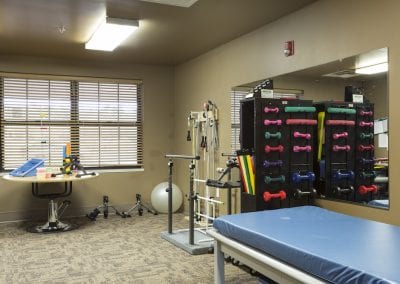
How Does Cabot Health And Rehab, Llc Compare to Other Arkansas Nursing Homes?

Compared to the 100 nursing homes in Arkansas, CABOT HEALTH AND REHAB, LLC's overall rating (1 stars) is below the state average of 3.1, staff turnover (50%) is near the state average of 46%, and health inspection rating (1 stars) is much below the national benchmark.

What Should Families Ask When Visiting Cabot Health And Rehab, Llc?

Based on this facility's data, families visiting should ask: "Can I visit during a mealtime to observe dining assistance and food quality?" "How do you handle medical emergencies, and what is your hospital transfer rate?" "Can I speak with family members of current residents about their experience?"

Is Cabot Health And Rehab, Llc Safe?

Based on CMS inspection data, CABOT HEALTH AND REHAB, LLC has a clean safety record: no substantiated abuse findings (meaning no confirmed cases of resident harm), no Immediate Jeopardy citations (the most serious violation level indicating risk of serious injury or death), and is not on the Special Focus Facility watch list (a federal program monitoring the lowest-performing 1% of nursing homes). The facility has a 1-star overall rating and ranks #100 of 100 nursing homes in Arkansas. While no facility is perfect, families should still ask about staff-to-resident ratios and recent inspection results during their visit.

Do Nurses at Cabot Health And Rehab, Llc Stick Around?

CABOT HEALTH AND REHAB, LLC has a staff turnover rate of 50%, which is about average for Arkansas nursing homes (state average: 46%). Moderate turnover is common in nursing homes, but families should still ask about staff tenure and how the facility maintains care continuity when employees leave.

Was Cabot Health And Rehab, Llc Ever Fined?

CABOT HEALTH AND REHAB, LLC has no federal fines on record. CMS issues fines when nursing homes fail to meet care standards or don't correct problems found during inspections. The absence of fines suggests the facility has either maintained compliance or corrected any issues before penalties were assessed. This is a positive indicator, though families should still review recent inspection reports for the full picture.

Is Cabot Health And Rehab, Llc on Any Federal Watch List?

CABOT HEALTH AND REHAB, LLC is not on any federal watch list. The most significant is the Special Focus Facility (SFF) program, which identifies the bottom 1% of nursing homes nationally based on persistent, serious quality problems. Not being on this list means the facility has avoided the pattern of deficiencies that triggers enhanced federal oversight. This is a positive indicator, though families should still review the facility's inspection history directly.