ARKANSAS VETERANS HOME AT FAYETTEVILLE
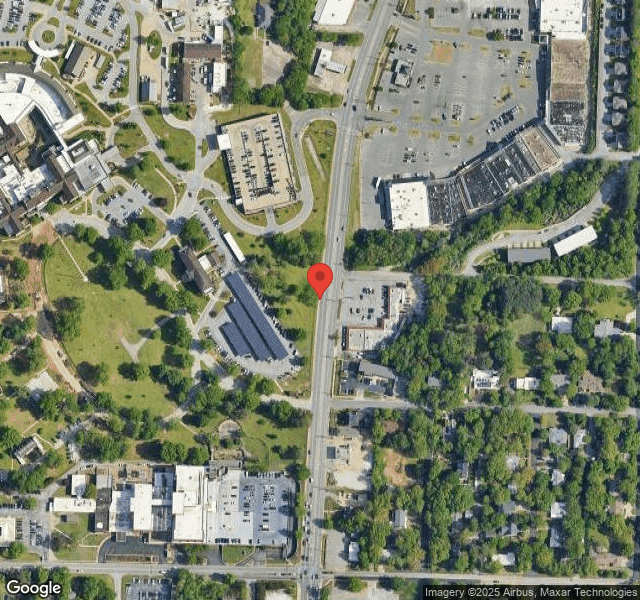
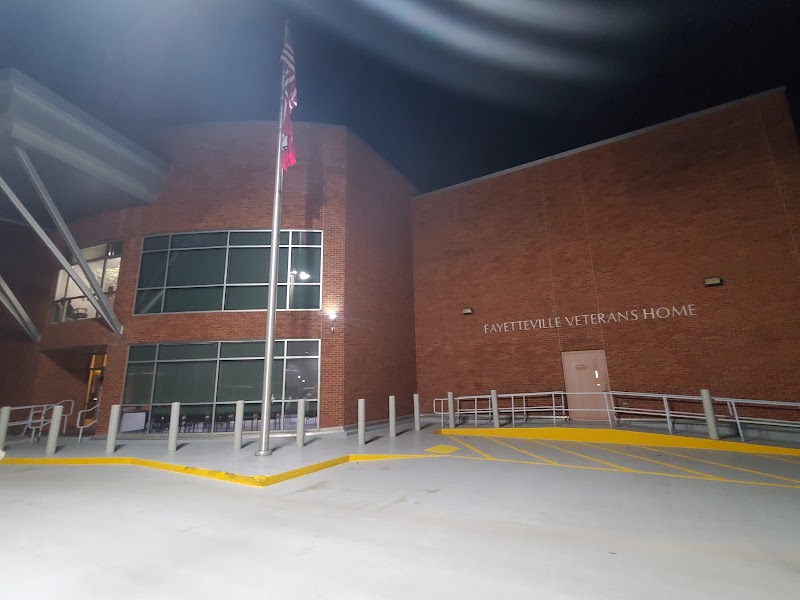
1179 NORTH COLLEGE AVENUE, FAYETTEVILLE, AR 72703 (479) 444-7001
Government - State 47 Beds Independent Data: November 2025
Trust Grade
65/100
#50 of 218 in AR
Last Inspection: March 2025

Within standard 12-15 month inspection cycle. Federal law requires annual inspections.

Overview

The Arkansas Veterans Home at Fayetteville has a Trust Grade of C+, indicating it is decent and slightly above average among nursing homes. It ranks #50 out of 218 facilities in Arkansas, placing it in the top half, and #3 out of 12 in Washington County, meaning only two local options are better. The facility shows an improving trend, reducing issues from 15 in 2024 to 4 in 2025, which is a positive sign. Staffing is rated 4 out of 5 stars, but the 61% turnover rate is concerning, as it is higher than the state average. Notably, the home has no fines on record, which suggests compliance with regulations, and it offers more RN coverage than 86% of state facilities, enhancing resident care. However, there were several concerning incidents during inspections. One involved food not being served at safe temperatures, with hot food dropping below the required 135 degrees and cold food exceeding 41 degrees, posing a risk for foodborne illnesses. Additionally, there was a failure to ensure sufficient staff were present to manage kitchen operations effectively, which could impact the quality of meals served to residents. While the home has strengths in RN coverage and no fines, families should consider the staffing turnover and recent food safety concerns when making their decision.

Trust Score
C+
65/100
In Arkansas
#50/218
Top 22%
Safety Record
Low Risk
No red flags
Inspections
Getting Better
15 → 4 violations
Staff Stability
⚠ Watch
61% turnover. Above average. Higher turnover means staff may not know residents' routines.
Penalties
✓ Good
No fines on record. Clean compliance history, better than most Arkansas facilities.
Skilled Nurses
✓ Good
Each resident gets 47 minutes of Registered Nurse (RN) attention daily — more than average for Arkansas. RNs are trained to catch health problems early.
Violations
⚠ Watch
42 deficiencies on record. Higher than average. Multiple issues found across inspections.
★★★★☆
4.0
Overall Rating
★★★★☆
4.0
Staff Levels
★★★★★
5.0
Care Quality
★★★☆☆
3.0
Inspection Score
Stable
2024: 15 issues
2025: 4 issues

The Good

  • 4-Star Staffing Rating · Above-average nurse staffing levels
  • 5-Star Quality Measures · Strong clinical quality outcomes
  • Full Sprinkler Coverage · Fire safety systems throughout facility
  • No fines on record

Facility shows strength in staffing levels, quality measures, fire safety.

The Bad

Staff Turnover: 61%

15pts above Arkansas avg (46%)

Frequent staff changes - ask about care continuity

Staff turnover is elevated (61%)

13 points above Arkansas average of 48%

The Ugly 42 deficiencies on record

Mar 2025 4 deficiencies
CONCERN (D)

Potential for Harm - no one hurt, but risky conditions existed

Deficiency F0569 (Tag F0569)

Could have caused harm · This affected 1 resident

Based on interviews, record review, and facility document review, it was determined the facility failed to monitor and notify the resident ' s representative of high trust balances prior to reaching t...

Read full inspector narrative →
Based on interviews, record review, and facility document review, it was determined the facility failed to monitor and notify the resident ' s representative of high trust balances prior to reaching the Social Security resource limit for 1 (Resident #12) for 3 residents reviewed for resident trust fund accounting. As a result, Resident #12 lost their Medicaid benefits and was required to private pay for room and board at a personal cost of $7,817.56. The findings include: A review of a facility document titled, Resident Informational Handbook, dated April 2024 indicated, The facility must manage your deposited funds with your best interest in mind. A review of Resident #12's admission Recorded, revealed the facility admitted the resident on 07/15/2015 with diagnoses of mood disorder and schizoaffective disorder. A review of Resident #12's Medical Diagnoses, revealed the principal diagnosis was schizophrenia. The quarterly Minimum Data Set (MDS), with an Assessment Reference Date (ARD) of 12/19/2024, revealed Resident #12 had a Brief Interview for Mental Status (BIMS) score of 8 which indicated the resident had moderate cognitive impairment. A review of Resident #12's account ledger #1532, from 03/01/2024 to the current date of 03/17/2025 revealed, Resident #12's balance on 07/03/2024 was $2,721.82, $721.82 above the allowed limit. The balance reached $9,177.24 on 10/09/2024 and remained above the allowed limit through 10/17/2024 when the balance was $7,817.56. During an interview on 03/18/2025 at 8:38 AM, the Financial Analyst stated she was unaware notices were to be sent out regarding Medicaid limits. The previous business office manager stated we had always handled [Resident #12's] financials and she never had me send any notices out either. After the previous business office manager left abruptly, the Administrator and I started looking at the balance in Resident #12's trust and we switched the resident to private pay until they were eligible for Medicaid again, then they were switched back. A review of a facility statement with a date of 10/01/2024 revealed, Resident #12 was privately charged for room and board starting on 09/27/2024 through 10/31/2024. The charges totaled $7,817.56. The payment was due by 10/10/2024. A review of check #8058 written from the facility to itself on 10/21/20024 indicated that the facility was paid $7,817.56 from trust account #1532. During an interview on 03/18/2025 at 9:35 AM, the Administrator stated there had been no notices sent out for any balance issues. The facility usually issues monthly statements. We do not have any outstanding balance issues right now. The Administrator stated the facility was supposed to let residents or their representatives know before accounts reach $2,000 so they can do a spin down. I believe we are notifying people for spin downs; I have not personally done that. Regarding Resident #12 someone signed the resident in, and later no one wanted to handle the money. The facility did a rep payee to take over money management. I didn't know the resident had that much of a balance. The Financial Analyst reached out to Medicaid and the resident no longer qualified for benefits, so we had to switch the account to private pay and re-apply for benefits later. I was notified of the high balance when the previous business office manager left, and the Financial Analyst told me. I was like, Oh God. I was never aware of a paper given to me for high balance notifications and the risk of losing Medicaid benefits. It would appear in this situation where the facility was the rep payee I should have been notified. It should have been something internal which should have been dealt with well before a balance of $7,000. A review of the Trust Current Account Balance dated 03/17/2025 revealed, Resident #12 had a balance of $2,362.79.
CONCERN (D)

Potential for Harm - no one hurt, but risky conditions existed

Infection Control (Tag F0880)

Could have caused harm · This affected 1 resident

Based on observations, interviews, facility document review, and policy review, it was determined that the facility did not ensure that Enhanced Barrier Precautions (EBP) were carried out for 1 (Resid...

Read full inspector narrative →
Based on observations, interviews, facility document review, and policy review, it was determined that the facility did not ensure that Enhanced Barrier Precautions (EBP) were carried out for 1 (Resident #31) of 4 sampled residents reviewed for Enhanced Barrier Precautions (EBP). The findings include: The significant change Minimum Data Set (MDS) with an Assessment Reference Date (ARD) of 01/09/2025 indicated Resident #31 had a Staff Assessment for Mental Status (SAMS) score of 5 (indicating severely impaired cognitive skills). The MDS indicated that the resident had diagnoses of cerebrovascular accident (stroke), non-Alzheimer's dementia (a decline in the function of the brain), aphasia (the inability to speak), and a gastrostomy [PEG] (feeding tube going directly to the stomach). A) On 03/19/25 at 08:41 AM, Registered Nurse (RN) #3 was observed attempting medication administration via the PEG tube for Resident #31. Resident #31's room was observed to have signage to the right of the door, indicating the resident was on Enhanced Barrier Precautions (EBP). The EBP signage indicated the need for staff to put on Personal Protective Equipment (PPE), that included both a gown and gloves, when performing care for the Resident. PPE was observed to be available inside the room in plastic containers. Steps observed in the process performed by RN #3 were as follows: 1) Performed hand hygiene. 2) Prepped four medications 3) Performed hand hygiene 4) Put on gloves 5) Began the process to give the medications by pausing the tube feeding and manipulating the PEG, attempting to flush the tube with a syringe and/or pull back on the plunger. No gown was observed to have been put on by the nurse in this process. B) On 03/19/25 at 02:45 PM, RN #3 was observed performing a PEG tube residual check (the process of ensuring the Resident's stomach is not too full) for Resident #31. EBP signage was at the door and PPE was available in the resident's room in plastic containers. Steps observed in the process performed by RN #3 were as follows: 1) Performed hand hygeine 2) Put on gloves 3) Obtained syringe for checking residual 4) Began the process to check for residual by pausing the tube feeding and manipulating the PEG and the syringe to check for residual. No gown was observed to have been put on by the nurse in this process. C) On 03/19/2025 at 02:49 PM an interview with RN #3 was conducted after care was completed. RN#3 was asked about the EBP signage for the resident. RN #3 immediately acknowledged they did not follow EBP by putting on a gown. RN #3 was asked why it is important for staff to carry out EBP for the resident. RN #3 answered that it was important because it [PEG] was an open portal into a body cavity. D) On 03/20/2025 at 10:07 AM the Medical Director (MD) was interviewed via telephone. The MD indicated that a resident with a PEG tube would be expected to have EBP. Also, the MD indicated that it was important for EBP to be followed to avoid infection and protect the resident. E) On 03/20/25 at 11:20 AM the Assistant Administrator was interviewed regarding EBP. The Assistant Administrator stated that it was expected for a resident with a PEG to have EBP because the purpose was dual fold - to prevent staff from transmitting microbes to the resident and vice versa. The Assistant Administrator was notified that observations were made of EBP not being carried out as directed by the signage posted at the resident's room. F) On 03/20/25 at 03:50 PM the Infection Preventionist (IP) was interviewed. The IP stated that it was expected for a resident with a PEG to have EBP because it was important to protect the resident when they had an indwelling device. G) The facility policy titled Enhanced Barrier Precautions, with a revised date of 06/01/2024, was reviewed and stated gloves and gowns should be used during high contact resident care activities done in a resident's room. In addition, a high contact activity list was provided within the policy that included Device care: feeding tube. H) The educational document titled In-Service Training on the topic Enhanced Barrier Precautions with a date of 01/13/2025 was reviewed. A phrase in the body of the document attached to the training stated EBP includes the use of gown and gloves during high-contact resident care activities. In the list of high-contact resident care activities was listed device care and use of feeding tubes.
CONCERN (E)

Potential for Harm - no one hurt, but risky conditions existed

Menu Adequacy (Tag F0803)

Could have caused harm · This affected multiple residents

Based on observation, record review, and interview, the facility failed to ensure meals were prepared and served according to the planned written menu to meet the nutritional needs of the residents fo...

Read full inspector narrative →
Based on observation, record review, and interview, the facility failed to ensure meals were prepared and served according to the planned written menu to meet the nutritional needs of the residents for 1 of 2 meals observed. The findings are: 1. The 03/17/2025, the supper menu documented the residents on regular diets were to receive 3 ounces of fried fish. The residents on mechanical soft diets were to receive a #10 scoop (3 ounces or 3/8 cup) of ground fish and 1/2 cup of chopped okra and tomatoes. The residents who received pureed diets were to receive a #8 scoop (4 ounces or 1/2 cup of pureed fish and a #16 scoop (2 ounces or 1/4 cup) of pureed dinner roll. On 3/17/2025 at 5:48 PM, the following observations were made during the supper meal service: a. Dietary [NAME] (DC) #5 used a #30 scoop (1.25 ounces or 1/8 cup) to serve a single portion of pureed bread, instead of a #16 scoop (2 ounces or 1/4 cup) as specified on the menu. b. DC #5 used a 2 ounce (1/4 cup) spoon to serve a single portion of pureed fish, instead of a #8 scoop (4 ounces or 1/2 cup) as specified on the menu. c. DC #5 used a 2-ounce (1/4 cup) spoon to serve a single portion of ground fish, instead of a 10 scoop (3 ounces or 3/8 cup) as specified on the menu. d. DC #5 used a 2-ounce (1/4 cup) spoon to serve a single portion of chopped okra and tomatoes, instead of 1/2 cup as specified on the menu. d. DC #5 served a small fried patty to the residents on regular diets, instead of 3 ounces as specified on the menu. On 3/17/25 at 6:37 PM, the Dietary Manager was asked if he could weigh the same amount of breaded fried fish served to the residents who received regular diets. He did and stated it was 2.5 ounces. He was asked if he could weigh the same hamburger meat served to 8 residents who received hamburger patties due to disliking fish. He did and stated it was 2.7 ounces. 3. On 3/17/25 at 6:45 PM, DC #5 was asked what size of scoop she used when serving pureed food items and mechanical soft diets and she stated she used the blue scoops (2 ounces or 1/4 cup). DC #5 was asked how many servings she gave to each resident. She stated, she gave one (1) serving each. DC #5 was asked if she reviewed the supper menu before meal service. She stated she did not. 4. 03/18/25 at 2:28 PM, during an interview the Distract Manager was asked for the policy on how to follow the menu when preparing and serving food. She stated the kitchen staff used the production sheet.
CONCERN (E)

Potential for Harm - no one hurt, but risky conditions existed

Food Safety (Tag F0812)

Could have caused harm · This affected multiple residents

Based on observation, interview, and facility policy review, the facility failed to ensure opened food items in the freezer and the storage areas were covered and sealed; expired food items were promp...

Read full inspector narrative →
Based on observation, interview, and facility policy review, the facility failed to ensure opened food items in the freezer and the storage areas were covered and sealed; expired food items were promptly removed from stock to maintain freshness; dietary staff practiced good hand hygiene before handling clean equipment or food items; and hot food items were maintained at or above 135 degrees Fahrenheit on the steam table for 2 of 2 meals observed. The findings are: 1. On 3/17/25 at 10:17 AM, the following observations were made on top of the food preparation counter in the kitchen: a. An opened half gallon of soy sauce that was partially used was on top of the food preparation counter in the kitchen. The manufacture specification on the gallon specified to refrigerate after opening. The District Manager stated it should have been in the refrigerator and not out. b. An opened box of corn starch. The box was not covered or sealed. c. An opened box of salt. The box was not covered or sealed. The District Manager confirmed the boxes were open and she would place them in zip sealed bags d. An opened bag of sugar. The bag was not sealed. The District Manger confirmed that the bag was not sealed and started to bag it. e. The Dietary Manager verified none of the items observed were being used for meal preparation at the time of observation. 2. On 3/17/25 at 10:26 AM, two boxes of cookies were on a shelf in the walk-in freezer. The boxes were not covered or sealed, exposing the cookies to air. The Dietary Manger confirmed the cookies were not covered or sealed. 3. On 3/17/25 at 10:31 AM, the following observations were made on a shelf in the dry goods storage room: a. Three of 3 bags of butter fingers were on a shelf in the storage room and had an expiration date of 8/19/2024. The Dietary Manager confirmed the expiration dates on the bags. b. Three of 3 bags of [chocolate cream filled] cookies were on a shelf in the storage room and had an expiration date of 11/18/2024. The Dietary Manager confirmed the cookies were dead . c. A box of spice cake mix was on a shelf in the storage room. The box documented, Best used by 11/18 2024. The Dietary Manager stated he would remove it from the stock. d. The Dietary Manager verified this area of storage was not used to store dented cans or outdated food items that would be intended for disposal. 4. On 3/17/25 at 11:13 AM, eight cartons of strawberry pudding were on a shelf in the refrigerator with an expiration date of 3/5/2025. The Dietary Manager stated they were expired. 5. On 3/17/25 at 11:17 AM, the following observations were made in the freezer in the Hydration Room on the 600 Hall: a. An opened box of taquitos that contained loose taquitos was in the freezer. The box was not covered, exposing the taquitos to possible freezer burn. b. An opened carton of vanilla ice cream was in the freezer. The ice cream was discolored. The Dietary Manager was asked to describe the appearance of the ice cream. He stated it was a little frost bit. It looks like it was melted and refrozen. 6. On 3/17/25 at 12:09 PM, the temperature of the corn beef when taken and read by Dietary [NAME] (DC) #4 on the steam table in the dining room kitchen on the 500 Hall was 126.8 degrees Fahrenheit. The meat item was not reheated before serving to the residents. The Dietary Manager stated the meat should have been reheated before serving. 7. On 3/17/25 11:22 AM, the following observations were made during the noon meal service in the Kitchenette on the 500 Hall: a. DC#4, who was serving the lunch meal, wore gloves on her hands when she received bags of bread and bags of chips from the Dietary Manager and placed them on the counter by the steam table, untied the bags, picked up tray cards and placed them on the meal trays. Without changing gloves and washing her hands, she picked up plates from the plate warmer and placed them on the trays with her contaminated gloved fingers touching the inside of the plates. b. DC #4 still had not changed gloves or washed her hands before, using the same contaminated gloves, removing slices of bread from the bag. DC #4 placed the slices of bread on a plate and used tongs to place corn beef on one side of the bread, positioned the corn beef on top of the bread with her contaminated, gloved hand, then topped the corn beef with sauerkraut and remaining bread with her contaminated gloved hand to create a corn beef sandwich to be served to the residents for lunch. c. On 3/17/25 at 12:26 PM, DC #4 stated she should have washed her hands (before touching food intended to be served to residents). 8. On 3/17/25 at 2: 40 PM, DC #5 was wearing gloves on her hands when she opened the refrigerator and removed a log of cheese and placed it on the counter, contaminating the gloves. Without changing gloves and washing her hands, she started to remove cheese from the original packet and place it in a container to be used when serving the supper meal. DC #5 was asked during an interview what she should have done after touching dirty objects, before handling clean equipment. DC # 5 stated, changed gloves and washed his hands 9. On 3/17/25 4:05 PM, DC #5 was wearing gloves on her hands when she picked up a box of clear plastic film and placed it on the counter. Without changing gloves and washing her hands, she picked up a clean blade and attached it to the base of the blender to be used in pureeing food items to be served to the residents for who required pureed diets. DC #5 was asked during an interview what she should have done after touching dirty objects before handling clean equipment. DC # 5 stated, changed gloves and washed his hands. 10. A review of facility policy titled, Proper Hand Hygiene initiated 2017, provided by the Dietary Manager on 3/18/2025 indicated, staff should wash their hands with soap and water in between gloves changes, when changing tasks, and after removing gloves and before putting in a fresh pair of gloves. 11. A review of facility policy titled, Food Storage: Dry Goods initiated 2023 provided by the District Manager on 3/20/2025 indicated all food items will be stored in a manner appropriate and timely utilization based on the principle of first in first out inventory management.
Jan 2024 15 deficiencies
CONCERN (D)

Potential for Harm - no one hurt, but risky conditions existed

Deficiency F0645 (Tag F0645)

Could have caused harm · This affected 1 resident

**NOTE- TERMS IN BRACKETS HAVE BEEN EDITED TO PROTECT CONFIDENTIALITY** Based on record review and interview, the facility failed to ensure a Preadmission Screening and Resident Review (PASRR) was com...

Read full inspector narrative →
**NOTE- TERMS IN BRACKETS HAVE BEEN EDITED TO PROTECT CONFIDENTIALITY** Based on record review and interview, the facility failed to ensure a Preadmission Screening and Resident Review (PASRR) was completed before a resident was admitted to the facility for 1 (Resident #3) of 1 (Resident #3) sampled residents who required a PASRR before admission to a skilled nursing facility. The failed practice had the potential to affect 49 residents. The findings are: Resident #3 was admitted on [DATE]. He has active diagnoses of Post Traumatic Stress Disorder and anxiety disorder. A Quarterly Minimum Data Set with an Assessment Reference Date of 1/16/2024 documented the resident scored 14 (indicates cognitively intact) on a Brief Interview for Mental Status. a. On 1/24/2024 at 1:21 PM, the resident's electronic clinical record was reviewed and there was no PASRR Level I noted in record at this time. b. On 1/24/2024 at 2:55 PM, the Administrator confirmed he did not have anything on this resident, after being asked to provide a Level I or Level ll PASRR or a letter from [a screening company] for this resident. d. On 2/24/2024 at 3:40 PM, the Administrator was asked, Do you know if [Resident #3] had a Level I PASRR done? He reviewed the the Resident's electronic clinical record and was unable to locate any information. When should a resident have a Level I PASRR done? He stated, Before they come into the facility or if they get a new diagnosis.
CONCERN (D)

Potential for Harm - no one hurt, but risky conditions existed

Deficiency F0657 (Tag F0657)

Could have caused harm · This affected 1 resident

Based on interview, observation, and record review, the facility failed to ensure that an order to administer oxygen was written for 1 Resident (R #2) of 1 sampled resident. Who are receiving oxygen t...

Read full inspector narrative →
Based on interview, observation, and record review, the facility failed to ensure that an order to administer oxygen was written for 1 Resident (R #2) of 1 sampled resident. Who are receiving oxygen to prevent desaturation. The findings are: 1. On 1/22/24 at 4:49 PM, surveyor observed R (#2) with oxygen via nasal canula at 3 liters per minute. 2. On 1/23/24 at 10:24 AM, surveyor observed R(#2) sitting in wheel chair with oxygen at 3liters per minute. 3. On 1/23/24 at 2:57 PM, a review of R#2 medical record, physician orders revealed there was no order for oxygen to be administered. a. On 1/25/24 at 10:41 AM, surveyor interviewed Registered Nurse (RN)#1, When a resident is receiving oxygen should they have an order. RN#1 said yes, they should. The surveyor asked, who is responsible for making sure an order is placed in the computer. RN#1 said the doctor or the nurse or whoever receives the order should put it in. b. On 1/25/24 at 10:48 AM, the surveyor interviewed Director of Nurses (DON), and asked, when a resident is receiving oxygen should they have an order? The DON said, yes, any medication given should have an order. The surveyor asked, who is responsible for making sure an order is placed in the computer. The DON said nurse, RN supervisor, DON, or whoever takes the order. On 1/25/24 at 11:03 AM, administrator provided policy titled Oxygen Safety . Procedure 1. Oxygen therapy is administered to the resident only upon the written order of a licensed physician .
CONCERN (E)

Potential for Harm - no one hurt, but risky conditions existed

ADL Care (Tag F0677)

Could have caused harm · This affected multiple residents

**NOTE- TERMS IN BRACKETS HAVE BEEN EDITED TO PROTECT CONFIDENTIALITY** Based on observation, record review, and interview, the facility failed to ensure nail care was provided, to maintain good perso...

Read full inspector narrative →
**NOTE- TERMS IN BRACKETS HAVE BEEN EDITED TO PROTECT CONFIDENTIALITY** Based on observation, record review, and interview, the facility failed to ensure nail care was provided, to maintain good personal hygiene for 1 Resident(#27) of 1 sample mix residents who required assistance with nail care. The findings are: A review of an admission Record indicated the facility admitted Resident #27 with diagnosis that included dementia. The annual Minimum Data Set (MDS), dated [DATE], revealed Resident #27 had a Brief Interview for Mental Status (BIMS) score of 3, which indicated the resident had severe cognitive impairment. The resident required maximum assist for personal hygiene and toileting; and was dependent on staff for bathing. Review of Resident #27 ' s Care Plan, revised on 12/7/2023, revealed the resident had an activity of daily living (ADL) self-care performance deficit related to (r/t) dementia. Interventions included, check nail length and trim and clean on bath day and as necessary. Report any changes to the nurse, initiated 7/12/2022; I am totally dependent on 1 staff to provide shower at least twice weekly and as necessary, initiated on 12/7/2023; provide sponge bath when a full bath or shower cannot be tolerated, initiated on 7/12/2022. Review of a facility policy titles, Care of Fingernails/Toenails, dated October 2010, specified, The purpose of this procedure are to clean the nail bed, to keep nails trimmed, and to prevent infections. Nail care includes daily cleaning and regular trimming. Proper nail care can aid in the prevention of skin problems around the nail bed. On 01/22/24 at 5:41 PM, Resident # 27 observed sitting in the dining room. Resident #27 ' s fingernails are long with a dried black substance under them. 01/22/24 05:06 PM, Resident #27 observed with fingernails long with a dried black substance under them. On 1/23/2024 at 2:27 PM, Resident #27 observed with fingernails are long with a dried black substance under them. On 01/24/24 12:54 PM, Resident #27 observed self-feeding lunch in the dining room. Fingernails are long with a dark black substance under them. On 1/25/2024 at 10:39 AM, Certified Nursing Assistant (CNA) #1 was asked when nail care was done and who does it. CNA #1 stated, The aides can do it, and usually on their shower days or anytime the need to be done. CNA #1 was asked why should residents nails be clean and free of dried black substances. CNA #1 stated, Because it's nasty. CNA #1 was asked to describe Resident #27 ' s nails. CNA #1 stated, Gunk, most likely food, (named Resident #27) likes to spit food out and play in it. CNA #1 was asked when Resident #27 received a shower. CNA #1 stated, yesterday. On 1/25/2024 at 10:45 AM, Registered Nurse (RN) #1 was asked when nail care was performed and who performs it. RN #1 stated, During showers and the CNA's unless they are diabetic, then the nurses. RN #1 was asked why should residents nails be free of dried black substances. RN #1 stated, Because it's disgusting. RN#1 was asked to describe Resident #27 ' s nails. RN#1 stated, I don't know what it is, a dry black substances under the fingernails. RN#1 was asked to measure Resident #27 ' s nails from the edge of the finger to the end of the nail on the last four digits of the left hand. RN#1 stated, 0.6 centimeters. On 1/25/2024 at 10:55 AM The Infection Control Preventionist (ICP) was asked why should residents nails be free of dried black substances? The ICP stated, They should be free of any materials under the nails, we pray it's not food, because we are in Long Term Care (LTC), and for cleanness.
CONCERN (E)

Potential for Harm - no one hurt, but risky conditions existed

Quality of Care (Tag F0684)

Could have caused harm · This affected multiple residents

**NOTE- TERMS IN BRACKETS HAVE BEEN EDITED TO PROTECT CONFIDENTIALITY** Based on observations, record review and interviews, the facility failed to ensure residents with injuries of unknown source, re...

Read full inspector narrative →
**NOTE- TERMS IN BRACKETS HAVE BEEN EDITED TO PROTECT CONFIDENTIALITY** Based on observations, record review and interviews, the facility failed to ensure residents with injuries of unknown source, received care and treatment according to practical nursing standards, for 1 (Resident #27) of 1 sampled residents. The findings are: A review of an admission Record indicated the facility admitted R#27 with diagnosis that included dementia. The annual Minimum Data Set (MDS), dated [DATE], revealed Resident #27 had a Brief Interview for Mental Status (BIMS) score of 3, which indicated the resident had severe cognitive impairment. The resident required maximum assistance for personal hygiene and toileting; and was dependent on staff for bathing. A review of Resident #27 Care Plan, initiated on 12/7/2023, revealed the resident had an activity of daily living (ADL) self-care performance deficit related to(r/t) dementia, fatigue, impaired balance, musculoskeletal impairment. Interventions included skin inspection: the resident requires skin inspection. Observe for redness, open areas, scratches, cuts, bruises, and report changes to the Nurse; initiated on 7/12/2022. Review of a facility policy titled, Identifying Types of Abuse, dated September 2022, specified, As part of the abuse prevention strategy, volunteers, employees and contractors hired by this facility are expected to be able to identify the different types of abuse that may occur against residents. Abuse of any kind against residents is strictly prohibited. Physical abuse includes, but is not limited to hitting, slapping, biting, punching, or kicking. Examples of injuries that could indicate physical abuse include but are not limited to: injuries that are non-accidental or unexplained; bruises, including those found in unusual locations such as the head, neck, lateral locations on the arms, or posterior torso and trunk, or bruises in shapes (e.g., finger imprints). Staff are trained on abuse reporting and investigation, as well as on requirements to report reasonable suspicion of crime. Review of a facility policy titled, Abuse, Neglect, Exploitation or Misappropriation - Reporting and Investigating, dated September 2022, specified, All reports of resident abuse (including injuries of unknown origin), neglect, exploitation, or theft/misappropriation of resident property are reported to local, state and federal agencies (as required by current regulations) and thoroughly investigated by facility management. Findings of all investigations are documented and reported. If resident abuse, neglect, exploitation, misappropriation of resident property or injury of unknown source is suspected, the suspicion must be reported immediately to the administrator and to other officials according to state law. Review of a facility policy titled, Change in a Resident's Condition or Status, dated February 2021, specified, Our facility promptly notifies the resident, his or her attending physician, and the resident representative of changes in the resident's medical/mental condition and/or status (e.g. changes in level of care, billing/payments, resident rights, etc.). The nurse will notify the resident's attending physician on call when there has been a (an): accident or incident involving the resident. Discovery of injuries of an unknown source. On 01/22/24 at 05:06 PM, Resident #27 observed sitting in the dining room. A large dark purple in color, area observed to the top of Resident #27 ' s left hand. On 01/22/24 at 5:41 PM, Resident #27 observed sitting in the dining room. A large dark purple in color, area covering the top of the left hand. On 1/23/2024 at 2:27 PM, Resident #27 observed with a large dark purple in color area covering the top of the left hand. Resident #27 was asked how it happened and Resident #27 stated I don't know. A review of the Incident Report, dated 1/4/2024 through 10/23/2024 did not reveal any incident report documented for Resident #27. A review of Resident #27 Progress Note, dated 12/1/2023 through 1/23/2024 did not document any skin issues related to Resident #27 left hand. A review of Resident #27 Skin Assessment, dated 1/19/2024, 1/12/2024, and 1/10/2024, did not document any skin issues related to Resident #27 ' s left hand. On 1/24/2024 at 9:05 AM, Certified Nursing Assistant (CNA) #1 was asked, what are you supposed to do if you notice any new skin issues with the residents? CNA #1 stated, Notify the nurse. Resident #27 has a big bruise on the back of the hand. I reported it to (named) Licensed Practical Nure (LPN) #5 yesterday. CNA #1 was asked what happened to Resident #27 ' s hand. CNA #1 stated, I don't know, and Resident #27 can't tell you. CNA #1 was asked, have you been trained on abuse and reporting of injuries of unknown sources? CNA #1 stated, Yes, we go over it every time there is an issue. On 1/24/2024 at 9:12 AM, CNA #5 was asked, what are you supposed to do if you notice any new skin issues with the residents. CNA #5 stated Report to the nurse. CNA #5 was asked what happened to Resident #27 ' s left hand and did you report it to anyone? CNA #5 stated, It wasn't there last Thursday, the last day I worked. I mentioned it to LPN #5 on 1/23/2024 and she was off and didn't know how it happened. CNA #5 verbally confirmed the facility had provided training on abuse and reporting of unknown origins. On 1/24/2024 at 9:15 AM, Licensed Practical Nurse (LPN) #4 was asked what are staff supposed to do if you notice any new skin issues with the residents. LPN #4 stated, Notify the nurse. LPN #4 was asked, what happened to the top of Resident #27 ' s left hand? LPN #4 stated, That's the first time knowing about it. LPN #4 was asked if there was an incident report for Resident #27 left hand. LPN #4 looked in the computer and stated, I don't see any notes for the hand, and I don't see an incident report, I can make one. LPN #4 was asked, when is an incident and accident report performed? LPN #4 stated, When there is a fall, skin tears, bruises like that, when they elope, any abuse, pressure ulcers, and any injuries. LPN #4 was asked, has anyone reported Resident #27 ' s left hand to you? LPN #4 stated, Not that I'm aware of. LPN #4 confirmed the facility had provided abuse and reporting of abuse training to staff. On 1/24/2024 at 9:45 AM, the Administrator was asked what are staff supposed to do if you notice any new skin issues with the residents. The Administrator stated, Report to the nurse. The Administrator was asked, what happened to Resident #27 ' s left hand? The Administrator stated, I believe Resident #27 had a blood draw. The Administrator was asked, should that be documented somewhere? The Administrator stated, It should be documented somewhere, we should notice changes. The Administrator was asked if Resident #27 ' s left hand had been reported. The Administrator stated, Not specifically. The Administrator was asked, how are you notified of any incidents? The Administrator stated, They call immediately if it's abuse, and they will send texts, usually in morning meeting I'm updated, and I have to sign off in point click care on the incidents and accidents. The Administrator confirmed the facility provides staff with abuse and reporting of abuse training.
CONCERN (E)

Potential for Harm - no one hurt, but risky conditions existed

Accident Prevention (Tag F0689)

Could have caused harm · This affected multiple residents

**NOTE- TERMS IN BRACKETS HAVE BEEN EDITED TO PROTECT CONFIDENTIALITY** Based on observations, record review and interviews, the facility failed to ensure residents environment was free of accidents a...

Read full inspector narrative →
**NOTE- TERMS IN BRACKETS HAVE BEEN EDITED TO PROTECT CONFIDENTIALITY** Based on observations, record review and interviews, the facility failed to ensure residents environment was free of accidents and hazards as possible, as evidenced by failure to ensure medications were not left at bedside for 1 (Resident #26) of 1 sampled resident; and failed to ensure staff reported the potential injury for 1 (Resident #11) of 1 sampled residents, to prevent further possible injury and delaying possible treatment, for 1 (Resident #11) of 1 sampled resident. The findings are: A review of an admission Record indicated the facility admitted Resident #11 with a diagnosis of rheumatoid arthritis and diabetes mellitus. The quarterly Minimum Data Set (MDS), dated [DATE], revealed Resident #11 had a Brief Interview for Mental Status (BIMS) score of 13, which indicated the resident was cognitively intact. The resident required maximum assist for most all activities of daily living (ADL). Review of Resident #11 Care Plan, revised on 12/6/2023, revealed the resident had an ADL self-care performance deficit related to (r/t) activity intolerance, fatigue, impaired balance. Interventions included a revision date on 12/6/2023; transfer: I requires assistance by 1-2 staff to move between surfaces and as necessary. Review of a facility policy titled, Change in a Resident's Condition or Status, dated February 2021, specified, Our facility promptly notifies the resident, his or her attending physician, and the resident representative of changes in the resident's medical/mental condition and/or status (e.g. changes in level of care, billing/payments, resident rights, etc.). The nurse will notify the resident's attending physician on call when there has been a (an): accident or incident involving the resident. On 01/22/24 5:11 PM Certified Nursing Assistant (CNA) #4 was observed pushing Resident #11 in a wheelchair down the hall of 500 hall. CNA #4 ran over Resident #11 ' s left foot with the wheelchair wheel. Resident #11 was observed to make a face and yelled out. CNA #4 was overheard to ask R#11 if he was ok. Resident #11 stated his left foot hurt. CNA #4 told Resident #11 he needed foot pedals for his wheelchair. CNA #4 asked Resident # 11 if he wanted to go take a shower. CNA #4 and Resident #11 then disappeared behind the wall of the hall. On 01/23/24 2:34 PM, Resident # 11 observed sitting in a wheelchair in room. Resident # 11 was how his foot was, the one that got ran over yesterday. Resident # 11 stated, it was ok. A review of Resident #11 Progress Notes, dated 12/24/2023 through 1/22/2024 revealed no documentation related to injury of Resident #11 left foot. A review of the Incident Report, dated 1/4/2024 through 10/23/2024 did not reveal any incident report documented for Resident #11. On 1/24/24 at 9:05 AM, Certified Nursing Assistant (CNA) #1 was asked, what are you supposed to do if a staff runs over a resident ' s foot with a wheelchair? CNA #1 stated, Tell the nurse. CNA #1 was asked, have you been trained on abuse and reporting of injuries of unknown sources? CNA #1 stated, Yes, we go over it every time there is an issue. On 1/24/24 at 9:15 AM, Licensed Practical Nurse (LPN) #4 was asked what are staff supposed to do if they run over a resident ' s foot with a wheelchair? LPN #4 stated, Tell the nurse, we assess, and do an incident report. LPN #4 was asked, when is an incident and accident report performed? LPN #4 stated, When there is a fall, skin tears, bruises like that, when they elope, any abuse, pressure ulcers, and any injuries. LPN #4 confirmed the facility had provided abuse and reporting of abuse training to staff. On 1/24/24 at 9:29 AM LPN #1 was asked what are staff supposed to do if they run over a resident ' s foot with a wheelchair? LPN #1 stated, Notify the nurse, we assess it and notify the doctor, fill out an I & A (incident and accident) report. LPN #1 was asked do you have an I & A on Resident #11? LPN #1 stated, I haven't done one on R#11 (him). LPN #1 checked the computer and stated, There is no I & A. LPN #1 was asked, has it been reported to you that a CNA ran over resident #11 ' s left foot? LPN #1 stated, No. LPN #1 was asked, have you been trained / in-serviced over reporting abuse and injuries to residents during care? LPN #1 stated, yes. On 1/24/2024 at 9:45 AM, the Administrator was asked what are staff supposed to do if they run over a resident ' s foot with a wheelchair while providing care? The Administrator stated, Report to the nurse. The Administrator was asked when is an I & A performed? The Administrator stated, When there is an Incident & Accident, for skin tears, any changes, anything they don't know the cause of, or resident to resident. The Administrator was asked, do you have an I & A on Resident #11? The Administrator stated, Not off the top of my head. The Administrator was asked has anyone reported to you that a CNA ran over Resident #11 ' s foot? The Administrator stated, no. The Administrator was asked, how are you notified of any incidents? The Administrator stated, They call immediately if it's abuse, and they will send texts, usually in morning meeting I'm updated, and I have to sign off in point click care on the incidents and accidents. The Administrator verbally confirmed staff had been trained on reporting abuse and reporting of injuries to residents. On 1/24/2024 at 11:27 AM, the Administrator stated, I spoke with CNA #4 and CNA #4 admitted to bumping and rolling over Resident #11 ' s foot. I spoke with CNA #4 about reporting and that it should have been reported, but CNA #4 didn't realize it at the time. We are going to be doing one on one with CNA #4. On 1/24/2024 at 12:04 PM, CNA #4 was interviewed via telephone. CNA #4 was asked to describe what happened with Resident #11 and the wheelchair on 1/22/2024. CNA #4 stated, I was on showers that day, and was pushing named Resident #11 to the shower. Named Resident #11 usually propels in the wheelchair so we can't use foot pedals, as I was pushing named Resident #11, named Resident #11, did not lift his feet. His foot got caught on the wheel and came to a stop. We stopped and then went to the shower room. I was unaware I needed to fill out an I & A report. The Administrator told me. I did to my knowledge, what I was supposed to do. CNA #4 was asked, have you been trained on reporting resident injury during care. CNA #4 stated, I don't work for the home (named)VA), I didn't see it as an accident. On 1/22/24 at 4:32 PM, surveyor observed Resident #26 sitting in his chair having several different medication ointments on bedside table and on his computer table. On 1/23/2 at 9:25 AM, surveyor observed Resident #26 in his room lying on his bed with several medication tubes of different ointments at his bedside. On 1/24/24 at 8:25 AM, observed resident #19 in his recliner with ointment medication tubes beside his bed on table and on his computer table. On 1/24/24 at 9:42 AM, the surveyor reviewed resident medical records to determine if a self- medication assessment had been completed. No assessment was identified. On 1/25/24 at 1:30 PM, the surveyor interviewed Registered Nurse #1 (RN) and asked should medications be left at a resident ' s bedside? RN#1 confirmed, only if they have had a self- medication assessment done and only the medication approved can be in the room locked in the box. On 1/25/24 at 1:36 PM, the surveyor interviewed the Director of Nursing (DON), and asked should medication be left at a resident ' s bedside. [NAME] confirmed, no unless they have been evaluated to self- administer their own medication. On 1/25/24 at 1:48 PM, the Director of Nurses provided a policy titled Medication Labeling and Storage Policy Heading the facility stores all medications and biologicals in locked compartments under proper temperature, humidity and light controls. Only authorized personnel have access with keys .4. Compartments (including, but not limited to, drawers, cabinets, rooms, refrigerators, carts, and boxes) containing medications and biologicals are locked when not in use, and trays, or carts used to transport such items are not left unattended if open or otherwise potentially available to others .
CONCERN (E)

Potential for Harm - no one hurt, but risky conditions existed

Respiratory Care (Tag F0695)

Could have caused harm · This affected multiple residents

Based on observation, interview, and record review, the facility failed to ensure resident individualized care plan was updated to ensure appropriate care was received for 1 (Resident #2) of 1 sampled...

Read full inspector narrative →
Based on observation, interview, and record review, the facility failed to ensure resident individualized care plan was updated to ensure appropriate care was received for 1 (Resident #2) of 1 sampled resident who had a new service or level of care ordered or provided. The findings are: 1. On 01/22/24 at 4:49 PM, surveyor observed R (#2) had oxygen at 3 liters via nasal cannula being administered while resident was lying in his bed. 2. On 01/23/24 at 10:24 AM, surveyor observed R (#2) with oxygen being administered at 3 liters nasal cannula while resident was up in his chair. 3. On 01/23/23 at 2:50 PM, surveyor did a record review of care plan for R (#2) and noted there was no entry in care plan for resident to have oxygen administered. 4. On 01/25/24 at 8:50 AM, surveyor interviewed Minimum Data Set (MDS) coordinator, how do you know when to care plan something when it is added to a resident care. MDS confirmed, in our morning meetings we discuss it also I print out new orders, fall summary and risk data sheet each day. Who is responsible for care planning new interventions, MDS confirmed, I am. If a resident has a new intervention/order related to care put in place, should it be care planned. MDS confirmed, yes it should. 5. On 01/25/24 at 10:55 AM, the administrator provided policy titled Care Plans, Comprehensive Person-Centered . Policy Interpretation and Implementation .11. Assessments of residents are ongoing and care plans are revised as information about the residents and the residents' conditions change .
CONCERN (E)

Potential for Harm - no one hurt, but risky conditions existed

Deficiency F0726 (Tag F0726)

Could have caused harm · This affected multiple residents

**NOTE- TERMS IN BRACKETS HAVE BEEN EDITED TO PROTECT CONFIDENTIALITY** Based on observations, record reviews, and interviews, the facility failed to ensure Certified Nursing Assistants (CNA's) and Li...

Read full inspector narrative →
**NOTE- TERMS IN BRACKETS HAVE BEEN EDITED TO PROTECT CONFIDENTIALITY** Based on observations, record reviews, and interviews, the facility failed to ensure Certified Nursing Assistants (CNA's) and Licensed Practical Nurses (LPN's) were able to demonstrate competency in identifying, reporting, and investigating injuries of unknown sources for 1 (Resident #27) of 1 sampled residents; and failure to report injury to residents during care for 1 (Resident #11) of 1 sampled residents, to prevent possible further injury or harm, and to rule out possible abuse. This failed practice had the potential to affect 49 residents. The findings are: Review of a facility policy titled, Change in a Resident's Condition or Status, dated February 2021, specified, Our facility promptly notifies the resident, his or her attending physician, and the resident representative of changes in the resident's medical/mental condition and/or status (e.g. changes in level of care, billing/payments, resident rights, etc.). The nurse will notify the resident's attending physician on call when there has been a (an): accident or incident involving the resident. Review of a facility policy titled, Identifying Types of Abuse, dated September 2022, specified, As part of the abuse prevention strategy, volunteers, employees and contractors hired by this facility are expected to be able to identify the different types of abuse that may occur against residents. Abuse of any kind against residents is strictly prohibited. Physical abuse includes, but is not limited to hitting, slapping, biting, punching, or kicking. Examples of injuries that could indicate physical abuse include but are not limited to: injuries that are non-accidental or unexplained; bruises, including those found in unusual locations such as the head, neck, lateral locations on the arms, or posterior torso and trunk, or bruises in shapes (e.g., finger imprints). Staff are trained on abuse reporting and investigation, as well as on requirements to report reasonable suspicion of crime. Review of a facility policy titled, Abuse, Neglect, Exploitation or Misappropriation - Reporting and Investigating, dated September 2022, specified, All reports of resident abuse (including injuries of unknown origin), neglect, exploitation, or theft/misappropriation of resident property are reported to local, state and federal agencies (as required by current regulations) and thoroughly investigated by facility management. Findings of all investigations are documented and reported. If resident abuse, neglect, exploitation, misappropriation of resident property or injury of unknown source is suspected, the suspicion must be reported immediately to the administrator and to other officials according to state law. Review of a facility in-service titled, Abuse & Neglect of a Resident, dated 9/28, indicated by signing staff acknowledge receipt of training/guidelines and agree to abide by the training/guidelines as instructed. Review of a facility check off for Licensed Practical Nurse (LPN) #5, dated 9/8/2023, documented LPN #5 received training / orientation related to Incidents and Accidents, and reporting alleged or suspected abuse/neglect. Review of a facility CNA Proficiency Check Off, dated 9/4/2023, for CNA #1, revealed CNA #1 met standards for abuse and infection control. Review of a facility, In-Service Training, dated 12/5/2023, documented, Complete all I & A's, also we need an immediate intervention put in on the Notes section when you are filling out your I & A, but it also needs to be updated in the resident's care plan also. 1. A review of an admission Record indicated the facility admitted Resident #11 with a diagnosis of rheumatoid arthritis and diabetes mellitus. The quarterly Minimum Data Set (MDS), dated [DATE], revealed Resident #11 had a Brief Interview for Mental Status (BIMS) score of 13, which indicated the resident was cognitively intact. The resident required maximum assist for most all activities of daily living (ADL). Review of Resident #11 Care Plan, revised on 12/6/2023, revealed the resident had an ADL self-care performance deficit related to (r/t) activity intolerance, fatigue, impaired balance. Interventions included a revision date on 12/6/2023; transfer: I require assistance by 1-2 staff to move between surfaces and as necessary. On 01/22/24 5:11 PM, Certified Nursing Assistant (CNA) #4 was observed pushing Resident #11 in a wheelchair down the hall of the 500 hall. CNA #4 ran over Resident # 11 ' s left foot with the wheelchair wheel. Resident # 11 was observed to make a face and yelled out. CNA #4 was overheard to ask Resident #11 if he was ok. Resident #11 stated his left foot hurt. CNA #4 told Resident #11 he needed foot pedals for his wheelchair. CNA #4 asked Resident #11 if he wanted to go take a shower. CNA #4 and Resident # 11 then disappeared behind the wall of the hall. On 01/23/24 02:34 PM, the Surveyor asked Resident #11 how is his foot, the one that got ran over yesterday. Resident # 11 said it was ok. A review of Resident #11 Progress Notes, dated 12/24/2023 through 1/22/2024 revealed no documentation related to injury of Resident #11 ' s left foot. A review of the Incident Report, dated 1/4/2024 through 10/23/2024 did not reveal any incident report documented for Resident #11. On 1/24/2024 at 9:05 AM, Certified Nursing Assistant (CNA) #1 was asked, what are you supposed to do if a staff runs over a resident ' s foot with a wheelchair? CNA #1 stated, Tell the nurse. CNA #1 was asked, have you been trained on abuse and reporting of injuries of unknown sources? CNA #1 stated, Yes, we go over it every time there is an issue. On 1/24/2024 at 9:15 AM, Licensed Practical Nurse (LPN) #4 was asked what are staff supposed to do if they run over a resident ' s foot with a wheelchair? LPN #4 stated, Tell the nurse, we assess, and do an incident report. LPN #4 was asked, when is an incident and accident report performed? LPN #4 stated, When there is a fall, skin tears, bruises like that, when they elope, any abuse, pressure ulcers, and any injuries. LPN #4 confirmed the facility had provided abuse and reporting of abuse training to staff. On 1/24/2024 at 9:29 AM LPN #1 was asked what are staff supposed to do if they run over a resident ' s foot with a wheelchair? LPN #1 stated, Notify the nurse, we assess it and notify the doctor, fill out an I & A (incident and accident) report. LPN #1 was asked do you have an I & A on Resident #11? LPN #1 stated, I haven't done one on named Resident #11 (him). LPN #1 checked the computer and stated, There is no I & A. LPN #1 was asked, has it been reported to you that a CNA ran over Resident #11 ' s left foot? LPN #1 stated, no. LPN #1 was asked have you been trained / in-serviced over reporting abuse and injuries to residents during care? LPN #1 stated, yes. On 1/24/2024 at 9:45 AM The Administrator was asked what are staff supposed to do if they run over a resident ' s foot with a wheelchair while providing care? The Administrator stated, Report to the nurse. The Administrator was asked when is an I & A performed? The Administrator stated, When there is an Incident & Accident, for skin tears, any changes, anything they don't know the cause of, or resident to resident. The Administrator was asked do you have an I & A on Resident #11? The Administrator stated, Not off the top of my head. The Administrator was asked has anyone reported to you that a CNA ran over Resident #11 ' s foot? The Administrator stated, no. The Administrator was asked, how are you notified of any incidents? The Administrator stated, They call immediately if it's abuse, and they will send texts, usually in morning meeting I'm updated, and I have to sign off in point click care on the incidents and accidents. The Administrator verbally confirmed staff had been trained on reporting abuse and reporting of injuries to residents. On 1/24/2024 at 11:27 AM The Administrator stated, I spoke with CNA #4 and CNA #4 admitted to bumping and rolling over named Resident #11 foot. I spoke with CNA #4 about reporting and that it should have been reported, but CNA #4 didn't realize it at the time. We are going to be doing one on one with CNA #4. On 1/24/2024 at 12:04 PM CNA #4 was interviewed via telephone. CNA #4 was asked to describe what happened with R#11 and the wheelchair on 1/22/2024. CNA #4 stated, I was on showers that day, and was pushing named Resident #11 to the shower. Named Resident #11 usually propels in the wheelchair so we can't use foot pedals, as I was pushing named Resident #11, named Resident #11 did not lift his feet. His foot got caught on the wheel and came to a stop. We stopped and then went to the shower room. I was unaware I needed to fill out an I & A report. The Administrator told me. I did to my knowledge, what I was supposed to do. CNA #4 was asked have you been trained on reporting resident injury during care? CNA #4 stated, I don't work for the home named facility (VA), I didn't see it as an accident. 2. A review of an admission Record indicated the facility admitted Resident #27 with diagnosis that included dementia. The annual Minimum Data Set (MDS), dated [DATE], revealed Resident #27 had a Brief Interview for Mental Status (BIMS) score of 3, which indicated the resident had severe cognitive impairment. The resident required maximum assist for personal hygiene and toileting; and was dependent on staff for bathing. A review of Resident #27 Care Plan, initiated on 12/7/2023, revealed the resident had an activity of daily living (ADL) self-care performance deficit related to(r/t) dementia, fatigue, impaired balance, musculoskeletal impairment. Interventions included skin inspection: the resident requires skin inspection. Observe for redness, open areas, scratches, cuts, bruises, and report changes to the Nurse; initiated on 7/12/2022. On 01/22/24 at 5:06 PM, Resident #27 observed sitting in the dining room. A large dark purple in color, area observed to the top of Resident #27 ' s left hand. On 01/22/24 at 5:41 PM, Resident #27 observed sitting in the dining room. A large dark purple in color, area covering the top of the left hand. On 1/23/2024 at 2:27 PM, Resident #27 observed with a large dark purple in color area covering the top of the left hand. Resident #27 was asked how it happened and Resident #27 stated I don't know. A review of the Incident Report, dated 1/4/2024 through 10/23/2024 did not reveal any incident report documented for Resident #27. A review of Resident #27 ' s Progress Note, dated 12/1/2023 through 1/23/2024 did not document any skin issues related to Resident #27 left hand. A review of Resident #27 ' s Skin Assessment, dated 1/19/2024, 1/12/2024, and 1/10/2024, did not document any skin issues related to R#27 left hand. On 1/24/2024 at 9:05 AM, Certified Nursing Assistant (CNA) #1 was asked, what are you supposed to do if you notice any new skin issues with the residents? CNA #1 stated, Notify the nurse. Resident #27 has a big bruise on the back of the hand. I reported it to LPN #5 yesterday. CNA #1 was asked what happened to Resident #27 ' s hand. CNA #1 stated, I don't know, and Resident #27 can't tell you. CNA #1 was asked, have you been trained on abuse and reporting of injuries of unknown sources? CNA #1 stated, yes, we go over it every time there is an issue. On 1/24/2024 at 9:12 AM, CNA #5 was asked, what are you supposed to do if you notice any new skin issues with the residents. CNA #5 stated Report to the nurse. CNA #5 was asked what happened to Resident #27 ' s left hand and did you report it to anyone? CNA #5 stated, It wasn't there last Thursday, the last day I worked. I mentioned it to LPN #5 on 1/23/2024 and she was off and didn't know how it happened. CNA #5 verbally confirmed the facility had provided training on abuse and reporting of unknown origins. On 1/24/2024 at 9:15 AM Licensed Practical Nurse (LPN) #4 was asked what are staff supposed to do if you notice any new skin issues with the residents? LPN #4 stated, Notify the nurse. LPN #4 was asked, what happened to the top of Resident #27 ' s left hand? LPN #4 stated, That's the first time knowing about it. LPN #4 was asked if there was an incident report for Resident #27 ' s left hand. LPN #4 looked in the computer and stated, I don't see any notes for the hand, and I don't see an incident report, I can make one. LPN #4 was asked, when is an incident and accident report performed? LPN #4 stated, When there is a fall, skin tears, bruises like that, when they elope, any abuse, pressure ulcers, and any injuries. LPN #4 was asked, has anyone reported Resident #27 ' s left hand to you? LPN #4 stated, Not that I'm aware of. LPN #4 confirmed the facility had provided abuse and reporting of abuse training to staff. On 1/24/2024 at 9:45 AM, the Administrator was asked what are staff supposed to do if you notice any new skin issues with the residents. The Administrator stated, Report to the nurse. The Administrator was asked, what happened to Resident #27 ' s left hand? The Administrator stated, I believe named Resident #27 had a blood draw. The Administrator was asked, should that be documented somewhere? The Administrator stated, It should be documented somewhere, we should notice changes. The Administrator was asked if Resident #27 ' s left hand had been reported. The Administrator stated, Not specifically. The Administrator was asked, how are you notified of any incidents? The Administrator stated, They call immediately if it's abuse, and they will send texts, usually in morning meeting I'm updated, and I have to sign off in point click care on the incidents and accidents. The Administrator confirmed the facility provides staff with abuse and reporting of abuse training.
CONCERN (E)

Potential for Harm - no one hurt, but risky conditions existed

Medication Errors (Tag F0758)

Could have caused harm · This affected multiple residents

Based on interview and record review the facility failed to ensure 1 (Resident #3) of 1 resident that was reviewed for unnecessary medication did not receive a PRN (as needed) medication pass 14 days ...

Read full inspector narrative →
Based on interview and record review the facility failed to ensure 1 (Resident #3) of 1 resident that was reviewed for unnecessary medication did not receive a PRN (as needed) medication pass 14 days without justification, and an evaluation revision by the doctor. The findings are: 1. On 1/25/24 at 10:38 AM, a review of Resident #3 records indicated he had a diagnosis of hypertensive heart disease, diastolic congestive heart failure, Post Traumatic Stress Disorder, and anxiety disorder. A significant change Minimum Data Set (MDS) with an Assessment Reference Date of 1/16/24 indicated she had a Brief Interview for Mental Status (BIMS) score of 14 (cognitively intact.) A review of the December 2023 physician order documented Haloperidol every 6 hours as needed for agitation, and Lorazepam 0.5mg every 2 hours as needed for anxiety both ordered on 12/28/23. A review of January 2024 Medication Administration Record revealed that Resident # 3 still had order for Haloperidol Lactate 0.5mg every 6 hours as needed for agitation, and Lorazepam 0.5mg every 2 hours as needed for anxiety. A review of the medical records, and the monthly pharmacy reviews did not indicate a justification of why Resident #3should continue 0.5mg Haloperidol 0.5mg as needed past 14 days, or Lorazepam 0.5mg every 2 hours for anxiety as needed. Resident #3 is not taking it on a regular basis therefore it should be discontinued , or scheduled per regulation. On 1/25/24 at 3:00 PM, the surveyor asked the Director of Nurse (DON), If the resident is receiving a PRN (as needed) psychotropic or antipsychotic medication(s): How is this medication monitored and how does the Interdisciplinary Team determine if the PRN medication is clinically indicated and ensure the PRN orders are consistent with PRN requirements for psychotropic and antipsychotic medications? [NAME] stated, It should be clinically documented by the nurses why they still need the medication then followed up with the MD as to why they are still on it and his discretion if they stay on it or if the doctor needs to try something else.
CONCERN (E)

Potential for Harm - no one hurt, but risky conditions existed

Deficiency F0761 (Tag F0761)

Could have caused harm · This affected multiple residents

**NOTE- TERMS IN BRACKETS HAVE BEEN EDITED TO PROTECT CONFIDENTIALITY** Surveyor: [NAME], [NAME] Based on Observation, Interview, and Record Review the facility failed to assure the two medication car...

Read full inspector narrative →
**NOTE- TERMS IN BRACKETS HAVE BEEN EDITED TO PROTECT CONFIDENTIALITY** Surveyor: [NAME], [NAME] Based on Observation, Interview, and Record Review the facility failed to assure the two medication carts were free from expired medications and that the controlled substances were separately locked in a permanently affixed compartment. The findings are: On 1/24/2024 at 8:50 AM Med Cart 1, LPN #2: Biscadyl sup.10 mg filled 5/17/23 # 6 APAP sup. 650 mg filled 5/17/23 exp. 11/16/23 # 9 Biscadyl sup. 10 mg filled 9/8/22 expired 3/7/23 #5 On 1/24/2024 at 9:01 AM, the medicine room on the 6th floor the narcotic box is behind two locks, but the narcotic containers are not attached to the refrigerator shelf. The Surveyor was able to pick the narcotic boxes up and remove them from the refrigerator. On 1/25/2024 at 9:05 AM, the Surveyor handed the narcotic box to the LPN #2 asked her, what can you do with the narcotic box? The LPN #2 said, I could carry it off. Surveyor asked her if the narcotic box should be attached to the refrigerator shelf. The LPN #2 said, The narcotics are behind two locks, is it supposed to be attached to the refrigerator, if so, I did not know. On 01/25/2024 at 9:19 AM, LPN #3, Med Cart 2 there was Instant Food Thick with an expiration date of 9/2/2022. On 1/25/2024 at 9:23 AM, the Surveyor asked the LPN #3 who keeps track of the medications and gets rid of the expired medication in the medication carts. The LPN #3 said, the nurse using the cart. The Surveyor asked the LPN #3 what do you do with the expired medications. LPN #3 said we take them to the medication room and dispose of them. The Surveyor asked, what do you do with the expired narcotics. The LPN #3 said, we call the Director of Nursing (DON) and she comes to get them from us. On 1-26-2024 at 9:01 A.M. the Surveyor asked the DON who is responsible for assuring expired medications are disposed of off the medication carts. The DON said, I go through and a pharmacist goes through monthly. Medications are put in a bio-hazard bag and melted down. The Surveyor asked the DON how should the narcotic boxes be stored. The DON said, They should be behind two locked doors. On 1/25/24 at 1:48 PM A policy on, Medication Labeling and Storage was provided for us. Policy Interpretation and Implementation, Medication Storage .7. Controlled substances (listed as Schedule 11-V of the Comprehensive Drug Abuse Prevention and Control Act of 1976) and other drugs subject to abuse are separately .
CONCERN (E)

Potential for Harm - no one hurt, but risky conditions existed

Deficiency F0865 (Tag F0865)

Could have caused harm · This affected multiple residents

**NOTE- TERMS IN BRACKETS HAVE BEEN EDITED TO PROTECT CONFIDENTIALITY** Surveyor: [NAME], [NAME] Based on record review and interview, the facility failed to ensure the Quality Assurance and Performan...

Read full inspector narrative →
**NOTE- TERMS IN BRACKETS HAVE BEEN EDITED TO PROTECT CONFIDENTIALITY** Surveyor: [NAME], [NAME] Based on record review and interview, the facility failed to ensure the Quality Assurance and Performance Improvement program (QAPI) Committee developed and implemented appropriate plans of action to prevent repeated deficiencies with a. Infection control procedures, b. with distributing and serving food in a sanitary manner, c. with the resident's being free of accidents/supervision/devices, d. with meeting Pre-admission screening and Resident Review (PASRR) requirements, e. with respiratory care and f. with Quality Assurance and Assessment (QAA) and Quality Assessment and Performance Improvement (QAPI) requirements. These failed practices had the potential to affect all 49 residents who resided in the facility. The findings are: 1. A Recertification and Complaint survey was conducted on 01/26/24 at the facility. During this survey, the team identified concerns with laundry, preparing, and serving food in a safe/sanitary manner, residents being free of accident hazards/supervision/devices, PASRR requirements, providing respiratory care and QAA/QAPI program, infection control precautions. a. A review of the facility's Plan of Correction, with a completion date of 10/21/2022 indicated the Housekeeping Supervisor/Designee would monitor proper laundry infection control protocols through observations and documenting on Monitoring worksheet, weekly for 4 weeks, then monthly thereafter or until compliance is verified. The Housekeeping Supervisor/Designee will present all findings to QA committee for further review and recommendations. b. The Plan of Correction for serving in a sanitary manner, with a completion date of 10/21/2022 indicated staff were provided with in-service training on proper temperatures, observing meal service temperatures. The Food and Beverage Director/designee will ensure proper food storage are followed by observation and documenting on monitoring log 2 days a week for 6 weeks, until compliance is met, then to routinely monitor 1 time per week until compliance is verified. Monitoring will be documented on printed log; any negative finding will be corrected immediately, and Administrator/designee notified. c. The Plan of Correction for resident's being free of accident hazards/supervision, with a completion date of 10/21/2022 indicated the DON/designee will monitor weekly by observe resident rooms to ensure they are free of hazards before and/or after showers 3 times weekly for 4 weeks or until compliance is verified. Any negative findings will be corrected immediately, and the DON/designee notified. The DON/designee will present all findings to the quarterly QA committee for further review and recommendations. d. The Plan of Correction for PASRR screenings, with a completion date of 10/21/2022 indicated that weekly, the Social Worker/designee will review admissions for the past week to ensure PASRR complete for 4 weeks or until compliance is verified. Any negative findings will be corrected immediately, and the Administrator/designee notified. The DON/designee will present all findings to the quarterly QA committee for further review and recommendations. e. The Plan of Correction for Respiratory Care, with a completion date of 10/21/2022 indicated that daily, proper storage of oxygen tubing to prevent cross contamination and the potential for respiratory infections will be part of RN Supervisor/designee routine rounds every shift daily for 4 weeks or until compliance is verified. Any negative findings will be corrected immediately, and the DON/designee notified. The DON/designee will present all findings to the quarterly QA committee for further review and recommendations. f. The Plan of Correction for QAPI Program/Plan, with a completion date of 10/21/22 indicated that the Administrator/designee reviewed QAPI meeting agenda to ensure survey results were included as a topic of discussion by the Interdisciplinary Team. The Administrator/designee to in-service QAPI members regarding importance of monitoring programs for deficient practices through next survey to ensure no repeat findings. The Administrator/designee will monitor through quarterly QAPI meeting monitoring worksheets for 15 months or until compliance is verified. Any negative findings will be corrected immediately, and Administrator/designee notified. Administrator/designee will present all findings to the quarterly QA committee for further review and recommendations. 2. A Recertification survey was conducted on 1/26/24. During the survey the team identified concerns with infection control procedures, with the provision of nail care, with distributing and serving food in a sanitary manner, with the resident's being free of accidents/supervision/devices, with meeting PASRR requirements, with respiratory care and with QAA and QAPI requirements. Cross Reference F 880, F812, F695 F689, F645, 3. Review of the facility policy, Quality Assurance/Quality Assurance Performance Improvement (QAPI), specified, QAPI plan provides guidance for the overall quality improvement program. Quality assurance performance principles will drive the decision-making process within our organization. Decisions will be made to promote excellence in quality of care, quality of life, resident choice, person directed care, and resident transition. Focus areas will include all systems that affect resident and family satisfaction, quality of care and services provided and all areas that affect the quality of life for personal living and working in or supporting our facilities. 4. On 1/26/2024 at 9:32 AM, the Administrator was asked, is there a mechanism for staff to report quality concerns to the QAA committee? The Administrator stated, Yes, we have hired and started a position for QA Analyst, and her function is to be out on the floor and talking to staff on any issues that we are having or that is preventing us from delivering care or meeting residents needs anyway, whether that be issues with supplies or processes or staffing. She gathers that information, and we incorporate that into our monthly QAPI meetings. The Administrator was asked how does the facility decide which issues to work on? The Administrator stated, We meet and discuss all of the things that have come up in our daily meetings and we set priorities based on that, if we have a process failure, that could potentially cause an issue for the residents we usually do an immediate plan of corrections even if it's in be-tween QAPI meeting dates. The Administrator was asked how does the facility know that corrective action has been implemented, is effective, and improvement is occurring? The Administrator stated, We review whatever the issue was, when we set a goal, we make it to where its measurable and so if wheat we are measuring doesn't improve, then we have to revise our plan to improve whatever the subject or the issue was.
CONCERN (E)

Potential for Harm - no one hurt, but risky conditions existed

Infection Control (Tag F0880)

Could have caused harm · This affected multiple residents

**NOTE- TERMS IN BRACKETS HAVE BEEN EDITED TO PROTECT CONFIDENTIALITY** Based on observation, interview, and record review the facility failed to ensure staff had on appropriate Personal Protection Eq...

Read full inspector narrative →
**NOTE- TERMS IN BRACKETS HAVE BEEN EDITED TO PROTECT CONFIDENTIALITY** Based on observation, interview, and record review the facility failed to ensure staff had on appropriate Personal Protection Equipment (PPE) for 1 (Resident #18) of 4 (Residents #2, #6, #14, #18) sampled residents that were on isolation, and failed to ensure proper signage was posted outside residents rooms to advise or instruct staff and or visitors on appropriate PPE to be worn, and failed to maintain and transport linens properly by staff in the hallway, and failed to ensure clean linen and dirty linen were handled properly in the laundry room to prevent cross contamination. The findings are: 1. On 01/22/24 at 4:04 PM, Resident #18 had red tape on the side of door that had documented, 1/14/24 -1/24/24 Surveyor observed Certified Nurse Aide (CNA) go into Resident #18 ' s room without donning a gown or gloves. Surveyor observed CNA go in and touch resident and ask if he needed changed, and then left the room without washing hands. a. On 01/23/24 at 9:03 AM, the surveyor observed male Certified Nursing Assistant (CNA)#2 enter Resident #18 ' s room without donning or doffing gown or gloves. CNA #2 went into the resident room to see if he was done eating, he assisted him with the rest of his breakfast. On 01/23/24 at 9:09 AM, the surveyor asked Certified Nurse Aide (CNA) #2, If a resident is on isolation what should you wear in the room when you're providing care? He stated, Gloves and the gown, but I was told he was off isolation He was asked, well, then what does this red tape up here with dates on it mean. CNA #2 confirmed, it means he is still on isolation, I just didn't even pay attention. Why is it important that you wear the appropriate PPE when you are providing care to a resident that's on isolation? He confirmed, I don't want to bring germs into them or bring anything out to other residents. On 01/25/24 at 8:29 AM, the surveyor asked Licensed Practical Nurse (LPN) #1, If a resident is on isolation what should you wear in the room when you are providing care? She stated, Gown and gloves. She was asked, how do you know that someone is on isolation. LPN #1 said, there is a piece of red tape on the door and a bin outside door with PPE in it also there is a sign on the door. The surveyor asked, what if there is not a sign on the door how does staff and visitors know that someone is on isolation? LPN #1 said I don't know I can't answer that. The surveyor asked, how would a visitor know that a resident is in isolation? LPN #1 said, I don't know. The surveyor asked why is it important that you wear the appropriate PPE when you are providing care to a resident that's in isolation? She stated, So you won't spread infection to yourself or other residents. On 01/25/24 at 8:34 AM, the surveyor asked the Infection Preventionist (IP), If a resident is on isolation how does your staff know. IP said, there is a piece of red tape on the door and a sign on the door also a bin outside with PPE in it. The surveyor asked If there is no sign on the door just a piece of red tape with dates on it, how would a visitor know that the resident was in isolation. IP said, they would not know. The surveyor asked has staff been trained to know what red tape mean? The IP said, yes, we tell them. The surveyor asked how about the agency staff? The IP said, they are told as well. The surveyor asked can you provide me with an in service that you have trained your staff on the red tape. The IP said, no I cannot, I don't have one. The surveyor asked what should staff/visitors do before entering an isolation room? The IP said, put their PPE on. On 1/24/2024 at 9:00 AM Certified Nursing Assistant (CNA) #1 was observed to exit room [ROOM NUMBER] carrying dirty linens against the body, under both arms, down 500 Hall. CNA #1 was overheard saying I do not have bags big enough for this. CNA #1 was asked, what kind of linens were you carrying down the hall? CNA #1 stated, The residents dirty bedding, dirty linen. CNA #1 was asked, why should linens not be carried against the body? CNA #1 stated, So we don't get no dirtiness on us. CNA #1 was asked, how do you usually protect yourself from dirty linens? CNA #1 stated, We usually use big bags to carry dirty linens in, but we are out. On 1/25/2024 at 9:00 AM, two large white bags, marked soiled, was observed in the floor of the 600 Hall laundry room in the clean linen area. Laundry Aid #1 was asked what was in the 2 white bags on the floor? Laundry Aid #1 stated, It was dirty linens and turned the bag over showing the word soiled written on the outside of the bag. Laundry Aid #1 stated, The bags contained linens, towels, sheets and bedding. On 1/25/2024 at 10:55 AM, the Infection Control Preventionist (ICP) was asked, why should soiled linens not be stored on the floor and with the clean linen? The ICP stated, Dirty laundry should not be on the floor when there is clean laundry out because of contamination. Review of a facility policy titled, Laundry and Bedding, Soiled, dated September 2022, indicated, Soiled laundry/bedding shall be handled, transported and processed according to best practices for infection prevention and control. All used laundry is handled as potentially contaminated using standard precautions. Contaminated laundry is bagged or contained at the point of collection. Staff handle soiled textiles/linens with minimum agitation to avoid the contamination of air, surfaces, and persons. Clean linen is stored separately, away from soiled linens, at all times. Clean linen is kept separate from contaminated linen. The use of separate rooms, closets, or other designated spaces with a closing door are used to reduce the risk of accidental contamination.
CONCERN (E)

Potential for Harm - no one hurt, but risky conditions existed

Deficiency F0947 (Tag F0947)

Could have caused harm · This affected multiple residents

Based on Observation, interview and record review, the facility failed to provide mandatory in-services for the year to all staff. This failed practice had the potential to affect all 49 residents in ...

Read full inspector narrative →
Based on Observation, interview and record review, the facility failed to provide mandatory in-services for the year to all staff. This failed practice had the potential to affect all 49 residents in the facility. The findings are: On 1-25-2024 at 3:03 PM, the Administrator provided proof of the in services that were completed by the staff. It lacked the 12 hours of training in a year that is needed to care for residents. On 1-26-2024 at 9:07 AM, the Surveyor asked the Director of Nursing (DON) how many hours are staff required for in-services yearly. The DON said, twelve hours. The Surveyor asked the DON why are in-services important for the staff. The DON said, Because it is repetitive and helps the staff to remember. On 1-26-2024 at 9:28 AM, the Surveyor asked the Administrator how often in-services should be performed in a facility. The Administrator said, twelve hours for Certified Nursing Assistants, maybe the other staff too. The Surveyor asked the Administrator, why do the staff need in services. The Administrator said, for continuing education and get the new information out that changes often.
CONCERN (F)

Potential for Harm - no one hurt, but risky conditions existed

Deficiency F0802 (Tag F0802)

Could have caused harm · This affected most or all residents

Based on observation, interview and record review, the facility failed to ensure a sufficient number of competent staff were employed to safely and effectively carry out the functions of 1 of 1 kitche...

Read full inspector narrative →
Based on observation, interview and record review, the facility failed to ensure a sufficient number of competent staff were employed to safely and effectively carry out the functions of 1 of 1 kitchen in the facility which fed 45 residents. The findings are: On 1/24/24, the Certified Dietary Manager served lasagna, lettuce salad and chilled dessert to residents on the 500 and 600 halls. The lasagna did not temp to the required temp of 135.0 degrees, and the lettuce salad temp was 103.0 degrees which it should be 41 degrees or below. The chilled dessert temp was at 62.0 degrees instead of under 41.0 degrees. On 1/24/24 at 2:1, surveyor interviewed the Certified Dietary Manager (CDM), What can happen if food is served above 41 degrees for cold food, or below 135 degree temperature for hot food. CDM confirmed, well bacteria could grow. What type of bacteria, CDM confirmed, I don't know, I was not very good at food born illnesses. On 1/24/24 at 4:1, policy was provided by the Administrator titled Food Receiving and Storage . Policy Interpretation and Implementation .2. Danger Zone, means temperature above 41 degrees Fahrenheit (F) and below 135 degrees F that allow the rapid growth of pathogenic microorganisms that can cause foodborne illness. Potentially Hazardous Foods (PHF) or Time/Temperature Control for Safety (TCS) Foods held in the danger zone for more than 4 hours (if being prepared from ingredients in ambient temperature) or 6 hours ( if cooked and cooled) may cause a foodborne illness outbreak if consumed. 3. Potentially Hazardous Food (PHF) or Time/Temperature Control for Safety (TCS) Food means food that requires time/temperature control for safety to limit the growth of pathogens (i.e., bacterial or viral organisms capable of causing a disease or toxin formation.) .
CONCERN (F)

Potential for Harm - no one hurt, but risky conditions existed

Deficiency F0804 (Tag F0804)

Could have caused harm · This affected most or all residents

**NOTE- TERMS IN BRACKETS HAVE BEEN EDITED TO PROTECT CONFIDENTIALITY** Based on observation, record review and interview, the facility failed to ensure meals were served at temperatures that were acc...

Read full inspector narrative →
**NOTE- TERMS IN BRACKETS HAVE BEEN EDITED TO PROTECT CONFIDENTIALITY** Based on observation, record review and interview, the facility failed to ensure meals were served at temperatures that were acceptable to the residents, to improve palatability and encourage good nutritional intake during 1 of 1 meal observed. The failed practice had the potential to affect 45 residents who received meal trays in their rooms and in dining rooms on 500 and 600 Hall. The findings are: 1. On 1/24/24 at 12:13 PM the surveyor observed the first tray being served on the kitchen line. The Certified Dietary Manager took the temperature of the food on the steam table with the following results; lasagna 173.3, lettuce salad 39.0, and the chilled dessert 36 degrees. 2. On 1/24/24 at 12:43 PM, the surveyor observed the food cart be delivered to the 500 hall by the kitchen staff member. The first tray was served at 12:45 PM and the final test tray was delivered at 1:12 PM. 3. On 1/24/24 at 1:04 PM, the CDM took the temperature of Resident #37 ' s tray with the following results; lasagna 129.7, lettuce salad 95.9 and chilled dessert 59.0. 4. On 1/24/24 at 1:09 PM, the CDM took the temperature of the food of Resident #30 ' s tray with the following results; lasagna 129.2, lettuce salad 103.0, and chilled dessert 62 degrees. 5. On 1/24/24 at 1:12 PM the surveyor requested the CDM take the temperature of the last tray, test tray that was in the cart with the following results; Lasagna 139.0, lettuce salad in a bowl 55.9, chilled dessert 66.5. On 1/24/24 at 2:13 PM, surveyor interviewed the CDM, and asked, should the hot food be served to residents at 129.0 degrees? The CDM said no it should be at least 135.0-140.0 degrees. The surveyor asked, should the cold lettuce salad be served to residents at a temperature of 103.0? The CDM confirmed, no, I should have served it in bowls. The surveyor asked, what should the temperature be for cold food to be served at? The CDM replied, 40 degrees or lower. The surveyor asked, should chilled dessert be served at 62.0 to residents? The CDM confirmed, no it shouldn't. The surveyor asked, what should the temperature be. CDM confirmed, 40 degrees or less. On 1/24/24 at 4:10 PM, the Administrator provided a Policy titled Food Receiving and Storage . Policy Interpretation and Implementation .3. Potentially Hazardous Food (PHF) or Time/Temperature Control for Safety (YCS) Food means food that requires time/temperature control for safety to limit the growth of pathogens (i.e., bacterial, or viral organisms capable of causing a disease or toxin formation). A. A review of an admission Record indicated the facility admitted Resident #37 with a diagnosis of Alzheimer ' s. The quarterly Minimum Data Set (MDS) dated [DATE], revealed Resident #37 had a Brief Interview for Mental Status (BIMS) score of 15, which indicates the resident was cognitively intact. The resident required set-up help for eating. On 01/23/24 9:52 AM, during an interview, Resident # 37 stated, The food was cold and it did not start until they started moving in those hall carts. On 01/24/24 1:04 PM, a meal tray was delivered to Resident #37. The Dietary Manager (DM) used a thermometer to check the food temperature with a reading of lasagna at 129.7 degrees, lettuce with tomato with a reading of 95.9, garlic bread with a reading of 114 degrees, and a sundae brownie dessert with a reading of 59.0 degrees.
CONCERN (F)

Potential for Harm - no one hurt, but risky conditions existed

Food Safety (Tag F0812)

Could have caused harm · This affected most or all residents

Based on observation, record review and interview the facility failed to ensure that hot food was maintained at or above 135 degrees before serving and failed to ensure that cold food maintained at or...

Read full inspector narrative →
Based on observation, record review and interview the facility failed to ensure that hot food was maintained at or above 135 degrees before serving and failed to ensure that cold food maintained at or below 41 degrees before serving, to minimize the potential for food borne illnesses for residents who received meals from 1 of 1 kitchen, and facility failed to ensure food was covered during transport. These failed practices had the potential to affect 45 residents who received meals from the kitchen. the findings are: 1. On 1/24/24 at 12:13 PM, surveyor observed the first tray being served on the kitchen line. The Certified Dietary Manager took the temperature of the food on the steam table with the following results; lasagna 173.3, lettuce salad 39.0, and the chilled dessert 36 degrees. 2. On 1/24/24 at 12:43 PM, the surveyor observed the food cart be delivered to the 500 hall by the kitchen staff member. The first tray was served at 12:45 PM and the final test tray was delivered at 1:12 PM. 3. On 1/24/24 at 1:04 PM, the CDM took the temperature of Resident #37 ' s tray, lasagna 129.7, lettuce salad 95.9 and chilled dessert 59.0. 4. On 1/24/24 at 1:09 PM, the CDM took the temperature of Resident #30 ' s, food tray with the following results; lasagna 129.2, lettuce salad 103.0 and chilled dessert 62 degrees. 5. On 1/24/24 at 1:12 PM, the surveyor requested the CDM to take the temperature of the last tray, test tray that was in the cart. The temperatures were the following: Lasagna 139.0, lettuce salad 55.9 that was in a bowl, chilled dessert 66.5. On 1/24/24 at 2:1, surveyor interviewed the CDM and asked should the hot food be served to residents at 129.0 degrees? The CDM said no it should be at least 135.0-140.0 degrees. Should the cold lettuce salad be served to residents at a temperature of 103.0. CDM said no, I should have served it in bowls. The Surveyor asked, what should the temperature be for cold food to be served? The CDM replied, 40 degrees or lower. The surveyor asked should chilled dessert be served at 62.0 to residents. The CDM confirmed, no it shouldn't. The surveyor asked what should the temperature be? CDM confirmed, 40 degrees or less. On 1/24/24 at 4:10 PM, the Administrator provided a Policy titled Food Receiving and Storage . Policy Interpretation and Implementation .3. Potentially Hazardous Food (PHF) or Time/Temperature Control for Safety (YCS) Food means food that requires time/temperature control for safety to limit the growth of pathogens (i.e., bacterial, or viral organisms capable of causing a disease or toxin formation). On 01/22/24 at 5:35 PM Certified Nursing Assistant (CNA) #1 and CNA #3 were observed pushing a meal tray cart down the 500 hall to the dining room. The meal trays on top were in Styrofoam containers. The bowls of dessert salad, and beans were not covered. A tray card for Resident #6 contained a Styrofoam bowel of salad and beans was not covered and was open to air. A review of the facility policy, Food Preparation and Service, dated November 2022, specified, Food and nutrition services employees prepare, distribute and service food in a manner that complies with safe food handling practices. Food Service means the processes involved in actively serving food to the resident. When actively serving residents in a dining room or outside a resident's room where trained staff are serving food/beverage choices directly from a mobile food cart or steam table, there is no need for food to be covered. However, food should be covered when traveling a distance) i.e., down a hallway, to a different unit or floor). On 1/24/2024 at 10:55 AM The Infection Control Preventionist (ICP) was asked why should food be covered during transportation? The ICP stated, So that germs and stuff doesn't get into it.
Mar 2023 3 deficiencies
CONCERN (D) 📢 Someone Reported This

A family member, employee, or ombudsman was alarmed enough to file a formal complaint

Potential for Harm - no one hurt, but risky conditions existed

Deficiency F0554 (Tag F0554)

Could have caused harm · This affected 1 resident

Based on observation, interview, and record review, the facility failed to ensure residents were assessed and deemed safe to self-administer updraft treatments using a nebulizer for 1 (Resident #2) of...

Read full inspector narrative →
Based on observation, interview, and record review, the facility failed to ensure residents were assessed and deemed safe to self-administer updraft treatments using a nebulizer for 1 (Resident #2) of 3 (Residents #1, #2 and #3) sampled residents to prevent the potential of accidental overdose and/or other respiratory complications. The findings are: Resident #2 had diagnoses of Chronic Obstructive Pulmonary Disease (COPD) and Lung Cancer. The Annual Minimum Data Set (MDS) with an Assessment Reference Date (ARD) of 02/20/23 documented the resident scored 15 (13-15 indicates cognitively intact) on a Brief Interview for Mental Status (BIMS) and was independent with set up help only for bed mobility, transfer, dressing, eating and toilet use, supervision with set up help only with personal hygiene, was always continent of bowel and bladder and received oxygen therapy. a. The Care Plan with a revision date of 03/16/22 documented, .resident has altered respiratory status/difficulty breathing r/t [related to] Lung Cancer, COPD, Chronic Simple Bronchitis . administer medication/puffers as ordered .monitor for effectiveness and side effects . b. The Physicians Order with a start date of 10/17/22 documented, .Ipratropium-Albuterol Solution 0.5-2.5 (3) mg [milligrams]/3ml [milliliters] 1 application inhale orally every 4 hours for wheezing related to COPD . c. On 03/15/23 at 2:08 PM, Resident #2 was sitting on the side of the bed in his room self-administering an updraft treatment via nebulizer and nebulizer face mask. The Surveyor asked, Do you give yourself updraft treatments all the time? Resident #2 replied, This is the first treatment I've had in four days. d. On 03/15/23 at 2:12 PM, Resident #2 stood up from the bed and turned the nebulizer machine off. He wrapped the nebulizer tubing around the nebulizer machine, and placed the nebulizer face mask between the nebulizer machine and the updraft tubing into a standing position. There was three to five cubic centimeters of clear liquid in the nebulizer medicine cup. The Surveyor asked, Where do you keep the medicine for your updraft treatments? Resident #2 replied, I ask them for it, they set it up, and I do it when I need it. e. On 03/16/23 at 11:51 AM, the Surveyor asked the Administrator, Do you have any residents who self-administer medications/updraft treatments. The Administrator replied, No. f. On 03/16/23 at 1:22 PM, the Surveyor asked the Director of Nursing (DON), Do you have any residents who self-administer medications/updrafts on this floor/facility? The DON replied, Not that I know of. The Surveyor asked, Why should the nurse stay with the resident while receiving an updraft treatment? The DON replied, In case of complications. The Surveyor asked, Who is responsible for ensuring residents receive all the updraft medication during an updraft treatment/therapy? The DON replied, The nurse. The Surveyor asked, What are your expectations from your staff regarding following the facilities policy and procedures and the Centers for Medicare and Medicaid (CMS) guidelines? The DON replied, They should be following them all the time. g. On 03/16/23 at 1:50 PM, the Surveyor asked the Administrator, Why should the nurse stay with the resident while receiving an updraft treatment. The Administrator replied, To ensure they get the entire dose. The Surveyor asked, Who is responsible for ensuring residents receive all the updraft medication during an updraft treatment/therapy. The Administrator replied, The nurse. The Surveyor asked, What are your expectations from your staff regarding following the facilities policy and procedures and the and CMS guidelines. The Administrator replied, My expectation is that they follow them. h. The facility policy titled, Administering Medications through a Small Volume (handheld) Nebulizer, provided by the Administrator on 03/16/23 at 11:36 PM documented, .The purpose of this procedure is to safely and aseptically administer aerosolized particles of medication into the [Resident's] airway . Steps in the Procedure 1. Assemble equipment and supplies . 8. Draw up the medication to be nebulized . 17. Remain with the Veteran for the treatment . 23. Administer therapy until medication is gone . i. The facility policy titled, Administering Medications, provided by the Administrator on 03/16/23 at 11:51 AM documented, .Medications shall be administered in a safe and timely manner, and as prescribed . 24. Veterans may self-administer their own medications only if the Attending Physician, in conjunction with the Interdisciplinary Care Planning Team, has determined that they have the decision-making capacity to do so safely .
CONCERN (E) 📢 Someone Reported This

A family member, employee, or ombudsman was alarmed enough to file a formal complaint

Potential for Harm - no one hurt, but risky conditions existed

Grievances (Tag F0585)

Could have caused harm · This affected multiple residents

Based on observation, interview, and record review, the facility failed to ensure residents/families had the right to voice grievances and were provided a prompt resolution and failed to ensure the re...

Read full inspector narrative →
Based on observation, interview, and record review, the facility failed to ensure residents/families had the right to voice grievances and were provided a prompt resolution and failed to ensure the resident/families were apprised of the progress toward resolution for 2 (Residents #1 and #3) of 3 (Residents #1, #2 and #3) sampled residents. This failed practice had the potential to affect 64 residents/families according to the Roster Matrix provided by the Administrator on 03/15/23 at 4:03 p.m. The findings are: 1. Resident #1 had diagnoses of Dementia, Osteoporosis, and Chronic Kidney Disease. The Annual Minimum Data Set (MDS) with an Assessment Reference Date (ARD) of 12/13/22 documented the resident required extensive physical assistance of one staff for bed mobility, transfer, dressing, toilet use, and limited physical assistance for personal hygiene, and was frequently incontinent of bowel and bladder. a. On 02/27/23, the Office of Long Term Care (OLTC) received a complaint regarding concerns related to Resident #1 via email, the email documented, .I emailed [Administrator #2] who had been the Administrator of the [Facility] for several years to address my concerns . as well as some minor issues I had in the month of January . I had not heard back from [Administrator #2] on 2-23-2023 . I emailed another administration employee to inform her of what happened to [Resident #1], and to see if [Administrator #2] was out of the office since I hadn't heard from him I was informed [Administrator #2] no longer worked at the [Facility] and I was provided another contact to forward my concerns to, which I immediately did. As of Monday afternoon I have not heard back from anyone [Director of Nursing (DON)] was who I was told I needed to contact, and [DON] was cc'd [carbon copied] on the response to my email . 2. On 03/15/23 at 1:35 PM, the Surveyor held an Entrance Conference with Administrator #1 and the last three months of grievance logs were requested at this time. 3. Resident #3 had diagnoses of Dementia, Heart Failure, and Parkinson's Disease. The Annual MDS with an ARD of 02/01/23 documented the resident scored 11 (8-12 indicates moderately cognitively impaired) on a Brief Interview for Mental Status (BIMS) and required extensive physical assistance of two plus persons for bed mobility, transfer, dressing, toilet use, and personal hygiene, was frequently incontinent of bladder and always incontinent bowel. a. On 03/15/23 at 2:49 PM, Resident #3 was lying in bed with the Power of Attorney (POA) at the bedside. The POA stated there were concerns with Resident #3 that had not been addressed. The Surveyor asked the POA, Is there a process in place for concerns. The POA stated, I have sent emails. I have asked about investigations. I have asked for records, and they won't give it to me. I was told there were no forms to fill out, just put it in writing. I sent emails to [Administrator #2] back in September, and there were no follow ups. b. On 03/16/23 at 8:49 AM, the Surveyor asked Administrator #1, Do you have the grievance logs? Administrator #1 replied, They haven't tracked grievances since November 2022, so I have them tracking all emails and concerns now. The Surveyor requested information when available. c. On 03/16/23 at 11:12 AM, the Surveyor asked Administrator #1 about the grievance logs again. Administrator #1 replied, We have been without a Social Director since last November. I've got the DON working on the emails and putting them on grievance forms and should have it no later than 2:00 PM The Surveyor asked, How long have you worked here? Administrator #1 replied, Maybe two weeks. d. On 03/16/23 at 12:15 PM, the Surveyor asked the DON, Who can file a grievance? The DON replied, Until I got them, no one addressed the concerns, we didn't have a Social Worker no Administrator, and no one checked the [Administrator #2's] email, and [Administrator #1] didn't get here till last week. The Surveyor asked, How are residents and their families concerns resolved? The DON replied, Usually if there's a problem, the Social Worker used to send us stuff. I didn't know the concerns were supposed to be on the forms. The Surveyor asked, Who is responsible for following up with grievances? The DON replied, Usually the Social Worker than the Administrator. The Surveyor asked, When should a grievance be resolved? The DON replied, Hopefully immediately. The Surveyor asked, Who managed [Administrator #2's] emails after [Administrator #2] left? The DON replied, I don't know, I don't think anyone. The Surveyor asked, When did you talk to [Resident #1's] family? The DON replied, [Resident #1's] family sent an email on 02/23/23. I was gone and off on vacation. I came back on 02/28/23. [Resident #1's] family was sending emails to [Administrator #2] and [Administrator #2] had left before [Resident #1's] fall. I came back and contacted [Resident #1's] family because [Administrator #2] was not the Administrator anymore. The Surveyor asked, What are your expectations from your staff regarding following the facilities policy and procedures and the Centers for Medicare and Medicaid Services (CMS) guidelines? The DON replied, They should be following them all the time. e. On 03/16/23 at 12:41 PM, the Surveyor asked Certified Nursing Assistant (CNA) #1, What is a grievance? CNA #1 replied, A complaint or concern. The Surveyor asked, Who can file a grievance? CNA #1 replied, Anyone. The Surveyor asked, How are resident's and resident's families concerns resolved? CNA #1 replied, If it's about a CNA, I bring them in and talk to them, and if it's about a nurse, I take it to the DON. The Surveyor asked, Who is responsible for following up with grievances? CNA #1 replied, I'm not sure. The Surveyor asked, Do you have grievance forms out on the floor? CNA #1 replied, I haven't seen them. f. On 03/16/23 at 1:50 PM, the Surveyor asked Administrator #1, Who can file a grievance? Administrator #1 replied, Anyone. The Surveyor asked, Who is responsible for following up with grievances? Administrator #1 replied, The Administrator. The Surveyor asked, When should a grievance be resolved? Administrator #1 replied, As soon as possible. The Surveyor asked, Tell me about [Resident #1's] family and the emails? Administrator #1 stated, We weren't aware of the emails, but as soon as we found out, we called and set up a phone conference. I don't know why [Administrator #2] didn't address [Resident #1's] family concerns. The Surveyor asked, What are your expectations from your staff regarding following the facilities policy and procedures and the CMS guidelines? Administrator #1 replied, My expectation is that they follow them. 4. The facility policy titled, Residents Rights Summary, provided by the Administrator on 03/15/23 at 4:03 PM documented, .have the right . To an accessible grievance procedure that is easy to use . 5. The facility policy titled, Complaint/Grievance Process, provided by the Administrator on 03/15/23 at 4:03 PM documented, .Allow residents and families to exercise his/her right to complain about services and care provided by [Facility] residents and families should also expect to receive a timely response to such complaint/grievance without fear of reprisal in respect of his/her rights . Procedure: 1. The grievance should be put in writing on a Concern Form located at the nursing stations, social work office or administration offices . A concern given orally to a staff member should be written on a Concern Form by the employee and given to the Social Worker and/or administration . 2. A timely response to the concern (within three work days) should be received from the department supervisor that is responsible for the area of concern. 3. should the concern not be resolved by the department supervisor, the next step is referring it to the administrator . 4. If still not resolved after taking it to the administrator, the next step is to refer it to the Ombudsman .
CONCERN (E) 📢 Someone Reported This

A family member, employee, or ombudsman was alarmed enough to file a formal complaint

Potential for Harm - no one hurt, but risky conditions existed

Respiratory Care (Tag F0695)

Could have caused harm · This affected multiple residents

Based on observation, interview, and record review, the facility failed to ensure residents received oxygen therapy as ordered by the physician to prevent hypoxia and/or other respiratory complication...

Read full inspector narrative →
Based on observation, interview, and record review, the facility failed to ensure residents received oxygen therapy as ordered by the physician to prevent hypoxia and/or other respiratory complications for 2 (Residents #2 and #3) of 3 (Residents #1, #2 and #3) sampled residents and failed to ensure nebulizer masks/tubing were contained when not in use to prevent the spread of infection and/or other respiratory complications for 1 (Resident #2) of 3 (Residents #1, #2 and #3) sampled residents who received oxygen therapy. The findings are: 1. Resident #2 had diagnoses of Chronic Obstructive Pulmonary Disease (COPD) and Lung Cancer. The Annual Minimum Data Set (MDS) with an Assessment Reference Date (ARD) of 02/20/23 documented the resident scored 15 (13-15 indicates cognitively intact) on a Brief Interview for Mental Status (BIMS) and received oxygen therapy. a. The Care Plan with a revision date of 03/16/22 documented, .The resident has altered respiratory status/difficulty breathing r/t [related to] Lung Cancer, COPD, chronic simple bronchitis . Administer medication/puffers as ordered . Monitor for effectiveness and side effects . OXYGEN SETTINGS: O2 via (2 lpm [liters per minute] via NC Humidified) . b. The March 2023 Physicians Orders documented, .O2 [oxygen] as needed 2 lm [liters per minute] via NC [nasal cannula] . Order Date 01/31/22 . Ipratropium-Albuterol Solution 0.5-2.5 (3) mg [milligrams]/3ml [milliliters] 1 application inhale orally every 4 hours for wheezing related to COPD . Order Date 10/16/22 . c. On 03/15/23 at 2:08 PM, Resident #2 was sitting on the side of the bed self-administering an updraft treatment via nebulizer and nebulizer face mask. The Surveyor asked, Do you give yourself updraft treatments all the time. Resident #2 replied, This is the first treatment I've had in four days. d. On 03/15/23 at 2:12 PM, Resident #2 stood up from the bed and turned the nebulizer machine off. He wrapped the nebulizer tubing around the nebulizer machine, and placed the nebulizer face mask between the nebulizer machine and the updraft tubing into a standing position. There was three to five cubic centimeters of clear liquid in the nebulizer medicine cup. The Surveyor asked, Where do you keep the medicine for your updraft treatments? Resident #2 replied, I ask them for it, they set it up, and I do it when I need it. The nebulizer mask/tubing was not placed in a plastic bag or container. e. On 03/16/23 at 9:56 AM, Resident #2 was lying in bed with oxygen on at 3 liters per minute via nasal cannula. The nebulizer mask/tubing was standing up between the nebulizer machine and the nebulizer tubing. There was 3 to 5 cubic centimeters of clear liquid in the nebulizer medicine cup. 2. Resident #3 had diagnoses of Dementia, Heart Failure, and Parkinson's Disease. The Annual MDS with an ARD of 02/01/23 documented the resident scored 11 (8-12 indicates moderately cognitively impaired) on a BIMS and did not receive oxygen therapy. a. The Care Plan with a revision date of 05/13/20 documented, .I am at risk for complications r/t heart failure. OXYGEN SETTINGS: O2 @ [at] 2 l/NC [liters per minute via nasal cannula] PRN [as needed] . b. The Physician Order dated 11/14/20 documented, . O2 2-3 L [liters] NC PRN . c. On 03/15/23 at 2:40 PM, Resident #3 was lying in bed with oxygen on at 1 liter per minute via nasal cannula. d. On 03/15/23 at 3:11 PM, Resident #3 was lying in bed with oxygen on at 1 liter per minute via nasal cannula. Staff entered the room to check on Resident #3. Staff did not check Resident #3's oxygen and left the room. e. On 03/15/23 at 3:37 PM, Resident #3 was lying in bed with oxygen on at 1 liter per minute via nasal cannula. The Surveyor exited the room at this time. f. On 03/16/23 at 10:10 AM, the Surveyor asked Licensed Practical Nurse (LPN) #1, Who is responsible for ensuring [Resident #3's] oxygen is running at the Physician ordered rate? LPN #1 replied, The nurse. The Surveyor asked, Why should residents receive oxygen therapy at the Physician's ordered rate? LPN #1 replied, Because we don't want to give them too much and not too less to provide proper oxygen to the lungs, vital organs and adequate oxygen to the brain. 3. On 03/16/23 at 1:22 PM, the Surveyor asked the Director of Nursing (DON), How are nebulizer masks/tubing supposed to be stored when not in use? The DON replied, In a bag. The Surveyor asked, Who is responsible for ensuring resident's oxygen is running at the Physician ordered rate? The DON replied, The nurse. The Surveyor asked, Why should residents receive oxygen therapy at the Physician's ordered rate? The DON replied, Some people have COPD, and they shouldn't get more than what they're prescribed. The Surveyor asked, Why should nebulizer masks/tubing be contained when not in use? The DON replied, For sanitary purposes. The Surveyor asked, What are your expectations from your staff regarding following the facilities policy and procedures and the Centers for Medicare and Medicaid Services (CMS) guidelines? The DON replied, They should be following them all the time. 4. On 03/16/23 at 1:50 PM, the Surveyor asked the Administrator, How are nebulizer masks/tubing supposed to be stored when not in use? The Administrator replied, In a bag. The Surveyor asked, Who is responsible for ensuring the resident's oxygen is running at the Physician ordered rate? The Administrator replied, That's what's prescribed. The Surveyor asked, Why should nebulizer masks/tubing be contained when not in use? The Administrator replied, Sanitary reasons. The Surveyor asked What are your expectations from your staff regarding following the facilities policy and procedures and the CMS guidelines? The Administrator replied, My expectation is that they follow them. 5. The facility policy titled, Oxygen Administration, provided by the Administrator on 03/16/23 at 11:36 AM documented, .The purpose of this procedure is to provide guidelines for safe oxygen administration. Preparation 1. Verify that there is a physician's order for this procedure. 2. Review the [Resident's] care plan to assess for any special needs . Steps in the Procedure 8.Unless otherwise ordered, start the flow of oxygen at the rate of 2 or 3 liters per minute . 6. The facility policy titled, Administering Medications through a Small Volume (handheld) Nebulizer provided by the Administrator on 03/16/23 at 11:36 AM documented, .The purpose of this procedure is to safely and aseptically administer aerosolized particles of medication into the [Resident's] airway . Preparation . 4. Assemble the equipment and supplies as needed . Steps in the Procedure . 8. Draw up the medication . 13. Turn on the nebulizer and check the outflow . 23. Administer therapy until medication is gone . 27. Rinse and disinfect the nebulizer equipment . e. Allow to air dry on a paper towel . 29. When equipment is completely dry, store in a plastic bag with the [Resident's] name and the date on it .
Oct 2022 20 deficiencies
CONCERN (D)

Potential for Harm - no one hurt, but risky conditions existed

Deficiency F0637 (Tag F0637)

Could have caused harm · This affected 1 resident

Based on interview and record review, the facility failed to ensure Significant Change Minimum Data Set (MDS) Assessments were completed for residents on hospice in the required timeframe for 1 of 1 (...

Read full inspector narrative →
Based on interview and record review, the facility failed to ensure Significant Change Minimum Data Set (MDS) Assessments were completed for residents on hospice in the required timeframe for 1 of 1 (Resident #44) sample selected residents receiving hospice services per the Resident Matrix provided by the Administrator on 10/18/22. This failed practice had the potential to affect 44 residents that received hospice services since the facility's last survey per the hospice list provided by the Director of Nursing (DON) on 12/20/22. The findings are: Resident #44 had diagnoses of Malignant neoplasm of brain, Malignant Neoplasm of Sigmoid Colon, and Secondary malignant neoplasm of bone. Significant (Sig) (MDS) with Assessment Reference Date (ARD) of 10/3/22 scored a 13 (13-15 indicates cognitively intact). a. On 10/18/22 at 03:48 PM, the Surveyor requested a Hospice Care Plan (CP) from the Administrator. b. On 10/19/22 at 08:06 AM, The Administrator provided the Surveyor with (Named) Hospice Care Plan from the. The Care Plan documented hospice started care on 9/16/22. c. On 10/20/22 at 01:22 PM, The surveyor asked the MDS Coordinator in training, When do Sig Change [MDS] need to be completed? The MDS Coordinator stated, Any time any major change of condition happens. The Surveyor asked for examples. The MDS Coordinator stated, Stroke, Paralysis, Hemiparesis, or decline in function. The Surveyor asked, Is Hospice a Sig Change? The MDS Coordinator stated, Yes, on or off. The Surveyor asked, How many days after starting hospice services do you have to complete the Sig Change? The MDS Coordinator stated, I think it is 14 days like an admission on e. I'm sorry I am still learning. The Surveyor asked, When did R #44 begin Hospice care? The MDS Coordinator stated, About the 15th or so I think.
CONCERN (D)

Potential for Harm - no one hurt, but risky conditions existed

Deficiency F0645 (Tag F0645)

Could have caused harm · This affected 1 resident

Based on interview and record review, the facility failed to ensure the Preadmission Screening and Resident Review (PASRR) II evaluation process was completed in accordance with the State PASRR proces...

Read full inspector narrative →
Based on interview and record review, the facility failed to ensure the Preadmission Screening and Resident Review (PASRR) II evaluation process was completed in accordance with the State PASRR process for 1 (Resident # 66) of 15 (Resident #6, R #8, R #9, R #11, R #13, R #16, R #23, R #30, R #31, R #49, R #53, R #62, R #64, R #66, and R #68) sample selected residents who had a diagnosis of a Serious Mental Health Disorder and/or Intellectual Disability (ID) to ensure the resident received appropriate care and services per a list provided by the Director of Nursing (DON) on 10/20/22. The findings are: Resident #66 had diagnoses of Post-Traumatic Stress Disorder and Anxiety. The Quarterly Minimum Data Set (MDS) with an Assessment Reference Date (ARD) of 9/26/22 scored a 13 (13-15 indicates cognitively intact). a. On 10/18/22 at 08:42 AM, The Surveyor reviewed electronic records, and PASRR II was not found. The Surveyor requested PASRR II from the Administrator. b. On 10/18/22 at 01:57 PM, The Administrator provided a State Designated Professional Associates letter dated 4/12/22 which documented R #66 was a Resident of [named state] and due to federal regulations for [named state] was responsible for completing PASRR Level II. The Surveyor requested a PASRR II from Administrator. c. On 10/18/22 at 02:45 PM, The Administrator provided a copy of an email which documented correspondence from Medical Records to the Business Office Manager (BOM) dated 4/28/22 which documented . State Designated Professional Associates is resubmitting paperwork I sent on 4/12 .they [State Designated Professional Associates] said 1 day is not enough time to set up residence . The Administrator stated, We should have followed up better on this. We will keep checking for other documentation. d. On 10/19/22 at 08:08 AM, the Administrator informed the Surveyor, We should have followed up better with the State Designated Professional Associates. We will keep checking records. e. On 10/19/22 at 10:35 AM, the Administrator informed the Surveyor that the facility was contacting the State Designated Professional Associates again to determine what needed to be done, as (named state) will not complete a PASRR II and PASRR's are still waived by CMS. f. On 10/19/22 at 01:04 PM, The Administrator informed the Surveyor that the facility could not locate any other documentation for R #66's PASRR II. The Administrator stated, If you need to write it, then we will IDR it against the State Designated Professional Associates, since the State Designated Professional Associates, refused to do the PASRR II.
CONCERN (D)

Potential for Harm - no one hurt, but risky conditions existed

Deficiency F0655 (Tag F0655)

Could have caused harm · This affected 1 resident

**NOTE- TERMS IN BRACKETS HAVE BEEN EDITED TO PROTECT CONFIDENTIALITY** Based on observation, record review, and interview the facility failed to ensure a Baseline Smoking Assessment and Care Plan was...

Read full inspector narrative →
**NOTE- TERMS IN BRACKETS HAVE BEEN EDITED TO PROTECT CONFIDENTIALITY** Based on observation, record review, and interview the facility failed to ensure a Baseline Smoking Assessment and Care Plan was completed for safety and appropriate care for 1 new admission resident (Resident #270) of 1 new admission sampled resident reviewed who smoked. This failed practice had the potential to affect eleven residents admitted since 06/26/21 who smoked according to a list provided by the Director of Nursing (DON) on 10/20/22 at 1:24 PM. The findings are: Resident #270 was admitted to the facility on [DATE] with Diagnoses of Chronic Obstructive Pulmonary Disease, Malignant Neoplasm of Unspecified part of Unspecified Bronchus, Moderate Protein-Calorie Malnutrition, and Chronic Pain Syndrome. An admission Minimum Data Set (MDS) with Assessment Reference Date (ARD) of 10/07/22 documented a Brief Interview for Mental Status (BIMS) of 15 (Cognitively Intact), was independent for bed mobility, transfers, dressing, eating, toilet use and personal hygiene. Current tobacco use documented yes. a. On 10/17/22 at 1:31 PM, Resident #270 had his jacket on getting on the elevator, stated he was going out to smoke. b. On 10/18/22 at 8:31 AM, Resident #270 stated he stores his own smoking materials and goes out to smoke when he wants to. c. On 10/18/22 at 9:30 AM, a record review was completed and there was no Smoking Assessment located in record. A Nursing admission Assessment completed by Registered Nurse (RN) #2 on 09/27/22 at 4:40 PM documented Resident #270 was a current smoker. d. On 10/18/22 at 2:00 PM, an interview with RN #1 was completed. The Surveyor asked RN #1 if the facility completes Smoking Assessments on admission. RN #1 said yes. The Surveyor asked RN #1 if residents are allowed to keep own smoking materials? and she stated, No. The Surveyor asked, who accompanies residents to smoke breaks? She stated, resident #270 takes himself out to smoke. e. On 10/19/22 at 12:29 PM, an interview with the Director of Nursing (DON) and RN #2 was completed. The Surveyor asked, who does the admission Assessments? They were asked to explain the admission process and when Smoking Assessments should be completed. RN #2 stated if a resident smokes a Smoking Assessment should be completed and added to the Baseline Care Plan. The Surveyor asked if any residents were allowed to store their own smoking materials. The DON stated, Absolutely not, cigarettes and lighters are stored by the nurses. The Surveyor asked RN #2 if the results of the Smoking Assessment should be documented on the Baseline Care Plan? RN #2 stated, Yes they should be. Both were asked to look at the resident record and see if a Smoking Assessment had been done on admission for resident #270. The DON stated, I don't see one. f. On 10/20/22 at 8:05 AM, a review of a document titled Smoking Assessment Safety Screen for resident #270 with effective date of 10/19/22 at 1:23 PM and initial admission date of 09/27/22 documented, resident #270 was safe to smoke without staff assistance and does not need facility to store cigarettes or lighter. The facility Smoking Policy-Residents provided by the Administrator on 10/19/22 at 10:00 AM was reviewed and documented .6. The resident will be evaluated on admission to determine if he or she is a smoker or non-smoker. If a smoker the evaluation will include .ability to smoke safely with or without supervision (per a Safe Smoking Evaluation).
CONCERN (D)

Potential for Harm - no one hurt, but risky conditions existed

Menu Adequacy (Tag F0803)

Could have caused harm · This affected 1 resident

Based on observation, record review and interview, the facility failed to ensure meals were prepared and served in accordance with the planned written menu to meet the nutritional needs of the residen...

Read full inspector narrative →
Based on observation, record review and interview, the facility failed to ensure meals were prepared and served in accordance with the planned written menu to meet the nutritional needs of the residents for 1 of 1 meal observed. This failed practice had the potential to affect 11 residents on mechanical soft diets and 25 residents on regular diets who received meals from the kitchenette on 500 Hall and 19 residents on regular diets and 8 residents on pureed diets who received meals from the kitchenette on 600 Hall, according to a list provided by the Dietary Supervisor on 10/18/22 at. The findings are: 1. The facility menu for week 4 Day 22, specified for the residents on mechanical soft and regular diets 3 ounces (Oz). a. On 10/19/22 at 12:26 PM, Dietary Employee (DE) #1 gave 2 small slices of ham to the residents who received regular diets on 600 Hall and the residents that received regular diets on Hall 600. At 1:12 PM all residents on 600 Hall, who received regular diets were served 2 small thin slices of ham. The menu specified for each person on regular diets to receive 2 oz. of ham. b. On 10/17/22 at 12:49 PM, DE #3 served 2 small slices of ham to the residents on regular diets. At 1:20 PM, All residents on regular diets were served 2 small slices of ham from the kitchenette on 500 halls. The menu specified for each person on regular diets to receive 3 ounces of ham. c. On 10/17/22 at 1:28 PM, The Surveyor asked the Dietary Food Preparation Manager to weigh the same amount of meat served to the residents. She did so, and stated, It was 2 ounces. d. On 10/18/22 at 1:38 PM, The Surveyor asked DE #1, How many slices of ham did you give to the residents on regular diets? He stated, I gave all of them 2 slices. f. On 10/18/22 at 1:39 PM, The Surveyor asked DE #3 how many slices of ham did you give to the residents on regular diets? He stated, I gave all of them 2 slices.
CONCERN (D)

Potential for Harm - no one hurt, but risky conditions existed

Deficiency F0849 (Tag F0849)

Could have caused harm · This affected 1 resident

Based on interview and record review, the facility failed to ensure Care Plans for residents on hospice included a description of the care and services provided by hospice and the facility for 1 of 1 ...

Read full inspector narrative →
Based on interview and record review, the facility failed to ensure Care Plans for residents on hospice included a description of the care and services provided by hospice and the facility for 1 of 1 (Resident #44) sample selected residents receiving hospice services per the Resident Matrix provided by the Administrator on 10/18/22. This failed practice had the potential to affect 44 residents that received hospice services since the facility's last survey per the Hospice List provided by the Director of Nursing (DON) on 12/20/22. The findings are: 1. Resident # 44 had diagnoses of Malignant Neoplasm of brain, Malignant neoplasm of sigmoid colon, and Secondary malignant neoplasm of bone. Significant Change Minimum Data Set (MDS) with Assessment Reference Date (ARD) of 10/3/22 scored a 13 (13-15 Indicates Cognitively Intact). a. On 10/18/22 at 03:48 PM, an electronic record review of R #44's Care Plan (CP) there was no Hospice services, contract company, or services provided by hospice and facility. The Surveyor requested a Hospice CP from the Administrator. b. On 10/19/22 at 08:06 AM, The Surveyor received Hospice's Care Plan from the Administrator. The CP documented hospice started care on 9/16/22. c. On 10/19/22 at 04:00 PM, The Surveyor noted the CP update which documented Hospice added to the CP on 10/18/22, did not include services provided. .Resident and family have chosen Hospice care with Hospice providing services r/t [related to] terminal cancer of colon Date Initiated: 10/03/2022 Revision on: 10/18/2022 .Resident's dignity and comfort will be maintained through next review date Initiated: 10/03/2022 Target Date: 12/18/2022 .Administer medications per Medical Doctor (MD) orders Date Initiated: 10/03/2022 . Allow resident to verbalize thoughts/feelings/wishes r/t disease and dying process Date Initiated: 10/03/2022 .Communicate changes in resident's condition with hospice provider Date Initiated: 10/03/2022 . d. On 10/20/22 at 01:22 PM, The Surveyor asked the MDS Coordinator in training (MDS), Should care plans be changed to reflect Hospice care? The MDS Coordinator stated, Yes. The Surveyor asked, How many days do you have, after starting hospice, to update the CP? The MDS Coordinator stated, Every day I run new orders and try to update them all. I am not sure if there is a time frame or how long I actually have. The Surveyor asked, Who is responsible for updating CPs? The MDS Coordinator stated, It is any licensed person or Interdisciplinary Team (IDT) member's responsibility for updating care plans, but mainly it is me. The Surveyor asked, Will you show me on this Care Plan where it addresses the Hospice provider, their interventions, and reflects the coordination of care between you and the provider? The MDS Coordinator stated, Right here and pointed to documentation on the Care Plan that stated, . Work cooperatively with hospice team to ensure the resident's spiritual, emotional, intellectual, physical, and social needs are met. Date Initiated: 10/03/2022 . The Surveyor asked, When did R #44 begin Hospice care? The MDS Coordinator stated, About the 15th or so I think. The Surveyor stated, When should the care plan be updated by after beginning Hospice care? The MDS Coordinator stated, I'm not sure. Maybe 24-72 hours. I am not sure though. Sorry. e. On 10/19/22 at 11:47 AM, the Care Plans policy received from the Administrator documented .Comprehensive, Person-Centered Care Plan is developed within seven (7) days of the completion of the required comprehensive assessment (MDS) .must review and update the care plan: a. when there has been a significant change in the resident's condition .
CONCERN (E)

Potential for Harm - no one hurt, but risky conditions existed

Resident Rights (Tag F0550)

Could have caused harm · This affected multiple residents

Based on observation, record review, and interview, the facility failed to ensure meals were served on regular dinnerware to maintain a homelike environment for all residents. The failed practice had ...

Read full inspector narrative →
Based on observation, record review, and interview, the facility failed to ensure meals were served on regular dinnerware to maintain a homelike environment for all residents. The failed practice had the potential to affect 70 residents who received meal trays from 1 of 1 kitchen, as observed by the Surveyors during the noon meal observation in the Dining Rooms and on room trays on the 500 and 600 Halls on 10/17/2022. The findings are: a. On 10/17/2022 at 12:49 PM, Dietary Employee #3 used paper products to serve lunch to the residents. The Surveyor asked, What was the reason the residents were served their meal in Styrofoam wares? Dietary Employee #3 stated, We have been short of staff. 1. Resident #8 had diagnoses of Type II Diabetes Mellitus and Below the left Knee Amputee. The Quarterly Minimum Data Set (MDS) with an Assessment Reference Date (ARD) of 10/11/22 documented on a Brief Interview for Mental Status (BIMS) a score of 12 (8-12) indicates moderately impaired. The Physician's Order dated, 10/18/2022 documented Resident was to receive Regular texture, Regular consistency. a. On 10/17/2022 at 1:00 PM, Resident #8 was in his bed. He was served mashed potatoes with no gravy, tea, butter, salt and pepper, roll, 2 slices of ham and cherry cobbler on a Styrofoam plate with a plastic fork. Resident #8 was feeding himself. The Surveyor asked, Do you always receive your meals on a Styrofoam plate with a plastic fork? He stated, yes, I was told they are short of staff. 3. Resident #49 had diagnoses of Cerebral Vascular Disease and Epilepsy. The Quarterly (MDS) with an (ARD) of 9/9/2022 documented on a (BIMS) a score of 15 (13-15) Indicates Cognitively Intact) and required limited assistance of one person with hygiene and transfers. a. The Physician's Order dated, 3/4/2022 documented Resident was to receive Regular texture, Regular consistency. b. On 10/17/2022 at 1:15 PM, The Surveyor asked Resident #49 if the facility typically served food out of Styrofoam. R #49 stated that they did. The Surveyor asked R #49, How he felt getting his food served on a Styrofoam plate? He shrugged and stated, It makes it look like they are leftovers that someone took home from a restaurant. 4. Resident #66 had diagnoses of Dementia and Type II Diabetes Mellitus and Below the left Knee Amputee. The Quarterly (MDS) with an (ARD) of 9/26/2022 documented on a (BIMS) a score of 13 (13-15 Indicates Cognitively Intact) and required limited assistance of one person with hygiene and transfers. a. The Physician's Order dated 3/29/2022 documented, Resident was to receive Regular diet, regular texture, CCD (Consistent Carbohydrate Diet), Double meat and double vegetables. b. On 10/17/2022 at 1:20 PM, Resident #66 was in his room. The Surveyor asked, if the facility typically served food out of Styrofoam products? He stated, They did. The Surveyor asked Resident #66, How he felt getting his food served in Styrofoam wares? The Resident stated, It makes you think they are bringing you fast food, and then you realize it's just their garbage food. 5. On 10/18/2022 at 9:51 AM, The Surveyor received the Disposable Dishes and Utensils policy from the Food Preparation Manager which documented .facility will use single-service items only in extenuating circumstances, such as dish-machine failure, labor problems, dish machine maintenance, individual resident needs, or other documented reason .
CONCERN (E)

Potential for Harm - no one hurt, but risky conditions existed

Quality of Care (Tag F0684)

Could have caused harm · This affected multiple residents

Based on observation, record review, and interview, the facility failed to ensure the physician was notified of a weight gain of 40.4 pounds to prevent possible complications for 1 (Residents # 33) of...

Read full inspector narrative →
Based on observation, record review, and interview, the facility failed to ensure the physician was notified of a weight gain of 40.4 pounds to prevent possible complications for 1 (Residents # 33) of 71 residents that the facility was responsible for monitoring their weight according to a list provided by the Administrator on 10/21/2022 and failed to ensure Physician Orders were followed for therapy for 1 (Resident #49) of 6 (Resident #11, R #44, R #49, R #53, R #69, and R #272) sample selected residents with Physician Orders for therapy. The findings are: 1. Resident #33 had diagnoses of Venous Insufficiency, Cognitive Communication Deficit, Malignant Neoplasm of Prostate, and Localized Edema. The annual Minimum Data Set (MDS) with Assessment Reference Date (ARD) of 09/11/2022 documented resident scored 7 (0-7 severely cognitively impaired) on the Brief Interview for Mental Status (BIMS), section K documented weight gain of 5% [percent] or more in the last month . 0. No or unknown. The Comprehensive Plan of Care documented, I have bilateral lower extremity localized edema .I will not have complications r/t (related to) localized edema this review period .Observe for increase edema every shift and report to Medical Doctor (MD) as needed . a. On 10/17/22 at 10:37 AM, R #33 was lying in bed, with his eyes closed with a dressing to right foot and ankle with green cricoid wrap. Dressing to left leg with blue cricoid wrap. No date visible. Shaven, neatly dressed. Lying on top of blanket. CL and water w/in (within) reach. c. On 10/18/22 at 8:53 AM, a review of Resident #33's weights was completed. There was an increase from 184.6 pounds on 8/3/22 to 225.0 pounds 9/21/22 ad no other weights documented until 10/2/22 of 221.4. There was no documentation of physician notifications in the electronic record. d. On 10/20/20/22 at 11:30 AM, The Surveyor asked the Treatment Nurse, Who is responsible for monitoring the resident's weights. She stated, I do. The Surveyor asked the Treatment Nurse, When [Resident #33] had an increase weight from 8/3/22 of 184.6 pounds (lb.) to the next time the resident was weighed on 9/21/22 of 225.0 which is a weight increase of 40.4 lbs. a weight gain of 21.88% [percent] was the Physician notified? The Treatment Nurse stated, No, I had just started taking that over and we had three pages of weight loses that the Registered Dietitian told me not to worry about the weight gains to only worry about the weight losses and I forgot to go back to those. The nurses were giving him ice cream all the time . The Surveyor asked the Treatment Nurse, Does Resident #33 have any symptoms of gaining weight? The Treatment nurse stated, Swelling in his legs. The Surveyor asked, , What is a potential complication of a resident having a 40-pound weight gain from 8/3/22 to 9/21/22 and the Physician not being notified? The Nurse stated, He could have heart related issues. A heart attack from the excessive weight . The treatment Nurse stated she was performing daily Cricoid wraps to bilateral lower extremities due to the edema. e. On 10/20/22 12:07 PM, The Surveyor asked the Treatment Nurse to have Resident #33 weighed as soon as possible. The treatment nurse instructed Certified Nursing Assistant (CNA) #3 to weigh Resident #33. The Resident was sitting in up in chair, dressed neatly in slacks and long sleeve shirt. Tennis shoes spread wide with the laces taunt. His Respirations were even and unlabored. The Resident stated, Oh, you want to weigh me. I weigh 240 pounds. The Resident stood up and ambulated with walker approximately 30 feet to the weight chair, his respirations remained even and unlabored. CNA #3 stated, It's 221.2. The Surveyor observed the scale to read 221.2. The resident stood with CNA #3 standing in front of him and ambulated with walker back to his chair. f. On 10/20/22 at 12:55 PM, The Treatment Nurse stated, I called the Doctor. She provided a copy of the notification documentation that documented, Weight Change Note .10/20/22 [at]12:26 . [Physician] called regarding weight gain of resident [#33] .of 36.8 pounds since 8/03 .the Physician stated .he will look at res'[resident's]labs .to see what is going on with the weight gain . g. On 10/20/22 at 1:24 PM, The Surveyor asked the DON (Director of Nursing), Should have the Physician been notified of [Resident #33's] weight gain of 40.4 pounds in September? The DON stated, she told me about that. Yes The surveyor asked the DON, What the facility's policy/protocol is when a resident has a weight gain? The DON stated, It could be heart failure with him holding water like that. A significant change in weight like that, I would call the doctor. I will look to see if I can find anything in his chart. h. On 10/20/22 at 2:51 PM, the DON stated, I looked, but didn't find anything about the doctor being notified of the weight gain. i. On 10/20/22 at 12:02 PM, a policy received from the Treatment Nurse titled, Weighing and Measuring the Resident, documented, .The purposes of this procedure are to determine the resident's weight .to provide a baseline and an ongoing record of the resident's body weight as an indicator of the nutritional status and medical condition of the resident ., and the policy titled, Nutritional (Impaired) / Unplanned weight loss documented, .4. The staff will report to the Physician significant weight gains . 2. Resident #49 had diagnoses of Vascular Dementia, Cerebrovascular Disease, and Monoplegia of upper limb following Cerebral Infarction, affecting left non-dominant side. The Quarterly MDS with an ARD of 9/9/22 documented a BIMS score of 15 (13-15 Indicates Cognitively Intact). a. On 10/17/22 at 12:50 PM, during initial screening, R #49 showed the Surveyor his left hand and stated it was swollen bigger than his right. The Surveyor noted the left hand was 1 1/2 times larger than right hand. The Surveyor observed contracture of the left hand. The Surveyor asked if R #49 was in therapy. R #49 stated, No, that is the problem. Therapy stopped months and months ago. I need their help, so this hand doesn't get worse. R #49 then stated he was told by someone at one of the luncheons he attended that he should get 'restore something' for his hand. The Surveyor asked, restorative therapy? R #49 stated, Yes, that sounds like it. I used to be able to do more with this hand, but they won't give me any help with it now. b. On 10/19/22 at 11:43 AM, The Surveyor reviewed the tasks in electronic records and no Restorative tasks were found. c. On 10/19/22 at 11:47 AM, The Surveyor asked the Administrator if they had restorative aides. The Administrator stated, We have two. The Surveyor asked for 60 days of restorative notes for R #49. d. On 10/19/22 at 12:09 PM, The Surveyor reviewed R #49's Care Plan (CP) and Physician Orders (PO). CP documented .The resident has limits to physical mobility r/t [related to] LEFT HAND CONTRACTURE Date Initiated: 03/03/2022 Revision on: 04/18/2022 .The resident will remain free of complications related to immobility Date Initiated: 03/03/2022 Revision on: 04/18/2022 Target Date: 12/06/2022 .Provide gentle range of motion as tolerated with daily care. Date Initiated: 03/03/2022 .Provide supportive care, assistance with mobility as needed. Document assistance as needed. Date Initiated: 03/03/2022 . and PO documented .Occupational therapy related to contracture of the left hand every 72 hours from 10/7/22 to 11/86/22 .directions: every 72 hours for Pain related to Contracture, left hand .Active .start: 10/7/22 .end 11/6/22 .physician signed 10/7/22 . e. On 10/19/22 at 12:29 PM, The Administrator came to conference room and stated R #49 does not receive restorative or therapy because we were told there is nothing short of surgery now to do for him. The Surveyor asked, Should his Physician Orders and Care Plan (PO and CP) reflect that? The Administrator stated, Yes, they should have been updated and reflect therapy stopped. The Surveyor asked, Should the POs have been followed until stopped? The Administrator stated, Well, yes. f. On 10/20/22 at 12:32 PM, The Surveyor received Therapy Screening from the Administrator dated 10/17/22 which documented .spouse requests assessment for hand therapy conveyed through nurses . signed by Facility Physician 10/19/22.
CONCERN (E)

Potential for Harm - no one hurt, but risky conditions existed

Accident Prevention (Tag F0689)

Could have caused harm · This affected multiple residents

Based on observation and interview, the facility failed to ensure the resident's environment was free from accident hazards for 3 residents (Resident #9, R #13 and R #16), as evidenced by allowing Res...

Read full inspector narrative →
Based on observation and interview, the facility failed to ensure the resident's environment was free from accident hazards for 3 residents (Resident #9, R #13 and R #16), as evidenced by allowing Resident #13 and R #16 to have a large bottle of (mouth wash) on the countertop in their room, and R #9 had aerosol shaving cream, a bottle of hand sanitizer, and a bottle of lotion in her room, of 8 (Resident #6, R #8, R #9, R #13, R #16, R #31, R #33, and R #68) sampled residents on the Secure Unit 600 Hall who were ambulatory or propel themselves in a wheelchair according to a list provided by the Director of Nursing (DON) on 10/20/22. The findings are: 1. Resident #9 had diagnoses of Vascular dementia, Major Depressive Disorder, Anxiety, and Abnormal weight loss. The Quarterly Minimum Data Set (MDS) with an Assessment Reference Date (ARD) of 10/13/22 documented a Brief Interview of Mental Status (BIMS) score of 0 (0-7 indicates severe cognitive impairment). a. On 10/17/22 at 11:13 AM, during initial screening rounds on the Secure Unit, R #9 was resting with eyes closed in bed with a can of aerosol shaving cream, a bottle of hand sanitizer, and a bottle of lotion on the dresser next to the bed. b. On 10/18/22 at 2:30 PM, during follow up rounds on the Secure Unit, R#9 was resting with eyes closed, shaving cream, hand sanitizer and lotion, sitting on the dresser next to the bed. c. On 10/19/22 at 9:09 AM, The Surveyor requested Certified Nursing Assistant (CNA)#1 to accompany her to R #9's room. The Surveyor pointed to the dresser next to the bed and asked, Do you see any issues with the items on the dresser in a room where the residents are severely cognitively impaired? CNA #1 stated, Oh goodness, those are not safe to be in here. It's a poison control issue. The Surveyor asked, How often do you check resident rooms? CNA #1 stated, This is my first day back, but rooms are checked repeatedly throughout the shift. As CNA #1 and the Surveyor were exiting the room, CNA #1 stated, They might have been left in here from a shower this morning or something. Did you see them yesterday? The Surveyor responded, They have been seen in there 3 days. d. On 10/19/22 at 9:21 AM, The Surveyor asked Licensed Practical Nurse (LPN) #1, What could happen if a severely cognitively impaired resident had shaving cream, hand sanitizer, and lotion on their dresser next to their bed? LPN #1 stated, Um, they could grab it and ingest it. They could think the shaving cream was whipped cream. The Surveyor asked, Where should those items be stored? LPN #1 stated, They should be stored in a locked cabinet on this floor. I have voiced this concern many times before. The Surveyor asked, Are you agency or direct hire? LPN #1 stated, I am not agency. I have worked here 8 years. They just don't listen. 2. Resident #13 had diagnoses of Alzheimer's Disease, and Dementia Disorder with Lewy Bodies. The admission MDS with an ARD of 7/19/22 documented a score of 00 (0-7 indicates Severely Cognitively Impaired) on the BIMS and requires setup and supervision with eating and is shows one-person physical assist with locomotion on unit, and ambulation in room and two person assist with transferring and toileting. 3. Resident #16 has diagnoses of Alzheimer's Disease and Dementia with Behaviors. The Quarterly MDS with date 7/22/2022 documented a score of 00 (0-7 indicates Severely Cognitively Impaired) on the Brief Interview for Mental Status and requires extensive assist of one person with eating and is shows extensive assist of two persons with transferring and toileting. a. On 10/17/22 at 3:18 PM, The Surveyor observed a large bottle of Listerine on the countertop in the resident's room. Resident #16 was sitting up in his wheelchair. The Surveyor asked Are you being well taken care of? He stated, Who? The Surveyor stated, You, by the staff? He stated, That's my wife, she is taking care of me. b. On 10/17/22 at 3:42 PM, The Surveyor asked LPN #3 to follow the surveyor to (R #13 and R#16's) room. The Surveyor asked, Should this bottle of Listerine be sitting out? He stated, I am going to say No, because you pointed it out. The Surveyor asked, Is this (mouth wash) a potential hazard? He stated, Yes. The Surveyor asked, What is a potential negative outcome of leaving this (mouth wash) out, unsupervised? He stated, Someone could drink it and not just swish without spitting it out. LPN #3 removed the (mouth wash) from the countertop. c. On 10/18/22 8:01 AM, The Surveyor asked the Administrator, Did the nurse tell you about the large bottle of mouth wash in [R#13, and R#16's] room? He stated, No. The Surveyor asked, Is appropriate for two residents that are cognitively impaired to have a large bottle of mouth wash on countertop in their room? He stated, I would have to talk to his doctor. The Surveyor stated, It is a potential hazard. The Administrator stated, That would make sense.
CONCERN (E)

Potential for Harm - no one hurt, but risky conditions existed

Incontinence Care (Tag F0690)

Could have caused harm · This affected multiple residents

Based on observation, record review, and interview, the facility failed to ensure an indwelling urinary catheter collection bag was stored in a manner to prevent possible contamination and infections ...

Read full inspector narrative →
Based on observation, record review, and interview, the facility failed to ensure an indwelling urinary catheter collection bag was stored in a manner to prevent possible contamination and infections for 1 (Residents #64) of 1 (#64) sampled residents who have indwelling catheters according to a list provided by the Director of Nursing on 10/20/22. The findings are: 1.Resident #64 had diagnoses of Neuromuscular Dysfunction of Bladder, Retention of Urine, Stage 4 Chronic Kidney Disease, Benign Prostatic Hyperplasia and Vascular Dementia. The Quarterly Minimum Data Set (MDS) with Assessment Reference Date (ARD) of 09/23/22 documented resident scored 1 (0-7 severely cognitively impaired) on the Brief Interview for Mental Status (BIMS). Physician's Order documented, Foley Catheter size 16 Frch (French) r/t (related to) urine retention . The Comprehensive Plan of Care documented, The resident has required indwelling Foley catheter r/t (related to) neurogenic bladder and urinary retention . a. On 10/17/22 at 11:13 AM, Resident #64 in his recliner with eyes closed and his Foley catheter urine collection bag was under the raised footrest of the resident's recliner on the floor. b. On 10/18/22 at 3:24 PM, Resident # 64 was lying in bed, alert with wife feeding him yogurt. His Foley catheter urine collection bag was sitting on the floor in a thin cloth privacy bag and secured to side of bed, bed low. e. On 10/19/22 at 9:52 AM, Resident #64 was lying in his bed with his eyes closed. His Foley catheter urine collection bag was secured to side of low bed, with the bottom of the bag laying on the floor. f. On 10/19/22 at 9:53 AM, The Surveyor asked Licensed Practical Nurse (LPN #1) to accompany the Surveyor to R #64's room. The surveyor asked the LPN, Where is [R# 64's] catheter bag She stated, It is sitting on the floor. The surveyor asked LPN, Should the urine collection bag be on the floor? The LPN stated, No. The surveyor asked the LPN, What is a potential outcome of the bag being on the floor? The LPN stated, Infection . g. On 10/19/22 at 10:14 AM, The Surveyor asked the Director of Nursing (DON), Should [ Resident #64's] catheter beg be on the floor? She stated, No, they should raise the bed high enough it raises the bag off the floor . 2. A policy provided by DON titled Catheter Care, Urinary documented, .Infection Control .2. b. Be sure the catheter tubing and drainage bag are kept off the floor.
CONCERN (E)

Potential for Harm - no one hurt, but risky conditions existed

Tube Feeding (Tag F0693)

Could have caused harm · This affected multiple residents

Based on observation, record review, and interview, the facility failed to ensure the licensed nurse checked for tube placement according to standard nursing practice prior to administering medication...

Read full inspector narrative →
Based on observation, record review, and interview, the facility failed to ensure the licensed nurse checked for tube placement according to standard nursing practice prior to administering medications and scheduled feeding through a PEG (Percutaneous Endoscopic Gastrostomy) tube for 1 (Resident #55) of 1 sampled resident (Resident #55) who had a Peg Tube per a list provided by the Administrator on 10/19/22 at 11:47 AM. The findings are: Resident #55 had diagnoses of Dysphagia, Hemiplegia and Hemiparesis following Cerebral Infarction, Gastrostomy and Vascular Dementia. The Quarterly Minimum Data Set (MDS) with Assessment Reference Date (ARD) of 09/19/2022 documented the resident scored 3 (0-7 severely cognitively impaired) on the Brief Interview for Mental Status (BIMS), section K documented Feeding tube. a. The Physician's orders documented, . Flush PEG tube with 100 ml [milliliter] water AC PC [before and after medication administration before meals . give 300ml Jevity via PEG tube four times a day. May use Glucerna 1.5 if jevity 1.5 is not available four times a day . NPO [nothing by mouth] DUE TO PEG TUBE STATUS every shift related to DYSPHAGIA FOLLOWING CEREBRAL INFARCTION: . Omeprazole Suspension 2 MG/ML [milligram/milliliters] Give 10 ml via PEG-Tube one time a day related to GASTROESOPHAGEAL REFLUX DISEASE WITHOUT ESOPHAGITIS Escitalopram Oxalate Tablet 20 MG Give 1 tablet via PEG-Tube one time a day related to DEPRESSION, UNSPECIFIED . Amlodipine Besylate Tablet 5 MG Give 5 mg via PEG-Tube one time a day related to ESSENTIAL (PRIMARY) HYPERTENSION . and Aspirin Tablet Chewable Give 81 mg via PEG-Tube one time a day related to HEMIPLEGIA AND HEMIPARESIS FOLLOWING CEREBRAL INFARCTION AFFECTING RIGHT DOMINANT SIDE . b. The Comprehensive Plan of Care documented, The resident requires tube feeding PEG r/t (related to) Dysphagia . The resident will remain free of side effects or complications related to tube feeding . The resident is dependent upon nursing staff with tube feeding and water flushes. Check for tube placement and gastric contents/residual volume per facility protocol and record . c. On 10/19/2022 at 9:04 AM, The Surveyor observed Licensed Practical Nurse (LPN) #2 crush the following medications: Escitalopram 20mg (milligrams), Amlodipine 5 mg. and chewable ASA 81 mg. LPN #2 poured Omeprazole 10cc (cubic centimeters) 2mg/ml in a medication cup. LPN #2 added the medications to a cup, added 10 ccs of water into the cup, and stirred the mixture. LPN #2 entered the resident's room, reapplied gloves and applied the 60-cc piston to R #55's peg tube. LPN #2 unclamped the tube and pulled back on the syringe. LPN #2 stated, There is no residual. LPN #2 poured 100 ccs of water into the peg tube, poured the medications into the peg tube, poured 300 ml (Milliliters) of Jevity1.5 cal. (calorie) into the syringe per gravity flow into the peg tube, and poured 100 ccs of water into the peg tube. He removed his gloves and left the room. The Surveyor asked LPN #2, Did you check for the peg tube placement? He stated, No .It's not on the MAR . (Medication Administration Record.) The Surveyor asked, How often should you check for peg tube placement? LPN #2 stated, I'll have to look on the orders. He is gaining weight. It is not going anywhere else . The Surveyor asked, What is a potential negative outcome of not checking for peg tube placement prior to administering medications and feedings per the peg tube? LPN #2 stated, If it perforated the bowel, it could go all out in the stomach/ abdominal cavity and cause an infection. b. On 10/19/22 at 10:14 AM, The Surveyor asked the DON (Director of Nursing), What is your facility' policy/practice for checking peg tube placement? The DON stated, They should check for peg tube placement before each feeding and flush with water before and after . The Surveyor asked the DON, What is your facility policy/practice for cleaning the multiuse glucometers? The DON stated, The nurse is supposed to clean after every use. 2. A policy provided by the Administrator on 10/19/22 titled, Confirming Placement of Feeding Tubes documented, The purpose of this is to ensure proper placement of an existing feeding tube prior to administrating enteral feedings or medications .when correct tube placement has been verified, flush tubing .
CONCERN (E)

Potential for Harm - no one hurt, but risky conditions existed

Respiratory Care (Tag F0695)

Could have caused harm · This affected multiple residents

**NOTE- TERMS IN BRACKETS HAVE BEEN EDITED TO PROTECT CONFIDENTIALITY** Based on observation, record review, and interview, the facility failed to ensure respiratory care was consistent with professio...

Read full inspector narrative →
**NOTE- TERMS IN BRACKETS HAVE BEEN EDITED TO PROTECT CONFIDENTIALITY** Based on observation, record review, and interview, the facility failed to ensure respiratory care was consistent with professional standards of care to prevent potential complications for three (Resident #6, #53, and #270) of 10 (Resident #6, #8, #9, #23, #30, #53, #55, #69, #270, #272) sample residents as evidenced by oxygen tubing and humidity bottles not dated, oxygen tubing not being stored in a bag or other closed container when not in use to prevent potential contamination and not having a physician order for oxygen flow rate. This failed practice had the potential to affect 29 residents who had Physician Orders for oxygen, according to a list provided by the Director of Nursing (DON) on 10/20/22 at 1:24 PM. The findings are: 1. Resident #6 had diagnosis of Hypertension, Post-Traumatic Stress Disorder, Allergies and required Oxygen for therapeutic purposes. The Quarterly Minimum Data Set (MDS) with Assessment Reference Date (ARD) of 10/07/22 documented Resident #6 scored 9 (8-12 indicates moderately cognitively impaired) on the Brief Interview for Mental Status (BIMS), section H documented indwelling catheter. A Physician's orders documented, .O2 (Oxygen) at 2-3L (Liters) NC (Nasal Cannula) continuous as needed every shift for therapeutic care . The Comprehensive Plan of Care Documented, O2 at 2-3 L NC .I am at risk for complications r/t (related to) HTN. (Hypertension) . a. On 10/17/22 at 11:29 AM, The Resident was thin and frail lying in bed with oxygen infusing at 3L per NC. The tubing or the water humidifier bottle was not dated. b. On 10/18/22 at 08:04 AM, The Resident sat up on the side of bed with oxygen per nasal canula infusing at 3L NC the tubing or humidifying bottle was not dated. 2. Resident #53 was admitted to the facility on [DATE] with Diagnoses of Personal History of Transient Ischemic Attack (TIA), and Cerebral Infarction without residual deficits, Sleep Apnea, Coronary Artery Disease (CAD), Diabetes Mellitus, Chronic Kidney Disease stage 4, Chronic Obstructive Pulmonary Disease, and Congestive Heart Failure. A Significant Change MDS with an ARD of 09/19/22 documented a BIMS of 15 (Cognitively Intact) required supervision and one-person physical assistance with bed mobility, transfers, limited one-person physical assistance with toileting, and personal hygiene, and supervision set up assistance with eating. Section Of oxygen use no (while at facility in last 14 days) BIPAP/CPAP [Bilevel Positive Airway Pressure/Continuous Positive Airway Pressure] yes. a. On 10/17/22 at 11:26 AM, the Nebulizer mask and oxygen tubing were lying on a dresser and not in a bag. The humidity bottle and oxygen tubing were not dated. The Surveyor asked Resident #53, how often the oxygen is checked? Resident #53 stated I'm not sure. b. On 10/18/22 at 08:20 AM, the nasal cannula was wrapped around the bed rail with nasal prongs between bar and mattress. The Surveyor asked, When it was last changed? Resident #53 stated, About a month or so ago. I use it every night. They change the nebulizer mask more often. The mask and oxygen tubing were lying on the dresser. The Surveyor asked if he removed the nasal cannula himself. Resident #53 stated, No, nuh uh. They do. c. On 10/18/22 at 3:30 PM, Resident #53's Physician Orders were reviewed and documented .Oxygen: Change Oxygen Tubing every evening shift every Thu (Thursday) Active 02/25/2022 Oxygen: Change water humidifier every evening shift every Thu (Thursday) Active 02/25/2022. Resident # 53's care plan documented .O2[oxygen] at 2-3 L/NC [liters per minute via nasal cannula] prn (as needed) . 3. Resident #270 was admitted to the facility on [DATE] with Diagnoses of Chronic Obstructive Pulmonary Disease, Malignant Neoplasm of Unspecified part of Unspecified Bronchus, Moderate Protein-Calorie Malnutrition, and Chronic Pain Syndrome. An admission MDS with ARD of 10/07/22 documented a BIMS of 15 (cognitively intact) was independent for bed mobility, transfers, dressing, eating, toilet use and personal hygiene. Section O documented oxygen therapy while a resident in the 14-day look back period. a. On 10/17/22 at 10:37 AM, Resident #270 was in bed in his room with nasal cannula in nose. The oxygen concentrator at 4.5 LPM (Liters per minute), there was no date on the oxygen tubing or humidity bottle. I asked if 4.5 LPM was his normal setting for oxygen, he stated it shouldn't be but on 1 LPM. b. On 10/18/22 at 8:30 AM, Resident #270 was sitting on the side of his bed eating breakfast with nasal cannula in place. The oxygen concentrator was set at 1.5 LPM. c. On 10/19/22 at 9:00 AM, a record review of Resident # 270's current Physician Orders had no oxygen flow rate documented. The current Orders for oxygen documented .Oxygen: Change Oxygen Tubing every evening shift every Thu Verbal Active 09/27/2022 09/29/2022 Oxygen: Change water humidifier every evening shift every Thu Verbal Active 09/27/2022 Oxygen: Change water humidifier every evening shift every Thu [Thursday] Verbal Active 09/27/2022 . d. On 10/19/22 at 11:30 AM, Resident #270 's Care Plan was reviewed and documented .OXYGEN SETTINGS: O2 via nasal canula per Medical Doctor (MD) orders Date Initiated: 09/29/2022 Revision on: 10/16/2022 .o OXYGEN SETTINGS: O2 via Nasal cannula at 2 lpm (liters per minute) humidified Date Initiated: 09/29/2022 Revision on: 09/29/2022 . e. On 10/19/22 at 12:30 PM, The Surveyor asked Registered Nurse (RN) #1 to look at resident # 270's Physician's Orders and tell me what the physician's ordered oxygen flow rate was for Resident #270's oxygen? RN #1 stated, I don't see the oxygen flow rate. f. On 10/19/22 at 12:45 PM, The Surveyor asked the DON was to look at resident # 270's Physician Orders and tell the Surveyor what flow rate the physician had ordered for Resident #270's oxygen? The DON stated, I don't see an oxygen flow rate on the Physician Orders. g. On 10/22/22 at 2:27 PM, The Surveyor asked the DON how often the oxygen tubing, nebulizer masks, and humidity bottles were changed. She stated weekly on Thursdays. The Surveyor asked, What the potential negative outcome of the oxygen tubing and humidity bottle not being dated could be? The DON stated, You wouldn't know how old it was and that could be a potential infection of the lungs. h. On 10/20/22 at 3:45 PM, the facility policy and procedure provided by the Administrator on 10/19/22 at 11:47 AM titled Oxygen Administration was reviewed and documented .8. Ensure nasal cannula/updraft mask is stored in bag when not in use . It did not address dating the tubing or humidity bottles.
CONCERN (E)

Potential for Harm - no one hurt, but risky conditions existed

Unnecessary Medications (Tag F0759)

Could have caused harm · This affected multiple residents

Based on observation of the 8:00 AM medication pass on 10/19/22, record review and interview, the facility failed to ensure a medication error rate of less than 5% [percent] was maintained to prevent ...

Read full inspector narrative →
Based on observation of the 8:00 AM medication pass on 10/19/22, record review and interview, the facility failed to ensure a medication error rate of less than 5% [percent] was maintained to prevent potential complications for 2 (Residents #8, and #28) of 4 residents (Resident #8, #28, #55, #60) observed during the medication pass, which resulted in medication errors. This failed practice had the potential to affect 38 residents who received medications from Licensed Practical Nurse (LPN) #2 and Registered Nurse (RN) #1 according to a list provided by the Administrator on 10/20/22 at 2:04 PM. The error rate was 14.29 % based on observation of 35 medications administered, with a total of 5 errors. The findings are: 1.On 10/19/22 The Surveyor observed LPN #2 on the 8:00 AM medication pass. Prior to starting, LPN #2 was instructed to let the Surveyor know if he was holding any medication or if he had already given a medication when we got to their medication pass. LPN #2 voiced understanding. a. On 10/19/22 at 8:14 AM, LPN #2 began to place medications into a pill cup for Resident #8. When the LPN #2 got to Omeprazole 10 MG. (milligrams) he looked at the pill pack and stated, It was given yesterday, I am not going to give it today. It is given every 48 hours. b. On 10/19/22 at 10:06 AM, a review of R #8's MAR (Medication Administration Record) was completed. The MAR documented, Omeprazole Capsule Delayed Release 10 MG [milligrams] Give 10 MG by mouth every 48 hours for Nausea related to ANEMIA, GASTROESOPHAGEAL REFLUX DISEASE. The last dose documented as given was 10/17/22. A current Physician's Order documented, Omeprazole Capsule Delayed Release 10 MG Give 10 MG by mouth every 48 hours for Nausea .QOD (every other day) . c. On 10/19/22 at 3:26 PM, The Surveyor asked the Director of Nursing (DON), The LPN looked at [R#8's] Omeprazole pill pack during med pass and saw that a pill was missing for the 10/18/22 date and stated he was not going to give it because it is ordered every 48 hours, should he have given the medication that was on the MAR to be given today? She looked at [R#8s] MAR and stated, It wasn't given yesterday so yes, he should have given it . d. A Nurse Progress Note documented, 10/19/2022 08:08 Orders - Administration Note Text: Omeprazole Capsule Delayed Release 10 MG Give 10 MG by mouth every 48 hours for Nausea .QOD given 10/18/22. The Note was signed electronically by LPN #2. 2. On 10/19/22 at 8:00 AM, The Surveyor explained to RN #1 to let the Surveyor write down medications given from the package or container and if any medication was not available or being held to let surveyor know so it could be recorded. During RN #1's administration of medications to Resident #28, the following medication errors were observed: a. Escitalopram 20 MG 1-tab po (by mouth) was given. The Physician Order documented .Lexapro Tablet 10 MG (Escitalopram Oxalate) Give 1 tablet by mouth one time a day related to MAJOR DEPRESSIVE DISORDER, RECURRENT SEVERE WITHOUT PSYCHOTIC FEATURES (F33.2) Verbal Active 10/19/2022 10/20/2022. On 10/19/22 1 at 2:12 PM, The Surveyor asked RN #1 to show the Escitalopram bubble pack and verified a 20 MG dose was given. The Surveyor asked RN #1 to look at the MAR and Physician Orders to see what the order for Escitalopram was and she stated, I don't see a 20 MG tablet ordered, the order is for Escitalopram 5 MG 1 tab x 14 days than 2 tabs =10 MG if tolerated. b. RN #1 said Resident #28 gets Aspirin 325 MG, she removed Acetaminophen 325 mg and placed 1 tab in a medicine cup and administered it to Resident #28. On 10/19/22 at 12:12 PM, The Surveyor asked RN #1 if she remembered saying she needed to get resident aspirin then removed Acetaminophen from cart and administered? She said, I gave Acetaminophen. The Physician's Order documented .Aspirin Tablet 325 MG Give 325 MG by mouth one time a day related to ATHEROSCLEROTIC HEART DISEASE OF NATIVE CORONARY ARTERY WITHOUT ANGINA PECTORIS (I25.10) Active 01/28/2022. c. Resident #28's 1/28/22 Physician Orders documented .Fluticasone Propionate Suspension 50 MCG (microgram)/ACT (actuation) 2 sprays in both nostrils one time a day for nasal allergies active 01/28/2022, the October MAR documented an administration time of 8:00 AM. Symbicort Aerosol 80-4.5 MCG/ACT (Budesonide Formoterol Fumarate) 2 puff inhale orally two times a day related to MALIGNANT NEOPLASM OF UPPER LOBE, RIGHT BRONCHUS OR LUNG (C34.11) Per HOG provider appt 3/29/22. The October 19, 2022 MAR documented an administration time of 8:00 AM. Neither medication was available for RN #1 to administer during the 8:00 AM medication pass. d. On 10/19/22 at 3:35 PM, The Surveyor asked the DON if Resident #28's Fluticasone and Symbicort had been ordered? The DON stated, It was ordered today. 3.On 10/20/22 at 2:30 PM, the facility policy Medication Administration provided by the DON on 10/19/22 at 1:36 PM was reviewed and documented .The individual administering the medication must check the label THREE (3) times to verify the right resident, right medication, right dosage, right time, right method, and route of administration before giving the medication.
CONCERN (E)

Potential for Harm - no one hurt, but risky conditions existed

Deficiency F0865 (Tag F0865)

Could have caused harm · This affected multiple residents

**NOTE- TERMS IN BRACKETS HAVE BEEN EDITED TO PROTECT CONFIDENTIALITY** Based on observation, interview, and record review, the facility failed to ensure the Quality Assessment and Assurance Committee...

Read full inspector narrative →
**NOTE- TERMS IN BRACKETS HAVE BEEN EDITED TO PROTECT CONFIDENTIALITY** Based on observation, interview, and record review, the facility failed to ensure the Quality Assessment and Assurance Committee (QAA) put forth good faith attempts to correct and reassess its own quality deficiencies for a homelike environment by providing meals using Styrofoam plates, bowls and cups, and plastic silverware for 70 residents who received meals from the kitchen, for proper respiratory care for 27 residents who were on oxygen therapy according to the oxygen list provided on 10/20/22 from the Director of Nursing (DON), and for timely assessments for 44 residents who had a significant change due to hospice per a list provided by the DON on 10/20/22. The findings are: a. On 10/17/22 at 12:32 PM, all residents who received meals in the dining room and in their rooms on the 500 floor and 600 floor were served in Styrofoam containers, Styrofoam bowls, Styrofoam cups and given plastic utensils. b. From 10/17/22 to 10/19/22, there were observations made of oxygen tubing and humidity bottles not dated, flow rates on concentrators were set at an incorrect flow rate, and Physician Orders for flow rate were not found. c. On 10/18/22 at 03:48 PM, during electronic record review, a Significant Change Minimum Data Set (MDS) was documented on 10/3/22 when the Hospice Care Plan documented services began on 9/16/22. d. On 10/21/22 at 09:36 AM, the Surveyor conducted an interview with the Administrator regarding the QAA Committee. The Surveyor asked how often the QAA committee meets. The Administrator stated, Quarterly QAA's but we are working toward monthly. The Surveyor asked, How do you track how the QAA is progressing? The Administrator stated, Through updates in meetings and I monitor the measurements in the PIP (Performance Improvement Plan) for example, if the issue was to reduce Urinary Tract Infections (UTI)s, we would focus on hydration, and then track UTIs and if they are not going down then we would reassess. We like to measure the root cause and not the symptoms. I also can measure by looking at the staff and scheduling daily. e. The Surveyor stated the survey team found deficiencies with the Homelike Environment again regarding the disposable cups, silverware, and bowls which was a deficiency last year in 2021. The Administrator stated, We changed our policy to include the Styrofoam due to low staffing and the Veterans Affairs (VA) excepted it. I guess it doesn't meet Centers for Medicare and Medicaid Services (CMS)' guidelines. I understand it is not homelike, but we need to be able to cook the food to serve. f. The Surveyor stated the survey team found deficiencies with Respiratory care in regard to oxygen (O2) tubing dating, storage and flow rates which was a deficiency the past two surveys in 2020 and 2021. The Administrator stated, We addressed it initially and we had a PIP and it failed. It was something the acting Assistant Director of Nursing (ADON) was doing by spot checks. The ADON was also fixing it himself instead of training staff and he is gone now. g. The Surveyor stated the survey team found deficiencies with Assessments after a Significant Change which was a deficiency in a previous recent survey in 2020. The Administrator stated, That is just now being addressed since you brought up the hospice concern this week. We are working on training. Our MDS Coordinator company [name] is contracted. The Minimum Data Set/ Licensed Practical Nurse (MDS /LPN) you have been speaking to is in training and has not completed training yet but is responsible for completing them with [company's] help. h. On 10/17/22 at 10:15 AM, The Administrator provided a QAA Committee list, Facility assessment dated [DATE] and QAPI Plan dated 2022, a Quality Assessment and Performance Improvement (QAPI) Plan which documented .The purpose of QAPI in our organization is to take a proactive multi-disciplined team approach to continually improve the way we are for and engage with our residents, staff, and families .The outcome of QAPI in our organization is to improve the quality of care and the quality of life of our residents .
CONCERN (E)

Potential for Harm - no one hurt, but risky conditions existed

Infection Control (Tag F0880)

Could have caused harm · This affected multiple residents

Based on observation, interview, and record review, the facility failed to ensure a glucometer was cleaned between residents per manufacture's recommendations for 1 (Residents #8) of 2 (#8, #13) sampl...

Read full inspector narrative →
Based on observation, interview, and record review, the facility failed to ensure a glucometer was cleaned between residents per manufacture's recommendations for 1 (Residents #8) of 2 (#8, #13) sampled residents that the nurse on the 600 hall used the multi-use glucometer to monitor their Capillary Blood Glucose (CBG) according to a list provided by the Administrator on 10/19/22, failed to ensure clean linens and personable were covered and always kept separate from potentially contaminated linen to prevent the potential for cross contamination, and failed to ensure staff handling dirty laundry disposed of Personal Protective Equipment (PPE) immediately after completing task to help prevent the potential of cross contamination and spread of infection for 71 residents who receive their linens laundered by the facility and 68 residents who receive their personable laundered by the facility per laundry list received from Director of Nursing (DON) 10/20/22. The findings are: Resident #8 had diagnoses of Type 2 Diabetic Mellites with a recent Below the Knee Amputation, and Chronic Kidney Failure. The Quarterly Minimum Data Set (MDS) with Assessment Reference Date (ARD) of 10/11/2022 documented resident scored 12 (8-12 moderately cognitively impaired) on the Brief Interview for Mental Status (BIMS), section I. documented Diabetes Mellites (DM) 1. Physician's Orders documented, Routine CBG one time a day . 2. The Comprehensive Plan of Care documented, .I am at risk for complications r/t [related to] DMII (Type Two Diabetes Mellites) .I will have no complications related to diabetes . a. On 10/19/22 at 8:14 AM, The Surveyor observed Licensed Practical Nurse (LPN) #2 remove the glucometer from the 600-hall cart A and enter resident #8's room. The LPN #2 wiped the residents' right thumb with alcohol pad and stuck the thumb with a lancet and squeezed the blood from his thumb onto the glucometer. He then wiped the blood from his thumb and stated, It is 178 holding the glucometer up the resident and the surveyor then he removed the strip from the glucometer and removed his gloves and walked back to the 600-hall medication cart and placed the glucometer into the top drawer of the cart. The Surveyor asked LPN #2, Is that [R#8's] glucometer? The LPN stated, No this is the one for the floor . The Surveyor asked the LPN #2, Did you clean the shared glucometer before you got his blood glucose? The LPN stated, No, it might have been cleaned yesterday. The Surveyor asked the LPN, Is this glucometer supposed to be cleaned between each patient? The LPN stated, I would have to check on that . b. On 10/19/22 at 10:14 AM, The Surveyor asked the DON (Director of Nursing), What is your facility policy/practice for cleaning the multiuse glucometers? The DON stated, The nurse is supposed to clean after every use. The Surveyor asked, What is a potential negative outcome of the nurses not cleaning the glucometers per manufacture's recommendations? The DON stated, The blood doesn't touch the resident, but we always want them the sanitize between each use. c. On 10/19/22 at 12:57 PM, The Surveyor received the Blood Glucose monitoring owner's manual from the DON that documented, .With ONLY Super Sani Cloth Wipes (or any disinfectant product with the EPA (Environmental Protection Agency) *reg.(regulation) no.9480-4) .3. To Disinfect: Using fresh wipes, make sure that all outside surfaces of the meter remain wet for 2 minutes .4.Let meter air dry thoroughly before using test . 2. A policy provided by the Administrator on 10/19/22 titled Obtaining a Fingerstick Glucose Level documented, .Equipment and Supplies .The follow equipment and supplies will be necessary when performing this procedure 3. Disinfected blood glucose meter (glucometer) .18. Clean and disinfect reusable equipment between uses according to the manufacturer's instructions and current infection control standards of practice . a. On 10/19/22 at 09:40 AM, The Surveyor accompanied the Infection Control and Preventionist (ICP) to laundry room on 5th floor. The ICP stated she has trouble finding the door some days because the laundry can be entered on either side. The Surveyor entered laundry room and observed a small washer and dryer next to each other in the same room. The Surveyor observed one cart with clean personables hanging on hangers with rooms numbers. The cart with clean personables was not covered. The Surveyor observed shelves on the wall that contained clean linens folded in stacks not covered in the single room laundry room. The Surveyor asked CNA#2 to ask the Laundry Assistant (LA) #1 if the washer and dryer loads are done at the same time. Certified Nursing Assistant (CNA)#2 translated back after asking LA#1, She says she always has washer and dryer loads going at the same time because they only have one on this floor. The Surveyor asked, How should the clean personables and linens be stored to prevent contamination? CNA#2 translated back after asking LA#1, Folded on the shelves and hanging in the cart. The Surveyor asked, When do you keep the cart covered? CNA#2 translated back after asking LA#1, When she is taking the laundry back on the floor. The Surveyor asked, How do you ensure soiled clothes do not contaminate the clean personables and linens? CNA#2 translated back that she [LA#1] did not understand question. The Surveyor asked question again. CNA#2 translated back after asking LA#1 She rinses soiled clothing in the sink 1st [first] at the end of the hall before bringing laundry in here and then washes it twice. She sends the items with blood or COVID-19 down to the basement to be washed. The Surveyor asked, Which side of the laundry room do you enter from? CNA#2 translated back after asking LA#1 She can enter from either side. 1. At 10:06 AM, The Surveyor accompanied the Infection Control Preventionist (ICP) to 6th floor laundry room. The Surveyor entered laundry room and observed a small washer and dryer next to each other. The Surveyor observed two carts contained clean personables hanging on hangers with room numbers. The two carts with clean personables were not covered. The Surveyor observed clean linens on shelves folded, not covered on two walls, in the single room laundry room. 2. At 10:10 AM, The Surveyor accompanied the ICP to the basement laundry room. The Surveyor observed two washers and two dryers next to each other on a platform. The Surveyor observed Laundry Assistant (LA)#2 dump 3/4 of a bag of dirty laundry into a washer and pull out remainder of dirty laundry with gloved hands. LA#2 threw away laundry bag in trash can. LA#2 pushed buttons on washer, closed door of washer, and rolled laundry tub out of laundry room wearing potentially contaminated gloves, and touching door handles as she exited. The Surveyor asked the ICP when LA#2 should have removed her gloves. The ICP stated. She should have thrown them away with the trash bag. The Surveyor checked for a trash can available between laundry area and elevator back to resident floors with the ICP and did not find one as they exited. The Surveyor asked the ICP while on the elevator, Is it an infection control issue to not throw away gloves after handling dirty laundry? The ICP stated, Yes that's an issue. The Surveyor asked, Should all laundry be treated as if it is possibly contaminated? The ICP stated, Yes. 3. At 10:14 AM, The Surveyor accompanied the ICP back to 6th floor and asked LA#2 before she got on an elevator, When did you remove your gloves after putting the dirty clothes in the washer in the basement? LA#2 stated, Up here. When got back here. The Surveyor asked, Does that possibly spread gems throughout the route you took from the basement to the 6th floor? LA#2 stated, I forgot. The Surveyor asked, When do you wash or sanitize your hands? LA#2 stated, After I put on gloves. The Surveyor asked, After? LA#2 stated Yes. 4. At 10:29 AM, The Surveyor asked the Administrator, in his office, Do you have a waiver or exemption for your laundry rooms? The Administrator stated, No, is there an issue. The Surveyor asked, Should dirty and clean laundry areas be separated to prevent cross contamination? The Administrator stated, By your question, I am assuming they should be separated somehow, but the laundry has been that way since 2005. Do I need to separate them? The Surveyor asked, With them together, how should staff prevent Cross-contamination? The Administrator stated, They need to follow infection control. Are they not? Boy, the new facility cannot be completed fast enough. b. On 10/17/22 at 10:15 AM, the COVID-19 Preparedness Plan Revised 08/22/22 received from the Administrator documented .1. Disposable gloves are to be worn when handling the dirty laundry. Immediately remove gloves and was hands after handling dirty laundry . c. On 10/17/22 at 10:15 AM, The Infection Control In-service dated 10/12/22 received from the Administrator documented .the carts must stay closed to protect the clean linen from contaminants . d. On 10/19/22 at 11:47 AM, the Laundry and Bedding, Spiled policy received from the Administrator documented .1. All laundry is handled as potentially contaminated 5. Clean linens are protected from dust and soiling during transport and storage to ensure cleanliness .6. Clean linens are stored separately, away from spoiled linens, at all times .
CONCERN (E)

Potential for Harm - no one hurt, but risky conditions existed

Antibiotic Stewardship (Tag F0881)

Could have caused harm · This affected multiple residents

**NOTE- TERMS IN BRACKETS HAVE BEEN EDITED TO PROTECT CONFIDENTIALITY** Based on interview and record review, the facility failed to ensure all aspects of Antibiotic Stewardship were conducted which i...

Read full inspector narrative →
**NOTE- TERMS IN BRACKETS HAVE BEEN EDITED TO PROTECT CONFIDENTIALITY** Based on interview and record review, the facility failed to ensure all aspects of Antibiotic Stewardship were conducted which included periodic review of antibiotic use by prescribing physicians was for true infections. This failed practice had the potential to affect 5 residents currently prescribed antibiotics per list received from Director of Nursing (DON) on 10/21/22. The findings are: 1. On 10/19/22 at 01:38 PM, The Surveyor conducted an Antibiotic Stewardship interview with the Infection Control and Preventionist (ICP). The ICP had an Infection Control Certificate dated 2/17/21. The Surveyor asked the ICP her process for checking and verifying antibiotics. The ICP stated the following: a. Every morning I go to report and check each antibiotic type and run the report. The ICP ran the report on her computer and the Surveyor chose R #272's antibiotic for UTI [Urinary Tract Infection] dated 10/18/22 to review. ICP tried to pull up R #272's information but could not find any. The ICP checked another location in her computer and found .Urine collected 10/13/22 .results 10/18/22 .protein 200 in red, no urine micro . The ICP stated she now needed to text [name] for how many days to use the antibiotic because the order was not clear. The ICP texted R #272's name, UTI, and medication name to doctor and asked for the duration. The Surveyor noted 4 UTI's in the last 5 days on the ICP's computer list that were all marked as in house acquired. The Surveyor asked, What would you do after noting this? The ICP stated, I have looked to see if it is the same Certified Nursing Assistant (CNA) that was there and came up here. The 4 are not on the same floor, 3 are on the 6th floor and 1 is on the 5th floor. The ICP stated, I have checked if there was a similarity on there first. [pointing to color coded map] The ICP noted that map colors were wrong when the Surveyor asked about trending and tracking and the ICP corrected a color, which now made 3 residents within 8 rooms of each other with a UTI. The ICP stated, I would check which CNAs were working the 5 days before UTIs. The Surveyor asked, Besides CNAs training, what else possibly could be an in-house cause? The ICP stated, Besides CNA training, I can't think of anything. The Surveyor gave an example of peri wipes on the floor. The ICP stated, I wouldn't have even thought of that. The Surveyor asked, What criteria do you use to determine if it's a true infection? The ICP stated, Hummm. Criteria? I don't know. Let me see if it's in our policy and procedures. The ICP reviewed the Antibiotic Stewardship Policy and Surveillance Infection policy. The Surveyor stated, Let me back up, do you use any criteria to check that it is a true infection? The ICP stated, In the past with Dr [last name] that has never been a problem. The Surveyor asked, What about [physician]? The ICP stated, He is old school, and this is something I will have to start doing. We just follow his orders right now. The Surveyor asked, So to clarify, no criteria is used to check to see if it meets the criteria for true infections? The ICP stated, No. 2. On 10/19/22 at 02:58 PM, The Surveyor asked the Administrator, Should criteria be used by the Infection Control and Preventionist to determine true infections for residents prescribed antibiotics? The Administrator stated, I feel this is a trick question. The Surveyor asked, Should ICP follow up after antibiotics are prescribed to verify with criteria to ensure the resident has a true infection? The Administrator stated, That is the job of the physician to use criteria for antibiotics. The Surveyor asked the Administrator to refer to a copy of the Antibiotic Stewardship and Infection Control Surveillance policy which the ICP referenced in her office and pointed to #3 which documented the facility's responsibility in antibiotic use. The Administrator stated, The Physician should be the one using criteria. The Surveyor asked, What is the role of the ICP with regards to Antibiotic Stewardship? The Administrator stated, To follow the guidelines in the Antibiotic Stewardship policy. The Surveyor asked, What should the ICP do if a physician prescribes antibiotics without labs, diagnostics, symptoms, etc.? The Administrator stated, Well we do not have that issue with our physicians.
CONCERN (E)

Potential for Harm - no one hurt, but risky conditions existed

Deficiency F0883 (Tag F0883)

Could have caused harm · This affected multiple residents

Based on interview and record review, the facility failed to ensure Pneumococcal Immunizations were administered to eligible residents in a timely manner and immunization records documented accurately...

Read full inspector narrative →
Based on interview and record review, the facility failed to ensure Pneumococcal Immunizations were administered to eligible residents in a timely manner and immunization records documented accurately in electronic system for 2 (Resident #31 and R #64) of 5 (R #31, R #47, R #62, R #64 and R #66) sample selected residents. This failed practice had the potential to affect the 78 residents admitted since the facility's last survey per the admission list provided by the Administrator on 10/21/22. The findings are: a. On 10/18/22 at 09:11 PM, The Surveyor reviewed five residents Immunization records in electronic records and found the following: 1. R #31 had diagnoses of Alzheimer's and Parkinson's and Electronic Records had a Pneumococcal consent signed 5/5/21 no signed Pneumococcal declination and a Pneumococcal Conjugate Vaccine (PCV13) 10/17/16 with no 2nd vaccine from the series. 2. R #64 had diagnoses of Vascular Dementia and Type 2 Diabetes Mellitus and electronic records had a Pneumococcal consent signed 5/26/22 no signed Pneumococcal declination and a PCV23 given 5/15/07 with no 2nd [second] vaccine from the series. b. On 10/19/22 at 01:04 PM, The Surveyor asked the Administrator What is an acceptable time for a vaccination to be administered once consent is signed? The Administrator stated, Flu and Pneumo we have in stock, so should be given within the week, provided it is flu season for the Flu shot. c. On 10/19/22 at 02:09 PM, The Surveyor met with Infection Control and Preventionist (ICP) and requested ICP pull up R #31's immunizations. The ICP stated, Consent was received 5/5/21.The Surveyor asked, What is an acceptable time to receive Pneumococcal Vaccine? He should have received one in 30 days. The electronic record indicated not eligible which the ICP stated was marked due to a contraindication. The ICP recounted an issue with a past nurse and then stated, The contraindication was marked in error and she found no documentation of a contraindication in the electronic records. The Surveyor then asked about R #64 and the ICP stated his [R #64] would be the same case. The Surveyor requested signed declinations. The ICP stated, I can check but I do not think we have any. d. On 10/17/22 at 10:15 AM, The Pneumococcal policy received from Administrator documented .1. Prior to or upon admission, residents will be assessed for eligibility to receive the pneumococcal vaccine series, and when indicated, will be offered the vaccine series within thirty (30) days of admission to the facility . e. On 10/17/22 at 10:15 AM, Vaccination of Residents policy received from Administrator documented .3. All new residents shall be assessed for current vaccination status upon admission .
CONCERN (E)

Potential for Harm - no one hurt, but risky conditions existed

Deficiency F0887 (Tag F0887)

Could have caused harm · This affected multiple residents

**NOTE- TERMS IN BRACKETS HAVE BEEN EDITED TO PROTECT CONFIDENTIALITY** Based on interview and record review, the facility failed to ensure COVID-19 vaccinations were provided to eligible residents an...

Read full inspector narrative →
**NOTE- TERMS IN BRACKETS HAVE BEEN EDITED TO PROTECT CONFIDENTIALITY** Based on interview and record review, the facility failed to ensure COVID-19 vaccinations were provided to eligible residents and accurate immunization records were kept for consents and declinations for COVID-19 vaccinations for 3 (Resident #31, R #62, R #64) of 5 (Resident R #31, R #47, R #62, R #64, and R #66) sample selected residents. This failed practice had the potential to affect the 78 residents admitted since the facility's last survey per the admission List provided by the Administrator on [DATE]. The findings are: 1. On [DATE] at 10:15 AM, The Administrator provided the resident COVID-19 Vaccination List. 2. On [DATE] at 09:11 PM, The Surveyor reviewed five residents Immunization Records in the electronic medical records and found the following: a. R #31 had diagnoses of Alzheimer's and Parkinson's. The Quarterly Minimum Data Set (MDS) with an Assessment Reference Date (ARD) of [DATE] documented a SAMS (Staff Assessment of Mental Status) summary score of 3 (Indicating Severe Cognitive Impairment). Electronic records had no consent or declination for the COVID-19 vaccination. b. Resident #62 had diagnoses of Alzheimer's and Vascular Dementia. The Quarterly Minimum Data Set (MDS) with Assessment Reference Date (ARD) of [DATE] documented a BIMS (Brief Interview of Mental Status) summary score of 4 (0-7 indicates severe cognitive impairment). c. Resident #64 had diagnoses of Vascular Dementia and Type 2 Diabetes Mellitus. The Quarterly Minimum Data Set (MDS) with Assessment Reference Date (ARD) of [DATE] documented a BIMS (Brief Interview of Mental Status) summary score of 1 (0-7 indicates severe cognitive impairment). 3. On [DATE] at 02:40 PM, In an interview with the Infection Control Practitioner (ICP), the Surveyor asked if No Consent was the same as Refused on the column for COVID-19 vaccinations for Residents. The ICP stated she would need to look at the spreadsheet. The Surveyor handed the ICP the spreadsheet and stated, I made this spreadsheet to help me track the immunizations. Refused means they refused, and No Consent means I have not received a consent form from the resident or the family yet. The Surveyor asked if the consent/declination for COVID-19 was in the admission packet. The ICP stated, No, they don't include it. Please tell them they should. It takes me a lot of time to call each family and ask each resident when we have a COVID-19 clinic. 4. On [DATE] at 01:04 PM, The Surveyor asked the Administrator What is an acceptable time for a vaccination to be administered once consent is signed? The Administrator stated, COVID-19 we have to request a clinic from [pharmacy] and they request we only do clinics when there are 10 or more, but the residents that need one will be scheduled for the next clinic if we have more than 10 that need one. I would say an acceptable time frame for COVID-19 would be 30 days. That way we can have a consent or refusal signed at the first Care Plan Meeting. 5. On [DATE] at 02:09 PM, In an interview with the ICP the Surveyor requested the ICP pull up R #31's Immunization Records. The Surveyor asked the ICP if she could locate a COVID-19 consent or declination. The ICP stated, Every time we give COVID-19 vaccines, I call every family member. I never could get in touch with anybody [for R#31]. Finally, I got ahold of the son, and he stated he would come by and sign and then my husband died, and I never got it signed. They [consent forms] were on my desk. The Surveyor then asked the ICP about a consent or declination for R#62 and #64. The ICP stated, I honestly know that we do not have any declination or education for that for them. The ICP stated, Can I just type in a note that says the family refused? The Surveyor requested signed declinations from the ICP. The ICP stated, I can check, but I do not think we have any. 6. On [DATE] at 02:58 PM, The Surveyor asked the Administrator Should documentation be recorded for resident COVID-19 consents and declinations? The Administrator stated, We have nothing in the policy that states it has to be. If [ICP name] has it in her paper files, then that is enough. The Surveyor asked, So to clarify, [ICP] should have a consent or declination in the paper file or electronic records? The Administrator stated, Yes, that is how she would track when the residents need their next immunizations or boosters. The Surveyor asked, Are you aware [ICP] does not have declinations signed in paper or electronic files? The Administrator stated, Then how is she tracking? (paused) My answer would be Yes we need to have documentation of consent or refusals in all files. 7. On [DATE] at 10:15 AM, the Vaccination of Residents policy provided by the Administrator documented .3. All new residents shall be assessed for current vaccination status upon admission .
CONCERN (E)

Potential for Harm - no one hurt, but risky conditions existed

Deficiency F0888 (Tag F0888)

Could have caused harm · This affected multiple residents

Based on interview and record review, the facility failed to ensure proper documentation and tracking of COVID-19 vaccination status for all staff, failed to ensure the accuracy of data entered into t...

Read full inspector narrative →
Based on interview and record review, the facility failed to ensure proper documentation and tracking of COVID-19 vaccination status for all staff, failed to ensure the accuracy of data entered into the National Healthcare Safety Network (NHSN), and failed to ensure accuracy of COVID-19 vaccination status of staff was given to surveyors. This failed practice had the potential to affect 71 residents residing in the facility per the Census and Conditions received from the Administrator on 10/18/22. The findings are: a. On 10/17/22 at 10:15 AM, the Administrator provided a list of the staff who had COVID-19 vaccinations. b. On 10/18/22 at 9:11 PM, the Surveyor reviewed the staff COVID-19 vaccination list and found one staff with NA listed for the 2nd [second] dose of the Pfizer Vaccine series, five staff with None listed, one staff with NA in each column, and two staff listed with Pfizer or Moderna and no dates documented. c. On 10/18/22 at 2:40 PM, the Surveyor met with the Infection Control & and Preventionist (ICP) in the library, near her office on the 6th [sixth] floor and asked the Infection Control and Preventionist (ICP), if the Employee Spreadsheet provided to the the Surveyor on 10/17/22 was what the ICP used to complete the documentation required on the NHSN site. The ICP stated, Yes, this is what I used to report to NHSN each week. The Surveyor pointed to employee names with blanks and Not Applicable [N/A] under the COVID-19 1st and 2nd dose columns. The Surveyor asked what those meant. The ICP) stated, I don't always get the vaccination records when an employee starts, or an agency person comes. I must check who has signed into work and who was sent by the agency we use and then check my records and then request vaccinations from credentialing. They don't always have them, so I cannot keep this list up to date. The ICP stated she would have to contact credentialing and see if they had any records. d. On 10/18/22 at 3:00 PM, the Surveyor received a new staff COVID-19 vaccination list from the ICP. The ICP stated, I don't have any vaccination records for the three staff with pink dots by their names. e. On 10/19/22 at 8:08 AM, the Surveyor asked the Administrator, What is the COVID-19 vaccination requirement for staff to work with residents? The Administrator stated, Fully vaccinated or have a medical or religious exemption. The Surveyor asked, Should vaccination status be confirmed prior to an employee working with residents? The Administrator stated, Yes, that is part of the in-processing. Credentialing should be ensuring they are vaccinated or have an exemption prior to starting to work. The Surveyor showed the Administrator blanks and N/As on the Employee Vaccination Spreadsheet. The Administrator stated, We definitely have work to do. We will learn from this. f. On 10/19/22 at 3:39 PM, the Administrator provided a) copy of a COVID-19 Religious Exemption dated 10/5/22 for one of the staff notated with a pink dot and the Administrator stated, Look what we found under a rock. The Surveyor requested the dates the three staff worked that the facility did not have COVID-19 vaccination documentation for. g. On 10/19/22 at 4:03 PM, the Administrator provided a copy of a COVID-19 Vaccination Card for the 2nd [second] staff notated with a pink dot. h. On 10/20/22 at 8:10 AM, the Administrator provided a copy of a COVID-19 Vaccination Card for the 3rd [third] staff notated with a pink dot. i. On 10/20/22 at 1:54 PM, the Administrative Analyst provided a (active tense) work history which documented one staff worked 6 days in the last 2 months, 2nd staff worked 10 days in the last 2 months, and 3rd staff worked 5 days in the last 2 months, the facility did not have COVID-19 vaccinations documented. j. On 10/17/22 at 10:15 AM, the Administrator provided the COVID-19 Vaccination Requirement Policy which documented .This policy applies to any Arkansas Department of Veteran Affairs, Arkansas State Veteran Home facility employee, licensed practitioner, students, trainees, volunteers, and any individual who provides care, treatment or other services for the facility and/or its residents .You must provide written proof of your vaccination if you do not apply for an exemption .vaccine compliance means providing proof, in an acceptable form, that an Employee has received all required doses of a Multi-Dose Vaccine or Single-Dose Vaccine by the dates identified below, unless the employee is granted a medical or religious exemption under this policy
CONCERN (F)

Potential for Harm - no one hurt, but risky conditions existed

Food Safety (Tag F0812)

Could have caused harm · This affected most or all residents

Based on observation and interview, the facility failed to ensure food items stored in the refrigerator, freezer, and storage area were covered and sealed; dietary staff washed their hands before hand...

Read full inspector narrative →
Based on observation and interview, the facility failed to ensure food items stored in the refrigerator, freezer, and storage area were covered and sealed; dietary staff washed their hands before handling clean equipment or food items; failed to ensure 1 of 3 ice machines were maintained in a clean and sanitary condition to prevent potential contamination of residents' beverages for residents who received meals from 1 of 1 kitchen and hot foods were maintained at or above 135 degrees Fahrenheit on the steam table while awaiting service to prevent potential food borne illness for residents who received meals from 1 of 1 kitchen and failed to ensure staff fully covered the mouth and nose with their mask while serving a meal. These failed practices had the potential to affect 70 residents who received meals from the kitchen (total census: 71) as documented on a list provided by the Dietary Supervisor on 10/18/2022. The findings are: 1. On 10/17/22 at 10:00 AM, The following were in the walk-in freezer: a. An opened box of sausage. The box was not covered or sealed. b. An opened box of pancakes. The box was not covered or sealed. 2. On 10/17/22 at 10:23 AM, in the Hydration room on 600 Hall, the ice machine panel had a wet brown residue on it. The Surveyor asked the Dietary Food Preparation Manager to wipe the brown residue off the lip of the panel. She did so, the wet brown residue easily transferred to the tissue. The Surveyor asked the Dietary Food Preparation Manager to describe the wet brown residue from the lip of the panel. She stated, It was brown substance. The Surveyor asked how often the ice machine was cleaned and who used the ice from the ice machine. She stated, The Maintenance Employee cleans it once every month and CNAs (Certified Nursing Assistants) use it for the water pitchers in the residents' rooms. 3. On 10/17/22 at 10:26 AM, an open box of hotdog buns was stored in the refrigerator of the 500 Hall kitchenette. There was no date as when it was opened. 4. On 10/17/22 at 10:39 AM, A plastic bag that contained 3 lb [pounds] of loose slices of cheese was in the refrigerator in the nourishment room on the 500 Hall. The cheese slices were not in a clean storage container. 5. On 10/17/22 at 11:36 AM, in Resident #66's room, , there was a 1-gallon zip lock bag full of sliced orange cheese sitting on a table in the middle of the room not refrigerated. 6. On 10/17/22 at 12:17 PM, Dietary Employee #1 used a rag that had stains on it to transfer a pan of dessert to the steam table with the rag touching the dessert. 7. On 10/17/22 at 12:18 PM, Dietary Employee #1 used a rag to wipe off spilled liquid from the steam table bar. He then used the same rag to pick up a pan of ground ham and transferred it to the steam table with the rag inside the pan. On 10/18/2022 at 1:38 PM, The Surveyor asked DE #1 what he should have done after he touched dirty objects and before he handled clean equipment and/or food items? He stated, I should have washed my hands. 8. On 10/17/22 at 12:28 PM, Dietary Employee #3 checked the temperatures of the hot food item that had been placed on the serving line on the steam table in preparation for the lunch meal service. The temperature of the hamburger patties was 98 degrees Fahrenheit. The hamburger patties were not reheated before being served to the residents. 9. On 10/17/22 at 12:28 PM, another Surveyor observed Dietary Employee #1 place food from the steam table into Styrofoam containers, heated them in the microwave, and returned them to the steam table with their mask under their chin not covering their nose or mouth. 10. On 10/17/22 at 12:33 PM, Dietary Employee #1 wiped off the counter in front of the microwave with side of gloved hand, put gloved thumb and pointer fingers into cavities of Styrofoam container and other fingers under the container and scooped food into it. 11. On 10/17/22 at 1:18 PM, Dietary Employee #3 who was on the tray line serving the lunch meal, picked up a rag and wiped off spilled gravy with it. Without washing her hands, she picked up paper products with her hands inside plates and portioned food items to be served to the residents for the lunch meal. 12. The facility policy on hand washing provided by the food preparation manager on 10/18/2022 at 9:51 AM documented, Employees must wash their hands after engaging in other activities that contaminate the hands.
MINOR (B)

Minor Issue - procedural, no safety impact

Transfer Notice (Tag F0623)

Minor procedural issue · This affected multiple residents

Based on interview and record review, the facility failed to notify the Resident and/or Resident Representative in writing of the reason for transfer to the hospital in a language they understood for ...

Read full inspector narrative →
Based on interview and record review, the facility failed to notify the Resident and/or Resident Representative in writing of the reason for transfer to the hospital in a language they understood for 1 (Resident #64) of 7 (Resident #8, #13, #21, #53, #64, #66 and #69) sample selected residents who transferred/discharged to the hospital in the last 120 days. This failed practice had the potential to affect 28 residents who transferred/discharged to the hospital in the last 120 days as documented on a list provided by the Administrator on 10/21/22. The findings are: Resident #64 had diagnoses of Vascular Dementia, Sick Sinus Syndrome, Type II Diabetes Mellitus, and Post Traumatic Stress Disorder. The Quarterly Minimum Data Set (MDS) with an Assessment Reference Date (ARD) of 9/23/22 documented a Brief Interview of Mental Status (BIMS) score of 1 (0-7 indicates Severe Cognitively Impairment). Resident # 64 had two hospitalizations in the last 120 days. a. On 10/18/22 at 10:08 AM, Progress notes for a hospitalization on 9/28/22 documented was due to clots in catheter tubing .no voiding .and .not eating 50% [percent]. There was no Reason for Transfer Notification in the electronic record. b. On 10/20/22 at 02:42 PM, there was no Reason for Transfer Notification in the electronic records for the second documented hospitalization found in the Progress Notes dated 6/30/22. c. The Surveyor requested the Reason for Transfer Notification from the Administrator for both dates. d. On 10/20/22 at 02:53 PM, The Administrator provided the Transfer Notifications Letters with a Bed Hold Policy included. e. The Transfer Notification Letter dated 9/30/22 documented, .transferred to [Medical Facility] for continuity of care . and the Transfer Notification Letter dated 7/1/22 documented, .transferred to [Medical Facility] for continuity of care . e. On 10/20/22 at 02:55 PM, The Surveyor asked the Administrator, Will you show me where in this letter that it explains why R #64 was transferred to the hospital? The Administrator stated, without looking at letter, For continuity of care. That's what we put in all of our letters. f. On 10/20/22 at 03:26 PM, The surveyor received Ombudsman notifications dated 10/3/22 for September and 7/2/22 for June, which documented reason for transfer was continuity of care.
Understanding Severity Codes (click to expand)
Life-Threatening (Immediate Jeopardy)
J - Isolated K - Pattern L - Widespread
Actual Harm
G - Isolated H - Pattern I - Widespread
Potential for Harm
D - Isolated E - Pattern F - Widespread
No Harm (Minor)
A - Isolated B - Pattern C - Widespread

Questions to Ask on Your Visit

  • "Why is there high staff turnover? How do you retain staff?"
  • "Can I speak with families of current residents?"
  • "What's your RN coverage like on weekends and overnight?"

Our Honest Assessment

Strengths
  • • No major safety red flags. No abuse findings, life-threatening violations, or SFF status.
  • • No fines on record. Clean compliance history, better than most Arkansas facilities.
Concerns
  • • 42 deficiencies on record. Higher than average. Multiple issues found across inspections.
  • • 61% turnover. Above average. Higher turnover means staff may not know residents' routines.
Bottom line: Mixed indicators with Trust Score of 65/100. Visit in person and ask pointed questions.

About This Facility

What is Arkansas Veterans Home At Fayetteville's CMS Rating?

CMS assigns ARKANSAS VETERANS HOME AT FAYETTEVILLE an overall rating of 4 out of 5 stars, which is considered above average nationally. Within Arkansas, this rating places the facility higher than 99% of the state's 100 nursing homes. This rating reflects solid performance across the metrics CMS uses to evaluate nursing home quality.
How is Arkansas Veterans Home At Fayetteville Staffed?

CMS rates ARKANSAS VETERANS HOME AT FAYETTEVILLE's staffing level at 4 out of 5 stars, which is above average compared to other nursing homes. Staff turnover is 61%, which is 15 percentage points above the Arkansas average of 46%. High turnover can affect care consistency as new staff learn residents' individual needs. RN turnover specifically is 58%, which is notably high. RNs provide skilled clinical oversight, so turnover in this role can affect medical care quality.

What Have Inspectors Found at Arkansas Veterans Home At Fayetteville?

State health inspectors documented 42 deficiencies at ARKANSAS VETERANS HOME AT FAYETTEVILLE during 2022 to 2025. These included: 41 with potential for harm and 1 minor or isolated issues.
Who Owns and Operates Arkansas Veterans Home At Fayetteville?

ARKANSAS VETERANS HOME AT FAYETTEVILLE is owned by a government entity. Government-operated facilities are typically run by state, county, or municipal agencies. The facility operates independently rather than as part of a larger chain. With 47 certified beds and approximately 49 residents (about 104% occupancy), it is a smaller facility located in FAYETTEVILLE, Arkansas.
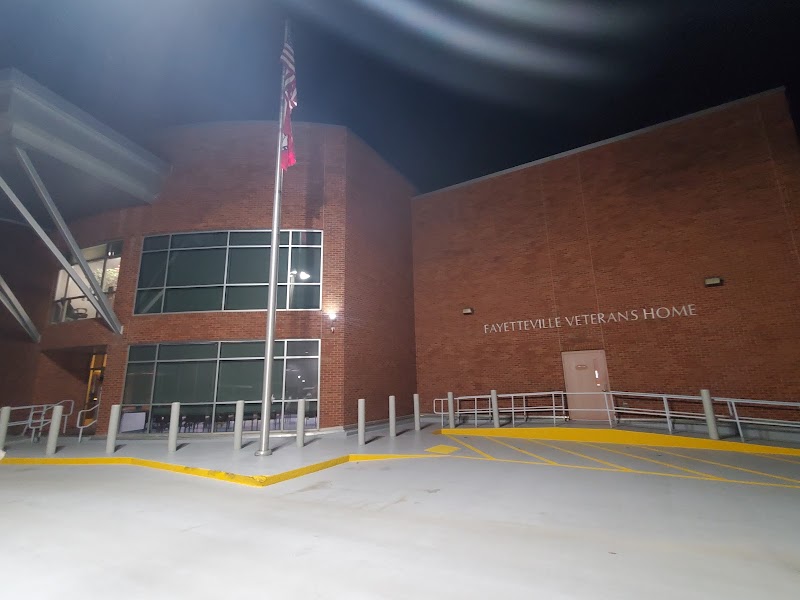
How Does Arkansas Veterans Home At Fayetteville Compare to Other Arkansas Nursing Homes?

Compared to the 100 nursing homes in Arkansas, ARKANSAS VETERANS HOME AT FAYETTEVILLE's overall rating (4 stars) is above the state average of 3.1, staff turnover (61%) is significantly higher than the state average of 46%, and health inspection rating (3 stars) is at the national benchmark.

What Should Families Ask When Visiting Arkansas Veterans Home At Fayetteville?

Based on this facility's data, families visiting should ask: "How do you ensure continuity of care given staff turnover, and what is your staff retention strategy?" "Can I visit during a mealtime to observe dining assistance and food quality?" "How do you handle medical emergencies, and what is your hospital transfer rate?" "Can I speak with family members of current residents about their experience?" These questions are particularly relevant given the facility's high staff turnover rate.

Is Arkansas Veterans Home At Fayetteville Safe?

Based on CMS inspection data, ARKANSAS VETERANS HOME AT FAYETTEVILLE has a clean safety record: no substantiated abuse findings (meaning no confirmed cases of resident harm), no Immediate Jeopardy citations (the most serious violation level indicating risk of serious injury or death), and is not on the Special Focus Facility watch list (a federal program monitoring the lowest-performing 1% of nursing homes). The facility has a 4-star overall rating and ranks #1 of 100 nursing homes in Arkansas. While no facility is perfect, families should still ask about staff-to-resident ratios and recent inspection results during their visit.

Do Nurses at Arkansas Veterans Home At Fayetteville Stick Around?

Staff turnover at ARKANSAS VETERANS HOME AT FAYETTEVILLE is high. At 61%, the facility is 15 percentage points above the Arkansas average of 46%. Registered Nurse turnover is particularly concerning at 58%. RNs handle complex medical decisions and coordinate care — frequent RN changes can directly impact care quality. High turnover means new staff may not know residents' individual needs, medications, or preferences. It can also be disorienting for residents, especially those with dementia who rely on familiar faces. Families should ask: What is causing the turnover? What retention programs are in place? How do you ensure care continuity during staff transitions?

Was Arkansas Veterans Home At Fayetteville Ever Fined?

ARKANSAS VETERANS HOME AT FAYETTEVILLE has no federal fines on record. CMS issues fines when nursing homes fail to meet care standards or don't correct problems found during inspections. The absence of fines suggests the facility has either maintained compliance or corrected any issues before penalties were assessed. This is a positive indicator, though families should still review recent inspection reports for the full picture.

Is Arkansas Veterans Home At Fayetteville on Any Federal Watch List?

ARKANSAS VETERANS HOME AT FAYETTEVILLE is not on any federal watch list. The most significant is the Special Focus Facility (SFF) program, which identifies the bottom 1% of nursing homes nationally based on persistent, serious quality problems. Not being on this list means the facility has avoided the pattern of deficiencies that triggers enhanced federal oversight. This is a positive indicator, though families should still review the facility's inspection history directly.