BUTTERFIELD TRAIL VILLAGE

1923 EAST JOYCE BLVD, FAYETTEVILLE, AR 72703 (479) 695-8065
Non profit - Corporation 87 Beds Independent Data: November 2025
Trust Grade
15/100
#186 of 218 in AR
Last Inspection: July 2024

Within standard 12-15 month inspection cycle. Federal law requires annual inspections.

Overview

Butterfield Trail Village has received an F grade for its trust score, indicating significant concerns about the quality of care provided. Ranking #186 out of 218 facilities in Arkansas places it in the bottom half, and it is #11 out of 12 in Washington County, meaning only one local option is better. While the facility is improving, with issues decreasing from 6 in 2024 to 2 in 2025, it still faces serious challenges, including $89,240 in fines, which is higher than 98% of Arkansas facilities, suggesting repeated compliance problems. Staffing is a relative strength with a 4-star rating and 0% turnover, indicating that staff members are stable and familiar with the residents. However, serious incidents have been reported, such as a failure to document a critical medication for a resident and a lack of proper emergency preparedness, raising concerns about patient safety and care quality.

Trust Score
F
15/100
In Arkansas
#186/218
Bottom 15%
Safety Record
High Risk
Review needed
Inspections
Getting Better
6 → 2 violations
Staff Stability
○ Average
Turnover data not reported for this facility.
Penalties
✓ Good
$89,240 in fines. Lower than most Arkansas facilities. Relatively clean record.
Skilled Nurses
✓ Good
Each resident gets 46 minutes of Registered Nurse (RN) attention daily — more than average for Arkansas. RNs are trained to catch health problems early.
Violations
⚠ Watch
21 deficiencies on record. Higher than average. Multiple issues found across inspections.
★☆☆☆☆
1.0
Overall Rating
★★★★☆
4.0
Staff Levels
★★★☆☆
3.0
Care Quality
★☆☆☆☆
1.0
Inspection Score
Stable
2024: 6 issues
2025: 2 issues

The Good

  • 4-Star Staffing Rating · Above-average nurse staffing levels
  • Full Sprinkler Coverage · Fire safety systems throughout facility
  • No fines on record

Facility shows strength in staffing levels, fire safety.

The Bad

1-Star Overall Rating

Below Arkansas average (3.1)

Significant quality concerns identified by CMS

Federal Fines: $89,240

Well above median ($33,413)

Moderate penalties - review what triggered them

The Ugly 21 deficiencies on record

3 actual harm
Mar 2025 2 deficiencies 1 Harm
SERIOUS (H) 📢 Someone Reported This

A family member, employee, or ombudsman was alarmed enough to file a formal complaint

Actual Harm - a resident was hurt due to facility failures

Deficiency F0726 (Tag F0726)

A resident was harmed · This affected multiple residents

**NOTE- TERMS IN BRACKETS HAVE BEEN EDITED TO PROTECT CONFIDENTIALITY** Based on observations, interviews, record review, facility document review, and facility policy review, it was determined that t...

Read full inspector narrative →
**NOTE- TERMS IN BRACKETS HAVE BEEN EDITED TO PROTECT CONFIDENTIALITY** Based on observations, interviews, record review, facility document review, and facility policy review, it was determined that the facility failed to identify, assess, and evaluate the nursing staff's knowledge, skill level, and ability to provide emergent care in life threating situations or maintain and utilize available emergency medical equipment when reviewed for competently skilled nursing services. The findings include: A review of the facility's Facility Assessment updated [DATE] and last reviewed with the QAA (Quality Assessment & Assurance)/QAPI (Quality Assurance & Performance Improvement) committee [DATE], revealed, the persons identified in completing the assessment were the Senior Director of Healthcare Services, the Administrator, the Director of Nursing, and the Medical Director. Part 1: Our Resident Profile- The intent was to identify common diagnoses in the resident population in order to identify the types of human and material resources necessary to meet the needs of the resident's living with these conditions or a combination of these conditions. Heart/Circulatory System identified diagnoses included Congestive Heart Failure (CHF) and hypertension. Respiratory identified diagnosis included Chronic Obstructive Pulmonary Disease (COPD) and respiratory failure. Part 2: Services and Care We Offer Based on Our Residents' Needs- Assessment, early identification of problems/deterioration, management of medical symptoms and conditions of heart failure and chronic obstructive pulmonary disease (COPD). Part 3: Facility Resources Needed to Provide Competent Support and Care for Our Resident Population Every Day and During Emergencies- Identify the type of staff members, other health care professionals, and medical practitioners that are needed to provide support and care for residents. Potential data sources include staffing records and organization charts. Staffing Plan: Evaluation of the overall number of facility staff needed to ensure a sufficient number of qualified staff is available to meet each resident's needs. Evaluation of residents' needs and overall acuity levels revealed the total number of staff needed were 2-4 licensed nurses providing care and 4-12 nurses' aides depending on the shift. Individual staff assignment: Staffing strategically planned based on acuity levels on halls. Staff training/education and competencies: Licensed, CPR is done annually or when expired. All onboarding employees receive orientation and a list to be checked off due within one month of hire. The facility performed skills check offs at least annually and upon I&As (Incidents & Accidents). The nursing department has competency forms filled out and checked upon new hire and annually. No plan to identify or evaluate the competency of staff in medical emergency situations was assessed by the facility. A review of the facility's Education Calendar 2025 provided by the Administrator on [DATE], revealed no scheduled CPR [Cardiopulmonary Resuscitation] or BLS [Basic Life Support] training, no mock codes, or medical equipment training. A review of the facility's Nurse Skills Checklist, LPN [Licensed Practical Nurse] or RN [Registered Nurse] revised [DATE], revealed no section for medical emergencies, no section for emergency medical equipment, and no section to indicate CPR/BLS certification. A review of the facility's 2024 Skills and Competency Fair sheet for nurses' and CNAs [Certified Nursing Assistants] revealed no competency check off was indicated for medical emergency equipment or required certifications. A review of a facility policy titled, Advanced Directives, revised [DATE], indicated, Advanced Directives will be respected in accordance with state law and facility policy. A review of a facility policy titled, Emergency Procedures-Cardiopulmonary Resuscitation, revised February 2018, indicated, Personnel have completed training on the initiation of cardiopulmonary resuscitation (CPR) and basic life support (BLS), including defibrillation, for victims of sudden cardiac arrest. Victims of cardiac arrest may initially have gasping respirations or may appear to be having a seizure. Training in BLS includes recognizing presentation of SCA [Sudden Cardiac Arrest]. The chances of surviving SCA may be increased if CPR is initiated immediately upon collapse. Early delivery of a chock with a defibrillator plus CPR within 3-5 minutes of collapse can further increase chances of survival. If an individual (resident, visitor, or staff member) is found unresponsive and not breathing normally, a licensed staff member who is certified in CPR/BLS shall initiated CPR unless: a. it is known that a Do Not Resuscitate (DNR) order that specifically prohibits CPR and/or external defibrillation exists for that individual; or b. there are obvious signs of irreversible death (e.g., rigor mortis). If the first responder is not CPR-certified, that person will call 911 and follow the 911 operator's instructions until a CPR-certified staff member arrives. Preparation for Cardiopulmonary Resuscitation included, Obtain and/or maintain American red Cross or American Heart Association certification in Basic Life Support (BLS/Cardiopulmonary Resuscitation (CPR) for key clinical staff members who will direct resuscitative efforts, including non-licensed personnel. The facility's procedure for administering CPR shall incorporate the steps covered in the 2010 American Heart Association Guidelines for Cardiopulmonary Resuscitation and Emergency Cardiovascular Care or facility BLS training material. Provide Mock Codes (simulations of an actual cardiac arrest) for training purposes. Select and identify a CPR team for each shift in the case of an actual cardiac arrest. To the extent possible, designate a team leader on each shift who is responsible for coordinating the rescue effort and directing other team members during the rescue effort. The CPR team in this facility shall include at least one nurse, one LPN [Licensed Practical Nurse]/LVN [Licensed Vocational Nurse] and two CNAs [Certified Nursing Assistants], all of whom have received training and certification in CPR/BLS. Maintain equipment and supplies necessary for CPR/BLS in the facility at all times. Provide information on CRP/BLS policies and advance directives to each resident/representative upon admission. Emergency Procedures-Cardiopulmonary Resuscitation included, If an individual is found unresponsive, briefly assess for abnormal or absence of breathing. If sudden cardiac death is likely, begin CPR: a. Instruct a staff member to activate the emergency response system (code) and call 911. b. Instruct a staff member to retrieve the automatic external defibrillator. c. Verify or instruct staff members to verify the DNR or code status of the individual. d. Initiate the basic life support (BLS) sequence of events. Airway: Tilt head back and lift chin to clear airway. When the AED arrives, assess for need and follow AED protocol as indicated. Continue with CPR/BLS until emergency medical personnel arrive. A review of an in-service titled, CPR Training, dated [DATE], revealed 9 staff members who attended CPR training, 8 are still active employees, and 7 are bedside staff. A review of the Registered Nurse & Licensed Practical Nurse, Job Description, revealed that no CPR certification/training was listed under qualifications. A review of the list Code Status, provided by the DON [Director of Nursing] on [DATE] at 2:02 PM, revealed 14 of the 50 residents in the facility selected full code meaning the 14 identified residents wished to have CPR for life sustaining intervention if they were to require it. A review of the Resident Summary, indicated on [DATE] the facility admitted Resident #4 with diagnoses which included acute on chronic congestive heart failure, acute kidney failure, emphysema, type 2 diabetes, anemia, COPD [chronic obstructive pulmonary disease], hyperlipidemia, hypertension, and atrial fibrillation. The admission Minimum Data Set (MDS) was never completed for Resident #4 prior to the resident's death on [DATE]. A review of Resident #4's Care Plan, dated [DATE], revealed the resident was admitted for continuing care of an unstable condition. Interventions included monitoring respiratory, circulation, and cardiac status: lung sounds, vital signs, oxygenation status, skin color and turgor, nailbed color, activity tolerance. Note presence of lethargy, mottling, confusion, change in mood or demeanor. A review of Resident #4's facility Advanced Directive form signed [DATE], by Resident #4's family representative and witnessed by LPN #3 indicated, Resident #4 ' s wish to be a full code by marking the line stating, Yes, I DO WANT the staff to begin CPR and call 911 with the intention of providing resuscitation and other emergent life-saving measures. A review of Physician Orders, revealed Resident #4 ' s order stated, DNR Form: no; CPR-CODE entered by LPN #4 on [DATE] at 4:06 PM. An order for Oxygen 3L (Liters) via NC (Nasal Cannula) continuously for SOB (Shortness of Breath)/COPD Exacerbation. A review of Resident #4's internal investigation documentation revealed: 1.The facility submitted a report to the OLTC (Office of Long-Term Care) Incident and Accident Report (I&A) on [DATE] at 8:44 AM, a summary of Incident indicating, Resident #4 reported SOB at 11:40 PM om [DATE]. Resident #4 was addressed by LPN #1 as SOB and using accessory muscles to assist in breathing. LPN #4 exchanged Resident #4's oxygen delivery system from NC to a mask related to the resident's breathing technique. A medicated inhaler was administered at 11:50 PM per LPN #1 without relieving the SOB. LPN #1 left the resident and phoned the on-call provider. While LPN #1 was on the phone a CNA reported Resident #4 was found on the floor and bleeding for a head injury. The provider gave an order to transfer the resident to the hospital for evaluation and treatment. 911 was called at 12:04 AM on [DATE]. After calling 911, LPN #1 went to Resident #4's room and observed the resident lying flat on the floor stomach down. LPN #2 was applying pressure to Resident #4's forehead for a laceration which was bleeding and did not move the resident due to a head injury. Resident #4 had agonal respirations and was not responding to verbal commands. The pulse oximeter showed no reading, but a manual pulse check was 68. 911 arrived at the facility at 12:12 AM. Resident #4 was placed on a stretcher by Emergency Medical Services (EMS) and coded at 12:18 AM. 2.LPN #2 wrote a witness statement at 11:30 AM on [DATE], stated resident laying headfirst on ground-breathing became apneic. EMT arrives-CPR started. A review of Resident #4's Ambulance Run Record dated [DATE], indicated the EMS team was on scene at 12:12:35 AM, and reached the resident at 12:15:30. EMS narrative reported, upon arrival the patient was found unresponsive, lying prone [on stomach] on the floor with [pronoun] head slightly looking to the left, and [facility name] staff applying pressure dressing to [pronoun] forehead. The patient had weak, agonal respirations with an extremely slow, faint pulse. The patient was found unresponsive with a GCS [Glasgow Coma Scale] of 3. A slow, faint, thready carotid pulse was palpated initially. [Pronoun] airway was open and patent with no vomit or secretions noted in or around [pronoun] mouth or nose. Trachea appeared midline and there was no JVD [Jugular Vein Distention] noted. [Pronoun] had shallow, agonal respirations at 8 breaths/min. with no visual chest rise or fall. Cyanosis [bluish tint to the skin or nail beds indicating a lack of oxygen in the blood] was noted to [pronoun] face and peripheral extremities, but [pronoun] skin was otherwise warm and mottled. The patient's pupils [were] equal and sluggish to respond. During an interview on [DATE] at 1:00 PM, LPN #1 stated, she and LPN #2 did not want to move the resident related to trauma but turned Resident #4's head to the side so the resident's face was not in the pillow. During an interview on [DATE] at 1:27 PM, LPN #5 stated she was new, but not aware of any emergency equipment or where it was kept. LPN #5 asked LPN #6 for assistance in locating the emergency equipment. LPN #6 stated that the facility had oxygen, but did not think they had an Ambu bag [a medical tool which forces air into the lungs of patients who have either ceased breathing completely or who are struggling to breathe properly]. LPN #5, LPN #6, then joined by LPN #4 all entered the medication room. No Ambu bag was located. LPN #4 stated that she had seen one on another unit and it might be in the treatment cart. Given Resident #4's scenario, LPN #6 stated agonal breathing would be considered a respiratory code and stated if an Ambu bag was available it should be utilized in a respiratory code. LPN #5 and LPN #6 stated they were CPR certified, LPN #4 stated she had let her certification lapse. During a concurrent observation and interview on [DATE] at 1:40 PM, the DON stated the facility had an AED [automated external defibrillator], and a mask was kept with it. The facility had oxygen tanks, oxygen concentrators, and she was 99% sure of an Ambu bag. The DON stated during a medical emergency, 911 should be called, then the AED and Ambu bag or mask should be taken to the resident's room. The DON stated, all nurses currently working in the facility are not CPR certified, but it will be required. The facility is looking for someone to help with that. The DON stated that semi-Fowlers would be ideal for someone in respiratory distress and lying on their stomach would compromise their breathing more. At 1:46 PM, the DON took this surveyor to the medication room; an empty plastic bag was hanging on a metal shelfing unit which was where the Ambu bag was to be kept. No Ambu bag was located and the DON stated only one at a time was kept in the facility. This surveyor indicated LPN #4 thought one was located on a treatment cart. At 1:49 PM, an Ambu bag was located inside the treatment cart of a medication room on a back unit. At 1:52 PM, the DON took this surveyor to the front common area close to the dining room where an AED was in a box on the wall. Inside the box was a one-way valve mask for rescue breathing. A tag with monthly check going back over a year was attached to the AED. The DON stated nursing did not check the AED, it was the maintenance department. During an interview on [DATE] at 2:19 PM, the Medical Director stated he believed all the nursing staff had to have BLS certification, but was unaware of what emergency equipment was available in the facility. He thought there was an AED but was unaware of its location. When questioned about Resident #4's medical emergency the Medical Director stated, breathing takes priority over any trauma. The staff should have intervened to assist with breathing. Resident #4 should have been repositioned supine (on back) and bagged with the agonal breathing. During an interview on [DATE] at 4:03 PM, the RN Educator stated the facility did not have any CPR reference cards available to the nurses for quick access instructions. She stated the facility was working on CPR training for everyone. During a follow-up interview on [DATE] at 1:02 PM, LPN #1, stated she had worked here about a year and did not feel she was properly trained for an emergency in the facility setting and had never been part of a mock code for training purposes. She stated she was CPR certified, but no assignments were made each shift to identify a charge nurse or code team. LPN #1 was aware an AED was available in the facility but was not aware of a one-way valve mask or an Ambu bag to provide respirations to a resident. LPN #1 stated, if she had access to an Ambu bag the night Resident #4 required emergency services, she would have used it with the resident. During an interview on [DATE] at 3:25 PM, LPN #7 stated in a code situation she would start CPR, but no staff members were designated to any code team during each shift. She was aware of the AED and its location, but stated the facility did not have an Ambu bag. She felt she was trained, but stated the staff did not do it very often and it was a high stress situation. During an interview on [DATE] at 3:36 PM, the Administrator stated, staff were not required to have CPR certification but thought they had it from nursing school. He stated the human resources department, nor the DON tracked which staff members in the facility were certified. The previous DON had a list, and they were looking for it. The facility did not in-service on their CPR protocol but had an outside instructor in the facility who held a CPR class in April of 2024. No charge nurse was specified during a shift and no code team assignments were made. Nurses had radios they could use to call for assistance from other staff. The facility was working towards getting everyone CPR certified. During an interview on [DATE] at 3:42 PM, the DON stated that the CPR policy was not given out to employees at hire, but it would be good moving forward. There was a policy binder located at the front nurses' station, and the policy was located inside it. There were no code team duties assigned for each shift, the emergency equipment was not easily accessible, and there were no mock codes done for training. The DON stated until this surveyor brought it to her attention, she was unaware how inaccessible the equipment was. The CPR policy was part of the nurses ' training but moving forward the DON planned to elaborate more. The DON stated there were two (2) types of codes, a cardiac and respiratory. Resident #4 was likely having a respiratory code and should have been rolled over on [pronoun] back, an Ambu bag used to rescue breathing, and the AED applied to analyze the resident's rhythm. During an interview on [DATE] at 2:02 PM, the Administrator stated the facility was aware of one (1) CNA employed who had their CPR certification. The only nursing staff they were aware of who had their BLS certification were those who signed into the [DATE] BLS class at the facility. The facility kept no list of CPR certification. During an interview on [DATE] at 3:00 PM, the DON stated, she felt like she had received the proper training for medical emergencies and the equipment, but she could not speak for every employee in the facility. Related to Resident #4's situation the DON stated, a bad decision was made by the first nurse on the scene and the staff did not understand what equipment was available to assist them in the situation. During an interview on [DATE] at 3:10 PM, the Administrator stated he felt the staff were trained and competent to handle medical emergencies quickly. He stated maybe we need more in-service and return demonstration. The facility did not have a checkoff for emergency care or CPR qualifications, and he did not believe the DON did either. They are licensed I would assume CPR is nursing 101. No facility competencies are measured or recorded.
CONCERN (D) 📢 Someone Reported This

A family member, employee, or ombudsman was alarmed enough to file a formal complaint

Potential for Harm - no one hurt, but risky conditions existed

Deficiency F0602 (Tag F0602)

Could have caused harm · This affected 1 resident

Based on observations, interviews, record review, facility document review, and facility policy review, it was determined that the facility failed to maintain the manufacturer's integrity of a sealed ...

Read full inspector narrative →
Based on observations, interviews, record review, facility document review, and facility policy review, it was determined that the facility failed to maintain the manufacturer's integrity of a sealed controlled medication prescribed for a resident and securely stored by the facility for 1 (Resident #1) of 7 Residents reviewed for personal property, specifically a sealed bottle of liquid opioid pain medication recorded and stored by staff nurses, was opened and missing part of its contents without the request of, or assessed need for, the prescribed resident. The findings include: A review of a facility policy titled, Storage of Medications, revised April 2007, indicated, Drugs and biologicals shall be stored in the packaging, containers or other dispensing systems in which they are received. Compartments (including, but not limited to, drawers, cabinets, rooms, refrigerators, carts, and boxes.) containing drugs and biologicals shall be locked when not in use, and trays or carts used to transport such items shall not be left unattended if open or otherwise potentially available to others. Only persons authorized to prepare and administer medications shall have access to the medication room, including keys. A review of a facility undated policy titled, Abuse and Neglect-Clinical Protocol failed to define and address Misappropriation of Property as abuse. A review of an in-service titled, Abuse & Neglect, With Emphasis on Misappropriation of Resident Property, Presented on 11/25/2024, by the Administrator was signed by 89 staff members for educational purposes. A handwritten note stated Handout Attached, Emphasis on Resident property! *Misappropriation of Resident Property i.e.Medications. A sticky note attached to the page stated Reportable [Resident Name (Resident #1)] 11/25/2024. The handout attached was the facility policies titled, Abuse and Neglect-Clinical Protocol and Abuse Investigating and Reporting. A review of the OLTC Incident and Accident Report submitted on 11/25/2024, indicated at approximately 5:24 AM on 11/25/2024, LPN #1 notified the Director of Nursing (DON) about a liquid narcotic belonging to Resident #1 which had been found with the seal off the bottle like it had been used. The DON investigated and discovered the syringe had been used by observing a blue-like substance inside the syringe itself. The DON reviewed the narcotic medication sign out book and Resident #1's MAR [medication administration record] and found no documented doses had been signed out or administered. The medication was received by the facility from the pharmacy on 08/20/2024, according to hospice orders. LPN #4 remembered the (Brand Name) opioid medication sealed and unused 4 days prior and when she returned to work it had been opened and perhaps used. A review of an in-service titled, Nurses: Narcotic Counts/ Including Liquids, presented by the Administrator on 11/25/2024, signed by 19 nurses indicated, nurses should remove the liquid narcotics from the box and visually look at the level and document accordingly. If there is a discrepancy you must notify the DON immediately. Also, check the narcotic box during your shift to ensure each bottle of liquid is in an upright position to prevent any possible leakage. A review of an email from the Retail Pharmacist sent 11/26/2024, indicated, It is a common problem that we get reported from multiple facilities that the [Brand Name] bottle end up short by the bottles end, despite diligent efforts to measure accurately by staff. It is my opinion that some of this might be due to the viscosity of the liquid adhering to the plastic at the end [you can never get 100% of the liquid out of the bottle]. Make sure the staff continues only using the calibrated syringe provided by the manufacturer. We will continue sending [Name brand] opioid medication bottles in their sealed containers only due to this common problem to reduce the uncertainty of what is inside the bottle. If hospice allows, we will aim to provide 15ml [milliliter] bottles rather than 30ml to reduce waste and hopefully cut down on the discrepancy at the end. No indication of any issues with the seals coming off or leakage from storage was noted by the pharmacist. A review of the Resident Summary, indicated the facility admitted Resident #1 in 2018, with diagnoses which included muscle weakness, fall, knee pain, hip pain, cervical spine ligaments sprain, tendon of the lower back strain, primary generalized arthritis, age-related physical debility, age-related osteoporosis, mild cognitive impairment, and dysphagia. The quarterly Minimum Data Set (MDS), with an Assessment Reference Date (ARD) of 02/06/2025, revealed Resident #1 had a Staff Assessment of Mental Status (SAMS) score of 2 which indicated the resident had moderate cognitive impairment. Assessment of pain indicated, Resident #1 received a scheduled pain medication regimen and had a condition or chronic disease that may result in a life expectancy of less than 6 months. A review of Resident #1's Care Plan, undated, revealed Resident #1 had an altered comfort level/pain related to osteoarthritis and mobility and potential for edema, chest pain, shortness of breath, and elevated blood pressure. Interventions included, administer medications per physicians orders. A review of Resident #1 ' s Physician Orders revealed order to Admit to (Specific Business Name) Hospice Services, dated 08/20/2024. A review of Physician Orders, revealed, (Brand Name) concentration oral solution, the opioid medication was ordered on 08/20/2024 for pain or shortness of breath. The dose was 0.25 milliliters (ml), or 5 milligrams (mg) as needed every 30 minutes. A review of the controlled medication book, page 45, revealed, Resident #1's (Brand Name) liquid opioid medication with prescription number 44496, dispensed by (Retail Pharmacy), was entered into the log on 08/20/2024, with an illegible nurse's signature. No doses were ever signed out. A review of the monthly MAR [Medication Administration Record], from 8/2024-11/2024, revealed Resident #1 had zero doses of the (Brand Name) liquid opioid medications administered. During an interview on 03/04/2025 at 1:00 PM, Licensed Practical Nurse (LPN) #1 stated, she found Resident #1's (Brand Name) liquid opioid medication without the seal on it and the syringe containing a blue liquid on the inside of the syringe. The medication was the same color as the blue liquid on the inside of the syringe. LPN #1 did not remember if the seal was still in the box or was completely gone. She stated the syringe, and the medication bottle were both stored in the original box prior to use and after use the staff kept the syringe in a plastic bag, so it did not get liquid on everything. LPN #1 stated, after the incident with Resident #1's medication the staff were told to store the liquid bottles of [Name Brand] opioid medication standing up right to prevent leakage. LPN #1 stated, she wanted to trust her coworkers and believed someone may have pulled (Brand Name) liquid opioid medication from the wrong bottle, without telling anyone. LPN #1 stated why else would the (Brand Name) opioid medication be on the inside of the syringe. During an interview on 03/04/2025 at 3:20 PM, LPN #2 stated, she and LPN #1 noticed the seal was off Resident #1's (Brand Name) opioid medication bottle and open, but there were no doses administered according to the narcotic sign out book. LPN #2 did not remember anything about the syringe in the box but stated the seal was not in the box or the drawer of the cart and could not be located. The Director of Nursing (DON) was notified, and the facility sent everyone for drug testing. LPN #2 stated we had a couple of sketchy nurses' I think it was intentional. LPN #2 also stated while LPN #1 was at lunch, she would have possession of LPN #1 ' s medication cart keys. During an interview on 03/05/2025 at 10:20 AM, the DON stated that no seal was found with the bottle of (Brand Name) opioid medication for Resident #1. Blue liquid matching the (Brand Name) opioid medication was found on the inside of the syringe. The DON stated she was unable to identify who opened the seal and what happened to the missing (Brand Name) opioid medication. 3ml or 60 milligrams (mg) of (Brand Name) opioid medication was missing. It was the only bottle of (Brand Name) opioid medication on the medication cart at the time. During an interview on 03/06/2025 at 12:23 PM, the Retail Pharmacist stated, he was not aware of any leakage issues with this specific manufacturer's bottle or any issues with seals coming off. He had heard from facilities an issue with the viscosity (thickness) of the liquid. It sticks to the bottle, and you can never get everything out of the bottle. The (Brand Name) opioid medication bottle comes packaged in a box with the manufacturer's sealed bottle and a plastic wrapped syringe and stopper. It is the facilities responsibility to break the seal with the stopper. The retail pharmacy opens the boxes before they are distributed to the facility and checks them. There is not going to be a syringe not in a plastic wrapper with any in it going out. If there is an issue with the syringe out of the wrapper and liquid in the syringe that happened at the facility. During an observation on 03/05/2025 at 10:25 PM, the DON provided 2 pictures of the syringe taken during her investigation. The light blue liquid with thick viscosity as the pharmacist described can be seen stuck to the inside of the syringe and on the stopper. During an interview on 03/06/2025 at 3:00 PM, the DON stated, I could come to any conclusion as to where the (Brand Name) opioid medication went. I think somebody took it because the syringe had dry blue residue inside the syringe. So, yes, the property was taken from the resident. During an interview on 03/06/2025 at 3:10 PM, the Administrator stated, We sent nurses for drug tests, every nurse for a 2-week period and all the tests were negative. The nurses stated they had no knowledge of what happened to the (Brand Name) opioid medication. We sent the bottle for destruction and purchased a new bottle for Resident #1. I do not know if it was taken by somebody and stolen from the resident. I do not know how the seal got broken. We did not have any agency nurses in the facility, and I don't believe there was any nurse who quit, and we didn't do drug tests. We checked everyone who the DON identified as having access. We did not have a sign out for lunch as to who was covering for who at lunch. The Administrator was not aware nurses handed off keys when another nurse covered for them at lunch. During an interview on 03/06/2025 at 3:28 PM, the DON stated that We only drug tested nurses who signed out medication on the residents' MAR for that medication cart for 2 weeks. I did not look at those who might have been covering for another nurse at lunch and were in possession of those keys.
Nov 2024 2 deficiencies 1 Harm
SERIOUS (G) 📢 Someone Reported This

A family member, employee, or ombudsman was alarmed enough to file a formal complaint

Actual Harm - a resident was hurt due to facility failures

Deficiency F0760 (Tag F0760)

A resident was harmed · This affected 1 resident

Based on interviews, record review, facility document review, facility policy review, it was determined that the facility failed to a resident was free from a significant medication error for 1 (Resid...

Read full inspector narrative →
Based on interviews, record review, facility document review, facility policy review, it was determined that the facility failed to a resident was free from a significant medication error for 1 (Resident #1) of 3 residents reviewed for medication administration. Findings include: A review of a facility policy titled, Documentation of Medication Administration, revised in April 2007, indicated, all medications administered to a resident should be documented on the resident's Medication Administration Record (MAR) immediately after (never before) it is given with the signature and title of the person administering the medication. A review of a facility policy Medication Record for 08/2024, revealed Resident #1 had an order for an anticonvulsant to be given at 8:00 AM and 6:00 PM which was started on 12/18/2022. The 08/25/2024 8:00 AM dose was signed off by Licensed Practical Nurse (LPN) #3. The 08/27/2024 6:00 PM dose was not signed of as administered. A review of Resident #1's anticonvulsant medication's page in the facility's narcotic book revealed, on 08/25/2024 no medication was signed out by LPN #3. A review of a Progress Note dated 08/29/2024 at 10:43 AM, revealed Resident #1 had seizure like activity in the dining room and Emergency Medical Services (EMS) were called. A review of Resident #1 ' s hospital records revealed, Resident #1 was diagnosed with a seizure. Written education provided by the hospital stated common causes of seizures were fever, infection, brain tumors, head injuries, bleeding in the brain and low levels of sugar or salt. Resident #1 ' s temperature was 97.2 º Fahrenheit, no elevated white blood cell count indicating an infection, Resident #1 Computed Tomography (CT) of the head and neck was negative for any abnormalities, Resident #1's glucose level was elevated at 172 and Sodium level was within normal range at 138. Resident #1's seizure was controlled with an anticonvulsant medication. During an interview on 11/19/2024 at 1:41 PM, LPN #1 stated, Resident #1 had not had a seizure in the previous years they had worked here. During an interview on 11/20/2024 at 11:55 AM, Director of Nursing (DON) stated, on 08/25/2024 LPN #3 probably documented the 8:00 AM dose on the MAR prior to retrieving the dose and forgot to go back and do it or documented the 8:00 AM dose for another nurse who never gave it. DON stated there were no discrepancies reported during the narcotic count, so the tablet had not been pulled. If the tablet had been pulled without being signed out a discrepancy would have been noted during the narcotic count. The result was no dose was administered to Resident #1 on 08/25/2024 at 8:00 AM. The DON stated no dose was documented and administered on 08/27/2024 at 6:00 PM. The DON explained when a second nurse comes to help administer medications the nurses pull and sign out medications for each other, this results in nurses forgetting to administer medications or documenting them. The DON agreed Resident #1 most likely did not receive two doses of the anticonvulsant medication. During an interview on 11/20/2024 at 12:27 PM, LPN #3 stated he did not remember the exact occurrence, but they most likely documented the medication and never gave it. LPN #3 stated there were no issues with a discrepancy in the narcotic counts that week.
CONCERN (D) 📢 Someone Reported This

A family member, employee, or ombudsman was alarmed enough to file a formal complaint

Potential for Harm - no one hurt, but risky conditions existed

Pharmacy Services (Tag F0755)

Could have caused harm · This affected 1 resident

Based on observations, interviews, record review, facility document review, and facility policy review, it was determined that the facility failed to dispense a pharmacy bubble packaged pain medicatio...

Read full inspector narrative →
Based on observations, interviews, record review, facility document review, and facility policy review, it was determined that the facility failed to dispense a pharmacy bubble packaged pain medication according to professional standards for 1 (Resident #3) of 3 residents reviewed for pharmacy services. Findings include: During an observation of a medication administration pass on 01/09/2025 at 7:54 AM, Licensed Practical Nurse (LPN) #1 pulled a pain medication card for Resident #3 and questioned why the pharmacy packaged two tablets in each bubble pouch when the order was for one. One bubble pouch was opened, and one tablet was gone, but one tablet remained. LPN #1 unsuccessfully attempted to call pharmacy and investigate. A review of the admission Record indicated the facility admitted Resident #3 with diagnoses that included dementia, cognitive communication deficit, age-related physical debility, and osteoarthritis. The quarterly Minimum Data Set (MDS), with an Assessment Reference Date (ARD) of 12/02/2024, revealed Resident #3 had a Staff Assessment of Mental Status (SAMS) score of 3 which indicated the resident had severe cognitive impairment. A review of Resident #3's Care Plan, initiated 04/27/2017, revealed the resident was at risk for pain. Interventions included: administer pain medication per physician's orders. A review of Physician's Orders revealed, Resident #3 had a pain medication dose of 325mg by mouth every 12 hours for pain and the same medication 650mg by mouth every 4 hours as needed for pain. A review of January Medication Administration Record, revealed Resident #3 had received 8 doses of the 325mg dose of pain medication at 8:00 AM and 8 doses of the 325mg dose of pain medication at 8:00 PM in January. No doses of the 650mg, as needed dose, were administered. During a concurrent observation and interview on 01/09/2025 at 8:25 AM, LPN #1 stated a staff member had written on the top of the card indicating to only administer one tablet. LPN #1 stated I'm not sure. I'm going to check with pharmacy. During a concurrent observation and interview on 01/09/2025 at 8:50 AM, LPN #1 successfully reached the packaging pharmacy, it was revealed the card was associated with Resident #3's 650 milligram (mg) as needed pain medication order, and not the 325mg scheduled medication order. No card was found for the 325mg scheduled order. The pain medication card had been delivered on 01/06/2025. The Director of Nursing (DON) stated, nurses may have been pulling the scheduled dose from a stock bottle on the cart and showed an open pain medication bottle with the correct scheduled dose. During a concurrent observation and interview on 01/09/2025 at 9:05 AM, a blue dot sticker was noted at the top left corner of the card. The Director of Nursing (DON) stated, the facility used a colored sticker system, a blue dot was for scheduled medications and a yellow dot was for as needed medications. The card was mislabeled as a scheduled medication (blue dot sticker). The DON agreed the 40 and 45 bubble package was opened and empty, but 44 bubble package was opened with one tablet gone and one remaining. No other bubble packages had been opened. During an interview, on 01/09/2025 at 11:51 AM, LPN #3 stated she usually pulled one tablet out of the bubble packaging with two tablets and left one in the open bubble package for the next shift to use. LPN #3 was aware of Residents #3's as needed order of pain medication, but stated it never comes up. LPN #3 did not know why the pharmacy packaged the medications with two tablets in one pouch and thought they were wasting medication. She stated the medication could get overdosed if someone was unfamiliar with the cart. LPN #3 stated the last card she used for Resident #3's scheduled 325mg pain medication was also packaged with two tablets in it. During an interview, on 01/09/2025 at 11:58 PM, LPN #2 stated Resident #3 was scheduled to take one of the tablets for the scheduled dose and does not know why the pharmacy was packaging them this way. He stated you should not leave pills in an open package, so he gives one pill and wastes the other in the sharps container. He stated some nurses give one tablet and leave the other in the open bubble packaging, but he never gives those. LPN #2 stated he uses the bubble packaging to administer the scheduled dose and does not pull it from the stock medication. He stated the process was not best practice because you do not know what the pill was in the open package.
Jul 2024 4 deficiencies
CONCERN (E)

Potential for Harm - no one hurt, but risky conditions existed

Resident Rights (Tag F0550)

Could have caused harm · This affected multiple residents

Based on observations, interviews, record review, and facility document review, it was determined the facility failed to ensure dignity was maintained when providing wound care for 1 resident (Residen...

Read full inspector narrative →
Based on observations, interviews, record review, and facility document review, it was determined the facility failed to ensure dignity was maintained when providing wound care for 1 resident (Resident # 42) and when administering an insulin injection for 1 resident (Resident # 11). Findings include: A review of a facility document titled, Patient's [NAME] of Rights, undated, indicated, .2. Will be treated with consideration, respect, and full recognition of his/her dignity and . including privacy in treatment and in care of my personal needs . 9. Is assured confidential treatment of his/her personal and medical records .15. May have needs .accommodated .staff behaviors to assist residents in maintaining .dignity . 1. A review of the Detailed Summary, indicated the facility admitted Resident #42 with a diagnosis that included Alzheimer's Disease. The quarterly Minimum Data Set (MDS) with an Assessment Reference Date (ARD) of 06/27/2024 revealed Resident #42 had a Brief Interview for Mental Status (BIMS) score of 6 which indicated the resident had severe cognitive impairment. Section M1040 revealed Resident #42 had skin tears. A review of Resident #42's Care Plan, dated 06/10/2024 revealed the resident required minimal to moderate assistance related to Alzheimer's/Demetia disease progression. Interventions included activities of daily living (ADLs) would be completed while maintaining resident's dignity. A review of the Physician's Orders for 07/2024 revealed Resident #42 had treatment orders for a skin tear on the left forearm, near the elbow. Treatment included cleansing the wound, covering the bed of the wound with petroleum-based gauze and covering it with a foam dressing. A review of the Skin Evaluation Form, dated 07/08/2024, revealed Resident #42 had a skin tear to left forearm, near elbow, with a length of 1.6 centimeters and a width of 0.2 centimeters. No depth was documented. A review of the Treatment Record for 07/2024 revealed Resident #42 had a treatment done on 07/08/2024. During an observation on 07/08/2024 at 11:30 AM, Resident #42 was sitting in the dining room on the secure unit. Licensed Practical Nurse (LPN) #2 was sitting with Resident #42 at a table applying a dressing to Resident #42's left arm. Other residents were in the dining room. During an interview on 07/08/2024 at 12:04 PM, Licensed Practical Nurse (LPN) #2 stated the dressing should not have been changed at the table due to privacy of care and dignity of the resident with other residents being in the dining room. 2. A review of the Detailed Summary, indicated the facility admitted Resident #11 with diagnoses that included dementia, cognitive communication deficit, age related macular degeneration, and diabetes mellitus type 2. Review of the quarterly Minimum Data Set (MDS) with an Assessment Reference Date (ARD) of 05/16/2024, revealed Resident #11 had a Brief Interview for Mental Status (BIMS) score of 5 which indicated the resident had severe cognitive impairment. The MDS indicated Resident #11 had impaired vision, and active diagnoses that included age related macular degeneration, Alzheimer's disease, and diabetes mellitus that required treatment with insulin. A review of Resident #11's Care Plan, undated, revealed the resident altered thought process related to Alzheimer's disease, impaired vision related to macular degeneration and diabetes. Interventions included administering medications per physician's orders, closing the door to minimize distractions, activities of daily living (ADLs) will be completed while maintaining dignity, and respect resident rights. A review of the Physician's Orders for 07/11/2024, revealed Resident #11 was to receive regular insulin injections three times daily for type 2 diabetes mellitus. A review of the Medication Record for 07/2024, revealed Resident #11 received 2 units of regular insulin in the left lower quadrant (LLQ). During a concurrent observation and interview on 07/10/2024 at 12:05 PM, Licensed Practical Nurse (LPN) #4 took Resident #11 into the resident's room. Resident laid on back, across bed. LPN #4 raised the resident's shirt upward and the resident's pants downward exposing Resident #11's abdomen. LPN #4 then injected insulin into Resident #11's left lower quadrant. The blinds on the resident's window were not closed, exposing the resident to the parking lot and vehicles facing the window. The Resident's door was open exposing the resident to the view of other resident sitting at dining tables in the dining room. LPN #4 stated privacy should have been provided for dignity reasons and that by leaving the door open, people in dining room were able to see the care being given. During an interview on 07/10/2024 at 7:47 AM, the Infection Preventionist (IP) stated it was not appropriate to change dressing in the dining room where other residents could see a treatment as it is a dignity and privacy issue for the resident. During an interview on 07/11/2024 at 11:02 AM, the Director of Nursing (DON) stated wound care should not be performed in the dining room at a dining table due to dignity. Privacy should be provided during wound care and insulin administration. Residents should be taken somewhere private with the door closed and the curtain or blinds closed.
CONCERN (E)

Potential for Harm - no one hurt, but risky conditions existed

Quality of Care (Tag F0684)

Could have caused harm · This affected multiple residents

Based on observation, interview, and record review the facility failed to ensure oxygen was administered only when ordered by a physician to prevent potential respiratory complications for 1 (Resident...

Read full inspector narrative →
Based on observation, interview, and record review the facility failed to ensure oxygen was administered only when ordered by a physician to prevent potential respiratory complications for 1 (Resident #9) of 1 sampled resident. The findings are: A review of a facility policy titled, Medication and Treatment, dated July 2016 indicated, .1. Medications shall be administered only upon the written order of a person licensed and authorized to prescribe such medications in this state. A review of a facility policy titled, Medication Orders, dated November 2014 indicated, .3. Oxygen orders - When recording orders for oxygen, specify the rate of flow, route, and rationale . A review of Resident #9's Detailed Summary form indicated the facility admitted Resident #9 on 10/27/2009 with coronary obstructive pulmonary disease, and congestive heart failure. A review of the annual Minimum Data Set (MDS) with an Assessment Reference Date (ARD) of 05/30/2024, documented Resident #9 scored 15 (13-15 indicates cognitively intact) on a Brief Interview for mental Status (BIMS) and received oxygen therapy. A review of Physician's Orders, revealed Resident #9 had no order to administer oxygen therapy. A review of Medication Administration Record revealed Resident #9 had no order to administer oxygen therapy. A review of Resident #9's Care Plan revealed, .Assess respiratory status. Hospice nurse may order oxygen 1-4 liters via nasal cannula PRN [as needed] or continuous to maintain comfort unless otherwise contraindicated. If ineffective, may titrate upward per physician orders intervals until symptoms relief. May check pulse oximetry PRN for respiratory assessment. Hospice nurse may suction oral-pharyngeal area PRN for excessive secretions . Implemented:12/04/2023. 1. During an observation on 07/08/2024 at 11:53 AM, the surveyor observed Resident #9 with oxygen via nasal cannula being administered at 5 liters per minute. 2. During another observation on 07/09/2024 at 9:07 AM, and 3:08 PM, the surveyor observed Resident #9 receiving oxygen via nasal cannula at 5 liters per minute. 3. During interview on 07/10/2024 at 8:50 AM, Registered Nurse (RN)#1 revealed the nurse is responsible for making sure a resident has orders for a medication. This is done on admission or if there is a change in the resident's condition, a new order is indicated. RN #1 confirmed that receiving oxygen without an order can damage the lungs. The surveyor accompanied RN #1 to Resident #9's room. The RN #1 confirmed Resident #9 was having oxygen administered at 4.5 liters per minute via nasal cannula. The surveyor asked RN #1 to identify the order stating how much oxygen that Resident #9 should be receiving. RN #1 replied that there was no order for the resident to be wearing oxygen and the last assessment with a pulse ox was completed on July 3, 2024, at 1:02 PM. The surveyor asked, How do you know what rate to set a resident's oxygen at? RN #1 replied, We follow the physician's order. The surveyor asked, if you have no order, how do you know what to set a resident's oxygen at. RN #1 replied, We don't. 4. During an interview on 07/10/2024 at 9:02 AM, the Director of Nursing (DON) said the nursing staff and the physician were responsible for making sure a resident had an order for medication. Orders are obtained on admission or if there is a change in their disease process. The Surveyor and the DON went to Resident #9's room. The DON confirmed Resident #9 was receiving oxygen at 4.5 liters via nasal cannula. The surveyor asked the DON to identify what Resident #9's oxygen should be set on. The DON replied that there was no order for Resident #9 to have oxygen administered. The surveyor asked if a resident should have oxygen administered with no physician order. The DON replied that a resident should not be having oxygen administered without an order.
CONCERN (E)

Potential for Harm - no one hurt, but risky conditions existed

Infection Control (Tag F0880)

Could have caused harm · This affected multiple residents

Based on observations, interviews, record review, and facility document review, it was determined the facility failed to maintain infection control practices as evidenced by wound care being provided ...

Read full inspector narrative →
Based on observations, interviews, record review, and facility document review, it was determined the facility failed to maintain infection control practices as evidenced by wound care being provided to a resident sitting at a dining table for 1 (Resident # 42) of 1 resident observed with wounds. Findings include: A review of a facility document titled, Infection Control Goals of Infection Control and Prevention, undated, indicated, .2. Minimize opportunity for transmission of pathogens. 3. Apply current scientifically accepted infection prevention and control principles appropriate for the specific work environment .The Chain of Infection .The mode in which the organism travels to infect others .All environmental and working surfaces must be promptly cleaned and decontaminated after contact with blood or OPIM (other potentially infectious materials) .Transmission of infections is largely via hand contact with a surface . disinfecting environmental surfaces is fundamental to reducing infections . A review of the Detailed Summary, indicated the facility admitted Resident #42 with diagnoses that included Alzheimer's disease and type 2 diabetes. The quarterly Minimum Data Set (MDS) with an Assessment Reference Date (ARD) of 06/27/2024, revealed Resident #42 had a Brief Interview for Mental Status (BIMS) score of 6 which indicated the resident had severe cognitive impairment and skin tears. A review of Resident #42's Care Plan, dated, 06/10/2024 revealed the resident was at risk for skin breakdown related to diabetes. Interventions included administering treatments per physician's orders and practice good infection control. A review of the Physician's Orders for 07/2024, revealed Resident #42 had treatment orders for a skin tear on the left forearm, near the elbow. Treatment included cleansing the wound, covering the bed of the wound with petroleum-based gauze and covering it with a foam dressing. A review of the Skin Evaluation Form, dated 07/08/2024, revealed Resident #42 had a skin tear to left forearm, near elbow, with a length of 1.6 centimeters and a width of 0.2 centimeters. No depth was documented. A review of the Treatment Record for 07/2024, revealed Resident #42 had a treatment done on 07/08/2024. During an observation on 07/08/2024 at 11:30 AM, Resident #42 was sitting in the dining room on the secure unit. Licensed Practical Nurse (LPN) #2 was sitting with Resident #42 at the table applying a dressing to the left arm. No barrier was on the table for supplies and the table was not cleaned or disinfected after the dressing change. During an interview on 07/08/2024 at 11:45 AM, Resident #42's family member stated Resident #42 scratched their left arm and is on a blood thinner and picks at scabs until it bleeds. During an observation on 07/08/2024 at 11:56 AM, residents were in the dining room and others were entering the dining room and being served beverages at the dining tables. During an interview on 07/08/2024 at 12:04 PM, Licensed Practical Nurse (LPN) #2 stated the dressing should not have been changed at the table due infection control issues, specifically contamination of the table. LPN #2 stated the dressing should have been changed earlier in the resident's room when it was bleeding. During an interview 07/10/2024 at 7:47 AM, the Infection Preventionist (IP) stated it is not appropriate to change the dressing in the dining room. It is a dignity issue and an infection prevention issue. Food could contaminate the wound and, the wound; exposing the place where residents eat to contaminates. During an interview on 07/11/2024 at 11:02 AM, the Director of Nursing (DON) stated wound care should not be performed in the dining room at a dining table due to dignity and the potential for bacteria transmission. The table should have been cleaned after the wound care. Privacy should be provided during wound care. The resident should be taken somewhere private with the door closed and curtains or blinds closed.
MINOR (B)

Minor Issue - procedural, no safety impact

Deficiency F0661 (Tag F0661)

Minor procedural issue · This affected multiple residents

**NOTE- TERMS IN BRACKETS HAVE BEEN EDITED TO PROTECT CONFIDENTIALITY** Based on record review and interview, the facility failed to ensure a discharge summary was provided for 1 (Resident #45) of 1 s...

Read full inspector narrative →
**NOTE- TERMS IN BRACKETS HAVE BEEN EDITED TO PROTECT CONFIDENTIALITY** Based on record review and interview, the facility failed to ensure a discharge summary was provided for 1 (Resident #45) of 1 sampled resident to ensure education, a recapitulation of the resident's stay, and reconciliation of all pre- and post-discharge instructions were provided and to ensure clarification. The findings are: Review of a facility policy titled, Transfer or Discharge, Preparing a Resident for, dated December 2016, indicated Residents will be prepared in advance for discharge. When a resident is scheduled for transfer or discharge, the business office will notify nursing services of the transfer or discharge so that appropriate procedures can be implemented. A post-discharge plan is developed for each resident prior to his or her transfer or discharge. This plan will be reviewed with the resident, and/or his or her family, at least twenty-four (24) hours before the resident's discharge or transfer from the facility. Nursing services is responsible for: obtaining orders for discharge or transfer, as well as the recommended discharge services and equipment; preparing the discharge summary and post-discharge plan; preparing the medications to be discharged with the resident (as permitted by law); and providing the resident or representative (sponsor) with required documents (i.e., discharge summary and plan). A review of a Profile Face Sheet, indicated the facility admitted Resident #45 with a diagnosis of transient cerebral ischemic attack (a brief stroke-like attack). The quarterly Minimum Data Set (MDS) with an Assessment Reference Date (ARD) of 02/15/2024, revealed Resident #45 had a Brief Interview for Mental Status (BIMS) score of 15, which indicated the resident was cognitively intact. There was no active discharge planning occurring for the resident to return to the community. A review of Resident 45's Physician Orders, revealed an order dated 04/18/2024 for may discharge home for a three day trial and may remain home if trial successful. Review of Resident #45's Care Plan, with a start date of 12/12/2023, revealed the resident desires discharge to non-nursing home level of care. Family/Caregiver supportive of discharge. Interventions included provide written and oral direction for plan of care including med regime to resident and caregiver; initiated 12/12/2023; document all discharge planning and teaching in Social Service, therapy and/or nursing notes; retain copy of information provided to resident and caregiver; initiated 12/12/2023. On 07/10/2024 at 12:19 PM, an interview with the Director of Nursing (DON) revealed there was not a discharge summary for Resident #45. The DON revealed the facility was required to do a discharge summary and that the nurse on the floor at the time of discharge should have done it. On 07/11/2024 at 9:02 AM, the Social Worker revealed during an interview, Resident #45 was admitted on [DATE] and discharged on 4/18/2024 after a hospital stay, also, it was planned for Resident #45 to return to her apartment in independent living, and that the resident and or the caregiver should be provided a copy of the discharge summary for educational purposes, especially medications.
May 2023 7 deficiencies 1 Harm
SERIOUS (G) 📢 Someone Reported This

A family member, employee, or ombudsman was alarmed enough to file a formal complaint

Actual Harm - a resident was hurt due to facility failures

Accident Prevention (Tag F0689)

A resident was harmed · This affected 1 resident

**NOTE- TERMS IN BRACKETS HAVE BEEN EDITED TO PROTECT CONFIDENTIALITY** Based on interview, and record review, the facility failed to identify the risk of side rail entrapment which resulted in actual...

Read full inspector narrative →
**NOTE- TERMS IN BRACKETS HAVE BEEN EDITED TO PROTECT CONFIDENTIALITY** Based on interview, and record review, the facility failed to identify the risk of side rail entrapment which resulted in actual harm for 1 (Resident #7) of 37 (Residents #1, #2, #3, #4, #7, #8, #9, #10, #11, #12, #13, #14, #15, #16, #17, #18, #19, #20, #21, #22, #25, #26, #27, #29, #30, #32, #33, #34, #35, #36, #37, #38, #39, #40, #41, #43 and #96) sampled residents who had side rails on their bed as documented on a list provided by Administrator on 05/27/23 at 7:45 AM, and failed to identify risk and respond to multiple elopements for 2 (Residents #13 and #40) of 4 (Residents #13, #38, #40 and #43) sampled residents who were at risk for wandering as documented on a list provided by Administrator on 05/27/23 at 7:45 AM. The findings are: 1. Resident #7 had diagnoses of Unspecified Dementia, Unspecified Severity, without Behaviors and Aphasia following a Cerebral Infarction. The Quarterly Minimum Data Set (MDS) with an Assessment Reference Date (ARD) of 02/23/23 documented the resident scored 9 (8-12 indicates moderately cognitively impaired) on a Brief Interview for Mental Status (BIMS) and required extensive physical assistance of two plus persons for bed mobility and did not use bed rails. a. A Care Plan with a start date of 10/27/22 documented, .May use top two rails in bed for positioning . b. An Office of Long Term Care (OLTC) Witness Statement Form dated 05/08/23 completed by the Director of Nursing (DON), provided by the DON on 05/23/23 at 4:15 PM documented, .This nurse [DON] advised by CNA [Certified Nursing Assistant (CNA) #2] that resident had turned sideways & [and] managed to get her upper leg under the siderail. This nurse escorted him to resident's room & assessed patient & found no redness or s/s [signs/symptoms] of injury to BLE [bilateral lower extremities], ROM [range of motion] was WNL [within normal limits] for this resident . advised CNA to obtain extra pillow or pillows as necessary to position for comfort . c. An Office of Long Term Care (OLTC) Witness Statements dated 05/08/23 at 7:30 PM completed by CNA #1 provided by the Treatment Nurse on 05/22/23 at 3:10 PM documented, When I entered room [Resident #7's room number], I found her between the bed and bed rail trapped from hitting the floor. Her feet were touching the floor. She had threw up, she was pale. The bed sheets where almost off the bed with her. I called for help via yelling and on the walkie. Got her back into the bed and Nurse [Registered Nurse (RN) #1] helped me get her feeling better. Changed the bed covers, new night gown, washed the throw up off her and got V/S [vital signs]. Resident was feeling better . d. An email dated 05/09/23 at 4:08 PM from the Assistant Director of Nursing (ADON) to Registered Nurse (RN) #1 provided by the Treatment Nurse on 05/22/23 at 3:10 PM documented, .My concern is that there is no documentation in [Electronic Medical Record] regarding this, will you please start an I/A [Incident and Accident Report] for this incident as a near fall, just document as a late entry and enter your assessment for 5/8/23. She does have some new bruises from this event so if you will measure and document those when completing I/A that would be appreciated . e. The Incident Log-Fall/Skin/General did not contain Resident #7's incident dated 05/08/23. f. On 05/22/23 at 3:45 PM, the Surveyor asked Certified Nursing Assistant (CNA) #1 about the side rail incident with Resident #7. CNA #1 stated, The door was closed to Room [Resident #7's room number] and when I went in, I saw her between the side rail and bed. There was throw up everywhere. She was stuck above the thigh and under the stomach. The area was red. She was facing the door. Her left side was stuck in the rail. There was abrasion with two little openings. There was thin bruising on the thigh area. They did not change the side rails and there was no cushioning placed between the mattress and side rail. g. On 05/23/23 at 8:44 AM, Resident #7 was in bed with two side rails up. The air mattress was set on normal pressure and there was no cushion between the side rails and the bed. h. On 05/23/23 at 2:51 PM, Resident #7 was lying in bed, the air mattress was inflated. There was no cushion or padding between the side rails and the bed. 2. Resident #13 had diagnoses of Unspecified Dementia, Unspecified Severity without Behavior and Muscle Weakness (Generalized). The Quarterly MDS with an ARD of 05/11/23 documented the resident scored 11 (8-12 indicates moderately cognitively impaired) on a BIMS and did not exhibit wandering behavior. a. A Physicians Order dated 08/10/22 documented, .Resident needs continued care in nursing home due to the inability to live independently and the need for medical assistance, observation, and planning . b. A Care Plan with a start date of 05/03/23 documented, .Cognitive Loss .Resident has impaired cognition as related to dx [diagnosis] of unspecified dementia without behaviors . c. A Care Plan with a start date of 05/03/23 documented, .Behavior .is at risk for wandering, exit seeking, and leaving the unit unattended. He is easily redirected back to HCC [Health Care Center] . d. Risk of elopement/ wandering review dated 5/03/23. admission date 8/10/22. Summary of review: Resident is at risk for elopement/wandering, as evident by: leaving without notifying staff. e. The Incident Log-Fall/Skin/General did not contain Resident #13 ' s incidents dated 04/26/23 and 05/01/23. f. On 05/23/23 at 10:23 AM, Resident #13 stated he does not go outside by himself. [Family Member] comes and takes him outside when he visits. g. On 05/22/23 at 2:25 PM, the Surveyor was handed a Timeline from the Front Door Receptionist. She stated, We have had three incidents since March 8th, 2023, where we called HCC [Health Care Center] to alert them to a possible problem and the situation was allowed to escalate before anything was done. h. A document provided by the Front Desk Receptionist on 05/22/23 at 2:25 PM documented, .April 26, 2023 [Resident #13] came to the front desk area alone in his wheelchair. He is usually accompanied by someone, so I thought this was unusual. He sat by the front desk for a few minutes and then started to go out the front doors . I tried to call HCC but got no answer. [Resident #13] was outside at this point but we were both watching him. When he started down the sidewalk towards the North atrium door, [IT] went outside to be with him. [IT] said he was going to make sure [Resident #13] got back to HCC. I didn't try to call HCC again since I knew [IT] would take care of it. May 1, 2023 [Resident #13] came to front desk alone in his wheelchair. I immediately called HCC to make sure they knew where he was. All I got in response was an OK, thanks. I don't know who answered the phone. I was keeping a close eye on [Resident #13] because of the incident the previous week. He went outside and turned left. Since that leads to the main driveway, I asked security [name] if he could see him on camera. He couldn't at that moment but assured me that he was probably fine . Although I didn't see this directly, about 15 minutes later I heard that he was found in the main driveway by the cottages. After that [Administrator], [DON] and [Senior Director of Resident Services] came to the security office to watch camera footage to see what happened. In all, it was about 45 minutes from the time I called HCC to the time he was back in his room. In light of these three incidents happening within a short span of time, I believe that there has been a failure on the part of the HCC staff to respond to these incidents in the appropriate way. All three could have been resolved without incident if there had been proper and timely response from them . i. On 05/22/23 at 3:10 PM, the Treatment Nurse stated Resident #13 doesn't know 70% of the time where he is. He would not be able to sign in and out. Resident #13 is one resident we would not want him going out unattended. j. The St. Louis University Mental Status (SLUMS) Examination, an assessment tool for mild cognitive impairment and dementia documented Resident #13 scored 19. A 1 - 20 score indicates Dementia. k. The OLTC Witness Statement Form dated 05/01/23 at 16:00 (4:00 PM) completed by the DON documented, .Security was able to monitor resident on video as he leaves the sidewalk & goes onto the drive & around the building for all but an approximate 50ft [feet] length/time span of 3 minutes where there is no camera. Resident reappears & then goes onto sidewalk & entrance at the performance hall where he re-enters the building . l. The OLTC Witness Statement Form dated 05/01/23 at 3:21 PM completed by the License Social Worker documented, .The security guard called me into his office to view video of [Resident #13], who was outside the building and propelling himself in his wheelchair. He was headed west toward the cottages. When he reached the drive between the main building and the cottages, he turned left heading south and eventually out of range of the camera. The security guard reported that he went to the south side of the Performance Hall (in the main building) and entered there . 3. Resident #40 had diagnoses of Unspecified Dementia, Unspecified Severity, without Behaviors and History of Falling. The Quarterly MDS with an ARD of 04/10/23 documented the resident scored 9 (8-12 indicates moderately cognitively impaired) on a BIMS and did not exhibit wandering behavior. a. A Physicians Order dated 01/10/23 documented, .Resident needs continued care in nursing home due to the inability to live independently and the need for medical assistance, observation, and planning . b. A Care Plan with a start date of 01/24/23 documented, .has impaired cognition related to dx [diagnosis] of unspecified dementia without behavioral disturbance . Resident will be able to locate own room . Orient to room and location of personal belongings . Reorient as needed . c. An Interdisciplinary Note dated 04/10/23 at 12:47 PM documented, .Event Date: 03/08/2023 documented, .Approximately 3pm the DON was noptified [notified] resident was not in room & companion was not in HCC.Receptionist @ [at] front lobby called & resident had been there & she turned her back towards HCC . continued to search for resident approx [approximately] 15 minutes when the . social worker found her visiting with her friend on the 3rd floor in her apartment . d. A Care Plan with a start date of 04/12/23 documented, .at risk for wandering, exit seeking, and leaving the unit unattended . all staff to redirect resident if she is leaving HCC without supervision . Secure unit/environment. Utilize check out/in logs at nurses station . e. A document provided by the Front Door Receptionist on 05/22/23 at 2:25 PM documented, In re [regard]: In-service training documents dated May 2 and May 3, 2023.We have had three incidents since March 8th, 2023, where we called HCC to alert them to a possible problem and the situation was allowed to escalate before anything was done. March 8, 2023 [Resident #40] entered the lobby from the exterior door with no one accompanying her at approximately 4:00 pm. I was familiar with [Resident #40 ' s] cognitive issues having dealt with her on a regular basis while she was in Independent Living. Since she was always accompanied by a companion even then, I decided to stay after my shift to make sure she made safely back to HCC. I conversed with her for a few minutes. She was asking for the key to her apartment and said she had lost her fob and needed another one. I reminded her that she didn't have that apartment anymore and that she had a room in HCC (she had been made permanent in HCC in January). I directed her towards HCC and called the nurses' station. There was no answer, so I called the [DON]. We agreed to both head for the commons area to make sure she made it back safely. Even though we both left immediately, she had disappeared by the time [DON], and I met. Security was called and began searching for her on camera while many employees began to search as well. After approximately 55 minutes, it was discovered that she had gone to a friend's apartment. She was then returned to HCC . f. On 05/22/23 at 3:05 PM, the Treatment Nurse stated that Resident #40 was in room [Room Number] and was not on the secured unit at the time she left the facility. She stated that Resident #40 would not know where she was going. g. The Incident Log-Fall/Skin/General did not contain Resident #40's incident dated 03/08/23. 4. A facility Emergency Measures procedure titled, Code Pink - Missing Resident (Elopement), provided by Administrator 05/24/23 documented, If resident is not located, unable to find for any reason please complete the following steps. 1. Ensure the resident has not checked out and away from the facility . 2. Call CODE PINK and resident name 2x [2 times] to alert staff of missing resident. 3. All staff should immediately begin searching and clearing rooms, closets, showers, and all other similar areas. 4. Send staff outside to search exterior of facility. 1 person search left and 1 search right and meet back once exterior has been completed all the way around campus. 5. Once resident has been located, announce the all clear and return to your assigned position .
CONCERN (D) 📢 Someone Reported This

A family member, employee, or ombudsman was alarmed enough to file a formal complaint

Potential for Harm - no one hurt, but risky conditions existed

Resident Rights (Tag F0550)

Could have caused harm · This affected 1 resident

Deficiency Text Not Available

Read full inspector narrative →
Deficiency Text Not Available
CONCERN (E) 📢 Someone Reported This

A family member, employee, or ombudsman was alarmed enough to file a formal complaint

Potential for Harm - no one hurt, but risky conditions existed

Comprehensive Care Plan (Tag F0656)

Could have caused harm · This affected multiple residents

Based on record review, the facility failed to ensure an Individualized Plan of Care was implemented on the use of side rails and the potential for entrapment for 1 (Resident #7) of 37 (Residents #1, ...

Read full inspector narrative →
Based on record review, the facility failed to ensure an Individualized Plan of Care was implemented on the use of side rails and the potential for entrapment for 1 (Resident #7) of 37 (Residents #1, #2, #3, #4, #7, #8, #9, #10, #11, #12, #13, #14, #15, #16, #17, #18, #19, #20, #21, #22, #25, #26, #27, #29, #30, #32, #33, #34, #35, #36, #37, #38, #39, #40, #41, #43 and #96) sampled residents who had a diagnosis of Dementia and side rails on their beds as documented on a list provided by Administrator on 05/27/23 at 7:45 AM and failed to ensure an Individualized Plan of Care was implemented for 2 (Residents #13 and #40) of 4 (Residents #13, #38, #40 and #43) sampled residents who were at risk for wandering as documented on a list provided by Administrator on 05/27/23 at 7:45 AM. The findings are: 1. Resident #7 had diagnoses of Unspecified Dementia, Unspecified Severity, without Behaviors and Aphasia following a Cerebral Infarction. The Quarterly Minimum Data Set (MDS) with an Assessment Reference Date (ARD) of 02/23/23 documented the resident scored 9 (8-12 indicates moderately cognitively impaired) on a Brief Interview for Mental Status (BIMS) and required extensive physical assistance of two plus persons for bed mobility and did not use bed rails. a. A Care Plan with a start date of 10/27/22 documented, .May use top two rails in bed for positioning . The Care Plan does not address the risks of using side rails including entrapment. b. Witness statement dated 5/8/23 at 4:30 PM revealed the resident had turned sideways and got her upper leg under the siderail. b. Witness statement dated 5/8/23 at 7:30 PM revealed Resident #7 was found, trapped between the bed and the bed rail, had vomited, and looked pale. c. An email dated 05/09/23 at 4:08 PM from the Assistant Director of Nursing (ADON) to Registered Nurse (RN) #1 provided by the Treatment Nurse on 05/22/23 at 3:10 PM documented, .My concern is that there is no documentation in [Electronic Medical Record] regarding this, will you please start an I/A [Incident and Accident Report] for this incident as a near fall, just document as a late entry and enter your assessment for 5/8/23. She does have some new bruises from this event so if you will measure and document those when completing I/A that would be appreciated . 2. Resident #13 had diagnoses of Unspecified Dementia, Unspecified Severity without Behavior and Muscle Weakness (Generalized). The Quarterly MDS with an ARD of 05/11/23 documented the resident scored 11 (8-12 indicates moderately cognitively impaired) on a BIMS and did not exhibit wandering behavior. a. A Physicians Order dated 08/10/22 documented, .Resident needs continued care in nursing home due to the inability to live independently and the need for medical assistance, observation, and planning . b. A Care Plan with a start date of 05/03/23 documented, .is at risk for wandering, exit seeking, and leaving the unit unattended. He is easily redirected back to HCC [Health Care Center] . all staff to redirect resident if he is leaving . without supervision . c. A Risk of Elopement/Wandering Review dated 5/03/23 at 3:06 PM documented, .admission Date 08/10/2022 . Resident is at risk for elopement/wandering, as evident by: leaving w [with]/out notifying staff . d. A document titled, In re [regard]: In-service training documents dated May 2 and May 3, 2023, provided by the Front Desk on 05/22/23 at 2:25 PM documented Resident #13 left the facility without supervision on April 26, 2023, and May,1 2023. 3. Resident #40 had diagnoses of Unspecified Dementia, Unspecified Severity, without Behaviors and History of Falling. The Quarterly MDS with an ARD of 04/10/23 documented the resident scored 9 (8-12 indicates moderately cognitively impaired) on a BIMS and did not exhibit wandering behavior. a. A Physicians Order dated 01/10/23 documented, .Resident needs continued care in nursing home due to the inability to live independently and the need for medical assistance, observation, and planning . c. A Care Plan with a start date of 01/24/23 documented, .has impaired cognition related to dx [diagnosis] of unspecified dementia without behavioral disturbance . Resident will be able to locate own room . Orient to room and location of personal belongings . Reorient as needed . d. An Interdisciplinary Note dated 04/10/23 at 12:47 PM documented, .Event Date: 03/08/2023 Approximately 3pm [3:00 PM] the DON [Director of Nursing] was noptified [notified] resident was not in her room . Resident has been noted leaving the HCC [Health Care Center] area unattended by companion, family, or staff members at times recently . e. A Care Plan with a start date of 04/12/23 documented, .at risk for wandering, exit seeking, and leaving the unit unattended . all staff to redirect resident if she is leaving HCC without supervision . Secure unit/environment. Utilize check out/in logs at nurses station .
CONCERN (E) 📢 Someone Reported This

A family member, employee, or ombudsman was alarmed enough to file a formal complaint

Potential for Harm - no one hurt, but risky conditions existed

Deficiency F0700 (Tag F0700)

Could have caused harm · This affected multiple residents

Based on observation, record review, and interview, the facility failed to ensure a resident was adequately assessed for possible entrapment risk prior to utilization of bed rails, to prevent potentia...

Read full inspector narrative →
Based on observation, record review, and interview, the facility failed to ensure a resident was adequately assessed for possible entrapment risk prior to utilization of bed rails, to prevent potential accident or injury for 1 (Resident #7) of 37 (Residents #1, #2, #3, #4, #7, #8, #9, #10, #11, #12, #13, #14, #15, #16, #17, #18, #19, #20, #21, #22, #25, #26, #27, #29, #30, #32, #33, #34, #35, #36, #37, #38, #39, #40, #41, #43 and #96) who used side rails as documented on a list provided by Administrator on 05/27/23 at 7:45 AM. The findings are: 1. Resident #7 had diagnoses of Unspecified Dementia, Unspecified Severity, without Behaviors and Aphasia following a Cerebral Infarction. The Quarterly Minimum Data Set (MDS) with an Assessment Reference Date (ARD) of 02/23/23 documented the resident scored 9 (8-12 indicates moderately cognitively impaired) on a Brief Interview for Mental Status (BIMS) and required extensive physical assistance of two plus persons for bed mobility and did not use bed rails. a. A Care Plan with a start date of 10/27/22 documented, .May use top two rails in bed for positioning . The Care Plan does not address the risks of using side rails including entrapment. b. An Office of Long Term Care (OLTC) Witness Statement Form dated 05/08/23 at 4:30 PM completed by the Director of Nursing (DON), provided by the DON on 05/23/23 at 4:15 PM documented, .This nurse [DON] advised by CNA (#2) that resident had turned sideways & [and] managed to get her upper leg under the siderail. This nurse escorted him to resident's room & assessed patient & found no redness or s/s [signs/symptoms] of injury to BLE [bilateral lower extremities], ROM [range of motion] was WNL [within normal limits] for this resident . advised CNA to obtain extra pillow or pillows as necessary to position for comfort . c. An Office of Long Term Care (OLTC) Witness Statements dated 05/08/23 at 7:30 PM completed by Certified Nursing Assistant (CNA) #1 provided by the Treatment Nurse on 05/22/23 at 3:10 PM documented, When I entered room [Resident #7's room number], I found her between the bed and bed rail trapped from hitting the floor. Her feet were touching the floor. She had threw up, she was pale. The bed sheets where almost off the bed with her. I called for help via yelling and on the walkie. Got her back into the bed and Nurse [Registered Nurse (RN) #1] helped me get her feeling better. Changed the bed covers, new night gown, washed the throw up off her and got V/S [vital signs]. Resident was feeling better after that . d. On 05/22/23 at 3:45 PM, the Surveyor asked CNA #1 about the side rail incident with Resident #7. CNA #1 stated, The door was closed to Room [Resident #7's room number] and when went in I saw her between the side rail and bed. There was throw up everywhere. She was stuck above the thigh and under the stomach. The area was red. She was facing the door. Left side was stuck in the rail. There was abrasion with two little openings. There was thin bruising on the thigh area. They did not change the side rails and there was no cushioning placed between the mattress and side rail. e. On 05/23/23 at 8:44 AM, Resident #7 Resident #7 was in bed with the side rails up. The air mattress was set on normal pressure and there was no cushion between the side rails and the bed. f. On 05/23/23 at 2:51 PM, Resident #7 was lying in bed, the air mattress was inflated. There was no cushion or padding between the side rails and the bed.
CONCERN (E) 📢 Someone Reported This

A family member, employee, or ombudsman was alarmed enough to file a formal complaint

Potential for Harm - no one hurt, but risky conditions existed

Drug Regimen Review (Tag F0756)

Could have caused harm · This affected multiple residents

Based on interview, and record review, the facility failed to ensure resident medication orders and pharmacist reviews and recommendations were reviewed and signed timely by the Physician for 5 (Resid...

Read full inspector narrative →
Based on interview, and record review, the facility failed to ensure resident medication orders and pharmacist reviews and recommendations were reviewed and signed timely by the Physician for 5 (Resident #1, #12, #17, #21 and #35) of 5 sampled residents for unnecessary medication review. This failed practice had the potential to affect 40 residents who received medications administered by the facility as documented on a list provided by the Administrator on 05/25/23 at 1:06 PM. The findings are: 1. On 05/22/23 at 12:27 PM and on 05/23/23 at 9:07 AM, during conversations with Resident #12 the Surveyor observed uncontrolled mouth movements. 2. On 05/23/23 at 3:25 PM, the Surveyor requested the monthly Medication Regimen Review (MRR) for the past 12 months for Resident #1, Resident #12, Resident #17, Resident #21, and Resident #35 from the MDS Coordinator. 3. On 05/23/23 at 3:43 PM, the DON stated, I know we are months behind on those [MRRs]. 4. On 05/23/23 at 4:16 PM, the Surveyor was unable to locate Resident #17 and Resident #35's MMR for unnecessary medications for the past 12 months in the electronic records. 5. On 05/23/23 at 4:27 PM, the MDS Coordinator provided Resident #1's MRR dated 09/29/22 and 10/27/22, Resident #17's MRRs dated 07/19/22 and 05/14/22, Resident #21's MRR dated 09/29/22, and Resident #35's MRR dated 09/29/22. She stated, DON is looking to see if she can find more. The Surveyor noted the MRRs were not signed at the bottom by a physician. 6. On 05/24/23 at 9:34 AM, the Surveyor was unable to locate Resident #1's and Resident #21's MRR for unnecessary medications for the past 12 months in the electronic records. 7. On 05/24/23 at 1:19 PM, a list of Missing/Unsigned Physician Order Reviews was provided by the DON for Residents #1, #12, #17, #21 and #35. The DON stated, We just had [Physician] sign off on all of this [Pharmacist Reviews] today. 8. On 05/24/23 at 8:45 PM, the list of Missing/Unsigned Physician Order Reviews had 102 blanks where the Physician had not yet signed off on an order, 21 blanks not yet signed by a Nurse, and 69 blanks not yet signed off on by a Pharmacist. 9. On 05/25/23 at 10:18 AM, the Surveyor asked the DON how often a resident's medications were to be reviewed by a licensed pharmacist. The DON stated, Monthly. The Surveyor asked when the physician is required to review the pharmacist reviews. The DON stated, Monthly. The Surveyor asked how much time the physician had to review and respond to the pharmacist reviews. The DON stated, I don't remember what the regulation says. I believe it is within seven days. The Surveyor asked if the blanks on the columns of Physician signed and Pharmacy signed, on the documentation provided meant it was for another physician to sign or had not been signed/reviewed by the physician or pharmacist yet. The DON stated, The old DON told the physician and pharmacist to not sign in the [named electronic health record] and to only sign on paper. We cannot locate any papers and are unsure where they are. The Surveyor asked whose responsibility it was to ensure the monthly pharmacist reviews and physicians reviews were completed. The DON stated, It's mine. Whether I've been here 5 months or 5 minutes it is my responsibility. 10. On 05/25/23 at 10:51 AM, the MDS Coordinator provided Resident #12's MRR dated 10/20/22 and stated, This is the only one. The MRR was not signed by a physician. 11. The facility policy titled, Medication Therapy, provided by the Administrator on 05/25/23 at 7:45 AM documented, Policy Statement .3. All medication orders will be supported by appropriate care processes and practices. Policy Interpretation and Implementation . 3. Upon or shortly after admission, and periodically thereafter, the staff and practitioner (assisted by the consultant pharmacist) will review an individual's current medication regimen, to identify whether: a. there is a clear indication for treating that individual with the medication; b. the dosage is appropriate; c. the frequency of administration and duration of use are appropriate; and d. potential or suspected side effects are present .6. The consultant pharmacist shall review each resident's medication regimen monthly, as requested by the staff or practitioner, or when a clinically significant adverse consequence is confirmed or suspected . 8. The medical director and consultant pharmacist shall collaborate to address issues of medication prescribing and monitoring with the practitioners and staff .
CONCERN (F)

Potential for Harm - no one hurt, but risky conditions existed

Food Safety (Tag F0812)

Could have caused harm · This affected most or all residents

**NOTE- TERMS IN BRACKETS HAVE BEEN EDITED TO PROTECT CONFIDENTIALITY** Based on observation, record review, and interview, the facility failed to ensure food items stored in the refrigerator, freezer...

Read full inspector narrative →
**NOTE- TERMS IN BRACKETS HAVE BEEN EDITED TO PROTECT CONFIDENTIALITY** Based on observation, record review, and interview, the facility failed to ensure food items stored in the refrigerator, freezer and dry storage areas were sealed or covered; the ice machine was maintained in a clean and sanitary condition, and expired food items and drinks were promptly removed from stock to prevent the potential for bacteria growth for residents who received meal trays from 1 of 1 kitchen. These failed practices had the potential to affect 40 residents who received meals from the kitchen (total census: 40), as documented on a list provided by the Administrator on 05/25/23 at 7:45 AM. The findings are: 1.On 05/22/23 at 10:55 AM, in the Dry Storage Room of the kitchen in the Resident Care Center there was a clear plastic container with a red lid. The container contained 2 cups of granola with a use by date of 4/28. The Assistant Director/Dietary Manager (DM) stated, I think they forgot to change the label on that. 2. On 05/22/23 at 11:12 AM, in the main Kitchen's walk-in refrigerator there was a plastic container of seafood base with a use by date of 5/15/23, and a metal cart with 5 trays of bacon and 2 trays of fish fillets covered by plastic with stickers dated, Bacon use by 5/16/23 and Bacon use by 5/13/23. The Executive Chef stated, They must have been trying to not waste a bag and did not change the dates. 3. On 05/22/23 at 11:25 AM, the following observations were made in the walk-in freezer in the main Kitchen: a. An opened box of hamburger patties with a non-sealed open bag inside. b. An opened box of granny [NAME] apple slices with a non-sealed open bag inside. c. Two opened boxes of cookie dough with a non-sealed open bag inside. The Dietary Manager stated, Those should be sealed. The Dietary Manager took the boxes and handed them to the Executive Chef who tied the bags inside the boxes. 4. On 05/23/23 at 9:38 AM, an opened bag of Parmesan cheese was on a shelf in the walk-in refrigerator. The bag was not sealed. 5. On 05/23/23 at 9:40 AM, the ice machine panel, which was in contact with the ice before it dropped into the ice collector and the interior surfaces of the ice machine had an accumulation of wet black substance on them. The Surveyor asked the Dietary Supervisor to wipe the interior surfaces of the ice machine and the area where the ice forms before dropping into the ice collector. She did so, and the black build up was easily transferred to the cloth. The Surveyor asked the Dietary Manager to describe the substance. She stated, It was a black substance. The Surveyor asked, How often is the ice machine cleaned? She stated, The maintenance man cleans monthly. The Surveyor asked who uses ice from the machine. She stated, They use it to fill beverages served to the residents at mealtimes and CNAs [Certified Nursing Assistants] use it to fill water pitchers in the residents room. 6. On 05/23/23 at 9:53 AM, a bottle of maple flavor syrup was on a shelf in the kitchen with an expiration date of 1/19/2023. 7. On 05/23/23 at 10:04 AM, a log of cheese slices on a shelf in the refrigerator below the food preparation counter, was not sealed. 8. On 05/23/23 at 10:08 AM, the following observations were made on a shelf in the kitchen freezer: a. An opened box of broccoli was not covered or sealed. b. An opened box of waffles was was not covered or sealed. c. An opened box of carrots was not covered or sealed. d. Two boxes of cookie dough were not covered or sealed. 9. On 05/23/23 at 10:31 AM, a bottle of strawberry syrup was on a shelf in the Pantry on the 400, 500, and 600 halls Nourishment Room had an expiration date of 4/2023. 10. On 05/23/23 at 11:08 AM, the following observations were made on a shelf in the refrigerator in the Health Care Center Nourishment Room on the 100, 200 and 300 halls. a. 3 carbonated drinks with an expiration date of 5/16/2023. b. 15 diet carbonated drinks with an expiration date of 3/7/2023. 11. On 05/25/23 at 1:06 PM, the Administrator stated, I need to have Maintenance in-serviced on cleaning the ice machines because they just did not on May 11th. 12. The facility policy titled, Food Storage (Dry, Refrigerated, and Frozen), provided by the Administrator on 05/25/23 at 7:45 AM documented, .1. General storage guidelines to be followed: a. All food items will be labeled. The label must include the name of the food and the date by which it should be sold, consumed, or discarded . c. Discard food that has passed the expiration date, and discard food that has been prepared in the facility after seven days of storing under proper refrigeration . f. Leftover contents of cans and prepared food will be stored in covered, labeled and dated containers in refrigerators and/or freezers . 13. The facility policy titled, Labeling and Dating Foods (Date Marking), provided by the Dietary Manager on 05/25/23 at 1:16 PM documented, Guideline: All foods stored will be properly labeled according to the following guidelines. Procedure: 1. Date marking for dry storage food items Unopened cases of dry food items will be dated with the date the case was received into the facility . Once a case is opened, the individual food items from the case are dated with the date the item was received into the facility and placed in/on the proper storage unit . 4. Prepared food or opened food items should be discarded when: The food item does not have a specific manufacturer expiration date and has been refrigerated for 7 days The food item is leftover for more than 72 hours The food item is older than the expiration date . 14. A facility policy titled, Cleaning Instructions: Ice Machine and Equipment, provided by the Administrator on 05/25/23 at 1:06 PM documented, Guideline: Ice machine and equipment will be kept clean and sanitized .
CONCERN (F) 📢 Someone Reported This

A family member, employee, or ombudsman was alarmed enough to file a formal complaint

Potential for Harm - no one hurt, but risky conditions existed

Deficiency F0909 (Tag F0909)

Could have caused harm · This affected most or all residents

Based on observation, and interview, the facility failed to include the ongoing monitoring of bed siderails as part of their routine maintenance program for 40 beds observed during initial screening o...

Read full inspector narrative →
Based on observation, and interview, the facility failed to include the ongoing monitoring of bed siderails as part of their routine maintenance program for 40 beds observed during initial screening of residents and as documented on a list provided by the Administrator on 05/25/23 at 7:45 AM. The finding are: 1. During the initial tour on 05/24/23 at 10:49 AM, Resident Rooms 103, 204, 207, 312, 406 and 407 had quarter siderails in use on both sides of the bed. Observations conducted throughout the remainder of the survey revealed the side rails remained in use for all 40 residents. 2. On 05/24/23 at 1:10 PM, the Administrator confirmed the residents' bed siderails were not inspected or monitored as part of the facility's weekly or monthly routine maintenance program. The Administrator explained siderails are on the bed frames and were monitored as needed. The Administrator added they relied on staff to notify them when there was an issue that needed to be addressed with a bed siderail. 3. On 05/24/23 at 1:12 PM, the Director of Nursing (DON) stated the bed siderails were used on all residents for controlling the head of bed. The DON confirmed there was no plan currently in place for the ongoing maintenance of bed siderails and she would be working on a solution for compliance.
Apr 2023 1 deficiency
CONCERN (E) 📢 Someone Reported This

A family member, employee, or ombudsman was alarmed enough to file a formal complaint

Potential for Harm - no one hurt, but risky conditions existed

Report Alleged Abuse (Tag F0609)

Could have caused harm · This affected multiple residents

Based on observation, interview, and record review, the facility failed to ensure staff reported allegations of verbal abuse in a timely manner, which resulted in failure to ensure an investigation wa...

Read full inspector narrative →
Based on observation, interview, and record review, the facility failed to ensure staff reported allegations of verbal abuse in a timely manner, which resulted in failure to ensure an investigation was promptly initiated and protective measures were immediately implemented to prevent further potential abuse for 1 (Resident #4) of 4 (#1, #2, #3, #4) sample mix residents. This failed practice had the potential to affect 40 residents as documented on the Census and Condition provided by the Director of Nursing (DON) on 04/10/23 at 11:50 a.m. The findings are: 1. Resident #4 had diagnoses of Chronic Obstructive Pulmonary Disease, Hypertension, and Heart Disease. The Quarterly Minimum Data Set (MDS) with an Assessment Reference Date (ARD) of 01/30/23 documented resident scored 15 (13-15 cognitively intact) on the Brief Interview for Mental Status (BIMS), required extensive assist of two staff for bed mobility, and transfer; required extensive assist of one staff for dressing, toilet use, and personal hygiene; and was occasionally incontinent of bowel and bladder. a. The review of the email dated 03/16/23 at 12:33 a.m. provided by the Director of Nursing (DON) from Registered Nurse (RN) #1 documented, .CNA [Certified Nursing Assistant] Patient Neglect .I believe that we have a group of young CNAs on evening shift who have developed a culture of indifference that has turned into Active Patient Neglect .Resident #4 is currently on isolation for Active COVID-19 and requires a Hoyer sling to transfer .willfully ignoring the direct instructions of the Charge Nurse and not answering the call light of an at risk patient for over an hour because they didn't want to, appears to be patient neglect to me . b. On 04/10/23 at 10:14 a.m., the Surveyor asked the Administrator, Was there a reportable about staff neglecting to provide care to residents on or around 03/15/23? The Administrator replied, We watched the camera and found that some of the assistants were seen sitting on the couch, checking their cell phones. I did see RN #1 stop and say something to the assistants. We wrote some of the assistants up. RN #1 did not discipline the staff and RN #1 did not take care of the resident. We didn't do a reportable, we didn't think we needed to. c. On 04/11/23 at 11:19 a.m., the Surveyor asked Licensed Practical Nurse (LPN) #1, Have you heard or witnessed staff failing to assist residents care, not answering the call lights, not assisting residents to bed, or leaving residents up in their chairs? LPN #1 replied, I've sat with the Administrator and watched the cameras. I know they wrote a bunch of CNAs up, then RN #1 quit. The Surveyor asked, When is abuse/neglect reported? LPN #1 replied, Immediately. d. On 04/11/23 at 12:50 p.m., the Surveyor asked LPN #2, Have you heard or witnessed staff failing to assist residents care, not answering the call lights, not assisting residents to bed, or leaving residents up in their chairs? LPN #2 replied, I heard the residents were not being toileted in a timely manner and residents left with call lights not answered for an hour or more. The Surveyor asked, When is abuse/neglect reported? LPN #2 replied, Immediately. e. On 04/11/23 at 2:10 p.m., the Surveyor conducted a telephone interview with RN #1. The Surveyor asked, Have you heard or witnessed staff failing to assist residents care, not answering the call lights, not assisting residents to bed, or leaving residents up in their chairs? RN #1 replied, I spoke to the Administrator. There were eight CNAs for part of that night. They were told that Resident #4 needed to be put to bed. I had the CNAs fill out witness statements and they were given to the Administrator. f. On 04/11/23 at 3:07 p.m., the Surveyor asked the DON, Have you heard or witnessed staff failing to assist residents care, not answering the call lights, not assisting residents to bed, or leaving residents up in their chairs? The DON replied, Honestly, I just glanced through it (email). The Surveyor asked, When is abuse/neglect reported? The DON replied, When an allegation is made. The Surveyor asked, Who do you report abuse/neglect to? The DON replied, The Administrator and the State. g. On 04/11/23 at 3:33 p.m., the Surveyor asked the Administrator, Have you heard or witnessed staff failing to assist residents care, not answering the call lights, not assisting residents to bed, or leaving residents up in their chairs? The Administrator replied, When I got the email. The Surveyor asked, When is abuse/neglect reported? The Administrator replied, Immediately. The Surveyor asked, Who do you report abuse/neglect to? The Administrator replied, State. h. The facility policy titled, Abuse Investigation and Reporting, provided by the Administrator on 04/11/23 at 3:05 p.m. documented, .all reports of abuse, neglect, exploitation, misappropriation of resident property, mistreatment or injuries of unknown source .shall be promptly reported to local, state and federal agencies .and thoroughly investigated by facility management .findings of abuse investigations will also be reported .if an incident or suspected incident of resident abuse, mistreatment, neglect or injury of unknown source is reported, the Administrator will assign the investigation to an appropriate individual .all alleged violations involving abuse, neglect, exploitation, or mistreatment, including injuries of an unknown source and misappropriation of property will be reported by the facility Administrator, or his/her designee, to the following persons or agencies .the State licensing/certification agency responsible for surveying/licensing the facility .the resident's representative .law enforcement officials .attending physician .the facility medical director .an allegation of abuse, neglect .will be reported immediately .but not later than .two hours if the alleged violation involves abuse or has resulted in serious bodily injury .or twenty-four hours if the alleged violation does not involve abuse and has not resulted in serious bodily injury .
Mar 2023 1 deficiency
CONCERN (E) 📢 Someone Reported This

A family member, employee, or ombudsman was alarmed enough to file a formal complaint

Potential for Harm - no one hurt, but risky conditions existed

Deficiency F0563 (Tag F0563)

Could have caused harm · This affected multiple residents

Based on record review, and interview, the facility failed to ensure restrictions were not implemented for visitation during a Coronavirus (COVID-19) outbreak in the facility. This failed practice had...

Read full inspector narrative →
Based on record review, and interview, the facility failed to ensure restrictions were not implemented for visitation during a Coronavirus (COVID-19) outbreak in the facility. This failed practice had the potential to affect all 42 residents according to the Census received from the Administrator on 03/20/23. The findings are: a. On 03/20/23 at 11:41 AM, the Surveyor asked [resident], Did the facility allow visitors in the facility last month during the COVID-19 outbreak to visit you? She stated, No, because we had COVID-19. The Surveyor asked, Do you know how long they kept visitors out? She stated, About two weeks. b. On 03/20/23 at 11:54 AM, the Surveyor asked the Caregiver, Did the facility allow visitors in the facility last month during the COVID-19 outbreak to visit? She stated, No. They made us caregivers leave for almost two weeks, and cut who came in. No visitors, no family. c. On 03/20/23 at 12:13 PM, the Surveyor asked the Caregiver Did the facility allow visitors in the facility last month during the COVID-19 outbreak to visit? She stated, No. I was not allowed in for several days. d. On 03/20/23 at 12:21 PM, the Surveyor asked the Caregiver Did the facility allow visitors in the facility last month during the COVID-19 outbreak to visit? She stated, I was told people who had COVID-19 family could come in a visit. The had to put on Personal Protective Equipment (PPE). I was told I had to go and couldn't come back in for one to two weeks until they stopped getting COVID-19 positive test. e. On 03/20/23 at 12:53 PM, the Surveyor asked the Administrator, Did the facility shut down for visitation during your COVID-19 outbreak last month? He stated, We had compassion visits for the residents who were positive. Once we get a handle on it, I sent out notification that Monday that we were just recommending some extra precautions. f. On 03/23/23 at 1:45 PM, the Surveyor asked the Director of Nursing (DON), What day did the first person test positive for COVID-19 during your outbreak in February? She stated, The seventeenth of February. The Surveyor asked, How often was testing completed? She stated, We do it if anyone has symptoms and if its staff positive, we test the residents on the halls they worked. We do it two times weekly if symptoms on that hall if staff or residents are positive. We try to keep it contained. The Surveyor asked, How many positive residents were there? She stated, Twenty-two. The Surveyor asked, How many staff were positive? She stated, Twelve. The Surveyor asked, Were you allowing visitors for all the residents in the facility at that time? She stated, The first few days we didn't. We had to set up the isolation, but we let them in for compassion visits for those who were positive. The Surveyor asked, Had the updated guidelines for visitation by Centers of Medicare and Medicaid (CMS) with the changes for visitation dated 04/27/21 been read prior to not allowing all visitors in? She stated, No. The Surveyor asked, When did visitations for all the residents resume? She stated, That Monday. We sent it out on the web and email. We even posted signs. g. On 03/23/23 at 2:25 PM, the Surveyor asked the Treatment Nurse, What day did the first person test positive for COVID-19 during your outbreak in February? She stated, It was February twenty-first. The Surveyor asked, How often was testing completed? She stated, Twice a week on Tuesday and Thursday unless someone had symptoms in between until the last positive and then for two weeks after that. The Surveyor asked, How many positive residents were there? She stated, Twenty-one residents. The Surveyor asked, How many staff were positive? She stated, Twelve staff. The Surveyor asked, Were you allowing visitors for all the residents in the facility at that time? She stated, When it first started that weekend, we encouraged them not to visit until we opened up that Monday and we encouraged PPE. The Surveyor asked, Had the updated guidelines for visitation by Centers of Medicare and Medicaid (CMS) with the changes for visitation dated 04/27/21 been read prior to not allowing all visitors in? She stated, No. The Surveyor asked, When did visitations for all the residents resume? She stated, February twenty-seventh. h. The Department of Health and Human Services; CMS Centers for Medicare and Medicaid Services Center for Clinical Standards and Quality/Survey and Certification Group DATE: September 17, 2020, Ref: QSO-20-39-NH Revised 04/27/21, Subject: Nursing Home Visitation - COVID-19 (revised); documented, .Indoor Visitation: Healthcare Infection Prevention and Control Recommendations in Response to COVID-19 Vaccination for information on indoor visitation. Facilities should always allow indoor visitation and for all residents (regardless of vaccination status), except for a few circumstances when visitation should be limited due to a high risk of COVID-19 transmission (note: compassionate care visits should be always permitted) . i. The Department of Health and Human Services; CMS Centers for Medicare and Medicaid Services Center Infection Prevention, Control and Immunization Date Form CMS-20054 dated 09/22 Visitor Entry Determine if: Visitation is conducted according to residents' rights for visitation and in a manner that does not lead to transmission of COVID-19; and Signage posted at facility entrances alerting visitors when they should not enter the facility (e.g., symptoms of illness, under quarantine, tested positive for COVID-19). The facility informs those who enter to frequently perform hand hygiene; limit their interactions with others in the facility and surfaces touched; restrict their visit to the resident's room or other location designated by the facility; and follow other current infection prevention and control standards (e.g., source control) .The facility informs those who enter to monitor for signs and symptoms of COVID-19 and appropriate actions to take if signs and/or symptoms occur .
Mar 2022 4 deficiencies
CONCERN (D)

Potential for Harm - no one hurt, but risky conditions existed

Menu Adequacy (Tag F0803)

Could have caused harm · This affected 1 resident

Based on observation, record review and interview, the facility failed to ensure meals were prepared and served in accordance with the planned written menu to meet the nutritional needs of the residen...

Read full inspector narrative →
Based on observation, record review and interview, the facility failed to ensure meals were prepared and served in accordance with the planned written menu to meet the nutritional needs of the residents for 1 of 1 meal observed. This failed practice had the potential to affect 4 residents who received pureed diets and 4 residents who received mechanical soft diets from one of two kitchens according to a list provided by the Dietary Supervisor on 03/16/22 at 9:03 AM. The findings are: 1. The menu for week 1 - 6 Fall 2022 specified for the residents on mechanical soft and the residents on pureed diets to receive 4 ounces (oz) of meatloaf, a #8 scoop (1/2 cup) of creamed spinach and a #8 scoop of whipped potatoes. 2. On 03/15/22 at 12:41 PM, Dietary Employee #4 used a #16 scoop which is equivalent to 2 oz to serve a single portion of pureed meat loaf, mashed potatoes, and pureed creamy spinach to the residents on pureed and the residents on mechanical soft diets at the lunch meal. At 12:43 PM, Dietary Employee #4 was asked, What scoop size do you use to serve meat loaf to the residents on mechanical soft and the residents on pureed diets? He stated, I used a #16 scoop to give a serving each. I should have used 4 oz spoon to serve.
CONCERN (E)

Potential for Harm - no one hurt, but risky conditions existed

Accident Prevention (Tag F0689)

Could have caused harm · This affected multiple residents

Based on observation and interview, the facility failed to ensure 3 of 3 clothes dryers remained free of lint build-up to decrease the potential for fire and loss of laundry services for 1 of 1 laundr...

Read full inspector narrative →
Based on observation and interview, the facility failed to ensure 3 of 3 clothes dryers remained free of lint build-up to decrease the potential for fire and loss of laundry services for 1 of 1 laundry room. This failed practice had the potential to affect all 41 residents due to the potential for the interruption of laundry services according to the Resident Census and Conditions of Residents provided by the Administrator on 03/15/22 at 8:10 AM. The findings are: 1. On 03/16/22 at 11:03 AM, Laundry Aide (LA) #2 was asked to open the lint trap of Dryer #1. There was approximately 1/4 inch of lint around the electrical wiring. LA #2 was asked, What do you see in there? She said, Fuzz. LA #2 was asked, What is fuzz? She said, Lint. She was asked, What could happen with lint around the electrical wiring? She said, A fire. LA #2 was asked to open the door the lint trap of Dryer #2. There was approximately 1/4 inch of lint around the electrical wiring. LA #2 was asked, What do you see in there? She said, Fuzz. LA #2 was asked, What is fuzz? She said, Lint. She was asked, What could happen with lint around the electrical wiring? She said, A fire. 2. On 03/16/22 at 11:07 AM, LA #3 was asked to open the lint trap of Dryer #3. There was approximately 1/4 inch of lint around the electrical wiring. She was asked, What do you see in there? She said, Fuzz. She was asked, What is fuzz? She said, Lint. LA #3 was asked, What could happen with lint around the electrical wiring? She said, A fire. 3. On 03/16/22 at 11:07 AM, LA #1 was asked, Do you have a schedule on how often you clean the dryers? She said, No. She was asked, Do you have a policy on how often to clean the dryer? She said, No. 4. The facility policy titled, Laundry Dryer Maintenance Policy, provided by the Administrator on 03/16/22 at 3:25 PM, documented, .Policy: The purpose of this policy is to assure the facility is following manufactures guidelines to reduce the risk of fire hazards with clothes dryers . 1. All staff who assist with laundry will be trained on the proper cleaning of the dryer lint filter . 2. Dryer lint filter is required to be cleaned before each use .
CONCERN (E)

Potential for Harm - no one hurt, but risky conditions existed

Medication Errors (Tag F0758)

Could have caused harm · This affected multiple residents

**NOTE- TERMS IN BRACKETS HAVE BEEN EDITED TO PROTECT CONFIDENTIALITY** Based on record review and interview, the facility failed to ensure the physician completed an evaluation and documented the rat...

Read full inspector narrative →
**NOTE- TERMS IN BRACKETS HAVE BEEN EDITED TO PROTECT CONFIDENTIALITY** Based on record review and interview, the facility failed to ensure the physician completed an evaluation and documented the rationale for the continued use of a PRN (as needed) psychotropic medication for 1 (Resident #3) of 3 (Residents #3, #24 and #32) sampled residents who had physician's orders for Ativan on a PRN basis. The findings are: 1.Resident #3 had diagnoses of Dementia, Cognitive Communication Deficit, Insomnia, Anxiety Disorder, and other specified Depressive Disorder. A Significant Change Minimum Data Set with an Assessment Reference Date of 12/13/22 documented the resident scored 2 (0-7 indicates severely cognitively impaired) on a Brief Interview for Mental Status and required extensive physical assistance of two plus persons with bed mobility, transfers, dressing toilet use and personal hygiene and did not exhibit physical, verbal, or other behavior symptoms directed toward others. a. The Care Plan with a review date of 12/06/2021 documented .[Resident #3] is at risk for anxious mood related to dx [diagnosis] of depression and anxiety . is at risk for inappropriate behavior wearing multiple layers of clothing/hats r/t [related to] dementia . Administer and monitor meds as ordered . is on antipsychotic, antidepressant, and antianxiety (psychoactive) medications . (G) [Goal] will remain free of complications associated with use of antipsychotic, antidepressant, and antianxiety (psychoactive)medications . b. The Physician's Order dated 12/08/21 documented, .Ativan 0.5 mg [milligram] tablet [Lorazepam] . 1 tab [tablet] by mouth every 4 hours as needed for Anxiety . c. The Medication Administration Record documented, .Ativan 0.5 mg tab . 1 tab every 4 hours as needed for anxiety and was given on .03/02/22, 03/03/22, 03/04/22, 03/07/22, 03/08/22, 03/10/22. 03/11/22, 03/14/22 and 03/15/22. d. On 03/15/22 at 3:52 PM, the Assistant Director of Nursing (ADON) was asked to provide the physician's documentation regarding the physician ' s physical assessment and rationale for the continued use of the as needed psychotropic medication, Ativan. As of 03/17/22 the documentation was not provided. e. On 03/17/22 at 9:03 AM, the ADON was asked, When was the last time the Physician physically performed an assessment and written rationale for the continued use of the psychotropic medication, Ativan for [Resident #3]? The ADON stated, I have that Hospice was here March 3rd for a comprehensive visit . Diagnosis specific decline symptom issues, patient in bed .word salad .patient seemed to be agitated and nurse [Name] able to calm patient, will give prn dose of anxiety medication, [Name] reports frequent use of prn Ativan . The ADON was asked who is [Name]? The ADON stated, The Hospice RN [Registered Nurse]. The ADON was again asked for the last time the physician physically performed an assessment and written rationale for the continued use of the psychotropic medication. The ADON stated, Telehealth visit February 24th by an RN. The ADON was asked, So there wasn't a physician assessment or written rational for the Ativan? The ADON looked in the electronic record and stated, Dr. [Name] is noted as a participant in the Hospice case conference February 17th. The ADON was asked, When should the resident who is receiving a prn psychotropic medication be reassessed and a written rational by the physician be completed? The ADON stated, Every fourteen days.
CONCERN (F)

Potential for Harm - no one hurt, but risky conditions existed

Food Safety (Tag F0812)

Could have caused harm · This affected most or all residents

Based on observation and interview, the facility failed to ensure dietary staff washed their hands before handling clean equipment or food items to prevent potential food borne illness for residents w...

Read full inspector narrative →
Based on observation and interview, the facility failed to ensure dietary staff washed their hands before handling clean equipment or food items to prevent potential food borne illness for residents who received meals from 1 of 1 kitchen; expired food items were promptly removed/discarded by the expiration or use by dates, and foods were dated when received to assure first in, first out usage; failed to ensure food items stored in the refrigerator, freezer and dry goods area were sealed, labeled and dated to prevent potential food borne illness for residents who received meals from 1 of 1 kitchen. These failed practices had the potential to affect 41 residents who received meals from the kitchen (total census: 41), as documented on a list provided by Dietary Supervisor on 03/16/22 at 8:03 AM. The findings are: 1. On 03/14/22 at 6:24 PM, Dietary Employee #1 picked up dirty rags and put them up. Without washing his hands, he picked up clean utensils touching the tips that goes into the mouth and wrapped them in individual napkins for the residents to use to eat their breakfast meal. 2. On 03/14/22 at 6:50 PM, the following observations were made in a pan on the shelf above the food preparation counter: a. A bag of hamburger buns with an expiration date of 3/13/2022. b. Two loaves of bread one with a use by date of 3/13/2022 and one with a use by date of 2/20/2022. c. An opened bag of Texas Toast. The bag was not sealed. d. An opened bag of hotdog buns. The bag was not sealed. There was no received or opened date on the bag. e. An opened bag of bread. The bag was not sealed. There was no received or opened date on the bag. 3. On 03/14/22 at 6:56 PM, the following observations were made in the refrigerator in the main kitchen. a. An opened bag of Swiss cheese. The bag was not sealed. There was no opened date on the bag. b. An unwrapped slice of tomato and a lettuce leaf. Both were discolored. c. An opened package of cheese slices. The bag was not sealed. The edges of the cheese were dried. d. Slices of cheese in a piece of opened plastic wrap. The edges were dried. e. A pan of red peppers. The pan was not covered. f. A pan of tomato slices. The pan was not covered. Dietary Employee #2 was asked to describe the appearance of the tomatoes. She stated, It doesn't look good. g. A pan of lemon slices. The lemon slices were discolored. Dietary Employee #2 was asked to describe the appearance of the lemon slices. She stated, It doesn't look good to me. 4. On 03/14/22 at 7:10 PM, an opened box of Iodized salt was on a rack in the main kitchen. The box was not covered. 5. On 03/14/22 at 7:12 PM, a bag of whipped topping was on a shelf in the refrigerator. The spout to the bag was not covered. There was no opened date on the bag. 6. On 03/14/22 at 7:13 PM, five 32 ounce boxes of cooking better savory eggspedits. There was no received date on the boxes. 7. On 03/14/22 at 7:16 PM, the following observations were made on the bread rack. a. A 12 count bag of wheat buns. There was no received date. b. A bag of buns, had no date on it. c. A bag of Jumbo bread, had no date on it. 8. On 03/14/22 at 7:23 PM, the following observations were made in the walk-in refrigerator. a. A pan of chicken was on a cart. The pan was not covered. b. A pan of rice was on a shelf. The pan was not covered. c. A pan of ziti was on a shelf. The pan was not covered. d. A pan of slices of cheese was on shelf. The pan was not covered. e. A pan of chocolate pie was on a shelf. The pan was not covered. 9. On 03/14/22 at 7: 39 PM, the following observations were made in the walk-in freezer. a. An opened box of mini waffles was on a shelf. The box was not covered or sealed. b. An opened box of beef patties. The box was not covered or sealed. 10. On 03/14/22 at 7: 45 PM, the following observations were made in the walk-in freezer outside the building. a. 5 opened bags of flat bread were on a shelf. The bags were not sealed. b. An opened bag of zucchini was on a shelf. The box was not covered or sealed. 11. The facility policy titled, Proper Hand Washing and Glove Use, provided by the Dietary Supervisor on 03/16/22 at 8:03 AM documented, All employees will use proper hand washing procedures and glove usages in accordance with State and Federal sanitation guidelines . All employers will wash hands upon entering the kitchen from any other location, after all breaks, (including bathroom and smoking breaks), and between all tasks. Hand washing should occur at a minimum of every hour. Employees will wash hands before and after handling foods, after touching any part of the uniform, face, or hair, and before and after working with an individual resident .
Understanding Severity Codes (click to expand)
Life-Threatening (Immediate Jeopardy)
J - Isolated K - Pattern L - Widespread
Actual Harm
G - Isolated H - Pattern I - Widespread
Potential for Harm
D - Isolated E - Pattern F - Widespread
No Harm (Minor)
A - Isolated B - Pattern C - Widespread

Questions to Ask on Your Visit

  • "Can I speak with families of current residents?"
  • "What's your RN coverage like on weekends and overnight?"

Our Honest Assessment

Strengths
  • • Licensed and certified facility. Meets minimum state requirements.
Concerns
  • • Multiple safety concerns identified: 3 harm violation(s), $89,240 in fines, Payment denial on record. Review inspection reports carefully.
  • • 21 deficiencies on record, including 3 serious (caused harm) violations. Ask about corrective actions taken.
  • • $89,240 in fines. Extremely high, among the most fined facilities in Arkansas. Major compliance failures.
  • • Grade F (15/100). Below average facility with significant concerns.
Bottom line: Trust Score of 15/100 indicates significant concerns. Thoroughly evaluate alternatives.

About This Facility

What is Butterfield Trail Village's CMS Rating?

CMS assigns BUTTERFIELD TRAIL VILLAGE an overall rating of 1 out of 5 stars, which is considered much below average nationally. Within Arkansas, this rating places the facility higher than 0% of the state's 100 nursing homes. A rating at this level reflects concerns identified through health inspections, staffing assessments, or quality measures that families should carefully consider.
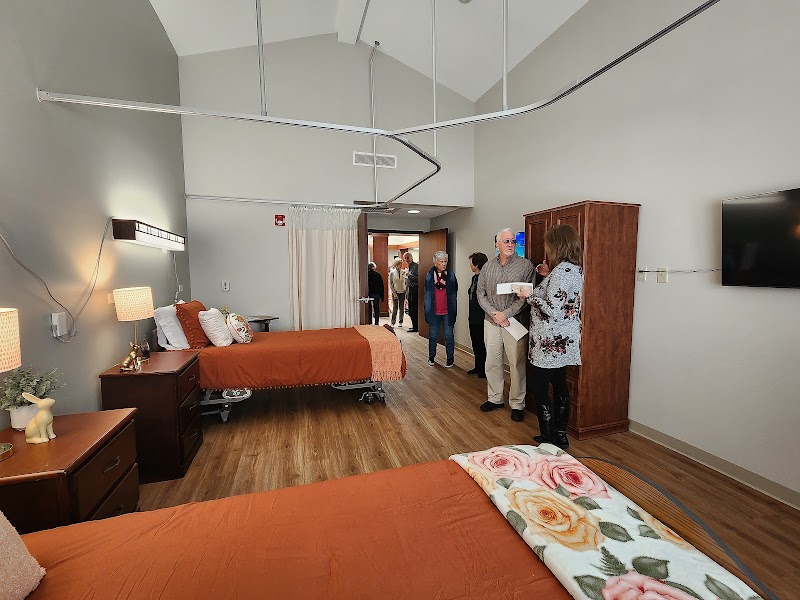
How is Butterfield Trail Village Staffed?

CMS rates BUTTERFIELD TRAIL VILLAGE's staffing level at 4 out of 5 stars, which is above average compared to other nursing homes.

What Have Inspectors Found at Butterfield Trail Village?

State health inspectors documented 21 deficiencies at BUTTERFIELD TRAIL VILLAGE during 2022 to 2025. These included: 3 that caused actual resident harm, 17 with potential for harm, and 1 minor or isolated issues. Deficiencies causing actual harm indicate documented cases where residents experienced negative health consequences.

Who Owns and Operates Butterfield Trail Village?

BUTTERFIELD TRAIL VILLAGE is owned by a non-profit organization. Non-profit facilities reinvest revenue into operations rather than distributing to shareholders. The facility operates independently rather than as part of a larger chain. With 87 certified beds and approximately 41 residents (about 47% occupancy), it is a smaller facility located in FAYETTEVILLE, Arkansas.
How Does Butterfield Trail Village Compare to Other Arkansas Nursing Homes?

Compared to the 100 nursing homes in Arkansas, BUTTERFIELD TRAIL VILLAGE's overall rating (1 stars) is below the state average of 3.1 and health inspection rating (1 stars) is much below the national benchmark.

What Should Families Ask When Visiting Butterfield Trail Village?

Based on this facility's data, families visiting should ask: "Can I visit during a mealtime to observe dining assistance and food quality?" "How do you handle medical emergencies, and what is your hospital transfer rate?" "Can I speak with family members of current residents about their experience?"

Is Butterfield Trail Village Safe?

Based on CMS inspection data, BUTTERFIELD TRAIL VILLAGE has a clean safety record: no substantiated abuse findings (meaning no confirmed cases of resident harm), no Immediate Jeopardy citations (the most serious violation level indicating risk of serious injury or death), and is not on the Special Focus Facility watch list (a federal program monitoring the lowest-performing 1% of nursing homes). The facility has a 1-star overall rating and ranks #100 of 100 nursing homes in Arkansas. While no facility is perfect, families should still ask about staff-to-resident ratios and recent inspection results during their visit.

Do Nurses at Butterfield Trail Village Stick Around?

BUTTERFIELD TRAIL VILLAGE has not reported staff turnover data to CMS. Staff turnover matters because consistent caregivers learn residents' individual needs, medications, and preferences. When staff frequently change, this institutional knowledge is lost. Families should ask the facility directly about their staff retention rates and average employee tenure.

Was Butterfield Trail Village Ever Fined?

BUTTERFIELD TRAIL VILLAGE has been fined $89,240 across 1 penalty action. This is above the Arkansas average of $33,971. Fines in this range indicate compliance issues significant enough for CMS to impose meaningful financial consequences. Common causes include delayed correction of deficiencies, repeat violations, or care failures affecting resident safety. Families should ask facility leadership what changes have been made since these penalties.

Is Butterfield Trail Village on Any Federal Watch List?

BUTTERFIELD TRAIL VILLAGE is not on any federal watch list. The most significant is the Special Focus Facility (SFF) program, which identifies the bottom 1% of nursing homes nationally based on persistent, serious quality problems. Not being on this list means the facility has avoided the pattern of deficiencies that triggers enhanced federal oversight. This is a positive indicator, though families should still review the facility's inspection history directly.