FAYETTEVILLE HEALTH AND REHABILITATION CENTER
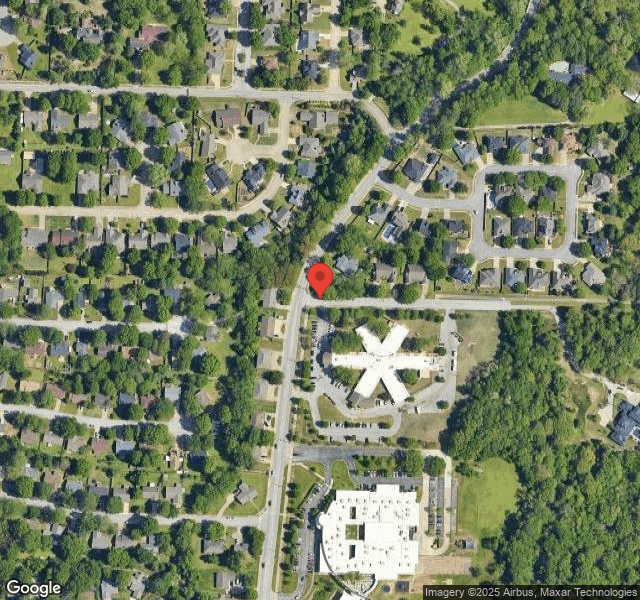
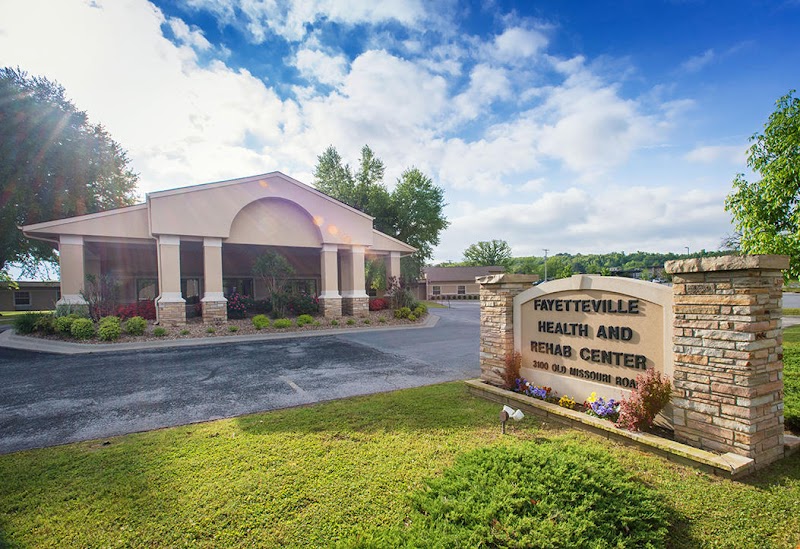
3100 OLD MISSOURI RD, FAYETTEVILLE, AR 72703 (479) 521-4353
For profit - Limited Liability company 99 Beds NHS MANAGEMENT Data: November 2025
Trust Grade
40/100
#196 of 218 in AR
Last Inspection: June 2024

Within standard 12-15 month inspection cycle. Federal law requires annual inspections.

Overview

Fayetteville Health and Rehabilitation Center has a Trust Grade of D, indicating below-average performance with some concerns about care quality. It ranks #196 out of 218 facilities in Arkansas, placing it in the bottom half of nursing homes in the state, and #12 out of 12 in Washington County, meaning there are no better local options available. The facility's condition is worsening, with issues increasing from 12 in 2023 to 15 in 2024. Staffing is rated average at 3 out of 5 stars, but with a turnover rate of 51%, it is similar to the state average, suggesting some staff stability. While there have been no fines reported, RN coverage is concerning as it is lower than 88% of Arkansas facilities, which could impact the quality of care. Specific incidents noted by inspectors included failures in food safety, such as not labeling and dating food items, which could lead to spoilage and potential health risks for residents. Additionally, the kitchen was found to be unsanitary, with issues regarding the cleanliness of the food preparation area and staff not washing hands properly between tasks. These findings highlight both significant weaknesses in food safety practices and hygiene that families should consider when evaluating this facility for their loved ones.

Trust Score
D
40/100
In Arkansas
#196/218
Bottom 11%
Safety Record
Low Risk
No red flags
Inspections
Getting Worse
12 → 15 violations
Staff Stability
⚠ Watch
51% turnover. Above average. Higher turnover means staff may not know residents' routines.
Penalties
✓ Good
No fines on record. Clean compliance history, better than most Arkansas facilities.
Skilled Nurses
⚠ Watch
Each resident gets only 12 minutes of Registered Nurse (RN) attention daily — below average for Arkansas. Fewer RN minutes means fewer trained eyes watching for problems.
Violations
⚠ Watch
38 deficiencies on record. Higher than average. Multiple issues found across inspections.
★☆☆☆☆
1.0
Overall Rating
★★★☆☆
3.0
Staff Levels
★★★★☆
4.0
Care Quality
★☆☆☆☆
1.0
Inspection Score
Stable
2023: 12 issues
2024: 15 issues

The Good

  • 4-Star Quality Measures · Strong clinical quality outcomes
  • Full Sprinkler Coverage · Fire safety systems throughout facility
  • No fines on record

Facility shows strength in quality measures, fire safety.

The Bad

1-Star Overall Rating

Below Arkansas average (3.1)

Significant quality concerns identified by CMS

Staff Turnover: 51%

Near Arkansas avg (46%)

Higher turnover may affect care consistency

Chain: NHS MANAGEMENT

Part of a multi-facility chain

Ask about local staffing decisions and management

The Ugly 38 deficiencies on record

Jun 2024 15 deficiencies
CONCERN (D) 📢 Someone Reported This

A family member, employee, or ombudsman was alarmed enough to file a formal complaint

Potential for Harm - no one hurt, but risky conditions existed

Safe Environment (Tag F0584)

Could have caused harm · This affected 1 resident

**NOTE- TERMS IN BRACKETS HAVE BEEN EDITED TO PROTECT CONFIDENTIALITY** Based on observations and interviews, the facility failed to ensure walls in residents' rooms were maintained in good repair to ...

Read full inspector narrative →
**NOTE- TERMS IN BRACKETS HAVE BEEN EDITED TO PROTECT CONFIDENTIALITY** Based on observations and interviews, the facility failed to ensure walls in residents' rooms were maintained in good repair to provide a clean and homelike environment for residents who resided on 2 (B Hall and D Hall) of 2 halls observed. Findings include: During an observation of room [ROOM NUMBER] on 06/24/2024 at 12:28 PM, the golden colored wall next to the bed was damaged exposing the gypsum compound which is used to patch and fix drywall and was exposed from under the paint in white irregular shaped areas visible above the edge of the side of the bed. The edge of the door to the resident ' s bathroom had chipped paint and rough cracked areas with brown debris in the cracks on the edge of the door, above and below the handle and on the door jam. There was a gouged area in the middle of the door exposing raw wood. The toilet seat on the toilet in the resident ' s bathroom was peeling and had yellow, brown and black staining covering the top where resident would sit on the toilet. During an observation on 06/24/2024 at 1:52 PM, the doorknob to room [ROOM NUMBER] was loose and the escutcheon plate was not seated and was falling forward against the door handle interfering with operation of the door handle. During an observation of room [ROOM NUMBER] on 06/25/2024 at 8:56 AM, inside the room on the left side of the door opening just over the threshold, the brown tile had an oval shaped area missing tile and exposing the concrete floor below. There were lines around the missing tile in a cracked type of pattern extending across to another tile. The bathroom sink in room [ROOM NUMBER] was missing the drain cover and had damage in a cracked pattern spreading outward around the drain and across the bottom of the sink. The area around the exposed drain and bottom of the sink in cracks contained a brownish black gritty substance. The wall to the right side of bed B was damaged, from the level of the top of the headboard extending toward the floor, both vertically and horizontally in an irregular, scrape/scratch like pattern with white patches and peeling paint, exposing the gypsum compound which is used to patch and fix drywall and was exposed from under the paint. The resident did not understand why the wall could not be fixed and stated, It makes me feel like they don't care about me. During an interview on 06/25/2024 at 8:59 AM, Certified Nursing Assistant (CNA) #18 stated the floor of room [ROOM NUMBER] was a fall risk because of the damaged tile and the damage needed repair. CNA #18 stated the bathroom sink has grit in the bottom that could be felt, and the sink was stained. During an interview on 06/25/2024 at 3:20 PM, Maintenance stated there are two maintenance log books, one white and one black at the nurses ' station, but Maintenance was unable to locate the log books. During an interview on 06/26/2024 at 9:41 AM, Maintenance was asked if the facility had a maintenance program or schedule. Maintenance stated rounds are done monthly, two halls per month and a monthly calendar is used to track what rooms needed repairs. Damaged walls, leaking bathrooms, and other things are fixed in an order from worst to least. If a room is bad and the resident refuses to allow maintenance to work on it, the repairs are not done until there is a room change or a discharge. Maintenance stated notification of needed repairs is done by the person requesting the repair. During a concurrent observation and interview on 06/26/2024 at 9:44 AM, in room [ROOM NUMBER], Maintenance stated the wall behind bed B needed to be textured, sanded, and painted. The floor has a missing chunk of tile about 1.5 inches by 2.0 inches and 1/8th inch deep. Maintenance reported the tile will have to be cut out and replaced. Maintenance was asked if the floor was safe for residents in the room and stated if the floor is not repaired it would be bumpy and there is a concern it would destabilize their walker. During a concurrent observation and interview with Maintenance in room [ROOM NUMBER], Maintenance stated the toilet seat was replaced at 4:30 PM on 06/24/2024 after the surveyor had been in the room. Maintenance stated the toilet seat was worn out and he would not have sat on the seat to use the bathroom. Maintenance stated the bathroom door in room [ROOM NUMBER] was scuffed up and needed to be painted to cover the chipped and gouged area. Maintenance stated the wall, next to the side of the bed, in room [ROOM NUMBER] needed to be textured and painted. During a concurrent observation and interview in room [ROOM NUMBER], Maintenance stated the handle to the room door was loose and the screw that goes under the cap is loose ad needs to be tightened. When asked what should be done, Maintenance stated the handle needed to be replaced because if the door was closed and the handle fell off, they would have to pick up the handle, put it back on and turn it to open it. During a concurrent observation and interview, on 06/26/2024 at 10:23 AM, the Administrator was asked if the facility had a maintenance program or maintenance schedule. The Administrator stated if a room is vacant, they go in and do repairs. If repairs require a resident to be relocated, they do that if the resident agrees. In room [ROOM NUMBER], the Administrator was asked if the wall in the room was acceptable. The Administrator stated the damage would be addressed and resident may have to be relocated if the resident agrees. The Administrator was aware of the floor damage and stated Maintenance was previously asked to address the floor damage, and the damage could be a hazard with use of the walker. The Administrator opened the bathroom door and stated the sink would be looked at as well.
CONCERN (D)

Potential for Harm - no one hurt, but risky conditions existed

Assessment Accuracy (Tag F0641)

Could have caused harm · This affected 1 resident

Based on observations, record review, and interview the facility failed to ensure a Minimum Data Set (MDS) was accurately coded for 1 (Resident #89) sampled resident. The findings are: A review of th...

Read full inspector narrative →
Based on observations, record review, and interview the facility failed to ensure a Minimum Data Set (MDS) was accurately coded for 1 (Resident #89) sampled resident. The findings are: A review of the Face Sheet revealed that Resident #89 had a diagnosis of amyotrophic lateral sclerosis (ALS) A review of the Quarterly Minimum Data Set (MDS) with an Assessment Reference Date (ARD) of 05/321/2024 revealed that Resident #89 had a Staff Assessment of Mental Status (SAMS) completed that revealed had a memory problem for long-term and short-term memory. A review of Section GG revealed that it was coded for one upper extremity with limited range of motion. A review of the Care Plan for Resident #89 revealed no interventions for limited range of motion. On 06/24/2024 at 11:58 AM, the Surveyor observed both of Resident #89 ' s hands contracted with the fingers touching the forearms, no interventions are in place. On 06/25/2024 at 9:40 AM, Surveyor observed no interventions in place for the contractures. On 06/25/2024 at 2:37 PM, during an interview with Certified Nursing Assistant (CNA) #24, CNA #24 stated when Resident #89 was first admitted to the facility, rolled washcloths and stretches were used to treat the contractures. CNA #24 stated that they have moved to D hall for the last few months and that they remembered no charting for contractures. On 06/25/2024 at 2:45 PM, during an interview CNA #20 stated that they are familiar with Resident #89 and worked this hall often and cannot think of any charting for the contractures. CNA #20 stated during care they do range of motion stretches and attempt washcloths, but it is difficult with the level of contracture the resident has. On 06/27/2024 at 8:26 AM, during an interview the MDS Coordinator stated the most recent MDS is coded for one upper extremity in section GG, limited range of motion. MDS Coordinator stated can we go look at the resident, I am not sure if that is correct. The MDS Coordinator confirmed on observation that the MDS was not correctly coded, the resident has two contractures, then stated the MDS is important to ensure care plans are accurate, and the resident summary is as well. The MDS Coordinator stated that they just recently switched to this position but stated that the criteria is if the resident cannot do full range of motion, it is limited in some capacity. On 06/27/2024 at 8:50 AM, during an interview the Director of Nursing stated that the MDS is the most thorough assessment for the residents. It is important to have an accurate MDS to care for the resident properly. A review of the facility policy Resident Assessment Instrument (RAI) revealed Purpose: Residents are assessed, using a comprehensive assessment process, in order to identify care needs and to develop a plan of care; Standard: According to federal regulations the facility conducts initially and periodically a comprehensive, accurate, and standardized assessment of each resident's functional capacity.
CONCERN (D)

Potential for Harm - no one hurt, but risky conditions existed

Quality of Care (Tag F0684)

Could have caused harm · This affected 1 resident

Based on record review, observation, and interview, the facility failed to ensure interventions to prevent pressure ulcers to prevent skin breakdown or worsening of skin issues, were utilized for 1 (R...

Read full inspector narrative →
Based on record review, observation, and interview, the facility failed to ensure interventions to prevent pressure ulcers to prevent skin breakdown or worsening of skin issues, were utilized for 1 (Resident #39) of 1 sampled resident. The findings are: 1. A review of a Face Sheet indicated the facility admitted Resident #39 with diagnoses that included hemiplegia, hemiparesis, and dementia. a. The annual Minimum Data Set (MDS) with an Assessment Reference Date (ARD) of 05/10/2024 revealed Resident #39 had a Staff Assessment for Mental Status (SAMS) score of 2, which indicated the resident moderately impaired for their daily decision making. Skin and ulcer treatments included a pressure relieving device for chair and bed. b. Review of Resident 39's Care Plan, dated 10/23/2017, revealed the resident was at risk for skin breakdown, with interventions that included utilizing a pressure reducing cushion while up in chair. c. On 06/24/2024 at 1:10 PM, Resident #39 observed sitting in a specialized chair in the dining room. There was no cushion in Resident #39 ' s specialized chair. d. On 06/25/2024 at 12:15 PM, Resident #39 observed sitting in a specialized chair in the dining room. There was not a cushion in Resident #39 ' s specialized chair. Resident #39 was sitting on the plastic straps. e. On 06/25/2024 at 12:31 PM, Resident #39 observed sitting in a specialized chair in the dining room. There was no cushion in Resident ' s specialized chair. Resident was sitting directly on the plastic straps. f. On 06/25/2024 at 12:53 PM, Resident #39 observed sitting in a specialized chair in the dining room. There was no cushion in Resident #39 ' s specialized chair. The Resident was sitting on plastic straps. g. On 06/25/2024 at 6:03 PM, Certified Nursing Assistant (CNA) #31 and CNA #1 was observed to transfer Resident # 39 from the dining chair to a specialized chair using a gait belt. CNA #31 and CNA #1 lifted Resident #39 and transferred into the specialized chair. There was no cushion in the specialized chair. Resident #39 was sitting on thick plastic/rubber straps. CNA #31 revealed during an interview that she did not know if Resident #39 was supposed to have a cushion in their wheelchair as she did not work that hall. h. On 06/25/2024 at 01:45 PM, during an interview CNA #17 revealed that most of the specialized chairs have a cushion, but Resident #39 did not have one and I don't know why, and that cushions were put in specialized chairs to prevent skin breakdown. i. On 06/27/2024 at 8:30 AM, CNA #12 revealed during an interview that Resident #39 had not had a cushion in the Resident #39 ' s specialized chair and a corporate lady gave her a cushion this morning and asked if she would put it in Resident # 39 chair. j. On 06/27/2024 at 12:37 PM, the Director of Nursing (DON) revealed during an interview that she did not know why Resident #39 did not have a cushion in the specialized chair and all care staff is responsible for ensuring pressure relieving devices are in residents' chairs.
CONCERN (D)

Potential for Harm - no one hurt, but risky conditions existed

Respiratory Care (Tag F0695)

Could have caused harm · This affected 1 resident

Based on observation, record review, and interview the facility failed to ensure that physicians orders were followed for oxygen therapy for 1of 1 Resident #89 sampled resident. These are our findings...

Read full inspector narrative →
Based on observation, record review, and interview the facility failed to ensure that physicians orders were followed for oxygen therapy for 1of 1 Resident #89 sampled resident. These are our findings: A review of the Face Sheet revealed that Resident #89 had diagnosis of amyotrophic lateral sclerosis (ALS). A review of the Quarterly Minimum Data Set (MDS) with an Assessment Reference Date (ARD) of 05/321/2024 reveals that Resident #89 had a Staff Assessment of Mental Status (SAMS) completed that revealed had a memory problem for long term and short-term memory. A review of the Care Plan states that the care plan goal is Resident #89 Will exhibit no shortness of breath, and interventions include administer oxygen therapy as ordered. A review of the Physicians Order List revealed Resident #89 had a physician's order for oxygen 2 liters per minute via nasal cannula for shortness of breath. On 06/24/2024 at 11:58 AM, Surveyor observed Resident #89 had uneven labored respirations, the oral cavity is red and cracked from mouth breathing. Surveyor observed Resident #89's oxygen concentrator set to 1 liter per minute (LPM). On 06/25/2024 at 9:40 AM, Surveyor observed Resident #89 had uneven labored respirations and the oral cavity is cracked from mouth breathing. Surveyor observed Resident #89's oxygen concentrator set to 1 LPM. On 06/25/2024 at 9:50 AM, during an interview Licensed Practical Nurse #19 (LPN) confirmed that Resident #79 ' s oxygen was reading in-between 1 liter per minute (LPM) and 1.5 LPM. LPN #19 confirmed that the order was for 2 LPM for the resident. LPN #19 stated not following a physician's order can lead to death, discomfort, or struggling, especially this resident as they are on Hospice and comfort is the goal. On 06/26/2024 at 08:50 AM, during an interview the Director of Nursing (DON) stated it's important to follow physician orders to meet their care needs. The DON stated that not following a physician order for a resident could lead to incorrect care. A review of the facility policy Oxygen Administration states that Oxygen should be administered under orders of the attending physician. Process: 1. Obtain physician's orders for the rate of flow and route of administration of oxygen.
CONCERN (E)

Potential for Harm - no one hurt, but risky conditions existed

Resident Rights (Tag F0550)

Could have caused harm · This affected multiple residents

Based on record review, observation, and interview, the facility failed to ensure residents rights were acknowledged and treated in a manner to promote dignity for 6 (Resident #3, #39, #46, #55, #68, ...

Read full inspector narrative →
Based on record review, observation, and interview, the facility failed to ensure residents rights were acknowledged and treated in a manner to promote dignity for 6 (Resident #3, #39, #46, #55, #68, and #95) of 6 sample mix residents. The findings are: 1. A review of a Face Sheet indicated the facility admitted Resident #39 with diagnoses that included hemiplegia, hemiparesis, and dementia. a. The annual Minimum Data Set (MDS) with an Assessment Reference Date (ARD) of 05/10/2024 revealed Resident #39 had a Staff Assessment for Mental Status (SAMS) score of 2, which indicated the resident was moderately impaired for their daily decision making. Skin and ulcer treatments included a pressure relieving device for chair and bed. b. Review of Resident 39's Care Plan, dated 10/23/2017, revealed the resident was at risk for skin breakdown, with interventions that included utilizing pressure reducing cushion while up in chair. c. On 06/24/2024 at 1:13 PM, (Certified Nursing Assistant) CNA #35 assisted Resident #39 into a regular chair from a specialized chair in the dining room. The dining room was full of residents and staff. Resident #39 ' s pants dropped down exposing Resident #39 ' s brief and upper buttocks. d. On 06/27/2024 at 8:30 AM, CNA #12 revealed she was in the dining room the day Resident #39 was transferred from the specialized chair to the dining room chair and saw Resident #39 ' s pants fall down exposing the resident ' s brief and buttocks. CNA #12 revealed Resident #39 had lost a lot of weight and the clothes the resident had on that day were very loose and when they stood Resident #39 up, the pants fell and exposed the brief and buttocks. CNA #12 revealed they should ensure Resident #39 ' s clothes fit better, that is something that should have been addressed before the resident went to breakfast, and it could have been avoided. e. On 06/27/2024 at 12:37 PM, the Director of Nursing (DON) revealed that it is the responsibility of the staff member to ensure a resident's dignity is maintained during meal service while transferring from one chair to another. 2. A review of the Face Sheet indicated the facility admitted Resident #95 with diagnoses that included neurocognitive disorder with Lewy bodies. a. The admission MDS with an ARD of 04/09/2024 revealed Resident #95 had a BIMS score of 11, which indicated the resident was had moderate cognitive impairment. Resident #95 required supervision or touching assistance with eating, partial/moderate assistance for oral hygiene, substantial/maximal assistance with upper body dressing and personal hygiene and was dependent with lower body dressing and toileting. b. A review of Resident #95's Care Plan revealed the resident was at risk for aspiration. Interventions included thickened liquids and allowing sufficient time to feed/eat. c. During an observation and interview on 06/24/2024 at 1:11 PM, Resident #95 was sitting in a specialized wheelchair in the dining room. CNA #29 was standing to the left of Resident #95, using a spoon to provide fluid and a fork to place food into Resident #95's mouth. CNA #29 stated Resident #29 has good and bad days and today is unable to eat without assistance. d. During an interview on 06/24/2024 at 1:55 PM, CNA #29 stated they would sit or stand while assisting Resident #95 depending on the height the resident was at. CNA #29 further stated that when Resident #95 eats in their room, and the bed is raised, the CNA would stand to assist. CNA #29 stated they had to stand because there were no additional chairs in the dining room and did not think about getting a chair from the resident's room. e. During an observation on 06/26/2024 at 2:14 PM, Resident #95 was sitting in a specialized wheelchair in the dining room. CNA #13 was standing to the left of Resident #95 placing food and beverage into Resident #95's mouth. f. During an interview on 06/26/2024 at 2:31 PM, CNA #34 stated Resident #95 required assistance with meals and if Resident #95 wanted to eat in their room, CNA #34 sits in the chair to help them eat. If Resident #95 chose to eat in the dining room and it is full, CNAs stand to provide assistance. CNA #34 indicated training was received on dignity and it doesn't matter if CNAs sit or stand to provide assistance. CNA #34 indicated that if Resident #95 required assistance with a meal, Resident #95 would prefer to have someone sit to provide the assistance. g. During an interview on 06/26/2024 at 2:42 PM, CNA #13 stated Resident #95's disease had worsened and they required assistance with eating and it is better to sit and be eye to eye with the resident to see if the Resident is swallowing and not pocketing (holding food in your cheeks). CNA #13 indicated dignity training was received and it was better to sit and feed the resident. h. During an interview on 06/27/2024 at 11:10 AM, Licensed Practical Nurse (LPN) #32 stated residents should be positioned at a 90-degree angle if possible, and staff should sit with the resident if assistance is being provided and should never stand over them and assist due to dignity. i. During an interview on 06/27/2024 at 12:26 PM, the Director of Nursing stated Resident #95 is dependent and requires assistance with meals. When staff provides assistance with meals they should sit and not stand to feed a resident. 3. A review of the Face Sheet revealed that Resident #3 had diagnosis of dementia with agitation, bipolar disorder, and schizoaffective disorder. a. A review of the Quarterly MDS with an ARD of 05/30/2024 revealed that Resident #3 scored an 11 (moderately impaired) on the BIMS. b. A review of the Face Sheet revealed that Resident #46 had diagnosis of dementia, delusional disorders, and depressive disorders. c. A review of the Quarterly MDS with an ARD of 04/23/2024 revealed that Resident #46 scored an 8 (moderately impaired) on the BIMS. d. A review of the Face Sheet revealed that Resident #55 had diagnosis of dementia, paranoid disorder, and anxiety disorder. e. A review of the Quarterly MDS' with an ARD of 05/08/2024 revealed that Resident #55 scored a 9 (moderately impaired) on the BIMS. f. A review of the Face Sheet revealed that Resident #68 had diagnoses of dementia, and attention and concentration deficit. g. A review of the Quarterly MDS with an ARD of 05/30/2024 revealed that Resident #68 scored a 7 (severely impaired) on the BIMS. h. On 06/24/2024 at 12:38 PM, Surveyor observed Resident #55 was set up by staff with a lunch tray. i. On 06/24/2024 at 12:42 PM, Resident #46 and Resident #3 were set up by staff with a lunch tray. Resident #68 was observed to be looking at the other residents eating in the dining room. j. On 06/24/2024 at 12:45 PM, Resident #68 stated that they were not thrilled with lunch today. Then stated to the other residents that they were tired of waiting. Resident #68 keeps looking at the doorway for staff to come in with lunch trays and was wringing their hands together while waiting for lunch. k. On 06/24/2024 at 12:51 PM, CNA #28 came into the dining room and set up Resident #68's tray. l. On 06/24/2024 at 12:53 PM, during an interview CNA #28 confirmed the last tray passed was Resident #68 ' s. CNA stated they were to pass trays table by table, so there is no one sitting there watching others eat. CNA stated the issue for the residents is they are having to wait for food, and it could be dignity as well. m. On 06/25/2024 at 11:52 AM, during an interview Licensed Practical Nurse (LPN) #20 stated generally the procedure for passing trays is table by table so residents will not be watching other residents eat. LPN #20 stated the resident could feel envious of others and that it is a dignity issue. 4. A review of the policy Federal Rights of Resident/Guest(s) states Resident/Guest rights. A facility must treat each resident/guest with respect and dignity and care for each resident/guest in a manner and in an environment that promotes maintenance or enhancement of his or her quality of life, recognizing each resident/guest(s) individuality.
CONCERN (E)

Potential for Harm - no one hurt, but risky conditions existed

Deficiency F0657 (Tag F0657)

Could have caused harm · This affected multiple residents

Based on observation, record review, and interview the facility failed to ensure care plans were revised for 2 of 2 sampled Residents (Resident #78 and #89). The findings are: 1. A review of the Face...

Read full inspector narrative →
Based on observation, record review, and interview the facility failed to ensure care plans were revised for 2 of 2 sampled Residents (Resident #78 and #89). The findings are: 1. A review of the Face Sheet reveals that Resident #78 had diagnoses of severe intellectual disabilities and developmental disorders. a. A review of the Quarterly Minimum Data Set (MDS) with an Assessment Reference Date of 06/06/2024 showed Resident #78 had a Staff Assessment of Mental Status (SAMS) completed that reveals memory problem for long-term and short-term memory. b. A review of the Care Plan revealed an intervention of resident door open at all times for easy visualization related to inability to utilize call light. No other interventions are in place for the recent removal of the call light. c. On 06/24/2024 at 11:36 AM, Surveyor observed Resident #78 sitting on bed crossed legged with the call light going off continuously and no call light located on Resident #78 ' s side of the room or plugged into the board on the wall. d. On 06/24/2024 at 12:00 PM, during an interview Certified Nursing Assistant (CNA) #28 stated it has only been like this a few days, We had to take the call light away as the resident kept wrapping it around their neck. CNA #28 stated Resident #78 ' s roommate will usually ring a bell as a way for them to know that they need care. CNA #28 stated this behavior from Resident #78 is normal, and They pull the call light out of the wall consistently. e. On 06/24/2024 at 2:00 PM, Surveyor observed the call light still going off continuously. f. On 06/25/2024 at 10:00 AM, Surveyor observed the call light still going off continuously. g. On 06/26/2024 at 9:00 AM, Surveyor observed a plug has been put into place, Resident #78 does not have a call light at this time. h. On 06/26/2024 at 9:05 AM, during an interview with CNA #28 stated the call light was fixed yesterday afternoon, and that Resident #78 does not have a call light. CNA #28 stated Resident #78 is non-verbal but that they do frequent rounds and watch for cues with Resident #78 to provide care. i. On 06/27/2024 at 8:26 AM, during an interview with the MDS Coordinator confirmed that there were no interventions for the removal of the call light in the care plan. MDS Coordinator stated that a comprehensive care plan was important as the resident could go without needs being met. 2. A review of the Face Sheet revealed that Resident #89 had a diagnosis of Amyotrophic Lateral Sclerosis (ALS). a. A review of the Quarterly MDS with an ARD of 05/321/2024 reveals that Resident #89 had a SAMS completed that revealed the resident had a memory problem for long-term and short-term memory. b. A review of the Care Plan revealed no interventions for limited range of motion. c. On 06/24/2024 at 11:58 AM, Surveyor observed both of Resident #78 ' s hands were contracted with the fingers touching the forearms, no interventions are in place. d. On 06/25/2024 at 9:40 AM, Surveyor observed no interventions in place for the contractures. e. On 06/25/2024 at 2:37 PM, during an interview with CNA #24 stated when Resident #89 was first admitted to facility rolled washcloths and stretches were used. CNA then stated that they have moved to D hall for the last few months and that they remembered no charting for contractures. f. On 06/25/2024 at 2:45 PM, during an interview with CNA #20 stated that they are familiar with the resident and work this hall often and can think of no charting for the contractures. CNA #20 stated during care they do range of motion stretches and attempt washcloths, but it is difficult with the level of contracture the resident has. g. On 06/27/2024 at 8:26 AM, during an interview the MDS Coordinator confirmed that no interventions were in place for contractures on the care plan and stated that it is important to have an accurate care plan so staff know how to care for the resident, such as skin integrity in this case, or even know not to try and stretch the contractures too far. Interventions can help prevent worsening of limited range of motion. h. On 06/27/2024 at 08:50 AM, during an interview the Director of Nursing (DON) stated it is important to have an accurate care plan. It is an expected part of their maintenance and that way staff know how to bridge the gap for care. 3. A review of the facility policy Person Centered Care Plans revealed When a new approach or goal is identified, the entry should be dated using the date the goal/approach is entered on the care plan.
CONCERN (E)

Potential for Harm - no one hurt, but risky conditions existed

Accident Prevention (Tag F0689)

Could have caused harm · This affected multiple residents

Based on record review, observation, and interview, the facility failed to ensure a transfer lift was properly working to prevent the potential for harm for 2 (Resident #76 and Resident #79) of 2 samp...

Read full inspector narrative →
Based on record review, observation, and interview, the facility failed to ensure a transfer lift was properly working to prevent the potential for harm for 2 (Resident #76 and Resident #79) of 2 sampled residents; and the facility failed to ensure chemicals were contained / stored when not in use to prevent the possible ingestion and injury for 1 (Resident #32) sampled resident. The findings are: 1. A review of a Face Sheet indicated the facility admitted Resident #32 with a diagnosis of dementia. a. A review of a quarterly Minimum Data Set (MDS) with an Assessment Reference Date (ARD) of 04/25/2024 revealed Resident #32 had scored a 12 on a Brief Interview for Mental Status, indicating moderate cognitive impairment. b. On 06/25/2024 at 5:27 PM Resident # 32 observed lying in bed. A canister of disinfecting wipes was observed on resident nightstand. c. On 06/25/2024 at 5:30 PM, Licensed Practical Nurse (LPN) #19 was asked about the disinfecting wipes and revealed it was possible the resident's family brought them in, and it was a hazard and dangerous to leave those items in the resident's room. d. On 06/27/2024 12:37 PM, the Director of Nursing (DON) revealed during an interview that disinfecting wipes should be stored in the supply room or the bottom drawer of the medication cart because it is a chemical and should be out of reach of people who should not have them. 2. On 06/25/2024 at 9:00 AM, Surveyor observed a transfer lift on D hall missing the upper right and lower right metal moveable attachments. a. On 06/25/2024 at 2:19 PM, Surveyor observed a lift transfer with Resident #76, Certified Nursing Assistant #21 (CNA) and CNA #18. Surveyor observed the transfer, with both moveable attachments missing. b. On 06/25/2024 at 2:52 PM. during an interview CNA #18 stated that their last training was in school nine years ago, and that they have been at the facility for over a year. CNA #18 then stated that the lift was the only one throughout the building and if it breaks, they page for Maintenance at the nurse's station. CNA #18 stated that the residents have to wait their turn for the lift, when it gets really busy. c. On 06/25/2024 at 2:52 PM, during an interview with Maintenance he stated that I have a paper log, but I do not keep the papers. Then stated that Everybody has my number, usually they text me night and day what is needed throughout the building, I am on call 24/7. d. On 06/25/2024 at 6:22 PM, during an interview CNA #22 stated, I was last trained during school in 2011, and some new jobs require us to do a demonstration. CNA#22 then stated if any issues arise, I go directly to my nurse after that I go to the maintenance book and mark it down. e. On 06/25/2024 at 6:43 PM, CNA #27 was interviewed and revealed the last time she had training on the lifts was about 6-7 months ago during CNA classes, and she reports issues with the lift to the maintenance man, and he takes care of it. f. On 06/25/2024 at 6:45 PM, the surveyor observed the transfer of Resident #79 from wheelchair into bed with missing clips, during the transfer the right top hanger a missing moveable metal attachment is missing, the strap moved up and came close to slipping out. During an interview CNA #22 and CNA #23 agreed they have never noticed the missing metal attachments on the transfer lift. CNA #22 then stated that now they realized it has been like that for a month and half. g. On 06/25/2024 at 6:45 PM, during an interview CNA #25 stated the last training for the mechanical lift was about 2 months ago and was on how to properly use the lift. h. On 06/25/2024 at 7:20 PM, during an interview Licensed Practical Nurse (LPN) #26 reported working nights at the facility for 5 months, and stated the lift is checked by maintenance regularly and if there were any issue maintenance would take care of it. i. On 06/25/2024 at 7:22 PM, during an interview Maintenance stated they inspected the lifts once a month and offered the inspection logs. Maintenance confirmed they were trained to inspect the lifts and stated the issues they saw were no rubber skids on top of the legs at the base, and the two missing clips, on one the top right and one on the bottom left. The issue is that if somebody pulls on it or if it is not properly positioned it could slip and a resident could get hurt. j. On 06/25/2024 at 7:30 PM, during an interview Registered Nurse #3 (RN) stated if the lift is in use and works, it is safe to use. If it wasn't safe, it would have been taken out of service. k. On 06/25/2024 at 8:10 PM, during an interview the Director of Nursing (DON) stated they train staff annually on lift usage. Any issues are to be reported to a member of management or maintenance and if the lift is used when it is broken, it could lead to injury. l. A review of the facility policy Lifting Device Policy states to 2. Follow manufacturer's directions for specific lift or repositioning device usage. m. A review of the Named Lift 50/600 RPL450-2, RPL600-2 Battery- Powered Patient Lift User Manual indicated, DO NOT move the patient if the sling is not properly connected to the hooks of the hanger bar. When the sling is elevated a few inches off of the stationary surface and before moving the patient, check again to make sure the sling is properly connected to the hooks of the hanger bar. If any attachments are NOT properly in place, lower the patient back onto the stationary surface and correct this problem; otherwise, injury or damage may occur.
CONCERN (E)

Potential for Harm - no one hurt, but risky conditions existed

Deficiency F0761 (Tag F0761)

Could have caused harm · This affected multiple residents

Based on observation, interview, and record review the facility failed to ensure expired bubble pack medications were removed from the medication cart once the expiration date has been reached for 3 o...

Read full inspector narrative →
Based on observation, interview, and record review the facility failed to ensure expired bubble pack medications were removed from the medication cart once the expiration date has been reached for 3 of 5 medications carts checked for review, the facility failed to ensure controlled substances were properly removed once the seal to the medication had been broke to prevent the possible misappropriation of medication for 1 of 3 medication carts checked for review, the facility failed to ensure that medications were stored and labeled out of resident reach for 1 (Resident #32) of 1 residents. The findings are: 1. On 06/27/2024 at 09:51 AM Surveyor checked E Hall Cart for compliance with Licensed Practical Nurse (LPN) #33. The findings are: (1) bubble pack card of Ibuprofen 600 mg (milligram)tablets with an expiration date of 10/17/2023 with 13 pills remaining (1) bubble pack card of Ibuprofen 600 mg tablets with an expiration date of 10/17/2023 with 12 pills remaining (1) bubble pack card of Hyoscyamine 0.125 mg sublingual tablets with an expiration date of 05/10/2024 with 30 pills remaining (1) bubble pack card of Ondansetron 4 mg tablets with an expiration date of 05/10/2024 with 24 pills remaining (1) bubble pack card of hydrochlorothiazide 25 mg tablets with an expiration date of 05/30/2024 with 29 pills remaining During an interview on 06/27/2024 at 9:51 AM, the LPN #33 stated medication carts are checked every few weeks and corporate came in on 06/20/2024 and checked the medication carts for any expired medications. LPN #33 also stated medication carts are checked to ensure that residents do not receive expired medications. 2. On 06/27/2024 at 10:04 AM Surveyor checked D Hall Cart for compliance with LPN #33. The findings are: (1) bubble pack card of hydroxyzine hcl (Hydrochloric Acid) 25 mg tablets with an expiration date of 05/29/2024 with 3 pills remaining (1) bubble pack card of hydroxyzine hcl 25 mg tablets with an expiration date of 05/07/2024 with 7 pills remaining (1) bubble pack card of ondansetron hcl 4 mg tablets with an expiration date of 05/22/2024 with 3 pills remaining (1) bubble pack card of Hyoscyamine 0.125 mg sublingual tablets with an expiration date of 05/29/2024 with 27 pills remaining 3. On 06/27/2024 at 10:18 AM Surveyor checked A Hall Cart for compliance with LPN #19. The findings are: (1) bubble pack card of Oxybutynin chloride 5mg tablets with an expiration date of 05/03/2024 with 7 pills remaining (1) bubble pack card of Urogesic- blue tablets with an expiration date of 04/30/2024 with 28 pills remaining (1) bubble pack card of oxybutynin chloride 5 mg tablets with an expiration date of 04/11/2024 with 3 pills remaining (1) bubble pack card of oxybutynin chloride 5 mg tablets with an expiration date of 04/11/2024 with 7 pills remaining (1) bubble pack card of oxybutynin chloride 5 mg tablets with an expiration date of 05/03/2024 with 7 pills remaining During an interview on 06/27/2024 at 10:18 AM, LPN #19 stated the medication carts are checked at least monthly, but the as needed medications are not checked unless the Pharmacists is here. LPN #19 also stated that medication carts are checked to ensure that residents do not receive expired medications, remove the cards if no longer taking, and to ensure they have the prescribed medication available. 4. On 06/27/2024 at 10:18 AM Surveyor reconciled controlled substances on Medication cart A and B with LPN #19. The findings are: (1) bubble pack card of clonazepam 0.5 mg tablets with 15 tablets remaining with a broken seal on pill #4 (1) bubble pack card of Morphine sulfate 15 mg ER tablets with 14 tablets with a taped in pill on pill #14 (1) bubble pack card of diazepam 5 mg tablets with 47 tablets remaining with a broken seal on pill #9, 10, 20 (1) bubble pack card of Tramadol 50 mg tablets with 6 tablets with a taped in pill on pill #6 During an interview on 06/27/2024 at 10:18 AM, the LPN #19 stated controlled substance pills should be wasted once the seal is broken by two nurses and signed out in the controlled substance book because you don't know for sure what pill is in there. It's the point of the seal. 5. During an interview on 06/27/2024 at 11:05 AM, the Director of Nursing (DON) stated during count of controlled substance medications the nurses should be checking for breaks in the seal. Once the seal is broken the nurse needs to secure the break, the nurse can remove the pill and waste it, or it can be taped by the nurse. The DON stated this is to ensure there are no missing medications. The DON stated medication carts are checked monthly by the Pharmacists which were in the facility and checked carts on 06/26/2024 and the corporate quality assurance consultant checks the carts quarterly. The medication carts are checked to ensure the residents do not receive an expired medication. 6. A review of a facility policy titled, Storage of Medications and Biologicals, dated 04/20 indicated, Outdated, contaminated, or deteriorated medications and those in containers that are cracked, soiled, or without secure closures are removed from stock, disposed of according to procedures for medication disposal, and reordered from the pharmacy, if a current order exists. 7. A review of a Face Sheet indicated the facility admitted Resident #32 with a diagnosis that included dementia. a. A review of a quarterly Minimum Data Set (MDS) with an Assessment Reference Date (ARD) of 04/25/2024 revealed Resident #32 had scored a 12 on a Brief Interview for Mental Status, indicating moderate cognitive impairment. b. On 06/24/2024 at 11:45 AM, Resident #32 lying in bed. A bottle of 5% eye solution was on the bedside table. Resident # 32 states they do not self-administer eye drops and does not take eye drops. c. On 06/25/2024 at 5:27 PM, Resident #32 was observed lying in bed. An unlabeled medicine cup containing a white cream substance was observed on resident nightstand. Resident #32 was asked what the cream was used for. Resident #32 stated, They use it on my legs I guess. d. On 06/25/2024 at 5:30 PM, LPN #19 was asked if Resident #32 had an order for eye drops. LPN #19 revealed Resident #32 did not have an order for the eye drops. LPN #19 revealed she did not know what the cream was in the medicine cup, and that it was a hazard and dangerous to leave those items in the resident's room. e. On 06/25/2024 at 5:37 PM, LPN #36 revealed during an interview that the cream in the unlabeled medicine cup looked like barrier cream, but could not say for sure, and that it should not be left in a resident room because they could ingest it. f. On 06/27/2024 at 12:37 PM, during an interview the DON revealed medications should be stored in the medication room, medication carts, or treatment carts so they are not in reach of people who should not have them.
CONCERN (E)

Potential for Harm - no one hurt, but risky conditions existed

Menu Adequacy (Tag F0803)

Could have caused harm · This affected multiple residents

Based on observation, record review, and interview the facility failed to ensure meals were prepared and served according to the planned written menu to meet the nutritional needs of the residents for...

Read full inspector narrative →
Based on observation, record review, and interview the facility failed to ensure meals were prepared and served according to the planned written menu to meet the nutritional needs of the residents for 2 of 2 meals observed. The failed practices had the potential to affect 7 residents who received pureed diets, 1 resident who received pureed meat only, 60 residents who received regular diets and 30 residents who received mechanical soft diets from 1 of 1 kitchen. The findings are: 1. The 06/25/2024 supper menu documented the residents who received pureed diets were to receive 3-ounce of chicken salad and 4-ounce (1/2 cup) of pureed country macaroni salad and for the residents on regular diets were to receive 3/4 cup of toss salad with dressing. 2. On 06/25/2024 at 5:26 PM, the following observations were made during the supper meal service. a. Dietary Aide #7 used a tong to serve a small portion of toss salad to the residents on regular diets. b. Dietary [NAME] (DC) #6 served mashed potatoes to the residents on pureed diets, instead of pureed country macaroni salad. At 06:05 PM, the surveyor asked DC #6 the reason residents on pureed diets did not receive pureed macaroni salad. DC #6 stated, Bunch of people like mashed potatoes. We should have followed the menu. c. 06/25/24 6:03 PM, the surveyor asked Dietary aide (DA) #7 to measure the same amount of toss salad that she had served to the residents for supper. DC #7 placed the same amount of toss salad on a plate and transferred it into a 4-ounce spoon and stated, They supposed to have 4 ounces. The surveyor asked Dietary aide (DA) #7 if she reviewed the menu before serving supper meal. DA #7 stated, No, I thought they were supposed to have 1/2 cup. 3. The 06/26/2024 noon menu documented the residents who received pureed diets were to receive 2 ounce (1/4 cup) of pureed dinner roll. a. On 06/26/24 at 1:08 PM, the residents on pureed diets were not served pureed dinner rolls. b. On 06/26/24 at 1:10 PM, the surveyor asked DC #11 the reason residents on pureed diets did not receive pureed dinner rolls. DC #11 stated, I forgot.
CONCERN (E)

Potential for Harm - no one hurt, but risky conditions existed

Deficiency F0804 (Tag F0804)

Could have caused harm · This affected multiple residents

Based on observation, record review, and interview the facility failed to ensure food was prepared by methods that maintained appearance; hot foods were served hot and cold foods were served cold to m...

Read full inspector narrative →
Based on observation, record review, and interview the facility failed to ensure food was prepared by methods that maintained appearance; hot foods were served hot and cold foods were served cold to maintain palatability and encourage adequate nutritional intake for 1 of 1 meal observed on the B Hall and C Hall. The failed practice had the potential to affect 14 residents who received meal trays in their room on B Hall and 18 residents who received meal trays in their rooms on A-Hall. The findings are: 1. On 06/24/2024 at 2:53 PM, Resident #29 stated the food is always cold when asked if the hot food is hot when received to the room on a tray. 2. On 06/25/2024 at 1:42 PM, an unheated cart that contained trays for lunch was delivered to the B Hall by Certified Nursing Assistant (CNA) #14. 06/26/24 2:02 PM, immediately after the last resident received their tray in their room on B-Hall (Unit), the temperatures of the food items on a test tray from the food cart were checked by the Dietary Manager and read by Certified Nursing Assistant #13. The results were as follows: a. Ground ham with gravy - 92 degrees Fahrenheit. b. [NAME] yam - 80 degrees Fahrenheit. c. Cut green beans - 100 degrees Fahrenheit. d. Ham - 99 degrees Fahrenheit. 2. On 06/26/2024 at 5:24 PM, an unheated food cart that contained 23 trays for supper was delivered to A Hall by the Certified Nursing Assistant #15. At 5:41 PM, immediately after the last resident received their tray in their room on A-Hall, the temperatures of the food items on a test tray from the food cart were checked by the Dietary Manager and read by Licensed Practical Nurse (LPN) #16. The results were as follows: a. Potato salad - 60 degrees Fahrenheit. b. Ground riblets 90 degrees Fahrenheit. c. Riblets 99 degrees Fahrenheit.
CONCERN (E)

Potential for Harm - no one hurt, but risky conditions existed

Deficiency F0805 (Tag F0805)

Could have caused harm · This affected multiple residents

Based on observation and interview, the facility failed to ensure pureed food items were blended to a smooth, lump free consistency to minimize the risk of choking or other complications for those res...

Read full inspector narrative →
Based on observation and interview, the facility failed to ensure pureed food items were blended to a smooth, lump free consistency to minimize the risk of choking or other complications for those residents who required pureed diets for 2 of 2 meals observed. The failed practice had the potential to affect 7 residents who received pureed diet, and one resident who received pureed meat only. The findings are: 1. On 06/25/2024 at 4:53 AM, the following observations were made on the steam table: a. A pan of pureed cut green beans, the consistency was runny. b. A pan of pureed chicken, the consistency was gritty, not smooth, and had water in the mixture. c. A pan of pureed beef sauce, the consistency was running. 2. On 06/25/2024 at 6:28 PM, the surveyor asked the Dietary Manager to describe the consistency of the pureed food items served to the residents on pureed diets at supper meal. She stated, Pureed cut green beans look like nectar. Pureed chicken was gritty and pureed beef sauce was watery. 3. On 06/26/2024 at 7:14 AM, the following observations were made on the steam table: a. A pan of pureed oatmeal. The consistency was thick. b. A pan of biscuit. The consistency was lumpy. c. A pan of pureed sausage. The consistency was gritty and not smooth. Pieces of bread were visible in the mixture. d. A pan of cream of wheat. The consistency was watery. 4. On 06/26/2024 at 7:26 AM, the surveyor asked Dietary Manager to describe the pureed food items served to the residents on pureed diet for breakfast. She stated, Pureed sausage was gritty and had pieces of bread in it. Pureed biscuit was lumpy, and pureed oatmeal was thick. 5. On 06/26/2024 at 11:11 AM, Dietary [NAME] (DC) #11 used a #12 scoop to place 8 servings of diced ham into a blender, added broth and pureed. She poured the pureed ham into a pan and placed it on the steam table. The consistency of the pureed ham was runny. 6. On 06/26/2024 at 12:00 PM, DC #11 used a #6 scoop to place 6 servings candy yam into a blender, added a little water, garlic powder and pureed. She poured the pureed yam into a pan and placed it on the steam table. The consistency of the pureed yam was runny. 7. On 06/26/2024 at 12:23 PM, DC #11 placed 8 servings of spinach with eggs into a blender, added broth and pureed. She poured it into a pan and placed it on the steam table. The consistency was runny.
CONCERN (E)

Potential for Harm - no one hurt, but risky conditions existed

Infection Control (Tag F0880)

Could have caused harm · This affected multiple residents

**NOTE- TERMS IN BRACKETS HAVE BEEN EDITED TO PROTECT CONFIDENTIALITY** Based on record review, observation and interview the facility failed to ensure staff implemented hand hygiene to prevent the sp...

Read full inspector narrative →
**NOTE- TERMS IN BRACKETS HAVE BEEN EDITED TO PROTECT CONFIDENTIALITY** Based on record review, observation and interview the facility failed to ensure staff implemented hand hygiene to prevent the spread of disease and infection for 3 (Residents #39, #20, and #12) of 3 sampled residents, and failed to ensure a resident was not exposed to pests while in their room for 1 resident (Resident #73). The findings are: 1. A review of a Face Sheet indicated the facility admitted Resident #39 with diagnoses that included hemiplegia, hemiparesis, and dementia. The annual Minimum Data Set (MDS) with an Assessment Reference Date (ARD) of 05/10/2024 revealed Resident #39 had a Staff Assessment for Mental Status (SAMS) score of 2, which indicated the resident moderately impaired for their daily decision making. Skin and ulcer treatments included, pressure relieving device for chair and bed. On 06/25/2024 at 12:57 PM, Certified Nursing Assistant (CNA) #17 touched the top of Resident #20 ' s head with her right bare hand and patted her head. CNA #17 did not perform hand hygiene. On 06/25/2024 at 12:57 PM, CNA #17 served a meal tray from the kitchen window to Resident #39 with bare hands. CNA #17 placed the meal tray onto the table and removed silverware and started cutting up resident ' s meat with a knife and fork. CNA #17 opened the salt and pepper and sprinkled on Resident #39 ' s food. On 06/25/2024 at 12:59 PM, CNA #17 assisted CNA #8 and placed a gait belt around Resident #39 ' s waist. CNA #8 and CNA #17 assisted Resident #39 up with gait belt and placed into a regular chair and pushed resident to the table. CNA #17 went to the kitchen window and continued to touch shirt with bare hands. CNA #17 did not perform hand hygiene. On 06/25/2024 at 1:01 PM, CNA #17 removed a meal tray from the kitchen window and placed it on the table in front of Resident #12. CNA #17 removed food from the meal tray and placed it on the table in front of Resident #12. CNA #17 opened the salt and pepper packets and put salt and pepper on Resident #12 ' s food. CNA #17 removed silverware and put butter on Resident #12 ' s bread. CNA #17 placed a clothes protector on Resident #12. CNA #17 did not perform hand hygiene. On 06/25/2024 at 1:45 PM, during an interview with CNA #17, CNA #17 revealed hand hygiene should be performed during meal service, and between each tray, and hand hygiene was important, so germs are not passed around during meal service. germs, I know better. On 06/27/2024 at 8:30 AM, CNA #12 revealed during an interview hands should be sanitized between each resident meal tray to prevent cross contamination. On 06/27/24 at 12:37 PM, during an interview with the Director of Nursing (DON), the DON revealed hand hygiene should be performed during meal service before, during, and after to ensure germs are not taken from one resident to another. 2. A review of the Face Sheet, indicated the facility admitted Resident #73 with diagnoses that included atherosclerotic heart disease and current diagnoses that included atrial fibrillation, vascular dementia, and obstructive and reflux uropathy. The annual MDS with an ARD of 05/29/2024 revealed Resident #73 had a BIMS score of 9, which indicated the resident had moderate cognitive impairment. Resident #71 required supervision/touching assistance with dressing, partial/moderate assistance with personal hygiene, bathing, putting on footwear and had an indwelling catheter. Review of Resident #73's Care Plan(s) revealed the resident a catheter. Interventions included, observe for signs and symptoms of infections . Fragile skin .observe for environmental concerns . During a concurrent observation and interview on 06/25/2024 at 8:59 AM, CNA #18 stated there are 6 flies on Resident #73's blanket, 3 down here (pointed at the bottom area of the bed near footboard) and 4 up there, (pointed to the top of blanket near Resident #73's shoulders). The trash can is full and looks like hot chocolate with a fly on it. (pointed at a brown substance in a drip pattern down the side of bag extending over rim of trash can) Those are flies on the recliner. CNA #18 stated Maintenance is notified by phone or by placing information in the logbook but could not recall if notification was made regarding the files. During a concurrent observation and interview on 06/26/2024 at 9:44 AM, in room [ROOM NUMBER], Maintenance stated, flies on the floor, bed, and chair were being treated. No additional information was provided. A review of a facility policy titled, Infection Prevention and Control Program Overview, dated 09/14/2020, indicated, .Goals .Identify and correct problems relating to infection prevention & control practices .Provide a safe, sanitary and comfortable environment . A review of a Named Pest Company Customer Service Report with a service date of 04/19/2024 documented, Service-Related Comment .Named Company Large Fly Program serviced . Glue boards checked. Performed interior spot treatment for large flies .glue boards were 75% full. A review of a Named Pest Company Customer Service Report with a service date of 05/30/2024 documented, Service-Related Comment .Inspected and treated selected areas .Named Company Large Fly Program serviced. Glue boards checked. Glue boards were 75% full .Performed interior spot treatment for large flies .
CONCERN (E)

Potential for Harm - no one hurt, but risky conditions existed

Safe Environment (Tag F0921)

Could have caused harm · This affected multiple residents

**NOTE- TERMS IN BRACKETS HAVE BEEN EDITED TO PROTECT CONFIDENTIALITY** Based on record review, observation, and interview the facility failed to provide residents with a safe, functional, sanitary, a...

Read full inspector narrative →
**NOTE- TERMS IN BRACKETS HAVE BEEN EDITED TO PROTECT CONFIDENTIALITY** Based on record review, observation, and interview the facility failed to provide residents with a safe, functional, sanitary, and comfortable environment to promote dignity and safety. The findings are: On 06/24/2024 at 3:02 PM, the top of bedside table in room [ROOM NUMBER] observed with hard, thick, vinyl ripped and torn, and edges pointed and sharp. On 06/26/2024 at 11:21 AM, a bedside table in room [ROOM NUMBER] was observed placed over the resident ' s bed. The vinyl is torn and ripped, exposing pointed and sharp edges. The Maintenance Director revealed during an interview the bedside table had not been reported. The table could not be fixed, and they are usually thrown away. Maintenance verbally described the table as peeling vinyl and pointed, guaranteed to cause injury, and should have been reported. On 06/27/24 8:30 AM, Certified Nursing Assistant (CNA) #12 revealed during an interview that if something needed to be fixed in the facility, they have a book they write in that goes to maintenance, but that she usually tells the maintenance man and keeps after him until it is fixed. On 06/24/2024 at 11:24 AM, Surveyor observations during initial rounds of room [ROOM NUMBER], the gold doorknob was loose, with a gap at the top of the doorknob revealing it had separated from the door. On side B a green armchair is observed with part of the fabric missing on the front of the left arm, wood and brackets are exposed. In the bathroom the outside bowl is covered in a yellow grime substance, the drain hole under the toilet bowl has no cover. On 06/24/2024 at 12:13 PM, Surveyor observed the C Unit Dining Room, on the left-hand wall is a small patch of missing dry wall, the wall itself is observed to be covered in a brown gummy like substance. Above the end table in the corner drywall is missing matching the length of it, a brown substance covers the surface of the end table. The door to the courtyard has a tile missing at the entrance. The refrigerator in the right-hand corner, a dustpan is observed overflowing with trash including cups, juice cartons, and milk cartons. On the back wall two dents are observed, the top dent a patch has been started, paint is peeling in the area, the lower dent has drywall exposed, the electrical outlet has a piece of drywall missing right behind the top part of the plastic, and the wall itself is covered in brown substance throughout it. On the right wall above the air conditioner unit, a corner has drywall missing exposing metal. On 06/24/2024 at 1:30 PM, Surveyor observed in room [ROOM NUMBER], side B, the wall behind the headboard is missing paints, and pieces of drywall, a live spider is observed to be hanging near the bed. The bed is against the wall, large gouges of drywall and paint are missing, and under the bed debris can be seen from the damage observed. The outlet is missing the lower plastic part, the air conditioner is plugged in, and the right side is hanging out of the outlet slightly. 06/25/2024 at 2:52 PM, during an interview with Maintenance he stated I have a paper log but I do not keep the papers. Then stated Everybody has my number, usually they text me night and day what is needed throughout the building, I am on call 24/7. Maintenance then stated the project they are working on right now is the vents throughout the building with nothing back logged. Maintenance stated they could forward the messages or write them down. On 06/26/2024 at 12:22 PM, during environmental rounds and interview Maintenance stated that in room [ROOM NUMBER], the doorknob was reported Monday, but they Haven't had time to pick it up. Maintenance stated the exposed wood on the armchair was rough, feels course, sharp could be hazardous. Then stated this was not reported to him. Maintenance stated the drain and other issues in the bathroom has not been reported to him and could be fixed easily. When Surveyor asked about the concerns in the dining room, Maintenance stated this was reported to him three weeks ago, but it has not been taken care of as the residents are in here all day. This makes it difficult to repair in here, as they interrupt while I am working. While walking to the next room Maintenance stated he could not come in early or stay late as I work a second job at this time, and it really can burn you out quick with how many repairs are needed in this facility, I am constantly getting pulled from one project to another. Maintenance stated for room [ROOM NUMBER], that the walls or the electrical outlet has not been reported to him, and he stated that this could be hazardous to the resident especially the outlet. He stated that the wall where the bed was up against has deep scratches. A review of the facility policy Federal Rights of Resident/Guest(s) states (i) Safe environment. The facility must provide, (i)1A safe, clean, comfortable, and homelike environment.
CONCERN (E)

Potential for Harm - no one hurt, but risky conditions existed

Deficiency F0925 (Tag F0925)

Could have caused harm · This affected multiple residents

Based on observation, record review, and interview the facility failed to maintain an effective pest control program to ensure the kitchen service areas the main dining room were free of pests. This f...

Read full inspector narrative →
Based on observation, record review, and interview the facility failed to maintain an effective pest control program to ensure the kitchen service areas the main dining room were free of pests. This failed practice had the potential to affect all residents who resided in the facility. The findings are: 1. The following Pest Elimination Invoice dated 4/19/2024 documented, . Inspected and treated selected areas. Performed Exterior Rodent Service, Performed Interior Rodent Service and re set traps. Target Pests Mice, Cockroaches, flies' location kitchen. 2. An Invoice dated 5/30/2024 documented, .large fly serviced .Performed Interior spot treatment, for large flies. Performed Exterior fly treatment .Target Pests .Flies. large Equip. Location. Kitchen. Application Method. Stop Location applied. Dining interior, Exterior Area, kitchen area interior, near entry. 3. On 06/26/2024 8:25 AM, there were 5 flies in the storage room. The Dietary Manager closes the door between the storage room and the kitchen. 4. On 06/26/2024 at 11:58 AM, a fly was at the edge of a plate on the plate warmer. The surveyor showed it to Dietary [NAME] (DC) #11 who shooed it away. 5. On 06/26/2024 at 12:02 PM, a fly was crawling at the edge of a pan that contained baked apples. 6. On 06/26/2024 12:26 PM, a fly was crawling at the back of a scoop on the counter by the steam table. The surveyor showed it to Dietary [NAME] (DC) #11 and she shooed it away. 7. On 06/26/2024 at 1:11 PM, Resident #93 was sitting in a wheelchair in the dining room and was served a lunch tray. Immediately after the tray was served, a fly flew inside the bowl that contained salad. The surveyor immediately showed it to the Certified Nursing Assistant (CNA) #18 who was assisting residents in the dining room. She immediately removed it and brought another bowl of salad to the resident. 8. On 06/26/2024 at 1:29 PM, the surveyor observed Dietary [NAME] (DC) #6 enter the kitchen through the storage room door and left the door opened. At 1:30 PM, the surveyors informed DC #6 that the door was not closed when he came into the kitchen through the door. DC #6 was asked by the survey to count the flies that were in the storage room. He stated, We have problems with flies. I counted 8 flies or more. That's a lot of flies. They come in when the door is left open. There is a dumpster close to the kitchen. 9. On 06/26/2024 at 1:44 PM, CNA #12 stated, We have a lot of smokers. Fly comes in when they hold the door to let residents out. 10. An Invoice dated 06/26/2024 documented, Inspected and treated selected areas. Performed Exterior and interior fly treatment, placed 2 bags on building exterior, added fly light dining area, added baited fly panels to kitchen.
CONCERN (F)

Potential for Harm - no one hurt, but risky conditions existed

Food Safety (Tag F0812)

Could have caused harm · This affected most or all residents

Based on observation, interview, and record review the facility failed to ensure food stored in the refrigerator, freezer, and storage room were labeled and dated and expired food items and left over ...

Read full inspector narrative →
Based on observation, interview, and record review the facility failed to ensure food stored in the refrigerator, freezer, and storage room were labeled and dated and expired food items and left over foods were promptly removed from stock; and ensure employees avoided the use of alcohol-based hand rub (ABHR)/hand sanitizer gel in lieu of proper handwashing during food distribution, in 1 of 1 kitchen observed. These failed practices had the potential to affect 99 residents who received meals from the 1 of 1 kitchen. The findings are: 1. On 06/25/2024 at 11:16 AM, the following observations were made: a. Two clear plastic disposable containers of a smooth brown substance, covered with a clear lid, contained no description of contents or date. The Dietary Manager stated it was gravy and should have been labeled. The Dietary Manager removed the items from the refrigerator and placed them in trash can outside door of refrigerator. b. A clear plastic food storage container was not labeled or dated. Dietary Manger identified the contents as chocolate frosting. c. An individual container of yogurt was located on a metal shelf and did not contain a resident's name. The Dietary Manager stated it was for a resident but did not know the resident's name. The container had a handwritten date of 6/24. d. A clear plastic food storage container was labeled as Tomato Sauce with a date of 6/20. e. A clear plastic food storage container was labeled Chocolate Frosting with a date of 6/8. f. A clear plastic food storage container was labeled as Chicken Noodle Soup with a date of 6/18. g. An unlabeled and undated clear plastic food storage container held a cloudy white/tan colored fluid with food items identified by the Dietary Manager as hot dogs. h. An unlabeled and undated clear plastic food storage container held a thick red substance identified by the Dietary Manager as spaghetti sauce. i. Two open, undated, one-gallon containers of Italian dressing were located on a top metal shelf. j. An open plastic container of coleslaw, dated 5/17. k. An open clear plastic bag of lettuce wrapped with clear plastic film was undated. l. During an interview on 06/25/2024 at 11:19 AM, the Dietary Manager stated the food was past the 3 days and would have to be thrown away. 2. On 06/25/2024 at 11:20 AM, the following observations were made: a. A clear plastic food storage container was labeled as turkey with an open date of 6/11. b. A sealed clear plastic storage bag contained an open, used plastic dispensing bag of whipped topping with no open date. 3. During an observation on 06/25/2024 at 7:20 AM, a cell phone was laying on the silver preparation counter with a bottle of spray hand sanitizer, to the left of the Dietary Manager. The cell phone sounded with music, the dietary manger touched the phone to silence the sound, picked up the hand sanitizer and sprayed left hand, placed sanitizer back on preparation counter, and rubbed hands together. The Dietary Manger continued to place cereal, yogurt, condiments, and beverages on resident trays being passed through the service window to be served to residents. At 7:30 AM the cell phone sounded and was silenced by the Dietary Manager. The cell phone sounded an additional 4 times and was silenced each time by the Dietary Manger. The Dietary Manger used spray sanitizer and continued placing items on resident breakfast trays. At 7:38 AM, the Dietary Manger opened and entered the walk-in refrigerator, obtained three containers of yogurt, returned to the service counter, placed 1 yogurt on a resident tray, two yogurts into a holding bin. No hand hygiene was performed. At 7:45 AM, the Dietary Manager returned to walk in refrigerator and obtained two containers of grape juice, placed on tray and used spray hand sanitizer. 4. A facility policy titled, Food Receipt and Storage, dated 08/23/2017, provided by the Dietary Manager on 06/25/2024 at 10:14 AM indicated, . Purpose: Foods should be received and stored properly to prevent food borne illness . II. Storage of Foods . k. Open food items should be covered, labeled, and dated 5. A facility policy titled, Food Preparation Guidelines, dated 08/10/2018, provided by the Dietary Manager on 06/25/2024 at 10:14 AM indicated, . Purpose: To assure that the nutritive value of food is not compromised because of prolonged food storage . Attached is an exhibit . Storage of Refrigerated Foods . cover and label with item name and date . Leftovers discarded after 72 hours (3 days) if not used 6. A review of a facility policy titled, Leftover Food Storage and Use, dated 09/12/2019, provided by the Dietary Manager on 06/25/2024 at 10:14 AM indicated, . Purpose: To assure that food borne illnesses are avoided . b. Leftover foods should be covered, labeled and dated . c. Refrigerated leftover foods should be used within 72 hours (three days). If not used within 72 hours, refrigerated foods should be discarded . 7. A review of a facility policy titled, Hand-washing Guidelines, dated 02/01/2002, provided by the Dietary Manager on 06/25/2024 at 10:14 AM indicated, To prevent the spread of bacteria that may cause food borne illnesses .Frequency of Handwashing; Hands should be washed in the following situations . After hands have touched anything unsanitary . 8. On 06/25/2024 at 4:20 AM, 2 of 2 containers that contained poultry seasoning were on a rack in the kitchen with an expiration date of 06/25/2024. 9. On 06/25/2024 at 4:21 AM, a bag of sandwich bread was on the food preparation counter with an expiration date of 06/16/2024. 10. On 06/25/2024 at 4:28 PM, the following observations were made in the walk-in refrigerator: a. The temperature of the walk-in refrigerator was 50 degrees Fahrenheit. The surveyor asked the Dietary Manager to check the internal temperature of the milk in a gallon. She did so, and stated, It was 50 degrees. A different temperature gauge was used to check milk, which remained at 50 degrees Fahrenheit. The surveyor asked the Dietary Manager to check a carton of milk and milk from different gallons with an initial temperature gauge. She did and both milks registered to be 40 degrees Fahrenheit. b. An opened box of sausage was on a shelf. The box was not covered or sealed. c. A container of leftover peanut butter dated 06/12/2024 was on a shelf in the refrigerator. The surveyor asked the Dietary Manager how long could the leftover food item be kept in the refrigerator? She stated, We keep it for a week. I don't think it was on the 12th. I think they were trying to put 22, instead of 12. 11. On 06/25/2024 at 5:25 PM, Dietary [NAME] (DC) #1 wore gloves on his hands while serving supper. DC #1 picked up tray cards, straws and placed them on the trays, contaminating the gloves. Without changing gloves and washing his hands, DC #1 picked up sandwiches with his contaminated gloved hand and placed them on the plates to be served to the residents. 12. On 06/25/2024 at 5:29 PM, the following observations were made in the storage room. a. Nine bags of bread on the bread rack in the storage room with an expiration date of 06/24/2024. b. Two bags of bread with an expiration date of 06/21/24. c. One bag of hot dog buns with 8 buns in it with an expiration date of 06/10/24. d. There were 2 bags of corn chips on the rack with an expiration date of 04/24/2024. e. There were 2 -20 boxes of pinto beans with an expiration date of 02/20/2024 and 8 bottles of sauce on a rack with an expiration date of 02/16/23 Dietary Manager stated, I don't even know why the sauce and pinto bean were still there we never used them. 13. On 06/25/2024 at 5:54 PM, DC #1 walked out of the freezer carrying a pan that contained chicken salad sandwiches and placed it on the counter. Without washing his hands, DC #1 placed gloves on his hands, contaminating the gloves. DC #1 then used his gloved hands to pick up chicken salad sandwiches and placed them on the plates and served them to the residents for supper. a. At 6:00 PM, the Surveyor asked DC #1 what he should have done after touching the freezer door and walked out with a pan of chicken salad sandwiches and/or before handling food items. He stated, I should have changed gloves and washed my hands. 14. On 06/25/2024 at 5:57 PM, the following observations were made in the freezer. a. There were 3 opened boxes of biscuits on a shelf in the freezer. The boxes were not covered or sealed. b. An opened box of hamburger patties was on a shelf in the freezer. The box was not covered or sealed. c. A partially opened box of vanilla ice cream was on a shelf in the freezer. The ice cream was discolored. The surveyor asked the Dietary Manager to describe the appearance of the ice cream. She stated, It looked like it has been melted and refroze. 15. On 06/25/2024 at 6:28 PM, the ice machine panel, which was in contact with the ice before dropping into the ice collector, had wet orange residue on it. The Surveyor asked the Dietary Manager to wipe the panel. She did so, and the residue easily transferred to the paper towel. The Surveyor asked her to describe the substance. She stated, It was orange dirt. The Surveyor asked the Dietary Manager to wipe the inside back panel. She did so, and accumulation of wet black residue easily transferred to the paper towel. The Surveyor asked her to describe the substance. She stated, It was gunk. The Surveyor asked, How often is the ice machine cleaned? She stated, I don't know how often. The housekeeping supervisor cleans it. The Surveyor asked, Does it look like it has been cleaned once a week? She stated, No. The Surveyor asked, Who uses ice from the machine? She stated, They use it to fill beverages served to the residents at mealtimes. That's the ice the CNAs. [Certified Nursing Assistants] use for the water pitchers in the resident ' s rooms. On 06/26/2022 at 8:41 AM, the Surveyor asked housekeeping and Laundry Supervisor who was responsible for cleaning the ice machine in the Dining Room. She stated, It has been missed a couple of times. We will in-service them on cleaning ice machine. 16. On 06/25/2024 at 6:30 PM, the ice scoop holder on the wall by the ice machine had a wet accumulation of black grayish residue at the bottom of it. The ice scoop was stored in the scoop holder in direct contact with the residue. The surveyor asked the Dietary manager to wipe the black residue at the bottom of the scoop holder. She did so, and the black residue easily transferred to the tissue. The Surveyor asked the Dietary Supervisor to describe the appearance of what was inside the scoop holder. She stated, There is black dirt. That's where the scoop was brushing onto. The Surveyor asked, How often do you clean the scoop holder? She stated, I clean it two times a day. 17. On 06/26/2024 at 7:19 AM, a Certified Nursing Assistant (CNA) #8 who was on the tray line assisting with breakfast meal picked up condiments and carton of beverages and placed them on the trays, contaminating her hands. Without washing her hands, she picked up glasses that contained beverages to be served to the residents for the breakfast meal and placed them on the trays. 18. On 06/26/2024 at 8:57 AM, the surveyor and Dietary Manager observed the ice machine in front of the nurse's station. The surveyor asked the Dietary Manager to wipe the inside of the ice machine spout. She did so, and an orange residue easily transferred to the paper towel. The Surveyor asked her to describe the substance. She stated, It was orange dirt. The Surveyor asked the Dietary Manager to wipe the inside of the waterspout attached to the ice machine. She did so, and yellow residue easily transferred to the paper towel. The Surveyor asked her to describe the substance. She stated, It was yellow dirt. The Surveyor asked, How often is the ice machine cleaned? She stated, I don't know how often. The maintenance supervisor cleans it. The Surveyor asked, Who uses ice from the machine? She stated, Everybody, residents, and the staff, At 9:21 AM, the surveyor asked the Maintenance Supervisor who is responsible for cleaning the ice machine spout and how often. He stated, I am. I clean it once a month. 19. On 06/26/2024 at 11:10 AM, Dietary Aide (DA) #10 picked up a box of dinner rolls from a cart in the storage room and placed it on top of another utility cart, contaminating her hands. DA #10-then pushed the cart into the dish washing room. Without washing her hands, DA #10 picked up dishes from clean racks and placed them on the cart with her fingers inside of them. 20. On 06/25/2024 at 11:15 AM Dietary aide (DA) #10 picked up the water hose with her bare hand, used it to spray leftover food from inside of the dishes, contaminating her hands. She placed the dirty dishes in the dirty racks and pushed the racks into the dish washing machine to wash. After the dishes stopped washing, she moved to the clean side of the dishwasher area and picked up clean dishes and placed them on the clean cart to be used in serving lunch meal to the residents. The Surveyor asked her immediately what you should have done after touching dirty objects or before handling clean Equipment? She stated, I should have washed my hands. 21. On 06/26/2024 at 11:29 AM, DC #11 wore gloves on her hands when she picked up a box of dinner rolls from a cart in the storage room and placed it on the counter, contaminating the gloves. DC #11 opened the box of dinner rolls. She then used her gloved hands to remove dinner rolls from the box and placed them in a pan to be heated up and served to the residents for lunch. The surveyor asked DC #11 what she should have done after touching dirty objects and before handling food items and clean equipment? She stated, I should have removed gloves and washed my hands. 22. On 06/26/2024 at 11:46 AM, DC #11 walked into the kitchen from the storage wearing gloves on her hands carrying a bag of bacon bites and placed it on the counter. She picked up scissors and used cut open bag of bacon bites. Without changing gloves and washing her hands, she picked up a clean blade and attached it to the base of the blender to be used in pureeing food items to be served to the residents on pureed diets for lunch meal. The Surveyor immediately stopped DC #11 and asked what she should have done after touching a bag of bacon bites, scissors and before handling clean equipment and/or handling. She stated, I should have changed gloves and washed my hands.
May 2023 10 deficiencies
CONCERN (D)

Potential for Harm - no one hurt, but risky conditions existed

PASARR Coordination (Tag F0644)

Could have caused harm · This affected 1 resident

Based on record review, and interview, the facility failed to incorporate the recommendations from the Preadmission Screening and Resident Review (PASARR) Level II determination and the PASARR evaluat...

Read full inspector narrative →
Based on record review, and interview, the facility failed to incorporate the recommendations from the Preadmission Screening and Resident Review (PASARR) Level II determination and the PASARR evaluation report into a resident's Care Plan to facilitate needed care for 1 (Resident #12) of 1 sampled resident who had a Level II PASARR. The findings are: Resident #12 had diagnoses of Bipolar Disorder, Anxiety Disorder, Altered Mental Status and Depression. a. On 05/25/23 at 2:40 PM, a review of the Comprehensive Care Plan did not document Resident #12's Level II PASARR determination, evaluation, and recommendations. b. On 05/25/23 at 2:50 PM, the Surveyor asked the Minimum Data Set (MDS) Coordinator if Resident #12 had a Level II PASARR. The MDS Coordinator said, Yes, he is a Level II. The Surveyor asked if the Level II PASARR evaluation and recommendations were incorporated into Resident #12's Care Plan. The MDS Coordinator said, I am sure it is. The Surveyor asked if there was a Care Plan specifically for the Level II PASARR evaluation and determination. The MDS Coordinator said, No, I do not see one. The Surveyor asked if the Care Plan should include the Level II PASARR determination and recommendations. The MDS Coordinator said, Yes. I will make sure the PASARR II gets added to Resident #12's Care Plan. c. On 05/26/23 at 11:00 AM The surveyor asked the DON if it was important to care plan correctly and why. The DON said, Yes, it is because we use it to meet our resident's needs. The surveyor asked if she expected residents to be care planned correctly, and if they have a policy or guideline they follow. The DON said, I am not sure what guideline is used that is a question for MDS. I expect residents to be care planned correctly.
CONCERN (D)

Potential for Harm - no one hurt, but risky conditions existed

Deficiency F0728 (Tag F0728)

Could have caused harm · This affected 1 resident

Based on interview, and record review, the facility failed to ensure full time Nurse Aides (NA) were certified within 4 months of the Nurse Aide Training. The findings are: 1. On 05/26/23 at 9:05 AM, ...

Read full inspector narrative →
Based on interview, and record review, the facility failed to ensure full time Nurse Aides (NA) were certified within 4 months of the Nurse Aide Training. The findings are: 1. On 05/26/23 at 9:05 AM, the Director of Nursing, (DON) provided a list of the Nurse Aides on staff, that Nurse Aide (NA) #2 was hired on 09/27/22. 2. On 05/26/23 at 9:06 AM, the Surveyor asked the DON, Can you tell me why NA #2 has not received her nurse aide certification? She stated, I don't know, staff development is in charge of that. 3. On 05/26/23 at 10:00 AM, the Surveyor asked the Staff Development Coordinator, How long can a NA work at this facility without being certified? She stated, Ninety days. The Surveyor asked, Can you tell me why [NA #2] has not received her nurse aide certification? She stated, I believe they were supposed to take their test yesterday. The Surveyor asked, Has she been working at this facility longer than 120 days? She stated, Yes. 4. On 05/26/23 at 10:29 AM, the Staff Coordinator stated, NA #2's last day of class was 12/07/22. 5. On 05/26/23 at 10:30 AM, the DON provided a form titled, Timecard. It documented NA #2 had worked a total of 126.62 hours from 04/27/23 to 05/26/23.
CONCERN (D)

Potential for Harm - no one hurt, but risky conditions existed

Menu Adequacy (Tag F0803)

Could have caused harm · This affected 1 resident

Based on observation, record review, an interview, the facility failed to ensure meals were prepared and served according to the planned written menu to meet the nutritional needs of the residents for...

Read full inspector narrative →
Based on observation, record review, an interview, the facility failed to ensure meals were prepared and served according to the planned written menu to meet the nutritional needs of the residents for 1 of 1 meal observed. This failed practice had the potential to affect 27 residents who received mechanical soft diets, 7 residents who received pureed diets and 3 residents who received pureed meat only from 1 of 1 kitchen according to a list provided by the Dietary Supervisor on 05/25/23 at 9:40 AM. The findings are: 1. The menu for the 05/22/23 supper meal showed residents who received pureed diets were to receive 6 ounces of pureed lasagna (2/3 cup) and residents on mechanical soft diets were to receive 1/2 cup of broccoli. 2. On 05/22/23 at 5:09 PM, the following observations were made during the supper meal service. a. Dietary Employee (DE) #4 used 2-ounce spoon which is equivalent to ¼ cup to serve a single portion of Broccoli to the residents on mechanical soft diets. The menu specified for each resident on mechanical soft diets to receive ½ cup of broccoli. b. DE #4 used a 4-ounce spoon (1/2 cup) to serve a single portion of pureed lasagna to the residents on pureed diets. The menu specified for each resident on pureed diets to receive 6 ounces of pureed lasagna (2/3cup).
CONCERN (E)

Potential for Harm - no one hurt, but risky conditions existed

ADL Care (Tag F0677)

Could have caused harm · This affected multiple residents

**NOTE- TERMS IN BRACKETS HAVE BEEN EDITED TO PROTECT CONFIDENTIALITY** Surveyor: [NAME], [NAME] Based on observation, interview, and record review, the facility failed to provide nail care to promote...

Read full inspector narrative →
**NOTE- TERMS IN BRACKETS HAVE BEEN EDITED TO PROTECT CONFIDENTIALITY** Surveyor: [NAME], [NAME] Based on observation, interview, and record review, the facility failed to provide nail care to promote good hygiene, reduce risk of injury and infection for 2 (Residents #22 and #40) of 17 (Residents #1, #2, #9, #12, #15, #16, #22, #25, #28, #39, #40, #44, #45, #57, #82, #84 and #87) sampled residents who required assistance with nail care as documented on a list provided by the Unit Manager on 05/26/23 at 11:17 AM. The finding are: 1. Resident #22 had diagnoses of Parkinson's, Anxiety, and Depression. The Quarterly Minimum Data Set (MDS) with an Assessment Review Date (ARD) of 03/22/23 documented the resident scored 11 (8-12 indicates moderately cognitively impaired) on a Brief Interview for Mental Status (BIMS) and required limited physical assistance of one person for personal hygiene and bathing. a. The Care Plan with a start date of 05/08/23 documented, .Requires assistance to complete daily activities of care safely . Assist with hair . Assist with brushing teeth/oral care . Bath per schedule . Nail care as needed . b. On 05/22/23 at 3:40 PM, Resident #22 was lying in bed awake. The toenails on both great toes were approximately 1/4 -1/2 inch in length, uneven with jagged tips, and the edges of the nails were grown inward. There were split nails with a brown substance underneath the nails on both feet. Resident #22 stated, I'm afraid my toenails are going to get caught on the sheets they are so long. The Surveyor asked if she would like to have the nails trimmed. Resident #22 answered, Yes. c. On 05/23/23 at 10:17 AM, Resident #22 was sitting up in a wheelchair in her room. Her toenails remained long and uneven with jagged edges on both great toes. d. On 05/24/23 at 10:34 AM, Resident #22 was lying in bed asleep. Her toenails remained long and uneven with jagged tips and a light brown substance was visible underneath. e. On 05/24/23 at 10:57 AM, Resident #22 was lying in bed awake. The Surveyor asked Nurse Assistant (NA) #1 to describe Resident #22's toenails. NA #1 answered, I see red spots on her feet. If it was me, I'd probably do nail care on her feet for sure and look into preventive measures for her feet and shoes so that the red spots don't get worse. The Surveyor asked why Resident #22's nail care was an issue. NA#1 answered, The nails look long and are growing into her feet. The Surveyor asked who was responsible for nail care. NA #1 answered No one has really told me, but I think the family comes in and takes her out to get her nails done. f. On 05/24/23 at 3:12 PM, Resident #22 was lying in bed awake. The Surveyor asked Registered Nurse (RN) #1 to describe Resident #22's toenails. RN #1 answered, That one needs to be cut really bad. That one right there, the first toe. The Surveyor asked who does Resident #22 nail care. RN #1 answered, She's not Diabetic, so anybody could cut her toenails. I would think that would be a shower thing. The Surveyor asked what could happen if no one cut Resident #22 toenails. RN #1 answered, It could make pressure sores. 2. Resident #40 had a diagnosis of Non-Alzheimer's Dementia. The Quarterly MDS with an ARD of 04/20/23 documented the resident scored 6 (0-7 indicates severely cognitively impaired) on a BIMS and required limited physical assistance of one person with personal hygiene and bathing. a. A Care Plan dated 03/04/22 documented, .Bathing: One person assist [assistance] . Provide assistance to gather items for bathing and assist with to bath as needed . Assist with hair, brushing teeth/oral care, shaving and nail care . b. On 05/22/23 at 12:54 PM, Resident #40 was sitting up in a wheelchair in her room. Resident #40 stated, I need my fingernails cut. I can't see well enough to do them. I need to ask someone to do them. Resident #40's fingernails were different lengths, between ¼ to ½ inch in length past the fingertips. c. On 05/24/23 at 2:09 PM, Resident #40 was sitting in the hallway in a wheelchair. The Surveyor asked Resident #40 if she had her nails trimmed today after her bath. Resident #40 answered, No. Resident #40's fingernails remained approximately ¼ to ½ inches past her fingertips and uneven. The Surveyor asked if she wanted her nails trimmed. Resident #40 replied Yes, they still need to be trimmed. The Surveyor asked if she told anyone at bath time. Resident #40 answered, No. d. On 05/24/23 at 3:01 PM, Resident #40 was sitting up in a wheelchair at the doorway of her room facing the hallway. The Surveyor accompanied NA #2 to look at Resident #40's fingernails. The Surveyor asked NA #2 to describe Resident #40's fingernails. She answered, They look clean, but they are really long. NA #2 stated, They are not too long. I can only see 2 fingernails on one hand. The Surveyor asked who was responsible for nail care. NA #2 answered, I have no clue. The Surveyor asked what could happen if a resident's nails get too long. NA #2 answered, We take clippers and trim them, and a wooden thing, and do their cuticles. The Surveyor asked if anything else could happen. NA #2 answered, They can collect a lot of bacteria. e. On 05/25/23 at 10:48 AM, Resident #40 was sitting up in a wheelchair in the doorway facing the hall. Resident #40's fingernails remained long. The Surveyor asked Resident #40 if anyone had offered to trim her nails. She answered, No. The Surveyor asked if she wanted them trimmed. Resident #40 answered, Yes. f. On 05/25/23 at 1:44 PM, the Surveyor accompanied Certified Nursing Assistant (CNA) #3 to Resident #40's room. The Surveyor asked CNA #3 to describe Resident #40 nails. CNA #3 answered They look like they need cutting. The Surveyor asked CNA #3 who should give Resident #40 nail care. CNA #3 answered The shower aides do it, or she asks me to do it. The Surveyor asked why it is important to keep a resident's nails trimmed. CNA #3 answered, They can get ingrown fingernails or toenails and it can be a safety hazard for them or us. The Surveyor asked how do you know when nails need to be cut? CNA #3 answered, When I see they are long, or they ask us. g. On 05/25/23 at 2:11 PM, Resident #40 was sitting up in a wheelchair with her eyes closed. The Surveyor asked Licensed Practical Nurse (LPN) #2 who was responsible for trimming toenails and fingernails. LPN #2 answered, If they are not Diabetic usually the shower team does it. The Surveyor asked how often nails are trimmed. LPN #2 answered, They are checked weekly. If they are Diabetic by the nurse. I try to check them when I'm in the dining area. The Surveyor asked what can happen if nails are not trimmed. LPN#2 answered, Lots of things, skin issues, skin breaks, tears, ingrown nails. 3. A facility policy from the Nursing Procedure Manual titled, Nail Care, provided by the Consultant on 05/25/23 at 2:32 PM documented, .Purpose: Routine nail care helps reduce the potential for infection, prevents intrusion of the nail into the skin, prevents possible injuries and promotes a feeling of well being for the resident. Standard: Nail care is a routine part of grooming each day. Foot care should be provided as part of a tub or shower bath .
CONCERN (E)

Potential for Harm - no one hurt, but risky conditions existed

Deficiency F0761 (Tag F0761)

Could have caused harm · This affected multiple residents

Based on observation, record review, and interview, the facility failed to ensure the refrigerated narcotic medications in the medication storage room were stored in a permanently affixed compartment ...

Read full inspector narrative →
Based on observation, record review, and interview, the facility failed to ensure the refrigerated narcotic medications in the medication storage room were stored in a permanently affixed compartment to prevent the potential of misappropriation of resident property; failed to ensure expired medications were not stored with other medications in the medication storage room and failed to ensure medications were not left in resident rooms for 3 (Resident #12, #15 and #82) sampled residents. This failed practice had the potential to affect all 92 residents residing in the facility according to the Resident Census and Conditions of Residents provided by the Director of Nursing (DON) on 05/22/23 at 12:20 PM. The findings are: 1. On 05/22/23 at 12:21 PM, Resident #12 was sitting in his wheelchair. The Surveyor observed a medicine cup with a white creamy substance behind his TV. Resident #12 said, I had a yeast infection, but it's been cleared up. That was the medicine they put on me. 2. On 05/22/23 at 12:46 PM, Resident #15 was sitting at the bedside with a medication cup containing two white, round pills on the bedside table within reach. The Surveyor asked why she had medication on the bedside table. Resident #15 said, I don't know how long it's been there, or which time I didn't take it. Sometimes I throw it in the trash. 3. On 05/22/23 at 12:52 PM, the Surveyor asked Licensed Practical Nurse (LPN) #4 if she could identify the medication on Resident #15's bedside table. That is Tylenol, she gets it every four hours. Resident #15 said, Sometimes I do not like to take it. I can't remember who gave me this or when. Sometimes I take it, sometimes I don't. The Surveyor asked LPN #4 to explain their process for giving medications. LPN #4 stated, We give residents their medicine at the bedside as ordered and are supposed to watch them swallow it before walking away. The Surveyor asked what the possible outcomes were of medication being left at the bedside. LPN #4 said, The wrong person could take them. 4. On 05/22/23 at 1:20 PM, in Resident #82's room, the Surveyor observed two round, orange tablets in a medicine cup and one green round tablet on the bedside table. The Surveyor asked LPN #4 if she could identify the medications. That looks like Tums. I am not the one that gave those. Resident #82's roommate was sitting within reach of medications. The Surveyor asked LPN #4 the protocol for giving medications. She stated, This is not right. We are supposed to watch the resident swallow the medicine and not leave it on the bedside table. The Surveyor asked what the possible outcomes were of leaving medications in resident rooms. She said, Someone else might take them. 5. On 05/22/23 at 3:43 PM, Resident #82 was sitting at the bedside. The Surveyor asked if he had any medications in his room. Resident #82 said, They are right here. The Surveyor observed Resident #82 looking around for the medicine cup. Resident #82 said, I don't remember who gave them to me, it may have been from yesterday. I usually put them on the table, and don't take all my medications at once. 6. On 05/23/23 at 8:20 AM, the Surveyor asked LPN #3 if she knew what was in the medication cup. Resident #12 said, It was the cream for my yeast infection. LPN #3 said, Maybe a nystatin cream. The Surveyor asked if it is their policy to leave medications in resident rooms. She said, No it is not, and I am not aware of anyone having a Doctor's Order to keep medications in their room. The Surveyor asked what the possible outcomes were of leaving medications in a resident's room. LPN #3 said, Well, it's a write up for sure. There are a few wanderers, only one that sometimes comes down this hall, but someone could eat it or something. 7. On 05/24/23 at 1:50 PM, the Surveyor asked the Unit Manager for a list of residents assessed for self-administration of medications. The Unit Manager said, We do not have an assessment for medication administration. They are care planned. 8. A facility policy titled, General Dose Preparation and Medication Administration, provided by the Unit Managert on 05/24/23 at 1:50 PM documented, .5. During medication administration, facility staff should take all measures required by facility policy and applicable law, including, but not limited to the following: .5.9 Observe the resident's consumption of the medication(s). 6. After medication administration, facility staff should take all measures required by facility policy and applicable law, including, but not limited to the following: .6.2 Dispose of unused medication portions in accordance with facility policy . 9. On 05/25/23 at 7:02 AM, the Medication Cart for halls C and F contained expired medications and supplies. The Surveyor asked LPN #1 who was responsible for the contents of the medication cart. LPN #1 said, The nurses working the carts. Our pharmacist looks at the carts, and he was just here. a. The expired medications and supplies were as follows: i) Clorox Bleach Germicidal Wipes expiration 2/23 ii) Nutricia Prostate expiration 02/17/23 iii) Nutricia Prostate expiration 02/17/23 iv) Accutest URS 10 test strips expiration 12/14/22 v) Zinc expiration 4/23 vi) Vitamin E expiration 1/23 vii) Aspirin expiration 4/23 10. On 05/25/23 at 7:40 AM, the Surveyor asked the Director of Nursing (DON) who was responsible for checking expiration dates of medication and supplies in the medication carts. The DON said, Nurses are responsible. The Pharmacy Consultant checks the carts. The Surveyor asked if it would be acceptable for expired medications to be found on the medication cart. The DON said, No, it would not. 11. On 05/25/23 at 10:10 AM, the Surveyor observed contents in the left upper cabinet in the Medication Room and saw an Albuterol Inhalation 2.5mg (milligrams)/3ml (milliliter) opened package with 3 of 5 doses with an expired date of 11/21 (11/2021), an Albuterol inhalation 2.5mg/3ml unopened package with an expired date of 11/21 and a box of Ipratropium-Albuterol 25/30 dated 11/3/22 in the cabinet. The Surveyor asked LPN #1 what the possible outcome could be of storing expired medications together with other medications. LPN #1 said, We could give an expired medication. 12. On 05/25/23 at 10:22 AM, LPN #1 removed the refrigerated narcotic box from the refrigerator and set it on the counter and unlocked the small case. The case contained 1 bottle of Lorazepam Intenso 30 concentrate 0.25 ml by mouth or sublingual. The Surveyor asked LPN #1 what the possible outcome of having an unaffixed narcotic box in the refrigerator could be. LPN #1 said, Someone could take it. 13. On 05/25/23 at 2:04 PM, the Surveyor asked the DON what the process for the disposal of expired medications was. The DON said, We mail in the controlled substances. The other medications go in the blue book for non-controlled medications. The company we use does not allow for cycle refill and that is part of our problem. The Surveyor asked what a possible outcome of the refrigerated narcotic box not being affixed was. The DON said, It could be left out and go bad, someone could walk out with it. It is behind a locked door. 14. On 5/26/23 at 8:00 AM, the Surveyor asked the DON if it is acceptable to leave medications or cream at a resident's bedside. She said, If they are care planned for it, and if not then no. The Surveyor asked what the potential outcome could be. She said, Miss use, or a roommate could take it. 15. A facility policy titled, Storage and Expiration of Medications, Biologicals, Syringes and Needles, provided by the Consultant on 05/25/23 at 2:10 PM documented, . Procedure .2. Facility should ensure that medications and biologicals are stored in an orderly manner in cabinets, drawers, carts, refrigerators/freezers of sufficient size to prevent crowding. 3. General Storage Procedures: .4. Facility should ensure that medications and biologicals that (1) have an expired date on the label; (2) have been retained longer than recommended by manufacturer or supplier guidelines; or (3) have been contaminated or deteriorated, are stored separate from other medications until destroyed or returned to the pharmacy or supplier .
CONCERN (E)

Potential for Harm - no one hurt, but risky conditions existed

Deficiency F0804 (Tag F0804)

Could have caused harm · This affected multiple residents

Based on observation, record review, and interview, the facility failed to ensure food was prepared by methods that maintained appearance; hot foods were served hot and cold foods were served cold to ...

Read full inspector narrative →
Based on observation, record review, and interview, the facility failed to ensure food was prepared by methods that maintained appearance; hot foods were served hot and cold foods were served cold to maintain palatability and encourage adequate nutritional intake for 1 of 1 meal observed on the B Hall and C Hall. The failed practice had the potential to affect 13 residents who received meal trays in their room on B Hall and 16 residents who received meal trays in their rooms on C Hall as documented on a list provided by Dietary Supervisor on 05/25/23 at 9:40 AM. The findings are: 1. On 05/24/23 at 7:52 AM, an unheated cart that contained 13 trays for breakfast was delivered to the B Hall by Certified Nursing Assistant (CNA) #3. At 8:02 AM, immediately after the last resident received their tray in their room, the temperatures of the food items on a test tray from the food cart were checked and read by the Dietary Supervisor. The results were: a. Milk - 45 degrees Fahrenheit. b. Scrambled eggs - 100 degrees Fahrenheit. c. Ground sausage with gravy - 90 degrees Fahrenheit. 2. On 05/24/23 at 7:50 AM, an unheated food cart that contained 16 trays for breakfast was delivered to C Hall. At 8:10 AM, there were 2 breakfast trays on the food cart by the door leading to the C Hall Dining Room. The Surveyor asked CNA #1 the reason the meal trays had not been served. She stated, We are waiting for the Licensed Practical Nurse (LPN) #1 to come back before serving the trays to the residents. LPN #1 returned to the unit at 8:22 AM. The Surveyor asked LPN #1 what time the food cart was delivered to the C Hall. LPN #1 stated, It was delivered at 7:50 AM. CNA #1 quickly removed food trays from the cart to take to the residents. The Surveyor asked for the temperature of the foods to be checked. The Dietary Supervisor did so, and they were as follows: a. Milk - 60 degrees Fahrenheit. b. Orange juice - 60 degrees Fahrenheit. The manufacturer specification on the box documented, Keep refrigerated. c. A glass of milk shake - 59 degrees Fahrenheit. d. Scrambled eggs - 100 degrees Fahrenheit. e. Ground sausage with gravy - 90 degrees Fahrenheit. 3. On 05/25/23 at 11:03 AM, the Surveyor asked LPN #1 how soon the meal trays should be served to the residents after they come out. She stated, Immediately.
CONCERN (E)

Potential for Harm - no one hurt, but risky conditions existed

Deficiency F0805 (Tag F0805)

Could have caused harm · This affected multiple residents

Based on observation, and interview, the facility failed to ensure pureed food items were blended to a smooth, lump free consistency to minimize the risk of choking or other complications for resident...

Read full inspector narrative →
Based on observation, and interview, the facility failed to ensure pureed food items were blended to a smooth, lump free consistency to minimize the risk of choking or other complications for residents who required pureed diets for 2 of 2 meals observed. The failed practice had the potential to affect 7 residents who received pureed diets as documented on a list provided by the Dietary Supervisor on 05/25/23. The findings are: 1. On 05/22/23 at 4:11 PM, Dietary Employee (DE) #2 used a number 6 scoop (2/3cup) to place 10 servings of lasagna into a blender and pureed. At 4:16 PM, she poured the pureed lasagna into a pan. She covered the pan with foil and placed it in the oven. The consistency of the pureed lasagna was thick, sticky, and lumpy. There were pieces of noodles visible in the mixture. 2. On 05/22/23 at 4:42 PM, DE #2 placed 8 servings of bread sticks into a blender, added butter and broth and pureed. At 4:47 PM, she poured the pureed bread into a pan and placed it on the steam table. The consistency of the pureed bread was gritty and thick. 3. On 05/22/23 at 5:12 PM, the Surveyor asked Nurse Aide (NA) #1 to describe the consistency of the pureed lasagna and pureed bread. She stated, They were thick and gritty. 4. On 05/24/23 at 7:35 AM, the pureed blueberry muffins served to the residents on pureed diets were runny. At 7:39 AM, the Surveyor asked Certified Nursing Assistant (CNA) #3 to describe the consistency of the pureed blueberry muffins served to the residents on pureed diets. She stated, It was too runny. 5. On 5/25/23 at 7:29 AM, the Surveyor asked CNA #2 to describe the consistency of the pureed sausage served to the residents who required pureed diets. She stated, It was mechanical soft. 6. On 5/25/23 at 8:04 AM, the Surveyor asked DE #7 to describe the consistency of the pureed sausage served to the residents who required pureed diets. She stated, It was mechanical soft.
CONCERN (E)

Potential for Harm - no one hurt, but risky conditions existed

Safe Environment (Tag F0921)

Could have caused harm · This affected multiple residents

**NOTE- TERMS IN BRACKETS HAVE BEEN EDITED TO PROTECT CONFIDENTIALITY** Based on observation and interview, the facility failed to ensure the rooms were free of damage for 4 (Rooms 3, 8, 52 and 57) of...

Read full inspector narrative →
**NOTE- TERMS IN BRACKETS HAVE BEEN EDITED TO PROTECT CONFIDENTIALITY** Based on observation and interview, the facility failed to ensure the rooms were free of damage for 4 (Rooms 3, 8, 52 and 57) of 72 Resident Rooms in the facility. The findings are: 1. On 05/22/23 at 3:16 PM, in Resident room [ROOM NUMBER], paint was peeling off the wall next to Bed A. a. On 05/26/23 at 8:30 AM, the Surveyor asked the Resident in Bed A if she liked having the paint peeling off the wall by her bed. The Resident answered, No, I know that paint can be poisonous. I don't like it. 2. On 05/22/23 at 3:55 PM, paint was peeling, and a hole was observed in the wall in Resident room [ROOM NUMBER]. a. On 5/25/23 at 4:10 PM, the Surveyors asked the Resident, How do you feel about the hole in the wall and the paint peeling? She stated, I don't like it. 3. On 05/22/23 at 4:40 PM, in Resident room [ROOM NUMBER]B the paint was peeling off the walls in the room and in the bathroom. a. On 05/26/23 at 8:28 AM, the Surveyor asked the Resident if he liked having the paint peeling off the walls in his room and in the bathroom. The Resident answered, No, I would like for them to paint them if they would. 4. On 05/25/23 at 3:50 PM, the Surveyor asked the Resident in Resident room [ROOM NUMBER]B, How do you feel about the paint peeling on your wall? She stated, I think it looks awful. I don't like it. 5. On 5/25/23 at 4:23 PM, the Surveyor asked Nurse Assistant (NA) #1, How long has the paint been peeling and the hole in the wall in Resident room [ROOM NUMBER], and the paint peeling in Resident room [ROOM NUMBER]? She stated, At least two months since I've been here. 6. On 05/26/23 at 8:00 AM, the Surveyor asked Licensed Practical Nurse (LPN) #1, How long has the hole been in the wall in Resident room [ROOM NUMBER], and the paint peeling in Resident rooms [ROOM NUMBERS]? She stated, Since I started, and I've been here a year and a half. The Surveyor asked, Have you informed anyone about the walls needing to be repaired? She stated, It's been bought up by me and others and it has yet to be seen. 7. On 05/26/23 at 8:25 AM, the Surveyor asked the Director of Nursing (DON), How long has the hole been in the wall in Resident room [ROOM NUMBER], and the paint peeling in Resident rooms [ROOM NUMBERS]? She stated, I don't know. The Surveyor asked, Can you tell me why the rooms haven't been repaired? She stated, I do not know. I feel if it's being reported then they would be repaired. The Surveyor asked, Do you go into the resident ' s rooms? She stated, Yes. The Surveyor asked, Can you tell me why it's important that the resident's room are in good repair? She stated, This is their home, and they need to be comfortable. 8. On 05/26/23 at 8:33 AM, the Surveyor asked the Maintenance Director, How long has the hole been in the wall in Resident room [ROOM NUMBER], and the paint peeling in Resident rooms [ROOM NUMBERS]? He stated, I don't know. The Surveyor asked, Can you tell me why the rooms haven't been repaired? He stated, I get them as soon as I can. I do rounds every month. I do the worst ones first. The Surveyor asked, Can you tell me why it's important that the resident's room are in good repair? He stated, I wouldn't want my house looking like that.
CONCERN (F)

Potential for Harm - no one hurt, but risky conditions existed

Food Safety (Tag F0812)

Could have caused harm · This affected most or all residents

Based on observation, record review, and interview, the facility failed to ensure the kitchen was clean, sanitary and maintained; floor tiles and baseboard were replaced; a loose baseboard was secured...

Read full inspector narrative →
Based on observation, record review, and interview, the facility failed to ensure the kitchen was clean, sanitary and maintained; floor tiles and baseboard were replaced; a loose baseboard was secured; storage areas and kitchen vents were cleaned to provide a sanitary environment for food preparation, failed to ensure food items stored in the refrigerator and freezer were sealed or covered and were stored in accordance with the manufacturer's instructions; failed to ensure dietary staff washed their hands between dirty and clean tasks and before handling clean dishes or food items; failed to ensure the ice machine and ice scoop holder were maintained in clean and sanitary condition; failed to ensure hot foods were maintained at or above 135 degrees Fahrenheit (F.) while awaiting to be served to prevent potential food borne illness, and failed to ensure leftover food items were not used for residents who received meals from 1 of 1 kitchen to maintain food quality and prevent the growth of bacteria. These failed practices had the potential to affect 92 residents who received meals from the 1 of 1 kitchen (total census: 92), as documented on a list provided by the Dietary Supervisor on 05/25/23 The findings are: 1. On 05/22/23 at 11:09 AM, the following observations were made in the Kitchen: a. The ceiling vents between the food preparation counter and the door leading to the Storage Room were black encrusted. b. The wall baseboard by the food preparation counter was loose. c. The wallpaper mixed with paint above the 3-compartment sink was peeling, exposing the cement. d. The bottom shelf below the food preparation where clean pans were stored was chipped exposing the metals. e. The floor tiles leading to the walk-in refrigerator were missing. The areas where tiles were missing were covered with black residue. f. The baseboard wall above the racks where canned goods were stored was peeling, exposing the wood. 2. On 05/22/23 11:10 AM, Dietary Employee (DE) #1 turned on the hand washing sink and washed her hands. She then turned off the faucet with her bare hands, contaminating her hands. She then removed tissue papers from the dispenser and dried her hands. Without washing hands, she picked up clean bowls with her fingers inside the bowls and placed them on the counter to be used in portioning desserts to be served to the residents for lunch. 3. On 05/22/23 at 11:20 AM, the following observations were made in the Kitchen: a. The base board around the wall leading to the Janitor's Closet was missing, exposing the concrete. There were 3 missing tiles in front of the door in the Storage Room leading to the outside. b. The floor tiles in front of the entrance door to the Kitchen were missing exposing the concrete. 4. On 05/22/23 at 11:31 AM, DE #2 removed a bag of bread from the bread rack and untied it with gloves on her hands, contaminating the gloves. Without changing gloves and washing her hands, she removed hot dog buns from the bag and placed them in a to go box. She then, placed polish sausage on each bun to be served to the residents for the lunch meal. At 1:17 PM, the Surveyor asked DE #2 what should you do after touching dirty objects and before handling clean equipment. She stated, I should have washed my hands. 5. On 05/22/23 at 11:36 AM, DE #1 turned on the hand washing sink and washed her hands. She then turned off the faucet with her bare hands, contaminating her hands. She then removed tissue papers from the dispenser and dried her hands. She picked up a box of gloves from under the food preparation counter and placed it on the counter. She removed the gloves from the box and placed them on her hands, contaminating the gloves. Without changing gloves and washing her hands, she scooped ice into individual glasses, using her contaminated gloved hand to push ice cubes into individual glasses that contained beverages to be served to the residents for the lunch meal. 6. On 05/22/23 at 11:38 AM, an opened box of hot dogs was on a shelf in the refrigerator. The box was not covered or sealed. 7. On 05/22/23 at 11:44 AM, the following observations were made on shelves in the walk-in freezer: a. An opened box of broccoli. The box was not covered or sealed. b. An opened box of omelets. The box was not covered or sealed properly. c. An opened box of mixed vegetables. The box was not covered or sealed. 8. On 05/22/23 at 11:56 AM, the ice scoop holder on the wall by the ice machine had a wet accumulation of black grayish residue at the bottom of it. The ice scoop was stored in the scoop holder in direct contact with the residue. The Dietary Supervisor was asked to wipe the black residue at the bottom of the scoop holder. She did so, and the black residue easily transferred to the tissue. The Surveyor asked the Dietary Supervisor to describe the appearance of what was inside the scoop holder. She stated, There is gray silver color residue. The Surveyor asked, How often do you clean the scoop holder? She stated, We clean it daily. 9. On 05/22/23 at 11:58 AM, the ice machine panel, which was in contact with the ice before dropping into the ice collector had an accumulation of brown substance on it. The Surveyor asked the Dietary Supervisor to wipe the panel. She did so, and the residue easily transferred to the paper towel. The Surveyor asked her to describe the substance. She stated, It was a black film. The Surveyor asked, How often is the ice machine cleaned? She stated, I don't know who cleans it. The Surveyor asked, Does it look like it has been cleaned once a week? She stated, No. The Surveyor asked, Who uses ice from the machine? She stated, They use it to fill beverages served to the residents at mealtimes. That's the ice the CNAs [Certified Nursing Assistants] use for the water pitchers in the residents' rooms. a. On 05/25/23 at 8:23 AM, the Surveyor asked the Housekeeping and Laundry Supervisor who was responsible for cleaning the ice machine in the Dining Room. She stated, We do. They check it every other day and deep clean it. 10. On 05/22/23 at 12:09 PM, DE #2 checked the temperatures of the hot food items that had been placed on the serving line on the steam table in preparation for the lunch meal service. The temperatures were: a. Hamburger buns - 120 degrees Fahrenheit. b. Ground hot dogs - 125 degrees Fahrenheit. c. Pureed hamburger patties - 120 degrees Fahrenheit. d. Pureed potatoes - 125 degrees Fahrenheit. e. The above food items were not reheated before being served to the residents. The Surveyor asked DE #2, What should you do when food items are not hot enough on the steam table? She stated, Reheat them. 11. On 05/22/23 at 4:31 PM, DE #1 walked into the kitchen wearing gloves on her hands carrying a container of ice cubes and placed it on the counter. Without changing gloves and washing her hands, she picked up a glass contaminating the glass. She then used the glass to scoop ice into each glass that contained beverages to be served to the residents for the supper meal. The Surveyor immediately stopped DE #1 and asked what she should have done after touching the container of ice and before handling clean equipment and/or handling food items. She stated, I should have changed gloves and washed my hands. 12. On 05/22/23 at 4:40 PM, DE #4 used tissue paper to wipe her face. Without washing her hands, she placed gloves on her hands, contaminating the gloves. She then used her gloved hands to pick up glasses that contained beverages and placed them in a pan to be served to the residents for supper. The Surveyor immediately asked DE #4 what she should have done after touching dirty objects and before handling food items and clean equipment. She stated, I should have washed my hands. 13. On 05/23/23 at 8:14 AM, DE #5 turned on the hand washing sink and washed his hands. He then turned off the faucet with his bare hands, contaminating his hands. He then picked up clean dishes to be used in portioning food items to be served to the residents for lunch from the plate warmer with his fingers inside the plates. The Surveyor asked what he should you have done after touching dirty objects and before handling clean equipment and food items. He stated, I should have washed my hands. 14. On 05/25/23 at 8:02 AM, DE #2 pureed leftover sausage from breakfast and poured it into a pan. She covered the pan with foil. At 8:12 AM, DE #2 pureed leftover scrambled eggs from breakfast. The Surveyor asked what the pureed eggs and pureed sausage were for. She stated they use leftover eggs and leftover sausage the next day for the residents on pureed diets. 15. The facility policy titled, Hand Washing Guidelines, provided by the Dietary Supervisor on 05/25/23 at 9:09 AM documented, .Hands should be washed in the following situations: .After hands have touched anything unsanitary . 16. The facility policy titled, Leftover Food Storage and Use, provided by the Dietary Supervisor on 05/25/23 at 12:07 PM documented, .h. Pureed foods should not be re-used. Leftover food will not be provided to residents receiving a pureed diet unless they select the leftover food item .
MINOR (B)

Minor Issue - procedural, no safety impact

Assessment Accuracy (Tag F0641)

Minor procedural issue · This affected multiple residents

**NOTE- TERMS IN BRACKETS HAVE BEEN EDITED TO PROTECT CONFIDENTIALITY** Based on record review, and interview, the facility failed to ensure the Minimum Data Set (MDS) assessment accurately reflected ...

Read full inspector narrative →
**NOTE- TERMS IN BRACKETS HAVE BEEN EDITED TO PROTECT CONFIDENTIALITY** Based on record review, and interview, the facility failed to ensure the Minimum Data Set (MDS) assessment accurately reflected a level II Preadmission Screening and Resident Review (PASARR) evaluation with recommendations to facilitate the ability to plan, coordinate and provide necessary care for 1 (Resident #12) of 1 sampled resident who had a level II PASARR. The findings are: Resident #12 had diagnoses of Bipolar Disorder, Anxiety Disorder, Altered Mental Status and Depression. The Significant Change Data Set (MDS) with an Assessment Reference Date (ARD) of 03/28/23 documented the resident scored 13 (13-15 indicates cognitively intact) on a Brief Interview for Mental Status (BIMS) and was not evaluated by PASSAR. a. On 05/25/23 at 9:12 AM, the Regional Sales Director provided a Level II PASARR evaluation and recommendations, completed on 03/23/22 for Resident #12. b. On 05/25/23 at 2:50 PM, the Surveyor asked the MDS Coordinator if she could review the significant change MDS dated [DATE] for Resident #12 section A1500. The MDS Coordinator said, It says PASARR 0. The Surveyor asked if Resident#12 had a Level II PASARR. The MDS Coordinator said, Yes, he is a Level II. I always get confused on these. The Surveyor asked if the MDS was coded correctly for Resident #12. The MDS Coordinator said, No, it was not. It should have been done. c. On 05/26/23 at 11:00 AM, the Surveyor asked the DON if it is important that the MDS be coded correctly and why. The DON said, Yes, I assume for billing, and so they have a clear picture of our residents plan of care. The Surveyor asked if they have a policy they follow. The MDS Coordinator said, I follow the Resident Assessment Instrument [RAI].
Jan 2023 2 deficiencies
CONCERN (D) 📢 Someone Reported This

A family member, employee, or ombudsman was alarmed enough to file a formal complaint

Potential for Harm - no one hurt, but risky conditions existed

Pharmacy Services (Tag F0755)

Could have caused harm · This affected 1 resident

**NOTE- TERMS IN BRACKETS HAVE BEEN EDITED TO PROTECT CONFIDENTIALITY** Based on interview, and record review, the facility failed to ensure pharmacy services to newly admitted residents were provided...

Read full inspector narrative →
**NOTE- TERMS IN BRACKETS HAVE BEEN EDITED TO PROTECT CONFIDENTIALITY** Based on interview, and record review, the facility failed to ensure pharmacy services to newly admitted residents were provided to prevent potential complications from not receiving physician ordered medications in a timely manner for 1 (Resident #1) of 3 (Residents #1, #5, and #6) sampled residents whose medical records were reviewed. The findings are: 1. Resident #1 was admitted to the facility on [DATE] at 4:34 PM after an Acute Care Hospital stay and had diagnoses of Cancer, Anemia, Atrial Fibrillation, Hypertensive Heart, and Chronic Kidney Disease with Heart Failure. The Medicare 5-day Minimum Data Set (MDS) with an Assessment Reference Date (ARD) of 11/28/22 documented the resident scored 12 (8-12 indicates moderately cognitively impaired) on a Brief Interview for Mental Status (BIMS) and required extensive one person physical assistance with bed mobility, transfers, toilet use, and dressing, and limited one person physical assistance with personal hygiene. a. On 01/09/22 at 11:24 AM, during a telephone interview with a friend of Resident #1, the friend said Resident #1 did not receive her heart medications when she arrived at the facility. b. The November 2022 Physician's Orders and Medication Administration Record (MAR) documented the following medications were not given the evening of 11/22/22, . Simvastatin 20 mg [milligram] tablet give 1 tablet by mouth every evening at bedtime for cholesterol; Pramipexole 1.5 mg tablet give 1 tablet by mouth every evening for RLS [Restless Leg Syndrome]; Metoprolol Succinate ER [extended release] 50 mg tablet, extended release 24 hr [hour] give 1 tablet every day at bedtime for htn [hypertension]; Latanoprost 0.005% eye drops give 1 drop in each eye every day at bedtime for glaucoma. *May self-administer* . c. On 01/10/23 at 9:04 AM, the Surveyor asked the Director of Nursing (DON) why Resident #1's medications were not administered on the evening of 11/22/22. The DON said Resident #1's meds (medications) would have been faxed to (Pharmacy Name) but possibly too late to be on the evening delivery because the delivery truck comes from (City). The (Pharmacy Name) Proof of Delivery record for Resident #1 documented Resident #1's medications were delivered to the facility on [DATE] at 5:15 AM. d. On 01/11/23 at 8:35 AM, during a telephone interview with Licensed Practical Nurse (LPN) #1, the Surveyor asked LPN #1 why the evening medications for Resident #1 were documented as not given on 11/22/22. LPN #1 stated, They probably weren't in the facility yet. That is a problem with the afternoon admissions. The pharmacy is so far away . e. The facility policy and procedure titled, General Dose Preparation and Medication Administration, provided by the RN Consultant on 01/10/23 did not address ordering of medications for new admissions.
CONCERN (E) 📢 Someone Reported This

A family member, employee, or ombudsman was alarmed enough to file a formal complaint

Potential for Harm - no one hurt, but risky conditions existed

ADL Care (Tag F0677)

Could have caused harm · This affected multiple residents

**NOTE- TERMS IN BRACKETS HAVE BEEN EDITED TO PROTECT CONFIDENTIALITY** Based on interview, and record review, the facility failed to ensure necessary services to maintain good personal hygiene provid...

Read full inspector narrative →
**NOTE- TERMS IN BRACKETS HAVE BEEN EDITED TO PROTECT CONFIDENTIALITY** Based on interview, and record review, the facility failed to ensure necessary services to maintain good personal hygiene provided for 2 (Residents #1 and #2) of 6 (Residents #1, #2, #3, #4, #5 and #6) sampled residents who required assistance with bathing. This failed practice had the potential to affect 98 residents according to a list provided by the Administrator on 01/09/23 at 10:37 AM. The findings are: 1. Resident #1 was admitted to the facility on [DATE] at 4:34 PM after an Acute Care Hospital stay and had diagnoses of Cancer, Anemia, Atrial Fibrillation, Hypertensive Heart, and Chronic Kidney Disease with Heart Failure. The Medicare 5-day Minimum Data Set (MDS) with an Assessment Reference Date (ARD) of 11/28/22 documented the resident scored 12 (8-12 indicates moderately cognitively impaired) on a Brief Interview for Mental Status (BIMS) and required extensive one-person physical assistance with bed mobility, transfers, toilet use, dressing, and limited one-person physical assistance with personal hygiene. Resident #1 was discharged from the facility on 12/07/22. a. On 01/09/22 at 11:24 AM, during a telephone interview with a friend of Resident #1, the friend said Resident #1 was not bathed the entire time, from admission on [DATE] through 12/07/22 (14 days). b. Resident #1's bathing report provided by the Registered Nurse (RN) Consultant on 01/10/23 at 10:40 AM documented Resident #1 had no bath on 11/23/22 and nothing was documented again until 12/07/22. The bathing report for 12/07/22 documented .not available, discharged . The RN Consultant provided a handwritten list of showers given and checked off in a notebook from the shower room. There was no computer documentation for the showers. There were no showers listed for Resident #1. c. On 01/10/23 at 11:50 AM, the Surveyor asked the Director of Nursing (DON) how often residents receive a shower or bath. The DON said, Two times a week. The Surveyor asked the DON to review Resident #1's bathing documentation and asked if Resident #1 received a shower or bathing while a resident at the facility. The DON stated, Unfortunately I can't say that she had bathing while she was here. 2. Resident #2 was admitted to the facility on [DATE] with diagnoses of Heart Failure and End Stage Renal Disease. The Quarterly MDS with an ARD of 11/28/22 documented the resident scored 6 (0-7 indicates severely cognitively impaired) on a BIMS and required extensive two plus person physical assistance for bed mobility, transfer, dressing, and toilet use, extensive one person physical assistance for personal hygiene and received Hospice care while a resident. a. Resident #2's bathing report provided by the RN Consultant on 01/10/23 at 11:40 AM documented Resident #2 had no bath from 11/21/22 through 12/06/22. The RN Consultant provided a handwritten list of showers given and checked off in a notebook from the shower room. There was no computer documentation for the showers. There were no showers listed for Resident #2 for 11/21/22 through 12/06/22. b. On 01/10/23 at 11:50 AM, the Surveyor asked the DON to review the bathing documentation for Resident #2 and was asked if Resident #2 received a shower or bath between 11/21/22 and 12/05/22. The DON stated, Unfortunately I can't say that she had bathing during that time. c. The facility policy and procedure titled, Hygiene and Grooming, from the Nursing Procedures Manual documented, .Purpose .Good hygiene and grooming help prevent the spread of infection and promote the resident's feelings of self-worth and dignity . Standard .Guideline's shower, tub, or complete bed bath as needed .
Mar 2022 11 deficiencies
CONCERN (D)

Potential for Harm - no one hurt, but risky conditions existed

Resident Rights (Tag F0550)

Could have caused harm · This affected 1 resident

2. Resident #26 had a diagnosis of Dementia. The Annual MDS with an ARD of 12/31/2021 documented the resident scored 11 (8-12 indicates moderately cognitively impaired) on a BIMS. a. On 03/09/22 at 3...

Read full inspector narrative →
2. Resident #26 had a diagnosis of Dementia. The Annual MDS with an ARD of 12/31/2021 documented the resident scored 11 (8-12 indicates moderately cognitively impaired) on a BIMS. a. On 03/09/22 at 3:41 PM, during initial rounds, Resident #26 was asked if staff provided privacy and respect when providing care for her. She stated, No. They leave my door open and my bathroom door open. b. On 03/10/22 at 8:11 AM, Resident #26 was sitting in the dining room on the Secure Unit feeding herself. She was asked if she had assistance getting dressed this morning. Resident #26 stated, Yes. I had trouble getting the two buttons on my sleeves. She was asked if staff closed the door to her room while assisting her. She stated, I closed the door myself. c. On 03/10/22 at 8:25 AM, Licensed Practical Nurse #1 was asked if she was aware of staff not closing the door while providing care for the resident. She stated, No. Sometimes her roommate comes in while she is doing something and leaves the door open. If we see it, we do something about it. Based on observation and interview the facility failed to ensure a resident was not served her noon meal in a disposable styrofoam container to promote dignity for 1 (Resident #12) of 1 sampled resident who received their noon meal in a styrofoam container from the kitchen in Styrofoam containers on 03/07/22 and failed to ensure the resident's door and bathroom door were closed to prevent exposure and promote dignity for 1 (Resident #26) of 15 (Residents #64, #9, #6, #43, #26, #57, #69, #39, #85, #47, #66, #14, #59, #29 and #37) sampled residents who required assistance with activities of daily living. The findings are. 1. Resident #12 had diagnoses of Anemia and Hyponatremia. The 5 Day admission Minimum Data Set (MDS) with an Assessment Reference Date (ARD) of 02/27/2022 documented the resident scored 13 (13-15 indicates cognitively intact) on a Brief Interview of Mental Status (BIMS). a. On 03/07/2022 at 1:00 PM, the dietary window had dishes piled up and there were two carts in front of the window full of dishes. b. On 03/07/2022 at 3:18 PM, Resident #12 was sitting in her room with a ham sandwich in a styrofoam container in front of her. When asked about her lunch, Resident #12 stated, The food is terrible and why do they bring me food in a to go container. c. On 03/07/2022 at 3:34 PM, the Dietary Manager was asked, Why were some residents served in to go containers? The Dietary Manager stated, We have hoarders, and we don't have enough dishes.
CONCERN (D)

Potential for Harm - no one hurt, but risky conditions existed

Comprehensive Care Plan (Tag F0656)

Could have caused harm · This affected 1 resident

Based on record review and interview, the facility failed to develop and implement a comprehensive person-centered Care Plan to include the resident's medical and nursing needs, as evidenced by failur...

Read full inspector narrative →
Based on record review and interview, the facility failed to develop and implement a comprehensive person-centered Care Plan to include the resident's medical and nursing needs, as evidenced by failure to coordinate with hospice for 1 (Resident # 55) of 2 (Residents #55 and #32) sampled residents who received hospice services. The findings are: Resident #55 had diagnoses of Acute Upper Respiratory Infection, Alzheimer's Disease and Dementia. The Quarterly Minimum Data Set with an Assessment Reference Date of 02/07/22 documented the resident scored 9 (8-12 indicates moderately cognitively impaired) on a Brief Interview for Mental Status and was on Hospice care. a. The Physician Orders dated 11/17/2021 documented, .Admit to [Company] Hospice for Hypertensive Heart Disease . b. The Plan of Care with a revision date of 2/28/2022 documented, .Coordinate care with hospice team . Start Date 12/9/2021 . c. The Hospice Chart for Resident #55 had no documentation since 01/15/22. d. On 03/10/22 at 10:00 AM, the Director of Nursing (DON) was asked, Do you have a care plan that coordinates the care of hospice with the facility? She stated, If they don't do something we will. e. The Hospice Contract provided by Administrator on 03/10/22 documented, The Plan of Care Must reflect Hospice Patient and family goals and interventions based on the problem identified in the hospice patient assessments.
CONCERN (E)

Potential for Harm - no one hurt, but risky conditions existed

ADL Care (Tag F0677)

Could have caused harm · This affected multiple residents

2. Resident #88 had diagnoses of Diabetes, Anticoagulant Therapy and Alzheimer's. The Annual MDS with an ARD of 02/21/22 documented the resident scored 11 (8-12 indicates moderately cognitively impair...

Read full inspector narrative →
2. Resident #88 had diagnoses of Diabetes, Anticoagulant Therapy and Alzheimer's. The Annual MDS with an ARD of 02/21/22 documented the resident scored 11 (8-12 indicates moderately cognitively impaired) on a BIMS and required one person physical assistance with bathing and supervision with setup help only with personal hygiene. a. The Care Plan with a review date of 06/30/21 documented, .requires assistance to complete Daily Activities of Care Safely .; has Potential for Complications R/T [related to] Diabetes ., and . requires a Licensed Nurse to provide nail care as needed and as resident will allow . b. A Nurse's Note in the Electronic Health Record dated 2/28/2022 12:28 PM documented, LATE ENTRY FOR 2/24/22 .Resident received fingernail and toenail care from [CNA (Certified Nursing Assistant) #1] .Tolerated well. No issues noted. Signed by: [LPN #2] c. On 03/08/22 at 9:40 AM, Resident #88 was lying in bed resting. Resident #88 was asked if his fingernails were too long. Resident #88 stated I don't particularly like them, but they are difficult to cut. I usually have someone to cut them for me. Resident #88's fingernails were ¼ inch past end of the finger pad. He was asked when the last time his nails were cut. He stated his fingernails were cut just the other day. He was asked if he wanted his fingernails cut. Resident #88 stated Yes, I wouldn't mind it. d. The facility policy titled, Nail Care, provided by the Nurse Consultant on 03/09/22 at 4:10 PM documented, .Routine nail care helps reduce the potential for infections, prevents intrusion of the nail into the skin, prevents possible injuries and promotes a feeling of wellbeing for the resident . Nail care is a routine part of grooming each day . 3. Resident #55 had diagnosis of Acute Upper Respiratory Infection, Alzheimer's Disease and Dementia. The Quarterly MDS with an ARD of 02/07/22 documented the resident scored 9 (8-12 indicates moderately cognitively impaired) on a BIMS and requires assistance with activities of daily living. Resident currently on Hospice. a. On 03/07/22 at 3:46 PM, Resident #55 in the hall outside of her room, her hair was uncombed and greasy. Resident #55 was unable to answer when she had a shower last. b. On 03/08/22 at 9:27 AM, Resident #55 was in her room, her hair was uncombed and greasy. Staff walked into Resident #55's room and walked back out and did not speak to the resident. c. On 03/09/22 at 10:48 AM, Resident #55 was in her room, her hair was uncombed and greasy. d. On 03/09/22 at 1:51 PM, the Director of Nursing (DON) stated, Resident has not had a bath charted. She refuses sometimes. The DON was asked, Does hospice bath her or does the facility? She stated, They do and if not we do. 4. Resident # 56 had diagnosis of Dementia, Other Recurrent Depressive Disorders and Other Psychotic Disorder not due to a Substance or Known Physical Condition. The Quarterly MDS with an ARD of 01/07/22 documented the resident scored 6 (0-7 indicates severely cognitively impaired) on a BIMS and required supervision with set-help only with dressing and personal hygiene and required one person physical assistance with setup only in part of bathing activity. a. On 03/07/2022 at 11:45 AM, Resident #56 was ambulating in the hallway with his roommate. Resident #56's hair was disheveled, and his facial hair was 1/4 inch long. He was asked, Do you like having a long beard? Resident #56 stated, No. b. On 03/08/2022 at 9:27 AM, Resident #56 was in the doorway of his room, his hair was disheveled, and his facial hair was 1/4 inch long. c. On 03/09/2022 at 10:48 AM, Resident #56 was in the hallway by the dining room, his hair was disheveled, and his facial hair was 1/4 inch long. d. On 03/09/2022 at 1:51 PM, the DON stated, [Resident #56] has not had a bath charted since February 25 and has only had two baths charted for the month of February. e. On 03/09/2022 at 2:29 PM, the DON was asked, Is the resident combative? She stated, I don't think so. f. The facility policy titled, Shaving the Resident, provided by the Nurse Consultant on 03/09/22 at 4:10 PM documented, .PURPOSE: Shaving improves the resident's appearance and feeling of well-being. STANDARD: Male and Female residents are shave daily or as needed . g. The facility policy titled, Hygiene and Grooming, provided by the Nurse Consultant on 03/09/22 at 4:10 PM documented, PURPOSE: Good hygiene and grooming help prevent the spread of infection and promote the resident's feelings of self-worth and dignity . STANDARD: Guidelines for the provision of hygiene and grooming services are: Shower, tub or complete bed bath, as needed, Twice daily oral hygiene (A.M. and P.M.), Hair and scalp shampoo, as needed Shaving daily or as needed, Services may be provided on a varying schedule when a physician's order or physician documentation of a medical contraindication exists or when the resident needs services more frequently . Based on observation, record review and interview, the facility failed to ensure fingernails were cleaned and trimmed to promote good personal hygiene and grooming for 2 (Residents #85 and #88); facial hair was removed for 1 (Resident #56) who required assistance for shaving; baths or showers were regularly provided to maintain good hygiene for 1 (Resident #55) of 21 (Residents #9, #11, #12, #13, #15, #16, #17, #21, #24, #26, #29, #55, #56, #58, #61, #65, #83, #85, #87, #88 and #240) sampled residents sampled residents who were dependent for nail care and required assistance for shaving and bathing. These failed practices had the potential to affect 63 residents who required assistance with nail care, showers/bathing, and assistance with facial hair removal as documented on a list provided by the Nurse Consultant on 03/09/22 at 4:10 PM. The findings are: 1. Resident #85 had diagnoses of Anxiety, Dementia, and Chronic Obstructive Pulmonary Disease. The 5 Day admission Minimum Data Set (MDS) with an Assessment Reference Date (ARD) of 02/23/22 documented the resident scored 7 (8-12 indicates moderately cognitively impaired) on a Brief Interview for Mental Status (BIMS) and required limited assistance of one person for transfer, dressing and personal hygiene. a. The Care Plan with dated 02/17/22 documented, .I will maintain my ability to perform my self-care x [times] 90 days . Interventions . Assist with hair, brushing teeth/oral care, shaving and nail care . Nail care as needed. b. On 03/08/22 at 09:23 AM, Resident #85 was lying in bed. His fingernails extended approximately 1/4 inch over the nail bed with jagged edges. Resident #85 was asked, Do you like your fingernails that long? He said, No, they need cut a little. c. On 03/09/22 at 10:40 AM, Resident #85 was sitting up on the side of the bed. His fingernails extended approximately 1/4 inch over the nail bed with jagged edges. d. On 03/09/22 at 2:10 PM, Certified Nursing Assistant (CNA) # 2 was asked, Does his fingernails need cut and have jagged edges? She said, Yes. e. On 03/09/22 at 2:15 PM, Licensed Practical Nurse (LPN) #1 was asked, Does his fingernails need cut and have jagged edges? She said, Yes.
CONCERN (E)

Potential for Harm - no one hurt, but risky conditions existed

Deficiency F0687 (Tag F0687)

Could have caused harm · This affected multiple residents

Based on observation, record review and interview, the facility failed to ensure necessary foot/toenail treatment and care was provided to keep toenails trimmed and shaped to decrease the potential fo...

Read full inspector narrative →
Based on observation, record review and interview, the facility failed to ensure necessary foot/toenail treatment and care was provided to keep toenails trimmed and shaped to decrease the potential for foot complications for 1 (Resident #88) of 21 (Residents #9, #11, #12, #13, #15, #16, #17, #21, #24, #26, #29, #55, #56, #58, #61, #65, #83, #85, #87, #88 and #240) case mix residents who were dependent for nail care. The findings are: 1. Resident #88 had a diagnosis of Diabetes, Anticoagulant Therapy, and Alzheimer's. The Minimum Data Set with an Assessment Reference Date of 02/21/22 documented the resident scored of 11 (8-12 indicates moderately cognitively impaired) on a Brief Interview for Mental Status and required one person physical assistance with bathing and supervision with setup help only with personal hygiene. a. The Care Plan with a review date of 06/30/21 documented, .requires assistance to complete Daily Activities of Care Safely .; has Potential for Complications R/T [related to] Diabetes ., and . requires a Licensed Nurse to provide nail care as needed and as resident will allow . b. The Physician Orders List in the Electronic Health Record (EHR) documented, . May have appointments with Dentist, Ophthalmology, and Audiology PRN [as needed] Order Date 08/17/21 There was no order for the resident to see a Podiatrist. c. A Nurse's Note in the EHR dated 2/28/2022 12:28 PM documented, LATE ENTRY FOR 2/24/22 .Resident received fingernail and toenail care from [CNA (Certified Nursing Assistant) #1] .Tolerated well. No issues noted. Signed by: [LPN #2] d. On 03/08/22 at 9:40 am, Resident #88 was lying in bed resting with his feet uncovered. His toenails were approximately 1/4 inch long from the end of the toe, thick, jagged, and broken and were yellow and brown in color. Resident #88 was asked if he received assistance with showers and if he got his fingernails and toenails trimmed as he liked. Resident #88 stated his Toenails are thick, and they are difficult to cut. He was asked when the last time his toenails were cut. He stated, My fingernails were cut just the other day. He was asked if he wanted his toenails cut. Resident #88 stated Yes, I wouldn't mind it. e. As of 03/09/22 at 3:16 PM, the EHR had no documentation of Resident #88's toenails being trimmed by a Licensed Nurse or of the physician being notified of the resident's need to have his toenails trimmed by a Podiatrist. f. The facility policy titled, Nail Care, provided by the Nurse Consultant on 03/09/22 at 4:10 PM documented Purpose: .Routine nail care helps reduce the potential for infection, prevents intrusion of the nail into the skin, prevents possible injuries and promotes a feeling of wellbeing for the resident . Standard: .Foot care should be provided as a part of a tub or shower bath .
CONCERN (E)

Potential for Harm - no one hurt, but risky conditions existed

Accident Prevention (Tag F0689)

Could have caused harm · This affected multiple residents

Based on observation, record review and interview, the facility failed to ensure nail polish was not left unsecured at the bedside for 1 of 1 (Resident #24) sampled resident who resided in the facilit...

Read full inspector narrative →
Based on observation, record review and interview, the facility failed to ensure nail polish was not left unsecured at the bedside for 1 of 1 (Resident #24) sampled resident who resided in the facility and failed to ensure a hairdryer was not left unsupervised in a resident's room for 1 of 1 (Resident #240) sampled resident who resided in the facility and used the hairdryer to warm his foot to provide an environment that was free of potential accident hazards. The findings are: 1. Resident #24 had diagnoses of Paranoid Personality, Depression and Weight Loss. The Quarterly Minimum Data Set (MDS) with an Assessment Reference Date (ARD) of 12/29/21 documented the resident scored 8 (8-12 indicates moderately cognitively impaired) on a Brief Interview for Mental Status (BIMS), and required supervision for transfers, bed mobility and locomotion. a. On 03/07/22 at 3:23 PM, Resident #24 was sitting on the side of the bed, a bottle of nail polish remover was on the over bed table by Resident #24's doorway. b. On 03/07/22 at 3:53 PM, Resident #24 was sitting on the side of the bed, a bottle of nail polish remover was on the over bed table by Resident #24's doorway. c. On 03/07/22 at 4:13 PM, the Director of Nursing (DON) was asked, Should nail polish remover be sitting out in [Resident #24's] room? She said, No. 2. Resident #240 diagnoses of Cerebrovascular Accident (CVA), Depression and Weight Loss. The Quarterly MDS with an ARD of 2/13/22 documented the resident scored 14 (13-15 indicates cognitively intact) on a BIMS, and required supervision for transfers, bed mobility and locomotion. a. On 03/07/22 at 3:23 PM, Resident #240 was sitting in his chair in his room with a hair dryer blowing on the bottom of his right foot. The resident said, My foot stays cold since I had my stroke. His foot was red from the hair dryer. b. On 03/07/22 at 4:13 PM, the DON was asked, Should the resident be placing a blow dryer on his bare foot to heat it up because it is cold? She said, No. The surveyor stated, He has no feeling in his right foot and could have burned himself. The DON and Nurse Consultant agreed and brought him heated socks to prevent him from using the hair dryer to warm his foot. c. On 03/09/22 at 12:54 PM, the DON was asked, Should the nail polish remover be left out next to the hallway with the door open? She said, No. d. On 03/10/22 at 1:58 PM, the Administrator was asked, Do you have a policy for accidents or hazards regarding nail polish remover or a hair dryer in the resident room? She said, No.
CONCERN (E)

Potential for Harm - no one hurt, but risky conditions existed

Respiratory Care (Tag F0695)

Could have caused harm · This affected multiple residents

5. Resident #16 had diagnosis of Chronic Obstructive Pulmonary disease, Acute in Chronic diastolic congestive heart failure. The MDS with an ARD of 12/21/2021 the resident scored 13 (13-15 indicates c...

Read full inspector narrative →
5. Resident #16 had diagnosis of Chronic Obstructive Pulmonary disease, Acute in Chronic diastolic congestive heart failure. The MDS with an ARD of 12/21/2021 the resident scored 13 (13-15 indicates cognitively intact) on a BIMS and was independent with bed mobility, transfers and toilet use and did not receive oxygen therapy. a. The Care Plan with a revision date of 12/15/2021 documented, . Altered respiratory function . Observe for SOB [shortness of breath], congestion, cyanosis . b. The Physician Order List in the (EHR) documented, .Order Date 03/04/22 .O2 at 1-3 L via nasal cannula PRN Dyspnea . c. On 03/07/2022 at 12:59 PM, Resident #16 was sitting in his chair in his room with O2 at 4 LPM via nasal cannula. An O2 cylinder was in a holder by the doorway with the nasal cannula wrapped around the handle not in a bag. d. On 03/08/2022 at 10:42 AM, Resident #16 was in his room sitting in his chair with 02 at 4 LPM via nasal cannula. e. On 03/09/2022 at 9:15 AM, Resident #16 was in his room sitting in his chair with 02 at 4 LPM via nasal cannula. f. On 03/09/2022 at 2:29 PM, LPN #3 was asked if she would look at Resident #16's O2 concentrator and tell this surveyor what the settings were. LPN #3, stated, The concentrator is set at 4 maybe 4 1/2 liters a minute. 6. The facility policy titled, Oxygen Administration, provided by the Administrator on 03/10/22 at 10:29 AM documented, .Purpose: To administer high purity oxygen for the treatment of certain diseases or conditions. Standard: Oxygen should be administered under orders of the attending physician . Process: . 8. Check oxygen flowmeter for correct liter flow . 14. O2 cannula/mask should be stored in a plastic bag when not in use. 4. Resident #85 had diagnoses of Anxiety, Dementia and Chronic Obstructive Pulmonary Disease. An admission 5-day MDS with an ARD of 02/23/22 documented the resident scored 7 (8-12 indicates moderately cognitively impaired) on a BIMS and required limited physical assistance of one person for transfers, dressing and personal hygiene and received oxygen therapy. a. The Care Plan with a completion date of 02/18/22 documented, .Receiving Oxygen Therapy . Care Plan Goal . I will exhibit no shortness of breath x [times] 90 days . Interventions . Administer oxygen therapy as ordered . a. The Physician Order List in the (EHR) documented, .Order Date 03/05/22 . O2 1-3 L via nasal cannula PRN Dyspnea . c. On 03/07/22 at 1:23 PM, Resident #85 was lying in the bed with oxygen on at 3 1/2 liters per minute (LPM) via nasal cannula. d. On 03/08/22 at 9:23 PM, Resident #85 was lying in the bed with oxygen on at 3 1/2 LPM via nasal cannula. e. On 03/09/22 at 2:15 PM, LPN #1 was asked, What is his oxygen set on? She stated, It looks like 3.5. She was asked, Do you know what it is supposed to be set on? She stated, I think 2. She then adjusted the rate to 2 LPM. Based on observation, record review and interview, the facility failed to ensure oxygen was administered at the flow rate ordered by the physician to reduce the potential for complications for 2 (Residents #16 and #85) and oxygen tubing was properly stored when not in use to prevent potential cross contamination that could result in respiratory infection for 2 (Resident #13 and #196) of 18 (Residents #4, #6, #16, #27, #40, #44, #49, #50, #58, #61, #62, #65, #66, #85, #87, #194, #196 and #240) sampled residents who had physician orders for oxygen therapy, and failed to ensure the mechanical ventilator mask and tubing were properly stored when not in use to prevent potential cross contamination that could result in respiratory infection for 1 (Resident #87) of 1 sampled residents who had physician orders for mechanical ventilation. These failed practices had the potential to affect 26 residents with physician orders for oxygen therapy and 2 residents with physician orders for mechanical ventilation according to list provided by the Administrator on 3/10/22 at 9:05 AM and 9:50 AM. The findings are: 1. Resident #87 had diagnoses of Acute and Chronic Respiratory Failure with Hypoxia, and Hypercapnia and Chronic Obstructive Pulmonary Disease. The admission Minimum Data Set (MDS) with an Assessment Reference Date (ARD) of 02/21/22 documented the resident scored 13 (13-15 indicates cognitively intact) on a Brief Interview for Mental Status (BIMS), and required extensive physical assistance of two plus persons with bed mobility, transfers, locomotion and toilet use and did not receive oxygen therapy. a. The Care Plan with a start date of 02/14/22 documented, .Receiving Oxygen Therapy .Administer oxygen therapy as ordered . bipap machine per MD [Medical Doctor] order . b. The Physician Order List in the Electronic Health Record (EHR) documented, .Order Date 02/16/22 . Trilogy Machine [Mechanical Ventilator/BiPAP] qhs [every night] . c. On 03/08/22 at 11:15 AM, Resident #87 was in her room sitting in her wheelchair. Her Mechanical Ventilator tubing and mask were lying across the resident's bed not in a bag. d. On 03/09/22 at 10:40 AM, Resident #87 was in her room sitting in her wheelchair. Her Mechanical Ventilator tubing and mask were lying on top of the residents over bed table not in a bag. e. On 3/09/22 at 10:40 AM, Resident #87 was in her room sitting in her wheelchair. She was asked, Who takes off and puts your BIPAP mask on? She states, They put it on and take it off. f. On 03/09/22 10:46 AM, Licensed Practical Nurse (LPN) #1 was asked, Where is [Resident #87's] BIPAP tubing and mask? She stated, It is laying on top of her over bed table. She was asked, Who takes it off and puts it on her? She stated, We take it off and put it on and it should be bagged and dated not laying on top of over bed table out of the bag. She was asked, What is the problem with it not bagged when not in use? She stated, Could cause a respiratory infection. 2. Resident #196 had diagnoses of Acute and Chronic Respiratory Failure with Hypoxia and Unspecified Dementia without Behavioral Disturbances. The admission MDS with an ARD of 03/7/22 documented the resident scored 3 (0-7 indicates severely cognitively impaired) on a BIMS and required limited physical assistance of one person with bed mobility, transfers, locomotion, and toilet use and received oxygen therapy. a. The Physician's Order dated 03/09/22 documented, .O2 [Oxygen] @ [at] 1-4L [liters] VIA [by way of] Nasal Cannula PRN [as needed] DYSPNEA . b. On 03/08/22 at 11:30 AM, Resident #196 was lying in bed with O2 tubing and canula draped over the back of her wheelchair not in a bag. c. On 03/09/22 at 10:25 AM, Resident #196 was lying in bed with the O2 tubing and canula draped over the over bed table not in a bag. d. On 03/09/22 at 10:30 AM, LPN #1 was asked, Where is [Resident #196's] O2 tubing and canula? She stated, It's draped over her over bed table. She was asked, Is this a problem? She stated, Yes, it should be bagged and dated when not in use and changed out before putting back on her to prevent possibility of a respiratory infection. 3. Resident #13 had diagnoses of Pneumonia due to Coronavirus Disease and Severe Sepsis with Septic Shock. The admission MDS with an ARD of 12/16/21 documented the resident scored 12 (8-12 indicates moderately cognitively impaired) on a BIMS and required extensive physical assistance two plus persons with bed mobility, transfers and toilet use did not receive oxygen therapy. a. The March 2022 Physician Orders did not address oxygen use. b. On 03/08/22 at 10:44 AM, Resident #13 was lying in bed, her O2 tubing was lying on the bed under her left shoulder not in a bag.
CONCERN (E)

Potential for Harm - no one hurt, but risky conditions existed

Deficiency F0761 (Tag F0761)

Could have caused harm · This affected multiple residents

Based on observation, record review and interview, the facility failed to ensure medications were stored in a secure location in accordance with state and federal laws for 2 (#24 and #240) of 2 sample...

Read full inspector narrative →
Based on observation, record review and interview, the facility failed to ensure medications were stored in a secure location in accordance with state and federal laws for 2 (#24 and #240) of 2 sampled residents who were not assessed for self-administration of medications. The findings are: 1. Resident #24 had diagnoses of Paranoid Personality, Depression and Weight Loss. The Quarterly Minimum Data Set (MDS) with an Assessment Reference Date (ARD) of 12/29/21 documented the resident scored 8 (8-12 indicates moderately cognitively impaired) on a Brief Interview for Mental Status (BIMS), and required supervision for transfers, bed mobility and locomotion. a. On 03/07/22 at 3:23 PM, Resident #24 was sitting on the side of the bed, a tube of antifungal cream was sitting on the over bed table by the resident's doorway. b. On 03/07/22 at 3:53 PM, Resident #24 was sitting on the side of the bed, a tube of antifungal cream was sitting on the over bed table by the resident's doorway. c. On 03/07/22 at 4:13 PM, the Director of Nursing (DON) was asked, Should the antifungal cream be sitting out in the resident's room? She said, No. The DON was asked, Is she assessed to self-administer medication? She said, No. 2. Resident #240 diagnoses of Cerebrovascular Accident (CVA), Depression and Weight Loss. The Quarterly MDS with an ARD) of 2/13/221 documented the resident scored 14 (13-15 indicates cognitively intact) on a BIMS, and requires supervision for transfers, bed mobility and locomotion. a. On 03/07/22 at 3:23 PM Resident #240 was sitting in his chair in his room. A bottle of Naprosyn wrapped with black tape, a bottle of artificial tears and nasal spray were sitting in a container on the resident's bed. Resident #240 was asked what he was doing with the medicine in his room. He stated, You are busting me out. b. On 03/07/22 at 3:53 PM, Resident #240 was sitting on the side of the bed, a bottle of Naprosyn wrapped with black tape, a bottle of artificial tears and nasal spray were sitting in a container on the resident's bed. c. On 03/07/22 at 4:13 PM, the DON was asked, Should [Resident #240] have a bottle of Naprosyn, a bottle of artificial tears and nasal spray sitting in a container on his bed? She said, No. 3. On 03/09/22 at 12:03 PM, a tube of antifungal cream, a bottle of Naprosyn, a bottle of artificial tears and nasal spray were sitting in a container on a table in the DON's office next to the hallway. a. On 03/09/22 at 12:54 PM, the DON was asked, Should the medicine be left out next to the hallway with the door open? She said, No. 4. On 03/10/22 at 1:58 PM, the Administrator was asked, Do you have any residents assessed for self-administration of medication? She said, No. 5. The facility policy titled, Medication Storage, provided by the Nurse Consultant on 03/09/22 at 4:01 PM documented, .Medications and biologicals are stored safely, securely, and properly, following manufacturer's recommendations or those of the supplier. The medication supply is accessible only to licensed personnel, pharmacy personnel, or staff members lawfully authorized to administer medications .
CONCERN (E)

Potential for Harm - no one hurt, but risky conditions existed

Deficiency F0802 (Tag F0802)

Could have caused harm · This affected multiple residents

Based on observation, record review and interview, the facility failed to ensure there were a sufficient number of competent dietary staff to effectively carry out the functions of the food and nutrit...

Read full inspector narrative →
Based on observation, record review and interview, the facility failed to ensure there were a sufficient number of competent dietary staff to effectively carry out the functions of the food and nutrition services to ensure adequate nutrition was provided to the residents who resided in the facility in a timely manner. The findings are: 1. On 03/07/22 at 10:28 AM, during the entrance conference the Administrator stated the mealtimes are 7:30 AM, 12:00 PM, and 5:00 PM. 2. On 03/07/22 at 10:46 AM, during initial rounds of the kitchen, there were two Dietary Employees working in the kitchen. The Dietary Manager and Dietary Consultant were in the kitchen's office. 3. On 03/07/22 at 1:37 PM, the first tray for the noon meal was served from the kitchen, 1 hour and 31 minutes late. 4. On 03/07/22 at 1:40 PM, the Director of Nursing was asked, Why is the meal so late. She said, It's staffing. 5. On 03/07/22 at 3:38 PM, Resident #61 reported that meals are frequently late and stated the breakfast is not served until 9:00 AM or a little after, and lunch is usually not served until after 1:30 PM, and dinner not served until 6:00 or 6:30 PM. 6. On 03/07/22 at 4:01 PM, Resident #34 reported that today's breakfast was not served until 9:00 AM, and today's lunch was not served until 1:30 PM. The resident reported meals have been late a lot lately. 7. On 03/10/22 at 11:20 AM, the Administrator was asked if she knew why the noon meal was late on 03/07/22. She stated, Our CDM (Certified Dietary Manager) was helping cook because he had a call-in and then stopped to make rounds with a surveyor. The Administrator was asked if she was aware of meals being late at other times. She stated, One on the weekend. It was Sunday. The lunch meal. She was asked if she knew why the meal was late. She stated, There was a call-in.
CONCERN (E)

Potential for Harm - no one hurt, but risky conditions existed

Deficiency F0924 (Tag F0924)

Could have caused harm · This affected multiple residents

**NOTE- TERMS IN BRACKETS HAVE BEEN EDITED TO PROTECT CONFIDENTIALITY** Based on observation, the facility failed to ensure handrails in the corridors and resident rooms were maintained in good repair...

Read full inspector narrative →
**NOTE- TERMS IN BRACKETS HAVE BEEN EDITED TO PROTECT CONFIDENTIALITY** Based on observation, the facility failed to ensure handrails in the corridors and resident rooms were maintained in good repair, safe condition, and securely attached / affixed to the corridor and room wall to provide support and prevent potential resident injury on 2 (D Hall and E Hall) of 6 (Halls A, B, C, D, E and F) Halls. The findings are: 1. On 03/07/22 at 11:44 AM, during initial rounds on E Hall, the hall handrails on the corridor wall at resident rooms [ROOM NUMBERS] were missing the end caps and sharp jagged edges were present. The lower half of the handrail in resident room [ROOM NUMBER] was loose. 2. On D Hall end caps of the handrails in resident rooms [ROOM NUMBER] were missing and sharp jagged edges were present. 3. On 03/09/22 at 3:38 PM, the Administrator was asked, Should the handrail caps be on the end of the handrails? She stated, They should, we have made an order for them, but they don ' t have the color that we need. She was asked, How can you ensure that the residents are not injured with the sharp edges? She stated, We have taped the ends to protect the residents.
CONCERN (F)

Potential for Harm - no one hurt, but risky conditions existed

Food Safety (Tag F0812)

Could have caused harm · This affected most or all residents

**NOTE- TERMS IN BRACKETS HAVE BEEN EDITED TO PROTECT CONFIDENTIALITY** Based on observation, record review and interview, the facility failed to ensure food products were discarded on or before the e...

Read full inspector narrative →
**NOTE- TERMS IN BRACKETS HAVE BEEN EDITED TO PROTECT CONFIDENTIALITY** Based on observation, record review and interview, the facility failed to ensure food products were discarded on or before the expiration date, food with evidence of spoilage was promptly discarded, leftovers were discarded per facility policy and in accordance with professional standards, food was stored per manufacture's recommendation after opening, staff followed facility policy and the manufacturer's storage guidelines for frozen nutritional supplements, opened food items stored in containers were dated to prevent potential food borne illness; staff washed their hands before handling clean equipment or food items to prevent potential food borne illness for residents who received meals from 1 of 1 kitchen; failed to ensure an ice dispenser was maintained in a clean and sanitary condition to prevent contamination of airborne particles; and failed to ensure kitchen equipment was clean and sanitary to minimize the potential for food borne illness for residents who received food from the kitchen. These failed practices had the potential to affect 101 residents who received meals from the kitchen and ice from an ice dispenser located near the nurses' station as documented on the Resident Census and Conditions of Resident provided by the Administrator on 03/07/2022. The findings are: 1. On 03/07/22 at 10:46 AM, the following observations were made in the walk-in refrigerator: a. On a shelf to the right was a container labeled cream corn soup with a date of 1/27/22 b. A case containing four 5 pound tubs of white Queso Dip with a use by date of 2/2/22. The Dietary Manager (DM) was asked if the cream corn soup was a leftover. He stated, I believe so. He was asked, How long should leftovers be stored? The DM stated, No longer than two weeks. That definitely should not be there. c. On the back shelf there was a plastic container of fresh strawberries with no receive by date. A greyish fuzzy substance was seen on one of the strawberries. The DM was asked to describe the strawberries. He stated, I see mold. He was asked if the strawberries should be dated. The DM stated, Yes. 2. On 03/07/22 at 10:58 AM, on a shelf in the Kitchen near the Janitor's Closet the following observations were made: a. A container of shelled pecan pieces with a date of 2/21/2021. b. An 8-ounce opened jar of [Brand] Oyster Style Sauce. The manufacturer's label on the back of the bottle documented .Refrigerate after opening . c. On the bottom shelf, were 5 oblong pans with a fuzzy, grayish debris on them, and another pan with a crusty brownish substance. The DM was asked to describe what he saw. He stated, It's dust on the long pans, and looks like someone dropped peanut butter on the other pan. He was asked if the pans were clean. He stated, No. 3. On 03/07/22 at 11:10 AM, the can opener mounted to the end of a worktable directly in from of the janitor's table had a gooey blackish substance on the base of the opener and sticky residue on the blade. The DM was asked how often staff cleaned the can opener and base. He stated, Once a week. Supposed to be. 4. On 03/07/22 at 11:15 AM, near the stove there were two ceiling vents coated with thick black particles. The DM was asked what he saw. He stated, I guess dust. Maintenance is supposed to clean them. I've tried. the DM was asked what could happen with the buildup of dust above the food preparation and cooking area. The DM stated, It could contaminate the air about the cooking. 5. On 3/07/22 at 11:20 AM, on the bread rack in the Dry Storage Room the following observations were made: a. Six 8 count bags of hamburger buns, and eight 1 pound and 8 ounce sleeves of [NAME] sliced white bread with no dates. b. A 22 quart plastic container with 3 to 4 cups of pasta with no date. c. A 22 quart plastic container 3/4 full of rice with no date. d. Two packages of graham crackers with no dates. 6. On 3/07/22 at 11:30 AM, the Milk Box in the Dry Storage Room had an ice accumulation 2 1/2 feet long by 3 inches thick along inside ridge of door where it meets the top of the milk box. The ridge of the seal where the door lid meets the top of the milk box had tan and black food droppings and dirt in it. The DM was asked to describe what he saw. He stated, Food and dirt buildup. 7. On 3/07/22 at 11:40 AM, A rack over the steam table had a sticky brown and green substance on it. 8. On 03/07/22 at 11:48 The vents and the hood over the stove was dirty with a buildup. The DM was asked to describe what he saw. The DM stated, It is just buildup and is part of the monthly clean up. The DM was asked if the rack above steam table and hood above stove looked clean. He stated, Definitely does not look like it. He was asked what it looked like. He stated, Dirt buildup. 9. On 03/07/22 at 11:55 AM, the DM removed the spouts of an ice and water dispenser located between B and C Halls near the nurse's station. The DM wiped the ice dispenser chute with white napkin, golden brown residue was on the napkin. The DM was asked how often it was cleaned. The DM stated, CNAs [Certified Nursing Assistants] service this one. I have no idea how often. He texted maintenance at 12:01 PM and then stated that [Company Name] cleans this one every 3 months. 10. On 03/07/22 at 12:04 PM, the surveyors accompanied the DM to the B Hall Secure Unit. He found a refrigerator in the Dining Room and stated he was not aware of the refrigerator. In the refrigerator was a pitcher of grape liquid dated 2/22/22. The DM kneeled and placed a gloved hand on floor and then touched items in refrigerator with the gloves. The DM was asked when he washed his hands. He replied, When I started helping you guys. He was asked when he changed gloves. He stated he changed them once between walk through of dry storage and the kitchen. He was asked when he should change his gloves and wash his hands. The DM stated, When I go from one thing to another, and when I remove my gloves. 11. On 03/07/22 at 12:10 PM, the surveyors accompanied the DM to the Memory Care Hall (Hall C). Upon entrance to the Day Room, the DM pointed to the refrigerator and stated, I did not know that was there. Stored inside of the freezer of the refrigerator were 2 half gallons of vanilla ice cream with no date. Inside of the refrigerator on the top shelf were two 6 ounce (oz) vanilla nutritional milkshakes, two 4 oz strawberry milkshakes, one 4oz chocolate milkshake, and 1 sugar free vanilla milkshake with no date on them. On the nutritional shakes the manufacture guidelines documented, .Store frozen .Use within 14 days after thawing . The DM was asked if the nutritional shakes should be dated. The DM stated, I did not put it here and don't know when it got here. 12. On 03/07/22 at 12:22 PM, the cook dropped a potholder on floor, picked it up, and used the same potholder to open the oven doors and remove pans of food and place them on steam table. 13. On 03/09/22 at 11:10 AM, the DM was wearing gloves, he took out the kitchen trash to the outside dumpsters. When he returned, without removing his gloves and washing his hands, he started stocking food items in dry storage, then went over to assist with dish washing. 14. On 03/09/22 at 3:13 PM, the Administrator was asked, Who is responsible for cleaning the ice and water dispenser on the hall near the nurses' station? She stated, There is a company that comes in and cleans it. She was asked how often it was cleaned. The Administrator stated, I can get you the information. 15. On 03/09/22 at 3:48 PM, the information provided for cleaning the ice and water dispenser did not address cleaning of the service components or the chutes of the dispenser. 16. On 03/9/22 at 3:14 PM, the Administrator was asked, Who is responsible for ensuring food items in the refrigerators on the B and C Halls are dated, labeled and discarded when needed? She stated, Staff back there. Dietary should date things before they come to the units.
MINOR (B)

Minor Issue - procedural, no safety impact

Safe Environment (Tag F0584)

Minor procedural issue · This affected multiple residents

**NOTE- TERMS IN BRACKETS HAVE BEEN EDITED TO PROTECT CONFIDENTIALITY** Based on observation, the facility failed to ensure housekeeping and maintenance services were provided to ensure a missing sect...

Read full inspector narrative →
**NOTE- TERMS IN BRACKETS HAVE BEEN EDITED TO PROTECT CONFIDENTIALITY** Based on observation, the facility failed to ensure housekeeping and maintenance services were provided to ensure a missing section of a baseboard was replaced and crumbling sheet rock was removed in 1 (Resident room [ROOM NUMBER]) on 1 (F Hall) of 6 (Halls A, B, C, D, E and F) Halls in order to maintain a clean, comfortable, and homelike environment. The findings are: 1. In resident room [ROOM NUMBER], there was an approximately 12 inch area with the base board missing with sheet rock crumbling onto the floor.
Understanding Severity Codes (click to expand)
Life-Threatening (Immediate Jeopardy)
J - Isolated K - Pattern L - Widespread
Actual Harm
G - Isolated H - Pattern I - Widespread
Potential for Harm
D - Isolated E - Pattern F - Widespread
No Harm (Minor)
A - Isolated B - Pattern C - Widespread

Questions to Ask on Your Visit

  • "Can I speak with families of current residents?"
  • "What's your RN coverage like on weekends and overnight?"

Our Honest Assessment

Strengths
  • • No major safety red flags. No abuse findings, life-threatening violations, or SFF status.
  • • No fines on record. Clean compliance history, better than most Arkansas facilities.
Concerns
  • • 38 deficiencies on record. Higher than average. Multiple issues found across inspections.
  • • Grade D (40/100). Below average facility with significant concerns.
Bottom line: Trust Score of 40/100 indicates significant concerns. Thoroughly evaluate alternatives.

About This Facility

What is Fayetteville Center's CMS Rating?

CMS assigns FAYETTEVILLE HEALTH AND REHABILITATION CENTER an overall rating of 1 out of 5 stars, which is considered much below average nationally. Within Arkansas, this rating places the facility higher than 0% of the state's 100 nursing homes. A rating at this level reflects concerns identified through health inspections, staffing assessments, or quality measures that families should carefully consider.
How is Fayetteville Center Staffed?

CMS rates FAYETTEVILLE HEALTH AND REHABILITATION CENTER's staffing level at 3 out of 5 stars, which is average compared to other nursing homes. Staff turnover is 51%, compared to the Arkansas average of 46%.

What Have Inspectors Found at Fayetteville Center?

State health inspectors documented 38 deficiencies at FAYETTEVILLE HEALTH AND REHABILITATION CENTER during 2022 to 2024. These included: 36 with potential for harm and 2 minor or isolated issues.

Who Owns and Operates Fayetteville Center?

FAYETTEVILLE HEALTH AND REHABILITATION CENTER is owned by a for-profit company. For-profit facilities operate as businesses with obligations to shareholders or private owners. The facility is operated by NHS MANAGEMENT, a chain that manages multiple nursing homes. With 99 certified beds and approximately 118 residents (about 119% occupancy), it is a smaller facility located in FAYETTEVILLE, Arkansas.
How Does Fayetteville Center Compare to Other Arkansas Nursing Homes?

Compared to the 100 nursing homes in Arkansas, FAYETTEVILLE HEALTH AND REHABILITATION CENTER's overall rating (1 stars) is below the state average of 3.1, staff turnover (51%) is near the state average of 46%, and health inspection rating (1 stars) is much below the national benchmark.

What Should Families Ask When Visiting Fayetteville Center?

Based on this facility's data, families visiting should ask: "Can I visit during a mealtime to observe dining assistance and food quality?" "How do you handle medical emergencies, and what is your hospital transfer rate?" "Can I speak with family members of current residents about their experience?"

Is Fayetteville Center Safe?

Based on CMS inspection data, FAYETTEVILLE HEALTH AND REHABILITATION CENTER has a clean safety record: no substantiated abuse findings (meaning no confirmed cases of resident harm), no Immediate Jeopardy citations (the most serious violation level indicating risk of serious injury or death), and is not on the Special Focus Facility watch list (a federal program monitoring the lowest-performing 1% of nursing homes). The facility has a 1-star overall rating and ranks #100 of 100 nursing homes in Arkansas. While no facility is perfect, families should still ask about staff-to-resident ratios and recent inspection results during their visit.

Do Nurses at Fayetteville Center Stick Around?

FAYETTEVILLE HEALTH AND REHABILITATION CENTER has a staff turnover rate of 51%, which is 5 percentage points above the Arkansas average of 46%. Moderate turnover is common in nursing homes, but families should still ask about staff tenure and how the facility maintains care continuity when employees leave.

Was Fayetteville Center Ever Fined?

FAYETTEVILLE HEALTH AND REHABILITATION CENTER has no federal fines on record. CMS issues fines when nursing homes fail to meet care standards or don't correct problems found during inspections. The absence of fines suggests the facility has either maintained compliance or corrected any issues before penalties were assessed. This is a positive indicator, though families should still review recent inspection reports for the full picture.

Is Fayetteville Center on Any Federal Watch List?

FAYETTEVILLE HEALTH AND REHABILITATION CENTER is not on any federal watch list. The most significant is the Special Focus Facility (SFF) program, which identifies the bottom 1% of nursing homes nationally based on persistent, serious quality problems. Not being on this list means the facility has avoided the pattern of deficiencies that triggers enhanced federal oversight. This is a positive indicator, though families should still review the facility's inspection history directly.