KATHERINE'S PLACE AT WEDINGTON
4405 WEST PERSIMMON STREET, FAYETTEVILLE, AR 72704 (479) 444-6108
For profit - Corporation 104 Beds ANTHONY & BRYAN ADAMS Data: November 2025
Trust Grade
50/100
#148 of 218 in AR
Last Inspection: May 2024

Within standard 12-15 month inspection cycle. Federal law requires annual inspections.

Overview

Katherine's Place at Wedington has a Trust Grade of C, which means it is average and falls in the middle of the pack among nursing homes. In Arkansas, it ranks #148 out of 218 facilities, placing it in the bottom half, and #8 out of 12 in Washington County, indicating limited better options nearby. The facility has shown improvement over time, reducing issues from 13 in 2024 to just 1 in 2025. Staffing is a strong point, with a rating of 4 out of 5 stars and a turnover rate of 50%, which is on par with the state average. However, there are concerning incidents; for instance, staff did not wash their hands before handling food, which could lead to cross-contamination, affecting all residents. There is also less RN coverage than 79% of Arkansas facilities, which may impact the quality of care. Overall, while there are strengths in staffing and a lack of fines, the facility still has significant areas needing improvement, especially regarding food safety practices.

Trust Score
C
50/100
In Arkansas
#148/218
Bottom 33%
Safety Record
Low Risk
No red flags
Inspections
Getting Better
13 → 1 violations
Staff Stability
⚠ Watch
50% turnover. Above average. Higher turnover means staff may not know residents' routines.
Penalties
✓ Good
No fines on record. Clean compliance history, better than most Arkansas facilities.
Skilled Nurses
⚠ Watch
Each resident gets only 17 minutes of Registered Nurse (RN) attention daily — below average for Arkansas. Fewer RN minutes means fewer trained eyes watching for problems.
Violations
⚠ Watch
27 deficiencies on record. Higher than average. Multiple issues found across inspections.
★★☆☆☆
2.0
Overall Rating
★★★★☆
4.0
Staff Levels
★★★★★
5.0
Care Quality
★☆☆☆☆
1.0
Inspection Score
Stable
2024: 13 issues
2025: 1 issues

The Good

  • 4-Star Staffing Rating · Above-average nurse staffing levels
  • 5-Star Quality Measures · Strong clinical quality outcomes
  • Full Sprinkler Coverage · Fire safety systems throughout facility
  • No fines on record

Facility shows strength in staffing levels, quality measures, fire safety.

The Bad

2-Star Overall Rating

Below Arkansas average (3.1)

Below average - review inspection findings carefully

Staff Turnover: 50%

Near Arkansas avg (46%)

Higher turnover may affect care consistency

Chain: ANTHONY & BRYAN ADAMS

Part of a multi-facility chain

Ask about local staffing decisions and management

The Ugly 27 deficiencies on record

Apr 2025 1 deficiency
CONCERN (D) 📢 Someone Reported This

A family member, employee, or ombudsman was alarmed enough to file a formal complaint

Potential for Harm - no one hurt, but risky conditions existed

Report Alleged Abuse (Tag F0609)

Could have caused harm · This affected 1 resident

**NOTE- TERMS IN BRACKETS HAVE BEEN EDITED TO PROTECT CONFIDENTIALITY** Based on record review, interview, and facility policy review, the facility failed to report to the State Licensing Agency an in...

Read full inspector narrative →
**NOTE- TERMS IN BRACKETS HAVE BEEN EDITED TO PROTECT CONFIDENTIALITY** Based on record review, interview, and facility policy review, the facility failed to report to the State Licensing Agency an incident of resident allegation of verbal abuse for one (Resident #5) resident of five residents reviewed for abuse. The findings are: A review of facility policy Abuse Investigations and Reporting revealed that all allegations would be reported immediately, but not later than two hours of allegation of abuse to the State Licensing/Certification Agency. A review of admission Record revealed Resident #5 was admitted on [DATE], with medical diagnoses which included: acute congested heart failure, high blood pressure, muscle wasting and atrophy, and difficulty walking. A review of Resident #5 ' s annual Minimum Data Set (MDS) with Assessment Reference Date (ARD) of 04/13/25, revealed Resident #5 had a Brief Interview of Mental Status (BIMS) score of 14, which indicated no cognitive impairment. The MDS revealed Resident #5 had adequate hearing, used a mobility device (wheelchair), required maximum assist with transfers, bathing and toileting, and set up assist with oral hygiene and eating. A review of Resident #5 ' s Care Plan, with a revision date of 03/15/2025, revealed Resident #5 had a cognitive communication deficit and had an intervention of staff allow adequate time to respond, staff ensure the resident was understanding, staff anticipate and meet needs, and staff speak on an adult level. During an interview with Resident #5, during initial round, on 04/16/2025, the resident reported that a Certified Nursing Assistant (CNA) stated to the resident to get [pronoun] fat ass over here, while performing care. Resident #5 did not disclose the CNA's name, but it was during a bed bath. Resident #5 reported the incident was immediately reported to the Administrator in Training (AIT) the day the incident occurred, 04/08/25. Review of witness statements on 04/17/2025, revealed the date of 04/08/2025. Initially, the Administrator reported that the dates were done today, and they reflected the date of the incident instead of when they were completed. A phone interview with CNA #1 on 04/17/25 at 2:24 PM, revealed that CNA #1 and CNA #2 gave Resident #5 a bed bath on 04/08/25. The CNAs were giving Resident #5 a bed bath and conversing amongst each other, when CNA #1 told CNA #2 that her niece called her nephew a big back and they both laughed about it. CNA #1 revealed that she was not talking to Resident #5 when she said that, and she did not call the resident that. CNA #1 asked Resident #5 to roll over toward the window, and the resident must have thought CNA #1 was talking to Resident #5. CNA #1 reported that Resident #5 called their nephew, and the nephew called and spoke to the facility. CNA #1 revealed approximately thirty (30) minutes after the bed bath, she was called into the DON's office and spoke to her about it and wrote a witness statement. An interview with the Director of Nursing (DON) on 04/17/2025 at 2:41 PM, revealed she was notified of Resident #5 allegations. She followed up with Resident #5. The resident was not upset and could not recall most of the incident. The DON stated she received witness statements from CNA #1 and CNA #2 and concluded that there was no verbal abuse. It was found that the two CNAs were having a conversation between themselves, and CNA #1 was talking about her family members stating one called another family member a fat back . CNA #1 was not talking to the resident. The DON also reported that any form of abuse was to be reported immediately. An interview with the Administrator on 04/17/2025 at 2:47 PM, revealed abuse was to be reported immediately. She revealed that if there were times she was not there, the DON would gather witness statements on allegations, and 04/16/25 was the first time of hearing of this allegation. An interview with CNA #2 on 04/17/2025 at 3:05 PM, revealed that while giving Resident #5 a bed bath, she and CNA #1 were talking amongst themselves about CNA #1's niece and nephew, and how they were saying mean things about each other. CNA #2 revealed that Resident #5 thought CNA #1 was talking about the resident. CNA #2 reported she was spoken to about the incident by the DON and filled out a witness statement. CNA #2 reported that 04/17/2025 was the first time she had spoken to the Administrator about the incident. CNA #2 stated abuse was to be reported immediately. An interview with the Administrator on 04/17/25 at 3:30 PM, revealed she had been notified of an incident on 04/08/25 and she was not in the office at the time. The Administrator stated the DON and the Administrator in Training had been notified and had spoken to Resident #5 about the allegation of being called a big back by CNA #1. The DON had received witness statements and spoken to the CNAs. She felt like after the investigation it was not considered verbal abuse or a reportable to the State Licensing Agency. She also stated that since the initial allegation, Resident #5 had changed her words from big back to fat ass and she had thought this was a new allegation from Resident #5 and began a new reportable. An interview with the AIT on 04/18/2025 at 8:27 AM, revealed the AIT was notified of an abuse/neglect incident on 04/08/25. The AIT stated he immediately went and spoke to Resident #5, and had felt like the incident had been blown out of proportion and everything was alright. The AIT revealed the resident could not remember a lot about the incident that had occurred. AIT reported the incident to Administrator and the DON spoke to the CNAs and received witness statements. The AIT stated the follow up investigation was completed by the DON. The follow up was completed at the end of that day, but he had left town so was unsure of the outcome. The AIT reported they had felt like it was cut and dry after the interviews with the CNA's were completed.
May 2024 13 deficiencies
CONCERN (D)

Potential for Harm - no one hurt, but risky conditions existed

Deficiency F0625 (Tag F0625)

Could have caused harm · This affected 1 resident

**NOTE- TERMS IN BRACKETS HAVE BEEN EDITED TO PROTECT CONFIDENTIALITY** Based on interview, record review, and record review, the facility failed to ensure a bed hold notification was sent to a reside...

Read full inspector narrative →
**NOTE- TERMS IN BRACKETS HAVE BEEN EDITED TO PROTECT CONFIDENTIALITY** Based on interview, record review, and record review, the facility failed to ensure a bed hold notification was sent to a resident and/or resident representative following a hospital transfer and admission for 1 (Resident #13) of 1 resident reviewed for hospitalizations. Findings include: A review of an eInteract Transfer Form V5 revealed Resident #13 had an unplanned transfer to the local hospital on [DATE] at 05:30 PM for a change of condition. A review of Business Office Manager (BOM) Facility Initiated Transfer-V4, revealed Resident #13 had a form completed on 02/02/2024 for a previous hospital transfer but there was no form located for the transfer on 03/03/2024. During an interview on 05/16/2024 at 12:17 PM, the Business Office Manager (BOM) confirmed that there was not a bed hold notification letter created or sent to the resident and/or resident representative for Resident #13 hospital transfer on 03/03/2024. The Surveyor asked, What is the process for ensuring that residents and/or resident representatives are notified of the bed hold? The BOM stated, The system generates them, and it was a weekend transfer, and I did not catch it. They are typically created within 24 hours of transfer. The BOM added, The bed hold letters are sent out to inform the resident and representative they have a bed available when they are ready to come back. During an interview on 05/16/2024 at 02:22 PM, the Surveyor asked the Administrator, What is the facilities process for bed hold notification letters? The Administrator stated, The bed hold notification letters are to inform the family and resident they have a bed to come back to and to help keep the family informed. The Administrator added, That the facilities electronic medical record software sends a notification when a resident goes to an outside facility. At that point the BOM does an assessment and provides a bed hold notification letter to either the resident or the resident representative. This is completed within 24 hours. During an interview on 05/16/2024 at 02:50 PM, the Administrator confirmed after speaking with the BOM that a bed hold notification letter was not created or sent to the resident and/or resident representative following a hospital transfer on 03/03/2024 for Resident #13. A review of the facility's undated policy titled Bed hold Policy, indicated The resident and the resident's representative must receive a copy of this notice.
CONCERN (D)

Potential for Harm - no one hurt, but risky conditions existed

ADL Care (Tag F0677)

Could have caused harm · This affected 1 resident

Deficiency Text Not Available

Read full inspector narrative →
Deficiency Text Not Available
CONCERN (D)

Potential for Harm - no one hurt, but risky conditions existed

Respiratory Care (Tag F0695)

Could have caused harm · This affected 1 resident

Based on observations, interviews, record review, facility document review, and facility policy review, it was determined that the facility failed to ensure the physicians orders were followed on chan...

Read full inspector narrative →
Based on observations, interviews, record review, facility document review, and facility policy review, it was determined that the facility failed to ensure the physicians orders were followed on changing oxygen tubing and humidifier bottle for 1 (Resident #99) of 1 resident reviewed for oxygen usage. Findings include: The 5-Day Minimum Data Set (MDS) with an Assessment Reference Date (ARD) of 03/08/2024, revealed Resident #99 had a Brief Interview of Mental Status (BIMS) score of 11 which indicated the resident had moderate cognitive impairment. This MDS indicated the resident was on oxygen at admission and while a resident. A review of Resident #99's Care Plan revealed the resident did not have an initiation of oxygen usage on the care plan. A review of the Order Summary revealed Resident #99 had an order for oxygen as needed for shortness of breath 2-4 liters/minute per nasal cannula as needed was ordered on 02/23/2024 and to change and date the O2 (oxygen) tubing and water bottle every week on day shift every 7 days was ordered on 02/23/2024. A review of the Medication Administration Record (MAR) 5/1/2024- 5/31/2024 revealed Resident #99 had an order on the MAR to change and date O2 tubing, and water bottle every week every day shift every 7 days. Order date was 02/23/2024 at 01:15 PM. Per the MAR this order was signed off as completed on 05/05/2024 and 05/12/2024. During an observation on 05/13/2024 at 12:04 PM, Resident #99 was observed lying in bed with oxygen on and nasal cannula in place. The oxygen concentrator was set on 3 liters/minute via nasal cannula, the date on the nasal cannula tubing was 05/05/2024. The humidifier bottle connected to the oxygen concentrator was empty and dated 05/05/2024. During an observation on 05/14/2024 at 02:36 PM, Resident #99 was observed lying in bed with oxygen on and nasal cannula in place. The oxygen concentrator was set on 3 liters/minute. The nasal cannula tubing was dated 05/05/2024. The humidifier bottle connected to the oxygen concentrator was empty and dated 05/05/2024. During a concurrent observation and interview on 05/15/2024 at 12:00 PM, Registered Nurse (RN) #1 entered Resident #99's room with the Surveyors. RN #1 verbalized that the oxygen tubing and humidifier bottle were dated 05/05/2024. RN #1 confirmed the humidifier bottle was empty and the bottle and tubing would need to be changed. RN #1 stated the oxygen setup was changed every 7 days and the humidifier bottles when in place are changed when empty or every 7 days. RN #1 pulled up Resident #99's MAR and confirmed it was signed off as changed but not completed on 05/12/2024. During an interview on 05/15/2024 at 12:18 PM, the Surveyor asked the Director of Nursing (DON) what interventions are put into place when a resident is placed on oxygen? DON stated, Orders to change tubing weekly, sign is placed on door, and oxygen is placed on the care plan. The Surveyor asked what is the reason for changing the oxygen tubing every 7 days? The DON replied to prevent infections. This task is completed by the nurse responsible for the resident. The DON viewed Resident #99's MAR and confirmed that it was marked as completed on 05/12/2024. The Surveyor informed the DON that the tubing and humidifier bottle were dated 05/05/2024 and the bottle was empty.
CONCERN (D)

Potential for Harm - no one hurt, but risky conditions existed

Drug Regimen Review (Tag F0756)

Could have caused harm · This affected 1 resident

Based on interview, record review, and facility policy review, the facility failed to ensure a medication regimen review was completed monthly for 1 (Resident #91) of 1 resident reviewed for unnecessa...

Read full inspector narrative →
Based on interview, record review, and facility policy review, the facility failed to ensure a medication regimen review was completed monthly for 1 (Resident #91) of 1 resident reviewed for unnecessary medication review. Findings include: A review of Resident #91's Order Summary Report indicated the facility admitted Resident #91 on October 13, 2023. A review of Resident #91's electronic medical record on 05/15/2024 at 11:09 AM, indicated there was not a medication regimen review for the month of January 2024. On 05/16/2024, the Director of Nursing (DON) was asked to review Resident #91's electronic medical record and locate a medication regimen review for the month of January 2024 completed by the consultant pharmacist. During an interview on 05/16/2024 at 12:50 PM, the DON stated there was not a medication review completed for Resident #91 during January 2024 by the consultant pharmacist. The Surveyor asked what the importance of a medication regimen review was. The DON replied to make sure that no medication changes need to be fixed to avoid side effects or accidents. The consultant pharmacists are responsible for ensuring they are completed monthly. I should follow up behind the pharmacists to ensure that it was completed for each resident. A review of a facility policy titled, Pharmacy Services- Role of the Consultant Pharmacist, dated April 2007, indicated, The Consultant Pharmacist will provide specific activities related to medication regimen review including: A documented review of the medication regimen of each resident at least monthly, or more frequently under certain conditions, based on applicable federal and state guidelines.
CONCERN (E)

Potential for Harm - no one hurt, but risky conditions existed

Resident Rights (Tag F0550)

Could have caused harm · This affected multiple residents

Deficiency Text Not Available

Read full inspector narrative →
Deficiency Text Not Available
CONCERN (E)

Potential for Harm - no one hurt, but risky conditions existed

Comprehensive Care Plan (Tag F0656)

Could have caused harm · This affected multiple residents

Based on observations, interviews, record review, and facility policy review, it was determined that the facility failed to initiate care areas and interventions on the resident care plan for oxygen u...

Read full inspector narrative →
Based on observations, interviews, record review, and facility policy review, it was determined that the facility failed to initiate care areas and interventions on the resident care plan for oxygen usage and physician's orders for high risk medications for 3 (Resident #13, Resident #15, and Resident #99) of 3 sampled residents reviewed for care plans and interventions. Findings include: 1. A review of an Order Summary indicated the facility admitted Resident #13 with diagnoses that included atherosclerotic heart disease and type 2 diabetes mellitus. A. A review of the Quarterly Minimum Data Set (MDS) with an Assessment Reference Date (ARD) of 04/23/2024 revealed Resident #13 had a Brief Interview of Mental Status (BIMS) score of 15 which indicated the resident was cognitively intact. This MDS indicated that Resident #13 had received insulin injections for the past 7 days and was taking an anticoagulant. B. A review of Resident #13's Care Plan on 05/15/24 at 10:22 AM revealed that this resident's care plan did not address anticoagulant use and insulin use. C. A review of Resident #13's Order Summary revealed Resident #13 had a Physician's orders for Apixaban (anticoagulant medication used to treat and prevent blood clots), Insulin detemir (a long-acting, man-made version of human insulin), and Insulin aspart (a rapid-acting insulin). 2. A review of the Order Summary indicated the facility admitted Resident #15 with diagnoses that included essential hypertension, anxiety disorder, and pain. A. The Signification Change MDS with an ARD of 04/25/2024 revealed Resident #15 had a BIMS score of 2 which indicated the resident had severe cognitive impairment. This MDS indicated that Resident #15 was taking an antianxiety medication, diuretic, and opioid medication. B. A review of Resident #15's Care Plan on 05/16/2024 at 09:56 AM revealed that this resident's care plan did not address antianxiety medication, opioid, or diuretic usage. C. A review of Resident #15's Order Summary revealed Resident #15 had Physician's orders for furosemide (a diuretic), lorazepam (a sedative used to treat anxiety), and morphine (a narcotic used to treat severe pain). 3. The 5-day MDS with an ARD of 03/08/2024 revealed Resident #99 had a BIMS score of 11 which indicated the resident had moderate cognitive impairment. This MDS indicated the resident was on oxygen at admission and while a resident. A. A review of Resident #99's Care Plan revealed the resident did not have an initiation of oxygen usage on the care plan. B. A review of Order Summary revealed Resident #99 had an order for oxygen as needed for shortness of breath 2-4 liters/minute per nasal cannula. 4. During an interview on 05/15/2024 at 11:57 AM, Registered Nurse (RN) #1 confirmed, following a review of Resident #99's electronic medical record, that oxygen was not addressed on the care plan. 5. During an interview on 05/15/2024 at 12:18 PM, the Director of Nursing (DON) confirmed that oxygen was not addressed on the care plan following a review of Resident #99's electronic medical record. The DON stated, The care plan coordinator is responsible for updating the resident's care plan once it is reviewed in the start-up meeting. 6. During an interview on 05/16/2024 at 12:28 PM, Licensed Practical Nurse (LPN) #3 following review of each resident's electronic medical record confirmed Resident #13 had orders for high-risk medications including insulin and an anticoagulant. Resident #15 had orders for high-risk medications including anti-anxiety, diuretics, and opioids. LPN #3 confirmed that these medications were not identified on the care plan following physician's orders. LPN #3 stated, Medication orders are to be put on the care plan following start-up meeting which is completed daily Monday through Friday. Following the review in start-up the changes are then made to the care plan that day. 7. During an interview on 05/16/2024 at 01:02 PM, the DON following review of each resident ' s electronic medical record confirmed Resident #13 had orders for high-risk medications including insulin and anticoagulants; and Resident #15 had orders for high-risk medications including antianxiety, diuretics, and opioids. The DON confirmed that these medications were not identified on the care plan following physician's orders. The DON added, Once the medication order is in the electronic medical record, it is to be reviewed during the next start-up meeting and changes made on the care plan. Our process is to make the changes daily because any medication that needs interventions or observations by the healthcare staff should be on the care plan. 8. On 05/15/2024 at 02:23 PM, the Director of Nursing stated the facility did not have a policy for care plan initiation for care areas on the care plan.
CONCERN (E)

Potential for Harm - no one hurt, but risky conditions existed

Deficiency F0657 (Tag F0657)

Could have caused harm · This affected multiple residents

**NOTE- TERMS IN BRACKETS HAVE BEEN EDITED TO PROTECT CONFIDENTIALITY** Based on observation, interview, record review, and facility policy review, it was determined that the facility failed to revise...

Read full inspector narrative →
**NOTE- TERMS IN BRACKETS HAVE BEEN EDITED TO PROTECT CONFIDENTIALITY** Based on observation, interview, record review, and facility policy review, it was determined that the facility failed to revise the resident care plan to reflect current physician orders for 3 (Resident #13, Resident #15, and Resident #46) of 3 residents reviewed for care plan revision. Findings include: 1. A review of a Quarterly Minimum Data Set (MDS) with an Assessment Reference Date (ARD) of 04/23/2024 revealed Resident #13 had a Brief Interview of Mental Status (BIMS) score of 15 which indicated the resident was cognitively Intact. This MDS indicated that Resident #13 is prescribed opioids. B. A review of Resident #13's Care Plan revised, revealed the resident was on pain medication therapy (Tramadol) the interventions included ask physician to review medication if side effects persist. Dated 01/24/2024. C. A review of Resident #13's Order Summary revealed Resident #13 had a Physician's order for, Hydrocodone-Acetaminophen Oral Tablet 5-325 milligram, give 1 tablet by mouth every 6 hours as needed for severe pain. 2. A review of the Order Summary indicated the facility admitted Resident #15 with diagnoses that included presence of prosthetic heart valve and depression. A. A review of the Signification Change Minimum Data Set (MDS) with an Assessment Reference Date (ARD) of 04/25/2024, revealed Resident #15 had a Brief Interview of Mental Status (BIMS) score of 2 which indicated the resident was had severe cognitive impairment. This MDS indicated that Resident #15 was taking an antidepressant medication, and anticoagulant medication. B. A review of Resident #15's Care Plan revealed the resident uses antidepressant medication (escitalopram) related to depression. Interventions included, Administer antidepressant medications as ordered by physician. Monitor/document side effects and effectiveness Q [every]-Shift. Initiated on 10/03/2023. C. A review of Resident #15's Care Plan revealed the resident was on anticoagulant therapy (Warfarin) related to Atrial Fibrillation. Interventions included, administer anticoagulant medications as ordered by physician. Monitor for side effects and effectiveness Q-Shift. Initiated on 10/03/2023. D. A review of an Order Summary revealed Resident #15 had a Physician's order that indicated Resident #15 was to receive Remeron Oral Tablet 15 milligram 1 tablet at bedtime; and Xarelto (a blood thinner) 20 milligram tablet in the evening. 3. A review of the Order Summary Report indicated the facility admitted Resident #46 with a diagnosis of chronic kidney disease stage 4 (severe). An order was found that read, Dialysis M-W-F [Monday, Wednesday, Friday] at [Provider named] dialysis center 11 [11:00] AM chair time. A. A review of the Quarterly MDS with an ARD of 03/13/2024 revealed Resident #46 had a BIMS score of 15 which indicated the resident was cognitively intact. Resident #46 was receiving dialysis while a resident. B. A review of Resident #46's Care Plan revealed the resident required hemodialysis related to renal failure. Interventions included, Dialysis port to right chest. If bleeding occurs, apply pressure, if bleeding does not subside call 911, also notify [Different Provider Name then on Physician Orders] Dialysis Center at [Phone number], M-W-F Date Initiated: 01/04/2023. Encourage resident to go for the scheduled dialysis appointments. Resident receives dialysis (M-W-F chair time 1500 [03:00 PM], [Different Provider Name then on Physician Orders] [Phone number] Date Initiated 01/04/2023 . 4. During an interview on 05/16/2024 at 12:28 PM, Licensed Practical Nurse (LPN) #3 following review of each resident ' s electronic medical record confirmed Resident #13 had orders for high-risk medications to include opioids, anticoagulants, and antidepressants. LPN #3 confirmed these medications had not been revised on the care plan following physician's orders changes. LPN #3 stated, Medication orders are to be put on the care plan following start-up meeting which is completed daily Monday through Friday. Following the review in start-up the changes are then made to the care plan that day. LPN #3 reviewed Resident #46's electronic medical record and confirmed that the current dialysis order and the dialysis order addressed on the care plan do not match. LPN #3 stated the dialysis order should be reviewed with quarterly care plan meetings and at start-up meeting held Monday through Friday and should be changed with the new physician's order. LPN #3 added, The importance of the care plan being accurate is for good quality of care for the residents. 5. During an interview on 05/16/2024 at 01:02 PM, the Director of Nursing (DON) following review of each resident's electronic medical record confirmed Resident #13 had an order for high-risk medication including opioids, antidepressant, and anticoagulants. The DON confirmed that these medications were not revised on the care plan following physician ' s order changes. The DON added, Once the medication order is in the electronic medical record, it is to be reviewed during the next start-up meeting and changes made on the care plan. Our process is to make the changes daily because any medication that needs intervention or observations by the healthcare staff should be on the care plan. The DON was also asked to review Resident #46's electronic medical record concerning dialysis order. The DON confirmed the physician's order, and the care plan did not match. The DON stated, It is important for the physician ' s order and the care plan to match because staff will get confused and call the wrong dialysis center or take the resident to the wrong center. 6. On 05/15/2024 at 02:23 PM, the Director of Nursing stated the facility did not have a policy for care plan revision for care areas on the care plan.
CONCERN (E)

Potential for Harm - no one hurt, but risky conditions existed

Pressure Ulcer Prevention (Tag F0686)

Could have caused harm · This affected multiple residents

Based on observation, interview, record review, and facility policy review, it was determined that the facility failed to ensure that the physicians order for wound care was following during a schedul...

Read full inspector narrative →
Based on observation, interview, record review, and facility policy review, it was determined that the facility failed to ensure that the physicians order for wound care was following during a scheduled dressing change for 2 (Resident #4 and Resident #32) of 2 residents reviewed for wound care management. Findings include: 1. A review of Resident #4's Order Summary Report indicated Resident #4 did not have a medical diagnosis for the wound care received. a. The Quarterly Minimum Data Set (MDS) with an Assessment Reference Date (ARD) of 03/11/2024, revealed Resident #4 had a Brief Interview of Mental Status (BIMS) score of 12 which indicated the resident was moderately cognitively impaired. The MDS did not indicate the presence of a current pressure ulcer. b. A review of Resident #4's Care Plan revealed the resident had a pressure ulcer of the left heel related to immobility. Interventions included wound/dressing changes as ordered on Treatment Administration Record (TAR). c. A review of Resident #4's Order Summary Report revealed Resident #4 had an order for L [left] heel ST3 [Stage 3] PU [Pressure Ulcer]: Cleanse with WC [Wound Cleanser]/NS [Normal Saline], pat dry, apply gentamicin to wound bed cut to fit [named brand of dressing] to wound bed, cover with foam, secure into place every day shift every Mon [Monday], Wed [Wednesday], Fri [Friday] for open wound . Order Date 04/16/2024. d. During an observation on 05/15/2024 at 02:54 PM, Licensed Practical Nurse (LPN) #2 cleansed the wound bed as ordered and immediately applied the gentamicin cream and foam dressing. LPN #2 did not pat dry the wound bed as ordered by the physician during the scheduled dressing change. 2. A review of Resident #32's Order Summary Report indicated the resident had a diagnosis of pressure ulcer of unspecified part of back, unstageable. a. The signification change MDS with an ARD of 04/19/2024 revealed Resident #32 had a BIMS score of 15 which indicated the resident was cognitively intact. The MDS indicated there was one Stage 3 Pressure Ulcer present. b. A review of Resident #32's Care Plan revealed the resident had a pressure ulcer to the spine. Interventions included to administer treatments as ordered and monitor for effectiveness. c. A review of Resident #32's Order Summary Report revealed the resident had an order for. T-Spine [Thoracic - the middle section of your spine] ST3 PU: Cleanse wound with NS/WC, pat dry, apply calcium alginate to wound bed, cover with foam, secure into place. every day shift every Mon, Wed, Fri . d. During an observation on 05/15/2024 at 02:37 PM, LPN #2 cleansed the wound bed as ordered and immediately applied calcium alginate dressing to the wound bed. LPN #2 did not pat dry the wound bed as ordered by the physician during the scheduled dressing change. 3. During an interview on 05/15/2024 at 03:59 PM, LPN #2 was asked to read Resident #4 and Resident #32 ' s physician's order for the treatment provided. After reviewing Resident #32's physician's order, LPN #2 confirmed the wound bed was not patted dry as ordered. The Surveyor asked LPN #2 to review Resident #4's treatment order. LPN #2 confirmed the wound bed was not patted dry as ordered. LPN #2 stated, It is very important to follow the physician's order to prevent wound complications and deterioration of the wound. 4. During an interview on 05/15/2024 at 04:37 PM, the Surveyor asked the Director of Nursing (DON) to identify and verbalize the most recent physician's order for wound care for Resident #4 and Resident #32. Once completed the Surveyor asked what is the importance of following the physician's order during a wound care treatment? The DON stated, To make sure the wound heals properly. 5. A review of a facility policy titled, Wound Care dated October 2010, indicated, .1. Verify that there is a Physician ' s order for this procedure .
CONCERN (E)

Potential for Harm - no one hurt, but risky conditions existed

Menu Adequacy (Tag F0803)

Could have caused harm · This affected multiple residents

Deficiency Text Not Available

Read full inspector narrative →
Deficiency Text Not Available
CONCERN (E)

Potential for Harm - no one hurt, but risky conditions existed

Deficiency F0804 (Tag F0804)

Could have caused harm · This affected multiple residents

Based on observation, record review, and interview, the facility failed to ensure meals were served in a method that maintained the appearance of cold product and at temperatures that were acceptable ...

Read full inspector narrative →
Based on observation, record review, and interview, the facility failed to ensure meals were served in a method that maintained the appearance of cold product and at temperatures that were acceptable to the residents to improve palatability and encourage good nutritional intake during 1 of 1 meal observed. This failed practice had the potential to affect 11 residents who receive meal trays in their rooms on the 100 Hall, 8 residents who receive meal trays on the 200 Hall, 13 residents who receive meal trays in their room on the 300 Hall, 5 residents who receive meal trays in their room on 400 Hall, 25 residents who receive meal trays in their room on the 500 Hall, and 6 residents who receive meal trays in their room on the 600 Hall. The findings are: 1. On 05/15/2024 at 12:17 PM, an unheated food cart that contained 11 trays for lunch was delivered to the 100 Hall by Certified Nursing Assistant (CNA) #2. At 12:39 PM, immediately after the last resident was served in their room on the 100 Hall, the temperature of the food items on the tray used as a test tray was taken and read by CNA #2 with the following results: a. Milk - 50 degrees Fahrenheit. b. Regular chicken with gravy - 113.9 degrees Fahrenheit. c. A carton of vanilla ice cream on the tray was melted. The Surveyor asked CNA #2 to describe the appearance of the ice cream. He stated, It is melted. 2. On 05/15/2024 at 12:46 PM, an unheated food cart that contained 18 trays for the 300 and 400 Hall ' s lunch was delivered to the 400 Hall by CNA #3. On 05/15/2024 at 01:05 PM, immediately after the last resident was served in their room on the 300 Hall, the temperature of the food items on the tray used as test tray were taken and read by CNA #4 with the following results: a. Milk - 57 degrees Fahrenheit. b. Ice cream was melted and was running. The Surveyor asked CNA #4 to describe the appearance of the ice cream. She stated, It is too melted and running.
CONCERN (E)

Potential for Harm - no one hurt, but risky conditions existed

Deficiency F0805 (Tag F0805)

Could have caused harm · This affected multiple residents

Based on observation and interview, the facility failed to ensure that pureed food items were blended to a smooth, lump free consistency to minimize the risk of choking or other complications for thos...

Read full inspector narrative →
Based on observation and interview, the facility failed to ensure that pureed food items were blended to a smooth, lump free consistency to minimize the risk of choking or other complications for those residents who required pureed diets for 2 of 2 meals observed. The failed practice had the potential to affect 9 residents who received pureed diets. The findings are: 1. On 05/14/2024 at 04:47 PM, Dietary Employee (DE) #1 placed 11 dinner rolls into a blender, added whole milk and pureed. DE #1 poured the pureed bread into a pan and placed it in the oven. The consistency of the pureed bread was lumpy and not smooth. 2. On 05/14/2024 at 04:59 PM, the following observations were made on the steam table before meal service: a. A pan of pureed vegetables. The consistency of the pureed vegetables was not formed and was running. b. A pan of pureed beef steak fingers. The consistency of the meat was lumpy and not smooth. There were pieces of meat visible in the mixture. 3. On 05/14/2024 at 05:34 PM, the Surveyor asked the Dietary Supervisor to describe the consistency of the pureed food items served to the residents on pureed diets. She stated, Pureed beef steak fingers was thick and lumpy. Pureed bread was sticky and had lumps and pureed vegetables was running. 4. On 05/15/2024 at 08:04 AM, the following observations were made during the breakfast meal service: a. Pureed sausage was served to the residents on pureed diets. The consistency of the pureed sausage was lumpy and not smooth. There were pieces of sausage visible in the mixture. b. Pureed bread was served to the residents on pureed diets. The consistency of the pureed bread was thick and not smooth. There were lumps in the mixture. 5. On 05/15/2024 at 08:06 AM, the Surveyor asked the Dietary Supervisor to describe the consistency of the pureed food items on the steam table that were served to the residents on pureed diets. She stated, Pureed sausage, you can see pieces of sausage in it. She should have pureed it longer. Pureed bread was sticky and had lumps.
CONCERN (E)

Potential for Harm - no one hurt, but risky conditions existed

Infection Control (Tag F0880)

Could have caused harm · This affected multiple residents

Based on observation, interview, record review, and facility policy review, the facility failed to ensure proper hand hygiene was performed before and during wound care to maintain aseptic technique t...

Read full inspector narrative →
Based on observation, interview, record review, and facility policy review, the facility failed to ensure proper hand hygiene was performed before and during wound care to maintain aseptic technique throughout wound care, ensure no cross contamination of Personal Protective Equipment (PPE) and during wound bed cleansing for 2 (Resident #4 and Resident #32) of 2 residents reviewed for wound care. Findings include: 1. A review of the Quarterly Minimum Data Set (MDS) with an Assessment Reference Date (ARD) of 03/11/2024 revealed Resident #4 had a Brief Interview of Mental Status (BIMS) score of 12 which indicated the resident was moderately cognitively impaired. a. A review of Resident #4's Care Plan revealed the resident had a pressure ulcer of the left heel related to immobility. Interventions included wound/dressing changes as ordered on the on Treatment Administration Record (TAR). b. A review of Resident #4's Order Summary Report revealed Resident #4 had an order for a left heel stage 3 pressure ulcer to be cleaned and dressed every Monday, Wednesday, and Friday. c. During an observation on 05/15/2024 at 02:42 PM, Licensed Practical Nurse (LPN) #2 began performing wound care by donning gloves without performing hand sanitation. LPN #2 performed multiple glove changes while preparing for the procedure without performing hand sanitation. 2. A review of Resident #32's Order Summary Report revealed the resident had a diagnosis of pressure ulcer of unspecified part of back, unstageable. a. Review of the Signification Change MDS with an ARD of 04/19/2024 revealed Resident #32 had a BIMS score of 15, which indicated the resident was cognitively intact. This MDS indicated the resident had a stage 3 pressure ulcer present. b. Review of Resident #32's Care Plan revealed the resident had a pressure ulcer to spine. Interventions included administering treatments as ordered and monitoring for effectiveness. c. Review of Resident #32's Order Summary Report revealed the resident had an order for, T-Spine [Thoracic - the middle section of your spine] ST3 [stage 3] PU [pressure ulcer]: Cleanse wound with NS [Normal Saline]/WC [Wound Cleanser], pat dry, apply calcium alginate to wound bed, cover with foam, secure into place. every day shift every Mon [Monday], Wed [Wednesday], Fri [Friday] . d. During an observation on 05/15/2024 at 02:32 PM, LPN #2 met the Surveyors at Resident #32's room where the treatment cart was located outside of the resident's room. LPN #2 immediately applied gloves without performing hand sanitation. LPN #2 removed an individually wrapped germicidal disposable wipe from the cart and removed a pair of scissors from her right pants pocket and wiped the scissors for approximately 4 seconds and then placed the scissors on top of the blue barrier pad for approximately 30 seconds. e. During an interview on 05/15/2024 at 03:59 PM, LPN #2 was asked when preparing for a dressing change, when should you cleanse your hands? LPN #2 responded, hands should be cleansed before and after a glove change, washed with soap after every third alcohol-based hand gel use, or should be cleansed when visibly soiled. The Surveyor asked what are some examples of when gloves become contaminated during wound care preparation and/or a wound care dressing change? LPN #2 responded, examples of glove contamination prior to a dressing change is touching your face, clothes, trash, or medications/creams. Examples of glove contamination during a dressing change include when gloves are visibly soiled, contact with secretions, bowel, bodily fluids, or if you touch your face. LPN #2 confirmed that when gloves become contaminated, they should be removed, and new gloves applied. LPN #2 also confirmed that germicidal disposable wipes were used to cleanse the scissors prior to use and that they were in contact with the wipes for approximately 30 seconds but not a full minute. LPN #2 confirmed by review of the germicidal wipes that there should have been a wet contact time of 2 minutes then air dried prior to use. LPN #2 also confirmed that she did not wear gloves when setting up the biohazard bag and that hand hygiene was not completed immediately after and prior to donning gown. LPN #2 stated that enhanced barrier precautions are in place per the new guidelines to prevent any transmission of bacteria from 1 resident to another off the healthcare provider's uniform. The Surveyor asked what certificates or training/in-services have you received since becoming the treatment nurse? LPN #2 replied she is not certified, but has taken some continuing education courses and has had no in-services since taking the position in January of 2024. f. During an interview on 05/15/2024 at 04:37 PM, the Director of Nursing (DON) was asked when preparing for a dressing change when should you cleanse your hands? The DON responded, before procedure and opening wound care packages. The Surveyor asked what are some examples of when gloves become contaminated during wound care prep and/or a wound care dressing change? The DON responded, examples of glove contamination prior to a dressing change are touching anything not part of the dressing. Examples of glove contamination during a dressing change include when a dressing is removed, and touching any other part of the resident that does not include the wound area. The DON confirmed that when gloves become contaminated, they should be removed, and new gloves applied. The Surveyor asked what is the facility process for using the individually wrapped disposable germicidal wipes? The DON replied, clean the equipment for 30 seconds and let air dry on a clean surface for 5 minutes then ready to use. The DON confirmed by review of the germicidal wipes that there should be a wet contact time of 2 minutes then air dried prior to use. The DON stated that enhanced barrier precautions are in place to prevent contaminants from the healthcare provider's uniform from getting in the wound. The Surveyor asked what certificates or training/in-services has the treatment nurse received? The DON replied, I have not conducted any in-services on wound care, and I have been here a year. g. A review of a facility policy titled, Policies and Practices- Infection Control dated October 2018 indicated, .Maintain a safe, sanitary, and comfortable environment for personnel, residents, visitors, and the general public. Establish guidelines for implementing isolation precautions, including standard and transmission-based precautions . All personnel will be trained on our infection control policies and practices upon hire and periodically thereafter, including where and how to find and use pertinent procedures and equipment related to infection control. The depth of employee training shall be appropriate to the degree of direct resident contact and job responsibilities . h. A review of a facility policy titled, Enhanced Barrier Precautions dated August 2022 indicated, .Enhanced Barrier Precautions (EBPs) are used as an infection prevention and control intervention to reduce the spread of multi-drug resistant organisms (MDROs) to residents. EBPs employ targeted gown and glove use during high contact resident care activities when contact precautions do not otherwise apply. A. gloves and gown are applied prior to performing the high contact resident care activity (as opposed to before entering the room) . h. wound care, any skin opening requiring a dressing, but this does not include protective coverings such as transparent covering, band aids, or [brand of wound closure device] used to keep skin flaps in place . i. A review of the use information provided by the Administrator titled, [Brand Name] Germicidal Disposable Wipe indicated, To disinfect and deodorize . unfold a clean wipe and thoroughly wet surface. Allow treated surface to remain wet for a full two (2) minutes. Let air dry .
CONCERN (F)

Potential for Harm - no one hurt, but risky conditions existed

Food Safety (Tag F0812)

Could have caused harm · This affected most or all residents

Based on observation, record review, and interview, the facility failed to ensure dietary staff washed their hands and changed their gloves before handling food items to prevent the potential for cros...

Read full inspector narrative →
Based on observation, record review, and interview, the facility failed to ensure dietary staff washed their hands and changed their gloves before handling food items to prevent the potential for cross contamination for the residents who received meals from 1 of 1 kitchen, the failed practice had the potential to affect 103 residents who received meals from the Kitchen (Total Census: 104). The findings are: 1. On 05/14/2024 at 04:50 PM, the following meat items stored on a shelf in the freezer were not covered or sealed: a. Box of steak finger patties. b. A box of pork rib patties. 2. On 05/14/2024 at 05:16 PM, there was an opened cup from a restaurant that contained chocolate shake in the freezer with a received date of 05/14/2024, exposing it to air and or potential for cross contamination. 3. On 05/15/2024 at 08:07 AM, DE #2, who was on the tray line assisting with breakfast meal, was observed to pick up condiments and place them on the trays. Without washing his hands, he picked plates and placed them on the trays to be used in portioning food items to be served to the residents for breakfast with his thumb inside the plates. 4. On 05/15/2024 at 08:42 AM, DE # 3 wore gloves on her hands, when she picked up scissors to open bags of bread, contaminating the gloves. Without changing gloves and washing her hands, she used her contaminating gloved hand to remove slices of bread from the bag and place them in a pan to make bread pudding. The Surveyor asked DE #3 what should you have done after touching the dirty objects and before handling clean food items? She stated, I should have changed gloves and washed my hands. 5. On 05/15/2024 at 11:38 AM, DE #4 wore gloves on her hands while opening the refrigerator door and retrieving a container of cheese slices and placed it on the counter. She then took a bag of bread from the bread rack in the storage room, untied the bag and placed it on the counter. Afterward she removed slices of bread from the bag and placed them in a saucepan on the stove. Following that, she placed cheese slices on each slice of bread in the saucepan, making grilled cheese sandwiches to be served to the residents who requested it. The Surveyor asked DE #4 what should you have done touching dirty objects and before handling clean equipment of food items? She stated, I should have removed the gloves and washed my hands. 6. A facility policy titled Employee Cleanliness and Hand Washing Technique indicated dietary department employees are required to wash their hands before beginning shift; after breaks; after disposing of handling of trash or food; after handling dirty dishes; after picking up anything from the floor, and any other time deemed necessary.
May 2023 9 deficiencies
CONCERN (D)

Potential for Harm - no one hurt, but risky conditions existed

Deficiency F0558 (Tag F0558)

Could have caused harm · This affected 1 resident

Based on observation, record review, and interview, the facility failed to ensure call lights were within reach to enable residents to call for assistance to meet their needs for 1 (Resident #145) of ...

Read full inspector narrative →
Based on observation, record review, and interview, the facility failed to ensure call lights were within reach to enable residents to call for assistance to meet their needs for 1 (Resident #145) of 43 (Residents #1, #2, #3, #5, #7, #13, #15, #16, #19, #23, #25, #26, #32, #33, #35, #36, #37, #39, #41, #45, #47, #48, #51, #52, #53, #56, #59, #62, #63, #66, #70, #73, #74, #82, #84, #85, #88, #145, #245, #246, #346, #348 and #349) sampled residents who were able to use a call light. This failed practice had the potential to affect 77 residents who were able to use a call light as documented on a list provided by the Director of Nursing (DON) on 05/18/23 at 8:10 AM. The findings are: 1. The Grievance Log provided by the Administrator on 05/15/23 at 12:01 PM documented .incident date 3/11/23 .received 3/13/23 . [discharged Resident] .call light out of reach . 2. Resident #145 had diagnoses of Congestive Heart Failure, Type 2 Diabetes Mellitus, Macular Degeneration, and Muscle Weakness. The admission Minimum Data Set (MDS) with an Assessment Reference Date (ARD) of 05/06/23 documented the resident scored 12 (8-12 indicates moderately cognitively impaired) on a Brief Interview of Mental Status (BIMS) and required limited physical assistance of 1 person with bed mobility, transfers, toilet use. a. On 05/15/23 at 11:17 AM, the Surveyor knocked on Resident #145's door and the resident was receiving care. b. On 05/15/23 at 11:20 AM, the Surveyor observed Resident #145 in her wheelchair 3 feet from her bed with a bedside table between her wheelchair and the bed. The call light was wrapped around the rail of the bed. The Surveyor asked Resident #145 if she could reach the call light. Resident #145 attempted to move her wheelchair but could not get it turned around. Resident #145 reached for the call light and stated I can't reach it. Will you hand it to me in case I need something? The Surveyor left the room and asked Certified Nursing Assistant (CNA) # 1 to accompany the Surveyor to Resident #145's room. Resident #145 told CNA #1 she needed her call light closer. CNA #1 unwrapped the call light from the bed rail and attached the call light to the wheelchair arm. The Surveyor accompanied CNA #1 to the hallway and asked where the call light should be located. CNA #1 stated, Within reach. The Surveyor asked if the call light should always be in reach. CNA #1 stated, Yes. The Surveyor asked what could happen if the call light was not in reach. CNA #1 stated, They may need something, and they could fall trying to do it themselves because of it. c. On 05/17/23 at 12:03 PM, the Surveyor observed Resident #145 sitting in her wheelchair watching TV. The call light was wrapped around the arm of her wheelchair. Resident #145 stated she had had diarrhea last night and needed her call light for help but luckily the aide came in to check on me. I told her you checked on it [call light] and to move it back closer to me. d. On 05/17/23 at 1:01 PM, the Surveyor asked the Director of Nursing (DON) where call lights should be located. The DON stated, In reach of the resident. The Surveyor asked when they should be in reach. The DON stated, At all times in their room, or in the bathroom. The Surveyor asked what could happen if the call light was not in reach. The DON stated, A lot of things. Falls, close to falls, and any kind of injury from the falls. The Surveyor requested the most recent call light Inservice. e. On 05/17/23 at 1:32 PM, the DON provided a call light Inservice dated 04/25/22. The Inservice did not include documentation of training regarding the call light being within reach of the resident. f. On 05/18/23 at 8:45 AM, the Administrator stated the facility did not have a policy regarding call lights.
CONCERN (E)

Potential for Harm - no one hurt, but risky conditions existed

Deficiency F0583 (Tag F0583)

Could have caused harm · This affected multiple residents

Based on observation, interview, and record review, the facility failed to ensure residents' confidential and personal information was not overheard by family members of 16 residents on the 400 Hall d...

Read full inspector narrative →
Based on observation, interview, and record review, the facility failed to ensure residents' confidential and personal information was not overheard by family members of 16 residents on the 400 Hall during shift change as documented on the Census by Hall provided by the Administrator on 05/15/23 at 10:34 AM. The findings are: 1. On 05/17/23 at 3:10 PM, the Surveyor observed Certified Nursing Assistants (CNAs) #3, #4, #5, #6 and #7 walking together on the 400 Hall speaking loudly, using resident names and room numbers, discussing residents' doctor's appointments, behaviors, peri care, and care needs still to be performed. The Surveyor observed Resident #245's son standing on the 400 Hall 3 to 5 feet from the group of CNAs. a. On 05/17/23 at 3:11 PM, the Surveyor asked the Charge Nurse, Licensed Practical Nurse (LPN) #1 if resident information should be discussed in front of other residents' family members. LPN #1 stated, No, and walked with another nurse to the group of CNAs. The group moved away from Resident #245 ' s son and began to speak quieter. 2. On 05/18/23 at 8:12 AM, the Surveyor asked the Director of Nursing (DON) to explain the walking rounds for shift change. The DON stated that during walking rounds they discuss the residents with oncoming staff. They are to discuss quietly and make sure no one can overhear them discussing the residents. CNAs are to be aware who is around them. 3. The facility policy titled, Confidentiality of Information and Personal Privacy, provided by the Administrator on 05/18/23 at 8:45 AM documented, .Our facility will protect and safeguard resident confidentiality and personal privacy . The facility will strive to protect the resident's privacy regarding his or her: a. accommodations . b. medical treatment . d. personal care .
CONCERN (E)

Potential for Harm - no one hurt, but risky conditions existed

Safe Environment (Tag F0584)

Could have caused harm · This affected multiple residents

Based on observation, and interview, the facility failed to ensure residents were allowed to have personal property within reach creating a homelike environment and maximizing the resident's independe...

Read full inspector narrative →
Based on observation, and interview, the facility failed to ensure residents were allowed to have personal property within reach creating a homelike environment and maximizing the resident's independence for 1 (Resident #19) of 58 (Residents #1, #2, #3, #7, #8, #11, #13, #14, #15, #16, #19, #23, #25, #26, #30, #31, #32, #33, #36, #38, #39, #41, #45, #47, #48, #51, #52, #53, #54, #56, #57, #59, #61, #62, #63, #66, #69, #71, #72, #73, #74, #79, #80, #82, #84, #85, #86, #87, #98, #145, #205, #245, #246, #346, #347, #348 and #349) sampled residents. The failed practice had the potential to affect 94 residents as documented on the Matrix provided by the Assistant Director of Nursing (ADON) on 05/15/23 at 11:05 AM. The findings are: 1. Resident #19 had diagnoses Unspecified Fracture of Left Pubis, Subsequent Encounter for Fracture with Routine Healing, Fracture of Unspecified Metatarsal Bone(s), Right Foot, Initial Encounter for Closed Fracture. The admission Minimum Data Set (MDS) with an Assessment Reference Data (ARD) of 02/04/23 documented the resident scored 11 (8-12 indicates moderately cognitively impaired) on a Brief Interview of Mental Status (BIMS) and required limited physical assistance of one person for bed mobility, extensive physical assistance of one person with transfer, locomotion on and off the unit, dressing, toilet use, and personal hygiene. a. On 05/16/23 at 9:07 AM, Resident #19 asked if the Surveyor could get her basket out of the closet. After I got cleaned up, they took my stuff away from me and put it in the top of the closet where I cannot even reach it. b. On 05/16/23 at 9:08 AM, Resident #19 asked Certified Nursing Assistance (CNA) #10 for her basket of lotions out of the closet. You guys put my lotions and cremes up in the closet this morning. CNA #10 said, Everyone's personal items like lotion got put away. Resident #19 asked CNA #10 if she had to call every time she wanted something out of her box. CNA #10 said, Call when you need something, and we will get it. The Surveyor asked CNA #10, Is it a policy that lotions get put away? She said, Yes, when I go in a room, I put them away. The Surveyor observed a small, white box containing five bottles of perfume, and hand cream, lipstick, blush, and body powder sitting in drawers, out in the open. The Surveyor asked permission to take the white box of cremes out of the top of the closet to see the contents. The basket contained a glass case, alcohol free oral rinse, clear nail polish, two hand cremes, lip balm, hairbrush, sunglasses, comb, straws, cuticle stick, nail clippers, emery board, body butter and a blue ink pen. Resident #19 said, Those are my personal possessions that belong to me. I need my hairbrush, glass case, and my sunglasses if I go outside. There is nothing here I could hurt myself or someone else with. I cannot reach it in the top of my closet. c. On 05/17/23 at 9:10 AM, the Surveyor asked CNA #9 if there was any policy that prevented residents from having personal items in reach. The Surveyor asked CNA #9 to look at the items in the basket and if she saw anything that the resident cannot have at the bedside. CNA #9 said, No. Resident #19 said, I cannot even reach it to use it. CNA #9 said, Some items like peri wash we have been told to be put away. I will check and see if she can have her things back. d. On 05/17/23 at 2:15 PM, the Surveyor asked the Director of Nursing (DON) if there was any policy preventing residents from having personal property in reach, as long as it was not a safety issue. The DON said, No, you're talking about the residents' perfumes. The Surveyor told the DON it was a small plastic basket with straws, lotions, emery boards, body butter, a glass case, clear nail polish and sunglasses. The DON said, I think there was a misunderstanding, and I will speak with the resident and make sure she has her things. e. A facility policy titled, Personal Property, provided by the Administrator on 05/17/23 at 12:00 PM documented, Policy Statement Residents are permitted to retain and use personal possessions and appropriate clothing, as space permits. Policy Interpretation and Implementation . 2. The resident is encouraged to maintain his/her room in a home-like environment by bringing personal items (i.e. [that is], photographs, knickknacks, etc. [etcetera]) to place on nightstands, televisions, etc . f. The Grievance Report for the last 3 months provided by the Administrator on 05/15/23 at 12:01 PM documented a resident reported an incident on 04/21/23 of being unable to reach personal items.
CONCERN (E)

Potential for Harm - no one hurt, but risky conditions existed

Comprehensive Care Plan (Tag F0656)

Could have caused harm · This affected multiple residents

**NOTE- TERMS IN BRACKETS HAVE BEEN EDITED TO PROTECT CONFIDENTIALITY** Based on observation, interview, and record review, the facility failed to ensure Care Plans were implemented and accessible for...

Read full inspector narrative →
**NOTE- TERMS IN BRACKETS HAVE BEEN EDITED TO PROTECT CONFIDENTIALITY** Based on observation, interview, and record review, the facility failed to ensure Care Plans were implemented and accessible for staff who were responsible for the interventions for 1 (Resident #245) of 1 sampled resident with diet and nutritional interventions for Gastro-Esophageal Reflux Disease (GERD) as documented on a list provided by the Administrator on 05/18/23 at 8:48 AM. The findings are: 1. Resident #245 was admitted on [DATE] and readmitted on [DATE] and had diagnoses of GERD, Anemia, Dementia, Malignant Neoplasm of Colon, and Type 2 Diabetes Mellitus. The admission Minimum Data Set (MDS) with an Assessment Reference Date of 02/13/23 documented the resident scored 9 (8-12 indicates moderately cognitively impaired) on a Brief Interview of Mental Status (BIMS) was on a mechanically altered and therapeutic diet and weighed 217 pounds. a. A Comprehensive Care Plan with an initiated date of 05/10/23 documented, .Provide small frequent meals rather than 3 large ones . b. A Hospital Discharge Record dated 05/10/23 documented, .Assessment and Plan Nutrition . Current nutrition regimen Diet order . appropriate . Oral /modular supplements currently: old fashioned shake BID [twice a day], smoothie w [with]/breakfast . appropriate . Nutrition prescription . Estimated energy needs 1840-1960 kcal/day [calories per day] . Nutrition diagnosis . malnutrition . c. The Diet-Nutrition assessment dated [DATE] documented Resident #245 weighed 216.5 pounds. The Readmit assessment dated [DATE] documented the resident weighed 177.0 pounds a -18.24% weight loss in less than 3 months. 2. On 05/16/23 at 8:58 AM, Resident #245's family member stated, She was on milk shakes, like [nutritional shake], at the hospital and they said she would continue those because when she eats a half of plate of food then her stomach hurts. The Surveyor asked if he had informed anyone. The family member stated, I have told some aides and nurses about my mom not liking gravy on everything and also that she loves the strawberry [nutritional shake]. The family member also stated Resident #245 was trying to build up her strength to be strong enough for chemotherapy. Resident #245 stated, Yes, I want chemotherapy. The Surveyor observed a breakfast food tray with 1/2 of a red juice and 1/8 of the mechanical soft meat and eggs consumed. a. The Tuesday 05/16/23 Breakfast Menu documented, Assorted Juice, Cereal of Choice, Egg of Choice, Bacon or Sausage, Biscuit, Country gravy, Margarine, Milk, and Beverage. b. Resident #245 ' s breakfast tray card documented, .Mech [mechanical] Soft, Consistent Carbohydrate, No Added Salt, Reg [regular]/Thin Liquids . Standing orders: 8 fl [fluid] oz [ounces] Assorted Fruit Juices, Cold Cereal (Frosted Flakes), and 8 fl oz Milk Whole . 3. The Tuesday 05/16/23 Lunch Menu documented, Fried Pork Cutlet with gravy, seasoned pinto beans, mixed greens, cornbread, margarine, lemon parfait and a beverage. a. On 05/16/23 at 12:45 PM, Resident #245's lunch tray contained ground pork, gravy, beans, cornbread, a green food, a lemon dessert, and a cup of red juice. 4. On 05/17/23 at 8:42, Resident #245 was served a piece of toast, scrambled eggs, a bowl of corn flakes, 2 cartons of whole milk, ground sausage with gravy, an 8 oz glass of cranberry juice, a pat of butter, and a packet of jelly for breakfast. At 8:51 AM, Resident #245 ate some of the scrambled eggs, drank a carton of milk and stated, I am done. The Surveyor asked if she likes bread, eggs, corn flakes, and sausage. She answered no to all. But said that she likes, Over easy egg, grits, and ice cream. 5. On 05/17/23 at 9:58 AM, a tray consisting of over easy eggs, a cup of strawberry ice cream, and a bowl of grits was delivered to Resident #245. 6. On 05/17/23 at 3:15 PM, the Surveyor asked Certified Nursing Assistant (CNA) #2 how she knows if the items on a food tray are correct for a resident. CNA #2 stated, We match it to the tray ticket. It has all the information we need. No added salt, dislikes, and if they are on the red napkin program for weight loss. The Surveyor asked if Resident #245 received a full serving size meal as other residents. CNA #2 stated, Yes, she always gets a full meal. I believe she gets the same size as everyone else. They gave her ice cream this morning and she really liked it. The Surveyor asked if she had access to Resident #245 ' s Care Plan. CNA #2 stated, We have a Closet Care Plan and the [Brief Resident Summary]. The Surveyor accompanied CNA #2 to view the Closet Care Plan and the [Brief Resident Summary]. The Surveyor asked if either had documentation or interventions for the number or size of meals Resident #245 should receive. CNA #2 stated, No they don't. 7. On 05/17/23 at 03:20 PM, the Surveyor asked the Dietary Consultant how Dietary Staff and CNAs knew if a meal on the tray cart was correct for a resident. The Dietary Consultant stated, It is all on the tray card. 8. On 05/17/23 at 3:30 PM, the Surveyor asked the Director of Nursing (DON) how CNAs know if the food on a tray was correct for a resident. The DON stated, It should be on the meal ticket and diet order. The Surveyor asked how CNAs access the residents' Care Plans. The DON stated, We have Closet Care Plans in each room that have their diet on there. The Surveyor asked how the Comprehensive Care Plan information was passed on to the CNAs. The DON stated, The Closet Care Plan and [Brief Resident Summary] are connected to the MDS which is done quarterly or for a sig [significant] change. We also have a task record to provide that information. The Surveyor asked the DON to pull up and read Resident #245's Comprehensive Care Plan regarding providing small frequent meals rather than 3 large ones and locate that information on the Closet Care Plan, [Brief Resident Summary] or task record. The DON stated, Yeah, I don't see it on there. I don't know. 9. On 05/17/23 at 4:20 PM, the DON stated, I talked to [Resident #245] and she is having reflux issues and hurting. I talked to Dietary, and we will start following the Care Plan and providing her more meals a day with smaller portions. [Resident #245] said she is getting too much gravy so we will serve it on the side. I will get all of this put on the Closet Care Plans. 10. On 05/18/23 at 8:48 AM, the Administrator informed the Surveyor the facility no longer has anyone on smaller meals and Resident #245's intervention has been resolved. 11. The facility policy titled Care Plans, Comprehensive Person-Centered, provided by the Administrator on 05/18/23 at 8:35 AM documented, Policy Statement A comprehensive, person-centered care plan that includes measurable objectives and timetables to meet the resident's physical, psychosocial and functional needs is developed and implemented for each resident . The policy did not contain documentation regarding ensuring the Care Plans were available to staff responsible for providing the interventions.
CONCERN (E)

Potential for Harm - no one hurt, but risky conditions existed

ADL Care (Tag F0677)

Could have caused harm · This affected multiple residents

Based on observation, record review, and interview, the facility failed to ensure residents fingernails were cleaned and trimmed to promote good personal hygiene and grooming for 2 (Residents #53 and ...

Read full inspector narrative →
Based on observation, record review, and interview, the facility failed to ensure residents fingernails were cleaned and trimmed to promote good personal hygiene and grooming for 2 (Residents #53 and #346) of 53 (Residents #1, #2, #3, #5, #7, #8, #11, #13, #14, #15, #16, #19, #20, #23, #25, #26, #32, #33, #36, #37, #38, #39, #41, #45, #47, #48, #51, #52, #53, #56, #57, #61, #62, #63, #66, #69, #70, #71, #72, #73, #74, #80, #82, #84, #85, #86, #87, #245, #246, #346, #347, #348 and #349) sampled residents who were dependent for nail care and failed to ensure shaving and beard trimming services were regularly provided to maintain good hygiene for 2 (Residents #36 and #53) of 25 (Residents #2, #11, #13, #16, #20, #25, #26, #32, #36, #37, #39, #41, #45, #53, #57, #62, #69, #70, #72, #82, #87, #245, #346, #347 and #349) sample residents who were dependent on staff for shaving. The failed practices had the potential to affect 90 residents who were dependent for nail care and 39 residents who were dependent on staff for shaving and beard trimming as documented on lists provided by the Administrator on 05/17/23 at 12:00 PM. The findings are: 1. Resident #36 had diagnoses of Cerebral Infarction, Unspecified, Personal History of Traumatic Brain Injury and Type 2 Diabetes Mellitus without Complications. The Annual Minimum Data Set (MDS) with an Assessment Reference Data (ARD) of 03/21/23 documented the resident was severely impaired in cognitive skills for daily decision-making per a Staff Assessment for Mental Status (SAMS) and required extensive physical assistance of one person with personal hygiene and physical help of one person in part of bathing activity. a. A Care Plan with a revision date of 06/24/21 documented, The resident has an ADL [activities of daily living] self-care performance deficit . PERSONAL HYGIENE/ORAL CARE: The resident is totally dependent on (1) staff for personal hygiene and oral care. b. The Care Plan with a revision date of 11/16/21 documented, 1:1 [one to one] activity programming is appropriate for this resident due to significant cognitive impairment . Provide resident with activities that boost self-esteem such as [NAME] trim and Haircuts using nice smelling men ' s products . c. On 05/15/23 at 10:51 AM, resident #36 was lying in bed. His thick hair and beard were not combed and sticking out, some areas of his facial hair were longer than others giving a patchy appearance. d. On 05/16/23 at 8:23 AM, Resident #36 was resting quietly. His thick, patchy beard and hair were uneven, not combed and sticking out. e. On 05/16/23 at 2:32 PM, Resident #36 was resting on his back, his hair and beard were uneven, not combed and sticking out. The Surveyor asked if it was his shower day. He shook his left hand left to right to indicate, No. The Surveyor asked if staff assists him with trimming his beard and if he likes his beard to be trimmed neatly. He nodded, Yes. f. On 05/17/23 at 9:17 AM, the Surveyor asked Certified Nursing Assistant (CNA) #9 what was the process for bathing, shaving or trimming beards, and who was responsible. CNA #9 said, The shower team works Monday, Tuesday, Thursday and Friday and they bathe and shave residents. I am trained to do those things if they need to be done also. He needs a trim and to be cleaned up. We use Care Plans; they tell us about a resident ' s personal preferences. [Resident #36] has gotten irritated before but has not refused in a while to my knowledge. g. On 05/17/23 at 2:25 PM, the Surveyor asked the Director of Nursing [DON] if Resident #36 had a decline in activities of daily living, what activities he could perform independently, and how much assistance was needed. The DON said, He can operate his TV remote. He is extensive two-person assistance. The Surveyor asked if Resident #36 refused care, and how do staff respond when residents refuse care. The DON said, Sometimes you have to come back to him and offer care. h. On 05/17/23 at 3:58 PM, the Surveyor asked Resident #36 if he was bathed on Monday and he nodded his head, Yes. The Surveyor asked if anyone had offered to trim his beard on Monday or anytime this week and he moved his body and left hand left to right. The Surveyor asked if this meant no, and he nodded head up and down. 2. Resident #53 had diagnoses of Parkinson ' s Disease, Type 2 Diabetes Mellitus without Complications, Human Immunodeficiency Virus (HIV) Disease, Acute Viral Hepatitis, Unspecified and Unspecified Dementia, Unspecified Severity, with Agitation. The Significant Change MDS with an ARD of 03/15/23 documented the resident scored 15 (13-15 indicates cognitively intact) on a Brief Interview of Mental Status (BIMS) and required extensive physical assistance of two plus persons with personal hygiene and one person ' s physical help with part of bathing. a. A Care Plan with a revision date of 06/11/21 documented, The resident has an ADL self-care performance deficit . BATHING/SHOWERING: Check nail length and trim and clean on bath day and as necessary. Report any changes to the nurse . b. A Care Plan with an initiated date of 12/26/22 documented, The resident has potential impairment to skin integrity . Avoid scratching and keep hands and body parts from excessive moisture. Keep fingernails short . c. On 05/15/23 at 2:02 PM, Resident #53's fingernails had a brown/black substance underneath, and his toenails were thick, uneven, and yellow. The Surveyor asked how often nail care was performed and he said, Whenever it is needed. If it looks bad to them, they just do it, or I might ask to have it done. The Surveyor asked if he would like his nails to be cleaned and he said, Well, it might be chocolate. His hair was not combed and sticking out on the sides and his beard was 1½ to 2 inches long and was uneven with a patchy appearance. d. On 05/16/23 at 8:43 AM, Resident #53's fingernails continued to have a brown/black substance underneath them and his toenails remained thick, uneven, and yellow. His hair was not combed and sticking out on the sides. His beard was 1½ to 2 inches long, uneven and had a patchy appearance. The Surveyor asked if he needed a shave and if he had asked a staff member for assistance. Resident #53 said, Yes, someone came by this morning, and we discussed getting cleaned up and shaven today. e. On 05/16/23 at 2:28 PM, Resident #53 was resting quietly in bed, his hair and beard remained not combed and sticking out. f. On 05/17/23 at 9:15 AM, the Surveyor asked CNA #9 to describe the bathing, nail care, shaving and beard trimming process, and who was responsible for providing the care. CNA #9 said, The shower team is off today. They work Monday, Tuesday, Thursday and Friday, but I am trained to shave residents and help if I need to. The Surveyor asked CNA #9 to describe Resident #53's hair and beard. She said, Well, his beard is pretty long and it's thick. He needs a trim for sure. The Surveyor asked if Resident #53 refused care. CNA #9 said, He has refused before. Back when his hair was shorter, he sometimes refused but not in a while. g. On 05/17/23 at 2:25 PM, the Surveyor asked the DON to describe Resident #53's plan of care, and if there had been a decline in activities of daily living. The DON said, [Resident #53] has been in the hospital and not as active as he was prior to the admission. He occasionally comes out of his room to eat in the Dining Room, but for the most part prefers his room. [Resident #53] is dependent on staff for assistance with ADLs. The Surveyor asked if he had refused any care including trimming his beard, fingernails, and he mentioned he had seen a Podiatrist. The DON said, He was in the hospital and may have missed the Podiatrist when he was here, but I will check on that for him. The Assistant Director of Nursing (ADON) said, He is care planned for his care. I know he did not want his beard cut back when he was first trying to grow it out. 3. Resident #346 had diagnoses of Inflammatory Polyarthropathy and Type 2 Diabetes Mellitus without Complications. The admission MDS was in progress. a. A Care Plan with an initiated date of 05/15/23 documented, The resident has an ADL self-care performance deficit related to weakness, Rheumatoid Arthritis . BATHING/SHOWERING: Check nail length and trim and clean on bath day and as necessary. Report any changes to the nurse. b. On 05/16/23 at 8:12 AM, Resident #346's fingernails were stained brown and had a dark substance under them. c. On 05/16/23 at 9:11 AM, Resident #16's fingernails had brown stains with a dark substance under them. The Surveyor asked Licensed Practical Nurse (LPN) #2 to describe Resident #346's fingernails. LPN #2 stated, It looks like he smoked before he came and that caused the stained nails. LPN #2 then stated it looks like dirt under the fingernails. LPN #2 went and got a warm cloth so Resident #346 could wash his hands and soak his fingernails. LPN #2 stated, I will trim them.
CONCERN (E)

Potential for Harm - no one hurt, but risky conditions existed

Infection Control (Tag F0880)

Could have caused harm · This affected multiple residents

Based on observation, interview, and record review, the facility failed to provide a safe, sanitary, and comfortable environment and to help prevent the development and transmission of communicable di...

Read full inspector narrative →
Based on observation, interview, and record review, the facility failed to provide a safe, sanitary, and comfortable environment and to help prevent the development and transmission of communicable diseases and infections by properly storing toothbrushes for 2 (Residents #36, and #87) of 54 (Residents #1, #2, #3, #5, #7, #11, #13, #14, #15, #16, #19, #20, #23, #25, #26, #32, #33, #35, #36, #37, #39, #41, #45, #47, #48, #51, #52, #53, #56, #57, #59, #61, #62, #63, #66, #69, #70, #71, #72, #74, #80, #82, #84, #85, #86, #87, #88, #145, #245, #246, #346, #347, #348 and #349) sampled residents who utilize a toothbrush for oral care. This failed practice had the potential to affect 88 residents who required a toothbrush for dental hygiene as documented on a list provided by the Director of Nursing (DON) on 05/18/23 at 9:30 AM. The findings are: 1. Resident #36 had diagnoses of Cerebral Infarction, Unspecified, Type 2 Diabetes Mellitus without Complications and Dysphagia following Cerebral Infarction. The Annual Minimum Data Set (MDS) with an Assessment Reference Data (ARD) of 03/21/23 documented the resident was severely impaired in cognitive skills for daily decision-making per a Staff Assessment of Mental Status (SAMS) and required extensive physical assistance of one person with personal hygiene and physical help of one person in part of bathing activity. a. On 05/15/23 at 10:51 AM, a white toothbrush opened and unlabeled with a box of fluoride toothpaste was on the soap dispenser on the wall in the bathroom. b. On 05/16/23 at 8:23 AM, a white toothbrush was opened and unlabeled, with a box of fluoride toothpaste lying on top of the soap dispenser on the wall in the bathroom. c. On 05/16/23 at 2:32 PM, Resident #36 was resting in bed. The Surveyor asked if today was his shower day. He moved his left hand left to right, No. d. On 05/17/23 at 9:13 AM, the Surveyor asked Certified Nursing Assistant (CNA) #8 what the procedure was for storing and labeling personal items. CNA #8 said, Everything is inventoried and labeled on admission. Personal items like deodorant, and toothbrushes should be labeled and covered. The Surveyor pointed out the white toothbrush in the bathroom, unlabeled and uncovered, and the fluoride toothpaste laying on top of wall soap dispenser near the sink. The Surveyor asked if the toothbrush was stored properly. CNA #8 said, No, I do not know who it belongs to, but behind the faucet I see a toothbrush in a white case labeled with the name of [Resident 87's] roommate, and it is stored properly. The Surveyor asked what the consequences of an uncovered toothbrush in the bathroom were. CNA #8 said, Germs. e. On 05/17/23 at 9:25 AM, a white toothbrush, unlabeled and uncovered, was in the bathroom, laying on top of the wall soap dispenser near the sink. The Surveyor asked Licensed Practical Nurse (LPN) #1 if she could identify who the toothbrush belonged to. She said, No, that is not properly stored. I will throw it away. f. On 05/17/23 at 2:25 PM, the Surveyor asked the DON if Resident #36 has had a decline in activities of daily living (ADL), what activities could he perform independently, and how much assistance he needed. The DON said, He can operate his TV remote. He is an extensive two-person assist. The Surveyor asked if Resident #36 refused care, and how does staff respond when residents refuse care. The DON said, Sometimes you have to come back to him and offer care. The Assistant Director of Nursing (ADON) said, He had a brain injury, and he has certain men that he likes to help with his care. g. On 05/18/23 at 9:20 AM, the Surveyor asked the DON if Resident #36 could brush his teeth, or groom himself. She said, Not effectively, he is totally dependent. Staff are responsible for the care and storage of the resident's toothbrush and belongings. 2. Resident #87 had diagnoses of Chronic Obstructive Pulmonary Disease and Tremor, Unspecified. The MDS with an ARD of 02/23/23 documented the resident scored 12 (8-12 indicates moderately cognitively impaired) on a Brief Interview of Mental Status (BIMS) and required extensive physical assistance of one person for personal hygiene. a. On 05/15/23 at 12:10 PM, a white toothbrush trimmed in blue and green was on top of the wall soap dispenser unlabeled and uncovered by the bathroom sink. b. On 05/16/23 at 2:12 PM, Resident #87 was resting quietly in bed. A white toothbrush trimmed in blue and green was resting on top of wall soap dispenser, unlabeled and uncovered in the bathroom. c. On 05/17/23 at 8:49 AM, Resident #87 was sitting on the side of the bed. A white toothbrush with blue and green trim was sitting faceup on top of the soap dispenser on the wall beside the bathroom sink, uncovered. d. On 05/17/23 at 9:07 AM, the Surveyor pointed out to CNA #8 the white, blue, and green trimmed toothbrush on top of wall soap dispenser and asked her if it was properly stored. CNA #8 said, It doesn't appear to be, it should be labeled and covered. The Surveyor asked who was responsible for the storage of Resident #87's toothbrush. CNA #8 said, The aids are responsible. e. On 05/17/23 at 2:20 PM, the Surveyor asked the DON if Resident #87 has had a decline in ADLs and how much assistance he required including caring and storage of his toiletries, and belongings. The DON said, He is hospice and is declining. Staff have to help him with his ADLs. The Surveyor asked if he ever refused care. The DON said, Sometimes he has to be redirected. f. On 05/18/23 at 9:21 AM, the surveyor asked DON if Resident #87 could brush his teeth, or groom himself in the bathroom. She said, He would need a lot of assistance and help. The Surveyor asked who was responsible for the storage of Resident #87's toothbrush in the bathroom. She said, He depends on staff for storage.
CONCERN (E)

Potential for Harm - no one hurt, but risky conditions existed

Deficiency F0925 (Tag F0925)

Could have caused harm · This affected multiple residents

Based on observation, record review, interview, the facility failed to ensure the kitchen was free of pests to prevent the potential of cross contamination or bacteria growth. The failed practice had ...

Read full inspector narrative →
Based on observation, record review, interview, the facility failed to ensure the kitchen was free of pests to prevent the potential of cross contamination or bacteria growth. The failed practice had the potential to affect 101 residents who received food from 1 of 1 kitchen according to the list provided by the Assistant Administrator on 05/16/23 at 12: PM. The findings are: 1. On 05/15/23 at 12:20 PM, there were serving spoons and a tong on the pan liners on the food preparation counter opposite the microwave oven, where Dietary Employee (DE) #1 was about to puree food items to be served to the residents on pureed diets. Three roaches were crawling between the serving spoons and the tongs. The Surveyor showed the roaches to DE #1 and the Dietary Supervisor. Two of the roaches crawled under the microwave and the Dietary Supervisor killed the roach that crawled under the pan liners. At 12:27 PM, the Surveyor asked DE #1, How long have you had this problem? She stated, I have not seen one recently. Maybe they came out because the bug man came last week and sprayed. 2. A (Company) Pest Report dated 02/22/23 provided by the Administrator on 05/16/23 at 8:18 AM documented, Services Provided: Interior Rodent Service, Exterior Rodent Service and Monthly Pest Elimination Materials: Boractin Advion Roach Gel Bait Alpine WSG [water-soluble granule] . Location . Kitchen(s) Interior - common areas, entry points, breakrooms, restrooms, Kitchen(s) Application Method Crack and Crevice Bait Placement Fan Spray, Spot Treatment Target Pests . Cockroaches-German Cockroaches-American Cockroaches-Oriental . 3. A (Company) Pest Report dated 03/22/23 at 8:51 AM, provided by the Administrator on 05/16/23 at 8:18 AM documented, .Services Provided: Interior Exterior and Exterior Pest Elimination. Services Notes and Recommendations The monthly service and inspection were performed today . Material Boractin. Alpine WSG . Location Kitchen(s), Laundry Room . Crack and Crevice. Fan spray, Spot Treatment. Target Pests Cockroaches- German . Date 3/22/2023 Time In 11:10 AM Services Provided Light Trap Service Service Notes and Recommendations All light traps were inspected, dated and glue boards were replaced . 4. A (Company) Pest Report dated 04/26/23 provided by the Administrator on 05/16/23 at 8:18 AM documented, Services Provided: Interior Rodent Service, Exterior Rodent Service and Monthly Pest Elimination, Exterior Perimeter Treatment. Services Notes and Recommendations .Several roaches were found and killed in the kitchen and laundry room, insert monitor, glue board were replaced. Interior traps and exterior bait station were inspected, cleaned dated and bait was replaced. Minor rodent activity was found in the exterior stations . Materials: Boractin . Location Kitchen(s) Exterior bait stations Dining room(s), Interior-common areas, entry points, breakrooms, restrooms, Laundry Room, Offices(s) Storage rooms Application Method Crack and Crevices Bait Placement Spot Treatment Target Pests Cockroaches-German rodents Cockroaches-German, Ants, Spiders-General House .
CONCERN (F)

Potential for Harm - no one hurt, but risky conditions existed

Food Safety (Tag F0812)

Could have caused harm · This affected most or all residents

Based on observation, record review, and interview, the facility failed to ensure food items stored in the refrigerator were dated, kitchen appliances (deep fryer shelf below the deep fryer) were clea...

Read full inspector narrative →
Based on observation, record review, and interview, the facility failed to ensure food items stored in the refrigerator were dated, kitchen appliances (deep fryer shelf below the deep fryer) were clean and free of stains and spills; and staff washed their hands between dirty and clean tasks and before handling clean dishes or food items to prevent potential for cross contamination. These failed practices had the potential to affect all 94 residents who received meals from the kitchen (total census: 94), as documented on a list provided by the Dietary Supervisor on 05/16/23.The findings are: 1. On 05/15/23 at 10:19 AM, the bottom shelf of the deep fryer had an accumulation of grease and caked-on food crumbs across the entire surface, 4 pallets next to the shelf of the deep fryer were covered in grease. The Surveyor asked the Dietary Supervisor, How often do you clean it? She stated, We clean it once a week. 2. On 05/15/23 at 10:42 AM, in the Utility Room on the 200 Hall, the following were in the refrigerator: a. One box (Fast Food Establishment) contained one chicken nugget. There was no name or date on the box. The Surveyor asked the Dietary Supervisor to describe the appearance of the chicken. She stated, That was an old chicken nugget. b. A container of leftover rice had no date or name on the it. c. A pitcher of orange juice dated 04/22/23 was separated from the sediment. The Surveyor asked the Dietary Supervisor how long the juice had been in the refrigerator. She stated, It had been there since 04/22/23. The orange juice had been separated from the sediment A second pitcher of orange juice was dated 05/02/23. The sediment was separated from the juice. The Dietary Supervisor stated, I have told them that juice can only last for 3 days in the refrigerator. 3. On 05/15/23 at 11:39 AM, Dietary Employee (DE) #1 opened the refrigerator door and removed a box of nectar thickened liquid and placed it on the counter. Without washing her hands, she picked up a cup by the rim and poured the nectar thickened liquid into the cup to be served to the residents who required thickened liquids with their meals. 4. On 05/15/23 at 12:32 PM, DE #3 was on the tray line assisting with lunch. She picked up cartons of supplements and placed them on trays. Without washing her hands, she picked up glasses that contained beverages by their rims and placed them on trays to be served to the residents for lunch. 5. The facility's policy titled, Employee Cleanliness and Hand Washing Technique, provided by the Dietary Supervisor on 05/16/23 at 9:17 AM documented, .Dietary department employees are required to wash their hands on the occasions listed below: .f. after disposing or handling of trash or food . j. Any other time deemed necessary .
MINOR (C)

Minor Issue - procedural, no safety impact

Deficiency F0888 (Tag F0888)

Minor procedural issue · This affected most or all residents

Based on interview, and record review, the facility failed to ensure all staff received complete primary vaccinations, had an approved or pending medical or religious exemption, or a temporary delay p...

Read full inspector narrative →
Based on interview, and record review, the facility failed to ensure all staff received complete primary vaccinations, had an approved or pending medical or religious exemption, or a temporary delay per the Center for Disease Control (CDC) and the Centers for Medicare and Medicaid Services (CMS) COVID-19 Health Care Staff Vaccination regulations; failed to ensure staff COVID-19 vaccinations were accurately tracked, documented, and updated timely and failed to submit data weekly to the National Healthcare Safety Network (NHSN). The findings are: 1. The Administrator provided a Staff COVID-19 event list on 05/16/23 at 11:35 AM which documented 3 partially vaccinated staff with one dose of either a Pfizer or Moderna vaccination. 2. The Administrator provided a COVID card for Nurse Assistant #1 that documented two Moderna doses, and COVID cards for Housekeeping/Laundry Aide #1 and #2 that documented one Pfizer dose. 3. The NHSN on 05/16/23 at 12:26 PM documented, N [no] for Data submitted for week ending 4/30/23 and was blank under the column of Passed Quality Assurance Check. 4. On 05/16/23 at 1:03 PM, the Surveyor asked the Director of Nursing/Infection Control and Preventionist (DON/ICP) if staff were required to be vaccinated for COVID-19. The DON/ICP stated, We have to have the 1st dose or first two doses, or a medical or religious exemption. The Surveyor asked what the requirement was for new hires. The DON/ICP stated, I don't know. I will have to follow up on that. The DON/ICP printed and read the facility's policy and stated, Has to have primary 1 or 2 dose. The Surveyor asked if Housekeeping/Laundry Aide #1 and #2 should be working based on the facility's policy and CMS guidelines. The DON/ICP stated, No. The Surveyor asked when new hires should be vaccinated. The DON/ICP stated, Within the 30 days. a. The timesheet for Housekeeping/Laundry Aide #1 provided by the Assistant Director of Nursing (ADON) on 05/16/23 at 2:22 PM documented Laundry Aide #1 had worked from 05/11/23 to 05/16/23 without being fully vaccinated. b. The timesheet for Housekeeping/Laundry Aide #2 provided by the ADON on 05/16/23 at 2:22 PM documented Laundry Aide #2 had worked from 09/15/22 to 05/16/23 without being fully vaccinated. 5. On 05/16/23 at 2:25 PM, the Surveyor asked the Administrator if staff were required to be vaccinated for COVID-19. The Administrator stated, First vaccine or exemption before starting their first shift. The Surveyor asked how long the staff had for their 2nd dose. The Administrator stated, I don't know. I can find out for you. They wear their masks, but I do not know how that works. HR [Human Resources] and I just discussed that. I know we just told them [Housekeeping/Laundry Aide #1 and #2] they needed to get their second vaccinations, or they could not come back to work. 6. On 05/17/23 at 12:06 PM, the Administrator provided a list of 16 staff and 18 residents who tested positive for COVID-19 since 09/15/22. 7. The facility policy titled, Coronavirus Disease (COVID-19) - Vaccination of Staff, provided by the Administrator on 05/15/23 at 12:01 PM documented, .All staff are required to be fully vaccinated for COVID-19 in accordance with 483.80(i), and as specified below . l. The following definitions apply to this policy: a. Staff means individuals who provide any care, treatment, or other services for the facility . b. Fully vaccinated means it has been two weeks or longer since the individual completed a primary vaccination series for COVID-19 . Religious Exemptions 6. Requests for religious exemptions must be completed on the Request for Religious Exemption Form . Vaccine Administration . 4. When COVID-19 vaccines are administered in two (2) doses . The second dose of the Pfizer-BioNTech vaccine is administered no sooner than 21 days after the first dose. b. The second dose of the Moderna vaccine is administered no sooner than 28 days after the first dose . Documentation and Reporting 1. The Infection Preventionist maintains a tracking worksheet of staff members and their vaccination status .
Nov 2022 1 deficiency
CONCERN (D) 📢 Someone Reported This

A family member, employee, or ombudsman was alarmed enough to file a formal complaint

Potential for Harm - no one hurt, but risky conditions existed

Accident Prevention (Tag F0689)

Could have caused harm · This affected 1 resident

**NOTE- TERMS IN BRACKETS HAVE BEEN EDITED TO PROTECT CONFIDENTIALITY** Based on the observation, and interview, the facility failed to ensure the bed control remote was not frayed to prevent potentia...

Read full inspector narrative →
**NOTE- TERMS IN BRACKETS HAVE BEEN EDITED TO PROTECT CONFIDENTIALITY** Based on the observation, and interview, the facility failed to ensure the bed control remote was not frayed to prevent potential accident/hazard for 1 (Resident #1) of 3 (Resident #1, #2, #3) sample mix residents. The findings are: 1. Resident #1 was admitted on [DATE] with a diagnosis of Age-Related Physical Debility. The Annual Minimum Data Set (MDS) with an Assessment Reference Date (ARD) of 10/27/2022 documented a score of 13 (13-15 Indicates Cognitively Intact) on the Brief Interview for Mental Status (BIMS). a. On 11/29/2022 at 11:23 AM, The Surveyor interviewed Resident #1 and asked, Are your bed control wires frayed and exposed? She stated, Yes. (Resident showed surveyor her remote bed control and surveyor observed the remote bed control with peeling sheath near the main bed control device with exposed wires.) The Surveyor asked, Did you report this? She stated, To the aide several times. b. On 11/29/2022 at 01:46 PM, The Surveyor asked Certified Nurse Aide (CNA) #1, Can you tell me when Resident #1 or her daughter reported to you that her remote bed control was frayed back exposing the wires near the part of the device she operates? She stated, I was never informed of that. As a matter of fact, I just met her one daughter for the very first time on Thanksgiving and she was only here like 30 minutes. The Surveyor asked, As an aide for [Resident #1] have you seen the frayed remote bed control? She stated, No, I haven't. If I had I would've told my nurse and had it replaced. The Surveyor showed CNA #1 a photo of the residents' remote bed control and asked, Does this look frayed? She stated, Yes. The Surveyor asked, Should it be replaced? She stated, Yes. The Surveyor asked, Why should it be replaced? She stated, So she isn't hurt by it. c. On 11/29/2022 at 02:13 PM, The Surveyor asked the Director of Nursing (DON), If a resident has a frayed remote bed control that is exposing wires should it be replaced? She stated, Yes, immediately when it is noticed. The Surveyor asked, Why? She stated, To avoid any hazards. The Surveyor asked, Are you aware Resident #1 has a frayed remote bed control with exposed wires? She stated, I was not. d. On 11/29/2022 at 02:32 PM, The Surveyor asked the Maintenance Employee, If a resident has a frayed bed controller and the wires are exposed what should you do? He stated, Replace it as soon as possible. The Surveyor asked, Why? He stated, To prevent anything from happening. The Surveyor asked, Are you aware Resident #1. has a frayed bed controller with exposed wires? He stated, No, no one has said anything to me, but I'll go change it out right now. e. On 11/29/2022 at 02:35 PM, The Surveyor asked the Administrator, If a resident has a frayed bed controller exposing wires what should be done? She stated, It should immediately be replaced by Maintenance. The Surveyor asked, Are you aware Resident #1 has a frayed bed controller with exposed wires? She stated, No, I was not. f. On 11/29/2022 at 03:25 PM, Hazardous Areas, Devices and Equipment Policy provided by the Administrator documented, . All hazardous area, devices and equipment in the facility will be identified and addressed appropriately to ensure resident safety and mitigate accident hazards to the extent possible As part of the facility's overall safety and accident prevention program, hazardous areas and objects in the resident environment will be identified to the extent possible . Policy Interpretation and Implementation . 1. As part of the facility's overall safety and accident prevention program, hazardous areas and objects in the resident environment will be identified and addressed by the Safety Committee . Identification of Hazards . 1. A hazard is defined as anything that has the potential to cause injury or illness. Examples of environmental hazards include but are not limited to: . b. Devices and equipment that are improperly used or poorly maintained . Interventions . 3. Facility-specific interventions may include staff training or repairing equipment .
Jan 2022 3 deficiencies
CONCERN (D)

Potential for Harm - no one hurt, but risky conditions existed

Accident Prevention (Tag F0689)

Could have caused harm · This affected 1 resident

**NOTE- TERMS IN BRACKETS HAVE BEEN EDITED TO PROTECT CONFIDENTIALITY** Based on record review and interview, the facility failed to ensure elopement risk assessments were conducted and documented at ...

Read full inspector narrative →
**NOTE- TERMS IN BRACKETS HAVE BEEN EDITED TO PROTECT CONFIDENTIALITY** Based on record review and interview, the facility failed to ensure elopement risk assessments were conducted and documented at least quarterly and as needed and that the assessments were accurate, to determine if any additional interventions were necessary to reduce the risk of elopement for 1 (Resident #56) of 1 sampled resident who was at risk for elopement. The findings are: Resident #56 had diagnoses of Cognitive Communication Deficit, Alzheimer's Disease and Major Depressive Disorder. The Annual Minimum Data Set with an Assessment Reference Date of 10/25/21 documented the resident scored 2 (0-7 indicates severely cognitively impaired) on a Brief Interview for Mental Status, was independent with locomotion on and off the unit with supervision, and did not exhibit wandering behavior. a. The Care Plan dated 05/07/19 and revised 04/22/21 documented, .The resident is a wanderer r/t [related to] cognitive deficits . Distract resident from wandering by offering pleasant diversions, structured activities, food, conversation, television, book. Provide structured activities: toileting, walking inside and outside, reorientation strategies including signs, pictures and memory boxes . b. A Nursing Elopement Risk with Care Plan form dated 05/07/2019 at 15:29 (3:29 PM) documented the resident had no history of wandering and, Res [resident] wanders through the pod. She does not ever leave the pod but frequently rolls around . and forgets where her room is . The elopement risk score was documented as 9, with a score of 9 to 10 indicating the resident was at risk to wander. As of 1/4/22, this was the most recent Elopement Risk with Care Plan form available for review in the resident's electronic health record (EHR). c. A Progress Note dated 12/07/21 at 14:40 (2:40 PM) documented, .Wandering Monitored. Tried to get out the door and the alarm went off. Reoriented resident and redirected. Needs addressed . d. A written statement dated 01/04/22 and signed by Licensed Practical Nurse (LPN) #3 and provided by the Director of Nursing (DON) on 01/05/22 at 3:50 PM documented On 12/7/21, [Resident #56] was confused. She pressed the door handle which set off the alarm. The nurse and CNA [Certified Nursing Assistant #1] saw the incident. The resident was frightened and rolled away from the door back down the hallway to the dining room after staff reoriented and redirected resident. She normally does not do this and has not since then. e. On 01/05/22 at 8:52 AM, LPN #3 was asked, What interventions were in place prior to [Resident #56's] exit-seeking? She stated, We do 15-minute checks and alarms on the doors. She was asked, What interventions were placed after the exit-seeking behavior on 12/7/21? She stated, We reoriented and redirected her. She was asked, How is [Resident #56] monitored for exit-seeking behavior? She stated, We just keep checks on her and watch her. She was asked, When was [Resident #56's] last assessment for wandering and exit seeking? She stated, 12/7/21. f. On 01/05/22 at 9:00 AM, the surveyor reviewed the resident's EHR again, and an Elopement assessment dated [DATE] was now available for review. The Nursing Elopement Risk with Care Plan form dated as effective 12/07/21 at 16:09 (4:09 PM) documented the elopement risk score was 7, with a score of 0 to 8 indicating the resident was a low risk and, .has no history of wandering . Has had no reported episodes of wandering in past 6 months . resident uses w/c [wheelchair] to go around on the pod which is her living area and visit with other residents and staff at times will go to the door and push the door handle but does not try and get out of the door . The form was electronically signed by the Assistant Director of Nursing (ADON) on 01/04/22. g. On 01/05/22 at 9:09 AM, the Assistant Director of Nursing (ADON) was asked, Was the elopement risk assessment on [Resident #56] completed on 12/7/21? She stated, No, it was not. She was asked, Do you know why not? She stated, No, I don't have that answer. She was asked, When was it completed? She stated, Yesterday [01/04/22]. She was asked, Should the wandering/elopement assessment have been completed on 12/7/21? She stated, Absolutely, we will re-educate the MDS Coordinator and other nurses.
CONCERN (E)

Potential for Harm - no one hurt, but risky conditions existed

Pharmacy Services (Tag F0755)

Could have caused harm · This affected multiple residents

Based on observation and interview, the facility failed to ensure an employee's food and drink were not stored in the medication refrigerator in 1 (500/600 Hall) of 2 (500/600 Hall and 100/200/300 Hal...

Read full inspector narrative →
Based on observation and interview, the facility failed to ensure an employee's food and drink were not stored in the medication refrigerator in 1 (500/600 Hall) of 2 (500/600 Hall and 100/200/300 Halls) Medication Storage Rooms to prevent potential contamination of residents' medications; and failed to ensure expired or discontinued medications were removed from stock and placed into a proper destruction area to prevent potential accidental administration for residents who received medications from 1 (500/600 Hall) of 4 (500/600 Hall, 100 Hall, 200 Hall and 300 Hall) Medication Carts. The findings are: 1. On 01/06/22 at 8:35 AM, the 500/600 Medication Storage Room was checked with the Assistant Director of Nursing (ADON). A half empty bottle of a carbonated beverage, a salad in a transparent medium-sized container, a bottle of salad dressing and an apple in a bag were in the medication refrigerator. The ADON was asked, Should food and a half-used soda be stored in the refrigerator with the residents' medications? She stated, Absolutely not. You see the sign on the refrigerator that says, 'Resident's Meds Only'. 2. On 01/06/22 at 8:47 AM, the 500/600 Hall Medication Cart was checked with Licensed Practical Nurse (LPN) #4 and contained the following: a. A large bottle of Sodium Bicarbonate 10 gr (grain) tablets with an expiration date of 06/21/21. LPN #4 was asked, When was the last time this medication was administered? She stated it was administered, .this morning. b. A bottle of Diphenhydramine with an expiration date of 10/17/21. LPN #4 was asked, How often do you check for expired medications? LPN #4 stated, Once a month. 3. On 01/06/22 at 9:39 AM, the ADON was asked, Who is responsible for ensuring the expired medications are removed from the medication cart? She stated, It's the nurses responsibility. She was asked, How often do you expect the nurses to check the expiration dates? She stated, They are supposed to check the medications once a month, but I expect them to check them when they give it. 4. A facility policy titled, Storage of Medications, provided by the Assistant Administrator on 01/06/22 at 2:19 PM documented, .The nursing staff is responsible for maintaining medication storage and preparation areas in a clean, safe and sanitary manner . Medications must be stored separately from food . Discontinued, outdated or deteriorated drugs or biologicals are destroyed .
CONCERN (F)

Potential for Harm - no one hurt, but risky conditions existed

Food Safety (Tag F0812)

Could have caused harm · This affected most or all residents

Based on observation, record review and interview, the facility failed to ensure food items stored in the storage area and the freezer were sealed or covered; expired food items were promptly removed ...

Read full inspector narrative →
Based on observation, record review and interview, the facility failed to ensure food items stored in the storage area and the freezer were sealed or covered; expired food items were promptly removed or discarded; leftover food items were promptly used or discarded; and kitchen equipment and ice scoop holders were maintained in clean condition to prevent potential food borne illness for residents who received meal trays from 1 of 1 kitchen. These failed practices had the potential to affect 86 residents who received meals from the kitchen (Total Census:87), as documented on a list provided by the Dietary Supervisor on 01/04/22. The findings are: 1. On 01/03/22 at 11:08 a.m., the following observations were made in the kitchen area: a. Two open boxes of cream of wheat were stored on the counter in the kitchen. b. A can opener attached at the end of the counter had dried brown and metal shavings on the blade. The Dietary Supervisor was asked, How often do you clean the blade? She stated, They're supposed to clean it every day. 2. On 01/03/22 at 11:16 AM, a pan of sloppy joe mixture dated 12/20/2021 was taken out of the refrigerator by Dietary Employee #1 and placed on the dirty side of the dish machine. Dietary Employee #1 was asked to see the food inside the pan. She unwrapped the pan and stated, That's sloppy joe. This is the day I usually remove leftover foods and throw them away. A black and white substance was on the sloppy joe mixture in the pan. Dietary Employee #1 was asked to describe what she observed on the sloppy joe mixture. She stated, It's mold. The Dietary Supervisor was asked to describe the substance and stated, It's gross. On 01/03/22 at 3:22 PM, the Dietary Supervisor was asked when sloppy joes were last served to the residents. She stated, We only used it the following day and that was the last time it was served. The past 30 days' menus documented sloppy joes were served on 12/20/2021. 3. On 01/03/22 at 11:30 AM, two deep fryer baskets on the holder above the oil had an accumulation of caked on food stuck on them. The Dietary Supervisor was asked, How often do you clean the deep fryer baskets? She stated, They're supposed to clean it after each use. They used it to fry breaded squash on Saturday [01/01/22]. 4. On 01/03/22 at 11:40 AM, the following observations were made in the walk-in freezer: a. An open bag of tater tots was stored on a shelf in the walk-in freezer. The bag was not sealed. b. An open box of cut green beans was stored on a self in the walk-in freezer. The box was not sealed or covered. c. An open box of corndogs was in a rubber pan on a shelf in the walk-in freezer. The box was not covered or sealed. d. A bag of vegetable sausage with a best used by date of 10/24/2021 was in an open bin on a shelf in the walk-in freezer. e. A box of chicken patties with a best used by date of 8/21/2021 was in an open bin on a shelf in the walk-in freezer. f. There was a bag of veggie burgers with an expiration date of 4/24/2021 in an open bin on a shelf in the walk-in freezer. g. A box of sausage links with an expiration date of 8/31/2021 was in an open bin on a shelf in the walk-in freezer. h. A bag of grillers crumbs with an expiration date of 5/3/2021 was in an open bin on a shelf in the walk-in freezer. i. A box of bacon strips with a best used by date of 11/4/2021 was in an open bin on a shelf in the walk-in freezer. j. Two open boxes of dinner rolls were on a shelf in the freezer. The boxes were not covered or sealed. k. A box of popcorn chicken with a best used by date of 8/24/21 was in an open bin on a shelf in the freezer. The Dietary Supervisor stated, They were in the freezer when I started in October. I guess they belong to a resident who was on a veggie diet. She's no longer here. She was not here when I came in October. They were left here by the previous supervisor. I saw the bin, but never looked at the dates on the packages. We don't have any residents currently on a veggie diet. 5. On 01/03/22 at 12:06 PM, the ice scoop holder in the Clean Utility Room on Dogwood had a wet pink residue in it. The Dietary Supervisor was asked to wipe the bottom of the ice scoop holder. She did so, and a pink residue easily transferred to the tissue. The Dietary Supervisor was asked to describe the appearance of the scoop holder. She stated, It was gross. 6. On 01/03/21 at 12:19 PM, the ice scoop holder on the wall in the Clean Utility Room on Chestnut had a wet grayish residue at the bottom of it. The Dietary Supervisor was asked to wipe the bottom of the ice scoop holder. She did so, and the gray substance easily transferred to the tissue. The Dietary Supervisor was asked to describe the appearance of the scoop holder. She stated, It was gross. 7. On 01/03/21 at 12:28 PM, the ice scoop holder on the wall in the Clean Utility Room on Aspen had a wet grayish residue at the bottom of it. The Dietary Supervisor was asked to wipe the bottom of the ice scoop holder. She did so, and wet grayish residue easily transferred to the tissue. The Dietary Supervisor was asked to describe the appearance of the scoop holder. She stated, It was gross. 8. On 01/03/22 at 12:40 PM, the Dietary Supervisor was asked, Who uses the ice from the ice machine on Dogwood Hall, Chestnut Hall and Aspen Hall. She stated, The CNAs [Certified Nursing Assistants] use it for the water pitchers in the residents' rooms. She was asked, How often do you clean the scoop holders? She stated, They should clean them once a week. 9. A facility policy titled, Refrigerators and Freezers, provided by the Assistant Administrator on 01/05/22 at 8:10 AM documented, .This facility will ensure safe refrigerator and freezer maintenance, temperatures, and sanitation, and will observe food expiration guidelines . All foods shall be appropriately dated to ensure proper rotation by expiration dates. 'Received' dates (dates of delivery) will be marked on cases and on individual items removed from cases for storage. 'Use by' dates will be completed with expiration dates on all prepared food in refrigerators. Expiration dates on opened food will be observed and 'use by' dates indicated once food is opened . 10. A facility policy titled, Ice Machine and Ice Storage Chests, provided by the Assistant Administrator on 01/05/22 at 8:10 AM documented, .Clean and sanitize the tray and ice scoop daily . 11. A document provided by the Assistant Administrator on 01/05/22 at 8:32 AM documented, Katherine's Place at Wedington dietary department practices the use of leftover foods within three days after initial production. These items must be discarded.
Understanding Severity Codes (click to expand)
Life-Threatening (Immediate Jeopardy)
J - Isolated K - Pattern L - Widespread
Actual Harm
G - Isolated H - Pattern I - Widespread
Potential for Harm
D - Isolated E - Pattern F - Widespread
No Harm (Minor)
A - Isolated B - Pattern C - Widespread

Questions to Ask on Your Visit

  • "Can I speak with families of current residents?"
  • "What's your RN coverage like on weekends and overnight?"

Our Honest Assessment

Strengths
  • • No major safety red flags. No abuse findings, life-threatening violations, or SFF status.
  • • No fines on record. Clean compliance history, better than most Arkansas facilities.
Concerns
  • • 27 deficiencies on record. Higher than average. Multiple issues found across inspections.
  • • Grade C (50/100). Below average facility with significant concerns.
Bottom line: Mixed indicators with Trust Score of 50/100. Visit in person and ask pointed questions.

About This Facility

What is Katherine'S Place At Wedington's CMS Rating?

CMS assigns KATHERINE'S PLACE AT WEDINGTON an overall rating of 2 out of 5 stars, which is considered below average nationally. Within Arkansas, this rating places the facility higher than 0% of the state's 100 nursing homes. A rating at this level reflects concerns identified through health inspections, staffing assessments, or quality measures that families should carefully consider.

How is Katherine'S Place At Wedington Staffed?

CMS rates KATHERINE'S PLACE AT WEDINGTON's staffing level at 4 out of 5 stars, which is above average compared to other nursing homes. Staff turnover is 50%, compared to the Arkansas average of 46%.

What Have Inspectors Found at Katherine'S Place At Wedington?

State health inspectors documented 27 deficiencies at KATHERINE'S PLACE AT WEDINGTON during 2022 to 2025. These included: 26 with potential for harm and 1 minor or isolated issues.
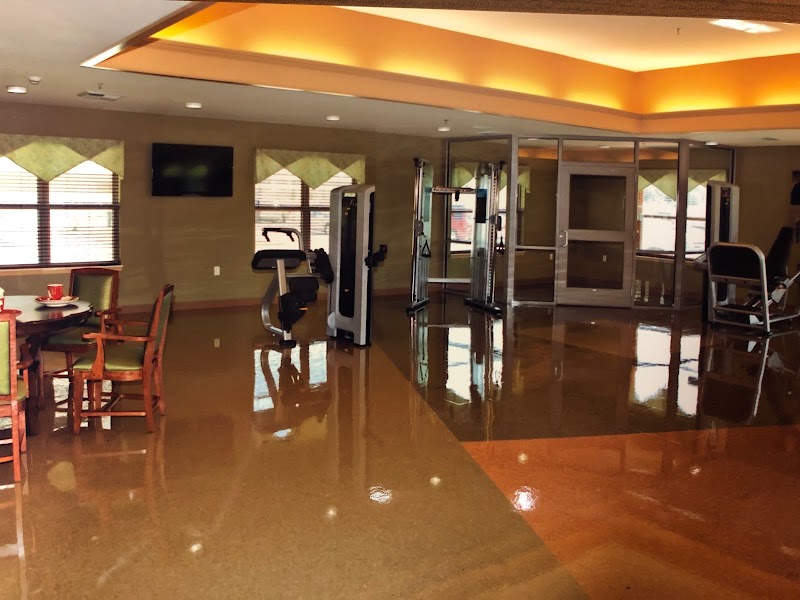
Who Owns and Operates Katherine'S Place At Wedington?

KATHERINE'S PLACE AT WEDINGTON is owned by a for-profit company. For-profit facilities operate as businesses with obligations to shareholders or private owners. The facility is operated by ANTHONY & BRYAN ADAMS, a chain that manages multiple nursing homes. With 104 certified beds and approximately 108 residents (about 104% occupancy), it is a mid-sized facility located in FAYETTEVILLE, Arkansas.
How Does Katherine'S Place At Wedington Compare to Other Arkansas Nursing Homes?

Compared to the 100 nursing homes in Arkansas, KATHERINE'S PLACE AT WEDINGTON's overall rating (2 stars) is below the state average of 3.1, staff turnover (50%) is near the state average of 46%, and health inspection rating (1 stars) is much below the national benchmark.

What Should Families Ask When Visiting Katherine'S Place At Wedington?

Based on this facility's data, families visiting should ask: "Can I visit during a mealtime to observe dining assistance and food quality?" "How do you handle medical emergencies, and what is your hospital transfer rate?" "Can I speak with family members of current residents about their experience?"

Is Katherine'S Place At Wedington Safe?

Based on CMS inspection data, KATHERINE'S PLACE AT WEDINGTON has a clean safety record: no substantiated abuse findings (meaning no confirmed cases of resident harm), no Immediate Jeopardy citations (the most serious violation level indicating risk of serious injury or death), and is not on the Special Focus Facility watch list (a federal program monitoring the lowest-performing 1% of nursing homes). The facility has a 2-star overall rating and ranks #100 of 100 nursing homes in Arkansas. While no facility is perfect, families should still ask about staff-to-resident ratios and recent inspection results during their visit.

Do Nurses at Katherine'S Place At Wedington Stick Around?

KATHERINE'S PLACE AT WEDINGTON has a staff turnover rate of 50%, which is about average for Arkansas nursing homes (state average: 46%). Moderate turnover is common in nursing homes, but families should still ask about staff tenure and how the facility maintains care continuity when employees leave.

Was Katherine'S Place At Wedington Ever Fined?

KATHERINE'S PLACE AT WEDINGTON has no federal fines on record. CMS issues fines when nursing homes fail to meet care standards or don't correct problems found during inspections. The absence of fines suggests the facility has either maintained compliance or corrected any issues before penalties were assessed. This is a positive indicator, though families should still review recent inspection reports for the full picture.

Is Katherine'S Place At Wedington on Any Federal Watch List?

KATHERINE'S PLACE AT WEDINGTON is not on any federal watch list. The most significant is the Special Focus Facility (SFF) program, which identifies the bottom 1% of nursing homes nationally based on persistent, serious quality problems. Not being on this list means the facility has avoided the pattern of deficiencies that triggers enhanced federal oversight. This is a positive indicator, though families should still review the facility's inspection history directly.