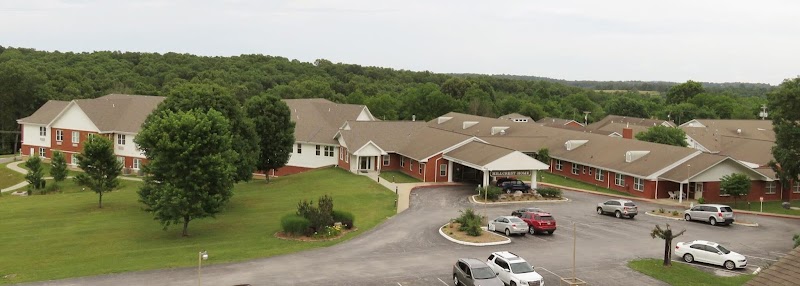
HILLCREST HOME

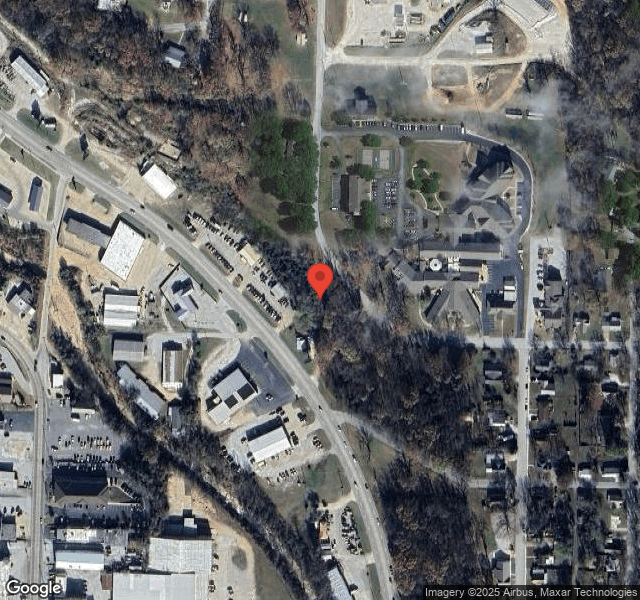
1111 MAPLEWOOD RD, HARRISON, AR 72601 (870) 741-5001
Non profit - Corporation 103 Beds Independent Data: November 2025
Trust Grade
90/100
#20 of 218 in AR
Last Inspection: May 2025

Inspected within the last 6 months. Data reflects current conditions.

Overview

Hillcrest Home in Harrison, Arkansas, has received an excellent Trust Grade of A, indicating it is highly recommended and performs well compared to other facilities. It ranks #20 out of 218 in the state, placing it in the top half, and is the best option among the three nursing homes in Boone County. The facility's performance trend is stable, with only one issue identified in both 2024 and 2025, showing consistency in care. Staffing is a strong point, featuring a 5/5 star rating and a turnover rate of 37%, which is below the state average of 50%, suggesting that staff are experienced and familiar with residents' needs. However, there have been some concerns; for instance, two residents were found with untrimmed nails and facial hair, and there were instances of nursing assistants not meeting certification requirements within the designated timeframe. Additionally, a lack of adequate supervision for a resident at risk of wandering was noted, highlighting areas for improvement despite the overall positive ratings.

Trust Score
A
90/100
In Arkansas
#20/218
Top 9%
Safety Record
Low Risk
No red flags
Inspections
Holding Steady
1 → 1 violations
Staff Stability
○ Average
37% turnover. Near Arkansas's 48% average. Typical for the industry.
Penalties
✓ Good
No fines on record. Clean compliance history, better than most Arkansas facilities.
Skilled Nurses
✓ Good
Each resident gets 49 minutes of Registered Nurse (RN) attention daily — more than average for Arkansas. RNs are trained to catch health problems early.
Violations
○ Average
7 deficiencies on record. Average for a facility this size. Mostly minor or procedural issues.
★★★★★
5.0
Overall Rating
★★★★★
5.0
Staff Levels
★★★★☆
4.0
Care Quality
★★★★★
5.0
Inspection Score
Stable
2024: 1 issues
2025: 1 issues

The Good

  • 5-Star Staffing Rating · Excellent nurse staffing levels
  • 4-Star Quality Measures · Strong clinical quality outcomes
  • Full Sprinkler Coverage · Fire safety systems throughout facility
  • No fines on record
  • Staff turnover below average (37%)

    11 points below Arkansas average of 48%

Facility shows strength in staffing levels, quality measures, fire safety.

The Bad

Staff Turnover: 37%

Near Arkansas avg (46%)

Typical for the industry

The Ugly 7 deficiencies on record

May 2025 1 deficiency
CONCERN (D) 📢 Someone Reported This

A family member, employee, or ombudsman was alarmed enough to file a formal complaint

Potential for Harm - no one hurt, but risky conditions existed

Accident Prevention (Tag F0689)

Could have caused harm · This affected 1 resident

Based on observations, interviews, record review, document review, and facility policy review, the facility failed to ensure adequate supervision was provided, and the alert alarm system was monitored...

Read full inspector narrative →
Based on observations, interviews, record review, document review, and facility policy review, the facility failed to ensure adequate supervision was provided, and the alert alarm system was monitored and tested per manufacturer ' s recommendation to prevent elopement for 1 (Resident #55) of 3 sampled residents reviewed for accidents/supervision. The findings are: An admission Record was reviewed and revealed Resident #55 had diagnoses that included Alzheimer's disease, dementia with behavioral disturbances, and anxiety. A quarterly Minimum Data Set [MDS] with an Assessment Reference Date [ARD] of April 23, 2025, was reviewed and revealed resident #55 had a Brief Interview for Mental Status [BIMS] of 02 [indicated severely cognitively impaired]. Section GG indicated the resident was able to walk at least 150 feet independently. An undated Care Plan Report was reviewed and indicated that Resident #55 was a high risk for wandering, identified 01/17/2023. Care plan interventions included engagement with purposeful activities (1/17/2023), supervised walks (11/05/2024), pet therapy (3/06/2025), looking out windows, outside with supervision (3/10/2025), independent ambulation but is an elopement risk (3/05/2024), loud noises can be a trigger for the resident, supervise during and after a fire drill (2/27/2024), provide care in a calm reassuring manner, clear simple instructions, [brand name] watch (1/27/2023). A Wander Risk Assessment for Resident #55 dated 1/21/2025 was reviewed and indicated that Resident #55 was a moderate risk for wandering. An Office of Long-Term Care incident document with a submitted date of 3/01/2025 at 8:50 AM was reviewed and revealed that during the facility staff video review, on 2/28/2025 at 5:18 PM, Resident #55 was observed standing by the front entrance door. Resident #55 wore a safety device that automatically locked the door when Resident #55 approached the door. A visitor attempted to open the door from the outside, activating the alarm. After the 15 second wait time, the door lock deactivated and the visitor who was standing on the other side of the door then opened the door and let Resident #55 outside. At 5:20 PM the review indicated a visitor was seen on the video, coming to the front door, then returned to the parking lot, then the visitor was observed returning to the building with Resident #55 without difficulty. Progress notes dated for a late entry 2/28/2025 were reviewed and revealed while Resident #55 was standing at the front door of the facility, a pharmacy delivery driver approached the door. The door was locked due to the resident guard bracelet setting the door alarm. Once the door alarmed for 15 seconds, the door released, the driver held the door open for Resident #55 to exit the facility. Resident #55 was placed on 30-minute checks and the pharmacy was notified regarding the door alarm system and residents safety. Progress notes dated 7/26/2024 were reviewed and revealed that during a care plan meeting Resident #55 had one elopement within the look back period where Resident #55 made it outside. A Behavior Progress note dated 7/21/2025 was reviewed and revealed a follow-up from an elopement from 7/20/2025. A progress note dated 7/20/2024 was reviewed and indicated that Resident #55 was found outside of the facility in a grassy area by the Administrator and returned to the facility. Progress notes dated 9/29/2024 were reviewed and revealed Resident #55 was observed out of the facility with the door alarm activated. Resident #55 made it out of the facility to the parking lot past the first row of cars, more than 40 feet from the front entrance. During an interview on 5/06/2025 at 8:47 AM, the Information Technology [IT] #1 staff was interviewed and indicated that the IT department was responsible for setting up the alert alarm system, the units are provided after setting up to the nursing staff to place on the residents person. IT #1 denied routinely checking the door alarm system to determine if it was performing as expected, indicating the system was only checked when a new bracelet was being set up. IT #1 stated that if the door wasn't working then someone would notice when it didn't lock when a resident wearing a bracelet got close to the doors, and it didn't lock, confirming that unless a staff member was with the resident when a resident with a guard bracelet on their person went close to the door, if the door wasn't functioning properly, the resident could exit the facility without staff being aware. IT #1 was asked what the manufacturers recommendations for routine monitoring of the alarm system were. IT #1 denied any knowledge of the manufacturing recommendations for monitoring the system. IT #1 confirmed that the last time the alert alarm system was checked was a month or two ago. IT #1 confirmed that there was not any alert to IT if the system wasn't functioning properly. IT #1 confirmed that the facility would not know there was an issue with the system until a resident got out the doors. IT #1 denied having any knowledge of the facility performing any drill for elopement for the system. IT #1 confirmed that the installation company doesn't provide routine onsite checks, only when the facility requests a check of the system. IT #1 remarked that the last time the installation company checked the system was the end of last year, November or December, due to an issue with the door not functioning properly after a resident was able to get the door open part of the way and the alarm not activating. IT #1 stated that after facility staff reviewed the video, Resident #55 was observed pushing the door open partway and the alarm didn't activate. The installation company was notified and when they checked the system, it was determined that a sensor wasn't functioning properly and the wiring had to be reworked. On 05/06/2025 at 8:57 AM, the facility door downstairs at Brookside was activated with a tag provided by IT #1, the door locked, and the alarm sounded, 6 staff members responded to the alarm within 42 seconds, and no phone alerts were received by the staff. On 05/06/2025 at 9:36 AM, the facility front entry door was tested with a tag provided by IT #1, when the door was approached within 5 feet the door locks were activated, the door handle was depressed once and the alarm sounded, after the 15 second wait time, the door locks released and the surveyor was able to get out of the door and stand in the portico prior to the first employee on the scene. The first unit staff approached the door at 1 minute and 22 seconds after the initial activation of the guard system. During an interview with the Administrator on 5/06/2025 at 1:00 PM, it was revealed that the residents are assessed for elopement on admission and quarterly. The Administrator confirmed that the facility had a door alarm system, staff education, elopement policies and care planning intervention for residents who are high elopement risks. The Administrator confirmed that the staff were in-serviced annually for elopement and thought the drills were conducted annually with the skills fair. When asked if Resident #55 had eloped prior to the elopement in February 2025, the Administrator confirmed that the resident had eloped in July of 2024. The Administrator was asked how Resident #55 exited the facility on 2/28/2025, he confirmed that an outside vendor delivery person held the door open for Resident #55 allowing the resident to exit the facility. The Administrator confirmed that the door alarm system was a [name brand] guard. Explaining that when the system detects the guard bracelet, the door automatically locks, but if the resident pushes on the door an alarm sounds and the phone alerts go out to staff who are expected to respond immediately and redirect the resident. If the door alarm sounds for 15 seconds, then the door lock releases, allowing the door to be opened. During an interview on 05/06/2025 with the visitor who returned the resident to the facility, it was confirmed that on 2/28/2025 between 5:00pm and 5:30pm they observed the resident outside the facility. When the visitor arrived, they recognized a person walking in the parking lot as a resident that resides at the facility. The visitor confirmed that they approached the resident, the resident happily took their hand, and they walked back inside the facility. An undated vendor letter included with the facility reported incident was reviewed and revealed the facility requesting assistance from the vendors to please wait for staff assistance if the alarm had been activated and not allow anyone to exit prior to checking with staff. A System Maintenance and Testing instruction sheet for the electronic elopement/monitoring system was reviewed and revealed the recommendation was system testing at least monthly and periodic testing of these critical performance functions could help prevent undetected security system failures. For a properly functioning system, when a guard tag approaches a monitored door zone equipped with locks, the lock should engage. Test results should be written down and kept in a log. The Elopement-Prevention and Search policy was reviewed and revealed the alarm systems must be maintained and monitored for accurate operation. The vendors and staff should be educated annually on the elopement policy. When the door alarm had been activated, step outside and scan the area for residents or identify the reason for the alarm.
Mar 2024 1 deficiency
CONCERN (E)

Potential for Harm - no one hurt, but risky conditions existed

ADL Care (Tag F0677)

Could have caused harm · This affected multiple residents

Based on observation, interview, and record review, the facility failed to ensure that 2 (Residents #44, #78) sampled residents had facial hair and nails trimmed and re-polished. This has the ability ...

Read full inspector narrative →
Based on observation, interview, and record review, the facility failed to ensure that 2 (Residents #44, #78) sampled residents had facial hair and nails trimmed and re-polished. This has the ability to affect 16 residents who reside on 300 Hall. The findings are: 1. On 03/25/2024 at 11:48 AM, the Surveyor observed Resident #78 with chipped nail polish on the fingernails of both hands. The Surveyor ask Resident #78, Do you like your nails painted? Resident #78 stated, Yes, but they need repainted. 2. On 03/25/2024 at 03:09 PM, the Surveyor observed Resident #78 with chipped nail polish on both hands. 3. On 03/26/2024 at 09:19 AM, the Surveyor observed Resident #78 with chipped nail polish on both hands. 4. On 03/25/2024 at 11:40 AM, the Surveyor observed Resident #44 with 0.5-0.75-inch-long nails with chipped nail polish, and 0.5-0.75-inch-long chin and neck hair. 5. On 3/25/2024 at 03:09 PM, the Surveyor observed Resident #44 with 0.5-0.75-inch-long fingernails with chipped polish on both hands, and 0.5-0.75-inch-long facial chin and neck hair. 6. On 03/26/2024 at 09:09 AM, the Surveyor observed Resident #44 up in recliner in room with 0.5-0.75-inch-long fingernails with chipped polish on both hands and 0.5-0.75-inch-long facial chin and neck hair. 7. On 03/27/2024 at 11:46 AM, the Surveyor asked Certified Nursing Assistant, (CNA) #1, Who is responsible for trimming and polishing resident's fingernails? CNA #1 stated, The CNAs are, unless they are diabetic then the nurses do. The Surveyor asked, How often do the residents get their nails trimmed and polish reapplied? CNA #1 stated, Weekly or earlier if needed. CNA #1 confirmed Residents #44 and #78 needed their nails trimmed and repolished. 8. On 03/27/2024 at 11:50 AM, the Surveyor asked CNA #1, Why should a resident be free of facial hair? CNA #1 stated, Dignity, and they feel better about themselves. The Surveyor asked, How often should a female resident's facial hair be trimmed? CNA #1 confirmed, Whenever it is noticeable, weekly, or as needed. CNA #1 confirmed that Resident #78 had long facial and neck hair. 9. On 03/27/2024 at 11:54 AM, the Surveyor asked the Assistant Director of Nurses (ADON), Who is responsible for making sure nails are trimmed and polished? The ADON stated, The CNAs are, unless they (the residents) are diabetic, then the nurses trim them, but the CNAs polish the nails. The Surveyor asked, How often do the Residents get their nails polished? The ADON stated, Weekly, unless it is chipped and they need to do it sooner, as needed. The ADON observed the fingernails of Residents #44 and #78 and confirmed that both residents need their nails trimmed and re-polished. The Surveyor asked, Why should a female resident be free of facial hair? The ADON stated, For their dignity. The Surveyor asked, How often should a female Resident have their facial hair removed? The ADON confirmed, As needed and with showers. The ADON observed Resident #78 and stated, Oh my, yes it needs done and we will make sure it is removed this afternoon. 10. On 03/26/2024 at 12:40 PM, a policy was received titled, Activities of Daily Living (ADLs) which documented, .Care and services will be provided for the following activities of daily living: 1. Bathing, dressing, grooming and oral care; 3. A resident who is unable to carry out activities of daily living will receive the necessary services to maintain good nutrition, grooming, and personal and oral hygiene.
Jun 2023 1 deficiency
CONCERN (D) 📢 Someone Reported This

A family member, employee, or ombudsman was alarmed enough to file a formal complaint

Potential for Harm - no one hurt, but risky conditions existed

Accident Prevention (Tag F0689)

Could have caused harm · This affected 1 resident

**NOTE- TERMS IN BRACKETS HAVE BEEN EDITED TO PROTECT CONFIDENTIALITY** Based on interview, and record review, the facility failed to ensure adequate supervision was provided to prevent burns for 1 (R...

Read full inspector narrative →
**NOTE- TERMS IN BRACKETS HAVE BEEN EDITED TO PROTECT CONFIDENTIALITY** Based on interview, and record review, the facility failed to ensure adequate supervision was provided to prevent burns for 1 (Resident #1) of 3 (Residents #1, #2 and #3) sampled residents who received speech therapy resulting in past noncompliance. The findings are: a. A Physician's Order dated 04/27/23 documented, .Silvadene External Cream 1 % (Silver Sulfadiazine) Apply to Left later [lateral] thigh topically every day shift for burn to left thigh . until healed . b. A Nurses Note dated 04/27/23 at 1:42 PM documented, .Quarter sized area with red edges appearing like a burned area noted to left thigh. Resident reported to staff he had a hot hand in his pocket. Called his wife [Name] and asked her if she knew anything about it. [Name] stated she would never bring anything like that up and she didn't know what that was. She stated she did let him sleep on a heating pad all night one night but could not remember what night that was. Educated [Name] on only applying heat for 15 minutes at a time and with a barrier in between. She stated she didn't know that and was good to know. Will apply treatment to resident's thigh as ordered and educate resident and wife again on discharge . c. An Incident assessment dated [DATE] at 1:50 PM documented, .Resident burned his leg . Resident placed something hot in his pocket . Someone, in which the resident cannot remember who, gave resident something hot to put in his pocket to keep him warm . Resident was cold and spoke to someone that he had difficulty staying warm. Said person gave him something hot to put in his pocket resulting in a burn on his thigh . d. A Skin & Wound Evaluation dated 04/27/23 at 1:51 PM documented, .Type: Burn .Degree: First Degree .Location: Left thigh (Lateral) .Acquired: In-House Acquired .New .Length: 2.4cm [centimeters]; Width: 2.0cm; Depth: Not Applicable .% slough: 10% . e. A Nurses Note dated 04/27/23 at 2:06 PM by Licensed Practical Nurse (LPN) #1 documented, .Therapy staff reports to nurse that while resident was changing out pants for the morning a large red spot was noted on resident's left lateral thigh. Upon nursing assessment, burn like area was noted. Resident reports that area felt like it burned a little bit. Stated that someone gave him a hot hand like warmer and told him to stick it in his pocket to keep him warm. Also stated that he could not remember who it was that gave it to him. Notified family, CC [Clinical Coordinator], and provider. Applied treatment as ordered to wound . f. On 05/31/23 at 9:32 AM, Resident #1's spouse could not remember who gave him the hot pack at first. She stated, After he went home, he described the person and remembered it was the speech therapist that he had been working with at the nursing home. He said she had given it to him because he was cold and told him to put it in his pocket. They found it in the laundry. Resident #1's spouse denied ever bringing any type of heating pad to the facility and explained she had used one on him at home prior to the nursing home stay. g. A document titled, Speech Therapy Retraining, provided by the Administrator on 05/31/23 at 10:11 AM stated, .Date - April 28, 2023 . Discussed SLP [Speech Language Pathologist] giving a hot pack of any kind to residents. Educated on the risks of hot packs including burns, skin irritation, and circulation complications to residents. Also discussed the risks of giving hot packs to resident with Dementia as they do not always remember being given these items. Educated SLP on reporting to the nurse if a resident reports feeling cold or hot and the nurse can assess the resident. SLP was in agreement and voiced understanding of education . h. On 05/31/23 at 10:34 AM, the Surveyor asked the Speech Therapist what incident occurred during Resident #1's last stay at the nursing facility. She stated, I gave him a hot hand and he got burned. The Surveyor asked, Why did you give him a hot hand? She stated, He was cold, so I gave him some blankets and he was still complaining of being cold, so I gave him a hot hand. The Surveyor asked, At what point in your session did you give it to him? She stated, Close to the end of the session. The Surveyor asked if she had ever given a hot hand to any other resident. She stated, No, I don't know what I was thinking. I use them for myself. I didn't mean to hurt anyone. I've learned my lesson. The Surveyor asked if she could explain the type of Hot Hands that she provided to Resident #1. She stated, It was a four hour one. A small one. It was a little larger than a matchbox. The Surveyor asked if she remembers what day this occurred. She stated, The day before he was being discharged , I believe. It may have been on Wednesday. Our session was right before dinner somewhere between 4:00 and 5:00 PM because he was about to have dinner. The Surveyor asked if she knew where the Hot Hands was when she left Resident #1. She stated, He had it in his pocket and he said it felt warm. i. On 05/31/23 at 3:10 PM, the ADON provided a document titled, Performa Hot and Cold Gel Packs. She stated, This is the Manufactures Guidelines to the heat packs we use here. We don't use hot hands for heat application, and we only apply heat when we have a doctor's order. She handed the Surveyor an example template of the Physician's Order they use when heat application is ordered by the Physician. The Manufacturer's Guidelines for the Hot Packs documented, .Use as heat therapy to soothe muscle aches, stiffness, cramps, and tension . Do not place pack directly on skin. Without protection, skin could be severely burned by heat . Before application, wrap the gel pack with several thicknesses of a towel for heat therapy . Never sleep, lie or sit on the pack. Take extra care when applying on infants, young or elderly patients who may be more sensitive to heat . Monitor carefully when used with anyone whose skin could burn or freeze easily such as children and the elderly . Do not leave the pack on the skin more that 20-25 minutes . Do not use on patients who have sensitive skin, nerve damage or poor circulation . The Physician Order Template documented, .Heat pack to (_____) 10-15 minutes at a time, as tolerates with quarterly review . The Surveyor asked the ADON if Resident #1 had a Physician's Order for heat application. She stated, No, he didn't. j. On 06/01/23 at 10:56 AM, the Surveyor asked LPN #1 to explain what happened when it was discovered that Resident #1 had been burned. He stated, The therapist was in the room helping the resident get dressed and saw the area. They came and got me to come and look at the red area. The APN [Advance Practice Nurse] looked at it and said it looked like a burn. The resident stated someone gave him something hot and told him to put it in his pocket and it would keep him warm. He wasn't sure who it was who gave it to him. The wife suggested that it may have been the Speech Therapist. The CNAs were later questioned, and they said they had found a hot hands in the laundry. The resident left a day or two later. The Speech Therapist was questioned and admitted she had given it to him.
Feb 2023 4 deficiencies
CONCERN (D)

Potential for Harm - no one hurt, but risky conditions existed

Comprehensive Care Plan (Tag F0656)

Could have caused harm · This affected 1 resident

Based on record review, and interview, the facility failed to ensure a comprehensive, person-centered Care Plan was developed to address the necessary care and monitoring related to the administration...

Read full inspector narrative →
Based on record review, and interview, the facility failed to ensure a comprehensive, person-centered Care Plan was developed to address the necessary care and monitoring related to the administration of Insulin to enable staff to determine the effectiveness of the medication and promptly identify any potential adverse effects for 1 (Resident #46) of 1 sampled resident who had a Physicians Order for Insulin and resided on the 300 Hall. The findings are: Resident #46 had a diagnosis of Type II Diabetes Mellitus. The Modified Quarterly Minimum Data Set (MDS) with an Assessment Reference Date (ARD) of 11/23/22 documented the resident scored 0 (0-7 indicates severely cognitively impaired) on a Brief Interview for Mental Status (BIMS) and received insulin injections during the last 7 days. a. The Physicians Orders documented, .A1C Q [every] 3 months in the morning every 3 month(s) starting on the 18th for 1 day(s) related to Type 2 Diabetes Mellitus with Unspecified Complications . Order Date 12/18/2022 . HumaLOG KwikPen Solution Pen-injector 100 UNIT/ML [Milliliters] Insulin Lispro (1 Unit Dial)) Inject as per sliding scale: if 0 - 70 = 0 units Give 4oz [ounces] of juice and notify MD [Medical Doctor]; 71 - 139 = 0 units; 140 - 180 = 3 units; 181 - 240 = 4 units; 241 - 300 = 6 units; 301 - 350 = 8 units; 351 - 400 = 10 units; 401+ = 12 units Administer insulin and notify MD, subcutaneously two times a day . Order Date 01/06/2021 . Lantus SoloStar Solution Pen-injector 100 UNIT/ML (Insulin Glargine) Inject 24 unit subcutaneously at bedtime . Order Date 12/20/2021 . b. The Care Plan with a revision date of 12/21/22 documented, .I currently receive a NCS [No Concentrated Sweets] diet related to my diabetes. with regular texture as ordered by my physician. I also take Humalog and Lantus. I have a libre sensor to take my BS [Blood Sugar]. At times it does not work, and I need my finger pricked. The Care Plan did not address or contain interventions related to monitoring for hyperglycemia, hypoglycemia and /or for obtaining lab work. c. On 02/16/23 at 9:32 AM, the Surveyor asked Registered Nurse (RN) #1, Who develops the resident's Care Plan? RN #1 stated, I do or any Clinical Coordinator that admits the resident. The Surveyor asked, Is [Resident #46] on insulin? RN #1 stated Yes. The Surveyor asked, Is this medication supposed to be monitored? RN #1 stated, Yes. The Surveyor asked, What should the resident be monitored for? RN #1 stated, For signs and symptoms [s/s] of hyper and hypo glycemia. The Surveyor asked, Should [Resident #46] be care planned for being a diabetic receiving insulin? RN #1 stated, Yes. The Surveyor asked RN #1 to review Resident #46's Care Plan. The Surveyor asked if Resident #46 was care planned for being on insulin. RN #1 stated, Yes. The Surveyor asked, Where is it documented in [Resident #46's] Care Plan for insulin and the interventions to monitor for s/s of hypo and hyper glycemia? RN #1 stated, We just look at her glucose numbers. The only thing the Care Plan mentions is to maintain her blood sugars. Interventions to monitor for s/s should be in her Care Plan. d. The Manufacturers Insert for Humalog provided by the Assistant Director of Nursing (ADON) on 02/16/23 at 12:57 PM documented, .HUMALOG may cause serious side effects that could lead to death, including . low blood sugar (hypoglycemia). Signs and symptoms of low blood sugar may include: dizziness . slurred speech . confusion . fast heartbeat . serious allergic reactions . Get medical help right away, if you have any of these signs or symptoms of a severe allergic reaction . a rash . trouble breathing . a fast heartbeat . e. The Manufacturers Insert for Lantus provided by the Assistant Director of Nursing (ADON) on 02/16/23 at 12:57 PM documented, .Lantus may cause serious side effects that could lead to death, including . low blood sugar (hypoglycemia). Signs and symptoms that may indicate low blood sugar include: dizziness . confusion . slurred speech . fast heartbeat . severe allergic reaction . Get medical help right away if you have any of these signs or symptoms of a severe allergic reaction . a rash . trouble breathing . fast heartbeat . or sweating .
CONCERN (D)

Potential for Harm - no one hurt, but risky conditions existed

Deficiency F0657 (Tag F0657)

Could have caused harm · This affected 1 resident

Based on observation, record review, and interview, the facility failed to ensure the Plan of Care was revised to reflect the current needs of the resident to ensure appropriate care was provided for ...

Read full inspector narrative →
Based on observation, record review, and interview, the facility failed to ensure the Plan of Care was revised to reflect the current needs of the resident to ensure appropriate care was provided for 1 (Resident #66) of 1 sampled resident who required extensive assistance with eating and resided on the 200 Hall. The findings are: Resident #66 had a diagnosis of Dementia. The Quarterly Minimum Data Set (MDS) with an Assessment Reference Date (ARD) of 11/23/22 documented the resident was severely impaired in cognitive skills for daily decision making per a Staff Assessment for Mental Status (SAMS) and required extensive one person physical assistance with eating and was on a therapeutic diet. a. The Physicians Order dated 02/18/22 documented, .NCS [No Concentrated Sweets], NAS [No Added Salt] diet, Gound [Ground] meat texture . b. The Care Plan with a revision date of 03/22/22 documented, .I have an ADL [Activities of Daily Living] Self Care Performance Deficit r/t [related to] dementia . EATING: I require set up assistance to eat . c. On 02/13/23 at 12:07 PM, Resident #66 was sitting in the Sunroom, a family member was sitting next to her. The family member was spoon feeding Resident #66 her lunch. d. On 02/14/23 at 8:16 AM, Resident #66 was sitting in the Dining Room, a Certified Nursing Assistant (CNA) was sitting next to her spoon feeding Resident #66 her breakfast. e. On 02/16/23 at 10:04 AM, the Surveyor asked Register Nurse (RN) #2, Who revises the resident's Care Plans? RN #2 stated, [Nurse's Name] or me. The Surveyor asked, When should the resident's Care Plan be revised? RN #2 stated, 'With new orders, change of condition, any new adjustments, and quarterly. The Surveyor asked, What level of assistance does [Resident #66] require for eating? RN #2 stated. Ninety percent of the time she requires staff to feed her, she's an extensive assist for eating. The Surveyor asked, According to [Resident #66's] Care Plan, how much assistance does the resident require for eating? RN #2 stated, The Care Plan states she is set up assistant for meals. The Surveyor asked, Should [Resident #66's] Care Plan be revised? RN #2 stated, Yes. f. The facility policy titled, Care Plan Revisions Upon Status Change, provided by the Assistant Director of Nursing on 02/16/23 at 12:57 PM documented, .The purpose of this procedure is to provide a consistent process for reviewing and revisiting the care plan for those residents experiencing a status change . The comprehensive care plan will be reviewed, and revised as necessary, when a resident experiences a status change . Upon identification of a change in status, the nurse will notify the Clinical Coordinator, the physician and the resident representative, if applicable. The Clinical Coordinator and the Interdisciplinary Team will discuss the resident condition and collaborate on interventions options . The care plan will be updated with the new or modified interventions . Care plans will be modified as needed by the Clinical Coordinator or other designated staff member .
CONCERN (D)

Potential for Harm - no one hurt, but risky conditions existed

Laboratory Services (Tag F0770)

Could have caused harm · This affected 1 resident

Based on record review, and interview, the facility failed to ensure laboratory services were provided at the frequency ordered by the Physician, to assist the Physician with making treatment decision...

Read full inspector narrative →
Based on record review, and interview, the facility failed to ensure laboratory services were provided at the frequency ordered by the Physician, to assist the Physician with making treatment decisions for 1 (Resident #46) of 1 sampled resident who had a Physician Order for Hemoglobin (HgbA1C) levels. This failed practice had the potential to affect 1 resident who had a Physicians Order for HgbA1C levels and resided on the 300 Hall. The findings are: Resident #46 had a diagnosis of Type II Diabetes Mellitus. The Modified Quarterly Minimum Data Set (MDS) with an Assessment Reference Date (ARD) of 11/23/22 documented the resident scored 0 (0-7 indicates severely cognitively impaired) on a Brief Interview for Mental Status (BIMS) and received insulin injections during the last 7 days. a. The Physicians Orders documented, .A1C Q [every] 3 months in the morning every 3 month(s) starting on the 18th for 1 day(s) related to Type 2 Diabetes Mellitus with Unspecified Complications . Order Date 12/18/2022 . HumaLOG KwikPen Solution Pen-injector 100 UNIT/ML [Milliliters] Insulin Lispro (1 Unit Dial)) Inject as per sliding scale: if 0 - 70 = 0 units Give 4oz [ounces] of juice and notify MD [Medical Doctor]; 71 - 139 = 0 units; 140 - 180 = 3 units; 181 - 240 = 4 units; 241 - 300 = 6 units; 301 - 350 = 8 units; 351 - 400 = 10 units; 401+ = 12 units Administer insulin and notify MD, subcutaneously two times a day . Order Date 01/06/2021 . Lantus SoloStar Solution Pen-injector 100 UNIT/ML (Insulin Glargine) Inject 24 unit subcutaneously at bedtime . Order Date 12/20/2021 . b. The Care Plan with a revision date of 12/21/22 documented, .I currently receive a NCS [No Concentrated Sweets] diet related to my diabetes. with regular texture as ordered by my physician. I also take Humalog and Lantus. I have a libre sensor to take my BS [Blood Sugar] . c. On 02/15/23 at 3:13 PM, the Surveyor asked the Director of Nursing (DON) to provide documentation of the physician ordered HgbA1C results for December 18, 2022. The DON stated, The resident did not get her A1C drawn on 12/18/22. The person who updated the order, put the order in on 12/18/22, and the start date as 12/19/22, so it regenerated the order, and it was not drawn on 12/18/22 or 12/19/22. We are drawing it today. d. The Lab Report provided by the DON on 02/16/23 documented, .Collected: 02/15/23 at 1520 [3:20 PM] . Test HGB A1C Result 9.1 H [High] Reference 4.8-6.0 . e. The facility policy titled, Laboratory Services and Reporting, provided by the Assistant DON on 02/16/23 at 12:57 PM documented, .The facility must provide or obtain laboratory services when ordered by a physician, physician assistant, nurse practitioner, or clinical nurse specialist in accordance with state law . The facility must provide or obtain laboratory services to meet the needs of its residents . The facility is responsible for the timeliness of the services . Promptly notify the ordering physician, physician assistant, nurse practitioner, or clinical nurse specialist of laboratory results that fall outside the clinical reference range .
CONCERN (E)

Potential for Harm - no one hurt, but risky conditions existed

Deficiency F0728 (Tag F0728)

Could have caused harm · This affected multiple residents

Based on interview, and record review, the facility failed to ensure full time Nursing Assistants (NA) did not work more than 4 months in the facility without completing the necessary certification re...

Read full inspector narrative →
Based on interview, and record review, the facility failed to ensure full time Nursing Assistants (NA) did not work more than 4 months in the facility without completing the necessary certification requirements. This failed practice had the potential to affect 87 residents who currently resided in the home according to the Resident Census and Conditions of Residents provided by the Administrator on 02/14/23 at 8:50 AM. The findings are: 1. On 02/15/23 at 2:25 PM, the Human Resource (HR) Director provided a list of 16 Nursing Assistants who were currently employed by the facility. The Surveyor asked the HR Director if all of the Nursing Assistants listed had completed their testing within the specified 4 month time frame. She stated, No. The HR Director then provided a list of the 10 Nursing Assistants who had not completed a portion of their training requirements with the last day of their 4 month training period as follows: a. NA #1 - 12/21/22. b. NA #2 - 12/21/22. c. NA #3 - 12/21/22. d. NA #4 - 02/01/23. e. NA #5 - 02/01/23. f. NA #6 - 02/02/23. g. NA #7 - 02/02/23. h. NA #8 - 02/09/23. i. NA #9 - 02/09/23. j. NA #10 - 02/09/23. The Surveyor asked the HR Director if these employees were continuing to work past their 4-month training period despite having not completed their program of study within the specified time frame. She stated, Yes. 2. On 02/15/23 at 2:25 PM, the HR Director provided a copy of the nursing schedule from December 18, 2022, to the present. The HR Director had highlighted 10 Nursing Assistants currently on the schedule, 9 of which had provided services to the residents during this period of time. 3. On 02/16/22 at 12:15 PM, the Administrator provided a list of Nursing Assistants who had provided nursing services to residents after the end of their four-month training period. The employee and their time worked are as follows: a. NA #1 - 41 shifts for a total of 373.0501 hours. b. NA #2 - 36 shifts for a total of 341.766 hours. c. NA #3 - 38 shifts for a total of 375.6166. d. NA #4 - 12 shifts for a total of 98.45 hours. e. NA #5 - 11 shifts for a total of 90.1667 hours. f. NA #6 - 11 shifts for a total of 90.7501 hours. g. NA #7 - 11 shifts for a total of 97.9834. h. NA #8 - out of town. i. NA #9 - 3 shifts for a total of 26.1 hours. j. NA #10 - 4 shifts for a total of 34.3 hours. Total number of hours - 1528.1835. 4. On 02/16/23 at 1:00 PM, the Surveyor asked the Administrator if the facility had a policy concerning staffing. At 1:10 PM, the Administrator provided a policy titled, Nursing Services & [and] Sufficient Staff. The policy stated: .It is the policy of this facility to provide sufficient staff with appropriate competencies and skill set to assure resident safety . 5. On 02/16/22 at 1:42 PM, the Surveyor asked the Unit Coordinator if the facility had a job description for a Nursing Assistant or a Certified Nursing Assistant (CNA). He stated, .We don't really have anything like that . 6. On 2/17/23 at 8:10 AM, the Surveyor asked the Director of Nursing (DON), How long can a Nursing Assistant work before they complete the certification process? She stated, .Four months . The Surveyor asked, What should take place at the end of that four months if they have not completed the certification process? She stated, .I know before there was a wavier and they could just continue to work. I guess now they shouldn't work . 7. The Certified Nursing Assistant Job Description provided by the Unit Coordinator on 02/17/23 at 8:33 AM documented, .Basic Core Competencies . 11. Clinical skills sufficient to meet all the primary responsibilities identified above; meets state licensing and all other appropriate regulations for position, as well as organization's expectations of position clinically (direct nursing, return demonstration, supervision and guidance) .
Understanding Severity Codes (click to expand)
Life-Threatening (Immediate Jeopardy)
J - Isolated K - Pattern L - Widespread
Actual Harm
G - Isolated H - Pattern I - Widespread
Potential for Harm
D - Isolated E - Pattern F - Widespread
No Harm (Minor)
A - Isolated B - Pattern C - Widespread

Questions to Ask on Your Visit

  • "Can I speak with families of current residents?"
  • "What's your RN coverage like on weekends and overnight?"

Our Honest Assessment

Strengths
  • • Grade A (90/100). Above average facility, better than most options in Arkansas.
  • • No major safety red flags. No abuse findings, life-threatening violations, or SFF status.
  • • No fines on record. Clean compliance history, better than most Arkansas facilities.
  • • 37% turnover. Below Arkansas's 48% average. Good staff retention means consistent care.
Concerns
  • • No significant concerns identified. This facility shows no red flags across CMS ratings, staff turnover, or federal penalties.
Bottom line: Generally positive indicators. Standard due diligence and a personal visit recommended.

About This Facility

What is Hillcrest Home's CMS Rating?

CMS assigns HILLCREST HOME an overall rating of 5 out of 5 stars, which is considered much above average nationally. Within Arkansas, this rating places the facility higher than 99% of the state's 100 nursing homes. This rating reflects solid performance across the metrics CMS uses to evaluate nursing home quality.

How is Hillcrest Home Staffed?

CMS rates HILLCREST HOME's staffing level at 5 out of 5 stars, which is much above average compared to other nursing homes. Staff turnover is 37%, compared to the Arkansas average of 46%. This relatively stable workforce can support continuity of care.

What Have Inspectors Found at Hillcrest Home?

State health inspectors documented 7 deficiencies at HILLCREST HOME during 2023 to 2025. These included: 7 with potential for harm.

Who Owns and Operates Hillcrest Home?

HILLCREST HOME is owned by a non-profit organization. Non-profit facilities reinvest revenue into operations rather than distributing to shareholders. The facility operates independently rather than as part of a larger chain. With 103 certified beds and approximately 94 residents (about 91% occupancy), it is a mid-sized facility located in HARRISON, Arkansas.

How Does Hillcrest Home Compare to Other Arkansas Nursing Homes?

Compared to the 100 nursing homes in Arkansas, HILLCREST HOME's overall rating (5 stars) is above the state average of 3.2, staff turnover (37%) is near the state average of 46%, and health inspection rating (5 stars) is much above the national benchmark.

What Should Families Ask When Visiting Hillcrest Home?

Based on this facility's data, families visiting should ask: "Can I visit during a mealtime to observe dining assistance and food quality?" "How do you handle medical emergencies, and what is your hospital transfer rate?" "Can I speak with family members of current residents about their experience?"

Is Hillcrest Home Safe?

Based on CMS inspection data, HILLCREST HOME has a clean safety record: no substantiated abuse findings (meaning no confirmed cases of resident harm), no Immediate Jeopardy citations (the most serious violation level indicating risk of serious injury or death), and is not on the Special Focus Facility watch list (a federal program monitoring the lowest-performing 1% of nursing homes). The facility has a 5-star overall rating and ranks #1 of 100 nursing homes in Arkansas. While no facility is perfect, families should still ask about staff-to-resident ratios and recent inspection results during their visit.

Do Nurses at Hillcrest Home Stick Around?

HILLCREST HOME has a staff turnover rate of 37%, which is about average for Arkansas nursing homes (state average: 46%). Moderate turnover is common in nursing homes, but families should still ask about staff tenure and how the facility maintains care continuity when employees leave.

Was Hillcrest Home Ever Fined?

HILLCREST HOME has no federal fines on record. CMS issues fines when nursing homes fail to meet care standards or don't correct problems found during inspections. The absence of fines suggests the facility has either maintained compliance or corrected any issues before penalties were assessed. This is a positive indicator, though families should still review recent inspection reports for the full picture.

Is Hillcrest Home on Any Federal Watch List?

HILLCREST HOME is not on any federal watch list. The most significant is the Special Focus Facility (SFF) program, which identifies the bottom 1% of nursing homes nationally based on persistent, serious quality problems. Not being on this list means the facility has avoided the pattern of deficiencies that triggers enhanced federal oversight. This is a positive indicator, though families should still review the facility's inspection history directly.