THE GREEN HOUSE COTTAGES OF HOMEWOOD
215 HOMEWOOD CIRCLE, MENA, AR 71953 (479) 394-3511
For profit - Limited Liability company 138 Beds SOUTHERN ADMINISTRATIVE SERVICES Data: November 2025
Trust Grade
75/100
#87 of 218 in AR
Last Inspection: February 2025

Within standard 12-15 month inspection cycle. Federal law requires annual inspections.

Overview

The Green House Cottages of Homewood has a Trust Grade of B, indicating it is a good choice for families researching nursing homes. It ranks #87 out of 218 facilities in Arkansas, placing it in the top half, and #1 in Polk County, meaning there are no better local options. The facility is improving, having reduced issues from 14 in 2024 to just 1 in 2025. Staffing is also a strength, with a rating of 4 out of 5 stars and a turnover rate of 31%, significantly lower than the state average of 50%. While there are no fines on record, which is reassuring, some areas need attention. Recent inspections found that residents were not receiving regular fingernail care and shaving, and there were issues with food storage dates in the freezer, which could lead to safety concerns. Additionally, one resident was receiving oxygen without a physician's order, highlighting potential gaps in care management. Overall, while The Green House Cottages has many strengths, families should be aware of these weaknesses when considering this facility.

Trust Score
B
75/100
In Arkansas
#87/218
Top 39%
Safety Record
Low Risk
No red flags
Inspections
Getting Better
14 → 1 violations
Staff Stability
○ Average
31% turnover. Near Arkansas's 48% average. Typical for the industry.
Penalties
✓ Good
No fines on record. Clean compliance history, better than most Arkansas facilities.
Skilled Nurses
⚠ Watch
Each resident gets only 23 minutes of Registered Nurse (RN) attention daily — below average for Arkansas. Fewer RN minutes means fewer trained eyes watching for problems.
Violations
⚠ Watch
20 deficiencies on record. Higher than average. Multiple issues found across inspections.
★★★★☆
4.0
Overall Rating
★★★★☆
4.0
Staff Levels
★★★★☆
4.0
Care Quality
★★★★☆
4.0
Inspection Score
Stable
2024: 14 issues
2025: 1 issues

The Good

  • 4-Star Staffing Rating · Above-average nurse staffing levels
  • 4-Star Quality Measures · Strong clinical quality outcomes
  • Full Sprinkler Coverage · Fire safety systems throughout facility
  • No fines on record
  • Staff turnover below average (31%)

    17 points below Arkansas average of 48%

Facility shows strength in staffing levels, quality measures, fire safety.

The Bad

Staff Turnover: 31%

15pts below Arkansas avg (46%)

Typical for the industry

Chain: SOUTHERN ADMINISTRATIVE SERVICES

Part of a multi-facility chain

Ask about local staffing decisions and management

The Ugly 20 deficiencies on record

Feb 2025 1 deficiency
CONCERN (D)

Potential for Harm - no one hurt, but risky conditions existed

Infection Control (Tag F0880)

Could have caused harm · This affected 1 resident

Based on observation, record review, interview, and facility policy review, it was determined the facility failed to follow Enhanced Barrier Precautions (EBP) during intravenous catheter care for 1 (R...

Read full inspector narrative →
Based on observation, record review, interview, and facility policy review, it was determined the facility failed to follow Enhanced Barrier Precautions (EBP) during intravenous catheter care for 1 (Resident #33) of 1 sampled resident reviewed for intravenous (IV) catheter care, IV antibiotic administration, and EBP. The findings are: Resident #33 had diagnoses of kidney abscess, diabetes mellitus (DM), cerebral palsy, hemiplegia, and neurogenic bladder. The significant change Minimum Data Set (MDS) with an Assessment Reference Date (ARD) of 02/21/2025 indicated the resident scored 15 (13-15 indicates cognitively intact) on a Brief Interview for Mental Status (BIMS), had an IV access, and took an antibiotic. Review of the care plan revealed Resident # 33 was on Isolation Precautions: Enhanced Barrier Precautions. Enhanced Barrier Precaution signage and personal protective equipment (PPE) was observed at the entry of Resident #33 ' s room. On 02/24/2025 at 3:30 PM, this surveyor observed Licensed Practical Nurse (LPN) #1 access an IV catheter to Resident #33 ' s left arm for IV antibiotic therapy. LPN # 1 entered the room with gloves already on, IV medication in hand, and did not don a PPE gown. This surveyor observed LPN # 1 initiate Resident #33 ' s IV medication through the IV catheter in the resident ' s left arm. No hand hygiene was performed between glove changes and a gown was worn while providing direct care to the resident. On 02/24/2025 at 3:40 pm, during an interview, this surveyor asked LPN #1 what she should have done differently while providing care to Resident #33. LPN #1 stated she should have performed hand hygiene and worn a gown due to Resident #33 being on Enhanced Barrier Precautions (EBP). This surveyor asked LPN #1 what the reason for hand hygiene and EBP was. LPN #1 stated the purpose was to prevent infection. On 02/26/2025 at 9:45 AM, this surveyor received a Hand Washing Policy and Enhanced Barrier Policy from The Infection Preventionist. On 02/26/2025 at 3:50 PM, this surveyor interviewed the Assistant Director of Nursing (ADON). The ADON was asked what process staff were expected to use during IV access and antibiotic administration and providing care for residents on EBP. The ADON stated staff should wash their hands and don gloves prior to care and staff should follow Enhanced Barrier Precautions prior to resident care. A review of a policy titled, Hand Hygiene, revealed hand hygiene should be performed before applying and after removing gloves. A review of a policy titled, Implementation of Personal Protective equipment (PPE) Use in nursing homes to prevent spread of Methicillin Resistant Drug Organism (MDRO) read, .Enhanced Barrier Precautions. Enhanced Barrier Precautions (EBP) are indicted for residents that have wounds and/or indwelling medical devices Personal Protective Equipment (PPE) (Gloves and Gowns) are to be utilized for these residents during high-contact resident care activities such as indwelling medical device.
Feb 2024 14 deficiencies
CONCERN (D)

Potential for Harm - no one hurt, but risky conditions existed

Resident Rights (Tag F0550)

Could have caused harm · This affected 1 resident

Based on observation and interview, the facility failed to ensure residents were fed in a manner at meal service to promote dignity for 2 (Residents #283 and #71) of 1 sampled resident. The findings a...

Read full inspector narrative →
Based on observation and interview, the facility failed to ensure residents were fed in a manner at meal service to promote dignity for 2 (Residents #283 and #71) of 1 sampled resident. The findings are: a. On 1/30/24 at 11:52 AM, the first tray was taken to a resident at dining room table. b. On 01/30/24 at 12:07 PM, the Surveyor observed Resident #283 sitting at the dining table without her tray, everyone else was eating at the table. c. On 1/30/24 at 12:16 PM, the Surveyor observed Resident #283 still had no tray and was asking Certified Nursing Assistant (CNA) #2 where is my food, I want to eat too. d. On 1/30/24 at 12:22 PM, Resident #283 received a pureed tray 30 minutes after the other residents had received their trays. e. On 1/31/24 at 11:16 AM, the Surveyor asked CNA #5 why residents who eat at the dining table should be served in sequential order. CNA #5 replied for their dignity. f. On 1/31/24 at 11:19 AM, the Surveyor asked CNA #6 why residents who eat at the dining table should be served in sequential order. CNA #6 replied so food doesn't get cold, and they should be served in a timely manner. g. On 1/31/24 at 1:41 PM, the Surveyor asked the Director of Nursing (DON) why residents should be served in sequential order when eating at the dining room table. The DON replied for their dignity. The Surveyor asked if it was proper for a resident to sit and watch the other residents at the table eat and the resident not have a tray. The DON replied no it is not. 2. Resident #71 had diagnoses of Alzheimer's Disease, Dementia, Disorientation, and Mild Protein-Caloric Malnutrition. The Quarterly Minimum Data Set (MDS) with an Assessment Reference Date (ARD) of 12/29/23 documented the resident scored 3 (0-7 indicates severe cognitive impairment) on a Brief Interview for Mental Status (BIMS), required supervision or touching assistance with eating, and had a weight loss of 5% or more in the last month or 10% or more in the last 6 month and was not on a prescribe weight lost regimen. a. On 01/31/2024 at 07:10 AM, observed Resident #71 sitting at the dining table with an untouched breakfast plate in front of her. Resident #71 was slowly propelling herself from the table. b. On 01/31/2024 at 07:27 AM, observed an untouched breakfast plate resting on the table. Resident #71 was propelling herself slowly around in a circle. c. On 01/31/2024 at 07:44 AM, observed an untouched breakfast plate on the table. Resident #71 had propelled herself to the outside of her room door. d. On 01/31/2024 at 07:45 AM, the Surveyor asked CNA #8 who does the untouched breakfast plate on the table belong to? CNA #8 replied oh that's Resident #71's plate. e. On 01/31/2024 at 07:54 AM, Surveyor observed Certified Nursing Assistant (CNA) #8 push Resident #71 to the table, sat down next to her, and gave her a bite of unheated sausage. f. On 01/31/2024 at 07:55 AM, the Surveyor requested and observed CNA #9 check the temperature of the food on the breakfast plate. CNA #9 checked the temperature of the sausage and stated that the temperature was 76 degrees. g. On 01/31/2024 at 08:00 AM, observed CNA #8 place the breakfast plate in the microwave and reheat the food. CNA #8 then sat next to Resident #71, and assisted Resident #71 with the meal. The Surveyor asked CNA #8 if Resident #71 required assistance with meal service? CNA #8 stated, Off and on. The Surveyor asked how much time staff generally allows to pass after a meal has been placed before the resident before someone offers assistance to the resident. CNA #? stated I don't know. h. On 01/31/24 at 11:45 AM, the Surveyor asked CNA #10 if you are scheduled to work in a house that you are not usually assigned to work, how would you know if a resident required assistance with meal service? CNA #10 stated, The kiosk. The Surveyor asked if you observed a resident not eating their meal and propelling in circles near the table what would you do? CNA #10 stated, Push them back to the table and make sure no one else eats their food because the residents in the house have dementia. The Surveyor stated if I tell you there was a resident in this house that had a plate on the table for almost an hour before staff offered assistance what would you say? CNA #10 replied I had no idea; someone should have assisted her. i. On 01/31/24 at 02:00 PM, the Surveyor asked the Director of Nursing (DON) how are staff informed what level of assistance a resident requires for meal service? The DON stated, The kiosk. The Surveyor asked how much assistance does Resident #71 require? The DON looked it up and stated, She is set-up and cutting of food. The Surveyor asked what was Resident #71's care planned for in reference to meal service? The DON voiced that Resident #71 received high calorie meals. The Surveyor asked has Resident #71 lost weight? The DON looked at the board and stated, No, she has not triggered as of 1/10 [January 10, 2024]. She has not lost weight more that 5% for 30 days or 10% for 6 month. The Surveyor asked the DON to pull up the weight for Resident #71 and asked now that you have Resident #71's weight in front of you has Resident #71 lost any weight? The DON stated, You would show me a weight after the tenth, see I didn't lie I said as of the tenth she has not. The Surveyor asked has the resident lost weight? The DON stated, Yes. j. On 01/31/24 at 02:26 PM, the DON provided the Surveyor with an in-service training guide titled, Resident's Rights and Dignity which defined Dignity as, The quality or state of being worthy of respect, esteem, nobility, and honor .
CONCERN (D)

Potential for Harm - no one hurt, but risky conditions existed

Assessment Accuracy (Tag F0641)

Could have caused harm · This affected 1 resident

Based on interview and record review, the facility failed to implement a procedure to monitor declines in activities of daily living (ADL) of residents to ensure accuracy of resident assessments. This...

Read full inspector narrative →
Based on interview and record review, the facility failed to implement a procedure to monitor declines in activities of daily living (ADL) of residents to ensure accuracy of resident assessments. This failed process had the potential to affect all 82 residents living in the facility as documented on the Daily Census provided by the Administrator on 01/29/24 at 10:30 AM. The findings are: a. On 01/31/2024 at 12:35 PM, the Surveyor asked Minimum Data Set (MDS) Nurse #1 and MDS Nurse #2 with the recent changes in section GG of the MDS, what process has been implemented to monitor ADL decline in residents. MDS Nurse #1 said they have not implemented a system but, she has been discussing this with physical therapy and was thinking about continuing to fill out the old GG form. b. On 01/31/2024 at 12:40 PM, MDS Nurse #1 provided a blank form titled, Section GG: Three Day Performance Data Collection Tool. The Surveyor asked what tools were available to the MDS nurses to guide them through the MDS process. MDS Nurse #1 said they use the Resident Assessment Instrument (RAI) manual. c. On 01/31/2024 at 12:45 PM, MDS Nurse #2 said that residents were discussed in the stand-up meetings as well. d. On 01/31/2024 at 01:30 PM, the Director of Nursing (DON) was asked what staff code to the MDS. The DON said the MDS nurses, dietician, and the physical therapist document on the MDS. The Surveyor asked why it was important to implement, and document appropriately to the MDS. The DON said everything in resident care was built around the MDS. The MDS flows to the care plan. The Surveyor asked for an MDS policy. e. On 01/31/2024 at 03:30 PM, the Nurse Consultant and DON said they do not have an MDS policy.
CONCERN (D)

Potential for Harm - no one hurt, but risky conditions existed

Comprehensive Care Plan (Tag F0656)

Could have caused harm · This affected 1 resident

Based on record review and interview, the facility failed to ensure a comprehensive care plan was developed to address the necessary monitoring and precautions related to shaving for 1 (Resident #32) ...

Read full inspector narrative →
Based on record review and interview, the facility failed to ensure a comprehensive care plan was developed to address the necessary monitoring and precautions related to shaving for 1 (Resident #32) of 1 sampled resident. The findings are: 1. On 1/30/2024 at 9:41 AM, Resident #32's Care Plan with a revision date of 01/16/2024 documented, .ADLs fluctuate a bit d/t [due to] COPD [Chronic Obstructive Pulmonary Disease] & dialysis . Personal Hygiene: Combing hair, shaving, washing/drying face, and hands: Resident #32 requires Set up or clean up Assistance . a. On 1/31/2024 at 1:20 PM, the Surveyor asked Certified Nursing Assistant (CNA) #7, how often were residents shaved and who was responsible for shaving? CNA #7 said residents should shave with showers if they want to be shaved. The CNA or beautician will do the shaving. The Surveyor asked why should male and female residents be free from facial hair? CNA #7 said, so residents look good, and it doesn't itch or bother them. The Surveyor asked how often does Resident #32 shave? CNA #7 said that on Wednesdays the beautician will shave Resident #32 if he will let her. Resident #32's (family member) has set it up to where the beautician is the person to shave him. The Surveyor asked how much assistance Resident #32 needs with shaving. CNA #7 said Resident #32 has it done for him. b. On 1/31/2024 at 3:35 PM, the Surveyor asked the Director of Nursing (DON) how often residents were shaved and who was responsible for shaving the residents. The DON said shaving is based on the residents' preference. If they want to be shaved, they get a shave. If the resident refuses a shave it is documented. If a resident requests a certain hair style, then it is care planned. CNAs or Nurses are responsible for shaving residents. The Surveyor asked why should both male and female residents be free from facial hair? The DON said for dignity. c. On 1/31/2024 at 3:25 PM, the Administrator informed the Surveyor they do not have a Care Plan policy.
CONCERN (D)

Potential for Harm - no one hurt, but risky conditions existed

Deficiency F0657 (Tag F0657)

Could have caused harm · This affected 1 resident

**NOTE- TERMS IN BRACKETS HAVE BEEN EDITED TO PROTECT CONFIDENTIALITY** Based on observation, interview, and record review, the facility failed to ensure the care plan was revised to reflect the resid...

Read full inspector narrative →
**NOTE- TERMS IN BRACKETS HAVE BEEN EDITED TO PROTECT CONFIDENTIALITY** Based on observation, interview, and record review, the facility failed to ensure the care plan was revised to reflect the resident's ability to self-administer oxygen therapy for 1 (Resident #41) of 1 sampled resident. The findings are: 1. Resident #41 with a diagnosis of hemiplegia and hemiparesis, non-[NAME] lymphoma, and peripheral vascular disease. The Quarterly Minimum Data Set (MDS) with an Assessment Reference Date (ARD) of 09/08/2023 documented a Brief Interview for Mental Status (BIMS) score of 14 (13-15 indicates cognitively intact) required extensive assistance for bed mobility, dressing, personal hygiene and toileting, was totally dependent for transfers, and supervision for eating. The MDS did not reflect the resident was on oxygen. a. A Care Plan with a revision date of 01/08/2023 documented, .has altered respiratory status/difficulty breathing r/t [related to] congestion, cough, COPD [chronic obstructive pulmonary disease], and allergies, oxygen as ordered/needed for SOB [shortness of breath] . b. On 01/30/24 at 11:44 AM, Resident #41 was resting in bed with oxygen set on 2.5 to 3.00 liters. When the Surveyor asked Resident #41 when he wears the oxygen, Resident #41 said he wears it when the nurses tell him to. c. On 01/31/24 at 12:12 PM, during record review there was no physician's order for oxygen; the oxygen use was not documented on the MDS; the oxygen use is documented in the care plan. The Medication Administration Record documented the oxygen order had been discontinued on 1/10/24. d. On 01/31/24 at 12:43 PM, MDS Nurse #2 said she puts revisions to the MDS within 2 days of when she gets the physician's orders. MDS #1 said they use the Resident Assessment Instrument (RAI) manual, and their consultant guides them, and we also discuss it in the morning meetings. e. On 01/31/2024 at 1:29 PM, the Surveyor asked Licensed Practical Nurse (LPN) #1 what could happen if a resident was using oxygen, and it was not ordered. LPN #1 said having too much oxygen could cause them to get poison. f. On 01/31/2024 at 2:00 PM, the Surveyor asked the Director of Nursing (DON) to explain what negative outcome could occur if a resident was receiving oxygen without an order. The DON said someone with COPD could reduce the drive to breath on their own. They could become dependent on it. We would need to know if they were using a petroleum-based medication. The Surveyor asked, What process would you expect your staff to do before using oxygen? The DON said the staff should assess the resident and check for an order. The DON was asked, Why is the order important? She stated they would have a change in condition, and we would need to modify. It is considered a medication. g. On 01/31/2024 8:45 AM, the DON was asked, Do you expect your staff to revise the care plan when there is a change of condition order? The DON said she expects the CNA to report changes to the nurse and the nurse to report to the MDS and they will make the changes. The DON was asked, Why is this important? The DON said, so we can meet their needs in a timely manner and in taking care of the residents. The DON was asked what does the RAI manual say on ways to revise the care plan? The DON said that is not my area of specialty, we depend heavily on the MDS staff.
CONCERN (D)

Potential for Harm - no one hurt, but risky conditions existed

Pharmacy Services (Tag F0755)

Could have caused harm · This affected 1 resident

Based on observation, interview, and record review, the facility failed to ensure that record of receipt of stock Ativan oral concentration was accurately documented in sufficient detail to ensure acc...

Read full inspector narrative →
Based on observation, interview, and record review, the facility failed to ensure that record of receipt of stock Ativan oral concentration was accurately documented in sufficient detail to ensure accurate administration to residents. This failed practice had the potential to affect 1 (Cottage #4) of 8. The findings are: a. On 01/30/24 at 12:09 PM, the Surveyor accompanied Licensed Practical Nurse (LPN) #1 to check the narcotic refrigerator in Cottage 4. LPN #1 unlocked the medication refrigerator and unlocked the narcotic box located on the inner door of the refrigerator. LPN #1 handed a small, plastic box that she identified as the EKIT (Emergency Medication Kit) to the Surveyor. The Surveyor observed 5 Lorazepam 1mg (milligram)/0.5ml (milliliter) syringes, and a paper inside that did not have the syringe count written on it. There was a note that said vials are on backorder. The Surveyor asked how they count the narcotics. LPN #1 said that the count is in the narcotic book. Page 125 in the narcotic book documented Ativan 2mg/ml, and shows they have 2 0.5ml on hand. LPN #1 verified there was not a stock page for the 1mg/0.5ml syringes. LPN #1 said, We should have made a whole new page for it. It was confusing and she would have to call the pharmacist. The Surveyor asked why staff would be expected to write a new stock page for the medications they have on hand. LPN #1 told the Surveyor that there is Definitely, a potential for a med (medication) error because the concentration is written out wrong. b. On 01/30/2024 at 02:00 PM, the Surveyor requested a medication storage policy, and the Nurse Consultant provided a policy titled, Disposal of Medication and Medication Related Supplies, which documented, .Policy: Medications included in the Drug Enforcement Administration (DEA) classification as controlled substances are subject to special handling, storage, disposal. and recordkeeping in the facility in accordance with federal and state laws and regulations. c. On 01/31/2024 at 09:35 AM, the Surveyor asked the Director of Nursing (DON) if they had Ativan 1mg/0.5ml Syringes on hand, is it okay for staff to document the syringes in the narcotic book under Ativan 2 mg/1 ml? The DON said there would be a concern for a medication error. The Consultant pointed out that they are the same concentration. d. On 01/31/24 10:00 AM, the DON and Nurse Consultant said that the concentration for Lorazepam 1mg/0.5ml, and 2mg/1ml are the same and they do not have a problem with the way it is documented in the narcotic book. They told the Surveyor they discussed this with the Pharmacist Consultant, and he agrees with them. e. On 01/31/24 at 10:39 AM, the DON said that it just dawned on her what the Surveyor was saying, and she provided a Pharmacy Care EKIT charge slip to show how Lorazepam is documented on the charge slip. The DON stated, The concentration is the same. The DON said that she went to Cottage 4 and clarified the dosage on the narcotic page and would do the same in Cottage 1.
CONCERN (D)

Potential for Harm - no one hurt, but risky conditions existed

Deficiency F0761 (Tag F0761)

Could have caused harm · This affected 1 resident

Based on observation, interview, and record review, the facility failed to ensure that stock medications for the EKIT (Emergency Medication Kit) were documented and labeled with the correct concentrat...

Read full inspector narrative →
Based on observation, interview, and record review, the facility failed to ensure that stock medications for the EKIT (Emergency Medication Kit) were documented and labeled with the correct concentration to prevent the potential for medication errors. This failed practice had the potential to affect 1 (Cottage #4) of 8 cottages. The findings are: a. On 01/30/24 at 12:09 PM, the Surveyor accompanied Licensed Practical Nurse (LPN) #1 to the laundry room to check the narcotic refrigerator in Cottage 4. LPN #1 unlocked the medication refrigerator located in the laundry room, and unlocked the narcotic box located on the inner door or the refrigerator. LPN #1 handed a small, plastic box that she identified as the EKIT to the Surveyor. The Surveyor observed 5 Lorazepam 1mg (milligram)/0.5 ml (milliliter) syringes, and a paper inside that did not have the syringe count written on it. There was a note that says vials are on backorder. The Surveyor asked how they count the narcotics. LPN #1 said that the count is in the narcotic book. Page 125 in the narcotic book documented Ativan 2mg/ml, and shows they have 2.5ml on hand. LPN #1 verified there was not a stock page for the 1mg/0.5ml syringes. LPN #1 said, We should have made a whole new page for it. LPN #1 said it was confusing and she would have to call the pharmacist. The Surveyor asked if there were any reasons that stock narcotics should be documented correctly by concentration in the narcotic book. LPN #1 told the Surveyor that there is a potential for a medication error because it is documented wrong. b. On 01/30/2024 at 02:00 PM, the Nurse Consultant provided a policy titled, Disposal of Medication and Medication Related Supplies with a revised date of 01/18 documented, .Policy: Medications included in the Drug Enforcement Administration (DEA) classification as controlled substances are subject to special handling, storage, disposal. and recordkeeping in the facility in accordance with federal and state laws and regulations. c. The Medication Storage in the Facility policy with a revised date of 01/18 documented, .G. Current controlled substance accountability records are kept in the MAR, or designated book. Completed accountability records are submitted to the director of nursing and kept on file at the facility for 5 years or as required by applicable law or regulation . d. On 01/31/2024 at 09:35 AM, the Surveyor asked the DON if they had Ativan 1 mg/0.5 mg syringes on hand, is it okay for staff to document the syringes in the narcotic book under Ativan 2 mg/1 ml. The DON said there would be a concern for a medication error. The Consultant pointed out that they are the same concentration.
CONCERN (D)

Potential for Harm - no one hurt, but risky conditions existed

Deficiency F0804 (Tag F0804)

Could have caused harm · This affected 1 resident

Based on observations, interviews, and record reviews, the facility failed to ensure 1 (Resident 71) received a meal that was palatable, attractive, and at an appetizing temperature as determined by t...

Read full inspector narrative →
Based on observations, interviews, and record reviews, the facility failed to ensure 1 (Resident 71) received a meal that was palatable, attractive, and at an appetizing temperature as determined by the type of food to ensure resident's satisfaction, while minimizing the risk for scalding and burns. The findings are: 1. Resident #71 had diagnoses of Alzheimer's Disease, Dementia, Disorientation, and Mild Protein-Caloric Malnutrition. The Quarterly Minimum Data Set (MDS) with an Assessment Reference Date (ARD) of 12/29/23 documented Resident #71 scored 03 (0-7 indicates severe cognitive impairment) on a Brief Interview for Mental Status (BIMS) and had had a weight loss of 5% or more in the last month or 10% or more in the last 6 month and was not on a prescribe weight lost regimen. a. On 01/31/24 at 07:10 AM, Resident #71 was sitting at the dining table with an untouched breakfast plate in front of her. Resident #71 was slowly propelling herself from the table. b. On 01/31/24 at 07:27 AM, an untouched breakfast plate was on the table. Resident #71 was propelling herself slowly around in a circle. c. On 01/31/24 at 07:44 AM, an untouched breakfast plate was on the table. Resident #71 had propelled herself to the outside of her room door. d. On 01/31/24 at 07:45 AM, the Surveyor asked Certified Nursing Assistant (CNA) #8 who does the untouched breakfast plate on the table belong to? CNA #8 replied oh that's Resident #71's plate. e. On 01/31/24 at 07:54 AM, CNA #8 pushed Resident #71 to the table, sat down next to her, and gave her a bite of unheated sausage. f. On 01/31/24 at 07:55 AM, the Surveyor requested and observed CNA #8 check the temperature of the food on Resident #71's breakfast plate. CNA #8 temped the sausage and stated that the temperature was 76 degrees. g. On 01/31/23 at 08:00 AM, CNA #8 placed the breakfast plate in microwave, reheated, sat next to Resident 71, and assisted Resident #71 with meal service. h. On 01/31/24 at 02:00 PM, the Surveyor asked the Director of Nursing (DON) how are staff informed what level of assistance a resident requires for meal service? The DON stated, The kiosk. The Surveyor asked how much assistance does Resident #71 require? The DON stated, Can I look it up? The Surveyor stated, Of course. The DON stated, She is set-up and cutting of food. The Surveyor asked what was Resident #71 care planned for in reference to meal service? The DON voiced that Resident #71 received high calorie meals. i. On 01/31/24 at 02:26 PM, the DON voiced that the facility does not have a policy on the temperature in which meals should be served, that the facility follows the regulations. The Surveyor requested the portion of the regulation that the facility follows. j. On 01/31/24 at 02:45 PM, the Dietician provided the portion of the regulations that the facility follows in reference to serving temperature that states, F804 .Is food served at preferable temperature for the Resident (hot food are served hot and cold foods are served cold and in accordance with resident preferences) .
CONCERN (D)

Potential for Harm - no one hurt, but risky conditions existed

Deficiency F0887 (Tag F0887)

Could have caused harm · This affected 1 resident

Based on record review and interview, the facility failed to obtain a declination form for the COVID-19 Vaccine with Education for 1 (Resident #30) of 3 sampled residents. The findings are: a. On 01/2...

Read full inspector narrative →
Based on record review and interview, the facility failed to obtain a declination form for the COVID-19 Vaccine with Education for 1 (Resident #30) of 3 sampled residents. The findings are: a. On 01/29/2024 at 11:30 AM, The Administrator provided the admission packet, the Consent for Vaccinations documented, .Consent for Vaccinations . I have read, or had explained to me, the vaccine information statements and understand that there is a risk of having an allergic reaction to the vaccine/s . b. Resident #30's medical record stated the resident refused the COVID-19 vaccine. c. On 1/30/2024 at 2:30 PM, the Surveyor asked the Assistant Director of Nursing (ADON) to show the consent to the Surveyor. He looked for it in his computer but could not find it and asked for time to find the declination. The ADON provided a copy of Resident #30's updated immunization documentation from his personal computer. d) On 1/31/2024 at 2:00 PM, the Surveyor asked the Director of Nursing (DON), the ADON, and the Nurse Consultant if they had located the COVID-19 Refusal/Declination form for Resident #30 they all concluded they could not locate the form. e) On 2/1/2023 8:45 AM, the Surveyor asked the DON and ADON why is it important to offer the COVID-19 vaccine and education. The DON said it is important to prevent the spread of COVID-19. The ADON said because of the risk, COVID wiped out several people, the benefits, and immunized against it.
CONCERN (E)

Potential for Harm - no one hurt, but risky conditions existed

ADL Care (Tag F0677)

Could have caused harm · This affected multiple residents

Based on observation, record review and interview, the facility failed to ensure fingernail care and shaving was regularly provided for 4 (Residents #32, #51, #57 and #60) of 4 sampled residents who r...

Read full inspector narrative →
Based on observation, record review and interview, the facility failed to ensure fingernail care and shaving was regularly provided for 4 (Residents #32, #51, #57 and #60) of 4 sampled residents who required staff assistance with personal hygiene. The findings are: 1. On 1/29/2024 at 9:08 AM, Resident #32's fingernails nails were uncut and jagged the resident was unshaved. Resident #32 stated he likes to be shaved. a. On 01/30/24 at 9:08 AM, Resident #32 remained unshaved. Resident #32 stated he likes to be shaved and asked for a shave. b. Resident #32's Care Plan with a revision date of 01/16/24 documented, .ADLs fluctuate a bit d/t [due to] COPD [chronic obstructive pulmonary disease] and dialysis. Personal Hygiene: Combing hair, shaving, washing/drying face, and hands: Resident #32 requires Set up or clean up Assistance . c. Resident #32's Personal Hygiene Sheet documented, .PERSONAL HYGEINE: The ability to maintain personal hygiene, including combing hair, shaving, applying makeup, washing/drying face and hands (excludes baths, showers and oral hygiene) . Resident #32 received Personal Hygiene daily from 01/01/24 to 01/29/24. d. Resident #32's Nail Care Task sheet noted Resident #32 had received nail care weekly on Fridays from 01/05/24 to 01/26/24, with no refusals noted. 2. On 01/29/24 at 01:05 PM, Resident #51 was observed to have facial chin hair and dirty jagged fingernails. a. On 01/30/24 at 08:50 AM, Resident #51 continued to have dirty fingernails and chin hair. b. Resident #51's Care Plan with an initiated and revision date of 12/26/23 documented, .[Resident #51's] usual performance .varies with ADLs due to Cognitive Impairment . Personal Hygiene: Combing hair, makeup, washing/drying face, and hands: Weight bearing with assistance of 1 staff . Shower/bathe self: Dependent (1-2 staff)(Helper does all of effort. Resident does none of the effort to complete or the assistance of 2 or more helpers is required . c. Resident #51's Personal Hygiene Task sheet for 01/01/24 to 01/30/24 documented, .PERSONAL HYGEINE: The ability to maintain personal hygiene, including combing hair, shaving, applying makeup, washing/drying face and hands (excludes baths, showers and oral hygiene). Resident #51 received Personal Hygiene daily from 01/01/24 to 01/30/24, with no refusals noted. d. Resident #51's Nail Care Task sheet noted Resident #51 had received nail care weekly on Mondays from 01/01/24 to 01/29/24, with no refusals noted. 3. On 01/29/24 at 1:44 PM, observed Resident #57 with dirty and jagged fingernails. a. On 01/30/24 at 08:56 AM, observed Resident #57 with dirty and jagged fingernails. b. Resident #57's Care Plan with an initiated and revision date of 11/30/23 documented, .usual performance is weight bearing with ADLs due to wheelchair bound; Personal Hygiene: Combing hair, shaving, makeup, washing/drying face and hands: Weight bearing assistance of 1 staff . Shower/bathe self: Weight bearing with assistance of 1 staff . c. Resident #57's Personal Hygiene Task sheet documented, .PERSONAL HYGEINE: The ability to maintain personal hygeine, including combing hair, shaving, applying makeup, washing/drying face and hands (excludes baths, showers and oral hygeine). Resident #51 received Personal Hygiene daily from 01/01/24 to 01/30/24, with no refusals were noted. d. Resident #57's Nail Care Task sheet noted Resident #57 received fingernail care weekly on Sundays from 01/07/24 to 01/28/24, with no refusals noted. 4. On 1/29/24 at 1:30 PM Resident #60 had some chin hair. a. On 1/30/24 at 8:58 AM Resident #60 had chin hair. b. On 01/30/24 at 08:28 PM, Resident #60's Care Plan with an initiated and revision date of 12/20/23 documented, .usual performance with ADLs varies day to day due to Cognitive Impairment; Personal Hygiene: Set up or clean up Assistance. (Helper sets up or cleans up: resident completed task. Helper assists only prior to activity or following activity) Combing hair, shaving, makeup, washing/drying face, and hands . Shower/bathe self: Touching Assistance (helper provides touching/steadying and or contact guard assistance as resident completes activity) Assistance may be provided throughout the activity or as needed) . c. Resident #60's Personal Hygiene Task sheet documented, .PERSONAL HYGEINE: The ability to maintain personal hygeine, including combing hair, shaving, applying makeup, washing/drying face and hands (excludes baths, showers and oral hygeine) . Resident #60 received Personal Hygiene daily from 01/01/24 to 01/30/24, with no refusals were noted. d. Resident #60's Nail Care Task sheet noted Resident #60 received fingernail care weekly on Tuesdays from 01/02/24 to 01/30/24, with no refusals noted. 5. On 1/31/2024 at 1:10 PM, the Surveyor asked Certified Nursing Assistant (CNA) #6, how often residents were shaved and who was responsible for shaving the residents. CNA #6 said at every shower residents were to be shaved. The person giving the shower is to shave the resident. The Surveyor asked why should male and female residents be free from facial hair? CNA #6 said, so food doesn't get in there. 6. On 1/31/2024 at 1:20 PM, the Surveyor asked CNA #7 how often residents were shaved and who was responsible for shaving the residents. CNA #7 said residents should be shaved at showers if they want to be shaved. The CNA or beautician will do the shaving. The Surveyor asked why should male and female residents be free from facial hair? CNA #7 said, so residents look good, and it doesn't itch or bother them. The Surveyor asked how often does Resident #32 shave? CNA #7 said on Wednesdays the beautician will shave Resident #32 if he will let her. Resident #32's family member has set it up to where the beautician is the person to shave him. The Surveyor asked how much assistance does Resident #32 need with shaving. CNA #7 said Resident #32 has it done for him. 7. On 1/31/2024 at 3:35 PM, the Surveyor asked the Director of Nursing (DON) how often residents were shaved and who was responsible for shaving the residents. The DON said that shaving is based on the residents' preference. If they want to be shaved, they get a shave if the resident refuses a shave it is documented. If a resident requests a certain hair style, then it is care planned. CNAs or nurses are responsible for shaving residents. The Surveyor asked why should both male and female residents be free from facial hair? The DON said for dignity. 8. On 1/31/24 at 01:38 PM, the Nurse Consultant said the facility did not have an ADL policy.
CONCERN (E)

Potential for Harm - no one hurt, but risky conditions existed

Respiratory Care (Tag F0695)

Could have caused harm · This affected multiple residents

Based on observation, record review and interview the facility failed to ensure a resident had physicians order for oxygen for 1 (Resident #41) of 3 (Residents #41, #10 and #39) Residents who received...

Read full inspector narrative →
Based on observation, record review and interview the facility failed to ensure a resident had physicians order for oxygen for 1 (Resident #41) of 3 (Residents #41, #10 and #39) Residents who received oxygen as documented on a list provided by the Director of Nursing (DON) on 02/01/24 at 9:05 AM. The findings are: Resident #41 diagnosis of hemiplegia and hemiparesis, non-Hodgkin lymphoma, and peripheral vascular disease. The Quarterly Minimum Data Set (MDS) with an Assessment Reference Date (ARD) of 12/01/23 documented a Brief Interview for Mental Status (BIMS) score of 14 (13-15 indicates cognitively intact) and did not receive oxygen therapy. a. A Care Plan with a revision date of 01/08/24 documented, 01/07/2024 Oxygen as ordered/needed for SOB [shortness of breath]. b. Resident #41's Physician Orders, active as of 01/31/24, did not address oxygen therapy. c. On 01/29/24 at 12:21 PM, Resident #41 was receiving oxygen at 2.5 to 3 liters via nasal cannula. The Surveyor asked Resident #41 how much oxygen he was wearing. Resident #41 stated, I am not sure how much oxygen I am on. The Surveyor asked why he wore oxygen. Resident #41 said he was not sure. d. On 1/31/24 at 1:20 PM, Resident #41 was observed wearing oxygen between 3 - 4 liters nasal cannula. e. On 1/31/24 at 1:29 PM, the Surveyor asked Licensed Practical Nurse (LPN) to look up how many liters of oxygen Resident #41 should be on. After looking in the facility's computer program, LPN #1 verified there was no order for oxygen. f. On 1/31/24 at 2:00 PM, the Surveyor asked the Director of Nursing (DON) to explain the process she would expect a nurse to take when applying oxygen. She said the nurse needs to assess the resident and check for orders. The Surveyor asked why you would need an order. The DON said to modify the change in condition. The Surveyor asked if oxygen was a medication. The DON said yes.
CONCERN (E)

Potential for Harm - no one hurt, but risky conditions existed

Deficiency F0726 (Tag F0726)

Could have caused harm · This affected multiple residents

Based on observation, interview and record review, the facility failed to ensure licensed staff had been trained properly to take care of a resident with an enteral feeding tube. The findings are: 1. ...

Read full inspector narrative →
Based on observation, interview and record review, the facility failed to ensure licensed staff had been trained properly to take care of a resident with an enteral feeding tube. The findings are: 1. On 1/31/24 at 1:50 PM, Licensed Practical Nurse (LPN) #1 administered medication through a enteral feeding tube. The nurse failed to check for placement before administering the medication and hydration. The Surveyor asked LPN #1 what process she uses to check placement. LPN #1 stopped administering the flush and said, We do that by pulling back on the syringe. I should have done that. The Surveyor asked what the reason was for checking placement before flushing the enteral feeding tube. LPN #1 said she was not sure what the reason would be, and she cannot remember what the case would be. The Surveyor asked if she ever used a stethoscope to check placement. LPN #1 said, No, we just check by pulling back for residual. The Surveyor asked if she has ever had a enteral feeding tube in-service. She said, No, I never had a tube feeding in-service before. 2. On 1/31/24 at 2:34 PM, the Surveyor asked the Director of Nursing (DON), why do you check for placement on an enteral feeding tube before administering medications or feedings. The DON said to ensure proper placement. The Surveyor asked should all nurses be trained on checking placement before taking care of a resident with a feeding tube. The DON said yes, our nurses are checked off on skills before taking care of the residents. 3. On 1/31/24 at 2:40 PM, after reviewing LPN #1's competency file, the Surveyor was made aware by Human Resources (HR), that LPN #1 had not completed her checkoff skills list for this year. The Competency Assessment Enteral Feedings - Safety Precautions competency checkoff skills list for LPN #1 provided by the DON on 1/31/24 at 2:20 PM was blank except for LPN #1's signature and a date of 3/28/23. 4. On 1/31/24 at 2:20 PM, the Competency Assessment for Enteral Feedings from the DON on page 3 documented, .Preventing Aspiration 1. Check enteral tube placement prior to each feeding and administration of medication .
CONCERN (E)

Potential for Harm - no one hurt, but risky conditions existed

Deficiency F0808 (Tag F0808)

Could have caused harm · This affected multiple residents

Based on observation and interview the facility failed to ensure a therapeutic diet was prescribed by the attending physician for 1 (Resident #283) for a pureed diet. The findings are: 1. On 1/30/24 a...

Read full inspector narrative →
Based on observation and interview the facility failed to ensure a therapeutic diet was prescribed by the attending physician for 1 (Resident #283) for a pureed diet. The findings are: 1. On 1/30/24 at 11:56 am, Resident #283 received a regular texture diet tray for lunch in the Dining Room. Resident #283 took 2 bites of turkey and dressing before the cook realized Resident #283 had the wrong meal tray. The [NAME] immediately had Certified Nursing Assistant (CNA) #2 remove the tray and later Resident #283 received a puree diet meal tray. 2. On 1/31/24 at 11:16 am, the Surveyor asked CNA #5, how do you know what the proper therapeutic diet is to serve each resident? CNA #5 said the resident diets are in a binder, and I write them down so I can make sure they get the correct tray. 3. On 1/31/24 at 11:19 am, the Surveyor CNA #6 how do you know the correct therapeutic diet for each of the residents. CNA #6 said they have the diets for each resident listed in a binder and I write them down on a piece of paper and I look at it before serving the resident a tray. 4. On 1/31/24 at 1:42pm, the Surveyor asked the Director of Nursing (DON), how does your staff know the correct therapeutic diet to serve to the residents? The DON said the staff has a binder in each cottage with the resident's therapeutic diets listed in it. The Surveyor asked what could happen if a resident received the wrong therapeutic diet. The DON said potential aspiration.
CONCERN (E)

Potential for Harm - no one hurt, but risky conditions existed

Deficiency F0865 (Tag F0865)

Could have caused harm · This affected multiple residents

Based on record review and interview, the facility failed to ensure the Quality Assurance and Performance Improvement Program (QAPI) Committee developed and implemented appropriate plans of action to ...

Read full inspector narrative →
Based on record review and interview, the facility failed to ensure the Quality Assurance and Performance Improvement Program (QAPI) Committee developed and implemented appropriate plans of action to prevent repeated deficiencies with revision of Care Plans and ADLs regarding grooming. The failed practice had the potential to affect all 82 residents who resided in the facility as documented on the Daily Census provided by the Administrator on 01/29/24 at 10:30 AM. The findings are: 1. A Recertification Survey was conducted on 12/1/2022 at the facility. During this survey, the team identified concerns with revisions of resident care plans, and ADLs regarding grooming. A review of the facility's Plan of Correction, with a completion date of 1/11/2023, indicated the MDS Coordinator/Designee would monitor: 1. Revision of Care Plans to ensure deficient practice does not recur: On 12-1-22, the Administrator in-serviced MDS Coordinators regarding revision to Care Plan should be completed within 14 days after determining the change in condition. 2. Monitoring: MDS Coordinators/Designee will monitor by review/observation to ensure revision to Care Plan is completed within 14 days after determining the change in condition, for any resident with a change in condition, for 4 wks [weeks] or until compliance is achieved. Any negative findings will be corrected immediately and Administrator/Designee notified. 3. QA [Quality Assurance]: Administrator/Designee will present all findings to the monthly QA committee for further review and recommendation. 2. A Recertification Survey was conducted on 12/1/2022 at the facility. During this survey, the team identified concerns with grooming, regarding facial hair. To ensure deficient practice does not reoccur: On 12-1-22, the DON/Designee in-serviced direct care staff on ensuring dependent residents receive needed ADL care. Monitoring: Primary care nurse/designee will monitor by observation to ensure dependent residents receive needed ADL care for 4 wks or until compliance is achieved. Any negative findings will be corrected immediately, and Administrator/Designee notified. QA: Administrator/Designee will present all findings to the monthly QA committee for further review and recommendation. 3. A Recertification Survey was conducted on 2/1/2024. During the survey the team identified concerns with revision of care plans and ADLs regarding facial hair. Cross Reference F657, and F677. On 2/1/2024 at 11:10 AM, the Surveyor asked the Administrator, How does the QAA Committee know when an issue arises in any department? She answered, By observation, management by walking around, using the concern form/grievance form, I&As [Incident and Accident]. There are multiple ways, but these are ones off the top of my head. Talking to people, reviewing minutes of resident council, looking for trends etcetera. Burnt cookies we would QAPI that and determine the cause. The Surveyor asked, How does the QAA Committee know when a deviation from performance or a negative trend is occurring? She answered, Observations, looking at PCC [Facility Computer Software], looking at the QMs [Quality Measures], weekly weights, daily weights, diets, weight gain, ask family that brings [cheese snack] with help. Falls, poor safety awareness. The Surveyor asked, How does the QAA Committee decide which issues to work on? She answered, Hierarchy to what is most critical to their welfare. Eating, like, if someone will not stop eating snacks from family. Pay attention to what is going on. Daily nursing notes. Communication, family council - during COVID we couldn't have it, but we are glad we have it back. The Surveyor asked, How long will the QAA Committee monitor an issue that has been corrected? She answered, Until resolved. It could be ongoing for a year if we see something that is reoccurring. Like Medicare days, everybody thinks they get 100 days. We must explain how the program works to families. The Surveyor asked, Is the QAA Committee aware of repeated survey deficiencies? She answered, They will be. We do go over those and say let ' s not repeat this because that is the worst thing we can do. The Surveyor asked, If aware, did the Committee implement corrective action? She answered, 2567, yes.
CONCERN (F)

Potential for Harm - no one hurt, but risky conditions existed

Food Safety (Tag F0812)

Could have caused harm · This affected most or all residents

**NOTE- TERMS IN BRACKETS HAVE BEEN EDITED TO PROTECT CONFIDENTIALITY** 4. Cottage 5: a. On 01/31/24 at 07:21 AM, in the freezer there was an opened container of strawberry ice cream, and goat cheese ...

Read full inspector narrative →
**NOTE- TERMS IN BRACKETS HAVE BEEN EDITED TO PROTECT CONFIDENTIALITY** 4. Cottage 5: a. On 01/31/24 at 07:21 AM, in the freezer there was an opened container of strawberry ice cream, and goat cheese bites that did not have an open date. Dietary Employee (DE) #1 was asked the procedure for storing food in the freezer after it is opened. DE #1 said they date the food, because after it is opened, it's only good for so many days then it should be thrown out. 5. Cottage 4: a. On 01/31/24 at 07:30 AM, in the freezer there was an opened gallon bucket of vanilla ice cream without an open date. The Surveyor asked DE #2 what the procedure was for returning opened containers to the freezer. DE #2 said I think we should have put an open date on it so we would know when it would need to be thrown out, should have been dated when it was opened. 6. On 01/31/24 at 09:30 AM, the Surveyor asked the Director of Nursing (DON) if a cook leaves a cottage to help the kitchen in another cottage and returns to the original cottage what do you expect the cook to do before preparing food. The DON said they need to wash their hands. The Surveyor asked what procedure she expected staff to follow, after opening frozen food and returning it to the freezer. The DON said it should be closed, sealed, and dated before returning to the freezer or refrigerator. The Surveyor asked if she expects staff to follow this procedure for dating opened foods. The DON said, Absolutely, I do. 7. On 01/31/2024 at 10:05 AM, the Dietician said they do not have a policy on food storage, and provided a policy titled, Handwashing and Glove Usage in Food Service which documented, .Objectives: 1. Understand the importance of handwashing in prevention of illness 2. Identify when hands need to be washed 3. Correctly demonstrate the correct handwashing procedure. 4. Identify the correct usage of single use gloves in food service .When Food Handlers must wash their hands: Before starting work . Before and after handling raw meat, poultry and seafood .After leaving and returning to the kitchen/prep area, after touching anything else such as dirty equipment, work surface or cloths .How to use Single-Use Gloves Single-use gloves can help keep food safe by creating a barrier between hands and food, They should be used when handling ready-to eat foods .When to change gloves (ready to eat foods should not be handled with bare hands) .Before beginning a different task, After an interruption, such as taking a phone call, after handling raw meat, seafood or poultry and before handling ready-to eat food. 8. On 01/31/2024 at 11:30 AM, the DON provided an in-service dated 01/07/2023 titled, Cook Tasks documenting, .6. Make sure food and drinks are labeled. 7. Discard out of date items . Surveyor: [NAME], [NAME] Based on observation, and interview, three employees who did not perform hand hygiene before serving food in the kitchen in Cottages 7 and 8, this had the potential to affect 22 residents who receive meals, and 1 employee who did not perform hand hygiene going from raw meat to serving bread in Cottage 3. This had the potential to affect 10 residents who receive a tray from the kitchen, and open food in freezers in Cottages 4 and 5 that was not dated. This had the potential to affect 21 residents who receive food in Cottages 4 and 5. The findings are: 1. Cottage 7: a. On 1/30/24 at 12:03 pm, observed Certified Nursing Assistant (CNA) #1 leave Cottage 7 and go to Cottage 6 to get a puree machine and return and start serving food to residents without performing hand hygiene. b. On 1/30/24 at 12:09 pm, CNA #1 pulled down her top in the back with both ungloved hands, then began to serve food again without performing hand hygiene. c. On 1/30/24 at 12:16 pm, CNA 2 took a food tray into a resident's room then returned to pick up another tray to take to another resident's room without performing hand hygiene. d. On 1/30/24 at 12:29 pm, the Surveyor asked CNA #1 when you touch your uniform what should be done before serving food. CNA #1 said wash my hands. The Surveyor asked what should be done if you go from one cottage to another and then start to serve food. CNA #1 said wash my hands. e. On 1/30/24 at 12:31 pm, the Surveyor asked CNA #2 when you assist a resident what should you do before assisting another resident. CNA #2 said wash my hands. The Surveyor asked what should be done after taking a food tray to a resident's room before taking another tray to another resident's room. CNA #2 said wash my hands. 2. Cottage 3: a. On 1/31/24 at 7:40 am, without changing gloves or washing his hands, CNA #3 pulled frozen meat (round brown patties) from the freezer, took them out of the bag, placed them in a frying pan, then opened the bread bag and pulled slices of bread out of the bag, placing them in an egg mixture. b. On 1/31/24 at 7:45 am, the Surveyor asked CNA #3 why it is important to wash your hands after touching dirty items and before touching clean items. CNA #3 said you wash hands for infection control, so people don't get sick. 3. Cottage 8: a. On 1/31/24 at 12:15 pm, CNA #4 in Cottage 8, take a tray to Resident room [ROOM NUMBER] and come and get another tray and serve to a resident in room [ROOM NUMBER] without performing hand hygiene. b. On 1/31/24 at 12:21 pm, the Surveyor asked CNA #4 what you should do before serving a meal. CNA #4 said we wash our hands before we start serving trays. The Surveyor asked what should you do in between serving resident trays in their rooms? CNA #4 said wash my hands.
Dec 2022 5 deficiencies
CONCERN (D)

Potential for Harm - no one hurt, but risky conditions existed

Deficiency F0657 (Tag F0657)

Could have caused harm · This affected 1 resident

Based on observation, record review and interview, the facility failed to review and revise the Care Plan to meet the needs for 1 (Resident #50) of 1 Resident sampled whose Care Plans were reviewed. ...

Read full inspector narrative →
Based on observation, record review and interview, the facility failed to review and revise the Care Plan to meet the needs for 1 (Resident #50) of 1 Resident sampled whose Care Plans were reviewed. The findings are: 1. Resident #50 had diagnoses of Hypertension, Anorexia, Anemia in Chronic Kidney Disease, Dependence on Renal Dialysis. The Quarterly Minimum Data Set (MDS) with an Assessment Reference Date (ARD) of 8/26/22 documented the resident scored 15 (13-15 Cognitively intact) on the Brief Interview Mental Status (BIMS) and required supervision with all locomotion, toileting and transferring. a. On 11/29/22 at 11:00 am, a review the Physician Order dated 6/29/21 showed, .Monitor shunt every shift for thrill and bruit. Document findings and notify Medical Doctor (M.D). of occurrence . b. On 11/29/22 at 12:00 pm, a review the Care Plan with an initiated date of 09/30/20 documented under Problem, .Hemodialysis at [named clinic] Mon [Monday] and Fri [Friday] Has a subclavian port . c. On 11/29/22 at 12:00 pm, a review an entry in the chart with an initiated date of 6/30/21 documented under approaches and task, .Monitor dialysis shunt to (L) forearm Q [every] shift for thrill and bruit. Document findings and notify MD of occurrence . d. On 11/30/22 at 08:00 am, the Surveyor asked Registered Nurse (RN) #1, Does Resident #50 have a Subclavian catheter for his Dialysis or a Shunt in his left arm? The RN Stated, He has a Shunt in his left arm. The Surveyor asked, Does he have the catheter and the Shunt? She stated, No he only has the Shunt and has had it for a while. e. On 11/30/22 at 02:30 pm, the Surveyor asked the MDS Coordinator to look at the Care Plan for Resident #50. The MDS Coordinator went into the EHR and pulled up the Care Plan. The Surveyor asked her to look at the Care Plan, specifically the Dialysis area. She pulled up the record. The Surveyor asked, Does the Care Plan document resident had a Subclavian port for dialysis or a Shunt? RN #1 stated, It has the subclavian on it and also has under task resident has a shunt in his left arm. The Surveyor asked, Does the resident have a subclavian port or a shunt or both? She stated, He has the shunt in his left arm. The Surveyor asked, Should the Care Plan reflect that resident #50 has the shunt only? She stated, It probably should have been changed and taken off. f. On 11/30/22 at 02:45 PM, The Surveyor asked the Director of Nursing (DON), Should the Care Plan reflect Resident #50 having a Subclavian port or a Shunt in his left arm? She stated, It should have been updated when the Subclavian was removed. The Surveyor asked, Who is responsible for revising the Care Plan and updating them? She stated, Oh that is me, I am the only one that can close the Care Plan after a revision, I make them let me look at them before they are closed after changes to them. g. On 12/01/22 at 8:30 AM, The Surveyor asked the DON, Do you have a policy on Care Plans and revision? The DON stated, I will look for one for you. h. On 12/01/22 at 09:25 AM, The Surveyor received a typed statement stating, We have no policy on Care Plan revision. i. A 12/01/22 review of the Resident Assessment Information (RAI) guidelines showed, .revision to Care Plan should be completed within 14 days after determining the change in condition .
CONCERN (D)

Potential for Harm - no one hurt, but risky conditions existed

ADL Care (Tag F0677)

Could have caused harm · This affected 1 resident

Based on observation, record review, and interview, the facility failed to ensure a female resident's facial hair was trimmed or shaved to promote good personal hygiene and grooming for 1 (Residents #...

Read full inspector narrative →
Based on observation, record review, and interview, the facility failed to ensure a female resident's facial hair was trimmed or shaved to promote good personal hygiene and grooming for 1 (Residents #7) of 3 (Resident #4, R #7, and R #55) sampled residents that reside in Cottage #5, who were dependent on staff for personal hygiene. The findings are: 1.Resident #7 had diagnoses of Cerebrovascular Accident (CVA) and Non-Alzheimer's Dementia. Review of the Quarterly MDS [Minimum Data Set] with ARDS [Assessment Reference Date] of 09/23/2022 documented a SAMS [Staff Assessment of Mental Status] of severely impaired. No rejection of care or other behavior problems were documented. Resident #7 required two Person extensive assistance with Bed Mobility, Transfer, and Toileting and required one-person extensive assistance with locomotion on and off unit, dressing and hygiene and one-person partial assistance with bathing. a. On 11/28/22 at 11:28 AM, Resident #7 was sitting in a recliner in her room. She had thick white facial hair approximately a quarter inch long above and below her mouth, surrounding her lips, and on her chin. b. On 11/29/22 at 03:20 PM, Resident #7 was in her room in a recliner resting with her eyes closed. She had thick white hair on her face and chin. c. On 11/29/22 at 03:22 PM, The Surveyor asked Licensed Practical Nurse LPN #1 Do the female residents get their facial hair removed? Are they shaved, waxed, or plucked? LPN #1 responded Resident #7? She needs that trimmed, doesn't she? I was noticing that.
CONCERN (E)

Potential for Harm - no one hurt, but risky conditions existed

Deficiency F0578 (Tag F0578)

Could have caused harm · This affected multiple residents

**NOTE- TERMS IN BRACKETS HAVE BEEN EDITED TO PROTECT CONFIDENTIALITY** Based on observation, record review, and interview, the facility failed to ensure resident wishes/documentation for Cardiopulmon...

Read full inspector narrative →
**NOTE- TERMS IN BRACKETS HAVE BEEN EDITED TO PROTECT CONFIDENTIALITY** Based on observation, record review, and interview, the facility failed to ensure resident wishes/documentation for Cardiopulmonary Resuscitation/Advanced Directives were accurate and up to date for 2 (Resident #13 and #50) of 8 ( R #13, R #23, R #50, R#57, R #66, R #71, R #76, R #80)(make sure all the residents are included that are named there were only 6) sample residents whose Advance Directives/Code Status forms were reviewed. This failed practice had the potential to affect all 78 residents in the facility as documented on the Resident Census and Conditions of Residents provided by the Administrator on [DATE]. The findings are: 1. Resident #13 was admitted on [DATE] with diagnoses of Chronic Obstructive Pulmonary Disease, Type 2 Diabetes Mellitus with Diabetic Neuropathy, Heart Failure. The Quarterly Minimum Data Set (MDS) with an Assessment Reference Date (ARD) of [DATE] documented a score of 11 (13-15 Indicates Cognitively Intact) on the Brief Interview for Mental Status (BIMS), the resident required extensive assist of 1 person with transferring, toileting, bed mobility, and locomotion. a. On [DATE] at 02:00 PM, review of the Physician's Orders with an active date of [DATE] showed, . Do Not Resuscitate (DNR) - Physician Orders of Life Sustaining Treatment on file. Do not send to the hospital unless comfort needs cannot be met in house . b. On [DATE] at 02:15 PM, review of the Care Plan initiated [DATE] and revised on [DATE] showed, I have requested that no Cardiopulmonary Resuscitation (CPR) measures be performed. My code status is DNR (Do Not Resuscitate). DNR (POLST?) on file: Do NOT send to hospital unless comfort needs cannot be met in house . c. On [DATE] at 02:30 PM, review of the Residents Resuscitation Designation signed by the resident on [DATE] showed, .I want Cardiopulmonary Resuscitation in addition to all other applicable medical interventions to be provided in the event I have a cardiac or respiratory arrest . 2. Resident #50 was admitted on [DATE] with diagnosis of Hypertension, Anorexia, Hypokalemia, Anemia in Chronic Kidney Disease. The Quarterly MDS with an ARD of [DATE] documents a score of 15 (13-15 Indicates Cognitively Intact) on the BIMS, the resident required supervision of 1 person with transferring, toileting, and locomotion. a. On [DATE] at 03:00 PM, review of a Physician's Order dated [DATE] showed, .If found without a pulse, Do max of 2 chest compressions, then stop, do nothing else. Per resident's specific request. Do not send to hospital . b. On [DATE] at 03:15 PM, review of the Care Plan initiated on [DATE] showed, I have requested that CPR measures be performed. I am a Full Code-Advance Directives- see chart for full details. [DATE] Physician Orders for Life Sustaining Treatment (POLST): If found without a pulse, Do max of 2 chest compressions, then stop, do nothing else. per resident's specific request. Do not send to hospital . c. On [DATE] at 03:30 PM, review of the Residents Resuscitation Designation signed form dated [DATE] showed, I want cardiopulmonary resuscitation in addition to all other applicable medical interventions to be provided in the event I have a cardiac or respiratory arrest . d. On [DATE] at 08:20 AM, the Surveyor asked The Director of Nursing (DON), When should advance directives/Code status information be completed on a resident? The DON stated, On admission we do those, but if they change and we get the POLST? form signed, we update the Care Plan and the order overrides, we have always done it that way. The Surveyor asked, If the resident signs the CPR form on admission and then changes their mind shouldn't another CPR form be re-signed with the new decision of the resident to show their wishes regarding end-of-life decision? She stated, We use the POLST? for that we always have. e. On [DATE] at 09:00 AM, the Surveyor requested a CPR policy status form from the DON. She stated, I don't know if we have one, we just respect the residents wishes per the POLST? or the form they signed and the Physicians Order. f. On [DATE] 09:25 AM, the DON provided a typed statement that stated, .We have no policy on how staff knows resident's choices regarding CPR status .
CONCERN (E)

Potential for Harm - no one hurt, but risky conditions existed

Quality of Care (Tag F0684)

Could have caused harm · This affected multiple residents

Based on observation, record review and interview the facility failed to ensure that necessary services were provided to promote function and prevent the decline in Range of Motion (ROM) for 1 (R #55)...

Read full inspector narrative →
Based on observation, record review and interview the facility failed to ensure that necessary services were provided to promote function and prevent the decline in Range of Motion (ROM) for 1 (R #55) of 5 sampled residents (R# 4, R #10, R #21, R #44 and R #55) residents with a right-hand/wrist contracture, (and how many residents were likely to be affected?) Findings follow: Resident #55 had a diagnosis of Cerebrovascular Accident (CVA) and Hemiplegia or Hemiparesis. Review of his quarterly MDS [Minimum Data Set] with ARD [Assessment Reference Date] of 11/04/22, documented resident had a BIMS [Brief Interview of Mental Status] of 4 (0 to 7 Suggests Severe Impairment), required extensive two-person assist with bed mobility, transfer, bathing, toileting, and dressing and one-person extensive assist with locomotion on and off unit, and personal hygiene. a. On 11/28/22 at 11:49 AM, R #55 was in a wheelchair in the dining room with his right upper extremity lying in the wheelchair seat beside him. Resident #55 had a contracture of the right hand and wrist. Resident #55 did not wear a brace or splint. There was no foot brace or wheelchair pedal. b. On 11/28/22 at 3:20 PM, the Surveyor asked LPN #1, What can you tell me about R #55 and his right upper extremity and right lower extremity contracture/weakness? LPN #1 replied Are you talking about the pedal? He won't keep it on, he prefers to put right leg over left and scoots like that. The Surveyor then asked LPN #1 What about a splint for his right wrist and hand? The LPN responded, He won't keep that on either. c. On 11/30/22 at 1:45 PM, Review of the Care Plan documented, .OT [Occupational Therapy] to evaluate and treat as indicated for contracture management to right hand . Date initiated 02/25/21. New pedal provided by therapy department that has a strap to help keep foot in place on pedal. Date Initiated: 02/25/21.
CONCERN (E)

Potential for Harm - no one hurt, but risky conditions existed

Infection Control (Tag F0880)

Could have caused harm · This affected multiple residents

Based on observation, record review, and interview, the facility failed to ensure infection control measures were consistently implemented to reduce the potential for the spread of disease and infecti...

Read full inspector narrative →
Based on observation, record review, and interview, the facility failed to ensure infection control measures were consistently implemented to reduce the potential for the spread of disease and infection, this failed practice had the potential to affect all 78 residents who reside in the facility according to the Resident Census and Condition provided by the Administrator on 11/28/22. Noncompliance is evidenced by: 1. On 11/29/22 at 9:57 AM, Certified Nursing Assistant (CNA) # 1 donned a N95 mask outside of an isolation room which contained a COVID-19 positive resident. The CNA failed to secure the bottom strap of the N95, left it lose under her chin. She proceeded into the resident's room. a. On 11/29/22 at 9:59 AM, CNA #1 exited the isolation room, the Surveyor asked her if she knew the proper way to don a N95 mask and if she had been in-serviced on use and if she had applied the N95 masked correctly. The CNA responded Yes, I have been in-serviced on wearing and use. The Surveyor asked CNA #1 if she applied the mask properly. The CNA #1 stated No, I should have both straps on my head. 2. On 11/29/22 at 10:00 AM, there were 18 open paper bags that contained used N95 masks (masks are being reused) on the handrails outside of 4 isolation rooms of COVID-19 positive residents. a. On 11/29/22 at 2:46 PM, the Surveyor interviewed the Infection Preventionist (IP) who had [named] Certification, certification in respiratory education, and fit testing of N95 masks. He confirmed that CNA #1 had been in-serviced on proper use of N95 masks (which included storage of used masks; when not in use N95 masks should be placed in clean paper bag that is folded, closed, and stored at room temperature.) The Surveyor requested the policy for the re-use of N95 masks and he stated the facility did not have a written policy but followed the Respiratory Protection Program. b. On 11/30/22 at 8:36 AM, review of the information provided by the IP for mask use in-service to staff showed the IP was certified in Particulate Respiratory use and fit testing in May 2022, this was part of the Respiratory Protection Program. 3. On 11/30/22 at 1:22 PM, review of COVID-19 Guidance showed, . Healthcare Professional (HCP) who enter the room of a resident with suspected or confirmed Severe Acute Respiratory Syndrome SARS-Co V-2 infection should adhere to standard precautions and use a National Institute for Occupational Safety and Health (NIOSH)-approved particulate respirator with N95 filter or higher, gown, gloves, and eye protection . 4. On 11/30/22 at 1:32 PM, review of the Infection Control Program showed, . PREVENTION OF INFECTION .Staff and patient education is done to focus on risk of infection and practices to decrease risk. Personnel in performing procedures and in disinfection of equipment follow policies, procedures, and aseptic practices .
Understanding Severity Codes (click to expand)
Life-Threatening (Immediate Jeopardy)
J - Isolated K - Pattern L - Widespread
Actual Harm
G - Isolated H - Pattern I - Widespread
Potential for Harm
D - Isolated E - Pattern F - Widespread
No Harm (Minor)
A - Isolated B - Pattern C - Widespread

Questions to Ask on Your Visit

  • "Can I speak with families of current residents?"
  • "What's your RN coverage like on weekends and overnight?"

Our Honest Assessment

Strengths
  • • No major safety red flags. No abuse findings, life-threatening violations, or SFF status.
  • • No fines on record. Clean compliance history, better than most Arkansas facilities.
  • • 31% turnover. Below Arkansas's 48% average. Good staff retention means consistent care.
Concerns
  • • 20 deficiencies on record. Higher than average. Multiple issues found across inspections.
Bottom line: Generally positive indicators. Standard due diligence and a personal visit recommended.

About This Facility

What is The Green House Cottages Of Homewood's CMS Rating?

CMS assigns THE GREEN HOUSE COTTAGES OF HOMEWOOD an overall rating of 4 out of 5 stars, which is considered above average nationally. Within Arkansas, this rating places the facility higher than 99% of the state's 100 nursing homes. This rating reflects solid performance across the metrics CMS uses to evaluate nursing home quality.

How is The Green House Cottages Of Homewood Staffed?

CMS rates THE GREEN HOUSE COTTAGES OF HOMEWOOD's staffing level at 4 out of 5 stars, which is above average compared to other nursing homes. Staff turnover is 31%, compared to the Arkansas average of 46%. This relatively stable workforce can support continuity of care.

What Have Inspectors Found at The Green House Cottages Of Homewood?

State health inspectors documented 20 deficiencies at THE GREEN HOUSE COTTAGES OF HOMEWOOD during 2022 to 2025. These included: 20 with potential for harm.

Who Owns and Operates The Green House Cottages Of Homewood?

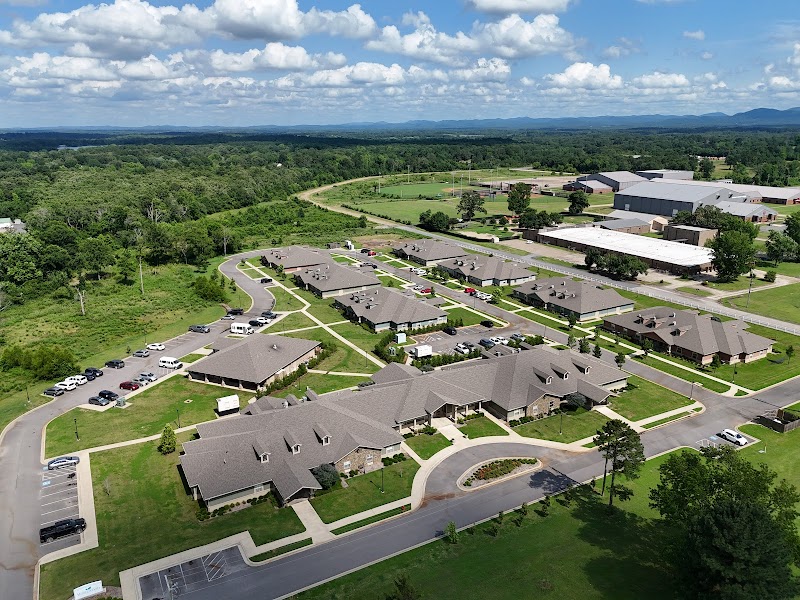
THE GREEN HOUSE COTTAGES OF HOMEWOOD is owned by a for-profit company. For-profit facilities operate as businesses with obligations to shareholders or private owners. The facility is operated by SOUTHERN ADMINISTRATIVE SERVICES, a chain that manages multiple nursing homes. With 138 certified beds and approximately 92 residents (about 67% occupancy), it is a mid-sized facility located in MENA, Arkansas.

How Does The Green House Cottages Of Homewood Compare to Other Arkansas Nursing Homes?

Compared to the 100 nursing homes in Arkansas, THE GREEN HOUSE COTTAGES OF HOMEWOOD's overall rating (4 stars) is above the state average of 3.1, staff turnover (31%) is significantly lower than the state average of 46%, and health inspection rating (4 stars) is above the national benchmark.

What Should Families Ask When Visiting The Green House Cottages Of Homewood?

Based on this facility's data, families visiting should ask: "Can I visit during a mealtime to observe dining assistance and food quality?" "How do you handle medical emergencies, and what is your hospital transfer rate?" "Can I speak with family members of current residents about their experience?"

Is The Green House Cottages Of Homewood Safe?

Based on CMS inspection data, THE GREEN HOUSE COTTAGES OF HOMEWOOD has a clean safety record: no substantiated abuse findings (meaning no confirmed cases of resident harm), no Immediate Jeopardy citations (the most serious violation level indicating risk of serious injury or death), and is not on the Special Focus Facility watch list (a federal program monitoring the lowest-performing 1% of nursing homes). The facility has a 4-star overall rating and ranks #1 of 100 nursing homes in Arkansas. While no facility is perfect, families should still ask about staff-to-resident ratios and recent inspection results during their visit.

Do Nurses at The Green House Cottages Of Homewood Stick Around?

THE GREEN HOUSE COTTAGES OF HOMEWOOD has a staff turnover rate of 31%, which is about average for Arkansas nursing homes (state average: 46%). Moderate turnover is common in nursing homes, but families should still ask about staff tenure and how the facility maintains care continuity when employees leave.

Was The Green House Cottages Of Homewood Ever Fined?

THE GREEN HOUSE COTTAGES OF HOMEWOOD has no federal fines on record. CMS issues fines when nursing homes fail to meet care standards or don't correct problems found during inspections. The absence of fines suggests the facility has either maintained compliance or corrected any issues before penalties were assessed. This is a positive indicator, though families should still review recent inspection reports for the full picture.

Is The Green House Cottages Of Homewood on Any Federal Watch List?

THE GREEN HOUSE COTTAGES OF HOMEWOOD is not on any federal watch list. The most significant is the Special Focus Facility (SFF) program, which identifies the bottom 1% of nursing homes nationally based on persistent, serious quality problems. Not being on this list means the facility has avoided the pattern of deficiencies that triggers enhanced federal oversight. This is a positive indicator, though families should still review the facility's inspection history directly.