PERRY COUNTY NURSING AND REHABILITATION CENTER

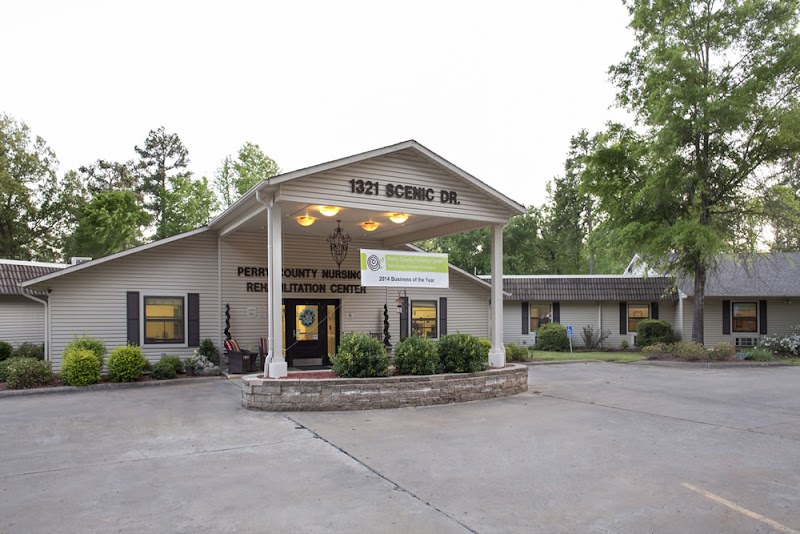
1321 SCENIC DRIVE, PERRYVILLE, AR 72126 (501) 889-2400
For profit - Corporation 95 Beds CENTRAL ARKANSAS NURSING CENTERS Data: November 2025
Trust Grade
70/100
#116 of 218 in AR
Last Inspection: September 2024

Within standard 12-15 month inspection cycle. Federal law requires annual inspections.

Overview

Perry County Nursing and Rehabilitation Center has a Trust Grade of B, indicating it is a good choice for care although there may be some areas for improvement. It ranks #116 out of 218 facilities in Arkansas, placing it in the bottom half, but it is the only option available in Perry County. The facility is improving, with a decrease in reported issues from 5 in 2023 to 4 in 2024. Staffing is a strength, with a rating of 4 out of 5 stars and a turnover rate of 36%, which is better than the state average. However, there are some concerning findings, including instances where staff did not wash their hands properly, food was not stored correctly, and meals were not prepared according to dietary guidelines, which could pose health risks for residents.

Trust Score
B
70/100
In Arkansas
#116/218
Bottom 47%
Safety Record
Low Risk
No red flags
Inspections
Getting Better
5 → 4 violations
Staff Stability
○ Average
36% turnover. Near Arkansas's 48% average. Typical for the industry.
Penalties
✓ Good
No fines on record. Clean compliance history, better than most Arkansas facilities.
Skilled Nurses
⚠ Watch
Each resident gets only 12 minutes of Registered Nurse (RN) attention daily — below average for Arkansas. Fewer RN minutes means fewer trained eyes watching for problems.
Violations
○ Average
10 deficiencies on record. Average for a facility this size. Mostly minor or procedural issues.
★★★☆☆
3.0
Overall Rating
★★★★☆
4.0
Staff Levels
★★★★☆
4.0
Care Quality
★★★☆☆
3.0
Inspection Score
Stable
2023: 5 issues
2024: 4 issues

The Good

  • 4-Star Staffing Rating · Above-average nurse staffing levels
  • 4-Star Quality Measures · Strong clinical quality outcomes
  • Full Sprinkler Coverage · Fire safety systems throughout facility
  • No fines on record
  • Staff turnover below average (36%)

    12 points below Arkansas average of 48%

Facility shows strength in staffing levels, quality measures, fire safety.

The Bad

3-Star Overall Rating

Near Arkansas average (3.1)

Meets federal standards, typical of most facilities

Staff Turnover: 36%

Near Arkansas avg (46%)

Typical for the industry

Chain: CENTRAL ARKANSAS NURSING CENTERS

Part of a multi-facility chain

Ask about local staffing decisions and management

The Ugly 10 deficiencies on record

Sept 2024 4 deficiencies
CONCERN (D)

Potential for Harm - no one hurt, but risky conditions existed

Accident Prevention (Tag F0689)

Could have caused harm · This affected 1 resident

Based on observation, interview, and record review, the facility failed to ensure residents on the Dementia Unit were supervised at all times to prevent accidents and hazards for 1 (Resident #50) samp...

Read full inspector narrative →
Based on observation, interview, and record review, the facility failed to ensure residents on the Dementia Unit were supervised at all times to prevent accidents and hazards for 1 (Resident #50) sampled resident. Findings are: On 9/3/2024 at 12:18 PM, Resident #50 was in the Observation Hall (a locked unit for residents with dementia) Dining Room sitting in a mobility device. Resident #50 self-propelled up to the trash can, located along the outside wall, lifted the lid and reached in with both hands. Resident #50 closed the lid and self-propelled out of the dining room. Staff was not in dining room during this time. On 9/3/2024 at 12:58 PM, Certified Nursing Assistant (CNA) #4 left seven dementia residents to eat in the Observation Hall Dining Room unattended (drink and meals were in front of residents). CNA #4 went to get an alternative meal for a resident. CNA #4 was gone from the dining room between 12:58 PM to 1:06 PM. On 9/5/2024 at 8:45 AM, CNA #4 stated it was unsanitary for Resident #50 to place both arms in the trash bin. You don't want the resident to pick anything up from inside the trash can and place the item in their mouth. CNA #4 confirmed there should always be an employee in the Observation Hall Dining Room in case a resident choked or needed something, fell or became combative or needed redirection. On 09/05/24 at 08:53 AM, Licensed Practicing Nurse (LPN) #5 confirmed Resident #50 arms should not be inside the trash can; it was not sanitary, and there is a concern of an item placed in the residents' mouth. There should always be a staff member in the Observation Hall Dining Room, during mealtimes, for resident safety due to choking hazards or behaviors. On 9/05/24 at 8:56 AM, the Director of Nursing (DON) confirmed there was a concern of infection control and safety of Resident #50 putting their arms inside the trash can. There should be staff in the Observation Hall Dining Room during mealtime, to ensure no one choked, and or had an altercation or fell. The Facility did not have an Observation Hall Dining Room policy/procedure.
CONCERN (E)

Potential for Harm - no one hurt, but risky conditions existed

Menu Adequacy (Tag F0803)

Could have caused harm · This affected multiple residents

Based on observation, record review and interview, the facility failed to ensure meals were prepared and served according to the planned written menu to ensure that nutritionally balanced meals were p...

Read full inspector narrative →
Based on observation, record review and interview, the facility failed to ensure meals were prepared and served according to the planned written menu to ensure that nutritionally balanced meals were provided for the residents for 1 of 1 meal observed. The findings are. 1. On 9/3/24 the noon meal menu indicated all residents on mechanical soft diets were to receive 2 ounces of gravy and for pureed diets, 2 ounces of gravy and one #10 (equivalent to 3 ounces) scoop of pureed bread. 2. On 9/3/24 at 12:23 PM, the residents on pureed diets were not served cornbread or regular bread. There were no substitutes served to the residents in place of bread. 3. On 9/3/24 at 12:50 PM, the residents on mechanical soft diets were not served gravy. 4. On 9/3/2024 at 1:06 PM, during an interview Dietary [NAME] (DC) #1 was asked about the texture of the pureed bread prepared to serve to the residents on pureed diets. DC #1 stated it looked like a dough ball when prepared, so it was not served to the residents. DC #1 confirmed she made gravy but forgot to serve it.
CONCERN (E)

Potential for Harm - no one hurt, but risky conditions existed

Deficiency F0805 (Tag F0805)

Could have caused harm · This affected multiple residents

Based on observations, record review, interview, and review of the facility policy, the facility failed to ensure pureed food items were blended to a smooth, lump free consistency to minimize the risk...

Read full inspector narrative →
Based on observations, record review, interview, and review of the facility policy, the facility failed to ensure pureed food items were blended to a smooth, lump free consistency to minimize the risk of choking or other complications for those residents who required pureed diets for 1 of 1 meal observed. The findings are: 1. On 9/03/24 at 11:50 AM, Dietary [NAME] (DC) #3 placed 6 servings of breaded fried pork chops into a blender, added a carton of whole milk and pureed. At 11:52 AM, DC #3 scraped pureed pork chops into a pan, covered the pan with foil and placed it in the oven. The consistency of the pureed fried chops was more of a ground texture and thick. 2. On 9/3/24 at 11:09 AM, DC #3 used a #8 scoop (1/2 cup) to portion 6 servings of turnip greens into a blender and pureed. At 11:11 AM, DC #3 poured the pureed greens into a pan, covered the pan with foil and placed it in the oven. The consistency of the pureed turnip greens was thick. 3. On 9/3/24 at 11:23 AM, DC #3 used a #8 scoop to portion 6 servings of black-eyed peas into a blender, added a carton of whole milk and pureed. At 11:25 AM, DC #3 scraped the pureed black-eyed peas into a pan, covered the pan with foil and placed it in the oven. The consistency was lumpy and thick. 4. On 9/3/24 at 12:58 PM, the Dietary Manager stated pureed meat had consistency of ground meat and was too thick. They did not put gravy on it. 5. On 9/3/24 at 1:04 PM, DC #3 who prepared the pureed food items stated the pureed turnip greens, pureed black-eyed peas and pureed fried pork chops were too dry. They were dry when I put them in the oven. I used a carton of milk when I pureed the pork chops and peas. 6. On 9/3/24 at 12:10 PM, the consistency of the pureed turnip greens remained as thick as it was when first pureed and placed in the oven and when taken out of the oven and placed on the steam table. Pureed black-eyed peas and pureed fried pork chops remained as thick and lumpy as they were when first pureed and placed in the oven and when taken out of the oven and placed on the steam table. This consistency persisted when they were served to the residents. 7. A review of a facility policy titled, Therapeutic and Modified Diets, initiated 8/24/20 and provided by the Dietary Manager on 9/4/2024, indicated to make sure residents received foods with the appropriate texture.
CONCERN (F)

Potential for Harm - no one hurt, but risky conditions existed

Food Safety (Tag F0812)

Could have caused harm · This affected most or all residents

Based on observations, record review, interview, and review of the facility policy, the facility failed to ensure employees washed their hands between handling dirty equipment and clean equipment, foo...

Read full inspector narrative →
Based on observations, record review, interview, and review of the facility policy, the facility failed to ensure employees washed their hands between handling dirty equipment and clean equipment, food items stored on the freezer were covered or sealed to prevent the potential for foodborne illnesses, and hot food items were maintained of 135 degrees Fahrenheit or above on the steam table while awaiting service to prevent potential food borne illness for residents who received meals from 1 of 1 kitchen. The findings are: 1. On 9/3/24 at 9:20 AM, Dietary [NAME] (DC) #1 removed a bottle of coke and a glass containing coke from the counter and placed them on the window bar, contaminating her hands. DC #1 removed her gloves from the glove box and placed them on her hands, contaminating the gloves in the process. Without changing gloves and washing her hands. DC #1 then picked up a cucumber from the counter and peeled it. The cucumber slices were placed on top of the salad to be served to the residents who requested salad with their meals. 2. On 9/3/24 at 9:35 AM, the following observations were made on a shelf in the walk-in freezer: a. An opened box of biscuits, the box was not closed. b. An opened box of cheddar biscuits, the box was not closed. c. An opened box of sausage links, the box was not covered or sealed. d. An opened box of lima beans, the box was not covered or sealed. e. An open box of beef fritters, the box was not covered or sealed. f. An opened box of cookie dough, the box was not covered or sealed. Dietary Aide (DA) #2 was asked what would happen if food items were not completely covered or sealed. DA #2 stated it will cause freezer burn. 3. On 9/3/24 at 11:45 AM, DC #3 wore gloves on her hands when she picked up a spray bottle and sprayed inside a pan, contaminating her hands. Without changing gloves and washing her hands, she picked up a clean blade and attached it to the base of the blender. DC #3 was asked what she should have done after touching dirty objects and before handling clean equipment. DC #3 stated, I should have removed gloves and washed my hands. 4. On 9/03/24 at12:10 PM, DC #1 checked the temperatures of the hot food items that had been placed on the serving line on the steam table in preparation for the noon meal service. The temperatures were: a. Pureed pork chops - 120 degrees Fahrenheit. b. Ground pork chops - 119 degrees Fahrenheit. c. Fortified mashed potatoes - 119 degrees Fahrenheit. DC #1 stated it's stopping at 119 degrees Fahrenheit. The above food items were not reheated when served to the residents. 6. A review of a facility policy titled, Handwashing and Glove Usage in Food Service, not dated, and provided by the Dietary Manager on 9/3/2024, indicated, hands must be washed before starting work and when engaging in any activities that may contaminate hands.
Jul 2023 5 deficiencies
CONCERN (D)

Potential for Harm - no one hurt, but risky conditions existed

Deficiency F0554 (Tag F0554)

Could have caused harm · This affected 1 resident

Based on observation, interview, and record review the facility failed to prevent a resident from self-administering medications without being assessed for self-administration of medication for 1 (res...

Read full inspector narrative →
Based on observation, interview, and record review the facility failed to prevent a resident from self-administering medications without being assessed for self-administration of medication for 1 (resident #25) of 15 sampled residents. On 07/11/2023 at 10:39 AM observed Resident #25 in a recliner in their room. On the over bed table, within reach of the resident, were two medications with the resident's name on the label. One was a Breo Ellipta Inhaler the other was an Ipratropium Bromide Solution nasal spray. Resident #25 stated, I am supposed to take it back to her (meaning the nurse) after I give it to myself. I always do it that way. Review of the physician orders dated 08/09/2022 revealed an order for Breo Ellipta Aerosol Powder inhalation one time a day and Ipratropium Bromide Solution nasal spray two times a day. There was no order for the resident to self-administer the medications. A review of Resident #25 medical record failed to reveal a medication self-administration assessment. A review of Resident #25 care plan revealed a care plan for allergies, last updated on 4/14/20, with an intervention to give medications as ordered, and lists Ipratropium Bromide, but does not indicate the resident can self-administer the medication. A care plan with an initiated date of 3/14/22 for altered respiratory status with an intervention to administer medication/puffers as ordered. Breo Ellipta inhaler was listed but does not indicate the resident can self-administer the medication. On 07/16/2023 at 10:40 AM, Licensed Practical Nurse, (LPN) #2 confirmed, she left the inhaler in the room, and stated she thought the resident had a self-administration assessment. On 07/18/2023 at 2:20 PM LPN #4 stated one resident self-administers Gas X and stated other than that, no other medications are left in the rooms. She stated the resident that keeps medication in the room stays in the room and does not have a roommate. LPN #4 was asked, How do you ensure that no other resident takes the medication? LPN #4 responded, Her door stays closed, and she has no roommate at this time. On 07/18/2023 at 2:33 PM interview with LPN #1 who stated only one resident in the facility self-administers medications, and the medication is kept at the bedside. LPN #1 stated the resident does not have a roommate and does not leave the room. On 07/18/2023 at 2:38 PM interview with the Director of Nurses (DON) who stated, there are two residents who self-administer medications and stated the Gas X is kept in the resident's room. She stated that resident does not have a roommate. Review of the policy, Medication, Self-Administration of, last updated on 5/1/16 noted, A resident may be permitted to administer or retain medication in his/her room under the following conditions: a. Assessment and approval by the interdisciplinary team. Suggested assessments: 1. Assessment for self-administration of medication 2. BIMS (Brief Interview for Mental Status) .b. order is obtained from the resident's physician . storage of medications in the resident's room must be such that it will prevent access by other residents .
CONCERN (D)

Potential for Harm - no one hurt, but risky conditions existed

Respiratory Care (Tag F0695)

Could have caused harm · This affected 1 resident

Based on observation, interview, and record review the facility failed to follow the physicians order to change oxygen tubing for 1 (resident #32) of eight (Resident #2, #4, #13, #25, #26, #32, #39, a...

Read full inspector narrative →
Based on observation, interview, and record review the facility failed to follow the physicians order to change oxygen tubing for 1 (resident #32) of eight (Resident #2, #4, #13, #25, #26, #32, #39, and #41) sampled residents who received supplemental oxygen. The findings are: On 07/16/2023 at 11:02 AM observed Resident #32 lying in bed with oxygen in place. An oxygen concentrator was at the bedside, with a humidifier bottle and oxygen tubing connected both were dated 07/06/23. Review of the physician orders dated 06/21/2023 noted, change oxygen tubing, clean filter and oxygen cabinet, date all tubing every Thursday on the 7 am-7 pm shift. On 07/18/2023 at 2:20 PM the surveyor asked Licensed Practical Nurse (LPN) #4 who is responsible for taking care of the residents' oxygen, who is responsible for changing the oxygen tubing and when is it changed? LPN #4 stated the nurses monitor the oxygen, and the treatment nurse changes the tubing every Thursday. On 07/18/2023 at 2:30 PM the surveyor asked LPN #3 who is responsible for taking care of the residents' oxygen, who is responsible for changing the oxygen tubing and when is it changed? LPN #3 stated, she usually takes care of the resident's oxygen, and changes the tubing and it is required to be changed weekly. On 07/18/2023 at 2:33 PM the surveyor asked LPN #1 Who is responsible for taking care of the residents' oxygen, who changes the tubing and how often is the tubing changed? LPN #1 stated the treatment nurse is responsible for taking care of the resident's oxygen and changes the tubing and stated it should be changed weekly. On 07/18/2023 at 2:43 PM the surveyor asked the Director of Nurses (DON) who is responsible for taking care of the residents' oxygen, who is responsible for changing the tubing and when is the tubing changed? The DON stated, the treatment nurse takes care of the oxygen and changes the tubing every Wednesday. The surveyor asked the DON, How do you ensure this task is complete? The DON responded, its charted on the electronic health record, and they spot check the tubing to ensure it is dated properly. On 07/18/2023 at 2:44 PM the DON stated they did not have a policy on oxygen care.
CONCERN (E)

Potential for Harm - no one hurt, but risky conditions existed

Deficiency F0761 (Tag F0761)

Could have caused harm · This affected multiple residents

Based on observation and interview, the facility failed to ensure medication was stored in a safe manner and failed to ensure expired medications were removed from one of one medication rooms, to prev...

Read full inspector narrative →
Based on observation and interview, the facility failed to ensure medication was stored in a safe manner and failed to ensure expired medications were removed from one of one medication rooms, to prevent potential administration of an expired medication to a resident. The failed practices had the potential to affect all 54 residents who reside in the facility. The findings are: 1. On 07/11/2023 at 10:39 AM observed Resident #25 in a recliner in their room. On the over bed table, within reach of the resident, were two medications with the resident's name on the label. One was a Breo Ellipta Inhaler the other was an Ipratropium Bromide Solution nasal spray. Resident #25 stated, I am supposed to take it back to her (meaning the nurse) after I give it to myself. I always do it that way. a. On 07/16/2023 at 10:40 AM interview with Licensed Practical Nurse (LPN) #2 who stated, she left the inhaler in the room, and stated he thought the resident had a self-administration assessment. b. Review of the policy, Medication, Self-Administration of, last updated on 5/1/15 noted, .storage of medications in the resident's room must be such that it will prevent access by other residents . 2. On 07/18/2023 at 2:53 PM during inspection of the medication storage room the following observations were made: a. One open vial of Tubersol Tuberculosis testing serum, located on the top compartment of the refrigerator door, did not have an open date documented on the vial. b. Two open vials of pneumonia vaccine, located in the top compartment of the refrigerator door, had an expiration date of 07/17/23 and did not have an open date documented on the vial. c. One unopened 30 ml (milliliter) bottle of Lorazepam oral concentrate, a controlled substance, was in a blue bin that was not secured by a second lock, the bin was under the locking mechanism resting on the refrigerator shelf. d. Two bottles of open Nitroglycerin tablets, were in a storage cabinet with an expiration date of 06/2023 and did not have an open date on the bottle. e. One 20 ml open vial of Lidocaine 1% was in a storage cabinet and did not have an open date on the vial. f. On 07/18/2023 at 2:20 PM interview with LPN #4 who stated one resident self-administers Gas X and stated other than that, no other medications are left in the rooms. She stated the resident that has medication stays in the room and does not have a roommate. LPN #4 was asked, How do you ensure that no other resident takes the medication? LPN #4 responded, Her door stays closed, and she has no roommate at this time. g. On 07/18/2023 at 2:33 PM interview with LPN #1 who stated only one resident in the facility self-administers medications, and the medication is kept at the bedside and further stated the resident does not have a roommate and does not leave the room. h. On 07/18/2023 at 2:38 PM interview with the Director of Nurses (DON)who stated, there are two residents who self-administer medications and stated the Gas X is kept in the resident's room. She stated that resident does not have a roommate. i. On 07/20/2023 at 08:55 AM the surveyor asked LPN #5, why is it important to add an open date to the medication? LPN #5 responded, To make sure it is not expired. The surveyor asked LPN #5, how many locks should a controlled substances be behind and why is this important? LPN #5 replied, Two locks, because they are controlled and only prescribed to one person. The surveyor asked LPN #5, what could be the outcome of administering expired drugs? LPN #5 responded, It would be a medication error and it's not going to work correctly. j. On 07/20/2023 at 09:00 AM the surveyor asked LPN #3, why is it important to add an open date to the medication? LPN #3 responded, they will expire, and they are only good for a certain number of days The surveyor asked, what could be the result of administering medication without knowing an open date? LPN #3 replied, you won't know when it expires. LPN #3 stated controlled substances are kept under, two locks for safety. k. On 07/20/2023 at 09:03 AM interview with the Director of Nurses (DON) who stated, medication vials are dated when opened so you will know when to discard the medication. She stated without dating the medication, there is a risk of administering expired medication. She confirmed the controlled substances are required to be under two locks to keep unauthorized people from taking it. l. The policy for Medication Storage in the Facility, obtained from the Administrator on 07/20/23 at 9:30 AM documented, .When the original seal of a manufacturer's container or vial is initially broken, the container or vial will be dated the nurse shall place a date opened sticker on the medication and enter the date opened and the new date of expiration .the nurse will check the expiration date of each medication before administering it .all expired medications will be removed from the active supply .Controlled-substances that require refrigeration are stored within a locked box within the refrigerator. This box must be attached to the inside of the refrigerator .
CONCERN (E)

Potential for Harm - no one hurt, but risky conditions existed

Menu Adequacy (Tag F0803)

Could have caused harm · This affected multiple residents

Based on observation, record review, and interview, the facility failed to ensure meals were prepared and served according to the planned written menu to meet the nutritional needs of the residents fo...

Read full inspector narrative →
Based on observation, record review, and interview, the facility failed to ensure meals were prepared and served according to the planned written menu to meet the nutritional needs of the residents for 1 of 1 meal observed. This failed practice had the potential to affect 44 residents who received regular diets,10 residents who received mechanical soft diets, and 8 residents who received pureed diets from the kitchen according to a list provided by the Assistant Dietary Supervisor on 07/16/2023. The findings are: 1. The facility menu for lunch provided by the Assistant Dietary Supervisor on 07/16/23 at 1:37 PM, noted each resident who received regular diets were to receive 4 ounces of fried chicken, each resident on mechanical soft were to receive 4 ounces of ground fried chicken and each resident on pureed diets were to receive a #8 scoop (4-ounces) of pureed fried chicken. 2. The following observations were made during the noon meal preparation and meal observation. a. On 07/16/23 at 10:59 AM Dietary Employee (DE) #1 used a #16 (Blue) scoop (2 ounce) to place 18 servings of leftover pulled turkey roast into a blender, a total of 36 ounces. At 11:02 AM DE #1 poured it into a pan and placed it in the oven to be served to 10 residents on mechanical soft diets. The menu noted the residents were to receive 4 ounces, which would require a total of 40 ounces. At 12:10 PM, DE #1 used an #8 scoop (4 ounces). Although DE #1 used the correct scoop, she still served half of the resident's smaller portions of ground pulled roast turkey to the residents on mechanical soft diets, instead of full servings of a #8 scoop as specified on the menu. 3. 07/16/23 at 11:06 AM, when DE #1 was about to put small sizes of regular chicken breasts into the blender to puree, the surveyor asked for the chicken to be weighed. DE#1 weighed it as 2.5 ounces. At 11:09 AM she placed 11 servings of chicken breast into a blender for a total of 27.5 ounces. At 11:11 AM, DE #1 added 4 cups of gravy and pureed it. At 11:12 AM she poured the pureed meat into a pan and placed it in the oven to be served to 8 residents on pureed diets. The written menu called for 4 ounces per resident which would require 32 ounces of chicken. 4. On 07/16/23 at 1:00 PM 33 residents on regular diets were served one chicken leg each. At 1:04 PM the surveyor asked the Assistant Dietary Supervisor to weigh the same amount of fried chicken served to the residents for lunch. She did so, and stated, It weighed 2.5 ounces. At 1:08 PM the surveyor asked DE #4 the reason the residents on mechanical soft diets and residents on pureed diets received different types of meat. She stated, I used the leftover roasted turkey for the mechanical soft diets and grilled chicken breast from the freezer for the pureed diets.
CONCERN (F)

Potential for Harm - no one hurt, but risky conditions existed

Food Safety (Tag F0812)

Could have caused harm · This affected most or all residents

Based on observation, record review, and interview, the facility failed to ensure foods stored in the storage area, freezer, and refrigerator were covered, sealed and dated to minimize the potential f...

Read full inspector narrative →
Based on observation, record review, and interview, the facility failed to ensure foods stored in the storage area, freezer, and refrigerator were covered, sealed and dated to minimize the potential for food borne illness for residents who received meals from 1 of 1 kitchen; and expired food items were promptly removed from stock to prevent potential food borne illness for residents who received meal trays from I of I kitchen; dietary staff washed their hands and changed gloves before handling food items to prevent the potential for cross contamination for residents who received meals from 1 of 1 kitchen. and hot food items on the steamtable were maintained at a temperature at or above 135 degrees Fahrenheit while awaiting service, to prevent potential food borne illness for residents who received meals from 1 of 1 kitchen. These failed practices had the potential to affect 52 residents who received meals from the Kitchen (Total Census: 54), according to the list provided by the Dietary Supervisor on 07/17/2023 PM The findings are: 1. On 07/16/23 at 10:28 AM An opened bag of bread was on the bread rack in the kitchen. The bag was not sealed. 2. On 07/16/23 at 10:32 AM, the following observations were made on a shelf in the walk-in freezer. a. An opened box of French toast sticks was not covered or sealed. They had freezer burn. The Dietary Supervisor stated, they have freezer burn. I will throw them away. b. An opened box of Salisbury steak was not covered or sealed. c. An opened box of chicken was not covered or sealed. 3. On 07/16/23 at 10:35 AM. A container of cucumber with onion was on a shelf in the walk-in refrigerator with an expiration date of 7/3/2023. 4. On 07/16/23 at 11:38 AM Dietary Employee (DE)#2 opened a bag of mix whip topping and emptied it into a pan. Without washing her hands, she placed a glove on her hand, contaminated the glove, and used the same gloved hand to push mixed fruits into a pan that contained coconut flakes to be used in making ambrosia deluxe for the supper meal. 5. On 07/16/23 at 11:56 AM DE #3 took the temperature of the food items on the steam table with the following results. a. Pureed dinner roll with milk 118 degrees Fahrenheit. b. gravy 113 degrees Fahrenheit. The above items were not reheated before being served to the residents. 6. On 07/16/23 at 12:16 PM DE #3 turned on the 3-compartment sink faucet and rinsed tomatoes. After rinsing the tomatoes, she turned off the faucet, contaminating her hands. She used the same hand to hold the tomatoes from falling out of the container while draining the water. DE #3 then placed the container with the tomatoes on the counter. At 12:21 PM she turned on the hand washing sink faucet and washed her hands. After washing her hands, she pushed down on the handle of the paper tissue dispenser to release tissue and dried her hands. At 12:23 PM She removed gloves from the glove box and placed them on her hands, contaminating the gloves. Without changing gloves and washing her hands, she picked up a tomato from the container and placed it on the cutting board to slice. The surveyor immediately stopped her and asked what should you do after touching dirty objects and before handling food items and clean equipment? She stated, I should have rewashed my hands. 7. The facility policy titled, hand washing provided by the Dietary Supervisor on 7/17/2023 at 4:33 PM documented, Staff will wash hands and exposed portions of their arms to remove contamination: a. After entering the kitchen. b. After handling soiled utensils. c. During food preparation. d. Before donning gloves for working with food. e. After engaging in their activities that contaminates the hands. 2. Procedure: a. Rinse hands under clean, warm running water. b. Apply soap. c. Rub together vigorously for approximately 20 seconds. d. Rinse thoroughly under clean, running warm water. e. Shut off the water faucet without contaminating clean hands (i.e., by using a paper towel).
Apr 2022 1 deficiency
CONCERN (E)

Potential for Harm - no one hurt, but risky conditions existed

Respiratory Care (Tag F0695)

Could have caused harm · This affected multiple residents

Based on observation, record review and interview, the facility failed to ensure oxygen tubing, CPAP (Continuous Positive Airway Pressure) equipment, and nebulizer equipment was properly dated and sto...

Read full inspector narrative →
Based on observation, record review and interview, the facility failed to ensure oxygen tubing, CPAP (Continuous Positive Airway Pressure) equipment, and nebulizer equipment was properly dated and stored when not in use to prevent potential cross contamination and respiratory infections for 2 (Residents #7 and #42) of 2 sampled residents who had physician orders for oxygen therapy and respiratory treatments. These failed practices had the potential to affect 17 residents with physician orders for oxygen therapy and respiratory treatments according to a list provided by the Administrator on 4/29/22 at 8:56 a.m. The findings are: 1. Resident #7 had diagnoses of Covid-19, Acute Bronchospasm Early Onset Cerebellar Ataxia, Anxiety Disorder and Depression. The Significant Change Minimum Data Set (MDS) with an Assessment Reference Date (ARD) of 1/30/22 documented the resident scored 15 (13-15 indicates cognitively intact) on a Brief Interview for Mental Status and did not receive oxygen therapy. a. The Care Plan with a revision date of 02/09/22 documented, . The resident has altered respiratory status/difficulty breathing . Administer medication/puffers as ordered . Ipratropium-Albuterol updraft TID [three times daily] X [times] 3D [days] for wheezing . OXYGEN SETTINGS: O2 via nasal prongs/mask @ [at] 2-4 L/M (Keep Pulse ox above 89%) PRN. Humidified . b. The April 2022 Physician's Orders documented, .May use O2 [Oxygen] 2-4 LPM [liters per minute] via NC [nasal cannula] PRN [as needed] to keep O2 > [greater than] 89 % [percent] as needed for O2 below 90% . Order Date 09/25/21 . Change o2 tubing weekly while in use. every day shift every Thu [Thursday] for maintenance . Order Date 10/21/21 . Ipratropium-Albuterol Solution 0.5-2.5 (3) MG/3ML [milligrams per milliliters] 3 ml [milliliters] inhale orally every 6 hours as needed for shortness of breath or cough . Order date 04/28/22 . c. The April 2022 MAR (Medication Administration Record) documented, .May use O2 at 2-4 LPM via NC PRN to keep O2 > 89% as needed for O2 below 90% . The April MAR documented O2 was used on 04/05/22 (Tuesday) and 04/27/22 (Wednesday). d. The April 2022 Treatment Administration Record (TAR) documented .Change O2 tubing weekly while in use every day shift every Thu for maintenance . The TAR documented the O2 tubing was last changed on 04/21/22 (Thursday). e. On 04/25/22 at 11:21 AM, Resident #7 was lying in bed. His O2 tubing was lying on the bed not dated. Resident #7 asked for the oxygen to be put back on, staff was located, and the nasal cannula was placed on Resident #7. There was no bag for storage of the oxygen tubing when not in use. f. On 04/27/22 at 1:00 pm, Licensed Practical Nurse (LPN) #1 was asked, What is the process for care and storage of respiratory equipment and who is responsible for it? LPN #1 stated, They are changed out weekly, dated, and stored in a bag when not in use. It is done by the Treatment Nurse and documented on the TAR. 2. Resident #42 had diagnoses of Unspecified Asthma, Pulmonary Emboli with Acute Cor Pulmonale, Chronic Obstructive Pulmonary Disease, Sleep Apnea, and Acute and Chronic Respiratory Failure with Hypoxia. The Significant Change MDS with an ARD of 3/8/22 documented the resident was moderately impaired in cognitive skills for daily decision making per a staff Assessment for Mental Status and received oxygen and CPAP therapy. a. On 04/25/22 at 11:09 AM, Resident #42 was lying in bed with oxygen at 3 LPM via NC. There was no date on the oxygen tubing, no humidity, nasal cannula for the portable oxygen was lying in a wheelchair and not in a bag. The CPAP nosepiece was lying on bedside table not in bag and a nebulizer mask was in a bag dated 03/17/22. b. On 04/26/22 at 10:00 am, Resident #42 was in her room, her oxygen tubing did not have a date on it. The CPAP nosepiece was lying on the bedside table not in a bag and a nebulizer mask was in a bag dated 03/17/22. c. On 04/27/22 at 12:30 pm, Resident #42 was in her room with LPN #1. The nosepiece of the CPAP was lying on the bedside table and not in a bag. The oxygen mask dated 04/26/22 was lying on top of CPAP machine and was not in a bag. d. On 04/25/22 at 11:09 am, Resident #42 was lying in bed with O2 at 3 LPM via NC. The O2 tubing was not dated and there was no humidity. The nasal cannula for the portable oxygen was lying in a wheelchair, not in a bag. The nosepiece for the CPAP lying on the bedside table not in a bag and a nebulizer mask was in a bag dated 03/17/22. e. On 04/26/22 at 10:00 am, Resident #42 was in 's O2 tubing was not dated. The nosepiece for the CPAP was lying on the bedside table not in a bag and a nebulizer mask was in a bag dated 03/17/22. f. On 04/27/22 at 12:30 pm, Resident #42 was her room with LPN #1. The nosepiece for the CPAP was lying on the bedside table not in bag. An oxygen mask was lying on top of the CPAP machine and was not in a bag. LPN #1 was asked what the facility policy on changing and storing respiratory supplies was. LPN #1 stated, They are changed weekly, dated and I assume the bags should be changed weekly too . 3. On 04/28/22 at 2:30 pm, LPN #2 was asked, What is the process for care and storage of respiratory equipment? LPN #2 stated, They are changed out weekly, dated and stored in a bag when not in use. I may have missed it. 4. On 04/28/22 at 2:45 pm, the DON was asked if [Resident #7's] oxygen tubing should have a date on it and how it should be stored when not in use. The DON stated, It should have a date on it, stored in a bag with a date when not in use. The DON was asked if it was acceptable for [Resident #42's] nebulizer kit, observed by surveyor on 04/26/22, to be stored in a bag dated 03/17/22, the portable oxygen tubing to be lying in the wheelchair seat and not stored in a bag, and the CPAP nose piece to be lying on the bedside table? The DON stated, No, that isn't acceptable, the nurses change out oxygen tubing, nebulizers, and storage bags weekly. They should all be dated, and initialed. The DON was asked why it is completed each week. The DON stated, That is what we have always done, by manufacturer's guidelines.
Understanding Severity Codes (click to expand)
Life-Threatening (Immediate Jeopardy)
J - Isolated K - Pattern L - Widespread
Actual Harm
G - Isolated H - Pattern I - Widespread
Potential for Harm
D - Isolated E - Pattern F - Widespread
No Harm (Minor)
A - Isolated B - Pattern C - Widespread

Questions to Ask on Your Visit

  • "Can I speak with families of current residents?"
  • "What's your RN coverage like on weekends and overnight?"

Our Honest Assessment

Strengths
  • • No major safety red flags. No abuse findings, life-threatening violations, or SFF status.
  • • No fines on record. Clean compliance history, better than most Arkansas facilities.
  • • 36% turnover. Below Arkansas's 48% average. Good staff retention means consistent care.
Concerns
  • • No major red flags. Standard due diligence and a personal visit recommended.
Bottom line: Mixed indicators with Trust Score of 70/100. Visit in person and ask pointed questions.

About This Facility

What is Perry County's CMS Rating?

CMS assigns PERRY COUNTY NURSING AND REHABILITATION CENTER an overall rating of 3 out of 5 stars, which is considered average nationally. Within Arkansas, this rating places the facility higher than 0% of the state's 100 nursing homes. This mid-range rating indicates the facility meets federal standards but may have areas for improvement.
How is Perry County Staffed?

CMS rates PERRY COUNTY NURSING AND REHABILITATION CENTER's staffing level at 4 out of 5 stars, which is above average compared to other nursing homes. Staff turnover is 36%, compared to the Arkansas average of 46%. This relatively stable workforce can support continuity of care.

What Have Inspectors Found at Perry County?

State health inspectors documented 10 deficiencies at PERRY COUNTY NURSING AND REHABILITATION CENTER during 2022 to 2024. These included: 10 with potential for harm.

Who Owns and Operates Perry County?

PERRY COUNTY NURSING AND REHABILITATION CENTER is owned by a for-profit company. For-profit facilities operate as businesses with obligations to shareholders or private owners. The facility is operated by CENTRAL ARKANSAS NURSING CENTERS, a chain that manages multiple nursing homes. With 95 certified beds and approximately 68 residents (about 72% occupancy), it is a smaller facility located in PERRYVILLE, Arkansas.

How Does Perry County Compare to Other Arkansas Nursing Homes?

Compared to the 100 nursing homes in Arkansas, PERRY COUNTY NURSING AND REHABILITATION CENTER's overall rating (3 stars) is below the state average of 3.1, staff turnover (36%) is near the state average of 46%, and health inspection rating (3 stars) is at the national benchmark.

What Should Families Ask When Visiting Perry County?

Based on this facility's data, families visiting should ask: "Can I visit during a mealtime to observe dining assistance and food quality?" "How do you handle medical emergencies, and what is your hospital transfer rate?" "Can I speak with family members of current residents about their experience?"

Is Perry County Safe?

Based on CMS inspection data, PERRY COUNTY NURSING AND REHABILITATION CENTER has a clean safety record: no substantiated abuse findings (meaning no confirmed cases of resident harm), no Immediate Jeopardy citations (the most serious violation level indicating risk of serious injury or death), and is not on the Special Focus Facility watch list (a federal program monitoring the lowest-performing 1% of nursing homes). The facility has a 3-star overall rating and ranks #100 of 100 nursing homes in Arkansas. While no facility is perfect, families should still ask about staff-to-resident ratios and recent inspection results during their visit.

Do Nurses at Perry County Stick Around?

PERRY COUNTY NURSING AND REHABILITATION CENTER has a staff turnover rate of 36%, which is about average for Arkansas nursing homes (state average: 46%). Moderate turnover is common in nursing homes, but families should still ask about staff tenure and how the facility maintains care continuity when employees leave.

Was Perry County Ever Fined?

PERRY COUNTY NURSING AND REHABILITATION CENTER has no federal fines on record. CMS issues fines when nursing homes fail to meet care standards or don't correct problems found during inspections. The absence of fines suggests the facility has either maintained compliance or corrected any issues before penalties were assessed. This is a positive indicator, though families should still review recent inspection reports for the full picture.

Is Perry County on Any Federal Watch List?

PERRY COUNTY NURSING AND REHABILITATION CENTER is not on any federal watch list. The most significant is the Special Focus Facility (SFF) program, which identifies the bottom 1% of nursing homes nationally based on persistent, serious quality problems. Not being on this list means the facility has avoided the pattern of deficiencies that triggers enhanced federal oversight. This is a positive indicator, though families should still review the facility's inspection history directly.