HAMPTON PLACE HEALTHCARE, LLC
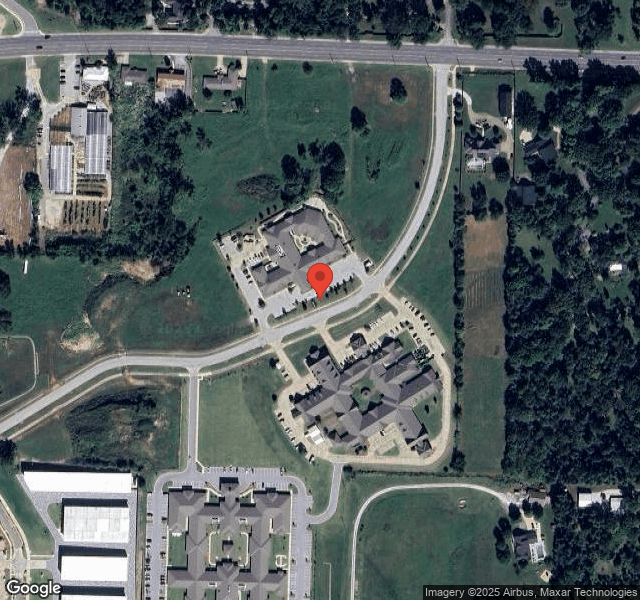

2029 SOUTH HAMPTON PLACE, ROGERS, AR 72758 (479) 250-0289
For profit - Limited Liability company 140 Beds CENTRAL ARKANSAS NURSING CENTERS Data: November 2025
Trust Grade
85/100
#16 of 218 in AR
Last Inspection: December 2024

Within standard 12-15 month inspection cycle. Federal law requires annual inspections.

Overview

Hampton Place Healthcare, LLC in Rogers, Arkansas has a Trust Grade of B+, which is above average and indicates a recommended facility for care. It ranks #16 out of 218 nursing homes in the state, placing it in the top half, and #1 out of 12 in Benton County, meaning it is the best option locally. The facility is new, with no historical trend data available, but it currently has an average staffing rating of 3 out of 5 stars and a concerning staff turnover rate of 67%, significantly higher than the state average. Fortunately, there have been no fines recorded, which is a positive sign, and the facility provides average RN coverage. However, there are a few concerning incidents, including failures to accurately assess residents' hearing and to develop appropriate care plans, as well as issues with food safety and hygiene in the kitchen. Overall, while there are strengths in its ratings and absence of fines, families should consider the staffing challenges and the specific care issues identified in inspections.

Trust Score
B+
85/100
In Arkansas
#16/218
Top 7%
Safety Record
Low Risk
No red flags
Inspections
Too New
0 → 3 violations
Staff Stability
⚠ Watch
67% turnover. Above average. Higher turnover means staff may not know residents' routines.
Penalties
✓ Good
No fines on record. Clean compliance history, better than most Arkansas facilities.
Skilled Nurses
⚠ Watch
Each resident gets only 20 minutes of Registered Nurse (RN) attention daily — below average for Arkansas. Fewer RN minutes means fewer trained eyes watching for problems.
Violations
✓ Good
Only 3 deficiencies on record. Cleaner than most facilities. Minor issues only.
★★★★★
5.0
Overall Rating
★★★☆☆
3.0
Staff Levels
★★★★☆
4.0
Care Quality
★★★★★
5.0
Inspection Score
Stable
: 0 issues
2024: 3 issues

The Good

  • 4-Star Quality Measures · Strong clinical quality outcomes
  • Full Sprinkler Coverage · Fire safety systems throughout facility
  • No fines on record

Facility shows strength in quality measures, fire safety.

The Bad

Staff Turnover: 67%

20pts above Arkansas avg (46%)

Frequent staff changes - ask about care continuity

Chain: CENTRAL ARKANSAS NURSING CENTERS

Part of a multi-facility chain

Ask about local staffing decisions and management

Staff turnover is elevated (67%)

19 points above Arkansas average of 48%

The Ugly 3 deficiencies on record

Dec 2024 3 deficiencies
CONCERN (D)

Potential for Harm - no one hurt, but risky conditions existed

Comprehensive Care Plan (Tag F0656)

Could have caused harm · This affected 1 resident

Based on facility policy review, record review, and interviews, the facility failed to develop a person centered, comprehensive care plan for hearing loss or use of hearing aid for 1 (Resident #56) of...

Read full inspector narrative →
Based on facility policy review, record review, and interviews, the facility failed to develop a person centered, comprehensive care plan for hearing loss or use of hearing aid for 1 (Resident #56) of 1 sampled resident reviewed for hearing loss. The findings are: A review of the facility policy titled Resident Assessment revealed that comprehensive assessments will describe significant impairment in functional capacity. Therefore, to develop a care plan to be able to provide appropriate care and services for the resident. A review of the December 2024 order summary indicated the facility admitted Resident #56 with diagnoses of fracture of left femur, urinary tract infection (UTI), and history of falls. The admission Minimal Data Set (MDS), with Assessment Reference Date (ARD) of 10-31-2024, revealed Resident #56 ' s hearing was adequate. Resident #56 ' s Brief Interview for Mental Status (BIMS) was a 9 and indicated moderately impaired cognitive impairment. A review of Resident #56 ' s care plan, with initiation date of 10-28-2024, did not reveal that Resident #56 was hard of hearing and required use of a hearing aid. A review of previous admission Record, dated 8-7-2024, indicated that Resident #56 was hard of hearing and had a left hearing aid in ear. On 12/11/24 at 04:02 PM, the surveyor visited Resident #56, and the resident was unable to hear the surveyor. A Certified Nursing Assistant (CNA) in room leaned into resident ' s ear and spoke loudly. The resident heard and responded to the surveyor. The Surveyor observed the resident wearing a hearing aid in the left ear. During an interview with Restorative Nursing Aide (RNA) #5, on 12/11/24 at 04:04 PM, she revealed that the resident was hard of hearing. RNA #5 was unsure if the resident had hearing aids or not. She reviewed the closet care plan and stated hard of hearing and hearing aid neither one was on there for review. During an interview with the MDS Coordinator-Skilled it was revealed that Resident #56 was hard of hearing. The MDS Coordinator-Skilled had no knowledge that Resident #56 had a hearing aid. The MDS Coordinator-Skilled stated she did not add hearing loss or hearing aid usage to the care plan. The MDS Coordinator-Skilled revealed it was important to add these types of things to care plan because it was the guidance of how care was given to the resident.
CONCERN (E)

Potential for Harm - no one hurt, but risky conditions existed

Assessment Accuracy (Tag F0641)

Could have caused harm · This affected multiple residents

**NOTE- TERMS IN BRACKETS HAVE BEEN EDITED TO PROTECT CONFIDENTIALITY** Based on observation, interviews, record review, and facility policy review, the facility failed to ensure the Minimum Data Set ...

Read full inspector narrative →
**NOTE- TERMS IN BRACKETS HAVE BEEN EDITED TO PROTECT CONFIDENTIALITY** Based on observation, interviews, record review, and facility policy review, the facility failed to ensure the Minimum Data Set (MDS) assessment was accurately completed for 2 (Resident #56 and Resident #61) of 2 residents reviewed for MDS accuracy. Specifically, the facility failed to ensure information regarding the resident's hearing was accurately completed for Resident #56, and Resident # 61 was inaccurately coded for hospice services. The findings are: A review of the Order Summary dated December 2024, indicated the facility admitted Resident #56 with diagnoses of fracture of left femur, urinary tract infection (UTI), and history of falls. The admission Minimal Data Set (MDS), with Assessment Reference Date (ARD) of 10-31-2024, revealed that Resident #56 ' s hearing was adequate. Resident #56 ' s Brief Interview for Mental Status (BIMS) was a 9 and indicated moderately impaired cognitive impairment. A review of Resident #56 ' s care plan, with initiation date of 10-28-2024, did not reveal that Resident #56 was hard of hearing or required use of a hearing aid. A review of the admission Record indicated that Resident #56 was hard of hearing and had a left hearing aid in ear. On 12/11/24 at 04:02 PM, the surveyor visited Resident #56. The resident was unable to hear the surveyor. A Certified Nursing Assistant (CNA) in the room leaned into resident ' s ear and spoke loudly. The resident heard and responded to the surveyor. The surveyor observed Resident #56 wearing a hearing aid in the left ear. During an interview with Restorative Nursing Aide (RNA) #5, on 12/11/24 at 04:04 PM, she stated that resident was hard of hearing. She was unsure if the resident had hearing aids or not. RNA #5 reviewed the closet care plan and verified that hard of hearing and hearing aid neither one was on there for review. During an interview with the MDS Coordinator, it was revealed that Resident #56 was hard of hearing. She had no knowledge that Resident #56 had a hearing aid. It was also revealed that hearing was coded as adequate on the MDS and in fact it was coded incorrectly. Review of the admission Record revealed Resident #61 was admitted on [DATE] with a diagnosis of type II diabetes mellitus with diabetic polyneuropathy. Review of the quarterly Minimum Data Set (MDS) with an Assessment Reference Date (ARD) of 10/24/2024, revealed Resident #61 had a Brief Interview for Mental Status (BIMS) score of 11 (8-12 suggest moderate cognitive impairment). Per section GG of the MDS, Resident #61 required partial to moderate assistance with Activities of Daily Living (ADLs) and ambulated with the assistance of a walker or manual wheelchair. In section O, sub-section K1, it was noted that Resident #61 was under hospice care. During an interview on 12/09/2024 at 1:30 PM, Resident #61 confirmed the resident did not receive hospice care. Upon review of the physician orders, Resident #61 did not have an order for hospice care. During an interview on 12/09/2024 at 1:45 PM, Licensed Practical Nurse (LPN) # 6 confirmed Resident #61 was not ordered or received hospice care. During an interview on 12/12/2024 at 9:30 AM, the MDS Coordinator-LTC confirmed Resident #61 was not receiving hospice care and confirmed hospice was selected in section O, sub-section K1. The MDS Coordinator -LTC was asked why it was important to have accurate assessments of the residents within the MDS. The MDS Coordinator -LTC stated, Because the MDS is what helps create the care plan. The care plan is what the staff use to care for the residents. A facility policy titled Resident Assessment with no date was reviewed. The review revealed that comprehensive assessments will describe significant impairment in functional capacity. Therefore, to develop a care plan to be able to provide appropriate care and services for the resident.
CONCERN (E)

Potential for Harm - no one hurt, but risky conditions existed

Food Safety (Tag F0812)

Could have caused harm · This affected multiple residents

Based on observation, interview, and record review, the facility failed to ensure foods stored in the freezer were covered and sealed; 1 of 2 ice machines were maintained in clean and sanitary conditi...

Read full inspector narrative →
Based on observation, interview, and record review, the facility failed to ensure foods stored in the freezer were covered and sealed; 1 of 2 ice machines were maintained in clean and sanitary condition; expired food items were promptly removed, and dietary staff washed their hands before handling clean equipment or food items for 2 of 2 meals observed. The findings are: 1. On 12/11/24 at 1:22 PM, the following observations were made in the walk-in freezer. a. An opened box of fish. The box was not covered or sealed. b. An opened box of breaded chicken. The box was not cover or sealed. 2. On 12/11/24 at 1:27 PM, the following observations were made in the kitchen area. a. An opened bottle of lemon juice was on a shelf above the food preparation counter with an expiration date of 10/28/24. The Dietary Manager (DM) was interviewed and was asked what she used lemon juice for. The DM stated the staff used it when they had a recipe that called for it, but they have not used it to bake anything in a long time. b. A bottle of lemon juice was on a shelf in the storage room with an expiration date of 10/28/2024. 3. On 12/11/24 at 1:49 PM, inside the back wall of the ice machine in a hall opposite the kitchen had buildup of wet black residue on it. This surveyor asked the DM if she could wipe the area where the wet black residue was observed. She did. Solid black residue easily transferred to the tissue. This surveyor asked the DM if she could describe what she saw on the back wall of the ice machine, where ice cubes were resting. She stated it was wet black residue. The DM was interviewed and was asked how often the ice machine was cleaned and who used the ice from the ice machine. She stated it was cleaned once a week, then sanitized every six (6) months. The kitchen staff used it to fill beverages served to the residents at mealtimes, and the Certified Nursing Assistants (CNA) also used it for the water pitchers in the residents' rooms. 4. On 12/11/24 at 1:52 PM, the scoop holder attached to the body of the ice machine had wet brown residue at the bottom of it and the ice scoop was resting directly on it. This surveyor asked the DM if she could wipe the wet brown residue. She did so, and the wet brown residue easily transferred to the tissue. This surveyor asked the DM if she could describe what she saw at the bottom of the scoop holder and how often the scoop holder got cleaned. She stated it was cleaned every week, and there was a brown residue. 5. On 12/11/24 at 2:03 PM, Dietary Aide (DA) #1 pushed a cart with an empty glass toward the refrigerator. DA #1 opened the refrigerator, removed pitchers of tea, punch, orange juice, and cartons of milk and placed them on the counter. DA #1 did not wash her hands when she picked up glasses by their rims and poured beverages to be served to the residents who requested juice with their supper meal. DA #1 was interviewed and was asked what she should have done after touching and before handling food items. DA #1 confirmed she should have washed her hands. 6. On 12/11/24 02:12 PM, Dietary [NAME] (DC) #2 turned on the sink faucet and washed his hands. He used his bare hands to turn off the faucet, contaminating his hands. DC #2 picked up scissors from the counter and placed in a cup on a shelf above the food preparation counter. DC #2 did not wash his hands when he removed the gloves from the glove box and put them on, contaminating the gloves. DC #2 then used his contaminated gloved hand to remove slices of bread from the bread bag and placed them on a pan liner to be used for making pimento cheese sandwiches for the supper meal. DC #2 was interviewed, and based on current observations, he was asked what he should have done after touching dirty objects and before handling food items. He stated he should have washed his hands before putting on gloves and handling food. 7. On 12/11/24 at 2:15 PM, DA #3 turned the sink on and washed her hands. She used her bare hands to turn off the faucet, contaminating her hands. Without washing her hands, she picked up plates and placed them on a clean cart to be used in portioning food items to the residents for the supper meal with her fingers inside of the plates. DA#3 was interviewed and was asked what she should have done after touching and before handling food items. DA #3 confirmed she should have washed her hands. 8. On 12/11/24 at 4:00 PM, DA #1 turned on the hand washing sink and washed her hands. She turned off the faucet with her bare hands, contaminating her hands. Without washing her hands, she picked up picked up glasses by their rims and placed them on a cart to be used in serving beverages to the residents for the supper meal. On 12/11/24 at 04:02 PM, DA #1 opened the refrigerator, removed a carton of silk milk, a pitcher tomato juice, and orange juice. Without washing her hands, DA #1 picked up glasses by their rims and poured beverages to be served to the resident for the supper meal. 9. On 12/11/24 at 4:14 PM, DA #1 pulled her blouse down, then pushed her sleeves back, contaminating her hands. Without washing her hands, DA #1 picked up glasses that contained beverages from the cart by their rims and placed them in the cooler by the steam table to be served to the residents for the supper meal. 10. On 12/12/24 at 7:34 AM, DC #4 was on the tray line serving the breakfast meal. She picked up tray cards and placed them on the trays. Without washing her hands, DC #4 picked up plates and placed them on the trays to be used in portioning food items to be served to the residents for lunch with her fingers inside the plates. DC #4 was interviewed and was asked what she should have done after touching and before handling food items. DC #4 stated she should have washed her hands, 11. A review of facility policy titled, Food Safety-Infection Control and Hand washing initiated 2/9/2024 and provided by the DM indicated hands should be washed entering the kitchen and before, during and after food preparation.
Understanding Severity Codes (click to expand)
Life-Threatening (Immediate Jeopardy)
J - Isolated K - Pattern L - Widespread
Actual Harm
G - Isolated H - Pattern I - Widespread
Potential for Harm
D - Isolated E - Pattern F - Widespread
No Harm (Minor)
A - Isolated B - Pattern C - Widespread

Questions to Ask on Your Visit

  • "Why is there high staff turnover? How do you retain staff?"
  • "Can I speak with families of current residents?"
  • "What's your RN coverage like on weekends and overnight?"

Our Honest Assessment

Strengths
  • • Grade B+ (85/100). Above average facility, better than most options in Arkansas.
  • • No major safety red flags. No abuse findings, life-threatening violations, or SFF status.
  • • No fines on record. Clean compliance history, better than most Arkansas facilities.
  • • Only 3 deficiencies on record. Cleaner than most facilities. Minor issues only.
Concerns
  • • 67% turnover. Above average. Higher turnover means staff may not know residents' routines.
Bottom line: Generally positive indicators. Standard due diligence and a personal visit recommended.

About This Facility

What is Hampton Place Healthcare, Llc's CMS Rating?

CMS assigns HAMPTON PLACE HEALTHCARE, LLC an overall rating of 5 out of 5 stars, which is considered much above average nationally. Within Arkansas, this rating places the facility higher than 99% of the state's 100 nursing homes. This rating reflects solid performance across the metrics CMS uses to evaluate nursing home quality.

How is Hampton Place Healthcare, Llc Staffed?

CMS rates HAMPTON PLACE HEALTHCARE, LLC's staffing level at 3 out of 5 stars, which is average compared to other nursing homes. Staff turnover is 67%, which is 20 percentage points above the Arkansas average of 46%. High turnover can affect care consistency as new staff learn residents' individual needs.

What Have Inspectors Found at Hampton Place Healthcare, Llc?

State health inspectors documented 3 deficiencies at HAMPTON PLACE HEALTHCARE, LLC during 2024. These included: 3 with potential for harm.
Who Owns and Operates Hampton Place Healthcare, Llc?

HAMPTON PLACE HEALTHCARE, LLC is owned by a for-profit company. For-profit facilities operate as businesses with obligations to shareholders or private owners. The facility is operated by CENTRAL ARKANSAS NURSING CENTERS, a chain that manages multiple nursing homes. With 140 certified beds and approximately 113 residents (about 81% occupancy), it is a mid-sized facility located in ROGERS, Arkansas.

How Does Hampton Place Healthcare, Llc Compare to Other Arkansas Nursing Homes?

Compared to the 100 nursing homes in Arkansas, HAMPTON PLACE HEALTHCARE, LLC's overall rating (5 stars) is above the state average of 3.2, staff turnover (67%) is significantly higher than the state average of 46%, and health inspection rating (5 stars) is much above the national benchmark.

What Should Families Ask When Visiting Hampton Place Healthcare, Llc?

Based on this facility's data, families visiting should ask: "How do you ensure continuity of care given staff turnover, and what is your staff retention strategy?" "Can I visit during a mealtime to observe dining assistance and food quality?" "How do you handle medical emergencies, and what is your hospital transfer rate?" "Can I speak with family members of current residents about their experience?" These questions are particularly relevant given the facility's high staff turnover rate.

Is Hampton Place Healthcare, Llc Safe?

Based on CMS inspection data, HAMPTON PLACE HEALTHCARE, LLC has a clean safety record: no substantiated abuse findings (meaning no confirmed cases of resident harm), no Immediate Jeopardy citations (the most serious violation level indicating risk of serious injury or death), and is not on the Special Focus Facility watch list (a federal program monitoring the lowest-performing 1% of nursing homes). The facility has a 5-star overall rating and ranks #1 of 100 nursing homes in Arkansas. While no facility is perfect, families should still ask about staff-to-resident ratios and recent inspection results during their visit.

Do Nurses at Hampton Place Healthcare, Llc Stick Around?

Staff turnover at HAMPTON PLACE HEALTHCARE, LLC is high. At 67%, the facility is 20 percentage points above the Arkansas average of 46%. High turnover means new staff may not know residents' individual needs, medications, or preferences. It can also be disorienting for residents, especially those with dementia who rely on familiar faces. Families should ask: What is causing the turnover? What retention programs are in place? How do you ensure care continuity during staff transitions?

Was Hampton Place Healthcare, Llc Ever Fined?

HAMPTON PLACE HEALTHCARE, LLC has no federal fines on record. CMS issues fines when nursing homes fail to meet care standards or don't correct problems found during inspections. The absence of fines suggests the facility has either maintained compliance or corrected any issues before penalties were assessed. This is a positive indicator, though families should still review recent inspection reports for the full picture.

Is Hampton Place Healthcare, Llc on Any Federal Watch List?

HAMPTON PLACE HEALTHCARE, LLC is not on any federal watch list. The most significant is the Special Focus Facility (SFF) program, which identifies the bottom 1% of nursing homes nationally based on persistent, serious quality problems. Not being on this list means the facility has avoided the pattern of deficiencies that triggers enhanced federal oversight. This is a positive indicator, though families should still review the facility's inspection history directly.