SPRINGDALE HEALTH AND REHABILITATION CENTER
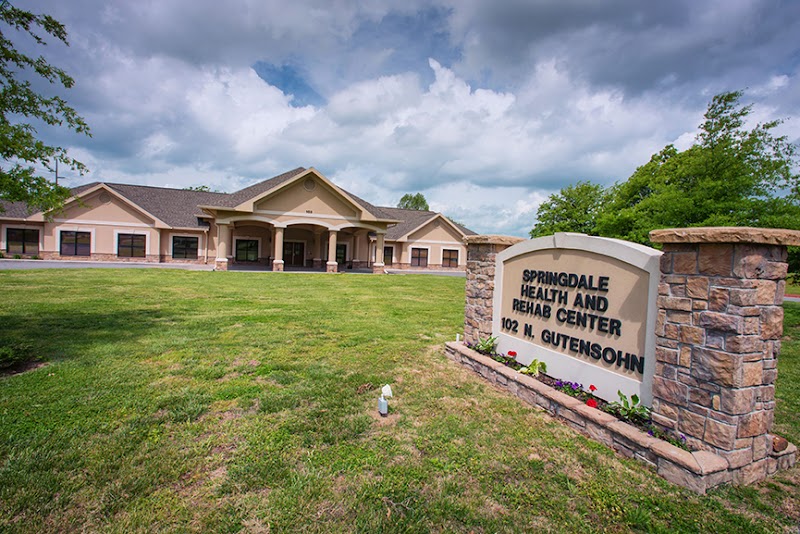
102 NORTH GUTENSOHN, SPRINGDALE, AR 72762 (479) 756-0330
For profit - Limited Liability company 140 Beds NHS MANAGEMENT Data: November 2025 1 Immediate Jeopardy citation
Trust Grade
33/100
#166 of 218 in AR
Last Inspection: August 2024

Within standard 12-15 month inspection cycle. Federal law requires annual inspections.

Overview

Springdale Health and Rehabilitation Center has received a Trust Grade of F, indicating significant concerns and a poor reputation among facilities. It ranks #166 out of 218 in Arkansas, placing it in the bottom half of all nursing homes in the state, and #9 out of 12 in Washington County, meaning there are only a few local options that are better. The facility is improving, with reported issues decreasing from 9 in 2023 to 7 in 2024, but it still faces major challenges. Staffing is a concern, with a rating of 2 out of 5 stars and a high turnover rate of 66%, which is above the state average of 50%. While there have been no fines reported, which is a positive sign, the facility has had serious incidents, including a critical failure that resulted in a resident being pushed to the floor and suffering a hip fracture. Additionally, there were issues noted with food safety, such as expired items not being removed, which poses health risks for residents. Overall, while there are some improving trends, families should weigh both the strengths and weaknesses carefully when considering this facility for their loved ones.

Trust Score
F
33/100
In Arkansas
#166/218
Bottom 24%
Safety Record
High Risk
Review needed
Inspections
Getting Better
9 → 7 violations
Staff Stability
⚠ Watch
66% turnover. Above average. Higher turnover means staff may not know residents' routines.
Penalties
✓ Good
No fines on record. Clean compliance history, better than most Arkansas facilities.
Skilled Nurses
⚠ Watch
Each resident gets only 15 minutes of Registered Nurse (RN) attention daily — below average for Arkansas. Fewer RN minutes means fewer trained eyes watching for problems.
Violations
⚠ Watch
36 deficiencies on record. Higher than average. Multiple issues found across inspections.
★★☆☆☆
2.0
Overall Rating
★★☆☆☆
2.0
Staff Levels
★★★★☆
4.0
Care Quality
★★☆☆☆
2.0
Inspection Score
Stable
2023: 9 issues
2024: 7 issues

The Good

  • 4-Star Quality Measures · Strong clinical quality outcomes
  • Full Sprinkler Coverage · Fire safety systems throughout facility
  • No fines on record

Facility shows strength in quality measures, fire safety.

The Bad

2-Star Overall Rating

Below Arkansas average (3.1)

Below average - review inspection findings carefully

Staff Turnover: 66%

20pts above Arkansas avg (46%)

Frequent staff changes - ask about care continuity

Chain: NHS MANAGEMENT

Part of a multi-facility chain

Ask about local staffing decisions and management

Staff turnover is elevated (66%)

18 points above Arkansas average of 48%

The Ugly 36 deficiencies on record

1 life-threatening
Aug 2024 4 deficiencies
CONCERN (E)

Potential for Harm - no one hurt, but risky conditions existed

Resident Rights (Tag F0550)

Could have caused harm · This affected multiple residents

Based on observations, interviews, and record reviews, the facility failed to ensure staff did not stand over residents who required assistance during meals for 2 (Resident #12 and Resident #60) of 2 ...

Read full inspector narrative →
Based on observations, interviews, and record reviews, the facility failed to ensure staff did not stand over residents who required assistance during meals for 2 (Resident #12 and Resident #60) of 2 sampled residents observed during meal service. Findings include: During an interview on 08/01/2024 at 8:51 AM, Nurse Consultant (NC) #8 stated the facility did not have a policy for dining assistance or serving meals to residents and referred to the resident right of dignity. A review of a facility booklet titled, Resident Handbook undated, indicated, (a) Resident Rights. The resident has the right to a dignified existence . A review of the Face Sheet indicated the facility admitted Resident #12 with diagnoses that included frontal neurocognitive disorder, dysphasia, oropharyngeal phase, muscle wasting and atrophy, and lack of coordination. The quarterly Minimum Data Set (MDS), with an Assessment Reference Date (ARD) of 06/14/2024, revealed Resident #12 had a Staff Assessment of Mental Status (SAMS) score of 3 which indicated the resident had severe cognitive impairment. Resident #12 required partial to moderate assistance with eating. A review of Resident #12's Care Plan, dated 07/18/2019, revealed the resident had the potential for weight loss. Interventions included intermittent assistance with meals, use small bites, alternate food and liquids. A review of the Face Sheet indicated the facility admitted Resident #60 with diagnoses that included non-ST elevation myocardial infarction, dementia, and sequalae of nontraumatic subarachnoid hemorrhage. A review of the quarterly Minimum Data Set (MDS) with an Assessment Reference Date (ARD) of 07/08/2024, revealed Resident #60 had a Staff Assessment for Mental Status (SAMS) score of 3 which indicated the resident had severe cognitive impairment. Resident #60 required setup or clean-up assistance with meals. A review of Resident #60's Care Plan, dated 01/15/2024, revealed the resident was at risk for choking, dehydration, requires staff assistance with activities of daily living (ADL), potential for weight loss. Interventions included observing the resident for signs and symptoms of aspiration, reminding resident to tuck chin when swallowing, alternate food and fluids, offer and encourage fluids, give verbal cues, divided plate, and allow sufficient time to feed. During an observation on 07/29/2024 at 12:51 PM, Certified Nursing Assistant (CNA) #7 was in the main dining room, standing on the left side of Resident #60 while assisting with placing food and beverage in the resident's mouth. During an observation on 07/29/2024 at 12:53 PM, Nursing Assistant (NA) #1 was in the main dining room, standing on the left of Resident #12, assisting with placing food in the resident's mouth. During an interview on 07/29/2024 at 2:41 PM, Nursing Assistant (NA) #1 stated you should be level with the resident while assisting them and you should not stand and bend over a resident. Standing over the resident is disrespecting them. During an interview on 07/31/2024 at 2:28 PM, Certified Nursing Assistant (CNA) #7 stated you should not stand to help someone eat. You should be level, because standing over them makes them feel like we are bigger than them. During an interview on 08/01/2024 at 9:52 AM, Unit Coordinator/Infection Control (IC #9) stated when assisting a resident with meals, staff should sit with the resident, be on the same level as them, talk to them, wipe their face, treat them with dignity. Staff should not stand to assist residents.
CONCERN (E) 📢 Someone Reported This

A family member, employee, or ombudsman was alarmed enough to file a formal complaint

Potential for Harm - no one hurt, but risky conditions existed

Safe Environment (Tag F0584)

Could have caused harm · This affected multiple residents

Based on observations, interviews, and policy document review, the facility failed to maintain a clean and safe environment for 3 sampled residents (Resident #13, #26, and #51). The findings are: A r...

Read full inspector narrative →
Based on observations, interviews, and policy document review, the facility failed to maintain a clean and safe environment for 3 sampled residents (Resident #13, #26, and #51). The findings are: A review of the policy titled; Cleaning-Wet Mopping indicated cleaning will be done daily and more frequently if spillage or visible soiling occurs. 1. During a concurrent observation and interview on 07/29/2024 at 2:48 PM, Resident #13 and a family member voiced a concern of the cleanliness and operation of a toilet riser located in the bathroom for Resident #13's assistance. Observation showed both back corners of the frame had dark orange and brown areas. On 07/30/24 at 9:47 AM, the surveyor observed the bathroom grout/tile beside and behind toilet in Resident #13's bathroom. A dark brown substance was observed at the bottom of the wall, and a dark brown area to the inner bottom of the door frame. On 07/31/24 at 10:45 AM, the surveyor observed the bathroom grout had been cleaned. No dark brown substance was noted in the grout. But the dark brown area to the inner bottom of the door frame remained. The surveyor observed the metal transition strip, which was 2 feet by 3 feet, protruding up, not level with the floor and noted to have sharp edges at the ends of both sides of the strip. A review of the Face Sheet indicated the facility admitted Resident #13 with diagnoses that included arthritis, multiple sites, and a history of falling. A review of the admission Minimum Data Set (MDS) with an Assessment Reference Date (ARD) of 07/09/2024 revealed Resident #13 had a Brief Interview of Mental Status (BIMS) score of 9 which indicated the resident moderately cognitively impairment and required partial to moderate assistance with standing from a sitting position, and toilet transfers. 2. During a concurrent observation, and interview, on 07/30/24 at 8:38 AM, the wall of Resident #26's room was observed to have two large, damaged areas with paint missing at both the head of bed and to the side. Resident #26 stated they were present when he moved to this room. A review of the admission Minimum Data Set (MDS) with an Assessment Reference Date (ARD) of 06/28/2024 revealed Resident #26 had a brief Interview of Mental Status (BIMS) score of 14 which indicated the resident was cognitively intact. 3. During a concurrent observation and interview with Housekeeping Supervisor #12 on 07/31/2024 at 10:45 AM, Housekeeping Supervisor #12 accompanied the surveyor to Resident #51's room and observed the bathroom in which a dark brown substance in the grout behind and beside the toilet had been cleaned. Housekeeping Supervisor #12 reported that she had been on her hands and knees this morning cleaning that up. She was asked to describe the bottom of the inner door frame to the surveyor. She described the area as rust that cannot be cleaned off and that it was maintenance's responsibility. She was asked to describe the metal transition strip. She described it as protruding and with sharp edges. She also reported that the lip should be flat to the floor because they could get cut or hurt or even trip and fall from it. During an interview with Resident #51 on 07/30/2024 at 9:47 AM, Resident #51 revealed that the resident had told maintenance about the floor numerous times and stated that the resident had believed that it was black mold. She reported that the new metal piece was placed over a line of black substance and was not cleaned prior to and that you could kind of see it. During a concurrent observation and interview with the Maintenance Director on 07/31/2024 at 2:10 PM. The surveyor took the Maintenance Director to Resident #51's bathroom and showed the metal transition strip. The Maintenance Director stated that the strip should be flat to the ground to ease transition through the door and the edges are sharp and dangerous. The area around the bottom of the door entry is surface damage and his level of repair would be to replace the door frame, but probably will be sanded and fixed. A review of Resident #51's Face Sheet revealed the resident had diagnoses to include dementia and bipolar disorder. A review of a quarterly Minimum Data Set (MDS) Quarterly with an Assessment Reference Date (ARD) of 05/31/2024 revealed Resident #51 had severe cognitive impairment and independently ambulated with staff assist and required set up or clean up assistance with toileting. A review of a Care Plan with review date of 07/03/24 revealed that staff were to observe the room for safety concerns such as glass or sharp objects, dated 12/13/2021.
CONCERN (E)

Potential for Harm - no one hurt, but risky conditions existed

Infection Control (Tag F0880)

Could have caused harm · This affected multiple residents

**NOTE- TERMS IN BRACKETS HAVE BEEN EDITED TO PROTECT CONFIDENTIALITY** Based on observations, interviews, record review, facility document review, and facility policy review, the facility failed to e...

Read full inspector narrative →
**NOTE- TERMS IN BRACKETS HAVE BEEN EDITED TO PROTECT CONFIDENTIALITY** Based on observations, interviews, record review, facility document review, and facility policy review, the facility failed to ensure a staff member did not remove food from the floor and place it on a dining table during meal service; failed to ensure hand hygiene was performed while assisting a resident with their meal intake for 1 (Resident #12) resident of 2 sampled residents observed during meal service and failed to ensure hand hygiene was performed while handling meal trays; failed to ensure hand hygiene and glove changes were performed during tracheostomy care for 1 (Resident #99) resident of 1 sampled resident reviewed for tracheostomy care; and failed to ensure proper personal protective equipment (PPE) was used and hand hygiene was performed with glove changes, during perineal care for 1 (Resident #21) resident of 1 sampled resident observed during perineal care. Findings include: 1. A review of a dietary service facility policy titled, Hand-washing Guidelines, dated 02/01/2002, indicated, .Purpose: To prevent the spread of bacteria that may cause food borne illness . Process: .Hands should be washed in the following situations: .After hands have touched anything unsanitary . After hands have touched the face, nose . A review of an infection prevention facility policy titled, Hand Hygiene, dated 06/11/2020 indicated, .Purpose: To provide guidelines to employees for proper and appropriate hand washing techniques and will aide in the prevention of the transmission of infections. Standard: Handwashing should be performed between procedures with resident . based upon the principle that all . secretions . and mucus membranes may contain transmissible infections agents . Hand Hygiene continues to be the primary means of preventing the transmission of infection. The following is a list of some situations that require hand hygiene . before and after . handling food (hand washing with soap and water) . wiping nose . after contact with a resident . mucus membranes . or excretions . A review of the Face Sheet indicated the facility admitted Resident #12 with diagnoses that included frontal neurocognitive disorder, dysphasia, oropharyngeal phase, muscle wasting and atrophy, and lack of coordination. A review of the quarterly Minimum Data Set (MDS) with an Assessment Reference Date (ARD) of 06/14/2024, revealed Resident #12 had a Staff Assessment of Mental Status (SAMS) score of 3 which indicated the resident had severe cognitive impairment. Resident #12 required partial to moderate assistance with eating. A review of Resident #12's Care Plan, dated 07/18/2019, revealed the resident had the potential for weight loss. Interventions included intermittent assistance with meals, use small bites, alternate food and liquids. During an observation on 07/29/2024 at 12:55 PM, Nursing Assistant (NA) #1 picked up food from the floor and placed it on the resident's napkin on the table. No hand hygiene was performed. NA #1 placed food on a spoon and placed it in Resident #12's mouth. During an observation on 07/29/2024 at 1:05 PM, Nursing Assistant (NA) #1 was touching his mouth, face, and tapping his fingers on the table. No hand hygiene was performed. NA #1 then assisted Resident #12 with a beverage. During an interview on 07/30/2024 at 8:38 AM, Nursing Assistant (NA) #1 stated his hands should have been sanitized after touching his cheek and lips and he should not have picked up the food from the floor and put it back on the table because cross contamination and infection could be caused to the resident. 2. A review of the Facility Assessment with a review and approved date of 07/22/2024 revealed, .(19) Tracheostomy Comments: Our facility hasn't provided care for any patients with this need. In the event of a referral for a resident with an established trach and otherwise clinically accepted, staff would require additional training . A review of the policy titled, Tracheostomy Care with an effective date of 11/30/2017, documented, .Purpose: .Care of the tracheostomy is important to maintain an open airway and to prevent infection of the site. Standard: .Aseptic technique is used: .during cleaning . Process: .i) Remove old dressing, pull soiled glove down over the hand, and the soiled dressing, and roll glove over dressing; discard both into appropriate receptacle j) Put on sterile gloves k) Squeeze out excess normal saline from 4x4 and cleanse under tracheostomy tube flanges and ties l) Use cotton tipped applicator saturated with normal saline or hydrogen peroxide to remove any encrusted material difficult to remove with gauze. m) Continue cleaning until skin surrounding site is clean) Dry area with sterile 4x4 gauze o) Remove old tracheostomy ties while assistant holds neck plate of tracheostomy in place, OR if old ties not excessively soiled . Use of [Brand Name] Disposable Cannula . b) Remove present inner cannula . d) Reinsert new cannula . the inner cannula should be moistened with sterile saline or water soluble lubricant . g) Follow steps (i) through (r), OR Reusable cannula for dressing and tracheostomy tie changes . A review of the Matrix for Providers presented by the facility on 07/29/2024 indicated Resident #99 was admitted to the facility on [DATE] with a tracheostomy. A review of a facility document titled, Face Sheet indicated the facility admitted Resident #99 on 07/02/2024 at 4:06 PM, with diagnoses that included quadriplegia, acute respiratory failure, chronic respiratory failure with hypoxia and tracheostomy status. Review of the admission Minimum Data Set (MDS) with an Assessment Reference Date (ARD) of 07/11/2024 revealed, Resident #99 had a Brief Interview for Mental Status (BIMS) score of 15 which indicated the resident was cognitively intact, had upper and lower body functional limitations, required a wheelchair for mobility, required staff assistance for meals, was dependent on staff for oral hygiene, toileting, personal hygiene, and was receiving tracheostomy care and suctioning. A review of Resident #99's Care Plan, with a start date of 07/08/2024, revealed the resident had altered respiratory function related to chronic respiratory failure and potential for complications related to tracheostomy. Interventions included suction trach as ordered. A review of the Physician Orders, revealed Resident #99 had an order to clean trach site with sterile trach kit apply split sponge gauze dressing and monitor for s/s (sign/symptoms) of infection; Use tracheostomy product #6 mm (millimeter) daily suction as needed and change tubing and suction canister every Wednesday, and a PRN (as needed) order for trach suctioning. During an observation on 07/30/2024 at 2:15 PM, Licensed Practical Nurse (LPN) #2 explained care to Resident #99, inspected and loosened trach collar neck ties, removed gloves washed hands, and donned sterile gloves, removed a soiled split gauze from under the neck plate of the device, placed the soiled gauze into a container with the clean supplies, picked up clean split gauze out of the same container and placed under the neck plate. Skin and neck plate were not cleaned, no hand hygiene or glove change was performed between the dirty and clean tasks. LPN #2 fastened clean neck ties to the neck plate and secured with the hook and loop fastener over the top of the soiled neck ties. Removed soiled neck ties, gloves and disposed of supplies. During an interview on 07/30/2024 at 2:46 PM, Licensed Practical Nurse (LPN) #2 stated a sterile kit was used with a clean technique. The neck plate needs to be cleaned and the skin below it should be cleaned. LPN #2 stated, I kept the sterile gloves in play and did not sanitize or change gloves. LPN #2 stated the dirty items should not be taken to the clean field due to contamination and the potential to cause infection. During a concurrent observation and interview on 07/31/2024 at 7:45 AM, Certified Nursing Assistant (CNA) #3 was at the kitchen serving window, preparing resident meal trays. CNA #3 scratched her cheek and placed a lid on a bowl containing hot cereal, and then placed a dome cover on a plate without performing hand hygiene. CNA #3 stated hand hygiene should have been performed after touching her face to prevent cross contamination that can cause illness to residents. 3. A review of a facility policy titled, Enhanced Barrier Precaution, dated 04/29/2024 indicated, .3. EBP [Enhanced Barrier Precautions] requires donning [putting on] of gown and gloves during high-contact resident/guest care activities . 5. EBP is employed while performing High - contact resident/guest care activities . Providing hygiene . Changing briefs or assisting with toileting . A review of the Physician ' s Orders, revealed Resident #21 had a diagnosis of an open area to left lower extremity placed on Enhanced Barrier Precautions 06/26/24. During an observation on 07/30/2024 at 4:07 PM, Certified Nursing Assistant (CNA) #14 and Nursing Assistant (NA) #15 enter Resident #21's room with gloves on only. Resident #21 was placed on the bed utilizing a mechanical lift. Perineal care was provided. Dirty gloves were still on when NA #15 placed the clean brief on Resident #21 and touched Resident #21's bed. CNA #14 still had dirty gloves on when the mechanical lift was removed from the room. No hand hygiene was performed before, during, or after perineal care. No gowns were put on at any time. During an interview on 07/31/2024 at 4:16 PM, Certified Nursing Assistant (CNA) #14 acknowledged enhanced barrier precautions were ordered for Resident #21 and that they did not utilized PPE. CNA #14 stated gloves should have been changed after dirty care and hand sanitizer should have been applied. During an interview on 08/01/2024 at 9:52 AM, the Unit Coordinator/Infection Control (UC/IC) #9 stated it is not acceptable to pick up anything from the floor and place it on the table during a meal or while assisting residents. People walk on the floor, there are germs that can cause infection and you don't want to introduce something from the floor into a resident's mouth, it is just nasty and can make them sick. Staff should be sanitizing their hands if they touch their face or anything else. Infection prevention is number one. You don't know what is on their hands that can potentially introduce something to a resident and make them ill. She continued to say that when providing tracheostomy care, staff should sanitize their hands, put on gloves, and a gown, remove the dressing, clean the trach area, and remove the gloves and sanitize. They should then put on sterile gloves and finish putting in the inner cannula, new gauze under the plate, and secure neck strap. Gloves should be changed, and hands sanitized when going from dirty to clean. If that is not done it can cause a possible infection and with trachs (tracheostomy). You should try everything you can to not introduce anything new that would cause infection to a resident and possibly lead to death. UC/IC #9 stated enhanced barrier precautions should be used during perineal care, using hand hygiene and gloves. Hand hygiene and glove changes should be done when going from dirty to clean, and more frequently if the gloves become soiled. If staff are unsure about what to put on, they should ask their nurse. Enhanced barrier precautions are in place to prevent infection and germs that cause urinary tract infections (UTI) such as C-Diff (clostridioides difficile) and ESBL (extended spectrum beta lactamase). There is no way to determine the type of infection that could be caused if you are not using proper procedures.
CONCERN (F)

Potential for Harm - no one hurt, but risky conditions existed

Food Safety (Tag F0812)

Could have caused harm · This affected most or all residents

**NOTE- TERMS IN BRACKETS HAVE BEEN EDITED TO PROTECT CONFIDENTIALITY** Based on observations, interviews, and facility policy review, the facility failed to ensure open food items stored in the refri...

Read full inspector narrative →
**NOTE- TERMS IN BRACKETS HAVE BEEN EDITED TO PROTECT CONFIDENTIALITY** Based on observations, interviews, and facility policy review, the facility failed to ensure open food items stored in the refrigerator were dated; spoiled fruit was promptly removed/discarded from the walk-in refrigerator; a beverage labeled with a staff member's name was not stored in the walk-in refrigerator; and expired food was promptly removed/discarded by the expiration date to prevent service to residents; to ensure sanitary procedures including hand hygiene were followed when handling raw and cooked food, to prevent a potential foodborne illness in 1 of 1 kitchen. This failed practice had the potential to affect 95 residents as documented on a list provided by the Director of Nursing (DON) on 08/01/2024 at 12:39 PM. Findings include: 1. A review of a facility dietary service policy titled, Food Receipt and Storage, dated 08/23/2027 indicated, .Foods should be .stored properly to prevent food borne illnesses . Standard: Foods should be checked for freshness . stored in accordance . Storage of Foods . k. Open food items should be covered, labeled, and dated . a. During an observation and interview on 07/29/2024 at 11:17 AM, one open bag of shredded lettuce was on a metal shelf in the walk-in refrigerator. The Registered Dietician (RD) #4 stated the lettuce should be labeled with the open date. b. During a concurrent observation and interview on 07/28/2024 at 11:18 AM, two flats of strawberries were stacked on a metal shelf in the walk-in refrigerator. The top flat held 6 containers of strawberries covered with a gray fuzzy material. Registered Dietician (RD) #4 stated there were 6 quarts of strawberries covered with a moldy substance, and the strawberries need to be tossed. c. During an observation and interview on 07/28/2024 at 11:30 AM, a 16.9 ounce bottle of water, with [Employee Name] written on label, was located on a metal shelf to the left of the refrigerator door. Registered Dietician (RD) #4 stated she did not know who (Employee Name) was and stated she would have to ask. No (Employee Name) is on the census list provided by the facility. d. During a concurrent observation and interview on 07/31/2024 at 06:26 AM, a box containing individual servings of relish, with an expiration date of 06/18/2023, was located on a shelf in the dry storage room. Dietary Manager (DM) #5 stated the half full case of relish should not be on the shelf or served to residents because it is out of date and if served it had the possibility to cause illness to the residents. 2. A review of a dietary service facility policy titled, Hand-washing Guidelines, dated 02/01/2002, indicated, .Purpose: To prevent the spread of bacteria that may cause food borne illness . Process: .Hands should be washed in the following situations: .After hands have touched anything unsanitary . After hands have touched the face, nose . While preparing food, especially when changing preparation procedures, and when working with different raw foods . a. A review of an infection prevention policy titled, Hand Hygiene, dated 06/11/2020 indicated, .Purpose: To provide guidelines to employees for proper and appropriate hand washing techniques and will aide in the prevention of the transmission of infections. Standard: Handwashing should be performed .Hand Hygiene continues to be the primary means of preventing the transmission of infection. The following is a list of some situations that require hand hygiene .before and after .handling food (hand washing with soap and water) . b. During an observation on 07/31/2024 at 7:31 AM, Dietary [NAME] (DC) #6 cracked 2 raw eggs into a frying pan on the stovetop, returned to the serving line, prepared two trays with plates, then placed scrambled eggs and sausage on the plates. DC #6 returned to stove, cracked a raw egg into frying pan, a portion of the shell fell into pan. DC #6 removed the shell, with clear egg material attached, from the pan with a metal spatula/[NAME] and used her fingers to dispose of the shell. DC #6 cracked 4 additional eggs into the frying pan and returned to the serving line. She placed scrambled eggs and a sausage patty on a plate and pushed the tray down the line toward the serving window. DC #6 removed two cooked eggs from the fry pan and cracked 2 raw eggs into the fry pan. No hand washing was performed when changing from raw food prep to cooked food area. c. During an interview on 07/31/2024 at 7:34 AM, Dietary Manager (DM) #5 was notified of Dietary [NAME] (DC) #6's moving between stations, handling raw eggs and placing cooked food on plates to be served to residents without hand washing. DM #5 removed three trays prepared by the cook from the serving line and stated this should not occur. d. During a follow up interview on 07/31/2024 at 8:36 AM, Dietary Manager (DM) #5 stated Dietary [NAME] (DC) #6 should not have handled raw egg products then moved back to the serving line without hand washing. It is very dangerous for residents due to possibility of cross contamination, salmonella and other bacteria. e. During an interview on 07/31/2024 at 8:39 AM, Dietary [NAME] (DC) #6 stated you should not change work areas due to cross contamination and you should wash your hands.
Feb 2024 3 deficiencies
CONCERN (E) 📢 Someone Reported This

A family member, employee, or ombudsman was alarmed enough to file a formal complaint

Potential for Harm - no one hurt, but risky conditions existed

Comprehensive Care Plan (Tag F0656)

Could have caused harm · This affected multiple residents

Based on record review and interview, the facility failed to ensure the comprehensive care plan was individualized to addressed appropriate care and services for activities of daily living (ADL) for 2...

Read full inspector narrative →
Based on record review and interview, the facility failed to ensure the comprehensive care plan was individualized to addressed appropriate care and services for activities of daily living (ADL) for 2 Residents (R #2, #5) of 5 sampled residents who required ADL assistance. The findings are: 1. Review of Resident #'2's care plan dated 12/11/2022 did not document activity of daily living assistance. a. Review of the Quarterly Minimum Data Set (MDS) with an Assessment Reference Date (ARD) of 01/02/2024 noted the resident required supervision or touch assistance with tub/ shower transfer; required set-up or clean up assistance with upper body dressing, lower body dressing, putting on and taking off footwear, personal hygiene; required partial or moderate assistance with shower/ bathing. 2. Review of Resident #5's care plan dated 09/11/2023 did not document activity of daily living assistance. a. Review of the Quarterly MDS with an ARD of 01/08/2023 noted the resident had impairment on one side for both upper and lower extremity and was dependent on staff for toileting hygiene, shower/ bathing, chair/ bed to chair transfer, and tub/ shower transfer; required substantial/ maximal assistance with upper body dressing, lower body dressing, putting on/ taking off footwear, personal hygiene, roll left to right, sit to lying; requires supervision or touching assistance with oral hygiene; requires set up or clean up assistance with eating. b. During an interview with the Director of Nursing (DON) on 02/15/2024 at 08:22 AM, she confirmed resident #2 and #5 were not care planned for their activities of daily living (ADL) care in order for staff to know what type of care to provide for them.
CONCERN (E) 📢 Someone Reported This

A family member, employee, or ombudsman was alarmed enough to file a formal complaint

Potential for Harm - no one hurt, but risky conditions existed

Deficiency F0657 (Tag F0657)

Could have caused harm · This affected multiple residents

Based on record review and interview, the facility failed to ensure residents individualize plan of care was revised to reflect the current needs of the resident and updated to include oxygen use for ...

Read full inspector narrative →
Based on record review and interview, the facility failed to ensure residents individualize plan of care was revised to reflect the current needs of the resident and updated to include oxygen use for 1 Resident (R #2) of 3 sample mix residents who use oxygen as documented in physician orders. The findings are: 1. Resident #2 care plan dated 12/11/2022 was not revised on 08/28/2023 to include oxygen use ordered by the physician. a. Physician order dated 08/28/2023 documented oxygen at three (3) liters per minute per nasal cannula for shortness of breath. b. The Quarterly Minimum Data Set (MDS) with an Assessment Reference Date (ARD) of 01/02/2024 documented oxygen therapy while a resident. c. During an interview with the Director of Nursing (DON) on 02/15/2024 at 08:22 AM, she confirmed an oxygen order should be on the care plan and that resident #2 did not have it on her care plan.
CONCERN (E) 📢 Someone Reported This

A family member, employee, or ombudsman was alarmed enough to file a formal complaint

Potential for Harm - no one hurt, but risky conditions existed

ADL Care (Tag F0677)

Could have caused harm · This affected multiple residents

Based on observation, record review, and interview, the facility failed to ensure residents were showered/bathed as scheduled to promote good personal hygiene for 5 Residents (Resident R #1, #2, #3, #...

Read full inspector narrative →
Based on observation, record review, and interview, the facility failed to ensure residents were showered/bathed as scheduled to promote good personal hygiene for 5 Residents (Resident R #1, #2, #3, #4, #5) sample mix residents who require assistance with showering/bathing. The findings are: 1. Review of Resident #1's shower log lookback provided by the Nurse Consultant dated 10/01/2023 through 12/31/2023 documented the Resident had a shower on 10/10/2023; 10/24/2023; and 11/20/2023. a. Review of the care plan dated 10/09/2023 showed requires assistance to completed daily activities of care safely . bath per schedule. b. Review of the Quarterly Minimum Data Set (MDS) with an Assessment Reference Date (ARD) of 01/02/2024 noted the Resident #1 required supervision or touch assistance with tub/ shower transfer; required partial or moderate assistance with shower/ bathing. 2. Review of Resident #2's care plan dated 12/11/2023 did not document daily activities care. a. The Quarterly MDS with an ARD of 01/02/2024 documented the Resident requires partial/ moderate assistance with shower/ bathing. b. Review of the shower log lookback provided by the Nurse Consultant dated 01/11/2024 through 02/10/2023 documented the Resident #2 had a shower on 02/09/2024. 3. Review of Resident #3's care plan dated 04/10/2018 documented unable to perform self-care requires total assistance . bath per schedule. a. Review of physician orders dated 01/05/2024 documented the Resident shower days are Monday, Wednesday, and Fridays. b. Review of the Quarterly MDS with an ARD of 01/17/2024 documented Resident #3 is dependent for shower/ bathing. c. Review of the shower log lookback provided by the Nurse Consultant dated 12/13/2023 through 02/10/2024 documented Resident #3 had a shower on 01/19/2024. 4. Review of Resident #4's care plan dated 12/26/2023 noted Activities of Daily Living (ADL) function unable to perform self-care requires total assistance . bath per schedule. a. Review of the admission MDS with an ARD of 12/28/2023 noted the Resident #4 is dependent for shower/ bathing. b. Review of the shower log lookback provided by the Nurse Consultant dated 01/16/2024 through 02/10/2024 documented Resident #4 had a shower on 01/16/2024; 01/192024; 01/23/2024 and refused a shower/ bath on 01/26/2023. 5. Review of Resident #5 care plan dated 09/11/2023 did not document ADL assistance needs. a. Review of the Quarterly MDS with an ARD of 01/08/2023 noted Resident #5 had impairment on one side for both upper and lower extremity and was dependent on staff shower/ bathing and tub/ shower transfer. b. Review of the shower log lookback provided by the Nurse Consultant dated 01/17/2024 through 02/10/2024 documented the Resident had no shower from 01/17/2024 thru 02/10/2024 and that the Resident refused her shower on 02/10/2024 per shower sheet that Resident signed. c. On 02/14/2024 at 10:44 AM, the Surveyor observed Resident #5 in her room with hair that appears unclean and greasy. d. On 02/14/2024 at 10:44 AM, the Surveyor interviewed Resident #5 and asked, Are you receiving your shower/ bath? She stated, Not always no. I didn't even get offered one on Saturday. e. On 02/14/2024 at 10:47 AM, the Surveyor observed Resident #2 with hair that appears unclean and greasy. f. On 02/14/2024 at 10:47 AM, the Surveyor interviewed Resident #2 and asked, Are you receiving your shower/ bath? She stated, If possible, yes. I've missed several lately. I missed my shower Monday because a [Certified Nursing Assistant] CNA called in. I'm due again tomorrow so we'll see. g. On 02/14/2024 at 10:49 AM, the Surveyor observed Resident #3 in his room with hair that appears unclean and greasy. h. On 02/14/2024 at 10:49 AM, the Surveyor interviewed Resident #3 and asked, Are you receiving your shower/ bath? He stated, Not like I'm supposed too lately. I get them at night, and I'm supposed to be Monday, Wednesday, and Friday but not lately. They did give me one I believe on a Saturday. i. 02/14/2024 at 10:57 AM, the Surveyor observed Resident #4 with hair that appears unclean and greasy. j. On 02/14/2024 at 10:57 AM, the Surveyor interviewed Resident #4 and asked, Are you receiving your shower/ bath? She stated, I get a bed bath when they give me one. k. On 02/14/2024 at 11:02 AM, CNA #1 confirmed Residents #2, #3, and #4 had not been showered/bathed according to the shower schedule and the Residents hair was not clean. l. On 02/14/2024 at 11:10 AM, the Surveyor interviewed Licensed Practical Nurse (LPN) #1 and she confirmed Residents are not receiving their shower as scheduled. m. On 02/14/2024 at 01:09 PM, the Director of Nursing (DON) confirmed Residents #2, #4 and #5 do not appear to have had a bath according to the two shower a week schedule, and that their hair appears greasy. n. Hygiene and Grooming Policy provided on 02/14/2024 by the Nurse Consultant documented, Good hygiene and grooming help prevent the spread of infection and promote the resident's feelings of self-worth and dignity . Standard: Guidelines for the provision of hygiene and grooming services are: shower, tub or complete bed bath, as needed . Services may be provided on a varying schedule when a physician's order or physician documentation of a medical contraindication exists or when the resident needs services more frequently . o. Documentation of Routine ADL Care Policy provided on 02/14/2024 by the Nurse Consultant documented, Standard: The State of Arkansas requires specific documentation of ADL care provided by the C.N.A., and documentation of restraint use, by the C.N.A. Arkansas facilities should utilize a computer-generated ADL sheet that includes the use of restraints. Routine ADL care may include bathing .
Jul 2023 9 deficiencies
CONCERN (E)

Potential for Harm - no one hurt, but risky conditions existed

Deficiency F0567 (Tag F0567)

Could have caused harm · This affected multiple residents

Based on interview and record review, the facility failed to ensure residents with a trust account had access to their personal funds after business hours and on weekends. This failed practice had the...

Read full inspector narrative →
Based on interview and record review, the facility failed to ensure residents with a trust account had access to their personal funds after business hours and on weekends. This failed practice had the potential to affect 19 (Resident #30, #34, #9, #56, #365, #24, #23, #72, #14, #59, #60, #80, #5, #62, #25, #45, #33, #68, #11) sampled residents who have a trust account managed by the facility. The findings are: 1. On 7/24/23 at 11:07 AM the surveyor asked Resident #72 who handled his money. Resident #72 said, the facility. The surveyor asked if he was able to get his money on the weekends. Resident #72 said, No, I have to get it by Friday. 2. During an interview on 07/25/23 at 10:23 AM Resident #23 stated, I can't get money when I want it. Resident #23 further stated, he can't get money on the weekends, he must ask for the money on a weekday. 3. On 7/27/23 at 10:34 AM the Surveyor asked the Business Office Manager (BOM) if the residents have access to their money on weekends. The BOM said, yes, they do. The Surveyor asked the BOM if she was aware of the last time a resident had accessed their money on the weekend. She stated, it has probably been a year or more. The surveyor asked the BOM if she was certain the residents were aware they could get money on the weekends. The BOM said, they know, because I go to their rooms on Friday to make sure they have money, if they need it. The BOM responded, we have a box that we keep cash in an envelope, with the nurse, if the resident needs money. The BOM asked a nurse to open her narcotic box. There was no envelope, the BOM and Financial Assistant stated, they had already taken it out. 4. On 7/27/23 at 10:40 AM, the Surveyor asked the Financial Assistant if she was the one to set up the envelope. The Financial Assistant stated, yes, I put $40 dollars in the envelope. 5. On 7/27/23 at 3:30 P.M a review of the Residents Handbook, page 13, Personal Funds the sixth paragraph states .A small amount of cash will be retained in the business office and will be available to satisfy residents' personal account withdrawal request of $25 or less. If you request a withdrawal from your personal account in excess of $25, accommodating the request may require up to 7 days. No personal account withdrawals can be made after the close of business hours or on weekends. You should anticipate your cash needs for weekends and withdraw funds accordingly on Friday before the business office closes . 6. On 7/28/23 at 12:47 P.M the Surveyor asked the BOM if they followed the 'Resident Handbook' that's given to residents upon entrance. The BOM said, sometimes, and confirmed the residents received the handbook on admission. The surveyor asked, can the residents get their money on the weekend, if needed. The BOM said, I try to anticipate my cash need on the weekend. The surveyor asked, how much money do you leave in the cash box for the weekend. The BOM stated, whatever I have left. I order petty cash and after I have given the residents the money they requested; I will put the remainder in the box. Sometimes I don't have much after Friday. The surveyor asked, if you only had $5.00 left, is that what you would leave in the box for the weekend. The BOM said, yes. We can only get so much at a time from the office. The Surveyor asked, how long does it take to replenish the petty cash. The BOM said, usually, 48 hours.
CONCERN (E)

Potential for Harm - no one hurt, but risky conditions existed

Safe Environment (Tag F0584)

Could have caused harm · This affected multiple residents

Based on observation, interview and record review, the facility failed to ensure residents meals were removed from serving trays for 12 of 15 residents served in the dining room on the secured unit, a...

Read full inspector narrative →
Based on observation, interview and record review, the facility failed to ensure residents meals were removed from serving trays for 12 of 15 residents served in the dining room on the secured unit, and failed to ensure a resident's bed linens were clean, and sanitary to enhance quality of life for 1 (Resident #23) of 1 sampled resident. The findings are: On 07/24/23 at 12:29 PM observed the dining room on the secure unit during lunch meal service. Twelve resident's meals were left on the meal serving trays during lunch. On 07/24/23 at 12:41 PM, the Surveyor asked Certified Nursing Assistant (CNA) #7, why were some of the resident's meals left on the serving trays during lunch meal service on 7/24/2023? CNA #7 replied, It's something that the staff normally do. On 07/24/23 at 12:49 PM, The Surveyor asked CNA #8, why were residents meals left on the serving trays during lunch meal service? CNA #8 replied, Just to make it easier to get it on and off the table. The Surveyor asked CNA #8, easier for the staff? CNA #8 replied, yes. On 7/27/2023 at 9:29 AM, the Surveyor asked CNA #2, why are residents meals served on serving trays? CNA #2 replied, we always just set them up like that, we now have to take them off to make it feel like home. The Surveyor asked CNA #2, how are residents provided dignity, if the meals are left on serving trays during meals? CNA #2 replied, I guess we aren't or didn't. On 7/27/2023 at 10:06 AM, the Surveyor asked Licensed Practical Nurse (LPN) #4, why are residents meals served on serving trays during? LPN #4 replied, they should take the meal off the tray to make them feel like home. The Surveyor asked LPN #4, how are residents provided dignity, if the meals are left on serving trays during meals? LPN #4 replied, they're not if they are left on there. On 7/27/2023 at 2:59 PM, the Surveyor asked the Director of Nursing (DON), why are residents meals served on serving trays during? The DON replied, I don't know. The Surveyor asked the DON, how are residents provided dignity, if the meals are left on serving trays during meals? The DON replied, they should all be removed from the trays. On 07/25/23 at 10:30 AM Resident #23 bed sheets had a brown dried substance at the head of the bed. The Surveyor asked Resident #23, when do you receive showers? Resident #23 replied, on Mondays and Fridays, but I did not get a shower yesterday. The Surveyor asked Resident #23, when was the last time your sheets were changed. Resident #23 replied, last week. On 07/27/23 at 02:40 PM Resident #23 bed sheets had a brown dried substance at the head of the bed. On 7/27/2023 at 2:44 PM, the Surveyor asked CNA #3, when are resident's sheets changed? CNA #3 replied, when they are soiled. The Surveyor asked CNA #3, who is responsible for that? CNA #3 replied, the CNA's. On 7/27/2023 at 2:47 PM, the Surveyor asked CNA #5, when are resident's sheets changed? CNA #5 replied, on first rounds in the morning, soiled or wet. The Surveyor asked CNA #5, who is responsible for that? CNA #5 replied, us, the CNA's. The Surveyor asked CNA #5, are Resident #23 sheets soiled? CNA #5 replied, yes, they are soiled. On 7/27/2023 at 2:50 PM, Resident #23 stated, it's chocolate pudding on my sheets. On 7/27/2023 at 2:51 PM, the Surveyor asked CNA #4, when are resident's sheets changed? CNA #4 replied, if visibly soiled, at residents request, and on shower days. On 7/27/2023 at 2:59 PM, the Surveyor asked the DON, when are resident's sheets changed? The DON replied, on shower days. The Surveyor asked the DON, who is responsible for ensuring residents sheets are clean and changed? The DON replied, the CNA's and the nurses should over see that. The Surveyor asked the DON, what are your expectations from your staff regarding following the facilities policy and procedures and the Centers for Medicare and Medicaid Services (CMS) guidelines related to these concerns? The DON replied, there is no exceptions, those are things that cannot be circumpassed. A policy, titled Bed-Making an Unoccupied, with an effective date of 10/1/10 noted, .changing linens on the bed provides the resident with a clean, comfortable place to rest and sleep .linens should be changed on each resident's bed weekly, or more frequently when soiling occurs . soiling includes urine, feces, perspiration, spills of fluids or foods, or excessive wrinkling .
CONCERN (E)

Potential for Harm - no one hurt, but risky conditions existed

ADL Care (Tag F0677)

Could have caused harm · This affected multiple residents

Based on observation, interview, and record review the facility failed to ensure Activities of Daily Living (ADL) care was provided for 4 sampled residents (Resident #9, #14, #23, #45), for 2 sampled ...

Read full inspector narrative →
Based on observation, interview, and record review the facility failed to ensure Activities of Daily Living (ADL) care was provided for 4 sampled residents (Resident #9, #14, #23, #45), for 2 sampled residents (R#23 and R#45) who required assistance with ADL's. The findings are: 1. On 07/24/23 at 11:52 AM, observed Resident #9 lying on the bed. Resident #9 fingernails were approximately 1.5 inches beyond the fingertip, jagged and with dried black substance under them. a. On 07/25/23 at 09:00 AM, observed Resident #9 being assisted in a wheelchair down the hall. Resident #9 fingernails were approximately 1.5 inches beyond the fingertip, jagged with dried black substance under them. b. Review of Resident #9 care plan revealed a care plan, initiated on 8/22/19 to maintain ability to perform self-care for 90 days. Interventions included to provide nail care by nursing and nursing assistants. c. Review of the bath report roster for 7/1/23 to 7/25/23 revealed Resident #9 was bathed per schedule on 7/24/2023 at 9:59 AM. 2. Review of Resident #23 care plan with a start date of 3/17/2023 noted a care plan for self-care with interventions to assist with shaving and nail care as needed, to be provided by nursing and nursing assistants. a. On 07/25/23 at 10:30 AM, Resident #23 stated, I get showers on Mondays and Fridays, but did not get a shower yesterday, as they did not even ask if I wanted a shower. Resident #23 nails had a black dried substance under them. Resident #23 had whiskers, approximately ½ long to the face. b. On 7/27/2023 at 9:29 AM, the surveyor asked Certified Nursing Assistant (CNA) #2, when is nail care provided to the residents? CNA #2 replied, during showers and as needed. The surveyor asked CNA #2, who is responsible for nail care? CNA #2 replied, all of us. The Surveyor asked CNA #2, why should residents nails have smooth edges and be free of dried substances under them? CNA #2 replied, so they don't cut themselves and they should always be clean. c. On 7/27/2023 at 10:06 AM, the surveyor asked Licensed Practical Nurse (LPN) #4, when is nail care provided to the residents? LPN #4 replied, shower days. The Surveyor asked LPN #4, who is responsible for nail care? LPN #4 replied, nurses and CNA's. The Surveyor asked LPN #4, why should residents nails have smooth edges and be free of dried substances under them? LPN #4 replied, to prevent injuries, to be free of bacteria and good hygiene. d. On 7/27/2023 at 2:59 PM, the Surveyor asked the Director of Nursing (DON), when is nail care provided to the residents? The DON replied, on shower days and as needed. The Surveyor asked the DON, who is responsible for nail care? The DON replied, whoever gives the showers, unless they are diabetic, then the nurse is. 3. Review of Resident #14's Physician Orders, with a start date of 6/15/23 revealed an order for Diabetic nail care every 14 days. a. Review of Resident #14's Care Plan for activities of daily living with interventions to include, assist with hair, bath per schedule, and provide nail care to be provided by nursing and nurses assistants. b. On 07/24/23 at 12:54 PM Resident # 14 was sitting on the side of her bed. Her gray shirt was soiled down the front with a light brown substance. Her fingernails were approximately 1/2 inch long and had a brown substance under them. Her right shoe was soiled with a brown substance. c. On 07/25/23 at 10:47 AM Resident #14 was standing in her room in front of her bed. She was wearing the same gray shirt soiled with a light brown substance down the front and the same pants. Her fingernails were approximately 1/2 inch long and had a brown substance under them. Her right shoe was soiled with a brown substance. The surveyor asked if she likes her fingernails long. She stated, No, they need trimmed. Resident #14 stated she gets showers on Wednesdays and Saturdays. d. On 07/27/23 at 08:32 AM Resident #14 was lying in her bed. She was wearing the same gray shirt that she had been wearing on 7/24/23 and 7/25/23. It was still soiled with a light brown substance down the front. She was wearing the same pair of white pajama pants with a red bird print. Her fingernails were approximately 1/2 inch long and had a brown substance under them. Her right shoe was soiled with a brown substance. The resident stated she needed her fingernails trimmed. e. On 07/27/23 at 08:47 AM the Surveyor asked Licensed Practical Nurse (LPN) #2 who does the diabetic nail care. She stated, All of us do. LPN #2 explained, When the CNA's do showers, if the resident needs nail care, they will come and get any one of the nurses and they will cut them. LPN #2 stated Resident # 14 likes her fingernails long. LPN #2 accompanied the surveyor into Resident #14 room. The surveyor asked Resident # 14 if she likes her fingernails long. Resident # 14 stated, You trim them now? The Surveyor asked LPN #2 to describe Resident #14's fingernails. She stated, Well, they need to be cleaned. She was asked how often residents clothing should be changed. She stated, every day. She was asked when shaving and nail care is provided. She stated, That is part of showers. They should be shaved, and nails trimmed if needed. f. Review of the document New Bath Report Roster for 6/30/23 through 7/27/23 noted Resident #14 had a bath given on 7/7/23, 7/12/23, and 7/13/23. No other baths were documented on the list. g. On 7/25/23 at 9:05 AM The Nurse Consultant provided a policy titled, Hygiene and Grooming, with an effective date of 10/1/20 which noted, Good hygiene and grooming help prevent the spread of infection and promote the resident's feelings of self-worth and dignity. The policy further states, guidelines for the provision of hygiene and grooming services are shower, tub or complete bath, as needed .Shaving daily or as needed .Resident preferences for time of day, type of bath and frequency of bath should be honored, to the extent possible. Family members or social service staff may be called upon to assist when the resident refuses appropriate hygiene/grooming measures by nursing staff .Nail care is a part of grooming .Clothing should fit properly: torn, soiled or worn clothing should be given to the family .Safe, comfortable shoes and socks are needed when the resident is out of bed .Clothing needs should be referred to the social service department . 4. Review of Resident # 45 care plan, with a start date of 1/9/19 which noted the resident requires staff assistance with all Activities of Daily Living (ADL) with interventions to include bath per schedule and nail care as needed. b. On 07/25/23 at 10:38 AM Resident #45 was lying in bed, his facial hair was approximately 3/4 inches long. The Surveyor asked Resident #45 if he likes facial hair. He stated, No, I like it shaved. Observed his fingernails were approximately 1/2 inch in length and his left hand was contracted. His fingernails had a brown substance under them. The Surveyor asked Resident # 45 if he likes his fingernails long. He stated, No, I don't, but I can't cut them they have to do it. c. On 07/27/23 at 08:37 AM observed Resident #45 in bed. His fingernails were approximately 1/2 inch in length and had a brown substance under them. His facial hair was approximately 3/4 inch in length. The surveyor asked who usually trims his fingernails. He stated, The aides. The surveyor asked, Do you ever refuse care? He stated, No, never. The surveyor asked if he has to ask to have his fingernails trimmed or shaved. He stated, I guess so because they haven't done it. d. Review of the New Bath Report Roster for 6/30/23 through 7/27/23 noted Resident #45 had a bath on 7/7/23, 7/12/23, and 7/13/23. There were no other baths documented.
CONCERN (E)

Potential for Harm - no one hurt, but risky conditions existed

Quality of Care (Tag F0684)

Could have caused harm · This affected multiple residents

Based on observation, interview, and record review, the facility failed to ensure skin assessments were performed on a consistent basis for 1 (Resident #23) sampled residents. The findings are: On 07/...

Read full inspector narrative →
Based on observation, interview, and record review, the facility failed to ensure skin assessments were performed on a consistent basis for 1 (Resident #23) sampled residents. The findings are: On 07/25/23 at 10:19 a.m. observed Resident #23 with a 2-inch red area to the right temple. Resident # 23 Stated he did not know how that happened. On 7/27/2023 at 3:20 p.m., a review of Resident #23 Medication Administration Record (MAR) for July 2023 noted skin audit to be done weekly, with an order date of 7/21/23. A skin audit was documented on 7/21/2023. No other skin audits were documented as performed. On 7/27/2023 at 3:37 p.m., a review of Resident #23 June 2023 MAR did not reveal documentation of skin audits. On 7/27/2023 at 9:56 a.m., the Surveyor asked Licensed Practical Nurse (LPN) #6, when are skin audits done? LPN #6 replied, the LPN's do them weekly and it will be on the MAR. On 7/27/2023 at 2:59 p.m., the Surveyor asked the Director of Nursing (DON), when are skin audits done? The DON replied, weekly. The Surveyor asked the DON, who is responsible for the weekly skin assessments? The DON replied, the nurses. The Surveyor asked the DON, where is this documented? The DON replied, on the MAR or TAR (Treatment Administration Record). The Surveyor asked the DON, why did Resident #23 only have one skin audit for the month of July 2023? The DON replied, I do not know, because they are supposed to be done weekly, and there are none documented for the month of June 2023 either.
CONCERN (E) 📢 Someone Reported This

A family member, employee, or ombudsman was alarmed enough to file a formal complaint

Potential for Harm - no one hurt, but risky conditions existed

Accident Prevention (Tag F0689)

Could have caused harm · This affected multiple residents

Based on observation, record review and interview the facility failed to ensure personal care items and sharpened pencils were contained on the secure unit. This failed practice had the potential to e...

Read full inspector narrative →
Based on observation, record review and interview the facility failed to ensure personal care items and sharpened pencils were contained on the secure unit. This failed practice had the potential to effect 15 residents who reside on the secure unit according to the Census List provided the by Nurse Consultant on 7/24/2023 at 11:00 a.m. The findings are: Resident #56 resides on the secure unit with diagnosis of bipolar disorder and schizophrenia. The Quarterly, Minimum Data Set (MDS) with an Assessment Reference Date (ARD) of 06/13/2023 noted cognitive skills for daily decision making are severely impaired and the resident never or rarely made decisions. On 07/24/23 at 12:11 p.m. observed a bottle of hair spray, and a tube of toothpaste in Resident #56 bathroom not contained or secured. A plastic trash bag was observed under the toothpaste. A cup with sharpened colored pencils and sharpened regular pencils was observed on Resident #56 bedside table in the room. Resident #80 resides on the secure unit with diagnosis of Alzheimer's disease, depression, and anxiety. The Quarterly, Minimum Data Set (MDS) with an Assessment Reference Date (ARD) of 6/28/2023 documented the resident scored a 3 (0-7) indicates severe impairment on a Brief Interview for Mental Status (BIMS. On 07/24/2023 at 12:07 p.m. observed a cup with sharpened pencils and sharpened colored pencils on Resident #80 nightstand not contained or secure. A can of shaving cream, a bottle of body wash, and a bottle of conditioner was observed on Resident #80 sink in the bathroom not contained or secure. On 07/27/2023 at 9:28 a.m. observed a bottle of body wash, a can of shaving cream, and a bottle of conditioner in Resident #80 bathroom not contained and secure. A cup of sharpened pencils and sharpened colored pencils were observed on top of Resident #80 nightstand and not contained or secure. On 07/27/2023 at 09:29 a.m. the Surveyor asked Certified Nursing Assistant (CNA) #2, where are pencils/colored pencils stored when not in use on the secure unit? CNA #2 replied, stored in a locked room, but we leave Resident #80 in the room. The Surveyor asked CNA #2, where is body wash, conditioner, and toothpaste supposed to be stored when not in use on the secure unit? CNA #2 replied, in a room locked up. The Surveyor asked CNA #2, why should pencils/colored pencils, toothpaste, body wash, and conditioner be contained when not in use? CNA #2 replied, so nobody else gets a hold of it, we have residents that wander. On 07/27/2023 at 10:06 a.m., the Surveyor asked Licensed Practical Nurse (LPN) #4, where are pencils/colored pencils stored when not in use on the secure unit? LPN #4 replied, in a locked room. The Surveyor asked LPN #4, where is body wash, conditioner, and toothpaste supposed to be stored when not in use on the secure unit? LPN #4 replied, in a locked room. The Surveyor asked LPN #4, why should pencils/colored pencils, toothpaste, body wash, and conditioner be contained when not in use? LPN #4 replied, because not everybody is cognitively in their right minds, they could eat it, they do have wanderers on the unit. On 07/27/2023 at 2:59 p.m., the Surveyor asked the Director of Nursing (DON), why are pencils/colored pencils left out on the secure unit? The DON replied, it could be used as a weapon, they probably never thought of it being a weapon. The Surveyor asked the DON, where is body wash, conditioner, and toothpaste supposed to be stored when not in use on the secure unit? The DON replied, in the locked room.
CONCERN (E)

Potential for Harm - no one hurt, but risky conditions existed

Respiratory Care (Tag F0695)

Could have caused harm · This affected multiple residents

Based on observation, interview, and record review, the facility failed to ensure the nebulizer mouthpiece and medicine cup was contained after use for 1 (Resident #41) of 1 sampled resident. The find...

Read full inspector narrative →
Based on observation, interview, and record review, the facility failed to ensure the nebulizer mouthpiece and medicine cup was contained after use for 1 (Resident #41) of 1 sampled resident. The findings are: A review of Resident #41 physician's order with a start date of 6/5/2023 noted an order for a breathing nebulizer treatment with albuterol every four hours as needed for shortness of breath. A review of Resident #41 physician's order with a start date of 6/5/2023 noted an order for a nebulizer treatment of budesonide twice a day. A review of Resident #41 physician's order with a start date of 6/5/2023 noted an order for ipratropium bromide with albuterol nebulizer treatment every six hours. On 07/24/23 at 11:19 a.m. observed Resident # 41 lying in bed with a nebulizer mouthpiece lying on top of the bedside table not contained. On 07/24/23 at 1:42 p.m. Resident #41 was lying in bed eyes closed, a nebulizer mouthpiece was lying on the nebulizer and not contained. On 7/27/2023 at 10:06 a.m., the surveyor asked Licensed Practical Nurse (LPN) #4, how are nebulizer masks/mouthpiece/tubing supposed to be stored when not in use? LPN #4 replied, in a zip lock bag. The Surveyor asked LPN #4, who is responsible for ensuring nebulizer masks/mouthpiece/tubing is contained when not in use? LPN #4 replied, nurses. The Surveyor asked LPN #4, why should the nebulizer masks/mouthpiece/tubing be contained when not in use? LPN #4 replied, to prevent any bacteria from getting in it. On 7/27/2023 at 10:18 a.m., the surveyor asked LPN #5, how are nebulizer masks/mouthpiece/tubing supposed to be stored when not in use? LPN #5 replied, in a bag. The Surveyor asked LPN #5, who is responsible for ensuring nebulizer masks/mouthpiece/tubing is contained when not in use? LPN #45 replied, nurses. The Surveyor asked LPN #5, why should the nebulizer masks/mouthpiece/tubing be contained when not in use? LPN #5 replied, to make sure it's not contaminated. On 7/27/2023 at 2:59 p.m., the surveyor asked the Director of Nursing (DON), how are nebulizer masks/mouthpiece/tubing supposed to be stored when not in use? The DON replied, in a bag and dated. The surveyor asked the DON, who is responsible for ensuring nebulizer masks/mouthpiece/tubing is contained when not in use? The DON replied, the nurse that gives the last nebulizer treatment. The surveyor asked the DON, why should the nebulizer masks/mouthpiece/tubing be contained when not in use? The DON replied, infection control/sanitary reasons. A Policy provided by the Nurse Consultant documented .Advanced Care Procedures: Nebulizer .To administer medication through continuous aerosol nebulizer .should be administered under orders of the attending physician .assemble the nebulizer/aerosol equipment, making sure the connections are secure .administer therapy .after completion of therapy a.) Remove nebulizer container, b.) rinse container with fresh tap water c.) dry with clean paper towel or gauze sponge d.) wipe mouth piece or mask with damp paper towel or gauze sponge e.) store in plastic bag .documentation should include length of therapy .discard administration setup every seven (7) days .
CONCERN (E)

Potential for Harm - no one hurt, but risky conditions existed

Infection Control (Tag F0880)

Could have caused harm · This affected multiple residents

**NOTE- TERMS IN BRACKETS HAVE BEEN EDITED TO PROTECT CONFIDENTIALITY** Based on observation, interview, and record review the facility failed to ensure that linen and clothing is processed in a manne...

Read full inspector narrative →
**NOTE- TERMS IN BRACKETS HAVE BEEN EDITED TO PROTECT CONFIDENTIALITY** Based on observation, interview, and record review the facility failed to ensure that linen and clothing is processed in a manner to minimize the risk of cross contamination. The failed practice had the ability to affect 91 residents who utilized linen and/or clothing processed by 1 of 1 facility laundry according to the Census & Condition which was provided by the Director of Nursing on [DATE] at 12:30 PM. The findings are: 1. On [DATE] at 10:12 AM observed the table where linen and clothing are processed for use by the residents contained a personal cell phone. The phone was partially covered by an item of clothing which was being readied to return a resident. 2. During an interview with laundry staff #1 on [DATE] at 10:15 AM she stated, you have to keep laundry off the floor, that's why I have this basket here. Laundry staff #1 was asked if there was any other precaution that is necessary to minimize cross contamination. Laundry staff #1 had nothing to add. Observed Laundry staff #1 prepared a woman's knit top to be placed on the hanger the item was held against the employee's person. Observed the employee as she processed several pieces of clothing. Each item was held against her person, coming in contact with her clothing. The surveyor asked Laundry Staff #1 what could happen if the clean laundry was held against her clothing. The employee stated, it could be contaminated. 3. On [DATE] at 11:31 AM the surveyor asked the Laundry Supervisor what should be done to prevent cross contamination of laundry. She stated, you shouldn't take a clean item back into the dirty area, if a clean item hits the floor, it should be put back in the dirty clothes. She was then asked what should take place if a clean item of clothing was held up against the laundry worker's person/clothing. She stated, it should be put back and washed again.
CONCERN (F)

Potential for Harm - no one hurt, but risky conditions existed

Deficiency F0576 (Tag F0576)

Could have caused harm · This affected most or all residents

Based on observation and interview the facility failed to ensure that resident's right to receive mail on the weekend was maintained. The failed practice had the potential to affect all 91 residents w...

Read full inspector narrative →
Based on observation and interview the facility failed to ensure that resident's right to receive mail on the weekend was maintained. The failed practice had the potential to affect all 91 residents who reside in the facility according to the census and condition which was provided by the Director of Nursing (DON) on 7/24/23 at 12:30 P.M. The findings are: 1. On 7/27/23 at 10:03 AM the Surveyor asked the Business Office Manager (BOM) if the residents received their mail on Saturdays. The BOM stated, No, we have no one working on Saturdays, that picks up the mail. 2. On 7/27/23 at 10:07 AM the Surveyor asked the Financial Assistant if anyone picks up the mail on Saturdays. The Financial Assistant stated, sometimes the Activity Aide stops by and picks it up because she doesn't like it to get wet and she is coming by to water the plants anyway. The Surveyor asked the Financial Assistant if the Activity Aide works every weekend. She stated, no. 3. On 7/28/23 at 11:09 AM the Surveyor asked the Activity Aide how the mail is delivered on Saturday. The Activity Aide said, I pick up the mail on Saturdays and place it in the Financial Assistants box. The Surveyor asked the Activity Aide if she worked on Saturday. The Activity Aide said, No, I just don't want the mail to get wet. 4. On 7/28/23 at 9:50 AM reviewed the resident handbook which was provided on 7/27/23 at 3:30 PM by Nursing Consultant #1. On page 11 the handbook states . (g)(8) The resident has the right to send and receive mail, and to receive letters, packages, and other materials delivered to the facility for the resident through a means other than postal service .
CONCERN (F)

Potential for Harm - no one hurt, but risky conditions existed

Food Safety (Tag F0812)

Could have caused harm · This affected most or all residents

Based on observation and interview the facility failed to ensure practices were utilized to prevent cross contamination during dining and food preparation. The practice had the ability to affect all 9...

Read full inspector narrative →
Based on observation and interview the facility failed to ensure practices were utilized to prevent cross contamination during dining and food preparation. The practice had the ability to affect all 90 residents who received their meals from 1 of 1 facility kitchen according to a list provided by consultant #1 at 9:38 AM and 34 residents who eat their meals in the main dining room according to a list provided by RN consultant #2 on 7/28/23 on. The findings are: On 7/24/23 at 11:15 AM observed on the top shelf above the 3-compartment sink there were 2 large skillets, one with a smaller skillet nested inside stored right side up. On 7/24/23 at 11:50 AM observed Certified Nursing Assistant (CNA) #1 obtain multiple clothing protectors out of a chest of drawers located in the main dining room. Clothing protectors were held against her person as she moved to the table. Upon reaching the table clothing protectors were placed on the table in a pile. CNA #1 placed a clothing protector on a resident. As the clothing protector came to rest on his person the resident reached for the protector and removed it. CNA #1 took the contaminated clothing protector and placed it on the next resident. Observed CNA #1 place multiple clothing protectors on residents and each time the protector was held against her person prior to placing the protector around the neck of the resident. On 7/24/23 at 11:55 AM observed CNA #1 offer resident a cup of coffee. CNA #1 brought cup to the table and placed it in front of the resident with her fingers placed around the top of the cup prior to placing a lid on the top of the cup. On 7/26/23 at 10:55 AM observed the oil vat of the deep fryer uncovered exposing the liquid to contaminants. The area around the vat was littered with what appear to be food particles in varying shades of brown. On 7/26/23 at 11:05 AM observed Dietary Aide #1 as she prepared a cheese sandwich, with her gloved hand picked up the zip lock bag containing the sliced cheese. She obtained several pieces of cheese and placed this on the bread using the hand with the contaminated glove. Using the same gloved hand which was previously contaminated Dietary Aide #1 reached inside the bread bag and obtained additional bread. Continuing to use the gloved hands which were previously contaminated Dietary Aide #1 placed the sandwiches in bags for consumption by the residents. On 7/28/23 at 11:00 AM observed Dietary Aide #2 placing the insulated domes on the drying rack. As she placed each dome on the rack all four fingers went inside the dome. The insulated domes are used to cover the plate of food. On 7/28/23 at 11:05 AM the surveyor asked the Dietary Manager how pots and pans should be stored. She stated, we allow them to air dry and then place them on a rack. When asked if they should be stored upside down or right side up, she stated, upside down. When discussing clean to dirty tasks, specifically a sandwich, the Dietary Manager stated, you should have all of your items that you need assembled and then I use tongs, so I don't unnecessarily touch the food. When asked if gloved hands should touch the container and then the food item she stated, no. On 7/28/23 at 12:05 PM Certified Nursing Assistant (CNA) #6 was asked if a clothing protector should be taken from one resident and placed on another. She stated, No. She was then asked how clothing protectors should be carried. CNA stated, away from the body. On 7/28/23 at 12:11 PM the Surveyor asked the Director of Nursing if a clothing protector should ever be taken from one resident and placed on another. She stated, absolutely not. She was then asked how clothing protectors should be carried by a staff member and why. DON stated, they should be carried away from the body because you don't want to cause an infection, there could be germs on your clothing. On 7/28/23 at 10:53 AM Licensed Practical Nurse #3 provided the policy titled Hand-washing Guidelines, with an effective date of February 1, 2002, which noted, hands should be washed after hands have touched anything unsanitary, i.e., garbage, soiled utensils, or equipment, dirty dishes, etc.
Nov 2022 3 deficiencies 1 IJ
CRITICAL (J) 📢 Someone Reported This

A family member, employee, or ombudsman was alarmed enough to file a formal complaint

Immediate Jeopardy (IJ) - the most serious Medicare violation

Free from Abuse/Neglect (Tag F0600)

Someone could have died · This affected 1 resident

**NOTE- TERMS IN BRACKETS HAVE BEEN EDITED TO PROTECT CONFIDENTIALITY** Based on record review and interview, the facility failed to ensure 1 (Resident #1) of 1 sampled resident was not pushed on the ...

Read full inspector narrative →
**NOTE- TERMS IN BRACKETS HAVE BEEN EDITED TO PROTECT CONFIDENTIALITY** Based on record review and interview, the facility failed to ensure 1 (Resident #1) of 1 sampled resident was not pushed on the floor by the staff. This failed practice resulted in an Immediate Jeopardy, which caused an injury to Resident #1 who sustained a hip fracture and had the potential to effect 99 residents according to the Census and Conditions of Residents provided by the Administrator on 11/08/22 at 10:49 AM. The Administrator was notified of the current Immediate Jeopardy on 11/09/22 at 12:30 PM. The Plan of Removal was accepted on 11/09/22 at 4:15 PM. The findings are: 1. The facility policy titled, Abuse, Neglect, Misappropriation of Resident/Guest Property, Suspicious Injuries of Unknown Source, Exploitation, provided by the Administrator on 11/09/22 at 10:32 AM documented, .Abuse is the willful infliction of injury, unreasonable confinement, intimidation, or punishment with resulting physical harm, pain, or mental anguish . 2. Resident #1 was admitted on [DATE] with diagnoses of Dementia with Behavioral Disturbance, Paranoid Schizophrenia, Bipolar Disorder and Alzheimer's Disease. The 5-Day Minimum Data Set (MDS) with an Assessment Reference Date (ARD) of 09/14/22 documented the resident was severely impaired in cognitive skills for daily decision-making per a Staff Assessment for Mental Status (SAMS), had long and short-term memory problem and required supervision with set up help from staff for locomotion on and off the unit. a. The Care Plan with a start date of 9/09/22 documented, .I will not injure myself or others if I have behaviors x [times] 90 days .Do not argue with resident .Alert staff to wandering behavior . If wandering away from unit, instruct staff to stay with resident, converse and gently persuade to walk to designated area with them .Redirect when wondering into other resident's rooms . b. The Incident Report dated 10/06/22 documented, .Date and time of incident: 10/05/22 Time: 9:30 PM .Date incident reported to OLTC [Office of Long Term Care]: 10/06/22 at 10:00 AM . Per CNA [Certified Nursing Assistant #1 witness statement received 10/06/22 at 8:15 AM by administrator: Resident #1 kept trying to enter rooms. He tried entering the break room. I put my hands on the doorknob/pull handle. He then attacked me by grabbing my right arm and yanking on it, kicking and ramming his head into me. While he had ahold of my right arm, I shoved him away from me and he fell on his right side. We picked him up and put him in a chair .Facility #2 called facility at 8:00 AM on 10/06/22 to verify Resident #1 was our resident. We verified that he is. The nurse stated that he has a fractured right hip and is being sent to surgery to repair the fractured hip. There were no witness statements from residents in the report. c. The Hospital records dated 10/06/22 documented, .Preoperative diagnosis: Displaced right intertrochanteric hip fracture . d. The X-Ray report dated 10/06/22 at 12:18 AM documented, .Findings: There is a comminuted intertrochanteric fracture of the right proximal femur, with displacement of the lesser trochanteric fragment. e. On 11/08/22 at 3:13 PM, the Surveyor asked the Director of Nursing (DON), How did [Resident #1] fall? He stated, [Resident #1] had come back about 4:30 PM or 5:00 PM. It was 10ish and they said he had got agitated. [CNA #1] had been giving him his space and he put his hand on the door so he couldn't open it. The Surveyor asked, Should [CNA #1] have called for assistance when resident first became agitated? He stated, [CNA #1] was one on one, it's kind of like one big, long event. From 3:30 PM to 10:00 PM he was trying to go into rooms. f. On 11/08/22 at 3:15 PM, the Surveyor asked CNA #1, How did [Resident #1] fall on the floor? He stated, I let him do everything he wanted to do, except go into the room. He was really good until about 7:30 PM. He tried to go in every room, and I kept him from going in there by keeping the short. He became violent and he kept trying to grab my arm and legs. He tried to grab the nurse cart and he grabbed my arm, and I twisted away. He tried to enter the break room. I held the top and bottom lock. He's known for barricading himself in his room, so I couldn't let him in there. The surveyor asked, Once he became agitated and tried to attack you can you tell me why you didn't call for assistance? CNA #1 stated, He wasn't going crazy at the time, he would just reach out and grab. The Surveyor asked, How did he fall? He stated, I was holding on to the door handles with both hands. He grabbed my arms with both hands. When he couldn't move my hands, he started kicking me. After about 40 seconds, I pushed him back with my arm so I could be free, and that's when he fell. g. On 11/09/22 at 9:32 AM, the Surveyor asked the Administrator, How did [Resident #1] fall? The Administrator stated, He had returned from [Facility #1], and at 7:30 PM the nurse said a switch flipped and he became aggressive. They tied to re-direct him, but he wouldn't do anything. They had an order to send him to the ER [Emergency Room] for behaviors. The [Ambulance] was already in route. The fall to the hip had happened when the [Ambulance] had just arrived. The Surveyor asked, Did the nurse complete an assessment on [Resident #1]? The Administrator stated, The nurse didn't get a chance to do an assessment because [Ambulance] had arrived. He complained of hip pain, and he got on the gurney and went to the ER. h. On 11/09/22 at 4:15 PM, the Surveyor asked CNA #2, Were you working on the locked unit the day [Resident #1] fell? She stated, I was doing my vitals, and [CNA #1] was right outside the door. [CNA #1] said he's attacking me again, and the next thing I see was [Resident #1] on the floor. Someone was here to take him somewhere, and I notified the nurse. The Surveyor asked, What was [Resident #1's] behavior? She stated, He was calm until after dinner. His one on one kept telling him to get out of people's room. He just kept hitting [CNA #1]. i. On 11/09/22 at 4:25 PM, the Surveyor asked CNA #3, Were you working on the locked unit the day [Resident #1] fell? She stated, Yes ma'am. The Surveyor asked, Can you tell me how he fell? She stated, [CNA #1] pushed him, so he fell. The Surveyor asked, Did you see him fall? She stated, I heard [CNA #1] scream, I looked out the door. [CNA #1] pushed him with both hands, and he fell to the floor. I came out and I asked what happened. [CNA #1] said he's hurting me. After he hit the floor, the resident was screaming. He said his leg was hurt. [Resident #1] was telling them how hurt he was. j. On 11/10/22 at 11:40 AM, the Surveyor asked the DON, Should the staff at any time push a resident? He stated, No. The Surveyor asked, Why is it important that the staff don't push a resident? He stated, You don't won't any injuries to occur. It could be a fall risk and they are advanced age. 3. The Immediate Jeopardy was removed on 11/10/2022 at 9:15 AM, when the facility implemented the following Plan of Removal provided by the Administrator on 11/10/2022 at 8:40 AM: .Plan of Removal .Immediate Action taken: 1. Facility conducting interviews with cognitive Residents to ensure they haven't been abused by any staff. Any Negative findings will be addressed immediately. 2. 1:1 [one on one] In-service Education with Administrator on Abuse and Neglect Policy - ensure a complete investigation is conducted on all allegations timely, specifically for this plan of removal, interviews with residents and reporting within 2 hours from the time the facility is made aware of a suspected allegation. 3. 1:1 In-service Education with RN/Charge [Initials] Abuse Policy and reading witness statements for unusual events obtained after hours and notification made to the Abuse Coordinator immediately for any types of abuse according to the Abuse Policy. 4. In-Service all Licensed Nurses on the Abuse Policy and reading witness statements for unusual events obtained after hours and notification made to the Abuse Coordinator immediately for any types of abuse according to the Abuse Policy. 5. On 10/6/2022, all facility staff were in-serviced on Abuse and Neglect Policy, Distressed Behavior Management and Acutely Disturbed Resident, and falls and transfers. 6. DON or designee to review and document on check sheet incidents/accidents, nurses' notes, witness statements morning meeting/clinical meeting to ensure abuse policy followed beginning immediately, then 5 times daily x 8 weeks or until compliance achieved by OLTC. Any negative findings will be corrected immediately
CONCERN (E) 📢 Someone Reported This

A family member, employee, or ombudsman was alarmed enough to file a formal complaint

Potential for Harm - no one hurt, but risky conditions existed

Report Alleged Abuse (Tag F0609)

Could have caused harm · This affected multiple residents

**NOTE- TERMS IN BRACKETS HAVE BEEN EDITED TO PROTECT CONFIDENTIALITY** Based on record review and interview the facility failed to ensure a fall that resulted in a serious injury for 1 (Resident #1) ...

Read full inspector narrative →
**NOTE- TERMS IN BRACKETS HAVE BEEN EDITED TO PROTECT CONFIDENTIALITY** Based on record review and interview the facility failed to ensure a fall that resulted in a serious injury for 1 (Resident #1) of 1 sampled resident was reported to the Office of Long-Term Care within 2 hours. The findings are: 1. The facility policy titled, Abuse, Neglect, Misappropriation of Resident/Guest Property, Suspicious Injuries of Unknown Source, Exploitation, provided by the Administrator on 11/09/22 at 10:32 AM documented, .Abuse is the willful infliction of injury, unreasonable confinement, intimidation, or punishment with resulting physical harm, pain, or mental anguish .The administrator/Designee will report to the State Agency and all other required agencies, per regulations. All allegations of abuse and instances that result in serious bodily injury must be reported within 2 hours . 2. Resident #1 was admitted on [DATE] with diagnoses of Dementia with Behavioral Disturbance, Paranoid Schizophrenia, Bipolar Disorder and Alzheimer's Disease. The 5-Day Minimum Data Set (MDS) with an Assessment Reference Date (ARD) of 09/14/22 documented the resident was severely impaired in cognitive skills for daily decision-making per a Staff Assessment for Mental Status (SAMS), had long and short-term memory problem and required supervision with set up help from staff for locomotion on and off the unit. a. The Care Plan with a start date of 9/09/22 documented, .I will not injure myself or others if I have behaviors x [times] 90 days .Do not argue with resident .Alert staff to wandering behavior . If wandering away from unit, instruct staff to stay with resident, converse and gently persuade to walk to designated area with them .Redirect when wondering into other resident's rooms . b. The Incident Report dated 10/06/22 documented, .Date and time of incident: 10/05/22 Time: 9:30 PM .Date incident reported to OLTC [Office of Long Term Care]: 10/06/22 at 10:00 AM . Per CNA [Certified Nursing Assistant #1 witness statement received 10/06/22 at 8:15 AM by administrator: Resident #1 kept trying to enter rooms. He tried entering the break room. I put my hands on the doorknob/pull handle. He then attacked me by grabbing my right arm and yanking on it, kicking and ramming his head into me. While he had ahold of my right arm, I shoved him away from me and he fell on his right side. We picked him up and put him in a chair .Facility #2 called facility at 8:00 AM on 10/06/22 to verify Resident #1 was our resident. We verified that he is. The nurse stated that he has a fractured right hip and is being sent to surgery to repair the fractured hip. There were no witness statements from residents in the report. c. The Hospital records dated 10/06/22 documented, .Preoperative diagnosis: Displaced right intertrochanteric hip fracture . d. The X-Ray report dated 10/06/22 at 12:18 AM documented, .Findings: There is a comminuted intertrochanteric fracture of the right proximal femur, with displacement of the lesser trochanteric fragment. e. On 11/08/22 at 3:13 PM, the Surveyor asked the Director of Nursing (DON), How did [Resident #1] fall? He stated, [Resident #1] had come back about 4:30 PM or 5:00 PM. It was 10ish and they said he had got agitated. [CNA #1] had been giving him his space and he put his hand on the door so he couldn't open it. The Surveyor asked, Should [CNA #1] have called for assistance when resident first became agitated? He stated, [CNA #1] was one on one, it's kind of like one big, long event. From 3:30 PM to 10:00 PM he was trying to go into rooms. f. On 11/08/22 at 3:15 PM, the Surveyor asked CNA #1, How did [Resident #1] fall on the floor? He stated, I let him do everything he wanted to do, except go into the room. He was really good until about 7:30 PM. He tried to go in every room, and I kept him from going in there by keeping the short. He became violent and he kept trying to grab my arm and legs. He tried to grab the nurse cart and he grabbed my arm, and I twisted away. He tried to enter the break room. I held the top and bottom lock. He's known for barricading himself in his room, so I couldn't let him in there. The surveyor asked, Once he became agitated and tried to attack you can you tell me why you didn't call for assistance? CNA #1 stated, He wasn't going crazy at the time, he would just reach out and grab. The Surveyor asked, How did he fall? He stated, I was holding on to the door handles with both hands. He grabbed my arms with both hands. When he couldn't move my hands, he started kicking me. After about 40 seconds, I pushed him back with my arm so I could be free, and that's when he fell. g. On 11/09/22 at 9:32 AM the Surveyor asked the Administrator, How did Res #1 fall? The Administrator stated, He had returned from [Facility #1], and at 7:30 PM the nurse said a switch flipped and he became aggressive. They tied to re-direct him, but he wouldn't do anything. They had an order to send him to the ER [Emergency Room] for behaviors. The [Ambulance] was already in route. The fall to the hip had happened when the [Ambulance] had just arrived. The surveyor asked, Did the nurse complete an assessment on [Resident #1]? The Administrator stated, The nurse didn't get a chance to do an assessment because [Ambulance] had arrived. He complained of hip pain, and he got on the gurney and went to the ER. h. On 11/10/22 at 11:20 AM, the Surveyor asked the Administrator, If a resident falls on the floor because a staff pushed them, when should you notify OLTC? He stated, Within 2 hours, is how it's worded. The Surveyor asked, Can you tell me why OLTC wasn't notified until the next day? He stated, The day is when I received the witness statement about [Resident #1]. We read it and that's when we warranted it needing an investigation. The Surveyor asked, Why is it important that a staff don't push a resident? He stated, It's important not to push anyone because you could have someone get hurt. i. On 11/10/22 at 11:40 AM, the Surveyor asked the DON, If a resident falls on the floor because a staff pushed them when should you notify OLTC? He stated, Within 2 hours. The Surveyor asked, Can you tell me why OLTC was not notified until the next day? He stated, I received a text from [LPN #1] that said resident was sent out after gradual escalation. At 2130 [9:30 PM] patient grabbed and kicked [CNA #1]. Patient fell to floor and hurt right hip. [CNA #1] wrote occurrence, and I'll leave in DON box. The Surveyor asked, Should the staff at any time push a resident? He stated, No. The Surveyor asked, Why is it important that the staff don't push a resident? He stated, You don't won't any injuries to occur. It could be a fall risk and they are advanced age.
CONCERN (E) 📢 Someone Reported This

A family member, employee, or ombudsman was alarmed enough to file a formal complaint

Potential for Harm - no one hurt, but risky conditions existed

Investigate Abuse (Tag F0610)

Could have caused harm · This affected multiple residents

**NOTE- TERMS IN BRACKETS HAVE BEEN EDITED TO PROTECT CONFIDENTIALITY** Based on record review and interview the facility failed to ensure a fall that resulted in a serious injury for 1 (Res #1) of 1 ...

Read full inspector narrative →
**NOTE- TERMS IN BRACKETS HAVE BEEN EDITED TO PROTECT CONFIDENTIALITY** Based on record review and interview the facility failed to ensure a fall that resulted in a serious injury for 1 (Res #1) of 1 (Res #1) sampled residents was properly investigated. The findings are: 1. The facility policy titled, Abuse, Neglect, Misappropriation of Resident/Guest Property, Suspicious Injuries of Unknown Source, Exploitation, provided by the Administrator on 11/09/22 at 10:32 AM documented, .Abuse is the willful infliction of injury, unreasonable confinement, intimidation, or punishment with resulting physical harm, pain, or mental anguish .The administrator is responsible for conducting a thorough investigation and obtaining witness statements . 2. Resident #1 was admitted on [DATE] with diagnoses of Dementia with Behavioral Disturbance, Paranoid Schizophrenia, Bipolar Disorder and Alzheimer's Disease. The 5-Day Minimum Data Set (MDS) with an Assessment Reference Date (ARD) of 09/14/22 documented the resident was severely impaired in cognitive skills for daily decision-making per a Staff Assessment for Mental Status (SAMS), had long and short-term memory problem and required supervision with set up help from staff for locomotion on and off the unit. a. The Care Plan with a start date of 9/09/22 documented, .I will not injure myself or others if I have behaviors x [times] 90 days .Do not argue with resident .Alert staff to wandering behavior . If wandering away from unit, instruct staff to stay with resident, converse and gently persuade to walk to designated area with them .Redirect when wondering into other resident's rooms . b. The Incident Report dated 10/06/22 documented, .Date and time of incident: 10/05/22 Time: 9:30 PM .Date incident reported to OLTC [Office of Long Term Care]: 10/06/22 at 10:00 AM . Per CNA [Certified Nursing Assistant #1 witness statement received 10/06/22 at 8:15 AM by administrator: Resident #1 kept trying to enter rooms. He tried entering the break room. I put my hands on the doorknob/pull handle. He then attacked me by grabbing my right arm and yanking on it, kicking and ramming his head into me. While he had ahold of my right arm, I shoved him away from me and he fell on his right side. We picked him up and put him in a chair .Facility #2 called facility at 8:00 AM on 10/06/22 to verify Resident #1 was our resident. We verified that he is. The nurse stated that he has a fractured right hip and is being sent to surgery to repair the fractured hip. There were no witness statements from residents in the report. c. The Hospital records dated 10/06/22 documented, .Preoperative diagnosis: Displaced right intertrochanteric hip fracture . d. The X-Ray report dated 10/06/22 at 12:18 AM documented, .Findings: There is a comminuted intertrochanteric fracture of the right proximal femur, with displacement of the lesser trochanteric fragment. e. On 11/08/22 at 3:13 PM, the Surveyor asked the Director of Nursing (DON), How did [Resident #1] fall? He stated, [Resident #1] had come back about 4:30 PM or 5:00 PM. It was 10ish and they said he had got agitated. [CNA #1] had been giving him his space and he put his hand on the door so he couldn't open it. The Surveyor asked, Should [CNA #1] have called for assistance when resident first became agitated? He stated, [CNA #1] was one on one, it's kind of like one big, long event. From 3:30 PM to 10:00 PM he was trying to go into rooms. f. On 11/08/22 at 3:15 PM, the Surveyor asked CNA #1, How did [Resident #1] fall on the floor? He stated, I let him do everything he wanted to do, except go into the room. He was really good until about 7:30 PM. He tried to go in every room, and I kept him from going in there by keeping the short. He became violent and he kept trying to grab my arm and legs. He tried to grab the nurse cart and he grabbed my arm, and I twisted away. He tried to enter the break room. I held the top and bottom lock. He's known for barricading himself in his room, so I couldn't let him in there. The surveyor asked, Once he became agitated and tried to attack you can you tell me why you didn't call for assistance? CNA #1 stated, He wasn't going crazy at the time, he would just reach out and grab. The Surveyor asked, How did he fall? He stated, I was holding on to the door handles with both hands. He grabbed my arms with both hands. When he couldn't move my hands, he started kicking me. After about 40 seconds, I pushed him back with my arm so I could be free, and that's when he fell. g. On 11/09/22 at 9:32 AM the Surveyor asked the Administrator, How did Res #1 fall? The Administrator stated, He had returned from [Facility #1], and at 7:30 PM the nurse said a switch flipped and he became aggressive. They tied to re-direct him, but he wouldn't do anything. They had an order to send him to the ER [Emergency Room] for behaviors. The [Ambulance] was already in route. The fall to the hip had happened when the [Ambulance] had just arrived. The surveyor asked, Did the nurse complete an assessment on [Resident #1]? The Administrator stated, The nurse didn't get a chance to do an assessment because [Ambulance] had arrived. He complained of hip pain, and he got on the gurney and went to the ER. h. On 11/10/22 at 11:20 AM, the Surveyor asked the Administrator, What steps do you take when you are investigating an allegation of abuse? He stated, Protect the residents, if there is a known perpetrator. I gather all information needed for the initial report. We do all the notifications, police department, and OLTC. The Surveyor asked, Can you tell me why the residents weren't interviewed when you were investigating the allegation of abuse that resulted in an injury? He stated, The incident resulted in a CNA being attacked by a resident. The CNA never had anything surrounding abuse happen. i. On 11/10/22 at 11:40 AM, the Surveyor asked the DON, Do you interview other residents in the facility when you're investigating an allegation of abuse? He stated, Yes, and do body audits of non-cognitive. The Surveyor asked, Can you tell me why the residents weren't interviewed when you were investigating the allegation of abuse that resulted in an injury? He stated, We didn't deem it abuse based off the investigation. We viewed it as acute based off the unit where it happened.
Apr 2022 17 deficiencies
CONCERN (D)

Potential for Harm - no one hurt, but risky conditions existed

Deficiency F0608 (Tag F0608)

Could have caused harm · This affected 1 resident

Based on record review and interview, the facility failed to ensure the facility ' s abuse policy and procedure was implemented by not immediately reporting an allegation of a possible crime to the Ad...

Read full inspector narrative →
Based on record review and interview, the facility failed to ensure the facility ' s abuse policy and procedure was implemented by not immediately reporting an allegation of a possible crime to the Administrator/Designee and reporting within 24 hours to the Office of Long Term Care (OLTC) and other state agency in accordance with state law for 1 (Resident #11) of 1 sampled resident who alleged she had been beaten. The findings are: Resident #11 had a diagnosis of Dementia without Behavioral Disturbances. The Quarterly Minimum Data Set (MDS) with an Assessment Reference Date (ARD) of 02/15/22 documented the resident required supervision of one person with toilet use and limited physical assistance of one person with personal hygiene. The MDS did not have a Brief Interview for Mental Status or a Staff Assessment for Mental Status (SAMS). The Quarterly MDS with and ARD of 11/22/21 documented the resident was moderately impaired in cognitive skills for daily decision-making per a SAMS. a. The Departmental Notes in the Electronic Health Record (EHR) dated 3/19/22 at 2:00 AM documented, .On 3-11 shift resident was ambulating on hall per her usual and went to her room to lay down prior to supper being served. Nurse in to assess resident and administer medication around 5:47 PM. Resident was awake, and alert oriented to self per usual cognition. She was telling nurse about her fall earlier today. She informed nurse it wasn't a fall, they beat me up, in there (pointed to bathroom). Then I crawled till I got over here (pointed to fall mat beside her bed next to wall). Then I got my shoes and pulled this down (pulling on blanket) and just went to sleep. Resident appears very upset but as she tried to tell nurse more she was confused and said well I don't remember anything . b. The DMS-7734 (Arkansas Department of Health and Human Services Division of Medical Services Office of Long Term Care Incident & (and) Accident Next Day Reporting Form) documented, .Date and Time Submitted (if known): 3/21/2022 3:00 Date & Time of Discovery: 3/21/2022 Date 11:30 AM of I & A: 3:18/22 Time: 5:00 PM (checked) Name of Resident: [Resident #11] Status of Alleged Perpetrator: Unknown (checked) Type of Incident: Physical (checked) . c. The DMS-762 (Facility Investigation Report for Resident Abuse, Neglect, Misappropriation OF Property & Exploitation of Residents in Long Term Care Facilities) documented, .Date Incident Reported to OLTC: 03/21/2022 Time: 3:30 PM Date and Time of Incident (if known): blank Date and Time of Discovery: 03/21/2022 Time 11:30 AM . d. The Confidential Fax Cover Page documented, .Attention: OLTC Reporting Date: 3/21/22 Time: 3:30 PM . From: [Administrator] Pages (including cover): 4 . e. On 4/8/22 at 12:30 PM, the DON was asked, What if anything was done when you discovered that [Registered Nurse #1] did not report an allegation of abuse for [Resident #11]? She stated, I did a one-on-one Abuse and Neglect allegations/reporting in timely manner inservice with her, I'll get you a copy of it. f. An inservice titled, Topic: Abuse & Neglect Allegations/Reporting in Timely Manner, provided by the DON on 4/8/22 at 12:33 PM, documented, .Presenter: [DON] Date and Time: 3.22.22 Summary: When documenting what may be considered behaviors, we must notify administration when it's an allegation of abuse or neglect, even with patients with Dementia. Signed by Registered Nurse (RN) #1. g. On 4/8/22 at 1:48 PM, RN #1 was asked via telephone interview, Were you caring for [Resident #11] when she reported to you an allegation of abuse in March? She said, The previous shift had told me that they did an I & A for a fall she had had earlier that day. So, I was talking to her about that, and she told me it wasn't a fall; 'they beat me in my bathroom'. She didn't tell me who they were. RN #1 was asked, Did you report the allegation of abuse to anyone? She said, No, I just documented it in her Nurses Notes because I thought due to her cognitive status, she was just telling me a story. I did assure her that I wouldn't let anyone hurt her while I was there. She was asked, Have you been told to report any allegation of abuse? She said, Yes, but I didn't think she was reporting an allegation of abuse. I just thought due to her cognitive status she was telling me a story. I did assure her I wouldn't let anything happen to her while I was caring for her. She was asked, Were you counseled after they discovered you hadn't reported the allegation of abuse? She said, Yes, I think it was [DON] told me I needed to have reported it to her. h. The facility policy titled, Abuse, Neglect, Misappropriation of Resident / Guest Property, Suspicious Injuries of Unknown Source Exploitation provided by the Administrator on 4/5/22 a 8:15 AM documented, .Purpose: This Policy . is concerned with all incidents and accidents involving resident . The facility will investigate and document all incidents and accidents involving resident . Certain incidents and accidents involving resident . must also be reported to the appropriate state agencies . The facility's Policy requires that it report all instances of abuse .of resident . as required by state and federal law.Investigations and Facility Response to Incidents or Accidents a) The facility will report all instances of alleged or suspected abuse .in the following manner: b) Investigation and reporting Steps *Notify the Administrator of any unusual situation in the facility, whether reportable or not immediately. *The Administrator/Designee will report to the State Agency and all other required agencies, per regulations . The facility will also report reasonable suspicion of a crime against resident/guest(s) to local law enforcement per Elder Justice Act . Under the Elder Justice Act, the obligation to report is any reasonable suspicion of a crime committed against a resident/guest .
CONCERN (D)

Potential for Harm - no one hurt, but risky conditions existed

Report Alleged Abuse (Tag F0609)

Could have caused harm · This affected 1 resident

Based on record review and interview, the facility failed to immediately report an allegation of abuse to the Administrator/Designee and reported within 2 hours to the Office of Long Term Care (OLTC) ...

Read full inspector narrative →
Based on record review and interview, the facility failed to immediately report an allegation of abuse to the Administrator/Designee and reported within 2 hours to the Office of Long Term Care (OLTC) and other state agencies in accordance with the State Law for 1 (Resident #11) of 1 sampled resident who had alleged abuse. The findings are: Resident #11 had a diagnosis of Dementia without Behavioral Disturbances. The Quarterly Minimum Data Set (MDS) with an Assessment Reference Date (ARD) of 02/15/22 documented the resident required supervision of one person with toilet use and limited physical assistance of one person with personal hygiene. The MDS did not have a Brief Interview for Mental Status or a Staff Assessment for Mental Status (SAMS). The Quarterly MDS with and ARD of 11/22/21 documented the resident was severely impaired in cognitive skills for daily decision-making per a SAMS. a. The Departmental Notes in the Electronic Health Record (EHR) dated 3/19/22 at 2:00 AM documented, .On 3-11 shift resident was ambulating on hall per her usual and went to her room to lay down prior to supper being served. Nurse in to assess resident and administer medication around 5:47 PM. Resident was awake, and alert oriented to self per usual cognition. She was telling nurse about her fall earlier today. She informed nurse it wasn't a fall, they beat me up, in there (pointed to bathroom). Then I crawled till I got over here (pointed to fall mat beside her bed next to wall). Then I got my shoes and pulled this down (pulling on blanket) and just went to sleep. Resident appears very upset but as she tried to tell nurse more she was confused and said well I don't remember anything . b. The DMS-7734 (Arkansas Department of Health and Human Services Division of Medical Services Office of Long Term Care Incident & (and) Accident Next Day Reporting Form) documented, .Date and Time Submitted (if known): 3/21/2022 3:00 Date & Time of Discovery: 3/21/2022 Date 11:30 AM of I & A: 3:18/22 Time: 5:00 PM (checked) Name of Resident: [Resident #11] Status of Alleged Perpetrator: Unknown (checked) Type of Incident: Physical (checked) . c. The DMS-762 (Facility Investigation Report for Resident Abuse, Neglect, Misappropriation OF Property & Exploitation of Residents in Long Term Care Facilities) documented, .Date Incident Reported to OLTC: 03/21/2022 Time: 3:30 PM Date and Time of Incident (if known): blank Date and Time of Discovery: 03/21/2022 Time 11:30 AM . d. The Confidential Fax Cover Page documented, .Attention: OLTC Reporting Date: 3/21/22 Time: 3:30 PM . From: [Administrator] Pages (including cover): 4 . e. On 4/8/22 at 12:30 PM, the DON was asked, What if anything was done when you discovered that [Registered Nurse #1] did not report an allegation of abuse for [Resident #11]? She stated, I did a one-on-one Abuse and Neglect allegations/reporting in timely manner inservice with her, I'll get you a copy of it. f. An inservice titled, Topic: Abuse & Neglect Allegations/Reporting in Timely Manner, provided by the DON on 4/8/22 at 12:33 PM, documented, .Presenter: [DON] Date and Time: 3.22.22 Summary: When documenting what may be considered behaviors, we must notify administration when it's an allegation of abuse or neglect, even with patients with Dementia. Signed by Registered Nurse (RN) #1. g. On 4/8/22 at 1:48 PM, RN #1 was asked via telephone interview, Were you caring for [Resident #11] when she reported to you an allegation of abuse in March? She said, The previous shift had told me that they did an I & A for a fall she had had earlier that day. So, I was talking to her about that, and she told me it wasn't a fall; 'they beat me in my bathroom'. She didn't tell me who they were. RN #1 was asked, Did you report the allegation of abuse to anyone? She said, No, I just documented it in her Nurses Notes because I thought due to her cognitive status, she was just telling me a story. I did assure her that I wouldn't let anyone hurt her while I was there. She was asked, Have you been told to report any allegation of abuse? She said, Yes, but I didn't think she was reporting an allegation of abuse. I just thought due to her cognitive status she was telling me a story. I did assure her I wouldn't let anything happen to her while I was caring for her. She was asked, Were you counseled after they discovered you hadn't reported the allegation of abuse? She said, Yes, I think it was [DON] told me I needed to have reported it to her. h. The facility policy titled, Abuse, Neglect, Misappropriation of Resident / Guest Property, Suspicious Injuries of Unknown Source Exploitation provided by the Administrator on 4/5/22 a 8:15 AM documented, .Purpose: This Policy . is concerned with all incidents and accidents involving resident .The facility will investigate and document all incidents and accidents involving resident . Certain incidents and accidents involving resident . must also be reported to the appropriate state agencies . The facility's Policy requires that it report all instances of abuse . of resident . as required by state and federal law . Investigations and Facility Response to Incidents or Accidents. a) The facility will report all instances of alleged or suspected abuse .in the following manner: b) Investigation and reporting Steps *Notify the Administrator of any unusual situation in the facility, whether reportable or not immediately. *The Administrator/Designee will report to the State Agency and all other required agencies, per regulations .
CONCERN (D)

Potential for Harm - no one hurt, but risky conditions existed

Deficiency F0645 (Tag F0645)

Could have caused harm · This affected 1 resident

Based on record review and interview, the facility failed to ensure a Preadmission Screening and Resident Review (PASARR) was obtained for 1 (Resident #97) of 41 (Residents #3, #4, #6, #7, #8, #9, #10...

Read full inspector narrative →
Based on record review and interview, the facility failed to ensure a Preadmission Screening and Resident Review (PASARR) was obtained for 1 (Resident #97) of 41 (Residents #3, #4, #6, #7, #8, #9, #10, #14, #15, #17, #19, #23, #25, #28, #29, #31, #37, #41, #42, #44, #48, #50, #52, #53, #54, #64, #67, #68, #70, #71, #74, #75, #77, #85, #91, #93, #96, #97, #106, #157 and #257) sampled selected residents with a mental disorder requiring a PASARR prior to or day of admission. This failed practice had the potential to affect 55 Residents with a Mental Disorder who required a PASARR prior to or day of admission according to a list provided by the Nurse Consultant on 4/8/22 at 10:55 AM. The findings are: 1. Resident #97 had diagnoses of Schizoaffective Disorder, Bipolar Type, Unspecified Mood (Affective) Disorder, and Unspecified Psychosis not due to a Substance or Known Physical Condition. The 5 Day Minimum Data Set with an Assessment Reference Date of 2/21/22 documented the resident was severely impaired in cognitive skills for daily decision-making per a Staff Assessment for Mental Status and did not receive a PASARR screening. a. The Care Plan with a review date of 09/28/21 documented, .potential for altered mood state/psychosocial wellbeing . I will have no decline in mood state/psychosocial wellbeing . Observe for changes in mood .Address complaints, concerns timely . b. As of 4/5/22 at 2:00 PM, a PASARR was not in Resident #97's Electronic Health Record (EHR). c. On 4/5/22 at 2:30 PM, after being asked for the PASARR documentation for Resident #97, the Administrator stated, A PASARR for [Resident #97] wasn't done. I thought one had already been done but it wasn't, it should have been. d. On 4/8/22 at 10:15 AM, the Administrator was asked, Who is responsible for getting a PASARR done on residents with a mental disorder before or the day of admission or within 2 weeks after a significant change in condition related to a mental disorder? He stated, Just recently that has been assigned to the admission Coordinator. e. On 4/8/22 at 10:22 AM, the admission Coordinator was asked, I understand you are responsible for making sure a PASARR is completed for residents with a mental disorder before or the day of admission? She stated, Yes, I usually get them on the day of admission. She was asked, Why was one not done for [Resident #97]? She stated, I don't know, I'll have to check and get back with you. f. On 4/8/22 at 10:27 AM, the admission Coordinator stated, I wasn't working here when he was admitted . She was asked, Do you know why one wasn't done for him? She stated, No, I don't know what their process was back then. She was asked, How long have you been working here as admission Coordinator? She stated, I started working here in June of last year. g. The facility policy titled, Pre-admission Screening for Mental Retardation and Mental Illness, provided by the Nurse Consultant on 4/7/22 at 4:22 PM documented, Purpose: To ensure that individuals with mental retardation or mental illness receive the care and services they need, in the most appropriate setting and have medical needs that outweigh their mental needs. Standard: *Mental illness, unless the state mental health authority has determined, based on an independent physical and mental evaluation performed by a person or entity other than the state mental health authority, prior to admission; *That, because of the physical and mental condition of the individua, the individual requires the level of services provided by a nursing facility; .According to federal regulations, mental illness is defined as the individual has a serious mental illness if the individual meets the following requirements on diagnosis, level of impairment and duration of illness. The individual has a major mental disorder, which is: *A schizophrenic, mood, paranoid, panic or other severe anxiety disorder; somatoform disorder; personality disorder; other psychotic disorder; or another mental disorder that may lead to a chronic disability; .Process: *Level 1 Determinations must be signed and dated by an RN at the admitting nursing facility on or before the date of admission. *The nursing facility is responsible for ensuring that a Level I screening is completed, submitted and has a Level I Determination and/or a Level II if indicated, on or before nursing home admission and regardless of payment source. *Residents identified through the PASARR process as having an MI . diagnosis must be assessed by the nursing facility on an ongoing process to identify any significant changes. Those residents identified as having a significant change must have an updated Level I screening within 14 days of the significant change. *The original documents for the Level I and/or Level II determinations will be retained in the medical chart behind the Social Services tab
CONCERN (D)

Potential for Harm - no one hurt, but risky conditions existed

Laboratory Services (Tag F0770)

Could have caused harm · This affected 1 resident

Based on interview and record review, the facility failed to ensure laboratory (lab) services were provided as ordered by the physician in order to provide the physician with necessary information to ...

Read full inspector narrative →
Based on interview and record review, the facility failed to ensure laboratory (lab) services were provided as ordered by the physician in order to provide the physician with necessary information to guide treatment decisions for 1 (Resident #78) of 17 (Residents #11, #20, #21, #29, #34, #41, #46, #48, #59, #64, #65, #74, #78, #87, #97, #100, and #157) sampled residents whose labs were reviewed. The findings are: Resident #78 had diagnoses of Parkinson's Disease, Chronic Obstructive Pulmonary Disease, Schizophrenia, Diabetes Mellites and Hypothyroidism. The Quarterly Minimum Data Set with an Assessment Reference Date of 1/27/22 documented the resident scored 15 (13-15 indicates cognitively intact) on a Brief Interview for Mental Status and required extensive physical assistance of one person with personal hygiene. a. The Care Plan with a review date of 2/16/2021 documented, .Medication review with changes and labs . Thyroid profile or TSH [Thyroid Stimulating Hormone] as ordered . b. The April 2022 Physician Orders documented .CMP [Complete Metabolic Panel] Q [every] 6 months (Mar [March], Sept [September]) ., CBC [Complete Blood Count] Q 6 months (Mar, Sept) . Lipids Q year (Mar) . TSH Q 6 mo [months] (April, Oct [October]) . c. On 04/07/22 at 10:10 AM, the Electronic Health Record documented a lab report with a CBC, CMP, TSH and Lipid panel for September 2021. There was no lab report for March 2022. d. On 04/08/22 at 9:12 AM, Resident #78's March 2022 lab results were requested from the DON. She stated, .the only lab she had was what I was given. The March lab wasn't available . e. On 04/08/22 at 9:14 AM, the DON stated, [Resident #78's] lab was not completed for March, it was missed and will be drawn today. The DON was asked, Should the lab have been completed as ordered by the physician? She stated, .Yes, they should have been completed as ordered . She was asked, Was the physician notified? She stated, .No, not yesterday, we have a physician here today. I'll let him know . She was asked, Whose responsibility is it to ensure the labs are completed as ordered? She stated, .Well, I'm responsible for everything, so I guess it's mine, but we'll need to check and make sure no other labs were overlooked .
CONCERN (E)

Potential for Harm - no one hurt, but risky conditions existed

Deficiency F0604 (Tag F0604)

Could have caused harm · This affected multiple residents

Based on observation, record review and interview, the facility failed to ensure a resident was free from physical restraints related to placing a resident in a Broda chair in a position to prevent st...

Read full inspector narrative →
Based on observation, record review and interview, the facility failed to ensure a resident was free from physical restraints related to placing a resident in a Broda chair in a position to prevent standing for 1 (Resident #34) of 1 sampled resident who used a Broda chair according to a list provided by the Director of Nursing (DON) on 4/7/22 at 10:02 AM. The findings are: Resident #34 had diagnoses of Unspecified Dementia and Vascular Dementia with Behavioral Disturbance. The Quarterly Minimum Data Set with an Assessment Reference Date of 12/21/21 documented the resident was severely impaired in cognitive skills for daily decision-making per a Staff Assessment for Mental Status (SAMS) and required extensive physical assistance of two plus persons for transfers, had no impairment of range of motion in lower extremities and restraints were not used. a. The Comprehensive Care Plan with a review date of 3/9/22 did not address the use of the reclined Broda Chair. b. The Occupational Therapy Treatment Encounter Note(s) dated 2/9/22 documented, .worked on trunk control, dynamic sitting balance and repositioning in reclining wheelchair for improved comfort and participation in care c. The Incident and Accidents (I & A) Reports in the Electronic Health Records (EHR) that were completed did not address placing him in a reclining wheelchair. d. On 04/04/22 at 1:30 PM, Resident #34 was sitting in a reclined Broda chair in the Dining Room being fed by a Certified Nursing Assistant (CNA). e. On 04/04/22 at 2:23 PM, Resident #34 was sitting in a reclined Broda chair in the Dining Room by himself in front of a dining room table. f. On 04/05/22 at 9:15 AM, Resident #34 was sitting in a reclined Broda chair in the Dining Room by himself in front of a dining room table. g. On 04/05/22 at 10:42 AM, Resident #34 was sitting in a reclined Broda chair in the Dining Room by himself in front of a dining room table. h. On 4/05/22 at 10:44 AM, CNA #3 was asked, When was [Resident #34] placed in that reclined Broda chair? She stated, I don't remember, but it has been a while. She was asked, Has he ever been ambulatory? She said, Yes when he first came, he was ambulatory. Then he transitioned into a wheelchair, but he spent so much time in the floor. They put him in that chair, and we keep it reclined and that way he stays out of the floor when he is in it because he can't get himself out of it and get in the floor anymore. He still can get in the floor when he is in his bed because he crawls out because he likes to get in the floor and crawl around. We keep him up and in that chair most of the day since he can't get out of it and get on the floor. i. On 04/05/22 at 10:48 AM, this surveyor accompanied CNA #3 to see Resident #34's bed. The bed was made and was approximately 3 ft. from the floor with a fall mat on the floor beside his bed. She stated, When he is in his bed, we lower it just above floor level since he likes to crawl around on the floor. j. As of 04/06/2022 at 1:00 PM, Resident #34's EHR did not contain a restraint assessment, risk versus benefits, or any other documentation related to the use of the reclined Broda chair. k. On 04/06/2022 at 1:30 PM, the DON was asked for Resident #34's Physical Restraint Assessment. l. On 04/06/2022 at 1:45 PM, the DON stated, A Physical Restraint Assessment was never done because they told me that it's not a Physical Restraint because he has gotten out of it since he was placed in it, it's just harder for him to get out of it since it is reclined. m. The facility policy titled, Physical Restraints, provided by the Administrator on 4/7/22 at 10:20 AM documented, Purpose: For each resident . to attain and maintain his/her highest practicable wellbeing in an environment that prohibits the use of restraints for discipline or convenience and limits restraint use to circumstances in which the resident . has medical symptoms that warrant the use of restraints . Standard: Physical restraints are defined by federal regulations as any manual method or physical or mechanical device, material, or equipment attached or adjacent to the resident . body that the individual cannot remove easily, which restricts freedom of movement or normal access to one's body . Physical restraints may include, but are not limited to: .Placing a resident . in a chair that prevents a resident . from rising .
CONCERN (E)

Potential for Harm - no one hurt, but risky conditions existed

Transfer Notice (Tag F0623)

Could have caused harm · This affected multiple residents

**NOTE- TERMS IN BRACKETS HAVE BEEN EDITED TO PROTECT CONFIDENTIALITY** 2.Resident #106 had diagnoses of Schizoaffective Disorder and Unspecified Dementia. The Significant Change of Condition Minimum ...

Read full inspector narrative →
**NOTE- TERMS IN BRACKETS HAVE BEEN EDITED TO PROTECT CONFIDENTIALITY** 2.Resident #106 had diagnoses of Schizoaffective Disorder and Unspecified Dementia. The Significant Change of Condition Minimum Data Set with an Assessment Reference Date of 2/5/22 documented cognitive patterns were not assessed, mood not assessed, MDS was not complete. a. On 04/06/22 at 2:23 PM, Resident #106 was hospitalized on [DATE] at 2225 [10:25 PM]. b. On 04/07/22 at 10:23 AM, the Administrator stated, We have no paperwork for this. The Administrator was asked, Was a notice sent to the resident representative? He stated, No we haven't been doing that. Based on record review and interview, the facility failed to ensure the resident and resident representative were notified in writing of the reason for transfer/discharge to the hospital and failed to send a copy of the notice to the Ombudsman for 2 (Residents #97 and #106) of 8 (Residents #2, #20, #40, #44, #58, #91, #97 and #106) sampled residents who were transferred/discharged to the hospital. This failed practice had the potential to affect 16 residents who had transferred/discharged to the hospital in the last 4 months according to a list provided by the Nurse Consultant on 4/7/22 at 4:21 PM. The findings are: 1. Resident #97 had diagnoses of Unspecified Intestinal Obstruction, Schizoaffective Disorder, and Bipolar Type. The 5 Day Minimum Data Set with an Assessment Reference Date of 02/21/22 documented the resident was severely impaired in cognitive skills for daily decision-making per a Staff Assessment for Mental Status and had an Entry Date of 2/15/22; Type of Entry/Reentry: Entered from Acute Hospital. a. The Detail Admission/Discharge Report provided by the Nurse Consultant on 4/6/22 at 2:53 PM documented, .2/10/22 D/C [discharged ] to Hospital .3/9/22 D/C to Hospital . b. On 4/6/22 at 3:45 PM, upon request of the written notice to the Resident, Resident Representative and the Ombudsman, the Nurse Consultant stated, There wasn't a written notice for either one of these transfers/discharges. She was asked, Should they have been sent written notices? She said, I'm sure they were told verbally but they should have been given a written notice. c. On 4/8/22 at 9:53 AM, the Social Service Director (SSD) was asked, Who is responsible for notifying the Resident, Responsible Party and the Ombudsman the reason for each hospitalization? She said, I just learned about this requirement about a month ago and I started a list of residents then. She was asked, Was [Resident 97] on that list? She stated, No, because his hospitalizations were before I learned that I needed to be doing that. She was asked, How long have you been working here as the Social Service Director? She stated, One year.
CONCERN (E)

Potential for Harm - no one hurt, but risky conditions existed

Comprehensive Care Plan (Tag F0656)

Could have caused harm · This affected multiple residents

3. Resident #87 had diagnosis of Heart Failure, Pressure Ulcer of Right Hip and Muscle Weakness. The 5 Day admission MDS with an ARD of 02/02/2022 was not completed. The C section of the MDS had been ...

Read full inspector narrative →
3. Resident #87 had diagnosis of Heart Failure, Pressure Ulcer of Right Hip and Muscle Weakness. The 5 Day admission MDS with an ARD of 02/02/2022 was not completed. The C section of the MDS had been marked not assessed. Section D of the MDS is marked not assessed. Participation in Assessment and Goal setting section Q marked not assessed. a. The Care Plan with a start date of 2/17/22 documented, . Potential for falls . I don't want to fall . Assist with ambulation, toileting, and mobility as needed . The Care Plan did not address the incident and/or interventions for a fall on 03/21/22. b. A Resident Incident Report dated 3/21/22 at 6:00 p.m. documented, .Incident Type: Fall w [with]/head injury . Type of injury: skin tear . Activity at time From bed w/o [without] assist . Narrative of incident and description of injuries: Residents roommate put on call light, when aide went to answer call light resident was screaming, resident was found face first on the floor, aide notified nurse and nurse went to assess, resident appeared to hit her head pain a 10/10. Resident ' s rom [range of motion] was wnl [within normal limits], resident was removed from floor and put back to bed, skin tear is on lt [left] upper forearm, unable to move skin back to place, wound cleaned and non stick dressing applied, skin tear to lt hand was cleaned, put back in place with steri strips . There was no documentation on the report of any interventions to prevent reoccurrence of a fall. 4. On 04/07/22 at 1:34 PM, CNA #7 was asked, If a resident has a fall, how are you made aware of interventions that are put in place? She stated, I am not sure, I would hope the nurse would tell us. 5. On 04/07/22 at 1:38 PM, CNA #8 was asked, If a resident has a fall, how are you made aware of interventions that are put in place? She stated, The nurse would tell us. 6. On 04/07/22 at 3:30 PM, the DON was asked, If a resident has a fall, how are the floor staff made aware of the interventions that are put in place? She stated, It goes on the kiosk, that way the CNA's can see it. Based on record review and interview, the facility failed to ensure the comprehensive person-centered care plan included the development and implementation of interventions to prevent falls for 3 (Residents #34, #97 and #87) of 15 (Residents #97, #34, #11, #157, #87, #48, #100, #78, #74, #65, #59, #41, #29, #21 and #20) sampled residents whose care plans were reviewed. This failed practice had the potential to affect all 100 residents who resided in the facility according to the Resident Censes and Conditions of Residents received from the Administrator on 4/05/2022. The findings are: 1. Resident #34 had diagnoses of Unspecified Dementia and Vascular Dementia with Behavioral Disturbance. The Quarterly Minimum Data Set (MDS) with an Assessment Reference Date (ARD) of 12/21/21, documented the resident was severely impaired in cognitive skills for daily decision-making per a Staff Assessment for Mental Status (SAMS) and required extensive physical assistance of two plus persons for bed mobility and transfers, extensive physical assistance of one person for walking in the room and corridor, was not steady only able to stabilize with human assistance with moving from seated to standing position, walking, turning, moving on and off toilet and surface to surface transfer. Had no impairment of range of motion in lower extremities and had had two or more falls with no injury since prior assessment, two or more falls with injury since prior assessment, and had no falls with a major injury since last assessment. a. The Comprehensive Care Plan with a review date of 03/13/22 documented, .Potential for falls: Interventions: 10/6/21 .assist [assistance] with ambulation, toileting, & [and] mobility as needed .therapy consult as needed .low bed with fall mats .10/28/21 Toilet resident upon waking, prior to sleep, and every 2 hours while awake .11/25/21 Resident placed self on floor-monitored for injury . The Care Plan did not address the incident and/or interventions for all falls from his chair or bed. b. The Departmental Note dated 1/6/22 at 12:41 AM documented, .Resident was sitting in wheelchair leaning over the arm and it fell to the right .neuro check is WNL . There was not an I&A Report, and the Care plan did not address the incident / interventions. c. On 4/7/22 at 2:35 PM, the Director of Nursing (DON) was asked, Does an I&A need to be completed each time a Resident falls? She stated, Yes. She was asked, Who is responsible for completing the I & A's? She stated, The Charge Nurses are. She was asked, What is done with the I&A's after they are completed? She stated, They are reviewed in the morning Clinical Meetings for possible interventions that need to be attempted to prevent future occurrences. She was asked if each incident should be care planned. She stated, Yes She was asked, Who updates the Care Plan? She stated, After the I&A's are reviewed in the Clinical Meetings, they go to MDS, and they update the Care Plan. She was asked, If an I&A is not done with each fall does that mean they are not discussed in the Clinical Meetings and therefore not sent to MDS to update the Care Plans? She stated, Yes, that is correct. d. On 4/7/22 at 3:50 PM, the DON was asked, Does anyone review the Departmental Notes? She stated, Yes, the Unit Managers. She was asked, Does the Unit Manager look for falls? She stated, Yes. She was asked if they make sure an I&A was completed for each fall. She stated, They should. I'd like to say we were all working the floor that day. 2. Resident #97 had diagnoses of Wedge Compression Fracture and Weakness. The 5 Day MDS with an ARD of a 2/21/22 documented was severely impaired in cognitive skills for daily decision-making per a SAMS and required extensive physical assistance of one staff for transfers and activity did not occur over the last 7 days for walk in/out of room or on/off corridor. a. The Care Plan with a review date of 05/19/21 documented, . Potential for falls . I don't want to fall . 4/3/22 non skid socks applied to resident regarding this incident found on floor . Assist with ambulation, toileting, and mobility as needed .Start Date 02/19/21 . The Care Plan did not address the incident and/or interventions for the incident on 12/01/21. b. The Departmental Note dated 12/1/21 at 2:54 PM documented, .resident slid onto floor from wheelchair . There was not an I&A Report, and the Care plan did not address the incident / interventions.
CONCERN (E)

Potential for Harm - no one hurt, but risky conditions existed

Deficiency F0661 (Tag F0661)

Could have caused harm · This affected multiple residents

**NOTE- TERMS IN BRACKETS HAVE BEEN EDITED TO PROTECT CONFIDENTIALITY** Based on record review and interview, the facility failed to ensure a written discharge summary was completed that included a re...

Read full inspector narrative →
**NOTE- TERMS IN BRACKETS HAVE BEEN EDITED TO PROTECT CONFIDENTIALITY** Based on record review and interview, the facility failed to ensure a written discharge summary was completed that included a recapitulation of stay and course of treatment, to provide necessary medical information and recommended follow-up care to ensure the discharge was appropriately handled for 1 (Resident #100) of 1 sampled resident who was discharged home in the past 90 days. This failed practice had the potential to affect 33 residents who were discharged in the past 90 days according to a list provided by Nurse Consultant on 4/21/22 at 4:21 p.m. The findings are: Resident #100 was admitted to the facility on [DATE] with diagnoses of Gastrostomy Status, Malignant Neoplasm of Unspecified Part of Right Bronchus or Lung. The Minimum Data Set with an Assessment Reference Date of 02/15/22 was not completed. a. On 04/06/22 at 3:11 PM, the Nurse Consultant was asked, Is there a recapitulation of stay for [Resident #100]? She stated, No. b. On 04/06/22 at 3:15 PM, the Administrator stated, We know we have a problem. There is no discharge paperwork and no recapitulation of stay. c. On 04/07/22 at 1:52 PM, Social Services was asked, Where do you chart discharge plans for a resident? She stated, In the resident's chart under social notes. She was asked, How does the facility provide education to the resident or care provider regarding care and treatment that will be needed post discharge? She stated, Nursing does that. She was asked, Who follows up to make sure that the families are educated? She stated, Nursing. d. The facility policy titled, Transfer, Discharge and Therapeutic Leaves (including AMA [Against Medical Advice]) documented, .Nursing documentation should reflect the condition of the resident/ guest on discharge, the discharge date , time, place discharged to, mode of transportation, person accompanying resident /guest at the time of discharge .
CONCERN (E)

Potential for Harm - no one hurt, but risky conditions existed

ADL Care (Tag F0677)

Could have caused harm · This affected multiple residents

2. Resident #74 had a diagnosis of Dementia, Anxiety and Atrial Fibrillation. The Quarterly MDS with an ARD of 1/20/22 documented on a BIMS a score of 5 (0-7 indicates severely cognitively impaired) a...

Read full inspector narrative →
2. Resident #74 had a diagnosis of Dementia, Anxiety and Atrial Fibrillation. The Quarterly MDS with an ARD of 1/20/22 documented on a BIMS a score of 5 (0-7 indicates severely cognitively impaired) and required limited physical assistance of one person personal hygiene. a. The Care Plan with a review date of 12/1/20 documented, .I will maintain self care . Intervention: Nail care as provided . b. On 04/04/22 at 11:40 AM, Resident #74 was sitting up in a wheelchair in her room. Her fingernails were approximately 1/4 to 1/2 inch long with jagged edges and had a brown substance under them and white fuzzy particles in the edges of the nails. c. On 04/05/22 at 11:40 AM, Resident #74 was ambulating in the hallway with a rolling walker. Her fingernails were approximately 1/4 to 1/2 inch long with jagged edges and had a brown substance under them and white fuzzy particles in the edges of the nails. d. On 04/06/22 at 3:03 PM, this Surveyor and LPN #1 observed the resident ambulating in her room with a rolling walker. Her fingernails were approximately 1/4 to 1/2 inch long with jagged edges and had a brown substance under them with white fuzzy particles in the edges of the nails. LPN #1 was asked, Does she have long jagged edges on her fingernails, and do they need cleaned? She said, Yes, I will try to get them done. 3. The facility policy titled, Nail Care, provided by the DON on 4/7/22 at 9:09 AM documented, .Routine nail care helps reduce the potential for infection, prevents intrusion of the nail into the skin, prevents possible injuries and promotes a feeling of wellbeing for the resident ., Nail care is a routine part of grooming each day ., Determine the resident's preferred nail length ., Clean nails with an orange stick being careful not to move too deep under the nail or puncture the skin ., it is recommended a Podiatrist provides foot care for resident with Diabetes or Peripheral Vascular Disease, and that a licensed nurse provide fingernail care for residents with those diagnosis . Based on observation, interview and record review, the facility failed to ensure fingernails were trimmed, clean, and free of jagged edges for 2 (Resident #64 and #74) of 52 (Residents #2, #3, #5, #6, #7, #10, #11, #13, #14, #15, #17, #18, #19, #20, #21, #24, #25, #29, #31, #33, #34, #37, #40, #41, #42, #46, #47, #48, #53, #54, #58, #59, #61, #62, #64, #65 #67, #68, #70, #72, #74, #77, #78, #85, #87, #91, #93, #96, #97, #105, #106 and #157) sampled residents who were dependent on staff for routine nail care according to lists provided by the Director of Nursing (DON) on 4/07/2022 at 9:09 AM. The findings are: 1. Resident #64 had diagnoses of Diabetes Mellites Type 2 and Quadriplegia. The Quarterly Minimum Data Set (MDS) with an Assessment Reference Date (ARD) of 01/11/22 documented the resident scored 13 (13-15 indicates cognitively intact) on a Brief Interview for Mental Status (BIMS) and was totally dependent on one person physical assistance with personal hygiene and bathing. a. The Care Plan with a review date of 02/19/21 did not address diabetic nail care. b. On 04/04/22 at 12:39 PM, Resident #64's fingernails on both hands were approximately ¼ inch long from the edge of nail bed with brown debris under them. Resident #64 stated, .I've have told them that I wanted them cut.They were supposed to get someone in last week . c. On 04/06/22 at 3:11 PM, the Nurse Consultant was asked who was responsible for providing diabetic nail care. She stated, .The treatment nurse is responsible for cutting the diabetic residents nails . d. On 04/07/22 at 8:46 AM, Licensed Practical Nurse (LPN) #3 was asked who usually provided nail care for residents who were diabetic. She stated, .The treatment nurse is the one who provides the diabetics nail care .
CONCERN (E)

Potential for Harm - no one hurt, but risky conditions existed

Accident Prevention (Tag F0689)

Could have caused harm · This affected multiple residents

2. On 4/7/22 at 12:55 p.m., the following observations were made in the Laundry Department: a. Three pair of shoes and a pair of heel protectors were sitting on top of the dryers. The Maintenance Dire...

Read full inspector narrative →
2. On 4/7/22 at 12:55 p.m., the following observations were made in the Laundry Department: a. Three pair of shoes and a pair of heel protectors were sitting on top of the dryers. The Maintenance Director was asked, Should those shoes be setting on top of the dryers? He said, No. He was asked, Why? He said, A fire. b. There were 2 electric dryers in the clean area of the laundry room. The Maintenance Director opened the bottom drawer to Dryer #1. There was a 1/2 inch by 1/2 inch layer of lint sitting on the back floor of the dryer. The Maintenance Director was asked, What do you see? He said, Lint. Around the electrical wiring and the thermostat was lint approximately 1/2 inch thick. The Maintenance Director was asked, What do you see? He said, Lint. The Maintenance Director was asked, What can happen with that lint around the electrical wiring? He said, A fire. c. The Maintenance Director opened the lint trap for Dryer # 2. Lint, 1 inch thick by 8 inch wide was hanging off the lint screen. The Maintenance Director was asked, What do you see? He said, Lint. He was asked, How often are the lint traps cleaned out? He stated, After every load. Around the electrical wiring and the thermostat was lint approximately 1/2 inch thick. The Maintenance Director was asked, What do you see? He said, Lint. He was asked, What can happen with that lint around the electrical wiring? He said, A fire. d. On 4/7/22 at 8:45 a.m., the Administrator was asked, Should there be lint around the heating element wires in the dryer? He said, Probably not. He was asked, What could happen with lint around the heating element? He said, A fire. He was asked, How often should the lint trap be cleaned? He said, After every load. e. The manufacturer ' s guidelines for the Drying Tumblers, provided by the Maintenance Director on 4/7/22 at 1:31 p.m. documented, .Daily . 2. Remove all accumulated lint in the lint that mat be left on the lint compartment area . 5. Carefully wipe any accumulated lint off of the cabinet high thermostat and thermistor. Failure to do so will allow a buildup of lint in this area to act as an insulator, causing the tumbler to overheat . f. The facility policy titled, Laundry Lint Trap Cleaning, provided by the Nurse Consultant on 4/2219 at 2:35 p.m. documented, . Instructions; More that 70% [percent] of all Nursing Home fires start in the Laundry Room. The laundry department is responsible to clean out lint filters in dryers, with every two loads of laundry . Based on record review, and interview, the facility failed to ensure a fall was investigated as to the root cause of the accident and interventions were care planned and implemented to minimize the potential for further falls for 1 (Resident #34) of 9 (Resident #257, #97, #78, #54, #31, #20, #85, #40 and #34) sampled residents who had falls in the last 6 months, and the facility failed to ensure 2 of 2 clothes dryers remained free of lint build-up to decrease the potential for fire in 1 of 1 laundry room. The findings are: 1. Resident #34 had diagnoses of Unspecified Dementia and Vascular Dementia with Behavioral Disturbance. The Quarterly Minimum Data Set with an Assessment Reference Date of 12/21/21 documented the resident was severely impaired in cognitive skills for daily decision-making per a Staff Assessment for Mental Status and required extensive physical assistance of two plus persons for bed mobility and transfers, extensive physical assistance of one person for walking in the room and corridor, was not steady only able to stabilize with human assistance with moving from seated to standing position, walking, turning, moving on and off toilet and surface to surface transfer. Had no impairment of range of motion in lower extremities and had had two or more falls with no injury since prior assessment, two or more falls with injury since prior assessment, and had no falls with a major injury since last assessment. a. The Comprehensive Care Plan with a review date of 03/13/22 documented, .Potential for falls: Interventions: 10/6/21 .assist [assistance] with ambulation, toileting, & [and] mobility as needed .therapy consult as needed .low bed with fall mats .10/28/21 Toilet resident upon waking, prior to sleep, and every 2 hours while awake .11/25/21 Resident placed self on floor-monitored for injury . The Care Plan did not address any interventions for a fall that occurred on 1/6/2022. b. The Departmental Note dated 1/6/22 at 12:41 AM documented, .Resident was sitting in wheelchair leaning over the arm and it fell to the right .neuro check is WNL . There was not an I&A Report, and the Care plan did not address the incident / interventions. c. On 4/7/22 at 2:35 PM, the Director of Nursing (DON) was asked, Does an I&A need to be completed each time a resident falls? She stated, Yes. She was asked, Who is responsible for completing the I&A's? She stated, The Charge Nurses are. She was asked, What is done with the I&A's after they are completed? She stated, They are reviewed in the morning Clinical Meetings for possible interventions that need to be attempted to prevent future occurrences. She was asked if each incident should be care planned. She said, Yes. She was asked, Who updates the Care Plan? She said, After the I&A's are reviewed in the Clinical Meetings, they go to MDS, and they update the Care Plan. She was asked, If an I&A is not done with each fall does that mean they are not discussed in the Clinical Meetings and therefore not sent to MDS to update the Care Plans? She said, Yes, that is correct. She was asked, What constitutes a fall? She stated, Whenever a plane is crossed. She was asked, Do you consider it a fall if the resident is lowered from a chair or bed to the floor? She said, Yes. d. On 4/7/22 at 3:50 PM, the DON was asked, Does anyone review the Departmental Notes? She stated, Yes, the Unit Managers. She was asked, Does the Unit Manager look for falls? She stated, Yes. She was then asked if they make sure an I&A was completed for each fall? She stated, They should, I'd like to say we were all working the floor that day. e. The facility policy titled, Incidents and Accidents, provided by the Administrator on 4/7/22 at 11:43 AM documented, Purpose: The resident / guest environment remains as free of accident hazards as is possible, however, when an accident occurs, prompt response and reporting occurs. Standard: An incident is an occurrence that may not be consistent with the routine operation of the facility or the routine care of a particular resident. It may involve an injury or property damage. It may involve .resident(s). Examples include but are not limited to; fall/observed on floor .Process: I. Handling Accident Occurrences .b.) Assess resident .injury, pain, range of motion, bruising, bleeding, and laceration c) access neurological signs as appropriate d) notify the physician; obtain orders for care, including any indicated diagnostics. e) notify family of accident .f) obtain medical care as needed .II. Documentation a) Interventions should be documented in the nurses notes and the incident noted on the 24 hour report b) An Incident/Accident report should be completed c) develop a brief investigation plan .d) initiate an investigation.
CONCERN (E)

Potential for Harm - no one hurt, but risky conditions existed

Incontinence Care (Tag F0690)

Could have caused harm · This affected multiple residents

Based on observation, record review and interview, the facility failed to ensure a urinary catheter drainage tubing and bag was kept off the floor to prevent potential cross contamination that could r...

Read full inspector narrative →
Based on observation, record review and interview, the facility failed to ensure a urinary catheter drainage tubing and bag was kept off the floor to prevent potential cross contamination that could result in Urinary Tract Infection for 1 (Resident # 29) and catheter tubing was secured to the resident to prevent trauma to the urethra for 1 (Resident #59) of 4 (Residents #29, #31, #44 and #59 ) sampled residents who had physician orders for urinary catheters; and failed to ensure staff provided thorough incontinent care using an appropriate technique to prevent the potential development of an urinary tract infection for 1 (Resident #20) of 37 (Residents #20, #70, #21, #67, #15, #106, #62, #87, #53, #157, #37, #11, #91, #71, #34, #97, #89, #64, #18, #9, #19, #105, #52, #54, #93, #12, #96, #59, #31, #46, #85, #6, #40, #5, #29, #2 and #47) sampled residents who required assistance with toileting/incontinent care. The findings are: 1. Resident # 20 had diagnoses of Dementia and Depressive Disorder. The Quarterly Minimum Data Set (MDS) with an Assessment Reference Date (ARD) of 11/20/21 documented the resident was severely impaired in cognitive skills for daily decision-making per a Staff Assessment for Mental Status (SAMS) and required extensive assistance of 2 plus persons with bed mobility, toileting, dressing, and personal hygiene and was always incontinent of bowel and bladder. a. The Care Plan with a review date of 07/30/19 documented, . Resident is incont [incontinent] of bowel and bladder is dependent of staff for complete assistance . b. On 04/04/22 at 12:13 PM, Resident #20 was lying in bed. Certified Nursing Assistant (CNA) #1 placed 3 clear trash bags at the foot of the bed. CNA #2 placed clean supplies in a bag at the foot of the bed. CNA #1 loosened the tape on the resident's brief and pulled it down to expose the perineal area. She took a wet wipe and wiped down the left side of the perineal area. She disposed of the wipe in a clear bag. She used another wipe and wiped down the right side of the perineal area. She disposed of the wipe in a clear bag. She used another wipe and wiped across the top of the peri area. She disposed of the wipe in a clear bag. She used another wipe and wiped the top of the penis using the same wipe 10 times over and around the head of penis. She disposed of the wipe in a clear bag. The CNAs turned Resident #20 over on his left side. CNA #1 removed the brief from the buttock area. She used a wipe and wiped up the rectal area. She used a clean wipe each time she cleaned the buttock area and changed gloves. She placed a clean brief under the resident. The CNAs rolled the resident back onto his back. Resident #20 had urinated on the bed by the clean brief. CNA #1 took a clean wipe and wiped down the left side of the perineal area. She disposed of the wipe in a clear bag. She used another wipe and wiped down the right side of the perineal area. She disposed of the wipe in a clear bag. She used another wipe and wiped across the top of the perineal area. She disposed of the wipe in a clear bag. She used another wipe and wiped the top of the penis using the same wipe 6 times over and around the head of penis. She disposed of the wipe in a clear bag. The CNA's turned the resident over on his left side. CNA #1 removed the brief from the buttock area. She used a wipe and wiped up the rectal area. She used a clean wipe each time she cleaned the buttock area. She changed gloves and placed a clean brief under the resident. The CNA's rolled the resident back onto his back. c. On 04/04/22 at 12:13 PM, CNA # 1 was asked, Should you use the same wipe when cleaning the head of the penis 10 times? She said, No. d. On 04/06/22 at 9:37 AM, the Director of Nursing (DON) was asked, Should you use the same wipe when cleaning the head of the penis 10 times? She said, No. e. The facility titled, Perineal Care, provided by the Nurse Consultant on 04/06/22 at 9:37 AM documented, .Purpose: Good perineal care helps prevent infection, irritation and skin infection . Male Resident a) Wash the penis from the urethra opening or tip of the penis and then wash the scrotum . 2. Resident #29 had diagnoses of Vascular Dementia, Retention of Urine and Type I Diabetes Mellitus. The Annual MDS with an ARD of 12/09/21 documented the resident scored 7 (0-7 indicates severely cognitively impaired) on a Brief Interview for Mental Status (BIMS) and required extensive physical assistance of two plus persons with toilet use, extensive physical assistance of one person with personal hygiene and bathing and had an indwelling catheter and was always incontinent of bowel. a. The Physician's Order dated 04/23/20 documented, .Suprapubic catheter may use leg band . b. The Care Plan with a review date of 02/21/21 documented, . Urinary catheter: Indwelling . care plan goal: catheter use will not create infection . monitor catheter tubing for kinks in twists in tubing . secure catheter tubing to thigh to prevent pulling . c. On 04/04/22 at 12:25 PM, Resident #29 was sitting in a wheelchair in the Dining Room. The catheter tubing was not coiled, not secured to the wheelchair, and was dragging on the floor. d. On 04/04/22 at 12:55 PM, Resident #29 was self-propelling her wheelchair down the hallway from the Dining Room. The catheter tubing was not coiled, not secured to the wheelchair, and was dragging on the floor. e. On 04/06/22 at 1:23 PM, the DON was asked, Should the catheter tubing be dragging on the floor while the resident is up in a wheelchair? She said, No. 3. Resident #59 had diagnoses of Chronic Kidney Disorder and Type II Diabetes Mellitus. The 5 Day MDS with an ARD of 2/3/22 documented the resident was not assessed for cognitive status on a BIMS or SAMS and required extensive physical assistance of two plus persons with bed mobility, toileting, dressing, and personal hygiene and was always incontinent of bowel and bladder. a. The Care Plan with a start date of 2/17/22 documented, . I will not have complications R/T [related to] Foley Catheter . Observe for skin irritation/excoriation, leakage around catheter, catheter related injury/pain, encrustation, excessive urethral tension, accidental removal, obstruction of urethra . may use leg strap to secure catheter tubing . b. The Physician's Order dated 03/15/22 documented, .Foley Catheter may use leg band . c. On 04/06/22 at 11:10 AM, Resident #59 was lying in bed, Licensed Practical Nurse (LPN) #4 set up to perform wound care. She pulled the cover back. and Resident #59 did not have a leg band and the catheter tubing was not visible. LPN #4 pulled the catheter tubing out from between the resident's thighs. urine started draining into the tubing down to the catheter bag. d. On 04/06/22 11:50 at AM, LPN #4 was asked, Should the catheter tubing be stuck in between the resident's legs? She said, No, it should be positioned to drain over the resident's leg and into the catheter bag. e. On 04/06/22 at 11:10 AM, the DON was asked, Should the catheter tubing be down in between the resident legs? She said, No, it should be positioned to drain over the resident's leg with a leg band to secure the catheter tubing to drain in the bag. 4. The facility policy titled, Urinary Catheter Care, provided by the Nurse Consultant on 04/06/22 at 9:37 AM documented, . Purpose: Urinary catheter care helps to prevent urinary tract infection . Process: . Catheter tubing and drainage bags are kept off the floor to prevent contamination . Secure the catheter with a leg band .
CONCERN (E)

Potential for Harm - no one hurt, but risky conditions existed

Respiratory Care (Tag F0695)

Could have caused harm · This affected multiple residents

**NOTE- TERMS IN BRACKETS HAVE BEEN EDITED TO PROTECT CONFIDENTIALITY** Based on observation, record review and interview, the facility failed to ensure oxygen was administered at the flow rate ordere...

Read full inspector narrative →
**NOTE- TERMS IN BRACKETS HAVE BEEN EDITED TO PROTECT CONFIDENTIALITY** Based on observation, record review and interview, the facility failed to ensure oxygen was administered at the flow rate ordered by the physician to minimize the potential for respiratory complications for 1 (Resident #21) of 3 (Residents #21, #48 and #41) sampled resident who had physician's orders for oxygen therapy, failed to ensure oxygen was administered only when ordered by a physician, to prevent potential complications for 2 (Residents #87 and #157) of 2 sampled residents who was receiving oxygen without a physician orders, failed to ensure a BiPAP (bilevel positive airway pressure device) mask was properly stored when not in use for 1 (Resident #48) of 1 sampled resident who had physician orders for a BiPAP (Bilevel Positive Airway Pressure) to minimize the potential for respiratory infection or other respiratory complications, and failed to ensure an oxygen concentrator was in proper working order for 1 (Resident #41) of 1 sampled resident to ensure the resident was receiving oxygen at the flow rate ordered. The findings are: 1. Resident #87 had diagnoses of Heart Failure, Pressure Ulcer of Right Hip, Muscle Weakness. The admission Minimum Data Set (MDS) with an Assessment Reference Date (ARD) of 02/02/22 was not completed. a. The Plan of Care with a start date of 2/17/22 did not address oxygen therapy. b. The April 2022 Physician Orders did not address oxygen therapy. c. On 04/04/22 at 11:51 AM, Resident #87 was lying in bed receiving oxygen (O2) at 2 l/m (liters per minute) via nasal cannula (nc). d. On 04/05/22 at 8:25 AM, Resident #87 was lying in bed receiving O2 on at 3 l/m via nc. e. On 04/06/22 at 10:38 AM, Resident #87 was lying in bed with O2 on. The oxygen concentrator was set at 3 l/m via nc. Licensed Practical Nurse (LPN) #2 was asked to look at the setting on the concentrator. She stated, It is setting at three. 2. Resident #157 had diagnoses of Bipolar Disorder, Visual Hallucinations, Mild Intellectual Disabilities. Resident was admitted on [DATE] for skilled nursing services. On a previous admission the Quarterly MDS with an ARD of 09/17/21 documented the resident scored 13 (13-15 indicated cognitively intact) on a Brief Interview for Mental Status (BIMS) and received oxygen therapy. a. The April 2022 Physician Orders did not address oxygen therapy. b. The Care Plan with a start date of 04/04/22 did not address oxygen therapy. c. On 04/04/22 at 1:37 PM, Resident #157 was lying in bed receiving O2 at 3 l/m via nc. d. On 04/05/22 at 10:48 AM, Resident #157 was lying in bed receiving O2 at 3 l/m via nc. e. On 04/06/22 at 9:57 AM, Resident #157 was lying in bed receiving O2 at 3 l/m via nc. f. On 04/06/22 at 3:30 PM, the Director of Nursing (DON) was asked to accompany the surveyor to Resident #87's and Resident #157's rooms to see that the residents were receiving oxygen and then was asked to check for a physician order for oxygen on both residents, no orders were found. She was asked, If a resident has oxygen on, should they have an order for it? She stated, Yes, she should have had an order. 3. Resident #21 had diagnoses of Ventricular Tachycardia and Chronic Kidney Disease, Stage 3. The Quarterly MDS with an ARD of 12/04/21 documented the resident scored 12 (8-12 indicates moderately cognitively impaired) on a BIMS and received oxygen therapy. a. The Physician's Order dated 6/11/21 documented, .O2 at 2 liters a minute by way of nasal cannula. b. The Care Plan with a review date of 01/27/22 documented, .Receiving Oxygen Therapy . I will exhibit no shortness of breath . Administer oxygen therapy as ordered . c. On 04/04/22 at 11:33 AM, Resident #21 was lying in bed receiving O2 at 3 l/m via nc. d. On 04/05/22 at 8:33 AM, Resident #21 was lying in bed receiving O2 at 3 l/m via nc. e. On 04/06/22 at 10:30 AM, Licensed Practical Nurse #2 was asked to look at resident's concentrator, she stated, concentrator is set at 3 l/m. 4. Resident #48 had diagnosis of Chronic Obstructive Pulmonary Disease (COPD), Anxiety Disorder and Unspecified Atrial Fibrillation. The Quarterly MDS with ARD of 12/23/21 documented the resident scored 15 (13-15 indicates cognitively intact) on a BIMS and received oxygen therapy. a. The Plan of Care with a review date of 01/08/22 documented, .Administer oxygen therapy as ordered . Altered respiratory function R/T [related to COPD . Avoids wearing bipap at night . Place BiPAP as ordered . b. The Physician Orders dated 2/23/22 documented, .May have O2 @ [at] 1-5 L [liters] PRN [as needed] keep O2 above 90% [percent] . Change storage bag for Bipap mask every Sunday on 11-7 . BiPAP QHS [every hour of sleep] and PRN [as needed] . c. On 04/04/22 at 11:47 AM, Resident #48 was sitting in a wheelchair receiving oxygen at 5 l/m via nc. Her BiPAP machine was setting on the bedside table with the mask lying on top of the machine, not in a bag. d. On 04/06/22 at 10:38 AM, LPN #2 was asked, Should a BiPAP mask be left on the bedside table open to air? She stated, No. She was asked, What could happen if the mask is left open to air? She stated, Infection. 5. Resident #41 had diagnoses of Congestive Heart Failure, Hypertension, Anxiety and Schizoaffective Disorder. The Significant Change MDS with an ARD of 12/20/21 documented the resident scored 5 (0-7 indicates severely cognitively impaired) on a BIMS and received oxygen therapy. a. The Physician's Order dated 12/22/21 documented, .2 L [liters] nasal cannula intermittent prn . b. The Care Plan with a review date of 07/08/21 did not address oxygen therapy. c. On 04/04/22 at 11:45 AM, Resident #41 was lying in the bed with oxygen on at 2 L via NC. The oxygen concentrator shuts off and beeps. The resident turns over and turns the oxygen concentrator back on. A yellow sensor light was lit up on the concentrator. The resident was asked, How long has that concentrator been beeping? The roommate said, All of the time. The oxygen concentrator shuts off again and beeps. The resident turns over and turns the oxygen concentrator back on. d. On 04/04/22 at 11:56 AM, LPN #1 was asked to look at Resident #41's oxygen concentrator. The oxygen concentrator shut off and beeps. The resident turns over and turns the oxygen concentrator back on. A yellow sensor light was lit up on the concentrator. LPN #1 was asked, What does that yellow light mean? LPN #1 said, It's a sensor. I guess it's not working right. The DON was in the room told LPN #1 to get a new concentrator and to check his oxygen saturation. His oxygen saturation was 90% [percent]. e. The Oxygen Concentrator Manual provided by the Nurse Consultant on 04/06/22 at 1:48 PM documented, . O2 Indicators . Symbol [General Warning Sign] O2 purity, O2 between 73% to 85% Yellow Indicator Light, A. Yellow Solid, B. Yellow Flashing Sensor, Failure. Call a qualified technician . 6. The facility policy titled, Oxygen Administration, provided by the Nurse Consultant on 04/07/22 at 4:47 PM documented, .Purpose: To administer high purity oxygen for the treatment of certain diseases or conditions. Standard: Oxygen should be administered under orders of the attending physician, except in the case of an emergency. 1. Obtain physician's orders for the rate of flow and route of administration of oxygen . 8. Check oxygen flowmeter for correct liter flow . 14. 02 cannula/mask should be stored in a plastic bag when not in use .
CONCERN (E)

Potential for Harm - no one hurt, but risky conditions existed

Menu Adequacy (Tag F0803)

Could have caused harm · This affected multiple residents

Based on observation, record review and interview, the facility failed to ensure meals were prepared and served in accordance with the planned written menu to meet the nutritional needs of the residen...

Read full inspector narrative →
Based on observation, record review and interview, the facility failed to ensure meals were prepared and served in accordance with the planned written menu to meet the nutritional needs of the residents for 1 of 1 meals observed. This failed practice had the potential to affect 11 residents on a pureed diets and 24 residents on mechanical soft diets who received meals from the kitchen according to a list provided by the Dietary Supervisor on 4/5/22 at 12:21 PM. The findings are: The facility menu, Week 4, starting 4/3/2022 provided by the Dietary Supervisor on 04/05/22 at 12:21 PM, specified for all residents to receive 3 ounces of baked ham each. a. On 4/4/22 at 1:01 PM, three residents who received their meal tray in the dining room on E Hall (Unit) were served a small portion of ham. b. On 4/4/22 at 1:19 PM, residents who received regular ham in the main dining room were served thin small portions of ham. c. On 4/4/22 at 1:37 PM, Dietary Employee #1 was asked to weigh the same amount of meat served to the residents. She did and it weighed 2 ounces. d. On 04/4/22 at 3:17 PM, Dietary Employee #1 was asked how many residents received a small piece of ham. She stated, I gave roughly 10 residents two pieces of ham. We have 56 residents that received a piece.
CONCERN (E)

Potential for Harm - no one hurt, but risky conditions existed

Deficiency F0805 (Tag F0805)

Could have caused harm · This affected multiple residents

Based on observation and interview, the facility failed to ensure pureed food items were blended to a smooth, lump-free consistency to minimize the risk of choking or other complications for residents...

Read full inspector narrative →
Based on observation and interview, the facility failed to ensure pureed food items were blended to a smooth, lump-free consistency to minimize the risk of choking or other complications for residents who required pureed diets for 2 of 2 meals observed. This failed practice had the potential to affect 11 residents who received pureed diets as documented on the Diet List provided by the Dietary Supervisor on 4/5/22 at 12:21 PM. The findings are: 1. On 4/4/22 at 12:21 PM, the following observations were made on the steam table: a. A pan of pureed brussel sprouts, the consistency was not smooth. There were pieces of cheese that was not completely blended in. b. A pan of pureed buttered hominy, the consistency was not smooth. There were pieces of hominy skins visible in the mixture. c. A pan of pureed bread, the consistency was thick and dried. d. A pan of pureed ham, the consistency was gritty. 2. On 4/4/22 at 1:39 PM, the Dietary Supervisor was asked to describe the consistency of the food items served to the residents who received pureed diets. She stated, They were a little gritty and a little dried. 3. On 4/5/22 at 8:10 AM, the following observations were made on the steam table: a. The pureed sausage served to the residents on pureed diets was not smooth. There were pieces of sausage still visible in the mixture. b. The pureed scrambled eggs served to the residents on pureed diets was not smooth. There were pieces of red pepper visible in the mixture. c. On 4/5/22 at 8:12 AM, the Dietary Supervisor was asked to describe the consistency of the pureed meat items served to the residents on pureed diets. She stated, Pureed sausage was lumpy and pureed eggs has pieces of red pepper in it, that's from omelet. d. On 4/5/22 at 9:30 AM, Dietary Employee #1 was asked to describe the consistency of the pureed food items served to the residents on pureed diets for breakfast. She stated, Pureed sausage was chunky. You can still see pieces of meat in it. Pureed eggs had red pepper. It's from the omelet.
CONCERN (E)

Potential for Harm - no one hurt, but risky conditions existed

Infection Control (Tag F0880)

Could have caused harm · This affected multiple residents

**NOTE- TERMS IN BRACKETS HAVE BEEN EDITED TO PROTECT CONFIDENTIALITY** Based on observation, record review, and interview, the facility failed to ensure infection prevention and control practices wer...

Read full inspector narrative →
**NOTE- TERMS IN BRACKETS HAVE BEEN EDITED TO PROTECT CONFIDENTIALITY** Based on observation, record review, and interview, the facility failed to ensure infection prevention and control practices were implemented for the prevention and transmission of Covid -19 and other communicable diseases and infections by staff not wearing PPE (personal protective equipment) when entering a resident's room who was on quarantine and not performing hand hygiene for 1 (Resident #157) of 1 sampled resident who had physician orders for isolation precautions. The findings are: Resident #157 was admitted on [DATE] and had diagnoses of Bipolar Disorder, Visual Hallucinations, and Mild Intellectual Disabilities. Resident. The Minimum Data Set from a previous admission with an Assessment Reference Date of 01/03/22 documented the resident scored 15 (13-15 indicates cognitively intact) on a Brief Interview of Mental Status. on previous admission assessment. a. The Physician's Order dated 04/04/22 documented, .Contact/Droplet Isolation x [times] 7 Days R/T [related to] Vaccine Status Stop Date: 4/11/22 . b. The Care Plan with a start date of 04/04/22, did not address isolation. c. On 04/04/22 at 1:32 PM, signs on Resident #157's door documented, Stop Droplet Precautions everyone must clean their hands, including before entering and when leaving the room. Make sure their eyes, nose and mouth are fully covered before room entry. Contact precautions everyone must: Clean their hands, including before entering and when leaving room. Providers and staff must also: Put on gloves before room entry. Discard gloves before room exit. Put on gown before room entry. Discard gown before room exit. Do not wear the same gown and gloves for the care of more than one person. Use dedicated or disposable equipment. Clean and disinfect reusable equipment before use on another person. d. On 04/04/22 at 1:32 PM, Certified Nursing Assistant (CNA) #6 removed a tray from the food cart and took it into Resident #157's room, opened items on the tray and walked out of the room without putting on PPE or performing hand hygiene. d. On 04/04/22 at 1:37 PM, CNA #6 entered Resident #157's room without putting on PPE. CNA #6 opened the salad dressing for the resident. Looked at the TV remote, then left the room with the remote to get new remote. When CNA #6 exited the room, she was asked, When a resident is in isolation should you have PPE on? She stated, I wasn't thinking, you make me nervous. I just wanted to get in and out. She was asked, What can happen if you don't use personal protective equipment? She stated, You could spread what they have. e. On 04/08/22 at 10:48 AM, the Director of Nursing was asked, Should staff enter an isolation room without personal protective equipment on? She stated, No.
CONCERN (F)

Potential for Harm - no one hurt, but risky conditions existed

Food Safety (Tag F0812)

Could have caused harm · This affected most or all residents

Based on observation, record review and interview, the facility failed to ensure dietary staff washed their hands before handling clean equipment or food items and failed to ensure an ice scoop holder...

Read full inspector narrative →
Based on observation, record review and interview, the facility failed to ensure dietary staff washed their hands before handling clean equipment or food items and failed to ensure an ice scoop holder and ice machine were maintained in clean and sanitary condition to prevent contamination of airborne particles and potential food borne illness for residents who received meals from 1 of 1 kitchen. These failed practices had the potential to affect 100 residents who received meals from the kitchen (total census:100) as documented on a list provided by Dietary Supervisor on 4/5/22 at 2:43 PM. The findings are: 1. On 4/04/22 at 11:12 AM, the following observations made in the kitchen: a. Dietary Employee #1 took tomatoes from the refrigerator and placed them in a container on the counter. Without rinsing the tomatoes. She sliced the tomatoes and placed them inside a pan. She covered the pan with saran wrap and placed it on a shelf in the walk-in refrigerator to be served to the residents for lunch. b. The ice scoop holder on the left side of the ice machine had wet black sediments at the bottom of it. The ice scoop holder was stored in the scoop holder and was in direct contact with the white sediment. The Dietary Supervisor was asked to wipe the white sediment at the bottom of the scoop holder. She did so, and the wet black residue easily transferred to the tissue. The Dietary Supervisor was asked to describe the contents within the ice scoop holder. She stated, They are black dirty. She was asked, How often do you clean the ice scoop holder? She stated, Every day, but it doesn't look like it has been. c. The top panel of the ice machine had a black residue on it. The Dietary Supervisor was asked to wipe the black residue on the top panel of the ice machine. She did so, and the wet black residue easily transferred to the tissue. The Dietary Supervisor was asked, Who uses the ice from the ice machine and how often do you clean the ice machine? She stated, We clean it once a month. That's the ice the CNAs [Certified Nursing Assistants] use for the water pitchers in the residents' rooms, and we use it in the kitchen to fill beverages served to the residents at meals. 2. On 4/04/22 at 11:28 AM, an open box that contained 18 bags of loose tea was stored under the counter where tea and coffee makers were kept. The box was not covered or sealed. 3. On 4/04/22 at11:35 PM, Dietary Employee #2 was wearing gloves on her hands. She took out a bag that contained hamburger patties from the freezer and placed it on the counter contaminating the gloves. She untied the bag and without changing gloves and washing her hands, she removed hamburger patties from the bag and placed them on the pan to bake and serve to the residents who requested hamburger for lunch. 4. On 4/04/22 at 11:41 AM, Dietary Employee #3 was wearing gloves on her hands. She took out pizza from the walk-in freezer and placed it on the counter contaminating the gloves. Without changing gloves and washing her hands, she picked up pizza with the same gloved hands and placed them on the tray to be baked and served to the residents who doesn't like ham. 5. On 4/04/22 at 11:43 AM, Dietary Employee #3 took out a marker from her pocket and gave it to Dietary Employee #3. She then picked up a bag of hamburger buns from the bread rack and placed it on the counter. Without washing her hands, she removed buns from the bag and placed them into 4 separate styrofoam to go boxes. She then removed slices of cheese from a zip lock bag and placed them on the buns. 6. On 4/04/22 at 11:50 AM, Dietary Employee #3 used a marker to write a date on the to go styrofoam food containers. Without washing her hands, she removed slices of bread from the bread bag and placed them on a pan. She then removed slices of cheese from a bag and placed them on the bread and topped them with another slice of bread to be used in making grill cheese sandwiches for the residents who requested a grilled cheese sandwich for lunch. She then removed packages of grape jelly from the refrigerator and placed them on the counter. She picked up a container of peanut butter from under the counter and placed it on the counter and used a knife to cut open packages of jelly. She picked up a squeeze bottle of jelly from the refrigerator and placed it on the counter. Dietary Employee #3 did not wash her hands after placing containers of jelly and peanut butter and the squeeze bottle of jelly on the counter. She used her contaminated hands to pick up slices of bread and squeeze jelly on the slices of bread and then used a knife to scoop peanut butter and jelly on the slices of bread to be served to the residents who requested a peanut butter and jelly sandwich with their supper meal. She then bagged the sandwiches in individual bags. 7. On 4/04/22 at 12:20 PM, Dietary Employee #4 took out fresh tomatoes from the walk-in refrigerator and placed them on the cutting board. Without rinsing the tomatoes, she sliced the tomatoes and transferred them into a pan. She covered the pan with foil and placed it in the refrigerator. At 1:38 PM, Dietary Employee #4 was asked what she should have done before cutting the tomatoes. She stated, I should have rinsed them. 8. On 4/05/22 at 11:40 AM, Dietary Employee #4 was wearing gloves on her hands, she picked up a carton that contained carrot cake and placed it on the counter. Without changing gloves and washing her hands, she picked up a slice of cake and placed in individual plates to be served to the residents for lunch. Dietary Employee #4 immediately was asked what she should have done after touching dirty objects and before handling clean equipment and or food items. She stated, I should have changed gloves and washed my hands. 9. The facility policy titled, Hand-washing Guidelines, provided by the Dietary Supervisor documented, .Hands should be washed in the following situations: Every time an employee enters the kitchen; at the beginning of the shift, after returning from break, after using the toilet. After hands have touched anything unsanitary, i.e. [that is], garbage, soiled utensils or equipment and dirty dishes . While preparing food, especially when changing preparation procedures, and when working with different raw foods during preparation .
MINOR (C)

Minor Issue - procedural, no safety impact

Resident Rights (Tag F0550)

Minor procedural issue · This affected most or all residents

Based on observation, record review and interview, the facility failed to ensure residents meals were not being served on disposable dinnerware. This failed practice had the potential to affect 100 re...

Read full inspector narrative →
Based on observation, record review and interview, the facility failed to ensure residents meals were not being served on disposable dinnerware. This failed practice had the potential to affect 100 residents who received meal trays from 1 of 1 kitchen as observed by the surveyors during noon meal on 4/5/2022. The findings are: 1. On 04/04/22 at 1:00 PM, during the lunch meal observation, the residents were served their meal on styrofoam trays with plasticware. Dietary Employee #1 was asked why styrofoam was being used. She stated, .we're short staffed, that's why we're using Styrofoam . 2. On 4/04/22 at 1:05 PM, Dietary Employee #1 was asked, What is the reason residents were served their meal in styrofoam plates, bowls, cups and plastic utensils. She stated, Because we have been short of staff. 3. On 04/04/22 at 1:07 PM, Resident #28 stated she doesn't like the styrofoam and cut the top from her styrofoam tray with a plastic knife. 4. On 04/04/22 at 1:23 PM, Resident # 17 rolled herself into the dining room and stated, .I don't like styrofoam, it takes a million years for it to go away. It makes me furious; we've had it every day, every meal for a month . 5. On 4/04/22 at 1:42 PM, Resident #17 was sitting in a wheelchair opposite the Nurse's Station and stated, They said they are short of staff. They have 3 people in the kitchen. Why can't they wash dishes? This paper plate drives me insane. 6. On 4/05/22 at 8:19 AM, the Administrator was asked, Are you aware the residents were receiving styrofoam plates, cups, bowls, and utensils for meals? He stated, Yes, I am aware. He was asked, Why is this? He stated, We have some challenges. I am trying to work on it. We don't want to use paper products. They have been short of staff in the kitchen. He was asked, Do you know if it bothers the residents? He stated, I talk to the residents every day. In my interaction with them. They come to me more often. He was asked, Do you think using disposal products promotes dignity and a homelike environment? He stated, Of course not. 7. On 4/05/22 at 11:10 AM, the Dietary Supervisor was asked why styrofoam plates, cups, bowls, and utensils were used for resident meals. She stated, We have been serving on paper plates because my staffing was low. She was asked, What are the indications for residents to be served with styrofoam dishes and disposable utensils? The Dietary Supervisor stated, Normally on isolation or if the dishwashing machine is not working. She was asked, Have you had a problem with your dish machine not working properly? She stated, We had some time back. The Dietary Supervisor was asked if the use of the disposable styrofoam dishes and plastic utensils had been for the convenience of the Dietary Department staff. The Dietary Supervisor stated, Yes. I was concerned the quality of foods will be affected. The Dietary Supervisor was asked, Why should disposable dishes and utensils not be used when not indicated? Dietary Employee #1 stated, I understand we're not supposed to use them. It's for the resident's dignity. The Dietary Supervisor was asked, How many staff do you normally have? She stated, Sometimes two with me added, three. Sometimes we have 3 with me added, makes it four.
Understanding Severity Codes (click to expand)
Life-Threatening (Immediate Jeopardy)
J - Isolated K - Pattern L - Widespread
Actual Harm
G - Isolated H - Pattern I - Widespread
Potential for Harm
D - Isolated E - Pattern F - Widespread
No Harm (Minor)
A - Isolated B - Pattern C - Widespread

Questions to Ask on Your Visit

  • "What changes have you made since the serious inspection findings?"
  • "Why is there high staff turnover? How do you retain staff?"
  • "Can I speak with families of current residents?"
  • "What's your RN coverage like on weekends and overnight?"

Our Honest Assessment

Strengths
  • • No fines on record. Clean compliance history, better than most Arkansas facilities.
Concerns
  • • Multiple safety concerns identified: 1 life-threatening violation(s). Review inspection reports carefully.
  • • 36 deficiencies on record, including 1 critical (life-threatening) violation. These warrant careful review before choosing this facility.
  • • Grade F (33/100). Below average facility with significant concerns.
  • • 66% turnover. Above average. Higher turnover means staff may not know residents' routines.
Bottom line: Trust Score of 33/100 indicates significant concerns. Thoroughly evaluate alternatives.

About This Facility

What is Springdale Center's CMS Rating?

CMS assigns SPRINGDALE HEALTH AND REHABILITATION CENTER an overall rating of 2 out of 5 stars, which is considered below average nationally. Within Arkansas, this rating places the facility higher than 0% of the state's 100 nursing homes. A rating at this level reflects concerns identified through health inspections, staffing assessments, or quality measures that families should carefully consider.
How is Springdale Center Staffed?

CMS rates SPRINGDALE HEALTH AND REHABILITATION CENTER's staffing level at 2 out of 5 stars, which is below average compared to other nursing homes. Staff turnover is 66%, which is 20 percentage points above the Arkansas average of 46%. High turnover can affect care consistency as new staff learn residents' individual needs. RN turnover specifically is 71%, which is notably high. RNs provide skilled clinical oversight, so turnover in this role can affect medical care quality.

What Have Inspectors Found at Springdale Center?

State health inspectors documented 36 deficiencies at SPRINGDALE HEALTH AND REHABILITATION CENTER during 2022 to 2024. These included: 1 Immediate Jeopardy (the most serious level, indicating potential for serious harm or death), 34 with potential for harm, and 1 minor or isolated issues. Immediate Jeopardy findings are rare and represent the most serious regulatory concerns. They require immediate corrective action.
Who Owns and Operates Springdale Center?

SPRINGDALE HEALTH AND REHABILITATION CENTER is owned by a for-profit company. For-profit facilities operate as businesses with obligations to shareholders or private owners. The facility is operated by NHS MANAGEMENT, a chain that manages multiple nursing homes. With 140 certified beds and approximately 113 residents (about 81% occupancy), it is a mid-sized facility located in SPRINGDALE, Arkansas.
How Does Springdale Center Compare to Other Arkansas Nursing Homes?

Compared to the 100 nursing homes in Arkansas, SPRINGDALE HEALTH AND REHABILITATION CENTER's overall rating (2 stars) is below the state average of 3.1, staff turnover (66%) is significantly higher than the state average of 46%, and health inspection rating (2 stars) is below the national benchmark.

What Should Families Ask When Visiting Springdale Center?

Based on this facility's data, families visiting should ask: "What changes have been made since the serious inspection findings, and how are you preventing similar issues?" "How do you ensure continuity of care given staff turnover, and what is your staff retention strategy?" "Can you walk me through typical staffing levels on day, evening, and night shifts?" "Can I visit during a mealtime to observe dining assistance and food quality?" These questions are particularly relevant given the facility's Immediate Jeopardy citations, the facility's high staff turnover rate, and the below-average staffing rating.

Is Springdale Center Safe?

Based on CMS inspection data, SPRINGDALE HEALTH AND REHABILITATION CENTER has documented safety concerns. Inspectors have issued 1 Immediate Jeopardy citation (the most serious violation level indicating risk of serious injury or death). The facility has a 2-star overall rating and ranks #100 of 100 nursing homes in Arkansas. Families considering this facility should ask detailed questions about what corrective actions have been taken since these incidents.

Do Nurses at Springdale Center Stick Around?

Staff turnover at SPRINGDALE HEALTH AND REHABILITATION CENTER is high. At 66%, the facility is 20 percentage points above the Arkansas average of 46%. Registered Nurse turnover is particularly concerning at 71%. RNs handle complex medical decisions and coordinate care — frequent RN changes can directly impact care quality. High turnover means new staff may not know residents' individual needs, medications, or preferences. It can also be disorienting for residents, especially those with dementia who rely on familiar faces. Families should ask: What is causing the turnover? What retention programs are in place? How do you ensure care continuity during staff transitions?

Was Springdale Center Ever Fined?

SPRINGDALE HEALTH AND REHABILITATION CENTER has no federal fines on record. CMS issues fines when nursing homes fail to meet care standards or don't correct problems found during inspections. The absence of fines suggests the facility has either maintained compliance or corrected any issues before penalties were assessed. This is a positive indicator, though families should still review recent inspection reports for the full picture.

Is Springdale Center on Any Federal Watch List?

SPRINGDALE HEALTH AND REHABILITATION CENTER is not on any federal watch list. The most significant is the Special Focus Facility (SFF) program, which identifies the bottom 1% of nursing homes nationally based on persistent, serious quality problems. Not being on this list means the facility has avoided the pattern of deficiencies that triggers enhanced federal oversight. This is a positive indicator, though families should still review the facility's inspection history directly.