AMERICAN RIVER CENTER
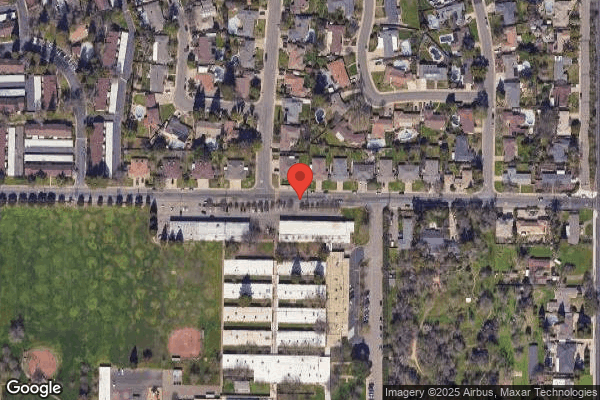

3900 GARFIELD AVENUE, CARMICHAEL, CA 95608 (916) 481-6455
For profit - Limited Liability company 99 Beds GENESIS HEALTHCARE Data: November 2025
Trust Grade
80/100
#5 of 1155 in CA
Last Inspection: January 2025

Within standard 12-15 month inspection cycle. Federal law requires annual inspections.

Overview

American River Center in Carmichael, California has a Trust Grade of B+, indicating that it is above average and recommended for families considering care options. It ranks #5 out of 1,155 facilities in California and #2 out of 37 in Sacramento County, placing it among the top facilities in the area. The facility is improving, with issues decreasing from 12 in 2024 to 5 in 2025, suggesting positive changes are being made. Staffing is rated 4 out of 5 stars, with a turnover rate of 41%, which is average compared to the state, but the facility has more registered nurse coverage than 78% of facilities in California. While there have been no fines, there are some concerns noted in recent inspections, including issues with food safety and infection control practices, such as improperly stored food and a lack of hand hygiene among staff, which could potentially impact resident health. Overall, while there are strengths in staff coverage and no fines, families should be aware of the need for improvement in certain safety protocols.

Trust Score
B+
80/100
In California
#5/1155
Top 1%
Safety Record
Low Risk
No red flags
Inspections
Getting Better
12 → 5 violations
Staff Stability
○ Average
41% turnover. Near California's 48% average. Typical for the industry.
Penalties
✓ Good
No fines on record. Clean compliance history, better than most California facilities.
Skilled Nurses
○ Average
Each resident gets 39 minutes of Registered Nurse (RN) attention daily — about average for California. RNs are the most trained staff who monitor for health changes.
Violations
⚠ Watch
25 deficiencies on record. Higher than average. Multiple issues found across inspections.
★★★★★
5.0
Overall Rating
★★★★☆
4.0
Staff Levels
★★★★★
5.0
Care Quality
★★★★☆
4.0
Inspection Score
Stable
2024: 12 issues
2025: 5 issues

The Good

  • 4-Star Staffing Rating · Above-average nurse staffing levels
  • 5-Star Quality Measures · Strong clinical quality outcomes
  • Full Sprinkler Coverage · Fire safety systems throughout facility
  • No fines on record
  • Staff turnover below average (41%)

    7 points below California average of 48%

Facility shows strength in staffing levels, quality measures, fire safety.

The Bad

Staff Turnover: 41%

Near California avg (46%)

Typical for the industry

Chain: GENESIS HEALTHCARE

Part of a multi-facility chain

Ask about local staffing decisions and management

The Ugly 25 deficiencies on record

Jan 2025 5 deficiencies
CONCERN (D)

Potential for Harm - no one hurt, but risky conditions existed

Comprehensive Care Plan (Tag F0656)

Could have caused harm · This affected 1 resident

Based on interview and record review, the facility failed to ensure one of 23 sampled residents (Resident 71) urinary tract infection (UTI, an infection in the bladder/urinary tract) person-centered c...

Read full inspector narrative →
Based on interview and record review, the facility failed to ensure one of 23 sampled residents (Resident 71) urinary tract infection (UTI, an infection in the bladder/urinary tract) person-centered care plan was developed. This failure had the potential to negatively impact Resident 71's quality of treatment, care and services received. Findings: During a review of Resident 71's admission Record (AR), the AR indicated, Resident 71 had diagnoses which included urinary tract infection and bacteremia (the presence of bacteria in the blood). During a review of Resident 71's Physician's Orders (PO) dated 1/6/25, the PO indicated, Nitrofurantoin Macrocystal (used to treat bladder infection) 50 mg (milligrams-metric unit of measurement, used for medication dosage and/or amount), give one tablet by mouth one time a day for UTI. During a review Resident 71's Medication Administration Record (MAR - a daily documentation record used by a licensed nurse to document medications and treatments given to a resident) for January 1 through 10, 2025, Nitrofurantoin Macrocystal 50 mg was administered daily. During a record review of Resident 71's plan of care, the record did not indicate a care plan for UTI was developed. During a concurrent interview and record review on 1/10/25 at 8:59 a.m., with the Director of Nursing (DON) together with the Assistant Director of Nursing (ADON), Resident 71's clinical record was reviewed. The DON and the ADON confirmed there was no UTI care plan developed for Resident 71. The DON stated nursing care could be compromised when care plan was not put in placed. During a review of the facility's policy and procedure (P/P) titled, Care Plan Comprehensive, dated 8/25/21, the P/P indicated, .an individualized comprehensive care plan that includes measureable objectives and timetables to meet the resident's medical, physical, mental and psychosocial needs shall be developed for each resident .
CONCERN (D)

Potential for Harm - no one hurt, but risky conditions existed

Deficiency F0658 (Tag F0658)

Could have caused harm · This affected 1 resident

**NOTE- TERMS IN BRACKETS HAVE BEEN EDITED TO PROTECT CONFIDENTIALITY** Based on observation, interview, and record review, the facility failed to ensure one of 23 sampled residents (Resident 51) had ...

Read full inspector narrative →
**NOTE- TERMS IN BRACKETS HAVE BEEN EDITED TO PROTECT CONFIDENTIALITY** Based on observation, interview, and record review, the facility failed to ensure one of 23 sampled residents (Resident 51) had compression stocking (stockings that apply gentle pressure to the legs and ankles to improve blood flow) applied everyday to Resident 51's left lower extremity (LLE) as ordered. This failure had the potential to compromise Resident 51's blood circulation. Findings: A review of Resident 51's admission Record (AR) indicated Residdent 51 had diagnoses which included hemiplegia (total paralysis of the arm, leg and trunk of the same side of the body) affecting the left dominant side and acute embolism (block in an artery caused by blood clots) and thrombosis (occurs when a blood clot forms either in an artery or vein) of unspecified deep [NAME] of LLE. A review of Resident 51's Physician's Order (PO), dated 9/22/23, the PO indicated, Compression stockings during day and off at night in the morning for edema [swelling] and remove per schedule. A review of Resident 51's Care Plan (CP) titled At risk for fluid volume excess as evidenced by edema, indicated, apply and remove compression stockings as ordered. If patient refuse, explain importance of compression stockings and risk of not wearing it. During observations on 1/7/25 at 11:35 a.m., on 1/8/25 at 10:43 a.m., and, on 1/10/25 at 8:09 a.m., Resident 51 was not wearing any compression stocking on his left leg, his LLE was observed to be bigger than his right lower extremity (RLE). During an interview on 1/10/25 at 8:09 a.m., Resident 51 stated he was not offered to wear the compression stockings. During a concurrent observation and interview on 1/10/25 at 8:09 a.m., with Certified Nurse Assistant 4 (CNA 4), CNA 4 confirmed Resident 51 was not wearing his compression stockings. CNA 4 stated she was supposed to put the stocking on today, but she did not. During an interview and record review on 1/10/25 at 9:40 a.m., with the Director of Nursing (DON) together with the Assistant Director of Nursing (ADON), Resident 51's clinical record was reviewed. The DON and ADON confirmed Resident 51 had a PO to wear the compression stocking everyday and nurses should follow that PO. The ADON stated the compression stocking would help control or reduce the leg edema. Both the DON and ADON validated if Resident 51 would not wear his stockings, his blood circulation could be compromised. During a review of the facility's policy and procedure (P/P) titled, Physician's Order, dated 3/22, the P/P indicated, .the Licensed Nurse . will be responsible for documenting and implementing the order .
CONCERN (D)

Potential for Harm - no one hurt, but risky conditions existed

Deficiency F0685 (Tag F0685)

Could have caused harm · This affected 1 resident

Based on observation, interview, and record review, the facility failed to ensure one of 23 sampled residents (Resident 1) had hearing aids (HA) applied everyday as ordered. This failure decreased th...

Read full inspector narrative →
Based on observation, interview, and record review, the facility failed to ensure one of 23 sampled residents (Resident 1) had hearing aids (HA) applied everyday as ordered. This failure decreased the facility's ability to provide treatment and assistive devices to maintain Resident 1's hearing acuity. Findings: During a review of Resident 1's admission record (AR), dated 10/18/20, the AR indicated, Resident 1 had diagnoses which included need for assistance with personal care and dementia (a progressive state of decline in mental abilities). During a review of Resident 1's Physician's Order (PO), dated 2/9/22, the PO indicated, Apply both hearing aids in the morning and take off at night and put back in cart two times a day. During a review of Resident 1's Care Plan titled Resident has hearing impairment-adequate with bilateral hearing aids and The Resident has impaired communication as impaired hearing has x 2 hearing aids. Apply bilateral hearing aid every morning and remove every evening. During observations on 1/7/25 at 8:35 a.m., on 1/8/25 at 9:43 a.m., and, on 1/9/25 at 9:04 a.m., Resident 1 was not wearing her hearing aids. During a concurrent observation and interview on 1/9/25 at 9:43 a.m., with Certified Nursing Assistant 6 (CNA 6), CNA 6 confirmed Resident 1 had an order to wear the HA every morning but she was not wearing it today. During a concurrent observation and interview on 1/9/25 at 10 a.m., with Licensed Nurse 1 (LN 1), LN 1 confirmed she did not apply Resident 1's HA in the morning and the HA was not kept in the medication cart as ordered. During an interview and record review on 1/10/25 at 9:04 a.m., with the Director of Nursing (DON) together with the Assistant Director of Nursing (ADON), Resident 1's clinical record was reviewed. The ADON stated if there was an order to apply the HA, that order should be followed. The ADON stated it is important for Resident 1 to wear the HA to help with her communication and to avoid miscommuncation between the resident and the staff. During a review of the the facility's Policy and Procedure (P/P) titled, Hearing Aid, Care of, revised 2/2018, the P/P indicated, .The purpose is to maintain the resident's hearing at the highest attainable level
CONCERN (E)

Potential for Harm - no one hurt, but risky conditions existed

Food Safety (Tag F0812)

Could have caused harm · This affected multiple residents

**NOTE- TERMS IN BRACKETS HAVE BEEN EDITED TO PROTECT CONFIDENTIALITY** Based on observation, interview and record review, the facility failed to store food in a safe and sanitary manner for 96 reside...

Read full inspector narrative →
**NOTE- TERMS IN BRACKETS HAVE BEEN EDITED TO PROTECT CONFIDENTIALITY** Based on observation, interview and record review, the facility failed to store food in a safe and sanitary manner for 96 residents who received food from the kitchen when: 1. Opened and prepared foods stored without used by dates labeled; 2. foods with opened packages not covered tightly; and 3. spoiled food available to be served. These failures had the potential to result in foodborne illnesses among the vulnerable residents of the facility. Findings: 1. During a concurrent observation and interview on 1/7/25 beginning at 7:45 a.m. with the Certified Dietary Manager (CDM), while touring the kitchen, the CDM confirmed the presence of a pan of cinnamon brown sugar blondie dessert that had been prepared to serve to residents but had no label with dates. The CDM stated it was important to ensure food items were labeled with dates to know when the food was prepared and when it should be used by. During a concurrent observation and interview, on 1/8/25 beginning at 8 a.m., with the CDM, in the kitchen, the CDM confirmed the presence of two stacks of opened processed yellow cheese and an opened package of sliced [NAME] cheese, both cheeses had no labeled used by dates. 2. During a concurrent observation and interview on 1/7/25 beginning at 7:45 a.m. with the CDM, while touring the kitchen, the CDM confirmed the presence of a pan of prepared cinnamon brown sugar blondie dessert that was not covered and five prepared peanut butter and jelly sandwiches in unsealed bags. The CDM indicated foods should be covered and sealed to prevent residents getting sick with foodborne illness. During a concurrent observation and interview, on 1/8/25 beginning at 8 a.m., with the CDM, in the kitchen, the CDM confirmed the presence of a package of hot dogs that had been opened but not tightly wrapped or sealed. The CDM acknowledged the importance of wrapping foods to protect them from spoilage and the potential to cause foodborne illness. 3. During a concurrent observation and interview on 1/7/25 beginning at 7:45 a.m. with the CDM, while touring the kitchen, the CDM confirmed the presence of two tomatoes, in the walk-in refrigerator with other foods to be served to residents, that were mushy and rotten. The CDM stated spoiled foods had the potential to cause foodborne illness. A review of the facility's policy and procedure titled, Food Receiving and Storage, undated, indicated, .Food shall be received and stored in a manner that complies with safe food handling practices .When food is delivered to the facility it is inspected for .quality .All foods stored in the refrigerator or freezer are covered, labeled and dated .
CONCERN (E)

Potential for Harm - no one hurt, but risky conditions existed

Infection Control (Tag F0880)

Could have caused harm · This affected multiple residents

Based on observation, interview, and record review, the facility failed to maintain infection prevention and control practices to help prevent the development and transmission of communicable diseases...

Read full inspector narrative →
Based on observation, interview, and record review, the facility failed to maintain infection prevention and control practices to help prevent the development and transmission of communicable diseases and infections when: 1. A visitor was observed accessing and obtaining ice from the nursing unit's ice chest unsupervised; 2. Ice scoop was stored uncovered; and 3. Certified Nursing Assistant (CNA) was observed not performing hand hygiene after handling garbage. These failures had the potential to result in the spread of infections for a facility census of 97 residents. Findings: 1. During a concurrent observation and interview on 1/7/25 at 9:28 a.m., with CNA 3, near ice chest by nursing station 2, CNA 3 confirmed a visitor was helping themselves to ice without staff assistance or supervision. An interview on 1/7/25 at 9:44 a.m., the Director of Staff Development (DSD) confirmed visitors and residents may not self-serve ice from the ice chest and added, staff must serve or fill up the resident's pitchers. An interview on 1/7/25 at 10:11 a.m., the Infection Preventionist (IP) stated only the facility staff may distribute the ice, and added, no resident or visitors may help themselves to the ice. During an interview on 1/7/25 at 11:23 a.m. the Administrator (ADM) confirmed there is no specific policy written for the usage and distribution of ice from the nursing station ice chest but stated he expected only facility staff may access and distribute the ice. 2. During a concurrent observation and interview on 1/7/25 at 9:28 a.m., with CNA 3, near ice chest by nursing station 2, CNA 3 confirmed there was an ice scoop which was stored uncovered on the cart. During a concurrent observation and interview on 1/7/25 at 9:50 a.m., with the DSD, near ice chest by nursing station 2, the DSD confirmed the ice scoop was stored uncovered. The DSD stated the ice scoop should be stored in a scoop container. An interview on 1/7/25 at 10:11 a.m., the IP stated the ice scoop must be stored covered to prevent exposure to dust or other contaminants in the environment. A review of facility Policy and Procedure titled, Ice, revised 9/2017 indicated: . Ice scoops will be cleaned and stored in a separate container that limits exposure to dust . 3. During a concurrent observation and interview on 1/8/25 at 10:00 a.m., in the 600 hallway, CNA 1 was observed handling resident garbage. CNA 1 was not observed performing hand hygiene before handling plastic straps. CNA 1 confirmed she had handled the garbage and then handled plastic wrist bands for the residents. CNA 1 stated she was supposed to perform hand hygiene after patient care activities such as handling garbage. An interview on 1/08/25 at 10:41 a.m., the ADM stated he expected staff to perform hand hygiene immediately before and after patient care activities. Review of policy and procedure Handwashing/Hand Hygiene effective date 9/18/23 indicated: .Purpose .This facility considers hand hygiene the primary means to prevent the spread of infections . All personnel shall be trained on the importance of hand hygiene preventing the transmission of healthcare - associated infections . All personnel shall follow the handwashing/ hand hygiene procedures to help prevent the spread of infections .Before and after contact with the resident . After contact with .visibly contaminated surface or after contact with objects in the resident room .
Aug 2024 1 deficiency
CONCERN (D) 📢 Someone Reported This

A family member, employee, or ombudsman was alarmed enough to file a formal complaint

Potential for Harm - no one hurt, but risky conditions existed

Deficiency F0558 (Tag F0558)

Could have caused harm · This affected 1 resident

Based on observation, interview, and record review, the facility failed to ensure one of three sampled residents' (Resident 1), needs and preferences were accommodated, when Resident 1 was left on a p...

Read full inspector narrative →
Based on observation, interview, and record review, the facility failed to ensure one of three sampled residents' (Resident 1), needs and preferences were accommodated, when Resident 1 was left on a patio outside of the facility and unable to contact staff. This failure reduced the facility's potential to provide services to Resident 1 with reasonable accommodation of her needs and preferences. Findings: A review of an admission RECORD indicated Resident 1 was admitted to the facility in August 2023, with multiple diagnoses which included multiple sclerosis (MS, a disease of the nervous system), quadriplegia (paralysis of legs and arms), and anxiety. A review of Resident 1's Minimum Data Set (MDS, a comprehensive assessment tool), dated 7/6/24, indicated, Resident 1 was dependent with self-care and mobility. During a review of Resident 1's Care Plan (CP), dated 8/14/23, the CP indicated, Resident 1 required assistance and was dependent for Activities of Daily Living (ADLs) including transfer and locomotion (the ability to move from one place to another). During a review of Resident 1's progress notes, dated, 7/11/24, the progress notes indicated, .MS has left her with the inability to care for herself and leading to functional quadriplegia .frequent visual checks .patient reminded .seek assistance. During a concurrent observation and interview on 8/1/24 at 10:20 a.m. with Certified Nursing Assistant 1 (CNA 1) in the dining room, Resident 1 was sitting outside the facility. CNA 1 stated, Resident 1 was brought outside by CNA 2 that morning and she did not know how long Resident 1 had been sitting outside. During a concurrent observation and interview on 8/1/24 at 10:23 a.m., Resident 1 was sitting in her wheelchair, outside the facility. Resident 1 was unable to move her wheelchair independently. Resident 1 stated, CNA 2 brought her outside that morning at 9:00 a.m. Resident 1 further stated, she had an arrangement with the CNAs to bring her outside from 9:00 a.m. to 11:00 a.m. daily. Resident 1 further stated, she was left outside past 11:00 a.m. yesterday. Resident 1 further stated, she tried calling the facility's front desk yesterday at 11:00 a.m., because the CNAs were busy, but no one answered the phone. Resident 1 further stated, the Recreations Assistant (RA), was walking outside at 11:10 a.m. and the RA was able to contact a CNA to assist Resident 1. Resident 1 further stated, yesterday was the second time she was left outside past her preferred time. Resident 1 further stated, she was left outside until 11:30 a.m. on Thursday, 7/25/24, and was unable to contact staff that day. Resident 1 further stated, she felt frightened when she was not able to contact staff. During an interview on 8/1/24 at 10:38 with CNA 2, CNA 2 confirmed that Resident 1 had an arrangement with staff to sit outside daily from 9:00 a.m. - 11:00 a.m. CNA 2 further stated, if staff was not outside to assist Resident 1, Resident 1 called the facility front desk. CNA 2 acknowledged; it is an issue when Resident 1 was unable to contact staff when she wanted to be brought back into the facility. During an interview on 8/1/24 at 10:48 a.m. with the RA, the RA stated, Resident 1 was sitting outside yesterday and requested the RA's assistance when the RA was walking outside. The RA confirmed that Resident 1 was alone yesterday, and Resident 1 was not able to contact a CNA. The RA acknowledged that Resident 1's needs may not be met if she is unable to contact staff when outside. During an interview on 8/1/24 at 12:06 p.m. with the Director of Nursing (DON), the DON stated, Resident 1 was able to communicate her needs and preferences with staff, including what time she wants to sit outside and come back into the facility. During a review of the facility's policy and procedure (P&P) titled, Resident's Rights, dated December 2021, the P&P indicated, .the rights include the resident's rights to .self-determination .communication with and access to people and services, both inside and outside the facility .be supported by the facility in exercising his or her rights .
Jun 2024 1 deficiency
CONCERN (D) 📢 Someone Reported This

A family member, employee, or ombudsman was alarmed enough to file a formal complaint

Potential for Harm - no one hurt, but risky conditions existed

Deficiency F0660 (Tag F0660)

Could have caused harm · This affected 1 resident

Based on interview and record review, the facility failed to ensure a safe discharge home for one resident (Resident 1) of three sampled residents when Resident 1 was discharged home without verified ...

Read full inspector narrative →
Based on interview and record review, the facility failed to ensure a safe discharge home for one resident (Resident 1) of three sampled residents when Resident 1 was discharged home without verified home health service arrangements. This failure resulted in Resident 1 not receiving the necessary continuity of care for his wound. Findings: A review of Resident 1 ' s admission record indicated admission to the facility on 5/15/24 with diagnosis which included cellulitis (a deep infection of the skin caused by bacteria), disruption of external surgical wound (wound re-opening), and the necessity for change or removal of nonsurgical wound dressings. A review of Resident 1 ' s discharge plan documented by the Social Services Assistant (SSA) dated 6/5/24 at 12:21 p.m. indicated, Discharge Destination .Home alone .Will home Care be provided? .Yes .Estimated start date .6/11/24 .Home Care Services to be provided .PT- physical therapy .OT- occupational therapy .skilled nursing services . A review of a telephone order entered by the Social Service Director (SSD) dated 6/5/24 at 12:52 p.m. indicated, [Resident 1] to discharge home on 6/9/24 with home health RNx [nursing services for] medication/symptom management, PTx strengthening exercises/home safety, and OTx ADLs [activities of daily living such as toileting, eating, grooming, etc.] training and medication. Follow up with PCP [primary care physician] within 7-10 days of d/c [discharge]. Has wound vac to left groin s/p [status post] surgical debridement, to be changed every 72 hours. A review of Resident 1 ' s practitioner note written by the Nurse Practitioner dated 6/7/24 at 9:07 a.m. indicated, .[Resident 1] is to discharge home with home health .support .per SS [social service] [Resident 1] does have [PCP] and has a f/u [follow-up] appt [appointment] already set up .[Resident 1] has follow up appt with vascular surgeon .on 6/13/24. Hehas [sic] a f/u appt with his PCP on 6/17/24 .Examination .SKIN: left fem [femoral] site with wound vac [a machine which uses vacuum-assisted closure of wound to assist in wound healing] right fem site with moderate amt [amount] of slough .Home health nurse to evaluate within 1-2 days .Follow up with your Primary Care Provider in 5-7 days and your specialist as advised. A review of Resident 1 ' s Treatment Administration Record (TAR) dated June 2024 indicated, Change Wound Vac/Negative Pressure Wound Therapy; Negative Pressure 125 mmgHg [millimeters of mercury, a measurement of pressure] intermittent Cleanse with NS [normal saline, a solution used to clean wounds] or wound cleanser .Place black foam into wound. Apply skin prep to intact skin around the wound .Cover with occlusive dressing and secure tubing per manufacturer guide .every 72 hours for left groin s/p surgical debridement .Start Date 5/21/24 .D/C Date 6/9/24 . A review of Resident 1 ' s progress note dated 6/9/24 at 10 a.m. indicated, Wound Vac was beeping, re-enforced with extra dressing. Informed patient that he will be leaving with current wound vac and box placed by his bed would be the box he will be leaving with which was what the wound the [sic] vac came in. Wound Vac checked by this writer and RN [registered nurse]. A review of Resident 1 ' s progress note dated 6/9/24 at 4:43 p.m. indicated, resident DC home today, patient signed all paperwork, verbalized understanding of dc instructions . A review of all of Resident 1 ' s progress notes dated 6/5/24 to 6/9/24 showed no documented evidence social service or nursing staff called the home health agency to verify home health arrangements were set to be delivered within 72 hours of Resident 1 ' s discharge home. A review of Resident 1 ' s post discharge call back collection report dated 6/12/24 indicated, Home Health has not been in touch yet. [Resident 1] left several VM [voicemail messages] .educated pt [patient] that he should go to ER [emergency room] if worse or appt on 6/13 . A review of Resident 1 ' s social service note dated 6/12/24 at 1:35 p.mn. indicated, Called and talked .with [Home Health agency]. Said it was being processed. They were trying to find PCP. HH did reach out .and ask about PCP but gave the information that was not currant [sic]. SSA was able to give them PCP. They will call SS back with confirmation and schedule appt with [Resident 1]. In an interview on 6/14/24 at 3 p.m. with the Director of Nursing (DON), the DON stated, .wound vac dressing should be changed [every] 72 hours. In an interview on 6/14/24 at 3:40 p.m. with the Assistant DON (ADON), the ADON stated social services was expected to follow up with the home health agency to ensure services were scheduled to start prior to discharge. In an interview on 6/14/24 at 4 p.m., the ADON confirmed the home health agency did not render services to Resident 1 and acknowledged the discharge order for wound care was not carried out. In an interview on 6/15/24 at 9:14 a.m., with the Unit Manager (UM), the UM confirmed the expectation was for staff to coordinate with other departments to make sure Resident 1 had everything he needed prior to discharge, and everything should have been verified with the home health agency. The UM further stated it was very important to ensure the continuity of care for all residents ' health. In an interview on 6/15/24 at 11:49 a.m., the Administrator (ADM) stated she expected continuity of care for all residents upon discharge was ensured for the residents ' well-being. A review of an undated facility ' s policy and procedures titled Transfer or Discharge, Preparing a Resident for, indicated, A post-discharge plan .will be reviewed with the resident, and/or his or her family, at least twenty-four (24) hours before the resident ' s discharge or transfer from the facility . A review of an undated facility ' s policy and procedures titled Referrals, Social Services, indicated, Social services personnel shall coordinate most resident referrals with outside agencies .Exceptions might include emergency or specialized services that are arranged directly by a physician or the nursing staff. Social services will collaborate with the nursing staff .to arrange for services that have been ordered by the physician.
Jun 2024 1 deficiency
CONCERN (D) 📢 Someone Reported This

A family member, employee, or ombudsman was alarmed enough to file a formal complaint

Potential for Harm - no one hurt, but risky conditions existed

Report Alleged Abuse (Tag F0609)

Could have caused harm · This affected 1 resident

**NOTE- TERMS IN BRACKETS HAVE BEEN EDITED TO PROTECT CONFIDENTIALITY** Based on interview and record review, the facility failed to immediately report an injury of unknown origin for one resident (Re...

Read full inspector narrative →
**NOTE- TERMS IN BRACKETS HAVE BEEN EDITED TO PROTECT CONFIDENTIALITY** Based on interview and record review, the facility failed to immediately report an injury of unknown origin for one resident (Resident 1) of three sampled residents. This failure decreased the facility's potential to protect Resident 1 from a possible allegation of abuse and ensure a safe environment during the investigation of the cause of the injury. Findings: Resident 1 was a [AGE] year-old female, re-admitted to the facility on [DATE]. She had multiple diagnoses, which included Unspecified dementia (impaired ability to remember) without behavior disturbance, Alzheimer's Disease (a brain disorder that slowly destroys memory and thinking skills), unspecified site of disorders of bone density and structure (osteoporosis), history of falls, and muscle weakness. A review of Resident 1's Practitioner's Progress Notes (PPN), dated 5/14/24 at 4:05 p.m. indicated, [Resident 1] seen in [the] room after nursing report she is c/o [complaining of] left forearm pain. [Resident 1] with significant tenderness to palpation [touch]. She yelps and pulls [her] arm away during the exam. Will obtain xray of left forearm. A review of Resident 1's Radiology Results Report (x-ray), dated 5/15/24 at 3:52 a.m., indicated, .LEFT FOREARM .There is evidence of an acute [sudden onset] or possibly subacute fracture [break] of the distal radial diaphysis [both bones of the forearm] .There is [a] deformity of the distal ulna consistent with [a] distal diaphyseal fracture [wrist fracture] . A review of Resident 1's Daily Documentation (DD), dated 5/15/24 at 8:35 a.m., indicated at 5:29 a.m., Resident 1 was complaining of pain with a pain level of 6 over 10 (between moderate and severe level). A review of Resident 1's DD dated 5/16/24 at 2:50 a.m., indicated, Resident noted with pain [8/10] to left arm due to recent fracture . A review of Resident 1's Interdisiplinary Team (IDT) progress notes, dated 5/16/24 at 1:33 p.m. indicated, .IDT to review [Resident 1's] fx. [fracture] of [the] distal end of the L [left] radius. [Resident 1] c/o pain to left arm . was evaluated by NP [Nurse Practitioner] with rec. [recommendation] for [an] x-ray. X-ray ordered and results indicate fracture to left arm . A review of Resident 1's PPN dated 5/16/24 at 6:08 p.m. indicated, .[Resident 1] seen in [the] room after xray results come back showing a new fracture of left arm . A review of Resident 1's Minimum Data Set (MDS, a standardized comprehensive assessment tool) dated 6/3/24 indicated a score of seven out of 15, which indicated moderate cognitive impairment. On 6/11/24 at 10:30 a.m., the Department conducted an unannounced visit at the facility to investigate a complaint received by the Department on 5/29/24 involving an alleged injury to Resident 1 on 5/15/24. During an interview on 6/11/24 at 10:57 a.m., with the Director of Nursing (DON), the DON stated on 5/14/24, the NP saw Resident 1 due to a complaint of pain and the NP recommended obtaining x-ray. During an interview on 6/11/24 at 11:20 a.m., the DON confirmed she became aware of Resident 1's left arm fracture on 5/15/24. The DON acknowledged Resident 1's fracture was an injury of unknown origin because no one had reported Resident 1 had fallen. The DON verified the fracture could have been a pathological fracture (a fracture cause by disease of the bone) and stated she conducted an investigation to determine what the cause was. During an interview on 6/11/24, at 11:42 a.m., the DON confirmed and stated, .We didn't report it [Resident 1's fracture] . A review of the facility's policy and procedure titled Abuse Investigation and Reporting, revised July 2017 indicated, All reports of resident .injuries of unknown source .shall be promptly reported to .state .agencies .All .injuries of unknown source .will be reported immediately .The Administrator, or his/her designee, will provide the appropriate agencies .with a written report of the findings of the investigation within five (5) working days of the occurrence of the incident.
May 2024 2 deficiencies
CONCERN (D) 📢 Someone Reported This

A family member, employee, or ombudsman was alarmed enough to file a formal complaint

Potential for Harm - no one hurt, but risky conditions existed

Resident Rights (Tag F0550)

Could have caused harm · This affected 1 resident

Based on observation, interview, and record review, the facility failed to maintain dignity for one of four sampled residents (Resident 1) when two Certified Nursing Assistants (CNA) had an argument r...

Read full inspector narrative →
Based on observation, interview, and record review, the facility failed to maintain dignity for one of four sampled residents (Resident 1) when two Certified Nursing Assistants (CNA) had an argument regarding a staffing assignment while providing a shower to Resident 1. This failure resulted in Resident 1 crying and feeling afraid and decreased the facility's potential to protect residents' dignity. Findings: During a review of Resident 1's admission record, Resident 1 was admitted to the facility in May of 2024 with multiple diagnoses which included nontraumatic intracerebral hemorrhage (a condition in which a ruptured blood vessel causes bleeding inside the brain), hemiplegia and hemiparesis (weakness on one side of the body) affecting right dominant side, dysarthria (weakness in the muscle used for speech), aphasia (loss of ability to understand or express speech), muscle weakness, and major depressive disorder (persistently depressed mood or loss of interest in activities). Resident 1's Minimum Data Set (MDS, an assessment tool) indicated Resident 1 had moderate cognitive impairment. During a review of a document titled, Report of Suspected Dependent Adult/Elder Abuse (SOC 341), dated 5/4/24, the document indicated, Resident 1 received a cold shower by CNA 1 and newly assigned CNA 2 took Resident 1 into the communal shower room and finished off with warm water. During a review of a document submitted to the Department titled, Investigative Summary Report, dated 5/8/24, the document indicated, [Resident 1] was in the shower room crying because he received a cold shower .On the morning of 5/4/23, [CNA 1] placed Resident 1 in the shower chair in the room and put on the water so it can start to warm up .While waiting for the water to warm up, she was approached by another CNA stating that the assignment was changed and that the patient is no longer in her assignment. CNA 1 went to see CNA 2 who was at the station and asked her to give the shower instead. After repeated calls, CNA 2 then went in .On 05/06/2024 at 9:40 AM [morning], [CNA 2] stated that since the assignment was changed, CNA 1 and the other CNA complained that there will be more people .While arguing about the assignment in the resident's room, [CNA 2] heard [Resident 1] crying and when [CNA2] checked in the bathroom, she saw [Resident 1] crying in the chair, hair was dry, but the body was wet .Conclusion: Whether or not a cold shower was intentionally or unintentionally given, the fact remains that the misunderstanding leading to an argument between [CNA 1] and [CNA 2] (because of the change in assignment), had unintended consequences that affected the resident . During a concurrent observation and interview on 5/16/24 at 11:30 a.m. with Resident 1 in his room, Resident 1 was observed awake, sitting on a wheelchair by the door of the bathroom. Resident 1 stated he cried when he was at the shower on the day of the incident and stated it was because the water was cold. Resident 1 further stated he was afraid it might happen again. Resident 1 was not able to clearly identify the staff involved in the incident. During an interview on 5/16/24 at 1:15 p.m. with the Director of Nursing (DON), the DON stated, There was nothing about abuse here, but because of the bickering, the resident didn't feel right that's why he cried .the problem is the interpersonal relationship of employees .the bickering was not appropriate during that time .they should have communicated separately where the [resident] cannot hear .they should professionally discuss the changes . During an interview on 5/16/24 at 2:02 p.m. with the Social Services Director (SSD), the SSD stated, It was more like drama between CNAs, but a resident was involved. During an interview on 5/16/24 at 2:29 p.m. with the Administrator, the Administrator stated, They [CNAs] feel they are overwhelmed. We've been telling staff and management to not discuss anything in front of the residents .As leaders, we are saddened with the situation because they [residents] might feel they are responsible for causing the argument. A review of the facility's policy and procedure (P&P) titled, Resident Rights, revised 12/2021, the P&P indicated, Employees shall treat all residents with kindness, respect, and dignity .1. Federal and state laws guarantee certain basic rights to all residents of this facility. These rights include the resident's right to: a. a dignified existence; b. be treated with respect, kindness, and dignity . A review of the facility's P&P titled, Dignity, revised 2/2021, the P&P indicated, Each resident shall be cared for in a manner that promotes and enhances his or her sense of well-being, level of satisfaction with life, and feelings of self-worth and self-esteem .1. Residents are treated with dignity and respect at all times .10. Staff protect confidential clinical information. Examples include the following: a. Verbal staff-to-staff communication (e.g., change of shift reports) are conducted outside the hearing range of residents and the public.
CONCERN (E) 📢 Someone Reported This

A family member, employee, or ombudsman was alarmed enough to file a formal complaint

Potential for Harm - no one hurt, but risky conditions existed

Deficiency F0657 (Tag F0657)

Could have caused harm · This affected multiple residents

Based on interview and record review, the facility failed to revise the care plan for one of four sampled residents (Resident 2) when Resident 2 had repeated falls. This failure resulted in Resident ...

Read full inspector narrative →
Based on interview and record review, the facility failed to revise the care plan for one of four sampled residents (Resident 2) when Resident 2 had repeated falls. This failure resulted in Resident 2 to have unmet care needs for falls and could have contributed to the thigh bone fracture during her stay in the facility. Findings: Review of Resident 2's clinical record, admission RECORD, indicated the resident was admitted to the facility in March of 2024 for aftercare of right hip replacement surgery. Resident 2's diagnoses included diabetes and memory problems. Review of Resident 2's most recent MDS (Minimum Data Set, an assessment tool) indicated the resident had severely impaired cognitive function with a score 3/15 in the BIMS (Brief Interview for Mental Status) assessment. Review of Resident 2's clinical record, eINTERACT Change in Condition Evaluation-V 5.2 included the following 3 fall incidents in a month: a. 4/12/24-Staff member noted Patient sitting on the floor. Patient stated that she tried to get up to go outside. b. 4/25/24- .found resident sitting on the floor next to her w/c[wheelchair]. Per pt[patient] she tried to get up and sit on her w/c, but she fell .Pt c/o [complaint of] pain to right hip . c. 4/30/24- .to the activity room and found pt sitting on the floor, w/c is behind her, per pt she was trying to stand up and go to the other ladies to play with them. Review of Resident 2's clinical record included an x-ray taken on 4/25/24 and reviewed by the physician the next day with no new orders. No x-rays were not taken post 4/12/24 and 4/30/24 falls. Review of Resident 2's clinical record, Orthopedic Hospitalist Clinic Note, dated 5/14/24, indicated the resident sustained a new fracture to the right thigh bone after the admission to the facility. The Orthopedic Hospitalist Clinic Note documented, She [Resident 2] had x-rays done today .she has had a fracture in her greater trochanter [outside edge of the femur, near the hip joint] that is displaced about a cm[centimeter] .probably related to 1 of her postoperative falls. The immediate postoperative x-rays and once a month ago do not show that fracture. Review of Resident 2's clinical record, a care plan for at risk for falls, dated 3/20/24, identified the resident was at risk for falls due to diagnoses with dementia, with poor safety awareness, history of falls, disorientation and confusion, poor safety judgement, impaired balance, and unsteady gait. The care plan goal was, Resident will have no falls with injury x 90 days, including multiple interventions that were implemented 3/20/24; however, the care plan was not revised after the first two falls on 4/12/24 and 4/25/24. The care plan did not identify what caused the falls or what current resident needs to prevent future falls at the time of the falls. The care plan had no new goals or additional interventions implemented after each fall. Review of the facility's 8/25/21 policy and procedure, Care Plan Comprehensive, stipulated, Assessments of residents are ongoing and care plans are reviewed and revised as information about the resident and the resident's condition change .The interdisciplinary Team is responsible for evaluation and updating of care plans: a. when there has been a significant change in the resident's condition. b. When the desired outcome is not met. In a concurrent interview and record review on 9/4/24 at 11:05 a.m. with the Director of Nursing (DON) in the conference room, the DON stated the facility did not create a fall care plan after the resident had an actual fall, instead the facility revised and updated the existing at risk for falls care plan to implement new interventions to prevent further falls. The DON reviewed Resident 2's care plan for at risk for falls and verified it was not revised after the falls on 4/12/24 and 4/25/24. The DON stated, We did not update the care plan and acknowledged residents' care needs could change quickly as well as interventions. The DON indicated the care plan should have been revised based on a change in conditions and in response to current interventions. The DON acknowledged Resident 2's care plan should have been revised after each of the resident's falls.
Apr 2024 1 deficiency
CONCERN (D) 📢 Someone Reported This

A family member, employee, or ombudsman was alarmed enough to file a formal complaint

Potential for Harm - no one hurt, but risky conditions existed

Safe Transfer (Tag F0626)

Could have caused harm · This affected 1 resident

Based on interview and record review the facility failed to follow its own policy for readmission when one of 3 sampled residents (Resident 1) was not permitted to return to the facility. This failure...

Read full inspector narrative →
Based on interview and record review the facility failed to follow its own policy for readmission when one of 3 sampled residents (Resident 1) was not permitted to return to the facility. This failure resulted in the violation of Resident 1's rights for readmission to resume residence at the facility. Finding: A review of an admission Record for Resident 1 indicated he was originally admitted to the facility in April 2022 with diagnoses including vascular dementia (brain damage from impaired blood flow to the brain) and moderate protein-calorie malnutrition. A review of Resident 1's clinical record included the following documents: A Minimum Data Set (MDS, an assessment tool), dated 4/9/24, indicated a mental status assessment done for Resident 1 reflected memory problems and severe cognitive impairment. A facility Transfer Form note indicated Resident 1 was transferred to the General Acute Care Hospital (GACH) on 4/9/24 per daughter's request. A hospitalist admission notes, dated 4/10/24, indicated Resident 1 was admitted to GACH on 4/9/24, as requested by the daughter due to concerns of worsening oral candidiasis (also called oral thrush; white sore patches in the mouth and tongue) and poor care at the facility. A GACH Online Referral Note which was sent from 4/12/24-4/14/24 indicated a Case Manager (CM) contacted the facility multiple times to readmit Resident 1, all contacts resulted in facility response of unable to accept patient. In an interview on 4/16/24 at 12:19 p.m., the Admissions Director (AD) stated Resident 1 had Medicaid (a program that helps with healthcare costs for some people with limited income) as a primary payor for his last stay at the facility and also confirmed based on his transfer/discharge date Resident 1 was still eligible for a 7-day bed hold. In an interview on 4/16/24 at 1:08 p.m., with the Director of Nursing (DON) the DON agreed Resident 1 had the right to return to the facility, but the Interdisciplinary Team (IDT) decided not to readmit him due to unresolved conflict between the family and the facility staff. The DON further added that the IDT was aware of the consequence of refusing to readmit Resident 1, but they had to take care of their staff too. In an interview on 4/16/24 at 1:40 p.m. with the Administrator (ADM) the ADM stated she's aware that Resident 1 was eligible for a 7-day bed hold, but as part of the team she agrees with the IDT not to readmit Resident 1. A review of the facility's Policy and Procedure (P&P) titled, readmission to the Facility, revised 3/2017, indicated, Residents who have been discharged to the hospital or for therapeutic leave will be given priority in readmission to the facility. A review of the facility's undated Bed Hold Policy and Authorization, stipulated, If your hospitalization or therapeutic leave exceeds the number of days indicated or is not covered you may still return to your previous room if available or be readmitted to the first available bed in a semi-private room if you still require the center's services .
Mar 2024 4 deficiencies
CONCERN (D)

Potential for Harm - no one hurt, but risky conditions existed

Infection Control (Tag F0880)

Could have caused harm · This affected 1 resident

**NOTE- TERMS IN BRACKETS HAVE BEEN EDITED TO PROTECT CONFIDENTIALITY** Based on observation, interview, and record review the facility failed to follow infection control standards of practice for two...

Read full inspector narrative →
**NOTE- TERMS IN BRACKETS HAVE BEEN EDITED TO PROTECT CONFIDENTIALITY** Based on observation, interview, and record review the facility failed to follow infection control standards of practice for two of 24 sampled residents (Resident 204 and Resident 7) when: 1. Resident 204's indwelling catheter (tube placed into the bladder to collect urine) bag was lying on the floor and, 2. EBP/ESP (Enhanced Barrier Precautions/Enhanced Standard Precautions- infection control interventions designed to reduce transmission of multi drug organism [MDRO] which involve gown and glove use during high contact resident care activities) were not followed for Resident 7. These failures decreased the facility's potential to prevent the spread of infection. Findings: 1. Resident 204 was admitted to the facility early 2024 with diagnoses which included benign prostatic hyperplasia (BPH, enlargement of the prostate gland ), and history of urinary tract infections. Minimum Data Set, (MDS, an assessment tool) dated 3/20/24 indicated Resident 204 had an indwelling catheter. During a review of Resident 204's Order Summary Report [OSR], dated 3/22/24, the OSR indicated, [brand name of indwelling catheter] catheter .to drainage bag . During a review of Resident 204's Care Plan Detail [CP], undated, the CP indicated, Resident requires indwelling catheter .Resident will have no signs and symptoms of urinary tract infection .Keep catheter off floor . During a concurrent observation and interview on 3/19/24 at 9:23 a.m. with Certified Nursing Assistant (CNA 1) in Resident 204's bedroom, the urinary catheter bag was lying directly on the floor under his bed. CNA 1 confirmed the urinary catheter bag was on the floor and stated, They are not supposed to be like that, they should be hanging and not on the floor . During an interview on 3/21/24 at 3:10 p.m. with the Director of Nursing (DON), the DON was shown a picture of the indwelling catheter bag for Resident 204 lying on the floor. DON confirmed the findings and stated, .catheter bags should never be on the ground and should be on the bed hanging . The DON stated the catheter bag on the floor increased the risk for infection. During a review of the facility's policy and procedure (P&P) titled, Catheter Care, Urinary, undated, the P&P indicated, The purpose of this procedure is to prevent urinary catheter-associated complications, including urinary tract infections .Be sure the catheter tubing and drainage bags are kept off the floor . 2. Resident 7 admitted to the facility mid 2019 with diagnoses which included persistent vegetative state (when a person shows no sign of awareness). MDS, dated [DATE], indicated Resident 7 had a feeding tube (tube placed in to the stomach to give nutrition). During a review of Resident 7's OSR dated, 3/22/24, the OSR indicated, NPO [nothing by mouth] .Enteral Feed Order . During a concurrent observation and interview on 3/20/24 at 9:54 a.m. of Resident 7's care, two certified nursing assistants (CNA 2 and CNA 3) entered his room wearing gloves, mask, but no gown. There was a sign outside Resident 7's door, directly above the name plate which indicated, Enhanced Standard Precautions ANYONE PARTICIPATING IN ANY OF THESE SIX MOMENTS MUST ALSO: [NAME] gown and gloves .Toileting & changing incontinence briefs . The CNA's changed the incontinence brief of Resident 7 without wearing gowns. CNA 2's shirt touched the bed during care. CNA 2 exited the room and when shown the sign, confirmed she was not wearing a gown during the brief change, and stated they did not need to wear a gown during care. During an interview on 3/21/24 at 2:42 p.m. with the Assistant Director of Nursing (ADON), when asked the procedure for ESP care, the ADON stated, If they provide contact .expect they wear gown and gloves. When asked why it was important to wear gown during care of a patient on ESP the ADON stated, .you want to make sure you protect yourself and the residents .don't want to transmit infection. During a review of the facility's P&P titled, Enhanced Standard/Barrier Precautions, dated 8/22, the P&P indicated, Enhanced standard/barrier precautions [ESP/EBPs] are utilized to prevent the spread of multi-drug resistant organisms [MDROs] to residents .ESP/EBP employ targeted gown and glove use during high contact resident care activities .ESP/EBP are indicated . for resident with wounds and/or indwelling medical devices regardless of MDRO colonization .
CONCERN (E)

Potential for Harm - no one hurt, but risky conditions existed

Menu Adequacy (Tag F0803)

Could have caused harm · This affected multiple residents

Based on observation, interview, and record review, the facility failed to ensure that the menu was being followed for the therapeutic diet for lunch on 3/20/24 when: 1. Seven residents (Resident 2, ...

Read full inspector narrative →
Based on observation, interview, and record review, the facility failed to ensure that the menu was being followed for the therapeutic diet for lunch on 3/20/24 when: 1. Seven residents (Resident 2, 4, 6, 16, 20, 41, and 408) were on modified texture diets Dysphagia mechanical soft (a diet for people with mild to moderate chewing and/or swallowing difficulty) and Dysphagia advance (a diet for people with mild chewing and/or swallowing difficulty and usually more soft and moist for food tolerance) who received no gravy for the meat entrée instead of receiving gravy as indicated on the menu; 2. Two residents (Resident 403 and 405) on TLC (Therapeutic Lifestyle Change, a diet for people who are trying to reduce blood cholesterol levels and risk of heart disease, diet with limited added sugar, saturated fat, and reduced sodium) diet who received gravy on the pork chop instead of no gravy as indicated on the menu; 3. Three residents (Resident 14, 303, and 553) who were on Renal diet (diet to treat chronic or acute kidney disease) and CCD (control carbohydrate diet - diet to treat diabetes and control blood sugar level)/Renal diet received cake instead of cookie for dessert, and received gravy on the pork chop instead of no gravy, and 4. Two residents (Resident 65 and 402) who were on CCD diet received sweet potato instead of mashed potato per the menu. These failures had the potential to result in compromising the medical and nutrition status of those 14 residents. Findings: During an observation of lunch meal service on 3/20/24 beginning at 12:10 p.m., it was noted as followed: 1. Residents 2, 4, 6, 16, 20, 41, and 408 were on dysphagia mechanical soft and dysphagia advance diets who did not received gravy for the meat entrée. A concurrent review of the undated facility document titled, 2023-2024 Diet Guide Sheet, showed that dysphagia mechanical soft and dysphagia advance diet should receive two ounces (oz.) of gravy for the meat entrée. 2. Residents 403 and 405 were on TLC diet wo received gravy on the pork chop. A concurrent review of the undated facility document titled, 2023-2024 Diet Guide Sheet, showed that TLC diet should not receive gravy for the pork chop. 3. Residents 14, 303, and 553 were on Renal diet and CCD/Renal diets who received cake for dessert. A concurrent review of the undated facility document titled, 2023-2024 Diet Guide Sheet, showed that Renal and CCD/Renal diets should receive cookie as dessert. 4. Residents 65 and 402 were on CCD diet who received sweet potato. A concurrent review of the undated facility document titled, 2023-2024 Diet Guide Sheet, show that CCD diet should receive mashed potato. During an interview with the Regional Registered Dietitian (RRD) on 3/20/24, at 1:33 p.m., she acknowledged and the residents who were on therapeutic and/or modified texture diets received the incorrect food items and stated the staff needed to pay attention and the staff needed to follow the menu/spreadsheet when they prepared meals for the residents. During an interview with the Registered Dietitian (RD) on 3/21/24, at 9:10 a.m., she stated the staff should have followed the menu or spreadsheet during preparing meals which may make the meal under- or over- nutrition and affect the nutrition needs for the residents. A review of facility document, titled Job Description: Cook, showed .The [NAME] prepares and serves food including texture modified and therapeutic diets according to the facility menu .adhere to menus and portion control stands, including those for special diets when preparing and serving meals .
CONCERN (E)

Potential for Harm - no one hurt, but risky conditions existed

Deficiency F0887 (Tag F0887)

Could have caused harm · This affected multiple residents

Based on interview and record review the facility failed to provide documentation for current COVID-19 (a contagious viral disease that can cause severe respiratory distress) immunizations for three o...

Read full inspector narrative →
Based on interview and record review the facility failed to provide documentation for current COVID-19 (a contagious viral disease that can cause severe respiratory distress) immunizations for three of seven sampled residents (Resident 7, Resident 61, and Resident 73) when there was no documentation of the vaccine being offered, given or refused. These failures decreased the facility's potential to prevent prevent or reduce the severity of COVID-19 . Findings: Resident 7 admitted to the facility mid 2019 with diagnoses which included persistent vegetative state (when a person shows no sign of awareness), history of pneumonia, and history of COVID-19. During a review of Resident 7's Immunization Report [IR], dated 3/2024, the IR indicated, Covid-19 Vaccination Dose 3 .consented .administered 11/09/2021. Resident 61 admitted to the facility mid 2019 with diagnoses which included cerebral infarct (lack of adequate blood supply to the brain). During a review of Resident 61's IR dated 3/2024, the IR indicated, Covid-19 Vaccination Dose 3 .consented .administered 11/16/2021. Resident 73 was initially admitted to the facility late 2020 with diagnoses which included history of COVID-19. During a review of Resident 73's IR, dated 3/2024, the IR indicated, Covid-19 Vaccination Dose 3 .consented .administered 11/16/2021. During a concurrent interview and record review on 3/21/24 at 3:48 p.m. with the Director of Nursing (DON), Resident 7, Resident 61, and Resident 73's, vaccination records were reviewed. The DON confirmed there were no documented current 2023-2024 COVID vaccines, consents, or refusals. When asked the process for offering vaccinations the DON stated, The previous IP [Infection Preventionist] sent out a mass text to families when vaccines were available for the residents .if they agree they can come in and sign the consents . When asked if there was any follow up after the text was sent to families, the DON stated, I don't see any . When asked the expectations for how COVID -19 vaccinations were tracked, the DON stated, My expectation is like any other vaccine. There should be a consent that says yes or no . During a phone interview on 3/22/24 at 10:19 a.m. with Resident 61's Family Member (FM 1), FM 1 was asked if she had received any messages which offered COVID-19 vaccination and stated she had not received any text or email. During a phone interview on 3/22/24 at 10:29 a.m. with Resident 73's FM 2, FM 2 was asked if she had received any message which offered COVID-19 vaccination and stated, Not recently, but they did send out a text. During a review of the facility's policy and procedure (P&P) titled, SNF CLINIC Coronavirus Disease [COVID-19]- Vaccination of Residents, dated 6/22, the P&P indicated, Each resident is offered the COVID-19 vaccine unless the immunization is medically contraindicated .Booster vaccine doses are provided in accordance with current CDC guidance .The resident's medical record includes documentation that indicates, at minimum, the following .That the resident or resident representative was provided education .signed consent .Each dose of COVID-19 vaccine that was administered to the resident .If the resident did not receive the COVID-19 vaccine due to medical contraindications, prior vaccination or refusal, appropriate documentation is made in the resident's record . During a review of the cdc.gov website page titled, Vaccines & Immunizations, the website indicated, COVID-19 vaccine recommendations have been updated as of February 28, 2024, to recommend adults ages 65 years and over receive an additional updated 2023-2024 COVID-19 vaccine dose .
CONCERN (F)

Potential for Harm - no one hurt, but risky conditions existed

Food Safety (Tag F0812)

Could have caused harm · This affected most or all residents

Based on observation, interview, and facility document review, the facility failed to store, prepare, and distribute food in accordance with professional standards for food service safety when: 1. Ice...

Read full inspector narrative →
Based on observation, interview, and facility document review, the facility failed to store, prepare, and distribute food in accordance with professional standards for food service safety when: 1. Ice machine was not clean, 2. The food storage racks were not well maintained in the walk-in refrigerator and walk-in freezer, and 3. The temperature of the freezer sections of the resident's food refrigerators located in nurse station one (1) and two (2) were not monitored. These failures had potential to cause food-borne illness in a highly susceptible population of 97 out of 98 residents who consumed meals or food in the facility. Findings: 1. During an initial kitchen tour on 3/19/24, at 9:30 a.m., a concurrent interview and observation of the ice machine was conducted. The Maintenance Supervisor (MS) stated he was responsible for the cleaning and sanitizing the ice machine. He stated he would take the parts out from the machinery part of the ice machine to clean and sanitize weekly. The MS stated he did the deep cleaning monthly and quarterly which included cleaning and sanitizing the machinery parts, running the chemical cycles, and the ice storage bin. Upon the ice machine dissemble, there were significant black and brown stains with scratches observed on the bottom of the evaporator unit (the part where conducts the heat exchange with water and freezes the water into ice cubes). The MS confirmed and he stated he scrubbed the bottom of the evaporator unit every time when he cleaned the machinery part of the ice machine, but the stains did not come off. He stated the scratches were old and the surface was not smooth, and the machinery part of the ice machine was old which might need to replace. During an interview with the Registered Dietitian (RD) on 3/21/24, at 9:10 a.m., she stated the scratches on the bottom of the evaporator unit surface could be easily harbor microorganisms which could contaminate the ice. The RD added the food contact surface should be smooth and could be cleaned easily. A review of departmental policy and procedure, titled, Equipment, dated 9/2017, it stated, .all foodservice equipment will be clean, sanitary, and in proper working order . A review of departmental policy and procedure, titled, Ice, dated 9/2017, it stated, .Ice will be prepared and distributed in a safe and sanitary manner . According to FDA (Food and Drug Administration) Food Code 2022, Section 4-202.11 Food-Contact Surfaces, it stated, .The purpose of the requirements for multiuse food-contact surfaces is to ensure that such surfaces are capable of being easily cleaned and accessible for cleaning. Food-contact surfaces that do not meet these requirements provide a potential harbor for foodborne pathogenic organisms. Surfaces which have imperfections such as cracks, chips, or pits allow microorganisms to attach and form biofilms. Once established, these biofilms can release pathogens to food. Biofilms are highly resistant to cleaning and sanitizing efforts . and .Multiuse Food-Contact Surfaces shall be: 1. Smooth; 2. Free of breaks, open seams, cracks, chips, inclusions, pits . 2. During an observation in the walk-in freezer and walk-in refrigerator on 3/19/24, at 9:12 a.m. and 9:16 a.m., observed there were two food storage metal racks in the walk-in freezer and two racks in walk-in refrigerator with brown substances. A concurrent interview with the Food and Nutrition Service Director (FNSD), she confirmed the brown substance was rust on the food storage metal racks. The FNSD stated she was aware of the rust and was working on the replacements. A review of departmental document, titled Kitchen Sanitation Checklist, completed on 1/2024 by the Regional Registered Dietitian (RRD), it indicated the RRD commented the walk-in refrigerator food storage metal racks showed signs of rust. A review of departmental policy and procedure, titled, Equipment, dated 9/2017, it showed, .all non-food contact equipment will be clean and free of debris . According to FDA Food Code 2022, on Section 4-101.19 Nonfood-Contact Surfaces, it showed, .Nonfood-Contact Surfaces of equipment .shall be constructed of a corrosion-resistant, nonabsorbent, and smooth material . On Section 4-101.11 Characteristics, .Smooth means .a nonfood-contact surface of equipment having a surface equal to that of commercial grade hot-rolled steel free of visible scale . 3. During an observation of the resident's food refrigeration units (unit with combination of refrigerator and freezer) located at nurse station 1 and 2 on 3/19/24, at 12:29 p.m. and 12:42 p.m., there was a concurrent interview with the Assistance Director of Nurses (ADON) regarding the freezers' temperature monitor logs. She stated the refrigerators and freezers usually monitor temperature by the Director of Staff Developer (DSD). The ADON stated they did not have any monitor logs for both freezers when she reviewed the temperature monitor log folders for nurse station 1 and 2. During a follow up interview with the ADON on 3/19/24, at 2:29 p.m., she confirmed and stated she could not locate any records for the freezers' temperature monitor logs. The ADON stated the nurses did not monitor the temperature for both freezers of the resident's food refrigerators in nurse station 1 and 2. During an interview with the DSD on 3/20/24, at 9:45 a.m., she was aware that the policy and procedure said monitor refrigerator and freezer temperature for the resident's food refrigerator daily. The DSD stated she did not monitor the freezer temperatures and she would start to monitor as of now. A review of facility policy and procedure, titled, Safe Handling of Foods from Visitor, dated 8/25/21, it indicated, .b. have temperature monitored daily for refrigeration .and freezer .
Jan 2024 2 deficiencies
CONCERN (D) 📢 Someone Reported This

A family member, employee, or ombudsman was alarmed enough to file a formal complaint

Potential for Harm - no one hurt, but risky conditions existed

Deficiency F0583 (Tag F0583)

Could have caused harm · This affected 1 resident

Based on observation, interview, and record review, the facility failed to ensure resident medical records were kept private for a census of 98, when the computer containing resident medical records w...

Read full inspector narrative →
Based on observation, interview, and record review, the facility failed to ensure resident medical records were kept private for a census of 98, when the computer containing resident medical records was exposed to the public. This failure violated the residents' medical records confidentiality. Findings: During a concurrent observation and interview on 1/23/24 at 3:40 p.m., at nursing station 1 with Licensed Nurse 1 (LN 1), the computer with residents' name and medications list were exposed to the public. LN 1 confirmed the resident record should have been hidden from the public. There were other staff and family members in the nursing station. During an interview on 1/23/24 at 4:49 p.m., the Director of Nursing (DON) confirmed the resident record should have been locked, and nurses should have used the lock screen on the computer. Review of the facility's policy titled, Confidentiality of Information and Personal Privacy, dated 5/26/21, indicated, The facility will safeguard the personal privacy and confidentiality of all resident personal and medical records.
CONCERN (D) 📢 Someone Reported This

A family member, employee, or ombudsman was alarmed enough to file a formal complaint

Potential for Harm - no one hurt, but risky conditions existed

Deficiency F0761 (Tag F0761)

Could have caused harm · This affected 1 resident

Based on observation, interview, and record review, the facility failed to ensure medications were stored locked and secured for a census of 98, when a medication cart was unlocked and keys were left ...

Read full inspector narrative →
Based on observation, interview, and record review, the facility failed to ensure medications were stored locked and secured for a census of 98, when a medication cart was unlocked and keys were left unattended. This failure had the potential for medication misuse and drug diversion. Findings: During a concurrent observation and interview on 1/23/24 at 3:40 p.m. at nursing station 1 with Licensed Nurse 1 (LN 1), medication cart 1 was left unlocked and unattended. The medication cart keys were observed on top of the medication cart and unattended. LN 1 confirmed the medication cart should have been locked and confirmed the keys should have been inside the LN's pocket. During an interview on 1/23/24 at 4:49 p.m., the Director of Nursing (DON) confirmed the medication cart should have been locked and the keys should have been secured in the nurse's pocket. Review of the facility's policy titled, Storage of Medications, dated 11/2020, indicated, The facility stores all drugs and biological in a safe, secure, and orderly manner . Drugs and biological used in the facility are stored in locked compartments .
Mar 2022 8 deficiencies
CONCERN (D)

Potential for Harm - no one hurt, but risky conditions existed

Resident Rights (Tag F0550)

Could have caused harm · This affected 1 resident

Based on observation, interview, and record review, the facility failed to maintain dignity for two of 20 sampled residents (Resident 58 and Resident 90) when curtains were not pulled for personal pri...

Read full inspector narrative →
Based on observation, interview, and record review, the facility failed to maintain dignity for two of 20 sampled residents (Resident 58 and Resident 90) when curtains were not pulled for personal privacy while staff provided care. These failures resulted in exposure of Resident 58 and Resident 90's private body parts and decreased the facility's potential to protect residents' dignity. Findings: Resident 90 was admitted to the facility middle to late 2018 with multiple diagnoses which included Parkinson's disease (cause stiffness, tremors, and slowing of movement). Resident 58 was re-admitted to the facility middle to late 2016 with multiple diagnoses which included hemiplegia (paralysis of one side of the body). During an observation on 3/22/22 at 8:30 a.m., Resident 90 was sitting up in bed, alert. The Certified Nursing Assistant 1 (CNA 1) undressed Resident 90 rendering Resident 90 naked. Resident 90's curtain was not pulled or closed, and personal privacy was not provided. During an observation on 3/23/22, at 8:40 a.m., Resident 58 was lying in bed, alert. The CNA 2 was changing Resident 58's soiled brief while the curtain was opened and personal privacy was not provided. During an interview on 3/23/22, at 9:10 a.m., the Licensed Nurse 1 (LN 1) stated staff should have pulled the curtain to provide privacy for the residents. During an interview on 3/23/22, at 9:20 a.m., the Director of Nursing (DON) confirmed not closing the curtain when changing residents was a personal privacy/dignity issue. A review of the facility's policy titled, Privacy Rights: Patient, revised 11/28/16, indicated, The [resident] has a right to personal privacy .Personal privacy includes personal care . A review of the facility's policy titled, Treatment: Considerate and Respectful, revised July 2019, indicated, Privacy: Maintain [resident] privacy of body including keeping patients sufficiently covered .
CONCERN (D)

Potential for Harm - no one hurt, but risky conditions existed

Assessment Accuracy (Tag F0641)

Could have caused harm · This affected 1 resident

**NOTE- TERMS IN BRACKETS HAVE BEEN EDITED TO PROTECT CONFIDENTIALITY** Based on observation, interview, and record review, the facility failed to ensure assessments were accurate for two sampled resi...

Read full inspector narrative →
**NOTE- TERMS IN BRACKETS HAVE BEEN EDITED TO PROTECT CONFIDENTIALITY** Based on observation, interview, and record review, the facility failed to ensure assessments were accurate for two sampled residents (Resident 90 and Resident 40) for a census of 99. These failures decreased the facility's potential to provide accurate assessments in order to identify residents' care needs and well-being. Findings: Resident 90 was admitted to the facility middle to late 2018 with multiple diagnoses which included contracture (a permanent tightening of the muscles, tendons, skin, which causes joints to shorten and become very stiff) of left hand and muscle weakness. A review of a Minimum Data Sheet (MDS, a comprehensive assessment tool), dated 9/3/21 and 3/4/22, indicated, Resident 90 had Upper Extremity (UE - shoulder, elbow, wrist, hand) impairment on one side. A review of Resident 90's MDS assessment, dated 3/11/22, indicated Resident 90 had impairment on both UEs. A review of Resident 90's MDS assessment, dated 3/18/22, indicated Resident 90 had no impairment of UEs. During a concurrent observation and interview on 3/22/22 at 11:26 a.m., Resident 90 was sitting up in bed, alert, with left and right contracture of the hands. Resident 90 shook her head which indicated she could not open her hands. Resident 40 was re-admitted to the facility middle to late 2014 with multiple diagnoses which included contracture of left and right hands, and hemiplegia (partial paralysis on one side of the body) affecting the right dominant side of the body. A review of a MDS dated [DATE], 11/3/21, and 2/3/22, indicated, Resident 40 had impairment on both UEs. A review of Resident 40's assessment, dated 2/7/22 and 3/21/22, indicated UE right side impairment and right side contracture only. A review of Resident 40's assessment, dated 3/1/22, indicated a left side contracture only, and UE left side only impairment and extremity weakness. During an observation on 3/22/22, at 9:45 a.m., Resident 40 was sitting up in bed, alert, with left and right hand contractures. Resident 40 was unable to move her right arm. Resident 40 refused to be interviewed. During an interview on 3/24/22 at 10:10 a.m., Resident 40 said she was unable to open both her hands and her right arm was paralyzed. During an interview on 3/24/22, at 10:14 a.m., the MDS Nurse confirmed the assessments were inconsistent and inaccurate. During an interview on 3/25/22 8:20 a.m., the MDS Nurse and the Assistant Director of Nursing (ADON) acknowledged the assessments were inaccurate. The ADON and MDS Nurse confirmed assessments should be accurate to reflect the status of the resident. A review of the facility's policy titled, Assessment: Nursing, revised March 2022, indicated, The Center will conduct .a comprehensive .assessment .to determine patient's [resident] condition and clinical needs. A review of the facility's policy titled, Clinical Record: Charting and Documentation, revised July 2019, indicated, .The clinical record .will include .assessments .that will be .accurate . A review of Centers for Medicare and Medicaid Services (CMS) Resident Assessment Instrument Version 3.0 Manual dated October 2019, indicated, A resident's potential for maximum function is .based on accurate assessment .
CONCERN (D)

Potential for Harm - no one hurt, but risky conditions existed

Deficiency F0657 (Tag F0657)

Could have caused harm · This affected 1 resident

Based on interview and record review, the facility failed to ensure one of 20 sampled resident's (Resident 89) care plan was revised timely when the resident was given a new psychiatric diagnosis. Thi...

Read full inspector narrative →
Based on interview and record review, the facility failed to ensure one of 20 sampled resident's (Resident 89) care plan was revised timely when the resident was given a new psychiatric diagnosis. This failure decreased the facility's potential to meet residents' nursing needs. Findings: According to the Resident Face Sheet, Resident 89 was admitted in early 2022 with diagnoses including unspecified dementia with behavioral disturbance (a group of conditions characterized by impairment of at least two brain functions, such as memory loss and judgement). A review of Resident 89's clinical record included the following documents: An MDS (Minimum Data Set, an assessment tool), dated 2/28/22, indicated Resident 89 had short term memory impairment. A behavior care plan, initiated on 2/22/22, indicated Resident 89 exhibited or had the potential to exhibit verbal behaviors related to psychiatric disorders dementia with behavioral disturbances. A psychiatric consult, dated 3/16/22, indicated Resident 89 had been evaluated by a Psychiatric Nurse Practitioner and given the diagnosis of unspecified bipolar disorder (disorder associated with episodes of mood swings ranging from depressive lows to manic highs). In an interview on 3/24/22 at 12:24 p.m., the Assistant Director of Nursing (ADON) confirmed Resident 89's care plan should have included the diagnosis of bipolar disorder. The ADON later provided the Department with an updated care plan revised on 3/24/22 which included the diagnosis. In an interview, on 3/25/22 at 10:54 a.m., the Director of Nursing (DON) stated anyone could update a resident's care plan at anytime, and confirmed it had been 8 days since the resident had the psychiatric evaluation and was given the new diagnosis. The DON stated it was her expectation a care plan was updated as soon as possible. A review of the facility's policy titled, Care Plan Comprehensive, dated 8/25/21, indicated, Assessments of residents are ongoing and care plans are reviewed and revised as information about the resident and the resident's condition change.
CONCERN (D)

Potential for Harm - no one hurt, but risky conditions existed

Deficiency F0658 (Tag F0658)

Could have caused harm · This affected 1 resident

Based on observation, interview, and record review, the facility failed to ensure physician orders were followed as ordered for two of 20 sampled residents (Resident 75 and Resident 36) when: 1. Resid...

Read full inspector narrative →
Based on observation, interview, and record review, the facility failed to ensure physician orders were followed as ordered for two of 20 sampled residents (Resident 75 and Resident 36) when: 1. Resident 75's medication patch for pain was not administered at the right time; and, 2. Staff did not properly flush Resident 36's enteral feeding tube. These failures decreased the facility's potential to carry out physician orders effectively and ensure resident safety. Findings: 1. Resident 75 was admitted to the facility middle to late 2021 with multiple diagnoses, which included palliative care (specialized care for people living with a serious illness). A review of Resident 75's physician order, dated 3/11/22, indicated, [Brand name] patch 4% [for chronic pain] .QD[each day] apply 0800 [8 a.m.] . During an observation on 3/23/22, at 8:22 a.m., Licensed Nurse (LN) 1 had not administered the medication patch for pain. During an interview on 3/23/22, at 9:56 a.m., the LN 1 stated Resident 75's medication patch for pain had not been administered yet. During an interview on 3/23/22, at 1:35 p.m., LN 1 confirmed Resident 75's medication patch for pain was administered after 9 a.m. A review of the facility's policy titled, Medication Administration: General, revised June 2021, indicated, .To provide a safe, effective medication administration process .Medications will be .administered within one hour of the prescribed time unless otherwise indicated by the prescriber. 2. Resident 36 was re-admitted to the facility middle of 2019 with multiple diagnoses, which included gastrostomy (a tube placed into the stomach and small intestine used to deliver nutrients). A review of Resident 36's physician order, dated 7/26/2019 indicated, Flush 15 ml [milliliter, a volume of liquid] after each medication. During an observation on 3/23/22 at 8:50 a.m., the LN 1 administered the medications mixed together, not individually, and flushed the tube with 30 ml of water one time. During an interview on 3/24/22 at 3:41 p.m., the Assistant Director of Nursing (ADON) stated staff were expected to carry out physician orders as ordered. A review of the facility's policy titled, Medication Administration: Enteral, revised June 2021, indicated, .Flush with at least 15 ml .water in between each medication .Administering .per physician order.
CONCERN (D)

Potential for Harm - no one hurt, but risky conditions existed

Unnecessary Medications (Tag F0759)

Could have caused harm · This affected 1 resident

Based on observation, interview, and record review, the facility failed to ensure the medication administration error rate was less than 5 percent (%), when four medication errors occurred out of 35 o...

Read full inspector narrative →
Based on observation, interview, and record review, the facility failed to ensure the medication administration error rate was less than 5 percent (%), when four medication errors occurred out of 35 opportunities during medication administration for two of twenty sampled residents (Resident 36 and Resident 75). As a result of these failures, the facility's medication administration error rate was 11.43%. Findings: Resident 75 was admitted to the facility middle to late 2021 with multiple diagnoses, which included encounter for palliative care (specialized care for people living with a serious illness). A review of Resident 75's physician order dated 3/11/22, indicated, [Brand name] patch 4% [for chronic pain] .QD [each day] apply 0800 [8 a.m.] . During a concurrent medication administration observation on 3/23/22 at 8:22 a.m., the Licensed Nurse (LN) 1 did not administer the pain medication patch. The LN 1 stated the medication patch will be administered later. During an interview on 3/23/22, at 9:56 a.m., the LN 1 stated Resident 75's medication patch for pain had not been administered yet. During an interview on 3/23/22, at 1:35 p.m., the LN 1 confirmed Resident 75's medication patch for pain was administered after 9 a.m. A review of the facility's policy titled, Medication Administration: General, revised June 2021, indicated, .To provide a safe, effective medication administration process .Medications will be .administered within one hour of the prescribed time unless otherwise indicated by the prescriber. Resident 36 was re-admitted to the facility middle of 2019 with multiple diagnoses, which included gastrostomy (g-tube, a tube placed into the stomach and small intestine used to deliver nutrients). During a medication administration observation on 3/23/22 at 8:45 a.m., the LN 1 prepared Resident 36's medications which included: 1. 2 tablets of baclofen (medication to treat muscle spasm) 10 mg (milligram, a unit of measurement) via g-tube; 2. 1 tablet of cimetidine (medication to treat stomach acid reflux) 400 mg via g-tube; and, 3. 1 tablet of docusate sodium (medication to treat constipation) 100 mg via g-tube. During a medication administration observation on 3/23/22 at 8:50 a.m., the LN 1 combined all medications in one medicine cup and crushed all medications together in a small plastic pouch. The LN 1 administered the medications all at once via g-tube. During an interview on 3/24/22 at 3:43 p.m., the Assistant Director of Nursing (ADON) acknowledged staff should have administered medications via g-tube separately. A review of the facility's policy titled, Medication Administration: Enteral, revised June 2021, indicated, .Prepare each medication in individual medicine cups .Administer medications individually.
CONCERN (D)

Potential for Harm - no one hurt, but risky conditions existed

Deficiency F0761 (Tag F0761)

Could have caused harm · This affected 1 resident

Based on observation, interview, and record review, the facility failed to ensure a medication cart was locked and unattended during medication administration for a census of 99 residents. This failur...

Read full inspector narrative →
Based on observation, interview, and record review, the facility failed to ensure a medication cart was locked and unattended during medication administration for a census of 99 residents. This failure decreased the facility's potential to ensure medications are administered safely. Findings: During an observation on 3/23/22 at 11:31 a.m., the Licensed Nurse 2 (LN 2) left the medication cart #2 unlocked on four occasions when she left the cart to administer medications for Resident 29, Resident 35, Resident 8, and Resident 23 respectively. During an interview on 3/32/22 at 3:18 p.m., the Assistant Director of Nursing (ADON) stated, .[It was expected for] staff to lock the cart when going to the resident's room because a resident or anyone [can] take medications from the cart. A review of the facility's policy titled, Medication Administration: General, revised June 2021, indicated, To provide a safe .medication administration process .Maintain security of carts .at all times.
CONCERN (D)

Potential for Harm - no one hurt, but risky conditions existed

Deficiency F0806 (Tag F0806)

Could have caused harm · This affected 1 resident

Based on observation, interview, and record review, the facility failed to ensure meals from the alternative menu had similar nutritive value as meals served from the regular menu. The facility fed 96...

Read full inspector narrative →
Based on observation, interview, and record review, the facility failed to ensure meals from the alternative menu had similar nutritive value as meals served from the regular menu. The facility fed 96 residents out of a total of 99 residents. This failure had the potential to result in weight loss and/or malnutrition due to nutritional needs of residents not being met. Findings: During an observation of the lunch meal in the dining room on 3/22/22 at 12 p.m., Resident 66's tray contained grapes, oranges, and approximately 1/3 cup of cottage cheese. The trays of other residents in the dining room contained a pork chop, sliced carrots, potato wedges, and a dinner roll. In a concurrent interview, Resident 66 stated she chose her lunch from the alternative menu and she regularly requests dinner from the alternative menu also. Resident 66 further stated the amount of cottage cheese was similar to the amount she has received on other days. A review of a meal ticket on 3/22/22 at 3 p.m., indicated Resident 66 was on a regular diet. During a tray line observation on 3/23/22 at 12:15 p.m., Resident 347's meal ticket indicated she was on a regular diet and she disliked broccoli. As an alternative, Resident 347 requested a cottage cheese and fruit plate instead of the roast turkey and broccoli lunch. The tray prepared for Resident 347 included grapes, melon, and 1/3 cup of cottage cheese. In a concurrent interview, the Dietary Supervisor confirmed the cottage cheese was not enough. A review of the facility's master menu template, undated, indicated each resident on a regular diet should receive approximately 33.45 grams of protein per meal. A review of the facility's recipe titled Cottage Cheese & Fruit Plate indicated 19 grams of protein were provided in the meal; therefore, Resident 66 and Resident 347's lunch meal was short 14.45 grams of protein.
CONCERN (D)

Potential for Harm - no one hurt, but risky conditions existed

Food Safety (Tag F0812)

Could have caused harm · This affected 1 resident

Based on observation, interview, and record review, the facility failed to ensure nursing unit refrigerators were maintained at a safe temperature and stored food was correctly labeled. This failure h...

Read full inspector narrative →
Based on observation, interview, and record review, the facility failed to ensure nursing unit refrigerators were maintained at a safe temperature and stored food was correctly labeled. This failure had the potential to result in foodborne illness. Findings: During an observation of the nursing unit refrigerator #1 with the Assistant Director of Nursing (ADON) on 3/23/22 at 3:55 p.m., the thermometer in the refrigerator read 42.9 degrees Fahrenheit (F, a unit of measure for temperature) and three items in the refrigerator did not have labels which indicated a resident name, date the food was received, and a use-by date. In a concurrent interview, the ADON confirmed the current temperature reading. A concurrent review of the daily fridge temperature log, dated March 2022, indicated on 3/5/22 and 3/6/22 staff documented the temperature as 44 degrees F. Further review of the log indicated, .If corrective action is required on any day, circle the date in the first column and explain the action taken on the back of the chart or on an attached sheet of paper. Refrigerators should be below 41 [degrees F]. There was no documented evidence any corrective action was conducted on 3/5/22 nor 3/6/22. The ADON also confirmed the lack of corrective action in the log. An observation of the nursing unit refrigerator #2 was conducted on 3/23/22 at 4:12 p.m. with Certified Nursing Assistant 3 (CNA 3). The Department observed several items in the refrigerator were inconsistently labeled. In a concurrent interview, the CNA 3 stated, .food in the refrigerator should be labeled with name of resident, room number, and date to discard the item .salads should only be kept in the refrigerator for 24 hours . A review of the facility's policy titled Safe Handling of Foods from Visitor dated 8/25/21, indicated, .Label foods with resident's name, and the current date and use by date (2 days from date when the food was brought in).
Understanding Severity Codes (click to expand)
Life-Threatening (Immediate Jeopardy)
J - Isolated K - Pattern L - Widespread
Actual Harm
G - Isolated H - Pattern I - Widespread
Potential for Harm
D - Isolated E - Pattern F - Widespread
No Harm (Minor)
A - Isolated B - Pattern C - Widespread

Questions to Ask on Your Visit

  • "Can I speak with families of current residents?"
  • "What's your RN coverage like on weekends and overnight?"

Our Honest Assessment

Strengths
  • • Grade B+ (80/100). Above average facility, better than most options in California.
  • • No major safety red flags. No abuse findings, life-threatening violations, or SFF status.
  • • No fines on record. Clean compliance history, better than most California facilities.
  • • 41% turnover. Below California's 48% average. Good staff retention means consistent care.
Concerns
  • • 25 deficiencies on record. Higher than average. Multiple issues found across inspections.
Bottom line: Generally positive indicators. Standard due diligence and a personal visit recommended.

About This Facility

What is American River Center's CMS Rating?

CMS assigns AMERICAN RIVER CENTER an overall rating of 5 out of 5 stars, which is considered much above average nationally. Within California, this rating places the facility higher than 99% of the state's 100 nursing homes. This rating reflects solid performance across the metrics CMS uses to evaluate nursing home quality.
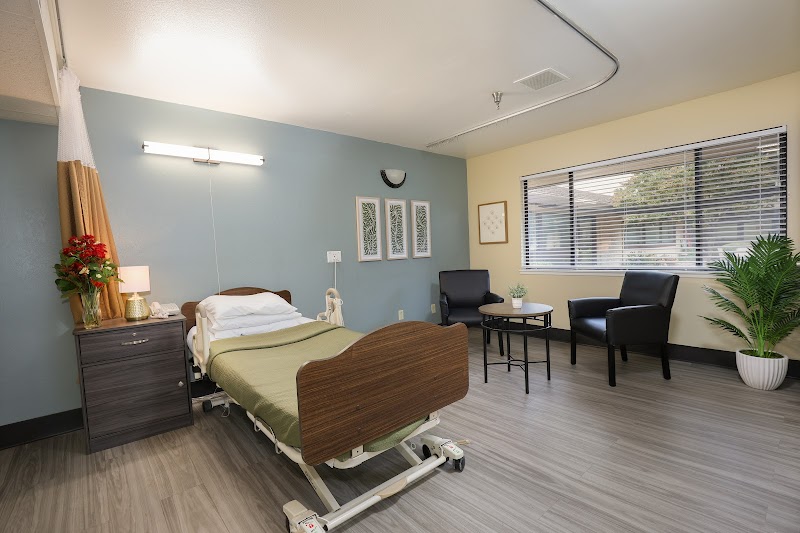
How is American River Center Staffed?

CMS rates AMERICAN RIVER CENTER's staffing level at 4 out of 5 stars, which is above average compared to other nursing homes. Staff turnover is 41%, compared to the California average of 46%. This relatively stable workforce can support continuity of care. RN turnover specifically is 56%, which is notably high. RNs provide skilled clinical oversight, so turnover in this role can affect medical care quality.

What Have Inspectors Found at American River Center?

State health inspectors documented 25 deficiencies at AMERICAN RIVER CENTER during 2022 to 2025. These included: 25 with potential for harm.
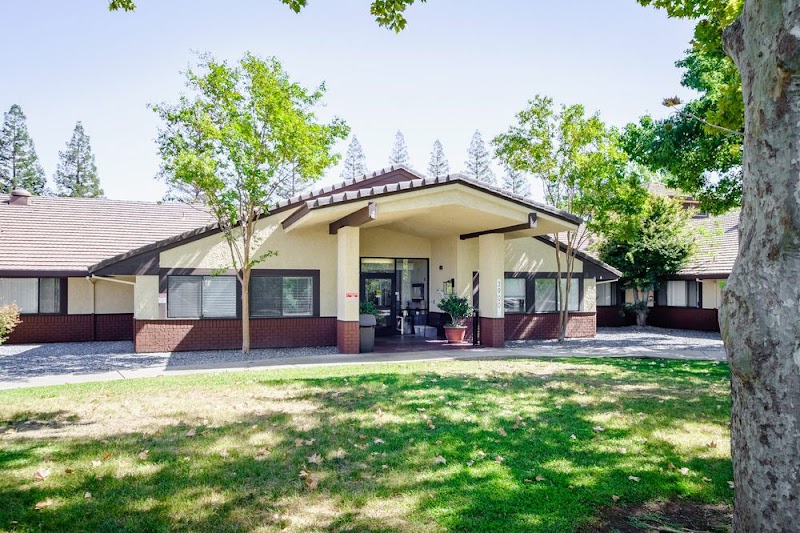
Who Owns and Operates American River Center?

AMERICAN RIVER CENTER is owned by a for-profit company. For-profit facilities operate as businesses with obligations to shareholders or private owners. The facility is operated by GENESIS HEALTHCARE, a chain that manages multiple nursing homes. With 99 certified beds and approximately 95 residents (about 96% occupancy), it is a smaller facility located in CARMICHAEL, California.
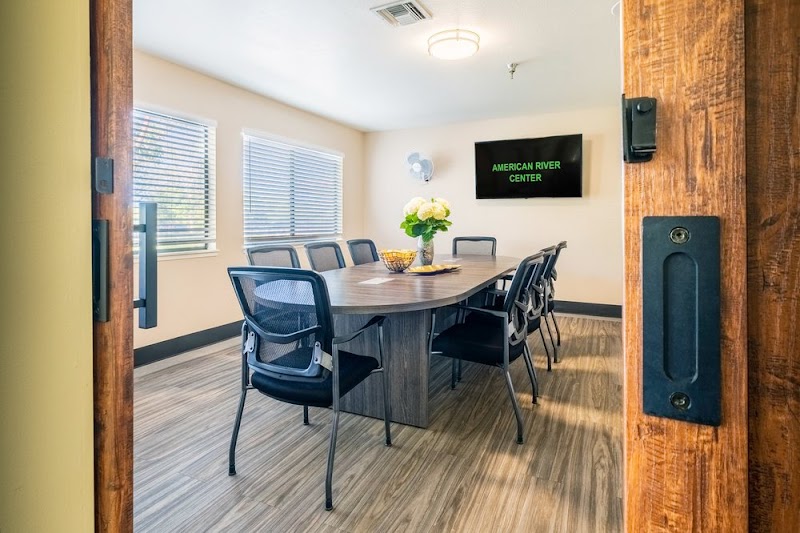
How Does American River Center Compare to Other California Nursing Homes?

Compared to the 100 nursing homes in California, AMERICAN RIVER CENTER's overall rating (5 stars) is above the state average of 3.2, staff turnover (41%) is near the state average of 46%, and health inspection rating (4 stars) is above the national benchmark.

What Should Families Ask When Visiting American River Center?

Based on this facility's data, families visiting should ask: "Can I visit during a mealtime to observe dining assistance and food quality?" "How do you handle medical emergencies, and what is your hospital transfer rate?" "Can I speak with family members of current residents about their experience?"

Is American River Center Safe?

Based on CMS inspection data, AMERICAN RIVER CENTER has a clean safety record: no substantiated abuse findings (meaning no confirmed cases of resident harm), no Immediate Jeopardy citations (the most serious violation level indicating risk of serious injury or death), and is not on the Special Focus Facility watch list (a federal program monitoring the lowest-performing 1% of nursing homes). The facility has a 5-star overall rating and ranks #1 of 100 nursing homes in California. While no facility is perfect, families should still ask about staff-to-resident ratios and recent inspection results during their visit.

Do Nurses at American River Center Stick Around?

AMERICAN RIVER CENTER has a staff turnover rate of 41%, which is about average for California nursing homes (state average: 46%). Moderate turnover is common in nursing homes, but families should still ask about staff tenure and how the facility maintains care continuity when employees leave.

Was American River Center Ever Fined?

AMERICAN RIVER CENTER has no federal fines on record. CMS issues fines when nursing homes fail to meet care standards or don't correct problems found during inspections. The absence of fines suggests the facility has either maintained compliance or corrected any issues before penalties were assessed. This is a positive indicator, though families should still review recent inspection reports for the full picture.

Is American River Center on Any Federal Watch List?

AMERICAN RIVER CENTER is not on any federal watch list. The most significant is the Special Focus Facility (SFF) program, which identifies the bottom 1% of nursing homes nationally based on persistent, serious quality problems. Not being on this list means the facility has avoided the pattern of deficiencies that triggers enhanced federal oversight. This is a positive indicator, though families should still review the facility's inspection history directly.