WINDSOR EL CAMINO CARE CENTER
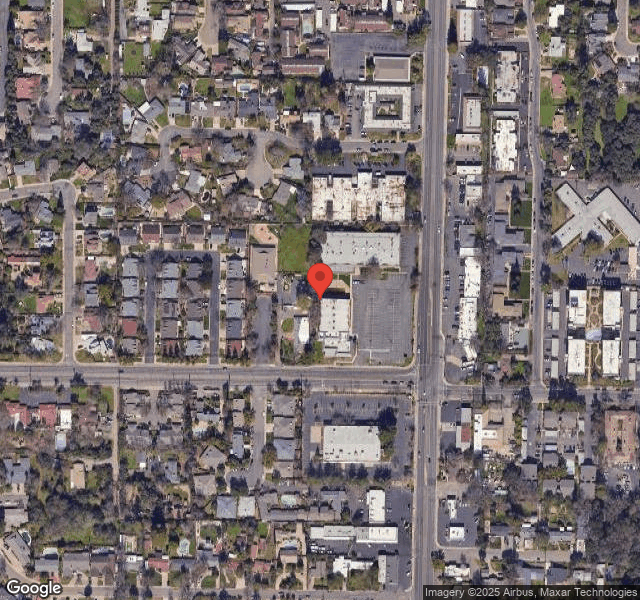

2540 CARMICHAEL WAY, CARMICHAEL, CA 95608 (916) 482-0465
For profit - Corporation 178 Beds WINDSOR Data: November 2025
Trust Grade
35/100
#958 of 1155 in CA
Last Inspection: November 2024

Within standard 12-15 month inspection cycle. Federal law requires annual inspections.

Overview

Windsor El Camino Care Center has a Trust Grade of F, indicating significant concerns and a poor overall rating. It ranks #958 out of 1155 facilities in California, placing it in the bottom half, and #36 out of 37 in Sacramento County, suggesting that there is only one local option that is worse. The facility's trend is stable, with 23 issues reported in both 2024 and 2025, which means there has been no improvement or decline in conditions. While staffing received an average rating of 3 out of 5 stars, the turnover rate is concerning at 53%, which is higher than the California average, indicating staff instability. There have been no fines reported, which is a positive sign, but recent inspections revealed serious sanitation issues, such as rodent droppings in the kitchen and improperly stored food, both of which pose health risks to residents.

Trust Score
F
35/100
In California
#958/1155
Bottom 18%
Safety Record
High Risk
Review needed
Inspections
Holding Steady
23 → 23 violations
Staff Stability
⚠ Watch
53% turnover. Above average. Higher turnover means staff may not know residents' routines.
Penalties
✓ Good
No fines on record. Clean compliance history, better than most California facilities.
Skilled Nurses
○ Average
Each resident gets 30 minutes of Registered Nurse (RN) attention daily — about average for California. RNs are the most trained staff who monitor for health changes.
Violations
⚠ Watch
78 deficiencies on record. Higher than average. Multiple issues found across inspections.
★★☆☆☆
2.0
Overall Rating
★★★☆☆
3.0
Staff Levels
★★★☆☆
3.0
Care Quality
★★☆☆☆
2.0
Inspection Score
Stable
2024: 23 issues
2025: 23 issues

The Good

  • Full Sprinkler Coverage · Fire safety systems throughout facility
  • No fines on record

Facility shows strength in fire safety.

The Bad

2-Star Overall Rating

Below California average (3.1)

Below average - review inspection findings carefully

Staff Turnover: 53%

Near California avg (46%)

Higher turnover may affect care consistency

Chain: WINDSOR

Part of a multi-facility chain

Ask about local staffing decisions and management

The Ugly 78 deficiencies on record

Aug 2025 2 deficiencies
CONCERN (D) 📢 Someone Reported This

A family member, employee, or ombudsman was alarmed enough to file a formal complaint

Potential for Harm - no one hurt, but risky conditions existed

Infection Control (Tag F0880)

Could have caused harm · This affected 1 resident

Based on observation, interview, and record review, the facility failed to implement the proper transmission-based precautions (TBP-additional infection control measures used in healthcare settings to...

Read full inspector narrative →
Based on observation, interview, and record review, the facility failed to implement the proper transmission-based precautions (TBP-additional infection control measures used in healthcare settings to prevent the spread of infectious diseases that are transmitted through specific routes) when there was no correct signage posted on the door for one of three sampled residents (Resident 3) who was observed to be positive for Covid-19 (a respiratory illness caused by the SARS-CoV-2 virus). This failure had the potential to increased risk of infection transmission for a facility census of 167 residents.Findings:Resident 3 was re-admitted to the facility in August 2017 with multiple medical diagnoses which included chronic obstructive pulmonary disease (COPD-a chronic lung disease causing difficulty in breathing), Type II Diabetes Mellitus (DM-a disorder characterized by difficulty in blood sugar control and poor wound healing), and pulmonary embolism (a blood clot that blocks and stops blood flow to an artery in the lung). Resident 3 had a BIMS (Brief Interview for Mental Status-an assessment tool used by facilities to screen and identify memory, orientation, and judgement status of the resident) score of 12 out of 15 which indicated Resident 3 was moderately impaired.Resident 4 was admitted to the facility in June 2023 with multiple medical diagnoses which included cardiac arrest (a medical emergency that occurs when the heart suddenly stops beating effectively, preventing blood from circulating to the body) and anoxic brain damage (occurs when the brain is deprived of oxygen, leading to cell damage or death). Resident 4 had a BIMS score of 6 out of 15 which indicated Resident 4 was severely impaired.Resident 5 was re-admitted to the facility in April 2024 with multiple medical diagnoses which included chronic respiratory failure with hypoxia (a long-term condition where the lungs cannot adequately oxygenate the blood, leading to low oxygen levels in the body), asthma, and cerebral infarction (a condition where brain tissue dies due to a lack of blood supply). Resident 5 had a BIMS score of 9 out of 15 which indicated Resident 5 was moderately impaired. During an interview on 8/7/25 at 9:24 a.m. with Licensed Nurse (LN) 1, LN 1 stated Resident 3 tested positive for COVID-19 on 7/30/25. Resident 3 was being monitored for ten days, along with her roommates (Resident 4 and Resident 5), who all shared a room in the facility.During a review of Resident 3's physician orders (PO), dated 7/30/25, the PO indicated, Monitor s/s (signs and symptoms) related to COVID positive test .for 10 (ten) days .end date 8/10/25.During a review of Resident 3's care plan (CP), dated 7/31/25, the CP indicated, Resident .risk for .complication of covid 19 illness due to positive covid results. No TBP care plan was implemented.During a review of Resident 4's PO, dated 7/31/25, the PO indicated, Monitor s/s for covid exposure .for 10 (ten) days .end date 8/10/25.During a review of Resident 5's PO, dated 7/31/25, the PO indicated, Monitoring for covid s/s d/t (due to) exposure .for 10 (ten) days .end date 8/10/25.During an observation on 8/7/25 at 9:49 a.m. outside the open doorway of Resident 3's room, there was no droplet precautions (a TBP measure designed to prevent the spread of diseases that are transmitted through respiratory droplets) signage found on the doorway indicating the need to wear a mask. Coughing was heard coming from the room. During a concurrent observation and interview on 8/7/25 at 10:09 a.m. outside the open doorway of Resident 3's room with Phlebotomist (PHL) 1, PHL 1 stated he was about to enter Resident 3's room without wearing an N95 (a disposable face mask that covers the user's nose and mouth which offers protection from small solid or liquid droplets found in the air). PHL 1 stated he was in the facility to draw blood from Resident 3 for a physician ordered laboratory test. When PHL 1 was asked what signage he would expect to see posted on the door for a resident with COVID-19, PHL 1 stated, Droplet. PHL 1 verified there was no signage indicating HCP should wear a mask when entering the room. When PHL 1 was asked what type of mask he would wear for a resident with COVID-19, PHL 1 stated, An N95. When PHL 1 was asked if Resident 3 had COVID-19, PHL 1 stated, I don't know if she has Covid (COVID-19), but I try to read the sign on the door first. During a concurrent observation and interview on 8/7/25 at 10:16 a.m. outside the open doorway of Resident 3's room with Certified Nursing Assistant (CNA) 1, CNA 1 verified there was no signage indicating HCP should wear a mask before entering the room. CNA 1 further stated it was unsafe for staff, family members, or other residents that a sign wasn't posted and it could lead to an outbreak.During a subsequent observation and interview on 8/7/25 at 10:49 a.m. outside the open doorway of Resident 3's room with LN 1, LN 1 verified there was no signage indicating HCP should wear a mask before entering the room. LN 1 stated anyone who doesn't know the resident wouldn't know to wear an N95. LN 1 further stated the infection could spread to other residents and staff potentially leading to an outbreak. During an observation and interview on 8/7/25 at 11:00 a.m. outside the open doorway of Resident 3's room with Infection Preventionist (IP), the IP verified there was no signage indicating HCP should wear a mask before entering the room. The IP stated the facility followed the U.S. Centers for Disease Control and Prevention (CDC) criteria and a droplet precautions sign should be placed on the door. The IP further stated anyone entering the room should wear an N95 to prevent the spread of infection. When the IP was asked if a person entering the room would know to put on an N95 with the current signage, the IP stated, No. During an interview on 8/7/25 at 3:24 p.m. with Administrator (Admin), the Admin stated additional signage should be placed on Resident 3's room to communicate staff should wear an N95 mask before entering the room. The Admin further stated not placing the sign could lead to a potential COVID-19 outbreak.During a review of the facility's policy and procedure titled, COVID-19 Management, dated (no date), indicated, Transmission Based Precautions and Personal Protective Equipment (PPE) .Covid-19 transmission based precautions will use the following PPE .N95 respirator, gloves, gown, and eye protection.During a review of the CDC's website, retrieved 8/13/25, Infection Control Guidance: SARS-CoV-2, https://www.cdc.gov/covid/hcp/infection-control/index.html, indicated, (HCP) who enter the room of a patient with suspected or confirmed SARS-CoV-2 (COVID-19) infection should .use a NIOSH Approved particulate respirator with N95 filters or higher.
CONCERN (E) 📢 Someone Reported This

A family member, employee, or ombudsman was alarmed enough to file a formal complaint

Potential for Harm - no one hurt, but risky conditions existed

Deficiency F0919 (Tag F0919)

Could have caused harm · This affected multiple residents

Based on observation, interview, and record review, the facility failed to provide a call light within reach for two of five sampled residents (Resident 1 and Resident 2). This failure had the potenti...

Read full inspector narrative →
Based on observation, interview, and record review, the facility failed to provide a call light within reach for two of five sampled residents (Resident 1 and Resident 2). This failure had the potential to result in unmet care needs and compromise the residents safety.Findings:Resident 1 was admitted to the facility in June 2025 with multiple medical diagnoses including multiple sclerosis (MS-a chronic, progressive disease involving damage to the nerve cells in the brain and spinal cord), muscle weakness, and need for assistance with personal care. Resident 1 had a BIMS (Brief Interview for Mental Status-an assessment tool used by facilities to screen and identify memory, orientation, and judgement status of the resident) score of 9 out of 15 which indicated Resident 1 was moderately impaired.Resident 2 was admitted to the facility in May 2022 with multiple medical diagnoses including cerebral infarction (a condition where brain tissue dies due to a lack of blood supply) affecting the left side, muscle weakness, and dysphagia (difficulty or inability to swallow). Resident 2 had a BIMS score of 6 out of 15 which indicated Resident 2 was severely impaired.During a concurrent observation and interview on 8/7/25 at 11:47 a.m. with Resident 1 in Resident 1's room, Resident 1's call light was out of reach of Resident 1. When Resident 1 was asked where her call light was, Resident 1 stated, I don't even see the button right now. There's a pillow. Resident 1 was observed moving her arms with profound jerky movements while she attempted to move the pillow and access her call light. After a few minutes of trying, Resident 1 stated she was unable to reach the call light. During a concurrent observation and interview on 8/7/25 at 12:03 p.m. with Resident 1 and Certified Nursing Assistant (CNA) 2 in Resident 1's room, CNA 2 confirmed Resident 1's call light was out of reach. CNA 2 stated Resident 1's call light should be within reach so that she could call for help anytime. When Resident 1 was asked if she would like to have her call light where she could reach it, Resident 1 stated, Yes, that would be nice.During a concurrent observation and interview on 8/7/25 at 12:13 p.m. with Licensed Nurse (LN) 2, LN 2 confirmed Resident 1's call light was out of reach. LN 2 stated the call light should be within reach.During a concurrent observation and interview on 8/7/25 at 1:26 p.m. with Resident 2 in Resident 2's room, Resident 2's call light was in a drawer out of reach. When Resident 2 was asked to push the call light button to request staff, Resident 2 stated, I don't know where it is. I don't have it. During a concurrent observation and interview on 8/7/25 at 1:38 p.m. with LN 1 and CNA 3 in Resident 2's room, both LN 1 and CNA 3 stated Resident 2's call light was out of reach in the drawer of his bedside table. Both LN 1 and CNA 3 stated the call light should be within reach of the resident to obtain help when needed. During an interview on 8/7/25 at 3:24 p.m. with Administrator (Admin), the Admin stated it was the expectation to always have call lights within reach while residents are in bed, unless staff were assisting the resident. The Admin further stated without a call light within reach, non-verbal residents would not be able to call out for help or alert staff. The Admin then stated verbal residents would have to shout out for staff assistance, which would be undignified. During a review of Resident 1's care plan (CP), dated 6/26/25, the CP indicated, [Resident 1] is at risk for falls/self-injury r/t (related to) impaired balance/gait, limited mobility, generalize weakness .Place call light within reach while in bed & place all necessary personal items .within reach.During a review of Resident 2's CP, dated 6/13/22, the CP indicated, [Resident 2] is high risk for falls/self injury r/t deconditioning, gait/balance problems, weakness .had a HX (history) of fall .Be sure the resident's call light is within reach. During a review of the facility's policy and procedure titled, Answering the Call Light, dated 10/24/24, indicated, Ensure that the call light is accessible to the resident when in bed, from the toilet, from the shower or bathing facility and from the floor.
Aug 2025 1 deficiency
CONCERN (D) 📢 Someone Reported This

A family member, employee, or ombudsman was alarmed enough to file a formal complaint

Potential for Harm - no one hurt, but risky conditions existed

Free from Abuse/Neglect (Tag F0600)

Could have caused harm · This affected 1 resident

Based on observation, interview, and record review, the facility failed to protect one of four sampled residents (Resident 1) from abuse when Resident 2 spit on Resident 1 in the face during a verbal ...

Read full inspector narrative →
Based on observation, interview, and record review, the facility failed to protect one of four sampled residents (Resident 1) from abuse when Resident 2 spit on Resident 1 in the face during a verbal altercation.This failure had the potential for Resident 1 to experience fear or distress.Findings:During a review of Resident 1's admission records, the records indicated Resident 1 was admitted in July 2025 with diagnoses that included encephalopathy (brain disease that alters brain function or structure), major depressive disorder (a mood disorder that causes a persistent feeling of sadness and loss of interest), and muscle weakness. Resident 1's Minimum Data Set (MDS, a federally mandated resident assessment tool) indicated Resident 1 had intact cognition.During a review of Resident 2's admission records, the records indicated Resident 2 was admitted in July 2025 with diagnoses that included sepsis (infection in the blood), depression, and post-traumatic stress disorder (PTSD - a disorder in which a person has difficulty recovering after experiencing or witnessing a traumatic event). Resident 2's MDS indicated Resident 2 had intact cognition.During a review of Resident 3's admission records, the records indicated Resident 3 was admitted in July 2025 with diagnoses that included urinary tract infection (UTI- an infection in the bladder/urinary tract), and bipolar disorder (sometimes called manic-depressive disorder; mood swings that range from the lows of depression to elevated periods of emotional highs). Resident 3's MDS indicated Resident 3 had intact cognition.During a review of Resident 4's admission records, the records indicated Resident 4 was admitted in July 2025 with diagnoses that included Diabetes Mellitus (DM-a disorder characterized by difficulty in blood sugar control and poor wound healing) with foot ulcer, and complete traumatic amputation of right midfoot (a severe injury involving the loss of part or all of the foot due to an external force). Resident 4's MDS indicated Resident 4 had intact cognition.During a review of Resident 1's progress notes, dated 7/30/25, the notes indicated, .CNA [Certified Nursing Assistant] notified nursing staff that [Resident 2] tried to hit this resident [Resident 1] with his W/C [wheelchair] aggressively while residents were watching TV in the activity room.During interview [Resident 1] stated, Other resident [Resident 2] spitted on him, he got some droplets on his forehead, didn't get anything on his face (mouth) and in his eyes. I already cleaned my face.During a review of Resident 2's care plan, dated 7/30/25, the care plan indicated, [Resident 2] exhibits, or has the potential to exhibit physical behaviors related to: Ineffective coping skills, i.e., poor anger management, Poor impulse control.During a review of Resident 2's Social Service Progress Notes, dated 7/31/25, the notes indicated, [Resident 2] was noted to have been involved in a verbal altercation with a co-resident [Resident 1].[Resident 2] was noted to have spat on his co-resident [Resident 1] on his forehead.During a concurrent observation and interview on 8/1/25 at 10:02 a.m. with Resident 1 in his room, Resident 1 was observed lying in bed, alert and calm, verbally responsive to questions. Resident 1 stated, .I was watching [television] and the fire alarm went off and he [Resident 2] turn around yelling at me.And then he spit on me.happened a couple days ago.I had to control myself.During an interview on 8/1/25 at 10:30 a.m. with Resident 3, Resident 3 stated, .There was a guy in the wheelchair getting crazy in his mind.We tried to get away from [Resident 2].[Resident 2] felt claustrophobic and spit on him [Resident 1].I saw the whole thing.I was watching boxing that time later in the afternoon about two days ago.It was like [Resident 2] wanted trouble and he saw [Resident 1].Then he spit on his face.[Resident 2] left me alone because he knows me.[Resident 2] was on wheelchair.That's the first time I saw him.[Resident 2] wanted to make trouble to weak ones.During an interview on 8/1/25 at 10:57 a.m. with Resident 4, Resident 4 indicated, .Happened the night before.We were watching tv.[Facility] had the fire alarm, and [Resident 2] said close the door.[Resident 1] held the door.[Resident 2] guy flipped out, he was in his wheelchair.[Resident 2] slammed his wheelchair.I thought they are going to start fist fighting.[Resident 2] had rage.I've seen [Resident 2] before, I've never seen that side of him, he had some rage.During a telephone interview on 8/1/25 at 12:15 p.m. with CNA 1, CNA 1 stated, .My last shift, I had [Resident 2], there was an altercation between two residents [Resident 1 and Resident 2] on 7/30/25 around 7 or 7:30 p.m.I did see the incident. CNA 1 confirmed he saw Resident 2 spit on Resident 1's face, separated the two, and reported it to the nurse after the fire drill.During a telephone interview on 8/1/25 at 12:21 p.m. with Licensed Nurse (LN 1), LN 1 stated, .There was a fire drill going on, when I came back there was an altercation.[Resident 2], he spit on [Resident 1], [staff] separated them.I asked [Resident 1], [Resident 2] tried to hit [Resident 1] aggressively but it was not effective.[Resident 1] said [Resident 2] spit on him.We gave [Resident 1] shower at the same time.[Resident 2] was very aggressive, cursing the staff like a gangster.[Resident 2] was not aggressive before the incident.They [Resident 1, Resident 3, and Resident 4] were watching tv in the dining room.Suddenly [Resident 2] went there.During an interview on 8/1/25 at 12:52 p.m. with the Assistant Director of Nursing (ADON), the ADON stated the expectation is that all residents in the facility are safe. The ADON stated, This is their home, they have to feel safe here.During a review of the facility's policy and procedure (P&P) titled Resident Rights, revised 12/2021, the P&P indicated, .1. Federal and state laws guarantee certain basic rights to all residents of this facility. These rights include the resident's right to:.b. be treated with respect, kindness, and dignity.c. be free from abuse, neglect, misappropriation of property, and exploitation.
Jul 2025 3 deficiencies
CONCERN (D) 📢 Someone Reported This

A family member, employee, or ombudsman was alarmed enough to file a formal complaint

Potential for Harm - no one hurt, but risky conditions existed

Deficiency F0558 (Tag F0558)

Could have caused harm · This affected 1 resident

**NOTE- TERMS IN BRACKETS HAVE BEEN EDITED TO PROTECT CONFIDENTIALITY** Based on observation, interview, and record review, the facility failed to ensure staff answered call lights (device used by res...

Read full inspector narrative →
**NOTE- TERMS IN BRACKETS HAVE BEEN EDITED TO PROTECT CONFIDENTIALITY** Based on observation, interview, and record review, the facility failed to ensure staff answered call lights (device used by residents to signal his or her need for assistance from staff) in a timely manner for three of 4 sampled residents (Resident 3, Resident 4, and Resident 1).These failures had the potential to result in resident's care needs not being met and placed residents' safety at risk. Findings: 1a. A review of the admission Record indicated Resident 3 was admitted last week of July 2025 with diagnoses including acute respiratory failure with hypoxia (lungs unable to get enough oxygen into the blood) and protein calorie malnutrition (the body does not get enough protein and energy to function properly).A review of Resident 3's Minimum Data Set (MDS- a federally mandated resident assessment tool) dated 7/30/25 indicated Resident 3 was cognitively intact.A review of Resident 3's physician order dated 7/26/25 indicated Resident 3 had the capacity to make healthcare decisions.In a concurrent observation and interview on 7/29/25 at 12:29 p.m., Resident 3 was lying in bed with the head of the bed elevated and had ongoing oxygen via nasal cannula (a small plastic tube, which fits into the person's nostrils providing supplemental oxygen). Resident 3 stated she needed oxygen all the time. Resident 3 further stated she cannot walk, she had incontinent briefs and when she pressed the call light, she had to wait a long time to be changed. Resident 3 was asked to elaborate the specific time when she had to wait for assistance, resident stated whenever I go [opened bowels or urinated].1b. A review of the admission Record indicated Resident 4 was admitted [DATE] with diagnoses including encephalopathy (a condition where the brain is not working properly due to some damage or disease), and cerebrovascular disease (conditions that affect blood flow to the brain).A review of Resident 4's MDS dated [DATE] indicated Resident 4 was cognitively intact, dependent on staff for toileting, personal hygiene, dressing, and bed mobility.A review of Resident 4's physician order dated 7/3/25 indicated Resident 4 had the capacity to make healthcare decisions.In a concurrent observation and interview on 7/29/25 at 12:43 p.m., Resident 4 was awake and lying in bed. Resident 4 stated sometimes it took 30 minutes for her call light to be answered. Resident 4 further stated it depends on how busy they are out there.1c. A review of the admission Record indicated Resident 1 was admitted [DATE] with diagnoses including fracture of upper of right humerus (upper arm bone), dislocation of right shoulder joint (the head of the upper arm bone comes out of the shoulder socket), and fall.A review of Resident 1's MDS dated [DATE] indicated Resident 1 was cognitively intact, dependent on staff for bed mobility, and required substantial/maximal assistance [staff does more than half of the effort] for toileting, upper and lower body dressing, and personal hygiene.In an interview on 7/29/25 at 2:12 p.m., Resident 1 stated at around 11:30 p.m. last night, she held and pressed the call light for assistance. Resident 1 further stated the staff ignored her call light, and somebody finally came at 11:45 p.m.In an observation conducted on 7/29/25 at 1:47 p.m., there were multiple call lights unanswered in Hall 6.An interview was conducted on 7/29/25 at 3:27 p.m. with the Director of Staff Development (DSD). The DSD stated her expectation was for call light to be answered in a timely manner. The DSD further stated anyone can answer the call light, she told staff do not pass the light, ask resident what they need. The DSD added that timely manner meant that call light should be answered within 2 to 3 minutes.In an interview on 7/29/25 at 3:53 p.m., the Assistant Director of Nursing (ADON) stated 30 minutes was too long for residents to wait for the call light to be answered. The best practice was for staff to ask residents what they needed when they see the call light was on.A review of the facility's policy and procedure revised 10/24/2024 and titled Answering the Call Light indicated, The purpose of this procedure is to ensure timely responses to the resident's requests and needs.If the resident needs assistance, indicate the approximate time it will take for you to respond.If the resident's request requires another staff member, notify the individual.If you are uncertain as to whether or not a request can be fulfilled, or if you cannot fulfill the resident's request, ask the nurse supervisor for assistance.
CONCERN (D) 📢 Someone Reported This

A family member, employee, or ombudsman was alarmed enough to file a formal complaint

Potential for Harm - no one hurt, but risky conditions existed

Deficiency F0658 (Tag F0658)

Could have caused harm · This affected 1 resident

**NOTE- TERMS IN BRACKETS HAVE BEEN EDITED TO PROTECT CONFIDENTIALITY** Based on observation, interview, and record review, the facility failed to ensure services provided meet professional standards ...

Read full inspector narrative →
**NOTE- TERMS IN BRACKETS HAVE BEEN EDITED TO PROTECT CONFIDENTIALITY** Based on observation, interview, and record review, the facility failed to ensure services provided meet professional standards of quality for one of 4 sampled residents (Resident 1) when:1. Resident 1's order for the immobilizer sling (a device used to restrict arm and shoulder movement to aid in the healing process after an injury) was not followed; and2. Resident 1's order for supplemental oxygen was not followed and updated according to residents' needs. These failures increased the risk for Resident 1 to experience increased pain, worsening of injury and be given supplemental oxygen that was not needed. Findings:A review of the admission Record indicated Resident 1 was admitted [DATE] with diagnoses including fracture of upper of right humerus (upper arm bone), dislocation of right shoulder joint (the head of the upper arm bone comes out of the shoulder socket), and fall.A review of the Nurses Progress Note dated 7/16/25 indicated, New admit.alert and oriented x3-4.initially admitted to the hospital for a fall. Hospital findings fx [fracture, broken bone] to right humerus (non-operative; med mgmt [medication management]. She has an immobilizer to right humerus and right hand.responses are appropriate. has weakness to all extremities. A review of Resident 1's physician orders dated 7/17/25 indicated:-an order for NWB [non weight bearing] RUE [right upper extremity], Immobilizer sling on shoulder check.every shift; and,-an order for Oxygen at 2L/min [liters per minute, unit of measurement] Via NC [nasal cannula- a small plastic tube, which fits into the person's nostrils providing supplemental oxygen] continuously every shift. A review of Resident 1's Medication Administration Record (MAR) for July indicated licensed nurses were signing both the orders for the NWB RUE, immobilizer sling and the continuous oxygen since 7/17/25 through 7/29/25.A concurrent observation and interview was conducted on 7/29/25 starting at 11:49 a.m. inside Resident 1's room. Resident 1 was lying in bed with her head elevated with a pillow. Resident 1's right upper arm had a band attached to a chest band. Resident 1 had no sling, and her wrist was off the wrist band. Resident 1 stated she did not feel good, and she was in pain. Resident 1 stated she had a fall at home and broke her shoulder, she went to the hospital and there was no surgery done. Resident pointed to the immobilizer and said, was not doing anything for her. There was an oxygen concentrator in the room near the resident's bed, and it was not in use. In a concurrent interview and record review on 7/29/25 at 1:54 p.m. with Licensed Nurse (LN), the LN stated Resident 1 used to receive oxygen. The LN further stated Resident 1 did not use oxygen this morning. The LN reviewed Resident 1's electronic MAR and she confirmed she signed the oxygen order. The LN stated the oxygen order should have been changed. A concurrent observation and interview was conducted on 7/29/25 at 1:56 p.m. inside Resident 1's room with the LN. The LN confirmed Resident 1 had no sling, the wrist was out of the immobilizer, and resident was not on oxygen. Resident 1 stated she only used oxygen 2 or 3 times. The LN stated Resident 1 was admitted with the immobilizer and she asked the physical therapist if Resident 1 can have a sling and she was told Resident 1 would be evaluated first. In an interview on 7/29/25 at 3:08 p.m., the Physical Therapist (PT) stated she checked on Resident 1 and she confirmed Resident 1 had the immobilizer, she had no sling, and resident's wrist was out of the loop.In an interview on 7/29/25 at 3:53 p.m., the Assistant Director of Nursing (ADON) stated her expectation was for physician's order to be carried out. The ADON further stated if the order was signed, it should be done. A review of the facility's policy and procedure effective 3/22/2022 and titled, Physician Orders indicated, .Supplies/medications required to carry out the physician order will be ordered.
CONCERN (D) 📢 Someone Reported This

A family member, employee, or ombudsman was alarmed enough to file a formal complaint

Potential for Harm - no one hurt, but risky conditions existed

Deficiency F0919 (Tag F0919)

Could have caused harm · This affected 1 resident

**NOTE- TERMS IN BRACKETS HAVE BEEN EDITED TO PROTECT CONFIDENTIALITY** Based on observation, interview, and record review, the facility failed to ensure a call light was within reach for one of 4 sam...

Read full inspector narrative →
**NOTE- TERMS IN BRACKETS HAVE BEEN EDITED TO PROTECT CONFIDENTIALITY** Based on observation, interview, and record review, the facility failed to ensure a call light was within reach for one of 4 sampled residents (Resident 2).This failure had the potential to not meet the needs and placed Resident 2 at risk for safety.Findings: A review of the admission Record indicated Resident 2 was admitted [DATE] with diagnoses including multiple sclerosis (the coating that protects the nerves is damaged which disrupts the communication between the brain and the rest of the body leading to wide range of symptoms) and abnormalities with gait and mobility.A review of Resident 2's Minimum Data Set (MDS- federally mandated resident assessment tool) dated 6/27/25 indicated Resident 2 had moderate cognitive impairment and she was dependent on staff for self-care and bed mobility.A review of Resident 2's care plan initiated 6/26/25 indicated, [Resident 2] is at risk for falls/self-injury r/t [related to] Impaired balance/gait, limited mobility, generalize weakness. The interventions indicated, .Place call light within reach while in bed.A concurrent observation and interview was conducted on 7/29/25 at 12:11 p.m. inside Resident 2's room. Resident 2 was lying in bed. Resident 2's call light was observed hanging from the side of her bed and the call light was not within reach.A concurrent observation and interview was conducted on 7/29/25 at 12:25 p.m., inside Resident 2's room with Certified Nursing Assistant 2 (CNA 2). The CNA 2 confirmed Resident 2's call light was hanging on the side of her bed. In an interview on 7/29/25 at 2:39 p.m., the state surveyor showed the Licensed Nurse (LN) a picture of Resident 2's call light taken at 12:16 p.m. The LN stated, it was not acceptable, the call light should be within reach. The LN further stated Resident 2 had episodes of confusion and she was still able to use her call light.A review of the facility's policy and procedure revised 10/24/2024 and titled, Answering the Call Light indicated, .Ensure that the call light is accessible to the resident when in bed.
Jul 2025 2 deficiencies
CONCERN (D) 📢 Someone Reported This

A family member, employee, or ombudsman was alarmed enough to file a formal complaint

Potential for Harm - no one hurt, but risky conditions existed

Free from Abuse/Neglect (Tag F0600)

Could have caused harm · This affected 1 resident

**NOTE- TERMS IN BRACKETS HAVE BEEN EDITED TO PROTECT CONFIDENTIALITY** Based on observation, interview and record review the facility failed to provide a safe and protective environment for one of th...

Read full inspector narrative →
**NOTE- TERMS IN BRACKETS HAVE BEEN EDITED TO PROTECT CONFIDENTIALITY** Based on observation, interview and record review the facility failed to provide a safe and protective environment for one of three sampled residents (Resident 1), when Resident 1 was hit on the side of his face by Resident 3. During a record review of Resident 1's Face Sheet (FS), the FS indicated Resident 1 was admitted to the facility in early 2025 with diagnoses which included cerebral infarction (condition where a part of the brain is damaged or dies due to a lack of blood supply), hemiplegia (a condition characterized by weakness or paralysis affecting one side of the body), and aphasia (language disorder that affects a person's ability to communicate or speak). During a review of Resident 1's Minimum Data Set (MDS - federally mandated resident assessment tool), dated 7/5/25, the MDS indicated Resident 1 had a moderate cognitive impairment and had difficulty speaking but used a phone for communication. During a record review of Resident 3's FS, the FS indicated Resident 3 was admitted to the facility in early 2021 with diagnoses which included schizophrenia (a mental disorder characterized by disruptions in thought processes, perceptions, emotional responsiveness, and social interactions), dementia (term describing a decline in mental ability severe enough to interfere with daily life), psychotic disturbance (collection of symptoms that affect the mind, where there has been some loss of contact with reality). During a review of Resident 3's MDS, dated [DATE], the MDS indicated Resident 3 had severe cognitive impairment. During an interview on 7/24/25 at 1:30 p.m. with the Social Services Director (SSD), the SSD indicated Resident 1 and Resident 3 were involved in a resident-to-resident altercation on 7/21/25 at approximately 8:30 p.m. when Resident 1 was in his wheelchair near the medication cart while Licensed Nurse 5 (LN 5) was passing medications inside one of the resident rooms. The SSD indicated Resident 3 attempted to get at the pitcher of juice that was on top of the medication cart. When Resident 3 attempted to grab the pitcher of juice, Resident 1 tried to prevent Resident 3 from grabbing the pitcher of juice on top of the medication cart. There was yelling between the two residents and LN 5 went out of the room and found Resident 3 hit Resident 1 with his fist hitting him at the left side of his head. During an interview on 7/24/25 at 1:32 p.m. with the SSD, the SSD indicated Resident 3 was ambulatory and had been known to walk from one nursing station to the next and went in and out of other resident's room searching for food and grabbing the pitcher of juice on the medication cart. The SSD stated Resident 3 could be hostile at times when you redirect him. Because of the incident that occurred on 7/21/25, both Resident 1 and Resident 3 were sent to the acute hospital emergency room (ER) for evaluation. During a concurrent observation and interview on 7/24/25 at 1:40 p.m. with Resident 1, Resident 1 was found sitting in his wheel chair, appeared alert and oriented and responded when name was called out. Resident 1 had difficulty in speaking but was capable of answering yes or no by nodding or shaking his head to indicate yes or no. Resident 1 nodded yes when asked if he was hit on the left side of face and pointed towards the left side of his face near the eye socket. During an interview on 7/24/25 at 2 p.m. with LN 1, LN 1 stated that Resident 1 had a right sided weakness, alert and oriented and had difficulty speaking. LN 1 indicated she was aware Resident 1 was hit on the left side of his face by Resident 3. LN 1 described Resident 3 was ambulatory and confused and he had behaviors of wandering to other nursing units and going in and out of other residents rooms. LN 1 indicated Resident 3 would steal food and snacks and tried to get into the juice pitchers that were on top of the medication carts. Resident 3 could be redirected at times but other times he could get hostile and postures like he would hit you. During an interview on 7/24/24 at 2:45 p.m. with Certified Nursing Assistant 1 (CNA 1), CNA 1 indicated Resident 1 was quiet in his wheelchair and was cooperative with care and Resident 3 was confused and difficult with care. CNA 1 stated, [Resident 3] goes to different nursing stations and goes to other residents rooms in search of food. He would help himself to the pitcher of juice on the medication cart. CNA 1 indicated she and the other CNAs would attempt to redirect him sometimes but other times Resident 3 would wave his arms around in a menacing manner like he would hit you. During an interview on 7/24/25 at 3 p.m. with Resident 2, Resident 2 stated he was familiar with Resident 3's behavior going in and out of other resident's rooms searching for food and he had observed Resident 3 attempt to get into the medication carts' pitcher of juice. Resident 2 indicated staff would try to redirect Resident 3 but Resident 3 became hostile and aggressive towards the staff.During a record review of Resident 3's Psychiatry Consultation report follow up, dated on 7/7/25, the report indicated: .PERCEPTUAL DISORDERS: No perceptual disorder noted .THOUGHT CONTENT: No mania (state of abnormally elevated or irritable mood, accompanied by increased energy and activity), no psychosis (collection of symptoms that affect the mind, where there has been some loss of contact with reality ) .THOUGHT PROCESS: Linear (a way of thinking that follows a clear, step-by-step sequence, often with a focus on logical reasoning and cause-and-effect relationships) and goal- directed, limited .During a review of the facility's policy and procedures (P&P) titled, Abuse, Neglect, Exploitation and Misappropriation Prevention Program, dated 4/21, the P&P indicated, Residents have the right to be free from abuse, neglect.This includes but not limited to freedom from corporal punishment, involuntary seclusion, verbal, mental, sexual or physical abuse.Protect residents from abuse.including.other residents.Protect residents from any further harm.
CONCERN (D) 📢 Someone Reported This

A family member, employee, or ombudsman was alarmed enough to file a formal complaint

Potential for Harm - no one hurt, but risky conditions existed

Deficiency F0658 (Tag F0658)

Could have caused harm · This affected 1 resident

**NOTE- TERMS IN BRACKETS HAVE BEEN EDITED TO PROTECT CONFIDENTIALITY** Based on interview, and record review, the facility failed to ensure physician's order was followed in accordance with the profe...

Read full inspector narrative →
**NOTE- TERMS IN BRACKETS HAVE BEEN EDITED TO PROTECT CONFIDENTIALITY** Based on interview, and record review, the facility failed to ensure physician's order was followed in accordance with the professional standards of practice for one of three sampled residents (Resident 3), when the physician was not notified of Resident 3's blood sugar level. This failure had the potential for Resident 3 to receive inaccurate and inadequate care.During a record review of Resident 3's Face Sheet (FS), the FS indicated Resident 3 was admitted to the facility in early 2021 with diagnoses which included diabetes (a disorder characterized by difficulty in blood sugar control and poor wound healing), schizophrenia (a mental disorder characterized by disruptions in thought processes, perceptions, emotional responsiveness, and social interactions), dementia (term describing a decline in mental ability severe enough to interfere with daily life), psychotic disturbance (collection of symptoms that affect the mind, where there has been some loss of contact with reality). During a review of Resident 3's MDS, dated [DATE], the MDS indicated Resident 3 had severe cognitive impairment. During a review of Resident 3's Order Summary Report (OSR), the OSR indicated Resident 3 had multiple insulin (a hormone that removes excess sugar from the blood, can be produced by the body or given artificially via medication) orders to treat and control his blood sugars. The OSR, dated 2/17/25, indicated a physician order, .insulin Lispro [a fast-acting insulin analog used to manage blood sugar levels in individuals with diabetes] as per sliding scale (based on the blood sugar value the dosage of insulin to be given) a sliding scale value 401 plus give 5 units of insulin and call MD (physician), with meals and at HS (hour of sleep).During a review of Resident 3's Electronic Medication Administration Record (eMAR), dated 7/11/25, the eMAR indicated Resident 3's blood sugar was 411 and the nurse administered six (6) units of Lispro insulin. The nursing progress notes and eMAR had no indications the physician was notified of the blood sugar value of 411 as directed in the physician's orders.During a concurrent interview and record review of Resident 3's eMAR with Licensed Nurse 4 (LN 4), LN 4 confirmed the nurse failed to notify the MD at 5 p.m. of the blood sugar value of 411. LN 4 indicated the nurse did not follow the physician's order, and stated, The expectations were the licensed nurse taking care of the resident were to follow the physician's orders as written.A policy and procedure on following MD orders was requested from the Assistant Director of Nursing (ADON) but none was provided.During a review of the undated document titled, Nursing Practice Act Rules and Regulations, the document indicated, Article 2. Scope of Regulation 2725 (b). The practice of nursing within the meaning of this chapter means those functions, including basic health care, that help people cope with difficulties in daily living that are associated with their actual or potential health or illness problems or the treatment thereof, and that require substantial amount of specific knowledge of the following: (2) Direct and indirect patient care services, including, but not limited to, the administration of medications and therapeutic agents, necessary to implement treatment, disease prevention, or rehabilitative regiment . ordered by and within the scope of licensure of a physician .as defined by Section 1316.5 of the Health and Safety Code. (Nursing Practice Act Rules and Regulations Issued by Board of Registered Nursing 1997 State of California Department of Consumer Affairs. pp. 5).
Jul 2025 1 deficiency
CONCERN (D) 📢 Someone Reported This

A family member, employee, or ombudsman was alarmed enough to file a formal complaint

Potential for Harm - no one hurt, but risky conditions existed

Accident Prevention (Tag F0689)

Could have caused harm · This affected 1 resident

Based on interview and record review, the facility failed to provide adequate monitoring and supervision for one of four sampled residents (Resident 1), when Resident 1 left the facility without notif...

Read full inspector narrative →
Based on interview and record review, the facility failed to provide adequate monitoring and supervision for one of four sampled residents (Resident 1), when Resident 1 left the facility without notifying staff. This failure resulted in Resident 1 leaving the facility unsupervised and increased her risk for harm and injury. Findings: Resident 1 was admitted to the facility March 2025 with diagnoses which included schizophrenia (mental illness that affects how a person thinks, feels, and behaves) and the need for assistance with personal care. A review of the Minimum Data Set (MDS, an assessment tool), dated 3/31/25, indicated Resident 1 had moderate cognition impairment. Resident 1's family members were listed as the responsible party. During a review of Resident 1's Order Summary Report, order dated 3/28/25, the orders indicated, Resident (DOES NOT HAVE) the capacity to make healthcare decisions. During a review of Resident 1's Order Summary Report, order dated 4/17/25, the orders indicated, Wander Guard/Wander Elopement Device due to poor safety awareness .every shift check placement. During a review of Resident 1's eINTERACT Change in Condition Evaluation, effective date 6/28/25, indicated, missing from facility at around 1130 .At around 1145 went for med pass in the resident room. Resident was not in the room and bathroom .This LN went to check there couldn't find her. At around 1200, the assigned CNA [Certified Nurse Assistant] asked this LN [Licensed Nurse] about the resident. We checked all around the building to check on resident. Resident nowhere to be found inside the facility. Staff pronounced code [NAME] x 3. During a concurrent interview and record review on 7/1/25 at 1:27 p.m., with Licensed Nurse (LN 2), LN 2 confirmed Resident 1 had a history of taking off her wander guard (wearable monitoring device that alerts caregivers when a resident leaves a protected area). LN 2 stated, Maybe it would have been more appropriate to check placement [wander guard] several times a shift. LN 2 reviewed Resident 1's chart and confirmed the Elopement Evaluation assessment dated on admission date 3/27/25 was not completed. LN 2 confirmed it was the expectation for the document to be completed on admission and stated, Not sure why it didn't happen, should have been. During an interview 7/1/25 at 1:48 p.m., with the Assistant Director of Nursing (ADON), the ADON confirmed the policy was for elopement assessments to be completed at time of admission, especially for at risk residents. ADON stated Resident 1 was considered at risk due to her diagnosis of schizophrenia and history of homelessness. The ADON further stated if the elopement assessment was not done on admission there would be an increased risk for elopement and the facility could miss monitoring of the resident. The ADON confirmed if a resident elopes there was a risk of them walking into the street and getting hurt. During a review of Resident 1's care plan (CP), created on 4/17/25, the CP indicated, Resident has tendency to wander and expressed wanting to leave facility 'to the streets' .Patient is at risk for elopement r/t patient verbalized that she would like to go back to the streets .Patient with episodes of removing her wander guard while washing her hands . During a review of the facility's policy and procedure (P&P) titled, Safety of Residents, dated 6/27/2022, the P&P indicated, To provide a safe environment for residents .Upon admission, residents will be monitored for behavior triggers including, but not limited to .Increased pacing or wandering . During a review of the facility's P&P titled, Elopement of Resident, revised 7/12/23, the P&P indicated, Residents will be evaluated for elopement risk upon admission .Elopement occurs when a patient leaves the premises without authorization . During a review of the facility's P&P titled, Elopement of Resident, revised 1/12, the P&P indicated, It is the policy of Windsor to provide a safe and secure environment and ensure the safety of any resident attempting to elope from the facility .Upon admission, residents who are cognitively impaired .history of wandering or elopement, will have an elopement risk evaluation completed by nursing or Social Services.
Jun 2025 1 deficiency
CONCERN (D) 📢 Someone Reported This

A family member, employee, or ombudsman was alarmed enough to file a formal complaint

Potential for Harm - no one hurt, but risky conditions existed

Accident Prevention (Tag F0689)

Could have caused harm · This affected 1 resident

**NOTE- TERMS IN BRACKETS HAVE BEEN EDITED TO PROTECT CONFIDENTIALITY** Based on interview and record review the facility failed to provide adequate supervision to ensure safety when Resident 1 eloped...

Read full inspector narrative →
**NOTE- TERMS IN BRACKETS HAVE BEEN EDITED TO PROTECT CONFIDENTIALITY** Based on interview and record review the facility failed to provide adequate supervision to ensure safety when Resident 1 eloped from the facility for a census of 157. This failure had the potential to result in serious injury or death for Resident 1. Findings: During a review of Resident 1's admission Record, the record indicated that Resident 1 was admitted to the facility on [DATE] with diagnoses that included idiopathic peripheral autonomic neuropathy (damage to the nerves of the autonomic nervous system which controls involuntary functions like heart rate and digestion) and 3rd degree burns involving 10 -19% of body surface. During a review of Resident 1's Nurses Progress Notes dated 6/24/25 at 12:10 p.m., the nurses note indicated Resident has a scheduled medication at 05:00. Per resident normal routine they would come to the nurse's station around 04:00 requesting their medication 1 hour early. RN (registered nurse) noticed they did not come to the nurse's station around 4:55, at this point the RN collected the resident's due medication by 05:08 and came into the residents room attempting to provide the medications. The RN searched the residents room and bathroom with no avail. The RN informed the NOC (night shift) aids to search hall 7 for the resident. The RN attempted to visually locate the resident in the other halls however he could not be found. The RN then called a code green (code used to alert staff of a missing resident) via the intercom. During a review of Resident 1's Social Services Progress Notes dated 6/24/25 at 12:16 p.m., the Social Services Director indicated, Around 10:18 a.m., SW (Social Worker) reached out to the resident at his cell phone number and spoke with him. He was asked where he was but refused to provide information on his whereabouts. He then shared that he had left the facility this morning and said that he will not return. During a review of Resident 1's Nurses Progress Notes dated 6/24/25 at 2:04 p.m., the nurse indicated that Around 1300 (1 p.m.) resident came to pick up his personal belongings and took his Stuff without informed anyone. CNA to see him and notified the charge nurse. Nurse went to check on him found walking in the hall towards exit door. Resident told this nurse that I want to go to another place. Administrator and social worker notified and told resident, you have to sign AMA form (Against Medical Advice) before leaving. Resident signed AMA form. During an interview with the Administrator on 6/25/25 at 1:04 p.m., when asked, the Administrator stated that anything could have happened to the resident when he left the facility. The Administrator stated, It was the facility's responsibility to keep the residents safe. The Administrator further stated that when a pharmacy technician left the building the door was not closed and that allowed the resident to leave unnoticed. During a review of the facility's policy and procedure titled, Safety of Residents, dated June 2022 indicated, The purpose is to provide a safe environment for residents and Facility staff .Our facility strives to make the environment as free from accident hazards as possible. Resident safety and supervision and assistance to prevent accidents are facility-wide priorities .1. Our individualized, resident-centered approach to safety addresses safety and accident hazards for individual residents . 2. Resident supervision is a core component of the systems approach to safety .Risk factors and environmental hazards include Unsafe Wandering.
Jun 2025 2 deficiencies
CONCERN (D) 📢 Someone Reported This

A family member, employee, or ombudsman was alarmed enough to file a formal complaint

Potential for Harm - no one hurt, but risky conditions existed

Quality of Care (Tag F0684)

Could have caused harm · This affected 1 resident

Based on observation, interview, and record review the facility failed to follow professional standards of practice when they failed to follow physician orders for two of six sampled residents (Reside...

Read full inspector narrative →
Based on observation, interview, and record review the facility failed to follow professional standards of practice when they failed to follow physician orders for two of six sampled residents (Resident 1 and Resident 2). These failures had the potential to result in poor residents ' health outcomes. Findings: 1. A review of Resident 1 ' s clinical record indicated Resident 1 was admitted in early 2025 with multiple diagnoses including diabetes (a disease manifested by high blood sugars and causes slow wound healing). A review of Resident 1 ' s Minimum Data Set (MDS- a federally mandated assessment tool), reflected a Brief Interview for Mental Status (BIMS- tool to assess cognition) score of 14 out of 15 which indicated Resident 1 was cognitively intact. A review of Resident 1's MDS, Functional Abilities, indicated Resident 1 was dependent on staff for mobility, transfers, and putting on/taking off footwear. During an observation on 6/10/25 at 11:52 a.m. in Resident 1 ' s room, Resident 1 ' s lower extremities were observed at the base of the bed. A dressing was observed dated 6/8/25 to right lower extremity and a leg boot was observed under a chair in the left corner of Resident 1 ' s room. Both legs were not off-loaded from bed to prevent skin breakdown. During a review of Resident 1 ' s physician order dated 5/3/25, the order indicated, . TX (treatment): BILATERAL LEG SCALE AND PLAQUE BUILDUP. CLEANSE WITH NSS, PAT DRY, APPLY MIXTURE OF AMMONIUM LACTATE (wound cleanser) AND A&D OINTMENT TO BOTH LEGS AND PLACE FEET BACK IN BOOTS . During a review of Resident 1 ' s care plan titled .admitted with Right foot abscess ., dated 4/25/2025, the care plan indicated .Off load/Float heels while in bed . During a concurrent observation and interview on 6/10/25 at 2:51 p.m. in Resident 1 ' s room, Resident 1 stated she would like to wear her boots, and they should have been put on in morning. Resident 1 further stated she would like to wear her boot to protect the wound on her right foot. During an interview on 6/10/25 at 3:04 p.m. with Licensed Nurse 2 (LN 2), LN 2 confirmed Resident 1 had an order to wear boots while in bed. LN 2 confirmed that Resident 1 was not wearing boots while in bed. LN 2 further confirmed physician treatment order to place Resident 1 ' s feet in boots. LN 2 further stated the resident ' s right foot injury may get worse if the boot was not on and leg not off loaded per the physician order. During a review of facility policy and procedure (P&P) titled Physician orders, dated 3/22/22, the P&P indicated, . the licensed nurse receiving the order will be responsible for documenting and implementing the order . 2. A review of Resident 2 ' s clinical record indicated Resident 2 was admitted in early 2024 with multiple diagnoses including gastroesophageal reflux disease (GERD- a condition where stomach contents flow back up into the food pipe, causing heartburn and other symptoms). During an observation on 6/10/25 at 3:49 p.m. in Hallway 5, Licensed Nurse 3 (LN 3) was observed pre-pouring medications into four medicine cups from medication Cart 1. During a follow up medication administration observation on 6/10/25 at 4:06 p.m. with LN 3, LN 3 was observed preparing medication for Resident 2. LN 3 confirmed she was going to administer Donepezil (a medication used for dementia) before the time it was due. LN 3 also confirmed there were three unlabeled medication cups that contained pre-poured medications in the medication cart for residents in another room. During a record review of Resident 2 ' s clinical record, the physician orders indicated, . Donepezil HCL 5 MG (milligram- a unit of measurement) Give 1 tablet by mouth at bedtime for dementia . During an interview on 6/11/25 at 8:47 a.m. with RN supervisor (RNS), the RNS stated LNs were expected to prepare and administer medications for one resident at a time. RNS further stated medications should be administered timely according to the medication rights and it was not acceptable to pre-pour medication for residents at the facility. RNS further stated it was not acceptable to place unlabeled medications in the medication cart. During a review of policy and procedure titled Administering Medications dated April 2019, the P&P indicated, Medications are administered in accordance with provider orders, including any required time frame . the individual administering the medication checks the label Three (3) times to verify the right resident, right medication, right dosage, right time .before giving the medication .
CONCERN (E) 📢 Someone Reported This

A family member, employee, or ombudsman was alarmed enough to file a formal complaint

Potential for Harm - no one hurt, but risky conditions existed

Infection Control (Tag F0880)

Could have caused harm · This affected multiple residents

**NOTE- TERMS IN BRACKETS HAVE BEEN EDITED TO PROTECT CONFIDENTIALITY** Based on observation and interview, the facility failed to maintain acceptable infection control practices when four shower room...

Read full inspector narrative →
**NOTE- TERMS IN BRACKETS HAVE BEEN EDITED TO PROTECT CONFIDENTIALITY** Based on observation and interview, the facility failed to maintain acceptable infection control practices when four shower rooms were observed unsanitary for a census of 165. This failure had the potential for the shower rooms to harbor infectious organisms and spread them to the residents. Findings: During an observation and concurrent interview on 6/10/2025 at 11:49 a.m. in Shower room [ROOM NUMBER] for the 600 hall with Licensed Nurse 2 (LN 2), a red drinking cup was found on the shower room sink. LN 2 stated the cup should not be there and it was unsanitary. During a concurrent observation and interview on 6/10/25 at 12:22 p.m. with Certified Nurse Assistant 1 (CNA 1), the Shower room for Hall 1 was observed with dark brown and black mold and mildew on the walls of the shower area and flooring. CNA 1 confirmed the mold and mildew in the shower room and stated it had been going on for several months. During a concurrent observation and interview on 6/10/2025 at 12:42 p.m. with Licensed Nurse 3 (LN 3) in the 700-hall shower room, the shower room was observed with mold and mildew between the tiles, dark brown mildew underneath the resident shower bed, and cracked tiles in the resident shower. LN 3 confirmed the mold present and stated it should have been cleaned more thoroughly and had the potential to spread infectious organisms throughout the facility. During an interview on 6/10/25 at 3:44 p.m. with Environmental Personnel (EP) in Hall 5, the EP stated there was mold and mildew in the shower rooms and housekeeping should clean them. During an interview on 6/11/25 at 8:54 a.m. with Housekeeping Supervisor (HKS), the HKS stated the process for cleaning showers was that they be cleaned daily, however a lot of the showers had an ongoing problem with mold and mildew and the facility management were aware of the problem. During an interview on 6/11/25 at 9:08 a.m. with Infection Preventionist (IP), the IP stated the facility is aware of the mold and mildew in the shower rooms. The IP also confirmed a picture of a resident cup in shower room and stated it was unsanitary and should have been picked up. IP stated that the dark mildew on the shower room bed should have been cleaned, along with the resident cup left by the sink, and could potentially expose facility residents to infectious diseases and pathogens [disease causing organisms]. During an interview on 6/11/25 at 9:17 a.m. with Administrator (ADM), the ADM confirmed facility was aware of the mold and mildew in the facility ' s shower rooms. During a review of facility policy and procedure (P&P), titled Infection Prevention and Control Program, dated 9/2024, the P&P indicated .infection prevention . is established and maintained to provide a safe comfortable environment to help prevent the development and transmissions of communicable infections . important facets of infection prevention include . identifying possible infections or potential complications of existing infections . instituting measure to avoid complications or dissemination . During a review of facility P&P titled Cleaning and Disinfection of Resident-Care Items and Equipment, dated September 2022, the P&P indicated, .Reusable items are cleaned and disinfected or sterilized between residents
Jun 2025 1 deficiency
CONCERN (D) 📢 Someone Reported This

A family member, employee, or ombudsman was alarmed enough to file a formal complaint

Potential for Harm - no one hurt, but risky conditions existed

Quality of Care (Tag F0684)

Could have caused harm · This affected 1 resident

Based on observation, interview, and record review, the facility failed to ensure interventions consistent with resident needs were implemented for one of three sampled residents (Resident 1) when Res...

Read full inspector narrative →
Based on observation, interview, and record review, the facility failed to ensure interventions consistent with resident needs were implemented for one of three sampled residents (Resident 1) when Resident 1 sustained a fracture of the 4th right finger from a fall and interventions to support and stabilize the finger to prevent worsening were not implemented in a timely manner. This failure resulted in delay in the management of Resident 1 ' s fracture. Findings: During a review of Resident 1 ' s admission records, the records indicated Resident 1 was admitted to the facility in July 2016 with diagnoses that included metabolic encephalopathy (brain disease that alters brain function or structure), bipolar disorder (sometimes called manic-depressive disorder; mood swings that range from the lows of depression to elevated periods of emotional highs), and dementia (a progressive state of decline in mental abilities). Resident 1 ' s Minimum Data Set (MDS, a federally mandated resident assessment tool) indicated Resident 1 had moderate cognitive impairment. During a review of Resident 1 ' s SBAR (situation, background, assessment, recommendation-a communication tool used by healthcare workers when there is a change of condition among the residents) Communication Form, dated 5/27/25, the form indicated, [Resident 1] observed on the floor, Head leaning against the bed, facing the door. No injury noted. The LN [Licensed Nurse] asked [Resident 1] how did the fall occurred [Resident 1] stated I was trying to change position I slipped from the bed denied hitting her head . During a review of Resident 1 ' s SBAR notes, dated 5/28/25, the notes indicated, [Resident 1] had discoloration and swelling in R [right] hand and wrist. Notified PA [Physician Assistant] .Got the STAT [immediately] order for Xray [imaging that creates picture of the inside of the body] 2 to 3 view. Order carried out and noted . During a review of Resident 1 ' s Radiology Results Report, dated 5/28/25, the report indicated, PROCEDURE: Right HAND .Clinical Information: swelling .FINDINGS: Acute fracture of the 4th proximal phalanx base [a sudden break in the bone at the base of the fourth finger near the palm] . During a review of Resident 1 ' s progress notes, dated 6/3/25, the notes indicated, .[Resident 1] also on monitoring for a rt.[right]4thfinger fx [fracture], no swelling noted, discolorations to the fingers noted . During a review of Resident 1 ' s progress notes, dated 6/3/25, the notes indicated, .Obtained an order from PA to send [Resident 1] to the ER [emergency room] on resident request for a possible cast if indicated on the fractured rt 4th finger .resident has been taken to the ER . During a review of Resident 1 ' s ED [emergency department] Physician Notes, dated 6/3/25, the notes indicated, .ecchymosis [discoloration under the skin caused by bleeding into the tissues] to third and fourth right fingers with limited range of motion due to pain .Ulnar gutter splint [splint applied along the side of the forearm and hand to support, stabilize, and immobilize the fourth and fifth fingers] placed in ED . During a concurrent observation and interview on 6/6/25 at 9:33 a.m. with Resident 1 in her room, Resident 1 was observed alert and calm, lying in bed, splint noted on right hand. Resident 1 stated, .the little ball [of the right fourth finger] came apart and they said I have a fracture .they put a splint . During a telephone interview on 6/6/25 at 12:56 p.m. with Licensed Nurse 1 (LN 1), LN 1 stated, .the CNA [Certified Nursing Assistant] reported to me that the wound doctor came [on 5/28/25], the resident complained about right hand swelling .I told the PA and we got the order for the STAT Xray for both hands and wrists .I checked both hands, right hand was a little swollen than the left . During a telephone interview on 6/6/25 at 1:23 p.m. with the Director of Nursing (DON), the DON confirmed the fall happened on 5/27/25 and staff started to notice the swelling on Resident 1 ' s right hand on 5/28/25. The DON also confirmed the Xray was done on 5/28/25 and stated that he found out on 6/2/25 that Resident 1 had a fracture. The DON stated, The nurse did not tell us .the PA checks labs everyday .For some reason, the PA did not let us know .[PA] reviews everything and clears from the dashboard so there was no way for us to know .That means she should have told us [about the fracture] .[PA] didn ' t tell anybody that she reviewed [the Xray results] because it was cleared in the dashboard . During a concurrent interview and record review on 6/6/25 at 1:34 p.m. with the Administrator (ADM), the ADM confirmed the STAT Xray was done and reported on 5/28/25, the same day it was ordered. The ADM stated the PA initially told the nursing staff that the fracture will heal itself. The ADM stated, When I returned from vacation [6/3/25], I asked why she was not sent to the hospital [on 5/28/25]. When asked if there were interventions done for the fracture, the ADM stated, [Staff] did neuro checks, continued pain management, but nothing specific for the fracture . The ADM confirmed the PA was aware of the fracture since 5/28/25 and stated, [Resident 1] refused at that time [5/28/25] to go to the hospital .When the discoloration and swelling continued, I think she needed to be sent out . The ADM was not able to provide documentation of Resident 1 ' s refusal to go to the hospital for the fracture on 5/28/25. During a concurrent interview and record review on 6/6/25 at 2:03 p.m. with the Infection Preventionist (IP), the IP stated staff asked the PA to send Resident 1 to the hospital, but Resident 1 refused, and the PA said the fracture will heal itself and there was no need to send Resident 1 to the hospital. The IP was not able to provide documentation on Resident 1 ' s refusal to go to the hospital and stated, I don ' t think it ' s documented. During a telephone interview on 6/6/25 at 2:09 p.m. with the PA, the PA confirmed Resident 1 had a fall on 5/27/25 and that she ordered STAT Xray on 5/28/25. The PA confirmed she was able to review the Xray result on 5/29/25 which showed a fracture on Resident 1 ' s right fourth finger. The PA confirmed she did not talk to Resident 1 after reviewing the Xray result, and that Resident 1 did not refuse to go to the hospital. The PA stated, In cases when a resident had a fracture, we usually send the resident to the hospital for treatment .Clearly, there was a delay in the management of [Resident 1 ' s] fracture .I don ' t think I would have said that the fracture will heal itself .it will heal itself if it ' s casted . During a review of the facility ' s policy and procedure (P&P) titled Fall Management, dated 5/26/21, the P&P indicated, I. PURPOSE .To address injury and provide care for a fall .II. POLICY .Patients experiencing a fall will receive appropriate care .
Jun 2025 1 deficiency
CONCERN (D) 📢 Someone Reported This

A family member, employee, or ombudsman was alarmed enough to file a formal complaint

Potential for Harm - no one hurt, but risky conditions existed

Free from Abuse/Neglect (Tag F0600)

Could have caused harm · This affected 1 resident

**NOTE- TERMS IN BRACKETS HAVE BEEN EDITED TO PROTECT CONFIDENTIALITY** Based on interview and record review, the facility failed to protect the resident ' s right to be free from physical abuse by a ...

Read full inspector narrative →
**NOTE- TERMS IN BRACKETS HAVE BEEN EDITED TO PROTECT CONFIDENTIALITY** Based on interview and record review, the facility failed to protect the resident ' s right to be free from physical abuse by a resident for one of five sampled residents (Resident 1) when facility staff witnessed Resident 3 hit Resident 1 on the head. This failure resulted in Resident 1 not being free from abuse and had the potential for Resident 1 to be injured. Findings: Resident 1 was admitted [DATE] with diagnoses which included anxiety disorder, dementia (impaired ability to remember, think, or make decisions) and adult failure to thrive. A review of Minimum Data Set (MDS, an assessment tool), dated 2/26/25, indicated Resident 1 had severe cognition impairment. Resident 3 was originally admitted [DATE] with diagnoses which included dementia and personal history of traumatic brain injury. A review of the MDS, dated [DATE], indicated Resident 3 had intact cognition. During an interview on 6/2/25 at 12:56 p.m. with Licensed Nurse 3 (LN 3), LN 3 stated that on 5/23/25 she observed Resident 3 come behind Resident 1 and hit Resident 1 on the head twice. LN 3 further stated Resident 3 struck Resident 1 with a closed fist and then again with an open hand. LN 3 stated, He [Resident 3] hit her [Resident 1] hard. LN 3 confirmed the altercation was unprovoked by Resident 1. During an interview on 6/2/25 at 1:41 p.m. with Certified Nursing Assistant 1 (CNA 1), CNA 1 stated the expectation was for residents to be free from abuse. CNA 1 further confirmed that residents have the right to live at the facility and not be abused. During an interview on 6/2/25 at 2:35 p.m. with the Administrator (ADM), ADM stated residents have the right to be free from abuse. During a review of Resident 1 ' s Care Plan Report, created 5/23/25, indicated, Resident has been involved as a victim in a resident-to-resident altercation, resulting in being hit on the head by the other resident. During a review of Resident 1 ' s Progress Note (PN), dated 5/25/25, indicated, .On 5/23/25 at about 0840, resident [victim] was involved in an unprovoked physical altercation with another resident (aggressor), in the hallway near Hall 1 nursing station. Resident (victim) was self-propelling in her wheelchair down the hall as usual when the resident (aggressor) suddenly and without warning approached her. Aggressor struck the victim on the head once with a closed fist, and then again with an open hand, also targeting the head. Resident (victim) did not initiate or provoke the aggression in any manner . During a review of Resident 3 ' s PN, dated 5/25/25, indicated, .On 5/23/25 at about 0840, resident [aggressor] was involved in an unprovoked physical altercation with another resident (victim), in the hallway near Hall 1 nursing station. The victim was self-propelling in her wheelchair down the hall when the resident (aggressor) suddenly and without warning approached her. Resident (aggressor) struck the victim on the head once with a closed fist, and the again with an open hand, also targeting the head. The victim did not initiate or provoke the aggression . During a review of the facility ' s Policy and Procedure (P&P) titled, Abuse Prohibition Policy and Procedure, effective 2/23/21, the P&P indicated, Healthcare Centers prohibit abuse .for all residents .Abuse is defined as the willful infliction of injury .Physical Abuse includes hitting, slapping, pinching, kicking . During a review of the facility ' s P&P titled, Residents Rights, revised 12/2021, the P&P indicated, .Federal and state laws guarantee certain basic rights to all residents of this facility. These rights include the resident ' s right to: .be treated with respect, kindness, and dignity .be free from abuse .
May 2025 1 deficiency
CONCERN (D) 📢 Someone Reported This

A family member, employee, or ombudsman was alarmed enough to file a formal complaint

Potential for Harm - no one hurt, but risky conditions existed

Deficiency F0559 (Tag F0559)

Could have caused harm · This affected 1 resident

**NOTE- TERMS IN BRACKETS HAVE BEEN EDITED TO PROTECT CONFIDENTIALITY** Based on interview and record review the facility failed to follow their policy and procedures (P&P) to ensure Resident 1's resp...

Read full inspector narrative →
**NOTE- TERMS IN BRACKETS HAVE BEEN EDITED TO PROTECT CONFIDENTIALITY** Based on interview and record review the facility failed to follow their policy and procedures (P&P) to ensure Resident 1's responsible party received written notification, including the reason for the change, before a room change was initiated for one of two sampled residents (Resident 1). This failure violated Resident 1 and Resident 1's Responsible Party's (RP) right to receive written notice of the room change and had the potential to result in confusion for Resident 1 and dissatisfaction with his living arrangements. Findings: Review of Resident 1's admission Record indicated Resident 1's family member was his responsible party (RP). During a review of Resident 1's Quarterly Minimum Data Set (MDS-a federally mandated assessment tool), dated 5/5/25, indicated Resident 1 was usually able to understand others, usually able to make himself understood and as having a Brief Interview for Mental Status, (BIMs-an assessment tool used by facilities to screen and identify memory, orientation, and judgement status of the resident) score of 8 (score of 8-12 indicates moderately impaired). During a review of Resident 1's General Progress Note dated 7/16/24 at 6:37 p.m. indicated @1700 (5 p.m.) resident moved from room [ROOM NUMBER] A to 704 B. During a review of Resident 1's Progress Note dated 7/17/24 at 8:10 p.m. indicated a Late Entry (created 7/24/24 at 8:13 p.m.) [Resident 1] is expected to transfer rooms on Reason for transfer: Resident agreed to do a room swap with another resident. 07/17/2024 Patient was notified. The patient's responsible party was notified. Roommate(s) have been notified. RP notified via phone. VM (voicemail) left. During a concurrent interview and record review on 5/6/25 at 9:02 a.m. with the Director of Nursing (DON) Resident 1's medical record was reviewed. The DON confirmed that the family member was the RP because the resident did not have the capacity to make decisions. The DON confirmed Resident 1 was moved to a different room on 7/16/24 around 5 p.m. The DON confirmed documentation in Resident 1's medical record indicated Resident 1's RP was not notified of the room change until 7/24/24. During a concurrent interview and review of the facility's P&P titled, Room or Roommate Change, dated 6/27/22 on 5/6/25 at 12:02 p.m. with the DON. The DON stated he would expect staff to follow the facility's room change policy. Review of the facility's policy and procedure (P&P) titled, Room or Roommate Change, dated 6/27/22 indicated, Prior to changing a room or roommate assignment, the resident, the resident's representative (if available), the resident's new roommate, and the resident's current roommate will be given timely advance notice of such change. The notice of a change in room or roommate assignment may be oral or in writing, or both, and will include the reason(s) for such change. Notification of Room Change to notify the resident of the room change.
Apr 2025 1 deficiency
CONCERN (D) 📢 Someone Reported This

A family member, employee, or ombudsman was alarmed enough to file a formal complaint

Potential for Harm - no one hurt, but risky conditions existed

Accident Prevention (Tag F0689)

Could have caused harm · This affected 1 resident

Based on observation, interview and record review the facility failed to ensure resident safety for one resident (Resident 1) out of a census of 158 when Resident 1's care plan was not implemented cor...

Read full inspector narrative →
Based on observation, interview and record review the facility failed to ensure resident safety for one resident (Resident 1) out of a census of 158 when Resident 1's care plan was not implemented correctly and consistently, and facility did not know Resident 1's whereabouts. This failure resulted in Resident 1 missing and eloping from the facility and reduced the facility's potential in keeping Resident 1 safe from harm. Findings: Review of Resident 1's admission Record (AR), the AR indicated that Resident 1 was admitted in late February 2023 with diagnosis including schizoaffective disorder (a condition that can affect a person's perception of reality and mood) and other psychoactive substance abuse (a condition where someone struggles to control, and it impairs judgment and may lead to changes in brain structure). Review of Nurse's Progress Note dated 4/13/25 at 6:16 p.m., indicated, .Per charge hall nurse, resident was found missing from [facility] at approximately 4:00 PM hour. Charge hall nurse searched around and, in the facility, and not found. This writer drove down the street and found resident with bag within 30 mins . Review of Resident 1's Care Plan (CP), initiated on 4/13/25 the CP indicated, .Resident will remain safe in the facility and will have no elopement by next review . Placed resident on Q 15-minute checks for her whereabouts for safety . Review of Nurse's Progress Note dated 4/14/25 at 10:17 p.m. indicated, . at about 20:30 [8:30 p.m.] Licensed Nurse (LN) noted that resident was not in a room . resident was found about 20 minutes later at the bus stop smoking a cigarette . Review of facility document titled, Q 15 Mins Check dated 4/14/25, indicated Resident 1 was in bed asleep at 8 p.m., 8:15 p.m., 8:30 p.m., 8:45 p.m., 9:00 p.m. During a concurrent interview and record review, on 4/25/25 at 2:30 p.m. with Registered Nurse Case manager (CM), the CM reviewed the Nurse's Progress Notes and Q15 mins Check documents both dated 4/14/25 and confirmed these two records were inconsistent and contradictory. Review of the facility policy (P&P), Elopement dated 3/22/22, the P&P, indicated, the residents who exhibit wandering behavior/or are at risk for elopement receive adequate supervision to prevent accidents, and receive care in accordance with their person-centered plan of care addressing the unique factors contributing to wonder or elopement risk.
Apr 2025 1 deficiency
CONCERN (D) 📢 Someone Reported This

A family member, employee, or ombudsman was alarmed enough to file a formal complaint

Potential for Harm - no one hurt, but risky conditions existed

Deficiency F0658 (Tag F0658)

Could have caused harm · This affected 1 resident

Based on observation, interview and record review, the facility failed to ensure residents received care which met professional standards for one of three sampled residents (Resident 2) when physician...

Read full inspector narrative →
Based on observation, interview and record review, the facility failed to ensure residents received care which met professional standards for one of three sampled residents (Resident 2) when physician ' s order to apply soft heel lift boots (soft boots used to relieve pressure against the heels) was not implemented. This failure had the potential for the development or worsening of pressure injury (damage to skin and underlying tissues when continuous pressure cuts off blood flow to the area). Findings: During a review of Resident 2's face sheet (front page of the chart that contains a summary of basic information about the resident), the face sheet indicated, Resident 2 was admitted to the facility April 2023 with multiple diagnoses which included atherosclerotic heart disease of native coronary artery with refractory angina pectoris (a buildup of plaque in the main heart blood vessel that impairs blood flow and results in chest pain). During a review of Resident 2 ' s physician ' s orders, dated 04/14/24, the physician ' s orders indicated, .elevate heels off bed while in bed or apply soft heel lift boots to protect heels every shift . During a review of Resident 2 ' s care plan, dated 03/07/25, the care plan indicated Resident 2 has a deep tissue injury (an injury under the skin caused by pressure) on his right heel and right lateral foot and to elevate heels off bed while in bed or apply soft heel lift boots to protect heels. During a review of Resident 2 ' s Minimum Data Set (MDS, a clinical assessment tool) – Functional Abilities, dated 03/27/25, the MDS indicated that Resident 2 is completely dependent on staff to roll from lying on his back to his left or right side. Resident 2 ' s MDS – Skin Condition, dated 03/27/25, also indicated that Resident 2 had one or more unhealed pressure injuries and was at risk for developing pressure injuries. During an observation on 04/16/25 at 10:58 a.m., in Resident 2 ' s room, Resident 2 was not wearing heel boots. During an interview on 04/16/25 at 11:00 a.m., with Licensed Nurse (LN 2), LN 2 stated, Resident 2 should have at least one boot on his left heel. During an interview with Resident 2 on 04/16/25 at 11:06 a.m., Resident 2 stated, he had some heel boots but they disappeared and not available. During an interview with LN 2 on 04/16/25 at 3:45 p.m., LN 2 stated using a wound prevention device is crucial to preventing wound progression. During a concurrent observation and interview 04/16/25 at 4:06 p.m., with LN 3, LN 3 confirmed that Resident 2 did not have heel boots on. LN 3 stated, He has contractures (a condition where muscles, joints or tendons become stiff and difficult to move) so turning can be difficult. LN 3 stated, .heel boots should be on and heels should be elevated to prevent pressure on his heels. During an interview with the Director of Nursing (DON) on 04/16/25 at 4:46 p.m., the DON stated he expects staff to follow physician ' s orders and confirmed heel boots should be on if ordered. During review of the the facility ' s policy and procedure (P&P) titled, Wound Care, undated, the P&P indicated staff should .review resident ' s care plan for any special needs of the resident . During review of the the facility ' s P&P titled, Physician Orders, dated 03/22/22, the P&P indicated, .Whenever possible, the Licensed Nurse receiving the order will be responsible for documenting and implementing the order.
Apr 2025 2 deficiencies
CONCERN (D) 📢 Someone Reported This

A family member, employee, or ombudsman was alarmed enough to file a formal complaint

Potential for Harm - no one hurt, but risky conditions existed

Quality of Care (Tag F0684)

Could have caused harm · This affected 1 resident

Based on observation, interview, and record review the facility failed to ensure professional standard of care was provided for one of three sampled residents (Resident 3), when the physician's order ...

Read full inspector narrative →
Based on observation, interview, and record review the facility failed to ensure professional standard of care was provided for one of three sampled residents (Resident 3), when the physician's order for fluid restriction (a diet which limits the amount of daily fluid consumption) was not followed. This failure placed Resident 3 at risk for dehhdration or fluid overload. Findings: Resident 3 was admitted to the facility in late-2024 with diagnoses which included heart failure and end-stage kidney disease. During a concurrent observation and interview on 4/15/25 at 12:34 p.m., in Resident 3's room with Certified Nurse Assistant (CNA) 3, CNA 3 confirmed there was a pitcher filled with water and ice, a fruit juice in tetra pack, water bottle, and prune juice in a sealed cup were located on Resident 3's bedside and over-bed table, all within the residents reach. CNA 3 was unable determine the amount of fluid found in Resident 3's room and stated it was already there when CNA 3 started his shift. CNA 3 also added there was no fluid restriction warning in Resident 3's room. CNA 3 stated, I was not aware and I didn't get any report when I got here. When asked who provides the report with residents on fluid restriction, CNA 3 responded, The nurse should give me report . When CNA 3 was asked the importance of monitoring Resident 3's fluid intake CNA 3 stated, The patient should not have this because she is on fluid restrictions. It will be hard to determine how much fluid she had in a day. During a concurrent observation and interview on 4/15/25 at 12:40 p.m., in Resident 3's room with Licensed Nurse (LN) 1, LN 1 confirmed there was a pitcher filled with water and ice, a fruit juice in tetra pack, water bottle, and prune juice in a sealed cup were located on Resident 3's bedside and over-bed table, all within the residents reach. LN 1 stated, Those should not be there because the patient might drink it. LN 1 was unable to determine if it was documented in the I&O (intake and output of fluid) monitoring. LN 1 also confirmed that there was no fluid restriction information in Resident 3's room. She added, Nurses should give CNA's report on any patient that has monitoring, so they know who to look out for such as residents on fluid restrictions. During a interview on 4/15/25 at 2:27 p.m., with the Director of Nursing (DON), the DON stated that the facility only start residents on I&O monitoring when there was a doctors order and added, We do not have anybody on I&O monitoring now. The DON further stated that the dietary staff was also involve and added, They should send certain amount of fluids during meals. The DON also stated the dietician was always aware of residents on fluid restrictions and stated, So she can follow up and assess residents and make dietary staff aware. The DON confirmed there were no residents currently on fluid restrictions and stated, We have to have an order to do that, if there's an order for fluid restrictions then the expectation is, it must be done. The DON stated that Nurses and CNA's were in charge of monitoring fluid intakes. When asked how the nurses and CNA's monitor residents fluid intake, the DON stated, CNA's should give the amount to nurses. The DON stated that every fluid that the resident consumed should be documented and that residents should not have water pitchers, water bottles, and fruit juices. The DON further added, We do not put water pitchers in the patients room when they are on fluid restrictions. During a review of Resident 3's Order Summary Report, the report indicated, FLUID RESTRICTION: 1000CC (A measure of volume in the metric system) PER 24 HOUR DIETARY: 600CC B[Breakfast]= 240cc L[Lunch]= 240cc Dinner =120cc NURSING: 400CC 7-3 PM=200CC 3-11PM=100CC 11-7AM=100CC every shift with start date of 12/4/24. During a review of Resident 3's Care Plan Report, the report indicated, [Resident 3's name] is at risk for dehydration as evidence by insufficient intake DX [Diagnoses] of DM [Diabetes Mellitus], CVA. [Cerebrovascular Accident, Stroke]> FLUID RESTRICTION: 1000CC PER 24 HOUR . · Monitor I&O per protocol and report as indicated. Date Initiated: 11/21/24. During a records review of the facilities Policy and Procedure (P&P), the P&P indicated, 1. Verify that there is a physician's order for this procedure . General Guidelines .2. Be accurate when recording fluid intake 3. Record fluid intake on the intake side of intake and output record .7. When a resident has been placed on restricted fluids, remove the water pitcher and cup from the room. 8. Be sure an intake and output record is maintained in the resident room . Equipment and Supplies 1. Intake and output record.
CONCERN (E) 📢 Someone Reported This

A family member, employee, or ombudsman was alarmed enough to file a formal complaint

Potential for Harm - no one hurt, but risky conditions existed

Infection Control (Tag F0880)

Could have caused harm · This affected multiple residents

Based on observation, interview and record review, the facility failed to ensure the infection prevention and control program guidelines and practices were maintained for a census of 163, when uncover...

Read full inspector narrative →
Based on observation, interview and record review, the facility failed to ensure the infection prevention and control program guidelines and practices were maintained for a census of 163, when uncovered disposable razors on top of an overfilled sharps container (used to safely dispose of hypodermic needles and other sharp medical instruments,) inside the residents shower room in nursing station seven was not properly disposed and replaced timely by staff. This failure had the potential to result in transmission, spread of infection, and caused harm for the residents. Findings: During a concurrent observation and interview on 2/15/25 at 11:21 a.m., with License Nurse 1 (LN1), inside the resident's shower room in one of the nursing station, LN 1 confirmed the sharps container was full and multiple uncovered disposable razors were on top it. LN 1 verified the door of the resident's shower room was left open. LN 1 stated, The door should not be left open because the residents can access the sharps and other things inside. LN 1 also stated, Whoever has to touch that has a risk of cutting through a glove. LN 1 stated that it was a safety concern that affects both staff and residents. During a concurrent observation and interview on 2/15/25 at 11:35 a.m., with Certified Nursing Assistant (CNA 1), inside the resident's shower room in nursing station seven, CNA1 stated the door needs to be always closed because of contamination and resident's privacy. CNA1 stated, We have dirty linens inside and used resident clothing's when they shower. CNA1 stated the sharps container should be clean and replaced by nurses. CNA1 indicated that used razors were contaminated and resident that had suicidal thoughts could access and use the blades to hurt themselves. CNA1 confirmed the residents' shower room was left open and the sharps container was full with used and uncapped razors on top. During an interview on 4/15/25 at 12:50 a.m., with the Infection Prevention (IP, a healthcare worker with specialty training and oversight in preventing infections among residents and staff), stated IP collected all the used sharps container from the utility room after the nurses collects them from the unit. The IP stated, Once its full, they put them in there [utility room]. The IP confirmed the sharps container should have been replaced and that staff should not place used uncovered razors on top. She stated, It needs to be thrown away because somebody can get poked and it's a risk for infection. She further stated the shower room door should be closed to prevent residents from entering and accessing the sharps container. During an interview on 4/15/25 at 2:27 p.m., with the Director of Nursing (DON), The DON stated the nurses and CNA's were in charge of making sure the sharps container was disposed properly and replaced. Thep DON stated that he expected the nurses and CNA's to change and replace the sharps container with a new one once its full. The DON further stated improperly discarded and used razors can be a safety risk for both the residents and staff. A review of the facility's undated Policy and Procedure (P&P) titled, Sharps Disposal, indicated, This facility shall discard contaminated sharps into designated containers . 3 . c. Designated individuals will be responsible for sealing and replacing containers when they are 75% to 80% full to protect employees from punctures and/or needlesticks when attempting to push sharps into the container . 4 . 3 . a. Seal and replace containers when they are 75% to 80% full .
Apr 2025 1 deficiency
CONCERN (D) 📢 Someone Reported This

A family member, employee, or ombudsman was alarmed enough to file a formal complaint

Potential for Harm - no one hurt, but risky conditions existed

Accident Prevention (Tag F0689)

Could have caused harm · This affected 1 resident

Based on observation, interview and record review the facility failed to provide adequate supervision to prevent elopement for one of two sampled residents (Resident 2). This failure had the potentia...

Read full inspector narrative →
Based on observation, interview and record review the facility failed to provide adequate supervision to prevent elopement for one of two sampled residents (Resident 2). This failure had the potential for Resident 2 to be injured or harmed, as he was able to leave the facility without staff being aware. Findings: Review of Resident 2's face sheet (a snapshot of a resident's essential information) indicated the residednt was admitted to the facility with diagnoses of Nontraumatic Intracerebral Hemmorhage ( bleeding in the brain), Alcoholic Cirrhosis of the Liver ( the most advanced stage of alcohol-related liver disease characterized by extensive liver scarring and damage). During an interview with the Certified Nursing Assistant (CNA) on 4/3/25 at 2:35 p.m., she stated Resident 2 was confused. He had a Brand Name, Wander Elopement Device (WED) in place as he wandered around and was an elopement precaution. The Resident got up and would go to the main lobby of the building. The CNA stated she was not working that day when the elopement occurred. The CNA stated that Resident 2's WED was secured around his left ankle so if there was an elopement that occurred the facility staff would hear a specific alert announced throughout the facility. In an interview with the Licensed Nurse (LN) 1 on 4/3/25 at 2:45 p.m., LN 1 stated she was not working the day Resident 2 left the building. LN 1 confirmed Resident 2 was confused and required the WED to be placed on his left ankle as Resident 2 was at elopement risk. LN 1 verified No behaviors shown of being physically assaultive to staff and other residents in the unit. During a concurrent interview with the Director of Nursing (DON) and the Administrator (ADM) on 4/3/25 at 3:35 p.m. The ADM stated that Resident 2 was confused and had a WED in place. The ADM further stated on 3/20/25, Resident 1 was seated near the main exit doorway who had a WED on her. The alarms went on as she triggered a proximity alert near the exit. The ADM stated the alarm was working near the main exit doorway. The ADM stated on 3/20/35 at around 6:26 p.m., the Speech Therapist (ST) was coming in to work and stated she passed by someone who looked like Resident 2 she saw outside of the building. Upon entering the building she called the unit to go and check if a resident was missing. The ADM stated, after staff check the residents, it was confirmed that Resident 2 was not in the facility. The ADM stated after 20 - 25 minutes, Resident 2 was found near one of the neighbor's porch and was brought back to the facility and then was sent to the emergency room per protocol. Concurrent interview with the ADM and the DON on 4/3/25 at 3:35 p.m., the DON stated the reason the WED alarm did not go off was because Resident 2 was able to remove it from his ankle. The DON stated the WED was found in Resident 2's bed. The ADM stated the facility was responsible for the safety and supervision of Resident 2. During a record review of Resident 2's physician's orders indicated on 1/29/25 the physician ordered for: .(name of device)/Wander Elopement Device due to poor safety awareness. During a review of the facility Policy on Elopement effective date of 3/22/22 indicated: The residents who exhibit wandering behavior and/or at risk for elopement receive adequate supervision to prevent accidents and receive care in accordance with person-centered plan of care addressing the unique factors contributing to wandering or elopement risk.
Apr 2025 2 deficiencies
CONCERN (D) 📢 Someone Reported This

A family member, employee, or ombudsman was alarmed enough to file a formal complaint

Potential for Harm - no one hurt, but risky conditions existed

Deficiency F0658 (Tag F0658)

Could have caused harm · This affected 1 resident

Based on observation, interview, and record review, the facility failed to provide intravenous (IV, the administration of substances directly into a vein) care in accordance with professional standard...

Read full inspector narrative →
Based on observation, interview, and record review, the facility failed to provide intravenous (IV, the administration of substances directly into a vein) care in accordance with professional standards of quality for two of six sampled resident's (Resident 2 and Resident 3) when Resident 2 and Resident 3 did not have physician orders for IV flushes (used to clear out IV lines after medication is used and to prevent blockages in the line). This failure had the potential for the residents to not receive the full dose of medication ordered, to receive the incorrect type or amount of IV flush and increased the risk for a blockage in the IV line. Findings: Resident 2 was admitted to the facility early 2025 with diagnoses which included bone infection and infection in the hip joint. During an observation on 4/2/25 at 1:07 p.m. of Resident 2, Resident 2 had a Peripherally Inserted Central Cather (PICC, a thin flexible tube inserted into a vein in the upper arm that extends into a large vein near the heart) inserted into his left upper arm. During a review of Resident 2's Order Summary Report [OSR], Active Orders as of 4/2/25, the OSR indicated Resident 2 had three different antibiotics ordered to be administered intravenously. The OSR did not include any orders to flush his PICC line. Resident 3 was admitted to the facility early 2025 with diagnoses which included lower leg wound infection. During a review of Resident 3's OSR, order date 3/24/25, the OSR indicated Resident 3 had two different antibiotics ordered to be administered intravenously. The OSR did not include any orders to flush her PICC line. During a concurrent interview and record review on 4/2/25 at 3:28 p.m. with Licensed Nurse (LN 2), LN 2 stated all residents with PICC line should have physician orders for IV flushes. LN2 reviewed Resident 2 and Resident 3's orders and confirmed they did not include physician orders for IV flushes. During an observation on 4/2/25 at 3:47 p.m. of Resident 3, Resident 3 had a PICC inserted into her right upper arm. During a concurrent interview and record review on 4/2/25 at 4:01 p.m. with the Director of Nursing (DON) and Assistant Director of Nursing (ADON), the ADON stated a physician order was needed for IV flushes. The DON reviewed Resident 2 and Resident 3's physician orders and confirmed there were no order for IV flushes. During a review of the facility's policy and procedure titled, Skilled Nursing Pharmacy: PICC FLUSHING, dated 6/18, the P&P indicated, A physician order is required to flush a catheter. The order must include 1. Flushing agent 2. Strength/concentration 3. Volume 4. Frequency .Flushing is performed using push/pause technique to ensure and maintain catheter patency and to prevent mixing of incompatible medications .
CONCERN (D) 📢 Someone Reported This

A family member, employee, or ombudsman was alarmed enough to file a formal complaint

Potential for Harm - no one hurt, but risky conditions existed

Infection Control (Tag F0880)

Could have caused harm · This affected 1 resident

Based on observation, interview, and record review, the facility failed to provide safe, sanitary care for two of six sampled resident's (Resident 2 and Resident 3) intravenous (IV, the administration...

Read full inspector narrative →
Based on observation, interview, and record review, the facility failed to provide safe, sanitary care for two of six sampled resident's (Resident 2 and Resident 3) intravenous (IV, the administration of substances directly into a vein) care when the Peripherally Inserted Central Cather (PICC, a thin flexible tube inserted into a vein in the upper arm that extends into a large vein near the heart) dressings were not changed, and IV tubing was not dated. These failures increased the risk of infection. Findings: Resident 2 was admitted to the facility early 2025 with diagnoses which included bone infection and infection in the hip joint. During a review of Resident 2's Order Summary Report [OSR], Active Orders as of 4/2/25, the OSR indicated Resident 2 had three different antibiotics ordered to be administered intravenously. During a review of Resident 2's Care Plan Report [CP], created 3/25/24, the CP indicated, .Change IV site per policy .Change dressing per policy . During an observation on 4/2/25 at 1:07 p.m. of Resident 2's left upper arm, Resident 2 had a clear plastic dressing which covered the PICC site dated 3/22. The IV tubing which ran from the IV pump attached to his arm was not dated or labeled with the time. During a concurrent observation and interview on 4/2/25 at 1:20 p.m. with Licensed Nurse (LN1) of Resident 2's PICC dressing and IV tubing, LN1 confirmed the IV tubing was not labeled and the date on the PICC dressing was 3/22. LN 1 stated, It needs to be changed .that has access to the bloodstream .need to change it to prevent any infection. LN 1 also stated, PICC dressings were supposed to be changed every three days, and IV tubing should be labeled with the date and time to make sure they are not being used for longer than they are supposed to. Resident 3 was admitted to the facility early 2025 with diagnoses which included lower leg wound infection. During a review of Resident 3's OSR, order date 3/24/25, the OSR indicated Resident 3 had two different antibiotics ordered to be administered intravenously. During an observation on 4/2/25 at 3:47 p.m. of Resident 3, Resident 3 had a PICC dressing to her right upper arm dated 3/23. The IV tubing which hung from the IV pump was not dated or labeled with the time. Review of the facility's P&P titled, Skilled Nursing Pharmacy: GENERAL POLICES FOR IV THERAPY, dated 6/18, the P&P indicated, .IV tubings (sic) will be labeled with the date, time and nurse hanging tubing . Riview of the facility's P&P titled, Skilled Nursing Pharmacy: PICC DRESSING CHANGE, dated 6/18, the P&P indicated, .Dressing changes using transparent dressings are performed .At least weekly .change catheter securement device every 7 days . During an interview on 4/2/25 at 4:12 p.m. with the Director of Nursing (DON) and Assistant Director of Nursing (ADON) the DON indicated PICC line dressings were changed weekly, and all IV tubing and bags should be labeled with nurse's initials, date, time, stating, It's important for infection control. Reiview of the facility's P&P titled, Skilled Nursing Pharmacy: Infection Control, dated 6/18, the P&P indicated, .Adhere to the specific IV therapy policy and procedure for site changes, tubing changes and dressing changes . During a review of the facility's policy and procedure (P&P) titled, Infection Prevention and Control, dated 12/23, the P&P indicated, The facility adopted infection prevention and control policies and procedures are intended to help maintain a safe, sanitary, and comfortable environment and to help prevent and manage transmission of diseases and infections .all personnel are trained on infection prevention and control policies and procedures upon hire .
Feb 2025 1 deficiency
CONCERN (D) 📢 Someone Reported This

A family member, employee, or ombudsman was alarmed enough to file a formal complaint

Potential for Harm - no one hurt, but risky conditions existed

Resident Rights (Tag F0550)

Could have caused harm · This affected 1 resident

Based on interview and record review, the facility failed to ensure one of three sampled residents (Resident 1) were cared for in a manner which promoted their dignity when CNA 1 spoke to Resident 1 w...

Read full inspector narrative →
Based on interview and record review, the facility failed to ensure one of three sampled residents (Resident 1) were cared for in a manner which promoted their dignity when CNA 1 spoke to Resident 1 with a rude and upset tone while helping during toileting. These failures had the potential to negatively impact residents' psychosocial well-being. Findings: Resident 1 was admitted to the facility February 2025 with multiple diagnoses which included chronic kidney disease, muscle weakness, and need for assistance with personal care. Resident 1's Minimum Data Sheet (MDS - a federally mandated resident assessment tool), dated 2/8/25, indicated Resident 1 had no memory impairment. The MDS further indicated that Resident 1 needed substantial/maximal assist (helper does more than half the effort) for toileting. During a review of Resident 1 ' s progress notes, dated 2/17/25, indicated .resident was wet and needed to be changed. So, resident turned on her call light for assistance. CNA (Certified Nursing Assistant) responded but got upset at the resident why she was on the light . During an interview on 2/20/25, at 1:45 p.m., Resident 1 stated she had waited up to half an hour to have her call light answered. Resident 1 stated she had an accident and needed assistance to go to the bathroom to get all her wet clothes off. Resident 1 stated she was already embarrassed due to the toileting accident and CNA further caused her to feel horrible. Resident 1 stated she had to continually apologize to CNA so that the CNA can calm down. Resident 1 and roommate was informed by CNA 1 that she was the only CNA on the floor. Resident 1 stated that CNA continued to assist her with frustration and threw a new disposable brief and landed on her chest. During a telephone interview on 2/20/25 at 2:15 p.m. with Resident 2, Resident 2 stated she was in the room when she witnessed CNA 1 had a rude and upset tone to Resident 1 while assisting her in the bathroom. Resident 2 confirmed that she was in the room and witnessed CNA 1 throwing a new disposable brief and gown at Resident 1. During an interview, on 2/20/25 at 4:05 p.m., with the Director of Nursing (DON), the DON stated it was his expectation that all staff treat all residents with dignity and respect. DON acknowledged CNA should have treated Resident 1 with respect and maintain dignity. During an interview on 2/20/25 at 4:30 p.m. with Administrator (ADM), the ADM stated that the CNA ' s behavior was a concern. ADM acknowledged that Resident 1 was not treated with dignity and respect. During a review of the facility's policy and procedure (P&P) titled, Resident Rights revised December 2021, indicated, Employees shall treat all residents with kindness, respect, and dignity . These rights include the resident ' s right to .a dignified existence. Based on interview and record review, the facility failed to ensure one of three sampled residents (Resident 1) were cared for in a manner which promoted their dignity when CNA 1 spoke to Resident 1 with a rude and upset tone while helping during toileting. These failures had the potential to negatively impact residents' psychosocial well-being. Findings: Resident 1 was admitted to the facility February 2025 with multiple diagnoses which included chronic kidney disease, muscle weakness, and need for assistance with personal care. Resident 1's Minimum Data Sheet (MDS - a federally mandated resident assessment tool), dated 2/8/25, indicated Resident 1 had no memory impairment. The MDS further indicated that Resident 1 needed substantial/maximal assist (helper does more than half the effort) for toileting. During a review of Resident 1's progress notes, dated 2/17/25, indicated .resident was wet and needed to be changed. So, resident turned on her call light for assistance. CNA (Certified Nursing Assistant) responded but got upset at the resident why she was on the light . During an interview on 2/20/25, at 1:45 p.m., Resident 1 stated she had waited up to half an hour to have her call light answered. Resident 1 stated she had an accident and needed assistance to go to the bathroom to get all her wet clothes off. Resident 1 stated she was already embarrassed due to the toileting accident and CNA further caused her to feel horrible. Resident 1 stated she had to continually apologize to CNA so that the CNA can calm down. Resident 1 and roommate was informed by CNA 1 that she was the only CNA on the floor. Resident 1 stated that CNA continued to assist her with frustration and threw a new disposable brief and landed on her chest. During a telephone interview on 2/20/25 at 2:15 p.m. with Resident 2, Resident 2 stated she was in the room when she witnessed CNA 1 had a rude and upset tone to Resident 1 while assisting her in the bathroom. Resident 2 confirmed that she was in the room and witnessed CNA 1 throwing a new disposable brief and gown at Resident 1. During an interview, on 2/20/25 at 4:05 p.m., with the Director of Nursing (DON), the DON stated it was his expectation that all staff treat all residents with dignity and respect. DON acknowledged CNA should have treated Resident 1 with respect and maintain dignity. During an interview on 2/20/25 at 4:30 p.m. with Administrator (ADM), the ADM stated that the CNA's behavior was a concern. ADM acknowledged that Resident 1 was not treated with dignity and respect. During a review of the facility's policy and procedure (P&P) titled, Resident Rights revised December 2021, indicated, Employees shall treat all residents with kindness, respect, and dignity . These rights include the resident's right to .a dignified existence.
Nov 2024 7 deficiencies
CONCERN (D)

Potential for Harm - no one hurt, but risky conditions existed

Comprehensive Care Plan (Tag F0656)

Could have caused harm · This affected 1 resident

Based on interview and record review, the facility failed to develop comprehensive care plans for two of 37 sampled residents (Resident 87 and Resident 161) that included measurable objectives and tim...

Read full inspector narrative →
Based on interview and record review, the facility failed to develop comprehensive care plans for two of 37 sampled residents (Resident 87 and Resident 161) that included measurable objectives and timetables to meet the resident's medical and nursing needs. This failure created the potential for inaccurate care. Findings: Review of Resident 87's physician orders contained an order dated 10/29/24 for Clopidogrel Bisulfate (Anticoagulant-blood thinner used to prevent stroke, heart attack and other heart problems) 75 MG (milligram) one time day for DVT (Deep Vein Thrombosis) Prophylaxis (to prevent blood clot in a vein). During a review of Resident 87's clinical record on 11/19/24 revealed no care plan regarding Resident 87 being on an anticoagulant medication. During a concurrent interview and record review the following day on 11/20/24 at 12:09 p.m. with the Director of Nursing (DON) and Regional Clinical Resource Nurse (RCRN) Resident 87's clinical record was reviewed. The DON indicated there was a care plan regarding Resident 87 being on an anticoagulant medication. During a review of the care plan indicated it had been created on 11/20/24. The RCRN stated the facility became aware that some residents in the facility, who were on anticoagulation medication, did not having anticoagulation care plans. Resident 161 was admitted to the facility September 2024 with multiple diagnoses which included chronic systolic heart failure (heart is weakened and can't contract normally, resulting in a reduced amount of blood circulating throughout the body). A review of Resident 161's Minimum Data Set (MDS, an assessment tool) dated 10/28/24, indicated, Resident 161 had intact cognition. During a review of Resident 161's Order Summary Report, dated 11/20/24, Resident 161 had orders for Ticagrelor Oral Tablet 90 MG [unit of measure] Give 90 mg by mouth two times a day for DVT prophylaxis [treatment to prevent blood clots], with a start date of 10/17/2024. During an interview and record review on 11/20/24, at 9:37 a.m., with Licensed Nurse (LN) 1, LN 1 confirmed Resident 161 was taking an antiplatelet [medications that prevent blood clots from forming] medication twice daily and there were no monitoring orders or care plan for the medication in Resident 161's medical record. LN 1 stated there should have been a care plan and monitoring orders for bleeding. During an interview and record review on 11/20/24, at 9:46 a.m., with LN 2, LN 2 stated any medication with a black box warning should be care planned. LN 2 confirmed Resident 161 did not have a care plan for Ticagrelor in her medical record. LN 2 stated the medication [Ticagrelor] should have been care planned for adverse effects such as bleeding. During a review of Resident 161's Black Box Warning Details, indicated, Warning: Bleeding risk Ticagrelor, like other antiplatelet agents, can cause significant, sometimes fatal, bleeding . During a review of the facility's policy and procedure (P&P) titled, Care Plan Comprehensive, dated 8/25/2021, the P&P indicated, An individualized comprehensive care plan that includes measurable objectives and timetables to meet the resident's medical, physical, mental, and psychological needs shall be developed for each resident. Each resident's comprehensive care plan is designed to: a. Incorporate identified problem areas. b. Incorporate risk and contributing factors associated with identified problems .f. Reflect treatment goals, timetables, and objectives in measurable outcomes. g. Identify the professional services that are responsible for each element of care. h. Aid in preventing or reducing declines in the resident's functional status and/or functional levels. During a review of the facility's P & P titled, Anticoagulation-Clinical Protocol, revised November 2018, indicated, As part of the initial assessment, the physician and staff will identify individuals who are currently anticoagulated; for example, those with a recent history of deep vein thrombosis (DVT), or heart valve replacement, atrial fibrillation or those who have had recent joint replacement surgery. a. Assess for any signs or symptoms related to adverse drug reactions due to the medication alone or in combination with other medications. b. Assess for evidence of effects related to the subtherapeutic or greater than therapeutic drug level related to that particular drug (for example, a resident with an above therapeutic level of an anticoagulation medication should be assessed for bleeding) . The staff and physician will monitor for possible complications in individuals who are being anticoagulated and will manage related problems. a. If an individual on anticoagulation therapy shows signs of excessive bruising, hematuria, hemoptysis, or other evidence of bleeding, the nurse will discuss the situation with the physician before giving the next scheduled dose of anticoagulant.
CONCERN (D)

Potential for Harm - no one hurt, but risky conditions existed

Quality of Care (Tag F0684)

Could have caused harm · This affected 1 resident

Based on interview and record review, the facility failed to ensure care was provided in accordance with professional standards for 1 of 37 sampled residents (Resident 72) when Resident 72 did not rec...

Read full inspector narrative →
Based on interview and record review, the facility failed to ensure care was provided in accordance with professional standards for 1 of 37 sampled residents (Resident 72) when Resident 72 did not receive dialysis as prescribed. This resulted in Resident 72 being transferred to the emergency room (ER). Findings: Review of Resident 72's diagnoses included End Stage Renal Disease (ESRD-permanent kidney failure) and Dependence on Renal Dialysis (process to remove excess water, toxins and waste from the blood). Review of Resident 72's physician orders contained an order dated 3/29/24 for dialysis on Tuesday, Thursday and Saturdays. P/U (pick up) @ 8AM, return around 2 PM Transportation: every day shift every Tue, Thu, Sat. During a review of Resident 72's Progress Note dated 3/12/2024 at 8:27 a.m., Per noc (night) shift resident hasn't had dialysis since Thursday of last week and should be sent to hospital when I spoke to resident he said he feels okay only when he is feeling like he has excess fluid build up and its hard to breath will he ask to go to hospital Called CMEC to update them [Nurse Practitioner] stated he wanted him to be sent to hospital resident does not want to go to hospital states he feels fine called cmec back waiting for return call for further orders. During a review of Resident 72's Progress Notes dated 3/12/2024 at 10:04 a.m. Called CMEC resident changed his mind to transfer out requests we send him to the ED. alpha one called transport on the way. During a concurrent interview and record review on 11/20/24 at 12:16 p.m. with the Director of Nursing (DON) and Regional Clinical Resource Nurse (RCRN) Resident 72's clinical record was reviewed. The DON stated Resident 72 was sent to the hospital on 3/7/24 (Thursday) for low Hemoglobin (transport oxygen from lungs to the body's tissues) and returned to the facility on 3/8/24 (Friday). The DON was not able to provide documentation Resident 72 received dialysis, while at the hospital on 3/7/24, which is his regular dialysis day. The DON reviewed Resident 72's Hemodialysis Communication Record, dated 3/9/24 which indicated Resident 72 did not get picked up. The DON was not able to provide the reason or documentation why Resident 72 was not picked up. The DON stated Social Services (SS) is the one who is responsible for making transportation arrangements. The DON stated if there was an issue with transportation, he would expect a back up transportation company to be called and then the dialysis center to be called to inform them the resident is not able to make their dialysis appointment. During an interview on 11/21/24 at 1:40 p.m. with Social Service Director (SSD), She confirmed SS is responsible for arranging resident transportation. SSD stated her and the other SSD were not employed at the time of the incident and does not know why there was issues with Resident 72's transportation on 3/12/24. The SSD was asked if there is a problem with Resident 72's regular transportation what is the procedure. The SSD stated they would call the resident's insurance and ask for approval for another transportation company to be called and would also call the dialysis center and informed them resident was not able to make dialysis appointment. During a review of the facility's policy and procedure titled, Dialysis Care, effective date 8/25/21, indicated, To provide dialysis care for residents in renal failure and those residents who require ongoing dialysis treatments. The Facility will arrange for dialysis care as ordered by the Attending Physician. The Facility will arrange for dialysis care for such residents on a weekly basis. and/ or as needed. The Facility will arrange transportation to and from the dialysis provider .
CONCERN (D)

Potential for Harm - no one hurt, but risky conditions existed

Deficiency F0730 (Tag F0730)

Could have caused harm · This affected 1 resident

Based on interview and record review, the facility failed to complete annual performance evaluations (PEs) for two of two sampled certified nursing assistants (CNA 1 and CNA 2). This failure increased...

Read full inspector narrative →
Based on interview and record review, the facility failed to complete annual performance evaluations (PEs) for two of two sampled certified nursing assistants (CNA 1 and CNA 2). This failure increased the risk of residents to receive poor-quality care from the CNAs. Findings: During a record review on 11/21/24 at 9:29 a.m. with the Director of Staff Development (DSD), two employee charts were reviewed, CNA 1 and CNA 2. CNA 1 was hired 9/1/07, the last documented PE was completed on 10/19. CNA 2 was hired 1/22/15, the last documented PE was completed on 3/22. During an interview on 11/21/24 at 10:45 a.m. with the Regional Human Resource Manager (RHRM), the RHRM was asked about the annual PE's and stated, Unfortunately we have had some turnover .we have not done the annual performance evaluations .they are important [for CNA's] to get a good sense of feedback . During a review of the facility's policy and procedure (P&P) titled, PERFORMANCE EVALUATIONS, dated 11/23, the P&P indicated, .performance evaluations may be conducted annually, on or around your anniversary date .Performance evaluations are designed to help you become aware of progress, areas for improvement .
CONCERN (D)

Potential for Harm - no one hurt, but risky conditions existed

Food Safety (Tag F0812)

Could have caused harm · This affected 1 resident

Based on observation, interview, and record review the facility failed to follow infection control practices when the cook failed to wear a beard restraint in the kitchen for a census of 165 Residents...

Read full inspector narrative →
Based on observation, interview, and record review the facility failed to follow infection control practices when the cook failed to wear a beard restraint in the kitchen for a census of 165 Residents when: cook's facial hair was not covered with a beard restraint while preparing food. This deficient practice had the potential to cause the transfer of harmful bacteria and hair into food served to residents living at facility. Findings: During the initial kitchen tour on 11/18/24, at 8:53 a.m., observed the cook preparing food without a beard guard. During a concurrent observation and interview on 11/18/24, at 9:02 a.m., with the Dietary Manager (DM) in the kitchen, the DM confirmed the cook was not wearing a beard restraint. The DM further confirmed the cook must always wear a beard restraint when working in the kitchen .failure to do so may result in foodborne illness and potential hair in the food served to residents. During a review of the facility's policy and procedure (P&P) titled, Preventing Foodborne Illness-Employee Hygiene and Sanitary Practices, revised 11/22, the P&P indicated, .Hair Nets 1. Hair nets, or caps and/or beard restraints are worn when cooking, preparing, or assembling food to keep hair from contacting exposed food, clean equipment, utensils, and linens . During a review of the facility's policy and procedure titled Food Preparation and Service revised 11/22, indicated, .8. Food and nutritional services staff wear hair restraints (hair net, hat, beard restraint) so that hair does not contact food .
CONCERN (D)

Potential for Harm - no one hurt, but risky conditions existed

Room Equipment (Tag F0908)

Could have caused harm · This affected 1 resident

Based on observation, interview, and record review, the facility failed to maintain the walk-in freezer in safe operating condition when ice buildup was noted on the ceiling and back wall of the freez...

Read full inspector narrative →
Based on observation, interview, and record review, the facility failed to maintain the walk-in freezer in safe operating condition when ice buildup was noted on the ceiling and back wall of the freezer. This had the potential to affect the safety and quality of the food served for 165 of the residents eating facility prepared meals. Findings: During a concurrent observation and interview on 11/18/24, at 10:15 a.m., with the Dietary Manager (DM), by the walk-in freezer, the DM confirmed there was ice buildup on the ceiling and the back wall. The DM stated, maintenance takes care of the de-icing of the freezer. During an interview on 11/20/24 at 11:03 am with the Maintenance Director, (MD), the MD confirmed there was ice buildup in the walk-in freezer that could affect food quality. The MD further stated, I have adjusted the door closure mechanism .so it closes more quickly to prevent warm air getting in, leading to more ice buildup. During a review of the facility's policy and procedure (P&P) titled, Maintenance Service, revised 12/09, the P&P indicated, .1. The Maintenance Department is responsible for maintaining the buildings, grounds, and equipment in a safe and operable manner at all times . Review of the United States Food and Drug (FDA) Food Code 2022 section 4-501.11 for Good Repair and Proper Adjustment indicated (A) EQUIPMENT shall be maintained in a state of repair and condition that meets the requirements specified under Parts 4-1 and 4-2. (B) EQUIPMENT components such as doors, seals, hinges, fasteners, and kick plates shall be kept intact, tight, and adjusted in accordance with manufacturer's specifications. The FDA Food Code 2022 further indicated that Proper maintenance of equipment to manufacturer specifications helps ensure that it will continue to operate as designed. Failure to properly maintain equipment could lead to violations of the associated requirements of the Code that place the health of the consumer at risk. For example, refrigeration units in disrepair may no longer be capable FDA Food Code 2022 Annex 3. Public Health Reasons/Administrative Guidelines Annex 3 - 171 of properly cooling or holding time/temperature control for safety foods at safe temperatures.
CONCERN (D)

Potential for Harm - no one hurt, but risky conditions existed

Deficiency F0912 (Tag F0912)

Could have caused harm · This affected 1 resident

**NOTE- TERMS IN BRACKETS HAVE BEEN EDITED TO PROTECT CONFIDENTIALITY** Based on observation, interview, and record review, the facility failed to ensure resident bedrooms met the minimum requirement ...

Read full inspector narrative →
**NOTE- TERMS IN BRACKETS HAVE BEEN EDITED TO PROTECT CONFIDENTIALITY** Based on observation, interview, and record review, the facility failed to ensure resident bedrooms met the minimum requirement of 80 square feet per resident. There were 13 rooms with three occupants in each room for a census of 171, were below the minimum requirement of 80 square feet per resident. This failure increased the potential for inadequate personal space for the residents in these rooms. During an observation and concurrent interviews conducted on 11/18/24 at 12:03 p.m. rooms [ROOM NUMBER] were observed to be neat, with sufficient space for residents' personal effects. There was ample room for entrance, way out, maneuvering of equipment in and out of the rooms, and access to the bathrooms. No validated issues or concerns regarding the lack of space for delivering care were verbalized by any of the residents in these rooms. During an interview on 11/18/24 at 12:08 p.m. with Resident 135, Resident 135 stated, .The room is small, but we respect each other's space .I like to have stuff, and we keep it clean - we are very organized ladies. During an interview on 11/18/24 at 12:16 p.m. with Resident 36, Resident 36 stated, The room could be bigger .it's [room] fine .It works for me. During a concurrent observation and interview on 11/18/24 at 12:27 p.m. in room [ROOM NUMBER] with Certified Nursing Assistant (CNA 4), CNA 4 in room [ROOM NUMBER], CNA 4 was observed entering the room and provided hygiene care to one of the residents in the room. CNA 4 stated they had sufficient space to move around when care was provided to the residents. During an interview with the Administrator (ADM) on 11/21/24 at 9 a.m. the ADM confirmed room numbers 26, 34, 35, 42, 43, 44, 46, 47, 48, 49, 50, 51, and 53 were less than 80 square feet per resident. The ADM confirmed the facility had a room waiver and requested the continuation of the room waiver for the above rooms. These rooms provided 204-238 square feet for each 3-person occupancy room: 68-79 square feet per resident. The facility document indicated the rooms have Reasonable amount of privacy and closet/storage areas, sufficient room for the resident to move about the room, sufficient room to provide nursing care and related equipment to provide the necessary care for the resident in each room. A review of a document titled, CLIENT ACCOMMODATIONS ANALYSIS dated 11/21/24 from the facility indicated the following rooms provided less than 80 square feet of space for residents: Room # Measurement Total 26 204 sqft 68 sqft/per resident 34 231 sqft 77 sqft/per resident 35 231 sqft 77 sqft/per resident 42 238 sqft 79 sqft/per resident 43 238 sqft 79 sqft/per resident 44 238 sqft 79 sqft/per resident 46 238 sqft 79 sqft/per resident 47 238 sqft 79 sqft/per resident 48 238 sqft 79 sqft/per resident 49 238 sqft 79 sqft/per resident 50 238 sqft 79 sqft/per resident 51 238 sqft 79 sqft/per resident 53 238 sqft 79 sqft/per resident During the survey, multiple observations were made, and the team had no concerns about the safety of the space in each room. There was room for the staff to work and reach the resident without obstruction. The Department recommends continuing the room size variance waiver for rooms 26, 34, 35, 42, 43, 44, 46, 47, 48, 49, 50, 51, and 53.
CONCERN (E)

Potential for Harm - no one hurt, but risky conditions existed

Infection Control (Tag F0880)

Could have caused harm · This affected multiple residents

Based on observation, interview, and record review the facility failed to maintain infection control practices for a census of 171 when: 1. No Enhanced Barrier Precautions (EBP, involves use of gown a...

Read full inspector narrative →
Based on observation, interview, and record review the facility failed to maintain infection control practices for a census of 171 when: 1. No Enhanced Barrier Precautions (EBP, involves use of gown and gloves during high contact resident care designed to reduce transmission of Multi Drug Resistant Organisms [MDRO, bacteria resistant antibiotics]) were in place for Resident 99, Resident 115, and Resident 31, and, 2.the facility staff failed to sanitize a blood pressure cuff between residents. These failures increased the risk for infections: Findings: 1. Resident 99 was re-admitted to the facility in late 2024 with diagnoses which included acute pyelonephritis (severe bacterial kidney infection), resistance to multiple antimicrobial drugs, and Extended Spectrum Beta Lactamase (ESBL, a bacterial that is resistant to common antibiotics) resistance. During a review of Resident 99's, Order Summary Report [OSR], dated 11/21/24, the OSR indicated, IV [intravenous] central line [a thin flexible tube that is inserted into a large vein near the heart] . During a review of Resident 99's care plan (CP), created 1/11/24, the CP indicated, [Resident 99] has actual colonization/infection with MDRO ESBL .Interventions: Enhanced Barrier Precautions: Use gown and gloves when providing high contact activities . During an observation on 11/19/24 at 9:52 a.m. of Resident 99, Resident 99 had a midline (a long, thin, flexible tube that is inserted into a large vein in the upper arm) to his left upper arm. There were no EBP signs or personal protective equipment (PPE, includes gloves, gown, mask) outside of the door. During an interview on 11/19/24 at 9:57 a.m. with the Assistant Director of Nursing (ADON) outside of Resident 99's room. The ADON confirmed there were no signs or PPE that would indicate Resident 99 had any precautions. The ADON stated, They should have EBP if they have an IV .it's important to prevent infection, so we don't spread it around . During an interview on 11/20/24 at 10:38 a.m. with the Director of Nursing (DON), the DON confirmed Resident 99 did not have any physician orders for EBP. During an interview on 11/21/24 at 12:17 p.m. with Certified Nursing Assistant (CNA 3), CNA 3 was asked how she would know if a resident was on EBP and stated, I look at the door .If they did not have a sign [EBP] I might not know. Resident 115 was admitted to the facility in mid-2024 with diagnoses which included ESBL resistance, and history of Methicillin Resistant Staphylococcus Aureus (MRSA, a type of bacteria that is resistant to many antibiotics) infection. During a review of Resident 115's CP, revised 11/13/24, the CP indicated, [Resident 115] is at risk for MDRO infection due to use of indwelling .catheter .Enhanced Barrier Precaution . During a review of Resident 115's OSR, dated 11/21/24, the ORS indicated, Indwelling catheter .RESIDENT ON ENHANCED BARRIER PRECAUTIONS .open areas to Abdominal (sic), groin area . During an observation on 11/18/24 at 11:34 a.m. in Resident 115's room, Resident 115 was lying in bed with an indwelling catheter attached to the bed frame. Resident 115 stated, I have a bacteria, I have blisters on my groin and right arm .the catheter is to protect the blisters . There was no sign or PPE outside the door to indicate Resident 115 had any precautions. During an interview on 11/20/24 at 10:38 a.m. with the DON, the DON confirmed Resident 115 did not have any EBP signage or equipment outside her room and stated, We noticed [Resident 115] did not have one . Resident 31 was admitted to the facility in 2018 with a diagnoses of Leukoencephalopathy (a disease that affects the white matter of the brain). During an observation on 11/21/24 at 9:47 a.m., CNA 4 was observed going into Resident 31's room without a gown or gloves and provided direct care to Resident 31. Next to the entrance to Resident 31's room, signage was posted for Enhanced Barrier Precautions (EBP). The sign indicated to wear a gown and gloves for high contact resident care activities prior to entering the room. During an interview with CNA 4 on 11/21/24 at 10:57 a.m., CNA 4 verified that they did not wear a gown or gloves to provide care for Resident 31. CNA 4 stated, I should have been wearing a gown and gloves, but I forgot. During an interview with the Regional Clinical Resource Nurse (RCRN) on 11/21/24 at 11:27 a.m., the RCRN stated, If a resident is on EBP the staff providing direct care must wear a gown and gloves. During a review of the facility's policy and procedure (P&P) titled, Enhanced Standard/Barrier Precautions, undated, the P&P indicated, It is the policy of this facility to implement enhanced standard/barrier precautions for the prevention of transmission of multidrug-resistant organism .clear signage will be posted on the door or wall outside of the resident room indicating the type of precautions, required personal protective equipment [PPE], and the high-contact resident care activities that require the use of gown and gloves .An order for enhanced barrier precautions will be obtained for residents with any of the following .Wounds and/or indwelling medical devices [e.g., central lines .urinary catheters .] .make gown and gloves available . 2. During an observation on 11/19/24 at 9:40 a.m., Licensed Nurse 3 (LN 3) failed to sanitize the blood pressure cuff (a device used to measure blood pressure) between resident use. During an interview with LN 3 on 11/19/24 at 9:53 a.m., LN 3 verified the blood pressure cuff was not sanitized between use on residents. LN 3 stated, The blood pressure cuff should be sanitized between each resident and after use. During an interview with the DON on 11/20/24 at 11:37 a.m., the DON stated, Vital sign equipment is to be sanitized after it is used on a resident. A review of the facility policy titled, Cleaning and Disinfection of Resident-Care Items and Equipment dated 9/22 indicated, Reuseable resident care equipment is decontaminated and/or sterilized between residents according to manufacturers' instructions .
Oct 2024 1 deficiency
CONCERN (D) 📢 Someone Reported This

A family member, employee, or ombudsman was alarmed enough to file a formal complaint

Potential for Harm - no one hurt, but risky conditions existed

Free from Abuse/Neglect (Tag F0600)

Could have caused harm · This affected 1 resident

Based on interview and record review, the facility failed to protect one out of four sampled residents' (Resident 4) right to be free from physical abuse by a resident (Resident 1) when Resident 1 yan...

Read full inspector narrative →
Based on interview and record review, the facility failed to protect one out of four sampled residents' (Resident 4) right to be free from physical abuse by a resident (Resident 1) when Resident 1 yanked, tugged, and shook Resident 4's hair backwards. These failures resulted in Resident 4 getting hurt, being scared, and experienced emotional distress, and had the potential for Resident 4 and all residents in the facility to experience physical and/or psychosocial harm. Findings: A review of Resident 1's clinical record indicated Resident 1 was originally admitted July of 2016 and had diagnoses that included bipolar disorder (sometimes called manic-depressive disorder; mood swings that range from the lows of depression to elevated periods of emotional highs), dementia (a progressive state of decline in mental abilities), and major depressive disorder (a mood disorder that causes a persistent feeling of sadness and loss of interest). A review of Resident 1's Minimum Data Set (MDS- an assessment tool used to guide care) Cognitive Patterns, dated 7/23/24, indicated Resident 1 had a Brief Interview for Mental Status (BIMS- an assessment tool used by facilities to screen and identify memory, orientation, and judgement status of the resident) score of 12 out of 15 which indicated Resident 1 had a moderately impaired cognition. A review of Resident 4's clinical record indicated Resident 2 was admitted November of 2022 and had diagnoses that included cerebral infarction (damage to a part in the brain due to a disrupted blood flow), anxiety disorder (a mental health disorder characterized by feelings of worry, anxiety, or fear that are strong enough to interfere with one's daily activities), failure to thrive (a decline caused by chronic diseases and functional impairments which can cause weight loss, decreased appetite, poor nutrition, and inactivity), and muscle weakness. A review of Resident 4's MDS Cognitive Patterns, dated 8/26/24, indicated Resident 4 had a BIMS score of 13 out of 15 which indicated Resident 4 had intact cognition. A review of Resident 4's progress notes, dated 9/28/24, indicated, at 1043 [10:43 a.m.] this resident [Resident 4] was involved in a seen resident-to-resident altercation. This resident [Resident 4] was passing another female resident [Resident 1] in a wheelchair in her wheelchair I [Licensed Nurse (LN) 3] was sitting at nurses station charting i [LN 3] then heard yelling from residents and heard another resident [Resident 1] shout for [name of Resident 4] to get out of her space then as i [LN 3] looked up i seen her [Resident 1] grab [name of Resident 4] back of her hair and shake and pull hair. a housekeeper [Housekeeping Staff (HKS)] was a few feet from them [Resident 1 and Resident 4] and yelled for her [Resident 1] to stop i was able to get [name of Resident 4] way [sic] and made sureother [sic] resident [Resident 1] went back to her room . A review of HKS' written statement, dated 9/28/24, indicated, [Resident 1] went and grabbed [Resident 4] poneytail [sic] and was yanking and shaking here [sic] hend [sic] by it hard also cussing her [Resident 4] out I [HKS] told her [Resident 1] to stop. During an interview on 10/7/24 at 1:20 p.m. with Resident 4, Resident 4 stated, .She [Resident 1] just flipped out and pulled my hair .I don't know why . Resident 4 stated she felt scared at that time of incident. During an interview on 10/7/24 at 1:42 p.m. with LN 2, LN 2 stated, .She [Resident 4] was scared before, like in the first few days after that [incident] . LN 2 also stated, .She [Resident 1] can tend to be violent when she's [Resident 1] upset .She [Resident 1] can be physical or verbal [physically or verbally violent] if she gets upset . LN 2 further stated there should have been more supervision for Resident 1 because of Resident 1's behavior. Staff could not just leave Resident 1 with other residents since altercations could happen. During an interview on 10/7/24 at 1:55 p.m. with Certified Nurse Assistant (CNA) 2, CNA 2 stated, She [Resident 1] can become violent and be abusive .I saw her throwing stuff around in her [Resident 1] room .She [Resident 1] can be verbal [verbally violent] when she's angry . A review of Resident 1's care plan, revised 10/28/23, indicated, [name of resident 1] demonstrate verbally abusive behaviors towards others r/t [related to] Poor impulse control .Unpredictable behavior - physically aggressive during care at times During an interview on 10/7/24 at 4:08 p.m. with the Director of Nursing (DON), the DON stated, All residents have the right to not get abused by other residents or anyone. A review of the facility's policy and procedure (P&P) titled, Abuse Prohibition Policy and Procedure, dated 2/23/21, indicated, Health Care Centers prohibit abuse .for all residents .The Center will implement an abuse prohibition program through the following: .Prevention of occurrences .5. Actions to prevent abuse .will include: .5.2 Identifying, correcting, and intervening in situations in which abuse, neglect, and/or misappropriation of patient property is more likely to occur .6.2.1 The Center will provide adequate supervision when the risk of resident-to-resident altercation is suspected.
Sept 2024 2 deficiencies
CONCERN (F) 📢 Someone Reported This

A family member, employee, or ombudsman was alarmed enough to file a formal complaint

Potential for Harm - no one hurt, but risky conditions existed

Food Safety (Tag F0812)

Could have caused harm · This affected most or all residents

Based on observation, interview, and record review, the facility failed to provide a sanitary environment for food preparation and service for a census of 156 residents when rodent droppings were obse...

Read full inspector narrative →
Based on observation, interview, and record review, the facility failed to provide a sanitary environment for food preparation and service for a census of 156 residents when rodent droppings were observed in the kitchen and the dry food storage area. This failure had the potential to contaminate food served to residents causing food-borne illness. Findings: A review of the facility's Commercial Service Agreement for pest control services, dated 5/26/23, indicated . [Name of company] agrees to provide service for the following pests .Roaches .Common ants .Rats and mice .Common spiders .Flies .Service means the periodic treatment to help control/combat the Covered Pests .Customer Obligations .The Customer shall extend all reasonably necessary cooperation to ensure satisfaction from pest services, including: availability of premises, appropriate sanitation, and corrective construction measures .Service Schedule [Name of company] service representative shall service the Customer (service frequency) .every other week . A review of the facility's pest control reports, dated 8/26/24 and 9/23/24, indicated three kitchen rodent traps, number 3, number 4, and number 5, were skipped for inspection as they were missing from the stations. A review of the pest control report dated 9/23/24, indicated .General Comments .I did meet with the new manager .She let me know that she was unaware of any metal boxes. She's only been here for two days, but she will look for them and try and find them before the next service .Open trash being around recommend cleaning all areas to ensure there's no pest activity . During a concurrent observation and interview on 9/24/24 at 1:37 p.m. with the Dietary Supervisor (DS) in the kitchen, observed carts with dirty dishes being returned to the kitchen after lunch service. Observed multiple staff cleaning counters, removing items from shelves, and cleaning shelves. Observed stainless steel counter, referred to as the appliance counter by the DS, with several small black pieces of matter resembling rodent droppings. The DS acknowledged that these may be rodent droppings and stated she noticed them earlier today and instructed staff to do a thorough cleaning. The DS stated she saw them after lunch had been served. The DS stated pest control services came yesterday (9/23/24) and she did not see any rodent droppings yesterday. During an interview on 9/24/24 at 1:51 p.m. with the Maintenance Director (MD), the MD stated pest control services came yesterday (9/23/24) and checked for rodents. The MD stated he has not seen any actual rodents. Reviewed with the MD pest control report dated 9/23/24 that indicated three kitchen rodent traps were skipped for inspection as they were missing from the stations. The MD stated he was not sure what the report meant and would need to check with the pest control company. During a subsequent concurrent observation and interview on 9/24/24 at 2:08 p.m. with the DS, observed a separate room for dry food storage. Observed 2 metal boxes with trap doors under shelving. Observed black piece of matter, resembling a rodent dropping, on the floor of the storage room. The DS stated, Looks like a dropping. During a concurrent observation and interview on 9/24/24 at 2:17 p.m. with Dietary Aide (DA) 2 , DA 2 stated he has seen pests in the storage room in the past. DA 2 stated he saw rodent droppings behind the can rack in the dry food storage sometime in July 2024 when it was moved to clean behind it. Observed black piece of matter resembling rodent dropping on floor of dry storage room with DA 2. DA 2 stated, I believe it is a dropping. During an interview on 9/24/24 at 3:07 p.m. with the Director of Nursing (DON), when asked what is the hazard to residents if the kitchen has rodent droppings, the DON stated, It's not good for rodents to be all over the place, especially in the kitchen. During a telephone interview on 9/24/24 at 3:59 p.m. with pest control company Area Service Manager (ASM), reviewed pest control report dated 9/23/24. The ASM stated kitchen traps 3, 4, and 5 may have been misplaced or moved as the pest control report indicates the traps were not in place at time of service. During a telephone interview on 9/24/24 at 4:29 p.m. with the Pest Control Technician (PCT), the PCT stated he was at facility on 9/23/24 and did not see any of the three kitchen rodent traps. The PCT stated that two metal traps were not in the dry food storage room and the third one by the door was not there as well. The PCT stated he was not able to check traps for rodent activity since they were not there. The PCT stated he notified the DS that the traps were not there and she stated she would look for them. Reviewed with the PCT that two metal traps were observed in the dry food storage room today. The PCT stated, She must have found them. The PCT stated the facility receives services every two weeks- one week the exterior is serviced and the next week the kitchen is serviced. During an interview on 9/24/24 at 4:31 p.m. with the MD, the MD confirmed the third metal trap was not near the door today. A review of the facility's Policy and Procedure (P&P) titled Pest Control, revised 5/2008, indicated .Our facility shall maintain an effective pest control program .This facility maintains an on-going pest control program to ensure that the building is kept free of insects and rodents . A review of the facility's P&P titled Environment, revised 9/17, indicated .All food preparation areas, food service areas, and dining areas will be maintained in a clean and sanitary condition . A review of US Food and Drug Administration 2022 Food Code, version 1/18/23, Section 3-305.11 indicated .Food Storage . FOOD shall be protected from contamination by storing the FOOD .in clean, dry location .Where it is not exposed splash, dust, or other contamination . A review of the US Food and Drug Administration 2022 Food Code, version 1/18/23, Section 3-305.14 indicated .Food Preparation During preparation, UNPACKAGED FOOD shall be protected from environmental sources of contamination . A review of the US Food and Drug Administration 2022 Food Code, version 1/18/23, Section 6-501.111 indicated .Controlling Pests. The PREMISES shall be maintained free of insects, rodents, and other pests. The presence of insects, rodents, and other pests shall be controlled to eliminate their presence on the PREMISES by Routinely inspecting the PREMISES for evidence of pests .Using methods, if pests are found, such as trapping devices or other means of pest control .
CONCERN (F) 📢 Someone Reported This

A family member, employee, or ombudsman was alarmed enough to file a formal complaint

Potential for Harm - no one hurt, but risky conditions existed

Garbage Disposal (Tag F0814)

Could have caused harm · This affected most or all residents

Based on observation, interview, and record review, the facility failed to dispose of trash and garbage properly when outside garbage dumpsters were uncovered for a census of 156 residents. This failu...

Read full inspector narrative →
Based on observation, interview, and record review, the facility failed to dispose of trash and garbage properly when outside garbage dumpsters were uncovered for a census of 156 residents. This failure had the potential to attract rodents and insect pests resulting in an unsanitary and uncomfortable environment for residents. Findings: During a concurrent observation and interview on 9/24/24 at 3:37 p.m. with the Maintenance Director (MD), observed outside garbage dumpsters. Observed 3 blue dumpsters and 2 of the dumpsters were half covered by lid. Observed 1 large compactor bin open with no cover. Observed compactor machine with no bin underneath. Observed trash and garbage in each uncovered dumpster and in the compactor bin. Observed multiple flying pests around area. The MD acknowledged that the garbage dumpsters and the compactor bin were left uncovered. The MD stated that the garbage service did not cover the bins after emptying. The MD stated that the garbage service did not move the compactor bin back underneath compactor machine, so it was open, and staff had been throwing garbage into it. The compactor machine is currently not working and not being used. The MD stated that staff should not put garbage in the open compactor bin and should put garbage in the blue garbage dumpsters. The MD stated if the garbage service does not close the lids of the dumpsters, it is staff's responsibility to make sure they are covered. During an interview on 9/24/24 at 3:48 p.m. with the Director of Nursing (DON), the DON stated that the garbage dumpsters should be covered. During an interview on 9/24/24 at 4:19 p.m. with the [NAME] President of Operations (VPO), the VPO stated that the garbage dumpsters need to be covered but was not aware that there was a compactor bin. A review of the facility's policy and procedure (P&P) titled Environment, revised 9/17, indicated .All trash will be properly disposed of in external receptacles (dumpsters) and the surrounding area will be free of debris . A review of the facility's P&P titled Food-Related Garbage and Refuse Disposal, revised 10/17, indicated .Outside dumpsters provided by garbage pick up services will be kept closed and free of surrounding litter .:
Aug 2024 3 deficiencies
CONCERN (D) 📢 Someone Reported This

A family member, employee, or ombudsman was alarmed enough to file a formal complaint

Potential for Harm - no one hurt, but risky conditions existed

Deficiency F0552 (Tag F0552)

Could have caused harm · This affected 1 resident

**NOTE- TERMS IN BRACKETS HAVE BEEN EDITED TO PROTECT CONFIDENTIALITY** Based on observation, interview, and record review, the facility failed to provide necessary means of communication for one of f...

Read full inspector narrative →
**NOTE- TERMS IN BRACKETS HAVE BEEN EDITED TO PROTECT CONFIDENTIALITY** Based on observation, interview, and record review, the facility failed to provide necessary means of communication for one of four sampled residents (Resident 1), when staff did not use translation services including phone translation services and Resident 1 was not provided with a communication board (an alternative communication device with symbols and pictures to help people with limited English communicate). This failure had the risk potential for Resident 1's care needs to be unmet leading to inadequate care. Findings: A review of Resident 1's admission Record indicated Resident 1 was admitted to the facility in September 2023 for multiple diagnoses including hemiplegia (paralysis of one side of the body) of right side, diabetes (too much sugar in the blood), and dysphagia (difficulty swallowing). A review of Resident 1's Minimum Data Set (MDS- an assessment tool), Cognitive Patterns, dated 7/10/24, indicated Resident 1 had a Brief Interview for Mental Status (BIMS- tool to assess cognition) score of 9 out of 15 which indicated Resident 1 was moderately cognitively impaired. A review of Resident 1's Order Summary Report indicated order dated 1/8/24, .Patient has capacity to make decisions . A review of Resident 1's Progress Note, dated 6/15/24, indicated .Can make needs known mostly in Spanish and atended [sic] in timely manner. Alert and verbally responsive and can make needs known most of the time and attended in a timely manner . A review of Resident 1's Progress Note, dated 8/20/24, indicated .A Communication Board in Spanish with pictures in it was provided for the resident and staff to use to aid with communication. The Language Line option for staff to call was also provided on the cover of the Communication Folder .The resident was spoken to regarding the provision of the Communication Folder that is currently situated by the wall on top of her bed and verbalized understanding as she can understand basic English especially when you speak slowly and allow time for her to process what is being conveyed to her . A review of Resident 1's Care Plan, revised 4/11/24, indicated .Focus [Name of resident] has a communication problem r/t [related to] Language barrier Spanish speaking-minimal English .Interventions .Provide translator as necessary to communicate with the resident. Translator is Language line solutions [phone line for translation services] ., Family or Spanish speaking staff .Use alternative communication tools as needed, such as communication book/board, writing pad, gestures, signs, and pictures . During a telephone interview on 8/20/24 at 9:05 a.m. with Resident 1's Family Member (FM), the FM stated Resident 1's main language was Spanish but speaks broken English and tries to communicate with the nurses. The FM stated the staff doesn't listen and doesn't understand Resident 1. During a joint interview on 8/20/24 at 12:37 p.m. with the Senior Administrator (SADM), the [NAME] President of Operations (VPO), and the Regional Nurse Consultant (RNC), the SADM stated that staff speak multiple languages or staff can use the Language Line to speak with Non-English or limited English speaking residents. During an interview on 8/20/24 at 1:07 p.m. with Resident 1, Resident 1 stated Spanish was her main language. Resident stated she mostly understood staff when they talked to her. During an interview on 8/20/24 at 1:25 p.m. with Licensed Nurse (LN) 1, LN 1 stated Resident 1 mostly speaks Spanish and broken English or uses gestures to indicate needs. LN 1 stated if Resident 1 was in pain she will point to where it hurts. LN 1 stated if she needed translation will get a Certified Nursing Assistant (CNA) who speaks Spanish. When asked if CNA was not available, she stated she will find someone else who speaks Spanish. When further asked what she would do if no staff were available to translate, LN 1 stated that had not happened but can usually understand what Resident 1 wants. LN 1 stated she had not used the Language Line and was not sure how to use it. During an interview on 8/20/24 at 1:27 p.m. with MDS Coordinator (MDSC) and Resident 1 in Resident 1's room, the MDSC confirmed Resident 1 does not have a communication board in her room. The MDSC stated that staff should be using the Language Line, but may not be aware to use the Language Line. During an interview on 8/20/24 at 1:45 p.m. with CNA 1, CNA 1 stated she communciated with Resident 1 using another CNA who speaks Spanish. CNA 1 stated if that CNA was not available, will find another CNA who speaks Spanish. CNA 1 stated she does not use the Language Line to communicate with Resident 1. CNA 1 stated she has the number, but not sure how it works. During an interview on 8/20/24 at 2:58 p.m. with the RNC, the RNC acknowledged that Resident 1 did not have a communication board in her room. Reviewed with the RNC that staff indicated were not aware how to use the Language Line. The RNC stated that his expectation was that staff should be able to use the Language Line. A review of the facility's Policy and Procedure (P&P) titled Translation and /or Interpretation of Facility Services, revised 11/20, indicated .The facility's language access program will ensure that individuals with limited English proficiency (LEP) shall have meaningful access to information and services provided by the facility .Competent oral translation of vital information that is not available in written translation, and non- vital informationshall be provided in a timely manner and at no cost to the resident through the following means .A staff member who is trained and competernt in the skill of interpreting .A staff interpreter who is trained and competent in the skill of interpreting .Contracted interpreter service .Telephone interpretation service .Interpreters and translators must be appropriately trained in medical terminology, confidentiality of protected health information, and ethical issues that may arise in communicating health-related information .It is underrstood that providing meanigful access to services provided by this facility requires also that the LEP resident's needs and questions are accurately communicated to the staff. Oral interpretation services therefore shoud include interprtation from the LEP resident's primary language back to English .It is understood that in order to provide meaningful access to services provided by this facility, translation and /or interpretation services must be provided in a way that is culturally relevant and appropriate to the LEP individual . A review of the facility P&P titled Quality of Life-Dignity, revised 2/20, indicated .Each resident shall be cared for in a manner that promotes and enhances his or her sense of well-being, level of satisfaction with life, feeling of self-worth and self-esteem .The facility culture is one that supports and encourages humanization and individuation of residents .
CONCERN (D) 📢 Someone Reported This

A family member, employee, or ombudsman was alarmed enough to file a formal complaint

Potential for Harm - no one hurt, but risky conditions existed

Safe Environment (Tag F0584)

Could have caused harm · This affected 1 resident

Based on observation, interview, and record review, the facility failed to provide a comfortable and sanitary environment for one of four sampled residents (Resident 1), when Resident 1's privacy curt...

Read full inspector narrative →
Based on observation, interview, and record review, the facility failed to provide a comfortable and sanitary environment for one of four sampled residents (Resident 1), when Resident 1's privacy curtain had a brown crusted stain on it and the top drawer of the bedside dresser had insect fragments, stains, and solid particle matter on the bottom of the drawer. This failure resulted in an unsanitary and uncomfortable environment for Resident 1 with the risk potential for infection or harm. Findings: A review of Resident 1's admission Record indicated Resident 1 was admitted to the facility in September 2023 for multiple diagnoses including hemiplegia (paralysis of one side of the body) of right side, diabetes (too much sugar in the blood), and dysphagia (difficulty swallowing). A review of Resident 1's Minimum Data Set (MDS- an assessment tool), Cognitive Patterns, dated 7/10/24, indicated Resident 1 had a Brief Interview for Mental Status (BIMS- tool to assess cognition) score of 9 out of 15 which indicated Resident 1 was moderately cognitively impaired. A review of Resident 1's Progress Note, dated 5/13/24, indicated .Residents daughter and grandaughter [sic] came to visit today .Family cleaned out her nightstand and noticed there were bugs in the drawer, maintenance notified . During a telephone interview on 8/20/24 at 9:05 a.m. with Resident 1's Family Member (FM), Resident 1's FM stated, about two weeks ago, the top drawer of the dresser next to Resident 1's bed, had bugs and mold in it. Resident 1 does not have anything in the top drawer, but has things in the bottom drawer. Resident 1's FM also stated, Curtain has poop splattered on it. Resident 1's FM stated she is concerned for Resident 1's safety. During an observation on 8/20/24 at 1:02 p.m. of Resident 1's privacy curtain, brown crusted stain on curtain was observed and the top drawer of bedside dresser was locked. During a concurrent observation and interview on 8/20/24 at 1:07 p.m. with the Accounts Manager (AM) and Resident 1 in Resident 1's room, the AM stated he was in the room reviewing for quality improvement. The AM confirmed a brown crusted stain on Resident 1's privacy curtain. The AM stated it may be food. Resident 1 stated it may be blood. During a follow-up interview on 8/20/24 at 1:10 p.m. with Resident 1, the resident stated she does not use the top bedside dresser drawer as it was locked and she was not able to open it. During an interview on 8/20/24 at 1:51 p.m. with the Maintenance Director (MD), the MD confirmed Resident 1's top drawer of bedside dresser was locked and did not have the key. He removed the lock and stated he would replace it. During a concurrent observation and interview with Licensed Nurse (LN) 1, LN 1 confirmed unidentified particles, what appear to be insect fragments, and stains in Resident 1's top drawer of bedside dresser. LN 1 stated, It's nasty. LN 1 acknowledged that Resident 1 was unable to use that drawer. LN 1 confirmed brown crusted stain on privacy curtain. During an interview on 8/20/24 at 2:10 p.m. with the Housekeeper (HK), the HK stated deep cleaning of every room is done once a month. The HK stated the curtains are cleaned and the inside of the drawers cleaned if empty. During an interview on 8/20/24 at 2:58 p.m. with the Regional Nurse Consultant (RNC), the RNC acknowledged the uncleanliness of Resident 1's top drawer in bedside dresser and brown crusted stain on privacy curtain. The RNC stated the dresser needed to be removed and the curtains changed. A review of the facility's Policy and Procedure (P&P) titled Homelike Evvironment, revised 2/21, indicated .Residents are provided with a safe, clean, comfortable and homelike environment and encouraged to use their personal belongings to the extent possible .The facility staff and management maximizes, to the extent possible, the characteristics of the facility that reflect a personalized, homelike setting. These characteristics include: a. clean, sanitary, and orderly environment . A review of the facility's P&P titled Housekeeping Procedures, revised 9/5/17, indicated .Daily Patient Room Cleaning .Every room to be cleaned is that resident's home .The goal of cleaning is Infection Control .Spot clean. With a cloth & disinfectant spot clean all vertical services . Complete Room Cleaning .Nursing Assistants should strip beds & empty closets & drawers . Cleaning Cubicle Curtains .Examine curtains .If curtain is stained, remove immediately .Have spare curtains on hand to immediately replace dirty or torn curtains . A review of the facility's P&P titled Quality of Life-Dignity, revised 2/20, indicated .Each resident shall be cared for in a manner that promotes and enhances his or her sense of well-being, level of satisfaction with life, feeling of self-worth and self-esteem .Residents private space and property are respected at all times
CONCERN (D) 📢 Someone Reported This

A family member, employee, or ombudsman was alarmed enough to file a formal complaint

Potential for Harm - no one hurt, but risky conditions existed

Deficiency F0657 (Tag F0657)

Could have caused harm · This affected 1 resident

Based on observation, interview, and record review, the facility failed to revise the Care Plan for one of four sampled residents (Resident 1), when Resident 1's Care Plan did not accurately reflect t...

Read full inspector narrative →
Based on observation, interview, and record review, the facility failed to revise the Care Plan for one of four sampled residents (Resident 1), when Resident 1's Care Plan did not accurately reflect the feeding assistance provided. This failure had the potential for Resident 1 to receive incorrect feeding assistance not in accordance with her wishes. Findings: A review of Resident 1's admission Record indicated Resident 1 was admitted to the facility in September 2023 for multiple diagnoses including hemiplegia (paralysis of one side of the body) of right side, diabetes (too much sugar in the blood), and dysphagia (difficulty swallowing). A review of Resident 1's Minimum Data Set (MDS- an assessment tool), Cognitive Patterns, dated 7/10/24, indicated Resident 1 had a Brief Interview for Mental Status (BIMS- tool to assess cognition) score of 9 out of 15 which indicated Resident 1 was moderately cognitively impaired. A review of Resident 1's MDS, Functional Abilities and Goals, dated 7/10/24, indicated Resident 1 was independent with eating. A review of Resident 1's Order Summary Report indicated order dated 1/8/24, .Patient has capacity to make decisions . A review of Resident 1's Progress Note, dated 6/14/24, indicated .Noted with very slow eating of meals. Diet and diet texture tolerated well. No s/s [signs/symptoms] of aspiration. OFFERED assistance but vehemently refuse and stated I can eat by myself . A review of Resident 1's Nutritional Assessment, dated 8/13/24, indicated .DIET HABITS: Independent to supervisory assistance . A review of Resident 1's Care Plan for feeding, created on 6/7/24, indicated Focus Resident is independent for feeding .Interventions Resident declines assistance from staff when attempting to assist with meal time. Staff encourage Resident to participate in task to promote and maintain independence. Staff to continue to offer assistance and mealtime [sic] .Provide patient with total assist for feeding . During a concurrent observation and interview on 8/20/24 at 1:27 p.m. with Resident 1, Resident 1 stated she was able to feed herself. Observed Resident 1 use fork in her left hand to eat fruit. During an interview on 8/20/24 at 1:45 p.m. with Certified Nursing Assistant (CNA) 1, CNA 1 stated Resident 1 is able to feed herself with her left hand. During a concurrent interview and record review on 8/20/24 at 4:22 p.m. with the Regional Nurse Consultant (RNC), reviewed Resident 1's Care Plan for feeding. and the interventions. The RNC acknowledged the discrepancy in the interventions. The RNC stated he was not aware what assistance Resident 1 needed for feeding. During an interview on 8/20/24 at 4:32 p.m. with Occupational Therapist (OT), the OT stated Resident 1 is able to feed herself. The OT stated Resident 1 refuses assistance and wants to do it herself. Resident 1 is able to use regular utensils, does not need special utensils. Reviewed Resident 1's Care Plan for feeding and the interventions with the OT. The OT stated the Care Plan Interventions are misleading and should be revised. The OT stated nursing updates the Care Plans. During a subsequent interview on 8/20/24 at 4:48 p.m. with the RNC, the RNC acknowledged that Resident 1's Care Plan for feeding did not reflect Resident 1's current feeding assistance status. A review of the facility's Policy and Procedure (P&P) titled Care Planning - Interdisciplinary Team, effective 8/25/21, indicated .Our facility's Interdisciplinary Team is reposnsible for the development of an individual comprehensive care plan for each resident .The care plan is based on the resident's comprehensive assessment and is developed by an Interdisiplinary Team which includes but is not necessarily limited to the following personnel .A registered nurse with responsibility for the resident .Specialized Rehabilitative Service Therapists .the participationof the resident and the resident's representative(s) .Nursing Assistants with responsibility for the resident .others, as appropriate or necessary to meet the needs of the resident or as requested by the resident .The resident, the resident's family and/or the resident's representative are encouraged to participate in the development of and revisions to the resident's care plan . A review of the facility's P&P titled Resident Food Preferences, revised 7/17, indicated .Nursing staff will document the resident's food and eating preferences in the care plan . A review of the facility's P&P titled Quality of Life- Dignity, revised 2/20, indicated .The facility culture is one that supports and encourages humanization and individuation of the residents, and honors resident choices, preferences .
Jul 2024 1 deficiency
CONCERN (D) 📢 Someone Reported This

A family member, employee, or ombudsman was alarmed enough to file a formal complaint

Potential for Harm - no one hurt, but risky conditions existed

Free from Abuse/Neglect (Tag F0600)

Could have caused harm · This affected 1 resident

**NOTE- TERMS IN BRACKETS HAVE BEEN EDITED TO PROTECT CONFIDENTIALITY** Based on interview and record review, the facility failed to ensure two of three sampled residents (Resident 1) and (Resident 2)...

Read full inspector narrative →
**NOTE- TERMS IN BRACKETS HAVE BEEN EDITED TO PROTECT CONFIDENTIALITY** Based on interview and record review, the facility failed to ensure two of three sampled residents (Resident 1) and (Resident 2), were free from abuse, when Resident 2 was seen hitting Resident 1 on the arm, afterwhich Resident 1 turned and threw his coffee on Resident 2. This failure increased the potential for physical and psychosocial injury. Findings: Resident 1 was admitted to the facility in mid-2024 with diagnoses which included sepsis (infection throughout the body), pneumonia (lung infection) and schizophrenia (mental disorder of the thought processes). During a review of Resident 1's Minimum Data Set (MDS, an assessment tool), dated 6/3/24, the MDS indicated Resident 1 had moderately impaired memory. Resident 2 was admitted to the facility in mid-2024 with diagnoses which included disease of the spinal cord, hypertension (high blood pressure), diabetes (inability of body to properly regulate blood sugar), and brain injury. During a review of Resident 2's MDS, dated [DATE], the MDS indicated Resident 2's memory was intact. During a review of the REPORT OF SUSPECTED DEPENDENT ADULT/ELDER ABUSE, dated 7/4/2024, Resident 2 starting yelling that Resident 1 was wearing her hat, she hit him while trying to reach/grab her hat. [residents name] Resident 1 turned around and threw coffee into her face. During a review of the eINTERACT CHANGE IN CONDITION EVALUATION, dated 7/5/24 indicated, Resident 2 had a physical altercation with another resident. During an interview on 7/18/24 at 1:20 p.m. with Certified Nursing Assistant 3 (CNA 3), CNA 3 stated, Yes, Resident 2 walked by Resident 1 and asked him for her hat. She hit him like give me my hat! This happened in the hallway .Resident 1 turned around and threw his coffee on her, that's when I got in-between them . During an interview on 7/18/24 at 9:54 5:15 p.m. with the Director of Nursing (DON) the DON stated, We had a care plan for Resident 2 with increased behaviors. We monitored her every 15 minutes basically a one on one for her, I don't know what happened. During a review of the facility's P&P titled, Abuse Prohibition, dated 2/21, the P&P indicated, HealthCare Centers prohibit abuse, mistreatment, neglect, misappropriation of resident property, and exploitation for all residents. This includes, but is not limited to, freedom from corporal punishment, involuntary seclusion and any physical or chemical restraint .Physical abuse includes hitting, slapping, pinching, kicking, ect., as well as controlling behavior through corporal punishment.
Jul 2024 1 deficiency
CONCERN (E) 📢 Someone Reported This

A family member, employee, or ombudsman was alarmed enough to file a formal complaint

Potential for Harm - no one hurt, but risky conditions existed

Deficiency F0685 (Tag F0685)

Could have caused harm · This affected multiple residents

Based on observation, interview and record review, the facility failed to maintain one of three sampled resident's (Resident 1) assistive devices in working condition when the resident's hearing aids ...

Read full inspector narrative →
Based on observation, interview and record review, the facility failed to maintain one of three sampled resident's (Resident 1) assistive devices in working condition when the resident's hearing aids were inoperable. This failure resulted in Resident 1 being unable to communicate and feeling frustrated. Findings: Review of Resident 1's medical record, admission RECORD indicated the resident was a long term resident in the facility with diagnoses that included lung problems and depression. In a concurrent observation and interview on 7/17/24 at 10:35 a.m. in Resident 1's room, Resident 1 was observed lying in bed talking with staff next to her bed both in loud voices. Staff stated the resident was hard of hearing and advised me to speak up and be close to the resident so she could hear. The resident did not wear hearing aids. Resident 1 reported she used to have hearing aids but did not know what happened to them and stated, I can't hear, or I can't make out what they are saying to me .very frustrating. During the interview, the resident was observed to be cupping her left ear with her hand and frequently lifted her torso up in an attempt to hear better. There were no hearing aids visible nearby the resident. In an interview on 7/17/24 at 11:15 a.m. at the nursing station, Certified Nurse Assistant (CNA 1), who was assigned to take care of Resident 1, stated Resident 1 was hard of hearing so she had to raise her voice when she spoke to the resident. CNA 1 stated she did not know about the resident's hearing aids. In an interview on 7/17/24 at 11:45 a.m. at the nursing station, Licensed Nurse (LN 1), Resident 1's AM nurse, stated she had to repeat and talk in a louder voice when she spoke to Resident 1 because the resident was hard of hearing. LN 1 stated it was difficult for the resident as well as for staff to communicate with Resident 1. LN 1 stated she was not aware of the resident's hearing aids. In an interview on 7/17/24 at 12:20 p.m., in the training room, the Social Service Director (SSD) recalled that there was an issue in April 2024 with Resident 1's hearing aids. This was 'sresolved after the SSD found the resident's hearing aids and charged them for the resident. The SSD stated last time she saw the resident's hearing aids was about a couple of weeks ago, sitting on the resident's bedside table. In a concurrent observation and interview on 7/17/24 at 12:55 p.m. in the resident's room, the SSD located the resident's hearing aids. When Resident 1 saw her hearing aids she stated they were not working and had told several people about it. The SSD stated she did not know her hearing aids were not working and indicated staff who received the complaint should have relayed the issue to the SSD to resolve. Review of the facility's revised January 2020 policy and procedure, Assistive Devices and Equipment, stipulated, Our facility maintains and supervises the use of assistive devices and equipment for residents .Recommendations for the use of devices and equipment are based on the comprehensive assessment and documented in the resident care plan. Review of Resident 1's clinical record, Care Plan for impaired communication related to impaired hearing, listed interventions including, Ensure availability and functioning of adaptive communication resources/equipment, Specify: hearing aids . initiated on 6/3/24. In an interview on 7/17/24 at 1:01 p.m. in the hallway, LN 1 clarified that she had thought the resident's hearing aids were missing but they were kept in the medication cart which she did not know. LN 1 stated they brought the hearing aids back to the resident's room that morning after LN 1 spoke with the Department. An interview was conducted on 7/17/24 at 1:08 p.m. in the Director of Nursing (DON's) office with the Nurse Consultant present. The DON stated Resident 1 told her that morning [Staff Name] took her hearing aids when the resident reported to her that they were not working. The DON stated [Staff Name] was on vacation and last worked at the facility about a week ago. The DON stated it was her expectations that evening shift LNs put the resident's hearing aids in the narcotic box and morning LNs to apply them to the residents in the morning as many residents did not have hand coordination to put them on by themselves. The DON acknowledged the inoperable hearing aids could have impeded Resident 1's communication.
Jul 2024 1 deficiency
CONCERN (D) 📢 Someone Reported This

A family member, employee, or ombudsman was alarmed enough to file a formal complaint

Potential for Harm - no one hurt, but risky conditions existed

Food Safety (Tag F0812)

Could have caused harm · This affected 1 resident

Based on observation and interview the facility failed to prepare, distribute and serve food in accordance with professional standards for food service safety when: 1. Dietary aide (DA) 1 used her no...

Read full inspector narrative →
Based on observation and interview the facility failed to prepare, distribute and serve food in accordance with professional standards for food service safety when: 1. Dietary aide (DA) 1 used her non-sterile, gloved index finger and thumb to prepare the food thermometer for insertion into the food. 2. Trash can not covered near food, a glove laying on the floor, a small sink next to the prepared food not clean. 3. Resident 2's breakfast tray was taken out of the dirty tray cabinet and given to Resident 2. These failures had the potential for residents receiving food from the facility kitchen, in a census of 167, to be exposed to food-borne illness. Findings: 1. During a concurrent observation and interview on 7/2/24 at 7:40 a.m., with Dietary Assistance (DA) 1, DA 1 was observed preparing the food thermometer for insertion into the food by using her non-sterile, gloved index finger and thumb to slide the thermometer between them. DA 1 stated, We put it in the cold water to calibrate it and then wipe it with our hands, then put it into the food. During an interview on 7/2/24 at 9:30 a.m., with the Registered Dietitian (RD), the RD stated, The thermometer should have been cleaned with alcohol wipes. That is our expectation to prevent infection. A copy of the policy and procedure (P&P) for measuring food temperatures was requested. It was not provided. 2. During an observation on 7/2/24 at 7:35 a.m., on the initial tour of the kitchen, a trash can had no lid and was filled with waste, a glove was laying on the floor and a small sink next to uncovered prepared breakfast foods had particles of left-over foods splashed on the side and bottom of the sink. During a concurrent observation and Interview on 7/2/24 at 7:45 a.m., with the Payroll Director (PD), the PD confirmed the trash can had no lid, the glove on the floor and debris in the sink. The PD stated, Trash cans should always have lids to prevent the spread of infection. I'll pick up the glove and clean the sink. It should not be this way. During an interview on 7/2/24 at 10:43 a.m., with the Director of Nursing (DON), the DON stated, My expectation is that the trash can should have been covered and the sink should have been cleaned. Infection control is our first priority. 3. Resident 3 was admitted to the facility in mid-2024 with diagnoses which included osteomyelitis (bone infection), methicillin resistant staphylococcus aureus infection (caused by a strain of staph bacteria that has become resistant to many antibiotics ordinarily used to treat staph infections), hypertension (high blood pressure) and glaucoma (eye condition that causes blindness). During an observation on 7/2/24 at 8:33 a.m. of Certified Nursing Assistant (CNA) 2, CNA 2 took a tray from the discarded trays' cabinet and brought it into Resident 3's room and served it to him. During an interview on 7/2/24 at 8:41 a.m., with Resident 3, Resident 3 stated, Not good. One sausage, one pancake and no butter. The coffee is OK, but the food is cold. During an interview on 7/2/24 at 8:42 a.m., with CNA 2, CNA 2 stated, This cart is for left-over trays and refused trays. This resident changed his mind and wanted his tray back. So, I gave it to him. A copy of the policy and procedure (P&P) for handing out food trays was requested. The policy was not provided. A copy of the policy and procedure (P&P) for Infection control on cleaning and disposing of trash was requested. The policy was not provided.
Jun 2024 1 deficiency
CONCERN (E) 📢 Someone Reported This

A family member, employee, or ombudsman was alarmed enough to file a formal complaint

Potential for Harm - no one hurt, but risky conditions existed

Deficiency F0804 (Tag F0804)

Could have caused harm · This affected multiple residents

Based on observation, interview, and record review, the facility failed to provide meals at a safe and appetizing temperature for three out of three random residents (Residents 1, Resident 2, and Resi...

Read full inspector narrative →
Based on observation, interview, and record review, the facility failed to provide meals at a safe and appetizing temperature for three out of three random residents (Residents 1, Resident 2, and Resident 3) when, meals were served cold. This failure had the potential for poor food intake, nutrient deficits, and undesirable weight loss for residents eating facility prepared meals. Findings: During an interview with the Administrator (ADM) on 6/13/24 at 10:31 a.m., the ADM stated, Residents have complained of cold food. The ADM further stated, This has been an ongoing problem. During a concurrent observation and interview with the Registered Dietician (RD) on 6/13/24 at 12:21 p.m., the RD measured the food temperatures from the food cart delivered to Hall 6. The RD stated, The hot entrée and starch should be at a temperature of 120 degrees or greater. The food items tested for temperature were: >Country fried steak (hot entrée) - 108.1 degrees Fahrenheit >Mashed potatoes (starch) - 99.1 degrees Fahrenheit During an interview with the RD on 6/13/24 at 12:39 p.m., the RD confirmed the hot entrée and starch were not hot enough and did not meet the temperature requirements of 120 degrees Fahrenheit. The RD further stated, Our current plan is to use Pellet Warmers to correct the problem but they're on order and have not arrived. A review of the facility's policy titled, Recommended Temp at Delivery to Resident dated 2020 indicated, hot entrées and starches should be at a temperature at or equal to 120 degrees Fahrenheit or greater. Temperature of the food when the resident receives it is based on palatability. The goal is to serve cold food cold and hot food hot . During an interview with Licensed Nurse 1 (LN 1) at 12:54 p.m., LN 1 stated, Most residents do complain of food being too cold or not hot enough. LN 1 further stated, This problem has been going on for a while. During an interview with Nursing Assistant 1 (NA 1) on 6/13/24 at 1:11 p.m., NA 1 stated, Most residents complain of cold food almost daily. During an interview with Resident 1 on 6/13/24 at 1:29 p.m., Resident 1 stated, The food is frequently cold, and I will occasionally send it back. During an interview with Resident 2 on 6/13/24 at 1:41p.m., Resident 2 stated, Breakfast is almost always cold on a daily basis and it's been that way for a while now. During an interview with Resident 3 on 6/13/24 at 1:54 p.m., Resident 3 stated, The food tastes okay but is never hot enough. A review of the facility's policy titled, Meal Service, dated 2018 indicated, Meals that meet the nutritional needs of the resident will be served in an accurate and efficient manner and served at the appropriate temperatures. Based on observation, interview, and record review, the facility failed to provide meals at a safe and appetizing temperature for three out of three random residents (Residents 1, Resident 2, and Resident 3) when, meals were served cold. This failure had the potential for poor food intake, nutrient deficits, and undesirable weight loss for residents eating facility prepared meals. Findings: During an interview with the Administrator (ADM) on 6/13/24 at 10:31 a.m., the ADM stated, Residents have complained of cold food. The ADM further stated, This has been an ongoing problem. During a concurrent observation and interview with the Registered Dietician (RD) on 6/13/24 at 12:21 p.m., the RD measured the food temperatures from the food cart delivered to Hall 6. The RD stated, The hot entrée and starch should be at a temperature of 120 degrees or greater. The food items tested for temperature were: >Country fried steak (hot entrée) - 108.1 degrees Fahrenheit >Mashed potatoes (starch) – 99.1 degrees Fahrenheit During an interview with the RD on 6/13/24 at 12:39 p.m., the RD confirmed the hot entrée and starch were not hot enough and did not meet the temperature requirements of 120 degrees Fahrenheit. The RD further stated, Our current plan is to use Pellet Warmers to correct the problem but they're on order and have not arrived. A review of the facility's policy titled, Recommended Temp at Delivery to Resident dated 2020 indicated, hot entrées and starches should be at a temperature at or equal to 120 degrees Fahrenheit or greater. Temperature of the food when the resident receives it is based on palatability. The goal is to serve cold food cold and hot food hot . During an interview with Licensed Nurse 1 (LN 1) at 12:54 p.m., LN 1 stated, Most residents do complain of food being too cold or not hot enough. LN 1 further stated, This problem has been going on for a while. During an interview with Nursing Assistant 1 (NA 1) on 6/13/24 at 1:11 p.m., NA 1 stated, Most residents complain of cold food almost daily. During an interview with Resident 1 on 6/13/24 at 1:29 p.m., Resident 1 stated, The food is frequently cold, and I will occasionally send it back. During an interview with Resident 2 on 6/13/24 at 1:41p.m., Resident 2 stated, Breakfast is almost always cold on a daily basis and its' been that way for a while now. During an interview with Resident 3 on 6/13/24 at 1:54 p.m., Resident 3 stated, The food tastes okay but is never hot enough. A review of the facility's policy titled, Meal Service dated 2018 indicated, Meals that meet the nutritional needs of the resident will be served in an accurate and efficient manner and served at the appropriate temperatures.
Jun 2024 1 deficiency
CONCERN (D) 📢 Someone Reported This

A family member, employee, or ombudsman was alarmed enough to file a formal complaint

Potential for Harm - no one hurt, but risky conditions existed

Infection Control (Tag F0880)

Could have caused harm · This affected 1 resident

**NOTE- TERMS IN BRACKETS HAVE BEEN EDITED TO PROTECT CONFIDENTIALITY** Based on observation, interview, and record review, the facility failed to follow proper infection prevention and control practi...

Read full inspector narrative →
**NOTE- TERMS IN BRACKETS HAVE BEEN EDITED TO PROTECT CONFIDENTIALITY** Based on observation, interview, and record review, the facility failed to follow proper infection prevention and control practices for one of four sampled residents (Resident 3) when staff stored five unlabeled bedpans (a device used as a receptacle for urine and/or feces) and one unlabeled, uncleaned bedside commode bucket (a device used as a receptacle for urine and/or feces) under the sink in Resident 3's bathroom. This failure had the potential to increase the spread of infection. Findings: Resident 3 was admitted to the facility on [DATE], with diagnoses that included: epilepsy (a disorder of the brain resulting in seizures), hemiplegia (the loss of the ability to move and/or feel in parts of the body), and muscle weakness. During a review of Resident 3's care plan (CP), dated 9/5/23, the CP indicated, .an ADL [activities of daily living] Performance Deficit r/t [related to] Stroke [injury caused by a lack of blood flow to the brain], Limited ROM [range of motion], Hemiplegia, Limited Mobility, Weakness, Pain .TOILET USE: The resident requires staff participation to use toilet. During an observation on 6/5/24, at 10:26 a.m., in Resident 3's restroom, there were five unlabeled bedpans and one unlabeled, uncleaned bedside commode bucket under the sink. The bedside commode bucket had brown dried residue on its inner bottom surface. During an interview on 6/5/24, at 10:42 a.m., with the Certified Nursing Assistant 2 (CNA 2), CNA 2 confirmed there were five unlabeled bedpans and one unlabeled, uncleaned bedside commode bucket under the sink in Resident 3's restroom. CNA 2 confirmed the bottom surface of the bedside commode bucket had dry brown material and stated, That's gross. CNA 2 stated these toileting devices, should be labeled, cleaned, and stored properly. CNA 2 indicated it would be possible for another staff member to use the unlabeled bedside commode bucket or bedpan on the wrong resident. CNA 2 stated this practice could, lead to cross contamination [the spread of germs]. During an interview on 6/5/24, at 11:09 a.m., with Resident 3, Resident 3 stated he uses a bedpan and requires assistance from staff to use it. During an interview on 6/5/24, at 11:15 a.m., with the Infection Preventionist Nurse (IP), the IP stated that, Bed pans and bedside commode buckets should be labeled with the resident's room number and bed number .toileting devices should be cleaned then stored in a plastic bag. The IP stated, Each toileting device should be used for only one resident. The IP also stated that not cleaning and correctly storing these toileting devices, could lead to cross contamination and spread microbes [germs] to other residents. During a review of the facility's policy and procedure (P&P) titled, Bedpan/Urinal, Offering/Removing, undated, the P&P indicated, Clean the bedpan or urinal. Wipe dry with a clean paper towel. Discard paper towel into designated container. Store the bedpan or urinal per facility policy. Do not leave it in the bathroom or on the floor. During a review of the facility's P&P titled, Infection Prevention and Control Program, dated 9/18/23, the P&P indicated, Prevention of Infection a. Important facets of infection prevention include . (3) educating staff and ensuring that they adhere to proper techniques and procedures.
May 2024 2 deficiencies
CONCERN (D) 📢 Someone Reported This

A family member, employee, or ombudsman was alarmed enough to file a formal complaint

Potential for Harm - no one hurt, but risky conditions existed

Deficiency F0919 (Tag F0919)

Could have caused harm · This affected 1 resident

Based on observation, interview and documentation review, the facility failed to provide a functioning call light system for two of three sampled residents (Resident 1 and Resident 2) when neither the...

Read full inspector narrative →
Based on observation, interview and documentation review, the facility failed to provide a functioning call light system for two of three sampled residents (Resident 1 and Resident 2) when neither the light above their room nor the call light panel at the nursing station were working when the residents put the call lights on. This failure compromised the major communication link for staff to meet the needs of the residents and placed the residents at risk for safety. Findings: Resident 1 was a long-term resident in the facility with diagnoses that included right side weakness and the need for assistance with personal care. In a concurrent observation and interview on 5/9/24 at 10:40 a.m., with Licensed Nurse (LN 1), Resident 1's call light was tested and noted the light above the resident's room in the hallway did not turn on. Resident 2, Resident 1's roommate, pushed her call button on and no light lit up, either. LN 1 stated when the resident put a call light on, it also beeped at the nursing station with flashing lights. The call light monitoring panel at the nursing station was checked and there was no beeping sound or flashing lights when the residents' call buttons were put on. There were no audible or visual signals to notify staff when the residents pushed the call lights on. LN 1 verified the malfunctioning call lights for Resident 1 and Resident 2 and acknowledged the residents were not provided with alternate means of communication other than the call buttons. In an interview on 5/11/24 at 11:12 a.m., the Maintenance Assistant (MA) verified the call light system was not working for Resident 1 and Resident 2 and stated the facility had a lot of old wiring. The MA stated the call light was a lifeline for the residents and it should have worked at all times. Review of the facility's September 2022 policy and procedure, Call System, Resident, stipulated, Residents are provided with a means to call staff for assistance through a communication system that directly calls a staff member or a centralized work station .The call system remains functional at all times. If audible .the volume is maintained at an audible level that can be easily heard. If visual .the lights remain functional. In an interview on 5/9/24 at 12:40 p.m., the Director of Nursing stated residents communicated with staff via call lights and it should work at all times.
CONCERN (E) 📢 Someone Reported This

A family member, employee, or ombudsman was alarmed enough to file a formal complaint

Potential for Harm - no one hurt, but risky conditions existed

Deficiency F0804 (Tag F0804)

Could have caused harm · This affected multiple residents

Based on interview and documentation review, the facility failed to provide food at an appetizing temperature when three residents (Resident 3, Resident 4, and Resident 5) complained that hot foods we...

Read full inspector narrative →
Based on interview and documentation review, the facility failed to provide food at an appetizing temperature when three residents (Resident 3, Resident 4, and Resident 5) complained that hot foods were consistently served cold, staff were aware of the complaints, and residents brought up the food temperature issue during the resident council meeting and yet unresolved for a census of 165. This failure resulted in the residents' preference consistently not being honored, therefore, Resident 5 feeling disrespected and Resident 3 and Resident 4 settling for having hot food cold. Findings: In a telephone interview on 5/8/24 at 4:01 p.m., Resident 1's family member voiced that the facility served the hot food cold for the resident. In an interview on 5/9/24 at 11:18 a.m., Resident 3 was in the wheelchair in the hallway and complained, Food comes cold. Resident 3 stated, I am kind of settling for having cold food. But I like to have hot food hot, like eggs in the morning. In an interview on 5/9/24 at 11:24 a.m., Resident 4 was in her wheelchair in her room. The resident stated, Food is always cold and when she asked to re-heat the food, staff said there was no microwave. The resident stated, I guess the only one [microwave] is at the staffing lounge. Resident 4 complained all the food came cold always and stated, They need new carts [meal delivery carts]. In an interview on 5/9/24 at 11:49 a.m., Resident 5 was in her room and complained that foods came cold stating, almost all meals, egg fry coming cold, pancakes, oatmeal, dinner tray, sometimes it's a little warm but mostly cold, pasta, steamed vegetables are cold, mashed potatoes coming cold. It's not fair. The resident stated residents in the facility complained each other about meals were cold but the foods still served cold. Resident 5 stated breakfast pancakes came with butter, but the butter did not melt because the pancakes were cold. The resident muttered she did not understand why they even send the butter when the pancakes served cold. Resident 5 reported if the meal came cold once, I would ask to reheat but when they come cold all the time, I just eat. The resident sated I want hot food hot. I want my pancakes hot. The resident stated she felt disrespected when she ate a hot meal cold. In an interview on 5/9/24 at 11:58 a.m., Certified Nurse Assistant (CNA 1) at the nursing station, stated she was aware of residents complained about hot foods being served cold. In a concurrent interview and review of the resident council minutes on 5/9/24 at 12:24 p.m., the Activity Director (AD) verified residents brought the food temperature issues in a meeting on 4/16/24. The AD stated residents complained food temperature that breakfast being served cold and stated it had been an issue for a while. The AD stated, [It] Doesn't surprise me because the carts [meal delivery carts] are old. Review of the facility's 2018 policy and procedure, Meal Service stipulated, Meals , and served at the appropriate temperatures .Resident preferences for meal times & food temperatures shall be honored. In an interview on 5/9/24 at 12:40 p.m., the Director of Nursing (DON) in the front hall, stated she was aware of residents had food temperature issues before. The DON stated, Hot food should be served hot. They [residents] look forward to the food .hot enough for them to enjoy, indicating the hot foods to be served in an appetizing temperature for residents to enjoy.
Apr 2024 1 deficiency
CONCERN (D) 📢 Someone Reported This

A family member, employee, or ombudsman was alarmed enough to file a formal complaint

Potential for Harm - no one hurt, but risky conditions existed

Free from Abuse/Neglect (Tag F0600)

Could have caused harm · This affected 1 resident

**NOTE- TERMS IN BRACKETS HAVE BEEN EDITED TO PROTECT CONFIDENTIALITY** Based on interview and record review the facility failed to ensure one of four residents (Resident 1) was free from abuse when f...

Read full inspector narrative →
**NOTE- TERMS IN BRACKETS HAVE BEEN EDITED TO PROTECT CONFIDENTIALITY** Based on interview and record review the facility failed to ensure one of four residents (Resident 1) was free from abuse when facility staff witnessed Resident 2 punch Resident 1 in the face. This failure resulted in Resident 1 to sustain a laceration and bruising under his left eye. Findings: Resident 1 was admitted to the facility early 2024 with multiple diagnoses which included hemiplegia (loss of ability to move one side of the body), dysarthria (difficulty speaking) and muscle weakness. A review of Minimum Data Set (MDS, an assessment tool), dated 3/6/24, indicated Resident 1 was cognitively intact. Resident 2 was admitted to the facility April 2024 with multiple diagnoses which included pulmonary embolism (a blood clot in the lung) and seizures. Review of MDS, dated [DATE] indicated, Resident 2 had moderately impaired cognition. During a review of Resident 1's Progress Note, dated 4/18/24, at 9:16 a.m., indicated, at 910 am resident [Resident 1] was physically attacked by roommate .began to punch resident [Resident 1] in the L [left] side of his face with closed fists .noted injuries to his left face including forehead face and neck . During a review of Resident 2's Progress Note dated 4/18/24, at 12:13 p.m., indicated, resident was physically aggressive with roommate .nurse saw this resident [Resident 2] yell at his roommate .then began to punch roommate in the L [left] side of his face with closed fists . During an interview on 4/29/24, at 1:32 p.m., with Certified Nursing Assistant 1 (CNA 1), CNA 1 stated on 4/18/24, she witnessed Resident 2 punch Resident 1 on the left side of his face while yelling, Get out of my room, this is my room. CNA 1 confirmed Resident 1 sustained a cut under his left eye and was sent to the hospital. During an interview on 4/29/24, at 1:40 p.m., with CNA 2, CNA 2 stated on 4/18/24, she witnessed Resident 2 punch Resident 1 in the face. CNA 2 confirmed she heard Resident 2 yelling, I told you not to come into my room. During a review of Resident 1's Skin/Wound Note, dated 4/18/24 at 10:51 a.m., indicated, .left side of head and neck .red, swollen, beginning to discolor and tender to touch .left scalp abrasion .left inferior eye laceration .left upper mid ,back, resident c/o pain . During a review of Resident 1's care plan created on 4/18/22, the care plan indicated, [Resident 1] was involved in a resident-to-resident altercation, [Resident 1] was the receiver of the assault on 4/18/24. During a review of the facility's Policy and Procedure (P&P) titled, Abuse Prohibition Policy and Procedure dated 2/23/21, the P&P indicated, .prohibit abuse, mistreatment .for all residents .Abuse defined as the willful infliction of injury .physical abuse includes hitting .
Apr 2024 2 deficiencies
CONCERN (D) 📢 Someone Reported This

A family member, employee, or ombudsman was alarmed enough to file a formal complaint

Potential for Harm - no one hurt, but risky conditions existed

Comprehensive Care Plan (Tag F0656)

Could have caused harm · This affected 1 resident

Based on interview and record review, the facility failed to ensure comprehensive care plans (plans that summarize specific care needs and treatments) were developed for one of four sampled residents ...

Read full inspector narrative →
Based on interview and record review, the facility failed to ensure comprehensive care plans (plans that summarize specific care needs and treatments) were developed for one of four sampled residents (Resident 1), when the facility identified Resident 1 as exit seeking. Care plans were not created until after Resident 1 eloped (run away secretly) from the building.This failure resulted in no written interventions being available for staff to follow which could have reduced the risk of Resident 1 leaving the building and being lost for eight hours. Findings: Resident 1 admitted to the facility early 2024 with diagnoses which included metabolic encephalopathy (a problem in the brain), alcohol abuse with perceptual disturbance (misinterpreting the environment, hallucinations), dementia (memory problems). Resident 1's family member was listed as the responsible party. During a review of Resident 1's PHYSICIAN'S ORDERS FOR admission ., dated 3/29/24, the orders indicated, .Lacks capacity to understand and sign admission contract, participate in plan of care or make health care decisions . During a review of Resident 1's Progress Notes (PN), dated 3/30/24 at 11:54 a.m. the PN indicated, resident has been very confused today has packed his bags twice tried to walk out of the facility stating he was just going to go out to his truck or back to his other place he was at resident tis (sic) redirectable however the second time he tried to leave staff was busy Working (sic) the floor and resident make it half way to the lobby when we saw him trying to make his way out he (sic) front door . During a review of Resident 1's Elopement Evaluation (EE), dated 3/30/24 at 3:57 p.m. the EE indicated, .Patient has expressed a desire to leave .Patient unable to locate significant landmarks without assistance .Patient exhibits one or more emotional state or behavior that may result in exit-seeking behavior .looking for [friends]. During a review of Resident 1's care plan (CP), initiated and created on 4/3/24, the CP indicated, Resident/Patient is at risk for elopement related to: Resident /Patient expresses desire to leave the facility prematurely .Resident/Patient has made one or more attempts to leave the facility during this stay or previous stays in this or other facilities . During an interview on 4/18/24 at 11:16 a.m. with the Administrator (ADM), the ADM confirmed Resident 1 left the facility without notifying staff. The ADM confirmed an EE was done 3/30/24. When asked where any new interventions were implemented for the elopement risk, the ADM stated, It would be in the care plan. During a concurrent interview and record review on 4/18/24 at 1:40 p.m. with the Director of Nursing (DON), Resident 1's PN dated 3/30/24 were reviewed. The DON confirmed the note indicated Resident 1 tried to leave the building and stated, I would agree that it is exit seeking on that note. The DON stated on 3/30/24 they, Redirected [Resident 1] back to his room and watched him more closely .they kept him busy. When asked if that was care planned the DON stated, Unfortunately, no. During a concurrent interview and record review on 4/18/24 at 1:45 p.m. with the DON, Resident 1's CP for elopement was reviewed. The DON confirmed there was no CP for elopement risk after the EE was completed on 3/30/24, and stated, They did an elopement care plan on 4/3 when he actually left .but there was not one done on 3/30. They did an evaluation, but they did not do a care plan. When asked if she would expect to see an CP for elopement completed after the assessment, the DON stated, Yes, they had identified he had confusion. During a review of the facility's policy and procedure (P&P) titled, ELOPEMENT PREVENTION, dated 11/12, the P&P indicated, . It is our policy to identify residents at risk and intervene accordingly, and to establish a plan of care when risk factors are present .If the resident is determined to be at risk for elopement upon admission or during their stay, the facility will have their care plan updated with a goal with approaches to ensure safety will be implemented .
CONCERN (D) 📢 Someone Reported This

A family member, employee, or ombudsman was alarmed enough to file a formal complaint

Potential for Harm - no one hurt, but risky conditions existed

Accident Prevention (Tag F0689)

Could have caused harm · This affected 1 resident

Based on interview and record review, the facility failed to provide adequate monitoring and supervision for one of four sampled residents (Resident 1), when Resident 1 left the facility without notif...

Read full inspector narrative →
Based on interview and record review, the facility failed to provide adequate monitoring and supervision for one of four sampled residents (Resident 1), when Resident 1 left the facility without notifying staff. This failure caused Resident 1 to be lost for eight hours and increased the risk for harm. Findings: Resident 1 admitted to the facility early 2024 with diagnoses which included metabolic encephalopathy (a problem in the brain), alcohol abuse with perceptual disturbance (misinterpreting the environment, hallucinations), dementia (memory problems). Resident 1's family member was listed as the responsible party. During a review of Resident 1's PHYSICIAN'S ORDERS FOR admission ., dated 3/29/24, the orders indicated, .Lacks capacity to understand and sign admission contract, participate in plan of care, or make health care decisions . During a review of Resident 1's Progress Notes (PN), dated 3/30/24 at 11:54 a.m. the PN indicated, resident has been very confused today has packed his bags twice tried to walk out of the facility stating he was just going to go out to his truck or back to his other place he was at resident tis (sic) redirectable however the second time he tried to leave staff was busy Working (sic) the floor and resident make it half way to the lobby when we saw him trying to make his way out he (sic) front door . During a review of Resident 1's Elopement Evaluation (EE), dated 3/30/24 at 3:57 p.m. the EE indicated, .Patient has expressed a desire to leave .Patient unable to locate significant landmarks without assistance .Patient exhibits one or more emotional state or behavior that may result in exit-seeking behavior .looking for [friends]. During a review of Resident 1's PN Type: Social Service, dated 4/3/24 at 1:02 p.m. the PN indicated, The resident has been reported to have left the facility earlier this morning without notifying staff . During a review of Resident 1's care plan (CP), initiated and created on 4/3/24, the CP indicated, Resident/Patient is at risk for elopement related to: Resident /Patient expresses desire to leave the facility prematurely .Resident/Patient has made one or more attempts to leave the facility during this stay . During an interview on 4/15/24 at 11:39 a.m. with Director of Social Services (DSS), the DSS stated he was aware of Resident 1's elopement from the facility, We did a facility wide search for him .after he came back, we put him on a 1:1 (one staff member watching over one patient) elopement risk. During an interview on 4/15/24 at 1:10 p.m. with Licensed Nurse (LN 1), LN 1 stated she was the nurse in the morning when Resident 1 was noted missing and the nurse on duty when he was found. LN 1 stated, I came on shift at 6:45, got report at 7:15. I was informed one of the residents were (sic) not in the bed .He was found at one or two o'clock. He was gone for eight hours. He had a little sunburn on his chest. He said he got lost. He said he went to a bar . During an interview on 4/18/24 at 11:16 a.m. with the Administrator (ADM), the ADM confirmed Resident 1 left the facility without notifying staff and an EE was done 3/30/24. When asked where any new interventions were implemented for the elopement risk after the evaluation the ADM stated, It would be in the care plan. During a concurrent interview and record review on 4/18/24 at 1:40 p.m. with the Director of Nursing (DON), Resident 1's PN dated 3/30/24 was reviewed. The DON confirmed the PN note which indicated Resident 1 had tried to leave the building and stated, I would agree that it is exit seeking on that note. The DON stated on 3/30/24 staff, Redirected [Resident 1] back to his room and watched him more closely .they kept him busy. When asked if that was care planned the DON stated, Unfortunately, no. During a concurrent interview and record review on 4/18/24 at 1:45 p.m. with the DON, Resident 1's CP for elopement was reviewed. The DON confirmed there was no CP for elopement risk after the EE was completed on 3/30/24. When asked if she would expect to see an CP for elopement after the evaluation indicated he had exit seeking behaviors, the DON stated, Yes . During a review of the facility's policy and procedure (P&P) titled, ELOPEMENT PREVENTION, dated 11/12, the P&P indicated, It is the policy of Windsor to provide a safe and secure environment and ensure the safety of any resident attempting to elope from the facility. It is our policy to identify residents at risk and intervene accordingly, and to establish a plan of care when risk factors are present .If the resident is determined to be at risk for elopement upon admission or during their stay, the facility will have their care plan updated with a goal with approaches to ensure safety will be implemented .
Dec 2023 7 deficiencies
CONCERN (D)

Potential for Harm - no one hurt, but risky conditions existed

Deficiency F0558 (Tag F0558)

Could have caused harm · This affected 1 resident

Based on observation, interview, and record review, the facility failed to ensure one of 31 sampled residents (Resident 129) was provided with an appropriate call light system to call staff when she n...

Read full inspector narrative →
Based on observation, interview, and record review, the facility failed to ensure one of 31 sampled residents (Resident 129) was provided with an appropriate call light system to call staff when she needed assistance. This failure had the potential for the resident's needs not being met. Findings: Resident 129 was admitted to the facility January 2023 with multiple diagnoses which included parkinsonism (brain conditions that cause slowed movements, stiffness, and tremors), hemiplegia (severe loss of strength on one side of the body), and hemiparesis (partial loss of strength on one side of the body). During a review of Resident 129's care plan, dated on 1/23/23, indicated, The resident has limited physical mobility r/t [related to] bilateral lower extremities contracture (contracture, a condition of shortening and hardening of muscles, tendons, and other tissue leading to deformity and rigidity of joints) and upper extremity contracture. During a concurrent observation and interview on 12/11/23, at 10:14 a.m., Resident 129 was lying in bed with both hands contracted and wrapped in white gauze. Resident 129 stated she had to yell for help because she could not use the push button call light to ask for assistance. During a concurrent observation and interview on 12/11/23, at 12:43 p.m., Resident 129 was lying in bed in a low position yelling for help. Resident 129 stated she could not push the call light button and wished she had something else to use. Resident 129 stated, I can't ask anyone for help. During an interview on 12/12/23, at 9:11 a.m., with Certified Nursing Assistant 1 (CNA 1), CNA 1 stated Resident 129's push button call light was not appropriate for her and she needed one that she can use. CNA 1 confirmed that Resident 129 had to yell for help when she needed something. During an interview on 12/12/23, at 9:31 a.m., with Licensed Nurse 2 (LN 2), LN 2 stated Resident 129 was not able to use her current push button call light and should have had a push pad call light. LN 2 stated, All residents should have access to a call light that they can use. During an interview on 12/12/23, at 1:13 p.m., with the Physical Therapist (PT), PT stated Resident 129 had tried using the push pad call light in the past and had more success with using the standard call light versus the push button call light. During an interview on 12/12/23, at 1:40 p.m., with the Social Services Director (SSD), the SSD stated Resident 129 was not able to use the push button call light due to the contractures in both of her hands. The SSD stated a push pad call light would have been more appropriate for Resident 129 to use. During an interview on 12/12/23, at 1:57 p.m., with the Director of Nursing (DON), the DON confirmed that all residents are to have a working call light that they can access and use. The DON stated the expectation was for the nursing staff to accommodate the residents' needs to the best of their ability and the facility would provide different equipment to accommodate the resident's physical needs. During an interview on 12/13/23, at 12 p.m., with Resident 129, Resident 129 stated she felt helpless because she was not able to use the push button call light system when she needed help from staff. During a review of the facility's P&P titled, Call System, Resident, [undated], the P&P indicated, Residents are provided with a means to call staff for assistance through a communication system .If the resident has a disability .an alternative means of communication that is usable for the resident is provided .
CONCERN (D)

Potential for Harm - no one hurt, but risky conditions existed

Deficiency F0694 (Tag F0694)

Could have caused harm · This affected 1 resident

**NOTE- TERMS IN BRACKETS HAVE BEEN EDITED TO PROTECT CONFIDENTIALITY** Based on observation, interview, record review, and facility policy review, the facility failed to ensure the intravenous (IV) t...

Read full inspector narrative →
**NOTE- TERMS IN BRACKETS HAVE BEEN EDITED TO PROTECT CONFIDENTIALITY** Based on observation, interview, record review, and facility policy review, the facility failed to ensure the intravenous (IV) tubing was labeled with the date and time for 1 of 31 sampled residents (Resident 208). This failure had the potential to result in an infection for Resident 208. Findings: A review of the skilled nursing, admission Record indicated, Resident 208 was admitted to the facility on [DATE], with a diagnoses including, Methicillin Resistant Staphylococcus Aureus infection (a type of infection resistant to antibiotics). During a concurrent observation and interview with Licensed Nurse 4 (LN 4) on 12/11/23 at 8:49 a.m., LN 4 verified the IV tubing was not labeled with the date and time. LN 4 stated, The IV tubing should be labeled with the date and time. A review of Resident 208's physician orders, dated 12/8/23, indicated an order for Vancomycin (an antibiotic) 1.25 grams IV every 12 hours at a rate of 125 milliliters (ml) per hour related to Methicillin Resistant Staphylococcus Aureus (MRSA) infection. During a concurrent interview and policy review with the Director of Nursing (DON) on 12/14/23 at 1:06 p.m., the DON stated, IV tubing should be changed every 24 hours for an intermittent IV antibiotic. The DON further stated, All IV tubing should be labeled with the date and time. A review of the facility's policy titled, Skilled Nursing Pharmacy dated 6/2018 section G number 1 indicated, IV tubing will be labeled with the date, time, and nurse hanging tubing.
CONCERN (E)

Potential for Harm - no one hurt, but risky conditions existed

Safe Environment (Tag F0584)

Could have caused harm · This affected multiple residents

**NOTE- TERMS IN BRACKETS HAVE BEEN EDITED TO PROTECT CONFIDENTIALITY** Based on observations, interview and record review, the facility failed to ensure a homelike environment was provided for two of...

Read full inspector narrative →
**NOTE- TERMS IN BRACKETS HAVE BEEN EDITED TO PROTECT CONFIDENTIALITY** Based on observations, interview and record review, the facility failed to ensure a homelike environment was provided for two of 31 sampled residents (Residents 12 and 39) when there was no running hot water in their bathroom. This failure resulted in resident 12 and 39 not having access to hot water to wash their hands. Findings: Resident 12 was admitted to the facility in August 2022 with diagnoses which included Cerebral Infarction (lack of blood supply to brain cells that cause parts of the brain to die off), muscle weakness, Type II Diabetes (chronic condition that affects the way the body processes blood sugar). During a review of Resident 12's Minimum Data Set (MDS, an assessment tool), dated 9/25/23, the MDS indicated Resident 12 had severe cognitive impairment. Resident 39 was admitted to the facility in June 2022 with diagnoses which included anxiety, high blood pressure, and chronic obstructive pulmonary disease (COPD, a disease that causes difficulty or discomfort in breathing). During a review of Resident 39's MDS, dated [DATE], the MDS indicated Resident 39 was cognitively intact. During a concurrent interview and observation on 12/11/23 at 2:43 p.m., with Resident 12, Resident 12 stated there was no running hot water in her bathroom sink. Resident 12 turned on the hot water faucet, there was no running hot water from the faucet. Only cold water came out of the faucet. Resident 12 gestured towards the sink, frowned, shrugged her shoulders and stated, No hot [water]. During an interview and concurrent observation on 12/11/23 at 2:53 p.m. with Certified Nursing Assistant 2 (CNA 2) and CNA 5, they confirmed there was no running water from the hot water tap in Resident 12's bathroom. CNA 2 and 5 stated there should be running hot water for residents and sometimes there is none. During an interview on 12/12/23 at 11:30 a.m. with Resident 39, Resident 39 stated there is no hot water in the bathroom sink. Resident 39 stated, I would like to have warm water when I wash my hands. Residents 12 and 39 share a bathroom. During an interview on 12/12/23 at 11:40 a.m. with the Maintenance Director (MD), MD confirmed that on 12/11/23, there was no running hot water for Resident 12 and 39's bathroom. MD stated, The [hot water] should be working now. During a concurrent interview and observation on 12/12/23 at 12:50 p.m. with Maintenance Assistant (MA), MA turned on the hot water faucet in the bathroom for Resident 12 and 39, touching the running water and stated [the water is] running but is cool to touch. MA stated the temperature of the hot water should be around 100-120 degrees Fahrenheit (a scale to measure temperature) for resident comfort and use. MA and MD stated they would let the water run and recheck the temperature. During a concurrent and confirming interview and observation on 12/12/23 at 12:56 p.m. with MA and MD, the MA used an electronic thermometer to check the temperature of the hot water. The MA stated the hot water faucet temperature was 76.6 degrees. The MD confirmed the thermometer reading and stated the water was not hot enough and was not at the desired temperature for resident's use [of 100 - 120 degrees Fahrenheit]. During a confirming interview on 12/14/23 at 12:08 p.m. with the Director of Nursing (DON), the DON stated [all residents] should have access to running hot water in their bathrooms. During a concurrent interview and record review on 12/14/23 at 1:15 p.m. with the Administrator 2 (Admin 2), the facility policy and procedure (P&P) titled, Water Temperatures, Safety of, dated revised December 2009 was reviewed. The P&P indicated, water .that service resident rooms .shall be set to the maximum allowable temperature per state regulation. The Admin was asked to provide a copy of the state regulation referred to in the policy. The Admin 2 was unable to state what the temperatures should be.
CONCERN (E)

Potential for Harm - no one hurt, but risky conditions existed

Deficiency F0802 (Tag F0802)

Could have caused harm · This affected multiple residents

Based on observation, interview and record review, the facility failed to employ staff with appropriate competencies for a census of 157 when: 1. [NAME] 1 was unable to demonstrate knowledge of fire s...

Read full inspector narrative →
Based on observation, interview and record review, the facility failed to employ staff with appropriate competencies for a census of 157 when: 1. [NAME] 1 was unable to demonstrate knowledge of fire safety measures; and 2. [NAME] 1 did not know how to calibrate the thermometer used to check the temperature of cooked food. This failure had the potential to cause a fire that could result in serious injury or substantial property loss, and inaccurate temperature readings of food that may cause rapid growth of pathogenic microorganisms (an organism causing disease to a person), resulting in foodborne illness (infection caused by bacteria, viruses and parasites). Findings: During a concurrent observation and interview with [NAME] 1 on 12/13/23 at 10:40 a.m., [NAME] 1 stated, he did not know what to do if there was a fire in the kitchen. When asked to demonstrate how to properly calibrate the thermometer, [NAME] 1 replied, I don't know how to calibrate the thermometer, I only know how to check the temperature of the food. During an interview with the Registered Dietician Regional (RDR 1) on 12/13/23 at 1:15 p.m., RDR 1 stated, [NAME] 1 should know what to do in case of a fire in the kitchen. She further stated, he should also know how to calibrate the thermometer to maintain its accuracy. RDR 1 confirmed the facility did not have a thermometer calibration log and did not have a policy and procedure to calibrate the thermometer. During an interview with the Dietary Manager (DM), on 12/13/23 at 2 p.m., the DM stated, [NAME] 1 should know what to do in case of a fire in the kitchen. He should be able to demonstrate fire safety measures and the location of our fire extinguisher. The DM further stated, [NAME] 1 should know how to calibrate the thermometer and to do this at the beginning of their shift as they are the designated person to do this task. The DM confirmed the facility did not have a thermometer calibration log and policy and procedure to calibrate a thermometer. She further confirmed, No log I'm aware of since I started as a manager here in the kitchen. A review of the facility's Policy and Procedure, revised date August 2018, titled SNF CLINIC Emergency Procedure - Fire Disaster Emergency Response, indicated, General Guidelines 1. All employees are trained to utilize the R.A.C.E [Rescue, Alarm, Confine, Extinguish] Procedure and notify the Fire Department of the exact circumstances of the situation. 2. All staff receives training in the proper use of fire extinguishers . A review of the facility's Policy and Procedure, [undated], titled SNF CLINIC Food Preparation and Service Dietary Services, indicated, .When verifying food temperatures, staff use a thermometer which is both clean, sanitized, and calibrated to ensure accuracy .
CONCERN (E)

Potential for Harm - no one hurt, but risky conditions existed

Deficiency F0804 (Tag F0804)

Could have caused harm · This affected multiple residents

Based on observation, interview and record review, the facility failed to serve meals at a safe and appetizing temperature for 10 out of 31 sampled residents (Resident 99, Resident 7, Resident 92, Res...

Read full inspector narrative →
Based on observation, interview and record review, the facility failed to serve meals at a safe and appetizing temperature for 10 out of 31 sampled residents (Resident 99, Resident 7, Resident 92, Resident 139, Resident 64, Resident 22, Resident 209, Resident 74, Resident 150 and Resident 50) whose meals were delivered and served cold. This failure had the potential for decreased meal intake which could potentially result in weight loss due to lack of proper nourishment that could negatively impact the resident's quality of life. Findings: During an interview with Resident 74 on 12/11/23 at 9:10 a.m., Resident 74 stated the food was always cold. During an interview with Resident 99 on 12/11/23 at 09:15 a.m., Resident 99 stated, eggs are cold, food that is supposed to be hot are cold. During an interview with Resident 139 on 12/11/23 at 10:32 a.m., Resident 139 stated, the food is always cold, Eggs and sausage for breakfast is always cold. I have not had a warm breakfast, lunch or dinner ever since I came here. During an interview with Resident 92 on 12/11/23 at 10:38 a.m., Resident 92 stated, food is cold at breakfast, lunch and dinner. During an interview with the family member of Resident 7 on 12/11/23 at 12:15 p.m., the family member stated, the food seems like it has been out for a while, it is cold. I am not here for breakfast, but I observed lunch and dinner are cold. I come here every day, 7 days a week. During an interview with Resident 209 on 12/11/23 at 12:29 p.m., Resident 209 stated, food is cold. During an interview with Resident 150 on 12/11/23 at 1:28 p.m., Resident 150 stated, my food is cold. During an interview with Resident 64 on 12/11/23 at 2:17 p.m., Resident 64 stated, food is lousy and cold. During an observation on 12/12/23 at 12:30 p.m., tray line (preparing meal trays) was started for the social dining residents and Restorative nursing assistant (RNA, residents needing assistance) residents eating in the Fireside Dinning room. During lunch meal observation on 12/12/23 at 1:50 p.m., Cart 3 containing residents' lunch meal trays and test tray (tray that is used for testing temperatures of served food) arrived in Hall 1 (one). The Dietary Manager (DM) and Registered Dietician Regional (RDR 1) observed the staff when they distributed meal trays to the residents in their respective rooms. Certified Nursing Assistant 6 (CNA 6) delivered the last tray to the resident and witnessed her first bite. The test tray was taken out of Cart 3 by RDR 1 and was tested for temperature. The test tray plate bottom had insulated serving ware and a dome to cover it. Food items tested for temperature at 1:58 p.m. were: Cold milk - 52.5°F Cold cranberry juice - 46.5°F Baked apple cobbler - 68°F Hot carrots/veggies - 104.3°F Hot mashed potatoes - 110.4°F Baked chicken - 110.8°F During an interview with Dietary Manager (DM) on 12/13/23 at 2 p.m., the DM confirmed cold drinks temperature should be 41°F or below and hot food temperatures should be 135°F or above. During an interview with the facility's Resident Council President, Resident 22, on 12/13/23 at 2:45 p.m., he stated that the food was served cold every day and most of the complaints during resident council meetings is cold food. He further stated, they invited the kitchen assistant manager in one of their meetings and expressed their concern about receiving food that was cold, but they still continued to serve food that was too cold with no improvement in the temperatures. During an interview the following day with Resident 50 on 12/14/23 at 11:12 a.m., Resident 50 stated the eggs were cold during breakfast. A review of the facility's Policy and Procedure, titled, SNF CLINIC Food Preparation and Service Dietary Services, [undated], indicated, .Danger Zone means temperatures above 41 degrees Fahrenheit (F) and below 135 degrees F that allow the rapid growth of pathogenic microorganisms that can cause foodborne illness [infection caused by bacteria, viruses and parasites] .Food Preparation, Cooking and Holding Time/Temperatures 3. The longer foods remain in the danger zone the greater the risk for growth and harmful pathogens. Therefore, PHF [Potentially Hazardous Food, foods that must be kept at a particular temperature to keep food safe] must be maintained at or below 41°F or at or above 135°F . A review of the facility's document titled Kitchen Hours, [undated], indicated, .Kitchen Hours Tray line times LUNCH Fireside Dinning 11:30-1145 .Hall 1 [one] 12:30 - 12:45 .
CONCERN (E)

Potential for Harm - no one hurt, but risky conditions existed

Food Safety (Tag F0812)

Could have caused harm · This affected multiple residents

Based on observation, interview, and record review, the facility failed to ensure that nutritional supplements on two of four inspected medication carts (med cart 1 and med cart 2) were labeled with a...

Read full inspector narrative →
Based on observation, interview, and record review, the facility failed to ensure that nutritional supplements on two of four inspected medication carts (med cart 1 and med cart 2) were labeled with a date and time when opened and kept at proper temperatures. This failure decreased the potential for residents to receive the full nutritive value of their supplements. Findings: During a concurrent observation and interview on 12/13/23 at 11:15 a.m., with the Director of Nursing (DON) in Hall 1, on cart 1, a Med-PASS® (a nutritional supplement) box was observed without a time labeled on it when it was opened. It was labeled with the date 12/13, and kept in a thick-walled plastic bin called a cold bin. On touch, both the Med-PASS® box and cold bin were at room temperature. The DON stated, Med-PASS® box is kept in a cold bin to maintain the refrigerator temperatures. The DON also acknowledged that the Med-PASS® box was not labeled with the time when it was opened. The DON verified that the Med-PASS® box and cold bin were not cold to touch and were at room temperature. The DON also mentioned that the Med-PASS® box was not kept at the refrigerator temperatures per Manufacturer's guidelines. During an interview on 12/13/23 at 11:20 a.m., with Licensed Nurse 3 (LN 3) in Hall 1, LN 3 stated, I opened this Med-PASS® box this morning at 8 a.m., labeled with the date 12/13, and kept it in a cold bin on med cart 1. LN 3 also verified that Med-PASS® box and cold bin were not cold to touch, but at room temperature, and the box was not labeled with the time. During a concurrent observation and interview on 12/13/23 at 11:30 a.m., with the DON in Hall 1, on med cart 2, a Med-PASS® box was observed without a labeled time when opened. It was labeled with date 12/13 and kept in a cold bin. On touch, the Med-PASS® box and cold bin were at room temperature. The DON acknowledged the Med-PASS® box was not labeled with the time when opened. Then the DON verified that the Med-PASS® box and cold bin were not cold and should maintain refrigerator temperatures as per Manufacturer's guidelines. During an interview on 12/13/23 at 11:40 a.m., with LN 2 in Hall 1, LN 2 stated that the Med-PASS® box on med cart 2 was opened this morning (12/13/23) at 8 a.m. and dated as 12/13. LN 2 verified that the box was not labeled with the time it was opened and was at room temperature. During a concurrent observation and interview on 12/13/23 at 2:18 p.m., with LN 3 in Hall 1, LN 3 verified that on med cart 1, the Med-PASS® box and cold bin were not cold to touch and had been on the cart longer than four hours at room temperature. During a concurrent observation and interview on 12/13/23 at 2:19 p.m., with LN 2 in Hall 1, LN 2 verified that on med cart 2, the Med-PASS® box and cold bin were not cold to touch and had been on the cart longer than four hours on room temperature. During an interview on 12/13/23 at 02:28 p.m., with the DON in the DON's office, the DON verified that the Med-Pass® box was to be labeled with a date and time when opened and to be kept cold. If the Med-Pass® was not cold, then it was to be discarded after four hours. The DON also stated that the facility did not have a policy on Med-Pass at this time and referred to the manufacturer's guidelines. During a review of document provided by facility titled, Med Pass® Fortified Nutritional Shake Medication Pass Program, dated 2023, section V. Sanitation Issues indicated, Med PASS product can safely remain on a medication cart as long as it is kept at refrigerated temperature range (34 - 40-degree Fahrenheit) If product is not kept refrigerated, discard after four hours.
CONCERN (E)

Potential for Harm - no one hurt, but risky conditions existed

Deficiency F0912 (Tag F0912)

Could have caused harm · This affected multiple residents

Based on observation, interview, and facility document review, the facility failed to provide 80 square feet of space per resident in rooms 26, 34, 35, 42, 43, 44, 46, 47, 48, 49, 50, 51, and 53. Thi...

Read full inspector narrative →
Based on observation, interview, and facility document review, the facility failed to provide 80 square feet of space per resident in rooms 26, 34, 35, 42, 43, 44, 46, 47, 48, 49, 50, 51, and 53. This failure increased the potential for inadequate personal space for the residents in these rooms for a census of 157. Findings: During an observation and concurrent interviews conducted on 12/11/23 beginning at 9:01 a.m., room numbers 26, 34, 44, 49, and 51 were observed to be uncluttered with sufficient space for the personal effects of residents. There was ample room for entrance, egress (going out) and maneuvering of equipment in and out of the rooms and access to the bathrooms. There were no validated issues or concerns regarding lack of space for the delivery of care verbalized by any of the residents in these rooms. During an interview on 12/11/23 at 11:04 a.m. with Resident 2, Resident 2 stated room size was ok. During an interview on 12/11/23 at 11:16 a.m. with Resident 14, Resident 14 stated, The room could be bigger .[it's]fine .[I] make do. During an interview with the Administrator 2(ADMIN 2) on 12/14/23 at 11 a.m., ADMIN 2 confirmed room numbers 26, 34, 35, 42, 43, 44, 46, 47, 48, 49, 50, 51, and 53 provided less than 80 square feet per resident. ADMIN 2 confirmed the facility had a room waiver and requested for the continuation of the room waiver for the above rooms. Throughout the four-day survey from 12/11/23 through 12/14/23, staff were observed to give care to residents in the listed rooms above. The residents were interviewed and were not adversely affected by the room size. Review of a facility document addressed to the Department dated 12/14/23, indicated, the facility requested the continuance of room size variance waiver for rooms 26, 34, 35, 42, 43, 44, 46, 47, 48, 49, 50, 51, and 53. These rooms provided 204-238 square feet for each 3-person occupancy room; 68-79 square feet per resident. The facility document indicated the rooms have reasonable amount of privacy and closet/storage areas, sufficient room for the resident to move about the room, sufficient room to provide nursing care and related equipment to provide the necessary care for the resident in each room. The Department recommends continuing the room size variance waiver for rooms 26, 34, 35, 42, 43, 44, 46, 47, 48, 49, 50, 51, and 53.
Nov 2023 1 deficiency
CONCERN (D) 📢 Someone Reported This

A family member, employee, or ombudsman was alarmed enough to file a formal complaint

Potential for Harm - no one hurt, but risky conditions existed

Infection Control (Tag F0880)

Could have caused harm · This affected 1 resident

Based on observation, interview and record review, the facility failed to ensure infection prevention and control program guidelines and practices were maintained for one of four sampled residents (Re...

Read full inspector narrative →
Based on observation, interview and record review, the facility failed to ensure infection prevention and control program guidelines and practices were maintained for one of four sampled residents (Resident 1), when the isolation contact precautions cart was set up with no personal protective equipment (PPE) available for staff use. This failure had the potential to result in transmission and spread of infection for a vulnerable population. Findings: Resident 1 was admitted in late 2023 with diagnoses which included herpes zoster (shingles, a highly contagious viral infection with lesion requires airborne or contact isolation). During a review of Resident 1's Minimum Data Set (MDS, an assessment tool), dated 11/3/23, the MDS indicated Resident 1 had mild memory impairment. Resident 2 was admitted in late 2022 with diagnoses which included herpes zoster. During a review of Resident 2's Minimum Data Set (MDS, an assessment tool), dated 9/22/23, the MDS indicated Resident 2 had no memory impairment. During a review of Resident 1's Nursing Care Plan (NCP), dated 11/1/23, the NCP indicated, [Resident 1] has infection of Herpes Zoster .Maintain universal precautions when providing resident care. During a concurrent observation and interview on 11/6/23 at 1:58 p.m. with Resident 2 at the facility dining room, Resident 2 sat in a wheelchair, alert and verbally responsive. When asked if the resident was on isolation, the resident stated, I am not on isolation right now. I was on isolation when I was on the other side. I was transferred to the other hallway. When I was on isolation, sometimes they did not have gowns and gloves when they entered my room. I had a contagious infection. I was in a mess state. I thought that one of the nurses was being a little bit just being tough. She was not wearing gowns and gloves at times. So, they thought maybe I'd be better on the other side. These guys over on the other side have been great. During an observation of Resident 1's room on 11/6/23 at 2:03 p.m., the isolation cart was empty with no personal PPEs including gowns, gloves or masks. Resident 1's room entry door had isolation signage, Please check with the nurse before entering the room. During a concurrent observation and interview on 11/6/23 at 2:04 p.m., Resident 1 was awake and alert with unclear speech but able to respond with yes or no by nodding and shaking head and thumbs up or down. When asked if he understood he was on isolation precautions, Resident 1 had his thumbs up and nodded. When asked if the staff wore gowns and gloves every time they entered his room, he shook his head and thumbs down. During a concurrent observation and interview on 11/6/23 at 2:07 p.m. with Housekeeper 1 (HK 1) in the hallway in front of Resident 1's room, when asked what the facility's isolation procedures were HK 1 stated, When there's an isolation precautions like that (pointing to Resident 1's room), we have to read the signs first .if we have to go inside the room, we don gowns and gloves and then we do what we have to do When asked where staff get PPE, HK 1 stated, We get the PPEs from the isolation cart .but it looks like there's nothing in the isolation cart right now. There are no gowns and gloves. When there's an emergency and something goes crazy in there, then there is nothing to use. During a concurrent observation and interview on 11/6/23 at 2:09 p.m. with Certified Nursing Assistant 1 (CNA 1) in the hallway in front of Resident 1's room, CNA 1 stated, I know that if [the residents] are on isolation precautions, there should be a sign indicating the patient is on isolation and the cart should have PPE inside the carts. CNA 1 verified and confirmed there were no gowns and gloves in the isolation cart of Resident 1, and stated, There should be gowns and gloves in the cart to use when staff go inside the room. It should be always available in case, especially if the resident has immediate needs. During an interview on 11/6/23 at 2:18 p.m. with Licensed Nurse 1 (LN 1) at the nurse's station, LN 1 stated, If there's contact precautions, there should be gowns and gloves available all the time .The isolation carts should always have PPE for staff to use in case of emergency or the residents have immediate needs. During an interview on 11/6/23 at 12:21 p.m. with LN 2 at the nurse's station, LN 2 stated, When a resident is on isolation precautions, the nurses do the setup, we put signs on the door and the isolation carts. The carts should not be empty with PPE and should be refilled right away. There should always be available PPE, including gowns and gloves ready to use for infection control. During an interview on 11/6/23 at 2:24 p.m. with the Director of Nursing (DON), the DON stated, When the isolation carts are empty and there are is no PPE, they're supposed to be replacing them. Whoever takes the last one, they should not leave the isolation carts empty. There should be enough PPE always available for staff for the prevention and spread of infection. During a review of the facility's P&P titled, Isolation - Initiating Transmission-Based Precautions, revised 8/19, the P&P indicated, The facility makes every effort to use the less restrictive approach to managing individuals with potentially communicable infections .the Infection Preventionist (or designee): Ensures that protective equipment (i.e., gloves, gowns, masks, etc.) is maintained outside the resident's room so that anyone entering the room can apply the appropriate equipment .Ensures that protective equipment and supplies needed to maintain precautions during care are in the resident's room, and .Ensures that an appropriate linen barrel/hamper and waste container, with appropriate liner, are placed in or near the resident's room. During a review of the facility's P&P titled, Infection Prevention and Control Program, dated 9/23, the P&P indicated, An infection prevention and control program (IPCP) is established and maintained to provide a safe, sanitary and comfortable environment and to help prevent the development and transmission of communicable diseases and infections .Important facets of infection prevention include: instituting measures to avoid complications or dissemination .implementing appropriate isolation precautions when necessary.
Oct 2023 1 deficiency
CONCERN (E) 📢 Someone Reported This

A family member, employee, or ombudsman was alarmed enough to file a formal complaint

Potential for Harm - no one hurt, but risky conditions existed

Free from Abuse/Neglect (Tag F0600)

Could have caused harm · This affected multiple residents

Based on observation, interview and record review, the facility failed to protect one of 4 sampled residents (Resident 1) from verbal and physical abuse when Resident 2 physically assaulted Resident 1...

Read full inspector narrative →
Based on observation, interview and record review, the facility failed to protect one of 4 sampled residents (Resident 1) from verbal and physical abuse when Resident 2 physically assaulted Resident 1 and caused multiple injuries and used derogatory language towards him. Additionally, Resident 2 had in the recent past assaulted two other residents (Resident 3 and Resident 4). This failure resulted in Resident 1 sustaining injuries to his left ear, left side of face, left eyebrow and right 3rd finger, and had increased the potential to negatively impact Resident 1's psychosocial well-being. Findings: According to the admission Record, the facility admitted Resident 1 over 3 years ago with multiple diagnoses which included fracture of unspecified vertebra (small bones) of the lower back and recurrent depression. Resident' s most recent Minimum Data Set (MDS, an assessment tool) indicated he scored 10 out of 15 in a Brief interview for Mental Status (a cognitive test) which indicated he had moderate cognitive impairment. The MDS further indicated the resident had no physical or verbal behaviors directed towards others. According to the admission Record, the facility admitted Resident 2 recently with multiple diagnoses including depression and dementia with behaviors. Resident 2 scored a 10 out of 15 in BIMS contained in his MDS assessment which indicated he had moderate cognitive impairment. Resident 1's Progress .Skin/Wound Note, dated 10/7/23 at 4:12 p.m. was reviewed and indicated, Resident was a victim of an altercation right outside of his bedroom and was injured. Resident has the following injured sites .laceration [a deep cut or tear of the skin] to left rear head behind the ear .measurements are 6.1 cm [CM-centimeters, unit of measurement] x 3.7 cm [noted with light drainage and swelling] .Abrasion [a skin scrape type of injury] left side of the face [noted slightly swollen] .Abrasion above left eyebrow [noted slightly swollen] .Laceration to right dorsum [back] 3rd digit [finger] .measurements are 1.1 cm x 0.3 cm [noted with bloody drainage] .LATE ENTRY .Resident has an ongoing wound L [left] side of neck due to basal cell carcinoma [a type of cancer]. During the altercation, wound was hit. A review of Resident 1's Progress Notes, dated 10/7/23 at 6:08 p.m. indicated Resident 1, .was sitting in his wheelchair in [hallway that was close to his room] listening to music when [Resident 2 ] walked down the Hall .[Resident 1] told him to leave because he was in the wrong hall. They started going back and forth verbally. [Resident 2] punched [Resident 1] . The note was documented by Licensed Nurse (LN 3) and indicated Resident 1 had no pain or swelling noted. A review of the facility's 5-day follow up investigation report, dated 10/11/23, indicated Resident 2 was assessed for injuries by a nurse and no injuries were noted. The report indicated Resident 2 was sent to the hospital because, .he is a danger to others. During an observation and concurrent interview on 10/12/23 at 2:33 p.m. with Resident 1, Resident 1 was observed sitting in his wheelchair in the hallway near his room. Resident 1's left eyebrow was noted with a discoloration. Resident 1 was able to carry out a meaningful conversation and stated, .that guy [Resident 2] is crazy .he comes many times in this hallway and I tell him .to go back. Resident 1 stated he asked Resident 2 to go back to his room and he cursed at him, and he felt 'offended' and he may have called him names in self-defense. Resident 1 stated Resident 2 punched him on his face and neck as he tried to protect himself with his hands and he felt 'violated.' During an interview with Certified Nursing Assistants (CNA 1 and CNA 2) on 10/12/23, at 2:40 p.m., the CNAs reported they had seen Resident 2 wandering in the hallways alone many times. An interview conducted with LN 3 on 10/12/23, at 2:46 p.m., LN 3 stated she was assigned to Resident 1 on 10/7/23. LN 3 stated Resident 2 hit Resident 1 on his face with his fist. LN 3 stated the wound care nurse (LN 5) had identified multiple injuries that Resident 1 sustained after being hit by Resident 2. LN 3 reported Resident 2 had behaviors of wandering in the hallways multiple times during the shift. During an interview and concurrent record review with LN 5 on 10/13/23 at 3:49 p.m., LN 5 stated she was one of the facility's wound nurses and had assessed Resident 1 on 10/7/23, after the altercation. LN 5 validated she observed four injuries the resident sustained during the altercation and documented them in his clinical record on 10/7/23. During an interview with the Administrator on 10/12/23, at 3:30 p.m., she validated Resident 2 had prior altercations with other residents (Resident 3 and Resident 4) where he was the perpetrator. When the Administrator was asked what the facility had done to protect other residents from physical and verbal abuse by Resident 2, she stated the resident, .was violent and needed appropriate placement. A review of the facility's Abuse Prohibition & Prevention Policy and Procedure ., dated as revised August 2022 indicated, This facility prohibits and prevents abuse .Each resident has the right to be free from abuse .Residents must not be subjected to abuse by anyone, including .other residents.
Oct 2023 1 deficiency
CONCERN (D) 📢 Someone Reported This

A family member, employee, or ombudsman was alarmed enough to file a formal complaint

Potential for Harm - no one hurt, but risky conditions existed

Free from Abuse/Neglect (Tag F0600)

Could have caused harm · This affected 1 resident

**NOTE- TERMS IN BRACKETS HAVE BEEN EDITED TO PROTECT CONFIDENTIALITY** Based on observation, interview and record review, the facility failed to protect one of 3 sampled residents (Resident 1) from v...

Read full inspector narrative →
**NOTE- TERMS IN BRACKETS HAVE BEEN EDITED TO PROTECT CONFIDENTIALITY** Based on observation, interview and record review, the facility failed to protect one of 3 sampled residents (Resident 1) from verbal and physical abuse when Resident 2 physically assaulted him and used derogatory language towards him. This failure resulted in Resident 1 having a headache and had the risk potential to negatively impact his psychosocial well-being. Findings: According to the 'admission Record' the facility admitted Resident 1 recently with multiple diagnoses which included diabetes, right below knee amputation and schizophrenia (mental illness) manifested with auditory hallucinations (hearing voices or noises that don't exist in reality). Resident 1 scored 15 out of 15 in a Brief Interview for Mental Status (BIMS, tests memory and recall), dated 10/3/23, which indicated he was cognitively intact. Resident 1's physician 'Order Summary Report' indicated he was taking medication for schizophrenia and being monitored for auditory hallucinations every shift. According to the 'admission Record' the facility admitted Resident 2 in 7/2023 with multiple diagnoses including depression and dementia with behaviors (agitation, verbal and physical aggression, and wandering). A review of an 'Intake Information,' dated 7/21/23 and Nursing 'Progress Note,' dated 7/21/23, Resident 2 physically assaulted Resident 3 and they were separated. Resident 2's behavior 'Care Plan' initiated on 8/22/23, was reviewed and indicated in part that Resident 2 had stated he was a loner and preferred to sleep during the day. A review of ' . Progress Notes,' dated 10/4/23, indicated that on 9/30/23 at approximately 9 p.m., a Licensed Nurse (LN 1) and two Certified Nursing Assistants (CNA 1 and CNA 2) responded to the room shared between Resident 1 and Resident 2 when they heard, loud noises that seemed like yelling. The door [room number) was closed. LN 1 opened the door and entered the room, and CNAs 1 & 2 entered immediately behind her. Mr. [Resident 1] was in his wheelchair by the bathroom door facing sideways in the doorway. He had his forearms crossed, covering his face. [Resident 2] was observed standing over roommate thrusting his fists at his forearms. [Resident 1] was heard saying stop it, I don't want to hit you, I don't want to get in trouble & go back to jail. During interviews conducted with the staff who witnessed the physical and verbal altercation (LN 1, CNA 1, and CNA 2), on 10/4/23 starting from 12:45 p.m. the staff indicated they witnessed Resident 2 punching Resident 1 on his face and cursing at him. The staff indicated, Resident 1 was in his wheelchair near the bathroom door and Resident 2 was standing over him while hitting him on his face and hands with his fists. LN 1 reported Resident 1 verbalized he had a headache when she assessed him. During an observation and concurrent interview with Resident 2 on 10/4/23, at 1:27 p.m., accompanied by LN 1, Resident 2 was observed in the hallway walking back to his room and he sat on his bed. Resident 2 was able to carry out a meaningful conversation. Resident 2 stated his memory was not good. When the Resident was asked if he assaulted Resident 1, he stated, I am not saying I did not hit him . I just don't remember. An observation and concurrent interview was conducted with Resident 1 on 10/4/23, at 1:40 p.m. LN 1 accompanied the Department. Resident 1 was observed resting in bed fully awake and agreed to have a conversation. Resident 1 stated he had a problem of hearing voices and talking to himself and he was not aware it affected his roommate. Resident 1 stated on Saturday night he had just come from the bathroom when his roommate (Resident 2) started hitting him on his face and cursing at him. Resident 1 stated the hard punches gave him a headache, but he had decided not to press any charges against Resident 2. During an interview with the Administrator on 10/4/23, at 2:36 p.m., she stated the facility was aware Resident 2 liked to have his quiet time and did not expect Resident 1's auditory hallucinations would affect him. The Administrator confirmed Resident 2 had assaulted another resident on 7/21/2023 and on 9/30/23, he was witnessed by staff when he physically assaulted Resident 1. A review of the facility's 'Abuse Prohibition & Prevention Policy and Procedure .' dated 8/2022 indicated, This facility prohibits and prevents abuse . Each resident has the right to be free from abuse . Residents must not be subjected to abuse by anyone, including . other residents.
Sept 2023 1 deficiency
CONCERN (E) 📢 Someone Reported This

A family member, employee, or ombudsman was alarmed enough to file a formal complaint

Potential for Harm - no one hurt, but risky conditions existed

Safe Environment (Tag F0921)

Could have caused harm · This affected multiple residents

**NOTE- TERMS IN BRACKETS HAVE BEEN EDITED TO PROTECT CONFIDENTIALITY** Based on observation, interview, and record review, the facility failed to ensure a clean environment was maintained for a censu...

Read full inspector narrative →
**NOTE- TERMS IN BRACKETS HAVE BEEN EDITED TO PROTECT CONFIDENTIALITY** Based on observation, interview, and record review, the facility failed to ensure a clean environment was maintained for a census of 164 residents, when facility shower rooms were observed to be unsanitary. These failures had the potential to compromise the health, safety, and dignity of residents by increasing the risk of transmission-based infection in an unsanitary and uncomfortable environment. Findings: During an interview on 8/25/23 at 1 p.m. with Resident 3, Resident 3 indicated, It's not ok for us to be exposed to shit, it's unsanitary. The common areas that we all use, and share should be clean .it's gross [when it's dirty]. During an interview on 8/25/23 at 1:15 p.m. with Certified Nursing Assistant (CNA) 1, CNA 1 stated, we must go to the nurses' station and beg for the cleaning wipes, they are not always available in the shower rooms. During a concurrent observation and interview on 8/25/23 at 1:22 p.m. with the Director of Nursing (DON), shower room tiles were worn, stained, scratched, and black grout was present in shower room [ROOM NUMBER]. The DON indicated the current state of the shower was not acceptable for resident use. During a concurrent observation and interview on 8/25/23 at 1:24 p.m. with the DON, there was a soiled, wet gown and blanket observed on a shower chair in shower room [ROOM NUMBER]. The DON stated, [used linen] should not be there .it should have been cleaned up. During a concurrent observation and interview on 8/25/23 at 1:25 p.m. with the DON, the DON indicated there were no cleaning supplies in shower rooms [ROOM NUMBERS] for the staff to sanitize after resident use. The DON further stated, We are working on putting up shelves to keep supplies in each shower room .we don't have a specific process yet .I am working on that .not okay that showers are dirty and soiled [for resident use]. During a concurrent observation and interview on 8/25/23 at 1:28 p.m. with the DON, the sink in shower room [ROOM NUMBER] was wet, had black spots and hair on the rim and inside of the sink. The DON stated, That looks like dirt .hair .should not be there .it's unsanitary. During a concurrent observation and interview on 8/25/23 at 1:29 p.m. with the DON, the toilet in shower room [ROOM NUMBER] had dried brown spots on the seat and rim. The DON looked at it closely and stated, looks like feces .should not be there .should have been cleaned by staff. During a review of the facility's policy and procedure (P&P) titled, Equipment Cleaning and Disinfecting, revised 1/10/19, the P&P indicated, All employees will be responsible for cleaning up after any procedure or activity an instructing environmental service if more thorough disinfecting is necessary. During a review of the facility's P&P titled, Privacy/Dignity, revised 10/24/17, the P&P indicated, always ensure .dignity of resident is respected during care .
Aug 2023 1 deficiency
CONCERN (D) 📢 Someone Reported This

A family member, employee, or ombudsman was alarmed enough to file a formal complaint

Potential for Harm - no one hurt, but risky conditions existed

Pharmacy Services (Tag F0755)

Could have caused harm · This affected 1 resident

Based on interview, clinical record review, and facility document review, the facility failed to ensure 1 of 3 sampled residents (Resident 1) received a medication in accordance with professional stan...

Read full inspector narrative →
Based on interview, clinical record review, and facility document review, the facility failed to ensure 1 of 3 sampled residents (Resident 1) received a medication in accordance with professional standards of practice when Licensed Nurse (LN) 1, gave Certified Nursing Assistant (CNA) 1 a narcotic medication, to give to Resident 1. This failure could have resulted in drug diversion and inaccurate care. Findings: A review of the facility's investigation report indicated Resident 1 reported that on 7/23/23 or 7/24/23 around 2 a.m., Licensed Nurse (LN) 1 gave Certified Nursing Assistant (CNA) 1 a narcotic medication, to give to Resident 1 and LN 1 did not watch Resident 1 take the medication. Resident 1 stated she asked CNA 1 where the nurse was and CNA 1 replied, He didn't want to put a mask on, so he asked me to give it to you. Review of the facility's investigation report indicated on 7/25/23, LN 1 was interviewed. LN 1 stated on 7/23/23 at 11 p.m., he was passing medications when he entered Resident 1's room and realized he wasn't wearing a mask. LN 1 walked out of the room and as he was leaving CNA 1 was going into Resident 1's room. LN 1 asked CNA 1 to hand Resident 1 her medication. LN 1 stated he stood by the door to observe. LN 1 stated Resident 1 asked CNA 1 where the nurse was and LN 1 replied, That he was standing there but didn't have a mask, so he asked CNA 1 to hand her the cup. Resident 1 then asked, How come you don't watch me take my pill? LN 1 responded, I can see you clearly. LN 1 stated the medication Resident 1 was given was Trazadone (used to treat depression), not Oxycodone (a controlled pain medication). Review of the facility's investigation report indicated CNA 1 was interviewed. CNA 1 stated she couldn't remember the exact time LN 1 asked her to hand Resident 1 her medication because he did not have a mask on. CNA 1 stated LN 1 was in the room by the door and saw her hand the medication to Resident 1. CNA 1 stated she did not know she couldn't hand the medication to Resident 1. During a review of the facility's policy and procedure (P&P) titled, Pharmacy: Skilled Nursing Pharmacy, Preparation and General Guidelines, effective date October 2017, the P &P indicated, Medications are administered as prescribed in accordance with good nursing principles and practices and only by persons legally authorized to do so. Personnel authorized to administer medications do so only after they have familiarized themselves with the medication. During an interview on 8/1/23 at 9:40 a.m., with the Director of Nursing (DON), she confirmed CNA 1 had handed Resident 1 a medication. The DON stated Resident 1 alleged the medication given was Oxycodone, a controlled medication. The DON stated according to LN 1 the medication given was Trazadone not Oxycodone. The DON stated she was unable to verify what medication was given due to Resident's physician's orders for Trazodone to be given every night at 11:00 p.m. and Oxycodone to be given 1 a.m. According to the DON both LN 1 and CNA 1 were disciplined.
Aug 2023 1 deficiency
CONCERN (D) 📢 Someone Reported This

A family member, employee, or ombudsman was alarmed enough to file a formal complaint

Potential for Harm - no one hurt, but risky conditions existed

Assessment Accuracy (Tag F0641)

Could have caused harm · This affected 1 resident

Based on interview and record review, the facility failed to ensure the Minimum Data Set (MDS- a resident assessment tool used to guide care) was accurate for one of four sampled residents (Resident 3...

Read full inspector narrative →
Based on interview and record review, the facility failed to ensure the Minimum Data Set (MDS- a resident assessment tool used to guide care) was accurate for one of four sampled residents (Resident 3) when the Behavior section did not reflect that Resident 3 exhibited multiple aggressive behaviors. This failure had the potential to result in Resident 3 not receiving appropriate care and interventions. Findings: A review of Resident 3's clinical record indicated Resident 3 was admitted January of 2023 and had diagnoses that included bipolar disorder (a mental illness that causes unusual shifts in a person's mood, energy, activity levels, and concentration) and dementia (memory loss that interferes with daily functions). A review of Resident 3's Minimum Data Set (MDS- an assessment tool used to guide care) Cognitive Patterns, Assessment Reference Date (ARD)/Target date (last day of the observation or look back period that the assessment covers for the resident) of 7/22/23, indicated, Resident 3 had a Brief Interview for Mental Status (BIMS- a tool to assess cognition) score of 13 out of 15 which indicated Resident 1 had intact cognition. A review of Resident 1's MDS Behavior Status, ARD/Target date of 7/22/23, indicated Resident 3 had no physical behavioral symptoms directed toward others, had no verbal behavioral symptoms directed toward others, and had no other behavioral symptoms directed toward others. A review of Resident 3's behavior monitoring record, report ran on 7/27/23, dated 7/1/23- 7/31/23, indicated Resident 3 exhibited three behaviors of aggression towards others on 7/16/23, two behaviors of aggression towards others on 7/17/23, six behaviors of aggression towards others on 7/18/23, one behavior of aggression towards others on 7/19/23, two behaviors of aggression towards others on 7/21/23, and three behaviors of aggression towards others on 7/22/23. During an interview on 7/27/23, at 1:08 p.m., with Certified Nurse Assistant (CNA) 3, CNA 3 stated, .she [Resident 3] had multiple aggressive behaviors, in the past two weeks, since she was moved here [new unit]. During a concurrent interview and record review on 7/27/23, at 2:51 p.m., with the Director of Nursing (DON), of Resident 3's clinical records, the DON confirmed Resident 3's 7/22/23 Annual MDS was final and ready to be exported. The DON further stated, .if the status is export ready, it means it is final and locked .It is ready to be exported. During a concurrent interview and record review on 7/27/23, at 3:06 p.m., with the DON, of Resident 3's clinical records, the DON confirmed Resident 3's 7/22/23 Annual MDS Behavior status was coded inaccurately and did not reflect the multiple aggressive behaviors Resident 3 had exhibited. The DON stated the behavior section should accurately reflect the behaviors exhibited by Resident 3 with a look back period of 7 days prior to the ARD/Target date. The DON also stated, We follow the MDS user manual [Resident Assessment Instrument (RAI) User's Manual] when coding it [MDS Behavior status]. The DON further stated Social Services did the behavior status assessment and she expects the MDS to be accurately coded. During a concurrent interview and record review on 7/27/23, at 3:28 p.m., with the Social Services Director (SSD), of Resident 3's clinical records, the SSD confirmed she did Resident 3's 7/22/23 Annual MDS Behavior status assessment and coded it. The SSD stated her basis for the MDS behavior status was Resident 3's behavior during the time of her assessment and she was not aware about the look back period. The SSD further stated she was not aware about a user manual to follow and was not trained prior to doing MDS Behavioral Status assessments in October of 2021. The SSD agreed if the Annual MDS Behavior status does not reflect the current condition and status of the resident, the care given to the resident will be affected since MDS is the basis of the plan of care and interventions for the resident. A review of the facility's policy and procedure titled, RESIDENT ASSESSMENT INSTRUMENT (RAI/MDS), revised 11/2012, indicated, Policy: The Resident Assessment Instrument will be completed .accurately, per Federal Guidelines . A review of the Centers for Medicare & Medicaid Services manual titled, Long-Term Care Facility Resident Assessment Instrument 3.0 User ' s Manual, version 1.17.1, dated 10/2019, indicated, SECTION E: BEHAVIOR. Intent: The items in this section identify behavioral symptoms in the last seven days that may cause distress to the resident, or may be distressing or disruptive to facility residents, staff members or the care environment .Steps for Assessment. 1. Review the resident ' s medical record for the 7-day look-back period. 2. Interview staff members and others who have had the opportunity to observe the resident in a variety of situations during the 7-day look-back period .
Jul 2023 1 deficiency
CONCERN (D) 📢 Someone Reported This

A family member, employee, or ombudsman was alarmed enough to file a formal complaint

Potential for Harm - no one hurt, but risky conditions existed

Accident Prevention (Tag F0689)

Could have caused harm · This affected 1 resident

Based on observation, interview, and record review, the facility failed to follow their care plan and policy for Elopement to ensure one of three residents (Resident 1), a known elopement risk (at ris...

Read full inspector narrative →
Based on observation, interview, and record review, the facility failed to follow their care plan and policy for Elopement to ensure one of three residents (Resident 1), a known elopement risk (at risk of leaving the facility without staff knowledge), was provided adequate supervision to prevent Resident 1 from leaving the facility unaccompanied and without staff knowledge. This failure had the potential to result in serious injury or death of Resident 1. Findings: A review of the Skilled Nursing Facility admission Record indicated, Resident 1 was admitted to the facility last year with diagnoses that included Congestive Heart Failure, Psychosis (a mental disorder characterized by a disconnection from reality), and Schizophrenia (a mental disorder). A review of the Brief Interview for Mental Status (BIMS) dated 3/17/23, indicated Resident 1 had a score of 5 which indicated severe mental impairment. In an interview with the Administrator (ADM) on 6/13/23, at 1030 a.m., the ADM stated Resident 1 had eloped on 6/8/23 at approximately 9:30 p.m., and Resident 1 was last seen at approximately 7:30 p.m., and has not been located. The ADM further stated Resident 1, Has a previous history of elopement and should have been placed in a locked facility with a higher level of care. Lastly, the ADM stated Resident 1 was, Confused with severe mental impairment. A review of Resident 1's Plan of Care, dated 4/4/23, indicated Resident 1 had previously eloped on 4/1/23. The care plan further indicated interventions to, Monitor Resident 1's location frequently and for the use of a Wander guard (a device placed on a resident that would alarm if the resident exited the facility). In an interview with the Director of Nursing (DON) on 6/13/23, at 11:15 a.m., the DON stated when she arrived at 9 p.m., on 6/8/23, the wander guard system was not alarming. The DON further stated Resident 1 had a history of previous elopements as well as removing the Wander guard and, Should have been in a locked facility. During a tour of the facility with the Maintenance Supervisor (MS) on 6/13/23, at 11:45 a.m., all the exits were checked and had a functioning wander guard system. The patio/smoking areas had functioning alarms but no Wander guard system. The MS stated the facility is not a locked facility. During a concurrent record review and interview with the DON on 6/13/23, at 12:30 p.m., the DON stated Resident 1 had not received the frequent monitoring of Resident 1's location as directed in the Plan of Care. The DON then stated, If a resident required frequent monitoring and it's in the care plan it should be documented at a minimum of every 2 hours. The DON further stated if it is not documented then it was not done. During an interview with Certified Nursing Assistant 1 (CNA 1) on 6/13/23 at 1:45 p.m., CNA 1 stated she was working on PM shift (2 p.m., to 10 p.m.) on the evening of 6/8/23, at approximately 9:30 p.m., when she noticed Resident 1 missing. CNA 1 further stated, the Wander guard system had not alarmed on her shift. CNA 1 then stated Resident 1, Was not on frequent monitoring. CNA 1 further stated when she could not find Resident 1, she notified the nurse, and they were unable to locate Resident 1. In an interview with Licensed Nurse 1 (LN 1) on 6/13/23, at 2 p.m., LN 1 stated she last saw Resident 1 on 6/8/23 at 6:30 p.m. LN 1 then stated CNA 1 informed her Resident 1 was missing and denied hearing the Wander guard alarm on her shift. After searching for Resident 1, they were unable to locate him, or the Wander guard Resident 1 was wearing. LN 1 further stated Resident 1, Was not on frequent monitoring and had a history of removing the Wander guard. A review of the Psychiatric Referral, dated 4/1/23 indicated Resident 1, Has exit seeking and elopement behaviors. A review of the Psychiatric Consult, dated 4/20/23, indicated mood instability and an increase in wandering. A review of the Wandering Risk Assessment tool dated 4/25/23, indicated a score of 8 (moderate risk for wandering). In an interview with the Case Manager (CM) on 6/13/23, at 3 p.m., the CM stated Resident 1 was, Confused and was able to walk but has poor balance. The CM further stated Resident 1, Should be at a locked facility due to being able to remove the Wander guard. A review of the Skilled Nursing Facility (SNF) Progress Note dated 4/10/23 at 2:27 a.m., indicated Resident 1 had a history of removing the Wander guard device on a previous elopement. A review of the SNF Progress Note dated 5/15/23, at 12:56 p.m., indicated Resident 1 was disoriented with short and long-term memory problems and poor decision making. A review of the facility's policy titled, Unsafe Wandering/Elopement Risk revised 6/17 indicated, It is the policy of this facility to provide a safe environment for all residents. The facility will properly assess residents and plan their care to prevent accidents related to unsafe wandering behavior/elopement risks.
Jun 2023 2 deficiencies
CONCERN (D) 📢 Someone Reported This

A family member, employee, or ombudsman was alarmed enough to file a formal complaint

Potential for Harm - no one hurt, but risky conditions existed

Comprehensive Care Plan (Tag F0656)

Could have caused harm · This affected 1 resident

**NOTE- TERMS IN BRACKETS HAVE BEEN EDITED TO PROTECT CONFIDENTIALITY** Based on interview and record review, the facility failed to ensure person-centered care plans were developed which included spe...

Read full inspector narrative →
**NOTE- TERMS IN BRACKETS HAVE BEEN EDITED TO PROTECT CONFIDENTIALITY** Based on interview and record review, the facility failed to ensure person-centered care plans were developed which included specific goals and interventions for one of five sampled residents (Resident 1), when: 1. Resident 1 did not have care plans which addressed her pressure injury (PI, injury to the skin and underlying tissue loss), treatment options and care. 2. Resident 1 did not have care plans which addressed her Moisture Associated Skin Damage (MASD, skin damage caused by prolonged exposure to moisture), treatment options and care. These failures had the potential for Resident 1 to experience unmet care needs. Findings: Resident 1 was admitted to the facility in mid-2023 with diagnoses which included pressure ulcer of sacral region (PU, pressure ulcer/pressure injury), dementia (loss of memory), chronic pain syndrome, muscle weakness, and type 2 Diabetes Mellitus (a disease that affects the way the body processes blood sugar). During a review Resident 1's Admit/Readmit Assessment, dated 5/17/23, the assessment indicated, .Reason for admission . wound care .wound on sacrum [small bone at the bottom of the spine] and buttocks, rash and dermatitis [skin irritation] noted ., R [right] L [lower] leg ulcer covered with dry dressing .pressure sore on L [left] heel . During a review of Resident 1's Minimum Data Set (MDS, an assessment tool), dated 5/20/23, the MDS indicated Resident 1 was admitted with unhealed PI and MASD. During a review of Resident 1's MDS, dated [DATE], the MDS indicated Resident 1 had two unhealed PI's. During a review of Resident 1's Order Summary Report [OSR], Active Orders As Of: 6/1/2023, the OSR indicated, Left Heel, Stage 3 [involves full-thickness skin loss] Pressure Injury .cover with foam dressing. every day shift for treatment/monitoring for 14 Days (sic) . Sacrum/Coccyx [small bone at the bottom of your spine] .cover with foam bandage. every day shift for treatment/monitoring for 14 Days (sic) .Right Foot #2 toe, Left Foot #2 toe .every day shift for treatment/monitoring for 14 Days (sic) During a review of Resident 1's Progress Notes (PN), Type: Skin Wound Note, dated 5/19/23, at 2:39 p.m., the PN indicated, .admission skin assessment completed, the resident has the following wounds .Left Heel, Pressure Injury Stage 3 .Right Rear Calf, unstageable Pressure Injury [full thickness skin loss that is covered by dead tissue] .Right Foot, #2 toe, DTI [Deep Tissue Injury, purple discolored intact skin or blood filled blister due to pressure] . Left Foot #2, DTI .Sacrum/Coccyx, MASD/IAD [Incontinence Associated Dermatitis, inflammation of the skin caused by feces or urine] . During a review of Resident 1's care plans, the review revealed there were no care plans in place which addressed the presence of Left Heel, Stage 3 Pressure Injury .Right rear calf, unstageable pressure injury .Sacrum/Coccyx, MASD/IAD .Right Foot #2 toe .Left Foot #2 toe . During an interview on 6/1/23, at 2:54 p.m., with Health Information Director (HID), the HID indicated she had printed and provided all care plans for Resident 1. During an interview on 6/5/23, at 12:51 p.m., with Licensed Nurse (LN) 3, LN3 stated, You care plan the individual wounds .The treatment nurse makes individual wound care plans . LN3 confirmed each separate wound should have its own separate care plan. During an interview on 6/5/23, at 3:28 p.m., with Director of Nursing (DON), the DON confirmed Resident 1 did not have any care plans for her wounds. When asked the expectation of care planning, the DON stated, Each wound should have a care plan .Skin care plans should be made within the first 24 hours. During a review of the facility's policy and procedure (P&P) titled, CARE PLAN, Baseline and Comprehensive, Review/Revised 11/2017, the P&P indicated, Is it the policy of this facility to develop, upon admission .care plan for the resident .A comprehensive person-centered care plan consistent with residents right will include measurable objectives and time frames .
CONCERN (D) 📢 Someone Reported This

A family member, employee, or ombudsman was alarmed enough to file a formal complaint

Potential for Harm - no one hurt, but risky conditions existed

Pressure Ulcer Prevention (Tag F0686)

Could have caused harm · This affected 1 resident

**NOTE- TERMS IN BRACKETS HAVE BEEN EDITED TO PROTECT CONFIDENTIALITY** Based on interview and record review, the facility failed to ensure two of five sampled residents (Resident 1 and Resident 5) re...

Read full inspector narrative →
**NOTE- TERMS IN BRACKETS HAVE BEEN EDITED TO PROTECT CONFIDENTIALITY** Based on interview and record review, the facility failed to ensure two of five sampled residents (Resident 1 and Resident 5) received consistent, necessary wound care for pressure ulcers (wounds caused by pressure) when: 1. Physicians orders for wound care were not completed consistently 2. Wound care orders were not reactivated when Resident 1 returned from the hospital. These failures resulted in wound care not being provided as ordered and increased size of Resident 1's wounds. Findings: Resident 1 was admitted to the facility in mid-2023 with diagnoses which included pressure ulcer (PU, pressure ulcer/pressure injury), dementia (loss of memory), chronic pain syndrome, muscle weakness, and type 2 Diabetes Mellitus (a disease that affects the way the body processes blood sugar). Resident 1's Minimum Data Set (MDS, an assessment tool) dated 5/20/23 indicated moderate cognitive impairment. Resident 1 admitted with unhealed Pressure Ulcers/Injuries (PU/PI) which included Stage 3 (full thickness tissue loss) PI, unstageable (full thickness, but covered with dead tissue) PI, unstageable-deep tissue injury (DTI- purple discolored intact skin or blood-filled blister due to pressure) PI and Moisture Associated Skin Damage (MASD, skin damage caused by prolonged exposure to moisture). Resident 2 was admitted to the facility late 2022 with diagnoses which included dementia, pressure ulcer of sacral region (area at the bottom of the spine), stage 4 (full thickness skin loss with exposed bone, tendon, or muscle) PI, moderate protein calorie malnutrition (inadequate intake of protein, calories and essential nutrients). During a review Resident 1's Admit/Readmit Assessment, dated 5/17/23, the assessment indicated, .Reason for admission . wound care .wound on sacrum [small bone at the bottom of the spine] and buttocks, rash and dermatitis [skin irritation] noted ., R [right] L [lower] leg ulcer covered with dry dressing .pressure sore on L [left] heel . During a review of Resident 1's Order Summary Report [OSR], Active Orders As Of: 6/1/23, the OSR included the following orders: 1. Tx [treatment]: Left Heel, Stage 3 Pressure Injury cleanse with NS [normal saline] apply [brand name] barrier cream to surrounding tissue, 40% zinc oxide to wound bed, cover with foam dressing. every day shift for treatment/monitoring for 14 Days (sic). 2. Tx: Sacrum/Coccyx, MASD/IAD [Incontinence Associated Dermatitis, inflammation of the skin caused by feces or urine] TX: cleanse with NS apply 40% zinc oxide, apply [wound care dressing], cover with foam bandage. every day (sic) shift for treatment/monitoring for 14 Days (sic). 3. Tx: Right Foot #2 toe, Left Foot #2 toe, paint with betadine [liquid used for wound care] every day (sic) shift for treatment/monitoring for 14 Days (sic). During a review of Resident 1's Treatment Administration Record (TAR), dated 5/1/23-5/31/23, the TAR indicated orders for, Tx: Coccyx/Sacrum every day shift ., with a start date of 5/20/23, hold date of 5/24/23, and dc date of 5/24/23. Resident 1 admitted [DATE], there were no orders for treatment on 5/18/23 and 5/19/23, and an unmarked, uninitialed blank box for 5/20/23. During a review of Resident 1's TAR, dated 5/1/23-5/31/23, the TAR indicated orders for, Tx: Sacrum/Coccyx every day shift ., with a start date of 5/28/23. Resident 1 readmitted [DATE], there were no orders for treatment on 5/27/23. During a review of Resident 1's TAR, dated 5/1/23-5/31/23, the TAR indicated orders for, TX: Right #2 toe, Left #2 toe, DTI's .every day shift ., with a start date of 5/20/23, hold date of 5/24/23, and dc date of 5/24/23. Resident 1 admitted [DATE], there were no orders for treatment on 5/18/23 and 5/19/23, and an unmarked, uninitialed blank box for 5/20/23. During a review of Resident 1's TAR, dated 5/1/23-5/31/23, the TAR indicated orders for, Tx: Right #2 toe, Left #2 toe, DTI's .every day shift ., with a start date of 5/28/23. Resident 1 readmitted [DATE], there were no orders for treatment on 5/27/23. During a review of Resident 1's TAR, dated 5/1/23-5/31/23, the TAR indicated orders for, Tx: Right rear calf, unstageable .every Mon, Wed, Fri ., with a start date of 5/22/23, hold date of 5/24/23, and dc date of 5/24/23. Resident 1 admitted [DATE], there were no orders for treatment on 5/19/23. This order was not reinstated when Resident 1 returned to the facility on 5/26/23. During a review of Resident 1's TAR, dated 5/1/23-5/31/23, the TAR indicated orders for, Tx: [brand name of medication] Apply to Right rear calf .every day shift ., with a start date of 5/20/23, hold date of 5/24/23, and dc date of 5/24/23. Resident 1 admitted [DATE], there were no orders for treatment on 5/18/23 and 5/19/23 and unmarked, uninitialed blank boxes for 5/20/23 and 5/21/23. This order was not reactivated when Resident 1 returned to the facility on 5/26/23. During a review of Resident 1's Discharge Summary [DS], dated 5/26/23, at 3:25 p.m., the DS indicated, .Wounds POA [present on admission] [sacrum and right leg] .[brand name of wound care gel] and cover with silicon foam border dressing to RLE [right lower extremity] MWF [Monday, Wednesday, Friday] . During a review of Resident 1's Wound Evaluation ., dated 5/19/23, the document indicated, .Pressure-Unstageable .Body Location: Right Medial [middle or center] Calf .Dimensions: Area: 2.77 cm² [square centimeter, area is equal to a square that is 1 centimeter on each side] .Length: 1.98 cm [centimeter, unit of measurement] .Width: 2.14 cm . During a review of Resident 1's Wound Evaluation ., dated 5/31/23, the document indicated, .Pressure-Unstageable .Body Location: Right Medial Calf .Dimensions: Area: 7.1 cm² .Length: 5.46 cm .Width: 2.2 cm . During a review of Resident 1's Wound Evaluation ., dated 5/22/23, the document indicated, .MASD-IAD .Body Location: Sacrum .Dimensions: Area: 1.31 cm² .Length: 3.12 cm .Width: 0.47 cm .Deepest Point .0.1 cm . During a review of Resident 1's Wound Evaluation ., dated 5/31/23, the document indicated, .MASD-IAD .Body Location: Sacrum .Dimensions: Area: 9.06 cm² .Length: 8.16 cm .Width: 1.61 cm .Deepest Point .0.1 cm . During a review of Resident 2's TAR, dated 5/1/23-5/31/23, the TAR indicated orders for, Tx: pressure injury stage 4 .cover with foam dressing q [every] day. Order start date 3/9/23 and end date of 5/26/23. There were unmarked, uninitialed blank boxes for dates 5/14/23 and 5/22/23. During a review of Resident 2's TAR, dated 5/1/23-5/31/23, the TAR indicated orders for, Tx: pressure injury stage 4 .every day shift . Order start date 5/26/23. There was an unmarked, uninitialed blank box for date 5/28/23. During an interview on 6/1/23, at 2:48 p.m., with Licensed Nurse (LN) 2, LN2 confirmed Resident 1 had admitted to the facility on [DATE]. LN2 stated the first pictures of the wounds were taken 5/19/23. When asked why Resident 1 did not receive wound care on 5/18/23, LN 2 replied, I'm not sure about the 18th .I'm not sure if there is a reason we did not get our skin assessment done earlier .I don't know why it [treatment orders] did not populate until the 22nd . During an interview on 6/1/23, at 2:56 p.m., with LN2, LN2 confirmed treatments for right calf wound did not start until 5/20/23. When asked if the first treatment should have started 5/18/23, LN2 replied, Yes. When asked why there were blank dates on the TAR for right calf wound on dates 5/20/23 and 5/21/23, LN2 stated, I don't know .I did not work those days . During an interview on 6/1/23, at 3:04 p.m., with Health Information Director (HID), the HID stated when orders in the TAR have an X in the box, that indicated there was not an active order for that date. A blank space in the initial box would mean the order was active, but not done. HID confirmed Resident 1 had been in the hospital from 5/23-5/26/23. During an interview on 6/1/23, at 3:07 p.m., with LN2, LN2 stated Resident 1 had returned from the hospital on 5/26/23 without any orders for wound care to right calf. Reviewed the OSR with LN 2, LN 2 confirmed there were no active orders for wound care since her return from the hospital on 5/26/23. LN 2 stated, I was looking in the chart and I couldn't find one. During an interview on 6/1/23, at 3:42 p.m., with Director of Nursing (DON), the DON confirmed there were no current treatment orders for Resident 1's wound to right calf. When asked how long after a patient admits would you expect them to have wound care orders and receive wound care. The DON stated, Within the first 24 hours. During a review of the facility's policy and procedure (P&P) titled, WOUND MANAGEMENT GUIDELINES, revised June 2018, the P&P indicated, It is the philosophy of this facility to ensure that resident skin status is assessed, and appropriate interventions are implemented .local wound care and treatment .treatment as ordered. During a review of the facility P&P titled, PREPARATION AND GENERAL GUIDELINES .MEDICATION ADMINISTRATION-GENERAL GUIDELINES, dated October 2017, the P&P indicated, .Topical medication used in treatments are listed on the treatment administration record [TAR] .The resident's MAR is initialed by the person administering the medication, in the space provided under the date, and on the line for that specific medication dose .
May 2023 1 deficiency
CONCERN (D) 📢 Someone Reported This

A family member, employee, or ombudsman was alarmed enough to file a formal complaint

Potential for Harm - no one hurt, but risky conditions existed

Free from Abuse/Neglect (Tag F0600)

Could have caused harm · This affected 1 resident

**NOTE- TERMS IN BRACKETS HAVE BEEN EDITED TO PROTECT CONFIDENTIALITY** Based on observation, interview, and record review, the facility failed to protect 1 of 4 (Resident 1) sampled residents from ab...

Read full inspector narrative →
**NOTE- TERMS IN BRACKETS HAVE BEEN EDITED TO PROTECT CONFIDENTIALITY** Based on observation, interview, and record review, the facility failed to protect 1 of 4 (Resident 1) sampled residents from abuse when Resident 2 punched Resident 1 in the chest. This failure resulted in Resident 1 experiencing pain and fear in the facility. Findings: A review of Resident 1's admission Record indicated she was admitted to the facility in February 2022 with multiple diagnoses including cerebral infarction (stroke- disrupted blood flow the brain), diabetes (too much sugar in the blood), and heart failure (heart does not pump blood as well as it should). A review of Resident 1's Minimum Data Set (MDS- an assessment tool), dated 2/28/23, indicated Resident 1 had a Brief Interview for Mental Status (BIMS- tool to assess cognition) score of 10 out of 15 that indicated she was moderately cognitively impaired. A review of Resident 1's MDS Functional Status, dated 2/28/23, indicated she was independent with bed mobility, transfers, and walking. A review of Resident 1's Care Plan Resident involved in res [resident] to res altercation .incident resulted in an injury, initiated 5/11/23, indicated .Interventions/Tasks-Resident will have psychosocial well-being monitored to gage [sic] improvement with coping with altercation . A review of Resident 1's Progress Note, dated 5/11/23, indicated This nurse, tx [treatment] nurse, and PA [Physician Assistant] heard the resident crying out 'oh, oh oh.' I looked over the desk in hall six at the vending machine and seen the resident grasping her chest falling to the floor I then rushed over to the resident. Resident was helped to the floor and PA assessed resident she was Crying and grasping her chest still. She was helped to calm down and I looked at her chest it was red in the area she was hit. this incident was witnessed by another resident. when ask what happened resident said she was helping [another resident] at the vending machine and [Resident 2] slugged her in the chest and knocked the wind out of her she was really scared and could not believe that just happended [sic] to her. aggressor taken back to his room. A review of Resident 1's Progress Note, dated 5/11/23, indicated @1145 this LN [licensed nurse] notified by the DON [Director of Nursing] to report to hall 6 hall way to assess the resident .found resident sitting in the floor on her bottom with crossed legs .Resident was assisted back in bed in her room .Head to toe and skin assessment performed, redness mark noted in the right upper chest .as per resident statement She was walking in hall 6 hall way pushing another patient in W/C going towards vending machine. An other [sic] patient from hall 6 suddenly punched her in the chest and knocked her down on floor in her back . A review of Resident 1's Progress Note, dated 5/12/23, indicated .Res did complain of pain to the lower back from the fall after she was hit in the chest. Res denied pain to chest area stating, I only feel pain to back isn't that funny, even though that man hit me here (touching chest) . A review of Resident 2's admission Record indicated he was admitted to the facility in April 2023 with multiple diagnoses including encephalopathy (brain disease that alters brain function or structure), aphasia (loss of ability to understand or express speech) and schizophrenia (mental disorder characterized by thoughts that are out of touch with reality). A review of Resident 2's MDS Cognitive Patterns, dated 5/11/23, indicated Resident 2 had staff assessment for mental status that indicated Resident 2's memory was intact but had behaviors including inattention and disorganized thinking. A review of Resident 2's MDS Functional Status, dated 4/30/23, indicated Resident 2 required supervision for bed mobility, limited assistance for transfers and walking in room and extensive assistance for mobility in facility. A review of Resident's Care Plan The resident uses psychotropic medications [drugs that affect behavior, mood, thoughts, or perception] r/t [related to] Disease process M/B [manifested by]: 1. Striking out at others. 2. Auditory hallucinations hearing voices talking to him. 3. Visual hallucinations seeing things that is not present., initiated 4/20/23, revised 5/2/23, indicated .Interventions/Tasks .Monitor/record occurrence of for [sic] behavior symptoms: pacing, wandering, disrobing, inappropriate response to verbal communication, violence/aggression towards staff/others. etc., and document per facility protocol . A review of Resident 2's Care Plan Resident was involved in a red [sic] to res altercation .incident resulted in an injury., date initiated 5/11/23, indicated .Interventions/Tasks-Resident was involved in a res to res altercation .on 5/11/23. Res was the alleged abuser in this incident . A review of Resident 2's Order Summary Report indicated an order on 4/18/23 for Olanzapine [medication to treat mental disorders including schizophrenia and bipolar disorder] .10 mg [milligrams] Give 1 tablet by mouth at bedtime related to SCHIZOPHRENIA .M/B: 1. Striking out at others. 2. Auditory hallucinations hearing voices talking to him. 3. Visual hallucinations seeing things that is not present. A review of Resident 2's Medication Administration Record (MAR), for 5/1/23 to 5/31/23, indicated Monitor Behavior for use of Olanzapine M/B: 1. Striking out at others. 2. Auditory hallucinations hearing voices talking to him. 3. Visual hallucinations seeing things that is not present. Resident 2 ' s MAR indicated: 1 Episode of striking out at others on 5/5/23 and 5/11/23 2 Episodes of striking out at others on 5/9/23 and 5/10/23 2 Episodes of auditory hallucinations on 5/6/23, 5/8/23, and 5/10/23 3 Episodes of auditory hallucinations on 5/7/23 and 5/9/23 1 Episode of visual hallucinations on 5/7/23 and 5/8/23 A review of Resident 2's Progress Note, dated 4/13/23, indicated Resident arrived .Got report from Hospital .During assessment .Resident is showing aggressive behavior (Physical and verbal) . A review of Resident 2's Progress Note, dated 5/7/23, indicated Resident remained alert and verbal with ongoing behavior issue .Cont. [continue] to exhibit behavior like undressing self and be naked, walks around with urinal in his hand . A review of Resident 2's Progress Note, dated 5/10/23, indicated Resident alert and verbal with ongoing behavior issue noted .Cont. to exhibit behavior like undressing self and be naked, walks around with urinal in his hand .Resident got aggressive when housekeeping staff tried to clean his bathroom . A review of Resident 2's Progress Note, dated 5/11/23, indicated this resident was at the vending machine with 2 other residents when this nurse heard a loud outcry when I approached the vending machine [Resident 2] was in his wheelchair wheeling away and the other resident stated he had screamed at her and punched her in the chest. The was attened [sic] to and after [Resident 2] was in his room and we asked him what happenden [sic] he said she took my money, so I hit her . A review of Resident 2's Progress Note, dated 5/11/23, indicated This writer visited Res to gage [sic] psychosocial well-being regarding incident .would like to discuss the incident that occurred .Res became verbally and physically combative and threw crackers at this resident . A review of Resident 3's admission Record indicated she was admitted to the facility in November 2022 with multiple diagnoses including right femur (thigh bone) fracture, morbid obesity (excess body fat) and heart failure. A review of Resident 3's MDS Cognitive Patterns, dated 2/24/23, indicated she had BIMS score of 15 out of 15 that indicated she was cognitively intact. During an interview on 5/24/23 at 10:26 a.m. with the Social Services Director (SSD 1), SSD 1 stated she followed up with Resident 1 for 72 hours after the incident. SSD 1 stated Resident 2 had hit Resident 1 in the chest, and she fell on her back. SSD 1 stated Resident 2 had never been aggressive or combative prior to this incident. Resident 2 went to a psychiatric facility on the day of the incident and was no longer in this facility. During an interview on 5/24/23 at 10:48 a.m. with Resident 1, Resident 1 stated she was putting coins in the vending machine and Resident 2 socked her on the right side of the chest and she fell to the ground. Resident 1 stated she had never met Resident 2 before, but he was very aggressive. Resident 1 stated she was scared, crying, felt dizzy, and could not walk. Resident 1 stated she was lightheaded and dizzy for 3 or 4 days and scared and could not sleep well for 4 days. During an interview on 5/24/23 at 11:03 a.m. with Resident 3, Resident 3 stated she was with Resident 1 at the vending machine. Resident 2 was to the left of Resident 1 when Resident 2 said get away in a loud volent voice and swung his right arm and hit Resident 1 in the chest. Resident 1 put her arms around her chest and said ooh, ooh. Resident 1 collapsed to her knees, fell on her back, tried to stand up but kept collapsing. Nurses came to help. Resident 3 stated Resident 2 quickly wheeled away to the left when someone came to help. During an interview on 5/24/23 at 11:23 a.m. with the PA, the PA stated she was at the nursing station and heard Resident 1 yell out. Resident 1 was coming down to her knees and was assisted down to the floor. The PA stated Resident 1 was upset and shocked. The PA stated she assessed Resident 1 and ordered a chest x-ray. Resident 1 did not complain of back pain. During an interview on 5/24/23 at 11:30 am with Licensed Nurse (LN) 1, LN 1 stated she heard a gasp in the direction of the vending machines and saw Resident 1 clutching her chest, doubled over. Resident 3 stated Resident 2 punched Resident 1 in the chest. Resident 1 was tearful and shocked. LN 1 observed Resident 1 had a large red mark on her right chest. LN 1 stated she had observed Resident 2 the week prior to this incident throwing a urinal at someone walking by room. LN 1 stated Resident 2 had very erratic behavior. LN 1 stated she tried to monitor him and keep an eye on him. During an interview on 5/24/23 at 12:07 p.m. with Certified Nursing Assistant (CNA), the CNA stated that Resident 2 was verbally and physically abusive to staff. The CNA stated Resident 2 would curse people out and throw urine on the staff. The CNA stated a couple of days before the incident Resident 2 threw a urinal at one of the nurses and it hit the cart. During an interview on 5/24/23 at 12:13 p.m. with the Administrator (ADM), reviewed reports of Resident 2 throwing the urinal at staff. The ADM stated Resident 2 may have done that when he was being evaluated for alternate living arrangements to not be accepted. Reviewed Resident 2's MAR that indicated increased behaviors documented for 5/5/23 to 5/11/23. The ADM acknowledged Resident 2's behaviors had escalated from 5/5/23 to 5/11/23 and staff were told to talk to him prior to entering room. During an interview on 5/24/23 at 12:40 p.m. with SSD 2, SSD 2 acknowledged that Resident 2 was having increased behaviors beginning on 5/5/23. SSD 2 stated that a referral for psych evaluation was placed prior to 5/11/23 but had not received authorization and did not see Resident 2. During a subsequent interview on 5/24/23 at 12:54 p.m. with the ADM, the ADM stated if he had known Resident 2 had increased behaviors would have had IDT (Interdisciplinary Team) meeting to address the behaviors. The ADM stated the behaviors could have been addressed at the daily report meetings also, if he had been made aware. The ADM stated the expectation is that problems with residents will be reported, so they can be addressed. During a telephone interview on 5/24/23 at 1:34 p.m. with LN 2, LN 2 stated she was at the nursing station, heard Resident 1 call out and saw Resident 1 at the vending machine holding her chest. LN 2 helped her to the floor. Resident 1 stated to LN 2, He punched me in the chest. LN 2 stated Resident 1 ' s chest was pinkish red. LN 2 stated she saw Resident 2 going down the hall. LN 2 stated Resident 2 stated She took my money, so I hit her. LN 2 stated that Resident 2 would yell at staff when angry. LN 2 stated that Resident 2 was on behavior monitoring for Olanzapine taken at bedtime. LN 2 stated the PA was monitoring his medications but did not know who was monitoring the behavior charting. A review of the facility ' s policy titled Managing Resident-to-Resident Altercations, revised 11/8/17, indicated .The facility is responsible for identifying residents who have a history of disruptive or intrusive interactions, or who exhibit other behaviors that make them more likely to be involved in an altercation . A review of the facility ' s policy titled Abuse Prohibition & Prevention Policy and Procedure and Reporting Reasonable Suspicion of a Crime Policy and Procedure, revised 8/22, indicated .Each resident has the right to be free from abuse .Residents must not be subjected to abuse by anyone, including .other residents .it is presumed that instances of abuse for all residents .can cause physical harm, pain and/or mental anguish .Ongoing resident assessments and care planning for appropriate interventions will be performed to monitor resident needs and address behaviors that may lead to conflict .such as .Verbally aggressive behavior, such as screaming, cursing .Physically aggressive behavior, such as hitting .throwing objects . Based on observation, interview, and record review, the facility failed to protect 1 of 4 (Resident 1) sampled residents from abuse when Resident 2 punched Resident 1 in the chest. This failure resulted in Resident 1 experiencing pain and fear in the facility. Findings: A review of Resident 1's admission Record indicated she was admitted to the facility in February 2022 with multiple diagnoses including cerebral infarction (stroke- disrupted blood flow the brain), diabetes (too much sugar in the blood), and heart failure (heart does not pump blood as well as it should). A review of Resident 1's Minimum Data Set (MDS- an assessment tool), dated 2/28/23, indicated Resident 1 had a Brief Interview for Mental Status (BIMS- tool to assess cognition) score of 10 out of 15 that indicated she was moderately cognitively impaired. A review of Resident 1's MDS Functional Status, dated 2/28/23, indicated she was independent with bed mobility, transfers, and walking. A review of Resident 1's Care Plan Resident involved in res [resident] to res altercation .incident resulted in an injury, initiated 5/11/23, indicated .Interventions/Tasks-Resident will have psychosocial well-being monitored to gage [sic] improvement with coping with altercation . A review of Resident 1's Progress Note, dated 5/11/23, indicated This nurse, tx [treatment] nurse, and PA [Physician Assistant] heard the resident crying out oh, oh oh. I looked over the desk in hall six at the vending machine and seen the resident grasping her chest falling to the floor I then rushed over to the resident. Resident was helped her to the floor and PA assessed resident she was Crying and grasping her chest still. She was helped to calm down and I looked at her chest it was red in the area she was hit. this incident was witnessed by another resident. when ask what happened resident said she was helping [another resident] at the vending machine and [Resident 2] slugged her in the chest and knocked the wind out of her she was really scared and could not believe that just happended [sic] to her. aggressor taken back to his room. A review of Resident 1's Progress Note, dated 5/11/23, indicated @1145 this LN [licensed nurse] notified by the DON [Director of Nursing] to report to hall 6 hall way to assess the resident .found resident sitting in the floor on her bottom with crossed legs .Resident was assisted back in bed in her room .Head to toe and skin assessment performed, redness mark noted in the right upper chest .as per resident statement She was walking in hall 6 hall way pushing another patient in W/C going towards vending machine. An other [sic] patient from hall 6 suddenly punched her in the chest and knocked her down on floor in her back . A review of Resident 1's Progress Note, dated 5/12/23, indicated .Res did complain of pain to the lower back from the fall after she was hit in the chest. Res denied pain to chest area stating, I only feel pain to back isn't that funny, even though that man hit me here (touching chest) . A review of Resident 2's admission Record indicated he was admitted to the facility in April 2023 with multiple diagnoses including encephalopathy (brain disease that alters brain function or structure), aphasia (loss of ability to understand or express speech) and schizophrenia (mental disorder characterized by thoughts that are out of touch with reality). A review of Resident 2's MDS Cognitive Patterns, dated 5/11/23, indicated Resident 2 had staff assessment for mental status that indicated Resident 2's memory was intact but had behaviors including inattention and disorganized thinking. A review of Resident 2's MDS Functional Status, dated 4/30/23, indicated Resident 2 required supervision for bed mobility, limited assistance for transfers and walking in room and extensive assistance for mobility in facility. A review of Resident 2's Care Plan The resident uses psychotropic medications [drugs that affect behavior, mood, thoughts, or perception] r/t [related to] Disease process M/B [manifested by]: 1. Striking out at others. 2. Auditory hallucinations hearing voices talking to him. 3. Visual hallucinations seeing things that is not present., initiated 4/20/23, revised 5/2/23, indicated .Interventions/Tasks .Monitor/record occurrence of for [sic] behavior symptoms: pacing, wandering, disrobing, inappropriate response to verbal communication, violence/aggression towards staff/others. etc., and document per facility protocol . A review of Resident 2's Care Plan Resident was involved in a red [sic] to res altercation .incident resulted in an injury., date initiated 5/11/23, indicated .Interventions/Tasks-Resident was involved in a res to res altercation .on 5/11/23. Res was the alleged abuser in this incident . A review of Resident 2's Order Summary Report indicated an order on 4/18/23 for Olanzapine [medication to treat mental disorders including schizophrenia and bipolar disorder] .10 mg [milligrams] Give 1 tablet by mouth at bedtime related to SCHIZOPHRENIA .M/B: 1. Striking out at others. 2. Auditory hallucinations hearing voices talking to him. 3. Visual hallucinations seeing things that is not present. A review of Resident 2's Medication Administration Record (MAR), for 5/1/23 to 5/31/23, indicated Monitor Behavior for use of Olanzapine M/B: 1. Striking out at others. 2. Auditory hallucinations hearing voices talking to him. 3. Visual hallucinations seeing things that is not present. Resident 2's MAR indicated: 1 Episode of striking out at others on 5/5/23 and 5/11/23 2 Episodes of striking out at others on 5/9/23 and 5/10/23 2 Episodes of auditory hallucinations on 5/6/23, 5/8/23, and 5/10/23 3 Episodes of auditory hallucinations on 5/7/23 and 5/9/23 1 Episode of visual hallucinations on 5/7/23 and 5/8/23 A review of Resident 2's Progress Note, dated 4/13/23, indicated Resident arrived .Got report from Hospital .During assessment .Resident is showing aggressive behavior (Physical and verbal) . A review of Resident 2's Progress Note, dated 5/7/23, indicated Resident remained alert and verbal with ongoing behavior issue .Cont. [continue] to exhibit behavior like undressing self and be naked, walks around with urinal in his hand . A review of Resident 2's Progress Note, dated 5/10/23, indicated Resident alert and verbal with ongoing behavior issue noted .Cont. to exhibit behavior like undressing self and be naked, walks around with urinal in his hand .Resident got aggressive when housekeeping staff tried to clean his bathroom . A review of Resident 2's Progress Note, dated 5/11/23, indicated this resident was at the vending machine with 2 other residents when this nurse heard a loud outcry when I approached the vending machine [Resident 2] was in his wheelchair wheeling away and the other resident stated he had screamed at her and punched her in the chest. The was attened [sic] to and after [Resident 2] was in his room and we asked him what happenden [sic] he said she took my money, so I hit her . A review of Resident 2's Progress Note, dated 5/11/23, indicated This writer visited Res to gage [sic] psychosocial well-being regarding incident .would like to discuss the incident that occurred .Res became verbally and physically combative and threw crackers at this resident . A review of Resident 3's admission Record indicated she was admitted to the facility in November 2022 with multiple diagnoses including right femur (thigh bone) fracture, morbid obesity (excess body fat) and heart failure. A review of Resident 3's MDS Cognitive Patterns, dated 2/24/23, indicated she had BIMS score of 15 out of 15 that indicated she was cognitively intact. During an interview on 5/24/23 at 10:26 a.m. with the Social Services Director (SSD 1), SSD 1 stated she followed up with Resident 1 for 72 hours after the incident. SSD 1 stated Resident 2 had hit Resident 1 in the chest, and she fell on her back. SSD 1 stated Resident 2 had never been aggressive or combative prior to this incident. Resident 2 went to a psychiatric facility on the day of the incident and was no longer in this facility. During an interview on 5/24/23 at 10:48 a.m. with Resident 1, Resident 1 stated she was putting coins in the vending machine and Resident 2 socked her on the right side of the chest and fshe [NAME] to the ground. Resident 1 stated she had never met Resident 2 before, but he was very aggressive. Resident 1 stated she was scared, crying, felt dizzy, and could not walk. Resident 1 stated she was lightheaded and dizzy for 3 or 4 days and scared and could not sleep well for 4 days. During an interview on 5/24/23 at 11:03 a.m. with Resident 3, Resident 3 stated she was with Resident 1 at the vending machine. Resident 2 was to the left of Resident 1 when Resident 2 said get away in a loud volent voice and swung his right arm and hit Resident 1 in the chest. Resident 1 put her arms around her chest and said ooh, ooh. Resident 1 collapsed to her knees, fell on her back, tried to stand up but kept collapsing. Nurses came to help. Resident 3 stated Resident 2 quickly wheeled away to the left when someone came to help. During an interview on 5/24/23 at 11:23 a.m. with the PA, the PA stated she was at the nursing station and heard Resident 1 yell out. Resident 1 was coming down to her knees and was assisted down to the floor. The PA stated Resident 1 was upset and shocked. The PA stated she assessed Resident 1 and ordered a chest x-ray. Resident 1 did not complain of back pain. During an interview on 5/24/23 at 11:30 am with Licensed Nurse (LN) 1, LN 1 stated she heard a gasp in the direction of the vending machines and saw Resident 1 clutching her chest, doubled over. Resident 3 stated Resident 2 punched Resident 1 in the chest. Resident 1 was tearful and shocked. LN 1 observed Resident 1 had a large red mark on her right chest. LN 1 stated she had observed Resident 2 the week prior to this incident throwing a urinal at someone walking by room. LN 1 stated Resident 2 had very erratic behavior. LN 1 stated she tried to monitor him and keep an eye on him. During an interview on 5/24/23 at 12:07 p.m. with Certified Nursing Assistant (CNA), the CNA stated that Resident 2 was verbally and physically abusive to staff. The CNA stated Resident 2 would curse people out and throw urine on the staff. The CNA stated a couple of days before the incident Resident 2 threw a urinal at one of the nurses and it hit the cart. During an interview on 5/24/23 at 12:13 p.m. with the Administrator (ADM), reviewed reports of Resident 2 throwing the urinal at staff. The ADM stated Resident 2 may have done that when he was being evaluated for alternate living arrangements to not be accepted. Reviewed Resident 2's MAR that indicated increased behaviors documented for 5/5/23 to 5/11/23. The ADM acknowledged Resident 2's behaviors had escalated from 5/5/23 to 5/11/23 and staff were told to talk to him prior to entering room. During an interview on 5/24/23 at 12:40 p.m. with SSD 2, SSD 2 acknowledged that Resident 2 was having increased behaviors beginning on 5/5/23. SSD 2 stated that a referral for psych evaluation was placed prior to 5/11/23 but had not received authorization and did not see Resident 2. During a subsequent interview on 5/24/23 at 12:54 p.m. with the ADM, the ADM stated if he had known Resident 2 had increased behaviors would have had IDT (Interdisciplinary Team) meeting to address the behaviors. The ADM stated the behaviors could have been addressed at the daily report meetings also, if he had been made aware. The ADM stated the expectation is that problems with residents will be reported, so they can be addressed. During a telephone interview on 5/24/23 at 1:34 p.m. with LN 2, LN 2 stated she was at the nursing station, heard Resident 1 call out and saw Resident 1 at the vending machine holding her chest. LN 2 helped her to the floor. Resident 1 stated to LN 2, He punched me in the chest. LN 2 stated Resident 1's chest was pinkish red. LN 2 stated she saw Resident 2 going down the hall. LN 2 stated Resident 2 stated She took my money, so I hit her. LN 2 stated that Resident 2 would yell at staff when angry. LN 2 stated that Resident 2 was on behavior monitoring for Olanzapine taken at bedtime. LN 2 stated the PA was monitoring his medications but did not know who was monitoring the behavior charting. A review of the facility's policy titled Managing Resident-to-Resident Altercations, revised 11/8/17, indicated .The facility is responsible for identifying residents who have a history of disruptive or intrusive interactions, or who exhibit other behaviors that make them more likely to be involved in an altercation . A review of the facility's policy titled Abuse Prohibition & Prevention Policy and Procedure and Reporting Reasonable Suspicion of a Crime Policy and Procedure, revised 8/22, indicated .Each resident has the right to be free from abuse .Residents must not be subjected to abuse by anyone, including .other residents .it is presumed that instances of abuse for all residents .can cause physical harm, pain and/or mental anguish .Ongoing resident assessments and care planning for appropriate interventions will be performed to monitor resident needs and address behaviors that may lead to conflict .such as .Verbally aggressive behavior, such as screaming, cursing .Physically aggressive behavior, such as hitting .throwing objects .
Apr 2023 1 deficiency
CONCERN (D) 📢 Someone Reported This

A family member, employee, or ombudsman was alarmed enough to file a formal complaint

Potential for Harm - no one hurt, but risky conditions existed

Deficiency F0660 (Tag F0660)

Could have caused harm · This affected 1 resident

Based on interview and record review the facility failed to ensure one resident (Resident 1) in a facility census of 166 had a safe discharge plan, when Resident 1's discharge destination did not meet...

Read full inspector narrative →
Based on interview and record review the facility failed to ensure one resident (Resident 1) in a facility census of 166 had a safe discharge plan, when Resident 1's discharge destination did not meet her health and safety needs. This failure resulted in Resident 1 being homeless for three nights. Findings: Resident 1 was admitted to the facility in early 2023 with diagnoses which included Paranoid Schizophrenia (beliefs of mistrust and suspicion, hallucinations, disturbances in thought, perception, and behavior) and multiple fractures (breaks in bones). Resident 1's Minimum Data Set, (MDS- an assessment tool) indicated Resident 1 was cognitively intact. Resident's MDS, discharge assessment, dated 3/24/23, indicated there was evidence of an acute change in mental status from resident's baseline, and disorganized thinking, Behavior continuously present, does not fluctuate. During a review of Resident 1's Care Plan, (CP-a specific plan that outlines health and care needs with problems, goals, and interventions), dated 2/14/23, the CP indicated, Resident has discharge plans pending to a less restrictive environment .Invite resident/family/support person to care plan meetings as planned/and requested. During a review of Resident 1's Progress Notes, Type: Social Service Progress Notes (PN), dated 2/14/23, at 5:07 p.m., the PN indicated, .patient reports she has lost contact with most of her family due to her life challenges .Judgement: Poor Ability To Plan, Poor Self-Awareness .Patient has limited insight regarding the current environmental challenges she is experiencing. During a review of Resident 1's document titled, Skillability (sic) Checklist, dated 2/28/23, the document indicated, .Psych instability under review with possible transition to pshych (sic) hospital .pt [patient]would benefit from outpatient therapy . During a review of Resident 1's PN: Type Health Status Note, dated 3/21/23, at 5:20 p.m., the PN indicated, .nurse went in to check on resident she was found standing in her room silent not moving to (sic) responding to nurse this nurse was concerned for her .she then slammed the door and began to scream and throw items in room . During a review of Resident 1's PN: Type Health Status Note, dated 3/21/23, at 7:17 p.m., the PN indicated, Residnet (sic) continues to scream in her room to her self (sic) Other (sic) resdients (sic) upset . During a review of Resident 1's PN: Type Health Status Note, dated 3/21/23, at 8:28 p.m., the PN indicated, Resident screaming un able (sic) to console her crying and throwing things states the voices are telling her to do bad things no body (sic) understands .decision was made to call 911 . During a review of Resident 1's PN: Type Physicians Progress Notes, dated 3/22/23, at 1:13 p.m., the PN indicated, .being seen today for follow up of assessment of medications for Schizophrenia. She states she is ready to try medication again for her auditory [hearing] hallucinations, which she states are quite intrusive, bothersome and moderate in severity .order resumed. Will continue to monitor and adjust treatment plan as needed . During a review of Resident 1's PN: Type Skin/Wound Note, dated 3/22/23, at 4:40 p.m., the PN indicated, The resident is alert, oriented to person, place, situation and time, with some intermittent confusion plus bouts of paranoid type behavior, and bouts of verbally aggressive abusive behavior toward staff . During a review of Resident 1's PN: Type Social Service Progress Note, dated 3/24/23, at 2:09 p.m., the PN indicated, DC [discharge] plans discussed and reviewed. Resident was referred to [name of facilities] .Resident denied placement options. Resident stated she wanted to discharge to [name of county] to receive hotel vouchers from case worker [case worker's name]. Spoke with [case worker's name] who stated vouchers are only available if weather permits .Writer received call from [new case worker's name] .resident would not receive one [voucher] for shelter today. Writer explained the situation, and the resident requested to be sent to [name of county] where her Dtr (sic)[daughter] would meet her. New dc plan as follows: Patient may discharge on or after 3/24/23 to [name of county building and street address] . During a review of Resident 1's PN: Type Health Status Note, dated 3/24/23, at 3:08 p.m., the PN indicated, Resident DC all medications including narcotics .resident stated understanding left in Uber . During an interview on 4/6/23, at 10:46 a.m., with Licensed Clinical Social Worker (LCSW), the LCSW indicated Resident 1 was dropped off by taxi to the mental health office building (provided address) at 4:30 p.m. on Friday [3/24/23] afternoon. LCSW stated, [Resident 1] called Thursday afternoon and said she was being discharged on Friday . [facility name] did not coordinate any discharge plans with us. LCSW indicated Resident 1 wanted a hotel voucher, but that could not be provided the same day. LCSW stated, [facility name] did not coordinate with [Resident 1's] daughter .We had to call the daughter to bring her some money for fast food and extra clothing . LCSW indicated they were able to put Resident 1 into a hotel the following Monday, but [Resident 1] was homeless Saturday and Sunday. During an interview on 4/10/23, at 3 p.m., with Social Service Director 2 (SSD2), the SSD 2 stated, We need to make sure they [patients] have a safe discharge plan . During an interview on 4/10/23, at 3:10 p.m., with Social Services Director 1 (SSD1), the SSD1 indicated Resident 1 wanted to return to [name of county] .Resident 1 had told SSD1 her daughter would be picking her up .her daughter could not come to the facility to get her . Resident 1 wanted a ride to Placer County. SSD1 stated, Resident 1 had stopped taking her medications around the time she discharged . SSD1 indicated Resident 1 had told her she had spoken to her daughter and was going to the daughter's home. SSD1 confirmed she did not speak to Resident 1's daughter to confirm the discharge plan. SSD1 indicated Resident 1 was her own responsible party. SSD 1 stated Resident 1's discharge was not Against Medical Advice (AMA) because, She gave an address, she was her own RP [responsible party] and she wanted to leave. During an interview on 4/10/23, at 3:59 p.m., with SSD1, the SSD1 confirmed she did not get the address here Resident 1 was going to be living, only the address where she wanted to be dropped off. SSD1 acknowledged she did not call Resident 1's daughter to confirm where Resident 1 was going to live. SSD1 indicated the daughter of Resident 1 had never come to the facility to visit. SSD1 indicated the daughter was not the responsible party so she was not invited to attend the Interdisciplinary (IDT- a group of health care professionals who work toward the goals of the resident) meeting. During an interview on 4/10/23, at 4:31 p.m., with SSD1, the SSD1 confirmed Resident 1 did not ask for her daughter to be involved but did not tell staff she could not be contacted. A review of AccuWeather data for [name of county] area indicated: On 3/24/23, a minimum temperature of 32 degrees Fahrenheit (F a measure of temperature). On 3/25/23, a maximum temperature of 54 F and a minimum temperature of 34 F. On 3/26/23, a maximum temperature of 52 F and a minimum temperature of 32 F. During a review of the facility's policy and procedure (P&P), titled, DISCHARGING A RESIDENT, revised 6/2017, the P&P indicated, It is the policy of this facility to provide a safe departure from the health care facility .that will assist in a comfortable adaptation to home or a new environment .
Feb 2023 1 deficiency
CONCERN (D) 📢 Someone Reported This

A family member, employee, or ombudsman was alarmed enough to file a formal complaint

Potential for Harm - no one hurt, but risky conditions existed

Free from Abuse/Neglect (Tag F0600)

Could have caused harm · This affected 1 resident

Based on observation, interview and record review, the facility failed to protect residents and ensure they were free from verbal and physical abuse for 2 of 3 sampled residents (Resident 1 and Reside...

Read full inspector narrative →
Based on observation, interview and record review, the facility failed to protect residents and ensure they were free from verbal and physical abuse for 2 of 3 sampled residents (Resident 1 and Resident 2) when they had a verbal altercation, and Resident 2 physically punched Resident 1 on the chest and arms and threw a basin at her face. This failure had the potential to negatively impact the resident's psychosocial well-being and resulted in a bruise on Resident 1's right arm. Additionally, Resident 1 verbalized she did not feel safe at the facility. Findings: A review of Resident 1's 'admission Record' indicated she was admitted to the facility over 6 years ago with multiple diagnoses that included lung disease, liver disease and depression. Resident 1 scored 13 out of 15 in a Brief Interview for Mental Status contained in her most recent quarterly Minimum Data Set (MDS, an assessment tool) which indicated she was cognitively intact. The MDS indicated Resident 1 had no inappropriate behaviors. An observation and concurrent interview conducted with Resident 1 on 12/30/22, at 11:30 a.m., she was observed resting in bed fully awake. Resident 1 stated she was non-ambulatory and preferred to stay in bed watching television and movies. Resident 1 was noted with a bruise/discoloration to the right upper arm, and she reported that her former roommate (Resident 2), beat her all over the body while she lay in bed. Resident 1 stated the resident hit her with closed fists and it was painful. Resident 1 indicated Resident 2 had come by the room a few days after the incident and ripped some paintings from the door. The ripping of the pictures left some marks on the door. Resident 1 verbalized she did not feel safe at the facility after being physically assaulted by Resident 2, and she wanted to transfer to another facility. According to the 'admission Record' the facility admitted Resident 2 over three years ago with multiple diagnoses which included depression, anxiety, and mood disorder. Resident 2 scored 14 out of 15 in a Brief Interview for Mental Status contained in her most recent quarterly MDS which indicated she was cognitively intact. The MDS indicated she had verbal behaviors directed towards others that included threatening others, screaming at others, and cursing at others. Resident 2's undated 'Care Plan' for behaviors indicated she has had multiple altercations, . resident allegedly ran at another resident then pushed the resident down the ground .allegedly slapped another resident on the face and pulled [the resident's] hair . she pushed another female resident on to the floor then attempted to run her down with her w/c [wheelchair]. During an interview with Resident 2 on 12/30/22, at 11:06 a.m., she was observed sitting in her wheelchair and was able to propel herself to a private area for the interview. Resident 2 stated she recently moved to another room following an altercation with her former roommate. Resident 2 stated she walked to Resident 1's bed and threw multiple punches on her. Resident 2 further stated she took a plastic container that had supplies and threw it to Resident 1's face. Resident 2 stated they both used derogatory words towards each other. Resident 2 stated she has had altercations with other residents in the past. Resident 2 stated she felt remorseful because she had lost a good friend. Resident 2 reported the incident happened during the night shift and a Certified Nursing Assistant (CNA 1) witnessed the altercation. A review of a 'Nurses Progress Note' dated 12/22/22 indicated Resident 1 had asked the Licensed Nurse (LN 1) not to shut the door to the room completely and Resident 2 had called her a chicken and told her that she was afraid. The note further indicated Resident 2 was offensive and threatening to hit Resident 1. The note indicated the nurse had left the room to help another resident when she heard Resident 1 screaming and noted a Certified Nursing Assistant (CNA 1) standing by their doorway pointing towards the room. According to the note, the nurse observed Resident 2 pacing up and down the room insulting Resident 1 and hitting her on the chest and arms and then took a basin and threw it at her face. Resident 1 blocked the basin with her arms. Resident 1's 'Social Service's Progress Notes' dated 12/23/22 indicated she told the social services staff, I feel sore on my chest where she was hitting me, and I am tired. During an interview with LN 1 on 1/3/23, at 3:11 p.m., she stated she had gone to Resident 1's room to give her medications just about midnight on 12/22/22 and the resident had asked her not to shut the door. LN 1 stated Resident 2 verbally abused Resident 1 and they both used derogatory words towards each other. LN 1 stated she left the room after they calmed down, and later, she heard some yelling from the room and CNA 1 was standing at the door pointing towards the room. LN 1 stated Resident 2 had walked to Resident 1's bed and was hitting her with closed fists on the chest and arms and threw a basin that had supplies at her face. LN 1 stated Resident 1 may have sustained the bruise/discoloration on the right upper arm when she tried to block the basin from hitting her face. A review of the facility's 'Abuse Prohibition & Prevention Policy and Procedure . ' dated 8/2022 indicated, The facility prohibits and prevents abuse . Each resident has the right to be free from abuse . Residents must not be subjected to abuse by anyone, including . other residents. During an interview and concurrent record review with the Director of Nursing (DON) on 12/30/22, at 12:22 p.m. she stated Resident 1 had no behaviors and Resident 2 had mental and mood disorders and was on medications to manage the behaviors. When the DON was asked what interventions were in place to protect other residents from Resident 2's aggressive and violent behaviors, the DON stated the resident was moved to another room.
Feb 2023 1 deficiency
CONCERN (E) 📢 Someone Reported This

A family member, employee, or ombudsman was alarmed enough to file a formal complaint

Potential for Harm - no one hurt, but risky conditions existed

Safe Environment (Tag F0921)

Could have caused harm · This affected multiple residents

Based on observation, interview, and record review, the facility failed to ensure a sanitary environment was maintained for a census of 126 residents, when facility equipment was observed to have drie...

Read full inspector narrative →
Based on observation, interview, and record review, the facility failed to ensure a sanitary environment was maintained for a census of 126 residents, when facility equipment was observed to have dried spills; facility surfaces in the hallway, resident rooms, and resident bathrooms were found to be unsanitary; and there was not enough housekeeping staff to meet facility sanitation needs. These failures had the potential to compromise the health and safety of residents by increasing the risk of transmission-based infection in an unsanitary environment. Findings: On 1/25/23 at 9:37 a.m., while accompanied by the Infection Preventionist (IP), an initial facility tour was conducted for the unannounced Focused Infection Control (FIC) Survey. A Certified Nursing Assistant 1 (CNA 1) was observed guiding a unit on wheels containing a blood pressure cuff, thermometer, and extra equipment down Hall 6. The equipment was observed to be soiled. The observation was confirmed by the IP and the CNA 1. The floors were observed to have scattered pieces of garbage in Hall 6. Resident rooms throughout Hall 6 were observed to have overflowing garbage receptacles in the rooms. The rooms were observed with soiled bathroom sinks, toilets, and strong urine and feces odor in each bathroom. The floors were observed in Hall 6 and in the resident rooms with dried spills of unknown substances scattered throughout. The small dining room floor had a layer of brown dirt covering the floor. There were clumps of gray/brown dust scattered throughout the dining room surfaces and flooring. The IP stated the floors and surfaces should be cleaned. A Housekeeper (Hskpr) was interviewed on 1/25/23 at 10 a.m. while accompanied by the IP. Hall 7 was observed to have unsanitary, dirty, sticky spills, stains of unknown source on the frequently touched surfaces. The bathrooms and the flooring had not been cleaned. The Hskpr stated the floors, bathrooms, and surfaces should be cleaned. The Hskpr confirmed the findings. An interview on 1/25/23 at 11:15 a.m. with the Manager of the Housekeeping Service (MHS) was conducted. The MHS stated there were four staff in the facility providing housekeeping services. The MHS confirmed there should be more staff for a census of 126 residents. A review of a facility policy titled Daily Patient Room Cleaning revised 9/5/17, indicated, .The goal of cleaning is infection control . A review of a facility policy titled Bathroom Cleaning revised 9/5/17, indicated, Proper cleaning technique prevents the spread of infection .
Feb 2022 12 deficiencies
CONCERN (D)

Potential for Harm - no one hurt, but risky conditions existed

Grievances (Tag F0585)

Could have caused harm · This affected 1 resident

Based on observation, interview and documentation review, the facility failed to ensure one of 27 sampled residents (Resident 72's) grievance was resolved according to the facility policy when the res...

Read full inspector narrative →
Based on observation, interview and documentation review, the facility failed to ensure one of 27 sampled residents (Resident 72's) grievance was resolved according to the facility policy when the resident reported that his personal items were missing. This failure resulted in Resident 72's lost personal items not being returned or reimbursed and the resident wondering about the whereabouts of his lost property. Findings: Resident 72 was a long term resident in the facility with diagnoses that included urinary disease. An interview was conducted with Resident 72 on 2/7/22 at 10:45 a.m. in the hallway where his room was located. Resident 72 was in his wheelchair and stated he lost two sweaters, a blue and a black sweater, about three months ago. The resident stated he reported to staff about the missing sweaters at that time and the staff later gave a sweater to him that was not his. The resident pulled out a well-worn sweater which was tucked in his wheelchair seat and stated it was the sweater the staff gave him. The resident stated he did not tell the staff it was not his sweater because if she took it back, he would not have any sweaters. The resident stated he did not know where his sweaters were and indicated they had not been returned or reimbursed. Review of the facility's revised 1/2018 policy, Theft and Loss of Resident's Personal Property, stipulated the Social Service Director (SSD) and nursing staff would diligently look for reported lost or stolen items. The policy indicated the facility would maintain a log book and retain the theft and loss form for a period of one year. The policy stipulated the SSD was responsible to notify the resident or resident representative of the investigation results and the corrective action upon completion of the investigation. In an interview on 2/9/22 at 2:23 p.m., the SSD with the Social Service Assistant (SSA) present, explained the facility grievance process regarding the resident's missing personal items. The SSD stated her department was not aware of Resident 72's missing sweaters and verified there was no Theft and Loss report in the grievance log for Resident 72. The SSD stated staff whoever received the report from Resident 72 should have filled out the Theft and Loss Report or should have notified the Social Service Department to investigate. The SSD acknowledged the facility did not follow the grievance policy and stated that the communication between staff and the SSD, .should have been fluid.
CONCERN (D)

Potential for Harm - no one hurt, but risky conditions existed

Transfer Notice (Tag F0623)

Could have caused harm · This affected 1 resident

Based on interview and record review, the facility failed to ensure a discharge notice was provided to Resident 141 and a copy of the discharge notice was sent to the Office of the State Long Term Car...

Read full inspector narrative →
Based on interview and record review, the facility failed to ensure a discharge notice was provided to Resident 141 and a copy of the discharge notice was sent to the Office of the State Long Term Care Ombudsman as required, for a census of 136. This failure had the potential to result in residents not being protected from an inappropriate discharge and not having access to an advocate who can inform them of their options and rights. Findings: Resident 141 was admitted to the facility in mid 2021 with diagnoses including Major Depressive Disorder. Resident 141 is his own Responsible Party. Review of Resident 141's Progress Notes dated 11/11/21 at 4:18 p.m., indicated, Resident discharged from facility to a board and care home . Review of Resident 141's Notice of Transfer/ Discharge form, dated 11/11/21, indicated the person notified was Resident 141's sister who was Resident 141's Emergency Contact. There was no signature in place for Resident/Resident Representative. There was no documentation of Resident 141's declination to sign Notice of Transfer/Discharge form, and there was no documentation that a copy of Resident 141's Notice of Transfer/Discharge form was sent to the Office of the State Long Term Care Ombudsman. In an interview with the Social Services Assistant (SSA) on 2/10/22 at 10:30 a.m., the SSA stated Resident 141 did not want to sign the Notice of Transfer/Discharge form. The SSA further stated there was no documentation of Resident 141's declination to sign the form. The SSA stated a copy of Resident 141's Notice of Transfer/Discharge form was not sent to the Ombudsman. In an interview with the Social Services Director (SSD) on 2/10/22 at 10:36 a.m., the SSD confirmed the Notice of Transfer/ Discharge form was not signed by Resident 141 and a copy of the form was not sent to the Ombudsman. The SSD further stated it needed to be documented if a resident declined to sign a form. The SSD stated a copy of the Notice of Transfer/Discharge form, should be sent to the Ombudsman. Review of the facility policy titled, TRANSFER AND DISCHARGE NOTICE, revised 6/17, indicated, . The resident and, if known, a family member or resident representative shall be notified in writing and in a language and manner they understand, of the transfer or discharge and the reasons for the move before a transfer or discharge takes place . A copy of this notice is to be sent to a representative of the Office of the State Long-Term Care Ombudsman .
CONCERN (D)

Potential for Harm - no one hurt, but risky conditions existed

Deficiency F0679 (Tag F0679)

Could have caused harm · This affected 1 resident

Based on observation, interview and record review, the facility failed to ensure one of 27 sampled residents (Resident 114's) activity needs were met when the resident's choice of activities was not h...

Read full inspector narrative →
Based on observation, interview and record review, the facility failed to ensure one of 27 sampled residents (Resident 114's) activity needs were met when the resident's choice of activities was not honored and the resident's activity needs were not assessed and reflected in the care plan. These failures resulted in Resident 114 feeling confined in the facility and increased the potential for adversely affecting the resident's physical, mental and psychosocial well-being. Findings: Resident 114 was a long term resident in the facility with diagnoses that included a heart problem and depression. In a concurrent observation and interview on 2/7/22 at 10:55 a.m., Resident 114 was observed in his wheelchair near the entrance door. Resident 114 stated he wanted to go out in the sun but was unable to do so because of the facility restrictions. The resident stated he enjoyed being in the sun very much. In a concurrent interview and record review on 2/10/22 at 10 a.m., Activities Assistant 1 (AA 1) with AA 2 present, indicated she was aware Resident 114 liked to be outdoors in the sun stating, [Resident 114] stressed out staff to go out .mentioned to us he likes to go out. AA 1 stated she invited Resident 114 to go out on the smoking patio during the smoking sessions when she could supervise smoking residents. AA 1 stated Resident 114 refused to go out during the smoking period. AA 1 stated Resident 114 was a non smoker. AA 1 stated there was no scheduled time for staff to take the resident outdoors. Review of the facility's 8/2011 policy, Activities Assessment, stipulated, To match the skills .and preferences of each residents with the demands of the activity .On admission, an activity assessment shall be initiated and completed .Review the assessment quarterly .Update the assessment annually and upon significant change of condition. Review of Resident 114's clinical record, Activity Assessment, indicated the resident's activity needs and preferences were last assessed on 7/13/2020. Review of Resident 114's care plan for activity, developed 5/15/19, did not reflect the resident's preference to be outdoors enjoying the sun. There was no intervention in the activity care plan that addressed how the facility would accommodate the resident's activity needs to go outdoors and be in the sun. In a concurrent interview and record review on 2/10/22 at 10 a.m., AA 1 verified Resident 114's last activity assessment was on 7/13/2020 and there was no activity assessment in 2021. AA 1 acknowledged the resident's care plan for activity was not person-centered since it did not reflect the resident's interests and preferred activities in the care plan. AA 1 acknowledged the resident's activity assessment was overdue and stated it should have been conducted. In a concurrent observation and interview on 2/10/22 at 10:38 a.m., Licensed Nurse 3 (LN 3) stated he was aware Resident 114 liked to be in the sun and observed him often sitting in the hallways by the windows. Resident 114 was observed sitting in his wheelchair on the sunny side of the hallway watching outside the window. Resident 114 stated, [I] feel like a prisoner because I can't go out .days like today. I want to be in the sun. On 2/10/22, the weather in the area was sunny and the high temperature was at 72°F.
CONCERN (D)

Potential for Harm - no one hurt, but risky conditions existed

Accident Prevention (Tag F0689)

Could have caused harm · This affected 1 resident

Based on observation, interview, and record review, the facility failed to ensure their smoking policy was implemented for two residents (Resident 32 and Resident 121) for a census of 136, when: 1. Re...

Read full inspector narrative →
Based on observation, interview, and record review, the facility failed to ensure their smoking policy was implemented for two residents (Resident 32 and Resident 121) for a census of 136, when: 1. Resident 32 and Resident 121 had cigarettes in their possession; and 2. A smoking assessment was not done timely for Resident 121. These failures placed the residents at risk for smoking related accidents. Findings: 1. Resident 121 was admitted to the facility in early 2022 with diagnoses including generalized muscle weakness and unspecified lack of coordination. In a concurrent observation and interview conducted with the Assistant Director of Nursing (ADON) on 2/9/22 at 1:37 p.m., Resident 121 was observed to have an empty cigarette box on his bedside table. Resident 121 stated he ran out of cigarettes, but he kept them in his pocket when he still had them. Review of Resident 121's Smoking Assessment, dated 2/9/22, indicated Resident 121 needed one-on-one assistance and needed the facility to store his lighter and cigarettes. Resident 32 was admitted to the facility in mid 2020 with diagnoses including multiple sclerosis (a chronic disease affecting the brain and spinal cord). In a concurrent observation and interview conducted with the Activities Assistant 2 (AA 2) on 2/9/22 at 2:32 p.m., Resident 32 was observed to be sitting in a wheelchair in a facility hallway with an unlit cigarette in his mouth. The AA 2 confirmed the observation and stated residents are not supposed to have cigarettes in their possession. The AA 2 further stated the Activities Department kept the residents' smoking materials. Review of Resident 32's Smoking Assessment, dated 1/11/22, indicated Resident 32 needed the facility to store his lighter and cigarettes. In an interview with the Director of Nursing (DON) on 2/10/22 at 8:45 a.m., the DON stated residents should not have cigarettes in their possession. Review of the facility's SMOKING POLICY, revised 10/24/17, indicated, . Residents are not permitted to keep smoking materials such as lighters, matches or any other related items in their possession. Matches, lighters, and other smoking materials will be kept by the designated staff of the facility . 2. In an interview with Activities Assistant 1 (AA 1) on 2/9/22 at 9:17 a.m., the AA 1 stated Resident 121 went out on smoke breaks. The AA 1 further stated she did not have Resident 121's Smoking Assessment and a Smoking Assessment should have been conducted prior to having Resident 121 smoke. In an interview with AA 2 on 2/9/22 at 9:25 a.m., the AA 2 stated she will check with their Activities Director regarding Resident 121's Smoking Assessment. Review of Resident 121's Smoking Assessment indicated an effective date of 2/9/22 at 1:33 p.m. In an interview with the DON on 2/10/22 at 8:45 a.m., the DON confirmed the effective date of 2/9/22 on Resident 121's Smoking Assessment. The DON further stated the expectation is for smoking assessments to be done prior to residents smoking. Review of the facility's SMOKING POLICY, revised 10/24/17, indicated, Residents expressing a desire to smoke will be assessed using the Smoking Assessment Form upon admission, quarterly, annually, and with significant change in status .
CONCERN (D)

Potential for Harm - no one hurt, but risky conditions existed

Deficiency F0692 (Tag F0692)

Could have caused harm · This affected 1 resident

**NOTE- TERMS IN BRACKETS HAVE BEEN EDITED TO PROTECT CONFIDENTIALITY** Based on observation, interviews and record review, the facility failed to maintain an acceptable parameter of nutritional statu...

Read full inspector narrative →
**NOTE- TERMS IN BRACKETS HAVE BEEN EDITED TO PROTECT CONFIDENTIALITY** Based on observation, interviews and record review, the facility failed to maintain an acceptable parameter of nutritional status such as usual body weights when one out of 27 sampled residents (Resident 87) experienced severe weight loss of 38.4 pounds (lbs.), a loss of 18.8% of his body weight in three months. This failure had the potential of muscle loss which could reduce his mobility, increase susceptibility to infection, and delay wound healing. Findings: A review of the Resident 87's electronic medical record (EMR) on 2/8/2022 at 3:45 p.m., indicated he was admitted to the facility on [DATE], for diagnosis of autistic disorder (a neurodevelopmental disorder characterized by difficulties with social interaction, communication, and repetitive behavior), mild cognitive impairment (deficit in intelligence) and obesity (excessive body fat). Resident 87 was initially on a TLC [Therapeutic Lifestyle Changes] diet to promote heart health, which was changed to a regular, liberalized diet on 11/16/2021, due to poor intake and weight loss. Intake of Resident 87 appeared variable from 35% to 100%. Weekly weights were initiated on January 7, 2022. The diet was also supplemented with [protein shake] BID [bis in die; two times a day] on 10/30/2021. A [frozen dessert with added protein] once a day was ordered on 12/16/2021. On 12/28/2021, a [Liquid protein supplement] 30 ml [milliliter; volume measurement] TID [three times a day] was ordered. These were added to support wound healing of a stage IV pressure ulcer. A review of the EMR indicated the following weights for Resident 87: 204.8 lbs. (pounds) on 10/28/2021 at 14:59 (2:59 p.m.) 196.8 lbs. on 11/8/2021 at 8:02 a.m. 184.8 lbs. on 11/21/2021 at 14:59 (2:59 p.m.) 177.8 lbs. on 12/5/2021 at 14:59 (2:59 p.m.) 171.4 lbs. on 12/30/2021 at 14:59 (2:59 p.m.) 167.4 lbs. on 1/8/2022 at 14:11 (2:11 p.m.) 165 lbs. on 1/16/2022 at 14:59 (2:59 p.m.) 163.4 lbs. on 1/29/2022 at 14:59 (2:59 p.m.) 163 lbs. on 2/2/2022 at 12:11 p.m. 166.4 lbs. on 2/6/2022 at 13:21 (1:21 p.m.) During a concurrent interview and record review with the Director of Nursing (DON) on 2/8/2022 at 4:30 p.m., DON stated that [Resident 87] has behavioral problems and is hard to communicate with due to autism and dementia (long term brain disorder causing personality changes and impaired memory, reasoning and social function). She stated that [Resident 87] has episodes when he throws food at the staff when he is unhappy with his meal. Resident 87 prefers pizza and chips. During a concurrent interview and record review with onsite Registered Dietician (RD) on 2/9/2022 at 8:45 a.m., RD verified the weight loss and current diet orders of Resident 87. RD stated she had had no history of working with Resident 87 as she is filling in for the regular dietitian who has been off due to a family emergency for the past 5 weeks. During a concurrent observation and interview with Resident 87 on 2/9/2022 at 9 a.m., Resident 87 was seen lying in his bed and does not appear to be obese. Resident 87 was able to engage in conversation but preferred to ask questions rather than answer them. Resident 87 stated he had a good breakfast with French toast but would like more bacon. He stated that he eats good. He stated that he likes apples, and that soda is bad. During an interview with Assistant Director of Nursing (ADON) on 2/9/2022 at 9:55 a.m., the ADON stated that he was able to speak to Resident 87's mother earlier that morning. She stated that [Resident 87] used to live with her prior to moving to this facility. She mentioned that he liked meat and potatoes but won't eat many vegetables especially onions. He also liked gravy added to food, but his sandwiches should be dry. In addition, he loves root beer, vanilla and chocolate flavors. Mom stated that [Resident 87] used to wear 2XL shirts, and that his usual weight, she believed, to be around 200 lbs. but found it hard to get him on a scale. ADON noted that weights have varied between standing, wheelchair and mechanical lift method over the past three months as resident has become more difficult to maintain a standing position He also stated that Resident 87 is not on diuretics (medicine that promotes the production of urine which may lead to weight loss) and was not on a fluid restriction nor did he remember the resident having edema (swelling) on admission. Resident 87 takes his supplements at times but is not consistent per ADON, it is a hit and miss. ADON stated that he will share with the DM and the RD the information he got from Resident 87's mom regarding food preferences. A review of the document titled Dining and Food Preferences HCSG [Health Care Services Group] Policy 005 dated 5/2014 and revised 9/2017 indicated, . food and beverage preferences are identified for all residents .The Dining Services Director or designee will interview the resident or resident representative to complete a food Preference Interview within 48 hours of admission .the food preference interview will be entered into the medical record .food allergies, food intolerance food dislikes, and food and fluid preferences will be entered into the resident profile in the menu management software system .the Registered Dietician/Nutritionist .will review, and after consultation with the resident, adjust the individual meal plan to ensure adequate fluid volume and appropriate nutritional content for residents that do not consume certain foods or food groups .
CONCERN (D)

Potential for Harm - no one hurt, but risky conditions existed

Medical Records (Tag F0842)

Could have caused harm · This affected 1 resident

**NOTE- TERMS IN BRACKETS HAVE BEEN EDITED TO PROTECT CONFIDENTIALITY** Based on interview, record review and facility policy review, the facility failed to maintain medical records in accordance with...

Read full inspector narrative →
**NOTE- TERMS IN BRACKETS HAVE BEEN EDITED TO PROTECT CONFIDENTIALITY** Based on interview, record review and facility policy review, the facility failed to maintain medical records in accordance with professional standards for one of 27 sampled residents (Resident 78), when Social Services (SS) documented on Resident 78's condition while he was not in the facility. The facility must maintain medical records on each resident that are complete and accurately documented. This failure resulted in an inaccurate representation of the resident's condition, including his response to services and changes in his psychosocial condition. Findings: Resident 78 was admitted to the facility on [DATE], with diagnoses that included Diabetes (disease that results in too much sugar in the blood) and chronic kidney disease (gradual loss of kidney function). Review of Resident 78's Hospital Transfer Form indicated he was transferred to the hospital on [DATE] at 7 p.m. Review of Resident 78's Progress Notes indicated he was re-admitted to the facility on [DATE]. Review of Resident 78's Progress Notes revealed the following documentation by Social Services while Resident 78 was still in the hospital: SS Progress Note dated 12/8/21 at 5:14 p.m., Resident experienced a room change on 12/7/2021 .Resident shows no s/s (signs and symptoms) of distress r/t (related to) new room. Resident appears to be adjusting well to new room and roommate. Resident will continue with roommate compatibility. Staff will continue to monitor for any roommate incompatibility, significant behaviors r/t to (sic) room and psychosocial well-being r/t room change. Resident appears stable and shares that they are enjoying their new room. Social Services will continue to offer support and services as needed. SS Progress Note dated 12/9/21 at 5:20 p.m., Resident appears to be adjusting well to new environment and room. Staff will continue to monitor for any roommate incompatibility, significant behaviors r/t to (sic) room and psychosocial well-being r/t room change. No s/s of distress, resident is very happy and content noted. Social Services will continue to provide support and services as needed. SS Progress Note dated 12/10/21 at 5:23 p.m., Resident is more pleasant and comfortable in new room. Resident shows no s/s of distress r/t the room change. Resident appears to be adjusting well to new environment. Resident appears stable and shares that they are enjoying their new room. Staff will continue to monitor for any roommate incompatibility, significant behaviors r/t to (sic) room and psychosocial well-being r/t room change. SS will continue to provide support and services as needed. Review of the facility's policy Record Content, dated 11/2017 indicated, Health records shall be kept for each resident and the content shall be in compliance with the licensing and certification government agency requirements and professional standards. Resident's health record shall be current and kept in detail consistent with good medical and professional practice based on the service provided to each resident Entries must be: Accurate . In an interview with the Social Service Director (SSD) on 02/10/22 9:49 a.m., she confirmed Social Service Progress Notes were written on Resident 78 while he was at hospital from [DATE]-[DATE]. SSD confirmed the Social Service Assistant (SSA) needs to be more careful when charting on residents.
CONCERN (D)

Potential for Harm - no one hurt, but risky conditions existed

Infection Control (Tag F0880)

Could have caused harm · This affected 1 resident

Based on observation, interview, and facility policy review, the facility failed to ensure infection control procedures were followed for a census of 136 when: 1. Therapy staff were not wearing gowns ...

Read full inspector narrative →
Based on observation, interview, and facility policy review, the facility failed to ensure infection control procedures were followed for a census of 136 when: 1. Therapy staff were not wearing gowns when providing care to Resident 291 and Resident 85 who were in the yellow zone (Exposed or suspected COVID-19 residents); 2. Licensed Nurse 1 (LN 1) failed to sanitize the blood pressure (BP) cuff between use on Resident 63 and Resident 124. 3. Licensed Nurse 2 (LN 2) failed to sanitize the glucometer (a device to check blood sugar) and wash and/or sanitize their hands between Resident 22 and Resident 116. These deficient practices had the potential to result in the spread of infections between residents. Findings: 1. Resident 291 was admitted to the facility in early 2022 with diagnoses that included unspecified fracture of right acetabulum (socket of the hipbone). Resident 85 was admitted to the facility in mid 2021 with diagnoses that included chronic respiratory failure with hypoxia (low oxygen in tissues). During the initial tour conducted on 2/7/22 at 9:30 a.m., Resident 291 was observed to be inside his room in the yellow zone. During an observation conducted on 2/7/22 at 11:50 a.m., a Physical Therapy Assistant (PTA) and a Certified Occupational Therapy Assistant (COTA) were observed providing therapy to Resident 291 in the therapy room. The PTA and COTA were wearing N95 respirators (a filtering facepiece respirator that filters at least 95% of airborne particles), eye protection, and gloves, but were not wearing gowns. Further observation was conducted on 2/7/22 at 12:20 p.m. Resident 291 was brought back to his room by the COTA in his wheelchair. On 2/7/22 at 12:22 p.m., the PTA was observed providing therapy to Resident 85 in the therapy room. The PTA was wearing an N95 respirator, eye protection, and gloves, but was not wearing a gown. In an interview with the PTA on 2/7/22 at 12:38 p.m., the PTA stated they conducted therapy for yellow zone residents in the therapy room. The PTA further stated they donned full PPEs before entering a resident's room and removed their gowns as soon as they left the room to take the resident to the therapy room. The PTA confirmed they did not wear gowns in the therapy room. In an interview with the Director of Staff Development (DSD) on 2/10/22 at 9:30 a.m., the DSD stated staff should wear full PPE which included the N95 respirators, eye protection, gowns and gloves, when providing patient care to residents in the yellow zone, regardless of which area the residents were in, including therapy. In a follow-up interview with the DSD on 2/10/22 at 9:37 a.m., the DSD stated Resident 85 was in the yellow zone on 2/7/21. In an interview with the Infection Preventionist (IP) on 2/10/22 at 9:59 a.m., the IP stated her expectation is for staff to wear full PPE when providing care to residents in the yellow zone. Review of the facility's COVID 19 MITIGATION PLAN, dated 9/10/21, indicated, . Facility will cohort all unknown asymptomatic and untested residents in the yellow zone if possible . Residents in yellow zone will be treated with contact and droplet precautions until a negative test result can be achieved or the resident meets the time criteria to return to the green zone based on current CDC [Centers for Disease Control] guidance for the removal of transmission-based precautions . Review of the CDC Guidelines titled, Interim Infection Prevention and Control Recommendations for Healthcare Personnel During the Coronavirus Disease 2019 (COVID-19) Pandemic, updated 2/2/22 , indicated, HCP [Healthcare Personnel] who enter the room of a patient with suspected or confirmed SARS-CoV-2 infection should adhere to Standard Precautions and use a NIOSH-approved (National Institute for Occupational Safety and Health - approved) N95 or equivalent or higher-level respirator, gown, gloves, and eye protection (i.e., goggles or a face shield that covers the front and sides of the face). https://www.cdc.gov/coronavirus/2019-ncov/hcp/infection-control-recommendations.html 2. Resident 63 was admitted to the facility with a diagnoses of a failure to thrive. Resident 124 was admitted to the facility for a diagnoses of Osteomyelitis (an infection of the bone). During a concurrent observation and interview with LN 1 on 2/8/22 at 9 a.m., the BP cuff was not sanitized between use on Resident 63 and Resident 124. LN 1 stated, they should have sanitized the BP cuff between residents. A review of the facility's policy titled, Cleaning and Disinfecting Blood Pressure Machine and Blood pressure Cuff dated, 11/2017, indicated; The blood pressure cuff and gauge will be cleaned after each use with a disinfecting wipe. 3. Resident 22 was admitted to the facility with a diagnoses of Type 2 Diabetes Mellitus (A chronic condition that affects the way the body processes blood sugar). Resident 116 was admitted to the facility with a diagnoses of Osteomyelitis. During a concurrent observation and interview with LN 2 on 2/8/22 at 11 a.m., LN 2 failed to sanitize the glucometer and wash or sanitize their hands between Resident 22 and Resident 116. LN 2 stated, the expectation is to wash or sanitize your hands between resident contact. LN 2 further stated, the glucometer should be sanitized between each resident use. During an interview with the Director of Nursing (DON) on 2/8/22 at 11:30 a.m., the DON stated, it is her expectation for staff to wash or sanitize their hands between resident contact. The DON further stated, shared resident equipment should be sanitized after each resident use. A review of the facility's policy titled, Cleaning and Disinfection of Glucometer dated 11/2017, indicated, Disinfect (after each use) after cleaning the exterior surfaces following the manufacturers' directions using a cloth/wipe with either and EPA-registered detergent/germicide with a tuberculocidal and HBV/HIV label claim. A review of the facility's policy titled, Hand Hygiene P&P dated, 1/10/19, indicated, Employees are required to was their hands thoroughly: *Between patients * Between procedures on the same patient.
CONCERN (D)

Potential for Harm - no one hurt, but risky conditions existed

Deficiency F0912 (Tag F0912)

Could have caused harm · This affected 1 resident

Based on observation, interview, and facility document review, the facility failed to provide 80 square feet of space per resident in rooms 26, 34, 35, 42, 43, 44, 46, 47, 48, 49, 50, 51, and 53. Thi...

Read full inspector narrative →
Based on observation, interview, and facility document review, the facility failed to provide 80 square feet of space per resident in rooms 26, 34, 35, 42, 43, 44, 46, 47, 48, 49, 50, 51, and 53. This failure increased the potential for inadequate personal space for the residents in these rooms for a census of 136. Findings: During an observation and concurrent interviews conducted on 2/9/22 beginning at 9:01 a.m., room numbers 26, 44, 49, and 50 were observed to be uncluttered with sufficient space for the personal effects of residents. There was ample room for entrance, egress (going out) and maneuvering of equipment in and out of the rooms and access to the bathrooms. There were no validated issues or concerns regarding lack of space for the delivery of care verbalized by any of the residents in these rooms. During an interview with the Administrator (ADM) on 2/10/22 at 9 a.m., he confirmed room numbers 26, 34, 35, 42, 43, 44, 46, 47, 48, 49, 50, 51, and 53 provided less than 80 square feet per resident. The ADM confirmed the facility had a waiver for that and requested for the continuation of the room waiver for the above rooms. Review of a facility document addressed to the Department dated 2/26/2019, indicated, the facility requested the continuance of room size variance waiver for rooms 26, 34, 35, 42, 43, 44, 46, 47, 48, 49, 50, 51, and 53. These rooms provided 204-238 square feet for each 3 person occupancy room; 68-79 square feet per resident. The facility document indicated the rooms have reasonable amount of privacy and closet/storage areas, sufficient room for the resident to move about the room, sufficient room to provide nursing care and related equipment to provide the necessary care for the resident in each room. The Department recommends to continue the room size variance waiver for rooms 26, 34, 35, 42, 43, 44, 46, 47, 48, 49, 50, 51, and 53.
CONCERN (E)

Potential for Harm - no one hurt, but risky conditions existed

Drug Regimen Review (Tag F0756)

Could have caused harm · This affected multiple residents

Based on interview and record review, the facility failed to provide one of 27 sampled residents (Resident 114) a comprehensive medication regimen review (MRR) when irregularities were not identified ...

Read full inspector narrative →
Based on interview and record review, the facility failed to provide one of 27 sampled residents (Resident 114) a comprehensive medication regimen review (MRR) when irregularities were not identified over a year. This failure resulted in Resident 114 receiving a psychotropic medication without being monitored for adverse consequences and placed the resident at risk for adverse drug reactions and/or drug-drug interactions unnoticed. Findings: Resident 114 was a long term resident with diagnoses that included major depressive disorder and a heart problem. Review of Resident 114's clinical record included a physician order, dated 2/8/22, for Fluoxetine (a psychotropic anti-depressant) 10 mg (milligram, a unit of measurement) 1 tablet daily for depression. Review of the physician orders for Fluoxetine indicated the resident took the medication on a long-term basis. Review of Resident 114's clinical record, Medication Administration Record (MAR) for 2021 and January and February 2022, indicated the resident received Fluoxetine without being monitored for adverse consequences of the medication. According to the National Library of Medicine, MedlinePlus indicated some serious side effect of Fluoxetine including swelling of the face and throat, difficulty breathing, hallucinations, loss of coordination, shortness of breath, fast slow or irregular heartbeats, abnormal bleeding and seizures. Retrieved on 2/14/22 <https://medlineplus.gov/druginfo/meds/a689006.html>. Review of the facility's 8/2014 policy, Medication Regimen Review (Monthly Report), indicated, The consultant pharmacist performs a comprehensive medication regimen review (MRR) at least monthly .Resident-specific irregularities .resulting from or associated with medications are documented and reported to the Director of Nursing and/or prescriber .Recommendations are acted upon . Review of the resident's clinical record indicated there was no documented evidence the Pharmacy Consultant (PC) identified the irregularities of Fluoxetine therapy without adequate monitoring for adverse consequences. There was no documented evidence the PC made recommendations to monitor for adverse consequences of Fluoxetine to the Director of Nursing (DON) or to the prescriber. In an interview on 2/10/22 at 9:05 a.m., the DON stated Resident 114 was on Fluoxetine since 2017 and verified the resident was not monitored for adverse effects of the medication in 2021 and 2022. The DON verified there was no monthly MRR that indicated the irregularities of the resident's Fluoxetine therapy or that the PC made recommendations. The DON acknowledged the irregularities of Fluoxetine therapy for the resident should have been identified and the PC should have made recommendations for the facility to act on. In a telephone interview on 2/10/22 at 9:25 a.m., the PC acknowledged adverse consequences of Fluoxetine should have been monitored for Resident 114. The PC acknowledged during the monthly MRR, he should have identified the irregularities and made recommendations stating, I might have missed.
CONCERN (E)

Potential for Harm - no one hurt, but risky conditions existed

Deficiency F0757 (Tag F0757)

Could have caused harm · This affected multiple residents

Based on interview and record review, the facility failed to ensure one of 27 sampled residents (Resident 114) was free from unnecessary medication when psychotropic medication was administered withou...

Read full inspector narrative →
Based on interview and record review, the facility failed to ensure one of 27 sampled residents (Resident 114) was free from unnecessary medication when psychotropic medication was administered without adequate monitoring for adverse consequences. This failure placed the resident at risk for drug reactions and/or drug-drug interactions of the anti-depressant going unnoticed. Findings: Resident 114 was a long term resident in the facility with diagnoses that included major depressive disorder. Review of Resident 114's clinical record included a physician order, revised 2/8/22, for Fluoxetine (a psychotropic anti-depressant) 10 mg (milligram) 1 tablet daily for depression. Review of the physician orders for Fluoxetine indicated the resident was a long term user of the medication. Review of Resident 114's clinical record, Medication Administration Record (MAR) for 2021 and January and February 2022 indicated the resident received Fluoxetine and was not monitored for adverse consequences of the medication. According to the National Library of Medicine, MedlinePlus indicated some serious side effect of Fluoxetine including swelling of the face and throat, difficulty breathing, hallucinations, loss of coordination, shortness of breath, fast slow or irregular heartbeats, abnormal bleeding and seizures. Retrieved on 2/14/22 <https://medlineplus.gov/druginfo/meds/a689006.html>. In an interview on 2/10/22 at 9:05 a.m., the Director of Nursing (DON) stated Resident 114 was on Fluoxetine since 2017. The DON verified the resident was administered the medication without being monitored for adverse effects in 2021 and 2022. The DON stated it was the facility practice to monitor the residents for behaviors and side effects when psychotropic medications were administered. The DON acknowledged administration of psychotropic medication without adequate monitoring for adverse consequences was considered an unnecessary medication. The DON acknowledged the facility should have monitored the resident for adverse effects of Fluoxetine to ensure the safety of the psychotropic therapy.
CONCERN (E)

Potential for Harm - no one hurt, but risky conditions existed

Deficiency F0804 (Tag F0804)

Could have caused harm · This affected multiple residents

Based on observation, interview and record review, the facility failed to prepare pureed food by methods that conserve nutritive value, flavor and appearance for residents who needed pureed food when ...

Read full inspector narrative →
Based on observation, interview and record review, the facility failed to prepare pureed food by methods that conserve nutritive value, flavor and appearance for residents who needed pureed food when [NAME] 1 did not follow the pureed fish recipe and served pureed peas that were runny as opposed to a pudding-like consistency. This failure resulted in a decreased nutrient content for those receiving the pureed fish (as excess fluid was added requiring thickener to correct the texture), and the pureed peas had a liquid consistency posing a choking risk. Findings: During a concurrent observation and interview with [NAME] 1 and Dietary Manager (DM) on 02/08/2022 at 10 a.m., [NAME] 1 took the metal pan with breaded fish out of the oven and placed it on the counter. She then stated she needed 12 pieces of fish for 10 residents (which would give a buffer of two servings in case extra was needed). She placed the 12 pieces of breaded fish into the blender to be pureed for lunch. She grabbed the spatula to remove the fish from the metal container and then she used her hands to scoop the fish (no glove change occurred) and placed it in the blender. She then added an unmeasured amount of chicken broth (no recipe was followed). She proceeded to blend the mixture and then poured the fluid breaded fish into the metal steam table pan. When asked about the texture, [NAME] 1 stated that she needed to add thickener to correct the texture. [NAME] 1 then took the scoop from on top of the large white container and added an unmeasured amount of thickener. A review of the document Corporate Recipe - Number 6672 for Breaded Fish indicated, For Pureed: Measure out the desired # [number] of serving to food processor. Blend until smooth. Add liquid if product needs thinning. Add commercial thickener if product needs thickening. [NAME] 1 did not follow the instructions on this recipe. [NAME] 1 poured the liquid first before blending the fish. During an observation with [NAME] 1 and DM during lunch trayline on 02/08/2022 at 11:40 a.m., [NAME] 1 scooped the pureed peas onto a plate, green liquid was seen dripping from the scoop. During an interview on 2/9/2022 at 8:41a.m., the DM stated that pureed food should be made by blending the food in small batches, adding more until all product has been added. Based on final consistency, she will add liquid if needed. Thickener is not usually needed except with vegetables that have a high-water content. The DM confirmed the process of pureed food was not followed. A review of the document titled, Diet and Nutrition Care Manual indicated Dysphagia (difficulty in swallowing) Puree diet is used for people who have severe chewing and/or swallowing .all foods are pureed to simulate a soft food bolus, eliminating the whole chewing phase . All foods must be the consistency of moist mashed potatoes or pudding .Protein foods .should be pureed to moist, pudding-like consistency following an appropriate recipe .vegetables should be soft, well-cooked or pureed using an appropriate recipe .
CONCERN (F)

Potential for Harm - no one hurt, but risky conditions existed

Food Safety (Tag F0812)

Could have caused harm · This affected most or all residents

Based on observation, interview, and record review, the facility failed to store, prepare, distribute and serve food in accordance with professional standards for safe food service for a census of 136...

Read full inspector narrative →
Based on observation, interview, and record review, the facility failed to store, prepare, distribute and serve food in accordance with professional standards for safe food service for a census of 136 residents when: 1. Floor, shelves, utensil container, and microwave found dirty, 2. Multiple items were found undated, unlabeled, uncovered/unsealed and/or expired, 3. Robot coupe bowl (food processor) and steam table pans were wet inside (wet nesting) in ready to use area, 4. Clean bowls found stored next to dustpan and broom, 5. Sanitation bucket logs not filled out for 3 days and dish machine logs not updated, 6. Staff did not perform sanitary food preparation and plating, and 7. Air gap not found under the sink where fruits and vegetables are prepared. These failures had the potential to cause foodborne illnesses among the residents eating meals in the facility. Findings: 1. During the initial tour of the kitchen on 2/7/2022 at 8:50 a.m., the floors were wet and dirty (thick black buildup found on the bottom edges of the steam table, around the reach-in refrigerator and in the walk-in refrigerator); peeling paint on the ceiling; discolored food trays with black markings; dirty microwave with red splashes on the glass turntable; and missing tile off the floor board near the dishwashing station. In an interview with the Dietary Manager (DM) on 2/7/2022 at 9 a.m., DM stated, We clean the kitchen after every meal. We clean the grease off and we do deep cleaning. Staff clean the floor using a broom and followed by mopping. A review of the Food and Drug Administration (FDA) Food Code 2017 [6-201.00], indicated, .floors, floor coverings, walls, wall coverings, and ceilings shall be designed, constructed, and installed so they are SMOOTH and EASILY CLEANABLE. The Code further indicated [6-201.16] .wall and ceiling coverings and coatings .shall be attached so that they are easily cleanable .shall be finished and sealed to provide a smooth, nonabsorbent, easily cleanable surface. 2. During a concurrent observation and interview with DM on 2/7/2022 at 9:05 a.m., several items were found unlabeled and/or undated in the reach-in refrigerator. These included eight bowls of pudding, approximately 20 bowls of apple sauce (which were also uncovered), three yogurt containers, turkey slices, a sandwich, egg salad, turkey salad, peach cups, and 16 cups with cranberry juice. The DM confirmed the items found were not labeled and dated. She went on to say, We need to know when everything was made or opened so we know if it is good or bad. DM also stated, It should be marked, labeled, and dated. Expired products included a carton of thickened water with a use-by date of 1/27/22 and a package of cheese slices with two dates written on it (1/1/22 and 1/28/22, both of which had passed). The DM confirmed the cheese had two dates but was unclear as to what the dates referred to and if the cheese was safe to eat. Uncovered pudding was observed in a large white container, dated 2/6/22. DM stated, puddings should be covered. In the walk-in refrigerator, a package of sliced ham was found unsealed and dripping onto the shelf below. DM stated, It should be sealed. The second door of the reach-in refrigerator contained no racks and on the bottom was a tray of bowls, next to the bowls was a white plastic container (approximately 5 gallons) with a blue plastic tube coming down from the top of the refrigerator. The white plastic container was 3/4ths full of clear fluid. DM was unable to state what was in the white container and called the Maintenance Technician (MT) for clarification. MT stated, It appears to be condensation from the cooling system but I'm not sure. I am not a refrigeration tech. DM also stated, I'm sure someone is draining this. We don't normally open this door. That tray at the bottom shelf shouldn't be there. During a concurrent observation and interview with DM on 2/7/2022 at 9:25 a.m., containers of cumin, white pepper and ground cinnamon were found undated. DM stated, these herbs and spices have one year to use once opened. A review of the document titled Receiving HSCG [Health Care Services Group] Policy 017 dated 5/2014 and revised 9/2017 indicated, The Dining Services Director or designee will inspect all refrigerated . supplies for . acceptable quality .All food items will be appropriately labeled and dated .All food items will be stored in a manner that ensures appropriate and timely utilization based on principles of first in -first out (FIFO) inventory management .All perishable foods and supplies will be stored appropriately . 3. During a concurrent observation and interview with DM on 2/7/2022 at 9:30 a.m., the food processor bowl was found wet inside. Three small steam table pans and 2 large steam table pans were also stacked wet in the ready to use area. The DM acknowledged the wet items and stated, This is wet nesting and we do not allow this. A review of FDA Food code 2017 [4-903.11], indicated Equipment, utensils .shall be stored as specified .in a self-draining position that allows air drying .items must be allowed to drain and to air-dry before being stacked or stored. Stacking wet items such as pans prevents them from drying and may allow an environment where microorganisms can begin to grow. Cloth drying of equipment and utensils is prohibited to prevent the possible transfer of microorganisms to equipment or utensils. 4. During a concurrent observation and interview with DM on 2/7/2022 at 9:45 a.m., a cart containing a stack of clean bowls was observed parked next to a broom and dustpan. DM told staff remove the broom and dustpan they should not be stored here. Crumbs on the bottom of the clean trays, small dark particles inside the metal containers storing clean spoons and forks were also observed. DM stated, This should be cleaned after every meal. It was further observed that muffin pans sides and bottom were black in color. The DM touched the bottom of the pans and confirmed it was dirty. A review of the document titled Equipment HCSG Policy 27 dated 5/2014 and revised 9/2017 indicated, All food service equipment will be clean, sanitary, and in proper working order . routinely cleaned .All staff will be properly trained in the cleaning and maintenance of all equipment .All food contact equipment will be cleaned and sanitized after every use .All non-food contact equipment will be clean and free of debris . 5. During a concurrent observation and interview with [NAME] 1 and DM on 2/7/2022 at 10 a.m., red bucket sanitizing solution was observed in the cook's station. [NAME] 1 was asked to test the solution. When asked if there was a log kept for the sanitation bucket, [NAME] 1 showed a clipboard where the logs were kept. The DM stated that the staff test and change the solution every two hours. A review of the document titled, Sanitation Bucket Log for February indicated there were no entries from February 3 at 11 a.m. until February 7 at 9 a.m. In the month of February, there were 40 missing entries out of 64. A review of the document titled, Dish machine log, dated February 2022, lacked the following entries: February 4 and 5 at breakfast and dinner time. February 6 at breakfast, lunch and dinner. February 7 at breakfast. A review of the FDA Food Code 2017 [3-402.12] indicated records must be maintained to verify that the critical limits required for food safety are being met. Records provide a check for both the operator and the regulator to determine that monitoring and corrective actions have taken place. 6. During a concurrent observation and interview with Diet Aide 1 (DA 1) and DM on 2/7/2022 at 12 p.m., DA 1 was observed holding the rim of the small bowl containing peaches with her ungloved hands and her finger touched the top of the peaches. DM stated, the rim of the bowl should not be touched. I will tell them not to touch the rim of the bowls. During a concurrent observation and interview with [NAME] 1 and Dietary Manager (DM) on 02/08/2022 at 10 a.m., [NAME] 1 took the metal pan with breaded fish out of the oven and placed it on the counter. She put on gloves without washing her hands. She touched the production count sheet to see how many residents were on the puree diet. [NAME] 1 saw that the blender was not clean, so she asked the Diet Aide (DA) to run the blender through the dishwasher. When dry, she grabbed the blender bowl and started placing the 12 pieces of breaded fish into the blender to be pureed for lunch. She grabbed the spatula to remove the fish from the metal container and then she used her hands to scoop the fish and placed it in the blender (no glove change occurred). During an observation of the meal line production on 2/8/2022 at 11:55 a.m., [NAME] 1 touched the bread with her bare hands while plating the food. It was also observed [NAME] 1's pinky finger touched the pureed peas. It was further noted [NAME] 1 wiped the plate with her bare hands before plating the food. DM assisted in serving the soup. DM grabbed the gloves and placed it on her hands without washing her hands first. During an observation on 2/9/2022 at 9:20 a.m., [NAME] 2 was observed holding a stack of small bowls with her bare hands while the rims of the bowls touched her clothes and the right ungloved thumb inside. A review of the document titled Meal Distribution HCSG Policy 013 dated 5/2014 and revised 9/2017 indicated, proper food handling techniques to prevent contamination .will be used for point of service dining. During an observation of the meal line production on 2/9/2022 at 11:30 a.m., DA 1 wiped the top of the steam table while the hot food was stored beneath it. In subsequent interview with the DM on 2/9/2022 at 12 p.m., DM stated, Cleaning should not be done when there is already food in the steam table. A review of the document titled, Food Preparation HCSG Policy 016 dated 5/2014 and revised 9/2017 indicated, All foods are prepared in accordance with the FDA Food Code .All Staff will practice proper hand washing techniques and glove use .Dining services staff will be responsible for food preparation procedures that avoid contamination by potentially harmful physical, biological, and chemical contamination . All utensils, food contact equipment, and food contact surfaces will be cleaned and sanitized after every use .All staff will use serving utensils appropriately to prevent cross contamination . A review of the FDA Food Code 2017 [2-301.14], indicated Food Employees shall clean their hands .before engaging in food preparation including working with exposed food, clean equipment and utensils .after handing soiled equipment .during food preparation .prevent contamination when changing tasks .before donning gloves to initiate a task that involves working with food . If further indicated, [3-304.15] .gloves shall be used for only one task such as working with ready to eat food .and discarded when damaged, soiled, or interruptions occur in the operation. 7. During a concurrent observation and interview with Regional Manager (RM) on 2/8/2022 at 11:30 a.m., it was observed that the fruit and vegetable sink lacked an air gap. RM stated that it was built before the requirement, so it was grandfathered in. A review of the FDA Food Code 2017 [standards of practice within the foodservice industry] indicated an air gap between the water supply inlet (drain pipe) and the flood level rim of the plumbing fixture (floor sink drain) .this is required because during periods of extraordinary demand, drinking water system may develop negative pressure in portions of the system .if a connection exists between the system and a source of contaminated water during times of negative pressure, contaminated water may be drawn into and foul the entire system.
Understanding Severity Codes (click to expand)
Life-Threatening (Immediate Jeopardy)
J - Isolated K - Pattern L - Widespread
Actual Harm
G - Isolated H - Pattern I - Widespread
Potential for Harm
D - Isolated E - Pattern F - Widespread
No Harm (Minor)
A - Isolated B - Pattern C - Widespread

Questions to Ask on Your Visit

  • "What safeguards are in place to prevent abuse and neglect?"
  • "Can I speak with families of current residents?"
  • "What's your RN coverage like on weekends and overnight?"

Our Honest Assessment

Strengths
  • • No fines on record. Clean compliance history, better than most California facilities.
Concerns
  • • Multiple safety concerns identified: Federal abuse finding. Review inspection reports carefully.
  • • 78 deficiencies on record. Higher than average. Multiple issues found across inspections.
  • • Grade F (35/100). Below average facility with significant concerns.
Bottom line: This facility has a substantiated abuse finding. Extreme caution advised. Explore alternatives.

About This Facility

What is Windsor El Camino's CMS Rating?

CMS assigns WINDSOR EL CAMINO CARE CENTER an overall rating of 2 out of 5 stars, which is considered below average nationally. Within California, this rating places the facility higher than 0% of the state's 100 nursing homes. A rating at this level reflects concerns identified through health inspections, staffing assessments, or quality measures that families should carefully consider.
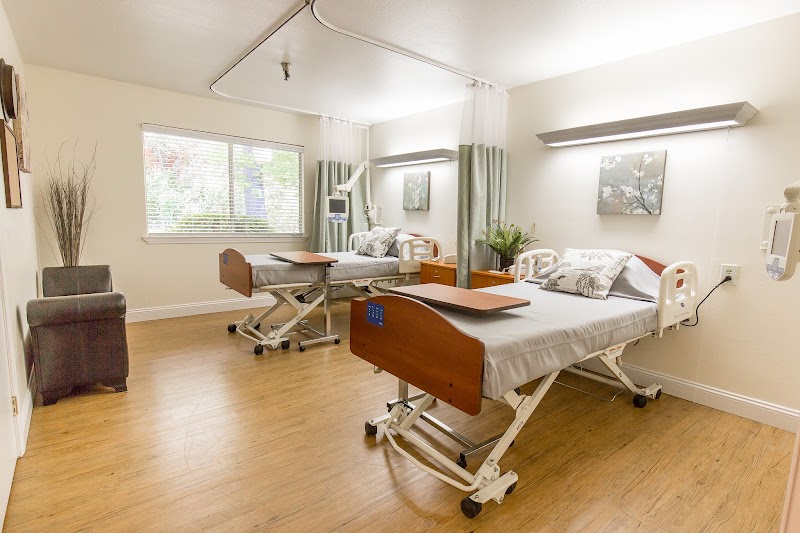
How is Windsor El Camino Staffed?

CMS rates WINDSOR EL CAMINO CARE CENTER's staffing level at 3 out of 5 stars, which is average compared to other nursing homes. Staff turnover is 53%, compared to the California average of 46%. RN turnover specifically is 67%, which is notably high. RNs provide skilled clinical oversight, so turnover in this role can affect medical care quality.

What Have Inspectors Found at Windsor El Camino?

State health inspectors documented 78 deficiencies at WINDSOR EL CAMINO CARE CENTER during 2022 to 2025. These included: 78 with potential for harm. While no single deficiency reached the most serious levels, the total volume warrants attention from prospective families.
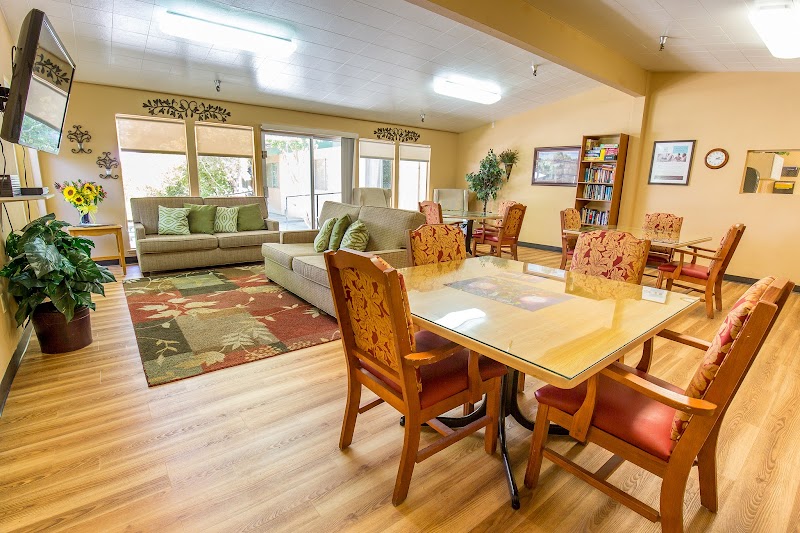
Who Owns and Operates Windsor El Camino?

WINDSOR EL CAMINO CARE CENTER is owned by a for-profit company. For-profit facilities operate as businesses with obligations to shareholders or private owners. The facility is operated by WINDSOR, a chain that manages multiple nursing homes. With 178 certified beds and approximately 162 residents (about 91% occupancy), it is a mid-sized facility located in CARMICHAEL, California.
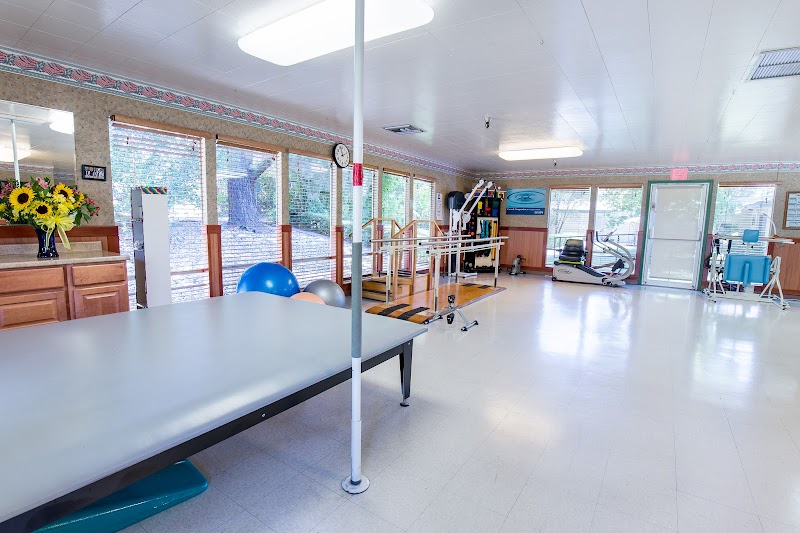
How Does Windsor El Camino Compare to Other California Nursing Homes?

Compared to the 100 nursing homes in California, WINDSOR EL CAMINO CARE CENTER's overall rating (2 stars) is below the state average of 3.1, staff turnover (53%) is near the state average of 46%, and health inspection rating (2 stars) is below the national benchmark.

What Should Families Ask When Visiting Windsor El Camino?

Based on this facility's data, families visiting should ask: "What safeguards and monitoring systems are in place to protect residents from abuse or neglect?" "Can I visit during a mealtime to observe dining assistance and food quality?" "How do you handle medical emergencies, and what is your hospital transfer rate?" "Can I speak with family members of current residents about their experience?" These questions are particularly relevant given the substantiated abuse finding on record.

Is Windsor El Camino Safe?

Based on CMS inspection data, WINDSOR EL CAMINO CARE CENTER has documented safety concerns. The facility has 1 substantiated abuse finding (meaning confirmed case of resident harm by staff or other residents). The facility has a 2-star overall rating and ranks #100 of 100 nursing homes in California. Families considering this facility should ask detailed questions about what corrective actions have been taken since these incidents.

Do Nurses at Windsor El Camino Stick Around?

WINDSOR EL CAMINO CARE CENTER has a staff turnover rate of 53%, which is 7 percentage points above the California average of 46%. Moderate turnover is common in nursing homes, but families should still ask about staff tenure and how the facility maintains care continuity when employees leave.

Was Windsor El Camino Ever Fined?

WINDSOR EL CAMINO CARE CENTER has no federal fines on record. CMS issues fines when nursing homes fail to meet care standards or don't correct problems found during inspections. The absence of fines suggests the facility has either maintained compliance or corrected any issues before penalties were assessed. This is a positive indicator, though families should still review recent inspection reports for the full picture.

Is Windsor El Camino on Any Federal Watch List?

WINDSOR EL CAMINO CARE CENTER is not on any federal watch list. The most significant is the Special Focus Facility (SFF) program, which identifies the bottom 1% of nursing homes nationally based on persistent, serious quality problems. Not being on this list means the facility has avoided the pattern of deficiencies that triggers enhanced federal oversight. This is a positive indicator, though families should still review the facility's inspection history directly.