EL CENTRO POST-ACUTE CARE

1700 S. IMPERIAL AVE, EL CENTRO, CA 92243 (760) 352-8471
For profit - Limited Liability company 123 Beds BAYSHIRE SENIOR COMMUNITIES Data: November 2025
Trust Grade
43/100
#792 of 1155 in CA
Last Inspection: September 2024

Within standard 12-15 month inspection cycle. Federal law requires annual inspections.

Overview

El Centro Post-Acute Care has a Trust Grade of D, which means it is below average and has some concerns regarding care quality. It ranks #792 out of 1155 facilities in California, placing it in the bottom half, and #2 out of 3 in Imperial County, indicating that only one local option is better. The facility's trend is worsening, with issues increasing from 3 in 2023 to 16 in 2024. Staffing is a significant weakness, rated at 1 out of 5 stars, and the turnover rate is average at 42%. Additionally, there were serious incidents reported, including a failure to protect a resident from sexual abuse, which resulted in hospitalization for evaluation, and a lack of proper waste disposal that could affect all residents. Overall, while the facility has some good quality measures, it struggles with serious safety concerns and inadequate staffing.

Trust Score
D
43/100
In California
#792/1155
Bottom 32%
Safety Record
Moderate
Needs review
Inspections
Getting Worse
3 → 16 violations
Staff Stability
○ Average
42% turnover. Near California's 48% average. Typical for the industry.
Penalties
○ Average
$10,254 in fines. Higher than 63% of California facilities. Some compliance issues.
Skilled Nurses
⚠ Watch
Each resident gets only 13 minutes of Registered Nurse (RN) attention daily — below average for California. Fewer RN minutes means fewer trained eyes watching for problems.
Violations
⚠ Watch
52 deficiencies on record. Higher than average. Multiple issues found across inspections.
★★☆☆☆
2.0
Overall Rating
★☆☆☆☆
1.0
Staff Levels
★★★★☆
4.0
Care Quality
★★★☆☆
3.0
Inspection Score
Stable
2023: 3 issues
2024: 16 issues

The Good

  • 4-Star Quality Measures · Strong clinical quality outcomes
  • Full Sprinkler Coverage · Fire safety systems throughout facility
  • No fines on record
  • Staff turnover below average (42%)

    6 points below California average of 48%

Facility shows strength in quality measures, fire safety.

The Bad

2-Star Overall Rating

Below California average (3.1)

Below average - review inspection findings carefully

Staff Turnover: 42%

Near California avg (46%)

Typical for the industry

Federal Fines: $10,254

Below median ($33,413)

Minor penalties assessed

Chain: BAYSHIRE SENIOR COMMUNITIES

Part of a multi-facility chain

Ask about local staffing decisions and management

The Ugly 52 deficiencies on record

1 actual harm
Sept 2024 1 deficiency
CONCERN (D) 📢 Someone Reported This

A family member, employee, or ombudsman was alarmed enough to file a formal complaint

Potential for Harm - no one hurt, but risky conditions existed

Deficiency F0697 (Tag F0697)

Could have caused harm · This affected 1 resident

**NOTE- TERMS IN BRACKETS HAVE BEEN EDITED TO PROTECT CONFIDENTIALITY** Based on observation, interview, and record review, the facility failed to administer pain medication for the appropriate pain s...

Read full inspector narrative →
**NOTE- TERMS IN BRACKETS HAVE BEEN EDITED TO PROTECT CONFIDENTIALITY** Based on observation, interview, and record review, the facility failed to administer pain medication for the appropriate pain scale as indicated by the physician ' s orders for one of two residents (Resident 1) reviewed for pain management. This deficient practice had the potential to cause Resident 1 further discomfort and pain. Findings: A review of the facility ' s admission Record indicated Resident 1 was admitted on [DATE] with diagnoses which included a fracture of the right humerus (a broken right upper arm bone), lack of coordination, and muscle weakness. A review of the Minimum Data Set (MDS, an assessment tool) dated 9/21/24, indicated Resident 1 was cognitively intact with a BIMS (assessment of cognition) score of 14. A review of the physician ' s orders dated 9/20/24 indicated, Oxycodone HCL Oral Tablet 5mg Give 1 tablet by mouth every 4 hours as needed for moderate pain . and Oxycodone HCl Tablet 10mg Give 1 tablet every 4 hours as needed for Severe Pain Score 7-10 for 7 days . On 9/24/2024 at 12:37 P.M., an observation was conducted in Resident 1 ' s room. Resident 1 was sitting in her wheelchair, and her right arm was placed in a sling. Resident 1 was observed with facial grimacing, quietly moaning, with the left hand placed over the right shoulder. Resident 1 stated she was in pain and wanted pain medication. During a medication pass observation on 9/24/24 at 12:47 P.M., Licensed Nurse (LN 1) asked Resident 1 to rate her pain on a scale of one to ten, with ten being the worst pain. Resident 1 stated she had 8/10 pain to the right arm. LN 1 was observed reviewing Resident 1 ' s Medication Administration Record. LN 1 took a medication out of the narcotic drawer and placed one pill into a medication cup, and administered it to Resident 1. LN 1 stated [Resident 1] can have Oxycodone 5mg for severe pain, but if her pain is less than 7, I give her Tylenol . On 9/24/24 at 1:10 P.M., a concurrent interview and record review was conducted with LN 1. A review of the physician ' s orders dated 9/20/24 indicated, Oxycodone HCL Oral Tablet 5mg Give 1 tablet by mouth every 4 hours as needed for moderate pain . and Oxycodone HCl Tablet 10mg Give 1 tablet every 4 hours as needed for Severe Pain Score 7-10 for 7 days . LN 1 stated .(Resident 1) is allowed to have 10mg for severe pain .but I didn ' t see it . LN 1 stated since Resident 1 reported severe pain, Oxycodone 10mg should have been administered. LN 1 stated it was important to manage pain .to make sure the resident is comfortable, its important for healing also . A review of Resident 1 ' s EMAR (Electronic Medical Administration Record) indicated Resident 1 received Oxycodone 5mg with a severe pain level instead of Oxycodone 10mg, on the following days: -9/21/24 at 3:09 A.M. for a pain level of 9/10 -9/21/24 at 12:24 P.M. for a pain level of 7/10 -9/21/24 at 4:50 P.M. for a pain level of 7/10 -9/22/24 at 5:45 A.M. for a pain level of 9/10 -9/24/24 at 1:13 P.M. for a pain level of 8/10 On 9/24/24 at 2 P.M., an interview was conducted with the Director of Nursing (DON). The DON stated her expectation was .for the resident to maintain a manageable pain level . The DON stated Resident 1 should have been given Oxycodone 10mg for a pain level of 7 or above, instead of Oxycodone 5mg. The DON stated by not administering the appropriate dose to address Resident 1 ' s pain, Resident 1 was at risk for further discomfort and a delay of healing. A review of the facility policy titled Pain—Clinical Protocol revised 10/22 indicated, .The staff and physician will identify the characteristics of pain such as location, intensity, frequency, pattern, and severity .staff will use a consistent approach and a standardized pain assessment instrument appropriate to the resident ' s cognitive level .Staff will provide the elements of .appropriate physical .interventions .
Sept 2024 11 deficiencies
CONCERN (D)

Potential for Harm - no one hurt, but risky conditions existed

Assessment Accuracy (Tag F0641)

Could have caused harm · This affected 1 resident

**NOTE- TERMS IN BRACKETS HAVE BEEN EDITED TO PROTECT CONFIDENTIALITY** Based on interview, record review, facility document review, and facility policy review, the facility failed to ensure the Minim...

Read full inspector narrative →
**NOTE- TERMS IN BRACKETS HAVE BEEN EDITED TO PROTECT CONFIDENTIALITY** Based on interview, record review, facility document review, and facility policy review, the facility failed to ensure the Minimum Data Set (MDS, a resident assessment tool used to identify resident care needs) was completed accurately for 2 (Resident #60 and Resident #118) of 24 sampled residents reviewed for accurate assessments. Findings included: A facility policy titled, Comprehensive Assessments, Minimum Data Set (MDS), revised March 2022, revealed, 8. Accuracy of MDS Data: d. All sections of the MDS must be completed with information that accurately reflects the resident's status during the assessment reference period. 1. An admission Record revealed the facility admitted Resident #60 on 01/06/2023. According to the admission Record, the resident had a medical history that included a diagnosis of schizophrenia. An annual MDS, with an Assessment Reference Date (ARD) of 01/11/2024, revealed Resident #60 had a Brief Interview for Mental Status (BIMS) score of 5, which indicated the resident had severe cognitive impairment. The MDS indicated Resident #60 was not considered by the state Level II PASRR (Pre-admission Screening and Resident Review) process to have a serious mental illness and/or intellectual disability or a related condition. A letter from the State of California- Health and Human Services Agency Department of Health Care Services, dated 01/24/2023, revealed a Level II evaluation was completed for Resident #60 on 01/23/2023. The attached, Preadmission Screening and Resident Review (PASRR) Individualized Determination Report, indicated Resident #60 required specialized services from a nursing facility due to a medical and/or a mental health condition. The MDS Coordinator was interview on 09/11/2024 at 2:46 PM. The MDS Coordinator stated Resident #60's MDS was not accurate, and the answer for the PASRR Level II section was not correct. The Director of Nursing (DON) was interviewed on 09/12/2024 at 12:13 PM. The DON stated she expected the MDS to be accurate. The Executive Director was interviewed on 09/12/2024 at 12:18 PM. The Executive Director stated he expected the MDS to be accurate. 2. An admission Record revealed the facility admitted Resident #118 on 05/28/2024. According to the admission Record, the resident had a medical history that included diagnoses of cerebral infarction, type two diabetes mellitus, and chronic kidney disease. Further review revealed Resident #118 discharged to their home on [DATE]. An admission MDS, with an Assessment Reference Date (ARD) of 06/04/2024, revealed Resident #118 had a Brief Interview for Mental Status (BIMS) score of 4, which indicated the resident had severe cognitive impairment. Resident #118's Care Plan, cancelled on 06/19/2024, indicated the resident wished to discharge to their home or another facility after completing skilled nursing and rehabilitation services. Interventions directed staff to arrange post skilled nursing facility support as needed with resources such as home health, therapy, nursing services, pharmacy services, and appointment follow-up services. Resident #118's Order Summary Report, contained an order dated 06/13/2024, that indicated the resident's last covered day (LCD) was 06/17/2024, and the resident was to discharge home on [DATE] with home health. Resident #118's nurse Progress Notes, dated 06/18/2024, revealed Resident #118 left the facility with their responsible party. The note revealed that following discharge, the nurse called Resident #118's responsible party who confirmed the resident was safe at home. Resident #118's Skilled Nursing - Notice of Proposed Transfer/Discharge, dated 06/18/2024, revealed Resident #118 discharged home due to improved health and the resident no longer required the services of the facility. A discharge MDS, with an ARD of 06/18/2024, revealed Resident #118 had a planned discharge with no anticipated return. Further review revealed Resident #118 discharged to a short-term hospital, not to their home. During an interview on 09/11/2024 at 2:46 PM, the MDS Coordinator stated it was important to have an accurate MDS to ensure adequate care and services were provided to the residents. The MDS Coordinator further stated Resident #118's discharge MDS was inaccurate due to indicating the resident was discharged to an acute care hospital when the resident went home instead. During an interview on 09/12/2024 at 12:13 PM, the Director of Nursing (DON) stated MDS accuracy was important for billing purposes and expected each resident's MDS to be accurate. During an interview on 09/12/2024 at 12:18 PM, the Executive Director stated he expected a resident's MDS to be accurate because it was important for providing adequate care.
CONCERN (D)

Potential for Harm - no one hurt, but risky conditions existed

Quality of Care (Tag F0684)

Could have caused harm · This affected 1 resident

Based on observation, interview, record review, and facility policy review, the facility failed to ensure a physician's order for treatment of a diabetic ulcer was obtained for 1 (Resident #43) of 2 r...

Read full inspector narrative →
Based on observation, interview, record review, and facility policy review, the facility failed to ensure a physician's order for treatment of a diabetic ulcer was obtained for 1 (Resident #43) of 2 residents reviewed for skin conditions. Findings included: A facility policy titled, Wound Treatment Management, dated 2001, revealed, 1. Initial Assessment and Documentation a. Wound assessment: Upon identification of a wound, a licensed nurse (RN [Registered Nurse] or LVN [Licensed Vocational Nurse]) will: Conduct an initial wound assessment including location, size, depth, appearance, drainage, any signs of infection. Document the wound's characteristics in the resident's medical record and update the care plan. Notify the attending physician to obtain wound treatment orders. b. Physician orders: The attending physician will provide written orders for wound care, specifying the type of treatment (e.g. [exempli gratia, for example], cleansing solution, dressing type, frequency of dressing changes, etc. [et cetera; and so forth]). Ensure the orders are clear and concise, and document them in the resident's medical record. An admission Record indicated the facility originally admitted Resident #43 on 06/13/2024 and re-admitted the resident on 09/04/2024. According to the admission Record, the resident had a medical history that included diagnoses of type 2 diabetes mellitus and scar conditions and fibrosis of the skin. An admission Minimum Data Set (MDS), with an Assessment Reference Date (ARD) of 06/15/2024, revealed Resident #43 had a Brief Interview for Mental Status (BIMS) score of 13, which indicated the resident had intact cognition. The MDS also revealed Resident #43 had a diabetic foot ulcer. According to the MDS, skin/ulcer treatment included a turning/repositioning program, nutrition or hydration intervention to manage skin problems, and application of dressings to the feet. Resident #43's care plan included an undated focus area that indicated Resident #43 had a diabetic ulcer to the left dorsum hallux (big toe) and was at risk for worsening of the ulcer and amputation due to the disease process. Interventions directed staff to notify the physician as indicated. Resident #43's Progress Notes, dated 09/02/2024, revealed the resident was admitted to the hospital. Further review revealed Progress Notes dated 09/04/2024 indicated the resident was admitted back to the facility. Resident #43's hospital History and Physical dated 09/02/2024, revealed the resident had chronic infection of the left big toe. Resident #43's Skilled Nursing-admission Initial Eval [Evaluation] dated 09/04/2024, revealed Registered Nurse (RN) #10 documented the resident had a diabetic wound to the left toe. According to the evaluation, the physician was notified of the resident's admission. Resident #43's Wound Evaluation note dated 09/05/2024, completed by RN #6, who was the treatment nurse, revealed the resident had a diabetic ulcer. The note revealed the ulcer was located on the left foot 1st digit (hallux) and was 1.1 centimeters (cm) in length and 1.09 cm in width. The note revealed the wound bed had eschar (black, dead tissue), evidence of infection that included redness/inflammation, and the surrounding tissue was calloused. The note revealed treatment included povidone iodine, mechanical debridement, and dry gauze. According to the note, additional care included a heel suspension/protection device, a moisture barrier, and moisture control. The note revealed the physician was notified of the treatment and ulcer. Per the note, the ulcer was a Chronic stalled wound that was painted with iodine and left open to air. The note revealed there were no open areas or drainage, and foam heel protectors were applied bilaterally. Resident #43's Order Summary Report, with an order date range of 09/04/2024 to 09/30/2024, revealed no active order for treatment to the resident's toe. Resident #43's September 2024 Treatment Administration Record [TAR], revealed staff documented that the left hallux was painted with iodine every day shift from 09/01/2024 through 09/03/2024. The TAR revealed the treatment was discontinued on 09/03/2024. Per the TAR, there was no documented evidence a treatment was provided to the left hallux from 09/04/2024, when the resident was readmitted to the facility, through 09/09/2024. An observation on 09/09/2024 at 12:02 PM of Resident #43 revealed the resident's left foot big toe had a black, crusty discoloration. During a concurrent interview, Resident #43 stated the facility staff had not provided treatment to the toe since re-admission from the hospital. An interview on 09/11/2024 at 8:58 AM with RN #6, revealed it was the responsibility of the admitting nurse to complete an assessment and document any skin issues. RN #6 stated the admitting nurse must also contact the physician and obtain physician orders for treatment. RN #6 revealed she completed the skin assessment and treatment for Resident #43 on 09/05/2024; however, she was not aware there was not an order for care. RN #6 stated all the previous orders were discontinued on 09/03/2024 after the resident was discharged to the hospital. RN #6 stated when the resident returned, the wound care order was not resumed. RN #6 stated she failed to ensure an order was active for care for Resident #43's toe. RN #6 reviewed Resident #43's medical chart and was unable to locate any evidence wound care had been completed on 09/07/2024, 09/08/2024, or 09/09/2024 (Friday through Sunday). RN #6 stated Licensed Vocational Nurse (LVN) #7 was responsible for completing wound/skin care treatment over the weekend. During a follow-up interview on 09/11/2024 at 9:45 AM, RN #6 stated she had not notified the physician, and failed to get an order for skin care for Resident #43. She stated it was an error on her part for failing to obtain an order. During an interview on 09/11/2024 at 9:26 AM, LVN #7 stated staff must receive skin care orders when a resident is admitted . LVN #7 stated he had not completed skin care for Resident #43 since the resident was readmitted because there was no order. An interview with LVN #8 on 09/11/2024 at 10:28 AM, revealed he was the assigned nurse for Resident #43 for the weekend and had not completed wound/skin care for Resident #43. During an interview on 09/12/2024 at 7:57 AM, Nurse Practitioner (NP) #9 stated when a resident was admitted to the facility, a nurse notified him. He stated that he was aware Resident #43 had discharged and returned to the facility from the hospital. He stated there was a lapse in the resident's treatment of the left big toe; however, the few days the treatment lapsed would not have made a significant difference on the wound. NP #9 stated regardless of the healing, there should not have been any lapse in the resident's treatment. An interview with the Director of Nursing (DON) on 09/12/2024 at 1:07 PM, revealed the staff should have reviewed and resumed the order for Resident #43's skin/wound care treatment. During an interview with the Executive Director on 09/12/2024 at 1:23 PM, he stated he expected the staff to provide quality care. He stated staff should get physician orders and follow the orders.
CONCERN (D)

Potential for Harm - no one hurt, but risky conditions existed

Pharmacy Services (Tag F0755)

Could have caused harm · This affected 1 resident

Based on interview, record review, and facility policy review, the facility failed to ensure physician ordered medications were available for 2 (Resident #75 and Resident #171) of 6 residents reviewed...

Read full inspector narrative →
Based on interview, record review, and facility policy review, the facility failed to ensure physician ordered medications were available for 2 (Resident #75 and Resident #171) of 6 residents reviewed for pharmacy services. Findings included: 1. A facility policy titled, Administering Medications, revised in 04/2019, specified, 4. Medications are administered in accordance with prescriber order, including any required time frame. An admission Record indicated the facility admitted Resident #75 on 08/06/2024. According to the admission Record, the resident had a medical history that included diagnoses of gastro-esophageal reflux disease (GERD) and an acute peptic ulcer. An admission Minimum Data Set (MDS), with an Assessment Reference Date (ARD) of 08/12/2024, revealed Resident #75 had a Brief Interview for Mental Status (BIMS) score of 11, which indicated the resident had moderate cognitive impairment. Resident #75's Order Summary Report, dated 09/12/2024, contained an order, dated 08/06/2024, for pantoprazole sodium 40 milligrams (mg) by mouth daily for GERD. Resident #75's Medication Administration Record [MAR], for the timeframe from 09/01/2024 through 09/11/2024, revealed staff documented that Resident #75's pantoprazole sodium was not available for administration from 09/03/2024 through 09/08/2024. During an interview on 09/09/2024 at 10:03 AM, Resident #75 stated they were not getting their stomach medications. During a follow-up interview on 09/11/2024 at 1:38 PM, Resident #75 stated they still had not received their stomach medication. Resident #75 stated they were not sure what the name of the medication was but knew it was for their peptic ulcer. Resident #75 stated they had not received the medication since they had been at the facility. During a telephone interview on 09/11/2024 at 2:28 PM, the Consultant Pharmacist stated a 14-day supply of Resident #75's pantoprazole sodium had been dispensed on 08/06/2024 and 09/07/2024. During an interview on 09/12/2024 at 11:40 AM, Licensed Vocational Nurse (LVN) #4 stated if a medication was not available after checking the medication cart, then the process was to go to the medication dispensing machine to see if it was available there. LVN #4 stated if the medication was not in the medication dispensing machine, staff should call the pharmacy. During an interview on 09/12/2024 at 1:00 PM, the Assistant Director of Nursing (ADON) stated Resident #75's medication for GERD had been destroyed. The ADON stated he did not know why the medication was destroyed, but staff were looking into it. During an interview on 09/12/2024 at 1:25 PM, the Director of Nursing (DON) stated, if medication was not available on the medication cart, staff were required to check the medication dispensing system and the emergency kit for the medication, and, if there, it should be given. The DON stated she expected physician-ordered medications to be available for administration. The DON stated Resident #75 should have received the pantoprazole. 2. An admission Record indicated the facility admitted Resident #171 on 09/05/2024. According to the admission Record, the resident had a medical history that included diagnoses of osteomyelitis and diabetes. Resident #171's Order Summary Report, dated 09/11/2024, contained an order, dated 09/05/2024, for ketotifen fumarate ophthalmic solution 0.035% one drop in both eyes every morning and at bedtime for itchiness. An observation of medication pass on 09/10/2024 at 9:34 AM, with Licensed Vocational Nurse (LVN) #2 revealed she prepared Resident #171's medications. LVN #2 did not administer ketotifen fumarate ophthalmic solution to the resident. During an interview on 09/10/2024 at 11:56 AM, Resident #171 stated they did not receive their eye drops that morning because they had to be ordered. During an interview on 09/10/2024 at 2:11 PM, LVN #2 stated Resident #171's eye drops were not administered because they were not available. LVN #2 said the eye drops had not been administered since the resident admitted to the facility because they were either on back order or the insurance did not cover them. Resident #171's Medication Administration Record [MAR], for the timeframe from 09/01/2024 to 09/10/2024, revealed Resident #171's ketotifen fumarate had not been available for administration from 09/06/2024 through 09/09/2024. During a telephone interview on 09/11/2024 at 2:28 PM, the Consultant Pharmacist indicated the ketotifen fumarate for Resident #171 could have been an over-the-counter medication. During an interview on 09/12/2024 at 1:25 PM, the Director of Nursing (DON) stated, if medication was not available on the medication cart, staff were required to check the medication dispensing system and the emergency kit for the medication, and, if there, it should be given. The DON stated she expected physician-ordered medications to be available for administration. The DON stated Resident #171 should have received their eye drops. During an interview on 09/12/2024 at 1:58 PM, the Executive Director indicated he expected medications to be available and, if they were not, a way needed to be found to make the medications available.
CONCERN (D)

Potential for Harm - no one hurt, but risky conditions existed

Drug Regimen Review (Tag F0756)

Could have caused harm · This affected 1 resident

Based on interview, record review, facility document review, and facility policy review, the facility failed to ensure pharmacy recommendations were followed up on timely for 1 (Resident #82) of 6 res...

Read full inspector narrative →
Based on interview, record review, facility document review, and facility policy review, the facility failed to ensure pharmacy recommendations were followed up on timely for 1 (Resident #82) of 6 residents reviewed for unnecessary medications. Findings included: A facility policy titled, Pharmacy Medication Regimen Review, revised in 10/2018, specified, The consultant pharmacist documents in a separate written report any found irregularities. The policy indicated, e. Otherwise, if an irregularity does not require urgent action, attending physician is to be contacted by nursing using the provided recommendation forms. The policy also indicated, The physician may choose to decline the pharmacist's suggestion either directly on the recommendation form, through a telephone order with a licensed nurse, or within the resident's chart (such as in a progress note); but a response must be noted within 30 days with rationale documented in the resident's medical record. An admission Record indicated the facility admitted Resident #82 on 03/09/2022. According to the admission Record, the resident had a medical history that included diagnoses of dementia and major depressive disorder. A quarterly Minimum Data Set (MDS), with an Assessment Reference Date (ARD) of 06/16/2024, revealed Resident #82 had a Brief Interview for Mental Status (BIMS) score of 5, which indicated the resident had severe cognitive impairment. The MDS revealed the resident received an antianxiety medication during the assessment period. Resident #82's Order Summary Report, dated 09/12/2024, contained an order dated 05/30/2024 for lorazepam 0.5 milligrams (mg) one tablet by mouth every six hours as needed for anxiety/restlessness. The order did not indicate an end date. A Note to Attending Physician/Prescriber for Resident #82 from the Consultant Pharmacist, dated 06/28/2024, specified, This resident has PRN [pro re nata, as needed] Lorazepam 0.5 mg PO [by mouth] Q6H [every six hours] for anxiety. PRN psychotropic medications are limited to 14 days. The Note to Attending Physician/Prescriber also indicated, Please add a length of therapy. Further review revealed the physician had not signed the document. Another Note to Attending Physician/Prescriber for Resident #82 from the Consultant Pharmacist, dated 07/26/2024, specified, This resident has PRN Lorazepam 0.5 mg PO Q6H for anxiety. PRN psychotropic medications are limited to 14 days. The Note to Attending Physician/Prescriber also indicated, Please add a length of therapy. Further review revealed the physician had not signed the document. Resident #82's September 2024 Medication Administration Record [MAR] contained a transcription of an order for lorazepam 0.5 mg one tablet by mouth every six hours as needed with a start date of 05/30/2024. Documentation indicated the medication had been administered to the resident seven times during the month. During a telephone interview on 09/11/2024 at 2:28 PM, the Consultant Pharmacist stated she reviewed each resident's chart monthly. The Consultant Pharmacist stated on the June and July reviews she had noted there was no stop date for Resident #82's PRN psychotropic medication and advised the facility it needed a stop date. The Consultant Pharmacist said it had not yet been done. During an interview on 09/12/2024 at 1:00 PM, the Assistant Director of Nursing (ADON) stated he and the Director of Nursing (DON) were both responsible for the completion of the pharmacy recommendations. The ADON stated if there was something the physician needed to review then the recommendation would be sent to him via facsimile. The ADON stated he did not know why Resident #82's pharmacy recommendations for June and July were not addressed. During an interview on 09/12/2024 at 1:25 PM, the DON stated PRN psychotropic medications needed to have a 14-day stop date. The DON said she did not understand her role in the pharmacy recommendations, and she had been placing them in the nurse practitioner's box. During an interview on 09/12/2024 at 1:58 PM, the Executive Director stated he did not know why the pharmacy recommendations for June and July were not followed. The Executive Director said it was facility practice to address the recommendations.
CONCERN (D)

Potential for Harm - no one hurt, but risky conditions existed

Medication Errors (Tag F0758)

Could have caused harm · This affected 1 resident

Based on interview, record review, facility document review, and facility policy review, the facility failed to ensure an as-needed (PRN, pro re nata) order for psychotropic medication specified the d...

Read full inspector narrative →
Based on interview, record review, facility document review, and facility policy review, the facility failed to ensure an as-needed (PRN, pro re nata) order for psychotropic medication specified the duration of use for 1 (Resident #82) of 6 residents reviewed for unnecessary medications. Findings included: A facility policy titled, Psychotropic Medication Use, dated 07/2022, specified, a. PRN orders for psychotropic medications are limited to 14 days. An admission Record indicated the facility admitted Resident #82 on 03/09/2022. According to the admission Record, the resident had a medical history that included diagnoses of dementia and major depressive disorder. A quarterly Minimum Data Set (MDS), with an Assessment Reference Date (ARD) of 06/16/2024, revealed Resident #82 had a Brief Interview for Mental Status (BIMS) score of 5, which indicated the resident had severe cognitive impairment. The MDS revealed the resident received an antianxiety medication during the assessment period. Resident #82's Order Summary Report, dated 09/12/2024, contained an order dated 05/30/2024 for lorazepam 0.5 milligrams (mg) one tablet by mouth every six hours as needed for anxiety/restlessness. The order did not indicate an end date. A Note to Attending Physician/Prescriber for Resident #82 from the Consultant Pharmacist, dated 06/28/2024, specified, This resident has PRN Lorazepam 0.5 mg PO [by mouth] Q6H [every six hours] for anxiety. PRN psychotropic medications are limited to 14 days. The Note to Attending Physician/Prescriber also indicated, Please add a length of therapy. Further review revealed the physician had not signed the document. Another Note to Attending Physician/Prescriber for Resident #82 from the Consultant Pharmacist, dated 07/26/2024, specified, This resident has PRN Lorazepam 0.5 mg PO Q6H for anxiety. PRN psychotropic medications are limited to 14 days. The Note to Attending Physician/Prescriber also indicated, Please add a length of therapy. Further review revealed the physician had not signed the document. During a telephone interview on 09/11/2024 at 2:28 PM, the Consultant Pharmacist stated she reviewed each resident's chart monthly. The Consultant Pharmacist stated PRN psychotropic medications required a 14-day stop date. The Consultant Pharmacist said Resident #82's lorazepam did not have a 14-day stop date. During an interview on 09/12/2024 at 11:40 AM, Licensed Vocational Nurse (LVN) #4 stated Resident #82 was administered PRN lorazepam when they got anxious and agitated. LVN #4 said the lorazepam should have a 14-day stop date. During an interview on 09/12/2024 at 1:00 PM, the Assistant Director of Nursing (ADON) stated PRN psychotropic medications required a 14-day stop date. The ADON stated Resident #82's PRN lorazepam should have had a 14-day stop date and was unsure why it did not. During an interview on 09/12/2024 at 1:25 PM, the Director of Nursing (DON) stated PRN psychotropic medications needed a 14-day stop date. The DON said she expected for the 14-day stop date to be on the physician order. During an interview on 09/12/2024 at 1:58 PM, the Executive Director stated he expected for the regulation to be followed.
CONCERN (D)

Potential for Harm - no one hurt, but risky conditions existed

Unnecessary Medications (Tag F0759)

Could have caused harm · This affected 1 resident

Based on observation, interview, record review, and facility policy review, the facility failed to ensure a medication error rate less than 5 percent (%). The facility had 2 medication errors out of 2...

Read full inspector narrative →
Based on observation, interview, record review, and facility policy review, the facility failed to ensure a medication error rate less than 5 percent (%). The facility had 2 medication errors out of 28 opportunities, affecting 2 (Resident #3 and Resident #171) of 6 residents reviewed during the medication administration task, resulting in a medication error rate of 7.14%. Findings included: A facility policy titled, Administering Medications, revised in 04/2019, specified, 4. Medications are administered in accordance with prescriber orders, including any required time frame. 1. An admission Record indicated the facility admitted Resident #3 on 06/28/2024. According to the admission Record, the resident had a medical history that included diagnoses of protein-calorie malnutrition and osteoarthritis. An admission Minimum Data Set (MDS) with an Assessment Reference Date (ARD) of 06/30/2024, revealed Resident #3 had modified independence with cognitive skills for daily decision making and had a short-term and long-term memory problem per a staff assessment of mental status (SAMS). The MDS indicated the resident had active diagnoses that included malnutrition and anemia. Resident #3's Order Summary Report, with active orders as of 09/11/2024, revealed an order dated 06/28/2024 for vitamin D3 1000 units one capsule by mouth one time a day for supplement. An observation of medication pass on 09/10/2024 at 8:27 AM, with Licensed Vocational Nurse (LVN) #1, revealed she prepared Resident #3's medications, including vitamin D3 2000 units one tablet and administered the vitamin D3 2000-unit tablet to the resident. During an interview on 09/10/2024 at 11:59 AM, LVN #1 retrieved a bottle of vitamin D3 from the medication cart and stated it was the vitamin D3 that was administered to Resident #3. LVN #1 confirmed Resident #3's physician order was for vitamin D3 1000 units but stated vitamin D3 2000 units was the only vitamin D3 that was available. LVN #1 stated she should contact the physician to notify them that the vitamin D3 1000-unit dose was not available. 2. An admission Record indicated the facility admitted Resident #171 on 09/05/2024. According to the admission Record, the resident had a medical history that included diagnoses of osteomyelitis and type 2 diabetes mellitus. Resident #171's Order Summary Report, dated 09/11/2024, contained an order dated 09/05/2024 for ketotifen fumarate ophthalmic solution 0.035% one drop in both eyes every morning and at bedtime for itchiness. An observation of medication pass on 09/10/2024 at 9:34 AM, with LVN #2 revealed she prepared Resident #171's medications. LVN #2 did not administer ketotifen fumarate ophthalmic solution to the resident. During an interview on 09/10/2024 at 11:56 AM, Resident #171 stated they did not receive their eye drops that morning because they had to be ordered. During an interview on 09/10/2024 at 2:11 PM, LVN #2 stated Resident #171's eye drops were not administered because they were not available. LVN #2 said the eye drops had not been administered since the resident admitted to the facility because they were either on back order or the insurance did not cover them. During an interview on 09/12/2024 at 1:25 PM, the Director of Nursing (DON) stated her expectation was for the medication error rate to be below the required rate. During an interview on 09/12/2024 at 1:58 PM, the Executive Director stated his expectation was for medications to be available and for staff to follow the regulations.
CONCERN (D)

Potential for Harm - no one hurt, but risky conditions existed

Deficiency F0760 (Tag F0760)

Could have caused harm · This affected 1 resident

Based on interview, record review, and facility policy review, the facility failed to ensure a significant medication error did not occur for 1 (Resident #93) of 6 residents reviewed for unnecessary m...

Read full inspector narrative →
Based on interview, record review, and facility policy review, the facility failed to ensure a significant medication error did not occur for 1 (Resident #93) of 6 residents reviewed for unnecessary medications. Specifically, facility staff failed to follow a physician's order to hold losartan potassium and metoprolol tartrate (medications used to treat high blood pressure) when the resident's systolic blood pressure (SBP, the top number in a blood pressure reading) was less than 120 millimeters of mercury (mmHg). Findings included: A facility policy titled, Administering Medications, revised in 04/2019, specified, 4. Medications are administered in accordance with prescriber orders, including any required time frame. The policy also indicated, 11. The following information is checked/verified for each resident prior to administering medications: a. Allergies to medications; and b. Vital signs, if necessary. An admission Record indicated the facility admitted Resident #93 on 06/10/2024. According to the admission Record, the resident had a medical history that included diagnoses of cerebral ischemia (diminished blood flow to the brain) and atrial fibrillation (irregular heartbeat). An admission Minimum Data Set (MDS), with an Assessment Reference Date (ARD) of 06/12/2024, revealed Resident #93 had a Brief Interview for Mental Status (BIMS) score of 4, which indicated the resident had severe cognitive impairment. The MDS indicated the resident had active diagnoses of atrial fibrillation or other dysrhythmias and cerebral ischemia. Resident #93's Order Summary Report, dated 09/12/2024, contained an order dated 06/10/2024 for losartan potassium (antihypertensive) 25 milligrams (mg) one tablet by mouth two times a day, with instructions to hold if the resident's SBP was less than 120 mmHg. Resident #93's Order Summary Report, dated 09/12/2024, also contained an order dated 07/28/2024 for metoprolol tartrate (antihypertensive) 25 mg one tablet by mouth two times a day, with instructions to hold if the resident's SBP was less than 120 mmHg or their heart rate (HR) was less than 60 beats per minute. Resident #93's Medication Administration Record [MAR], for the timeframe from 09/01/2024 through 09/11/2024, revealed staff documented that they administered losartan potassium 25 mg to the resident when the resident's SBP was less than 120 mmHg on 09/01/2024 at 6:00 PM, 09/03/2024 at 6:00 PM, 09/06/2024 at 6:00 PM, 09/07/2024 at 9:00 AM, 09/08/2024 at 6:00 PM, and 09/09/2024 at 9:00 AM. Resident #93's MAR for the timeframe from 09/01/2024 through 09/11/2024, revealed staff documented that they administered metoprolol tartrate 25 mg when the resident's SBP was less than 120 mmHg on 09/01/2024 at 6:00 PM, 09/06/2024 at 6:00 PM, 09/07/2024 at 9:00 AM, 09/08/2024 at 6:00 PM, and 09/09/2024 at 9:00 AM. During an interview on 09/12/2024 at 11:40 AM, Licensed Vocational Nurse (LVN) #4 stated if there was a parameter included in the order, she would check the resident's blood pressure, then either administer the medication or hold it, based on the parameters. LVN #4 reviewed Resident #93's September MAR for 09/08/2024 and stated she had administered the resident's blood pressure medications but should not have. During an interview on 09/12/2024 at 1:00 PM, the Assistant Director of Nursing (ADON) stated if a resident's blood pressure was not within the ordered parameters, then the medication should be held. The ADON reviewed the MAR for Resident #93 for the timeframe from 09/01/2024 through 09/11/2024 and stated the blood pressure parameters were not followed. During an interview on 09/12/2024 at 1:25 PM, the Director of Nursing (DON) reviewed Resident #93's MAR and said staff should have followed the parameters. The DON stated her expectation was for the blood pressure parameters to be followed. During an interview on 09/12/2024 at 1:58 PM, the Executive Director stated he expected staff to follow the physician ordered parameters.
CONCERN (D)

Potential for Harm - no one hurt, but risky conditions existed

Deficiency F0849 (Tag F0849)

Could have caused harm · This affected 1 resident

**NOTE- TERMS IN BRACKETS HAVE BEEN EDITED TO PROTECT CONFIDENTIALITY** Based on interview, record review, and facility policy review, the facility failed to have a physician's order for hospice servi...

Read full inspector narrative →
**NOTE- TERMS IN BRACKETS HAVE BEEN EDITED TO PROTECT CONFIDENTIALITY** Based on interview, record review, and facility policy review, the facility failed to have a physician's order for hospice services for 1 (Resident #221) of 2 residents reviewed for hospice services. Findings included: A facility policy titled, Hospice Program, revised 07/2017, revealed, 12. Our facility has designated [Name] (Name) RN [registered nurse] DON [Director of Nursing] (Title) to coordinate care provided to the resident by our facility staff and the hospice staff. The policy also indicated, He or she is responsible for the following: d. Obtaining the following information from the hospice: (7.) Hospice physician and attending physician (if any) orders specific to each resident. An admission Record revealed the facility admitted Resident #221 on 09/06/2024. According to the admission Record, Resident #221 had a medical history that included diagnoses of adult failure to thrive and Alzheimer's disease. Resident #221's Skilled Nursing-admission Initial Eval [Evaluation], dated 09/06/2024, revealed New admission under Hospice [Name] Care. The record revealed, Evaluation done with Hospice Nurse at side. Pending Hospice Medication Orders. Resident #221's undated care plan included a focus area that indicated the resident had a terminal prognosis or end stage condition with less than six months to live and required hospice services. Interventions directed staff to provide maximum comfort for Resident #221. Resident #221's Order Summary Report, with active orders as of 09/10/2024, revealed no order for hospice care. During an interview on 09/10/2024 at 2:44 PM, Hospice Aide #11 stated she was the hospice aide for Resident #221 and thought the resident had recently been admitted to hospice. During an interview on 09/10/2024 at 2:49 PM, Licensed Vocational Nurse (LVN) #12 revealed Resident #221 was admitted to the nursing facility for hospice care. LVN #12 reviewed Resident #221's physician's orders and stated there was no order for the resident's hospice care. During an interview on 09/10/2024 at 2:56 PM, LVN #2 stated there was no order for Resident #221 to receive hospice services. During an interview on 09/12/2024 at 10:23 AM, RN #10 revealed, when a resident arrived at the facility for hospice services, the nurse must enter the order. RN #10 stated she was not aware Resident #221 did not have a hospice order. During an interview on 09/12/2024 at 1:00 PM, the DON stated when residents were admitted to the facility for hospice services, she expected the nursing staff to obtain and document the order in the medical records. The DON stated residents receiving hospice must have an order from the physician. During an interview on 09/12/2024 at 1:26 PM, the Executive Director revealed he expected the staff to obtain an order from the physician for hospice care.
CONCERN (E)

Potential for Harm - no one hurt, but risky conditions existed

Deficiency F0645 (Tag F0645)

Could have caused harm · This affected multiple residents

**NOTE- TERMS IN BRACKETS HAVE BEEN EDITED TO PROTECT CONFIDENTIALITY** Based on interview, record review, and facility policy review, the facility failed to ensure the Pre-admission Screening and Res...

Read full inspector narrative →
**NOTE- TERMS IN BRACKETS HAVE BEEN EDITED TO PROTECT CONFIDENTIALITY** Based on interview, record review, and facility policy review, the facility failed to ensure the Pre-admission Screening and Resident Review (PASRR) Level 1 was accurate for 3 (Resident #37, #91, and #71) of 5 sampled residents reviewed for PASRR. Findings included: A facility policy titled, admission Criteria, dated 2001, revealed, 9. All new admissions and readmissions for a Medicaid contracted facility are screened for mental disorders (MD), intellectual disabilities (ID) or related disorders (RD) per the Medicaid Pre-admission Screening and Resident Review (PASRR) process. 1. An admission Record revealed the facility admitted Resident #37 on 04/03/2023. According to the admission Record, the resident had a medical history that included diagnoses of unspecified psychosis (onset date 04/03/2023) and anxiety disorder (onset date 04/03/2023). An annual Minimum Data Set (MDS), with an Assessment Reference Date (ARD) of 07/02/2024, revealed Resident #37 had Brief Interview for Mental Status (BIMS) score of 11, which indicated the resident had moderate cognitive impairment. The MDS indicated the resident had diagnoses of anxiety disorder and psychotic disorder. Resident #37's care plan included an undated focus area that indicated the resident was at risk for a decline in psychosocial well-being due to their overall health condition, signs and symptoms of dementia, signs and symptoms of psychosis, and agitation. The care plan also revealed Resident #37 was known to strike at staff and refuse care. Resident #37's Preadmission Screening and Resident Review (PASRR) Level 1 Screening, dated 04/04/2023, revealed the resident had a diagnosis of anxiety. Further review revealed the resident's diagnosis of psychosis was not listed. During an interview on 09/12/2024 at 12:48 PM, the Admissions Coordinator revealed the PASRRs were completed at the hospital. The Admissions Coordinator stated, after the facility reviewed the PASRR, a new one was always done; if needed, corrections would be made at that time. The Admissions Coordinator stated Resident #37's diagnosis of psychosis should have been on the PASRR, and their current PASRR was not correct. 2. An admission Record revealed the facility admitted Resident #91 on 05/05/2023. According to the admission Record, the resident had a medical history that included a diagnosis of bipolar disorder. A quarterly Minimum Data Set (MDS), with an Assessment Reference Date (ARD) of 08/09/2024, revealed Resident #91 had Brief Interview for Mental Status (BIMS) score of 9, which indicated the resident had moderate cognitive impairment. The MDS indicated the resident had a diagnosis of bipolar disorder. Resident #91's care plan included an undated focus area that indicated Resident #91 was at risk for a decline in psychosocial well-being due to their overall health condition, signs and symptoms of bipolar disorder, signs and symptoms of depression and agitation, and hitting. Resident #91's hospital records revealed the resident was admitted to the hospital on [DATE]. Further review revealed under Patient Active Problem List the resident had a diagnosis of bipolar disorder with depression. Resident #91's Preadmission Screening and Resident Review (PASRR) Level 1 Screening, dated 05/04/2023, revealed the resident did not have any serious mental illness. During an interview on 09/12/2024 at 12:48 PM, the Admissions Coordinator revealed the PASRRs were completed at the hospital. The Admissions Coordinator stated after the facility reviewed the PASRR a new one was always done; if needed, corrections would be made at that time. The Admissions Coordinator stated Resident #91's diagnosis of bipolar disorder should have been on the PASRR, and their current PASRR was not correct. 3. An admission Record revealed the facility admitted Resident #71 on 03/12/2022. According to the admission Record, the resident had a medical history that included diagnoses of bipolar disorder (onset 03/12/2022), major depressive disorder (onset 03/12/2022), and anxiety disorder (onset 03/12/2022). An annual [NAME] Data Set (MDS), with an Assessment Reference Date (ARD) of 06/30/2024, revealed Resident #71 had Brief Interview for Mental Status (BIMS) score of 6, which indicated the resident had severe cognitive impairment. The MDS indicated the resident had active diagnoses of anxiety disorder, depression, and bipolar disorder. Resident #71's care plan included an undated focus area that indicated the resident was at risk for altered mood and behavior as evidenced by loss of interest in daily activities, mood swings, sudden changes in emotion, yelling, and throwing fluids possibly due to a diagnosis of bipolar disorder. Interventions directed staff to report any changes in the resident's mood patterns or signs or symptoms of depression or anxiety to the physician. An additional undated focus area indicated that Resident #71 was at risk for a decline in psychosocial well-being due to their overall health condition related to bipolar disorder, schizophrenia, and anxiety. Interventions indicated that social services staff would assist the resident as applicable. Resident #71's History & Physical, dated 03/25/2022, revealed Resident #71 was taking medication for the treatment of anxiety and bipolar disorder. Resident #71's History and Physical Examination, dated 04/06/2022, revealed Resident #71 had diagnoses of schizophrenia and bipolar disorder. Resident #71's Preadmission Screening and Resident Review (PASRR) Level I Screening, dated 06/28/2023, revealed Section III- Serious Mental Illness Screen, question #10 was answered Yes and reflected the resident's diagnosis of anxiety, but did not reflect bipolar disorder or schizophrenia. During an interview on 09/12/2024 at 1:00 PM, the MDS Coordinator stated she was notified of new diagnoses many ways but ultimately if a new PASRR needed to be completed, a notification was sent to her to update the PASRR. She stated that Resident #71 should have had a new PASRR completed to reflect their diagnoses. During an interview on 09/12/2024 at 1:25 PM, the Director of Nursing (DON) revealed she was unfamiliar with the PASRR process but expected them to be accurate. During an interview on 09/12/2024 at 1:58 PM, the Executive Director revealed he expected the regulation to be followed.
CONCERN (F)

Potential for Harm - no one hurt, but risky conditions existed

Garbage Disposal (Tag F0814)

Could have caused harm · This affected most or all residents

Based on observation, interview, and facility policy review, the facility failed to dispose of garbage and refuse properly, affecting 1 of 2 trash dumpsters and 2 of 2 recycle dumpsters. Specifically,...

Read full inspector narrative →
Based on observation, interview, and facility policy review, the facility failed to dispose of garbage and refuse properly, affecting 1 of 2 trash dumpsters and 2 of 2 recycle dumpsters. Specifically, a trash dumpster was missing a lid and the recycle dumpsters were full to the point of being unable to be covered. The deficiency had the potential to affect all residents residing in the facility. Findings included: A facility policy titled, Waste Management, dated 2001, indicated, The facility will maintain the outside dumpster area in a manner that minimizes health hazards, pest infestations, and environmental contamination, ensuring all waste is properly disposed of in accordance with local, state, and federal guidelines. The policy indicated, 1. Dumpster Maintenance: included a. Dumpsters must be kept closed at all times to prevent the attraction of pests and to contain odors. An observation on 09/09/2024 at 8:52 AM revealed two trash dumpsters at the end of the parking lot. The dumpsters were designed to have two lids each. One trash dumpster was completely missing one of its two lids, exposing the contents of the dumpster to open air. Further observation revealed two recycle dumpsters containing cardboard boxes stacked up above the walls of the dumpsters and their lids were open exposing the dumpster contents to open air. During an interview on 09/09/2024 at 8:54 AM, the Certified Dietary Manager (CDM) stated she did not know why the trash dumpster's lid was missing or why the two recycle dumpsters were open and stated that she planned to ask the Director of Maintenance. The CDM further stated the facility would have to call the dumpster company to replace the missing lid. An observation on 09/10/2024 at 8:05 AM revealed two recycle dumpsters containing cardboard boxes stacked up above the walls of the dumpsters, making the lids unable to fully close, exposing the dumpster contents to open air. Further observation revealed the dumpster with the missing lid was no longer present at the end of the parking lot. During an interview on 09/10/2024 at 9:20 AM, the Director of Maintenance stated he called the dumpster company the previous day to replace the lid on the dumpster. Per the Director of Maintenance, maintenance staff moved the dumpster away from the end of the parking lot and put a sign on it for staff to not use until the lid was replaced. During an interview on 09/11/2024 at 9:15 AM, Maintenance Assistant #13 stated he did not know how long the lid to the dumpster had been missing and they pushed that dumpster into a covered garage so staff would not use it. Maintenance Assistant #13 further stated the lid to the dumpster's needed to be shut to prevent the spread of infection and to keep people out of the dumpsters. During an interview on 09/11/2024 at 9:30 AM, the Director of Maintenance stated the lid to the dumpster broke over the weekend and the dumpster company was to replace it that day. The Director of Maintenance further stated the dumpsters should be kept closed to prevent the spread of infection and to reduce odors. During an interview on 09/12/2024 at 12:13 PM, the Director of Nursing (DON) stated she did not know there was a regulation related to the dumpsters but expected trash to be enclosed in the dumpsters with a closed lid. During an interview on 09/12/2024 at 12:18 PM, the Executive Director stated he expected the maintenance department to maintain the dumpster area and stated that the dumpsters should be clean and covered.
CONCERN (F)

Potential for Harm - no one hurt, but risky conditions existed

Infection Control (Tag F0880)

Could have caused harm · This affected most or all residents

Based on observation, interview, record review, facility policy review, and Centers for Disease Control and Prevention (CDC) guidelines, the facility failed to ensure staff were fit tested for a respi...

Read full inspector narrative →
Based on observation, interview, record review, facility policy review, and Centers for Disease Control and Prevention (CDC) guidelines, the facility failed to ensure staff were fit tested for a respirator required for respiratory protection when working with Coronavirus Disease 2019 (COVID-19) positive residents, which had the potential to affect all residents that resided in the facility, and failed to use proper hand hygiene during catheter care for 1 (Resident #221) of 1 resident observed for catheter care. Findings included: 1. A facility policy titled, Personal Protective Equipment - Contingency and Crisis Use of N-95 Respirators (COVID-19 Outbreak), revised 09/2021, specified, When N95 filtering facepiece respirators (FFR) are available and there is not an anticipated shortage, the facility operates under conventional capacity measures, including: a. using airborne isolation rooms for aerosol-generating procedures performed on residents with suspected or confirmed SARS-CoV-2 [severe acute respiratory syndrome coronavirus 2] infection. A facility policy titled, Coronavirus Disease (COVID-19) - Using Personal Protective Equipment, revised 09/2022, specified, 4. When caring for a resident with suspected or confirmed SARs-CoV-2 infection: b. Respirator: (1) An N95 respirator (or equivalent or higher-level respirator) is donned before entry into the resident room or care area. CDC guidance titled, Interim Infection Prevention and Control Recommendations for Healthcare Personnel During the Coronavirus Disease 2019 (COVID-19) Pandemic, updated 03/18/2024, indicated, HCP [healthcare providers] who enter the room of a patient with suspected or confirmed SARS-CoV-2 infection should adhere to Standard Precautions and use NIOSH [National Institute for Occupational Safety and Health] Approved particulate respirator with N95 filters or higher, gown, gloves, and eye protections. During an interview on 09/11/2024 at 1:15 PM, the Infection Preventionist (IP) stated they were not doing any N95 fit testing. The IP stated she did not know N95 fit testing was required until August (2024). The IP stated they were using KN95 masks. During an interview on 09/11/2024 at 3:03 PM, the Director of Nursing (DON) stated the facility was not doing any N95 fit testing. During an interview on 09/12/2024 at 1:42 PM, the Executive Director stated the facility was not completing N95 fit testing. The Executive Director stated he expected his clinical team to know if they were required to complete N95 fit testing. 2. An admission Record indicated the facility admitted Resident #221 on 09/06/2024. According to the admission Record, the resident had medical history that included a diagnosis of urinary tract infection. Resident #221's care plan included an undated focus area that indicated the resident required an indwelling urinary catheter and was at risk for urinary tract infection. Interventions directed staff to provide catheter care and perineal care every shift and as needed. During an observation of indwelling catheter care on 09/11/2024 at 1:45 PM, Certified Nurse Assistant (CNA) #5 performed hand hygiene and donned gloves. CNA #5 provided catheter care for Resident #221, and then, without changing gloves, turned the resident onto their side and started cleansing bowel movement from the resident's buttocks. CNA #5 placed the soiled wipes into the soiled brief, rolled the soiled brief, and removed it. Without changing gloves, CNA #5 obtained and applied a clean brief. CNA #5 then touched the resident's shirt, the package of wipes, the sheet to cover the resident, and used the bed controller to reposition the bed before she removed her gloves. During an interview on 09/11/2024 at 1:55 PM, CNA #5 stated catheter care was provided by going from clean to dirty tasks. CNA #5 stated the resident had been soiled with bowel movement. CNA #5 stated she should have changed her gloves between dirty and clean tasks. CNA #5 confirmed she did not change gloves. CNA #5 stated gloves needed to be changed to stop the spread of infection. During an interview on 09/12/2024 at 9:27 AM, CNA #3 stated gloves should be changed before clean items were obtained because the gloves could soil and contaminate other items. During an interview on 09/12/2024 at 12:09 PM, the Infection Preventionist (IP) stated gloves should be changed when staff needed to touch something else during the provision of care or when contaminated. The IP was informed of CNA #5 not changing gloves after providing incontinence care for Resident #221, and then touching the resident's clean brief. The IP stated the CNA should have changed gloves before touching the clean brief. During an interview on 09/12/2024 at 1:25 PM, the Director of Nursing (DON) stated the CNA should have changed her gloves before touching the resident's clean brief. The DON stated she expected staff to follow infection control practices and change gloves to prevent infections. During an interview on 09/12/2024 at 1:58 PM, the Executive Director stated it was the facility's practice to follow the regulations, especially hand washing and changing gloves, to mitigate the risk for infection control.
Aug 2024 1 deficiency
CONCERN (D) 📢 Someone Reported This

A family member, employee, or ombudsman was alarmed enough to file a formal complaint

Potential for Harm - no one hurt, but risky conditions existed

Deficiency F0563 (Tag F0563)

Could have caused harm · This affected 1 resident

**NOTE- TERMS IN BRACKETS HAVE BEEN EDITED TO PROTECT CONFIDENTIALITY** Based on interview, and record review, the facility failed to ensure a resident ' s right was honored when one of 3 residents wa...

Read full inspector narrative →
**NOTE- TERMS IN BRACKETS HAVE BEEN EDITED TO PROTECT CONFIDENTIALITY** Based on interview, and record review, the facility failed to ensure a resident ' s right was honored when one of 3 residents was not allowed to have a visitor after a fall incident (Resident 6). This deficient practice had the potential for the resident to have feelings of isolation, anxiety (feeling of fear, dread, and uneasiness) and/or sadness. Findings: On 8/15/24 at 11:08 A.M., an unannounced onsite visit at the facility was conducted related to a reported complaint regarding Resident 6 ' s fall incident at the facility. Resident 6 was admitted to the facility on [DATE] with diagnoses including weakness and unspecified fall according to the facility ' s admission Record. During a review of Resident 6 ' s nurse ' s notes dated 6/9/24, at 3:22 A.M., the nurse ' s note indicated Resident 6 was found on the floor lying on her back. The nurse ' s notes indicated Resident 6 was resistant, yelling in Spanish, hitting staff, refused assessment and then called her daughter on the phone. The nurse ' s note indicated 911 (emergency number) was called per Resident 6 ' s and daughter ' s request to be transferred to the hospital. The nurse ' s note further indicated Resident 6 ' s daughter arrived at the facility, but was not allowed to enter the facility due to visitors were not allowed after hours at night. An interview was conducted on 8/15/24, at 12:09 P.M. with licensed nurse (LN) 1. LN 1 stated if staff called a resident ' s family member due to an incident and the resident was not doing well, the family member should be allowed to visit the resident. During an interview on 8/16/24, at 1:46 P.M. with the Director of Nurses (DON), the DON stated if there was a resident incident and the family was notified after hours, staff should make an exception and allow the family member to enter the facility to alleviate the resident ' s anxiety. A review of the facility ' s policy and procedure (P&P) titled, Resident Rights, dated February 2021, the P&P indicated, .Federal and state laws guarantee certain basic rights to all residents of this facility. These rights include the resident ' s right to: .aa. visit and be visited by others from outside the facility .
Jun 2024 1 deficiency
CONCERN (D) 📢 Someone Reported This

A family member, employee, or ombudsman was alarmed enough to file a formal complaint

Potential for Harm - no one hurt, but risky conditions existed

Tube Feeding (Tag F0693)

Could have caused harm · This affected 1 resident

**NOTE- TERMS IN BRACKETS HAVE BEEN EDITED TO PROTECT CONFIDENTIALITY** Based on observation, interview, and record review, the facility failed to ensure the tube feeding (the amount of formula) order...

Read full inspector narrative →
**NOTE- TERMS IN BRACKETS HAVE BEEN EDITED TO PROTECT CONFIDENTIALITY** Based on observation, interview, and record review, the facility failed to ensure the tube feeding (the amount of formula) order on the Medication Administration Record (MAR) was the same as the physician's order for one of three sampled residents (1). As a result, there was a potential for Resident 1 to receive an incorrect tube feeding amount. Findings: Resident 1 was admitted to the facility on [DATE] with diagnoses that included diabetes (a disease that occurs when the blood glucose [blood sugar} is too high) and gastrostomy (artificial opening to the stomach to feed), per the admission Record. On 5/7/24 at 1 P.M., an observation was conducted. Resident 1 was with a family member. The tube feeding had a label for Glucerna 1.5 (the name of the tube feeding formula) 50 millimeters per hour (ml/hr). A record review was conducted. Per the Order Summary Report, dated 4/11/24, Resident 1 was to receive Glucerna 1.5 at 60 ml/hr for eight hours, to start at 8 P.M. until 4 A.M. or until the volume order was completed. Per the Medication Administration Record (MAR) for April 2024, Resident 1 had an order for Glucerna 1.5 at 60 ml/hr for eight hours from 8 P.M. until 4 A.M., or until the volume order was completed, with a start [order] date of 4/12/24; however, there was no signatures from the licensed nurses that this order was followed. Per the same MAR, The licensed nurses signed the order for Resident 1's Glucerna 1.5 at 50 ml/hr for 20 hours, from 12 noon until 8 A.M., or until the volume order was completed, with a start [order] date of 3/20/24. The licensed nurses consistently signed the MAR on the morning, evening, and night shifts, indicating that Resident 1 received 50 ml/hr for 20 hrs of the formula instead of 60 ml/hr for 8 hrs. On 6/4/24 at 11 A.M., a joint interview and record review was conducted with the Registered Dietitian (RD). The RD stated Resident 1 was eating well by mouth and recommended that the physician change the tube feeding volume so that Resident 1 could increase meal intake by mouth without being connected to the feeding machine. The RD further stated the MAR did not match the physician's order, which could affect Resident 1's weight and ability to eat more food by mouth. On 6/5/24 at 9:10 A.M., a joint interview and record review was conducted with the Assistant Director of Nursing (ADON). The ADON stated they noted a discrepancy between the physician's order and the MAR. The ADON further stated the physician orders should match the MAR. The facility did not provide a policy and procedure.
Apr 2024 2 deficiencies 1 Harm
SERIOUS (G) 📢 Someone Reported This

A family member, employee, or ombudsman was alarmed enough to file a formal complaint

Actual Harm - a resident was hurt due to facility failures

Free from Abuse/Neglect (Tag F0600)

A resident was harmed · This affected 1 resident

**NOTE- TERMS IN BRACKETS HAVE BEEN EDITED TO PROTECT CONFIDENTIALITY** Based on observation, interviews and record reviews, the facility failed to protect the resident ' s (Resident 1) rights to be f...

Read full inspector narrative →
**NOTE- TERMS IN BRACKETS HAVE BEEN EDITED TO PROTECT CONFIDENTIALITY** Based on observation, interviews and record reviews, the facility failed to protect the resident ' s (Resident 1) rights to be free from sexual abuse when Resident 2 ' s wandering behavior was not assessed, and he was found in Resident 1 ' s bed engaging in sexual act. As a result, Resident 1 and Resident 2 engaged in sexual encounter which was not consensual and Resident 1 required hospitalization for evaluation of sexual assault. Findings: On 6/9/22 at 2:24 P.M., an unannounced onsite at the facility was conducted related to a facility reported resident abuse. On 6/9/22, a review of Resident 1 and Resident 2 ' s record was conducted. 1. Resident 1 was admitted to the facility on [DATE], from an acute care hospital (ACH) for skilled nursing (a patient's need for care or treatment that can only be performed by licensed nurse), with diagnoses which included stroke (a loss of blood flow to part of the brain, which damages brain tissue) and generalized muscle weakness, per the facility ' s admission Record. Resident 1 ' s History and Physical (H&P), dated 3/14/22, the H & P indicated the attending physician (AP 1) documented Resident 1 did not have the capacity to understand and make decisions. Resident 1 ' s Minimum Data Set (MDS - an assessment tool), dated 3/16/22, the MDS indicated Resident 1's brief interview for mental status (BIMS, ability to recall) score was 5, which meant Resident 1's cognition was severely impaired. The MDS section G for activities of daily living (ADLs- activities related to personal care .include .getting in and out of bed .) indicated, Resident 1 needed limited assistance and required a one-person physical assist during bed mobility. Resident 1 ' s Change in Condition (CIC) notes, dated 6/9/22 at 3:09 A.M., completed by a Licensed Nurse (LN) 1, indicated Resident 1 was heard shouting from her room, Certified Nursing Assistant (CNA) 3 checked Resident 1, found Resident 2 in Resident 1 ' s bed without underwear, and his hips propped against Resident 1 ' s lower region. Per the nurses ' notes, Resident 2 was in this position until CNA 3 showed up to witness, then Resident 2 released Resident 1 and pulled up his underwear. Resident 1 ' s acute care hospital (ACH) record, dated 6/9/22 at 2:06 P.M., the Emergency Department Attending Physician (EDAP 1) documented Resident 1 presented to the emergency room for evaluation after sexual assault. Per EDAP 1 notes on 6/9/22 at 8:08 P.M., Resident 1 underwent diagnostic test. While hospitalized , Resident 1 received medications including antibiotics. The same EDAP 1 notes indicated, It was unclear if there was actual penetration or not. Resident 1 ' s discharge instructions from the ACH dated 6/10/22 at 3:28 P.M., the discharge instructions indicated, .Final diagnosis: Sexual Assault . The discharge instructions from ACH indicated Resident 1 had to continue antibiotics at home. 2. Resident 2 was admitted to the facility on [DATE], from a skilled nursing facility (nursing home), with diagnoses which included dementia (the loss of cognitive functioning like thinking, remembering, and reasoning), per the facility ' s admission Record. Resident 2 ' s H&P, dated 2/7/22, indicated, the attending physician (AP 1) documented Resident 2 did not have the capacity to understand and make decisions. Resident 2 ' s MDS dated [DATE], indicated, Resident 2's BIMS score was 6, which meant Resident 2's cognition was severely impaired. The Behavior section of the MDS dated [DATE] and 5/13/22, indicated Resident 2 did not have a wandering behavior. On 6/9/22 at 2:24 P.M., an observation was conducted. Resident 1's room was located adjacent to Resident 2 ' s room at the end of the hallway in Station 2. Resident 1 resided in a two-bedroom by herself with her bed located by the window. Resident 2 resided in the adjacent two-bedroom room by himself. On 6/9/22 at 3:26 P.M., an observation and an interview of Resident 2 was conducted. Resident 2 was sitting in a chair, holding a cane, and was watching a television show in his room. Resident 2 stated he used to go out of his room and did not know why he now had restrictions. Resident 2 stated he did not recall if he had gone to another residents ' room. Resident 2 stated, Maybe I have to start looking for a girlfriend. I want to hold hands with somebody, it was important to me because I always have a girl in my hand/arms. I used to have somebody with me always. On 6/9/22 at 4 P.M., a follow up observation of Resident 2 in his room was conducted. Resident 2 tried to go out of his room, but the CNA stopped him because he was on a 1:1 monitoring at the time of visit. On 6/9/22 at 3:46 P.M., an interview with Certified Nursing Assistant (CNA) 1 was conducted. CNA 1 stated Resident 1 was confused and was totally dependent to staff. CNA 1 stated Resident 1 was admitted to the hospital after the assault. On 6/9/22 at 3:46 P.M., an interview with CNA 1 was conducted. CNA 1 stated Resident 2 had memory impairment when he forgot things like his name and his room. CNA 1 stated Resident 2 tended to go to another resident ' s room but was easily redirected. CNA 1 stated Resident 2 had wandering behaviors and were reported to the licensed nurses. CNA 1 further stated he witnessed Resident 2 entering other residents ' rooms, and CNA 1 redirected Resident 2 out of the room. On 6/9/22 at 4:09 P.M., an interview with CNA 2 was conducted. CNA 2 stated she provided care to Resident 1 and Resident 2. CNA 2 stated Resident 1 was confused, required two persons assist, got nervous when staff moved her. CNA 2 stated Resident 2 was alert, oriented and could hold a conversation. CNA 2 stated Resident 2 would always ask for his room number. CNA 2 stated the staff had to look for him because he would push wheelchair bound, confused female residents from station 2 hallways to the lobby. CNA 2 stated Resident 2 would get mad when staff separated Resident 2 from the female residents, he became violent and swung his cane up the air. CNA 2 stated other CNAs were aware Resident 2 would go to other residents ' rooms. CNA 2 stated his wandering behaviors were reported to the licensed nurses. CNA 2 stated Resident 2 was not on monitoring during the time of incident. On 7/11/22 at 3:16 P.M., a telephone interview with CNA 3 was conducted. CNA 3 stated she provided care to Resident 1 and Resident 2 during the night shift on 6/8/22. CNA 3 stated Resident 1 was nonverbal, yelled when she was being cleaned or changed. CNA 3 stated Resident 2 was independent, wandered around the station and was usually awake during the night shift. CNA 3 stated Resident 2 was aggressive towards staff and cursed everybody out. CNA 3 stated Resident 2 would sometimes walk naked in the hallway, and the licensed nurses would redirect him. CNA 3 stated on 6/9/22, after midnight, she heard Resident 1 yelling. CNA 3 stated she went into Resident 1 ' s room and found Resident 1 lying on her left side, her pull ups (incontinence brief) was on the floor, her legs were around Resident 2 ' s waist, while Resident 2, whose pull ups were to his knees, was on top of Resident 1 and was thrusting. CNA 3 stated, It was hard to see with their position that his penis was in her vagina. CNA 3 stated she told Resident 2 to get out but Resident 2 refused. CNA 3 stated it took them 10 minutes until Resident 2 went out of Resident 1 ' s room. CNA 3 stated Resident 2 was aggressive and said to CNA 3, She gave me consents and I can do anything to her. CNA 3 stated there was feces on Resident 2 ' s shirt and the police officer took the shirt. On 6/9/22 at 4:27 P.M., an interview and facility record review with LN 2 was conducted. LN 2 stated Resident 1 required staff assistance, she was nonverbal and would scream when staff changed her. LN 2 stated Resident 2 was alert, oriented, would walk up and down the hallway and asked for his room number. LN 2 stated she did not witness Resident 2 going into other residents ' room nor received a report from the CNAs that Resident 2 went into other resident ' s room. LN 2 stated Resident 2 would stop in each resident ' s door and wandered around to find his room by walking up and down the hall. LN 2 stated there was no wandering assessment or care plan in Resident 2 ' s record. LN 2 stated the staff did not consider Resident 2 as wanderer because he did not have an exit seeking behavior (wander or try to leave the facility without companion). LN 2 stated, We could have prevented the incident if we had a sitter and redirected him. On 7/11/22 at 1:16 P.M., a telephone interview with LN 3 was conducted. LN 3 stated Resident 1 was confused, required staff assistance with ADLs. LN 3 stated Resident 2 had an aggressive behavior at times, was rude and yelled at staff. LN 3 stated Resident 2 wandered around, walked down the hallway, would come to the nurse ' s station, asked for his room number, would go back to his room then will come out again. LN 3 stated Resident 2 would do the behavior three to four times during her shift. LN 3 stated she did not do any assessment or care plan related to Resident 2 ' s wandering behavior. LN 3 stated she was not in the facility on the day of the incident. LN 3 stated the incident could have been prevented if staff paid more attention to Resident 2 ' s behavior. On 10/24/22 at 5:12 P.M., a telephone call was placed to the police officer, but no answer to phone call and did not return call. On 12/18/23 at 3:34 P.M., a telephone call was placed to Resident 1 ' s daughter, but no answer to phone call, and a voicemail was left. On 12/26/23 at 11:37 A.M., a telephone interview with the Assistant Director of Nursing (ADON) was conducted. The ADON acknowledged that Resident 1 and every resident should have been free from any form abuse. A review of the facility ' s policy titled, Resident Rights, revised December 2016, the policy indicated, .1. Federal and state laws guarantee certain basic rights to all residents of this facility. These rights include the resident ' s right to: .c. be free from abuse . A review of the facility ' s policy, titled, Wandering ., revised March 2019. The policy indicated, The facility will identify residents who are at risk for unsafe wandering and strive to prevent harm .1. If identified as at risk for wandering .or other safety issues, the resident ' s care plan will include strategies and interventions to maintain the resident ' s safety . A review of the facility ' s policy, titled, Safety and Supervision of Residents, revised July 2017, the policy indicated, .Resident safety and supervision .to prevent accidents are facility-wide priorities .Systems Approach to Safety .2. Resident supervision is a core component of the systems approach to safety .
CONCERN (D) 📢 Someone Reported This

A family member, employee, or ombudsman was alarmed enough to file a formal complaint

Potential for Harm - no one hurt, but risky conditions existed

Deficiency F0655 (Tag F0655)

Could have caused harm · This affected 1 resident

**NOTE- TERMS IN BRACKETS HAVE BEEN EDITED TO PROTECT CONFIDENTIALITY** Based on observation, interview and record review, the facility failed to assess a resident ' s (Resident 2) wandering behavior ...

Read full inspector narrative →
**NOTE- TERMS IN BRACKETS HAVE BEEN EDITED TO PROTECT CONFIDENTIALITY** Based on observation, interview and record review, the facility failed to assess a resident ' s (Resident 2) wandering behavior and develop a baseline care plan (detailed plan with information about a patient's treatment, goal, and interventions) of Resident 2's wandering behavior. As a result, the lack of a resident centered care plan with specific interventions to reduce wandering behavior had the potential for Resident 2 to enter the rooms of other residents without permission. In addition, Resident 2 was found in another resident's room engaging in a sexual act. Findings: On 6/9/22 at 2:24 P.M., an unannounced onsite at the facility was conducted. 1. Resident 2 was admitted to the facility on [DATE], from a skilled nursing facility (nursing home), with diagnoses which included dementia (the loss of cognitive function like thinking, remembering, and reasoning), per the facility ' s admission Record. Resident 2 ' s history and physical (H&P), dated 2/7/22, indicated, the attending physician (AP 1) documented Resident 2 did not have the capacity to understand and make decisions. Resident 2 ' s minimum data set (MDS, an assessment tool) dated 2/10/22, indicated Resident 2's brief interview for mental status (BIMS, ability to recall) score was 6, which meant Resident 2's cognition was severely impaired. The Behavior section of the MDS dated [DATE] and 5/13/22 indicated, Resident 2 did not have a wandering behavior. 2. Resident 1 was admitted to the facility on [DATE], from an acute care hospital (ACH) for skilled nursing (a patient's need for care or treatment that can only be performed by licensed nurse), with diagnoses which included stroke and generalized muscle weakness, per the facility ' s admission Record. Resident 1 ' s H&P, dated 3/14/22, indicated the attending physician documented Resident 1 did not have the capacity to understand and make decisions. 3. Resident 3 was readmitted to the facility on [DATE], from an acute care hospital with diagnoses which included chronic kidney disease and generalized muscle weakness, per the facility ' s admission Record. Resident 3 ' s H&P, dated 10/17/22, indicated the AP 1 documented Resident 3 had the capacity to understand and make decisions. Resident 3 ' s MDS, dated [DATE], indicated Resident 3's brief interview for mental status (BIMS, ability to recall) score was 8, which meant Resident 3's cognition was moderately impaired. On 6/9/22 at 3:26 P.M., an observation and an interview of Resident 2 was conducted. Resident 2 was sitting in a chair, holding a cane, and was watching a television show in his room. Resident 2 stated he used to go out of his room and did not know why he now had restrictions. Resident 2 stated he did not recall if he had gone to another residents ' room. Resident 2 stated, Maybe I have to start looking for a girlfriend. I want to hold hands with somebody, it was important to me because I always have a girl in my hand/arms. I used to have somebody with me always. On 6/9/22 at 4 P.M., a follow up observation of Resident 2 in his room was conducted. Resident 2 tried to go out of his room. On 6/9/22 at 3:46 P.M., an interview with certified nursing assistant (CNA) 1 was conducted. CNA 1 stated Resident 2 had memory impairment when he forgot things like his name and his room. CNA 1 stated Resident 2 tended to go to another resident ' s room but was easily redirected. CNA 1 stated Resident 2 had wandering behaviors and were reported to the licensed nurses. CNA 1 further stated he witnessed Resident 2 entering Resident 3 ' s room and that Resident 3 yelled at Resident 2 to leave. CNA 1 stated alert residents got upset when Resident 2 went into their rooms. On 6/9/22 at 4:09 P.M., an interview with CNA 2 was conducted. CNA 2 stated she provided care to Resident 1 and Resident 2. CNA 2 stated Resident 1 was confused, required two persons assist, got nervous when staff moved her. CNA 2 stated Resident 2 was alert, oriented and could hold a conversation. CNA 2 stated Resident 2 would always ask for his room number. CNA 2 stated the staff had to look for him because he would push wheelchair bound, confused female residents from station 2 hallways to the lobby. CNA 2 stated Resident 2 would get mad when staff separated Resident 2 from the female residents, he became violent and swung his cane up the air. CNA 2 stated other CNAs were aware Resident 2 would go to other residents ' rooms. CNA 2 stated his wandering behaviors were reported to the licensed nurses. CNA 2 further stated Resident 2 was not on 1:1 monitoring during the time of incident. On 7/11/22 at 3:16 P.M., a telephone interview with CNA 3 was conducted. CNA 3 stated Resident 2 was independent, wandered around the station and was usually awake during the night shift. CNA 3 stated Resident 2 was aggressive towards staff and cursed everybody out. CNA 3 stated Resident 2 would sometimes walk naked in the hallway, and the licensed nurses would redirect him. CNA 3 stated on 6/9/22 after midnight, she heard Resident 1 yelling, went into Resident 1 ' s room and found Resident 2 in Resident 1 ' s bed engaging in a sexual act. On 6/9/22 at 4:27 P.M., an interview and facility record review with Licensed Nurse (LN) 2 was conducted. LN 2 stated Resident 1 required staff assistance, she was nonverbal and would scream when staff changed her. LN 2 stated Resident 2 was alert, oriented, would walk up and down the hallway and asked for his room number. LN 2 stated she did not witness Resident 2 going into other residents ' room nor got a report that Resident 2 went into other resident ' s room. LN 2 stated Resident 2 would stop in each resident ' s door and wandered around to find his room by walking up and down the hall. LN 2 stated there was no wandering assessment or care plan in Resident 2 ' s record. LN 2 stated the staff did not consider Resident 2 as wanderer because he did not have an exit seeking (wander or try to leave the facility without companion) behavior. On 7/11/22 at 1:16 P.M., a telephone interview with LN 3 was conducted. LN 3 stated Resident 2 had an aggressive behavior at times, was rude and yelled at staff. LN 3 stated Resident 2 wandered around, walked down the hallway, would come to the nurse ' s station, asked for his room number, would go back to his room then will come out again. LN 3 stated Resident 2 would do the behavior three to four times her shift. LN 3 stated she did not do any assessment or care plan related to Resident 2 ' s wandering behavior. A review of the facility ' s policy, titled, Care plans, Baseline, revised March 2022, the policy indicated, .1. The baseline care plan includes instructions needed to provide effective, person-centered care of the resident .3. A comprehensive care plan may be used in place of the baseline care plan .is developed within 48 hours of the resident ' s admission and meets the requirements of a comprehensive assessment . A review of the facility ' s policy, titled, Wandering ., revised March 2019. The policy indicated, The facility will identify residents who are at risk for unsafe wandering and strive to prevent harm .1. If identified as at risk for wandering .or other safety issues, the resident ' s care plan will include strategies and interventions to maintain the resident ' s safety .
Oct 2023 2 deficiencies
CONCERN (D) 📢 Someone Reported This

A family member, employee, or ombudsman was alarmed enough to file a formal complaint

Potential for Harm - no one hurt, but risky conditions existed

Deficiency F0761 (Tag F0761)

Could have caused harm · This affected 1 resident

Based on observation and interview the facility failed to adequately store medications behind a locked door. This failure had the potential to result in resident harm, for approximately 20 residents i...

Read full inspector narrative →
Based on observation and interview the facility failed to adequately store medications behind a locked door. This failure had the potential to result in resident harm, for approximately 20 residents in Hallway 1, through accidental ingestion of unprescribed medications without staff awareness or supervision. On 10/25/23 at 11:40 A.M. and at 12: 21 P.M. an observation was made of an unlabeled door noted to be ajar and not completely closed. Upon opening the door, the room was noted to have over the counter, non-prespricption medications stored on open shelves, as well as a locked refrigerator and three tackle boxes sealed with zip-tie closures. The door did not self-close. An interview was held with LN 1, on 10/25/23 at 12:23 P.M., regarding the unlocked door. LN 1 demonstrated opening the door and letting it close, and stated that the door did not close all the way. LN 1 stated when a person left the room the door needed to be pushed shut behind them. LN 1 stated the door should have been fixed because it would allow everyone access to the medications. The medication room should also be locked, and only facility employees with a key should access the room. On 10/25/23, at 12:40 P.M., the DON was interviewed and stated that the medication room door should have been fixed to assure only authorized personnel accessed the medications, for the safety of the residents.
CONCERN (D) 📢 Someone Reported This

A family member, employee, or ombudsman was alarmed enough to file a formal complaint

Potential for Harm - no one hurt, but risky conditions existed

Food Safety (Tag F0812)

Could have caused harm · This affected 1 resident

**NOTE- TERMS IN BRACKETS HAVE BEEN EDITED TO PROTECT CONFIDENTIALITY** Based on observation, and interview, the facility failed to ensure that staff followed proper hand washing technique during a me...

Read full inspector narrative →
**NOTE- TERMS IN BRACKETS HAVE BEEN EDITED TO PROTECT CONFIDENTIALITY** Based on observation, and interview, the facility failed to ensure that staff followed proper hand washing technique during a meal service for 7 residents. This failure had the potential to spread germs and cause infections among the residents. On 10/25/23 at 12:09 P.M., the following observations were made during meal service on Hallway 1. CNA 1 was seen leaving a resident room and walking to the meal delivery cart in the hallway. CNA 1 selected and held resident ' s meal tray and delivered to resident room [ROOM NUMBER]. CNA 1 then returned from resident room [ROOM NUMBER] to the meal tray cart and selected and held another tray. No hand hygiene was observed. CNA 2 was seen leaving resident room [ROOM NUMBER]. CNA 2 selected and held a tray from the meal delivery cart, and delivered to another resident room. No hand hygiene was observed. CNA 3 was seen leaving a resident room, then selected and held a tray and delivered to room [ROOM NUMBER]. CNA 3 was next seen walking from the other end of the hallway and walked up to the the meal cart. CNA 3 selected and held a tray from the meal cart and then entered room [ROOM NUMBER]. No hand hygiene was observed. CNA 4 was observed walking down the hallway and then selected and held a meal tray and delivered to room [ROOM NUMBER]. No hand hygiene was observed. A joint interview was held on 10/25/23 at 12:25 P.M., with CNA 1, CNA 2, and CNA 3. CNA 2 stated hand washing or using an Alcohol Based Hand Rub (ABHR) should have been done between the delivery of each tray. CNA 3 stated that not performing hand washing or using an ABHR sanitizer was a problem because cross contamination of germs between residents could occur. A review of the policy, Hand Washing/Hand Hygiene, dated August, 2019, stated: All personnel are to follow hand hygiene procedures to help prevent the spread of infection to other residents, visitors, and staff. Use an Alcohol based hand rub.before and after direct contact with residents.handling food.assisting residents with meals.
Apr 2023 1 deficiency
CONCERN (D)

Potential for Harm - no one hurt, but risky conditions existed

Infection Control (Tag F0880)

Could have caused harm · This affected 1 resident

**NOTE- TERMS IN BRACKETS HAVE BEEN EDITED TO PROTECT CONFIDENTIALITY** Based on observation, interview, and record review, the facility failed to implement infection control standards of practice whe...

Read full inspector narrative →
**NOTE- TERMS IN BRACKETS HAVE BEEN EDITED TO PROTECT CONFIDENTIALITY** Based on observation, interview, and record review, the facility failed to implement infection control standards of practice when staff did not put on a face shield prior to entering resident rooms when COVID-19 airborne transmission-based (precautions to help stop the spread of germs from one person to another) precautions were in place. This failure had the potential for staff to contract COVID-19 infection and spread to other residents. Findings: During an observation on 4/25/23 at 10:08 A.M., room [ROOM NUMBER] had signs on the door. One sign indicated, Airborne Precaution (preventing infectious bacteria or viruses from being inhaled)/Contact Precaution (preventing the spread of infections by direct or indirect contact) . clean hands when entering and leaving room, doctors and staff must keep door closed, N95 MASK (mask that filters out particles in the air)/FACE SHIELD. CNA 1 and CNA 2 were outside room [ROOM NUMBER]. CNA 1 and CNA 2 used the hand sanitizer from the wall, put on gowns and gloves then entered room [ROOM NUMBER]. CNA 1 and CNA 2 had N-95 masks on but did not put on a face shield. On 4/25/23 at 10:15 A.M., CNA 1 and CNA 2 were observed outside room [ROOM NUMBER]. CNA 1 and CNA 2 put on gowns and gloves, then entered room [ROOM NUMBER]. room [ROOM NUMBER] had 2 signs on the door. One sign indicated, Airborne Precaution/Contact Precaution . clean hands when entering and leaving room, doctors and staff must keep door closed, N95 MASK/FACE SHIELD. CNA 1 and CNA 2 had N-95 masks on but did not put on a face shield prior to entering room [ROOM NUMBER]. On 4/25/23 at 10:36 A.M., an interview and concurrent review were conducted with CNA 1. Concurrent review of the sign in room [ROOM NUMBER] indicated, Airborne Precaution/Contact Precaution . clean hands when entering and leaving room, doctors and staff must keep door closed, N95 MASK/FACE SHIELD. C.N.A. 1 confirmed she did not wear a face shield prior to entering room [ROOM NUMBER]. CNA 1 stated she was not sure if the face shield should have been worn. An interview and concurrent review on 4/26/23 at 10:41 A.M. were conducted with CNA 2. The sign in door 2 was reviewed and it indicated, Airborne Precaution/Contact Precaution . clean hands when entering and leaving room, doctors and staff must keep door closed, N95 MASK/FACE SHIELD. CNA 2 stated she was supposed to wear face shield prior to entering room [ROOM NUMBER] according to the sign on the door. CNA 2 stated she did not wear a face shield. An interview on 4/25/23 at 1:50 P.M., with the Infection Preventionist (IP) was conducted. The IP stated residents who were positive for COVID-19 had a sign on their room door which indicated the proper use of Personal Protective Equipment (PPE-equipment worn to protect from injury or illness). The IP stated staff should wear gloves, gown, face shield and an N-95 mask prior to entering the room. The IP stated it was important for staff to wear a face shield in a room with positive COVID-19. The IP stated if the resident coughed, the droplet (tiny drop) from the resident with COVID-19 will enter staff's eyes. During an interview on 4/25/23 at 3:20 P.M., with the Director of Nursing (DON), the DON stated all staff must ensure proper PPE such as N-95 mask, face shield, gown and gloves prior to entering a room with COVID-19 positive residents. The DON stated it was important to have PPE according to the signs on the doors to prevent the spread of COVID-19. A review of the facility's Policies and Procedures (P&P) dated September 2022 titled, Coronavirus Disease (COVID-19) - Using Personal Protective Equipment, was conducted. The P&P indicated, .4. When caring for a resident with suspected or confirmed SARS-CoV-2 (virus causing COVID-19 disease) infection .c. Eye Protection (i.e., goggles or a face shield that covers the front and sides of the face) is applied upon entry to the resident room or care area.
May 2021 15 deficiencies
CONCERN (D)

Potential for Harm - no one hurt, but risky conditions existed

Deficiency F0658 (Tag F0658)

Could have caused harm · This affected 1 resident

**NOTE- TERMS IN BRACKETS HAVE BEEN EDITED TO PROTECT CONFIDENTIALITY** Based on interview and record review, the facility failed to implement a physician's order related to: a. medication administra...

Read full inspector narrative →
**NOTE- TERMS IN BRACKETS HAVE BEEN EDITED TO PROTECT CONFIDENTIALITY** Based on interview and record review, the facility failed to implement a physician's order related to: a. medication administration, and b. monitoring for side effects of a medication for one of one sampled residents (2). This failure had the potential to affect the resident's physical and emotional needs and care. Findings: Resident 2 was admitted to the facility on [DATE], with diagnoses, which included insomnia (inability to sleep) and anxiety (excessive worrying), per the physician's progress note, dated 4/29/19. a. A review of Resident 2's medical record was conducted on 5/5/21 at 11:45 A.M. A physician's order, with no date, indicated, d/c (discontinue) temazepam (medication to treat insomnia); start lorazepam (medication to treat anxiety and insomnia) 1 mg q (every) hs (bedtime) for insomnia. A concurrent record review and interview was conducted on 5/5/21 at 11:47 A.M. with the Director of Clinical Services (DCS). The DCS stated that the physician's order had no date, and had not been implemented. A concurrent record review and interview was conducted on 5/5/21 at 11:49 A.M. with the Director of Nursing (DON). In addition, the DON called the ordering physician for clarification of the order. The DON stated, The order was written on 4/29/21 and the resident (2) had been getting the discontinued medication since 4/29/21; and the new medication had not been started when ordered on 4/29/21. The MD order was not followed, it should have been. A concurrent record review and interview, via telephone, was conducted on 5/6/21 at 9:18 A.M. with the pharmacy consultant (PC). The PC stated the order was received on 4/30/21, and the medication was delivered to facility on 4/30/21. The PC stated, The resident did not receive the medication for 5 days, it could affect sleep since it is for insomnia. A review of the facility's policy, dated 4/2019, titled, Administering Medications, indicated, .Policy Interpretation and Implementation .4. medications are administered in accordance with prescriber orders . b. A review of Resident 2's medical record was conducted on 5/5/21 at 11:45 A.M. A physician's order, dated, 3/28/21, indicated, monitor side effects of temazepam (for insomnia) every shift. A review of the MAR (medication administration record) indicated missing documentation on 5/2/21, evening shift, and 5/4/21, day shift. A review of Resident 2's care plan, dated 8/6/19, indicated, resident has episodes of depression manifested by insomnia, monitor and record episodes . A concurrent record review and interview was conducted on 5/5/21 at 12 P.M. with the DCS. The DCS stated there were two days of documentation missing and it meant it was not done. The DCS stated, It is important to do the monitoring for correct dosage and correct medication. According to the Scope of Regulations excerpt for the Business and Professions Code Division 2, Chapter 6. Article 2, Section 2725, Legislative Intent: Practice of Nursing Defined of the California Nursing Practice Act, dated 2012, . (b) The Practice of nursing . including all of the following . (2) Direct and indirect patient care services . necessary to implement a treatment, disease preventing or rehabilitative regime ordered by and within the scope of licensure of a physician
CONCERN (D)

Potential for Harm - no one hurt, but risky conditions existed

ADL Care (Tag F0677)

Could have caused harm · This affected 1 resident

**NOTE- TERMS IN BRACKETS HAVE BEEN EDITED TO PROTECT CONFIDENTIALITY** Based on observation, interview, and record review, the facility failed to provide podiatry services for one of one residents (2...

Read full inspector narrative →
**NOTE- TERMS IN BRACKETS HAVE BEEN EDITED TO PROTECT CONFIDENTIALITY** Based on observation, interview, and record review, the facility failed to provide podiatry services for one of one residents (25) reviewed for Activities of Daily Living (ADL). This failure had the potential to cause pain and possible infection if the overgrown toenails damaged the resident's skin. Findings: Resident 25 was admitted to the facility on [DATE], with diagnoses which included acute kidney failure (the kidneys did not function), per the facility's Record of Admission. A review of the MDS (Minimum Data Set - an assessment tool) was conducted on 5/4/21. Resident 25 had a BIMS (Brief Interview for Mental Status) Score of 7 which indicated, severe intellectual impairment, and required extensive assistance with ADL. On 5/5/21 at 8:26 A.M., an observation and interview was conducted with Resident 25. Resident 25 had long curling toenails on both feet. The last toenail of the right foot was approximately one and a half inches long. Resident 25's toenails on both feet were curling over the ends of his toes, and grew into each other. Resident 25 stated his toenails were digging into his feet and it was painful. On 5/5/21 at 8:30 A.M., an observation and interview was conducted with certified nurse assistant (CNA) 1 and Resident 25. CNA 1 stated Resident 25's toenails were very long. CNA 1 stated it was important toenails were cut because long toenails could result in skin tears. CNA 1 stated Resident 25's long toenails should have been reported to the licensed nurse (LN). On 5/5/21 at 8:38 A.M., an interview was conducted with the Director of Social Services (DSS). The DSS stated a podiatrist had visited the facility in March this year, 2021. The DSS stated the LN referred a resident for podiatry services to the DSS and the DSS scheduled onsite visits with the podiatrist. On 5/5/21 at 8:45 A.M., an observation and interview was conducted with the Director of Nursing (DON) and Resident 25. The DON stated Resident 25's toenails were too long. The DON stated it was her expectation CNAs who assessed Resident 25's skin, should have reported his podiatry needs to the LN. The DON stated it was the responsibility of CNAs and LNs to report and refer any residents in need of podiatry services. The DON stated it was an issue of dignity if the toenails were long and unkempt. The DON stated the long toenails could result in Resident 25 sustaining skin tears. On 5/5/21 at 10 A.M., a record review was conducted. Resident 25's Physician Orders, dated 2/28/21, included, .Podiatry care every 61 days and as needed for hypertrophic/mycotic (toenails which grew abnormally thick over time) toenails . Resident 25's care plan for Activities of Daily Living (ADLs) dated 2/24/21, included, .Assist with ADLs as needed .Personal Hygiene - Total Dependence The facility's policy titled, Activities of Daily Living (ADL), Supporting, dated March 2018, included, .Residents who are unable to carry out activities of daily living independently will receive the services necessary to maintain good nutrition, grooming .
CONCERN (D)

Potential for Harm - no one hurt, but risky conditions existed

Deficiency F0688 (Tag F0688)

Could have caused harm · This affected 1 resident

**NOTE- TERMS IN BRACKETS HAVE BEEN EDITED TO PROTECT CONFIDENTIALITY** Based on observation, interview, and record review, the facility did not provide restorative nurse's aide (RNA) services as orde...

Read full inspector narrative →
**NOTE- TERMS IN BRACKETS HAVE BEEN EDITED TO PROTECT CONFIDENTIALITY** Based on observation, interview, and record review, the facility did not provide restorative nurse's aide (RNA) services as ordered for one of one resident (10) reviewed for RNA services. This failure had the potential for Resident 10's contractures to worsen. Findings: Resident 10 was re-admitted to the facility on [DATE], with diagnoses to include muscle wasting and atrophy (decrease in muscle mass due to extended immobility). An MDS (Minimum Data Set - an assessment tool), dated 1/27/21, indicated Resident 10 had a BIMS (Brief Interview for Mental Status - an assessment tool) score of 99 (99 indicates unable to assess mental status). On 5/3/21 at 1:07 P.M., an observation of Resident 10 was conducted. Resident 10 was in bed, lying on his left side, and head of the bed was elevated. Resident 10 was fully covered by a thick blanket, with only his head exposed. On 5/4/21 at 8:58 A.M., an observation of Resident 10 was conducted. Resident 10 was lying on his left side and his eyes closed. His contractures were not visualized. A review of Resident 10's physicians order was conducted. A physician order, dated 3/5/21, indicated, RNA to provide resident: each UE (upper extremity) joint .10 reps (repetitions) . or as tolerated 5x/week (five times a week). A physician order, dated 3/5/21, indicated, CNA (certified nurse assistant), RNA to apply bilateral handrolls (a roll of fabric placed in the hands to prevent contractures) 4 hrs (hours) on/off or as tolerated daily .q (every) shift. A review of Resident 10's care plan, titled, At risk for new and/or further development of Joint limitation/contracture secondary to Decreased mobility ., dated 3/5/21, indicated the following goals .Each UE joint .10 reps .or as tolerated .5x week (five times a week), and . Uses handroll(s) . The interventions included, .Apply handroll (s) 4 hrs (hours) on/off or as tolerated daily . On 5/5/21 at 10:06 A.M., an observation of Resident 10, and an interview with CNA 21 was conducted. Resident 10 was lying on his left side and slightly moving his bilateral lower extremities. CNA 21 asked Resident 10 to show his right hand, but the resident refused. CNA 21 stated Resident 10 had contractures at his left lower extremity (LLE), and on his right upper extremity (RUE). Resident 10 had a contracture on his right hand. There were no handrolls in Resident 10's right hand. CNA 21 stated she did not see a hand roll when changing Resident 10's linens. CNA 21 further stated at times Resident 10 refused the hand roll. On 5/5/21 at 11:30 A.M., an observation, and interview with RNA 21 was conducted. Resident 10 was in bed, with nothing in his right hand. Resident 10 opened his right hand on RNA 21's command. RNA 21 stated RNA 22 was the assigned RNA for Resident 10. RNA 21 stated physical therapy handed the RNA care plan to the RNAs when a resident required RNA services. RNA 21 stated the RNA binder provided the care plans and the list of residents who needed RNA services. RNA 21 stated, if RNA 22 was not available to provide the resident with RNA services, then RNA 21 would fill in. On 5/5/21 at 11:35 A.M., a joint record review of Resident 10's RNA treatment administration record (TAR) for April 2021 was conducted with RNA 21; On 4/1/21 Resident 10 was at a doctor's appointment and RNA was not provided. On 4/2/21 Resident 10 refused range of motion (ROM - passive flexion and extension exercises to help improve joint function) and handrolls. There was no documentation of RNA provided nor resident refusal from 4/3 to 4/16/21. On 4/17/21 Resident 10 refused ROM and handrolls. On 4/18/21 Resident 10 had refused RNA services. There was no documentation of RNA provided, nor resident refusal, from 4/19 to 4/25/21. On 5/5/21 at 2:06 P.M., an interview and record review was conducted with CNA 23. CNA 23 stated Resident 10's RNA TAR for April 2021 indicated, Resident 10 refused four days of RNA services and was not provided RNA services for a total of 20 days in April 2021. CNA 23 stated the order on the TAR indicated to perform RNA services five times a week to improve the resident's mobility and prevent contractures. On 5/5/21 at 3:35 P.M., an interview with the Occupational Therapist (OT) was conducted. The OT stated a resident received RNA services, as a physician's order, to maintain their function, strength and range of motion. The OT stated, if a resident went three days without RNA services, there was a tendency for regression of their joint mobility. On 5/6/21, at 3:11 P.M., an interview and record review with the Director of Nursing (DON) was conducted. The DON stated there should be someone to replace the RNA to render RNA services to the resident. The DON further stated, if the physician order for RNA was not followed, it could result in a potential harm to the resident, and a decline in the resident's condition. A review of the facility's policy titled, Restorative Nursing Services, revised July 2017, indicated, Residents will receive restorative nursing care .5. Restorative goals may include . maintaining or strengthening his/her physiological .resources .
CONCERN (D)

Potential for Harm - no one hurt, but risky conditions existed

Respiratory Care (Tag F0695)

Could have caused harm · This affected 1 resident

**NOTE- TERMS IN BRACKETS HAVE BEEN EDITED TO PROTECT CONFIDENTIALITY** 2. Resident 4 was admitted to the facility on [DATE], with diagnoses which included chronic obstructive pulmonary disease (COPD-...

Read full inspector narrative →
**NOTE- TERMS IN BRACKETS HAVE BEEN EDITED TO PROTECT CONFIDENTIALITY** 2. Resident 4 was admitted to the facility on [DATE], with diagnoses which included chronic obstructive pulmonary disease (COPD- lung disease, too much oxygen [O2] could cause oxygen buildup, due to high carbon dioxide content in the blood that leads to drowsiness and possible death), per the facility's Record of Admission. A review of Resident 4's history and physical (H&P), dated 3/4/21, indicated Resident 4 had the capacity to understand and make decisions. On 5/3/21 at 2:41 P.M., an observation and interview of Resident 4 was conducted. Resident 4 was in bed, using oxygen (O2) via a concentrator (a device that concentrates the oxygen), running at 4 liters per minute (LPM) via nasal cannula (NC - tubing to deliver oxygen). Resident 4 stated she needed the oxygen when she was in bed, and but did not need it when she was up in the wheelchair. An additional observation of Resident 4 was conducted 5/3/21 at 6 P.M., 5/4/21 at 8:52 A.M., 11:45 A.M., 3:37 P.M., and 5/5/21 at 8:35 A.M., 1:50 P.M., and at 2:31 P.M. Resident 4 was using oxygen at 4 LPM/NC. On 5/5/21 at 1:51 P.M., an interview with CNA 31 was conducted. CNA 31 stated Resident 4 required oxygen when in bed and as needed. CNA 31 stated Resident 4 asked her to turn on the oxygen concentrator. CNA 31 stated, If everything is set, I can, if nurses are not here, I could give her the cannula and just switch on the little switch. On 5/5/21 at 2:31 P.M., a joint observation, interview, and record review of Resident 4 was conducted with licensed nurse (LN) 2. LN 2 stated Resident 4's physician order for oxygen, dated 5/7/20, was 2 LPM/NC as needed for shortness of breath (SOB). LN 2 acknowledged Resident 4's O2 was running at 4 LPM/NC. LN 2 stated the physician's order should have been followed because residents with COPD should not be given a higher level of oxygen flow because it could cause rapid breathing. On 5/5/21 at 5:27 P.M., an interview with the Director of Staff Development (DSD) was conducted. The DSD stated, CNAs were never allowed to touch the resident's oxygen because they were not licensed, and instead of helping the resident, it could harm the resident. On 5/6/21 at 3:06 P.M., a joint interview and record review with the Director of Nursing (DON) was conducted. The DON stated residents with COPD should not be on a higher concentration of O2 because it was unsafe, could cause hyperventilation (rapid breathing), and could cause harm to the residents. The DON stated it was the LNs responsibility to make sure the physician's order were followed. On 5/6/21 at 3:09 P.M., the DON stated only LNs were allowed to administer oxygen to residents. The DON stated she was not aware CNAs administered oxygen. The DON further stated CNAs should have understood the scope and limitation of their practice. The DON also stated it was unsafe for the CNA to perform beyond their scope of practice and could harm the residents. According to the facility's policy, titled Oxygen Administration, revised 10/2010, indicated, The purpose of this procedure is to provide guidelines for safe oxygen administration .1 .Review the physician's orders .for oxygen administration . A review of the facility's undated certified nursing assistant job summary was conducted. The CNAs responsibilities did not include administering oxygen treatment to a resident. Per the California Health and Safety Code-Division 2. Licensing provisions [1200-1797.8], Chapter 2. Health Facilities, Article 9 Section 1337 (a)(3), dated 7/28/09, Certified nurse assistant means any person who holds himself or herself out as a certified nurse assistant and who, for compensation, performs basic patient care services directed at the safety, comfort, personal hygiene, and protection of patients, and is certified as having completed the requirements of this article. These services shall not include any services which may only be performed by a licensed person and otherwise shall be performed under the supervision of a registered nurse, as defined in Section 2725 of the Business and Professions Code, or a licensed vocational nurse, as defined in Section 2859 of the Business and Professions Code. 3. Resident 42 was admitted to the facility on [DATE], with diagnoses which included acute respiratory disease (difficulty breathing), per the facility's Record of Admission. A review of Resident 42's history and physical (H&P), dated 3/4/21, indicated Resident 42 did not have the capacity to understand and make decisions. On 5/3/21 at 2:41 P.M., an observation and interview of Resident 42 was conducted. Resident 42 was up in a wheelchair eating lunch, and was connected to an oxygen concentrator (a device that concentrates the oxygen) running at 3.5 liters per minute (LPM) via nasal cannula (NC - tubing to deliver oxygen). Resident 42 did not respond to interview question and continued eating her meal. Observations of Resident 42 were conducted on 5/4/21 at 10:32 A.M., and 3:33 P.M. Resident 42 was using oxygen running at 3.5 LPM/NC. On 5/5/21 at 1:59 P.M., an interview with CNA 31 was conducted. CNA 31 stated Resident 42 was on oxygen as needed. CNA 31 stated Resident 42 required oxygen when she became anxious. CNA 31 stated Resident 42 asked her to turn on the oxygen concentrator. CNA 31 stated, If everything is set, I can, if nurses are not here, I could give her the cannula and just switch on the little switch. On 5/5/21 at 2:29 P.M., a joint observation, interview, and review of Resident 42's record was conducted with LN 2. LN 2 stated the physician's order for oxygen, dated 2/29/20, was 2 LPM/NC as needed for shortness of breath (SOB). LN 2 stated Resident 42 needed oxygen to help control her breathing when she became anxious. LN 2 stated, LNs were responsible for administering oxygen to residents to make sure the dose was correct. LN 2 switched on the oxygen concentrator. LN 2 acknowledged Resident 42's oxygen was set at 3.5 LPM/NC. LN 2 stated, Oh it was not 2 LPM. On 5/5/21 at 5:27 P.M., an interview with the Director of Staff Development (DSD) was conducted. The DSD stated, CNAs were never allowed to touch the resident's oxygen because they were not licensed, and instead of helping the resident, it could harm the resident. On 5/6/21 at 3:09 P.M., a joint interview and record review with the director of nursing (DON) was conducted. The DON stated it was the LNs responsibility to ensure the physician's order for Resident 4 were followed. The DON stated only the LNs were allowed to administer oxygen to residents. The DON stated she was not aware that CNAs administered oxygen. The DON further stated CNAs should have understood the scope and limitation of their practice. The DON also stated it was unsafe for the CNA to perform beyond their scope of practice and could harm the residents. According to the facility's policy, titled Oxygen Administration, revised 10/2010, indicated, The purpose of this procedure is to provide guidelines for safe oxygen administration .1 . Review the physician's orders . for oxygen administration . A review of the facility's undated certified nursing assistant job summary was conducted. The CNAs responsibilities did not include administering oxygen treatment to a resident. Per the California Health and Safety Code-Division 2. Licensing provisions [1200-1797.8], Chapter 2. Health Facilities, Article 9 Section 1337 (a)(3), dated 7/28/09, Certified nurse assistant means any person who holds himself or herself out as a certified nurse assistant and who, for compensation, performs basic patient care services directed at the safety, comfort, personal hygiene, and protection of patients, and is certified as having completed the requirements of this article. These services shall not include any services which may only be performed by a licensed person and otherwise shall be performed under the supervision of a registered nurse, as defined in Section 2725 of the Business and Professions Code, or a licensed vocational nurse, as defined in Section 2859 of the Business and Professions Code. Based on observation, interview and record review, the facility failed to follow a physician's order related to oxygen use for three of three residents (24, 4, & 42) reviewed for respiratory care. In addition, the facility failed to ensure a certified nursing assistant (CNA) provided care within their scope of practice. These failures had the potential to cause harm to residents. Findings: 1. Resident 24 was admitted to the facility on [DATE], with diagnoses which included pneumonia (lung infection) and chronic obstructive pulmonary disease (COPD - lung disease that blocks airflow and makes it difficult to breathe), per the facility's Record of Admission. An observation was conducted for Resident 24 on 5/3/21 at 12 P.M. Resident 24 was sleeping and had oxygen (O2) via nasal cannula applied. The oxygen concentrator indicated the flow rate of the oxygen was 2.5 liters per minute (LPM). A joint observation was conducted with the Director of Clinical Services (DCS) on 5/4/21 at 8:05 A.M. The DCS stated, The O2 is set between 2 and 2.5 L. A review of Resident 24's medical record was conducted on 5/4/21 at 8:10 A.M. A physician's order indicated, oxygen at 2L per minute via NC (nasal cannula) as needed. A joint record review was conducted with the DCS on 5/4/21 at 8:15 A.M. The DCS stated the order is for 2L and it should be at 2L. The DCS stated, It (O2) should be what the physician ordered, it is for a reason based on residents needs. According to the facility's policy titled, Oxygen Administration, revised 10/2010, indicated, The purpose of this procedure is to provide guidelines for safe oxygen administration .1 . Review the physician's orders .for oxygen administration .
CONCERN (D)

Potential for Harm - no one hurt, but risky conditions existed

Deficiency F0710 (Tag F0710)

Could have caused harm · This affected 1 resident

**NOTE- TERMS IN BRACKETS HAVE BEEN EDITED TO PROTECT CONFIDENTIALITY** Based on observation, interview and record review, the facility failed to obtain a physician's order for one of three residents ...

Read full inspector narrative →
**NOTE- TERMS IN BRACKETS HAVE BEEN EDITED TO PROTECT CONFIDENTIALITY** Based on observation, interview and record review, the facility failed to obtain a physician's order for one of three residents (25) reviewed for catheter care. This failure had the potential to result in a lack of treatment and services for a resident with an indwelling catheter. Findings: Resident 25 was admitted to the facility on [DATE], with diagnoses which included chronic kidney disease (as the kidneys fail, waste and excess fluid from the blood builds up in the body), per the facility's Record of Admission. A review of the Minimum Data Set (MDS - an assessment tool) was conducted on 5/4/21. Resident 25 had a BIMS (Brief Interview for Mental Status) Score of 7, which indicated, severe intellectual impairment. On 5/3/21 at 2:31 P.M., an observation was conducted. Resident 25 was lying on the bed. Catheter tubing was visible under Resident 25's left leg. The catheter tubing was attached to a covered catheter bag that hung from the lower part of the bedframe. On 5/4/21 at 9:45 A.M., a record review and interview was conducted with LN 2. LN 2 could not locate a physician's order for Resident 25's urinary catheter. LN 2 stated there should be a physician's order for a resident with an indwelling catheter because nursing staff needed to know what orders the doctor wanted for the catheter care. On 5/6/21 at 3:18 P.M., an interview was conducted with the DON. The DON stated the LN should have notified the physician that Resident 25 had an indwelling catheter without a physician's order. The DON stated it was her expectation the doctor assessed the resident within two days of admission to the facility, to ensure all orders were in place. The facility's policy titled Physician Orders and Telephone Orders, dated January 2004, included Policies: 1. Physician's orders shall be obtained prior to the initiation of any medication or treatment from a person lawfully authorized to prescribe for and treat human illness .All orders must be specific and complete .
CONCERN (D)

Potential for Harm - no one hurt, but risky conditions existed

Unnecessary Medications (Tag F0759)

Could have caused harm · This affected 1 resident

Based on observation, interview, and record review, the facility failed to ensure the medication error rate was less than five percent. Fifteen medication errors out of 29 opportunities were identifie...

Read full inspector narrative →
Based on observation, interview, and record review, the facility failed to ensure the medication error rate was less than five percent. Fifteen medication errors out of 29 opportunities were identified during medication (med) administration, when nursing: 1. Administered seven crushed medications all at once (instead of individually) via the PEG (Percutaneous endoscopic gastrostomy tube - a tube placed directly into the stomach for the administration of food, fluids, and medications) tube to Resident 37, 2. Administered four crushed medications all at once (instead of individually) via PEG tube to Resident 18, and 3. Omitted four oral medications for Resident 304. This failure resulted in a medication error rate of 51.72% Findings: 1. On 5/5/21 at 10:11 A.M., a med pass observation for Resident 37 was conducted with licensed nurse (LN) 2. LN 2 took Resident 37's med blister packs of: -Vitamin C 500 milligram (mg) tablet (tab) one tab, - Levothyroxine [med to treat hypothyroidism] (condition where the thyroid gland does not produce enough thyroid hormone) 150 microgram (mcg) tab one tab - Anastrozole (med to treat early breast cancer in women) 1 mg tab one tab, - Jardiance (med to help improve blood sugar) 10 mg tab one tab, - Metformin (med to help improve blood sugar) 1000 mg tab one tab, - Amlodipine (med to treat high blood pressure) 5 mg tab one tab, and - Carvedilol (med to treat high blood pressure) 12.5 mg tab one tab. LN 2 popped each tablet into a med cup. From the med cup, LN 2 poured the seven meds in a small plastic bag, crushed altogether, she felt the plastic bag, placed the crushed meds back to the pill crusher, poured the crushed pills back into the med cup, added 30 milliliters (ml) of water and mixed them. LN 2 checked Resident 37's PEG tube placement, and put the mixed meds in a gastrostomy (GT) syringe and administered via PEG. On 5/5/21 at 2:33 P.M., a concurrent interview and record review was conducted with LN 2. LN 2 stated she double crushed the medications by placing back the crushed meds in the plastic bag to the pill crusher before administering to Resident 37 to prevent from clogging the PEG tube. LN 2 acknowledged she should have administered the medications one at a time, but, she administered all the medications all at once. LN 2 stated administering medications at the same time could cause clogging of the PEG tube. On 5/5/21 at 3:25 P.M., an interview was conducted with the Director of Nursing (DON). The DON stated crushing the medications and administering all medications at once via PEG tube could have caused the tubing to clog. The DON stated LN 2 did not follow the facility's policy. Per the facility's policy titled, Medication Administered Through an Enteral Tube, revised 11/2018, indicated, .Procedure .3. Administer each medication separately and flush between medications . 2. On 5/5/21 at 11:33 A.M., a med pass observation for Resident 18 was conducted with LN 2. LN 2 took Resident 18's med blister packs of: - Vitamin D3 25 mcg tab one tab, - Zinc 50 mg tab one tab, - Daily Vite Multivitamin tab one tab, and - Acetaminophen 325 mg 2 tabs. LN 2 popped each tablet into a medicine cup. From the medicine cup, LN 2 poured the four medicines in a small plastic bag, crushed altogether in the pill crusher, poured the crushed pills back into the medicine cup, added 30 milliliters (ml) of water and mixed them. LN 2 checked Resident 18's PEG tube placement, and put the mixed medications in a GT syringe and administered via PEG. On 5/5/21 at 2:33 P.M., a concurrent interview and record review was conducted with LN 2. LN 2 stated she crushed the medications before administering to Resident 18 to prevent clogging the PEG tube. LN 2 acknowledged she should have administered the medications one by one, but, she did it all at once. LN 2 stated administering medications at the same time could cause clogging of the PEG tube. On 5/5/21 at 3:25 P.M., an interview was conducted with the Director of Nursing (DON). The DON stated LN 2 did not follow the facility's policy. The DON stated crushing the medications and administering all medications at once via PEG tube could have caused the tubing to clog. Per the facility's policy titled, Medication Administered Through an Enteral Tube, revised 11/2018, indicated, .Procedure . 3. Administer each medication separately and flush between medications 3. On 5/6/21 at 9:13 A.M., a medication pass observation for Resident 304 was conducted with licensed nurse (LN) 11. LN 11 took eight medication blister packs (contain medications to be taken at particular times of the day) from the medication cart for Resident 304. Four medication blister packs had no expiration dates. The medications were identified as: - Carbidopa- Levodopa (for Parkinson's disease). - Memantine Hydrochloride (for Alzheimer's disease). - Pioglitazone Hydrochloride (for diabetes). - Megestrol (appetite stimulant). On 5/6/21 at 9:45 A.M., a concurrent observation, interview, and review of Resident 304's medication blister packs was conducted with LN 11. LN 11 stated the medications came from the hospice agency. LN 11 stated she did not see the expiration date in Resident 304's med labels. On 5/6/21 at 9:50 A.M., a joint interview and review of Resident 304's medication blister packs with the Director of Clinical Services (DCS) and the Nurse Consultant (NC) was conducted. The NC stated when Resident 304's med blister packs arrived, there was no label on them. She stated she based it on the size and shape of the medicines from Resident 304's home meds which were in a bottle, peeled off the label from the bottle, and placed them on the medication blister packs. The NC stated LNs should have checked the residents' medications and the expiration dates before giving them. On 5/6/21 at 10:34 A.M., a follow up interview with LN 11 was conducted. LN 11 stated she did not give the four medications that had no expiration date, because it was past the time limit to give the medications. On 5/6/21 at 10:37 A.M., an interview with the Director of Nursing (DON) was conducted. The DON stated it was not safe for the residents to have missed their medications. A review of the facility's policy titled, Administering Medication, revised 4/2019, indicated, .Medications are administered in a safe and timely manner, and as prescribed .
CONCERN (D)

Potential for Harm - no one hurt, but risky conditions existed

Deficiency F0760 (Tag F0760)

Could have caused harm · This affected 1 resident

**NOTE- TERMS IN BRACKETS HAVE BEEN EDITED TO PROTECT CONFIDENTIALITY** Based on observation, interview and record review, the facility failed to ensure medications (med/s) were administered correctly...

Read full inspector narrative →
**NOTE- TERMS IN BRACKETS HAVE BEEN EDITED TO PROTECT CONFIDENTIALITY** Based on observation, interview and record review, the facility failed to ensure medications (med/s) were administered correctly when: 1. Licensed nurse (LN) 2 crushed seven medications and administered all at once (instead of individually), via PEG tube (Percutaneous endoscopic gastrostomy tube - a tube placed directly into the stomach for the administration of food, fluids, and medications) to Resident 37; 2. LN 2 crushed four medications and administered all at once (instead of individually), via PEG tube to Resident 18. 3. LNs checked the medication label and expiration date of Resident 304's medications. These failures could cause harm to the residents due to unsafe administration of the medications. Findings: 1. Resident 37 was readmitted to the facility on [DATE], with diagnoses which included diabetes (high blood sugar) and with PEG tube, per the facility's Record of Admission. On 5/5/21 at 10:11 A.M., an observation of medication administration for Resident 37 was conducted with licensed nurse (LN) 2. Resident 37 was awake and lying in bed. LN 2 prepared and removed Resident 37's seven types of medications from the medication blister packs (contain medications to be taken at particular times of the day). Resident 37's medications were as follows: -Vitamin C 500 milligram (mg) tablet (tab) one tab, - Levothyroxine [med to treat hypothyroidism] (condition where the thyroid gland does not produce enough thyroid hormone) 150 microgram (mcg) tab one tab - Anastrozole (med to treat early breast cancer in women) 1 mg tab one tab, - Jardiance (med to help improve blood sugar) 10 mg tab one tab, - Metformin (med to help improve blood sugar) 1000 mg tab one tab, - Amlodipine (med to treat high blood pressure) 5 mg tab one tab, and - Carvedilol (med to treat high blood pressure) 12.5 mg tab one tab. LN 2 popped each tablet into a med cup. From the med cup, LN 2 poured the seven meds in a small plastic bag, crushed altogether, she felt the plastic bag, placed the crushed meds back to the pill crusher, poured the crushed pills back into the med cup, added 30 milliliters (ml) of water and mixed them. LN 2 checked Resident 37's PEG tube placement and put the mixed meds in a gastrostomy (GT) syringe and administered via PEG. On 5/5/21 at 2:33 P.M., a concurrent interview and record review was conducted with LN 2. LN 2 stated she double crushed the medications to prevent clogging Resident 37's PEG tube. LN 2 acknowledged she should have administered the medications one by one, but she did it all at once. LN 2 stated administering medications all at once could clog the PEG tube, and the resident would not receive their medications. On 5/5/21 at 3:25 P.M., an interview was conducted with the Director of Nursing (DON). The DON stated LN 2 did not follow the facility's policy. The DON stated crushing the medication and administering all medications at once via PEG tube could have caused the tubing to clog. Per the facility's policy titled, Medication Administered Through an Enteral Tube, revised 11/2018, indicated, .Procedure . 3. Administer each medication separately and flush between medications 2. Resident 18 was admitted to the facility on [DATE], with diagnoses which included dysphagia (difficulty swallowing) and with PEG tube, per the facility's Record of Admission. On 5/5/21 at 11:33 A.M., an observation of medication administration for Resident 18 was conducted with LN 2. Resident 18 was lying in bed and did not respond to her name. LN 2 prepared Resident 18's four medications as: - Vitamin D3 25 mcg tab one tab, - Zinc 50 mg tab one tab, - Daily Vite Multivitamin tab one tab, and - Acetaminophen 325 mg 2 tabs. LN 2 popped each tablet into a medicine cup. From the medicine cup, LN 2 poured the four medicines in a small plastic bag, crushed altogether in the pill crusher, poured the crushed pills back into the medicine cup, added 30 milliliters (ml) of water and mixed them. LN 2 checked Resident 18's PEG tube placement and put the mixed medications in a GT syringe and administered via PEG. On 5/5/21 at 2:33 P.M., a concurrent interview and record review was conducted with LN 2. LN 2 acknowledged she should have administered the medications one by one, but she did it all at once. LN 2 stated administering medications all at once could clog the PEG tube, and the resident would not receive their medications. On 5/5/21 at 3:25 P.M., an interview was conducted with the Director of Nursing (DON). The DON stated LN 2 did not follow the facility's policy. The DON stated crushing the medication and administering all medications at once via PEG tube could have caused the tubing to clog. Per the facility's policy titled, Medication Administered Through an Enteral Tube, revised 11/2018, indicated, .Procedure . 3. Administer each medication separately and flush between medications 3. Resident 304 was admitted to the facility on [DATE], with diagnoses which included Parkinson's disease (a brain disorder that leads to shaking, stiffness and difficulty with walking, balance and coordination), Alzheimer's disease (the disease that affects the brain that control memory, language, and thinking skills), and diabetes (high blood sugar), per the facility's Record of Admission. On 5/6/21 at 9:13 A.M., an observation of medication administration for Resident 304 was conducted with licensed nurse (LN) 11. LN 11 took out eight medication blister packs from the medication cart for Resident 304. Four medication blister packs had no expiration date. The medications with no expiration dates were identified as: - Carbidopa- Levodopa (for Parkinson's disease). - Memantine Hydrochloride (for Alzheimer's disease). - Pioglitazone Hydrochloride (for diabetes). - Megestrol (appetite stimulant). On 5/6/21 at 9:45 A.M., a concurrent interview and review of Resident 304's medication blister packs was conducted with LN 11. LN 11 stated she trusted the nocturnal (night) nurses who received the resident's medications. LN 11 acknowledged the medication labels were old and had no expiration dates. On 5/6/21 at 9:50 A.M., a joint interview and review of Resident 304's medication blister packs with the Director of Clinical Services (DCS) and the Nurse Consultant (NC) was conducted. The NC stated when Resident 304's med blister packs arrived, there was no label on them. She stated she based it on the size and shape of the medicines from Resident 304's home meds which were in a bottle, peeled off the label from the bottle, and placed them on the medication blister packs. The NC stated LNs should have checked the residents' medications and the expiration dates before giving them. On 5/6/21 at 10:34 A.M., a follow up interview with LN 11 was conducted. LN 11 stated she did not give the four medications that had no expiration date. LN 11 stated, I am checking the labels now. On 5/6/21 at 10:37 A.M., an interview with the Director of Nursing (DON) was conducted. The DON stated the expectation was for the LNs to assess and reconcile the residents' medications, and to make sure the medications were not expired for residents' safety. A review of the facility's policy titled, Administering Medication, revised 4/2019, indicated, . 12. The expiration/ beyond use date on the medication label is checked prior to administering .
CONCERN (D)

Potential for Harm - no one hurt, but risky conditions existed

Deficiency F0761 (Tag F0761)

Could have caused harm · This affected 1 resident

**NOTE- TERMS IN BRACKETS HAVE BEEN EDITED TO PROTECT CONFIDENTIALITY** Based on observation, interview, and record review, the facility failed to ensure: 1. Medications (med) were labeled with an exp...

Read full inspector narrative →
**NOTE- TERMS IN BRACKETS HAVE BEEN EDITED TO PROTECT CONFIDENTIALITY** Based on observation, interview, and record review, the facility failed to ensure: 1. Medications (med) were labeled with an expiration date for one resident (304), and an opened bottle of normal saline was dated and labeled for one of three medication carts; 2. Expired bottles of iron supplements were co-mingled with current medications readily available for use; 3. Expired biologicals (glucose test solutions, glucose test strips, iodine swab sticks, nasal swabs, and laboratory [lab] tubes) were co-mingled with treatment supplies in two of three medication carts; and 4. The temperature was monitored for one of two medication storage rooms. These failures had the potential for residents to receive expired medications, and affect the efficacy of medications and effectiveness of treatment. Findings: 1a. Resident 304 was admitted to the facility on [DATE], with diagnoses which included Parkinson's Disease (a brain disorder that leads to shaking, stiffness and difficulty with walking, balance and coordination), Alzheimer's Disease (a disease affecting the brain that controls memory, language, and thinking skills), and diabetes (high blood sugar), per the facility's Record of Admission. On 5/6/21 at 9:13 A.M., an observation of medication administration for Resident 304 was conducted with licensed nurse (LN) 11. Four medication blister packs for Resident 304 had no expiration dates. The medications were as follows: - Carbidopa- Levodopa (for Parkinson's disease). - Memantine Hydrochloride (for Alzheimer's disease). - Pioglitazone Hydrochloride (for diabetes). - Megestrol (appetite stimulant). In addition, one whole blister pack of Losartan (medication to lower blood pressure) was labeled with two different dispensing pharmacies. On 5/6/21 at 9:45 A.M., a concurrent interview and review of Resident 304's medication blister packs was conducted with LN 11. LN 11 stated the medications came from the hospice agency. LN 11 acknowledged the medication labels were old and had no expiration dates. On 5/6/21 at 9:50 A.M., a joint interview and review of Resident 304's med blister packs with the Director of Clinical Services (DCS) and the Nurse Consultant (NC) was conducted. The DCS acknowledged the med label looked old, and there was no expiration date. The NC stated when Resident 304's med blister packs arrived, there was no label on them. The NC stated she based it on the size and shape of the medicines from Resident 304's home meds which were in a bottle, peeled off the label from the bottle, and pasted them on top of the med blister packs. The NC stated LNs should have checked the residents' medications and the expiration dates before giving them. On 5/6/21 at 10:37 A.M., an interview with the Director of Nursing (DON) was conducted. The DON stated the LNs should have checked the medications were properly labeled for the safety of the residents. A review of the facility's policy titled, Storage of Medications, revised 11/2020, indicated, .4. Drug containers that have . improper, or incorrect labels are returned to the pharmacy for proper labeling before storing 1b. On 5/6/2021 at 10:20 A.M., an observation of treatment cart 1, and an interview with the Director of Clinical Services (DCS) was conducted. In the first drawer of treatment cart 1, one bottle of normal saline was opened, undated, and a third full. The DCS stated it was important to date and label an opened bottle with the resident's name to ensure it was being used for the correct resident. The DCS further stated the bottle should have been dated when opened. A review of the facility's policy, titled Dressings/Clean, dated, September 2013, indicated, .Date and initial all bottles .upon opening (unless product is single use) . 2. On 5/5/21 at 3:47 P.M., an observation of the medication storage room and an interview with the Director of Nursing (DON) was conducted. The medication storage room was located at nurse station 1. There were 12 bottles of iron supplement elixir, with expiration dates: 8/20, 10/20, and 11/20. The DON stated these expired medications should have been discarded for safety reasons. The DON further stated the licensed nurses (LN) should have checked the medication expiration dates. A review of the facility's policy, titled, Storage of Medications, dated April 2019, indicated, .outdated .drugs or biologicals are returned to the dispensing pharmacy or destroyed . 3a. On 5/5/21 at 3:47 P.M., an observation of the medication storage room and an interview with the Director of Nursing (DON) was conducted. The medication storage room was located at nurse station 1. There were four small zip bags, each containing two bottles of glucose (blood sugar) test solutions (low and high) for glucometer readings (a device to check blood sugar levels). Two bags contained expired glucose test solutions. The bottles of test solutions for low glucose readings expired March 2021. The bottles of test solutions for high glucose readings expired January 2021. The DON stated the expired bottles of test solutions should not have been used because they could lead to inaccurate blood sugar readings on the glucometer. A review of the facility's policy, titled, Storage of Medications, dated April 2019, indicated, .outdated .drugs or biologicals are returned to the dispensing pharmacy or destroyed . 3b. On 5/6/21 at 10:20 A.M., an observation of treatment cart 1, and an interview with the Director of Clinical Services (DCS) was conducted. In the second drawer, a bottle of glucometer strips had an expiration date of 2019-3-31. The DCS stated these glucometer strips should not have been used, and could have resulted in false blood sugar readings. The DCS further stated treatment cart 1 should have been checked for expired supplies. A review of the facility's policy, titled, Storage of Medications, dated April 2019, indicated, .outdated .drugs or biologicals are returned to the dispensing pharmacy or destroyed . 3c. On 5/6/21 at 11:33 A.M., an observation of an intravenous (IV - administered into a vein) medication cart, and an interview with the Director of Clinical Services (DCS) was conducted. The first drawer contained povidone-iodine (disinfectant) swab sticks. Five povidone-iodine swab sticks were expired with the date of 2020/9/20. The DCS stated the swab sticks should have been discarded because the disinfection may have been ineffective. The DCS further stated the carts should have been checked for expired medications and biologicals. The second drawer contained nasal swabs and lab tubes. Five nasal swabs had an expiration date of 2020/4. A sixth nasal swab had the expiration date of 2020/8/31. There were multiple lab tubes with expiration dates of 6/30/2020. The DCS stated the lab tubes may not be effective, resulting in incorrect lab results, and should have been discarded. On 5/6/21 at 3:11 P.M., an interview with the DON and the DCS was conducted. The DON stated the nurses using the IV medication cart should have checked the medications and biologicals were not expired. The DON stated it was a safety issue and expired medications and biologicals could potentially cause harm to a resident. The DON further stated expired nasal swabs and lab tubes could lead to inaccurate lab and culture results. A review of the facility's policy, titled, Storage of Medications, dated April 2019, indicated, .outdated .drugs or biologicals are returned to the dispensing pharmacy or destroyed . 4. On 5/5/21 at 3:47 P.M., an observation of the medication storage room and an interview with the Director of Nursing (DON) was conducted. There was no thermometer in the medication storage room. There was a clipboard with a paper, titled, Temperature Log, dated 10/2020. There were no temperatures documented on the log to indicate the temperature of the medication storage room. The DON stated temperature checks for the medication storage room were not documented. On 5/6/21 at 3:11 P.M., a joint interview with the DON and the Director of Clinical Services (DCS) was conducted. The DON stated the temperature in the medication storage room should have been monitored, because temperature could affect medications and biologicals stored in the medication room. A review of the facility's policy, titled, Storage of Medications, dated April 2019, indicated, .Drugs and biologicals used in the facility are stored .under proper temperature . 1b. On 5/6/2021 at 10:20 A.M., an observation of treatment cart 1, and an interview with the Director of Clinical Services (DCS) was conducted. In the first drawer of treatment cart 1, one bottle of normal saline was opened, undated, and a third full. The DCS stated it was important to date and label an opened bottle with the resident's name to ensure it was being used for the correct resident. The DCS further stated the bottle should have been dated when opened. A review of the facility's policy, titled Dressings/Clean, dated, September 2013, indicated, .Date and initial all bottles .upon opening (unless product is single use) . 2. On 5/5/21 at 3:47 P.M., an observation of the medication storage room and an interview with the Director of Nursing (DON) was conducted. The medication storage room was located at nurse station 1. There were 12 bottles of iron supplement elixir, with expiration dates: 8/20, 10/20, and 11/20. The DON stated these expired medications should have been discarded for safety reasons. The DON further stated the licensed nurses (LN) should have checked the medication expiration dates. A review of the facility's policy, titled, Storage of Medications, dated April 2019, indicated, .outdated .drugs or biologicals are returned to the dispensing pharmacy or destroyed . 3a. On 5/5/21 at 3:47 P.M., an observation of the medication storage room and an interview with the Director of Nursing (DON) was conducted. The medication storage room was located at nurse station 1. There were four small zip bags, each containing two bottles of glucose (blood sugar) test solutions (low and high) for glucometer readings (a device to check blood sugar levels). Two bags contained expired glucose test solutions. The bottles of test solutions for low glucose readings expired March 2021. The bottles of test solutions for high glucose readings expired January 2021. The DON stated the expired bottles of test solutions should not have been used because they could lead to inaccurate blood sugar readings on the glucometer. A review of the facility's policy, titled, Storage of Medications, dated April 2019, indicated, .outdated .drugs or biologicals are returned to the dispensing pharmacy or destroyed . 3b. On 5/6/21 at 10:20 A.M., an observation of treatment cart 1, and an interview with the Director of Clinical Services (DCS) was conducted. In the second drawer, a bottle of glucometer strips had an expiration date of 2019-3-31. The DCS stated these glucometer strips should not have been used, and could have resulted in false blood sugar readings. The DCS further stated treatment cart 1 should have been checked for expired supplies. A review of the facility's policy, titled, Storage of Medications, dated April 2019, indicated, .outdated .drugs or biologicals are returned to the dispensing pharmacy or destroyed . 3c. On 5/6/21 at 11:33 A.M., an observation of an intravenous (IV - administered into a vein) medication cart, and an interview with the Director of Clinical Services (DCS) was conducted. The first drawer contained povidone-iodine (disinfectant) swab sticks. Five povidone-iodine swab sticks were expired with the date of 2020/9/20. The DCS stated the swab sticks should have been discarded because the disinfection may have been ineffective. The DCS further stated the carts should have been checked for expired medications and biologicals. The second drawer contained nasal swabs and lab tubes. Five nasal swabs had an expiration date of 2020/4. A sixth nasal swab had the expiration date of 2020/8/31. There were multiple lab tubes with expiration dates of 6/30/2020. The DCS stated the lab tubes may not be effective, resulting in incorrect lab results, and should have been discarded. On 5/6/21 at 3:11 P.M., an interview with the DON and the DCS was conducted. The DON stated the nurses using the IV medication cart should have checked the medications and biologicals were not expired. The DON stated it was a safety issue and expired medications and biologicals could potentially cause harm to a resident. The DON further stated expired nasal swabs and lab tubes could lead to inaccurate lab and culture results. A review of the facility's policy, titled, Storage of Medications, dated April 2019, indicated, .outdated .drugs or biologicals are returned to the dispensing pharmacy or destroyed . 4. On 5/5/21 at 3:47 P.M., an observation of the medication storage room and an interview with the Director of Nursing (DON) was conducted. There was no thermometer in the medication storage room. There was a clipboard with a paper, titled, Temperature Log, dated 10/2020. There were no temperatures documented on the log to indicate the temperature of the medication storage room. The DON stated temperature checks for the medication storage room were not documented. On 5/6/21 at 3:11 P.M., a joint interview with the DON and the Director of Clinical Services (DCS) was conducted. The DON stated the temperature in the medication storage room should have been monitored, because temperature could affect medications and biologicals stored in the medication room. A review of the facility's policy, titled, Storage of Medications, dated April 2019, indicated, .Drugs and biologicals used in the facility are stored .under proper temperature .
CONCERN (D)

Potential for Harm - no one hurt, but risky conditions existed

Menu Adequacy (Tag F0803)

Could have caused harm · This affected 1 resident

**NOTE- TERMS IN BRACKETS HAVE BEEN EDITED TO PROTECT CONFIDENTIALITY** Based on observation, interview and record review, the facility failed to provide an alternative weekly meal menu for four of fo...

Read full inspector narrative →
**NOTE- TERMS IN BRACKETS HAVE BEEN EDITED TO PROTECT CONFIDENTIALITY** Based on observation, interview and record review, the facility failed to provide an alternative weekly meal menu for four of four residents (23, 50, 9, & 47) reviewed for food preferences. This failure had the potential for residents to suffer from a lack of daily nutritional requirements because the food was not appealing and there were no alternate choices. Findings: 1. Resident 23 was admitted to the facility on [DATE], with diagnoses which included polyneuropathy (a degeneration of the peripheral nerves of the body), per the facility's Record of Admission. A review of the MDS (Minimum Data Set - an assessment tool) was conducted on 5/4/21. Resident 23 had a BIMS (Brief Interview for Mental Status) Score of 8 (mildly impaired), and required supervision with meals (encouragement and oversight). On 5/3/21 at 5:39 P.M., an observation and interview was conducted. Resident 23 sat up in bed with a tray table over her legs. Resident 23 ate two tacos from a disposable polystyrene food container. Resident 23 stated the food in the facility was only just OK. Resident 23 stated her son often brought food to the facility for her to eat. On 5/5/21 at 10:35 A.M., an interview was conducted with the Dietary Manager (DM). The DM stated there was only one meal plan for residents with no alternate choices. The DM stated no one ever requested an alternative menu. On 5/6/21 at 9 A.M., a record review was conducted. The facility menu titled Food at a Glance, dated April 4 - May 8 (week 5), included an alternative dinner menu for 5/3/21 of vegetable soup, oriental chicken salad with dressing, a bread roll with butter, and for 5/4/21 an alternative menu of a cheese steak sandwich with a cucumber and tomato salad. On 5/6/21 at 10 A.M., an interview was conducted with the Registered Dietician (RD). The RD stated residents at the facility were not given a choice of foods for their meals. The RD stated it was important residents ate the meals provided so they could get better. The RD stated the residents should have the choices they preferred. The facility's policy titled, Resident Rights - Food and Nutrition Services Department, dated October 2018, included, .Procedure .3. Reasonable accommodations should be made by the Food and Nutrition Services Department to those residents with food preferences .6. Substitutes of like calorie value should be offered to the resident if the planned menu is refused . 2. Resident 50 was admitted to the facility on [DATE], with diagnoses which included atrophy (muscle wasting), per the facility's Record of Admission. A review of the MDS (Minimum Data Set - an assessment tool) was conducted on 5/4/21. Resident 50 had a BIMS (Brief Interview for Mental Status) Score of 10 (mildly impaired). A concurrent observation and interview was conducted on 5/3/21 at 12 P.M. with Resident 50. Resident 50 sat in her wheelchair in her room, with her lunch tray on the overbed table. Resident 50 stated, The food is 'ewww;' there is no fresh fruit and the only vegetables are peas and carrots. A concurrent observation and interview was conducted on 5/3/21 at 6 P.M. with Resident 50. Resident 50 sat at the nurse's station lobby in her wheelchair, with her dinner tray on the overbed table. Resident 50 stated, Look at this food, it is awful. The food on the tray was a scoop of mashed potatoes, dry-looking grey fish, green-grey watery beans, and a bowl of soup with clear broth and some carrots. 3. Resident 9 was admitted to the facility on [DATE], with diagnoses which included acute pyelonephritis (kidney infection) and acute kidney failure (kidneys not working correctly), per the facility's Record of Admission. A review of the MDS was conducted on 5/4/21. Resident 9 had a BIMS Score of 10 (mildly impaired). A concurrent observation and interview, via a translator certified nursing assistant (CNA) 12, was conducted on 5/3/21 at 12:15 P.M., with Resident 9. Resident 9 stated, The food is not always good; there is too much chicken and I don't like milk with my meals. An 8 oz. (ounces) glass of milk was noted on the tray. CNA 12 stated, The residents don't like the food and especially the watered-down pink lemonade served with breakfast. They also don't like the egg cake that is served. A review of Resident 9's meal ticket indicated her diet order was controlled carbohydrate regular; no food preferences were noted. An additional observation was conducted on 5/3/21 at 6:15 P.M. for Resident 9. Resident 9 had an 8 oz, glass of milk, and grey, dried-looking fish, and green-grey watery beans on her tray. Resident 9 had eaten only a few bites of the food. 4. Resident 47 was admitted to the facility on [DATE], with diagnoses which included coronary artery disease (CAD - heart disease) and congestive heart failure (CHF - the heart does not pump blood effectively), per the History and Physical. A concurrent observation and interview via translator (CNA 12) was conducted on 5/4/21 at 11:30 A.M. Resident 47 stated the spaghetti was bad and for lunch she used a can of tuna and a mayonnaise packet and some crackers she kept in her room, plus the lettuce from her lunch tray to make her lunch. She kept juice in her room because the facility served sweet iced tea and she preferred unsweetened iced tea. She did not know she could ask for alternative foods. CNA 12 stated, There are no alternative menus available. The facility's policy titled, Resident Rights - Food and Nutrition Services Department, dated October 2018, included, .Procedure .3. Reasonable accommodations should be made by the Food and Nutrition Services Department to those residents with food preferences .6. Substitutes of like calorie value should be offered to the resident if the planned menu is refused
CONCERN (D)

Potential for Harm - no one hurt, but risky conditions existed

Deficiency F0868 (Tag F0868)

Could have caused harm · This affected 1 resident

Based on interview and record review, the facility failed to ensure the Quality Assessment and Assurance (QAA- checks on standards and quality of care) Committee had the Medical Director or designee i...

Read full inspector narrative →
Based on interview and record review, the facility failed to ensure the Quality Assessment and Assurance (QAA- checks on standards and quality of care) Committee had the Medical Director or designee in attendance during the Quality Assurance and Performance Improvement (QAPI) meetings. The lack of participation of the medical director or designee in QAPI meetings had the potential risk to not identify care issues/services that could affect the quality of life of the residents. Findings: During an interview with the Director of Operations (DO), the Director of Clinical Services (DCS), the Administrator (ADM), and the Director of Nursing (DON) on 5/6/21 at 2:47 P.M., the DCS discussed concerns with the facility's process of the QAPI meeting. The DON stated she attended a QAA meeting on 3/6/21. The DON stated she was not aware if the Medical Director was notified. The DON acknowledged the Medical Director or designee was not present. The DO stated he found the QAA committee meeting documents in 2019 and some in 2020. The DO stated a QAA meeting was last held on 3/6/21. The DO acknowledged the QAA meeting sign-in sheet was signed by a different ADM, current DON, and no Medical Director. The DO stated acknowledged the Medical Director will be attending the QAPI meeting. A review of the facility's policy titled, Quality Assurance and Performance Improvement (QAPI) Program, revised February 2020, did not include a reference of committee members required to attend.
CONCERN (E)

Potential for Harm - no one hurt, but risky conditions existed

Comprehensive Care Plan (Tag F0656)

Could have caused harm · This affected multiple residents

**NOTE- TERMS IN BRACKETS HAVE BEEN EDITED TO PROTECT CONFIDENTIALITY** 2b. Resident 4 was admitted to the facility on [DATE], with diagnoses which included chronic obstructive pulmonary disease (COPD...

Read full inspector narrative →
**NOTE- TERMS IN BRACKETS HAVE BEEN EDITED TO PROTECT CONFIDENTIALITY** 2b. Resident 4 was admitted to the facility on [DATE], with diagnoses which included chronic obstructive pulmonary disease (COPD- lung disease, too much oxygen [O2] could cause oxygen buildup, due to high carbon dioxide content in the blood that leads to drowsiness and possible death), per the facility's Record of Admission. A review of Resident 4's history and physical (H&P), dated 3/4/21, indicated Resident 4 had the capacity to understand and make decisions. On 5/3/21 at 2:41 P.M., an observation and interview of Resident 4 was conducted. Resident 4 was in bed, using oxygen (O2) via a concentrator (a device that concentrates the oxygen), running at 4 liters per minute (LPM) via nasal cannula (NC - tubing to deliver oxygen). Resident 4 stated she needed the oxygen when she was in bed, but did not need it when she was up in the wheelchair. On 5/3/21 at 5:50 P.M., a review of Resident 4's medical record was conducted. A care plan for oxygen use could not be found. An additional observation of Resident 4 was conducted on 5/3/21 at 6 P.M., 5/4/21 at 8:52 A.M., 11:45 A.M., and 3:37 P.M., 5/5/21 at 8:35 A.M., 1:50 P.M., and at 2:31 P.M. Resident 4 was connected to oxygen at 4 LPM/NC. On 5/5/21 at 1:51 P.M., an interview with certified nursing assistant (CNA) 31 was conducted. CNA 31 stated Resident 4 required oxygen when in bed and as needed. On 5/5/21 at 2:31 P.M., a joint observation, interview, and record review of Resident 4's medical record, was conducted with licensed nurse (LN) 2. LN 2 stated the physician's order for oxygen, dated 5/7/20, was 2 LPM/NC as needed for shortness of breath (SOB). LN 2 stated there was no care plan found in the medical record for the care and use of oxygen. LN 2 stated Resident 4's oxygen use should have been care planned due to risk for Resident 4 to develop skin break in the ears and cheeks. On 5/6/21 at 3:06 P.M., a joint interview and record review with the Director of Nursing (DON) was conducted. The DON stated residents with COPD should not be on a higher concentration of O2 because it was unsafe and could cause hyperventilation (rapid breathing), and harm to the residents. The DON acknowledged there was no care plan found in Resident 4's medical record. The DON stated Resident 4's diagnosis and oxygen use should have been care planned so the staff would know the care to implement for the resident. The DON stated use of oxygen for residents with COPD could cause discomfort due to potential skin breakdown, and too much oxygen could cause collapse of the lungs. According to the facility's policy, titled Care Plans, Comprehensive Person- Centered, revised 12/2016, A comprehensive, person-centered care plan that includes measurable and timetables to meet the resident's physical .and functional needs is developed and implemented for each resident . 2c. Resident 42 was admitted to the facility on [DATE], with diagnoses which included acute respiratory disease (difficulty breathing), per the facility's Record of Admission. A review of Resident 42's history and physical (H&P), dated 3/4/21, indicated Resident 42 did not have the capacity to understand and make decisions. On 5/3/21 at 2:41 P.M., an observation and interview of Resident 42 was conducted. Resident 42 was up in a wheelchair, eating lunch, and was connected to an oxygen concentrator (a device that concentrates the oxygen) running at 3.5 liters per minute (LPM) via nasal cannula (NC - tubing to deliver oxygen). Resident 42 did not respond to interview questions and continued eating her meal. Observations of Resident 42 were conducted on 5/4/21 at 10:32 A.M., and 3:33 P.M. Resident 42 was using oxygen running at 3.5 LPM/NC. On 5/5/21 at 9:01 A.M., a review of Resident 42's medical record was conducted. There was no care plan found for the use of oxygen. On 5/5/21 at 1:59 P.M., an interview with certified nursing assistant (CNA) 31 was conducted. CNA 31 stated Resident 42 required oxygen when she became anxious and as needed. On 5/5/21 at 2:29 P.M., a joint observation, interview, and record review of Resident 42 was conducted with LN 2. LN 2 stated the physician's oxygen order, dated 2/29/20, was 2 LPM/NC as needed for shortness of breath (SOB). LN 2 stated Resident 42 needed oxygen to help control her breathing when she became anxious. LN 2 stated she did not found Resident 42's care plan in the medical record for the use of oxygen. LN 2 stated a care plan should have been developed to monitor the care and the effectiveness of treatment provided to Resident 42. On 5/6/21 at 3:09 P.M., a joint interview and record review with the director of nursing (DON) was conducted. The DON acknowledged there was no care plan found in Resident 42's record for the oxygen use. The DON stated care plan was important as it directed a resident's care. A review of the facility's policy, titled Care Plans, Comprehensive Person- Centered, revised 12/2016, indicated, A comprehensive, person-centered care plan that includes measurable and timetables to meet the resident's physical .and functional needs is developed and implemented for each resident . 3. Resident 25 was admitted to the facility on [DATE] with diagnoses, which included chronic kidney disease (as the kidneys fail, waste and excess fluid from the blood builds up in the body), per the facility's Record of Admission. A review of the MDS (Minimum Data Set - an assessment tool) was conducted on 5/4/21. Resident 25 had a BIMS (Brief Interview for Mental Status) Score of 7 (severe intellectual impairment). On 5/3/21 at 2:31 P.M., an observation was conducted. Resident 25 was lying on the bed. Catheter tubing was visible under Resident 25's left leg. The catheter tubing was attached to a covered catheter bag that hung from the lower part of the bedframe. On 5/4/21 at 9:45 A.M., an interview and record review was conducted with LN 2. LN 2 stated nursing staff needed to know what cares were required, and what to monitor for, such as blockages of the catheter, presence of blood and/or cloudiness in the urine. LN 2 stated there should have been a care plan for a resident with a catheter. However, LN 2 could not locate a care plan for Resident 25's urinary catheter. On 5/6/21 at 3:18 P.M., an interview was conducted with the DON. The DON stated a care plan for an indwelling catheter should have been developed for Resident 25, to ensure catheter cares were provided as ordered. The facility's policy titled, Care Planning - Interdisciplinary Team, dated September 2013, included, . Policy Interpretation and Implementation 1. A comprehensive care plan for each resident is developed within seven (7) days of completion of the resident assessment (MDS) . The facility's policy titled Catheter Care, Urinary, dated September 2014, included, .Preparation: 1. Review the resident's care plan to assess for any special needs of the resident . Based on observation, interview, and record review, the facility failed to develop and implement care plans related to: 1. Smoking, for one of one resident (2) reviewed for smoking, 2. Oxygen use, for three of three residents (24, 4, and 42) and 3. Indwelling catheter for one of three residents (25) reviewed for urinary catheter care. This failure had the potential to affect residents medical needs and care. Findings: 1. Resident 2 was admitted to the facility with diagnoses that included respiratory failure with hypoxia (low oxygen levels), per the facility's Record of Admission. An observation of Resident 2 was conducted on 5/3/21, at 3 P.M. Resident 2 was walking in the hallway with her walker. An interview was conducted with certified nursing assistant (CNA)12 on 5/4/21 at 8:13 A.M. CNA 12 stated, She (Resident 2) is the only smoker in the facility, and she smokes occasionally. A review of Resident 2's medical record was conducted on 5/4/21 at 8 A.M. A smoking assessment was performed for Resident 2 on 2/9/21, but no care plan for smoking was located. A concurrent interview and a review of Resident 2's medical record was conducted on 5/4/21 at 8:20 A.M., with licensed nurse (LN) 11. LN 11 reviewed the medical record and stated, There is no smoking care plan; there should be, it is important for the resident's safety. A joint interview was conducted with the Director of Operations (DOO) and the Administrator (ADM) on 5/5/21 at 10 A.M. The ADM stated, There should be a care plan developed on admission. An interview was conducted on 5/6/21 at 3:36 P.M. with the Director of Nursing (DON). The DON stated, There should be a care plan for residents who smoke, for their safety. A review of the facility's policy, dated, 12/07, titled, Smoking Policy-Residents, indicated, The facility shall establish and maintain safe resident smoking practices .8. Any smoking related privileges, restrictions and concerns (for example, need for close monitoring) shall be noted on the care plan . According to the facility's policy, titled Care Plans, Comprehensive Person- Centered, revised 12/2016, A comprehensive, person-centered care plan that includes measurable and timetables to meet the resident's physical .and functional needs is developed and implemented for each resident . 2a. Resident 24 was admitted to the facility on [DATE], with diagnoses which included pneumonia (lung infection) and chronic obstructive pulmonary disease (COPD - lung disease that blocks airflow and makes it difficult to breathe), per the facility's Record of Admission. An observation was conducted for Resident 24 on 5/3/21 at 12 P.M. Resident 24 was sleeping and had oxygen (O2) running via nasal cannula (NC - tubing delivering O2 via nostrils). The oxygen concentrator indicated the flow rate of the oxygen was 2.5 liters per minute (LPM - rate of flow). A joint observation was conducted with the Director of Clinical Services (DCS) on 5/4/21 at 8:05 A.M. The DCS stated, The O2 is set between 2 and 2.5L (Liters). A review of Resident 24's medical record was conducted on 5/4/21 at 8:10 A.M. A physician's order, dated 2/12/20, indicated, oxygen at 2L per minute via NC (nasal cannula) as needed. A review of the resident's care plan, dated 10/19/20, titled, Resident Care Plan-Respiratory, indicated, resident is at risk for respiratory distress related to pneumonia and COPD: approaches: apply oxygen as ordered. A joint record review was conducted with the DCS on 5/4/21, at 8:15 A.M. The DCS stated the order was for 2L and it should be at 2L. The DCS stated, It (O2) should be what the physician ordered; it is for a reason based on resident's needs. According to the facility's policy, titled, Oxygen Administration, revised 10/2010, indicated, The purpose of this procedure is to provide guidelines for safe oxygen administration .1 .Review the physician's orders .for oxygen administration . According to the facility's policy, titled, Care Plans, Comprehensive Person- Centered, revised 12/2016, A comprehensive, person-centered care plan that includes measurable and timetables to meet the resident's physical .and functional needs is .implemented for each resident .
CONCERN (E)

Potential for Harm - no one hurt, but risky conditions existed

Deficiency F0804 (Tag F0804)

Could have caused harm · This affected multiple residents

**NOTE- TERMS IN BRACKETS HAVE BEEN EDITED TO PROTECT CONFIDENTIALITY** Based on observation, interview, and record review, the facility did not serve food in an appealing manner for five of five resi...

Read full inspector narrative →
**NOTE- TERMS IN BRACKETS HAVE BEEN EDITED TO PROTECT CONFIDENTIALITY** Based on observation, interview, and record review, the facility did not serve food in an appealing manner for five of five residents (23, 28, 9, 47, & 50) reviewed for food preferences. In addition, food concerns were identified during the confidential general resident council meeting for eight of 11 confidential residents. This failure had the potential for residents to suffer from a lack of daily nutritional requirements, because the food was not palatable. Findings: 1. Resident 23 was admitted to the facility on [DATE], with diagnoses which included polyneuropathy (a degeneration of the peripheral nerves of the body), per the facility's Record of Admission. A review of the MDS (Minimum Data Set - an assessment tool) was conducted on 5/4/21. Resident 23 had a BIMS (Brief Interview for Mental Status) Score of 8 (mildly impaired), and required supervision with meals (encouragement and oversight). On 5/3/21 at 5:39 P.M., an observation and interview was conducted with Resident 23. Resident 23 sat up in bed with a tray table over her legs. Resident 23 ate two tacos from a disposable polystyrene food container. Resident 23 stated the food in the facility was only just OK. Resident 23 stated her son often brought food to the facility for her to eat. 2. Resident 28 was admitted to the facility on [DATE], with a diagnosis of dementia (loss of memory), per the facility's Record of Admission. A review of the MDS was conducted on 5/4/21. Resident 28 had a BIMS Score of 1 (severely impaired). On 5/3/21 at 5:50 P.M., an observation was conducted of Resident 28. Resident 28 sat in a wheel chair by Nurses Station 2. Resident 28 was fed her evening meal by a certified nursing assistant (CNA). The CNA fed Resident 28 from a selection of soup bowls on the meal tray in front of Resident 28. The food in the soup bowls was of a pureed consistency. Each soup bowl contained a scoop of food. One bowl contained a cream colored puree, another contained a green puree, a third bowl contained a brown puree, and the fourth bowl contained a yellow colored puree. On 5/4/21 at 10 A.M., an interview was conducted with the Dietary Supervisor (DS). The DS stated residents on a pureed diet were served food in soup bowls so the flavors did not mix. On 5/6/21 at 10 A.M., an interview was conducted with the Registered Dietician (RD). The RD stated the pureed diet should have been presented in an appealing manner. The RD stated a group of soup bowls containing individual foods was not appealing. The RD stated there were many ways pureed meals could be presented in an attractive and appealing manner. 3. Resident 50 was admitted to the facility on [DATE], with diagnoses which included atrophy (muscle wasting), per the facility's Record of Admission. A review of the MDS (Minimum Data Set - an assessment tool) was conducted on 5/4/21. Resident 50 had a BIMS (Brief Interview for Mental Status) Score of 10 (mildly impaired). A concurrent observation and interview was conducted on 5/3/21 at 12 P.M. with Resident 50. Resident 50 sat in her wheelchair in her room, with her lunch tray on the overbed table. Resident 50 stated, The food is 'ewww;' there is no fresh fruit and the only vegetables are peas and carrots. A concurrent observation and interview was conducted on 5/3/21 at 6 P.M. with Resident 50. Resident 50 sat at the nurse's station lobby in her wheelchair, with her dinner tray on the overbed table. Resident 50 stated, Look at this food, it is awful. The food on the tray was a scoop of mashed potatoes, dry-looking grey fish, green-grey watery beans, and a bowl of soup with clear broth and some carrots. 4. Resident 9 was admitted to the facility on [DATE], with diagnoses which included acute pyelonephritis (kidney infection) and acute kidney failure (kidneys not working correctly), per the facility's Record of Admission. A review of the MDS was conducted on 5/4/21. Resident 9 had a BIMS (Brief Interview for Mental Status) Score of 10 (mildly impaired). A concurrent observation and interview, via a translator certified nursing assistant (CNA) 12, was conducted on 5/3/21 at 12:15 P.M., with Resident 9. Resident 9 stated, The food is not always good; there is too much chicken and I don't like milk with my meals. An 8 oz. (ounces) glass of milk was noted on the tray. CNA 12 stated, The residents don't like the food and especially the watered-down pink lemonade served with breakfast. They also don't like the egg cake that was served. A review of Resident 9's meal ticket indicated her diet order was controlled carbohydrate regular; no food preferences were noted. An additional observation was conducted on 5/3/21 at 6:15 P.M. for Resident 9. Resident 9 had an 8 oz, glass of milk, and grey, dried-looking fish, and green-grey watery beans on her tray. Resident 9 had eaten only a few bites of the food. 5. Resident 47 was admitted to the facility on [DATE], with diagnoses which included coronary artery disease (CAD - heart disease) and congestive heart failure (CHF - the heart does not pump blood effectively), per the History and Physical. A concurrent observation and interview via translator (CNA 12) was conducted on 5/4/21 at 11:30 A.M. Resident 47 stated the spaghetti was bad and for lunch she used a can of tuna and a mayonnaise packet and some crackers she kept in her room, plus the lettuce from her lunch tray to make her lunch. She kept juice in her room because the facility served sweet iced tea and she preferred unsweetened iced tea. She did not know she could ask for alternative foods. CNA 12 stated, There are no alternative menus available. 6. In addition, during the group meeting with residents, the residents identified several issues with food. The residents in attendance were assigned numbers for confidentiality, from one to 11. The following remarks were translated by the Ombudsman, who attended the meeting: Confidential Resident (CR) 2 stated he ordered out for food because he did not like the food here. CR 3 stated there was too much chicken. CR 4 stated there was too much chicken. CR 5 stated she only ate breakfast; her daughter brought her lunch and dinner, and she kept snacks in her room that did not require cooking: cereal bars, fruit, and soda. Breakfast was usually oatmeal and a slice of bread, and sometimes eggs and sausage; and no one could get eggs over easy. If they (residents) asked for an alternative, they were told the facility did not have it. The food was served in small portions, like a small ball of tuna and rotten crackers. There was no presentation and the soup had no flavor. The only soup offered had rubbery, under-cooked macaroni in it that crunched when you bit into it. CR 6 stated I had hair in my food three times; I just ate ramen noodle soup in a cup. CR 7 stated we (residents) were not served enough Mexican food, and we requested it often. The potatoes were always hard. CR 8 stated she did not like the food; there was no flavor. CR 10 stated the portions were small; it was like eating in a prison. A review of the Resident Council Minutes, dated 3/25/21, indicated, .more Mexican food, would like for menu to change; more home made taste A review of the Resident Council Minutes, dated 4/29/21, indicated, .food needs more flavor, would like pancakes for breakfast An interview was conducted on 5/6/21 at 10 A.M. with the registered dietician (RD). The RD stated the residents concerns about the food and the menus was valid. The RD stated, Things have gone down hill here, there needs to be a lot of improvement in the kitchen and the diets so the residents have the choices they like. A review of the facility's policy, dated, 8/31/21, titled, Resident Rights - Food and Nutrition Services Department, indicated, .3. Reasonable accommodations should be made by the Food and Nutrition Services Department to those residents with a food preference
CONCERN (E)

Potential for Harm - no one hurt, but risky conditions existed

Food Safety (Tag F0812)

Could have caused harm · This affected multiple residents

Based on observation, interview and record review, the facility failed to ensure potentially hazardous foods were clearly labeled with their use-by date. This failure had the potential to cause the fo...

Read full inspector narrative →
Based on observation, interview and record review, the facility failed to ensure potentially hazardous foods were clearly labeled with their use-by date. This failure had the potential to cause the food to develop pathogens that contaminate food and may cause foodborne illness if consumed. Findings: On 5/3/21 at 11:30 A.M., during the initial kitchen tour observation, several potentially hazardous foods and time control for safety foods (PHF/TCS) were not labeled with a use-by date. These foods were stored in the walk-in refrigerator, a stand up refrigerator, the dry storage area, and the freezers. In the walk-in refrigerator a carton of liquid eggs was opened with no use by date. Canned tuna was opened and stored in a stainless steel container covered with plastic wrap with an opened date of 4/26/21, but no use-by date. In the dry storage area shaved almonds in a bag, prepared garlic cloves in a jar, a packet of opened instant vanilla pudding, a box of opened raisins, an opened bag of marshmallows, a bin of saltine crackers, a box of cornbread mix, and a container of ground ginger did not have use-by dates on the food packaging. In the large freezer, opened boxes of pre-cooked turkey sausage links, pork sausage links, breakfast waffles, a roll of ham, a roll of bacon, a box of opened blueberries, and a box of potato fries did not have a use-by date on them. In the stand up refrigerator fresh rock melon (cantaloupe) and sliced jicama were stored in a plastic jug with no use-by date. Fresh sliced banana (in the skin), and a container of apple sauce had no use-by date. On 5/3/21 at 11:40 A.M., a joint interview was conducted with the Dietary Supervisor (DS) and [NAME] (CK) 1. The DS stated use-by dates were kept in the facility's document titled, Dry Storage, Refrigerator Storage and Freezer Storage Quick Reference Guide, dated March 2016. The DS stated the opened tuna in the walk-in refrigerator should have been thrown out because it was opened seven days ago, and it could grow bacteria. CK 1 stated not all staff wrote the use-by dates on food. On 5/6/21 at 10 A.M., an interview was conducted with the Registered Dietician (RD). The RD stated staff must write the use-by date on all food outside of all food storage containers. The RD stated her expectation was kitchen staff should complete correct labeling and dating of foods. The RD stated under new management we were hopeful of seeing improvements in the operation of the kitchen. On 5/13/21 at 2:30 P.M., a record review was conducted. The facility's policy titled Food Storage, dated March 2020, included, .Use Use-By dates on all food stored in the refrigerators, and use-by dates according to the timetable in the Dry, Refrigerated and Freezer Storage Charts found in the Quick Reference Guide
CONCERN (E)

Potential for Harm - no one hurt, but risky conditions existed

Infection Control (Tag F0880)

Could have caused harm · This affected multiple residents

**NOTE- TERMS IN BRACKETS HAVE BEEN EDITED TO PROTECT CONFIDENTIALITY** 5) Resident 10 was readmitted to the facility on [DATE], with diagnoses to include muscle wasting and atrophy (decrease in muscl...

Read full inspector narrative →
**NOTE- TERMS IN BRACKETS HAVE BEEN EDITED TO PROTECT CONFIDENTIALITY** 5) Resident 10 was readmitted to the facility on [DATE], with diagnoses to include muscle wasting and atrophy (decrease in muscle mass due to extended immobility). An MDS (Minimum Data Set - an assessment tool), dated 1/27/21, indicated Resident 10 had a BIMS (Brief Interview for Mental Status; an assessment tool) score of 99 (unable to assess mental status). On 5/3/21 at 1:07 P.M., an observation of Resident 10 was conducted. Resident 10 was in bed, lying on his left side, and the head of the bed was elevated. A review of Resident 10's medical record was conducted on 5/3/21. A physician order, dated 11/5/20, indicated to Cleanse with NS (normal saline) & pat dry to SC (sacro-coccygeal; tail-bone area) stage 4 apply Santyl (a medication to treat wounds) & cover with Island (a type of dressing) drsg (dressing) daily & as needed. On 5/5/21 at 10:06 A.M., an observation of Resident 10, and an interview with certified nursing assistant (CNA) 21 was conducted. Resident 10 was turned on to his left side. CNA 21 stated Resident 10 had a pressure ulcer (PU - injuries to skin and underlying tissue resulting from prolonged pressure on the skin) on his tail-bone area. CNA 21 repositioned Resident 10 to his right side. Resident 10's PU was covered with a dry and intact dressing. On 5/6/21 at 7:45 A.M., an observation of a PU dressing change, and an interview with licensed nurse (LN) 21, was conducted. LN 21 prepared the needed supplies to perform Resident 10's PU dressing change. LN 21 removed the dry and intact dressing. LN 21 doffed (removed) his gloves, washed his hands in the bathroom, and donned clean gloves. LN 21 took a gauze square soaked in NS and cleansed around the PU. LN 21 then took the same gauze square and wiped from the outside (dirty area) of the PU towards the PU (clean area), risking contamination of the PU. LN 21 took a clean dry gauze and pat dried the PU. LN 21 completed the PU dressing change. LN 21 stated the dressing change was daily and as needed, and all floor nurses performed the dressing changes. LN 21 stated the technique of cleaning a PU should have been from the cleanest to the dirtiest area. On 5/6/21 at 10:05 A.M., an interview with the Director of Nursing (DON) was conducted. The DON stated cleansing of the PU should have been done from the cleanest area to the dirtiest area, to prevent spreading infection to a healing PU. A review of the policy, titled, Dressings, Dry/Clean, dated September 2013, indicated, . Clean from the least contaminated area to the most contaminated area (usually, from the center outward) . Based on observation, interview and record review, the facility failed to ensure infection control practices were followed when: 1 a) The kitchen floors were dirty and in disrepair (cracked and broken floor), there were holes in the walls, and metal storage racks in the kitchen walk in refrigerator were old, rusty and covered in chipped paint, b) A utility room's floors and walls were in disrepair; 2) The ice machine was dirty; 3) Clean food scoops and plastic drinking glasses were stored wet, and meal trays and dishwashing racks were covered in a black/brown substance; 4) Staff were not wearing PPE (personal protective equipment - gowns, gloves, masks, goggles or face shields) when handling biohazardous materials in the utility rooms; and 5) Staff did not correctly perform sterile technique during a wound dressing change. These failures had the potential to cause transmission of infectious and contaminated organisms to staff and residents. Findings: 1a) On 5/3/21 at 11:55 A.M., an observation of the kitchen was conducted. The baseboards along the kitchen walls were worn and dirty. There was a large hole in the baseboard under a kitchen sink and another hole in the baseboard located beside the back door of the kitchen. The linoleum on the kitchen floor was old, broken, and dirty. An exposed drain was on the floor in the dry storage area and the end of a hose (which was attached to a pipe) lay in the drain. On 5/3/21 at 11:58 A.M., an observation was conducted in the walk-in refrigerator. The walk-in refrigerator contained metal shelving for the storage of food. The metal shelving was old, and the racks were covered in chipped paint. The metal racks were rusty where the paint had chipped off. On 5/3/21 at 12 P.M., an interview was conducted with the Dietary Supervisor (DS). The DS stated the metal racks in the refrigerator were old and rusty, and could cause contamination if the rust or paint chips fell into food. The DS stated she did not know what the drain in the dry storage area was there for. The DS stated the kitchen needed many improvements to make it clean and sanitary. The facility's policy titled, Food and Nutritional Services Department Quality Improvement Plan With Yearly Indicators, Thresholds and Methods, dated January 2019, included, .Indicators:1. All work, storage, dining areas, and equipment should maintain acceptable sanitation standards The facility's policy titled Food Storage, dated March 2020, included, .Dry Storage: .2. The walls, ceiling, and floor should be maintained in good repair and regularly cleaned .4. Shelving should be sturdy and provided with a surface which is smooth and easily cleaned . 1b) On 5/5/21 at 4:24 P.M., an observation was conducted of two utility rooms located opposite the nursing stations one and two. The utility room located by nursing station two had old tile flooring that was cracked, stained and dirty. The corners of the floor along the baseboards was dirty. The inside of the sluice (a receptacle where waste products are flushed) was covered in a rust colored stain. The facility's policy titled, Infection Control Plan, undated, included, .Policy - The facility shall establish an infection control program designed to provide a safe, sanitary and comfortable environment for residents and staff to help prevent the development and transmission of disease and infection . 2) On 5/3/21 at 1:25 P.M., an observation of the ice machine was conducted. The ice machine contained mold on the inside rim. A build-up of scale lined the inside walls of the ice machine. On 5/3/21 at 1:30 P.M., an interview was conducted with the DS. The DS stated the ice machine was old and needed to be replaced. The DS stated there should not have been mold and scale inside the ice machine because that was a health risk. On 5/6/21 at 10 A.M., an interview was conducted with the Registered Dietitian (RD). The RD stated the ice machine needed to be replaced because it was old and dirty. On 5/6/21 at 2 P.M., a record review was conducted. The facility's Daily and Weekly Cleaning Schedule included the daily cleaning of the ice machine with the last daily and weekly cleaning entries being 4/26/21. The facility's policy titled Food and Nutritional Services Department Quality Improvement Plan With Yearly Indicators, Thresholds and Methods, dated January 2019, included, .Ice Machine .Sanitation of Equipment .Frequency: Weekly .2 .Make sure the door liner, door gasket and door frame are free of scale and/or mold 3) On 5/4/21 at 10:30 A.M., an observation was conducted in the facility's kitchen. A storage rack stood along the wall opposite the serving galley. The storage rack contained a tray of clean drinking tumblers. Five tumblers on the tray had drops of water covering the inside and outside. In the utensil drawer below the storage rack were two serving scoops (sizes #6 and #8). Both scoops contained water. Resident meal trays, and dishwashing racks were stacked at the end of the dishwashing sanitizer. The meal trays were old, cracked and had a black stain covering the rims, inside and underside. The dishwashing racks were covered in a black/brown substance. On 5/4/21 at 10:40 A.M., an interview was conducted with [NAME] (CK) 2. CK 2 stated the tumblers and food scoops should have been stored dry because bacteria could grow on the wet surfaces. CK 2 stated the meal trays and dishracks were old and dirty. CK 2 stated the trays and dishracks should have been replaced. CK 2 stated the dirty meal trays and dishracks could carry bacteria that would make people ill. On 5/6/21 at 9 A.M., an interview was conducted with the Director of Operations (DO). The DO stated the new owner was aware of the poor condition of the facility. The DO stated the building was in need of a lot of refurbishment. On 5/6/21 at 10 A.M., an interview was conducted with the RD. The RD stated there was room for improvement in the condition of the kitchen. The RD stated under new management we were hopeful of seeing improvements in the operation of the kitchen. On 5/6/21 at 2 P.M., a record review was conducted. Per the 2017 US Food and Drug Administration (FDA) Food Code, Section 4-901.11, titled Equipment and Utensils, Air Drying Required; included, .Items must be allowed to drain and air-dry before being stacked and stored. Stacking wet items such as pans prevents them from drying and may allow an environment where micro-organisms can begin to grow The facility's policy titled, Food and Nutritional Services Department Quality Improvement Plan With Yearly Indicators, Thresholds and Methods, dated January 2019, included, .Indicators:1. All work, storage, dining areas, and equipment should maintain acceptable sanitation standards 4) On 5/5/21 at 3 P.M., during the tour of the laundry, an interview was conducted with the Central Supply Supervisor (CSS). The CSS stated laundry contaminated with feces was rinsed off by the CNAs in the utility rooms in the facility. On 5/5/21 at 3:10 P.M., an observation was conducted of two utility rooms located opposite nursing stations one and two. There was no supply of PPE in either utility room. On 5/5/21 at 3:20 P.M., an interview was conducted with certified nursing assistant (CNA) 9. CNA 9 stated she wore gloves to wash the feces from the soiled sheets into the sluice located in the utility room. CNA 9 stated she did not wear any other PPE to perform this task. On 5/5/21 at 3:30 P.M., an interview was conducted with CNA 10. CNA 10 stated she wore gloves to wash feces off the soiled linen in the utility room. CNA 10 stated she did not wear a gown or face shield when she performed this task. CNA 10 stated she stood back while hosing down the contaminated sheets in the sluice so she would not splash herself. CNA 10 stated she was not told to wear PPE for this task. On 5/5/21 at 3:40 P.M., an interview was conducted with CNA 11. CNA 11 stated he wore gloves to clean the feces off the soiled linen. CNA 11 stated he never wore a gown or face shield to wash the feces off soiled linen in the utility rooms. CNA 11 stated he always stood far enough back from the hose so he did not get splashed by feces. CNA 11 stated he did not know he should wear a gown or face shield when performing this task. On 5/5/21 at 3:50 P.M., an observation of utility room [ROOM NUMBER] and an interview with the Infection Practitioner Assistant (IPA) and the CSS, was conducted. The IPA stated the CNAs had to get their PPE from elsewhere; it was not kept in the utility rooms. They must rinse the linens when there was fecal material on the linens, and bag them to go to the laundry to be washed. They (CNAs) were not routinely monitored, and did not wear gowns or shields. The IPA stated there was a possibility for the CNAs to be splashed with contaminated materials . On 5/5/21 at 4:45 P.M., an interview was conducted with the IP. The IP stated the CNAs should get PPE for themselves from an isolation cart before washing feces off the soiled linen. The IP stated it was important the CNAs wore PPE for infection control. On 5/6/21 at 3:20 P.M., an interview was conducted with the DON. The DON stated she did not know CNAs were cleaning feces off the soiled linen in the utility rooms before the linens went to the laundry. The DON stated it was important the CNAs wore PPE so they were not at risk of infection. The facility's undated policy titled, Laundry Department, included, Policy: Careful precautionary procedures must be followed by laundry personnel to prevent the spread of infectious diseases to other staff members, residents and visitors. All soiled linen is considered potentially infectious .Employees in the soiled areas shall wear an outer garment over their uniforms and gloves .The supervisor of laundry services will work closely with the infection control team to establish and maintain consistently high standards .Special procedures will be observed for the safe handling of infected or contaminated linen The facility's undated policy titled, Infection Control Plan, included, .Policy - The facility shall establish an infection control program designed to provide a safe, sanitary and comfortable environment for residents and staff to help prevent the development and transmission of disease and infection The CDC Guidelines for Healthcare-Associated Infections, Appendix D, Linen and Laundry Management, dated March 2020, included, . Best practices for personal protective equipment (PPE) for laundry staff: Practice hand hygiene before application and after removal of PPE. Wear tear-resistant reusable rubber gloves when handling and laundering soiled linens. If there is risk of splashing, for example, if laundry is washed by hand, laundry staff should always wear gowns or aprons and face protection (e.g., face shield, goggles) when laundering soiled linens
CONCERN (E)

Potential for Harm - no one hurt, but risky conditions existed

Antibiotic Stewardship (Tag F0881)

Could have caused harm · This affected multiple residents

Based on interview and record review, the facility failed to implement an Antibiotic Stewardship Program. This failure had the potential to increase the risk of residents developing antibiotic-resist...

Read full inspector narrative →
Based on interview and record review, the facility failed to implement an Antibiotic Stewardship Program. This failure had the potential to increase the risk of residents developing antibiotic-resistant organisms from unnecessary or inappropriate antibiotic use. Findings: A concurrent record review (of facility residents currently taking antibiotics) and an interview was conducted on 5/5/21 at 10:52 A.M., with the Infection Practitioner (IP). The IP stated the antibiotics were prescribed by physicians based on symptoms; waiting for labs or cultures was uncommon. The IP stated, We try to discuss it with the MD (medical doctor) but they don't like being told what to do. We are not using the McGeer's criteria (a tool to review antibiotic use), but would like to implement it soon. An interview with the Director of Nursing (DON) was conducted on 5/5/21 at 3:28 P.M. The DON stated, It is sometimes difficult to approach physicians about their orders; they need to be more aware of the process and lab (laboratory) results need to be used as a criteria, not just one symptom. The Medical Director needs a stronger involvement in antibiotic stewardship. A joint interview was conducted on 5/6/21 at 3:13 P.M. with the DON and the Director of Clinical Services (DCS). The DON stated, We haven't implemented the Antibiotic Stewardship Program, we need to. A review of the facility's policy, dated 12/2016, titled, Antibiotic Stewardship, indicated, Antibiotics will be prescribed and administered to residents under the guidance of the facility's Antibiotic Stewardship Program
Sept 2019 18 deficiencies
CONCERN (D)

Potential for Harm - no one hurt, but risky conditions existed

Resident Rights (Tag F0550)

Could have caused harm · This affected 1 resident

**NOTE- TERMS IN BRACKETS HAVE BEEN EDITED TO PROTECT CONFIDENTIALITY** Based on interview, observation, and record review, the facility failed to ensure two of two residents reviewed for dignity (32,...

Read full inspector narrative →
**NOTE- TERMS IN BRACKETS HAVE BEEN EDITED TO PROTECT CONFIDENTIALITY** Based on interview, observation, and record review, the facility failed to ensure two of two residents reviewed for dignity (32, 48) were treated with respect and dignity when: 1. Staff did not cover urinary catheter collection bags (bag that collects urine draining from a tube inserted into the bladder) for Residents 32 and 48, and; 2. Staff did not provide Resident 48 with accessibility for the use of a call light, good oral hygiene, and activity participation with other residents. These failures had the potential to affect the emotional and psychosocial well-being of Resident 32 and Resident 48. Findings: 1a. Resident 32 was re-admitted to the facility on [DATE], with diagnoses which included urinary retention (difficulty urinating or completely emptying the bladder) and a suprapubic catheter (a tube to drain urine is inserted directly into the bladder), per the facility's Admitting Information. On 9/25/19 at 8:08 A.M., an observation was conducted of Resident 32. Resident 32's catheter collection bag was observed to be uncovered and visible from the hall. On 9/25/19 at 8:16 A.M., a concurrent observation and interview was conducted with CNA 1 and LN 1. Both CNA 1 and LN 1 acknowledged Resident 32's urinary collection bag was not covered and it should have been. LN 1 stated the bag should have been covered to protect the dignity of the resident. On 9/25/19 at 11:04 A.M., an interview was conducted with CNA 2. CNA 2 stated, Every so often I have to cover them up when I come in on my day shift. CNA 2 stated the urinary collection bags should have been covered as it was a dignity issue. 1b. Resident 48 was admitted to the facility on [DATE], with diagnoses which included urinary retention, per the facility's Admitting Information. Resident 48's clinical record was reviewed. A Physicians's order, dated 9/20/19, indicated, Suprapubic catheter changed today . On 9/25/19 at 9:10 A.M., Resident 48's urinary collection bag was observed to be uncovered. On 9/25/19 at 9:12 A.M., a concurrent interview and observation was conducted with CNA 3. CNA 3 acknowledged Resident 48's urinary collection bag was uncovered. CNA 3 stated night shift left it uncovered but stated, It's my responsibility now because he's my patient. I will cover it now. On 9/26/19 at 7:40 A.M., an interview was conducted with Resident 48. Using LN 2 as a Spanish translator, Resident 48 stated, Yes, it bothers me when my catheter bag is uncovered. Per the facility's undated policy titled, Dignity On Residents With FC (Foley catheter - a type of urinary catheter)/Suprapubic Catheters, .It is the policy of VCC (Valley Convalescent Center) to provide a urinary privacy dignity bag to all residents with foley/suprapubic catheters . 2. On 09/24/19 at 10:31 A.M., a joint observation and interview was conducted with Resident 48. Resident 48 stated the facility does not get him out of bed and he wanted to go to activities. Resident 48 further stated, he liked to listen to music and be around people. In addition, he stated the facility did not regularly brush his teeth. During the interview, Resident 48 smiled and his teeth were coated with a white film substance. Furthermore, the Resident was observed with a contracted hand and his adaptive call light was not in reach. On 9/24/19 at 10:39 A.M., the LN taking care of Resident 48 was not available for interview and an interview was conducted with the DON. After the interview, the DON repositioned the adaptive call light call in reach for Resident 48. The DON observed Resident 48's teeth and listened to his request for getting out of bed to attend activities. On 9/24/19 at 3:26 P.M., an interview and review of Resident 48's ADL record was conducted with LN 2. LN 2 stated CNAs clean resident's mouths every shift and as needed. LN 2 was not aware Resident 48's call light was not in reach, or his teeth needed brushing. During the ADL record review, the ADLs were initialed by the CNAs indicating Resident 48's teeth had been brushed every day. On 9/24/19 at 3:59 P.M., an interview and review of the AD participation record was conducted with the AD. The AD stated Resident 48 refused to go to Activities. The AD further stated, earlier today, a CNA brought him to the activity after he requested. The AD participation record dated July-September 2019 was reviewed. There was no documented evidence Resident 48 refused to get up out of bed. Furthermore, the AD stated when residents stay in their room for multiple days, the DON was informed. She further stated this was a verbal communication to the DON and sometimes the Resident's participation was documented in the AD assessments. On 9/24/19 at 4:20 P.M., Resident 48's Annual and Quarterly activities assessments were reviewed with the AD. There was no documented evidence of encouragement for Resident 48 to get up out of bed and be in a group setting of activities. On 9/25/19 at 9:00 A.M., an interview was conducted with the DON. The DON stated as a result of Resident 48's observations and interview, new Physician orders were implemented for the Resident's oral care and adaptive call light to be placed at chest level. On 9/24/19 at 3:26 P.M., an interview was conducted with LN 2. LN 2 stated CNAs clean resident's mouths every shift and as needed. LN 2 was not aware Resident 48's call light was not in reach, or his teeth needed brushing. During the ADL record review, ADLs were initialed by the CNAs indicating Resident 48's teeth had been brushed every day. On 9/24/19 at 3:46 P.M., the CNA and RNA who cared for Resident 48, were not available for interview. Subsequently, an interview was conducted with the DON. The DON stated she spoke with the Treatment Nurse to obtain an order for daily oral care Biotin Mouth spray. On 9/24/19 at 3:54 P.M., the DON further stated the adaptive call light is part of the daily rounds and should be within the Resident's reach at chest level. The lack of providing residents with ADLs to include but not limited to, accessibility to call lights, good oral hygiene, and activity participation with other residents, did not provide respectful and dignified continuity of care.
CONCERN (D)

Potential for Harm - no one hurt, but risky conditions existed

Deficiency F0558 (Tag F0558)

Could have caused harm · This affected 1 resident

**NOTE- TERMS IN BRACKETS HAVE BEEN EDITED TO PROTECT CONFIDENTIALITY** Based on observation, interview and record review, the facility failed to provide adaptive equipment to accommodate a resident's...

Read full inspector narrative →
**NOTE- TERMS IN BRACKETS HAVE BEEN EDITED TO PROTECT CONFIDENTIALITY** Based on observation, interview and record review, the facility failed to provide adaptive equipment to accommodate a resident's needs for one of three residents (19) sampled for nutrition. This failure inhibited Resident 19's ability to feed himself during meals and had the potential to affect his quality of life and dignity. Findings: Resident 19 was admitted to the facility on [DATE], with diagnoses which included muscle wasting (loss of muscle caused by disease or lack of use) and lack of coordination, per the facility's Record of Admission. Per the physician's order, dated 9/11/19, Resident 19 was to have a plate guard (a raised edge, attached to a plate, to prevent food from being pushed off a plate) during meals. On 9/23/19 at 12:45 P.M., an observation of Resident 19 was conducted. Resident 19 was being fed by a family member. There was no plate guard on his plate. On 9/24/19 at 8:20 A.M., an observation of Resident 19 and an interview with LN 37 was conducted. There was no plate guard on Resident 19's plate. Resident 19 was being fed by LN 37 and he reached for, and grabbed, the food on his plate with his fingers. LN 37 stated Resident 19 preferred to feed himself, but would get food all over his fingers. LN 37 stated Resident 37 made a mess when he fed himself, so staff preferred to feed him because it had been more convenient. LN 37 stated Resident 37 did not use a plate guard and no plate guard was listed on his tray card (card used to show adaptive equipment, and dietary needs). On 9/25/19 at 8:32 A.M., an observation of Resident 19 and an interview with LN 37 was conducted. Resident 19 was holding a cup of liquid and sipped the liquid. There was no plate guard on Resident 19's plate. LN 37 fed Resident 19 and stated Resident 19 wanted to feed himself, but kept putting his fingers in the food. On 9/25/19 at 8:38 A.M., an interview and record review was conducted with OT 1. OT 1 stated the DSS had requested she evaluate Resident 19 on 9/11/19, because he had been attempting to feed himself. OT 1 stated she had evaluated Resident 19, and found that he could have used a plate guard to assist with feeding himself. OT 1 stated she had got the order for the plate guard from the MD. OT 1 stated she had not documented the evaluation, but she had verbally told the DSS that Resident 19 had a physician's order for a plate guard. On 9/25/19 at 9:01 A.M., an interview and record review was conducted with the DON. The DON stated OT 1 should have documented Resident 19's evaluation, and notified the DSS about the plate guard. The DON stated the DSS should have documented in Resident 19's medical record, the reason the evaluation had been requested from OT 1, the implementation of the order for a plate guard, and what the outcome had been. On 9/25/19 at 9:20 A.M., an interview and record review was conducted with the DSS. The DSS stated she had noticed Resident 19 had been trying to feed himself, and could have benefited from an adaptive device, so she had requested OT 1 to evaluate him. The DSS stated when a resident had a new order for adaptive equipment, the staff should have sent her a copy of the order. The DSS stated when she received an order for adaptive equipment, she added the equipment to the tray card and followed up with documentation in the resident's medical record. The DSS stated she had not been notified that the plate guard had been ordered by Resident 19's physician, and should have been. On 9/26/19 at 11:56 A.M., an interview was conducted with the DON. The DON stated there had been an interdepartmental communication issue that prevented Resident 19 from receiving the physician ordered plate guard. The facility's policy titled, Restorative Feeding, undated, indicated This program is directed toward assisting residents to achieve and maintain an optimal level of self feeding and independence .5. The need for adaptive equipment will be determined by the OT .and DNS [DSS] . Residents will be taught and encouraged to be as independent as physically possible .8. Residents will be evaluated weekly .to review the continued need There was no facility policy that provided guidance for the communication of new adaptive equipment orders, or documentation in the resident's medical record.
CONCERN (D)

Potential for Harm - no one hurt, but risky conditions existed

Deficiency F0576 (Tag F0576)

Could have caused harm · This affected 1 resident

Based on observation, interview, and record review, the facility failed to provide privacy for the use of a telephone without being overheard for one unsampled resident (50). This deficient practice v...

Read full inspector narrative →
Based on observation, interview, and record review, the facility failed to provide privacy for the use of a telephone without being overheard for one unsampled resident (50). This deficient practice violated the resident's right to privacy. Findings: Resident 50 was admitted to the facility with diagnoses that included dementia (memory problem) without behavior, per the facility's Record of Admission. On 9/25/19 at 9:10 A.M., an observation was conducted. The telephone in station 1 was heard ringing. Resident 50 was seated in the wheelchair being wheeled towards station 1 by CNA 2. CNA 2 picked up the telephone, handed it to Resident 50, and stood next to Resident 50. Another resident (18) was seated in a wheelchair next to Resident 50. Resident 50 started talking loud in a foreign language. The station 1 was busy with visitors, and residents passing by the hallway. Resident 50's telephone conversation ended at 9:16 A.M. and Resident 50 was wheeled back to her room by CNA 2. On 9/25/19 at 9:53 A.M., an interview was conducted with CNA 2. CNA 2 stated there were no phones inside the residents' rooms or cordless phones in the facility. CNA 2 stated residents received or used the phones in both nursing stations one and two. CNA 2 stated, resident could use the conference room to make phone calls privately if not occupied, or maybe the social services room. CNA 2 stated residents had been using stations one and two to make a call or receive their phone calls. On 9/25/19 at 10:10 A.M., an interview was conducted with the DON. The DON stated residents used both stations to receive and/or make their phone calls where there had always been people around. The DON stated, the conference room could be used by the residents to call privately or maybe the social services room. However, the conference room was occupied. The DON acknowledged a cordless phone should have been provided for residents' use to maintain privacy when calling or receiving calls. On 9/26/19 at 8:20 A.M., an interview was conducted with Resident 50, translated by the AD. Resident 50 stated she received a phone call from her family and preferred to make/receive phone calls in a room where she could talk to her family privately. A policy and procedure was requested from the DON. The DON stated the facility was in the process of creating a policy.
CONCERN (D)

Potential for Harm - no one hurt, but risky conditions existed

Deficiency F0582 (Tag F0582)

Could have caused harm · This affected 1 resident

**NOTE- TERMS IN BRACKETS HAVE BEEN EDITED TO PROTECT CONFIDENTIALITY** Based on interview and record review, the facility failed to provide the form Skilled Nursing Facility Advanced Beneficiary Noti...

Read full inspector narrative →
**NOTE- TERMS IN BRACKETS HAVE BEEN EDITED TO PROTECT CONFIDENTIALITY** Based on interview and record review, the facility failed to provide the form Skilled Nursing Facility Advanced Beneficiary Notice (ABN/CMS 1055-a form which gave the choice to continue services under private pay if Medicare did not provide payment), with the appeal contact information, to two of three residents (A, B) sampled for Beneficiary Protection Notification. As a result, Resident A and B did not have the information needed to appeal the decision, or to make an informed decision about their care. Findings: 1. Resident A was admitted to the facility on [DATE], for skilled services under Medicare part A, and designated a family member as the responsible party (RP), per the facility's Record of Admission. On 5/6/19, Resident A's RP signed the form CMS-R-131 Advanced Beneficiary Notice of Noncoverage (ABN). Under section D (treatment or service Medicare may not pay for) was written D/C Rehab, under section E. Reason Medicare May Not Pay was written Pt. and family request to go home and section F. Estimated Cost, was blank. Section G. Options, and Section H. Additional information, were also blank. 2. Resident B was admitted to the facility on [DATE], for skilled services under Medicare part A, and designated a RP, per the facility's record of admission. On 4/29/19, Resident B's RP signed the form CMS-R-131 ABN. Under section D (treatment or service Medicare may not pay for) was written D/C Rehabilitation, under section E. Reason Medicare May Not Pay was written Family request to go home and section F. Estimated Cost, was blank. Section G. Options, and Section H. Additional information, were also blank. On 9/25/19 at 10 A.M., an interview and record review was conducted with the SSD. The SSD stated she was responsible for completing the SNFABN forms. The SSD stated she instructed the RP's to sign before they had received the estimated costs or complete information, because someone at the corporate office would complete it after. The SSD stated there were no facility procedures or policies that instructed her on completing the form. The SSD further stated the forms should have been the correct forms and should have been completed in full prior to the RP signing them so the RP's have the information needed to appeal the decision or to make an informed decision about their care. The person at the corporate office that was responsible for the forms was not available for interview. The Medicare Claims Processing Manual, Chapter 30 - Financial Liability Protections, Revised 3/8/19, indicated .40.2.1 - Other Written Notice Standards (Rev.: 4197; Issued: 01-11-19; Effective: 04-15-19; Implementation: 04-15-19) .C. Reason for Predicting Denial The written notice must give the beneficiary a reasonable idea of why the notifier is predicting the likelihood of Medicare denial so that the beneficiary can make an informed decision whether or not to receive the item or service and pay for it .40.2.2 - Written Notice Special Considerations (Rev.: 4197; Issued: 01-11-19; Effective: 04-15-19; Implementation: 04-15-19) .C .Signed Blank Written Notices - A notifier is prohibited from obtaining beneficiary signatures on blank written notices .In order for a written notice to be effective, it must be completed before delivery to the beneficiary .50.3 - ABN Scope (Rev. 2878, Issued: 02-14-14 Effective: 05-15-14 Implementation: 05-15-14) Skilled Nursing Facilities (SNFs) issue the ABN [CMS-R-131] for Part B services only. The Skilled Nursing Facility Advance Beneficiary Notice of Noncoverage (SNFABN), CMS Form 10055, is issued for Part A SNF items and services
CONCERN (D)

Potential for Harm - no one hurt, but risky conditions existed

Deficiency F0655 (Tag F0655)

Could have caused harm · This affected 1 resident

**NOTE- TERMS IN BRACKETS HAVE BEEN EDITED TO PROTECT CONFIDENTIALITY** Based on observation, interview and record review, the facility failed to provide a comprehensive assessment for the need of spe...

Read full inspector narrative →
**NOTE- TERMS IN BRACKETS HAVE BEEN EDITED TO PROTECT CONFIDENTIALITY** Based on observation, interview and record review, the facility failed to provide a comprehensive assessment for the need of specialized rehabilitative services for one resident (76) reviewed for limited ROM (movement around the joint) exercise. This failure had the potential to cause loss of muscle strength and joint deformity for Residents 76. Findings: Resident 76 was re-admitted to the facility on [DATE] per the facility's admission Face Sheet. The Physical Therapy (PT) service notes dated, 9/27/18- 12/25/18, indicated Resident 76 was a S/P (status post) reduction of right distal femur (surgery to stabilize and heal a broken bone). On 9/23/19 at 9:52 A.M., Resident 76 was in bed in an upright position, awake, and spoke in a foreign language. On 9/24/19 at 11:12 A.M., a record review was conducted. The MDS quarterly assessment, dated 8/18/19, indicated Resident 76 required one person extensive physical assistance with mobility, and was totally dependent on staff for transfers. The PT service notes, dated 9/27/18- 12/25/18, indicated Resident 76 had a decline in functional mobility to upper and lower extremities and ADLs (activities of daily living). The PT discharge notes, dated 9/27/18- 10/9/18, indicated resident would benefit from resumption of PT skilled services upon weight bearing status on BLE (bilateral lower extremities) and will be upgraded. The care plan did not address the PT/OT needs based on Resident 76's ADL assessment and PT notes. In addition, there was no documentation in the licensed nurse progress notes regarding a clarification or verification related to Resident 76's PT/OT screening or evaluation. On 9/24/19 at 4:25 P.M., an interview was conducted with the DON. The DON stated when a resident was admitted to the facility, either Medi-Cal/Medicare, resident should have a routine PT/OT evaluation to screen for their needs. The DON stated LNs should have communicated with the physician if the resident required PT/OT screening and services. The policy and procedure related to resident admission and evaluation for PT needs was requested from the DON. The policy and procedure was not available. On 9/26/19 at 9:14 A.M., an interview was conducted with the PT. The PT stated, all newly admitted or readmitted residents should be screened either for PT services or the need for RNA (restorative nursing assistance) program within a week of admission. The PT reviewed the evaluation notes and stated, Resident 76 needed to be screened for bed mobility, transfer training and strengthening of involved lower extremities. The PT stated the LN should have obtained an order for the resident to be screened for PT services.
CONCERN (D)

Potential for Harm - no one hurt, but risky conditions existed

Deficiency F0659 (Tag F0659)

Could have caused harm · This affected 1 resident

Based on observation, interview, record and document review, the facility failed to consistently provide the correct measurement of nectar thickened liquids (supplement added to liquids which alters c...

Read full inspector narrative →
Based on observation, interview, record and document review, the facility failed to consistently provide the correct measurement of nectar thickened liquids (supplement added to liquids which alters consistency of the liquid to aide with swallow difficulty) to seven residents (16, 18, 30, 38, 45, 51, 68). CNA and RNA staff provided residents nectar thickened liquids which was not in accordance with facilty policy. In addition, staff were unaware of contraindications when providing residents straws to consume their thickened liquids.The lack of providing residents with the correct measurement and delivery of nectar thickened liquids, posed a risk for ineffective swallowing precautions. Findings: On 9/23/19 at 11:24 A.M., an observation of CNA 25 was conducted. CNA 25 entered Resident 30's room and dropped off a cup which contained thickener at the bottom of the cup, onto the Resident's bedside table. In addition, CNA 25 threw a partially full cup of thickened liquid and a straw, into the trashcan. On 9/23/19 at 11:30 A.M., CNA 25 stated resident's who received thickened liquids can have a straw because it was sometimes difficult for them to swallow. On 9/23/19 at 11:35 A.M., an interview was conducted with LN 26. LN 26 was not aware if straws were contraindicated when used with thickened liquids. In addition, he was not aware of a protocol or policy for straw usage and stated it was a resident's preference. On 9/23/19 at 11:45 A.M., an interview was conducted with the DSS and DON. The DSS and DON were not aware Resident 30 was given a straw and stated the facility expected staff not to use straws when providing thickened liquids to Residents. On 9/23/19 at 11:59 A.M., an interview was conducted with RNA 27. RNA 27 stated RNA staff kept thickener in the RNA program and mixed it for the residents. She further stated this morning, she mixed two teaspoons of Resource Thicken Up into a cup of water for Res 51 and Res 18. On 9/23/19 at 12:13 P.M., a review of the container Resource Thicken Up and the RNA log book (tracking of resident's thickened liquid type) was reviewed with RNA 27. There was no documented thickened liquid type order for Resident 18. In addition, according to the RNA log book, the documented liquid given to Resident's 16, 30, 38, 45, 51, and 68, were nectar thickened liquids. On 9/23/19 at 12:15 P.M., RNA 27 went to the kitchen and returned with the diet card for Resident 18, which indicated nectar thickened liquids. RNA 27 then revised the RNA log book. RNA 27 proceeded to read the label of the Resource Thicken Up which indicated, nectar thickened liquid was 2.5 teaspoons. RNA 27 stated she gave two teaspoons instead of 2.5 and she was not aware of a specific guideline to use before she reviewed the label today. Furthermore, RNA 27 stated earlier today, she mixed two teaspoons into liquids given to Residents 16, 18, 30, 38, 45, 51, and 68. On 9/23/19 at 12:30 P.M., the facility's policy titled, Thickened Liquids was reviewed with the DSS. The policy stipulated thickened liquids were prepared by Dietary and Nurses. The DSS acknowledged the facility did not implement their policy or ensure staff were aware of contraindications with the usage of straws. The lack of providing residents with the correct measurement and delivery of nectar thickened liquids, posed a risk for ineffective swallowing precautions.
CONCERN (D)

Potential for Harm - no one hurt, but risky conditions existed

Deficiency F0676 (Tag F0676)

Could have caused harm · This affected 1 resident

**NOTE- TERMS IN BRACKETS HAVE BEEN EDITED TO PROTECT CONFIDENTIALITY** 2. Resident 79 was admitted to the facility on [DATE] per the facility's admission Record. Per the MDS, dated [DATE], Resident 7...

Read full inspector narrative →
**NOTE- TERMS IN BRACKETS HAVE BEEN EDITED TO PROTECT CONFIDENTIALITY** 2. Resident 79 was admitted to the facility on [DATE] per the facility's admission Record. Per the MDS, dated [DATE], Resident 79 spoke Cantonese and needed an interpreter to communicate with the physician and health care staff. On 9/23/19 at 7:58 A.M., an observation of Resident 79 was conducted. Resident 79 was sitting in bed eating breakfast. Resident 79 spoke in a foreign language and pushed the over bed table away from her. On 9/24/19 at 8:12 A.M., an observation and interview was conducted with CNA 38. Resident 39 pointed to a cup of liquid, made a drinking motion with her hand and spoke loudly in a foreign language. CNA 38 stated she believed Resident 79 spoke Chinese, and Resident 79 used gestures to communicate. CNA 38 stated she had not received an inservice on communicating with residents who did not speak English. On 9/24/19 at 9:38 A.M., an interview was conducted with CNA 2. CNA 2 stated Resident 79 could not speak English and used gestures to show the staff what she needed. CNA 2 stated Resident 79's family would come into the facility to translate for her. CNA 2 stated she spoke to Resident 79, to tell her she was going to take a bath or get dressed, but Resident 79 had not understood her. CNA 2 stated Resident 79 had acted angry for two weeks, but she had not known why. On 9/24/19 at 11:06 A.M., an interview was conducted with the SSD. The SSD stated she was responsible for assessing resident's communication needs every three months. The SSD stated Resident 79 communicated her needs with gestures. The SSD stated if staff needed to communicate with Resident 79, they called her family to interpret. The SSD stated Resident 79 could not have used a communication board because Resident 79's eyesight was poor. The SSD stated the staff had no other means to communicate with Resident 79. The SSD further stated, if Resident 79 wanted to communicate, especially a sensitive issue, staff should not have relied on family to translate. The SSD further stated there should have been an oral translation service available to meet Resident 79's communication needs. Resident 79's medical record was reviewed. Resident 79's social work notes, dated 11/19/18, indicated Family mentioned patient does not speak or understand English. The Social Services Quarterly Update, dated 5/31/19, indicated Resident 79 communicated her needs using gestures. On 9/25/19 at 2:56 P.M., an interview and record review was conducted with LN 2. LN 2 stated she had not been able to understand Resident 79, because she spoke a different language. LN 2 stated the staff called a staff member's husband to translate for Resident 79, because he spoke the same language. On 9/26/19 at 11:56 A.M., an interview was conducted with the DON. The DON stated staff should not being calling the resident's family members, or their own family members, to translate for Resident 79. The DON stated the facility needed a competent translator to meet Resident 79's needs. The DON stated Resident 79 may have felt isolated when she had been unable to communicate her needs to staff. The facility's policy titled, Translation and/or Interpretation of Facility Services, dated April 2008, indicated .10. Competent oral translation .a. A staff member who is trained and competent in the skill of interpreting .c. Contracted interpreter service .e. Telephone interpreter service .12. Interpreters .must be appropriately trained in medical terminology, confidentiality .13. Family members .shall not be relied on to provide interpretation services for the resident .14. It is understood that providing meaningful access to services .requires also that .resident's needs and questions are accurately communicated to the staff . Based on observation, interview, and record review, the facility failed to provide an effective means of communication for two residents (27, 79) reviewed for communication. As a result, Resident 27 was not provided with a communication board (board with pictures depicting ADLs, pain, hunger, etc) to communicate his needs. For Resident 79, translation services were not provided to the resident. This failure had the potential to not meet their needs and could affect the residents' psychosocial well-being and quality of life. Findings: 1. Resident 27 was admitted to the facility on [DATE], with diagnoses that included Alzheimer's disease (impaired memory) per the Record of Admission. During an initial tour of the facility on 9/23/19 at 3:25 P.M., Resident 27 was lying in bed and his eyes were closed. On 9/24/19 at 9:11 A.M., an observation was conducted in the activity room for Resident 27. The activity room was filled with residents. A group of female guests were singing and playing a violin while residents were singing. Resident 27 was seated in a wheelchair and his eyes were closed. On 9/25/19 at 8:50 A.M., an observation was conducted in the activity room. The activity room was filled with residents having a coffee social. Resident 27 was seated in a wheelchair, and his eyes were closed. On 9/24/19 at 3:27 P.M., an interview was conducted with LN 5. LN 5 stated Resident 27's primary language was not English, does not talk, was unable to use hands, and only responded to questions using a sound for a yes and no when asked by a staff. On 9/24/19 at 3:33 P.M., a concurrent observation and interview was conducted with CNA 25. CNA 25 stated Resident 27 had not been heard talking to the staff and staff would ask questions when talking to the resident. There was no communication board/device found inside the room. On 9/24/19 at 3:43 P.M., a concurrent interview and record review was conducted with the DON. A review of the care plan did not identify Resident 27's communication problem. The DON stated a communication board should have been provided to help Resident 27 communicate his needs. The policy on communication was requested from the DON. There was no policy provided.
CONCERN (D)

Potential for Harm - no one hurt, but risky conditions existed

Pressure Ulcer Prevention (Tag F0686)

Could have caused harm · This affected 1 resident

**NOTE- TERMS IN BRACKETS HAVE BEEN EDITED TO PROTECT CONFIDENTIALITY** Based on interview and record review, the facility failed to ensure one of four residents reviewed for pressure ulcers (238) was...

Read full inspector narrative →
**NOTE- TERMS IN BRACKETS HAVE BEEN EDITED TO PROTECT CONFIDENTIALITY** Based on interview and record review, the facility failed to ensure one of four residents reviewed for pressure ulcers (238) was accurately assessed for nutritional needs. This failure placed Resident 238 at risk of not receiving adequate and appropriate nutrition to heal his pressure ulcer. Findings: Resident 238 was re-admitted to the facility on [DATE], with diagnoses which included dementia (a decline in thinking, problem solving, and memory skills), per the facility's Admitting Information. The clinical record of Resident 238 was reviewed. The Nursing admission Assessment performed on 9/10/19, indicated Resident 238 had a 1.5 cm by 0.5 cm wound on the coccyx (tailbone area). The Resident Care Plan, dated 9/10/19, indicated Resident 238 had a stage 2 pressure ulcer upon admission, with interventions that included Encourage/provide adequate nutrition/hydration. The Initial Nutrition Evaluation, dated 9/11/19, signed by the DSS, indicated Resident 238 had no pressure ulcers. The Nutritional Assessment Worksheet, dated 9/11/19, signed by the RD, indicated Resident 238 had no pressure ulcers. On 9/25/19 at 10:29 A.M., an interview was conducted with LN 4. LN 4 stated Resident 238 came from the hospital on 9/10/19 with a new stage 2 pressure ulcer. On 9/25/19 at 11:09 A.M., an interview was conducted with the DSS. The DSS stated she did the Initial Nutrition Evaluation assessment for new residents. The DSS stated she did not see that the Initial Nursing Assessment indicated Resident 238 had a pressure ulcer. The DSS stated it could have changed her assessment if she had correctly seen that he had a pressure ulcer. The DSS stated the RD looks at her Initial Nutritional Evaluation assessment to make the nutritional orders. On 9/25/19 at 11:42 A.M., a telephone interview was conducted with the RD. The RD stated she evaluated the nutritional orders for the residents. The RD stated she missed the indication that Resident 238 had a pressure ulcer because I look at the DSS Initial Nutrition Evaluation assessment. The RD stated, In the future I will look at the nursing assessment myself. Per the facility's policy titled, Guidelines for Charting and Documentation, revised April 2008, .The purpose of charting and documentation is to provide: 1. A complete account of the resident's care, treatment, response to the care, signs, symptoms .
CONCERN (D)

Potential for Harm - no one hurt, but risky conditions existed

Tube Feeding (Tag F0693)

Could have caused harm · This affected 1 resident

**NOTE- TERMS IN BRACKETS HAVE BEEN EDITED TO PROTECT CONFIDENTIALITY** Based on observation, interview, and record review, the facility failed to label the enteral feeding formula (EFF-a nutritionall...

Read full inspector narrative →
**NOTE- TERMS IN BRACKETS HAVE BEEN EDITED TO PROTECT CONFIDENTIALITY** Based on observation, interview, and record review, the facility failed to label the enteral feeding formula (EFF-a nutritionally complete solution fed directly into the stomach) bag via tube feeding and water flush bag with frequency and volume to be infused according to the physician's order for one resident (83) reviewed for tube feeding. This failure had the potential to cause a resident to receive the wrong EFF. Findings: Resident 83 was re-admitted to the facility on [DATE], with diagnoses that included dementia (impaired memory) without behaviors, per the Record of Admission. During an initial tour and observation on 9/23/19 at 10:50 A.M. and 9/24/19 at 8:05 A.M., Resident 83 was lying in bed and his eyes were closed. The enteral feeding pump machine was turned off and a bag of 1.5 liter Glytrol, dated 9/23/19 at 12:30 A.M. and a bag of water flush dated 9/23/19 at 12:30 A.M. were both hung on the enteral feeding pump machine. There was no instructions documented on the label of the enteral feeding formula and water flush bag as to the duration of use, frequency, and volume to be infused. On 9/24/19 at 8:24 A.M., a concurrent observation and interview was conducted with LN 5. LN 5 stated when starting a tube feeding, the facility's practice was to document the physician's order on the label of the EFF. LN 5 stated, it was important to document the amount of the tube feeding formula to be infused including the water flush, to know if the resident was receiving the correct amount of nutrition. On 9/25/19 at 8:20 A.M., a concurrent interview and record review was conducted with the the DON. The physician's order dated, 8/20/19, indicated, Glytrol 1.5 ml 90 ml x 20 hrs., 1800 ml. 1800 kcal .water flush dated 8/8/19, 30 ml x 20 hrs, to provide 600 ml/24 hrs . The DON stated enteral feeding formula and water flush were to be labeled with the physician's order to ensure the resident was receiving the correct amount of fluid as ordered by the physician. The facilty was unable to provide a current policy, however did provide a newly created policy. A review of the facility's policy and procedure titled, Labeling the Formula for Tube Feeders, dated 9/24/19 indicated, All Tube Feeding Formula and Water bag must have a complete information .Licensed Nurse will write on the formula and Water bag label the following: .Start time, Rate .
CONCERN (D)

Potential for Harm - no one hurt, but risky conditions existed

Deficiency F0698 (Tag F0698)

Could have caused harm · This affected 1 resident

**NOTE- TERMS IN BRACKETS HAVE BEEN EDITED TO PROTECT CONFIDENTIALITY** Based on observation and interview, the facility failed to provide a sack meal for one unsampled resident (7) who received dialy...

Read full inspector narrative →
**NOTE- TERMS IN BRACKETS HAVE BEEN EDITED TO PROTECT CONFIDENTIALITY** Based on observation and interview, the facility failed to provide a sack meal for one unsampled resident (7) who received dialysis. This failure had the potential to affect the health of Resident 7 and reduce his quality of life. Findings: Resident 7 was admitted to the facility on [DATE], per the facility's Record of Admission. On 9/25/19 at 2:53 P.M., an observation and interview was conducted with LN 2. Resident 7 stated he went to dialysis in the morning, had breakfast before he left, and was sent to dialysis without food. Resident 7 stated he had only had juice and milk at the dialysis center. Resident 7 stated he was upset and hungry, because he had not been given food. Resident 7 stated the facility had never given him food to take to dialysis. LN 2 stated the facility had not allowed Resident 7 to take food to dialysis, because the food would have become contaminated. On 9/25/19 at 3:17 P.M., an interview was conducted with the DSS. The DSS stated residents would have been given a sack meal when they left for dialysis. The DSS stated a resident had to stop at the kitchen and request a sack meal to go before they left. The DSS stated she did not know if a sack meal had been made for Resident 7, because if he had not picked it up, the staff would have thrown it away already. The DSS further stated the dietary staff had not kept a log indicating when residents had been made a sack meal for dialysis, and the dietary staff had never told her Resident 7 had not picked up his sack meal. On 9/25/19 at 3:56 P.M., a telephone interview was conducted with the Dialysis Nurse (DN) and the DON. The DN stated the dialysis center had not provided food for residents. The DN stated residents required a snack or sack meal while they received dialysis to prevent low blood sugar. The DON stated the facility should have ensured Resident 7 had received a sack meal for dialysis. The facility did not have a policy that provided guidance on sack meals for dialysis residents.
CONCERN (D)

Potential for Harm - no one hurt, but risky conditions existed

Medical Records (Tag F0842)

Could have caused harm · This affected 1 resident

**NOTE- TERMS IN BRACKETS HAVE BEEN EDITED TO PROTECT CONFIDENTIALITY** Based on interview and record review, the facility did not ensure physicians orders were recapitulation (reviewing the new MAR a...

Read full inspector narrative →
**NOTE- TERMS IN BRACKETS HAVE BEEN EDITED TO PROTECT CONFIDENTIALITY** Based on interview and record review, the facility did not ensure physicians orders were recapitulation (reviewing the new MAR against the physicians orders to ensure accuracy before the start of the next month) accurately for one of one residents (67) reviewed for recapitulation of orders. This failure potentially caused confusion among staff as to whether Resident 67 needed continuous supplemental oxygen or supplemental oxygen as needed. Findings: Resident 67 was re-admitted to the facility on [DATE] with diagnoses which included pneumonia (infection of the lungs), per the facility's Record of Admission. The clinical record for Resident 67 was reviewed. Physician's Orders on admission indicated an order was written on 7/25/19 to .give O2 2 LPM PRN if O2 sat <92%. Physician's Orders recapitulated on 9/1/19 indicated the oxygen order was Oxygen at 2 liters per minute via NC (nasal cannula) continuously / SOB (shortness of breath). On 9/24/19 at 2:14 P.M., an interview was conducted with LN 3. LN 3 acknowledged the 7/25/19 oxygen order was recapitulated incorrectly and the order on the 9/1/19 Physician's Order should have been O2 PRN if sat <92%. On 9/26/19 at 1:20 P.M., an interview was conducted with the DON. The DON acknowledged the oxygen order was recapitulated incorrectly, and stated it could cause nurses to not correctly follow physician's orders. Per the facility's policy titled Guidelines for Charting and Documentation, revised April 2008, .The purpose of charting and documentation is to provide: 1. A complete account of the resident's care, treatment, response to the care, signs, symptoms .
CONCERN (E)

Potential for Harm - no one hurt, but risky conditions existed

Safe Environment (Tag F0584)

Could have caused harm · This affected multiple residents

Based on observation, interview and, record review, the facility failed to provide a home like environment when resident's rooms, a hallway and the shower room were not well maintained. This failure ...

Read full inspector narrative →
Based on observation, interview and, record review, the facility failed to provide a home like environment when resident's rooms, a hallway and the shower room were not well maintained. This failure had the potential to affect resident's comfort and quality of life. Findings: On 9/23/19 at 7:53 A.M., an observation was conducted in Resident 58's room. The wallpaper was peeling and cracked. On 9/23/19 at 8:06 A.M., an observation was conducted in Resident 19's bathroom. The wall behind the sink had a crack running along the back of the sink and the light fixture was missing a light bulb. On 9/23/19 at 8:19 A.M., an observation and interview was conducted in Resident 54's room. Resident 54 pointed to the wall behind her bed, a sheet of wallpaper had fallen off and laid behind her bed, she stated it was no good and mal (Spanish for bad) and it did not feel like home. On 9/23/19 at 8:40 A.M., an observation was conducted in Resident 3's room. The vinyl flooring under the middle bed had lifted up and was folded over under the foot of the bed. On 9/23/19 at 9:42 A.M., an observation was conducted in the shower room. The strip between the hallway and door to the shower was missing pieces, and uneven. A floor tile was missing in the shower stall. There was a black substance along the floor and ceiling edges in the shower stall. The ceiling had bubbled and the paint had peeled. On 9/23/19 at 11:07 A.M., an observation was conducted in Resident 8's bathroom. The toilet seat was yellow, scratched and chipped. The wall was cracked and unevenly patched. On 9/24/19 at 3:34 P.M., an observation and interview was conducted with MTD 1. MTD 1 stated if there had been problems with the resident's rooms, the nursing staff would have written the problem in a maintenance log. The MTD 1 stated each morning he looked at the log, then signed off that a repair had been completed. The MTD 1 stated he had not routinely inspected the facility for problems in resident rooms, he had relied on the maintenance log to tell him when to complete a repair. The MTD 1 stated the MTD 2 was responsible for completing wall or floor repairs. The MTD 1 observed the hallway ceiling and stated there had been a leak in the ceiling two weeks ago, and the ceiling tiles were stained brown and broken and in need of repair. The MTD 1 observed Resident 54's room and stated there was a hole in the wall above the bed with wires sticking out and it should have been covered. The MTD 1 stated the wallpaper behind Resident 54's bed did not look nice and should have been repaired and staff should have reported to him that wires were sticking out of the wall. The MTD 1 observed Resident 8's bathroom and stated no one had told him the toilet seat needed to be replaced or that the wall was in bad repair. The MTD 1 stated it should have been repaired. The MTD 1 observed Resident 3's room and stated the vinyl floor had been repaired before and it had not stuck well on the floor. The MTD 1 stated the vinyl on the floor between the hallway and the door had also peeled and chipped. The MTD 1 stated housekeeping and nursing staff should have reported to him the linoleum had peeled off the floor, because it was a trip hazard. The MTD 1 stated the nursing staff had been told repeatedly not to push resident's beds against the walls, because it tore the wallpaper. The MTD 1 stated the nursing staff had not cared about the facility looking nice and continued to push the resident's beds against the wall, causing the wallpaper to tear. The maintenance log book was reviewed. On 9/3/19, at 8:20 A.M., staff had noted in the maintenance log the vinyl in Resident 3's room had peeled. There was no note the area had been repaired by maintenance. On 9/5/19 at 11:10 AM, staff had noted in the maintenance log the wallpaper in Resident 54's room was torn. There was no note the wall had been repaired by maintenance. On 9/24/19 at 4 P.M., an interview was conducted with MTD 2. The MTD 2 stated he was aware there were problems in resident's rooms, but had not kept a list of those problems. The MTD 2 stated no one had been routinely inspecting the resident's rooms for any repairs needed. The MTD 2 stated he had discussed needed repairs with the owner of the facility, and the owner requested he make a list of repairs two weeks ago. The MTD 2 further stated he had not made the list. The MTD 2 stated it had not been possible to thoroughly clean the areas in need of repair and they presented a hazard to the residents. The MTD 2 stated the repairs should have been made. The facility's job description, titled Building Maintenance Job Responsibilities, undated, indicated .Inspects the physical plant on a routine basis .ensure that problems in the physical plant .are repaired .as soon as possible .13. Minor electrical work .15. Painting inside .facility 16. Floor and wall tile work 17. Vinyl work and repair The facility's job description, titled Maintenance Supervisor, undated, indicated .The primary function of the Maintenance Supervisor is to maintain the facility in good repair at all times. Both the interior and the exterior surfaces, fixtures .are the responsibility of the Maintenance Supervisor .1. Maintain all interior fixtures in good repair including walls .light fixtures The facility's policy, titled Homelike Environment, undated, indicated .Resident has the right to a safe, clean, comfortable and homelike environment
CONCERN (E)

Potential for Harm - no one hurt, but risky conditions existed

Respiratory Care (Tag F0695)

Could have caused harm · This affected multiple residents

**NOTE- TERMS IN BRACKETS HAVE BEEN EDITED TO PROTECT CONFIDENTIALITY** 2. Resident 67 was re-admitted to the facility on [DATE], with diagnoses which included pneumonia (infection of the lung), per t...

Read full inspector narrative →
**NOTE- TERMS IN BRACKETS HAVE BEEN EDITED TO PROTECT CONFIDENTIALITY** 2. Resident 67 was re-admitted to the facility on [DATE], with diagnoses which included pneumonia (infection of the lung), per the facility's Record of Admission. The clinical record for Resident 67 was reviewed. Physician's Orders, dated 9/2019, indicated an order was written to monitor O2 sats (saturated oxygen - oxygen in the blood) every shift. The MAR for the month of September 2019 indicated, Oxygen sats every shift. The order was documented as being carried out for the first two days of September, and then had PRN hand written on the order. Oxygen sats were not monitored after the first two days of September. On 9/24/19 at 2:14 P.M., an interview was conducted with LN 3. LN 3 acknowledged oxygen saturation was not being monitored for Resident 67 on each shift as ordered. On 9/26/19 at 1:20 P.M., an interview with the DON was conducted. The DON acknowleged the monitoring of Resident 67's oxygen saturation was not being performed as per physician order. The DON stated oxygen saturation monitoring had not been implemented per physician orders. 3. Resident 238 was re-admitted to the facility on [DATE] with diagnoses which included CHF (congestive heart failure - heart muscle does not pump efficiently and may cause a variety of health issues including shortness of breath), per the facility's Admitting Information. The clinical record of Resident 238 was reviewed. Physician's Orders, dated 9/21/19, indicated O2 (oxygen) inhalation 2-3 (LPM) .NOC (night shift) and PRN .keep O2 sats >92%. The MAR indicated oxygen order was O2 .2L/min per NC PRN . Documentation showed the PRN oxygen had been used two times between 9/1/19 through 9/23/19, and had not reflected the correct physician's ordered amount of 2-3 LPM. No documentation was found that indicated the supplemental oxygen had been used every NOC shift as ordered. On 9/23/19 at 10:11 A.M., an observation was conducted of Resident 238. Resident 238 was receiving oxygen via a nasal cannula. On 9/24/19 at 10:26 A.M., an observation was made of Resident 238. Resident 238 was receiving oxygen via a nasal cannula and the humidifier and nasal cannula tubing was undated. On 9/24/19 at 10:29 A.M., a concurrent interview and observation was conducted with LN 1. LN 1 stated the humidifier and tubing looked new and whoever changed it should have dated it. On 9/24/19 at 10:36 A.M., a concurrent interview and record review was conducted with LN 1. LN 1 acknowledged that according to the order for Resident 238, nurses should have checked the oxygen saturation. LN 1 also ackowledged there was no order for Resident 238 to have continuous oxygen therapy via nasal cannula when he had been using the nasal cannula continuously. On 9/24/19 at 10:38 A.M., an interview was conducted with the DON. The DON confirmed Resident 238's humidifier and tubing were undated and according to the policy should have been dated when changed. The DON confirmed Resident 238 had an order for oxygen saturation measurements each shift and they were not being done. The DON confirmed the resident had been using a nasal cannula continuously, and the physician's order stated to only use a nasal cannula during the night shift, or as needed, based on oxygen saturation measurements. Per the facility's policy, undated, titled Procedure for Oxygen Equipment, .humidifiers are to be dated and replaced every Friday and PRN . Per the facility policy, titled Physician's Medication Orders, revised April 2008, indicated .Medications shall be administered only upon the written order of a person authorized to prescribe medications Based on observation, interview, record and document review, the facility did not ensure oxygenation protocols were obtained and implemented for three of 19 sampled residents (16, 67, 238). In addition, there were no care plans developed for the interventions and monitoring of Resident 16's oxygen therapy. These failures had the potential for shortness of breath, and infection from dirty oxygen equipment. In addition, these failures subjected residents to ill-fitting nasal cannulas (NC). Findings: 1. On 9/24/19 at 9:14 AM, an observation and interview was conducted with LN 26. Resident 16 was lying in bed on his back, mouth opened, eyes closed and the NC was tight against Resident 16's cheekbones. LN 26 readjusted the resident's NC and indentations were observed on his right and left cheekbones and behind both earlobes. The oxygen tubing did not have a date to indicate when it was most recently placed. LN 26 stated the facility expected Nursing to label a date on the humidified water and tubing and to change both every three days. On 9/24/19 at 9:29 AM, Resident 16's Physician orders and care plans were reviewed with LN 26. There was no Physician order for Resident 26's oxygen usage. Furthermore, LN 26 stated RNs developed care plans upon admission and change of condition. There was no documented evidence of a care plan to monitor the Resident's oxygen saturation and frequency of tubing, or humidified water changes. On 9/25/19 at 11:25 AM, an observation of Resident 16 was conducted with the Minimum Data Set Coordinator (MDS-RN who attests to the assessment of residents on an initial, quarterly, change of condition, and annual basis). Resident 16 was lying in bed, eyes closed, and the NC was placed in his nose and held in place behind both ears. The NC had left visible lines of indentations around the cheekbones. MDS stated he had not received any report from Nursing about the Resident's NC indentations and therefore, did not do a change of condition assessment. On 9/25/19 at 2:30 PM, an interview was conducted with MDS and Resident 16's Hospice Nurse, LN 29. LN 29 stated Hospice does not obtain orders for Oxygen. MDS and LN 29 were not certain whether the facility or Hospice should obtain Physician orders for oxygen.
CONCERN (E)

Potential for Harm - no one hurt, but risky conditions existed

Menu Adequacy (Tag F0803)

Could have caused harm · This affected multiple residents

Based on observation, interview, and record review, the facility failed to ensure the recipe for the pureed chicken was followed for 22 residents (11, 15, 16, 17, 19, 24, 27, 28, 30, 31, 34, 40, 45, 5...

Read full inspector narrative →
Based on observation, interview, and record review, the facility failed to ensure the recipe for the pureed chicken was followed for 22 residents (11, 15, 16, 17, 19, 24, 27, 28, 30, 31, 34, 40, 45, 51, 59, 66, 68, 74, 77, 78, 79, 238). In addition, the recipe had not been updated. These failures had the potential for the residents to not receive adequate consistency of food and nutritional values which could further compromise their health status. Findings: On 9/24/19 at 11:32 A.M., an observation was conducted with the DSS and [NAME] during preparation of the chicken puree diet for lunch. The [NAME] poured the cooked chicken into the big blender along with the chicken soup base, and blended. After blending, the [NAME] poured the puree chicken in a clear rectangular container, took the big measuring cup that contained 3/4 full of thickener powder, and poured the thickener powder into the pureed chicken, and mixed them with the big spoon. The [NAME] put back the remaining thickener on the table, approximately half of the thickener was left in the measuring cup. On 9/24/19 at 11:38 A.M., an interview was conducted with the [NAME] and the DSS. The [NAME] stated the amount of thickener to be added to the chicken puree should have been one cup of thickener powder. The [NAME] acknowledged she did not follow the recipe of the thickener. On 9/24/19 at 3 P.M., an interview and record review of the undated chicken pureed recipe was conducted with the DSS. The chicken pureed recipe indicated, for 20 servings of chicken puree: add 2/4 cup thickener; for 25 servings: add 3/4 cup thickener. The recipe also indicated, Shape it was the brand being used. The DSS acknowledged the recipe for the pureed chicken was not followed by the [NAME] as written in the menu. On 9/26/19 at 10:21 A.M., a telephone interview was conducted with the RD. The RD stated there was a recipe for the pureed chicken which indicated the amount of thickener to be added. The RD stated Shape it thickener was no longer in use and the recipe needed to be updated. A review of the of the RD's essential functions titled, Position Description, dated, 7/2018 indicated, Performs clinical nutrition duties within the department of food service .4. Revises and creates educational materials, as necessary .
CONCERN (E)

Potential for Harm - no one hurt, but risky conditions existed

Food Safety (Tag F0812)

Could have caused harm · This affected multiple residents

Based on observation, interview, and record review, the facility failed to maintain sanitary kitchen equipment to prevent foodborne illnesses. This failure had the potential to put residents at risk f...

Read full inspector narrative →
Based on observation, interview, and record review, the facility failed to maintain sanitary kitchen equipment to prevent foodborne illnesses. This failure had the potential to put residents at risk for widespread foodborne illness. Findings: On 9/23/19 at 8:06 A.M., an initial tour of the kitchen was conducted with the DSS. 1. On 9/23/19 at 8:12 A.M., an inspection of the kitchen equipment was conducted. The microwave had a hard, thick, dark brown, and orange colored substance throughout the inside. On 9/23/19 at 8:12 A.M., a concurrent, observation, and interview was conducted with the DSS. The DSS stated the microwave should be cleaned every shift and as needed by the staff. The DSS acknowledged the microwave was dirty. A review of the facility's policy and procedure (P&P) titled Cleaning Procedures, dated 2/28/19, indicated, .all cleaning equipment and supplies should be cleaned and stored in the same sanitary manner as food equipment and utensils are cleaned as recommended 2. On 9/23/19 at 8:16 A.M., an inspection of the food storage inside the freezer number three was conducted. The bottom area of the freezer had hard, dried brown, and black thick dirt substance stains covering the inner bottom floor and door of the freezer. The outside base of the freezer had hard blackish dirt substance covering the front base of the freezer. On 9/23/19 at 10:10 A.M., a concurrent, observation, and interview was conducted with the DSS. The DSS stated all kitchen equipment should be cleaned and maintained by the staff at all times. The DSS acknowledged the white freezer number three was dirty. A review of the facility's policy and procedure (P&P) titled Cleaning Procedures, dated 2/28/19, indicated, .all cleaning equipment and supplies should be cleaned and stored in the same sanitary manner as food equipment and utensils are cleaned as recommended 3. On 9/23/19 at 8:22 A.M., an inspection of the dish washing area was conducted. Two metal service tables had thick, dried grayish colored splatters on the top surface, posts, and racks of the tables. The first table located next to the dish washing area had stacks of clean plates on top of the table and rack of the table. The second service table across from the dish washing area had clean kitchen wares and equipment/items on top of the table. Underneath the table had jugs of drinking water for residents' consumption. On 9/23/19 at 8:26 A.M., a concurrent, observation, and interview was conducted with the DSS. The DSS stated all kitchen equipment should be cleaned and maintained by the staff every shift and as needed. The DSS acknowledged the service tables were not in sanitary condition. A review of the facility's policy and procedure (P&P) titled Cleaning Procedures dared, 2/28/19 indicated, .all cleaning equipment and supplies should be cleaned and stored in the same sanitary manner as food equipment and utensils are cleaned as recommended .
CONCERN (E)

Potential for Harm - no one hurt, but risky conditions existed

QAPI Program (Tag F0867)

Could have caused harm · This affected multiple residents

Based on interview and record review, the facility failed to: 1. Identify systemic issues related to environment, and interdepartmental communication, and 2. Ensure action plans related to deficient p...

Read full inspector narrative →
Based on interview and record review, the facility failed to: 1. Identify systemic issues related to environment, and interdepartmental communication, and 2. Ensure action plans related to deficient practices identified in the last recertification survey, dated 8/29/18, were implemented by 9/25/18, as indicated in their Plan of Correction (POC). As a result, the facility was non-compliant with one deficiency cited during the prior survey which had the potential to affect resident's care and treatment choices. In addition, the failure to identify systemic issues had the potential to affect residents' health, safety and psychosocial wellbeing. (See F558, F582, F584, F695, F803, F812) Findings: 1. On 9/26/19 at 12:16 P.M., an interview was conducted with the ADM. The ADM stated the facility had not initiated a QAPI program until June 2019, and not all staff had been trained in QAPI yet. The ADM stated the environmental issues, interdepartmental communication, and Registered Dietician issues found during the current survey had not been identified, or addressed, by QAPI. The ADM further stated the QAPI did not include addressing the SNFABN notices POC. A record review was conducted. The facility plan of correction, dated 10/4/18, for a deficiency cited at F582 on 8/29/18, indicated: 1. All admission packets and social service forms had been updated with current CMS forms, completed on 8/31/18. 2. The SSD, ADM and Admissions coordinator were provided training on the SNFABN, completed by 9/15/18. 3. ADM will ensure the facility will remain compliant with all CMS updates, completed 9/25/18 and ongoing monthly. 4. The POC would be integrated and reviewed during the quarterly QA and added to QAPI to address issues and outcomes and ensure continued compliance, completed quarterly. The facility did not have a policy that provided guidance on when to include a plan of correction in their QAPI plan. 2. On 9/24/19 at 9:14 AM, an observation and interview was conducted with LN 26. Resident 16 was lying in bed on his back, mouth opened, eyes closed NC was tight against Resident 16's cheekbones. LN 26 readjusted the Resident's NC and indentations were observed on his right and left cheekbones and behind both earlobes. On 9/25/19 at 11:25 AM, an observation of Resident 16 was conducted with Resident the Minimum Data Set Coordinator (MDS-RN who attests to the assessment of residents on an initial, quarterly, change of condition, and annual basis) Res. 16 was lying in bed, eyes closed, nasal cannula was placed in nares and held in place behind both ears. The nasal cannula had left visible lines of indentations around the cheekbones. MDS stated he had not received any report from Nursing about the Resident's nasal cannula indentations and therefore, did not do a change of condition assessment. On 9/26/19 at 10:20 AM, an interview was conducted with the RD. The RD stated the DSS conducts residents initial and quarterly nutrition assessments and faxes those assessments to the RD for signature, then faxes back to the facility. In addition, the RD stated she does not attend the IDT and Weight Variance meetings. During the interview, Resident 16's weight variance was reviewed with the RD. According to the weight variance document, Resident 16 weighed 130 lbs on 9/1/19, and 120 lbs on 9/11/19. The RD was not aware Resident 16 had weight changes, pressure ulcers on his face from his nasal cnnula, or that the resident was admitted to Hospice on 9/14/19. The RD stated, the information about Resident 16 had not been relayed to her. The RD was unable to explain why she had not assessed this high risk resident prior to or during Hospice care. On 9/26/19 at 11:22 AM, an interview was conducted with Leadersip. The DSS stated, the RD comes to the facility once a month, to attend in-service given by the DSS and she is there for support. Leadership stated the facility expected Dietary assessed high risk residents needs and weekly weights and every Wednesday during weight variance. In addition, Leadership stated the DSS communicated the weekly weight variance meetings and high risk residents to the RD via telephone and texts. Furthermore, Leadership stated the RD would fax her recommendation back to the DSS. Nursing and Dietary failed to communicate with each other when Resident 16 had began losing weight and when the resident obtained pressure ulcers from his nasal cannula. The lack of interdepartmental communication, did not ensure the facility accurately and consistently monitored systemic issues in an effort to provide continuity of resident care.
CONCERN (E)

Potential for Harm - no one hurt, but risky conditions existed

Infection Control (Tag F0880)

Could have caused harm · This affected multiple residents

Based on observation, interview and record review, the facility failed to a. Ensure hand hygiene was performed between residents (10, 12, 19, 30, 52, 77) in the dining area, b. Ensure hand hygiene was...

Read full inspector narrative →
Based on observation, interview and record review, the facility failed to a. Ensure hand hygiene was performed between residents (10, 12, 19, 30, 52, 77) in the dining area, b. Ensure hand hygiene was performed during wound care for Resident (3). This failure had the potential to spread infections and decrease the residents quality of life. Findings: 2a. On 9/23/19 at 12:23 P.M., an observation of CNA 25 was conducted. CNA 25 adjusted Resident 30's bib, then removed a meal tray from a cart, placed the tray in front of Resident 52, touched Resident 52's silverware, opened his meal, placed a drink in front of him, then reached across the table and took the lid off of Resident 30's plate. CNA 25 did not perform hand hygiene. CNA 25 then took another tray from the tray cart, placed it in front of Resident 77, touched Resident 77's silverware, opened an ice cream container and soup bowl, then poured milk into a cup. CNA 25 then took trash from the table, placed it in a garbage bin, then removed a tray from the tray cart and placed the tray in front of Resident 19. CNA 25 did not perform hand hygiene. CNA 25 then removed another tray from the tray cart and delivered the tray to Resident 12, hugged Resident 12, touched Resident 12's right arm, touched her own nose, touched two meal trays in the cart, then touched Resident 10's back with her right hand. CNA 25 then touched three meal trays in the tray cart, then pushed the cart from the dining room to the hall, then touched three more trays in the cart. CNA 25 did not perform hand hygiene. On 9/23/19 at 3:04 P.M., an interview was conducted with CNA 25. CNA 25 stated she had been instructed to perform hand hygiene after assisting a resident, and before touching another resident. CNA 25 stated the purpose of hand hygiene was to prevent the spread of infection and diseases between residents. CNA 25 stated she should have performed hand hygiene before touching residents, their meals, and her own face, but she had forgotten. 2b. On 9/24/19 at 10:06 A.M., an observation and interview was conducted with LN 4. LN 4 washed her hands, walked to Resident 3's bedside, picked up a trash can with her right hand, then put on gloves. LN 4 did not perform hand hygiene after she handled the trash can, or prior to putting on gloves. LN 4 cleaned around Resident 3's gastric tube (a tube surgically inserted into the stomach-GT) with gauze, removed her gloves, then put on another pair of gloves. LN 4 did not perform hand hygiene after removing her gloves. LN 4 applied a pink cream and placed a clean gauze on Resident 3's GT site. LN 4 then put on gloves and cleaned a wound on Resident 3's tail bone. LN 4 then moved the overbed table to the other side of Resident 3's bed, lifted a mat off the floor and moved it aside, removed the gloves, and rinsed her hands under a running faucet for one second. LN 4 did not perform hand hygiene after removing gloves or touching dirty objects in the immediate vicinity of the resident. LN 4 then put on gloves, picked up a trash can and moved it to the other side of Resident 3's bed, turned Resident 3 onto her side, straightened the sheet, and cleaned the wound on Resident 3's tail bone with gauze. LN 4 removed the gloves, and put on new gloves. LN 4 then placed a dressing over Resident 4's wound. LN 4 did not perform hand hygiene after touching the trash can, or removing gloves. LN 4 stated she had been trained to perform hand hygiene when changing gloves, and after touching a dirty area. LN 4 stated she should have performed hand hygiene after removing the gloves, and touching a dirty object, and should have washed her hands longer under the running faucet. On 9/24/19 at 10:44 A.M., an interview was conducted with the DSD. The DSD stated staff were expected to perform hand hygiene, using hand sanitizer or soap and water, before and after touching a resident, and before putting on gloves and after removing gloves used for resident care. The DSD stated the facility staff should have performed hand hygiene to prevent the spread of infections. On 9/26/19 at 11:56 A.M., an interview was conducted with the DON. The DON stated she expected facility staff to perform hand hygiene before and after touching a resident, and before and after the use of gloves. The DON further stated performing hand hygiene was important to prevent the spread of infection between residents. The facility policy, titled Handwashing/Hand Hygiene, dated December 2007, indicated The purpose of this procedure is to provide guidelines for effective hand hygiene for prevention of the transmission infections .and to control the spread of diseases .1 .handwashing .4 .alcohol based hand rub .a. Before and after direct contact with residents .j. After removing gloves Based on observation, interview, and record review, the facility failed to maintain sanitary practices to prevent cross contamination and infections. As a result, oral hygiene items and grooming items were unlabeled and left on top of the sink in a shared restroom. In addition, the facility did not follow their hand hygiene policy. Findings: 1. On 9/23/19 at 9:31 A.M., an inspection of the shared restroom was conducted. A used blue colored handle toothbrush with thin, curled bristles, a bottle of shaving cream, and small tube of toothpaste were placed on top of the hand washing sink. The oral hygiene and grooming items were all unlabeled. There were two residents who lived in the shared bedroom. On 9/23/19 at 9:42 A.M., a concurrent observation and interview was conducted with LN 5. LN 5 stated the unlabeled toothbrush, toothpaste, and shaving cream belonged to the resident in bed A. LN 5 acknowledged all oral hygiene and grooming items should have been labeled and kept inside the resident's drawer due to a potential for cross contamination. On 9/23/19 at 9:59 A.M., a concurrent observation and interview was conducted with CNA 4. CNA 4 stated the oral hygiene should be placed in a labeled kidney basin and stored inside the resident's drawer. CNA 4 also stated resident's toothbrush should have been discarded and changed with a new one. On 9/25/19 at 10:24 A.M., an interview was conducted with the DSD/Infection Control Nurse (ICN). The DSD stated oral hygiene items were to be placed in a labeled kidney basin with resident's name and placed in a plastic bag. The DSD also stated the shaving cream should have been kept inside the resident's drawer. The DSD acknowledged both the oral hygiene and grooming items should have been kept in the resident's drawer due to a potential for cross contamination and infection. The facilty was unable to provide a current policy, however did provide a newly created policy. A review of the facility's policy and produre (P & P) titled, Oral Hygiene- Mouth Care, was conducted. The P & P dated, 9/24/19 indicated, .Toothbrush will be replaced Q (every) month and PRN (as needed). A handwritten section added to the policy, dated 9/25/19, indicated 1. Toothbrush & toothpaste will be placed in the kidney basin or ziplock bag and labeled with resident's name. 2. Toothbrush and toothpaste will be labeled with resident's name.
CONCERN (F)

Potential for Harm - no one hurt, but risky conditions existed

Deficiency F0801 (Tag F0801)

Could have caused harm · This affected most or all residents

**NOTE- TERMS IN BRACKETS HAVE BEEN EDITED TO PROTECT CONFIDENTIALITY** 5. Resident 3 was admitted to the facility on [DATE], with diagnoses which included inability to swallow, per the facility's Adm...

Read full inspector narrative →
**NOTE- TERMS IN BRACKETS HAVE BEEN EDITED TO PROTECT CONFIDENTIALITY** 5. Resident 3 was admitted to the facility on [DATE], with diagnoses which included inability to swallow, per the facility's Admitting Information. On 9/23/19 at 8:40 A.M., an observation of Resident 3 was conducted. Resident 3 was lying in bed. Next to the bed was a tube feeding machine (mechanically delivers nutrition through a tube) and a bag of feeding solution. Resident 3's medical record was reviewed. Per the care plan, dated 4/1/15, Resident 3 had a gastric tube (GT- tube surgically inserted into the stomach to deliver nutrition) due to the inability to swallow, was monitored for dehydration, including high blood urea nitrogen levels (BUN- produced by the kidneys in high amounts when kidneys are diseased or a person is dehydrated) and was to be assessed and followed by the Registered Dietician (RD). Per the lab report, dated 6/21/19, Resident 3's BUN was high, at 28 mg/dl (normal range was 7-25 mg/dl) and creatinine (CR-a normal waste product of metabolism) was 0.93 mg/dl (normal range 0.6-1.2, a high level can indicate dehydration). Per the lab report, dated 8/20/19, Resident 3's BUN was high, at 30 mg/dl and CR was high at 1.28 mg/dl. Per the Weekly/Monthly Weight Record, dated 2019, Resident 3 weighed 156 lbs on 5/1/19, and 145 lbs on 9/1/19, a 7.05% weight loss in four months. There was no documentation found indicating the RD had been made aware, or had assessed Resident 3, from 6/1/19 through 9/26/19. There was no documentation found indicating Resident 3 had been on a planned weight loss program. There was no documentation found indicating Resident 3's weight loss had been reviewed by a weight variance committee or an Interdisciplinary Team meeting. Per the Nutrition Quarterly Review, dated 6/2/19, and signed by the DSS, Resident 3 had lost four lbs, was not on a planned weight loss program, received a gastric tube feeding, and did not eat by mouth. The area for RD referral was circled no. The area for the BUN and CR lab value was blank. Per the Nutrition Services documentation, dated 6/3/19, the DSS documented Resident 3 had lost four lbs and the weight loss was desirable. Per the Nutrition Services documentation, dated 8/1/19, the DSS documented Resident 3 had lost four lbs and the weight loss was desirable and gradual. The nutrition quarterly review, dated 9/2/19, and signed by the DSS, Resident 3 had lost 10 lbs in six months, Resident 3 was on a planned weight change program and weight loss was desirable. The area for RD referral was circled no, and the BUN and CR lab value was blank. No documentation was found indicating that the DSS had notified the RD of Resident 3's weight loss, that Resident 3 had been evaluated by the RD, or Resident 3's weight loss was intended. On 9/26/19 at 10:21 A.M., a telephone interview was conducted with the RD. The RD stated she had not been involved in the weight variance committee. The RD stated she only physically assessed residents who were considered high risk. The RD stated it was important to receive information on the BUN and CR of a resident who received a gastric tube feeding, to ensure the resident is not overloaded with fluids (too much fluid can place an increased workload on the kidneys, heart and liver) and maintained a fluid balance. The RD stated high BUN and CR could have indicated Resident 3 was dehydrated. The RD stated the Weight Variance Committee, and the Interdisciplinary team, should have notified her of Resident 3's weight loss. On 9/26/19 at 11:22 A.M., an interview was conducted with the DSS and DON. The DSS stated she had no documentation regarding contacting the RD for high risk residents or notifying the RD of problems or concerns with a resident. The DON stated the RD should have been notified of any resident who had lost weight, the resident should have been placed on weekly weights, and should have been followed by the weight variance committee. A review of the RD's essential functions titled, Position Description, dated, 7/2018 indicated, Performs clinical nutrition duties within the department of food service .8. Evaluates appropriateness of enteral and parenteral nutrition support . 4. Resident 238 was re-admitted to the facility on [DATE], with diagnoses which included dementia (a decline in thinking, problem solving, and memory skills), per the facility's Admitting Information. The clinical record of Resident 238 was reviewed. The Nursing admission Assessment performed on 9/10/19, indicated Resident 238 had a 1.5 cm by 0.5 cm wound on the coccyx (tailbone area). The Resident Care Plan, dated 9/10/19, indicated Resident 238 had a stage 2 pressure ulcer upon admission, with interventions that included Encourage/provide adequate nutrition/hydration. The Initial Nutrition Evaluation, dated 9/11/19, signed by the DSS, indicated Resident 238 had no pressure ulcers. The Nutritional Assessment Worksheet, dated 9/11/19, signed by the RD, indicated Resident 238 had no pressure ulcers. On 9/25/19 at 10:29 A.M., an interview was conducted with LN 4. LN 4 stated Resident 238 came from the hospital on 9/10/19 with a new stage 2 pressure ulcer. On 9/25/19 at 11:09 A.M., an interview was conducted with the DSS. The DSS stated she did the Initial Nutrition Evaluation assessment for new residents. The DSS stated she did not see that the Initial Nursing Assessment indicated Resident 238 had a pressure ulcer. The DSS stated it could have changed her assessment if she had correctly seen that he had a pressure ulcer. The DSS stated the RD looks at her Initial Nutritional Evaluation assessment to make the nutritional orders. On 9/25/19 at 11:42 A.M., a telephone interview was conducted with the RD. The RD stated she evaluated the nutritional orders for the residents. The RD stated she missed the indication that Resident 238 had a pressure ulcer because I look at the DSS Initial Nutrition Evaluation assessment. The RD stated, In the future I will look at the nursing assessment myself. Per the facility's policy titled, Guidelines for Charting and Documentation, revised April 2008, .The purpose of charting and documentation is to provide: 1. A complete account of the resident's care, treatment, response to the care, signs, symptoms . Based on observation, interview, and record review, the facility failed to ensure the RD provided adequate oversight related to residents' (3, 83, 238) nutritional assessments reviewed for nutritional services, dietetic service operations, and staff performance in accordance with the facility contract. As a result, 1. Resident 83 was a tube feeder and weekly weights were not reviewed by the RD prior to being discontinued. 2. Following the recipe menu and updating the puree recipe. 3. Maintain sanitary kitchen equipment, storage of food, and dietary staff menu compliance. 4. Resident 238 was not accurately assessed for nutritional needs to heal his pressure ulcer. 5. Resident 3 had not been evaluated by a RD after weight loss, and abnormal lab values. These failures to ensure effective oversight of day to day dietetic service operations and nutrition services for the residents had the potential to put the residents at risk of their nutritional needs and further compromised the residents medical condition. Findings: 1. Resident 83 was re-admitted to the facility on [DATE], with diagnoses that included dementia (impaired memory) without behavior, per the Record of Admission. During an observation on 9/24/19 at 8:05 A.M., Resident 83 was lying in bed and his eyes were closed. A bag of 1.5 liter Glytrol feeding formula was hung on the feeding machine (mechanically delivers nutrition through a tube) next to his bed. On 9/25/19 at 3:20 P.M., an interview and record review was conducted with the DSS. The DSS stated the initial nutrition assessment was conducted by her for all newly admitted residents and she faxed her assessments to the RD for review. A review of Resident 83's weights was conducted. The following weights indicated: 8/7/19= 130 lbs., 8/12/19= 129 lbs, 8/19/19= 127 lbs, 8/26/19= 125 lbs, 9/1/19= 125 lbs. Review of the RD's Nutritional Assessment Worksheet dated 8/8/19 indicated, Resident 83's weight was 130 lbs and BMI (Body Mass Index- tool to find out whether one's body weight is within the normal range or not) = 20. The RD's comment indicated, .ideal wt. (weight) nearing underweight status .continue to monitor . The IDT Conference Record documented by the DSS and attended by DSS, activity, nursing, social service, and others, dated, 8/21/19 indicated, actual wt.= 127, goal wt= 145 - 155 lbs. The IDT Conference on 9/18/19, documented by the DSS, indicated Resident 83's wt was 127 lbs. The intervention indicated, D/C (discontinue) weekly wts., stable. The DSS stated, the RD does not come onsite or assess the residents physically. However, she could be reached by phone. The weekly weights was discontinued as determined by the IDT. On 9/26/19 at 10:21 A.M., a telephone interview was conducted with the RD about her oversight and involvement with dietetic services. The RD was asked regarding management of a resident with a tube feeding. The RD stated, the resident would continually be weighed to ensure no changes due to the resident may start accumulating weights. The RD stated the DSS would not have the authority to discontinue the weekly weights unless the physician called to stop the weight checks. A review of the RD's essential functions titled, Position Description, dated, 7/2018 indicated, Performs clinical nutrition duties within the department of food service .8. Evaluates appropriateness of enteral and parenteral nutrition support . 2. On 9/24/19 at 11:32 A.M., an observation was conducted with the [NAME] during a lunch meal preparation for the chicken puree. After preparing the puree, the [NAME] poured the thickener into the pureed chicken, without measuring the thickener, based on the amount of thickener written in the recipe. The pureed chicken recipe indicated amount of thickener to be added for 20 servings: 2/4 cup, for 25 servings: 3/4 cup of Shape it. In addition, the type of thickener on the recipe was not updated. On 9/24/19 at 11:38 A.M., an interview was conducted with the Cook. The [NAME] stated she did not measure and follow the recipe of the thickener as written. On 9/26/19 at 10:21 A.M., a telephone inteview was conducted with the RD about her oversight and monitoring of kitchen staff performance. The RD stated she was not involved with kitchen staff and not actually giving the in-services, it was the DSS responsibility. The RD also stated there was a recipe which indicated how much thickener to add. The Shape it thickener on the recipe menu was discussed with the RD and the Shape It thickener was no longer in use. The RD stated the recipe needed to be updated to reflect the correct thickener. A review of the RD's essential functions titled, Position Description, dated, 7/2018 indicated, Performs clinical nutrition duties within the department of food service .2. Participates .in -service education for dietary staff .to assure qualified and competent staff. 3. During kitchen inspection with the DSS on 9/23/19 at 8:12 A.M., multiple kitchen equipment such as microwave, freezer and service tables were not maintained in sanitary condition. O9/25/19 at 4:43 P.M., an interview was conducted with the DON. The DON was asked how she keep track of the RD's visits. The DON stated, she does not have a sign in sheet to track the RD's visits. On 9/26/19 at 10:21 A.M., a telephone interview was conducted with the RD about her oversight and involvement with dietetic service operations and staff performance. The RD stated she does not visit every single day in the facility, however acknowledged her last visit was in August 2019. The RD also stated she was not responsible for giving in-services to kitchen staff. A review of the facility's policy and procedure (P&P) titled Cleaning Procedures, dated 2/28/19, indicated, .all cleaning equipment and supplies should be cleaned and stored in the same sanitary manner as food equipment and utensils are cleaned as recommended A review of the RD's essential functions titled, Position Description, dated, 7/2018 indicated, Performs clinical nutrition duties within the department of food service .2. Participates .in -service education for dietary staff .to assure qualified and competent staff.
Understanding Severity Codes (click to expand)
Life-Threatening (Immediate Jeopardy)
J - Isolated K - Pattern L - Widespread
Actual Harm
G - Isolated H - Pattern I - Widespread
Potential for Harm
D - Isolated E - Pattern F - Widespread
No Harm (Minor)
A - Isolated B - Pattern C - Widespread

Questions to Ask on Your Visit

  • "Can I speak with families of current residents?"
  • "What's your RN coverage like on weekends and overnight?"

Our Honest Assessment

Strengths
  • • 42% turnover. Below California's 48% average. Good staff retention means consistent care.
Concerns
  • • 52 deficiencies on record, including 1 serious (caused harm) violation. Ask about corrective actions taken.
  • • $10,254 in fines. Above average for California. Some compliance problems on record.
  • • Grade D (43/100). Below average facility with significant concerns.
Bottom line: Trust Score of 43/100 indicates significant concerns. Thoroughly evaluate alternatives.

About This Facility

What is El Centro Post-Acute Care's CMS Rating?

CMS assigns EL CENTRO POST-ACUTE CARE an overall rating of 2 out of 5 stars, which is considered below average nationally. Within California, this rating places the facility higher than 0% of the state's 100 nursing homes. A rating at this level reflects concerns identified through health inspections, staffing assessments, or quality measures that families should carefully consider.
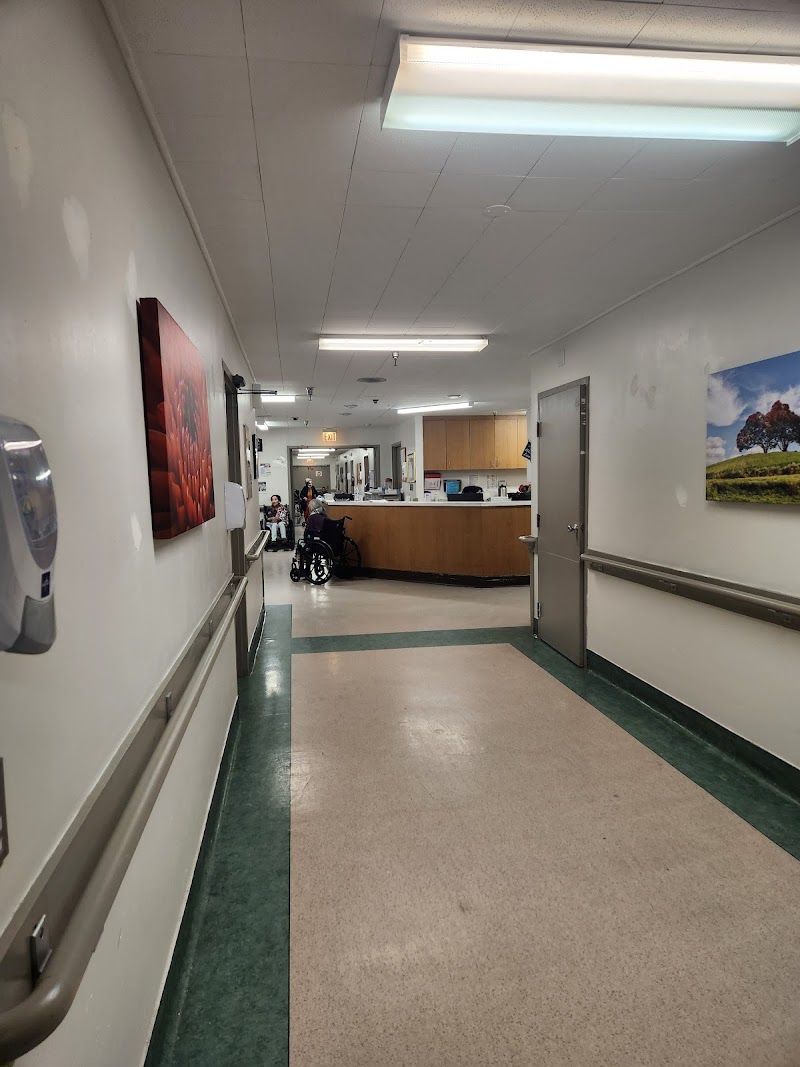
How is El Centro Post-Acute Care Staffed?

CMS rates EL CENTRO POST-ACUTE CARE's staffing level at 1 out of 5 stars, which is much below average compared to other nursing homes. Staff turnover is 42%, compared to the California average of 46%. This relatively stable workforce can support continuity of care. RN turnover specifically is 62%, which is notably high. RNs provide skilled clinical oversight, so turnover in this role can affect medical care quality.

What Have Inspectors Found at El Centro Post-Acute Care?

State health inspectors documented 52 deficiencies at EL CENTRO POST-ACUTE CARE during 2019 to 2024. These included: 1 that caused actual resident harm and 51 with potential for harm. Deficiencies causing actual harm indicate documented cases where residents experienced negative health consequences.
Who Owns and Operates El Centro Post-Acute Care?

EL CENTRO POST-ACUTE CARE is owned by a for-profit company. For-profit facilities operate as businesses with obligations to shareholders or private owners. The facility is operated by BAYSHIRE SENIOR COMMUNITIES, a chain that manages multiple nursing homes. With 123 certified beds and approximately 114 residents (about 93% occupancy), it is a mid-sized facility located in EL CENTRO, California.
How Does El Centro Post-Acute Care Compare to Other California Nursing Homes?

Compared to the 100 nursing homes in California, EL CENTRO POST-ACUTE CARE's overall rating (2 stars) is below the state average of 3.1, staff turnover (42%) is near the state average of 46%, and health inspection rating (3 stars) is at the national benchmark.

What Should Families Ask When Visiting El Centro Post-Acute Care?

Based on this facility's data, families visiting should ask: "Can you walk me through typical staffing levels on day, evening, and night shifts?" "Can I visit during a mealtime to observe dining assistance and food quality?" "How do you handle medical emergencies, and what is your hospital transfer rate?" "Can I speak with family members of current residents about their experience?" These questions are particularly relevant given the below-average staffing rating.

Is El Centro Post-Acute Care Safe?

Based on CMS inspection data, EL CENTRO POST-ACUTE CARE has a clean safety record: no substantiated abuse findings (meaning no confirmed cases of resident harm), no Immediate Jeopardy citations (the most serious violation level indicating risk of serious injury or death), and is not on the Special Focus Facility watch list (a federal program monitoring the lowest-performing 1% of nursing homes). The facility has a 2-star overall rating and ranks #100 of 100 nursing homes in California. While no facility is perfect, families should still ask about staff-to-resident ratios and recent inspection results during their visit.

Do Nurses at El Centro Post-Acute Care Stick Around?

EL CENTRO POST-ACUTE CARE has a staff turnover rate of 42%, which is about average for California nursing homes (state average: 46%). Moderate turnover is common in nursing homes, but families should still ask about staff tenure and how the facility maintains care continuity when employees leave.

Was El Centro Post-Acute Care Ever Fined?

EL CENTRO POST-ACUTE CARE has been fined $10,254 across 2 penalty actions. This is below the California average of $33,181. While any fine indicates a compliance issue, fines under $50,000 are relatively common and typically reflect isolated problems that were subsequently corrected. Families should ask what specific issues led to these fines and confirm they've been resolved.

Is El Centro Post-Acute Care on Any Federal Watch List?

EL CENTRO POST-ACUTE CARE is not on any federal watch list. The most significant is the Special Focus Facility (SFF) program, which identifies the bottom 1% of nursing homes nationally based on persistent, serious quality problems. Not being on this list means the facility has avoided the pattern of deficiencies that triggers enhanced federal oversight. This is a positive indicator, though families should still review the facility's inspection history directly.